



Slow cookers revolutionized home cooking by turning tough, inexpensive cuts of meat and simple ingredient combinations into deeply flavored, fall-apart tender meals without requiring your presence all day. Unlike recipes that need constant stirring, monitoring, or tending, true all-day slow cooker meals are designed to cook for 8-10 hours or longer, making them perfect for people with full work days, long commutes, or unpredictable schedules. You assemble everything in the morning, turn on the cooker, and come home to a house that smells incredible and a dinner that’s ready to eat immediately. There’s something uniquely satisfying about this set-it-and-forget-it approach—no last-minute scrambling, no stress about timing multiple dishes, just a warm, nourishing meal waiting for you.
The beauty of all-day slow cooker cooking lies in how the extended heat transforms the dish. Low temperatures sustained for 9-10 hours break down connective tissues in tough cuts, rendering them incredibly tender while also allowing flavors to meld and deepen in ways that faster cooking methods simply can’t achieve. What might be a chewy, unpleasant cut of beef through traditional cooking becomes silky, succulent, and worth savoring when given time in the slow cooker. Vegetables soften completely, starches absorb surrounding flavors, and broths become rich and complex. This is why all-day recipes produce such comforting, restaurant-quality results with minimal actual effort.
What Makes a Meal Suitable for All-Day Slow Cooking
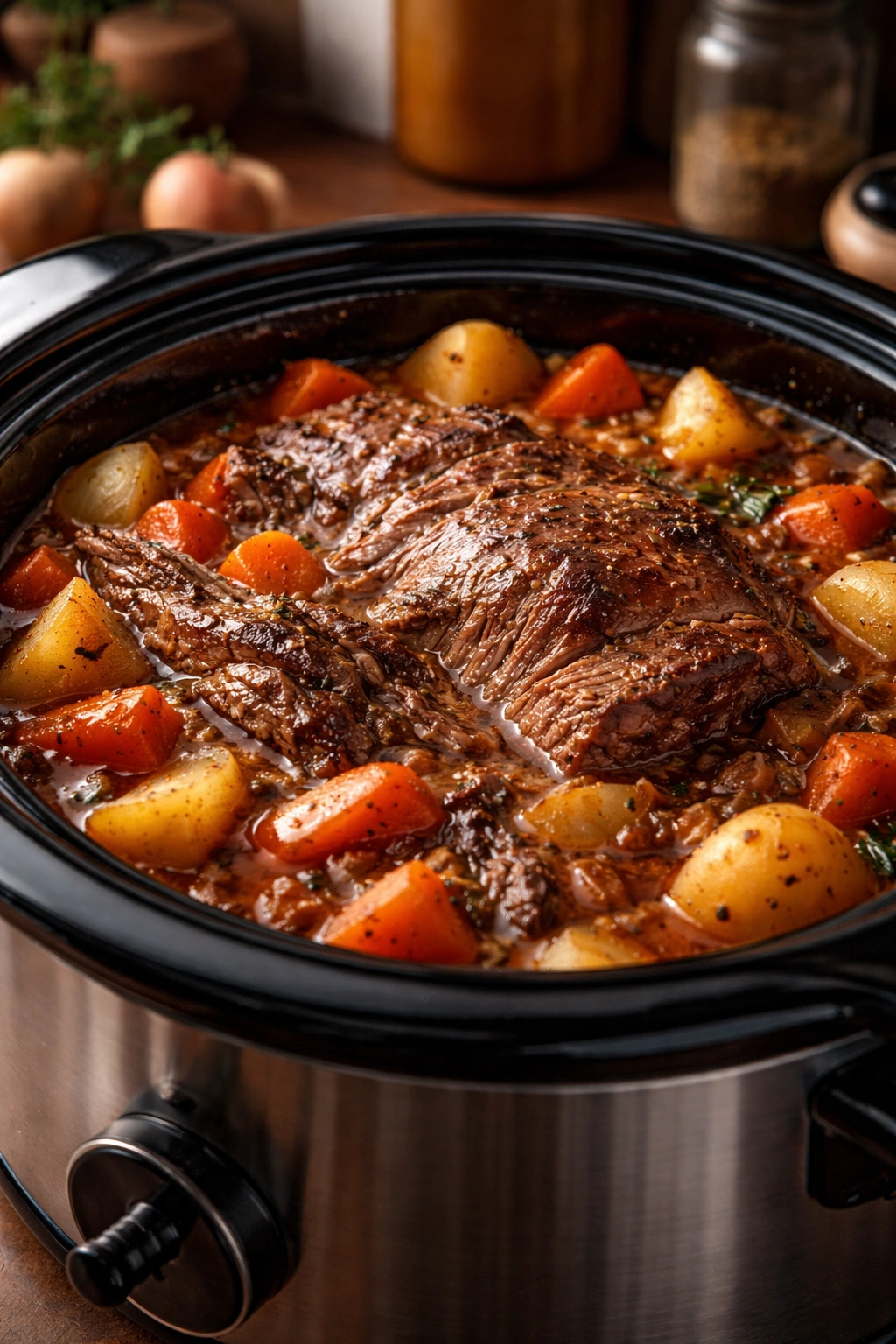
Not every dish works well with 8-10 hours of low heat cooking. The best candidates are those with moisture, structure, and ingredients that benefit from extended gentle heat rather than being damaged by it. Tougher cuts of meat like chuck roast, beef brisket, pork shoulder, lamb shanks, and beef short ribs are ideal because they contain significant amounts of collagen and connective tissue that breaks down into gelatin during long cooking, resulting in that signature tender texture. Lean, delicate cuts like tenderloin or thin chicken breasts dry out when subjected to all-day cooking and should be reserved for shorter 3-4 hour recipes instead.
Root vegetables and hardy vegetables like carrots, potatoes, onions, and celery actually improve with longer cooking times, becoming deeply flavorful and integrated into the surrounding sauce rather than remaining distinct and firm. Tender vegetables like peas, zucchini, and fresh herbs should always be added during the last 20-30 minutes of cooking to preserve their color, texture, and bright taste. Dried beans, which normally require soaking and significant cooking time, are perfect for all-day meals because they soften to creamy perfection without turning to mush. Broths and stocks naturally deepen and concentrate during extended cooking, making them foundation ingredients for soups and stews that truly benefit from the full cooking time.
The Science Behind Extended Slow Cooking
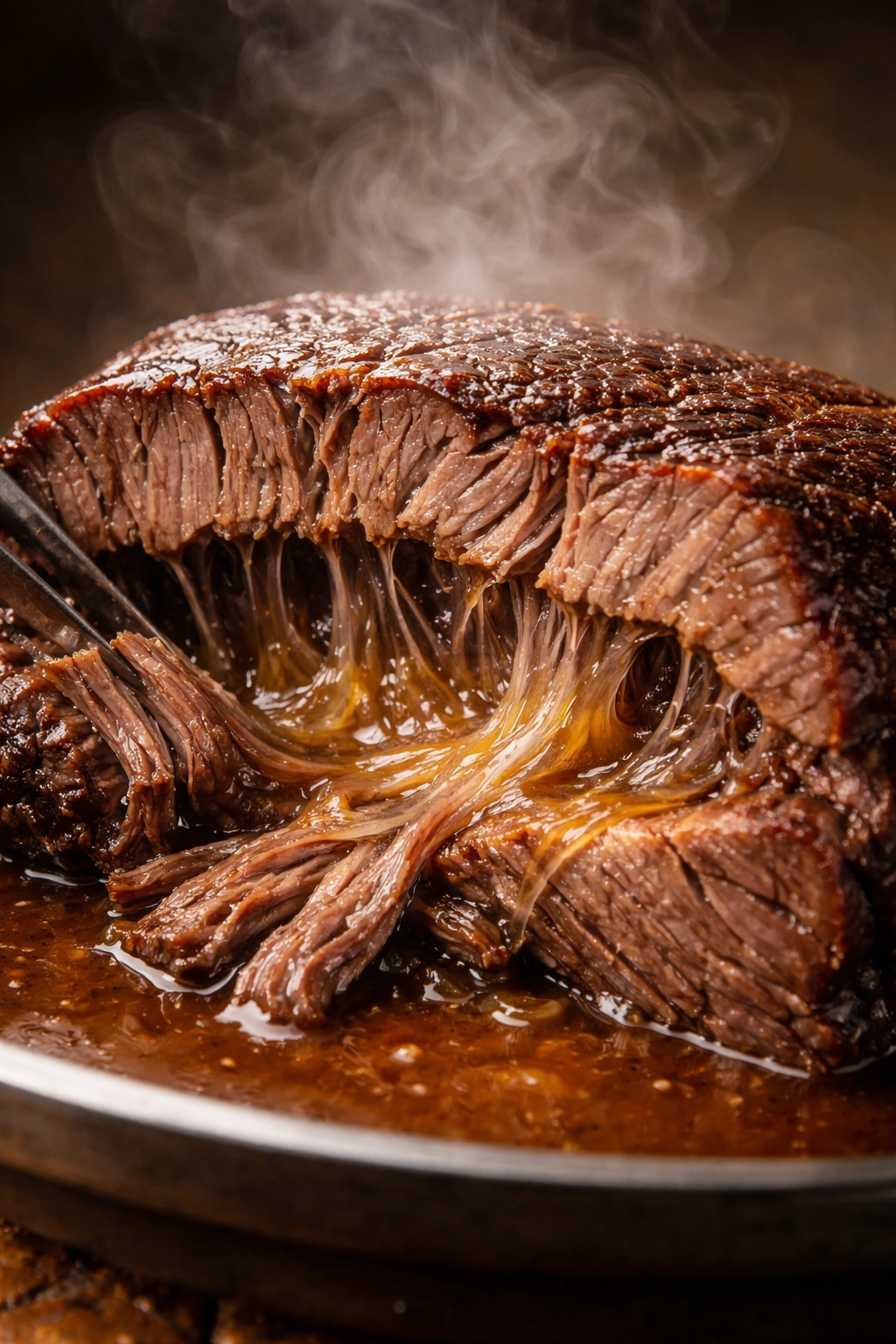
Extended slow cooking works through a combination of moisture, low temperature, and time. When meat is heated slowly in a moist environment, the collagen and connective tissue (called “tough” cuts for a reason) gradually break down into gelatin and water-soluble proteins. This happens at a lower temperature than dry cooking methods, which means the muscle fibers themselves don’t contract and expel moisture the way they do in searing or high-heat cooking. The result is meat that’s not only tender but also remains juicy because the proteins have retained their internal moisture.
The low heat—typically 190°F to 200°F internally—also prevents the surface from browning or the exterior from becoming overdone while the interior slowly cooks through. This creates an evenness of texture that’s almost impossible to achieve with other methods. Additionally, the extended time allows flavors to migrate and intermingle. Herbs and spices dissolve gradually into the cooking liquid, creating a more cohesive, rounded flavor profile than you’d get from a quick sauté. Aromatics like onions and garlic break down almost completely, thickening sauces naturally and deepening their savory character without requiring added thickeners.
Choosing the Right Cuts of Meat
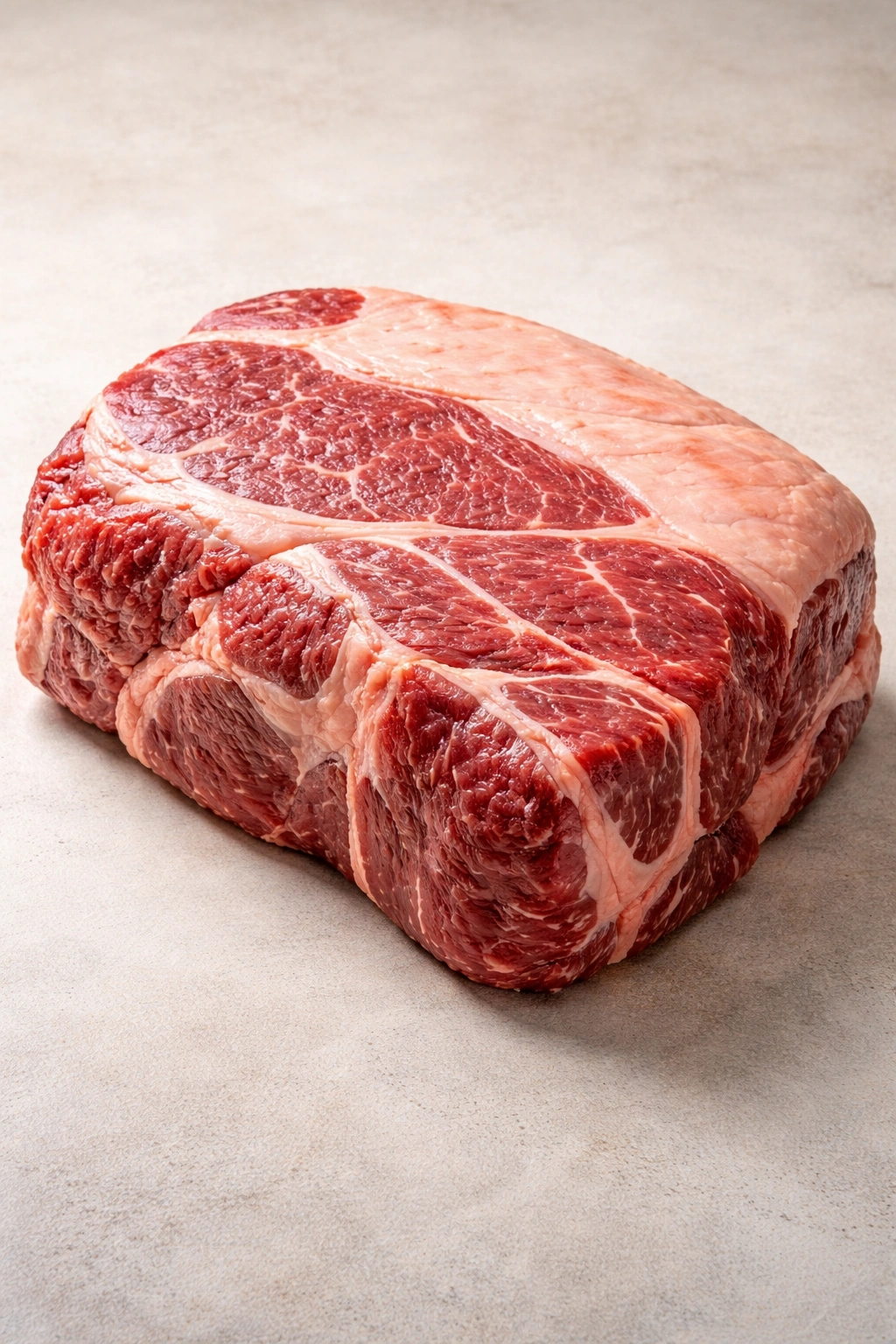
Understanding which cuts of meat thrive in all-day cooking is fundamental to success. Beef chuck roast, also called chuck steak, is the workhorse of slow cooker cooking—it’s affordable, widely available, well-marbled with fat, and transforms into something luxuriously tender after 8-10 hours. A 3-4 pound chuck roast feeds a family of four generously with minimal prep. Beef brisket, with its tough exterior and significant fat cap, becomes almost buttery when slow-cooked, though it requires care during preparation and deserves the full 9-10 hour cooking window for best results.
Beef short ribs are shorter and chunkier than their larger versions, perfect for individual servings, and they deliver rich meat flavor with meaty rewards—the bone gives body to the sauce and the meat surrounding it becomes fall-off-the-bone tender. Pork shoulder (also labeled as pork butt or Boston butt, despite being shoulder) is incredibly forgiving and versatile—it can be shredded for sandwiches, pulled into tacos, or served in chunks in stews, and it’s difficult to overcook. Lamb shanks might be overlooked by many home cooks, but they’re absolutely spectacular in the slow cooker, becoming rich and tender with a deep, complex flavor that’s different from beef.
Whole chickens and chicken thighs work for all-day cooking, though they require slightly less time (6-7 hours) than beef and pork because the meat is naturally more tender. Chicken breasts, being lean and delicate, begin falling apart and becoming dry after 8 hours, so they’re not suitable for all-day recipes. Turkey breast, while leaner, still holds up reasonably well and makes excellent shredded turkey for various applications. Tougher poultry cuts like drumsticks and wings become fall-off-the-bone tender.
Prep Work and Food Safety Considerations
Proper preparation ensures both delicious results and food safety when leaving a slow cooker running for extended periods. Start with ingredients that are fully chilled or even cold—frozen ingredients require too much cooking time to reach safe temperatures, and cold ingredients help the entire slow cooker contents reach the safe temperature of 165°F more quickly. For food safety, the USDA recommends that food in a slow cooker reach 165°F as rapidly as possible, preferably within 2 hours, though many slow cookers take longer to heat food if ingredients are cool.
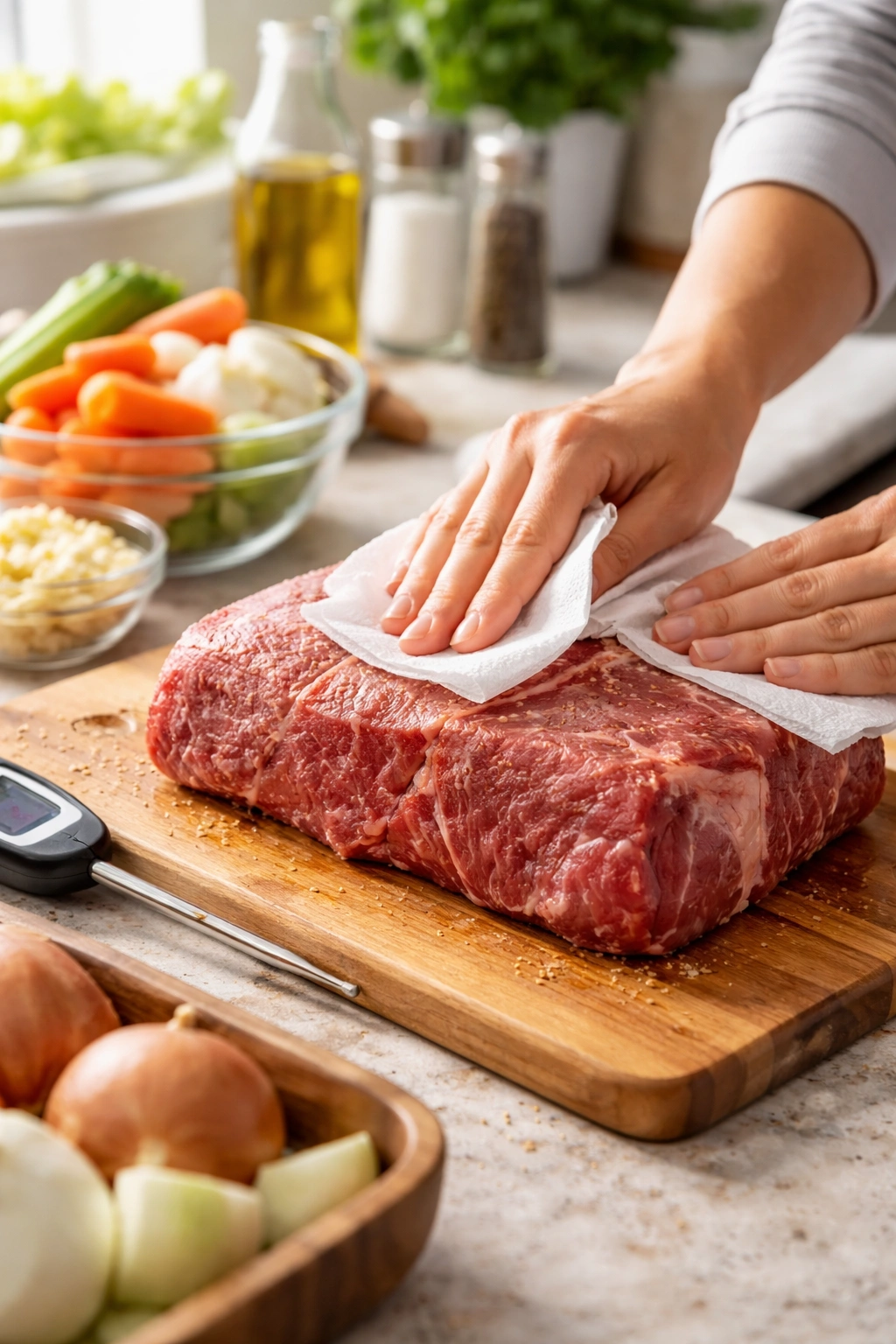
Prepare vegetables the night before by chopping them into consistent, medium-sized pieces and storing them in sealed containers in the refrigerator. Don’t leave the slow cooker insert in the refrigerator once assembled—the cold ceramic or glass will take much longer to heat up, extending the danger zone window. Instead, prep ingredients in separate containers and assemble them in the cooker in the morning. Pat meat dry with paper towels to remove surface moisture, which helps browning if you choose to sear it first. Season meat generously the night before if you’ve prepped it, as salt begins breaking down proteins even before cooking begins, actually helping tenderization.
Browning meat before adding it to the slow cooker is optional but recommended. Searing creates complex flavor through the Maillard reaction—the browning that develops when proteins and sugars heat together. Sear meat in a hot skillet with oil for 2-3 minutes per side until the surface browns deeply. This adds a savory depth that’s particularly noticeable in beef dishes. Some cooks skip this step when time is tight, and the dish will still be delicious, just slightly less complex in flavor. Ground meat, however, should always be browned beforehand and drained of fat—cooking raw ground meat in the slow cooker often results in a grainy texture and greasy finish.
Liquid and Seasoning Guidelines
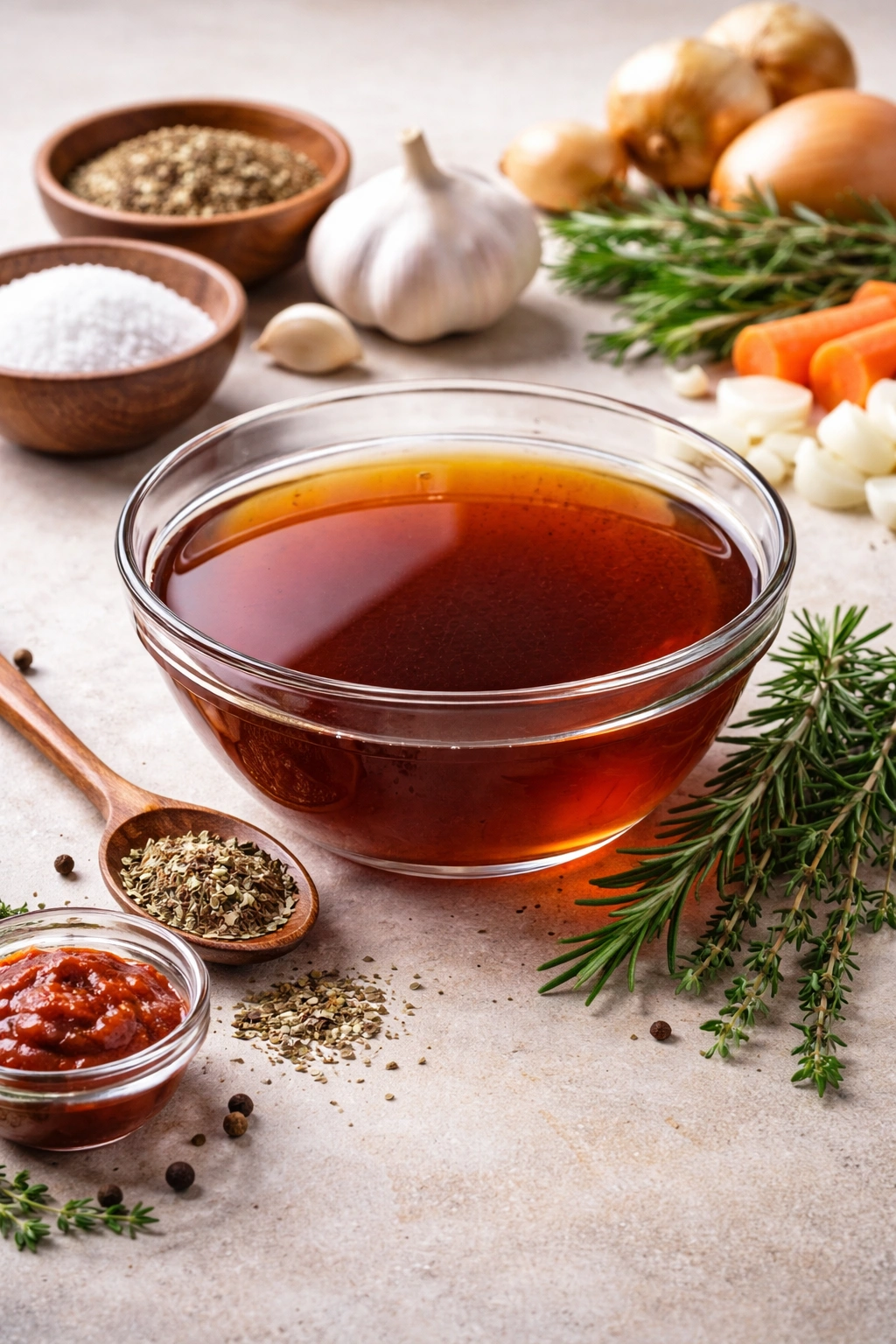
All-day slow cooker recipes require less liquid than stovetop cooking because there’s virtually no evaporation during the extended cooking time. A typical ratio is about ½ to 1 cup of liquid per pound of meat, which seems minimal compared to traditional braising. The liquid doesn’t need to cover all the ingredients—meat and vegetables will release their own moisture, which combines with your added liquid to create the cooking environment. Common liquids include beef or chicken broth, red wine, apple juice, beer, tomato sauce, or even cola (which adds sweetness and depth to some recipes).
Seasoning requires a different approach for all-day cooking. Salt penetrates slowly during extended cooking, so you can be generous with it at the beginning. Dried herbs and spices should be added at the start since they need time to bloom and release their volatile oils, but fresh herbs like parsley, cilantro, and dill should be added only during the final 20 minutes to preserve their bright, fresh flavor—long cooking turns them muddy and dark. Ground spices like cumin, paprika, and chili powder benefit from toasting in a dry skillet for 30 seconds before adding to the slow cooker, which awakens their flavor. Tomato paste, soy sauce, and Worcestershire sauce concentrate and intensify during long cooking, so add these conservatively and taste before serving.
Timing Your All-Day Meal

True all-day slow cooker recipes require a minimum of 8 hours of cooking on the low setting, with many benefiting from 9-10 hours or even longer. Most recipes with larger roasts, tougher cuts, or denser vegetables actually improve with the full 10-hour window—the longer cooking time simply makes everything more tender and allows flavors to develop more fully. If your schedule only permits 6-7 hours of cooking time, you’re better suited to recipes specifically written for that timeframe rather than forcing an all-day recipe into a shorter window.
Many slow cookers feature a “warm” setting that automatically engages after the set cooking time expires, keeping food at a safe temperature (around 160-170°F) without further cooking. This is invaluable on days when your arrival time is unpredictable—you can safely leave your meal on warm for 1-2 hours without overcooking it. Check your slow cooker manual to confirm it has this feature and that the warm setting maintains a safe temperature. Some older or smaller models don’t have this feature, making them less suitable for true all-day cooking if you can’t predict your arrival time precisely.
If you’re leaving your slow cooker running overnight or during a full work day plus commute, plan your timing carefully. If you need to eat at 6 p.m. and the meal requires 10 hours, set your slow cooker to start at approximately 8 a.m. Rather than waking extremely early, many cooks prep everything the night before and use a slow cooker with a delay-start feature. However, food safety experts note that having ingredients sit unheated in the danger zone (40-140°F) for up to 2 hours before cooking begins creates some food safety risk, particularly for people with compromised immune systems, young children, or elderly household members.
Soups and Stews for All-Day Cooking
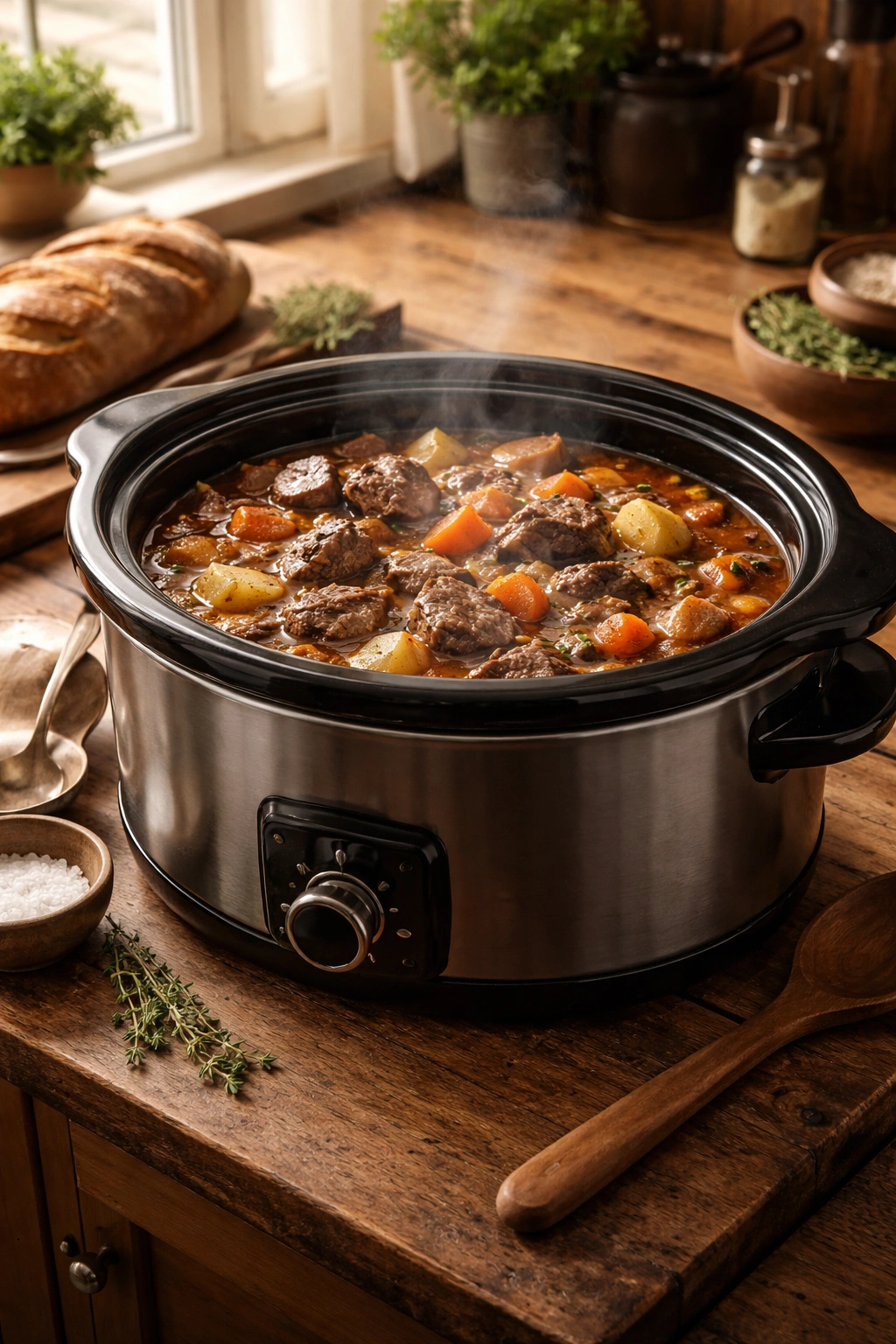
Soups and stews are perhaps the most straightforward all-day slow cooker meals because they’re naturally built for extended cooking. Beef stew—cubed beef, potatoes, carrots, celery, and onions in beef broth—emerges from all-day cooking with incredibly tender meat and vegetables that have absorbed all the savory flavors. French onion soup, which traditionally requires hours of patient stovetop caramelization, actually benefits from the slow cooker’s gentle, consistent heat. Onions slowly soften and release their sugars without the risk of scorching, creating a naturally thick, sweet, savory broth.
Vegetable-based soups like minestrone, lentil soup, and split pea soup develop deeper flavors during long cooking, with individual ingredients melding into a cohesive whole. Chili, whether beef or bean-based, is nearly inseparable from slow cooker cooking—the extended time allows dried spices like chili powder, cumin, and oregano to fully develop their flavor while beans soften to creamy consistency without breaking apart. Chicken and dumpling soup traditionally involves simmering chicken until tender, removing it to shred, then preparing dumplings separately. In the slow cooker, chicken becomes tender in about 6-7 hours on low, and you can add biscuit topping or dumplings during the final 30 minutes of cooking.
Broth-heavy soups benefit tremendously from all-day cooking because the extended time allows bones (if you’re using chicken with bones or beef bones for extra richness) to release collagen and minerals, resulting in a richer, more body-full broth. Creamy soups should have their cream added only during the last 15-20 minutes to prevent curdling, but the base of meat, vegetables, and broth can safely simmer all day.
Roasts and Braised Meats for Extended Cooking
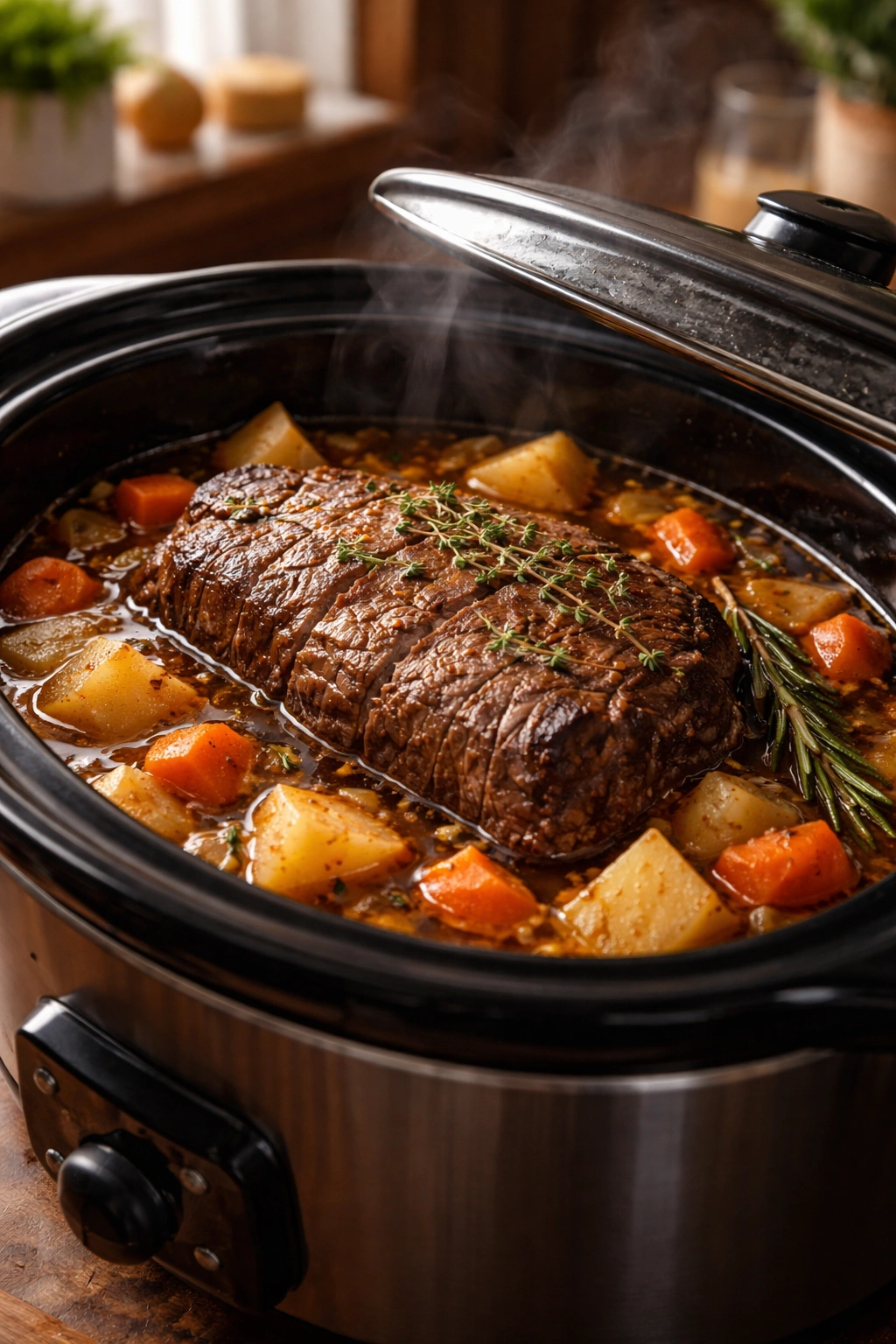
Pot roast is the quintessential all-day slow cooker dish—a large chunk of beef chuck or round roast surrounded by root vegetables in a rich broth cooks for 8-10 hours into something that’s fall-apart tender and deeply satisfying. The magic happens slowly: the beef gradually releases collagen that thickens and enriches the surrounding liquid, while the root vegetables soften until they’re nearly creamy. Brisket, a leaner cut that’s traditionally smoked for hours, becomes tender in the slow cooker in about 9-10 hours, though searing it first creates a better crust and deeper flavor.
Pulled pork shoulder, the foundation for sandwiches, tacos, and carnitas, requires 8-10 hours of cooking to become shreddy enough to pull apart with two forks. The meat should be so tender that it practically falls apart at the slightest pressure—if it’s still holding together firmly after 10 hours, it needs more time. Beef short ribs, cubed beef stews, and lamb shanks all follow similar principles: low heat, long time, and generous seasoning result in meat so tender and flavorful that simple steamed rice or mashed potatoes become a complete, satisfying meal.
Ingredients to Avoid or Add Late
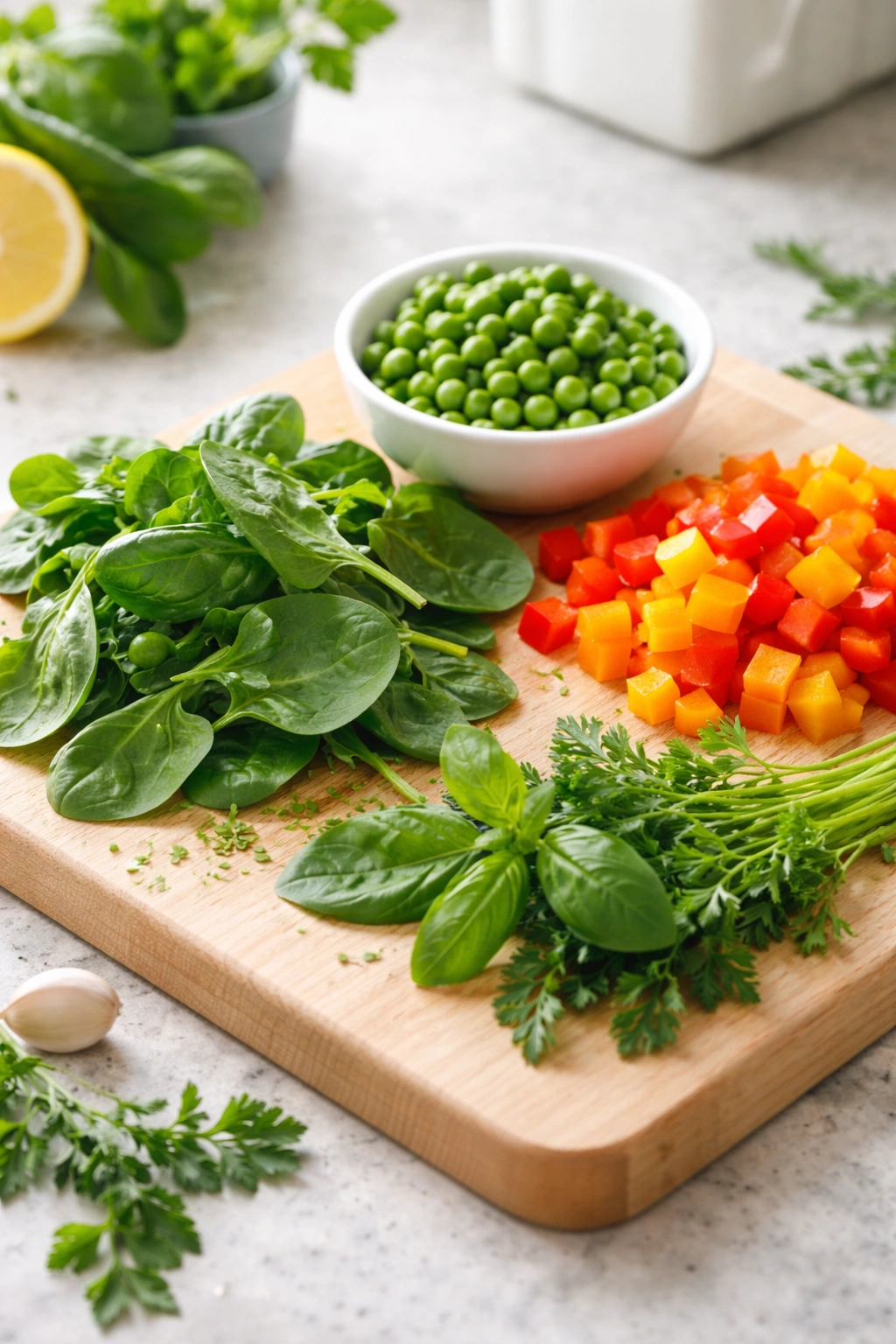
Certain ingredients simply don’t survive all-day cooking without becoming unpleasant. Tender vegetables like peas, corn, spinach, zucchini, and bell peppers turn to mush and become unappetizing if cooked for 8-10 hours—always add these during the final 20-30 minutes. Fresh herbs lose their bright flavor and color completely if cooked all day, becoming drab and bitter, so reserve them for final garnishing or add fresh ones in the last few minutes. Pasta and rice absorb moisture and become soft and mushy if added at the beginning; add these during the final 30 minutes or cook them separately and add just before serving.
Dairy products like milk, cream, and sour cream can curdle or break when subjected to extended heat, so always add them only in the final 15-20 minutes. Cheese can separate and become grainy. Delicate proteins like tofu or shrimp overcook into rubbery, unpleasant textures. Green onions, cilantro, and fresh spices should always be considered finishing elements rather than ingredients to add at the beginning. Thickeners like cornstarch mixed with water (slurry) should be added only during the final 30 minutes of cooking, after you’ve assessed whether the liquid needs thickening—all-day cooking often reduces and concentrates liquid naturally, potentially eliminating the need for extra thickener.
Storage, Reheating, and Make-Ahead Strategy
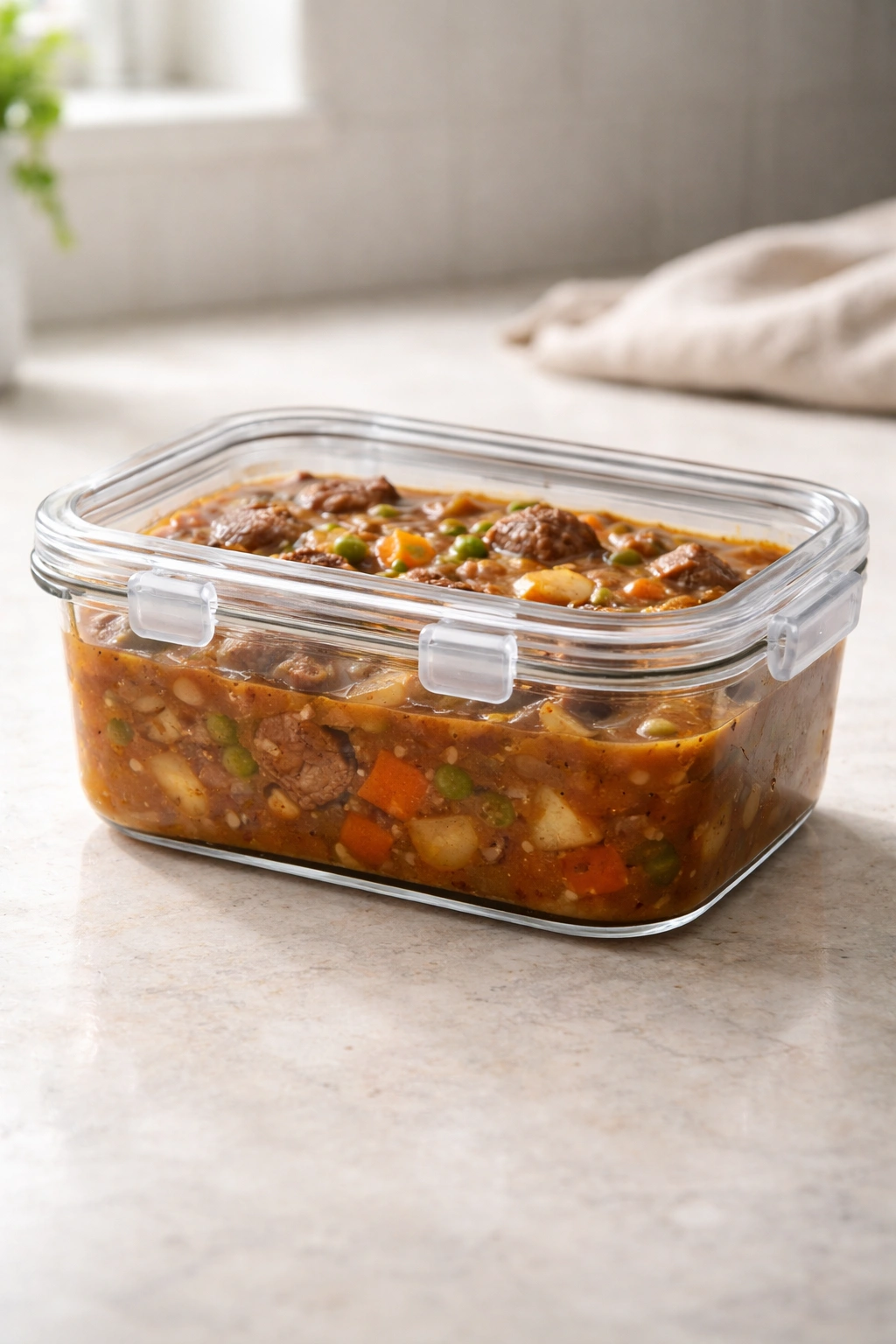
All-day slow cooker meals actually improve slightly overnight or over a day or two because flavors continue to develop and meld in the refrigerator. Most all-day slow cooker meals will keep safely in the refrigerator in an airtight container for 3-4 days. To store, allow the meal to cool to room temperature first, then transfer to containers and refrigerate. Never refrigerate a full slow cooker insert directly—it heats unevenly and creates food safety risks. Instead, transfer the food to smaller containers for efficient cooling and storage.
Freezing is one of the greatest advantages of all-day slow cooker cooking—most recipes freeze beautifully for up to 3 months. Let the meal cool completely, then transfer to freezer bags, pressing out excess air, or rigid freezer containers, leaving about an inch of headspace for expansion. Label with the contents and date. To reheat from frozen, thaw in the refrigerator overnight, then reheat gently on the stovetop over medium-low heat, stirring occasionally, until heated through (165°F for safety). Alternatively, reheat directly from frozen in the slow cooker on low for 2-3 hours, stirring occasionally.
Making multiple batches when you have time, then freezing portions, transforms your weeknight stress. Spend a few hours on a weekend preparing 2-3 different all-day slow cooker recipes, let them cook, portion them out, and freeze. For the following weeks, you simply thaw and reheat—no cooking required on busy weeknights. This strategy multiplies the benefit of all-day cooking, turning one set of slow cooker time into multiple meals.
Common Mistakes and How to Avoid Them
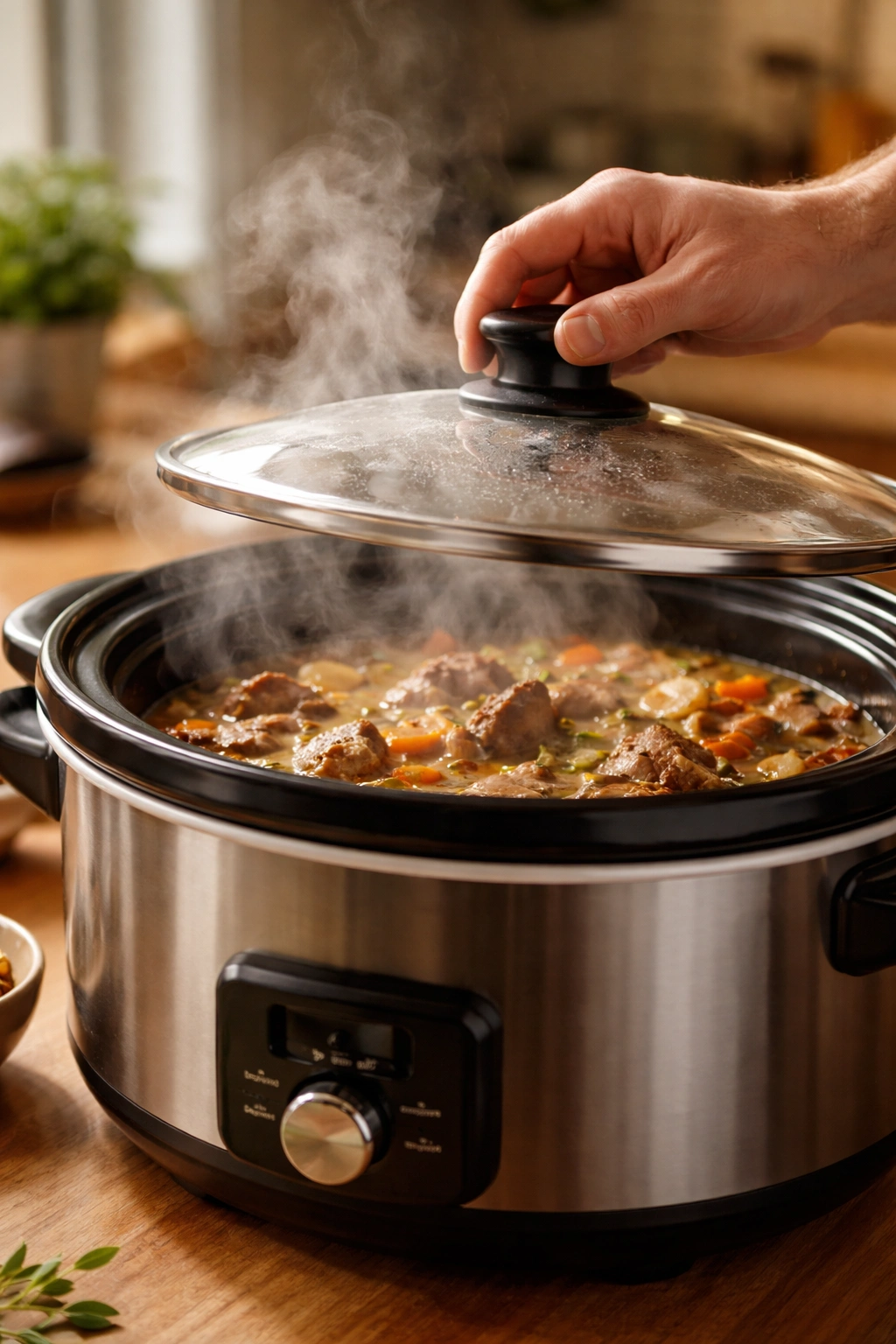
Lifting the lid to check on your meal releases significant heat and adds 15-20 minutes to the total cooking time—resist this temptation. Trust the recipe timing and your slow cooker. Resist the urge to stir constantly; most all-day recipes don’t need stirring at all. The closed environment of a slow cooker distributes heat evenly, so stirring only releases heat and disrupts the cooking process. Add all ingredients correctly according to recipe timing.
Using too much liquid results in a soup-like consistency when you want a stew with body. Start with less liquid than you might use on the stovetop—you can always add more at the end if needed, but removing excess moisture is impossible. Using the high setting to rush the cooking process defeats the purpose of all-day cooking—the extended low temperature is what tenderizes the meat and develops flavor. High heat can cause meat to toughen and exterior ingredients to overcook before interiors are done.
Not using a deep enough or the right size slow cooker for your recipe creates heat distribution problems. A slow cooker that’s too small results in layers of ingredients stacked up inefficiently; one that’s too large means ingredients spread out too thin and risk drying out or cooking unevenly. Most all-day recipes require a 4-6 quart slow cooker. Not seasoning adequately at the beginning results in a bland-tasting final meal—all-day cooking seems to mute saltiness and spiciness, so be generous with seasoning at the start and taste before serving to adjust.
Building Flavor Through Smart Ingredient Combinations
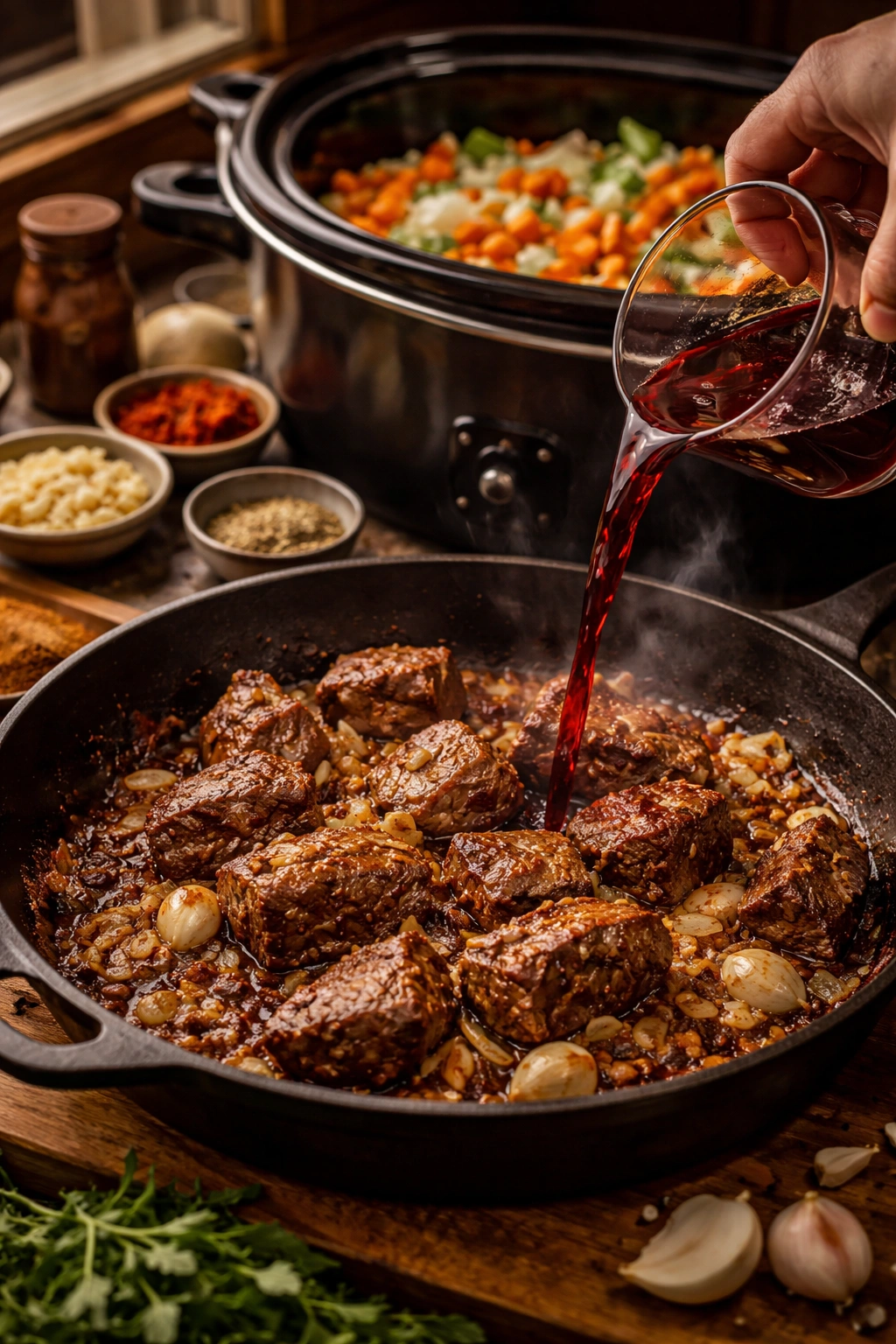
While all-day slow cooker cooking is forgiving, you can still elevate the flavor through thoughtful ingredient choices. Browning meat and aromatics creates depth through the Maillard reaction. Toasting dried spices for 30 seconds in a dry skillet before adding to the cooker awakens their essential oils and amplifies their flavor. Tomato paste adds umami and richness without additional effort. Worcestershire sauce, soy sauce, or balsamic vinegar add complexity and saltiness.
Layering flavors works in slow cookers too—don’t just dump everything in at once. Sauté aromatics in your skillet before transferring to the slow cooker. Build spice blends rather than relying on individual spices. Use both fresh herbs (added at the end) and dried herbs (added at the beginning) for different flavor dimensions. Wine, beer, or other acidic liquids add brightness and help cut through richness. Fresh lemon or lime juice squeezed in at the very end adds freshness and lifts flavors—finish these dishes just before serving rather than cooking the acid.
The Practical Reality of All-Day Cooking
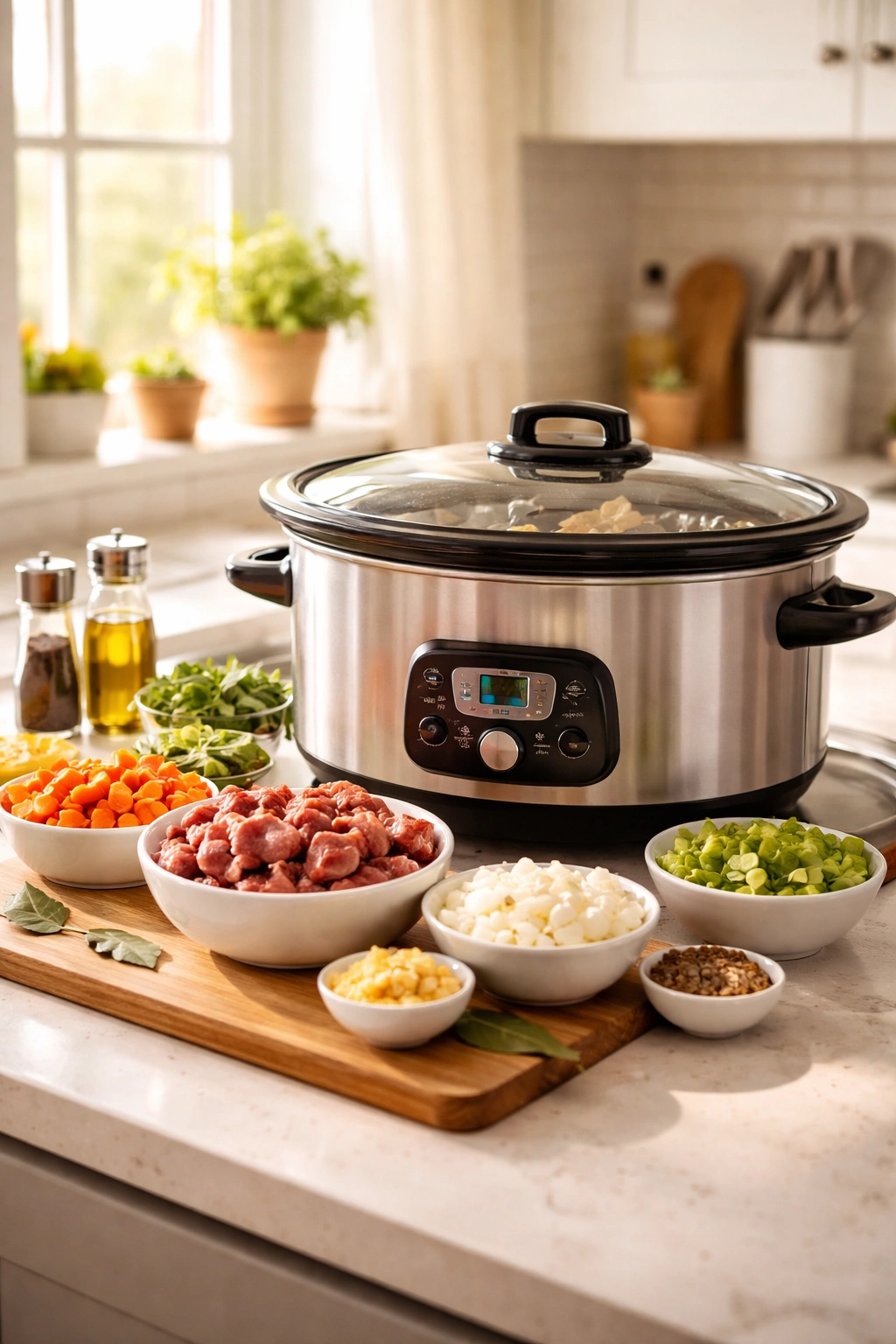
All-day slow cooker cooking truly simplifies weeknight dinner, but it requires morning commitment and planning. You need to assemble your ingredients or at least have them prepped the night before, set the cooker, and ensure you’ll be home within a reasonable timeframe. For people with truly unpredictable schedules, a slow cooker with a keep-warm function becomes invaluable—you can safely leave your meal on warm for 1-2 hours if traffic delays you or something unexpected happens.
The payoff is enormous: coming home to a fully cooked, aromatic meal that needs no attention beyond plating and serving is genuinely luxurious. No scrambling, no last-minute decisions, no stressed cooking. All-day slow cooker meals are perfect for families with kids who are picked up from multiple schools at different times, for people with long commutes, for anyone juggling caregiving responsibilities, or simply for those who prefer knowing dinner is handled before their day even begins. The combination of minimal active prep, superior flavor, and maximum flexibility makes all-day slow cooker cooking a cornerstone strategy for sustainable home cooking.
Seasonal Considerations for Extended Cooking
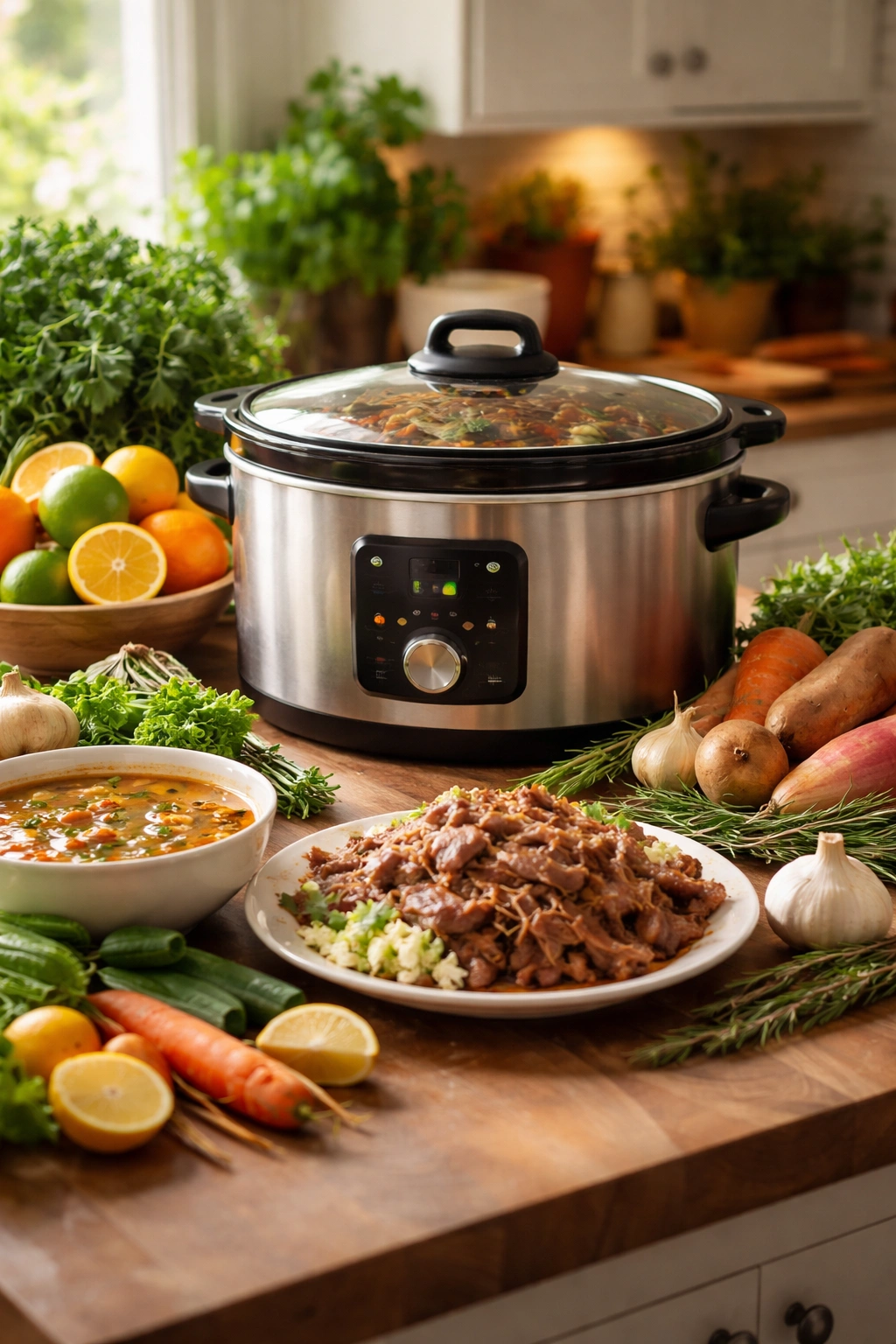
While all-day slow cooker cooking isn’t truly seasonal—these meals are comforting year-round—you might naturally gravitate toward different dishes depending on what’s available and what appeals to you. During warmer months, lighter soups, white bean and vegetable combinations, and citrus-inflected dishes feel more appropriate than heavy beef stews. Slow cooker chili works beautifully in any season but somehow feels most satisfying when temperatures drop. Pulled pork and pulled chicken work equally well for summer entertaining and winter family dinners, depending on your serving method.
The beautiful truth is that all-day slow cooker cooking removes the stress from meal preparation regardless of season. These are meals you can confidently make on your busiest days without worrying you’ll be scrambling at dinner time. They’re forgiving enough for new cooks, sophisticated enough for experienced ones, and accessible enough for anyone navigating the genuine challenge of feeding themselves and their families well. Once you understand the principles—tough cuts, adequate liquid, proper seasoning, and respect for cooking time—you’ll find yourself reaching for your slow cooker not just as a backup plan, but as your preferred method for creating some of your most delicious, satisfying meals.
