



Feeding yourself and your family on a tight budget doesn’t mean settling for sad takeout or eating the same bland meals on repeat. The secret that home cooks have known for generations is hiding in your pantry right now—a collection of humble shelf-stable ingredients that can transform into dozens of satisfying, flavorful dinners without breaking the bank. These aren’t deprivation meals; they’re the kinds of dishes people actively crave, made possible by smart shopping and basic kitchen skills.
The foundation of budget cooking starts with understanding which pantry staples deliver the most versatility and nutrition for the least money. Rice, dried beans, canned tomatoes, pasta, flour, oil, garlic, onions, and a well-organized spice cabinet form the backbone of affordable home cooking. When you keep these items stocked, you’re never more than thirty minutes away from a complete, satisfying meal. The magic happens when you learn how to combine them in unexpected ways—transforming a can of beans and some pasta into something that tastes nothing like deprivation.
What makes pantry cooking truly powerful is that it removes the pressure of fresh ingredient availability. You’re not limited by what looks good at the farmers market or what’s on sale this week. Instead, you work with what you have, which builds creative cooking confidence while keeping your grocery bill consistently low. The recipes in this guide prove that budget meals don’t require trendy ingredients, special equipment, or complicated techniques. They require only an understanding of flavor fundamentals and a willingness to think of your pantry as a fully stocked restaurant kitchen.
1. One-Pot Chili Pasta with Ground Beef
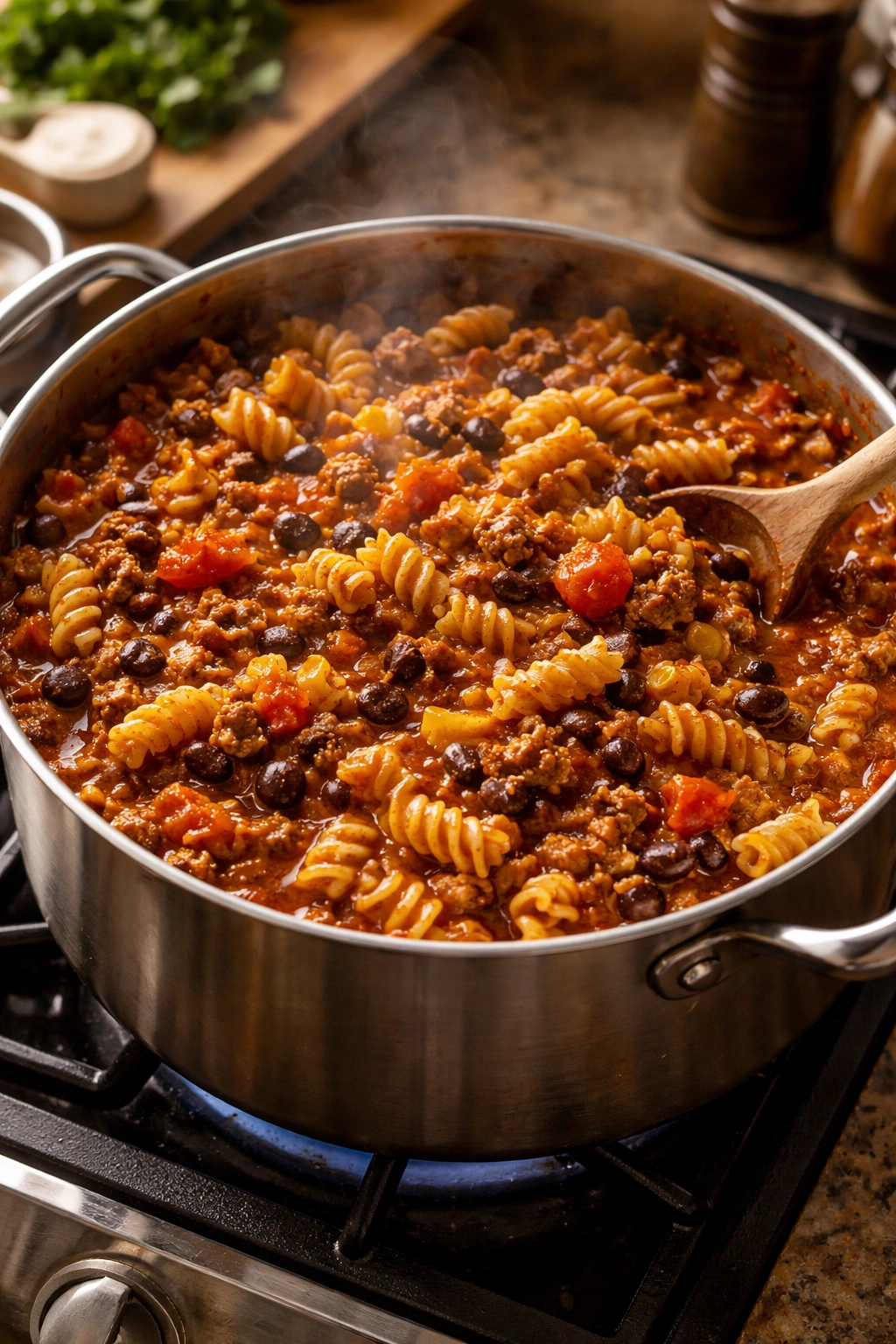
This is the kind of dish that makes people stop and ask for the recipe, completely shocked when they learn it cost under two dollars per serving. It combines southwest chili flavors with hearty pasta in a single pot, which means minimal cleanup and maximum comfort. The recipe uses canned beans, which are already cooked and ready to go, eliminating the need for advance planning that dried beans require.
Why This Meal Works on a Budget
Ground beef stretches further when combined with beans—you get the protein and satisfaction from both sources, meaning a half pound of meat feeds four people instead of three. Chili spices (cumin, chili powder, garlic powder, onion powder) are inexpensive pantry staples that create restaurant-quality flavor without adding cost. Combining pasta and beans creates a complete protein, so you’re getting nutritional value that would normally require more expensive proteins to achieve.
How to Build the Dish
Start by browning half a pound of ground beef in a large pot over medium-high heat, breaking it apart as it cooks—this takes about five minutes. While that’s happening, gather one can of black beans, one can of kidney beans, one can of diced tomatoes with green chiles, and one can of tomato sauce. Once the beef is fully browned and excess fat has been drained, add two tablespoons of chili powder, one tablespoon of cumin, one teaspoon of garlic powder, and one teaspoon of onion powder to the pot. Stir constantly for one minute until the spices bloom and release their fragrant oils.
Pour in all the canned beans (don’t drain them—the liquid adds body to the sauce) and canned tomatoes, then add two cups of uncooked pasta. You can use any shape you like; elbow, penne, or rotini all work beautifully. Add three cups of water or beef broth, stir everything together, and bring to a simmer. Once simmering, partially cover the pot and let it cook for about twelve minutes, stirring occasionally, until the pasta is tender and the liquid has reduced into a thick, saucy consistency.
Pro tip: If you prefer a thicker, less saucy chili pasta, use less liquid at the start—you can always add more water if it gets too thick, but you can’t remove liquid once it’s in. This one-pot approach means the pasta absorbs all the flavorful liquid rather than being cooked separately and drained, which would waste all those seasonings.
Storage and Variations
This recipe freezes beautifully, making it perfect for batch cooking. Cool it completely, then portion into quart-sized freezer bags and freeze flat for efficient storage. When you want a quick dinner, simply thaw and reheat on the stovetop or in the microwave. For vegetarian versions, omit the beef and add a third can of beans instead—chickpeas work particularly well here, adding a different texture and subtle nutty flavor.
2. Poor Man’s Burrito Bowls
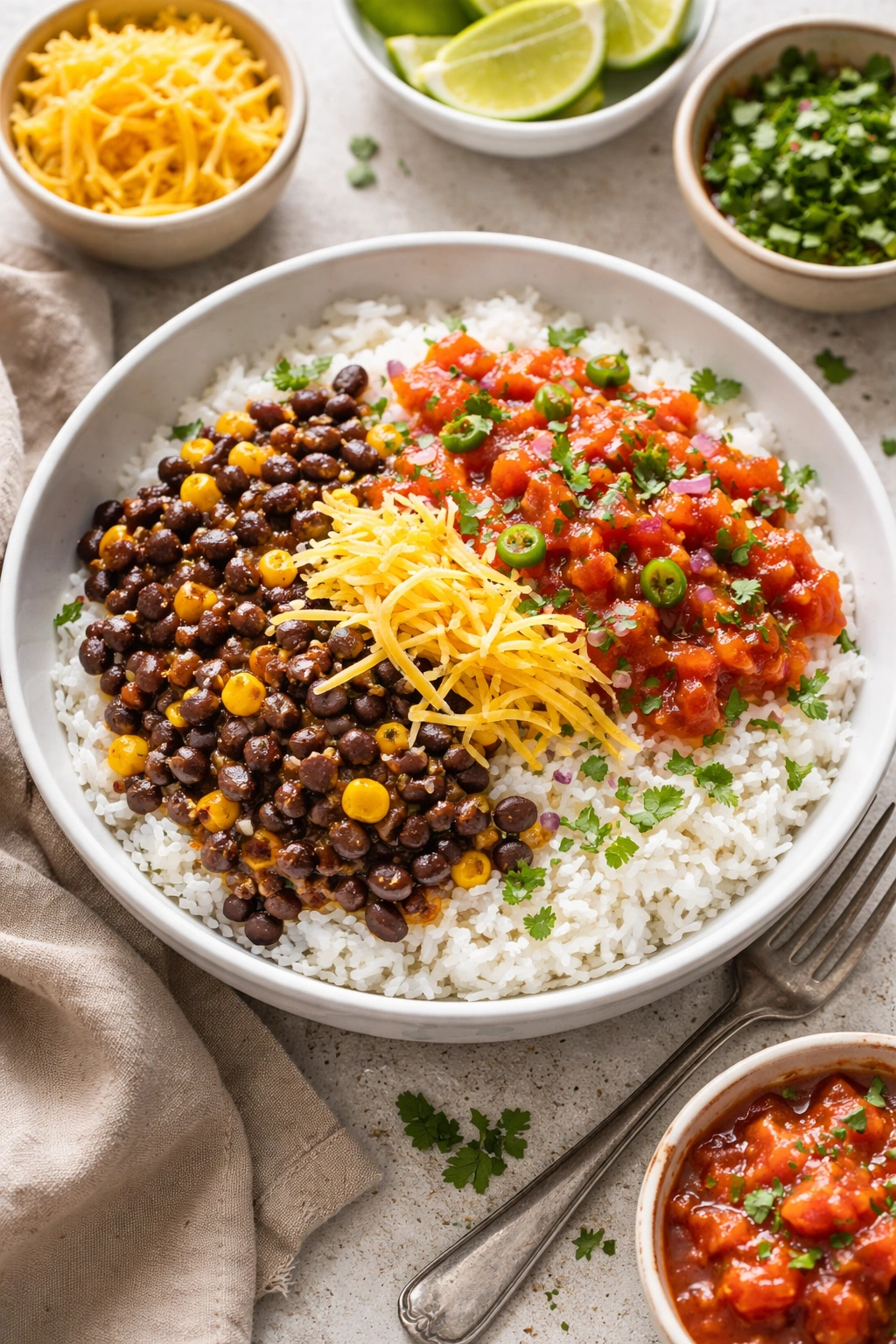
This is arguably the most forgiving meal you can make from pantry staples, and it’s the kind of recipe that teaches you how to cook intuitively rather than by rote. Rice forms the base, beans provide protein and creaminess, salsa adds brightness, and cheese (if you have it) makes everything better. The beauty is that you can customize it endlessly depending on what’s actually in your pantry.
The Foundation of Budget Burrito Bowls
Cook rice according to package directions—white rice is faster and cheaper than brown, so don’t feel guilty using it. While rice is cooking, drain and rinse a can of black beans, then heat them in a small pot with a quarter teaspoon of cumin and a pinch of garlic powder. This minimal seasoning makes them taste intentional rather than generic. Warm one to two cups of salsa in another pot or microwave—yes, actually heating salsa changes how it combines with other ingredients and makes the whole bowl taste more cohesive.
Assemble bowls by dividing the cooked rice among four bowls, then top each portion with warmed beans, warm salsa, and shredded cheese if you have it. If you have frozen corn, add that too. The total cost per serving rarely exceeds one dollar, and you’ve created something genuinely satisfying.
Making It Feel Like More
Adding a beaten egg and cooking it scrambled into each bowl transforms this into breakfast—completely different meal, same pantry ingredients. If you have canned or frozen vegetables (corn, peppers, carrots), warm those and add them in. Hot sauce elevates it instantly. Crushed tortilla chips add texture. The point isn’t following a specific recipe; it’s understanding that seasoned rice plus seasoned beans plus salsa equals an unquestionably complete meal, and everything else is optional enhancement.
Batch Cooking Strategy
Make a massive pot of rice and a huge pot of beans at the beginning of the week, then use them for multiple meals. Rice reheats perfectly in the microwave with a splash of water, and beans actually improve as they sit in the refrigerator—the spices meld together. This approach is how real budget cooking happens: you cook components, not individual meals.
3. Creamy Pantry Minestrone Soup
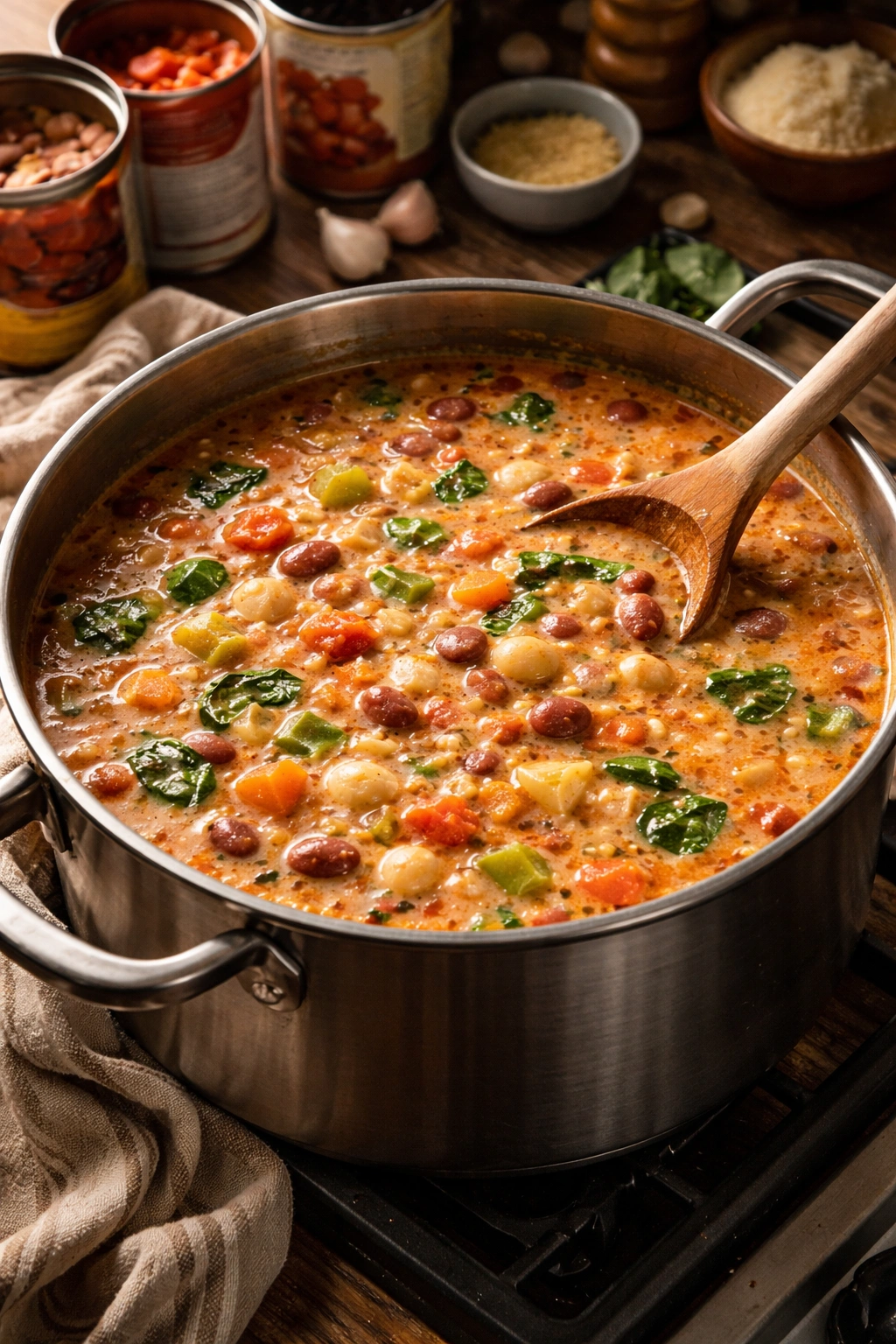
Soup is one of the most forgiving and stretching meals you can make from pantry staples. Minestrone—the Italian vegetable soup—typically relies on fresh vegetables, but this version uses only shelf-stable ingredients and costs under three dollars total. The result tastes nothing like you’re cutting corners; it tastes like home cooking.
Building a Vegetable Base Without Fresh Vegetables
Open one can of diced tomatoes, one can of carrots, one can of green beans, one can of kidney beans, and one can of diced potatoes. This might seem like a lot of cans, but remember you’re feeding a family—six servings easily. Pour all of them into a large pot with four cups of water and two cups of small pasta (ditalini or elbow work perfectly). Bring to a boil, then add two bouillon cubes and one teaspoon of dried Italian seasoning. Simmer until the pasta is tender, about twelve minutes.
The magic in this soup comes from the flavor-boosting power of good spices and bouillon. Bouillon is often overlooked in budget cooking, but it’s essentially concentrated stock—a single cube can transform water into something deeply flavorful. One teaspoon of Italian seasoning (which is usually a blend of basil, oregano, and thyme) makes the whole pot taste intentional and finished.
Flavor Development
Some budget cooks skip browning aromatics and go straight to the canned vegetables, which is fine and works. But if you have an extra minute and an extra dollar, dice a small onion and two cloves of garlic and sauté them in olive oil for three minutes before adding everything else. This step adds depth that you can’t quite achieve any other way. The onions become translucent and slightly sweet, the garlic releases its fragrant oils, and suddenly the soup tastes like someone cared about making it properly.
Serving and Stretching
Serve this soup with store-bought garlic bread or even just buttered toast. A bowl of minestrone with garlic bread becomes a complete, satisfying meal for two or three dollars. You can also stretch it further by adding more pasta or even some cooked rice—minestrone is the kind of soup that welcomes additions rather than complaining about them.
4. Skillet Cheeseburger Pasta

This is the budget home cook’s answer to Hamburger Helper, except it’s cheaper, tastes better, and takes only slightly more effort. A half pound of ground beef feeds four people when combined with pasta, which is the fundamental math of stretching meat in cooking. Add cheese and you’ve created something that tastes indulgent rather than economical.
The Basic Build
Brown half a pound of ground beef in a large skillet over medium-high heat. Once cooked, pour off excess fat if there’s more than a tablespoon or two, then add three cups of uncooked small pasta (elbow or ditalini), one can of tomato sauce, and two cups of water or beef broth. Stir everything together, then partially cover and simmer for ten to twelve minutes, stirring occasionally, until the pasta reaches tender and most of the liquid has been absorbed.
While the pasta cooks, grate about one and a half cups of cheese—cheddar, American, or even processed cheese works fine. The final step is to stir in the cheese off the heat, which melts perfectly from the residual warmth without getting grainy or broken-looking.
Building Layers of Flavor
The difference between boring cheeseburger pasta and genuinely delicious cheeseburger pasta is understanding that a little bit of ketchup, mustard, and Worcestershire sauce transforms ground beef into something that tastes intentionally like cheeseburgers. Add one tablespoon of ketchup, one teaspoon of mustard, and one teaspoon of Worcestershire sauce when you add the pasta and liquid. These pantry staples are absolute flavor powerhouses that cost cents per meal.
Stretching the Recipe Further
If you need to feed more people than expected, pasta is endlessly stretchable—make the base recipe, then add another cooked half pound of pasta after the fact rather than before cooking. This creates a slightly less saucy dish, but honestly, a less saucy cheeseburger pasta is still absolutely delicious. You can also add a can of beans (black beans or chickpeas work surprisingly well here) for more bulk and protein.
5. Quick Budget Taco Skillet
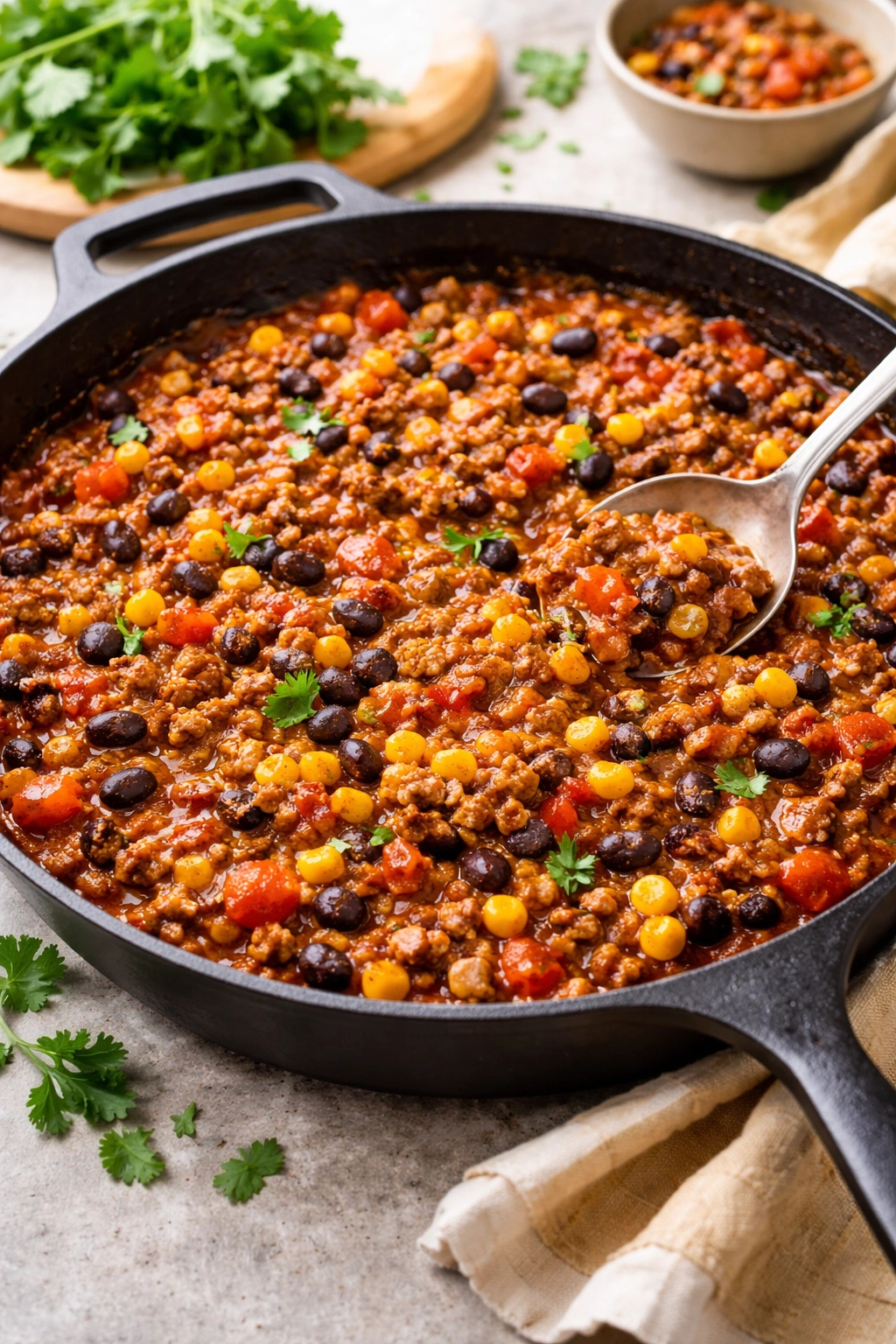
Tacos feel like an indulgence, but building them from pantry staples makes them genuinely affordable. This skillet version eliminates the need for tortillas, though you can certainly add them if you have them, making it flexible depending on what’s actually available.
The Flavor Framework
Brown three-quarters of a pound of ground beef or turkey in a large skillet, breaking it apart as it cooks. Once cooked, sprinkle two tablespoons of chili powder, one tablespoon of cumin, one teaspoon of garlic powder, one teaspoon of onion powder, and half a teaspoon of salt directly over the meat. Add three tablespoons of water, stir thoroughly, and let simmer for three minutes while the spices bloom and the water becomes a sauce that coats each piece of meat. This is far cheaper than using taco seasoning packets while delivering better flavor.
Building the Taco Skillet
Add two cans of black beans (drained and rinsed), one can of corn (drained), and one cup of salsa to the cooked, seasoned meat. Stir everything together and simmer for five minutes. Serve over rice, in bowls, or with tortillas if you have them—or even just on bread if that’s what’s available. The point is that seasoned ground meat plus beans plus salsa becomes taco flavors, and those flavors are absolutely delicious regardless of the vehicle.
Customization and Stretching
You can substitute half the ground meat with a can of refried beans without anyone noticing the difference—your family will only notice how affordable the meal was. Adding a can of diced tomatoes with green chiles creates a completely different flavor profile (more stew-like, less skillet-like) while remaining delicious. Serve with grated cheese if you have it, but it’s honestly fine without it.
6. Easy White Bean and Garlic Soup

Sometimes the simplest soups are the most satisfying. This rosemary garlic white bean soup takes only eight ingredients and delivers bold flavor that tastes like it required more thought and effort than it actually did. It’s the kind of recipe that demonstrates how pantry staples, when chosen thoughtfully, can create restaurant-quality results.
The Ingredient List
You need four cans of white beans (cannellini or great northern—drain and rinse them), four cups of vegetable or chicken broth, four cloves of garlic (minced or thinly sliced), one teaspoon of dried rosemary (or one tablespoon of fresh), one teaspoon of salt, half a teaspoon of black pepper, two tablespoons of olive oil, and a quarter teaspoon of red pepper flakes if you like heat.
The Method
Heat olive oil in a large pot over medium heat, then add garlic and rosemary and cook for one minute until fragrant and just beginning to brown. Add the white beans and broth, then bring to a simmer. Cook uncovered for fifteen minutes, which allows flavors to meld and the soup to thicken slightly as the beans begin to break down.
Here’s the real secret: toward the end of cooking, mash some of the beans against the side of the pot with a wooden spoon, breaking them apart. This releases starch that thickens the broth and creates a creamier texture without adding any cream. Season with salt, pepper, and red pepper flakes, then taste and adjust as needed.
Serving and Variations
Serve with crusty bread if you have it, or even toast spread with a bit of olive oil and garlic powder. You can blend the entire soup until completely smooth for a different texture, or leave it chunky as is. Adding a can of diced tomatoes creates a completely different soup that’s equally good. Dried white beans work here too and cost even less—just soak them overnight and cook them before making the soup, which extends the cook time but not your grocery expense.
7. Red Lentil Curry with Pantry Ingredients
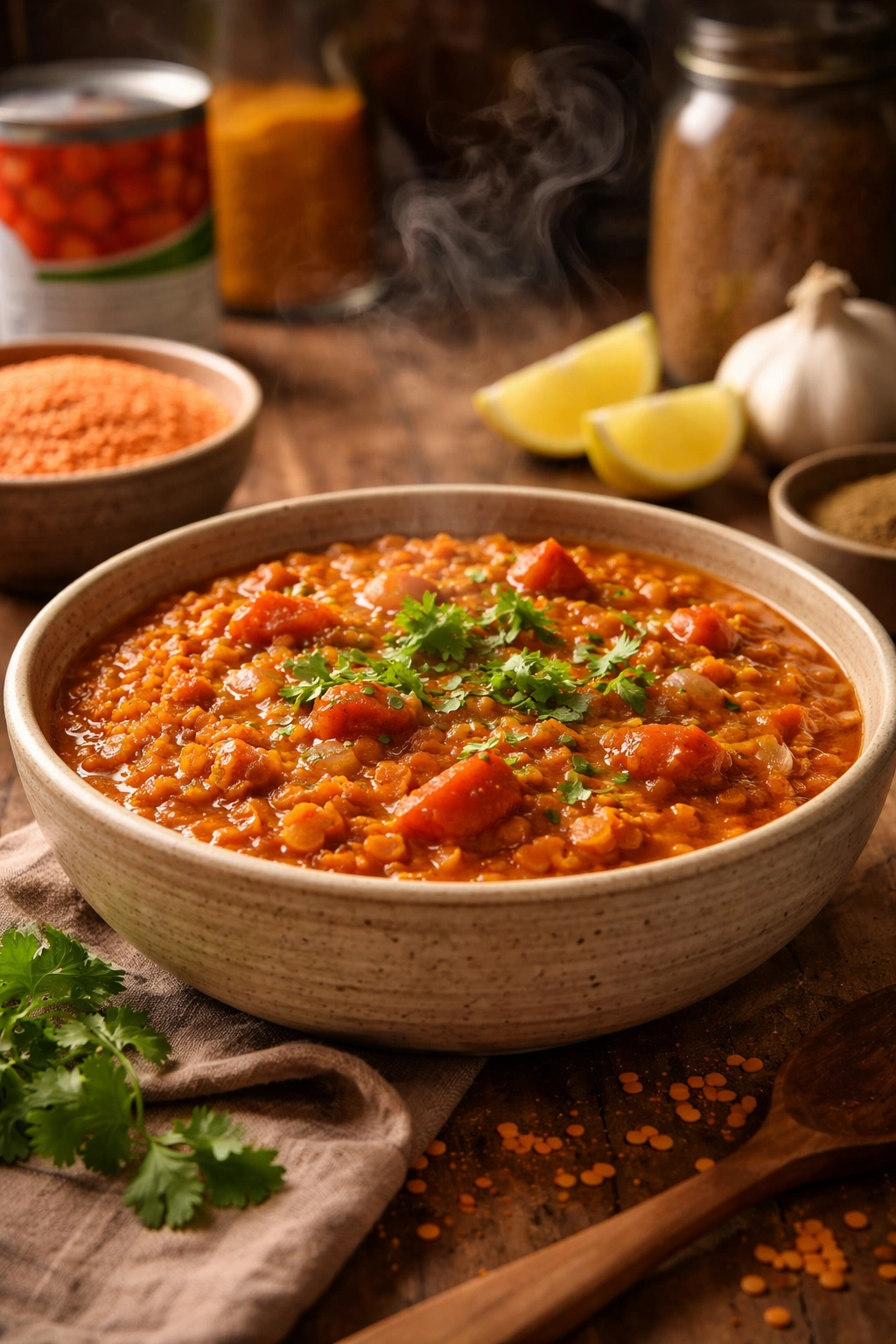
Red lentils are one of the cheapest proteins you can buy, and they cook faster than any other dried legume because they’ve been hulled before drying. A single pound of red lentils costs two to three dollars and contains enough protein to feed a family of four multiple times. This curry is proof that vegetarian eating doesn’t have to be expensive.
The Curry Base
Heat two tablespoons of oil in a large pot over medium heat, then add one large diced onion and two cloves of minced garlic. Cook for five minutes until the onion is soft and beginning to brown at the edges. Add two tablespoons of curry powder, one tablespoon of cumin, one teaspoon of turmeric, and one teaspoon of salt. Stir constantly for one minute while the spices bloom and release their essential oils—this is the difference between one-dimensional spice flavor and truly aromatic curry.
Building the Dish
Pour in two cups of red lentils (rinsed), six cups of water or vegetable broth, and one can of diced tomatoes. Bring to a boil, then reduce to a simmer and cook uncovered for about thirty-five minutes, stirring occasionally. The lentils will soften and partially break down, creating a thick, stew-like consistency. The individual lentils should be tender but not completely dissolved—you want some texture.
If you have canned coconut milk, stir in one can during the last five minutes of cooking, which transforms this into a creamier, richer curry. If you don’t, it’s equally delicious as is. Taste and adjust seasonings—you might need more salt, more spice, or more heat.
Serving and Variations
Serve over rice with any vegetables you have available—frozen peas are perfect, as are canned carrots or even canned spinach stirred in at the end. If you have naan, pita, or flatbread, this curry is perfect for sopping up the sauce. You can also serve it with simple boiled potatoes for a heartier, stretching option. The curry actually improves if you make it a day ahead, as the spices have time to meld together.
8. Vegetable Fried Rice with Frozen Vegetables
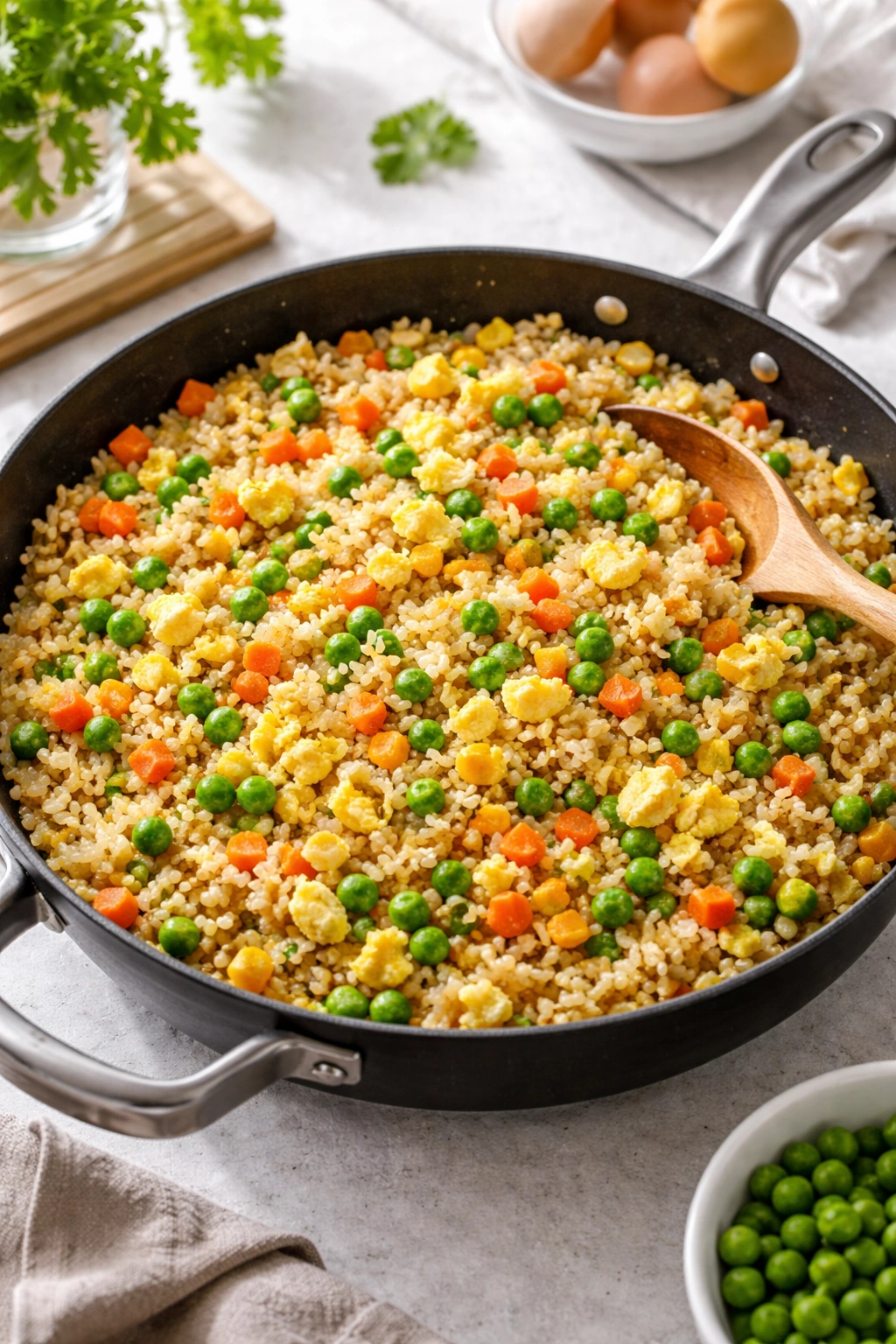
Fried rice is the ultimate pantry meal because it uses cooked rice (best made the day before), eggs, frozen vegetables, and soy sauce. It’s fast, it’s endlessly customizable, and it costs under two dollars to feed four people. This is the meal you make when you need to feed your family in under twenty minutes with whatever you have on hand.
Cooking the Components
If you have leftover rice, use that—cold rice is actually better for fried rice because the grains separate more cleanly. If you don’t have leftover rice, cook it fresh and spread it on a sheet pan to cool while you prepare the rest. You’ll need about three cups of cooked rice for four servings.
Heat two tablespoons of oil in a large skillet or wok over medium-high heat. While the oil heats, beat two or three eggs with a fork and have your frozen vegetables ready—frozen peas, carrots, and corn are the classic combination. Once the oil is hot, pour in the beaten eggs and let them cook without stirring for about thirty seconds until they begin to set, then scramble them and remove them from the skillet.
Building the Fried Rice
Add the rice to the hot skillet, breaking up any clumps with a wooden spoon or spatula. Cook for three to four minutes, stirring frequently, until the rice is heated through and some grains start to brown slightly. Add two to three cups of frozen vegetables and stir-fry for three to four minutes until they’re hot. Return the cooked eggs to the skillet, then add three tablespoons of soy sauce and one teaspoon of sesame oil if you have it (though the dish is delicious without it).
Toss everything together over the heat for one more minute, then taste. You might want more soy sauce—add it a teaspoon at a time until it tastes right to you. Some people like garlic or ginger here, and if you have either, minced or powdered versions work perfectly.
Stretching and Customizing
Fried rice welcomes additions. A can of drained tuna, canned chicken, or leftover cooked meat transforms it into a protein-heavier meal. Canned pineapple chunks (drained) add sweetness. A squeeze of hot sauce adds heat and brightness. The fundamental ratio is cooked rice plus egg plus vegetables plus soy sauce equals fried rice, and everything else is customization.
9. Chickpea Masala with Rice
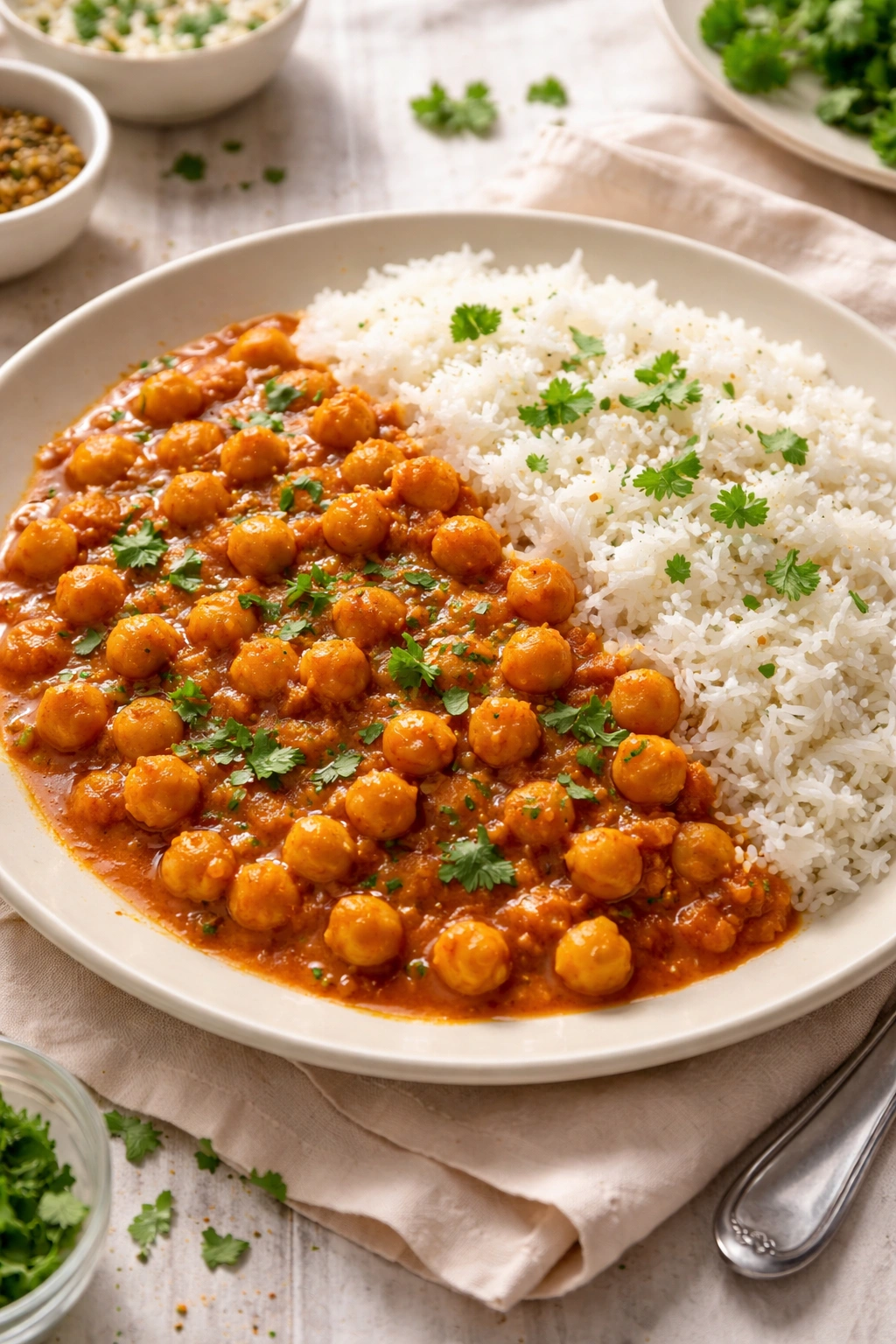
Chickpea masala is a spiced chickpea curry that’s vegetarian, protein-rich, and absolutely gorgeous on rice. It costs less than five dollars to make a meal for four people, and the spice profile is so carefully balanced that it tastes like restaurant cooking. This is the meal that teaches you that budget food doesn’t have to taste economical.
Making the Masala
Heat two tablespoons of oil in a large pot over medium heat, then add one diced onion and cook for five minutes until soft and beginning to brown. Add two cloves of minced garlic, one tablespoon of grated ginger (or one teaspoon of ground ginger), and cook for another minute until fragrant.
Add one tablespoon of curry powder, one teaspoon of garam masala (if you have it), one teaspoon of turmeric, one teaspoon of cumin, and half a teaspoon of salt. Cook the spices for one minute while they bloom. Add three cans of chickpeas (drained and rinsed), one can of diced tomatoes, and one can of coconut milk or regular milk (use what you have). Stir everything together and bring to a simmer.
Cooking and Finishing
Simmer uncovered for fifteen to twenty minutes, which allows the sauce to reduce slightly and the flavors to meld. The chickpeas should be heated through and the sauce should coat them beautifully. Taste and adjust seasonings—you might need more salt, more spice, or a squeeze of lemon juice if you have it (though regular white vinegar works too).
Serve over cooked rice. If you have fresh cilantro, a handful stirred in at the end is beautiful. If you don’t, the dish is equally delicious without it. This is the kind of meal that tastes impressive enough to serve to guests, which makes it perfect for budget entertaining.
10. Dump-and-Go Bean Chili
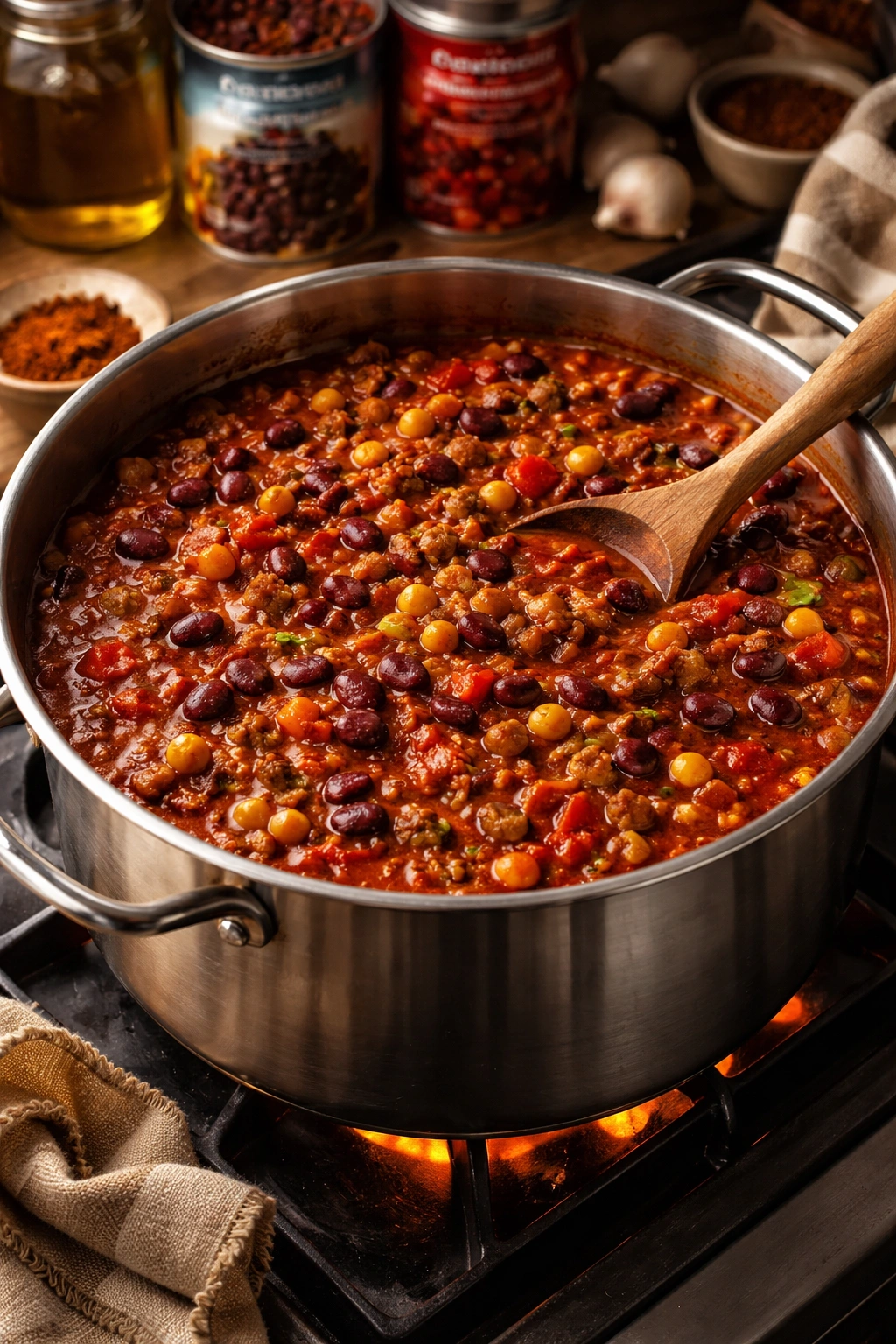
This final recipe is the truest test of budget cooking: three cans, one packet of seasoning, water, and a pot. No browning, no chopping, no advance planning required. You dump everything in, let it simmer, and you’ve created something that tastes like you spent hours on it.
The Method
Combine three different types of canned beans (one can of black beans, one can of kidney beans, one can of chickpeas or pinto beans—whatever you have, drain and rinse them) in a large pot. Add one can of tomato sauce, one can of diced tomatoes, one packet of chili seasoning, and four cups of water. Bring to a boil, then reduce to a simmer and let cook for at least twenty minutes, though thirty to forty minutes allows the flavors to develop more fully.
Why This Works
Budget chili is essentially about beans (which you’re buying cheaply in bulk by the case) combined with tomatoes (which are equally inexpensive) and spices. You’re not stretching expensive meat—you’re using affordable plant-based protein that’s nutritionally complete and incredibly satiating. One pot fed four to six people for under three dollars.
Customization
If you want a meatier chili, brown a pound of ground beef before adding the beans. If you want vegetables, add a can of corn or a can of diced carrots. If you want it spicier, add hot sauce or red pepper flakes. The base recipe works perfectly as is, but it’s also infinitely flexible depending on what you have available.
Final Thoughts

The ultimate lesson from these ten budget meals is that your pantry is never empty of possibilities. Rice, beans, pasta, canned tomatoes, and a thoughtfully organized spice collection can create dozens of genuinely delicious dinners that don’t taste like budget cooking. The recipes here aren’t deprivation meals masquerading as normal food—they’re the kinds of dishes people ask you to make again, often in surprised disbelief at how little they cost.
Real budget cooking is about understanding that your money goes further when you buy dried goods, canned goods, and frozen goods rather than pre-prepared convenience items. It’s about learning to cook components rather than individual meals, which means you can quickly assemble dinner even on nights when you’re tired and unprepared. Most importantly, it’s about recognizing that limitations breed creativity—and that creativity in the kitchen becomes its own reward.
