



There’s nothing quite like coming home on a cold night to find a bubbling pot of soup already waiting for you. The aroma alone can transform a chilly evening into something warm and comforting, and the beauty of crockpot soups is that they’re already done—no last-minute scrambling, no complicated steps, no stress. You simply dump your ingredients into the slow cooker in the morning, go about your day, and return to a perfectly cooked meal that fills your home with the most inviting scents.
Cold weather naturally draws us toward soups, and for good reason. There’s a psychological comfort that comes with holding a warm bowl in your hands, and physiologically, the hot liquid and hearty ingredients help regulate your body temperature from the inside out. A proper soup isn’t just food; it’s a form of self-care that happens to be incredibly practical. When temperatures drop and life gets busy—which it inevitably does—having a collection of reliable crockpot soup recipes in your back pocket becomes essential.
The slow cooker is the cold-weather cook’s secret weapon. Unlike a stove-top meal that demands your attention at just the right moment, a slow cooker allows flavors to develop and meld together over hours of gentle heat. Vegetables break down slightly, releasing their essence into the broth. Tough cuts of meat become tender enough to shred with a spoon. Even pasta softens perfectly without turning mushy. You get restaurant-quality depth of flavor with minimal effort—which is precisely what you need when winter days are short and your energy is stretched thin.
This collection of ten crockpot soups covers the full spectrum of cold-night comfort: from classic beef stew to creamy chicken varieties, from bean-based heavyweights to vegetable-forward options. Each one can be prepared in minutes, adapts well to what you have on hand, and genuinely improves when given time to sit. These aren’t just recipes; they’re solutions to the question of “what’s for dinner?” on nights when you need warmth, sustenance, and absolutely no fuss.
1. Hearty Beef Stew with Root Vegetables
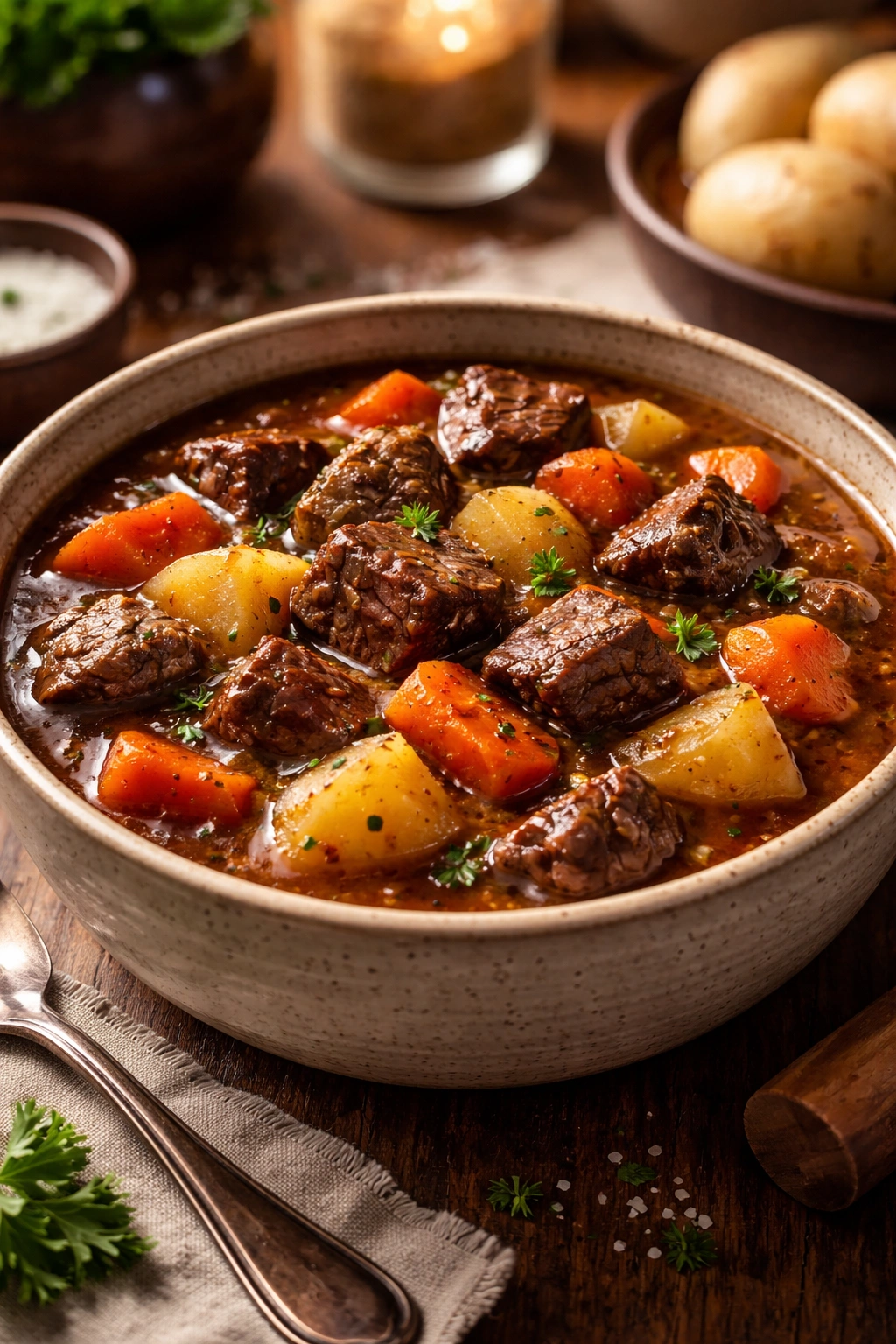
Nothing says comfort like a proper beef stew—tender chunks of meat falling apart at the touch of a spoon, potatoes that’ve absorbed all the savory broth, carrots softened to the perfect texture. This is the soup that defines comfort food, and the slow cooker is its ideal cooking vessel. The long, gentle heat breaks down the connective tissue in cheaper cuts of beef (chuck roast is perfect here), transforming them into the most luxurious, melt-in-your-mouth pieces. The vegetables don’t compete with the meat; instead, they work together, creating a unified flavor that feels like it’s been simmering since morning—because it has.
Why It Becomes Restaurant-Quality in the Slow Cooker
Beef stew requires time to develop its rich, complex flavor, and that’s exactly what a slow cooker provides. The sealed environment prevents evaporation, so all those savory juices stay in the pot instead of floating away as steam. The broth becomes silky and concentrated, clinging to every vegetable and piece of meat. You’ll use tough, inexpensive cuts of beef (chuck roast or beef chuck), and the extended cooking (6-8 hours on low) breaks down the collagen into gelatin, which creates that luxurious mouthfeel that defines great stew.
What You Need to Know
- Use a 2-3 pound chuck roast, cut into 1½-inch cubes (don’t skip the cutting; smaller pieces cook more evenly)
- Add carrots, potatoes, celery, and onion in substantial chunks so they don’t dissolve
- Beef broth forms the backbone; use at least 3-4 cups for proper broth-to-solid ratio
- Season with thyme, bay leaves, salt, and pepper; add tomato paste for depth
- The first hour or two on low, ingredients stay relatively firm; by hour 6-8, everything has softened beautifully
Pro tip: Brown the beef in a skillet before adding it to the crockpot. This step takes 10 minutes but creates a deeply savory fond that elevates the entire stew.
2. Creamy Potato Soup with Bacon and Cheddar

This is the soup that people actually request by name. Loaded with potatoes, enriched with cream, studded with crispy bacon, and topped with sharp cheddar, it’s indulgent without feeling heavy. The slow cooker keeps everything at the perfect consistency—the potatoes break down slightly to thicken the soup naturally while staying chunky enough to provide real substance. Green onions add a bright freshness that cuts through the richness, and that combination of smoky bacon with aged cheddar is nearly impossible to stop eating.
What Makes This Soup Creamier Than Expected
Potato soups can be split into two camps: those thickened with flour or cornstarch, and those that rely on potatoes themselves to create creaminess. This version uses the second approach. As waxy potatoes cook for hours in the slow cooker, their starches break down and naturally thicken the broth, while cream added near the end provides richness. The result is a soup that’s creamy without feeling gluey or overly heavy. The bacon fat also emulsifies with the broth, creating additional body and flavor.
Key Components for Success
- Use waxy potatoes (Yukon gold or red potatoes), not starchy russets, which can turn to mush
- Cook potatoes in broth for 5-6 hours until they’re completely tender but still maintain their shape
- Add bacon (cooked separately and crumbled) and cheese in the last 30 minutes so flavors stay bright
- Cream goes in just before serving; heating it for too long can cause separation
- Green onions and additional cheddar as toppings prevent any texture from becoming monotonous
Insider note: Save a cup of cooking broth before adding cream. If your finished soup is too thick, this reserved broth is the perfect way to reach your desired consistency.
3. Chicken Noodle Soup with Fresh Herbs
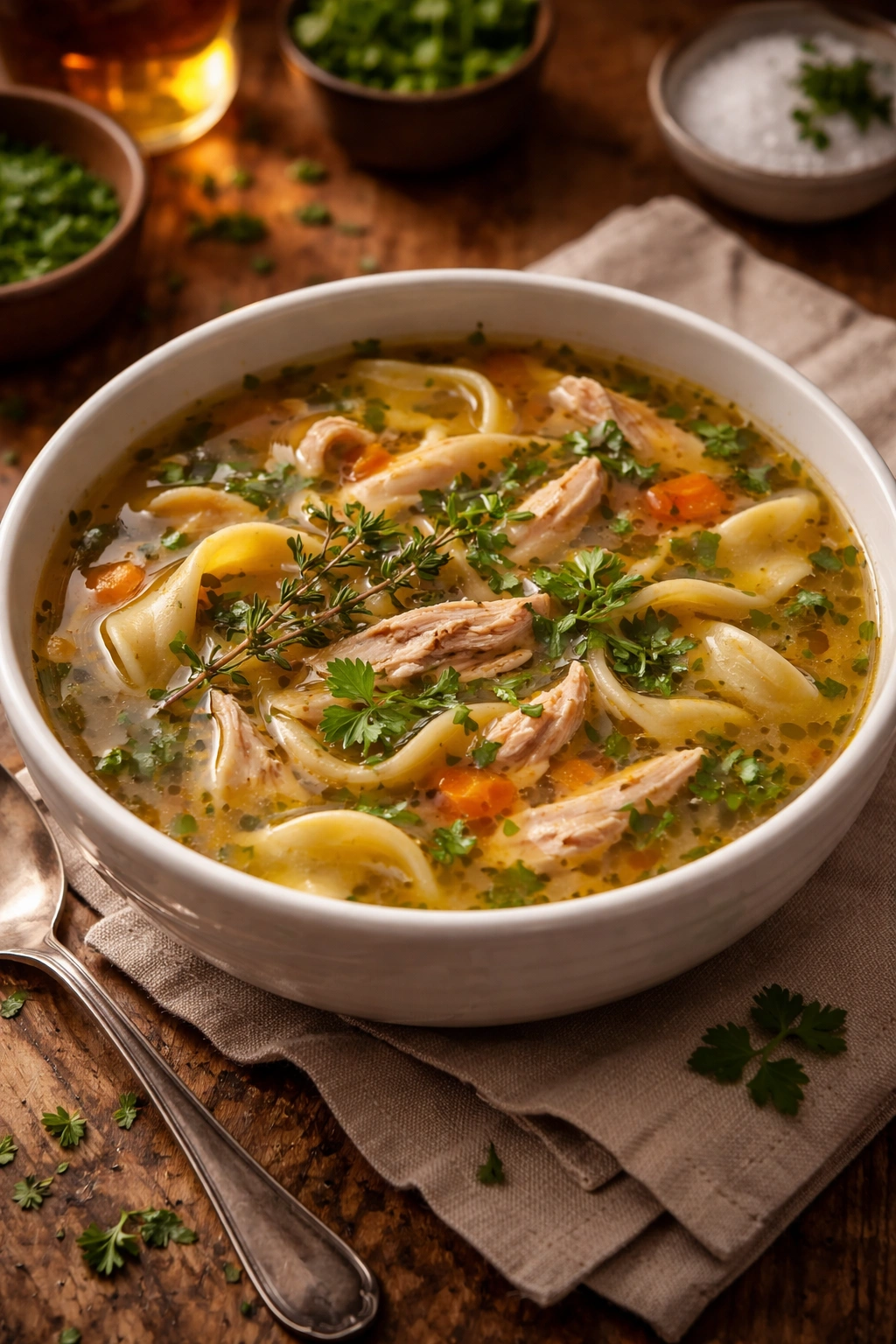
This isn’t the sad canned version you remember from childhood. A proper chicken noodle soup built in a slow cooker is aromatic, deeply flavored, and genuinely healing on a cellular level. The chicken poaches gently in broth infused with vegetables and herbs, becoming impossibly tender. Egg noodles maintain their structure perfectly when added near the end, and the whole thing comes together in a bowl that feels medicinal and restorative without tasting medicinal at all.
How Slow Cooking Transforms Simple Ingredients
Chicken breast cooked on a stovetop often becomes dry and stringy, but in a slow cooker, the moist environment keeps it tender and juicy throughout the extended cooking time. The poaching broth absorbs the subtle chicken flavor while being infused by aromatics: onion, celery, carrot, thyme, and bay leaves. These vegetables soften into the background, becoming nearly invisible but leaving behind their essence. The result is a broth that tastes like it took hours of active cooking to develop, yet required perhaps 10 minutes of prep.
What Makes the Difference
- Bone-in chicken breasts cook more flavorfully than boneless; remove bones before shredding
- A full head of roughly chopped garlic and a handful of fresh thyme sprigs make this taste significantly better than dried alternatives
- Vegetable aromatics (carrots, celery, onion) get strained out or removed before serving, so don’t stress about cutting them perfectly
- Egg noodles go in 30 minutes before serving to prevent them from absorbing too much liquid and becoming mushy
- A squeeze of fresh lemon juice at the end brightens the entire bowl without making it taste citrusy
Worth knowing: You can use a rotisserie chicken instead of poaching chicken breasts. Shred the meat and add it in the last 30 minutes so it doesn’t overcook; use the poaching liquid of the slow cooker as your broth base.
4. White Bean and Sausage Soup

This is the kind of soup that satisfies like a full meal because it is a full meal. Italian sausage provides rich, spiced meat; white beans contribute protein and creamy texture; kale or spinach adds nutritional depth and a slight bitterness that balances everything else. Tomatoes and garlic ground it all in Italian flavor territory, and the slow cooker allows all these components to meld into something exponentially better than their individual parts suggest. It’s hearty without being heavy, flavorful without any trickiness, and endlessly customizable based on what you have on hand.
Why Bean and Sausage Works So Well Together
Sausage brings fat and seasoning that would be cloying on its own, but white beans are neutral enough to absorb that richness while contributing their own subtle creaminess. The beans break down slightly during cooking, releasing starch that thickens the broth, while staying mostly intact for texture. The combination creates a soup that’s simultaneously hearty and refined—comfort food that doesn’t feel dumbed down. Garlic, onion, and tomato create a flavor foundation that’s almost sweet, and the greens added at the end provide contrast.
Building the Recipe
- Brown 1 pound Italian sausage (removed from casing) before adding to the slow cooker; this step takes 5 minutes and prevents the soup from being greasy
- Use two cans (or 1½ cups dried, soaked overnight) of white beans—cannellini, great northern, or white kidney beans all work beautifully
- Aromatics: onion, garlic, celery, and carrots in typical soup proportions
- One can diced tomatoes plus 4-5 cups broth creates proper liquid balance
- Kale or baby spinach goes in 10-15 minutes before serving so it wilts without becoming bitter
- Season with thyme, oregano, salt, and pepper; taste and adjust at the very end
Pro tip: If you brown the sausage and sauté the aromatics together before adding to the slow cooker, you’ll develop deeper flavor. But if time is tight, everything still turns out delicious without these steps.
5. Slow Cooker Chili with Beef and Beans
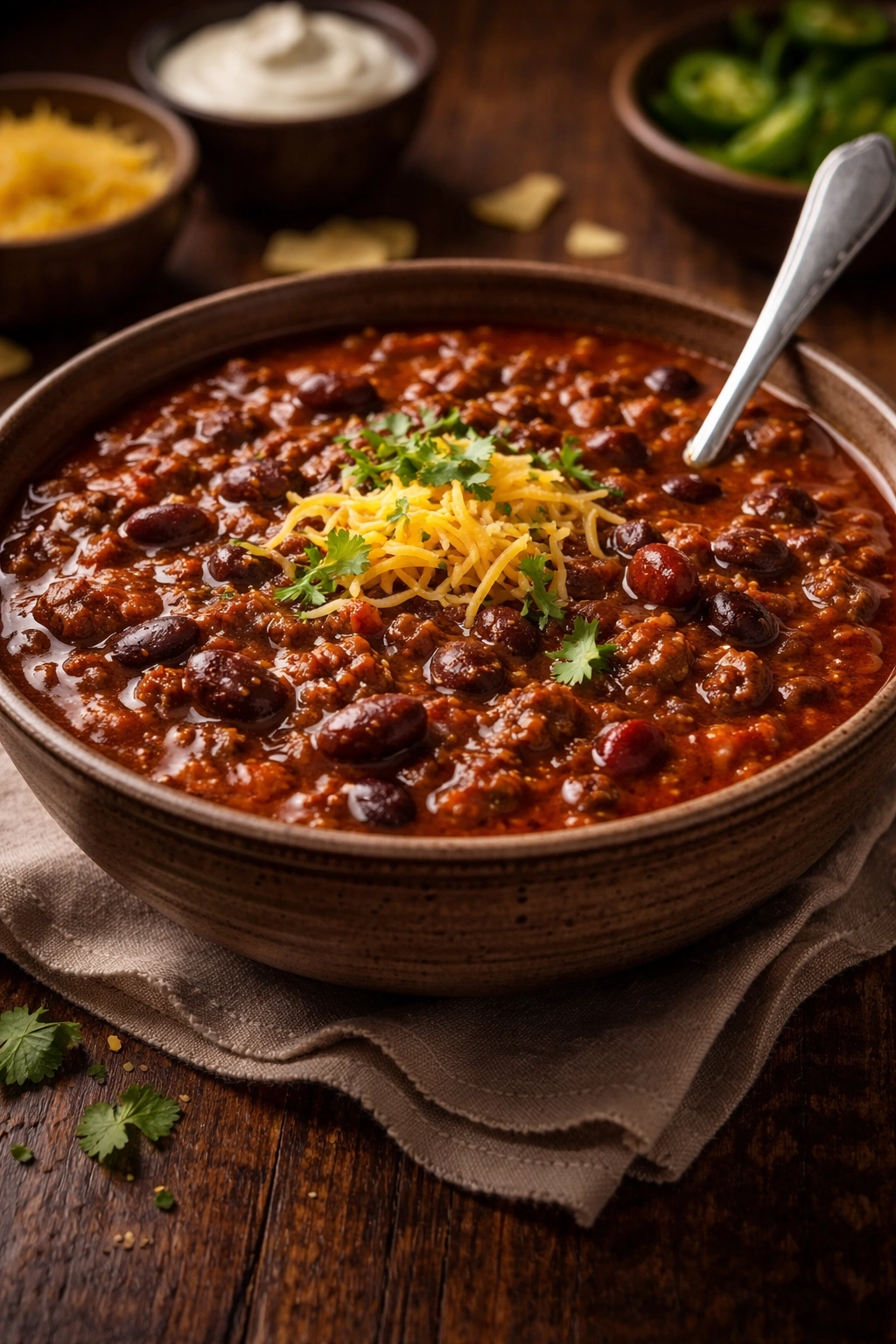
Chili occupies a unique space between soup and stew, and that ambiguity is part of its charm. Thicker than soup, but looser than a stew, with a spiced, tomatoey depth that’s entirely its own thing. Ground beef and beans simmer together for hours, absorbing all the spice and tomato flavor until it becomes difficult to identify individual components—everything has dissolved into this unified, complex dish. The slow cooker is ideal for chili because it allows the spices to bloom without the bottoms burning, and the extended cooking ensures the beans are perfectly tender.
The Spice Balance That Makes It Work
Chili gets its flavor from cumin, chili powder, and often a touch of cinnamon or cocoa—warmth and depth rather than heat. The tomato base prevents it from tasting one-dimensional, while the beans provide textural interest and nutritional substance. A proper slow cooker chili doesn’t taste rushed; each spice has had time to disperse throughout the dish rather than lingering in isolated pockets. If you taste it early, it might seem harsh. By the final hours, it’s mellowed into something deeply satisfying.
Recipe Framework
- Brown 2 pounds ground beef with onion and garlic, then add to the slow cooker
- Use both kidney beans and black beans for complexity; one 15-ounce can of each works well
- Two 15-ounce cans diced tomatoes (or one large can) plus a 6-ounce can tomato paste creates proper thickness and tomato depth
- Spices: 2 tablespoons cumin, 1-2 tablespoons chili powder, 1 teaspoon paprika, ½ teaspoon cinnamon, salt and pepper
- Cook on low for 6-8 hours; the longer it goes, the more the flavors meld
- Top with sharp cheddar, sour cream, green onions, and cornbread on the side
Insight: Taste your chili at the 4-hour mark and adjust seasonings. Chili often benefits from a pinch more cumin or a dash of hot sauce added near the end.
6. French Onion Soup with Melted Cheese
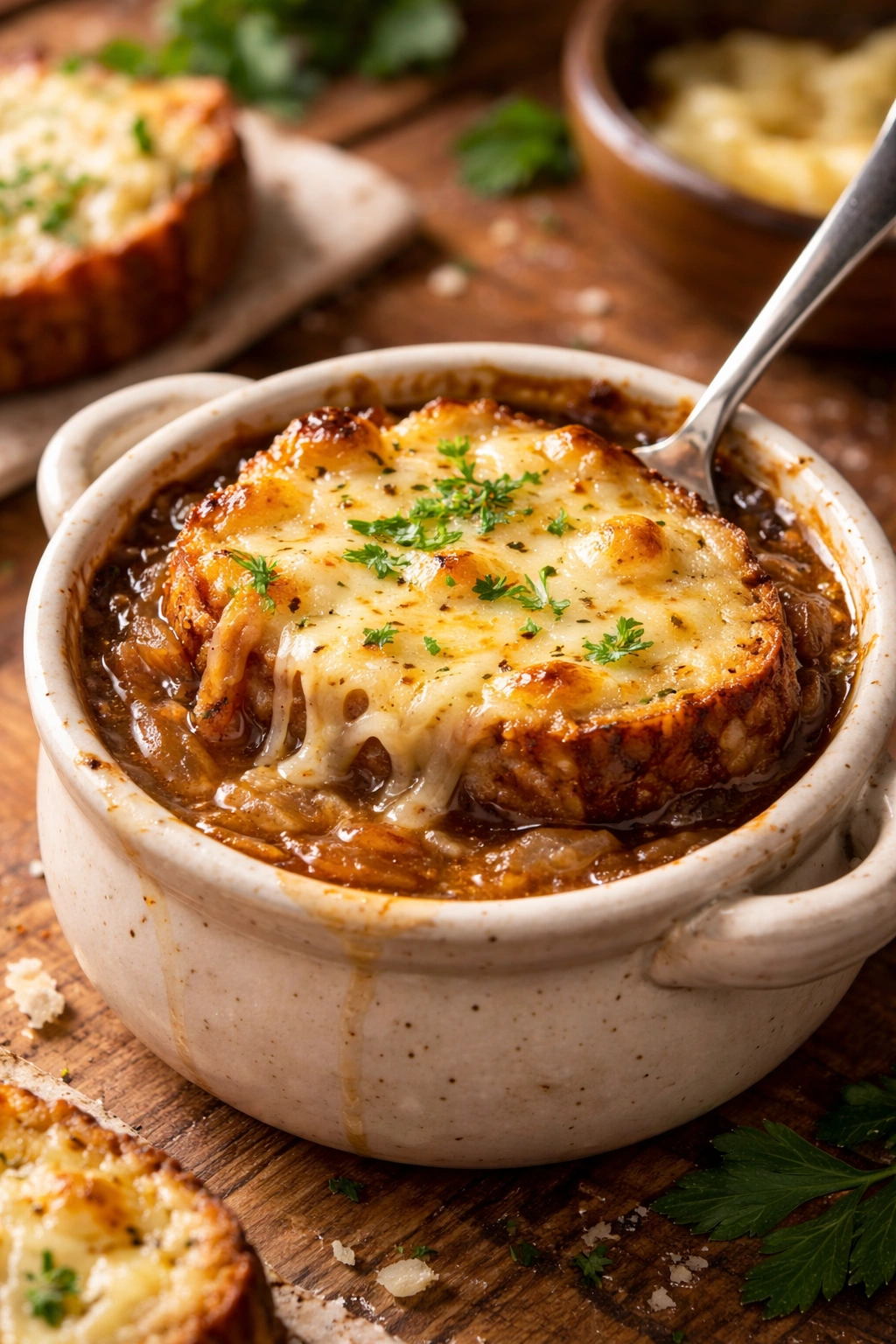
French onion soup is one of those dishes that seems intimidatingly fancy until you realize it’s just onions, broth, and time. The slow cooker makes it exponentially easier than the traditional stovetop method because you don’t need to monitor the caramelization process—you simply let the onions cook slowly until they’re jammy and sweet, releasing all their natural sugars. The result is a soup that’s unexpectedly rich and complex, deepened by beef broth and finished with crusty bread and melted Gruyère. It’s the kind of soup that makes people think you spent all day cooking, when the truth is you spent 10 minutes prepping and then walked away.
How Slow Cooking Creates Caramelization Without Effort
Traditional French onion soup requires you to stand at the stove, stirring onions for 45 minutes to an hour as they gradually brown and caramelize. The slow cooker accomplishes the same thing with absolutely no active work. The long, gentle heat slowly removes moisture from the onions while their natural sugars concentrate and develop complex, slightly sweet flavors. By the 8-10 hour mark, you’ll have silky, deeply colored onions that form the base of the entire soup. This is one of the few instances where the slow cooker method is genuinely superior to the traditional stovetop approach.
What You’ll Need
- 4-5 pounds yellow onions, sliced into thin half-moons (yes, this is a lot of onions; they shrink substantially)
- 6 cups beef broth for proper depth and body
- 1 cup dry red wine or additional broth for acidity
- Thyme, bay leaves, salt, and pepper during the long cook
- At serving time: crusty bread slices, thick slices of Gruyère or Swiss cheese
- Oven or broiler to toast bread and melt cheese at the very end
Critical step: While the soup simmers, don’t skip toasting and cheesing the bread under the broiler. This step transforms the soup from good to extraordinary—the cheese should be melted and slightly browned, the bread crispy outside but still a bit soft within.
7. Lentil and Vegetable Soup (Vegetarian)
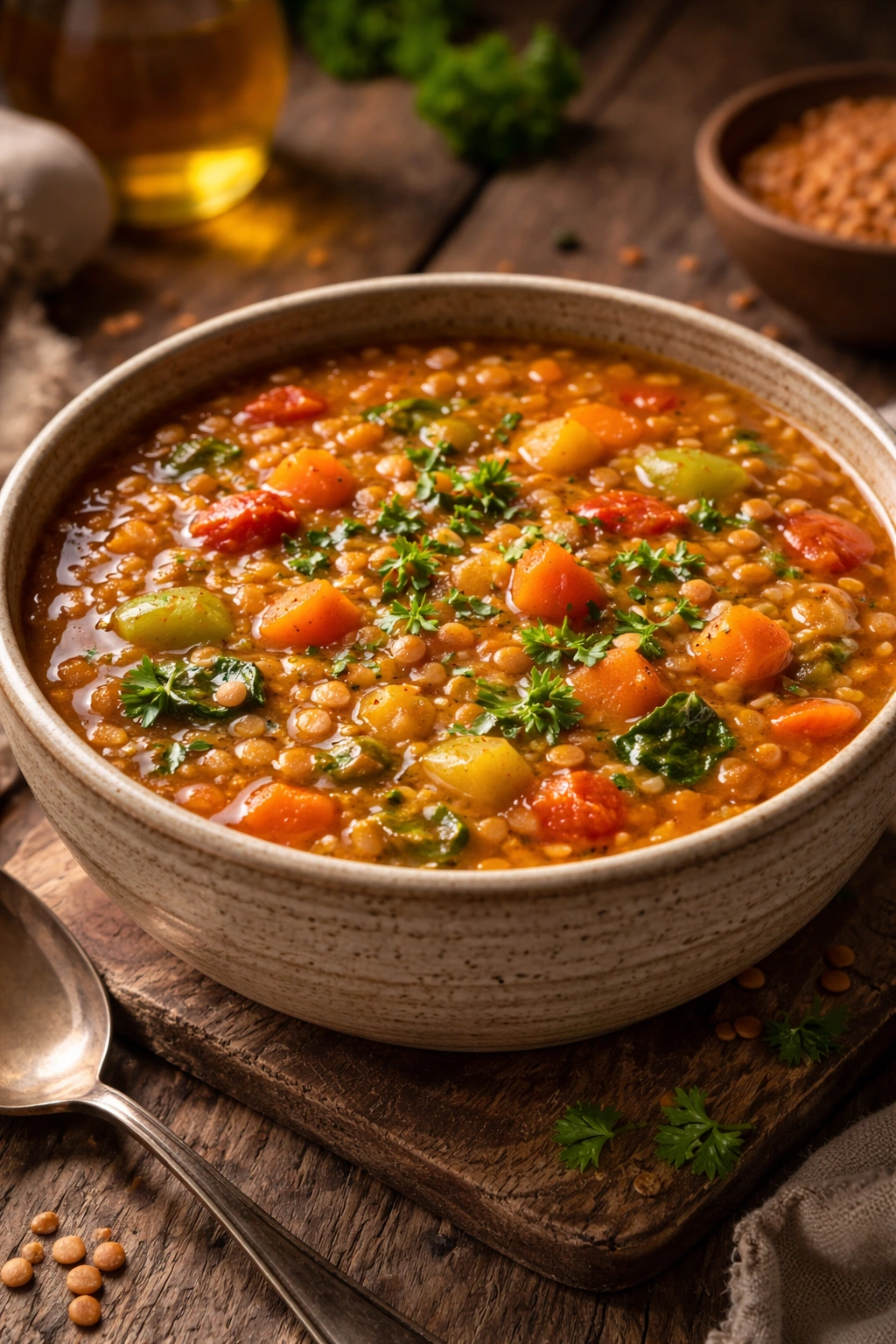
This soup proves that meat isn’t required for depth, satisfaction, or complexity. Lentils contain plenty of protein and fiber, creating a soup that’s genuinely filling without any meat. The slow cooker allows vegetables to become soft and sweet while the lentils break down slightly, creating natural thickening and body. Tomato paste adds savory depth, while fresh lemon juice squeezed in at the end provides brightness. It’s the kind of soup that carnivores don’t realize is vegetarian until they’re halfway through their second bowl.
Why Lentils Are Ideal for Slow Cooking
Red lentils cook completely and break down, creating a creamy texture without any added cream. Brown or green lentils hold their shape better, creating a heartier soup with distinct legume texture. Either works beautifully in a slow cooker because the moist environment prevents them from drying out the way they might on a stovetop. The extended cooking allows lentils to absorb all the broth flavors while releasing their own subtle nuttiness. Unlike dried beans, lentils require no pre-soaking, making this an incredibly accessible soup.
Vegetable and Spice Composition
- Use red or brown lentils (about 1 cup dried); cook them in vegetable broth with onion, garlic, carrot, celery, and zucchini
- Tomato paste (3-4 tablespoons) provides umami and savory depth without needing meat
- Vegetables are added at different times: hardy ones (carrots, celery) at the start, delicate ones (zucchini, spinach) toward the end
- Spices include cumin, coriander, and thyme; these enhance lentils without overwhelming them
- At the very end, fresh lemon juice and a handful of fresh parsley brighten everything
- Serve with crusty bread and crumbled feta if desired
Bonus flexibility: You can freeze this soup beautifully, making it perfect for batch cooking. Prepare a double batch and freeze half in individual containers.
8. Creamy Chicken and Wild Rice Soup
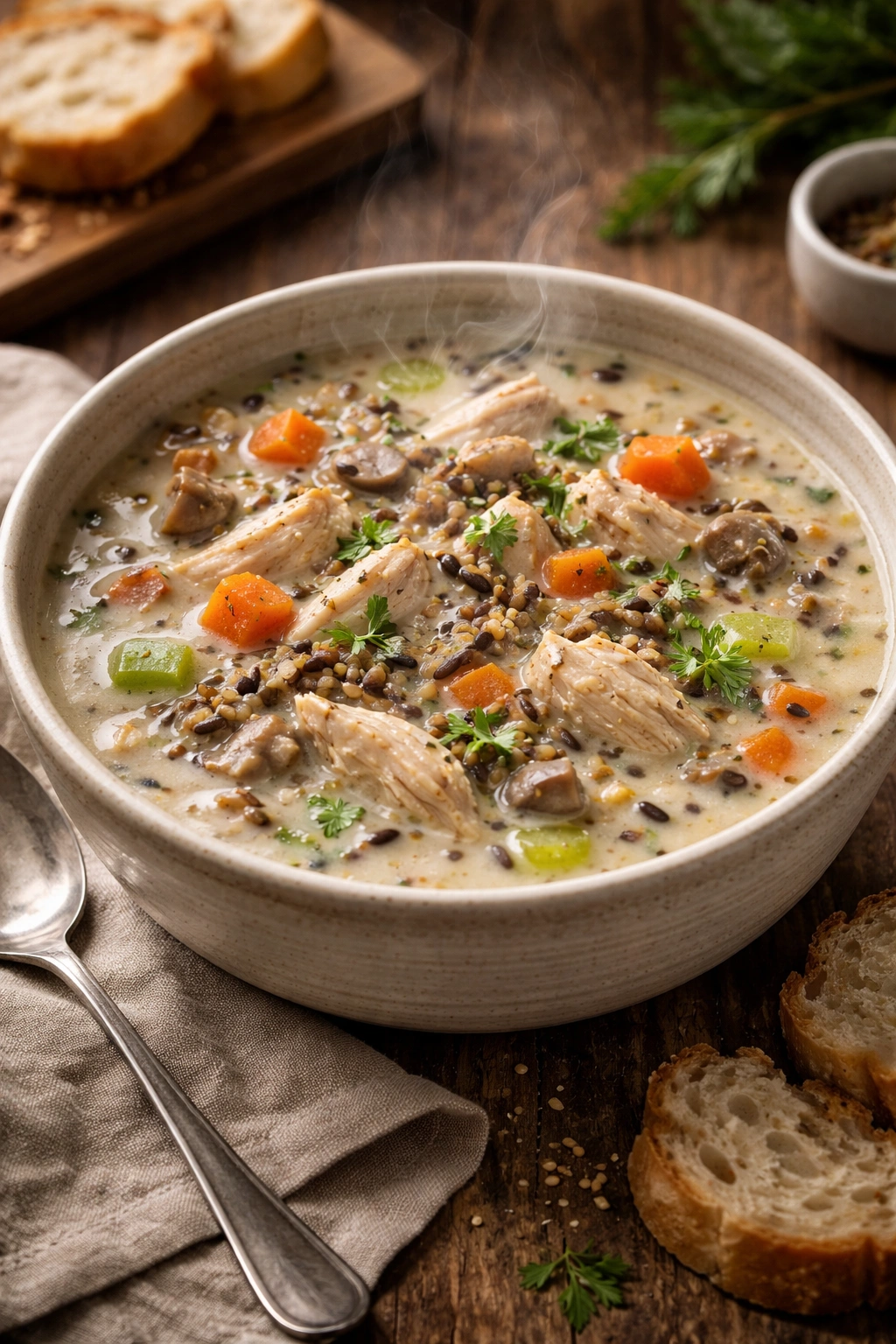
Wild rice has a nutty, almost mushroom-like quality that makes it ideal for creamy soups. Combined with tender chicken, rich broth, and a touch of cream, it creates something that feels luxurious despite being straightforward. The slow cooker prevents wild rice from becoming mushy while allowing it to fully absorb all the surrounding flavors. Carrots and celery provide traditional vegetable base, while thyme and bay leaves ground it in classic chicken soup territory. This soup sits in that perfect middle ground between rustic and refined.
The Magic of Wild Rice in Slow Cooking
Wild rice takes longer to cook than regular rice, which makes it perfect for slow cooker application. During the 6-8 hour cook time, it absorbs liquid gradually, plumping up and becoming tender without ever turning to mush. The starch released during cooking helps thicken the soup naturally, so you need less cream to achieve creaminess. The nutty flavor of wild rice pairs beautifully with chicken and mushrooms, and it provides textural interest that prevents the soup from feeling monotonous.
Building Your Soup
- One whole chicken or 4-5 bone-in chicken breasts cook along with the rice and vegetables for maximum flavor
- ½ cup wild rice combined with broth becomes perfectly tender over the slow cook time
- Carrots, celery, onion, and mushrooms (cremini or button) create the vegetable base
- Thyme, bay leaves, salt, and pepper are your seasonings; restraint is key here
- Heavy cream goes in near the end (last 30 minutes); if added earlier, it can separate
- Taste and adjust salt at the very end; the broth becomes concentrated during cooking
Pro insight: If you prefer your soup less creamy, use half-and-half or milk instead of heavy cream. The result is lighter but still luxurious.
9. Black Bean Soup with Lime and Cilantro
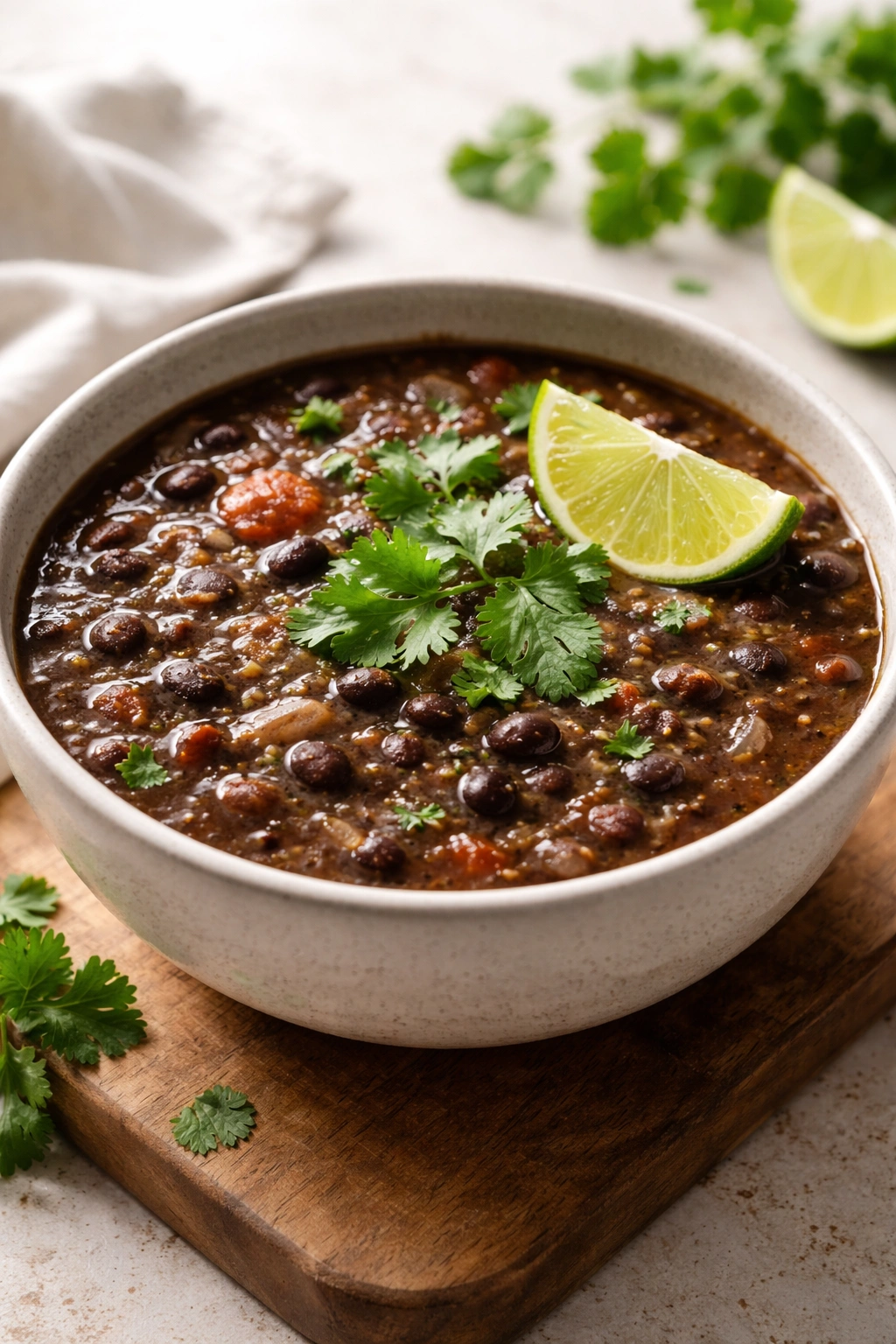
This soup proves that simple ingredients can create something with tremendous personality. Black beans cook beautifully in a slow cooker, becoming creamy and rich without turning to mush. Onion, garlic, and cumin are your flavor builders, while lime juice and cilantro added at the very end provide brightness and personality. It’s substantial enough to satisfy but light enough that you don’t feel weighed down afterward. Serve it with avocado, sour cream, tortilla chips, and a lime wedge, and suddenly you have a meal that feels restaurant-quality yet required minimal effort.
Why Black Beans Benefit from Extended Cooking
Black beans have slightly thicker skins than other beans, which means they benefit from the extended cooking time that a slow cooker provides. They can cook for 8+ hours without falling apart, instead becoming creamy and almost velvety. The slow heat allows spices to permeate the beans thoroughly, creating flavor that comes from within rather than sitting on top. This is the advantage of slow cooking beans—you get flavor integration that’s impossible to achieve quickly.
Flavor Building Process
- Start with either canned black beans (drained and rinsed) for speed, or dried beans (soaked overnight) for deeper flavor
- Sauté onion and garlic before adding to the slow cooker; this step takes 3 minutes and multiplies your flavor
- Use vegetable or chicken broth as your cooking liquid; about 4-5 cups for proper consistency
- Cumin (1½ teaspoons), bay leaves, and a pinch of smoked paprika are your core spices
- In the last 15 minutes, add lime juice (2-3 limes), a handful of fresh cilantro, and salt to taste
- The lime juice should be added at the very end so its brightness doesn’t fade during further cooking
Serving suggestion: Top with sliced avocado, a dollop of sour cream, crumbled queso fresco, and crispy tortilla strips. The textural contrast makes this soup infinitely more interesting.
10. Tomato and Basil Soup with Cream
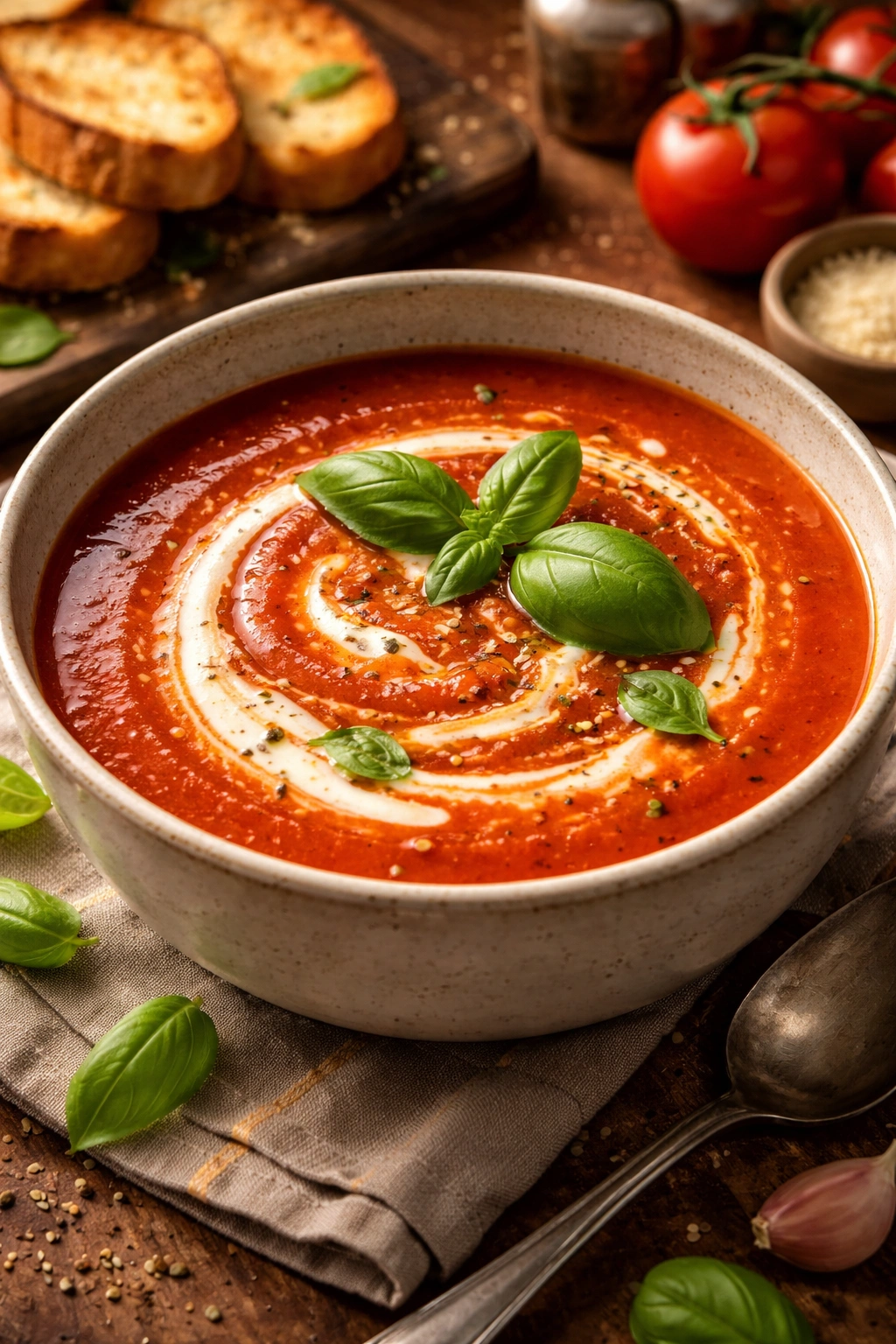
There’s something about tomato soup that brings out people’s nostalgic side, yet this version transcends nostalgia into genuine sophistication. The slow cooker allows canned tomatoes to break down completely, developing deep, concentrated tomato flavor without any burnt edges or acidic harshness that can happen on a stovetop. Onion and garlic soften and become nearly invisible, leaving behind their savory essence. A touch of cream stirred in at the end creates silkiness without heaviness, and fresh basil added just before serving provides brightness and herbaceous lift.
How Slow Cooking Deepens Tomato Flavor
Tomato’s natural acidity can become sharp if concentrated too quickly over high heat. In a slow cooker, that acidity mellows gradually while the sweet and savory notes develop. The extended cooking breaks down tomato cell walls, releasing their full flavor. Canned tomatoes are actually better for slow cooking than fresh because they’re picked at peak ripeness and preserved immediately, maintaining their flavor intensity. By the 6-8 hour mark, your soup will taste like you’ve been simmering it all day—because you have been.
Soup Composition
- Use two 28-ounce cans whole tomatoes (San Marzano preferred) or three 15-ounce cans diced tomatoes
- One large onion, roughly chopped, plus 4-5 garlic cloves
- 3-4 cups vegetable or chicken broth creates proper liquid balance
- A splash of balsamic vinegar (1 tablespoon) adds subtle sweetness and complexity
- Salt, pepper, and Italian seasoning during cooking
- Heavy cream (½ to 1 cup) stirred in near the end creates richness; adjust to your preference
- Fresh basil leaves torn and stirred in at serving time—never cook basil for extended periods as it becomes bitter
Final touch: A grilled cheese sandwich is the only acceptable side dish for tomato soup. Use good butter, quality bread, and sharp cheddar for the ultimate pairing.
Prep and Storage Tips for Maximum Success
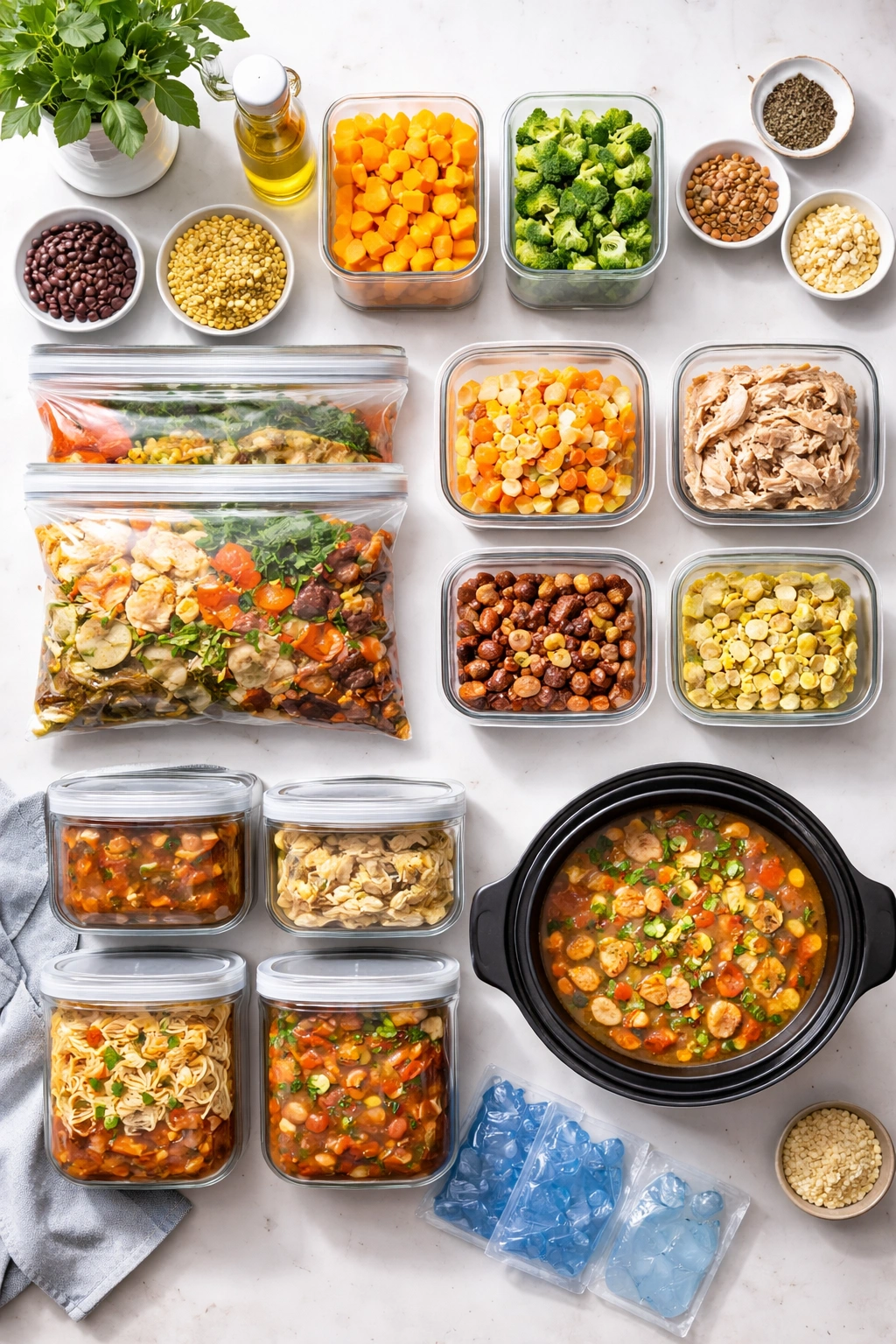
Slow cooker soups are infinitely easier to manage than stovetop cooking, but a few smart strategies make them even more seamless. Prep your ingredients the night before if your mornings are rushed. Chop vegetables, brown meat if your recipe calls for it, and store everything in containers in the refrigerator. In the morning, everything goes into the slow cooker in minutes. Some soups (particularly those without cream or delicate ingredients) can be completely assembled, refrigerated overnight, and then cooked the next day, though most slow cookers work best when you start with room-temperature ingredients rather than cold ones.
Storage and freezing work beautifully for almost all of these soups. Most will keep in the refrigerator for 3-4 days in airtight containers. Freezing works wonderfully—use freezer bags laid flat to save space, or portion into individual containers for grab-and-go meals. Soups with cream or dairy can freeze, though they may separate slightly upon thawing; simply whisk or blend briefly to recombine. Avoid freezing soups with pasta if you’re planning to freeze for more than a few weeks, as noodles can become mushy. Instead, freeze the soup base and cook pasta fresh when reheating. Most frozen soups thaw and reheat beautifully on the stovetop over medium-low heat, stirred occasionally until warmed through.
Customizing Your Slow Cooker Soups
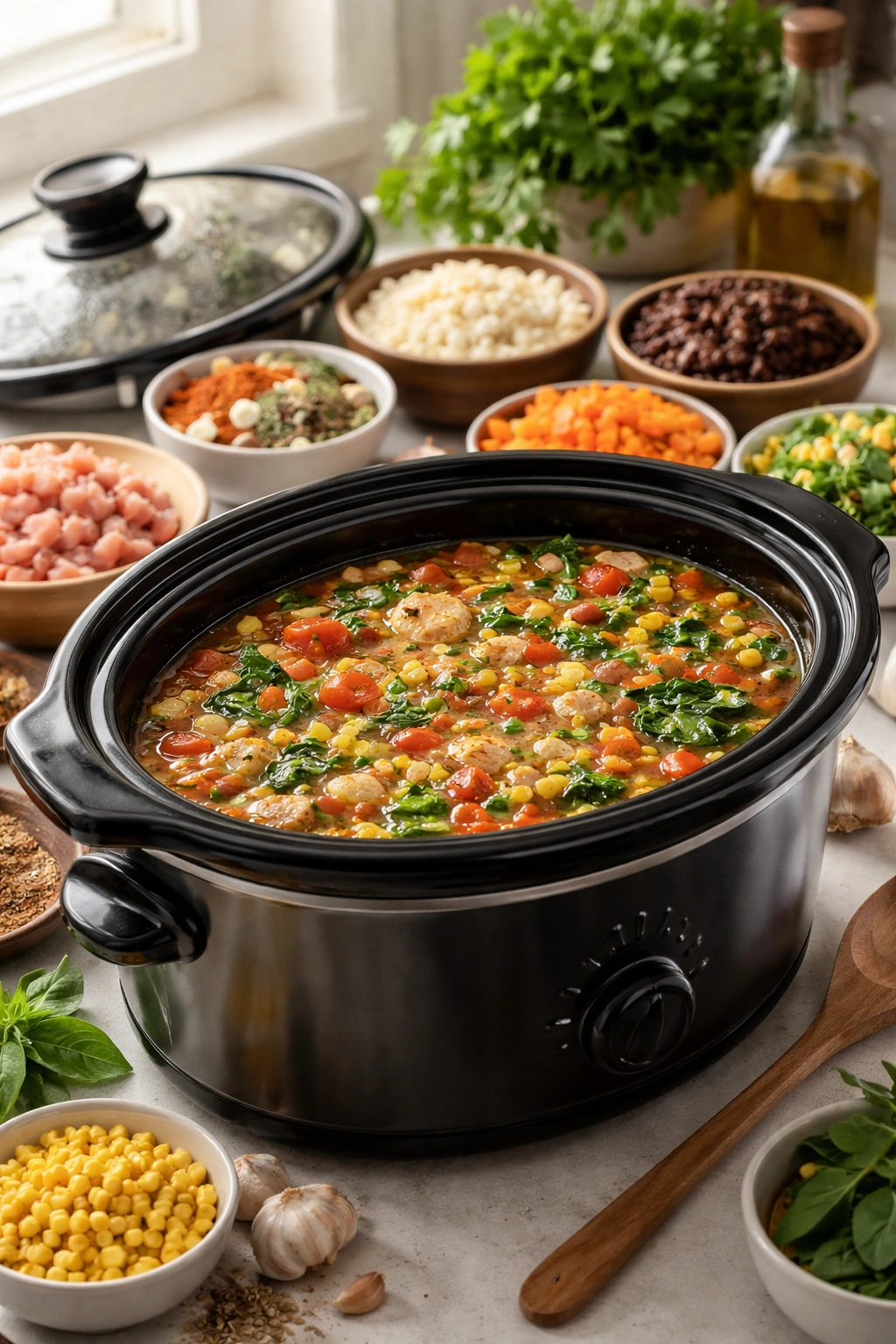
The beauty of slow cooker soups is their flexibility. Don’t have the exact protein or vegetable a recipe calls for? Substitutions almost always work because the slow cooker’s forgiving nature means slight variations in ingredients rarely derail the final result. Protein swaps: Chicken can be replaced with turkey or tofu; ground beef works as a substitute for sausage; vegetarians can omit meat and add beans for protein. Vegetable flexibility: If your recipe calls for carrots but you have parsnips, use them. Out of celery? Add a bit more onion or use fennel. The core vegetables—onion, carrot, celery—appear in almost every savory soup, but you can adjust secondary vegetables based on what you have.
Spice and seasoning adjustments let you personalize soups to your preferences without affecting cooking time. Prefer things spicier? Add red pepper flakes, hot sauce, or diced jalapeños. Want deeper savory notes? A tablespoon of soy sauce or Worcestershire sauce works wonders. Love garlic? Double it without concern. The slow cooker allows bold flavors to meld gracefully rather than standing out sharply. Just remember that dried herbs are more concentrated than fresh—use roughly one-third the amount. Add fresh herbs (parsley, basil, cilantro) at the very end of cooking so their delicate flavors don’t fade during extended heat exposure.
Final Thoughts

Cold nights demand comfort, and these ten soups deliver exactly that without demanding much of you. The slow cooker transforms simple ingredients and a few minutes of prep into meals that taste like you’ve been cooking all day. Each soup on this list has its own personality—from the luxurious creaminess of potato soup to the bright, citrusy zing of black bean soup—yet all share the quality of becoming better as they sit, flavors melding and deepening.
The real magic of slow cooker soups lies in their forgiveness and flexibility. You’re not fighting the clock or trying to time multiple components to finish simultaneously. You’re simply trusting time and gentle heat to do what they do best: develop flavor, soften tough ingredients, and create something nourishing that tastes infinitely better than the sum of its parts. On nights when the temperature drops and motivation is scarce, that’s exactly what you need.
