



There’s nothing quite like coming home to a dinner that’s already made, waiting for you, filling your kitchen with that incredible aroma of slow-cooked chicken, caramelized peppers, and warming spices. That’s the magic of crockpot chicken fajitas—a meal that requires maybe five minutes of actual work in the morning, but delivers restaurant-quality results by dinnertime. This isn’t the type of recipe that asks you to stand over a hot stove, carefully timing your searing and sautéing. Instead, it’s one of those gloriously simple dump-and-go dinners that lets your slow cooker do what it does best: transform basic ingredients into something truly craveable through hours of gentle, low-and-slow cooking.
The beauty of making fajitas this way is that you’re not sacrificing flavor for convenience. If anything, the extended cooking time actually improves the dish. The chicken becomes impossibly tender, the peppers and onions turn soft and mellow, and all those spices have plenty of time to fully infuse every single strand of meat. This is the kind of recipe that makes you look like a culinary genius without requiring you to be one—which, let’s be honest, is exactly what a busy weeknight calls for.
Why Crockpot Chicken Fajitas Are the Ultimate Weeknight Solution
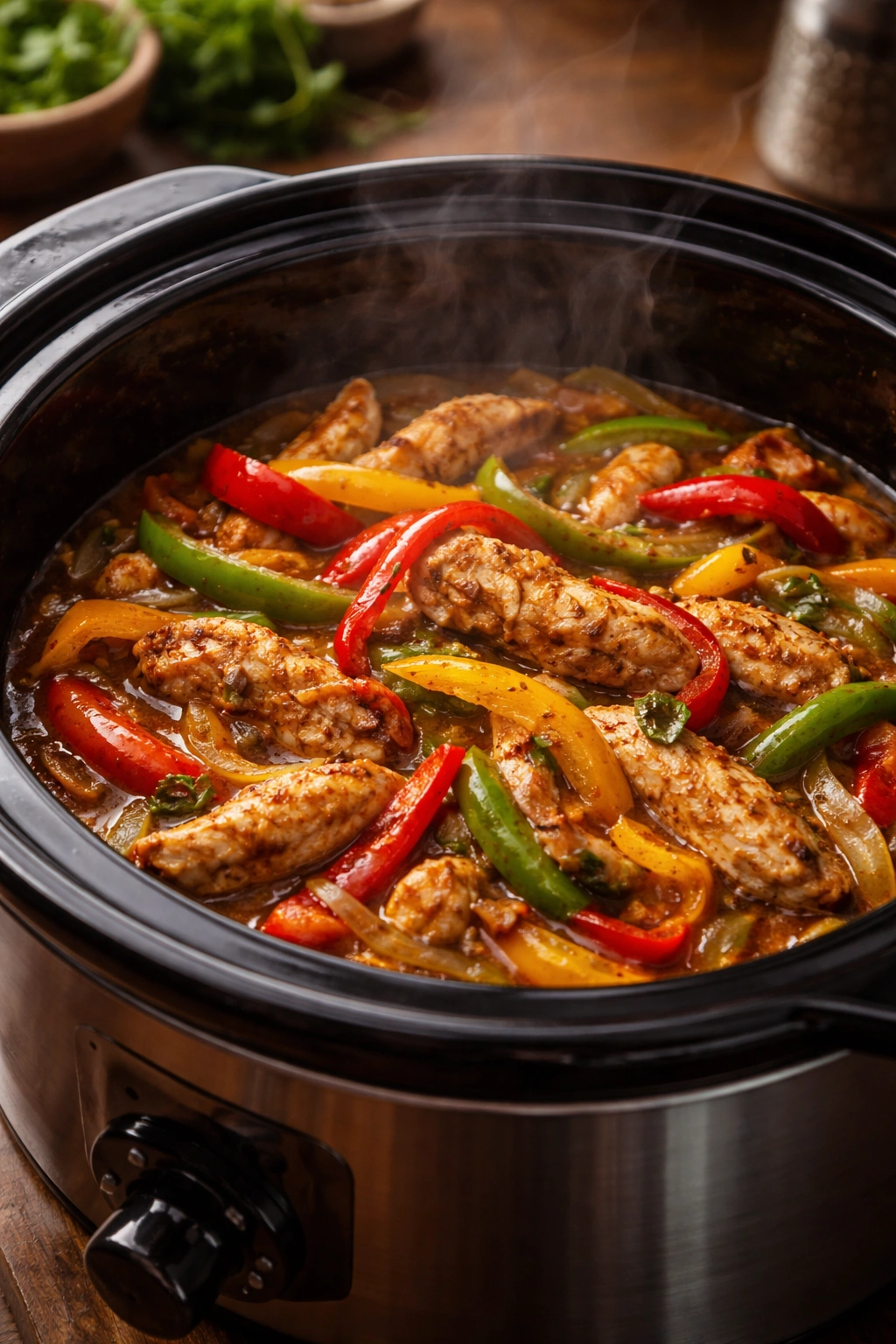
When you’re juggling work, kids, errands, or just life in general, the last thing you want to think about is cooking dinner. This is where slow cooker chicken fajitas absolutely shine. You’re not committing to standing in the kitchen for hours, and you’re definitely not settling for takeout or something mediocre just because you’re exhausted. Instead, you get a meal that’s genuinely delicious, naturally filling, and completely customizable to what your family actually wants to eat.
The genius of this approach is that fajitas, by nature, are already built for flexibility. The base—seasoned chicken and peppers—stays consistent, but everyone at the table can build their own plate with whatever toppings speak to them. Your kid who only wants cheese and sour cream? Done. Your partner who’s loading up with guacamole and hot sauce? Also done. And you, sneaking extra cilantro because it’s your thing? Obviously done. One meal, infinite variations, zero complaints.
Beyond the adaptability, there’s something deeply satisfying about the economics of this recipe. You’re working with boneless skinless chicken breasts, which are among the most affordable proteins you can buy, especially when they’re on sale. Add in some basic bell peppers, an onion, salsa from a jar, and spices you probably already have, and you’re feeding a family of four to six for less than most single restaurant entrees would cost. Multiply that across a week of meal prep, and you’ve just given yourself a serious financial win.
What Makes This Recipe So Ridiculously Easy
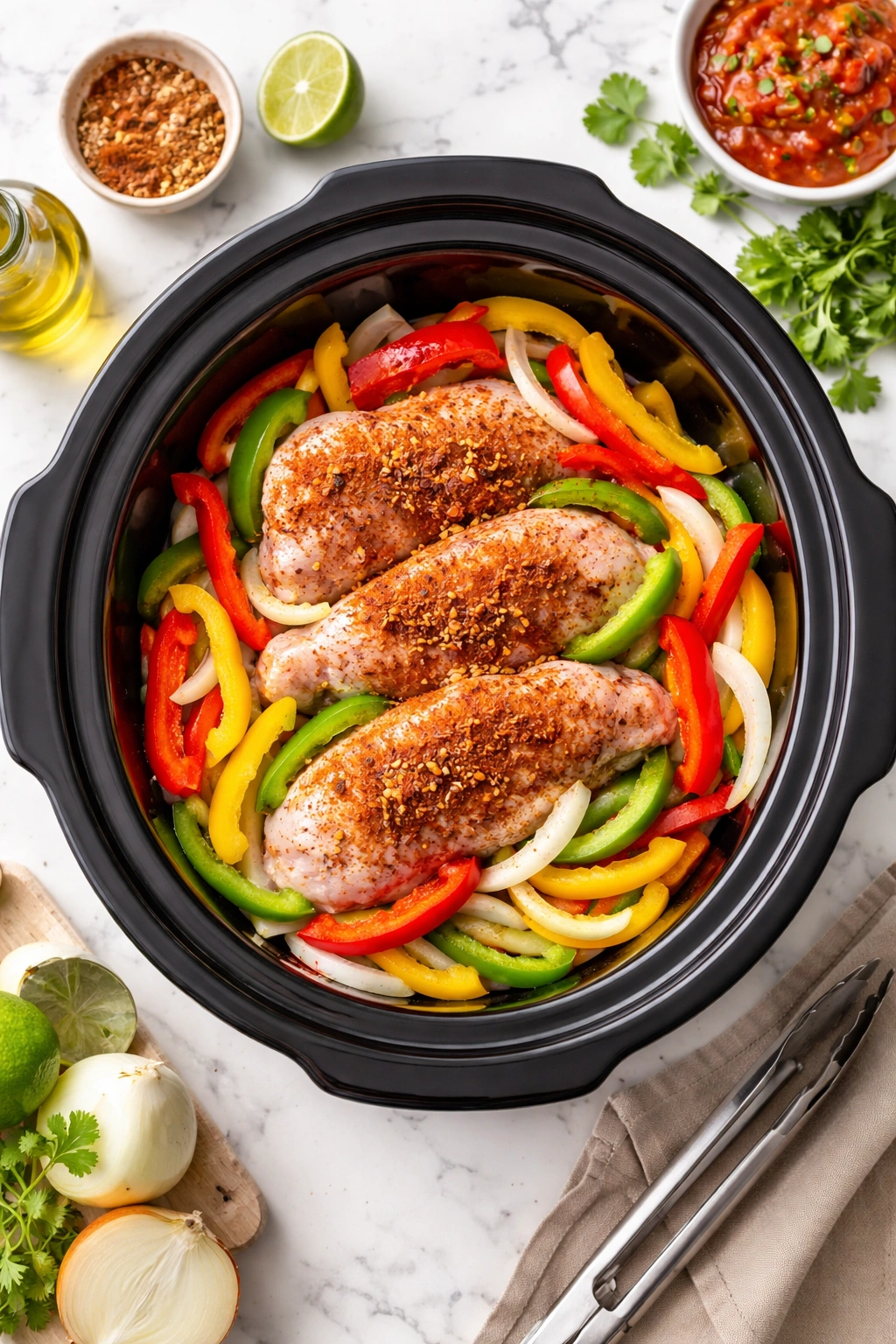
The reason so many people return to this recipe again and again isn’t just about the taste—it’s about the simplicity baked right into the method. There’s no prep that requires skill or experience. You’re not julienning anything or doing any cuts that need precision. You’re just slicing peppers into strips and onions into thin pieces, the way anyone would do it. Mince some garlic if you want it fresh, or skip it if jarred works for your schedule. No judgment either way.
The actual hands-on time genuinely amounts to about five minutes if you’re working with pre-sliced peppers, or maybe ten if you’re cutting them fresh. You’re literally just combining ingredients in a bowl, dumping everything into your slow cooker, and walking away. There’s no browning step, no multi-step prep, no techniques to master. This is the definition of a dump-and-go recipe—you put things in, you turn it on, and you forget about it until dinner is ready.
What really elevates this recipe from just “easy” to genuinely life-changing is that you can prep it the night before if you want. Chop your peppers and onions in the evening, store them in the fridge, and in the morning, you literally just layer everything into the crockpot insert, turn it on, and head out the door. By the time you get home, dinner is done, your house smells amazing, and you haven’t added a single minute to your morning or evening routine.
Choosing Your Ingredients for Maximum Flavor
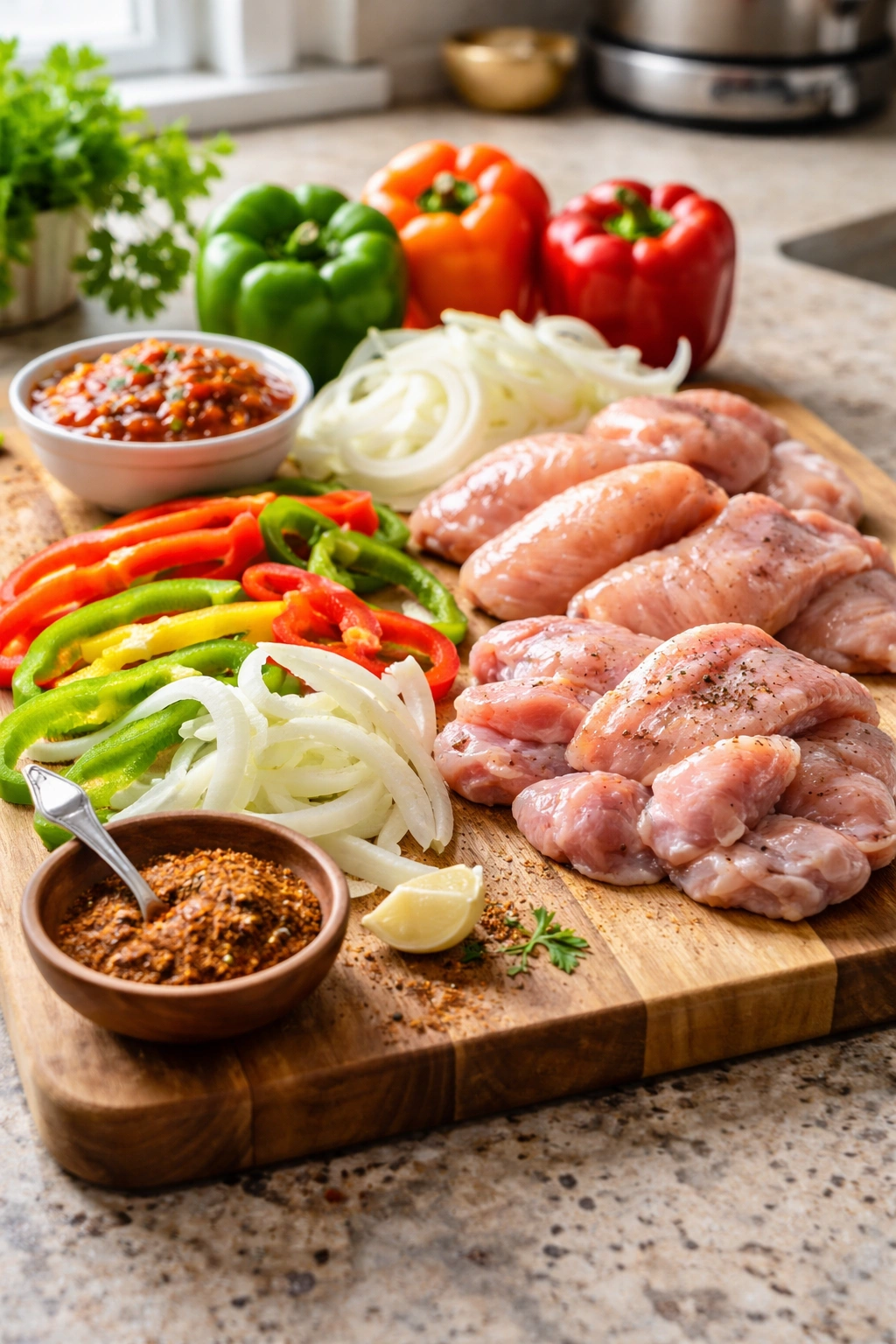
The secret to making this recipe taste incredible—despite its simplicity—is being intentional about ingredient quality without overcomplicating things. You don’t need fancy or hard-to-find items, but you do want things you actually enjoy eating, because that’s what carries the final dish.
Chicken: This recipe works beautifully with boneless, skinless chicken breasts, which stay moist when cooked low and slow in this environment. If you prefer chicken thighs instead, you’ll get an even richer, more flavorful result—thighs are more forgiving about overcooking and actually taste better after extended cooking time. Some people use a combination of both, which gives you more flavor variation across servings. The key is keeping the pieces roughly similar in size so they cook evenly. If your chicken breasts are particularly large, consider cutting them in half lengthwise to speed up cooking time and ensure everything reaches temperature evenly.
Salsa: This is genuinely where much of your flavor is coming from, so don’t just grab whatever’s on sale. Choose a salsa you actually like eating straight from the jar. Some people are passionate about jarred salsa from specific brands, others prefer making fresh salsa at home, and some love the convenience of store-bought with the flavor boost of homemade. You could use mild salsa if your family prefers gentle heat, medium for a balanced kick, or hot if everyone loves spice. Salsa verde (the green version made with tomatillos) creates a completely different flavor profile—more tangy and complex—which is absolutely worth trying if you like switching things up.
Bell peppers: Use any color combination you want, though the traditional trio of red, yellow, and green peppers gives you visual appeal and slightly different flavor notes. Red peppers tend to be sweetest, yellow peppers are milder, and green peppers bring a touch more grassiness. Some people add poblano peppers to the mix for a deeper, slightly smoky flavor. The only rule is to slice them thin enough that they cook evenly and become tender, but not so thin that they disintegrate. A quarter-inch thickness is about perfect.
Onion: A yellow or red onion works beautifully here. Slice it thin so it softens and caramelizes during cooking. If you’re not a huge onion person, use less. If you’re obsessed with them, add more—they actually get sweeter and milder as they cook in the slow cooker, which is wonderful.
Spices and seasonings: This is where you can truly make this recipe your own. You can use a store-bought fajita seasoning packet if that’s what you have on hand, or build your own blend with chili powder, cumin, paprika, garlic powder, salt, and pepper. Homemade blends let you control sodium levels and skip any additives, but pre-made packets are honestly fine and save you thinking about proportions.
Fresh lime juice: Don’t skip this. Bottled lime juice works in an absolute pinch, but fresh lime juice squeezed right before serving (or even squeezed into the slow cooker just before shredding the chicken) makes a noticeable difference. It brightens everything and adds a zing that makes all the other flavors pop.
Understanding Your Slow Cooker Personality
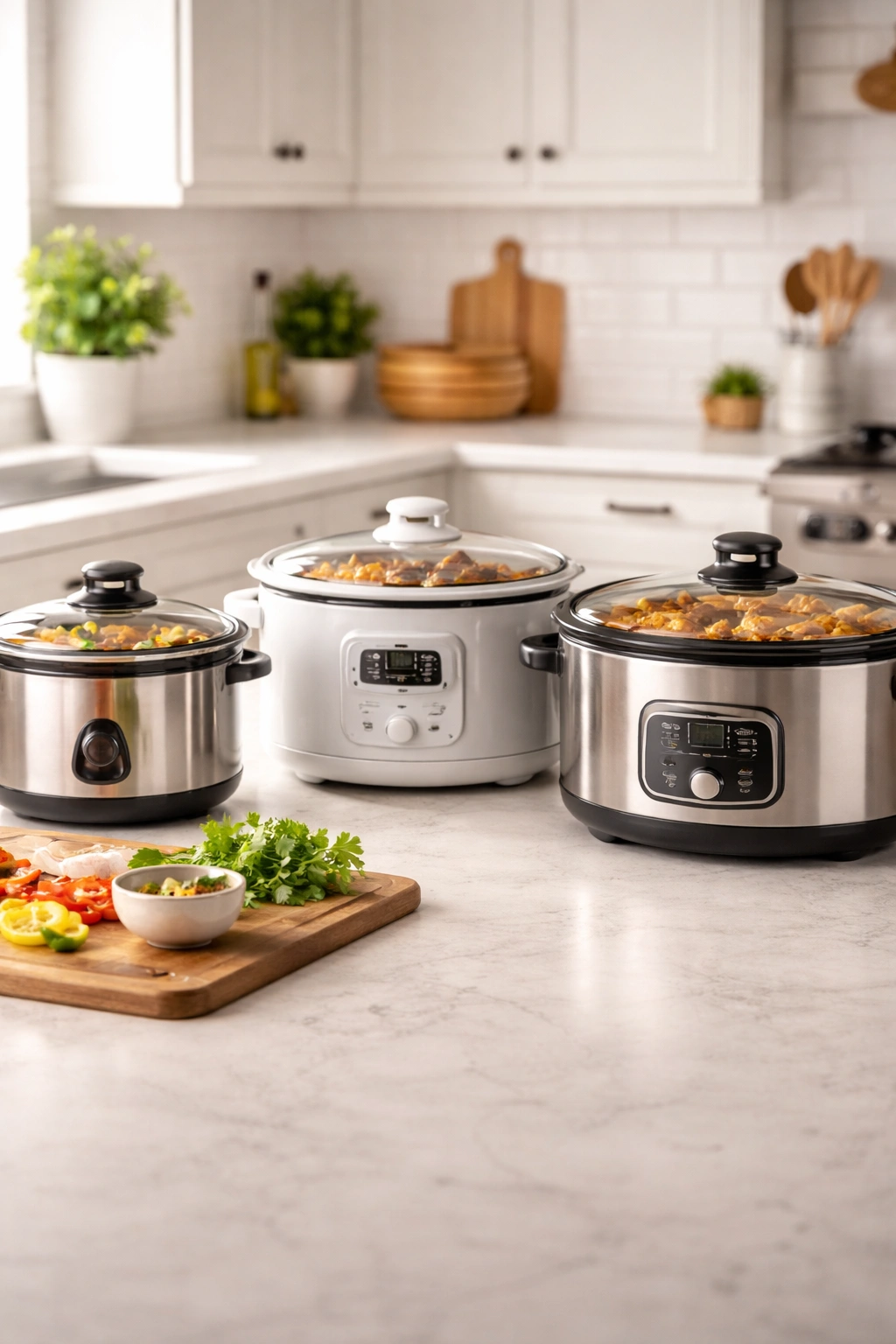
Not all slow cookers are created equal, and this matters more than you might think. Some slow cookers run hot, some run cool, and this affects your cooking time pretty significantly. If you’ve had the same slow cooker for a while, you probably know how yours behaves. If you’re using a new one or borrowing someone else’s, pay attention to how quickly it heats up and cooks.
The recipe works on low for six to eight hours, or on high for three to four hours, until the chicken is tender and cooks through completely. But here’s the thing: “until it’s done” looks different depending on your specific slow cooker. Some people’s slow cookers will be finished in four hours on low, while others need the full eight. That’s totally normal. Check your chicken around the midway point—if it shreds easily with two forks and shows no pink inside, it’s ready, regardless of what the recipe timeline said.
The Complete Ingredient List for Your Crockpot Chicken Fajitas
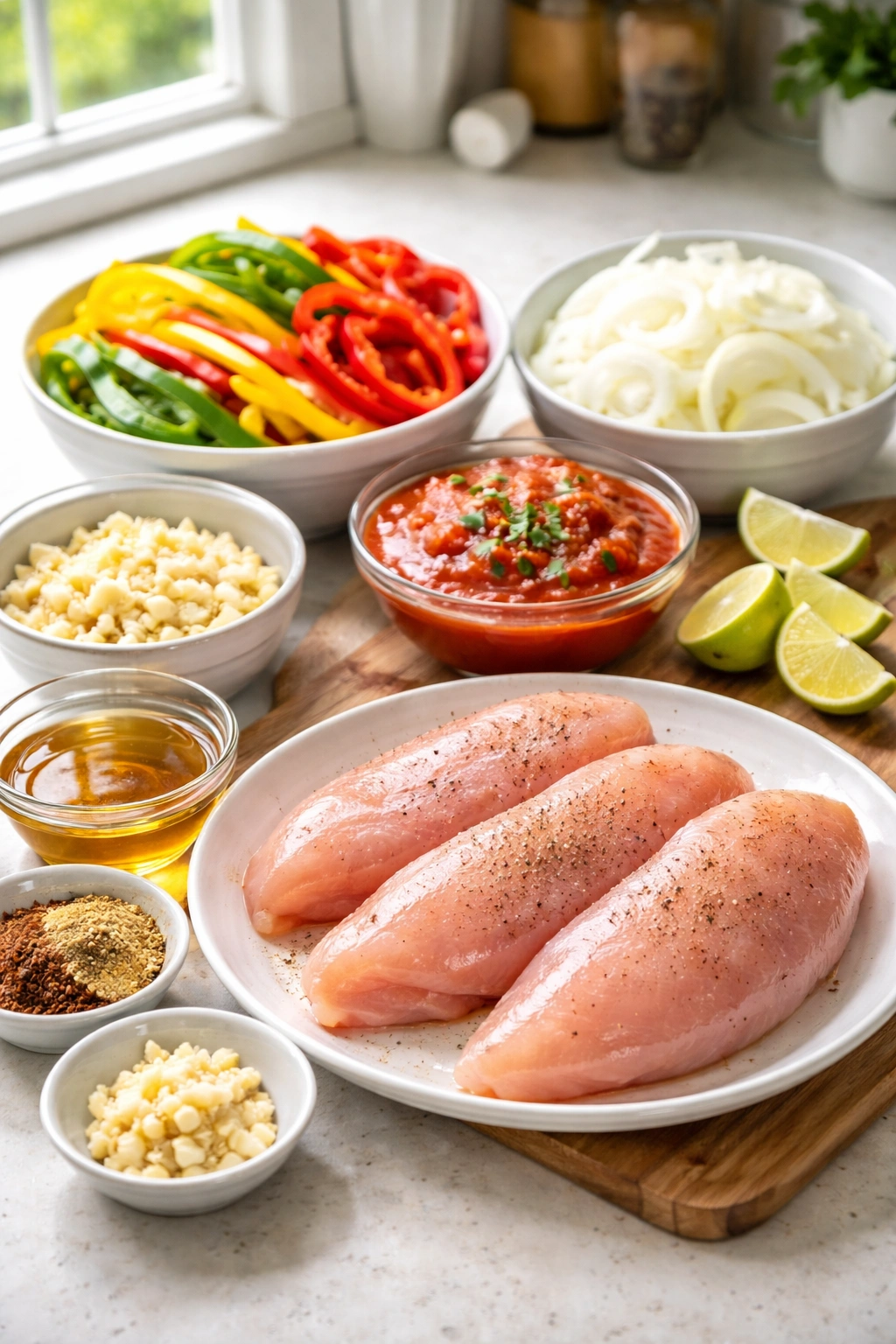
For the Chicken and Seasoning:
- 2 pounds boneless, skinless chicken breasts (or a mix of breasts and thighs, or all thighs if you prefer)
- 1 cup salsa (mild, medium, or hot, depending on your heat preference; use any type you love)
- 2 tablespoons fajita seasoning (store-bought packet or homemade blend)
- ¼ cup chicken broth (optional, but helpful if your salsa is thick)
- ½ teaspoon salt (adjust to taste at the end)
- Fresh cracked black pepper to taste
For the Vegetables:
- 1 large yellow or red onion, thinly sliced
- 1 large red bell pepper, cut into thin strips
- 1 large green bell pepper, cut into thin strips
- 1 large yellow or orange bell pepper, cut into thin strips (optional, for color)
- 3 to 4 cloves garlic, minced (or 1½ teaspoons jarred minced garlic)
For Finishing:
- 2 fresh limes, 1 for juicing and 1 for serving wedges
- 1 tablespoon honey or brown sugar (optional, balances acidity)
For Serving:
- 8 to 12 flour or corn tortillas (warmed right before serving)
Optional Toppings (Choose Your Favorites):
- Shredded cheddar or Monterey Jack cheese
- Sour cream or Greek yogurt
- Fresh cilantro, chopped
- Pico de gallo or diced fresh tomatoes
- Sliced avocado or guacamole
- Hot sauce or additional salsa
- Pickled jalapeños
- Fresh lime wedges
Yield: Serves 4 to 6 people | Makes enough for approximately 8 filled fajitas
Prep Time: 10 to 15 minutes
Cook Time: 6 to 8 hours on low, or 3 to 4 hours on high
Total Time: 6 to 8 hours active + hands-off cooking
Difficulty: Beginner—there are no special techniques, no special equipment beyond a slow cooker, and the steps are straightforward enough that even someone cooking for the first time will feel confident.
Layering Your Crockpot for Perfect Results
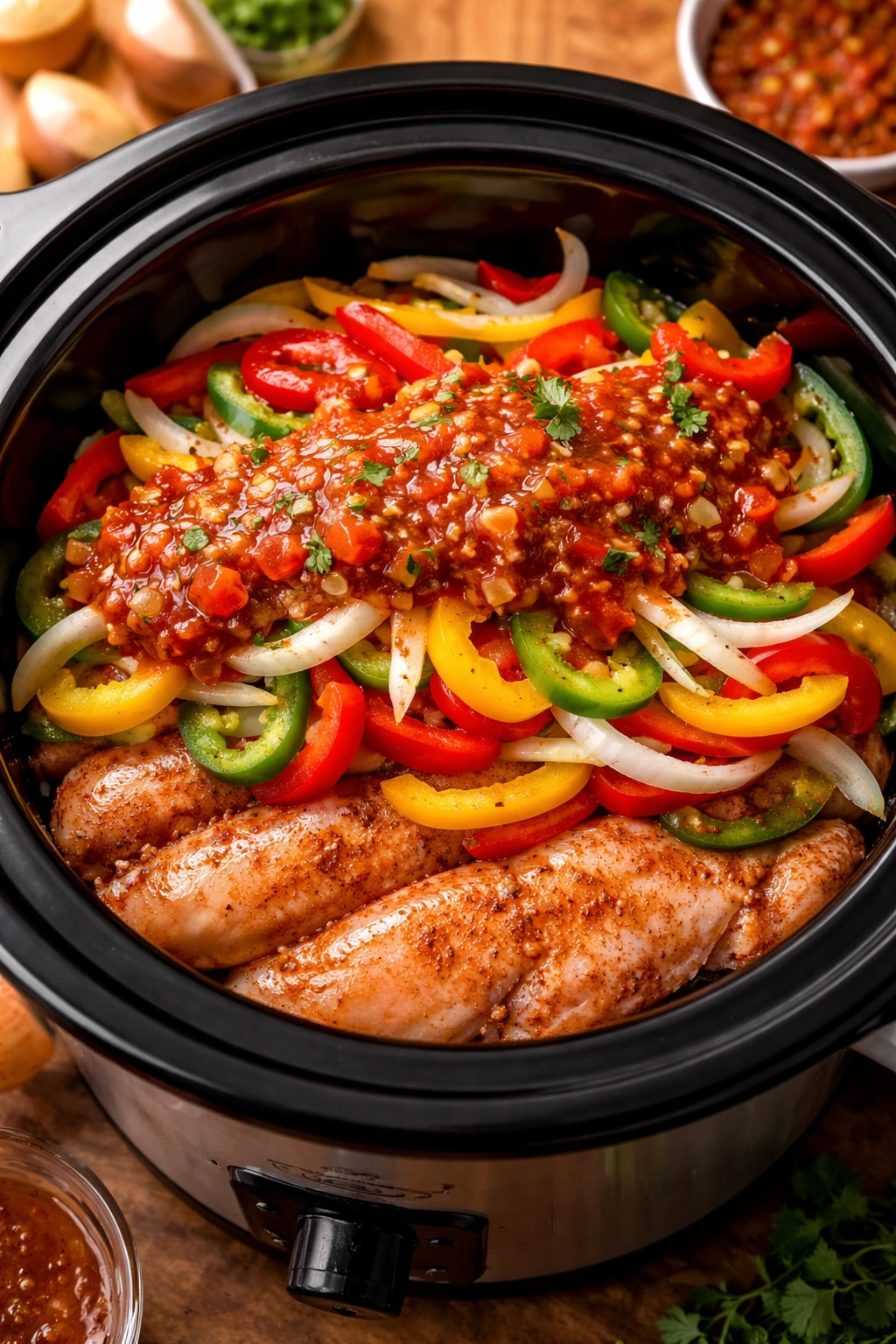
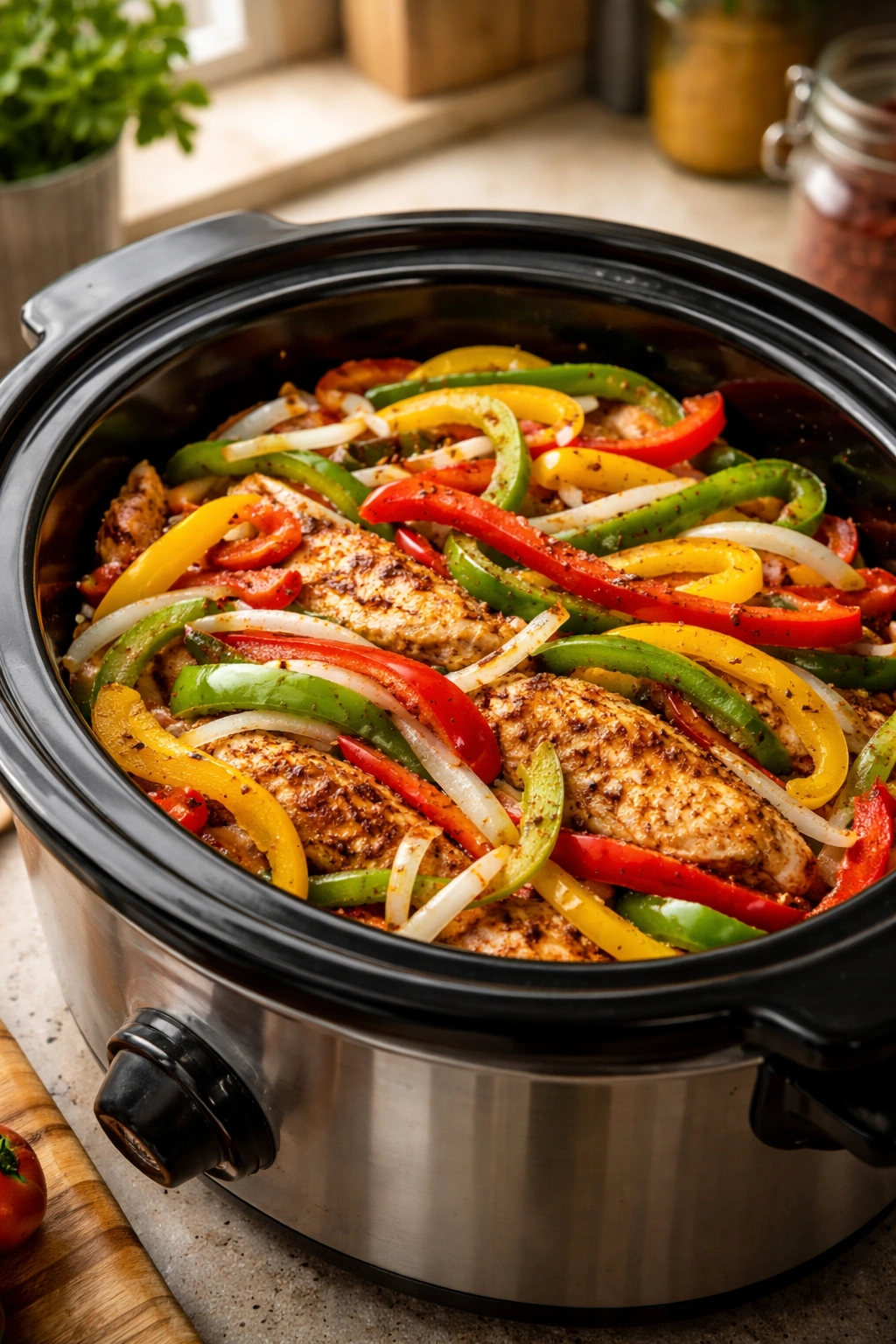
The way you layer your ingredients actually matters, even though this is supposedly a “just dump it in” recipe. The difference between chicken that stays juicy and chicken that dries out partially comes down to how things are positioned in the pot.
Start by making sure your slow cooker insert is clean and dry. Some people like to spray it with nonstick spray, though it’s not absolutely necessary. Place your chicken breasts in a single layer on the bottom of the pot. This is important because the chicken benefits from being in direct contact with the heat source and allows it to cook evenly. If you’re using a lot of chicken, it’s okay if the pieces overlap slightly, but try not to stack them too dramatically.
Now, here’s where patience pays off: don’t add your peppers and onions to the bottom with the chicken. Instead, sprinkle half of your seasoning blend directly onto the chicken, then layer your peppers and onions on top. Pour your salsa over everything, making sure to get it distributed evenly. Then sprinkle the remaining seasoning over the peppers and onions. Top with the garlic if you’re using fresh. This layering approach means the chicken is seasoned from below, the veggies get their flavoring from above, and everything stays properly moist.
If you’re concerned about too much liquid (and some slow cookers do produce more liquid than others), you can add the chicken broth or omit it entirely and rely on the moisture from the salsa and vegetables. The chicken releases its own liquid as it cooks, so you’ll definitely end up with plenty of broth for serving.
The Cook: Patience Pays Off with Tenderness
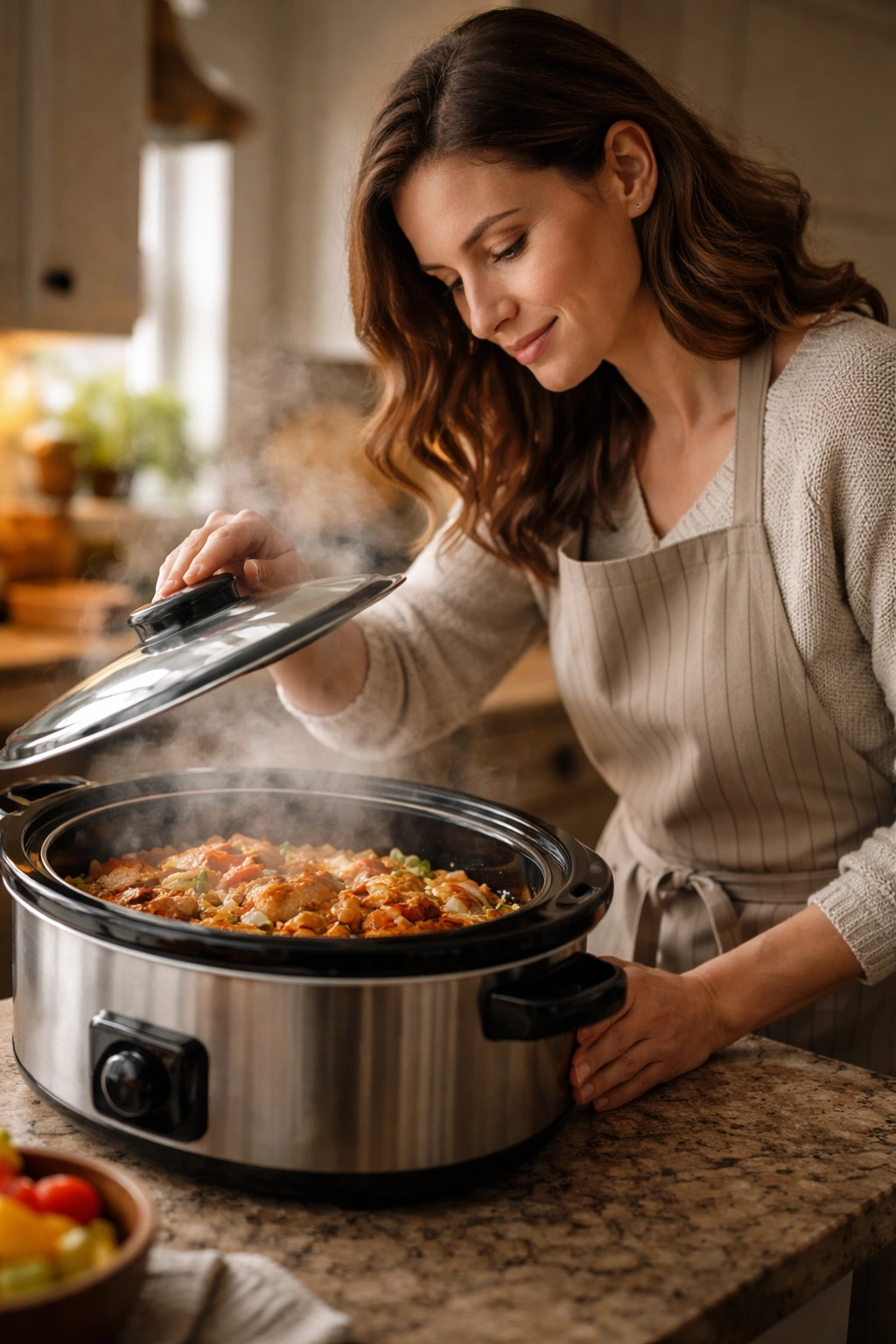
Once your slow cooker is loaded and covered, you’re genuinely done with active cooking. Set it to low for six to eight hours, or high for three to four hours. If you’re leaving it all day while you’re at work, low is your friend—it’s gentler and less likely to dry anything out. If you need dinner in a few hours, high will get you there, though some people swear the low-and-slow approach creates slightly more tender chicken.
About halfway through the cooking time, if you think of it, give everything a gentle stir. This helps the peppers and onions cook more evenly and ensures the chicken stays submerged in the liquid. But honestly, if you forget to stir, it’s fine. The slow cooker is forgiving.
Somewhere around the four-to-five-hour mark on low (or two hours on high), start checking the chicken. You’re looking for it to reach an internal temperature of 165°F, which is the safe temperature for poultry. When you pierce the thickest part of a chicken breast with a fork or meat thermometer, there should be no pink, and the juices should run clear. More importantly for texture, the chicken should shred easily when you pull it apart with two forks. If it’s still firm and resists shredding, it needs more time.
Don’t worry if your chicken is still cooking past the suggested time. Slow cookers are remarkably forgiving, and chicken is hard to actually overcook in a moist environment like this. Even at eight or nine hours on low, your chicken will stay moist and tender because it’s surrounded by liquid. This is one of the genuine advantages of slow-cooker cooking.
Shredding and Finishing Your Fajitas
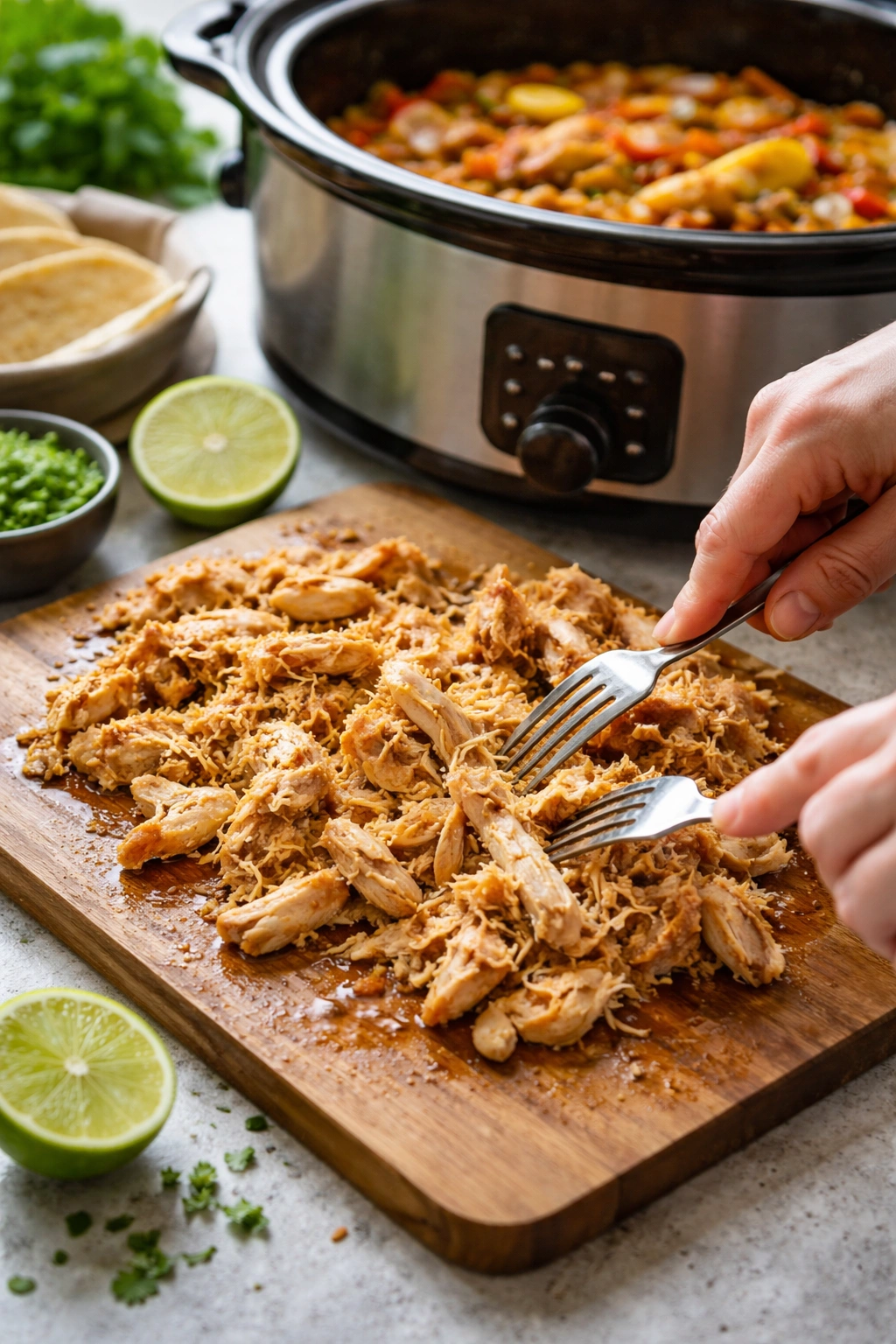
Once your chicken is cooked through and tender, it’s time to shred it. Remove the chicken pieces from the slow cooker using tongs or a slotted spoon, and transfer them to a cutting board. You have a few options here for shredding: the traditional method uses two forks (hold the chicken down with one fork and pull the other fork toward you to shred), a hand mixer set on low works beautifully and is honestly faster, or you can even use a stand mixer with the paddle attachment.
Whatever method you use, shred the chicken into bite-sized pieces. You want them large enough to feel substantial in a taco, but small enough that they’re easy to eat. Return the shredded chicken to the slow cooker, where it will soak up all those wonderful juices and flavors.
Now comes the finishing touch that genuinely transforms this dish: squeeze the juice of one fresh lime over the entire mixture and give it a good stir. The acidity from the lime brightens all the flavors and cuts through the richness of the chicken and peppers. If you made the optional honey or brown sugar into the mix earlier, that sweet element now balances beautifully with the lime’s tartness.
Taste everything before you serve it. You might want to add a bit more salt, or maybe some extra lime juice. Some people like to stir in a small handful of fresh cilantro at this point. This is your chance to make it exactly what you want.
Why Adding Lime Juice Last Changes Everything
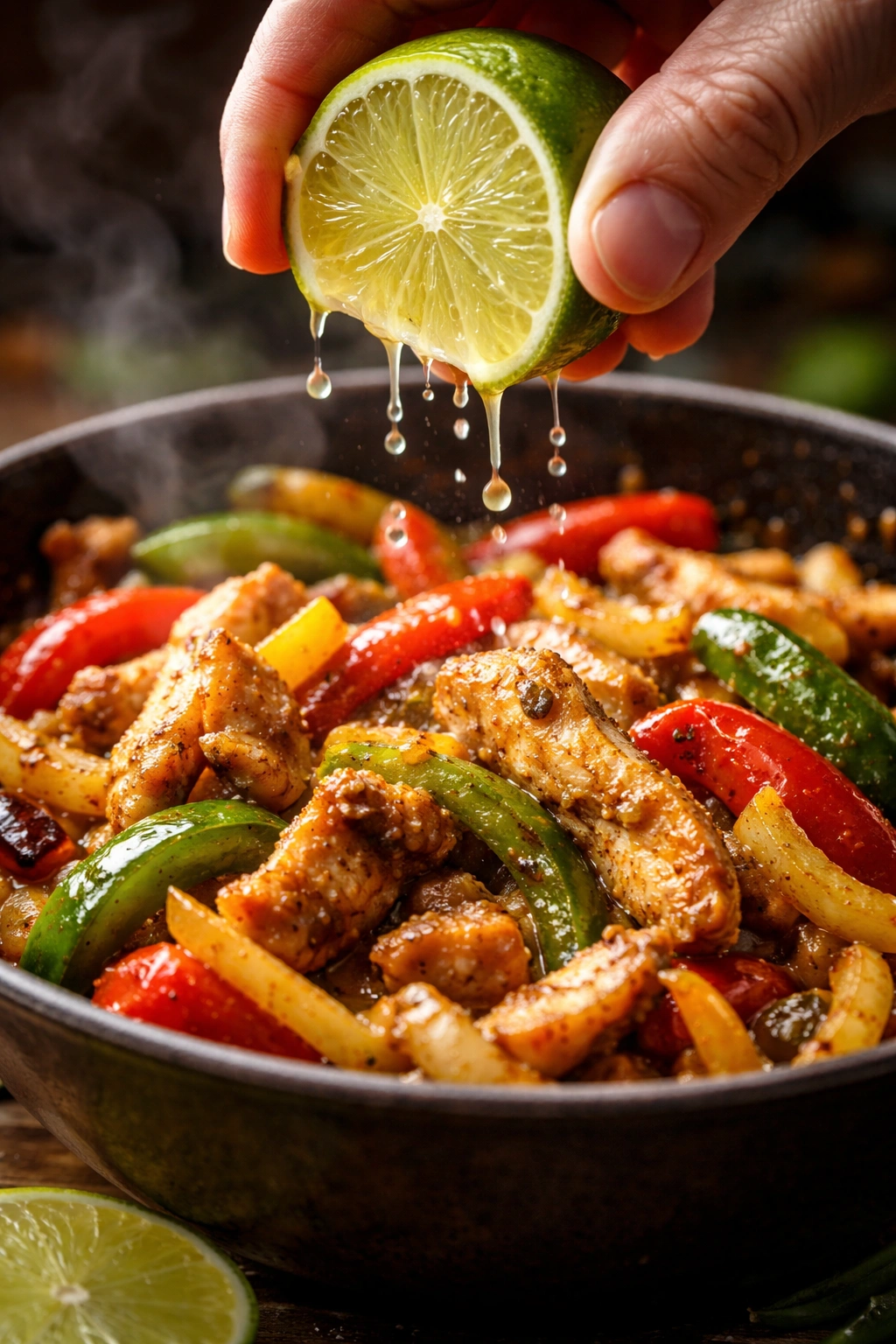
This step deserves its own explanation because it’s genuinely transformative, and some people skip it without realizing what they’re missing. Lime juice squeezed at the very end (or even squeezed directly into the serving dish) doesn’t just add tartness—it adds brightness and complexity that elevates the entire dish from “good” to “why does this taste so restaurant-quality?”
The reason timing matters is that if you cook the lime juice for hours in the slow cooker, it becomes mellow and subtle. Some of that bright, fresh quality gets cooked away. But when you add it at the very end, right before serving, it hits your palate with that fresh zing that makes all the other flavors suddenly sharper and more defined. It’s the difference between a good fajita and a craveable fajita.
If you’re not a lime person, or if you just don’t have one on hand, the fajitas are still delicious without it. But if you’re trying this recipe for the first time and you want it to taste absolutely amazing, freshly squeezed lime is your secret weapon.
Common Mistakes and How to Avoid Them
Even with a recipe this forgiving, there are a few pitfalls that can derail your success. Knowing what they are—and how to prevent them—means you’ll nail it on the first try.
Overcrowding the slow cooker: This is probably the most common issue. If you’re cooking for a crowd and try to stuff a slow cooker beyond its capacity, you end up with chicken that doesn’t cook evenly. Some pieces might be tender and falling apart while others are still tough. Know your slow cooker’s actual capacity (usually four to six quarts for standard models) and don’t exceed it. If you need to feed more people, either make two batches or consider using a larger slow cooker if you have access to one.
Adding peppers too early: If you want your peppers and onions to be slightly firm and crisp rather than completely soft, add them partway through cooking—about an hour before everything is done. If you add them at the beginning with the chicken, they’ll cook down to a very soft texture, which some people love but others find mushy. There’s no wrong answer here, just different preferences. Know what you like and time accordingly.
Forgetting about liquid management: Some slow cookers create a lot of liquid, others create less. If you end up with a pool of broth at the bottom and you don’t want that when serving, use a slotted spoon to serve the chicken and vegetables while leaving the extra liquid behind. Alternatively, you can remove the lid for the last thirty minutes of cooking to let some of that liquid evaporate, though you need to monitor it so things don’t dry out.
Not checking chicken temperature: This is the one thing worth actually measuring. Don’t just assume your chicken is done because the time is up. Use a meat thermometer to check the thickest part of the chicken—165°F is the magic number. Undercooked chicken is a food safety issue, and overcooked chicken in a slow cooker (within reason) is still tender, so there’s no downside to checking.
Skipping the lime juice: As we discussed, this finishing touch makes a real difference. If you genuinely can’t have lime for any reason, a little squeeze of lemon juice works as a substitute, or even a splash of vinegar. But something acidic added at the end genuinely elevates the whole thing.
Using flavorless salsa: This recipe is only as good as the salsa you choose. If you use something bland or over-spiced in a way you don’t enjoy, the whole dish suffers. Taste your salsa before you commit to a full recipe with it. This is the time to be picky.
Flavor Variations Worth Trying
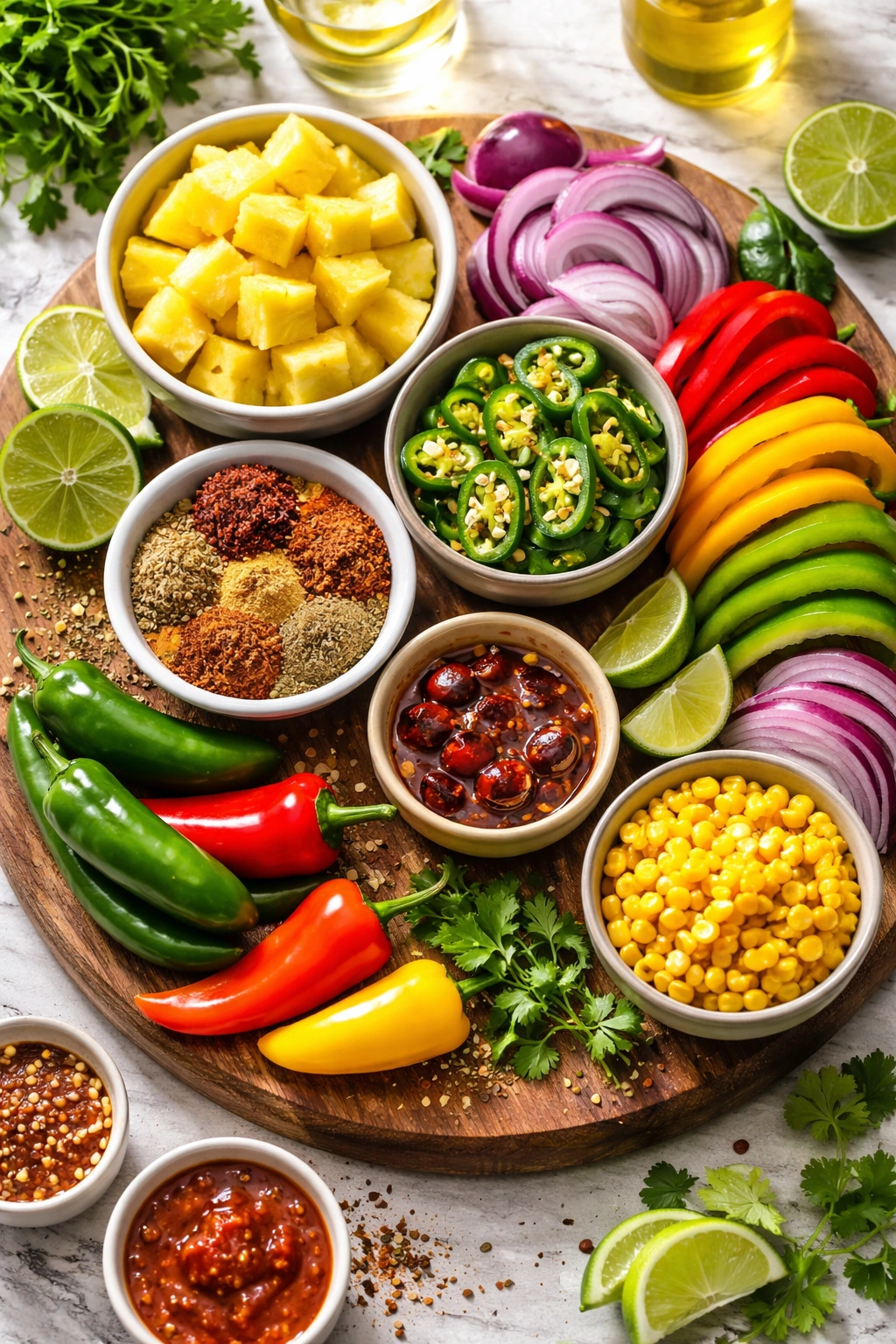
The beauty of this base recipe is that it’s endlessly customizable. Once you’ve made it once the traditional way, here are some variations that transform it into something completely different while maintaining that dump-and-go simplicity.
Spicy version with a kick: Use hot salsa instead of mild, add a can of diced jalapeños (with seeds if you want serious heat, without seeds for milder heat), or stir in a pinch of cayenne pepper to your spice blend. Some people add fresh sliced jalapeños layered in with the peppers. You could also use chipotle peppers in adobo sauce—just blend one or two with your salsa and use that instead of plain salsa.
Smoky and complex: Swap your regular chili powder for smoked chili powder, or use a smoky salsa like chipotle salsa. Add a pinch of smoked paprika to your spice blend. This creates a completely different flavor profile that’s deeper and more complex.
Pineapple fajitas: Add a cup of fresh diced pineapple or canned pineapple (drained) along with your peppers and onions. This creates a sweet-savory combination that’s absolutely delicious and feels more restaurant-special. Some people do this with salsa verde for an even brighter flavor.
Black bean version: Make this more substantial and protein-rich by adding a can of drained black beans or pinto beans during the last hour of cooking. You’ll get more texture and filling power without changing the fundamental flavor profile.
Mushroom fajitas: If you want to stretch this recipe further or add umami depth, slice some portobello mushrooms thin and add them along with your peppers. Some people make this vegetarian by replacing the chicken with extra mushrooms and adding more beans.
Cilantro-lime from the start: If you absolutely love cilantro and lime, add a small handful of fresh cilantro (roughly chopped) and the lime juice at the beginning. It’ll cook into the sauce rather than just sitting on top, creating a different but equally delicious flavor.
Make-Ahead and Storage Strategies
This recipe is a true meal-prep champion, and understanding how to use that fact will save you enormous amounts of time during the week.
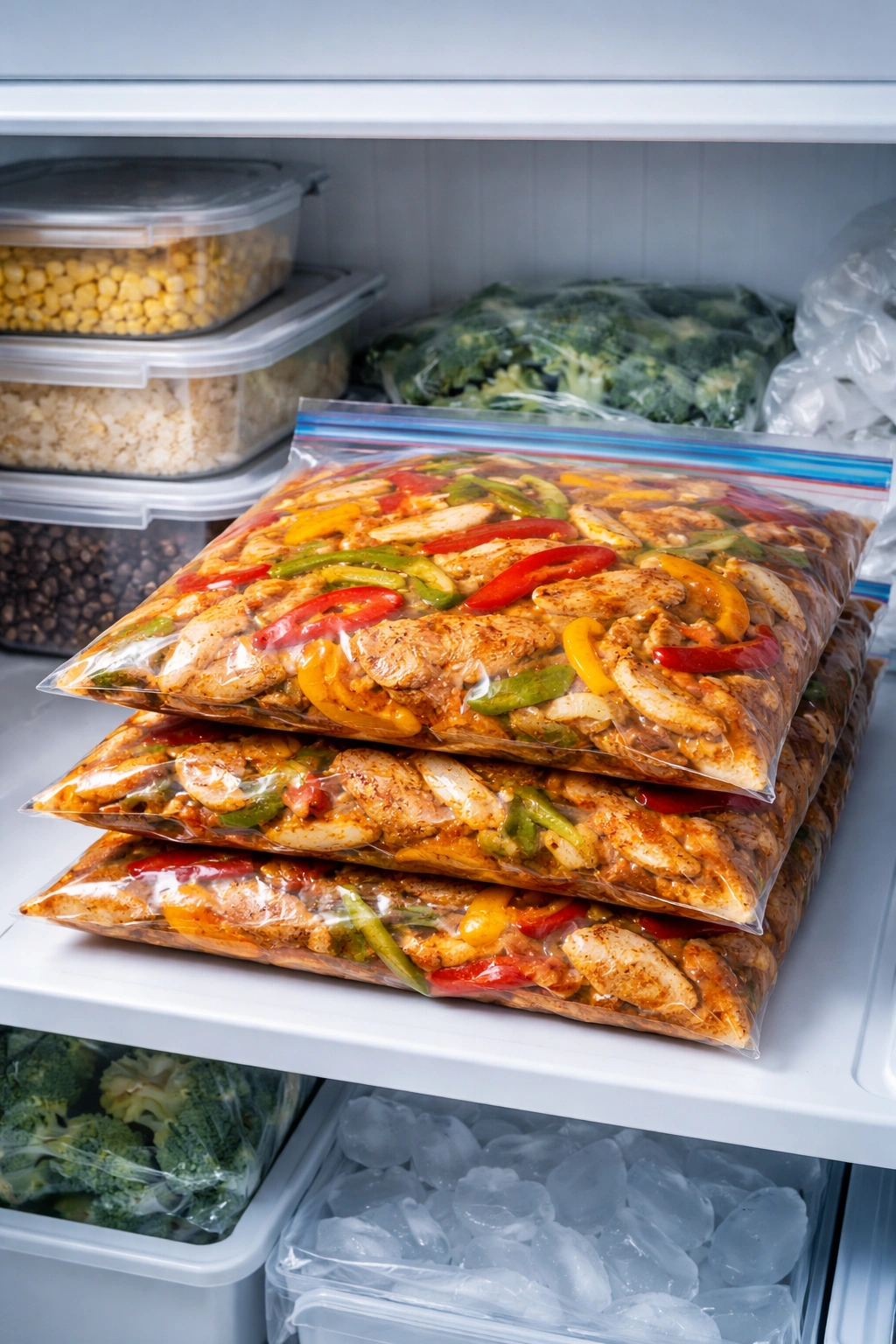
Freezer meal prep: You can assemble this entire recipe in a gallon-size freezer bag the night before (or even days before). Place the chicken, peppers, onions, and all spices in the bag, pour in your salsa, seal it, remove as much air as possible, and freeze flat. Label it with the recipe name and date. When you’re ready to cook, you can thaw it overnight in the fridge and dump the entire contents straight into your slow cooker, or—and this is a game-changer—you can put the entire frozen bag directly into the slow cooker without thawing. Just add about an hour to your cooking time on low if using it frozen. Your future self will be so grateful.
Refrigerator storage: Leftover cooked fajitas keep beautifully in an airtight container in the fridge for three to four days. You can serve them cold (great for salads), at room temperature, or reheated. To reheat, either microwave in thirty-second intervals stirring between them, or warm gently in a skillet over medium heat for a few minutes until heated through.
Freezing cooked fajitas: Once cooked and cooled, transfer leftovers to a freezer-safe container or bag, removing as much air as possible. They’ll keep for up to three months. Thaw overnight in the fridge before reheating, or reheat directly from frozen in a microwave or skillet (though this takes longer). Some people portion them into individual meal-sized containers for ultimate convenience.
Make it earlier in the day: Even if you’re not doing full meal prep, you can assemble this in your slow cooker the morning of and let it cook all day, then reheat what you don’t eat that night and store the rest. This is genuinely the easiest path if you want flexibility.
The Best Toppings and Pairings
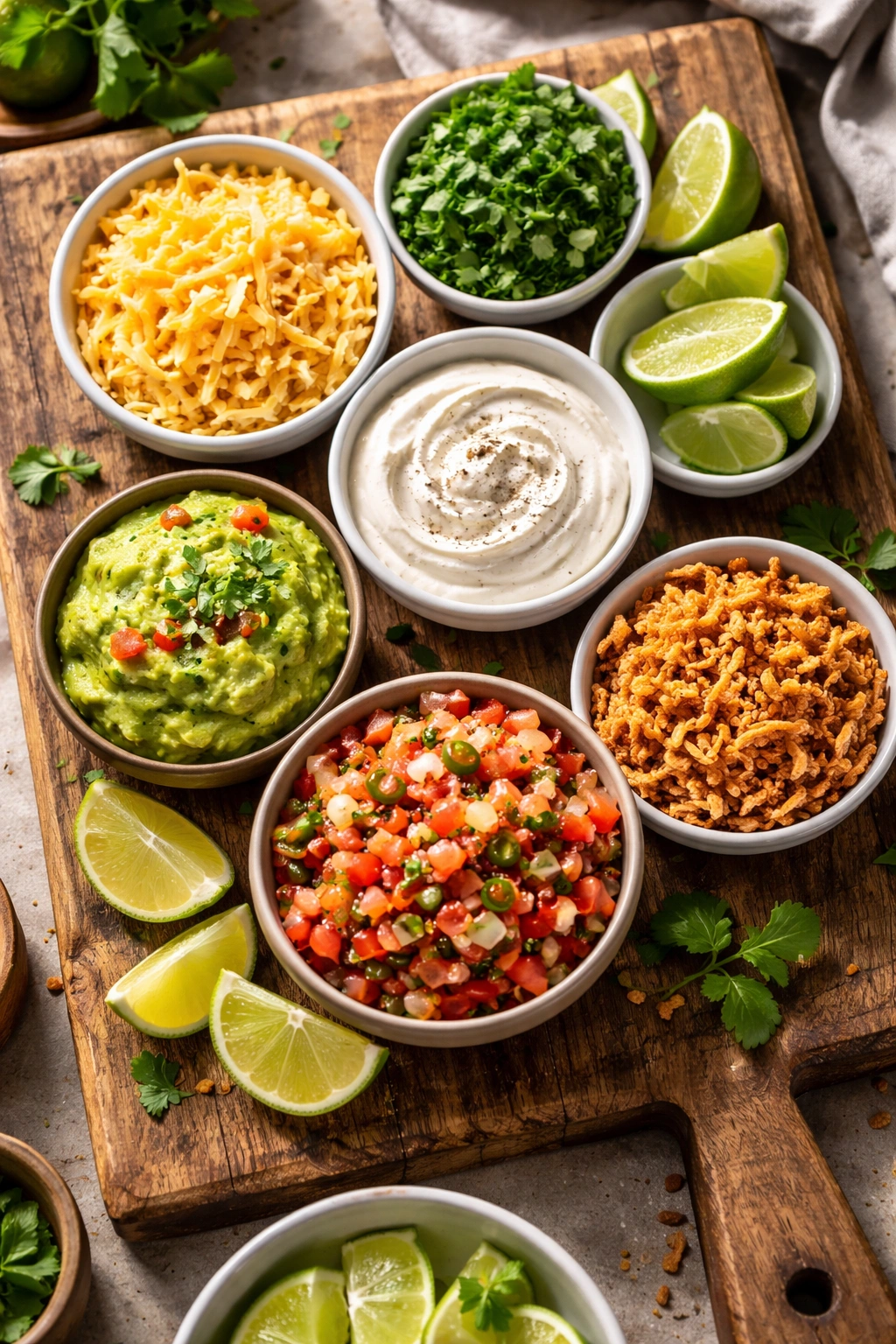
This is where fajitas become personal. The chicken and pepper base is just the foundation—everything from here is about building your perfect bite.
The classics: Shredded cheese (cheddar, Monterey Jack, or a Mexican blend), sour cream, fresh cilantro, and lime wedges are the tried-and-true crowd-pleasers. There’s a reason they’re classics—they work beautifully together.
For richness: Guacamole or sliced avocado adds creamy richness and healthy fats that make the whole meal feel more satisfying. If you’re not making guacamole from scratch, quality store-bought versions are totally legitimate.
For brightness: Pico de gallo (fresh diced tomatoes, onion, cilantro, and lime) or fresh salsa adds a fresh, juicy element that cuts through the richness. This is especially good if you’re feeling like things might be too heavy.
For heat: Hot sauce, sriracha, or pickled jalapeños for those who like serious spice. Let people add their own so everyone gets the heat level they want.
Unexpected winners: Crispy fried onions or tortilla strips add crunch. A dollop of Greek yogurt instead of sour cream gives you tang with more protein. Queso fresco (fresh cheese) crumbles differently than shredded cheese and has a unique flavor. Even a sprinkle of toasted cumin seeds adds complexity.
Serving Beyond the Tortilla
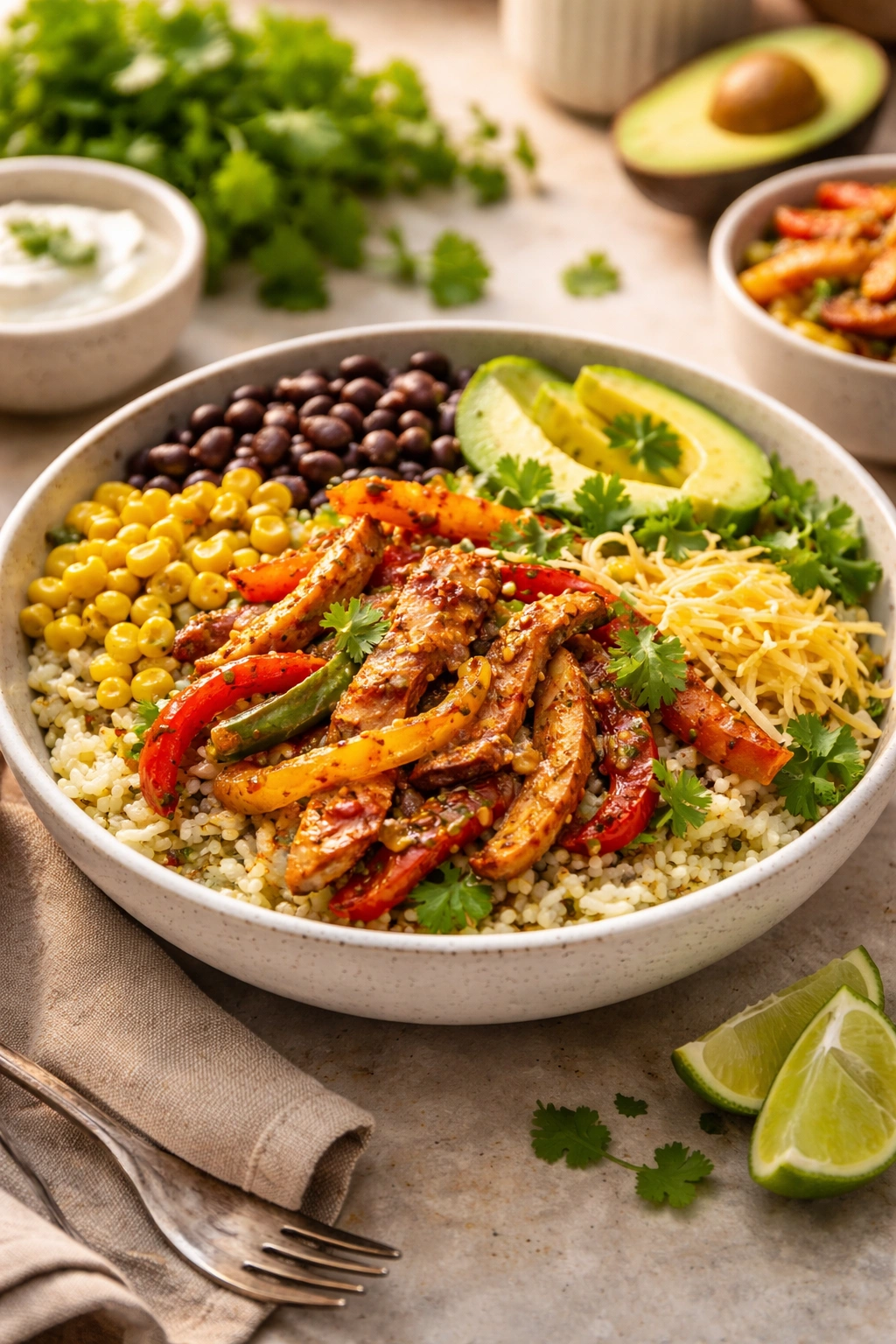
While fajitas in a warm tortilla is the classic presentation, you can serve this versatile chicken and pepper mixture in countless ways, which is part of why this recipe is so valuable in your rotation.
Fajita bowls: Build a burrito bowl with rice as your base, add the fajita mixture, then top with beans, corn, cheese, avocado, and any other toppings you love. This is a great way to stretch the recipe further and create a more substantial meal.
Over cauliflower rice: For a low-carb option, serve it over riced cauliflower instead of regular rice. The flavors work just as well, and you get all the satisfaction without the carbs.
As a salad topping: Pile the warm fajita mixture over crisp greens with your favorite toppings, then drizzle with lime dressing. It’s a hearty, warm salad that feels like a completely different meal.
In nachos: Spread tortilla chips on a baking sheet, add the fajita mixture, top with cheese, and broil until the cheese melts. Add sour cream and cilantro after. It’s elevated nacho night.
In enchiladas: Use the fajita filling to stuff corn tortillas, roll them up, cover with enchilada sauce and cheese, and bake until bubbly. This transforms your slow cooker fajitas into a completely different dish.
With rice on the side: Serve it traditionally with warm tortillas, but pair it with cilantro-lime rice or Mexican rice, beans, and a simple side salad. You’ve got a complete meal that feels restaurant-quality.
In breakfast tacos the next day: If you have leftovers, use them in breakfast tacos with eggs, cheese, and peppers the next morning. It’s an unexpectedly delicious way to use up what remains.
Why This Recipe Becomes Your Go-To
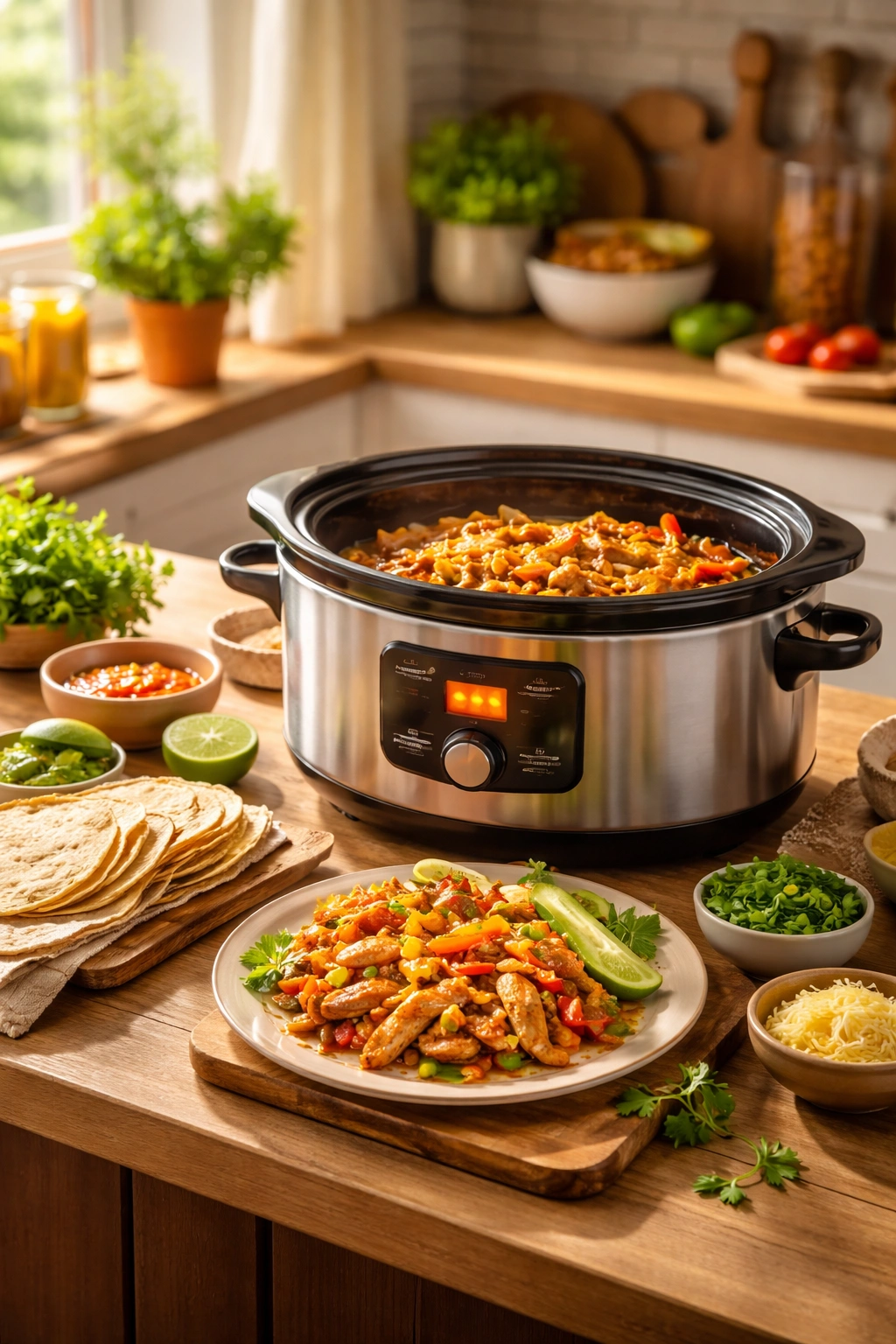
After you’ve made this once, you’ll probably find yourself making it again and again, and there’s good reason why. It checks every single box: it’s genuinely easy, it tastes excellent, it’s budget-friendly, it makes your kitchen smell amazing, it’s customizable to everyone’s preferences, and it sets you up for leftovers and meal prep without any extra effort.
The slow cooker does the actual cooking work while you live your life, which means you’re not stressed about dinner on nights when you’re busiest. You come home to something genuinely delicious instead of defaulting to takeout or something mediocre. Your family gets to build their own tacos exactly how they like them. And best of all, you did this with minimal effort and maximum results.
Once this becomes part of your regular rotation, you’ll have so much more mental space and actual time. You’re not planning complicated dinners or stressing about cooking. You’re just prepping once and letting your slow cooker handle the rest. That’s the real magic of this recipe—it’s not just that the fajitas taste amazing (though they absolutely do). It’s that they give you your time back.
Final Thoughts
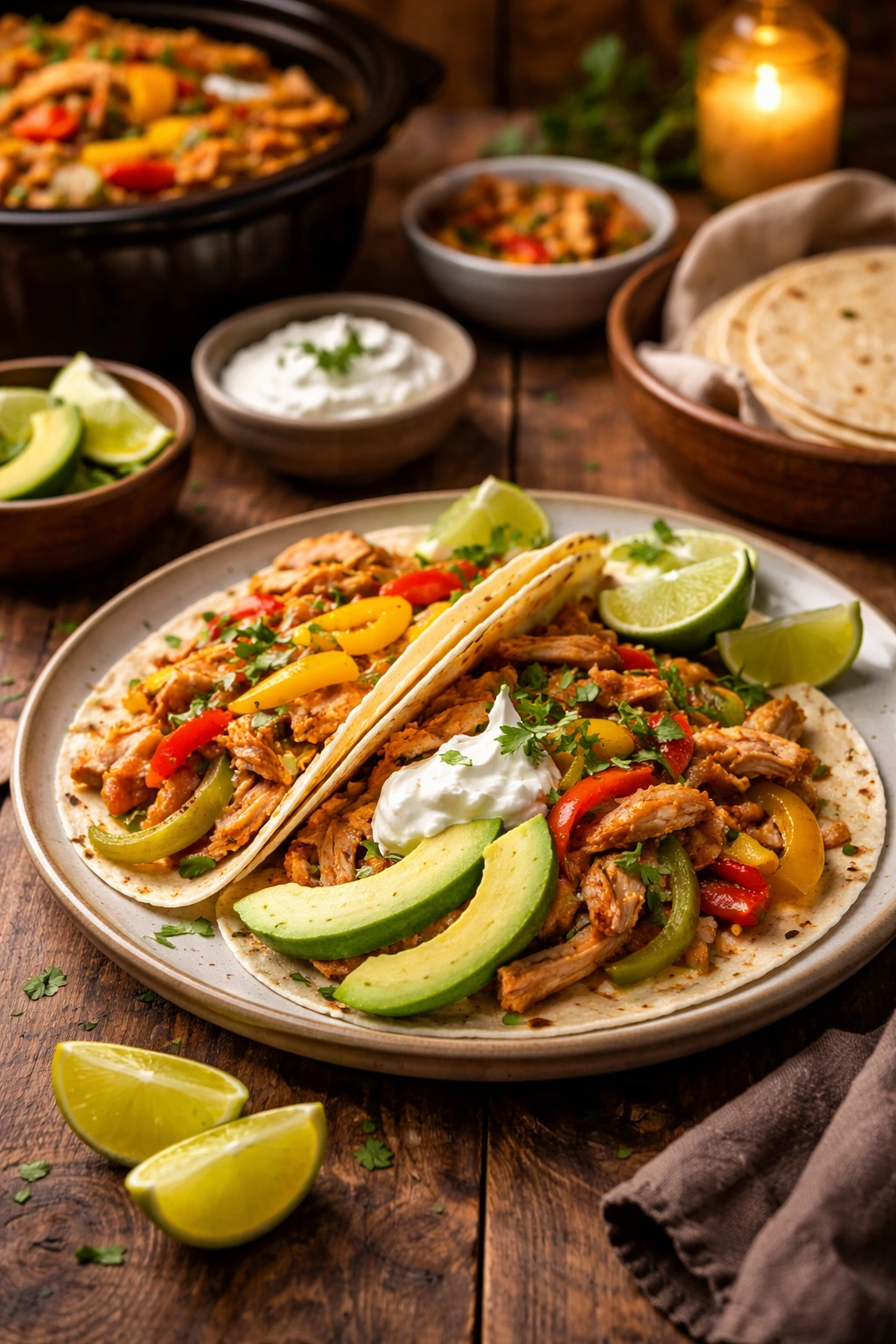
The simplicity of slow cooker chicken fajitas shouldn’t fool you into thinking they’re anything less than genuinely delicious. This is a meal that tastes like you spent hours cooking, when really you spent just minutes. It’s a meal that feels special enough for company, but easy enough for Tuesday night. It adapts to what your family loves, works beautifully for meal prep, and makes your kitchen smell incredible while you’re going about your day.
Start with the basic version to see why people fall in love with this recipe. Once you’ve made it a couple times and know how your specific slow cooker behaves, start playing with variations. Try the spicy version, the pineapple version, the smoky version. Try serving it as a bowl instead of a taco. Try different toppings combinations until you find your favorite.
But most importantly, give yourself permission to stop overcomplicating dinner. This recipe proves that some of the best meals are also the easiest ones. Your future self—exhausted after a long day and grateful to have dinner ready—will absolutely thank you for it.
