



There’s something almost magical about lifting the lid on your slow cooker after a full day of work to find a gorgeous piece of steak that’s so tender you can cut it with just a fork. No knife needed. No sawing or struggling—just a gentle pressure and the meat surrenders completely, practically dissolving on your tongue. That’s exactly what this article is about: mastering the art of creating fork-tender crock pot steak that tastes like you spent hours at the stove, when really you just dumped a few ingredients into your slow cooker this morning and let it work its magic.
The beauty of slow-cooked steak isn’t just about the texture, though that fork-tender quality is absolutely worth the hype. It’s about the method itself. Unlike traditional pan-searing or grilling, which demands your attention and precise timing, the crock pot takes the toughest, most economical cuts of beef and transforms them through low, slow, moist heat into something almost unrecognizable—something luxurious. The connective tissues (collagen) that make cheaper cuts chewy break down gradually over hours, turning into gelatin that gives the meat a silky, yielding quality. The juices stay locked inside instead of evaporating. The flavors concentrate and deepen. You get restaurant-quality results with virtually zero fuss.
This approach to cooking steak is a total game-changer for busy weeknights, meal prep, and feeding a crowd. You’re not standing over a hot stove. You’re not worried about timing. You’re not producing enough dishes to fill a sink. It’s the definition of set-it-and-forget-it cooking, and once you understand the science and technique behind it, you’ll find yourself making slow-cooker steak all the time.
Why Low and Slow Cooking Transforms Tough Steak
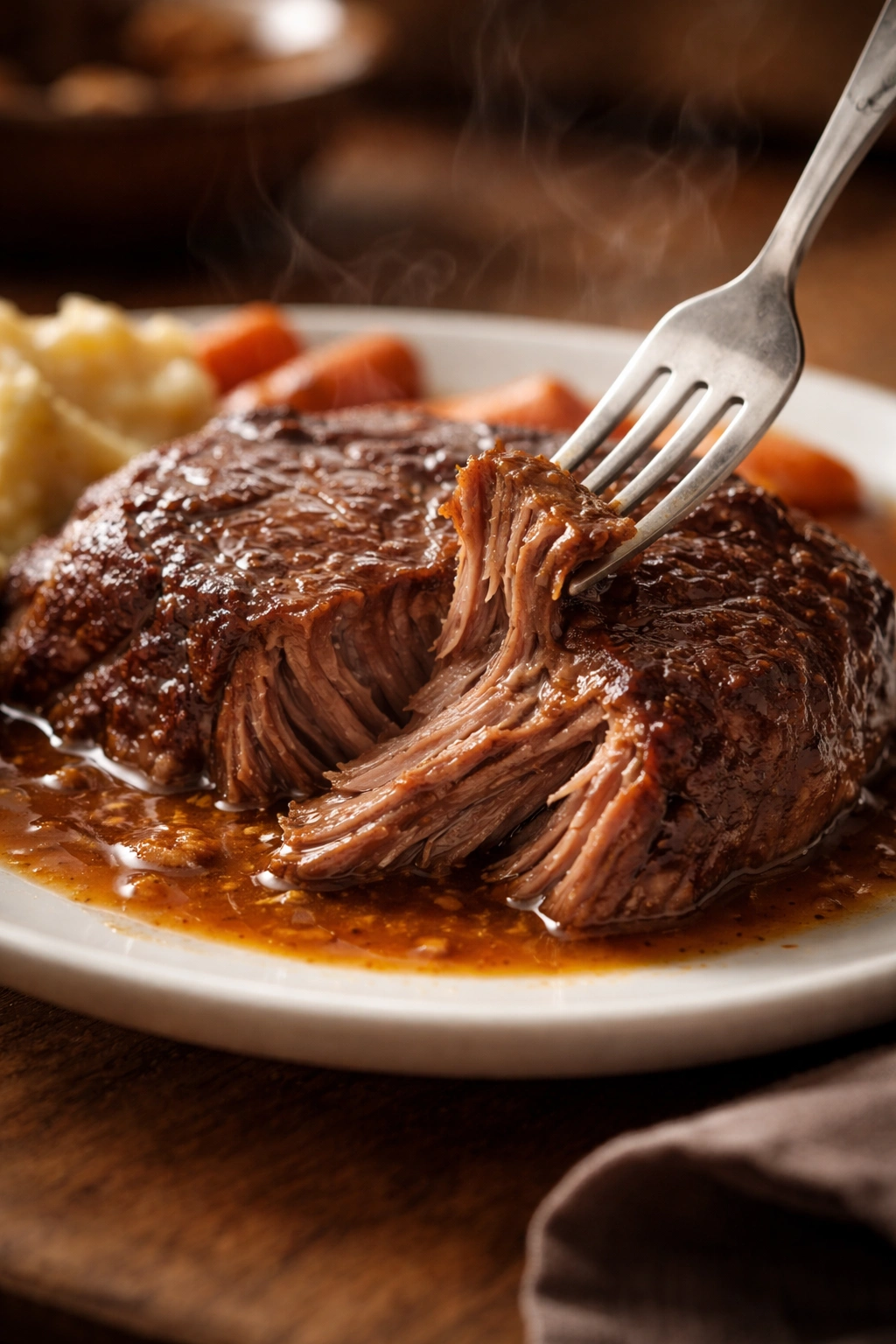
The fundamental reason crock pot steak works so brilliantly comes down to basic beef science. Not all cuts of steak are created equal. The expensive, tender cuts like ribeye and filet mignon come from parts of the cow that don’t do much work—they’re naturally tender because the muscle fibers are delicate and haven’t been heavily exercised. But budget-friendly cuts like cube steak, chuck roast, round steak, and skirt steak come from hardworking parts of the cow—the shoulder, legs, and other areas that move constantly. These muscles are tough because they’re used, and that toughness manifests as dense muscle fibers surrounded by collagen, the connective tissue that feels chewy when cooked quickly.
Here’s where the slow cooker becomes your secret weapon: collagen turns into gelatin when exposed to moisture and heat over extended time. This transformation happens gradually during long, slow cooking—usually between 6 and 8 hours on low. The moisture from the liquid you add (broth, soup, water) penetrates the meat fibers and softens them from the inside out. The low temperature (around 200°F inside the cooker, compared to 300°F+ on a stovetop) ensures the outer edges don’t dry out while the interior breaks down. The result is meat so tender it practically falls apart.
This is why high heat actually works against you when cooking tough cuts. Blasting a cube steak in a hot skillet might create a flavorful crust, but it also drives moisture out of the meat and tightens the muscle fibers, making it worse. The slow cooker’s gentle environment is exactly what cheap, tough cuts need to shine. It’s almost counterintuitive—the less you do, the better the result. No searing required (though some cooks do it for extra browning—totally optional). No babysitting. No adjustments. Just time and steam doing the heavy lifting.
Choosing the Right Cut of Steak for the Slow Cooker
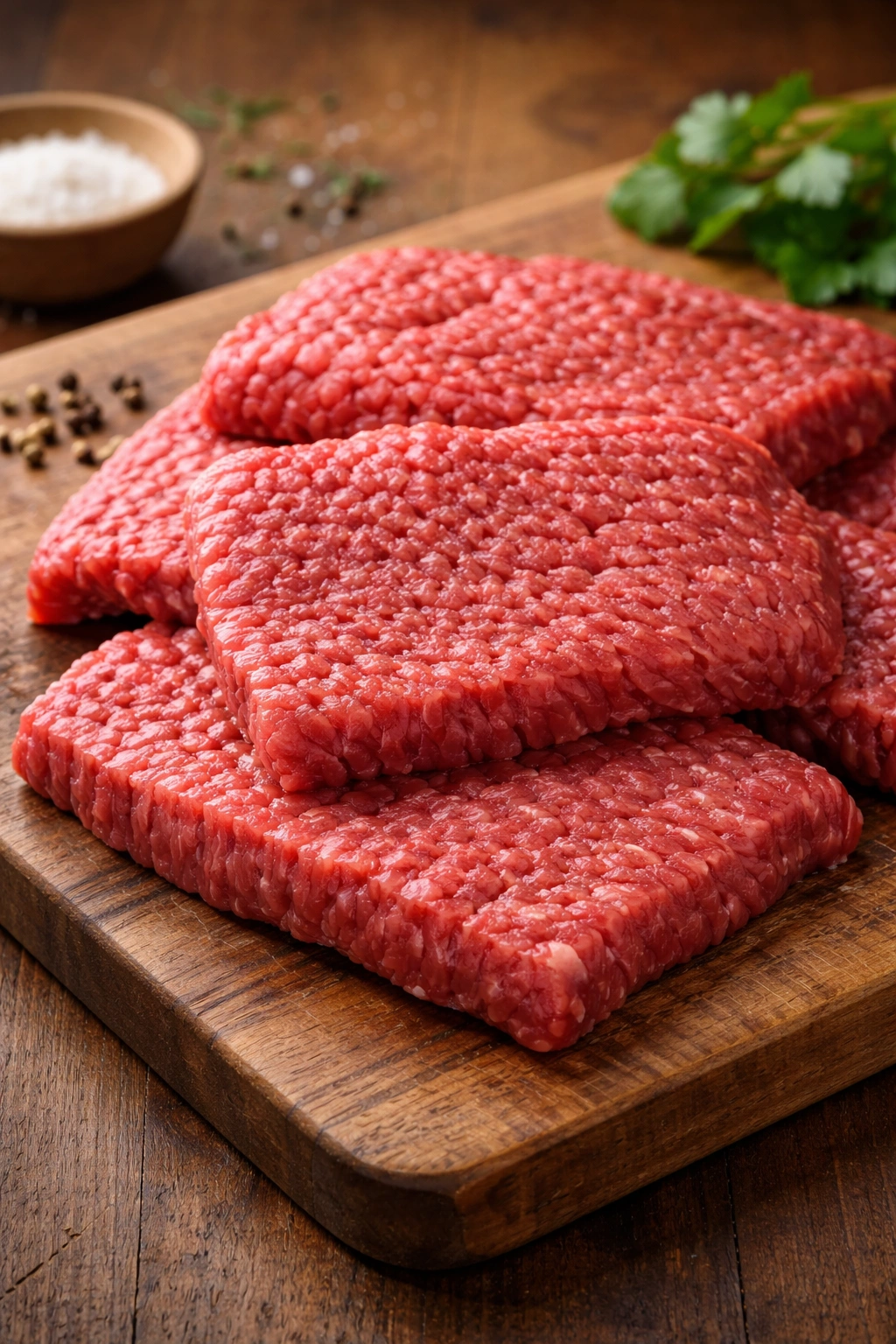
Not every cut of beef is ideal for slow-cooking, though the good news is that almost all of the most affordable cuts actually work beautifully. Understanding which cuts perform best will help you shop smarter and get consistently excellent results.
Cube steak is arguably the most popular choice for slow-cooker steak recipes. This is a lean cut from the chuck (shoulder area) that’s been mechanically tenderized—you can see the small dimpled pattern all over it from a machine with thin blades. That pre-tenderizing helps, but it’s the slow cooker that really makes it shine. It becomes melt-in-your-mouth tender in 6-8 hours on low. When cooked properly, cube steak should be so soft you can cut it with a fork, and this is honestly one of the easiest ways to achieve that texture.
Chuck roast and chuck steak are also excellent choices. These cuts are fattier than cube steak, which is actually an advantage in slow cooking because the fat renders out gradually and creates a rich, succulent texture. They take slightly longer (8 hours tends to be ideal) but reward you with incredible flavor and a luxurious mouthfeel.
Skirt steak is a flavorful, slightly tougher cut from the diaphragm area. It’s cheaper than premium cuts and has excellent beef flavor. In the slow cooker, skirt steak becomes incredibly tender and pairs beautifully with mushroom-based sauces and onion preparations.
Round steak comes from the hind leg and is quite lean. It’s affordable and works well in the slow cooker, though you’ll want to make sure your braising liquid is flavorful since the meat itself doesn’t have much fat to carry flavor.
Flank steak is another budget-friendly option with good beefy flavor. It’s tougher raw, but slow cooking transforms it into something tender and succulent. The key is making sure your sauce or braising liquid has plenty of seasoning.
What you shouldn’t use is a premium steak like ribeye, New York strip, or filet mignon. These are naturally tender, and slow-cooking them is actually a waste of money and effort. They’ll also lose some of their distinctive flavor qualities with prolonged low heat. Save the expensive cuts for pan-searing or grilling, and use the slow cooker for the economical cuts that genuinely benefit from the transformation.
The Foundation: Choosing Your Braising Liquid and Seasonings
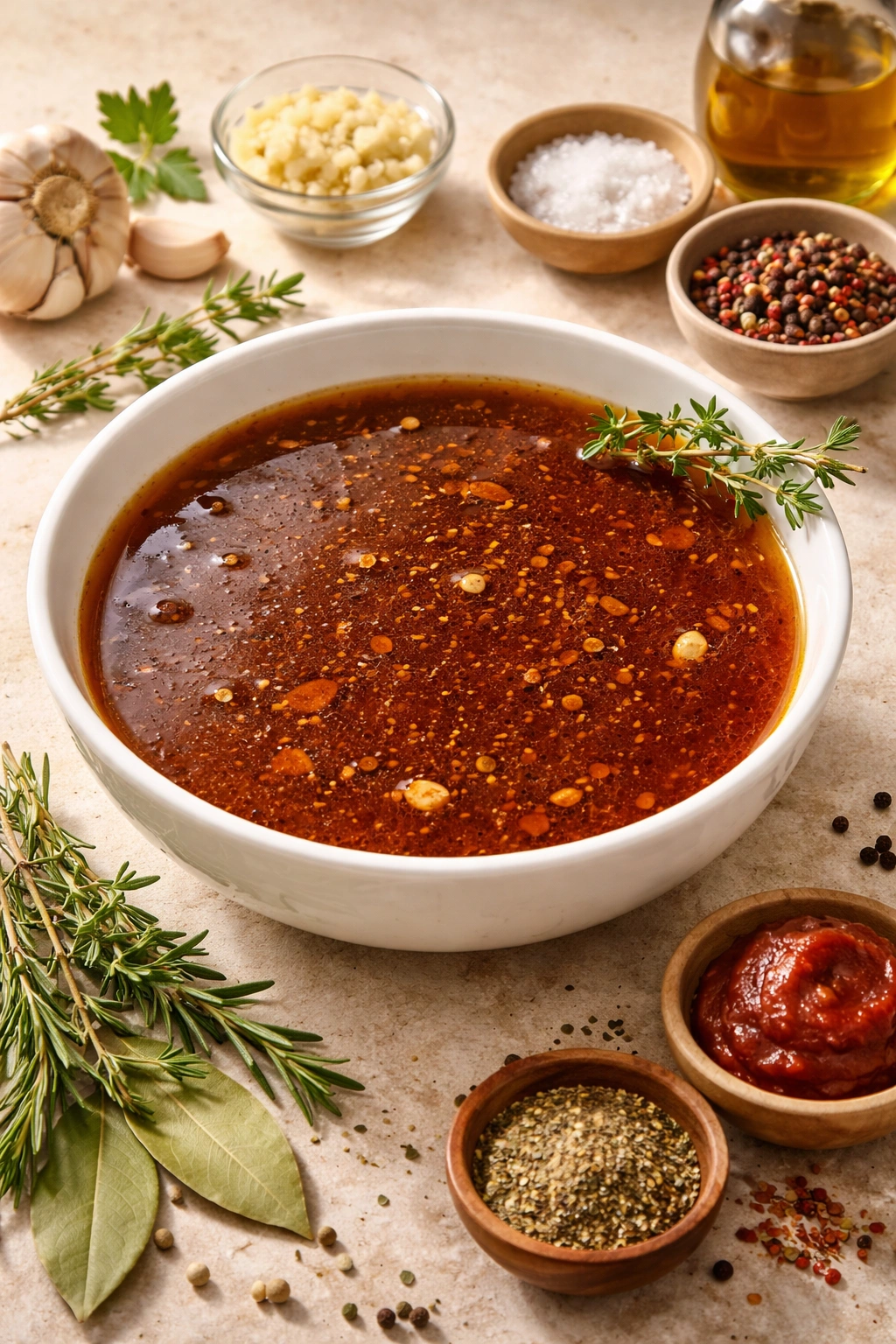
What you cook your steak in matters just as much as the cut itself and the cooking time. The liquid serves multiple purposes: it keeps the meat moist, it creates steam that breaks down tough fibers, and it becomes the base for a rich sauce or gravy. The seasonings you add infuse the meat with flavor as it braises.
Beef broth or beef stock is the foundation of most slow-cooker steak recipes. It provides savory depth and essential moisture. Some cooks prefer low-sodium versions so they can control salt levels, while others appreciate the full-sodium versions for built-in seasoning. You’ll typically use 1-2 cups depending on how much steak and how saucy you want your final dish.
Cream soups (cream of mushroom, cream of chicken, cream of onion) are incredibly common in crock pot steak recipes because they’re convenient, they add richness, and they naturally thicken the cooking liquid as it reduces. A single 10.5-ounce can mixed with broth creates a velvety sauce without requiring you to do anything special. If you’re concerned about sodium or want more control, you can make your own cream-based sauce with heavy cream and stock, but the canned soups are definitely the path of least resistance.
Dry soup mixes (onion soup mix, French onion soup mix, au jus gravy mix) are flavor bombs in small packets. An ounce of dry onion soup mix dissolved in your broth creates an incredibly savory, umami-rich cooking environment. Combined with a cream soup and beef broth, it creates the classic flavor profile that makes slow-cooker steak so craveable. These mixes do contain salt, so taste before adding extra.
Worcestershire sauce adds a savory, slightly tangy depth that enhances beef flavor without being pronounced. A tablespoon or two is usually enough to add complexity to your sauce.
Mushrooms (fresh, sliced) contribute earthy umami flavor and create a luxurious sauce. They’re optional but genuinely elevate the dish. Add them alongside the onions.
Onions become sweet and almost caramelized as they cook slowly alongside the steak. Always include at least one large onion, thinly sliced. They also act as a natural bed that prevents the steak from sitting directly on the bottom of the cooker.
The general formula that works consistently: beef broth + cream soup + dry seasoning mix + onions + optional mushrooms = fork-tender steak with incredible gravy. This combination appears in countless successful recipes, and there’s a reason—it works beautifully.
Step-by-Step: Making Perfect Fork-Tender Crock Pot Steak
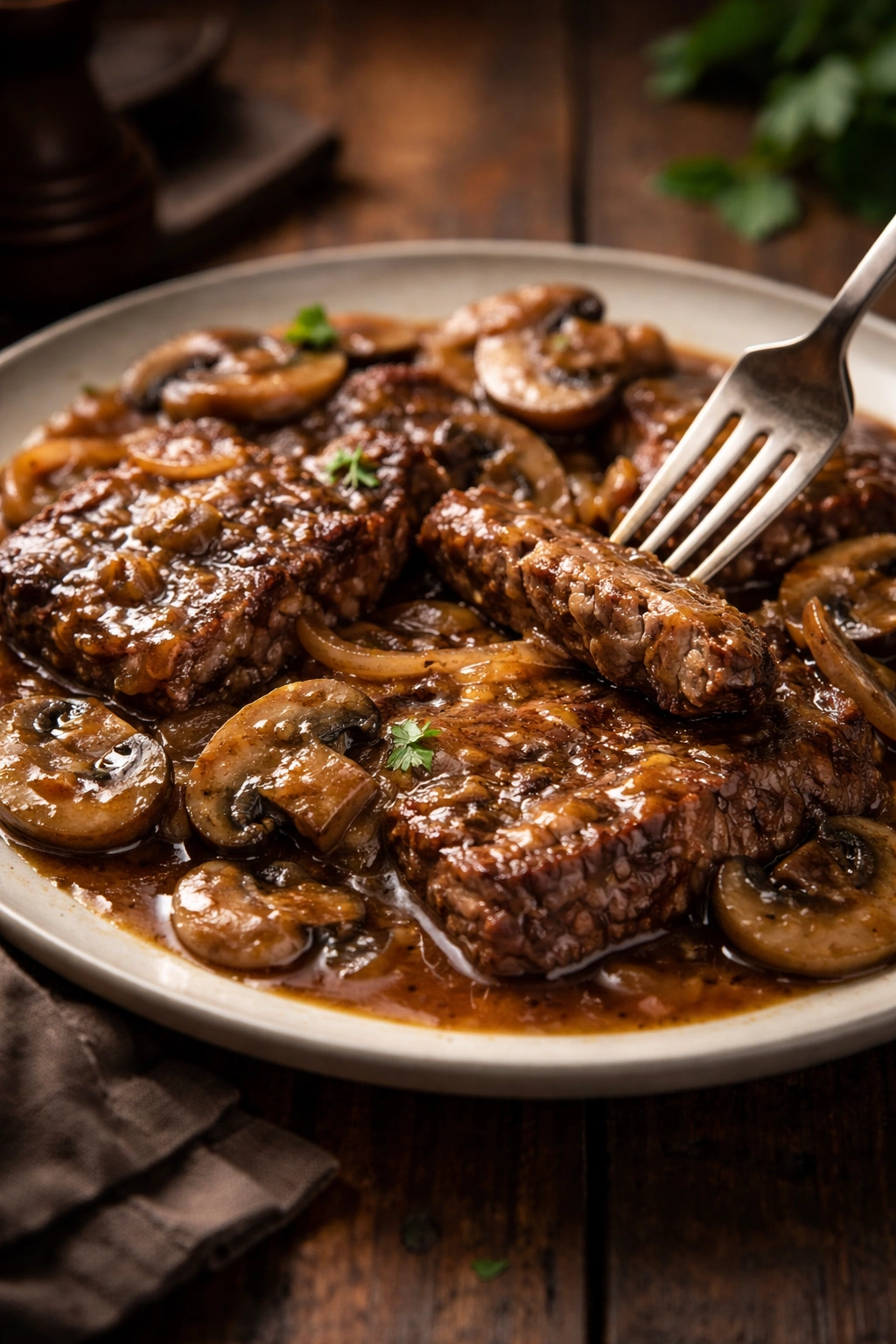
Let me walk you through a complete recipe that delivers those results every single time.
Yield: Serves 4 to 6
Prep Time: 15 minutes
Cook Time: 6 to 8 hours
Total Time: 6 hours 15 minutes to 8 hours 15 minutes (mostly hands-off)
Difficulty: Beginner — This recipe requires almost no technical skill. You’re essentially combining ingredients and letting the slow cooker do the work.
Classic Crock Pot Steak with Mushroom and Onion Gravy
For the Steak and Base:
- 2 to 2.5 pounds cube steak or chuck steak (about 4-5 steaks, depending on thickness)
- 2 large yellow onions, thinly sliced
- 8 ounces cremini or button mushrooms, sliced (optional but highly recommended)
- 1 tablespoon olive oil or vegetable oil
- Salt and pepper to taste (approximately 1 teaspoon salt and 1/2 teaspoon black pepper)
For the Braising Liquid:
- 1 (10.75-ounce) can cream of mushroom soup
- 1 cup beef broth (low-sodium or full-sodium, your choice)
- 1 (1-ounce) packet dry onion soup mix
- 1 tablespoon Worcestershire sauce
- 1/2 teaspoon dried thyme
- 1/4 teaspoon black pepper
For Thickening the Gravy (Optional but Recommended):
- 2 tablespoons cornstarch
- 3 tablespoons cold water
Prepare Your Ingredients:
-
Remove the cube steaks from the refrigerator about 15 minutes before cooking—this helps them cook more evenly. Pat them completely dry with paper towels; this is crucial for achieving any browning if you choose to sear them.
-
Slice your onions thinly (about 1/4-inch thickness) so they cook down properly and release their sweetness. If using mushrooms, slice them about 1/4-inch thick as well.
-
In a small bowl, whisk together the cream of mushroom soup, beef broth, dry onion soup mix, Worcestershire sauce, dried thyme, and black pepper until completely smooth. Make sure no lumps of dry soup mix remain—this is your braising liquid.
Optional Searing Step (Adds Depth, Not Essential):
-
Heat 1 tablespoon of oil in a large skillet over medium-high heat until it shimmers (about 2 minutes). Working in batches to avoid overcrowding, sear the cube steaks for 2-3 minutes per side until they develop a light golden-brown crust. Do not cook them through—you’re only looking for surface browning. This step adds extra flavor and visual appeal, but if you’re short on time, you can skip it entirely without compromising the final tenderness.
-
Transfer the seared steaks to a plate and set aside.
Build Your Slow Cooker:
-
Arrange the sliced onions evenly across the bottom of a 6-quart slow cooker. This creates a flavorful bed and prevents the steak from sitting directly on the bottom.
-
Layer the cube steaks on top of the onions. Distribute the sliced mushrooms (if using) evenly over and around the steaks.
Advertisements -
Carefully pour the braising liquid over everything, making sure to coat all the meat. Use a spoon to help distribute it evenly. The steak should be mostly submerged or at least partially covered by liquid.
The Long, Slow Cook:
-
Cover the slow cooker with its lid and cook on LOW for 6 to 8 hours. Do not lift the lid during cooking—every time you open it, you release heat and steam, which adds to the cooking time. The steak is done when you can easily pull a piece apart with a fork or when a fork pressed against it meets almost no resistance.
-
After 6 hours, you can do a quick peek-and-test if you’re curious, but plan for closer to 8 hours if your steaks are particularly thick. Thickness matters more than weight here—thicker steaks benefit from the full 8 hours.
Thickening the Gravy (Completely Optional):
-
If you like a thicker, more gravy-like sauce, prepare a cornstarch slurry by whisking 2 tablespoons cornstarch with 3 tablespoons cold water in a small bowl until completely smooth. Never add dry cornstarch directly to hot liquid—it will create lumps.
-
Once the steaks are fork-tender, carefully stir the cornstarch slurry into the slow cooker. Turn the setting to HIGH and cook uncovered for 15-20 minutes, stirring occasionally, until the sauce thickens to a pourable, gravy-like consistency that coats the back of a spoon.
Serve Immediately:
-
Carefully remove the steaks using a slotted spoon or tongs, transfer them to serving plates or a platter, and tent loosely with foil to keep warm while you finish the sauce.
-
Ladle the sauce generously over the steaks and serve with your choice of sides (see suggestions below).
Advertisements
The Science of Timing: Why 6-8 Hours Matters
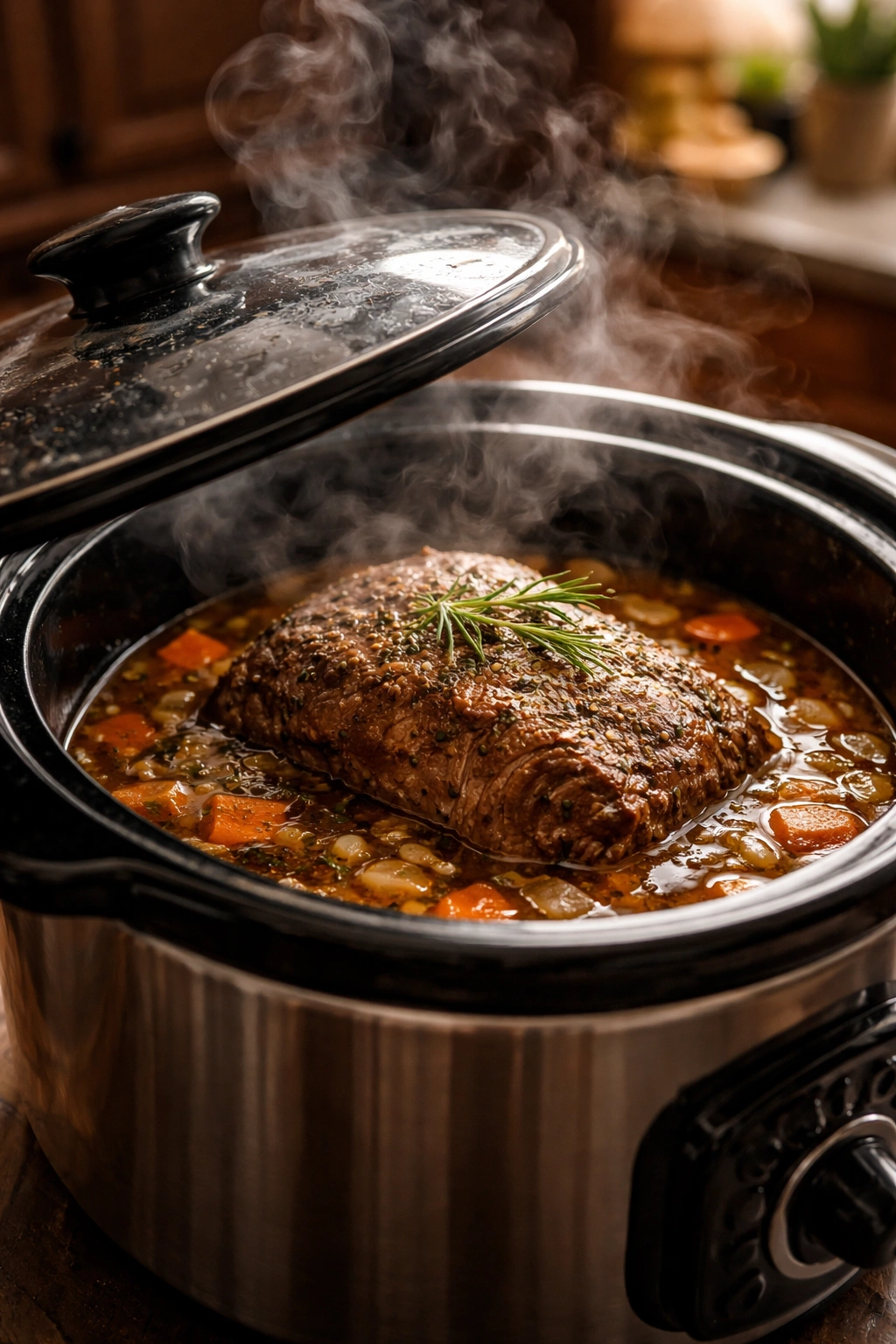
A lot of home cooks wonder whether they can just cook their steak longer on low, or whether high heat might speed things up. The answer requires understanding what’s actually happening inside the cooker.
6 hours is generally the minimum time needed for tough cuts to become truly fork-tender. At this point, a typical 3/4-inch to 1-inch thick cube steak will be soft enough to cut with a fork, and the muscle fibers will have started to break down significantly.
8 hours is often ideal, especially for thicker steaks (1.5 inches or more) or for recipes where you want maximum flavor infusion and an almost buttery tenderness. At this point, the collagen has fully converted to gelatin, and the meat has absorbed the surrounding flavors completely.
Beyond 8 hours on low becomes a question of preference. Some people can go to 9-10 hours without issue, especially if their slow cooker runs on the cooler side. However, if you go too long on low—say, 12+ hours—you risk the meat becoming almost mushy and losing texture entirely. It’s usually better to use a keep-warm setting after 8 hours if you need to extend the cooking time.
High heat (approximately 250-275°F) does speed up the process, typically reducing cooking time to 3-4 hours. However, high heat is riskier because the outer edges of the meat can start to dry out before the interior fully tenderizes. If you must cook on high, plan for 4 hours minimum and check for doneness at the 3.5-hour mark.
The golden rule: Low and slow (6-8 hours on LOW) is always the safer bet for consistently tender results. It’s more forgiving, the meat stays juicier, and you’re less likely to end up with tough edges and an overcooked exterior.
Pro Tips for Fork-Tender Results Every Single Time
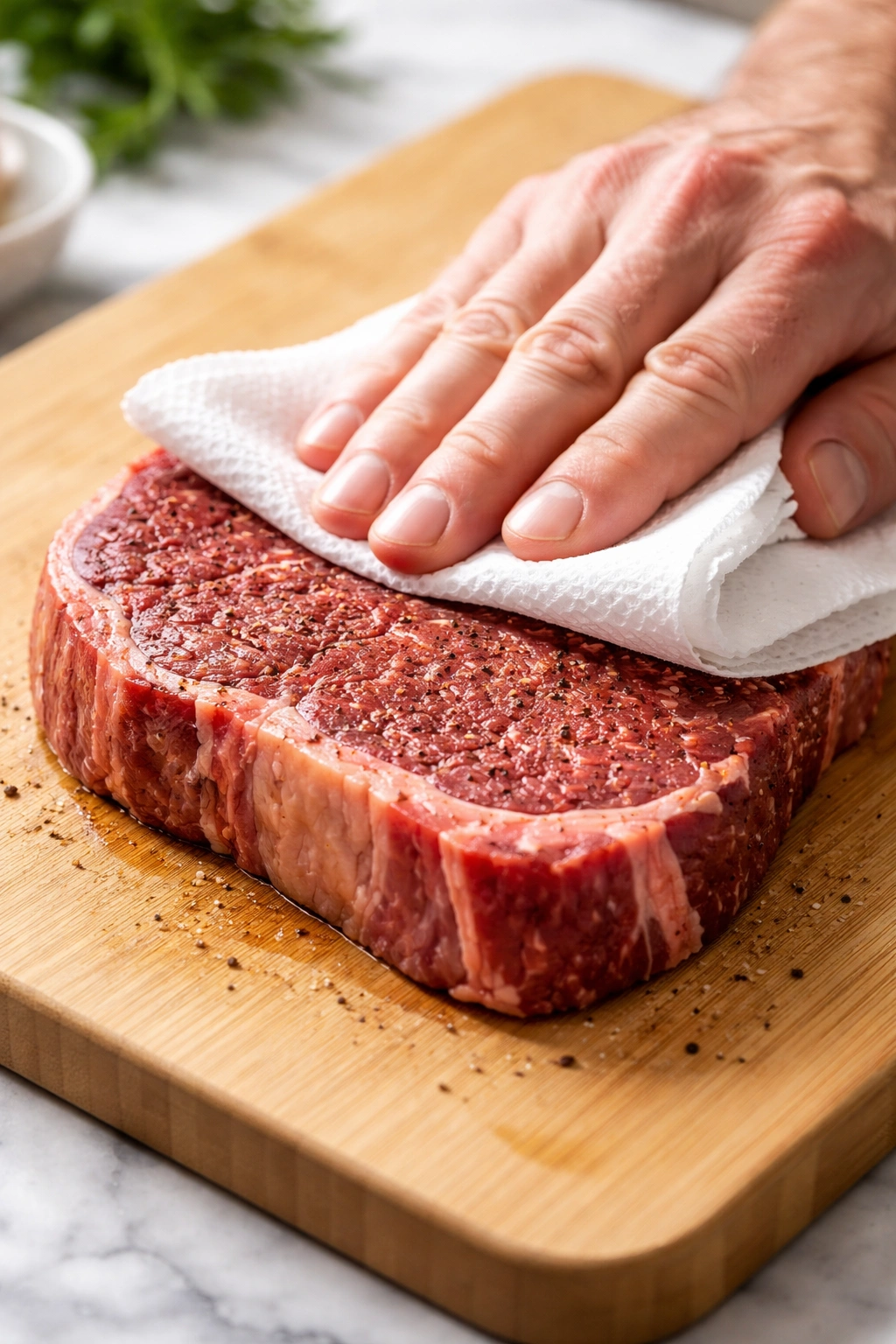
Pat the steak completely dry before cooking. Even if you’re not searing it, moisture on the surface prevents browning. Pat with paper towels until it’s as dry as possible.
Don’t skip the onions. They serve a practical purpose (preventing the steak from sitting on the bottom) and a flavor purpose (they become sweet and contribute depth to the sauce). Always include at least one large onion.
Taste the sauce before serving. Depending on which brands you used and whether you chose low-sodium or full-sodium versions of your ingredients, the salt level might be higher or lower than you prefer. You can always add a pinch more salt, but you can’t remove it, so taste first.
Resist opening the lid constantly. Every peek adds 15-20 minutes to cooking time because heat escapes immediately. If you’re curious, plan to open the lid once at the 6-hour mark to see if the steak is done. That’s it.
Cut against the grain when serving. Some cuts, especially skirt steak and flank, have a pronounced grain. Slicing perpendicular to those fibers makes the meat taste even more tender. Check which direction the muscle fibers run and cut perpendicular to them.
Use a slotted spoon to remove the steaks. This prevents excess liquid from dripping everywhere and keeps your plating cleaner.
Let the sauce rest for 5 minutes after adding cornstarch. The thickening continues for a minute or two after you remove the cooker from heat, so don’t panic if it seems thin immediately after adding the slurry.
Variations and Flavor Twists
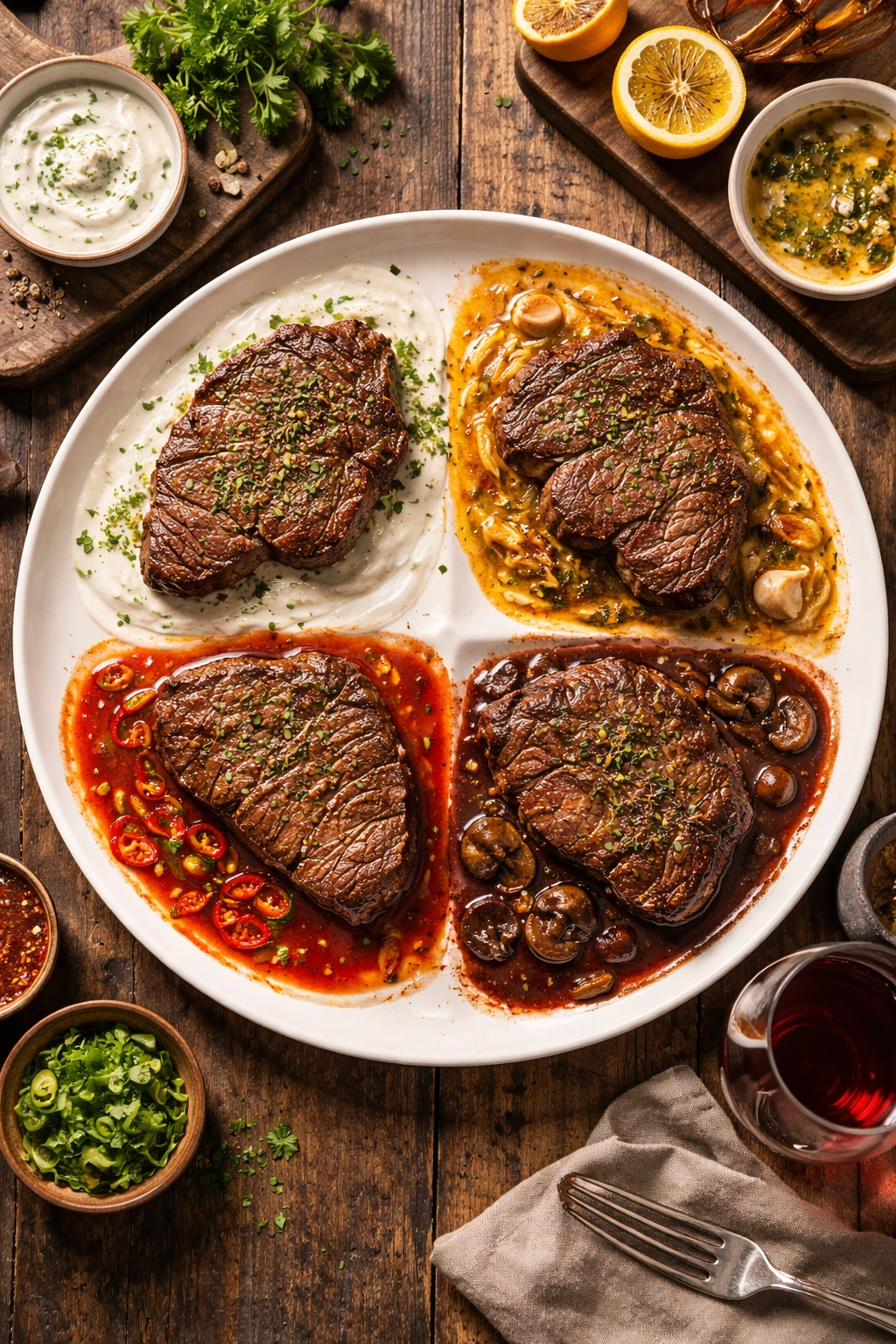
Once you master the basic version, you can easily adapt it to your preferences or what you have on hand.
Creamy Ranch Version: Replace the cream of mushroom soup with cream of chicken soup and add 1 packet of dry ranch seasoning mix. Skip the thyme. Add a splash of sour cream (about 1/2 cup) during the last 15 minutes. This creates a rich, tangy sauce that’s especially popular with kids.
Garlic Butter Elevation: Sauté 6-8 minced garlic cloves in 2 tablespoons butter until fragrant (don’t brown them), then add to the cooker along with your other ingredients. Add 2 additional tablespoons butter to the final sauce. This creates an incredibly luxurious, steakhouse-style dish.
Spicy Kick: Add 1/2 teaspoon cayenne pepper, 1 teaspoon smoked paprika, and 1/4 teaspoon hot sauce (or to taste) to your braising liquid. This is especially good with skirt steak.
Wine-Braised Version: Replace 1/2 cup of the beef broth with dry red wine (like a Cabernet or Merlot). Add 1 teaspoon fresh thyme (or 1/2 teaspoon dried) and 2 bay leaves. This creates a deeper, more restaurant-like flavor.
Honey BBQ Version: Replace the dry onion soup mix with 2 tablespoons barbecue rub (store-bought is fine), and mix 1/2 cup ketchup, 2 tablespoons honey, 2 tablespoons apple cider vinegar, and 1 tablespoon Worcestershire sauce into your broth instead of just the Worcestershire. Use this as your braising liquid.
Mushroom Stroganoff Style: Use cream of mushroom soup, add 1 cup sliced mushrooms, and during the last 30 minutes, stir in 1/2 to 3/4 cup sour cream mixed with 1 tablespoon all-purpose flour. Serve over egg noodles.
French Onion Inspiration: Use French onion soup (canned) as one of your soup components instead of cream of mushroom. Add 1 tablespoon balsamic vinegar and omit the thyme. Serve over crusty bread or topped with melted Gruyère.
What to Serve Alongside Your Steak
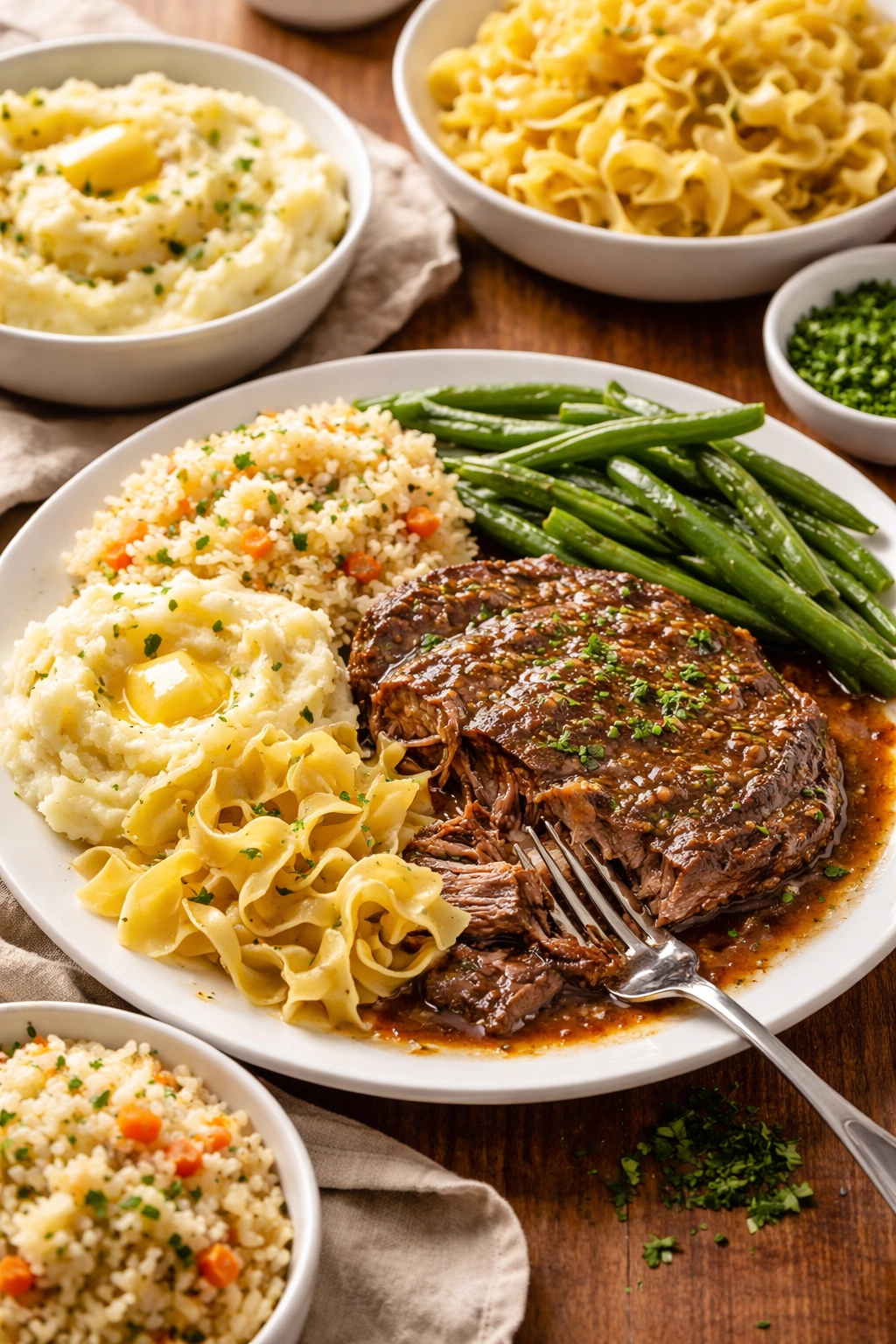
The beauty of slow-cooker steak is that the gravy becomes almost a secondary main component—it’s that good. You want sides that can soak it up or complement it without competing.
Mashed potatoes are the classic pairing. Creamy, buttery mashed potatoes and fork-tender steak with rich gravy is an unbeatable combination. The gravy soaks into the potatoes and elevates them from simple to luxurious.
Egg noodles are excellent if you want something slightly lighter or if you’re feeling more European in your inspiration. Wide egg noodles hold sauce beautifully and provide a tender, slightly chewy texture contrast to the steak.
Rice (white, brown, or rice pilaf) is a great option if you want something that absorbs the sauce but feels less heavy than potatoes or noodles. Serve the steak and sauce over a bed of fluffy white rice.
Buttered vegetables like green beans, asparagus, or roasted root vegetables add color and nutrition. They also provide a slight contrast to the rich, savory steak without overwhelming the plate.
Crusty bread or dinner rolls are perfect for those who want to soak up extra sauce. Warm bread alongside or underneath the steak creates little pockets of deliciousness.
A crisp salad can cut through the richness if you’re serving this as a special meal and want a lighter balance to the plate overall.
Storage and Making Ahead
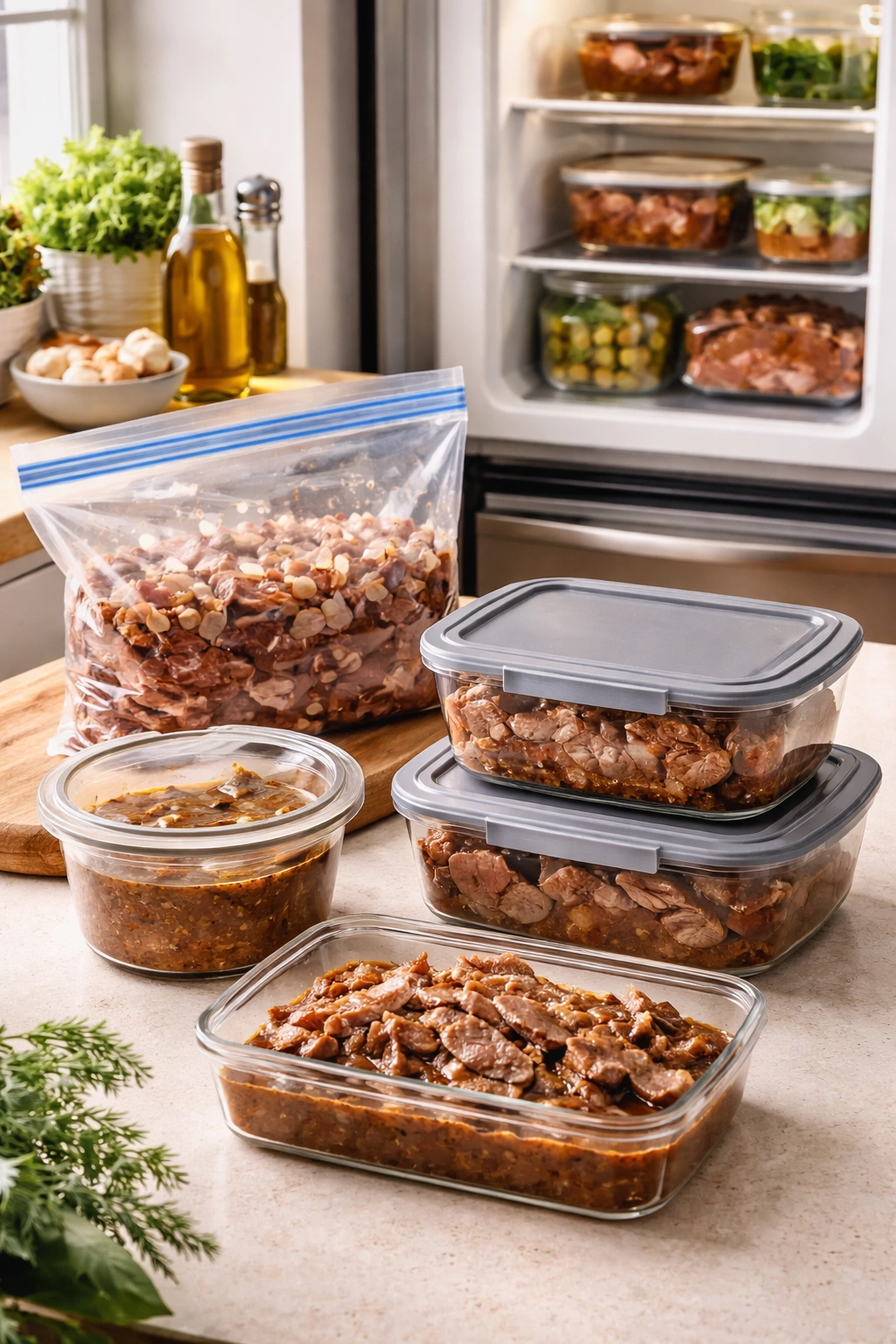
Refrigerator storage: Cool the steak completely to room temperature, then transfer both the meat and sauce to an airtight container. Store in the refrigerator for up to 3-4 days. The sauce may thicken significantly as it cools; this is normal. When reheating, add a splash of water or broth to loosen it to your desired consistency.
Freezer storage: Slow-cooker steak freezes beautifully. Portion it into airtight freezer containers or freezer bags, removing as much air as possible to prevent freezer burn. It will keep for 2-3 months. Thaw overnight in the refrigerator before reheating (or reheat directly from frozen on low heat in your slow cooker, which will take significantly longer).
Reheating: Warm gently on the stovetop over medium-low heat, stirring occasionally and adding broth or water to loosen the sauce. You can also reheat in the slow cooker on low for 1-2 hours, or in the oven at 325°F covered with foil for 15-20 minutes.
Make-ahead option: You can prep all your ingredients the night before. Slice the onions and mushrooms, combine your braising liquid in a bowl, and store everything separately in the refrigerator. In the morning, layer everything into your slow cooker insert (which you’ve already placed in the cooker base), set it to low, and you’re done. This works beautifully for weeknight cooking when time is tight.
Troubleshooting Common Issues
Steak still tough after 6-8 hours? This usually means either your slow cooker runs cooler than average (some do) or your steaks were thicker than anticipated. Simply cover and cook for another hour. Chuck steak especially sometimes needs 9 hours.
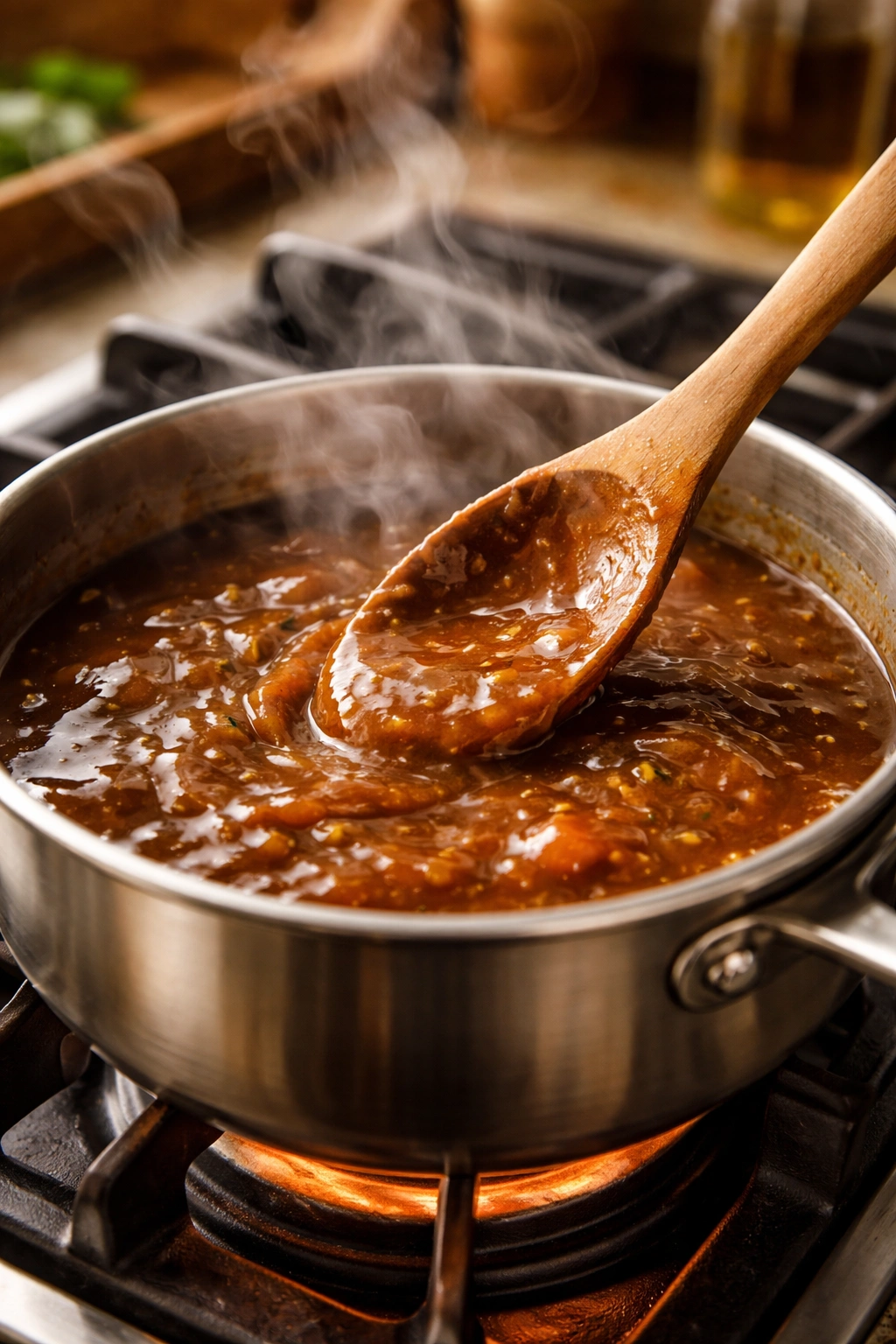
Gravy too thin? If you want a thicker sauce but forgot to make a cornstarch slurry, transfer the cooking liquid to a saucepan and simmer it on the stovetop over medium heat for 10-15 minutes. It will reduce and thicken naturally. Alternatively, make a slurry with 1 tablespoon cornstarch and 2 tablespoons cold water and whisk it into the hot (not boiling) liquid.
Gravy too thick or gelatinous after refrigerating? This is actually a sign your braising was successful—the collagen converted to gelatin beautifully. Simply thin it with water or broth when reheating. A little splash goes a long way.
Steak shredding apart too much? This means it cooked past fork-tender into almost pulled-meat territory. This is fine—it still tastes delicious and honestly makes a great base for sandwiches or shredded meat applications. If you prefer larger pieces, reduce cooking time by 1 hour on your next attempt.
Soup mix lumps in the gravy? Always whisk dry soup mixes thoroughly with liquid before adding them to the cooker. If lumps do form, strain the sauce through a fine-mesh sieve before serving.
Final Thoughts on Fork-Tender Perfection
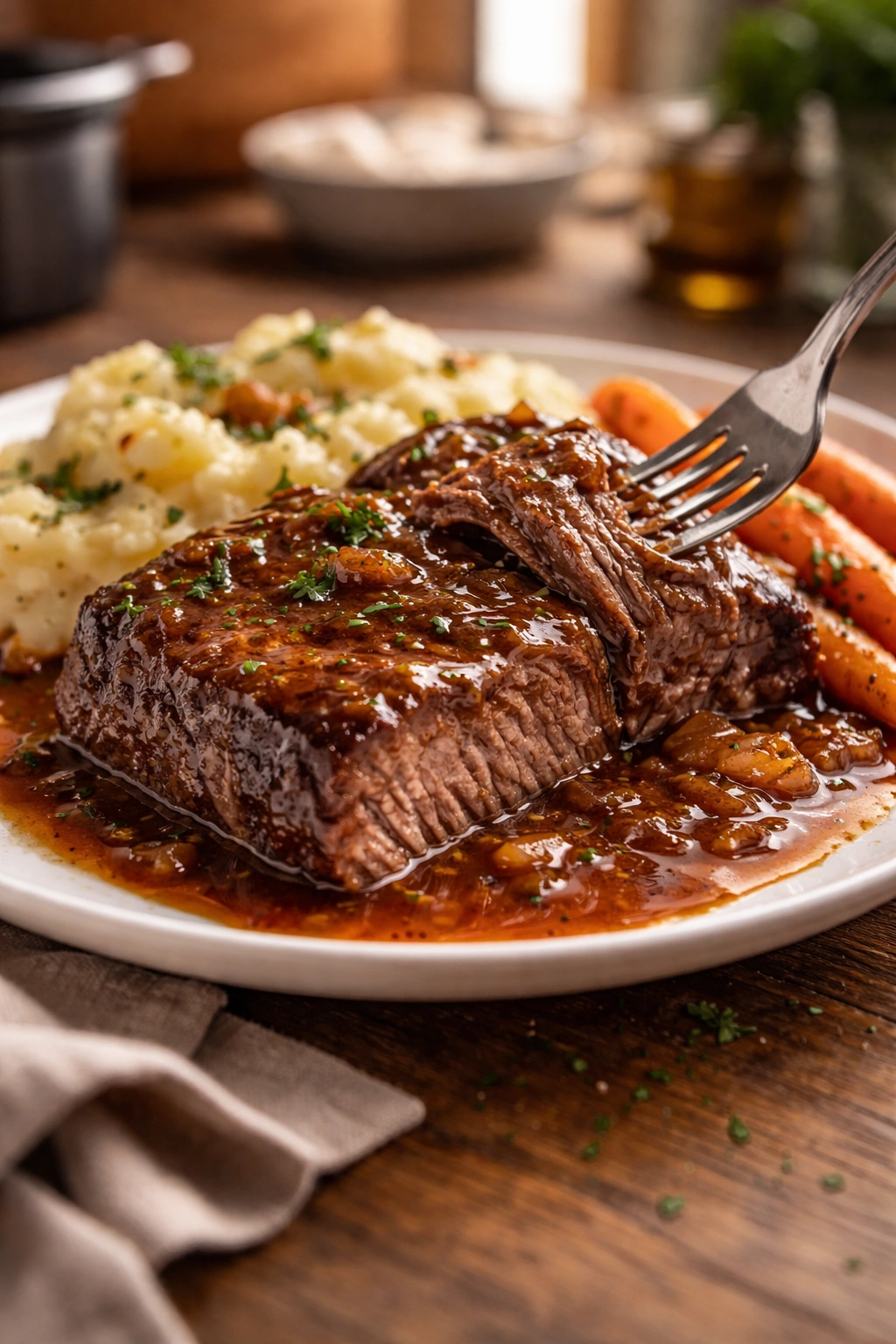
Mastering crock pot steak opens up an entire category of weeknight dinners that feel elegant and special without demanding anything from you. You’re not a short-order cook standing at the stove. You’re someone who knows the secret: that the best flavors come from patience, not from fancy techniques. You’re someone who can serve a meal that tastes like restaurant-quality comfort food while having spent maybe 15 minutes of actual active time in the kitchen.
The transformations that happen inside that slow cooker are genuinely remarkable. A cut of meat that would be tough and unpleasant if cooked quickly becomes something so tender it practically melts on your tongue. That inexpensive chuck steak or cube steak becomes indistinguishable from much more expensive cuts in terms of texture. The liquid around it concentrates into a sauce so rich and satisfying that it becomes the star of the plate.
Start with the classic recipe outlined here—the combination of cream soup, beef broth, onion soup mix, and onions has been proven thousands of times over. Once you’ve made it a few times and understand how your specific slow cooker performs, feel free to experiment with the variations. Add extra garlic. Try different soups. Play with seasonings. But the core technique remains the same: low heat, ample time, simple ingredients, and patience. That’s the formula for fork-tender crock pot steak every single time.
