



Dairy sensitivities, allergies, and dietary choices are becoming increasingly common in families, and the challenge of creating satisfying dinners without cheese, cream, and milk shouldn’t mean serving separate meals or settling for sad, underseasoned plates. The good news? Some of the most crave-worthy, restaurant-quality dinners naturally work without dairy—or become even better when you swap in creative alternatives like creamy coconut milk, cashew-based sauces, and nutritional yeast magic.
The real secret to dairy-free dinners that actually get eaten—and requested again—is abandoning the idea that you’re making “dairy-free versions” of traditional dishes. Instead, you’re exploring cuisines and flavor profiles that have perfected meals without dairy for centuries. Thai food. Vietnamese cuisine. Mediterranean cooking. Cajun and Mexican traditions. These aren’t limitations; they’re doorways to flavor.
What follows are ten dinner ideas that hit the right balance: they’re familiar enough that picky eaters won’t panic, impressive enough that adults genuinely enjoy them, and practical enough that most come together in under an hour. Each one is built on the foundation of real taste—bold spices, fresh ingredients, and enough umami depth that nobody’s asking where the cheese went.
1. Creamy Coconut Curry with Chicken and Vegetables
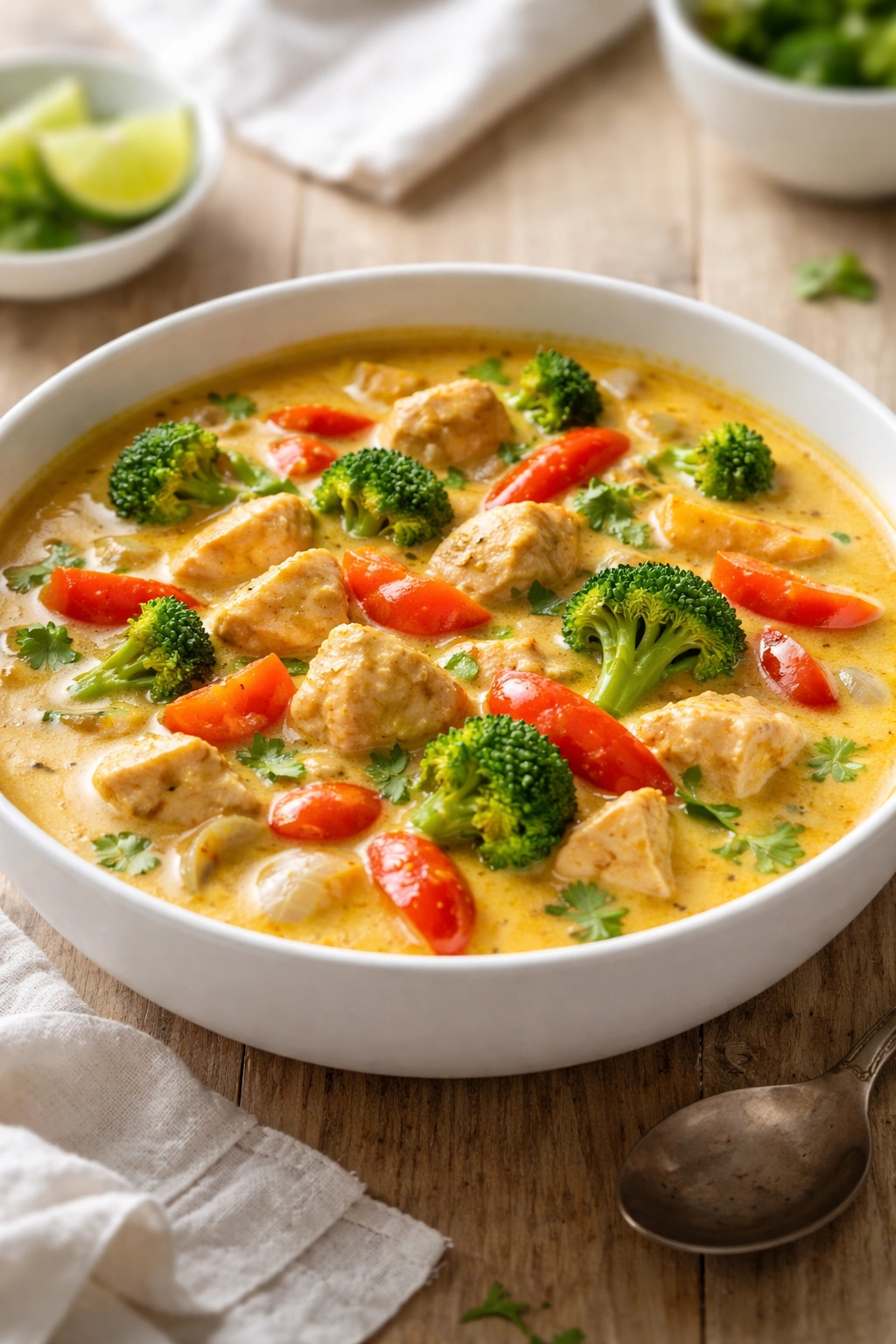
A silky coconut curry is comfort food without compromise, and it’s one of the easiest ways to introduce your family to dairy-free cooking without announcing it as “dairy-free.” The creamy coconut milk does the work that heavy cream typically does, delivering richness and satisfaction while the spices handle all the flavor depth.
Why This Works for Families
Chicken curry tastes indulgent and restaurant-quality, but it builds from just a few pantry staples—coconut milk, curry paste, and ingredients you probably already have. The flavor is naturally comforting without being boring, and the recipe adapts beautifully to whatever vegetables your family will actually eat. Kids who think they hate spice usually surprise you because the coconut sweetness balances the heat.
What You’ll Need
- 1.5 pounds boneless, skinless chicken breasts (or thighs for more flavor), cut into bite-sized pieces
- 2 cans (14 oz each) coconut milk (full-fat, not lite)
- 3 tablespoons red or yellow curry paste
- 1 medium onion, sliced
- 2 bell peppers (any color), cut into chunks
- 2 cups chopped broccoli florets
- 1 tablespoon fish sauce (or 1 teaspoon salt if avoiding fish products)
- 1 tablespoon palm sugar or brown sugar
- 1 tablespoon lime juice
- Fresh basil or cilantro for garnish
- Cooked jasmine rice for serving
Heat 2 tablespoons coconut oil in a large pan over medium-high heat. Add curry paste and cook for 2-3 minutes, stirring constantly, until fragrant and darkened slightly. Add the chicken pieces and sear for 3-4 minutes per side until the outside is golden (it won’t be fully cooked yet). Pour in the coconut milk and bring to a gentle simmer. Add the onion and bell peppers, reduce heat to medium-low, and simmer for 15 minutes. Add the broccoli and cook for another 8-10 minutes until the vegetables are tender and the chicken is completely cooked through. Stir in the fish sauce, sugar, and lime juice, tasting and adjusting as needed. Serve over jasmine rice with fresh basil scattered on top.
Pro Tips for Perfect Results
Make it less spicy for younger kids: Use curry paste more sparingly and add an extra splash of coconut milk—the sweetness mellows the heat. Prep ahead: Cook this the day before and reheat gently; it actually tastes better as flavors meld overnight. Swap vegetables freely: Zucchini, snap peas, carrots, and green beans all work beautifully here. Add them in order of how long they take to cook, starting with the hardest vegetables first. Double the batch: This freezes perfectly for up to three months, so make two at once and save yourself cooking time later.
2. Taco Night with Creamy Cashew Crema
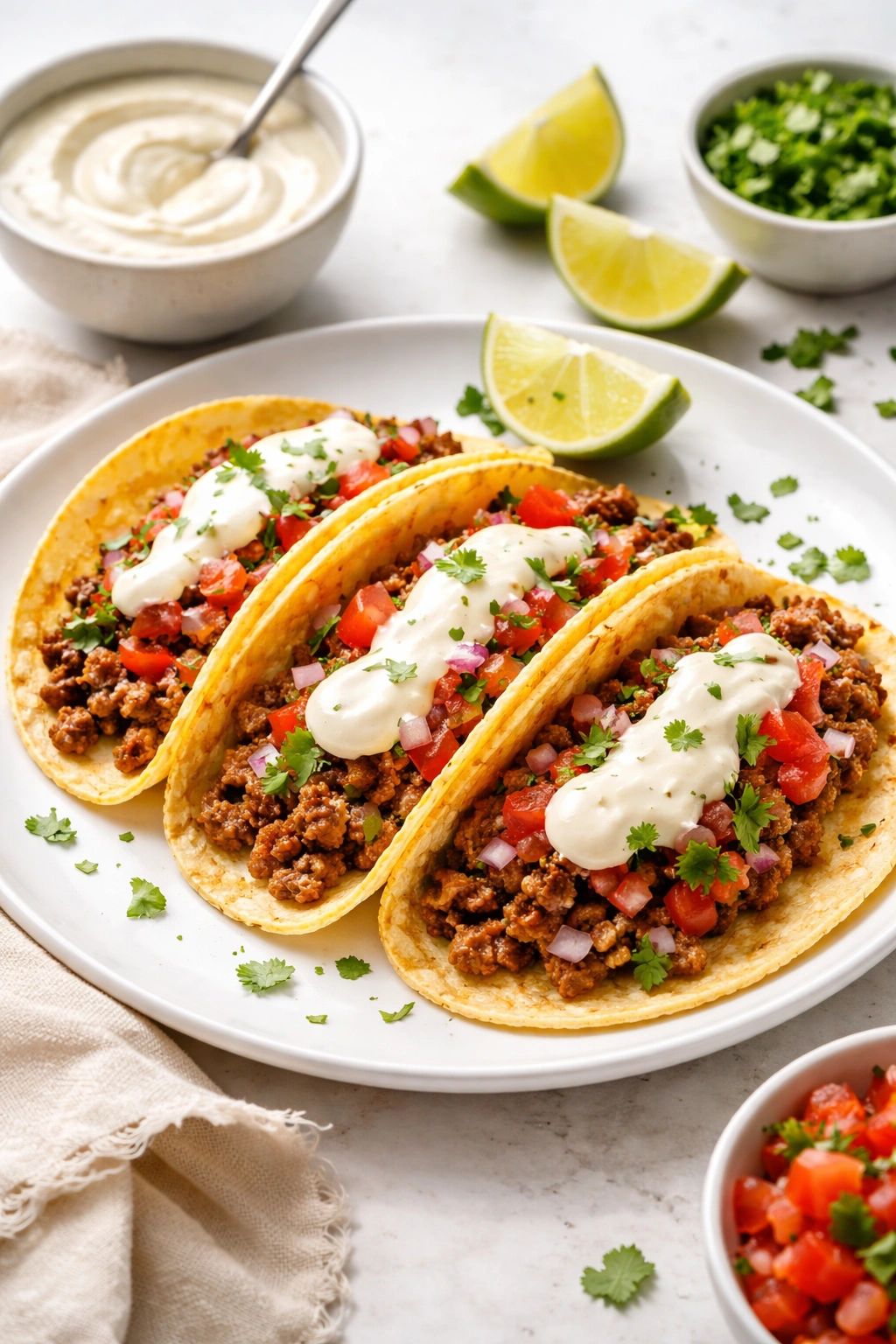
Tacos are the ultimate family dinner because everyone builds their own, and nobody’s forced to eat anything they don’t want. The addition of a rich, dairy-free crema transforms tacos from simple into genuinely crave-worthy, and it’s easier to make than you’d expect.
Why This Works for Families
Taco night is inherently fun and interactive—kids are more willing to try new things when they’re in control of their plate. The cashew crema tastes like sour cream crossed with crème fraîche, adding tang and richness without relying on dairy. It takes five minutes to blend together, and it works on literally everything: tacos, nachos, enchiladas, or just scooped onto a plate as a dip.
Building Your Taco Station
For the cashew crema: Soak 1 cup raw cashews in boiling water for 15 minutes, then drain and blend with ½ cup water, 2 tablespoons lime juice, 1 teaspoon garlic powder, and salt to taste until completely smooth. Thin with additional water if needed to reach sour-cream consistency.
For the taco filling: Brown 1.5 pounds ground beef (or turkey, or use seasoned jackfruit for a vegetarian option) in a large skillet over medium-high heat. Drain excess fat if needed. Add 1 packet dairy-free taco seasoning (or 2 tablespoons homemade seasoning blend: 1 tablespoon chili powder, 1 teaspoon cumin, ½ teaspoon garlic powder, ½ teaspoon smoked paprika, ¼ teaspoon cayenne, salt, and pepper) plus ¼ cup water. Simmer for 5 minutes until the sauce thickens slightly.
Toppings to set out: Shredded lettuce, diced tomatoes, red onion, cilantro, lime wedges, diced avocado, salsa, sliced jalapeños, shredded dairy-free cheese (or skip it entirely), black beans, corn, sliced radishes.
Taco shells: Warm flour tortillas or corn tortillas, or set out crispy shell alternatives.
Make-Ahead Magic
Prepare the cashew crema up to 4 days ahead and store in the fridge—it actually thickens slightly as it sits, creating an even more authentic sour cream texture. Brown the meat and prep toppings 2-3 hours ahead, storing everything in separate containers. At dinner time, all you need to do is gently reheat the meat and warm the tortillas. Your actual cooking time is zero minutes.
3. Teriyaki Stir-Fry with Brown Rice
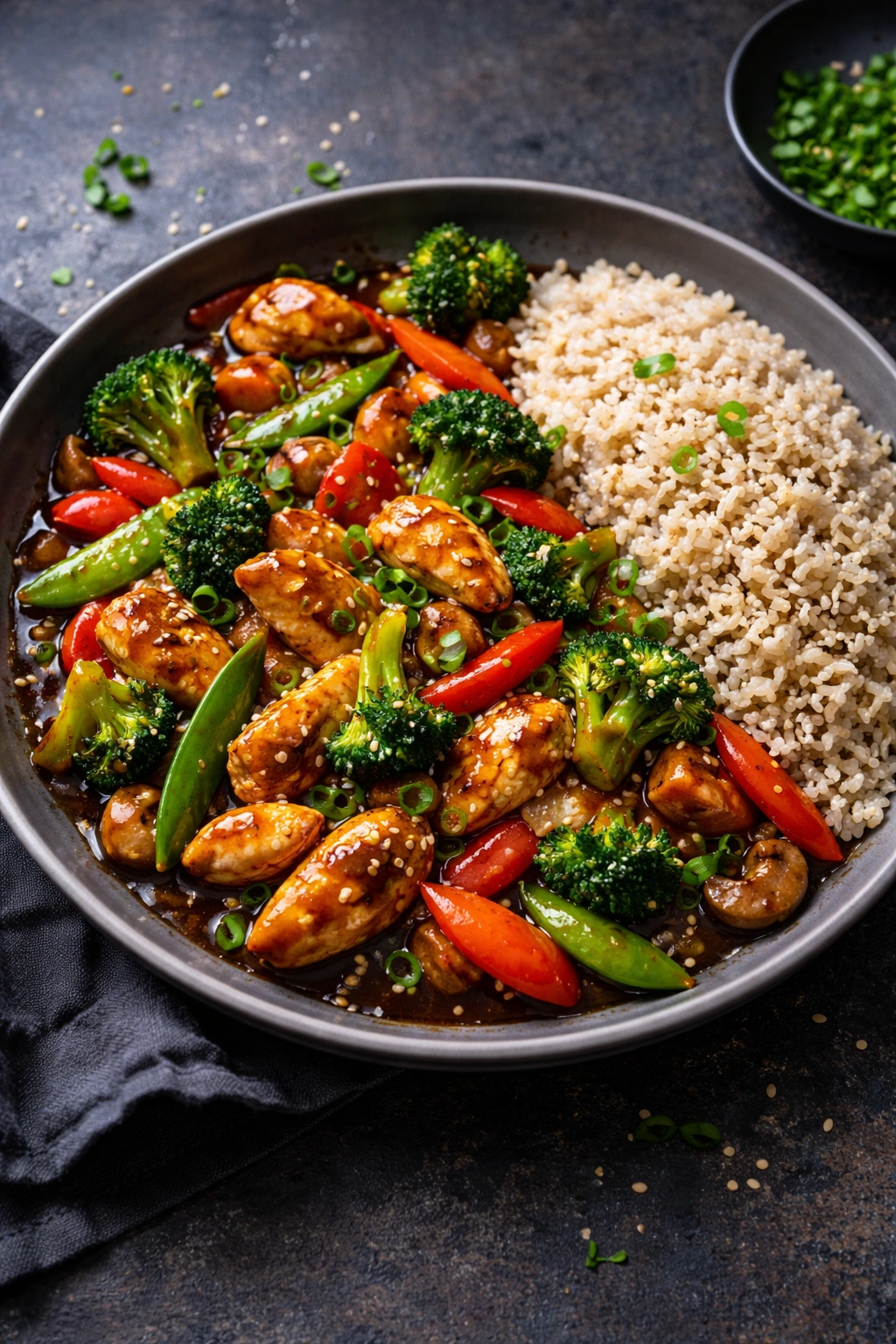
A well-executed stir-fry is proof that dairy-free eating isn’t just possible—it’s delicious. The key is high heat, proper preparation, and a sauce that coats everything in glossy, deeply savory flavor.
Why This Works for Families
Stir-fries are fast, they’re adaptable to whatever vegetables you have on hand, and they come with built-in portion control because rice is naturally filling. The teriyaki sauce is sweet enough to appeal to younger palates while being complex enough that adults aren’t bored. Everything gets done in under 30 minutes from start to finish, including rice.
Ingredient Breakdown
For the sauce: Whisk together ⅓ cup low-sodium tamari or soy sauce, 3 tablespoons maple syrup, 2 tablespoons rice vinegar, 1 tablespoon sesame oil, 2 cloves minced garlic, 1 tablespoon fresh grated ginger, and 1 teaspoon cornstarch until the cornstarch dissolves. This is your base—everything else builds from here.
For the stir-fry: Use 1.5 pounds protein cut into uniform bite-sized pieces (chicken breast, beef sirloin, firm tofu, or shrimp), and 6-7 cups mixed vegetables cut into similar sizes. Good combinations: broccoli florets, snap peas, bell peppers, carrots, mushrooms, or bok choy. Have everything prepped and within arm’s reach before you start cooking—stir-fries move fast.
Heat 1 tablespoon neutral oil (vegetable or avocado oil) in a large skillet or wok over high heat until it shimmers. Add the protein and cook without stirring for 2-3 minutes to develop color, then toss and cook until nearly done. Remove to a plate. Add another tablespoon of oil to the pan, then add harder vegetables first (carrots, broccoli). Stir frequently for 3-4 minutes. Add softer vegetables (peppers, snap peas) and cook for another 2-3 minutes. Return the protein to the pan, pour in the sauce, and toss everything together until coated and the sauce thickens slightly (about 1-2 minutes). Finish with a drizzle of sesame oil and a sprinkle of sesame seeds. Serve immediately over cooked brown rice.
The Stir-Fry Principle
Cook your protein first and set it aside. This prevents it from overcooking while you’re finishing the vegetables. Add vegetables in order of cooking time. Hard vegetables (broccoli, carrots) need longer than soft ones (snap peas, spinach). Don’t crowd the pan. If your skillet is too full, the vegetables will steam instead of sear. Work in batches if needed, then combine everything at the end. Sauce goes in last. This ensures it coats everything evenly and thickens properly without the liquid reducing too much.
4. Creamy Tomato Pasta with Dairy-Free Alfredo
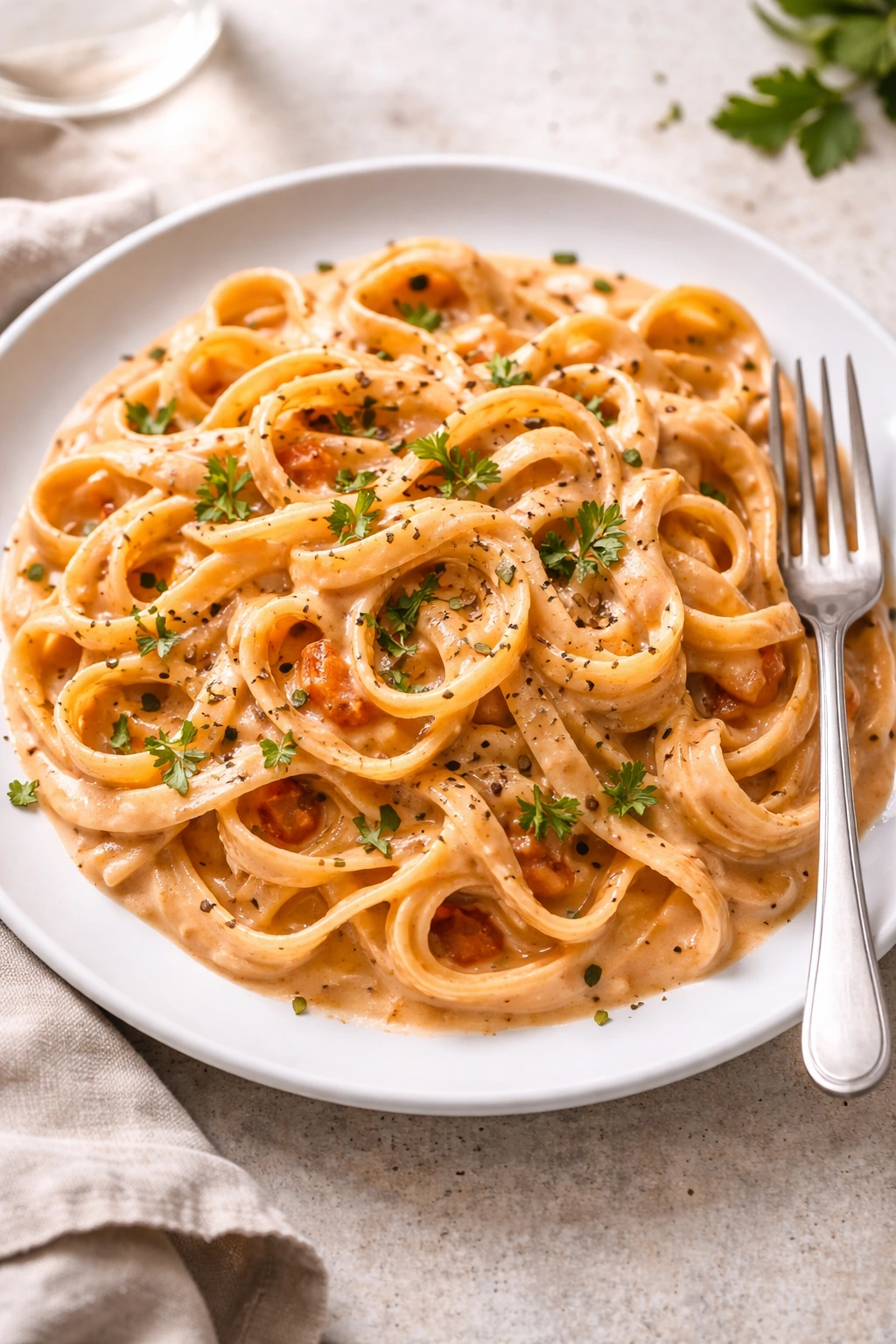
This is the dinner that might actually shock your family—a luxuriously creamy pasta sauce made entirely without cream cheese, sour cream, or butter. The secret is cashew-based richness combined with pasta water magic.
Why This Works for Families
Pasta is inherently kid-friendly, and this version satisfies that craving for creamy, coated noodles without relying on dairy. The sauce tastes like it took hours to develop, but it comes together in the time it takes water to boil. It’s also adaptable: make it with just the cashew sauce, add tomatoes for variety, or mix in sautéed vegetables for stealth nutrition.
The Sauce Components
Make a cashew base: Soak 1.5 cups raw cashews in boiling water for 15 minutes, drain, then blend with ¾ cup pasta water (you’ll save this from your cooking), 3 cloves garlic, 2 tablespoons lemon juice, 1 tablespoon white miso paste, 2 teaspoons salt, ½ teaspoon white pepper, and ¼ teaspoon nutmeg until silky smooth. This is your dairy-free Alfredo.
Build flavor: In a large skillet, heat 2 tablespoons olive oil over medium heat. Add 1 diced onion and cook for 5 minutes until soft. Add 4 cloves minced garlic and cook for 1 minute more. Add two 14-ounce cans crushed tomatoes, 1 teaspoon Italian herbs, salt, and pepper. Simmer for 10 minutes to develop flavor.
Combine: Cook 1 pound pasta to just under al dente (it’ll finish cooking when you toss it with sauce). Reserve 1 cup pasta water. Pour the cashew sauce into the tomato mixture and whisk until completely smooth. Add the pasta and toss, adding pasta water a splash at a time until you reach a saucy consistency. The sauce should coat the pasta without pooling.
Texture Secrets
White miso paste is the MVP here. It adds savory depth and umami that mimics what cheese typically provides. Pasta water is liquid gold. The starch in it helps the sauce cling to noodles and creates silkiness. Cook pasta slightly underdone. This lets it finish absorbing sauce and flavor without turning to mush.
5. Vietnamese Pho with Rice Noodles and Herbs
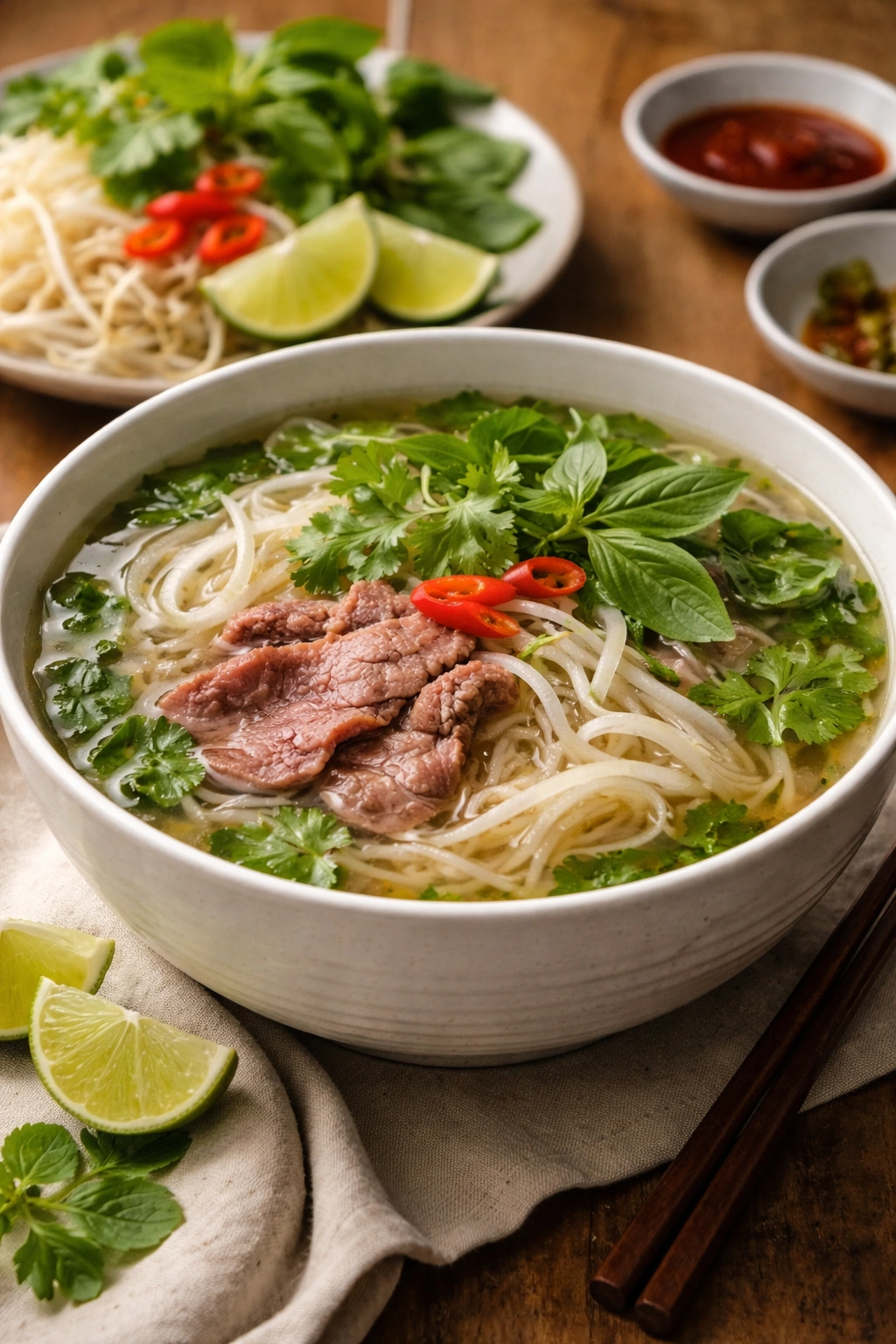
Pho is a complete meal in a bowl—warm broth, tender protein, soft noodles, fresh herbs—and it’s naturally dairy-free. More importantly, it’s a dinner where everyone customizes their own plate with fresh herbs and add-ins, making it interactive and satisfying.
Why This Works for Families
Pho feels restaurant-quality, which makes dinner feel special without much fuss. The broth simmers while you’re doing other things, and you can have everything on the table in less than an hour. Kids often love it because they control the heat level, the herb ratio, and the exact flavor of their own bowl.
The Broth Foundation
In a large pot, heat 2 tablespoons neutral oil over medium-high heat. Add 1 large onion (halved), a 3-inch piece of ginger (smashed), and a 2-inch cinnamon stick. Char the onion and ginger directly over a flame or under the broiler until blackened in spots—this adds depth. Add 8 cups beef or vegetable broth, 2 tablespoons fish sauce, 1 tablespoon brown sugar, 3-4 star anise, and 2-3 cloves. Bring to a boil, then reduce heat and simmer for at least 20 minutes (longer is better, up to 45 minutes for deeper flavor). Strain out the solids and taste for seasoning—adjust salt and fish sauce as needed.
Protein and Noodle Prep
Thinly slice 1 pound beef sirloin or flank steak against the grain. Cook 8 ounces dried rice noodles according to package directions, then drain and divide among serving bowls. Top with sliced beef and cooked chicken if you like variety.
The Fresh Herb Situation
This is non-negotiable: set out fresh basil, cilantro, mint, thinly sliced jalapeños, lime wedges, and sliced onion. People pour hot broth over their noodles and protein, then add herbs and garnishes to taste. The warm broth gently wilts the herbs, releasing their flavor. This is where pho becomes magic.
Timing Strategy
Make the broth earlier in the day or even the day before. Refrigerate it, then reheat gently before serving. Prep all vegetables and herbs in the morning, storing them in sealed containers. Cook noodles about 20 minutes before serving, so they’re warm but not gummy.
6. Lemon Herb Salmon with Roasted Vegetables
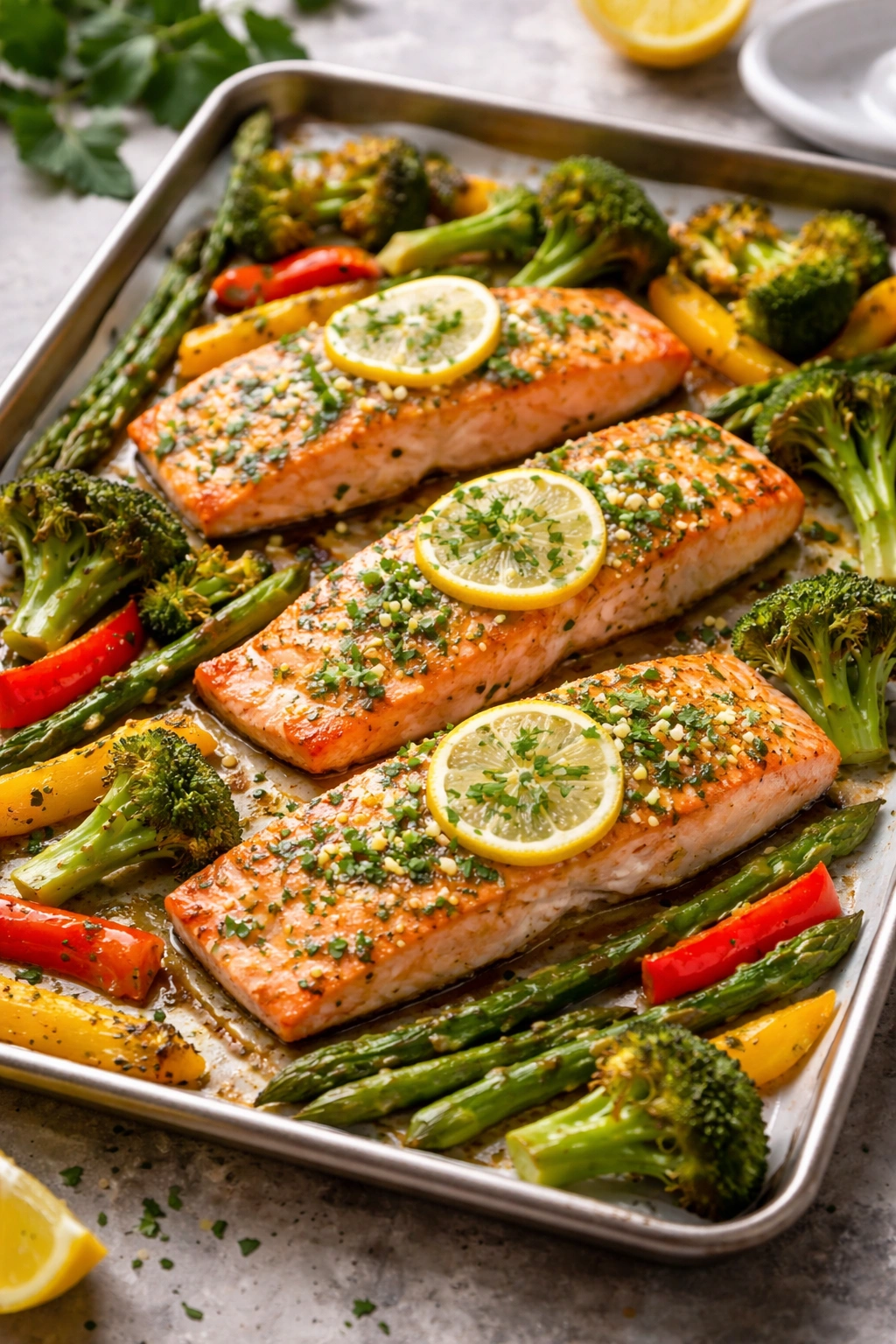
Salmon is a weeknight hero because it cooks in minutes and needs minimal intervention. Combined with bright lemon, fresh herbs, and caramelized vegetables, it’s elegant enough for guests but simple enough for Tuesday.
Why This Works for Families
Salmon provides omega-3 fatty acids that support brain development and function—important for growing bodies. The cooking method is foolproof: bake on a sheet pan and everything comes together without multiple pots or difficult techniques. The flavor is clean and bright without being heavy, which means even after a long day, this meal feels nourishing rather than burdensome.
The Basic Setup
Preheat your oven to 400°F (200°C). Line a large baking sheet with parchment paper. Arrange 1.5 pounds salmon fillets (skin-side down) on one side of the sheet. Toss 4-5 cups chopped vegetables (broccoli florets, asparagus, bell peppers, zucchini, Brussels sprouts) with 2 tablespoons olive oil, salt, and pepper on the other side of the sheet.
Roast the vegetables alone for 10 minutes to get them started. Remove the sheet from the oven, move vegetables around if needed, then nestle the salmon fillets in. Drizzle the salmon with 1 tablespoon olive oil, squeeze of fresh lemon, minced garlic, salt, pepper, and fresh herbs (dill, parsley, or thyme all work beautifully). Roast for 12-15 minutes until the salmon flakes easily with a fork and the vegetables are tender with slightly caramelized edges.
Flavor Builders
Fresh herbs make this dish. Don’t skip them; they’re what transform “baked fish” into “dinner I want to eat.” Lemon is essential. Squeeze it fresh over the salmon just before serving—it brightens everything. Salt the vegetables generously. This helps them caramelize rather than steam.
7. Dairy-Free Mac and Cheese with Nutritional Yeast
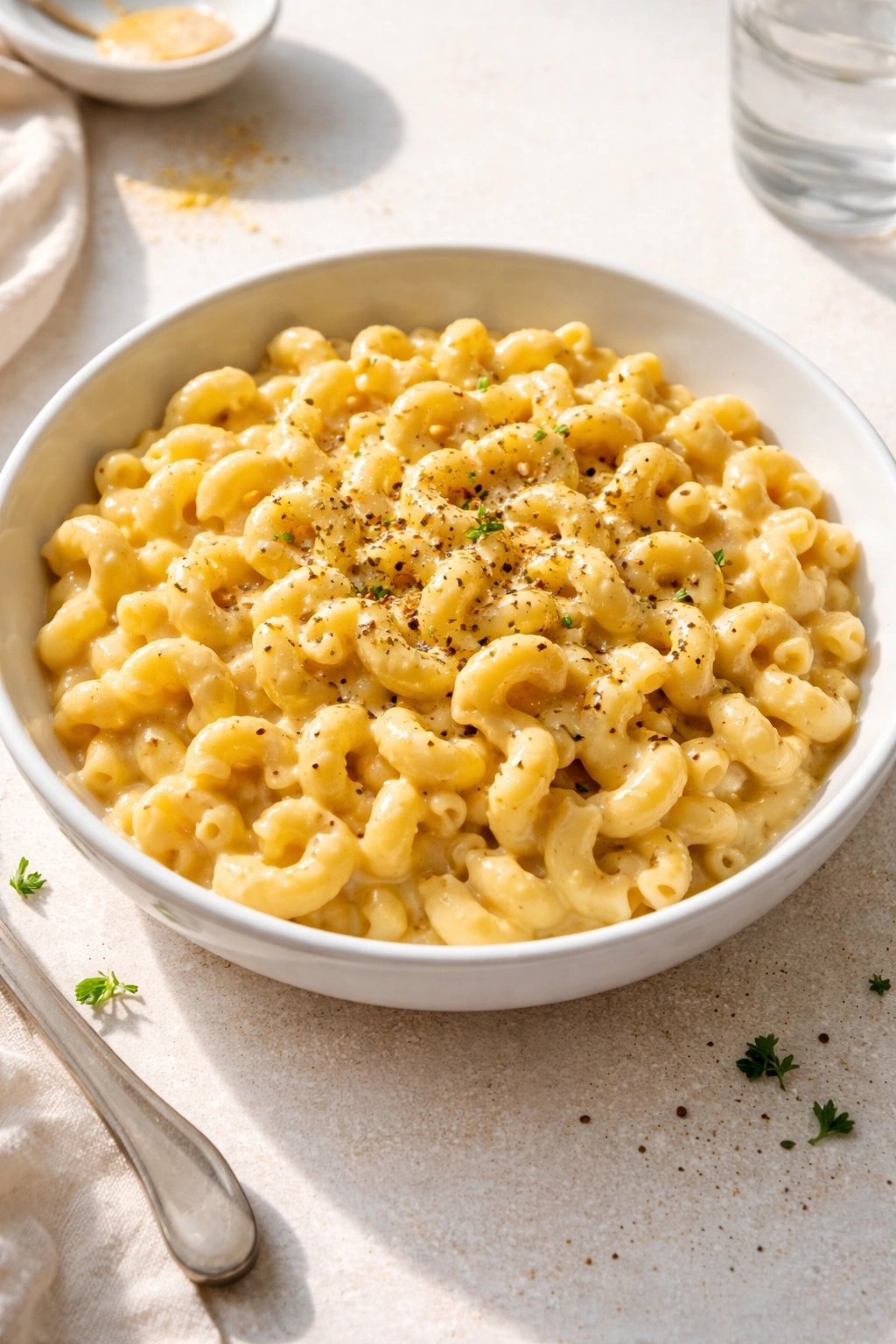
This proves that mac and cheese doesn’t need actual cheese to be satisfying. Nutritional yeast (a deactivated yeast product, not related to bread yeast) has a savory, almost cheesy flavor, and when combined with a cashew base and pasta water, it creates a sauce that’s genuinely crave-worthy.
Why This Works for Families
Kids already love mac and cheese, so this version feels like the dish they know and love, not a substitute. Nutritional yeast is completely mild and neutral-tasting—you won’t even notice you’re eating it. The pasta is comforting and filling, and the sauce genuinely tastes good, not like a compromise.
The Sauce Recipe
Cook 1 pound pasta (shells, elbows, or small pasta shapes work best) to just under al dente. Reserve 1.5 cups pasta water.
While pasta cooks, blend 1 cup soaked cashews (soaked in boiling water for 15 minutes) with ¾ cup pasta water, ¼ cup nutritional yeast, 3 cloves garlic, 2 tablespoons lemon juice, 1 tablespoon Dijon mustard, 2 teaspoons salt, and ½ teaspoon white pepper until completely silky. If it’s too thick, add more pasta water a splash at a time.
In a large pot, heat 2 tablespoons olive oil over medium heat. Add ½ cup finely diced onion and cook for 5 minutes until soft. Add 2 cloves minced garlic and cook for 1 minute. Pour in the cashew sauce and whisk until completely smooth. Add the cooked pasta and toss, adding more pasta water if needed to reach a creamy consistency.
Finish with a crack of black pepper, fresh or dried herbs (smoked paprika is beautiful here), and optional crispy breadcrumb topping if you want texture.
Texture Tips
Nutritional yeast can seize if overheated. Add it to the blender with cool liquid, not heated broth. Pasta water is your friend. It helps the sauce coat the noodles and creates silkiness that cream would typically provide.
8. Thai Green Curry with Jasmine Rice and Vegetables
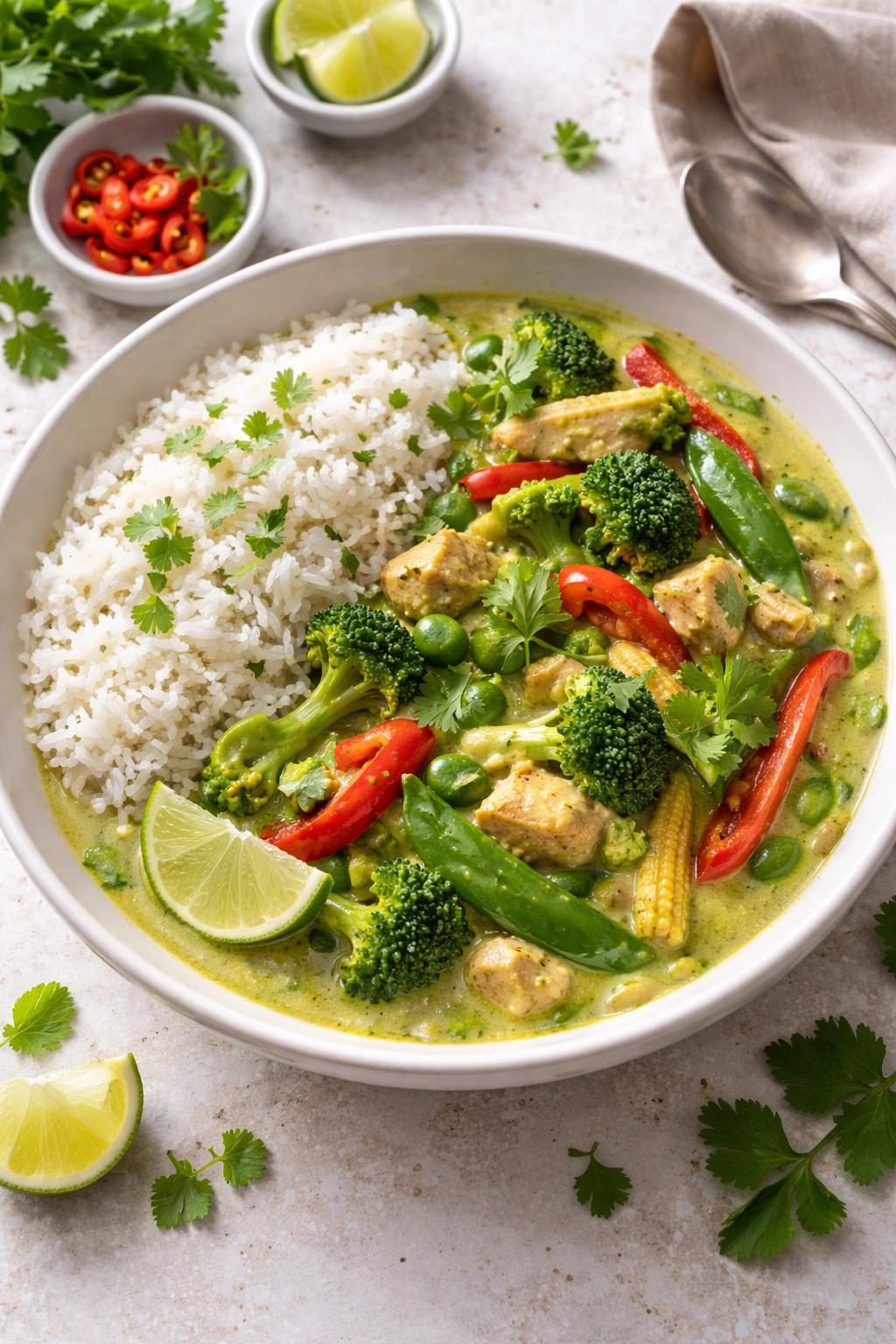
If you made the coconut curry earlier in this list, you’re already familiar with the concept—but this green version uses a brighter, more herbaceous paste and feels distinctly different despite the similar cooking method.
Why This Works for Families
Green curry tastes sophisticated and complex, but it’s built from simple components. The bright green color sometimes appeals to kids more than the reddish-brown of red curry. It’s naturally vegetable-forward if you load it up with whatever produce you have on hand, sneaking in nutrition without it feeling like a compromise.
Building the Curry
Heat 1 tablespoon coconut oil in a large pot over medium-high heat. Add 3-4 tablespoons green curry paste (adjust based on your family’s spice tolerance) and cook for 1-2 minutes until fragrant. Add 1.5 pounds protein—chicken breast cut into bite-sized pieces works well, or use firm tofu for vegetarian—and cook for 2-3 minutes until just starting to color.
Pour in one 14-ounce can coconut milk and bring to a simmer. Add 1-2 cups chopped vegetables (zucchini, snap peas, broccoli, bell peppers, green beans—anything green or fresh-tasting), 1 tablespoon fish sauce, 1 tablespoon palm sugar or maple syrup, and the zest and juice of 1 lime. Simmer for 15-20 minutes until vegetables are tender and the flavors meld.
Taste and adjust: more fish sauce for saltiness, more sugar for sweetness, more lime for brightness. Finish with fresh basil or cilantro. Serve over jasmine rice.
Customization Ideas
Make it less spicy: Use less paste and add more coconut milk to dilute the heat. Add protein variety: Shrimp cooks in just 3-4 minutes, so add it at the very end to prevent overcooking. Vegetarian option: Use extra-firm tofu or chickpeas instead of meat.
9. Cajun Shrimp with Corn, Peppers, and Dairy-Free Sausage
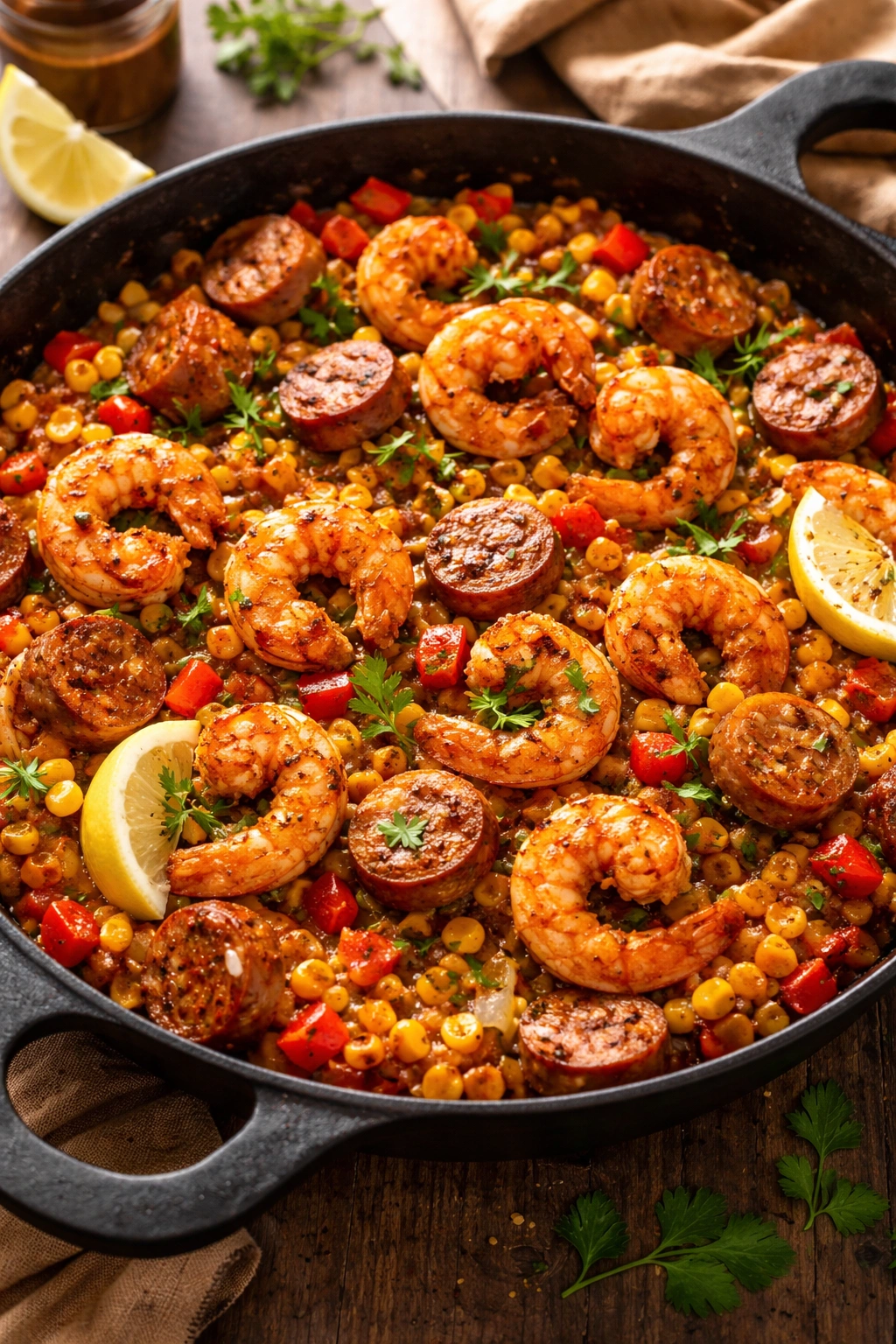
This is a one-pan dinner that tastes like the food you’d eat at a special restaurant, but comes together faster than most weeknight meals. It’s bold, flavorful, and naturally dairy-free.
Why This Works for Families
The combination of tender shrimp, crispy sausage, sweet corn, and aromatic vegetables is inherently satisfying. The spice level is manageable but present, adding interest without overwhelming. The whole thing cooks in one skillet, which means minimal cleanup and maximum flavor buildup through the fond on the bottom of the pan.
The One-Pan Method
Heat 2 tablespoons olive oil in a large skillet over medium-high heat. Slice 2 links dairy-free sausage (like Field Roast brand) and cook until browned on both sides and crispy at the edges, about 5-7 minutes. Remove to a plate.
In the same skillet, add 1 diced onion, 1 diced bell pepper (red or yellow for sweetness), and 1 diced jalapeño (optional, for heat). Cook for 5-7 minutes until softened. Add 4 cloves minced garlic and 1 tablespoon tomato paste and cook for 2 minutes. Add 1 teaspoon smoked paprika, ½ teaspoon cayenne, ½ teaspoon thyme, and salt and pepper to taste. Cook for 1 minute to bloom the spices.
Add 1 pound large shrimp (peeled and deveined), 2 cups corn kernels (fresh, frozen, or canned), the sausage back to the pan, and ½ cup vegetable broth. Cook for 5-7 minutes until the shrimp turn pink and opaque. Finish with fresh lemon juice and parsley. Serve over rice, with crusty bread, or as is in a bowl.
Why It Works
Dairy-free sausage has come a long way. These products are actually flavorful on their own, not a pale imitation. Smoked paprika is the flavor MVP. It’s what makes this taste distinctly Cajun without relying on cream or cheese.
10. Mushroom Risotto with Vegetable Broth
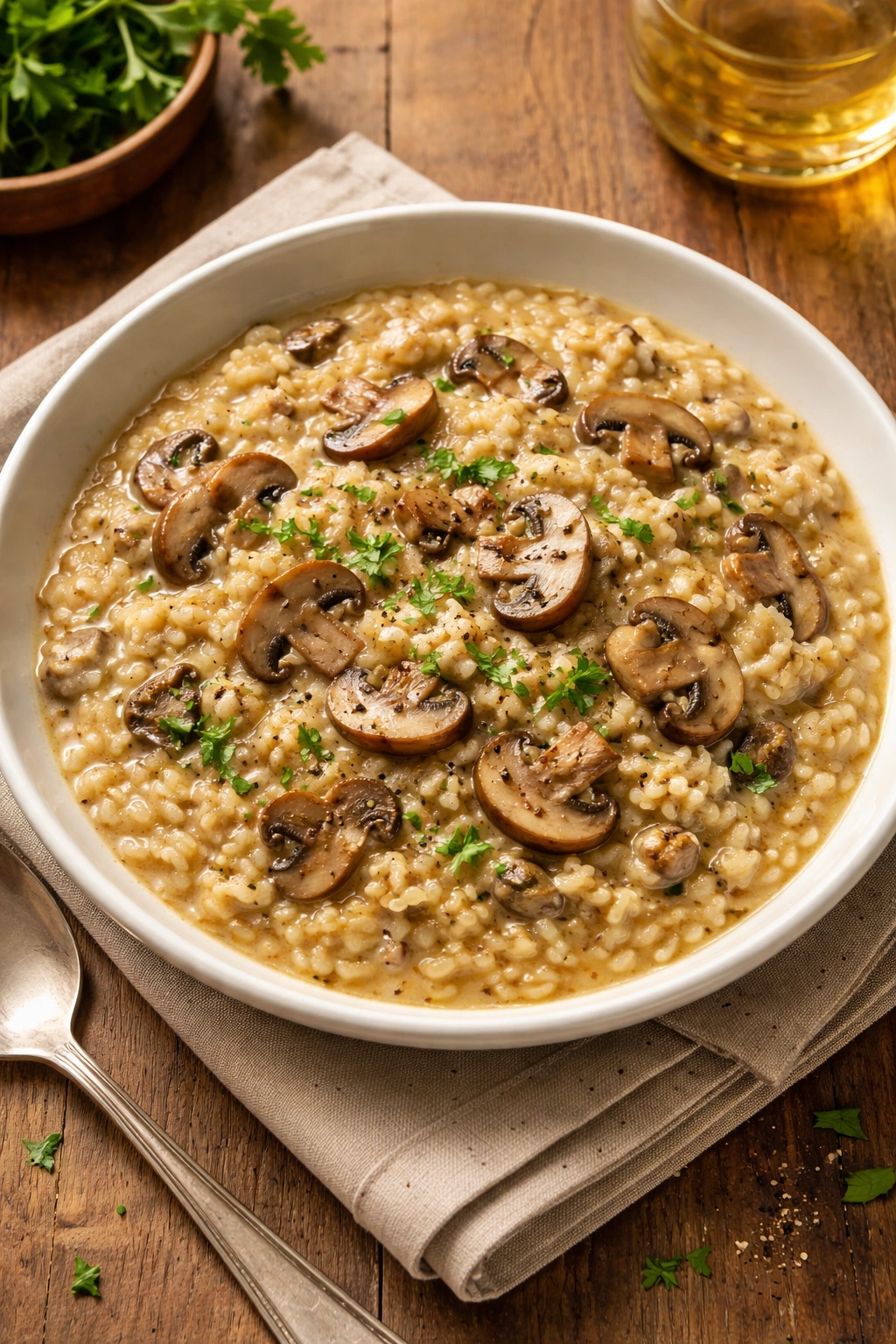
Risotto is creamy, luxurious, and entirely dairy-free if you build it correctly. The creaminess comes from starches released from the rice as you stir, not from butter or cream—though a bit of dairy-free butter at the end doesn’t hurt.
Why This Works for Families
Risotto sounds fancy and tastes fancy, but it’s actually simple cooking with a forgiving technique. The stirring becomes meditative rather than burdensome, and you end up with a naturally creamy main dish that feels restaurant-quality. Mushrooms add umami depth and meaty texture, making this satisfying even for people who expect meat at dinner.
The Patient Technique
Heat 6 cups vegetable broth in a separate pot and keep it simmering throughout cooking—this is crucial so it doesn’t cool down the risotto.
In a large, heavy-bottomed pot, heat 2 tablespoons olive oil over medium heat. Add 1 finely diced onion and cook for 5 minutes until soft. Add 3 cloves minced garlic and cook for 1 minute. Add 1.5 cups Arborio or Carnaroli rice (not long-grain white rice) and stir constantly for 2 minutes until the rice is coated in oil and slightly opaque at the edges.
Add 1 cup dry white wine and stir frequently until the liquid is almost completely absorbed. From this point forward, add hot broth one ladle-full at a time, stirring frequently. Wait until each addition is mostly absorbed before adding more. This process takes 18-20 minutes. After about 10 minutes, add 12 ounces sliced mushrooms (cremini, shiitake, or a mix) that you’ve sautéed separately until golden.
Continue adding broth and stirring until the rice is tender but still has a slight firmness (al dente), and the mixture is creamy and flowy—like lava. This should take about 20 minutes total from the first broth addition.
Finish by stirring in 2 tablespoons dairy-free butter (or coconut oil), salt, pepper, fresh parsley, and a squeeze of lemon juice. Taste and adjust.
The Risotto Philosophy
Starch is your friend. As you stir, the rice releases starches that create creaminess—don’t skip the frequent stirring. Broth temperature matters. Cold broth will cool the risotto and stop the cooking process; keep it simmering. Timing varies slightly. Different rice brands cook at slightly different rates, so taste frequently toward the end.
Final Thoughts
The most important thing to know about dairy-free family dinners is that they don’t require special ingredients, complicated techniques, or a sense of deprivation. They require the same care, seasoning, and attention you’d give to any meal worth eating.
Start with one of these that appeals to your family’s palate and cooking comfort level. Make it a few times—the second time is always easier because you know the rhythm, and by the third time, it becomes part of your regular rotation rather than a “special” meal. Layer in another when you’re ready.
The real magic happens when dairy-free stops being a restriction and becomes simply how your family eats. These ten dinners are proof that it’s entirely possible.
