



There’s something magical about the moment you pour a frozen mango margarita into a salt-rimmed glass—the way the icy, golden liquid catches the light, the tropical aroma that hits your nose, the promise of a perfectly balanced cocktail that’s refreshing without being overly sweet. But here’s what most people get wrong: they either end up with a watered-down slush that tastes more like sorbet, or they blend it wrong and watch the drink separate back into liquid within minutes of serving.
The blender is both the hero and the villain in frozen cocktail making. Get it right, and you’ll create something genuinely better than anything you could order at a bar. Get it wrong, and you’re wasting good tequila on a disappointing puddle. The difference comes down to understanding why each ingredient matters, when to add ice, and how to blend without overdoing it—not just following a recipe, but understanding the mechanics of what’s happening in that pitcher.
A truly great frozen mango margarita strikes a balance that seems simple until you try it: it should be cold and slushy enough to feel refreshing on a hot day, but still taste unmistakably like a margarita with bright citrus, clean tequila, and genuine mango flavor. It shouldn’t taste icy or diluted. The mango shouldn’t be so prominent that it masks the tequila; rather, the two should dance together. The lime should cut through everything with clarity. And the entire drink should feel balanced enough that you can actually taste each component, not just sweet and cold.
What Makes a Perfect Frozen Mango Margarita
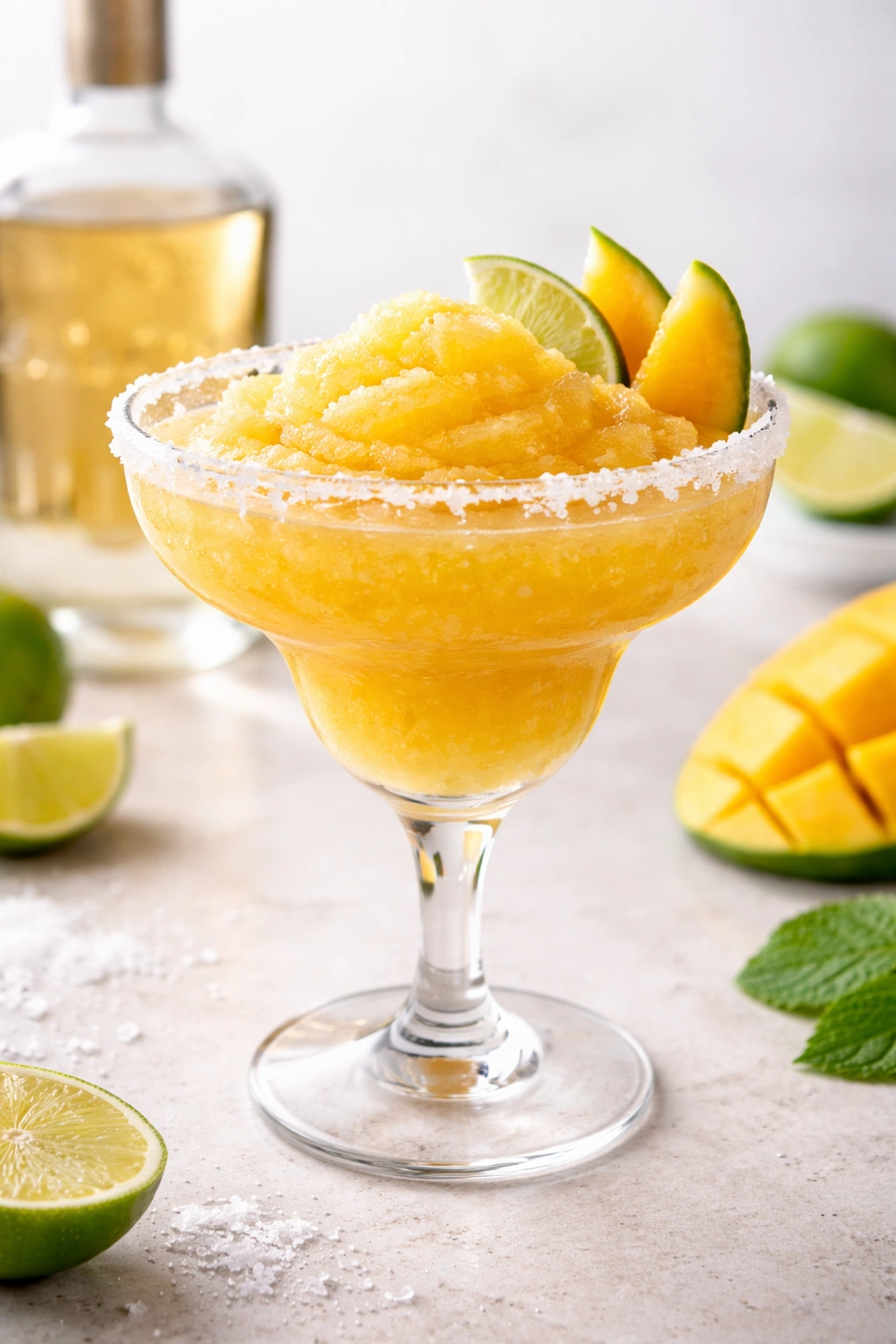
A frozen mango margarita is really just a classic margarita—tequila, lime, and a touch of sweetness—transformed by temperature and texture. The difference between a good one and a forgettable one often comes down to ingredient quality and technique rather than any secret ingredient. When you’re blending, you’re essentially creating a frozen emulsion of alcohol, juice, and ice, and that balance is fragile.
The best frozen mango margaritas use real mango, not mango nectar or juice concentrate. Fresh or properly frozen mango puree gives you actual fruit texture and flavor—not just sweetness. Canned mango in heavy syrup tends to make the drink too sugary, and mango juice alone can taste thin and one-dimensional. If you’re using fresh mango, one medium mango (about 1 cup of flesh) gives you enough substance to make the drink taste genuine without overwhelming the other flavors.
The spirit matters too. Decent-quality tequila (100% blue agave) will taste noticeably different from the rough, generic stuff—you actually want to taste the tequila in a margarita, not hide it. Avoid extra-aged tequila for frozen drinks; blanco or silver tequila’s clean, crisp profile works better when everything’s being chilled and blended.
The citrus element should come from fresh lime juice, full stop. Bottled lime juice tastes like chemicals next to fresh-squeezed, and in a frozen drink where you’re not adding much liquid, that’s noticeable. One lime gives you roughly 2 tablespoons of juice, which is usually the right amount.
The sweetener is where people overcomplicate things. You don’t need fancy agave nectar or triple sec. Simple syrup works perfectly—and honestly, that’s just sugar and water. Some recipes use Cointreau or Grand Marnier, which adds a subtle orange note, but it’s optional. The sweetness shouldn’t dominate; it’s there to balance the tartness of lime and the strength of tequila.
The Secret to Blending Without Separating or Watering Down
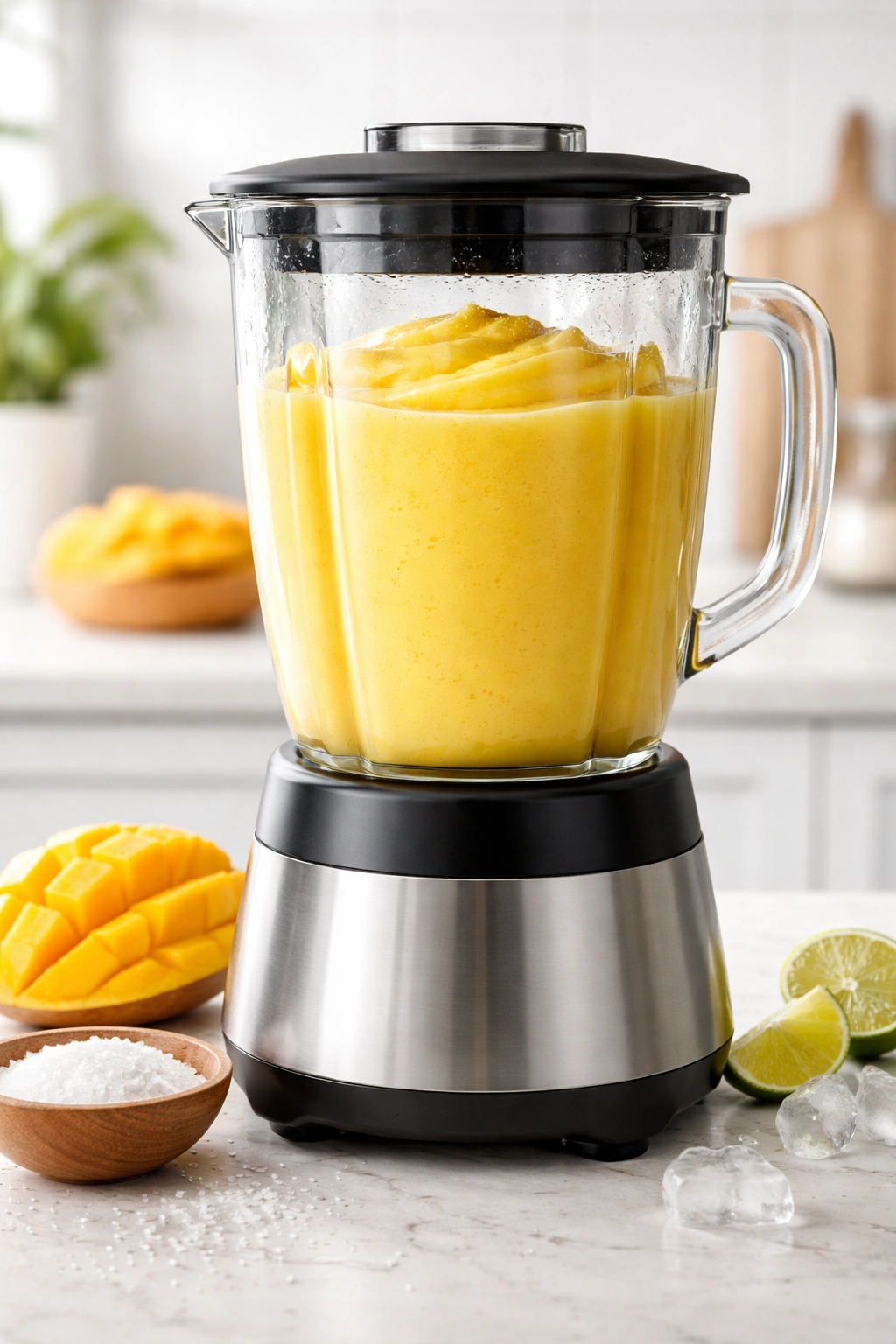
The biggest mistake people make is overthinking the technique. There’s no need to dry-blend and then add ice, or layer your ingredients in any particular order, or blend for exactly 17 seconds. But there are a few principles that actually matter.
First, your ice needs to be the right size and density. Standard ice cubes from your freezer work, but crushed ice or small ice chips blend faster and create a better texture. If you’re using large, dense cubes, you’ll need to blend longer, which risks over-dilution as the ice melts slightly from friction. Pro tip: if you have a high-powered blender like a Vitamix, even dense cubes work beautifully—regular blenders benefit from smaller ice.
Second, the amount of ice is critical. Too little and you don’t get that slushy texture; too much and you’re diluting the drink so much that you need to add extra liquid, which throws off the balance. A good rule is roughly 2 cups of ice per drink (or per serving if you’re making multiple). The exact amount depends on how frozen you like it and how powerful your blender is—you’ll get a feel for it after the first batch.
Third, blend just until smooth and slushy. This sounds obvious, but most home blenders will over-churn the mixture if you let them go too long, which generates heat and causes separation. You’re looking for that moment when you can see no visible chunks of ice and the drink flows like a slushy. That’s about 45 seconds to 1 minute in a standard blender, sometimes less in a powerful one. Stop and check. You can always blend a few more seconds; you can’t un-blend.
The order you add things actually does matter slightly. Put the liquid ingredients and mango in first—this gives the blades something to grip and prevents dry ingredients (ice) from just spinning around uselessly. Then add the ice. This creates the best consistency and helps the blender work more efficiently.
Selecting and Preparing Fresh Mango for Maximum Flavor
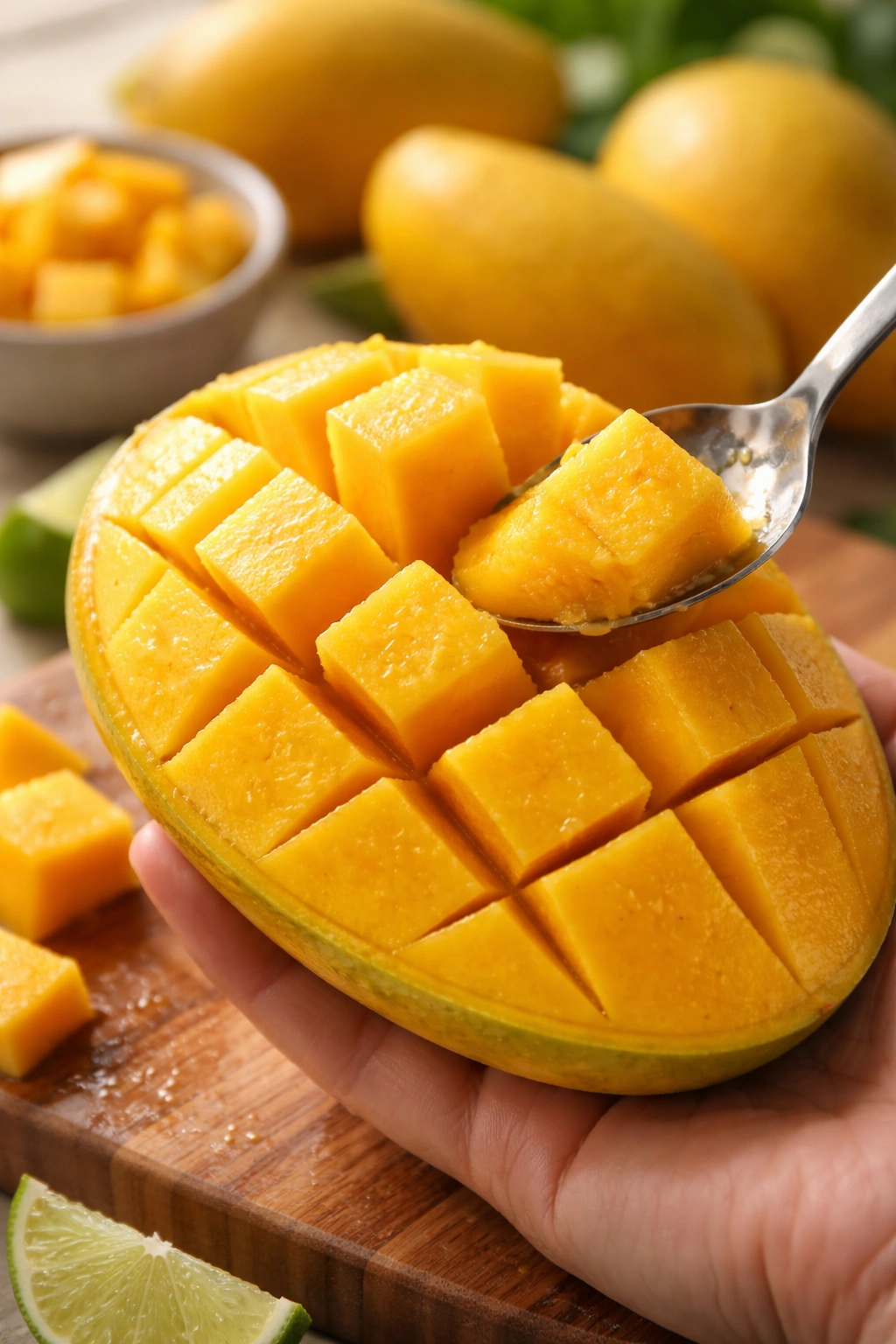
Not all mangoes are created equal, especially when you’re blending them. The softer, sweeter mango varieties work better for frozen drinks than the firm, less-sweet ones. Ataulfo and honey mangoes are smaller but intensely flavored and sweet—excellent for margaritas. The larger Tommy Atkins or Kent mangoes are good too, though sometimes less aromatic.
Pick a mango that yields slightly to gentle pressure when ripe, almost like an avocado. You want the fruit at that sweet spot where it’s fully ripe but still has structure and won’t be mushy. If you squeeze too hard, it bruises; if it’s too firm, it won’t blend smoothly and the flavor will be muted. Smell the stem end—ripe mangoes smell distinctly sweet and fragrant there. If there’s no smell, it’s not ripe enough.
To prep a mango for blending, cut it in half lengthwise around the large flat pit. Score the flesh in a crosshatch pattern (don’t cut through the skin), then push the skin inside-out so the cubes pop outward. Scoop the flesh directly into your blender. Fresh mango gives the drink better texture and prevents the overly thick, syrupy quality you sometimes get from canned.
If you can’t find ripe fresh mango, frozen mango works beautifully—often better, actually, because frozen mango is picked at peak ripeness and immediately frozen. It tastes fresher than many “fresh” mangoes that were picked early for transport. Frozen mango is already the right texture for blending and doesn’t introduce excess water. Just thaw it slightly before blending so it breaks apart more easily, or add it straight from the freezer if your blender is powerful enough.
Avoid mango juice or nectar concentrate. These are pre-processed and sweetened, which throws off your balance. Mango puree is acceptable if that’s what you have access to—it’s much closer to fresh than juice—but fresh or frozen wins every time.
Building the Right Liquid Base and Spirit Balance
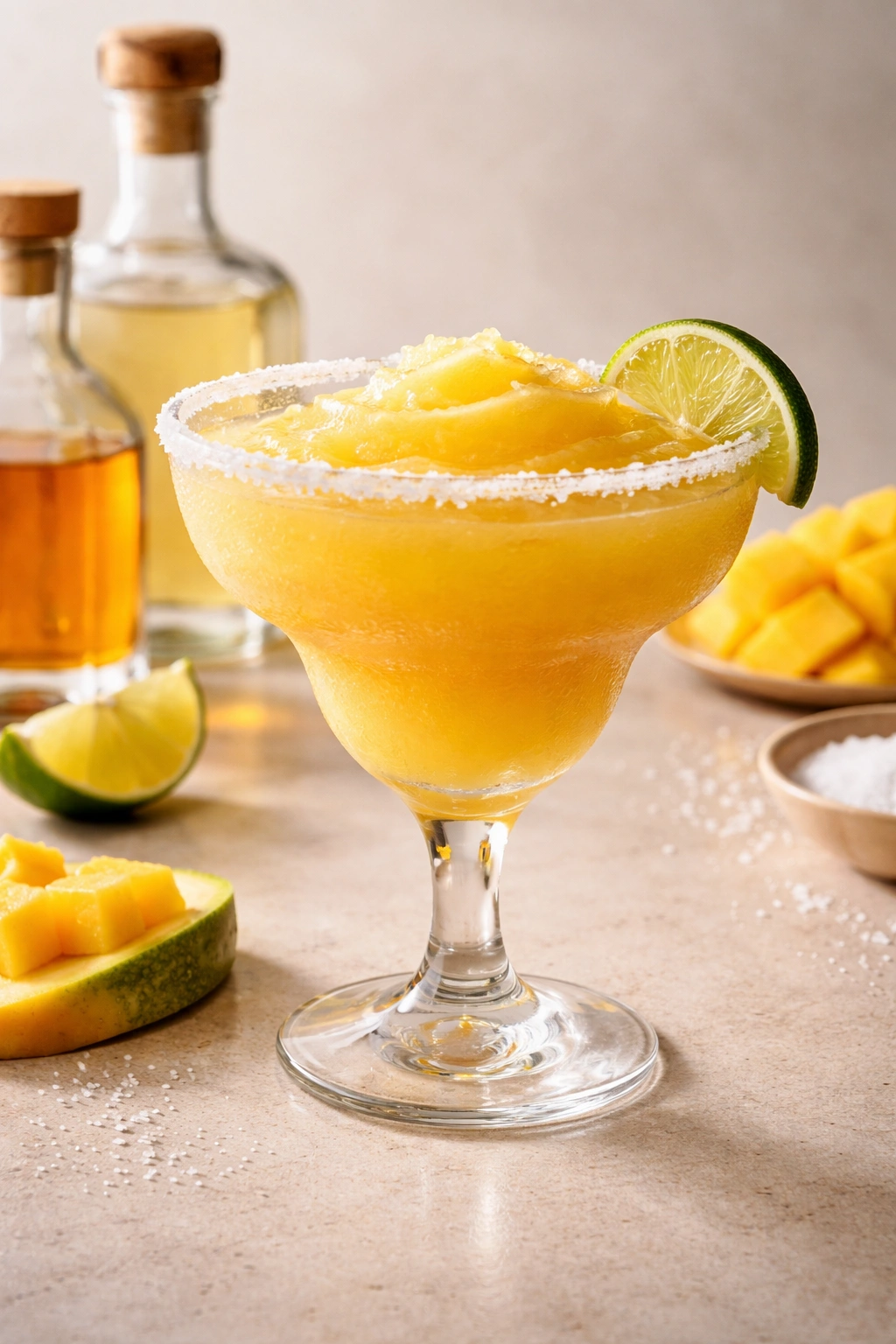
The liquid components of your margarita need to work together, not against each other. Tequila is the foundation—typically 2 ounces per drink for a standard margarita. That’s enough to taste present without being harsh or overwhelming the mango.
Fresh lime juice should be about ½ ounce (roughly 1 tablespoon per drink). This sounds small, but lime juice is potent. Too much and your drink becomes sour and astringent; too little and it tastes flat. One fresh lime gives you about 2 tablespoons of juice, so one lime flavors two drinks. When you squeeze fresh limes, use the ones that feel heavy for their size—they have more juice inside.
The sweetener is typically 1 tablespoon of simple syrup per drink, though some people prefer ½ to 1 teaspoon less. Simple syrup dissolves instantly in the blender (unlike granulated sugar, which can feel grainy), and it’s easy to make—just dissolve equal parts sugar and hot water, let it cool, and you’re done. Some recipes call for ½ ounce of triple sec or Cointreau, which adds a subtle orange note and a tiny bit of extra alcohol. It’s genuinely nice, but not essential.
If you want to be more adventurous, a splash of fresh orange juice (just 1 tablespoon or so) adds brightness and works especially well with mango. A tiny pinch of hot sauce or jalapeño (muddled quickly before blending) gives heat and complexity. But these are tweaks, not necessities.
The critical thing is not to add extra lime juice or sweetener just because you think the drink needs it. Taste as you go. If you made the drink and it tastes too strong, don’t add more ice next time—add slightly less tequila. If it tastes flat, you need more lime, not more mango. These ratios work because they’re balanced.
Yield, Prep Time, Cook Time, Total Time, and Difficulty
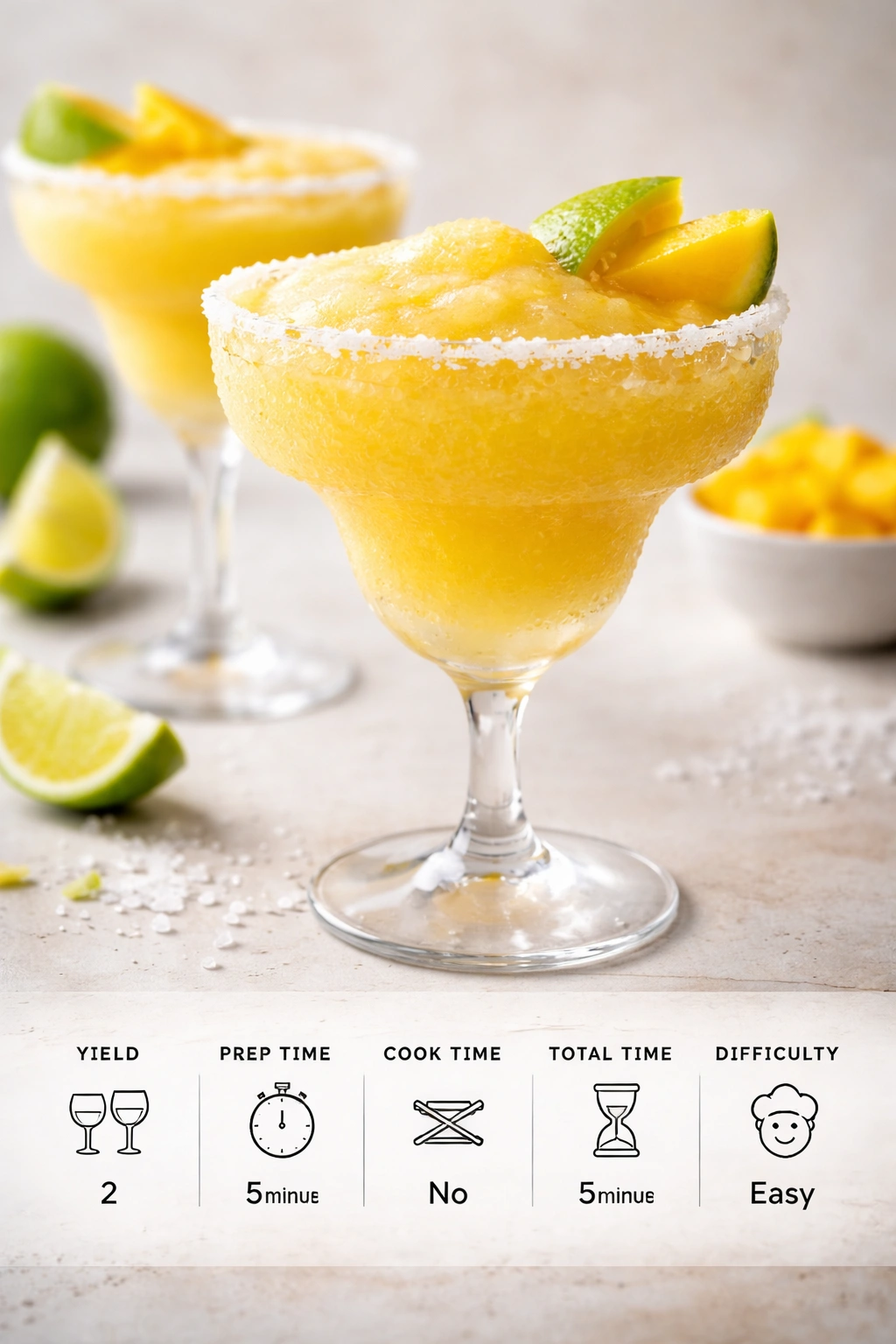
Yield: Makes 2 frozen margaritas (about 8 ounces each)
Prep Time: 10 minutes (selecting and cutting the mango, juicing the limes)
Cook Time: 2 minutes (blending)
Total Time: 12 minutes
Difficulty: Beginner — You’re just cutting fruit and using a blender. No special equipment needed, and the technique is straightforward.
Ingredients for Frozen Mango Margarita
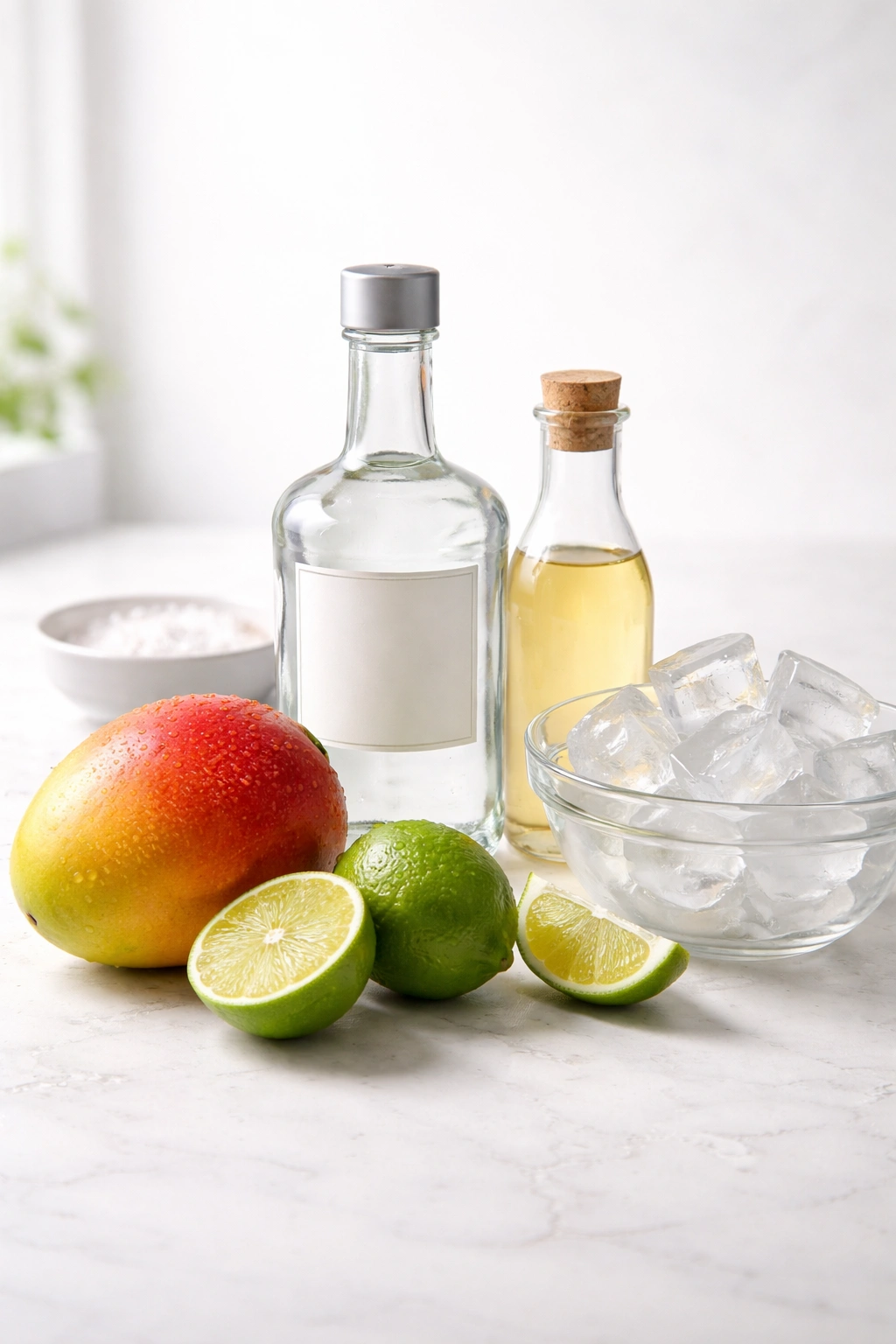
For the Drink:
- 1 medium ripe mango (about 1 cup fresh flesh, or 1 cup frozen mango, thawed slightly)
- 4 ounces (120 ml) 100% blue agave blanco tequila
- 1 ounce (30 ml) fresh lime juice (from about 2 fresh limes)
- 2 tablespoons (30 ml) simple syrup (or 1½ tablespoons if you prefer less sweet)
- 2 cups (about 400 grams) ice cubes or crushed ice
- Optional: ½ ounce (15 ml) triple sec or Cointreau, for added depth
- Optional: ⅛ teaspoon fine sea salt, to enhance sweetness and balance
- Optional: splash of fresh orange juice (1-2 tablespoons) for brightness
For Serving:
- Coarse sea salt or margarita salt, for rimming (about 2-3 tablespoons)
- 1 fresh lime, cut into wedges
- Tajín seasoning, for rimming (optional but excellent with mango)
The Step-by-Step Blending Process
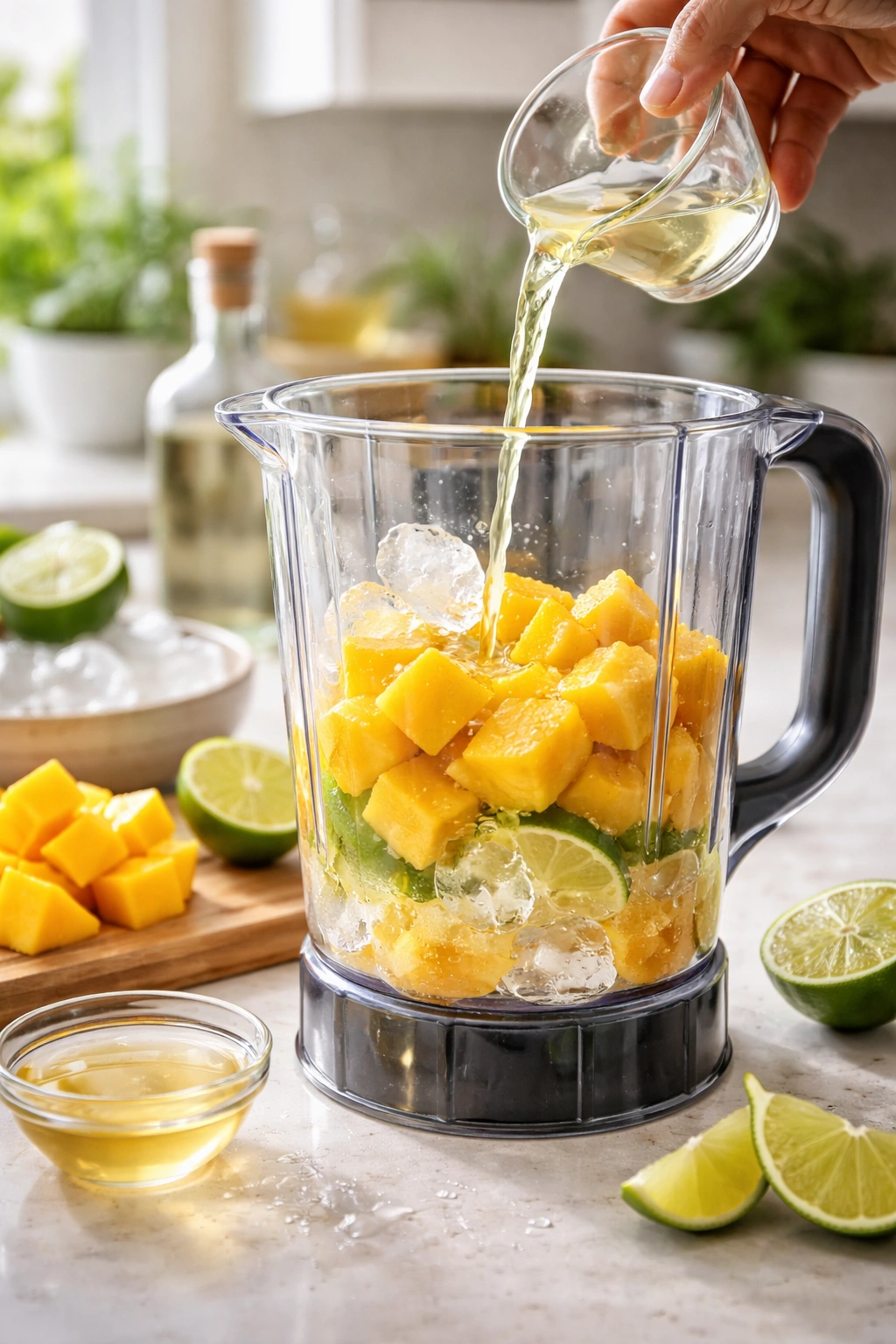
Prepare the Mango and Citrus:
-
If using fresh mango, wash it under cool water, then cut it in half lengthwise around the large pit. Gently score the flesh in a crosshatch pattern, cutting down to (but not through) the skin. Push the skin inward from the bottom so the mango cubes pop outward. Scoop the flesh directly into your blender—you should have about 1 cup.
-
Cut 2 fresh limes in half and juice them thoroughly, using a hand juicer or squeezing over a strainer—you need about 1 ounce (2 tablespoons) of juice. Add the lime juice directly to the blender. Do not use bottled lime juice; the difference is noticeable and significant.
-
Measure out 4 ounces (120 ml) of tequila and add it to the blender. If you’re using triple sec, measure out ½ ounce (15 ml) and add it now. The liquid ingredients should be in the blender before the ice.
Add the Sweetener and Optional Elements:
-
Pour 2 tablespoons of simple syrup into the blender. If you prefer a less-sweet drink, use only 1½ tablespoons. Simple syrup dissolves instantly when blended, so it distributes evenly throughout the drink. Do not use granulated sugar—it won’t dissolve properly and will create a grainy texture.
-
If you’re using the optional orange juice for brightness, add 1-2 tablespoons now. If you’re adding a tiny pinch of fine sea salt (just ⅛ teaspoon), add it now as well—salt won’t overpower the drink but will enhance and round out the other flavors.
Add the Ice and Blend:
-
Add 2 cups of ice cubes or crushed ice to the blender. In a standard blender, crushed ice or small ice chips blend more smoothly than large cubes. If using a high-powered blender like a Vitamix, standard ice cubes work perfectly.
-
Secure the blender lid firmly, then blend on high speed for about 45 seconds to 1 minute. You’re looking for the moment when the mixture reaches a smooth, slushy consistency with no visible chunks of ice. Stop and check after 45 seconds—if your blender is particularly powerful, it may take only 30 seconds. Over-blending generates heat, causes separation, and can make the drink taste diluted.
Advertisements -
Open the blender and give the mixture a quick look. It should look like a smooth, thick slush, not watery or chunky. If there are still visible ice crystals, pulse for another 10-15 seconds. If it looks creamy and smooth, stop blending immediately.
Prepare the Glasses:
-
While the drink blends, prepare your serving glasses. Pour coarse sea salt into a shallow dish or plate. If using Tajín (a chili-lime seasoning that’s excellent with mango), mix it 1-to-1 with the salt for a more interesting rim.
-
Rub a lime wedge around the outer rim of each glass, then dip the rim into the salt, rotating it slowly so the salt adheres evenly. Set the glasses aside.
Serve Immediately:
-
Carefully pour the frozen margarita into each salt-rimmed glass, filling it about three-quarters full. The drink should be thick and slushy, not pourable like liquid. If you’ve made a double batch or more, work quickly—frozen margaritas start melting almost immediately once blended.
-
Garnish each glass with a fresh lime wheel or wedge placed on the rim, and optionally a sprig of fresh mint. Serve immediately with a wide straw or a spoon (the drink is thick enough that you’ll want one of those rather than a thin cocktail straw).
Tips for Achieving the Perfect Slushy Texture
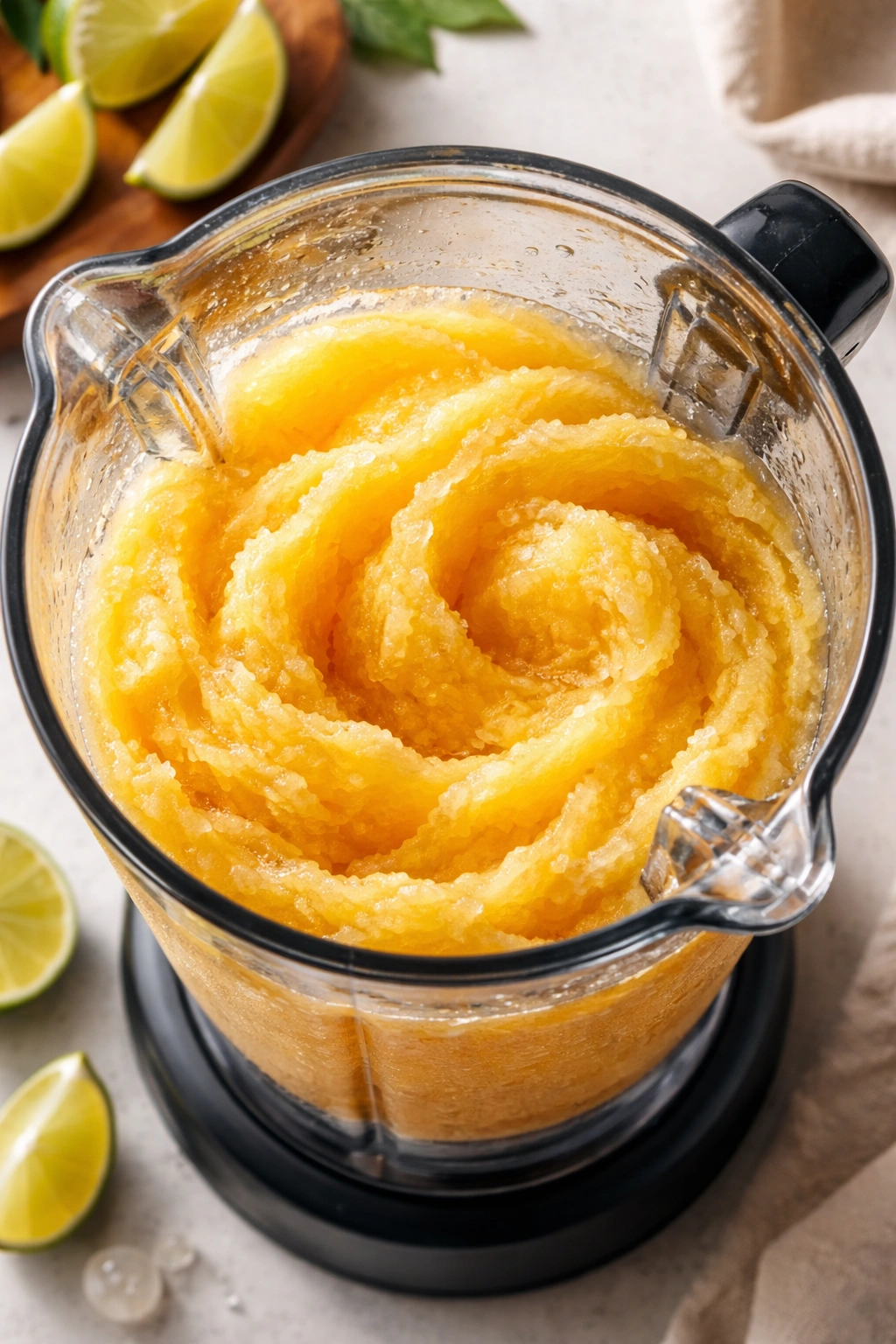
The texture of a frozen margarita is everything. Too icy and it’s unpleasant to drink; too liquid and it’s just a cold cocktail poured over ice. The sweet spot is that thick, slushy consistency—somewhere between a frozen daiquiri and a margarita on the rocks.
Chill your glasses before serving. If you put a room-temperature margarita into a warm glass, it’ll start melting immediately. Pop your glasses in the freezer for at least 5 minutes while you’re prepping. This keeps the drink slushy longer and actually improves the drinking experience.
Use slightly less liquid if your blender struggles. Some blenders have a harder time moving thick frozen mixtures, and they’ll start heating the drink instead of blending it. If you notice your blender working hard or making a concerning sound, pulse rather than running continuously, and stop after 30-45 seconds even if there are a few ice crystals visible. A slightly chunky texture is better than a separated, watery drink.
Freeze your mango in advance if it’s very ripe. If your fresh mango is soft and ripe, frozen for at least an hour before blending, it’ll hold its texture better during blending and create a thicker drink. This also means you need slightly less additional ice. Measure the mango after freezing—frozen fruit takes up slightly less volume.
Adjust ice quantity based on how strong you like it. More ice makes the drink colder and less alcoholic-tasting (because there’s more volume). Less ice means the drink tastes more like a cocktail with less dilution. Two cups of ice is the standard, but if you like a stronger-tasting drink, go with 1¾ cups of ice. If you prefer less kick and more mango flavor, use 2¼ cups.
Keep everything cold. Chill your glasses, use cold ingredients straight from the fridge, and work quickly once you start blending. The longer the blender runs, the warmer the drink gets, and warmth is the enemy of that perfect slushy texture.
Common Mistakes That Ruin a Frozen Margarita
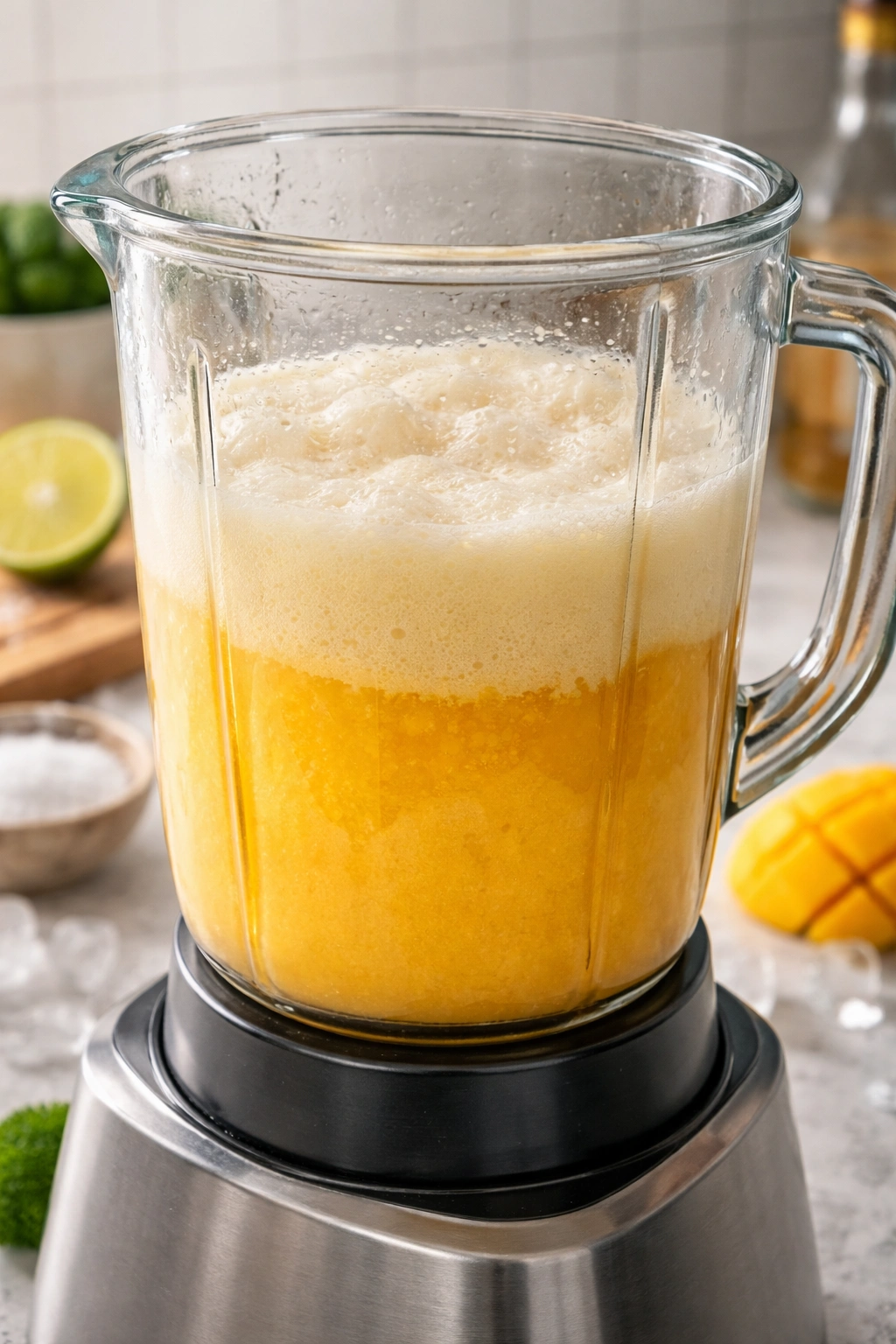
One of the most frustrating things about frozen margaritas is when they start out perfect and then separate into watery liquid within minutes of sitting in a glass. This happens when you’ve over-blended, which breaks down the ice too much and heats the mixture, or when you’ve used too much citrus juice (which is more liquid than the mango and alcohol can hold suspended).
Using bottled lime juice instead of fresh is a subtle but devastating mistake. Bottled lime juice tastes metallic and harsh, and you need more of it to get the same tartness. Fresh lime juice balances the sweetness naturally and integrates seamlessly with the mango and tequila.
Not measuring your ice is another major culprit. If you just eyeball it or use “a handful,” you might end up with too much ice (making the drink overly diluted and icy) or too little (making it too strong and too liquid). Two cups is a starting point; measure it the first time so you know what two cups looks like in your blender.
Blending for too long. This is probably the most common issue. The blender feels so satisfying when it’s running, and you think “just a few more seconds” will make it even better. It won’t. Over 1 minute of blending and you’re generating significant heat. The ice melts faster than the blender can incorporate it, and the drink becomes more liquid than slushy. Set a timer for 45 seconds the first time you make it, stop and check, and adjust from there.
Using canned mango instead of fresh or quality frozen. Canned mango is packed in syrup, which throws off your sweetness balance and makes the drink taste more like mango-flavored sugar water than an actual margarita. The texture is also mushier. Fresh or frozen mango (without syrup) is noticeably better.
Adding extra lime juice or sweetener “just to make sure.” The recipe is already balanced. If you taste it and it seems too strong, the problem isn’t that you need more lime—it’s that you need more ice or mango next time, or less tequila. Adding more liquid throws off everything.
Using regular ice cubes in a weak blender. If your blender isn’t particularly powerful, large ice cubes won’t break down smoothly. Either crush the ice first or use a lower-powered technique (blend longer and more gently). This prevents that situation where you end up with a drink full of half-melted chunks.
Making it without actually tasting the tequila. If someone tastes your frozen margarita and says “it’s so fruity,” the tequila is getting lost. This usually means too much mango, too much sweetener, or not enough tequila. The drink should taste clearly like a margarita that’s cold and fruity, not like a mango smoothie with alcohol in it.
Variations to Customize Your Margarita
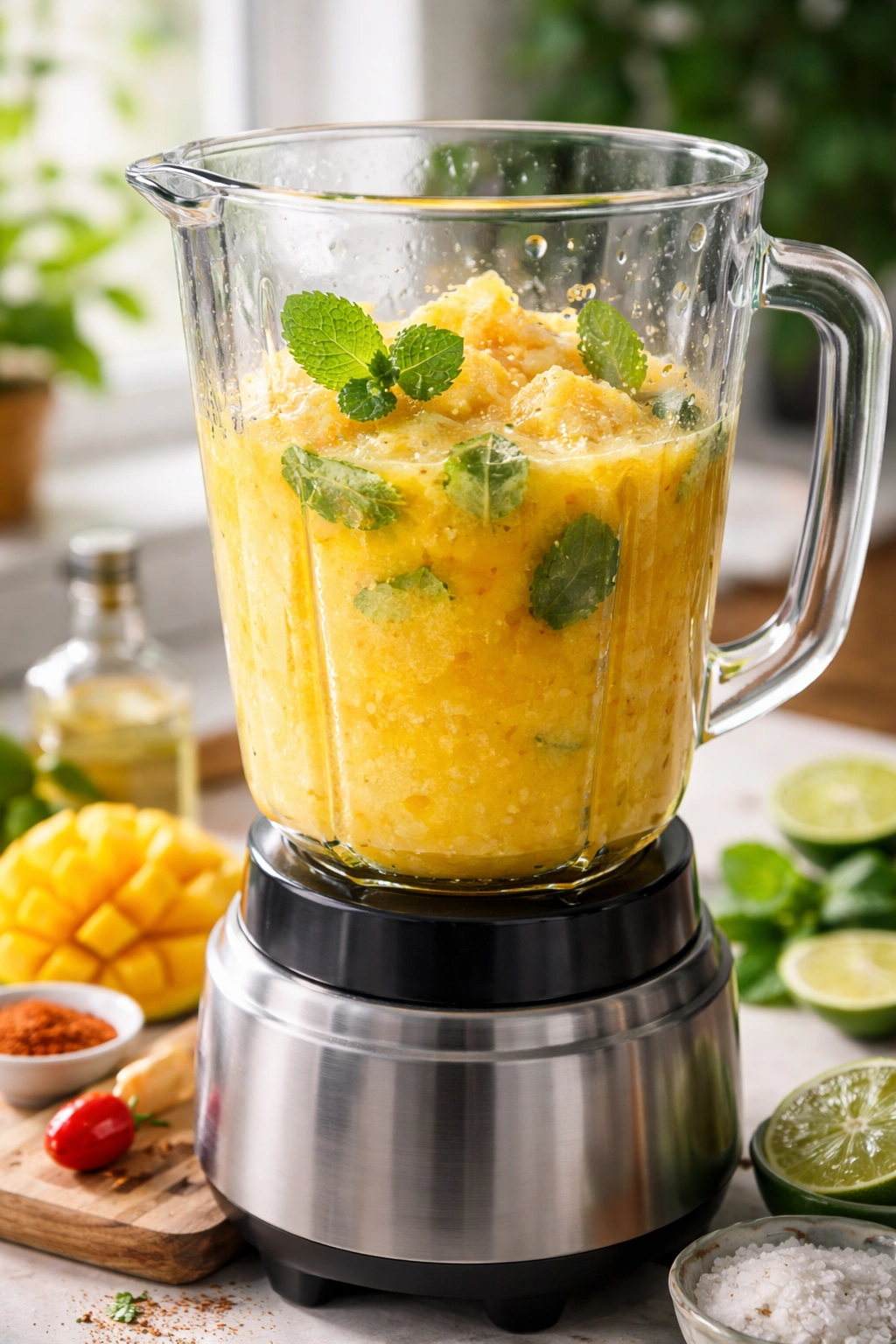
Once you’ve made the basic frozen mango margarita a few times and got the technique down, the variations are endless. The formula stays the same—4 ounces tequila, 1 ounce lime juice, 2 tablespoons simple syrup, 1 cup mango, and 2 cups ice—but you can swap or add from there.
Mango-Habanero: Muddle 2-3 thin slices of habanero (deseeded if you want less heat) in the blender before adding other ingredients. This brings a floral heat that’s incredible with mango. Start subtle and add more habanero next time if you like more spice.
Mango-Chamoy: Replace half the simple syrup with chamoy sauce (a Mexican condiment made from pickled fruit). This adds a sweet-spicy-tangy dimension that’s genuinely different. Taste as you blend; chamoy is intense.
Mango-Mint: Add 6-8 fresh mint leaves (basil works too, for a different vibe) to the blender with the fruit. Blend smooth, not leaving chunks. The mint adds freshness without overpowering.
Tropical Blend: Use ½ cup mango and ½ cup fresh or frozen pineapple. The pineapple’s brightness plays beautifully with mango and citrus. Follow the rest of the recipe exactly.
Coconut-Mango: Reduce the mango to ¾ cup and add ¼ cup full-fat coconut milk or fresh coconut puree. Reduce the simple syrup to 1½ tablespoons (coconut milk adds richness). This creates a creamier, more tropical drink.
Mango-Lime with Agave: Replace simple syrup with agave nectar (use the same amount, 2 tablespoons). Agave adds a subtle honeyed note that some people prefer. It dissolves smoothly in the blender.
Spicy-Sweet Rim: Mix the coarse salt with ½ teaspoon of chili powder and ¼ teaspoon of cayenne. This rim adds a little kick and complexity without changing the drink itself. Tajín seasoning does something similar and is easier if you can find it.
Strawberry-Mango: Use ¾ cup mango and ¼ cup fresh or frozen strawberries. This shifts the flavor toward brighter berries while keeping the mango as the base. Add ½ tablespoon more simple syrup since strawberries are less sweet than mango.
Spicy-Jalapeño Version: Muddle 2-3 thin slices of fresh jalapeño in the blender, then proceed with the standard recipe. The jalapeño will infuse into the drink as it blends, adding heat and a green-pepper brightness. You can strain the drink through a fine mesh after blending if you want no texture, but leaving small bits of jalapeño is actually nice.
Mango-Passion Fruit: If you can find fresh passion fruit pulp or frozen passion fruit, use ½ cup mango and ¼ cup passion fruit. Passion fruit’s tartness is intense, so reduce the lime juice to ½ ounce. This creates a more complex, sophisticated flavor.
Storage and Make-Ahead Options
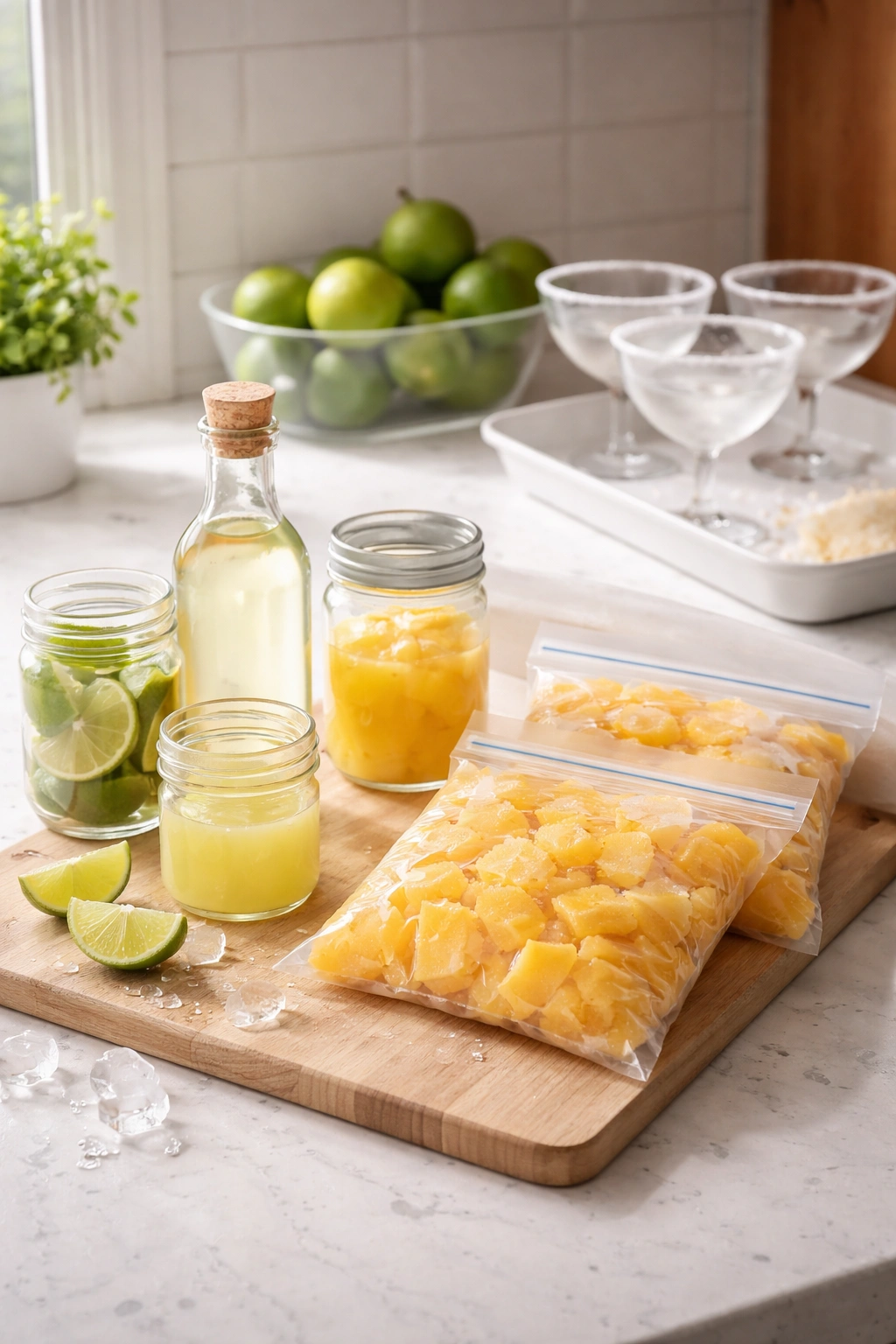
The beautiful thing about frozen margaritas is they need to be made fresh—you can’t really make a big batch and serve throughout the evening. However, you can do serious prep work ahead of time.
Make simple syrup the day before. Combine equal parts sugar and hot water (say, ½ cup each), stir until the sugar dissolves completely, then cool it. Store it in an airtight container in the fridge for up to 2 weeks. This is the single biggest time-saver.
Prep your mango ahead. If using fresh mango, cut and portion it into 1-cup portions, then freeze them in a freezer bag or container for up to 2 months. Thaw slightly (about 10 minutes) before blending. This gives you grab-and-go mango that’s ready whenever you want to make margaritas.
Juice your limes in advance. Squeeze limes into a small jar, cover, and refrigerate for up to 3 days. Fresh-squeezed lime juice keeps well refrigerated, though it’s best used within a day or two for maximum brightness. Just give it a shake before using since pulp may settle.
Chill your glasses in the freezer. About 30 minutes before you plan to serve, pop your glasses in the freezer. A cold glass keeps the drink slushy for noticeably longer.
What about making multiple servings at once? The math is simple: double, triple, or quadruple the recipe. However, your blender has a maximum capacity, usually around 6 cups of total volume. For 2 drinks, you’re at about 5 cups (1 cup mango + 4 oz tequila + 1 oz lime juice + 2 TB syrup + 2 cups ice = roughly 5 cups). For 4 drinks, you’ll need to blend two separate batches. This isn’t a problem—just make them one after another and have each batch ready to pour before moving on to the next.
Can you batch-blend without the ice and add it per drink? Technically yes. Blend the liquid ingredients and mango without ice, then refrigerate the base. Just before serving, pour half of the base (about 1¼ cups) into a blender with 2 cups of ice and blend. This keeps the pre-made base from separating or getting watery. The downside is you’re making smaller batches anyway, so you don’t save much time. It’s easier to just blend two small batches fresh when guests arrive.
Freezing the entire blended drink is not recommended. Once blended, the drink will separate as it refreezes, and you won’t be able to restore that perfect slushy texture. Making fresh is really the way to go.
Serving Suggestions and Pairings
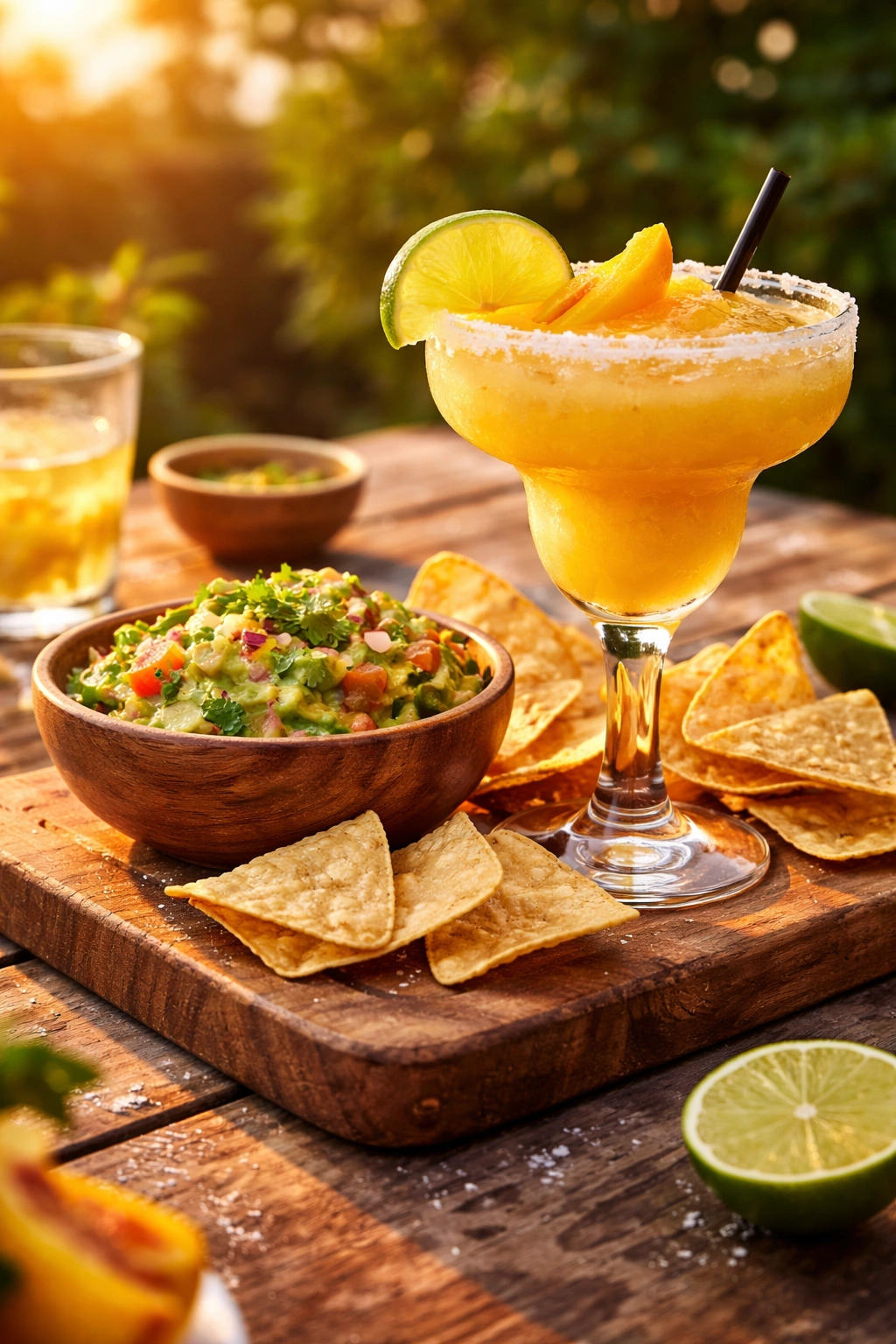
A frozen mango margarita is the kind of drink that makes you feel like you’re on vacation, even if you’re just in your backyard. Knowing what to serve alongside it—and when to serve it—makes the experience complete.
Best occasions: Outdoor gatherings, poolside events, warm-weather afternoons, Cinco de Mayo celebrations, or anytime you want to feel instantly more relaxed. These drinks work best when there’s no rush—they’re a project, they’re meant to be lingered over, and they signal that you’re taking time to enjoy something good.
Appetizers that pair well: Anything salty and savory works beautifully. Tortilla chips with guacamole or salsa are the obvious choice, but also consider ceviche, shrimp ceviche, fish tacos, or carne asada. The salt in these dishes actually makes the sweetness of the mango margarita feel more balanced. Lime-forward dishes—citrus-cured fish, lime-marinated chicken—are especially lovely. Crispy carnitas, chicharrón, or fried yuca chips all create a nice contrast to the cold, smooth drink.
Desserts and sweet endings: Here’s the thing—a frozen mango margarita is sweet enough that you don’t want an overly sweet dessert afterward. Instead, offer something with citrus (lime flan, passion fruit tart) or something simple and light (churros, fresh fruit, sorbet). These complement rather than compete.
What to serve it in: A traditional margarita glass with a salt rim is classic for a reason, but frozen margaritas are thick enough that they benefit from a slightly wider rim. Wide-mouth margarita glasses or even short rocks glasses work beautifully. The salt rim isn’t just decoration—it actually balances the sweetness and makes each sip more interesting. Don’t skip it.
Presentation touches: A fresh lime wheel or wedge placed on the rim looks elegant and gives guests the option to squeeze a little more citrus in if they want. A sprig of fresh mint or a thin slice of fresh mango on the rim adds color. These are small details, but they make the drink feel intentional and special.
Timing and batch-making for parties: If you’re serving a group, have all your prep done before guests arrive. Line up your glasses in the freezer, measure out your ingredients in advance, and be ready to blend in batches as people arrive. A frozen margarita takes about 2 minutes from blend to glass, so you can serve fresh drinks throughout the event without being stuck making cocktails all evening.
Alcohol-free option: If you want to offer a virgin version, simply skip the tequila and triple sec and add 2 tablespoons more simple syrup or mango juice. Everything else stays the same. This gives non-drinkers something special that feels like a real treat, not an afterthought.
Final Thoughts
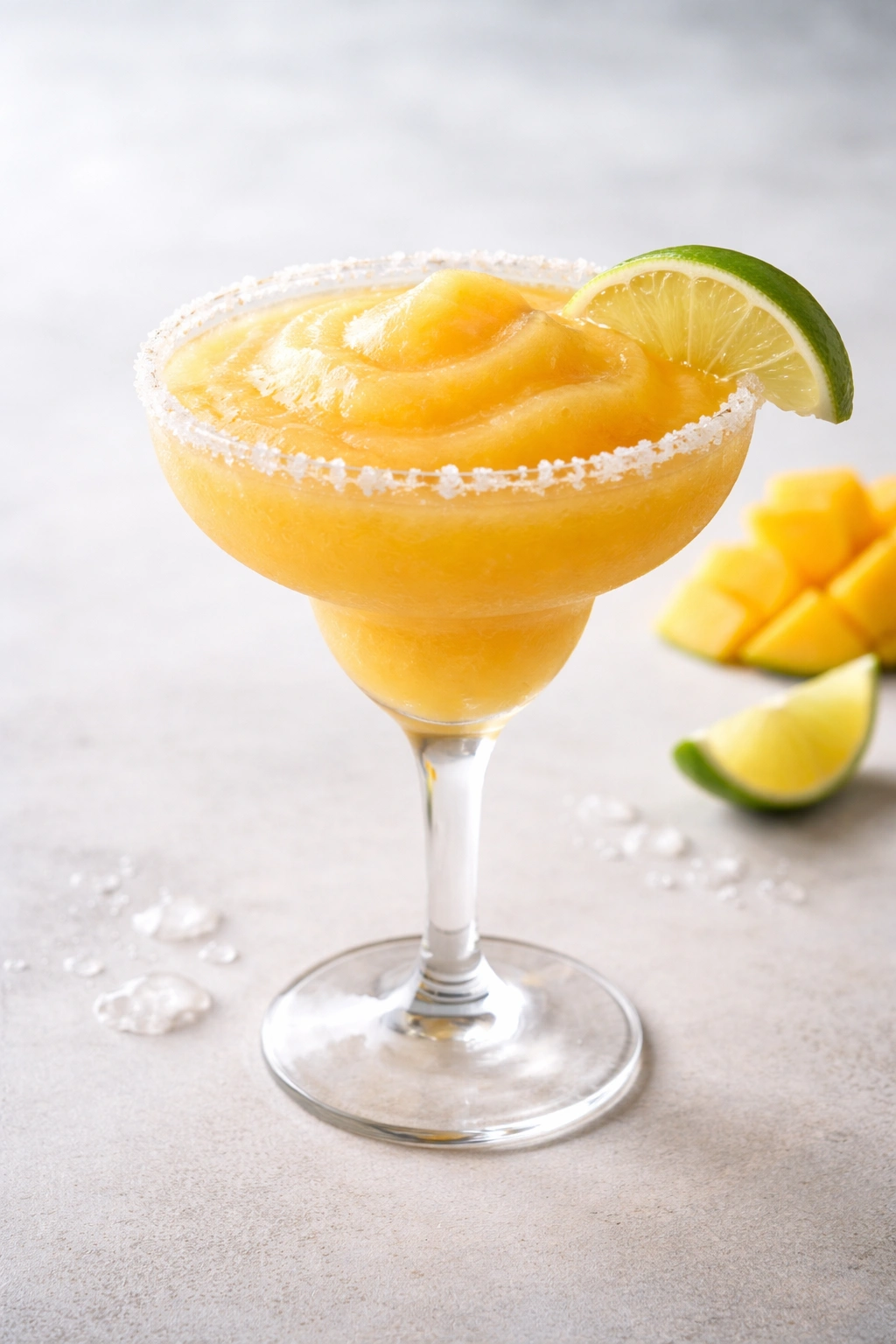
Making a frozen mango margarita in a blender is genuinely simple—fresh mango, fresh lime juice, good tequila, ice, and a couple of minutes of blending—but the details matter. The difference between a mediocre frozen drink and a genuinely excellent one comes down to ingredient quality, not technique complexity. Fresh mango tastes incomparably better than canned or bottled. Fresh lime juice balances everything in a way bottled juice simply cannot. And restraint during blending—stopping at that perfect slushy moment instead of over-churning—keeps the drink smooth and elegant rather than watery and separated.
Once you’ve made these a few times, you’ll develop an intuition for what your specific blender needs. Does it need a few extra seconds? Does it sound like it’s struggling? The baseline recipe is a solid starting point, but you’ll refine it to match your equipment and preferences. That’s part of the fun—making something that feels custom rather than formulaic.
The best part about frozen margaritas is that they’re hard to mess up completely. Even if your timing is off or your proportions aren’t exact, you’ll still end up with a cold, refreshing drink that tastes like vacation. The worst outcome is that it’s more slushy than you wanted or a little more tequila-forward than expected. You’ll adjust next time. What matters is that you’re making something fresh and intentional instead of reaching for a premade mix, and that difference will be obvious in every sip.
