



Cooking for two doesn’t have to mean spending hours in the kitchen or wrestling with leftovers that pile up in your fridge for days. Whether you’re planning a casual weeknight meal or a special date night at home, the right dinner recipe can transform what feels like a chore into an actual pleasure. The challenge isn’t finding recipes—it’s finding ones that are genuinely worth making: dishes with real flavor, interesting textures, and enough personality that you’re excited to eat them, not just checking them off a to-do list.
The recipes that follow strike that rare balance between simple enough to pull off on a Tuesday night and special enough to make you feel like you’ve done something remarkable. They avoid the trap of being bland “diet” meals or requiring a grocery list longer than your arm. Instead, they’re built on the principle that good food comes down to technique, balance, and knowing which shortcuts actually work. Many of these dinners come together in 30 minutes or less, while others are worth a bit more effort because the payoff is that good.
When you’re cooking for just two people, you have a real advantage: you can use better-quality ingredients without the pressure to stretch them far. A beautiful piece of salmon, a good cut of pork, premium pasta—these feel luxurious when you’re splitting them between two people. You also have the freedom to customize, adjust seasoning to your exact taste, and cook at a pace that feels relaxed instead of frantic. That’s when dinner becomes something you actually enjoy, not endure.
The following ten dinners work whether you’re feeding yourself and a partner, two friends, or even yourself with planned leftovers. Each one has been chosen because it delivers on flavor, teaches you a technique worth knowing, and fits into real life—not magazine life.
1. Pan-Seared Salmon With Crispy Skin and Lemon Butter Sauce
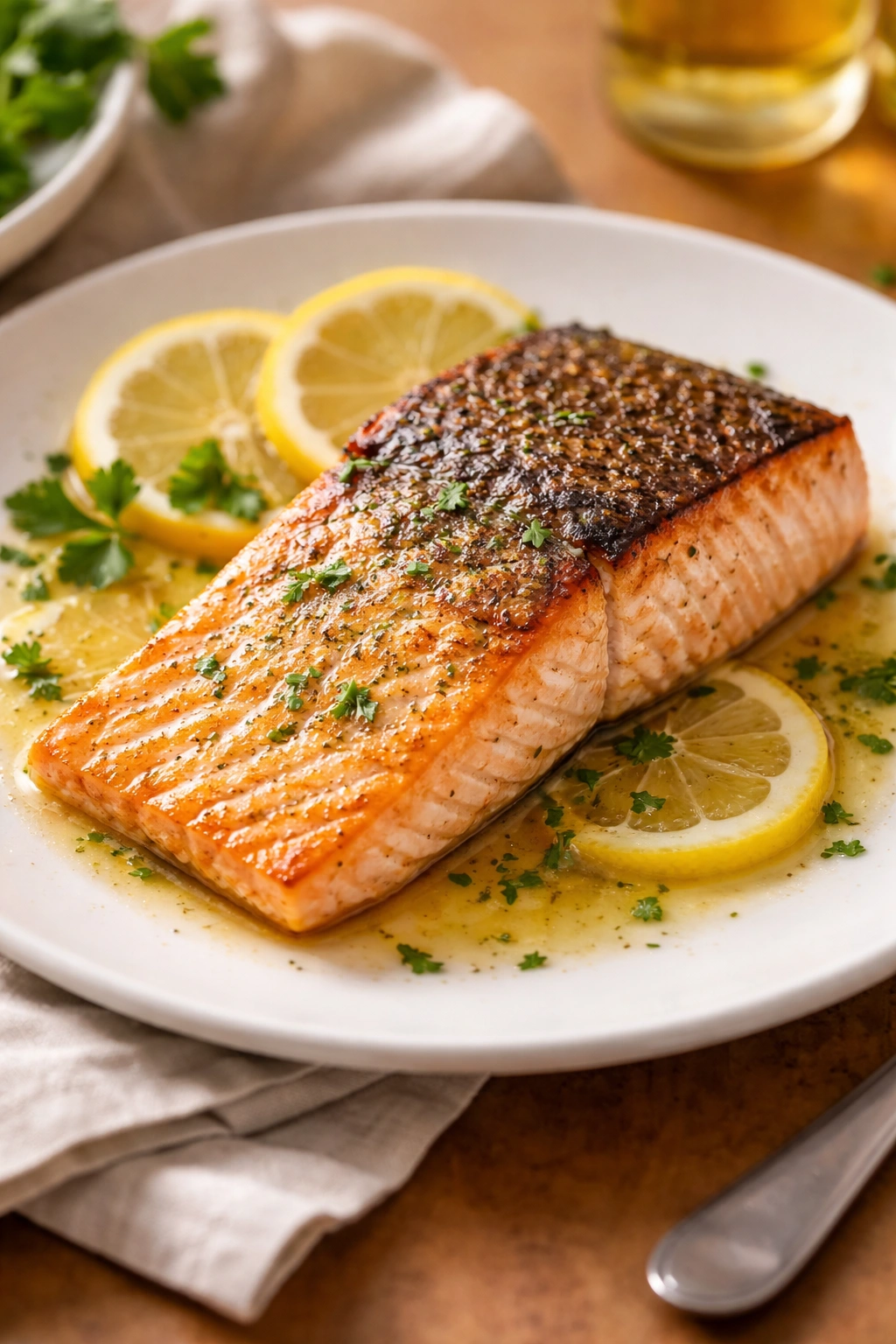
There’s something undeniably impressive about a perfectly seared piece of salmon with skin so crispy it crackles under your fork. The beauty of this dinner is that it takes exactly as long to cook as it looks fancy—about 15 minutes total—yet it delivers restaurant-quality results every single time. The skin-on fillet is your secret weapon here; it acts as an insulator that keeps the flesh tender and moist while browning to a shatteringly crisp exterior.
The Technique That Changes Everything
Getting crispy skin requires two non-negotiable steps: start with a completely dry surface (pat the salmon very dry with paper towels), and use a hot pan without moving the fillet around. Patience here is essential. Place the salmon skin-side down in a medium-hot skillet with a thin layer of oil, then resist the urge to poke or peek. After 4-5 minutes, the skin will release naturally from the pan. The moment you try to flip it too early is the moment it sticks and tears. Let it go until the flesh is nearly opaque and only the very top looks slightly translucent—that’s when you flip for just 1-2 minutes to finish. Finish with a squeeze of fresh lemon and a knob of cold butter melting into a nutty, foamy sauce.
Why This Works for Two
Salmon fillets are naturally portioned for two people, making this infinitely easier than trying to scale down a whole chicken or roast. You’re not left with mysterious amounts of leftover protein taking up space. The dish comes together so quickly that you can prep your side vegetables while the salmon rests, making this truly a 20-minute complete dinner. Serve it over something simple—roasted asparagus, crushed new potatoes, a fresh green salad—and you’ve got a meal that feels special without being complicated.
Pro tip: Cook the salmon skin-side down first, and don’t flip it until it releases naturally from the pan—this is the key to crispy skin every time.
2. One-Skillet Creamy Garlic Chicken Pasta
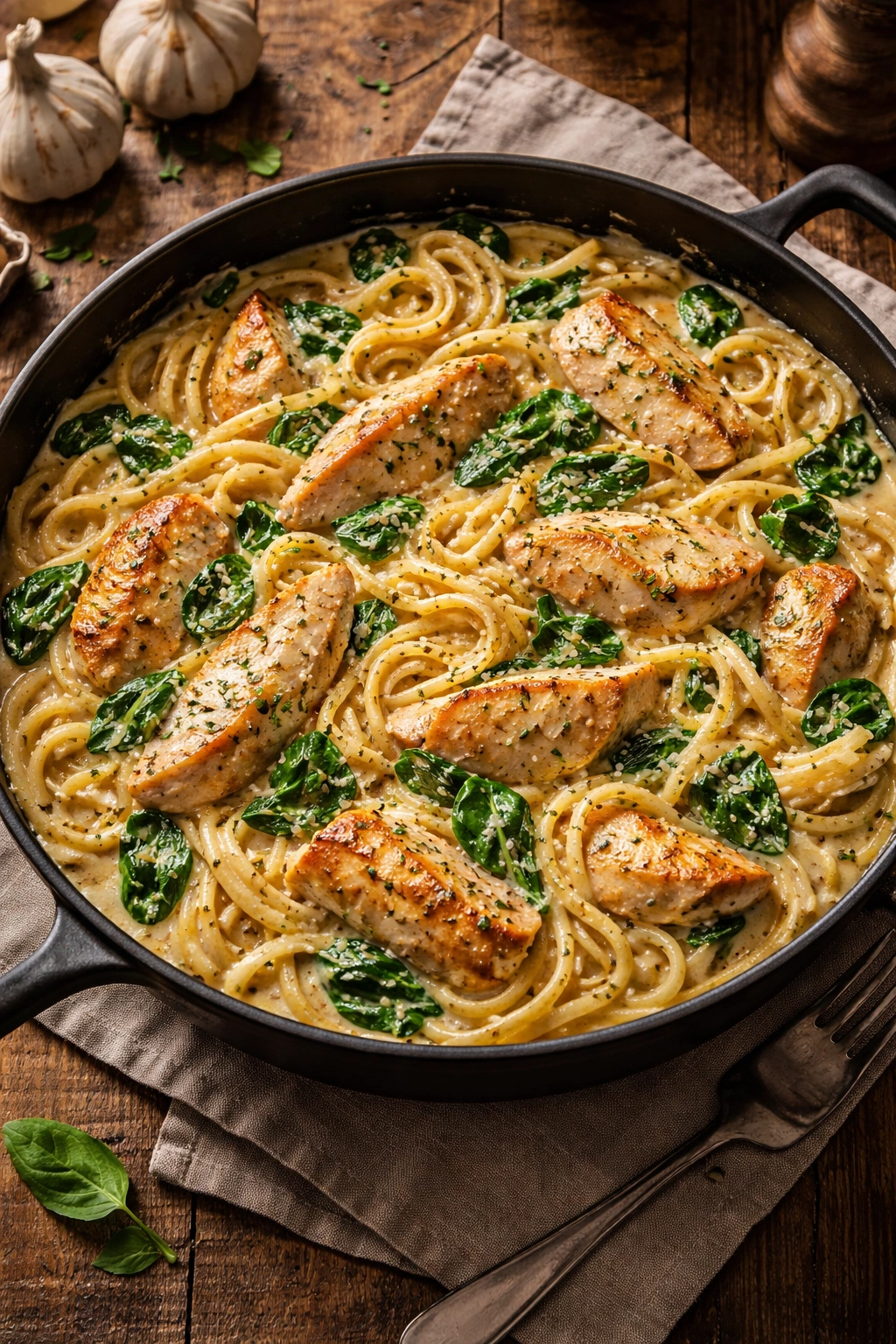
This is the dinner that works on exhausting weekdays when you want something warm, comforting, and absolutely delicious without multiple pots and a pile of dirty dishes. Everything happens in one large skillet: the chicken cooks, you build a silky garlic cream sauce, the pasta tossed right in with a handful of fresh spinach. It’s the kind of meal that tastes like you’ve been cooking for hours when you’ve really invested maybe 25 minutes.
Building the Sauce Without Stress
The secret to a good creamy pasta sauce at home is understanding that you’re not trying to replicate heavy restaurant butter or cream. Instead, you’re creating a sauce where the pasta water does half the work. Cook your pasta slightly underdone (about a minute under al dente), then finish cooking it in the sauce. This allows the starch from the pasta water to help emulsify the cream, creating a glossy coating rather than a heavy puddle. Toast minced garlic in a bit of oil until it’s fragrant but not browned, add cream, and let it simmer gently. Add your cooked pasta and a ladle of pasta water, then toss constantly until the sauce clings to every strand. This technique works because you’re leveraging the pasta’s starch as an emulsifier rather than relying on more and more cream.
Vegetables That Belong Here
Fresh spinach wilts directly into the hot sauce at the end, adding color and a subtle earthiness that balances the richness. Some versions include sun-dried tomatoes for a pop of tartness, others add mushrooms sautéed alongside the chicken for umami depth. The magic is in keeping it simple enough that everything finishes at the same time. Boneless chicken breasts pound thin cook in just 6-7 minutes total, giving you a tender, quick protein that absorbs the sauce beautifully.
Real talk: If your sauce seems too thick, thin it with pasta water a tablespoon at a time—not cream, which will only make it richer and mask the garlic flavor you’ve worked to build.
3. Beef Tenderloin in Mushroom Pan Sauce
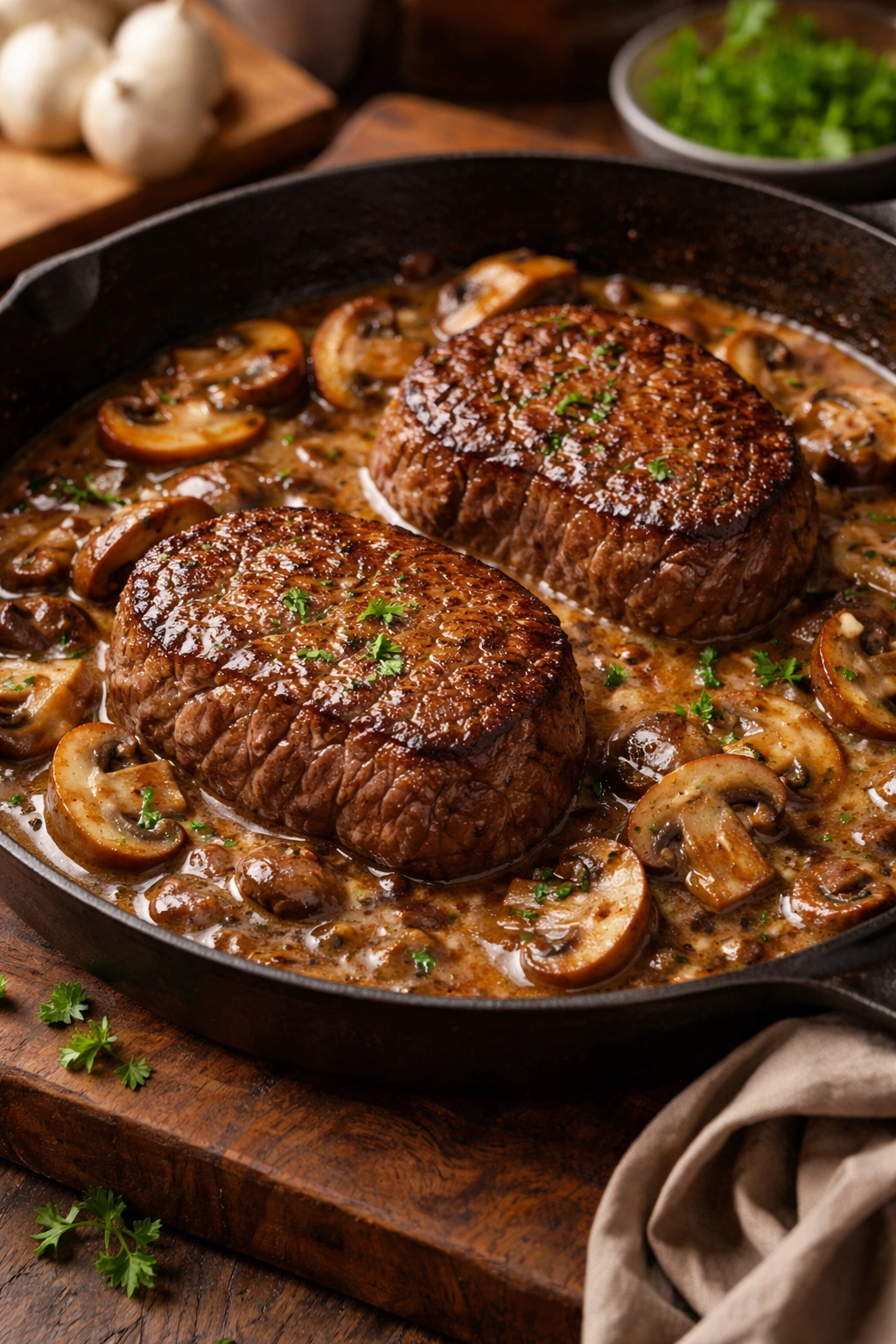
This is date night without leaving your kitchen or spending $200 at a restaurant. Beef tenderloin is naturally tender—that’s literally where it gets its name—so a quick sear followed by a few minutes of gentle heat is all you need. The real magic happens in the pan after the steak comes out: a simple mushroom sauce built from the browned bits stuck to the bottom of the skillet.
Why Mushrooms Make Everything Better
Mushrooms contain natural glutamates, the compound that creates savory, mouth-filling umami flavor. When you sauté them in the same pan where you’ve just cooked beef, you’re extracting all those browned flavors (called fond) that give restaurant food its depth. Slice your mushrooms fairly thin so they release their moisture quickly and begin to concentrate their flavor. A splash of red wine, stock, or even just water helps deglaze the pan. Let it reduce by about half, then finish with a knob of cold butter whisked in at the very end. The butter doesn’t just add richness—it emulsifies the sauce, making it silky and luxurious without tasting heavy.
The Timing That Keeps Everything Warm
The biggest challenge when cooking for two is timing your components so everything arrives at the table hot. The solution: let the steak rest while you make the sauce. After searing the tenderloin and finishing it in the oven (or simply resting it after a perfect pan-sear), transfer it to a warm plate and tent it loosely with foil. This resting period—usually 5 minutes—is when the muscle fibers relax and the juices redistribute. During this time, you’re making the sauce, so by the time everything’s plated, the steak is still warm and the sauce is ready to spoon over the top.
Worth knowing: An instant-read thermometer is your best friend here. Aim for 125°F in the center for medium-rare, remembering that the steak will continue to cook slightly while it rests.
4. Sheet-Pan Honey Mustard Chicken With Roasted Vegetables
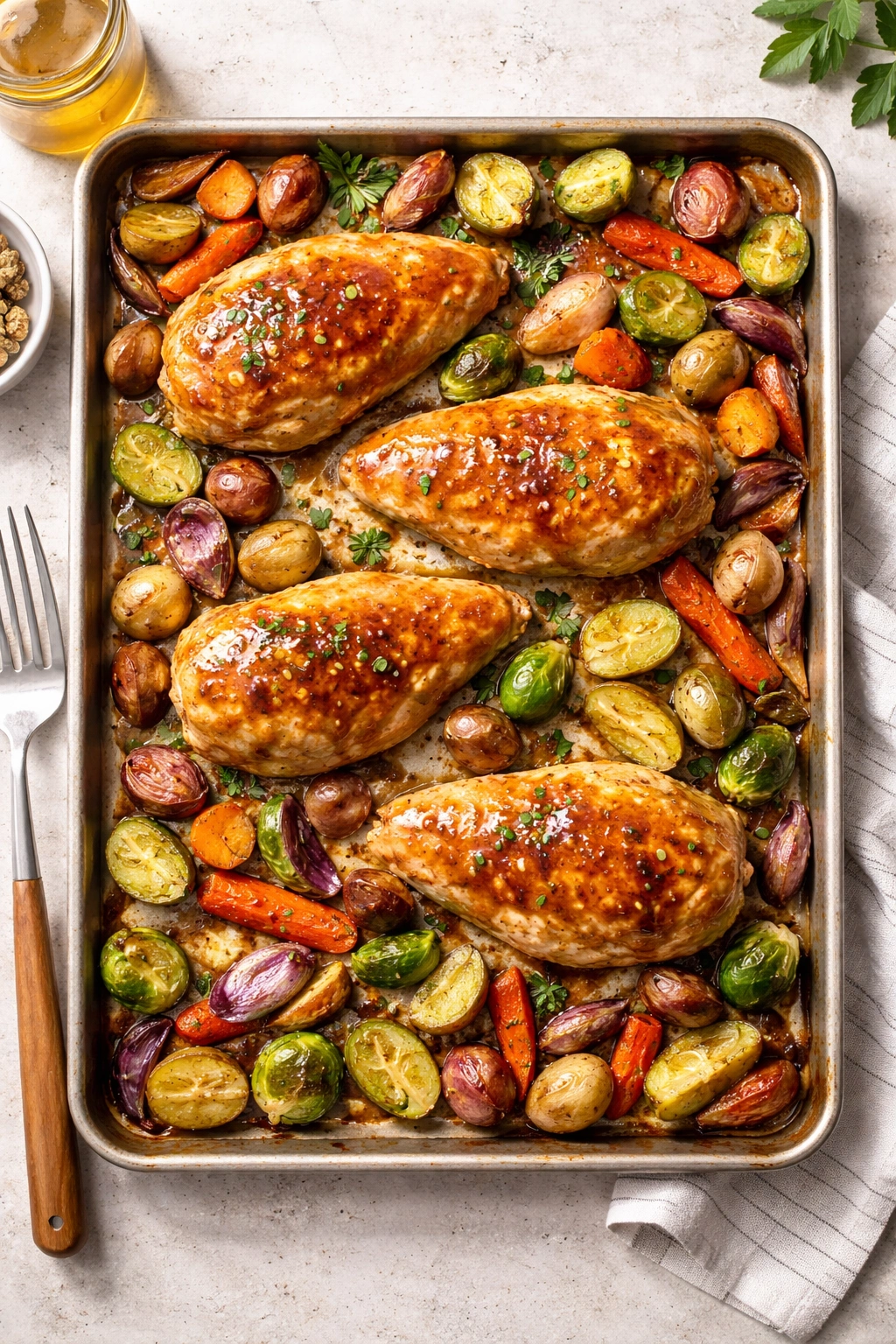
There’s a reason sheet-pan dinners have become so popular for cooking dinner: they work. Everything roasts on one surface, flavors meld, and cleanup is nearly effortless. This particular version combines juicy chicken breasts with a sweet-and-tangy glaze and whatever vegetables need using up in your produce drawer.
The Honey Mustard Glaze That Actually Clings
Most glazes separate or slide off the chicken as it cooks. A good one has enough body and stickiness to caramelize on the surface and stay put. This comes from balancing honey (or maple syrup), a good Dijon mustard, and a touch of acid—fresh lemon juice or apple cider vinegar. The mustard contains emulsifiers that help these three ingredients stay together. Brush the glaze on the chicken partway through roasting, then again in the final 5 minutes, so you get layers of flavor and a slightly glossy finish. The key is using chicken breasts of similar thickness so they finish cooking at the same time—if one is significantly thinner, that piece will be dry by the time the thicker one is done.
Vegetables That Roast Perfectly With Chicken
Root vegetables like carrots, parsnips, and chunky potato pieces need higher heat and more time, so arrange them closer to the heat source on your sheet pan. Quick-cooking vegetables like broccoli or Brussels sprouts that you’ve halved can go closer to the chicken. For genuinely even cooking, toss everything with a thin coating of oil before roasting, and give the vegetables a stir about halfway through. By the time the chicken registers 165°F internally, your vegetables will have caramelized edges and tender centers.
Insider note: Pat the chicken completely dry before seasoning—moisture is the enemy of browning, and you want some color on that chicken for visual appeal and deeper flavor.
5. Shrimp Scampi Over Pasta
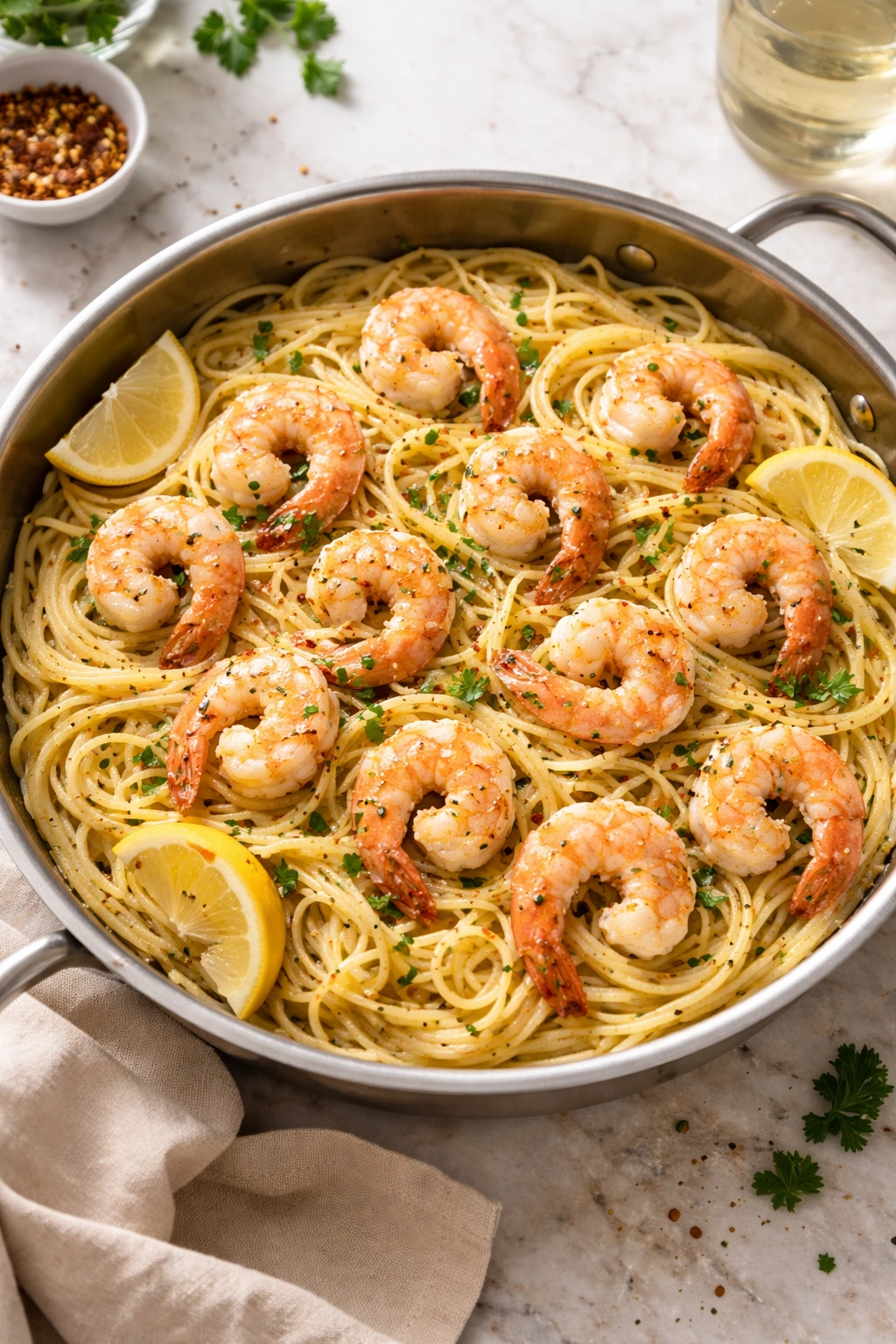
Shrimp cooks so quickly—literally 2-3 minutes per side—that this entire dinner from grocery bag to plate takes around 20 minutes. Scampi is one of those dishes that feels fancy and tastes bright and alive, the opposite of heavy. White wine, garlic, lemon, butter, and shrimp come together in one shallow pan, and the sauce is just concentrated enough to coat the pasta beautifully without overwhelming it.
The Importance of Not Overcooking Shrimp
Shrimp cooked even 30 seconds too long becomes rubbery and loses its sweet brininess. The moment it turns pink and opaque, it’s done. Some cooks prefer to remove the shrimp after cooking and finish the sauce, then toss the shrimp back in at the very end, so there’s no risk of carryover cooking. This is especially smart if you’re a shrimp-anxiety eater (which is totally valid—overcooked shrimp is genuinely disappointing). Buy shrimp with the tails on if you can; they stay moister and look nicer on the plate. Deveined, peeled, and thawed shrimp is fine too—this isn’t a recipe that rewards shopping complexity, just good ingredients handled simply.
Building a Pan Sauce Worth Talking About
The moment the shrimp is done and removed, drop minced garlic into the same pan and let it toast for about 30 seconds in the residual heat and oil. A splash of white wine deglazes the pan, picking up all the browned bits and shrimp flavor that’s stuck there. Let it reduce by half, squeezing in fresh lemon juice and maybe a pinch of red pepper flakes for gentle heat. A cold knob of butter whisked in at the end creates the glossy, emulsified sauce. Toss fresh pasta through this sauce immediately—the starch from the pasta water helps extend the sauce and makes it coat every strand evenly. Finish with fresh parsley and maybe a light grating of lemon zest for brightness.
Quick fact: This is the exact moment to add a handful of fresh parsley because the heat will just barely wilt it, so you get the fresh herbal note without it looking like cooked spinach.
6. Pan-Seared Steak With Herb Butter and Crispy Potatoes
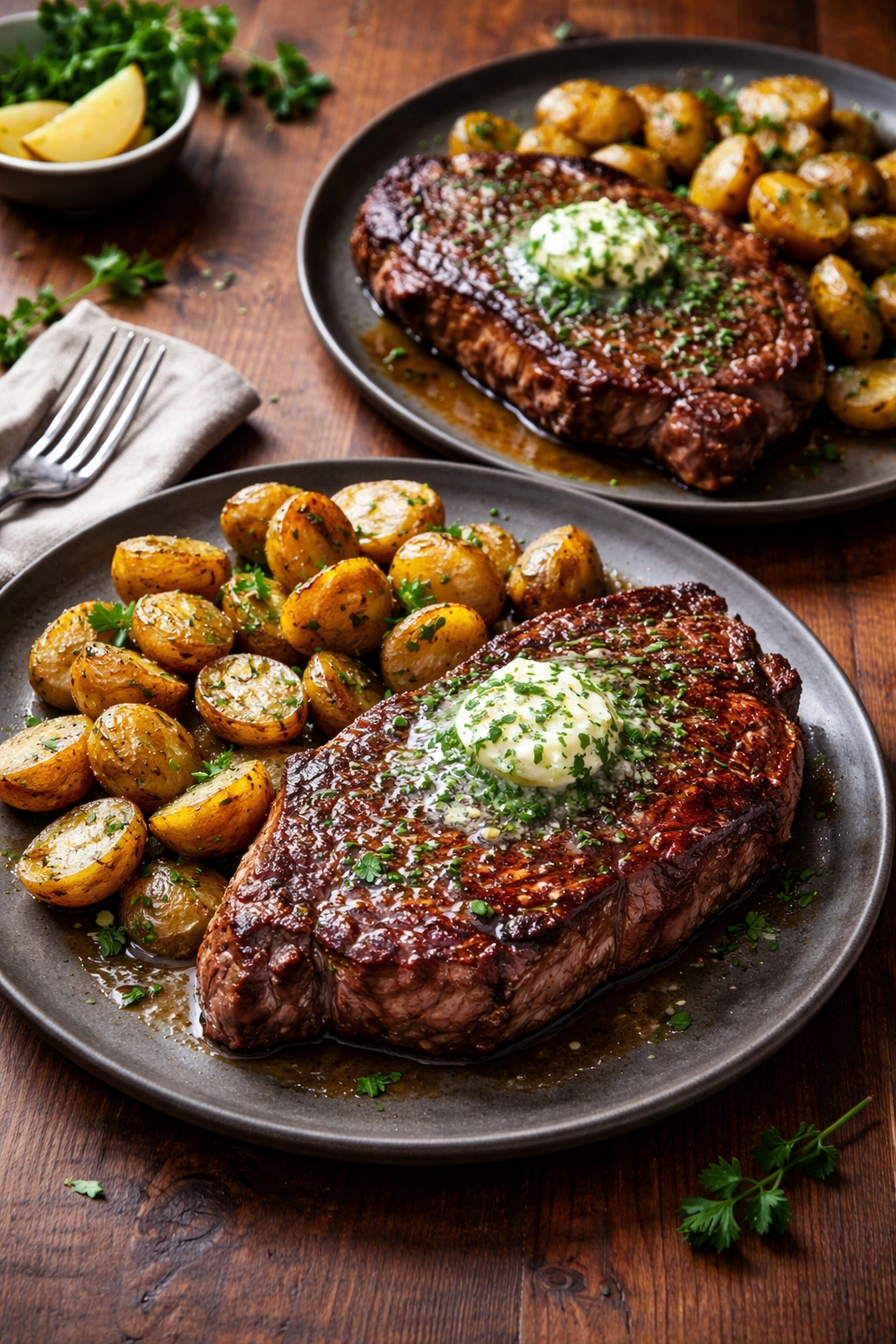
A good steak is honestly one of the easiest proteins to cook well, and there’s something deeply satisfying about a proper sear and a simple herb butter melting over the top. Two beautiful steaks, a hot pan, and confidence are really all you need. Add some crispy fried potatoes and a salad, and you’ve got a dinner that feels like an occasion without being fussy.
Why High Heat and Patience Are Non-Negotiable
The difference between a sad, pale steak and one with a golden-brown crust comes down to heat and dryness. Pat your steaks very dry, season generously with salt and pepper, and let them sit at room temperature for about 15 minutes before cooking. Use a skillet that’s heavy (cast iron is ideal), and let it get smoking hot. Lay the steak down, then leave it completely alone for at least 3-4 minutes. Resist the urge to move it, flip it, or press it with the spatula. You’re building a crust through the Maillard reaction, and moving the meat breaks that process. Flip only once, finish cooking for another few minutes, then transfer to a warm plate to rest.
Herb Butter: The Most Important Finishing Touch
While the steak rests, make an herb butter by mixing softened butter with minced fresh herbs (thyme, rosemary, parsley), a pinch of salt, and maybe a small crushed garlic clove. A thin pat of this butter melting over the hot steak is where magic happens—the butter emulsifies from the heat, carrying the herb flavor directly into the meat. This is why restaurants’ steaks taste so much richer than homemade versions: they’re finishing with butter, and lots of it.
Worth knowing: Rest your steak for at least 5 minutes after cooking. Those 5 minutes allow the muscle fibers to relax and reabsorb juices, keeping the meat moist instead of letting those juices run onto the plate.
7. Coconut Curry Chicken and Rice
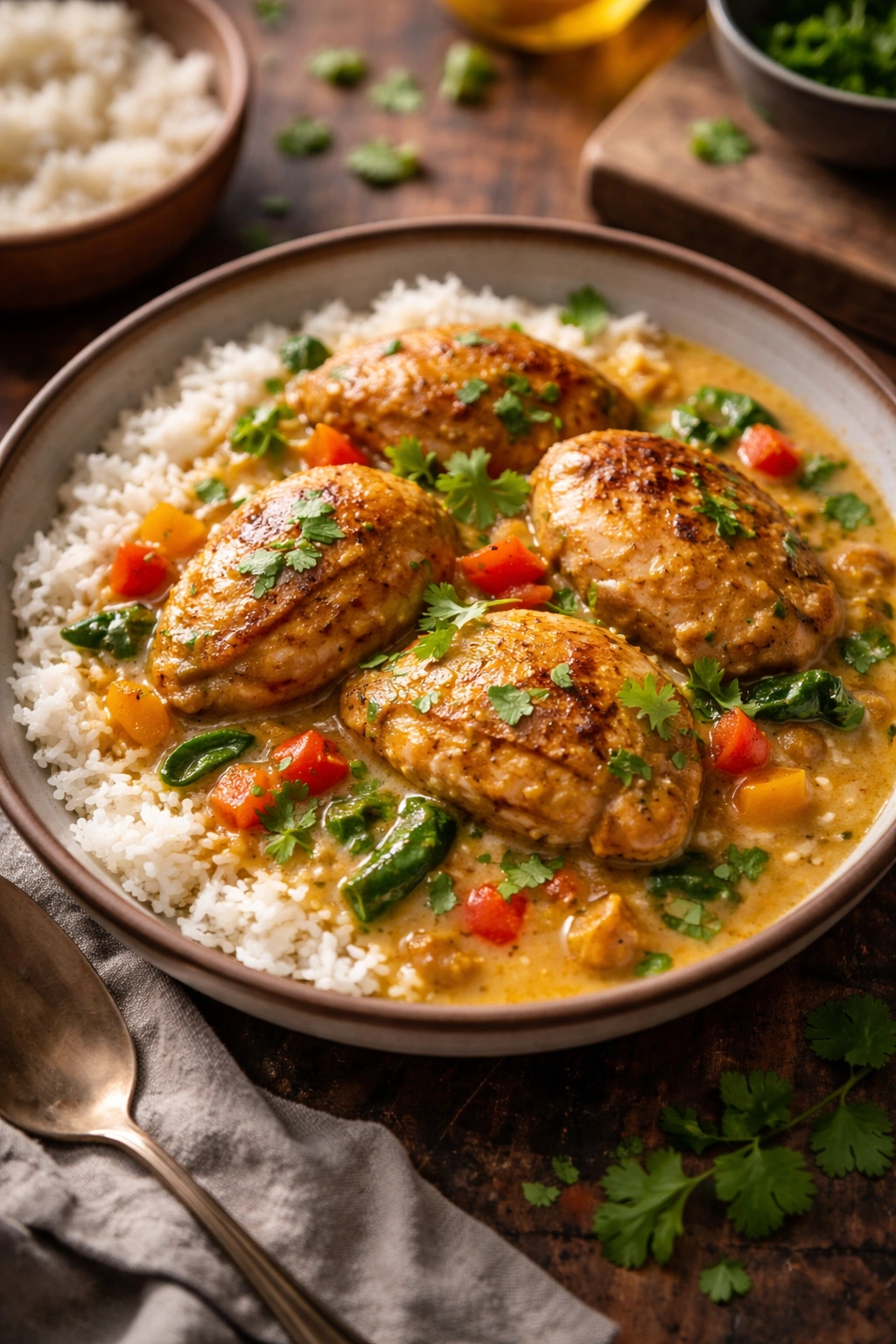
This is the dinner that transports you somewhere warmer, more interesting, and somehow less stressful than your actual evening. Chicken thighs (use these instead of breasts—they’re more forgiving and stay juicy) braise gently in coconut milk spiked with curry paste, along with vegetables of your choosing. Everything cooks in one pot, filling your kitchen with the most incredible aroma.
Why Curry Paste Beats Curry Powder Every Time
Curry paste is a blend of fresh ingredients—chilies, garlic, ginger, lemongrass, galangal—ground into a concentrated paste. This means you get complex flavor immediately without needing to layer multiple spices. A couple of tablespoons stirred into coconut milk creates a sauce with incredible depth. Curry powder, while useful, is a dried blend that tastes a bit one-dimensional by comparison. Both work, but if you’re going to choose one route, paste gives you better flavor with less effort. Thai red curry paste is more aggressive and spicy; green is fresher and more herbal; yellow is milder and slightly sweet. Choose based on your heat preference and what’s available.
The Vegetables That Matter
Quick-cooking vegetables like snap peas or sliced bell pepper go in at the end, just 5-10 minutes before serving, so they stay crisp and bright. Denser vegetables like carrots or new potatoes go in earlier and have time to soften in the simmering liquid. Fresh basil or cilantro stirred in just before serving adds a fresh, living quality that makes this feel current and bright rather than heavy. Serve over jasmine rice or coconut rice if you’re feeling fancy—the rice soaks up all that delicious sauce.
Pro tip: If your curry seems too spicy, a spoonful of honey or even a squeeze of lime juice mellows the heat without making it taste sweet.
8. Crispy Chicken Thighs With Lemon and Capers
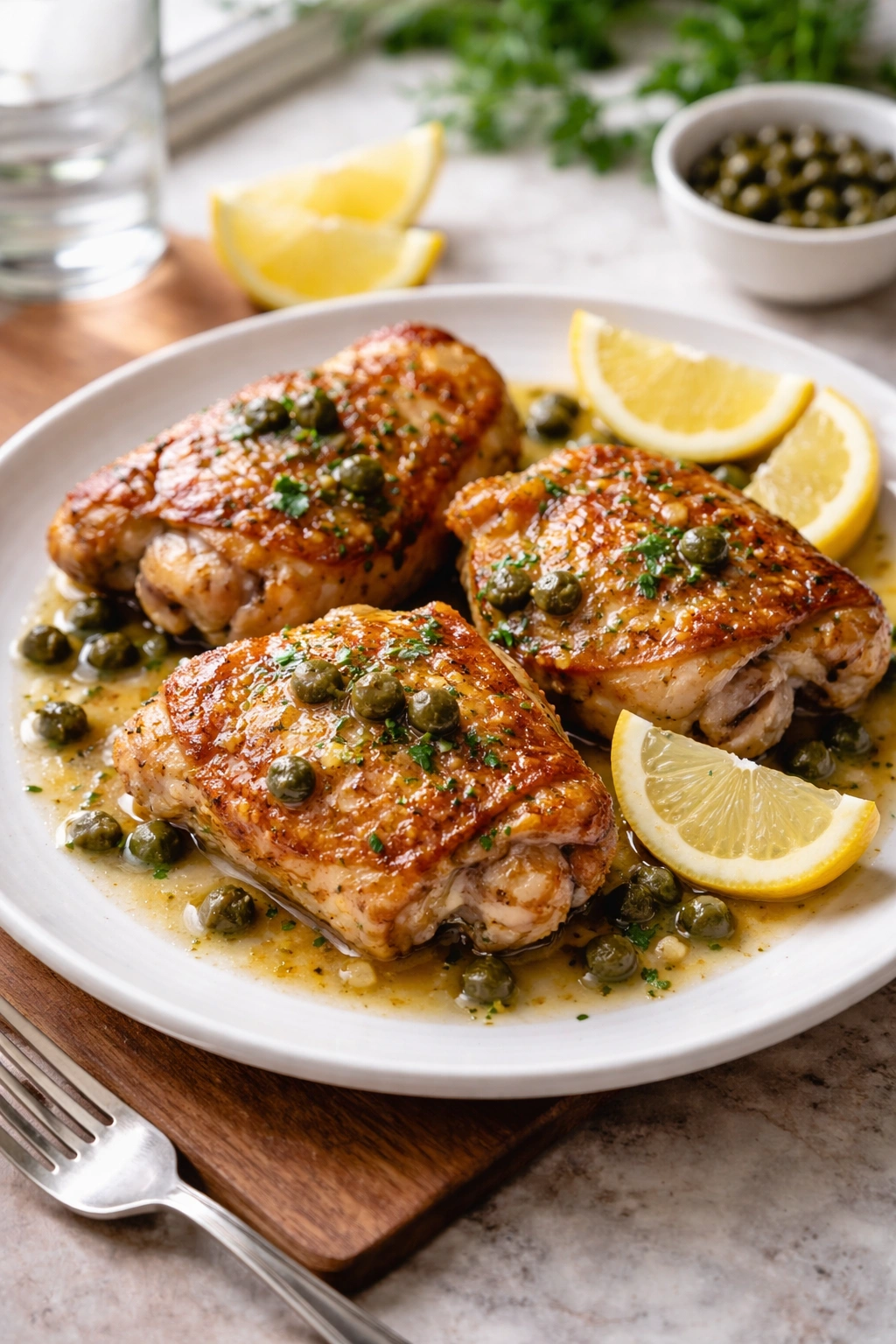
Crispy-skinned chicken thighs are ridiculously underrated. The thigh meat is dark and flavorful, more forgiving than white meat, and the skin crisps up beautifully with nothing more than a hot pan and patience. A bright lemon-caper sauce cuts through the richness, making this feel light despite being indulgent.
Why Thighs Are Better Than Breasts for Home Cooking
Thighs have more marbling—small pockets of fat throughout the meat—which keeps them moist even if you accidentally overcook them slightly. Breasts are leaner and can become dry and stringy if they’re cooked even a degree past done. When you’re cooking for two with a busy schedule, the forgiving nature of thighs takes a lot of pressure off. They also develop better flavor through browning because of the fat content, and that crispy skin is genuinely worth any extra effort.
A Sauce That Actually Complements Rather Than Masks
After the chicken is cooked and resting, you have fond in the pan. Deglaze it with a splash of chicken stock or white wine, then add a generous handful of capers (the nonpareille variety, which are smaller and less briny). A squeeze of fresh lemon juice pulls everything together. The capers provide a salty, briny note that’s become almost a classic pairing with thighs. Some versions add white wine and finish with cold butter; others are lighter and finish with just good olive oil. Both are delicious—choose based on how rich you want the final sauce to be.
Real talk: If capers aren’t your thing, a similar bright sauce works with green peppercorns, olives, or even just fresh herbs and lemon—the point is acid and something with character to balance the richness of the thighs.
9. Vegetarian Stuffed Portobello Mushrooms
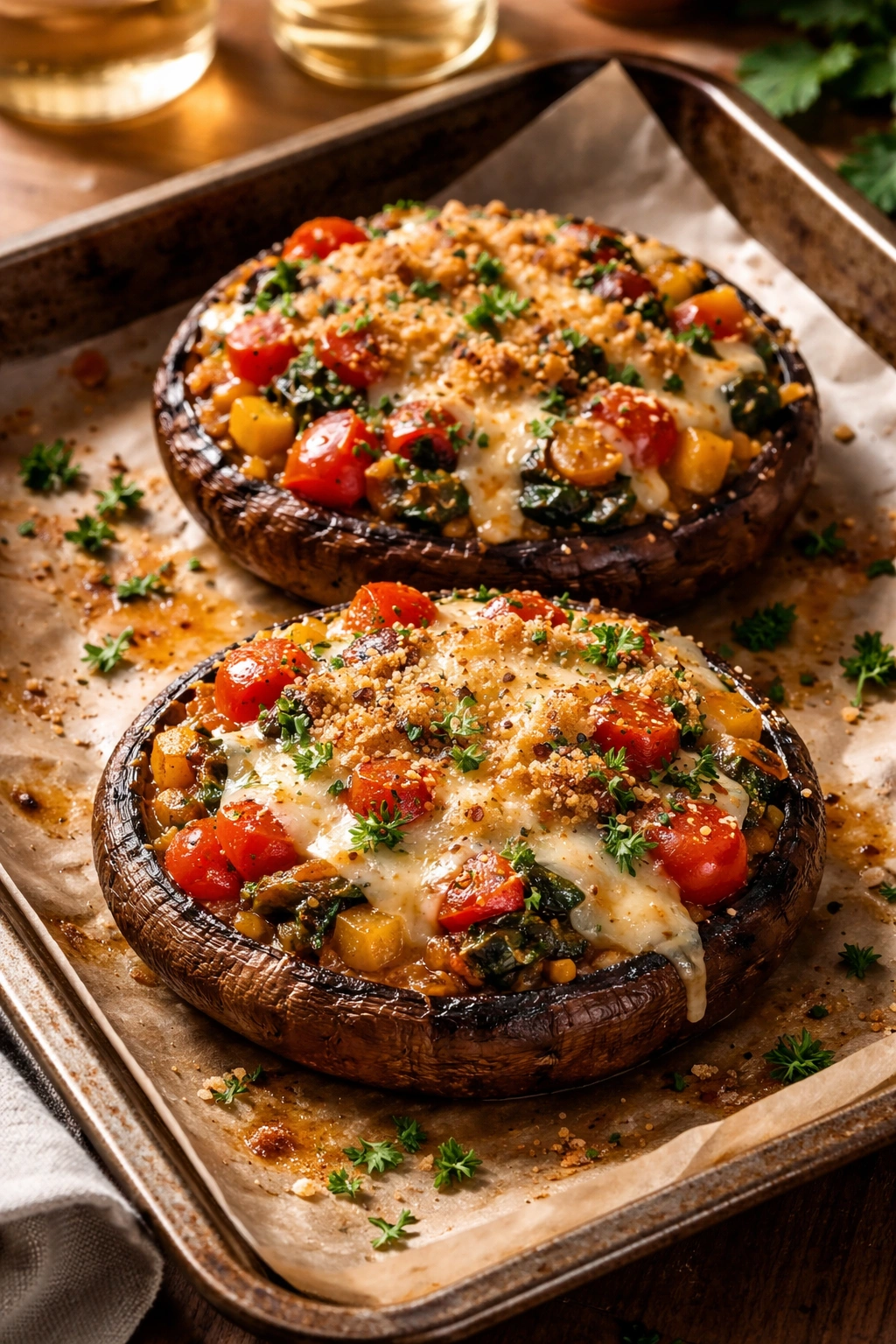
These are substantial, impressive, and somehow feel special without requiring any fancy techniques. A large portobello mushroom cap gets filled with cheese, breadcrumbs, and roasted vegetables, then baked until the mushroom releases its juices and everything becomes tender and rich. It’s the kind of vegetarian main that doesn’t make you feel like you’re missing anything.
Building a Filling With Real Structure
The best fillings have three components: a binder (cheese or cream), breadcrumbs or nuts for texture, and vegetables for flavor and moisture. Sauté diced zucchini, eggplant, bell pepper, or whatever vegetables you’re using until they’re softened and beginning to caramelize. Mix them with grated Parmesan or mozzarella, some herbed breadcrumbs, a touch of garlic, maybe a beaten egg for binding. This mixture should feel wet enough to hold together but not so wet that it turns into paste. Stuff it generously into the mushroom cap—these are large vegetables, and they can handle a serious fill.
Why Portobellos and Not Other Mushrooms
Regular white mushrooms are too small to stuff meaningfully. Cremini (the brown cousins of white mushrooms) are better but still a bit small. Portobellos are large, meaty, and have a wonderful earthy flavor that stands up to strong fillings. When they cook, they release moisture, which actually helps cook the filling and prevents it from drying out. Brush the tops with olive oil before baking to encourage browning and help them stay moist.
Insider note: Remove the gills from your portobello before stuffing if you prefer a less watery result, or leave them in for more mushroom flavor and moisture in the final dish.
10. Thai-Inspired Green Curry Paste Shrimp
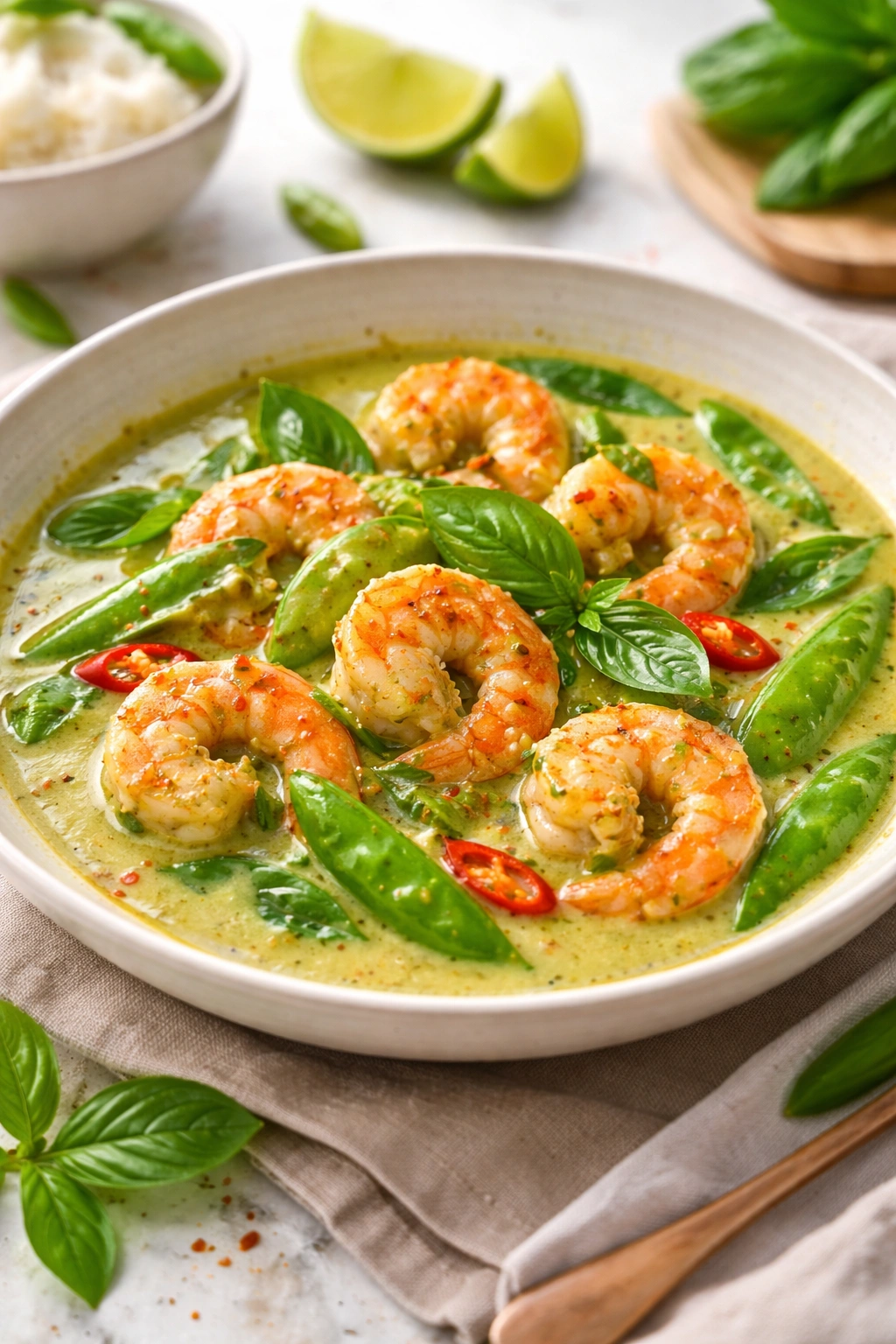
Fresh, herbaceous, just spicy enough to wake you up, and genuinely fast—this is the kind of dinner that makes you forget you could have ordered takeout. Shrimp cooks so quickly that this comes together in maybe 20 minutes, and every bite tastes considered and intentional rather than thrown together.
Why Green Curry Paste Is Fresher Than Red
Green curry paste contains fresh green chilies and aromatic herbs that give it a fresher, more herbaceous quality compared to the deeper, spicier red curry. It’s typically slightly less spicy than red, though this varies by brand, so start with a smaller amount and add more if you want more heat. Stir a couple of tablespoons into coconut milk along with a splash of fish sauce (which sounds intimidating but just adds savory depth you don’t consciously taste), then add the shrimp and a handful of Thai basil or cilantro.
Vegetables and Garnishes That Matter
Sugar snap peas or thin green beans cook quickly and stay crisp. Thai basil (different from Italian basil, with a slightly anise-like flavor) goes in at the very end so it stays fresh. Lime juice, a sprinkle of crushed peanuts, and maybe a thin slice of fresh red chili for heat round out the flavors. This isn’t a sauce you want to sit on shrimp, so serve over jasmine rice and let people build bowls to their preference. Some will want more sauce, some will want crisper vegetables—letting people customize actually makes this feel more special, not less.
Quick fact: Fish sauce is fermented and intensely savory—you’ll smell it before you taste it, and that initial smell is exactly why it adds such incredible depth to curries and other Southeast Asian dishes.
Final Thoughts
The beauty of these ten dinners is that they all prove the same point: feeding two people well doesn’t require complexity, multiple courses, or spending hours in the kitchen. What it requires is understanding technique, choosing ingredients worth eating, and having the confidence that simple, well-executed food tastes better than complicated food that’s been overthought.
Every one of these dinners teaches you something—how to sear fish properly, how to build a pan sauce, why resting meat matters, or how to coax real flavor from just a few ingredients. That’s why they’re worth making repeatedly, not just once. The first time you cook pan-seared salmon, you learn what crispy skin actually feels like. The second time, you’re just executing, and it’s even better. By the tenth time, you’re not following a recipe; you’re cooking by feel and instinct, which is when meals go from “I made dinner” to “We had something really good tonight.”
The dinners that work best are the ones you’ll actually make on regular weeknights, not the ones sitting bookmarked on your phone for some theoretical date night that never arrives. So pick three of these that genuinely appeal to you, buy the ingredients, and commit to cooking them. You’ll notice something shift: instead of ordering out or heating up leftovers, you’ll be reaching for a skillet and pulling off something that tastes like you know what you’re doing. Because you will.
