



Lasagna is traditionally a labor of love—layering pasta, sauce, cheese, and filling takes time, precision, and a good oven. But what if you could get that same restaurant-quality result with minimal active effort and no hot kitchen during warm months? A slow cooker lasagna delivers exactly that. You prep ingredients, layer everything in about 10 minutes, and let your crock pot handle the rest for 4 to 6 hours. The result is tender, perfectly melded layers with sauce that’s had hours to develop deep flavor, and meat that’s cooked through completely without any of the standing time a traditional oven version demands.
The genius of slow cooker lasagna isn’t just about convenience—it’s about physics. The gentle, even heat of a slow cooker allows the noodles to soften gradually without becoming mushy, the cheese to melt without browning, and the sauce to reduce slightly and concentrate flavor without drying out. Unlike oven lasagna, which relies on high heat and browning for that caramelized edge, slow cooker lasagna achieves its magic through patient, low temperature cooking. The meat in the sauce becomes impossibly tender, the ricotta layer stays creamy rather than rubbery, and the whole dish fuses together as one cohesive, layered comfort food.
This approach works beautifully for weeknight dinners, meal prep, potlucks, or any time you want authentic lasagna without spending hours in the kitchen. Your crock pot becomes a set-and-forget tool that delivers something far better than reheated leftovers or takeout. It’s genuinely one of the easiest ways to produce an impressively complete dinner.
Why Slow Cooker Lasagna Changes Everything
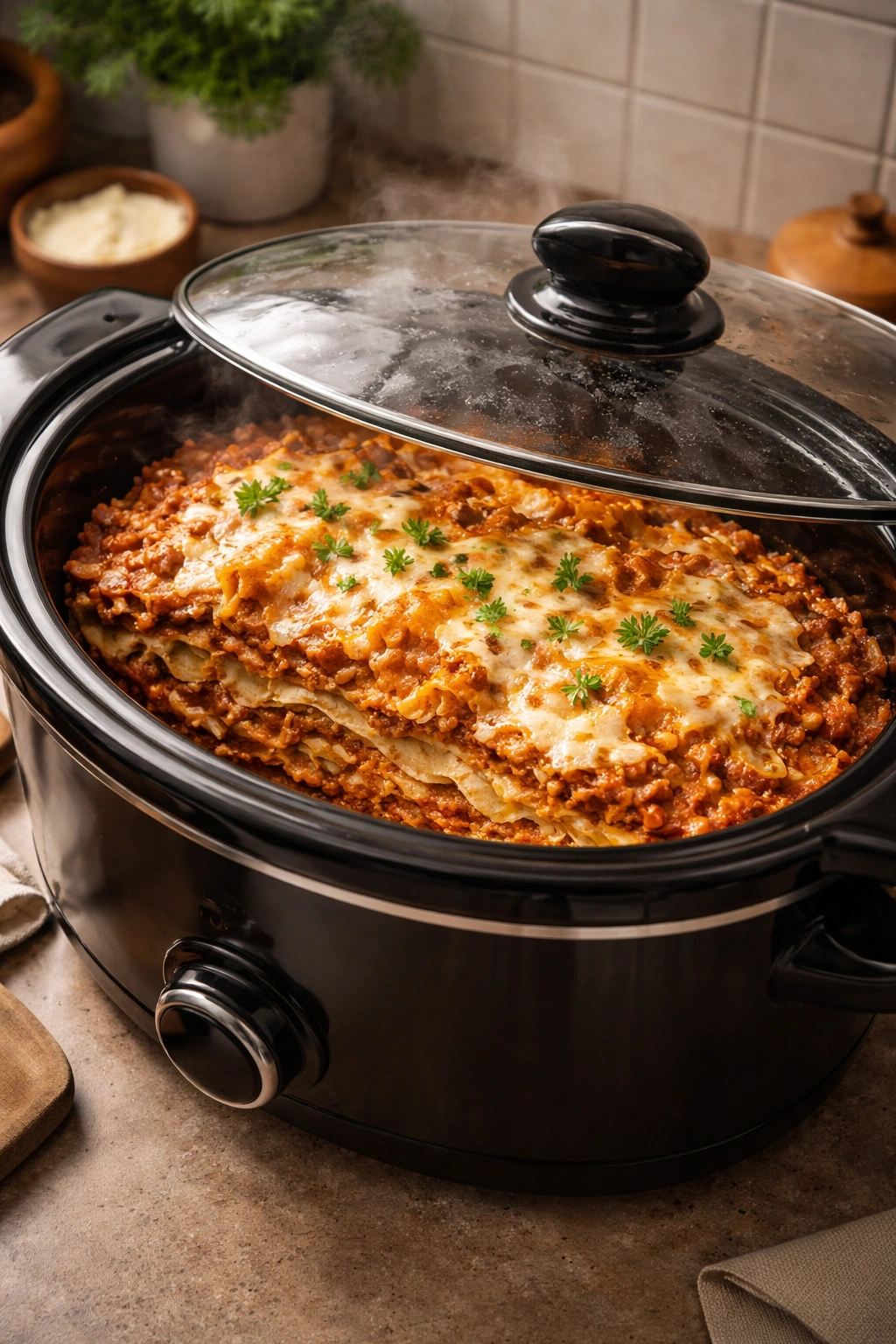
Slow cookers excel at breaking down tough cuts of meat and melding flavors that would normally take a long braise. With lasagna specifically, the slow cooker offers advantages that a conventional oven simply can’t match in the same timeframe.
The low, steady temperature prevents the edges of the lasagna from drying out or the cheese from breaking and separating. In a traditional oven, the top layer of cheese browns and can sometimes turn slightly grainy if the oven temperature runs hot. A slow cooker keeps everything evenly moist and creamy because the lid traps steam, which gently hydrates the noodles and prevents the sauce from reducing too aggressively. You don’t get that crispy, browned top layer, but what you gain is a texture throughout that’s uniformly tender and cohesive.
The time investment flips dramatically in your favor. Assembly takes about 10 to 15 minutes, then your slow cooker works unsupervised for 4 to 6 hours. You’re not checking on it every 20 minutes, rotating the dish, or testing pasta doneness. You’re simply walking away and returning to a completely finished lasagna that’s been gently cooking while you live your day.
Flavor develops differently and often more completely. The sauce simmers for hours, allowing the tomato base to concentrate slightly and the herbs and spices to fully hydrate and perfume the entire dish. Garlic mellows into subtle sweetness rather than remaining sharp. Ground meat, whether beef or sausage, becomes so tender it nearly dissolves into the sauce. The cheese layers don’t just sit statically between noodles—they gradually warm and soften and meld with the layers around them.
Energy efficiency is a real, measurable benefit. A slow cooker uses a fraction of the electricity that a preheated oven demands, and it doesn’t heat your kitchen the way an oven does. This matters significantly during warm months, where the last thing you want is an oven running for an hour.
How to Choose the Right Slow Cooker Size
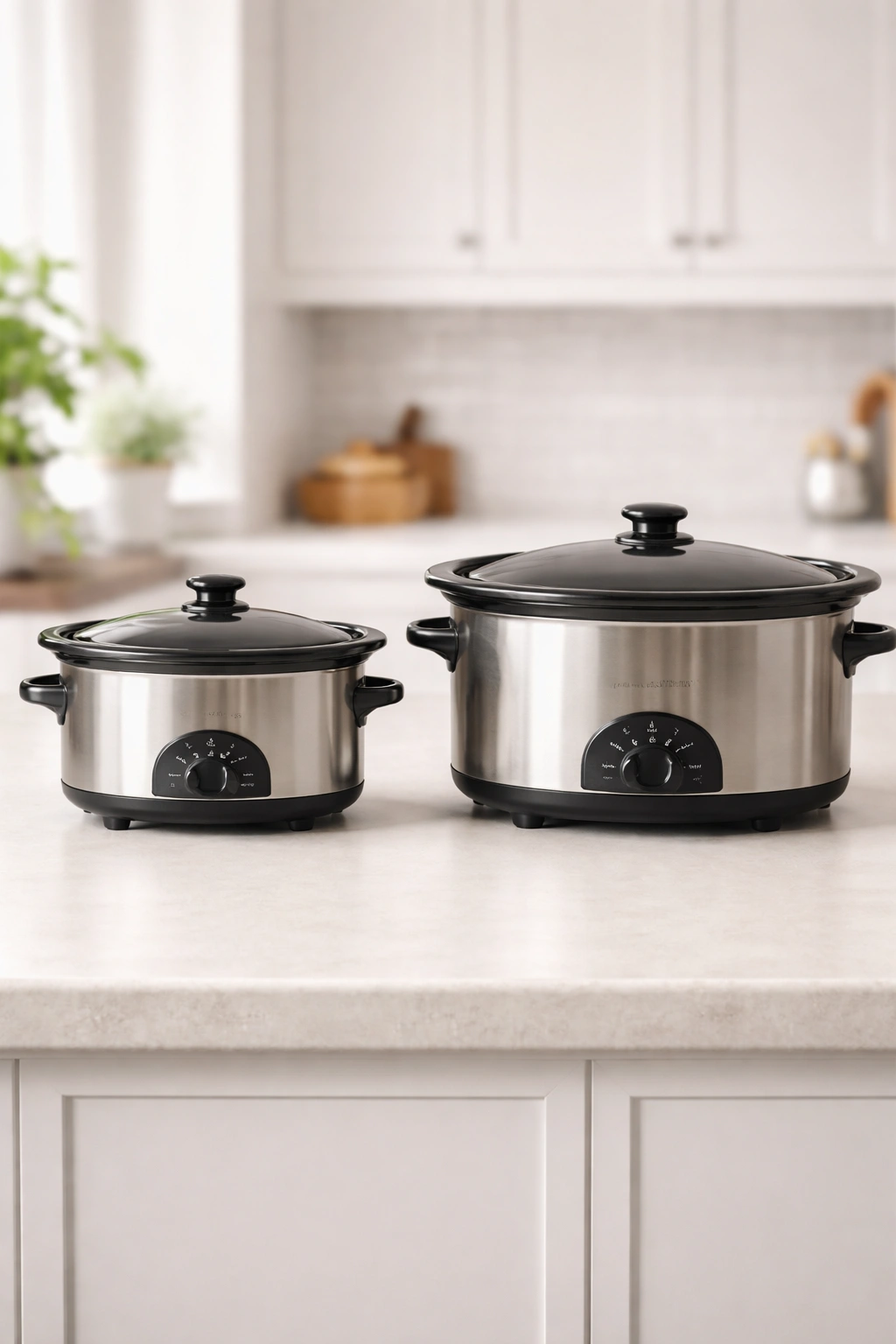
The size of your slow cooker determines how much lasagna you can make and how well it cooks. Too small, and your layers compress and don’t cook evenly. Too large, and the lasagna cooks too quickly or dries out.
A 4-quart slow cooker is the practical minimum for lasagna. This size fits a standard rectangular lasagna arrangement and feeds 4 to 6 people comfortably. The depth is usually around 4 to 5 inches, which accommodates 3 to 4 solid layers of noodles, sauce, and cheese without overfilling.
A 6-quart slow cooker is ideal if you’re cooking for a larger group or want a thick, deeply layered lasagna. This gives you more vertical space and lets you build 4 to 5 generous layers without the mixture overflowing during cooking. Six-quart models are also forgiving if you’re uncertain about how much filling you’ve made.
Oval slow cookers are more versatile than round ones for lasagna because they offer a longer, flatter cooking surface that accommodates the rectangular shape of lasagna noodles. A round slow cooker forces you to layer around curves, which can leave gaps or uneven cooking in the corners. If you only have a round cooker, you can absolutely still make this recipe—just break noodles to fit the shape and expect slightly less uniform appearance but the same great flavor.
Check the interior dimensions of your slow cooker before buying noodles or filling. A standard lasagna noodle is about 2 inches wide and 13 inches long. If your cooker’s interior length is less than 10 inches, you’ll need to break noodles, which isn’t a problem but is good to know in advance.
Pro tip: Slow cookers heat unevenly—the sides and bottom get hotter than the center. If your model runs particularly hot, you might achieve doneness 30 to 45 minutes earlier than the recipe suggests, so check the lasagna around the 4-hour mark. If it runs cool, you may need the full 6 hours. Knowing your cooker’s personality makes you a better lasagna cook.
Prep Work That Actually Saves Time
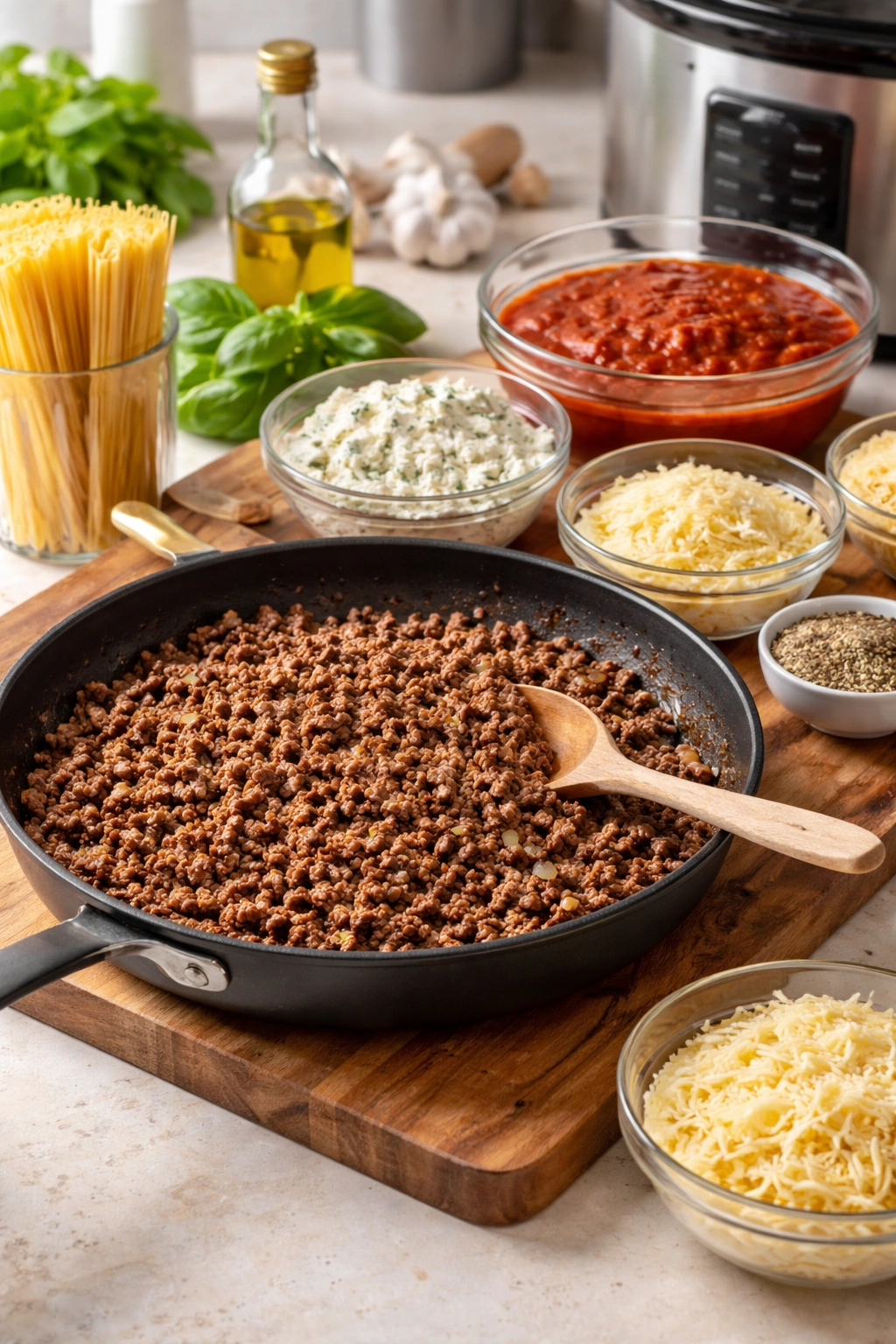
The beauty of a slow cooker lasagna is that prep is genuinely minimal, but a few small strategic moves save effort later and prevent frustration.
Brown your meat ahead if possible. If you have time in the morning or the day before, brown the ground beef or sausage and let it cool, then refrigerate it in a container. Alternatively, you can brown it while your noodles are cooking or boiling water for the sauce. Either way, browning takes 8 to 10 minutes and deepens the flavor of your meat layer. You don’t have to—raw ground meat will cook through in the slow cooker—but browned meat gives better texture and prevents a slightly grainy mouthfeel some people notice from slow-cooked raw ground meat.
Make or gather your sauce component. A slow cooker lasagna typically uses a pre-made marinara sauce (most people don’t have time to simmer sauce for 2 hours before layering), so identify which sauce you’re using. Jarred marinara is convenient and reliable. If you want deeper flavor, mix the jarred sauce with a can of tomato paste, which concentrates the tomato flavor and adds richness. This takes literally 2 minutes and dramatically improves the final result.
Get all your cheeses in one place. Measure your ricotta, mozzarella, and Parmesan before you start layering. Put them in separate bowls or on a plate so assembly is genuinely fast. If you’re using fresh mozzarella rather than shredded, slice or tear it now so you’re not fumbling with it while you’re building layers.
Prep your slow cooker insert. Line the interior with a slow-cooker liner bag if you have one. These are inexpensive plastic liners that slip into your cooker and make cleanup instantaneous. If you don’t have a liner, lightly grease the interior with cooking spray or a thin layer of oil. It’s not essential, but it prevents the lasagna from sticking to the sides and makes cleanup genuinely easier.
If making ahead, don’t assemble in the slow cooker. Build your lasagna in a regular container in the fridge, then transfer it to the slow cooker in the morning or when you’re ready to cook. This gives you flexibility with timing and prevents the cold mixture from taking too long to reach cooking temperature.
Understanding No-Boil Noodles vs Regular Pasta
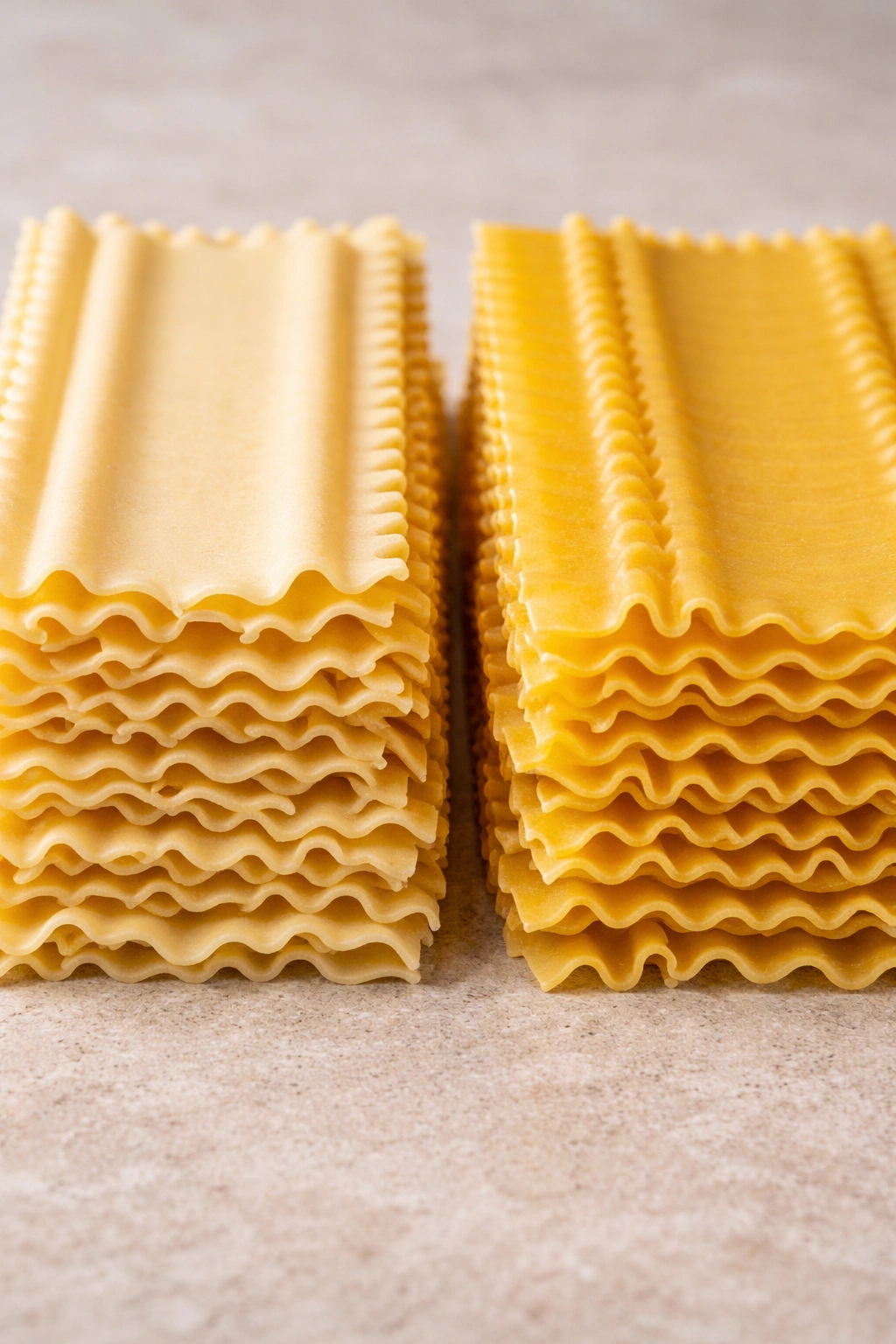
This choice fundamentally changes how your lasagna turns out, so it’s worth understanding the difference before you layer.
No-boil noodles (also called oven-ready) are pre-cooked during manufacturing and dried to a fragile state. They absorb liquid slowly and gradually as they cook. In a slow cooker, they hydrate from the moisture in the sauce and cheese around them. This happens over 4 to 6 hours, which is plenty of time. No-boil noodles in a slow cooker emerge perfectly tender—not mushy, but genuinely soft enough to cut easily and eat without resistance. They’re the more reliable choice for slow cooker lasagna because their hydration timing is predictable.
Regular lasagna noodles (the type you boil before layering) arrive dried and dense. If you use them without pre-boiling, they’ll be slightly firm even after 6 hours in the slow cooker because they don’t hydrate as readily. Some people prefer this slight resistance in texture. Others find it less pleasant. If you use regular noodles in your slow cooker, expect to add them to boiling salted water for about 5 minutes to soften them slightly before layering. This gives you the benefit of regular noodles (which are often slightly cheaper and more commonly stocked) with a texture outcome closer to oven lasagna.
My strong preference is no-boil noodles for slow cooker cooking. They’re specifically engineered for a wet cooking environment, they simplify your prep, and they reliably deliver the right texture every time. They cost slightly more than regular noodles, but the difference is minimal and worth the insurance against underdone pasta.
One crucial detail: don’t use no-boil noodles in a conventional oven at high temperature. They’ll dry out and become tough. But in a slow cooker’s steamy environment, they’re literally ideal.
Why Slow Cooker Size and Sauce Ratio Matter
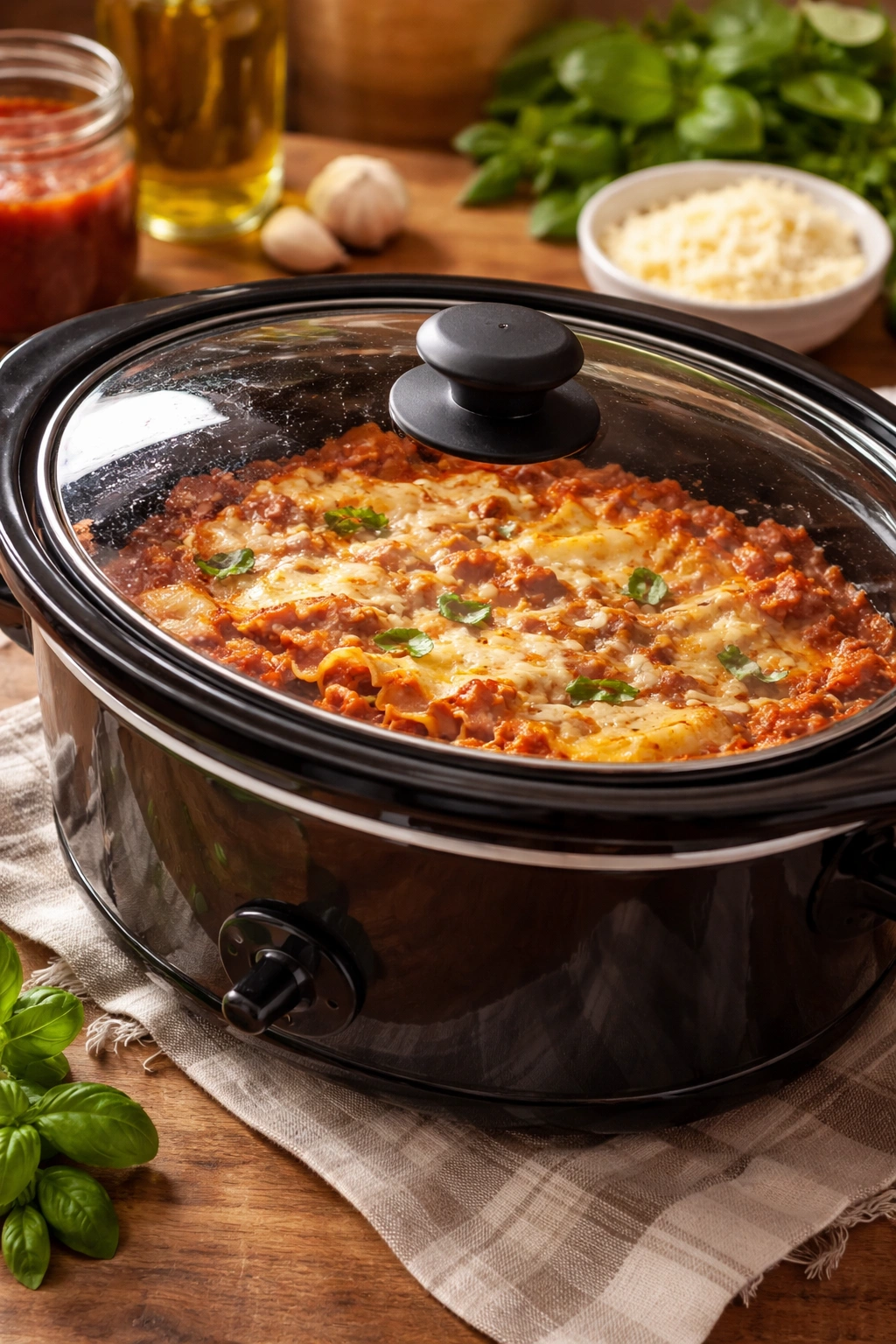
The relationship between the amount of sauce and the absorptive capacity of your noodles determines whether you end up with creamy lasagna or dry lasagna. Get this wrong and you’ll have regret.
A standard lasagna sauce recipe calls for about 2 cups of sauce per layer, which sounds generous until you realize that no-boil noodles absorb a remarkable amount of liquid. If you’re building 4 layers in a 6-quart cooker, you need a minimum of 3½ to 4 cups of sauce total, plus the moisture released from ricotta and mozzarella. In a 4-quart cooker, you need at least 3 cups of sauce.
If your cooker runs dry or you notice the edges browning (which shouldn’t happen in a slow cooker, but can if the ratio is off), you’ve used too little sauce relative to noodles. The fix is adding a half-cup of water mixed with a quarter-cup of tomato paste, which rehydrates the bottom layers without diluting flavor.
If your finished lasagna is soup-like and the noodles break apart when you try to serve, you’ve used too much sauce. This is less common because most recipes are conservative with sauce, but it happens when people add water or extra sauce “just in case.” The antidote is serving with a slotted spoon so the excess liquid drains off your portion, or next time reducing your sauce by half a cup.
The reliable ratio is: 3 cups of sauce for a 4-quart cooker, 4 cups for a 6-quart cooker. This accounts for the noodles’ absorption, the moisture released from cheeses, and the gentle evaporation that happens even with the lid on. This ratio produces lasagna that’s moist and tender but holds its shape when plated.
Yield: Serves 6 to 8 | Approximately 8 generous portions
Prep Time: 15 minutes
Cook Time: 4 to 6 hours on low heat
Total Time: 4 hours 15 minutes to 6 hours 15 minutes active time
Difficulty: Beginner — layering is straightforward, the slow cooker does all the actual cooking, and there are no techniques that require special skill.
Ingredients for Slow Cooker Lasagna
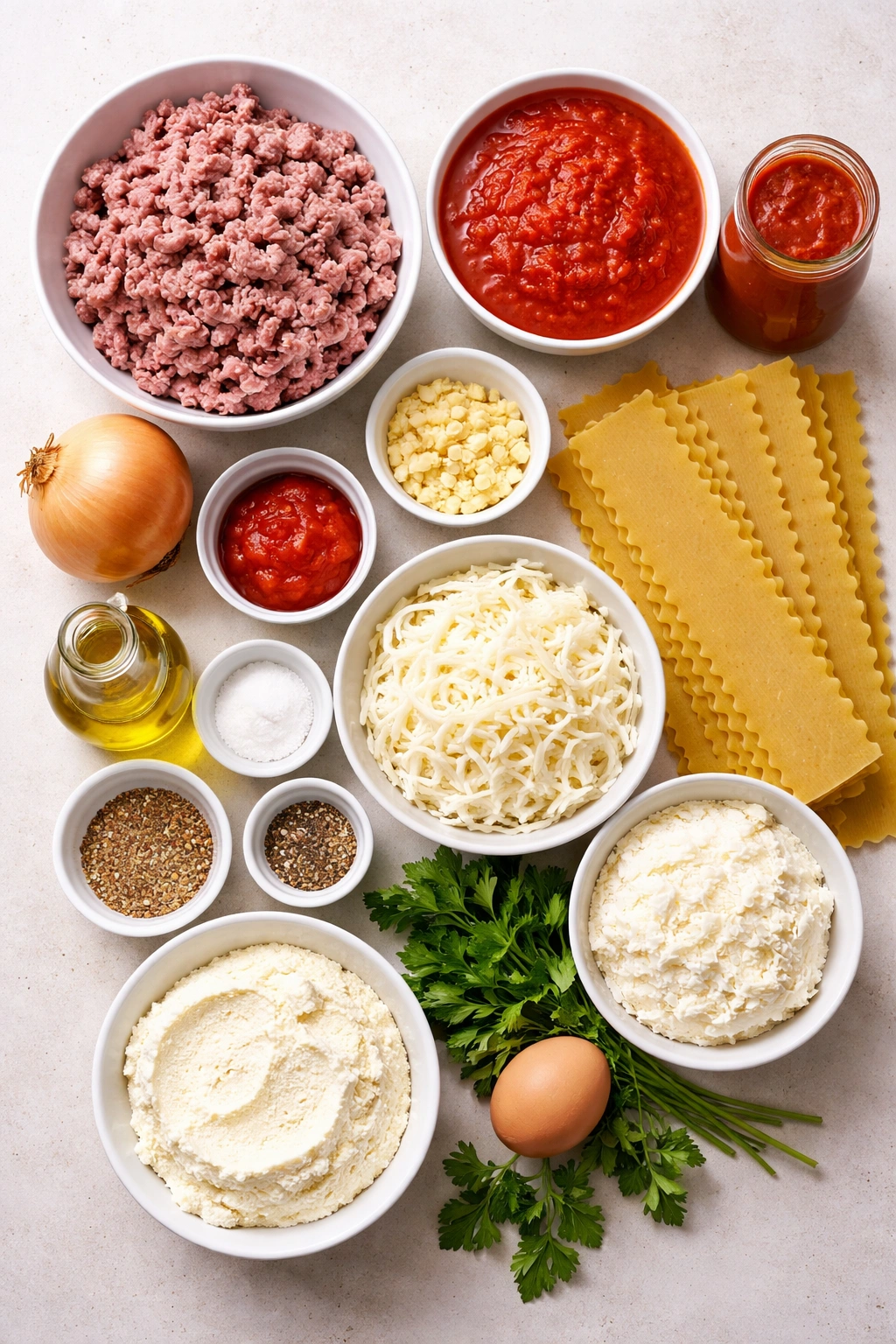
For the Meat Sauce:
- 1 pound ground beef or Italian sausage (or a 50/50 blend of both for deeper flavor)
- 1 medium yellow onion, diced into roughly ¼-inch pieces
- 4 cloves garlic, minced very finely
- 28-ounce can crushed tomatoes
- 15-ounce can tomato sauce
- 2 tablespoons tomato paste
- 2 tablespoons extra-virgin olive oil
- 1½ teaspoons dried Italian seasoning (or a mix of dried basil, oregano, and marjoram)
- 1 teaspoon kosher salt
- ½ teaspoon freshly ground black pepper
- ¼ teaspoon red pepper flakes (optional, adds subtle heat)
For the Cheese Layers:
- 15-ounce container whole-milk ricotta cheese
- 2 cups shredded whole-milk mozzarella cheese, divided (use a mix of low-moisture mozzarella for half and a creamy Italian blend for the other half if you can find it, but standard low-moisture mozzarella works perfectly fine)
- ¾ cup grated Parmesan cheese (freshly grated if possible — pre-grated loses moisture and doesn’t melt as smoothly)
- 1 large egg, beaten lightly
- ¼ teaspoon fine sea salt
- ⅛ teaspoon freshly ground black pepper
- 2 tablespoons fresh parsley, minced (or 1 tablespoon dried parsley if fresh isn’t available)
For Assembly:
- 12 to 16 no-boil lasagna noodles (the exact number depends on your cooker size — use 3-4 noodles per layer, broken to fit)
- Cooking spray or 1 teaspoon olive oil, for greasing the slow cooker interior
Step-by-Step Instructions for Slow Cooker Lasagna
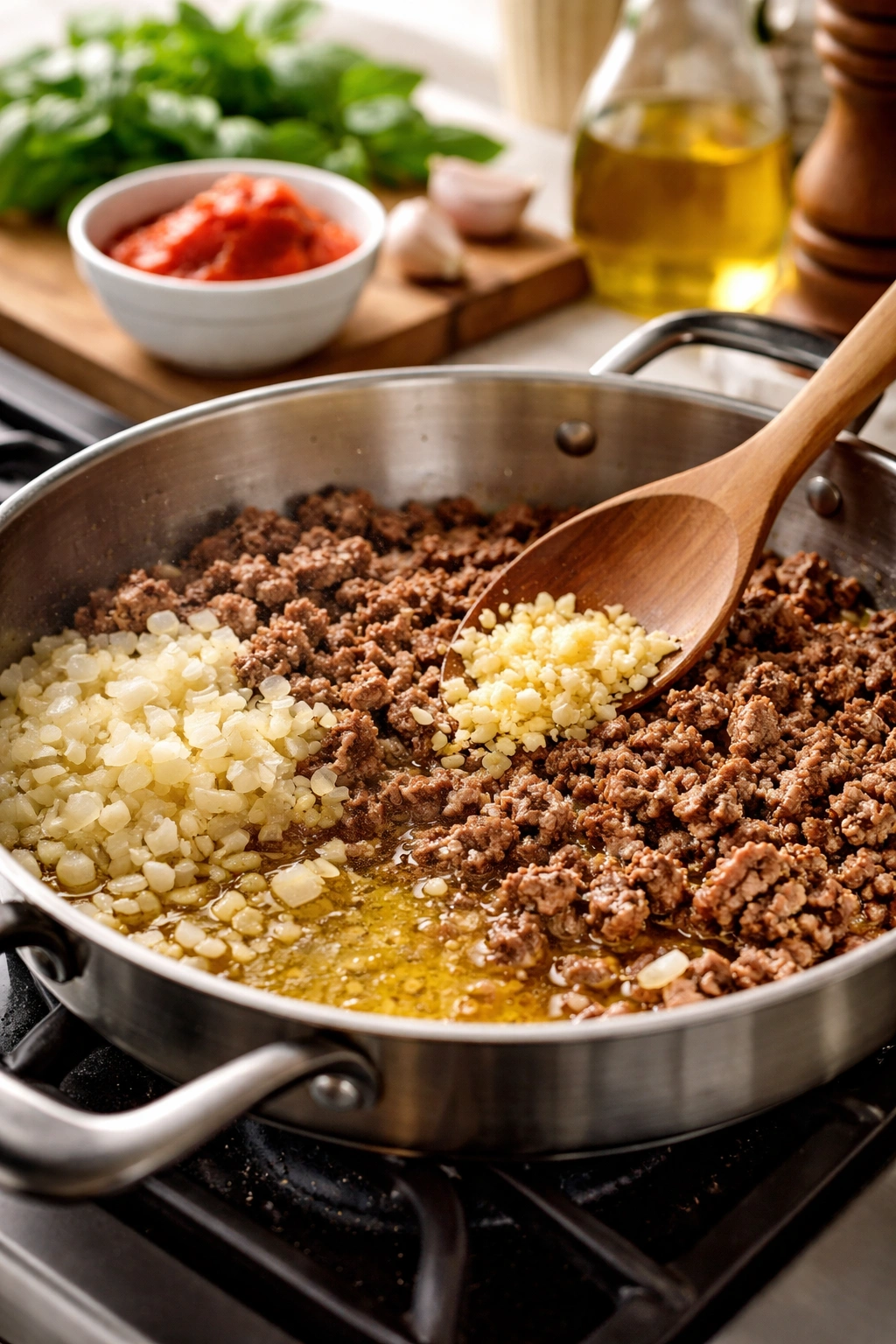
Prepare the Meat Sauce:
-
Heat the olive oil in a large skillet over medium-high heat for about 1 minute until it shimmers slightly. Add the diced onion and cook, stirring occasionally, for 3 to 4 minutes until the onion is translucent and just beginning to soften at the edges.
Advertisements -
Add the minced garlic to the skillet and stir constantly for about 30 seconds until the garlic becomes fragrant. The garlic will go from raw and sharp-smelling to toasted and sweet-smelling very quickly — this is your cue that it’s ready.
-
Add the ground beef or sausage, breaking it into smaller pieces as it cooks with the back of a wooden spoon. Cook for 5 to 7 minutes, stirring frequently, until the meat is completely browned with no pink remaining and has released its moisture. If your meat is still quite wet after browning, tip the skillet slightly and press the meat against the side of the pan to drain off the excess liquid, then discard it.
-
Stir in the tomato paste and cook for 1 minute, allowing the paste to darken slightly and become fragrant. This step, called “blooming” the paste, concentrates its flavor and prevents it from tasting raw.
-
Add the crushed tomatoes, tomato sauce, Italian seasoning, salt, pepper, and red pepper flakes if using. Stir thoroughly to combine, making sure the tomato paste is fully incorporated with no streaks remaining. Bring the mixture to a gentle simmer for 2 to 3 minutes, then remove it from the heat. The sauce should taste flavorful and fully seasoned at this point — taste it and adjust salt or Italian seasoning if needed. (The slow cooker will concentrate these flavors slightly, but you want to start with good seasoning.)
Make the Ricotta Mixture:
- In a medium bowl, combine the ricotta, 1 cup of the mozzarella, Parmesan, beaten egg, salt, pepper, and fresh parsley. Stir until everything is evenly distributed with no streaks of ricotta remaining. This mixture should be creamy and spreadable, not grainy. If it feels dry, add 1 tablespoon of water and stir again.
Assemble the Lasagna in the Slow Cooker:
-
Lightly coat the interior of your slow cooker with cooking spray or a thin layer of oil. This prevents sticking and makes cleanup easier, though it’s not strictly necessary.
-
Spread a thin layer of meat sauce on the bottom of the slow cooker — about ½ cup. This prevents the bottom noodles from scorching (though in a slow cooker this risk is minimal) and helps with even heating. Spread the sauce evenly with the back of a spoon.
-
Break lasagna noodles as needed to fit your cooker, and arrange a single layer of noodles on top of the sauce, overlapping them slightly. Depending on your cooker’s size, you’ll fit 3 to 4 noodles per layer. Don’t stress about perfect coverage — small gaps are fine.
-
Spread about ⅓ of the ricotta mixture evenly over the noodle layer, using an offset spatula or the back of a spoon to create an even layer roughly ¼ inch thick.
Advertisements -
Top the ricotta layer with about 1 cup of meat sauce, spreading it evenly. The sauce will hold moisture, which hydrates the noodles as everything cooks.
-
Repeat the layering process: noodles (broken to fit), ricotta mixture, meat sauce. You should be able to fit 4 to 5 layers total, depending on your cooker’s depth and how thickly you’ve spread each component.
-
Finish with a final layer of noodles, followed by the remaining meat sauce spread evenly across the top, then the remaining 1 cup of mozzarella scattered evenly over everything. Do not skip the final mozzarella topping — it melts into the top layer and adds richness that you’ll miss if it’s not there.
-
Do not overfill the slow cooker. The assembled lasagna should come no higher than about 1 inch below the rim. If it’s overflowing, you’ve added too much or your cooker is too small for this recipe. Remove about 1 cup of meat sauce and reserve it for another use.
Cook the Lasagna:
-
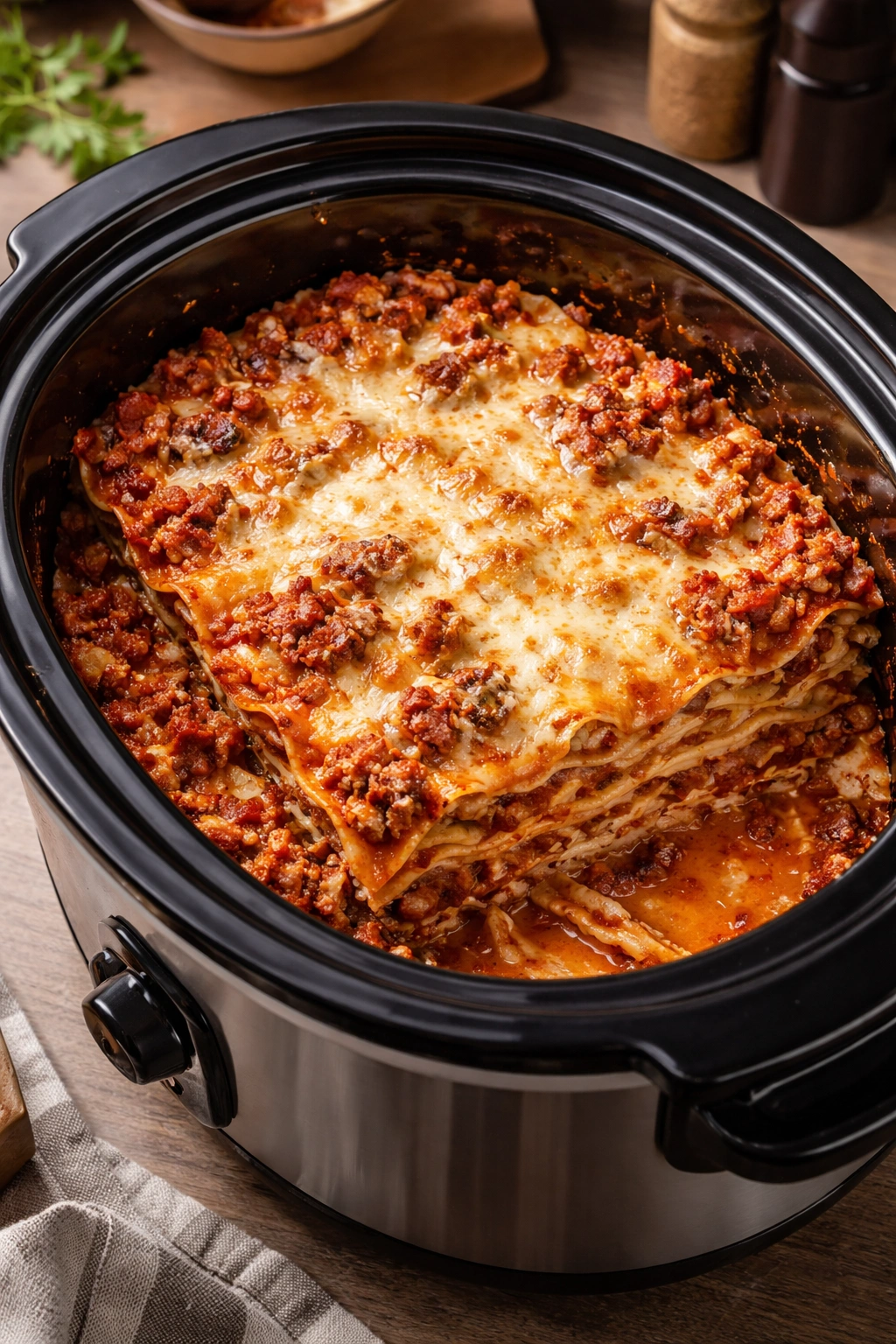
Place the lid on the slow cooker and set it to the low heat setting. Cook for 4 to 6 hours. Do not use the high setting — high heat will dry out the cheese layers and cook the noodles too aggressively.
-
After 4 hours, carefully lift the lid and check the lasagna. Insert a fork or thin knife into the center of the lasagna all the way to the bottom. The noodles should be completely tender with no resistance. If the noodles are still slightly firm, close the lid and cook for another 30 to 45 minutes, then check again.
-
The lasagna is finished when the top layer of mozzarella is melted and slightly bubbly at the edges, and the noodles throughout are tender. You should see slight steam rising from the center when you lift the lid.
-
Turn the slow cooker off and carefully remove the lid, tilting it away from you so the condensation runs back into the cooker rather than dripping on you. Let the lasagna rest in the slow cooker for 10 to 15 minutes. This resting period allows the layers to set slightly, which makes plating much cleaner and helps the lasagna hold its shape on the plate.
-
Run a thin knife around the edge of the slow cooker to loosen any cheese that’s stuck to the sides. Using a large offset spatula or cake server, gently cut the lasagna into squares and lift each portion out carefully. The base of the lasagna may be slightly softer than the center and top, which is normal — the bottom noodles absorb the most moisture.
Advertisements
The Critical Timing and Temperature Guide
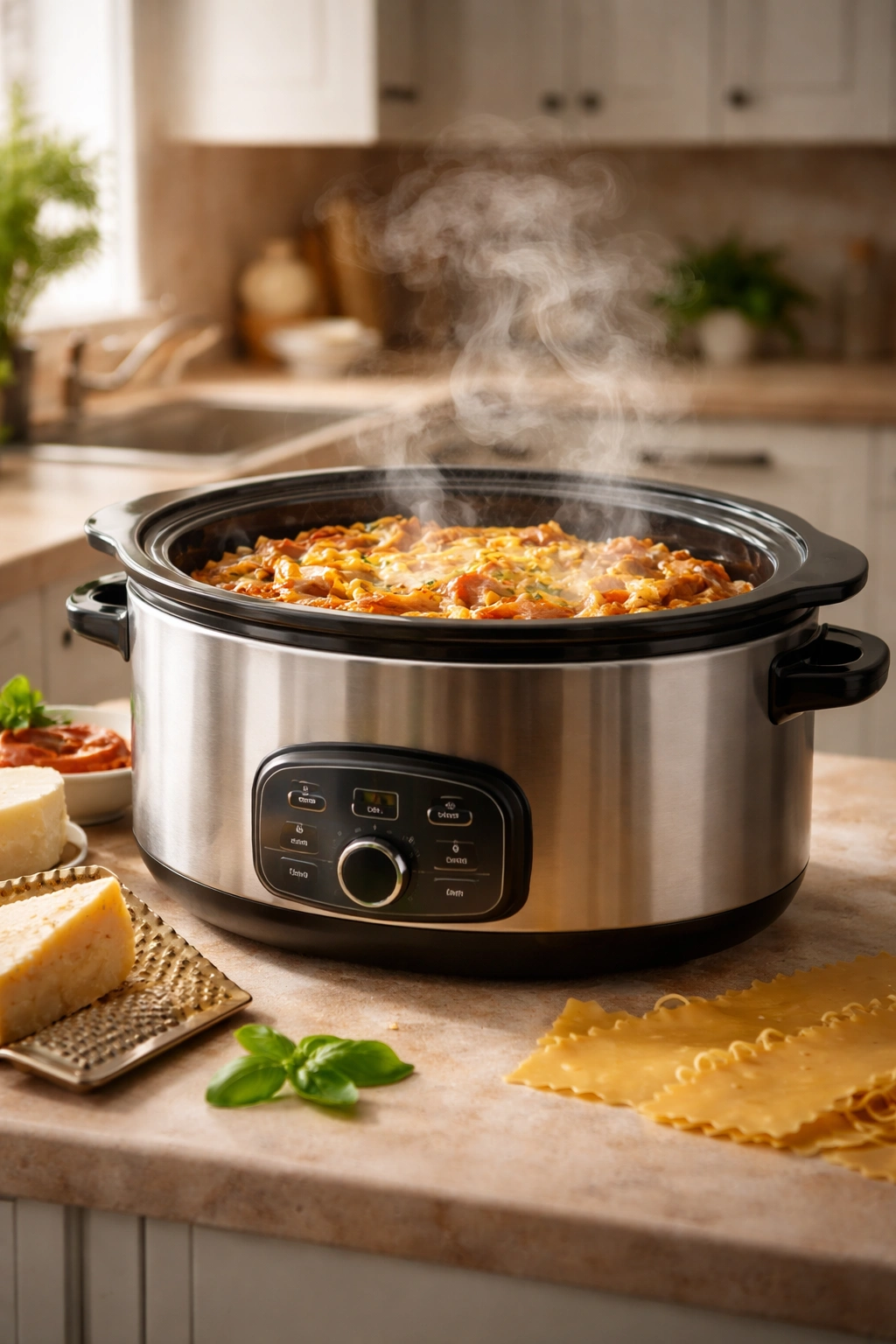
One of the most common mistakes people make with slow cooker lasagna is assuming all slow cookers run at the same temperature. They don’t. Understanding your particular cooker’s personality prevents overcooked, mushy lasagna and undercooked, firm noodles.
The low setting on most slow cookers hovers between 180°F and 200°F internally. This gentle heat is ideal for lasagna. The noodles hydrate gradually, the cheese melts evenly without breaking, and the sauce reduces slightly to concentrate flavor without drying out the dish.
If your cooker runs hot, the lasagna may be finished in 4 to 4.5 hours instead of the full 6 hours. Check the noodles for doneness starting at the 3.5-hour mark. Pierce a noodle with a fork in the very center of the lasagna—it should have no firm or chalky center. If it does, give it another 15 minutes. If it bends without resistance, it’s done.
If your cooker runs cool, you may need the full 6 hours or even slightly longer. This is less common but does happen with older models or cookers that run below 180°F internally. There’s no harm in letting the lasagna cook for 6.5 hours if needed—the low temperature prevents overcooking. Just know that every slow cooker is slightly different.
The top noodle layer and cheese melt first and most completely. The middle layers melt last because the heat takes time to penetrate downward. This is why the final rest period matters—it allows residual heat to finish the cooking gently rather than having you remove the lasagna while the bottom is still cold.
Never use the high setting. High heat, typically 280°F to 300°F, is too aggressive for lasagna. The cheese will separate and break into oil, the noodles will become mushy quickly, and you’ll lose the gentle, creamy texture that makes slow cooker lasagna special.
Common Mistakes That Mess Up Slow Cooker Lasagna
Understanding what goes wrong helps you avoid the frustration of spending time on assembly only to end up with disappointing results.
Using too little sauce is the number-one problem. Noodles absorb liquid aggressively, and if you don’t have enough sauce, the bottom and middle layers dry out, becoming slightly crunchy or grainy. You end up with a gorgeous top layer and disappointing texture below. Use the ratio I mentioned: minimum 3 cups for a 4-quart cooker, 4 cups for a 6-quart cooker. This sounds like a lot of sauce until you taste the finished lasagna and realize every drop was absorbed into flavor.
Skipping the initial meat browning means your meat layer tastes slightly raw or grainy rather than deeply savory. Ground meat releases moisture as it cooks, and in a slow cooker that moisture doesn’t evaporate as efficiently as it does on the stovetop. Pre-browning the meat removes this excess moisture and develops flavor through the Maillard reaction. It’s 8 minutes well spent.
Not seasoning the sauce adequately results in bland lasagna. The slow cooker doesn’t add salt or brightness the way oven cooking does. Taste your meat sauce before it goes into the slow cooker and adjust seasoning—it should taste noticeably flavorful, maybe even slightly over-seasoned. It’ll taste perfect after 4 to 6 hours of cooking.
Overcrowding the slow cooker forces the layers to compress, which prevents even cooking and creates uneven texture. The mixture may also overflow as cheeses release moisture. If your lasagna is significantly taller than about 4 inches in the finished cooker, remove some filling before cooking.
Using high heat instead of low is a shortcut that backfires. You’ll end up with rubbery cheese, mushy noodles, and a dried-out sauce. Slow cooker lasagna needs low heat and patient time to work its magic. There’s no faster way that produces good results.
Not using no-boil noodles when you’re new to slow cooker cooking introduces variables you don’t need. Regular noodles require guesswork about whether they’ve hydrated adequately. No-boil noodles are engineered for this exact cooking method. Once you’re confident, experiment with regular noodles if you want—but start with no-boil.
Lifting the lid constantly to check progress releases steam and adds 10 to 15 minutes to cooking time. Resist the urge to peek. Trust the recipe timing and check the lasagna only once, around the 4-hour mark, to see if the noodles are tender.
Not letting the lasagna rest after cooking means it falls apart when you cut and serve it. Those 10 to 15 minutes allow the cheese to firm up slightly and the whole structure to become stable. It makes a huge difference in how your finished dish looks on the plate.
Make-Ahead and Storage Tips
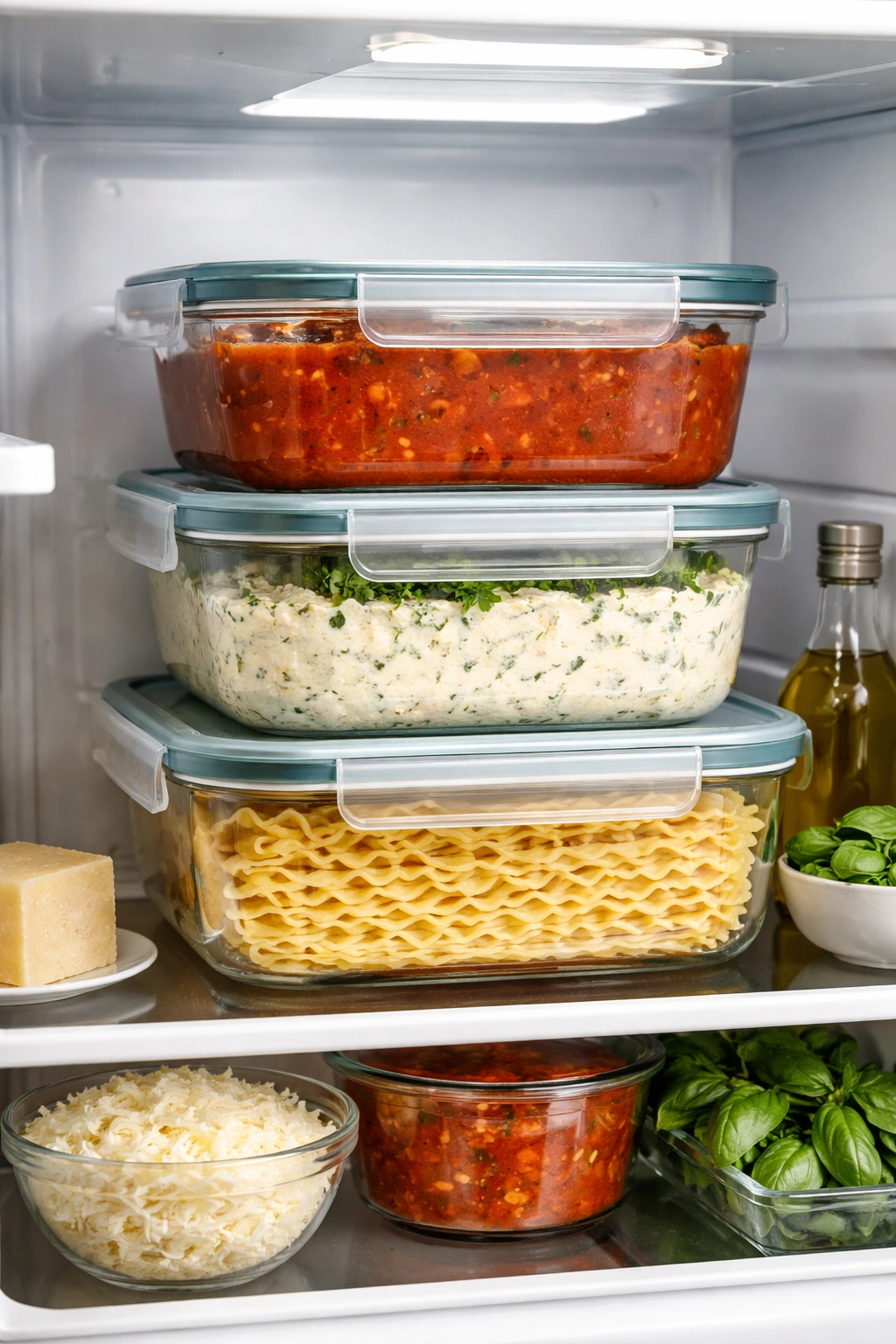
Slow cooker lasagna is built for flexibility. You can prepare it at various stages ahead of time, which makes it perfect for busy weeknights or meal-prep days.
Assemble completely the night before. You can layer your lasagna in the slow cooker insert the evening before, refrigerate it overnight, and plug it in the next morning. The only adjustment: add about 30 minutes to the cooking time because the mixture starts cold. The slow cooker still cooks it completely—it just needs that extra time to reach cooking temperature. Some people prefer assembling in a rectangular baking dish, refrigerating it, then transferring it to the slow cooker in the morning. Either method works.
Make the meat sauce 2 to 3 days ahead. Cook the sauce, cool it completely, and refrigerate it in an airtight container. When you’re ready to assemble, reheat it gently on the stove or microwave it until it’s warm enough to spread. This saves you about 10 minutes on cooking day.
Make the ricotta mixture up to 2 days before. Combine all ricotta mixture ingredients and refrigerate. Stir it thoroughly before assembling because the egg may separate slightly from the cheese. This component doesn’t require reheating—spread it cold directly into the slow cooker.
Storage after cooking: Refrigerate leftover lasagna in an airtight container for up to 4 days. It keeps well because of the moisture in the sauce, and flavors actually deepen the next day as the layers continue to fuse.
Freezing: Let the lasagna cool completely, then wrap individual portions in plastic wrap followed by foil, or transfer the whole lasagna to a freezer-safe container. Frozen lasagna keeps for up to 3 months. To reheat, thaw it overnight in the refrigerator, then warm it covered in a 325°F oven for about 25 to 30 minutes until heated through. Alternatively, you can reheat it from frozen—just allow about 50 minutes at 325°F, covered with foil.
The reheating magic: Lasagna actually reheats better in a conventional oven than in the slow cooker, because the oven’s dry heat doesn’t add excess moisture that can make the noodles mushy. Cover the dish with foil so it heats through gently without the top drying out, then remove the foil for the last 5 minutes if you want the cheese to warm slightly and become slightly tacky on top.
Flavor Variations and Easy Swaps
Once you’ve made the basic version successfully, these variations let you adapt the recipe to different tastes and ingredient preferences.
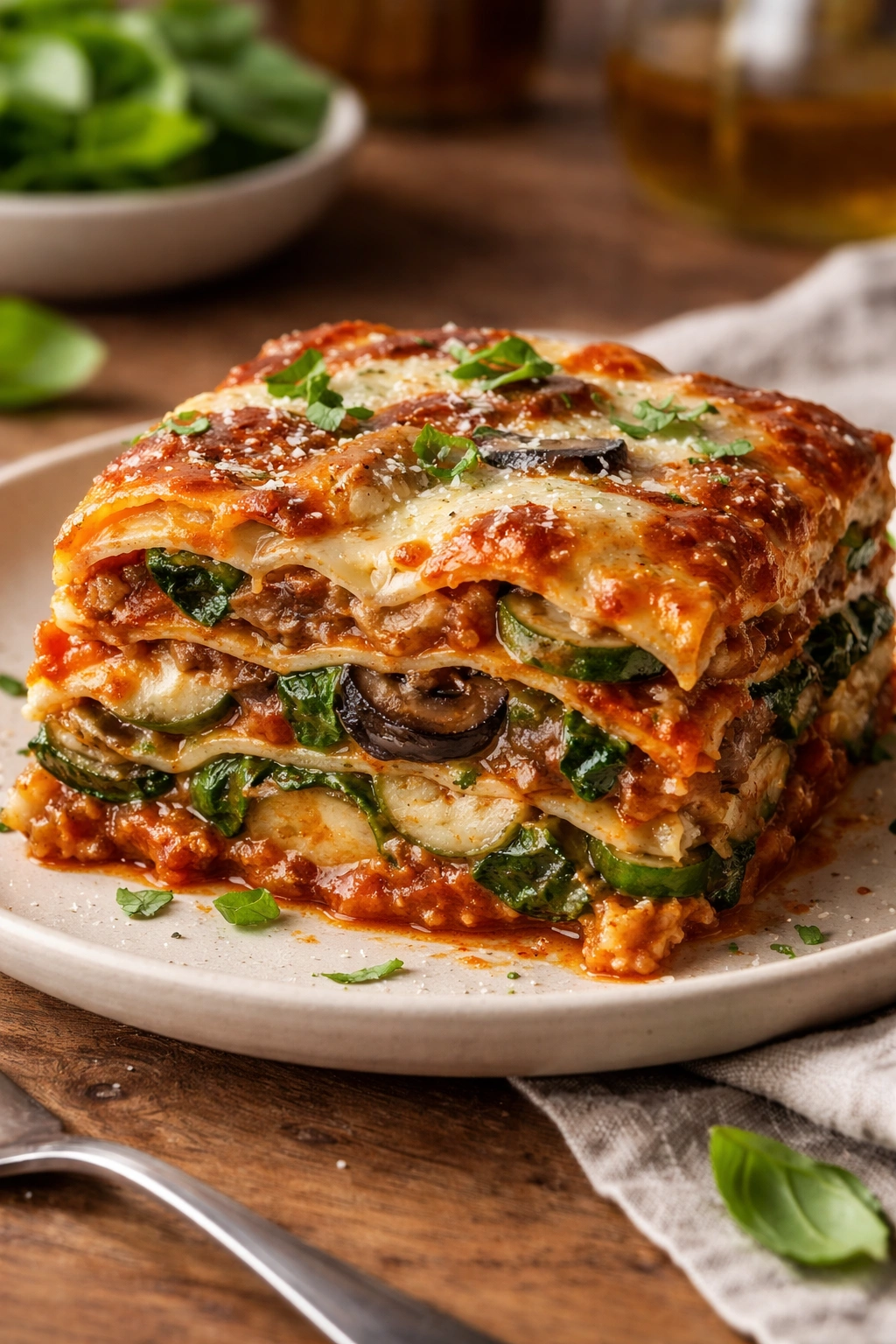
Vegetarian lasagna: Omit the meat and add 2 cups of finely chopped mushrooms (cremini or portobello), 2 cups of chopped zucchini, and 1 cup of chopped spinach to the sauce. Sauté the vegetables before mixing them into the sauce to remove excess moisture. Add 1 tablespoon of balsamic vinegar and 1 teaspoon of brown sugar to the sauce to replace the depth that meat provides. Use the same ricotta and cheese layers—they’re equally delicious with vegetables.
Sausage-forward version: Use 1.5 pounds of Italian sausage and omit the ground beef. Sausage is fattier and more flavorful than beef, so the sauce becomes richer. You don’t need to add tomato paste if you’re using sausage—reduce it to 1 tablespoon. Add 1 teaspoon of fennel seeds to the onion and garlic mixture for traditional Italian sausage flavor.
Creamy lasagna: Add 1 cup of heavy cream or whole milk to the sauce after browning the meat and before adding the tomatoes. This creates an ultra-creamy, slightly lighter-colored sauce that’s luxurious without being heavy. Reduce the ricotta mixture cheese content by ¼ cup of mozzarella to prevent the final dish from being overly rich.
Spiced meat sauce: Add 1 teaspoon of cinnamon and ½ teaspoon of nutmeg along with the Italian seasoning. This creates a Bolognese-style sauce with subtle warmth—not spicy, but more complex and sophisticated. Some people add ¼ teaspoon of clove as well for even deeper flavor.
Gluten-free version: Simply substitute no-boil gluten-free lasagna noodles in place of regular no-boil noodles. Most gluten-free noodles absorb slightly more liquid, so add an extra ½ cup of sauce to account for that absorption. Everything else remains identical.
Dairy-free variation: Use dairy-free ricotta (usually made from cashews or tofu), dairy-free mozzarella, and dairy-free Parmesan. Replace the egg in the ricotta mixture with 1 tablespoon of cornstarch mixed with 2 tablespoons of water, which serves the same binding function. The flavor will be slightly different—milder and less rich—but completely delicious and satisfying.
Best Serving Ideas and Wine Pairings
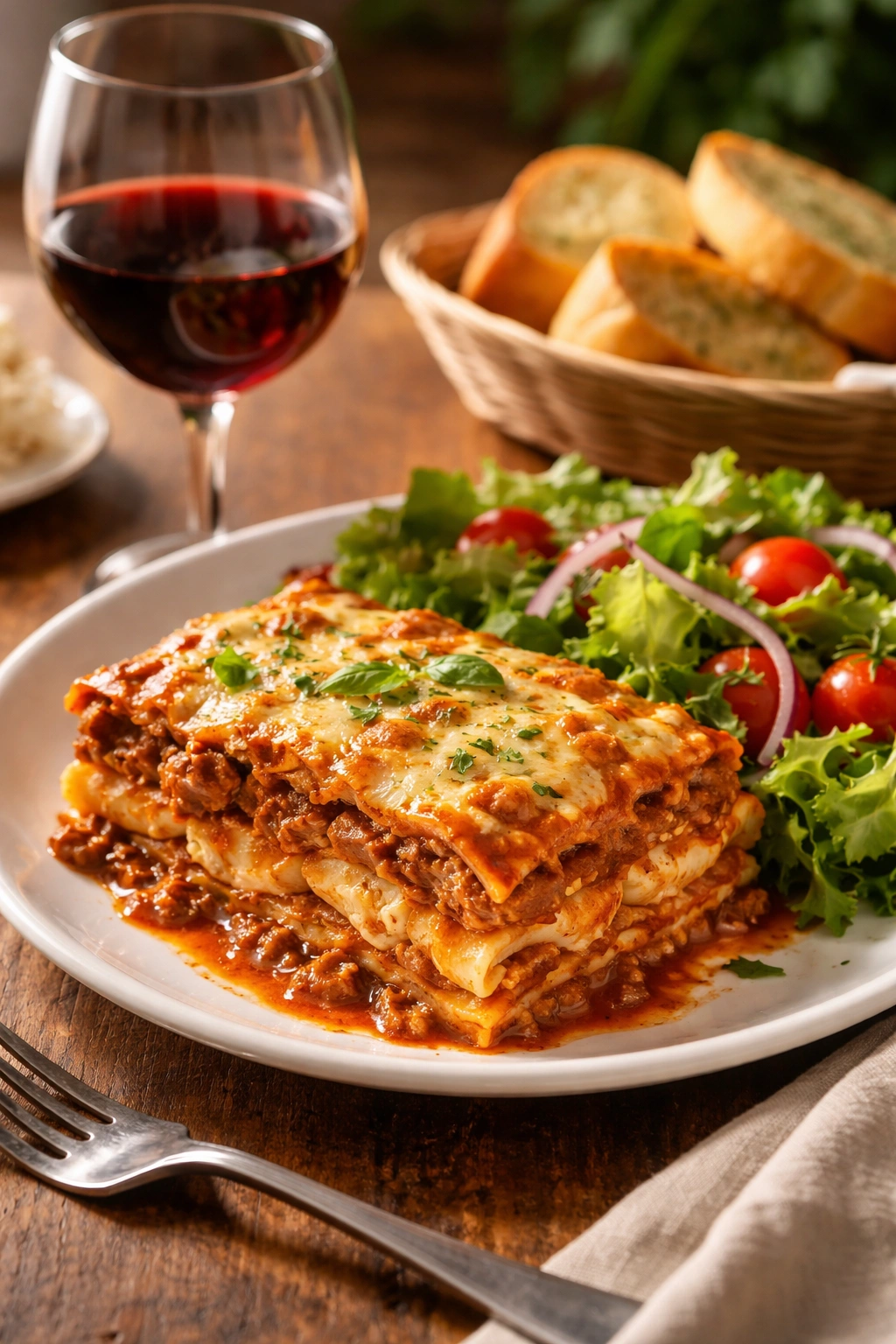
Lasagna is traditionally a complete meal, but thoughtful sides and beverages elevate it from good to memorable.
Simple green salad: Serve alongside a sharp vinaigrette. The acidity of the dressing cuts through the richness of the cheese and meat sauce, and the leafy greens provide textural contrast. A mix of arugula and romaine works better than iceberg, which is mostly water. Dress the salad lightly right before serving so it doesn’t wilt while you plate the lasagna.
Garlic bread or crostini: Toast thin slices of Italian bread brushed with olive oil and rubbed with a cut garlic clove until the edges are golden. This is less a side and more a flavor complement—the garlic and toasted bread echo flavors in the lasagna and give people something to nibble while the main dish cools slightly.
Roasted vegetables: Broccoli, bell peppers, or Brussels sprouts roasted at 400°F with olive oil, salt, and pepper provide a bright, mineral element that balances the richness of the lasagna. Roast these while the lasagna rests after cooking—they’ll be done right as you’re ready to plate.
Wine pairing: A medium-bodied red wine with good acidity works beautifully. Chianti has enough tannin and earthiness to stand up to the meat sauce without overwhelming the dish. Barbera offers more fruit and less tannin, which some people prefer with the creamy cheese layers. If you prefer white wine, an unoaked Chardonnay or Pinot Grigio with good acidity is wonderful. Avoid heavily oaked or very high-alcohol wines, which overpower the food rather than complement it.
No-alcohol option: A sparkling water with fresh lemon or a fresh iced tea provides refreshment without competing with the food flavors.
Dessert to finish: Since lasagna is rich and filling, a light dessert works best. Lemon sorbet, panna cotta, or fresh berries with a small amount of whipped cream all let your guests finish the meal satisfied rather than overly full. Rich chocolate desserts can feel redundant after an already-decadent main course.
Final Thoughts
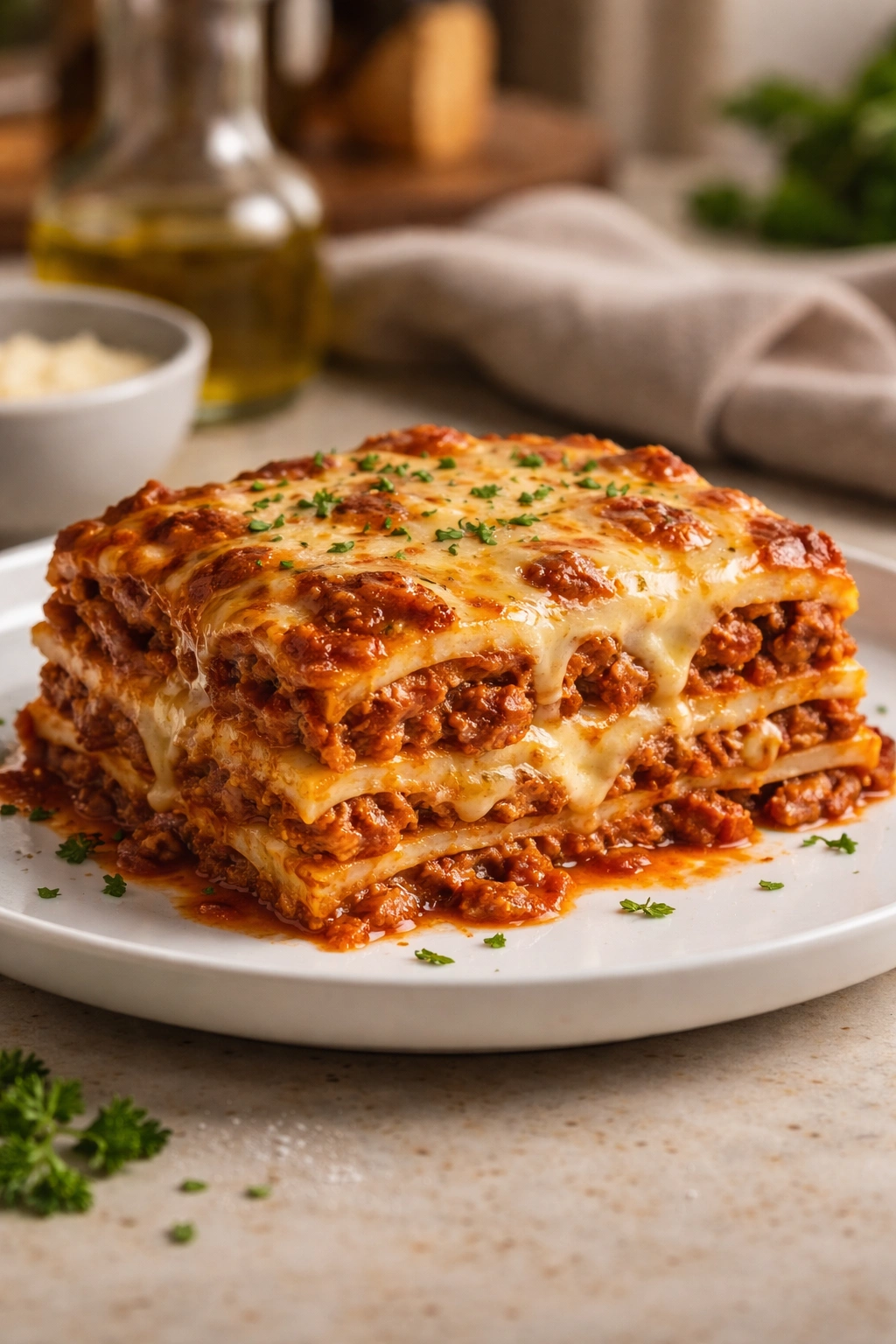
Slow cooker lasagna genuinely is the path to homemade comfort food without the traditional effort. You’re not sacrificing quality—you’re leveraging physics and patience to achieve something that tastes like you spent hours in the kitchen when you actually spent minutes on assembly.
The key to success is respecting the three fundamentals: use adequate sauce so your noodles hydrate completely, use low heat for the entire cooking time (no shortcuts with high heat), and give yourself the full time range the recipe suggests. Your specific slow cooker might finish at 4 hours or might need 6—only the noodle tenderness test determines when it’s truly done.
Once you’ve made this once successfully, you’ll return to it repeatedly because it delivers reliably. It’s the kind of dinner that feels like self-care—minimal effort on your part, maximum comfort and satisfaction on your plate. Serve it with wine, a simple salad, and the satisfaction of knowing that something this delicious was genuinely effortless to prepare.
