



There’s something deeply satisfying about sliding a single sheet pan into the oven and knowing that dinner is entirely taken care of. No juggling pots and pans, no complicated timing, no panicked last-minute adjustments. With sheet pan lemon herb chicken and roasted vegetables, you get a restaurant-quality meal that feels effortless because it is effortless—and that’s the whole point. The beauty of this approach lies in how the chicken releases its juices while roasting, creating a natural pan sauce that the vegetables soak up, transforming them into something infinitely more flavorful than they’d be cooked separately.
This one-pan dinner has become a go-to for countless home cooks because it delivers on multiple fronts simultaneously. You’re getting lean protein, colorful vegetables loaded with vitamins and fiber, aromatic herbs, and bright citrus notes all in one compact meal. The chicken—whether you choose thighs for their forgiving, juicy nature or breasts for a leaner option—becomes incredibly tender through the combination of a quick herb-infused marinade and gentle oven roasting. Meanwhile, the vegetables caramelize at the edges while staying tender inside, their natural sugars concentrating as they release moisture and shrink slightly in the heat.
What makes this particular approach so reliable is that everything cooks at the same temperature for roughly the same amount of time. You’re not watching the clock anxiously, wondering if the potatoes are done while the chicken is already overcooked. Instead, with proper cutting technique and smart ingredient selection, every component finishes simultaneously. That’s not luck—it’s strategy. And once you understand the principles behind it, you can customize this dinner endlessly while maintaining the same reliable, delicious results.
Why Sheet Pan Dinners Solve the Weeknight Problem
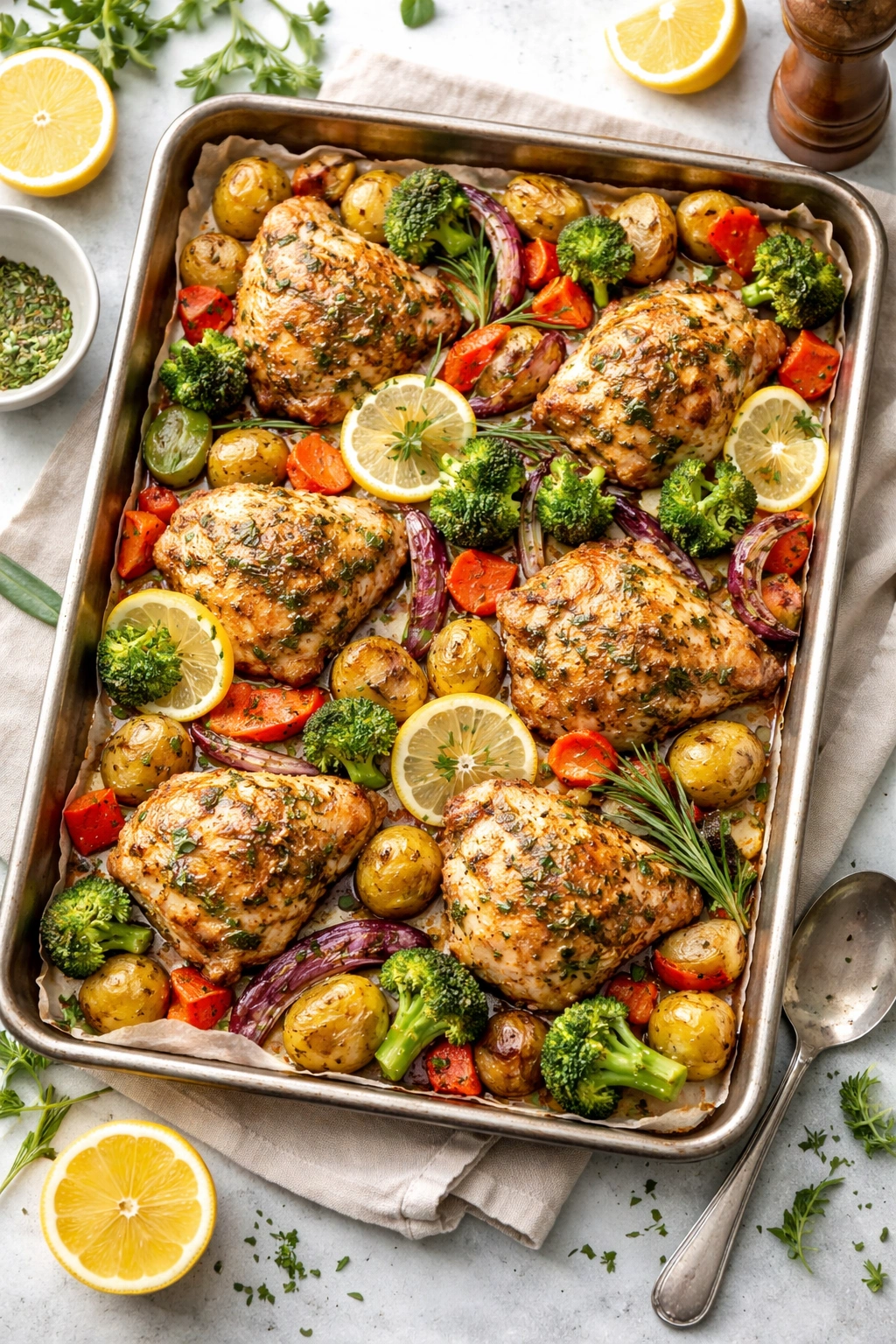
Sheet pan meals exist because real people need real solutions. You’re busy. Your family is hungry. The last thing anyone wants is to spend an hour cleaning up after cooking. What makes these dinners different from typical baked chicken is the thoughtful combination of ingredients chosen specifically to work together on a single pan, amplifying rather than interfering with each other’s flavors.
The vegetables aren’t just there as decoration or obligation—they’re full partners in the dish. Root vegetables like potatoes and carrots provide substance and earthiness. Bell peppers add sweetness and subtle acidity. Onions caramelize into almost jam-like intensity. When these ingredients roast alongside chicken in a lemon-herb marinade, they don’t cook independently; they actually dance together, exchanging flavors and juices. The chicken seasoning permeates the vegetables; the vegetable sweetness rounds out the citrus punch. You end up with something greater than the sum of its parts.
From a practical standpoint, there’s tremendous value in a meal where cleanup happens in minutes instead of half an hour. Line your sheet pan with parchment paper or foil, and you’re not even really cleaning the pan—just crumpling up the paper and tossing it. That small detail means people actually make this meal repeatedly instead of saying they’ll do it “sometime soon” and then never getting around to it.
The Science Behind the Lemon Herb Marinade
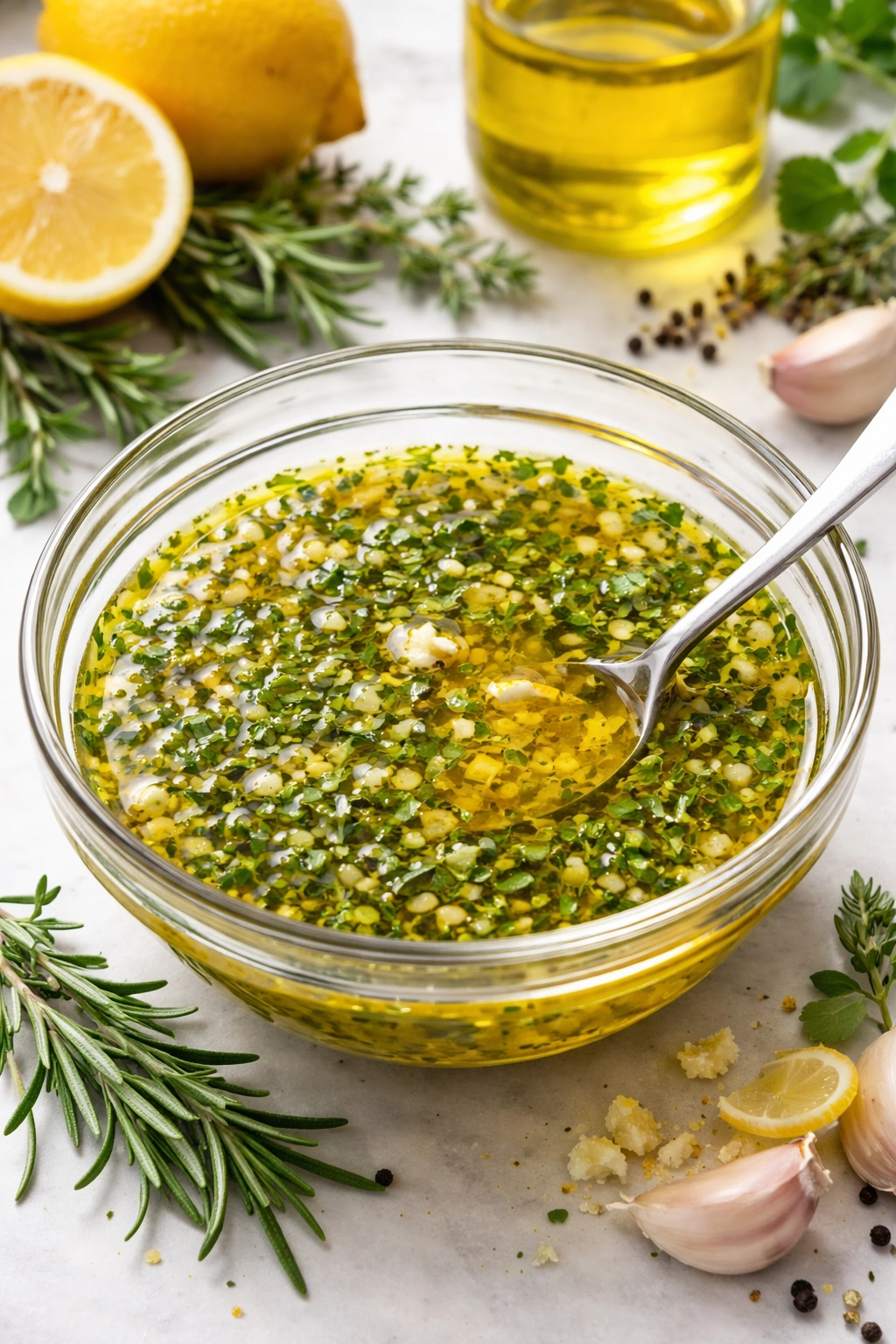
A good marinade is more than just flavor sitting on the surface of chicken—it’s a technique that actually changes how the protein cooks. The acid in lemon juice denatures the proteins in the chicken’s outer layer, creating a slightly textured surface that browns beautifully in the oven. But critically, this process happens over time and shouldn’t be rushed. A 10-to-15-minute marinade is enough to flavor the surface, while a longer overnight marinade (up to 8 hours) penetrates deeper, creating more seasoning throughout the meat.
The fat in the marinade—whether it’s olive oil or another cooking oil—serves multiple purposes simultaneously. It carries the flavor compounds from the herbs and lemon directly into the chicken’s tissue. It prevents the chicken from drying out in the oven’s dry heat. And it helps create that beautiful golden-brown exterior you’re aiming for, since fat is what causes the Maillard reaction that produces those complex, savory flavors. Without adequate fat in your marinade, you end up with pale, dry chicken that tastes one-dimensional.
The herbs in the marinade contribute both flavor and subtle textural complexity. Dried herbs like oregano, thyme, and rosemary are concentrated in flavor because the water content has been removed, making them more potent than fresh herbs by weight. Fresh parsley added at the end—either in the marinade or sprinkled on top after cooking—provides bright, clean notes that cut through the richness of the oil and the intensity of the dried herbs. This layering of fresh and dried herbs creates depth. It’s the difference between a good chicken dinner and one that tastes like someone who actually knows their way around a kitchen made it.
Garlic, whether minced fresh or incorporated as powder, undergoes its own transformation during roasting. Raw garlic is sharp and pungent. As it roasts, the heat mellows those harsh edges, turning it sweet and almost nutty. That’s why a generous amount of garlic in your marinade isn’t too much—the oven is going to soften it into something elegant rather than aggressive.
Choosing the Best Chicken for Your Sheet Pan
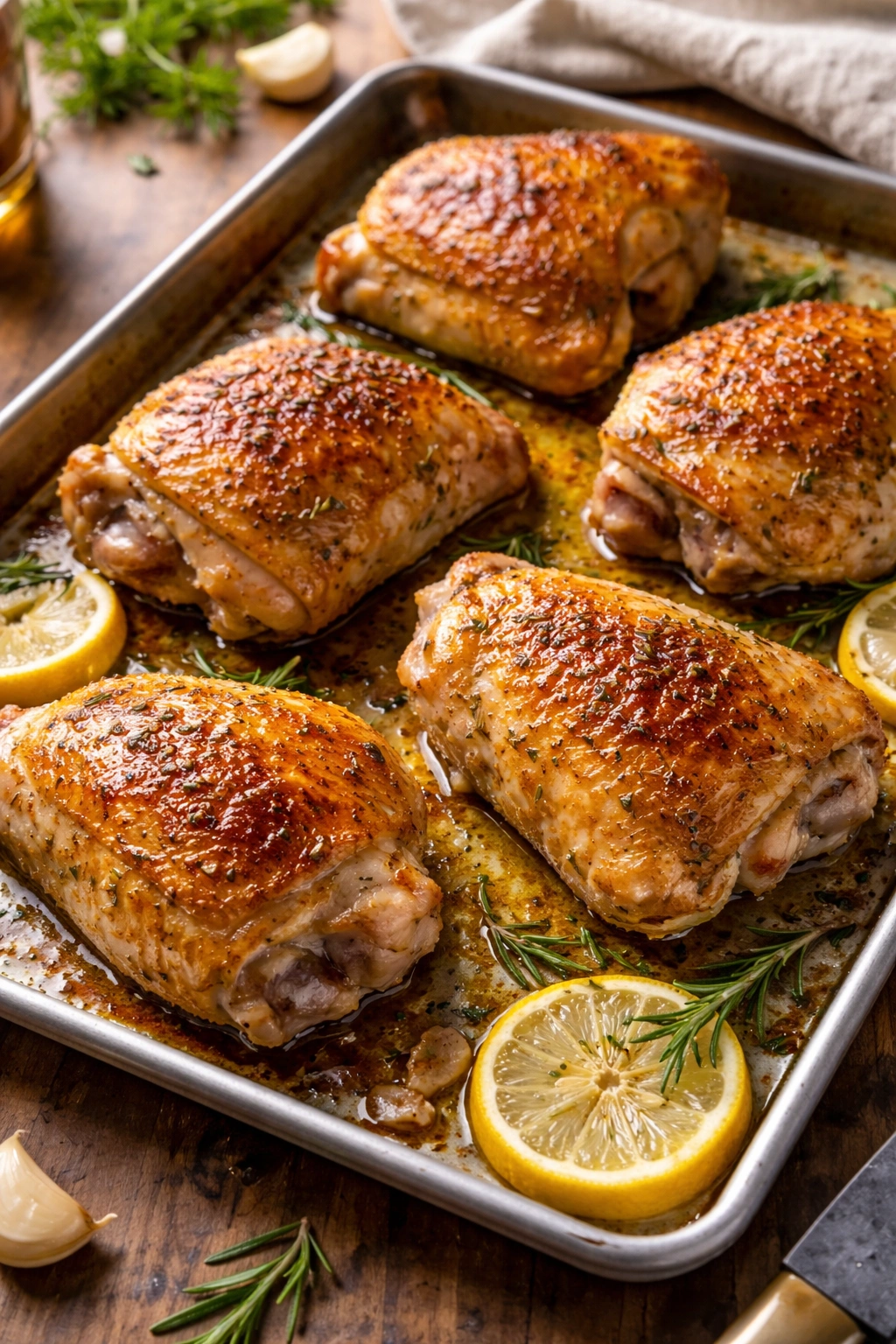
The chicken you choose makes a significant difference in how this dish turns out. Bone-in, skin-on chicken thighs are widely considered the most forgiving option for sheet pan cooking. The bone provides insulation, helping the meat cook through gently without drying out the outside. The skin crisps up beautifully with the marinade and high heat, creating textural contrast. The dark meat itself has more fat than breast meat, so it remains juicy even if you accidentally leave it in the oven slightly too long. Thighs are also usually more affordable than breasts, which is a nice bonus for budget-conscious cooking.
Boneless, skinless chicken breasts are the leaner choice and cook faster, which can be advantageous if you’re short on time. However, they require more attention to avoid overcooking. Pound them to a consistent thickness before cooking so they roast evenly—thicker spots will stay tough and dry while thinner areas are done. Alternatively, you can cut breasts into bite-sized pieces after cooking, which reduces the risk of drying out. Figure on about 20-25 minutes for breasts versus 30-40 minutes for bone-in thighs, depending on size.
Boneless thighs split the difference nicely. They cook faster than bone-in thighs but with less risk of drying out than breasts. They’re becoming more widely available at grocery stores and farmers’ markets. If you can find them, they’re genuinely worth seeking out for sheet pan cooking.
Whatever you choose, make sure the pieces are roughly similar in size and thickness. A very large piece and a very small piece on the same pan means one will be overcooked before the other finishes. Butchers are usually happy to cut chicken to a consistent size if you ask, which is a worthwhile time investment before you even get home.
The Essential Vegetables for Perfect Roasting
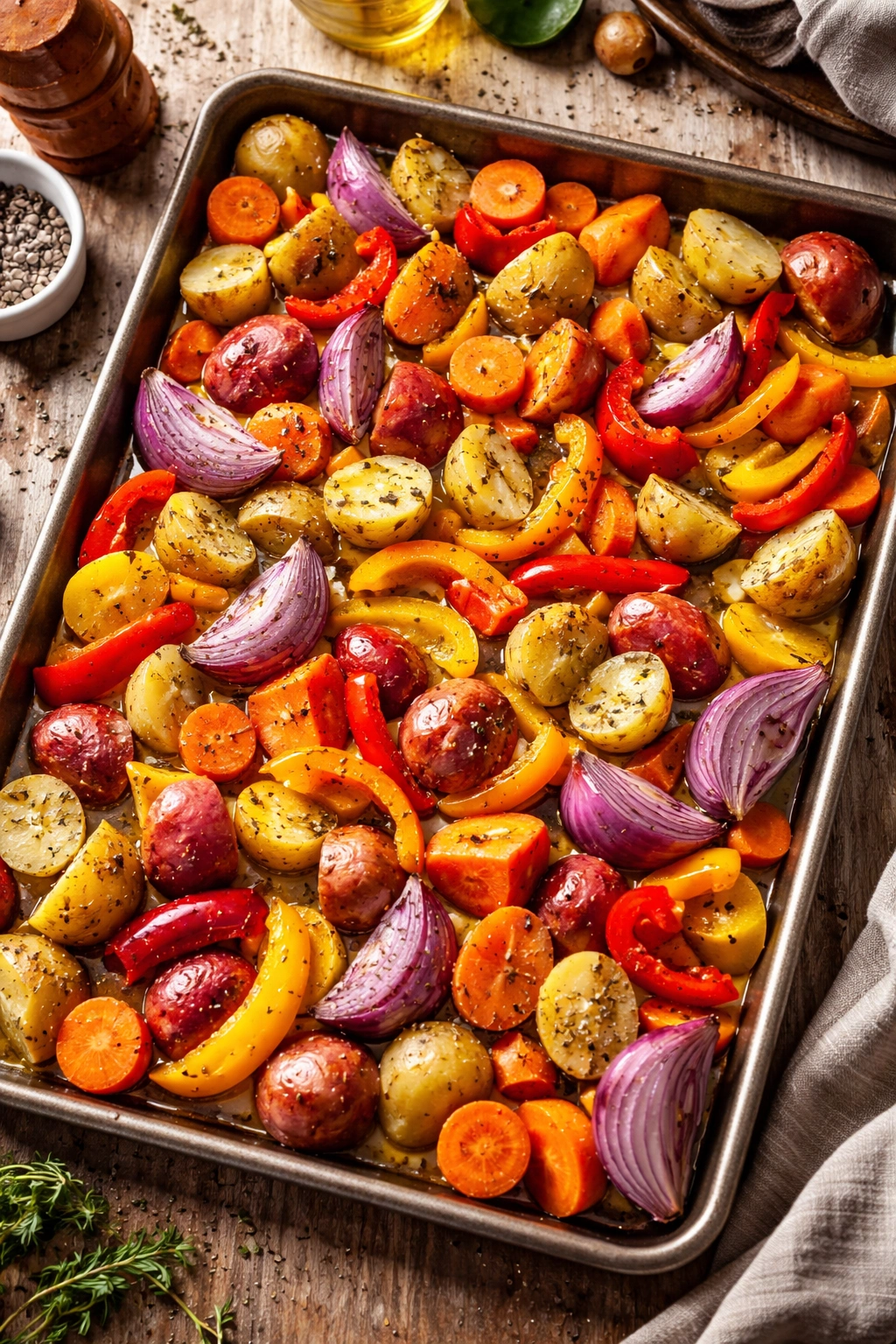
Not all vegetables roast equally, and choosing the right ones is crucial for success. Baby potatoes (or cut-down regular potatoes into roughly 1-inch pieces) are ideal because they’re denser and take about the same time to roast as chicken thighs. They develop crispy, golden edges while staying creamy inside—one of the most satisfying textures you can create in an oven. Avoid very large potato chunks, which will take too long to cook through and risk the chicken becoming overdone.
Carrots are sweet and take on the marinade beautifully. Peel them and cut them into ½-inch-thick rounds or diagonal slices, which exposes more surface area to the marinade and allows faster, more even cooking. Thick sticks of carrot take longer and don’t caramelize as effectively.
Bell peppers—any color, though red and yellow are slightly sweeter than green—roast into tender sweetness. Slice them lengthwise into strips roughly ½-inch wide. These should be added at the very beginning if you want them very tender, or added halfway through if you prefer more texture.
Red onions provide a subtle sharp edge that balances the lemon brightness. Slice them thin, and they become almost translucent, their sharpness mellowing into sweetness. White or yellow onions work too, though red onions offer beautiful color contrast.
Cherry tomatoes or other small tomatoes add acidic brightness but also release liquid as they roast. If you’re using them, add them at the beginning so they can roast fully and concentrate their flavors rather than staying raw or becoming mushy. Some recipes add them midway through, which prevents them from giving up too much liquid.
Vegetables to avoid or modify: Leafy greens will char and become bitter. Delicate vegetables like zucchini are better added midway through or on a separate section of the pan where they get less direct heat. Brussels sprouts and broccoli work well but should be cut into smaller pieces than you might typically use, and should be tossed with extra oil so they brown rather than steam.
Creating Your Signature Lemon Herb Marinade
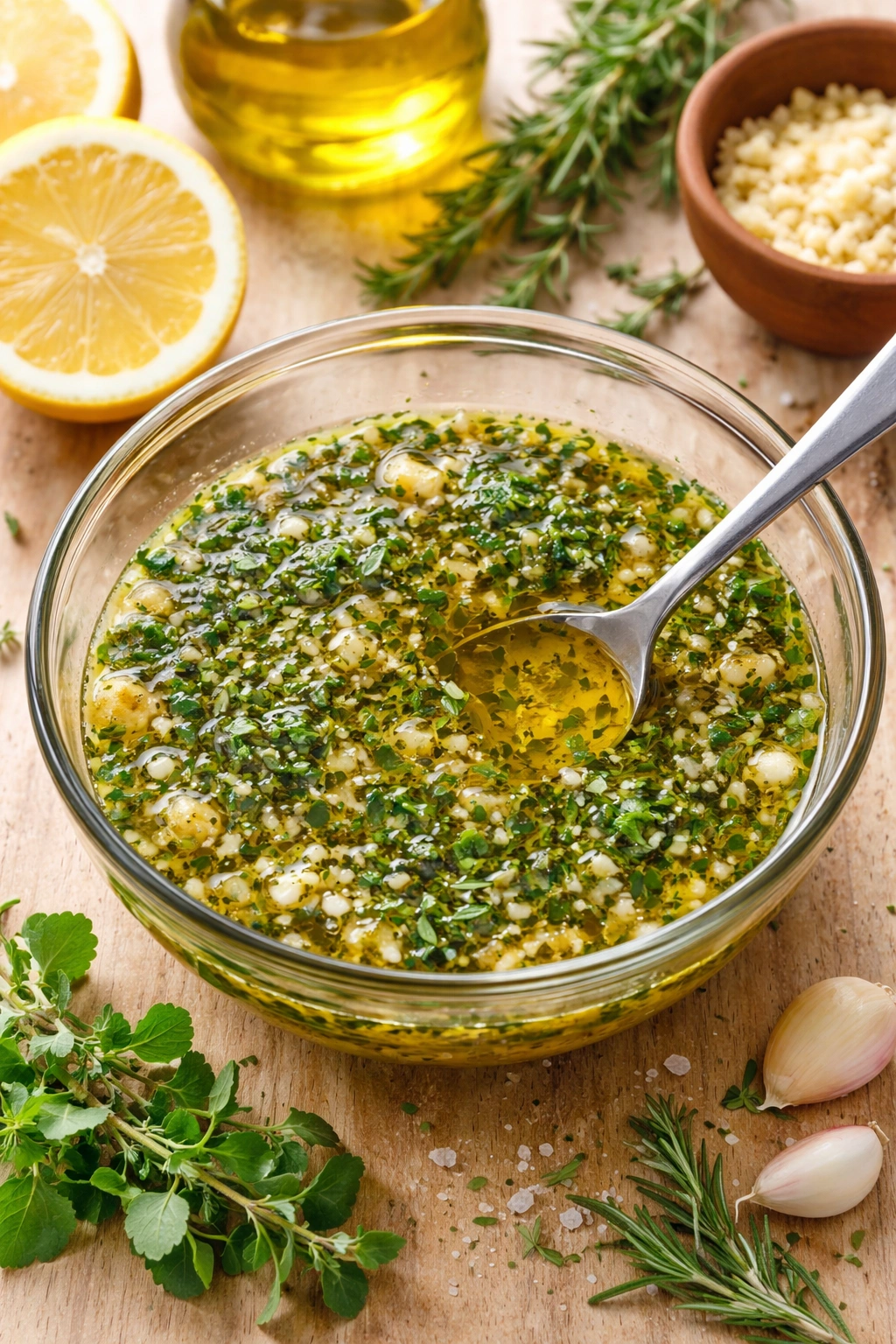
The foundation of an excellent sheet pan chicken dinner is a well-balanced marinade. The basic template is simple: acid (lemon juice), fat (olive oil), aromatics (garlic), and herbs (dried and/or fresh). The magic is in the proportions and the quality of the ingredients you choose.
For a basic lemon herb marinade that serves 4-6 people, you’re looking at roughly ¼ to ⅓ cup olive oil (the fat), the juice of 1-2 lemons plus the zest (the acid), 3-4 minced garlic cloves or 1½ teaspoons of garlic powder (the aromatics), and a combination of dried herbs like oregano, thyme, and rosemary (1-2 teaspoons total, combined). Salt and pepper season to taste—usually ½ to ¾ teaspoon salt and ¼ teaspoon black pepper, though this varies based on your salt sensitivity and how much salt is in any other ingredients.
The ratio to remember is roughly 1 part acid to 3 parts fat. Too much acid and your marinade becomes harsh and can over-denature the chicken. Too little acid and the marinade lacks brightness. One part lemon juice to three parts oil creates a balanced emulsion that coats the chicken and vegetables evenly.
If you want to push the boundaries, consider adding a tablespoon of honey, which adds subtle sweetness and helps the marinade brown beautifully. A pinch of red pepper flakes brings subtle heat. A teaspoon of Dijon mustard adds complexity and slight tang. A drizzle of balsamic vinegar provides subtle sweetness and depth. None of these is necessary, but each one is a lever you can pull to customize the final flavor.
The best technique is to whisk your marinade in a small bowl or measuring cup before using it. Separate about one-quarter of it to coat the chicken, and reserve the rest for the vegetables. This ensures the vegetables get proper seasoning while preventing you from over-marinading the chicken (which would make it tough and overly salty).
Serving and Timing Information
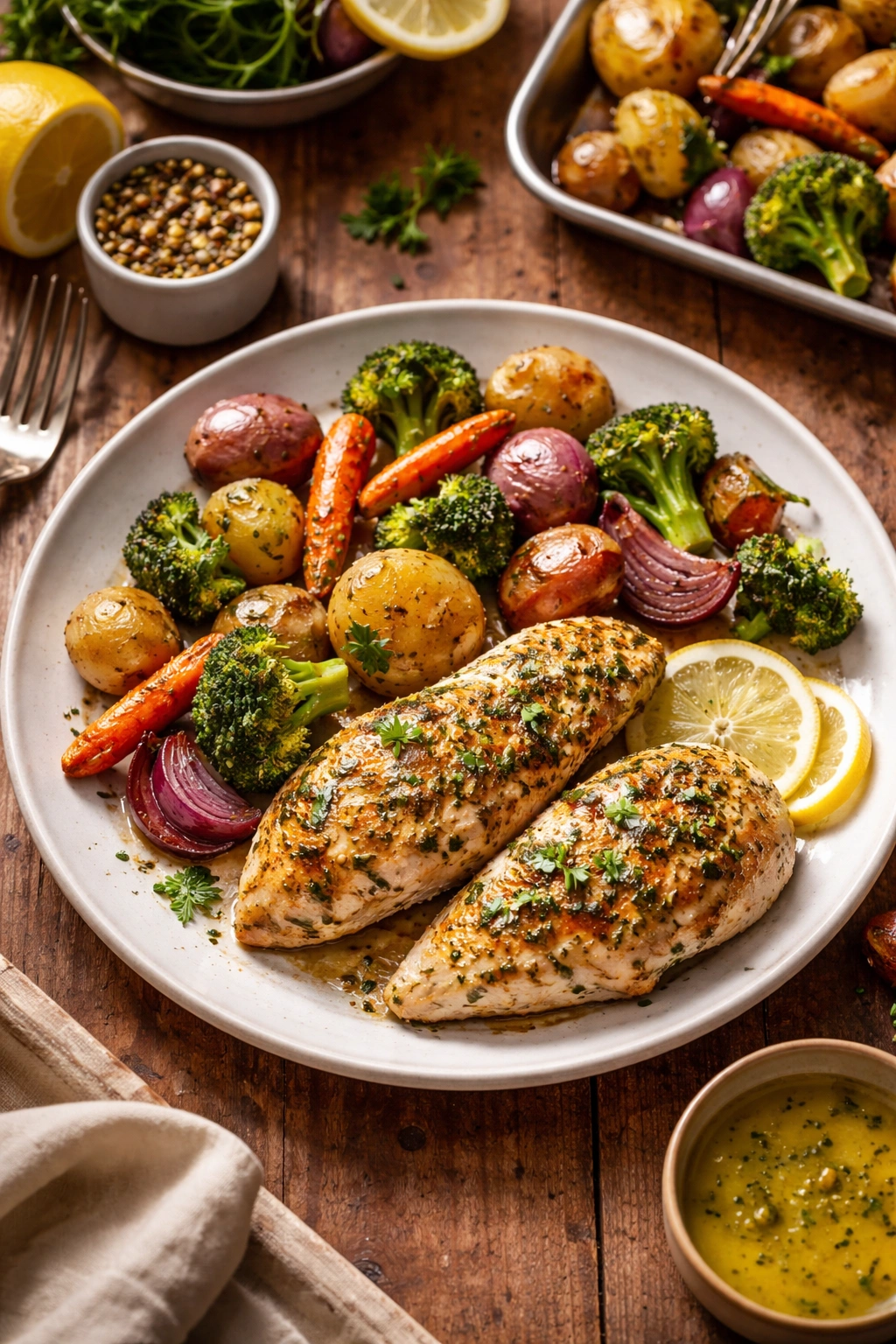
Yield: Serves 4 to 6 | Makes 1 large sheet pan dinner
Prep Time: 20 minutes
Cook Time: 35 to 45 minutes
Total Time: 55 to 65 minutes
Difficulty: Beginner — This recipe requires no special techniques, and if the chicken is properly cut to size, everything finishes simultaneously with virtually no monitoring required.
Complete Ingredient List
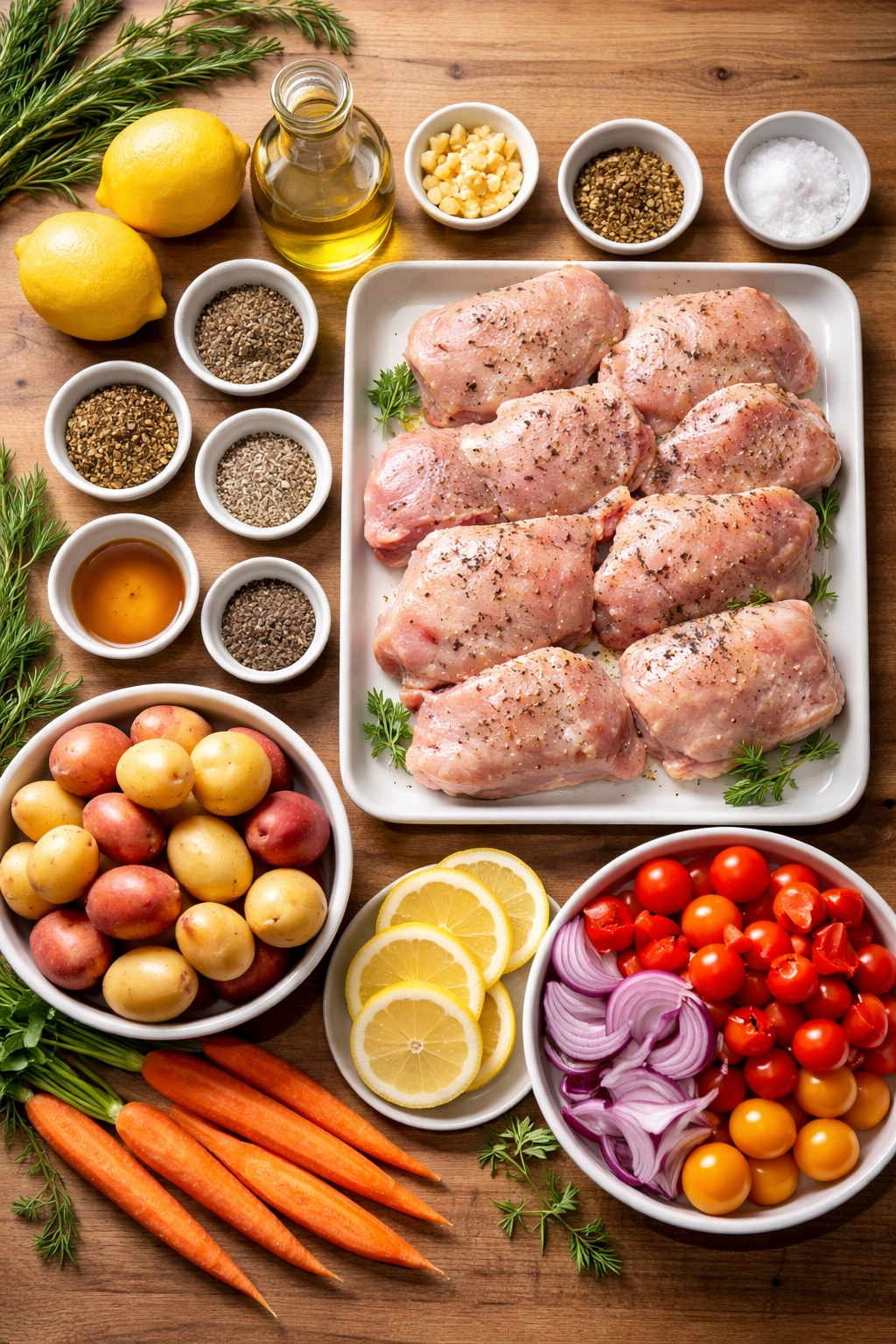
For the Lemon Herb Marinade:
- ¼ cup extra virgin olive oil
- Juice of 1½ to 2 lemons (about 3–4 tablespoons)
- Zest of 1 lemon (about 1 teaspoon)
- 3–4 medium garlic cloves, minced (or 1½ teaspoons garlic powder)
- 1 teaspoon dried oregano
- 1 teaspoon dried thyme
- ½ teaspoon dried rosemary
- ¾ teaspoon kosher salt (divided: ¼ teaspoon for chicken, ½ teaspoon for vegetables)
- ¼ teaspoon freshly ground black pepper (divided)
- 1 tablespoon honey (optional, but recommended for extra depth and browning)
- Pinch of red pepper flakes (optional)
For the Chicken and Vegetables:
- 4–6 bone-in, skin-on chicken thighs (about 2–2½ pounds) or 4 boneless, skinless chicken breasts (about 1¾ pounds), pounded to even thickness or 8–10 boneless chicken thighs
- 1 pound baby potatoes (or larger potatoes cut into 1-inch chunks)
- 1 pound carrots, peeled and cut into ½-inch-thick diagonal slices
- 1 large red bell pepper, sliced lengthwise into ½-inch strips
- 1 medium red onion, sliced lengthwise into ¼-inch strips
- 1 cup cherry tomatoes (or 2–3 larger tomatoes cut into wedges)
- 2 tablespoons extra virgin olive oil (for coating vegetables)
- 2 fresh lemon slices (optional but recommended for visual appeal and flavor)
- ¼ cup fresh parsley, finely chopped (for garnish, preferably added after cooking)
- 2 tablespoons fresh dill, finely chopped (optional alternative or addition to parsley)
- Fleur de sel or finishing salt (a light sprinkle for serving, optional but transforms the presentation)
Step-by-Step Cooking Instructions
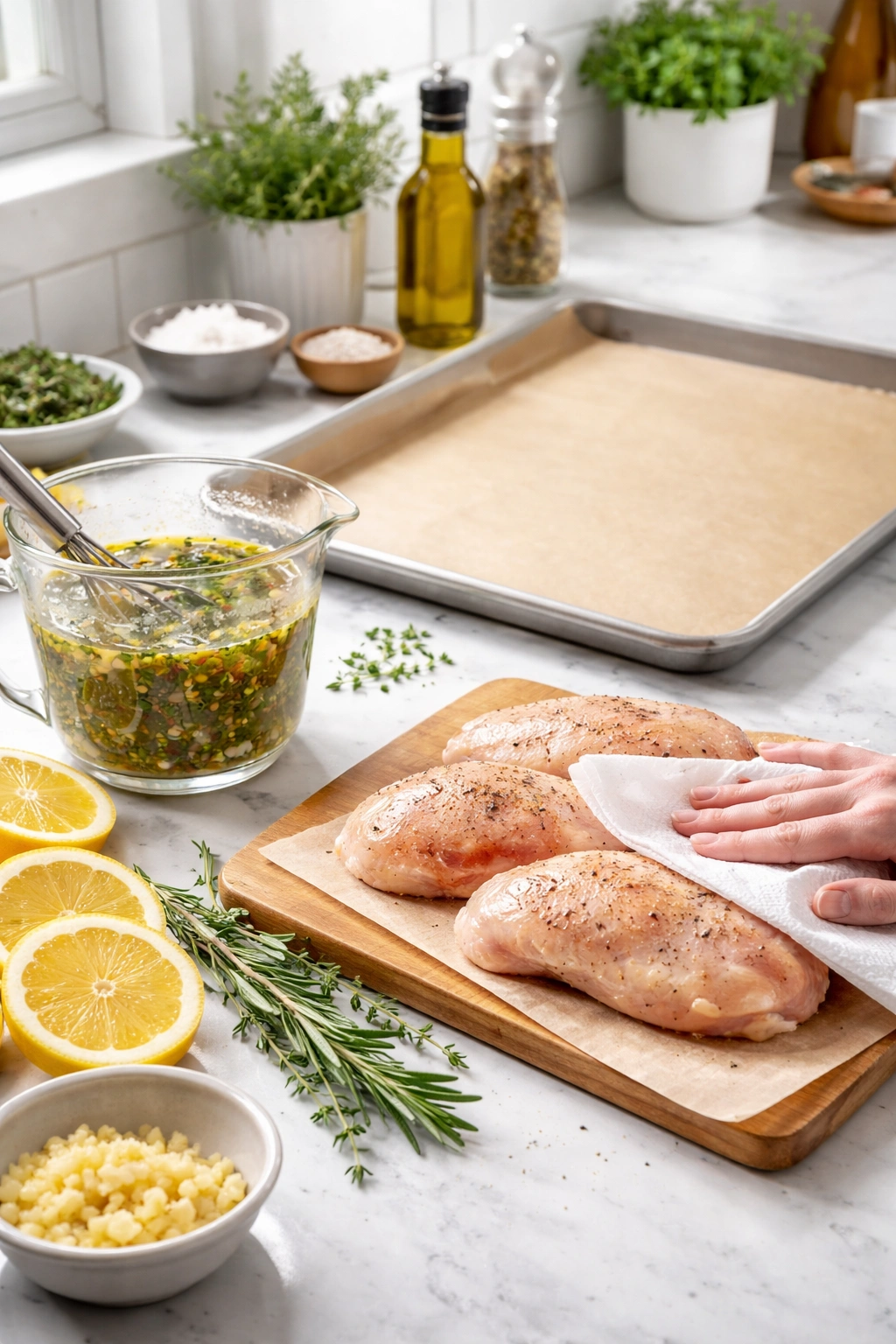
Prepare Your Pan and Preheat:
-
Preheat your oven to 425°F (220°C). Position the oven rack in the center of the oven, ensuring nothing above will touch or block the sheet pan.
-
Line a large rimmed baking sheet (preferably 18×13 inches) with parchment paper or aluminum foil. This step is non-negotiable—it prevents sticking, ensures easy cleanup, and allows the vegetables to roast without absorbing excess moisture from the pan. If using foil, spray it lightly with cooking spray before adding your ingredients.
Make the Lemon Herb Marinade:
- In a small bowl or a liquid measuring cup, whisk together the olive oil, fresh lemon juice, lemon zest, minced garlic (or garlic powder), oregano, thyme, rosemary, ¼ teaspoon salt, black pepper, and honey if using. Whisk vigorously for about 30 seconds until the oil and lemon juice emulsify slightly and the herbs are evenly distributed. The mixture won’t be fully emulsified—that’s fine. Set aside.
Prepare the Chicken:
-
Pat the chicken dry with paper towels. This step is critical—any excess moisture prevents browning and creates steam instead of that desirable golden crust. If using chicken breasts, pound them between two pieces of plastic wrap until they’re about ¾-inch thick all over, which ensures even cooking.
-
Place the chicken on the prepared baking sheet, spacing the pieces so they’re not touching. Pour about one-third of the marinade (roughly 3–4 tablespoons) over the chicken, using your fingers to rub it into the meat and, if you’re using bone-in, skin-on thighs, underneath the skin where it matters most. The skin is where the browning magic happens—make sure it gets a good coating of oil and herbs.
-
Let the chicken marinate while you prepare the vegetables (about 10 minutes). This resting time allows the flavors to begin penetrating the meat without drying it out.
Advertisements
Prepare the Vegetables:
-
In a large mixing bowl, combine the potatoes, carrots, bell pepper, red onion, and cherry tomatoes. Drizzle with the 2 tablespoons of extra olive oil. Sprinkle with the remaining ½ teaspoon of salt and a pinch of black pepper.
-
Toss the vegetables thoroughly with your hands or two spoons until every piece is lightly coated with oil and seasonings. This even coating is what allows them to brown and caramelize rather than roast into pale softness.
-
Pour the remaining two-thirds of the lemon herb marinade over the vegetables and toss again until every piece is glistening and coated. Reserve 1–2 teaspoons of any liquid that settles at the bottom of the bowl—you’ll use this for finishing.
Assemble the Sheet Pan:
-
Arrange the marinated vegetables around the chicken on the baking sheet in a single, even layer. The potatoes should be scattered throughout, not piled together. The vegetables need space around them—crowding causes steaming rather than roasting, and you want those crispy, caramelized edges. If using whole cherry tomatoes, bury them slightly among the other vegetables so they don’t dry out completely.
-
Nestle 2 fresh lemon slices among the vegetables (optional but beautiful and flavorful). You’ll squeeze these over everything at the end.
-
Step back and look at the pan. Everything should be in roughly a single layer with no major crowding. If it looks too full, use a larger sheet pan or reserve some vegetables for a second pan. Overcrowding is the enemy of good roasting.
Roast the Meal:
-
Place the sheet pan in the preheated 425°F oven and set a timer for 15 minutes. For the first 15 minutes, don’t open the oven—you want the heat to concentrate and start the browning process.
Advertisements -
After 15 minutes, remove the pan from the oven and give it a gentle shake. Check the vegetables—the potatoes should be starting to turn golden at the edges, and the chicken should be starting to brown. If the vegetables look like they’re browning too fast, stir them and flip the chicken skin-side up (if it’s not already skin-side up). Return to the oven for another 15–20 minutes for chicken thighs, or 12–15 minutes for boneless breasts.
-
The chicken is done when an instant-read thermometer inserted into the thickest part (without touching bone) reads 165°F (74°C). At this point, the skin should be deeply golden, and the vegetables should be tender with browned, caramelized edges. The potatoes should be fork-tender, and the onions should be nearly translucent.
-
If your chicken or vegetables need more time, return the pan to the oven in 2–3-minute increments, checking frequently. Chicken thighs are more forgiving, but even they can dry out if overcooked by too much.
Finish and Serve:
-
Remove from the oven and let rest for 3–5 minutes before serving. This resting time allows the juices in the chicken to redistribute throughout the meat, ensuring every bite stays moist.
-
Squeeze the roasted lemon slices over everything, or if you didn’t use them in the pan, squeeze fresh lemon juice over the entire sheet pan. Scrape up any browned bits from the pan—that’s liquid gold in terms of flavor.
-
Garnish with fresh parsley and fresh dill (if using), a light sprinkle of fleur de sel or finishing salt for elegance, and a grind of fresh black pepper. Serve directly from the sheet pan for an impressive, rustic presentation, or transfer to a platter if you’re serving guests.
Expert Tips for Restaurant-Quality Results
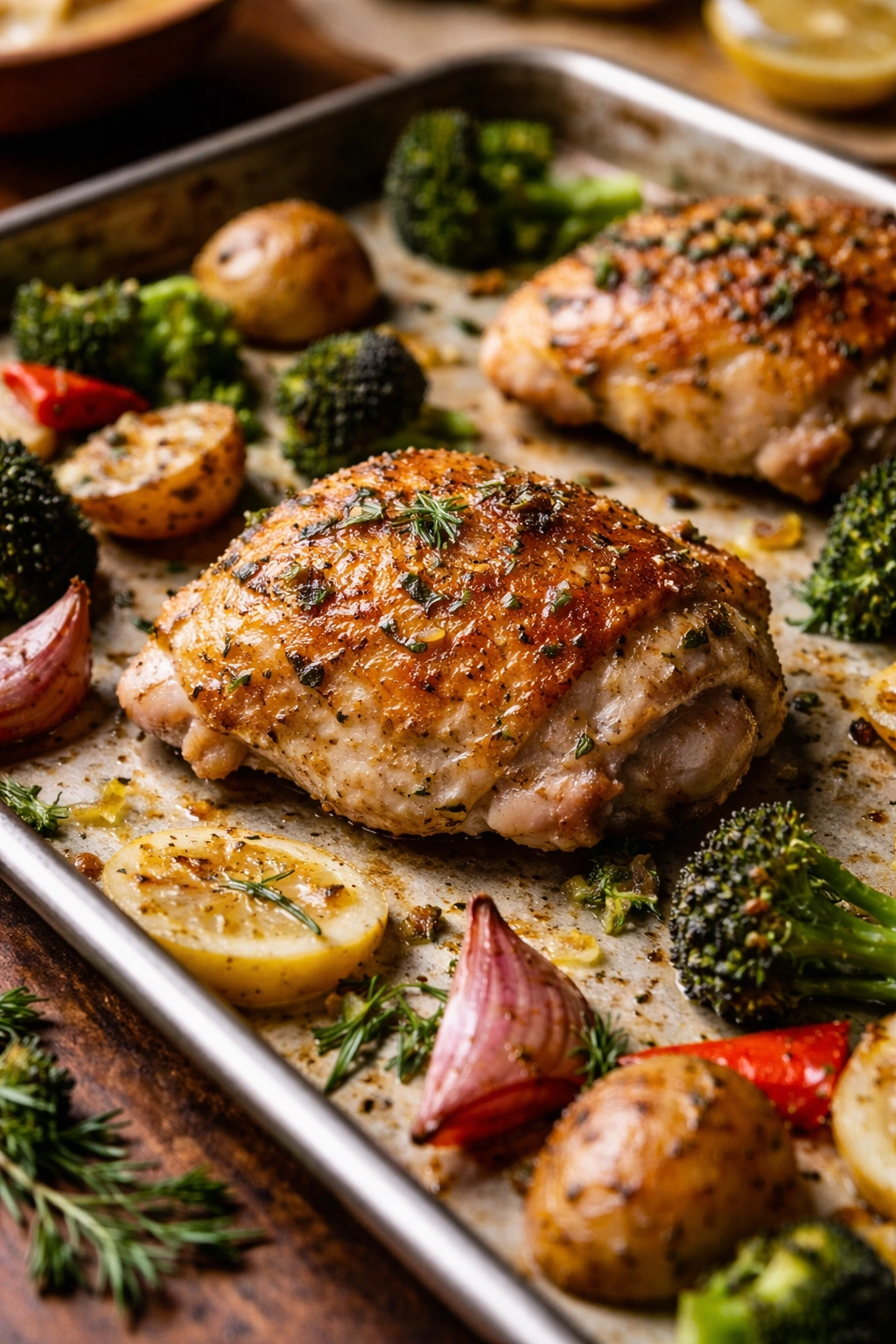
The difference between good sheet pan chicken and restaurant-quality sheet pan chicken often comes down to small technique details that compound. Don’t skip the drying step. Patting your chicken completely dry with paper towels might seem like an extra step, but it’s the difference between skin that crisps and turns golden versus skin that steams and stays pale and flabby. Use multiple paper towels if you have to.
Cut vegetables to roughly the same size as much as possible. A ½-inch carrot slice will cook in roughly the same time as a halved baby potato, but a quarter-inch slice will cook much faster and a 1-inch chunk will take longer. Consistency in cutting eliminates the frustration of overcooked or undercooked vegetables.
Don’t crowd the pan. This is where many home cooks stumble. They fit as much as they can onto one sheet pan to justify the “one-pan” descriptor, but they actually end up steaming rather than roasting everything. A somewhat sparse pan where vegetables have room to breathe will produce better results than a crowded pan. If you need to use two pans, use two pans.
Give the chicken space from the vegetables for the first 15 minutes. The vegetables release moisture as they start to cook. If the chicken is resting directly on or in contact with the vegetables during this phase, that moisture can prevent the chicken skin from crisping. Arrange things so the chicken is slightly elevated or separated from the vegetable pile at the start.
Watch the marinade ratio carefully. Too much oil and the vegetables can taste greasy. Too little and everything dries out. The sweet spot is usually somewhere between 3-4 tablespoons per 1 tablespoon of lemon juice, but this varies based on how much vegetable surface area you’re coating. Better to err on the side of slightly more oil than slightly less.
Roast at 425°F (220°C) rather than lower temperatures. This temperature is hot enough to create browning and crisping, which are what make roasted vegetables taste like vegetables and not just soft, cooked mush. At 350°F or 375°F, you’ll get softer results with less character. If your oven runs hot, position your rack a level lower to create slightly more distance from the heating element and prevent the top from browning too aggressively.
Use the resting pan juices. After roasting, a small amount of liquid remains in the bottom of the pan—don’t discard it. This is the concentrate of all the flavors: chicken juices, herb oils, and caramelized vegetable sweetness. Drizzle it over everything or spoon it over the plated portions. It elevates the entire dish.
Taste and adjust salt at the end. You’ve salted the marinade and the vegetables, but after roasting, take a moment to taste a vegetable and a piece of chicken. Does it need more salt? A pinch of sea salt added at the very end can bring everything into focus. It’s much easier to add salt than to remove it, so this step prevents oversalted chicken.
Common Mistakes That Derail Your Dinner
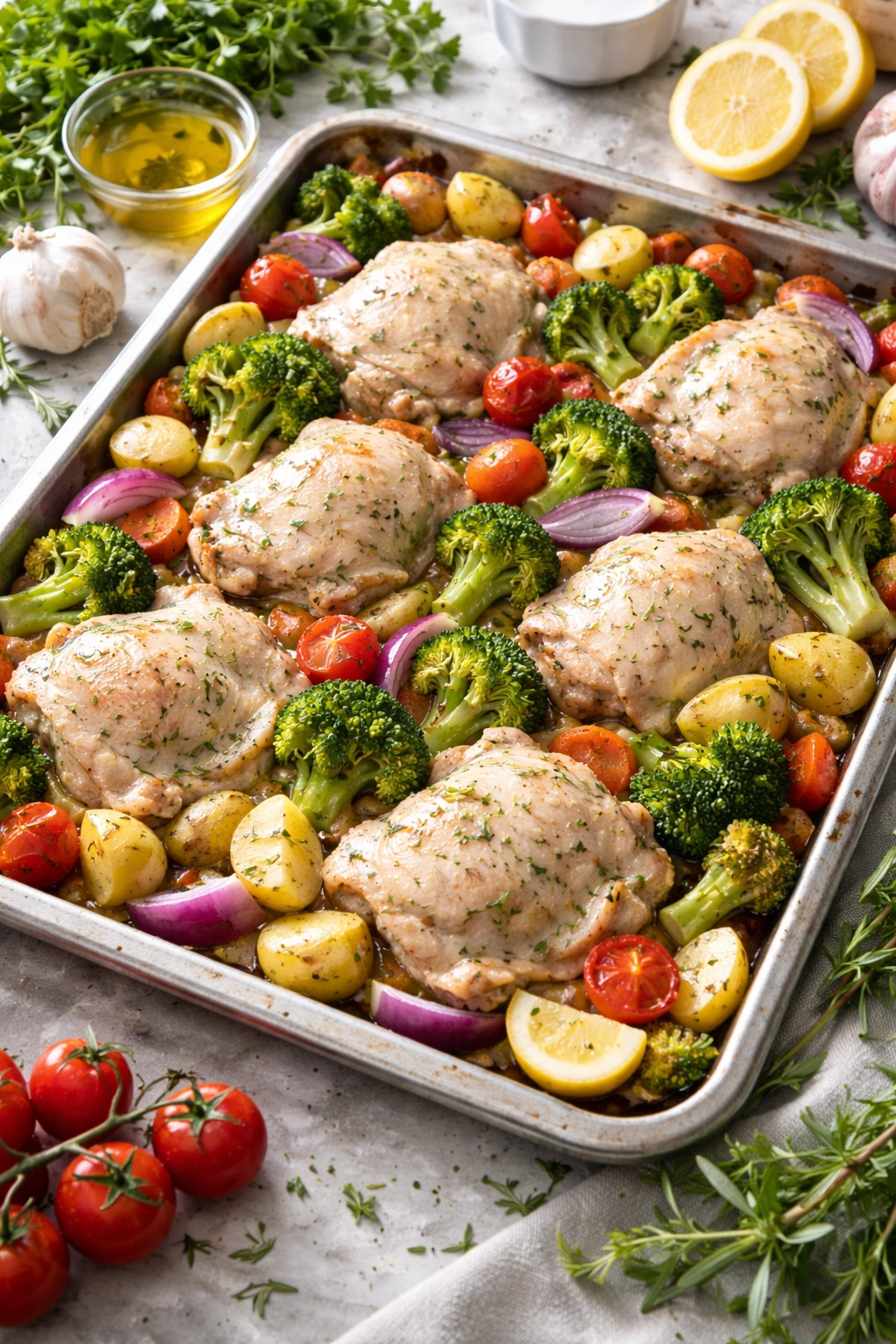
Using wet chicken means no crispy skin and pale, steamed results instead of golden-brown beauty. This is the most common issue. Dry your chicken thoroughly and don’t marinate it hours in advance in a sealed container—the marinade will make it wet again.
Cutting vegetables inconsistently creates a meal where some pieces are mushy and others are raw. Spend the extra three minutes on consistent cutting, and you’ll be rewarded with everything finishing at the same time.
Not leaving enough space between ingredients turns your roasted vegetables into braised vegetables. They need air circulation around them. If your vegetables are piled on top of each other, they’ll steam rather than caramelize. A less-full pan is a better pan.
Overcooking chicken thighs. Yes, thighs are forgiving—but they’re not infinitely forgiving. Once the skin is deep golden and the meat pulls easily from the bone, you’re done. Every minute beyond 165°F internal temperature makes it slightly tougher. Invest in a good instant-read thermometer and use it.
Using old, pale dried herbs. Dried herbs lose potency over time. If your oregano has been in your cabinet for three years, it’s essentially flavor dust. Buy herbs fresh, write the date on the jar, and replace them every 12-18 months. Fresh herbs are better, but even fresh herbs that have been in the refrigerator for two weeks will taste diminished.
Adding fresh herbs at the beginning rather than the end. Fresh parsley, dill, and chives become muted and slightly bitter when roasted. Add them after cooking, when they provide bright, fresh contrast to the warm roasted flavors.
Forgetting to preheat the oven fully. Putting your sheet pan in a preheating oven means it will take longer to start browning. Always preheat for at least 15 minutes and make sure your oven has truly reached temperature. An oven thermometer ($10 at any kitchen store) reveals whether your oven is actually at the temperature it claims to be—many ovens run hotter or cooler than advertised.
Using low-quality olive oil. If you’re paying $8 for a liter of olive oil, it’s not what you think it is. Extra virgin olive oil should be $20-$30 per liter and should taste like olives and grass when you taste it raw. Use it for your marinade, and you’ll taste the difference immediately.
Vegetable Variations to Keep It Fresh
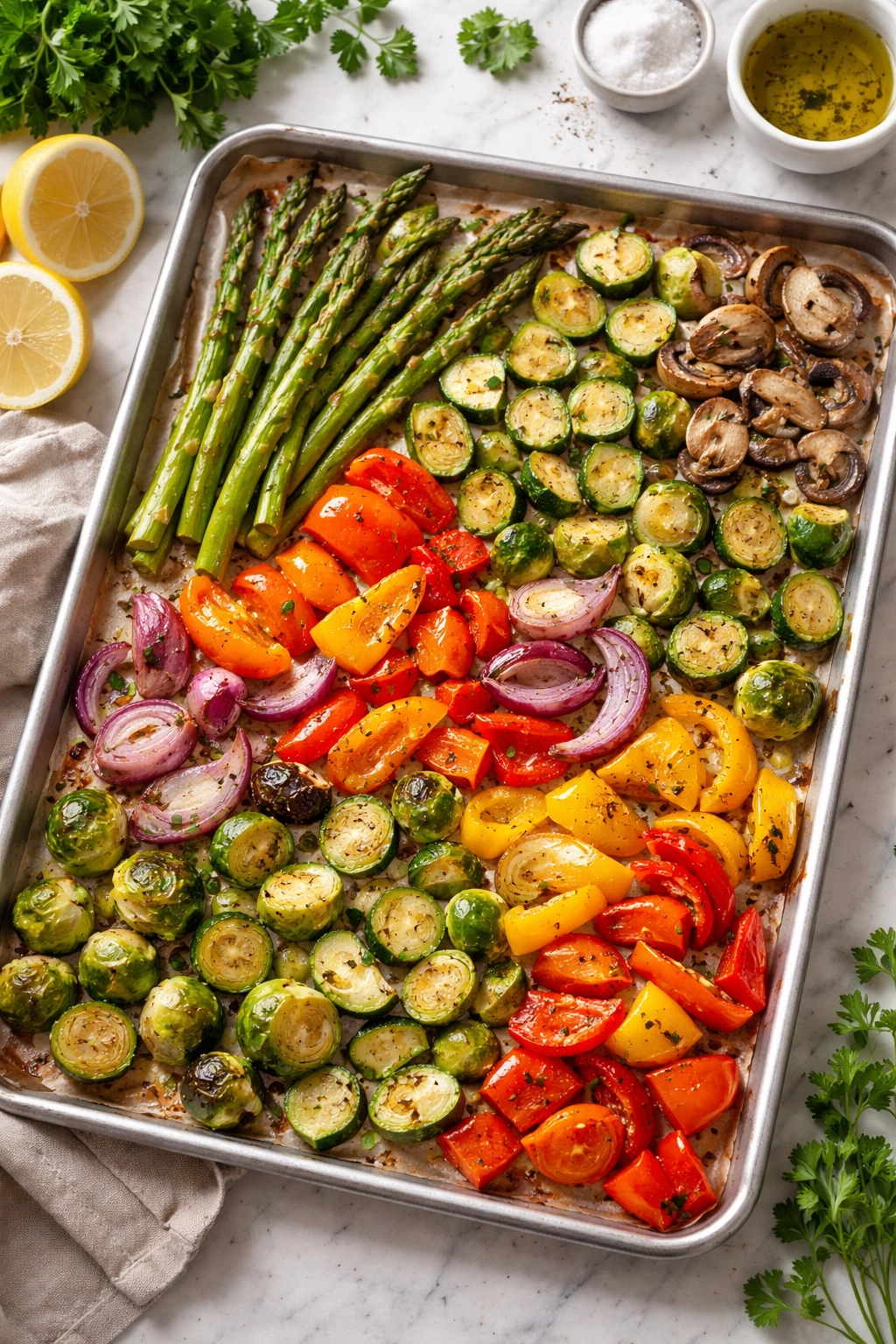
The beauty of this sheet pan approach is its flexibility. You’re not locked into the same vegetables every time. If asparagus is in season, cut it into 2-3-inch pieces and add it at the midway point so it roasts just enough to become tender without falling apart. Spring peas and snap peas can be scattered over the sheet pan in the last 5 minutes of cooking, so they stay bright and crisp.
Zucchini and summer squash are wonderful additions but should be cut thick (¾-inch rounds) and added halfway through, since they release moisture and can become mushy if roasted the entire time. Eggplant works similarly—cut into ½-inch cubes, toss with extra oil (eggplant soaks it up), and add midway through.
Mushrooms, whether cremini, shiitake, or oyster, are fantastic. Toss them with the other vegetables from the start—they’ll shrivel slightly as they roast, concentrating their earthy, umami-rich flavor. Brussels sprouts, halved so the flat side can caramelize, add a slightly nutty, subtle bitterness that plays beautifully against the lemon brightness. Add them from the beginning.
Root vegetables like parsnips and celeriac take slightly longer to roast than regular potatoes, so cut them smaller (about ½-inch). Sweet potatoes work well but caramelize faster than regular potatoes, so monitor them and consider adding them at the 10-minute mark rather than the start.
Green beans should be added at the midway point if you want them to stay crisp, or from the beginning if you prefer very tender green beans. Broccoli florets work beautifully—they’ll crisp up at the edges and brown in spots, which is exactly what you want. Add them from the beginning.
Cherry tomatoes are technically fruit, not vegetables, but they belong on your sheet pan. They can burst if overroasted, so some cooks add them at the 20-minute mark to prevent them from collapsing completely. Others cook them the whole time and appreciate their concentrated, almost raisin-like sweetness. It’s a matter of preference.
Flavor Customizations and Global Twists
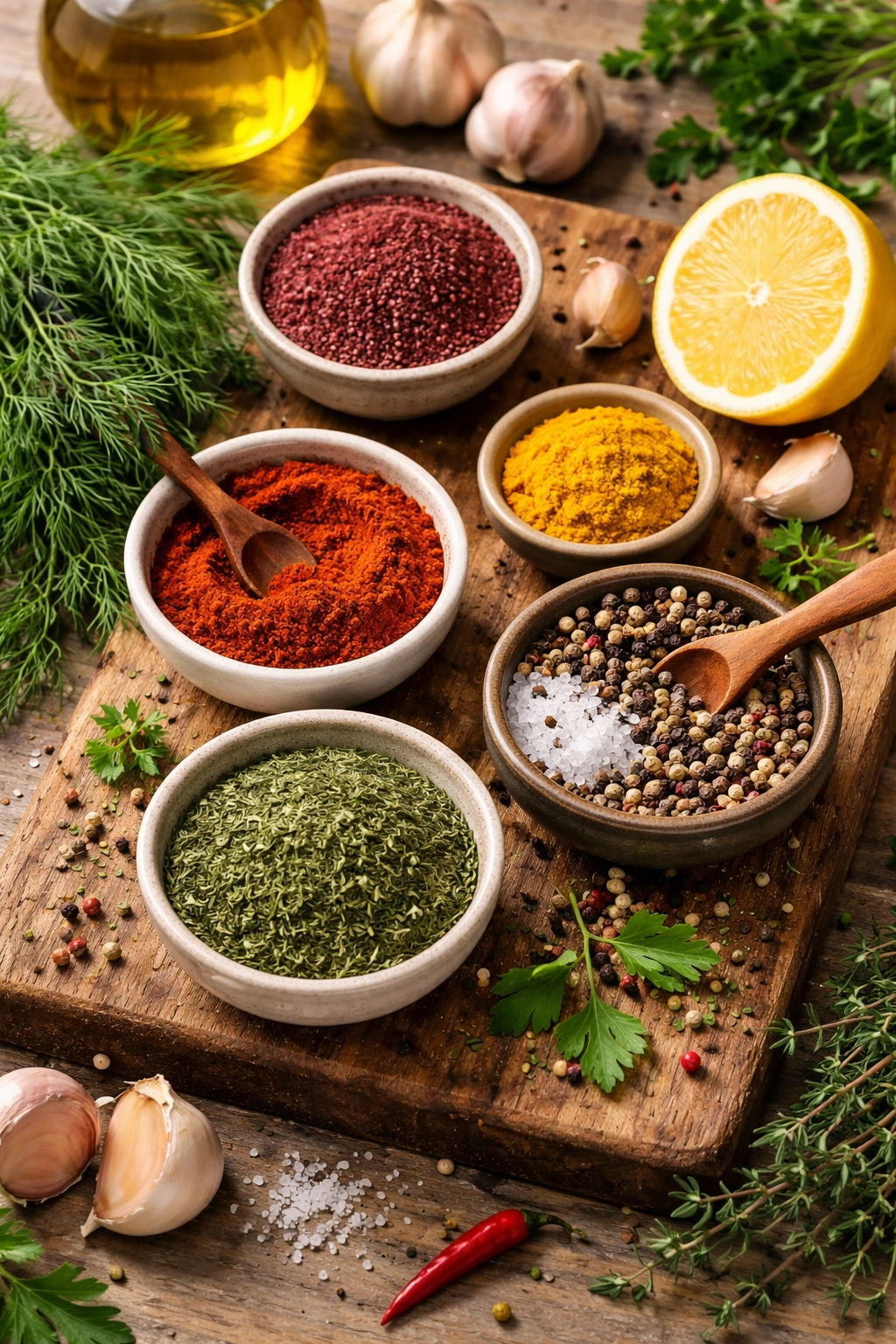
Once you master the basic lemon herb version, you can take it in completely different directions while maintaining the same reliable one-pan approach. For an Italian direction, swap the dried oregano for extra oregano, add a pinch of fennel seeds, and finish with a shaving of good Parmesan cheese and fresh basil instead of parsley. For a Greek spin, add ½ teaspoon of dried dill to your marinade, finish with crumbled feta cheese, olives, and fresh mint.
For a Mediterranean vibe, add sun-dried tomato paste (1 tablespoon) to your marinade, include a handful of Kalamata olives scattered among the vegetables, and finish with more feta and fresh oregano. For a Middle Eastern angle, use ½ teaspoon of sumac (a tart, lemon-like spice) and ¼ teaspoon of cumin in your marinade, and finish with pomegranate seeds and fresh mint.
For Spanish flavors, incorporate smoked paprika (½ teaspoon) and cumin (¼ teaspoon) into your marinade. For a French bistro approach, use dried tarragon instead of thyme and oregano, add a touch of Dijon mustard to your marinade, and finish with a drizzle of white wine reduction and fresh tarragon.
To make it Indian-inspired, add ½ teaspoon of garam masala and ¼ teaspoon of turmeric to your marinade, finish with fresh cilantro instead of parsley, and serve with a yogurt sauce. For a lighter, Asian-influenced version, add ginger (½ teaspoon fresh, minced) and reduce the lemon juice to 1 tablespoon, replacing it with 2 tablespoons of rice vinegar. Add a dash of low-sodium soy sauce and finish with fresh cilantro and sesame seeds.
The template remains exactly the same—the variables are just the herbs, spices, and garnishes you choose. This is how you take a good recipe and make it entirely your own.
Storage, Reheating, and Make-Ahead Strategy
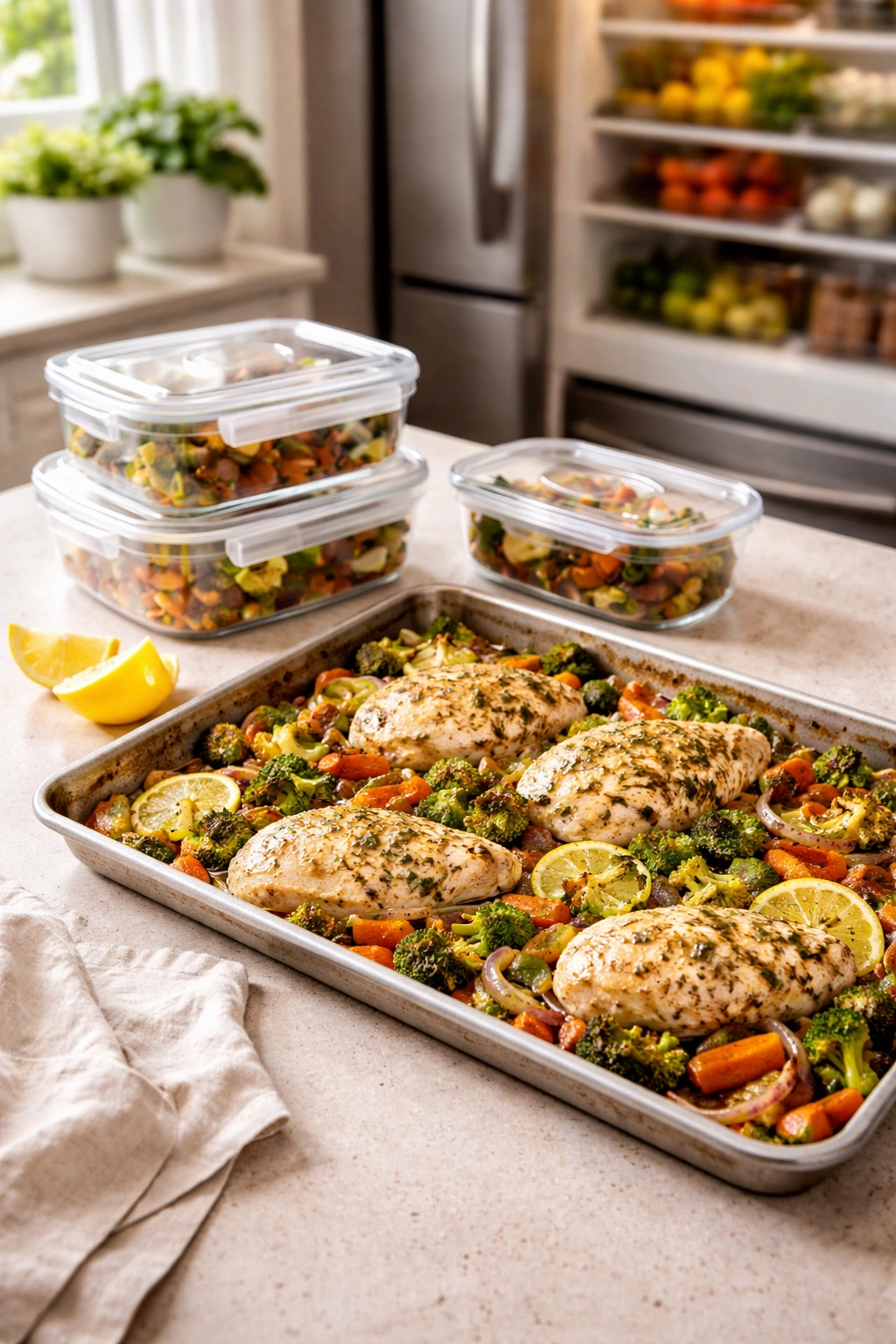
Sheet pan lemon herb chicken stores beautifully and reheats better than most cooked chicken dishes because it’s not dry to begin with. Cool the sheet pan completely at room temperature (about 30 minutes), then transfer any leftovers to an airtight container. Store in the refrigerator for up to 3–4 days. The chicken stays juicy because it’s still surrounded by the pan juices and vegetables, which protect it from drying out.
To reheat, you have several options. The oven method (best for texture) involves placing leftovers on a sheet pan, covering loosely with foil, and reheating at 350°F for 12–15 minutes until warmed through. The loose foil prevents the top from drying while allowing the bottom to warm through gently. The stovetop method involves placing leftovers in a large skillet over medium-low heat, stirring occasionally, until everything is warm (about 8–10 minutes). The microwave method is fastest but tends to dry things slightly—place on a microwave-safe plate, cover loosely, and microwave in 30-second bursts, stirring between bursts.
Freezing is possible but not optimal. The vegetables, especially tomatoes, don’t thaw beautifully, and they become slightly mushy. If you do freeze, separate the chicken from the vegetables before freezing. Wrap the chicken tightly in plastic wrap and foil, and freeze in a separate container from vegetables. Freeze for up to 2 months. Thaw overnight in the refrigerator before reheating.
For make-ahead meals, you have wonderful options. Prepare everything through step 9 the day before. Cover the mixing bowl with plastic wrap and refrigerate the vegetable and herb mixture. Marinate the chicken separately in a small container. In the morning or when you’re ready to cook, simply assemble the sheet pan and roast. The only difference is you may need to add 2–3 minutes to the cooking time since everything will be coming straight from the refrigerator rather than sitting at room temperature.
Alternatively, marinate the chicken and vegetables together in a large zip-top freezer bag for up to 24 hours ahead of time. The longer marinade actually improves the flavor, allowing the seasonings to penetrate deeper. When you’re ready to roast, transfer directly to your prepared sheet pan. Again, add 2–3 minutes to the cooking time.
Prep components on Sunday if you meal-prep. Cut all vegetables and store them separately in airtight containers. Mix your marinade and store it in a glass jar. Store the chicken in a separate container. Keep these components for up to 3 days. When you want to cook, assembly takes 5 minutes, and roasting takes 35–45 minutes. On any evening, you can have this meal on the table in less than an hour.
Pairing Suggestions and Complete Meal Ideas
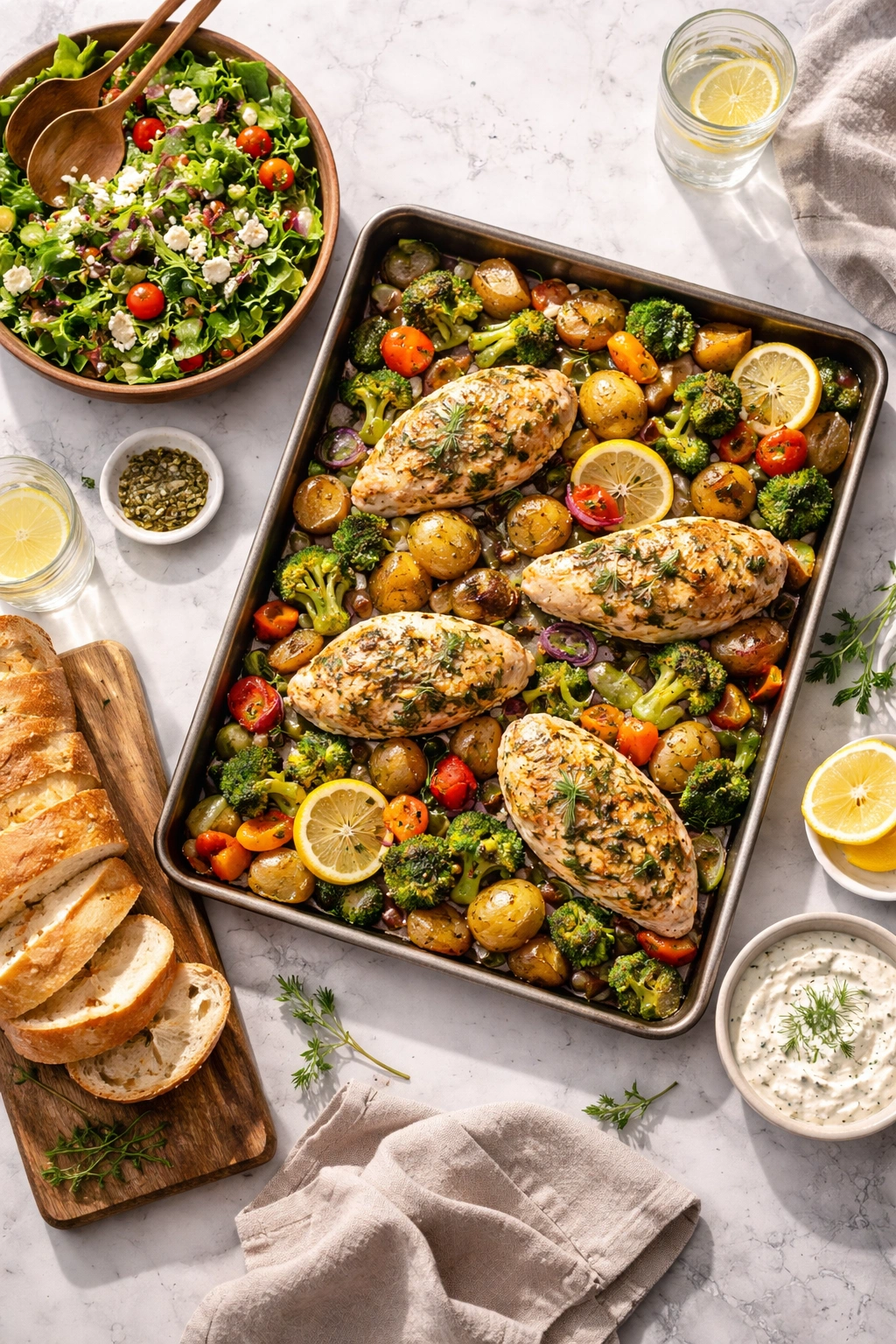
Sheet pan lemon herb chicken and roasted vegetables is technically a complete meal as-is—it has protein, vegetables, and carbs from the potatoes. But there are elegant ways to build on it and create a more formal dinner or a heartier weeknight feast.
For a simple, elegant meal, serve the sheet pan with a crisp green salad dressed with lemon vinaigrette (the acidity complements rather than competes with the chicken’s lemon brightness) and crusty bread for soaking up the pan juices. This is restaurant-quality simplicity.
For a Mediterranean-inspired meal, serve alongside a big mixed greens salad with feta and olives, herbed rice or quinoa (the grains soak up the pan juices beautifully), and a glass of dry white wine. The meal suddenly feels like dinner in Santorini.
For something heartier, serve with creamy polenta or garlic mashed potatoes—yes, even though there are potatoes on the pan, a silky side starch rounds out the meal in a different way. Or add wild rice pilaf, farro, or couscous for texture and depth.
For a lighter approach, serve over cauliflower rice or zucchini noodles for those watching carbs, and the sheet pan becomes keto-friendly. The pan juices become sauce in this context.
For a crowd or family dinner, the sheet pan is your centerpiece. Provide crusty bread on the side, a simple salad, and let people help themselves. The casual, rustic presentation makes everyone feel like they’re eating something homey and delicious rather than fussy.
For meal prep bowls, dice the leftover chicken and vegetables, combine with cooked grain of choice (rice, quinoa, farro), and drizzle with extra lemon juice. Layer into lunch containers for work. For grain-free bowls, serve the chicken and vegetables over leafy greens or cauliflower rice with a dollop of the pan juices as dressing.
For entertaining, plate individual portions: a scoop of vegetables topped with a piece of chicken, drizzled with pan juices, garnished with fresh herbs, and perhaps a sprinkle of fleur de sel for elegance. Serve immediately from the oven for maximum aroma—the visual and olfactory impact is part of the meal’s appeal.
Final Thoughts
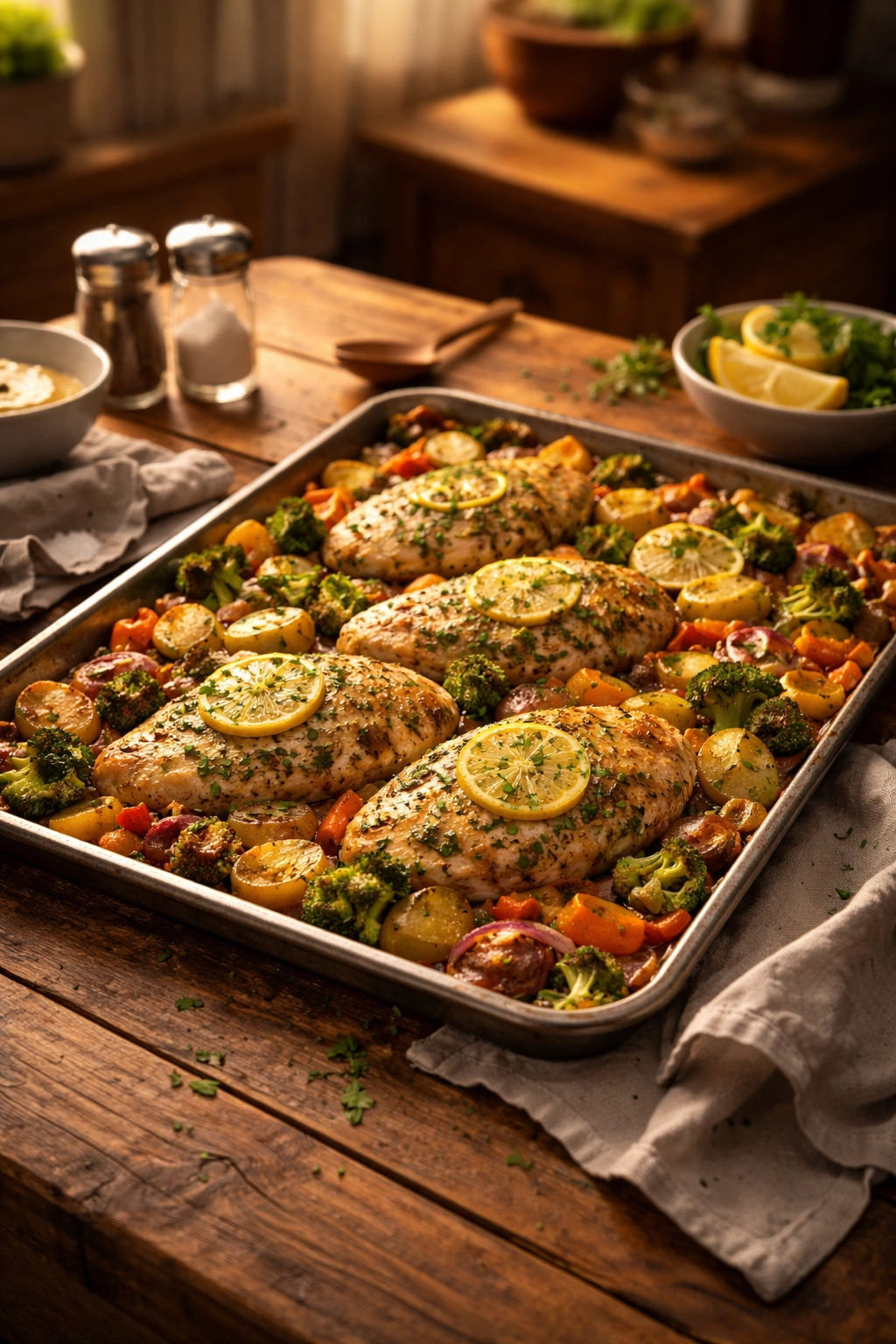
Sheet pan lemon herb chicken and roasted vegetables has earned its place as a weeknight dinner staple because it delivers on every level. It requires no special skills, minimal active time, virtually no cleanup, and somehow tastes better than quick dinners have any right to taste. The chicken emerges juicy and flavorful. The vegetables develop caramelized depth that makes you realize why roasting matters. The pan juices create a natural sauce that needs no additional work.
Once you’ve made this meal a few times, the technique becomes muscle memory. You’ll stop thinking about the individual steps and start thinking about customizing the flavors. That’s when this recipe becomes truly yours—when you’re not following instructions but building on a framework you’ve internalized. You’ll know instinctively whether a particular vegetable will work, what herbs will complement it, how to adjust the roasting temperature for your specific oven.
This is cooking at its most practical and rewarding simultaneously. You’re solving the real-world problem of getting good food on the table on a busy weeknight. And you’re doing it in a way that makes you feel genuinely proud of what you’ve created. That’s the entire point of a recipe that works this well.
