



There’s nothing quite like a sandwich to rescue you from another boring lunch hour. Whether you’re packing something to take to work, feeding hungry kids at home, or simply trying to avoid the midday takeout trap, a well-made sandwich can genuinely transform how you feel about mealtime. The beauty of sandwich-making is that it requires almost no cooking—just smart layering, quality ingredients, and a few simple techniques that separate the forgettable from the absolutely crave-worthy.
The sandwiches in this collection aren’t just about slapping together whatever’s in your fridge. These are recipes that have earned their place because they balance nutrition, flavor, and practicality. Some come together in under ten minutes. Others can be assembled ahead and actually improve as the flavors meld together. A few deliver restaurant-quality results without the restaurant price tag. What they all have in common is that they’re surprisingly satisfying, surprisingly easy, and surprisingly delicious—the holy trinity of lunch success.
You’ll find options here whether you’re a meat-lover, a vegetarian looking for protein, someone who craves fresh vegetables, or a person who genuinely believes that melted cheese solves everything. The right sandwich recipe becomes part of your regular rotation because it’s reliable, delicious, and makes you actually look forward to lunch instead of dreading it.
1. Classic Tuna Salad with Fresh Dill
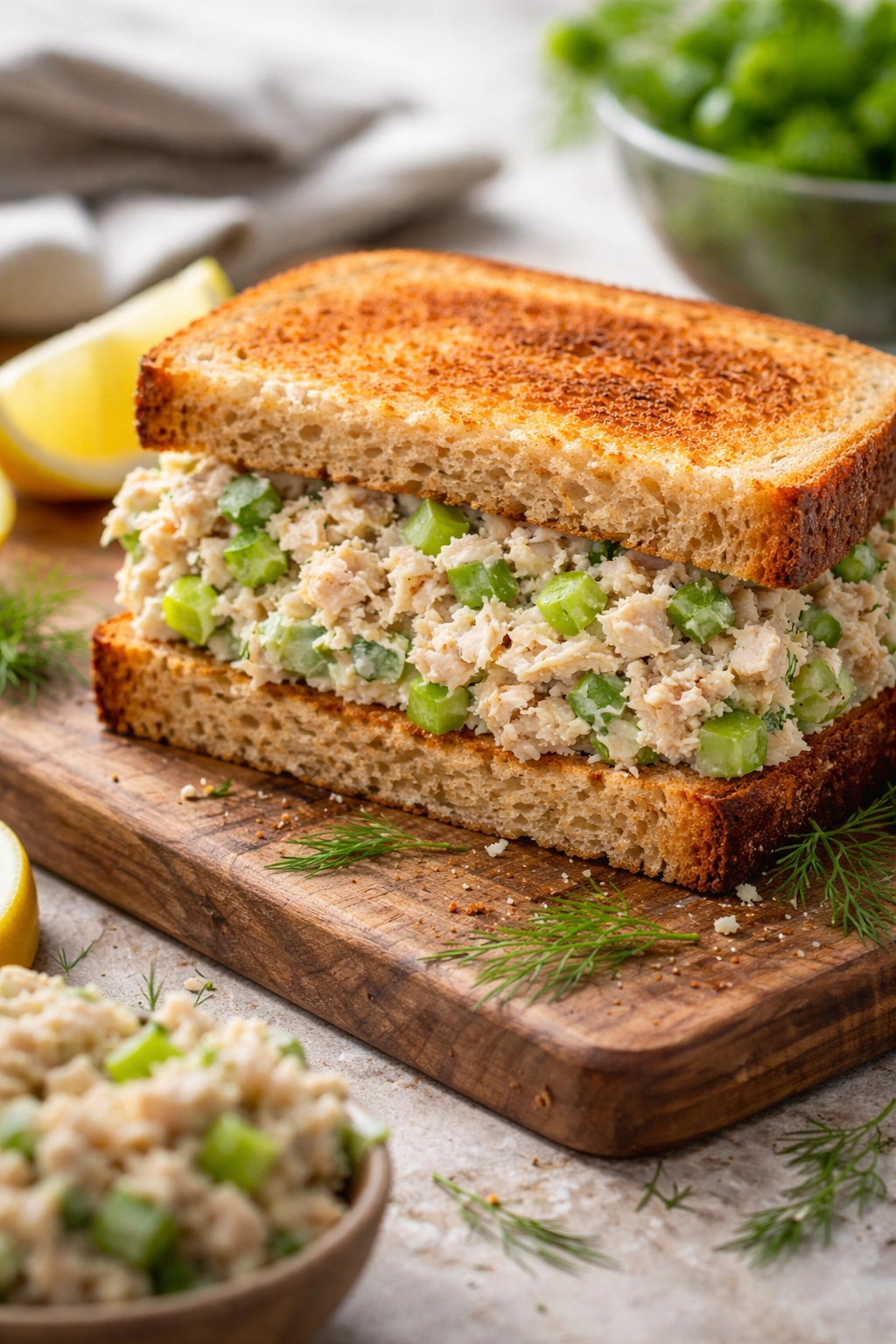
A truly great tuna salad sandwich doesn’t need anything fancy—just quality canned tuna, the right mayo balance, and ingredients that let the fish shine through. This version keeps things simple with fresh dill, crisp celery for texture, and a touch of lemon juice that brightens everything up without overwhelming the palate. The key is draining your canned tuna thoroughly so the sandwich doesn’t turn soggy, and using bread sturdy enough to hold up to the moisture without falling apart.
Why This Works
The combination of mayo and fresh herbs creates a dressing that tastes homemade rather than cafeteria-style, even though mixing happens in a single bowl. Dill has a natural affinity for fish, but the real secret is the lemon juice, which adds acidity that cuts through the richness and makes each bite taste fresher. Celery isn’t just there for crunch—it adds a subtle sweetness that balances the salty tuna perfectly. When you pile this mixture between toasted bread with crisp lettuce and thin tomato slices, you’re creating layers of texture that make the eating experience genuinely enjoyable.
What Makes It Great
- Fresh dill distinguishes this from generic mayo-heavy versions
- Lemon juice adds brightness without overpowering the fish
- Celery provides essential crunch and subtle sweetness
- Works perfectly with whole wheat, sourdough, or ciabatta bread
- Can be made ahead and kept refrigerated for up to three days
Pro tip: If you can’t find fresh dill, fresh chives or tarragon work beautifully. The important thing is that you’re using fresh herbs rather than dried, which makes a noticeable difference in flavor.
2. Smoked Salmon & Cream Cheese Tea Sandwich
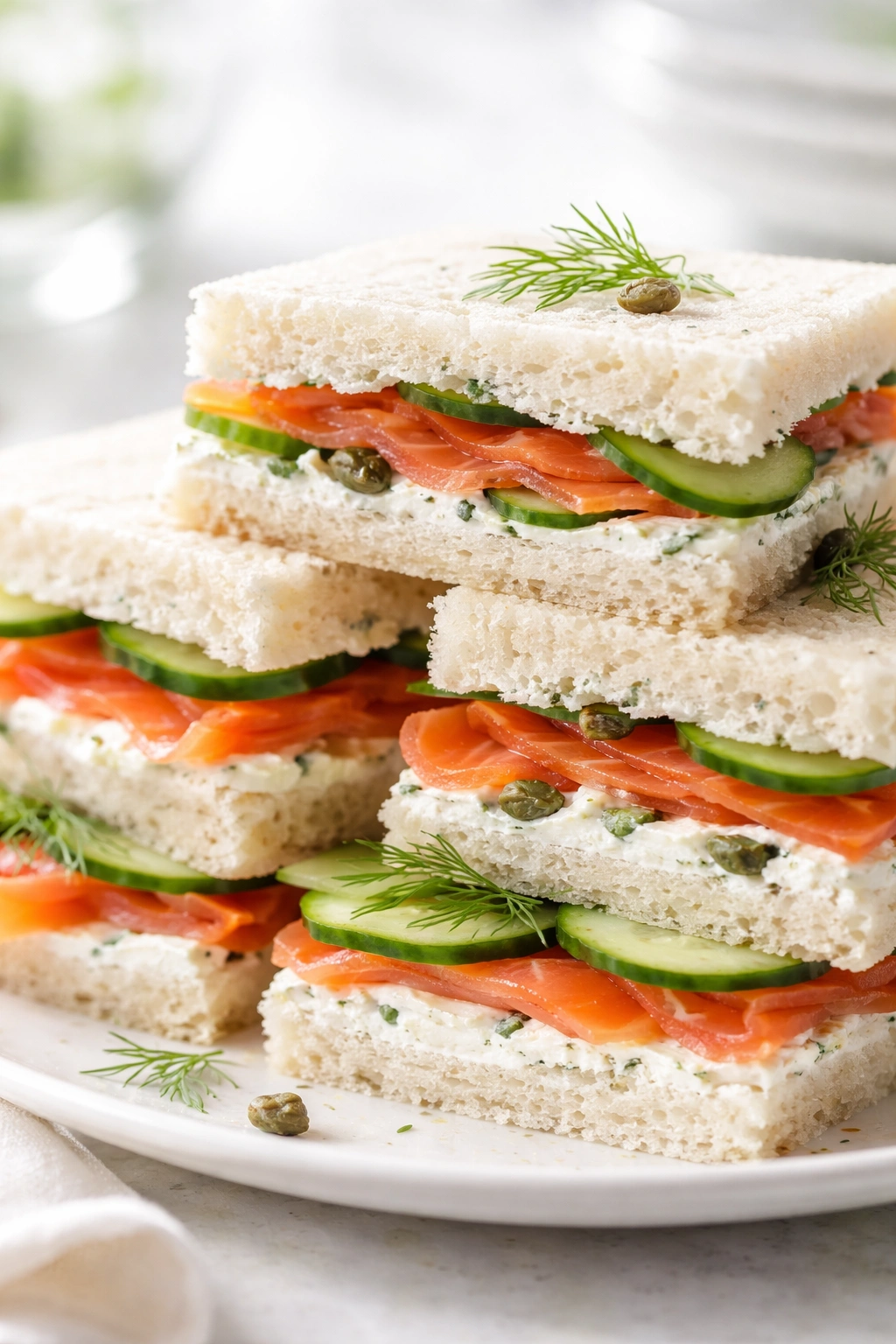
Elegant simplicity defines this sandwich, which tastes like something you’d order at a fancy bistro but actually requires almost no cooking. The magic happens through careful ingredient selection—smoked salmon should be top-quality and thinly sliced, cream cheese should be softened to spreading consistency, and bread should be delicate enough to support the fillings without overpowering them. Add thin cucumber slices, a few capers, and a whisper of fresh dill, and you’ve created something that feels like a special occasion despite its straightforward assembly.
Why It’s Restaurant-Quality
Quality smoked salmon has a naturally buttery, slightly briny flavor that doesn’t need much enhancement. The cream cheese provides richness and a smooth base that keeps the delicate fish from sliding around, while capers add a briny punctuation that elevates everything. The cucumber brings freshness and prevents the sandwich from feeling heavy—a common problem when fish and cream cheese combine without something fresh to balance them. Dill creates a subtle aromatic note that ties all the components together without introducing any competing flavors.
Quick Assembly Guide
- Spread softened cream cheese thinly and evenly across bread
- Layer smoked salmon in overlapping slices to distribute evenly
- Add thinly sliced cucumber (thin slices are crucial—thick ones make the sandwich bulky)
- Scatter a few capers across the salmon
- Top with fresh dill fronds
- Finish with the second slice of bread
Worth knowing: Toast your bread lightly even though this is a cold sandwich—it creates a subtle crispy exterior that contrasts beautifully with the soft fillings and prevents sogginess if you’re eating it an hour after assembly.
3. Chicken Bacon Swiss on Pretzel Bread
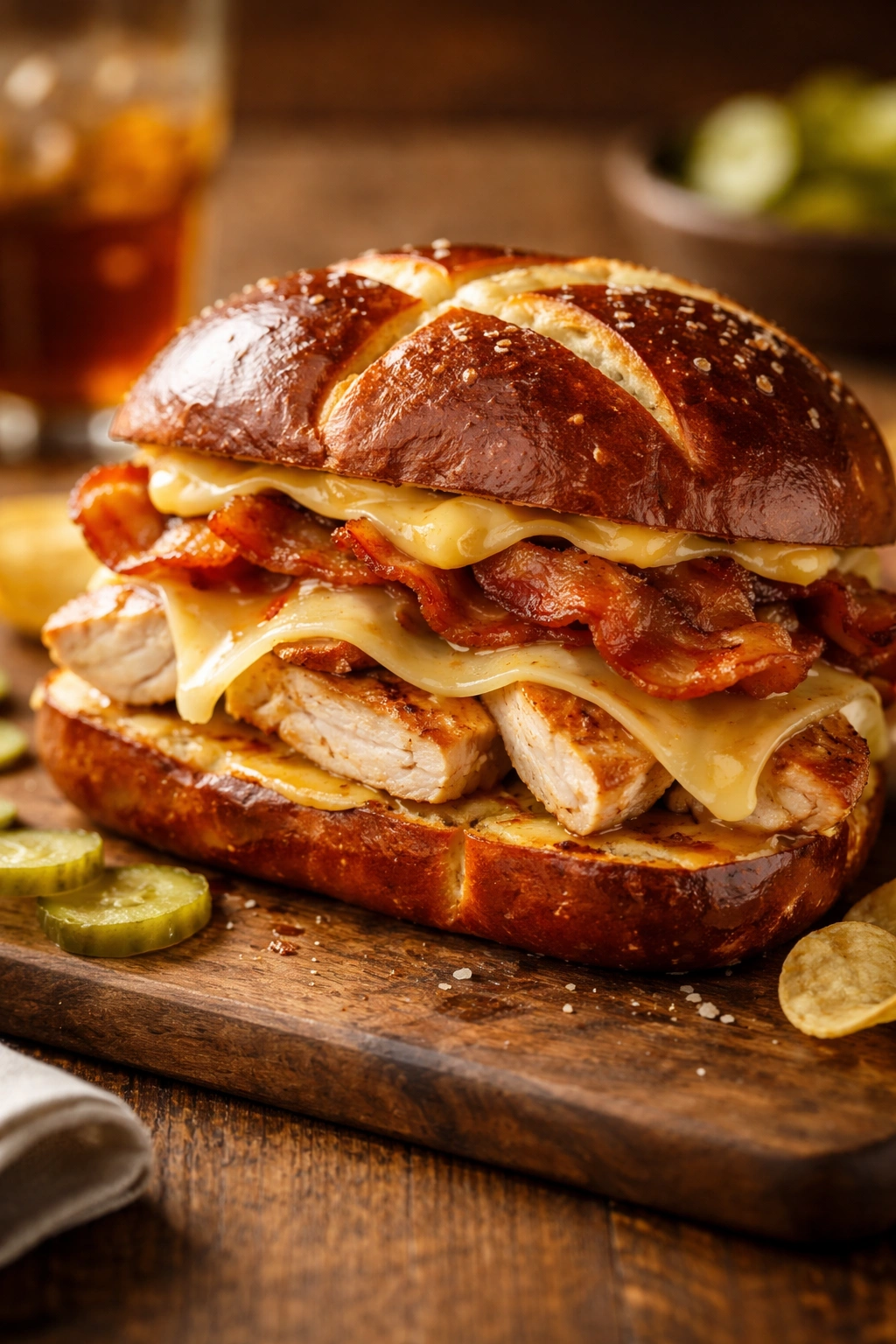
This sandwich walks the line between hearty and elegant, delivering serious satisfaction without feeling heavy. The combination of tender deli chicken, crispy bacon, melted Swiss cheese, and a generous spread of honey mustard creates something that tastes indulgent but comes together in minutes. Pretzel bread adds a subtle sweetness and nuttiness that complements the salty bacon and mild Swiss in ways regular bread simply can’t match.
What Makes It Special
Honey mustard is the unsung hero here—its sweet tang bridges the gap between the salty bacon and the mild cheese, creating a cohesive flavor profile that feels intentional rather than random. The honey provides sweetness, the mustard adds sharpness, and together they create a base that makes the other ingredients taste better. Swiss cheese melts beautifully when the sandwich is toasted, creating a gooey layer that binds everything together. The slight sweetness of pretzel bread echoes the honey mustard, creating flavor harmony throughout.
Why This Combination Works
- Honey mustard adds depth without introducing new ingredients
- Crispy bacon provides textural contrast to soft chicken
- Swiss cheese has a complex, slightly nutty flavor (unlike bland American cheese)
- Pretzel bread’s subtle sweetness complements the savory fillings
- Toast the sandwich for 3-4 minutes to melt the cheese perfectly
Pro tip: If you’re making this for lunch to eat later, assemble it without toasting and toast it just before eating. The bread stays crispier and the cheese melts more evenly than if you toast it early and let it sit.
4. Caprese Sandwich with Sun-Dried Tomato
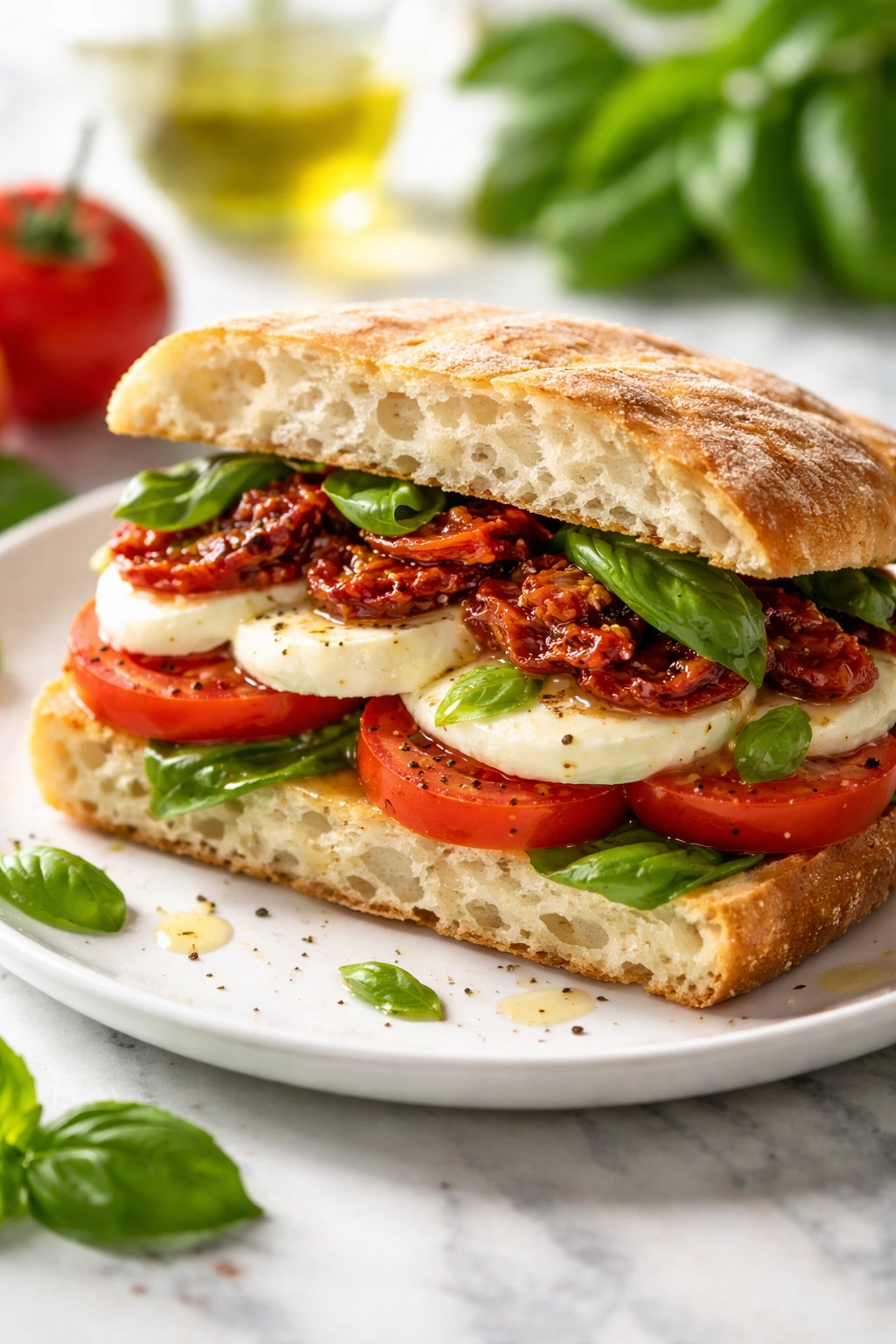
Fresh mozzarella, ripe tomatoes, basil, and balsamic vinegar transform into a beautiful sandwich when assembled with intention. This is peak-season eating—ideally made when tomatoes are at their most flavorful and fragrant basil grows abundantly. The addition of sun-dried tomatoes deepens the tomato flavor and adds a concentrated sweetness that fresh tomatoes sometimes lack on their own, creating a more complex sandwich than you’d expect from four simple ingredients.
The Science Behind the Freshness
Fresh mozzarella is delicate and mild, which means it doesn’t compete with the tomatoes—instead, it provides a creamy, luxurious mouthfeel that lets the vegetable flavors shine. Ripe tomatoes contain more natural sugars and acids, which create the foundation for a genuinely tasty bite. Sun-dried tomatoes add umami—that savory fifth taste—which makes the whole sandwich taste more intentional. Basil contains aromatic oils that become more pronounced when you tear it by hand rather than slice it, so always tear basil instead of cutting it with a knife.
Building It Properly
- Lightly toast bread for a subtle crispy exterior (crucial for preventing sogginess)
- Spread a thin layer of sun-dried tomato paste or chopped sun-dried tomatoes
- Layer fresh mozzarella slices
- Add thin tomato slices (pat them dry first to prevent excess moisture)
- Top with torn fresh basil (tear by hand, don’t cut)
- Drizzle lightly with balsamic vinegar and excellent olive oil
- Finish with black pepper and sea salt
Insider note: If your tomatoes are watery or under-ripe, pat the slices dry with paper towels before assembling. This one simple step prevents the sandwich from becoming soggy and actually lets the tomato flavor come through more clearly.
5. Cuban Sandwich with Pickled Pork
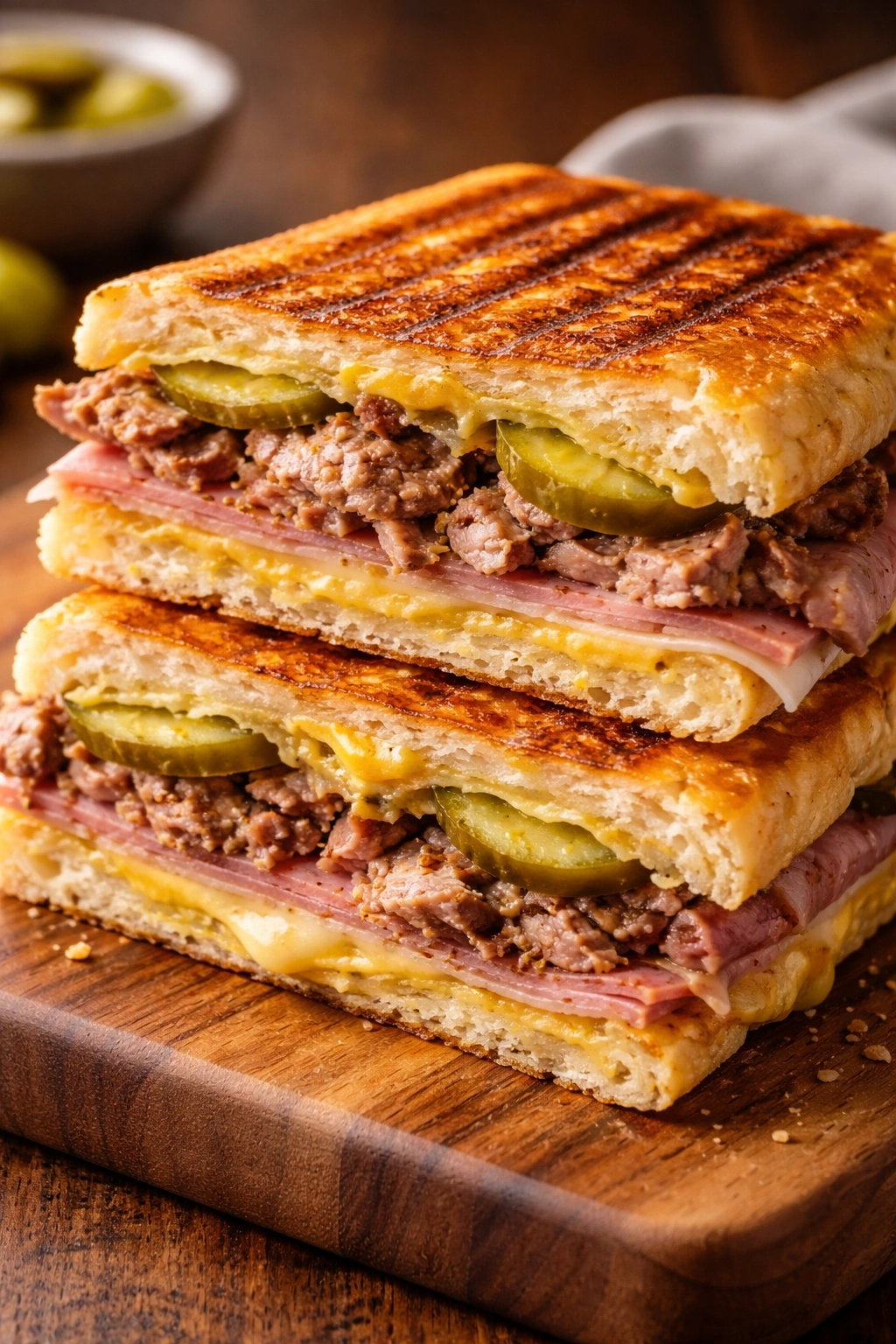
This iconic sandwich brings together ham, pickled pork, Swiss cheese, pickles, and mustard, pressed until everything melds into a cohesive, flavorful whole. The pickled pork is the star here—it’s tender, deeply flavorful, and transforms a simple sandwich into something with real character. This isn’t a quick ten-minute assembly, but it’s absolutely worth making when you want a lunch that feels special or when you’re feeding people you want to impress.
Why Pressing Matters
Pressing the sandwich in a hot skillet serves multiple purposes. The heat melts the Swiss cheese so it acts as a binding agent between all the layers. The pressure compresses everything so you get all the flavors in every bite instead of some bites being mostly bread. The exterior develops a golden-brown crust that’s crispy on the outside while everything inside stays warm and integrated. The mustard begins to meld into the other ingredients rather than sitting as a distinct layer.
The Layering Strategy
- Spread mustard on both slices of bread (yellow or Creole-style, not spicy brown)
- Layer ham slices, then pickled pork, then Swiss cheese, then thin pickle slices
- Heat a cast-iron skillet or panini press over medium-high heat
- Press the sandwich for 3-4 minutes per side until golden brown and cheese melts
- The exterior should be crispy, the cheese should be clearly visible at the edges
Real talk: The sandwich is only as good as the pickled pork, so if you can’t find quality pickled pork at your deli counter, this might not be the sandwich for you. Subbing regular deli roast beef creates an entirely different (and less interesting) sandwich.
6. Chickpea Salad Sandwich for Vegetarians
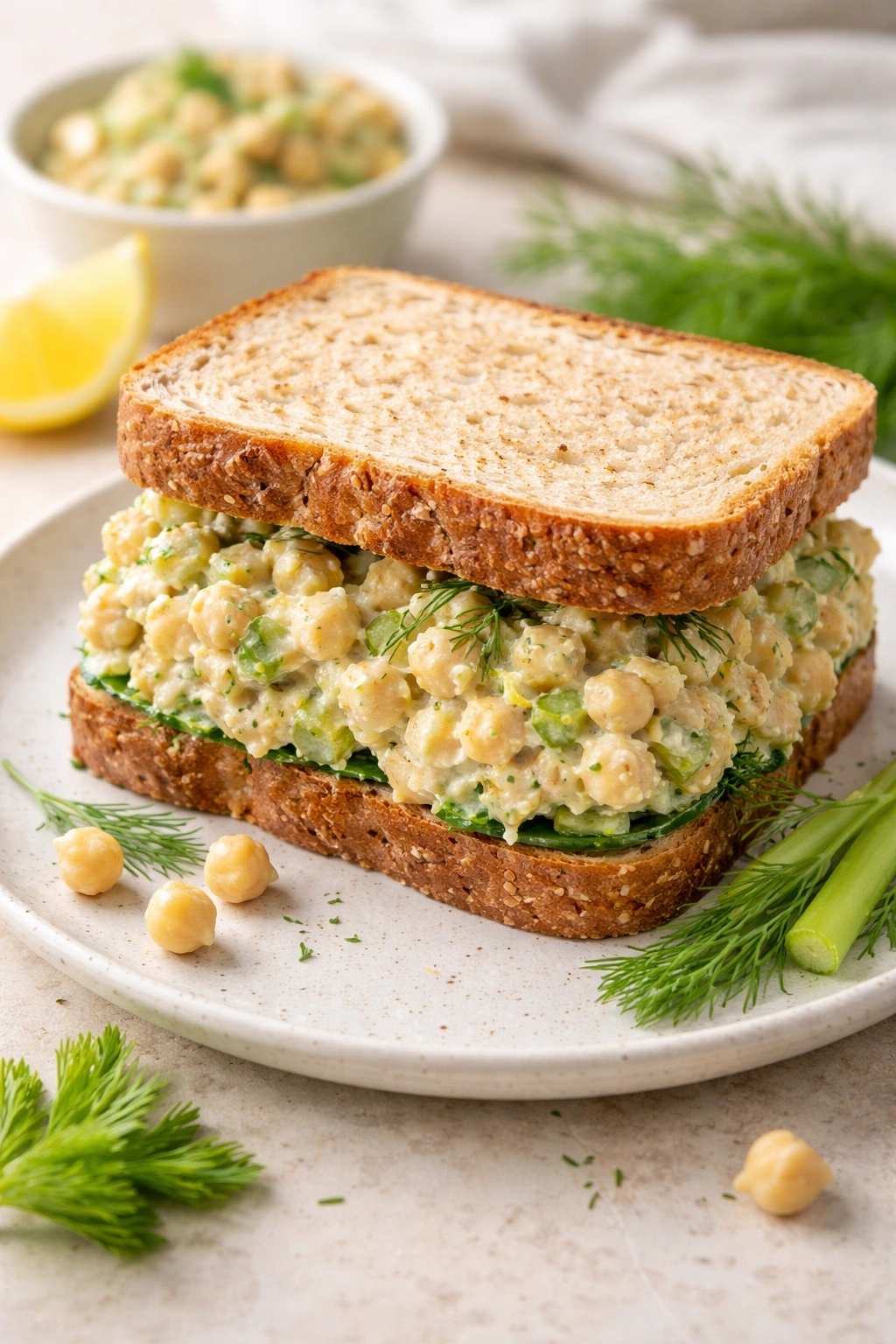
This plant-based alternative to tuna salad proves that vegetarian sandwiches don’t need to feel like substitutions. Mashed chickpeas provide a substantial, protein-rich base with a naturally creamy texture when combined with mayo, mustard, and fresh herbs. Dill, lemon juice, and minced garlic create the same flavor profile as a classic tuna salad, while celery provides the essential crunch that makes the difference between a memorable sandwich and a forgettable one.
Why Chickpeas Work
Chickpeas contain approximately 15 grams of protein per cooked cup, making this a genuinely satisfying meal rather than a light snack. Their mild, slightly nutty flavor works beautifully with the bright herbs and lemon juice. When mashed (not pureed—you want some texture remaining), they create a consistency that’s creamy but not mushy. The fiber content keeps you satisfied longer than most sandwich fillings, making this a genuinely practical lunch choice for busy days.
Building Your Salad
- Drain and rinse one can of chickpeas thoroughly
- Mash with a fork until partially broken down (some whole pieces should remain)
- Fold in diced celery, minced fresh dill, minced garlic, and lemon juice
- Mix in enough mayo to bind everything (usually 2-3 tablespoons)
- Season with Dijon mustard, salt, and black pepper
- Can be made up to three days ahead and kept refrigerated
Worth knowing: The salad actually improves after a few hours as the flavors meld together, making this an excellent sandwich for meal prep. The mixture keeps in the refrigerator for up to four days, so you can make a double batch and use it throughout the week on different bread types.
7. Turkey, Apple & Brie with Fig Jam
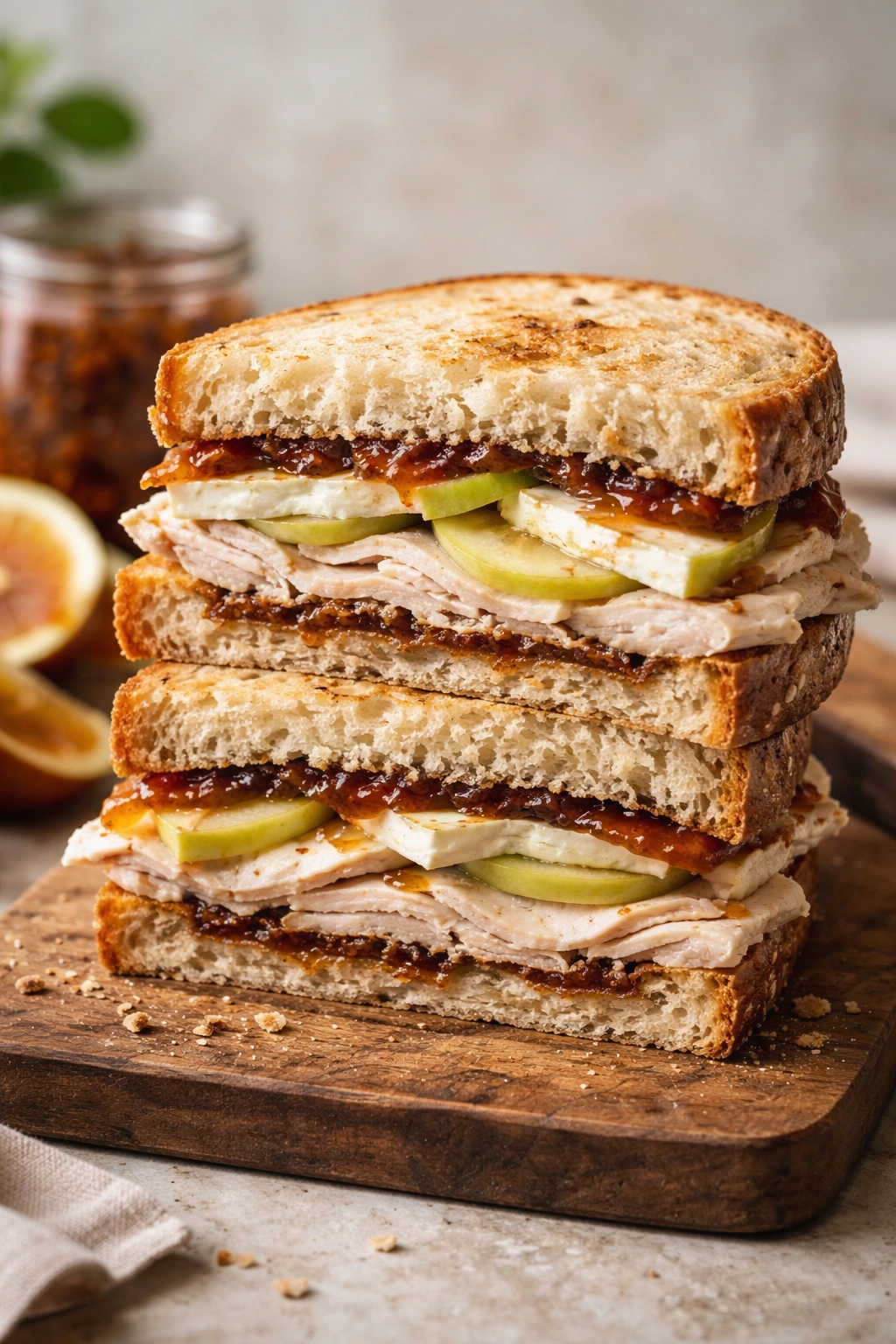
Sweet, savory, creamy, and crunchy all come together in this elegant combination that feels indulgent but contains some genuinely nutritious elements. Turkey provides lean protein, apples offer natural sweetness and crunch, Brie provides richness, and fig jam ties everything together with a sophisticated, slightly tart-sweet note. This is the kind of sandwich that works equally well for a casual lunch or as an appetizer when sliced into quarters for entertaining.
Why This Combination Succeeds
Turkey alone can be bland, but pairing it with a fruit and a rich cheese completely transforms it. Apples provide natural sweetness that prevents the sandwich from feeling savory-heavy, while their crisp texture creates a pleasant contrast to soft Brie. Brie is luxurious and creamy but mild enough not to overpower the other ingredients. Fig jam provides a concentrated fruit flavor with subtle earthy notes that complement both the poultry and the cheese. The whole thing is greater than the sum of its parts.
Assembly for Maximum Impact
- Choose bread that can support the moisture without falling apart (ciabatta, sourdough, or thick focaccia work beautifully)
- Spread a thin layer of fig jam on each slice
- Layer sliced turkey in an even, overlapping pattern
- Add thin apple slices (toss them briefly with a little lemon juice to prevent browning)
- Place Brie slices on top
- Some people lightly toast this sandwich to warm the Brie slightly—it’s delicious either way
Pro tip: If you can’t find fresh figs or good quality fig jam, apricot jam or even honey can work, though they’ll create a slightly different flavor profile. The important thing is that sweet element that bridges the gap between turkey and cheese.
8. Grilled Cheese with Tomato & Basil
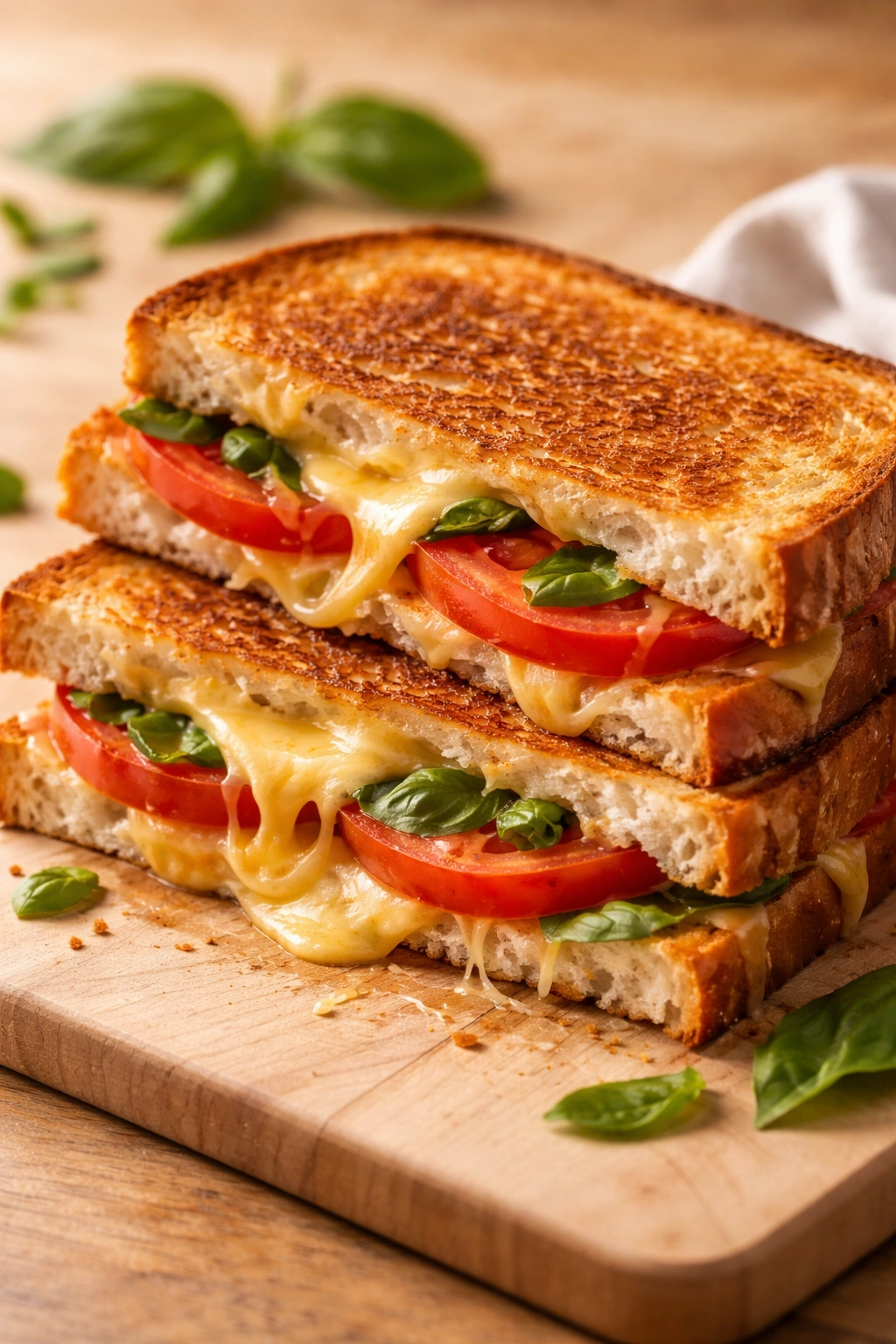
An elevated take on childhood comfort food, this grilled cheese proves that simple doesn’t mean boring. The combination of melted cheese (a blend of sharp cheddar and mozzarella works beautifully), fresh tomato slices, and torn basil transforms regular grilled cheese into something with real sophistication. The key is using actual butter, controlling the heat so the bread browns while the cheese melts, and assembling it properly so every bite contains all the elements.
The Grilled Cheese Technique
Use butter—not mayo, not oil, but actual butter—to create the best golden-brown crust. Spread softened butter on the outside of each bread slice before grilling. Heat your skillet over medium (not high) heat, which allows the cheese time to melt before the bread burns. A cast-iron skillet distributes heat evenly and creates better browning than non-stick cookware. The cheese should be clearly melted and starting to ooze out of the sides when you flip, which takes about 3-4 minutes per side depending on your bread thickness and stovetop.
Why Cheese Blending Matters
- Sharp cheddar provides bold flavor and good melting properties
- Mozzarella adds stretchy, gooey texture
- Together they create complexity that single-cheese sandwiches lack
- Each cheese melts at a slightly different temperature, creating texture variation
Insider note: Pat your tomato slices dry with paper towels before assembling. Excess moisture is the enemy of a crispy exterior, and this one small step prevents the bread from becoming soggy. Fresh basil should be torn by hand moments before assembly so the aromatic oils are still present.
9. Roast Beef with Horseradish Cream on Rye
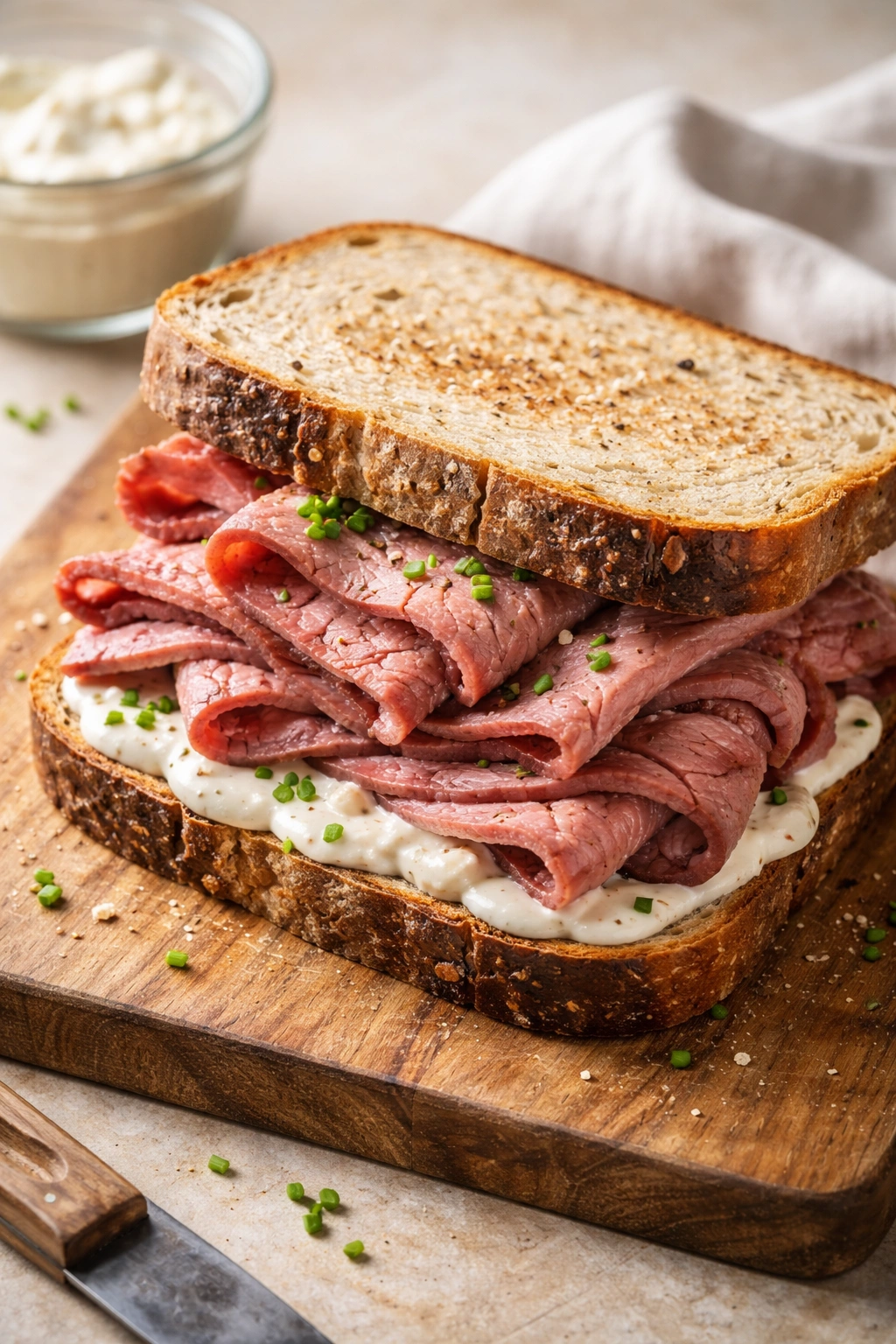
For the person who wants something substantial, flavorful, and genuinely exciting at lunchtime, this sandwich delivers. Quality roast beef from the deli counter (not the pre-packaged stuff) is crucial—ask for it sliced thick rather than paper-thin, which prevents it from becoming tough when it cools. The horseradish cream provides a spicy punch that wakes up the beef without being overwhelming, while rye bread adds an earthy, slightly tangy undertone that complements the whole experience.
Why Horseradish Matters
Horseradish contains volatile oils that create a subtle heat without the capsaicin burn of chili peppers. It’s sharp and pungent in a way that cuts through rich beef beautifully. When whipped into cream with a little Dijon mustard and lemon juice, it becomes a sophisticated condiment rather than something that’ll overpower your palate. The creaminess tempers the heat while the acidity from both the horseradish and the lemon keeps the sandwich from feeling heavy despite the beef and bread.
Building It Right
- Toast rye bread for structural integrity and to warm it slightly
- Spread horseradish cream on both slices
- Layer thick-cut roast beef in overlapping slices (about 4-5 ounces per sandwich)
- Add thin red onion slices if you like a sharp bite
- Include a few fresh arugula leaves for peppery crunch
- Some people add a thin slice of aged cheddar or Swiss—it’s excellent but optional
Real talk: The quality of the roast beef genuinely matters here. Pre-packaged roast beef from the grocery store shelf will be tough and disappointing. Spend the extra money to have it sliced fresh at the deli counter, and ask for it thicker than the paper-thin standard. The difference in eating experience justifies the expense.
10. Pulled Pork with Coleslaw on a Soft Roll
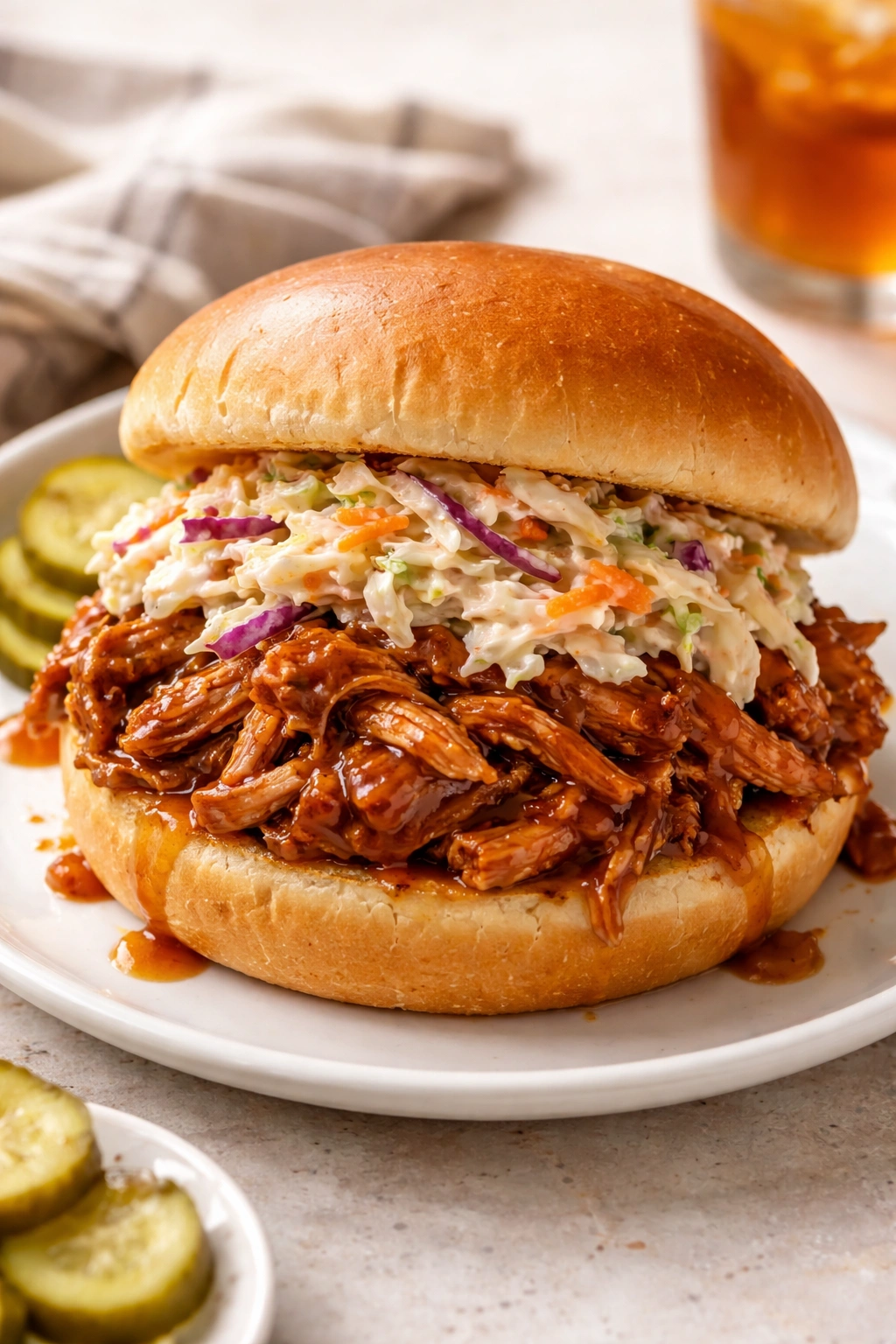
Slow-cooked pulled pork becomes incredibly tender and absorbs whatever sauce you pair it with, making it endlessly adaptable. This version uses a tangy vinegar-based sauce that’s balanced enough to let the pork flavor shine while providing enough tang to prevent the sandwich from feeling one-dimensional. Creamy coleslaw adds freshness, crunch, and cooling contrast to the warm, rich pork, creating a sandwich that’s simultaneously comforting and balanced.
Why This Sandwich Satisfies
Pork shoulder becomes melt-in-your-mouth tender when braised low and slow, which means you’re eating something genuinely delicious rather than something that just feels hearty. The vinegar-based sauce is acidic enough to cut through the fat content while adding complexity. Coleslaw provides textural contrast and freshness that prevents the sandwich from feeling heavy despite the richness of the meat. The soft roll gives way easily, letting you focus on the flavors rather than struggling to eat something that requires both hands and determination.
Making It Ahead
This is actually one of the best sandwiches for advance preparation. You can shred the pork the night before and refrigerate it with the sauce—the flavors actually improve as they meld together overnight. The coleslaw can be made a few hours ahead and kept separate, then added just before eating to prevent sogginess. Assemble the whole sandwich right before eating for the best texture, though if you’re transporting it, you can assemble it and wrap it tightly; the paper will help hold it together and the flavors will continue melding during your commute.
The Coleslaw Component
- Shred green and purple cabbage for visual interest and slightly different flavors
- Dress with a simple mayo-based slaw (mayo, vinegar, a little sugar, salt, and pepper)
- Make it slightly creamier than vinegar-heavy slaws because the pork sauce already provides tang
- The slaw should be crisp and fresh, not mushy—dress it just a few hours before eating
Worth knowing: You can make this pulled pork in a slow cooker, Instant Pot, or traditional braising method. The slow cooker version is most convenient—just brown the pork shoulder, add it to the cooker with your sauce, and let it go for 8 hours on low. The meat shreds easily and is uniformly tender throughout.
Final Thoughts
The best sandwich is the one you’ll actually look forward to eating, which means it needs to hit some combination of delicious, satisfying, and practical. Whether you’re drawn to the bright simplicity of a caprese sandwich, the comforting richness of grilled cheese, or the substantial satisfaction of pulled pork on a soft roll, these ten recipes offer something for every mood and occasion. The beautiful thing about sandwich-making is that it requires minimal cooking skills and almost no special equipment—just an understanding of how flavors, textures, and ingredients work together.
Start with whichever sandwich calls to you, make it a few times until you understand how the components interact, then feel free to adapt it based on what you have available and what your palate is craving. Add your own herbs, try different cheeses, experiment with bread varieties. These recipes are frameworks for sandwich success, not rigid rules. The more you make sandwiches, the more you’ll develop intuition for what works together and what doesn’t. That intuition—built on actual experience rather than cookbook instructions—is what separates someone who makes sandwiches from someone who creates them. Once you reach that point, lunch stops being something you dread and starts being something you anticipate.
