



Herb-Roasted Turkey Breast for Any Occasion
When you mention roasting turkey, most people picture Thanksgiving morning chaos—dragging an enormous bird from the freezer, calculating obscure thawing formulas, and spending the entire day tethered to the oven. But here’s what nobody talks about: you don’t need a massive turkey to create that golden, herb-infused masterpiece that makes everyone’s mouth water. A bone-in, skin-on turkey breast delivers every bit of the magic with a fraction of the stress, and it’s honestly become my go-to centerpiece for holidays, special dinners, and even lazy weeknight cooking.
This isn’t a second-rate option or some minimalist compromise. When you roast a turkey breast properly—with a silky herb butter worked under the skin, aromatics in the pan, and careful temperature monitoring—you get meat that’s impossibly tender and juicy, with crackling golden skin that rivals anything you’d get from a whole bird. The best part? It’s done in less than two and a half hours, leaving you time to actually enjoy your guests instead of stress-cooking side dishes.
Whether you’re hosting a small family gathering, planning an intimate holiday meal, or simply want restaurant-quality turkey without the theater of a full bird, this recipe will become your new standard. It’s refined enough to impress but simple enough that even a first-time turkey roaster can pull it off with confidence. I’ve made this more times than I can count, and I’ve learned exactly what makes the difference between dry, bland turkey and the kind that keeps people talking long after dessert.
Why Turkey Breast Is the Smarter Choice
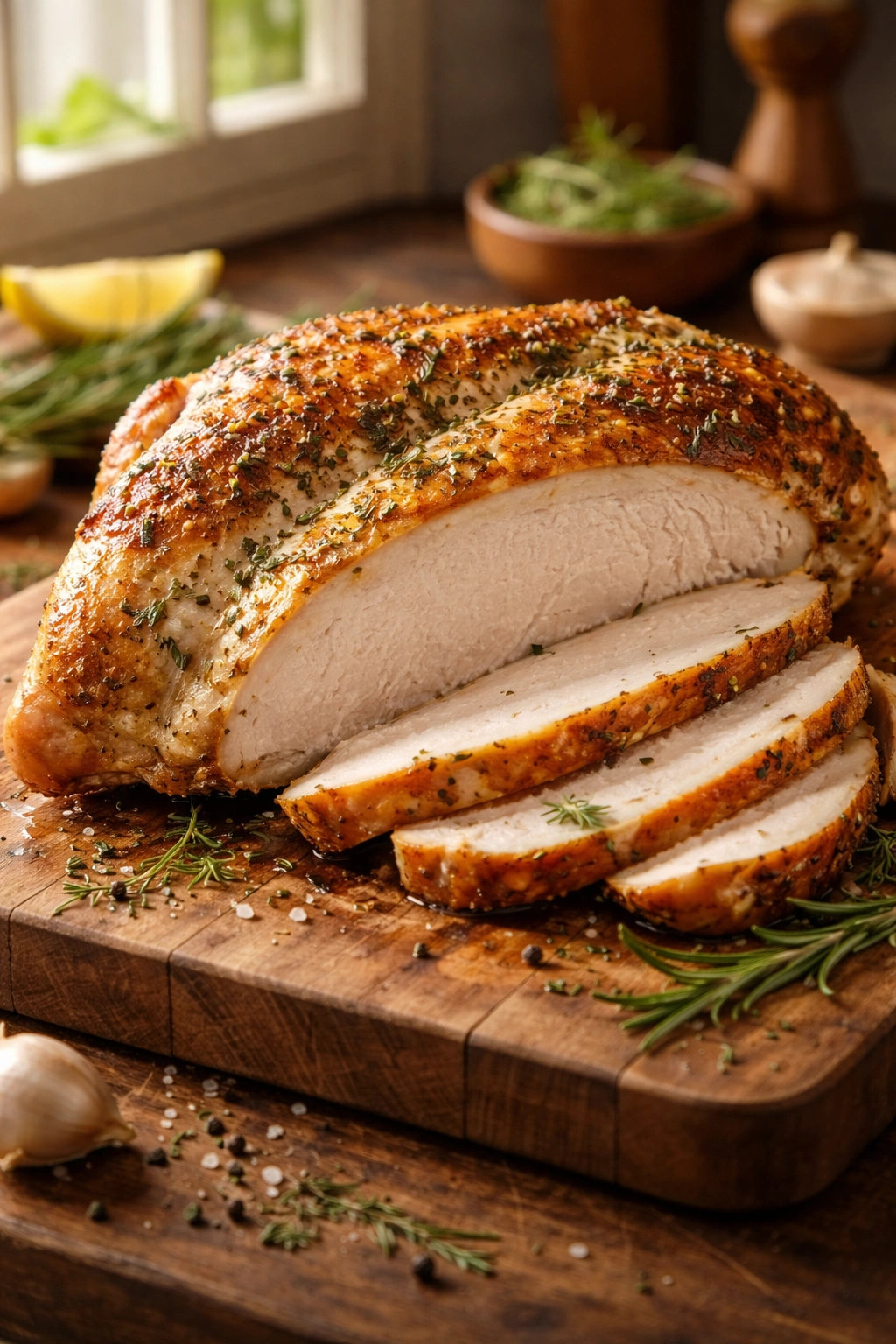
The first time I made turkey breast instead of a whole turkey, I thought I was just being practical. Turns out, I was onto something far better. A whole turkey presents a genuine cooking challenge: the dark meat on the thighs and legs needs longer cooking than the delicate white breast meat, so by the time you’ve cooked the legs through, the breast has often turned into something resembling cardboard. Turkey breast sidesteps this problem entirely because you’re cooking one uniform piece of meat with the same thickness throughout.
This means it cooks evenly and quickly. A whole turkey might take five or six hours; a turkey breast is ready in roughly half that time. You’re also working with just white meat, which is naturally more lean and benefits beautifully from the herb butter and careful roasting technique. If your family leans toward white meat anyway—and statistically, many people do—you’re not wasting time and oven space on portions nobody’s eating.
There’s another advantage that shouldn’t be underestimated: yield efficiency. A bone-in turkey breast of 6 to 7 pounds is maybe 25 percent bone and 75 percent pure meat. That’s incredibly efficient when you’re calculating portions. Plan on roughly one pound of bone-in turkey breast per person, or 1.5 pounds if you want substantial leftovers for sandwiches and soups. There’s virtually no waste, and the leftover meat transforms beautifully into dozens of other dishes throughout the week.
Selecting and Buying the Right Turkey Breast
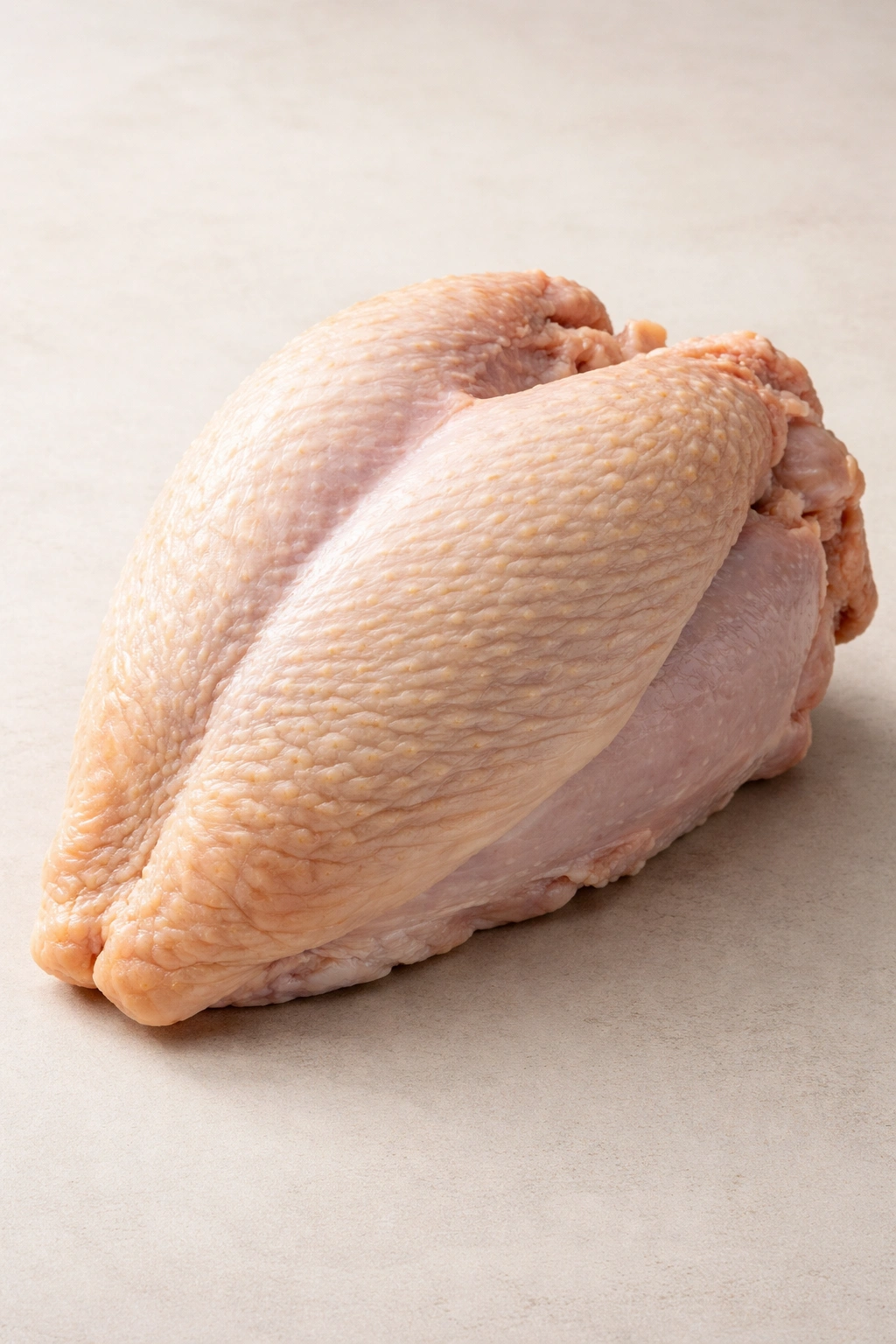
The quality of your finished turkey depends entirely on what you bring home from the market, so it’s worth understanding what you’re looking for. A whole, bone-in, skin-on turkey breast is the gold standard. The bone provides structure and insulation, keeping the meat moist as it roasts, while the skin crisps up beautifully in the oven and protects the delicate meat underneath. Don’t accept boneless turkey breast for this recipe—boneless roasts are leaner, cook faster, and tend to dry out before developing that gorgeous golden exterior.
Most grocery stores stock whole turkey breasts primarily around major holidays like Thanksgiving and Christmas, though Easter is becoming increasingly popular for turkey. If you can’t find them on the shelf, don’t hesitate to ask the butcher. Many butchers are happy to break down a whole turkey for you, setting aside the breast and giving you the legs, wings, and giblets separately. This is actually a win for your grocery budget—whole turkeys are often cheaper per pound than individual parts.
A properly sized turkey breast weighs between 6 and 7 pounds. This size serves 6 to 8 people generously with leftovers, or 4 to 5 if you really want plenty of seconds and sandwich material. Some markets sell half-breasts (around 3 to 3.5 pounds), which work beautifully if you’re cooking for a smaller crowd—just use the same cooking technique and reduce all the seasonings slightly.
Pay close attention to the label. If your turkey breast is marked “kosher,” “self-basting,” or “brine-injected,” it’s already had salt or flavorings added. In these cases, reduce the salt in the herb butter and be conservative with additional seasoning, or your final dish will taste oversalted. Natural turkeys haven’t been pre-treated, giving you complete control over seasoning. Most turkey breasts you’ll find are frozen, which is absolutely fine—just allow proper thawing time, typically about 4 hours per pound in the refrigerator (so a 7-pound breast needs roughly 28 hours, or just over a full day).
Understanding Why Herb Butter Changes Everything
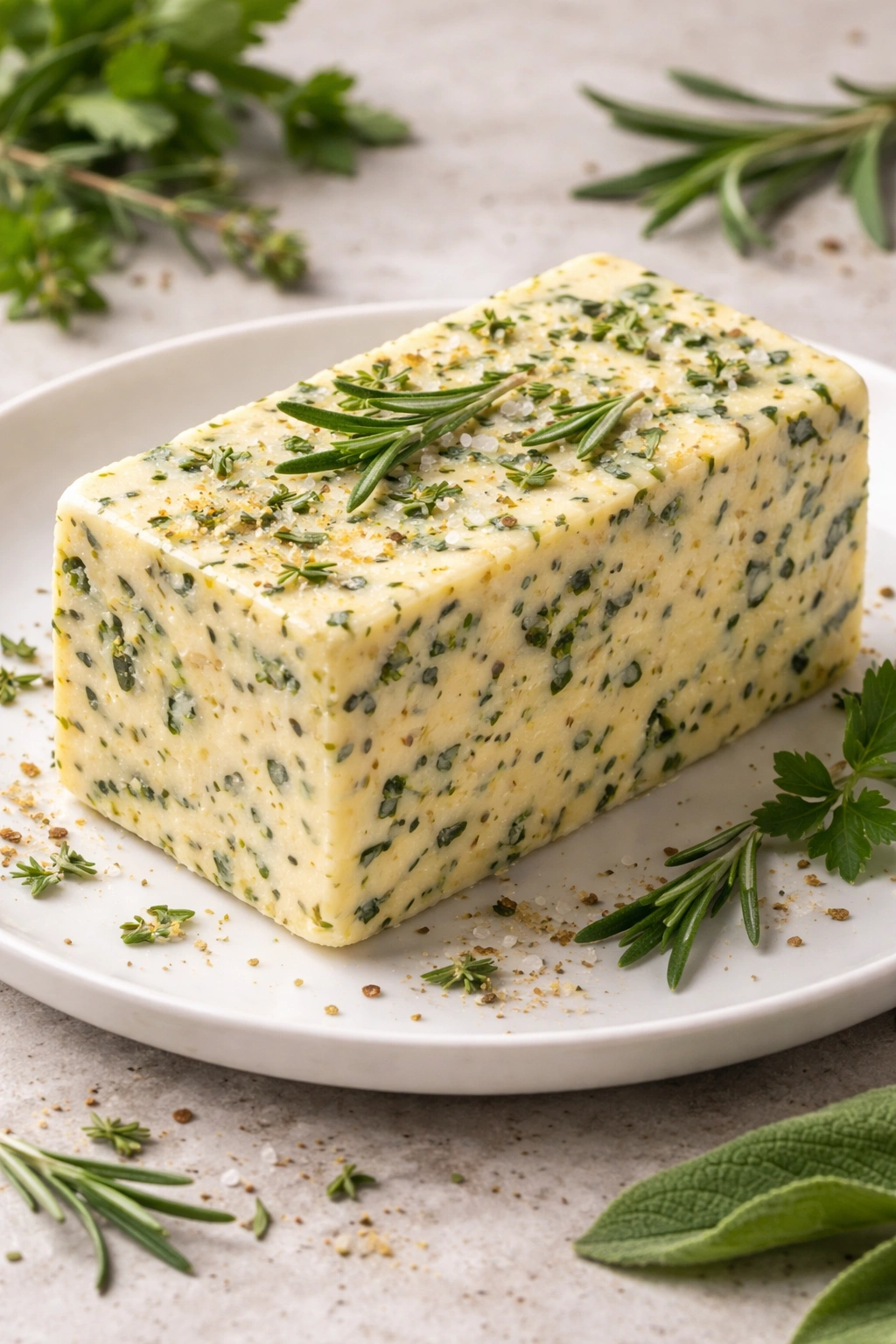
The secret weapon in every truly exceptional roasted turkey is herb compound butter. This isn’t some fancy French technique—it’s simply softened butter mixed with fresh herbs, garlic, and seasonings, then worked both under and over the turkey skin. This approach solves multiple problems at once. Fresh herbs applied dry to the outside of the turkey tend to burn during the long roasting time. But when they’re suspended in butter and protected partially by the turkey skin, they infuse the meat with aromatic flavor while staying vibrant and fragrant.
The butter does other critical work too. It bastes the turkey from the inside, keeping the meat tender and moist. As it melts beneath the skin during roasting, it carries herb flavor directly into the meat fiber rather than relying on surface seasoning alone. The butter also helps the skin crisp and brown beautifully, developing that golden color and slight crispness that makes people take that first perfect slice and sigh with contentment.
The specific herbs matter less than you’d think—what matters is freshness and the balance of flavors. The traditional combination of rosemary, sage, thyme, and parsley works because they’re robust herbs with earthy, slightly peppery notes that echo autumn and special occasions. Rosemary is piney and strong; thyme is subtle and floral; sage is peppery and warm; parsley adds a fresh green note that prevents the blend from becoming too heavy. Together, they create a harmonious backdrop that lets the turkey’s natural flavor shine rather than overwhelming it.
Garlic and lemon zest are equally important additions. Fresh garlic (or garlic powder if you prefer a gentler flavor) adds savory depth, while lemon zest brings brightness and acidity that cuts through the richness of the butter and helps the flavors feel fresh rather than heavy. Some recipes add Dijon mustard, which contributes complexity and helps the butter adhere to the skin—this is a smart addition if you enjoy mustard, but it’s entirely optional.
The Critical Importance of Proper Temperature Control
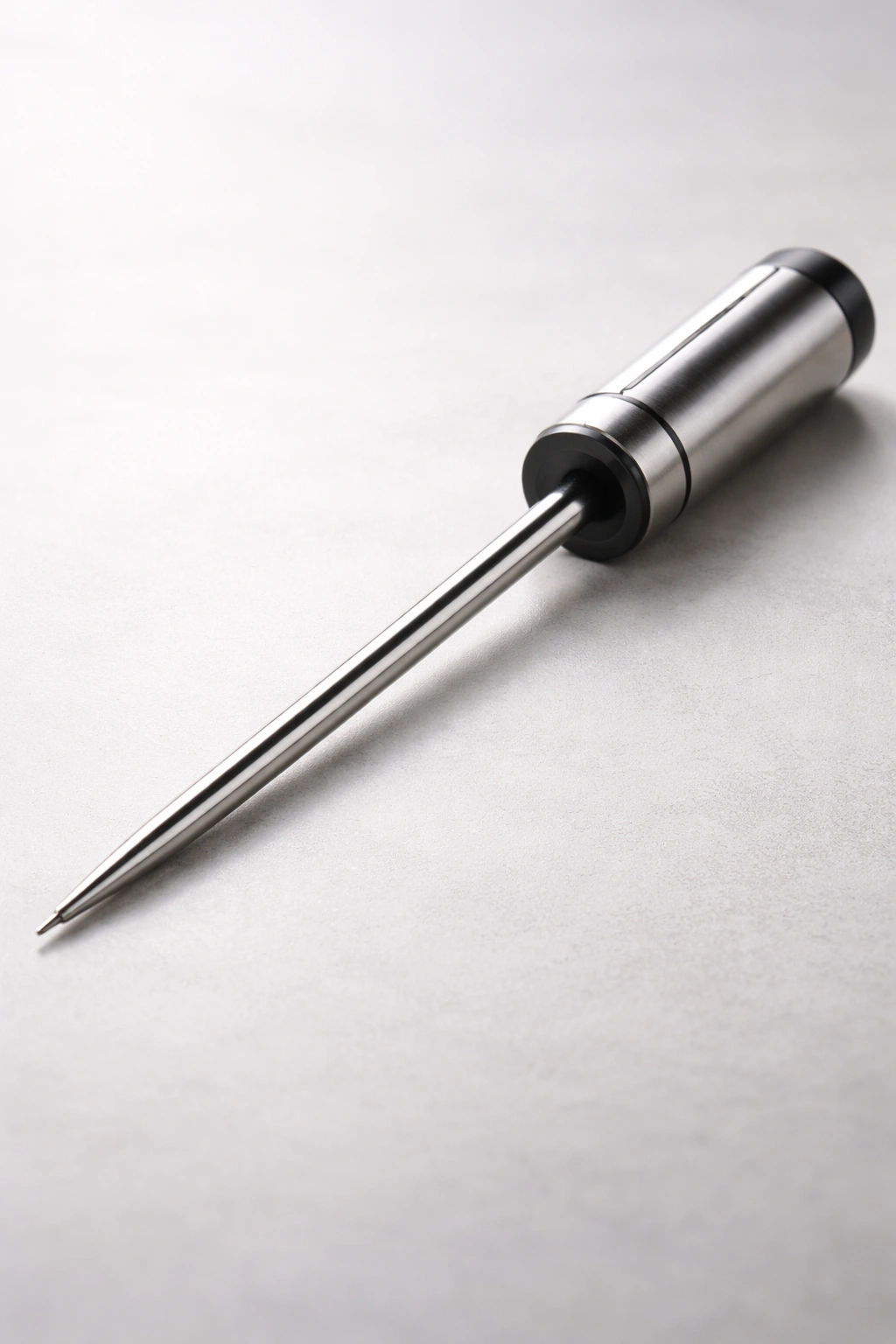
Here’s what separates restaurant-quality roasted turkey from the dry, overcooked version sitting on countless dinner tables: a meat thermometer and the discipline to use it. This isn’t optional; it’s the single most important factor determining whether your turkey comes out juicy or sad.
Turkey breast meat is safely cooked at 165°F, as measured in the thickest part of the meat away from the bone. But here’s the nuance that matters: turkey continues cooking slightly as it rests after leaving the oven (called carryover cooking). To account for this, many experienced cooks remove turkey breast when it hits 160°F on the thermometer. During the 15 to 20 minute resting period, the temperature naturally climbs to 165°F, and because you’re not cooking it any further in the oven, the meat stays more tender and juicy.
An instant-read thermometer is a tiny investment that pays enormous dividends. Insert it into the thickest part of the breast, being careful not to touch bone (bone conducts heat and will give you a false reading). Check in several spots to ensure even cooking. If you find one area is cooking faster than another, you can tent that part loosely with foil to slow its browning while the rest of the breast catches up.
Preparing Your Turkey Breast for Roasting Success
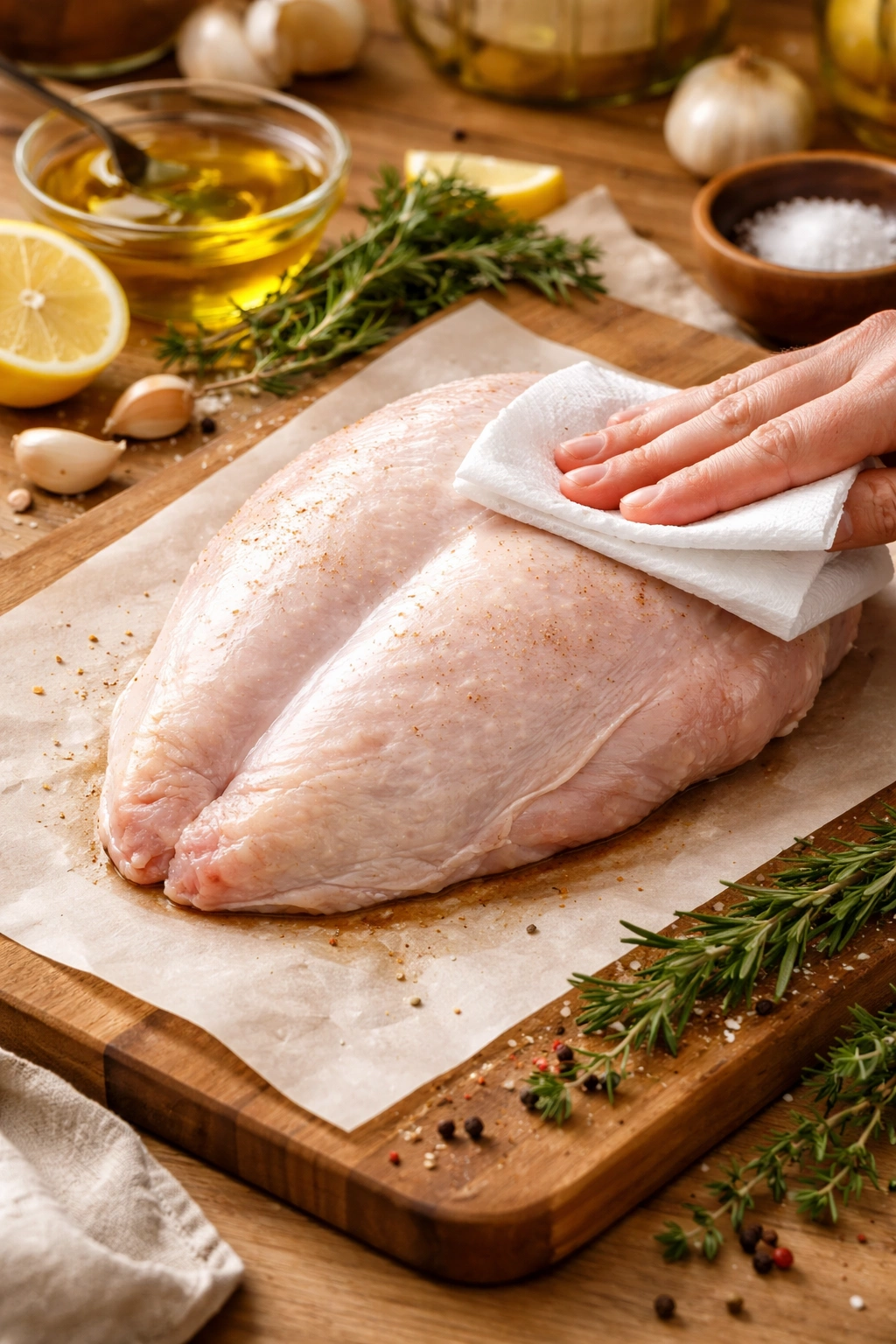
Begin with a completely thawed turkey breast if it’s been frozen. Thawing in the refrigerator is the safest method and takes roughly 4 hours per pound. You can technically use a cold-water thawing method (changing the water frequently), which takes about 30 minutes per pound, but it requires more attention and is easier to mess up.
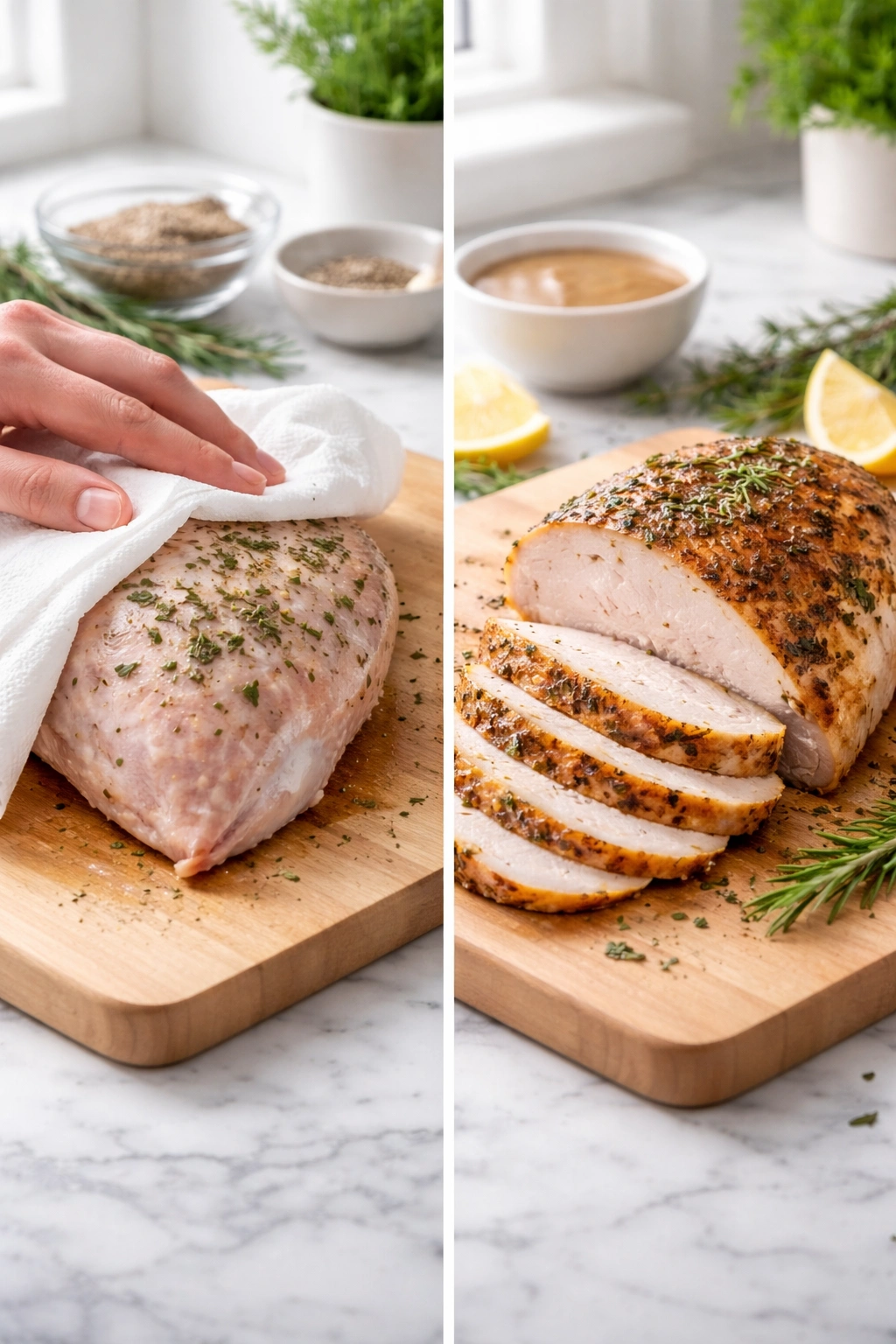
Once thawed, pat the turkey breast thoroughly dry with paper towels. This step genuinely matters more than most people realize. Moisture on the skin prevents browning and creates steam instead of that dry heat that develops a golden crust. Don’t be shy—really dry it well, getting into the crevices where skin meets bone.
Remove the turkey from the refrigerator 45 minutes to an hour before roasting. Bringing meat closer to room temperature helps it cook more evenly. Cold meat from the fridge cooks unevenly, with the outer edges potentially overcooking before the center reaches the proper temperature. You’re not trying to make it warm, just slightly cooler than ice-cold, which is achievable with this brief rest on the counter.
Prepare your roasting pan with a wire rack. The rack lifts the turkey above the bottom of the pan, allowing air to circulate underneath and promoting even browning all around. If you don’t have a roasting pan with a rack, place a wire cooling rack (the kind you use for baking) inside a sturdy baking dish, or improvise by crumpling foil into a long log that the turkey can rest on.
When and How Long to Roast
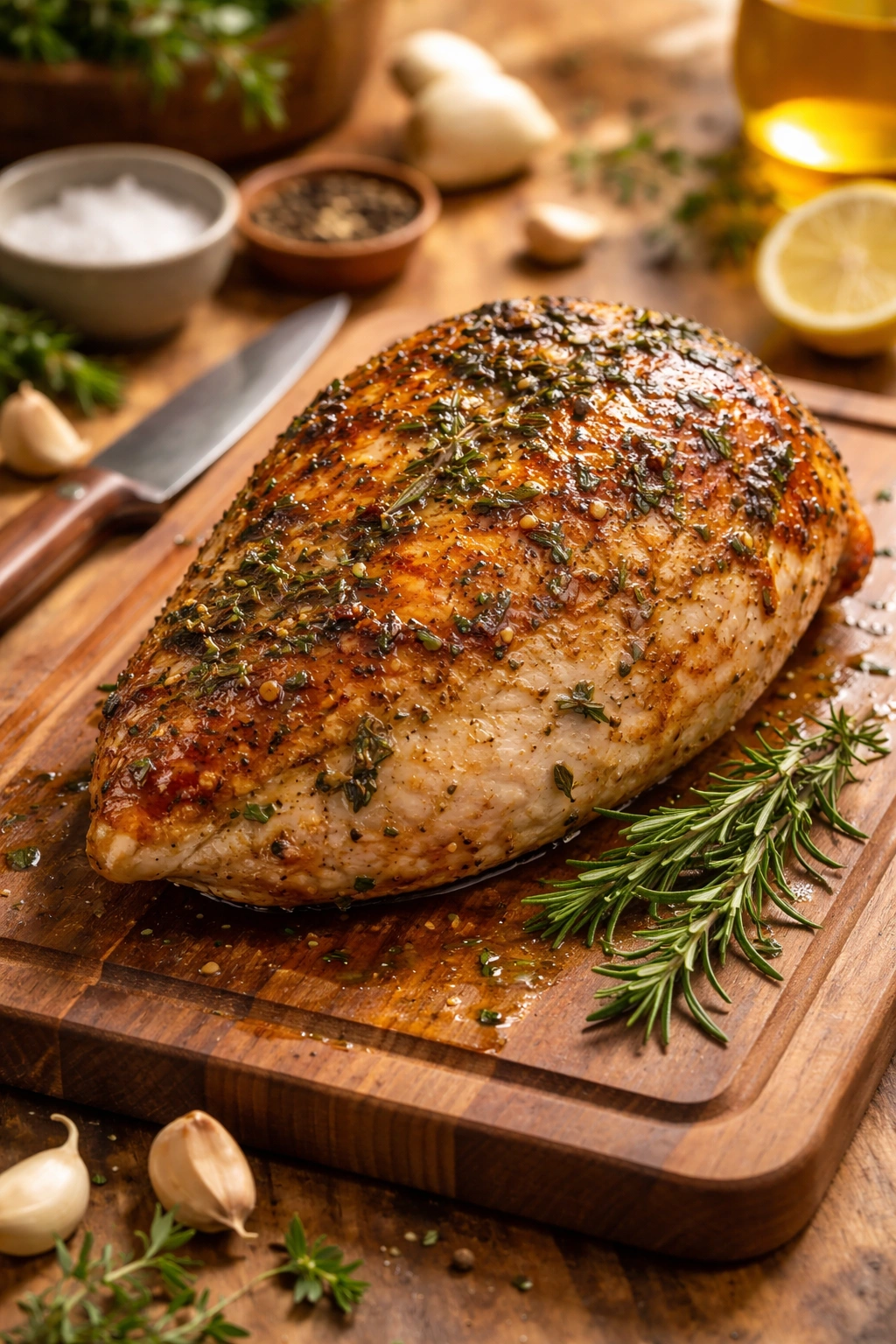
Yield: Serves 6 to 8 | 4 to 5 with generous leftovers
Prep Time: 25 minutes (active preparation)
Cook Time: 1 hour 30 minutes to 2 hours 15 minutes (depending on size and oven)
Total Time: 2 hours 45 minutes to 3 hours 15 minutes (including resting)
Difficulty: Beginner — The steps are straightforward and mistakes are forgiving if you use a meat thermometer to avoid overcooking.
Ingredient List for Herb-Roasted Turkey Breast
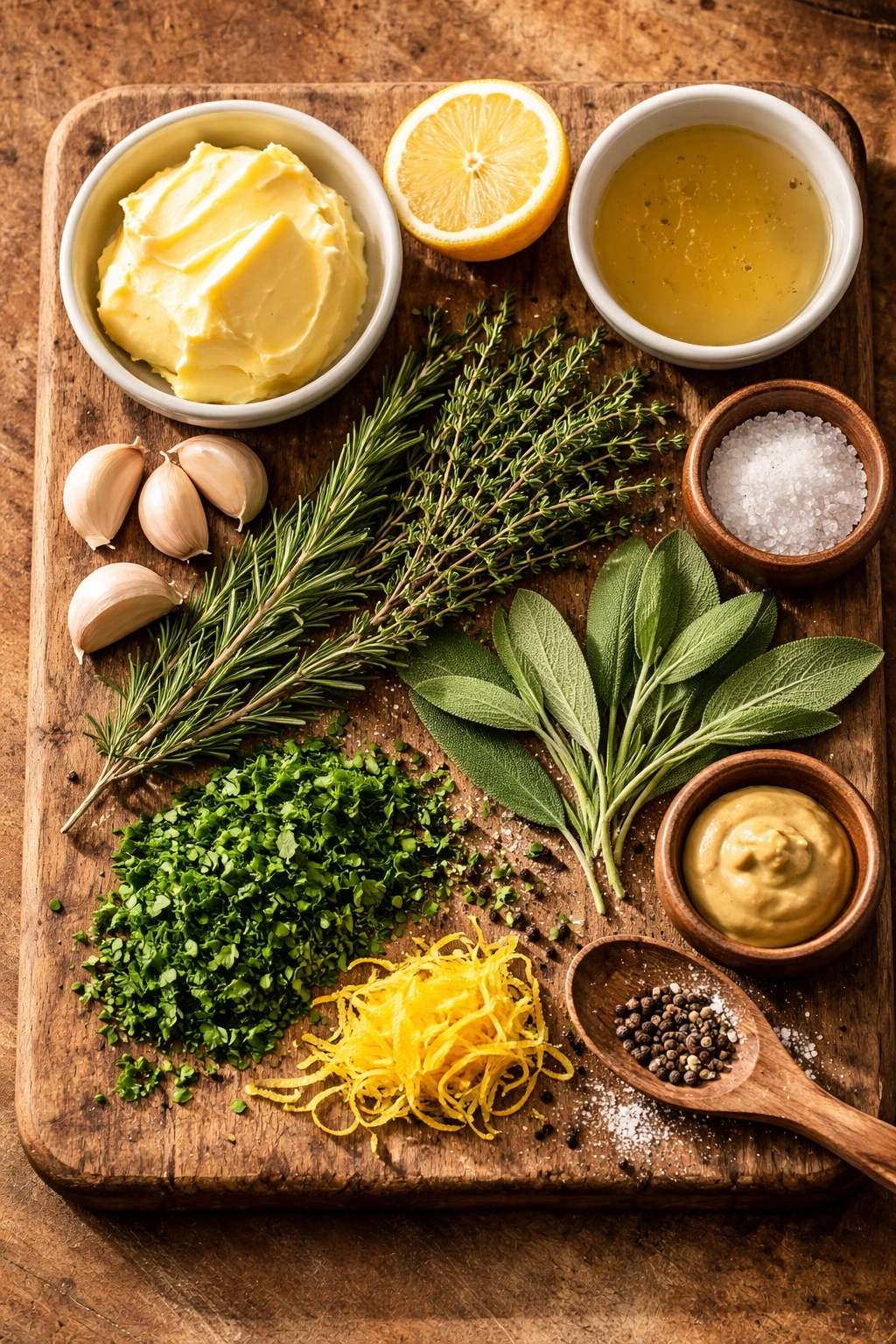
For the Turkey:
- 1 whole bone-in, skin-on turkey breast (6 to 7 pounds, thawed if frozen)
- ½ cup unsalted butter, softened to room temperature
- 4 to 5 cloves fresh garlic, minced (or 1½ teaspoons garlic powder for a gentler flavor)
- 1½ tablespoons chopped fresh rosemary leaves
- 1½ tablespoons chopped fresh sage leaves
- 1 tablespoon chopped fresh thyme leaves
- ¼ cup chopped fresh parsley
- 1 to 2 teaspoons freshly grated lemon zest (from about half a lemon)
- 1 tablespoon Dijon mustard (optional but recommended)
- 2½ teaspoons kosher salt, divided (see notes if using pre-salted turkey)
- 1 teaspoon freshly ground black pepper, divided
- ¾ cup dry white wine, low-sodium chicken broth, or water (divided: ½ cup for the pan initially, ¼ cup added later if needed)
Optional Aromatics for the Pan:
- 1 to 2 onions, halved or cut into thick wedges
- 2 to 3 lemon halves
- 3 to 4 garlic cloves, smashed
- Fresh herb sprigs (rosemary, thyme, or sage)
Essential Equipment for Roasting Success
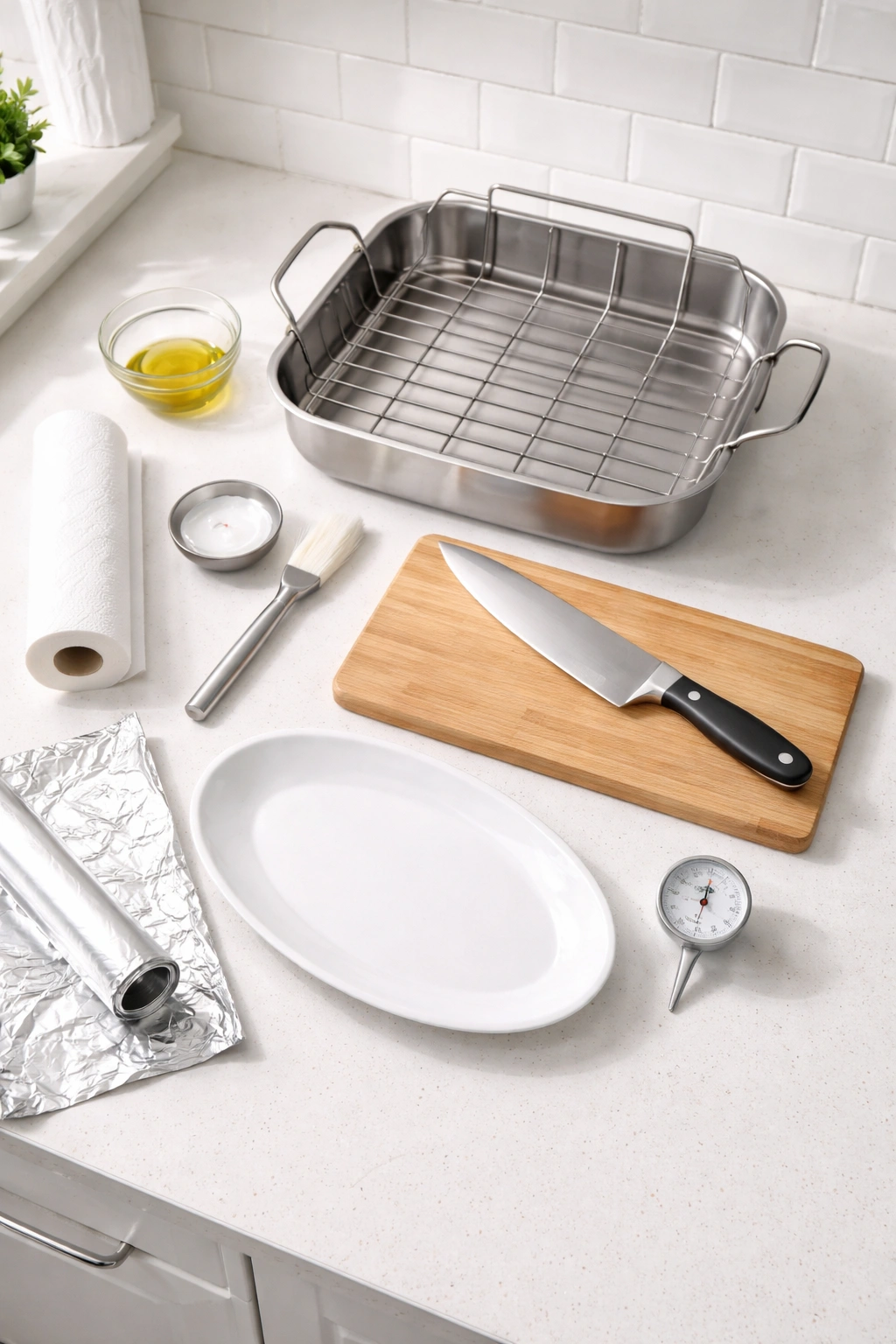
A roasting pan with a wire rack is the ideal setup, but as long as you have a way to elevate the turkey above the bottom of the pan, you’ll succeed. An instant-read meat thermometer is genuinely non-negotiable—don’t skip this. You’ll also need a sharp chef’s knife for carving, a small bowl for mixing the herb butter, a basting brush or spoon for basting (optional but helpful), paper towels for drying the turkey, and aluminum foil for tenting if needed. Have a cutting board ready for resting the turkey, and a serving platter for presentation.
Step-by-Step Roasting Instructions
Prepare and Season:
-
Preheat your oven to 325°F and position the rack in the center. Place a wire rack in your roasting pan.
-
Pat the turkey breast completely dry with paper towels, working carefully around the skin and into all the crevices.
-
In a small bowl, combine the softened butter, minced garlic, rosemary, sage, thyme, parsley, lemon zest, mustard (if using), 1½ teaspoons of the kosher salt, and ½ teaspoon of the black pepper. Use a fork or spoon to mash and stir until the herbs are evenly distributed throughout the butter and the mixture looks like a thick paste.
-
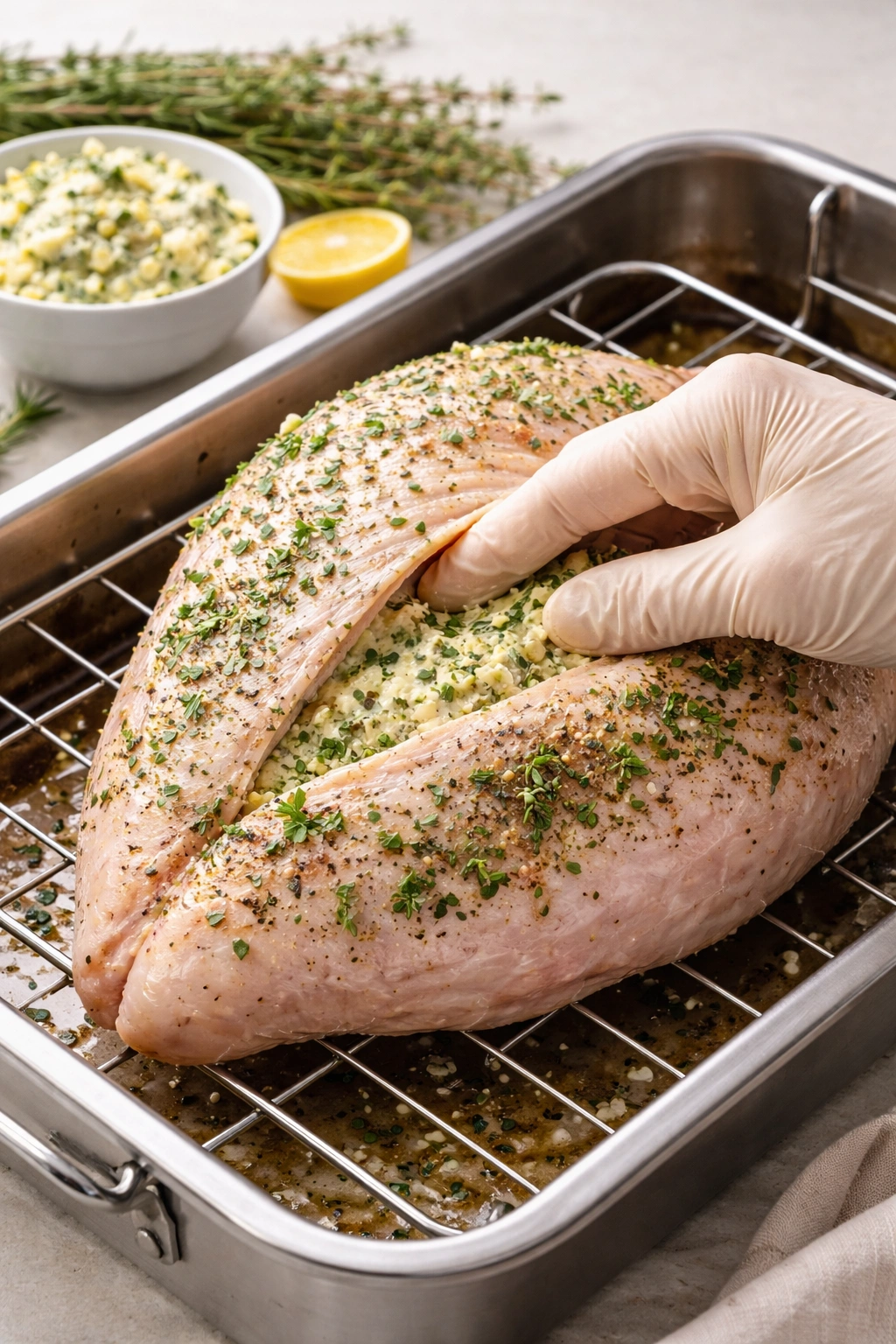
Place the turkey breast on the prepared rack in the roasting pan, skin side up. Gently slide your fingers between the turkey skin and the breast meat, being careful not to tear the skin (it’s more durable than you’d think, so be gentle but don’t be afraid). Separate the skin gradually, loosening it across the entire breast on both sides if possible.
-
Use a spoon or your fingers to spread slightly less than half of the herb butter mixture under the loosened skin, distributing it as evenly as you can across the meat on both sides of the breast. The goal is flavor throughout, not a thick blob in one spot.
-
Spread the remaining herb butter over the top and sides of the turkey breast skin, covering as much surface area as you can. Don’t worry about being perfectly neat—the butter will melt and redistribute as it cooks. Sprinkle the remaining 1 teaspoon of salt and ½ teaspoon of pepper over the top.
Roast the Turkey:
-
Arrange optional aromatics (onion wedges, lemon halves, crushed garlic, herb sprigs) around the turkey in the bottom of the pan if desired. These will flavor the pan drippings and can be used for garnish.
-
Pour the wine (or broth or water) into the bottom of the roasting pan, being careful not to pour it over the turkey itself. The liquid will create steam and moisture in the oven while the turkey roasts, and the drippings will collect in this liquid to create a flavorful pan sauce.
-
Roast the turkey at 325°F for approximately 20 minutes per pound. A 6-pound breast will roast for roughly 2 hours; a 7-pound breast for about 2 hours 20 minutes. Check the turkey around the 1-hour mark and every 30 minutes thereafter.
Advertisements -
If the skin is browning too quickly (it should be golden, not dark brown), loosely tent the top of the turkey with aluminum foil. If the liquid in the bottom of the pan has mostly evaporated before the turkey is done, add another ¼ to ½ cup of wine, broth, or water.
-
Optional but highly recommended: Baste the turkey every 30 minutes or so after the first hour, using a spoon or basting brush to drizzle the pan juices over the skin. This contributes to even browning and helps keep the surface moist. It’s a small effort that yields noticeably better results.
-
When the thermometer inserted into the thickest part of the breast (away from the bone) reads 160°F, remove the turkey from the oven. Don’t wait for 165°F in the oven itself—remember that carryover cooking will bring it up those final 5 degrees during resting.
Rest and Carve:
-
Remove the roasting pan from the oven and carefully transfer the turkey breast to a large cutting board. Cover it loosely with aluminum foil to keep it warm while the juices redistribute. Let it rest for at least 15 to 20 minutes, and up to 30 minutes if you’re not rushed. This is genuinely important—resting allows the juices to reabsorb into the meat fibers, resulting in much more moist turkey throughout every slice.
-
While the turkey rests, you can strain the pan drippings through a fine-mesh sieve into a small saucepan if you’d like to make a simple pan sauce. The strained liquid (minus the solids) can be served as-is, or you can thicken it into gravy if you prefer.
-
To carve, place the rested turkey breast on a cutting board. Using a sharp carving knife, make a cut down one side of the breastbone (the ridge running down the center), then carefully angle your knife to slice the entire breast half away from the bone and ribcage. Repeat on the other side.
-
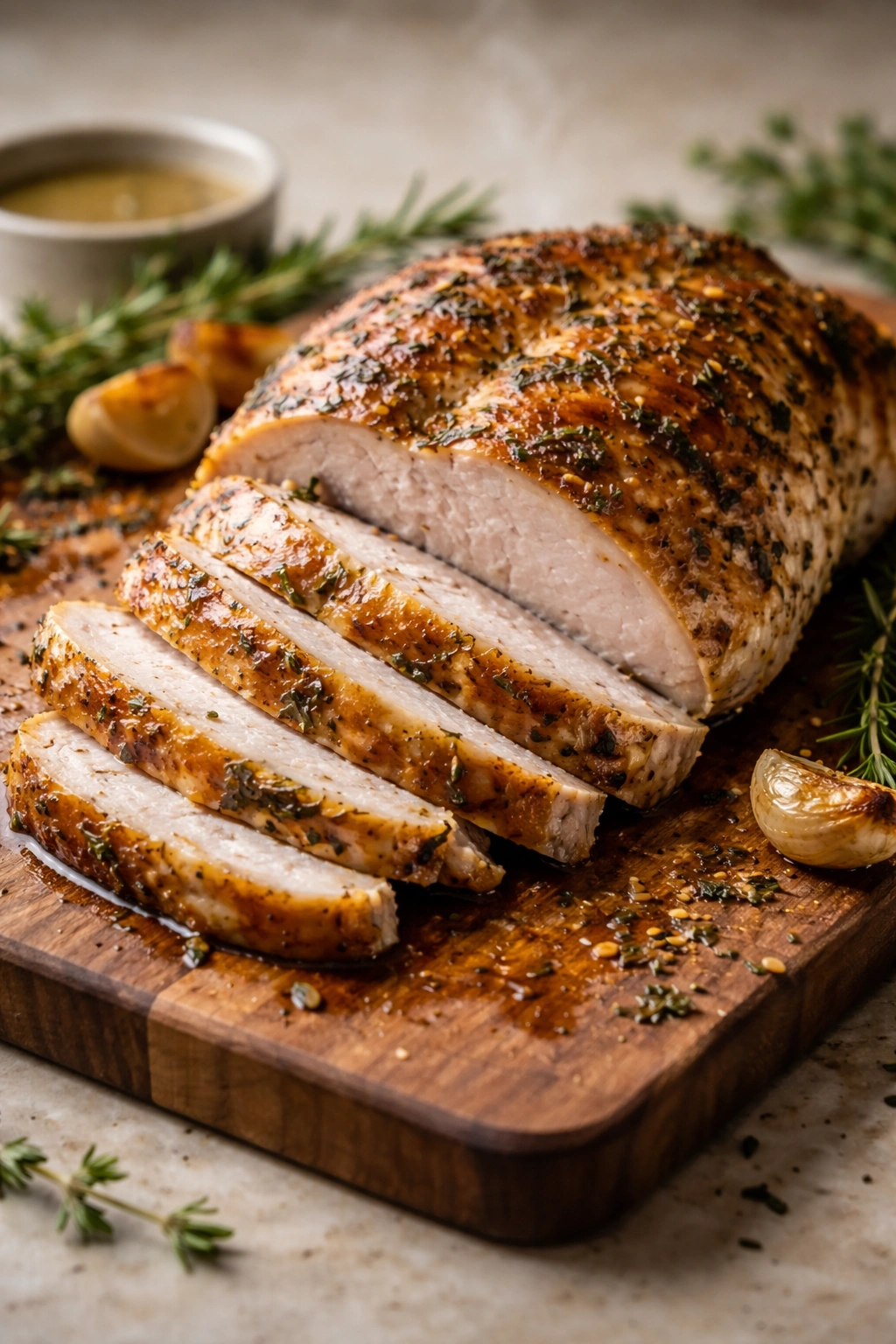
Once you’ve removed both breast halves, slice them against the grain into ½-inch to ¾-inch thick slices. Slicing against the grain makes the meat more tender—look for the direction the muscle fibers run and slice perpendicular to that.
-
Arrange the sliced turkey on a serving platter, optionally fanning the slices for an attractive presentation. Garnish with fresh herb sprigs if desired, and serve warm with the pan juices or gravy spooned over top.
The Secrets Behind Perfectly Juicy Turkey Breast
Experienced cooks know that turkey breast has a reputation for drying out, but this reputation comes from mistakes that are entirely preventable. The meat itself is no drier than chicken breast—it just requires the same care and attention. The three non-negotiables are compound butter, careful not to overcook, and proper resting.
Beyond these, there are subtle techniques that make noticeable differences. Bringing the turkey close to room temperature before roasting ensures even cooking. Brining the turkey in a simple salt-and-water solution for 1 to 4 hours before roasting (entirely optional, but genuinely helpful) helps the meat retain moisture through osmosis. Some cooks swear by dry-brining—salting the turkey generously the night before and letting it sit uncovered in the fridge—which allows the salt to penetrate the meat and also helps the skin dry out for better browning.
The pan liquid matters more than people realize. As it steams and creates humidity in the oven, it helps keep the turkey moist. Don’t skip it, and don’t let it completely evaporate. White wine or chicken broth are ideal (water works, but it contributes no flavor). Low-sodium broth is preferable if you’re making pan sauce, as the drippings from the salted turkey can already be salty enough.
Finally, resist the temptation to open the oven door constantly. Every time you open it, heat escapes and the cooking process is interrupted. Check the turkey at the times specified, but otherwise, trust the process. The timer is your ally here—set it as a reminder to check progress rather than constantly peeking.
Pro Tips and Common Pitfalls to Avoid
Temperature is everything. This cannot be overstated. Use a meat thermometer and remove the turkey at 160°F internal temperature. This is the single most important factor determining juiciness. Cooking to 165°F in the oven will leave you with meat that’s technically safe but unpleasantly dry.
Don’t skip drying the turkey skin. Wet skin won’t brown properly. Really dry it thoroughly with paper towels before cooking.
Use fresh herbs when possible, but dried herbs absolutely work. If fresh rosemary, sage, and thyme aren’t available, substitute ½ to ¾ teaspoon each of dried herbs (they’re more concentrated, so you need less). Or use 1½ teaspoons of dried Herbes de Provence or Italian seasoning blend, which contains a mix of the right herbs.
Garlic powder vs. fresh garlic: Fresh garlic (1 to 2 teaspoons minced) has bright, peppant flavor. Garlic powder (½ to ¾ teaspoon) is milder and distributes more evenly. If you love garlic, use fresh; if you prefer subtlety, use powder. Both are correct.
Never skip the resting period. Even 10 minutes helps, but 15 to 20 minutes is ideal. During this time, the carryover heat brings the temperature up to 165°F safely, and the meat fibers relax, allowing juices to redistribute. Slicing too soon causes juices to pour out onto the board instead of staying in the meat.
Tent with foil if browning too quickly. If the skin is getting dark brown before the internal temperature reaches 160°F, loosely tent the top with foil. This isn’t a sign of failure—oven temperatures vary, and some turkeys have thicker skin that browns faster. Tenting simply slows the browning while the inside continues cooking.
Save those pan drippings. Strain them and serve as a simple sauce, or use them as the base for homemade gravy. They’re incredibly flavorful and worth every bit of effort to capture and use.
Creative Variations and Flavor Twists
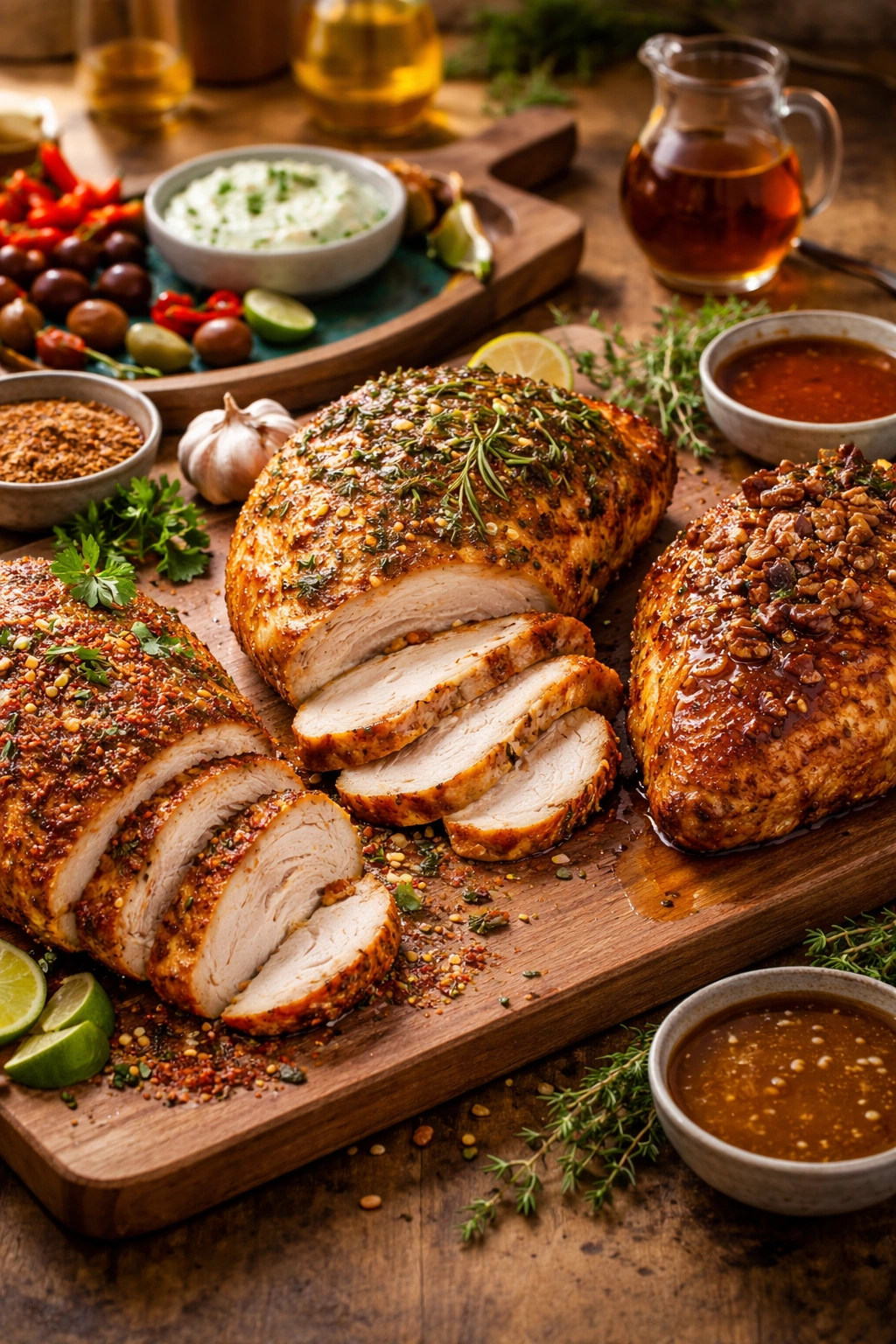
The herb butter formula is endlessly adaptable. While the classic rosemary-sage-thyme combination is timeless, you can personalize it based on your preferences or what you have on hand.
Cajun-Spiced Version: Replace the delicate herbs with Cajun seasoning powder (typically containing paprika, cayenne, garlic powder, oregano, and thyme). Add this to the butter with a squeeze of lime juice instead of lemon. This version pairs beautifully with cornbread dressing and works wonderfully for any gathering, not just traditional Thanksgiving.
Mediterranean Style: Swap out the rosemary for oregano, add minced fresh oregano to the butter, and include sun-dried tomato paste and fresh basil. Use Greek olives as a garnish and serve with a Mediterranean side of roasted vegetables and feta.
Maple-Glazed Version: Keep the herb butter as your base, but add 2 to 3 tablespoons of pure maple syrup to the herb mixture and include a tiny bit of cayenne pepper for complexity. Glaze the turkey with this mixture during the last 30 minutes of roasting for beautiful color and subtle sweetness.
Mustard and Herb Variation: Use the base recipe but add an extra ½ teaspoon of Dijon mustard (or substitute whole-grain mustard) and add a touch of honey. This creates a sophisticated glaze that’s slightly tangy and sweet.
Bacon-Herb Version: Cook 4 to 6 strips of bacon until crispy, crumble it, and fold it into the herb butter. This is decadent and adds smokiness and salt that makes the turkey feel restaurant-quality.
Lemon-Garlic Emphasis: If you absolutely love garlic and lemon, use the full 5 cloves of fresh garlic, increase the lemon zest to a full 2 teaspoons (or even use a bit of lemon juice), and reduce the herb amounts slightly. This version feels bright and fresh.
Dairy-Free Version: Substitute the butter with softened ghee or coconut oil combined with olive oil. The herb mixture remains identical, and the results are delicious—many people don’t even notice the difference.
Storage, Reheating, and Make-Ahead Options
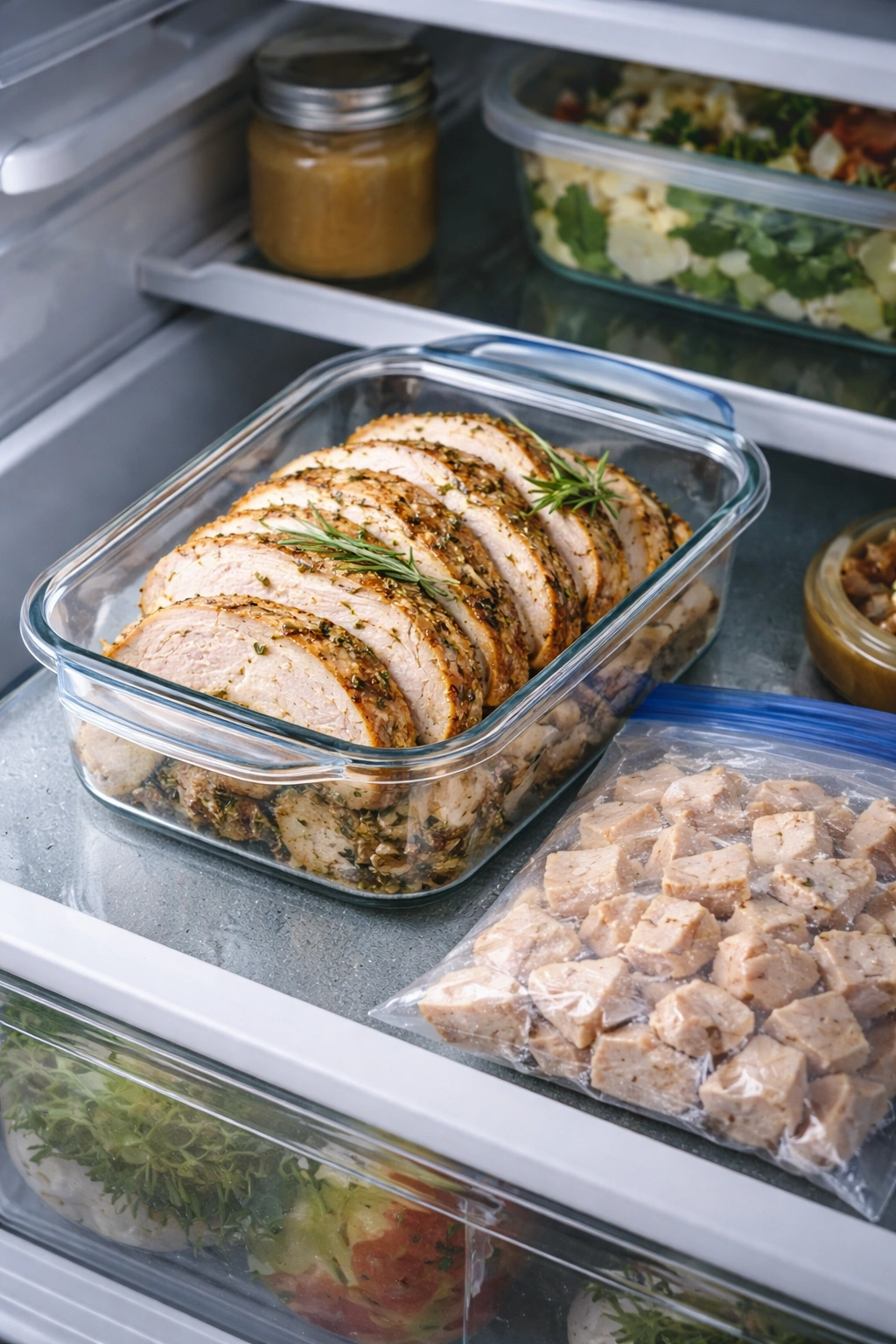
Roasted turkey breast stores beautifully and actually improves with proper care. Once cooled to room temperature, slice or dice the meat and store it in an airtight container in the refrigerator for up to 4 to 5 days. The bone-on variety actually keeps slightly longer than boneless because the bone provides some protection.
Freezing is an excellent option. Slice or dice the cooked turkey, removing as much meat from the bone as possible (the meat in between the ribs is delicious). Spread it on a baking sheet, freeze until solid (2 to 3 hours), then transfer to freezer bags or airtight containers. Frozen cooked turkey keeps for 4 to 6 months and thaws beautifully in the refrigerator overnight.
Reheating requires gentle heat to avoid drying the meat further. The microwave is the enemy here—it tends to make already-cooked turkey tough and rubbery. Instead, preheat your oven to 300°F, place sliced or diced turkey in a covered baking dish, add a splash of chicken broth to provide moisture, and warm for 15 to 20 minutes until heated through. Alternatively, reheat gently on the stovetop in a skillet over low heat with a small splash of broth, stirring occasionally, until just warmed through (5 to 10 minutes).
Make-ahead strategy: You can prepare the herb butter mixture up to 2 days in advance and store it in the refrigerator in an airtight container. You can also dry-brine the turkey by salting it generously and letting it rest uncovered in the fridge overnight or up to 24 hours—this helps the skin dry out for better browning and allows the salt to penetrate. Assemble and roast the turkey the day of serving. This approach means most of the prep work is done in advance, leaving you with just assembly and roasting on the day itself.
Serving Suggestions and Perfect Pairings
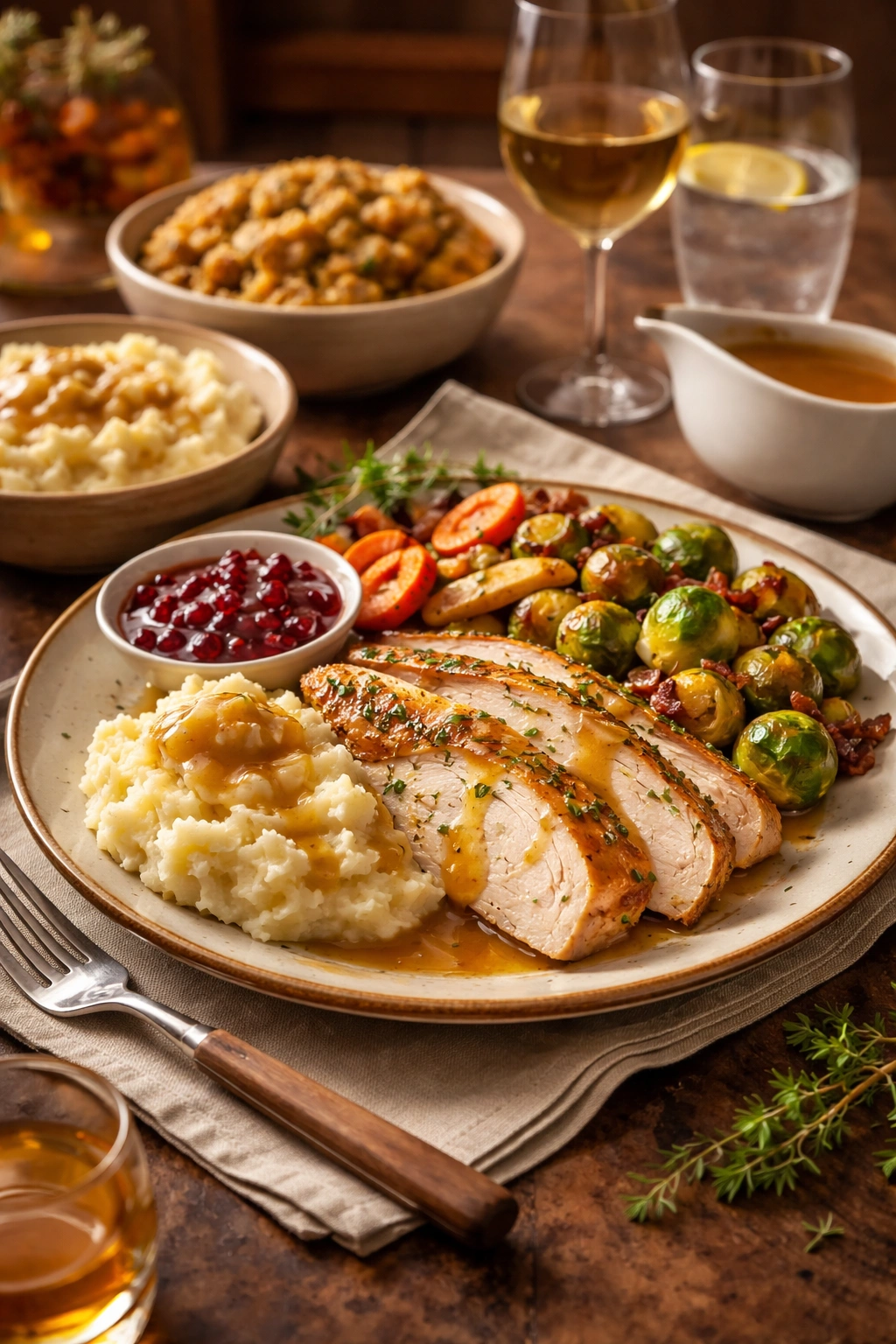
Herb-roasted turkey breast deserves sides that complement rather than compete with its delicate, herb-infused flavor. Creamy mashed potatoes are the obvious choice—the rich creaminess contrasts beautifully with the light, juicy turkey and captures the pan drippings or gravy. Roasted root vegetables like carrots, parsnips, and Brussels sprouts echo the herbs in the butter and add textural variety.
Stuffing or dressing is almost mandatory, especially if you grew up with it. Any traditional bread-based stuffing is perfect, but consider one with sage, which will echo the sage in the turkey’s herb butter. Cranberry sauce (whether traditional, with orange, or with roasted grapes) provides brightness and acidity that cuts through the richness.
Less traditional but equally delicious sides include wild rice pilaf (which can be made ahead and reheated), roasted cauliflower with garlic and lemon, or green beans with brown butter and almonds. A simple side salad with a vinaigrette provides freshness.
For beverages, dry white wine (the same type you roasted with, like Chardonnay or Sauvignon Blanc) pairs beautifully. Sparkling wine or Prosecco feels celebratory. Light red wines like Pinot Noir also work. Non-alcoholic options include sparkling apple cider or a simple lemon water.
Save your pan drippings and either serve them as a simple sauce—strained and warmed—or use them to make quick pan gravy. Whisk a small amount of cornstarch or flour with cold water, stir it into the simmering pan drippings, and cook until thickened (2 to 3 minutes). Season with salt and pepper to taste.
Leftover Magic: Beyond Sandwiches
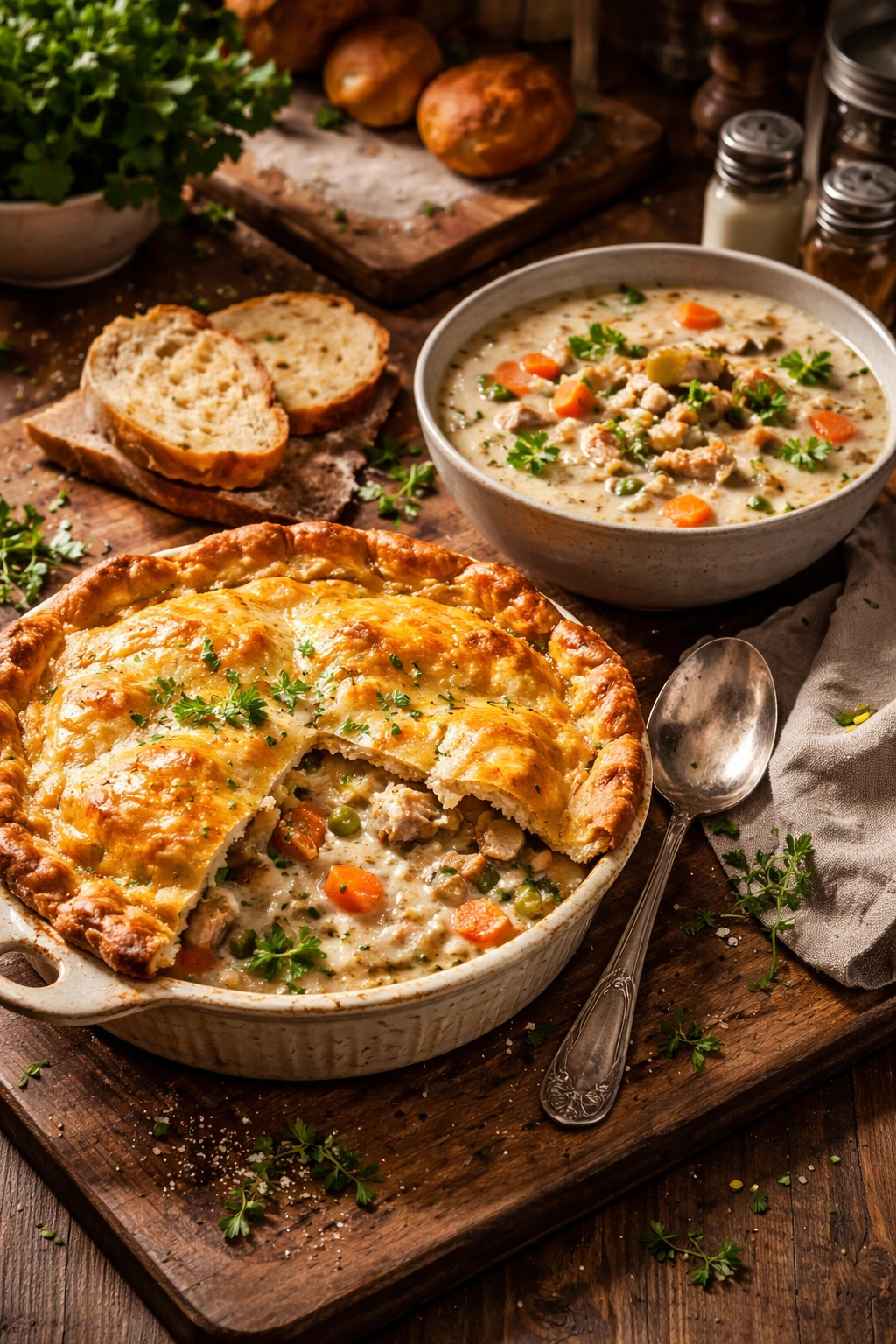
If you’re lucky enough to have leftovers, they’re treasures waiting to be used. Turkey sandwiches are the obvious choice—pair sliced turkey with cranberry sauce, fresh herbs, and maybe some stuffing between crusty bread. But consider these other directions: Turkey salad with dried cranberries, celery, and a yogurt-based dressing becomes lunch for days. Turkey pot pie with vegetables in a creamy sauce and topped with biscuits or pastry is comfort food at its finest.
Turkey soup uses the leftover bones and any remaining scraps to create stock, which then becomes the base for creamy turkey rice soup, tortellini soup with kale, or simple broth-based soups. Turkey tetrazzini is a classic pasta dish that transforms leftovers into something elegant enough for dinner party. Turkey enchiladas with a roasted red pepper sauce are surprisingly sophisticated. Even shredded turkey in tacos or turkey fried rice works beautifully.
The versatility of cooked turkey is remarkable. Use it anywhere you’d use cooked chicken—curries, stir-fries, grain bowls, wraps, or casseroles. The herb-roasted version is particularly flavorful, so even simple applications feel special.
Final Thoughts
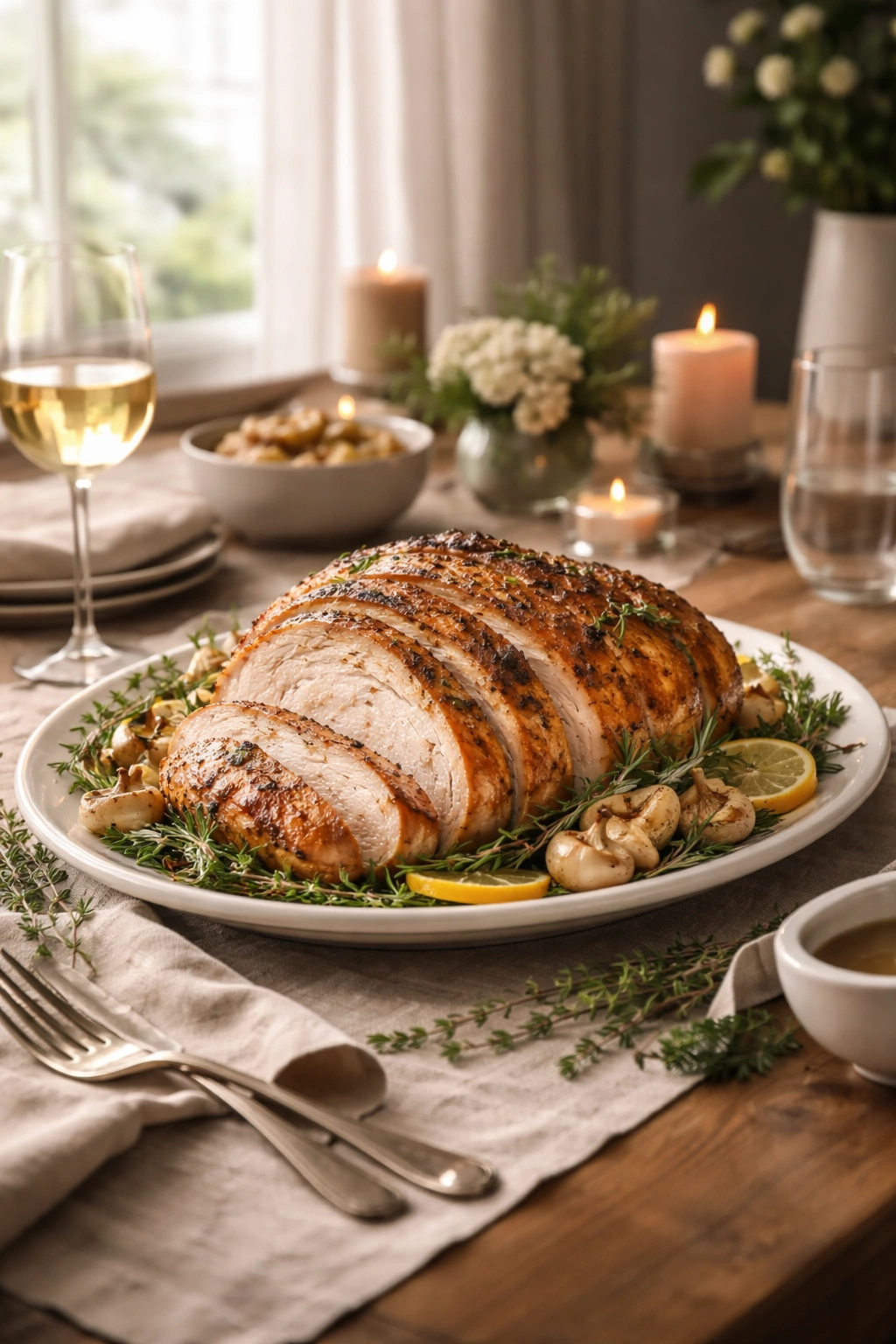
Herb-roasted turkey breast is one of those recipes that sits at the intersection of impressive and approachable. It looks and tastes like you spent hours planning and executing something complicated, when in reality, you mixed some butter with herbs, put the turkey in the oven, and let time do most of the work. There’s genuine elegance in that simplicity.
The beauty of this recipe is its flexibility. Whether you’re hosting Thanksgiving for a smaller group, cooking Easter dinner, making a special weeknight meal, or simply wanting to fill your freezer with delicious, versatile protein, herb-roasted turkey breast adapts beautifully. The herb butter formula is a template you can adjust to match your mood or what you have in your pantry. The roasting technique is foolproof if you use a thermometer. The leftovers are endlessly useful.
This is the kind of recipe that becomes part of your regular rotation. You’ll find yourself reaching for it not just for holidays, but for dinner parties, for meal prep, for those evenings when you want something special but don’t want to spend all day cooking. Master this one technique, and you’ll have a centerpiece dish that works for every season and every occasion.
