



There’s something magical about unwrapping a steaming foil packet at the dinner table. Inside is a complete meal—succulent shrimp, tender vegetables, and a buttery, seasoned sauce that’s somehow absorbed every ingredient into perfect harmony. Shrimp foil packets are one of those rare cooking methods that feels both effortless and impressive, delivering restaurant-quality results in your own kitchen with virtually no cleanup required.
Whether you’re grilling on a summer afternoon, cooking in the oven on a busy weeknight, or feeding a crowd at a campfire, these individual packets are the answer to quick, stress-free dinners. The foil traps steam and creates a gentle cooking environment that keeps shrimp impossibly tender while vegetables cook to perfect doneness. Better still, you can prep everything ahead, customize each packet to different tastes, and have dinner on the table in under 30 minutes from start to finish.
Let’s dive into everything you need to know to master this technique, from ingredient selection to the best methods for cooking and storing these delicious packets.
Why Shrimp Foil Packets Deliver Superior Results
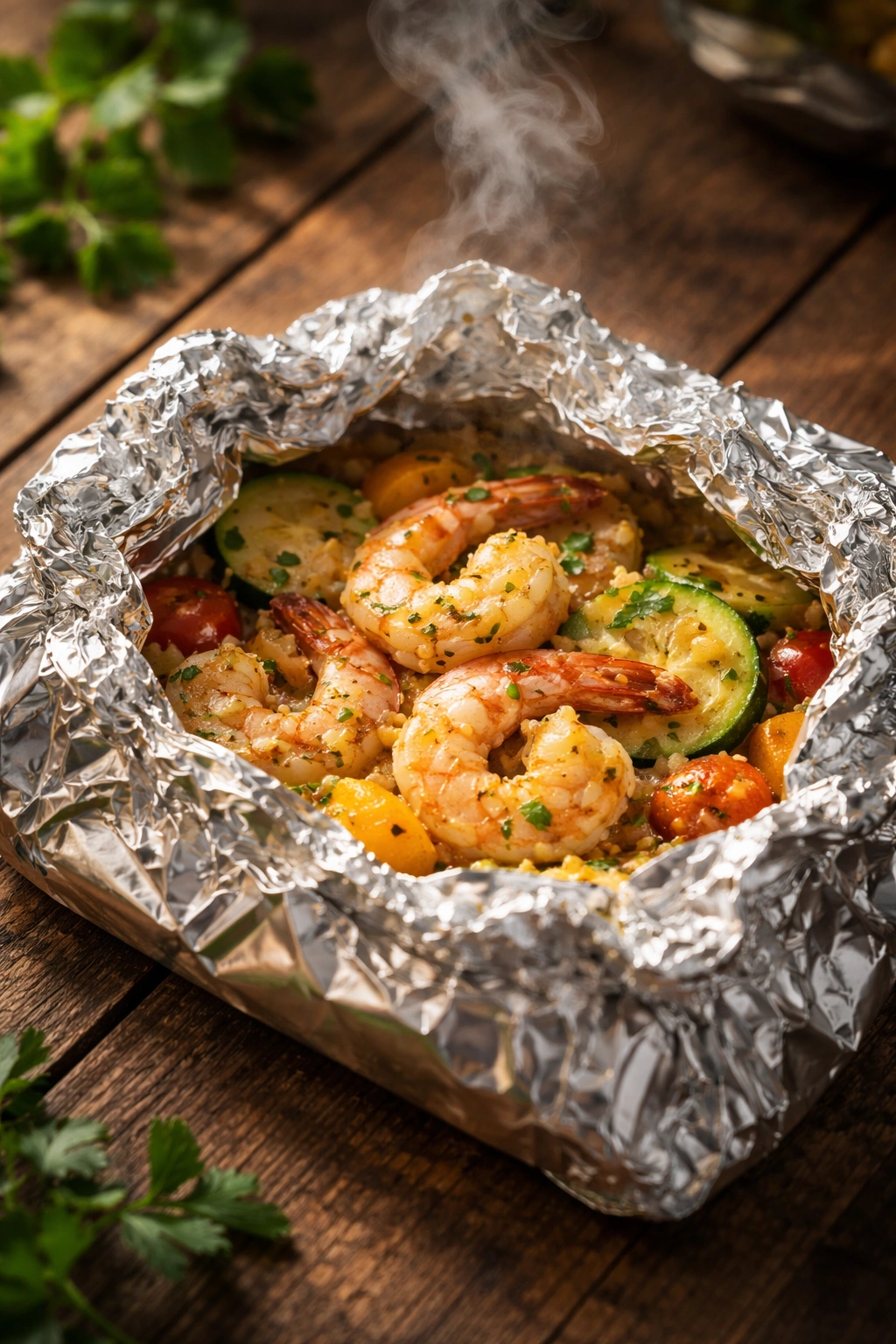
The beauty of cooking en papillote—that’s the fancy culinary term for cooking “in paper,” or in this case, foil—lies in its simplicity and effectiveness. When you seal ingredients inside foil, you’re essentially creating a miniature steam chamber where gentle, moist heat surrounds every ingredient evenly.
This method is specifically ideal for shrimp because of their delicate texture. Shrimp are incredibly easy to overcook, turning from tender and sweet to rubbery and tough in mere seconds. The steaming environment inside a sealed foil packet cooks them gently and slowly, keeping them plump and juicy. The vegetables surrounding them benefit equally from this gentle approach, softening without losing their bright color or structure.
Beyond the cooking science, foil packets solve the biggest dinner dilemma: minimal cleanup. You cook the entire meal in one containment, serve it in the same packet (or on a plate), and simply discard the foil when done. No pots, no pans, no sauce-splattered stovetop. This is particularly brilliant for grilling season when the last thing you want is additional dishes piling up.
The individual packet approach also eliminates mealtime stress when you’re feeding people with different preferences. One person wants extra garlic? Their packet gets more minced garlic. Someone’s spice-averse? Go light on the cayenne. Another person wants mushrooms but no onions? Customize their packet accordingly. Everyone gets their ideal version of the same meal, and you’re still only cooking one recipe.
Essential Ingredients for Perfectly Cooked Shrimp Foil Packets
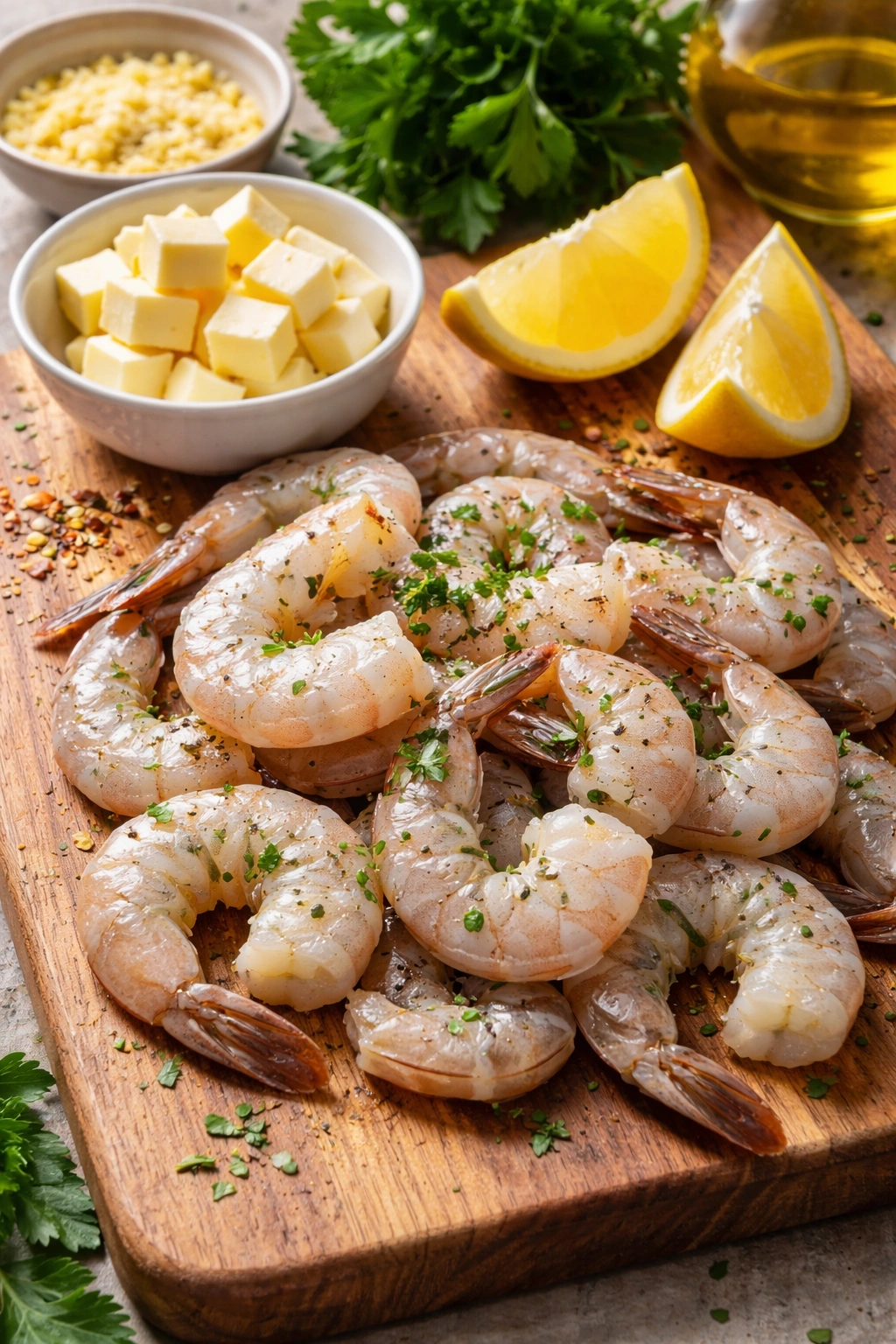
Yield: Serves 4 | Makes 4 individual packets
Prep Time: 15 minutes
Cook Time: 15–20 minutes (oven) or 12–15 minutes (grill)
Total Time: 30–35 minutes
Difficulty: Beginner — The steps are straightforward, no special cooking skills required, and assembly is intuitive even for first-time foil packet makers.
The ingredient list for shrimp foil packets is deceptively short, but each component plays a crucial role in creating layered, complex flavors. Start with quality shrimp and build from there.
For the Packets:
- 1½ to 2 pounds large or jumbo shrimp, peeled and deveined (thawed if frozen)
- 1 pound baby red potatoes (or baby yellow/gold potatoes), halved or quartered into small, even pieces
- 2 ears fresh corn on the cob, cut crosswise into 1 to 2-inch pieces
- 12 ounces smoked sausage (andouille, kielbasa, or your preferred brand), sliced into ½-inch thick rounds
- 1 small yellow onion, sliced thinly into half-moons
- 4 tablespoons unsalted butter, melted
- 2 tablespoons extra virgin olive oil
- 3 to 4 tablespoons fresh lemon juice (about 1 large lemon)
- 1½ tablespoons Cajun seasoning (or Old Bay seasoning, or a combination of both)
- ½ teaspoon garlic powder
- Salt and black pepper to taste
- 3 to 4 cloves garlic, minced finely
- 2 tablespoons fresh parsley, chopped (plus more for garnish)
- Lemon wedges, for serving
- Heavy-duty aluminum foil (approximately 4 sheets, roughly 12×16 inches each)
Why These Specific Ingredients Matter
The shrimp is your star, so choose the best quality you can find. Jumbo shrimp cook slightly slower than smaller varieties, giving you a wider window to pull them out at exactly the right moment before they toughen. If your grocery store doesn’t have fresh shrimp at a good price, frozen shrimp work beautifully—they’re often fresher than refrigerated shrimp anyway, flash-frozen immediately after harvest. Just thaw them in the refrigerator beforehand or under cold running water just before assembly.
Baby potatoes are essential because their size means they cook in the same timeframe as the shrimp and other ingredients. Regular potatoes, cut into small pieces, will work, but true baby potatoes are starchy and waxy, holding their shape without becoming mealy. Red and yellow varieties both work equally well; use whichever you find at your market.
The smoked sausage brings depth, salt, and smoke flavor that transforms the entire packet. Andouille sausage is the traditional choice, packed with Cajun seasonings that complement seafood beautifully, but kielbasa or any quality smoked sausage will deliver similar results. Avoid fresh sausage—it needs longer cooking time.
Butter and olive oil create the sauce base. The butter brings richness and helps emulsify flavors, while olive oil adds body and carries fat-soluble flavor compounds. Together, they create a luxurious sauce that coats everything inside the packet.
Fresh lemon juice is non-negotiable. It brightens all the heavy, rich flavors and prevents the dish from tasting one-dimensional. Bottled lemon juice has a chemical edge that noticeably detracts from this otherwise refined dish.
Pre-Cooking Your Potatoes and Corn: The Critical First Step
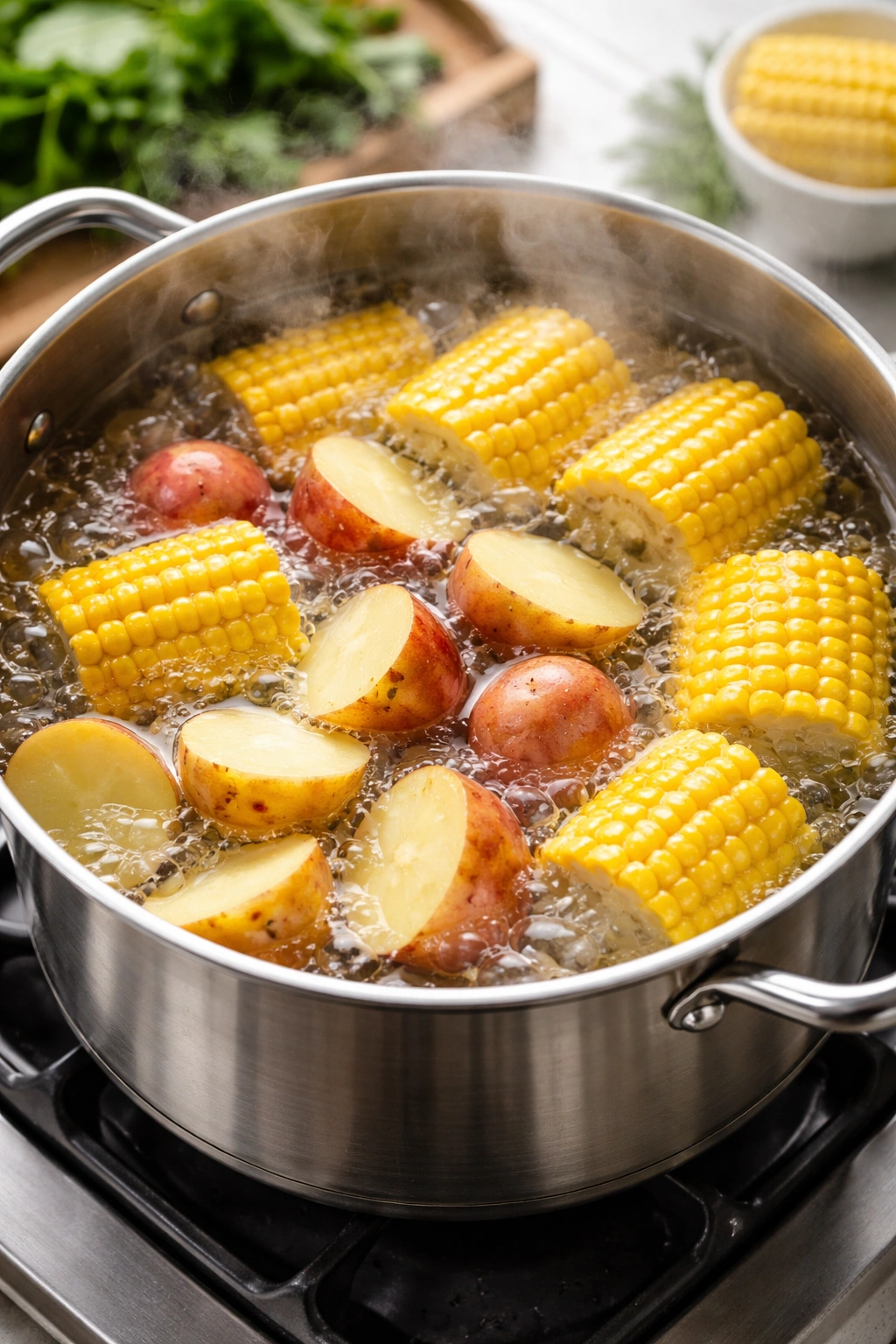
This step separates successfully cooked foil packets from disappointment. Shrimp cook in roughly 12–15 minutes, while raw potatoes would need 25–30 minutes to become fork-tender. If you skip this step, you’ll open your packet to find perfectly cooked shrimp and corn alongside crunchy, undercooked potatoes.
Bring a large pot of salted water to a rolling boil. The water should taste like the sea—this seasons the potatoes and corn from the inside out.
Add the halved potatoes to the boiling water and let them cook undisturbed for about 8 to 10 minutes. You’re aiming for potatoes that are almost fork-tender but still hold their shape firmly. If you test one with a fork and it flakes apart, you’ve overcooked it slightly—that’s okay, but aim for that sweet spot where the potato resists the fork but isn’t hard at the center.
Once the potatoes are nearly done, add the corn pieces to the same pot and continue boiling for another 3 to 5 minutes. The corn should be tender but still have a slight bite to it, not mushy.
Drain everything in a colander and spread it on a clean kitchen towel to cool slightly. Do not skip the cooling step. Hot potatoes and corn will begin cooking the raw shrimp the moment they touch, potentially causing uneven cooking or prematurely-cooked edges on the shrimp while the centers remain raw.
Building Your Garlic Butter Sauce
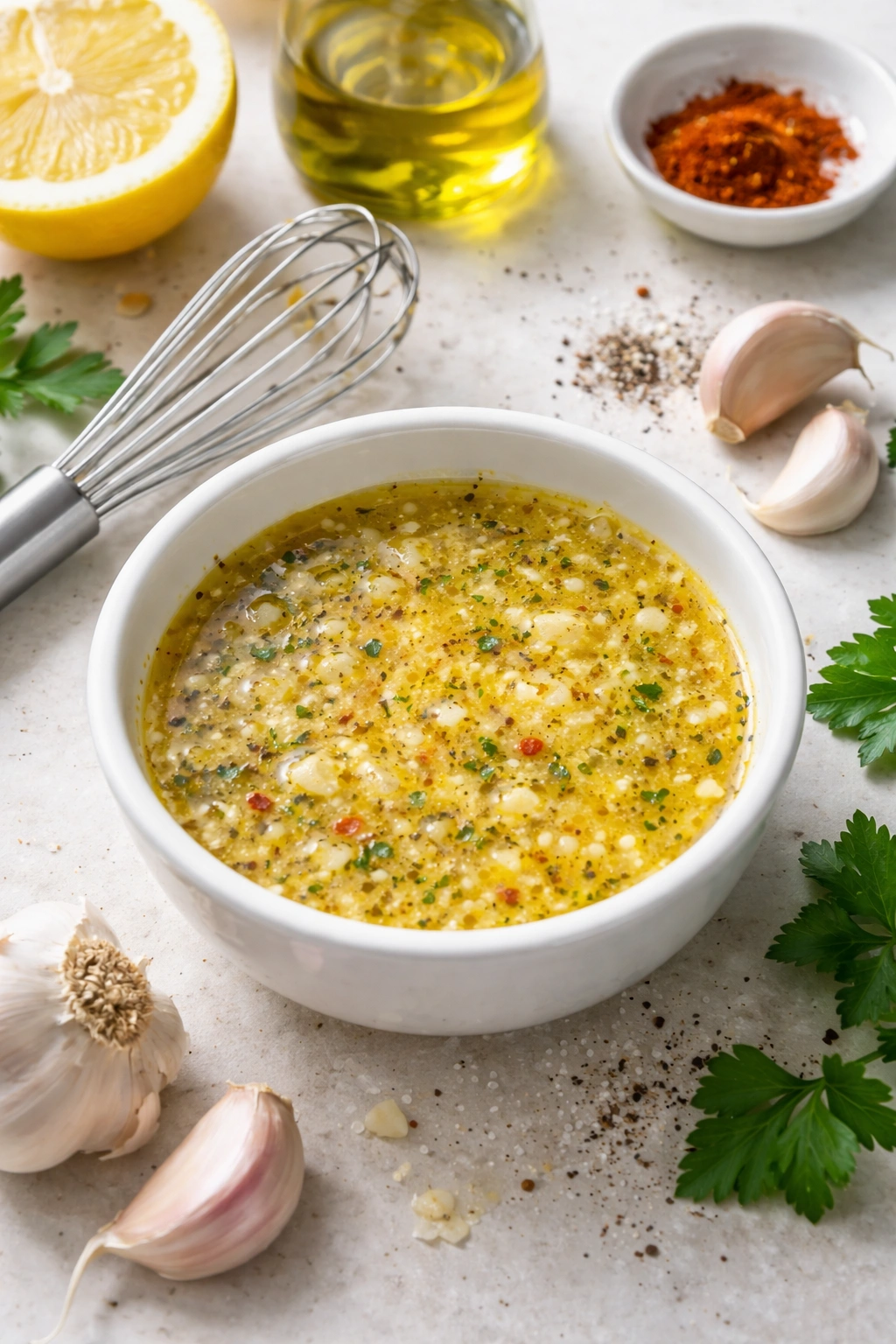
While the potatoes and corn cook, prepare the sauce that ties everything together. In a small bowl, whisk together the melted butter, olive oil, fresh lemon juice, Cajun seasoning (or Old Bay, or a mix), garlic powder, minced garlic, salt, and pepper.
Taste the sauce. This is your moment to adjust seasoning. Does it need more lemon brightness? More garlic punch? More heat from the Cajun seasoning? Season it to your preference—remember, this sauce is going to coat all the ingredients, so subtle adjustments here pay off significantly in the finished dish.
Stir in the chopped parsley. Don’t add it earlier; the raw parsley will stay brighter and fresher if it’s added just before assembly. If you’re making packets that will be refrigerated for a few hours or overnight, hold back the parsley and add it just before cooking.
Assembling Your Foil Packets: The Foundation of Success
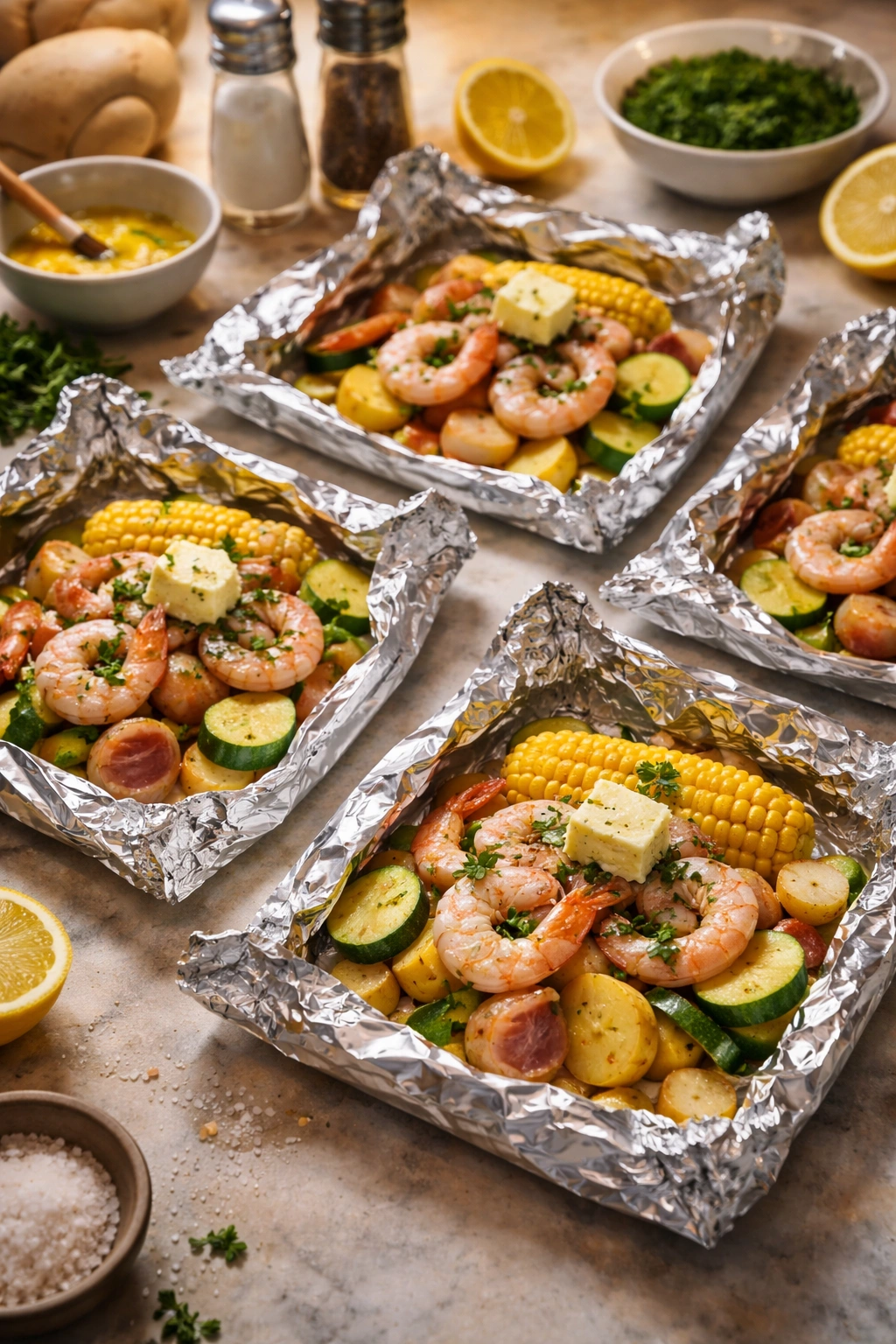
Tear four large sheets of heavy-duty aluminum foil, each measuring approximately 12 by 16 inches. Heavy-duty foil is worth the extra cost here—it won’t tear as easily as regular foil, and a packet that ruptures during cooking creates a mess and uneven cooking results.
Place one foil sheet shiny-side-up on a clean, flat work surface (a cutting board or the counter works fine). Lightly spray the center with nonstick cooking spray or wipe a small amount of butter on it. While the foil and ingredients won’t stick thanks to all that butter and oil in the sauce, this small step makes assembly slightly easier and the final cleanup even cleaner.
In a very large mixing bowl, combine the cooled potatoes, corn pieces, shrimp, sliced sausage, sliced onion, and chopped parsley. Pour about half of your garlic butter sauce over everything and gently toss with clean hands or two large spoons until every ingredient is evenly coated. The goal is complete, even coating, not to break apart the potatoes or sausage.
Reserve the remaining half of the sauce. You’ll serve this on the side, either drizzled over the opened packets or offered as a dipping sauce. This approach gives you control over sauce intensity—some people love drowning every bite in the buttery sauce, while others prefer a lighter touch.
Divide the mixture evenly among the four foil sheets, mounding it loosely in the center of each. Aim for roughly equal portions of shrimp, sausage, corn, and potatoes in each packet. Spoon some of the sauce from the bottom of the bowl over each mound to ensure every packet gets its fair share of the flavorful liquid.
How to Fold a Leak-Proof Foil Packet
This is the moment that determines whether your packet steams gently or leaks all its precious juices into the grill or oven.
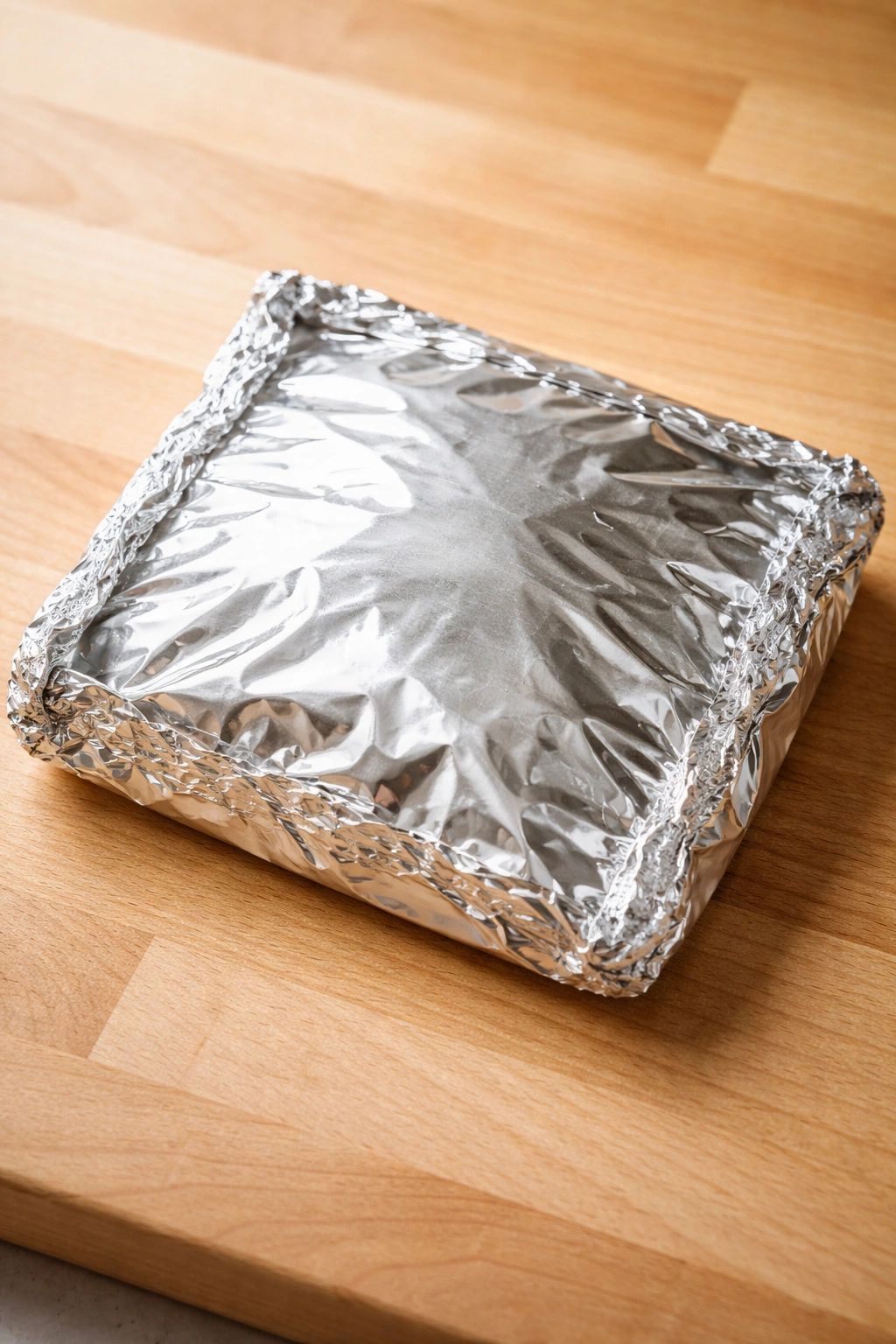
Gather the two longer sides of the foil and bring them together above the ingredients. Fold them down once, then fold down again, creasing the foil tightly against the top of the food. This creates a tight seal across the top.
Now fold in the two shorter ends, bringing them up and folding them under slightly to create a sealed edge. The packet doesn’t need to look beautiful—it just needs to be completely sealed. If you’re worried about leaks, you can create a double seal by folding each edge twice rather than once.
A properly sealed packet will hold all the juices and steam inside during cooking, distributing heat evenly and keeping everything moist. A packet with weak seals will lose moisture and cook unevenly.
Two Methods: Oven vs. Grill—Which Is Right for You?
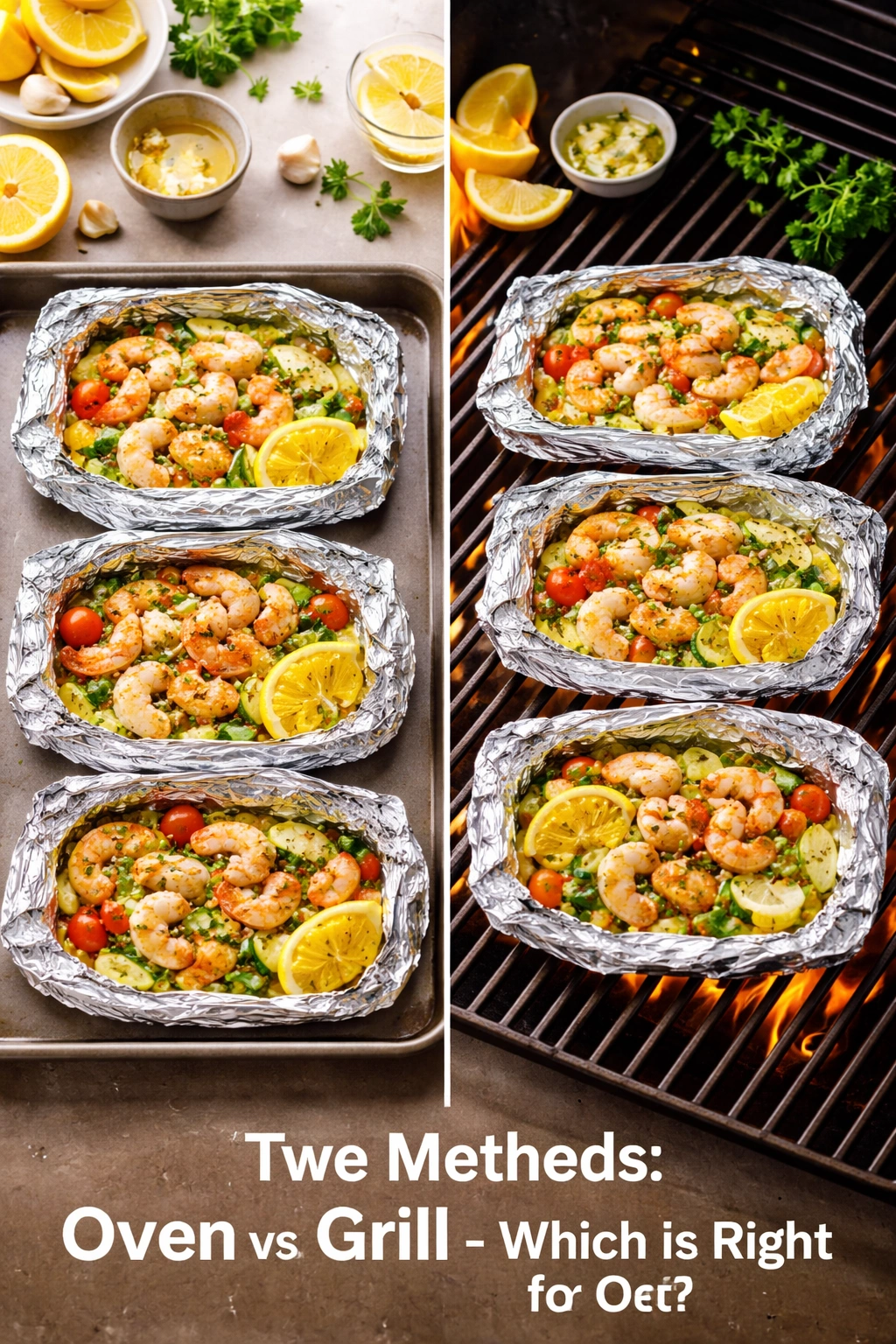
Both cooking methods work beautifully. Your choice depends on your situation, the weather, and what’s convenient for your day.
Cooking in the Oven: Fast, Consistent, and Reliable
Preheat your oven to 425°F (220°C). Position the rack in the center—you don’t want the heat source too close to the packets.
Arrange your sealed foil packets seam-side-up on a large baking sheet. The baking sheet catches any potential drips and makes it easy to move all four packets in and out of the oven at once. Seam-side-up matters because if any liquid does escape (unlikely with proper sealing), it stays inside the foil rather than dripping onto your oven.
Place the baking sheet in the preheated oven and set a timer for 15 to 17 minutes. Do not open the packets to peek. Every time you open a packet, you release steam and extend the cooking time. The shrimp will go from raw to perfectly cooked inside that sealed environment without your intervention.
You’ll know the packets are done when you carefully open one at the edge (being cautious of the steam) and see bright pink shrimp with an opaque center, tender vegetables, and a fragrant sauce. The potatoes should be easily pierced with a fork.
Cooking on the Grill: Smoky Flavor and Impressive Presentation
Preheat your grill to medium-high heat, approximately 400°F to 450°F. If you have a gas grill, turn one side to high and the other to low, keeping the packets on the cooler side if your grill runs hot. For charcoal grills, aim for a medium-hot fire with coals pushed to one side for indirect heat.
Place the sealed foil packets seam-side-up directly on the grill grates. Close the grill lid and set a timer for 12 to 15 minutes. Again, resist the urge to open and check. The foil may develop some charred spots—this is normal and actually adds to the flavor profile. It won’t affect the cooking inside the packet.
Grilled packets will be done when one carefully opened packet reveals the same signs as oven-cooked packets: bright pink shrimp, tender vegetables, and aromatic sauce.
Which Method to Choose?
The oven is ideal for weeknight dinners, bad weather, or when you’re feeding a family and want maximum reliability. There’s virtually no learning curve, and the results are consistently perfect.
The grill is perfect for entertaining, summer gatherings, and when you want that extra smoky depth. The grilled foil packets have a slightly different flavor profile—the exterior char adds complexity—and there’s something theatrical about guests opening their own individual packet at the table.
The Critical Step You Can’t Skip: Preventing Overcooked Shrimp
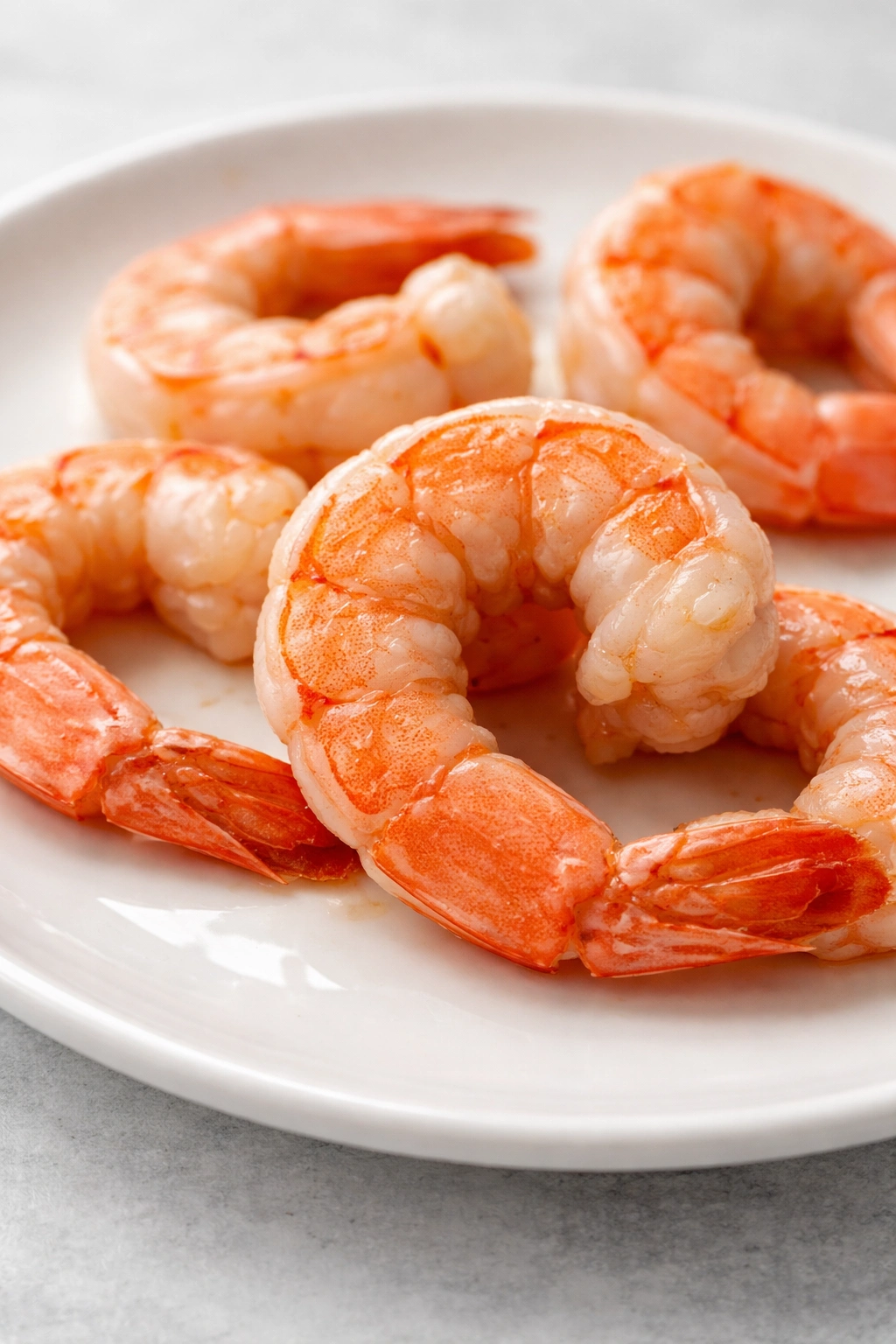
Overcooked shrimp is the enemy of this dish. Tough, rubbery, shriveled shrimp will ruin otherwise perfect foil packets. Here’s how to guarantee perfectly cooked shrimp every single time.
Use the size-time correlation. Jumbo shrimp need 12–15 minutes total. Large shrimp need 10–13 minutes. Medium shrimp need 8–11 minutes. If your recipe calls for medium shrimp but you’ve purchased jumbo, add 2–3 minutes to the cooking time. Conversely, if you have smaller shrimp than the recipe indicates, reduce the cooking time slightly.
Watch for the color shift. Raw shrimp are translucent and grayish. Cooked shrimp turn uniformly bright pink and opaque. The moment they hit that bright pink stage throughout, they’re done. Just a few seconds more and the edges start to curl inward and the texture becomes dense.
The size consistency matters during prep. If your shrimp vary wildly in size, take a moment to separate them into two groups: very large and the rest. You could either cook the large shrimp for a minute or two longer, or remove the smaller ones from the packets before cooking the larger batch. It’s a small effort that guarantees nobody gets a rubbery shrimp.
Frozen shrimp offer an advantage here. Many home cooks worry about using frozen shrimp, but there’s actually a hidden benefit. Frozen shrimp thaw slowly during cooking, which prevents them from overcooking on the outside while the inside is still cold. The extra moisture they release also gently steams the other ingredients.
Customizing Your Packets: Variations for Every Palate
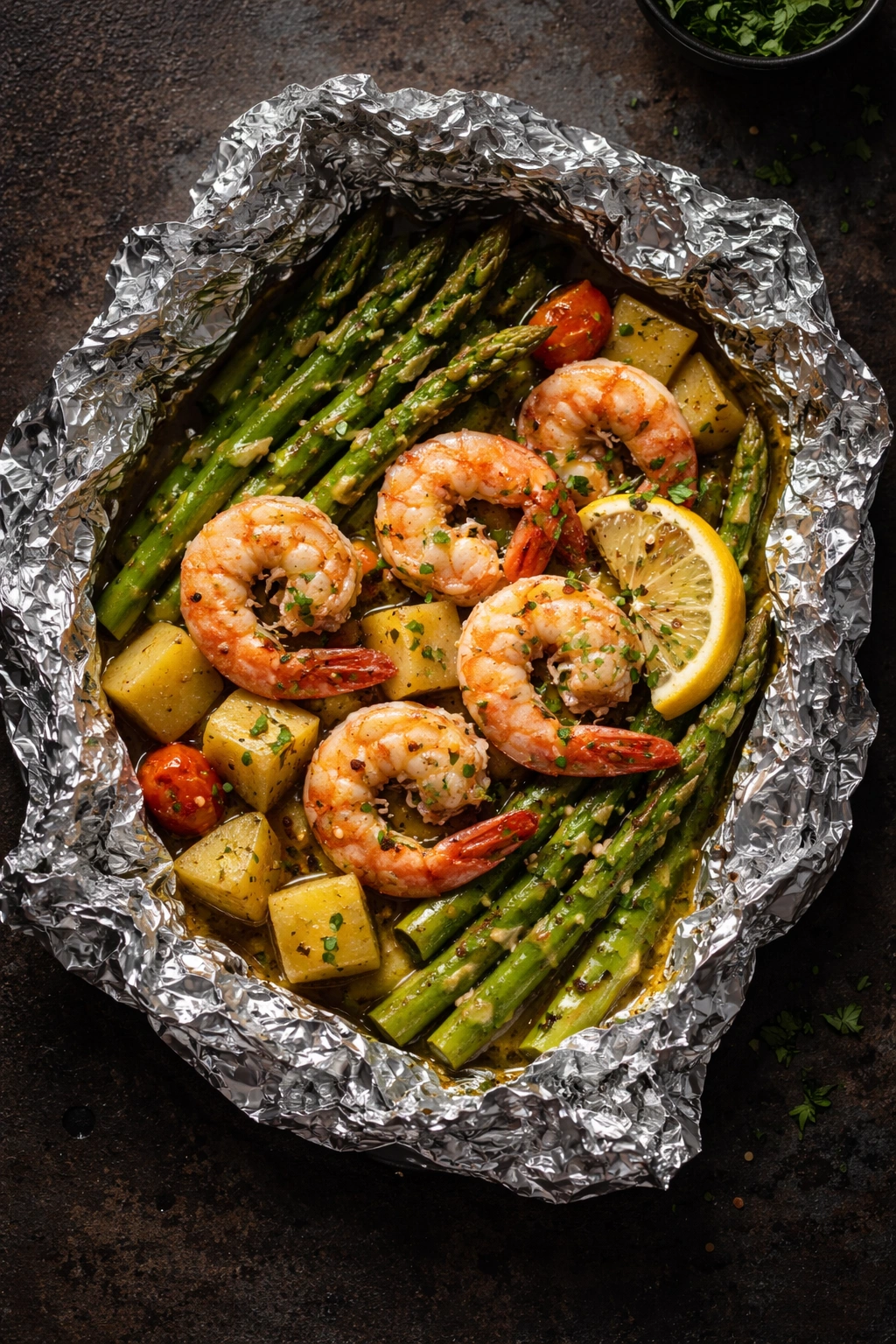
The basic formula of shrimp plus potatoes plus corn plus sausage plus butter-sauce is a perfect foundation, but it’s also infinitely adaptable. Here are tested variations that work beautifully.
Mediterranean-Style Packets with Asparagus and Herbs
Replace the corn and potatoes with fresh asparagus spears (woody ends trimmed) and Yukon gold potatoes cut into small cubes. Swap the Cajun seasoning for a mixture of smoked paprika, fresh rosemary, and chili flakes. Substitute white wine for part of the butter mixture for a more delicate sauce. The result is elegant, lighter, and distinctly different from the classic version while remaining equally simple.
Low-Carb or Paleo Packets
Skip the potatoes and corn entirely. Instead, load the packets with a variety of quick-cooking vegetables: zucchini cut into half-moons, bell peppers sliced thin, mushrooms sliced, cherry tomatoes (halved), and thinly sliced red onion. Use the same butter-garlic sauce. These packets cook faster (10–12 minutes) because there’s no potato bulk to cook through, and they’re still incredibly satisfying and flavorful.
Garlic Butter and Parmesan Packets
Reduce the Cajun seasoning significantly and instead focus on pure garlic butter with a touch of old Bay seasoning. After cooking, immediately top each opened packet with a generous handful of freshly grated Parmesan cheese and allow it to melt in the residual heat. Add fresh parsley and lemon juice. This version tastes more like a classical Italian preparation while maintaining the foil packet simplicity.
Spicy Thai-Inspired Packets
Replace half the butter with coconut milk. Add 1 to 2 tablespoons of red curry paste to the sauce along with a tablespoon of fish sauce, a tablespoon of lime juice (instead of lemon), and a teaspoon of grated fresh ginger. Use red bell peppers and snap peas instead of corn. Finish with fresh cilantro instead of parsley and Thai basil if you can find it. These packets are noticeably spicy and aromatic.
Hearty Chorizo and Pepper Version
Replace the andouille with Spanish chorizo (the spiced variety, not fresh chorizo), which adds paprika and heat. Increase the bell peppers—use red, yellow, and orange for color and sweetness. Keep the potatoes. The result is more Spanish in character while following the exact same cooking method and timing.
Storage, Make-Ahead Strategies, and Reheating
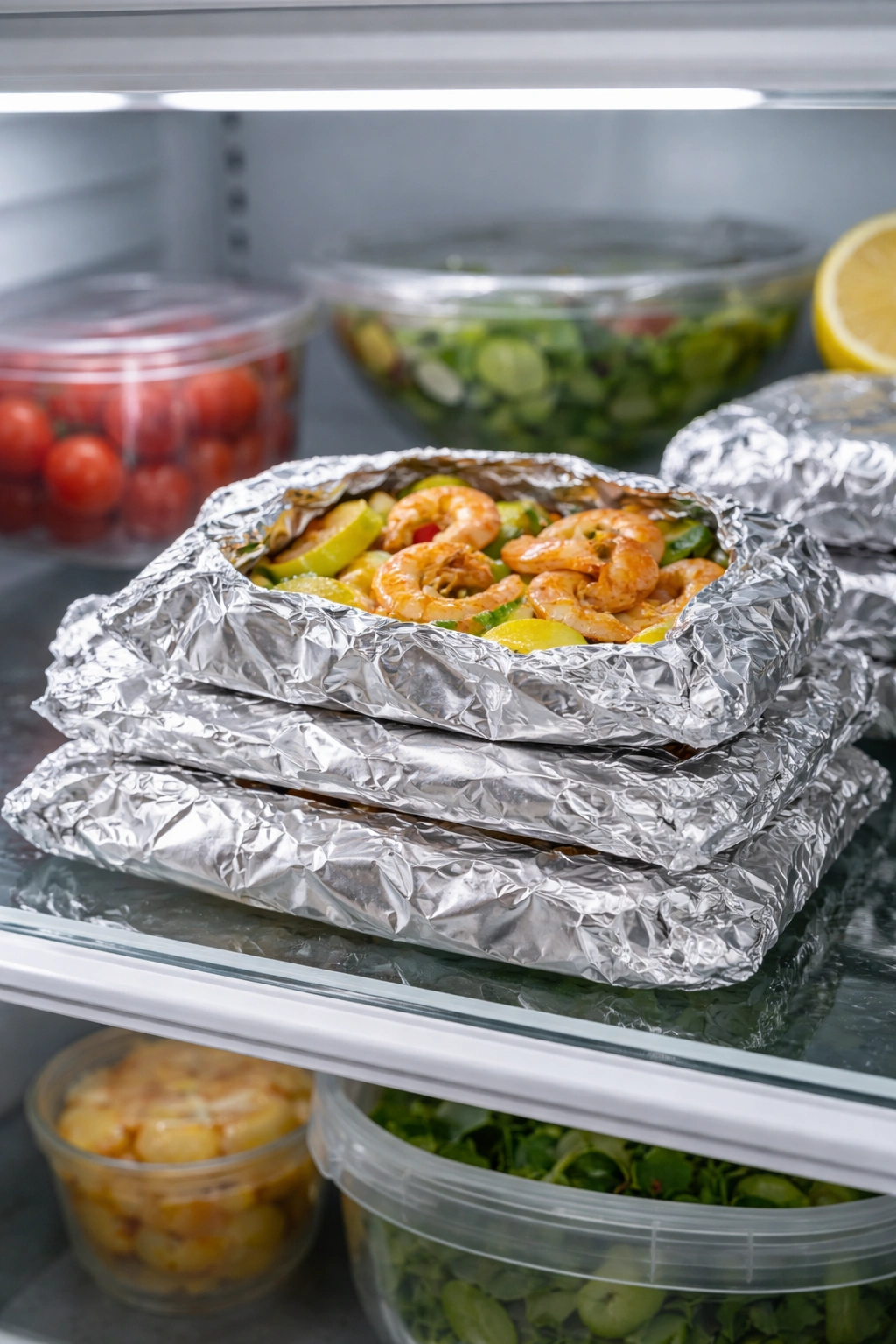
These foil packets are remarkable in their flexibility for meal planning and preparation.
Assembling packets ahead of time: You can build your foil packets up to a full day in advance. After sealing, store them in the refrigerator on a flat surface or in a container. Remove them from the refrigerator 15 minutes before cooking. Cold packets need 3–5 extra minutes of cooking time compared to room-temperature packets, so adjust your timer accordingly.
Why would you do this? It’s perfect for busy weekdays when you can assemble everything during a weekend prep session, or for camping trips where you want to minimize cooking time on-site. Everything is ready to toss directly on the grill or into the oven.
Storing fully cooked packets: Once cooked and cooled, you can store foil packets (still in their foil) or transfer the contents to an airtight container and refrigerate for up to three days. The texture of the shrimp remains good for about two days; after that, it begins to toughen slightly from extended moisture exposure.
Freezing is not recommended because the prolonged cold exposure changes the texture of both the shrimp and vegetables. The quality suffers noticeably compared to fresh preparation.
Reheating cooked packets: The best method is to return the packet to a 325°F (160°C) oven for 10 to 12 minutes, just until the contents are heated through. Do not use a microwave, which will overcook the shrimp further and create an rubbery texture.
Alternatively, you can carefully open the cooled packet and transfer the contents to a skillet over medium heat, stirring gently until warmed through. The slight browning from pan-reheating adds texture contrast and is actually preferable to oven reheating if you have 5 minutes available.
Some people enjoy these packets at room temperature or even chilled, as a cold shrimp salad. The flavors are still delicious, though the textures are somewhat different.
Common Mistakes to Avoid
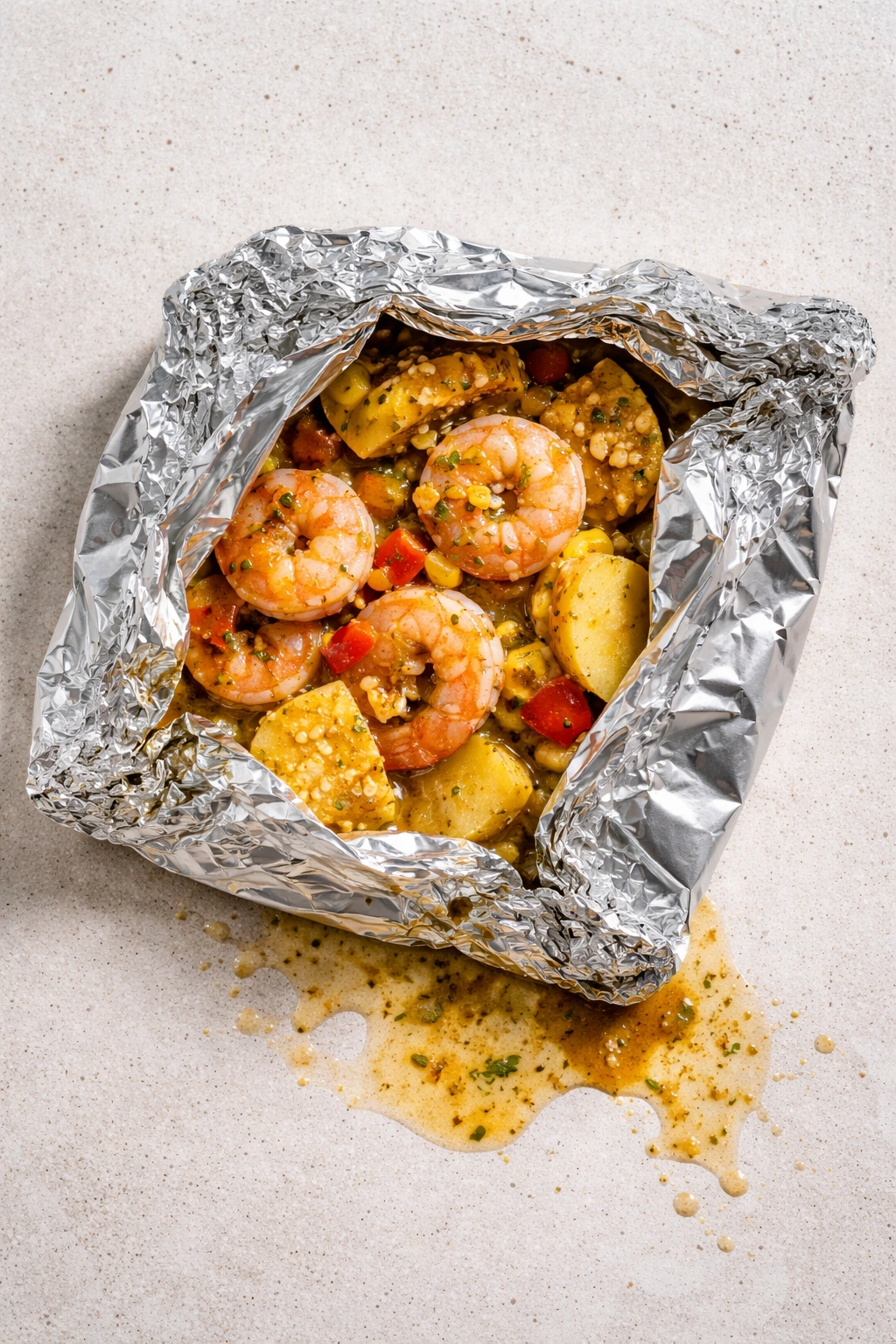
Skipping the potato pre-cook step. We mentioned this, but it bears repeating because it’s the number one reason people end up with crunchy potatoes in otherwise perfect packets. Pre-cooking takes 12 minutes and makes the difference between excellent and disappointing.
Overstuffing the packets. You want about a cup of food per packet. Overstuffed packets are harder to seal properly, and the food cooks unevenly because the thick pile in the center takes much longer than the thin edges. Generous portions are fine, but don’t overdo it.
Using paper instead of foil. Parchment paper is fantastic for baking cookies, but it will burn and potentially rupture during foil packet cooking. Use actual aluminum foil—heavy-duty if possible. Some recipes suggest layering parchment paper on top of foil, but parchment adds no real benefit and isn’t necessary if you’re using decent-quality foil.
Not sealing properly. A weak seal means escaped juices, uneven cooking, and disappointing results. Take the extra 20 seconds to fold and crimp the edges twice if you’re unsure. Better a slightly ugly-looking packet that works than a beautiful-looking packet that leaks.
Peeking constantly. Every time you open a packet, you let out steam and extend the cooking time. Trust the timing. If you must check, open only one packet, check it, and if it needs a bit more time, re-seal it and continue cooking.
Using the same seasoning in every variation. The same Cajun seasoning that’s perfect for the classic shrimp boil packet is less ideal for Mediterranean versions. Adjust your spices to match your flavor theme, and the results will feel intentional rather than one-note.
Serving Suggestions and Perfect Pairing Sides
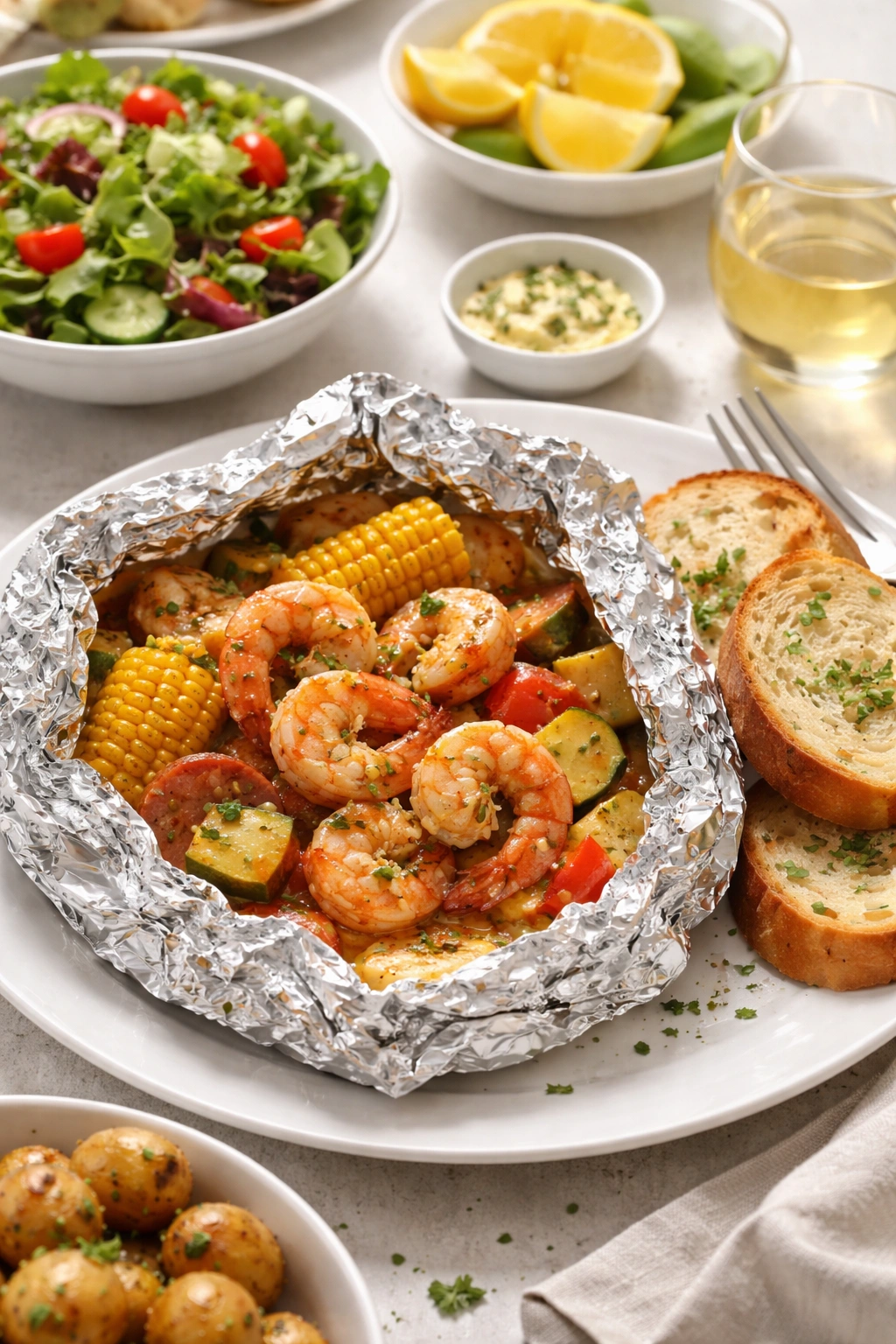
Shrimp foil packets are hearty and complete as-is, but here are some side dishes that complement them beautifully without requiring additional cooking effort.
Fresh salads of any kind work perfectly. A simple green salad with lemon vinaigrette, a vibrant coleslaw, or a cucumber salad all provide cooling contrast to the warm, buttery packets.
Crusty bread is essential if you want to soak up every drop of that luxurious sauce. Garlic bread, herbed focaccia, or a simple grilled bread round means nothing goes to waste.
Corn-based sides seem redundant since corn is in the packets, but a compound butter corn on the cob or creamed corn provides a different textural experience and reinforces the summer theme.
Grilled or roasted vegetables like asparagus, green beans, or grilled summer squash extend the variety of textures on the plate.
Starches beyond the potato in the packet are entirely optional but some people enjoy rice, pasta, or additional potatoes alongside to create a more substantial plate.
Beverages should complement the buttery, garlicky richness. Crisp white wines, citrus-forward cocktails, or even simple cold lemonade all work beautifully.
Why This Method Works for Any Occasion
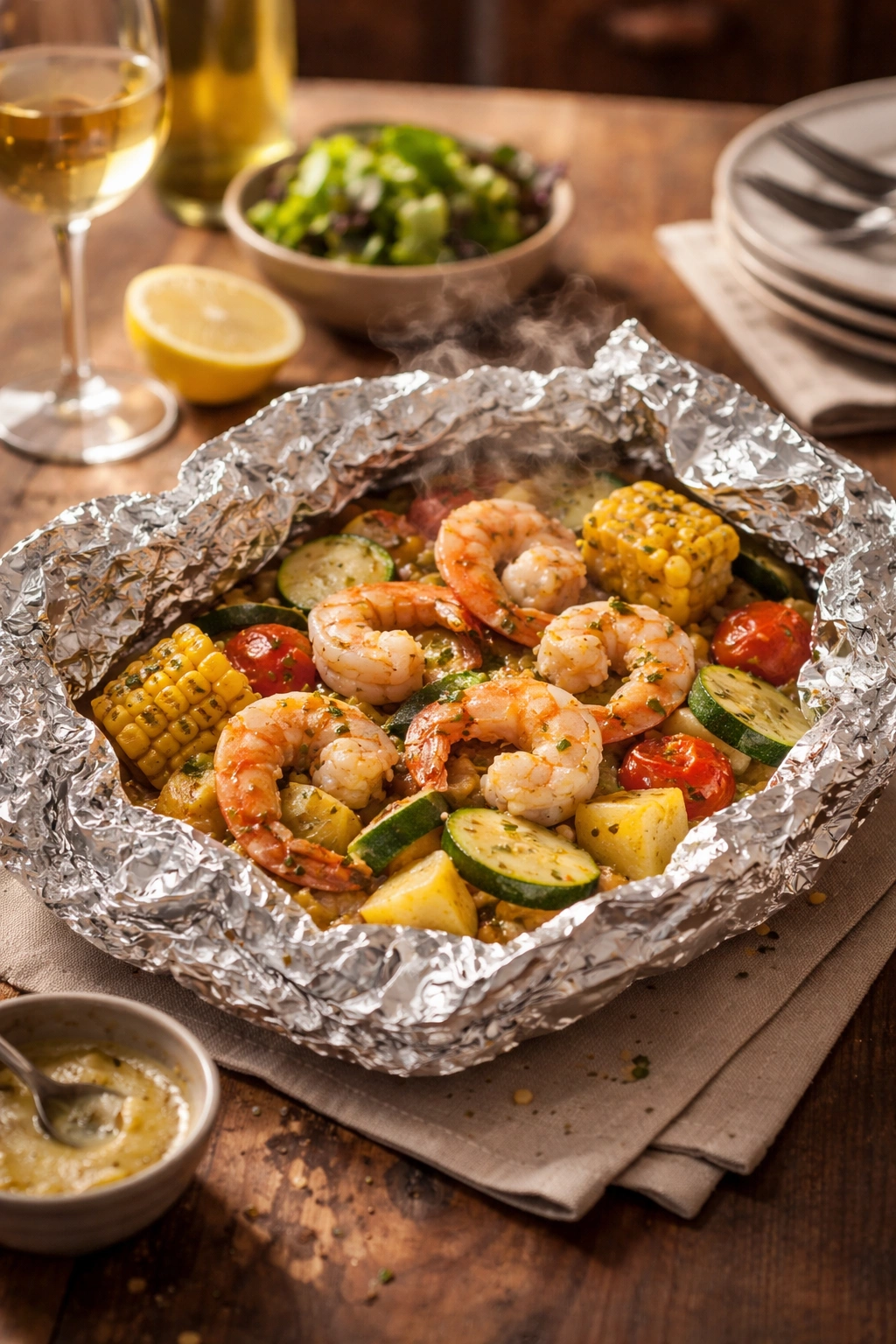
These foil packets solve multiple dinner dilemmas simultaneously. They’re fast enough for a weeknight when you have 35 minutes total. They’re impressive enough for entertaining because each guest gets their own custom packet to unwrap—there’s something inherently special about that presentation. They work on the grill when you want to avoid heating up the kitchen in summer, or in the oven when weather doesn’t cooperate. They’re customizable for dietary restrictions and preferences. And they leave you with virtually no cleanup, just discarded foil.
Mastering shrimp foil packets gives you a cooking technique that lasts a lifetime. The method is simple enough to execute perfectly the first time but flexible enough to explore endless variations. Once you understand the fundamentals—pre-cook the potatoes, seal properly, don’t overcook the shrimp—you can confidently build packets around whatever ingredients you have on hand or whatever flavor direction appeals to you that evening.
Wrapping Up
The true genius of shrimp foil packets lies in their combination of ease and sophistication. You’re using professional cooking technique—the en papillote method that appears on fancy restaurant menus—but executing it in your own kitchen with minimal equipment and attention. The result is perfectly cooked shrimp, tender vegetables, and a rich, buttery sauce, all created without a sink full of dishes at the end of the meal.
Start with the classic version outlined here: shrimp, potatoes, corn, sausage, and garlic butter sauce. Master that formula, understand the timing, and learn to recognize the signs of perfectly cooked shrimp. Once you’re confident with the basics, branch out into variations. Make them spicy, Mediterranean, low-carb, or whatever direction your taste buds demand that particular evening. The technique remains the same; only the flavors shift.
Most importantly, remember that the pre-cooked potatoes aren’t optional, proper sealing matters, and shrimp that turns uniformly bright pink is shrimp that’s done. Follow those three rules, and you’ll have foolproof foil packets every single time—whether you’re cooking for yourself, feeding a family, or impressing guests at a backyard gathering.
