



There’s a misconception that homemade Asian takeout requires hours of prep and a ingredient list that reads like a chemistry experiment. The reality? A restaurant-quality beef and broccoli dinner can be on your table in 25 minutes, complete with tender meat, crisp vegetables, and a sauce so good you’ll wonder why you ever dialed for delivery. This isn’t a rushed, mediocre version—it’s a dish with all the depth, flavor, and satisfaction of what you’d pay $12-15 for at your favorite Chinese restaurant, made with ingredients you probably already have at home.
The beauty of a quick beef and broccoli is that speed and quality aren’t mutually exclusive. You’re not sacrificing anything to get dinner done before your favorite show starts. You’re using a smart combination of the right beef cut, proper heat management, a balanced sauce made from scratch, and a few techniques that professional cooks have used for generations. The result is precisely the kind of weeknight meal that reminds you why home cooking beats takeout every single time—better flavors, better texture, better ingredients, and a cost that makes you wonder why you ever considered the delivery option.
Whether you’re a busy parent navigating school schedules, someone who wants to stop the takeout habit, or just tired of mediocre leftovers that taste nothing like they did fresh from the restaurant, this approach changes everything. Once you realize how simple it actually is, beef and broccoli becomes a reliable go-to that lands on your dinner table more often than not.
Why This Quick Beef and Broccoli Works
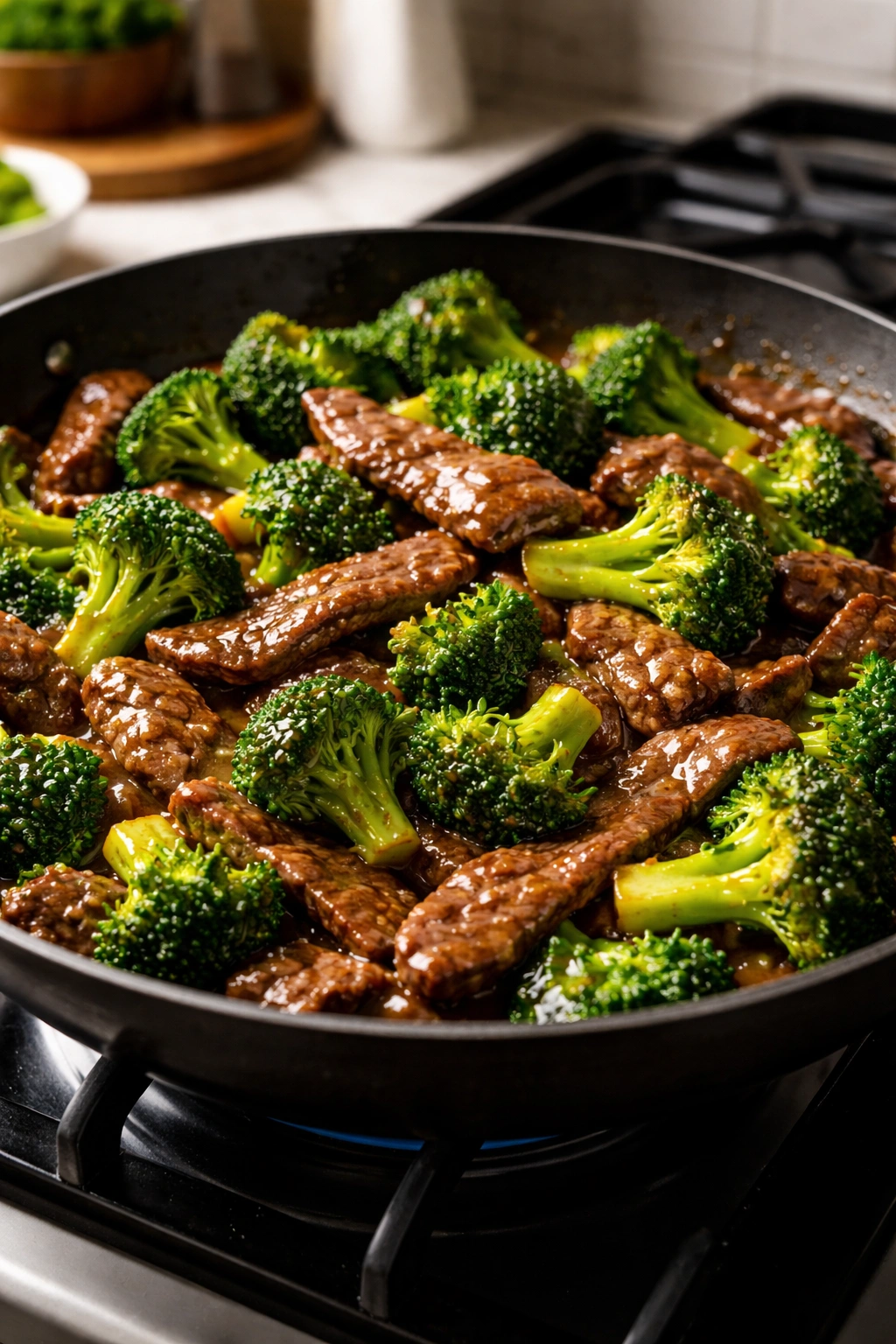
The key to pulling off a 25-minute beef and broccoli isn’t magic—it’s strategy. Most home cooks approach the recipe the wrong way, starting with a cut of beef that requires marinating, slicing it too thickly, or using frozen broccoli that releases water and dilutes the entire sauce. Every choice you make either cuts time or costs you minutes you don’t have.
With flank steak (or flat iron steak if you prefer even more tenderness), you get a cut that’s naturally lean and tender when sliced properly against the grain. A 30-minute freezer chill makes slicing into thin, even strips almost effortless. Since those strips are thin and small, they cook through in just 2-3 minutes in a hot pan, no marinating required. The broccoli—fresh, cut into small, uniform florets—cooks tender-crisp in about 4-5 minutes while retaining its vibrant color and nutrition. The sauce, whisked together while the beef cooks, thickens in the pan in the final minute. There’s no waiting, no complex multi-step process, no ingredients that aren’t earning their place in the dish.
The math is simple: thin beef strips + fresh broccoli florets + high heat + a balanced sauce = dinner in 25 minutes, guaranteed. Every element has been tested and refined to maximize flavor while minimizing time.
The Secret to Tender Beef in Minutes
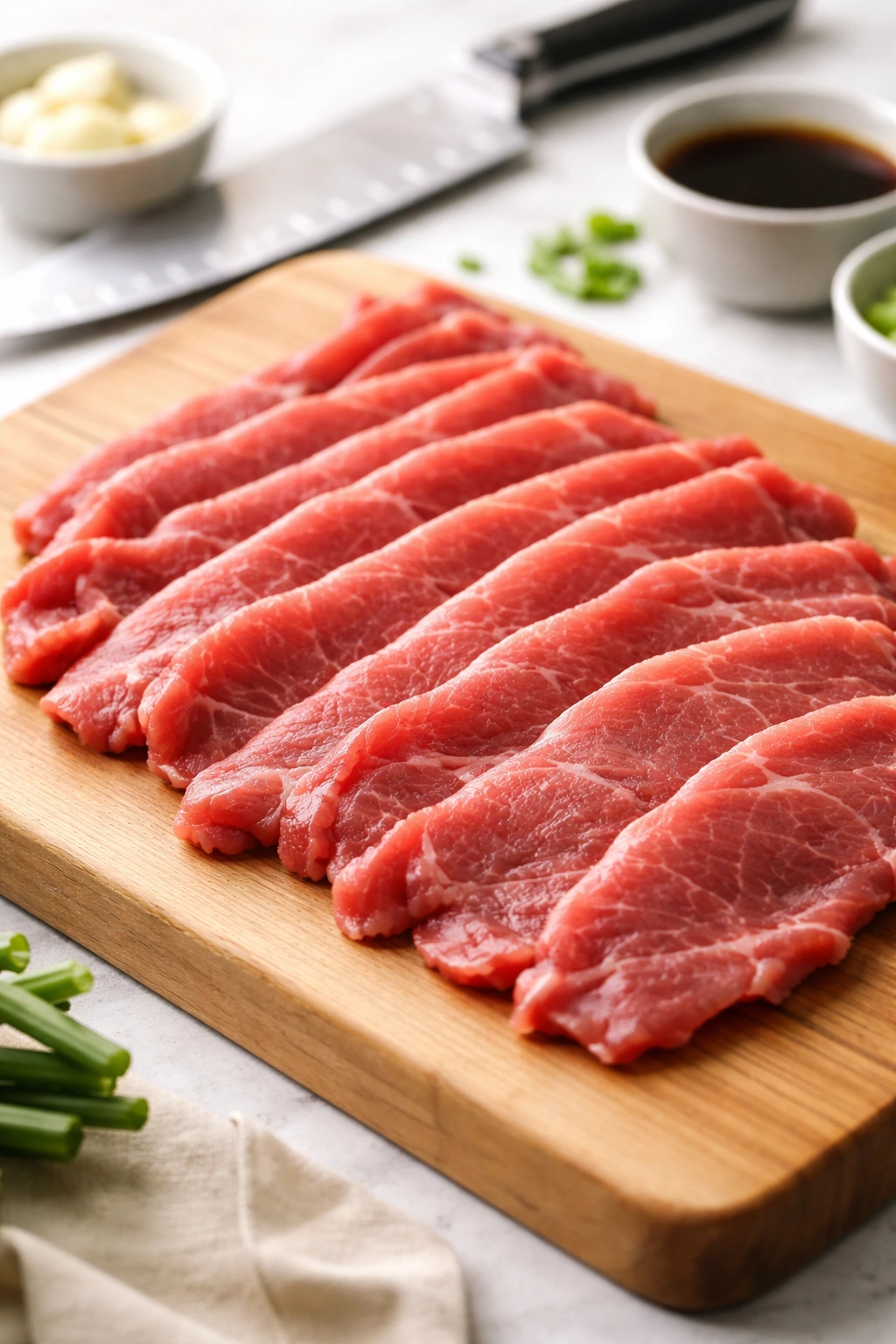
Most beef stir-fry fails because the meat is tough, chewy, or stringy. The problem isn’t the heat or the cooking time—it’s the way the meat was prepared before it hit the pan. Understanding how to prepare your beef is the single most important step that determines whether you get a restaurant-quality dish or a disappointing meal.
Freezing the steak for 30 minutes before slicing is a game-changer that nobody talks about. Cold meat is firm and stable, making it easier to achieve thin, uniform slices. You’re aiming for strips between 1/8 inch and 1/4 inch thick—the thinner you can slice it safely, the better. Thinner pieces cook faster, stay more tender, and absorb the sauce more effectively. Think of it this way: a 1/4-inch-thick slice might need 90 seconds per side, but a 1/8-inch slice cooks completely through in 45 seconds total. Less time in the heat means less opportunity for the meat to dry out.
The other critical factor is slicing against the grain. The grain refers to the visible lines or pattern of muscle fibers running through the meat. Look at your flank steak and you’ll see parallel lines. When you slice perpendicular to those lines (essentially cutting across them rather than along them), you’re shortening those muscle fibers, which makes the meat significantly more tender to chew. Slicing with the grain—along those lines—leaves long fibers intact, and the result is stringy, tough meat. Slice against the grain, and the difference is immediately obvious in the texture and chewiness.
Finally, high heat is your friend. When you add thin beef strips to a properly heated, oiled skillet, they should sizzle immediately. That quick sear creates a golden exterior while the inside stays juicy and tender. The entire cooking time should be no more than 3-4 minutes total. Overcooking is the enemy at this point. You’re not trying to achieve a well-done steak—you want the beef to be medium or medium-rare, with just a touch of pink inside. It will continue cooking slightly from residual heat after you remove it from the pan.
Choosing the Right Cut of Meat
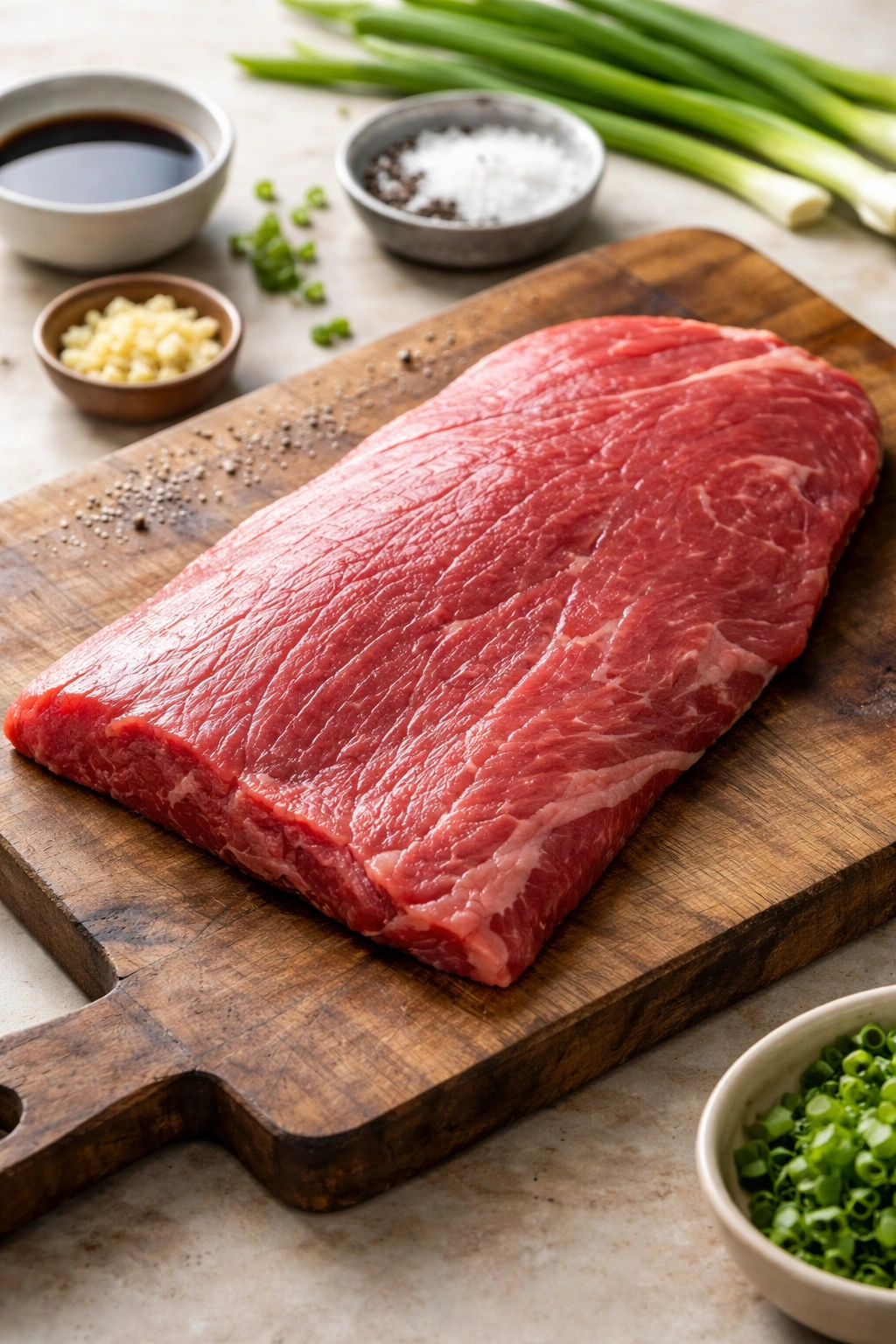
Not all beef cuts are created equal for a 25-minute stir-fry, and choosing the wrong one can derail your timing and texture goals. Flank steak is the gold standard, and for good reason. It’s a lean, flat cut from the lower abdominal area of the cow that’s flavorful and naturally tender when sliced thinly against the grain. At $8-12 per pound depending on where you shop, it’s also reasonably priced. Flank steak holds its shape beautifully when cut into thin strips and has just enough marbling (those thin lines of fat) to stay juicy during quick cooking.
Flat iron steak is another excellent choice that’s gained popularity because it’s even more tender than flank steak, with a beautiful shape that’s easy to work with. It comes from the chuck area and has an interesting grain structure, but when sliced correctly, it rivals flank steak in tenderness. Some people prefer it because you can skip the marinating step entirely and still get tender results.
If flank or flat iron aren’t available at your store, top sirloin steak is a reliable alternative that works well in stir-fries. Slice it thinly and against the grain, and you’ll get good results. Skirt steak is another possibility, though it has a chewier texture than flank, so pay extra attention to thin slicing. Ribeye works if you want extra richness and don’t mind paying a premium, but it’s not necessary for great flavor.
What you want to avoid is any tough, collagen-rich cut that needs long, slow cooking. Chuck steak (not chuck roast), round steak, or tougher cuts like brisket will be chewy no matter how thinly you slice them or how high your heat goes. Those cuts need braising, slow cooking, or a special velveting technique to become tender, and none of those fit into a 25-minute timeline. Stick with the cuts designed for quick cooking, and you’ll never have a texture problem.
Fresh vs Frozen Broccoli: Which Cooks Faster
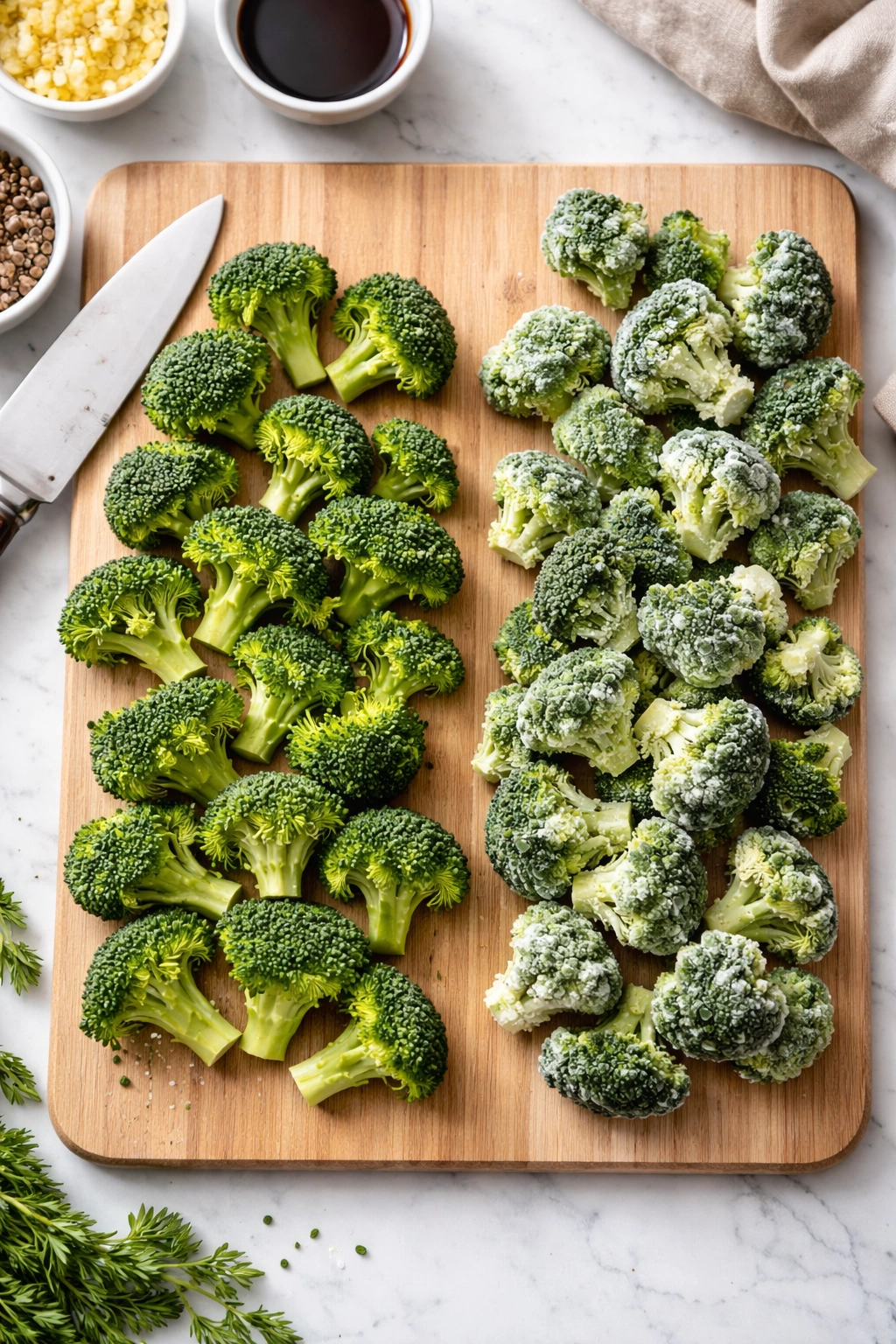
The broccoli choice is more consequential than most home cooks realize. Fresh broccoli florets cook quickly, hold their bright green color, maintain their crisp-tender texture, and don’t release excess water that dilutes your carefully balanced sauce. Frozen broccoli, while convenient and budget-friendly, releases moisture as it thaws and cooks, turning soft and mushy while simultaneously watering down the sauce, making it thin and bland instead of thick and clingy.
If you’re starting with fresh broccoli (which I recommend), cut it into small, uniform florets—roughly bite-sized pieces. Smaller florets cook more evenly and quickly. A whole head of broccoli typically yields about 4 cups of florets once cut and trimmed. The key is uniform size so that all the pieces cook at the same rate. If some florets are twice the size of others, the small ones will be mushy while the large ones are still tough.
If frozen broccoli is all you have available, you can make it work—just adjust your approach. Thaw it completely and pat it very dry with paper towels before it hits the pan. The drier you can get it, the less water it will release during cooking. Cook it first in the pan with a touch of oil over medium-high heat to remove any remaining moisture, then remove it to a plate. Add your beef, make the sauce, and combine everything at the end. The broccoli won’t be quite as crisp, but it’ll still be edible and tasty.
The real secret to perfect broccoli texture is high heat and proper timing. In a hot skillet with a tablespoon of oil, fresh broccoli florets become bright green and tender-crisp in 4-5 minutes, with a satisfying slight crunch. If you prefer softer broccoli, add 2 tablespoons of water to the pan and cover it with a lid for a minute or two to steam it slightly before continuing. The water creates steam that softens the florets without making them mushy. This is a pro move that gives you the best of both worlds—tender broccoli without losing the sauce to excess moisture.
Making the Perfect Stir-Fry Sauce
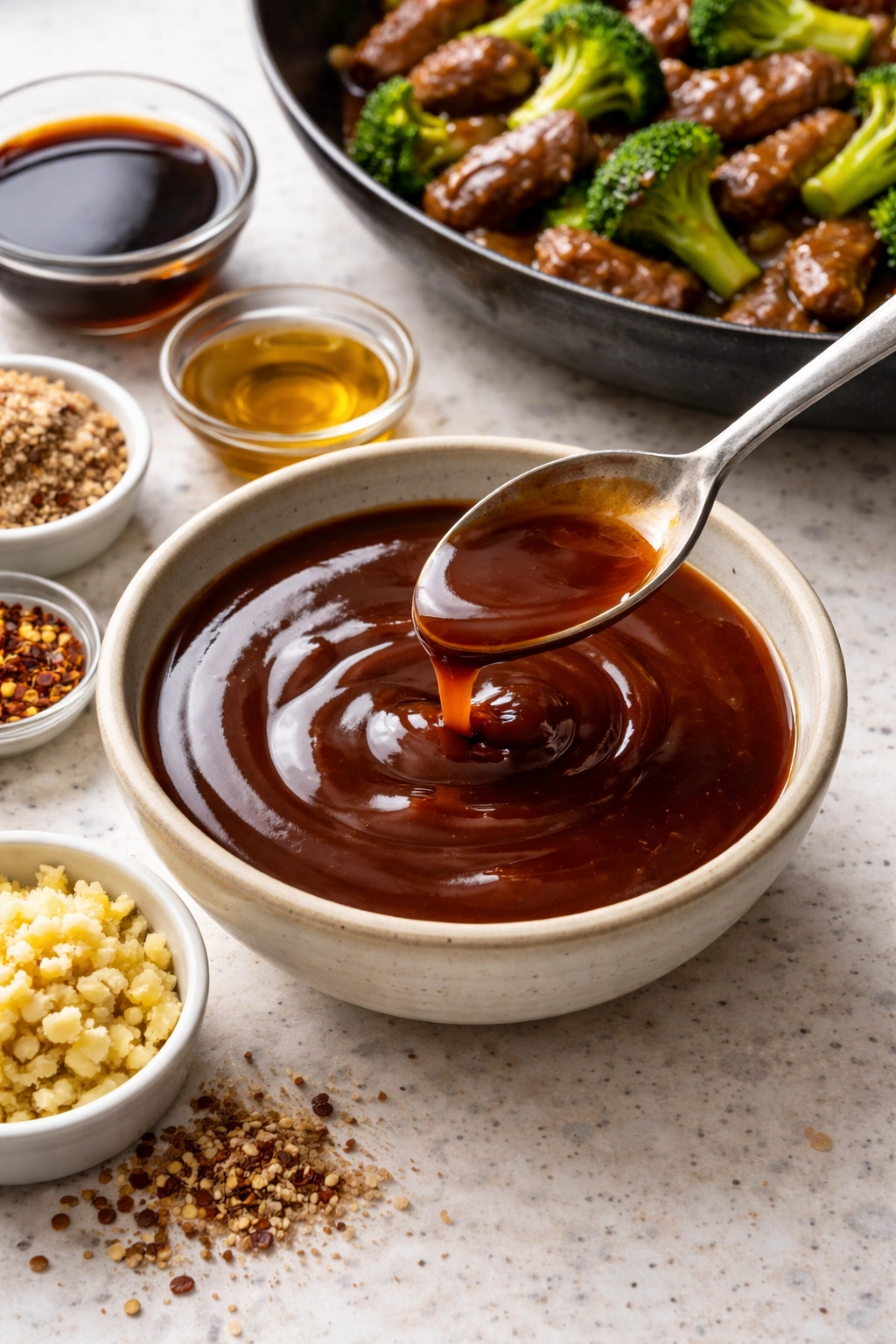
The sauce is honestly the best part of beef and broccoli. It’s the part that makes people scrape their rice bowls clean, the part that begs you to make extra rice to soak it all up. The sauce is why people think this dish is complicated, but it’s actually just five ingredients whisked together in a small bowl while everything else cooks.
The foundation is low-sodium soy sauce—use regular soy sauce and you’ll end up with an inedibly salty dish. Low-sodium soy sauce provides that deep, savory umami flavor without overwhelming the palate. You need about 1/2 cup (or 6 tablespoons, depending on your recipe). Water dilutes the sauce to the right consistency so it coats the beef and broccoli without being overwhelming. Brown sugar adds sweetness that balances the salty soy sauce, creating a sweet-savory profile that feels complete and satisfying. You don’t want it to taste like dessert—just enough sugar to round out the flavors and make the sauce feel well-balanced.
Cornstarch is the thickener. In a stir-fry sauce, cornstarch creates that signature glossy, clingy coating that clings to every piece of beef and broccoli. When the sauce comes to a gentle boil, the cornstarch activates and transforms from a thin liquid into a slightly thickened glaze. It’s crucial that you actually bring the sauce to a boil—a simmer won’t activate the cornstarch properly. Sesame oil is the final touch, adding that distinctive nutty, toasted flavor that screams “authentic stir-fry.” You only need a tablespoon or two. Make sure you’re using toasted sesame oil (it’s darker in color) and not regular sesame oil, which tastes completely different and won’t give you the flavor you’re after.
Some recipes add fresh ginger and garlic to the sauce itself, which is perfectly valid. Ginger adds a warm, zesty quality, and garlic brings depth. However, if you’re cooking these aromatics in the pan with the vegetables, you can skip them in the sauce and just use what you’ve already cooked, which saves a step and still delivers the flavor. The choice is yours depending on your preference and what saves you the most time.
The most common sauce mistake is overthinking it. People add rice vinegar, fish sauce, sriracha, and six other ingredients trying to recreate what they had at a restaurant, making the flavor muddy and confused. The simple version—soy sauce, water, brown sugar, cornstarch, and sesame oil—is genuinely all you need. It’s balanced, flavorful, and foolproof.
Essential Equipment and Setup
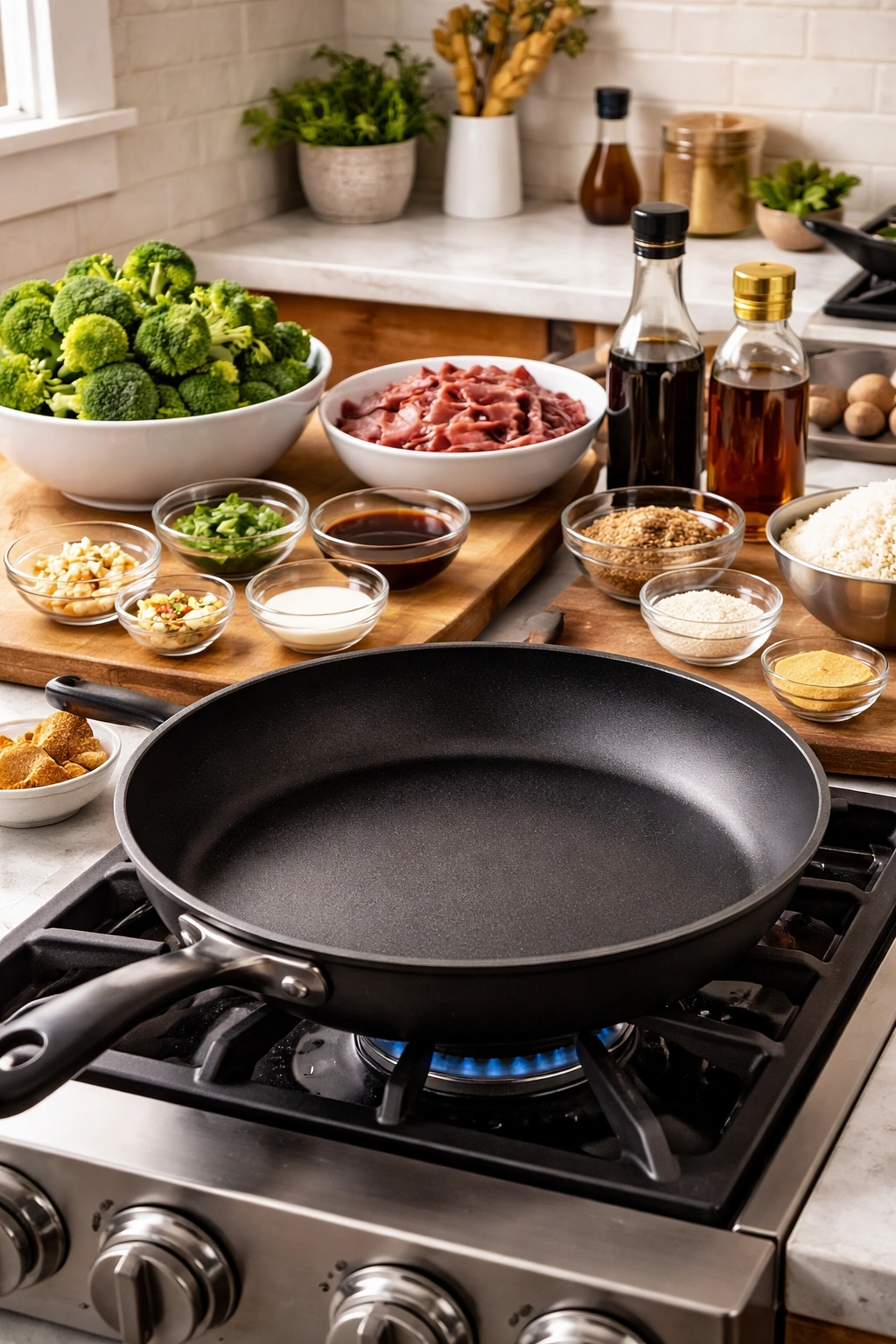
You don’t need a wok or any special equipment to make great beef and broccoli in 25 minutes. A large skillet—10 to 12 inches—is all you need. Preferably, you want one with relatively tall sides so ingredients don’t bounce out when you’re stirring vigorously, and ideally a nonstick surface or well-seasoned cast iron so everything releases easily.
Having the right tools matters, though. A sharp chef’s knife or a meat slicer makes slicing the cold beef into thin strips significantly easier and faster. A wooden spoon or silicone spatula for stirring is better than a metal one, which can scratch nonstick surfaces. A small bowl for whisking the sauce together is essential. Measuring spoons and a small measuring cup ensure you get the sauce proportions right. A cutting board for prepping the broccoli and slicing the beef. A slotted spoon for removing the beef from the pan without losing the oil.
The most important thing, though, is prep before you start cooking. Stir-frying is incredibly fast, which means there’s no time to chop vegetables or whisk sauce once the heat is on. Your workflow should be: freeze the steak for 30 minutes, cut the broccoli into florets, slice the beef against the grain, whisk the sauce together, measure out the garlic and ginger if using, and have everything arranged in front of you in order of use. Professional cooks call this “mise en place”—everything in its place—and it’s the difference between a smooth, 25-minute dinner and a chaotic, 45-minute scramble.
Arrange your ingredients in the order you’ll use them, left to right: beef on one side, broccoli florets on another, sauce in a bowl, garlic and ginger ready to go. Have your rice or noodles already cooking in a separate pot. Set your table if you’re eating immediately. These small setup steps mean that when you start cooking, you can focus entirely on the technique instead of scrambling to find ingredients or figure out what comes next.
Yield: Serves 4
Prep Time: 10 minutes
Cook Time: 13 minutes
Total Time: 23 minutes
Difficulty: Beginner — The technique is straightforward, ingredients are simple, and there’s minimal skill required beyond following the steps in order.
For the Beef and Broccoli:
- 1 pound flank steak or flat iron steak
- 2 tablespoons oil (olive or vegetable), divided
- 4 cups fresh broccoli florets (about 1 medium head), cut into bite-sized pieces
- 2 cloves garlic, minced
- 1 tablespoon fresh ginger, grated (or 1 teaspoon ground ginger)
- 1/2 teaspoon red pepper flakes (optional, for heat)
- 2 tablespoons sesame seeds for garnish (optional)
For the Stir-Fry Sauce:
- 1/2 cup low-sodium soy sauce
- 1/3 cup water
- 3 tablespoons packed light brown sugar
- 1 tablespoon cornstarch
- 1 tablespoon toasted sesame oil
- 1/4 teaspoon black pepper
For Serving:
- Cooked white rice, jasmine rice, or brown rice
Step-by-Step Instructions
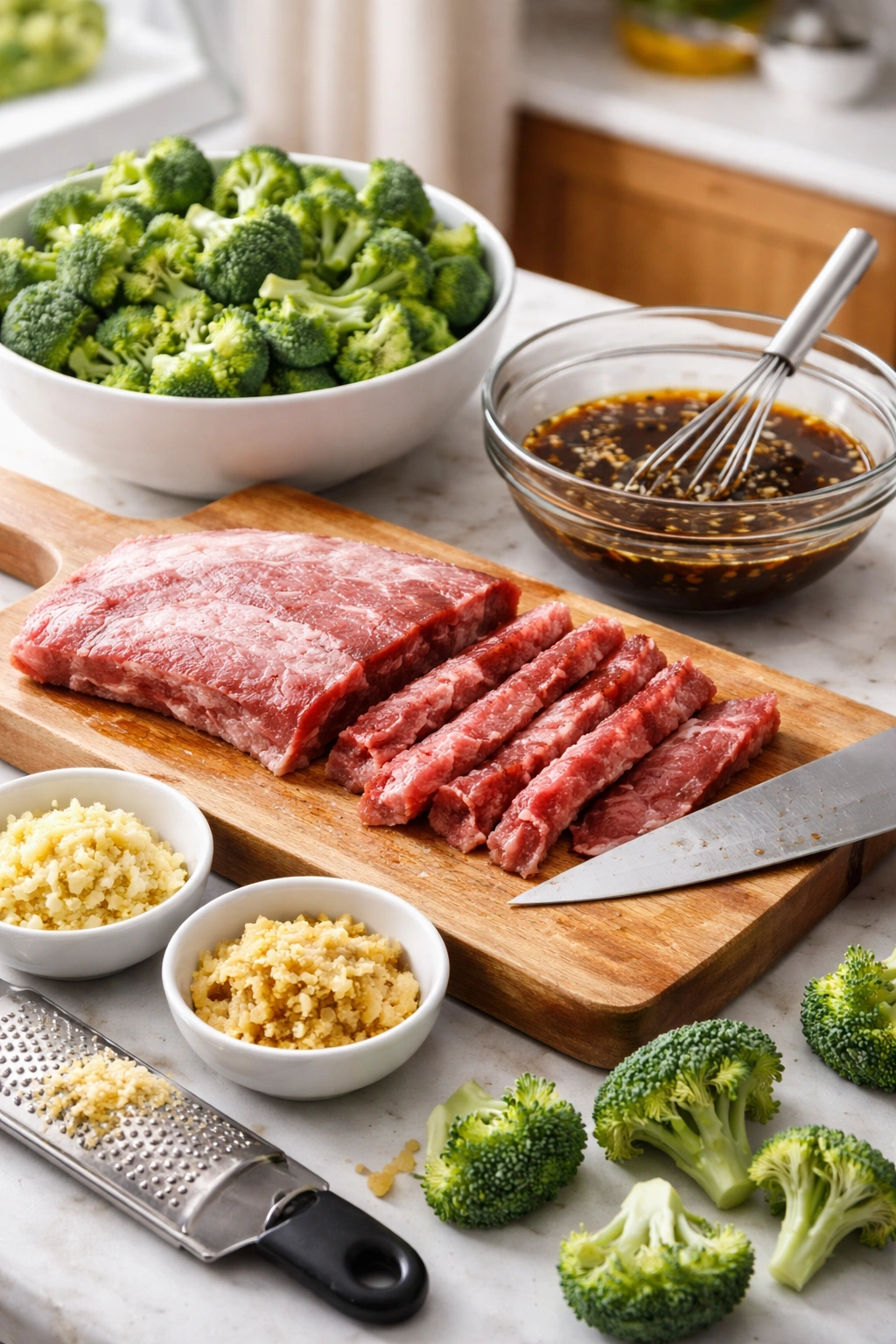
Prep (Complete This Before You Cook):
-
Place the flank steak in the freezer for 30 minutes to firm it up and make slicing easier.
-
Cut the broccoli head into small florets, roughly bite-sized. Aim for uniform pieces so they cook evenly. You should have about 4 cups of florets.
-
Mince the garlic and grate the fresh ginger (or measure out ground ginger). Have these ready in small bowls or on a cutting board.
-
In a small bowl, whisk together the soy sauce, water, brown sugar, cornstarch, sesame oil, and black pepper until the sugar dissolves and cornstarch is fully incorporated. The mixture should look smooth with no lumps. Set this sauce aside.
-
Remove the flank steak from the freezer and place it on a cutting board. Trim any excess fat from the edges. Using a sharp knife, slice the steak against the grain into thin strips, roughly 1/8 to 1/4 inch thick and bite-sized (about 1-2 inches long). Slicing against the grain is crucial for tenderness—look for the lines running through the meat and slice perpendicular to those lines, not parallel.
-
If you’re not starting your rice yet, now is the time to begin cooking it so it’s ready when the stir-fry finishes.
Cook the Broccoli:
-
Heat 1 tablespoon of oil in a large skillet over medium-high heat until it shimmers (about 1 minute).
Advertisements -
Add the broccoli florets to the hot oil and stir or toss them frequently for 4-5 minutes, until the florets are bright green and tender-crisp. Do not cover the pan—you want any released moisture to evaporate, not steam back into the vegetables and make them soggy. If you prefer softer broccoli, add 2 tablespoons of water, cover with a lid, and steam for 1-2 minutes before continuing.
-
Transfer the cooked broccoli to a clean plate or bowl using a slotted spoon or tongs. Don’t worry about the small amount of oil left in the pan—you’ll use it for the beef.
Cook the Beef:
-
Add the remaining 1 tablespoon of oil to the hot skillet (the heat should still be on medium-high).
-
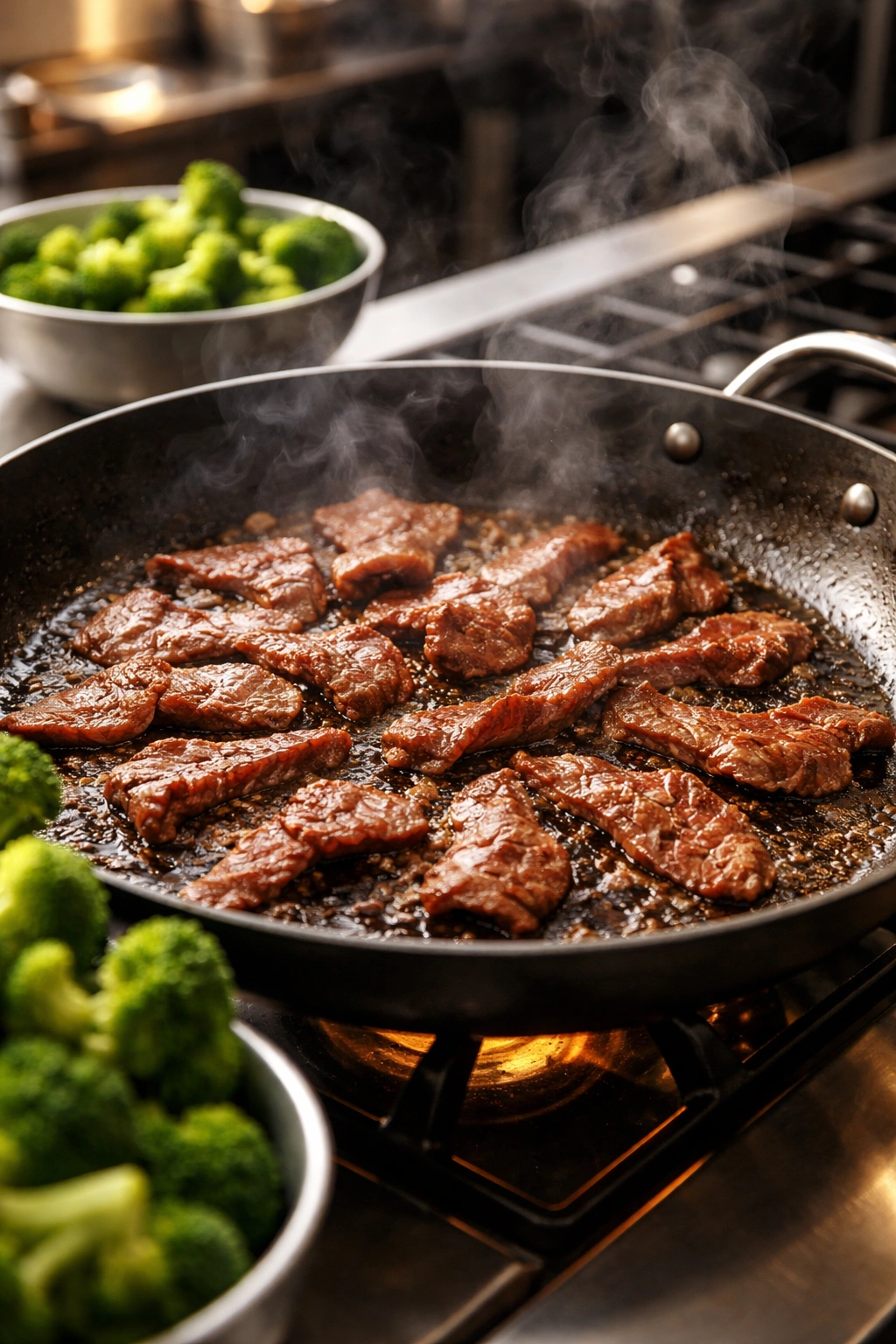
Once the oil is shimmering hot, add the sliced beef in a single, flat layer. Do not stir immediately. Let it sit undisturbed for about 1 minute so the bottom browns and sears.
-
Using tongs or a spatula, flip the beef strips and cook for another 1-2 minutes, stirring constantly, until the meat is almost cooked through and no longer visibly pink. Be careful not to overcook—the beef will continue cooking slightly from residual heat. You want it medium or medium-rare, not well-done.
-
Add the minced garlic and grated ginger (or ground ginger) to the pan and stir constantly for about 30-60 seconds until the aromatics are fragrant and mixed into the beef. The garlic and ginger will release their flavors into the hot oil, infusing the entire dish.
Combine and Finish:
-
Return the cooked broccoli to the pan, tossing it with the beef to combine.
-
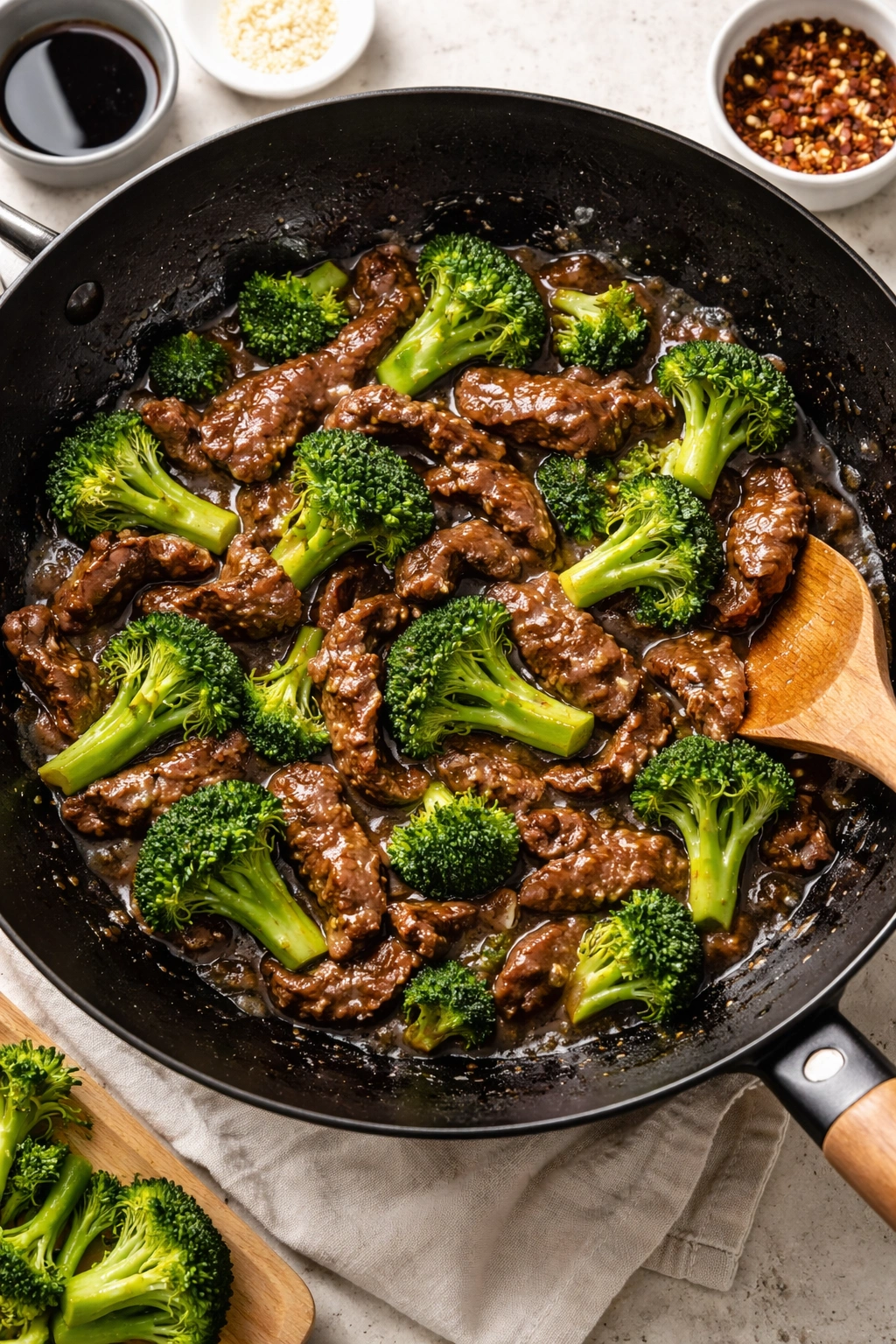
Pour the prepared sauce directly into the pan over the beef and broccoli. Stir everything constantly and continuously for 1-2 minutes until the sauce comes to a gentle boil and thickens, coating every piece of beef and broccoli with a glossy glaze. You’ll see the sauce transform from a thin liquid into something that clings to the food—that’s the cornstarch activating and doing its job.
Advertisements -
Taste and adjust seasoning as needed. If the sauce is too thick, add a tablespoon of water at a time and stir. If it’s too thin, let it simmer for another 30 seconds (the cornstarch needs heat to fully activate).
-
Serve immediately over hot rice, dividing the beef and broccoli evenly among plates and making sure each serving gets plenty of sauce. Garnish with sesame seeds and a sprinkle of red pepper flakes if desired.
Pro Tips for Restaurant-Quality Results
The difference between good beef and broccoli and restaurant-quality beef and broccoli often comes down to a handful of techniques that professionals use but home cooks don’t know about. Understanding these tips elevates your game significantly.
High heat is non-negotiable. Stir-frying is a technique that requires genuinely hot heat—medium-high or high. If your pan isn’t hot enough, the beef steams instead of searing, the broccoli softens instead of becoming crisp-tender, and you lose the texture that makes stir-fry appealing. The moment you add beef to the pan, it should sizzle loudly. If it doesn’t, pull the beef back out, give the pan another minute to heat up properly, and try again.
Don’t overcrowd the pan. If you’re doubling this recipe, cook the beef in two batches rather than cramming it all in at once. When beef is crowded, it releases moisture and steams instead of searing. The same applies to broccoli—the florets should have space around them in the pan so heat can reach them from all sides.
Pat the beef completely dry before cooking. After you slice it, if there’s any surface moisture from the cold steak, pat it with paper towels until it’s completely dry. Moisture prevents browning and searing. Dry meat = better texture.
Start your rice before you start cooking the stir-fry. This is a timing thing. If you start cooking rice after you’ve begun the stir-fry, your dinner won’t come together at the same time. Start the rice first, then prep your ingredients, then start cooking the stir-fry. Everything will be hot and ready to serve simultaneously.
Taste and adjust the sauce right before serving. Every soy sauce brand has slightly different salt levels. Some people prefer more sweetness, others prefer more savory. Before you plate it, take a taste and adjust. Add a pinch more brown sugar if you want it sweeter, a splash more water if you want it thinner, or a squeeze of lime juice if you want brightness. This final tasting step makes the difference between good and absolutely delicious.
Common Mistakes That Slow You Down
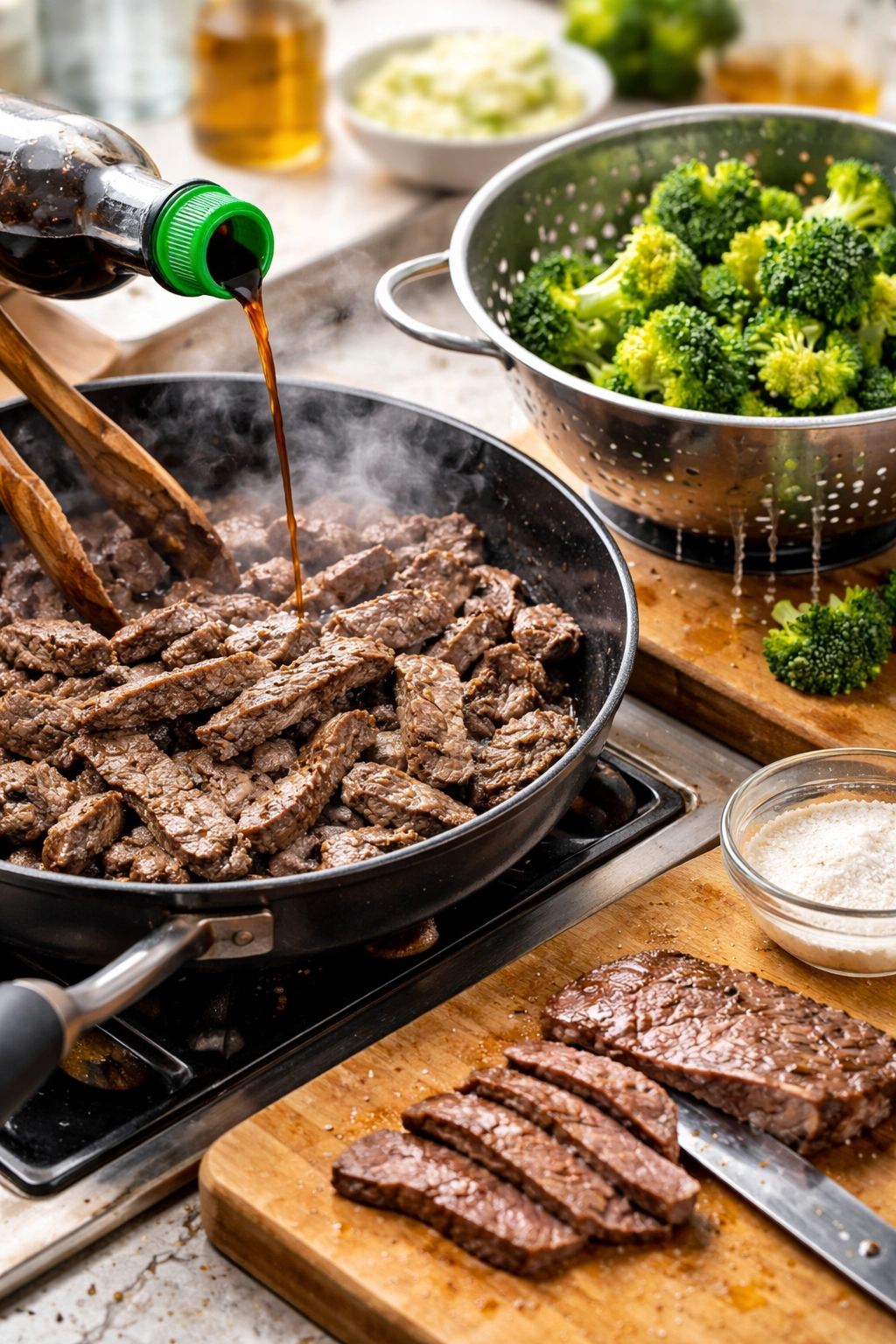
Understanding what goes wrong helps you avoid these pitfalls and actually hit that 25-minute mark without stress.
Using frozen broccoli without thawing and drying it thoroughly is the most common error. Frozen broccoli releases water into the pan, diluting your sauce and turning your beautiful stir-fry into a watery mess. If you must use frozen, thaw it completely, pat it bone-dry with paper towels, and cook it in a dry pan first to evaporate any remaining moisture before adding oil and continuing with the recipe.
Slicing the beef with the grain instead of against it is next. With-the-grain slices are stringy and chewy no matter what you do. Against-the-grain slices are tender and pleasant. Look at the muscle fiber pattern and slice perpendicular to those lines. It’s the single biggest factor in texture.
Using regular (full-sodium) soy sauce instead of low-sodium makes the dish inedibly salty. There’s no recovering from this mistake except diluting the entire sauce with water and hoping for the best. Just buy low-sodium. It’s usually the same price and worth the tiny extra effort of reading the label.
Not letting the beef sear before stirring is another common mistake. When you add beef to the pan, resist the urge to immediately start stirring. Let it sit for a minute so the bottom makes contact with the hot surface and develops a golden, flavorful crust. Then flip and continue. This creates texture and flavor that constant stirring prevents.
Cooking the beef too long. This is so easy to do, especially if you’re a perfectionist who likes meat fully cooked. Thin strips of flank steak cook through in 3-4 minutes total. They’ll still be safe to eat if there’s a tiny bit of pink—that’s actually the goal. Fully cooked beef at this thickness becomes tough and chewy. Medium-rare is the target.
Not having everything prepped before you start cooking. Stir-frying moves fast. If you’re chopping broccoli while the beef is in the pan, you’re going to mess up the timing. Everything should be cut, measured, whisked, and ready to go before you turn on the heat. This is how professionals work, and it’s the real difference between chaos and smooth execution.
Variations and Ingredient Swaps
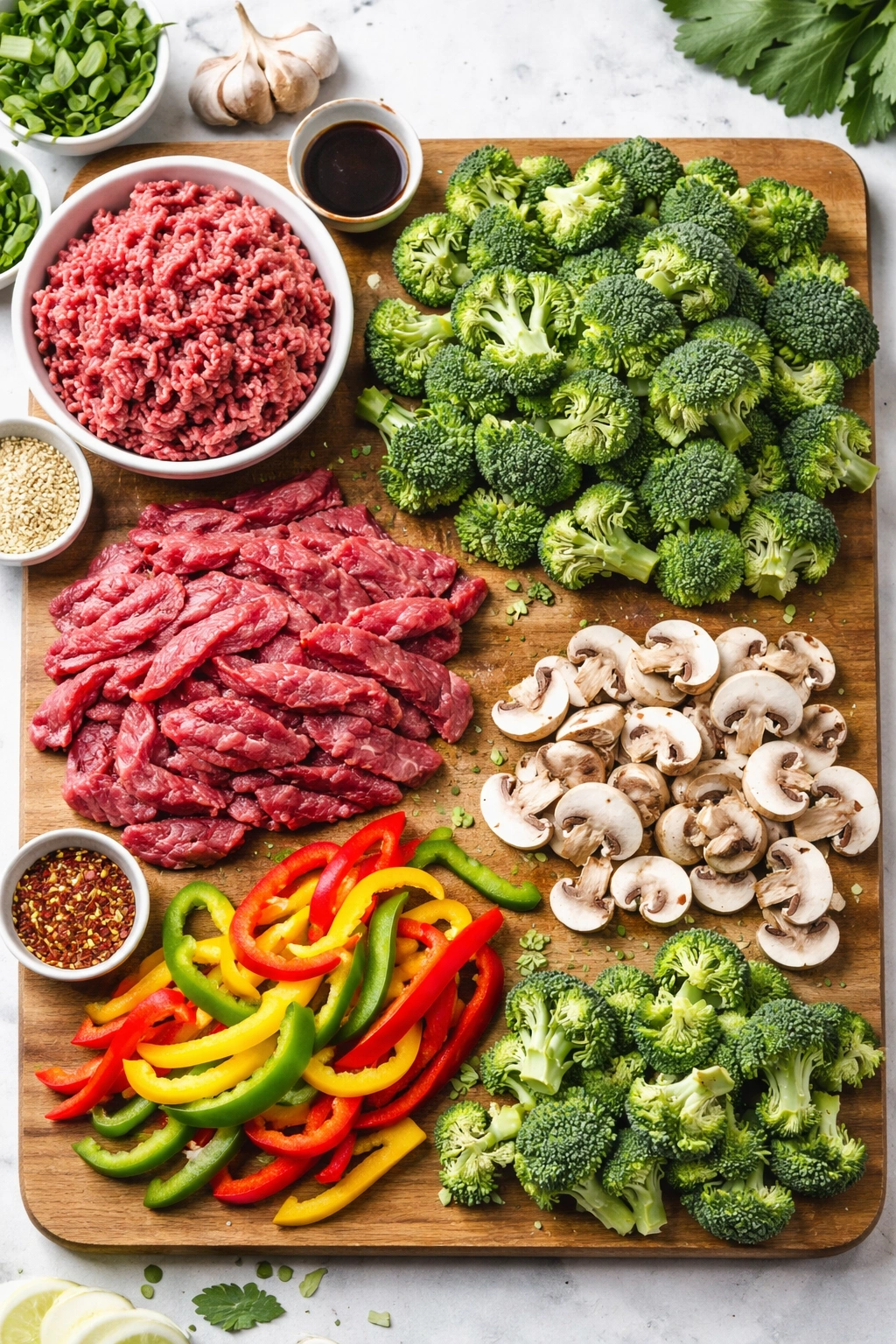
Once you master the basic version, beef and broccoli becomes a canvas for customization. These variations don’t add time—they’re just ingredient swaps that let you make the dish your own.
Ground beef instead of steak cuts the prep time even further. Brown 1 pound of lean ground beef with a diced onion (about 5-7 minutes), drain off any excess fat, then proceed with the rest of the recipe as written. You skip the slicing step entirely, which is perfect for nights when you’re even more pressed for time than usual. The result is slightly different (less distinct beef pieces, more cohesive texture) but equally delicious.
Bell peppers and snap peas add crunch and color without adding time. Slice a red or yellow bell pepper into thin strips and a cup of snap peas, and cook them alongside (or instead of some of the) broccoli. They take about the same time and absorb the sauce beautifully.
Mushrooms, especially shiitake or cremini, add an earthy umami depth that complements the sauce perfectly. Slice them thinly and cook alongside the broccoli. They release moisture just like frozen broccoli, so don’t cover the pan—let any released liquid evaporate.
Ginger and garlic adjustments are personal preference. If you love ginger, increase it to 1.5 tablespoons. If garlic is your thing, use 3-4 cloves instead of 2. If you don’t like either, skip them entirely and the dish will still be delicious—the sauce is so well-balanced that it stands on its own.
More heat is as simple as adding red pepper flakes, sriracha drizzled over the finished dish, or fresh chili peppers sliced thin and cooked with the aromatics. Start with 1/2 teaspoon red pepper flakes and adjust to taste the next time you make it.
Protein alternatives work beautifully. Swap the beef for 1 pound of boneless chicken breast (cut into thin strips), pork tenderloin, shrimp, or firm tofu. Adjust the cooking time slightly based on the protein—shrimp and thin chicken strips might cook faster than beef, while tofu just needs to be warmed through in the sauce.
Rice alternatives include jasmine rice, brown rice, cauliflower rice, or egg noodles. The sauce works with any of these bases. You can also serve it over brown rice for extra fiber, or cauliflower rice if you’re keeping carbs low. Even lo mein noodles work perfectly, turning it into a more noodle-forward dish.
Lower-sodium adjustment: If you’re watching sodium, use low-sodium soy sauce (which the recipe already calls for) and skip adding extra salt. The sauce as written is already fairly salty due to the soy sauce. Taste before adding more.
Storage and Meal Prep
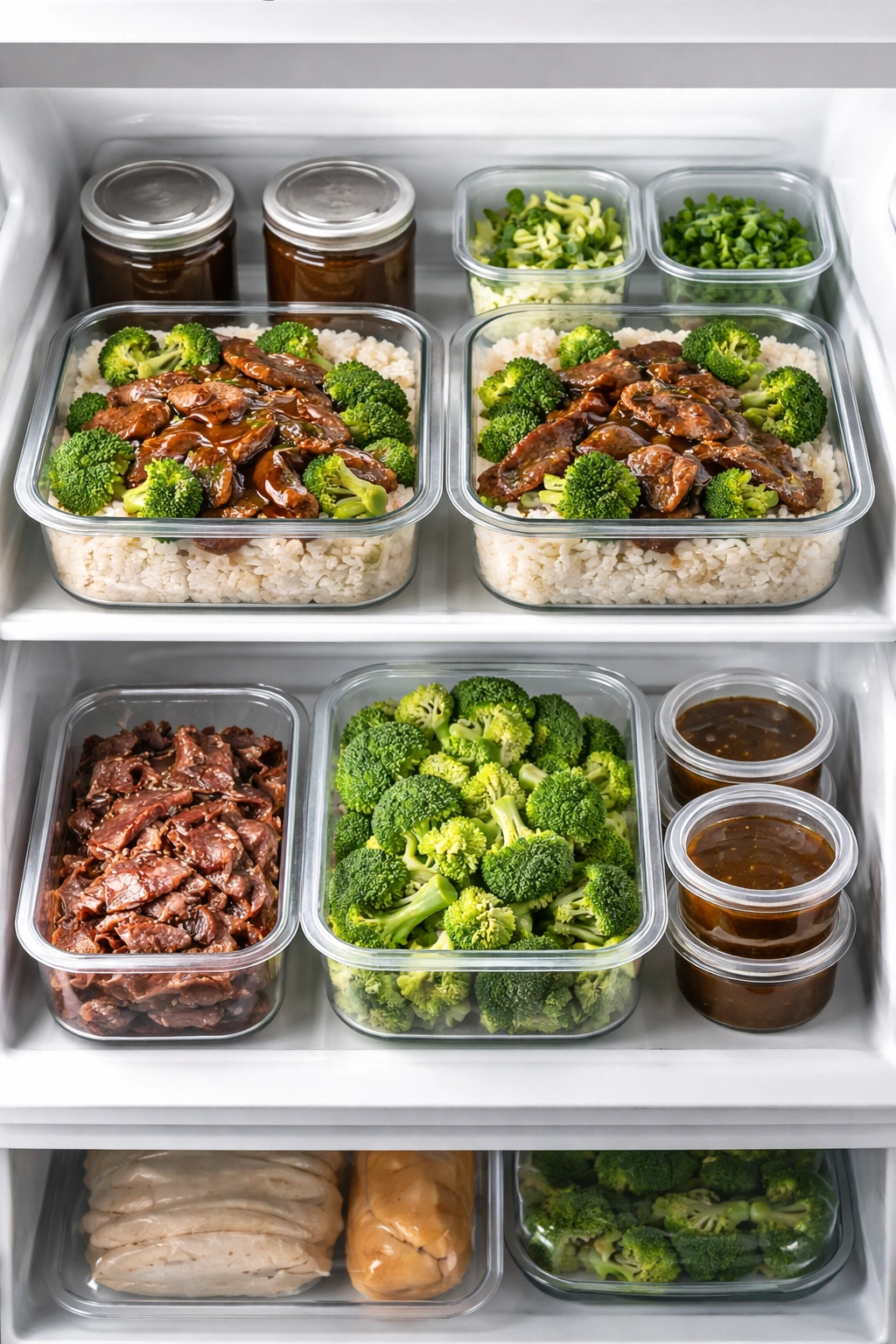
Beef and broccoli reheats beautifully, making it ideal for meal prep and leftover lunches. Store leftovers in an airtight container in the refrigerator for up to 3-4 days. The beef and sauce keep well, though the broccoli will soften slightly with time—it’s still delicious, just not quite as crisp as freshly cooked.
To reheat, transfer your portion to a skillet over medium-low heat and warm it gently, stirring occasionally, until it’s heated through (3-5 minutes). Alternatively, use the microwave on 50% power for 2-3 minutes, stirring halfway through, to prevent overcooking and drying out the beef. Add a splash of water or a teaspoon of soy sauce when reheating if the sauce seems thick—it thickens more as it cools, and a little liquid restores it to the proper consistency.
Make-ahead prep is a game-changer for weeknights when you’re truly slammed. The night before, prep all your ingredients: slice the beef, cut the broccoli, mince the garlic and ginger, and whisk the sauce. Store each component separately in airtight containers in the refrigerator. The next evening, you can have this on the table in just 13 minutes of actual cooking time—no prep at all.
Freezing is possible but not ideal because the broccoli tends to become mushy when thawed. If you freeze it anyway, store it in a shallow airtight container for up to 2 months. Thaw it overnight in the refrigerator and reheat gently on the stovetop. The broccoli won’t be as crisp, but the beef and sauce will still be delicious.
Individual portions in glass containers make this an excellent meal-prep dish for lunches. Cook a double or triple batch on Sunday, portion it into individual containers with the rice, and you have grab-and-go lunches ready for the entire week. Even on days five or six, when it’s been in the fridge for a while, a quick reheat makes it taste just fine.
What to Serve Alongside Your Stir-Fry
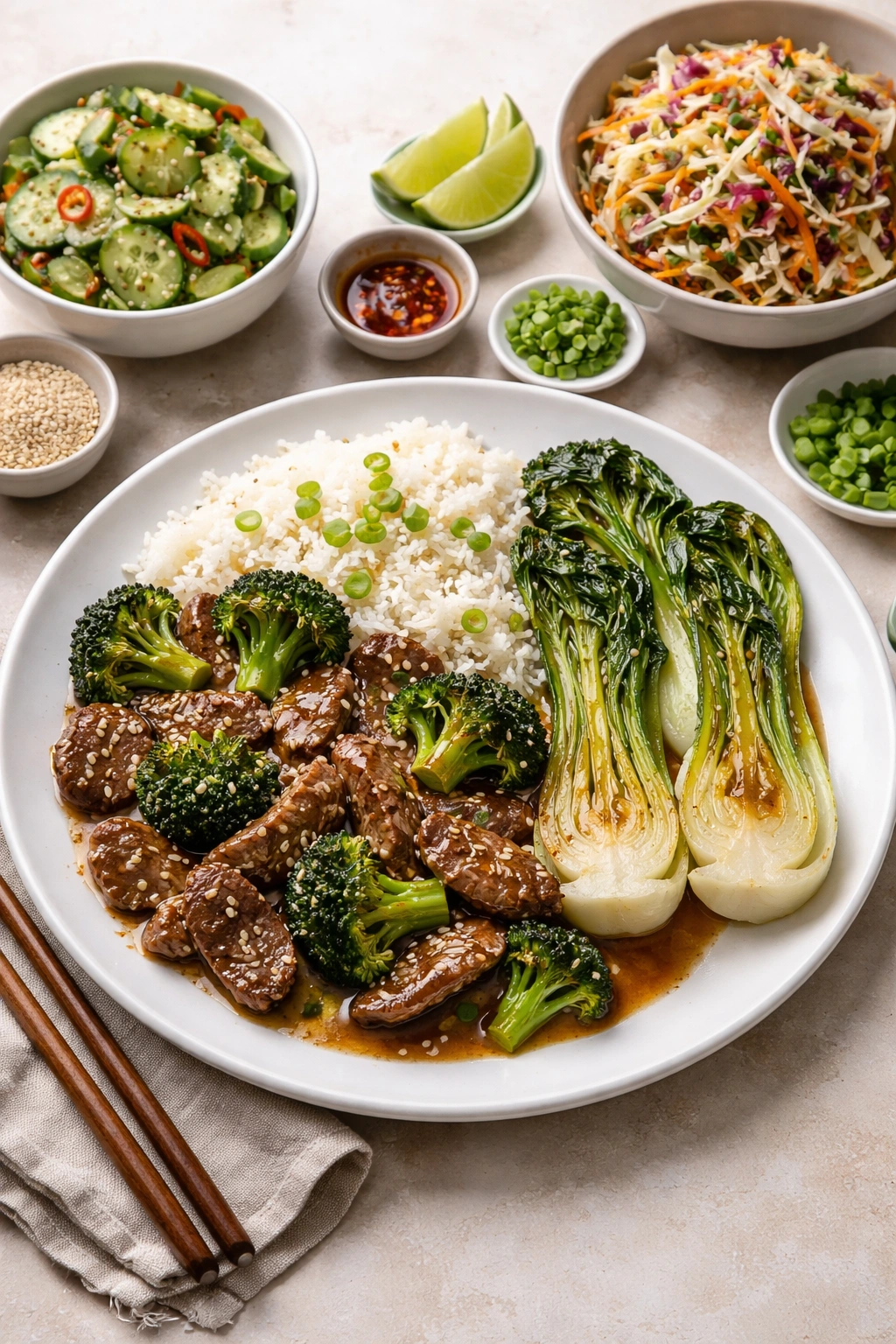
The sauce is so good that it begs for something to soak it up, which is why rice is the classic pairing. Jasmine rice is many people’s favorite—it’s slightly sweet, fluffy, and authentic. Brown rice is earthier and adds fiber. White rice is traditional and neutral. Cauliflower rice keeps carbs lower. Egg noodles or lo mein noodles turn it into more of a noodle dish. Any of these work depending on your preference and dietary goals.
Beyond the starch, consider adding a side of steamed bok choy (Chinese greens that cook in 3-4 minutes) or sautéed snap peas for extra vegetables. A simple Asian slaw made with shredded cabbage, carrots, and a light vinegar dressing adds cool, crunchy contrast to the warm, saucy stir-fry. A cold cucumber salad with rice vinegar and sesame oil is refreshing alongside the rich beef and sauce.
Garnishes elevate the presentation and add texture. A sprinkle of sesame seeds adds nuttiness and crunch. Chopped fresh cilantro or sliced green onions brighten the dish. A drizzle of sriracha or chili oil for those who want extra heat. Crushed peanuts add richness. These small touches make the finished plate look restaurant-quality and taste even better.
Common Questions About Quick Beef and Broccoli
Can I use a different cut of beef if flank steak isn’t available?
Absolutely. Top sirloin steak, skirt steak, or flat iron steak all work beautifully. The key is slicing thinly against the grain and using high heat. Avoid very tough cuts like round steak or chuck steak unless you’re planning to marinate them for hours. Ribeye works if you want extra richness and don’t mind the cost. Budget-conscious? Flank or top sirloin offer the best value for stir-frying.
My sauce isn’t thickening. What’s wrong?
The sauce needs to reach a gentle boil for the cornstarch to activate. If you’re just simmering it gently, increase the heat slightly so you see actual bubbles breaking the surface. Bring it to a boil, stir constantly, and you’ll see it thicken within 30 seconds. If it’s still thin after boiling, you may have accidentally reduced the cornstarch or added too much water. Next time, measure carefully.
What if I don’t like sesame oil?
You can omit it or substitute vegetable oil, but sesame oil is really what gives beef and broccoli that distinctive restaurant flavor. If you’ve never tried it, buy a small bottle from the Asian foods aisle (make sure it says “toasted”) and give it a chance. A tablespoon flavors the entire dish beautifully without overwhelming it. Most people who think they don’t like sesame oil haven’t tried the right kind in the right amount.
How do I know when the beef is done?
Flank steak slices are thin enough that they cook through very quickly. They should be medium or medium-rare, with just a hint of pink in the very center—not gray throughout, which would be overcooked. A quick tip: cut one slice in half to peek inside and check doneness. With practice, you’ll learn how the meat looks and feels at the right doneness level.
Can I double this recipe?
Yes, but cook the beef in two batches. Doubling the broccoli is fine if your skillet is large enough, but doubling the beef and cramming it all in the pan at once will cause it to steam instead of sear, resulting in poor texture. Two batches of beef take only a couple extra minutes and give you much better results.
Is this recipe gluten-free?
The beef, broccoli, and oil are naturally gluten-free. Use tamari or coconut aminos instead of regular or even low-sodium soy sauce (which is made from wheat) and you’ve got a completely gluten-free dish. The rest of the ingredients are naturally gluten-free.
Final Thoughts
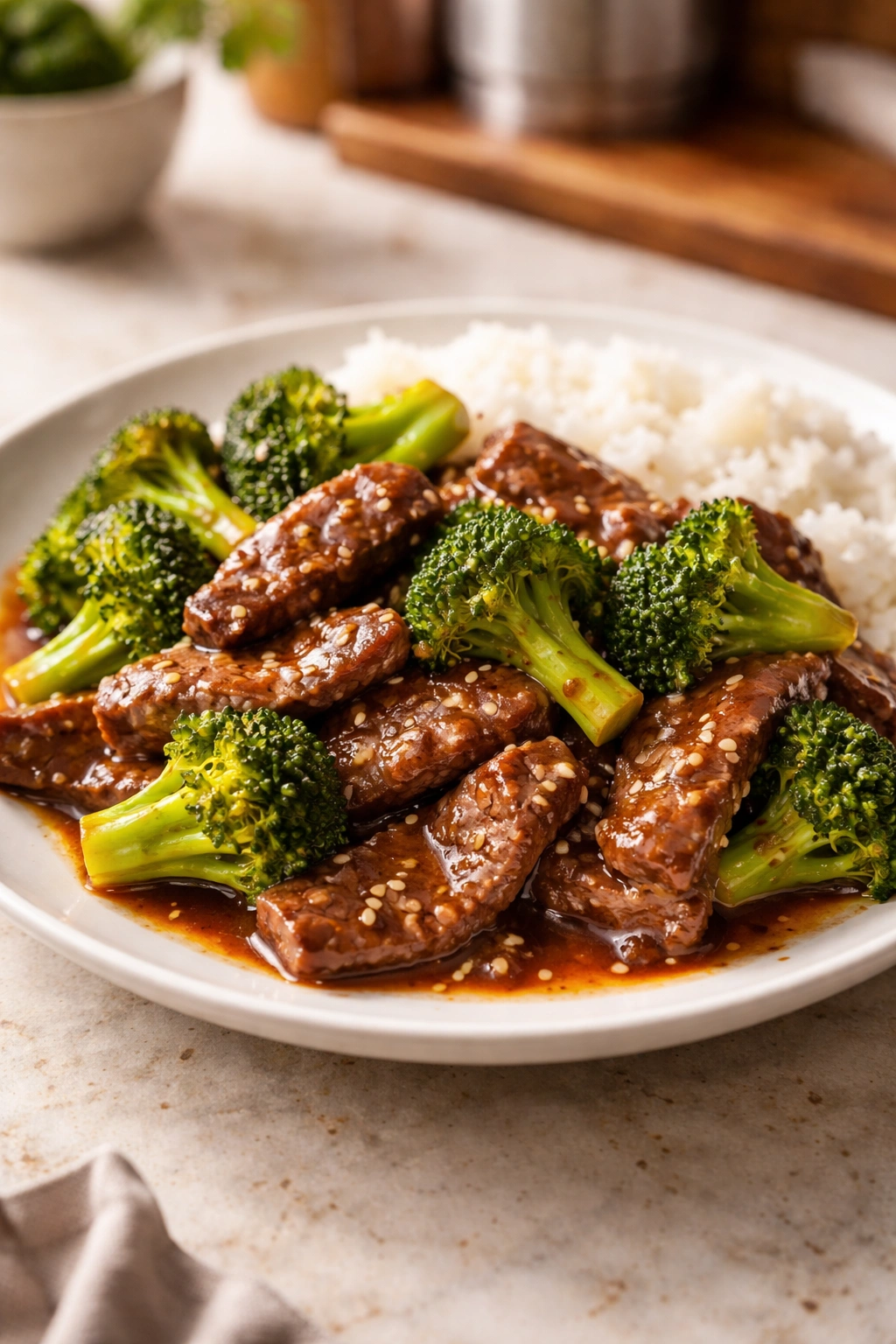
The magic of a 25-minute beef and broccoli isn’t in secret ingredients or complicated techniques—it’s in understanding the fundamentals and executing them with confidence. Thin-sliced beef that cooks quickly, fresh broccoli that stays crisp, a sauce that’s balanced rather than overly complicated, and high heat throughout. That’s it. That’s the formula.
Once you’ve made this a few times, it becomes almost automatic. You’ll slice the beef while the pan heats, cook the broccoli while whisking the sauce, and have dinner on the table before you’ve even thought about what’s for tomorrow night. It stops being a special-occasion dish and becomes the reliable, go-to dinner that you rotate into your regular meal plan because it’s faster and better than any alternative, including takeout.
The real victory here isn’t just the time—it’s the knowledge that you can make restaurant-quality food at home whenever you want it. That’s the confidence that makes home cooking stick, the reason people eventually stop ordering delivery, and the foundation for discovering that cooking isn’t as intimidating as it seemed before you started. You’ve already proven you can do it in 25 minutes. Imagine what else is possible.
