



There’s something genuinely magical about Greek food. The combination of bright lemon, fragrant oregano, garlicky depth, and the creamy tang of feta creates flavors that make even the simplest proteins sing. Greek chicken thighs—those dark, juicy morsels that somehow stay tender and flavorful no matter how you cook them—might be the easiest way to bring that Mediterranean magic to your dinner table on any given weeknight. Once you understand the core technique and the marinade that makes it all work, you’ll find yourself making these over and over.
The beautiful thing about Greek chicken thighs is that they require almost no babysitting. Dark meat is forgiving in ways that white meat simply isn’t. The meat clings to the bone, moisture-rich and patient, waiting for you to get dinner on the table. Whether you’re searing them in cast iron and finishing in the oven, throwing everything on a sheet pan, or going for the simplest baked approach, the result is consistently juicy, flavorful, and absolutely satisfying.
Why Chicken Thighs Are the Secret Weapon for Greek Cooking
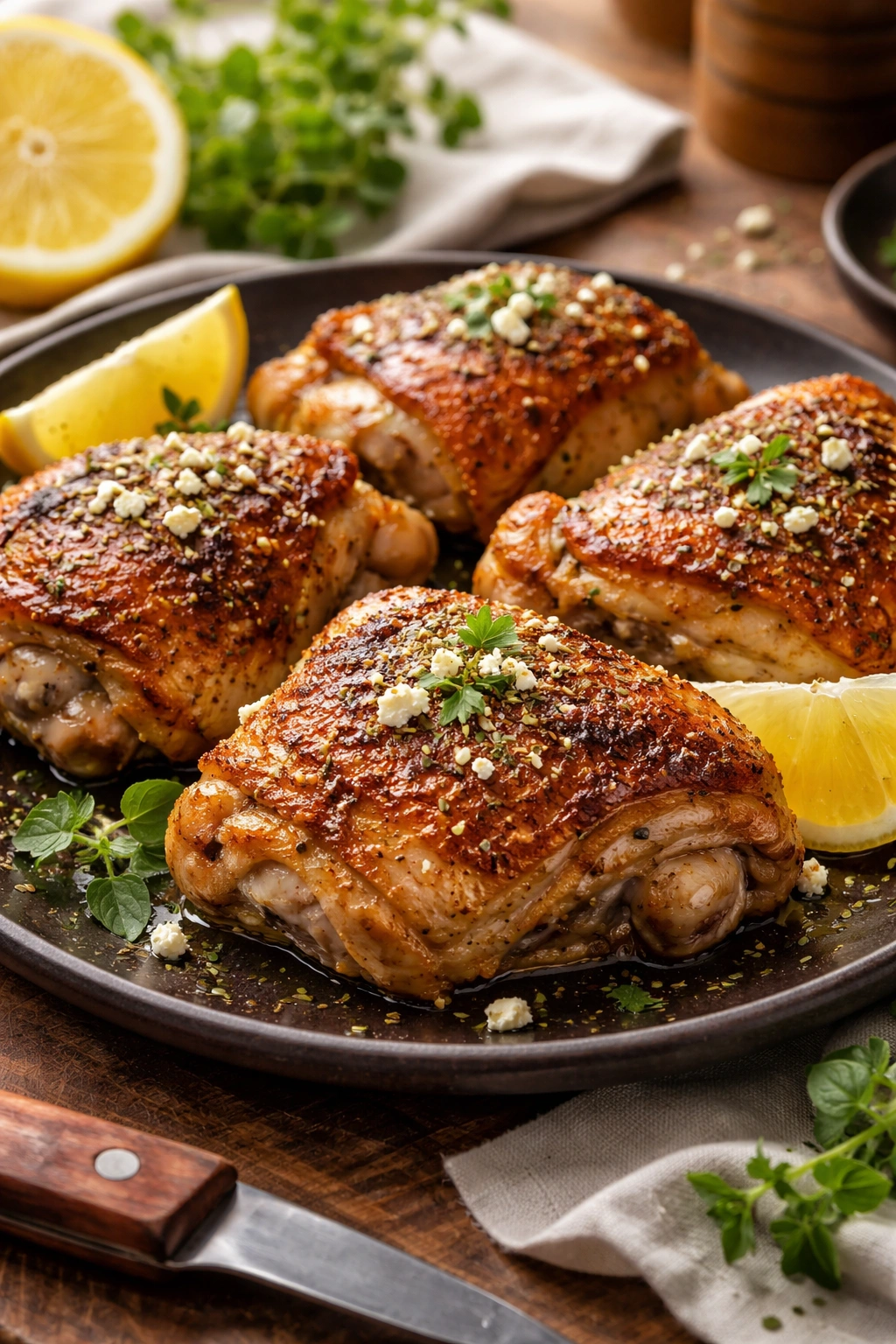
Chicken breasts get the spotlight in health magazines, but anyone who cooks with intention knows that thighs are where the real flavor lives. The dark meat contains more fat and collagen than white meat, which isn’t something to fear—it’s exactly what makes thighs so forgiving and delicious. As the chicken cooks, that fat renders into the marinade and vegetables, creating a silky, flavorful sauce that elevates the entire dish.
The structure of the thigh is also your friend. Bone-in thighs cook more evenly because the bone conducts heat throughout the meat. Skin-on thighs develop a golden, crispy exterior that adds tremendous textural contrast and flavor. Even if you use boneless, skinless thighs for convenience—which absolutely works—you’ll still get tender, juicy results simply because of the meat’s inherent composition.
Dark meat also absorbs marinades more effectively than white meat. The muscle fibers in thighs are structured differently, allowing acidic marinades with lemon juice to penetrate deeply and tenderize the meat without turning it mushy. This is why Greek chicken thigh recipes are so reliably successful, even when you’re new to cooking them.
The Science Behind the Greek Marinade
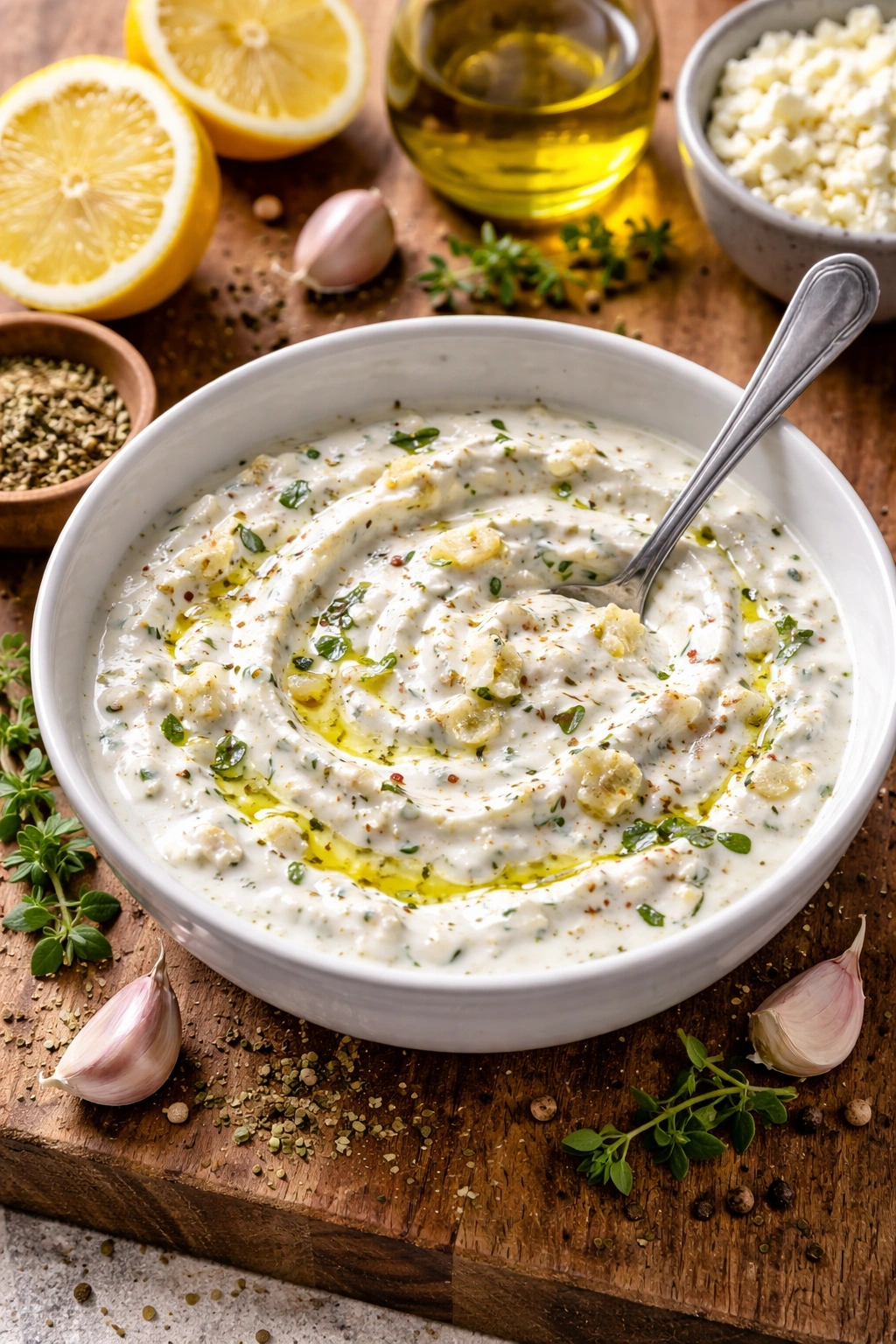
The magic marinade at the heart of every great Greek chicken thigh recipe does something beautifully simple: it layers flavor while simultaneously tenderizing the meat. Greek yogurt deserves special attention here because it’s not just decoration. The lactic acid and calcium in yogurt break down the protein and collagen in the chicken, making the meat more tender without creating that odd mushy texture that can happen with overly long marinades using only vinegar or lemon juice.
Fresh lemon juice provides brightness and acidity, but it also serves a structural purpose. The acid denatures the proteins in the chicken, causing them to unwind and reorganize in a way that traps more moisture. Oregano, dried or fresh, is absolutely non-negotiable in a Greek marinade—not just for flavor, but because it’s the flavor that screams “this is Greek.” The volatile oils in oregano are heat-stable, meaning they intensify rather than fade during cooking.
Garlic adds pungent, savory depth, while olive oil carries all those flavors into the meat and also helps the chicken skin crisp beautifully in the oven. The salt breaks down muscle proteins and helps the meat retain moisture. This combination isn’t complicated, but it’s precisely calibrated. You don’t need ten ingredients to make extraordinary food; you need the right ones, prepared with intention.
How Long Should You Actually Marinate
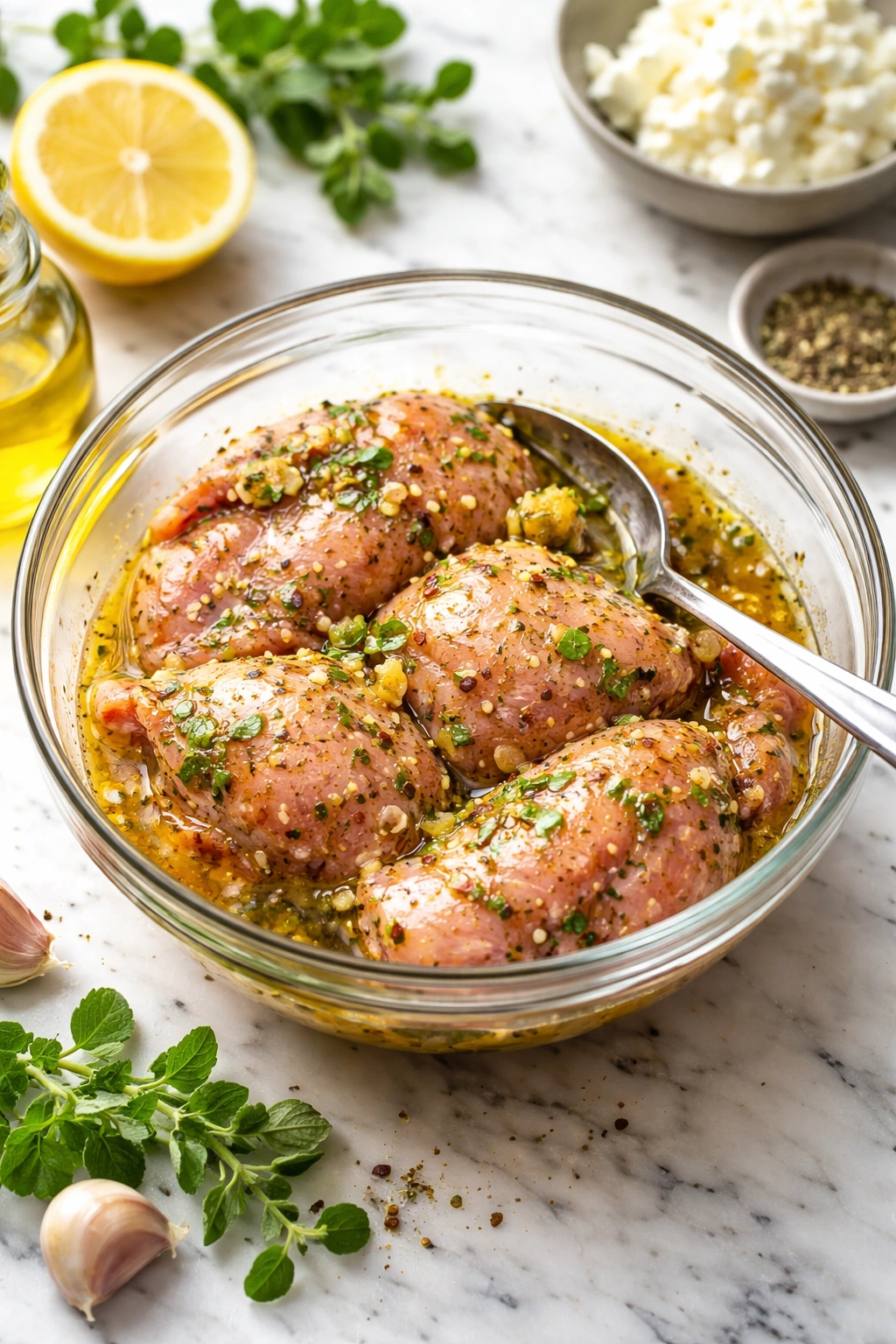
This is where conventional wisdom sometimes misleads people. You’ve probably read recipes saying to marinate overnight, but the truth is more nuanced. For chicken thighs, 1 to 2 hours of marinating at room temperature (or in the refrigerator) is genuinely enough to infuse serious flavor. The acidic components and yogurt work quickly to tenderize the meat, and the oregano, garlic, and lemon flavors permeate the thighs fairly rapidly.
Going longer—say, 4 to 8 hours—will give you slightly more pronounced flavor, and this is a perfectly good approach if you’re meal prepping or planning ahead. However, don’t extend beyond overnight. Acidic marinades can actually overwork the chicken if left too long, changing the texture in ways that aren’t desirable. Somewhere between 2 and 24 hours is the sweet spot. Even a rushed 30-minute marinade delivers respectable results if you’re truly pressed for time.
The temperature matters, too. A cold marinade in the refrigerator works more slowly but preserves the chicken’s texture more carefully. A room-temperature marinade works faster because enzymes and diffusion happen more readily at warmer temperatures. For best results, marinate in the refrigerator for at least 2 hours (or up to overnight), then remove the chicken from the fridge 20 to 30 minutes before cooking so it comes closer to room temperature for more even cooking.
Choosing Between Cooking Methods
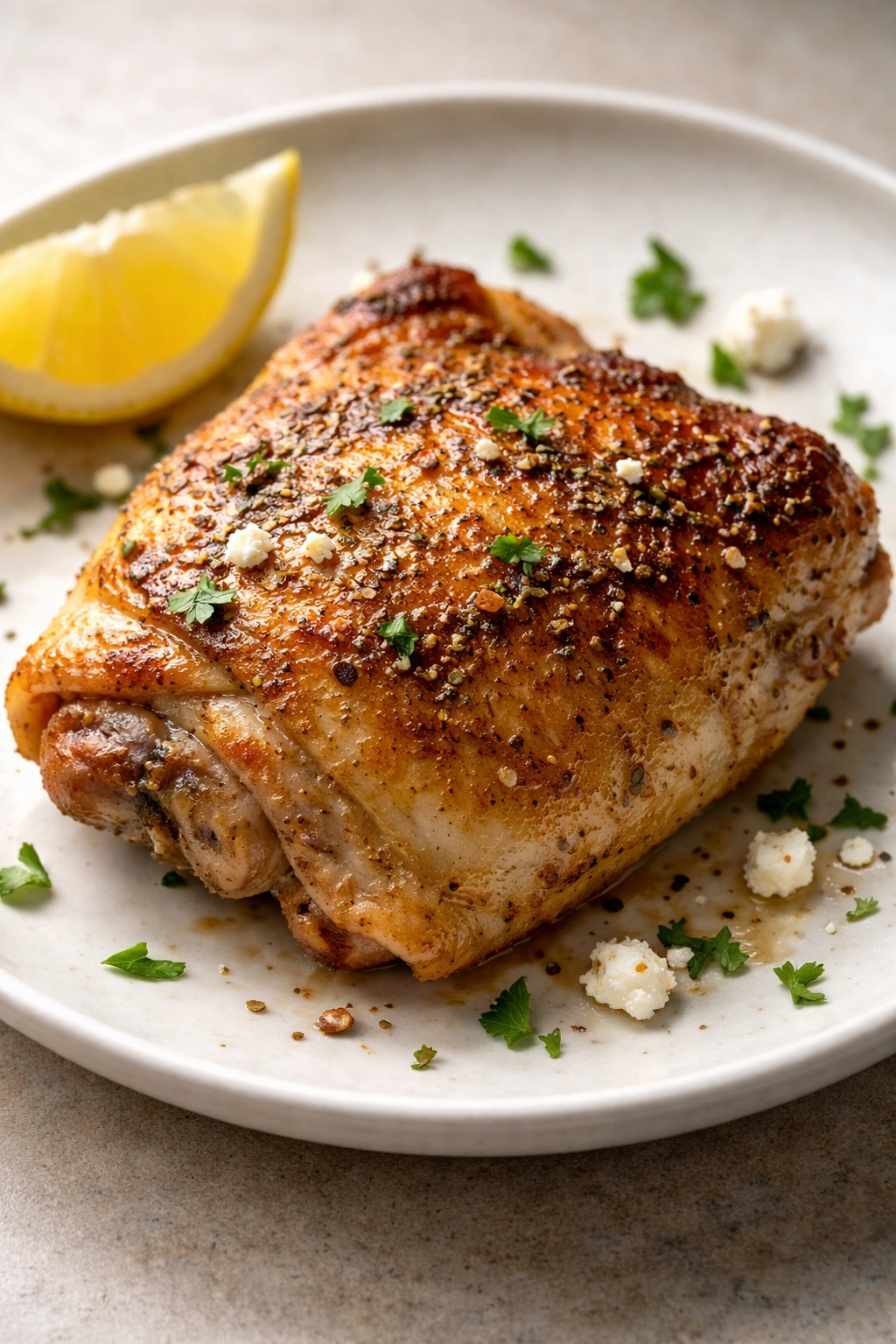
The beauty of Greek chicken thighs is their flexibility. You can bake them at a steady temperature, sear them on the stovetop and finish in the oven, throw everything on a sheet pan with vegetables, or even grill them. Each method produces excellent results, though they emphasize different qualities.
Oven-baked is the simplest and least hands-on approach. It’s forgiving, requires minimal supervision, and the thighs emerge tender and juicy every time. This method works beautifully for weeknight dinners when you want to set it and move on to other tasks.
Pan-seared then finished in the oven creates a crispy, golden exterior and takes only slightly more effort. You get the textural benefits of a good sear plus the even, gentle cooking of the oven. This method is excellent if you’re using skin-on bone-in thighs because you can really develop that golden skin.
Sheet pan dinners combine the chicken with roasted vegetables in one vessel. Everything cooks together, the vegetables caramelize beautifully from the chicken’s rendered fat and the marinade, and you’re left with just one pan to wash. This approach turns the thighs into a complete meal without any additional components.
Each method produces restaurant-quality results at home. The choice comes down to your mood, your available time, and what other components you’re serving alongside the chicken.
Serving and Timing Block
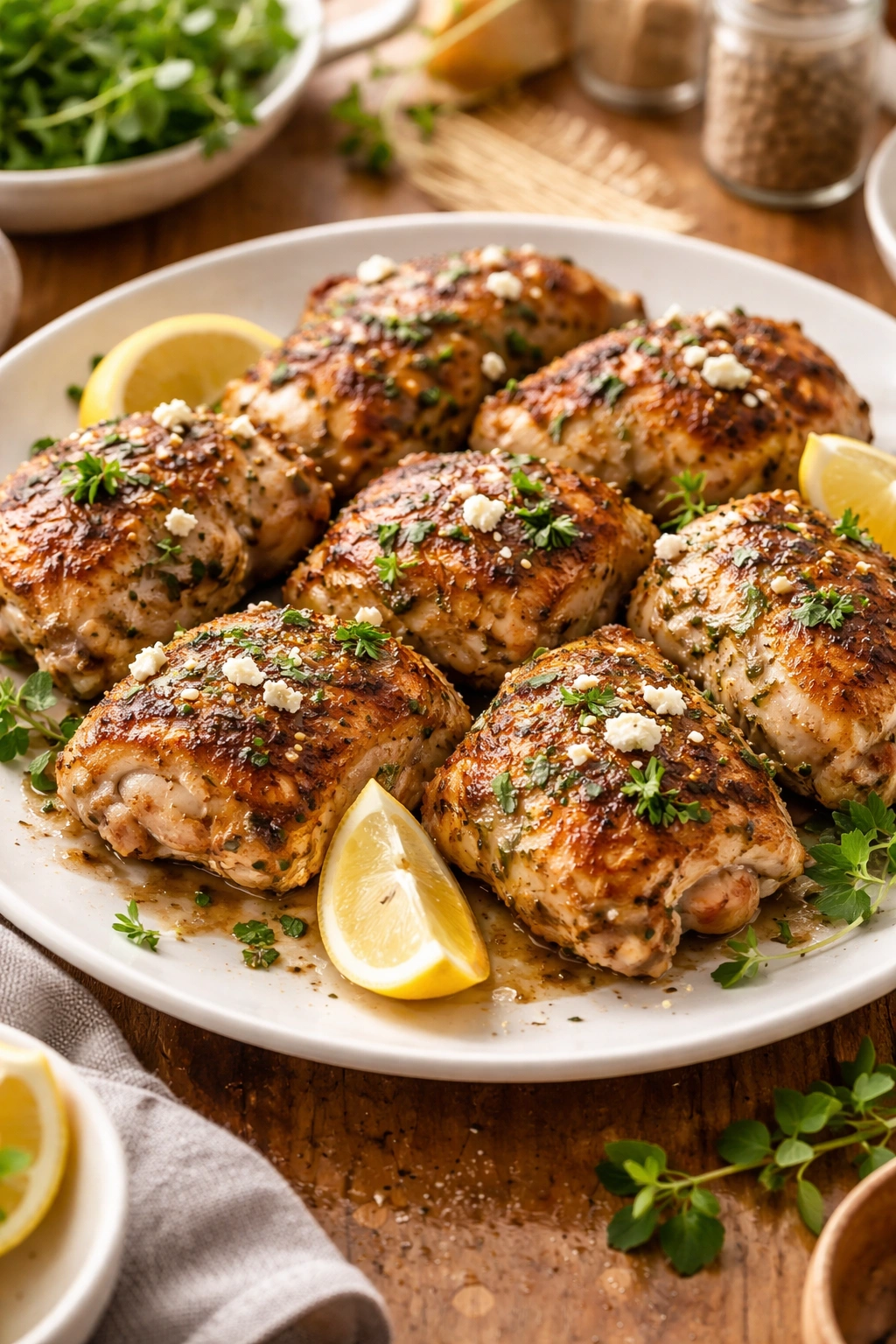
Yield: Serves 4 to 6 | Makes 6 to 8 thighs depending on size
Prep Time: 15 minutes (plus marinating time)
Cook Time: 35 to 45 minutes
Total Time: 50 minutes to 1 hour active cooking, plus 2 to 24 hours marinating
Difficulty: Beginner — The marinade is mixed in less than 5 minutes, and the cooking method requires no special skills. Even if something goes slightly wrong, chicken thighs are forgiving and almost impossible to overcook.
Best Served: Hot from the oven, though these are equally delicious at room temperature or even cold, making them perfect for picnics and meal prep.
The Ingredients You’ll Need
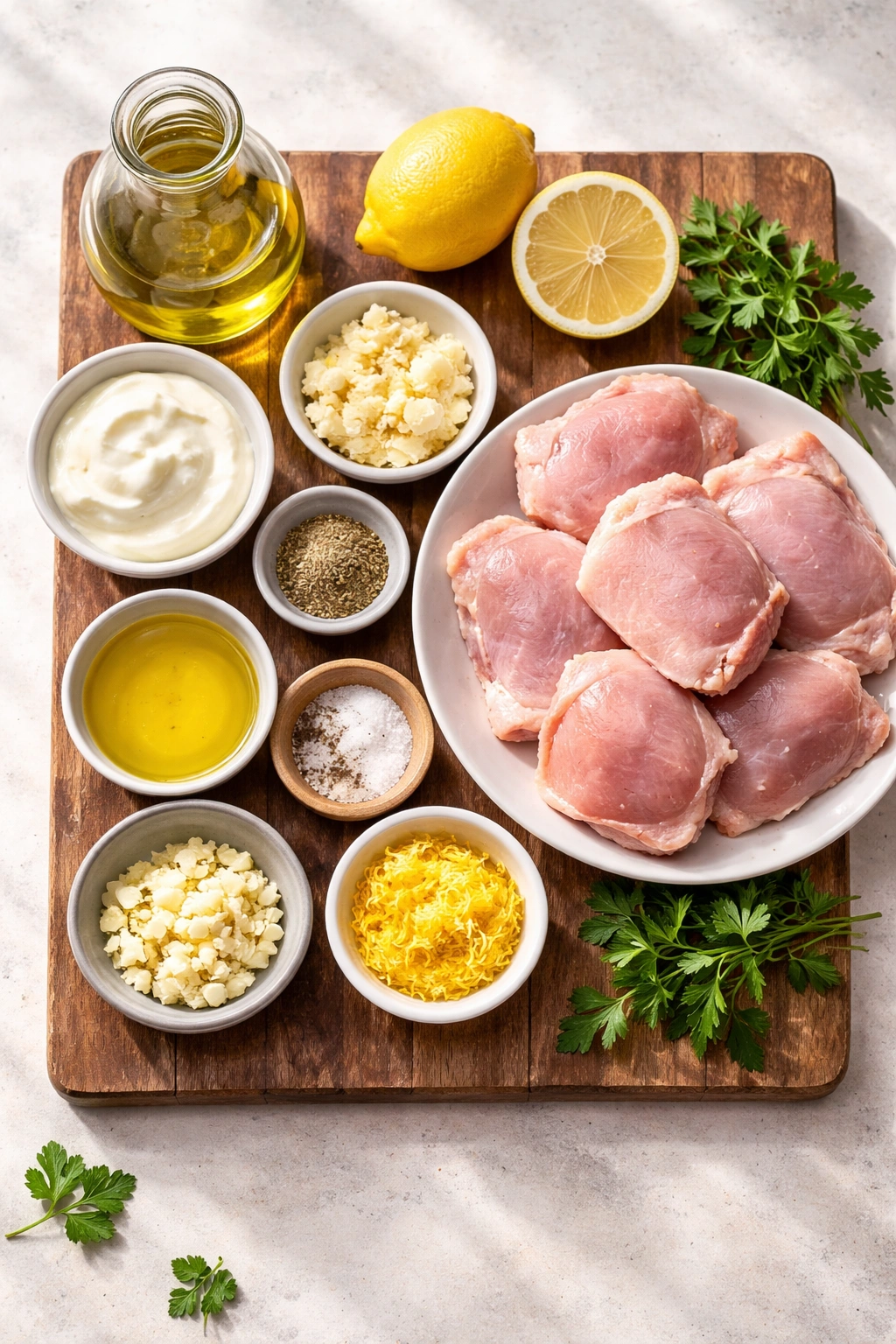
For the Marinade:
- ⅓ cup extra-virgin olive oil
- ¼ cup fresh lemon juice (about 1 to 2 large lemons)
- Zest of 1 lemon (about 1 tablespoon, packed)
- 4 to 5 garlic cloves, minced or pressed
- 2 to 3 teaspoons dried oregano (or 3 tablespoons fresh oregano, chopped)
- 1 teaspoon kosher salt, plus more as needed
- ½ teaspoon freshly ground black pepper
- ¼ cup plain Greek yogurt (full-fat preferred, or use 2 tablespoons red wine vinegar as a substitute)
For the Chicken:
- 6 to 8 boneless or bone-in chicken thighs (about 2 to 3 pounds, depending on whether they’re boneless or bone-in)
- Salt and black pepper for seasoning the pan
Optional Additions (for sheet pan version):
- 1 large red onion, sliced into wedges or rings
- 1 medium zucchini, halved and sliced into ½-inch pieces
- 1 large red or orange bell pepper, cored and sliced
- 1 pint cherry tomatoes or 1 large heirloom tomato cut into wedges
- ½ cup Kalamata olives, pitted
- ½ cup Castelvetrano olives, pitted (or use all of one variety)
- 4 to 6 ounces feta cheese, broken into chunks
- ¼ cup fresh Italian parsley, chopped
- ¼ cup fresh dill, chopped (optional but wonderful)
- Lemon slices for garnish
Substitution Notes: If you can’t find Greek yogurt, use regular plain yogurt or substitute 2 tablespoons of red wine vinegar to maintain the marinade’s acidity. For a dairy-free version, use plant-based Greek yogurt or skip it entirely and increase the olive oil slightly. Boneless, skinless thighs cook faster than bone-in, skin-on thighs—reduce cooking time by 5 to 10 minutes depending on the method. Bone-in, skin-on thighs stay juicier and develop better flavor and texture; if possible, choose these over boneless for superior results.
Making the Marinade and Marinating the Chicken
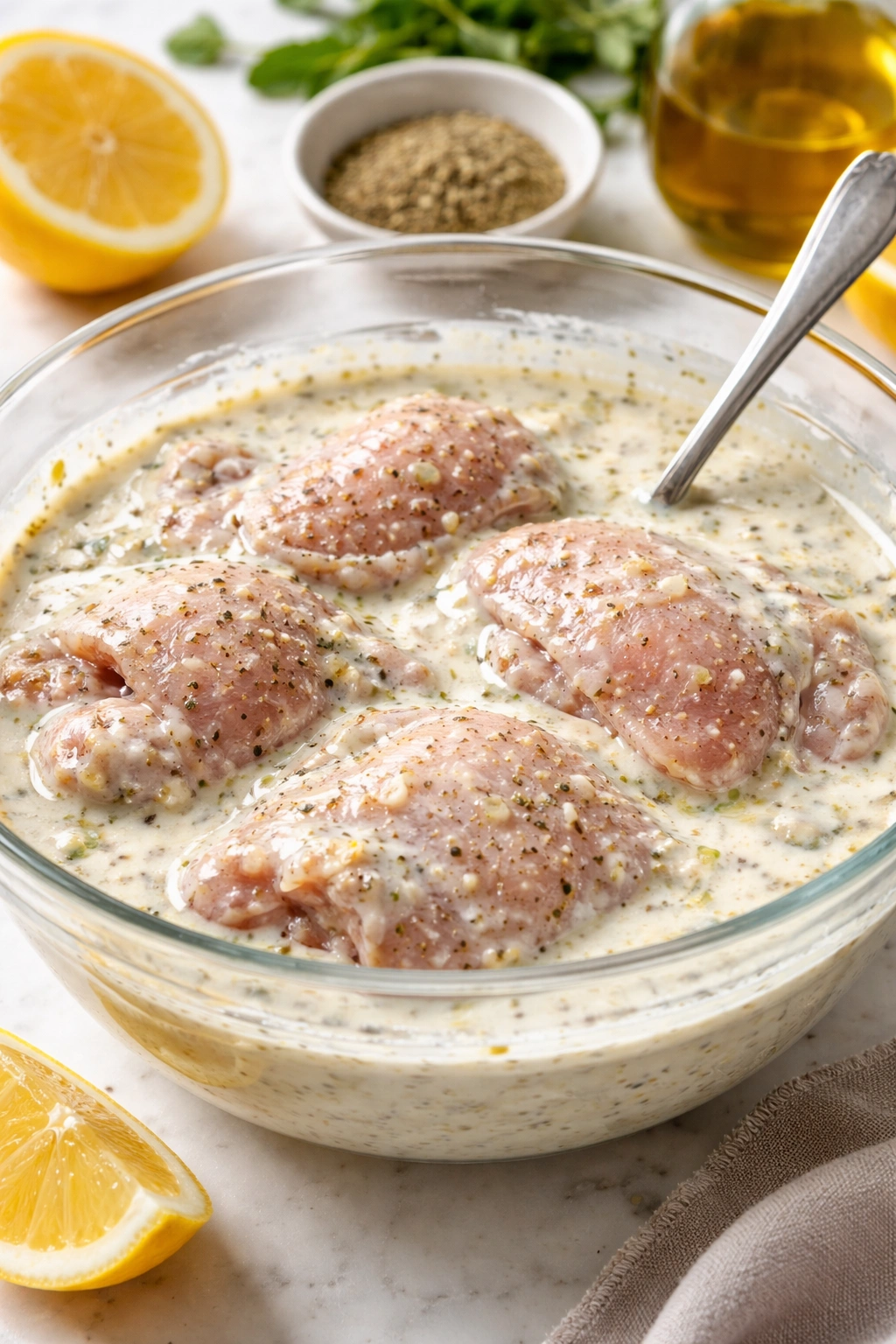
Prepare the Marinade:
-
In a small bowl or measuring cup, whisk together the olive oil, fresh lemon juice, lemon zest, minced garlic, dried oregano, salt, and black pepper until combined.
-
Stir in the Greek yogurt until the mixture is completely smooth with no lumps. The yogurt should distribute evenly throughout the marinade, creating a creamy base.
-
Taste the marinade and adjust seasonings as needed. It should taste bright and garlicky with a strong herb presence. If the oregano flavor is too subtle, add another ½ teaspoon. If it needs more acid, add another tablespoon of lemon juice.
Advertisements
Marinate the Chicken:
-
Pat the chicken thighs dry with paper towels. If using bone-in, skin-on thighs, gently loosen the skin and spread a generous amount of marinade underneath—this infuses maximum flavor directly into the meat. Coat the entire surface of the thighs, both sides.
-
Place the marinated chicken in a large zip-top bag, a non-reactive bowl (glass or ceramic, not metal), or a shallow baking dish. Pour any remaining marinade over the chicken and toss until everything is well coated.
-
Cover and refrigerate for at least 2 hours, or up to 24 hours. Even 2 hours makes a significant difference; longer marinating (up to overnight) intensifies the flavor further. Do not exceed 24 hours as the acidity may begin to overwork the meat’s texture.
-
If marinating for less than 8 hours, you can marinate at room temperature for faster flavor absorption, but refrigeration is safer and more reliable, especially in warm kitchens. When you’re ready to cook, remove the chicken from the refrigerator 20 to 30 minutes before cooking to bring it closer to room temperature for more even cooking.
Basic Oven-Baked Method
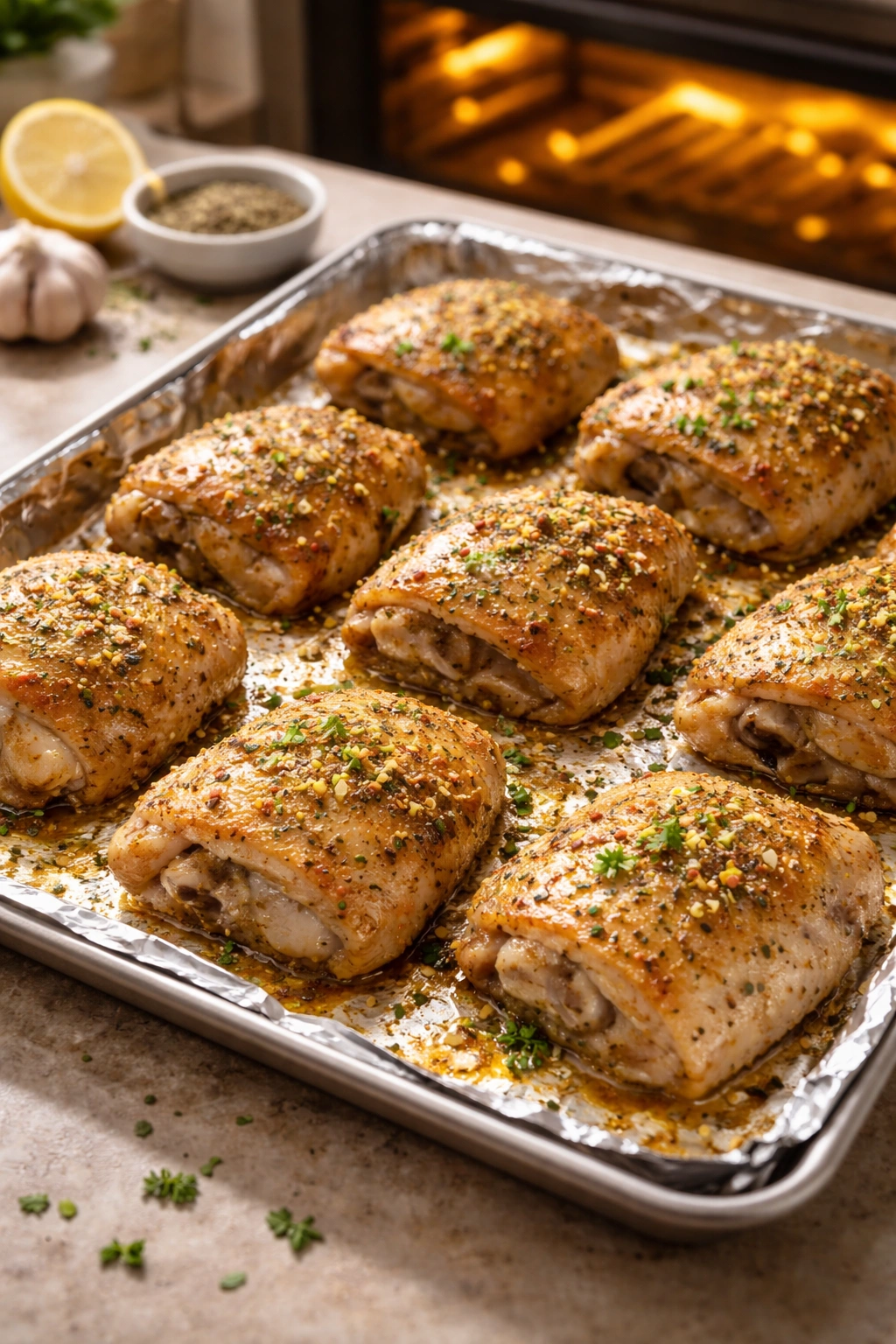
Prepare Your Pan and Preheat:
-
Remove the chicken from the marinade, allowing excess marinade to drip off. Reserve about ¼ cup of the marinade for basting or serving.
-
Preheat your oven to 425°F (220°C). Position the rack in the center of the oven. Line a rimmed baking sheet with aluminum foil for easy cleanup, or use a ceramic baking dish (9×13 inches works perfectly).
-
Arrange the chicken thighs on the prepared baking sheet or dish skin side up (if using bone-in, skin-on thighs). The skin side should face upward to crisp and brown beautifully.
Bake the Chicken:
-
Bake for 35 to 45 minutes, depending on the size of the thighs and whether they’re boneless or bone-in. Bone-in, skin-on thighs typically take the full 40 to 45 minutes; boneless, skinless thighs cook faster, in about 25 to 30 minutes.
-
The chicken is done when the internal temperature reaches 165°F (74°C) at the thickest part of the meat, measured with an instant-read thermometer. For extra-tender thighs, cook them to 175°F to 190°F—the collagen in dark meat benefits from slightly longer cooking and becomes more tender and almost gelatin-like, which is absolutely delicious.
-
If you want extra-crispy skin, switch the oven to broil during the last 2 to 3 minutes of cooking and watch carefully. You want golden-brown skin, not burnt. Move the pan to the upper third of the oven, about 6 inches from the broiler element.
-
Remove the baking sheet from the oven and let the chicken rest for 5 minutes before serving. This allows the juices to redistribute throughout the meat, keeping it moist.
Finishing Touches:
- If you reserved some marinade, spoon it over the hot chicken just before serving for extra flavor. Garnish with fresh herbs—chopped parsley, dill, or oregano—and additional lemon slices if desired.
Pan-Seared and Oven-Finished Method
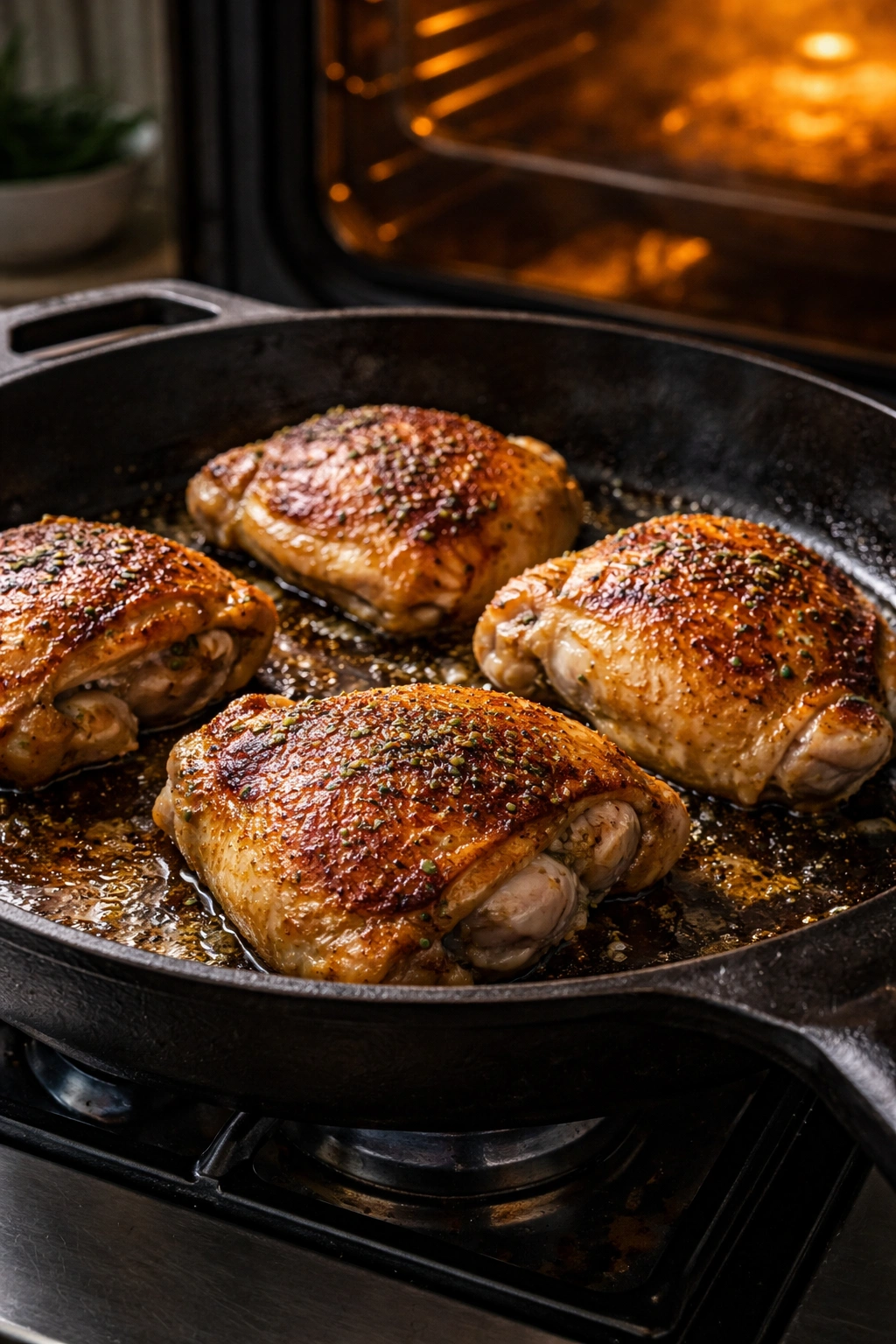
This method creates the crispiest skin and most developed flavor.
Sear the Chicken:
-
Remove the chicken from the marinade, allowing excess to drip off. Reserve the leftover marinade.
-
Pat the chicken thighs dry with paper towels (moisture is the enemy of crispiness).
-
Preheat your oven to 400°F (200°C). Heat an oven-safe skillet (preferably cast iron) over medium-high heat until it’s very hot—you should see a slight shimmer on the surface.
Advertisements -
Lightly grease the skillet with olive oil or nonstick cooking spray. Place the chicken thighs skin side down (if using bone-in, skin-on) or simply arrange boneless thighs in a single layer, making sure they’re not overcrowded.
-
Sear without moving for 5 to 7 minutes until the skin is golden brown and crispy. Resist the urge to flip or move the chicken around—undisturbed contact with the hot pan creates that beautiful crust. If using boneless thighs, sear for 4 to 5 minutes.
-
Flip the chicken carefully using tongs. Sear the other side for 3 to 4 minutes until it’s lightly golden. Do not skip this step even on boneless thighs—both sides benefit from browning.
Finish in the Oven:
-
Pour the reserved marinade around (not directly on) the chicken in the skillet. This allows the marinade to heat and create a sauce without washing away the crispy bits.
-
Transfer the entire skillet to the preheated 400°F oven. Bake for 15 to 25 minutes, depending on thickness, until the internal temperature reaches 165°F to 190°F.
-
Remove from the oven and let rest for 5 minutes. The chicken thighs should have a spectacular golden-brown exterior and juicy interior, with pan juices that can be spooned over the meat before serving.
Sheet Pan Version with Roasted Vegetables
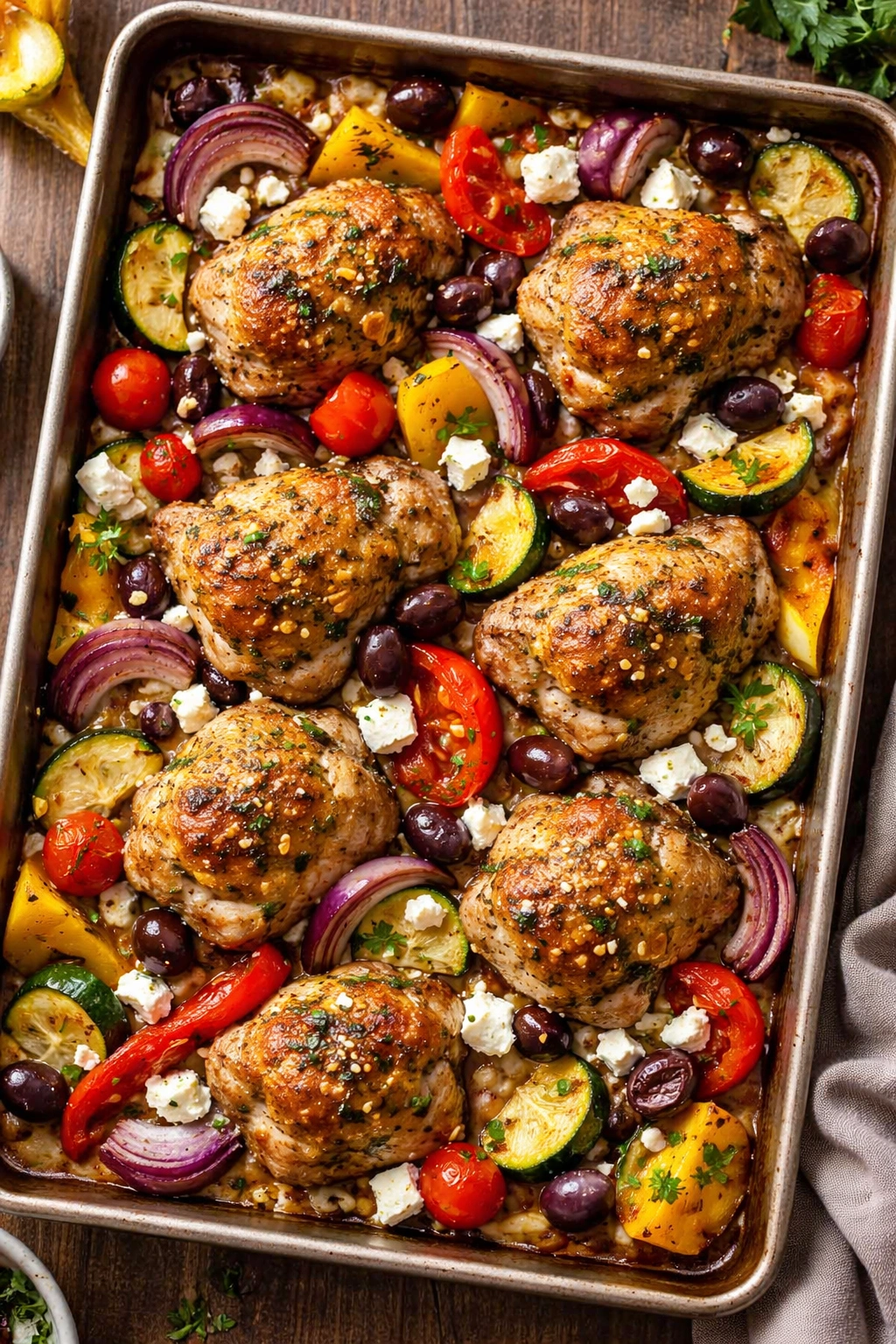
Prepare Everything:
-
Preheat the oven to 425°F (220°C).
-
In a small bowl, whisk together the marinade ingredients as described in the basic recipe.
Advertisements -
Pat the chicken thighs dry. Place them in a large bowl and toss with half of the prepared marinade, ensuring they’re well coated.
-
On a large rimmed baking sheet, arrange the vegetables: red onion wedges, zucchini half-moons, bell pepper slices, cherry tomatoes, and olives. Season the vegetables generously with salt and black pepper.
-
Pour the remaining half of the marinade over the vegetables and toss thoroughly until everything is well coated. Spread the vegetables in a single layer, ensuring they touch the hot pan as much as possible—contact with the hot sheet promotes beautiful caramelization.
Roast:
-
Nestle the marinated chicken thighs among the vegetables, skin side up. It’s fine if they’re slightly overlapping the vegetables.
-
Roast for 20 minutes. At this point, scatter the feta cheese chunks and pitted olives over and around the chicken and vegetables. Continue roasting for another 15 to 20 minutes until the chicken reaches 165°F internally.
-
If you want the skin extra-crispy and the vegetables more caramelized, increase the oven temperature to broil for the last 2 to 3 minutes, watching closely to prevent burning.
-
Remove from the oven and let rest for 5 minutes. Sprinkle generously with fresh chopped parsley, dill, or additional oregano. Serve directly from the pan, drizzling pan juices over individual portions.
Practical Tips for Perfect Greek Chicken Thighs
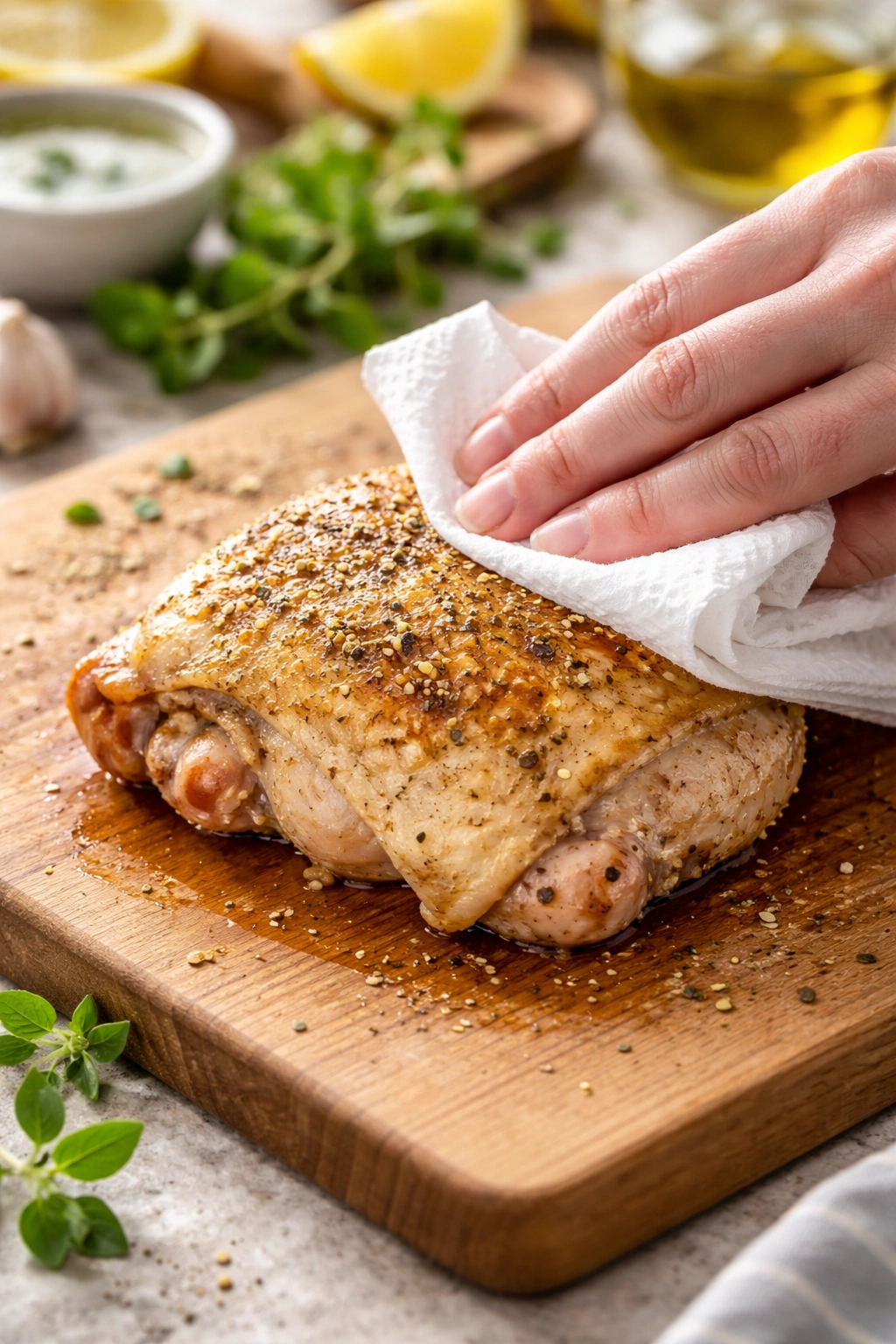
Pat your chicken dry. Moisture on the surface prevents browning and crispy skin formation. Paper towels are your friend here. Take the extra 30 seconds to dry the chicken thoroughly after removing it from the marinade.
Don’t skip the rest time. Those 5 minutes after cooking allow carryover cooking to finish the meat and allow juices to redistribute throughout the thighs. Cut into them immediately and they’ll lose precious moisture. Wait 5 minutes and the meat stays juicier.
Use a meat thermometer religiously. The safest minimum temperature is 165°F (74°C), but dark meat is genuinely more delicious at 175°F to 190°F (80°C to 88°C). At this higher temperature, the collagen breaks down more completely, giving you a more tender, almost silky bite. A good instant-read thermometer eliminates all guesswork.
Bone-in, skin-on thighs are genuinely superior. Yes, they take slightly longer to cook than boneless, skinless versions. Yes, they require a knife and fork instead of a quick shred. The flavor payoff is absolutely worth it. The skin provides protection against drying out, the bone conducts heat evenly and adds collagen to pan juices, and the meat against the bone has superior flavor.
Don’t overcrowd the pan when pan-searing. Crowding lowers the pan temperature and causes steaming rather than searing. If you’re cooking more than 4 or 5 thighs, work in batches. It takes an extra few minutes but dramatically improves the crust.
Taste the marinade before using it. If it tastes a bit bland, you should adjust. Marinade should taste bold and exciting before it even touches the chicken. Remember that the chicken won’t taste much more flavorful than the marinade imparted to it.
Use cast iron for the best results. Cast iron retains and distributes heat more evenly than most other cookware, creating better browning and more consistent results. That said, any oven-safe skillet or baking dish works fine—cast iron is ideal, not essential.
Make extra marinade for basting and serving. Before the raw chicken ever touches the marinade, reserve a quarter cup of the mixture in a separate bowl. Use this reserved marinade for spooning over the cooked chicken, drizzling over serving plates, or even tossing with rice. This adds another layer of flavor without any food safety concerns.
Common Mistakes and How to Avoid Them
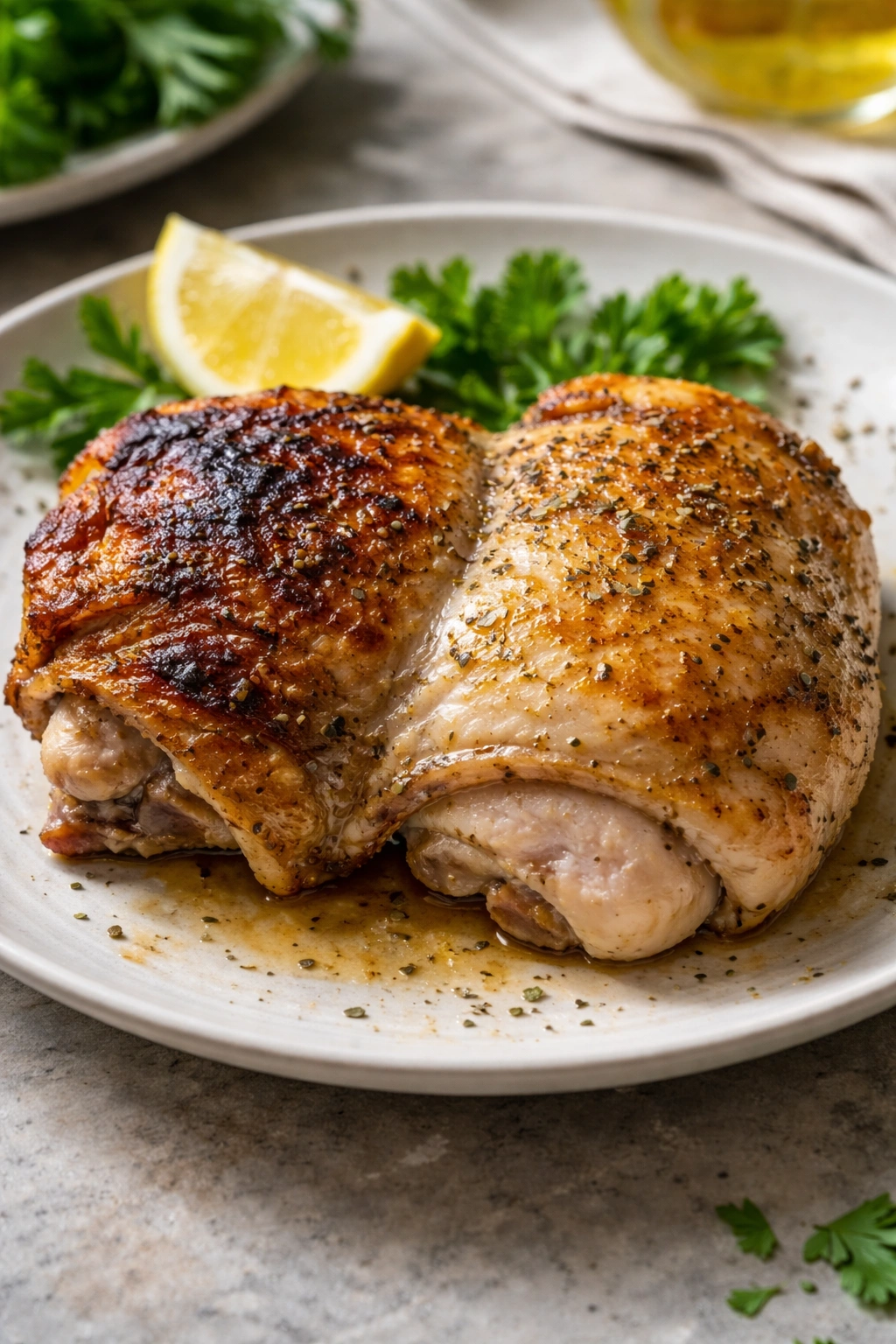
The chicken came out dry. You either overcooked it (use a thermometer and stop at 165°F minimum, or 175°F to 190°F for ideal tenderness) or didn’t start with good thighs (choose bone-in, skin-on whenever possible). Boneless, skinless thighs are more prone to dryness because they lack the protective fat and bone structure.
The skin isn’t crispy. Pat the chicken completely dry before cooking, use high heat for searing or oven temperature of 425°F or higher, and make sure the skin makes direct contact with the hot pan or baking sheet. Low and slow cooking won’t crisp skin; you need heat.
The marinade made the chicken mushy. You probably marinated for too long (more than 24 hours) or used an acidic marinade without yogurt or other proteins. Stick to 2 to 24 hours and always include yogurt or use some vinegar as a buffer. The yogurt’s lactic acid is gentler than straight lemon juice.
The chicken tastes bland. The marinade probably tasted bland to begin with. Or you didn’t marinate long enough. Give it the full 2+ hours and taste the marinade before using it.
Some thighs cooked faster than others. This happens when thighs are dramatically different sizes. Pound thicker thighs to even thickness, or separate very large and very small thighs and cook them separately, accounting for different cooking times.
Variations and Delicious Adaptations
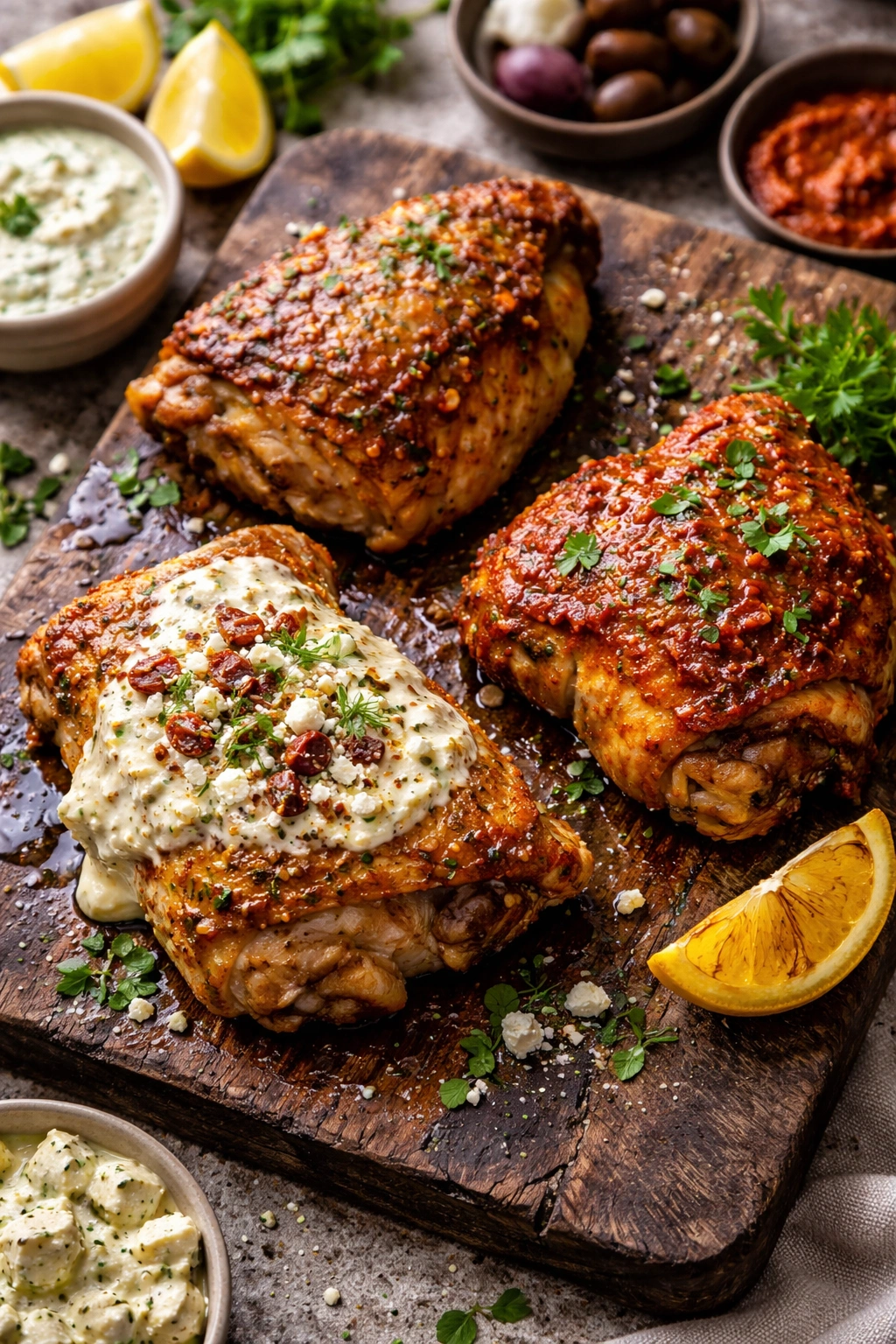
Mediterranean Sheet Pan Version: Skip the yogurt in the marinade and add ½ cup of dry white wine and 1 tablespoon of capers. Cook exactly as described in the sheet pan method. The wine adds acidity and depth, and the capers contribute salty, briny notes.
Creamy Feta Sauce Version: After cooking, remove the chicken and vegetables from the pan. Strain the pan juices and whisk in ¼ cup of sour cream or crème fraîche plus 2 tablespoons of crumbled feta. Heat gently on the stovetop (not boiling) until the sauce thickens and becomes creamy. Spoon this luxurious sauce over the finished chicken.
Spiced Harissa Version: Add 1 to 2 teaspoons of harissa paste (the Tunisian chili paste) to the marinade for warm, complex heat. Reduce the oregano slightly to avoid overpowering the harissa’s unique flavor profile. This gives the chicken a North African twist.
Slow-Cooker Adaptation: Marinate the chicken for at least 2 hours, then place in a slow cooker with the remaining marinade, sliced onions, and cherry tomatoes. Cook on low for 4 to 5 hours or on high for 2 to 3 hours. Add feta and olives in the last 30 minutes. The results are tender and deeply flavored, though you’ll miss the crispy skin texture.
Grilled Version: Marinate for at least 2 hours. Prepare a grill for medium-high heat. Grill bone-in, skin-on thighs skin side down for 6 to 8 minutes until the skin is golden and crispy. Flip and grill another 8 to 10 minutes until the internal temperature reaches 165°F to 190°F. The grill creates even more dramatic browning and a slight smokiness that’s spectacular.
Boneless Thigh Shortcut: Marinate boneless, skinless thighs for at least 1 hour. Pat very dry. Pan-sear in a hot skillet over medium-high heat for 4 to 5 minutes per side until golden. Finish in a 375°F oven for 10 to 15 minutes. Cooking time is shorter because there’s no bone, but the chicken still benefits from the same techniques.
Dairy-Free Adaptation: Replace Greek yogurt with ¼ cup of aquafaba (the liquid from canned chickpeas) or use plain plant-based Greek yogurt. The marinade will be slightly less creamy but equally effective at tenderizing and flavoring the chicken.
Storage, Make-Ahead, and Reheating
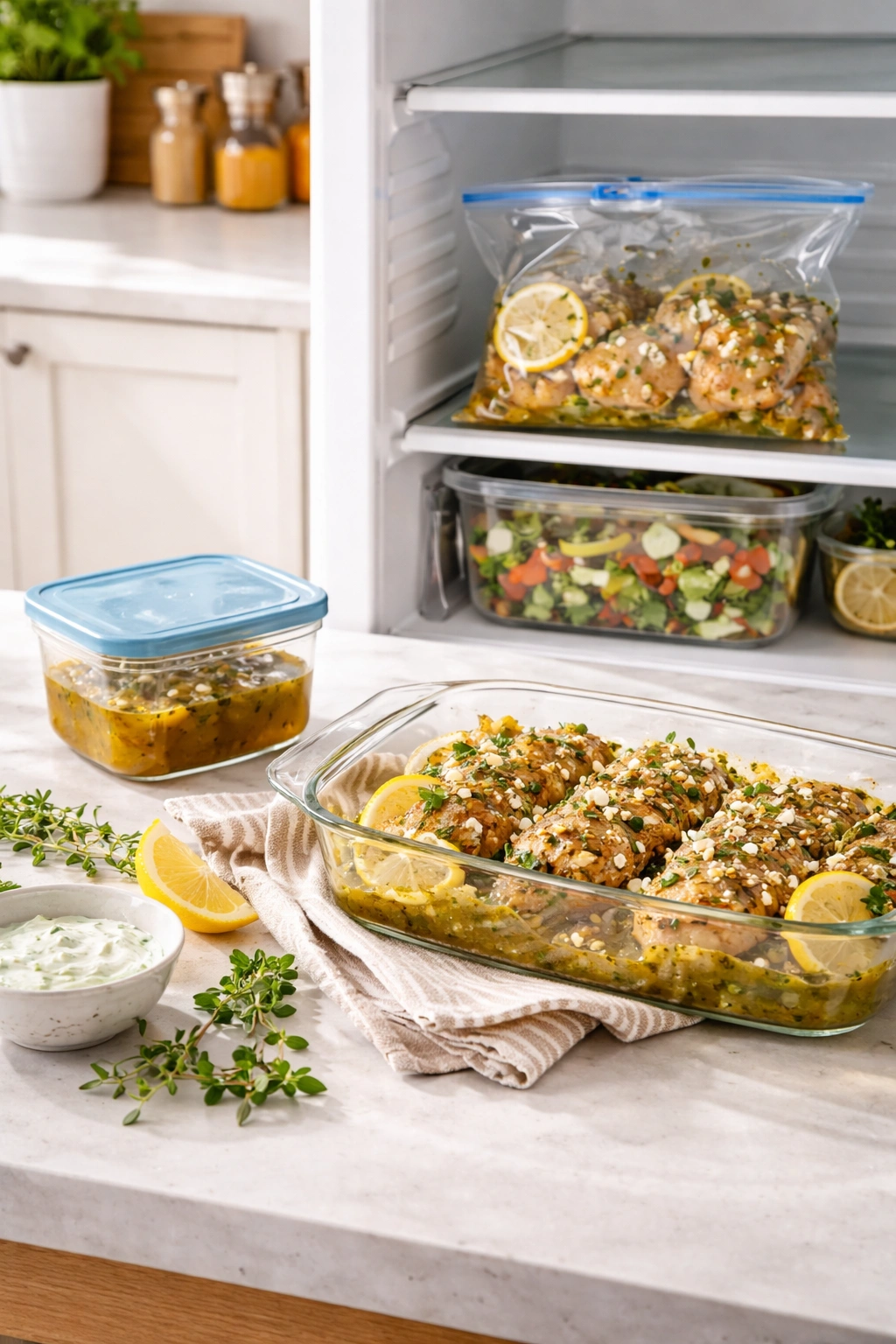
Make-Ahead Marinating: The beauty of this recipe is that the hard work—making the marinade and marinating the chicken—can happen well in advance. Prepare the marinade, place it in a zip-top bag with the chicken, and refrigerate for up to 24 hours. Pull everything out 30 minutes before cooking. You can also freeze the marinated chicken for up to 3 months; thaw overnight in the refrigerator before cooking.
Refrigerator Storage: Cooked Greek chicken thighs keep beautifully in the refrigerator for 4 to 5 days in an airtight container. The collagen in dark meat actually improves after a day, becoming even more silky. Store with any pan juices if possible—this keeps the chicken moist.
Freezer Storage: Freeze cooked chicken thighs in a freezer-safe container for up to 3 months. Include some pan juices in the container if possible. Thaw overnight in the refrigerator before reheating.
Reheating Methods: Oven method (best): Preheat your oven to 325°F (165°C). Place the chicken in a baking dish, add a splash of chicken broth or reserved pan juices on top, cover loosely with foil, and heat for 10 to 15 minutes until warmed through. This method preserves moisture and texture.
Stovetop method: Heat the chicken in a skillet over low heat, covering with a lid, until warmed through. This takes about 10 minutes. Add a splash of broth to prevent sticking.
Microwave method: Place chicken in a microwave-safe dish, cover loosely with a damp paper towel, and heat in 60-second intervals at 50% power, stirring between intervals. This prevents the chicken from drying out.
Best Served: These Greek chicken thighs are incredible fresh from the oven while the skin is still crispy. However, they’re equally delicious at room temperature or even cold, making them perfect for meal prep, picnics, or tomorrow’s lunch.
Serving Suggestions and Perfect Pairings
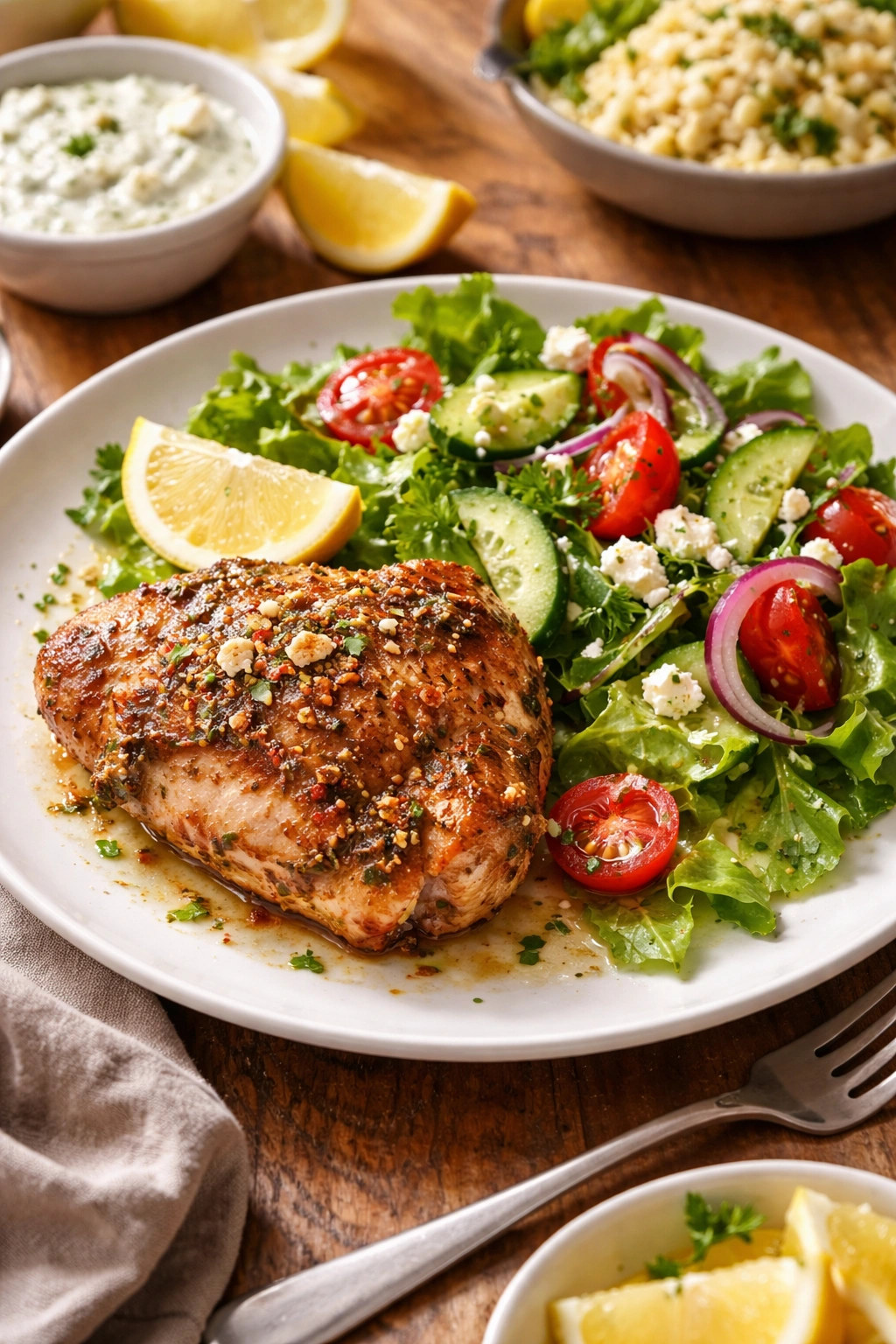
Simplest Pairing: Serve with nothing but fresh lemon wedges and a simple green salad tossed with a lemon vinaigrette. Sometimes the best complement to Greek chicken is simply something fresh and clean.
Classic Greek Salad: Combine chopped cucumbers, tomatoes, red onion, Kalamata olives, and crumbled feta. Toss with a dressing of lemon juice, olive oil, oregano, salt, and pepper. The cool, briny salad is a perfect counterpoint to warm chicken.
Lemon Herb Rice: Cook rice pilaf-style by toasting the grains briefly in butter before adding broth. Finish with lemon zest, fresh herbs (parsley, dill, mint), and a squeeze of lemon juice. This soaks up pan juices beautifully.
Orzo and Feta: Cook orzo pasta and toss while warm with a drizzle of good olive oil, the juice of half a lemon, crumbled feta, fresh dill, and minced garlic. This becomes a complete meal when topped with the chicken.
Roasted Potatoes: Toss cubed potatoes with olive oil, oregano, garlic, salt, and pepper. Roast at 400°F until golden and crispy, about 25 to 30 minutes. Serve alongside the chicken—the crispy edges are addictive.
Greek Tzatziki: Make a simple tzatziki sauce with Greek yogurt, grated cucumber, minced garlic, fresh dill, lemon juice, and salt. Serve alongside or on top of the chicken. The cool, creamy sauce complements the warm, herby chicken perfectly.
Grilled Pita Bread: Serve with warm pita for making informal wraps or sandwiches. Fill with sliced chicken, crumbled feta, fresh herbs, and any roasted vegetables.
Wilted Greens: Spinach, arugula, or other leafy greens sautéed briefly in olive oil with garlic become a simple, nutritious side that doesn’t compete with the chicken’s bold flavors.
Crusty Bread: Honestly, crusty bread for soaking up the lemony pan juices might be the best accompaniment. Don’t skip this.
Final Thoughts
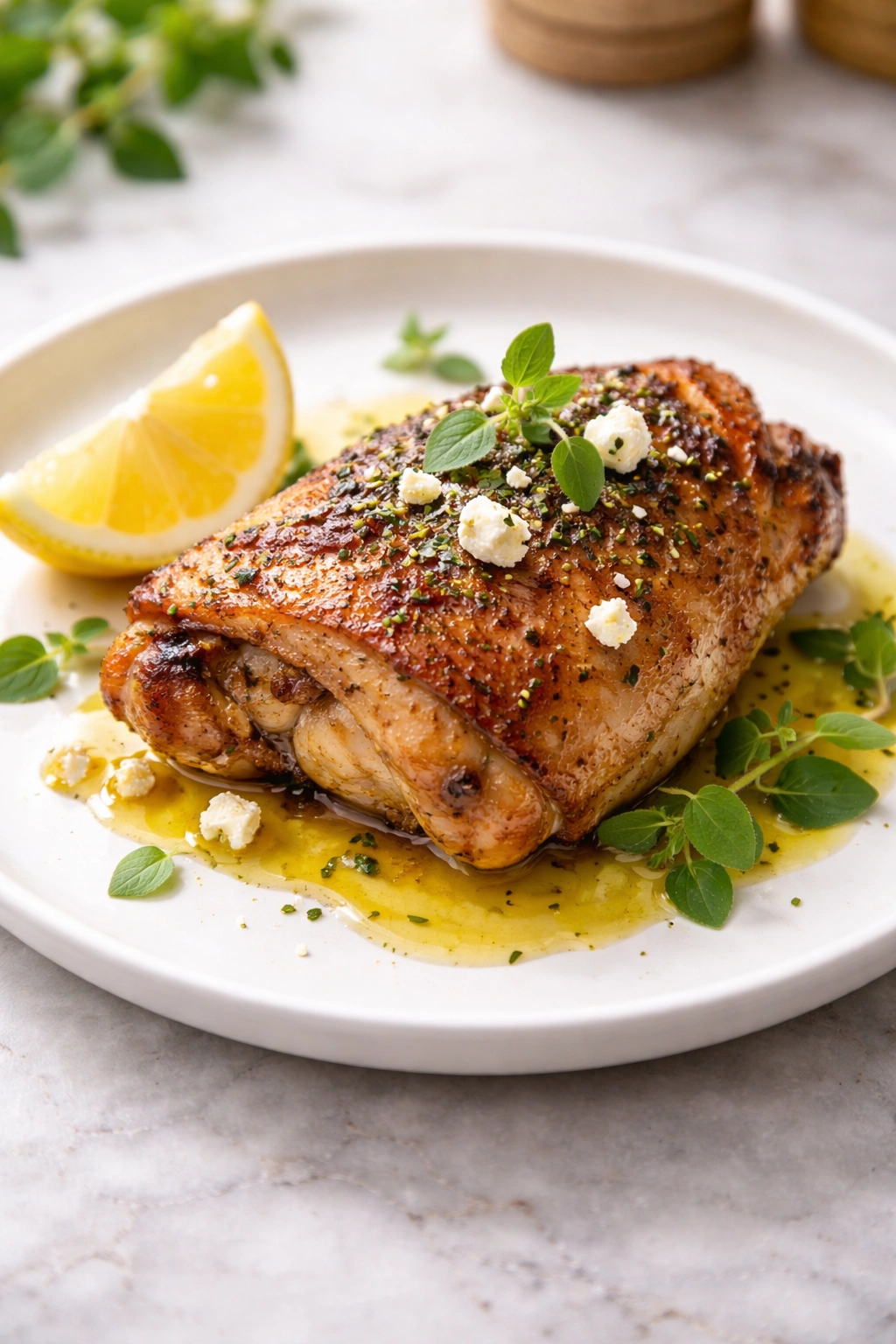
Greek chicken thighs have earned their place as a dinner-table staple not through complexity but through the sheer reliability of their deliciousness. The combination of Mediterranean flavors—lemon, garlic, oregano, olive oil—seems almost simple until you taste how those elements transform ordinary chicken into something memorable. And the best part? There’s absolutely nothing intimidating about making this. You mix a marinade, coat the chicken, let it sit, and then cook it. That’s it.
The reason these chicken thighs work so well is because they understand the fundamental principle of good cooking: that quality ingredients and proper technique matter far more than an extensive ingredient list. Choose good chicken with bone and skin if you can, use fresh lemon juice and real oregano, and don’t rush the cooking process. These few commitments transform dinner into something special.
Once you’ve made this recipe a handful of times, you’ll find yourself riffing on it automatically. Adding white wine here, swapping in different vegetables there, maybe grinding in some red pepper flakes one evening. That’s when you know a recipe has become truly yours—when you’re no longer following it but dancing with it. Greek chicken thighs make that conversation easy and forgiving, which is exactly what good food should be.
