



These little golden parcels of creamy, tart, and buttery goodness are about to become your secret weapon for impressing guests. Brie and cranberry bites combine the sophistication of melted cheese with the bright pop of tart fruit, all wrapped in a crispy pastry shell that shatters when you bite into it. They look like you spent hours in the kitchen, when the truth is far more forgiving — they’re actually one of the easiest appetizers to pull off, even if you’re juggling a hundred other party details.
What makes these bites so special is their sheer simplicity. There’s no fancy technique hiding inside, no tricky timing issue that could derail you. Instead, there’s just the honest, delicious combination of ingredients that somehow tastes more elegant than the sum of its parts. The warmth of the oven coaxes the brie into a creamy, almost-molten state while keeping the pastry perfectly crisp. The cranberries soften slightly and their tartness cuts right through the richness of the cheese, leaving your mouth wanting another bite before you’ve even finished the first one.
The beauty of these bites extends beyond their flavor profile. They’re naturally portion-controlled appetizers that guests can grab easily, eat in one or two bites, and come back for more without feeling like they’ve overstuffed themselves before the main course. They work equally well as the star of a casual gathering with friends or as an elegant addition to a formal dinner party. Make them for game day, for the holidays, for a dinner party, or for the simple fact that you’ve discovered something worth eating again and again.
Why Brie and Cranberry Are the Perfect Pairing
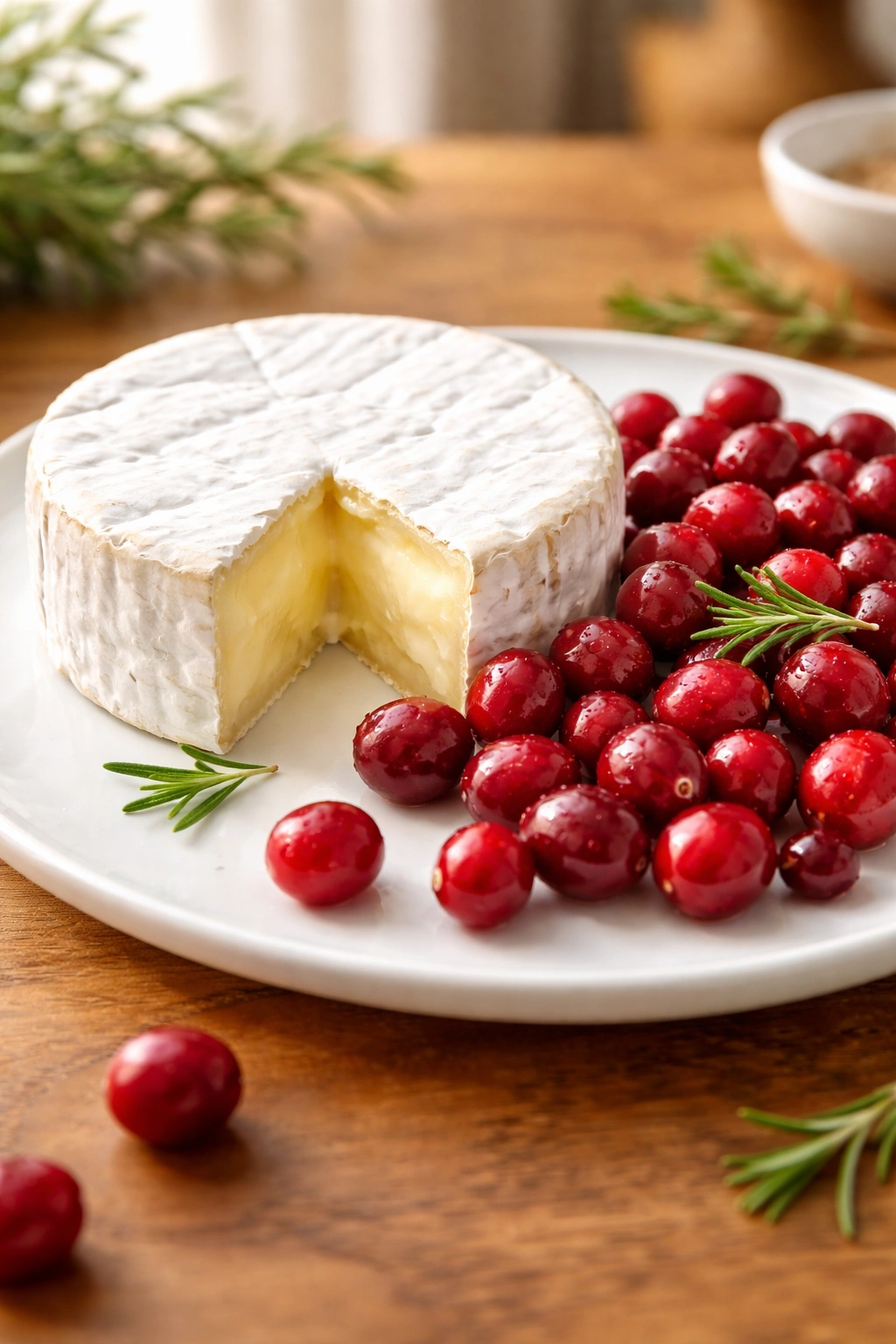
The magic of this combination starts with understanding what each ingredient brings to the table. Brie is a soft cheese with a subtle, almost buttery flavor that doesn’t announce itself loudly — it whispers. When warmed, it becomes even more gentle and luxurious, coating your mouth with creamy richness. Cranberries, by contrast, are bold. They’re acidic, tart, and slightly astringent. They cut through richness like a knife, which is exactly why this pairing works so brilliantly.
Think about the most craveable flavor combinations you know. They almost always balance richness with brightness, warmth with cool notes, indulgence with restraint. That’s exactly what happens when you put brie and cranberry together. The cheese says “relax, enjoy,” and the cranberry says “wait, but here’s something interesting too.” Your palate stays engaged, your interest doesn’t fade after the first bite, and the total experience feels more sophisticated than either ingredient would on its own.
From a textural standpoint, this combination delivers three distinct experiences in one bite. You get the crisp, shattering pastry shell on the outside. You encounter the soft, melting cheese in the middle. And you experience the slight firmness of the cranberry — whether it’s a whole berry or a jammy compote — providing a gentle counterpoint to all that softness. This layering of textures is what keeps you reaching for another bite even when you’re supposedly watching your appetite.
The acidic quality of cranberries also does something interesting to your taste buds. It essentially resets them between bites, making each subsequent bite feel almost as fresh as the first one. Eat several of these in succession and you won’t experience that heavy, one-note feeling that can happen with richly cheesy appetizers. Instead, you get complexity that unfolds and evolves.
Choosing Quality Brie for Your Bites
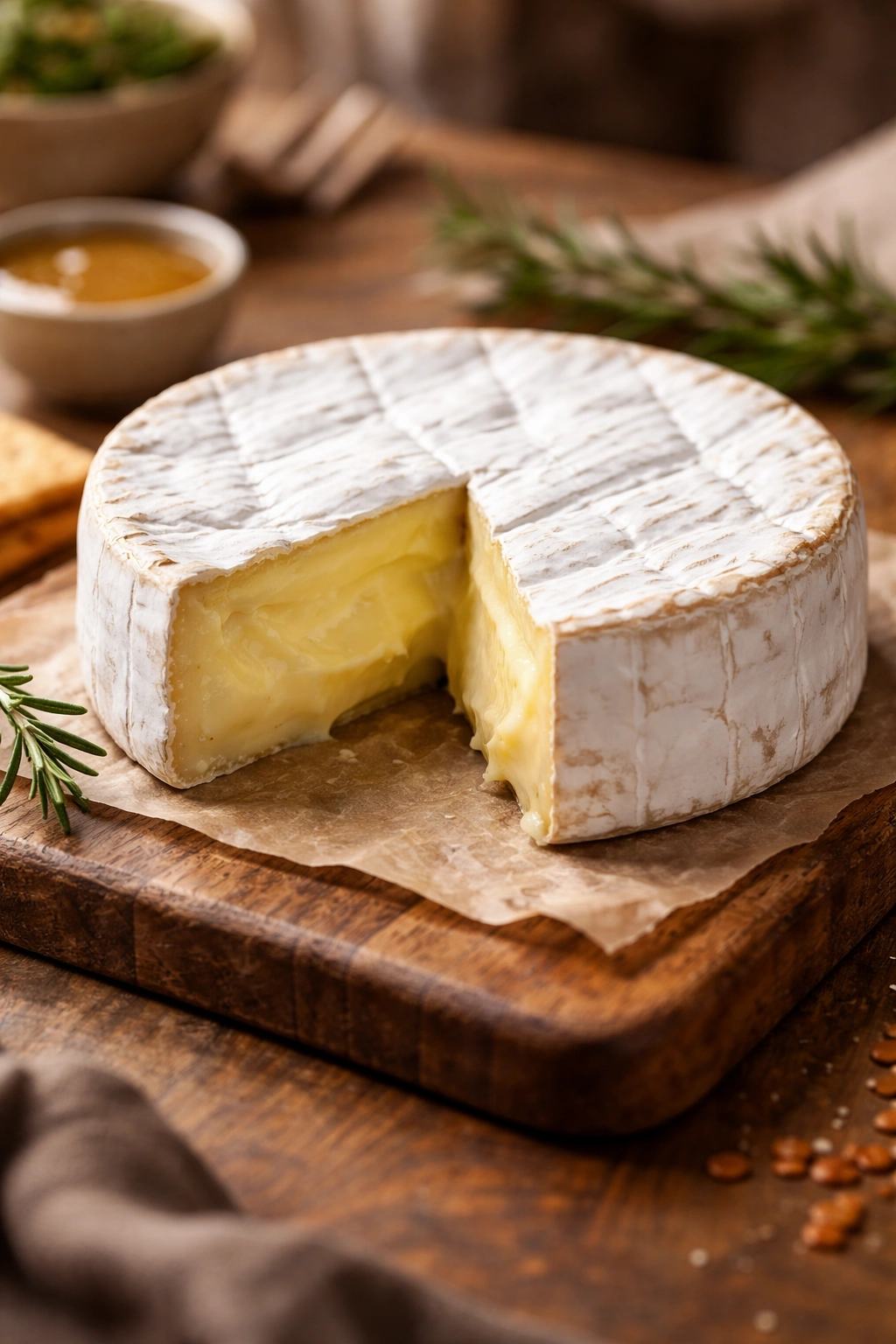
Not all brie is created equal, and the quality of the cheese you choose will absolutely affect how these bites turn out. You want to find brie that has a smooth, even texture underneath the white rind and that feels slightly soft to gentle pressure at room temperature. If it’s rock-hard when cold, it will take much longer to reach that perfect melted consistency in the oven.
Look for brie that’s been aged properly — typically at least a few weeks. Young brie can taste chalky and one-dimensional. Properly aged brie has a more complex, almost nutty undertone that adds sophistication to the finished bites. If you have access to a good cheese counter rather than just pre-packaged options, ask the cheesemonger for their recommendation. Tell them you’re making baked brie bites, and they can steer you toward the best option available that day.
The size of the brie round matters too. For this recipe, you’re looking for wheels around 8 ounces each, or small rounds of about 4 inches in diameter. Larger wheels take longer to warm through and your pastry might brown too much before the cheese fully softens. Smaller rounds work beautifully because the cheese warms through in about the same time it takes the pastry to turn golden — perfect synchronization.
Check the expiration date and store your brie properly before using it. Keep it in the coolest part of your refrigerator, away from strong-smelling foods. The rind shouldn’t have any cracks or soft spots. You’re looking for a creamy interior that maintains its shape when unwrapped, not brie that’s so soft it looks like it might ooze out of the rind.
The Role of Cranberries in This Appetizer
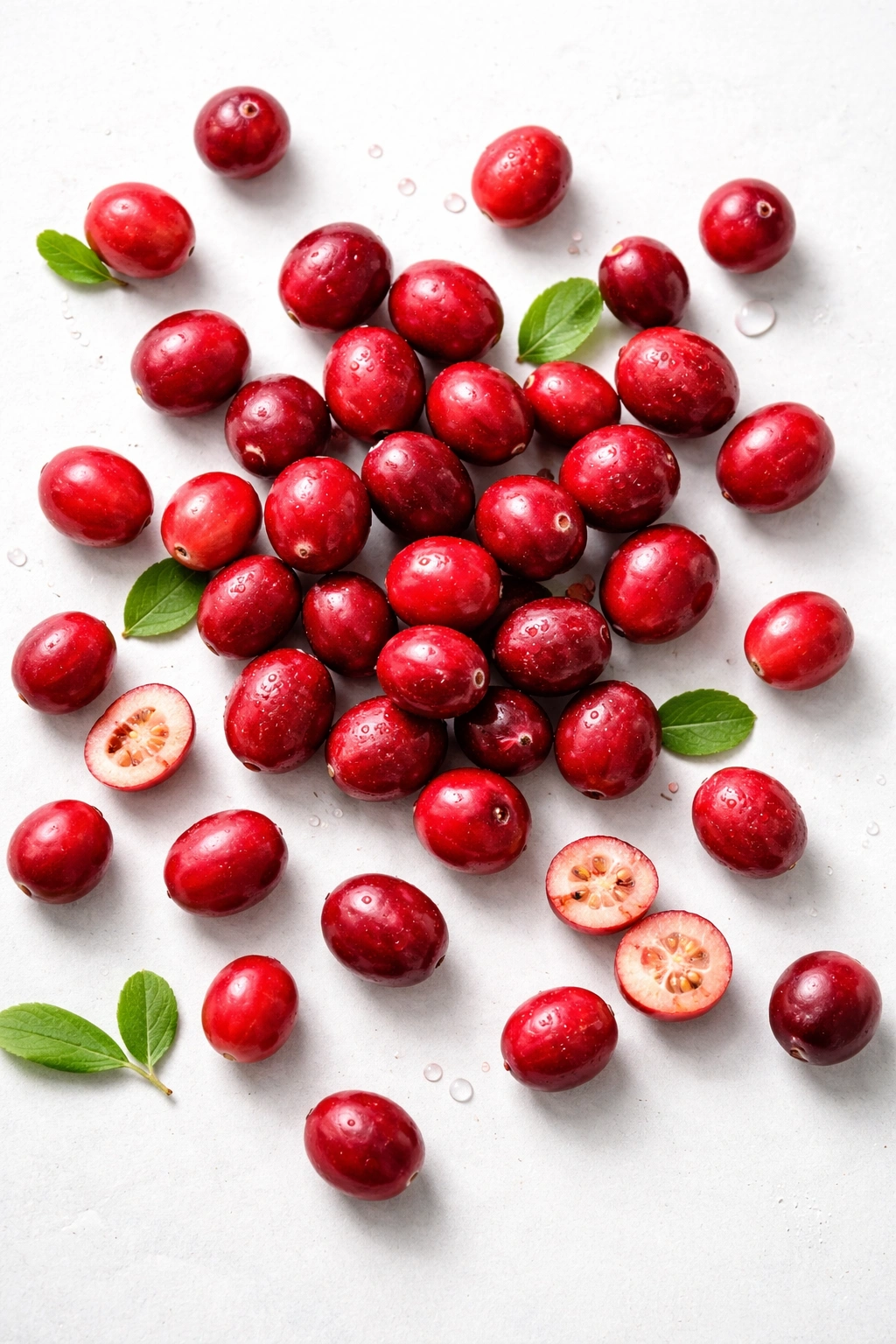
Cranberries bring brightness, tartness, and visual appeal to these bites. You have options for how to incorporate them, and each method creates a slightly different final experience. Fresh whole cranberries will stay relatively firm and provide little bursts of tartness and slight chewiness. Cranberry compote or jam will be jammy and cohesive, distributing the cranberry flavor more evenly throughout each bite. Dried cranberries work too — they’re sweeter and chewier than fresh berries.
Fresh cranberries are the most visually striking choice. When you bite into a warm brie and hit a burst of tart, juicy cranberry, it creates a moment of genuine flavor discovery. The natural beauty of a plump red cranberry on top of a golden pastry shell also makes these bites look restaurant-quality without any fussy plating required. The tartness of fresh cranberries also stands up beautifully to the richness of the warm brie.
If you’re using fresh cranberries, you have a choice: leave them whole or give them a gentle toss in a bit of sugar to slightly mellow their intensity and help them soften slightly in the oven. A tablespoon or two of sugar per handful of berries is all you need — you’re not making candied cranberries, just softening their edge slightly. Some cooks prefer to pop the whole berries open with a fork, releasing their juices slightly before nestling them into the pastry cups. This helps distribute the flavor more evenly.
Cranberry compote or sauce is the more forgiving option if you’re worried about tartness being too intense. It also makes assembly faster because you can simply spoon a small amount into each pastry cup rather than placing individual berries. Store-bought cranberry sauce works in a pinch, though it’s typically sweeter than homemade compote. If you go this route, look for whole-berry cranberry sauce rather than the smooth jellied type, which can make the bites look slightly gummy.
Essential Ingredients You’ll Need
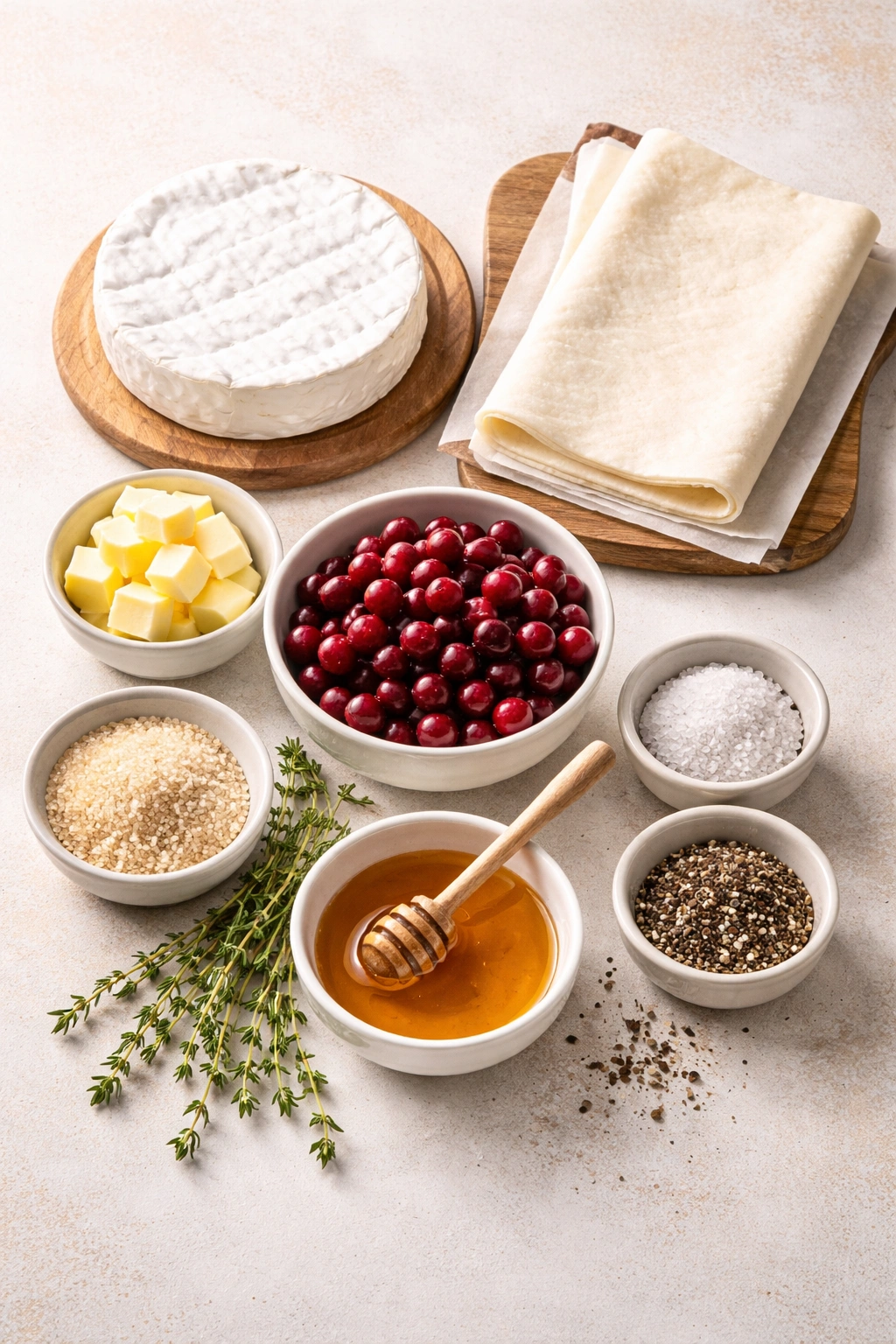
For the Bites:
- 8 ounces (approximately 1 small round) of brie cheese
- 1 sheet of frozen puff pastry (14 ounces), thawed according to package directions
- ½ cup fresh cranberries (or 3-4 tablespoons cranberry compote or sauce)
- 1 tablespoon honey or pure maple syrup
- ½ teaspoon fine sea salt (plus a pinch more for garnish)
- ¼ teaspoon ground black pepper
- 2 tablespoons unsalted butter, melted (for brushing)
- Fresh thyme sprigs (approximately 24 small sprigs) — optional but highly recommended for visual appeal and subtle herb notes
- 1 tablespoon raw sugar or coarse-grain sugar for sprinkling — optional, adds visual texture
Yield: Makes 24 bites (enough for 8-10 people as part of a larger appetizer spread, or 6-8 people as a standalone appetizer course)
Prep Time: 20 minutes
Cook Time: 15 to 18 minutes
Total Time: 35 to 40 minutes
Difficulty: Beginner — No specialized culinary skills required. Puff pastry does the heavy lifting, and assembly is straightforward. The most important thing is simply not to overthink it.
Step-by-Step Instructions for Perfect Bites
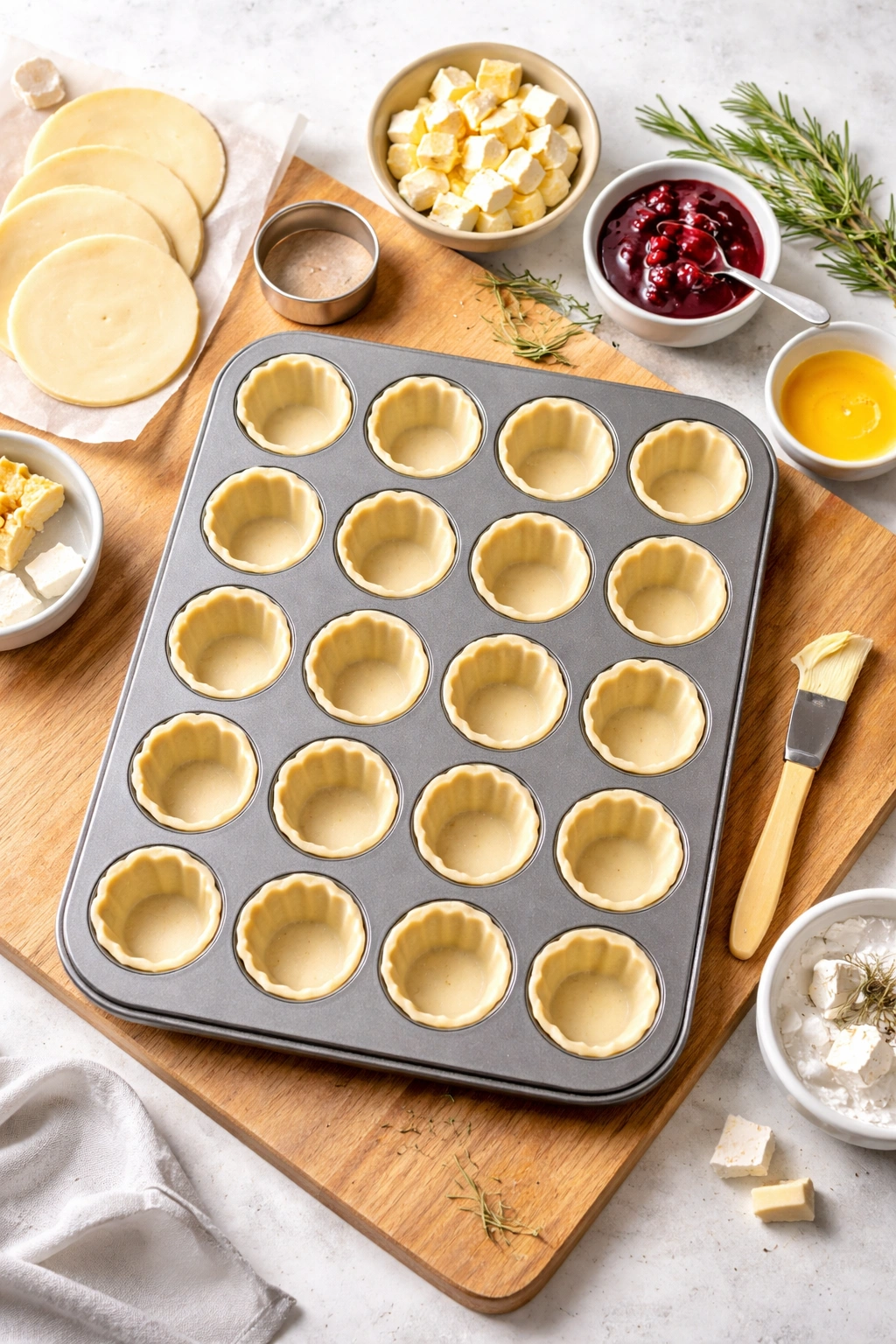
Prepare the Pastry Cups:
-
Remove the frozen puff pastry sheet from the freezer 30 minutes before you plan to start work. Thawed pastry is much easier to handle than frozen, but it shouldn’t be so warm that it’s soft or sticky. It should feel cool and pliable but not floppy.
-
Preheat your oven to 400°F (200°C) and position the rack in the upper-middle portion of the oven — this helps the pastry brown nicely on the bottom while the tops stay golden without darkening too much.
-
Unwrap the thawed puff pastry sheet and lay it on a lightly floured work surface. Using a sharp knife or a 2.5-inch round cookie cutter (a drinking glass works in a pinch), cut out 24 circles from the pastry sheet. You can arrange them relatively close together because they’ll be transferred to a muffin tin. You might have a few scraps left over — save these as a bonus snack for the cook.
-
Gently press each pastry circle into the cup of a standard 24-cup mini muffin tin. Press firmly but gently enough that the pastry conforms to the cup shape without developing thin spots or tears. The pastry should come just slightly above the rim of each cup, creating a small lip that will hold the filling and brown beautifully. If any pastry tears, simply press a small scrap into place — puff pastry is forgiving.
-
Use a fork to prick the bottom of each pastry cup 2-3 times. This prevents the pastry from puffing up too dramatically in the center, which would interfere with fitting your brie and cranberries inside. Do not skip this step — it’s the difference between perfectly flat cups and domed, uneven ones.
-
Brush each pastry cup lightly with the melted butter using a pastry brush or a small silicone brush. This is optional if you’re watching fat intake, but the butter adds incredible flavor and helps the pastry brown beautifully. If you skip it, the bites will taste good but won’t have quite the same burnished, golden appearance.
Pre-Bake and Assemble:
-
Place the filled muffin tin in the preheated oven and bake for 6-7 minutes, until the pastry cups just begin to set and turn very lightly golden. The pastry shouldn’t be fully cooked at this point — you’re just setting the structure so it doesn’t collapse when you add the filling. Remove the tin from the oven carefully, as the metal cups will be quite hot.
Advertisements -
While the pastry pre-bakes, remove the rind from the brie by slicing it away with a small sharp knife. You’re not removing all the rind entirely — just the top surface rind. This allows the cheese to soften and flow slightly into the pastry cups. Cut the brie into 24 small pieces, roughly the size of a hazelnut or a large almond. Aim for consistency in size so all the bites cook evenly.
-
Remove the hot muffin tin from the oven and place it on a heat-safe surface. Working quickly (the pastry will still be quite warm), place one piece of brie into each pastry cup. Place it roughly in the center, pressing it down very gently so it sits flat.
-
Top each brie piece with approximately 1 teaspoon of cranberries — whether you’re using whole fresh berries or spoonfuls of compote. If using fresh cranberries, 1 or 2 whole berries per bite looks elegant and distributes the tartness perfectly. If using compote, a small spoonful is all you need — these bites are rich, and less is more.
-
Drizzle the tiniest amount of honey or maple syrup over the cranberries and brie in each bite — just a light glaze, about ¼ teaspoon per bite. This adds a subtle sweetness that balances the tartness of the cranberries and the richness of the cheese. Don’t skip this step, but do restrain yourself from going overboard — too much honey makes these bites cloying.
-
If using fresh thyme, place a single small sprig on top of each bite. This adds a professional, refined appearance and contributes a subtle herbal note that becomes more noticeable as the bite cools slightly. Sprinkle a tiny pinch of coarse salt and a crack of black pepper over the top of each bite.
Final Bake:
-
Return the muffin tin to the 400°F oven and bake for 8-10 minutes more, until the pastry is a rich golden brown and the brie has visibly softened — you should see it slightly pooling at the edges where it meets the pastry. The pastry should smell nutty and delicious, and you might see a tiny hint of brie peeking out at the top of a few bites. Do not overbake — the brie should be soft and creamy, not starting to look shiny and obviously melted. This is the difference between a delicious bite and one that feels too rich.
-
Remove the muffin tin from the oven and place it on a cooling rack or heat-safe surface. Let the bites sit in the tin for 2-3 minutes. This brief resting period allows the filling to set just enough that the bites won’t immediately fall apart when you try to remove them, but the cheese will still be perfectly warm and creamy.
-
Using a small offset spatula or a regular teaspoon, gently coax each bite out of its muffin cup and transfer it to a serving platter or baking sheet. Some bites might release cleanly; others might need a gentle wiggle and a small lift. Don’t stress if a tiny amount of brie sticks to the tin — the bite itself will still be delicious, and you can eat the traces of cheese left behind while cleaning up.
Common Mistakes That Ruin These Bites
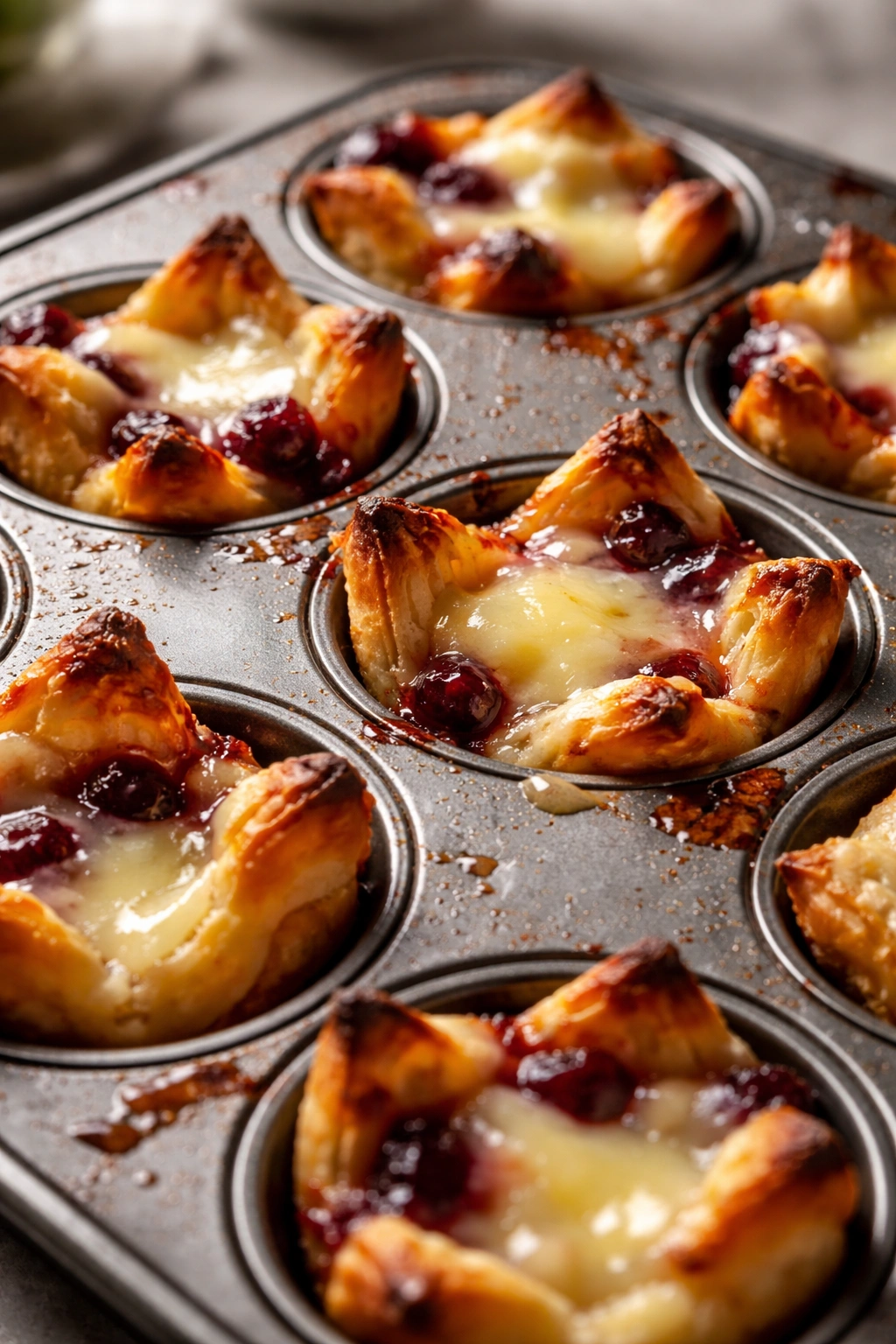
The most frequent mistake is overbaking, which turns the brie from creamy into pooled-and-shiny. It’s a fine line between perfectly soft and slightly overdone, and it’s measured in just one or two minutes of oven time. Set a timer, check the bites at the 8-minute mark during the final bake, and don’t assume that “more golden” automatically means “better cooked.” Golden is good. Dark brown suggests you’ve gone too far.
Using brie that’s too cold or too hard is another common problem. If your brie comes straight from the refrigerator and hasn’t had any time to soften slightly at room temperature, it will take longer to melt in the oven. Your pastry might be perfectly brown while the cheese is still firm in the center. Pull your brie out 30-45 minutes before you plan to assemble the bites — this makes a significant difference in how evenly everything cooks.
Skipping the fork pricks in the pastry is a mistake that leads to disaster. When you don’t prick the bottoms of those cups, the pastry puffs up dramatically in the center, creating a dome-shaped mess that’s hard to fit brie and cranberries into. You’ll end up with awkward bites that look sloppy and might have raw pastry dough in the center.
Overfilling each cup is tempting because you want them to look generous, but it works against you. When you pack too much brie into each pastry cup, it doesn’t warm through evenly. The edges might be melted while the center is still cold. More critically, overfilled bites are messy to eat. These should be elegant, one-or-two-bite appetizers, not bites that explode in guests’ hands.
Not pre-baking the pastry cups is a rookie mistake that leads to soggy bottoms. The moisture from the brie and cranberries migrates down into the pastry if it hasn’t been partially set first. That 6-7 minute initial bake is non-negotiable for achieving crispy pastry throughout.
Using low-quality cranberry sauce is something that really affects the final flavor. If you’re not using fresh cranberries or making your own compote, invest in a good brand with visible whole berries. Thick, smooth jellied sauce tastes one-dimensional by comparison and doesn’t have the textural interest that makes these bites special.
How to Make Them Ahead for Stress-Free Entertaining
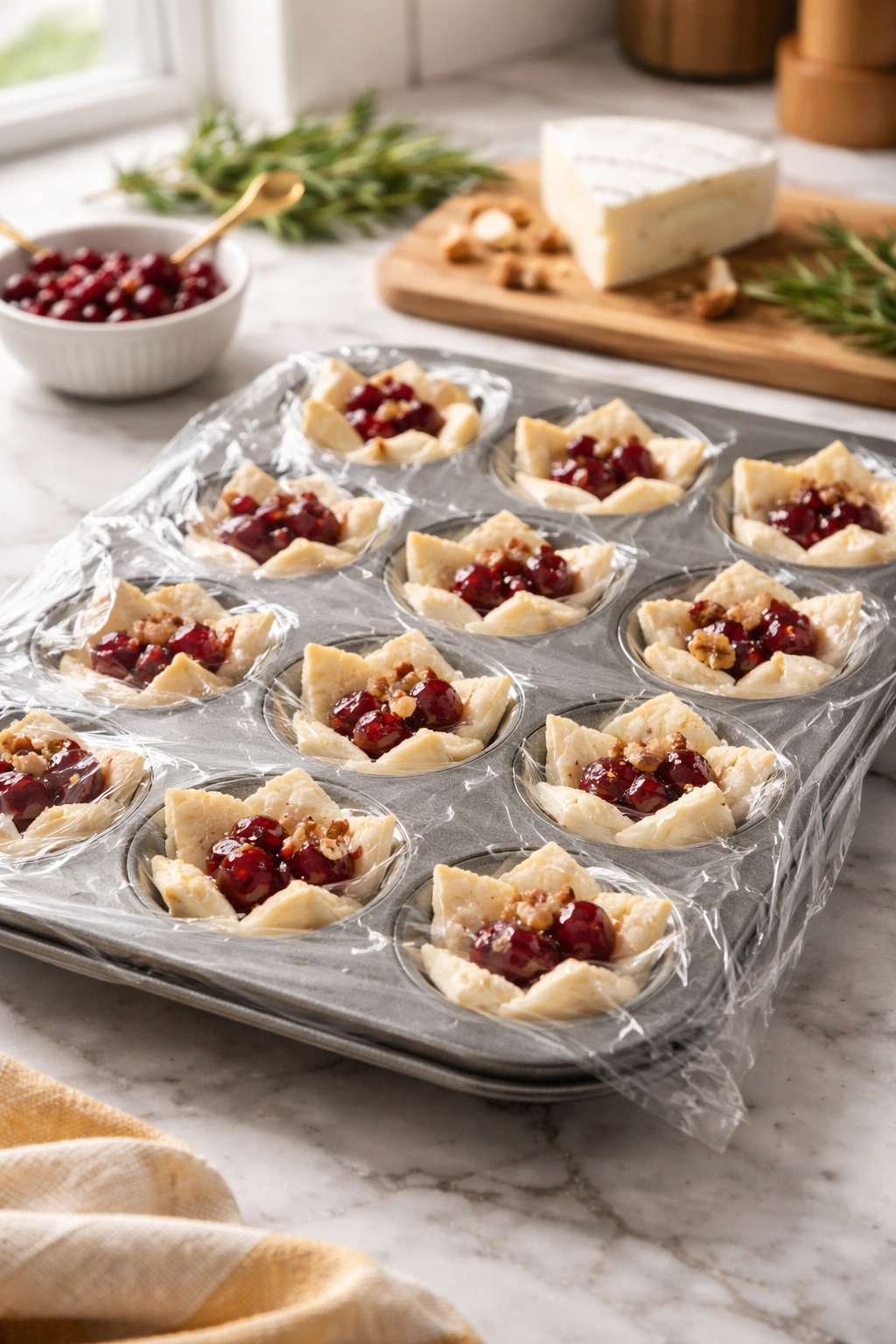
The beauty of these bites is that you can actually prepare them fully — right up to the final bake — hours before your guests arrive. Assemble them in the morning or afternoon, cover the muffin tin with plastic wrap, and refrigerate. When guests are arriving in 20 minutes, pop the tin straight into a preheated 400°F oven. The baking time doesn’t change, though you might need an extra minute or two if the bites are coming straight from the cold refrigerator. The cheese will still reach that perfect creamy state, and the pastry will brown beautifully.
You can even freeze fully assembled, unbaked bites. Prepare them completely, freeze the muffin tin uncovered until the bites are rock-solid (about 2 hours), then transfer them to a freezer bag, label with the date, and store for up to a month. When you’re ready to bake, don’t thaw them — pop them straight into a 400°F oven and add 3-4 minutes to the final baking time. Check at the regular time, but don’t be surprised if they need a few extra minutes to reach that perfect melted state. Frozen bites often take a minute or two longer than fresh ones.
You can also bake them completely a day ahead and reheat them gently just before serving. Baked bites keep well in an airtight container in the refrigerator for up to two days. To reheat, place them on a baking sheet and warm them in a 325°F oven for about 5-6 minutes, just until the brie is soft and the pastry is warm. Don’t overheat — the bites are already cooked, so you’re just bringing them back to serving temperature. This makes them perfect for parties where you’re juggling multiple dishes.
The one component you should not prep ahead is the garnish. Fresh thyme sprigs should be added right before serving, and honey or maple syrup is best drizzled while the bites are still warm or at least at room temperature. Cold bites with cold honey don’t taste quite right — you want that gloss of sweet liquid sitting on top of warm, melted cheese for the best flavor experience.
Elegant Presentation and Serving Suggestions
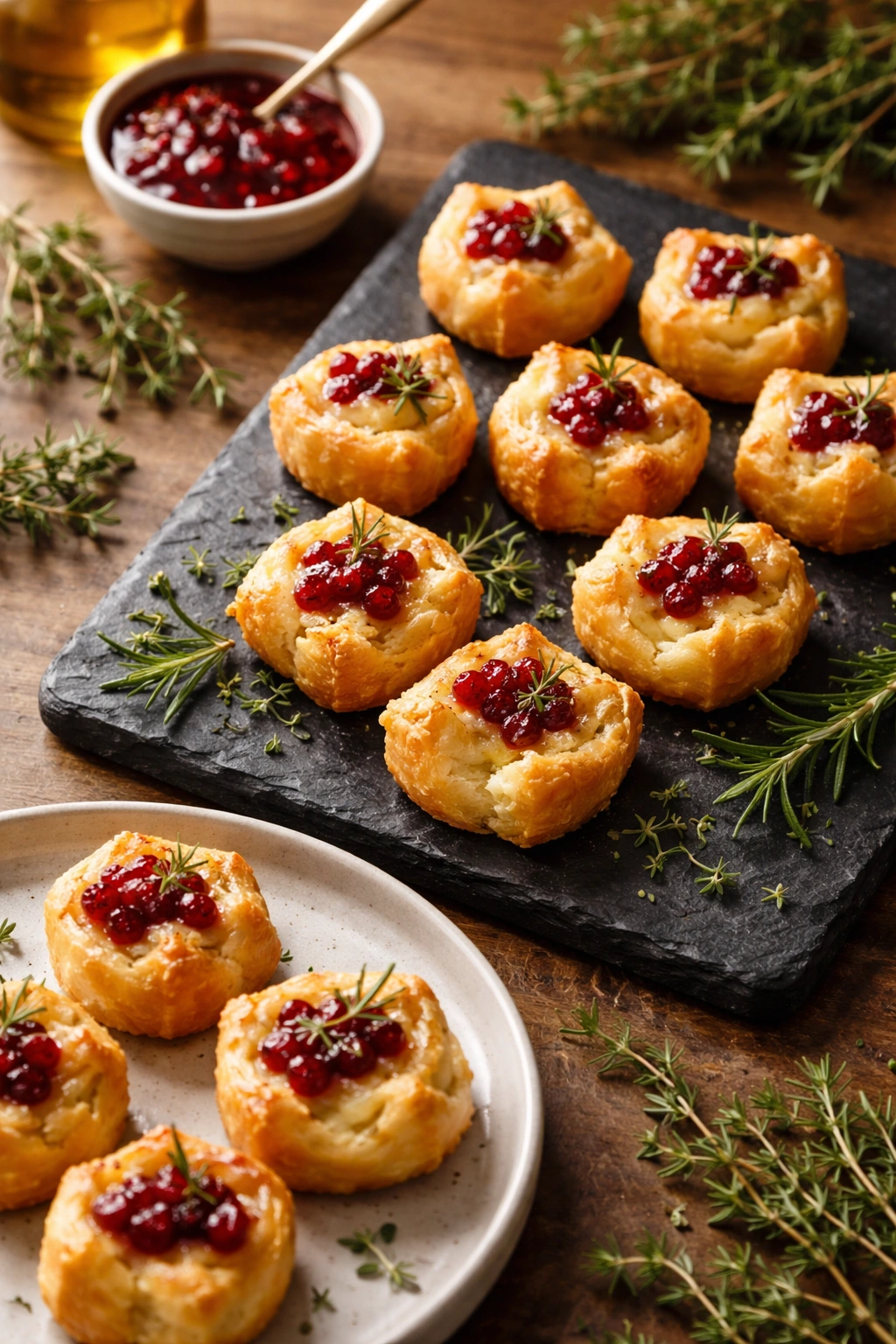
Plating matters more than you’d think for appetizers, and these bites deserve a thoughtful presentation. Arrange them on a slate board, a ceramic platter, or a simple white plate in a casual cluster, not in a rigid row. The golden pastry, pale cream brie, and jewel-tone cranberries create an attractive visual combination that needs almost no fussing. Let the ingredients speak for themselves.
Garnish the serving platter with small fresh herb sprigs — additional thyme, fresh rosemary, or even a few candied cranberries around the edges — to add color and signal to guests that this is a special, intentional appetizer, not something thrown together last-minute. A small fork or toothpick next to the platter helps guests grab a bite cleanly without using their fingers if they prefer.
Serve these bites warm or at room temperature. Warm is better if you have the option — the contrast between the warm creamy cheese and the cool, tart cranberries feels more dynamic. If you’re making them well ahead and serving at room temperature, the flavor is still excellent, though the brie will be less melting and more creamy-solid. Either way, they taste good. Warm is just slightly better.
Consider the context of your gathering when deciding how many to make. For a cocktail party where bites are the main event, plan on 5-6 bites per person. For a dinner party where bites are one of several appetizers, 2-3 per person is usually sufficient. These bites are rich because of the brie, so guests won’t eat as many as they might with lighter appetizers like vegetables or crackers.
Serve them alongside dry wines (sauvignon blanc, pinot grigio, or a dry sparkling wine), light beers, or even a quality sparkling cider. The acidity and lightness of these beverages cuts through the richness of the brie beautifully, making each subsequent bite taste fresh rather than cloying.
Flavor Variations to Impress Every Guest
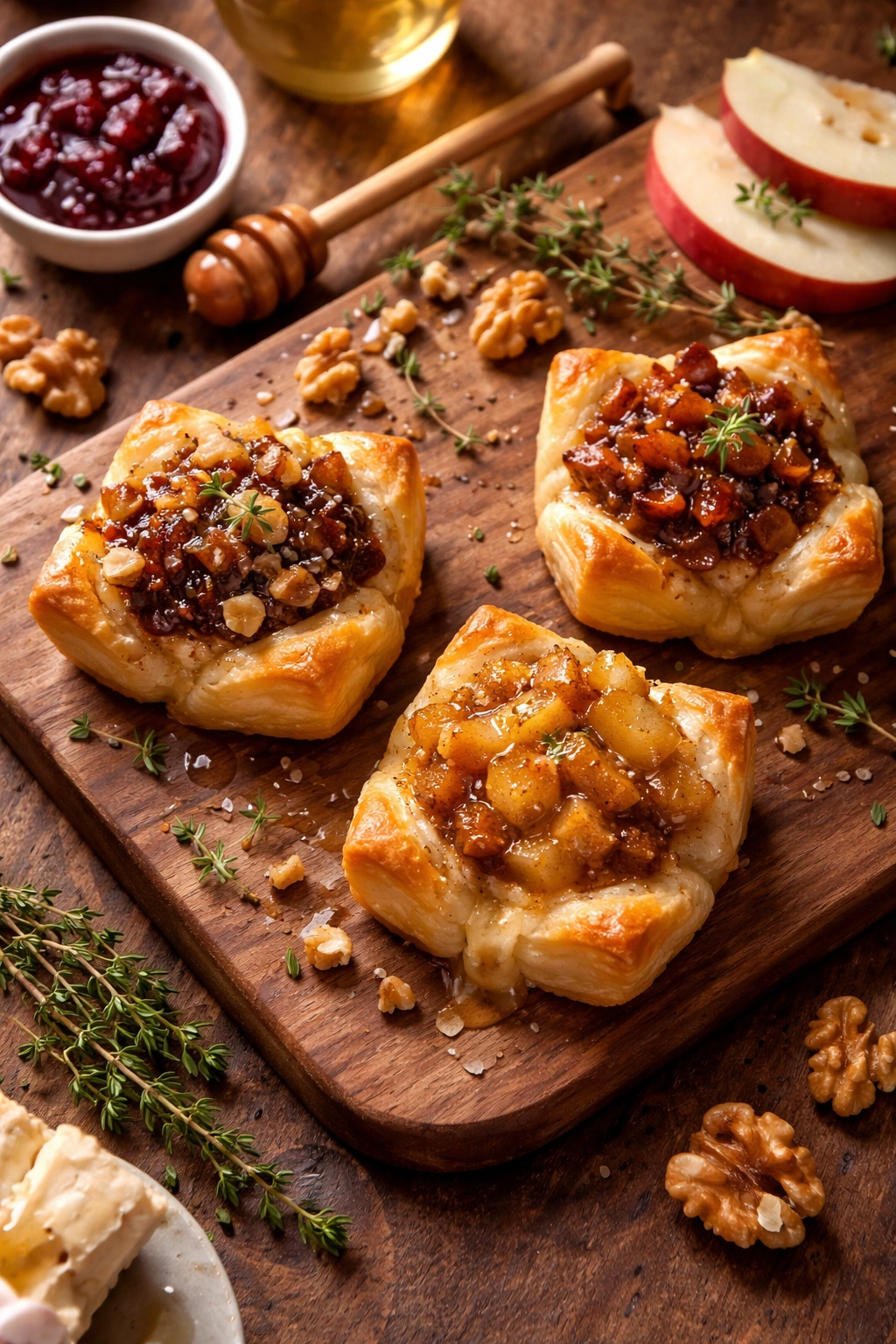
While the classic brie and cranberry combination is absolutely worth repeating, there are several elegant variations worth exploring. The foundation of pre-baked pastry cups and melted brie stays exactly the same — you’re just changing what goes on top.
Brie with Fig and Walnut: Replace the cranberries with fig jam or finely chopped dried figs, and top with a small pinch of toasted, finely chopped walnuts. A drizzle of honey still works perfectly here. This variation tastes more autumnal and feels slightly more luxurious — figs and brie are a legendary pairing.
Brie with Apple and Cinnamon: Toss thin apple slices in a tiny bit of honey and cinnamon, place a small handful on each piece of brie, and finish with a sprinkle of brown sugar before the final bake. The apple becomes soft and sweet in the oven, playing beautifully against the brie’s richness. This version tastes somewhat like a deconstructed apple pie.
Brie with Caramelized Onions: If you’re comfortable making caramelized onions in advance, place a small spoonful on each brie piece before baking. The sweetness and deep, complex flavor of slowly cooked onions becomes almost addictive when paired with brie. This version leans savory rather than sweet and pairs beautifully with red wine.
Brie with Red Pepper Jelly and Thyme: Replace the cranberries and honey with a small spoonful of red pepper jelly (available in the jam section of most supermarkets). The slight heat and sweetness of the jelly creates an intriguing flavor dynamic. The thyme garnish becomes even more important here.
Brie with Apricot and Pistachio: Use dried apricots or apricot jam in place of cranberries, and top with a small pinch of finely chopped roasted, salted pistachios. The pale golden apricot against pale brie and green pistachio creates a beautiful color combination, and the flavor is warm and slightly Middle Eastern in character.
Brie with Black Garlic and Herbs: For the adventurous crowd, try a tiny dab of black garlic paste (available at specialty food stores or online) under a sprinkle of fresh herbs like chives or parsley. Black garlic is sweet, funky, and utterly delicious — it’s not the assertive garlic flavor you might expect. Guests will taste something interesting and ask you what it is.
Brie with Truffle Honey: This is the luxe version. Instead of regular honey, use truffle-infused honey (increasingly available at specialty food stores). Drizzle a tiny amount on the brie before the final bake. The earthy, subtle truffle flavor elevates these bites from “nice appetizer” to “special occasion” territory. Even a little goes a long way — resist the urge to use too much.
Storage and Keeping Them Fresh
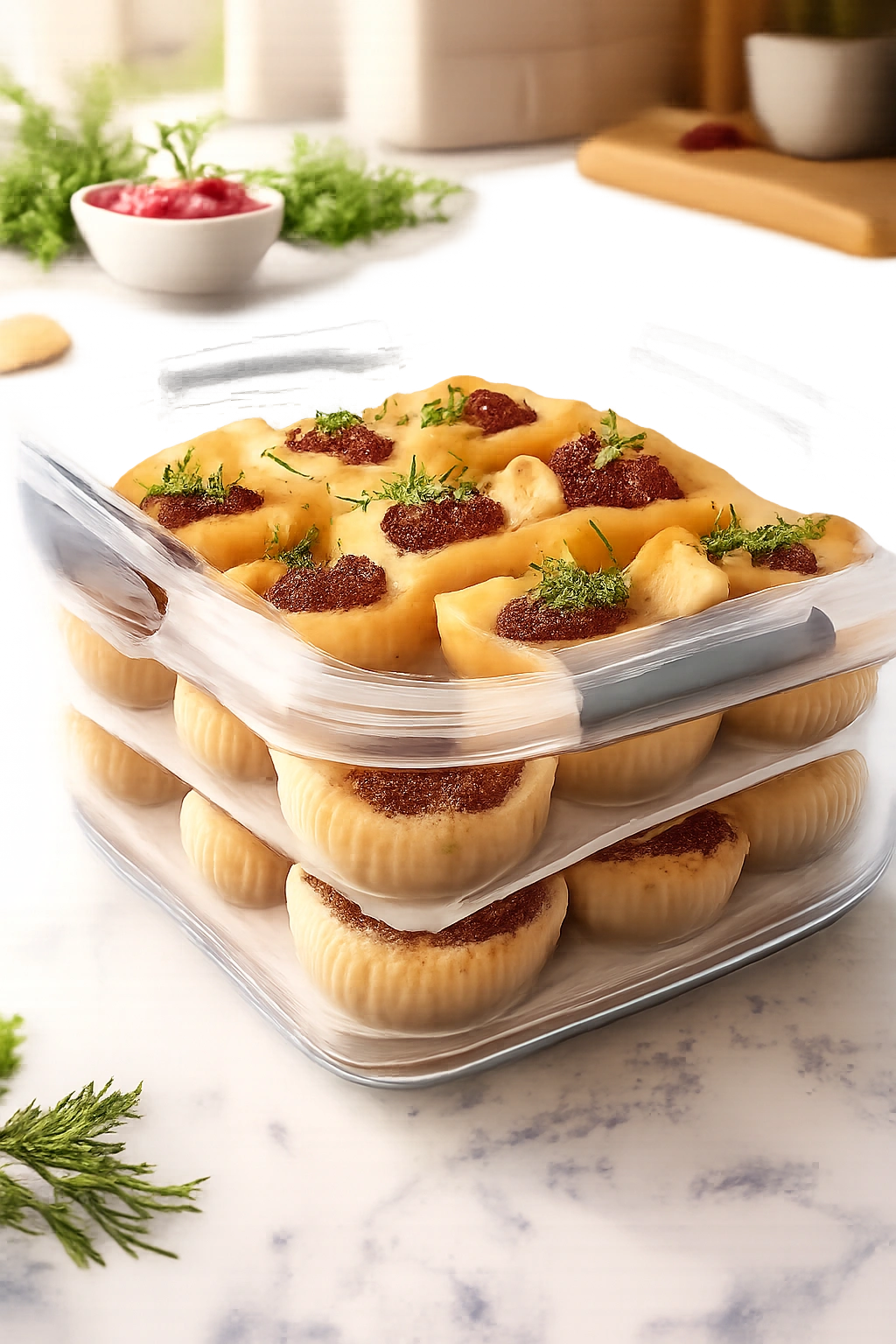
Fully baked brie and cranberry bites keep well in the refrigerator for up to two days in an airtight container. Place a piece of parchment paper between layers if you’re stacking them to prevent sticking. The pastry might lose a tiny bit of its crispness as it sits, becoming slightly softer, but the flavor remains excellent. You can refresh them in a gentle oven warmth just before serving.
For longer storage, freeze fully baked bites for up to one month. Flash-freeze them on a baking sheet until solid, then transfer to a freezer bag or airtight container, labeling with the date. To serve, thaw them at room temperature for about 15 minutes or reheat them directly from frozen in a 325°F oven for 8-10 minutes. Frozen bites take slightly longer to warm through than thawed ones.
Unbaked, assembled bites (the version you prepped the day before and refrigerated) keep for up to 24 hours in the refrigerator before baking. Don’t keep them longer than that — the pastry can absorb moisture from the filling and lose some of its crispness. That said, I’ve baked unbaked bites that were 36 hours old from assembly, and they turned out perfectly fine, though noticeably less crispy than fresh ones.
The one thing you should not do is refrigerate baked bites after they’ve cooled all the way to room temperature, then try to serve them cold. Cold brie is flavorless and dense, and cold pastry is hard. Always reheat them to at least room temperature, or better yet, to warm, before serving.
If you find yourself with leftover bites the day after a party, don’t throw them away. Crumble them into a salad for a crunchy, savory-sweet addition. Or warm them gently and serve them as a snack with a glass of wine. They’re too delicious to waste.
Pairing Wines and Beverages with Your Bites

The richness of warm brie demands beverages with enough acidity and brightness to cut through that richness and cleanse the palate between bites. This is where wine pairing becomes particularly important — the right beverage makes these bites taste even better than they already do.
Sauvignon Blanc is perhaps the most versatile choice here. The bright acidity and citrus notes cut straight through the brie’s creaminess, and the herbal character of many sauvignon blancs echoes the thyme garnish on the bites. Look for sauvignon blancs from the Loire Valley (Sancerre or Pouilly-Fumé) for elegant, mineral versions, or New Zealand sauvignon blancs for more fruit-forward options.
Champagne or Dry Sparkling Wine elevates the entire experience. The bubbles, acidity, and slight yeasty complexity pair beautifully with the sweet-and-tart profile of these bites. There’s something inherently celebratory about serving sparkling wine with warm, buttery appetizers.
Pinot Grigio works well, particularly if you choose a more mineral, dry example rather than a fruit-forward one. The crispness and subtle stone fruit notes complement the cranberries without overwhelming them. Avoid overly sweet versions, which will compete with the honey and cranberry flavors rather than support them.
Dry Riesling is underrated as a pairing choice here. The slight sweetness and stone fruit character in a good dry Riesling echoes the cranberries, while the acidity keeps everything feeling fresh. This is particularly true if you’re serving the fig variation — dry Riesling and fig is a classic combination.
Rosé wine — particularly a dry, crisp rosé — is excellent for warm-weather entertaining. The delicate fruit flavors, acidity, and pale color feel festive and light, even though you’re pairing with something rich.
Non-alcoholic options deserve consideration too. Sparkling cider, particularly quality versions with actual apple juice rather than mostly sugar, pairs beautifully. The apple flavor echoes certain variations (especially the apple and cinnamon version), and the carbonation provides that palate-cleansing effect that alcohol typically provides. Sparkling water with a squeeze of fresh lemon or lime also works if you want something neutral and refreshing.
For a mixed group where not everyone drinks alcohol, serve both sparkling cider and a good wine — it signals that you’ve thought about everyone’s preferences, and both beverages genuinely improve the eating experience.
Final Thoughts
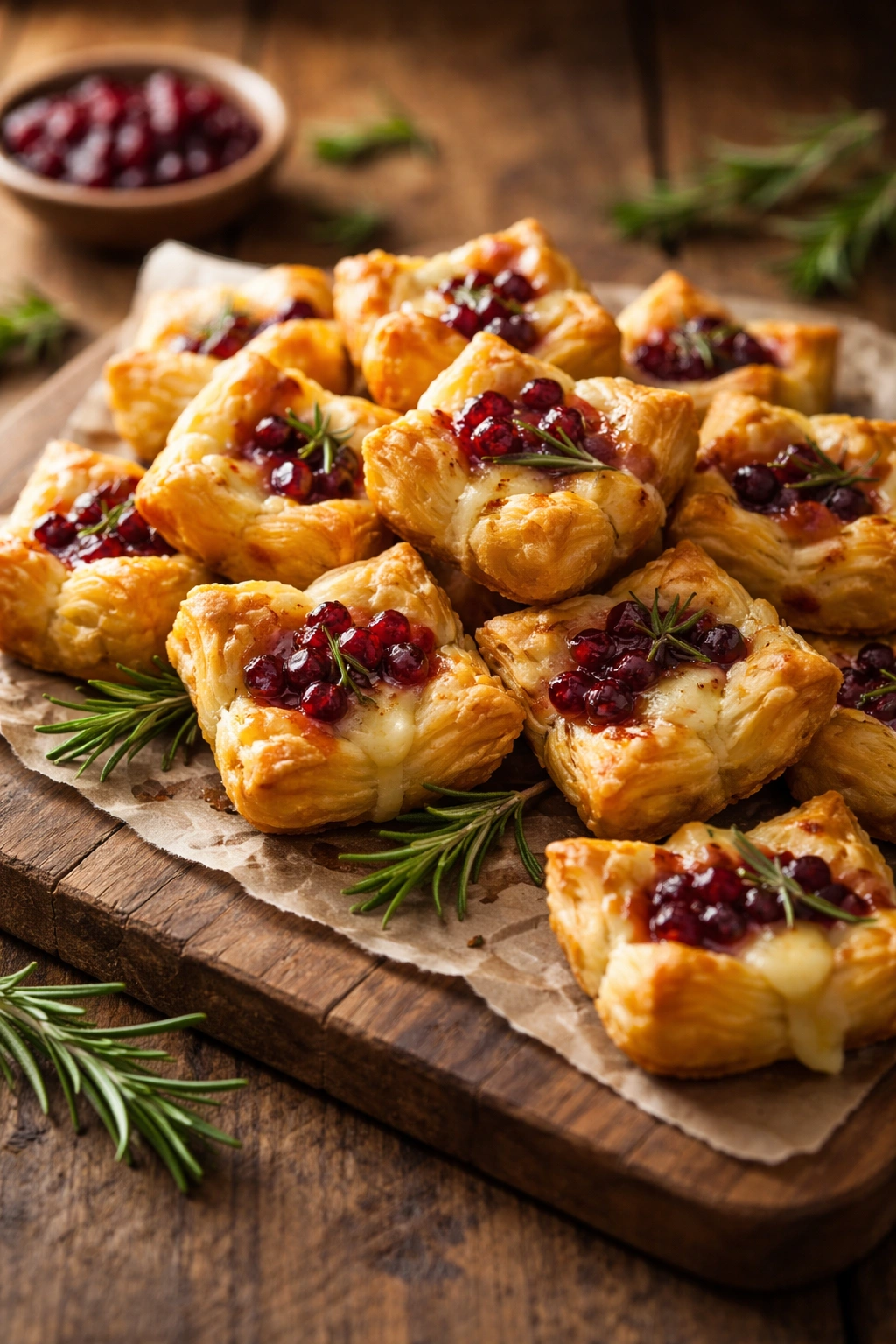
These bites have a magic that far exceeds their actual complexity. They taste like you’ve spent hours planning and perfecting a recipe, when in truth, they come together in about 40 minutes from start to finish. More importantly, they disappear from serving platters faster than almost any other appetizer you could make, and people will ask you for the recipe.
The combination of warm, creamy brie and bright, tart cranberries wrapped in crispy pastry hits every note that makes food craveable. It’s rich but not heavy, sweet but not cloying, simple but sophisticated. You can make them exactly the same way every time, or you can play with variations once you’ve mastered the basic technique. Either path leads somewhere delicious.
If you’re entertaining soon, commit to trying these. The prep is straightforward, the assembly is forgiving, and the results impress reliably. Your guests will feel like you’ve pulled off something special, which you absolutely have — you’ve just done it in a refreshingly uncomplicated way. That’s actually the best kind of special.
