



When your grocery bill starts to feel like an extra mortgage payment, something’s got to give—and it doesn’t have to be your nutrition. The truth is, you can eat well on a budget, enjoy real variety throughout the week, and spend less than you’d think if you approach meal prep strategically. Budget meal prepping isn’t about eating boring chicken and rice every single day or settling for nutritionally empty choices. It’s about being intentional, shopping smarter, and making your ingredients work harder across multiple meals.
The magic of a solid budget meal prep plan is that it takes the guesswork—and the expensive impulse decisions—out of eating. When you know exactly what you’re cooking, when you’re cooking it, and how much you’ll spend, something remarkable happens: you stop ordering takeout at 7 p.m. because you don’t know what else to do. You stop buying convenience foods that cost three times what whole ingredients would. And you stop throwing away wilted vegetables that seemed like a good idea on grocery day but never made it into a meal.
This guide walks you through the complete process of creating a budget meal prep plan that actually works—one that fits your schedule, matches your preferences, keeps you satisfied, and doesn’t require a degree in nutrition or a second job to pull off.
Why a Budget Meal Prep Plan Actually Saves Money
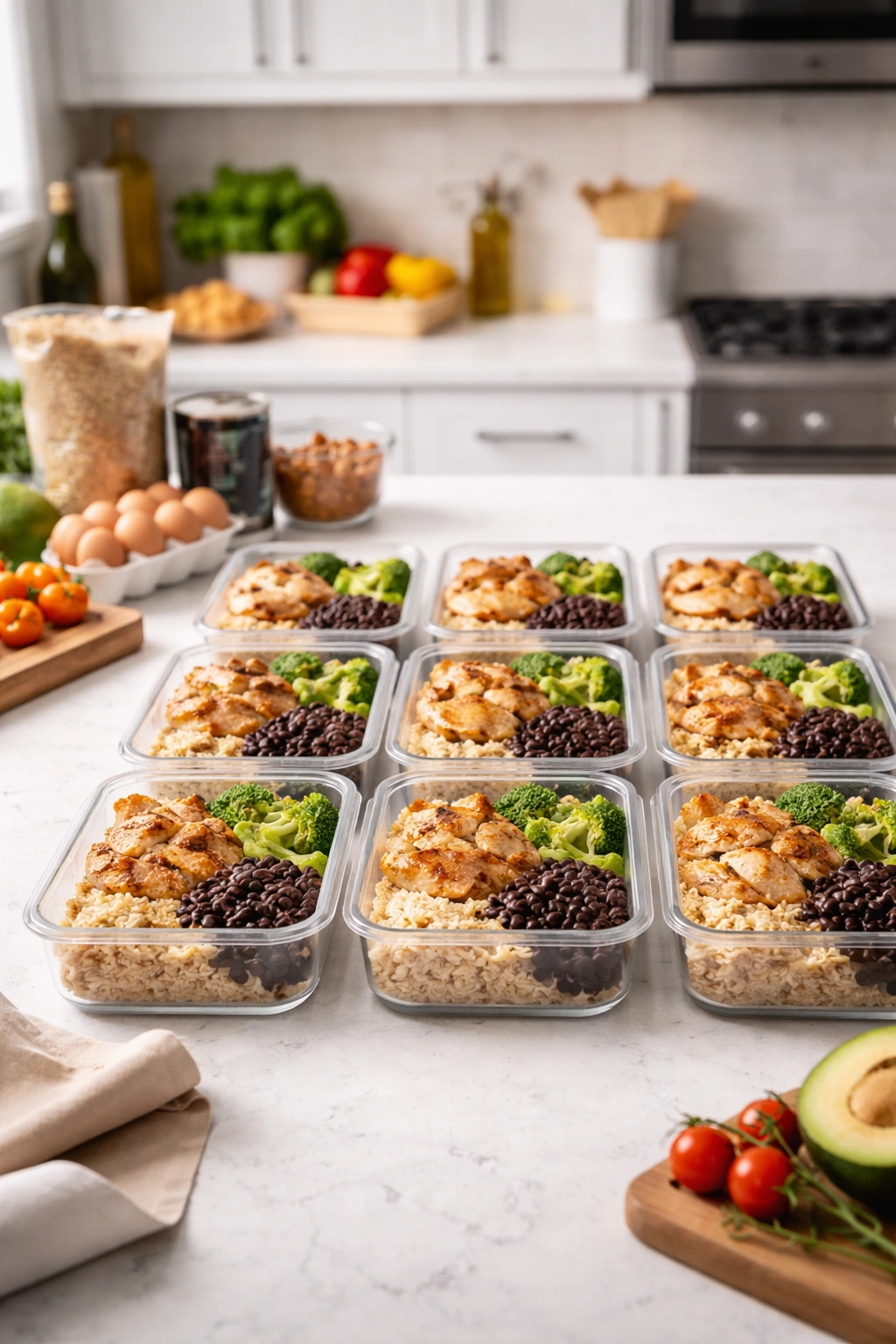
People often ask whether meal prepping really saves money, as if it’s some optimistic myth. The data tells a different story. The average household wastes roughly $1,500 worth of food annually—money literally discarded because perishables spoil before they’re used. When you meal prep, you buy with intention. Every carrot, every can of beans, every piece of chicken has a predetermined purpose. Nothing gets lost in the fridge. Nothing goes to waste.
Beyond waste reduction, meal prepping eliminates the hidden costs of unplanned eating. The $8 coffee with a pastry. The $15 lunch grab. The $20 takeout dinner because cooking felt overwhelming. Over a week, those impulse decisions add up to $100+ that never shows up in your conscious spending but absolutely shows up in your bank account. Budget meal prepping converts those scattered expenses into a single, predictable grocery bill.
The efficiency factor matters too. When you buy in bulk—a large container of oats instead of individual packets, dried beans instead of three cans—you’re paying roughly 40-60% less per serving than convenience alternatives. Add in the fact that you’re cooking once or twice a week instead of every single day, and your energy costs drop as well. Budget meal prepping is less about deprivation and more about eliminating waste while doubling down on efficiency.
Setting a Realistic Weekly Grocery Budget
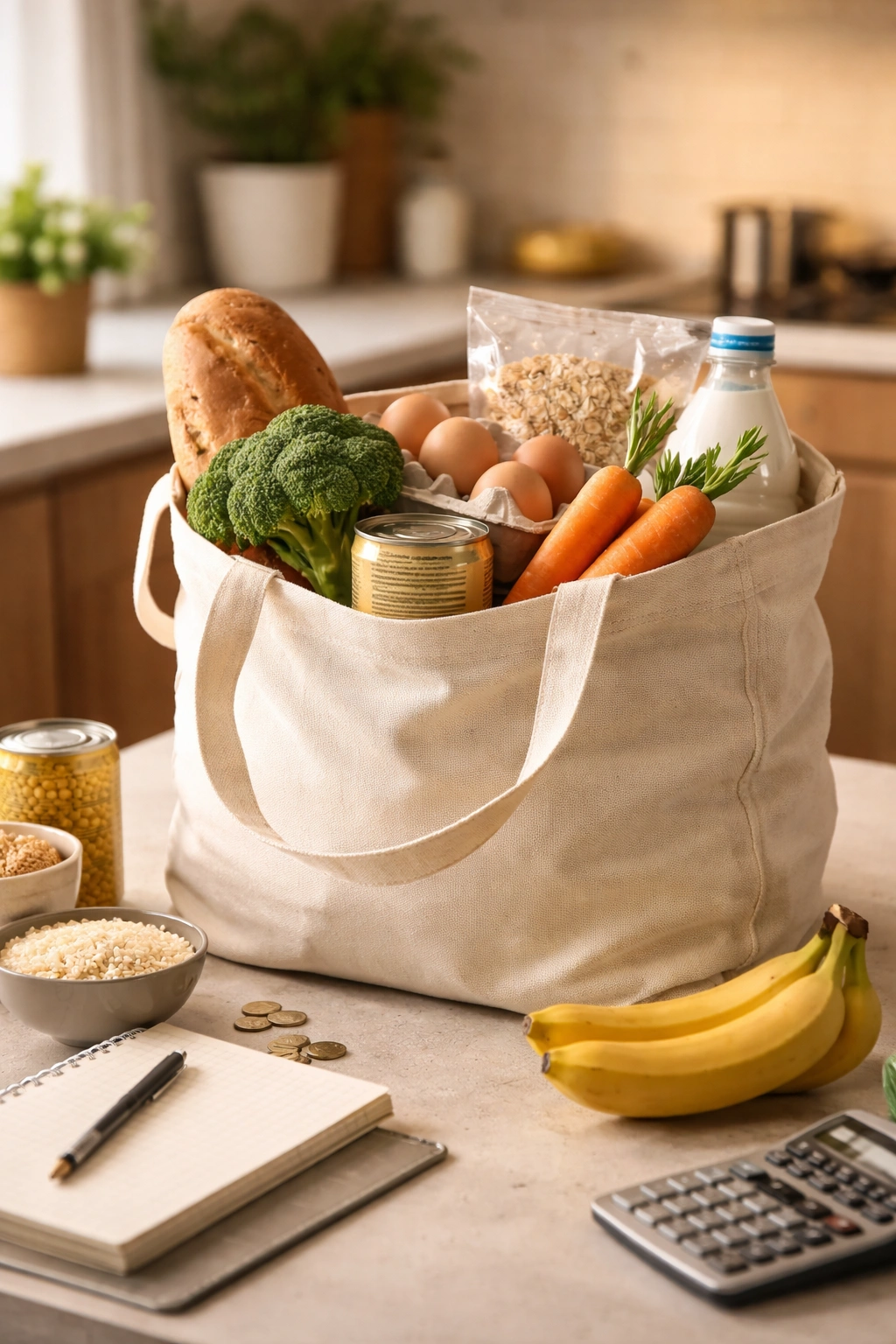
Before you make a single shopping list, you need to know your target. What does “budget meal prep” actually mean for your household? For one person eating three meals daily, a realistic target is somewhere between $20-$35 per week—that’s roughly $3-$5 per day. For a family of four, aim for $80-$120 weekly, or about $3-$4 per person daily. These numbers assume you’re cooking at home entirely and aren’t factoring in dining out.
The key word here is realistic. If your current grocery spending is $80 per week for one person, cutting to $20 isn’t sustainable—you’ll feel deprived and abandon the plan. Instead, aim for a 20-30% reduction. Small, consistent improvements compound more effectively than dramatic changes that feel punishing. Start with a number that makes you slightly uncomfortable but not panicked.
Once you’ve set your target, write it down. Track it while you shop. Most people are genuinely shocked by how much they spend on groceries because they never actually look at the total. Awareness itself changes behavior—you’ll naturally become more selective when you’re watching the running total climb.
Building a Foundation with Affordable Proteins
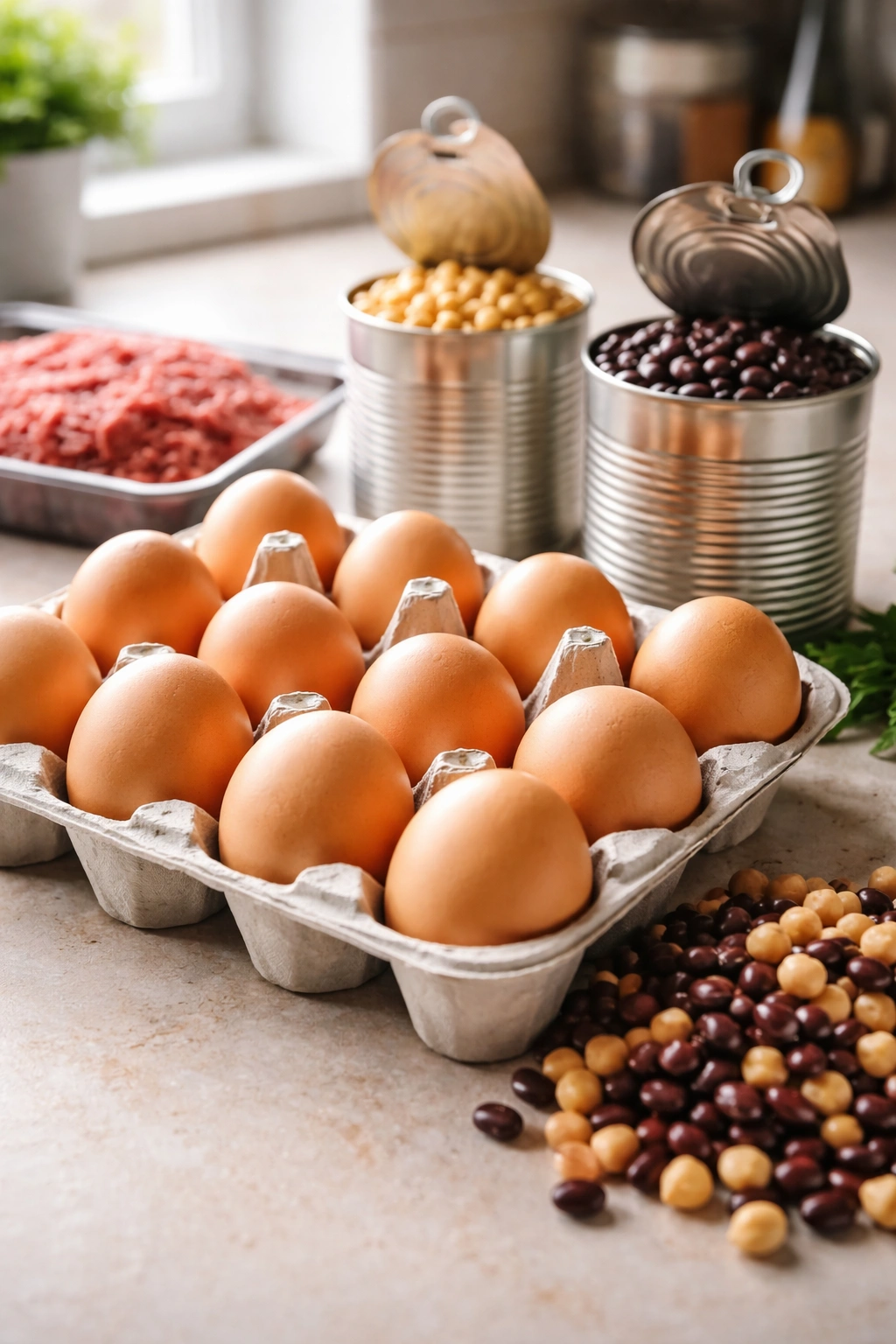
Protein is often the single biggest line item in a grocery budget, yet it’s the easiest place to make dramatic savings without sacrificing nutrition. The trick is knowing which proteins deliver the best value and how to distribute them across the week.
Eggs are your secret weapon. At roughly $0.15-$0.30 per egg depending on where you shop, they’re arguably the cheapest complete protein available. A dozen eggs costs less than most convenience meals and provides multiple breakfast, lunch, and dinner options. Hard-boiled eggs work for grab-and-go breakfasts. Egg muffins stretch across the week. Scrambled eggs become fillings for wraps and bowls. Don’t sleep on this ingredient.
Ground meat—whether beef, turkey, or chicken—costs significantly less than cuts like breasts or thighs. A pound of ground chicken might run $2-$3, compared to $4-$6 for boneless, skinless breasts. This ground meat stretches across multiple meals: tacos, chili, rice bowls, pasta sauce, skillet dinners. Buy the largest package your freezer can handle since bulk pricing is almost always lower.
Canned beans and lentils are perhaps the most underrated budget proteins. A single can costs $0.50-$0.80 and delivers 15+ grams of protein plus fiber. Black beans, chickpeas, white beans, kidney beans—they’re all shelf-stable, requiring minimal prep, and freezing beautifully. Mix them with rice, add them to soups and chili, roast them as a snack, or fold them into grain bowls. They’re nutritionally complete proteins when combined with grains, eliminating the need for expensive animal products on certain days.
Whole chickens are cheaper per pound than individual cuts. A 4-5 pound bird might cost $6-$8 and yield meat for multiple meals: shredded chicken for tacos and rice bowls, diced chicken for soups and salads, bones for homemade broth. This is meal prep architecture at its finest—one ingredient becomes the foundation for several dishes.
Don’t ignore frozen fish like tilapia or pollock. They’re often cheaper than fresh options, store indefinitely, and deliver omega-3 fatty acids and lean protein without the prep time of whole fish. Pair with frozen vegetables and rice for a complete meal that costs roughly $2-$3 per serving.
Strategizing Your Vegetable Purchases

Vegetables are where budgets get sabotaged because people buy aspirationally instead of realistically. You buy those beautiful asparagus spears and organic berries with the best intentions, they wilt in your crisper drawer, and the money literally goes to waste. Instead, focus on vegetables that are economical, shelf-stable, and actually flexible enough to use multiple ways.
Root vegetables—carrots, potatoes, onions, sweet potatoes—are your foundation. They cost next to nothing, last weeks in proper storage, and appear in everything from breakfast hash to dinner skillet meals. A single onion costs pennies and flavors an entire pot of soup or chili. Carrots are similarly cheap and span sweet applications (roasted as a side) to savory ones (chopped into stew).
Frozen vegetables are a game-changer for budget meal prep. A bag of frozen mixed vegetables, broccoli, or peas costs $1-$2, contains no added ingredients beyond the vegetables themselves, and lasts months. Frozen vegetables are flash-frozen at peak ripeness, so nutritionally they’re actually superior to fresh produce that’s traveled thousands of miles and sat in distribution for weeks. There’s zero waste because you use exactly what you need and return the rest to the freezer.
Frozen spinach and kale are incredibly economical ways to add greens. A block of frozen spinach costs less than fresh spinach and works in soups, scrambled eggs, grain bowls, and casseroles. One block goes surprisingly far because you’re not paying for water weight like you do with fresh leafy greens.
Canned tomatoes—whole, diced, sauce—are staples for a reason. They’re cheap, shelf-stable indefinitely, and form the base for chili, soups, pasta sauces, and curry. Buy what’s on sale and store several cans. Dried mushrooms, while initially seeming pricey, rehydrate into large quantities and add tremendous depth to vegetable-forward dishes.
Seasonal produce that’s abundant in your region is always cheaper. Whatever’s overflowing at farmers markets or filling the front displays at grocery stores is in season, peak flavor, and at lowest price. Build your meal prep around what’s cheap right now rather than forcing the same ingredients every week.
The Architecture of Staple Grains and Legumes
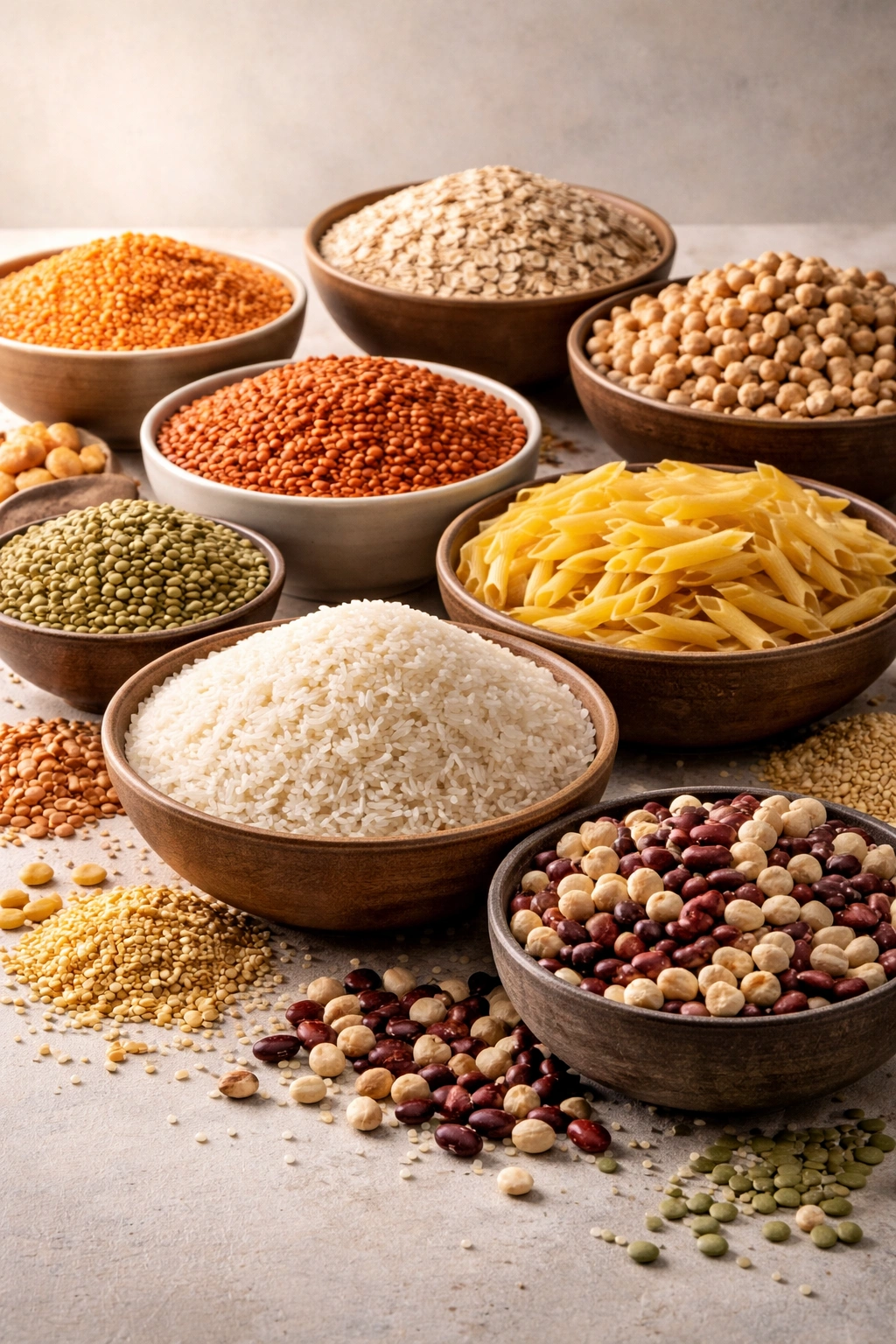
Grains and legumes are the underappreciated cost-savers in budget meal prep. They’re cheap to buy, cheap to cook, filling, and endlessly versatile. A pound of dried beans costs $1-$2 and yields roughly 6-8 servings. A 2-pound bag of rice costs $2-$4 and provides dozens of servings.
Brown rice, white rice, and jasmine rice should all rotate through your meal prep. They’re interchangeable in most applications, so buy whichever is cheapest. Cook large batches in your slow cooker or rice cooker while prepping other components. Leftover rice becomes fried rice, rice bowls, soup bases, or reheated side dishes.
Pasta is shamefully affordable and pairs with budget proteins and vegetables perfectly. A pound costs $0.50-$1 and feeds 4-5 people as a side dish or 2-3 as a main course. Keep several varieties on hand: whole wheat for added fiber, regular pasta for versatility, and alternative shapes just for mental variety so meals don’t feel repetitive.
Oats in bulk—whether steel-cut, rolled, or quick—cost pennies per serving and cover breakfast for a week. They work as hot oatmeal, overnight oats, baked oatmeal casseroles, or even as a binder in budget ground meat recipes. Dried lentils are another powerhouse: they cook faster than beans, don’t require soaking, and deliver complete protein when paired with rice or another grain.
Beans from the bulk bins offer the best pricing if your grocery store has them. A pound of dried chickpeas costs $1-$1.50, compared to $3-$4 for equivalent canned beans. Yes, they require overnight soaking and cooking time, but that’s what meal prep day is for. Cook a huge batch, portion it, and freeze it in containers for throughout the month.
Smart Shopping Strategies That Actually Work
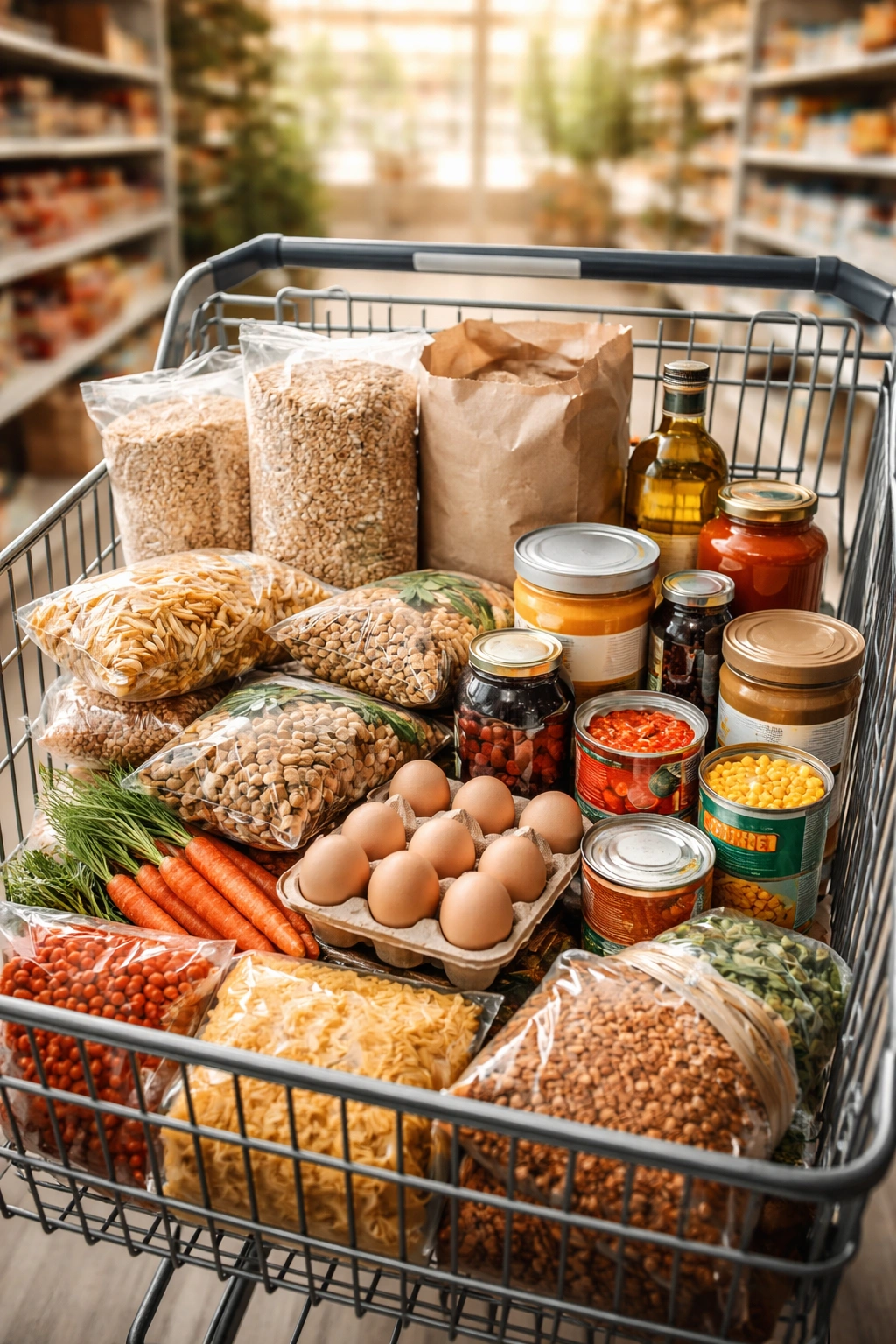
The difference between a budget grocery trip and a budget meal prep trip is intentionality. You’re not buying randomly; you’re buying to support a specific plan. Start every shopping trip with a concrete list built from your meal plan, not a vague idea of “healthy things.”
Check your pantry before shopping. That garlic, salt, oil, and basic spices you bought last month are still good. You don’t need to replace them. This simple step prevents duplicate purchases of things you already have. Similarly, check your freezer. That forgotten bag of frozen broccoli or chicken can absolutely become part of this week’s plan.
Shop sales strategically. If ground beef is on sale this week, build your meal plan around ground beef. If chicken thighs are marked down, that becomes your protein focus. This requires flexibility—your meal plan isn’t set in stone before you shop; it’s flexible enough to take advantage of what’s actually affordable that specific week. This is how people on tight budgets actually eat well: they follow the sale prices, not a predetermined rigid plan.
Buy generic brands without hesitation. There is functionally zero difference between store-brand beans and name-brand beans. Same with rice, pasta, canned vegetables, and most pantry staples. The packaging might be plainer, but the contents are identical. Switching to generic across the board typically saves 20-30%.
Purchase bulk quantities when possible. A 5-pound bag of chicken drumsticks costs significantly less per pound than a 1-pound package. Larger containers of yogurt cost less per ounce than individual cups. Buy the biggest size you can realistically use before it expires.
Shop the perimeter of the store where fresh and less-processed foods live. The center aisles contain processed foods with higher markups. This isn’t about judgment—it’s about economics. A head of lettuce costs less and has lower markup than bagged salad. A whole pineapple costs less than pre-cut chunks. Yes, you do extra prep work, but that’s literally what meal prep day is for.
Visit ethnic markets in your area if available. Asian markets, Latin markets, and other ethnic grocery stores often carry staples like rice, beans, and fresh produce at substantially lower prices than mainstream supermarkets. A pound of dried beans might cost $0.80 at an ethnic market versus $1.50 at a conventional grocery store.
Calculating Costs to Stay Accountable

It’s easy to believe you’re staying on budget without actually checking. Create a simple spreadsheet or even a piece of paper where you list each item purchased and its cost. At the end, total it and calculate the cost per meal by dividing the total by the number of servings you’ll get.
This practice has a transformative effect. When you know that a can of beans costs $0.70 and feeds 3 people, you start seeing it differently. When you realize that a pound of pasta and a jar of sauce feeds 4 people for $2, the value becomes concrete. People who track their meal prep costs become conscious decision-makers about ingredient purchases.
A helpful reality check: if your meal plan shows an average cost of $2.50 per serving, and you’re cooking 15 servings per week per person, your weekly budget is roughly $37.50 per person. Scale that to a family of four, and you’re looking at $150 per week. If that number is higher than your target, adjust by:
- Swapping expensive proteins for cheaper ones
- Adding more vegetables and grains, fewer proteins
- Using more canned and frozen items, fewer fresh items
- Extending servings by adding bulk (rice, beans, vegetables)
A Practical Budget Meal Prep Framework
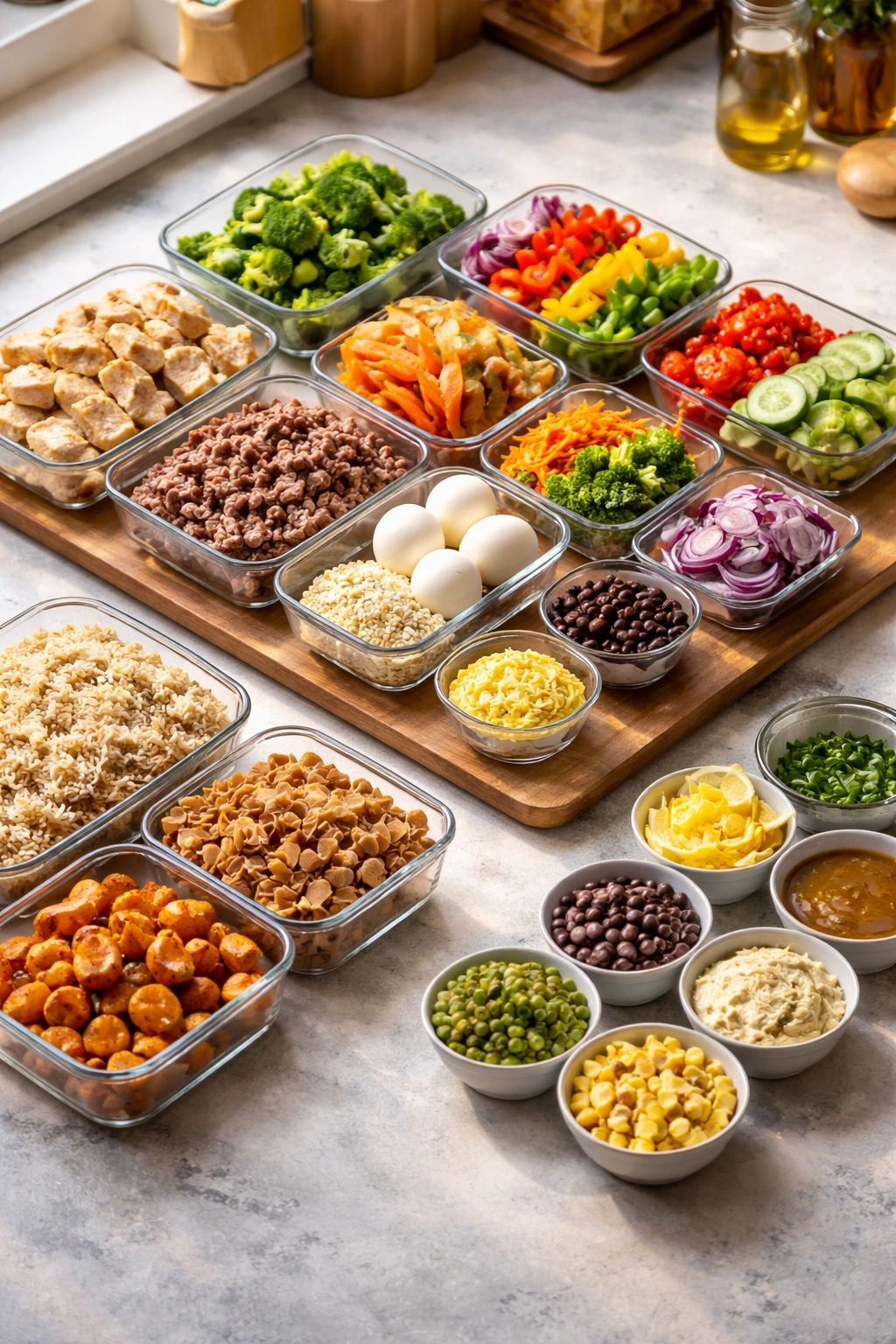
Here’s a realistic framework that works across various budgets:
Pick 2-3 proteins. This week, choose ground turkey, eggs, and black beans. These three proteins will rotate through your breakfasts, lunches, and dinners in different combinations. No need for five different proteins.
Choose 3-4 vegetables. Pick what’s cheap and on sale: carrots, onions, frozen broccoli, and spinach. These four vegetables will appear in scrambled eggs, stirfries, rice bowls, and soups. Repetition is fine—the point is stretching these few ingredients across many meals through different preparation methods.
Select 2 grains. Rice and pasta, or rice and oats. These provide the bulk and calories that make meals feel substantial. They’re your foundation.
Add 1-2 flavor builders. Salsa, soy sauce, olive oil, garlic, or hot sauce transform the same basic ingredients into completely different meals. A plate of rice and beans with salsa tastes entirely different from the same components with soy sauce and garlic.
This framework for one person costs roughly $20-$25 when shopping strategically. For a family of four, multiply by four, accounting for slightly better bulk pricing on larger quantities.
Prep Day Efficiency: Doing the Heavy Lifting Once
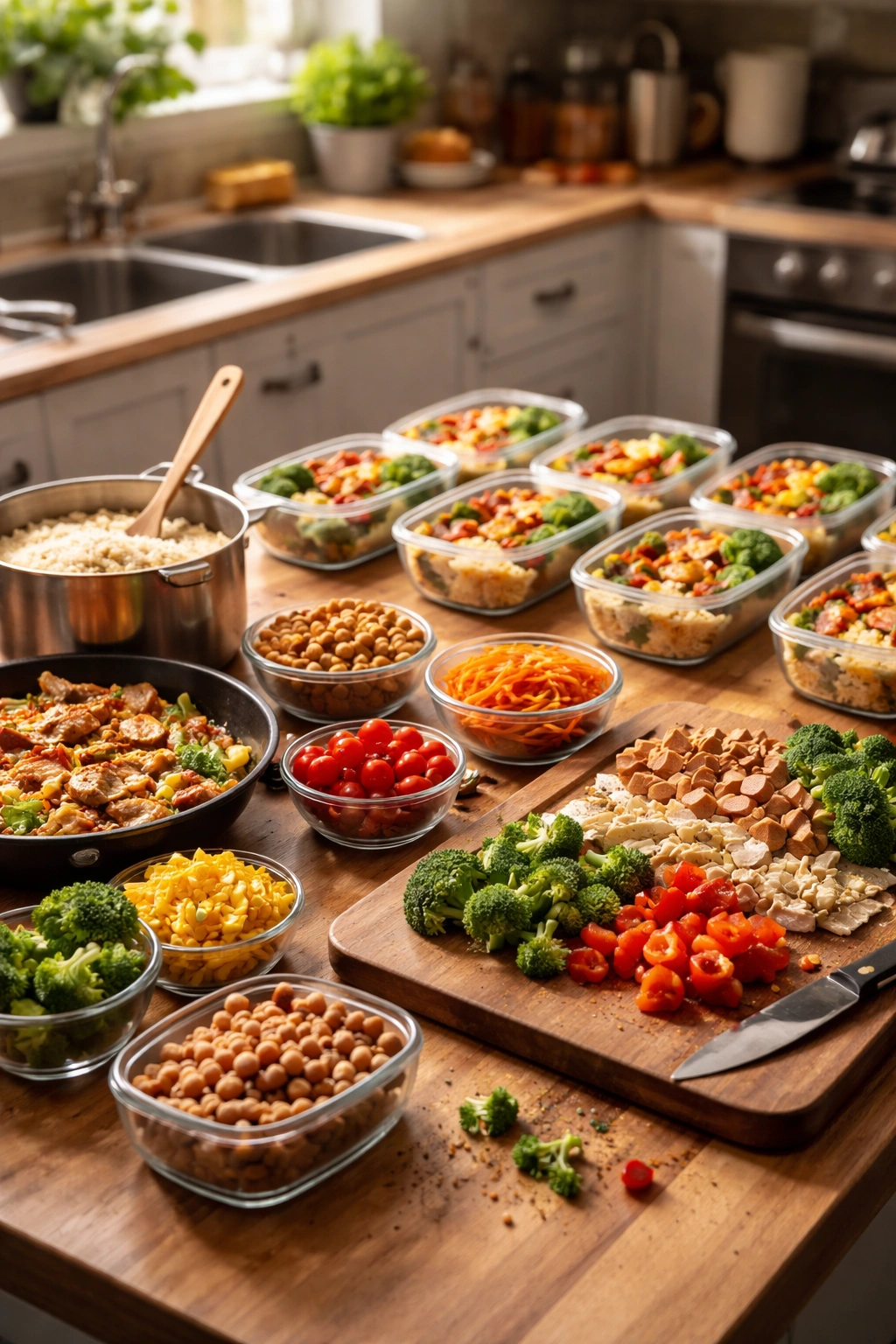
The goal of budget meal prep isn’t to cook fresh meals every single day—that defeats the time and money purpose. Instead, you do the heavy lifting once or twice a week, creating components that assemble into different meals.
Designate a prep day (Sunday works for most people). Set aside 2-3 hours and do these core tasks simultaneously:
Cook a large batch of rice or grain. While that’s happening, you’re chopping vegetables. Chop onions, carrots, and any other vegetables that will appear in multiple dishes. The bulk of your mental effort and time happens during the chopping phase. Once everything’s prepped, assembly is rapid.
Prepare your proteins. Boil a dozen eggs. Brown a few pounds of ground meat. Roast a tray of chickpeas. Cook beans if you’re using dried beans. These go into storage containers immediately after cooling, taking up valuable fridge and freezer space only in their final form.
Prep one or two complete dishes. While everything else is happening, throw together a large batch of chili or soup. These complete meals will be eaten throughout the week, requiring no assembly.
The remaining components—cooked rice, cooked proteins, chopped vegetables, cooked beans—get portioned into containers. Throughout the week, you’re not cooking; you’re assembling. Monday night: rice + ground turkey + vegetables + salsa = a taco bowl. Tuesday night: same rice + black beans + vegetables + different sauce = something that tastes completely different but required zero cooking.
Sample Budget Meal Prep Plans Across Different Diets
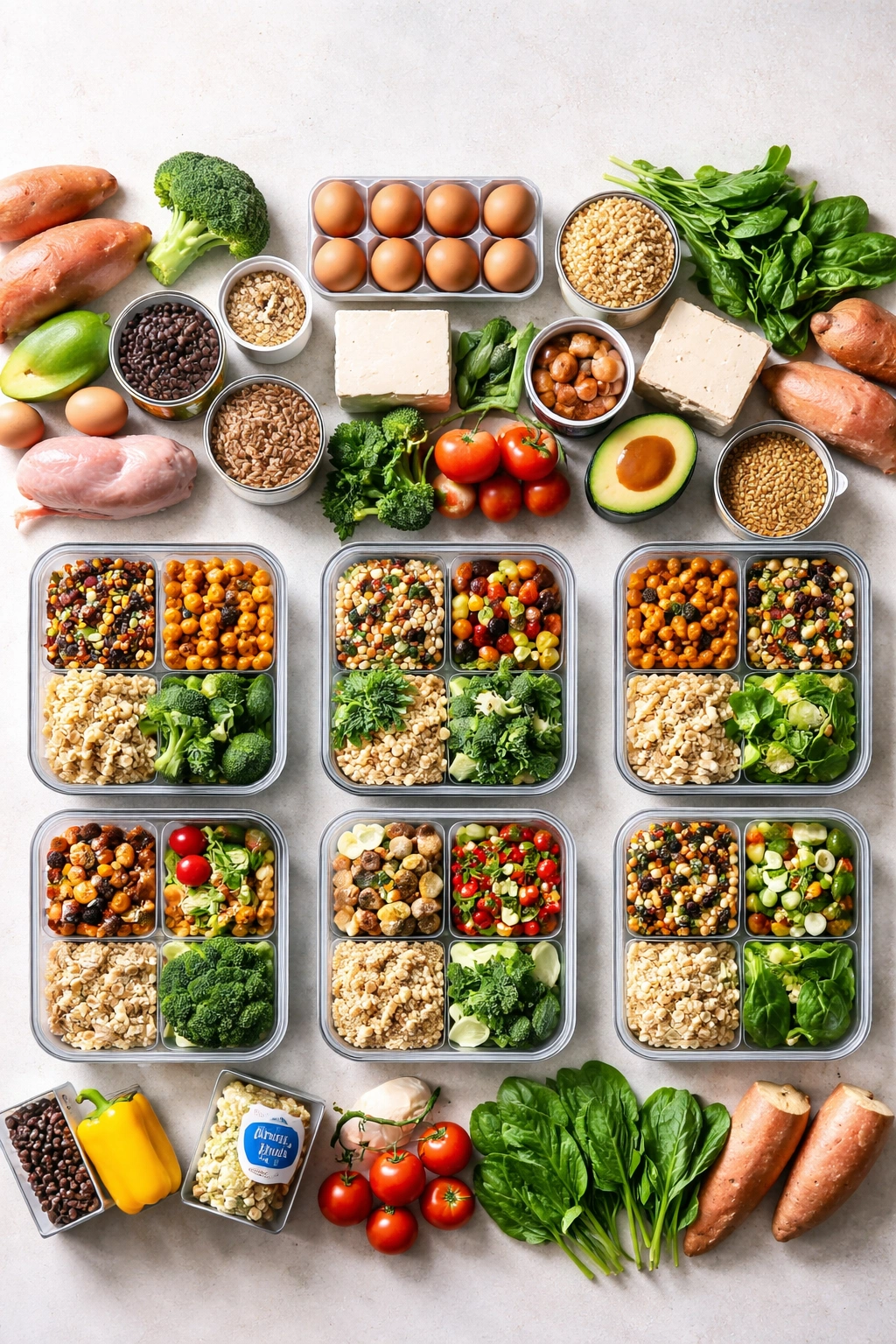
Omnivore Budget Framework ($25-$30 per week)
- Proteins: Ground beef, eggs, canned tuna
- Vegetables: Carrots, onions, frozen broccoli, spinach
- Grains: Rice, pasta
- Flavors: Salsa, hot sauce, garlic
Vegetarian Budget Framework ($22-$27 per week)
- Proteins: Eggs, chickpeas, black beans, lentils
- Vegetables: Carrots, onions, mushrooms, frozen spinach
- Grains: Rice, oats
- Flavors: Soy sauce, peanut butter, curry powder
Plant-Based Budget Framework ($20-$25 per week)
- Proteins: Black beans, chickpeas, lentils, tofu (if available cheaply)
- Vegetables: Carrots, onions, canned tomatoes, frozen vegetables
- Grains: Rice, pasta, oats
- Flavors: Garlic, cumin, turmeric, vinegar
Each of these frameworks assumes buying strategically, using frozen and canned items, and avoiding convenience foods. Your specific cost will vary based on regional prices and what’s currently on sale.
Storage and Food Safety on a Budget
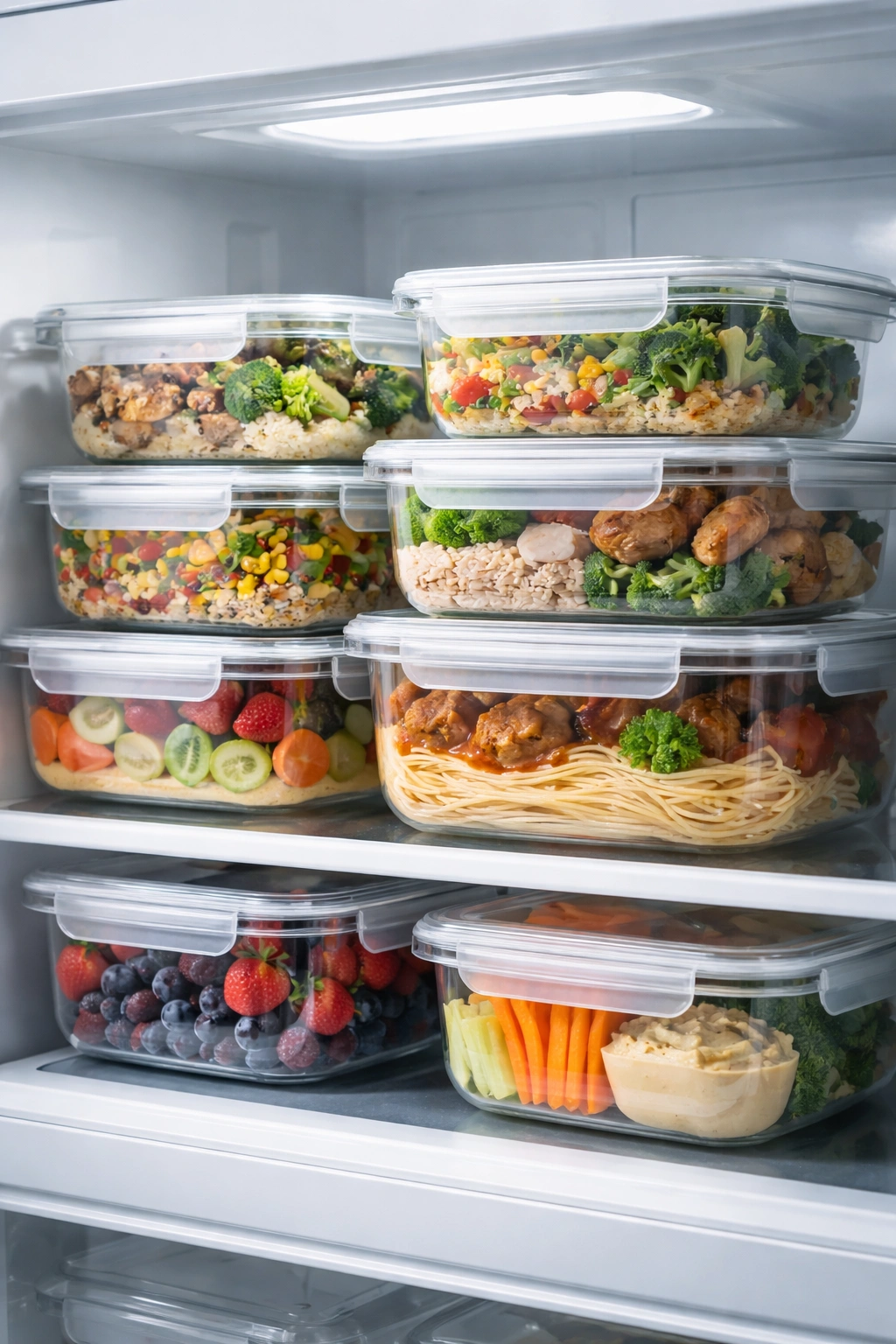
Proper storage extends the life of your prepped meals and prevents the waste that derails a budget. Glass containers work better than plastic because they last indefinitely, don’t stain or hold odors, and handle freezing without warping. They’re a larger initial investment (you might spend $30-$40 on a set), but they’ll outlast hundreds of disposable plastic containers that degrade after several months of use.
Label everything with the date it was prepared. Most cooked proteins keep 3-4 days in the fridge. Soups and stews last 3-4 days. Grains keep 4-5 days. If you’re prepping for the entire week and your fridge space is limited, freeze half of what you’ve prepped. A frozen meal in a quality container thaws overnight in the fridge or reheats beautifully from frozen in about 15 minutes.
Invest in good freezer storage. Aluminum foil, freezer bags, and quality containers are worth it. Label frozen items clearly with contents and date. You can’t use what you can’t identify or what has freezer burn because it was stored improperly.
Don’t be paranoid about food safety, but don’t be careless either. Trust your senses. If something smells off, tastes off, or looks concerning, discard it. Foodborne illness will cost far more than the meal you’re throwing out. Generally speaking, properly stored cooked food is safe for longer than most people think, but when in doubt, toss it.
Common Budget Meal Prep Mistakes (and How to Avoid Them)
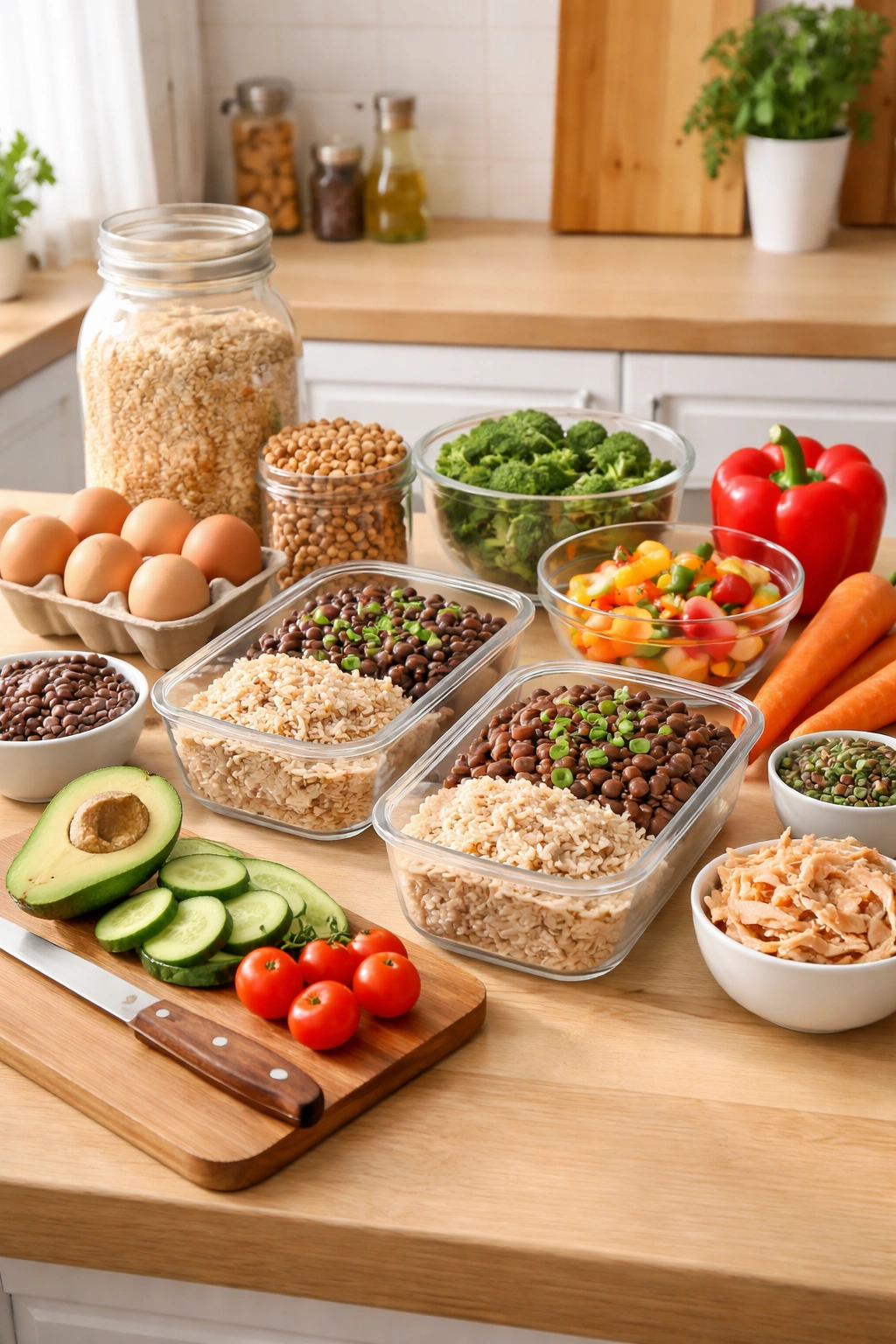
Overestimating quantities. You make enough chili to feed a small army and then you’re eating the same thing for 10 days straight. You abandon ship and buy takeout instead. Make enough for 3-4 days, then prep again mid-week if needed.
Choosing vegetables you don’t actually like. You buy kale because you heard it’s healthy, prep it, then refuse to eat it. Your budget goals don’t work if the food tastes like punishment. Choose vegetables you genuinely enjoy.
Prepping elaborate meals. You’re a beginner to meal prep and you start with a plan involving five different recipes, special ingredients, and complex cooking techniques. You’re overwhelmed by day three and quit. Start simple. Rice, beans, ground meat, vegetables, sauce. That’s it.
Forgetting about breakfast and snacks. You plan lunch and dinner perfectly but forget that breakfast needs to exist too. Suddenly you’re buying coffee and pastries at 7 a.m., blowing your budget. Prep easy breakfasts: oatmeal, hard-boiled eggs, overnight oats.
Buying things on impulse despite a shopping list. You go to the store for rice and leave with 10 items not on your list. You’re over budget before you’ve even gotten to your planned groceries. Go to the store with a list and a calculator. Actually check off items as you place them in the cart.
Not accounting for pantry staples. Your budget assumes you already have oil, salt, garlic, and basic spices. If you don’t, those items alone might exceed your budget, leaving no money for actual food. Either budget them separately initially, or ask if you can borrow/share staples from someone until you’ve rebuilt your pantry.
Making Budget Meal Prep Sustainable Long-Term
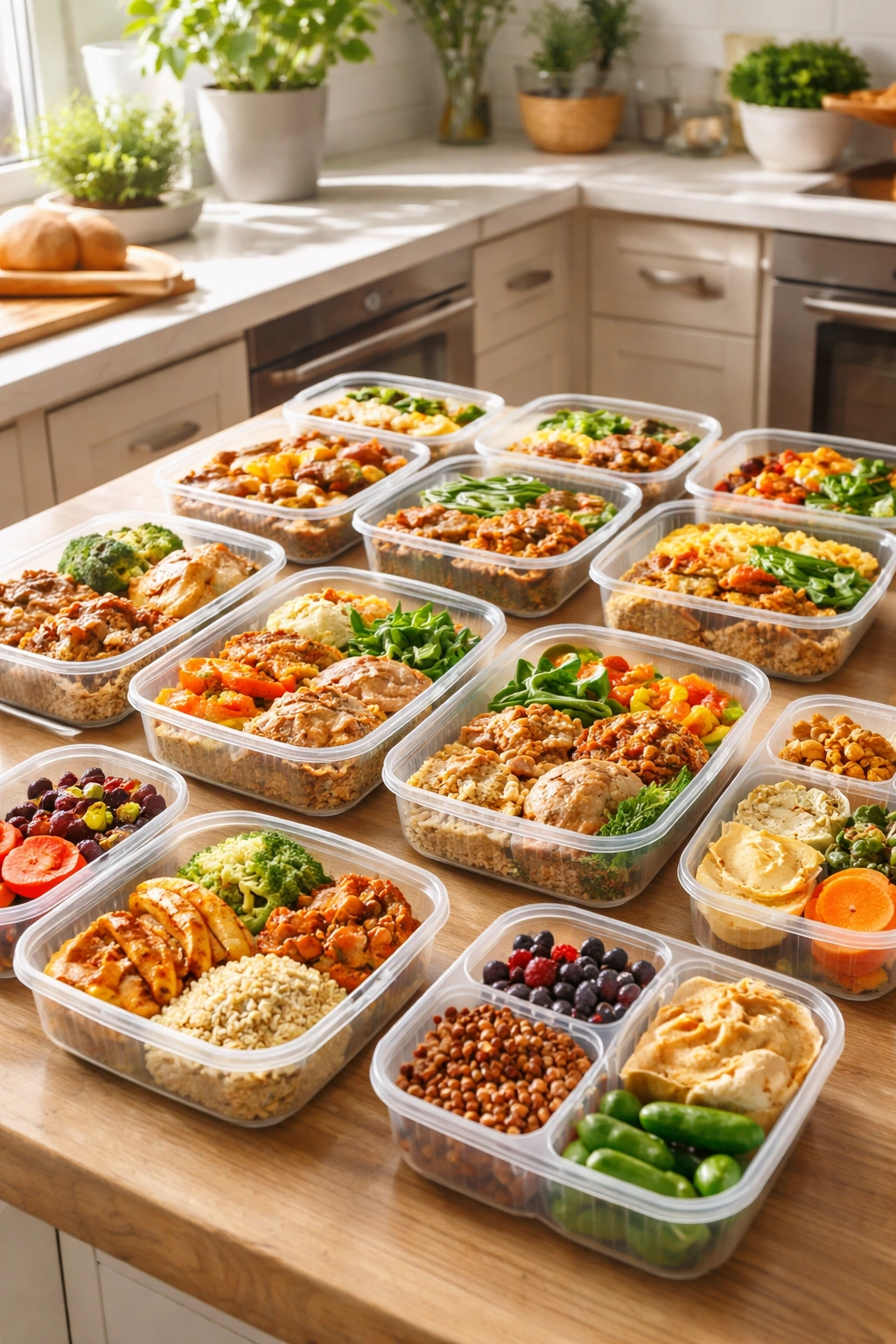
Budget meal prepping isn’t a temporary diet or a punishment phase. It’s an actual lifestyle skill that makes eating well affordable indefinitely. The key to sustainability is building in flexibility and treating it as a system you refine over time, not a rigid plan you execute perfectly or abandon.
Try different proteins and find your favorites that fit the budget. Maybe one week you discover that pork shoulder is on sale and shreds beautifully into budget meals. The next week, ground chicken is the value leader. You’re always looking for the best price-to-volume ratio, not committed to identical meals forever.
Gradually expand your repertoire of budget recipes. You don’t need to learn 50 recipes this month. Learn 3-4 solid ones that you rotate, then add one new recipe per week. Over a few months, you’ve built a substantial collection of budget meals you actually enjoy.
Build in small indulgences. If your total budget is $30 per week and you’re coming in at $27, that extra $3 is yours. A fancy cheese, nice olive oil, fresh herbs—a tiny indulgence makes the overall experience feel less deprived. People quit diets that feel punishing. Small luxuries within the budget make it sustainable.
Track which meals saved the most money and which ate the budget fastest. The ultra-budget meals (under $1.50 per serving) become your go-to when you need to stretch dollars. The slightly pricier meals ($2.50+ per serving) become your weekend treats or special occasion options.
Final Thoughts
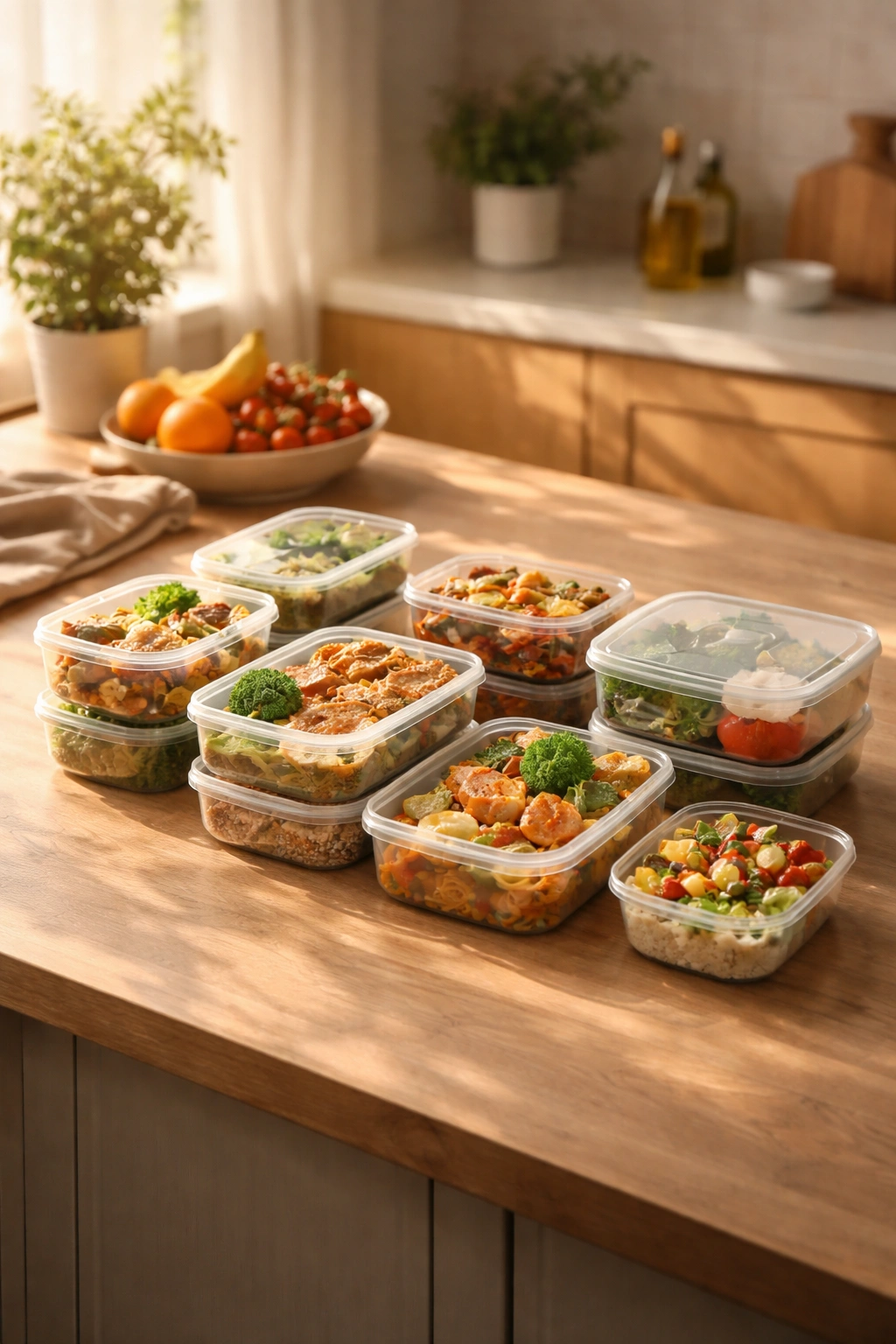
Budget meal prep isn’t about settling for less nutrition or satisfaction. It’s about optimizing the system so that your money stretches farther and your time stays your own. A well-structured meal prep plan costs a fraction of eating out while delivering better nutrition because you’re choosing the ingredients.
The first week will feel uncertain. You’ll wonder if you’re doing it right. You’ll second-guess quantities and worry about food waste. By week three or four, it becomes automatic. You know where to shop, which sales to watch, which combinations work, and how to maximize your budget. You stop thinking about it and start reaping the benefits.
The most successful budget meal preppers aren’t necessarily the most organized or the most disciplined. They’re the ones who decided that managing their food budget was worth a few hours on the weekend. They view meal prep as an investment in both their wallet and their wellbeing. Because at the end of the month, when you’ve spent $120 instead of $300 on groceries and you’ve eaten well every single day, you realize this isn’t actually difficult—it’s just different.
