



There’s a reason comfort food recipes get passed around like family secrets—they solve a problem we all face: how to get a delicious, satisfying meal on the table when time is short and energy is even shorter. Chicken Alfredo Bake is one of those magical dishes that delivers restaurant-quality results in a fraction of the time, all from a single baking dish. No colander splashing boiling water. No pot of cream sauce threatening to break. No stack of dishes piled high at the end of the night. Just one pan, uncooked pasta, a handful of quality ingredients, and 55 minutes of mostly hands-off baking. What emerges is a creamy, cheesy masterpiece that somehow tastes like you’ve been fussing in the kitchen all afternoon, when really you’ve barely lifted a finger.
The brilliance of the one-dish approach lies in understanding that pasta doesn’t actually need to be pre-boiled if you give it enough moisture and gentle heat to cook through. The Alfredo sauce—whether homemade or jarred—provides both the liquid and the fat that allows the uncooked noodles to soften into tender perfection while absorbing every ounce of that creamy, savory flavor. The chicken stays juicy, the cheese gets melty and golden, and every bite tastes indulgent without the work. This is the kind of recipe that works equally well for a busy Wednesday night when you’re juggling work and homework, or for feeding a crowd on the weekend. It makes enough to satisfy eight people, reheats beautifully, and improves slightly the next day as the flavors meld together.
If you’ve been intimidated by pasta dishes because you thought you needed perfect timing and three pots, this recipe is about to become your new favorite. It’s also surprisingly forgiving—if your pasta looks slightly underdone at the 40-minute mark, you just cover it again and keep going. There’s very little that can actually go wrong, which makes it the perfect choice whether you’re an experienced cook or someone who’s still building confidence in the kitchen. Let’s walk through everything you need to know to make this dish so well that it becomes a regular in your dinner rotation.
What Makes One-Dish Chicken Alfredo Bake Special
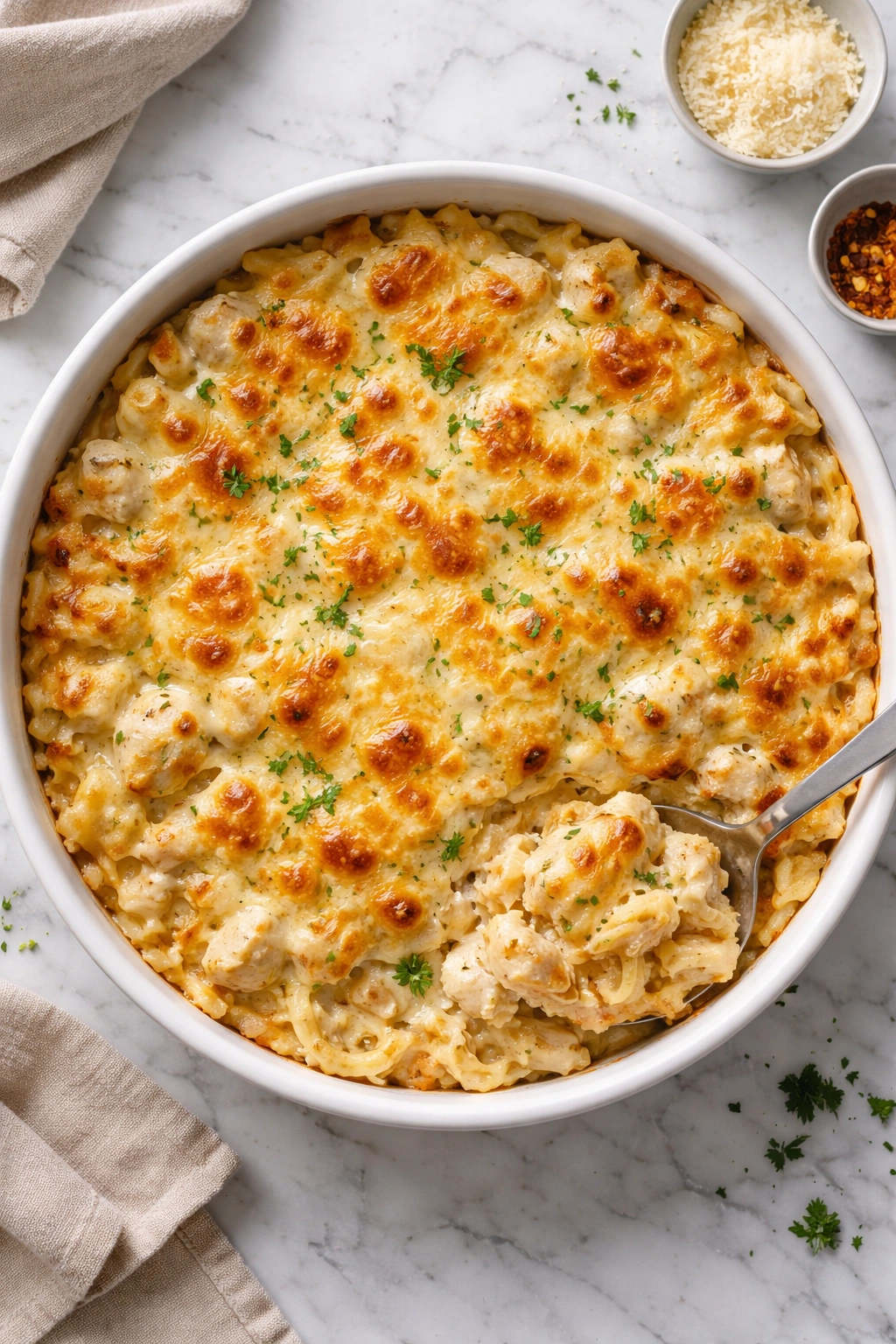
The magic of a true one-dish meal isn’t just about convenience, though that’s certainly part of the appeal. It’s about the way flavors integrate and intensify when everything bakes together. When uncooked pasta absorbs the sauce gradually throughout the baking process, rather than being boiled separately and then tossed in prepared sauce, something different happens at the chemical level. The starch released by the pasta mingles with the cream and cheese, creating a sauce that’s more integrated and velvety than if you made them separately.
This dish also eliminates the timing stress that comes with coordinating different components. You’re not trying to keep pasta warm while the sauce finishes, or scrambling to drain pasta while chicken is still cooking. Everything reaches completion at exactly the same moment. The pasta is tender but not mushy, the sauce has thickened to the perfect consistency, and the cheese on top has just turned golden. You pull it from the oven, let it rest for five minutes, and dinner is ready.
Beyond the practical advantages, there’s something deeply satisfying about baking a dish that improves as it cooks. You can smell the garlic and cream mingling in your kitchen. You can peek in and watch the cheese get bubbly and golden around the edges. There’s a sense of anticipation and care that comes with a baked dish in a way that quick stovetop meals sometimes miss. It feels homemade because it genuinely is.
Why This Recipe Works for Busy Weeknights
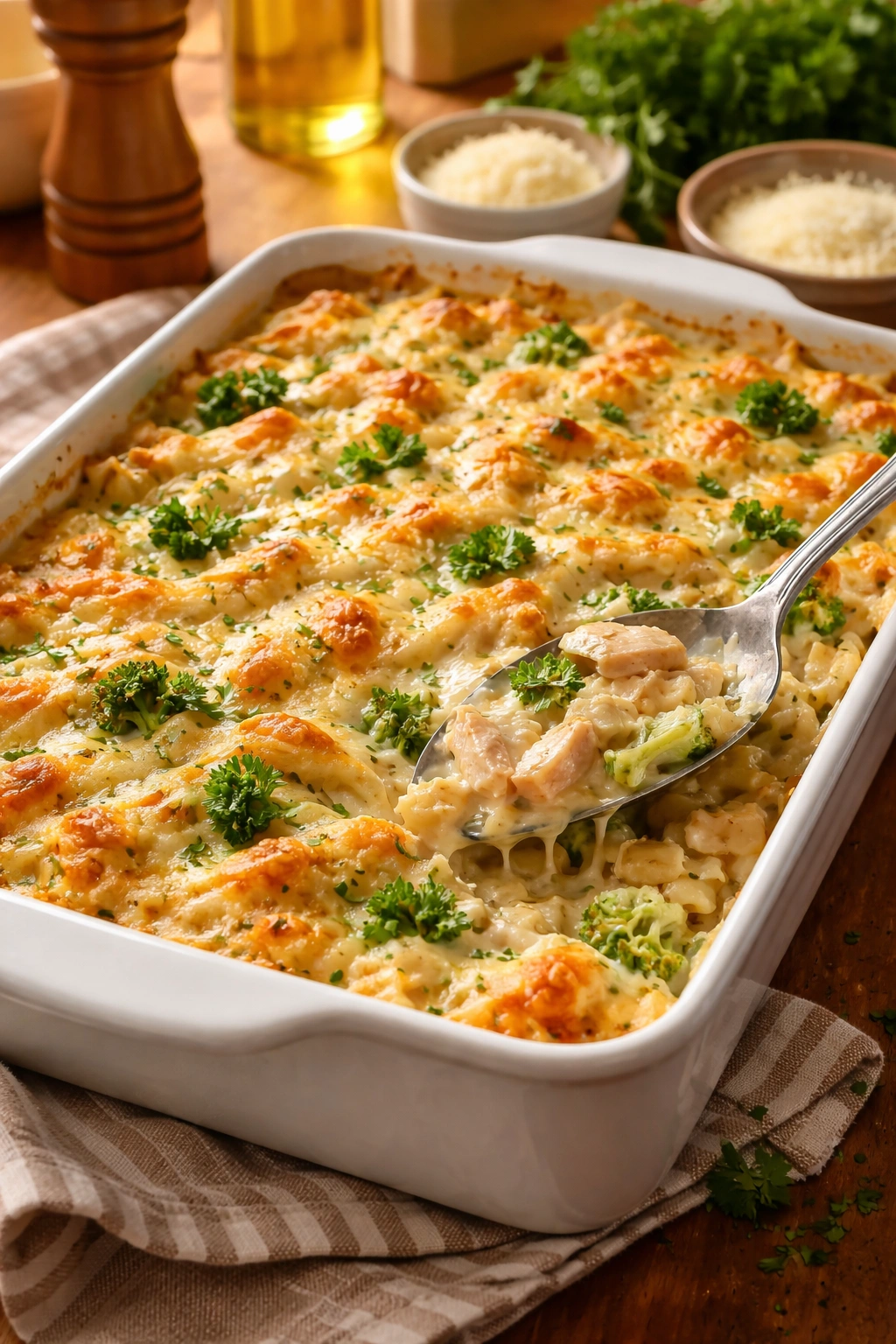
The reason this dish has become so popular among home cooks with demanding schedules isn’t complicated—it respects your time while delivering results that taste like you spent hours on them. From start to finish, you’re actively working for maybe 10-15 minutes, including any prep. The oven does the remaining work, which means you can handle homework, answer emails, or simply sit down with a cup of tea while dinner cooks.
Rotisserie chicken is the game-changer here. A store-bought rotisserie chicken is already seasoned, cooked, and tender, which means you can have shredded chicken ready in the time it takes to grab a plate and two forks. If you don’t have rotisserie chicken on hand, leftovers from any previous meal work beautifully. Even canned chicken, in a pinch, will give you a completed dish. The flexibility here is key—the recipe doesn’t demand perfect ingredients or fresh preparations. It works with what you have.
The second time-saver is using jarred Alfredo sauce if you want to. Yes, homemade sauce from cream, butter, garlic, and Parmesan is wonderful and takes maybe 10 minutes on the stovetop. But a quality jarred sauce (look for brands with cream, cheese, and garlic as primary ingredients, not thickeners and additives) cuts your active time nearly in half. You’re still getting real flavor and a creamy, luxurious result. There’s no shame in this shortcut, especially on nights when you’re juggling multiple demands.
Choosing the Right Pasta and Sauce
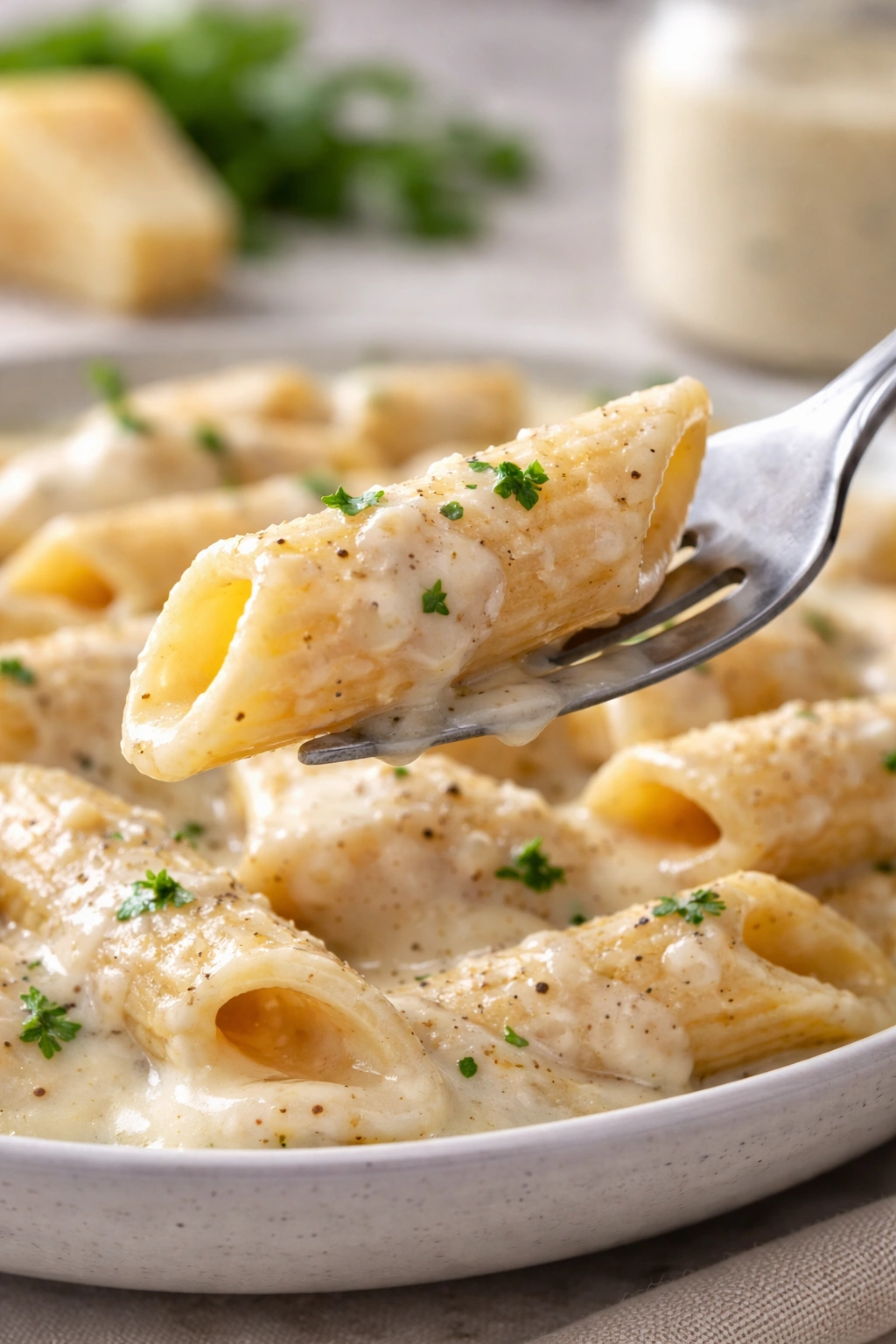
Pasta shape matters more than most people realize in a baked dish, because you want something that cooks relatively quickly and creates the right texture when it absorbs liquid. Short, tubular, or spiral pastas work best—think penne, rigatoni, rotini, fusilli, or bow tie. These shapes have edges and curves that catch and hold the creamy sauce, and their shorter length means they cook through in 35-40 minutes without becoming mushy. Avoid very thick shapes like ziti or large shells, which need longer cooking times and can end up crunchy in the center even after baking. Long thin pastas like fettuccine or spaghetti tend to clump and don’t bake as evenly in a casserole.
For the Alfredo sauce, you have two solid paths. The first is using a quality jarred sauce—Rao’s, Carbone, Michael’s of Brooklyn, and Trader Joe’s all make versions that taste genuinely good and contain recognizable ingredients. A single 22-ounce jar or two 15-ounce jars gives you enough sauce to keep the pasta moist without making it soupy. The second path is making Alfredo from scratch, which involves melting butter, adding minced garlic, whisking in heavy cream, and stirring in Parmesan cheese until it thickens. Homemade takes about 10 minutes and gives you complete control over flavor and saltiness.
Either way, the sauce needs to be the right consistency going into the oven. It should be pourable but noticeably thick—thicker than heavy cream, but still able to coat the back of a spoon. This matters because the pasta will absorb liquid as it bakes, so you need enough sauce to account for that absorption. If your sauce is too thin to start, you’ll end up with dry, crunchy pasta. If it’s too thick, the pasta will soften properly but won’t have enough sauce to make each bite creamy.
Why You Can Skip the Boiling Step
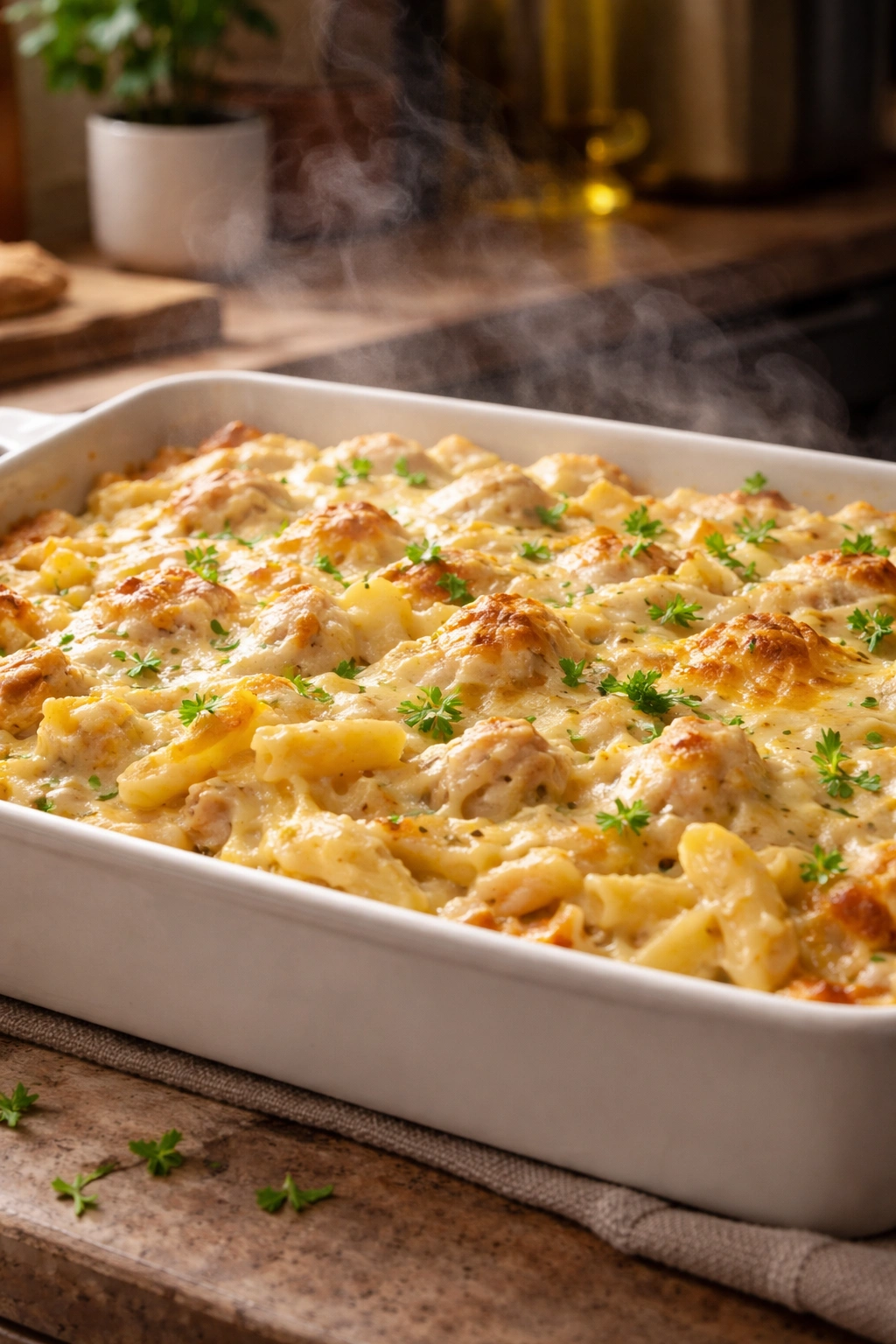
The most common question people ask about this recipe is: “Isn’t the pasta going to be crunchy?” The answer is no, and understanding why helps you feel confident making this dish. Uncooked pasta doesn’t soften just from boiling water—that’s part of the mechanism, sure. But it’s the combination of heat, moisture, and time that matters. When you bury uncooked pasta in a creamy sauce and bake it covered at 425°F for 40 minutes, you’re creating the exact same conditions as boiling, just in a different vessel.
The steam trapped under the foil creates a moist environment. The heat from the oven penetrates the pasta gradually and evenly. The liquid surrounding the noodles gives them exactly what they need to absorb and soften. The main difference is that instead of the pasta water being plain and salted, it’s enriched Alfredo sauce—which means the pasta doesn’t just soften, it flavor-infuses as it cooks. You end up with tender noodles that have absorbed creaminess and cheese throughout, rather than pasta that’s been boiled separately and mixed in after.
This is why the liquid-to-pasta ratio matters in this recipe. You need roughly one jar of Alfredo sauce plus chicken broth—combined, this gives you enough liquid for the pasta to absorb and still have sauce left at the end. About 2.5 to 3 cups total is ideal for a pound of dry pasta. If you’re using a smaller amount of pasta, adjust the liquid down proportionally. The goal is that when you stir the mixture halfway through baking, the pasta should still look wet but shouldn’t be completely submerged in standing liquid—it should look like a creamy mixture, not a soup.
Creating Your Alfredo Foundation
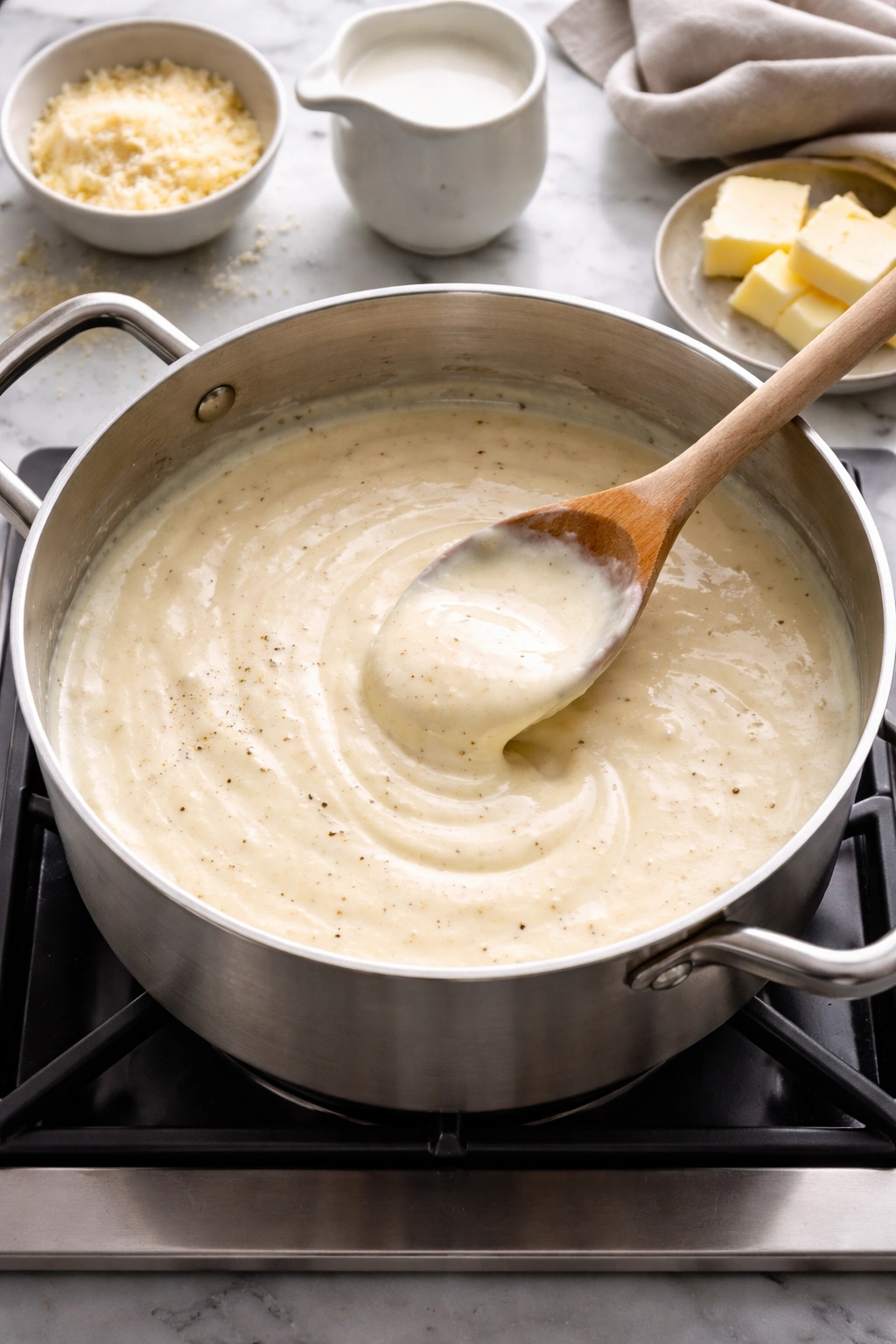
Whether you’re using jarred sauce or making it from scratch, the base is the same: you need the right amount of sauce with the correct consistency, combined with something to help the pasta cook evenly. The traditional addition is chicken broth, which adds flavor and liquid without making the dish greasy. You typically need about 3 cups of chicken broth for every jar of Alfredo sauce and pound of pasta. This might seem like a lot, but remember the pasta will absorb a significant portion of it.
If you’re making Alfredo from scratch, start by melting about 6 tablespoons of butter over medium heat in a heavy pot. Add 4 minced garlic cloves and sauté for just a minute or two until fragrant—don’t let the garlic brown, or it becomes bitter. Then whisk in 2 cups of heavy cream (also called whipping cream), along with salt, white pepper, and Italian seasoning if you like. Let this come up to a gentle simmer and cook for about 2 minutes. Remove from heat and stir in 2 cups of freshly grated Parmesan cheese—not pre-shredded, if you can help it, because the anti-caking agents in pre-shredded cheese can make the sauce grainy. Stir until the cheese melts and everything is smooth. If your sauce seems very thick, thin it with a splash of milk or broth.
The advantage of homemade sauce is that you control every element. You can make it richer with more cream, or lighter with less. You can add roasted garlic instead of raw if you want a sweeter, more mellow flavor. You can season it exactly to your preference. But honestly, once the sauce is combined with cooked chicken, pasta, and cheese in the baking dish, the difference between homemade and quality jarred is far less noticeable than you might think. If you’re short on time, jarred sauce is absolutely the right choice.
Selecting and Preparing Your Chicken
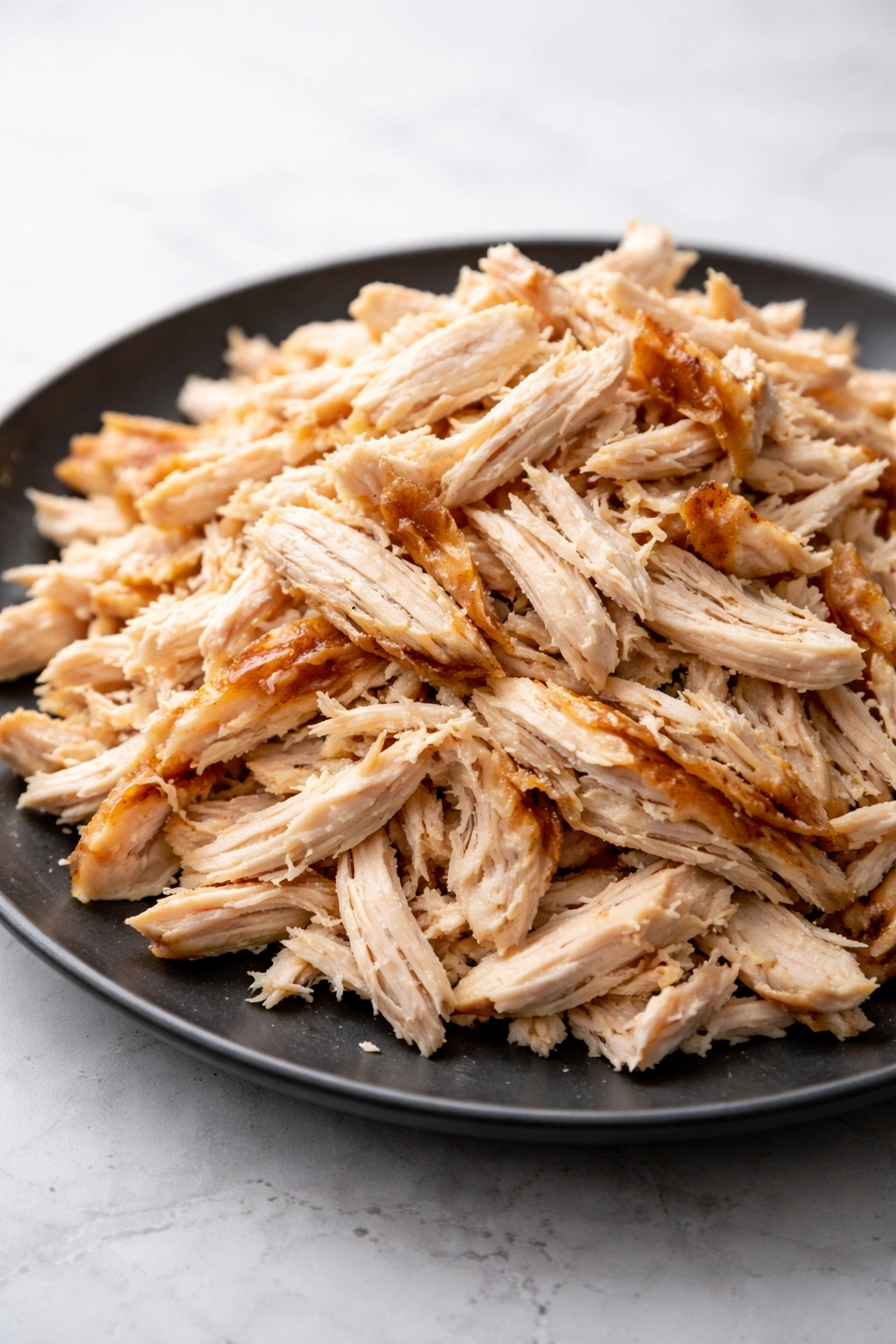
The chicken in this dish can be as simple or as involved as you want it to be. The most convenient option is rotisserie chicken from your grocery store—most supermarkets have them available hot or at room temperature in the prepared foods section. One whole rotisserie chicken yields about 2 to 2.5 cups of shredded meat, which is exactly what most versions of this recipe call for. Simply pull the meat away from the bones with two forks, or use your hands to shred it into bite-sized pieces. Dark meat and white meat both work fine; many people prefer the dark meat because it’s more flavorful and stays moister in the oven.
If you have leftover cooked chicken from another meal—roasted chicken breasts, grilled chicken, even chicken that was poached in broth—use that. Dice or shred it into roughly bite-sized pieces so it distributes evenly throughout the casserole. The size doesn’t need to be perfect; just aim for pieces that are big enough to be substantial but small enough to cook through evenly.
If you’re starting with raw chicken, season it lightly with salt, pepper, and garlic powder, then roast it in a 425°F oven until the internal temperature reaches 165°F, which typically takes 20-25 minutes for boneless, skinless chicken breasts. Let it cool slightly, then shred or dice it. The slight seasoning on the raw chicken adds flavor throughout the dish. Some cooks sear raw chicken in a skillet first to develop a golden crust—this is optional but does add a subtle depth of flavor from the browning.
Here’s what matters most: use chicken that’s fully cooked before it goes into the baking dish. Raw chicken won’t cook through properly in the 40-minute bake time, especially if the casserole is covered for part of that time. The whole dish relies on steam and gentle heat, which isn’t aggressive enough to cook raw chicken safely and evenly. Pre-cooked chicken is not just convenient—it’s essential for food safety.
The Essential Cheese Component
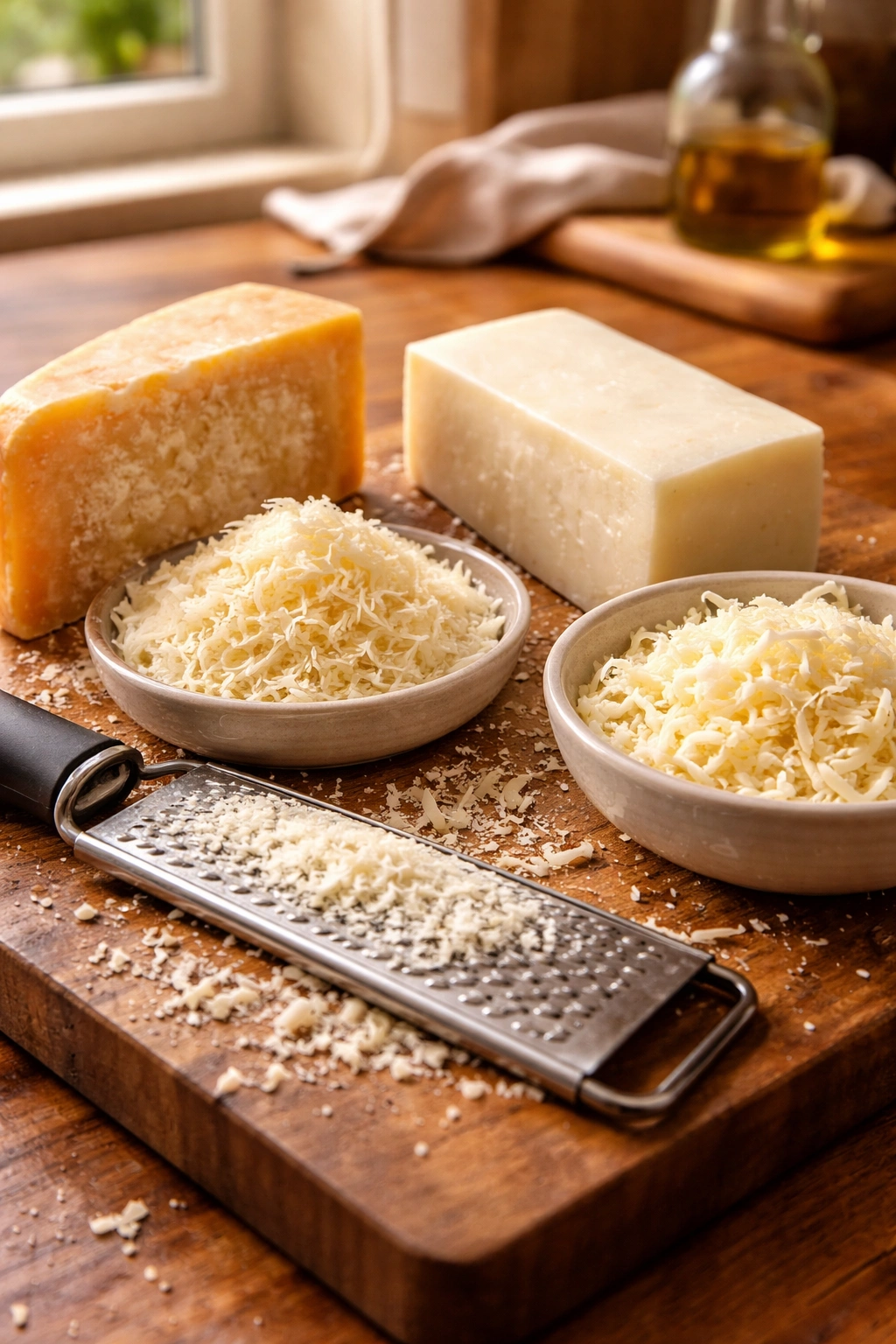
Cheese is what transforms this dish from simple pasta and sauce into something genuinely luxurious. You typically need two types: Parmesan and mozzarella, though Italian cheese blends also work beautifully. Parmesan brings sharp, salty depth and umami richness. Mozzarella brings meltiness and stretch—it’s what gets bubbly and golden on top and creates those satisfying cheese pulls when you dig into the casserole.
For both cheeses, freshly grated is noticeably better than pre-shredded. Pre-shredded cheese contains anti-caking agents and cellulose that prevent it from clumping in the bag, but these additives also prevent it from melting as smoothly and completely. If you grate the cheese yourself from a block, it melts into a creamier, more integrated sauce. A microplane or box grater makes quick work of this—if you have a food processor, you can grate cheese in seconds.
The typical ratio is about 1.5 to 2 cups of mozzarella total—half stirred into the casserole before baking, and half sprinkled on top so it gets golden and bubbly. For Parmesan, about 1 to 1.5 cups total, with about half going into the mixture and half reserved for garnish. Some cooks like to save all the mozzarella for the top layer, which creates a creamier, more integrated sauce and a more dramatic cheese crust on top. Either approach works beautifully.
Yield: Serves 6 to 8 people | Makes one 9×13-inch casserole
Prep Time: 15 minutes
Cook Time: 55 minutes (40 minutes covered, 15 minutes uncovered)
Total Time: 70 minutes
Difficulty: Beginner — This recipe requires minimal prep, comes together in one dish, and is very forgiving even if the pasta isn’t perfectly al dente at first check.
Ingredients for Chicken Alfredo Bake
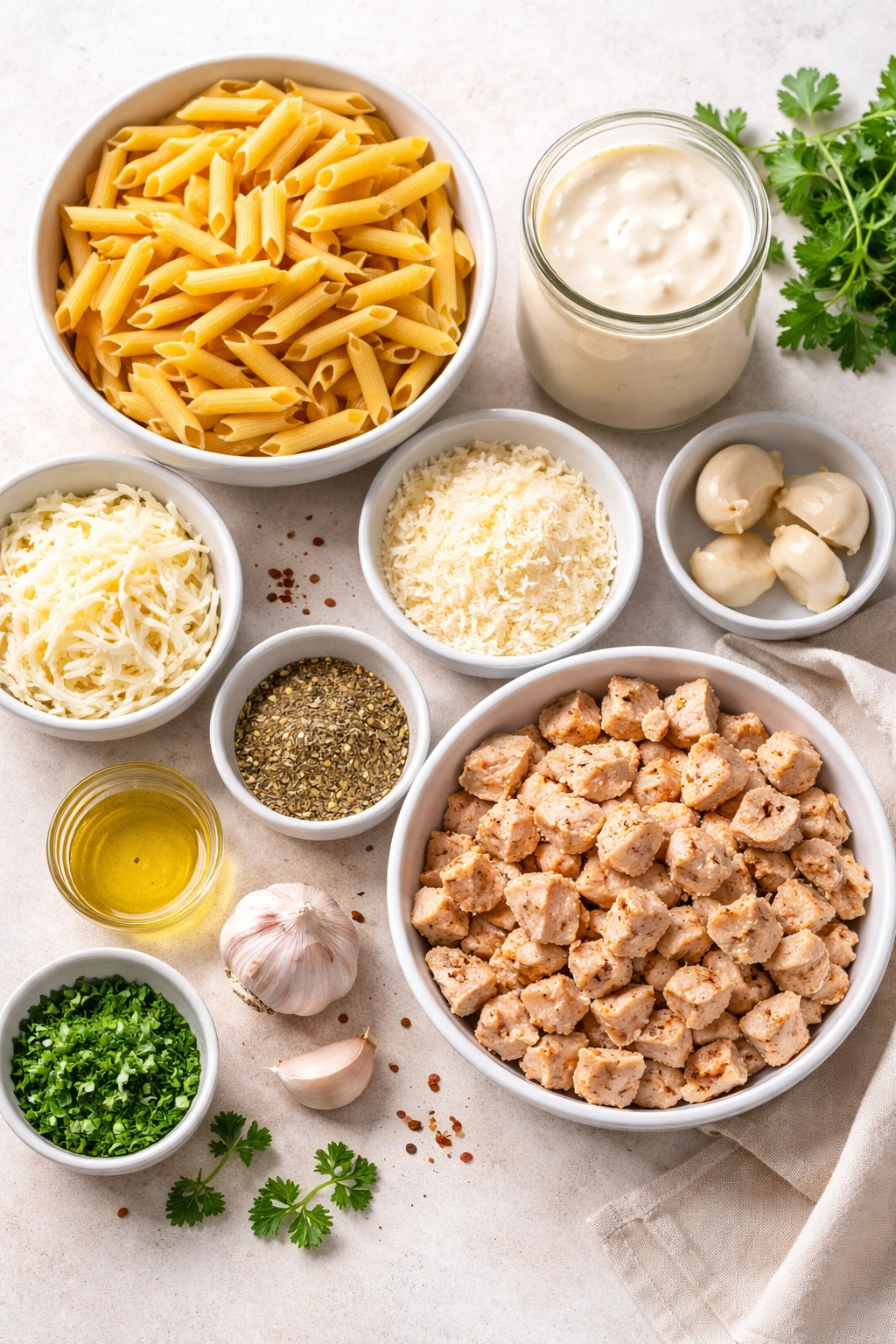
For the Casserole:
- 1 (16-ounce) package penne pasta, uncooked
- 1 (22-ounce) jar Alfredo sauce (approximately 2.5 cups), or homemade Alfredo made with 6 tablespoons butter, 4 cloves minced garlic, 2 cups heavy cream, 2 cups grated Parmesan cheese, ½ teaspoon salt, ¼ teaspoon white pepper, and ½ teaspoon Italian seasoning
- 3 cups chicken broth
- 2 to 2.5 cups shredded cooked chicken (rotisserie, leftover, or freshly cooked)
- 2 teaspoons minced fresh garlic (about 3 large cloves, or 1 teaspoon garlic powder if preferred)
- 2 cups shredded mozzarella cheese, divided (1 cup to mix in, 1 cup to sprinkle on top)
- 1 cup grated Parmesan cheese, divided (½ cup to mix in, ½ cup to sprinkle on top)
- ½ teaspoon Italian seasoning (optional but recommended)
- ¼ teaspoon salt, plus more to taste
- ⅛ teaspoon black pepper, plus more to taste
For Garnish (Optional but Recommended):
- 2 tablespoons chopped fresh parsley
- 2 tablespoons grated Parmesan cheese
- Pinch of red pepper flakes (if you like a touch of heat)
Step-by-Step Instructions for One-Dish Chicken Alfredo Bake
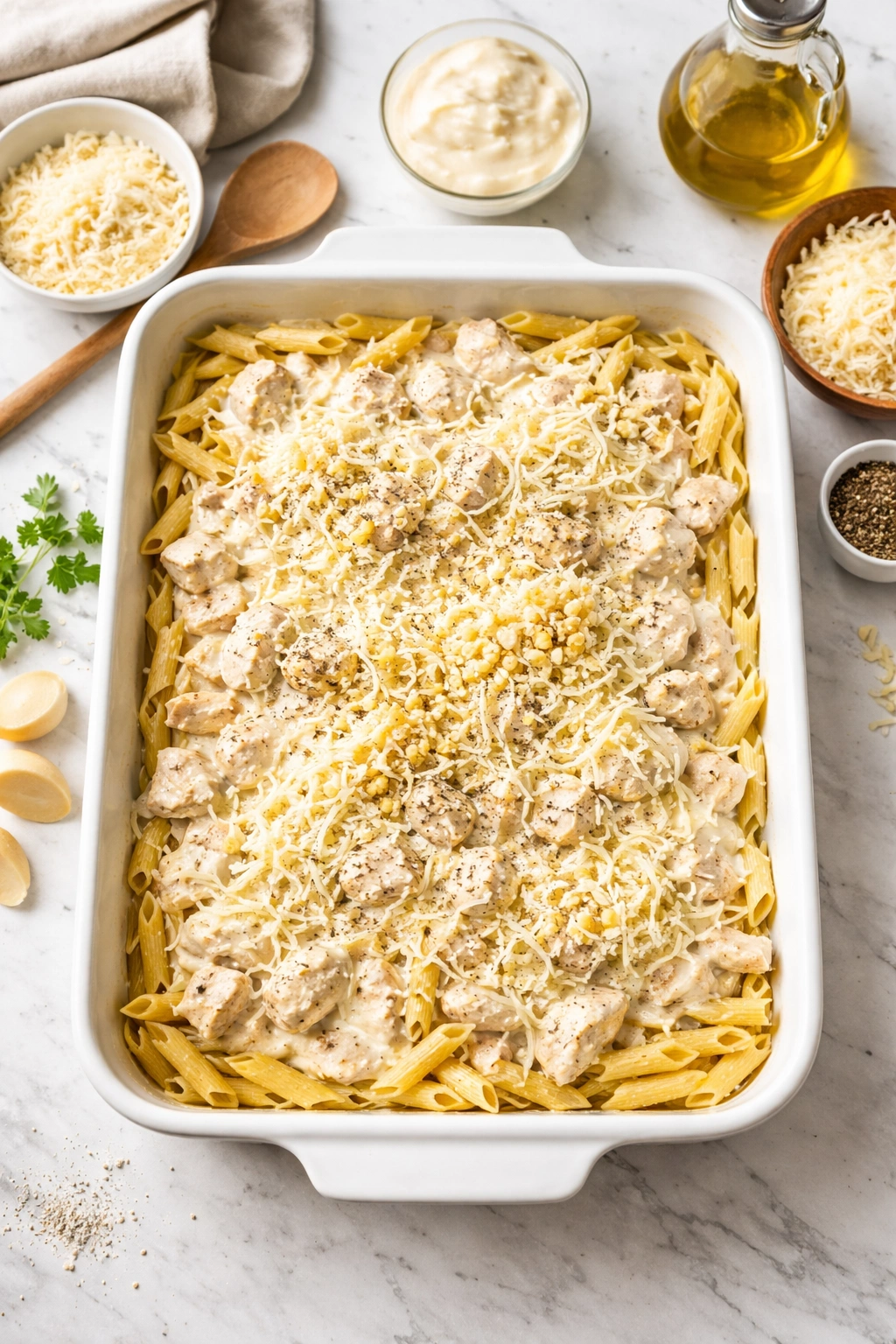
Prepare Your Pan and Preheat:
-
Preheat the oven to 425°F (220°C) and position a rack in the center of the oven.
-
Lightly grease a 9×13-inch baking dish (ceramic, glass, or stoneware holds heat most evenly, but metal works too—just start checking a few minutes earlier for doneness) with butter or cooking spray.
Combine All Ingredients:
-
Pour the uncooked pasta directly into the prepared baking dish. If using jarred Alfredo sauce, add it now. If making homemade sauce, prepare it first according to the instructions above, then add it to the dish.
-
Add the chicken broth and minced fresh garlic, along with the Italian seasoning, salt, and pepper. Stir everything together thoroughly, breaking up any clumps of pasta and ensuring the uncooked noodles are distributed evenly throughout the mixture.
-
Add the 2 cups shredded cooked chicken and stir again. Add 1 cup of the mozzarella and ½ cup of the Parmesan cheese, stirring until everything is well combined. The key here is making sure the pasta noodles are mostly covered by the liquid—use the back of a spoon to press any stubborn dry noodles down into the sauce so they don’t stay crunchy.
-
Spread the mixture into an even layer in the casserole dish, ensuring nothing is piled too high or left dry-looking on the surface.
Advertisements
First Bake — Covered:
-
Cover the baking dish tightly with aluminum foil, pressing the edges firmly so steam can’t escape. The foil is essential—it traps steam and creates the right environment for the pasta to cook evenly.
-
Place the dish in the preheated oven and bake for 40 minutes. During this time, don’t peek constantly, but you can check once or twice to make sure everything is cooking as expected. After 40 minutes, the pasta should be mostly tender but still have a slight firmness (still slightly al dente). There will still be visible liquid in the pan—this is exactly what you want.
Midpoint Stir and Check:
- Carefully remove the foil (watch out for the hot steam!) and give everything a good stir with a large spoon, drawing from the bottom and edges where the pasta tends to be sturdier. At this point, taste a noodle. It should be firm but have a tender bite, not crunchy and definitely not mushy. If the pasta is still very firm and feels raw inside, cover the dish again and bake for another 5 to 10 minutes, checking again. Every oven and every pasta brand cooks slightly differently, so this variance is normal.
Second Bake — Uncovered with Cheese:
-
Once the pasta reaches that almost-done, al dente stage, remove the foil and sprinkle the remaining 1 cup of mozzarella evenly over the top. You can also sprinkle the remaining ½ cup of Parmesan, or save it for garnish after baking—both work beautifully.
-
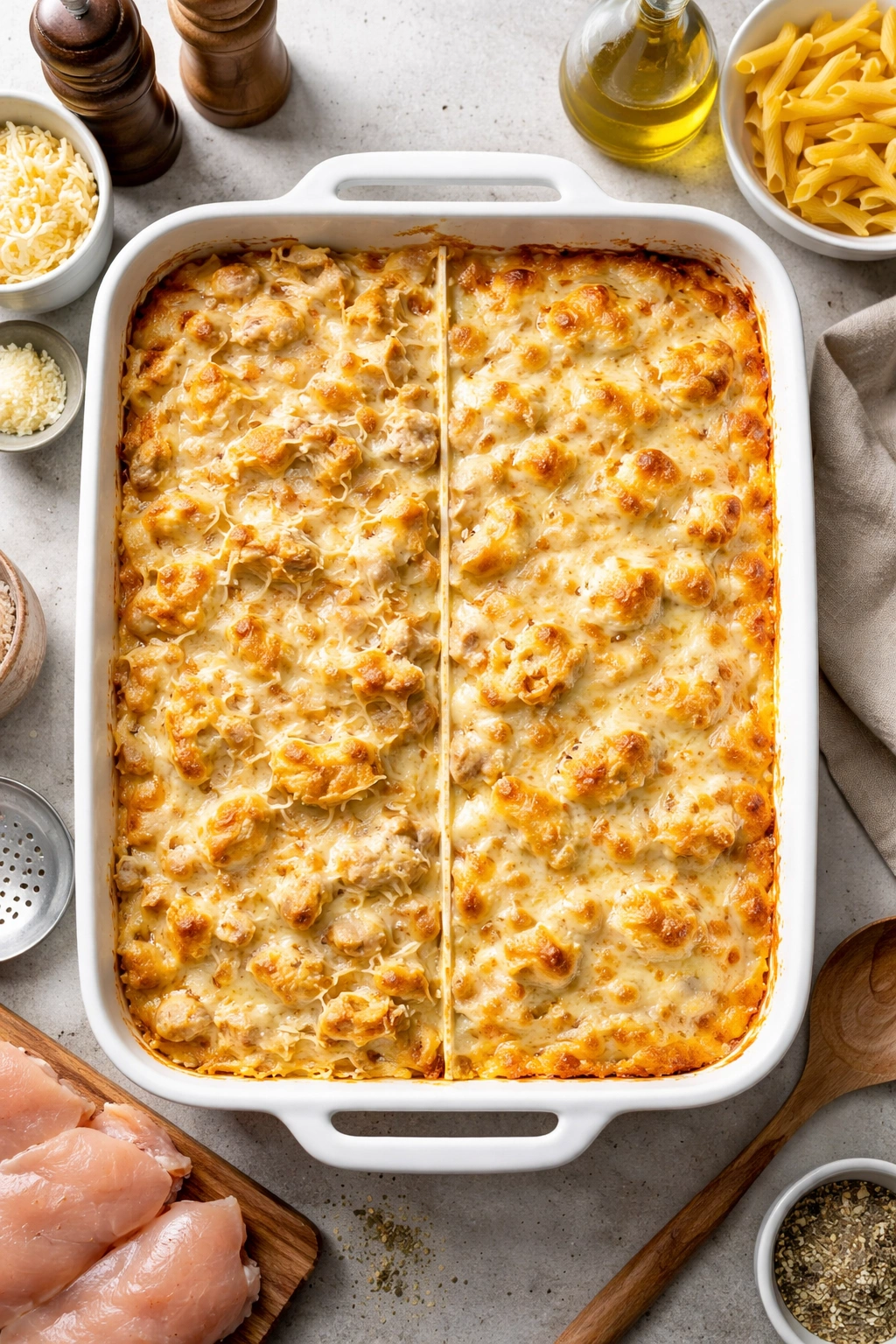
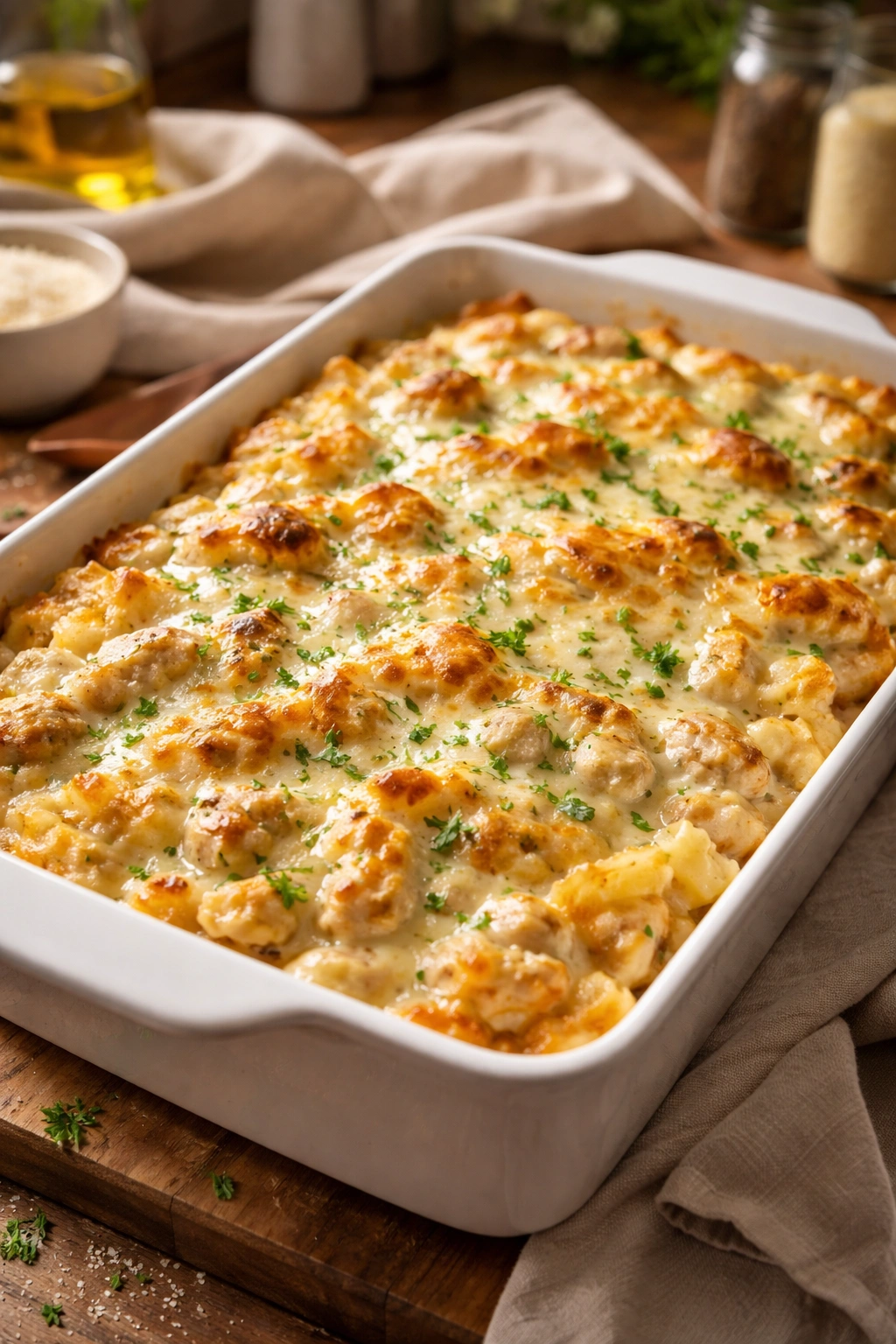
Return the uncovered dish to the oven and bake for another 15 minutes, or until the cheese on top is melted and beginning to turn golden brown, and the pasta is perfectly tender (but not mushy). You’ll know it’s done when you can easily pierce a noodle with a fork and it breaks without resistance.
Rest and Serve:
-
Remove from the oven and let the casserole rest at room temperature for 5 to 10 minutes. This resting time allows the sauce to thicken slightly and makes serving easier—the casserole will hold together better. Do not skip this step. Hot sauce is too thin to serve cleanly, and the rest allows everything to set.
-
Garnish with fresh parsley, additional grated Parmesan cheese, and a pinch of red pepper flakes if desired. Serve directly from the casserole dish, or use a large spoon to portion it into bowls or onto plates.
Advertisements
Why You Can Skip the Boiling Step
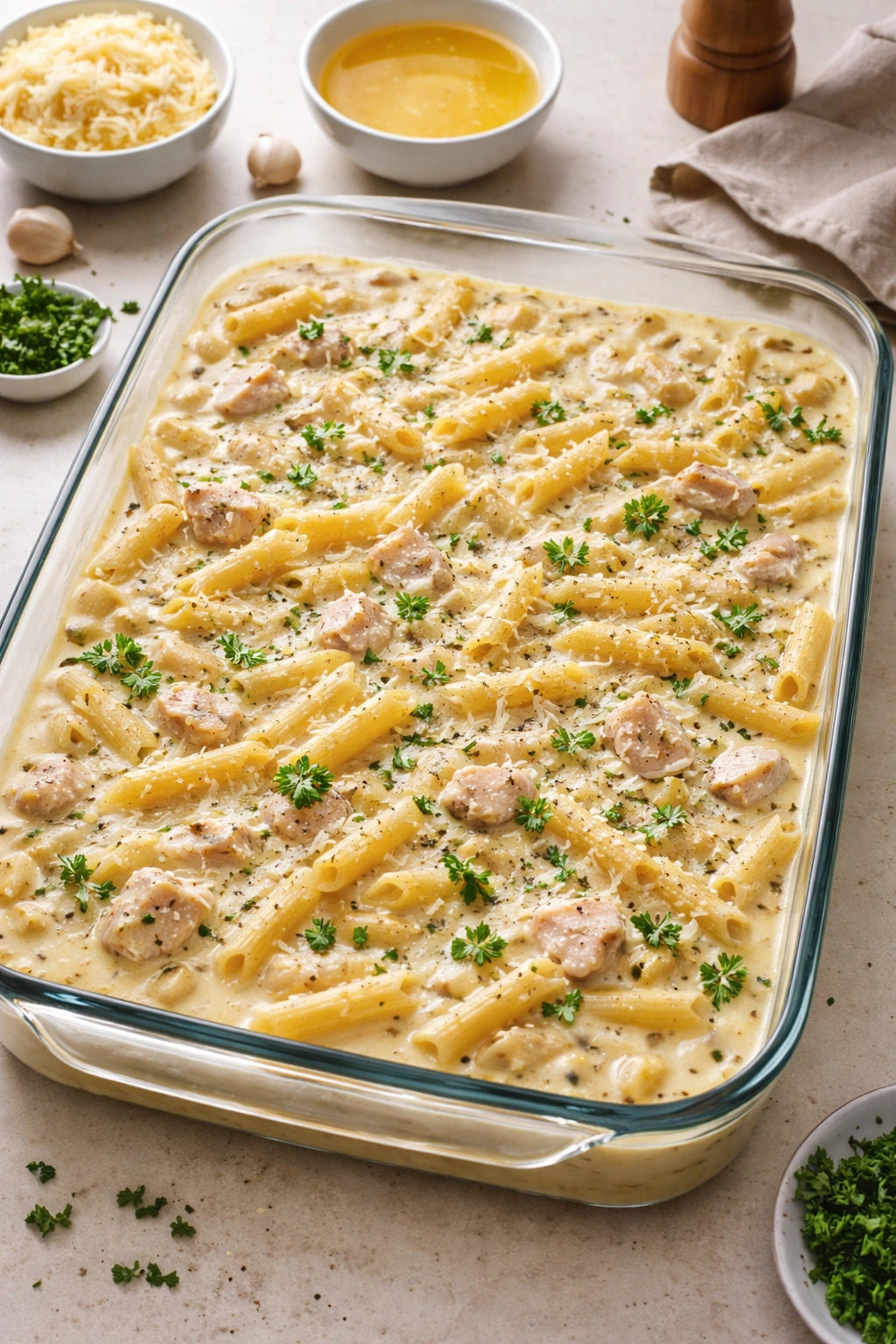
The confidence to skip the boiling step comes from understanding that pasta doesn’t need violently boiling water to soften. It needs three things: heat, moisture, and time. The oven provides heat. The Alfredo sauce and chicken broth provide moisture. The 40 minutes of covered baking provides time. Everything uncooked pasta needs to transform into tender noodles happens inside that baking dish.
Boiling pasta in a large pot of water works the same way—heat, moisture, and time, delivered in a different format. The real difference in this recipe is that the pasta absorbs flavor-rich sauce instead of plain salted water, and you eliminate the draining step where pasta water splashes everywhere. You also avoid the problem of pasta cooling down when you drain it in a colander. In this method, the pasta stays warm and surrounded by the sauce that will ultimately coat it.
The one caveat is that you need enough liquid for the pasta to absorb. If you use too little sauce and broth, the pasta will cook unevenly—the edges will soften while the center remains firm. This is why the recipe specifies roughly one jar of Alfredo plus three cups of broth. You might see recipes that use less liquid; those often assume you’re using a jumbo jar of sauce or more sauce overall. The key is aiming for the pasta to look wet and coated, not floating in a pool but not dry either.
Common Mistakes and How to Avoid Them
Using pre-shredded cheese expecting smooth results. Pre-shredded cheese contains anti-caking agents that cause it to clump slightly when melted, creating a less-smooth sauce. Freshly grated cheese melts so much better. It takes two minutes with a box grater or microplane, and the improvement is noticeable.
Not covering the dish tightly with foil. The steam created under the foil is what cooks the pasta gently and evenly. If the foil isn’t tight, steam escapes, the pasta dries out, and you end up with crunchy spots. Press the foil edges firmly against the sides of the dish, or use the lid if your baking dish has one.
Overcooking the pasta before it goes in. This is relevant if you’re using fresh pasta or if you’ve made the mistake of pre-boiling some of the pasta. Uncooked is absolutely right. The pasta will cook through in the oven. If you accidentally pre-boil it, cook it only about half as long as you normally would.
Using raw chicken and expecting it to cook through safely. The oven temperature and baking time aren’t high enough or long enough to cook raw chicken safely in the center of a casserole. Always use pre-cooked chicken.
Not stirring at the 40-minute mark. The pasta at the bottom of the dish cooks a bit faster than the pasta at the top. Stirring redistributes everything and prevents some pieces from being mushy while others are still firm. This one simple step makes a massive difference.
Skipping the resting period. The five-minute rest after baking allows the sauce to set slightly, making the casserole much easier to serve and eat. Hot, runny sauce is harder to portion cleanly, and the flavors continue to develop during the rest. It’s worth it.
Simple Tips for Perfect Results Every Time
Make the dish more creamy by stirring in a splash of milk or cream before adding the cheese topping. This is optional but beloved by people who prefer an almost-pourable sauce. Stir it in after the 40-minute bake, just before adding the cheese.
Season to taste at the end, not at the beginning. Alfredo sauce is already salty, the Parmesan is salty, and the chicken broth is usually salted. Once everything bakes, taste it before serving. You might need a tiny pinch of salt, or you might not need any. Black pepper is always a welcome finish.
Use a stoneware or ceramic baking dish if you have one. These materials hold and distribute heat very evenly, resulting in creamy, perfect texture throughout. Metal pans conduct heat faster and sometimes result in slightly crisper edges, which some people prefer. Glass also works beautifully. Just adjust your cooking time slightly if using metal—start checking a few minutes earlier.
Don’t stress about the exact timing. If your oven runs hot, the casserole might be done in 35-40 minutes instead of 40. If it runs cool, it might need a couple extra minutes. The visual cues matter more than the clock: pasta should be tender when pierced with a fork, and there should still be a bit of visible sauce. You can’t overbake it dramatically because the cream sauce won’t break or separate like it might on the stovetop.
Add vegetables if you want more nutrition and color. Broccoli florets, peas, sautéed spinach, or mushrooms all work beautifully. Add them to the casserole before baking, and they’ll soften as everything else cooks. If using fresh broccoli, steam it for just 2-3 minutes first so it’s slightly tender before going into the oven.
Make it the day before if your schedule is chaotic. Assemble the entire casserole except the cheese topping, cover it with foil, and refrigerate overnight. The next day, let it come to room temperature for 30 minutes, then bake as directed (you might need to add 5-10 minutes to the baking time since it’s starting cold). This is a huge convenience factor for families with unpredictable schedules.
Easy Variations to Make It Your Own
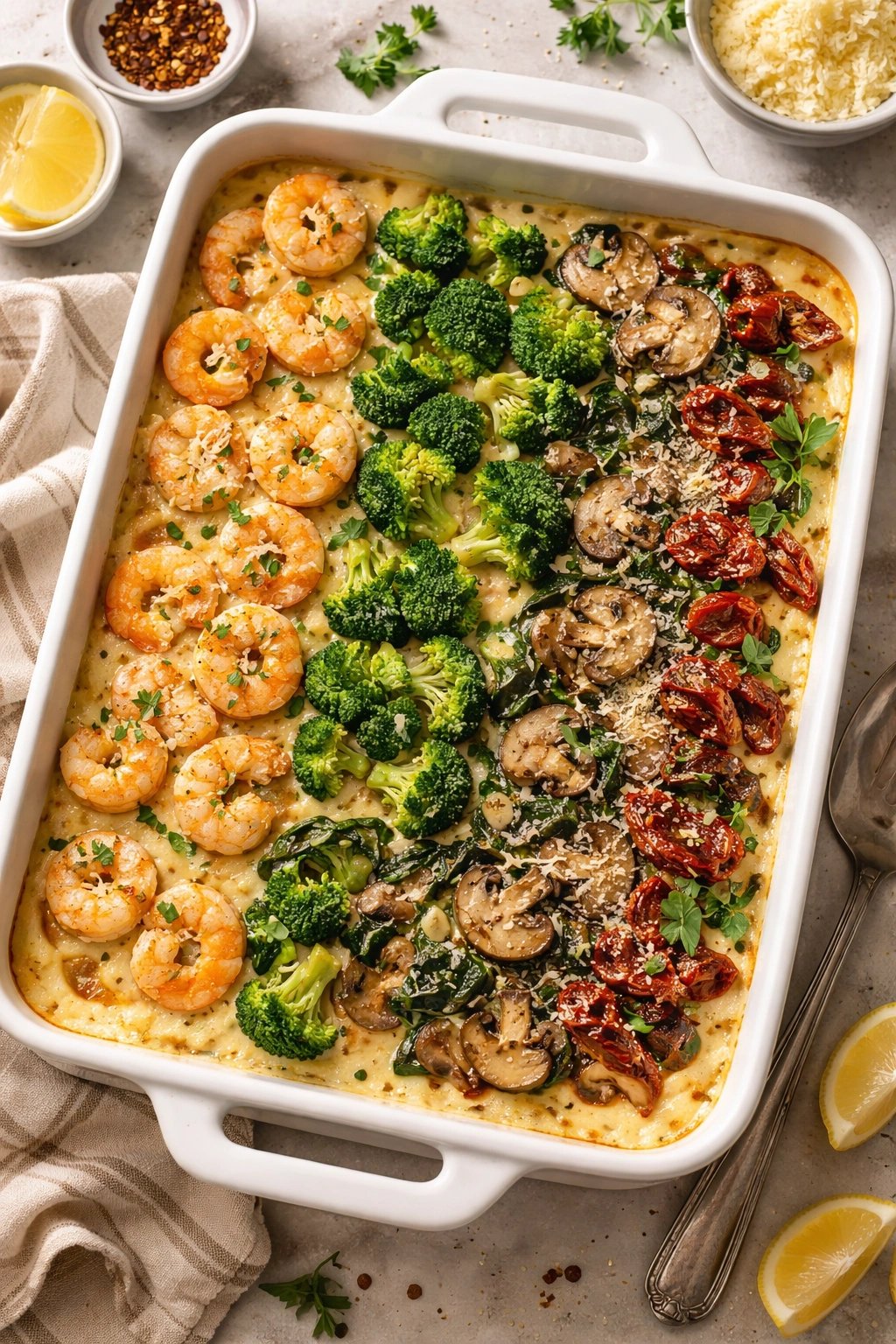
Shrimp Alfredo Bake: Substitute 1.5 to 2 pounds of large shrimp (thawed if frozen, patted dry) for the chicken. Season the shrimp with a pinch of salt and paprika before adding to the dish. Shrimp cooks very quickly, so this version might be done a few minutes earlier than the chicken version—start checking around 35 minutes.
Garlic-Forward Alfredo: If you’re a serious garlic lover, mince 6 to 8 cloves of fresh garlic instead of 2 teaspoons. You can also roast the garlic first (toss it with olive oil, wrap in foil, bake at 400°F for 20 minutes) for a sweeter, mellower garlic flavor. Some cooks add ½ teaspoon of garlic powder to the sauce as well.
Broccoli and Chicken Alfredo Bake: Add 3 to 4 cups of fresh broccoli florets. Steam them for just 2-3 minutes before adding to the casserole, or add them raw and plan for the bake time to be closer to 45-50 minutes total. The broccoli softens as everything else cooks.
Spinach and Mushroom Alfredo: Sauté 8 ounces of sliced mushrooms in a bit of butter until they’re tender and slightly golden, then add a big handful of fresh spinach and wilt it. Stir this mixture into the casserole before baking.
Sun-Dried Tomato and Basil Alfredo: Stir in ½ cup of chopped sun-dried tomatoes and 2 tablespoons of fresh chopped basil (or 1 teaspoon dried basil) before baking. This adds color, tang, and herbaceous brightness to the rich sauce.
Pesto Chicken Alfredo: Stir 3 to 4 tablespoons of quality pesto (store-bought or homemade) into the sauce before combining everything. The basil flavor plays beautifully against the creaminess.
Bacon and Cheddar Alfredo: Mix in 8 ounces of cooked, crumbled bacon and add ½ cup of shredded sharp Cheddar cheese alongside the mozzarella for a smokier, more complex flavor.
Lighter Alfredo: Use half-and-half instead of heavy cream (if making homemade sauce) and reduce the cheese by about a quarter. You’ll still have a creamy, delicious dish, just slightly lighter. Jarred light Alfredo sauces also work.
Gluten-Free Version: Use gluten-free pasta (check the package to ensure it cooks in roughly the same time as regular pasta) and verify that your Alfredo sauce is gluten-free. Many jarred sauces are naturally gluten-free, but always check the label.
Storage and Reheating for Maximum Flavor
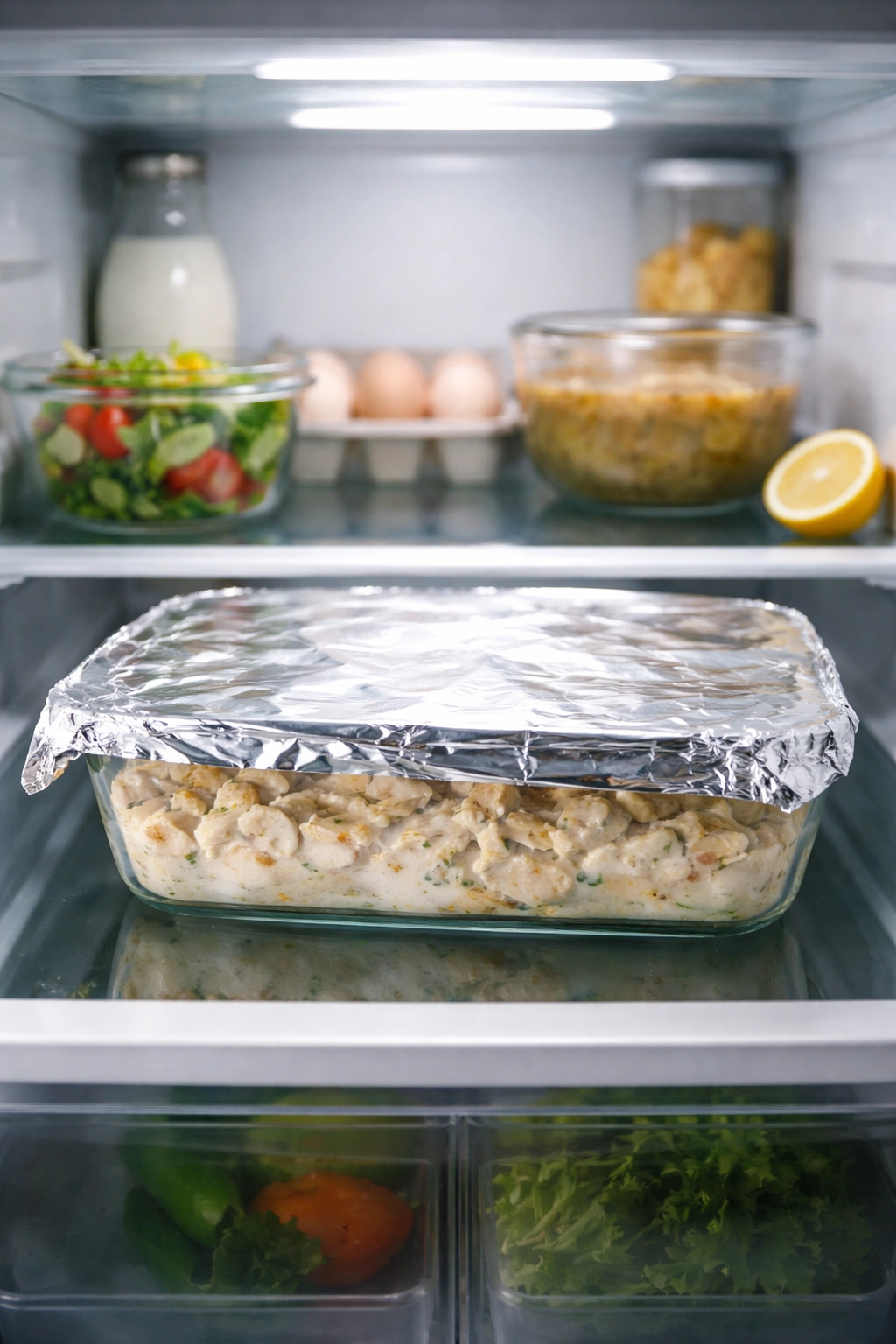
Leftovers of this casserole keep beautifully in the refrigerator for 3 to 4 days. Let the dish cool completely, then cover it tightly with foil or plastic wrap, or transfer individual portions to airtight containers. The creamy sauce will firm up slightly as it cools and sits, which is perfect for reheating.
To reheat, you have several options. The gentlest method is to reheat low and slow in a 350°F oven, covered with foil, for about 15-20 minutes until warmed through. If the pasta looks dry when you stir it, add a splash of milk or chicken broth—start with a couple tablespoons, stir it in, and add more if needed. The casserole reheats better if you stir it gently once or twice during warming.
You can also reheat individual portions in the microwave in short bursts—30 seconds at a time, stirring between each burst. This prevents overheating and keeps the sauce from separating. Again, a splash of milk helps if things look dry.
Important note: Don’t freeze this casserole. The pasta tends to become mushy when frozen and thawed, and the sauce can separate or become grainy. Make and eat it fresh, or refrigerate for later in the week.
If you have intentions of freezing portions ahead, you can assemble the entire casserole without the cheese topping, wrap it tightly, and freeze before baking. Then thaw overnight in the refrigerator and bake as directed, adding a couple minutes if needed. This works because the pasta hasn’t absorbed moisture yet. Once the casserole is baked, the pasta has absorbed the liquid, and freezing causes issues with texture.
Serving Suggestions and Perfect Pairings
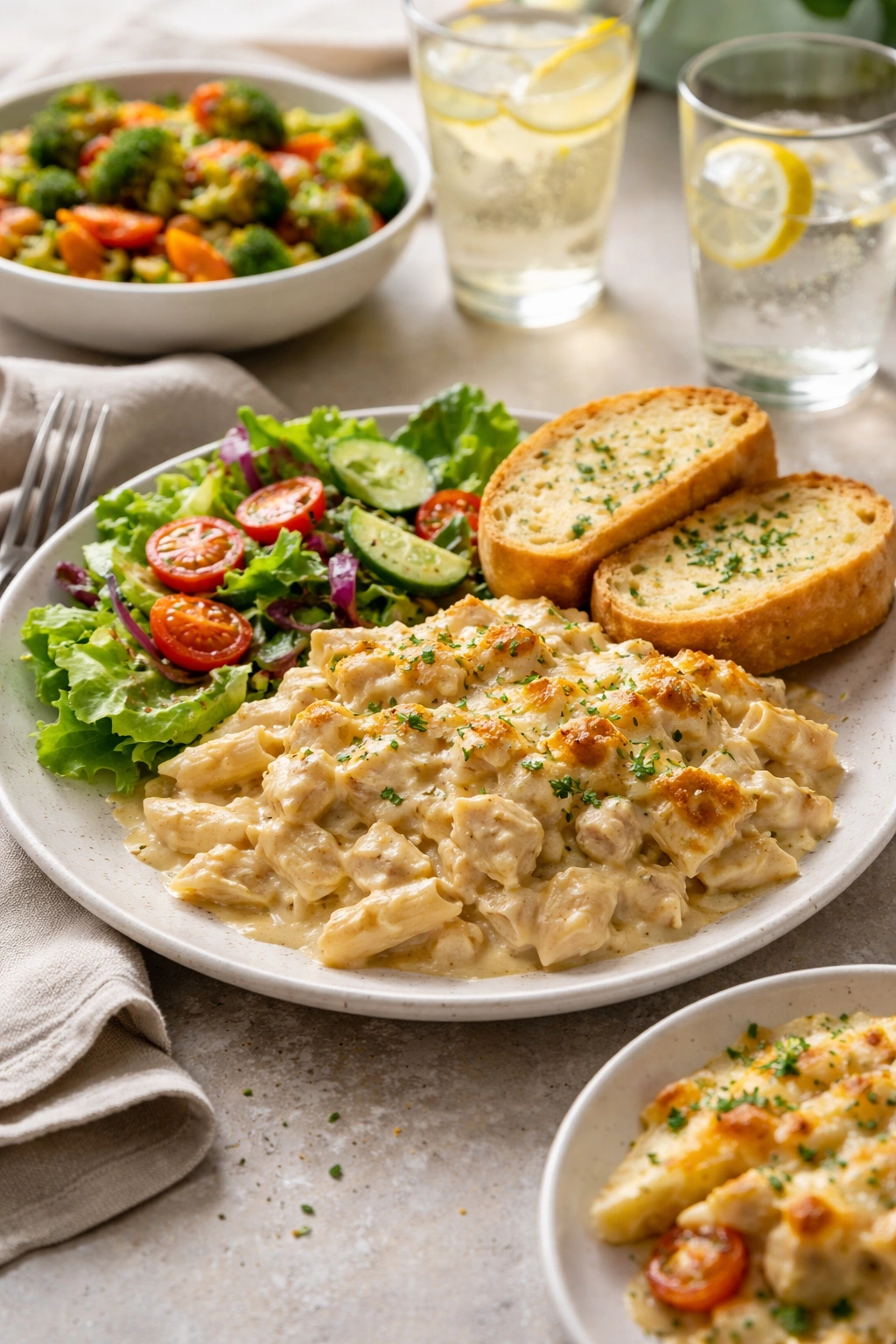
A casserole like this is already a complete meal on its own—it has pasta, protein, and cream-based sauce. But the right accompaniments make it feel more elegant and add balance to the richness.
A crisp green salad is the most obvious pairing. Toss fresh greens with a bright, tangy vinaigrette—balsamic, red wine vinegar, or lemon juice all cut through the creaminess beautifully. Add some thinly sliced cucumber, cherry tomatoes, and a few toasted nuts or croutons for texture. This light, fresh side prevents the meal from feeling too heavy.
Warm, crusty bread is nearly essential. Garlic bread is the obvious choice—brush sliced baguette with butter mixed with minced garlic and herbs, then toast it until it’s crispy outside and soft inside. Without garlic bread, many people feel the meal is incomplete. Plain crusty bread, focaccia, or dinner rolls also work if you want something less heavy.
A simple roasted vegetable like asparagus, green beans, or zucchini adds color and a different texture. Toss the vegetables with a bit of olive oil, salt, and pepper, then roast at 425°F while the casserole is in the oven. They’ll finish around the same time.
For beverages, white wine pairs naturally with Alfredo—a Pinot Grigio or Sauvignon Blanc complements the creaminess without overwhelming it. Unsweetened iced tea works if you prefer non-alcoholic. Even simple water is perfect because the casserole is rich enough that you want something refreshing to cleanse the palate.
For dessert, something light and citrusy balances the richness of the main course. Lemon panna cotta, sorbet, or even a simple fruit salad prevents the meal from feeling too indulgent. If you want something more substantial, a chocolate dessert works too—the slight bitterness of dark chocolate plays well with the sweet creaminess of the sauce.
Scaling Up for Crowds or Down for Two
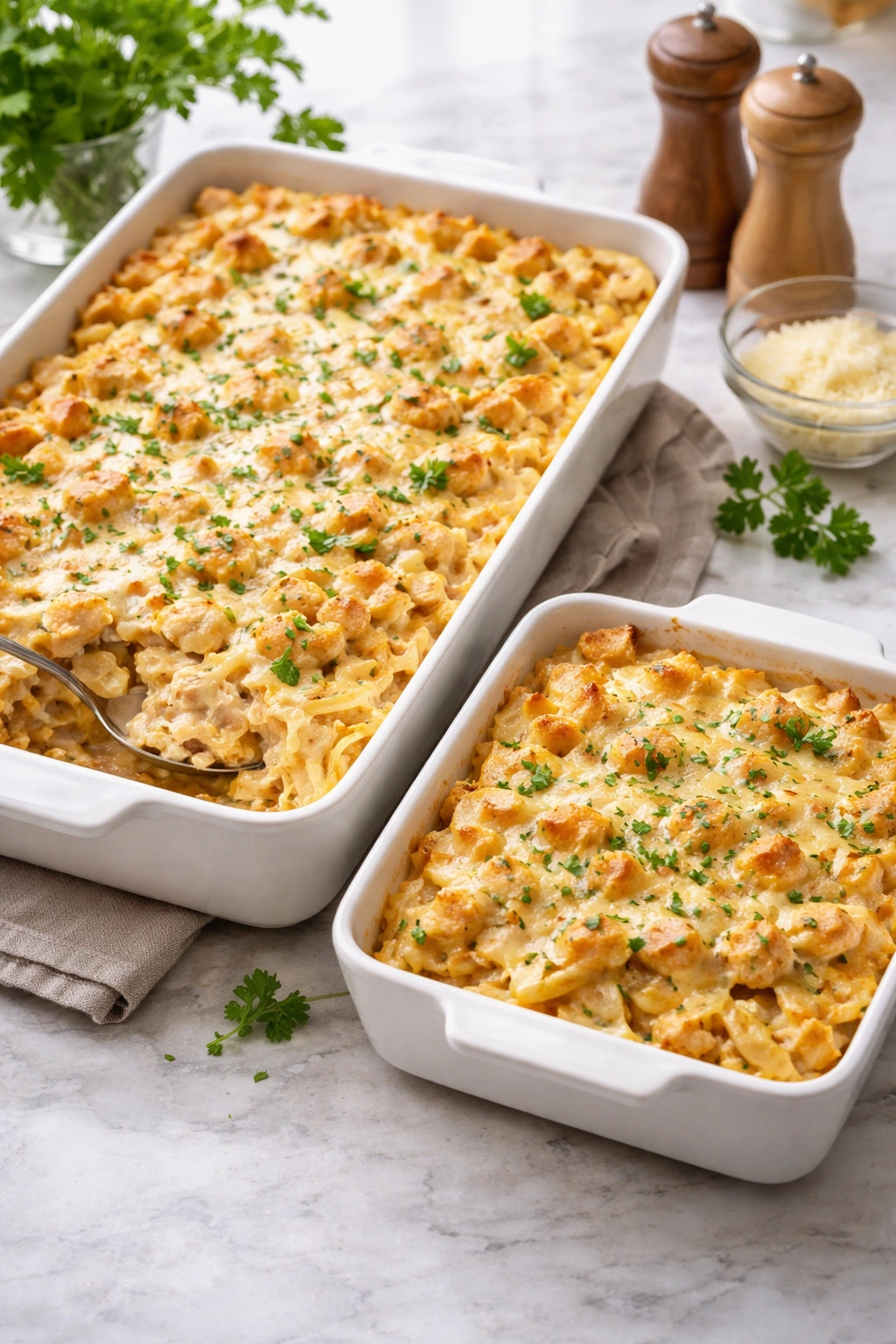
This recipe as written makes enough for 6 to 8 people as a main course, with perhaps some leftovers. If you’re feeding a crowd, the math is straightforward: double everything, bake in two 9×13-inch dishes side by side, and increase the baking time by 10 minutes or so (because you have more mass to heat through). Everything else stays the same.
If you’re cooking for two people, cut everything in half: 8 ounces of pasta, one 15-ounce jar of Alfredo or 1.25 cups homemade, 1.5 cups chicken broth, 1 to 1.5 cups cooked chicken, 1 cup mozzarella (split between mixed-in and topping), ½ cup Parmesan (split the same way), and everything else proportionally. Bake this in an 8×8-inch square pan or a smaller rectangular dish. The baking time might be slightly shorter—start checking around 35 minutes because there’s less volume to heat. The flavors and results are identical, just a more manageable portion.
You can also make this in a slow cooker if that fits your routine better. Layer the raw pasta, sauce, broth, chicken, and half the cheese in the slow cooker. Cook on low for about 4-5 hours (the pasta takes longer in the slow cooker’s gentler heat). About 30 minutes before serving, stir well, add the remaining cheese, and cook uncovered on high so the top gets a bit golden. The result is creamier and slightly softer than the oven version, but equally delicious if you prefer slow-cooker cooking.
Final Thoughts
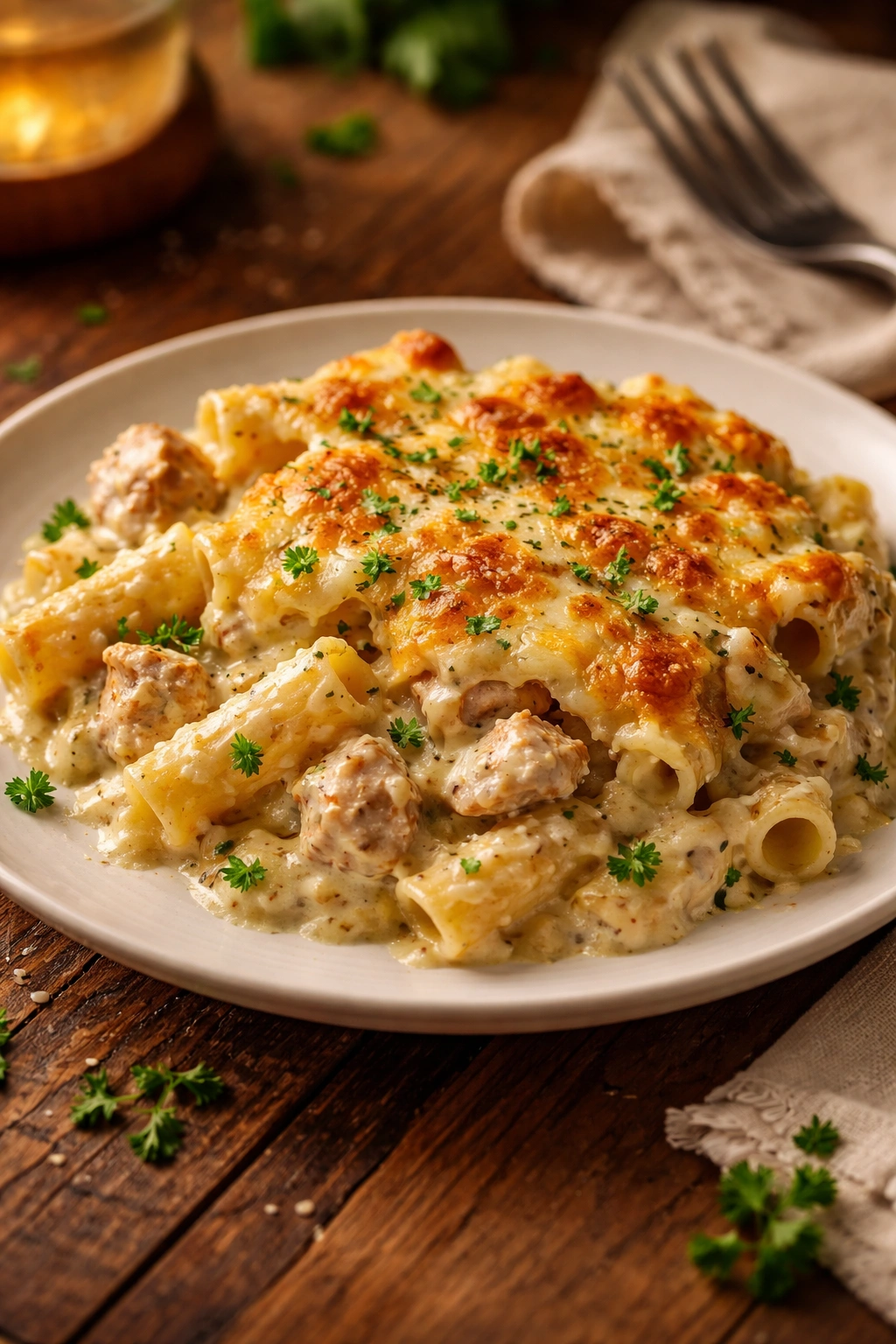
There’s a reason this one-dish approach to chicken Alfredo has become so beloved—it delivers exactly what people want from comfort food: richness, ease, and something that tastes like real cooking without demanding that you actually spend hours cooking. The pasta emerges from the oven tender and creamy, the sauce coats every bite, the chicken stays juicy, and the cheese on top gets golden and melty. The only mess is one baking dish, a spoon, and maybe the bowl you mixed ingredients in. That’s genuinely rare in cooking.
The genius of this recipe is that it’s flexible enough to accommodate whatever you have on hand (chicken, shrimp, vegetables, different cheeses) while still producing excellent results every single time. You can make it as simple or elaborate as your day allows. You can prepare it the night before if tomorrow looks chaotic. You can feed two people or feed eight. You can make it creamy or slightly less rich depending on your mood. It’s the kind of recipe that becomes a staple not because it’s trendy, but because it simply works.
Once you’ve made it once, you’ll likely make it again within a month. Something about this dish just fits into real life—busy weeknights, feeding people you love, wanting something that tastes indulgent without requiring a lot of effort. Keep quality jarred Alfredo sauce in your pantry (or make the sauce ahead and freeze it), keep rotisserie chicken available from the grocery store, and you have one of the easiest, most satisfying dinners in your arsenal ready to go whenever you need it.
