



Apple pancakes strike that perfect balance between comfort and indulgence—fluffy, tender pancakes topped with spiced, caramelized apples that taste like breakfast but feel like dessert. There’s something about the combination of warm apples and soft pancakes that transforms an ordinary morning into something worth savoring. If you’ve been making the same basic pancakes for years, this version will remind you why this breakfast is worth getting out of bed for. The good news? They’re completely foolproof to make, even if you’ve never cooked with apples before.
The Story Behind Apple Pancakes
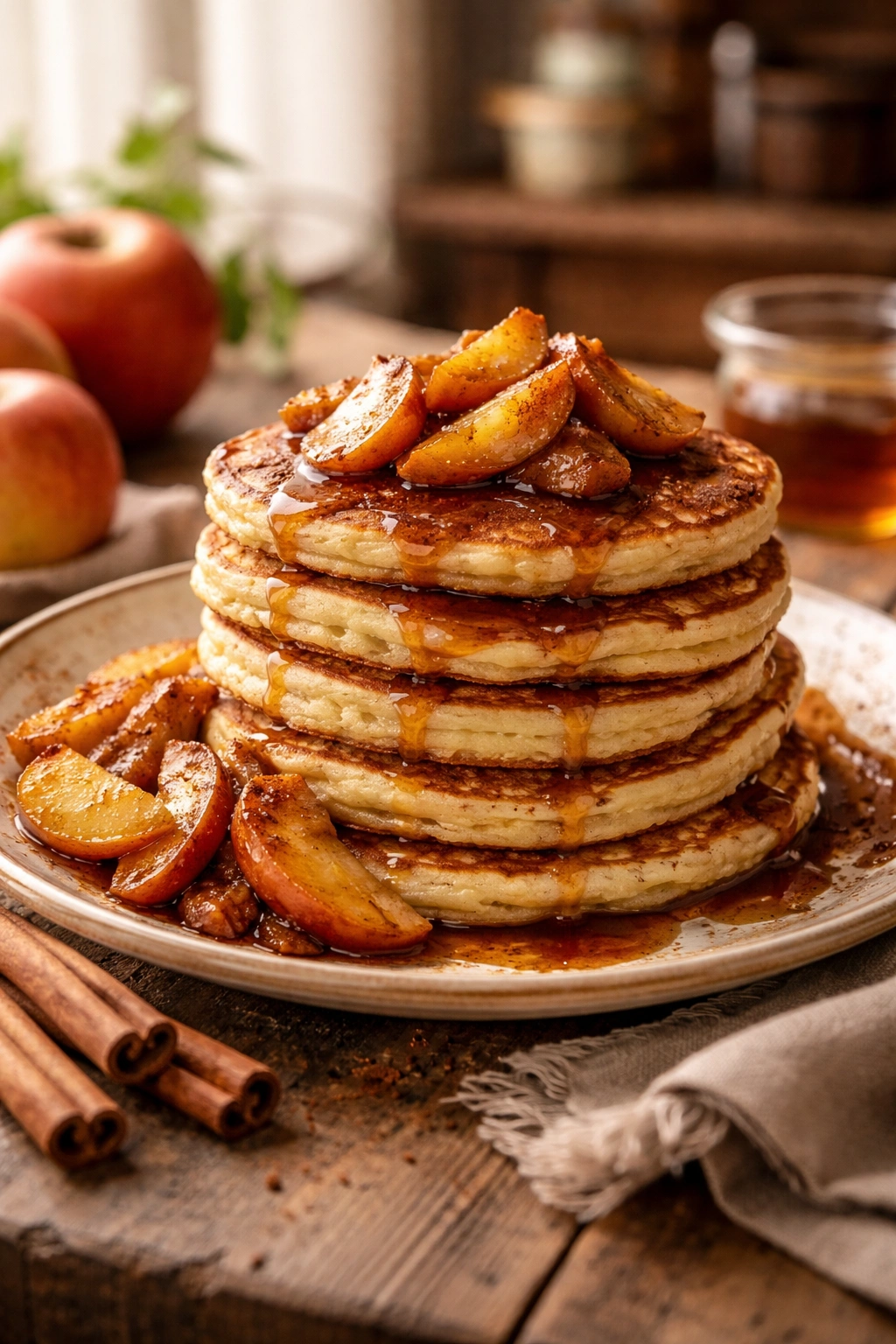
Apple pancakes aren’t a modern invention—they’re rooted in the long tradition of pairing fresh fruit with breakfast grains across cultures. In Scandinavia and parts of Eastern Europe, fruit-topped pancakes and crepes have been comfort food for generations. The American version evolved as home cooks discovered that the natural sweetness and softness of cooked apples created the perfect topping for fluffy pancakes, especially during fall and winter when apples are at their seasonal best.
What makes this combination so compelling isn’t just nostalgia. It’s the way the tartness of apples balances the mild sweetness of the pancakes, and how the warmth brings out the apples’ natural caramel notes. Add a pinch of cinnamon and nutmeg, and you’ve created something that tastes far more sophisticated than the sum of its parts.
Why Apples Work So Well in Pancakes
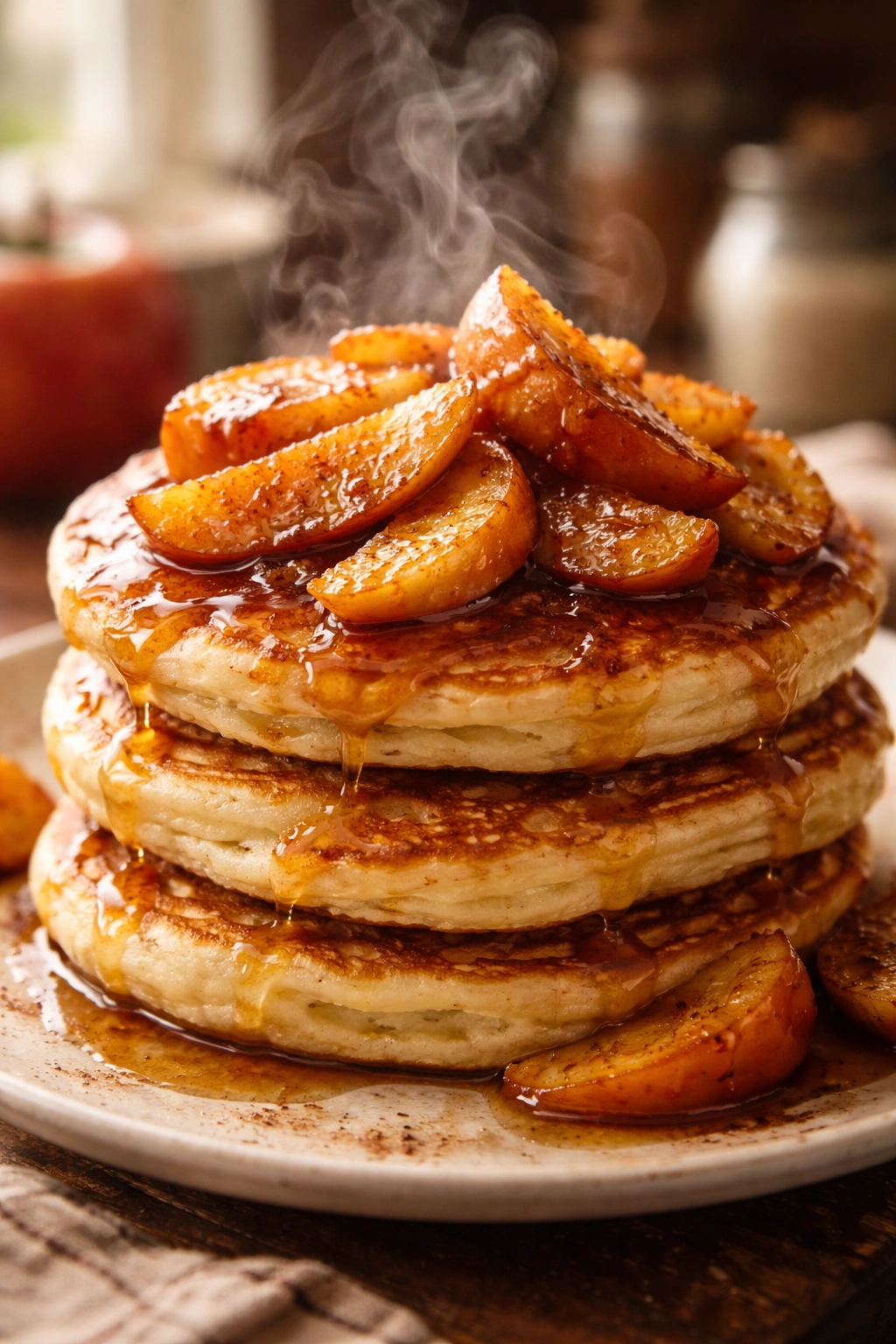
Apples are the ideal pancake topping for several reasons that go beyond just flavor. They’re naturally high in pectin, which means they soften and develop a luxurious, almost sauce-like consistency as they cook—no need for added thickener or complicated reduction. This creates a topping that clings to the pancakes instead of sliding off onto your plate.
The texture of cooked apples is remarkably versatile. Cook them gently and they stay slightly firm with distinct apple pieces. Cook them longer and they break down into a chunky compote. This gives you control over exactly how you want your topping to feel. Apples also absorb spices beautifully—cinnamon, nutmeg, cardamom, and even a whisper of vanilla all amplify in warm apples, creating layers of flavor with minimal effort.
The Science of Why This Works
When apples heat, their cell walls break down and their natural sugars concentrate, creating sweetness without added sugar. The pectin in the apples gelatinizes slightly, thickening the apples naturally as they cook. This happens around 160°F (70°C), which means your topping thickens perfectly during a gentle simmer.
What You’ll Need
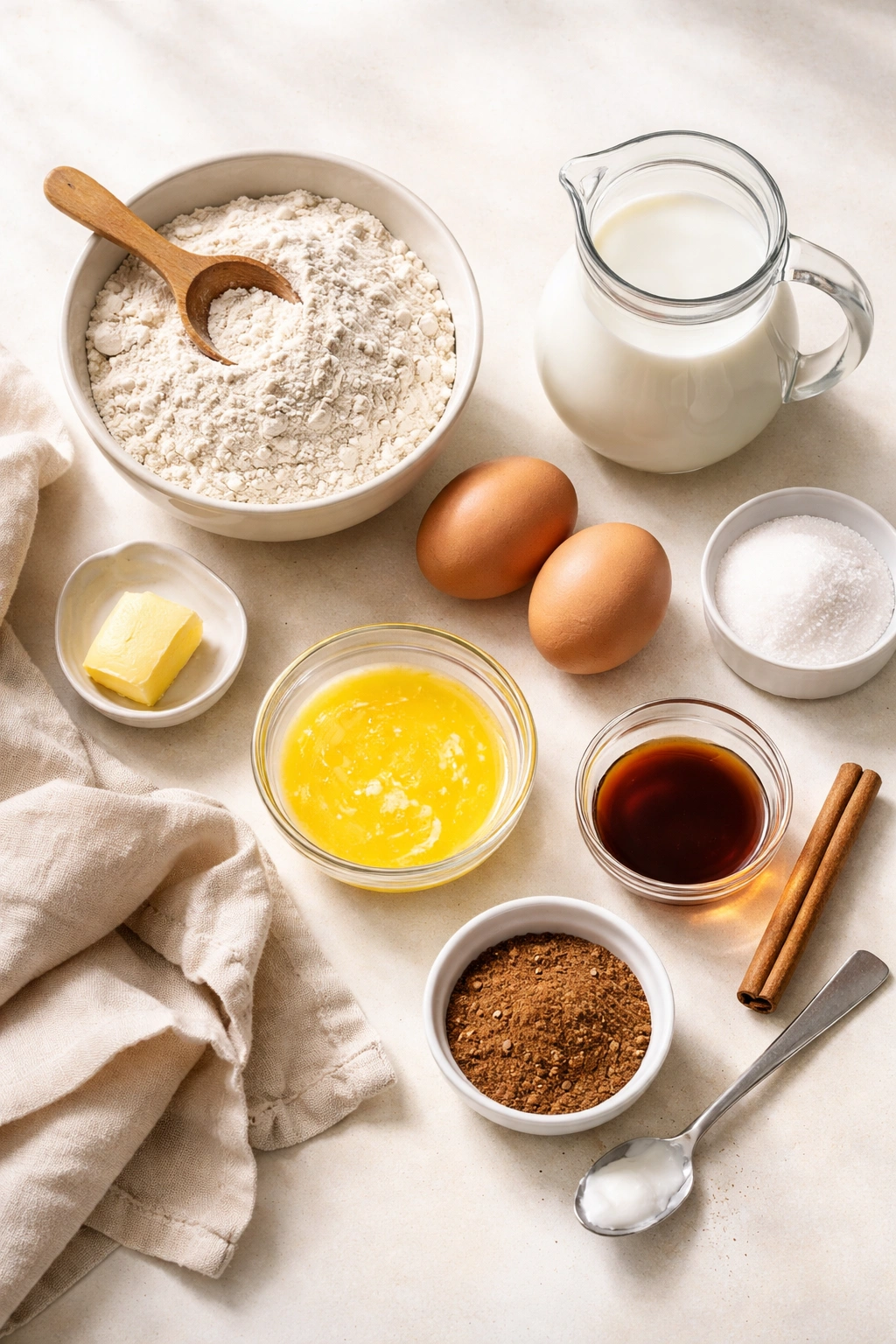
For the Pancake Batter:
- 2 cups all-purpose flour
- 2 tablespoons granulated sugar
- 2 teaspoons baking powder
- ½ teaspoon fine sea salt
- 1¾ cups whole milk
- 2 large eggs, room temperature
- 4 tablespoons unsalted butter, melted and cooled slightly
- 1 teaspoon pure vanilla extract
- ¼ teaspoon ground cinnamon (optional but recommended)
For the Apple Topping:
- 4 medium-sized apples (about 1½ pounds), peeled, cored, and sliced ¼-inch thick
- 3 tablespoons unsalted butter
- 3 tablespoons light brown sugar, packed
- ½ teaspoon ground cinnamon
- ¼ teaspoon freshly grated nutmeg
- Pinch of fine sea salt
- ½ teaspoon pure vanilla extract
- 2 tablespoons water or apple cider
- Squeeze of fresh lemon juice
For Serving:
- Maple syrup (real maple, not pancake syrup)
- Whipped cream or Greek yogurt (optional)
- Toasted pecans or walnuts (optional)
- Extra cinnamon for garnish
Yield: Serves 4 (makes about 12 pancakes)
Prep Time: 20 minutes
Cook Time: 30 minutes
Total Time: 50 minutes
Difficulty: Beginner — The batter uses straightforward mixing techniques, and the apple topping is just gentle sautéing. No special equipment or advanced skills required.
The Best Apples for Pancake Toppings
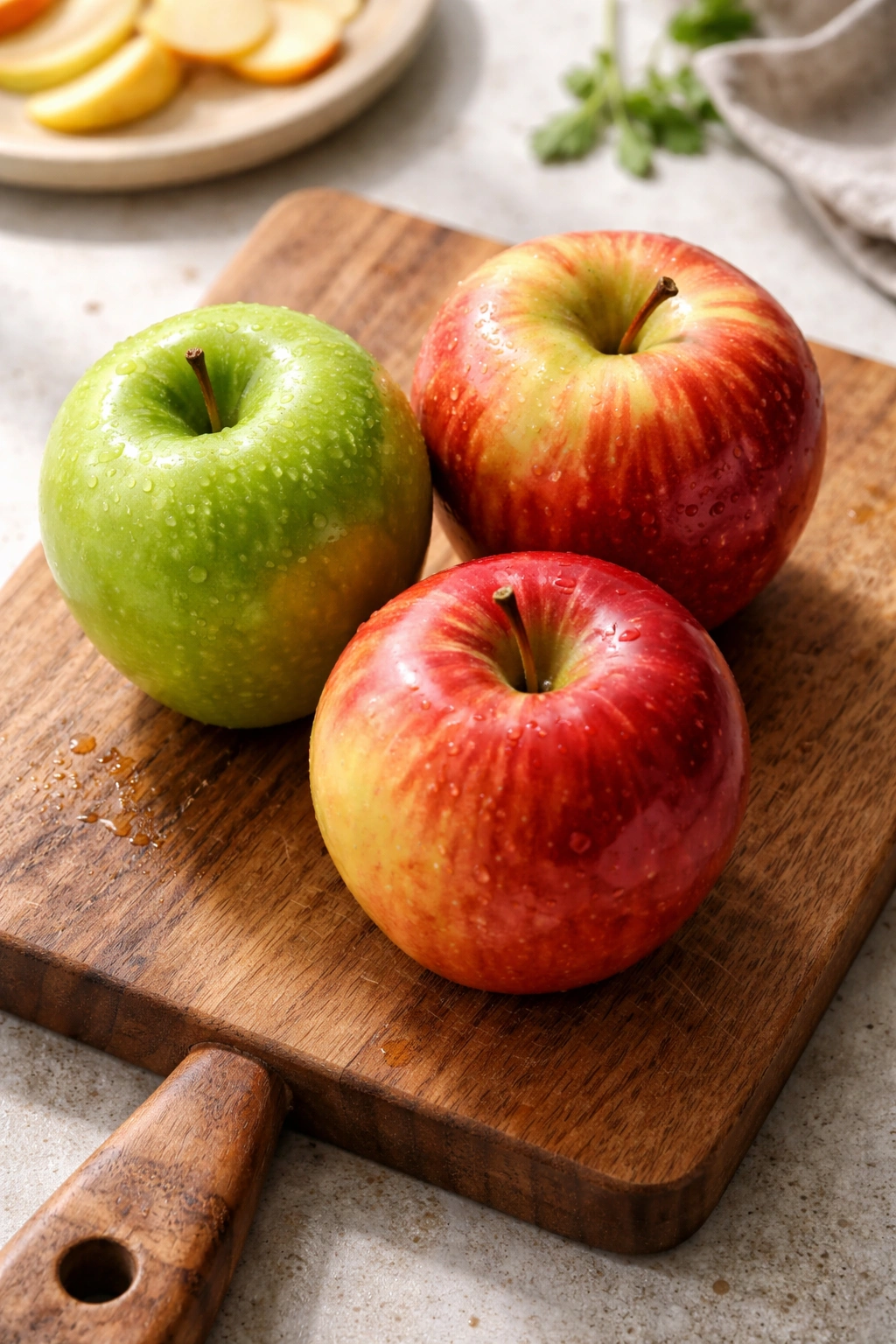
Not all apples cook the same way, and choosing the right variety makes a noticeable difference in your final result. The best apples for pancakes are those that soften to a tender consistency without completely falling apart, and that have enough natural acidity to prevent the topping from tasting cloying.
Granny Smith apples are the classic choice for a reason. They’re tart enough to balance sweetness, they hold their shape reasonably well as they cook, and their flavor deepens beautifully when heated. They’re widely available year-round, making them reliable and convenient. Expect them to soften within 8-10 minutes of cooking.
Honeycrisp apples are wonderful if you prefer something slightly sweeter and want more of a dessert-like topping. They break down a bit faster than Granny Smiths, creating a more sauce-like consistency. Their natural honey notes intensify when cooked, so you might use slightly less added sugar.
Braeburn apples split the difference—they’re sweet but retain enough tartness, and they hold their texture well through cooking. They cook at about the same speed as Granny Smiths and won’t turn mushy unless you cook them well past doneness.
A blend is actually best. Combine Granny Smiths with one sweeter variety (Honeycrisp, Gala, or Fuji) and you get the tartness you need plus deeper, more complex flavor. The mix also creates a more interesting texture—some pieces will stay slightly firm while others soften to almost-compote texture.
Avoid Red Delicious apples if possible—they become mealy and grainy when cooked. Similarly, very soft apples like McIntosh will turn to mush almost immediately. You want apples that have some structure and won’t lose all their character during cooking.
Preparing Your Apples (The Foundation of Great Flavor)
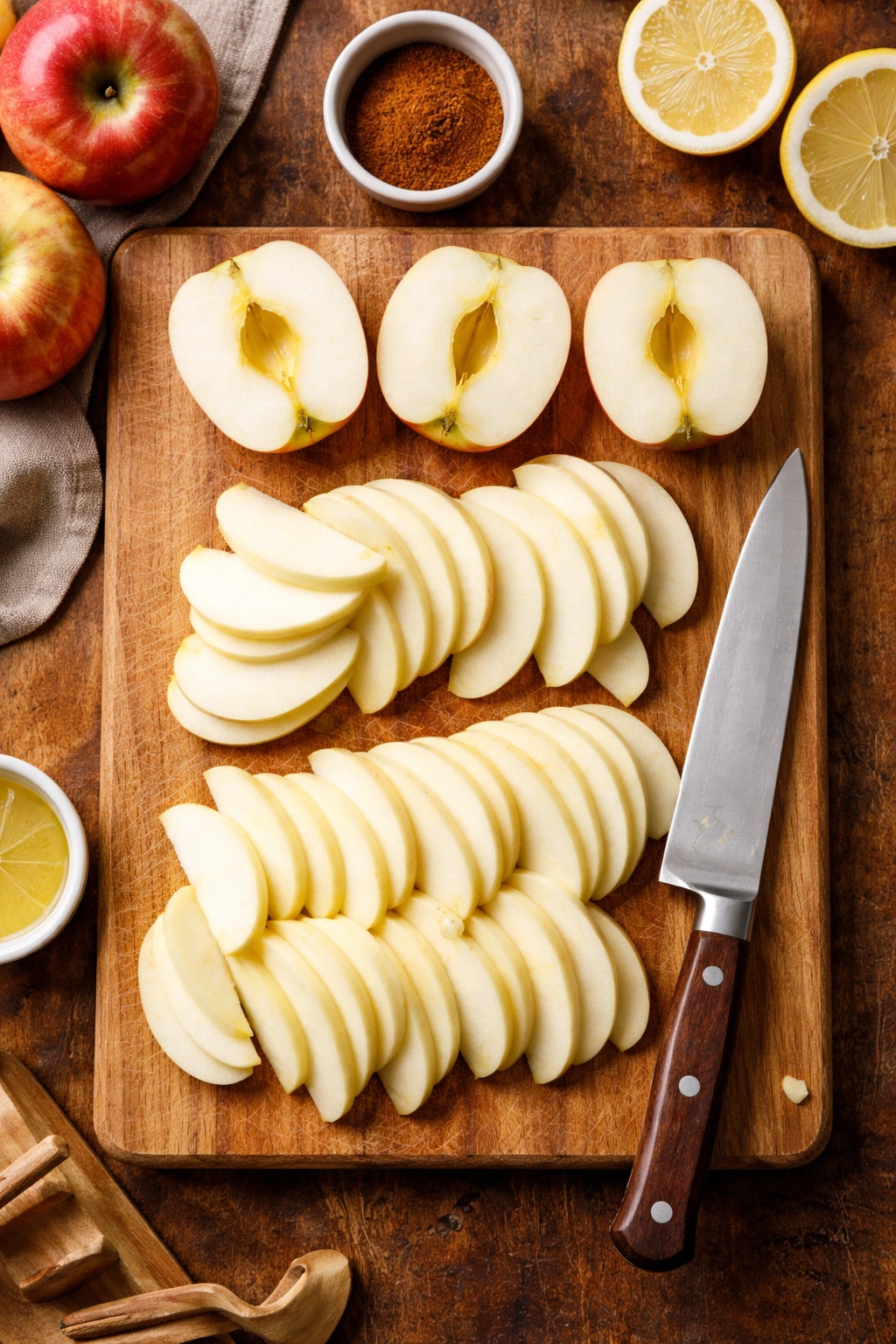
Apple preparation makes a bigger difference than most people realize. The way you cut them determines how quickly they cook and how they distribute across the pancakes. Slice apples about ¼-inch thick—this thickness is thin enough to cook through in 8-10 minutes but thick enough to hold their shape and give you distinct apple pieces rather than mush.
To prep apples efficiently, cut them in half lengthwise, then use a melon baller or small spoon to scoop out the core from each half. Lay the flat side down on your cutting board and slice into ¼-inch strips. This method is faster and safer than trying to peel a whole apple first. Peel the apples before slicing if you prefer a smooth, refined texture—the skin can toughen slightly during cooking and some people find the texture distracting. If you like the rustic look and don’t mind the skin, you can leave it on; just make sure apples are rinsed well.
Have everything prepped and ready before you start cooking the pancakes. Once your batter is mixed, you’ll want to cook the apples while the griddle heats. This timing ensures the apples are warm and at peak texture right when the pancakes finish cooking.
The Pancake Batter from Scratch
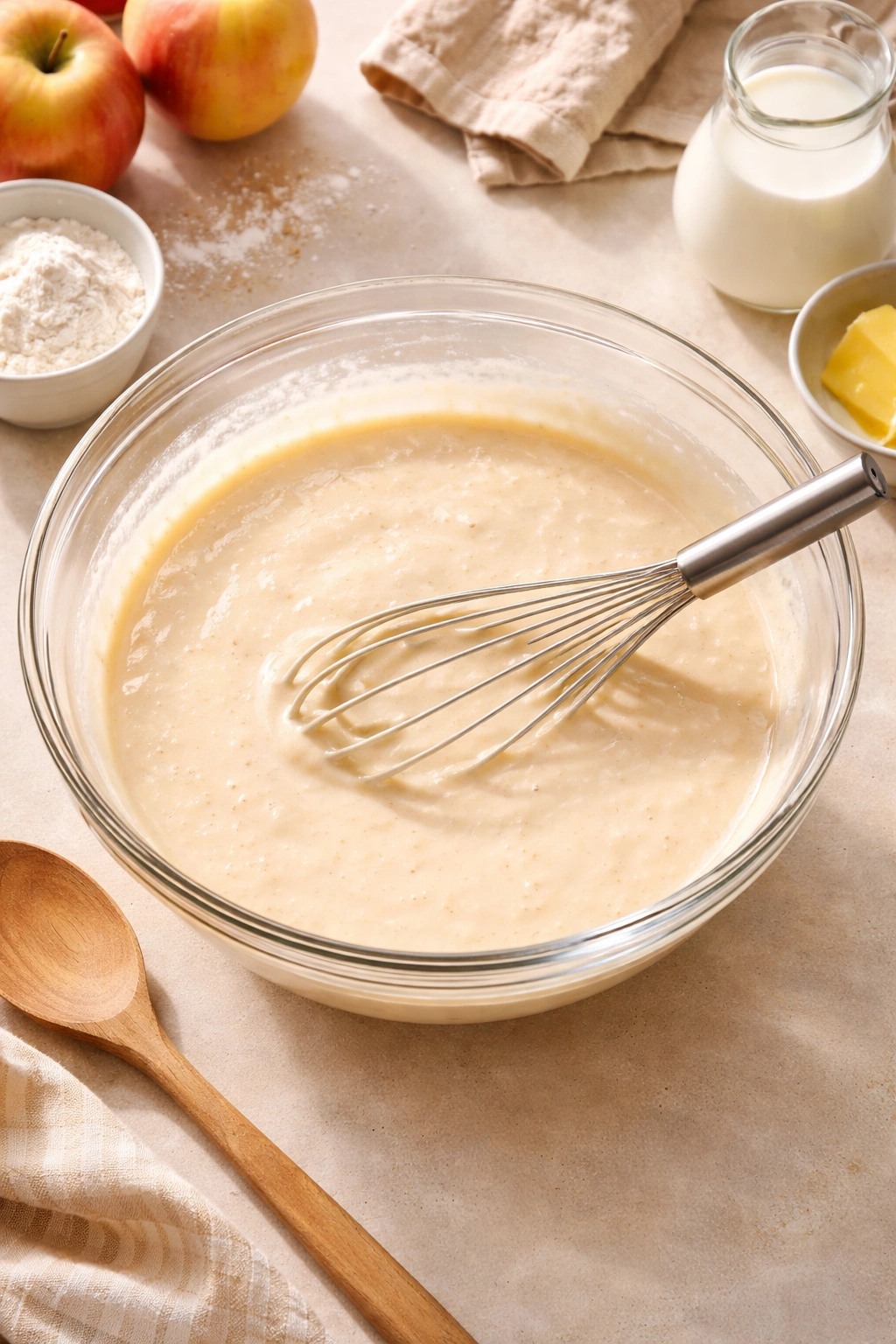
This batter relies on a straightforward method that works reliably every single time. The key is mixing the dry ingredients thoroughly first and then gently folding the wet ingredients in—overworking the batter creates tough, rubbery pancakes.
Combine the Dry Ingredients:
In a large mixing bowl, whisk together the flour, sugar, baking powder, salt, and ground cinnamon (if using). Whisk for about 30 seconds to ensure the baking powder is evenly distributed throughout the flour. Uneven baking powder distribution is why some pancakes are fluffy and others are dense—this step matters more than it sounds.
Mix the Wet Ingredients:
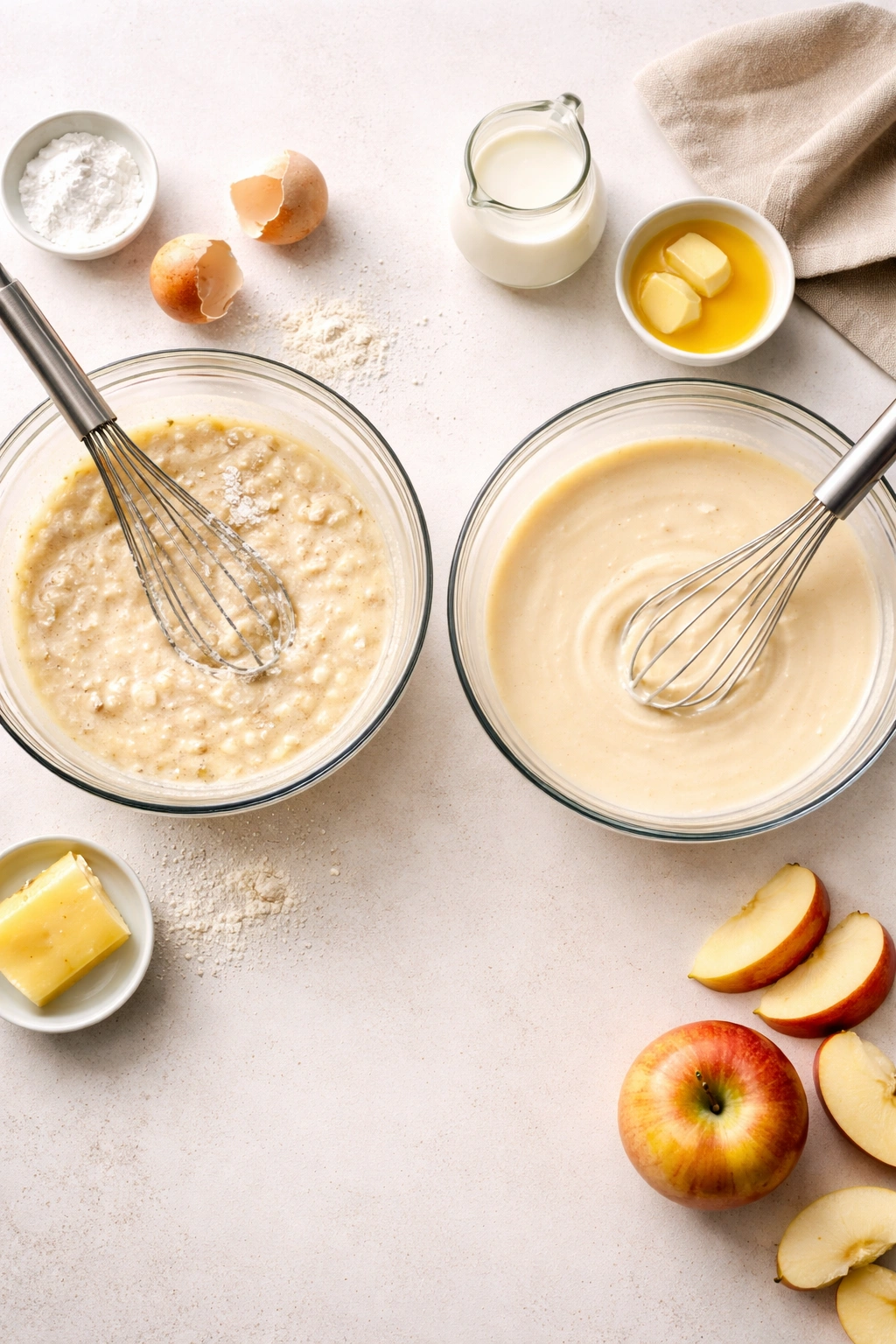
In a separate bowl, whisk together the milk, eggs, melted butter, and vanilla extract until combined and smooth. The butter should be melted but cooled slightly so it doesn’t scramble the eggs when combined.
Combine Wet and Dry:
Pour the wet ingredients into the dry ingredients. Using a spatula or wooden spoon, fold gently until the ingredients are just combined. Stop as soon as you see no more dry flour—a few small lumps are totally fine. Overmixing develops gluten, which makes pancakes dense and tough instead of tender and fluffy. The batter will be slightly lumpy, and that’s exactly what you want.
Let the batter rest for 5 minutes while you start cooking the apples. The flour will continue to hydrate during this rest, and the batter will thicken slightly, creating better texture in the finished pancakes.
Cooking the Apple Topping
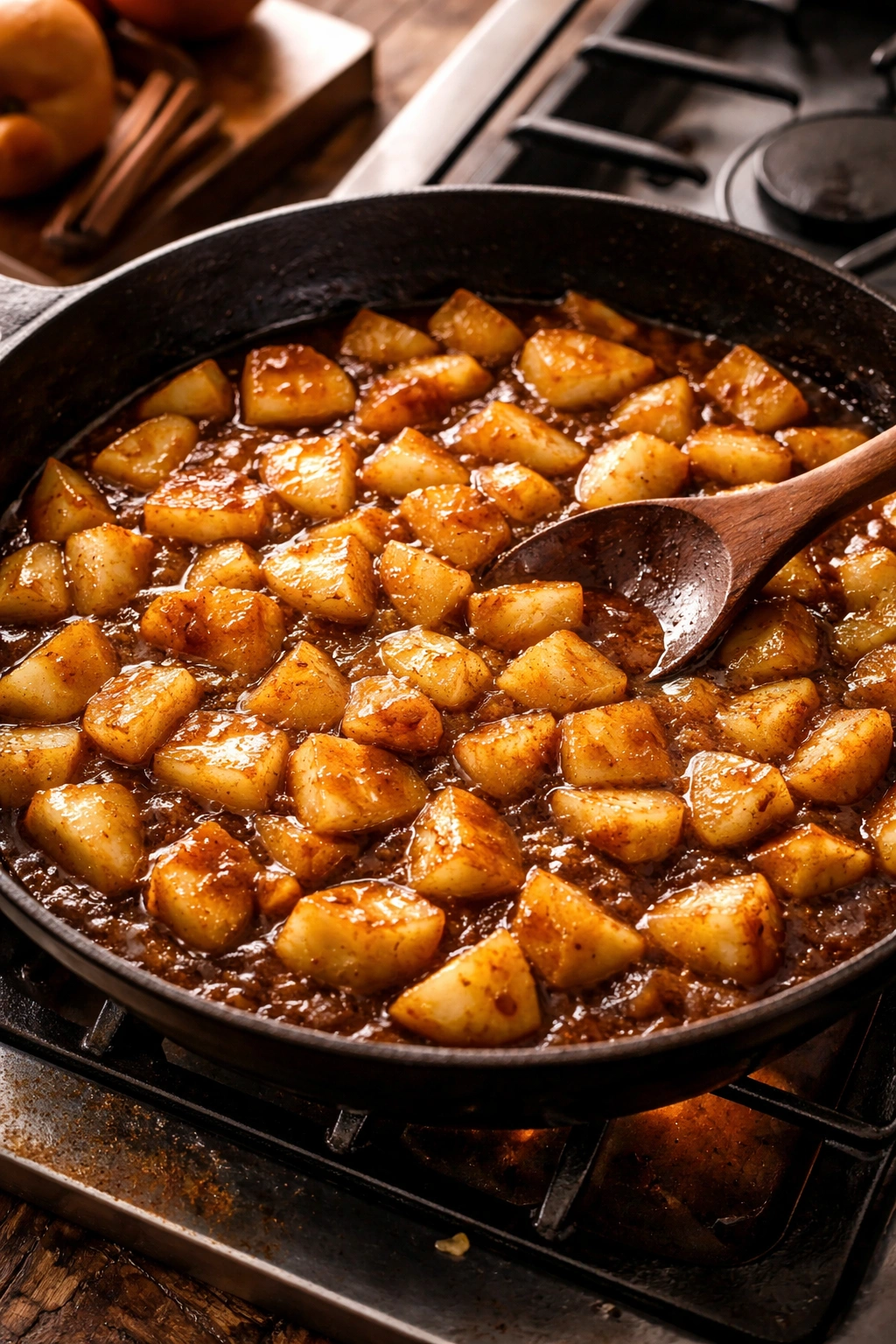
The apple topping is deceptively simple—just apples, butter, brown sugar, and spices—but the technique of cooking them matters. You want gentle heat that softens the apples gradually while the sugar caramelizes slightly, creating a luxurious topping that clings to the pancakes.
Heat your skillet or large sauté pan over medium heat. Add the butter and let it melt completely, then add the brown sugar, cinnamon, nutmeg, and salt. Stir for about 30 seconds until the sugar begins to dissolve and the spices are fragrant. You’re building a spiced caramel base here.
Add the sliced apples and toss gently to coat them in the butter mixture. The apples should sizzle gently when they hit the pan—if they don’t, the heat is too low. If they sizzle aggressively and the edges brown immediately, it’s too high. Adjust heat to medium or medium-low if necessary to maintain a gentle sizzle.
Cook for 6-8 minutes, stirring occasionally and gently. The apples will begin to soften and release their juices. Add the water or apple cider (apple cider adds more depth, but water works perfectly fine). This liquid prevents the apples from sticking to the bottom of the pan and creates more of a sauce around them.
Continue cooking for another 2-3 minutes until the apples are tender and easily pierced with a fork but still hold their shape. The sauce should look slightly thickened and glossy. Add the vanilla extract and lemon juice at the end—the brightness of lemon prevents the topping from tasting too sweet and one-dimensional.
Keep the apple topping warm on low heat while you cook the pancakes. If it sits for more than a few minutes without heat, it will cool and thicken too much. You can always add a splash more water if the apples are sitting too long.
Cooking the Pancakes to Golden Perfection
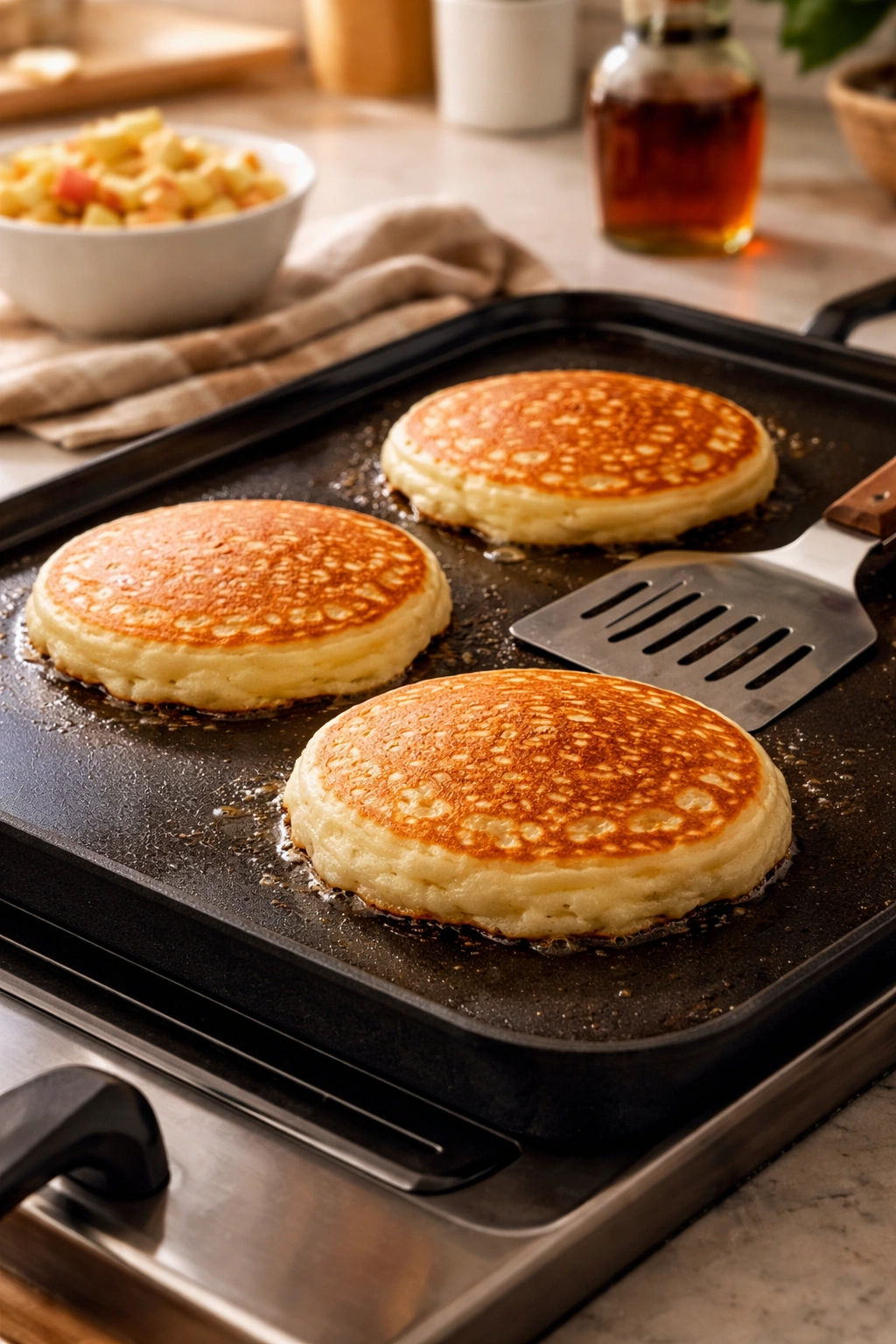
The pancakes are your blank canvas—perfectly cooked pancakes are fluffy inside with a slight golden-brown exterior that’s crispy enough to provide textural contrast. The griddle temperature is your most important control.
Preheat your griddle or large skillet over medium heat for about 2 minutes. Test the temperature by flicking a few drops of water on the surface—they should sizzle immediately and evaporate almost right away. If the water beads up and sits there, the griddle isn’t hot enough. If it evaporates instantly with aggressive sizzling, it’s too hot.
Lightly butter or oil your cooking surface. A small amount is all you need—use a paper towel to wipe away any excess. Too much fat causes pancakes to absorb oil and taste greasy; too little causes sticking.
Pour about ¼ cup of batter onto the griddle for a 4-5 inch pancake. Let it sit undisturbed for 1-2 minutes. You’ll see bubbles forming on the top surface. Once you see about 5-10 bubbles and the edges look slightly dull and set (not wet and shiny), flip the pancake using a thin, wide spatula. Slide the spatula completely under the pancake to prevent folding.
Cook the second side for 1-2 minutes until it’s golden brown. The second side cooks faster than the first side because the bottom of the griddle is already hot. Don’t press down on the pancakes with your spatula—this squeezes out the air and makes them dense.
Transfer cooked pancakes to a warm plate or baking sheet. If you’re cooking multiple batches and want to serve them all at once, keep finished pancakes warm in a 200°F (95°C) oven while you finish cooking the rest. Don’t stack them directly on top of each other—they’ll steam and become soft. Instead, place them on a baking sheet in a single layer or stacked with parchment paper between them.
Building Your Perfect Plate
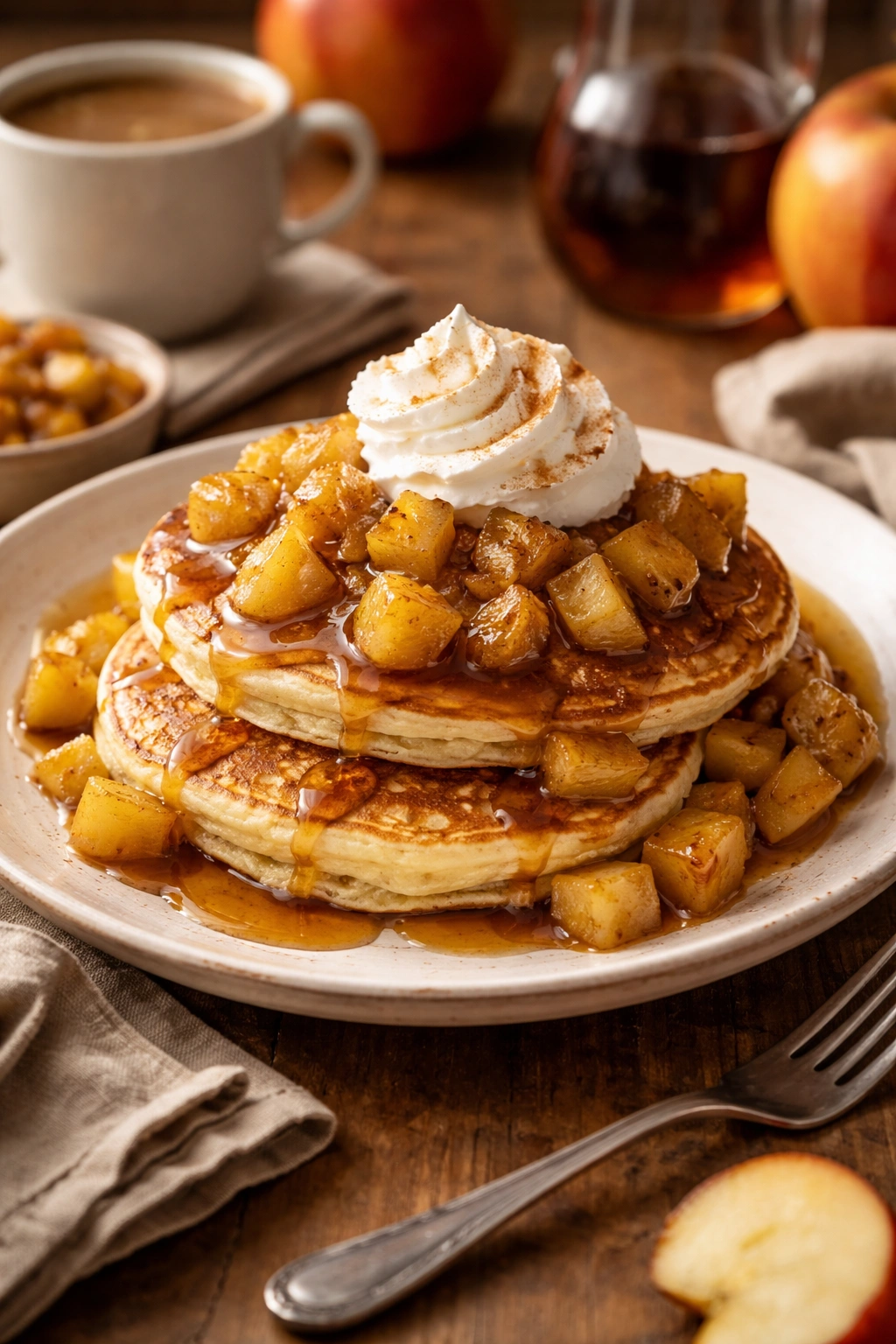
The assembly is where everything comes together—and yes, there’s a right way to do it that maximizes flavor and texture in every bite. Start with a warm plate (warm plates keep food warm longer and make the whole experience feel more intentional).
Place 2-3 pancakes slightly overlapping on the plate. The overlap creates a visual appeal and makes the plate feel generous. Top the pancakes with a generous spoonful of warm apple topping, letting some of the syrupy liquid drizzle down the sides. Add a knob of whipped cream or a dollop of Greek yogurt on top of the apples if you want richness and cooling contrast—the cool dairy is especially nice against the warm apples and pancakes.
Drizzle a small amount of maple syrup over everything, and garnish with a handful of toasted pecans or walnuts if you have them. The nuts add a pleasant textural crunch that contrasts beautifully with the soft pancakes and apples. Finish with a tiny sprinkle of cinnamon on top of the whipped cream for a visual touch and a hint of spice in the very last bite.
Tips for Restaurant-Quality Results
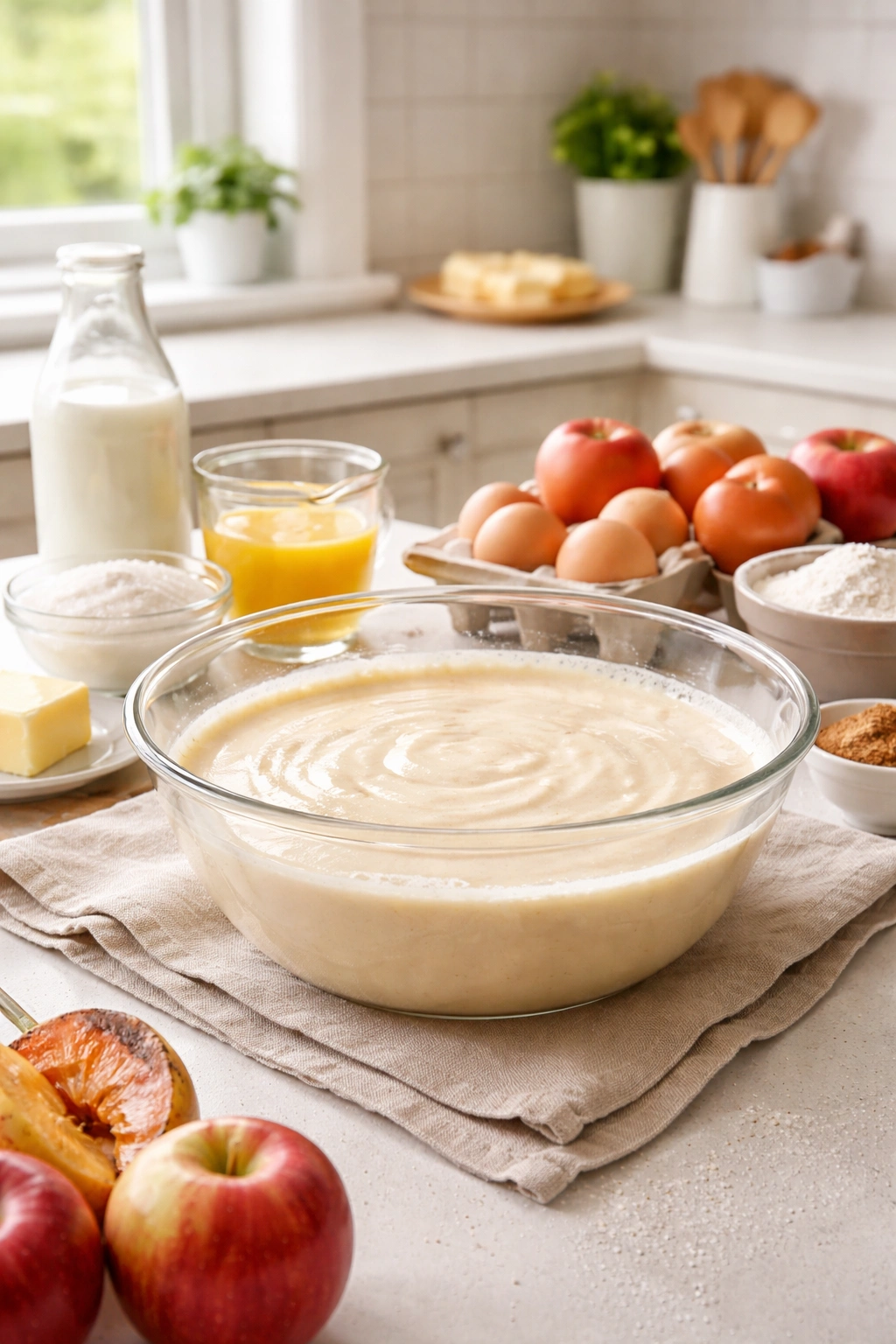
A few small techniques separate homemade pancakes that taste homemade from pancakes that taste like they came from a skilled breakfast cook.
Bring all your ingredients to room temperature before mixing. Cold eggs and milk require more vigorous mixing to combine, which overdevelops gluten. Room-temperature ingredients incorporate smoothly with gentle folding, keeping pancakes tender.
Use real maple syrup, not pancake syrup. This is the single biggest flavor upgrade you can make. Real maple syrup has depth and complexity that makes apples taste even better. Pancake syrup is mostly corn syrup with maple flavoring—it’s sweet and one-dimensional by comparison.
Don’t skip the resting period for the batter. Those 5 minutes allow the flour to fully hydrate and the baking powder to begin activating. Pancakes cooked from rested batter are noticeably fluffier than pancakes cooked immediately. Plan for this short rest every time.
Cook your apples while the griddle heats. This ensures apples are at peak warmth and texture when your pancakes finish. Cold apples against hot pancakes creates texture and temperature contrast instead of the cozy, unified warmth you want.
Add a pinch of cinnamon to the pancake batter itself. This is optional, but the subtle spice in the pancakes complements the apples and creates a more cohesive flavor profile. If you do add it, reduce the amount of cinnamon in the apple topping slightly so it doesn’t become overwhelming.
Don’t flip pancakes too early or too many times. Flip once, and only once. Multiple flips create odd shapes and denser pancakes. Premature flips before bubbles have formed lead to raw batter on one side and overcooked batter on the other.
Common Mistakes and How to Avoid Them
Even good cooks sometimes make missteps with pancakes because the variables are subtle and easy to overlook. Here’s what goes wrong most often, and exactly how to fix it.
Dense, Heavy Pancakes usually indicate overmixing. When you overmix the batter, you develop gluten in the flour, which toughens the crumb. Mix only until the dry ingredients are just incorporated. A few lumps are completely fine and will smooth out during cooking. Alternatively, dense pancakes can result from batter that’s too thick. If your batter is thicker than pancake syrup’s consistency, add a tablespoon or two of milk and stir gently to thin it.
Pancakes That Don’t Cook Through usually mean the griddle temperature is too low. Test the griddle with a water drop before you start cooking. If it’s not hot enough, water just sits there instead of sizzling. Raise the heat slightly and wait another minute before cooking.
Pancakes That Brown Too Fast or burn on the outside while the inside stays raw means the griddle is too hot. Lower the heat to medium or medium-low and let the griddle cool for about a minute before trying again.
Apple Topping That Breaks Down Into Mush happens when apples cook too long or the heat is too high. Keep the heat at medium to medium-low and stir gently, checking for doneness at 8 minutes. The apples should still hold their shape, not fall apart.
Apple Topping That Tastes Acidic or Too Tart means you need the pinch of lemon juice at the end (it balances tartness, not increases it) or a touch more brown sugar. Add sugar a teaspoon at a time and taste as you go. Alternatively, use a sweeter apple variety in your mix—replace some of the Granny Smiths with Honeycrisps or Gala apples.
Pancakes That Taste Flat or One-Dimensional usually lack salt or spice. Make sure you’re using the full ½ teaspoon of salt in the batter—salt doesn’t make food taste salty, it amplifies natural flavors. Cinnamon in the batter and apple topping also adds depth that makes everything taste better.
Variations and Flavor Twists
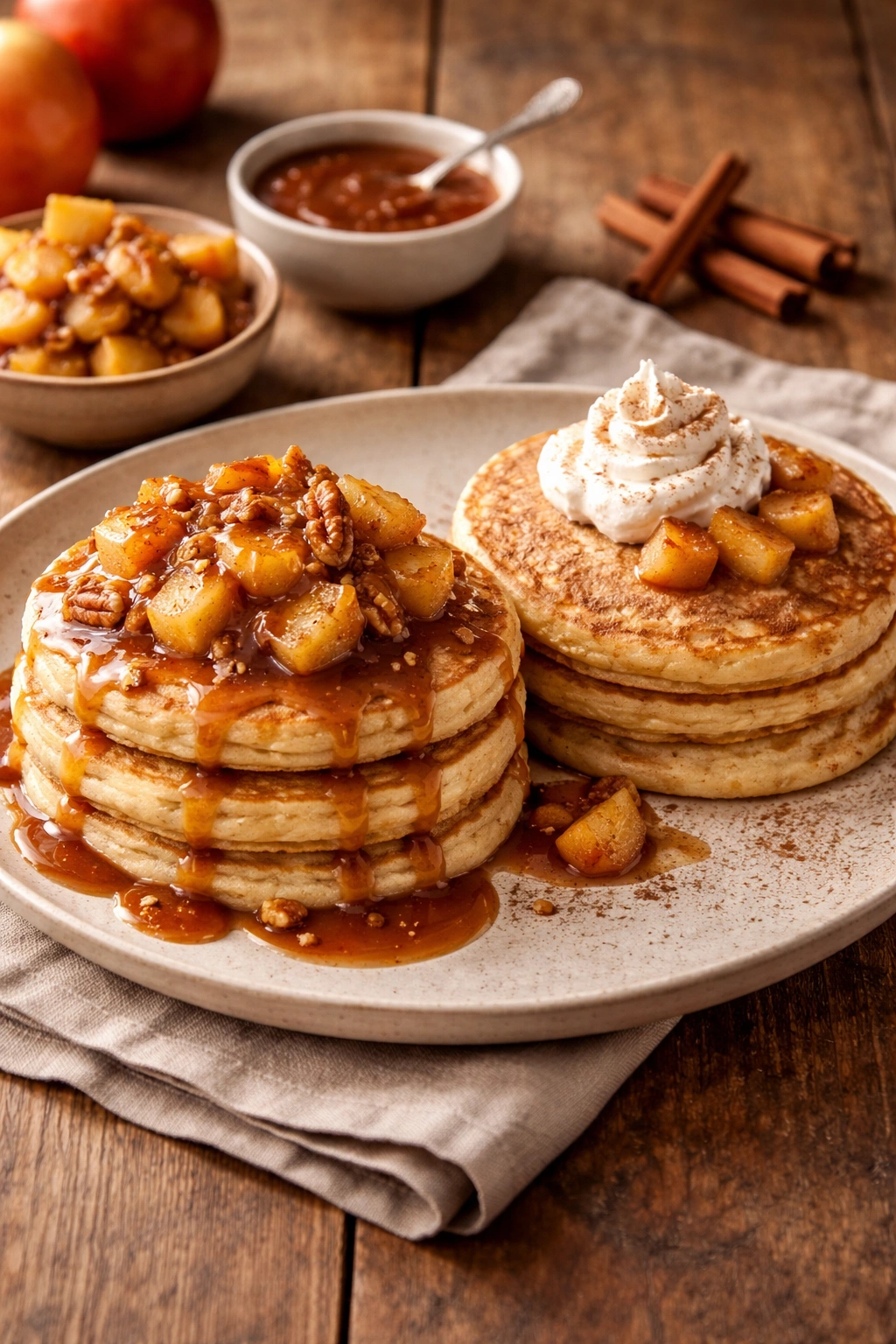
Once you’ve mastered the basic version, try these variations to keep the recipe from feeling routine.
Apple-Cider-Braised Topping
Replace the water with apple cider for a more sophisticated apple topping. The cider’s natural sweetness and apple flavor intensify when cooked down with the spices. Add 1 tablespoon of apple cider vinegar at the end to create a sweet-tart balance that elevates the topping beyond simple caramelized apples. This variation is especially good in fall when apple cider is widely available.
Caramel-Apple Version
Add 3 tablespoons of salted caramel sauce to the apple topping in the last 30 seconds of cooking. Stir gently to distribute. The caramel deepens the sweetness and adds richness that makes this feel like dessert for breakfast. Serve with a dollop of whipped cream and a pinch of fleur de sel on top.
Brown-Butter Noisette Pancakes
Brown the 4 tablespoons of butter before mixing it into the batter. Melt butter in a small saucepan over medium heat and cook for 5-7 minutes, swirling occasionally, until it turns golden brown and smells nutty. Cool it slightly, then whisk into the wet ingredients. Brown butter adds a subtle nutty depth to the pancakes that pairs beautifully with spiced apples.
Apple-Walnut Pancakes
Add ½ cup of finely chopped toasted walnuts directly to the batter after mixing (fold them in gently). The walnuts distribute throughout the pancakes and add textural contrast. Toast them yourself in a dry skillet over medium heat for 3-4 minutes until fragrant—toasted walnuts taste infinitely better than raw ones.
Sourdough Pancakes
Replace half the all-purpose flour with sourdough starter (about 1 cup of active, fed sourdough starter, then reduce the milk to 1 cup). This adds tangy flavor and improves the texture. Increase the baking powder to 2½ teaspoons because sourdough starter can slightly inhibit rise. These pancakes are tangier and have a more complex flavor.
Buttermilk Version
Replace the milk with buttermilk and reduce the baking powder to 1 teaspoon (the acidity in buttermilk activates baking soda). Add ½ teaspoon of baking soda to the dry ingredients. Buttermilk creates a more tender crumb and adds a subtle tang that complements the apples beautifully. If you don’t have buttermilk, make a substitute by mixing ¾ cup of milk with 1 tablespoon of white vinegar or lemon juice and letting it sit 5 minutes.
Whole-Wheat or Oat-Flour Blend
Replace up to ½ cup of all-purpose flour with whole-wheat flour or oat flour for added nuttiness and fiber. These flours absorb slightly more liquid, so watch your batter consistency as you mix and add a splash more milk if the batter is too thick. Whole-grain pancakes pair beautifully with apple topping.
Storage, Make-Ahead, and Reheating
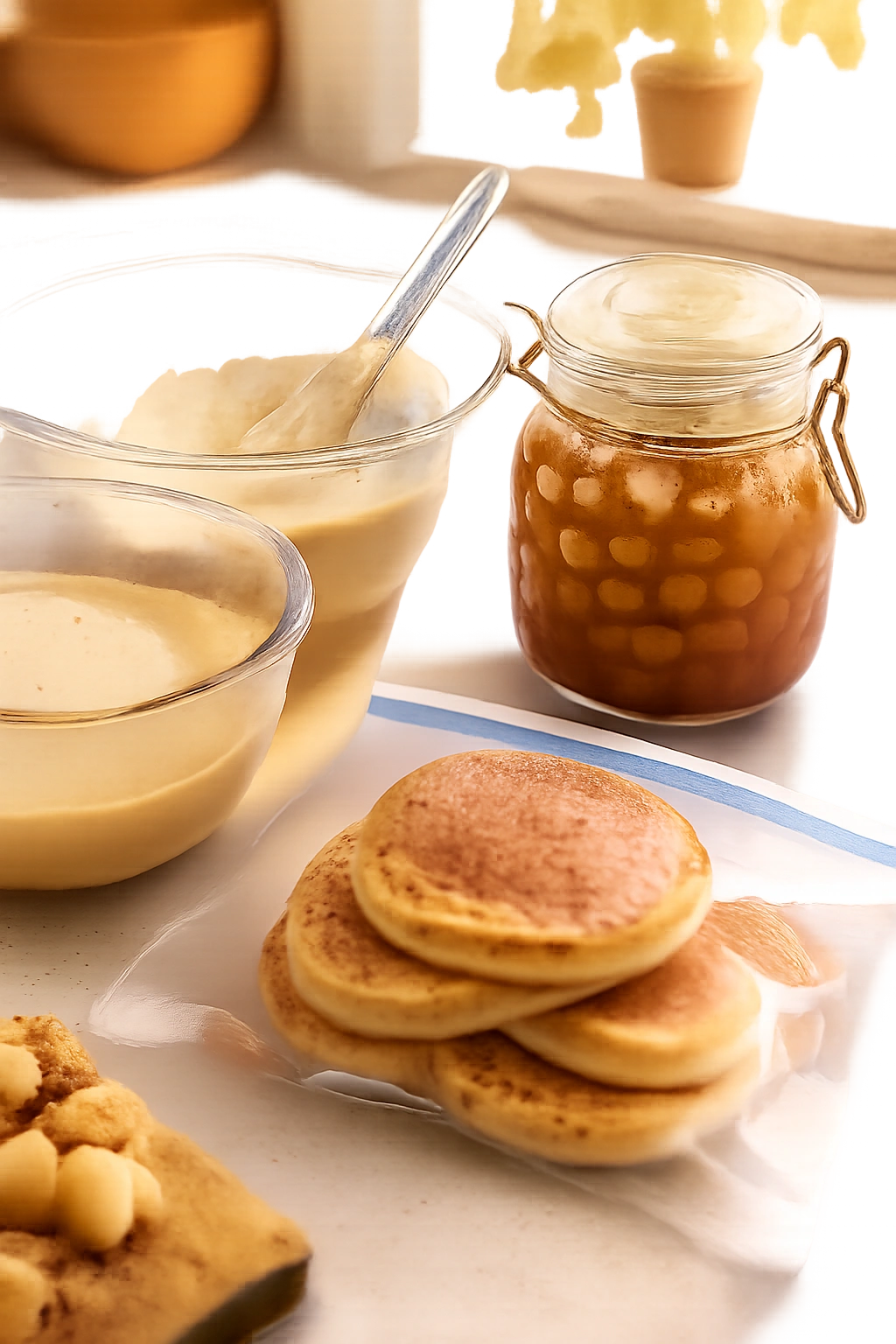
The flexibility of this breakfast is one of its best features—you can prepare components ahead and assemble fresh, or cook everything ahead and reheat with excellent results.
Making Apples Ahead
The apple topping actually improves when made a few hours ahead. The flavors deepen and the apples continue to soften slightly. Make the topping up to 6 hours in advance, then store it in an airtight container in the refrigerator. Gently reheat in a small saucepan over medium-low heat, stirring occasionally, until warm. Add a tablespoon of water if the topping has thickened too much during storage. The reheated topping will be just as delicious as freshly made.
Pancake Batter Overnight
The batter actually works better when made the night before. Mix the wet and dry ingredients separately (keep them in separate containers), cover with plastic wrap, and refrigerate overnight. The flour continues to hydrate and the flavors mellow. In the morning, gently fold the wet ingredients into the dry ingredients. The texture will be noticeably better—softer and more tender.
Cooked Pancakes
Cooked pancakes freeze beautifully for up to 2 weeks. Cool them completely on a wire rack, then stack them with parchment paper between layers and place in a freezer-safe bag or container. To reheat, place individual frozen pancakes on a baking sheet in a 350°F (175°C) oven for 8-10 minutes until warmed through. The texture will be nearly identical to fresh. Alternatively, reheat in a toaster oven at a lower setting—check at 5 minutes to avoid drying them out.
Best Served Fresh vs. Make-Ahead
Fresh pancakes are best served immediately, but they’re still wonderful reheated. Fresh apples can sit for up to 30 minutes without significant quality loss—they’ll cool slightly but will still taste good. If you’re cooking for a crowd, cook pancakes in batches and keep early batches warm in a 200°F (95°C) oven while finishing the rest, then serve everything together at once.
Serving Suggestions and Pairings
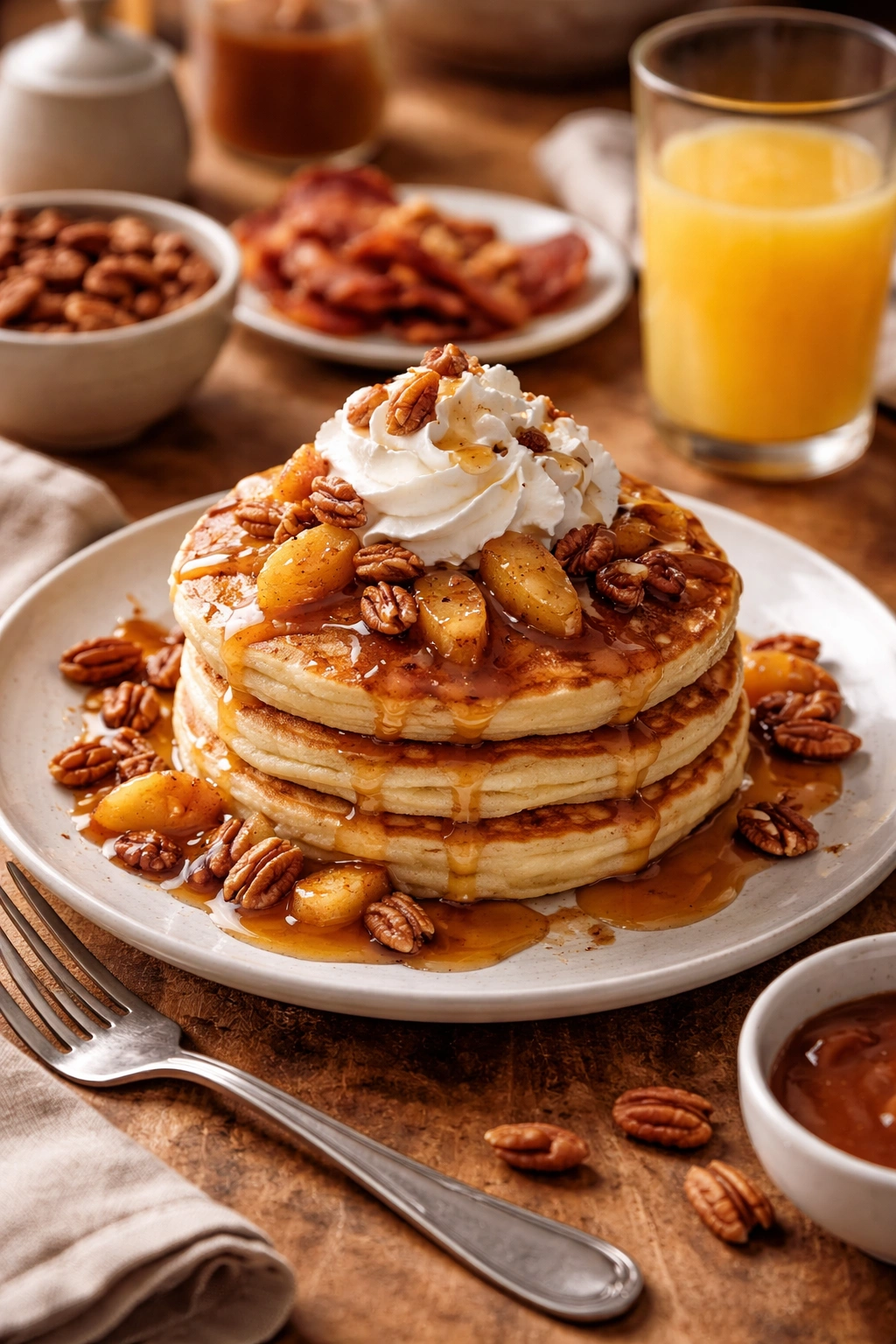
Apple pancakes work for multiple occasions, and the sides you choose can shift the entire mood from casual breakfast to special-occasion brunch.
For a Casual Weekday Breakfast
Serve with just maple syrup and a cup of hot coffee or tea. The apples and pancakes are flavorful enough to stand alone. A small glass of fresh orange juice completes the meal with brightness and balance.
For a Special Brunch
Elevate with whipped cream, toasted pecans, a drizzle of salted caramel, and crispy bacon or sausage on the side. Add a mimosa or fresh-squeezed orange juice to make it feel like a celebration. Fresh berries on the side (blueberries or raspberries) add color and tartness.
For a Cozy Winter Morning
Pair with a warm cinnamon-spiced latte or hot apple cider. Add a side of thick-cut bacon and soft scrambled eggs if you want savory balance. A warm, simple meal like this is perfect for unhurried mornings.
Side Dish Pairings
Bacon or Sausage: Crispy, salty meat provides textural and flavor contrast. Scrambled or Fried Eggs: Especially nice if you like savory-sweet combinations. Hash Browns or Home Fries: Adds substance if you want a heartier meal. Fresh Fruit: Berries or melon add freshness and bright acidity. Greek Yogurt: A dollop underneath or alongside adds protein and cool contrast. Toasted Bread: A slice of buttered toast on the side is perfect for soaking up syrup and any apple liquid.
Beverage Pairings
Maple or Spiced Tea: Chamomile, cinnamon, or apple-spice tea echo the flavors in the pancakes. Hot Apple Cider: Warms you from the inside and deepens the apple theme. Freshly Ground Coffee: A classic pairing—the slight bitterness cuts through sweetness. Fresh-Squeezed Juice: Orange or apple juice adds brightness and pairs beautifully.
Final Thoughts
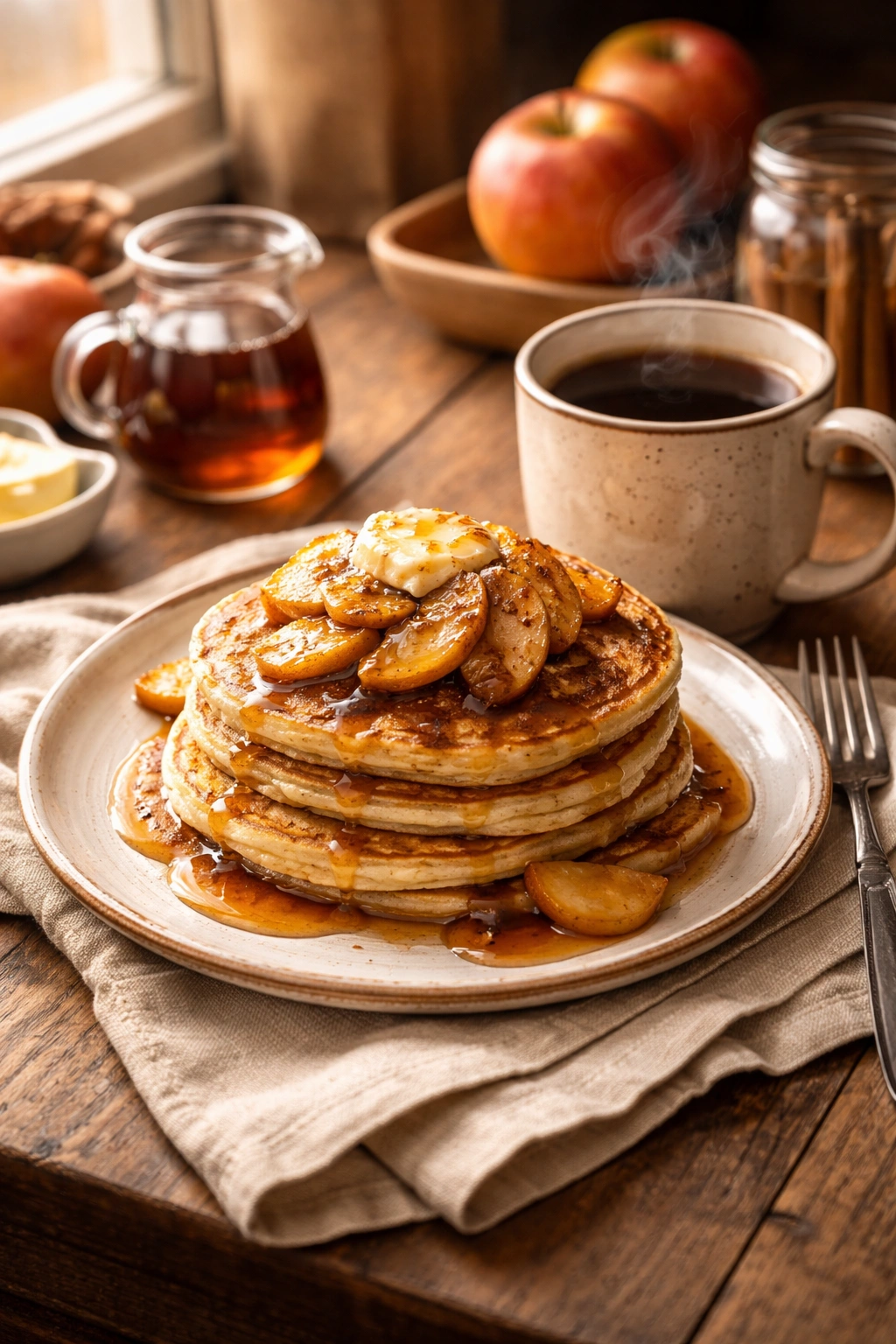
Apple pancakes are one of those dishes that taste far more special than the effort required to make them. The batter is truly simple—just flour, eggs, milk, and a leavening agent mixed with restraint. The apples are simply fruit and spice cooked until tender. But together, with a little attention to technique and timing, they become something cozier and more comforting than the sum of their parts.
The key is respecting the details: don’t overmix the batter, watch your griddle temperature, cook the apples gently, and use real maple syrup. These small choices multiply into noticeably better results. Make the batter the night before if you can, prep your apples while the griddle heats, and cook the apples while the pancakes cook. This rhythm ensures everything comes together warm and at peak texture.
Once you’ve made this recipe a few times, you’ll find yourself returning to it regularly—not just seasonally when apples are abundant, but year-round because the taste of warm apples and soft pancakes never gets old. Each variation you try teaches you something new about the dish. The brown-butter version tastes richer. The buttermilk version feels lighter. The oat-flour version feels more rustic. None is “better”—they’re just different expressions of the same comforting idea.
This is the kind of breakfast that makes you want to linger at the table a little longer, to enjoy a second cup of coffee, and to start your day with something that tastes intentional and warm. That’s what breakfast should feel like.
