



Shakshuka is one of those deceptively simple dishes that tastes like you’ve been cooking for hours but actually takes about 20 minutes from start to finish. If you’ve ever stared at a weekend brunch menu and wondered why eggs poached in spiced tomato sauce could cost $16, I’m here to tell you that you can make it at home for a fraction of that price — and honestly, it’ll probably taste better. The magic isn’t in complicated techniques or hard-to-find ingredients. It’s in understanding that a few really good tomatoes, some warm spices, and perfectly cooked eggs are all you need to create something that feels restaurant-quality but completely unpretentious.
Shakshuka has been feeding Mediterranean and Middle Eastern families for generations, and it’s exactly the kind of dish that thrives on lazy weekends. There’s something about a bubbling skillet of tomato sauce with runny eggs nestled into the top that makes you feel both nourished and slightly indulgent. You can have it on the table while your coffee is still hot, and you’ll have actually made something you’re proud to serve. No special timing required. No standing over the stove with anxiety. Just one pan, good ingredients, and minimal fuss.
What Shakshuka Actually Is and Why It’s Perfect for Brunch

Shakshuka is a North African and Middle Eastern egg dish that sits right at the intersection of simple and sophisticated. Basically, you’re making a spiced tomato sauce and poaching eggs directly into it — that’s the whole thing. The sauce is where all the flavor lives: tomatoes, onions, bell peppers if you’re feeling it, and warming spices like cumin and paprika that make the dish taste like you know secrets about cooking.
What makes it so great for brunch is that it checks every box. It’s warm and satisfying without being heavy. It feels special enough that you’d order it out, but it’s actually easier to make than scrambled eggs if you’re organized about it. There’s no scrambling or flipping required — the eggs essentially cook themselves in the gentle heat of the sauce. Plus, you can customize it endlessly depending on what you have on hand or how adventurous you’re feeling that morning.
The beauty of a laid-back brunch is that you’re not trying to impress anyone with techniques. You’re trying to feed people something delicious while wearing whatever you grabbed from your closet. Shakshuka was literally designed for this. It’s been the answer to “what’s easy and feeds a group” for centuries across multiple cultures. The fact that it’s also gorgeous to look at — those golden egg yolks bleeding into the brick-red sauce — is just a bonus.
Choosing Your Tomatoes and Building a Foundation You Can Trust
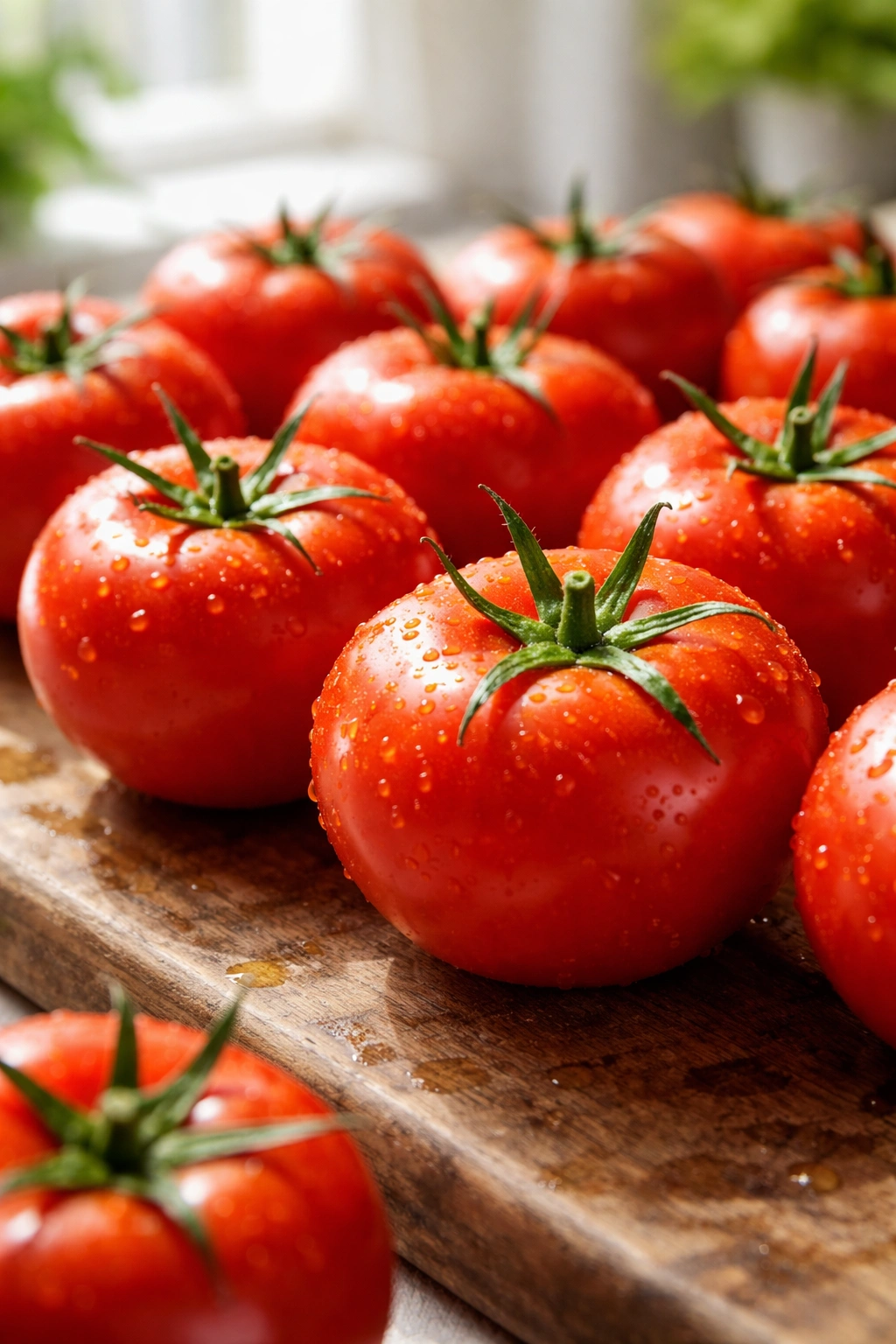
The tomatoes are non-negotiable in shakshuka. They’re not a supporting player; they’re the lead. If your tomatoes are watery, mealy, or flavorless, your entire dish will taste like you took shortcuts. You have a few honest options here depending on what’s available.
Fresh tomatoes work beautifully if you can find good ones — the kind that actually taste like tomatoes, not like red water. Look for tomatoes that are heavy for their size and smell like tomato at the stem end. If you’re buying them in winter or live somewhere where good fresh tomatoes don’t grow year-round, stop apologizing for using canned. High-quality canned tomatoes (the kind you buy whole or crushed) are picked at peak ripeness and processed immediately. They’ll actually taste better than sad, mealy supermarket tomatoes in January.
San Marzano canned tomatoes are the gold standard — they’re less watery than other varieties and have a slightly sweet, rich flavor that’s basically designed for sauce. A 28-ounce can is roughly equivalent to about 3 pounds of fresh tomatoes. If you’re using fresh tomatoes, plan on 3 to 4 medium ones, chopped up. Either way, you want tomatoes that taste like themselves, not like generic background flavor.
The onions are your flavor base. A good yellow or white onion, diced and cooked low and slow until they’re soft and sweet, create the foundation that makes everything else taste better. Don’t rush this. A few minutes of letting the onions cook down and soften is the difference between sauce that tastes like onions and sauce that tastes deep and rich.
Equipment You’ll Actually Need (Spoiler: You Probably Have It)
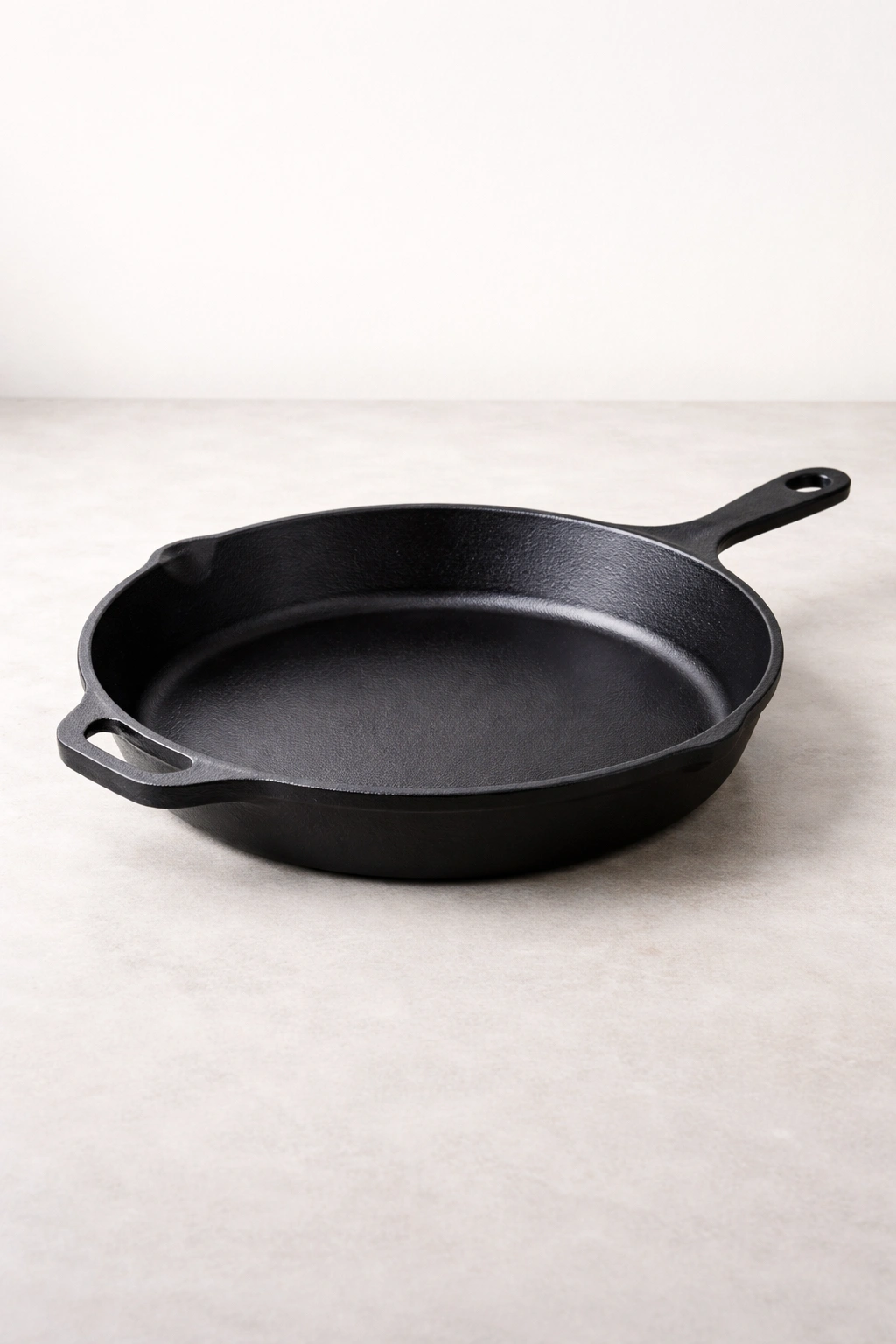
Here’s the thing about shakshuka — you don’t need special cookware. One good skillet is genuinely all you need. An 8 to 10-inch skillet is ideal because it’s small enough that the sauce is deep enough to actually cook the eggs properly, but not so big that everything gets spread thin.
Cast iron is phenomenal for this. It distributes heat evenly, it looks beautiful coming to the table, and it keeps the sauce hot the entire time you’re eating. A well-seasoned cast iron skillet is one of those kitchen tools that actually improves with age and use. If you have one, use it. If you don’t, a regular stainless steel or non-stick skillet works just fine. The only real requirement is that your skillet can go from stovetop to table without your hands melting off, so avoid glass or plastic handles unless they’re rated for oven heat.
You’ll need a wooden spoon for stirring (to avoid scratching non-stick surfaces), a small bowl for cracking eggs into before they go in the sauce, and maybe a lid or even a piece of foil if your skillet doesn’t have one. The lid helps the eggs cook through gently without drying out. That’s genuinely it. No special equipment, no excuses about what you don’t have at home.
The Tomato Sauce Foundation: Where the Real Flavor Starts
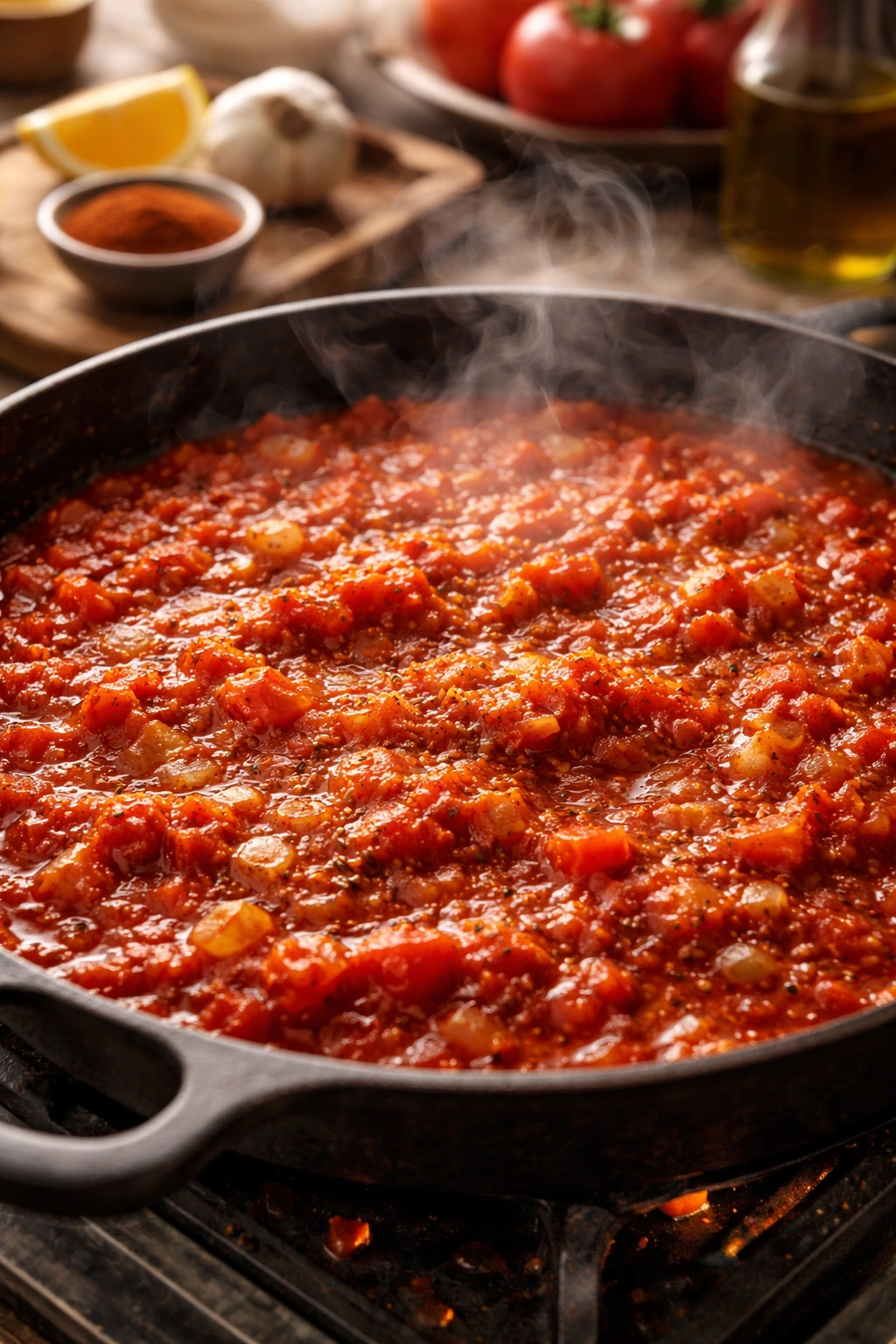
The sauce is where your shakshuka lives or dies, so let’s be clear about what’s happening here. You’re starting with onions in a bit of olive oil or butter, and you’re letting them soften completely. This takes about 5 minutes if your heat is medium and you’re patient, or longer if you’re cooking on low (which actually makes better sauce because the onions caramelize and deepen rather than just turning soft).
Once your onions are soft and starting to look a little golden at the edges, you add your tomatoes along with the spices. Cumin is essential — it’s the spice that makes shakshuka taste like shakshuka. Paprika adds warmth and a gentle sweetness. Salt and pepper do their job. Some versions add a pinch of cayenne if you want heat, but it’s optional. Garlic is optional too, though I typically add a clove or two because I’m not afraid of garlic and neither is anyone I cook for. Fresh cilantro or parsley stirred in at the end brightens everything up, but that’s really a last-minute choice.
The sauce simmers for about 10 minutes, which lets all those flavors come together and lets the tomatoes break down into something silky. You want it to thicken up enough that it’s not watery, but it should still move when you tilt the pan. If it’s too thin, it’ll cook the eggs too fast and they’ll end up rubbery. If it’s too thick, the eggs will sit on top like little islands instead of nestling into the heat.
Creating the Perfect Tomato-Spice Balance Without Overthinking It
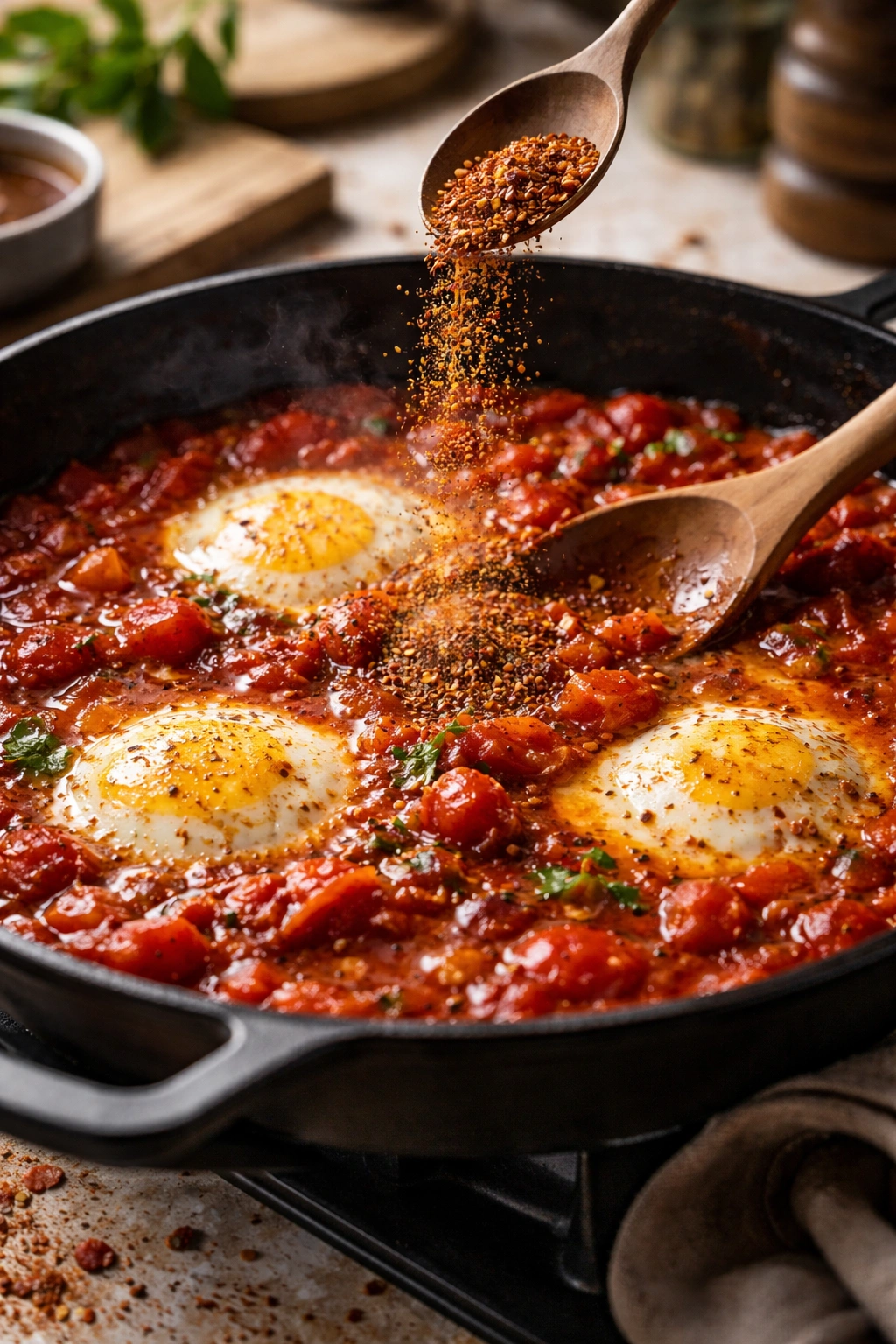
This is where people get in their own way. They start second-guessing the spice amounts or wondering if they should toast the spices first or whether they need special imported paprika. Stop. You can take all of that complexity and throw it out the window. What you need is the confidence to taste as you go and adjust.
Start with the amounts I give you below. Taste the sauce before you add the eggs. Does it taste warm and spiced, or does it taste like tomato soup? If it’s bland, a pinch more cumin will fix it. Too spicy? Add a bit more tomato or a splash of water. This isn’t rocket science. Your palate is a better guide than any strict recipe, and this is one of the few dishes where adjusting mid-cook is not only acceptable but expected.
The spices should make you notice them without tasting like a spice rack exploded into your sauce. You should taste tomato first, then warmth, then depth. The cumin in particular has a slightly earthy, toasty flavor that makes you feel like you’re eating something from a market in Morocco or Istanbul even though you’ve never left your kitchen.
Don’t brown your spices in a separate pan first unless you genuinely love that technique. Toasting spices separately is great if you’re making a curry or something that requires that level of precision. Shakshuka is looser than that. Adding them directly to the oil with the onions works just fine and saves you a step.
Making Shakshuka in Cast Iron or Your Everyday Skillet

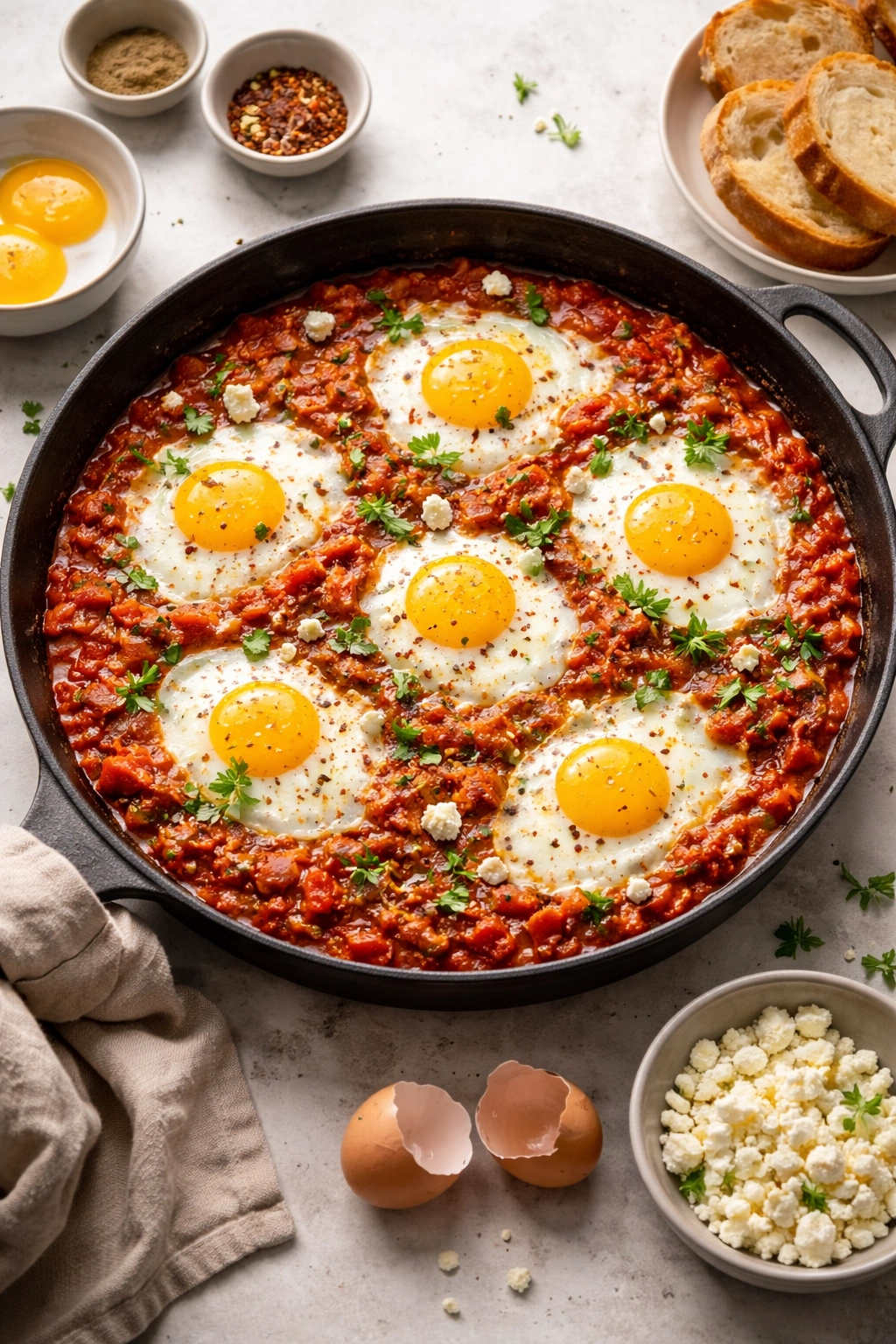
Cast iron is the showstopper option because you can literally bring it to the table and let people serve themselves straight from the pan. It’s warm, it’s pretty, and it stays hot the entire time you’re eating. If you’re using cast iron, make sure it’s been seasoned well enough that your eggs don’t stick. A 10-inch skillet is perfect for feeding two people generously or three people as part of a bigger brunch spread.
Here’s the sequence: Get your sauce simmering on medium heat. Once it’s bubbly and smells incredible, create small wells in the sauce with the back of a spoon — you’re going to crack one egg into each well. The wells keep the eggs from sliding around and help them cook at roughly the same rate. You need about one and a half inches of sauce under each well so the eggs actually cook gently instead of immediately setting on the bottom of the pan.
Crack your eggs into a small bowl first. This prevents shells from ending up in your sauce and lets you control how gently they go into the hot sauce. A gentle crack means the whites stay intact and don’t get tough from being shocked by heat. Slide each egg into its well, starting with the ones that are farthest from you (in case of spills, you want gravity working in your favor).
Lower the heat to medium-low. The sauce should barely bubble around the eggs — you’re poaching them, not boiling them. If the sauce is violent and bubbly, the whites will get tough and the yolks will cook through before you want them to. Cover your pan loosely (a lid, foil, even a baking sheet balanced on top works) and let it go for about 5 to 7 minutes, depending on how runny you like your yolks.
You’ll know they’re done when the whites are completely opaque but the yolks still jiggle slightly when you nudge the pan. That jiggle is what you’re after. A little bit of give in the yolk means a perfect runny center that spills into the sauce when you break it open. That’s the whole point.
Yield: Serves 2-3 people | Makes 4-6 eggs in sauce
Prep Time: 15 minutes (chopping and combining)
Cook Time: 20 minutes (simmering sauce plus egg cooking)
Total Time: 35 minutes
Difficulty: Beginner — The only skill you need is the ability to crack an egg gently and have patience. No flipping, no timing precision, no special technique. If you can make scrambled eggs, you can make shakshuka.
For the Shakshuka:
- 2 tablespoons olive oil or butter (or a combination)
- 1 medium yellow or white onion, diced into half-inch pieces
- 1 red or orange bell pepper, diced (optional but adds sweetness and color)
- 2 to 3 cloves garlic, minced fine (or 1/2 teaspoon garlic powder if you prefer)
- 1 teaspoon ground cumin
- 1/2 teaspoon paprika (sweet or smoked, whatever you have)
- Pinch of cayenne pepper (optional — add only if you like heat)
- 1 can (28 ounces) whole or crushed San Marzano tomatoes (or about 3-4 pounds fresh tomatoes, chopped)
- 1/2 teaspoon fine sea salt (add more to taste after the sauce is done)
- 1/4 teaspoon black pepper
- 4 to 6 large eggs, room temperature
- Handful of fresh cilantro or parsley, roughly chopped (optional but encouraged)
- Splash of water or tomato juice (keep nearby in case the sauce gets too thick while eggs cook)
To Serve:
- Crusty bread (pita, sourdough, ciabatta, whatever you have)
- Greek yogurt or labneh for dolloping
- Extra olive oil for drizzling
- Flaky sea salt for finishing (Maldon salt if you have it)
Make the Tomato Sauce Base:
-
Heat the olive oil or butter in a 10-inch skillet over medium heat until it’s shimmering. If you’re using butter, let it foam slightly and smell nutty, but don’t let it brown.
-
Add the diced onion and bell pepper (if using) to the hot oil. Cook, stirring occasionally, for 5 to 7 minutes, until the onion is soft and translucent and the edges are just starting to turn golden. You should be able to break a piece of onion apart with the back of your spoon with almost no pressure. Don’t rush this step — soft, sweet onions are the foundation of great shakshuka.
-
Add the minced garlic and cook for 1 more minute, stirring constantly, until the raw garlic smell fades and you can smell something toasty and cooked. Fresh garlic burns quickly, so don’t leave it alone.
-
Sprinkle in the cumin, paprika, and cayenne (if using). Stir constantly for about 30 seconds — this toasts the spices slightly and releases their oils into the butter or oil. You’ll smell a warm, almost smoky fragrance. This is exactly what you want.
-
Pour in the canned tomatoes (juice and all) or your chopped fresh tomatoes. If you’re using canned whole tomatoes, break them apart with the back of your spoon as they hit the pan. Stir in the salt and black pepper. Don’t be stingy with the salt — the tomatoes and eggs need it to taste fully themselves.
-
Bring the sauce to a gentle simmer. You’ll see bubbles breaking the surface at a regular pace, but it shouldn’t be a rolling boil. Reduce the heat to medium-low and let it simmer for 10 minutes without a lid. The sauce will thicken slightly, the raw tomato flavor will mellow, and all the spices will marry together into something deeply flavorful.
-
Taste the sauce at this point. Does it need more salt? More warmth from the spices? Add what it needs. This is your moment to adjust — taste before the eggs go in, and you won’t have regrets.
Cook the Eggs:
-
Once you’re happy with the sauce, use the back of a spoon to gently create 4 to 6 shallow wells in the surface of the sauce, spaced evenly apart. These wells are where your eggs will live while they cook.
-
Crack each egg into a small bowl one at a time. Gently pour each egg into one of the wells. Start with the eggs that are farthest from you (so if one drips, it won’t splash on you). Handle the eggs gently — intact whites mean more elegant shakshuka.
-
Once all the eggs are in, reduce the heat to medium-low. The sauce should barely bubble around the eggs — you want a gentle, barely-there simmer, not an aggressive boil. If the sauce is bubbling too hard, the whites will get rubbery and the yolks will cook too fast.
-
Cover the skillet with a lid, a piece of foil, or even a baking sheet if you don’t have either. The cover traps heat and helps the eggs cook through gently without drying out.
-
Cook undisturbed for 5 to 7 minutes, depending on how soft you like your yolks. Peek after 5 minutes — the whites should be almost completely opaque, and the yolks should jiggle slightly when you move the pan gently. If the yolks still look raw and the whites are still translucent, cover again and cook for another minute or two.
-
When the eggs are done, the whites will be completely opaque and set, but the yolks will still have that slight jiggle that means a runny, liquid center. This is non-negotiable for great shakshuka — a hard yolk is a wasted opportunity.
-
Remove the pan from heat. Scatter the fresh cilantro or parsley over the top if you’re using it. Drizzle with a bit more olive oil and a pinch of flaky sea salt.
Tips and Techniques for Shakshuka That Actually Tastes Restaurant-Quality
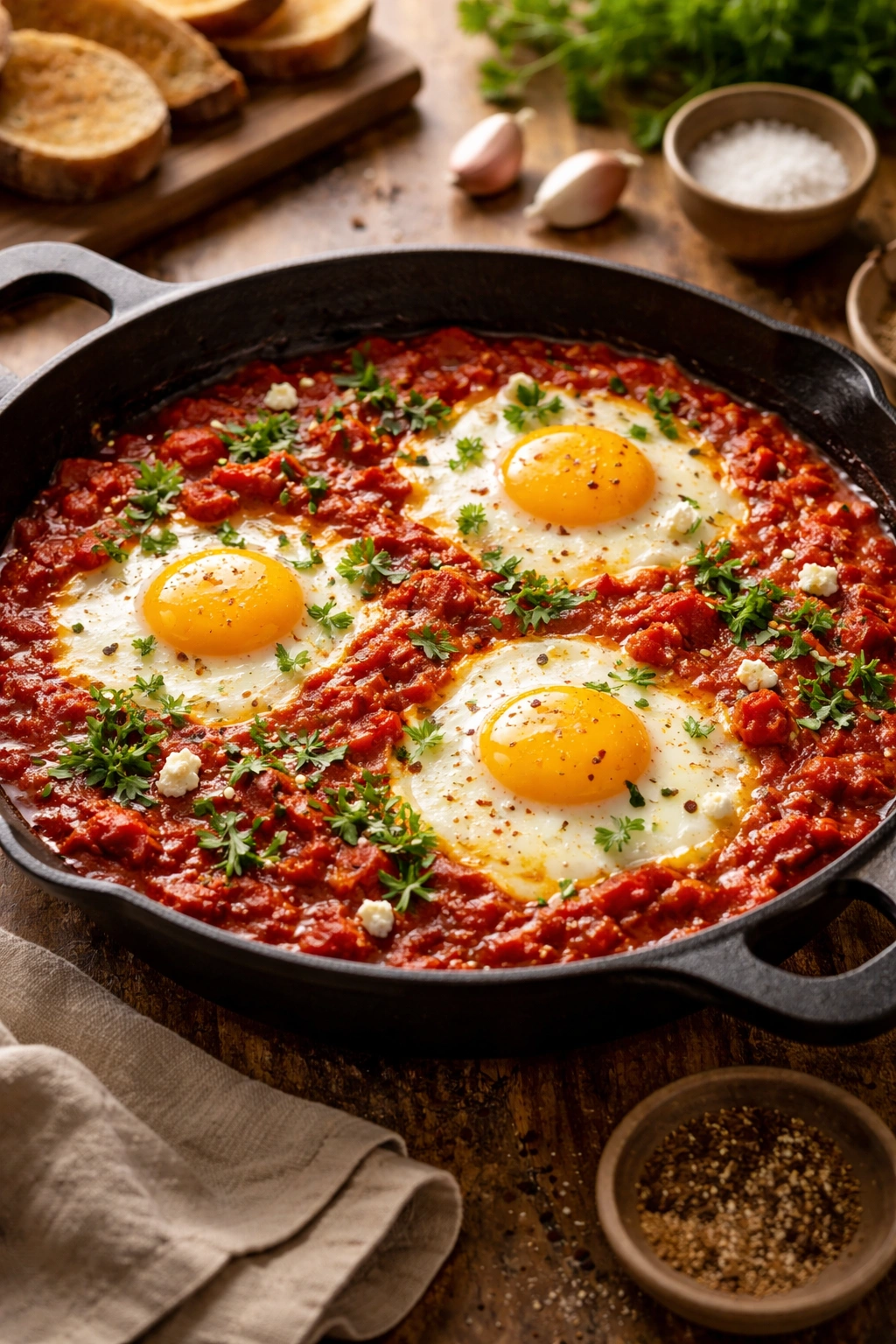
Temperature control is the secret that nobody talks about. If your sauce is too hot when the eggs go in, the bottoms of the eggs will cook too fast and you’ll end up with tough whites before the yolks are even close to done. Medium-low heat is genuinely all you need. Your sauce should bubble gently and slowly, not like it’s angry. Think “peaceful simmer,” not “rapid boil.”
Don’t skip the step of creating wells in the sauce. It sounds fussy, but it’s actually what prevents your eggs from sliding around, getting separated, or cooking unevenly. The wells are shallow — you’re just nudging the sauce aside with the back of your spoon, not creating deep crevasses. These little pockets keep the egg whites in contact with the heat while letting the yolks cook gently in the warmth from the sauce around them.
Room temperature eggs are genuinely better than cold eggs straight from the fridge. Cold eggs take longer to cook and are more likely to crack from the temperature shock. Leave them out for 15 minutes while you’re making the sauce. This is the kind of small detail that separates okay shakshuka from really good shakshuka.
The covering of the pan is important but doesn’t have to be perfect. You’re not trying to create an airtight seal. You’re just trapping enough heat to gently cook the tops of the eggs without drying them out. Foil works great because it lets you peek without losing heat. A regular lid works too. Even a baking sheet balanced on top will do. The point is to create a chamber of warm, gentle heat above the eggs.
Common Mistakes That Wreck Shakshuka Faster Than You’d Think
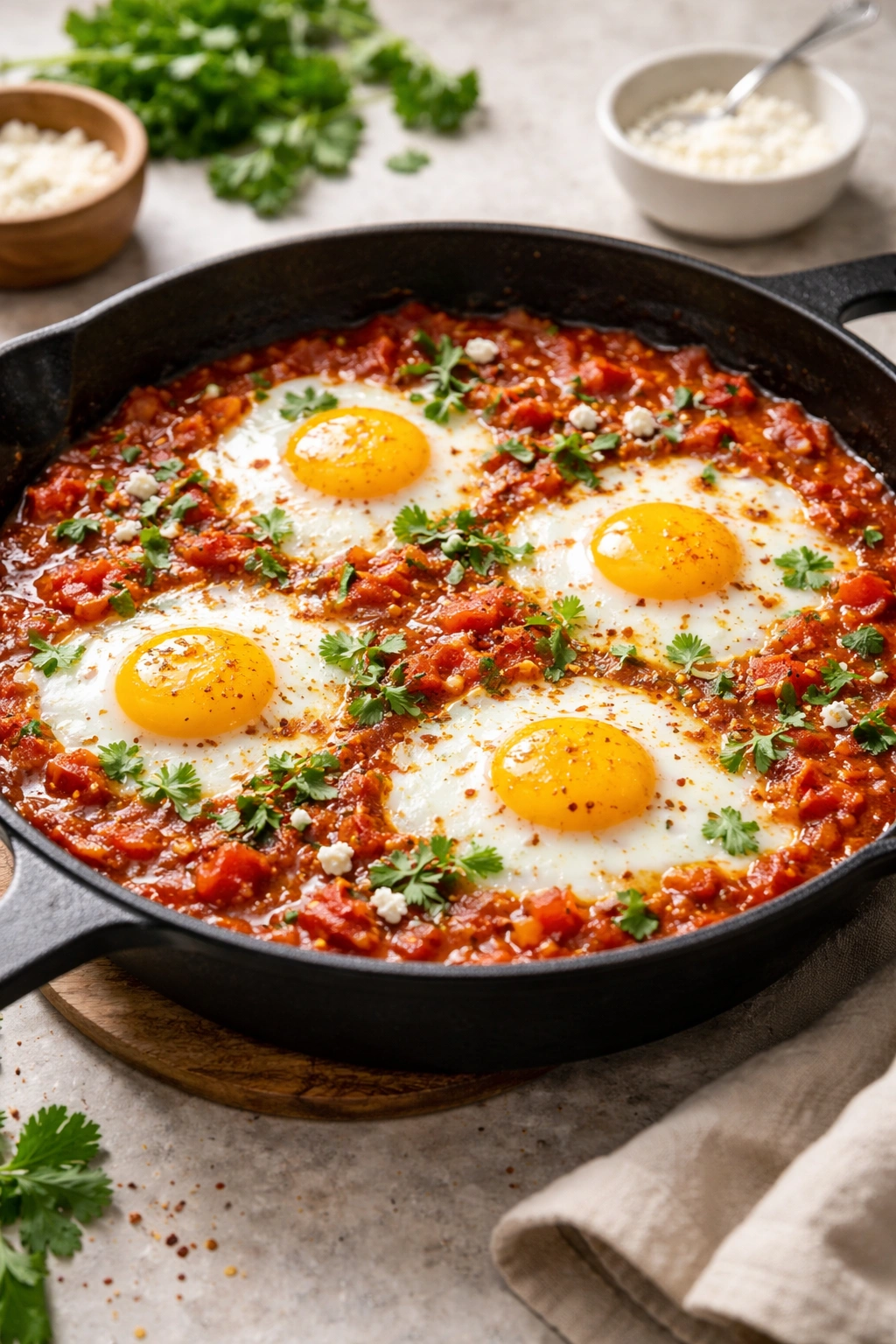
Sauce that’s too watery is the most common mistake. If your tomatoes gave up too much liquid and your sauce is basically tomato soup, the eggs will cook too fast and end up rubbery. Fix this by simmering the sauce uncovered for a few extra minutes before the eggs go in, or by adding the sauce without all of its juice if you’re using canned tomatoes. You want the sauce to coat the back of a spoon, not slosh around like liquid.
Cooking the sauce too hot ruins everything. A violent boil will give you tough egg whites and overcooked yolks in half the time you want. The only reason to cook on high heat is if you’re in a genuine hurry, and in that case, you shouldn’t be making shakshuka. This is a slow, gentle, deliberately relaxed dish. Respect that.
Underseasoning the sauce is more common than you’d think. People are scared of salt. Don’t be. Your sauce should taste slightly salty on its own before the eggs go in — not aggressively so, but noticeably seasoned. The eggs are essentially blank slates. They’ll taste like whatever flavor the sauce brings to the table. If the sauce is bland, the whole dish is bland.
Overcooking the yolks defeats the entire purpose. If those yolks are hard and yellow all the way through, you’ve basically made a food safety inspection station’s dream and a brunch lover’s nightmare. The magic is in the runny center. You’re aiming for whites that are completely set and yolks that jiggle just slightly. That’s the target. When you’re not sure, stop cooking a minute early. The eggs keep cooking for about a minute after you pull the pan off the heat.
Flavor Variations You Should Absolutely Try
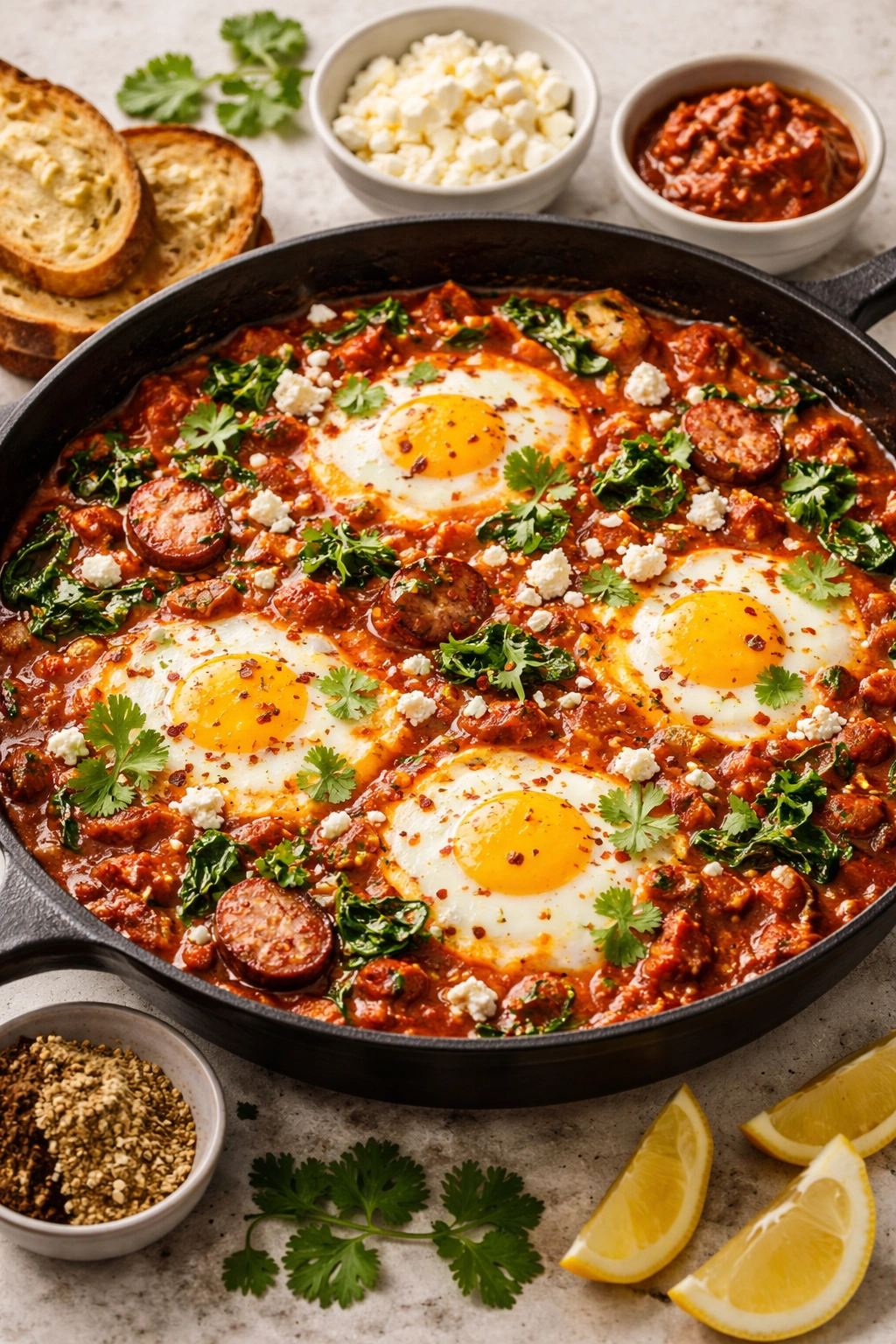
The basic version is perfect, but shakshuka is genuinely adaptable. A lot of people add a pinch of ground coriander along with the cumin for something that tastes even more aromatic and slightly spiced. Harissa — that North African chili paste — is incredible stirred into the sauce if you want more heat and complexity. Start with a teaspoon and taste your way up.
Fresh or dried feta stirred into the sauce at the last minute (after the eggs are done cooking) adds a salty, tangy richness that transforms the whole dish. Crumble it while the pan is still hot so it partially melts. Merguez sausage (a spiced North African sausage) cooked and diced and added to the sauce is how they make shakshuka in some parts of Morocco. If you can find merguez, cook a couple of them in a separate pan, slice them, and add them to the sauce.
Spinach, chopped kale, or even frozen spinach stirred into the sauce a minute before the eggs go in adds vegetables without changing the basic flavor profile. Just thaw and squeeze dry if you’re using frozen. Mushrooms sautéed with the onions add earthiness and body. Caramelized onions (which take longer but are unbelievably good) create a deeper, sweeter sauce.
A little tomato paste — a tablespoon or two — stirred in with the spices concentrates the tomato flavor and makes the sauce taste richer and darker. Sun-dried tomatoes added with the canned tomatoes bring a concentrated, sweet-savory intensity. Some versions add a tiny splash of red wine vinegar at the very end for brightness and a slight tang. You’re looking for that moment where you taste the sauce and think “something’s different but I can’t quite put my finger on it” — that’s the vinegar working.
Storage and Make-Ahead Options That Actually Work
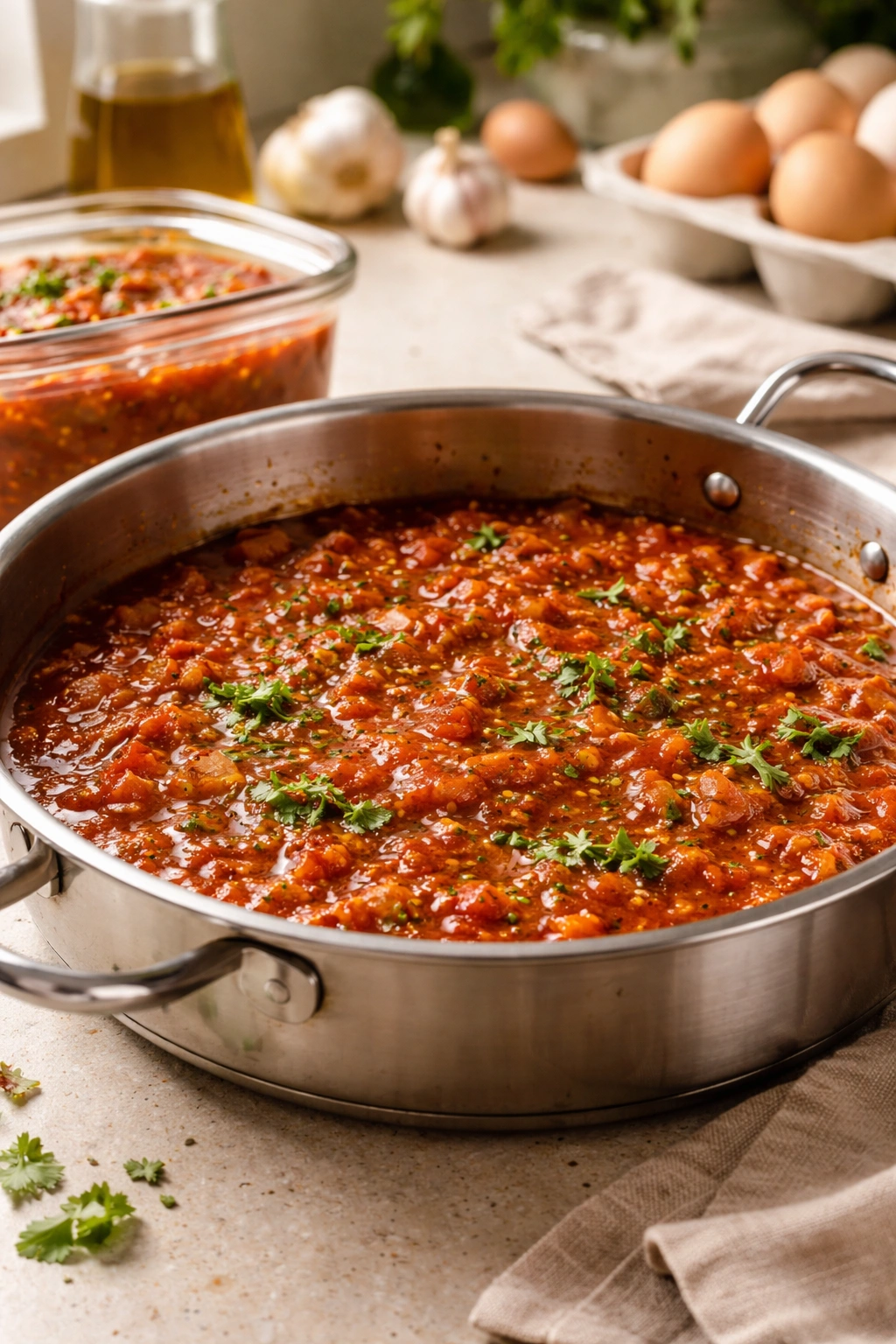
The sauce keeps in the fridge for up to 4 days and is actually better the next day after the spices have had time to deepen. You can make the entire sauce, cool it, and refrigerate it, then reheat it gently on the stove or in the oven and add the eggs right before serving. This is genuinely helpful if you’re trying to entertain without losing your mind in the kitchen.
The eggs themselves don’t reheat well, so don’t make the full shakshuka and expect it to be good the next day. The whites get tough and rubbbery and kind of sad. But the sauce alone is perfect for heating and using with fresh eggs whenever you want. Some people intentionally make extra sauce for this reason — batch it on a Sunday and you’ve got shakshuka ready for Tuesday or Wednesday mornings.
Frozen shakshuka is theoretically possible but pointless. The eggs don’t freeze and reheat well, and the sauce loses some of its brightness. If you’re going to freeze something, freeze just the sauce. Thaw it in the fridge overnight, reheat gently, and add fresh eggs right before serving. You’ll get much better results.
The whole finished dish (eggs and all) stays at room temperature for about an hour and is still genuinely delicious. This is why it’s so great for brunch with friends — you can make it, put it on the table, and people can eat it at their own pace without everything getting cold. The sauce stays warm and the yolks stay just slightly runny for a surprisingly long time.
Serving Suggestions and Pairings That Make It a Real Meal
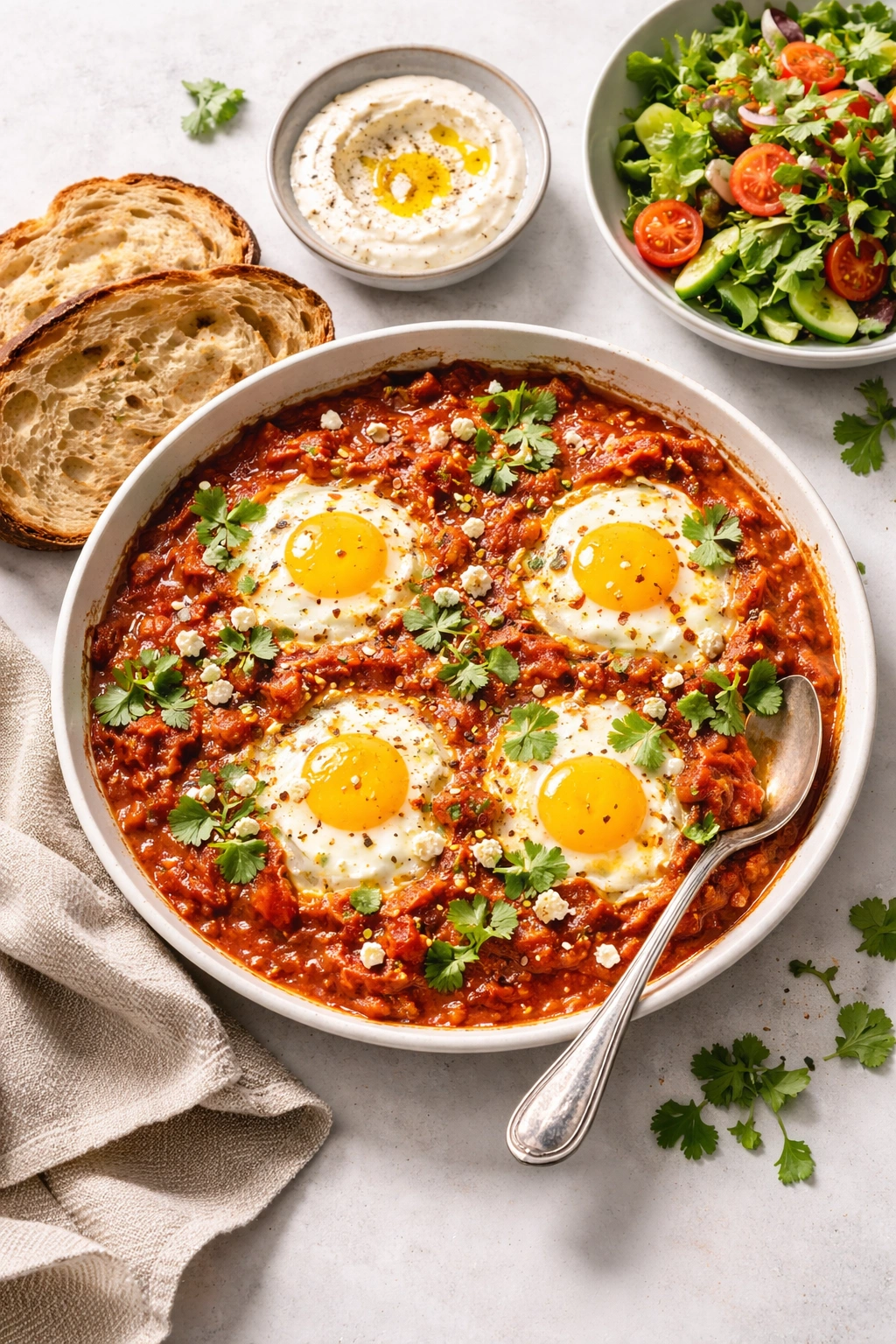
Bread is non-negotiable. You need something to dip into that sauce and scoop up the eggs. Pita bread is authentic and absorbs all the liquid beautifully. Crusty sourdough or ciabatta is what most restaurants use. Even a good quality white bread works. The point is sturdy enough to actually carry a load of sauce without falling apart. Toast it lightly if you have time — the warmth brings out the flavor and it’s slightly less likely to disintegrate.
Greek yogurt or labneh dolloped on top (or on the side for dipping) is absolutely essential. The cool, tangy creaminess against the warm, spiced sauce and the runny yolk is basically perfect. It’s not optional. It’s the fifth ingredient that makes everything sing. If you can’t get labneh (a thicker, tangier yogurt), Greek yogurt does the job beautifully.
A simple green salad with lemon vinaigrette balances the richness of the eggs and the warmth of the sauce. Arugula dressed with just lemon, olive oil, and salt is great. A mix of cucumbers, tomatoes, and red onions is fresh and Mediterranean and very brunch-like. The acidity cuts through the richness and makes you feel like you’ve actually eaten something balanced.
Fresh fruit on the side — citrus, berries, melon — adds brightness without competing with the shakshuka. Coffee or tea is perfect, obviously. If you’re doing a fancier brunch, a dry sparkling wine or a light white wine pairs beautifully. The acidity in the wine echoes the acidity in the sauce and the freshness of any sides.
Extras on the side make people feel spoiled. Sliced avocado, fresh herbs for garnish, a bowl of olives, pickled vegetables if you have them — these aren’t necessary, but they make the meal feel intentional and generous. Put them on small plates or in bowls and let people add what they want. This is the opposite of fussy. It’s actually the most relaxed, welcoming way to serve food.
Troubleshooting What Goes Wrong and How to Fix It Fast
If your sauce breaks (gets watery or separates) as it cooks, it usually means the heat was too high. Move the pan to a cooler burner, reduce the heat to low, and stir gently. The sauce will come back together. It’s not ruined. It just needs to cool down slightly.
If your eggs are cooking too fast or too slow, adjust the heat. Too fast means the sauce is too hot — move to lower heat. Too slow means you need slightly more heat, but only bump it up a little. You’re fine-tuning here, not making dramatic changes.
If your sauce tastes flat and boring, taste it and add salt incrementally. Salt is the answer to most “something’s not right” moments in cooking. A pinch at a time, stir, taste, and adjust. You’ll quickly find the balance.
If the eggs are sticking to the pan, your pan probably isn’t seasoned well (if it’s cast iron) or isn’t non-stick enough. Add a splash more oil or butter to the sauce next time. This helps the eggs slide around instead of sticking. Or use a well-seasoned cast iron or a proper non-stick pan.
If you crack an egg and the shell gets in the sauce, fish it out immediately with a spoon. This is annoying but not a disaster. This is why cracking eggs into a bowl first is genuinely the move — you avoid this whole situation.
Final Thoughts
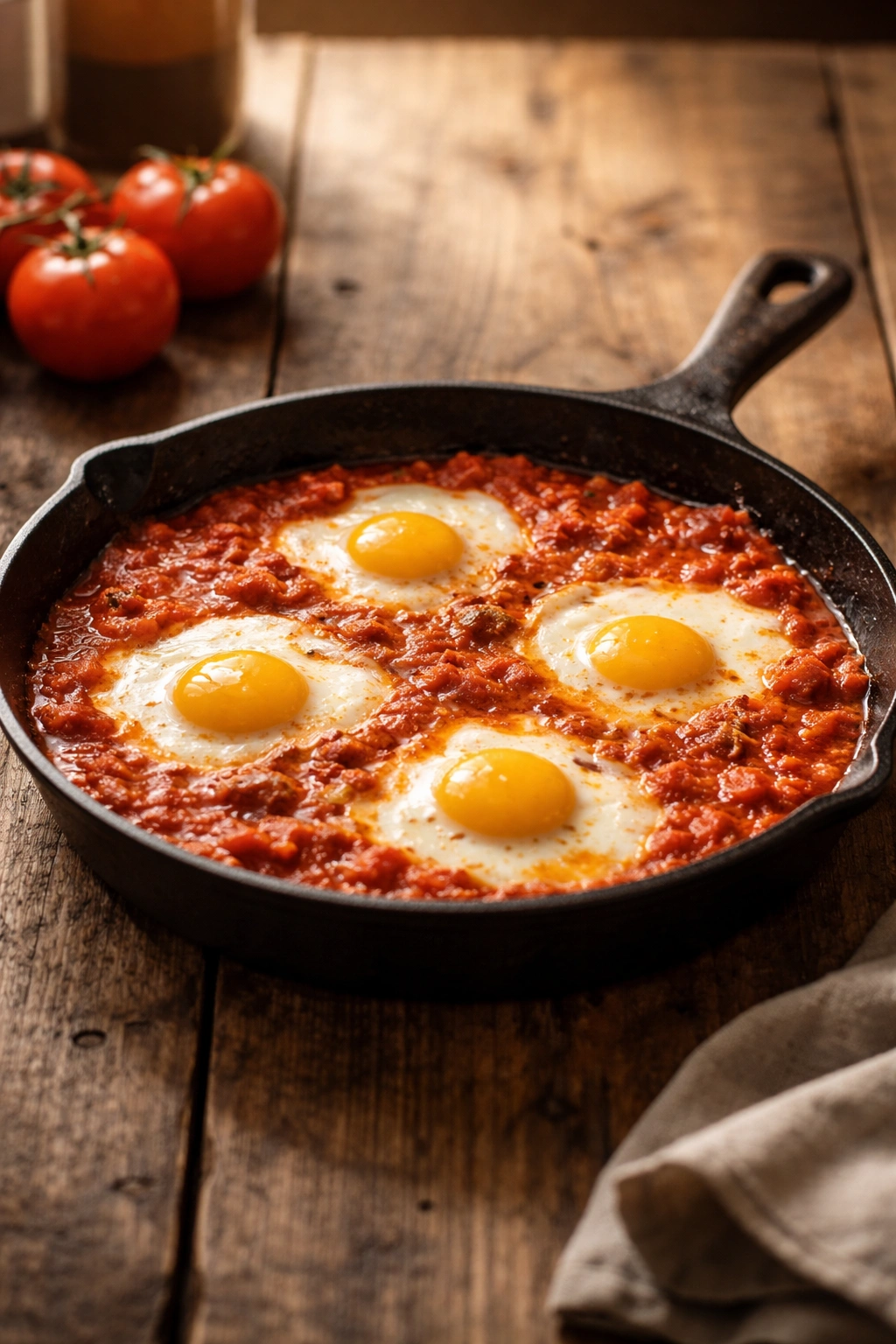
Shakshuka is the kind of food that feels like a celebration without requiring you to prove anything. You’re not trying to impress anyone with complicated techniques or rare ingredients. You’re just taking tomatoes, eggs, spices, and heat and turning them into something that tastes like you spent way more effort than you actually did.
The magic is in the confidence. Know that you don’t need perfect anything — just decent tomatoes, a heavy-bottomed skillet, and the willingness to cook slowly and gently. Season as you go. Taste constantly. Adjust without guilt. This is a dish that rewards paying attention and thinking for yourself, not following rules.
Once you’ve made it once and realized how simple it actually is, you’ll be making it constantly. Weekends with friends. Quiet mornings when you want something warm and satisfying. Those moments when you open the fridge and realize you have eggs and tomatoes and not much else. Shakshuka will be there, forgiving and delicious and ready to transform the simplest ingredients into something memorable.
