



Nothing says comfort like a bowl of creamy mashed potatoes, yet the traditional method takes forever—waiting for water to boil, potatoes to soften, then all the mashing and mixing. But here’s what most home cooks don’t realize: you can have silky, buttery mashed potatoes on the table in just 20 minutes by making a few strategic changes to the standard technique. It’s not about skipping steps or using inferior ingredients—it’s about understanding exactly which techniques actually speed up the process without sacrificing that luxurious, cloud-like texture everyone craves.
The secret lies in three things: cutting your potatoes smaller than you’d normally think, using hot liquid instead of cold to bring them to a boil faster, and choosing the right type of potato for the job. When you know these tricks, you’ll stop thinking of mashed potatoes as a side dish that requires advance planning. Instead, you’ll make them spontaneously on weeknights, knowing they’ll be ready by the time everything else comes together. This guide walks you through exactly how to do it, with the precise timing and technique that makes the difference between watery disappointment and genuinely creamy results.
Why This Recipe Actually Works in 20 Minutes
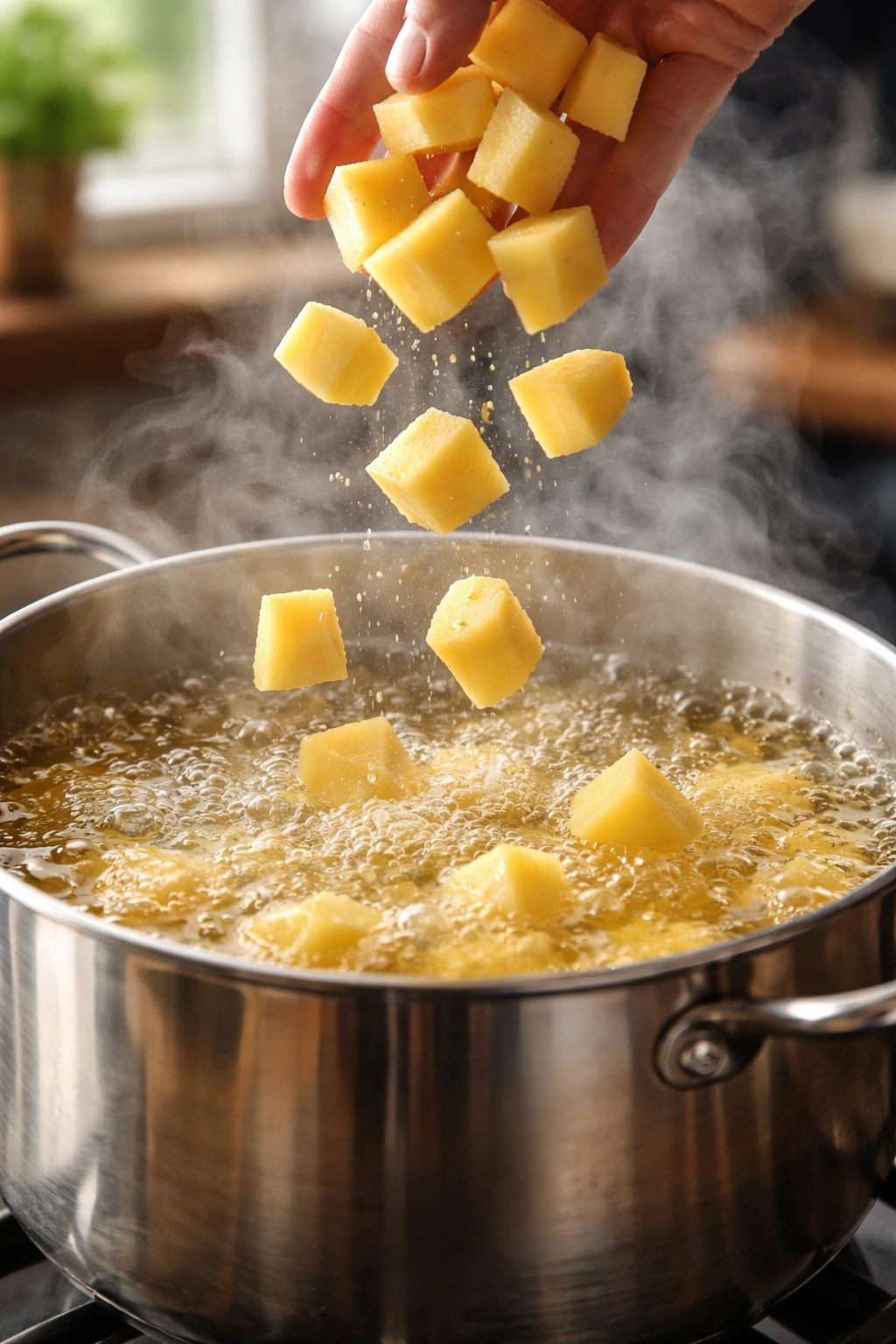
The real speed comes from understanding the physics of cooking. When you cut potatoes into smaller pieces—roughly 1-inch cubes instead of halves—you dramatically increase the surface area that gets exposed to heat. This means the interior reaches tender texture much faster, sometimes in as little as 8-10 minutes instead of 15-20. It sounds like a small detail, but it’s the difference between the entire recipe taking 25 minutes versus 40.
Starting with hot water instead of cold water saves another 3-4 minutes. Most recipes tell you to cover cold potatoes with water and bring everything to a boil, but if you boil the water first in a separate pot and then add the cut potatoes to the already-boiling water, you skip the entire “waiting for boil” phase. The potatoes start cooking immediately.
The type of potato matters too. Waxy potatoes like Yukon Golds have a lower starch content, which means they hold their shape better and cook more evenly than starchy russets. They also naturally have a creamier texture that requires less cream or butter to achieve that luxurious mouthfeel. Using Yukon Golds (or a blend of Yukon and red potatoes) lets you get away with less dairy while still achieving that silky result.
Finally, keeping everything hot—including the cream, butter, and even your mashing bowl if you have time—prevents the potatoes from cooling down and becoming stiff. Cold dairy cools the potatoes and makes them harder to incorporate smoothly. These four things combined take what would normally be a 35-minute side dish and compress it into 20 minutes without any shortcuts in flavor or texture.
The Right Potatoes Make All the Difference
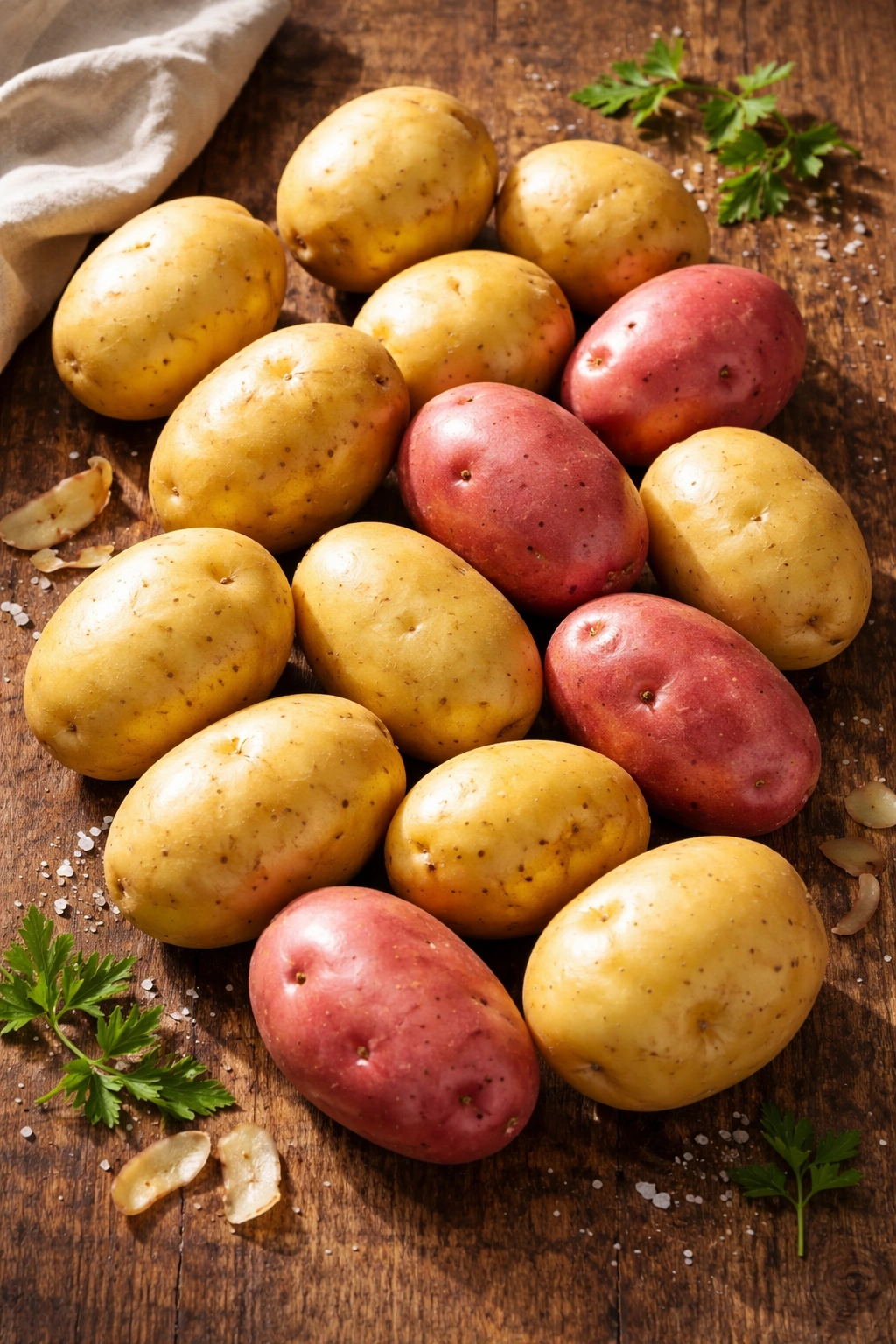
Choosing Yukon Gold potatoes is genuinely non-negotiable for this recipe. These golden, waxy potatoes have naturally creamy flesh and a buttery flavor that works with you instead of against you. Unlike russet potatoes, which are very starchy and can turn gluey if you overwork them (which happens easily with fast mashing), Yukon Golds are forgiving.
Red potatoes work beautifully too, especially if you want a slightly lighter, brighter result. They have thin skins that you can leave on if you like—this adds a nice visual contrast and a subtle earthiness. Many people who grew up with smooth mashed potatoes think leaving the skin on sounds odd, but it’s actually traditional in many cuisines and adds genuine texture and flavor interest.
If you have a choice, buy potatoes that are similar in size. This ensures they cook at the same rate, so you don’t end up with some chunks still firm while others are falling apart. You want every piece to be perfectly tender at exactly the same moment. If your potatoes are wildly different sizes, either cut the larger ones smaller or try to select evenly-sized ones from the bin.
Store your potatoes in a cool, dark place—not the refrigerator, as cold temperatures convert some of the starch to sugar, which can actually make them cook less evenly. Room temperature potatoes cook more predictably and consistently.
What You Need to Know Before You Start
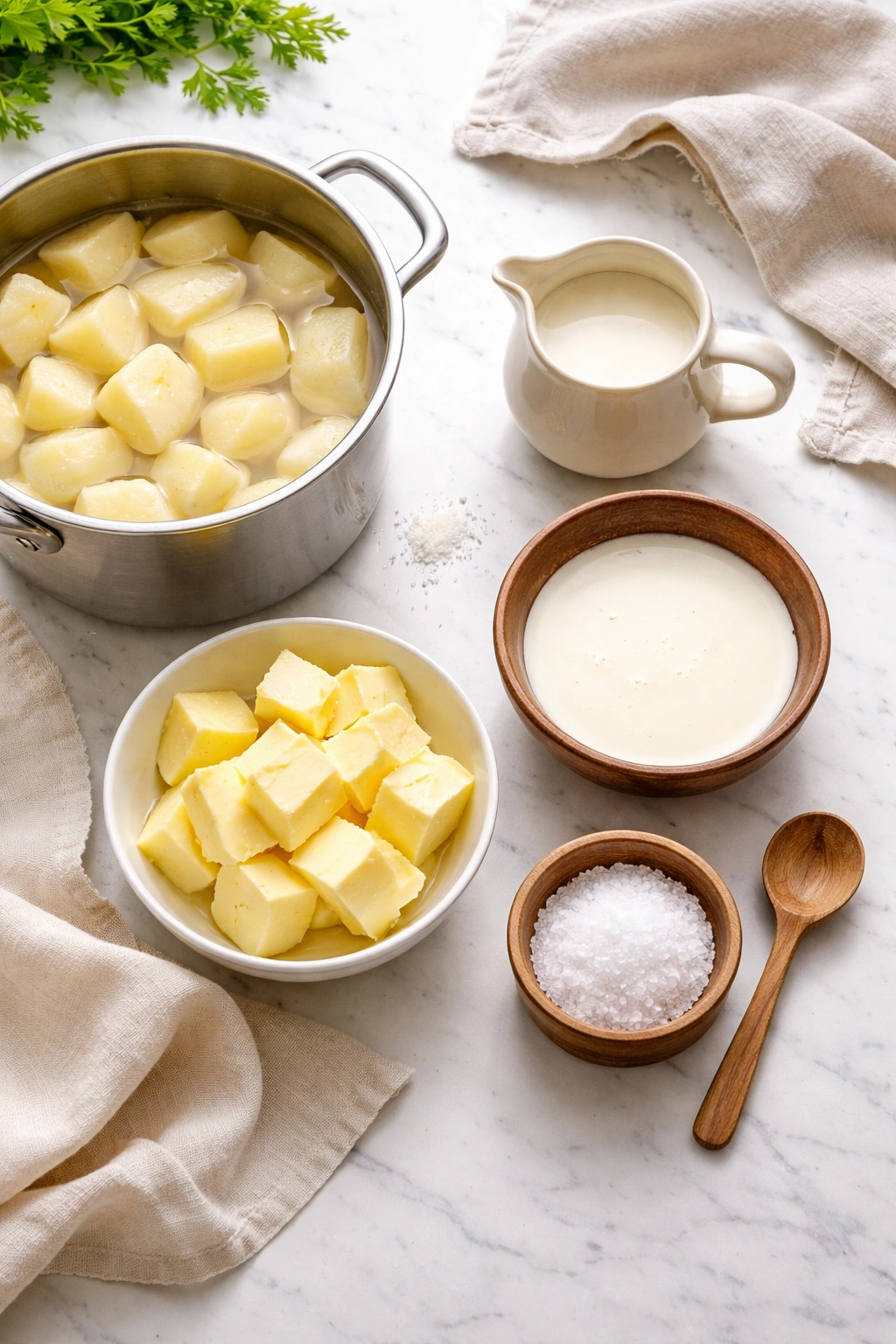
The most important thing is to have all your ingredients prepped and ready before you start cooking. This is where the 20-minute timeline becomes realistic. Measure out your butter, cream, and salt while your water is boiling. Have a colander ready. Set up your ricer or masher in a convenient spot. This isn’t pretentious chef talk—it’s practical timing that keeps the process flowing.
Your dairy should be at room temperature or slightly warm, ideally. If your cream comes straight from the refrigerator, it will cool the potatoes down as you fold it in, and you’ll lose the creamy texture you worked to build. The easiest trick is to pour your cream into a microwave-safe bowl and warm it for 30-45 seconds before you start mashing. Same with the butter—let it soften slightly on the counter while the potatoes cook.
Salt is one of the most underestimated elements of mashed potatoes. Season the water generously (it should taste like sea water), then taste as you go and adjust. Many people under-salt because they’re afraid of “adding salt,” but undersalted mashed potatoes taste flat and one-dimensional, while properly salted ones taste deeply creamy and rich. This is your biggest opportunity to improve the flavor with almost no effort.
The difference between good and mediocre mashed potatoes often comes down to the technique of folding in the dairy, not the ingredients themselves. Fold gently with a rubber spatula instead of aggressively stirring or mashing further after you’ve already broken down the potatoes. Overworking releases more starch, which makes the texture gluey instead of creamy. Once your potatoes are mostly smooth, stop mashing and start folding carefully.
Ingredients for Perfectly Creamy Mashed Potatoes
Yield: Serves 4 to 6 | Makes about 4 cups
Prep Time: 10 minutes
Cook Time: 10 minutes
Total Time: 20 minutes (not counting warming the cream)
Difficulty: Beginner — no special equipment required, straightforward steps, hard to mess up once you know the technique.
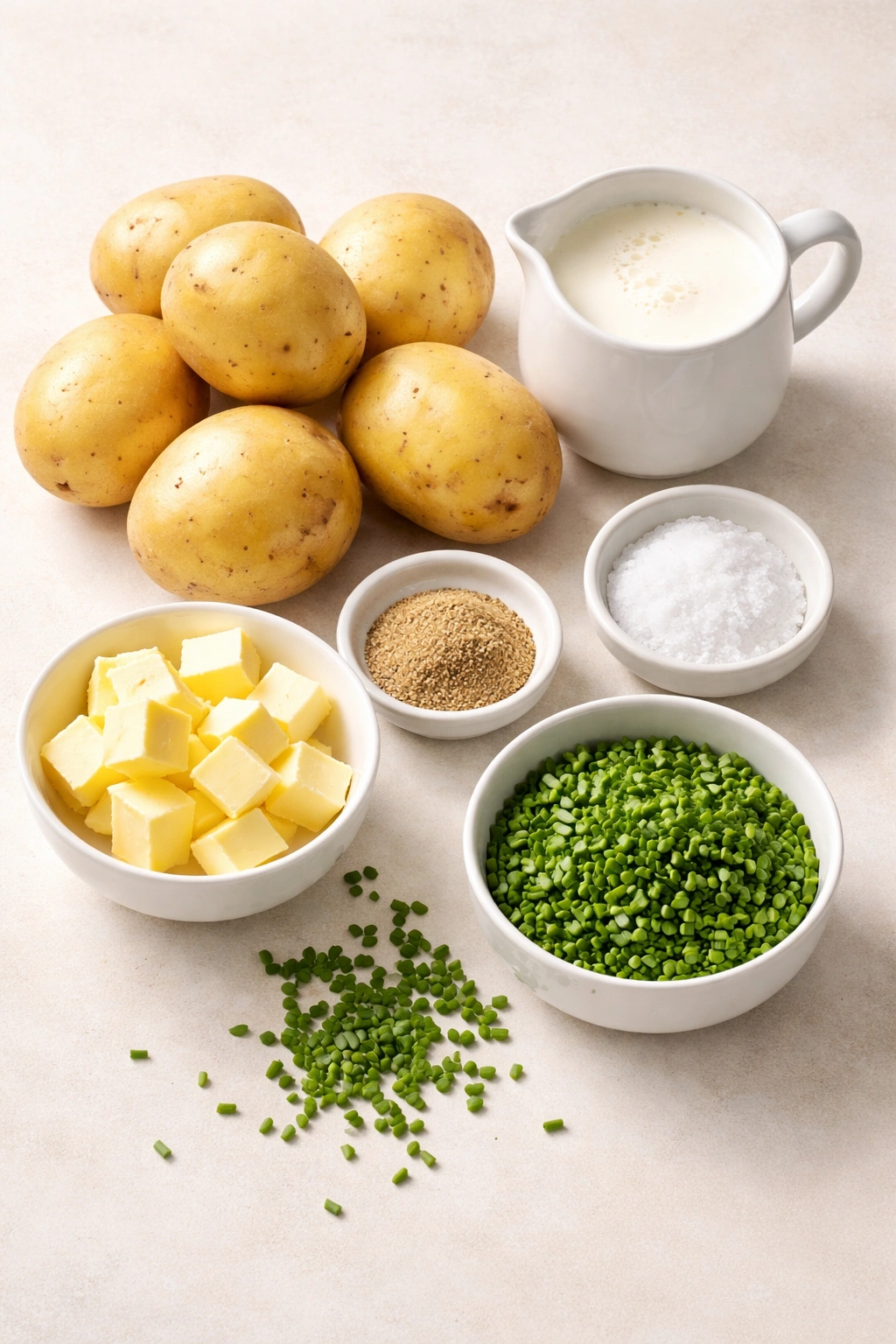
- 2 pounds Yukon Gold potatoes (about 6-7 medium potatoes), peeled and cut into 1-inch cubes
- 6 cups water (plus more if needed)
- 2 teaspoons fine sea salt, divided (1½ teaspoons for the cooking water, ½ teaspoon for final seasoning)
- 4 tablespoons (½ stick) unsalted butter, softened to room temperature
- ¾ cup heavy cream or whole milk (or a mix of both), warmed
- ¼ teaspoon white pepper (or freshly cracked black pepper, if you prefer)
- 2 tablespoons fresh chives or flat-leaf parsley, finely chopped (optional, for garnish)
Optional Additions for Extra Flavor:
- 2-3 cloves roasted garlic, mashed into a smooth paste
- 2 tablespoons grated Parmesan or sharp cheddar cheese
- 1 tablespoon whole-grain mustard or Dijon mustard
- ½ teaspoon smoked paprika
- Fresh herbs like thyme or rosemary (add during cooking with the potatoes, remove before mashing)
Step-by-Step Instructions for Perfect Mashed Potatoes
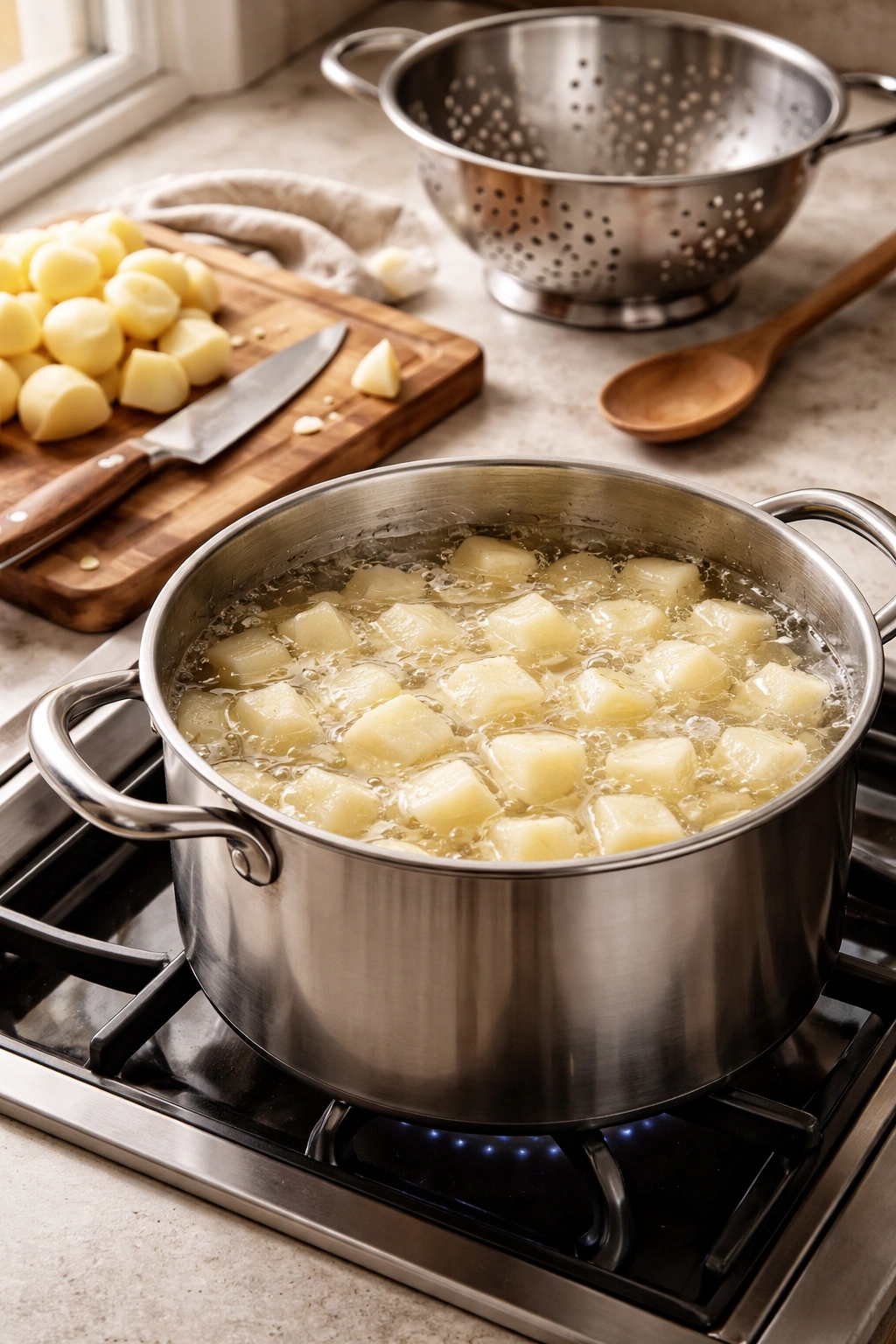
Prepare the Potatoes and Start the Water:
-
Fill a large pot with 6 cups of water and bring it to a rolling boil over high heat. While the water heats, peel your Yukon Gold potatoes and cut them into roughly 1-inch cubes — consistency matters here, so aim for pieces that are similar in size so they cook at the same rate. Uneven pieces will lead to some potatoes that are mushy while others are still firm.
-
Once the water is at a full boil (you’ll see a vigorous rolling boil with lots of large bubbles breaking the surface), add 1½ teaspoons of fine sea salt. The water should taste noticeably salty, like seasoning the potatoes themselves. Stir briefly to dissolve the salt.
-
Carefully add the cut potatoes to the boiling water. They’ll sink to the bottom — stir once to make sure they’re all submerged and not sticking to the bottom of the pot. The water should return to a boil within 1-2 minutes; if it takes longer, your pot may be overcrowded, which means the potatoes won’t cook evenly. If needed, work in two batches, but this usually isn’t necessary.
Cook the Potatoes Until Perfectly Tender:
-
Once the water returns to a boil (you’ll see it actively bubbling around the potatoes), reduce the heat to medium-high and cook uncovered for 8 to 10 minutes. The potatoes are done when a fork pierces the largest cube with almost no resistance — the potato should feel completely soft and tender inside. Undercooked potatoes will have a hard, starchy center; overcooked ones will start to fall apart or become waterlogged. You’re looking for that perfect moment when they’re as soft as butter but still hold their shape.
-
While the potatoes cook, warm your heavy cream. Pour it into a microwave-safe bowl or measuring cup and microwave for 45 seconds to 1 minute, just until it’s warm to the touch but not steaming. Alternatively, you can heat it gently in a small saucepan over low heat, stirring occasionally. Do not skip warming the cream — cold dairy will cool your potatoes and make them harder to incorporate smoothly, resulting in a less creamy texture.
Drain and Mash:
-
When the potatoes are tender, carefully pour them into a colander set over a bowl or sink. Shake the colander gently to drain as much water as possible — wet potatoes make watery mashed potatoes. Do not rinse the potatoes after draining; you want to keep the starches that help create the creamy texture.
-
Return the drained potatoes to the hot pot (off the heat now). Let them sit in the pot for 30 seconds to evaporate any remaining surface moisture. This step is subtle but genuinely matters — surface water interferes with creaminess.
Advertisements -
Using a potato ricer or masher, break down the potatoes into a smooth base. If you have a ricer, use it — it creates the most uniformly creamy texture and is worth the 30 seconds of extra work. Push the potatoes through in batches, allowing them to fall back into the pot. If you’re using a hand masher, press and fold until the texture is mostly smooth, then stop. Do not over-mash yet; you’ll do more folding work in the next step.
Fold in the Butter and Cream:
-
Add the softened butter to the mashed potatoes and fold gently with a rubber spatula, rotating the bowl and cutting down through the center, then sweeping along the bottom and up the side. Fold for about 30 seconds until the butter is evenly distributed and the mixture looks slightly smoother.
-
Add half of the warmed cream (about ⅜ cup) and fold gently again for about 20 seconds. Add the remaining cream and continue folding until the mixture is uniformly creamy and silky. This folding motion is key — if you aggressively stir or continue mashing at this point, you’ll activate more starch and end up with a gluey texture instead of creamy. Fold gently and stop as soon as everything is combined.
Season and Finish:
-
Taste a spoonful and season with the remaining ½ teaspoon of salt and the white pepper (or black pepper if you prefer the visual contrast). Fold these in gently. White pepper is traditional here because it blends invisibly into the white potatoes, but black pepper is equally delicious if you like the peppery specks to be visible. If you’re adding optional ingredients like roasted garlic, cheese, or mustard, fold them in now, one at a time, tasting as you go.
-
Transfer the mashed potatoes to a serving bowl and garnish with fresh chives or parsley if desired. Serve immediately while hot and creamy — mashed potatoes are best eaten straight from the pot. If they need to sit for more than a few minutes, cover them loosely with foil to keep them warm without trapping too much steam, which can make them gluey.
Common Mistakes That Wreck the Texture
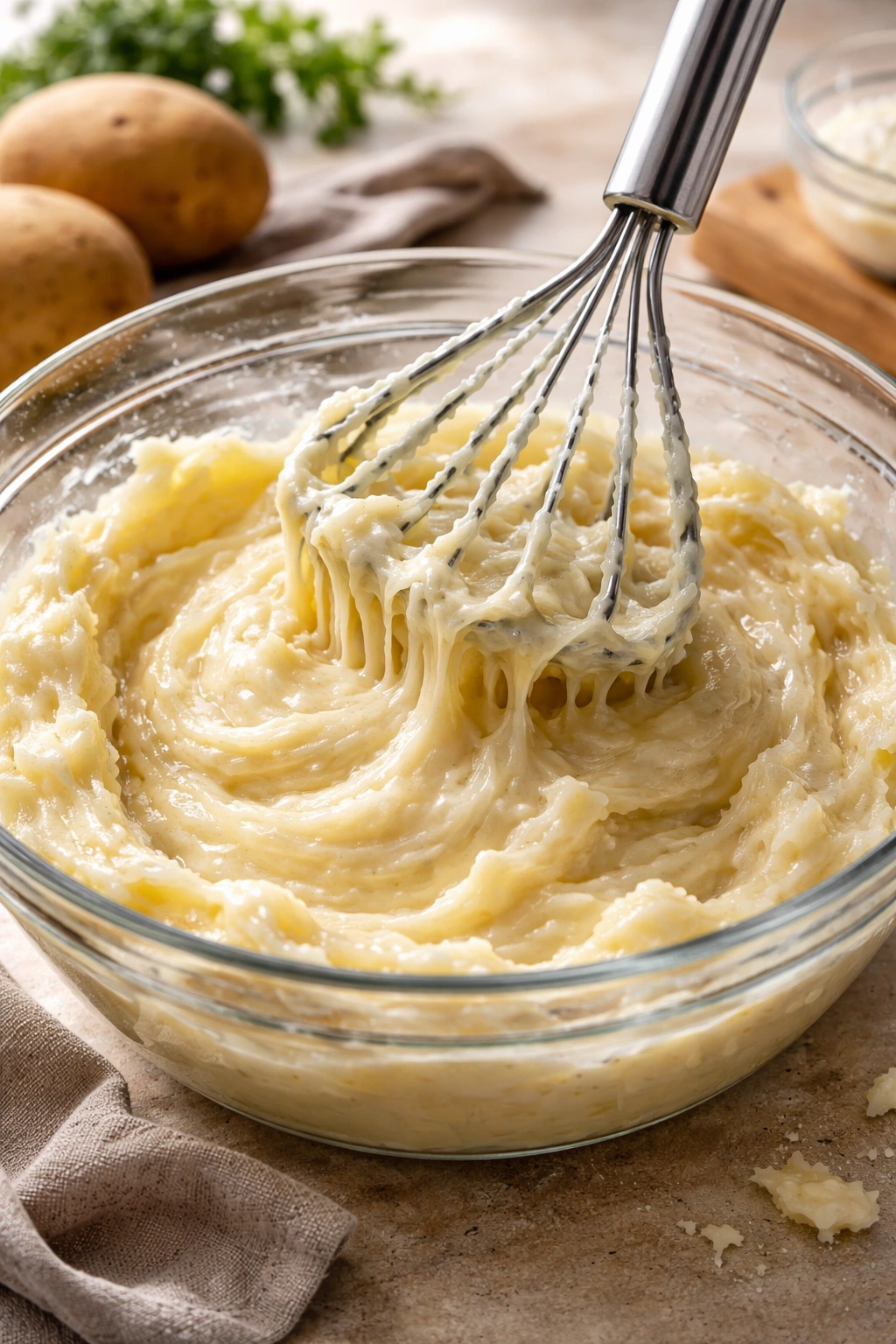
The biggest mistake is over-mashing or over-mixing. The moment your potatoes look creamy, stop. Seriously, just stop. Every additional stroke of the masher or fold of the spatula activates more starch, which transforms creamy mashed potatoes into something that tastes thick, gluey, and starchy. This is why whisking or using a hand mixer is actually a terrible idea for mashed potatoes—the vigorous action develops starch just like kneading develops gluten in bread. A simple ricer or old-fashioned masher is genuinely the right tool.
Using cold dairy is the second biggest culprit. When you fold cold butter or cold cream into hot potatoes, the temperature drops rapidly, which makes the mixture stiff and makes it harder to incorporate smoothly. Warm your cream in the microwave for a minute while the potatoes cook. It takes 45 seconds of planning and completely changes the outcome.
Draining the potatoes inadequately is another common issue. If you leave them sitting in the colander and they reabsorb water, or if you rinse them after draining, you’ll end up with watery, bland mashed potatoes. Drain thoroughly, let them sit briefly in the hot pot to evaporate surface moisture, and you’re set.
Using russet potatoes when you don’t know the technique is also problematic. Russets are very starchy and can turn into wallpaper paste if you mash them anything close to aggressively. Yukon Golds are genuinely more forgiving and naturally creamier, which is why they’re recommended for beginners or anyone trying this quick method.
Finally, under-salting is common but fixable. Taste continuously as you go. The water should taste like sea water when you first add the potatoes. The finished mashed potatoes should taste noticeably salty—not “salty” in an overpowering way, but rich and complex. Salt is what makes them taste creamy, luxurious, and restaurant-quality instead of bland and one-dimensional.
Variations and Flavor Twists You Can Make
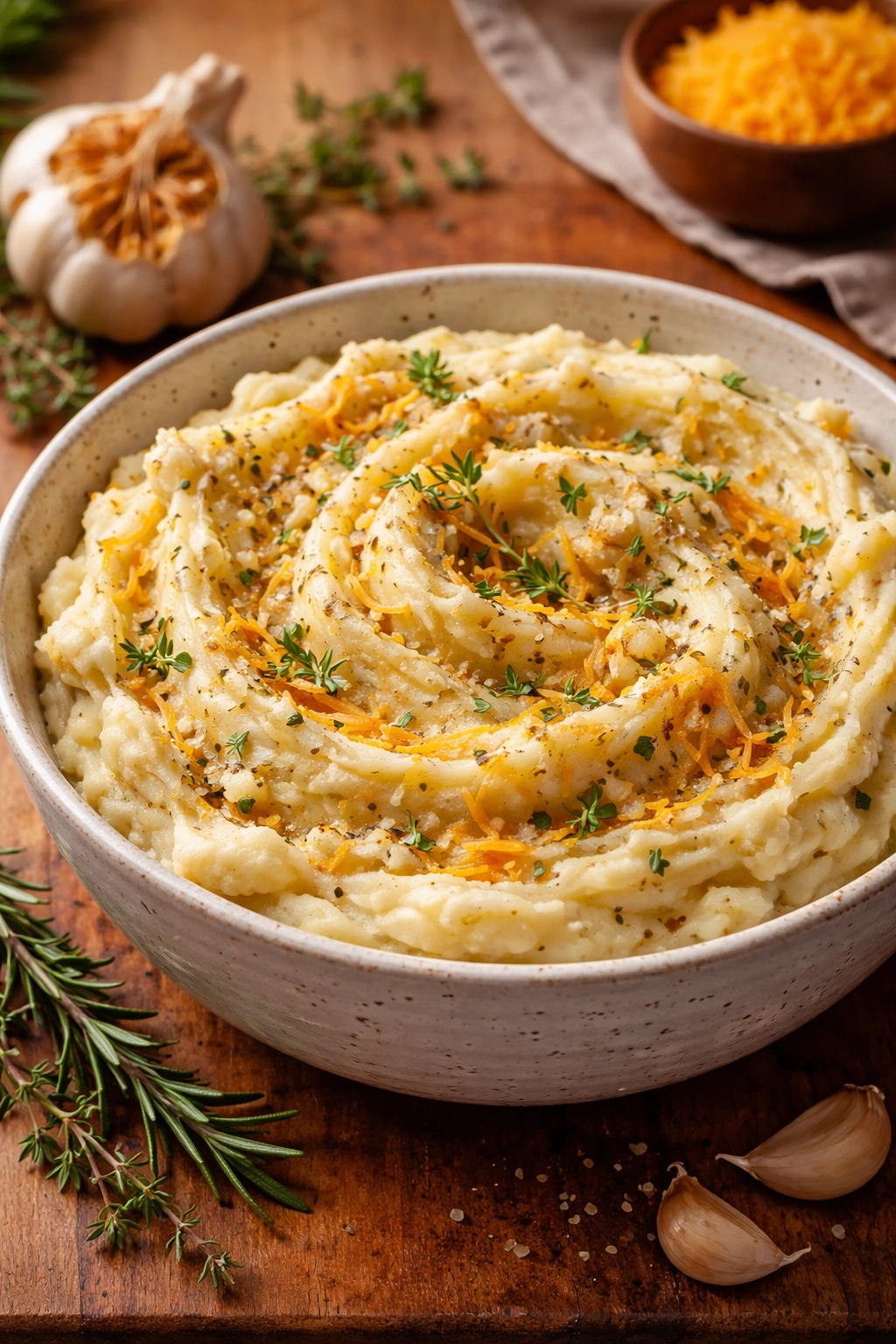
Garlic mashed potatoes are ridiculously easy if you start with roasted garlic. Buy pre-roasted garlic in a jar (sold in most produce sections), or roast 4-5 cloves yourself by wrapping them in foil with a drizzle of olive oil and roasting at 400°F for 15 minutes until completely soft. Mash the roasted cloves into a smooth paste and fold them in with the butter. The flavor is deep, rich, and nowhere near as harsh as raw garlic would be.
For herb variations, add fresh thyme or rosemary directly to the cooking water (tie them in a small bundle with kitchen twine so they’re easy to remove before mashing). Finish with fresh chives, dill, or parsley folded in at the very end, right before serving. Fresh herbs add brightness that’s perfect in spring or summer, or alongside lighter mains.
Cheese transforms these into something more substantial. Stir in sharp cheddar, Gruyère, aged white cheddar, or Parmesan just before serving—start with 2 tablespoons and taste, then add more if you want it pronounced. For something more adventurous, try smoked cheddar or a blend of sharp cheddar and a little Dijon mustard for a complex, slightly tangy flavor.
Mustard and horseradish are underused but brilliant additions. Add 1 tablespoon of whole-grain mustard or ½ tablespoon of prepared horseradish (drained well) to the warm cream before folding it in. These add a subtle bite that makes the potatoes more interesting without being overtly spicy.
Red potatoes with the skin on, mixed in 1:1 ratio with Yukon Golds, creates a beautiful speckled appearance and a slightly lighter flavor. Leave the thin red skins on—they add visual interest and a subtle earthiness that some people prefer over pure white potatoes.
Sour cream or Greek yogurt can replace some or all of the heavy cream for a tangier version with a slightly lighter feel. Use a 1:1 ratio—if the recipe calls for ¾ cup cream, use ¾ cup sour cream. The tanginess adds complexity and pairs beautifully with savory mains like pot roast or brisket.
Storage, Make-Ahead, and Reheating
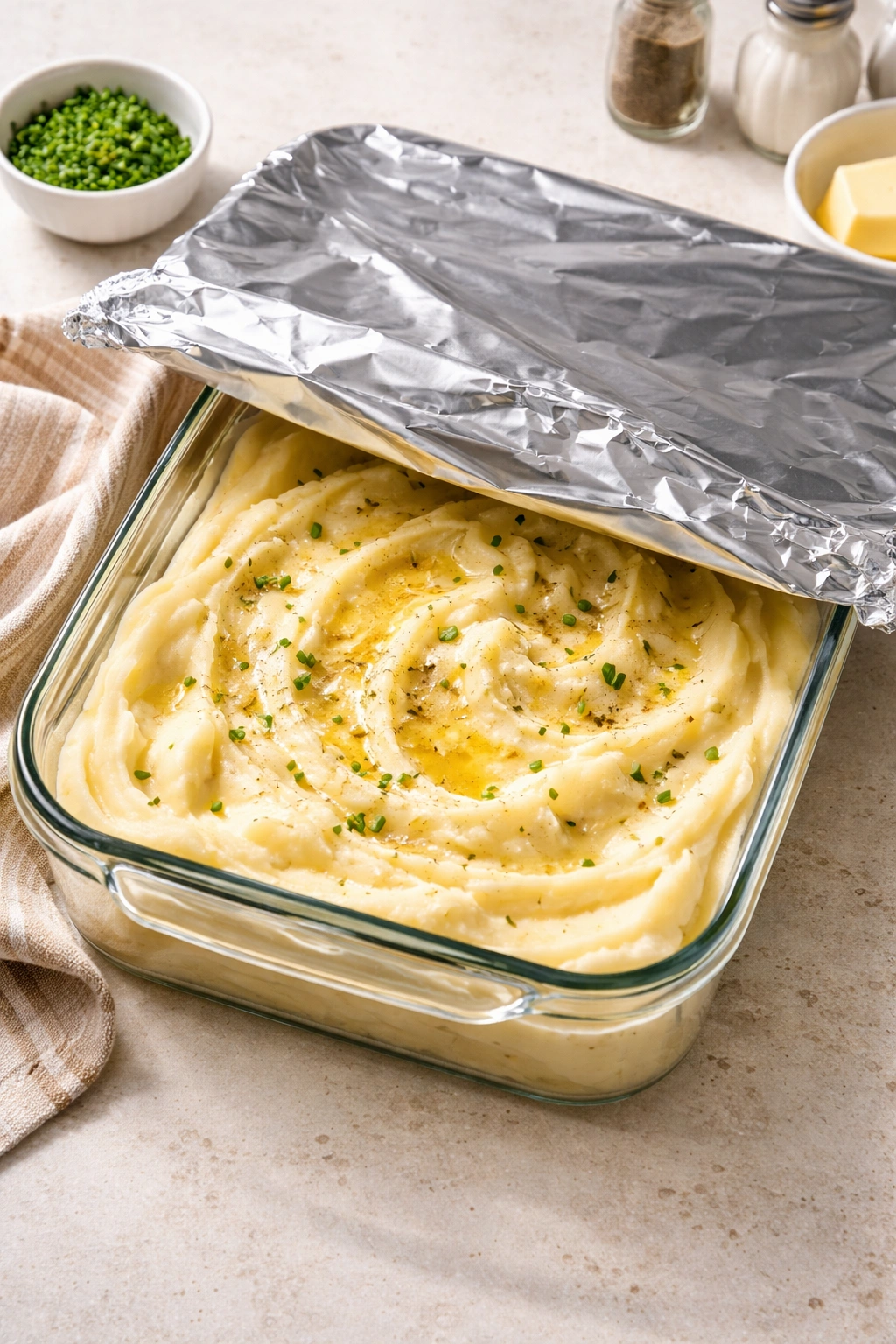
Mashed potatoes actually improve slightly if made a few hours ahead—the flavors meld together and the texture becomes slightly creamier as the potatoes cool and the starches set slightly. To make them ahead, prepare them up to the point where you’re about to fold in the dairy. Spread them in a buttered baking dish, cover tightly with foil, and refrigerate for up to 8 hours.
When you’re ready to serve, warm them gently in a 325°F oven for about 15-20 minutes (covered with foil so they don’t dry out), then fold in the warmed cream and butter right before serving. This keeps your kitchen less hectic on busy days and means you can make the potatoes the morning of or the day before.
They also keep well in the refrigerator for up to 4 days in an airtight container. To reheat, transfer them to the top of a double boiler or a heatproof bowl set over simmering water, stirring occasionally and adding splashes of warmed cream as needed to restore the creamy texture. Alternatively, you can reheat them gently in the microwave in a covered bowl, stirring every 30 seconds and adding cream as needed.
Frozen mashed potatoes are actually a controversial topic—some people swear by them, others find the texture changes. If you want to freeze them, let them cool completely, portion them into freezer-safe containers, and freeze for up to 3 months. Thaw overnight in the refrigerator before reheating. Expect the texture to be slightly less silky than freshly made, but honestly, most people won’t notice if you reheat them properly with the addition of a bit of warmed cream.
The absolute best version is always freshly made and served hot right out of the pot, but these storage options mean you can still have homemade mashed potatoes on your weeknight table even when you don’t have 20 minutes on the actual day you’re cooking.
The Sides and Dishes That Pair Perfectly
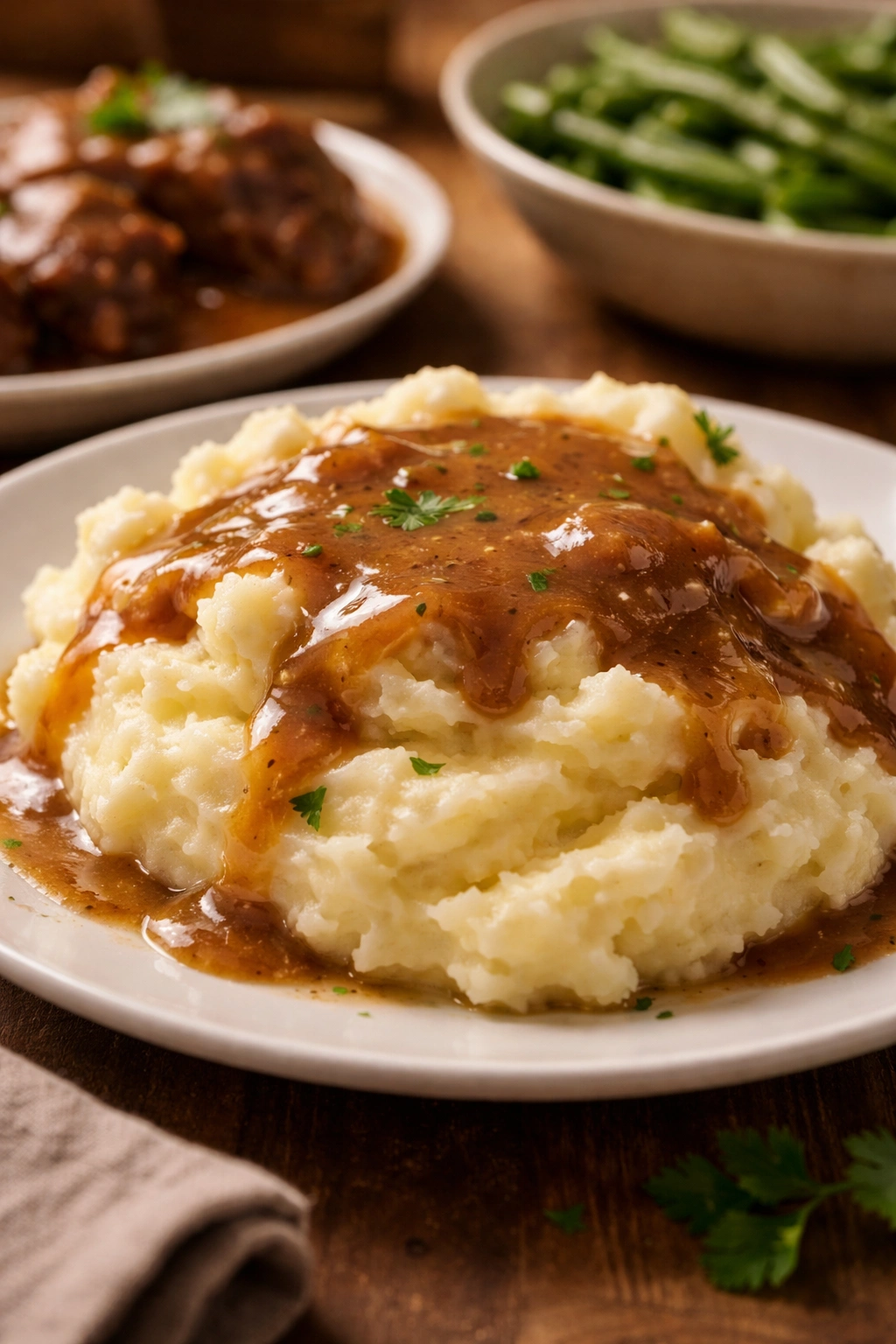
Mashed potatoes are the supporting player that makes the main star shine brighter. They pair beautifully with any braised or slow-cooked meat—pot roast, beef short ribs, brisket, pork shoulder, chicken thighs. The creaminess of the potatoes balances the deep, savory flavors and provides a soft contrast to the tender, rich meat.
Roasted or grilled chicken is perhaps the most classic pairing. Whether you’re serving herb-roasted bone-in chicken, crispy-skinned thighs, or simple grilled breasts, mashed potatoes catch and absorb the pan juices, creating something more luxurious than the potatoes could ever be on their own.
Gravy is the obvious finishing touch. Make a simple pan gravy from the drippings of whatever you cooked (deglaze the pan with a splash of broth or wine, let it simmer for a minute, then pour it over the potatoes). This is honestly where mashed potatoes reach their final form—not much beats perfectly creamy mashed potatoes drowning in savory, silky gravy.
Vegetables like roasted Brussels sprouts, sautéed green beans, or roasted carrots provide color and textural contrast on the plate. The slight bitterness of greens (like sautéed kale or collards) plays really well against the richness of the potatoes.
For a lighter meal, serve them alongside a fresh green salad and roasted salmon or white fish. The creaminess of the potatoes doesn’t feel heavy when paired with bright, acidic salad and lean protein.
Simpler sides work too—just salt and pepper, with perhaps some fresh herbs scattered on top. Sometimes mashed potatoes don’t need anything more than what’s already in the bowl, especially if they’re going alongside a dish with interesting sauce or gravy.
Troubleshooting Texture Problems
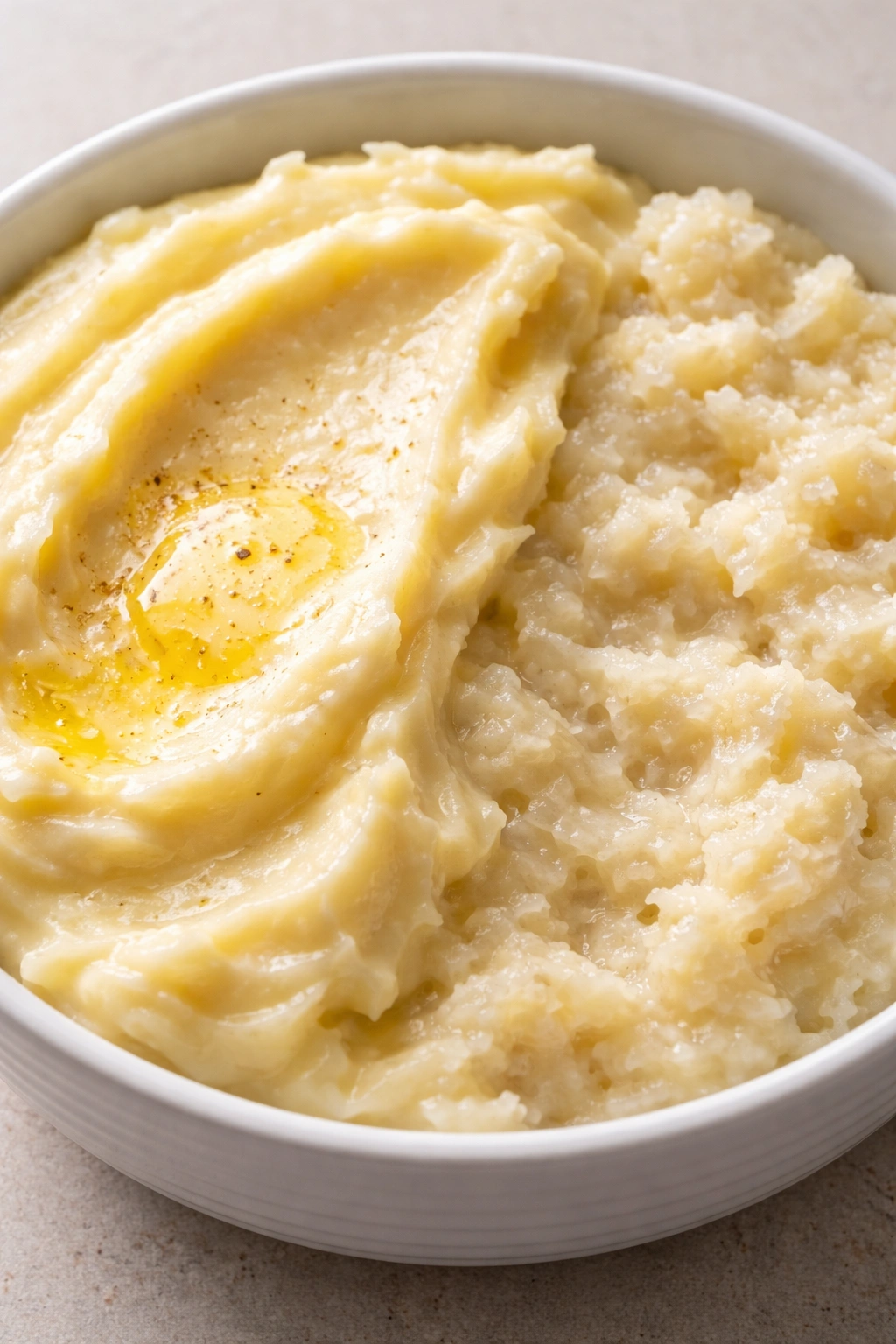
If your mashed potatoes turn out gluey or pasty-looking, it’s almost certainly over-mashing. Next time, use a ricer if you can, and stop folding the moment everything is uniform. Over-mashing activates starch and turns the potatoes into something that resembles wallpaper paste more than food. There’s not much you can do to fix already-made gluey potatoes, but knowing the cause means you won’t repeat it next time.
If they’re watery or soupy, you either didn’t drain the potatoes well enough, or you added too much cream. If you’re making this with a 20-minute timeline, water drainage is less of a concern because everything is fresher and doesn’t have time to reabsorb moisture. Going forward, shake the colander thoroughly and let the potatoes sit in the hot pot for 30 seconds to evaporate surface water. If they’re still too wet after folding, add less cream next time—start with ½ cup and add more as needed rather than dumping in the full ¾ cup.
If they’re too thick or stiff, you’re either not adding enough cream, the cream is too cold, or you’re under-salting (salt loosens the starches slightly and makes them feel creamier). Warm your cream next time, and don’t be afraid to add an extra splash—it’s better to have creamy potatoes that you can adjust than stiff ones that are hard to fix.
If they taste bland or flat, the issue is almost always under-salting. Season the cooking water generously, then taste the finished potatoes and add more salt if needed. This is a free upgrade that costs nothing and transforms the flavor from forgettable to genuinely luxurious.
If they have a grainy or sandy texture despite proper mashing, you likely started with potatoes that were too starchy (like russets) or they were slightly undercooked. Yukon Golds and proper cooking time eliminate this problem entirely.
Why the Quick Timeline Actually Matters
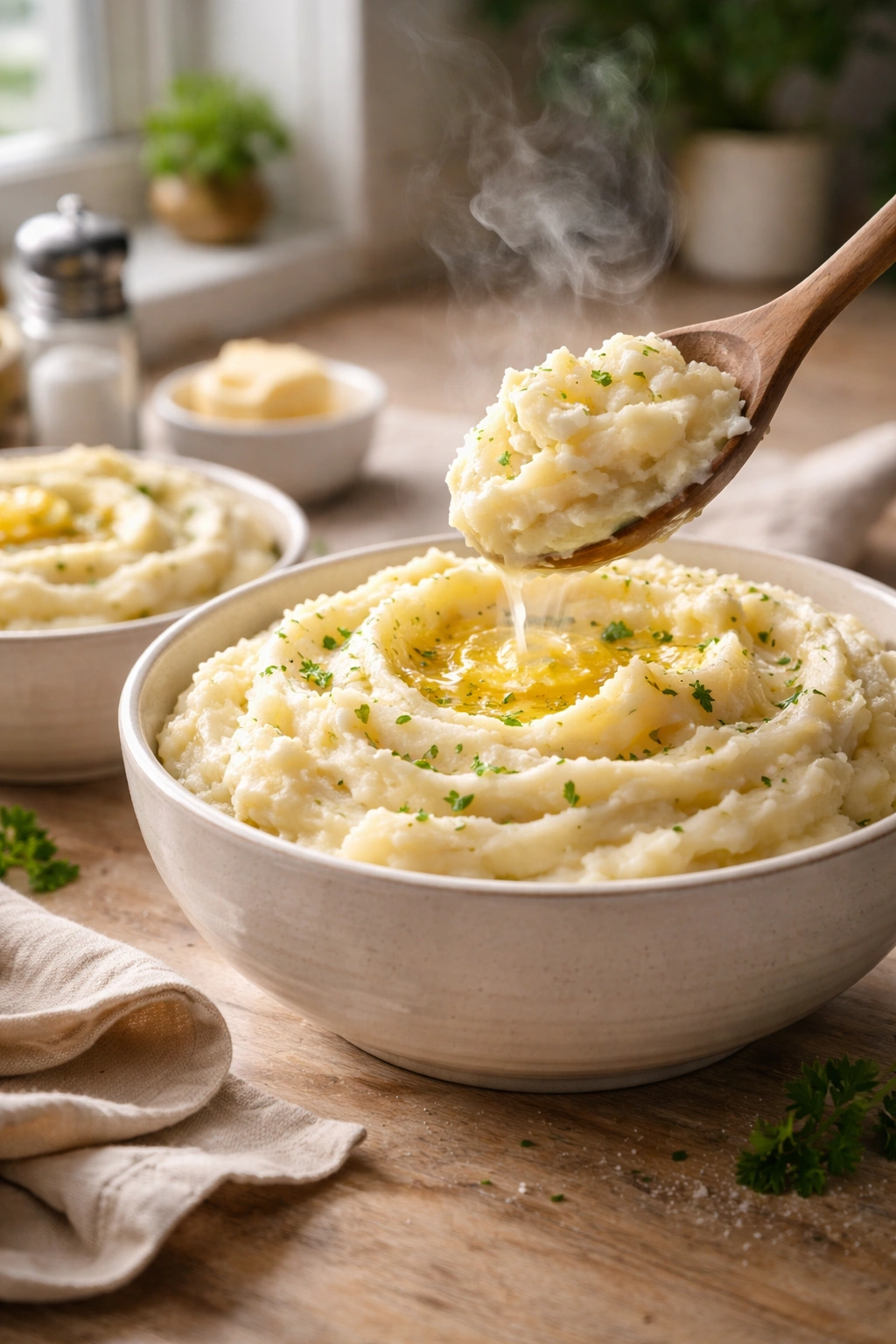
Making mashed potatoes in 20 minutes isn’t just about convenience—it genuinely affects the quality of what ends up on your plate. When you work quickly with potatoes that are still hot, everything melds together more smoothly. The butter and cream incorporate more easily because they’re all at similar temperatures, which means you can fold gently instead of aggressively stirring, which means the starch doesn’t get activated as much, which means the texture stays creamy instead of becoming gluey.
The quicker timeline also means you can make mashed potatoes as a spontaneous weeknight side instead of something that requires advance planning. You don’t need to think about them ahead of time. If you’re making roasted chicken and realize you want mashed potatoes alongside it, you can peel and cut the potatoes while the chicken roasts and have them ready at almost exactly the same moment. This flexibility alone changes how often mashed potatoes appear on your table.
Speed also means the potatoes are served hotter. Mashed potatoes lose their magic as they cool, becoming stiffer and less creamy. When everything is done in 20 minutes, from peeling to serving bowl, they’re at their absolute peak temperature and texture. They taste the way mashed potatoes are supposed to taste—luxurious, creamy, buttery, and deeply satisfying.
Finally, the confidence that comes from knowing you can make them quickly and reliably means you’ll stop buying the boxed or pre-made versions that are never quite as good. Once you realize how easy this actually is, there’s no going back. Real mashed potatoes take the same amount of time as heating up a box of something mediocre, except yours are infinitely better and genuinely taste like food instead of reconstituted powder.
Final Thoughts
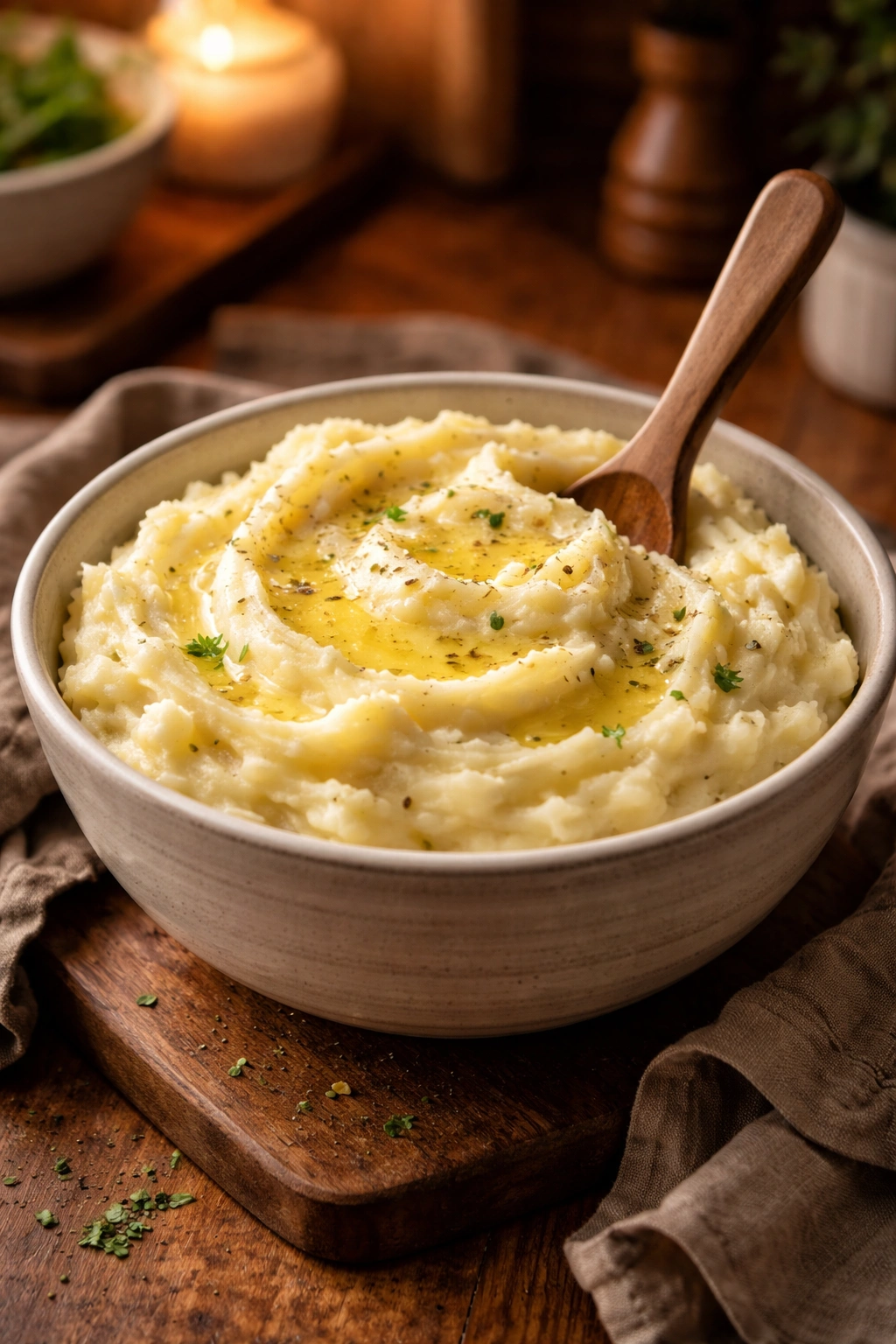
Perfect creamy mashed potatoes don’t require special techniques or exotic ingredients—they require understanding which small decisions actually matter and which ones don’t. Cut the potatoes smaller. Start with boiling water. Use Yukon Golds. Keep everything warm. Stop mashing when they look creamy. Do these things, and you’ll have restaurant-quality mashed potatoes on your table in 20 minutes, every single time.
The beauty of this recipe is how reliable it becomes once you’ve made it once or twice. Unlike some cooking techniques that require years of practice, you’ll nail this by your second attempt. After that, it becomes something you make without even thinking about—the kind of side dish you can throw together on a weeknight alongside almost anything, knowing it’ll be perfect.
Mashed potatoes are proof that the simplest foods, made well, are often the most craveable. There’s no fancy plating, no trendy techniques, no ingredients you can’t pronounce. It’s just the best version of something everyone already loves, ready in the time it takes to cook the main course. That’s all the magic you need.
