



There’s something almost magical about setting down a beautiful brunch board in front of hungry guests. It’s the kind of spread that looks effortlessly elegant—like you’ve spent hours in careful preparation—yet comes together faster than you’d think possible. The truth is, a brunch board isn’t about culinary virtuosity or complicated techniques. It’s about understanding a few core principles: balance, variety, quality ingredients, and thoughtful arrangement. When you nail those elements, you’ve created something that feels both abundant and curated, casual and special at the same time.
The genius of a brunch board lies in its flexibility. Unlike a formal sit-down meal with rigid courses and timing constraints, a board invites guests to graze, explore, and eat at their own pace. You’re not stressed about plating, sauce applications, or perfectly timed service. Instead, you’re offering a landscape of flavors and textures that guests can navigate however they want. Some people will build elaborate bites with multiple elements; others will zero in on their favorite component and return to it repeatedly. Everyone leaves satisfied, and you’ve done minimal actual cooking.
What makes a brunch board “easy” isn’t just about the assembly time—though that matters. It’s about choosing ingredients that shine on their own, don’t require last-minute cooking, and work together as a cohesive story. The best brunch boards taste like deliberate choices, even though most of what’s on them came straight from the grocery store or farmers market. Learning to make those choices with confidence is exactly what transforms a hastily thrown-together platter into something guests actually remember.
Understanding the Purpose and Scale of Your Board
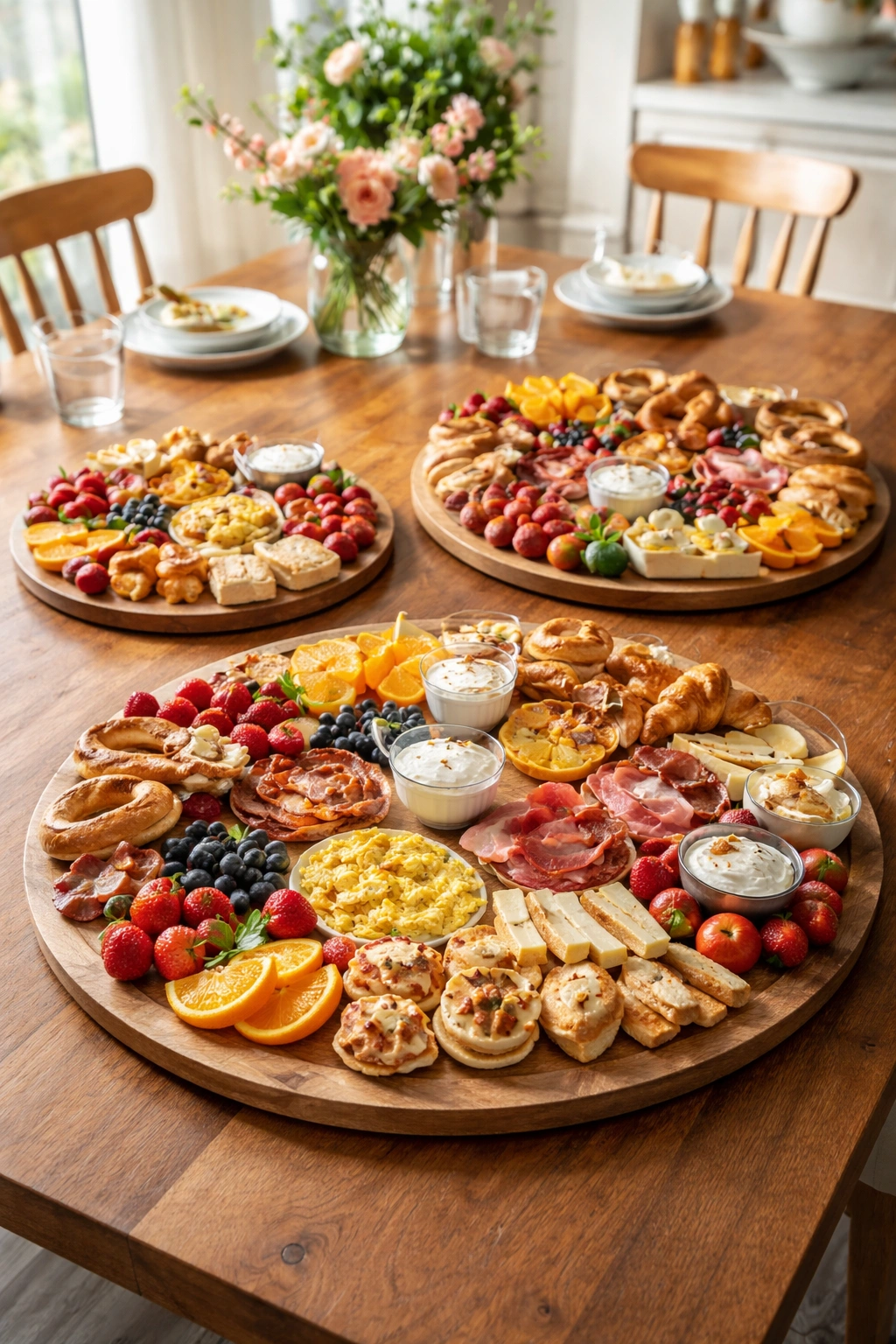
Before you even step foot in a grocery store, get clear on what you’re actually trying to accomplish. Are you feeding a crowd of eight people lingering over coffee for hours, or twenty guests who will graze for ninety minutes between other activities? Is this a celebration-worthy brunch with mimosas and conversation, or a casual grab-and-go situation? The answer shapes literally everything else about your board—portion sizes, ingredient selection, layout strategy, and complexity level.
For a casual brunch feeding four to six people, you’re thinking in terms of a single large wooden board, something in the 18-24 inch range. This is intimate and manageable. For eight to twelve people, you might use two boards or one very large platter. Beyond that, you’re building multiple boards strategically placed around your space, which actually makes entertaining easier because guests spread out naturally instead of crowding around a single focal point.
Consider how much time guests will actually spend at your brunch. If people are sitting down for two hours with wine and conversation, they’ll eat significantly more than if everyone’s standing, mingling, and eating lightly before moving on to other activities. For a lingering brunch with mostly seated guests, budget about one and a half cups of total food per person. For a standing cocktail-style brunch where food is one component among many, half a cup per person is plenty.
The mood you’re creating matters too. A morning brunch with primary-colored berries, fresh flowers, and bright cheeses feels different than an elegant afternoon spread with darker meats, aged cheeses, and wine-friendly components. Neither is wrong—they’re just different conversations with your guests about what this gathering is about.
Choosing Proteins That Anchor Your Board
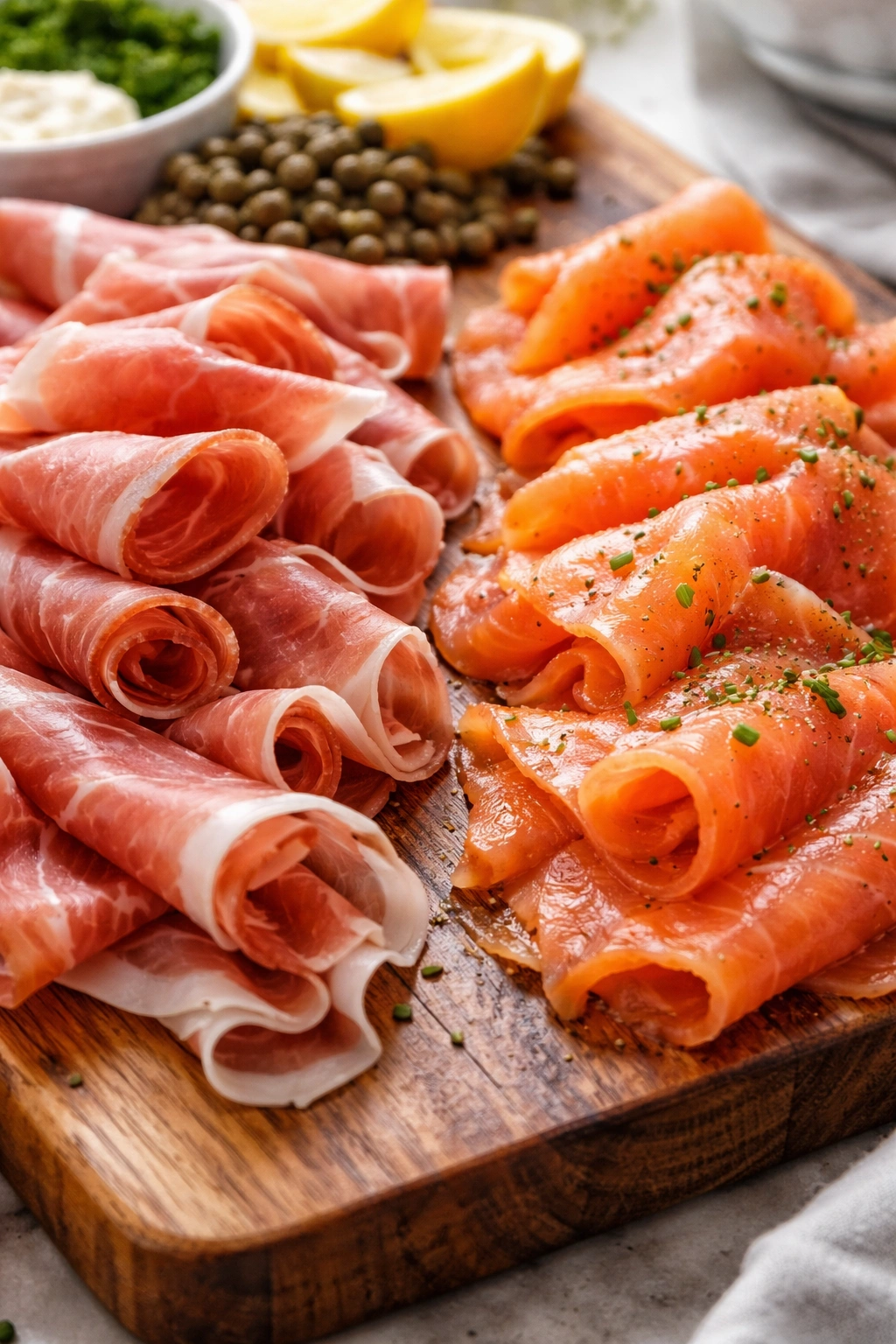
The protein component of a brunch board is what gives it substance and sophistication. You’re not looking for hot, cooked proteins here—that’s not the vibe. Instead, you want cured, smoked, or already-cooked elements that actually taste better at room temperature and require zero last-minute attention. This is where quality matters significantly, because these proteins are front and center without any sauce or preparation to hide behind.
Prosciutto is the obvious starting point, and for good reason. It’s elegant, widely available, salty-savory in the best way, and genuinely delicious. Buy it sliced (not pre-packaged in plastic when possible) and arrange it loosely on the board just before guests arrive—it dries out slightly if left exposed too long. A quarter pound serves about four to six people nicely. Consider folding some slices into thirds and leaving others draped more loosely for visual variety.
Smoked salmon is brilliant if you’re building a brunch with a slightly different flavor direction. It plays beautifully with cream cheese, dill, capers, and thinly sliced red onion. If you’re including it, build a little sub-section of the board dedicated to these elements—smoked salmon, cream cheese, capers, thinly sliced red onion, and a few crisp crackers clustered together. Guests understand immediately that these components go together, which actually makes a board easier to navigate.
Pancetta or bacon adds smokiness and crunch in the best way. Cooked bacon (crispy, not limp) scattered across a board gives people something to munch on while they’re assembling their more complex bites. It’s the snacking component that keeps energy alive. Same goes for spiced or candied nuts—they’re technically not “protein” in the traditional sense, but they provide that protein-like satisfaction and complexity that makes a board feel complete rather than just sweet and fresh.
Sliced salami and other cured sausages add deepness and chew. Include a few varieties—maybe a spicy soppressata, a milder Italian salami, and something with visible fat marbling. The visual interest alone makes a board more compelling, and guests appreciate having options. These keep longer than prosciutto, so if you’re prepping ahead, sliced cured meats are your friend. They actually taste better after sitting a few hours as they come to room temperature.
Building Cheese Variety Without Overthinking It
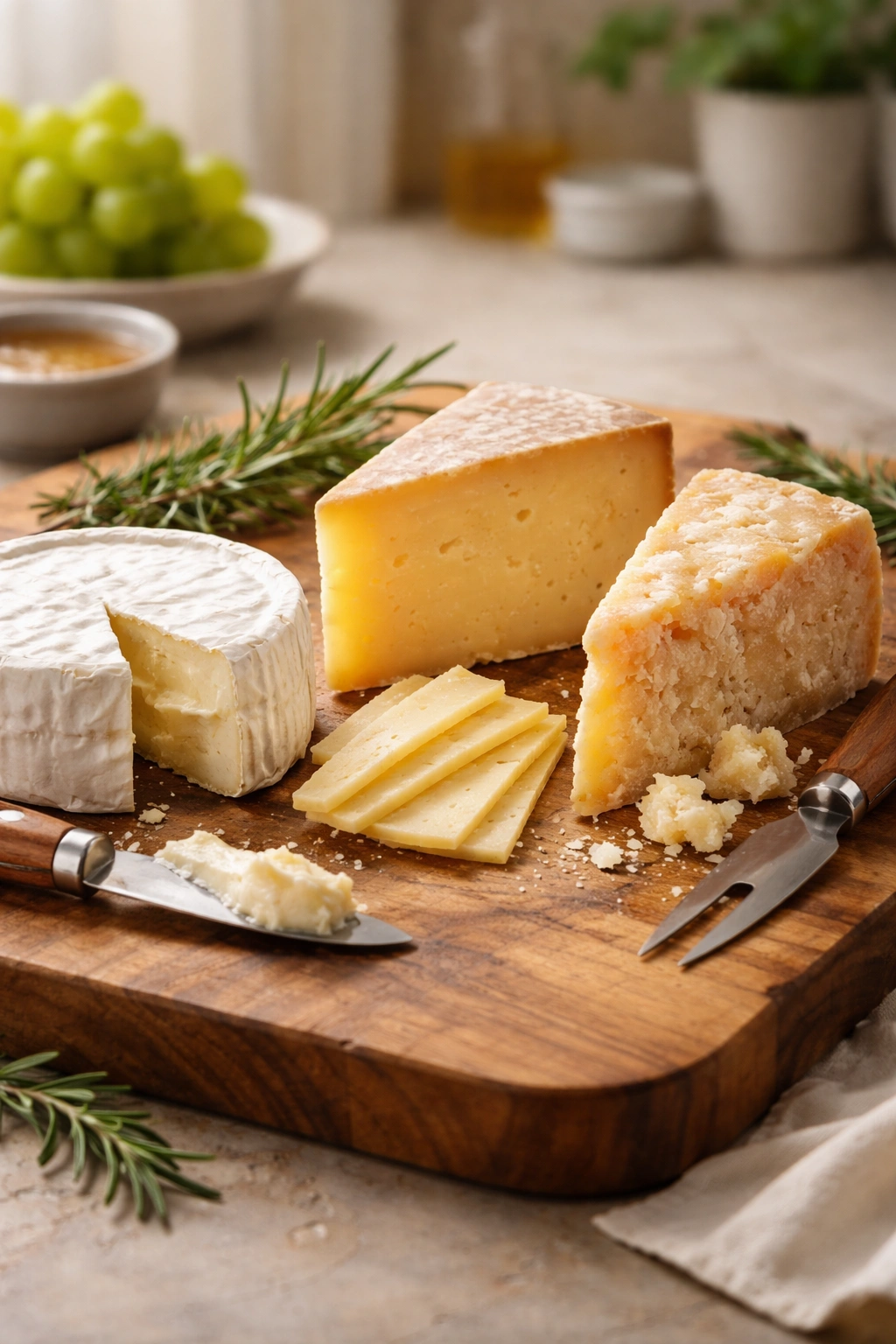
Cheese is the supporting actor that elevates everything else on a board. The key is thinking in terms of texture and flavor contrast rather than trying to impress with obscurity. You want your guests to have choices, but not so many that they’re overwhelmed or confused. Three to four distinct cheeses is the sweet spot for most boards.
Start by including one soft, creamy cheese. Burrata, ricotta, fresh mozzarella, or a whipped goat cheese works beautifully. The luxuriousness of something soft and creamy next to crisp bread or tart fruit is genuinely why people love brunch boards. It’s indulgent in a way that feels light. Place it in a small bowl or on a flat surface where guests can easily dollop it onto their plates or crackers.
Add one semi-firm cheese with some age and flavor. Aged cheddar, Gruyère, or a small wedge of manchego brings savory complexity and cuts through some of the sweetness from fruit and honey. These cheeses are self-contained enough that people understand you eat them in small pieces rather than spreading them, which makes the board feel less precious and more approachable.
Include something unexpected—maybe a blue cheese if your guests enjoy it, or something smoked or herb-forward like a herb-crusted chèvre. This is what makes someone pause and say, “Oh, what is this?” It’s the conversation starter. It doesn’t need to be weird or challenging; it just needs to be different from the first two.
Consider your guests’ preferences honestly. If you know someone strongly dislikes blue cheese or funky-tasting cheeses, honor that by choosing something that’s flavorful and interesting without being polarizing. The goal is delight, not a test of adventurousness.
Keep quantities proportional to your guest count, but remember that cheese on a board is consumed more slowly than, say, chips at a party. An ounce and a half per person is plenty for a two-hour brunch when other foods are available. Two ounces per person if it’s the main focus of the meal. Rather than stress about exact portions, buy a quarter pound of one cheese, a third of a pound of another—real quantities that are easy to shop for.
Selecting Fruits That Provide Brightness and Contrast
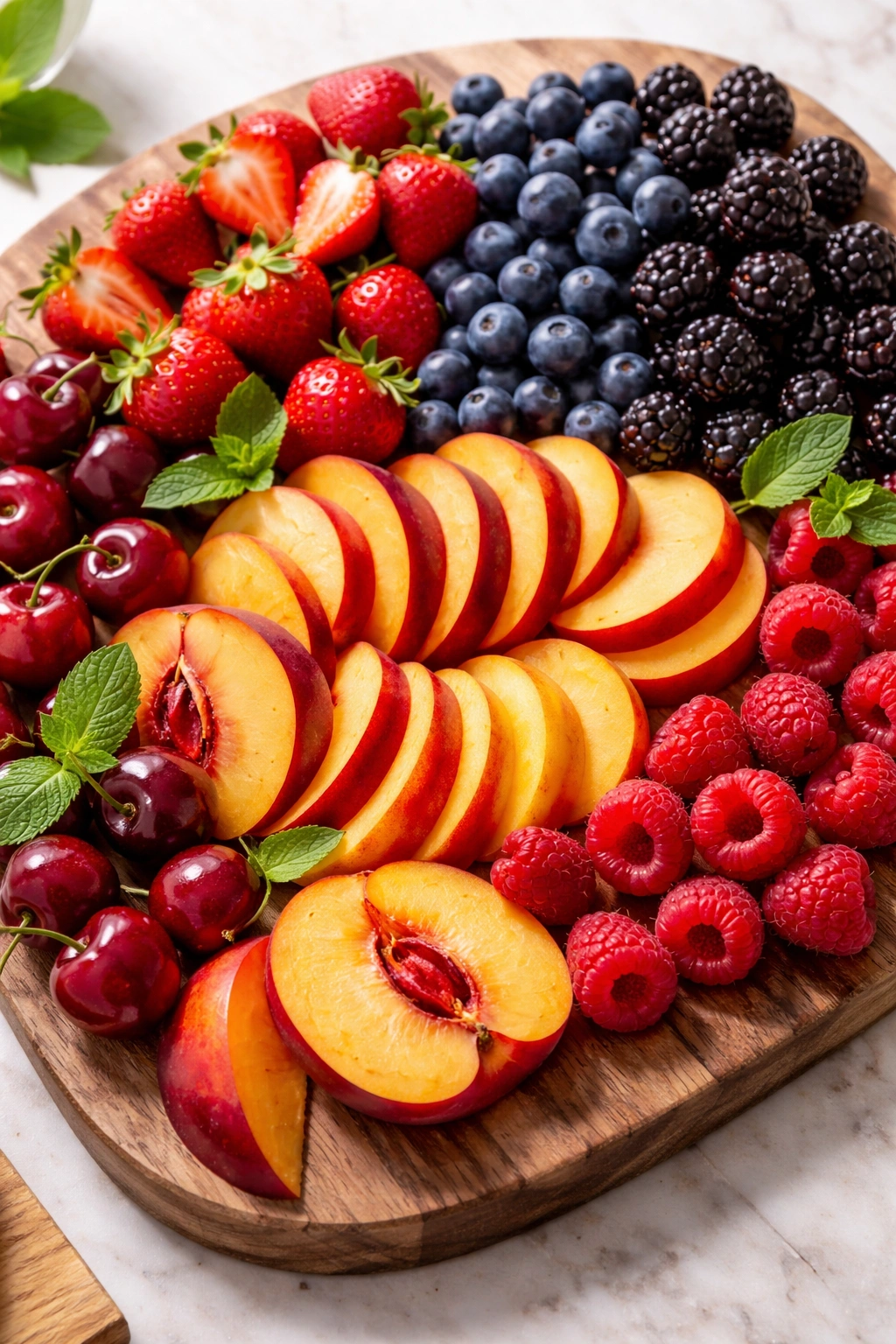
Fruit is what makes a brunch board feel special rather than just meat and cheese. The sugar and acidity balance all the salty, savory elements and provide visual pop. Aim for a mix of textures: something berries, something stone fruit or crisp, and something that adds a surprising element.
Fresh berries—strawberries, blueberries, raspberries, blackberries—are the most obvious choice, and there’s a reason. They’re beautiful, they taste good, and they’re easy. Slice strawberries in half lengthwise to show off their interior color, and pile berries in little clusters rather than spreading them thinly across the board. A concentrated pile of color is more visually striking and easier for guests to grab from. Go for about a cup and a half of mixed berries per six people.
Sliced stone fruit—peaches, nectarines, plums—adds a different textural element. These are juicier and softer than berries, and they have a natural elegance when sliced thinly and arranged in a slightly overlapping fan. A stone fruit sliced and paired with soft cheese is genuinely one of the best flavor combinations you can build on a brunch board. Slice these close to serving time so they don’t oxidize and look dull.
Grapes (halved) or fresh figs add a chewy sweetness. These work particularly well with aged cheeses and are visually interesting because they’re different from everything else shape-wise. Pomegranate seeds add jewel-like color and that tart-sweet pop that’s addictive.
Think about what’s in season and at peak flavor. A beautiful strawberry in spring tastes infinitely better than a mealy one in January. Brunch boards are a place to celebrate what’s actually good right now, not to force ingredients out of season. This makes the board feel alive and connected to time and place, even if you’re not explicitly thinking about that as a host.
Building the Carb Foundation with Breads and Crackers
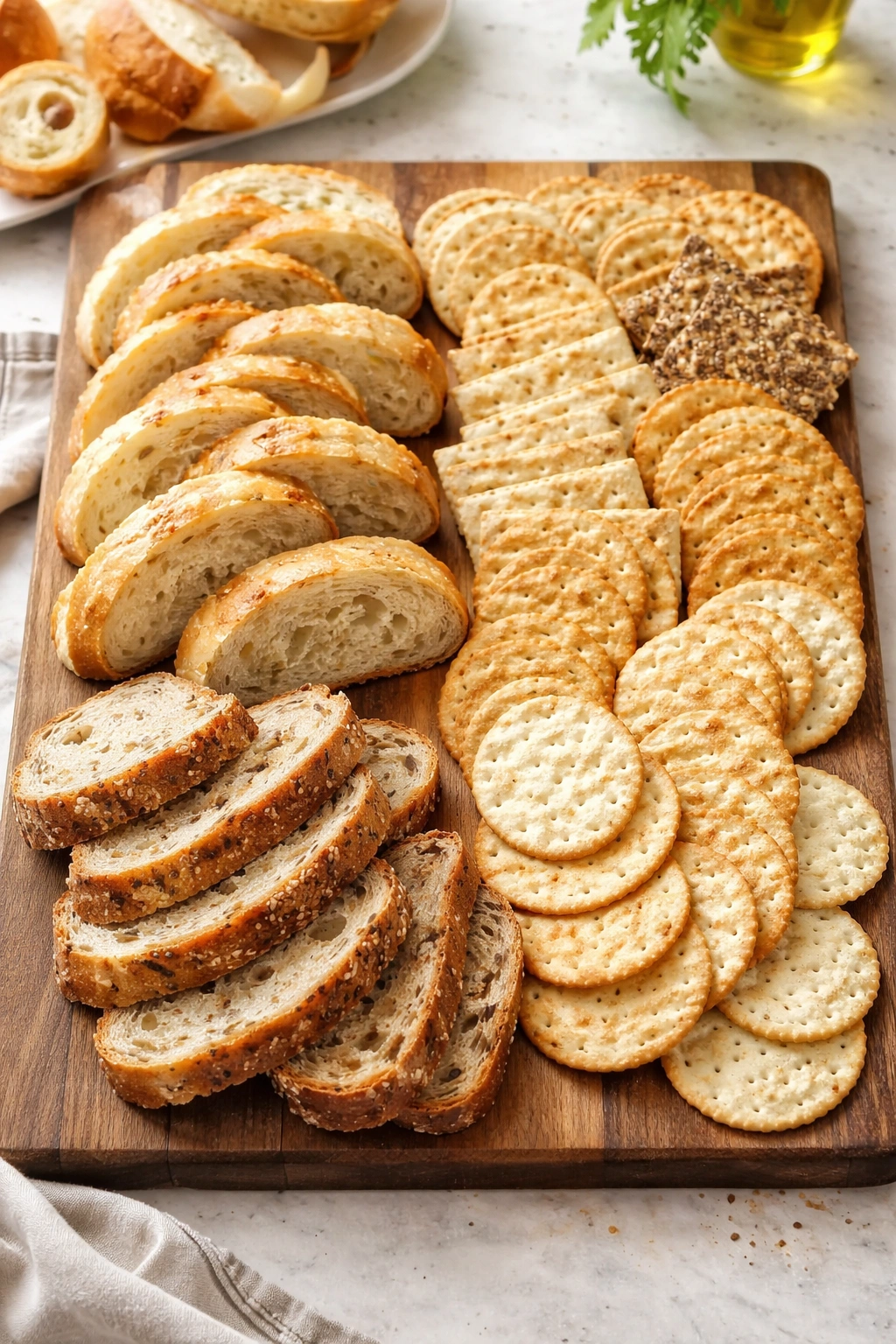
The carbohydrate component of your board is what makes everything else edible and shareable. Without good bread and crackers, guests are eating cheese and cured meat with their fingers like they’re at a wine bar, not a brunch. You need texture variety: something crispy, something soft, and something neutral enough that it doesn’t compete with your toppings.
Crusty bread—a quality baguette or a thick-cut ciabatta—is essential. Slice it at an angle to show off a beautiful interior crumb. Lightly toast these slices if you want them to hold up better to wet toppings or if you’re prepping an hour or two ahead. At room temperature, they’re perfect for building open-faced sandwiches with smoked salmon and cream cheese or prosciutto and fig jam. Plan on about a third of a baguette per six people.
Crackers provide options for people who want something crispier and longer-lasting on a board. A good salted cracker (like a quality water cracker, sourdough cracker, or rosemary olive oil cracker) is neutral enough that it doesn’t fight with your toppings. These are what people turn to for building quick bites with cheese and a protein. Skip the flavored party crackers—anything with visible herbs or seasonings will make it harder for toppings to shine. Look for about forty to fifty crackers total for six to eight people, which sounds like a lot but goes faster than you’d think.
Consider including one element that’s slightly sweet—maybe a thin waffle cookie, a slice of brioche, or even a good dinner roll. Brunch exists in this sweet-savory space, and having an option for people who want to go in a sweeter direction makes your board feel more complete. A sweet element next to smoked salmon and cream cheese is absolutely legitimate and delicious.
Don’t forget about texture in the bread department. If you’re offering soft cheese on the board, crispy crackers let people control how much they want and prevent the soggy mess that happens with soft bread and wet toppings. If you’re including cured meats and harder cheeses that don’t need a vehicle, soft bread gives people options. The variety is what makes the board intuitive to graze.
Incorporating Vegetables and Fresh Garnishes
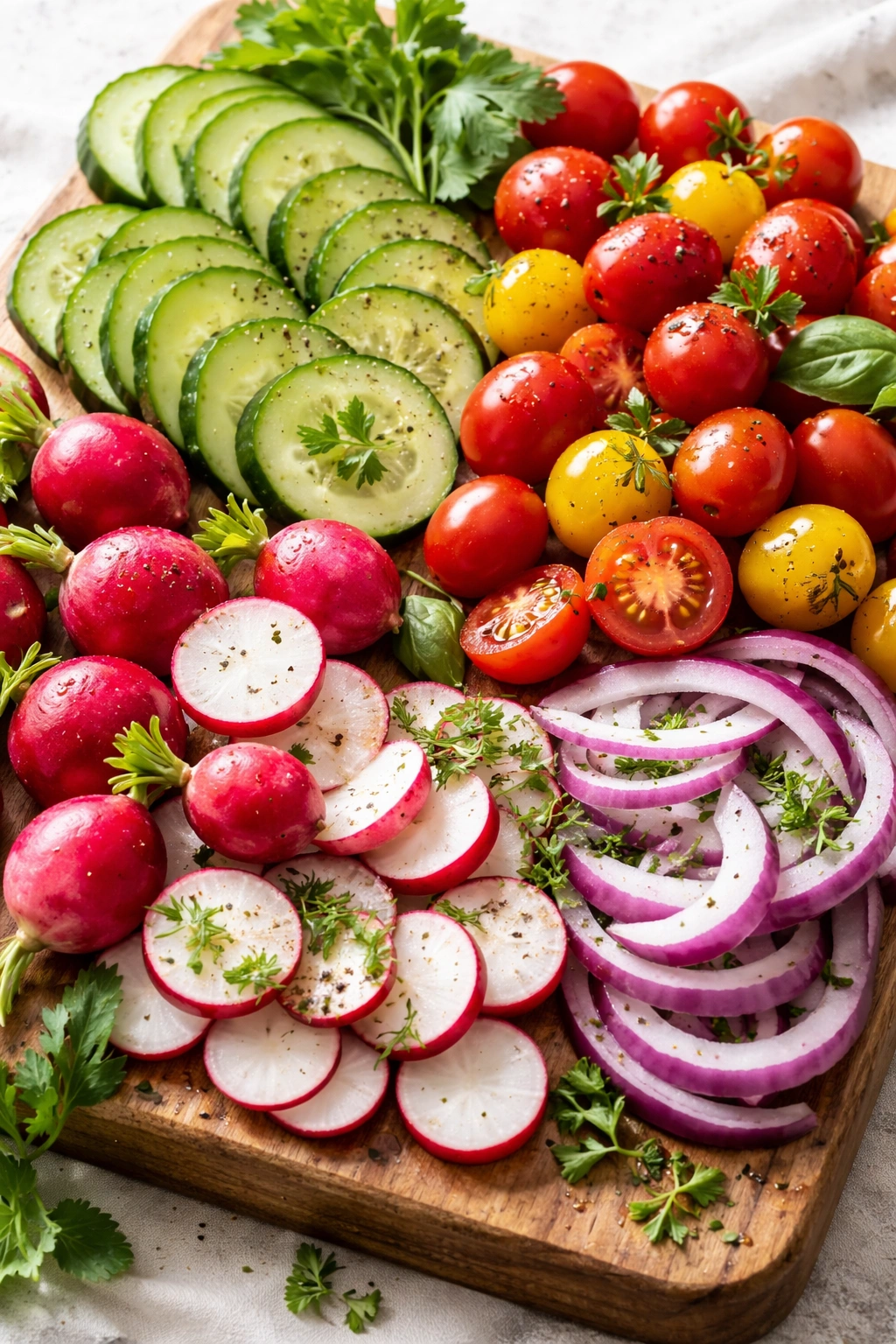
Vegetables on a brunch board serve a few purposes: they add freshness and perceived healthfulness, they provide crunch and textural contrast, and they’re visually beautiful when arranged thoughtfully. This isn’t about filling space with raw vegetables; it’s about choosing vegetables that genuinely taste good raw and pair with your other elements.
Radishes—thinly sliced or halved with a little bit of the green attached—add sharp, peppery crunch. They’re pretty, they’re unexpected, and they cut through richness in a way that makes people feel like they’re eating something refreshing alongside the indulgence. These should be sliced close to serving so they stay crisp.
Cherry tomatoes (halved) add summer brightness and are beloved on brunch boards. Cucumber slices (cut on a mandoline for thin, elegant pieces) add cool crispness without much flavor, which means they work as a palate cleanser between other bites. Both of these should be prepped an hour or so before serving at most, so they don’t weep water onto the board.
Thinly sliced red onion and shallot add a sharp bite that’s genuinely useful when you’re building bites with soft cheese and cured meats. A little bowl of these is more elegant than scattered pieces, and they hold much longer than you’d expect. Fresh herbs—dill, mint, basil, parsley—scattered across the board add greenery and freshness without requiring you to do much. Just grab a handful, scatter it, and you’ve added visual interest and actual flavor complexity.
Think of vegetables less as “I need to fill this space” and more as “what would actually taste good with these other components.” A slice of radish with salami and aged cheese? Delicious. A cherry tomato with smoked salmon and cream cheese? Perfect. Cucumber with prosciutto and melon? Absolutely. You’re not trying to create a vegetable platter within your board; you’re choosing vegetables that enhance and complete the other flavors.
Adding Sweet Elements and Condiments
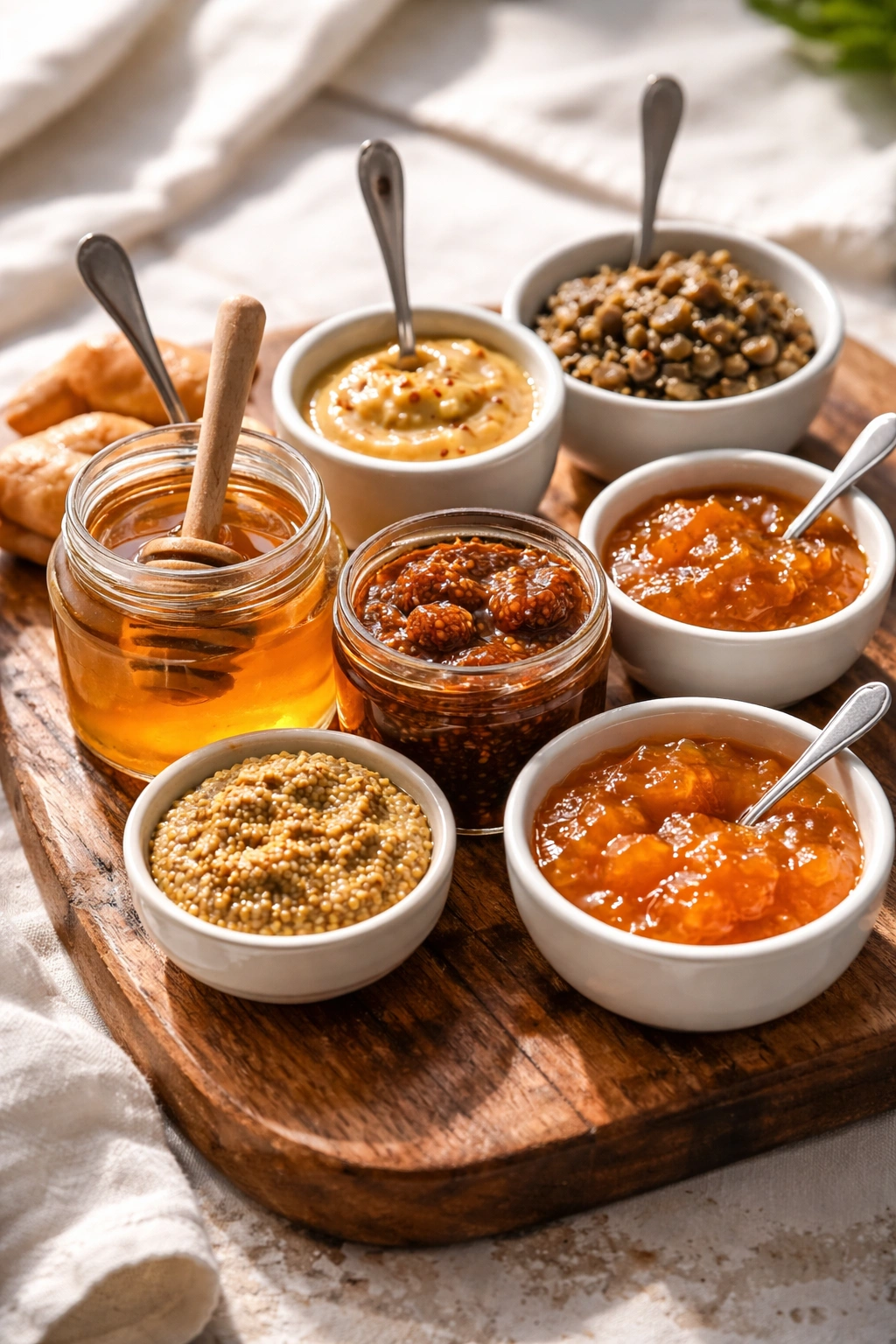
The condiment section is where a brunch board goes from good to genuinely memorable. These small jars and bowls of complementary flavors are what make people build interesting combinations and keep coming back to the board. They’re also how you extend the perceived abundance of the board without dramatically increasing the quantity of expensive components.
Honey is non-negotiable. A small bowl of good honey with a small wooden spoon or spreader lets people drizzle it over soft cheese and bread, which is an absolutely classic brunch combination. The sweetness balances the saltiness, and it’s elegant. Fig jam is the close second—it’s sophisticated, it goes with both cheese and cured meats, and it’s visually appealing in the jar.
Whole grain mustard or a sharp Dijon adds savory brightness. A tiny bowl of this next to sliced salami and crackers is a complete, delicious bite. Honey-sweetened mustard (like a hot honey mustard) bridges the sweet and savory in a really appealing way. Tapenade or a quality pesto adds herbaceous richness and actually gets eaten faster than you’d predict.
Marmalades or fruit compotes (beyond fig jam) add another layer of sweet-tart brightness. Apricot jam, berry jam, or even a hot pepper jelly gives people options. A small dollop of any of these on soft cheese on a cracker is genuinely delicious. Ricotta or a whipped goat cheese paired with jam and a thin waffle cookie is brunch in a single bite.
A small crock of salted butter is useful, especially if you’re including good bread. Some people want to butter their bread before topping it; others want it alongside. Make it available, and you’ll see people use it. Marcona almonds or candied nuts add sweetness and crunch if you want another texture in the sweet category. These work as a snacking element and also pair well scattered next to soft cheese and fruit.
Keep all of these in small bowls or jars so they look intentional and easy to access. A board that looks like you carefully selected and placed each component feels special, even if half the components came from the grocery store.
Creating Strategic Layout and Visual Balance
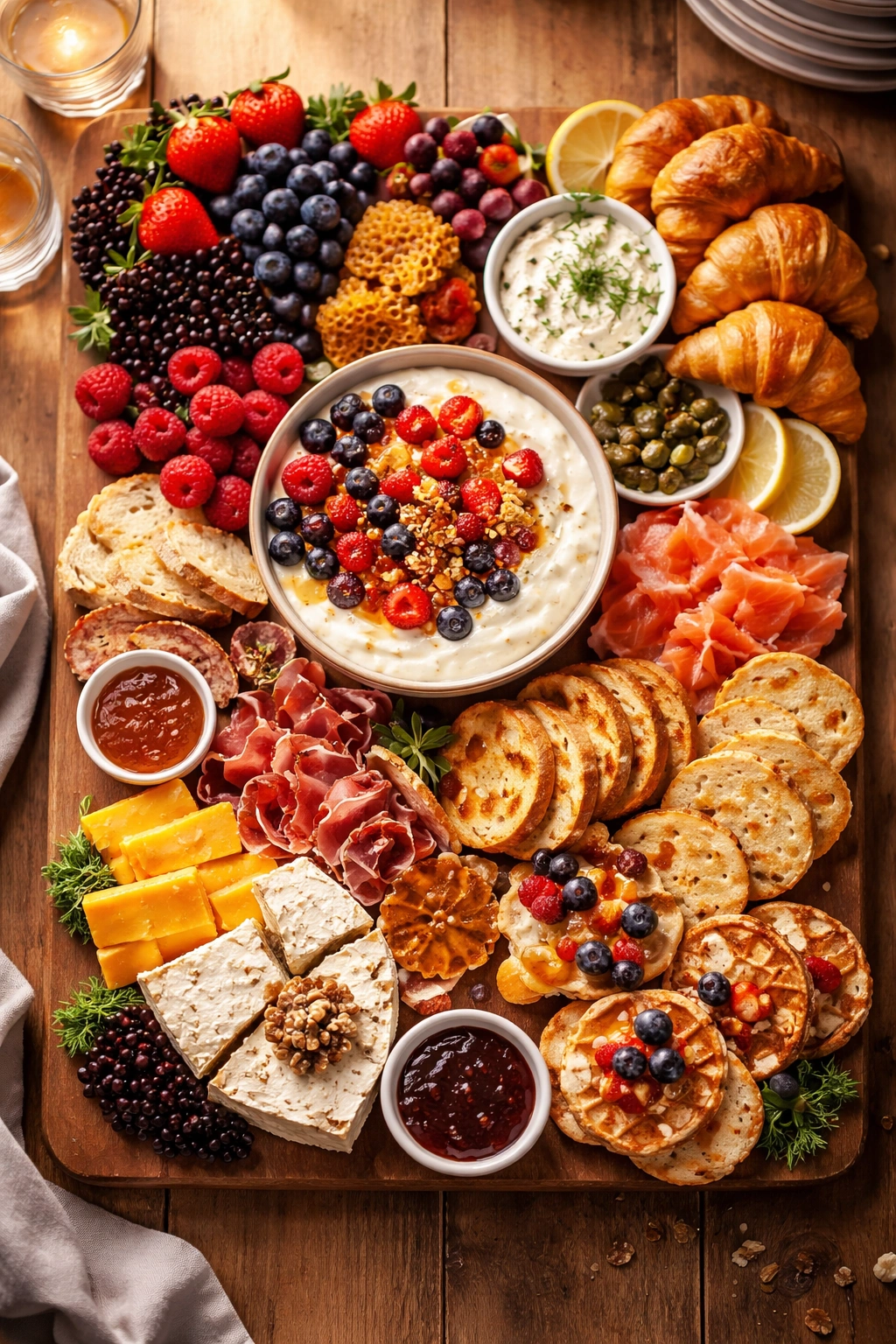
How you arrange everything on your board matters more than you might think. It’s not just about looking pretty (though that’s part of it)—it’s about functionality and making the board intuitive for guests to navigate. You want someone to be able to look at your board and immediately understand how to build a great bite.
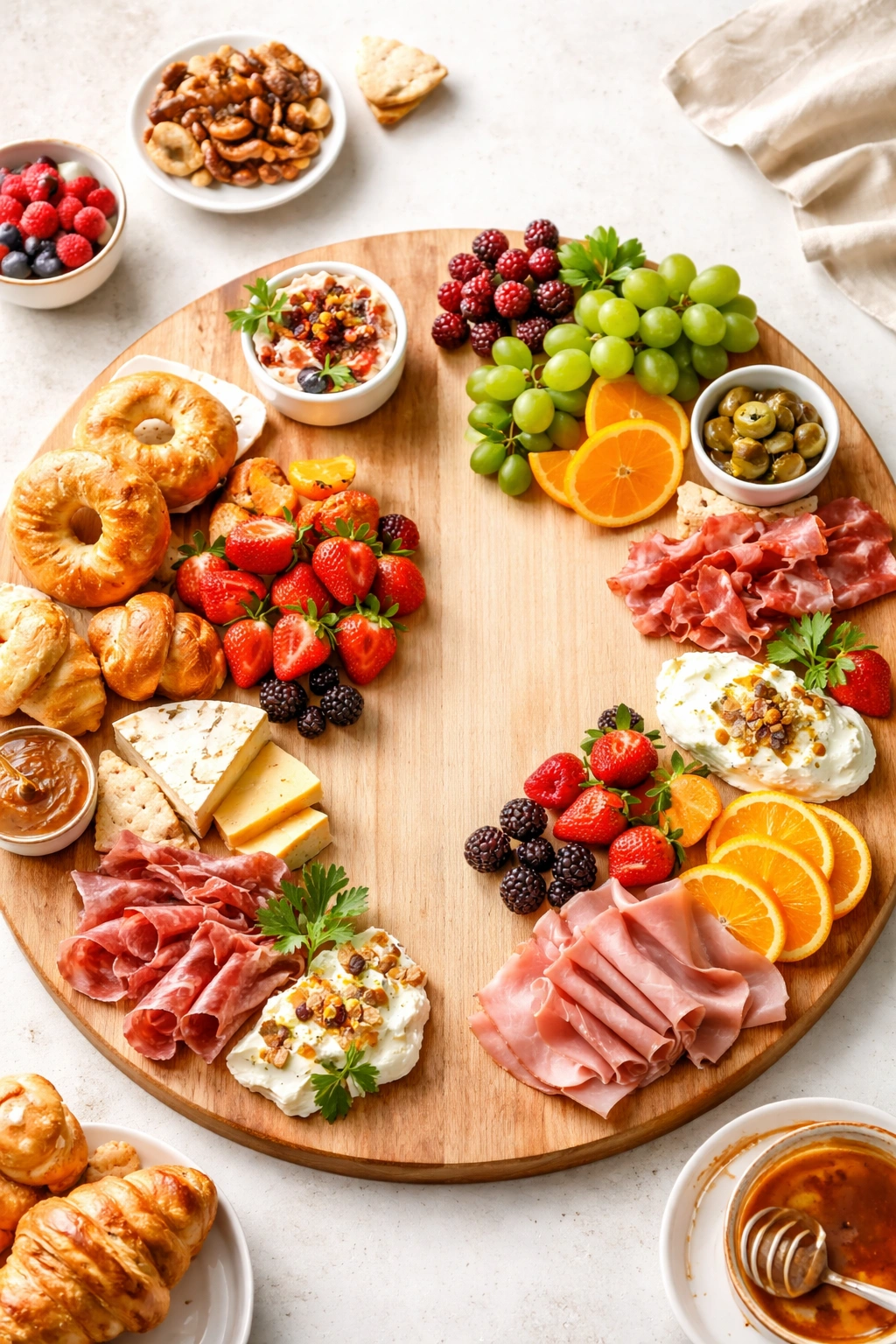
Start by imagining your board as having sections, even if the lines between sections aren’t obvious. Maybe one quadrant is dedicated to your smoked salmon situation (salmon, cream cheese, capers, thinly sliced red onion, and crisp crackers clustered together). Another section might feature your cured meats, aged cheese, and mustard. Another might be berry-focused with soft cheese and bread. These mental zones help guests build coherent bites without feeling like they’re randomly assembling components.
Place your most visually striking elements (berries, herbs, distinctive cheeses) slightly off-center and in clusters rather than spread thin across the whole board. A concentrated pile of raspberries looks abundant; the same raspberries spread thinly across the board looks sparse. Raspberries piled in a small cluster next to a wedge of brie looks intentional. That same cluster scattered across an empty board looks like you ran out of ideas.
Create height variation by using small bowls for soft elements, stacking some items (crackers leaning against a cheese wedge), and letting cured meats drape naturally. Flatness looks boring; variation keeps the eye moving and makes the board feel more generous.
Color balance is subtle but real. If you have mostly warm tones (aged cheeses, cured meats, bread), the pop of berries or fresh herbs becomes even more striking. If your board is going to be mostly cool tones (soft cheese, cucumber, radishes), a small pile of warm-toned elements like apricots or marcona almonds matters visually. You don’t need to overthink this—just make sure you have visual contrast and that no one color dominates the entire board.
Put things that are most likely to be mixed together close to each other. Prosciutto and melon should be adjacent. Smoked salmon and cream cheese should be near each other. Soft cheese and bread should be in reasonable proximity. Your guests will figure it out anyway, but making those natural combinations easy to spot is thoughtful hosting.
Choosing Beverages and Pairing Possibilities
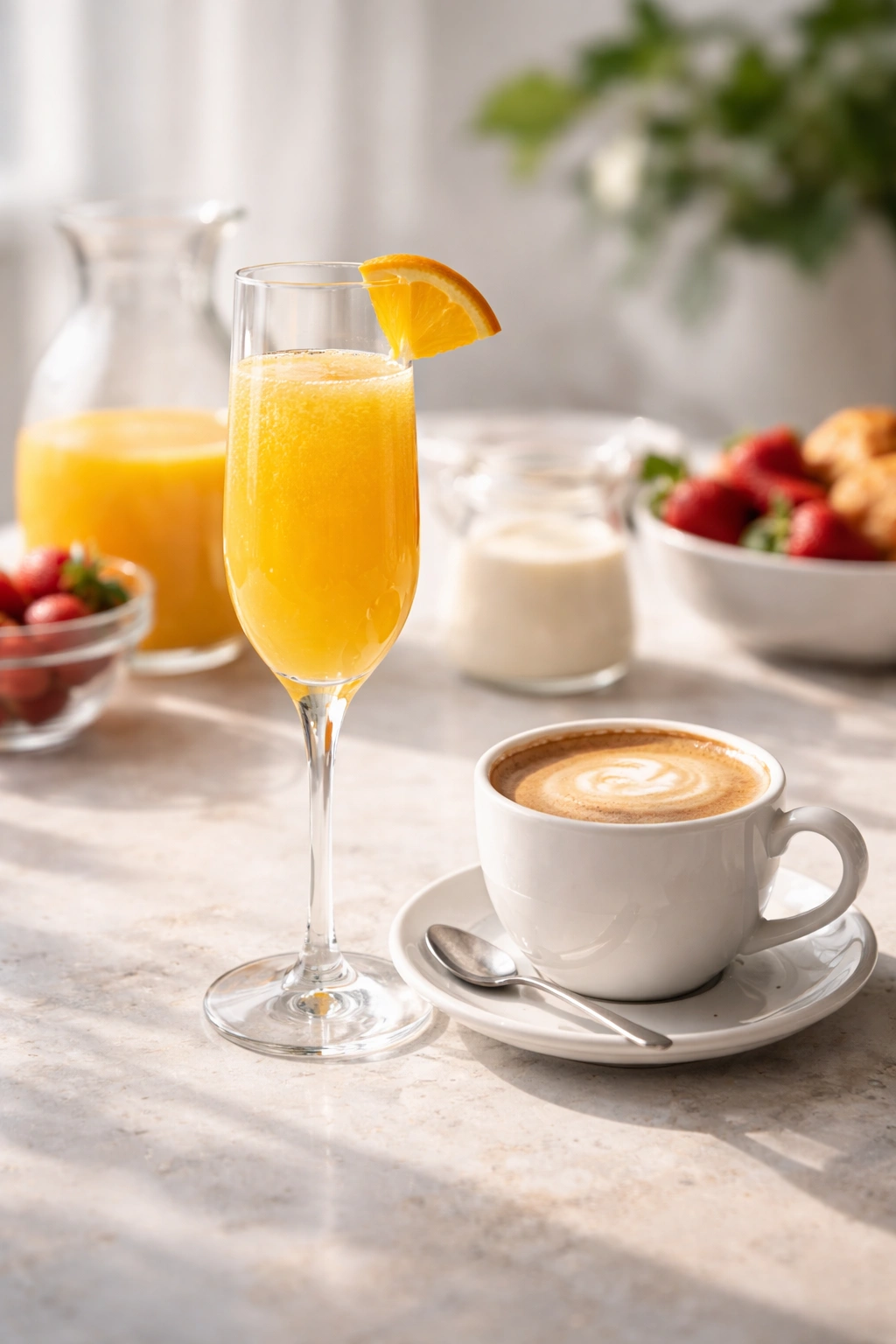
While beverages aren’t technically on the board, what you serve alongside it dramatically affects how the entire experience feels. Brunch boards work with an astonishing range of drinks, from coffee to wine to cocktails to sparkling water. Your choice sets the tone and the time of day.
Mimosas or Bellinis are the classic brunch pairing—something about sparkling wine with fresh juice or fruit feels like celebration and morning at the same time. These are easy to batch ahead (fill glasses three-quarters with prosecco, then top with fresh orange juice just before serving) or set up as a self-serve situation where guests can customize. Coffee is essential if this is a morning brunch; don’t underestimate how much people will drink it.
Still or sparkling water with fresh fruit (lemon, cucumber, berries) is always welcome and often underrated. People who are driving, pregnant, or simply not in the mood for alcohol will genuinely appreciate this. It’s also hydrating, which matters when you’re eating a lot of salty cured meats.
For an afternoon or more wine-focused brunch, a crisp white wine (Sauvignon Blanc, Vermentino, or a dry Riesling) or a light rosé pairs beautifully with almost everything on a well-built board. The acidity cuts through richness and makes people want to keep eating and drinking. A light red (Pinot Noir at room temperature or slightly chilled) works if you’re leaning into aged cheeses and cured meats as the star.
Coffee or tea shouldn’t be an afterthought. Brew good coffee, offer both regular and decaf, and provide warm milk on the side. Tea service (offering a few options like Earl Grey and herbal) feels hospitable even if only a few people use it. These warm components balance the cold elements on the board and extend the experience.
Preparing Your Board Strategically and Timing Your Work
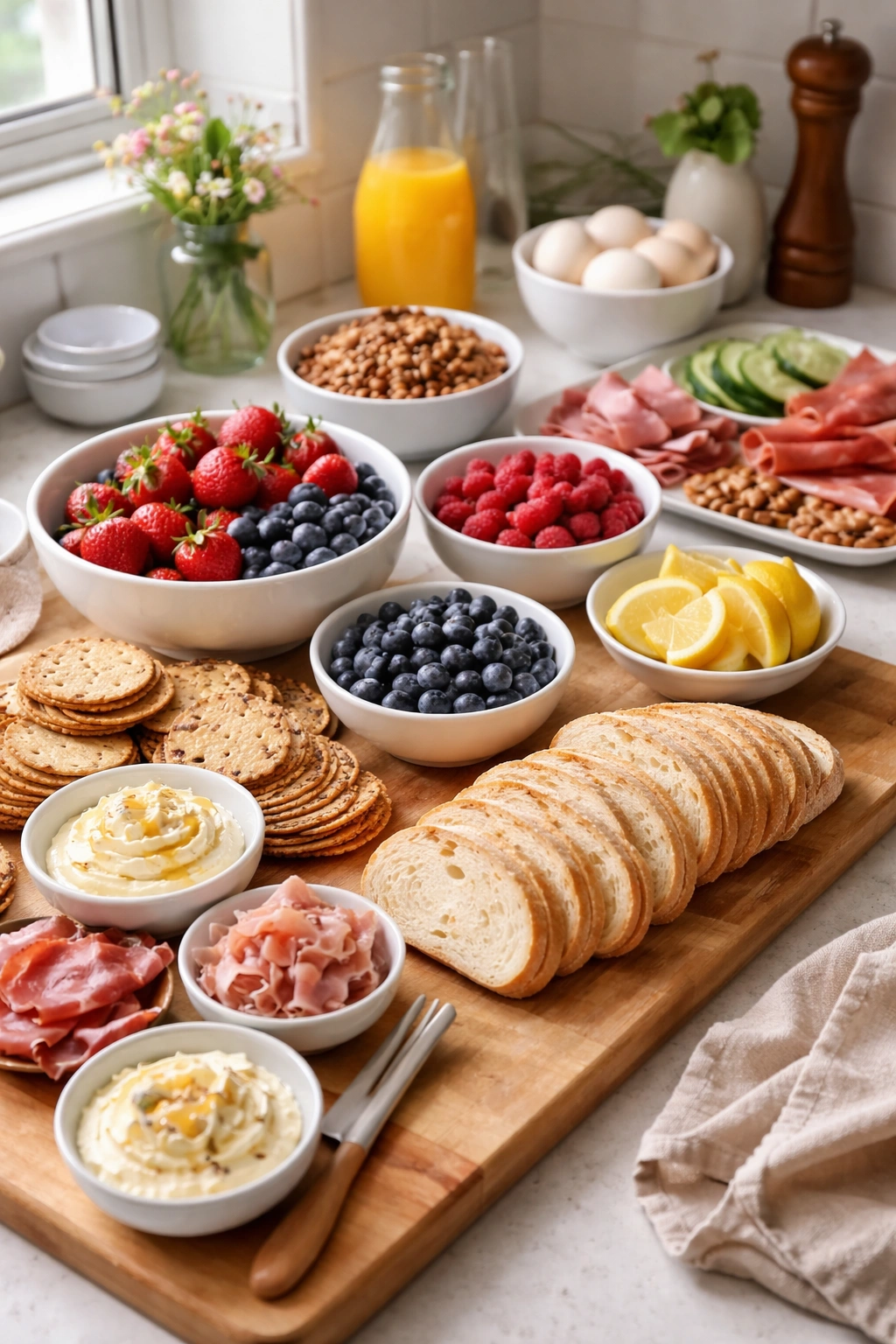
The actual assembly of a brunch board doesn’t need to be stressful or time-consuming if you think strategically about timing and prep. Most components can be prepared hours ahead; some need to happen close to serving. Understanding the difference saves you mental bandwidth.
The day before or morning of (up to four hours before): Wash and dry berries, slice stone fruit and toss with a little lemon juice to prevent browning (store in a covered container), slice bread for toasting and toast it if you’re going that route, arrange crackers in a container so they’re ready to scatter, slice your cured meats and layer them between parchment paper (they’ll be easier to separate when you arrange them), cut vegetables and store them in separate covered containers with damp paper towels, and arrange any room-temperature condiments in their serving bowls (these can sit out).
Two to four hours before: Take cheeses out of the fridge so they come to room temperature (this matters—cold cheese tastes dull compared to room-temperature cheese). Arrange them loosely on a cutting board to air out a bit. Set up your board structure with bread and crackers placed first, creating a base and framework.
Thirty minutes before: Arrange your harder cheeses, cured meats, and condiments. Don’t arrange anything that’s wet or fragile yet.
Just before guests arrive: Arrange berries, delicate herbs, radishes, and any other items that might wilt, weep, or oxidize. This is the last step. Step back, make sure the board looks balanced and visually appealing, and bring it out when guests are ready to eat.
The beauty of this timeline is that you’re spreading out the work across several hours and doing the time-sensitive components last. You’re never stressing about something sitting for hours and becoming unappetizing.
Avoiding Common Mistakes That Undermine a Beautiful Board
Even with good ingredients, a few common mistakes can make a board feel less thoughtful than it should. Being aware of these lets you sidestep them easily.
Overcrowding is the most common mistake. You want to fill your board, but you don’t want every square inch occupied. Leave some breathing room. Negative space actually makes a board look more intentional, not emptier. If you’ve chosen good components and arranged them thoughtfully, white space around things makes them look more elegant, not less generous.
Using ingredients that don’t work together in bites. Tuna salad doesn’t belong on a brunch board; it needs utensils and looks like leftovers. Ingredients should be things people can pick up and combine easily—cured meat and cheese, bread and spread, fruit and cheese. If something requires a fork or careful assembly beyond just stacking components, it’s not a good board ingredient.
Cutting everything too far ahead of time. Sliced fruit oxidizes and looks dull. Toasted bread gets soft. Vegetables wilt. Even cured meats dry out slightly if exposed to air for hours. The better your ingredients, the more they benefit from being arranged close to serving time. This is not about perfectionism; it’s about honoring what you’ve purchased by letting it taste and look its best.
Neglecting texture variety. A board of only soft, spreadable items (soft cheese, jam, butter) feels monotonous. A board of only hard, dry items (crackers, aged cheese, cured meat) feels unwelcoming. You need crunch, creaminess, chewiness, and moisture in varying degrees. If you taste the board and everything feels the same textural experience, add something crispy, something creamy, or something juicy to balance it.
Choosing lower-quality ingredients as a cost-saving measure. A board lives or dies based on the quality of a few key components. Spending more on genuinely delicious cured meat, cheese, and fresh elements and less on quantity is always the right call. A smaller board of excellent ingredients feels more generous than a larger board of mediocre ones.
Using only one color palette. If everything is pale or everything is dark, the board feels monotonous. Intentionally including visual contrast—bright berries against aged cheese, green herbs scattered across warm tones, white soft cheese against darker cured meats—makes the board more inviting and helps guests visually understand what goes together.
Building Seasonal and Dietary Variations
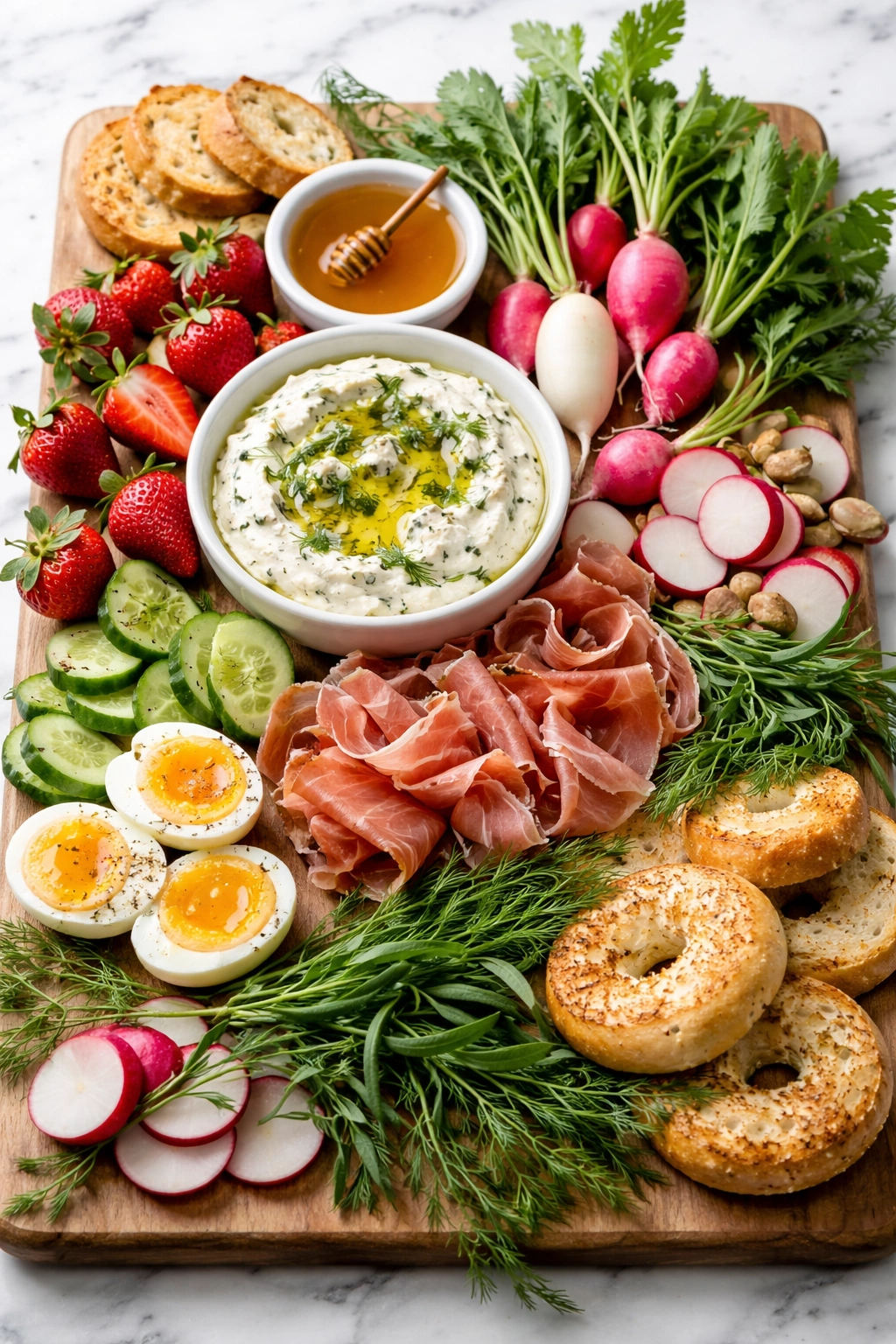
The beauty of brunch boards is that they’re endlessly adaptable. The core principles remain the same, but what’s actually on the board can shift based on what’s in season, what your guests actually eat, or what mood you’re creating.
For a spring board, lean into fresh, light elements: fresh strawberries, baby radishes with greens still attached, fresh herbs like dill and tarragon, soft goat cheese, prosciutto, and lots of greenery. Everything should feel delicate and fresh. Lemon becomes your flavor accent (lemon curd, lemon-forward jam, lemon zest scattered over berries).
For summer, maximize stone fruit, berries at their peak, fresh mozzarella, burrata, light cured meats (cold salami instead of heavy pancetta), and lots of fresh herbs. Bright colors and high water content make this board feel refreshing. Honey and fig jam tie things together.
Fall is the moment for aged cheeses, darker cured meats, roasted nuts, apple and pear slices (tossed with lemon to prevent browning), dried apricots, and warmer spice notes. A small bowl of honey with cinnamon swizzled through it works beautifully. Cranberry compote or apple butter becomes relevant.
Winter calls for aged cheddar and other sharp cheeses, spiced nuts, dried fruit prominently featured (as fresh fruit options are limited), smoked elements, and warming spice notes. Pomegranate seeds add color when fresh fruit options are sparse. Hot chocolate on the side bridges to warm beverages.
For vegan or vegetarian guests: Skip the cured meats entirely and double down on nuts, seeds, interesting vegetables, and high-quality plant-based cheeses. Include more condiments (hummus, interesting nut butters, pesto) to make building satisfying bites easier. Add items like roasted chickpeas or seeds for protein and crunch.
For dairy-free guests: Focus the board around excellent cured meats (if they eat them), plenty of fresh fruit and vegetables, quality nuts and seeds, avocado slices, and dairy-free spreads. Many people’s eyes light up at a board with amazing fruit, nuts, and quality proteins even without cheese.
For gluten-free guests: Offer gluten-free crackers and bread alongside regular options. Most cured meats, cheese, fruit, and vegetables are naturally gluten-free. Just verify any condiments (some mustards, jams, and other prepared items contain hidden gluten). A thoughtfully built board often has plenty of naturally gluten-free options if you’re paying attention.
Storage and Make-Ahead Timeline
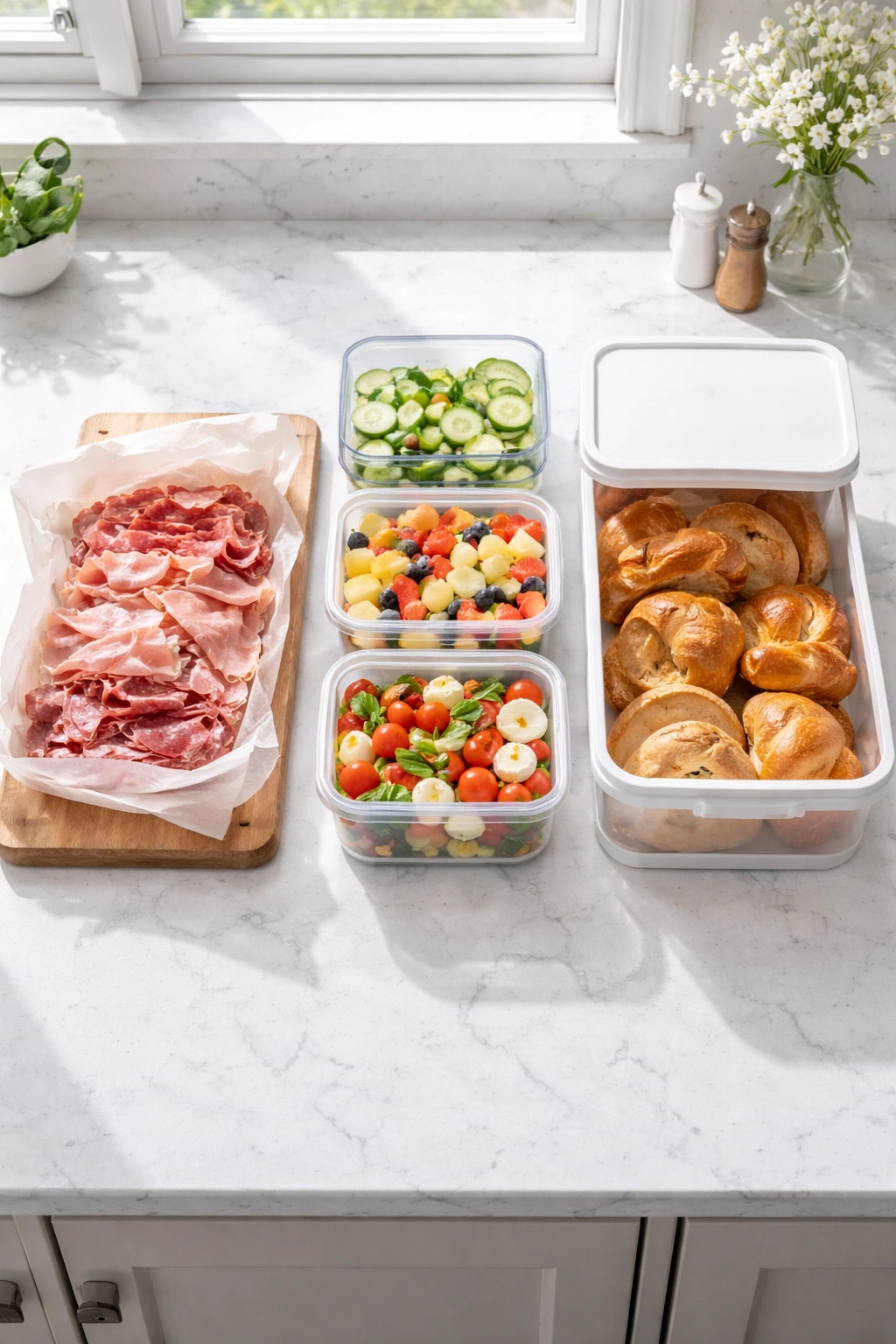
Understanding what you can prepare ahead and what needs to happen at the last minute makes hosting genuinely easy. A board assembled the night before looks wilted; a board assembled with strategic timing looks fresh and beautiful.
The day before: Slice cured meats and layer them between parchment paper; store in a sealed container or wrapped in parchment, refrigerated. Prep all vegetables except those that oxidize (radishes, apples, stone fruit), storing them in covered containers with damp paper towels. Toast bread if you want, and store in an airtight container. Verify you have all condiments and small bowls. This is the heavy lifting—your setup work.
The morning of: Wash berries and dry them thoroughly; store in a covered container. Wash and roughly chop fresh herbs; store in a damp paper towel in a container. Verify all components are accounted for. Take cheeses out of the fridge so they come to room temperature. Do a final grocery check if you realized you’re short on anything.
One to two hours before guests arrive: Arrange your board structure with bread and crackers placed first. Arrange harder components (cheese, cured meats, condiments in their bowls) but leave visible empty space. This is your framework.
Thirty minutes before: Arrange anything that might wilt or oxidize—radishes, fresh herbs, stone fruit, delicate vegetables. Add berries in final little clusters. Step back and assess. Move things if the balance feels off.
Just before serving: Give the board one final look, make any last adjustments, and bring it out. Everything should look fresh, arranged with intention, and inviting.
The morning after (if you’re repurposing): Any leftover cheese should go back in the fridge immediately—it can last several more days. Cured meats, if sealed well, last three to four days. Berries should be eaten that day. Bread goes stale quickly; store any leftovers wrapped on the counter for one more day or freeze for later. Condiments go back in the fridge. You’ll likely find ways to use bits and pieces—cured meat on tomorrow’s salad, leftover cheese in an omelet, berries with yogurt.
Final Thoughts
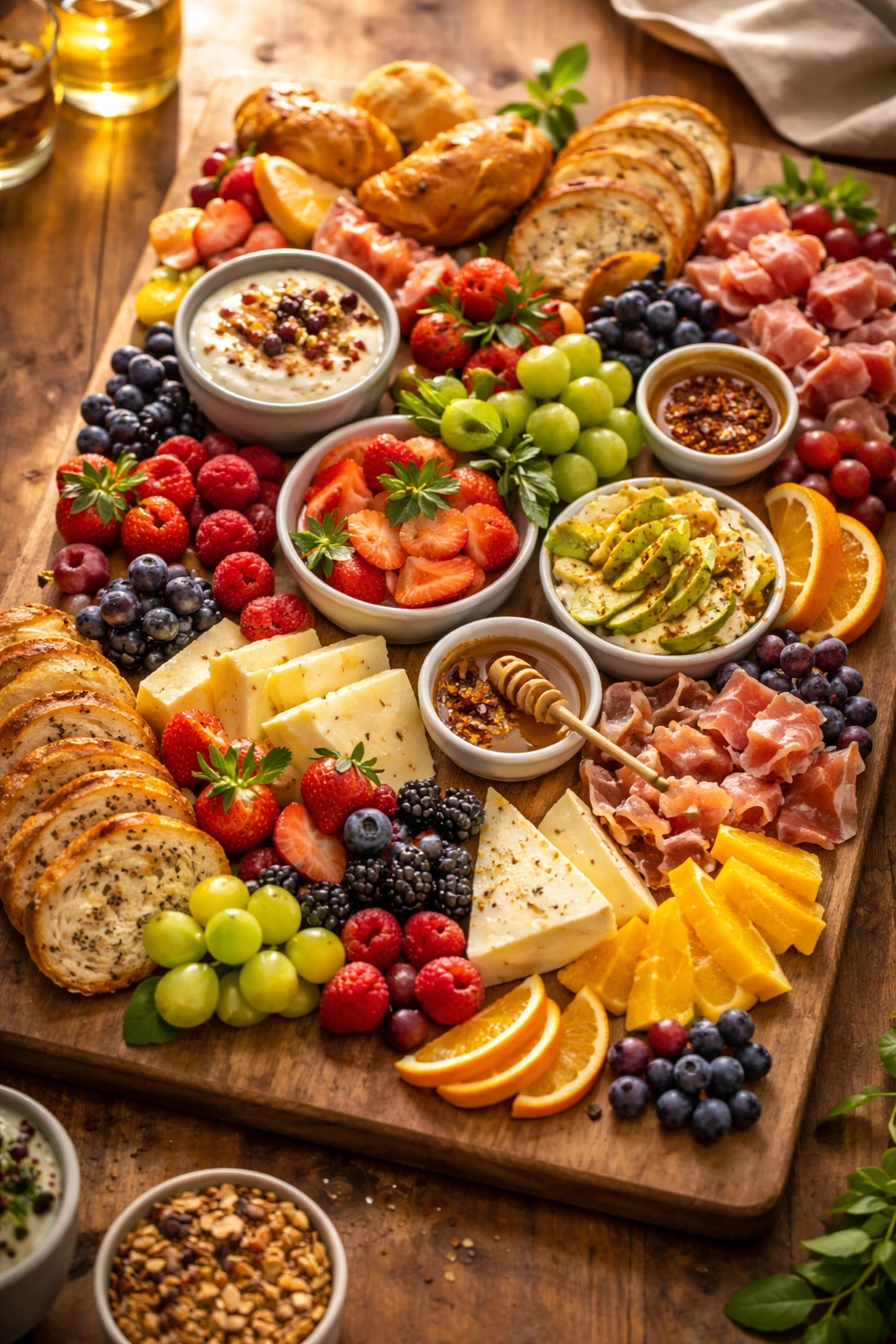
A brunch board is fundamentally about abundance, accessibility, and letting people build bites exactly the way they want them. It removes the pressure of formal service, lets you spend time with guests rather than in the kitchen, and celebrates good ingredients without fussy preparation. The techniques are simple; the results look more complicated than they are.
Start by choosing quality cured meats, real cheese (not plastic-wrapped grocery store brick), and fruit at its peak. Build your board with color balance and texture variety in mind. Arrange things in sections so guests intuitively understand how to build bites. Prepare your components on a realistic timeline so they look fresh when served. Taste everything before it goes on the board and trust that good ingredients need minimal support.
A brunch board that you’ve thought about and assembled intentionally—even if that thinking happened while you were grocery shopping and that assembly happened while you were listening to a podcast—feels special to the people eating it. It says you considered what they’d enjoy, you chose things carefully, and you wanted to create an experience where they could relax and eat at their own pace. That’s the entire goal, and it’s absolutely within reach.
