



Peruvian chicken and rice — or arroz con pollo as it’s known throughout Peru and Latin America — is one of those dishes that somehow tastes like it took hours to prepare, when in reality it’s built in a single pot in under an hour. The magic isn’t in complexity; it’s in the way the chicken releases its flavor into the rice, the way the vegetables soften into the grains, and the way a handful of perfectly chosen ingredients transform something simple into something unforgettable.
There’s a reason this dish shows up at celebrations, family dinners, and everyday tables across Peru. It’s deeply satisfying without being heavy, flavorful without being fussy, and it feeds a crowd without demanding you spend the entire day in the kitchen. The real appeal, though? It’s a one-pot meal that actually tastes like you’ve built layers of flavor — because you have. Each component contributes something essential: the chicken adds body and richness, the broth creates moisture and depth, and the cilantro and cumin bring brightness and warmth that ties everything together.
If you’ve only ever made chicken and rice from a box, or if you’ve had it at a restaurant and thought you could never replicate that flavor at home, this is the recipe that changes that. It’s the kind of dish that becomes a weeknight staple once you make it once, because it’s fast enough for a Tuesday night but impressive enough to serve to guests on the weekend.
Why Peruvian Arroz con Pollo Is Worth the Effort
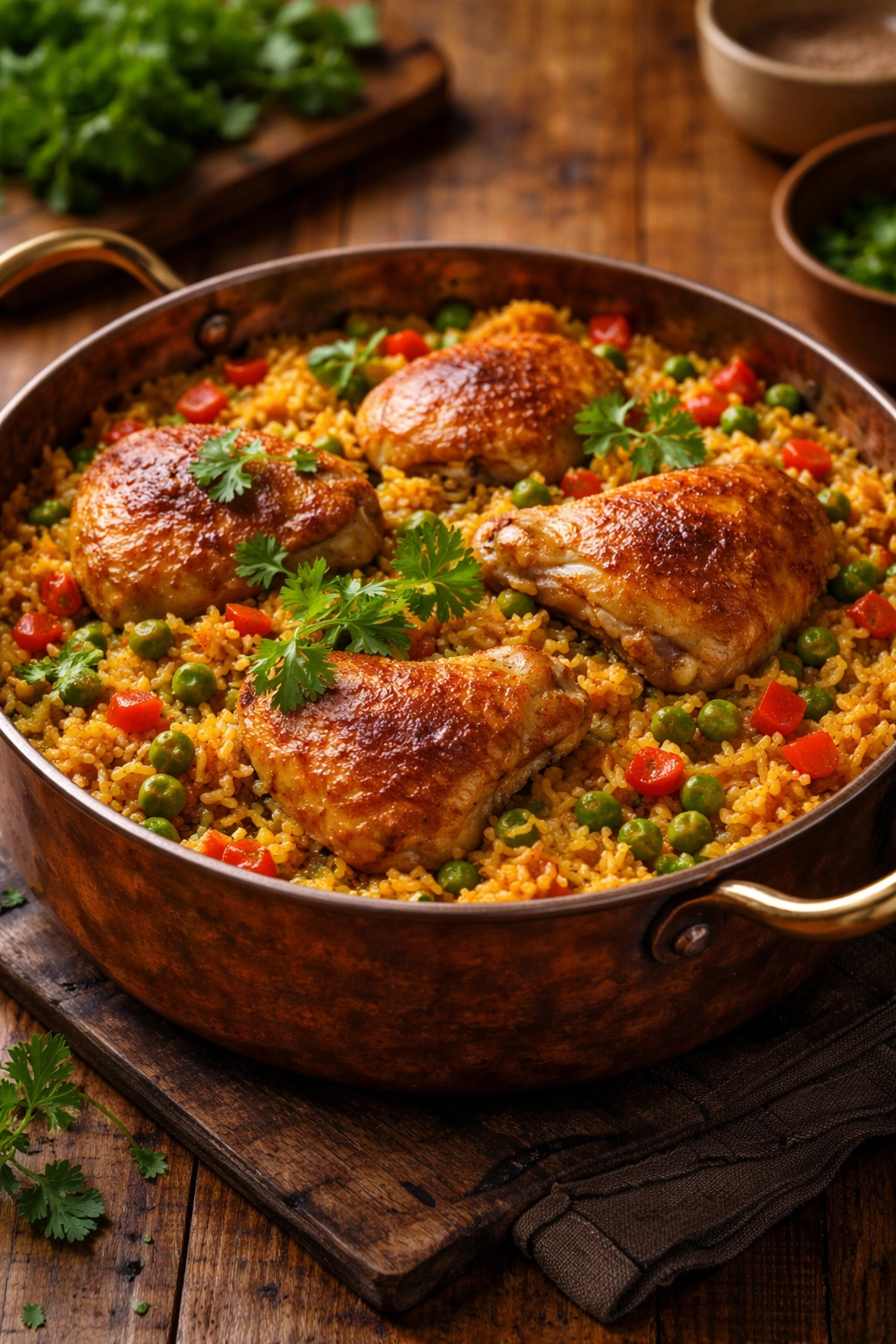
This isn’t a dish that requires advanced cooking skills or obscure ingredients. What it does require is understanding how to build flavor in a single pot and knowing the right ratio of liquid to rice — the kind of technical foundation that makes the difference between a dish that’s just okay and one that becomes part of your permanent rotation.
The real draw of homemade arroz con pollo is control. When you make it at home, you decide how much cilantro goes into the pot, whether you want more garlic or less, and exactly how much cumin flavors the broth. Restaurant versions can be hit or miss — sometimes they’re overly salty, sometimes the rice is mushy, sometimes the chicken flavor gets lost entirely under heavy spices. When you make it yourself, every element comes together exactly the way you want it.
There’s also an efficiency angle that shouldn’t be overlooked. This is genuinely one of the fastest ways to get a complete, balanced meal on the table — chicken, vegetables, and grains all in one pot. Everything cooks together, flavors meld while you’re doing almost nothing, and there’s minimal cleanup at the end.
Why Homemade Beats Restaurant Versions
Restaurant kitchens often use shortcuts that favor speed over flavor depth. They might start with pre-cooked chicken or rely on heavy sodium to create the impression of richness. When you build this from scratch, you start with raw chicken thighs (which stay juicier than breast meat), let them develop a golden crust, and then use that browned surface to flavor the entire pot as the rice cooks. That’s a technique you control completely.
The Satisfaction Factor
There’s something deeply satisfying about making a dish that looks this impressive and tastes this complete from ingredients you probably already have on hand. No special equipment, no hard-to-find components, just technique and timing working together.
The History and Heart of This Classic Dish
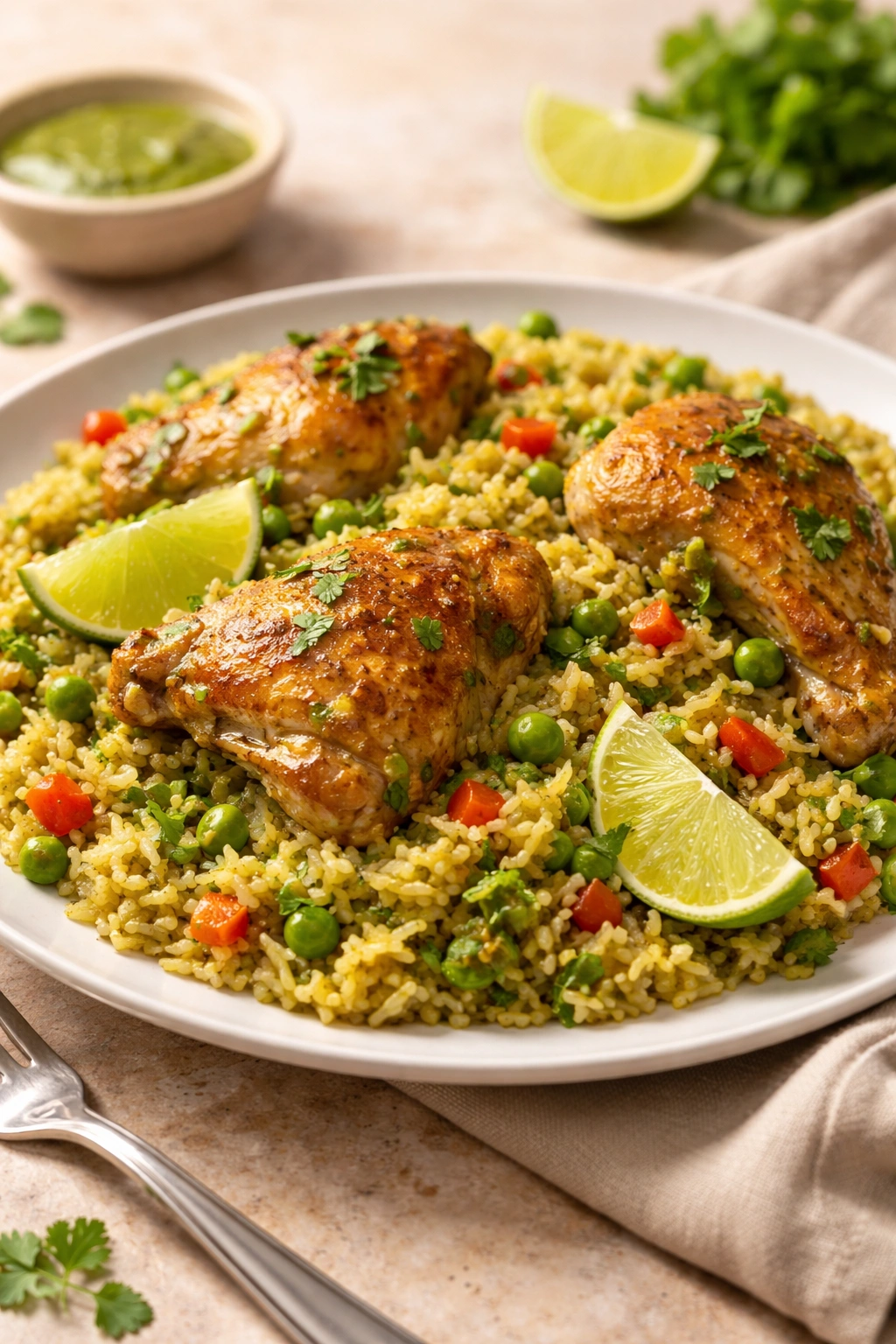
Arroz con pollo is as much a part of Peruvian cuisine as potatoes and quinoa — which makes sense, given that Peru is where both of those foods originated. But this particular dish shows influences from Spanish cooking, which arrived in Peru centuries ago and adapted itself to local ingredients and techniques. The result is something that feels Spanish in structure but unmistakably Peruvian in flavor profile.
The dish exists in variations throughout Latin America. In Colombia, it’s made with sofrito and sometimes includes raisins. In Puerto Rico, it often has a wetter consistency and includes olives. In Peru, the version is cleaner, brighter, and relies heavily on cilantro and cumin rather than complex spice blends — which is exactly what makes it so approachable for home cooks.
Historically, arroz con pollo was comfort food for families, which is part of why it works so well as a weeknight dinner. It’s not pretentious or fussy. It’s meant to be satisfying, filling, and easy enough that you can make it regularly without it feeling like a special occasion.
What Makes Peruvian Style Distinct
The Peruvian version leans into fresh cilantro in a way that other Latin American versions don’t. There’s usually cumin, garlic, and onion as the base flavor profile — simple, but built with intention. Many versions include a little bit of tomato paste, which adds body and slight sweetness, but it’s not a tomato-forward dish the way some paella variations are.
The other distinguishing feature is the broth-to-rice ratio. Peruvian arroz con pollo is cooked until the rice is just tender and has absorbed most of the liquid, but it’s not dry. You want each grain separate but each one carrying flavor, not mushy, not swimming in broth.
Essential Ingredients for Authentic Peruvian Chicken and Rice
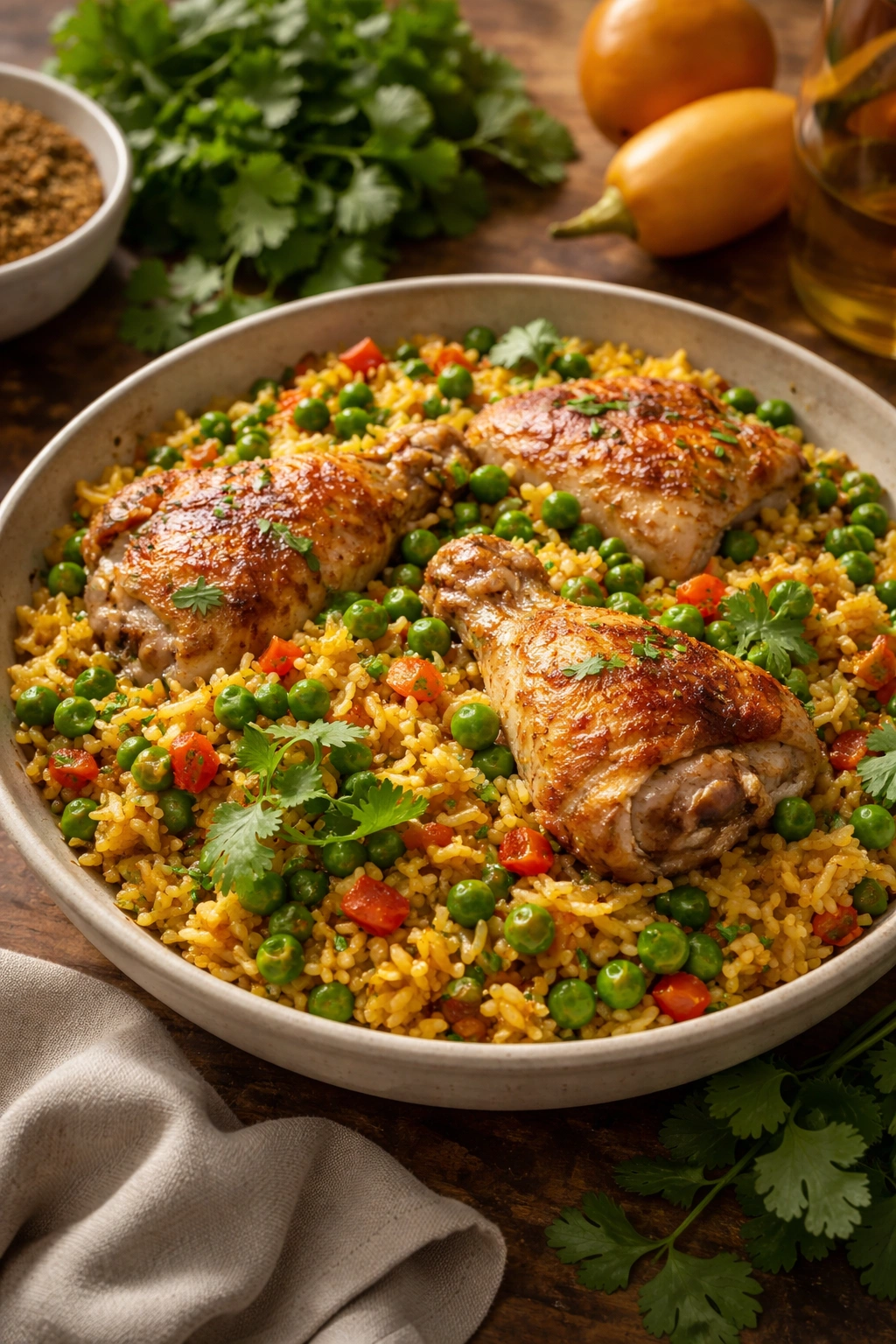
Before you even get to the cooking, understanding what each ingredient does will help you understand why the recipe works and where you can confidently make substitutions.
Chicken thighs are non-negotiable here. Breast meat will cook too quickly, won’t provide enough fat and flavor to season the rice, and will dry out if the rice takes longer than expected. Thighs are forgiving, flavorful, and release gelatin into the broth that makes the rice taste rich without any cream or butter.
The cilantro is what distinguishes this from a generic chicken and rice — it goes into the broth and into the pot at the end, creating that bright, herbaceous flavor that makes people ask what your secret ingredient is. (It’s cilantro. It’s always cilantro.)
Cumin is the warming spice that ties everything together. You’re using it in the broth, so it infuses the entire pot gradually rather than sitting on top like a finish. Garlic and onion are the aromatic base that builds everything.
The only ingredient that might require a trip to a specialty store or an online order is ají (Peruvian chili paste), though this is absolutely optional. The recipe works beautifully without it; it’s just another layer if you want to add it. White wine or chicken broth can step in if you don’t have white wine, and frozen peas work just as well as fresh (they’ll cook through by the time the rice is tender).
Serving and Timing Block
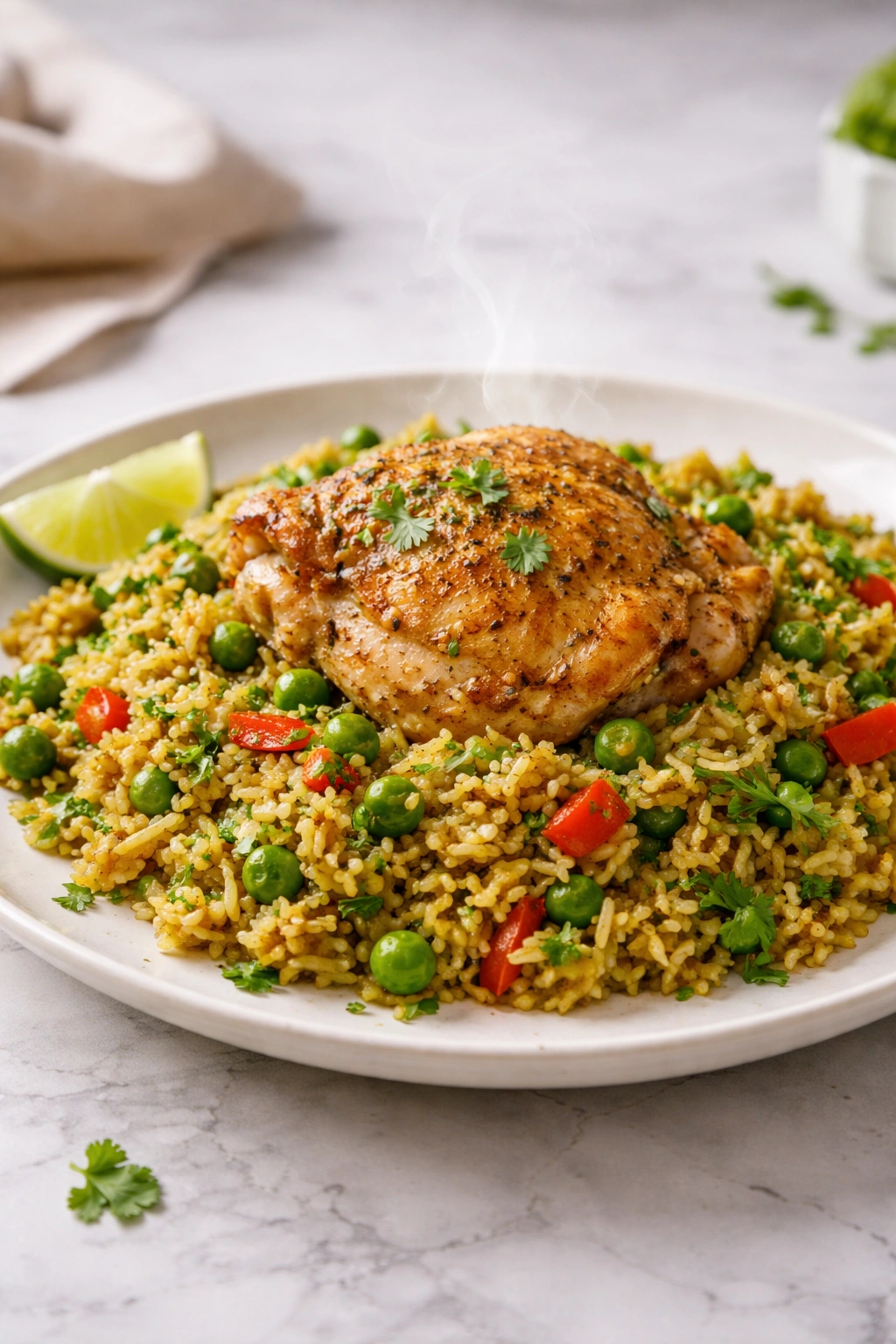
Yield: Serves 4 to 6 | Makes one large pot
Prep Time: 20 minutes
Cook Time: 40 minutes
Total Time: 60 minutes (active time only)
Difficulty: Intermediate — The steps are straightforward and the technique is forgiving, but it requires attention to heat levels and knowing when the rice is tender enough. If you’ve made chicken and rice before, you’ll find this very manageable.
Best Served: Immediately while the rice is still warm and the cilantro is fresh, though leftovers reheat beautifully and even improve in flavor after a day in the fridge.
Complete Ingredient List
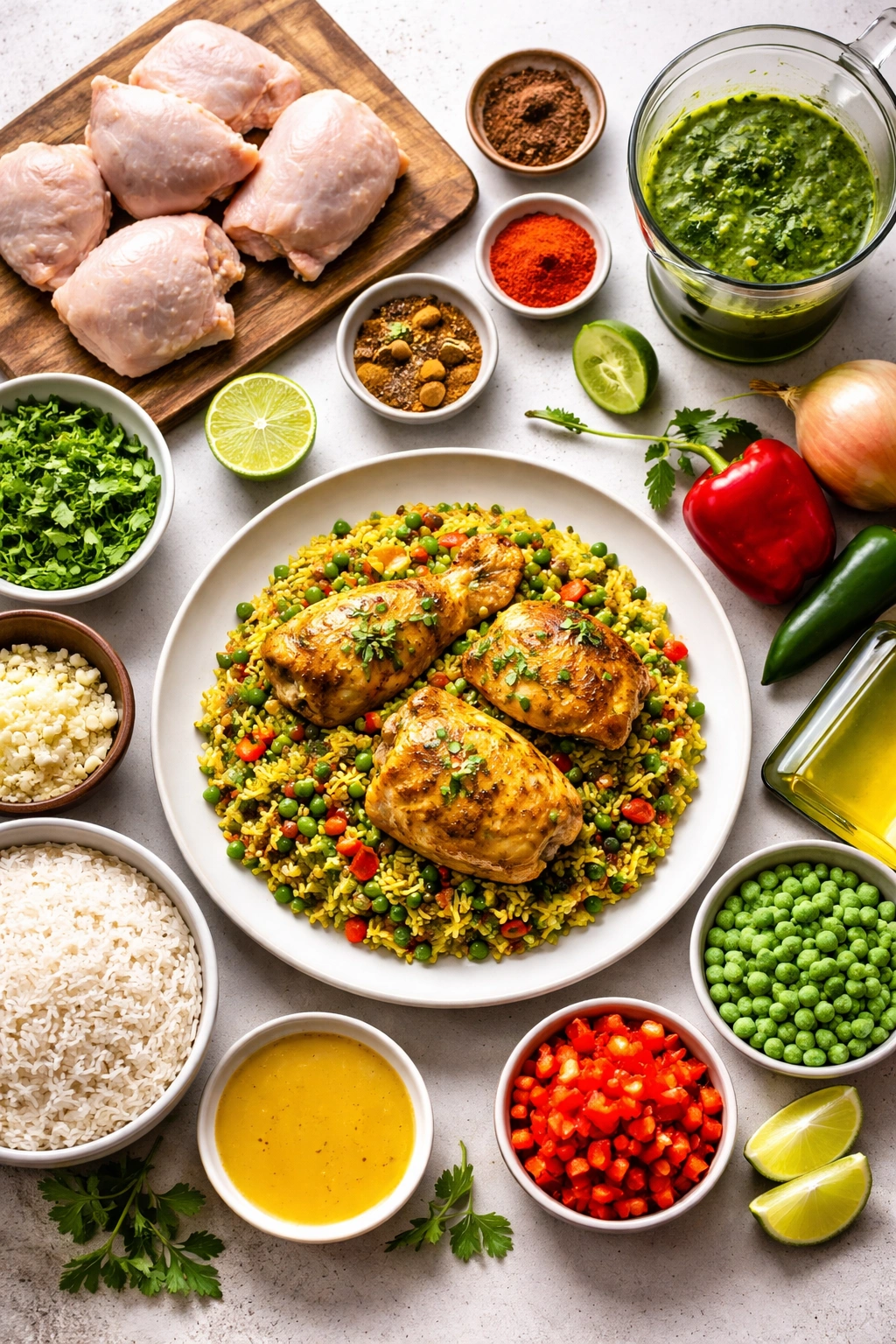
For the Chicken and Broth:
- 2 pounds chicken thighs (about 8 thighs), bone-in and skin-on, excess fat trimmed but skin left intact
- 2 tablespoons vegetable oil or olive oil
- 1 medium yellow onion, diced finely (about ¾ cup)
- 6 cloves garlic, minced
- 2 teaspoons ground cumin
- 1 tablespoon tomato paste
- 4 cups chicken broth (or vegetable broth, though chicken is preferred)
- ¾ cup dry white wine (or substitute with additional chicken broth if preferred)
- 1 teaspoon fine sea salt (adjust to taste at the end)
- ½ teaspoon black pepper
- Pinch of red pepper flakes (optional, for gentle heat)
- 2 tablespoons fresh cilantro, roughly chopped (save another 2 tablespoons for garnish)
For the Rice:
- 2 cups long-grain white rice (basmati or jasmine both work well)
- 1 cup fresh or frozen peas
- ½ medium red bell pepper, cut into thin strips
- ½ medium yellow bell pepper, cut into thin strips
- 2 tablespoons fresh cilantro, finely chopped (for garnish)
Optional Additions:
- 1 tablespoon ají amarillo (Peruvian yellow chili paste) — stir in with the tomato paste for authentic Peruvian heat and flavor
- 2 tablespoons fresh lime juice — squeeze over the finished dish for brightness
- ¼ cup pitted green olives or Kalamata olives — stir in with the peas for a briny contrast
- Hard-boiled eggs, halved — for garnish, traditional in some Peruvian preparations
Step-by-Step Instructions
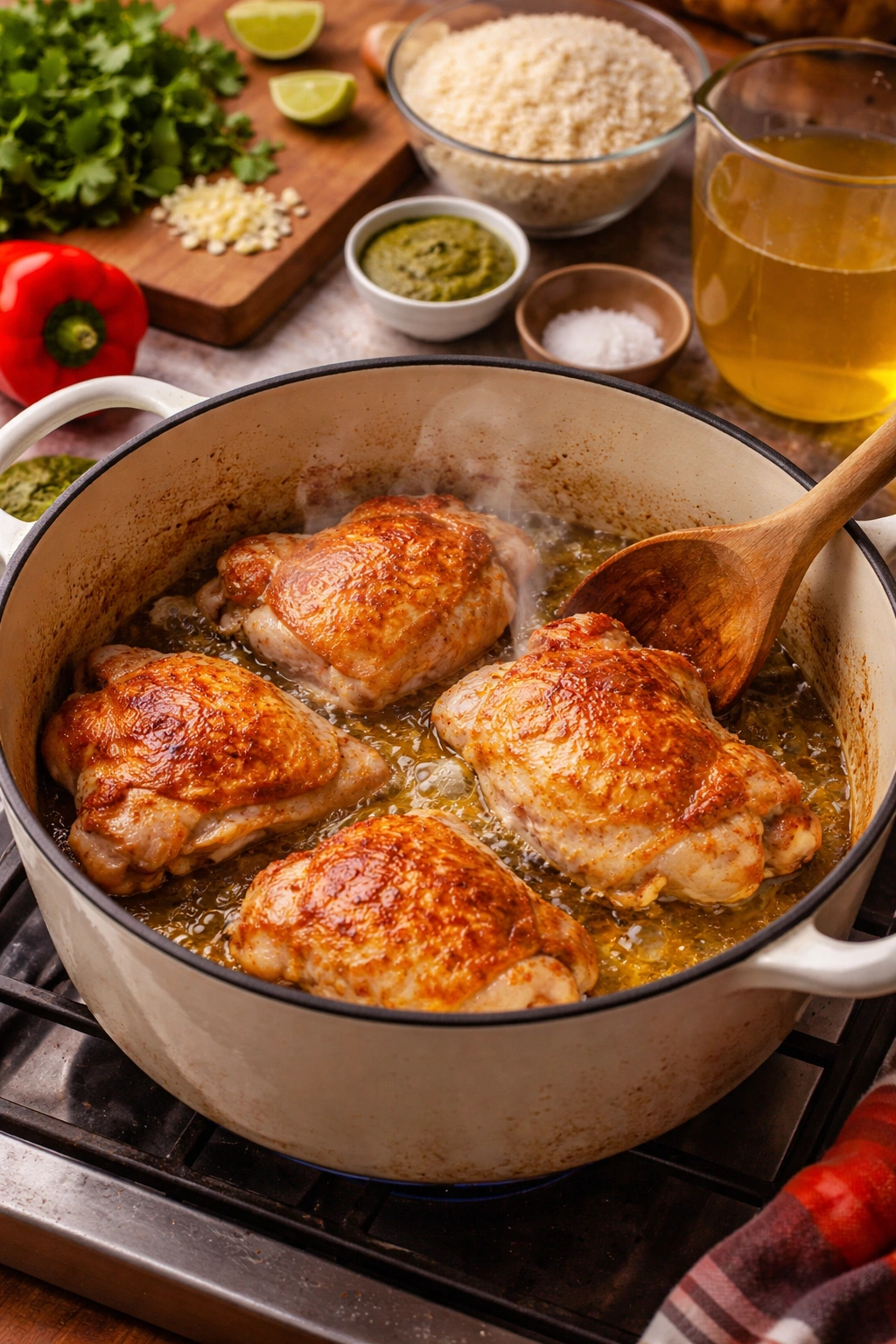
Prep Work:
- Pat the chicken thighs completely dry with paper towels — moisture on the skin prevents proper browning. Season them generously on both sides with salt and pepper. Set aside at room temperature for about 10 minutes; this helps them cook more evenly.
- Have all your aromatics prepped and ready: diced onion, minced garlic, and the cilantro measured out. Measure your broth and wine so you’re not searching for them mid-cook. Toast your cumin in a small dry skillet for about 30 seconds just before you start cooking — this wakes up the spice and makes the flavor more pronounced.
- Measure your rice and rinse it under cool running water for about 30 seconds, stirring gently with your fingers. Drain it thoroughly. This removes surface starch and helps the grains stay separate, though it’s not absolutely essential.
Sear the Chicken: 4. Heat the oil in a large heavy-bottomed pot or Dutch oven (at least 5-quart capacity) over medium-high heat. When the oil shimmers and is hot enough that a tiny piece of onion dropped in sizzles immediately, add the chicken thighs skin-side down. Don’t crowd the pot — work in two batches if necessary. Let them cook undisturbed for 5 to 6 minutes, until the skin is deep golden brown and crispy. Don’t move them around; patience here creates the flavor foundation for the entire dish. 5. Flip each thigh and cook the other side for 3 to 4 minutes, until the second side is lightly golden (it doesn’t need to be as dark as the first side). Transfer the chicken to a plate and set aside.
Build the Broth: 6. Reduce the heat to medium. Add the diced onion to the same pot (don’t drain the oil; those browned bits are flavor gold) and cook for about 3 minutes, stirring occasionally, until the onion is translucent and the edges just begin to soften. The onion will stick slightly to the bottom of the pot — that’s exactly what you want. 7. Add the minced garlic and cook for about 1 minute, stirring constantly, until fragrant. Do not let the garlic brown or it will turn bitter. You’re looking for raw garlic cooked just enough to release its flavor. 8. Stir in the tomato paste and the toasted cumin, coating the onion and garlic completely. Cook for 1 to 2 minutes, stirring frequently, until the tomato paste darkens slightly and becomes fragrant. If you’re using ají amarillo, add it here with the tomato paste. 9. Pour in the white wine, scraping the bottom of the pot with a wooden spoon to release all the stuck-on browned bits (the fond). These bits contain concentrated flavor that’s essential to the dish. Simmer the wine for about 2 minutes, allowing it to reduce slightly and cook off a little of the alcohol. 10. Add the broth and the 2 tablespoons of cilantro. Stir in the red pepper flakes if using. Return the seared chicken thighs to the pot, nestling them among the aromatics. Bring the liquid to a gentle simmer and taste it — adjust the salt if needed, keeping in mind that the rice will absorb the flavors and concentrate them.
Cook the Rice: 11. Stir in the rinsed rice, breaking up any clumps by stirring gently. The rice should be submerged in the liquid or mostly covered. Bring the pot back to a simmer, then reduce the heat to low (this is critical — high heat will cause the rice to burn on the bottom). Cover the pot with a lid or aluminum foil. 12. Cook, undisturbed, for 20 to 25 minutes. Resist the urge to stir or peek constantly — each time you lift the lid, steam escapes and the cooking time extends. At about the 18-minute mark, scatter the peas and bell pepper strips over the top of the rice (don’t stir them in yet). You should see steam coming out when you lift the lid, and the liquid should be nearly absorbed, with just a thin layer of moisture remaining on the surface. 13. At 25 minutes, check if the rice is tender by pressing a grain between your fingers — it should crush easily but not be mushy or falling apart. If there’s still significant liquid and the rice is crunchy, cover and cook for another 2 to 3 minutes. If the rice is tender and the liquid is absorbed, you’re done.
Finish the Dish: 14. Remove from heat and let the pot sit, covered, for 5 minutes. This allows the rice to finish setting and any remaining moisture to distribute evenly. 15. Remove the lid and fluff the rice gently with a fork, breaking up any clumps. Taste a bite of rice and adjust the salt if needed. 16. Gently fold in the 2 tablespoons of fresh cilantro. If using lime juice or olives, add them now. Transfer to a serving platter or serve directly from the pot, making sure each serving gets at least one chicken thigh plus the rice and vegetables cooked alongside.
Tips and Common Mistakes to Avoid
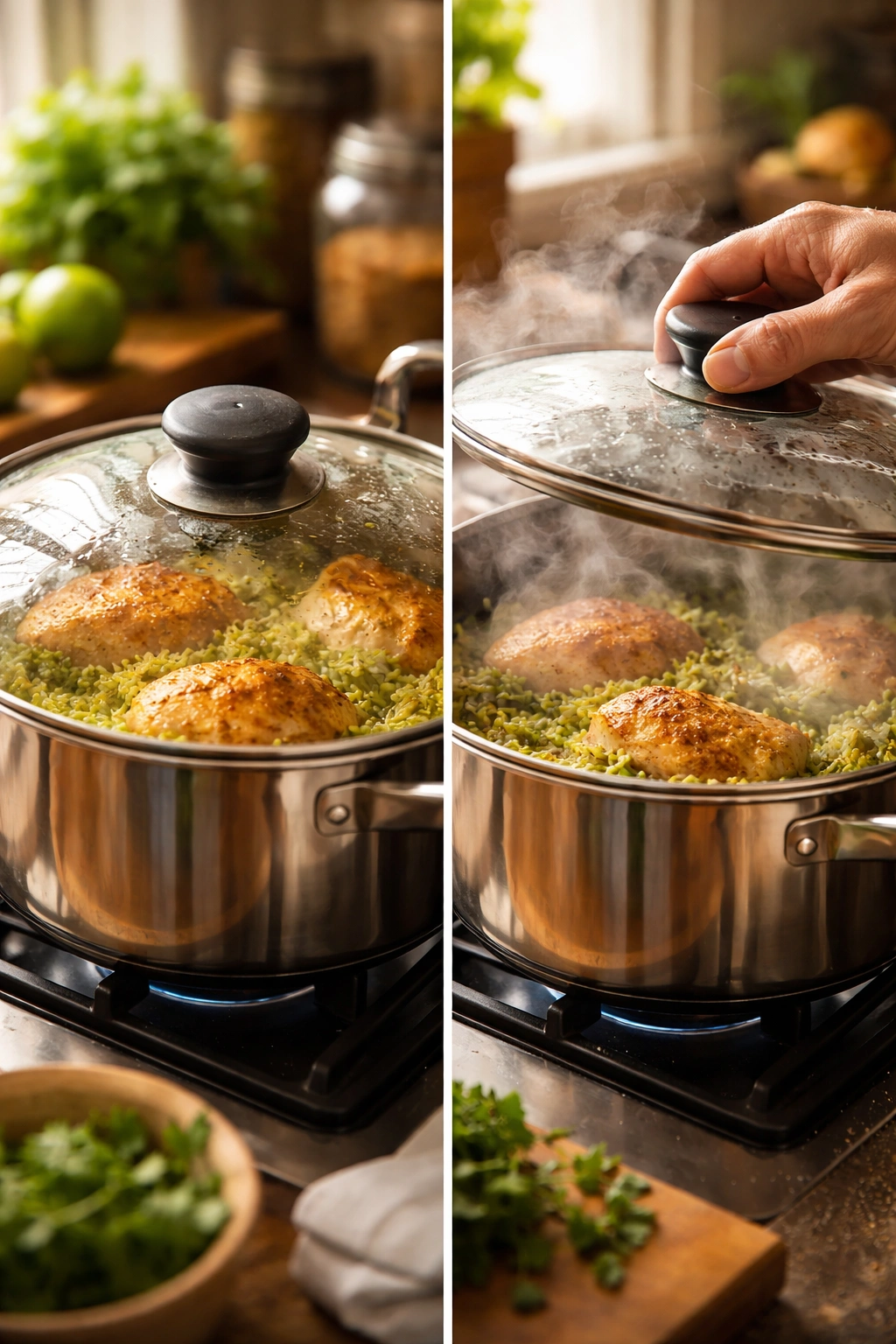
The most common mistake people make with arroz con pollo is lifting the lid too many times during cooking. Each time you open the pot, you release steam and interrupt the cooking process, extending the time and potentially causing the bottom to burn while the top remains undercooked. Resist the urge to check on it constantly. If you’re worried about burning, lower the heat even more — a bare simmer is what you want.
The second major mistake is not browning the chicken enough. The golden, crispy skin isn’t just for appearance; those browned bits carry deep flavor that seasons the entire pot. Rushing this step or using low heat means you lose that foundation. Give yourself a full 5 to 6 minutes on the first side, and don’t move the chicken around.
Overcrowding the pot during the initial sear means the chicken steams instead of browning. If your pot is small or you have extra-large chicken pieces, brown them in two batches. It takes an extra 5 minutes, but the flavor payoff is worth it.
Using chicken breast instead of thighs is tempting if you prefer white meat, but it will dry out. If white meat is your preference, you can use a combination — thighs for flavor and breast for texture — but don’t use all breast. The fat in thighs is what keeps the rice flavorful and moist.
One more thing: don’t skip the cilantro, thinking you’ll add it later. Adding it at two different stages — some in the broth and some fresh at the end — creates more complex cilantro flavor than using it all at once. The cilantro that cooks in the broth becomes mellow and integrated, while the fresh cilantro added at the end keeps its brightness.
Flavor Variations Worth Exploring
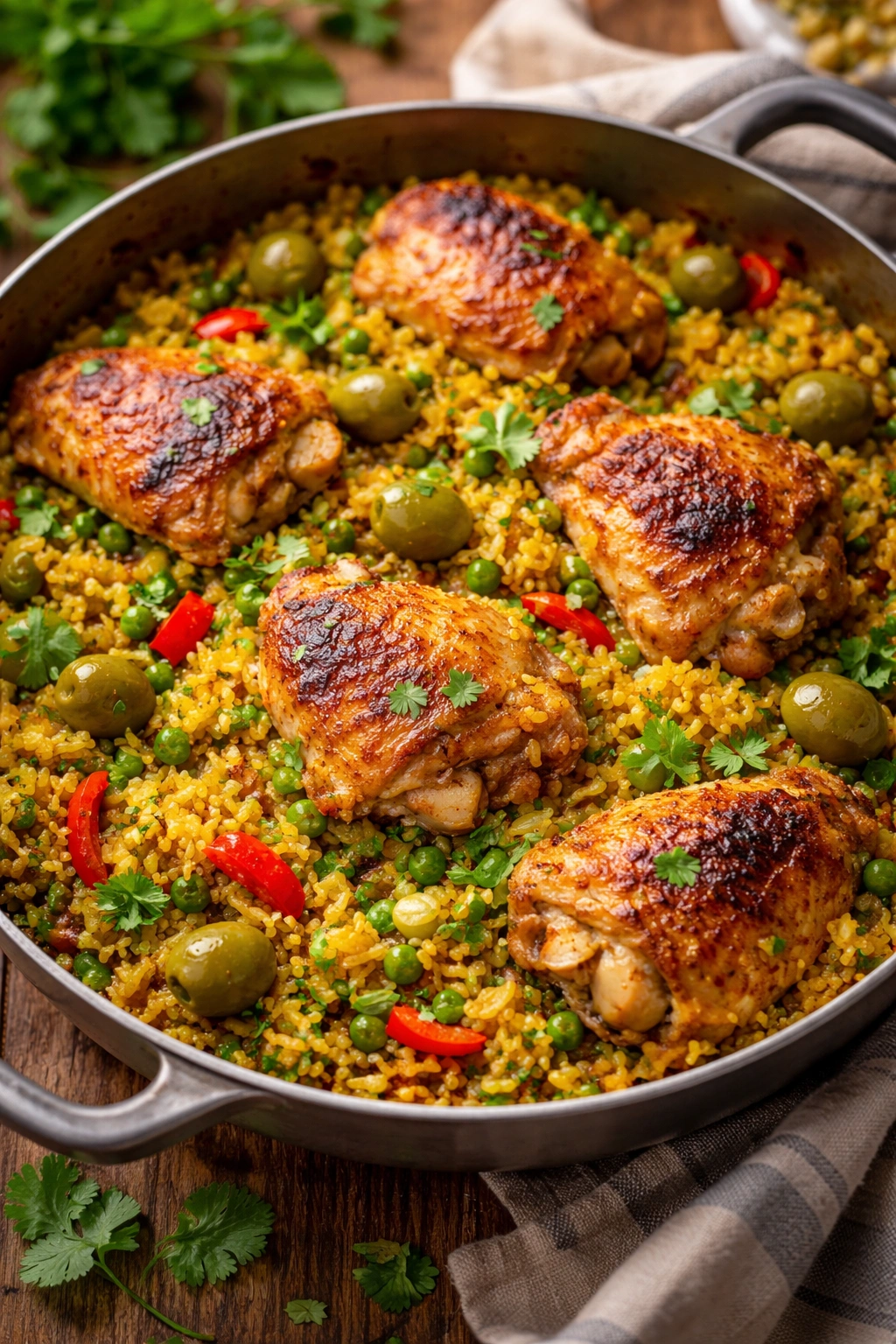
The beauty of this recipe is how adaptable it is to your preferences and what you have on hand. The bones-and-skin base is flexible enough that you can build entirely different dishes with the same technique.
Peruvian Arroz con Pollo with Ají Amarillo and Olives
This is a more luxurious, restaurant-style version. Add 1 to 2 tablespoons of ají amarillo paste (Peruvian yellow chili paste) when you add the tomato paste. Stir in ¼ cup of pitted green olives along with the peas. The olives add briny complexity that makes the dish feel more sophisticated without requiring any difficult ingredients. This is particularly good when you want to impress guests but don’t have hours to spend cooking.
A Cilantro and Lime Brightness Version
If you want the cilantro flavor to be even more pronounced, double the amount of fresh cilantro added at the end (use 4 tablespoons instead of 2), and squeeze fresh lime juice over each serving. The acidity of the lime highlights the cilantro and keeps the dish from feeling heavy, even if you’ve added extra oil or fat. This is perfect in warmer months when you want something that feels bright and light despite being completely filling.
Seafood Variation — Arroz con Mariscos
Replace the chicken with a mix of 1½ pounds shrimp (peeled and deveined) and 1 pound white fish (cut into 2-inch pieces). Brown the shrimp quickly (just 2 minutes per side) instead of the chicken, then set aside. Follow the recipe as written, but add the seafood back to the pot only in the last 5 minutes of cooking, nestled into the rice. Seafood can overcook easily, so this timed addition prevents that. Add an extra squeeze of lime juice and use white wine instead of broth to increase the broth’s acidity, which complements seafood beautifully.
Vegetable-Forward Version (Mostly Vegetarian)
Keep the broth and aromatics the same, but replace the chicken with a mix of vegetables: 1½ cups diced zucchini, 1 cup diced eggplant, 1 cup sliced mushrooms, and an extra cup of diced bell pepper (any colors). Brown the vegetables in the oil for 3 to 4 minutes until they start to caramelize, then proceed with the broth-building steps. Use vegetable broth instead of chicken broth. The cooking time stays the same because rice cooks on the same timeline regardless. This version is lighter but still completely satisfying.
Spicy Version with Multiple Chiles
If you love heat, add multiple sources: use 1 tablespoon of ají amarillo as above, increase the red pepper flakes to ¾ teaspoon, and add 1 finely diced fresh jalapeño or ají rojo (red Peruvian chili) when you add the garlic. This creates layers of heat rather than one sharp spice, which is much more interesting. Balance the heat with extra cilantro and fresh lime juice at the end.
Storage and Make-Ahead Strategies
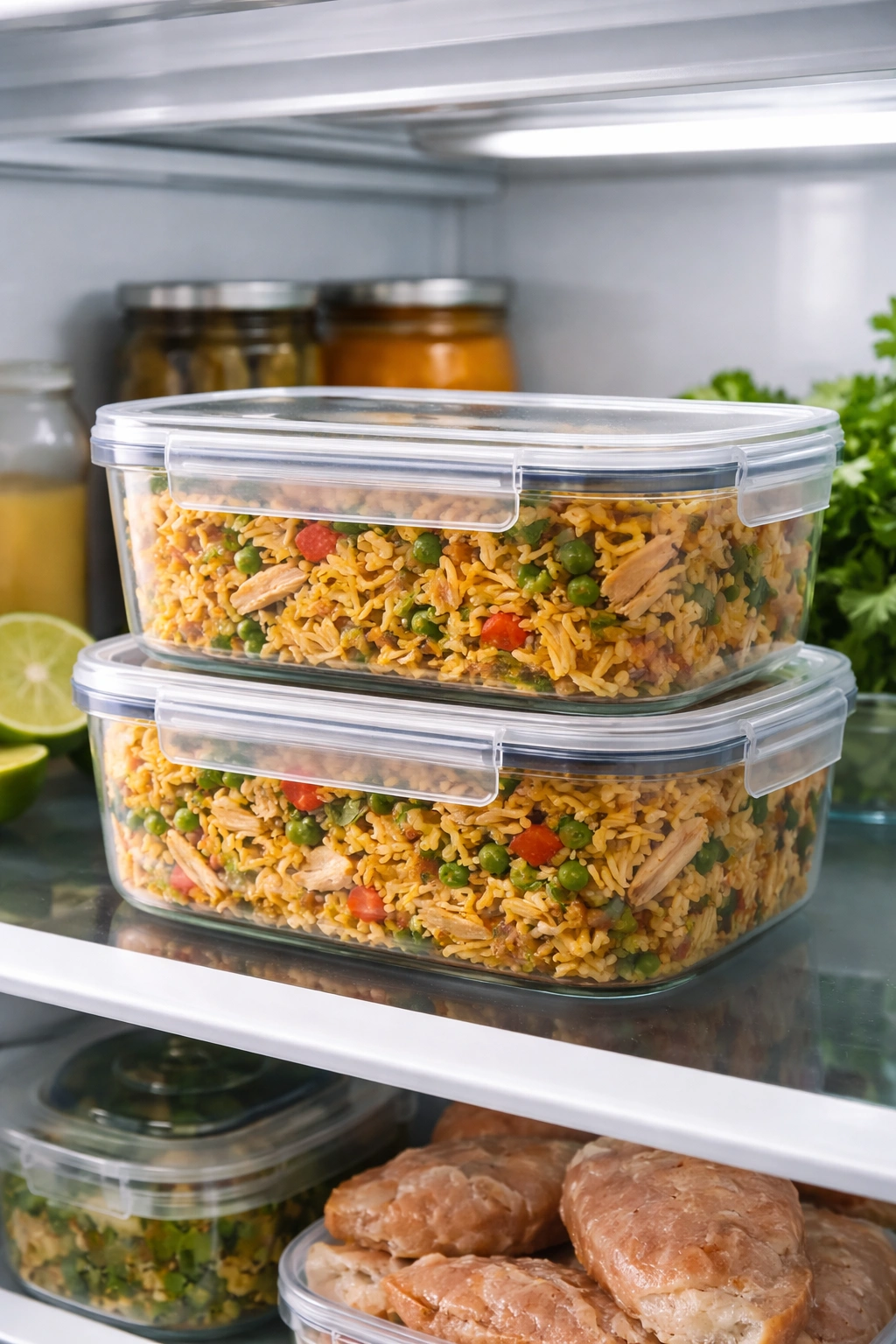
This is one of those magical dishes that actually improves after a day in the fridge. The flavors continue to meld and deepen, and the rice absorbs more of the broth, becoming even more flavorful. You can make the entire dish up to 3 days ahead.
Refrigerator Storage: Transfer the cooled rice and chicken to an airtight container. It keeps safely for up to 4 days. Store any cilantro garnish separately and add it fresh when you reheat, as it can darken and lose brightness if stored in the rice.
Freezer Storage: This dish freezes beautifully for up to 3 months. Cool it completely, transfer it to a freezer-safe container or heavy-duty freezer bag (I prefer containers to prevent spilling), and label it with the contents and date. When you’re ready to eat it, thaw it overnight in the fridge and reheat gently.
Reheating: The gentlest way is to transfer the rice to a large skillet with a splash of broth or water (about ¼ cup) and heat it over medium heat, stirring occasionally, until it’s warmed through (about 5 to 7 minutes). You can also microwave individual portions — place the rice and chicken in a microwaveable container with a tablespoon of water, cover loosely with a paper towel, and heat on 50% power for 2 to 3 minutes. The lower power setting prevents the rice from drying out.
Make-Ahead Timeline: You can prep everything the morning of and cook it in the evening. Chop your onion, garlic, and cilantro, measure your spices and broth, and pat the chicken dry and season it. Keep the chicken in the fridge until you’re ready to cook. This way, the actual cooking takes only 40 minutes, making it perfect for a weeknight dinner that feels more impressive than a quick meal.
Freezing Components Separately: If you want maximum flexibility, you can brown the chicken and make the broth up to 2 days ahead, refrigerate them separately, then cook the rice with the broth and chicken on the day you want to serve it. This works if you’re short on time but want a fresh, hot meal. Reheat the broth and chicken gently before adding the rice.
Perfect Pairings and Serving Ideas
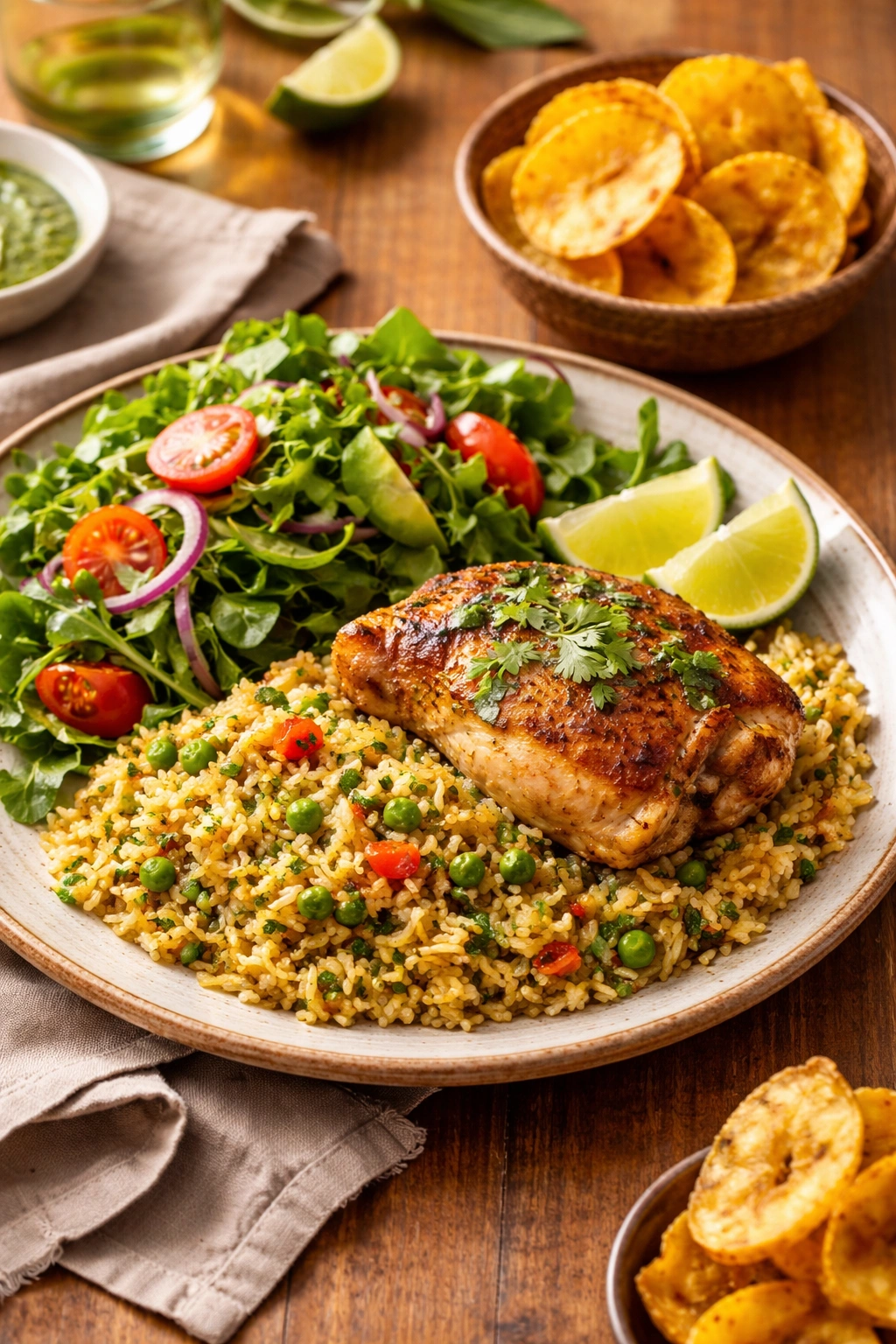
Arroz con pollo is complete on its own — it contains protein, vegetables, and carbohydrates — but a few simple additions round out the meal beautifully and add texture contrast.
A fresh green salad with lime vinaigrette is the most traditional accompaniment. Make it simple: toss together fresh greens (iceberg, romaine, or mixed greens), thin-sliced red onion, and fresh cilantro, then dress it with a squeeze of lime juice, a drizzle of good olive oil, salt, and pepper. The acidity and freshness of the salad offset the richness of the rice and chicken perfectly.
Fried plantain chips are traditional in many Peruvian households. They’re sweet, crispy, and provide textural contrast. If you want to make them, peel and slice ripe plantains (just before they’re fully black) on a sharp angle to create long, thin chips. Fry them in oil at 350°F until golden, about 2 to 3 minutes, then drain on paper towels and salt immediately.
A simple tomato and cilantro salsa — just diced fresh tomatoes, minced cilantro, diced onion, lime juice, and a pinch of salt — served on the side adds brightness and lets people adjust the flavor of their own bowl. Some people love this; others prefer the simplicity of just the arroz con pollo.
For drinks, a cold beer or a light white wine is perfect. If you want a non-alcoholic option, fresh limeade or a virgin mojito made with cilantro instead of mint is traditional and complements the dish beautifully.
Lime wedges should always be served on the side. People squeeze them over their own bowl to taste, and the acidity is crucial for balancing the richness.
Equipment Shortcuts That Actually Help
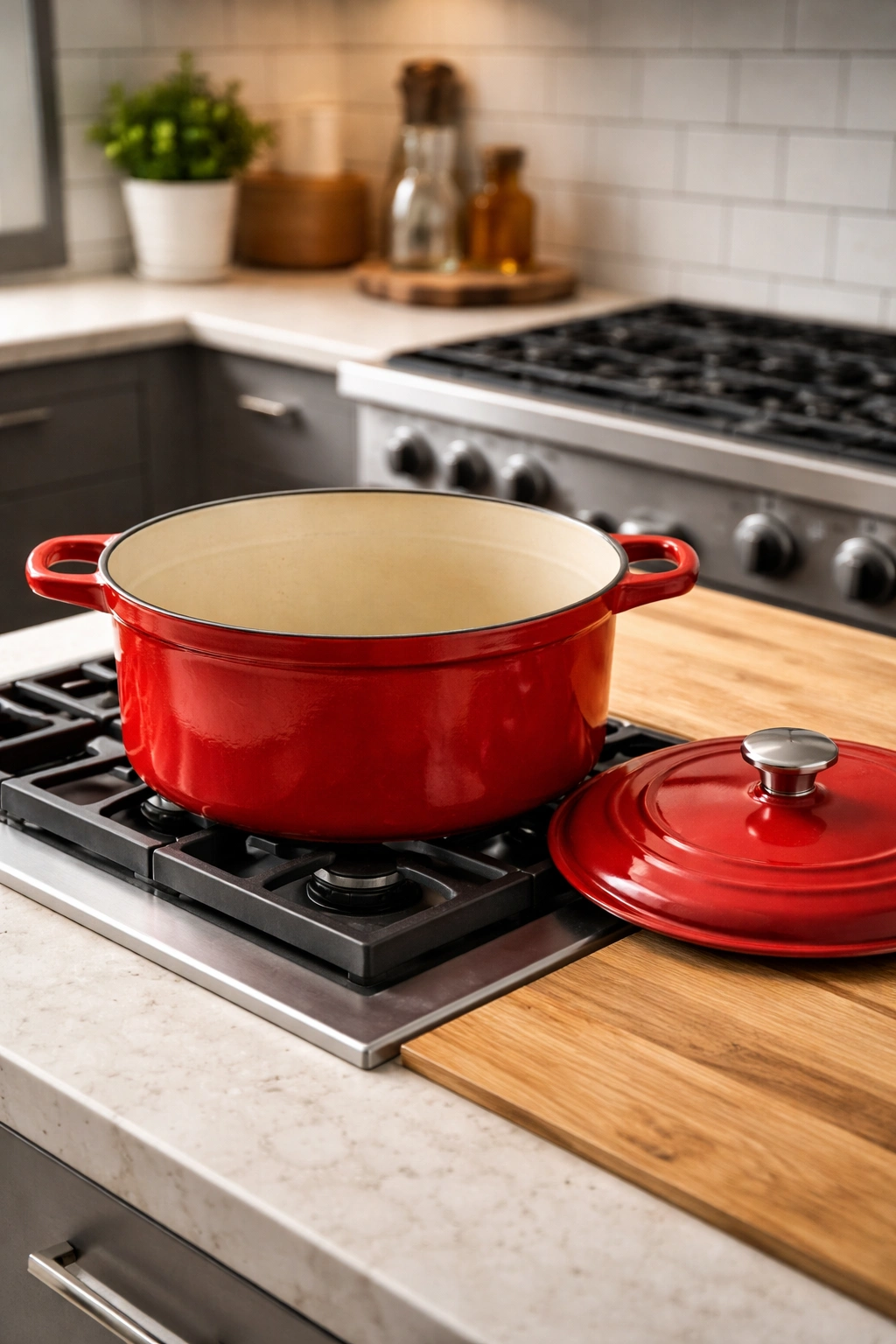
You don’t need specialized equipment to make this, but a few strategic choices make it noticeably easier. A heavy-bottomed pot or Dutch oven (5-quart or larger) is the only essential tool, because it ensures even heating and prevents the rice from burning on the bottom while the top is still cooking. A regular lightweight pot heats unevenly and can cause problems.
An instant-read thermometer isn’t necessary, but it’s helpful if you’re nervous about the chicken being cooked through. The chicken thighs are done when they reach 165°F internally. Usually this happens naturally as the rice cooks, but if you’re concerned, check it.
A lid that fits your pot properly matters more than you’d think. Aluminum foil works fine if you don’t have a pot lid, but a close-fitting glass or metal lid lets you see when steam is escaping and makes it easier to judge doneness without removing the lid entirely.
One genuinely useful shortcut: a rice cooker can work, but you’d need to modify the technique significantly. I don’t recommend it because you lose the chance to brown the chicken and build the flavor foundation that makes this dish special. The stovetop method takes only 40 minutes total and produces far superior results.
How to Scale This Recipe Up or Down
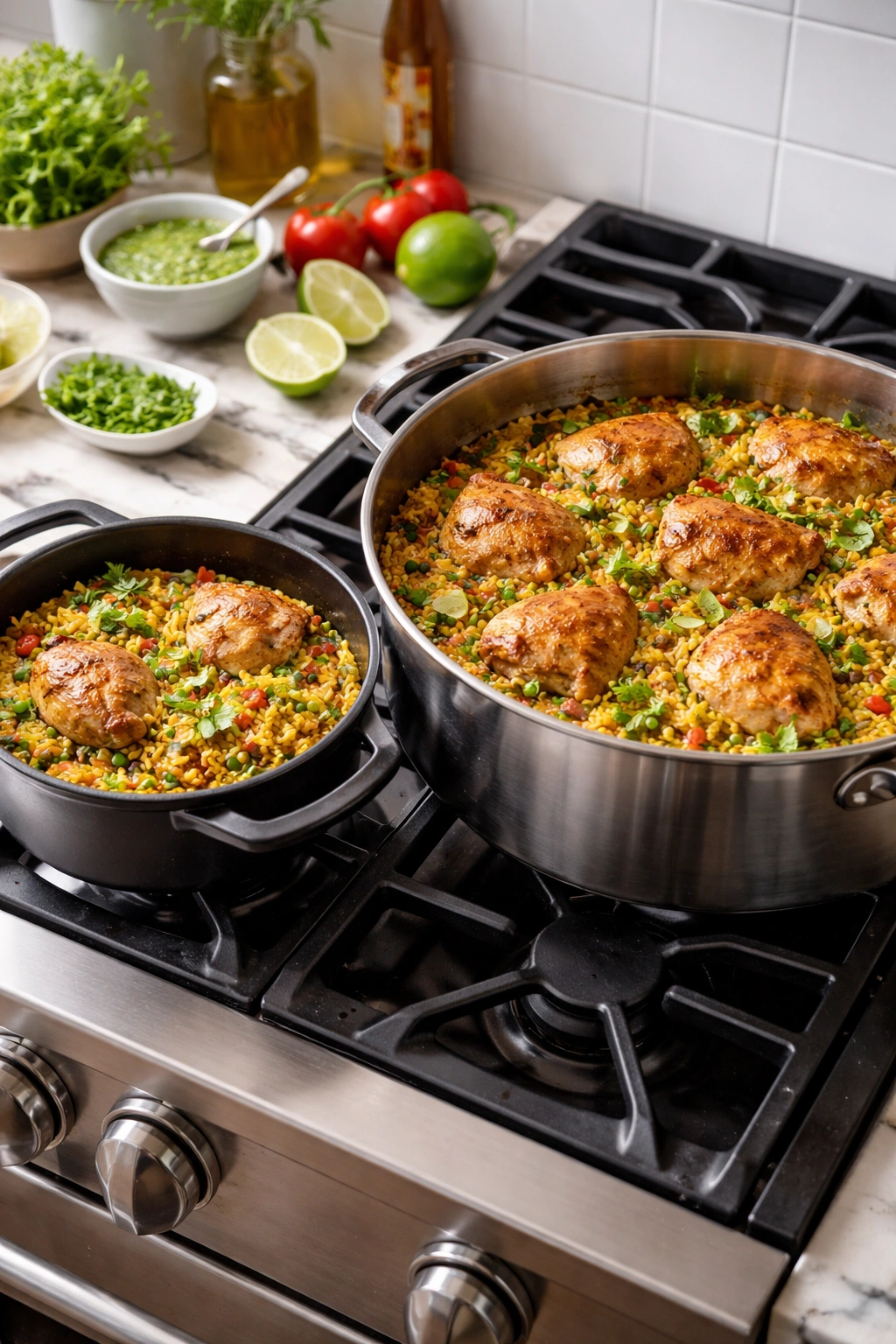
This recipe comfortably serves 4 as a main course or 6 with sides. Scaling it is straightforward because the ratio of liquid to rice stays the same, and the technique doesn’t change.
To serve 2 people: Cut every ingredient in half. Use 1 pound chicken thighs, 1 cup rice, and 2 cups broth. The cooking times stay the same because you’re still cooking the same amount of rice per pot. Use a smaller pot — a 3-quart pot works well.
To serve 8 to 10 people: Double every ingredient. Use 4 pounds chicken thighs, 4 cups rice, 8 cups broth. You’ll likely need two pots because the mixture will be too large to cook evenly in a standard Dutch oven. Prepare them simultaneously using the same technique, and they’ll finish at roughly the same time.
For a large gathering (12 to 16 people): You can scale up to three pots using the doubled recipe three times, or make it in a very large stockpot (at least 8-quart capacity) with all ingredients tripled. If using one large pot, double the browning time for the chicken because you’re browning more of it. Everything else follows the same timeline.
The most important thing when scaling up is making sure your pot is large enough that the rice isn’t crowded. Rice needs space to cook evenly; if it’s packed too tightly, the bottom burns while the top stays crunchy.
Final Thoughts

Once you’ve made arroz con pollo successfully once, you’ll find yourself coming back to it constantly. It’s the kind of dish that becomes part of your regular cooking rotation not because it’s a special occasion meal, but because it’s accessible, satisfying, and genuinely impressive despite being fundamentally simple.
The real skill in making this dish isn’t complicated technique — it’s understanding that the browning step matters, that patience during the rice cooking creates better results than constant stirring, and that letting the flavors meld in a single pot creates something richer than the individual ingredients would suggest. These are transferable lessons that make you a better cook across many other dishes.
Start with the straightforward version here until you’re comfortable with the technique and timing. Once you’ve made it a few times, you’ll have the confidence to add your own touches — more cilantro if that’s your flavor, a touch of lime juice, or a variation with seafood or vegetables. The foundation is flexible enough to support your preferences while still delivering that impressive, satisfying result that makes people ask for the recipe.
Make it when you want a home-cooked meal that tastes like you’ve spent hours in the kitchen. Make it when you’re feeding guests and want something that feels special but not stressful. Make it because the smell while it’s cooking is worth the 40 minutes of your time, and the leftovers are even better than the first serving. That’s the real story of arroz con pollo — it’s a dish that keeps giving you reasons to make it again.
