



Easy Beef Lasagna That Feeds a Whole Crowd
There’s something profoundly satisfying about pulling a bubbling pan of lasagna out of the oven—the way the cheese browns at the edges, the aroma that fills your kitchen, and the knowledge that you’ve just created a meal that’ll feed a room full of hungry people. Lasagna isn’t just dinner; it’s a centerpiece. It’s the dish that says you put in effort without making you spend hours at the stove. It’s comfort in its most honest form.
Over the years, I’ve learned that the secret to great lasagna isn’t complexity—it’s balance. The right ratio of meat sauce to cheese to noodles. Knowing exactly how long to bake it so the edges get crispy while the center stays creamy. Understanding that resting time isn’t optional; it’s what transforms a runny pan into clean, satisfying slices. This particular lasagna recipe has fed countless families at their tables and brought people together at potlucks, holiday gatherings, and casual weeknight dinners. It’s reliable, it’s delicious, and it scales beautifully whether you’re feeding six people or twelve.
What makes this version different from so many others is its simplicity without sacrifice. You’re not spending time making sauce from scratch (though you could). You’re using quality ingredients combined in the right way to create something that tastes like you’ve been cooking all day, even if you’ve only invested about an hour of hands-on time. This is the lasagna that becomes the one people ask for. The one that freezes beautifully so you always have a crowd-worthy meal ready to go.
Why Lasagna Is the Ultimate Crowd-Pleaser
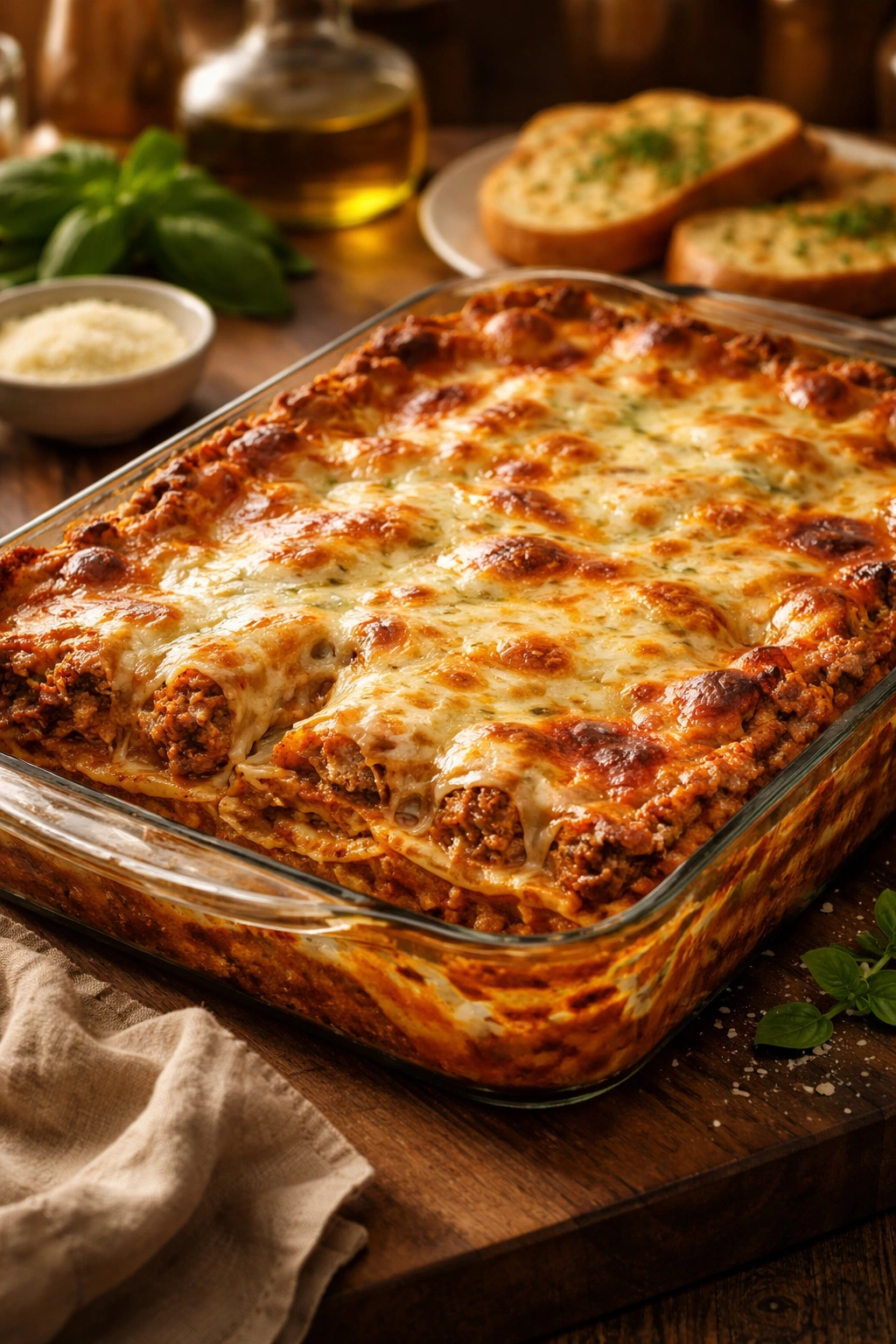
Lasagna has stayed at the top of comfort food charts for good reason. It’s forgiving—if your noodles are slightly al dente or your cheese layers aren’t perfectly uniform, the final dish will still be delicious. It’s scalable—double it for a larger group without dramatically changing the cooking technique. It’s also deeply satisfying in a way that fewer, smaller dishes simply aren’t. There’s something about layers that feels intentional, homemade, and special.
Beyond the practicality, lasagna works because people love it. It appeals to kids who might be skeptical of more adventurous dishes, yet it feels fancy enough for a dinner party. You can make it a day or two ahead, which eliminates the stress of cooking while guests are arriving. The leftovers actually improve—the flavors meld overnight, making day-two lasagna sometimes better than day-one.
The beauty of this particular recipe is that it doesn’t require any special skills or hard-to-find ingredients. Everything you need is at your local grocery store. You won’t need a special pasta-making attachment or hours of simmering. What you will have is a baking dish full of exactly what people crave: tender noodles, rich meat sauce, creamy cheese layers, and a golden-brown top that pulls apart into perfectly defined slices.
The Secret to Restaurant-Quality Beef Lasagna at Home
The difference between mediocre lasagna and exceptional lasagna comes down to a few critical factors, and understanding them transforms everything you bake.
Ground Beef Quality Matters More Than You’d Think
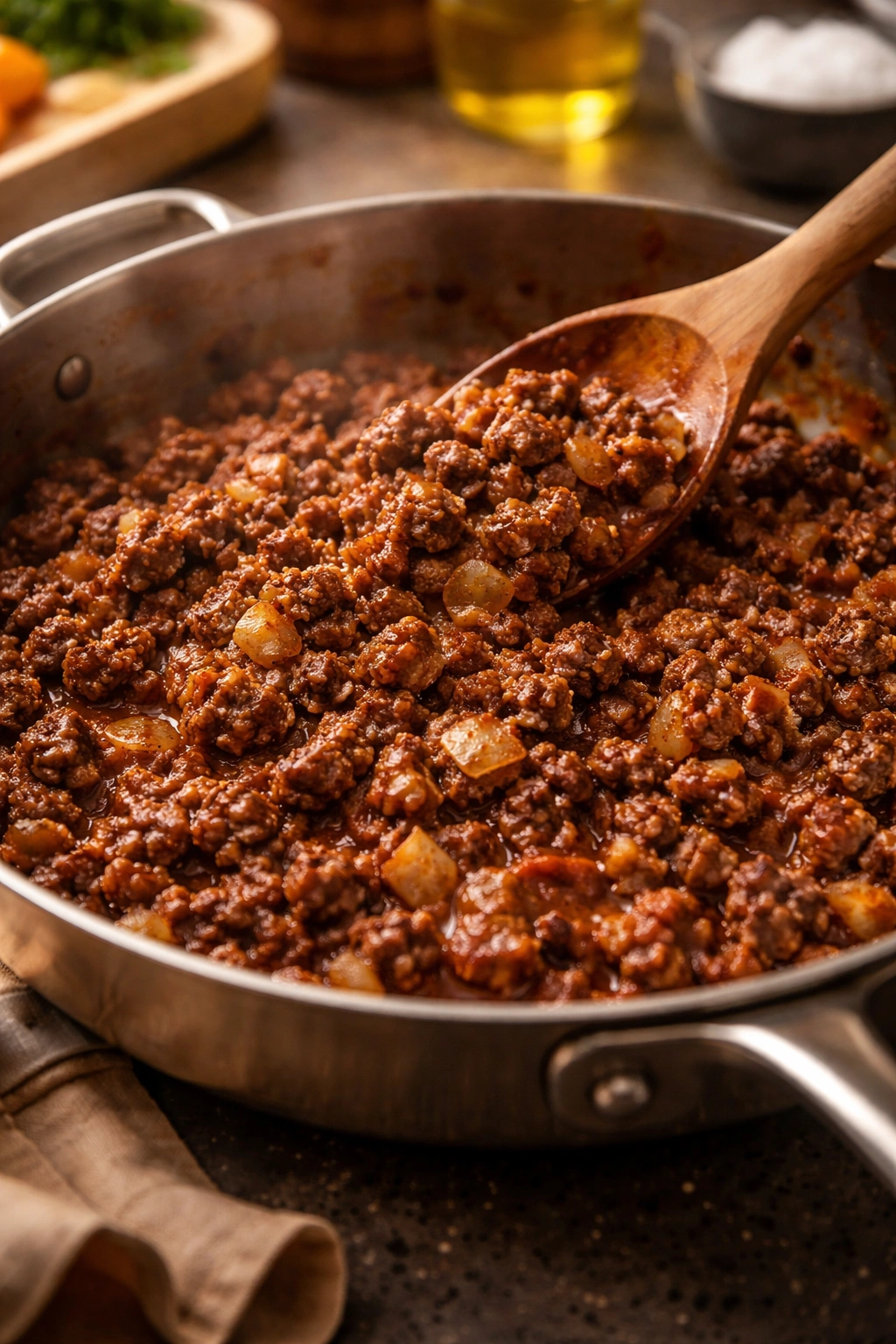
The first secret is the meat itself. Don’t reach for the leanest ground beef you can find. An 80/20 blend—80 percent meat to 20 percent fat—gives you the juiciness and flavor that lean meat simply can’t provide. That fat renders during cooking and carries the flavor of your seasonings throughout the sauce. It also keeps the lasagna moist on reheats, which becomes crucial when you’re pulling it from the fridge days later. If all you can find is very lean beef, add a tablespoon of olive oil to the pan to compensate.
Sauce Depth Comes from Layering Flavors
The second secret is understanding that your meat sauce is built, not just assembled. You’re not dumping ingredients together; you’re creating depth. Start by browning the meat properly—break it up completely so it caramelizes rather than steams. Add your aromatics (onion and garlic) while the meat is still in the pan so they absorb those browned bits. Only then do you add your sauce. If you’re using store-bought marinara, this technique elevates it far beyond what it would be on its own. Those five minutes of simmering the meat and sauce together allows the flavors to marry and deepen.
Cheese Ratio Creates the Texture
The third secret is getting the cheese proportions right. Too little cheese and your lasagna tastes like a noodle casserole. Too much and it becomes cloying. The blend of ricotta, mozzarella, and Parmesan works because each cheese serves a purpose: ricotta provides creaminess and richness, mozzarella creates that gorgeous melted stretch, and Parmesan adds sharp, salty complexity. The egg in the ricotta mixture isn’t just a binder—it helps the cheese layers stay distinct rather than melting into each other, which gives you better texture from layer to layer.
Noodle Cooking Is Precision Work
Finally, cook your lasagna noodles to just barely al dente—they should still have the tiniest bit of resistance when you bite them. They’re going to continue softening as they bake in the sauce. Under-cook them slightly, and you’ll have noodles with perfect texture. Fully cook them to the package directions, and you’ll end up with mushy pasta by the time the lasagna is done.
What You’ll Need: Ingredients for Crowd-Feeding Lasagna
Yield: Serves 12 | Makes one 9×13-inch pan
Prep Time: 30 minutes
Cook Time: 50 minutes (covered), plus 15 minutes uncovered
Total Time: 1 hour 35 minutes (plus 15 minutes resting before serving)
Difficulty: Beginner to Intermediate — The steps are straightforward, but precision in layering and understanding when the lasagna is properly done will improve your results with practice.
For the Meat Sauce:
- 1 tablespoon extra-virgin olive oil
- 1½ pounds ground beef (80/20 blend preferred)
- 1 medium yellow onion, finely diced
- 4 cloves garlic, minced
- 48 ounces marinara sauce (two 24-ounce jars), or 6 cups homemade sauce
- 1 teaspoon dried Italian seasoning (or ½ teaspoon each dried oregano and basil)
- ½ teaspoon dried thyme
- ½ teaspoon salt, plus more to taste
- ¼ teaspoon black pepper
- ½ teaspoon granulated sugar (to balance the acidity of the tomatoes)
- ¼ cup fresh parsley, finely chopped (or 2 tablespoons dried)
For the Cheese Layers:
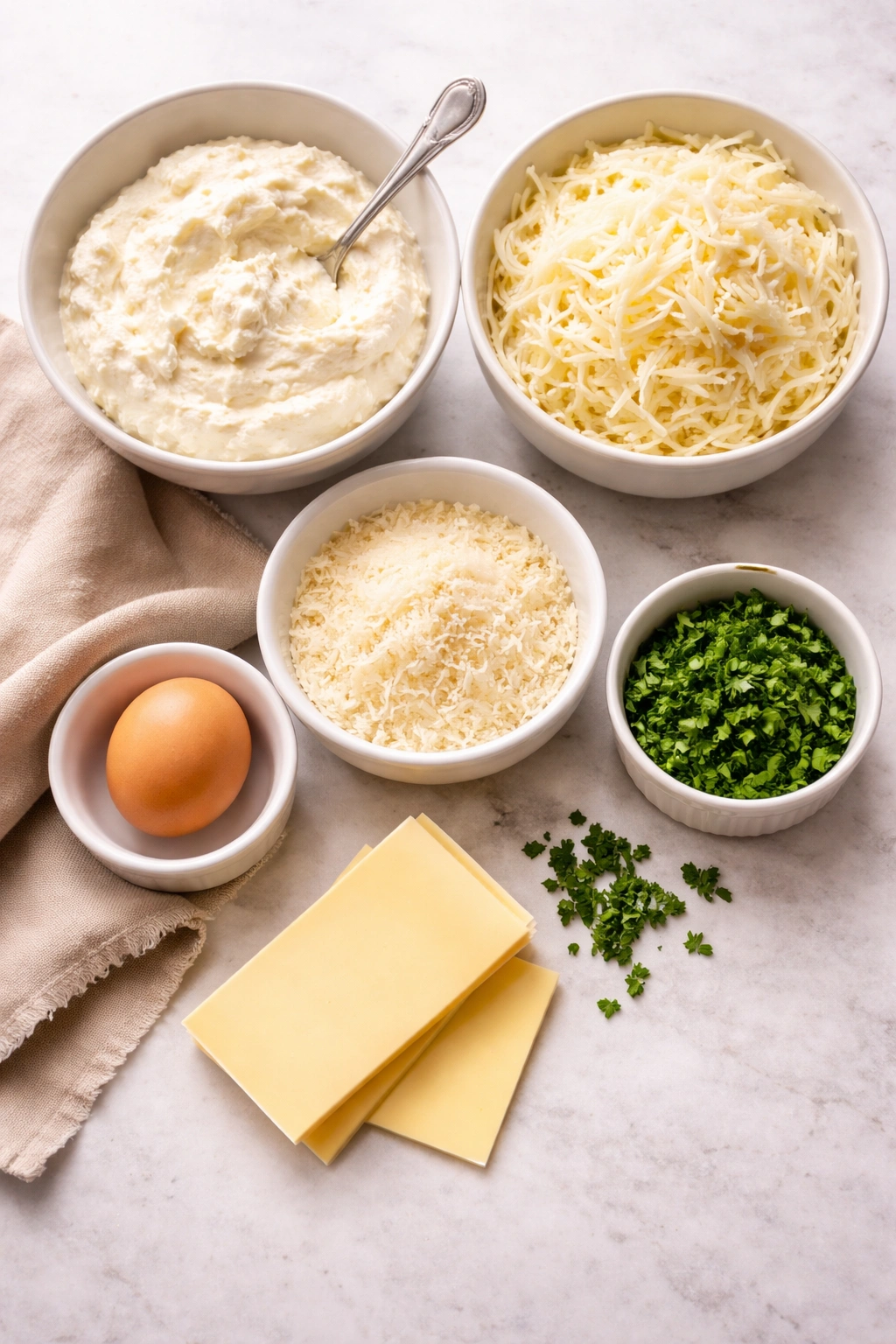
- 15 ounces ricotta cheese (whole milk or part-skim both work beautifully)
- 16 ounces mozzarella cheese, shredded (not pre-shredded if possible — see notes below)
- ½ cup grated Parmesan cheese, plus ¼ cup reserved for the top
- 1 large egg
- ¼ teaspoon salt
- ¼ teaspoon black pepper
- 2 tablespoons fresh parsley, finely chopped (optional but adds brightness)
For Assembly:
- 9 lasagna noodles (regular, not no-boil)
- Cooking spray or butter for the baking dish
Chef’s Notes:
Pre-shredded mozzarella is coated with anti-caking agents that prevent it from melting as smoothly and gorgeously as freshly shredded cheese. If you have time, buy a block and shred it yourself—the difference is noticeable. If pre-shredded is what you have, it will still work just fine; the lasagna will still be delicious. If you can’t find good marinara sauce you love the taste of straight from the jar, this is the moment to make your own or use a brand that genuinely tastes good to you. The sauce is the flavor foundation of everything else.
For a vegetarian version, replace the ground beef with 1½ pounds of finely chopped mushrooms (cremini or portobello work beautifully) sautéed until they release their moisture and darken. Use vegetarian-friendly cheeses and follow the rest of the recipe exactly.
Preparing the Perfect Meat Sauce
The meat sauce is where lasagna’s flavor lives. This isn’t complicated, but it requires your attention and doesn’t rush.
Building Flavor Through Proper Browning
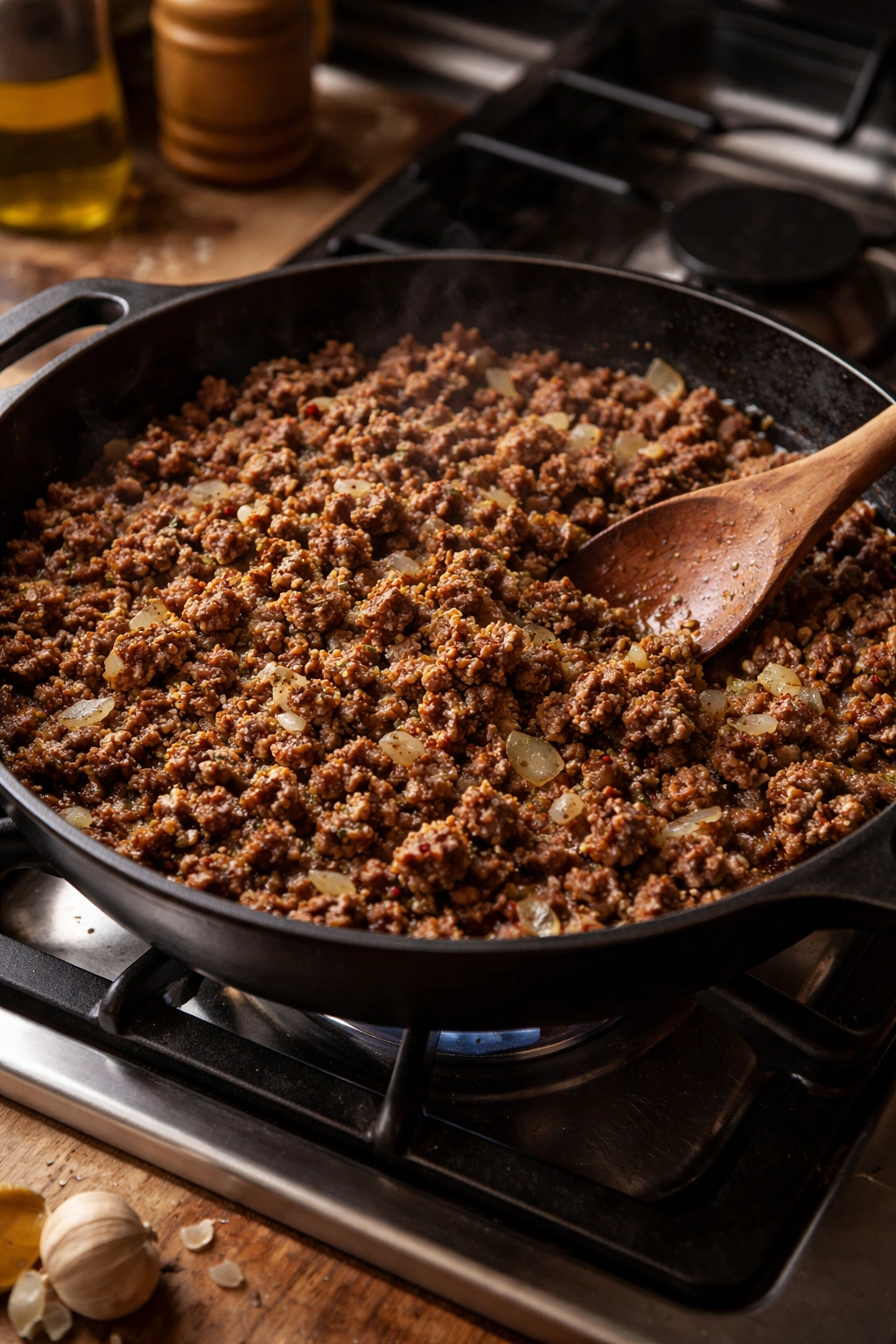
Start by heating your olive oil in a large skillet over medium-high heat. Once it’s shimmering, add your ground beef and break it up with a spoon as it cooks. Don’t stir constantly—let it sit for a minute or two so the bottom can develop a brown crust. Those browned bits are pure flavor. You’re aiming for the meat to lose its raw color completely and develop dark-brown spots on the surface. This takes about 5 to 7 minutes depending on your heat and the width of your pan.
Once the meat is browned, add your diced onion directly to the pan without draining the beef. The onion will soften as it cooks, releasing its natural sugars and beginning to caramelize. Let this cook for another 3 to 4 minutes, stirring occasionally, until the onion becomes translucent and the edges start to turn golden. Add your minced garlic and cook for just one more minute—you’re not making garlic confit here, just taking the edge off the raw garlic flavor.
Combining with Marinara
Pour in your marinara sauce and add the water or beef broth if you want a slightly thinner sauce that the noodles will absorb more readily during baking. Add your Italian seasoning, thyme, salt, pepper, and that crucial pinch of sugar. The sugar isn’t about making the sauce sweet—it’s about balancing the acidity of the tomatoes so the sauce tastes round and full rather than sharp.
Bring the sauce to a gentle simmer and let it cook uncovered for about 10 minutes. You want some of the liquid to evaporate, concentrating the flavors. The sauce should reduce slightly and become richer. Give it a taste—does it need more salt? Now’s the time to adjust. Remember that you’ll be adding salty Parmesan on top, so don’t over-salt, but it should taste noticeably seasoned.
The Finishing Touch
Stir in your fresh parsley at the very end, right before you move to assembling the lasagna. This brightness of fresh herbs is what makes the difference between “good sauce” and “incredible sauce.” If you don’t have fresh parsley, dried parsley still adds something, or you can skip it entirely—the lasagna won’t suffer, but it will be slightly less vibrant.
Building Your Cheese Layers
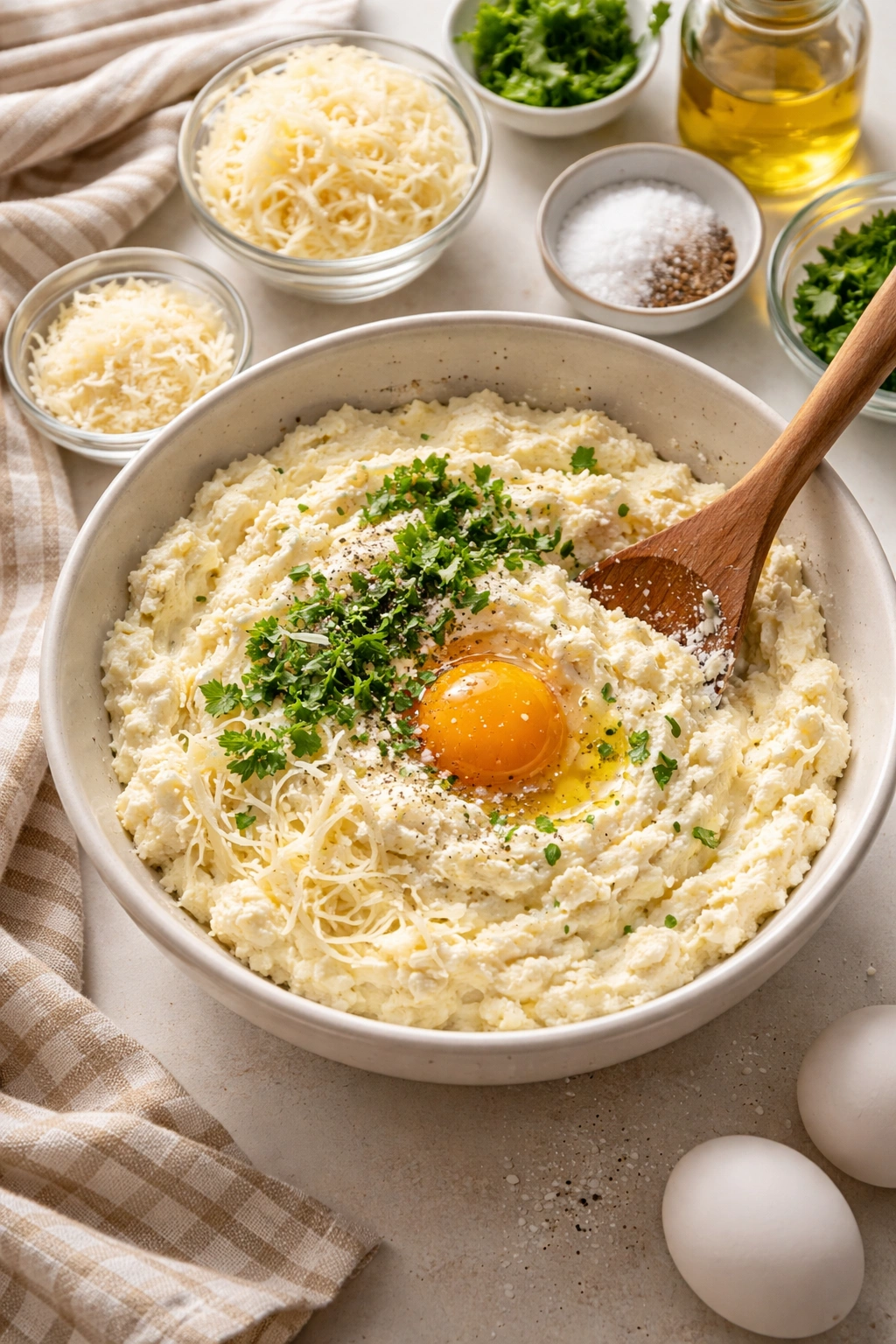
The cheese filling is what makes lasagna special. This isn’t a thin smear—it’s a significant layer that creates texture and richness in every bite.
Combining the Cheeses Properly
In a medium mixing bowl, combine your ricotta cheese, the shredded mozzarella (reserve about 1 cup for layering and topping), Parmesan, egg, salt, and pepper. Stir until everything is evenly distributed and creamy. The egg acts as a binder, helping the ricotta stay as a distinct layer rather than melting into everything. Mix gently but thoroughly—you’re not making a whipped mixture, just combining ingredients until they’re well incorporated.
Taste a tiny spoonful. Does it need more salt? Lasagna cheese layers should taste noticeably seasoned on their own because they’ll be combined with sauce that’s already seasoned. Fresh parsley folded in right before assembly adds a fresh note that people often can’t quite identify but definitely appreciate.
Why Each Cheese Matters
Ricotta is your creamy base. It’s mild, rich, and spreadable. Mozzarella is your melter—it creates those gorgeous strings when you pull a slice apart. Parmesan is your depth charge—a little bit adds a sharp, salty complexity that makes everything taste more intensely cheesy without actually tasting like Parmesan specifically. Together, they create a texture that’s simultaneously creamy, stringy, and complex.
How to Layer Lasagna Like a Pro
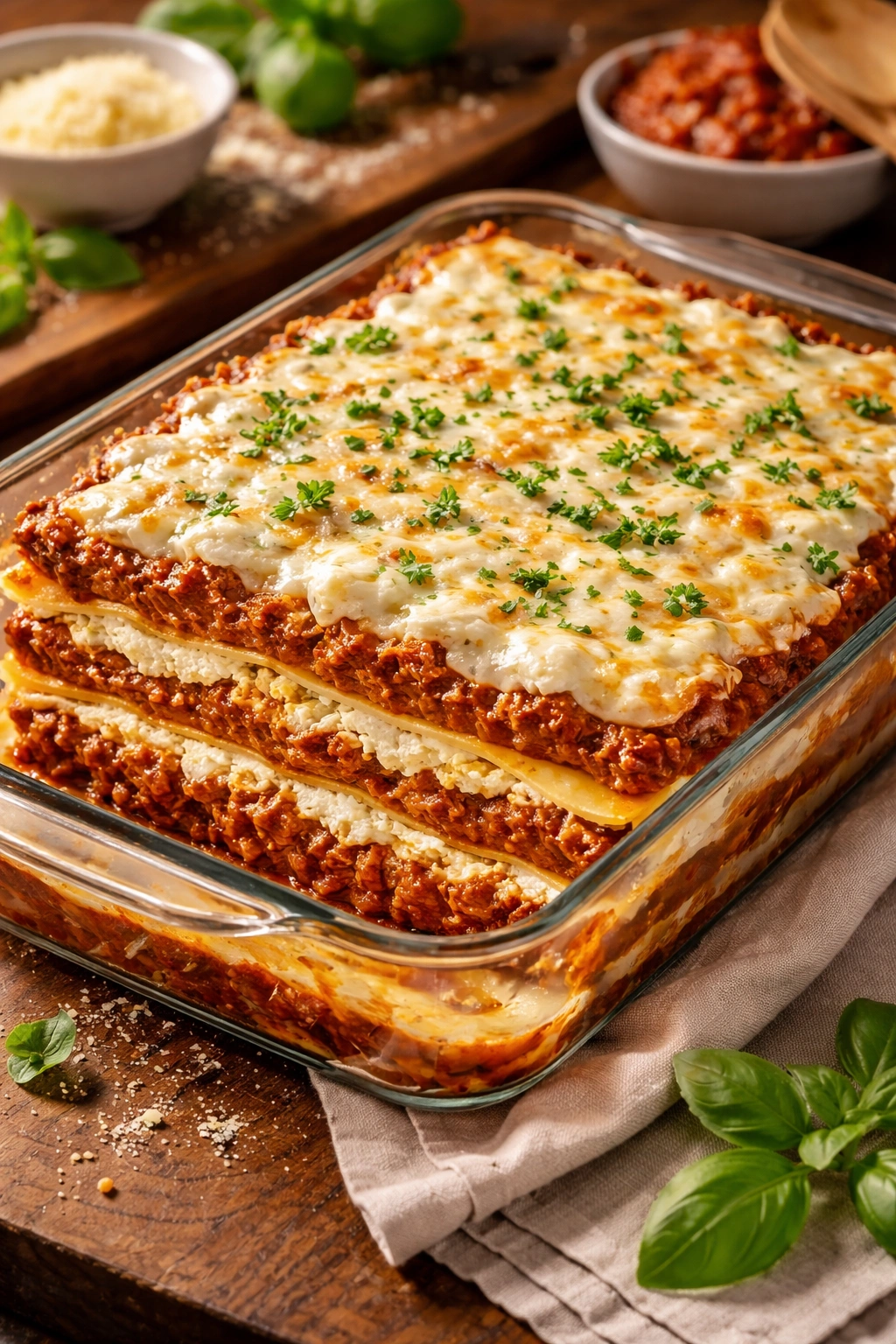
Layering is where lasagna goes from a pile of ingredients to something beautiful and structured.
Preparing Your Dish
Lightly coat a 9×13-inch baking dish with cooking spray or butter. If your pan is old and well-seasoned, this might be optional, but it prevents sticking and makes cleanup easier. Set your oven to 375°F and let it preheat while you finish your prep work.
The Bottom Foundation
Spread about ½ cup of your meat sauce over the bottom of the prepared baking dish. This thin initial layer prevents the noodles from sticking and adds flavor to every layer. It’s a small step that matters.
Layer One
Arrange 3 lasagna noodles over the sauce. They can overlap slightly, and it’s fine if they don’t cover the pan perfectly—they’ll expand slightly as they soften. Top the noodles with about 1 cup of the remaining meat sauce, spreading it in an even layer. Add about half of your cheese mixture in small spoonfuls, then sprinkle 1 cup of the reserved mozzarella over the cheese layer. Finish with a few tablespoons of Parmesan.
Layer Two
Repeat exactly: 3 noodles, 1 cup meat sauce, the remaining cheese mixture in spoonfuls, 1 cup mozzarella, and a few tablespoons of Parmesan.
Layer Three (the Top)
Arrange your final 3 noodles over the cheese. Top with the remaining meat sauce spread evenly across the noodles. Finish with the remaining mozzarella and Parmesan cheese scattered across the top. The very last layer should be all cheese and sauce, never just noodles—this prevents the top from drying out during baking.
The Toothpick Trick
If you’re covering the lasagna with foil (which you should), use a trick that prevents the foil from sticking to the cheese and creating a mess: poke 8 to 10 toothpicks halfway into the lasagna, pushing them in from the sides so they stand up slightly. The foil will rest on the toothpick tops rather than touching the cheese. Count the toothpicks as you insert them so you remember to remove every single one before serving—no one wants to bite into a toothpick!
Baking and Resting for Perfect Results
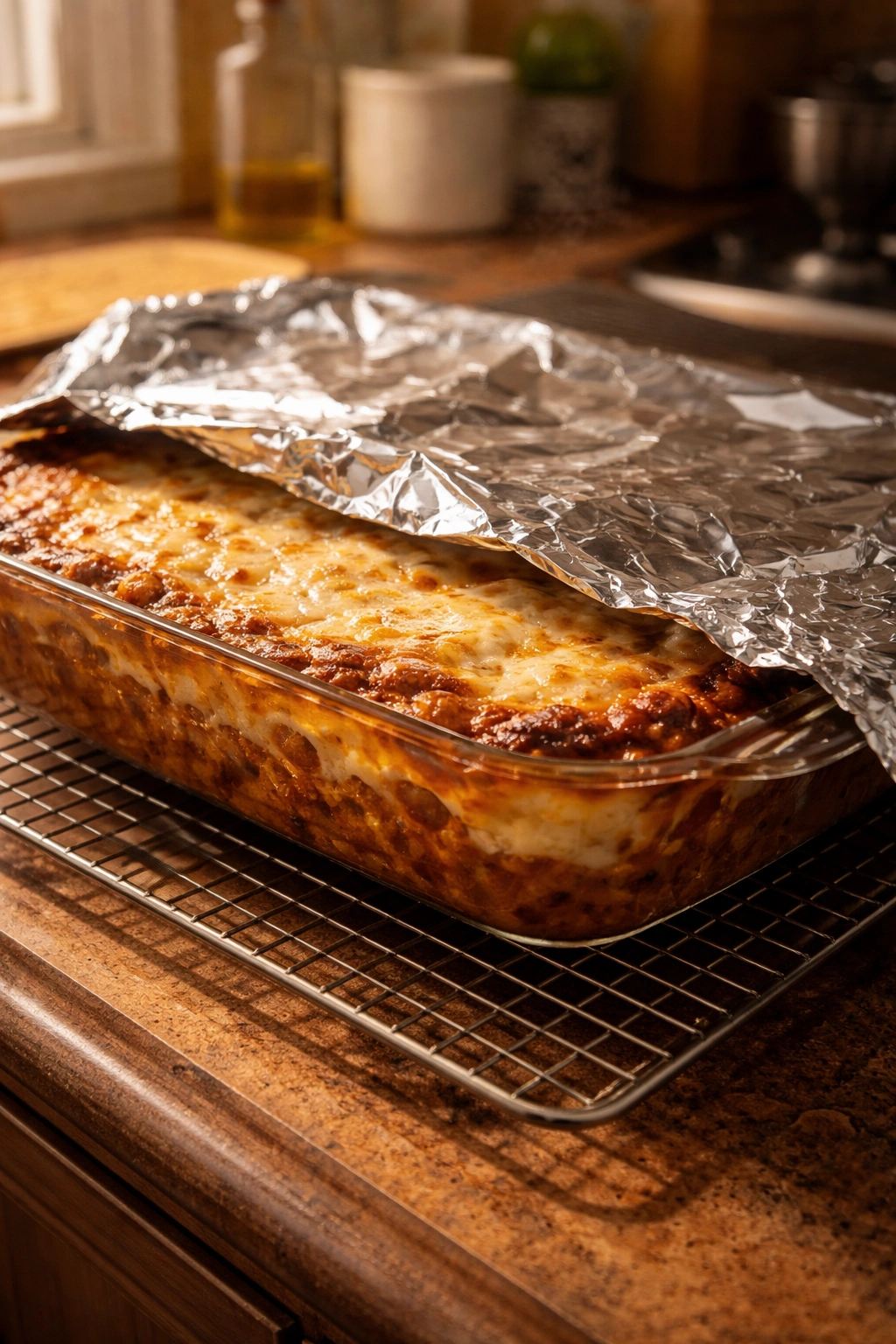
This is the part where you wait—and waiting is just as important as everything you’ve done so far.
The Covered Bake
Cover your lasagna with aluminum foil, making sure the shiny side is facing down (it helps reflect heat). Bake at 375°F for 45 minutes covered. You’re not looking for bubbling yet—this time is for the noodles to absorb liquid and soften, and for the layers to heat through evenly. Don’t peek constantly, but you can take a quick look halfway through if you’re curious. Everything should look a bit jiggly and moist.
The Uncovered Finish
Remove the foil and check that your toothpicks are all accounted for. Bake uncovered for another 15 minutes. This is when the cheese on top browns slightly, the edges get crispy and golden, and the whole thing comes together visually. You’re looking for the cheese to be bubbling around the edges and golden-brown on top—not burned, but genuinely browned.
The Critical Rest
Remove the lasagna from the oven and let it sit, uncovered, for at least 15 minutes. This seems like it’s optional, but it absolutely isn’t. During this resting time, the cheese and sauce firm up enough that when you cut into the lasagna, each slice holds together rather than sliding apart into a pool. If you skip this step, your beautiful lasagna will end up as delicious but formless scrambled layers on each plate. Patience now rewards you with presentation.
The lasagna will stay hot throughout the resting period—it will be piping hot when you cut into it. If you need it to be ready at a specific time, rest it for 10 minutes if time is tight, but 15 to 20 is really ideal. You can loosely tent it with foil to keep it hot if needed.
Pro Tips to Avoid Common Lasagna Mistakes
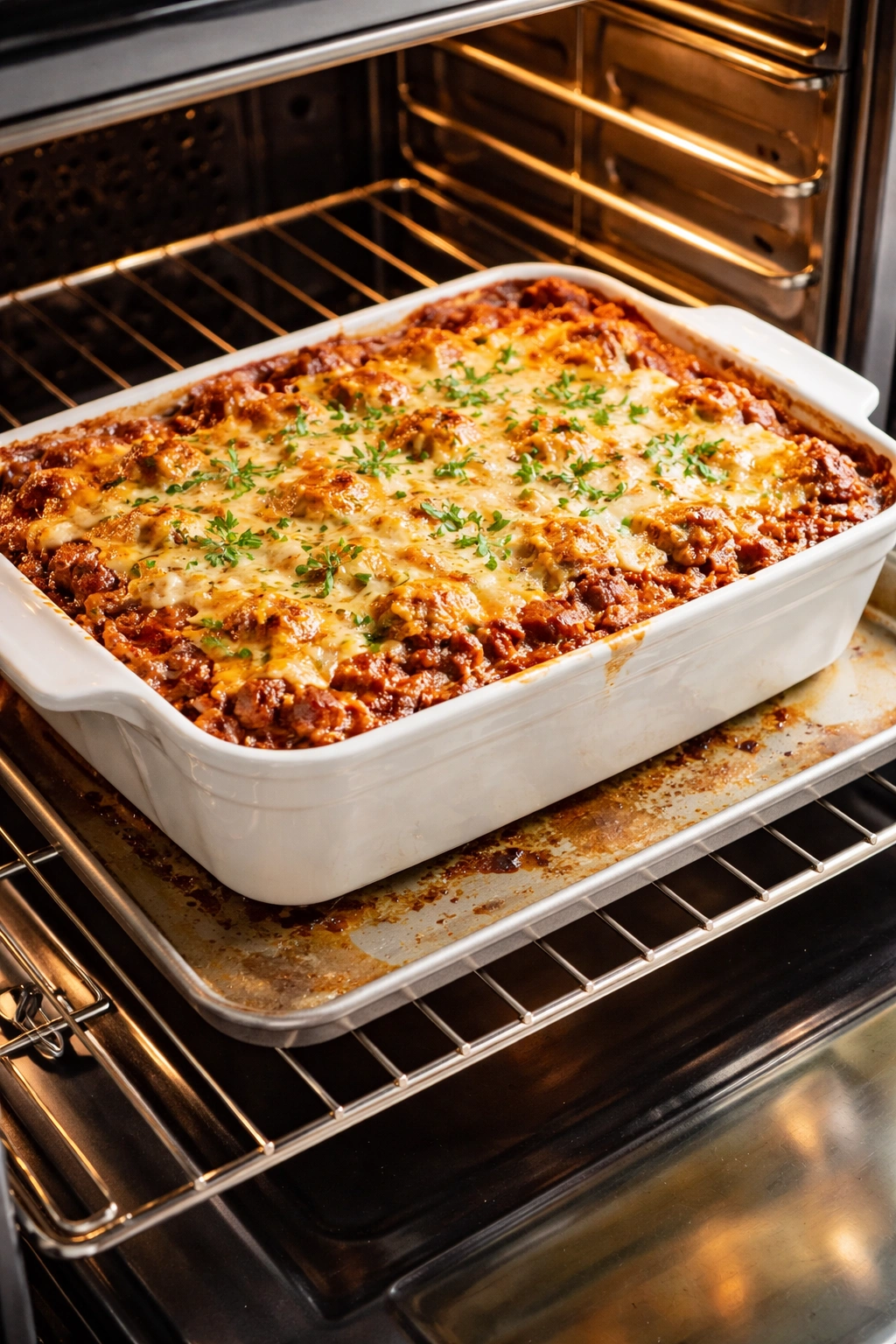
Lasagna is forgiving, but understanding where people usually stumble prevents frustration.
The Soggy Bottom Problem
If your bottom layer always comes out mushy, you likely have too much sauce or your pan is getting too much direct heat from below. Try placing a baking sheet on the rack below the lasagna during baking to moderate the bottom heat. You want the bottom cooked, but not swimming in liquid. Another solution: slightly reduce the total amount of sauce by ¼ cup if you’re using store-bought marinara that tends to be watery.
Noodle Texture Inconsistency
Cook your noodles to about al dente—they should have a tiny bit of resistance, not be fully soft. If you fully cook them according to package directions, they’ll be mushy by the time the lasagna finishes baking because they’ll continue cooking in the moist oven environment. Set a timer for one minute before the package recommends and test them—better to pull them a minute early than a minute late.
Cheese Layers That Slide Apart
If your cheese layers are sliding around during baking, you probably don’t have enough sauce between layers to hold them in place. Each layer should be relatively wet. If your sauce is too thick, thin it slightly with a bit of water or broth. Also, make sure your egg is well-incorporated into the ricotta—it helps bind the mixture and keep it from being quite so loose.
Overcooked Edges That Turn Hard
The edges of lasagna cook faster than the center. If your edges are consistently hardening while your center is still loose, tent the edges with small pieces of foil during the last 15 minutes of uncovered baking. This moderates the heat on those edges while letting the center finish cooking.
Trying to Cut Immediately
This is the most common mistake. Hot lasagna is basically lava cheese right now. Cutting into it releases all that heat and moisture, and you’ll end up with melted layers running all over your plate instead of defined, satisfying slices. Those 15 minutes of resting aren’t wasted time—they’re crucial cooking time.
Serving Suggestions and Pairings
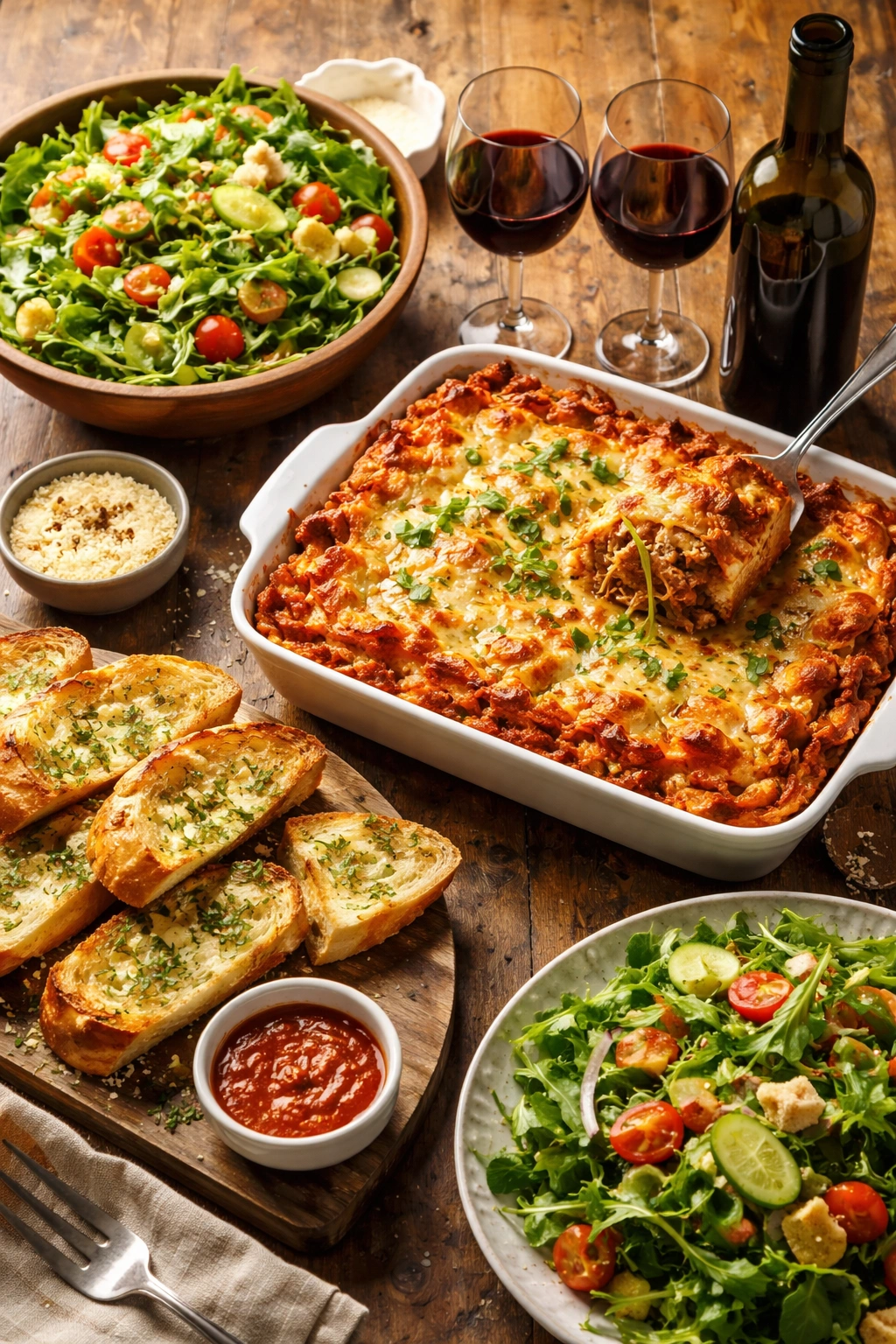
Lasagna is substantial enough to be a complete meal, but the right sides elevate it from dinner to an event.
Salads That Balance the Richness
A crisp salad is your best friend next to lasagna. A simple green salad with acidic vinaigrette cuts through the richness of the cheese and meat beautifully. A Caesar salad with its garlicky, briny dressing is classic for a reason. If you want something lighter, a Caprese salad with tomatoes, fresh mozzarella, basil, and a drizzle of good olive oil feels like a natural pairing with Italian lasagna. For something more substantial, a warm Italian salad with roasted vegetables, cannellini beans, and an herb vinaigrette works wonderfully.
Bread That Makes Sense
Garlic bread is the traditional choice, and there’s a reason—that crispy, garlicky vessel is perfect for soaking up sauce. If you want something less rich, simple crusty bread or focaccia still feels Italian and lets people build their own experience. Breadsticks are great for a more casual gathering. Fresh bread served warm makes everyone happy.
Drink Pairings
If you’re drinking wine, a medium-bodied red like Chianti or Barbera complements the beef and tomato sauce beautifully without overwhelming the dish. A dry rosé works if you prefer something lighter. Non-alcoholic options: sparkling water with lemon keeps things refreshing, or a simple iced tea lets the lasagna be the star.
Garnish at the Table
Fresh basil sprinkled over individual servings adds freshness and aroma. A light grating of additional Parmesan lets people customize their cheese level. A small drizzle of good olive oil on top of each slice adds richness and shine. These aren’t necessary, but they’re nice touches that say you care.
Make-Ahead and Storage Guide
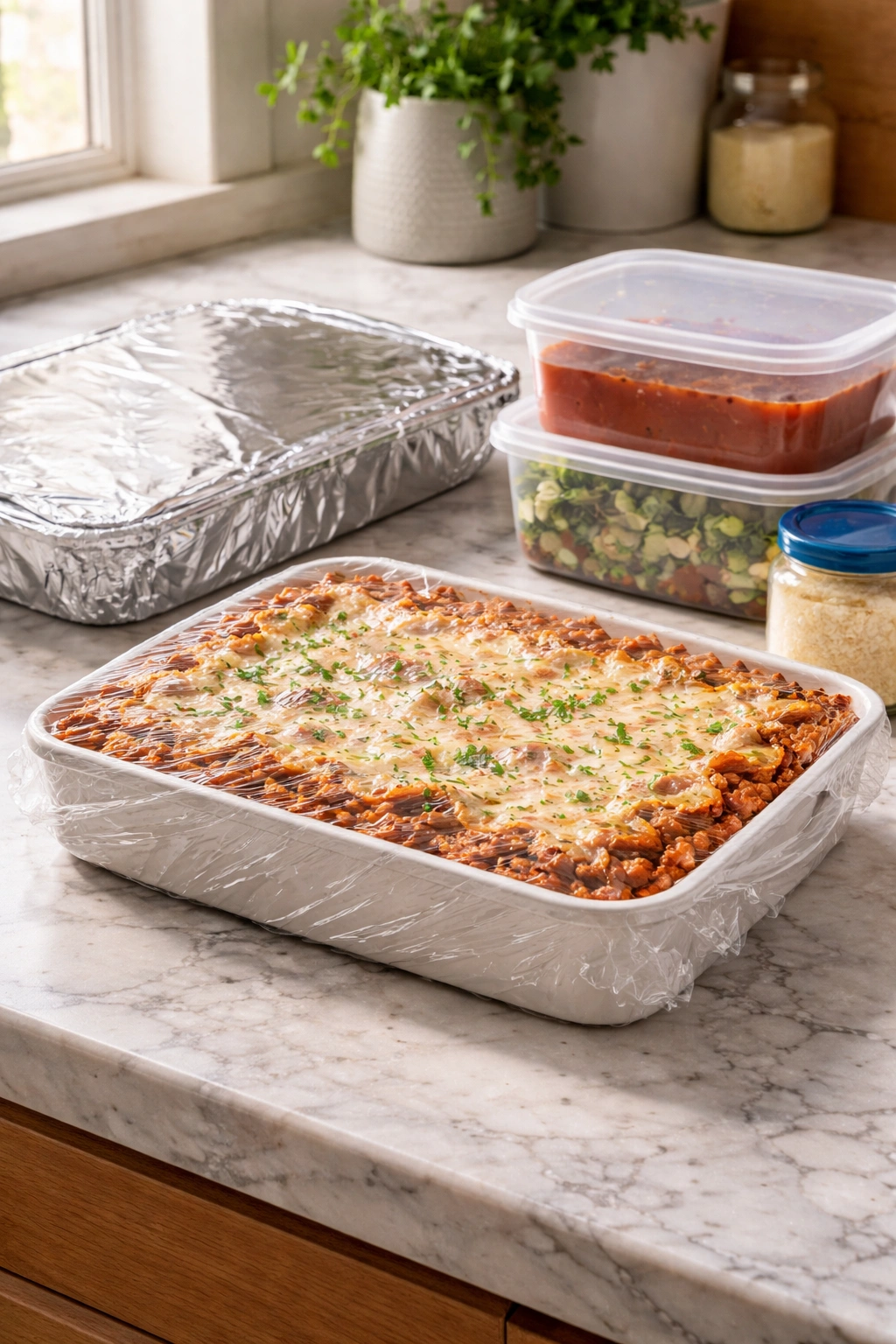
One of lasagna’s greatest strengths is its flexibility with timing.
Assembling in Advance
You can assemble the entire lasagna up to 24 hours before baking. Cover it tightly with plastic wrap (then foil over that if you’re being extra careful) and refrigerate. When you’re ready to bake, remove it from the refrigerator and let it sit at room temperature for about 15 minutes—this isn’t necessary, but it takes a bit of the chill off. Add about 10 extra minutes to the covered baking time since the lasagna will take longer to heat through coming from the fridge. Bake as directed.
This is the perfect solution for entertaining. Do all your work a day ahead, and all you have to do on the day of is turn on the oven and bake. Your kitchen smells amazing while guests arrive, and you’re not stressed about cooking.
Storing Leftovers
Cooled lasagna keeps beautifully in the refrigerator for 3 to 4 days in an airtight container. The flavors actually improve on day two as everything melds together. You might find that the noodles have absorbed more sauce, making it slightly thicker—this is completely normal and delicious.
Freezing for Later
Lasagna is one of the best dishes to freeze. You have two options:
Freeze unbaked: Assemble as directed and cool completely. Wrap tightly in plastic wrap, then wrap the entire baking dish in foil. Label it with the date. It will keep for up to 3 months. When you’re ready to bake, remove it from the freezer and let it thaw in the refrigerator overnight. Bake as directed, adding about 15 minutes to the covered time since it’s coming in cold.
Freeze baked: Let the cooled lasagna sit in its baking dish for at least an hour, then wrap tightly in plastic wrap and foil. It will keep for up to 3 months. To reheat, thaw overnight in the refrigerator and warm in a covered dish at 350°F for about 25 to 30 minutes until heated through.
Reheating from the Refrigerator
For individual servings, microwave works in a pinch—cover it loosely and heat at 50% power for 2 to 3 minutes so the cheese doesn’t start erupting. For reheating a full pan or multiple servings, the oven is your friend. Cover with foil and reheat at 350°F for about 20 to 25 minutes until steaming hot. Remove the foil for the last few minutes if you want the cheese to brown a bit. The reheated lasagna will taste just as good as the original, possibly better.
Easy Variations to Customize Your Lasagna
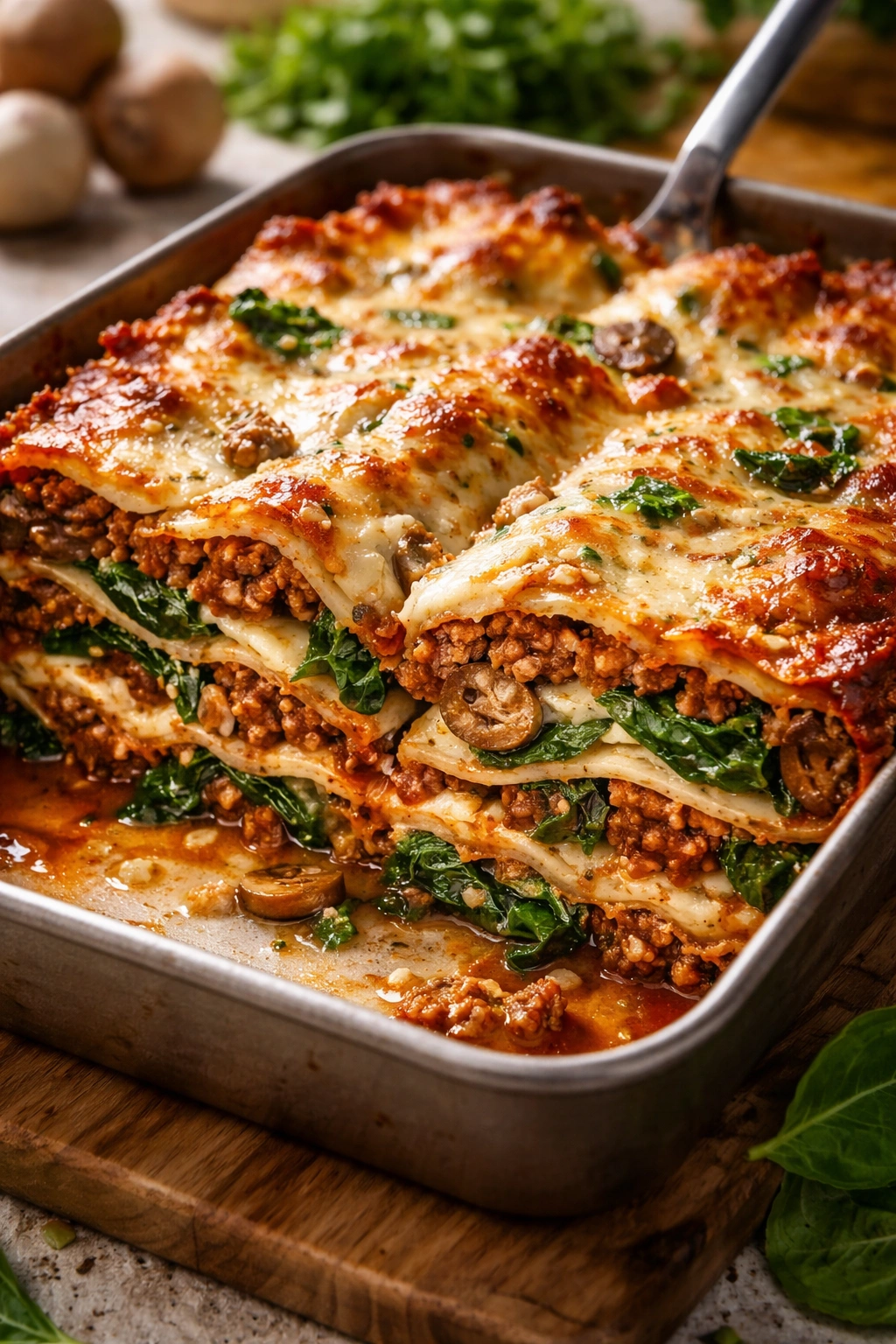
The basic framework of this lasagna is infinitely adaptable. Here are variations that genuinely work.
Adding Vegetables Without Overwhelming the Dish
Sauté 8 ounces of finely chopped mushrooms (cremini or portobello) in a bit of olive oil until they release their moisture and start to brown, then add them to your meat sauce. This adds earthiness and umami without making the lasagna feel vegetable-heavy. You can also sauté 2 cups of fresh spinach until it’s completely wilted and squeeze it dry, then mix it into the cheese layer—it adds nutrition and a subtle color variation.
Diced zucchini and summer squash can be added to the sauce, though they release water, so cook them until they’re mostly dry before combining with the sauce. Roasted red peppers add sweetness and color and should be added to the sauce, not the cheese layers.
Adding Italian Sausage for More Flavor
Replace half the ground beef (¾ pound) with ¾ pound of Italian sausage, removed from the casings and crumbled. Brown both together. The sausage adds fennel-forward flavor and extra richness that some people prefer. This increases the depth of flavor noticeably.
A White Sauce Option
If you want to try something less traditional, make a simple béchamel sauce instead of adding a cheese filling between layers. Melt 3 tablespoons of butter, whisk in 3 tablespoons of flour, and cook for one minute. Slowly whisk in 2 cups of whole milk, stirring constantly until you have a thick sauce. Season with salt, pepper, and nutmeg. Spread this between layers instead of the ricotta mixture. This creates an entirely different (and wonderful) lasagna that’s slightly lighter.
Different Cheese Combinations
Experiment with different cheeses while keeping the structure the same. Try mixing in a small amount of provolone or fontina with your mozzarella for deeper flavor. Increase the Parmesan slightly for a sharper taste. Some people love adding a touch of Romano for extra saltiness. Whatever you choose, keep the total cheese weight roughly the same.
Spice Variations
Add ¼ teaspoon of red pepper flakes to your meat sauce for a subtle heat that builds across the dish. Fresh basil layered between noodles (instead of or in addition to dried) adds incredible freshness. A pinch of nutmeg in the cheese layer creates subtle sweetness and depth.
Final Thoughts
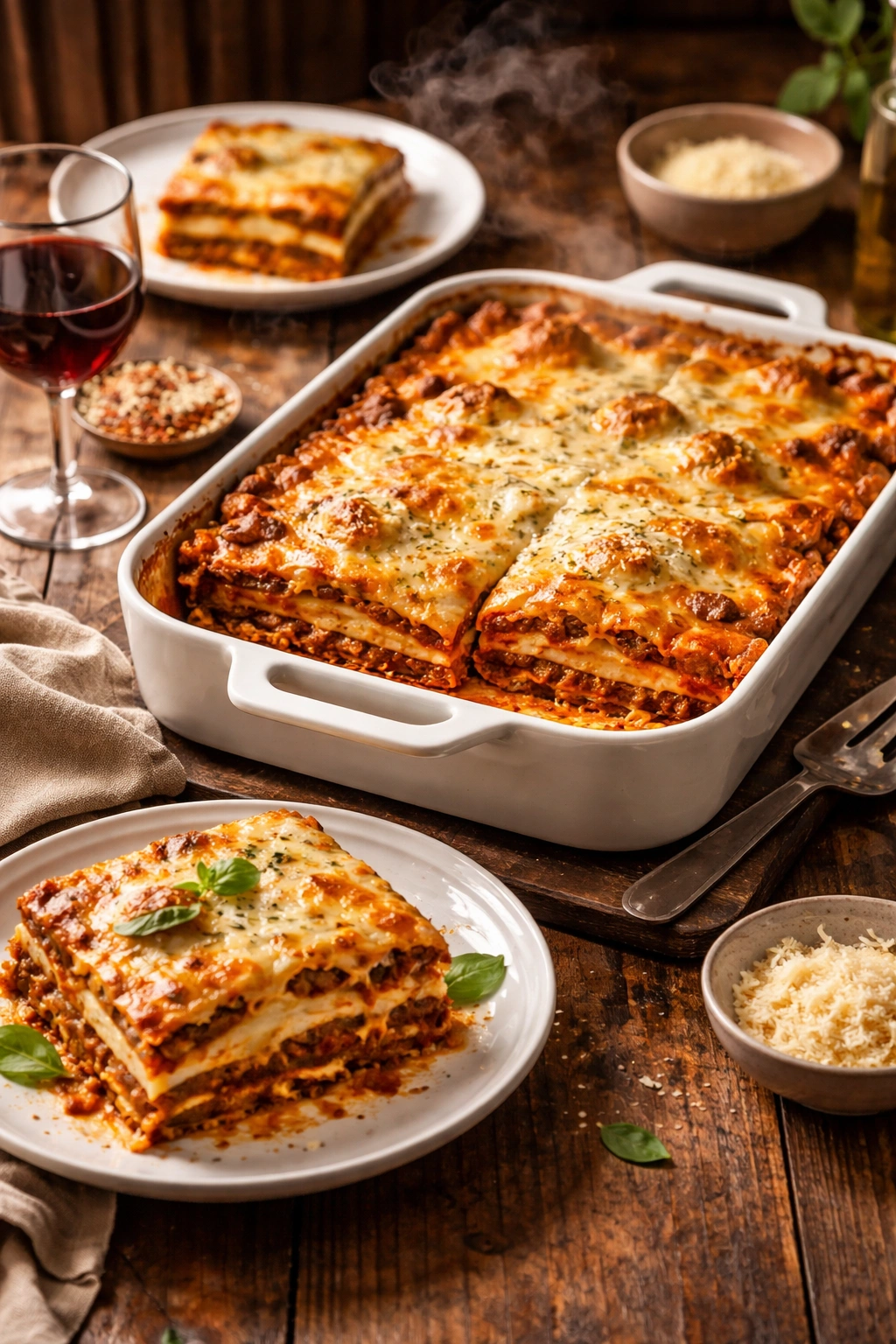
Lasagna is one of those rare dishes that rewards both careful attention to detail and a willingness to just trust the process. You can make it exactly as written and have something genuinely spectacular that no one will stop talking about. You can also riff on it, substituting vegetables or cheeses or proteins, and as long as you understand the basic principles—balance your sauce and cheese, don’t overcook the noodles, let it rest before cutting—you’ll have something delicious.
The magic of this particular recipe is that it genuinely serves a crowd without making you feel like you’ve spent the entire day in the kitchen. Forty-five minutes of preparation, an hour of baking, and you’ve got enough to feed twelve people. It reheats beautifully, freezes like a dream, and tastes just as good on day three as it does fresh from the oven. It’s the kind of recipe that becomes a family staple, pulled out for holidays, potlucks, and nights when you want to feel like you’ve accomplished something impressive without the stress.
The next time you’re feeding a crowd—whether it’s your own family gathered around the table or a group of friends celebrating together—make this lasagna. Let it come out of the oven all bubbling and golden. Rest it those crucial fifteen minutes. Cut into it and watch people’s faces light up at that first bite. That’s when you’ll understand why lasagna has endured as a beloved dish for generations. It’s not about technique or complexity. It’s about generous, delicious food that brings people together. That’s something worth making well.
