



There’s something almost magical about bruschetta—it looks restaurant-worthy, tastes absolutely delicious, and somehow feels like you’ve done something impressive in your kitchen. The best part? You haven’t. Real bruschetta comes together in minutes, requires barely any ingredients, and tastes light, fresh, and infinitely more sophisticated than the effort involved suggests.
The trick isn’t finding some secret technique or obscure ingredient. It’s understanding that bruschetta is built on contrasts—warm, crispy bread against cool, bright toppings; the punch of garlic against the sweetness of ripe tomatoes; olive oil’s richness balanced by vinegar’s acidity. Get those fundamentals right, and you’ll have bruschetta that tastes like it came from a Roman trattoria, not your kitchen, all in roughly fifteen minutes from start to finish.
This isn’t fancy cooking. This is the kind of food that happens when you stop overthinking and focus on quality ingredients, proper technique, and a real understanding of how the components work together. Whether you’re preparing a small gathering, need an elegant appetizer, or just want something genuinely delicious on your table tonight, bruschetta delivered this way will become one of your most reliable go-to dishes.
Why Bruschetta Is the Perfect Quick Appetizer
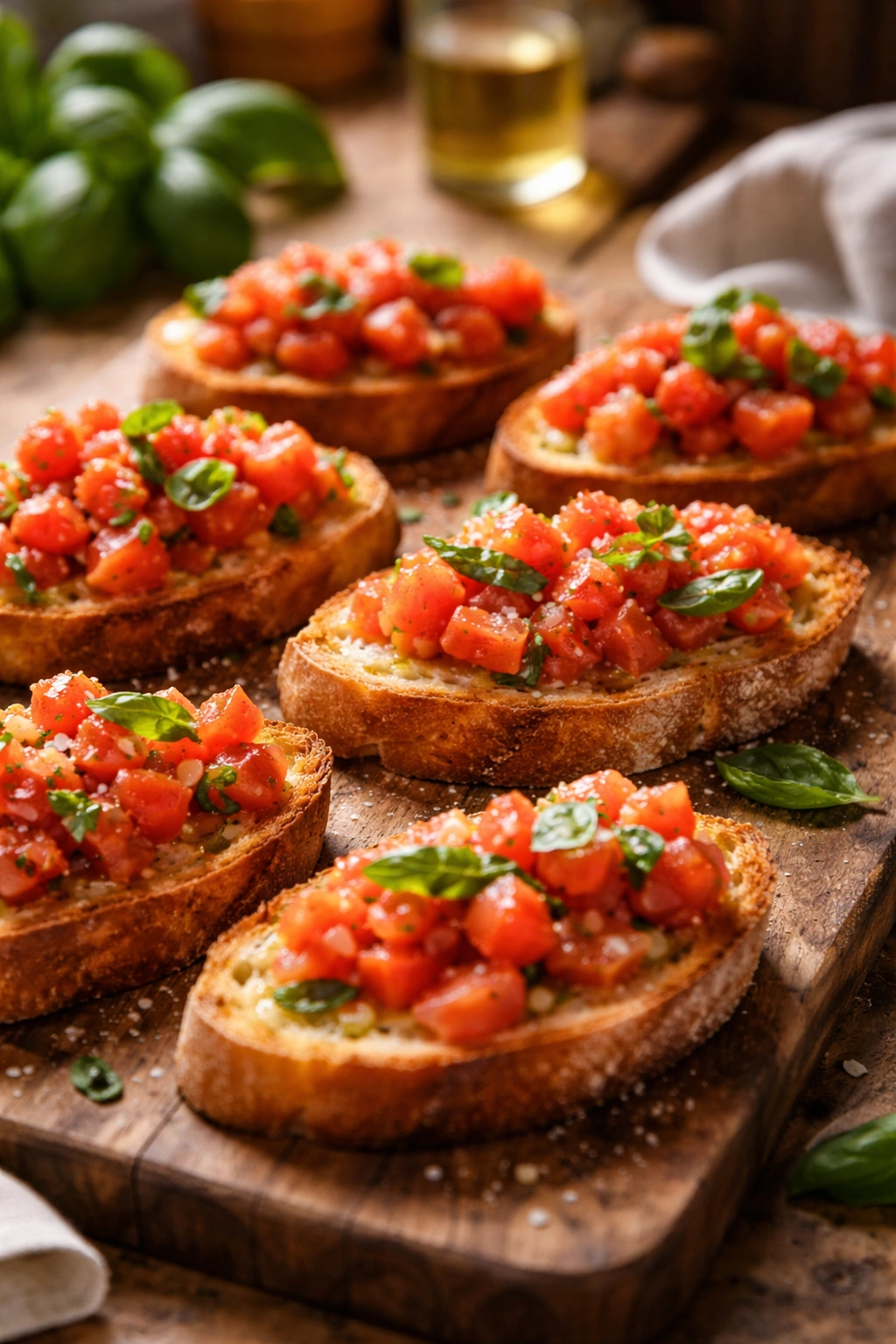
Bruschetta occupies this beautiful middle ground where it feels fancy enough for guests but simple enough that you’re not stressed about preparation. You’re not managing multiple temperatures or timing different components—everything happens on one cutting board and in one pan, which is why the entire dish comes together so rapidly.
The genius of bruschetta is its simplicity. A great version relies on maybe five or six ingredients, and none of them require special ordering or last-minute searching. Your pantry probably already has most of what you need. What makes a bruschetta truly excellent isn’t complexity; it’s the quality and freshness of each component and understanding exactly how to prepare them so flavors come through loud and clear.
The speed works in your favor here. Because you’re toasting the bread fresh, the crust stays crispy while the interior stays slightly chewy. The topping stays bright and fresh because it’s not sitting around getting soggy or oxidized. You serve bruschetta while it’s still warm from the oven, so the bread is at peak texture and the olive oil is at peak aroma. Timing isn’t something to stress about—it’s something that naturally works in your favor when you move efficiently.
The Foundation: Why Quality Bread Matters
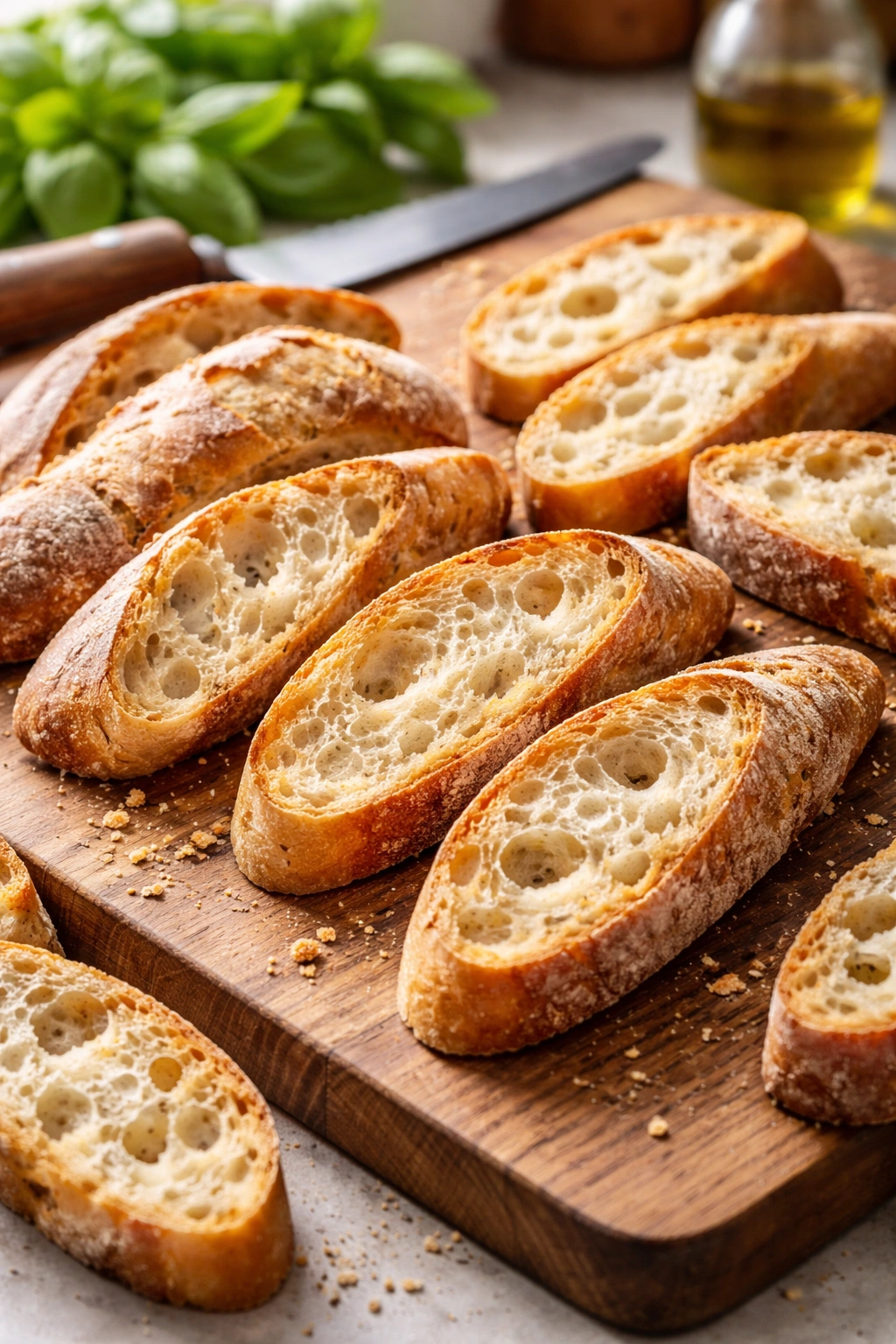
Bruschetta isn’t bruschetta without excellent bread. This isn’t the place to use sandwich bread, soft dinner rolls, or anything that’s been sitting in your pantry for three days. You need bread with structure—something that’ll crisp up when toasted and hold a topping without falling apart or absorbing so much liquid that it becomes soggy.
A proper Italian ciabatta works beautifully, as does a rustic baguette or any quality crusty bread with an open crumb structure. The inside should have those little holes that let flavors and oils penetrate, and the crust should be substantial enough to support the weight of tomatoes and toppings without buckling. If your bread is fresh and crusty, you’ve already won half the battle.
Slice your bread on a slight angle, about three-quarters of an inch thick. Thinner slices toast too quickly and become brittle; thicker slices don’t toast all the way through. A slight angle makes a bigger surface area to catch the toppings and looks more intentional and elegant than straight cuts—it’s a small detail that signals you actually know what you’re doing.
The Garlic Rub Technique That Transforms Everything
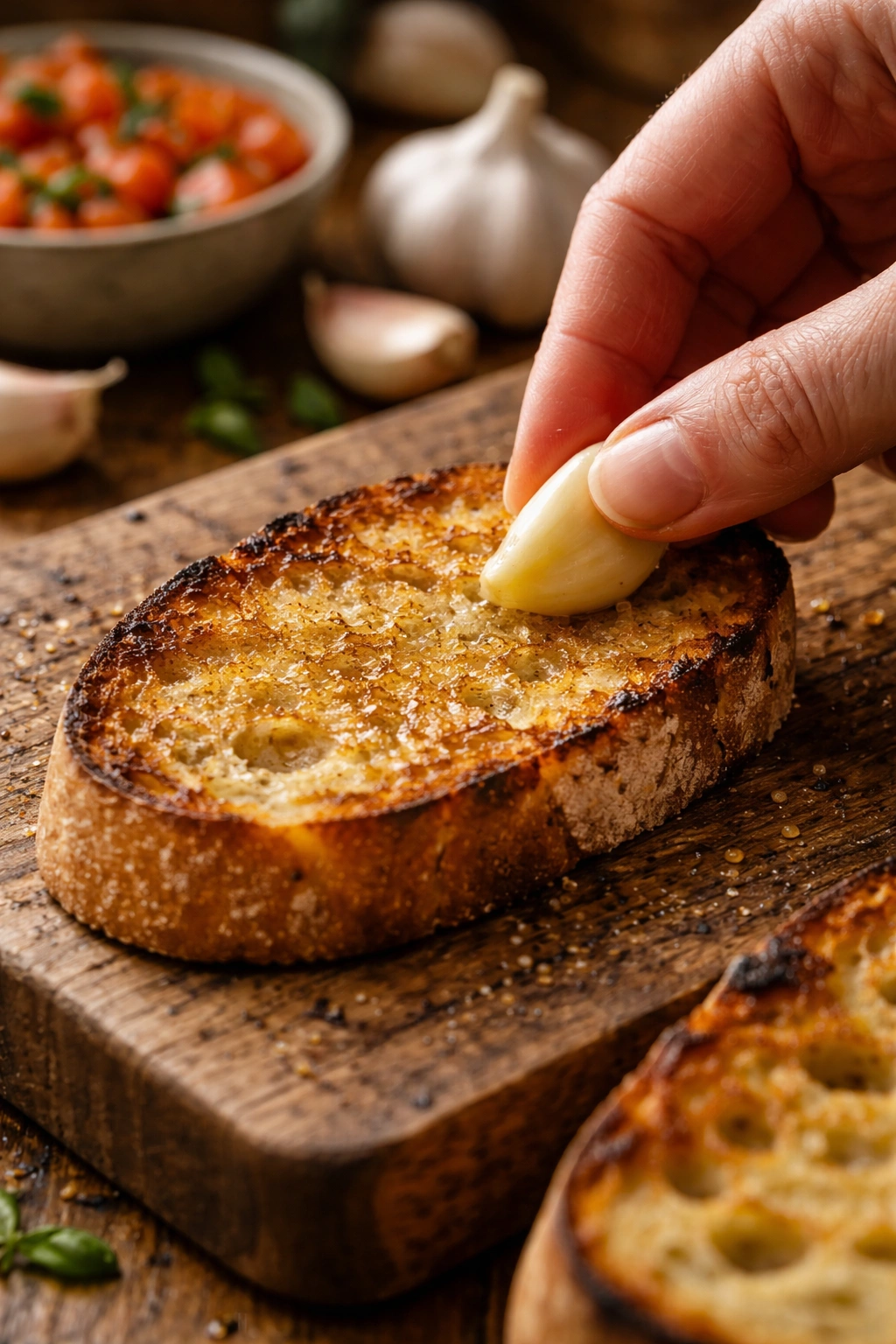
Here’s where most people make their first real mistake with bruschetta. They try to incorporate garlic into the topping, or they’re timid with the garlic, or they add it too far in advance so it becomes sharp and overwhelming. The real solution is so much better: you rub raw garlic directly on warm toasted bread.
When you rub cut garlic against the rough surface of warm bread, the heat activates the garlic’s flavor compounds, making them more aromatic and complex rather than harsh and pungent. The bread’s slight warmth also helps release the garlic’s oils so they distribute evenly. You end up with a subtle garlic flavor that infuses the entire bread without tasting like you’re eating a raw clove.
Toast your bread first, then immediately rub each slice with a cut garlic clove, using the flat side and applying gentle pressure. You’ll see the garlic break down slightly as it rubs against the bread’s surface. One clove per four to five slices is usually perfect—enough for flavor without overwhelming anyone at your table. Do this while the bread is still warm; cool bread won’t absorb the garlic flavor nearly as effectively.
Creating a Classic Tomato Topping That Sings
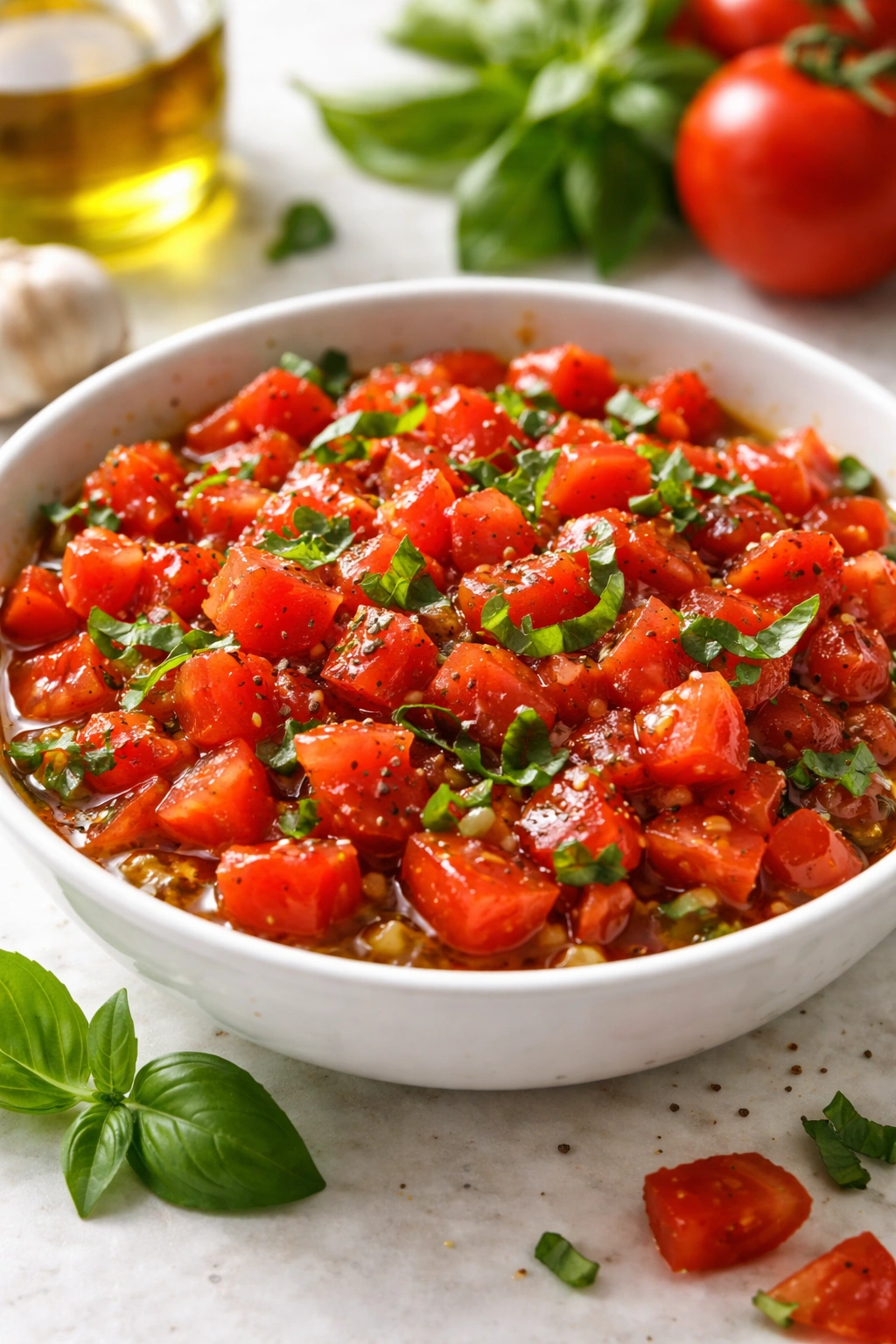
The topping is where bruschetta lives or dies. You need ripe tomatoes—and here’s the non-negotiable part—they need to actually taste like tomatoes. Mealy supermarket tomatoes picked before ripeness won’t work here because you’re not cooking them down or adding flavor masks. The tomato is the star, and it needs to be genuinely good.
Dice your tomatoes into roughly quarter-inch pieces and transfer them to a colander or fine-mesh strainer. Sprinkle with a pinch of salt and let them sit for five minutes. This draws out excess moisture so your bruschetta topping stays crispy and doesn’t turn into a soggy mess. The salt also begins the process of breaking down the cell walls, which intensifies the tomato flavor.
While the tomatoes are draining, mince fresh basil, though don’t do this too far in advance since basil oxidizes and darkens quickly once cut. Whisk together good olive oil with red wine vinegar or balsamic vinegar—about three parts oil to one part vinegar, though you can adjust to your taste. The acidity is crucial; it brightens the tomatoes and prevents the richness of the oil from becoming cloying.
After five minutes, transfer the drained tomatoes to a bowl and gently fold in the basil, minced garlic (yes, a small amount in the topping is fine once the tomatoes have already been seasoned), and the olive oil-vinegar mixture. Taste and adjust salt and pepper. The seasoning should taste slightly bold because the bread will dilute it. Let this sit together for just a minute or two so flavors begin to meld—but not longer, since you want it to feel fresh and bright, not marinated.
The Basing and Toasting Method for Perfect Crunch
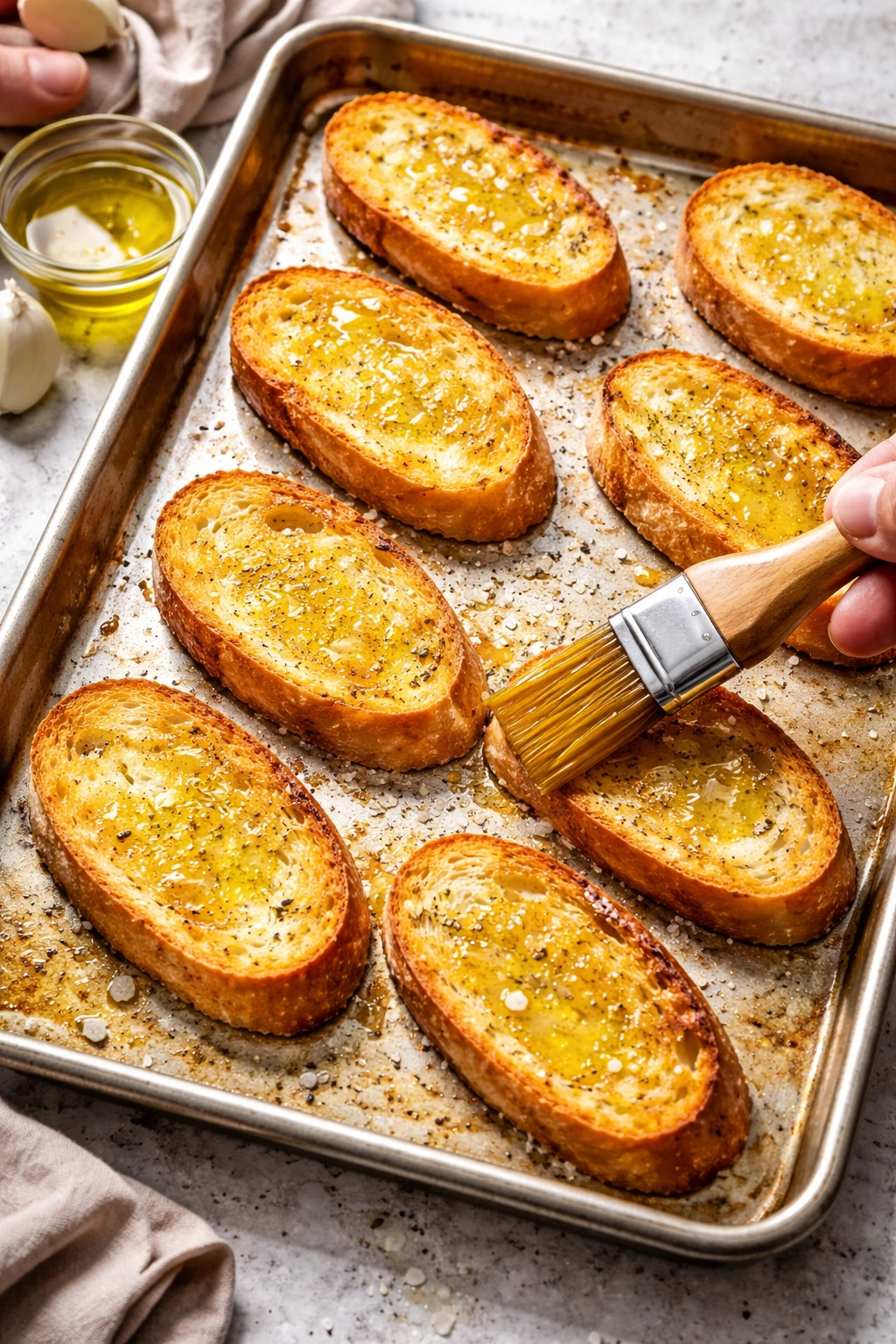
The way you toast your bread determines everything about the final texture. You want the crust to be deeply golden and crispy, almost hard on the outside, while the interior is still slightly tender. This is the kind of bread that shatters when you bite it but doesn’t turn into a hard, inedible cracker.
Lay your bread slices on a sheet pan and brush both sides lightly with olive oil. This is important—the oil helps the bread toast evenly and brown more effectively than dry toasting. Arrange the slices in a single layer and bake at 400°F (200°C) for about five to seven minutes, until the tops are golden and the edges are starting to brown. Exactly how long depends on your oven and how thick you’ve sliced the bread, so watch after the five-minute mark rather than setting a timer and walking away.
The bread should smell incredible—deep, toasty, almost nutty. That’s when you know it’s ready. Pull the pan from the oven, and immediately rub the warm bread with the cut garlic clove, pressing gently so the garlic transfers to the bread. The heat is doing the real work here, so don’t skip this warm-topping step for a cold topping added later.
Yield: Serves 4 to 6 as an appetizer | Makes about 24 pieces
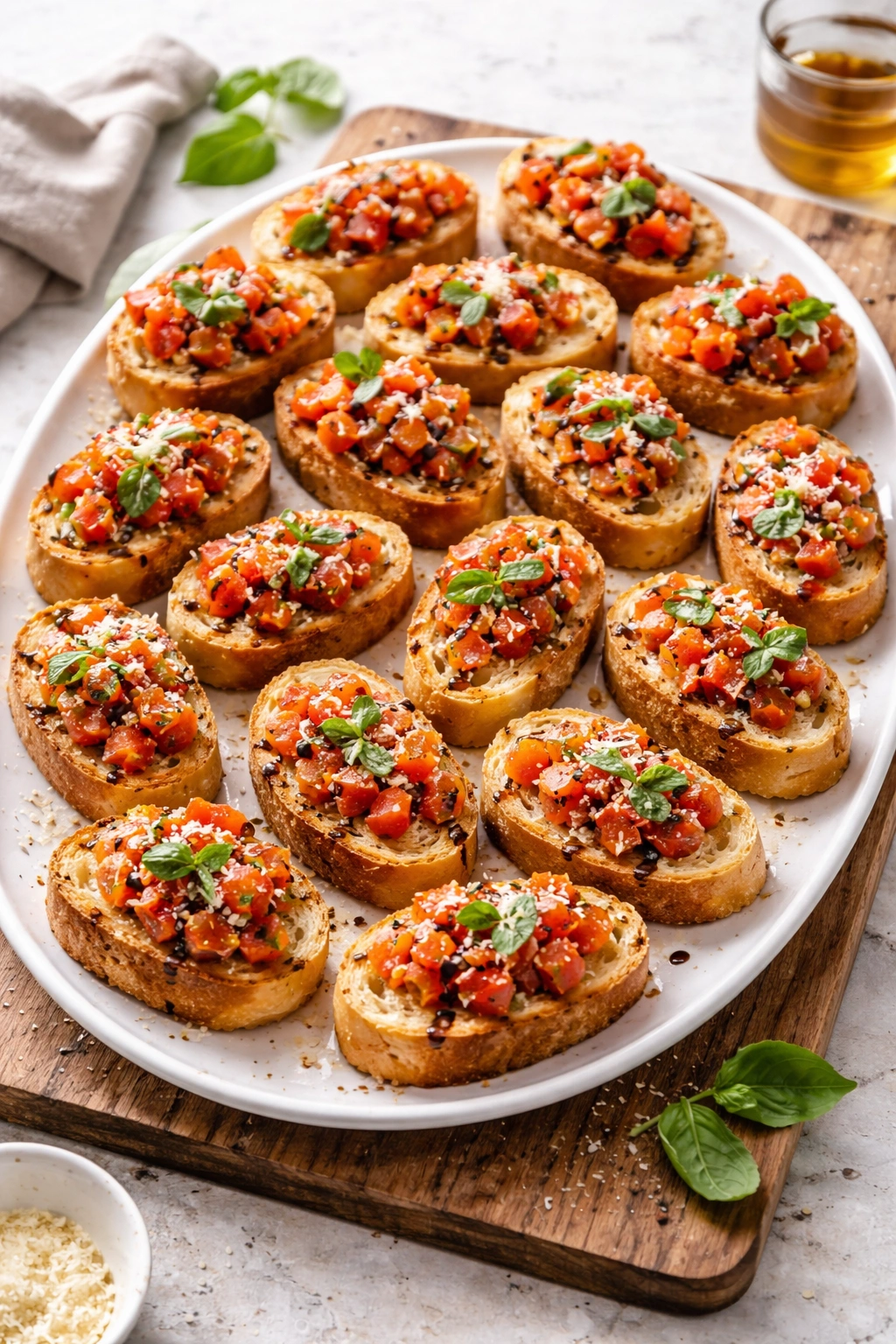
Prep Time: 10 minutes Cook Time: 5-7 minutes Total Time: 15-17 minutes Difficulty: Beginner — no special equipment required, straightforward assembly, and timing is forgiving.
Complete Ingredient List
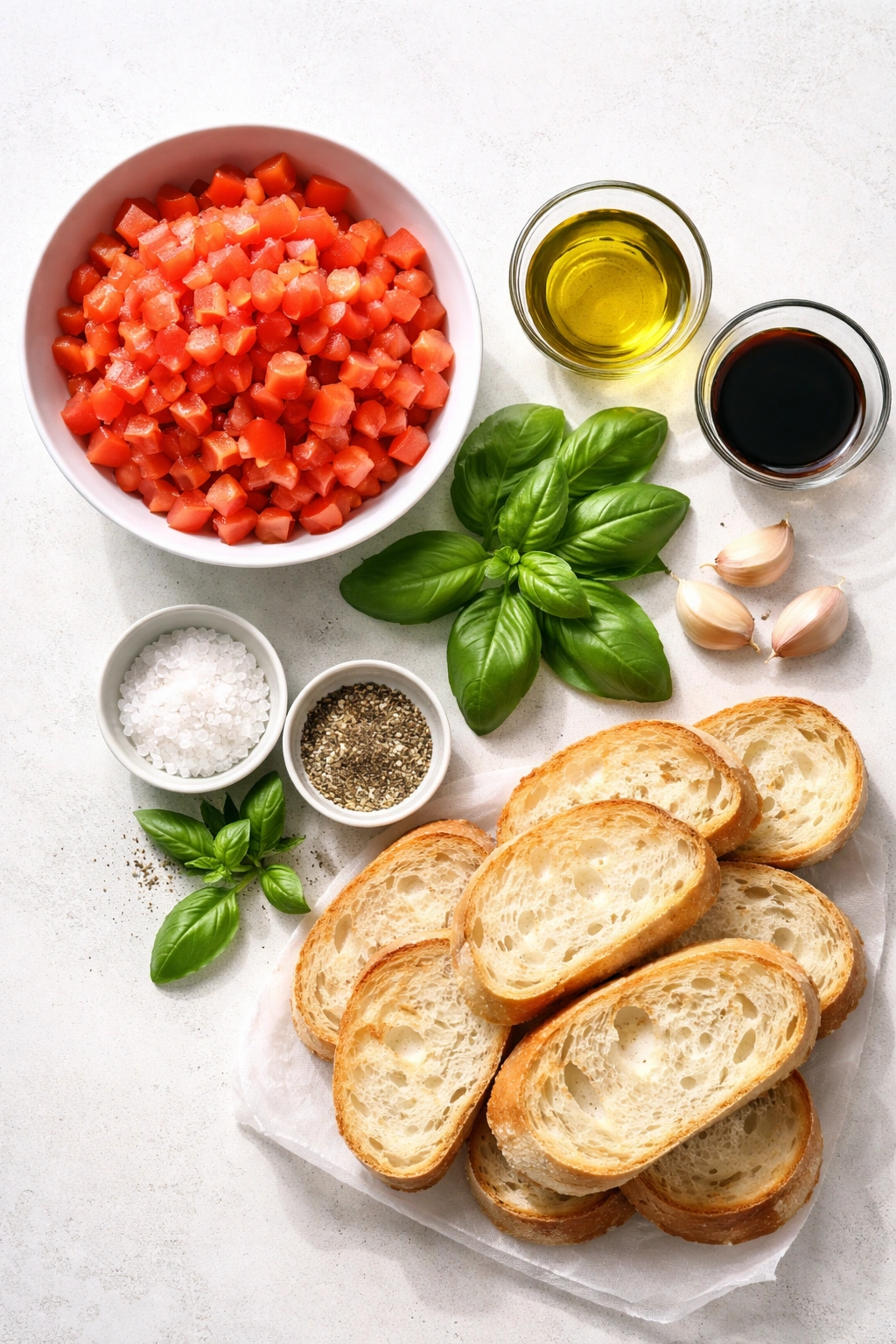
For the Bruschetta Topping:
- 1.5 pounds ripe tomatoes (about 4 medium tomatoes or 6-8 Roma tomatoes), diced into roughly quarter-inch pieces
- 1/4 cup fresh basil leaves, gently torn by hand rather than chopped
- 1/4 cup good-quality extra-virgin olive oil
- 2 tablespoons red wine vinegar or balsamic vinegar
- 2 cloves garlic, minced (plus 1 whole garlic clove for rubbing the bread)
- 1/2 teaspoon fine sea salt, plus more to taste
- 1/4 teaspoon freshly ground black pepper, plus more to taste
For the Bread:
- 1 French baguette or Italian ciabatta loaf, sliced on a slight diagonal about 3/4 inch thick (roughly 24 slices)
- 3 tablespoons olive oil for brushing the bread
- 1 garlic clove, halved, for rubbing the toasted bread
Step-by-Step Instructions
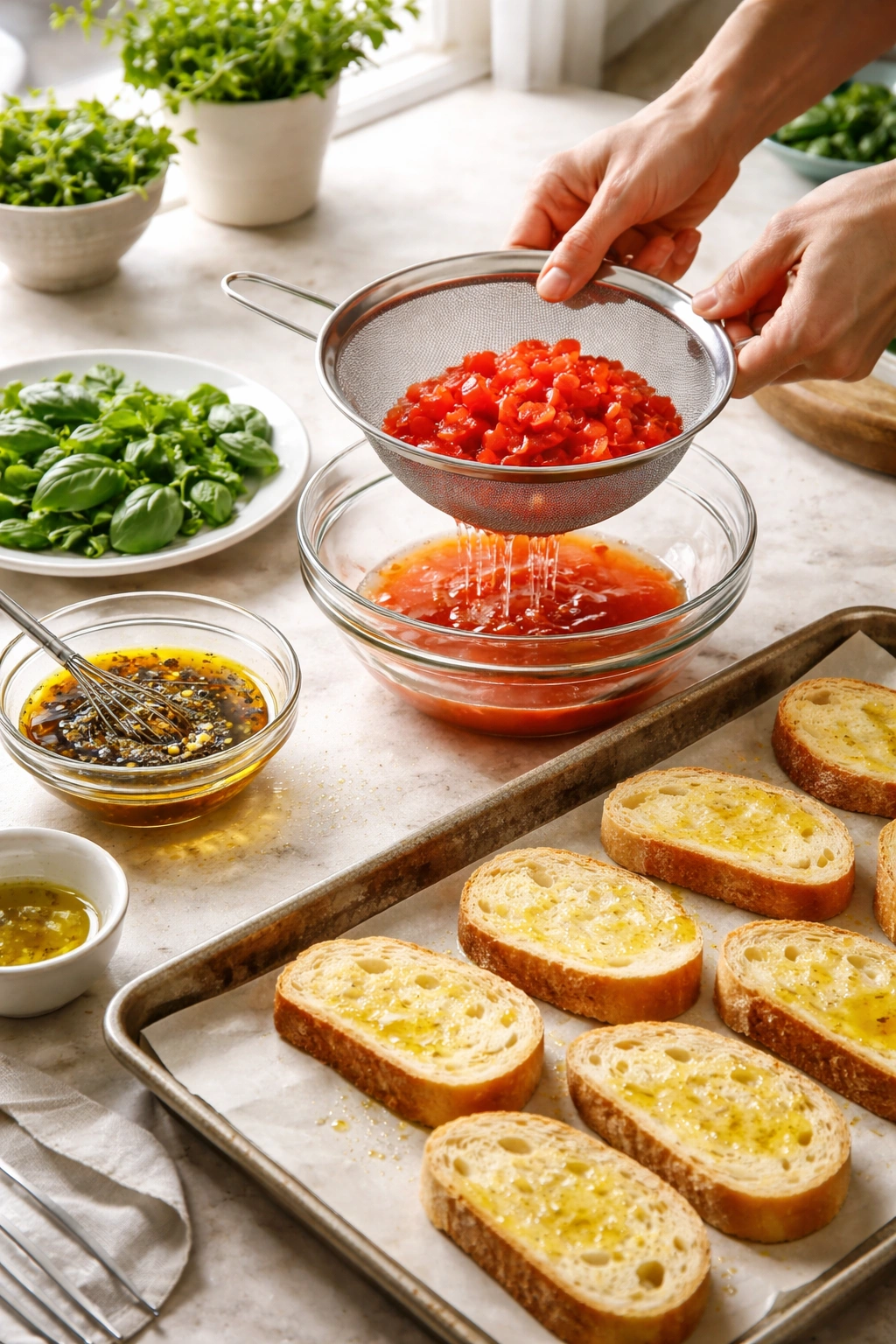
Prepare the Topping:
-
Dice the tomatoes into roughly quarter-inch pieces and place them in a fine-mesh strainer or colander set over a bowl. Sprinkle with 1/2 teaspoon of fine sea salt and let them drain for about 5 minutes. This step removes excess moisture that would otherwise make your bruschetta soggy.
-
While the tomatoes drain, tear the basil leaves by hand into rough pieces—don’t cut them with a knife, which bruises the leaves and turns them dark. Set the basil aside on a plate.
-
Whisk together the olive oil and red wine vinegar in a small bowl. Taste the dressing and adjust the ratio if needed; it should be balanced between the oil’s richness and the vinegar’s acidity. Add a tiny pinch of salt.
Prepare and Toast the Bread:
-
Preheat your oven to 400°F (200°C) and position the rack in the center of the oven.
-
Slice your bread on a slight diagonal, cutting pieces about 3/4 inch thick. You’re aiming for roughly 24 slices, though the exact number depends on the size of your loaf.
-
Lay the bread slices on a baking sheet in a single layer (you may need two sheets if the bread is large). Brush both sides lightly with the 3 tablespoons of olive oil, making sure each slice gets an even, thin coating.
Advertisements -
Bake for 5 to 7 minutes, rotating the pan halfway through for even browning, until the bread is deep golden brown and the edges are starting to caramelize. The bread should smell toasty and nutty. Remove the pan from the oven immediately when the bread reaches this color—don’t leave it in any longer, or it will start becoming hard and brittle rather than crispy.
Assemble the Bruschetta:
-
Remove the pan from the oven and, while the bread is still warm, immediately rub each slice with the halved garlic clove, pressing gently against the rough surface so the garlic transfers to the bread. Do this while the bread is warm—cold bread won’t absorb the garlic flavor nearly as effectively. You should see the garlic almost dissolve slightly as you rub; that’s exactly what you want.
-
Transfer the drained tomatoes to a bowl. Add the minced garlic, torn basil, and the olive oil-vinegar dressing. Fold these ingredients together gently, being careful not to crush the tomatoes. Taste and adjust the seasoning with additional salt and pepper if needed. The topping should taste slightly bold because the bread will dilute it slightly.
-
Top each warm garlic-rubbed bread slice with a generous spoonful of the tomato mixture, letting some of the juices drip onto the bread. Serve immediately while the bread is still warm and crispy. Bruschetta is at its best within about 10 minutes of assembly, before the bread starts to soften.
Expert Tips That Separate Good from Extraordinary
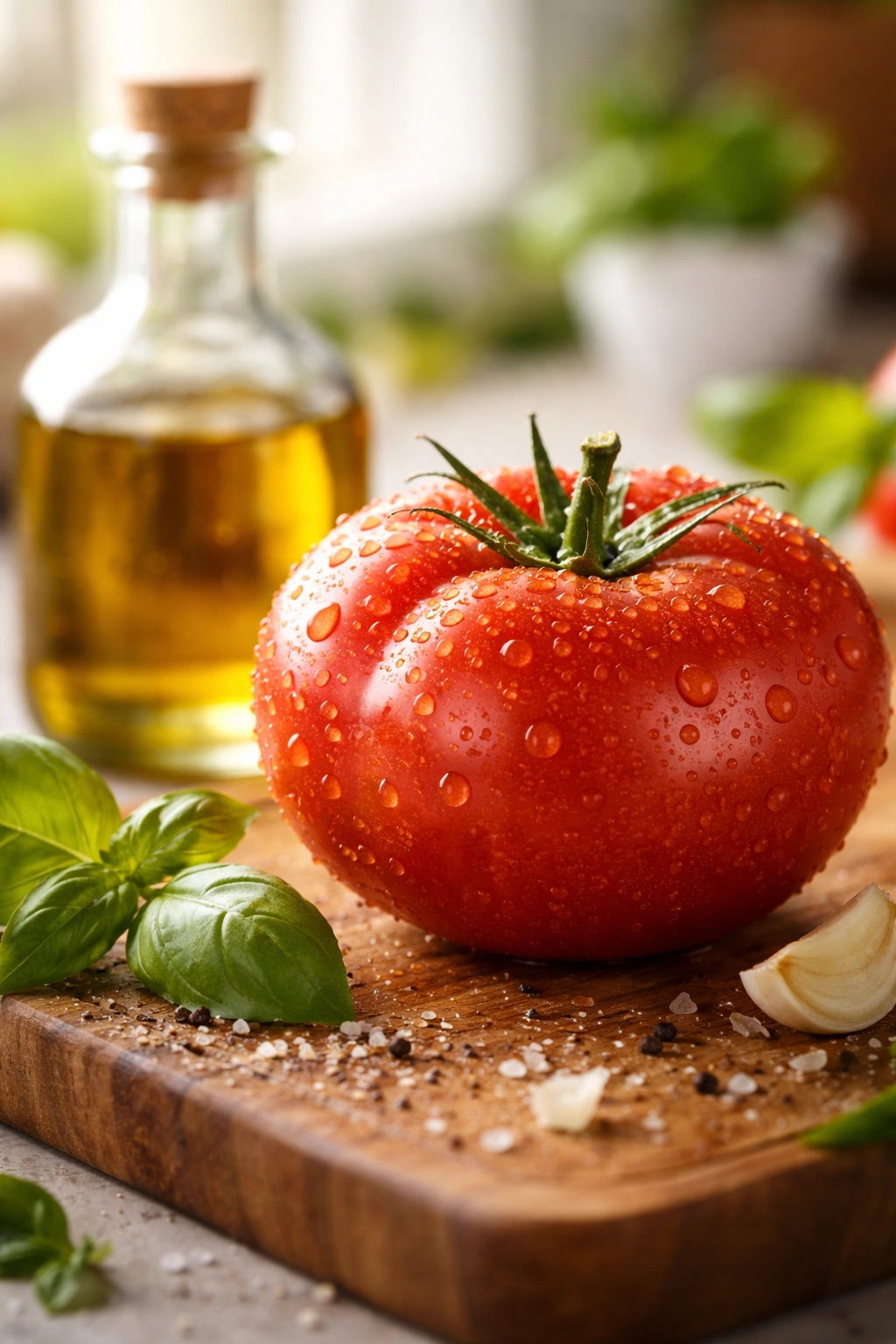
The single biggest factor in exceptional bruschetta is using genuinely ripe, flavorful tomatoes. This isn’t a dish where you can hide inferior ingredients. If you can’t find excellent tomatoes at your regular grocery store, seek them out at a farmers’ market or specialty grocer. The difference between a mealy, pale tomato and one that’s red all the way through and smells fragrant is the difference between mediocre bruschetta and the kind people remember.
Don’t assemble your bruschetta more than ten minutes before serving. The bread is at peak texture when it’s still warm and crispy from the oven. As it sits, it gradually absorbs moisture from the tomato topping and starts to soften and become chewy rather than crisp. This is fine if you’re planning to eat it immediately, but for any kind of entertaining where things sit on a counter, it’s a real consideration.
The quality of your olive oil matters here because it’s a starring ingredient, not a background player. You don’t need the most expensive bottle on the shelf, but you do need one that tastes fresh, fruity, and aromatic—something you’d actually taste if you drizzled it on bread. Cheap, oxidized olive oil makes the entire dish taste flat.
If you’re worried about the raw garlic being too strong for some guests, reduce the amount of minced garlic in the topping to just one clove instead of two. You’ll still get excellent flavor from rubbing the clove on the warm bread, and the toppping’s garlic flavor will be more subtle. You can always offer minced garlic on the side for people who want more.
Common Mistakes That Ruin Homemade Bruschetta
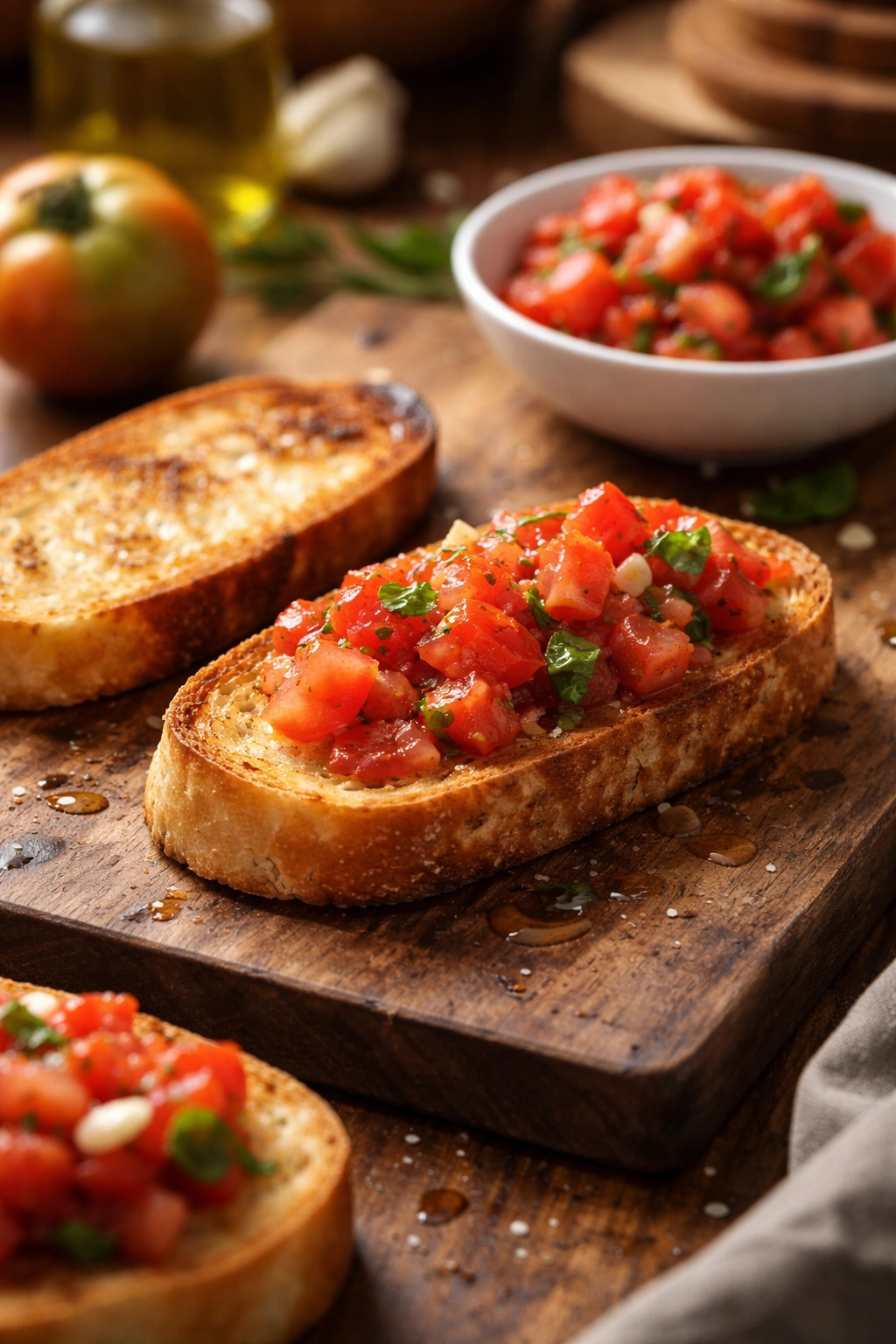
The most frequent mistake is using tomatoes that aren’t actually ripe. You end up with a topping that’s mealy, pale, and tastes vaguely watery. There’s no fixing this once you’ve assembled the bruschetta, so start with great tomatoes or don’t bother making the dish.
Adding the topping too far in advance turns your crispy bread into a soggy vehicle for tomatoes. Bruschetta is a dish of contrasts, and one of those contrasts is the crispy-bread-versus-soft-topping dynamic. Once the bread absorbs moisture, you’ve lost that interplay.
Being timid with the seasonings is another common problem. The tomato topping should taste fairly bold and well-seasoned when you taste it on a spoon by itself. Some of that intensity will be diluted by the bread, and you want enough seasoning that the final bite actually has flavor. Taste as you go and don’t hold back on salt and pepper.
Overcrowding the topping onto each slice makes it impossible to eat without it falling off. A single generous spoonful per slice is plenty. The bread should still be mostly visible; the topping should be an accent, not a pile that overwhelms the base.
Creative Variations Beyond the Classic
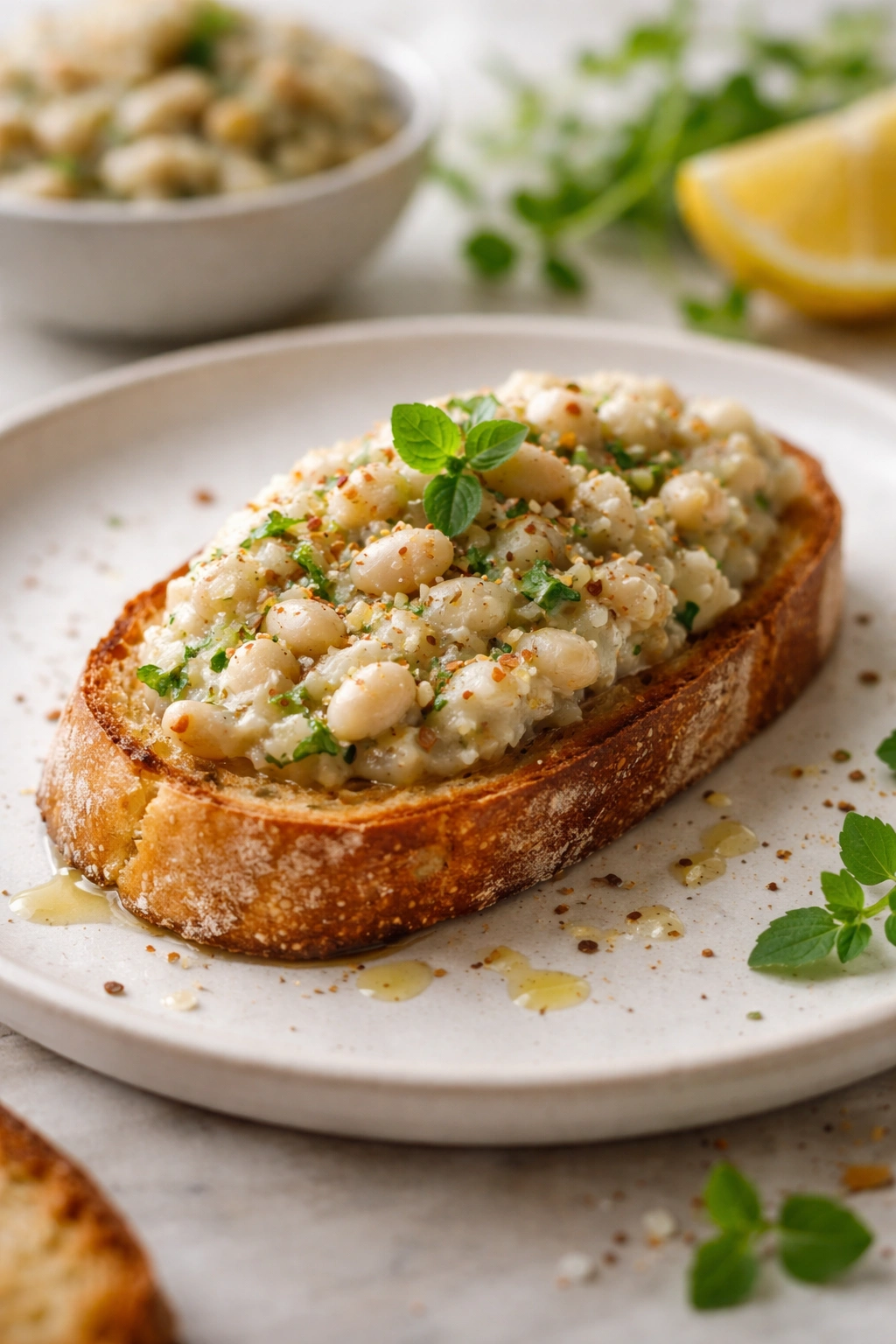
Once you master the basic version, bruschetta becomes a platform for endless variations. A white bean and herb topping works beautifully—mash white beans with garlic, lemon juice, olive oil, and fresh herbs like thyme or parsley. This version is heartier and more filling, perfect if bruschetta is your main appetizer rather than one of several.
A roasted red pepper variation brings sweetness and smokiness. Roast red peppers, peel them, and tear them into strips, then toss with garlic, olive oil, balsamic vinegar, and fresh basil. This version works well when tomatoes are out of season or if you want to offer something different from the classic.
For a creamier version, brush the warm bread with a thin layer of ricotta or whipped goat cheese before adding the tomato topping. The creaminess balances the acidity of the tomatoes and adds richness. Top with a small basil leaf or a grind of black pepper for visual appeal.
A roasted garlic and mushroom bruschetta appeals to people who want something more substantial. Roast sliced mushrooms with garlic until they’re golden and tender, then toss with thyme, balsamic vinegar, and olive oil. This plays beautifully with a spread of herbed cream cheese on the toasted bread.
For something completely different, try a fig and prosciutto topping: warm fig jam (which you can make or buy), thin shards of prosciutto, and a tiny dollop of goat cheese on the warm bread. This leans more toward sweet-savory and works as a dessert bruschetta or an unexpected appetizer.
Storage and Make-Ahead Strategies
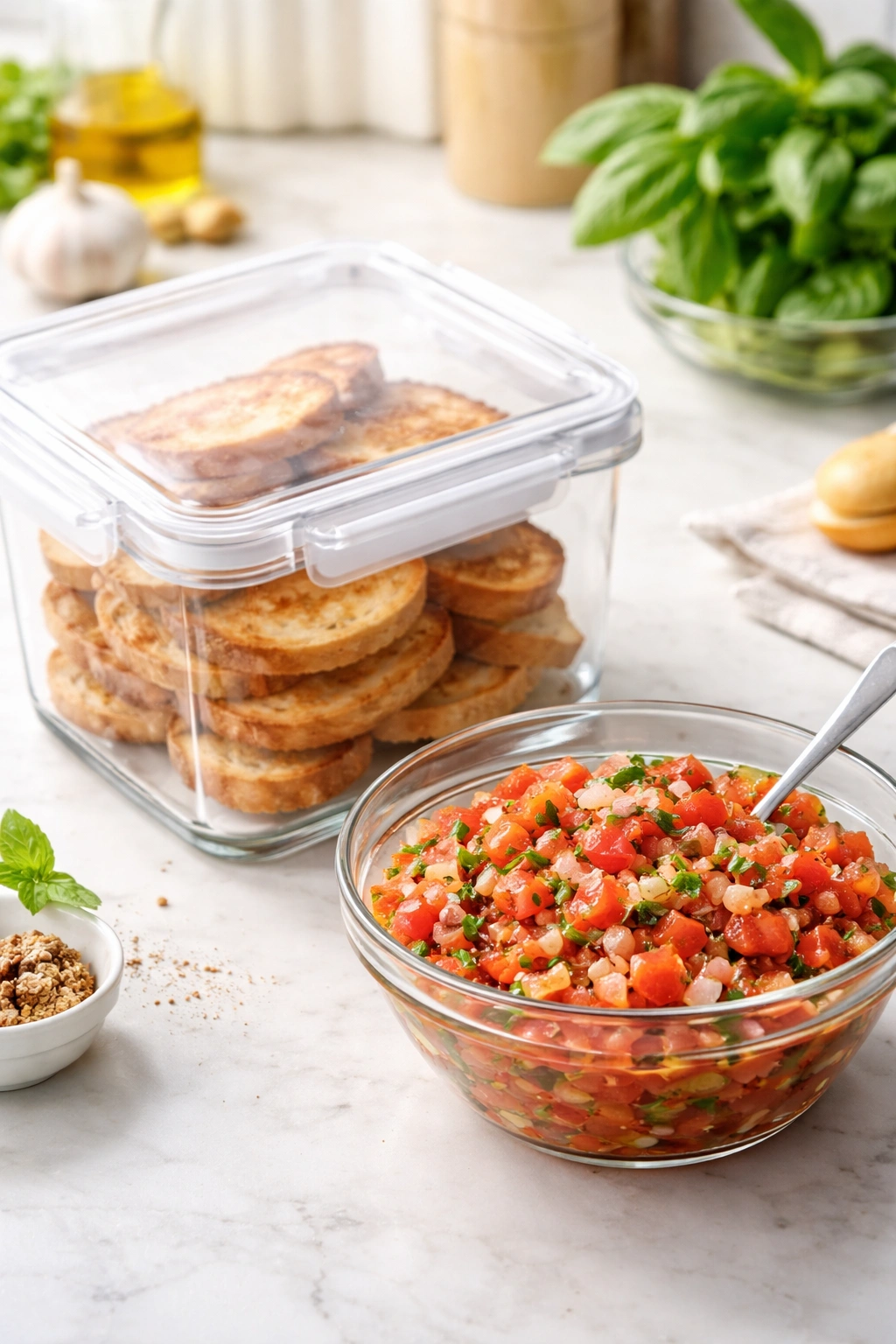
The bread can be toasted up to two hours in advance. Store the cooled slices in an airtight container at room temperature, and they’ll stay crispy. You can rewarm them in a 375°F oven for about two minutes if they’ve softened before you assemble the bruschetta.
The tomato topping can be prepared up to four hours in advance, but don’t assemble it until just before serving. Store the tomatoes, basil, garlic, and oil-vinegar dressing separately in the refrigerator, then combine about ten minutes before you’re ready to serve. This way you get fresh, bright flavor rather than something that’s been sitting around getting darker and more oxidized.
The garlic-rubbed toasted bread should be assembled with the topping no more than ten minutes before serving. Beyond that, the bread starts to soften, and the dish loses the textural contrast that makes it special.
If you’re making bruschetta for a party and worried about timing, toast the bread, prepare all the components, and wait to assemble until just before your guests arrive. The whole assembly takes literally five minutes, and you’ll have bruschetta at peak texture when people are actually eating it, not an hour before when it’s been sitting around.
Pairing and Serving Suggestions
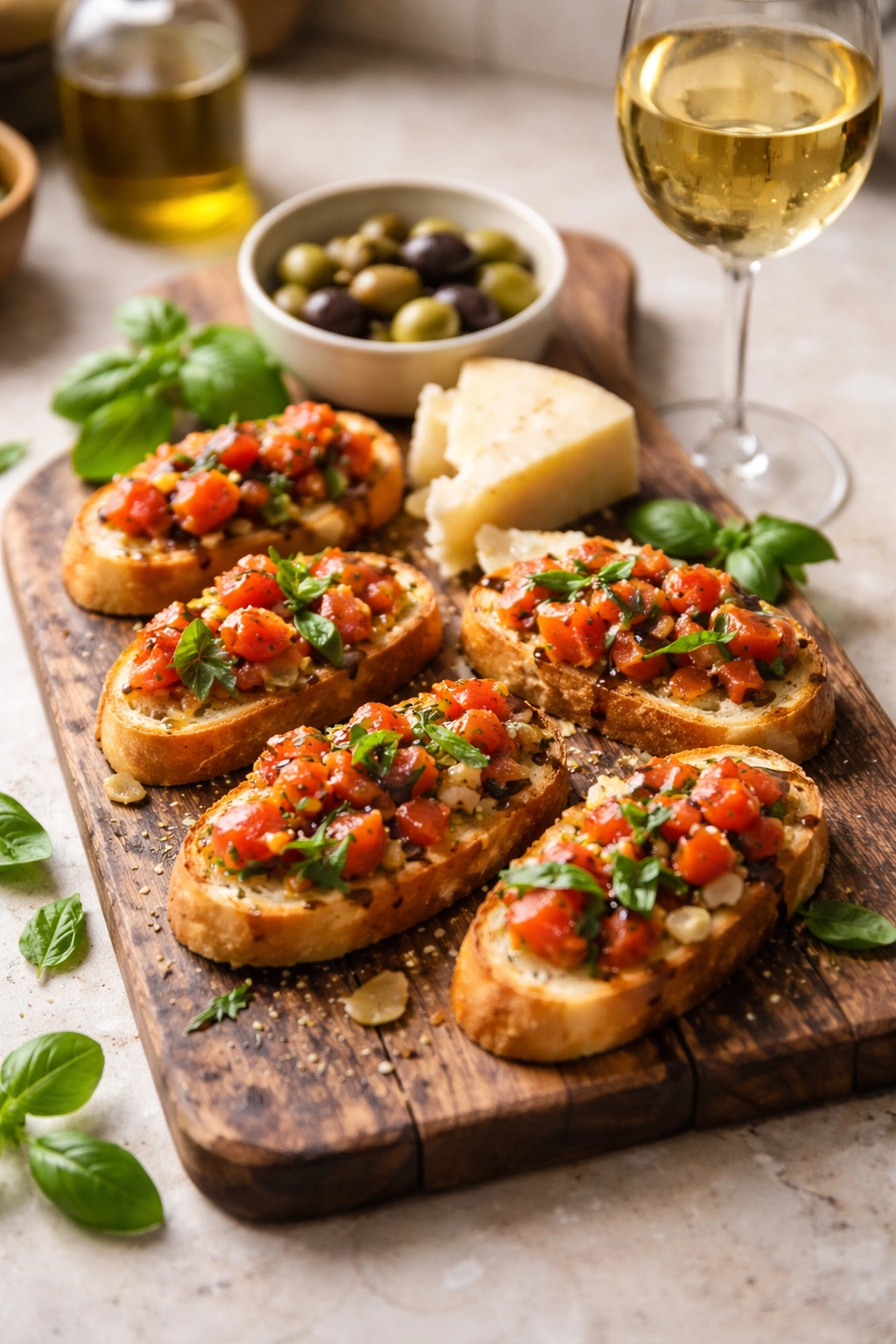
Bruschetta works beautifully as part of an Italian-inspired appetizer spread alongside fresh mozzarella, cured meats, and marinated olives. The flavors feel right at home together, and bruschetta’s brightness balances richer charcuterie items.
Serve bruschetta alongside a crisp white wine—a pinot grigio, vermentino, or prosecco all work beautifully. The wine’s acidity echoes the vinegar in the topping and cleanses the palate between bites. If you’re serving beer, a light lager or wheat beer pairs well.
Bruschetta also works as a welcome appetizer at casual dinner parties or before a light pasta dinner. It sets an elegant tone without being fussy, and it’s substantial enough that guests don’t feel like they’re just getting bread with stuff on it.
For a more casual setting, set out the components and let guests assemble their own, which can be fun if you’re making multiple topping variations. Arrange the toasted bread slices, the tomato topping in a bowl, maybe a crumbled cheese, and let people build their own. This works especially well if you have guests with different preferences.
Bruschetta should be served at room temperature or just slightly warm. Don’t refrigerate the assembled bruschetta; cold bread loses its appealing texture and flavor. If you’re making it more than an hour ahead, keep everything at room temperature in airtight containers, then assemble just before serving.
Final Thoughts
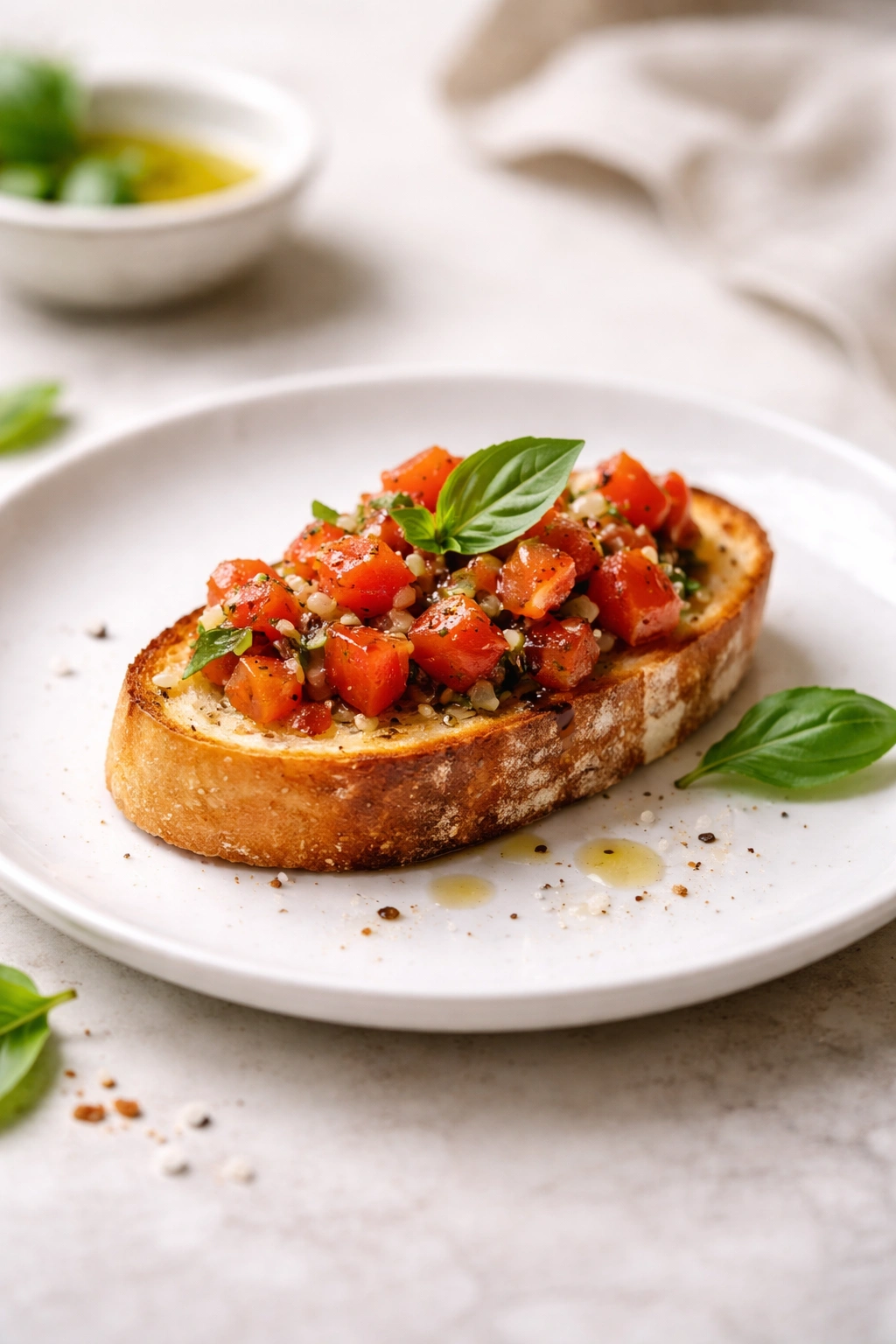
Bruschetta sits at that perfect intersection of elegant and easy—it looks impressive enough for any gathering, yet comes together so quickly that it’s genuinely worth making even when you’re short on time. The secret isn’t some complex technique or mysterious ingredient. It’s quality tomatoes, fresh basil, good olive oil, and understanding that you’re building on contrasts: warm and cool, crispy and soft, bright and rich.
Once you’ve made bruschetta a few times, you’ll stop consulting recipes and start trusting your instincts about seasoning and topping ratios. You’ll know by looking at tomatoes whether they’re worth buying, you’ll develop a sense for when bread has reached peak toastiness, and you’ll understand exactly how much garlic tastes right to your palate.
The real beauty of bruschetta is that it feels special without the stress. Fifteen minutes from deciding to make it to setting it on the table is completely realistic, and your guests will assume you’ve put in far more effort than you actually have. That’s the kind of recipe worth keeping close.
