



When you’re under the weather, the last thing you want to do is spend hours in the kitchen. Yet somehow, the moment a cold or flu hits, there’s nothing—absolutely nothing—quite like a warm bowl of homemade chicken soup. There’s a reason this humble dish has been passed down through generations and across cultures as the ultimate comfort food for illness: it actually works. The combination of tender chicken, aromatic vegetables, warming spices, and nourishing broth doesn’t just soothe your throat and warm your bones—it delivers real nutrients and compounds that help your body fight back when it’s struggling.
The beauty of a truly easy chicken soup for when you’re sick is that it doesn’t demand your energy or attention. You’re not trying to impress anyone. You’re trying to feel better. That’s why the recipe that follows is streamlined, forgiving, and designed specifically for someone who feels awful. Everything comes together in one pot in under an hour, with minimal hands-on time. The ingredients are affordable, likely already in your pantry, and work together to create a soup that tastes far better than it has any right to be given how little effort you’ve invested.
What makes this version different from a generic chicken noodle soup is the strategic addition of anti-inflammatory powerhouses. Fresh ginger, warming garlic, and golden turmeric aren’t just flavor boosters—they’re functional ingredients with genuine therapeutic properties. Ginger has been used for centuries to calm nausea and support digestion; garlic contains compounds with antimicrobial and immune-supporting properties; and turmeric’s active ingredient, curcumin, is a potent anti-inflammatory agent. Combined with a quality broth, fresh herbs, and wholesome vegetables, this creates a soup that nourishes you from the inside out while you recover.
Why Homemade Chicken Soup Actually Helps You Recover
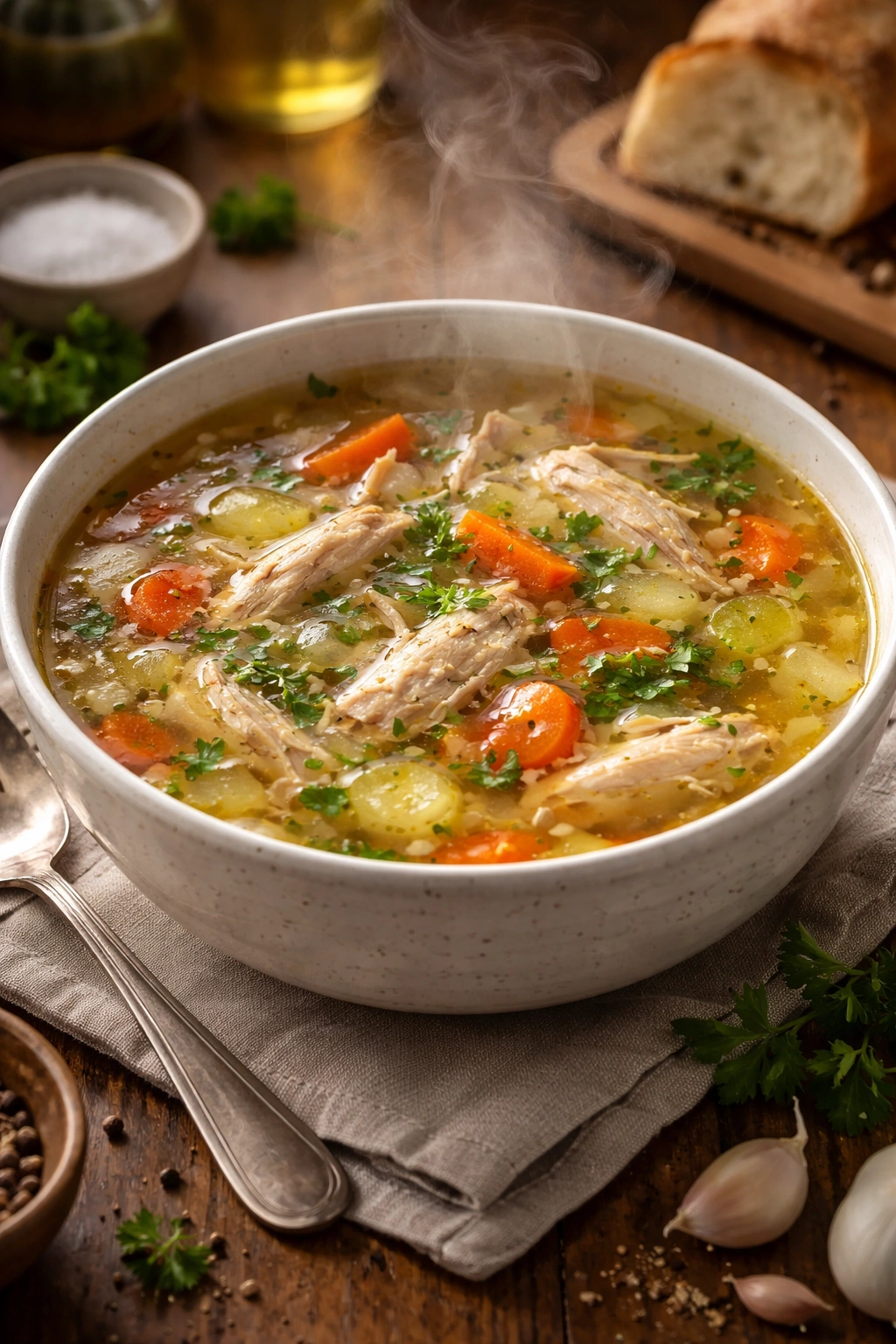
The science behind chicken soup goes deeper than folklore. Multiple studies have shown that the warm broth itself helps reduce inflammation in the throat and respiratory tract, which means relief from that raw, scratchy feeling. The steam from the hot soup helps open nasal passages and break up congestion—something that happens whether you’re sipping it or just breathing in the vapor rising from the bowl.
The protein in chicken is essential for your body to manufacture the antibodies and immune cells it needs to fight infection. But it’s not just the protein; the amino acids in chicken, particularly lysine and carnosine, have genuine immune-supporting properties. When you’re sick, your body burns through calories and nutrients at an accelerated rate as it works to heal itself, so the calories and nourishment in chicken soup aren’t frivolous—they’re necessary fuel.
Bone broth, whether homemade or store-bought, contains collagen, gelatin, and amino acids that support gut health and reduce inflammation throughout your digestive system. When you’re sick, your digestion suffers alongside everything else, so broth that’s easy to digest and actively soothing to the gut lining makes a real difference in how quickly you feel better.
The vegetables—carrots, celery, and onions—provide vitamins, minerals, and fiber. They’re mild enough not to upset a sensitive stomach, yet they add real nutritional value. The ginger in this soup has been scientifically shown to reduce nausea and may help shorten the duration of cold symptoms. Garlic’s sulfur compounds have antiviral and antibacterial properties. Turmeric’s curcumin is one of the most studied anti-inflammatory compounds in existence. This isn’t magical thinking; this is nutritional strategy.
What Makes This Chicken Soup Different from Canned or Mediocre Versions
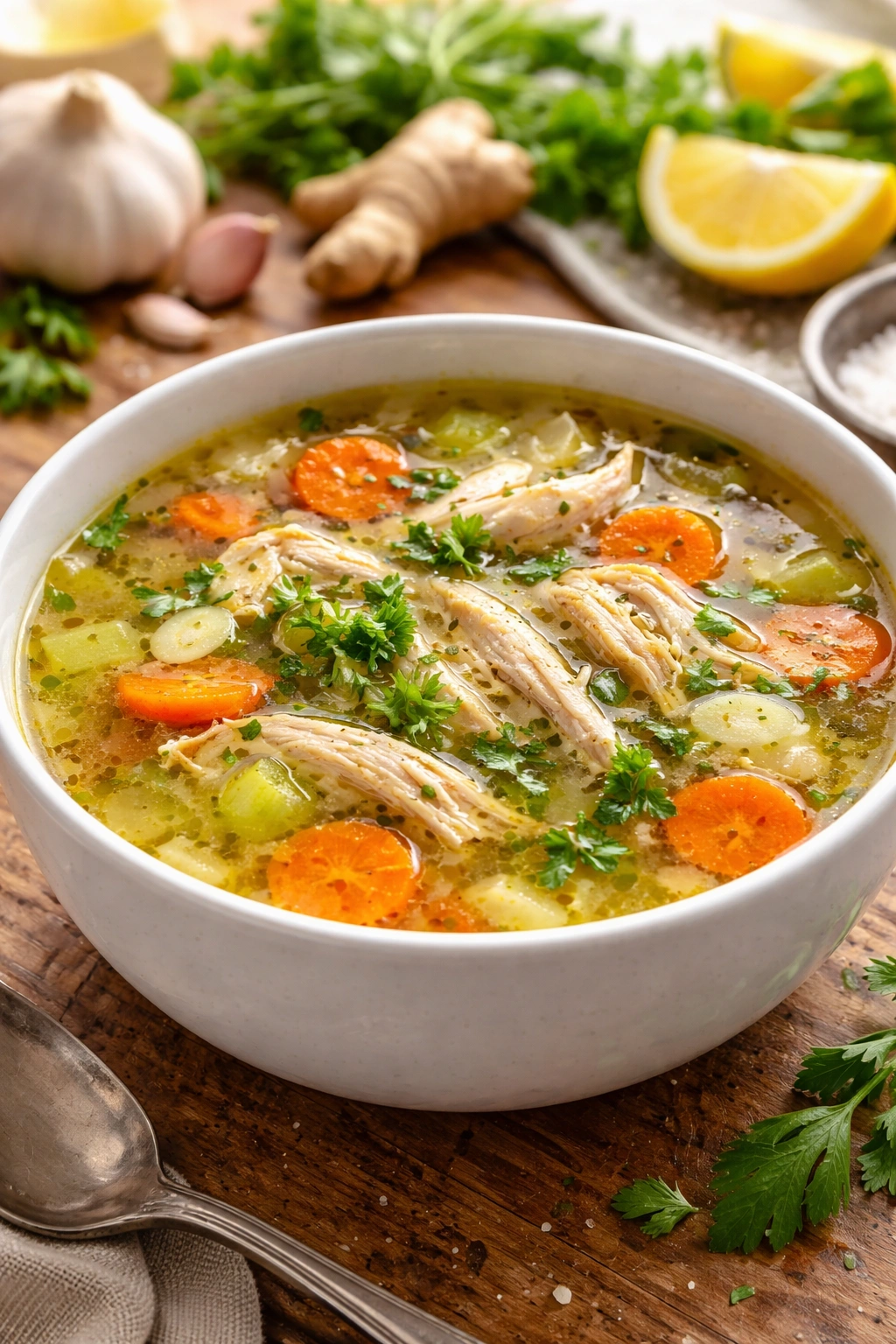
The difference between a truly comforting, healing chicken soup and a thin, bland one comes down to a few deliberate choices. First, you’re using real chicken broth—either homemade, or if you’re too sick to care, a quality store-bought variety with short ingredient lists and no excessive salt. The better your broth, the better your soup, because the broth IS the foundation. Many commercial broths pack in sodium to mask thin flavor, so always opt for unsalted or low-sodium varieties and taste as you go.
Second, this recipe isn’t shy about garlic and ginger. You’re using six cloves of fresh garlic—minced fine so it distributes throughout the broth—and a full tablespoon of freshly grated ginger. This isn’t an accident. These quantities deliver the therapeutic compounds your body needs while creating a broth that’s genuinely flavorful and satisfying. This is what separates a bowl of forgettable broth from something that tastes like someone who cares about you made it.
Third, fresh herbs matter. Dried herbs can work in a pinch (use about one-third the amount), but fresh thyme and rosemary add a brightness and complexity that canned soup can’t touch. They’re antimicrobial herbs too, so you’re not just adding flavor—you’re adding function.
Finally, this soup gets a finishing touch of fresh lemon juice or lemon zest, which brightens the entire bowl and adds an extra boost of vitamin C. That citrus note transforms the soup from heavy and one-note into something that feels alive and nourishing, even when you feel terrible.
When to Make This Soup and When to Reach for It
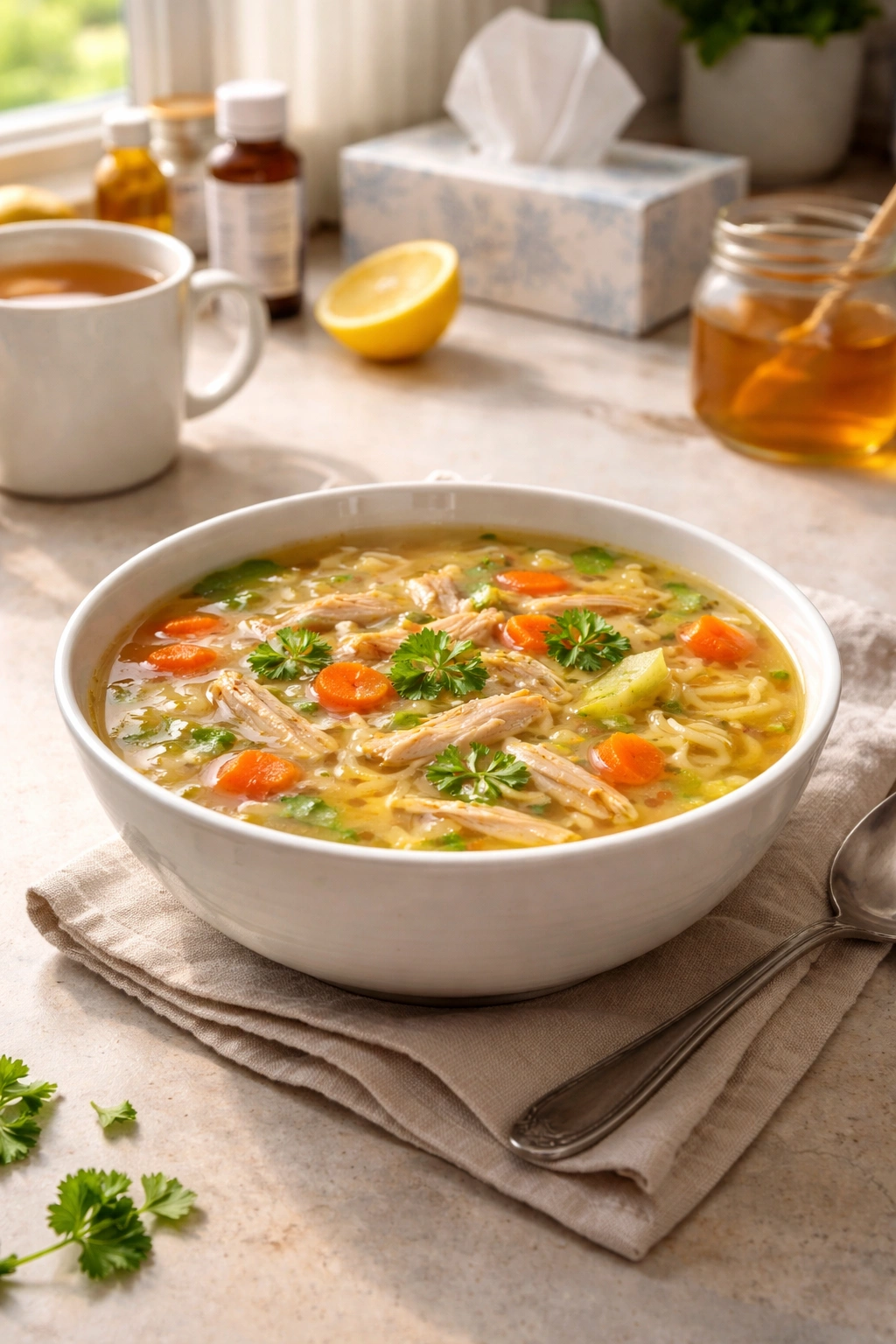
The ideal time to make this soup is actually before anyone gets sick. If you freeze a batch in advance, you’ll have a ready-to-go healing meal when illness strikes and the last thing you want to do is cook. But this recipe is also designed for someone who’s already sick and needs to make it right now because there’s nothing else in the house.
Make this soup at the first sign of cold symptoms—that scratchy throat, the early sniffles, the low energy. Early intervention with proper nutrition and anti-inflammatory ingredients can genuinely shorten how long you’re miserable. It’s also the perfect meal for the recovery phase, when you’re starting to feel better but aren’t quite back to normal eating yet. The soft vegetables, protein-rich chicken, and easy-to-digest broth won’t stress your system while it’s still rebuilding.
This soup works just as well for someone else who’s under the weather—it’s gentle enough for someone with an upset stomach or nausea, yet substantial enough to provide real nutrition. If you know someone who’s sick, bringing them a container of this soup is one of the most genuinely helpful things you can do. It’s practical, it tastes good, and it shows you understand that they need actual nutrition and care, not a commercial soup that tastes like salt and sadness.
The Specific Ingredients That Make This Soup Healing
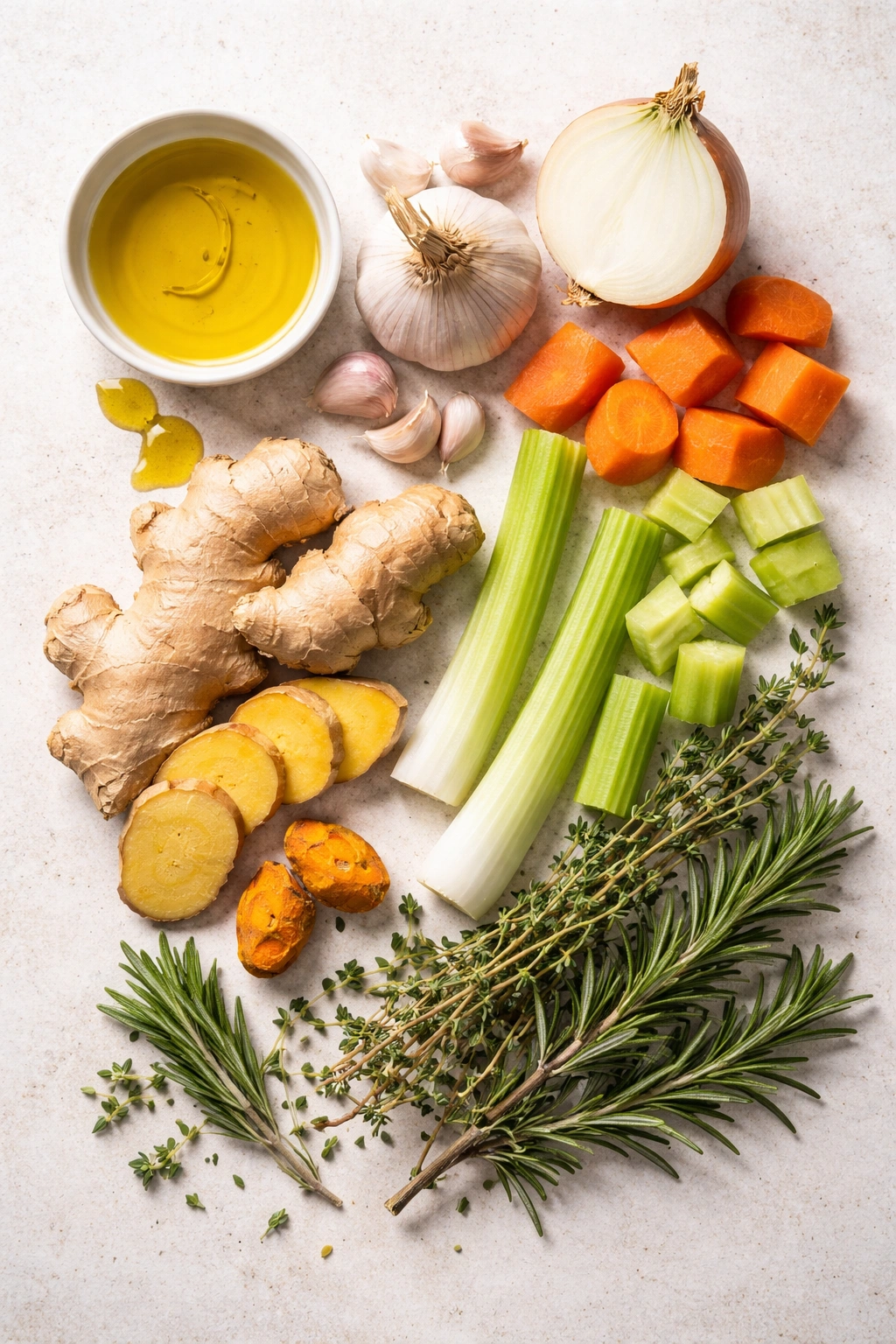
Understanding what each ingredient does helps you appreciate why this recipe works so well. The olive oil is simply your cooking medium, but using a good quality one means the fat-soluble vitamins from the vegetables and herbs actually get absorbed by your body.
The onion, carrot, and celery are the foundational flavoring trio used in countless cuisines. They’re mild on a sensitive stomach, provide subtle sweetness and depth, and contribute vitamins and fiber. When you’re sick, these vegetables are gentle enough to digest easily but substantial enough to make the soup feel like real food.
The garlic is non-negotiable. Six cloves might sound like a lot, but when minced fine and cooked gently, they become mellowed and sweet while still providing allicin—the compound responsible for garlic’s antimicrobial properties. Garlic that’s been minced and cooked slightly loses its harsh bite while keeping its therapeutic benefits.
Fresh ginger root provides that warm, slightly spicy note that opens sinuses and calms nausea. It improves circulation and has been used in traditional medicine for thousands of years specifically for colds and flu. The amount matters—one tablespoon of freshly grated ginger is enough to taste it throughout the broth without overwhelming it.
Fresh turmeric root (or ground turmeric if you can’t find fresh) is a superstar ingredient for anyone fighting inflammation. Turmeric’s active ingredient, curcumin, is one of the most researched anti-inflammatory compounds. It’s best absorbed when paired with black pepper and fat (both of which are in this recipe), so the turmeric works with the olive oil and the black pepper to maximize bioavailability.
The fresh rosemary and thyme are aromatic herbs with antimicrobial properties. They smell amazing, taste sophisticated, and add nothing but benefit to the soup. Thyme especially has been used historically to support respiratory health.
The chicken—whether breast or thighs—provides complete protein and amino acids your body desperately needs when it’s fighting infection. Chicken thighs have more fat and are slightly more forgiving if you overcook them, but either works perfectly in this soup.
The broth is arguably the most important ingredient after the chicken. A rich, flavorful chicken broth made with bones and aromatics will create a soup that tastes nourishing and feels deeply satisfying. If you must use store-bought, choose low-sodium or unsalted varieties so you can season to your own preference as you cook.
Yield: Serves 4 to 6 | Makes about 8-10 cups
Prep Time: 20 minutes
Cook Time: 35 minutes
Total Time: 55 minutes
Difficulty: Beginner — This recipe requires only basic knife skills, one pot, and straightforward cooking techniques. Even someone with minimal experience in the kitchen can make this successfully.
Ingredients for Easy Healing Chicken Soup
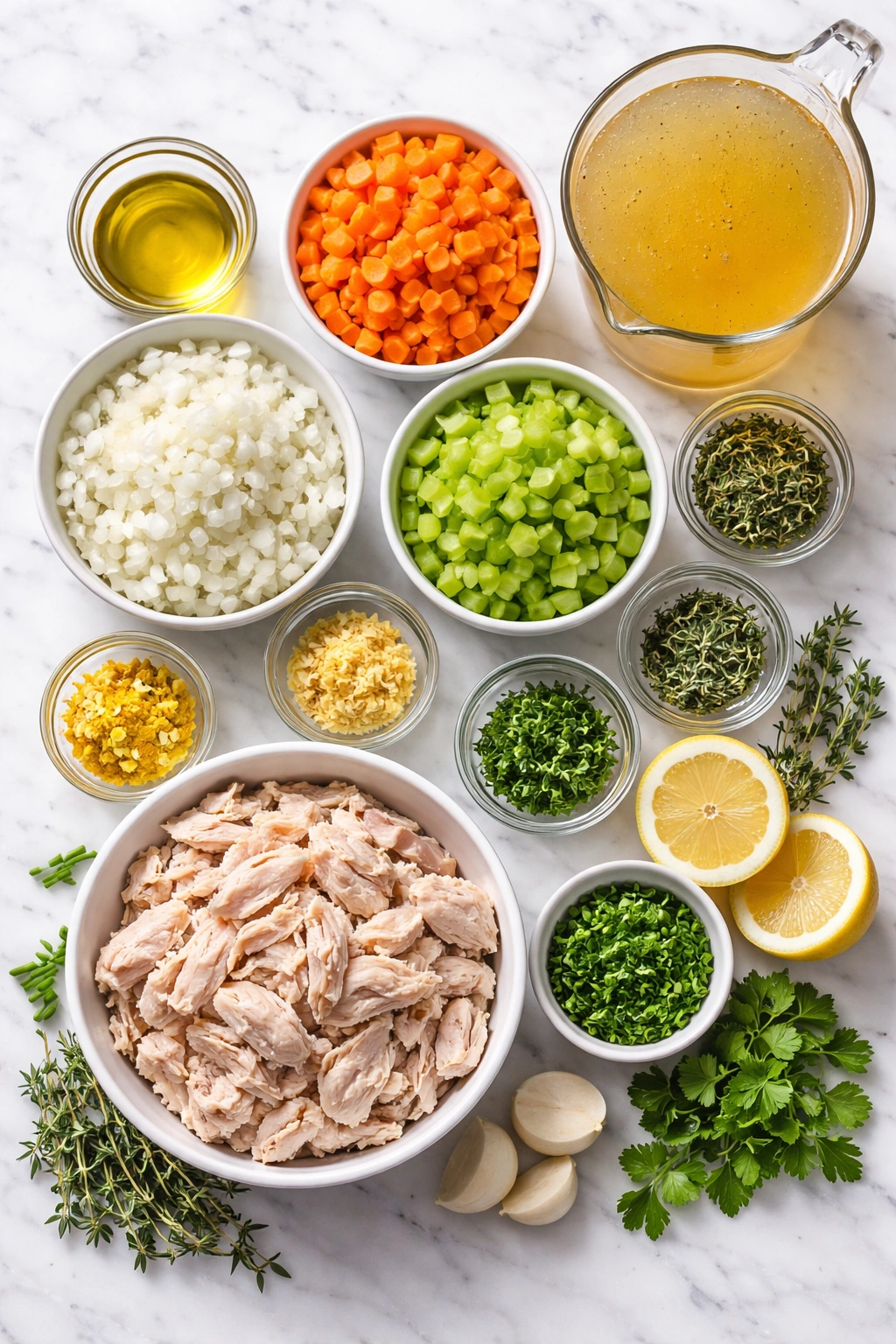
For the Soup Base:
- 1 tablespoon extra-virgin olive oil
- 1 large yellow onion, diced into small, even pieces
- 3 medium carrots, peeled and diced (about 1½ cups)
- 2 celery stalks, diced (about 1 cup)
- 6 cloves fresh garlic, minced very fine
- 1 tablespoon fresh ginger root, peeled and finely grated (or 1 teaspoon ground ginger if fresh is unavailable)
- 1 tablespoon fresh turmeric root, peeled and grated (or 1 teaspoon ground turmeric as a substitute)
- 1 teaspoon fresh thyme leaves, chopped (or ⅓ teaspoon dried thyme)
- 1 teaspoon fresh rosemary leaves, chopped (or ⅓ teaspoon dried rosemary)
For the Broth and Protein:
- 6 cups unsalted or low-sodium chicken broth
- 1 pound boneless, skinless chicken breast or thighs, cut into bite-sized chunks, or one 3-4 pound rotisserie chicken, meat shredded
- 2 bay leaves
- ½ teaspoon kosher salt, plus more to taste
- ¼ teaspoon freshly ground black pepper, plus more to taste
For Finishing:
- 2 tablespoons freshly squeezed lemon juice (or zest of 1 lemon for brightness)
- 2 tablespoons chopped fresh chives or parsley for garnish (optional but recommended)
Instructions for Preparing Your Healing Chicken Soup
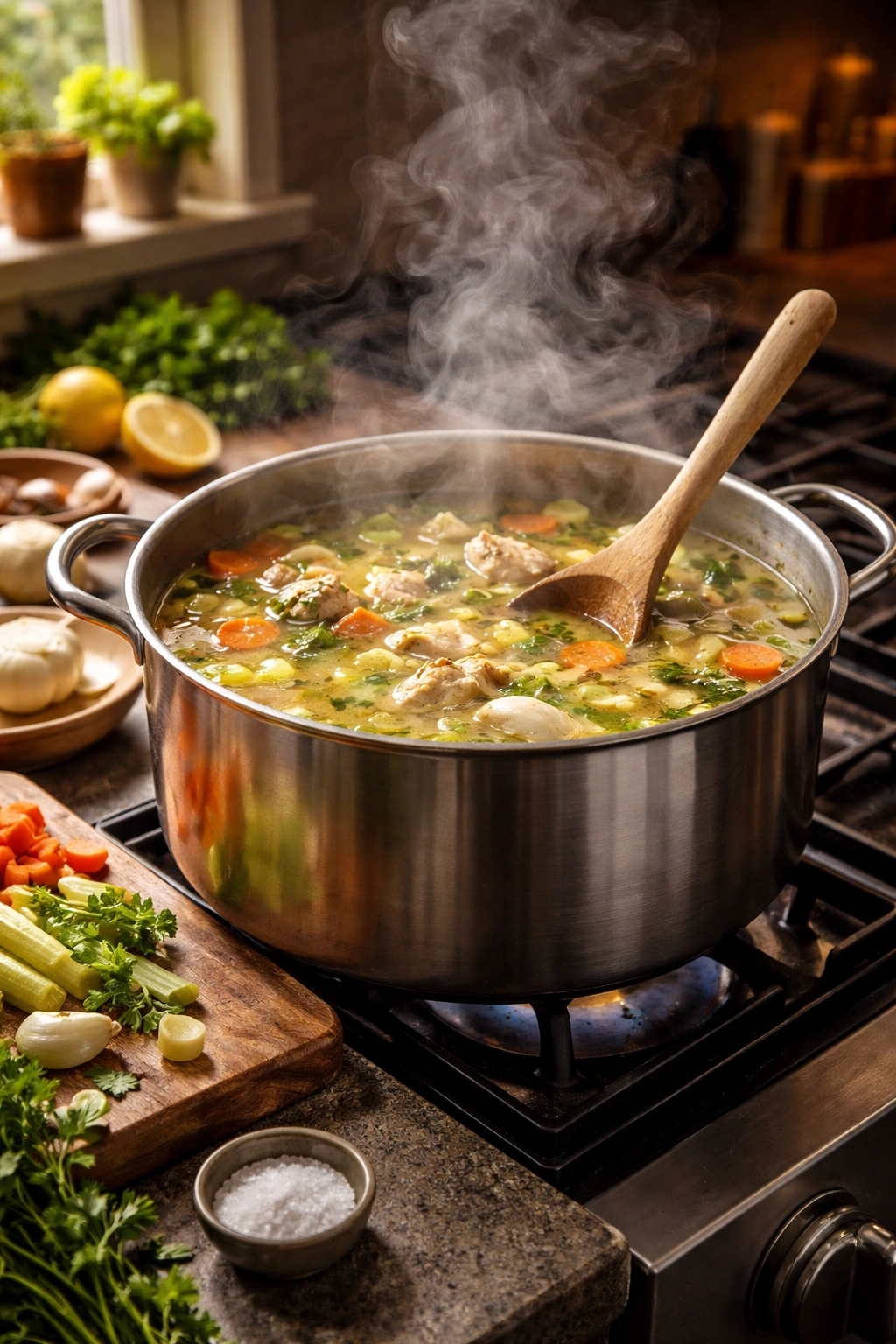
Prepare the Vegetables:
-
Peel the onion, cut it in half, and dice it into small, ¼-inch pieces—this size matters because it allows the onion to break down slightly and flavor the broth evenly. Peel the carrots and dice them into bite-sized pieces roughly the same size as the onion. Chop the celery into similar-sized pieces. Mince the garlic as finely as possible—the smaller the pieces, the more evenly it distributes through the broth and the better it releases its beneficial compounds.
-
Peel the fresh ginger root using the edge of a spoon (it’s faster and easier than a knife), and grate it finely on a box grater or microplane. You want the ginger finely grated, not chunky, so it distributes throughout the soup. If using fresh turmeric, do the same—peel and grate finely. Note: Fresh turmeric will stain your hands, cutting board, and anything it touches, so consider wearing food-grade gloves if you prefer to keep your hands clean. Chop the fresh thyme and rosemary leaves finely from their stems.
Build the Flavor Base:
-
Set a large stockpot or Dutch oven over medium heat. Add the olive oil and let it warm for about 30 seconds until it’s shimmering and fragrant.
-
Add the diced onion, carrot, and celery to the hot oil. Cook, stirring occasionally, for 4 to 5 minutes, until the onion becomes translucent and the edges of the vegetables are just barely starting to soften. You’re not trying to fully cook these vegetables yet—you’re just beginning to soften them and release their flavors. The onion should be see-through but still hold its shape.
-
Reduce the heat to medium and add the minced garlic, grated ginger, grated turmeric, chopped thyme, and chopped rosemary to the vegetables. Stir constantly for about 30 to 45 seconds. This is a crucial step—you’re “blooming” the aromatics, which means the heat gently cooks them and releases their essential oils and compounds. You’ll notice the pot suddenly smells incredibly aromatic; that’s the signal to move forward. Be careful not to let the garlic brown, as browned garlic becomes bitter.
Build the Broth:
-
Increase the heat to medium-high and add the chicken broth slowly, stirring as you pour to incorporate the aromatic vegetables and spices evenly. Add the bay leaves and the ½ teaspoon salt. Stir well to combine.
-
If using raw chicken pieces, add them to the broth now. If using shredded rotisserie chicken, reserve it for later. Bring the broth to a gentle boil, then immediately reduce the heat to medium-low and maintain a gentle simmer (you should see small bubbles breaking the surface, not a rolling boil). Cover the pot partially with the lid—you want steam to escape but not aggressively.
Advertisements
Cook the Chicken:
-
Simmer for 12 to 15 minutes if using raw chicken pieces. The chicken is done when it’s white throughout with no pink remaining, and a meat thermometer inserted into the thickest piece reads 165°F (74°C). Don’t overcook it—overcooked chicken becomes stringy and tough. If using rotisserie chicken, skip this step for now.
-
Using a slotted spoon or tongs, carefully remove the cooked chicken to a clean cutting board. If the pieces are large, use two forks to shred them into bite-sized pieces. If they’re already in small pieces, you can just break them apart slightly. If using rotisserie chicken, shred it here.
Finish and Season:
-
Return the shredded or bite-sized chicken to the pot and stir gently to distribute it evenly throughout the broth. Taste a spoonful of the broth. This is the time to adjust seasoning. Add the freshly squeezed lemon juice and stir. Taste again and add more salt and black pepper if needed—remember, the broth you started with was already lightly salted, so add incrementally and taste as you go. The soup should taste warm, well-seasoned, and bright from the lemon.
-
Simmer for another 2 to 3 minutes to allow the flavors to meld and settle, then remove from heat. Ladle into bowls and garnish with fresh chives or parsley if desired. Serve immediately while steaming hot.
Practical Tips for Making the Best Healing Soup
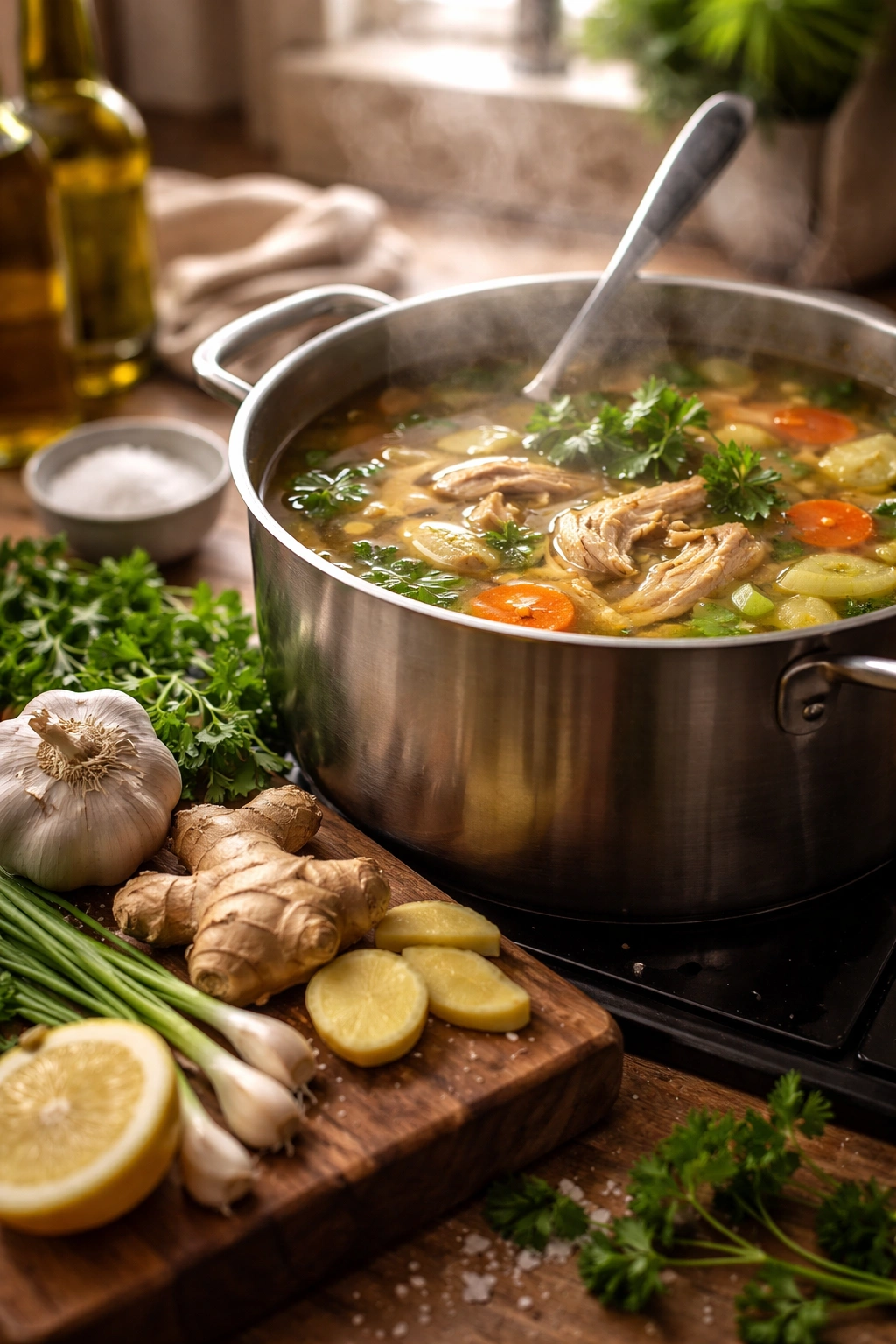
The quality of your broth truly is the foundation of this soup. If you have homemade chicken broth or stock in the freezer, this is absolutely the time to use it. Homemade broth will be noticeably richer and more collagen-filled than store-bought. But if you’re using store-bought—which is perfectly fine—choose low-sodium or unsalted varieties, and read the ingredient list. You’re looking for broth made from chicken, water, and vegetables, not something with hydrolyzed yeast, soy lecithin, or a dozen other additives. Bone broth, often labeled as such, is an excellent choice because it’s specifically designed to be slow-cooked and extractive, pulling more collagen and gelatin into the liquid.
Fresh ingredients make a measurable difference here. Fresh garlic, fresh ginger, and fresh herbs contain volatile oils that dried versions simply cannot replicate. If you absolutely cannot find fresh turmeric, ground turmeric works—use one-third the amount—but fresh turmeric’s milder flavor and texture are worth seeking out at a well-stocked grocery store or natural market.
Don’t skip the step of mincing the garlic finely. Large garlic chunks become hard and unpleasant in the finished soup; finely minced garlic distributes throughout the broth and mellows as it cooks. Same principle applies to ginger and turmeric—grate them fine so they distribute evenly rather than creating pockets of overpowering flavor or unpleasant texture.
When you add the broth to the aromatics, add it slowly and stir as you go. This helps the spices and aromatics blend into the liquid evenly rather than clumping or settling at the bottom of the pot. It’s a small technique that produces a noticeably more cohesive flavor.
If you’re using raw chicken, don’t overcook it. Chicken breast, especially, goes from perfectly cooked to stringy and tough very quickly in simmering broth. Aim for the lower end of the cooking time—12 to 13 minutes—and use a meat thermometer rather than guessing. Chicken thighs are more forgiving because the higher fat content helps them stay moist even if slightly overcooked.
The lemon juice at the end is not optional; it’s transformative. It brightens all the warm spices and adds a subtle acidity that makes the soup taste fresher and more alive. Freshly squeezed juice is infinitely better than bottled.
If you’re sick and the thought of cooking feels overwhelming, you can do some or all of this the day before and reheat gently. The flavors actually deepen overnight as the spices and herbs continue to infuse into the broth. Just store it in an airtight container in the refrigerator, and reheat gently over medium-low heat on the stovetop, stirring occasionally, just until heated through. Don’t let it boil aggressively, as that can affect the delicate flavor balance.
Variations and Adaptations for Different Needs
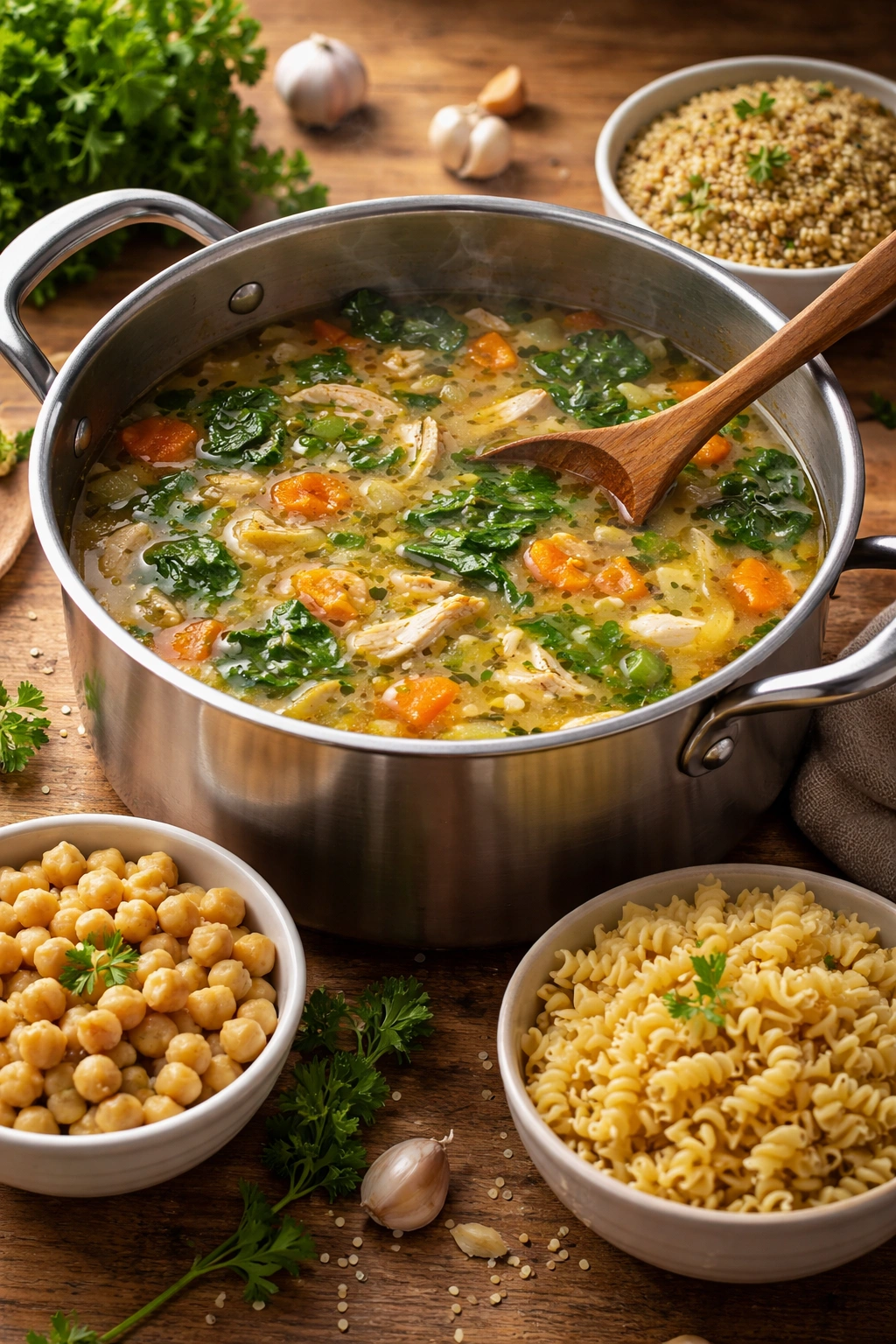
For a Noodle Version: If you or someone else prefers noodles to a brothier soup, cook small pasta (ditalini, orzo, or egg noodles) separately in salted boiling water until just tender, then add it to your bowl at serving time. This prevents the noodles from absorbing too much broth and making the soup starchy and thick. The cooking time for this soup stays exactly the same.
For a Vegetarian or Vegan Version: Omit the chicken and add an extra cup of broth or water to compensate. Add one can of drained chickpeas or white beans in the last 5 minutes of cooking for protein and heartiness. Use vegetable broth instead of chicken broth. Everything else stays exactly the same. The soup will be lighter but still deeply nourishing and warming.
For a Gluten-Free Version: This soup is naturally gluten-free as written (unless you add pasta, in which case use gluten-free pasta). If you want to add grains for substance, cook quinoa, rice, or gluten-free couscous separately and add to the soup at serving time. This prevents the grains from absorbing too much broth and also allows people with different dietary needs to customize their portions.
For Extra Vegetables: If you want to add more vegetables—spinach, kale, mushrooms, green beans, zucchini—chop them finely and add them in the last 5 to 7 minutes of cooking. You don’t want to overcook delicate vegetables. Leafy greens like spinach or kale can go in at the very end and will wilt from the residual heat.
For More Spice Heat: If you like spicy food and you’re well enough to handle heat, add a pinch of cayenne pepper or red pepper flakes with the other spices. The slight heat can actually help open sinuses and improve circulation. Start with ⅛ teaspoon and adjust to your preference.
For Deeper Flavor: If you want a more complex, deeper soup, add a small piece of kombu (dried kelp) to the broth while it simmers. Kombu adds umami depth and minerals. Remove it before serving. You could also add a splash of fish sauce or tamari for additional umami, though neither is necessary—the soup is already flavorful without them.
Using Rotisserie Chicken: Rotisserie chicken is a legitimate, time-saving option when you’re under the weather. A standard rotisserie chicken yields about 2 to 2½ cups of meat. Simply shred it and add it at the end of cooking, letting it warm through for a minute or two. The soup will be ready in even less time since the chicken doesn’t need cooking.
How to Store, Reheat, and Freeze Your Soup
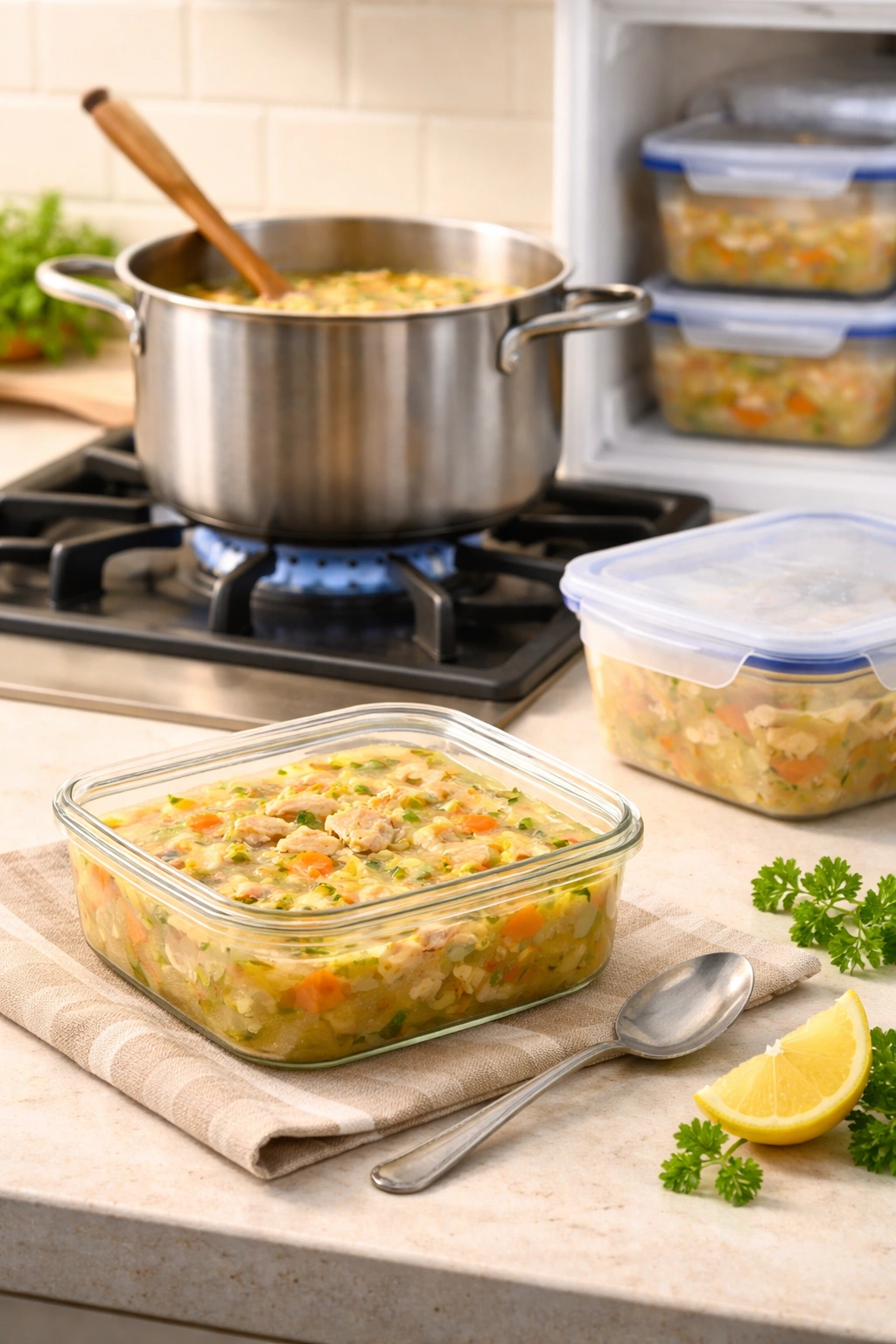
This soup keeps exceptionally well, which is part of what makes it such a valuable recipe. At Room Temperature: If you leave it on the counter, consume it within 1 to 2 hours. If it’s been sitting longer than that, discard it rather than risk foodborne illness when your immune system is already compromised.
In the Refrigerator: Transfer the cooled soup to airtight glass or plastic containers and store for up to 4 to 5 days. The flavors actually continue to develop and deepen as it sits, so it often tastes even better on day two or three than it did fresh. Reheat gently over medium-low heat on the stovetop, stirring occasionally, until heated through. You can also reheat individual portions in the microwave, stirring every 30 seconds to ensure even heating. Add a splash of extra broth if it seems thick—the chicken will have absorbed some liquid as it sits.
In the Freezer: This soup freezes beautifully for up to 2 to 3 months. Let it cool completely to room temperature, then transfer it to freezer-safe containers (glass or plastic) or into individual portions in freezer bags or ice cube trays for easy thawing. Freeze it in portions that match how much you’ll likely eat at once—quart-sized containers or individual serving portions are ideal. Leave about an inch of headspace if using containers, as the soup will expand slightly as it freezes.
To Thaw and Reheat from Frozen: The gentlest method is to thaw overnight in the refrigerator, then reheat as you would thawed soup. If you’re in a hurry, you can reheat directly from frozen over low heat, stirring frequently and breaking up the frozen soup as it warms. This takes longer but works perfectly well. Alternatively, if you froze the soup in individual portions or ice cube trays, you can add the frozen portions directly to a pot of simmering broth and cook until heated through.
Make-Ahead Strategy: You can prepare the entire soup up to 2 days in advance. Refrigerate it in an airtight container, and simply reheat when you need it. The flavors will be mature and delicious. Some people prefer to make the soup without the lemon juice, refrigerate it, and add fresh lemon juice when reheating and serving for maximum brightness.
Serving Suggestions and Pairings
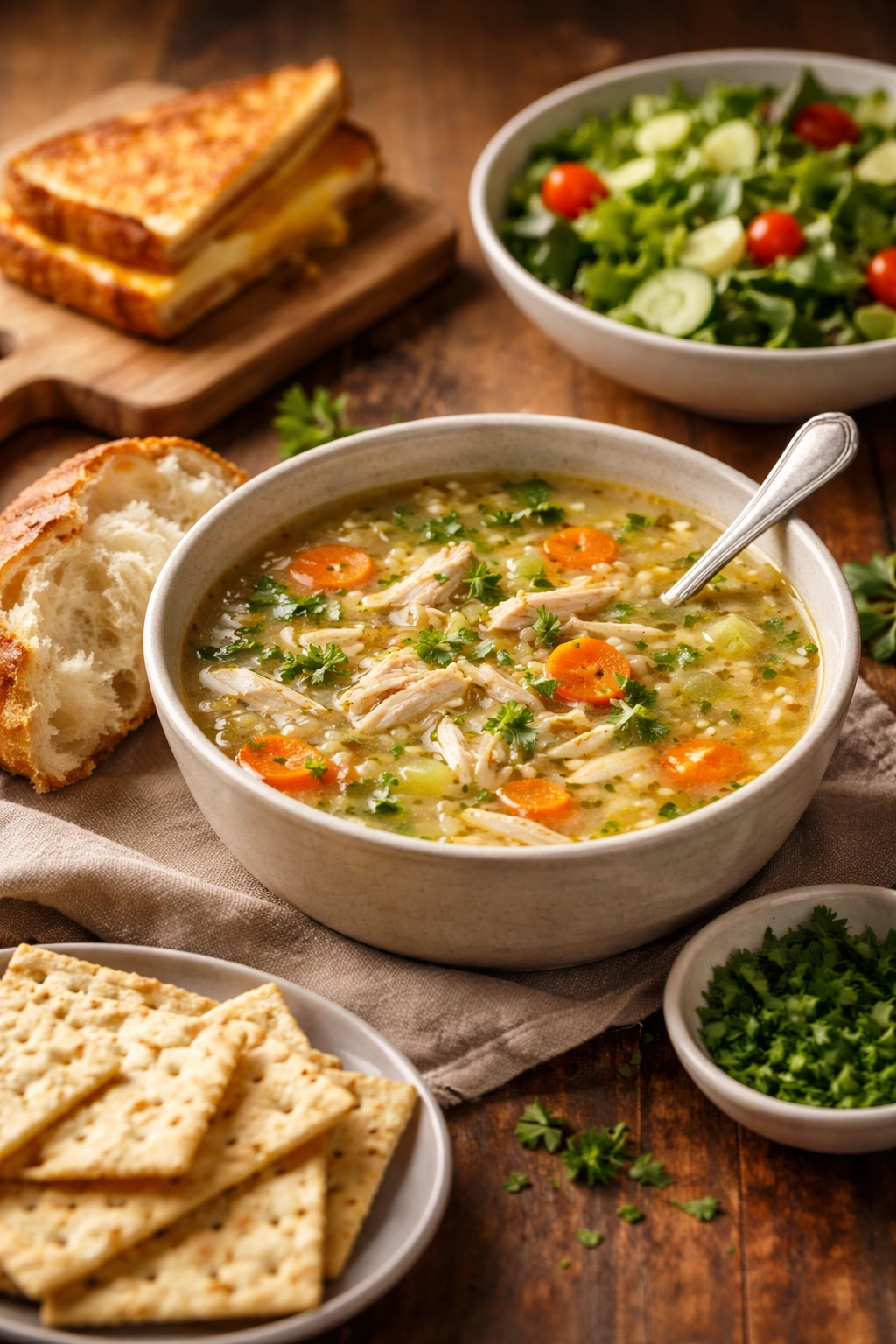
On its own, this soup is a complete, nourishing meal. But you might want to pair it with something simple and comforting. A piece of crusty bread—whether that’s a baguette, focaccia, or just regular white bread—is the classic pairing. Dip it in the broth or tear it into the soup itself. If you want something lighter, a few whole grain crackers are lovely alongside a bowl of soup.
If you’re feeling slightly better and want more substance, a simple salad with a light vinaigrette would provide freshness and additional vegetables. A grilled cheese sandwich, made with good bread and quality cheese, pairs beautifully with a warm bowl of soup. If you’re vegetarian or vegan, a simple wrap with hummus and vegetables makes a complete meal.
For presentation, even when you’re serving this to someone who’s sick (including yourself), garnish with fresh chives or parsley if you have it. A sprinkle of fresh herbs transforms the soup from functional to felt-like-I-was-cared-for, which matters psychologically when someone’s under the weather.
Serve the soup in mugs if it’s more appealing—something about drinking healing broth from a mug feels particularly soothing when you’re ill. Set out a small cruet of extra lemon juice so people can add more brightness if they want it. Have extra black pepper available for anyone who wants to add heat.
Common Questions About Making and Serving This Soup

Can I make this without fresh ginger and turmeric if I don’t have them? Absolutely. Use ground ginger and ground turmeric instead—use one-third the amount called for in the recipe, so ⅓ tablespoon ground ginger and ⅓ tablespoon ground turmeric. The soup will be slightly less vibrant in flavor and aroma, but it will still be delicious and nourishing. The anti-inflammatory compounds are present in ground spices as well; they’re just more concentrated, which is why you use less.
What if I don’t like turmeric? You can omit it entirely. The soup will be lighter and less intensely spiced, but still flavorful and warming. You could replace it with an additional teaspoon of ginger if you like, or simply omit it and rely on the garlic, herbs, and the brightness of the lemon.
Can I use chicken thighs instead of breast? Yes, not just “can” but absolutely should if you prefer. Chicken thighs have more fat and connective tissue, which means they’re less likely to become stringy and tough if you accidentally overcook them slightly. The soup will have a richer mouthfeel and more savory flavor. Use the same amount—1 pound—and cook for the same time (12 to 15 minutes) or until they reach 165°F on a meat thermometer.
What if my broth is too salty? If you taste the finished soup and the salt level is overwhelming, add a splash of unsalted broth or water, stir, and taste again. You can also add a small peeled potato and simmer it for 5 minutes; the potato will absorb excess salt, and then you remove it before serving. (This is an old kitchen trick that actually works.)
Can I use canned broth instead of homemade or carton broth? Canned broth works, though it sometimes has a tinny taste. Choose a high-quality brand with short ingredient lists, and taste the finished soup carefully—you may need less added salt than the recipe calls for.
How do I know when the chicken is fully cooked? Use a meat thermometer—it’s the most reliable method. Chicken is safely cooked at 165°F (74°C). Alternatively, cut into the thickest piece; there should be absolutely no pink remaining and the juices should run clear. When in doubt, use the thermometer.
Is this soup safe to eat while pregnant? Yes, with one caveat: make sure all ingredients are fresh and that you cook the chicken to a safe temperature (165°F). If you’re avoiding raw sprouts or unpasteurized products for any reason, this soup is safe because everything is cooked. However, always discuss dietary choices with your healthcare provider.
Can I feed this to young children? Yes, this soup is excellent for children. Dice the vegetables into very small pieces, and ensure the chicken is shredded finely so there’s no choking hazard. You might reduce the ginger and turmeric slightly if the child is sensitive to strong spice flavors, but the soup is generally mild enough for kids.
Final Thoughts
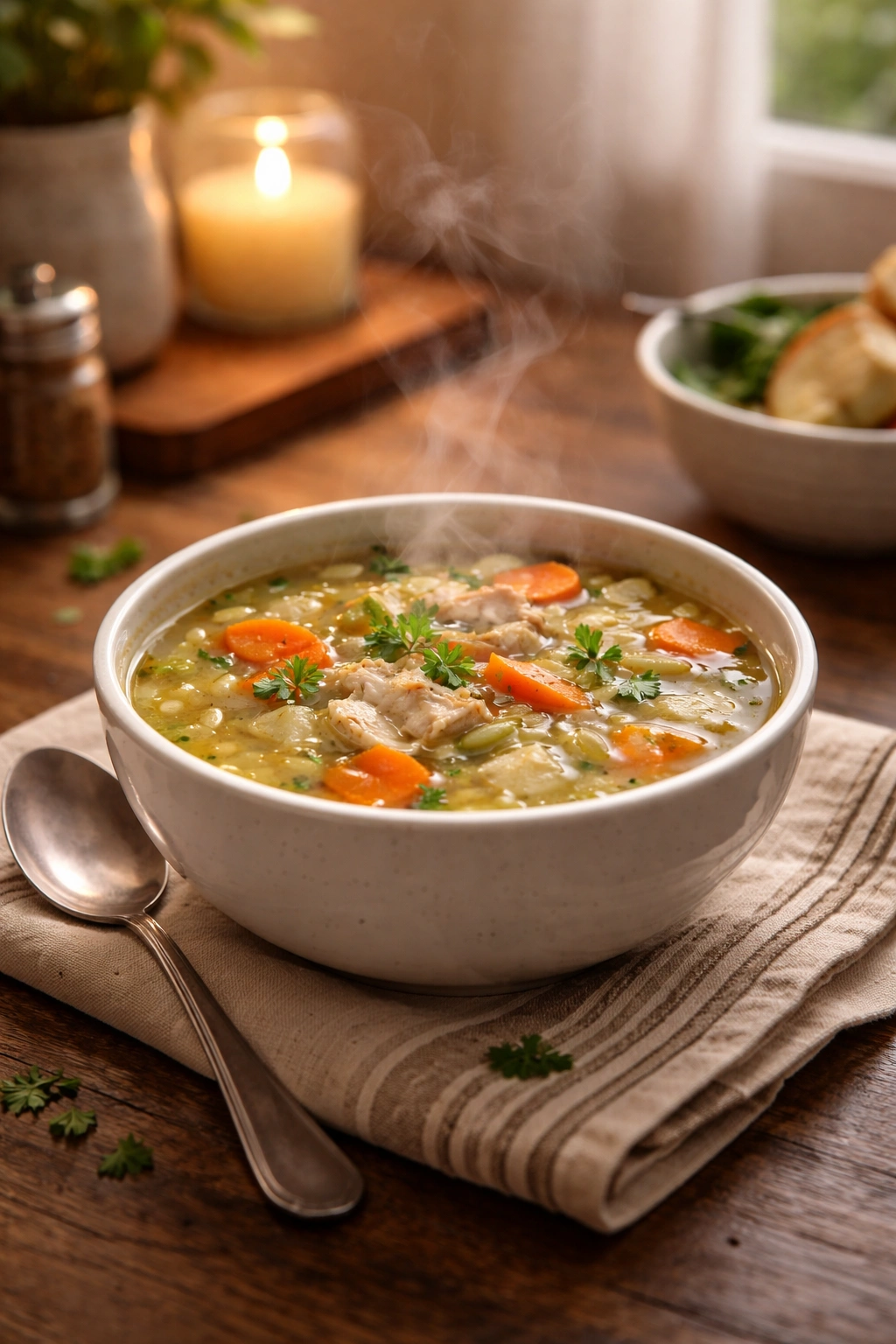
Easy chicken soup for when you’re feeling sick isn’t just a comfort—it’s an investment in your recovery. Every ingredient in this recipe serves a purpose, whether that’s providing nutrition, fighting inflammation, supporting digestion, or simply making you feel genuinely cared for when you’re miserable. The beauty of this particular version is that it doesn’t demand energy you don’t have. It comes together quickly, fills your home with an aroma that says “someone loves you,” and delivers real, measurable support to your struggling body.
Make this soup before you get sick if you can, and freeze it in portions. That way, the moment you feel that first tickle in your throat or notice you’re running a fever, you can simply thaw and reheat without thinking. But if you’re already sick and making it now, know that this effort—even though it feels small—is significant. You’re choosing real nutrition, therapeutic ingredients, and genuine care over convenience foods and shortcuts.
This soup freezes beautifully, improves with time, reheats perfectly, and tastes like it took hours when it really took less than an hour of mostly passive cooking. Keep it in your regular rotation, not just for illness but for any day when you want something deeply nourishing and unquestionably comforting. Your future sick self will thank you, and your present healthy self will appreciate having one less decision to make on a difficult day.
