



The beauty of a truly great Greek salad is its honest simplicity—crisp vegetables, creamy feta, briny olives, and a balance of olive oil and lemon that tastes like the Mediterranean in a bowl. Yet somehow, most versions fall flat. They’re watery, the dressing separates and pools at the bottom, the feta gets lost, or the whole thing turns soggy within minutes. The secret isn’t complicated, but it does require understanding a few deliberate choices about timing, ingredient quality, and construction.
This version works equally well as a side dish that supports grilled fish or roasted chicken, or as a satisfying lunch or dinner all on its own. The difference between those two roles comes down to knowing how to adjust the proportions and what to pair it with—something I’ll walk you through completely. You’ll also learn exactly why a Greek salad made this way stays crisp and fresh-tasting even if you prepare it several hours in advance, and how to troubleshoot the most common reasons home cooks end up with a wilted mess instead of a vibrant, crisp dish.
I’ve made this salad hundreds of times, and these are the techniques and ingredient choices that matter most. They’re not complicated, but they’re specific—and they’re the difference between an average salad and one that people ask you to make again.
Why This Greek Salad Recipe Works Better Than Others
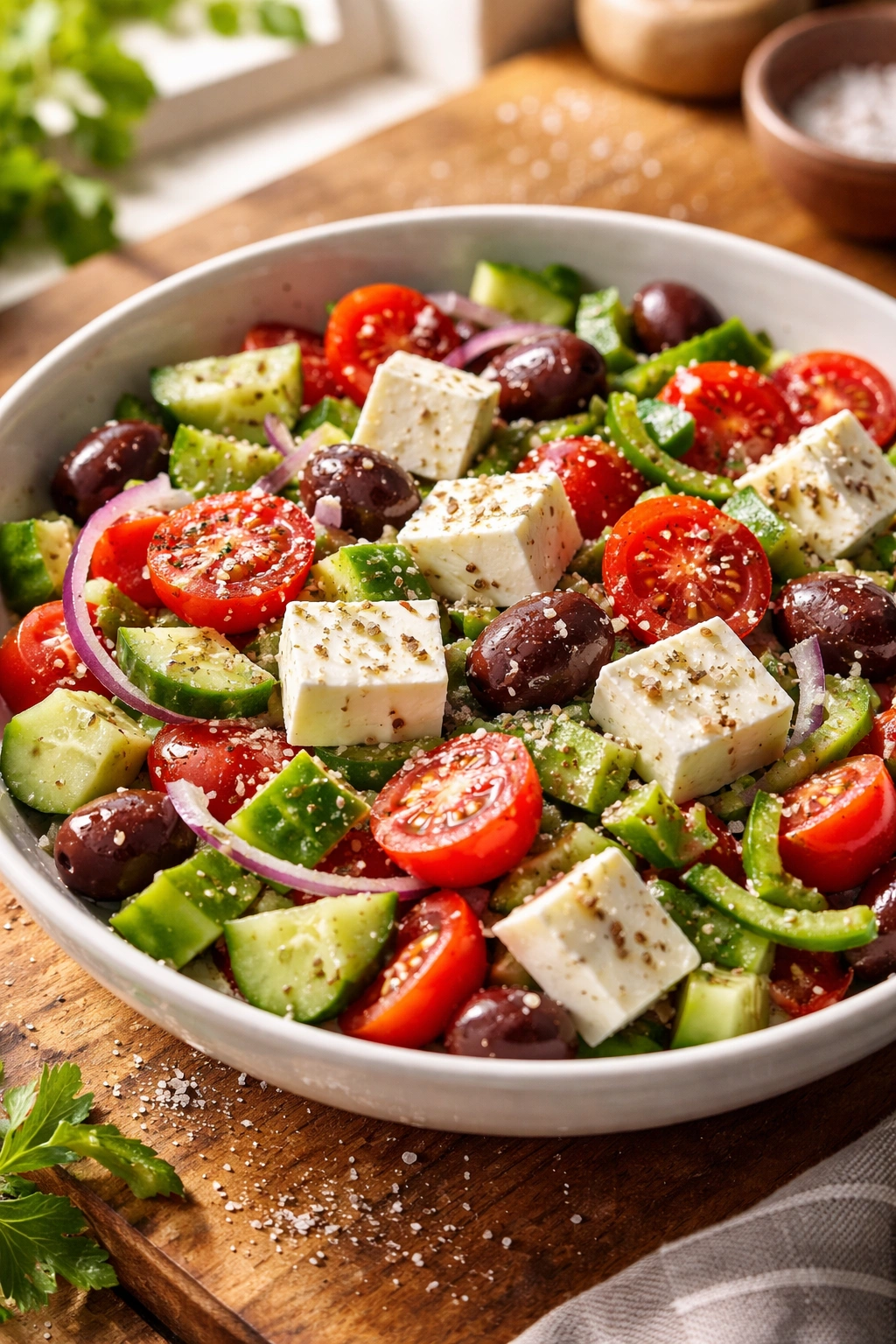
Most home cooks undersalt their Greek salads and then wonder why they taste flat and one-dimensional. The problem is that they’re thinking about salt the way they do for cooking pasta or seasoning a soup—but a salad works differently. Because there’s no cooking process to distribute salt and develop flavor, and because the vegetables are raw and dense, you need both more salt than feels intuitive and a longer time for it to penetrate and dissolve into the vegetables’ cell structure.
The second critical difference is when you salt the salad. If you salt the vegetables and then immediately add the dressing, they release their liquid into the bottom of the bowl before they’ve had time to absorb the salt. But if you salt the vegetables 15 to 20 minutes before adding the dressing, something different happens—the salt draws moisture out of the vegetables through osmosis, but that moisture becomes seasoned and reabsorbs back into them, seasoning them from the inside out rather than just sitting on the surface.
This timing also gives the vegetables structure and firmness. It might sound counterintuitive that salting vegetables ahead of time makes them crisper, not softer, but that’s exactly what happens when you understand the mechanism. The salt initially draws out moisture, but then that moisture reabsorbs, and in the process, the cell walls strengthen. This is why chefs salt cucumbers and tomatoes ahead of time for salads—it’s deliberate, not a mistake.
The third difference is the ratio and type of olives. Greek salads often include too many olives in proportion to other vegetables, or they use mild black olives that don’t add much flavor. Kalamata olives are distinctly briny and complex, and they should be present enough to be tasted in every bite without overwhelming the other elements. The right proportion is about one olive for every three bites of salad, not a handful of olives in a small amount of vegetables.
The Secret to Authentic Greek Salad Flavor
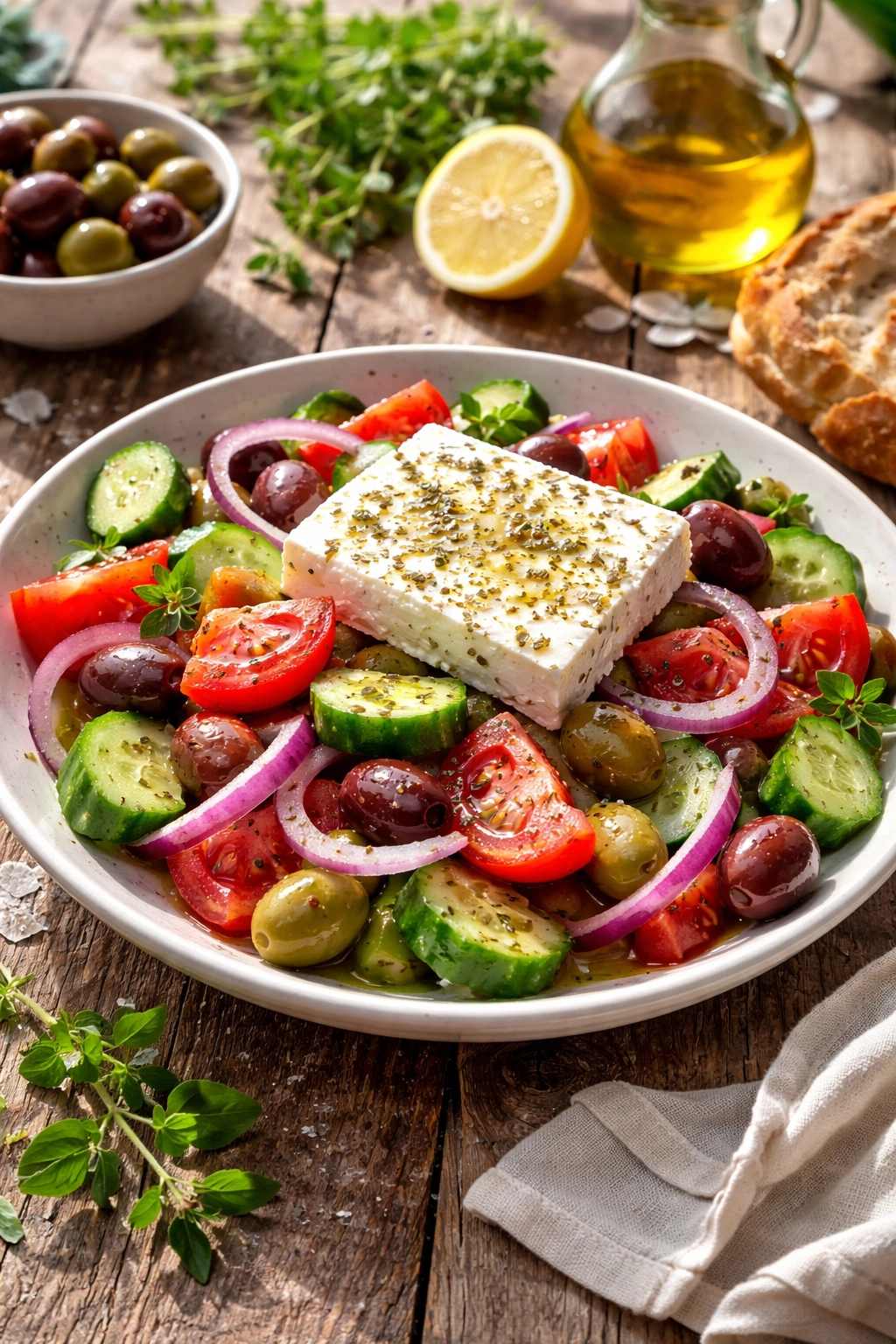
Authentic Greek salad—the kind served in tavernas on Greek islands—doesn’t include lettuce. It’s made with tomatoes, cucumbers, onions, olives, feta, and oregano dressed with olive oil and a small amount of vinegar or lemon. The vegetables are chunky, not shredded. The feta is crumbled or cut into thick pieces, not shredded or crumbled fine. There’s no fancy composed plating—it’s rustic and generous.
This matters because the texture of the ingredients and how they’re cut directly affects how they hold together, absorb dressing, and taste. When you cut vegetables into large chunks, they have more structural integrity and stay firm longer. When you use thick pieces of feta instead of fine crumbles, each bite delivers a satisfying amount of creamy saltiness. When you use whole fresh oregano leaves or dried oregano that you’ve rubbed between your palms (which releases the oils), the flavor is bright and herbaceous, not dusty and stale.
The dressing itself is equally important. A proper Greek salad dressing is not an emulsion. It’s olive oil and acid in a specific ratio, with oregano, salt, and pepper—that’s it. The ratio matters: you want about three parts olive oil to one part acid (lemon juice or red wine vinegar), which creates a dressing that coats the vegetables without making them soggy. If you use equal parts oil and acid, the salad becomes too wet and falls apart quickly.
Many recipes call for 1/4 cup of each, which is actually fairly balanced and works well. But if you’re making a larger batch or serving more people, scaling that ratio is important. Too much acid overpowers the vegetables and makes them taste sharp; too little oil means the dressing doesn’t coat properly and the salad feels dry.
Choosing and Preparing Your Vegetables
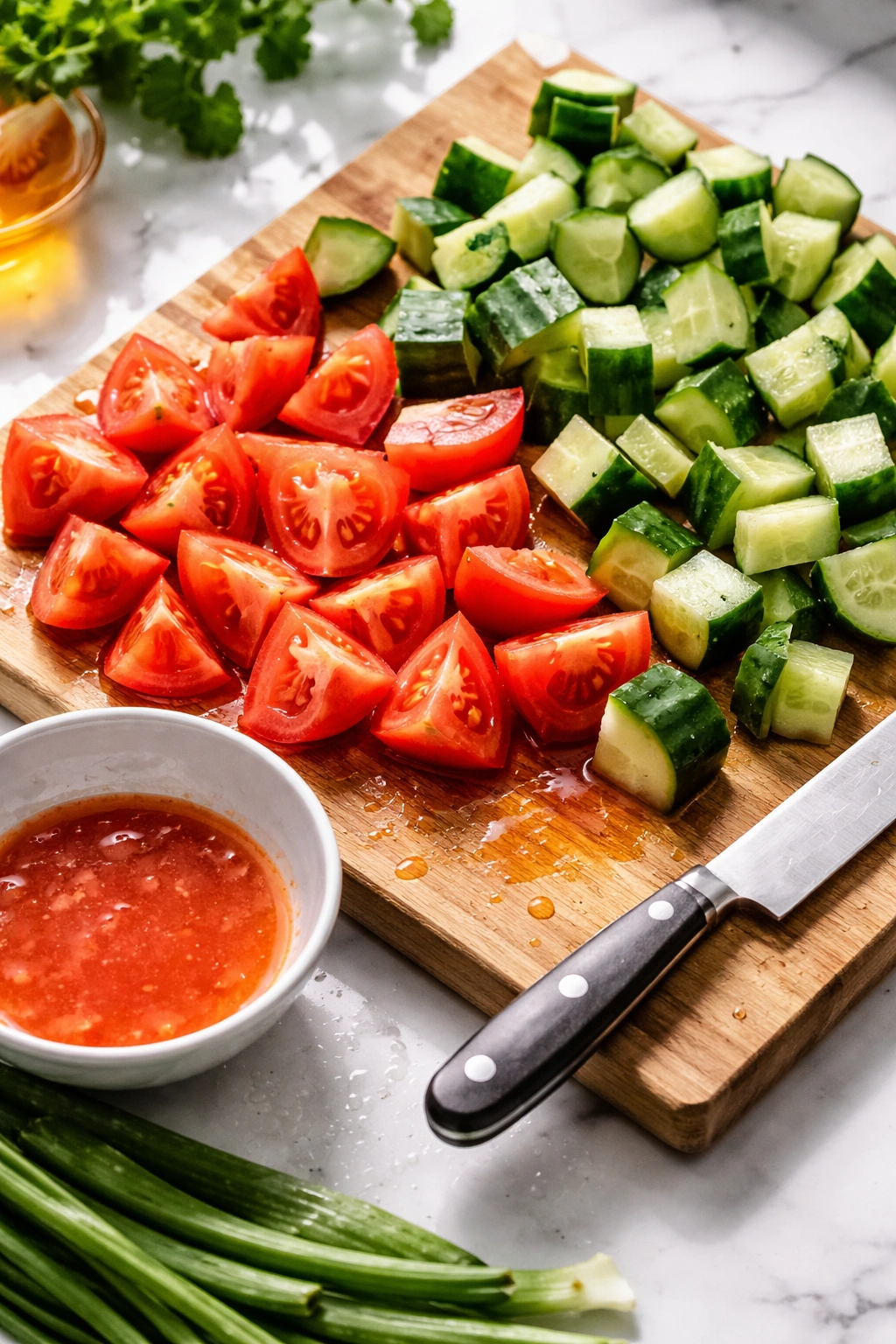
The vegetables in a Greek salad should be ripe, fresh, and—this is crucial—not watery varieties. Choose tomatoes that are firm and genuinely ripe, not the pale pink supermarket tomatoes that taste like nothing. If you’re buying tomatoes out of season, a good alternative is canned San Marzano tomatoes (drained very well, and patted dry with paper towels), though nothing quite compares to fresh, in-season tomatoes.
When you cut the tomatoes, cut them into roughly 1-inch chunks rather than slices or tiny dice. You want to see the shape of the tomato in the salad. Cut them over a small bowl and reserve any juices that collect—you can add a small amount of this back to the dressing if the salad seems dry, but most of it should be drained off so the salad doesn’t become waterlogged. Tomato juice itself isn’t salty and seasoned, so unlike the briny liquid from olives, it doesn’t add flavor—it just adds water.
Cucumbers should be firm and crisp. English cucumbers (the long, thin ones often wrapped in plastic) are preferable to the waxy American slicing cucumbers because they have smaller seeds and are less watery. Cut them into 1-inch chunks or half-moons, depending on your preference, and avoid the watery seed-filled center if your cucumber seems particularly liquidy. Some people scoop out the seed core entirely before cutting, which is a smart move if you’re concerned about excess moisture.
Red onions add a sharp, slightly sweet bite. Thin slice them rather than chunking them—they distribute better and become less harsh when they’re in thinner pieces. You can use a box grater’s thin-slicing side or simply slice them paper-thin by hand. The thinness matters because onion flavor is aggressive, and thin slices integrate better into the salad than thick chunks.
The Perfect Creamy Feta Cheese Selection
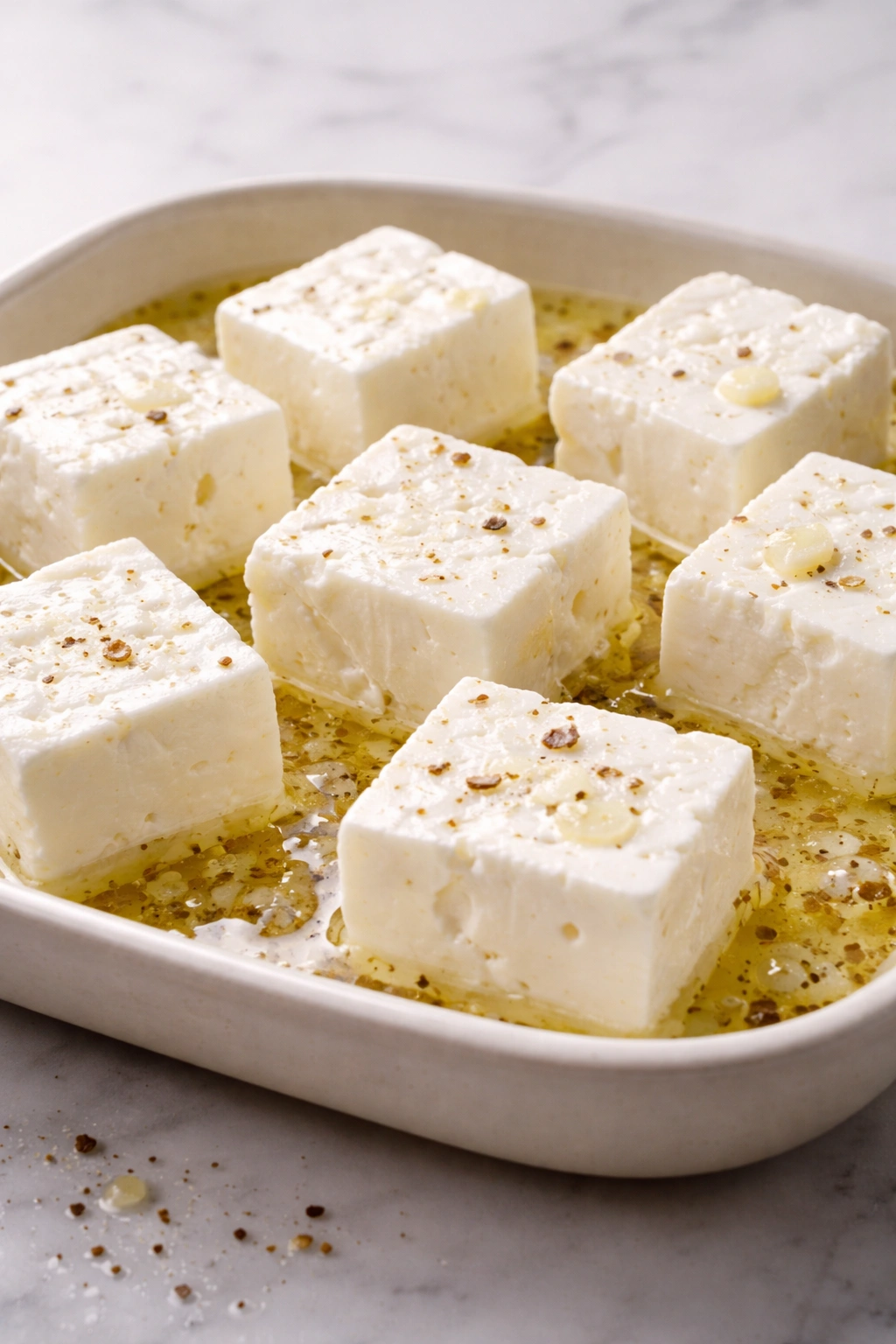
Not all feta is created equal, and this is one area where ingredient quality genuinely matters. Feta made from sheep’s milk has a tangier, more complex flavor than feta made from cow’s milk. Traditional Greek feta (look for “Feta PDO” or “Protected Designation of Origin”) has a creamier texture and a more interesting flavor profile than some of the crumbly domestic versions.
The feta should come packaged in brine (a salty liquid), and that brine keeps it fresh and flavorful. Avoid the pre-crumbled feta sold in plastic containers—it’s been treated to resist clumping, which means it doesn’t have the creamy, slightly moist texture of properly made feta. Buy a block and crumble it yourself (or cut it into roughly 1-inch cubes, which is actually more authentic than crumbles).
The amount of feta in a proper Greek salad is generous—about 1 cup of crumbled feta or 8 ounces of a block, cut into thick pieces, for a salad that serves 4 to 6 people as a side or 2 to 3 people as a main. That’s roughly 2 ounces of feta per person, which is enough to taste it in every bite without it becoming the dominant ingredient. Less feta than this, and the salad loses its identity and richness; more than this, and it starts to feel heavy and one-note.
Don’t rinse the feta or drain its brine before adding it to the salad—that brine contains salt and flavor. Simply remove it from the container and crumble or cube it directly over the salad just before serving.
Making the Best Kalamata Olives Choice
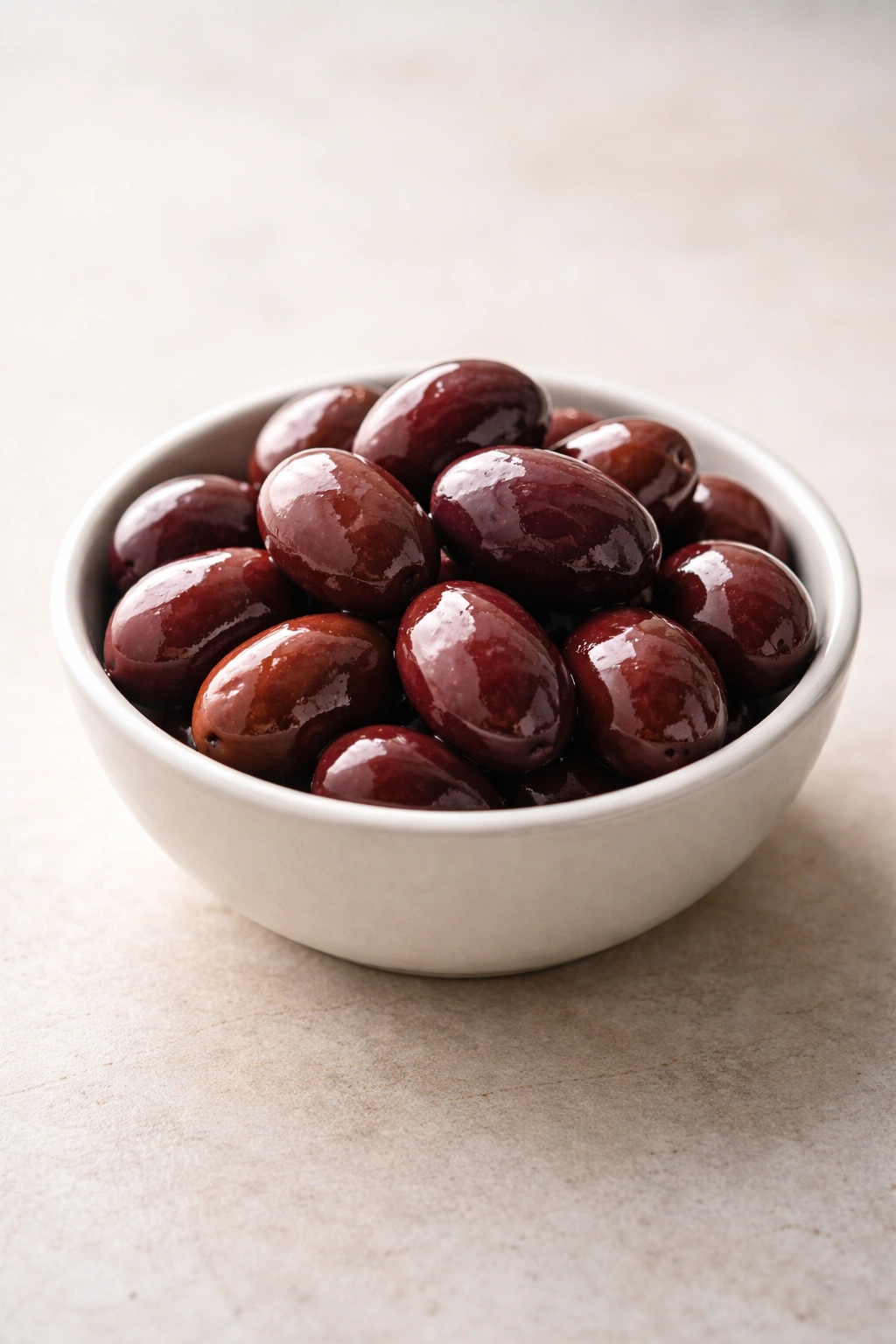
Kalamata olives are brined in vinegar and salt, which makes them deeply savory and slightly funky in the best way. Buy them from a bulk bin if possible, where you can taste them first—they should be meaty, not mushy, and the brine should smell like wine vinegar and salt, not fishy or off. If you’re buying them from a jar or can, choose a brand that lists simply “kalamata olives, salt, water, vinegar” rather than one with added preservatives or citric acid.
The pits are usually already removed, but check before adding them to the salad—nothing is worse than biting into an olive pit unexpectedly. If you’re using whole pitted olives, you can leave them whole or halve them for easier eating. Count on about 1/2 cup (or roughly 12 to 15 olives) for a salad serving 4 to 6 people.
Some recipes use a mix of olives—perhaps half kalamata and half green Castelvetrano olives, which are buttery and milder. This works, but if you use only kalamata, the salad’s flavor profile is cleaner and more defined. Save the olive mix for when you want a more complex, layered flavor.
Creating Your Own Greek Dressing

A Greek salad dressing made from scratch takes maybe two minutes. It’s just olive oil, lemon juice or red wine vinegar, oregano, salt, and pepper. The dressing isn’t meant to be whisked into an emulsion—it stays separate, which means the oil coats the vegetables and the acid and seasonings stay concentrated in small amounts throughout.
Use a good olive oil, something you’d actually want to taste on its own. Extra-virgin olive oil has more flavor and a fruity, peppery complexity. A standard olive oil works, but it’s more neutral. Avoid “light” olive oil or oils that have been sitting in your cabinet for years—the flavor deteriorates and becomes harsh.
For the acid, lemon juice is more traditional for Greek salad. Fresh lemon juice tastes brighter and less aggressive than bottled. If you use red wine vinegar (which some Greek salads do include), use a good-quality brand—cheap vinegar tastes sharp and cheap. You can also use a combination of both lemon juice and a small amount of vinegar for additional depth.
Oregano is essential. Use fresh oregano if you have it (the leaves taste milder and more herbaceous than dried), or dried oregano rubbed between your palms right before adding it to release the oils. Dried oregano that’s been sitting in your cabinet for years is stale and dusty—if you’re unsure about yours, replace it. The flavor should be bright and slightly minty, not musty.
The Timing Secret That Keeps It Fresh and Crisp
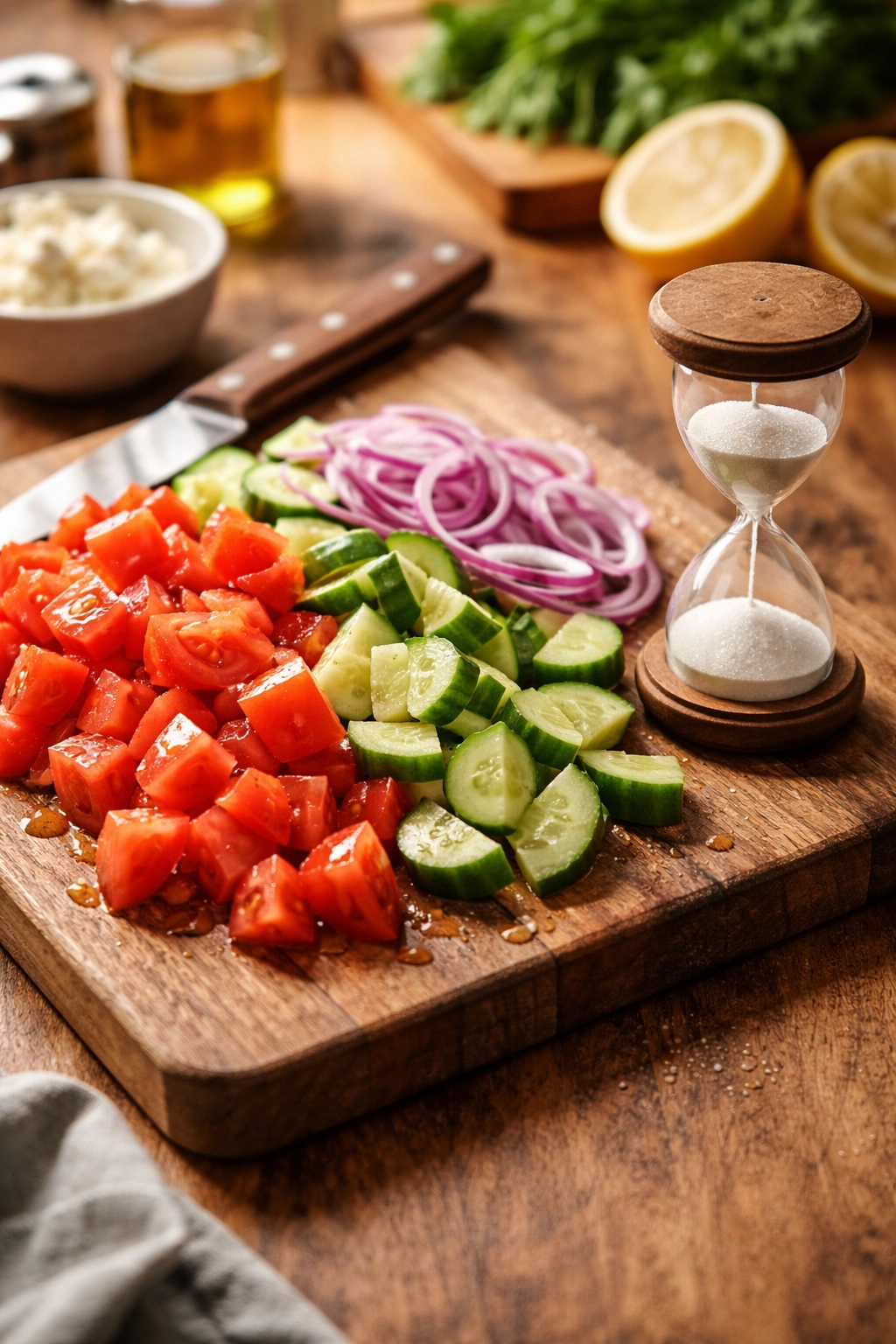
The most important technique for a Greek salad that stays crisp is understanding the difference between preparing the ingredients and assembling the finished salad. You can prepare the vegetables and salt them up to 6 hours ahead. You can make the dressing hours in advance. But the final assembly—adding the dressing and mixing everything together—should happen no more than 15 to 20 minutes before serving.
Here’s why: after the vegetables are salted and have sat for 15 to 20 minutes, they’ve released some liquid and absorbed the salt back in. If you add the dressing at this point, you’re adding fat to vegetables that are at their peak firmness. The oil coats them and slows down further moisture loss, keeping them crisp longer.
But if you mix everything together and let it sit for hours, the vegetables continue to release liquid, and that liquid dilutes the dressing, which pools at the bottom. The vegetables wilt, and the salad becomes soggy and sad.
So your timeline should look like this: prepare the vegetables 30 to 45 minutes before you want to eat, salt them generously, let them sit for 15 to 20 minutes, then make the dressing (or retrieve it from the fridge if you made it earlier). Mix everything together 15 to 20 minutes before serving.
Serving and Timing Information
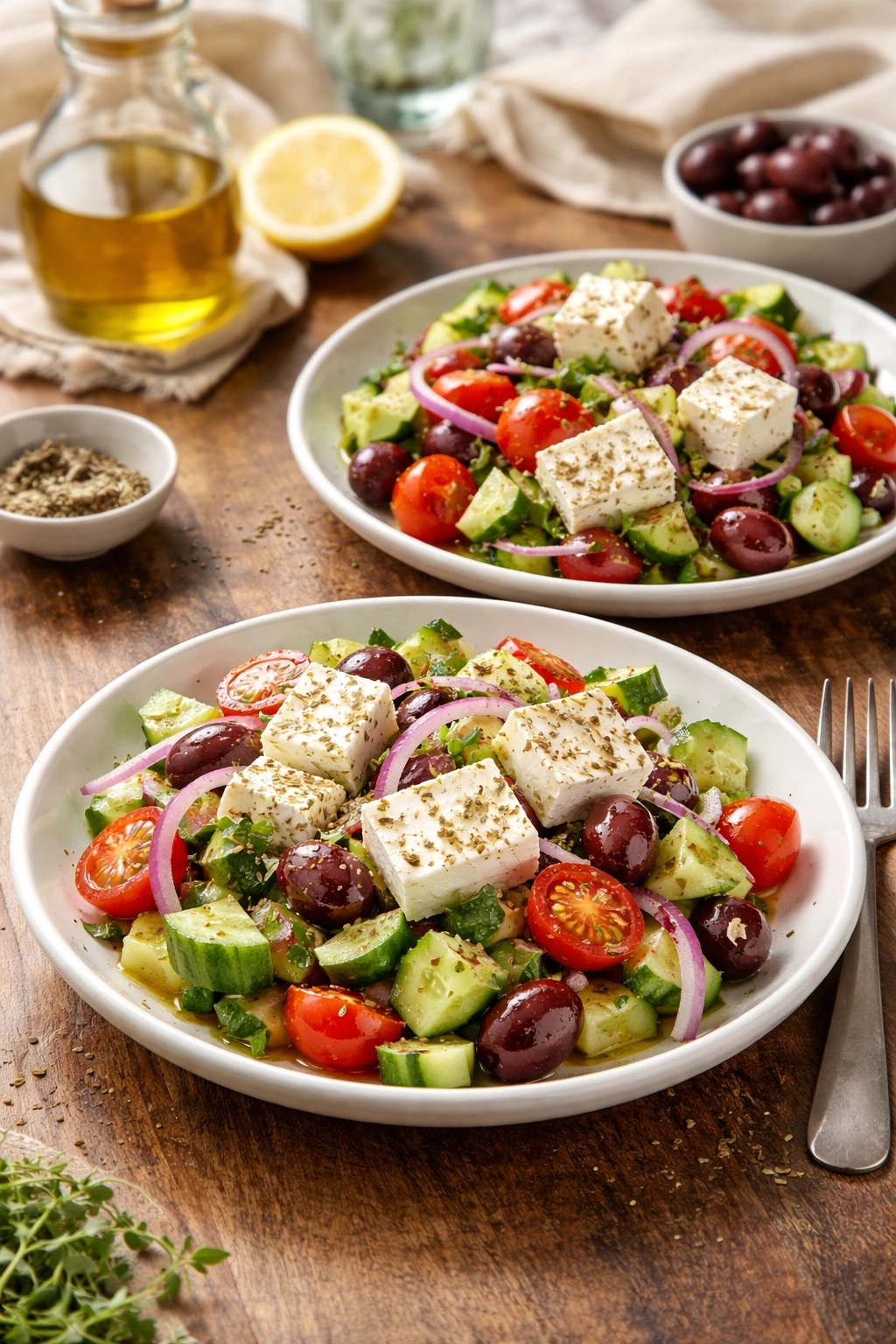
Yield: Serves 4 to 6 as a side dish | Serves 2 to 3 as a main course
Prep Time: 20 minutes
Cook Time: 0 minutes (no cooking required)
Total Time: 20 minutes plus 15 minutes resting time before serving (total 35 minutes from start to table)
Difficulty: Beginner — there’s no cooking involved, and the steps are straightforward. The only skill required is knife work, and the vegetable cuts don’t need to be perfect.
Complete Ingredient List
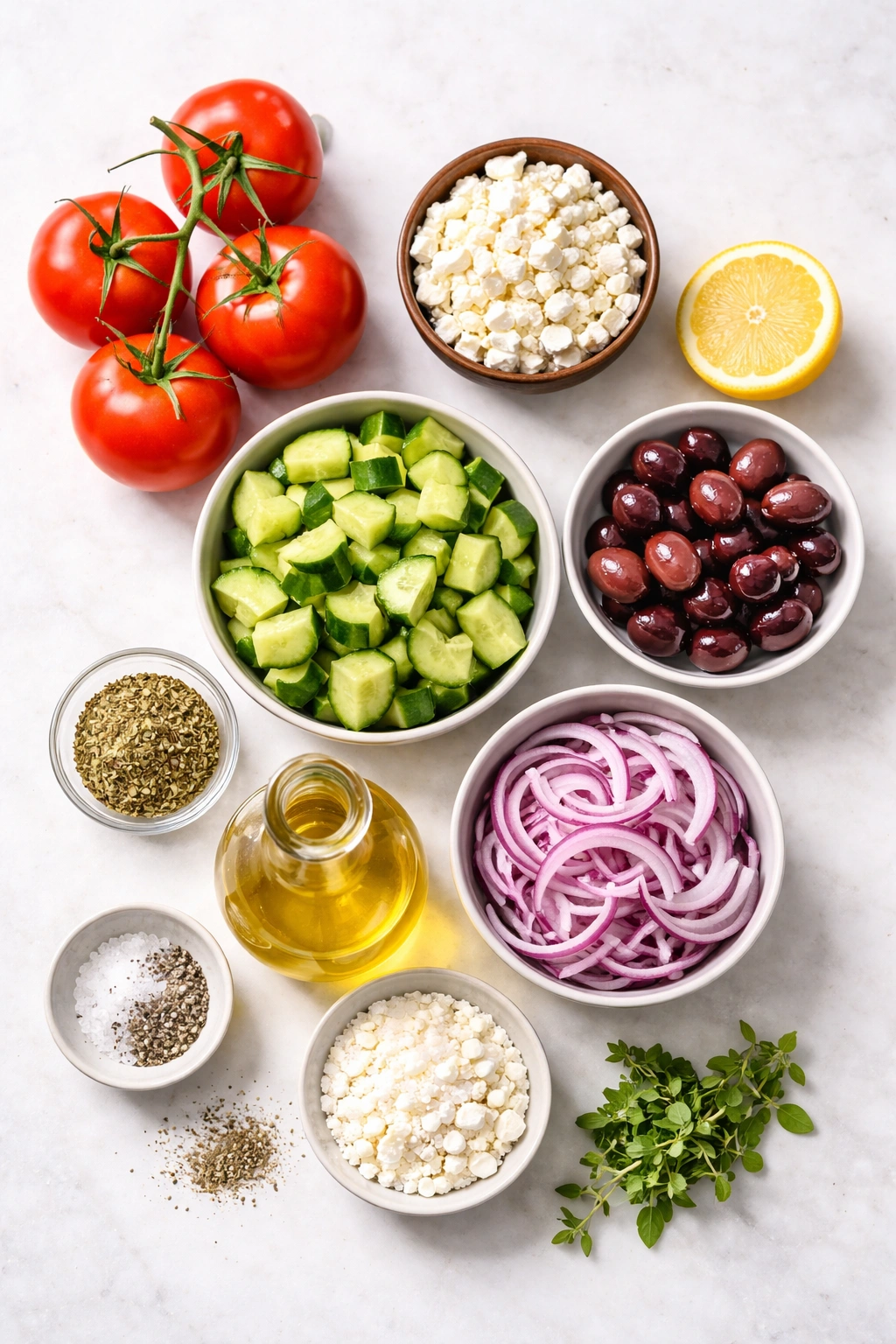
For the Salad:
- 1½ pounds ripe tomatoes (about 4 medium), cut into 1-inch chunks
- 1 medium English cucumber (about 12 inches long), cut into 1-inch chunks or half-moons
- ½ medium red onion, thinly sliced into half-moons
- 1½ cups kalamata olives, pitted (about 12 to 15 large olives)
- 8 ounces feta cheese, crumbled or cut into ¾-inch cubes (preferably traditional Greek feta in brine)
- 1½ teaspoons fine sea salt (for salting vegetables before dressing)
- ¼ teaspoon freshly ground black pepper
For the Dressing:
- ¼ cup extra-virgin olive oil
- 3 tablespoons fresh lemon juice (from about 1 large lemon, or slightly less fresh juice is fresher than bottled)
- ½ teaspoon dried oregano, rubbed between your palms, or 1½ teaspoons fresh oregano leaves
- ¼ teaspoon fine sea salt
- ⅛ teaspoon freshly ground black pepper (or a small pinch)
Optional Add-ins (for a Heartier Main Course Version):
- 1 can (15 ounces) chickpeas, drained and rinsed
- 2 cups cooked, cooled grains (farro, quinoa, or wheat berries)
- 8 to 10 ounces grilled chicken breast, cut into chunks
- 1 can (5 ounces) tuna in olive oil, drained
Step-by-Step Instructions
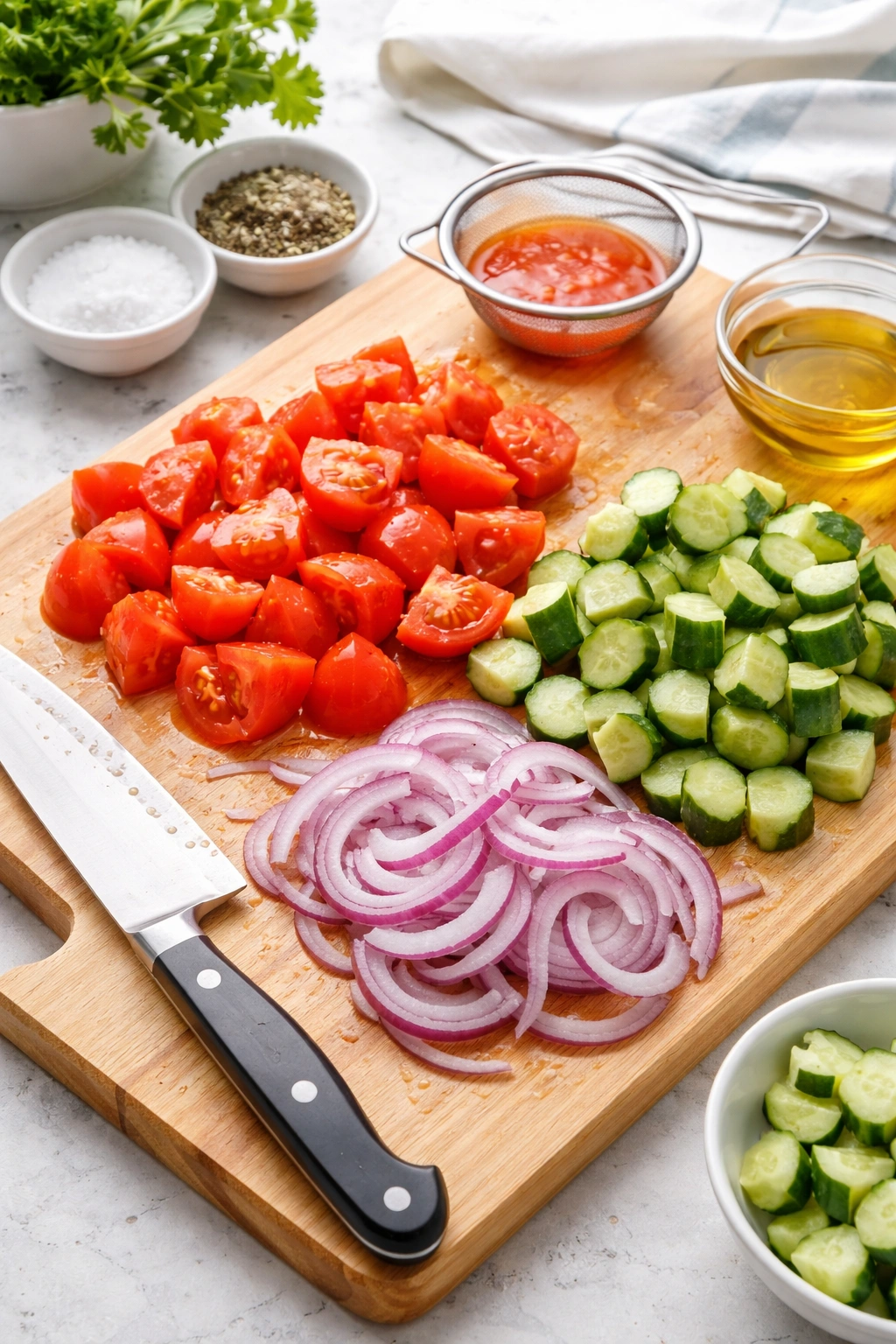
Prepare the Vegetables:
-
Wash the tomatoes and cucumber under cool running water, then pat them dry with paper towels. Dry vegetables don’t release excess liquid into the salad.
Advertisements -
Cut the tomatoes into 1-inch chunks, cutting over a small bowl to catch any juices. You should have about 3 cups of tomato chunks. Pour most of the accumulated juice down the drain—you’re keeping the solid tomato flesh, not the liquid.
-
Cut the English cucumber into 1-inch chunks or half-moons (whichever you prefer). If the cucumber feels particularly watery or has a very large seed core, you can discard the center seeded portions. You should have about 2½ cups of cucumber pieces.
-
Slice the red onion in half lengthwise, then place the cut side flat on the cutting board. Slice across the onion in thin half-moons, about ⅛-inch thick. You should have about ¾ cup of sliced onion.
-
Transfer the tomatoes, cucumbers, and onion to a large mixing bowl.
Salt and Rest the Vegetables:
-
Sprinkle 1½ teaspoons of fine sea salt and ¼ teaspoon of black pepper evenly over the vegetables. Toss everything gently with your hands or a spoon until the vegetables are evenly coated with salt. This seems like a lot of salt—it is—but it’s crucial for seasoning the vegetables from the inside out.
-
Let the salad sit at room temperature for 15 to 20 minutes. During this time, the salt draws moisture out of the vegetables, which then reabsorbs into them, seasoning them thoroughly. You’ll notice some liquid collecting at the bottom of the bowl—this is normal and desired.
Make the Dressing:
-
While the vegetables rest, prepare the dressing. Pour the ¼ cup olive oil into a small bowl or a jar with a tight-fitting lid.
-
Add 3 tablespoons fresh lemon juice and ½ teaspoon oregano (rubbed between your palms if dried, or gently bruised if fresh). Add ¼ teaspoon salt and ⅛ teaspoon black pepper.
Advertisements -
Whisk the dressing together with a fork or small whisk, or close the jar lid and shake for a few seconds. The dressing will not fully emulsify—it should look slightly cloudy and separated, which is perfect. Do not try to make it creamy or thick; a traditional Greek dressing is this simple ratio of oil and acid with seasonings.
Assemble the Salad:
-
Add the kalamata olives and feta cheese to the bowl with the vegetables.
-
Pour the dressing over everything and toss gently but thoroughly until the vegetables and feta are evenly coated with dressing. Toss gently—you want to combine everything without crushing the feta or breaking apart the tomato chunks.
-
Taste and adjust the seasoning. Because feta is quite salty and the vegetables are already well-salted, additional salt is usually not needed. If the flavor feels a bit flat, a small squeeze of fresh lemon juice or a small additional pinch of oregano can help.
-
Serve immediately, or let the salad sit for 5 to 10 minutes at room temperature before serving. Do not prepare more than 20 minutes in advance of serving—beyond that, the salad begins to release excess liquid and loses its crisp texture.
Pro Tips for the Best Results
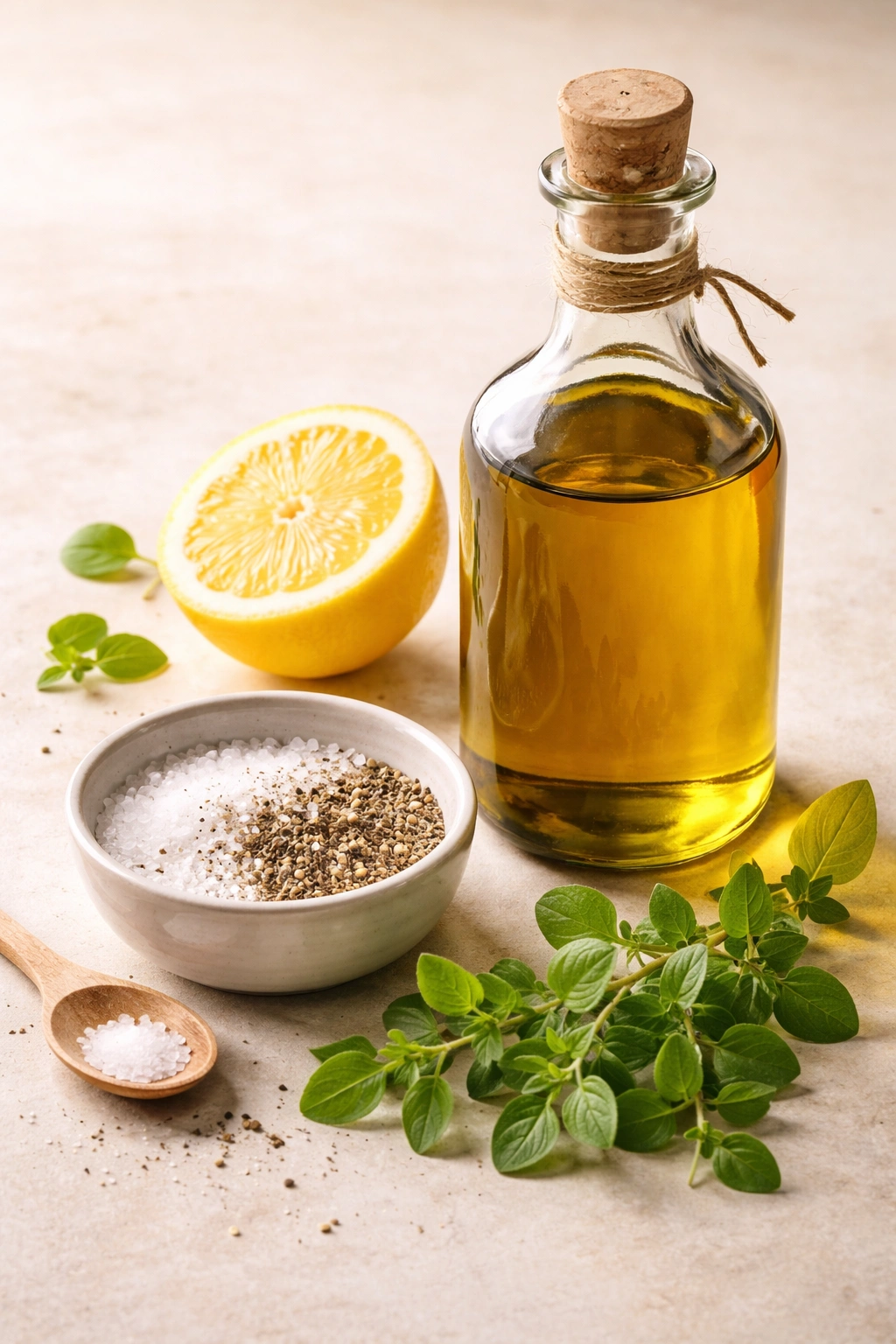
The most common mistake people make is not salting the vegetables adequately or not giving them enough time to rest before adding the dressing. This step is not optional, and it’s not about over-salting—it’s about a specific chemical process that tenderizes and seasons the vegetables simultaneously. Skip it, and the vegetables taste flat and have a rawer, less pleasant texture.
Another critical tip: taste as you go. Different tomatoes, different salt contents in different feta brands, and different acid intensity in different lemons mean that the exact proportions need small adjustments. After you mix everything together, taste a bite of salad that includes tomato, cucumber, feta, and olive. Is it bright enough? Does the oregano come through? Is the feta too dominant? Make tiny adjustments from there—an extra squeeze of lemon, a small pinch of oregano, or a grind of pepper can make the difference between good and excellent.
The type of olive oil matters more than many home cooks realize. If you have a bottle of expensive, high-quality olive oil that you’ve been saving for a special occasion, this is the time to use it. The olive oil is a starring ingredient here, not a hidden supporting player, so its flavor directly affects the salad’s quality. If your olive oil tastes harsh or rancid (oils can go bad after being open for a long time), replace it.
Resist the urge to add vinegar unless you’re intentionally going for a more acidic flavor. The combination of lemon juice and oregano creates a bright, Mediterranean flavor that’s more delicate and complex than a vinegar-heavy dressing. If you do use vinegar (which some Greek salads do), use it sparingly and reduce the lemon juice slightly to maintain the balance.
Common Mistakes to Avoid
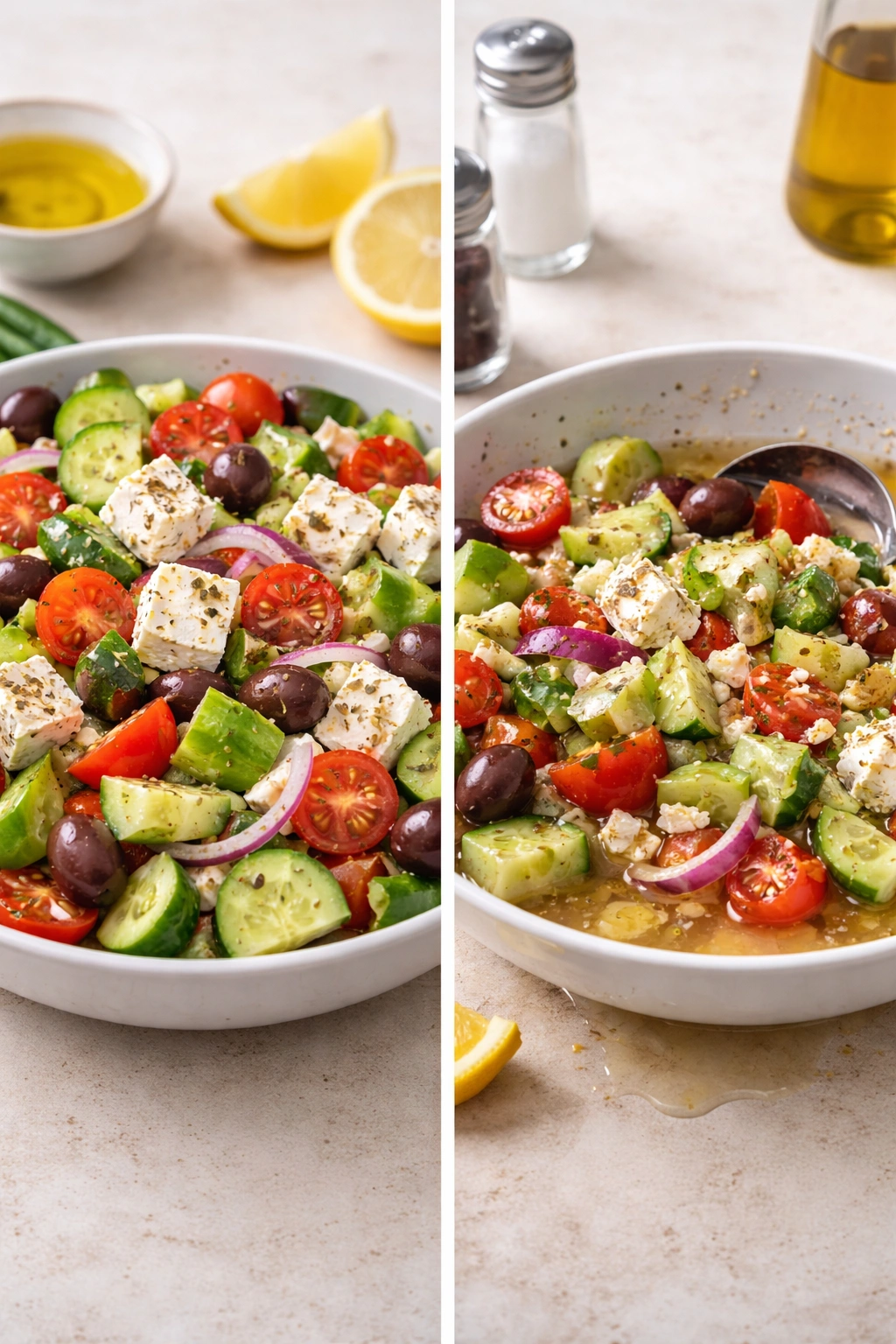
Watery salad usually happens because either the vegetables were prepared too far in advance (watering down rather than being salted well) or the dressing was added hours before serving. The vegetables continue to release liquid throughout their sit time, and that liquid dilutes everything. Always assemble closer to serving time. If you need to make the salad more than 20 minutes ahead, you can partially prepare it: salt the vegetables and let them rest (drain some of the excess liquid before the next step), make the dressing, and then add the feta, olives, and dressing just before serving.
Overwhelming saltiness comes from combining already-salty ingredients (kalamata olives and feta are both salty, and the initial salting of vegetables is generous) without tasting along the way. Start with the amount of salt in this recipe, taste, and then judge whether you need more. In most cases, you won’t. If you’re serving guests who are sensitive to salt, use slightly less feta and fewer olives rather than reducing the salt the vegetables are salted with, because that initial salt is essential for flavor development.
Mushy or soggy salad often results from using watery tomato varieties (like the pale supermarket tomatoes mentioned earlier), using pre-cut salad mixes, or not draining the excess tomato liquid as described in the instructions. Buy whole, fresh, in-season tomatoes and cut them yourself. If you must use tomatoes out of season, canned San Marzano tomatoes (very well drained and patted dry) are actually better than sad, watery fresh tomatoes.
Bland flavor usually means insufficient seasoning at the vegetable stage, or oregano that’s old and stale. The initial salting isn’t optional—it’s how the vegetables develop flavor. If your oregano has been in your cabinet for more than 6 months, replace it. Fresh herbs can go bad and lose their flavor more obviously than you’d expect.
Flavor Variations to Try
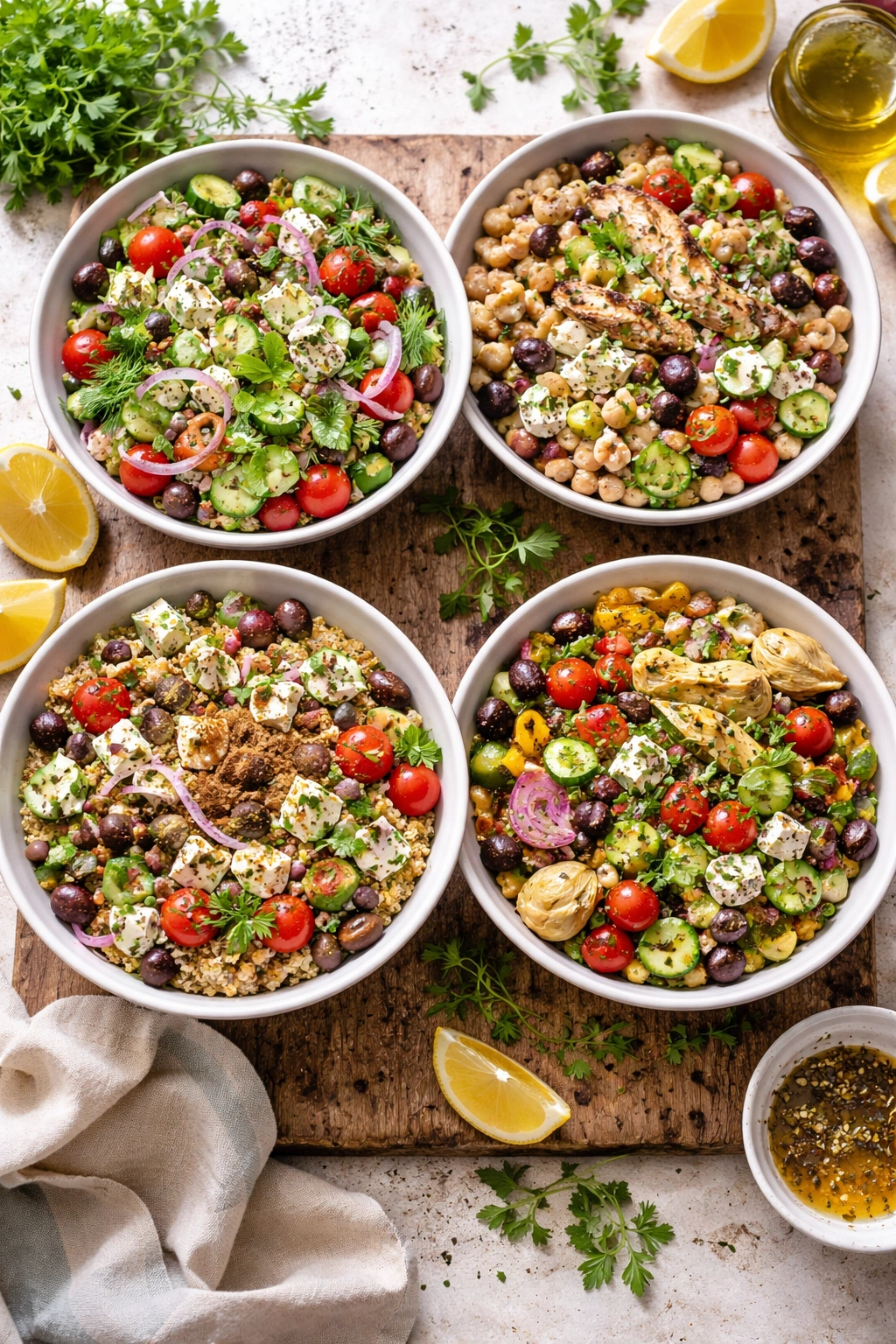
A Greek salad is a starting point, not a rigid formula. You can adapt it in several directions while keeping the core identity intact.
Herb Variation: Add 2 tablespoons of fresh mint leaves or fresh dill alongside the oregano. Both herbs are traditional in Greek cuisine and add brightness and complexity. Add them just before serving so they don’t wilt.
Heartier Version: Add 8 ounces of grilled chicken breast (cut into chunks), 1 can of drained chickpeas, or cooked grains like farro or quinoa. This transforms the salad from a side into a complete meal. The ratio adjusts to roughly equal parts vegetables and protein/grain.
Spiced Version: Add a pinch of sumac (a tangy, lemony spice) instead of or in addition to the oregano, and add ¼ teaspoon of ground cumin to the dressing. This pushes the flavor profile toward Middle Eastern rather than Greek, but it’s delicious.
Grilled Variation: Grill thick slices of zucchini, eggplant, or bell peppers until they’re tender and slightly charred, cut them into chunks, and add them to the salad. Use grilled vegetables instead of or alongside the raw cucumber.
Marinated Artichoke Version: Use marinated artichoke hearts (from a jar, drained and halved) alongside or instead of the cucumber. They add another briny, complex flavor that works beautifully with feta.
How to Make It Heartier as a Main Course
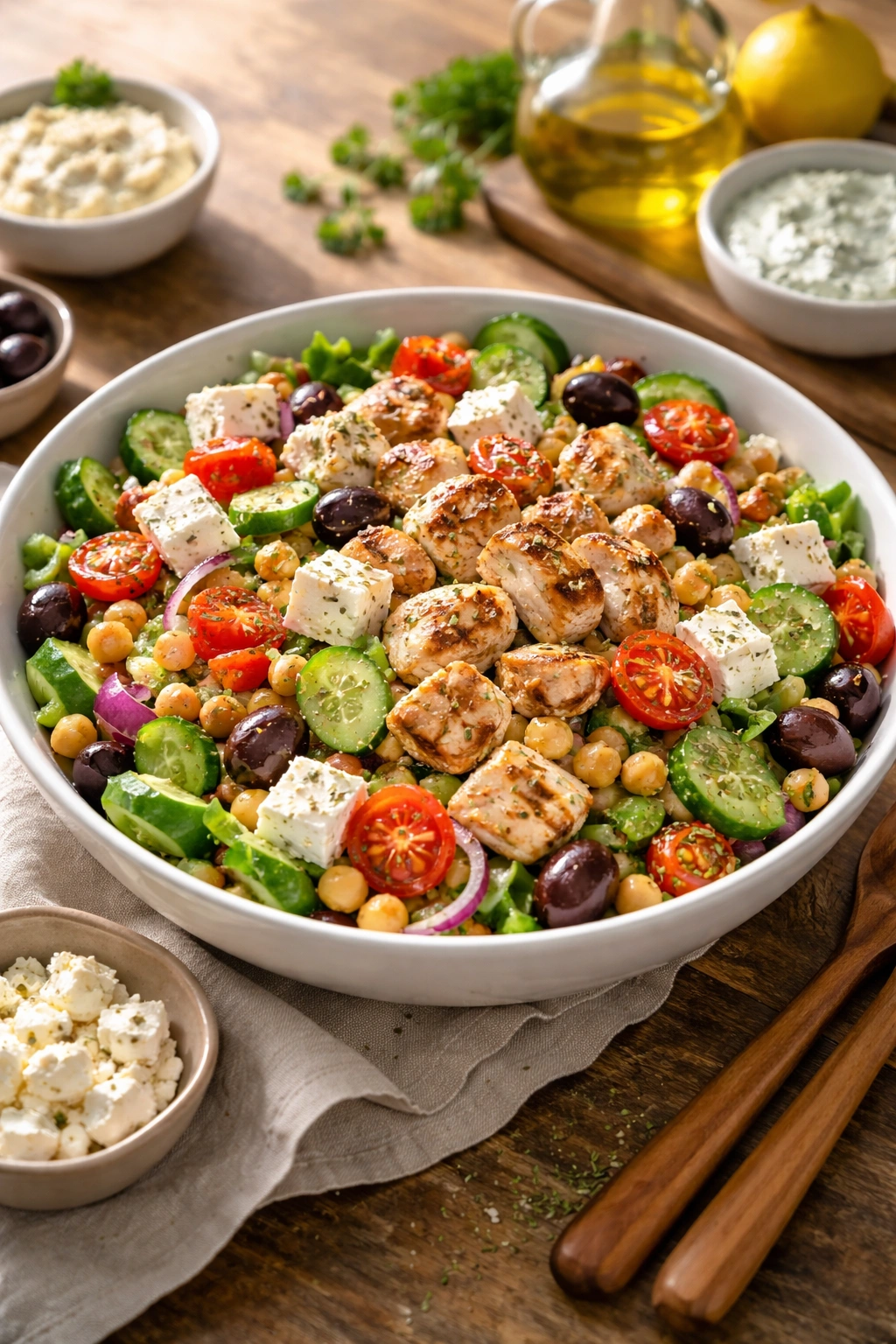
To transform this Greek salad from a side dish into a satisfying main course, increase the proportions of vegetables slightly and add protein. A main-course version serves 2 to 3 people generously.
Increase the vegetables by about 50%: use 2 pounds of tomatoes, 1½ English cucumbers, ¾ of a red onion, and about 2 cups of kalamata olives. Keep the feta at 1 to 1½ cups.
For protein, choose one:
Grilled Chicken: Grill or pan-sear 10 to 12 ounces of chicken breast until cooked through (internal temperature of 165°F on a meat thermometer), then cut it into 1-inch chunks and toss it into the salad while it’s still warm. The warm chicken will absorb the flavors of the dressing beautifully.
Canned or Fresh Tuna: Use one 5-ounce can of tuna in olive oil (do not drain the oil—it adds flavor), or use a 5-ounce piece of fresh tuna fillet, seared on a cast-iron pan for 2 minutes per side until the outside is cooked and the inside is still rare. Break the tuna into chunks and add it just before serving.
Chickpeas: Drain and rinse one 15-ounce can of chickpeas, then toss them with a bit of the dressing in a separate bowl and let them sit for 10 minutes before adding them to the salad. This allows them to absorb the flavors of the dressing themselves.
Whole Grains: Cook farro, quinoa, or wheat berries according to package directions, cool them, and mix them with the vegetables. You’ll need about 1½ to 2 cups of cooked grain. This creates a salad that’s hearty and filling without feeling heavy.
The dressing amounts stay roughly the same, though if you’re using a much larger volume of vegetables or adding grain, you might want to make 1.5 times the dressing amount to ensure everything is well-coated.
Storage and Make-Ahead Options
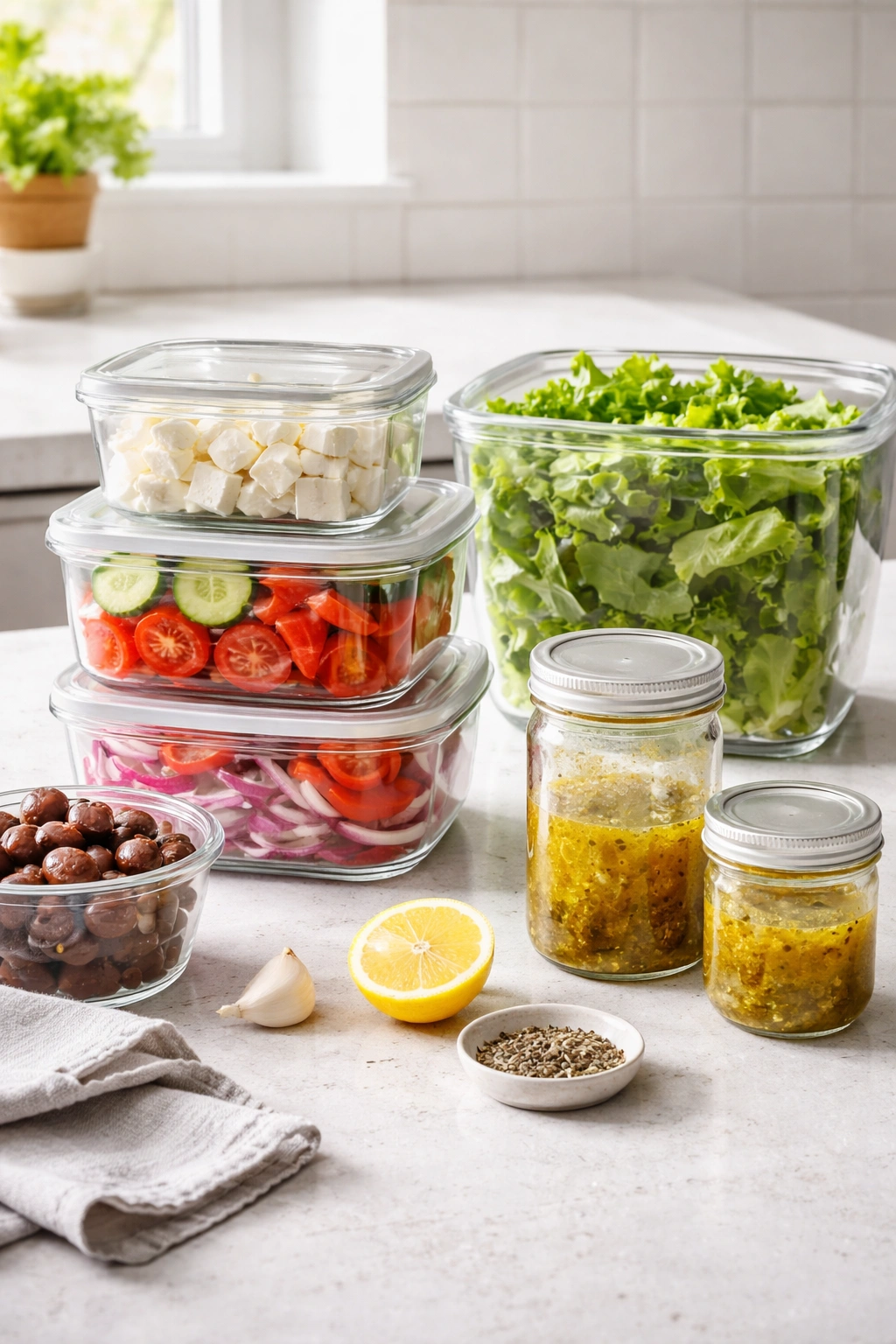
A finished Greek salad (with dressing mixed in) keeps well in the refrigerator for up to 2 hours. After that, it begins to wilt noticeably, though it’s still perfectly safe to eat. If you need to serve it later, keep the components separate and assemble it closer to serving time.
You can prepare the vegetables and salt them up to 6 hours in advance. Store them (with the salt already applied and any excess liquid drained) in a sealed container in the refrigerator. You can also make the dressing hours ahead and keep it in a sealed jar on the counter or in the fridge. When you’re ready to serve, simply combine the vegetables with the olives, feta, and dressing, then serve immediately.
If you’ve made a batch of salad and have leftovers, store any uneaten salad (keep it in its bowl) in the refrigerator in a sealed container for up to 1 day. The vegetables will soften somewhat, but they’ll still taste good. You can toss it with a bit of additional olive oil or lemon juice to refresh it, or use it as a base for grain bowls, sandwiches, or wraps.
The salad does not freeze well—the texture of the vegetables changes significantly, and the overall quality deteriorates. Make and eat fresh, or prepare the individual components and combine them just before serving.
Perfect Serving Ideas and Pairings
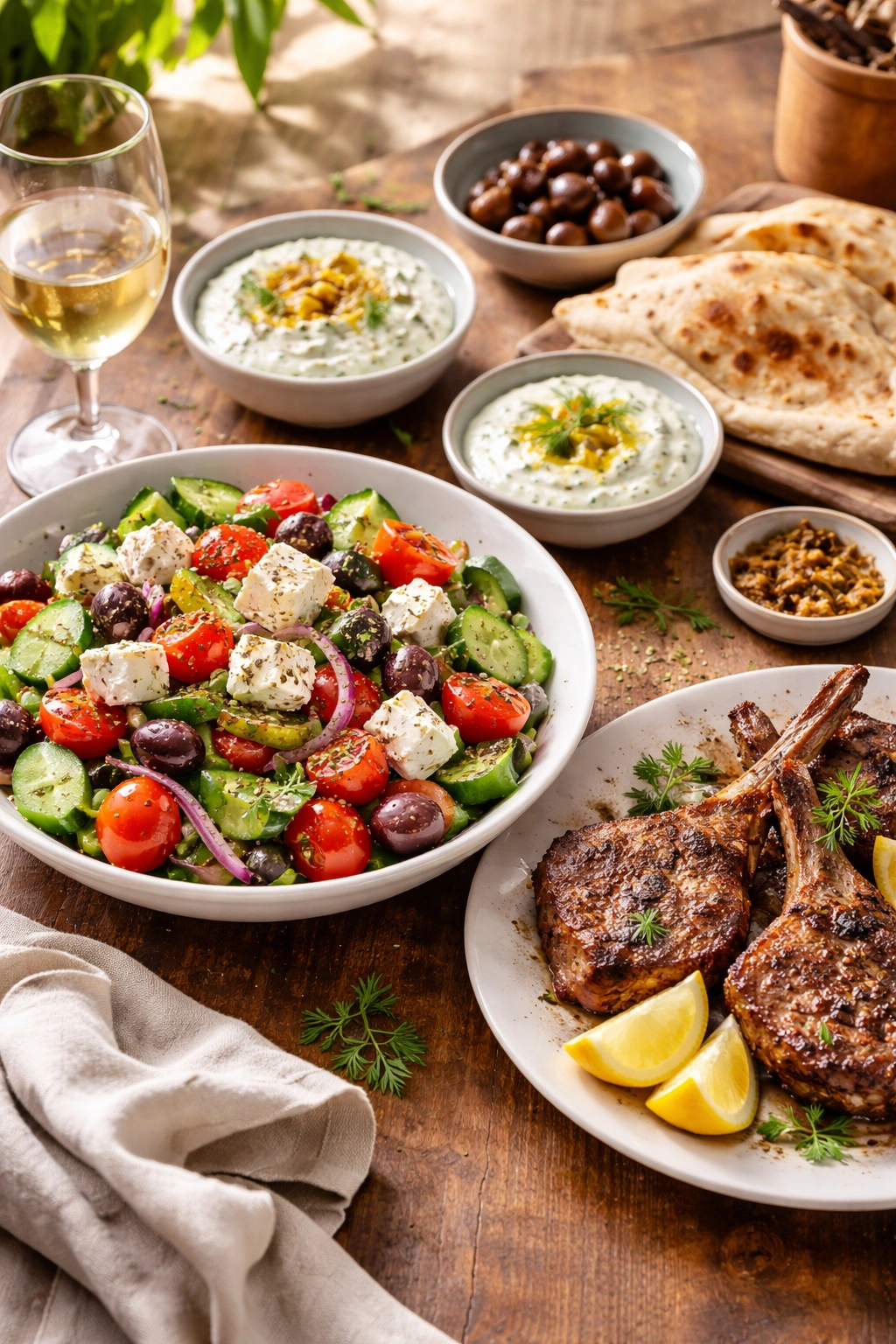
A Greek salad as a side dish pairs beautifully with Mediterranean-inspired proteins. Serve it alongside grilled lamb chops, pan-seared white fish, roasted chicken with herbs, or grilled shrimp. The bright, briny, slightly cool salad balances rich proteins and cuts through their heaviness.
As a main course, it’s satisfying all on its own, but you can serve it alongside warm pita bread (to scoop up extra dressing and vegetables), hummus, tzatziki, or warm rice. A simple bread—crusty, seeded, or herb-focaccia—works beautifully as an accompaniment.
For beverages, a crisp white wine like Assyrtiko (from Greece) or Sauvignon Blanc pairs beautifully. Ouzo (a Greek anise liqueur) is a traditional aperitif before the meal. For non-alcoholic options, sparkling water with lemon, unsweetened iced tea, or fresh lemonade all complement the flavors.
For a full meal, start with Greek salad as a main course and follow with something simple for dessert—Greek yogurt with honey and walnuts, baklava, or fresh fruit like grapes or melon. The salad’s briny, salty flavors are satisfied with something lightly sweet.
When plating, don’t worry about being precious or composed. A Greek salad is meant to look rustic and abundant. Pile it into bowls or onto plates, drizzle any extra dressing from the bottom of the mixing bowl on top, and serve immediately while the vegetables are still crisp. If you like, finish with a small handful of fresh herbs (mint, dill, or parsley) and perhaps a light crack of black pepper over the top.
Final Thoughts
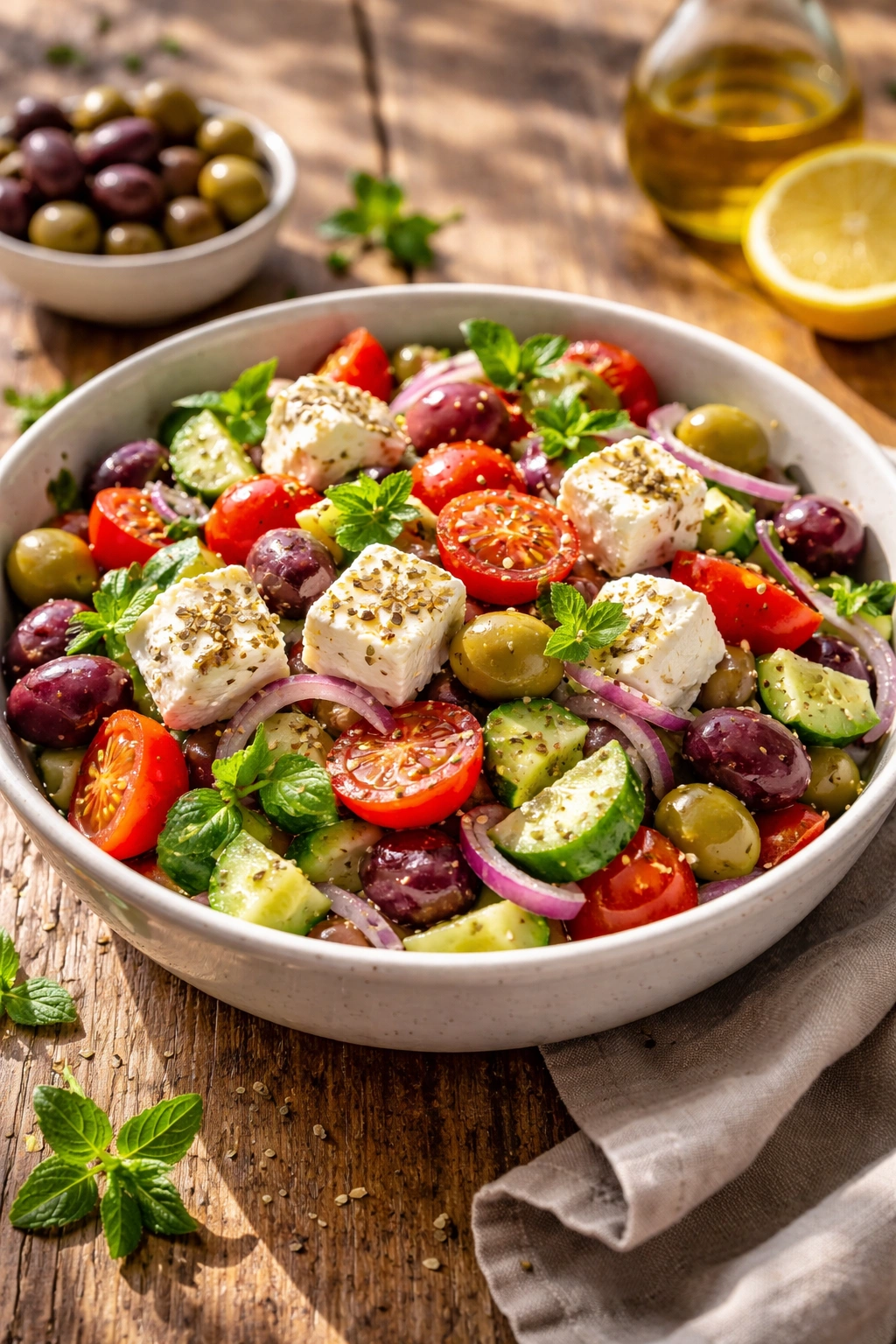
A Greek salad that works as both a satisfying side and a complete meal comes down to understanding three things: the salting and resting step that develops flavor and keeps vegetables firm, the timing of assembly that prevents sogginess, and the quality of ingredients that makes every component taste good. This isn’t a recipe that tolerates shortcuts—but the shortcuts aren’t complicated anyway.
The vegetables should be fresh and in season, the feta should be real and creamy, the olives should be briny and meaty, and the dressing should be nothing more than good olive oil, lemon juice, oregano, and salt. When each element is good, they work together to create something greater than the sum of the parts—the kind of salad you can eat warm in the sun and think about all afternoon.
Make it the way this recipe describes the first time, and you’ll understand immediately why the timing and proportions matter. After that, you can adjust it confidently—use different herbs, add grains or proteins, increase the vegetables. But the foundation is solid and worth learning first. Once you’ve made it this way successfully, you own it, and you can make it fresh and delicious every single time.
