



There’s a moment in every home cook’s life when they realize that the dressing makes or breaks the entire salad. You can have the crispest lettuce, the ripest tomatoes, and the most perfectly brined olives, but if you’re drowning them in a bottled dressing loaded with preservatives and weird gums, the whole thing falls flat. The good news? A truly exceptional Greek salad dressing takes about five minutes to make and uses ingredients you probably already have at home.
What makes this particular dressing so special isn’t just the simplicity — it’s the way fresh lemon juice, good quality olive oil, and a few key seasonings come together to create something that’s brighter, more balanced, and infinitely better than anything sitting on a supermarket shelf. This isn’t a dressing that needs emulsifying tricks or special equipment. It’s the kind of dressing that tastes like someone who genuinely loves cooking made it for you, because someone did, and that someone is about to be you.
The beauty of homemade Greek dressing lies in how it respects the vegetables you’re tossing it with. It doesn’t try to mask their flavor or dress them up with a heavy hand. Instead, it enhances everything you’re already enjoying about that fresh produce — the crisp snap of cucumber, the deep sweetness of red onion, the briny pop of olives. Once you make this dressing once, you’ll understand why Greek cuisine has been doing this for centuries, and you’ll never feel the need to buy the bottled version again.
Why Homemade Beats Bottled Every Single Time
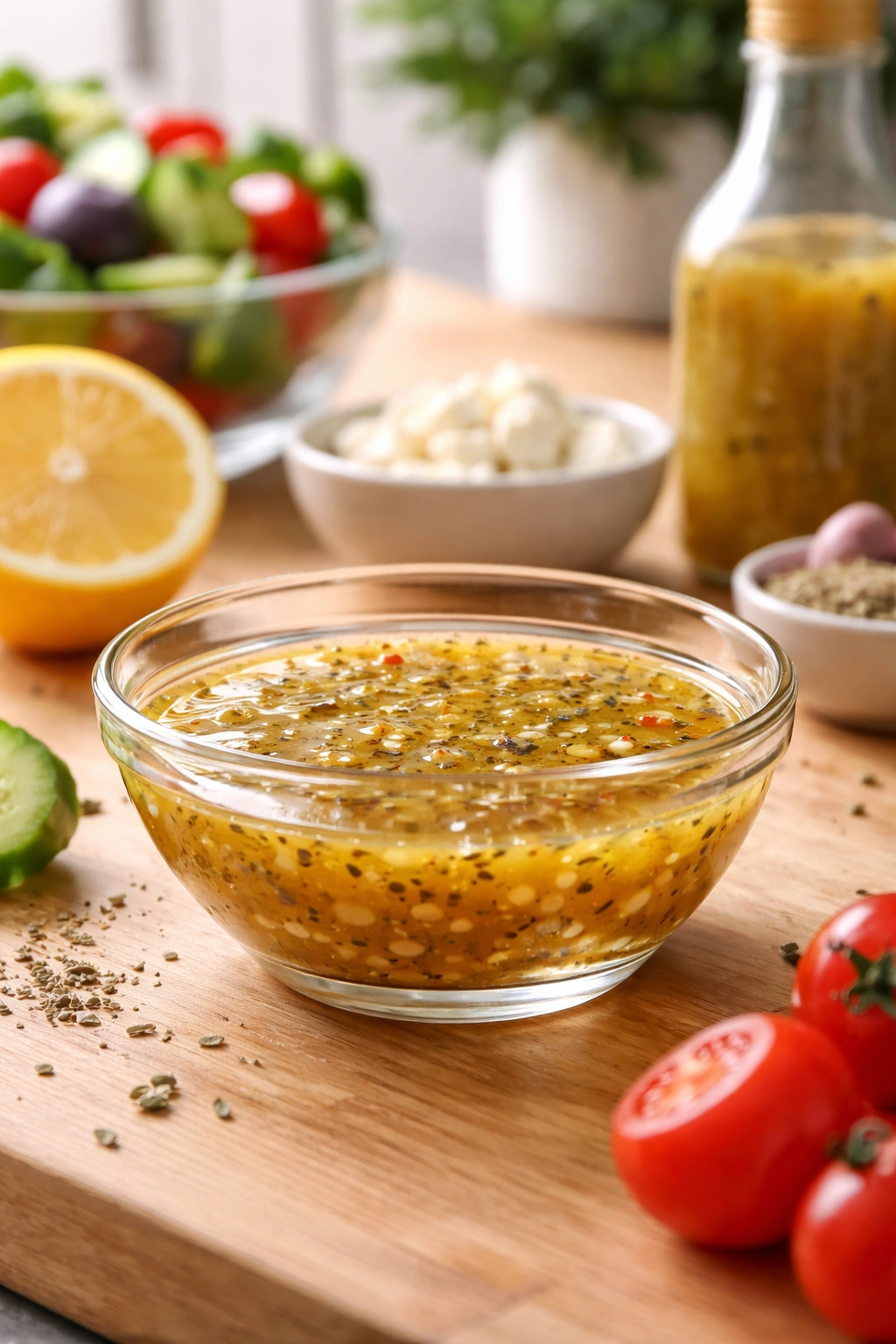
The second you compare a homemade Greek dressing to something from a bottle, the difference becomes immediately obvious. Homemade dressing doesn’t have emulsifiers, thickeners, or preservatives working against you. There’s no xanthan gum, no sorbic acid, no mystery ingredients with unpronounceable names. What you get instead is pure, clean flavor that actually tastes like the ingredients themselves.
Bottled dressings often contain vegetable oil instead of extra virgin olive oil, which means you lose that peppery, fruity note that makes a Greek dressing actually taste Greek. They’re also sitting in bottles under fluorescent lights for weeks or months before they make their way to your kitchen, which means the flavors have already started to fade or chemically shift. Homemade dressing, by contrast, tastes alive and bright the moment you make it.
The cost difference alone is worth mentioning. A quality bottle of Greek dressing at the grocery store costs somewhere between three and five dollars, and you use maybe a third of it on a salad before the rest starts separating or tasting off. For less than half that price in ingredients, you can make a dressing that’s actually better and lasts longer because you’re making it fresh each time you need it. That’s not just better food — that’s better economics.
What You’ll Need: Complete Ingredient Breakdown
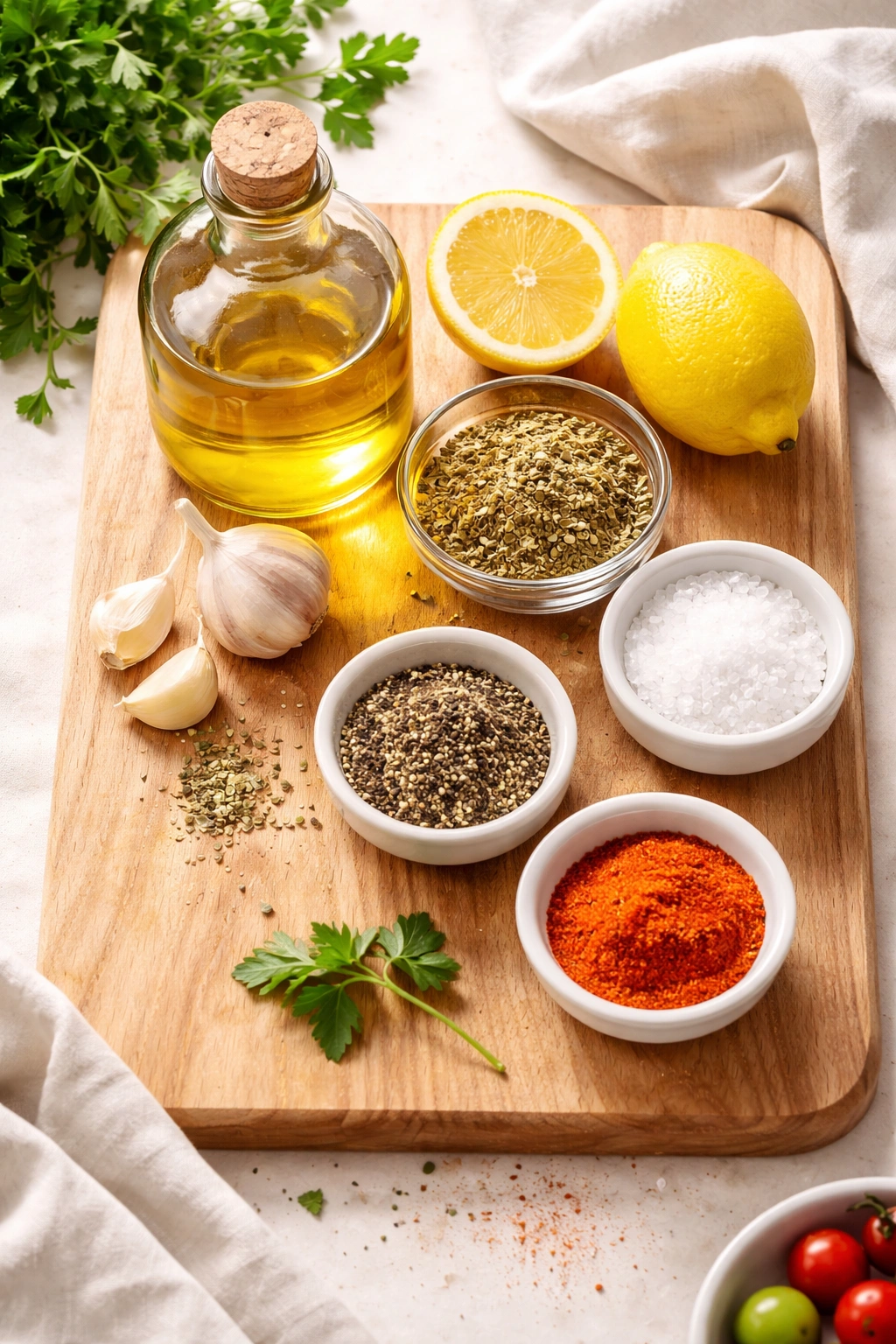
Yield: Makes approximately ¾ cup, enough to dress a large salad serving 4 to 6 people | Makes 3 to 4 tablespoons per serving
Prep Time: 5 minutes (only active mixing time, no cooking required)
Cook Time: 0 minutes
Total Time: 5 minutes
Difficulty: Beginner — this requires only basic whisking with no special equipment or technique.
For the Dressing:
- ¼ cup extra virgin olive oil (preferably a fruity, peppery variety from a bottle you actually enjoy drinking)
- 3 tablespoons fresh lemon juice (about 1 large lemon; bottled lemon juice is acceptable but fresh makes a noticeably brighter dressing)
- 1 tablespoon red wine vinegar (or white wine vinegar if you prefer less tang; skip the distilled white vinegar, which tastes too sharp)
- 2 cloves garlic, minced very finely (about ½ teaspoon minced garlic; use fresh, never jarred)
- 1 teaspoon dried oregano (authentic Greek oregano is ideal, but Italian oregano works beautifully too; do NOT use the grocery store “oregano blend” as it includes filler herbs)
- ½ teaspoon fine sea salt (adjust to taste depending on how salty your olives or cheese will be)
- ¼ teaspoon freshly ground black pepper
- ⅛ teaspoon cayenne pepper (optional; adds a subtle warmth without heat, omit if you prefer a milder dressing)
Understanding Each Ingredient and Why It Matters
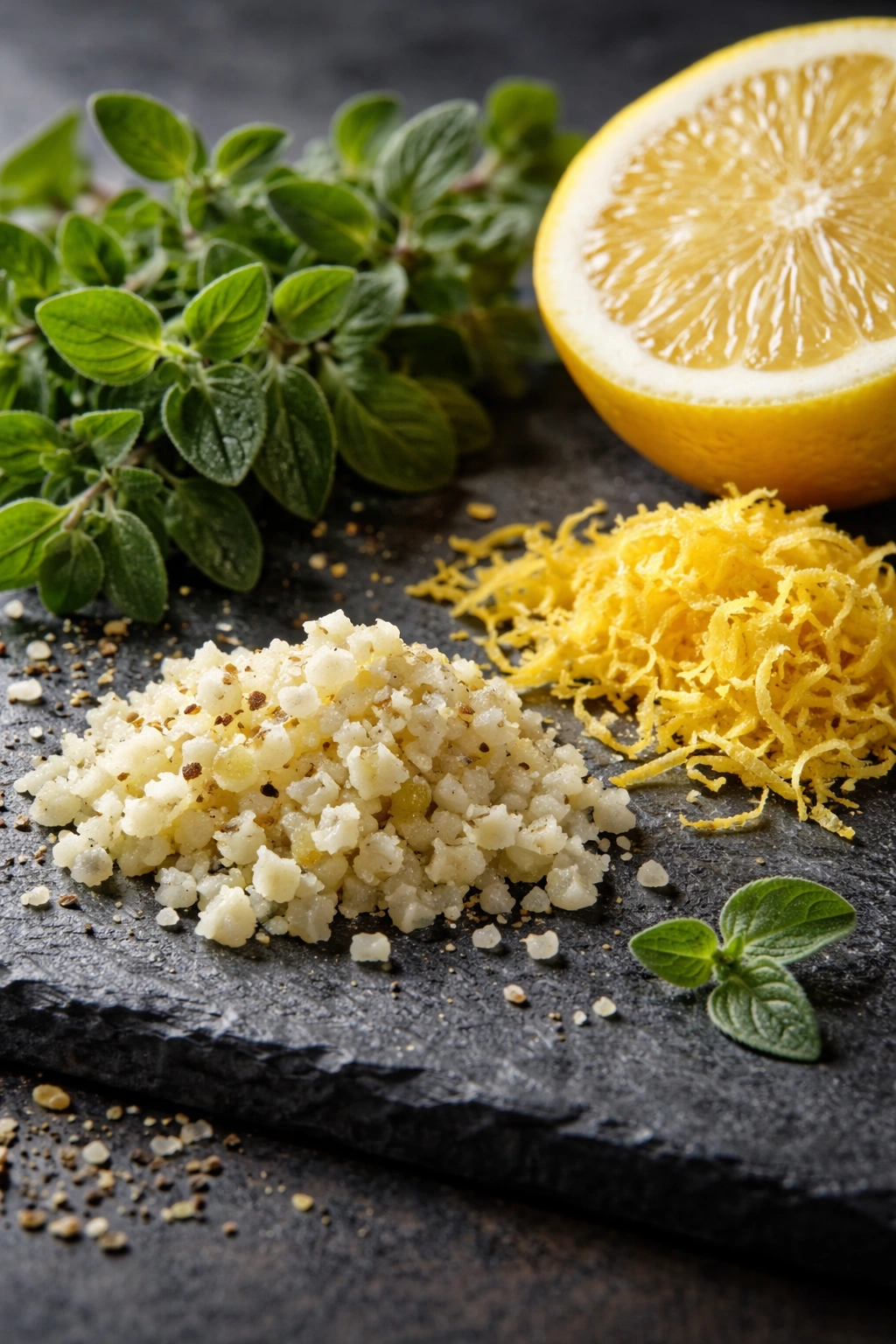
The foundation of any great Greek dressing is the ratio of acid to oil, and this one nails that balance right at the start. Your three tablespoons of acid — which comes from lemon juice and red wine vinegar — creates a brightness that won’t fade even after the dressing sits on your salad for a few minutes. The acid also helps the dressing coat the vegetables more effectively than oil alone ever could, which is why you don’t need to add water or any thickening agent.
Extra virgin olive oil is the star ingredient here, and this is the moment to be honest with yourself about quality. You don’t need to spend forty dollars on a bottle with a gold-foil label, but you do want something that tastes good enough that you’d drizzle it on bread or a finished plate. The difference between a bottom-shelf olive oil and a mid-range one is huge — bottom-shelf oils often taste greasy or flat, while a good mid-range oil adds a fruity, peppery note that absolutely elevates this simple dressing.
Garlic is your flavor anchor, and mincing it very finely matters more than people realize. Large garlic chunks will create hot pockets of flavor and overwhelm your mouth if you bite into them. Finely minced garlic distributes evenly throughout the dressing, giving you consistent flavor with every spoonful. If you’re uncomfortable with raw garlic, you can gently warm it in a small pan with the olive oil for about 30 seconds, then cool it completely before mixing with the acid — this softens the garlic’s intensity while keeping all the flavor.
The oregano is what actually makes this taste Greek rather than just “a vinaigrette.” Dried oregano is actually better here than fresh, because fresh oregano would wilt and lose potency quickly in the acidic environment. Dried oregano stays stable and consistently flavorful, and its slightly dusty, herbaceous notes are exactly what you want in a Greek salad context. Buy it in small quantities from the bulk section of your grocery store so you get fresh stock rather than a container that’s been sitting in someone’s pantry for three years.
The Science Behind a Perfect Emulsion Without Trying
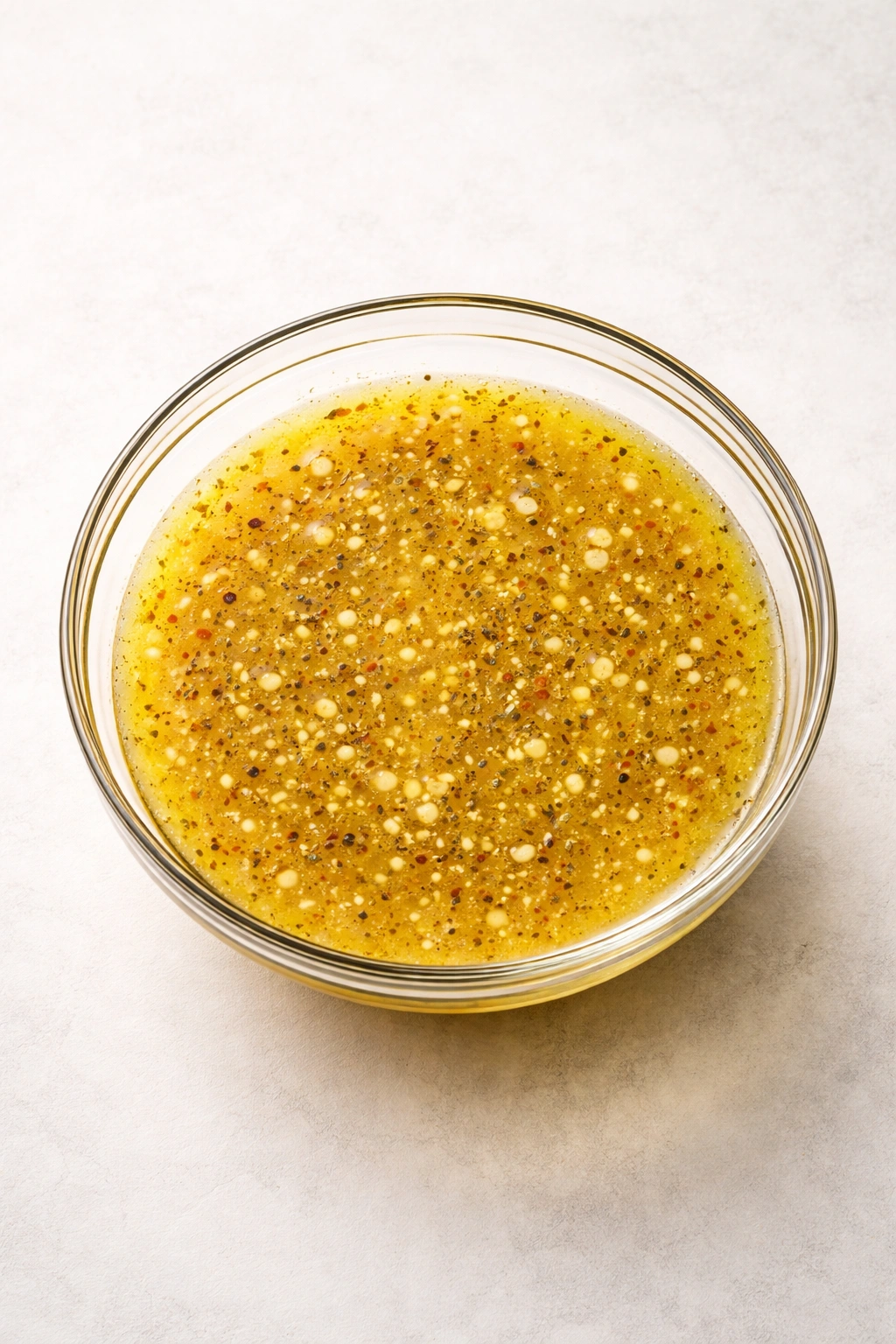
One question that always comes up: shouldn’t this dressing need whisking or an emulsifier to keep the oil and vinegar from separating? The honest answer is that separation isn’t actually a problem in this dressing the way it is in a mayonnaise or a traditional vinaigrette. The acid in the lemon juice and red wine vinegar is strong enough that it will coat the oil particles sufficiently to keep them in suspension for at least a few hours — and honestly, who has dressing sitting around that long?
The minced garlic and oregano also act as tiny little anchors that help distribute the oil throughout the acid more evenly. This isn’t a scientific emulsion in the way that egg yolks create one — it’s more of a loose suspension that feels unified and cohesive. You’ll notice if you make a big batch and refrigerate it overnight that the oil will separate and float on top, but a quick shake or stir brings it right back together.
The other thing that keeps this dressing unified is the salt. Salt particles actually draw moisture from the air and the ingredients around them, creating a slight brine that helps everything mix together more smoothly. This is why dissolving the salt in the acid first, rather than adding it directly to the oil, makes a noticeable difference in how the dressing comes together.
Making the Dressing: The Simple Method That Always Works
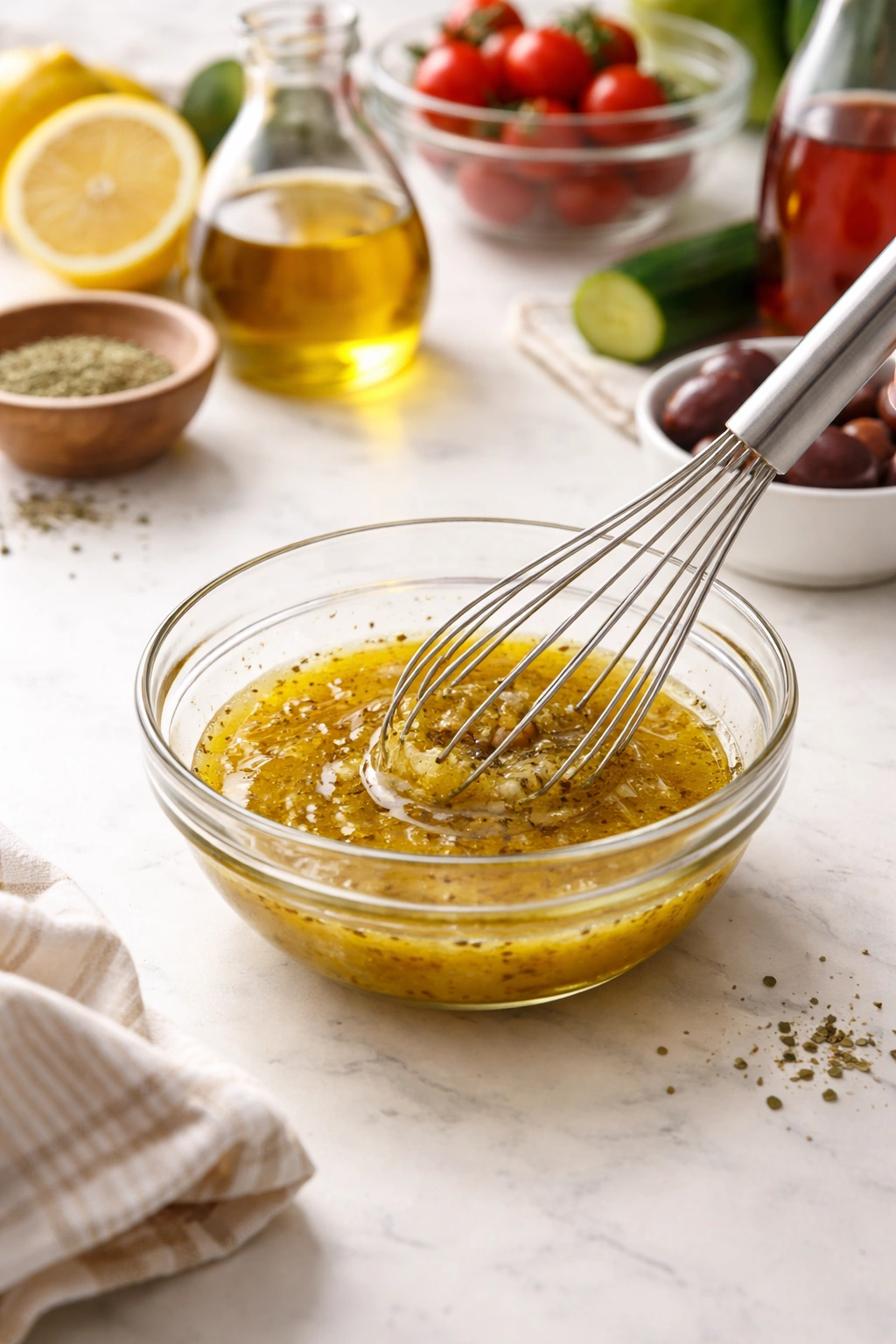
Here’s where this gets almost embarrassingly simple. You need only a small bowl, a fork or a small whisk, and about three minutes of your time. This isn’t a recipe that requires special equipment or technique — it’s deliberately designed to be accessible to anyone.
Prepare Your Ingredients:
-
Mince your garlic cloves very finely on a cutting board, pressing down slightly with the flat side of your knife to help break down the garlic and release its oils. You want very small pieces, roughly the size of a sesame seed.
-
Juice your fresh lemon, pressing down firmly on the lemon and rolling it around on the counter first to loosen the juice (this trick alone gets you about 20 percent more juice from each lemon). Strain out any seeds or large pulp, but the tiny particles of pulp are fine and actually add to the dressing.
-
Measure out your remaining ingredients and have them standing by. Organization sounds silly in a five-minute recipe, but it genuinely makes the process smoother.
Mix the Dressing:
-
Pour the fresh lemon juice and red wine vinegar into a small bowl, roughly 8 ounces in size. These two liquids are your acid base.
-
Add the minced garlic, oregano, salt, pepper, and cayenne (if using) directly to the acid. Stir gently with a fork for about 15 seconds, making sure the salt dissolves completely into the liquid. You should see the salt crystals disappear, and the garlic should start to look slightly darker as the acid begins to soften it. Let this mixture sit for about 1 minute — this “blooming” time allows the oregano to release its essential oils into the liquid.
-
While that’s sitting, measure out your ¼ cup of olive oil. Pour it slowly into the bowl while whisking constantly with a fork or a small whisk. The goal is to whisk vigorously enough that you’re incorporating air and creating a slightly emulsified mixture, but you’re not trying to create thick mayonnaise — this should stay relatively thin and pourable. The whole whisking process should take about 1 minute.
-
Taste the dressing. This is the crucial step that most people skip, but it’s how you adjust the balance to suit your specific palate and the salad you’re making. Does it taste too acidic? Add a splash more olive oil. Too oily? Add another half-teaspoon of lemon juice. The salt level should be immediately noticeable but not make you pucker. Adjust as needed.
Using Immediately:
- If you’re using the dressing right away, you’re done. Pour it directly over your salad greens, vegetables, and cheese, and toss everything gently until the greens are lightly coated. The dressing will keep the salad fresh and crisp for several minutes even after tossing, which is one reason it’s superior to bottled dressing.
Practical Tips That Make a Real Difference
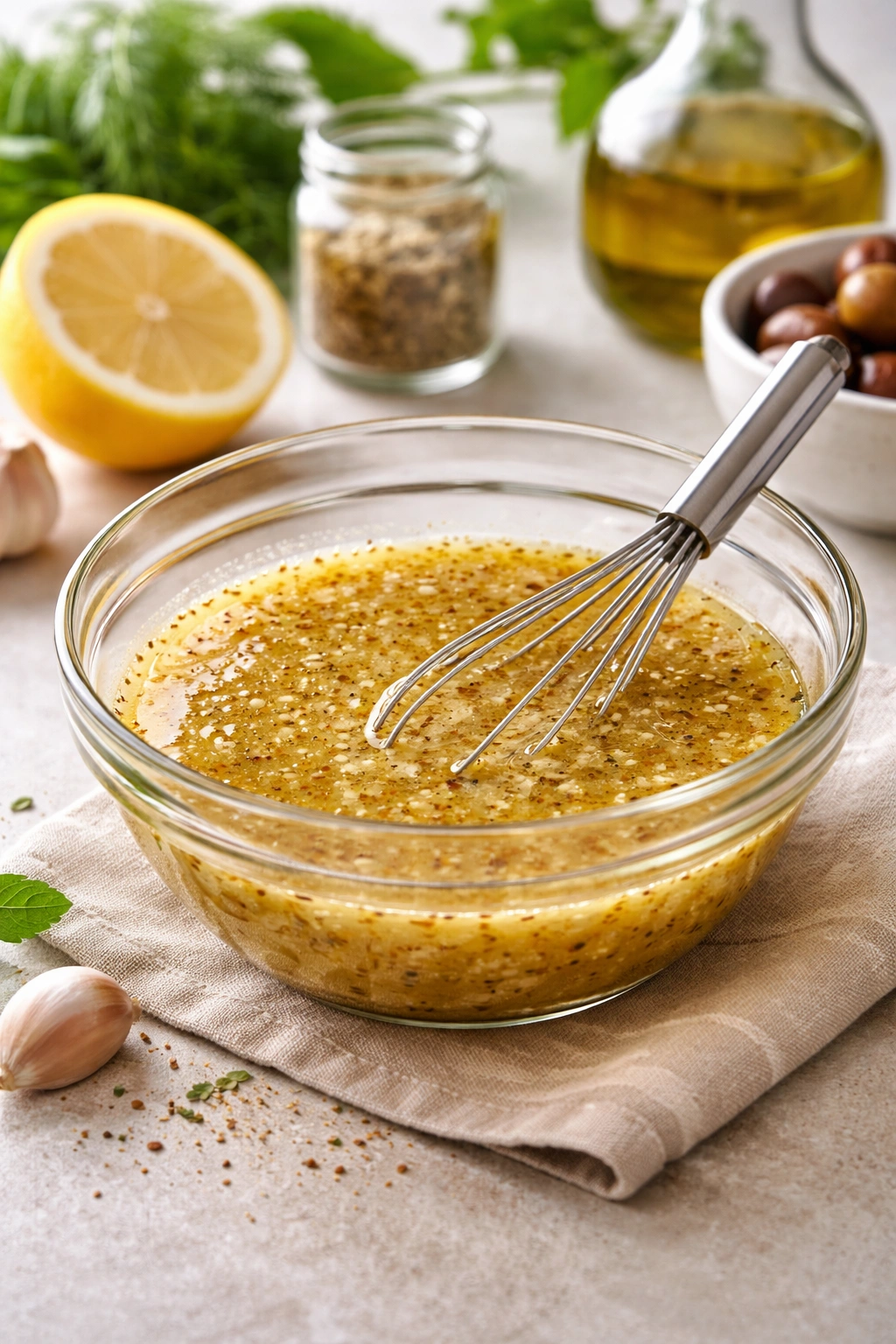
The temperature of your ingredients matters more than you’d think. If you’re using olive oil straight from the refrigerator (which happens if you store it in a cool place), give it a few minutes on the counter to warm up slightly before adding it to your acid. Cold oil will stay in larger droplets and won’t emulsify as smoothly. Room-temperature ingredients create a more cohesive mixture, and that’s just physics.
Lemon juice varies wildly depending on the variety and ripeness of your lemons. Some lemons are incredibly juicy and mild, while others are small, dense, and intensely sour. Taste your lemon juice before adding it — if it seems unusually strong or mild, adjust the quantity accordingly. This is why a range like “2 to 3 tablespoons” is sometimes given, but I recommend starting with 3 tablespoons and adding more acid only if your first taste tells you to.
Garlic potency also varies seasonally. Fresh garlic in spring and early summer is milder and sweeter, while garlic stored through the winter becomes more pungent and sharp. If you’re making this dressing at a time when garlic seems particularly strong, you can reduce the amount to 1 clove, or you can make that warm-garlic-oil variation mentioned earlier. Trust your instincts and your palate.
The most common mistake people make is adding the olive oil too quickly. When you dump it all in at once and don’t whisk, you end up with separated oil sitting on top of acid, and you’ll give up thinking this dressing doesn’t work. Add the oil gradually while whisking, and you’ll create a proper emulsion every single time. Even if your whisking isn’t perfect, the gradual addition makes a huge difference.
Another common misstep is using the wrong kind of vinegar. White distilled vinegar tastes sharp and chemical, like cleaning solution. Red wine vinegar tastes mellow and complex. If you only have distilled vinegar at home, reduce it to a teaspoon and add another half-teaspoon of fresh lemon juice instead. The difference is immediate and obvious.
Variations That Let You Make This Your Own
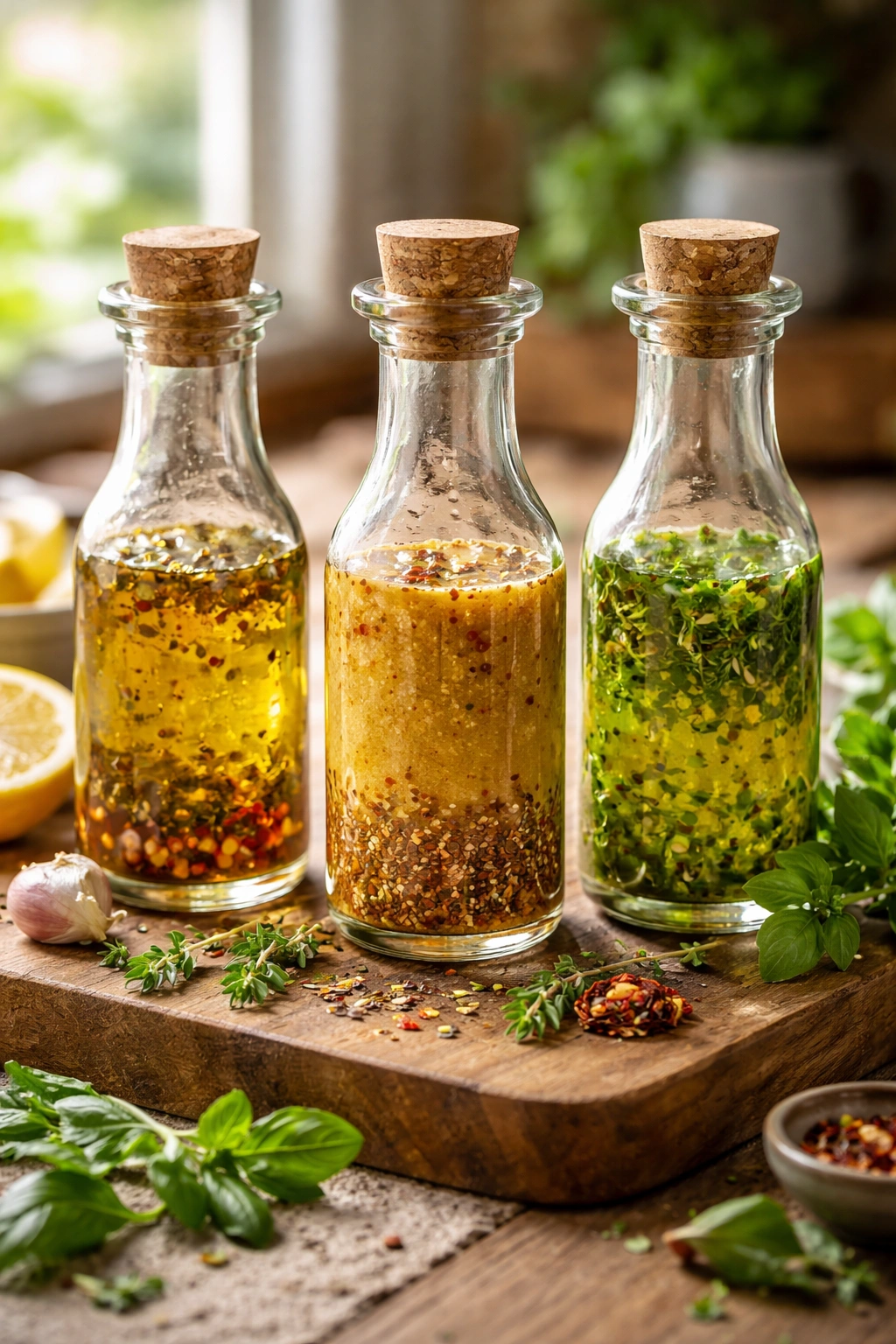
The basic formula above is the classic Greek dressing that works with any salad, but there are several directions you can take it depending on what you’re serving it with or what flavors you’re craving.
The Mediterranean Twist: Add ½ teaspoon of finely minced fresh mint and ½ teaspoon of minced fresh dill along with the oregano. These herbs give the dressing a fresher, brighter character that pairs beautifully with lighter vegetables like cucumber and tomato. If you’re using fresh herbs, add them after whisking the oil in so they don’t wilt from the acid.
The Spicy Version: Increase the cayenne pepper to ¼ teaspoon, or add ⅛ teaspoon of red pepper flakes (crushed finely). You could also add a tiny pinch of smoked paprika for depth. This version pairs wonderfully with heartier greens like arugula or kale that can stand up to the heat.
The Creamy Greek (Not Traditional, But Delicious): Whisk in 2 tablespoons of full-fat Greek yogurt or sour cream after you’ve made the basic dressing. This creates a creamier, more substantial dressing that clings to greens beautifully and adds protein. It’s fantastic on grain bowls or with roasted vegetables.
The Lemon Intensified Version: Reduce the red wine vinegar to ½ tablespoon and increase the fresh lemon juice to 4 tablespoons. This creates a brighter, more citrus-forward dressing that’s perfect in spring or summer when you want maximum freshness and minimum heaviness.
The Anchovy Addition: Finely mince one anchovy fillet (or use ¼ teaspoon of anchovy paste) and whisk it into the acid before adding the oil. This sounds polarizing, and it is — some people will taste “fish” and hate it, but others will taste “umami depth” and wonder why they never added it before. Start small and taste as you go.
The Whole Grain Mustard Version: Whisk in ½ teaspoon of whole grain mustard with the acid. The mustard adds body and a subtle tangy note that makes the dressing cling to vegetables better, plus it brings a touch of complexity that makes people ask what’s different.
The Garlic-Free Version: If you’re sensitive to raw garlic or just don’t want it, omit it entirely and add ⅛ teaspoon of garlic powder instead. Or, warm ¼ cup of your olive oil in a small pan over very low heat, add the minced garlic, and let it steep for 2 minutes. Strain out the garlic pieces and let the oil cool completely before using. This gives you gentle garlic flavor without the bite.
The Kalamata Olive Version: Finely mince 2 to 3 kalamata olives (about 1 tablespoon) and stir them into the finished dressing. This is less of a variation and more of an enhancement — the olives add saltiness, brininess, and an additional layer of Greek flavor that makes the dressing even more distinctive. Taste and reduce the salt slightly if your olives are particularly briny.
Storage and How Far Ahead You Can Make This
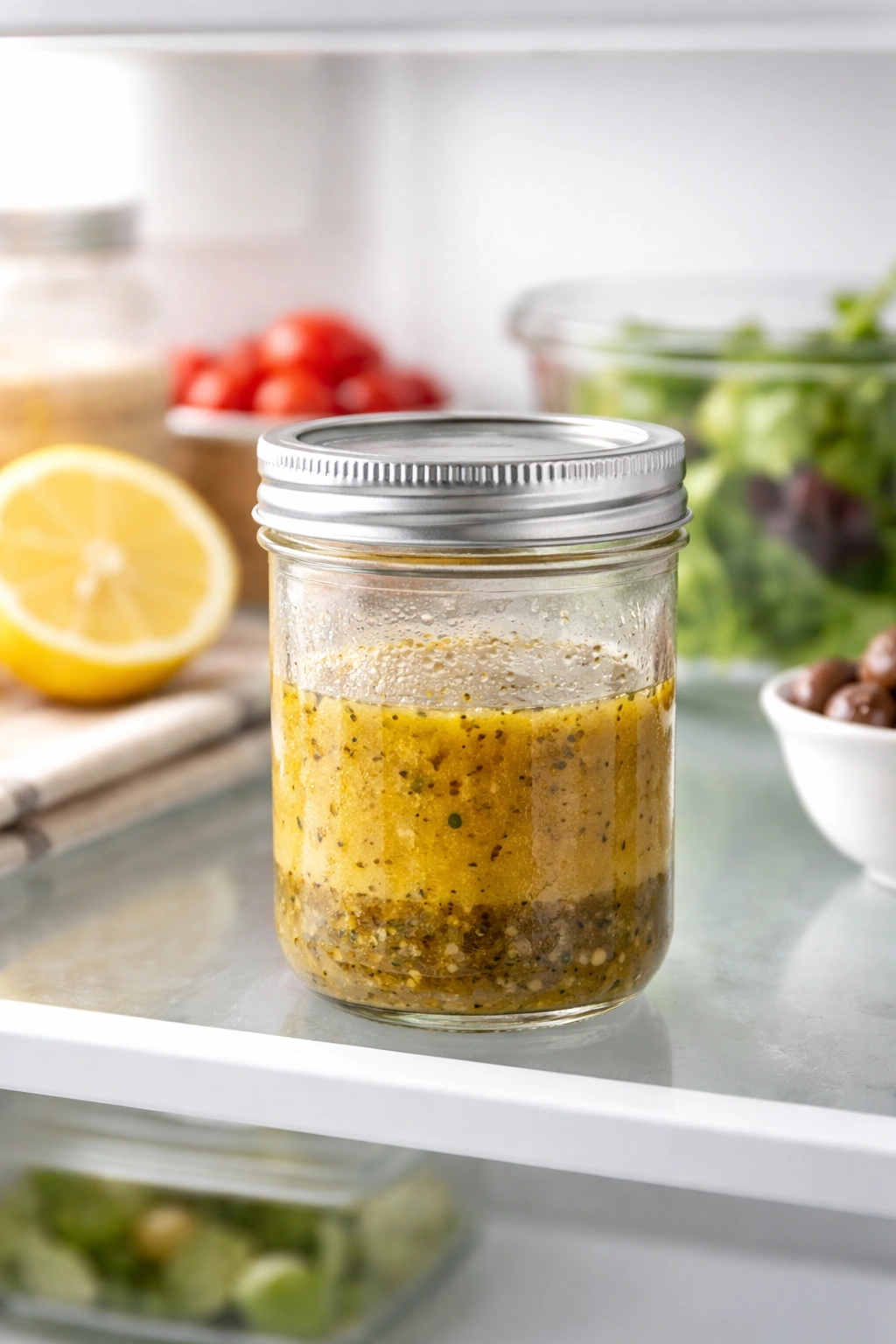
This dressing will keep in a sealed glass jar in the refrigerator for up to one week, though it tastes best within the first 2 to 3 days while the flavors are at their freshest. After a few days, the oregano will have fully softened and the garlic flavor will mellow somewhat, which some people prefer but others find less vibrant.
If you’re making this dressing on a Sunday for use throughout the week, prepare it without the fresh garlic — instead, add minced fresh garlic to just the portion of dressing you’re using each day. This keeps the garlic from becoming too strong or developing off-flavors. The rest of the dressing will stay bright and balanced throughout the week.
The oil and acid will separate if the dressing sits in the refrigerator, but this is completely normal and not a sign anything has gone wrong. Simply shake the jar vigorously for 10 seconds, or stir with a fork, and the dressing comes right back together. If you’re transporting dressing to a picnic or packing it for lunch, put it in a mason jar with a tight-fitting lid and shake it again right before using.
Don’t store this dressing for longer than one week. After that, the acid has broken down the delicate flavors, and the garlic starts to develop funky notes. It’s always better to make a fresh batch — it takes five minutes, and the difference between a fresh dressing and a week-old one is noticeable enough that it’s worth the small effort.
If you want to make a larger batch for storage, simply scale up the recipe proportionally. A triple batch keeps well for about four days if stored in a sealed glass jar. Just understand that larger batches don’t actually save much time since the whole process takes five minutes anyway, so it makes more sense to make fresh dressing more frequently than to try to stretch older dressing on a salad.
What to Serve with This Dressing (Beyond Basic Salad)
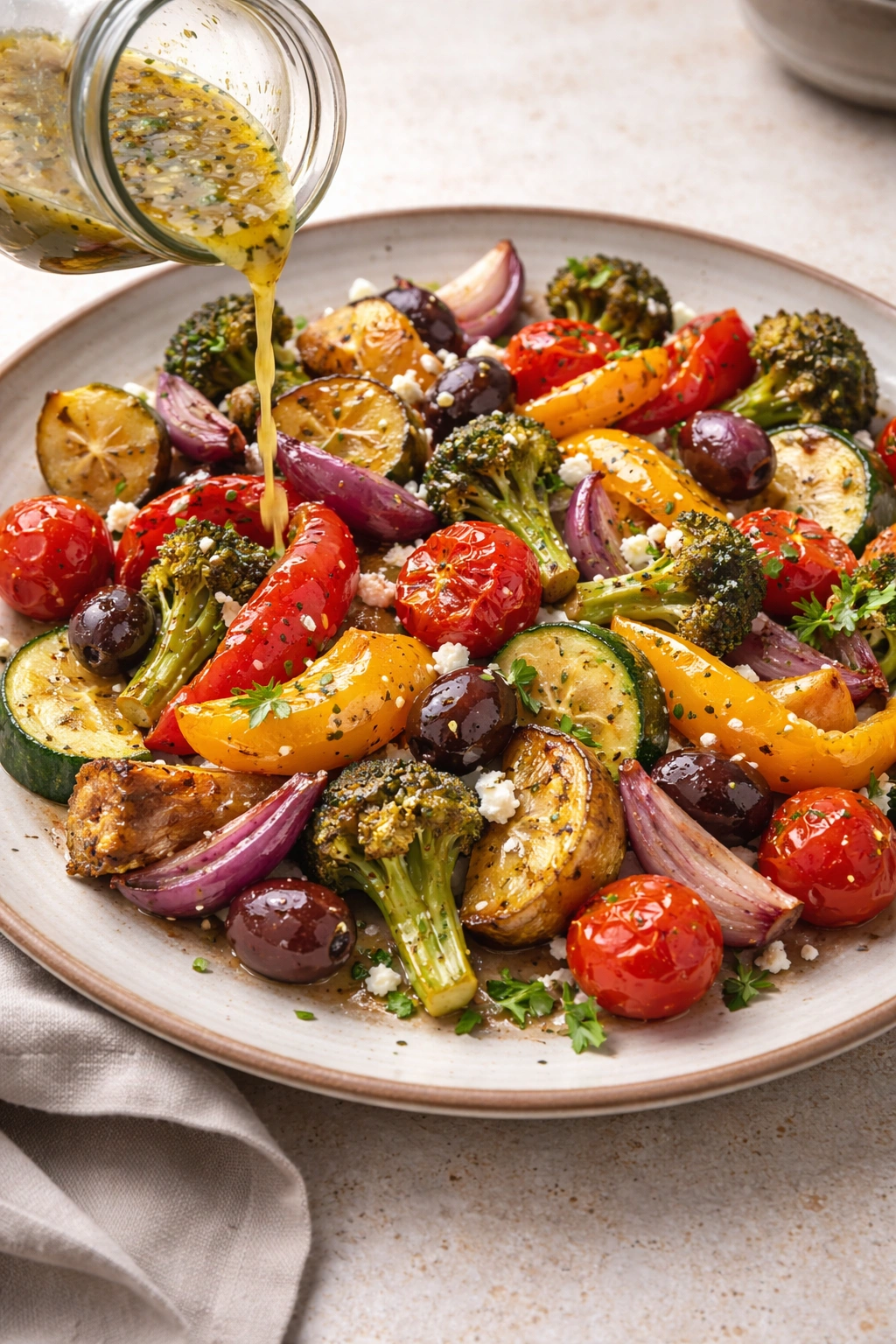
The traditional Greek salad — fresh tomatoes, crisp cucumbers, red onion, kalamata olives, feta cheese, and crisp lettuce — is obviously the star pairing, but this dressing is far more versatile than that. Once you start using it beyond just salad, you’ll understand how foundational it is to Mediterranean cooking.
Roasted vegetables are transformed by this dressing. After roasting zucchini, eggplant, bell peppers, or summer squash until they’re soft and caramelized, toss them with this dressing while they’re still warm. The acid cuts through the richness of the roasted vegetables, and the oregano echoes the flavors they were roasted with. This becomes a side dish that actually tastes like it was made with intention, not just reheated.
Grain bowls become instantly Mediterranean when you drizzle this dressing over quinoa, barley, or farro that’s been mixed with roasted vegetables, fresh herbs, and crumbled feta. The dressing coats the grains without making them soggy, and it carries enough flavor that you don’t need additional heavy sauces or creams.
Grilled chicken, fish, or shrimp becomes a complete Mediterranean protein when you spoon this dressing over it after cooking. The acid and lemon brighten the protein without adding calories, and the oregano ties everything to the Greek or Mediterranean theme. Brush the dressing on the protein right before plating for best results.
White beans tossed with this dressing, some fresh herbs, and diced vegetables become a substantial salad that’s hearty enough for lunch but light enough for dinner. The acid actually helps your body absorb the iron in the beans, which is a genuine nutritional plus beyond just flavor.
Marinate feta cheese in this dressing for 20 minutes before serving, and it transforms into something richer and more complex. The acid slightly softens the cheese’s exterior while the herbs infuse it with flavor. Serve it with crusty bread and olives for an appetizer that tastes restaurant-quality but took you literally five minutes to make.
Grilled bread rubbed with a cut garlic clove and a drizzle of this dressing becomes a side that’s elegant and flavorful without being complicated. This is how simple food becomes memorable food — it’s not about complexity, it’s about respecting each ingredient.
Common Mistakes and How to Avoid Them
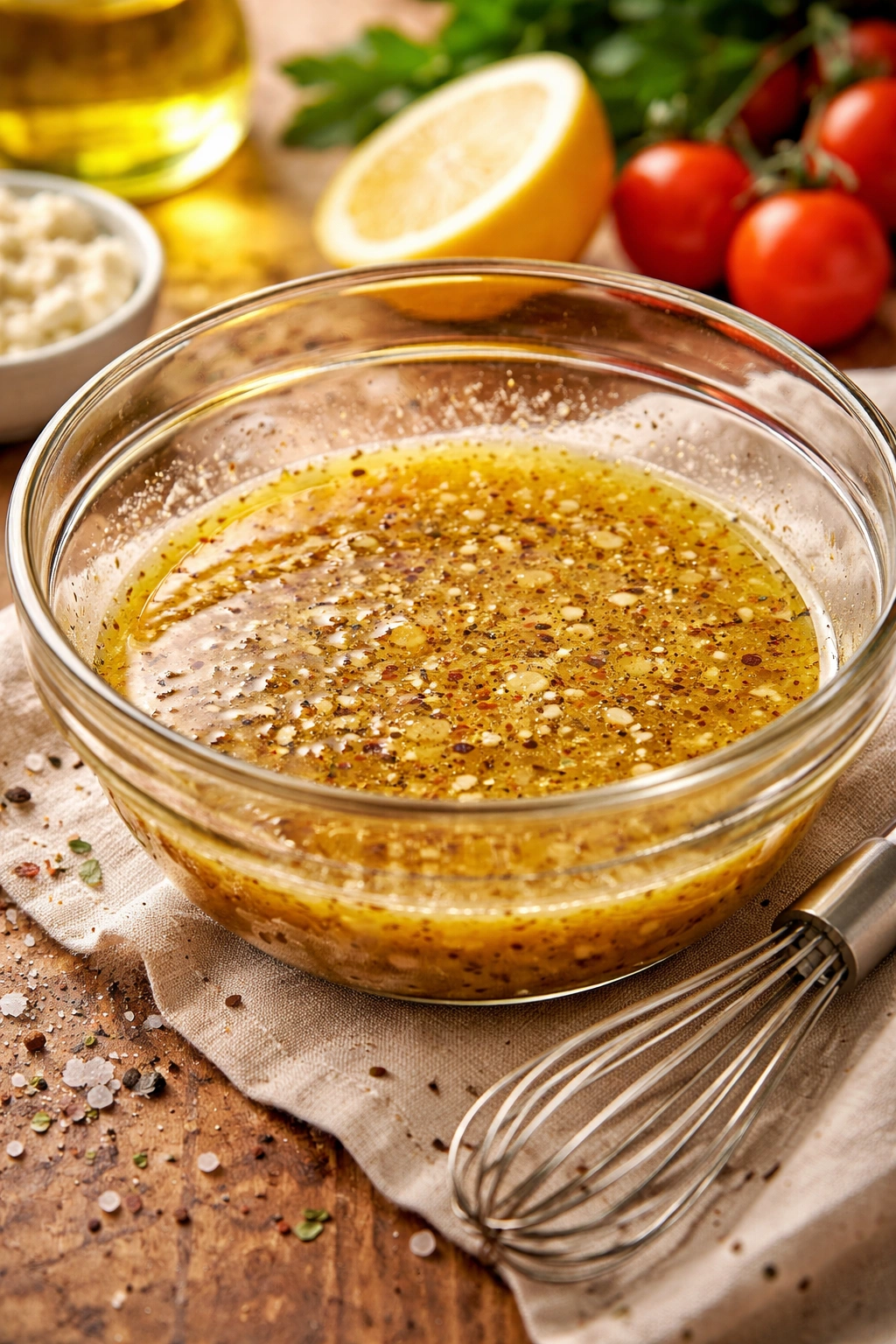
The biggest mistake happens when people assume that because the ingredients are simple, the technique doesn’t matter. Actually, the opposite is true. With simple dressings, every single element stands out, which means using quality ingredients and proper technique is even more important.
Some people make the dressing but then let the vegetables sit in it for twenty minutes before eating, which causes the greens to wilt and the dressing to become diluted as the vegetables release their water. The right approach is to dress the salad immediately before serving, or at most, five minutes beforehand. This keeps the greens crisp and the flavors bright.
Others underestimate the power of salt, making a dressing that tastes flat and lifeless. Remember that salt doesn’t just make things salty — it actually enhances and balances all the other flavors in the dressing. It makes the lemon taste more lemon-y, the garlic taste more garlicky, and the oregano taste more herbaceous. Start with the amount in the recipe, taste, and adjust up if needed.
The opposite mistake is over-salting, which happens when people use regular table salt instead of fine sea salt or kosher salt. A teaspoon of table salt actually contains way more salt than a teaspoon of kosher salt, because table salt is much denser. If you only have table salt available, use about ¼ teaspoon instead of ½ teaspoon, and taste as you go.
Some people use stale, musty-tasting oregano that’s been sitting in their cabinet for years, and then wonder why the dressing tastes flat. If your oregano smells dusty or tastes like nothing, it’s dead and needs to be replaced. Buy a fresh container, store it away from heat and light, and use it within a year. Whole Foods and other good grocery stores have fresh oregano sections — this is not worth skimping on.
Adding too much garlic is easier than people think. A little raw garlic goes a long way, and half a clove more than the recipe calls for can create a dressing that tastes aggressively garlicky and overpowers everything else. This is why tasting as you go is so important. You can always add more garlic, but you can’t take it out.
Using bottled lemon juice instead of fresh makes an immediate and obvious difference. Bottled lemon juice has a sharp, synthetic quality that doesn’t taste like actual lemon. Fresh lemon juice tastes bright, complex, and alive. Spend the thirty seconds squeezing fresh lemons — it genuinely matters.
Some people make the dressing and then use it cold from the refrigerator on a warm salad, and the cold dressing can taste muted and one-dimensional. Let the dressing sit on the counter for a few minutes to warm up slightly before using, especially if you’ve refrigerated it. Cold temperatures mute flavors; room temperature lets them shine.
Making This Part of Your Cooking Routine
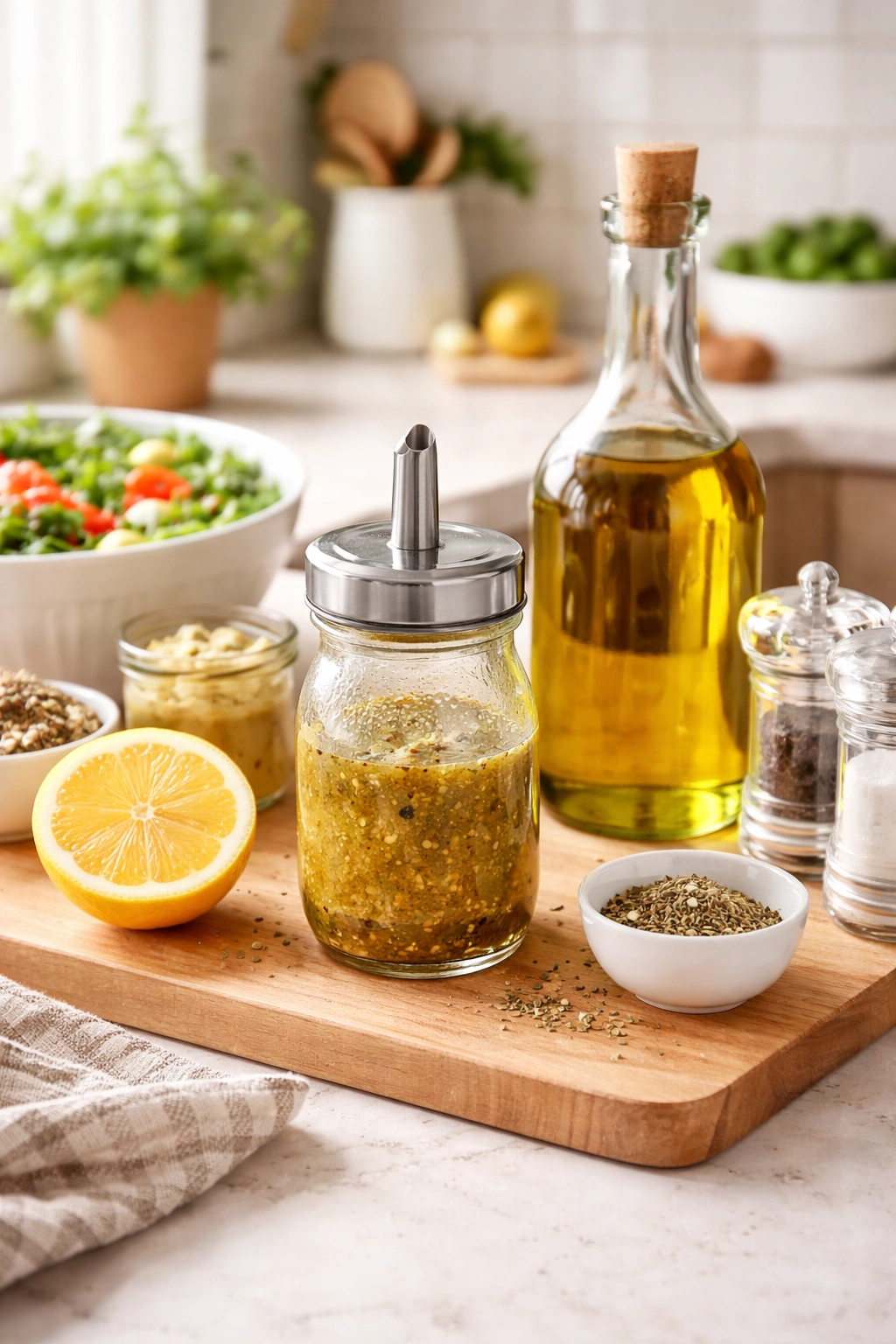
Once you make this dressing a few times, it stops feeling like a recipe and starts feeling like something you just naturally do. It becomes the dressing you make when you have company because you know it will be consistently good and impressively simple. It becomes the base you dress your lunch bowl with because it’s faster than opening a bottled dressing and infinitely better.
The key to making it a real habit is keeping quality ingredients on hand. This means maintaining good extra virgin olive oil, fresh lemons, red wine vinegar, and good dried oregano in your kitchen always. These are staple ingredients that support so many other dishes beyond just this dressing, so stocking them isn’t really about Greek salad dressing — it’s about having the foundation for good cooking in general.
Keep a small mason jar in your refrigerator that already has the acid in it. When you’re ready to make a salad, all you need to do is add garlic, oregano, and salt, whisk in the oil, and you’re done. This mental convenience of having part of the work already done makes it even more likely you’ll choose homemade dressing over something bottled.
Notice the difference between homemade and bottled on your first salad after making this dressing. Really pay attention to how the homemade version tastes brighter, fresher, and more respectful of the actual vegetables. Use that as motivation to make fresh dressing from that point forward.
Final Thoughts
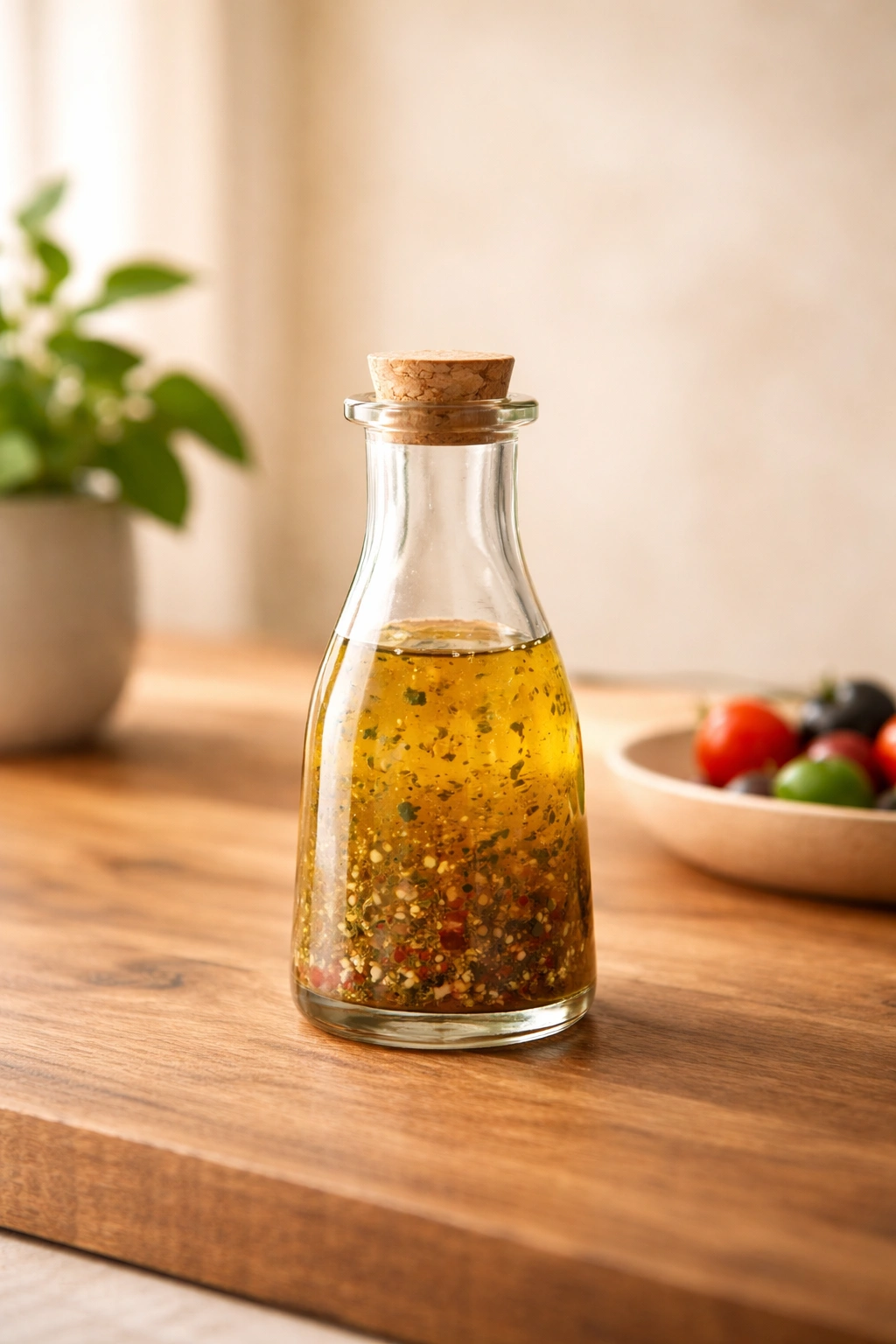
There’s a reason Greek salad dressing has essentially the same recipe in Greece that it has in Greek restaurants around the world — because it works. It’s not complicated, it doesn’t need tricks, and it doesn’t need apology. It’s the kind of recipe that proves you don’t need many ingredients or fancy technique to make something genuinely delicious.
Five minutes of effort gets you a dressing that’s better than what most people buy at the grocery store. That’s not bragging — that’s just pointing out the reality that once you taste something actually made with fresh ingredients and care, it’s hard to go back to the bottled alternative. The change happens quietly, but it’s real. Your salads taste better, your roasted vegetables taste better, and your grain bowls taste better.
The real gift of this recipe is how it teaches you something important: the best cooking often isn’t about complexity or technique or fancy equipment. Sometimes it’s just about respecting good ingredients, understanding how they work together, and taking five minutes to do it yourself. Everything else in cooking gets easier once you understand that principle.
