



Being a new parent means you’re often running on minimal sleep while juggling feeding schedules, diaper changes, and the constant physical need to hold your baby. In the middle of all that chaos, your own nutrition easily slips down the priority list—until your stomach is growling so loudly it wakes the baby you’ve just gotten to sleep. The reality is that one-handed eating isn’t a luxury during those early weeks and months; it’s a survival necessity.
When you’re in the thick of postpartum recovery—whether you’re breastfeeding, bottle feeding, or simply holding a clingy infant who refuses to be put down—the difference between a meal that works and one that doesn’t comes down to whether you can actually eat it without using both hands. The good news? There’s a wide world of genuinely delicious, nourishing one-handed meals waiting for you, and you don’t need to spend hours in the kitchen to make them happen.
Why One-Handed Eating Matters for New Parents
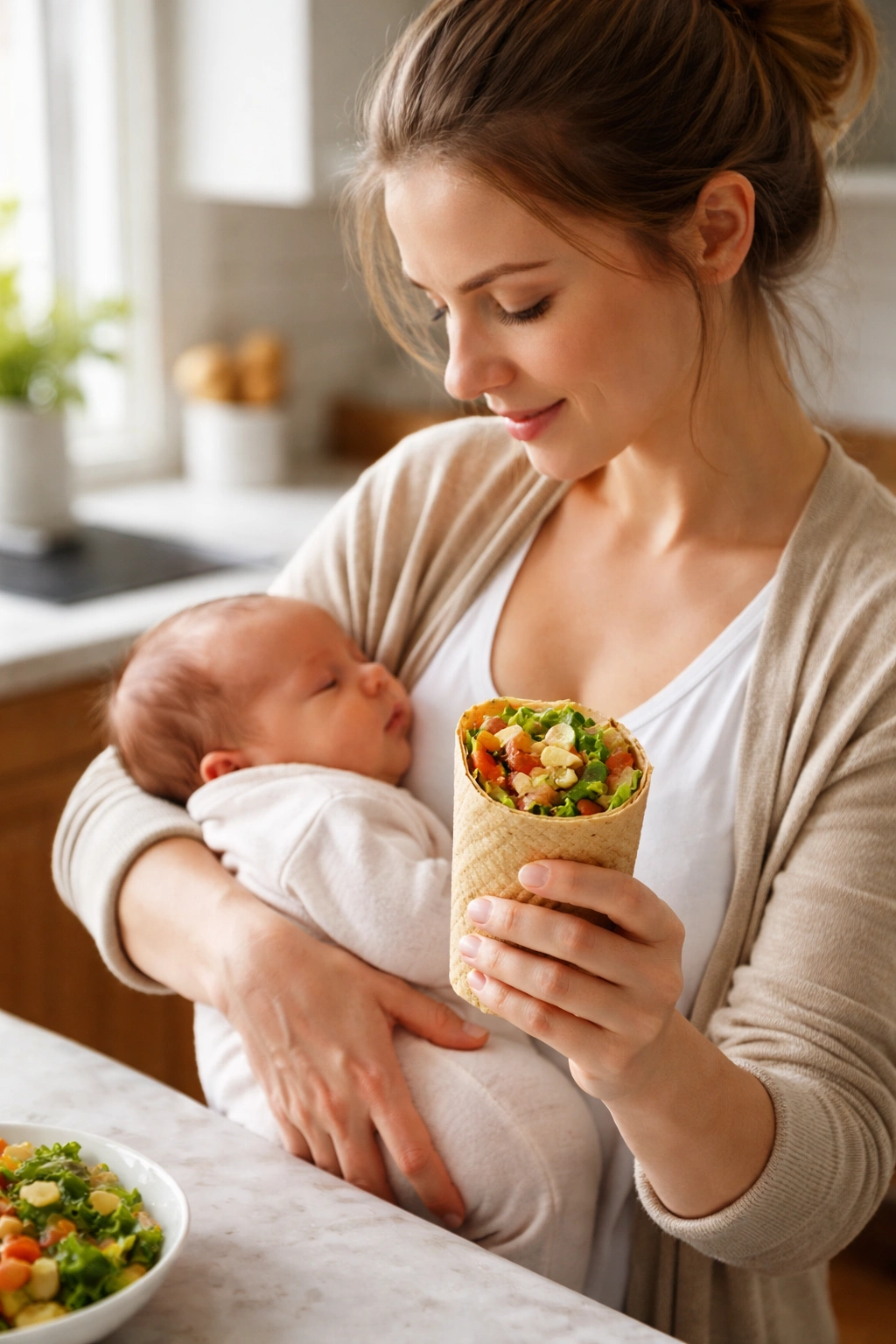
The postpartum period is unlike anything most people experience. Your body is healing from major physiological change, your hormones are completely reorganizing, and if you’re breastfeeding, your caloric needs can increase by 300-500 calories per day above your baseline. Your brain needs fuel, your muscles need repair, and your energy reserves are being depleted faster than you knew was possible.
Yet new parents consistently report that eating feels like an afterthought. You’re focused entirely on keeping your tiny human alive and well, and feeding yourself requires a deliberate, intentional shift of attention—something your fragmented attention span simply can’t muster at 3 a.m. when you’ve been awake for six hours straight.
The physical constraint of one-handed eating is real. If you’re nursing, your baby takes up one arm. If your baby sleeps only while being held, guess which arm is occupied? If you’re bottle feeding and your infant refuses to be set down, you’re still working with one free hand. The meal that requires two hands to eat, or two hands to prepare, or even two hands to hold without dropping, is a meal that won’t happen. And then you wonder why you haven’t eaten since yesterday morning.
One-handed meals solve this problem directly. They acknowledge the reality of your situation and work with it instead of against it. They’re also secretly an act of self-compassion—feeding yourself well during this vulnerable time isn’t indulgent, it’s essential recovery nutrition.
Characteristics of Ideal One-Handed Meals
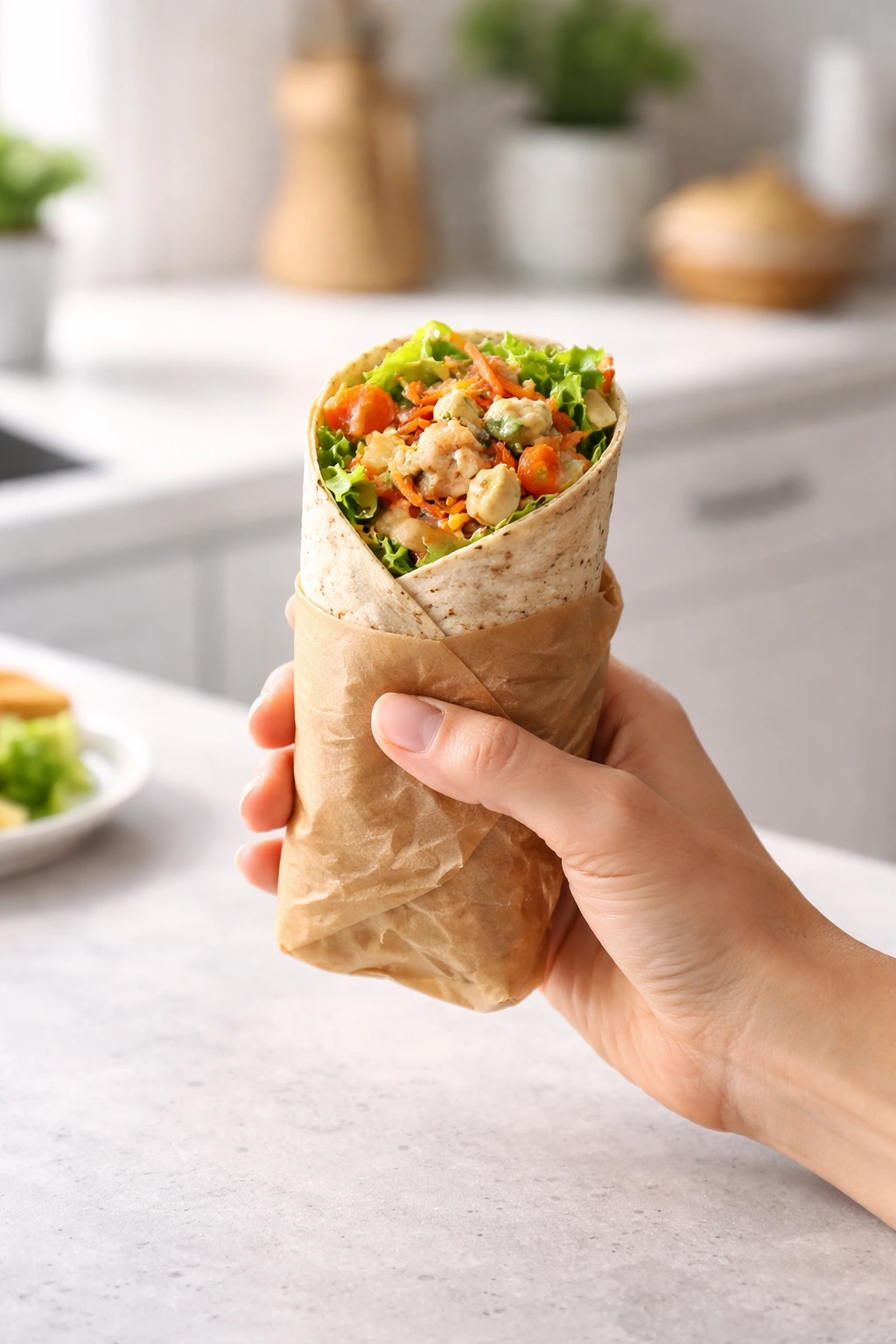
Not all one-handed meals are created equal. The best ones share specific qualities that make them genuinely practical for postpartum life, not just theoretically possible.
Balanced nutrition matters most. A one-handed meal that’s pure carbohydrates will leave you hungry again in an hour. Your body needs protein for tissue repair, fiber to support digestion (which changes dramatically postpartum), and healthy fats for hormone regulation and satiety. The ideal one-handed meal includes all three, or at minimum pairs protein with either fat or fiber so the energy lasts.
Minimal ongoing attention during eating. Sandwiches, wraps, skewers, and hand pies are perfect because you can pick them up, take a bite, set them down, attend to your baby, then pick them back up five minutes later without the food falling apart or getting cold and inedible. Soup and chili require a spoon and a bowl you’re holding, which gets complicated when your baby suddenly needs comfort.
Foods that taste good even if you eat them slowly or in pieces. Unlike a hot meal that deteriorates as it sits, good one-handed foods are designed to be eaten in chunks over time. They taste fine at room temperature, they don’t require a specific eating pace, and they don’t need constant attention to prevent them from getting messy.
Prepare-ahead potential. The meals that save new parents are the ones made during pregnancy, brought by friends and family, or assembled on rare moments when someone else is holding the baby. One-handed meals that freeze beautifully, reheat easily, or require zero cooking on game day are lifelines.
Genuinely satisfying portions. A single cracker with hummus is technically one-handed, but it’s not a meal. Effective one-handed meals actually fill you up, taste genuinely good (not like punishment food), and make you feel nourished rather than like you’re just surviving until you can eat properly.
Protein-Packed Breakfast Options
Breakfast sets the tone for your entire day. A breakfast high in protein and healthy fats keeps your blood sugar stable, your mood more level, and your energy reserves functional for longer. It also makes a huge difference in postpartum recovery since your body is actively repairing tissue.
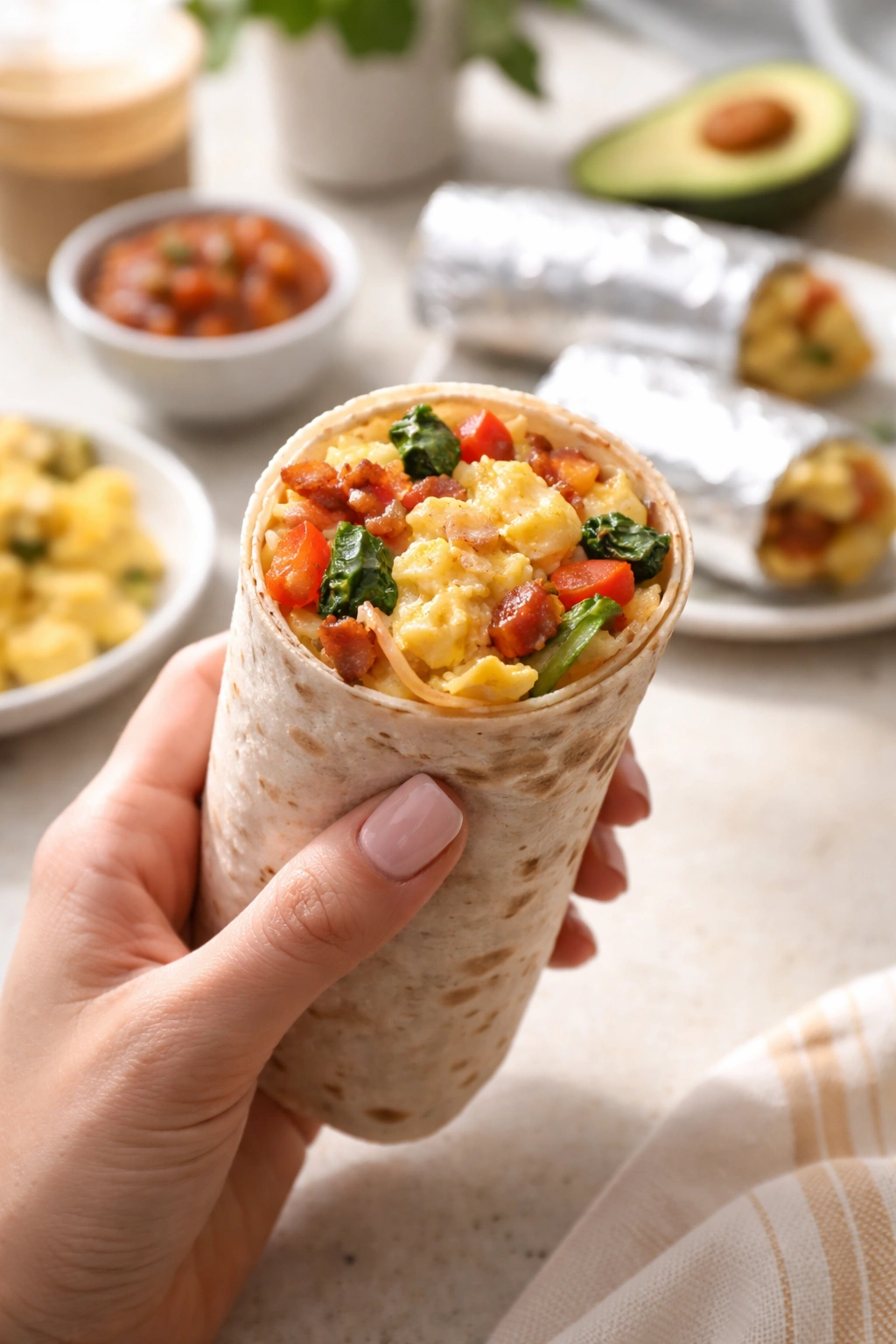
Make-ahead breakfast burritos are one of the most beloved freezer meals among new parents, and for good reason. Scramble eggs with whatever vegetables you have on hand—diced bell peppers, spinach, mushrooms, tomatoes—then wrap them in a large tortilla with cheese, beans, and a drizzle of salsa. Wrap each burrito tightly in foil and freeze. When you need breakfast, unwrap one, microwave it for 90 seconds, and eat it directly in your hand while your baby naps or sits nearby. The combination of eggs, cheese, and beans gives you protein, healthy fats, and carbohydrates that actually sustain you.
Homemade breakfast sandwiches work just as well. Build a sandwich with a toasted English muffin or bagel, a fried egg, a slice of cheese, and a piece of ham or bacon. Wrap it individually in foil, freeze, and reheat in the toaster oven or even the microwave. These taste best eaten warm, which means you can actually sit down for the two minutes it takes to reheat and eat without worrying about the food getting cold.
Mini frittatas baked in muffin tins come out perfectly portioned and freeze beautifully. Whisk together eggs with milk, pour the mixture into greased muffin tins, top with cooked sausage or bacon, vegetables, and cheese, then bake at 350°F until set, about 20 minutes. Pop them out, let them cool, freeze them in layers separated by parchment, then grab two or three for a quick breakfast that’s protein-rich and genuinely filling.
Oatmeal pancakes or banana oat pancakes made in advance and frozen are underrated. Make a double batch of pancakes using basic oatmeal pancake batter, let them cool completely, then layer them in a freezer container. Toast them in your toaster when you’re ready to eat, stack them, and you’ve got a sturdy, hold-in-your-hand breakfast with whole grains, protein, and carbohydrates.
Quick Lunch Ideas You Can Eat While Holding Baby
Lunch is often the most chaotic meal for new parents because by midday you’re exhausted, your baby has had multiple feeding sessions already, and you still have the entire afternoon ahead. Lunch meals that work are typically things you can assemble quickly from pre-made components or that were prepped the day before.
Grain bowls with separate components are brilliant for postpartum eating. Cook a big batch of rice or quinoa and freeze it in portions. Roast vegetables in bulk (bell peppers, broccoli, sweet potato, carrots) and store them. Cook chicken or prepare tofu. Then when you’re hungry, reheat the grain, top with cold or reheated protein and vegetables, and eat it from a container with a spoon. Everything can be prepared ahead, reheated in 90 seconds, and eaten without requiring two hands for any part of the process.
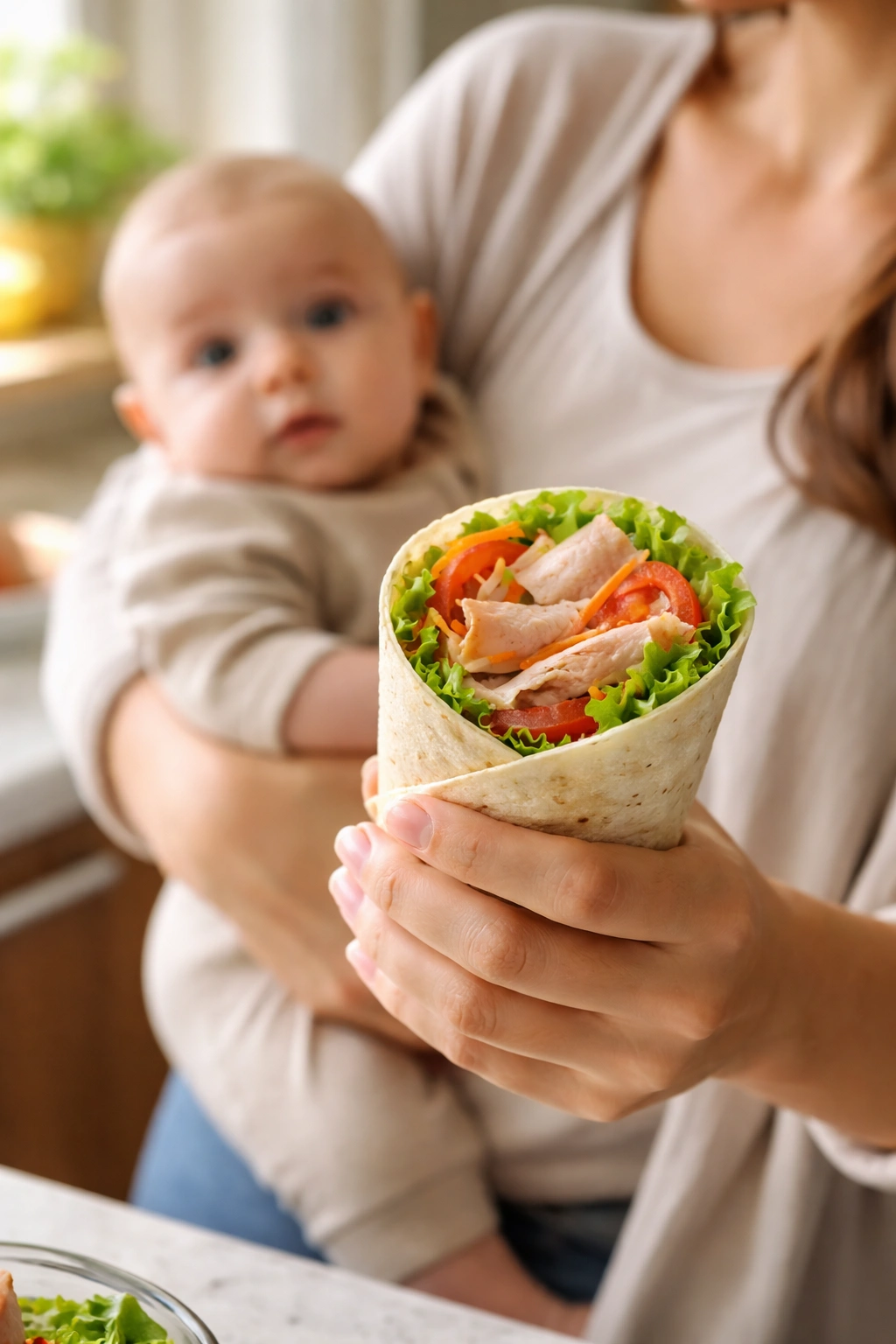
Wraps and roll-ups are the MVP of one-handed lunches. A large tortilla, some hummus or cream cheese spread, deli meat or cooked shredded chicken, cheese, and pre-cut vegetables (or even pre-made salad mix) creates a meal you can hold in one hand, tear off bites with your teeth if needed, and eat over 20 minutes while attending to your baby. These also travel well if you want to eat on the couch, in your bed, or wherever you actually end up sitting.
Pasta salads made the day before taste better than fresh anyway. Use a small pasta shape like orzo or ditalini, toss with olive oil, diced vegetables, protein (canned chickpeas, white beans, diced rotisserie chicken), and a simple vinaigrette. It’s filling, travels well, and honestly tastes better as it sits for a few hours.
Cheese and meat boards or grazing plates aren’t typically thought of as meals, but when you assemble them thoughtfully they absolutely are. Arrange sliced cheese, deli meats, nuts, whole grain crackers, fresh fruit, and cut vegetables on a plate or in a container. You can grab pieces throughout the day without formal eating, and you’ll naturally get a mix of protein, fat, fiber, and carbohydrates.
Quesadillas made in advance and frozen reheat wonderfully. Fill a flour tortilla with cheese, cooked ground meat (seasoned with taco seasoning or your preferred spices), and diced vegetables. Cook it in a pan until crispy on both sides, let it cool, wrap individually, and freeze. Reheat in a skillet or toaster oven until warm and crispy, then eat with your hands while your baby sits nearby.
Satisfying Dinner Freezer Meals
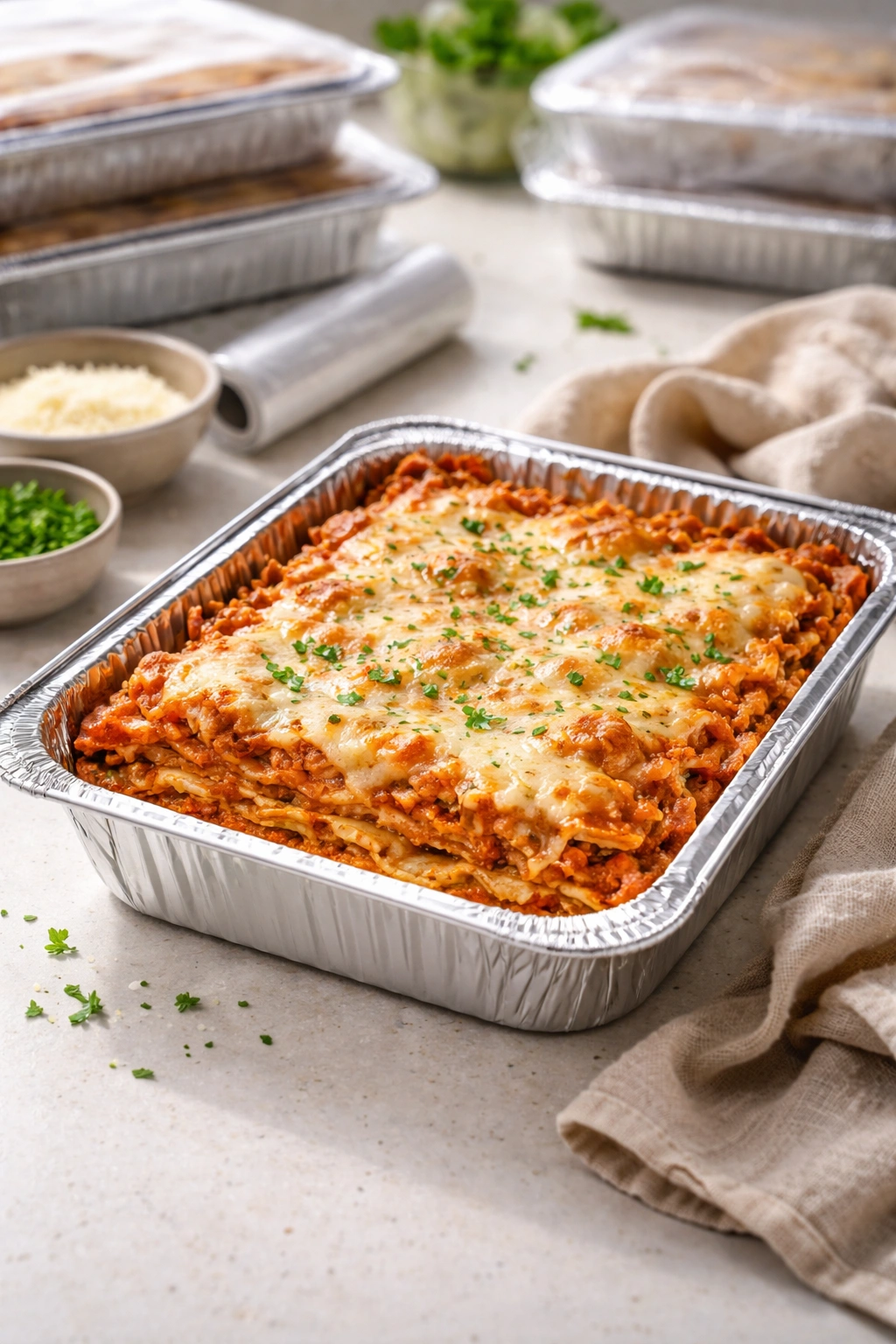
The best gift you can give yourself during pregnancy is making freezer meals specifically designed for one-handed eating postpartum. These are different from typical make-ahead meals because they’re planned around the reality of your constrained situation.
Slow cooker meals are a category of their own because they require almost no hands-on time. Make a big batch of shredded chicken with salsa, pulled pork with barbecue sauce, or chili in the slow cooker, then freeze in portions. Reheat in the microwave or on the stovetop, and you’ve got a meal base that can be served with rice, in tortillas, over baked potatoes, or even eaten with a spoon straight from a bowl if you’re really desperate.
Lasagna or baked pasta dishes freeze and reheat beautifully. Make them in disposable aluminum pans (so new parents don’t have to return dishes) and include simple reheating instructions. These are complete meals—protein, vegetables, carbohydrates, and fat all in one dish—and they taste even better the second day because flavors have time to meld.
Hand pies and empanadas might seem like a lot of work until you realize how perfect they are for postpartum eating. A pastry crust filled with seasoned meat, vegetables, and cheese creates a meal you can literally hold in one hand and eat while walking around your house or sitting on the couch. Make a big batch, freeze them on a baking sheet, then transfer to a freezer bag. Reheat in a 350°F oven for 15 minutes and you have an honest-to-goodness meal.
Soup and stew in frozen portions work well, but only if you have a plan for eating them one-handed. This is where freezing soup in individual containers makes sense—you can reheat one container, eat it with a spoon, and it’s manageable even with limited hands. Avoid the temptation toward thin soup and instead focus on thick stews, chowders, and bean-based soups that are more substantial.
Breakfast burritos, pizza rolls, and other hand-held frozen items made at home beat store-bought versions because you can control the ingredients and make them exactly how you like them. Breakfast burritos we’ve covered, but pizza rolls made with quality ingredients, filled with cheese and cooked vegetables or meat, and eaten straight from the freezer or slightly warmed, are also underrated.
Meatballs and sausages frozen in portions are clutch. Make a big batch of meatballs with a mix of ground meat, breadcrumbs, egg, and seasonings, bake them, cool them, then freeze. You can reheat them in tomato sauce (turning them into quick spaghetti), toss them with teriyaki sauce, or even eat them plain with dipping sauce. They work for breakfast, lunch, or dinner depending on what you serve them with.
No-Cook Snacks for Survival Mode
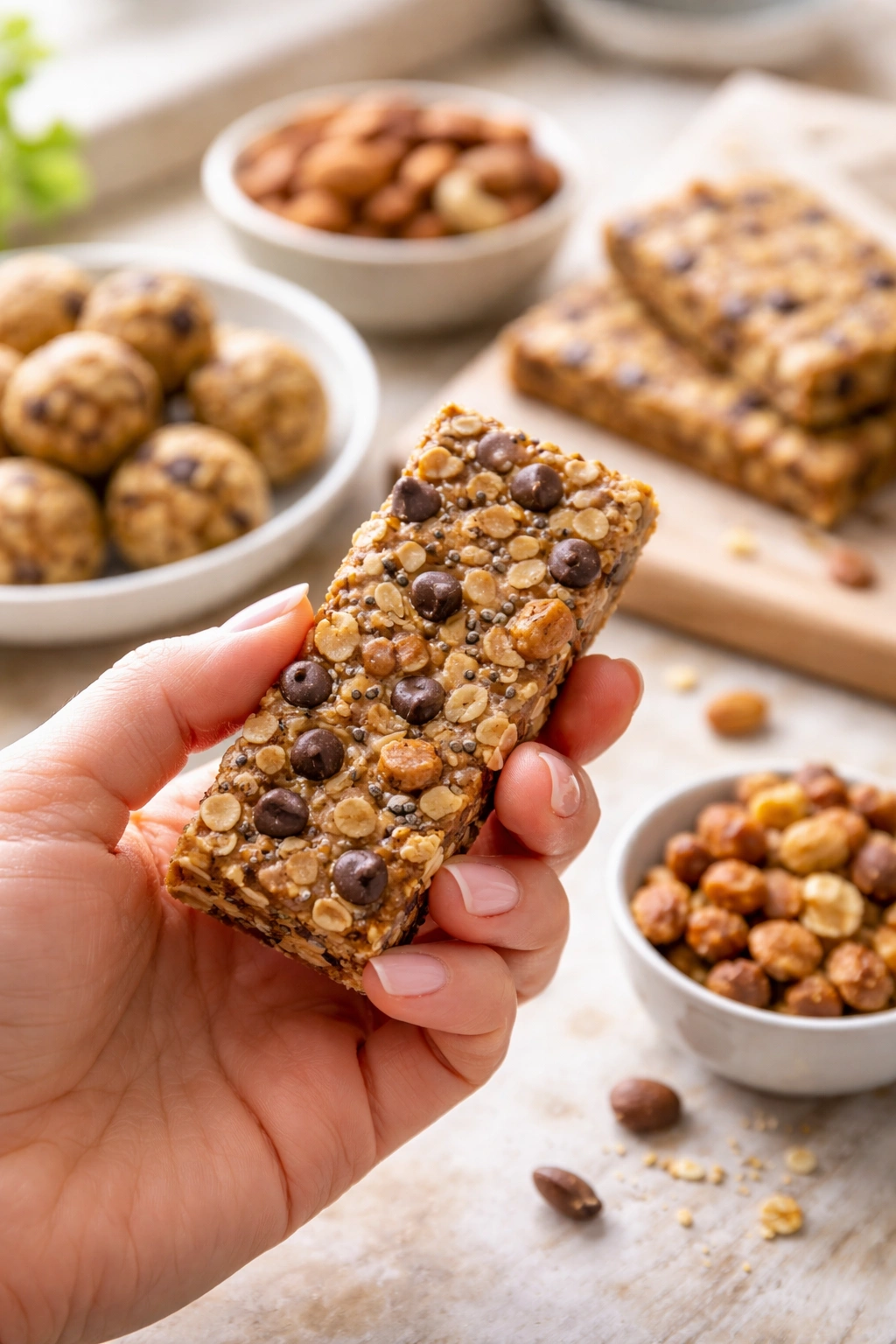
There will be days when you can’t actually cook, or more realistically, you can’t find 20 minutes to make something happen. On those days, no-cook snacks that are genuinely nourishing become your secret weapon. These are the foods to keep constantly on hand and the ones to ask friends and family to bring.
Lactation bars and energy bites are specifically designed for postpartum nutrition and come together without any cooking. Combine oats, nut butter, honey, and add-ins like coconut, ground flax, or mini chocolate chips, press into a pan, and refrigerate. They freeze beautifully and taste fine even at room temperature, which means you can grab one while breastfeeding or holding a sleeping baby without any logistics involved.
No-bake granola bars made with oats, nuts, dried fruit, and a binder like nut butter or honey can be made in a huge batch and eaten for weeks. These have staying power because of the combination of carbohydrates, protein from nuts, and healthy fats, so they actually prevent the energy crash that comes from eating refined carbohydrates alone.
Mixed nuts and trail mix seems obvious, but the key is actually keeping it on hand and accessible. Put a container of your preferred mix on every flat surface where you typically sit—nightstands, side tables, the arm of your couch. When you’re hungry and stuck holding a baby, you can grab a handful without moving more than your arm.
Cheese and deli meat roll-ups require literally no cooking and are ready in 30 seconds. Roll sliced cheese and deli meat together, and you’ve got a protein-rich snack you can eat with one hand. These are particularly good because they’re substantial enough to prevent hunger, taste good at room temperature, and require zero prep skills.
Pre-cut fruit and vegetables with dip appeal to different moods. Some days you want something fresh and hydrating, other days you want something hearty. If you have access to someone willing to prep these (mention this to people who ask what you need), grab containers of cut fruit, cut vegetables, and keep hummus or a cheese-based dip on hand. You can eat these straight from the container with your hand without needing utensils.
Hard boiled eggs are the most underrated postpartum snack. Cook a dozen at once, keep them in the fridge, and when you’re hungry, grab one, peel it quickly (this can be done one-handed), and eat it. If peeling one-handed seems impossible, buy pre-boiled eggs from the store. Yes, they cost more, but the convenience when you’re in survival mode is worth it.
Yogurt and cottage cheese with granola or mixed into can be eaten straight from the container with a spoon. The protein keeps you fuller longer, and the dairy contributes to your calcium intake, which is especially important if you’re breastfeeding. Individual cups make this even easier because there’s no dish to return to the kitchen.
Portable One-Handed Baked Goods
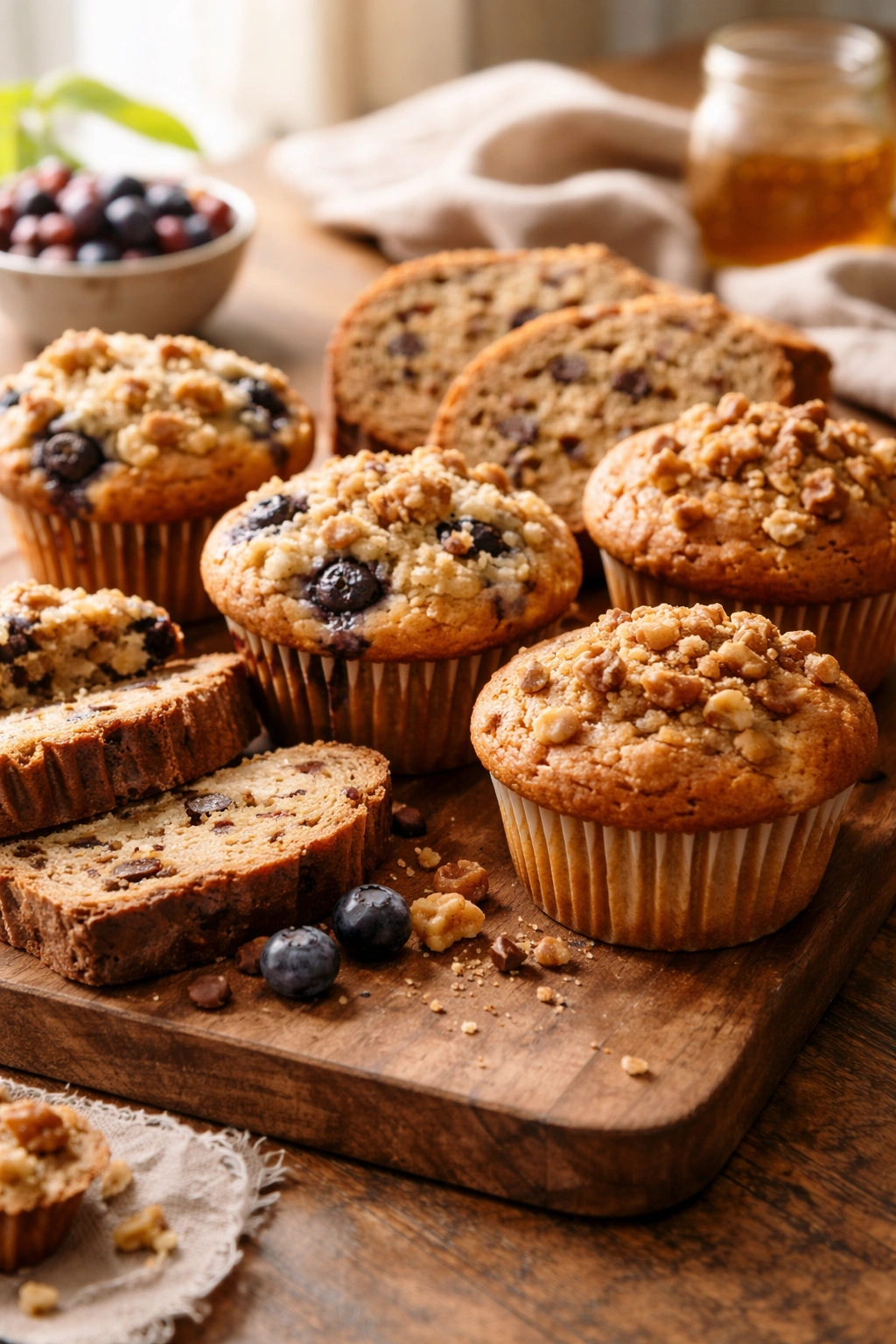
Baked goods are wildly underrated as postpartum nutrition. They’re easy to hold, taste good, can be made in advance, and if you focus on recipes with whole grains, nuts, and seeds, they provide legitimate nutrition rather than just empty calories.
Muffins are one of the most versatile one-handed foods. Bake a big batch—banana nut, blueberry, chocolate zucchini, or any combination you like—and freeze them in a big bag. You can grab one frozen and eat it as it thaws, or pop one in the microwave for 20 seconds and eat it while warm. A good muffin made with whole grains and nuts provides fiber, protein, and carbohydrates that actually sustain energy.
Banana bread or zucchini bread sliced and individually wrapped (or layered in a freezer bag with parchment between slices) is perfect because you can grab one slice, let it thaw for two minutes, and eat it. These keep for weeks in the freezer and taste fine at room temperature, which means you’re not dependent on having a working microwave when you want to eat.
Granola bars and breakfast bars made at home taste infinitely better than most store-bought versions. Make a big batch of oat-based bars with honey, nut butter, coconut, and seeds, cool them completely, cut into portions, and wrap individually. These freeze well, stay fresh for weeks, and are genuinely filling because they’re usually denser and more protein-rich than store-bought versions.
Mini pancakes or waffles made in bulk and frozen work wonderfully. Make a big batch of whole grain pancakes, freeze them in layers, then toast them individually when you want to eat. Stack two or three with a bit of nut butter in the middle for a quick breakfast or snack. These work particularly well because they’re sturdy enough to hold while walking around, but soft enough to eat without teeth.
Scones and biscuits can be made ahead, frozen, and warmed up quickly. Buttermilk scones split and filled with jam and cream are technically fancy enough to feel like you’re doing something nice for yourself, but they’re simple enough to make in 30 minutes when you have a free afternoon.
Hydration and Drink Ideas
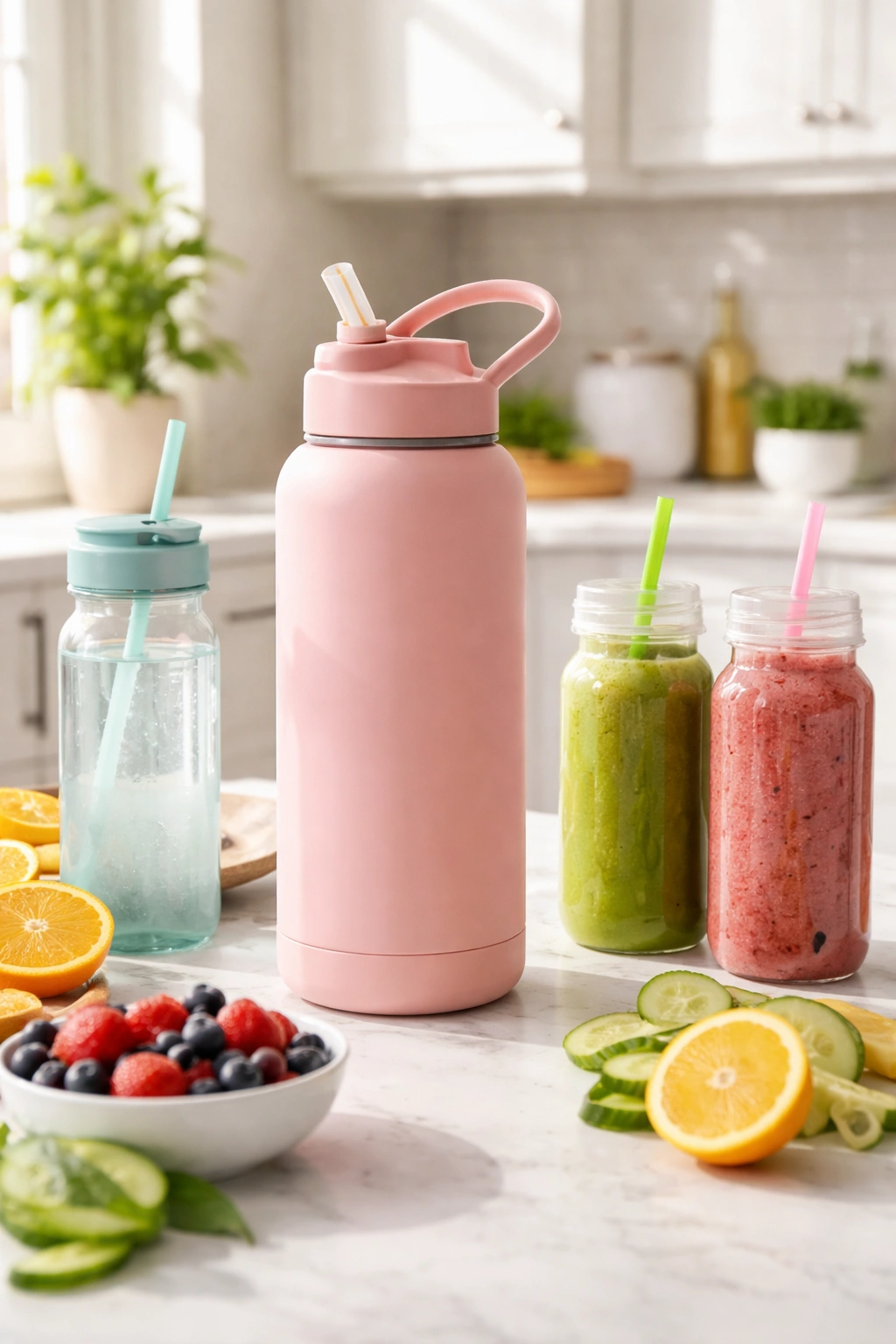
Staying hydrated during postpartum recovery and especially while breastfeeding is crucial, but it’s easy to forget when you’re in constant motion and holding a baby. The solution is making hydration as one-handed and accessible as food.
Water bottles with straws are non-negotiable. Get one that’s large enough to hold water for several hours (48 ounces minimum), fill it once or twice a day, and keep it within arm’s reach wherever you typically sit. The straw is essential because it means you’re not tilting your head back awkwardly or needing both hands to lift a cup.
Lactation smoothies made in advance and frozen in portions serve double duty as nutrition and hydration. Blend milk or milk alternative with fruits, oats, nut butter, and ground flax, then freeze in mason jars. Let one thaw during the day and you’ve got a nutrient-dense drink that counts as both a snack and hydration. These are particularly valuable if you’re breastfeeding because they support milk production while actually nourishing your own body.
Bone broth sipped warm from a mug is hydrating, calming, and provides collagen and minerals that support postpartum healing. Make a big batch (or buy it), portion into mug-sized containers, freeze, then reheat as needed. Sip it while nursing or holding your baby—it’s warm, comforting, and genuinely nourishing.
Coconut water or electrolyte drinks are worth keeping on hand if you lose fluids quickly through sweating (common postpartum) or if you struggle to drink plain water. These provide hydration plus electrolytes, which is particularly important if you’re nursing since you lose sodium through breastfeeding.
Herbal teas served cold or warm appeal depending on the day. Pregnancy-safe teas like red raspberry leaf or nettle can be brewed in big batches and kept cold, then served over ice or warmed up as needed. These are hydrating and comforting in a way that plain water sometimes isn’t.
Homemade lemonade or flavored water infused with fruit keeps hydration interesting. Make a big pitcher with lemon slices, cucumber, or berries, keep it in the fridge, and drink it throughout the day. The flavor makes it more likely you’ll actually drink it, and the added fruit provides trace nutrients.
Meal Prep Strategies for New Parents
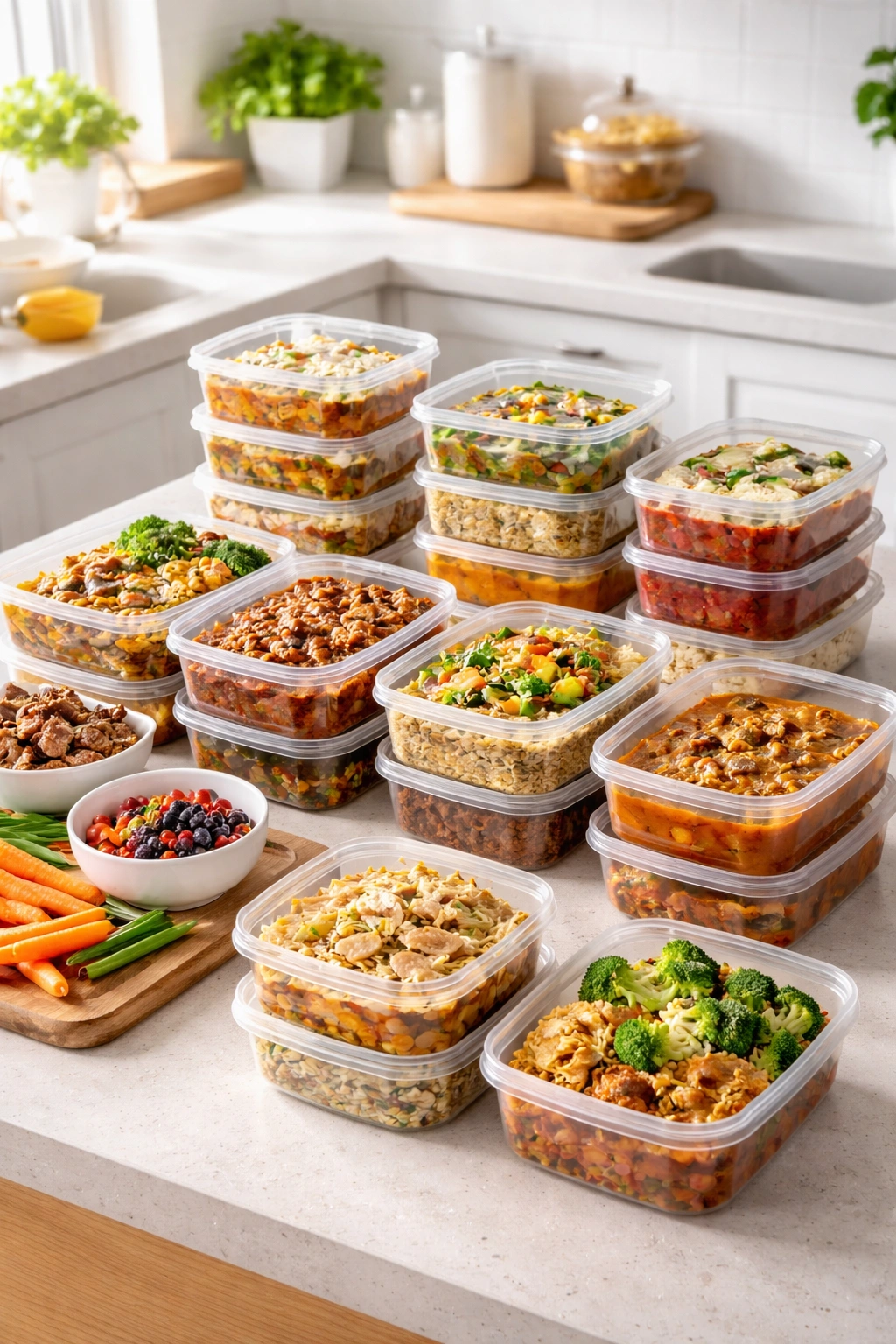
The best one-handed meals are the ones you’ve already made before the baby arrived or that you accept as gifts from people who offer help. Strategic meal prep during pregnancy (or before recovery ends) is what actually makes the postpartum period manageable.
Batch cooking during the final weeks of pregnancy is the most practical approach. Pick five meals you genuinely enjoy eating, make double or triple batches of each, portion them into freezer containers or aluminum pans, label them clearly with the dish name and reheating instructions, and freeze. The magic number is usually 20-25 meals—enough to cover the first three to four weeks of chaos.
Recruit help for your meal prep day. Cooking 25 meals is a lot, and trying to do it while pregnant (or while recovering) defeats the purpose. Ask a friend or family member to come spend a Saturday with you cooking. They handle chopping and stirring while you supervise, make decisions, and rest. You’ll end up with a full freezer and a friend will have spent meaningful time with you.
Ask people to bring specific things instead of generic offers to “help.” When friends and family ask what they can do, instead of saying “anything,” tell them exactly what you need: “Would you make two pans of lasagna?” or “Could you bring us breakfast burritos and freeze them?” People want to help concretely, and you’ll end up with food you actually want to eat.
Use disposable containers for gifts of food. Aluminum pans, foil takeout containers, or disposable plastic containers mean new parents don’t have to wash dishes, organize returning your containers, or feel guilty about them sitting around. A new parent’s mental load is already massive—remove the obligation of returning dishes.
Prep components instead of whole meals sometimes. Cook multiple pounds of ground meat seasoned different ways and freeze in portions. Roast big batches of vegetables. Cook rice or grains. Then you or the new parents can mix and match components into whatever sounds good that day. This approach gives flexibility that complete frozen meals sometimes don’t.
Embrace the freezer as your secret weapon. The postpartum period is not the time to eat fresh and minimize freezer use. Your freezer is your life support system. Full it completely before the baby arrives if you can, keep accepting frozen meals from well-wishers for weeks, and don’t feel any guilt about not cooking from scratch.
Budget-Friendly One-Handed Meals
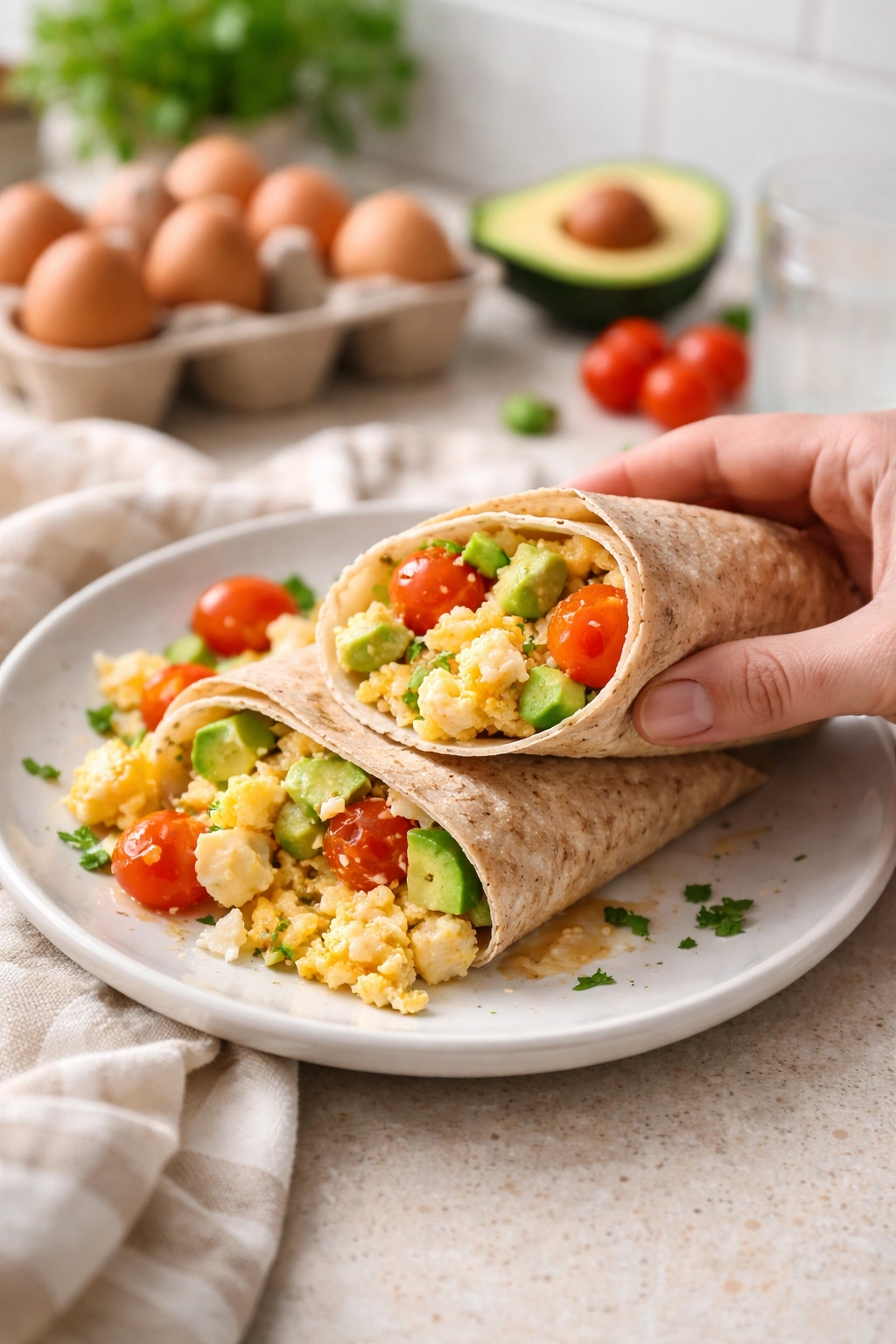
Quality nutrition postpartum doesn’t require spending money you don’t have. Strategic shopping and smart use of shelf-stable ingredients keeps one-handed meals affordable while still nourishing.
Eggs are your best friend. They’re inexpensive, versatile, and packed with protein and choline (important for postpartum brain health and recovery). Scrambled, boiled, in omelets, in frittatas, or as part of breakfast sandwiches—eggs work at any meal and cost very little.
Buy store-brand everything. Granola, yogurt, cheese, deli meat, bread, canned beans, frozen vegetables, and even the fancy ingredients all have store-brand versions that taste nearly identical to name brands while costing significantly less. New parent budgets rarely have room for paying extra for brands.
Shop in bulk for non-perishables. Nuts, seeds, oats, dried fruit, beans, rice, and pasta cost less when bought in large quantities. Buy these items in bulk and store them properly (glass containers with tight lids for nuts and seeds, to prevent rancidity).
Buy whole chickens and rotisserie chickens interchangeably. Whole chicken costs less per pound but requires cooking. Rotisserie chicken costs more but requires zero effort. Have a mix of both—use rotisserie chicken on your absolute most exhausted days, and cook whole chickens on days when you have slightly more capacity.
Use canned beans and frozen vegetables freely. These cost less than fresh, last forever, and provide identical nutrition. Don’t let anyone make you feel like you need fresh vegetables to be “healthy” postpartum—canned beans and frozen broccoli are absolutely legitimate whole foods.
Make your own granola, trail mix, and snack bars. The markup on these items in stores is enormous. Making them yourself costs a fraction of the price and usually tastes better.
Making Freezer Meals Work in Practice
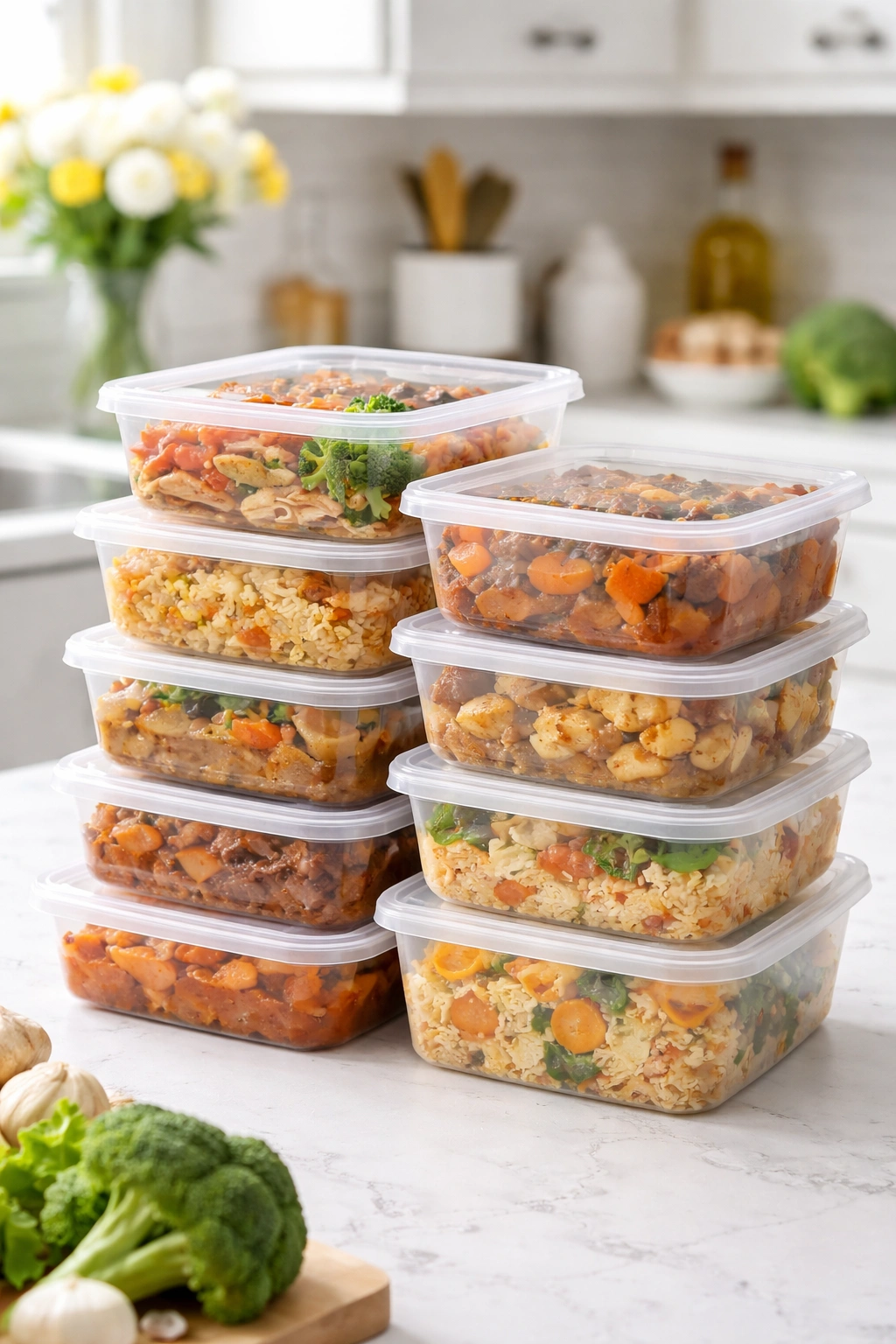
Freezing meals is one thing; actually reheating and eating them when you’re in survival mode is another. The difference between a freezer full of meals that help and a freezer full of meals that make you feel guilty is often just how you package and label them.
Label everything clearly with the dish name and reheating instructions. Include the oven temperature, cooking vessel (oven-safe container? needs a dish?), approximate time, and whether it needs to thaw first. Someone else might be reheating your meal when you’re too tired, or you might forget how to cook something you made six months ago. Clear instructions prevent waste and frustration.
Use containers you don’t care about returning. Disposable aluminum pans, plastic containers you can throw away, or foil-wrapped portions are better than borrowing your mother-in-law’s fancy casserole dish. The moment you have to wash dishes and figure out a plan to return containers, your meal stops being a gift and becomes another item on your to-do list.
Divide larger recipes into smaller portions. If a recipe serves eight, freeze it as two four-serving containers, or even four individual portions. This flexibility means you can pull out exactly what you need without wasting space or food.
Include simple sides or complement items. A meal that’s just protein and sauce is less useful than one paired with simple sides. Include a bag of frozen vegetables to roast, a container of rice to reheat, a loaf of bread, or instructions for side dishes that work. This sounds trivial until you’re too tired to think about what to serve alongside your meal.
Make reheating as simple as possible. Microwave-safe containers with clear instructions are better than meals that require oven baking. Some people don’t have working ovens for periods of time, or they have a newborn who screams every moment, and a 45-minute baking time is impossible. Include both oven and microwave instructions if possible.
Freeze soups and sauces in quart-sized containers rather than gallon. A quart is a manageable amount for a meal or two without requiring a side project to figure out storage. Gallon-sized containers are harder to stack, harder to thaw, and often overwhelming in quantity.
Foods to Keep Constantly on Hand
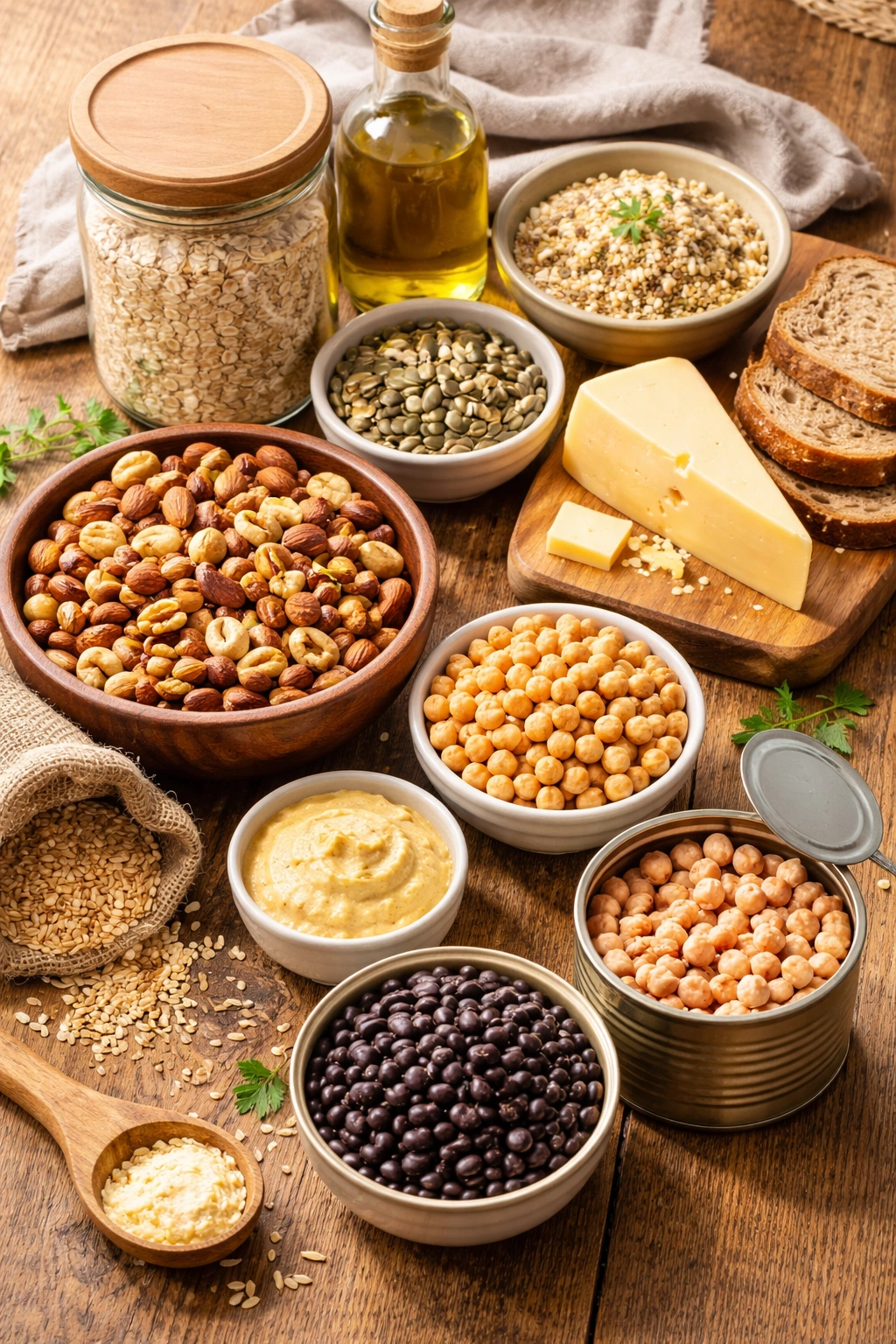
There are certain categories of food that do so much work during the postpartum period that they’re worth keeping abundantly stocked. These foods bridge the gap between when you have energy to eat well and the days when you’re just trying to survive.
Nuts and seeds in all forms—whole, as nut butters, as granola, as snack bars. The combination of protein, healthy fat, and fiber keeps energy stable and satiety high. Buy whatever form appeals to you most and keep it accessible.
Whole grains in forms that require minimal prep—bread, oats, whole grain pasta, brown rice. These provide sustained energy and fiber crucial for postpartum digestion. Avoid the temptation toward white bread and refined carbohydrates, which spike blood sugar and leave you hungry again in an hour.
Cheese in all forms. String cheese, sliced cheese, blocks of cheese, even processed cheese slices if that’s what you’ll actually eat. Cheese is protein, fat, and calcium, all crucial postpartum. It tastes good, keeps for a long time, and requires zero cooking.
Canned beans and lentils. These are complete proteins (especially with a grain), incredibly affordable, and require no cooking—just opening. Keep several varieties on hand and use them in salads, wraps, soups, or straight from the can if you’re desperate.
Good quality deli meats and rotisserie chicken. Yes, these are processed and they’re not as “pure” as cooking from scratch. That’s genuinely irrelevant when you haven’t eaten in six hours because your baby won’t be put down. These provide quick, complete protein when that’s all you can manage.
Vegetables in frozen form. Frozen broccoli, peas, carrots, mixed vegetables—these are nutritionally identical to fresh, cheaper, and require minimal cooking. Roast them in the oven while you do something else, or throw them in soup.
Fruit in whatever form you’ll eat it. Fresh, frozen, canned, dried, or as juice—fruit counts. Don’t wait for perfect berries if bananas and apples are what you’ll actually eat. Frozen berries are fantastic because they’re cheap, last forever, and work in smoothies.
Bread and other starches in the freezer. Bread, tortillas, bagels, English muffins—keep extra in the freezer so you’re never without something quick to build a meal around.
Tips for Eating Well When You Can’t Sit Down
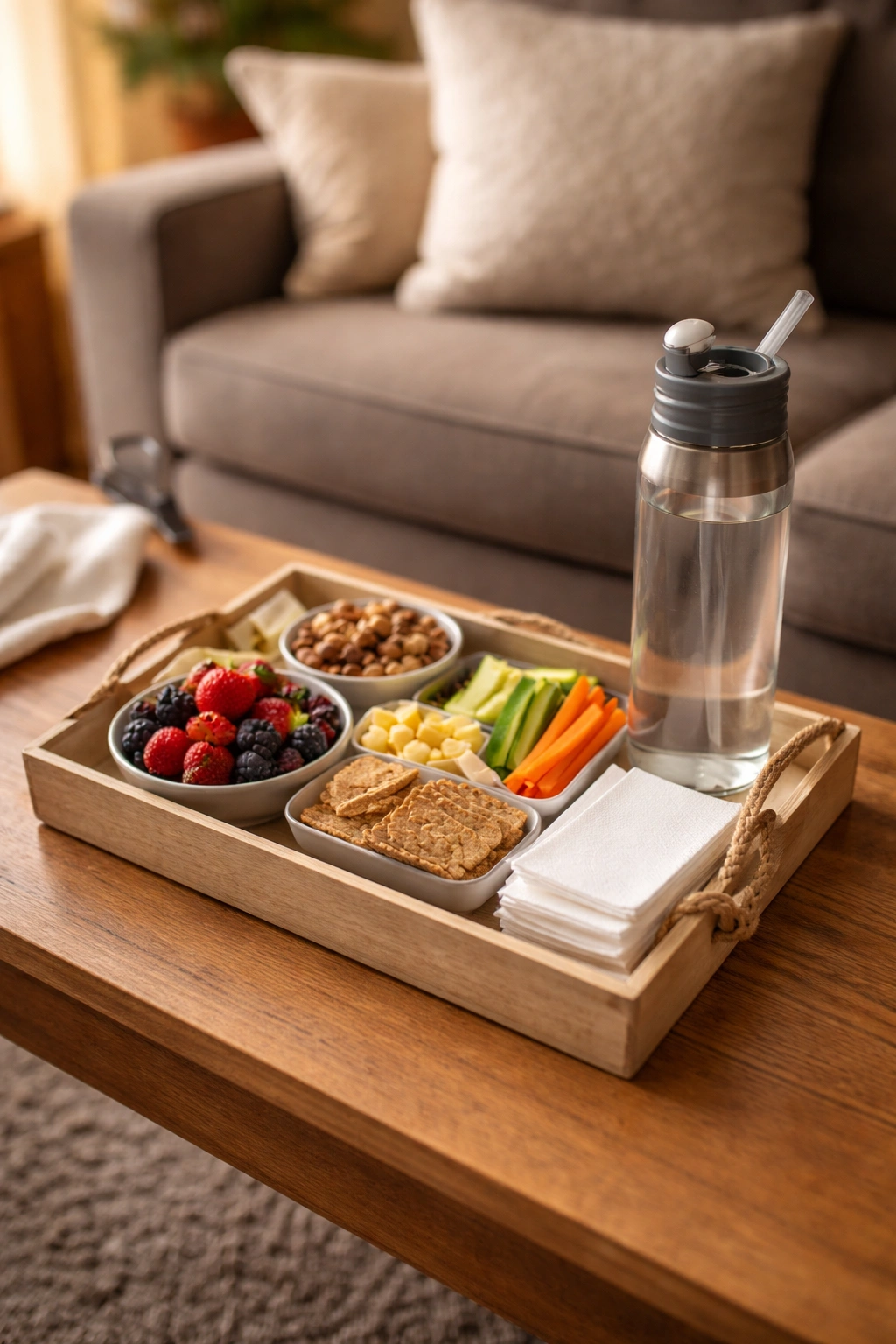
Sometimes the logistics of postpartum eating go beyond food choice and require creative problem-solving around when and where you can actually eat.
Create a snacking station wherever you spend the most time. If you camp on the couch or in your bed nursing, set up a small table or basket next to your spot with easy-grab foods, a water bottle, and napkins. You should literally not have to move to eat a snack.
Accept help with every meal. If someone offers to bring food, say yes immediately. If someone offers to sit with your baby for 30 minutes while you eat, say yes. If someone offers to prep your meal, say yes. This isn’t weakness; this is using resources strategically during a recovery period.
Eat what sounds good, not what you “should” eat. If you can only stomach toast and butter right now, eat toast and butter. If you desperately want candy, eat candy. Your body is recovering, your stress is high, and forcing yourself to eat salad when you want pasta is more likely to result in not eating at all.
Prep your own meals when you have a few good hours. Spend 30 minutes making sandwiches, wrapping them, and freezing them. Make a big batch of pasta. Cook a huge pot of soup. Do these things during rare moments of energy, then live off them during the harder days.
Keep paper plates and disposable utensils on hand. Washing dishes is a massive undertaking when you’re barely sleeping. Using disposable products isn’t lazy—it’s practical recovery strategy.
Normalize eating messy foods with your hands. Whether it’s pizza, sandwiches, fried chicken, or ribs, eating finger foods while holding a baby is totally acceptable. Nobody is judging your eating habits while you’re three weeks postpartum.
Final Thoughts
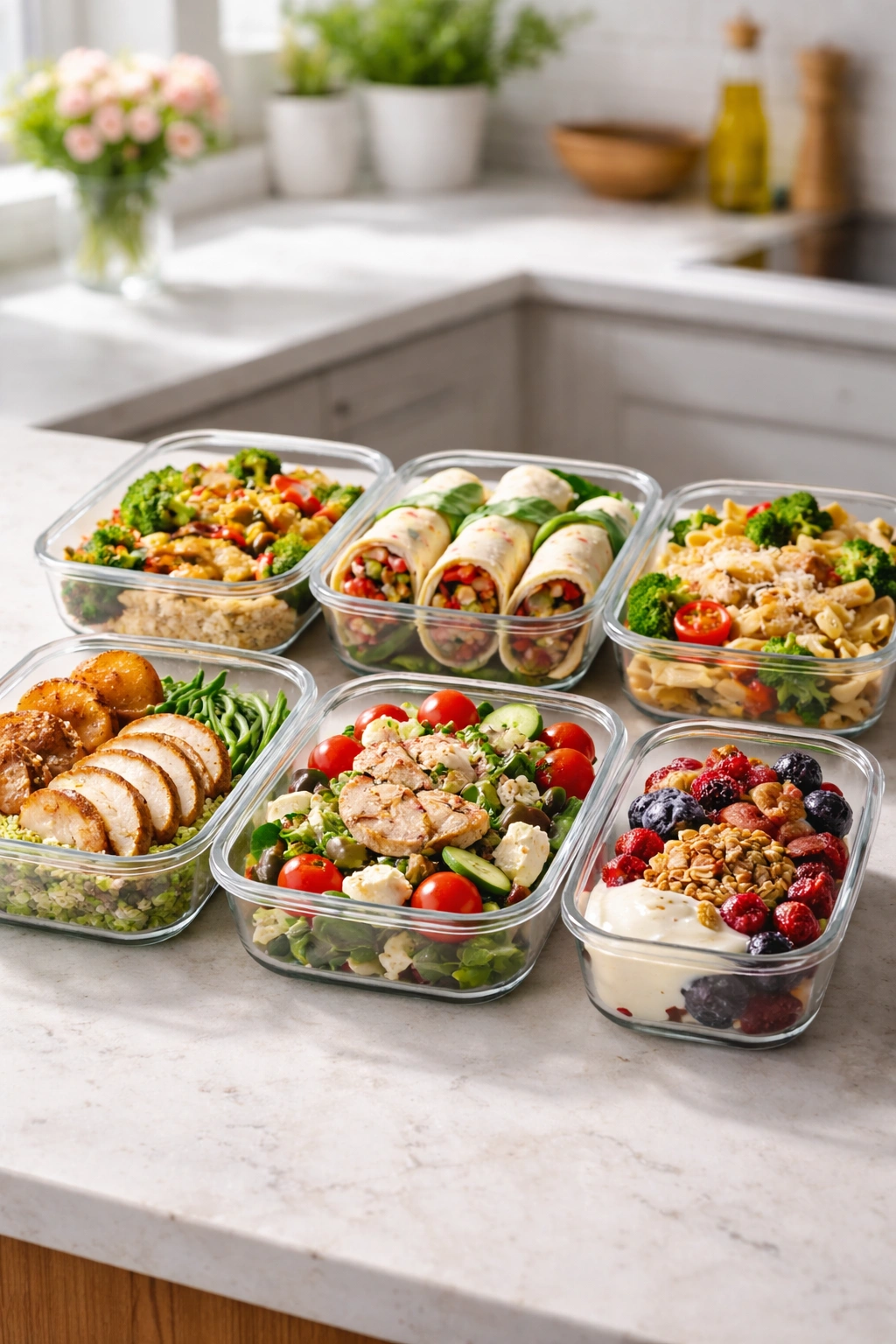
The first weeks and months with a new baby feel like an entire season compressed into days. Every moment matters, and your own health matters because your baby needs you functional and recovering well. One-handed eating isn’t a limitation to work around—it’s actually a gift, because it forces you to be intentional about the meals that get made, the foods that get stocked, and the help that gets accepted.
The truth is that nourishing yourself well postpartum isn’t complicated. It’s eggs and cheese and nuts and bread. It’s meals you made ahead and froze. It’s food people brought to your house because you asked specifically. It’s accepting that your nutrition matters, and building your postpartum meals around the actual reality of holding a baby instead of pretending you’ll somehow find time to cook.
You don’t need special postpartum food or trendy ingredients. You need real food in quantities that satisfy, eaten when your hands are full, without guilt. Everything else—the meal plans and the elaborate recipes and the pressure to eat “well”—can wait. Right now, you just need to eat.
