



One of the biggest reasons people abandon meal prep isn’t the cooking itself — it’s the mountain of dishes that follows. You spend thirty minutes chopping and cooking, then another thirty scrubbing pans, washing cutting boards, and wiping down counters. By the time your kitchen is clean, you’re exhausted, and the appeal of home-cooked meals vanishes. But what if your dinner required only one pan, one sink moment, and genuine satisfaction at the table? One-pan cooking isn’t a compromise on flavor or nutrition. It’s actually where the best home meals happen.
The magic of one-pan cooking lies in how it forces intentionality. When everything cooks together, the flavors meld and deepen. Vegetables release their juices into the sauce. Proteins absorb the seasoning meant for everything else. You get more complexity from simpler ingredients because nothing’s hidden away in separate cookware. And from a practical standpoint, you’re cutting your cleanup time by roughly 75 percent — no exaggeration. That single pan or sheet tray becomes your entire kitchen operation, which means more time to actually enjoy your meal instead of standing at the sink.
This isn’t about settling for basic food either. One-pan cooking encompasses sheet pan roasts with caramelized vegetables and crispy-edged proteins, stovetop skillet meals where everything cooks in a single ten-inch circle, one-pot pastas that build creaminess from pasta starch alone, and slow-cooker meals where you literally drop ingredients and walk away. Whether you’re meal prepping for the week or cooking dinner on a Wednesday night, one-pan methods deliver restaurant-quality results with the cleanup profile of a snack.
Why One-Pan Cooking Changes Everything About Meal Prep
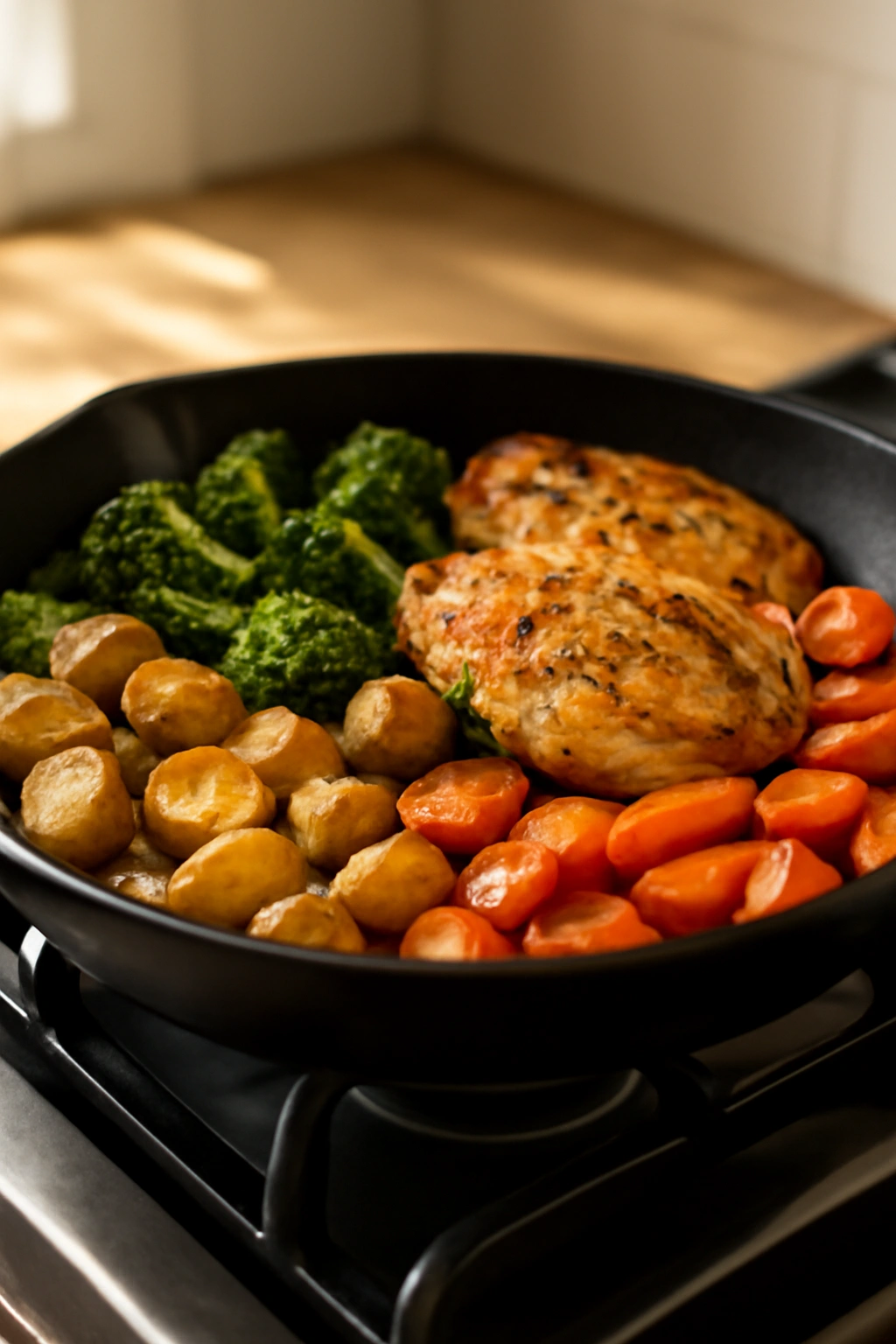
Meal prep traditionally means spending your Sunday afternoon in a hot kitchen, producing multiple sheet pans of roasted vegetables, separate containers of grilled protein, and measured portions of grains. You cook five different things, use fifteen different tools, and spend more time cleaning than cooking. One-pan meal prep flips this completely.
When you cook an entire meal in one vessel, every component finishes at the same time. You plate directly from the pan, portion immediately, and every container you make contains a complete, balanced meal instead of separate components you have to combine later. This means less decision fatigue during the week — you grab a container, reheat it, and you’re eating a finished dinner, not assembling a puzzle.
The practical benefit extends beyond just time savings. Cooking everything together means flavors develop in ways that separate cooking can’t achieve. Proteins cook in the rendered fat and liquid from vegetables. Starches absorb seasoning-infused cooking liquid. Aromatics like garlic and onion distribute their essence throughout every component. You’re creating meals with more depth, more moisture, and more finished texture from fewer ingredients and less active effort.
Why Cleanup Becomes Almost Irrelevant
A single pan with a little soapy water and a sponge takes ninety seconds. No casserole dishes with baked-on food requiring soaking. No cutting board that held raw chicken. No splattered stovetop or grimy colander. You cook, you serve, you rinse, and you’re done. For people with limited time or energy, this matters enormously. The barrier to cooking at home drops when you know the cleanup will take less time than the commercial break in a TV show.
The Mental Load Reduction
Part of meal prep exhaustion isn’t just the physical work — it’s the decision-making. When you’re cooking one pan, you’re thinking about one flavor profile, one texture progression, one cooking method. You’re not juggling timing for three different dishes, hoping the protein finishes before the vegetable overcooks and the starch dries out. You’re watching one thing. You’re managing one temperature. You’re making one dish sing.
The Best Types of Cookware for One-Pan Meals
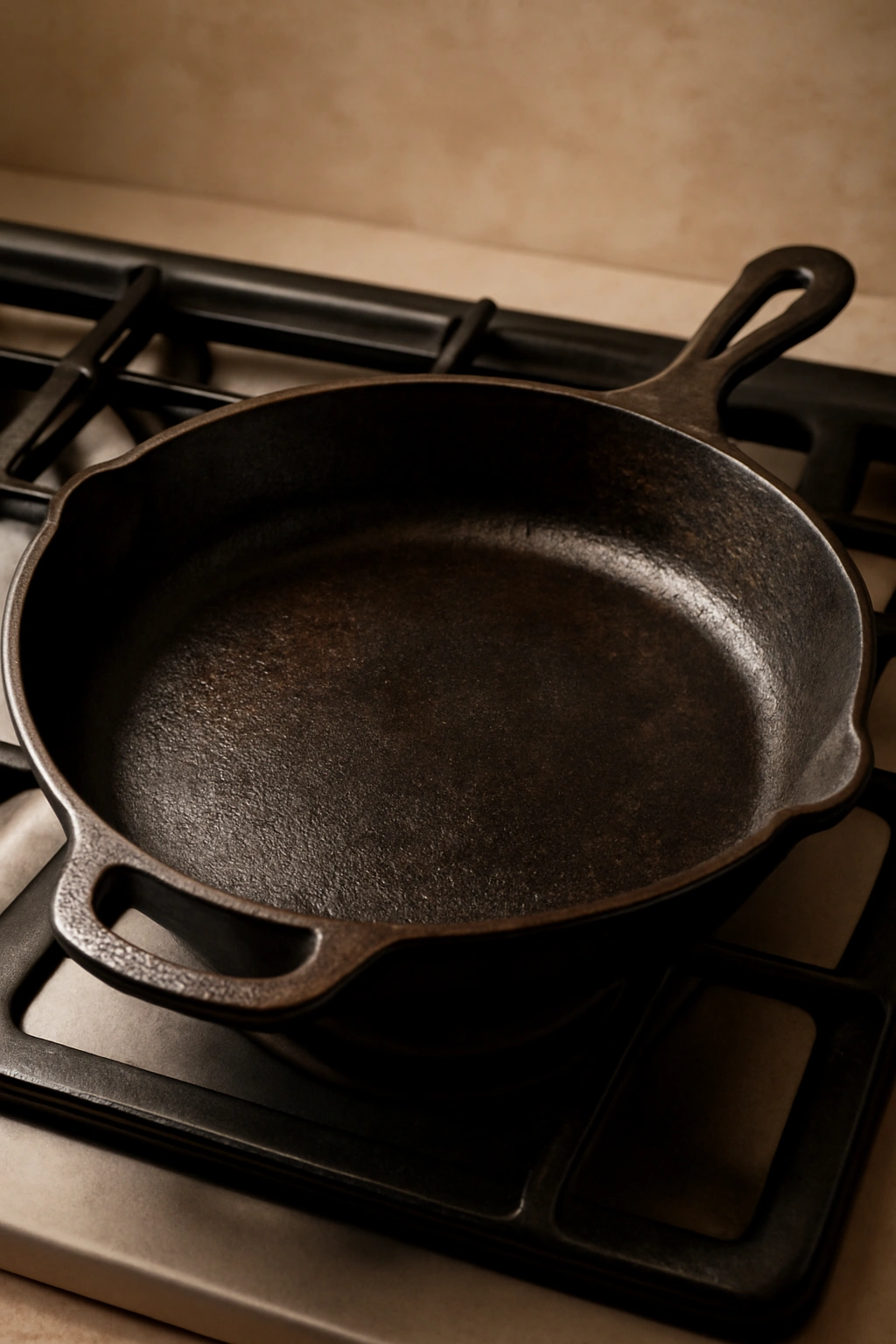
Not every pan works equally well for one-pan cooking. You want cookware that distributes heat evenly, won’t create hot spots that scorch food while leaving other areas underdone, and can handle both stovetop and oven work if needed. The right equipment actually becomes invisible — you’re focused entirely on the food, not fighting your tools.
Cast Iron Skillets: The Gold Standard for Versatility
A well-seasoned cast iron skillet is arguably the single best piece of one-pan cooking equipment you can own. These pans develop an incredible nonstick surface over time (often better than actual nonstick pans), retain heat extraordinarily well, and distribute it evenly across the entire surface. You can start a meal on the stovetop with a perfect sear, finish it under the broiler, and serve directly from the same pan — creating that restaurant presentation without transferring anything.
Cast iron holds heat so efficiently that even after you remove it from the burner, the food continues cooking gently. This is actually an advantage in one-pan cooking because it means your vegetables get soft and caramelized without overcooking, your proteins finish evenly, and everything stays warm while you plate. A ten-inch or twelve-inch skillet handles most one-pan meals for two to four people.
The only catch with cast iron is the initial learning curve. New skillets require seasoning (or buying pre-seasoned), and the cooking surface is genuinely sensitive to acidic ingredients like vinegar, wine, and tomato — these can strip seasoning if they simmer for extended periods. For a weeknight tomato-based pasta, cast iron works fine. For a long-simmering sauce, it’s better to use stainless steel or enameled cast iron, which has a protective coating that protects the seasoning underneath.
Stainless Steel Skillets: Reliable and Forgiving
A good stainless steel skillet won’t develop a nonstick surface the way cast iron does, but it’ll last forever, never needs seasoning, and handles acidic ingredients without any concern. High-quality stainless steel distributes heat very evenly, especially if the pan has an aluminum or copper core sandwiched into the bottom. The main learning curve is understanding that stainless steel prefers higher heat to develop a proper sear — if you cook too gently, food tends to stick.
Stainless steel also stands up beautifully to the dishwasher, unlike cast iron. If you’re doing weekly meal prep and want reliability without fussing, a twelve-inch stainless steel skillet with a heavy bottom is actually the most practical single-pan investment.
Sheet Pans: The Oven-Based Option
Heavy-duty sheet pans (the kind that don’t warp and have raised edges) are essential for oven-based one-pan meals. These are typically 18 by 13 inches, which gives you plenty of surface area to spread vegetables and proteins without crowding them. Crowded sheet pans steam instead of roast — the food releases moisture but has nowhere to escape, creating a pot-roasting effect rather than the deep caramelization you want.
For one-pan meals, you want at least two quality sheet pans so you can run two meals simultaneously during meal prep. Look for pans that feel substantial (thin ones warp and cook unevenly) and have a light-colored surface rather than dark — dark pans conduct heat more aggressively and can burn the bottoms of vegetables while the tops are still raw.
Ceramic and Enameled Cast Iron: Best for Braises and Long-Simmer Dishes
When a one-pan meal involves a sauce that simmers for twenty minutes or longer, enameled cast iron (like Le Creuset) or ceramic cookware (like traditional tagines) actually outperforms bare cast iron or stainless steel. The enamel coating protects the iron underneath from acidic ingredients while the mass of the vessel heats evenly and holds temperature beautifully.
Dutch ovens — basically large, deep, enameled cast iron pots with lids — are absolute workhorses for one-pan cooking. You can braise, roast, simmer, and slow-cook all in the same vessel. For people who want absolute versatility and don’t mind deeper, braise-style meals, a five- to seven-quart enameled Dutch oven is an investment that pays for itself repeatedly.
Sheet Pan Dinners That Practically Cook Themselves
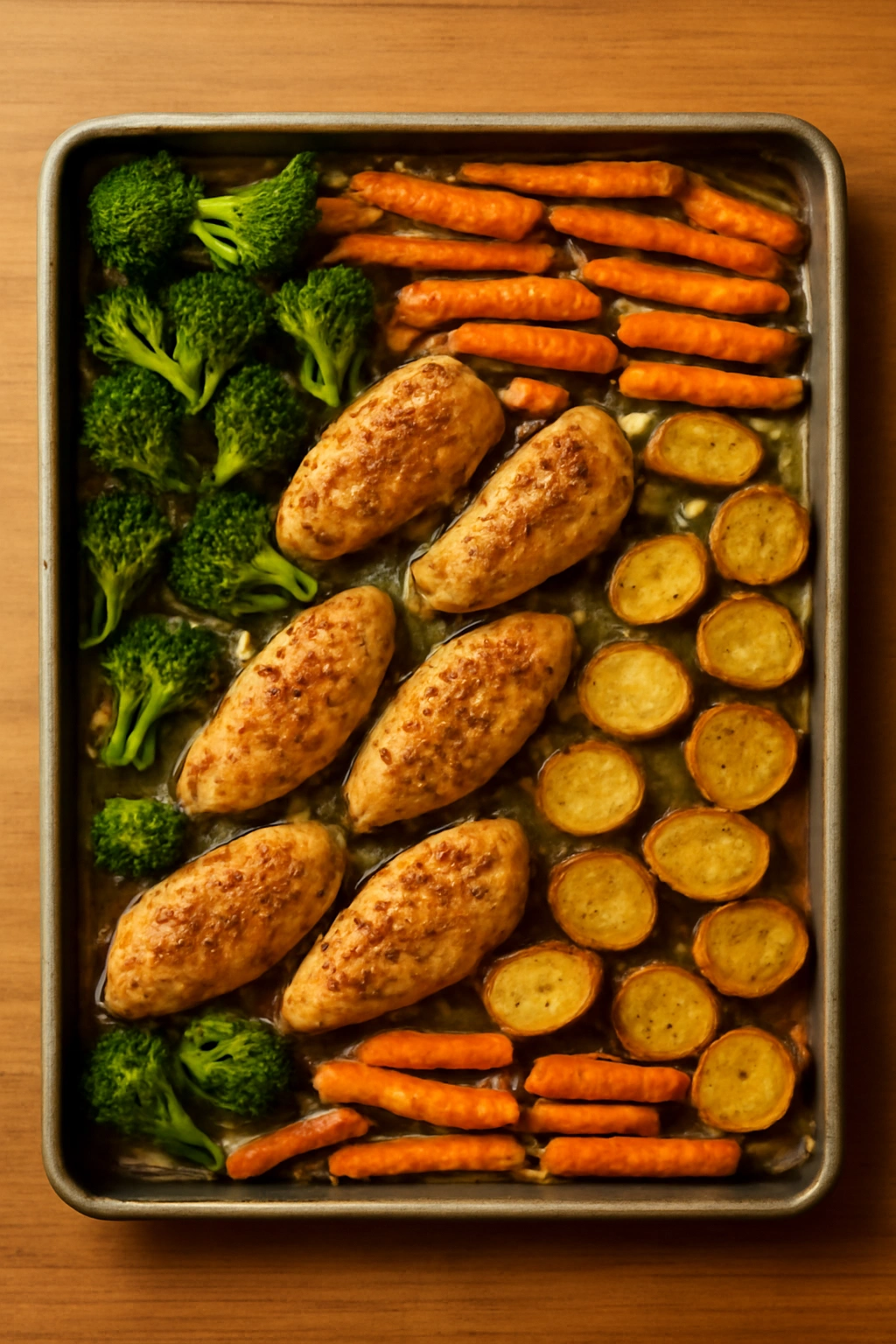
The simplest possible one-pan meal is a sheet pan dinner: arrange protein and vegetables on a single pan, roast everything together at high heat, and dinner’s done in thirty-five minutes with virtually no active cooking time. This is the foundation of efficient meal prep because the methodology is completely flexible — you can rotate proteins and vegetables endlessly while keeping the same basic approach.
The key to great sheet pan dinners is spacing and size. When you crowd a sheet pan, steam escapes and the food basically poaches instead of roasting. That leads to pale, soggy vegetables and proteins that never develop a golden exterior. Spread ingredients in a single layer with about half an inch between pieces. This usually means using two sheet pans for a family-size meal rather than forcing everything onto one. Yes, that creates two pans to wash, but the cooking time stays identical and the food quality improves dramatically.
The Protein-and-Vegetables Formula
The basic structure is simple: cut vegetables into similar-sized pieces (roughly one to two inches), season them along with your protein, toss with oil, and roast at 425°F (220°C) until the edges of the vegetables caramelize and the protein reaches its target temperature. Root vegetables like potatoes, carrots, and parsnips can handle the high heat and actually benefit from it. Softer vegetables like broccoli, zucchini, and bell peppers also work beautifully but cook faster — put them on a second pan or add them halfway through cooking.
The seasoning approach is crucial. Don’t wait until everything’s on the pan to season — coat the vegetables and protein before they hit the sheet. This way, salt and spices are distributed evenly and actually adhere to the food rather than sliding off during cooking. A simple combination of oil, garlic, salt, pepper, and a single dried herb works beautifully. Rosemary with chicken and root vegetables. Oregano with salmon and asparagus. Cumin with pork and sweet potatoes.
Hands-Off Cooking at Its Best
The beautiful part of sheet pan cooking is the lack of active work. You prep once, you arrange once, and then you basically ignore everything for thirty to forty minutes while the oven does the work. No stirring, no flipping (though a single flip at the midway point improves evenness), no constant monitoring. This is what makes sheet pan dinners so valuable for meal prep — you can prep and roast multiple pans while you handle other tasks, then portion everything into containers while it cools slightly.
For weekly meal prep, roast three sheet pans of different combinations on the same evening. One with chicken thighs and root vegetables, one with salmon and broccoli, one with pork chops and green beans. You’re using the oven for the same amount of time but creating three completely different meals that give you variety throughout the week without cooking every evening.
Stovetop One-Pan Meals for Weeknight Speed
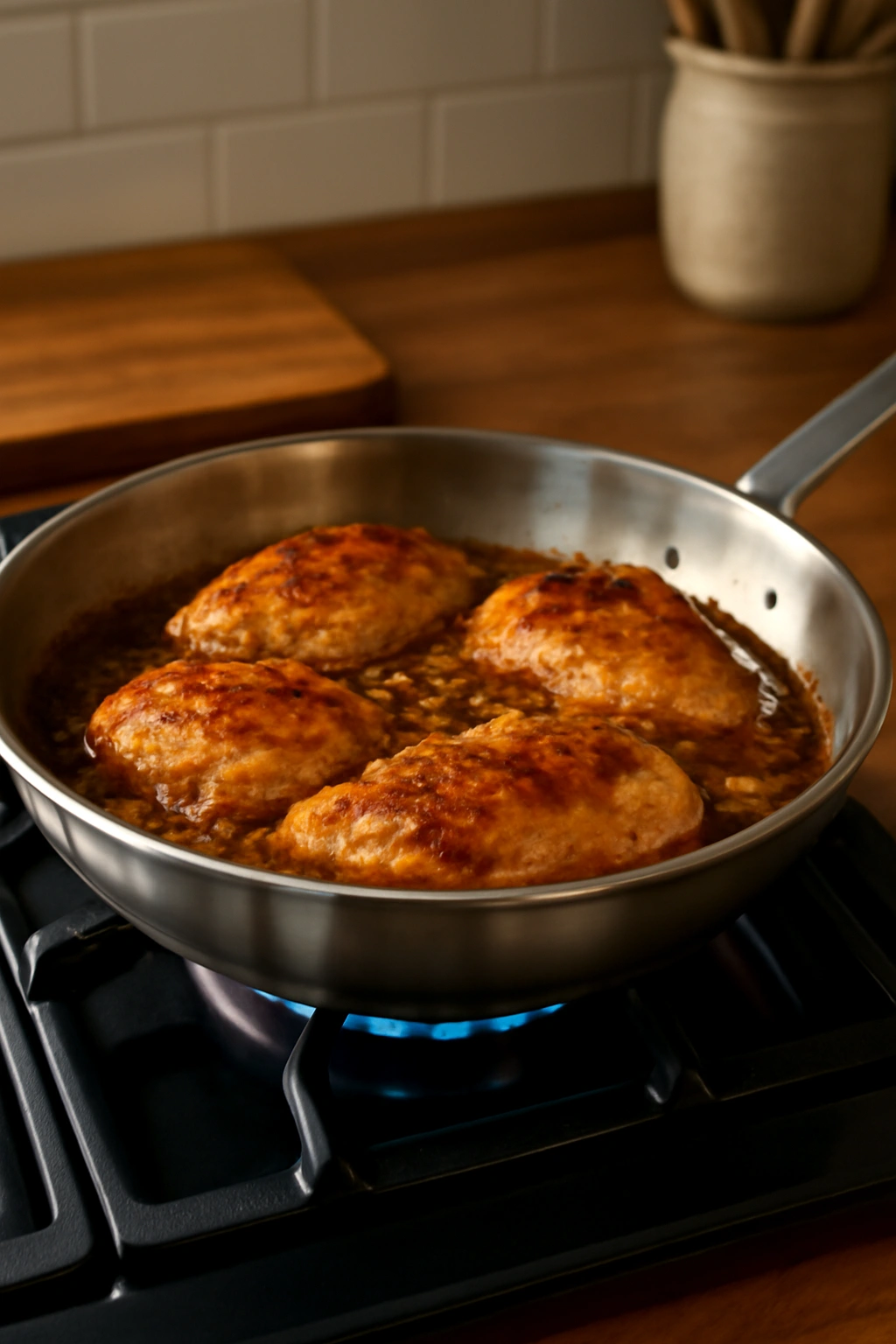
When you want dinner in twenty minutes flat, a stovetop skillet meal is faster than anything else in your cooking arsenal. Start with protein that cooks quickly (thinly sliced chicken, shrimp, ground meat, or thin-cut fish), sear it properly to build flavor, set it aside briefly, then build a sauce or vegetable mixture in the same pan using the browned bits stuck to the bottom — what cooks call the fond. Finish by returning the protein to the pan to warm through.
The speed comes from several factors working together. You’re not waiting for an oven to preheat. Everything cooks over direct, controllable heat. The fond — those caramelized bits — adds incredible flavor depth with zero extra effort. And because you’re cooking on the stovetop, you can taste as you go and adjust seasoning immediately rather than discovering after the fact that the dish needs more salt.
Building Flavor Fast Without Complexity
The foundation of a great stovetop one-pan meal is proper technique more than fancy ingredients. Dry your protein thoroughly before searing — moisture creates steam, and steam prevents proper browning. Get the pan hot enough that the protein sizzles loudly the moment it hits the surface. Don’t move it around; let it sit undisturbed for three to four minutes so a golden crust develops. Flip only once. This entire step takes maybe five minutes total but creates the depth that makes a simple meal taste restaurant-quality.
While the protein rests on a plate, drop aromatics (diced onion, sliced garlic) into the same pan without wiping it first. The fond acts as instant flavoring, and the vegetable scraps dissolve into something rich. Add any other vegetables that need cooking time — like thicker slices of pepper, mushroom chunks, or broccoli florets. Once those get some color and soften, add your liquid (broth, wine, sauce, or a simple combination of water and soy sauce) and let it simmer. The whole process takes maybe fifteen minutes total.
One-Pan Chicken Piccata, Teriyaki, Stir-Fry
Chicken piccata — thinly pounded chicken breast with a lemon-caper sauce — cooks entirely in one pan in under twenty minutes. Stir-fries use a single skillet or wok to cook protein and vegetables in high heat and minutes. Teriyaki chicken with sticky glazed vegetables happens in one pan while rice cooks separately (or you can use the same pan if you cook rice first, then push it aside to cook the main components). All of these are completely flexible — substitute any protein, any vegetables, any sauce that appeals to you.
The point isn’t the specific meal; it’s understanding that stovetop one-pan cooking is genuinely fast and infinitely flexible. You can apply this same technique to shrimp with garlic and white wine, ground beef with salsa and beans, or pork tenderloin with mustard and sage. The formula stays consistent: sear the protein, build the sauce, finish gently, serve.
The Cast Iron Skillet Method for Perfect Results
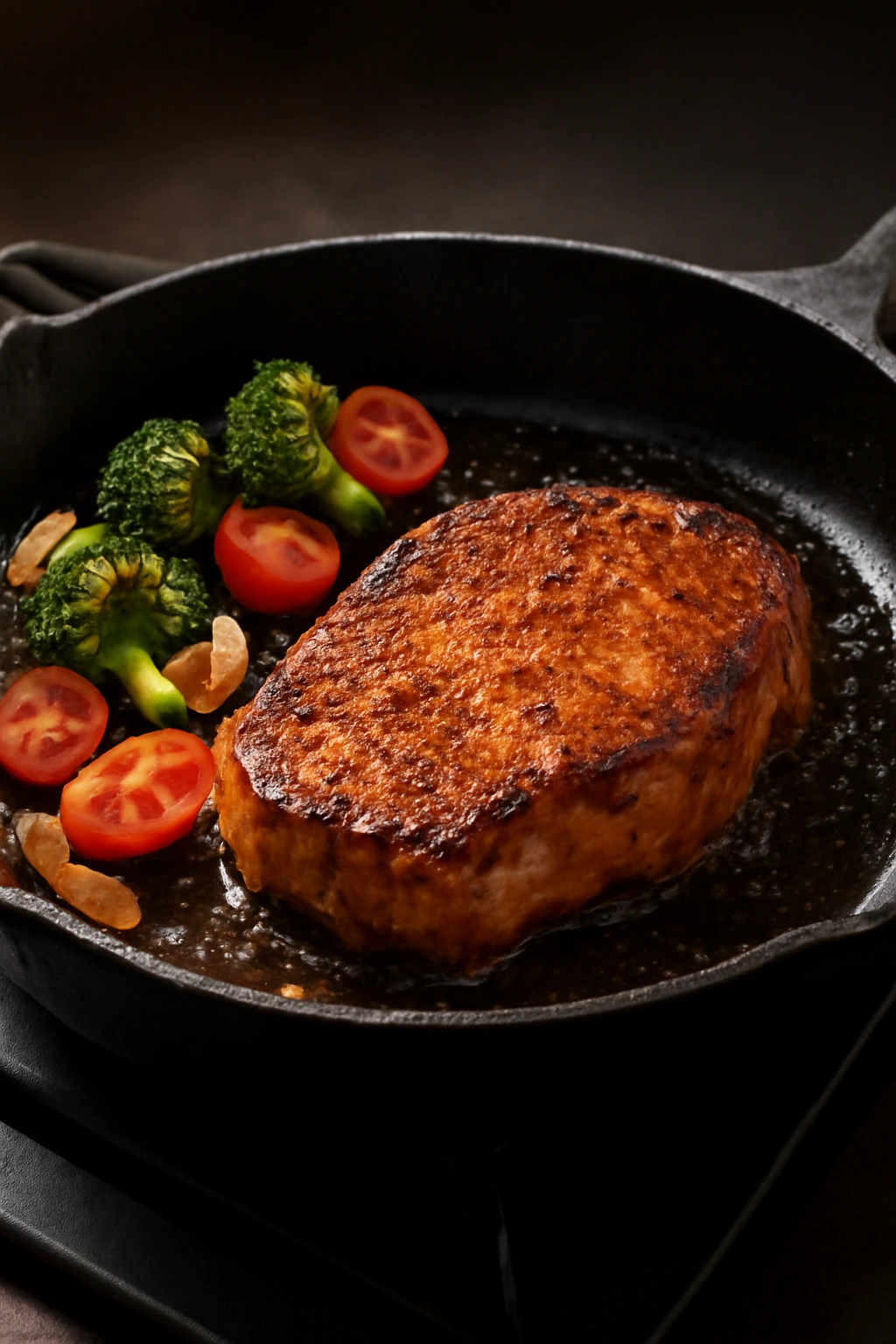
Cast iron’s heat retention creates a particular advantage in one-pan cooking that’s worth understanding. Once the skillet reaches temperature, it holds that heat so consistently that hot spots become almost impossible. A protein sitting on one side while vegetables roast on another side will cook with remarkable evenness because the entire pan surface is radiating the same heat.
This reliability means you can trust the process. You’re not fighting your equipment. You’re not second-guessing whether a hot spot on the stovetop is creating problems. The cast iron is doing exactly what you want with zero surprises.
Developing Perfect Crust Without Burning the Interior
Cast iron’s thermal mass works almost like a buffer. When you place a cold piece of protein on a hot cast iron skillet, the pan’s temperature drops but doesn’t collapse — it keeps the surface hot enough to sear while the interior cooks gently. This is why restaurant chefs absolutely love cast iron for steaks and thick cuts of fish. You get a golden crust and a perfectly cooked interior simultaneously, not a seared outside with an overcooked surface layer and undercooked center.
For one-pan meals, this means you can create texture complexity. A chicken thigh gets an incredible golden, crispy skin in cast iron while the meat underneath stays moist. Vegetables get caramelized edges while their interiors become creamy and tender. You’re creating multiple textures and browning levels in a single piece of equipment.
Low-Maintenance Seasoning for Everyday Cooking
New cast iron can be intimidating because of seasoning myths, but reality is simpler. Every time you cook with oil or fat in cast iron, you’re adding another microscopic layer of seasoning. You don’t need special rituals or expensive conditioners. Use the pan regularly, cook with fat (not water-based cooking), and the seasoning builds itself. A decade-old cast iron skillet develops a better nonstick surface than most actual nonstick pans — through simple use, not fussing.
For one-pan meals, this is brilliant. You’re using fat anyway (oil to roast vegetables, rendered fat from the protein), so seasoning happens automatically. The only rule is to avoid long simmering in acidic liquid, which can strip seasoning. But a twenty-minute braise is fine; a sixty-minute tomato simmer is better in stainless steel or enameled iron.
One-Pot Pasta Dishes That Combine Everything
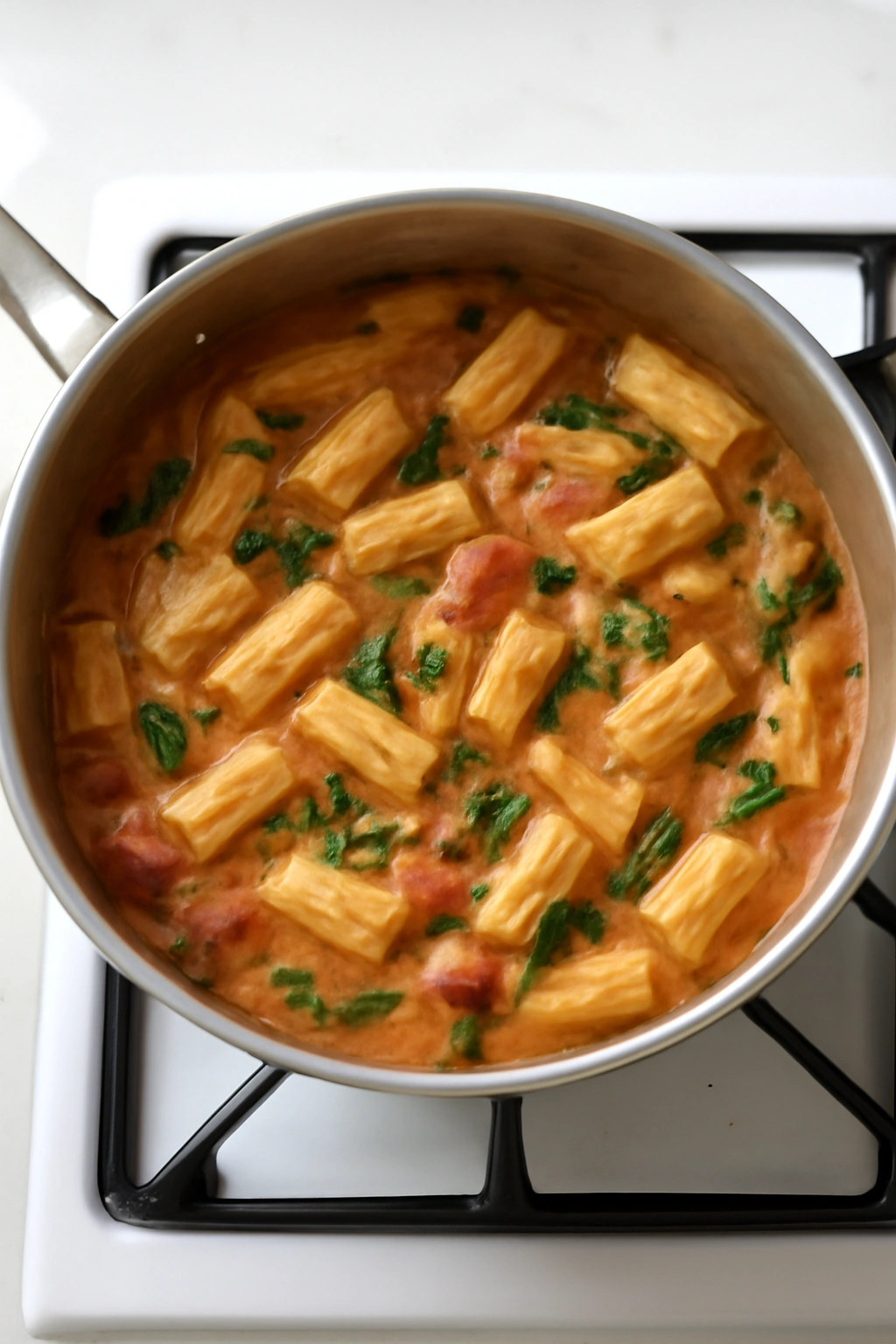
One-pot pasta is genuinely magical — pasta cooks directly in broth or sauce instead of in a separate pot of boiling water, which means the pasta absorbs the seasoning and becomes part of the sauce itself rather than a neutral base. The starches released during cooking thicken the sauce naturally, creating a finished dish that’s creamier and more cohesive than pasta where everything cooks separately.
The technique is simple: bring liquid to a boil, add dry pasta, stir occasionally to prevent sticking, and cook until the pasta is tender and the liquid is mostly absorbed. The entire process takes about the same time as traditional pasta cooking (usually ten to twelve minutes depending on pasta shape), but you’re creating a finished dish instead of a pile of plain pasta that still needs sauce.
Building One-Pot Pasta With Vegetables and Protein
The flexibility here is remarkable. Use chicken broth with diced chicken and spinach for a creamy, quick dinner. Use vegetable broth with mushrooms, garlic, and herbs for a vegetarian version. Use seafood or chicken stock with shrimp and cherry tomatoes. The formula doesn’t change — just swap the protein and vegetables based on what you have and what sounds good.
Start by searing the protein in the pot if it’s something that benefits from browning (chicken, sausage, ground meat). Remove it, sauté aromatics and vegetables that need some cooking time, add liquid and pasta, bring to a boil, reduce heat, and let everything simmer together. Near the end, return the protein to the pan so it reheats through. Add any delicate vegetables or fresh herbs in the last minute of cooking. Total time from empty pot to plated dinner is usually under thirty minutes.
Sauce Building Through Starch Release
The reason one-pot pasta feels and tastes different from separate components is the starch. As pasta cooks, it releases starch into the cooking liquid, which thickens everything and creates a silky consistency. This is the reason the liquid level should be slightly lower than traditional pasta water — you want the pasta to cook in just enough liquid that by the time it’s tender, most of the liquid is absorbed or thickened into sauce.
If your one-pot pasta finishes and the liquid is too thin, you’ve either used too much liquid or cooked the pasta slightly underdone. Next time, use slightly less liquid, or cook uncovered (which allows more evaporation) instead of covered. If it’s too thick, add a little broth or water at the end. This small adjustment is the difference between a liquidy dish and a properly sauced pasta.
Layering Techniques That Build Flavor Without Extra Steps
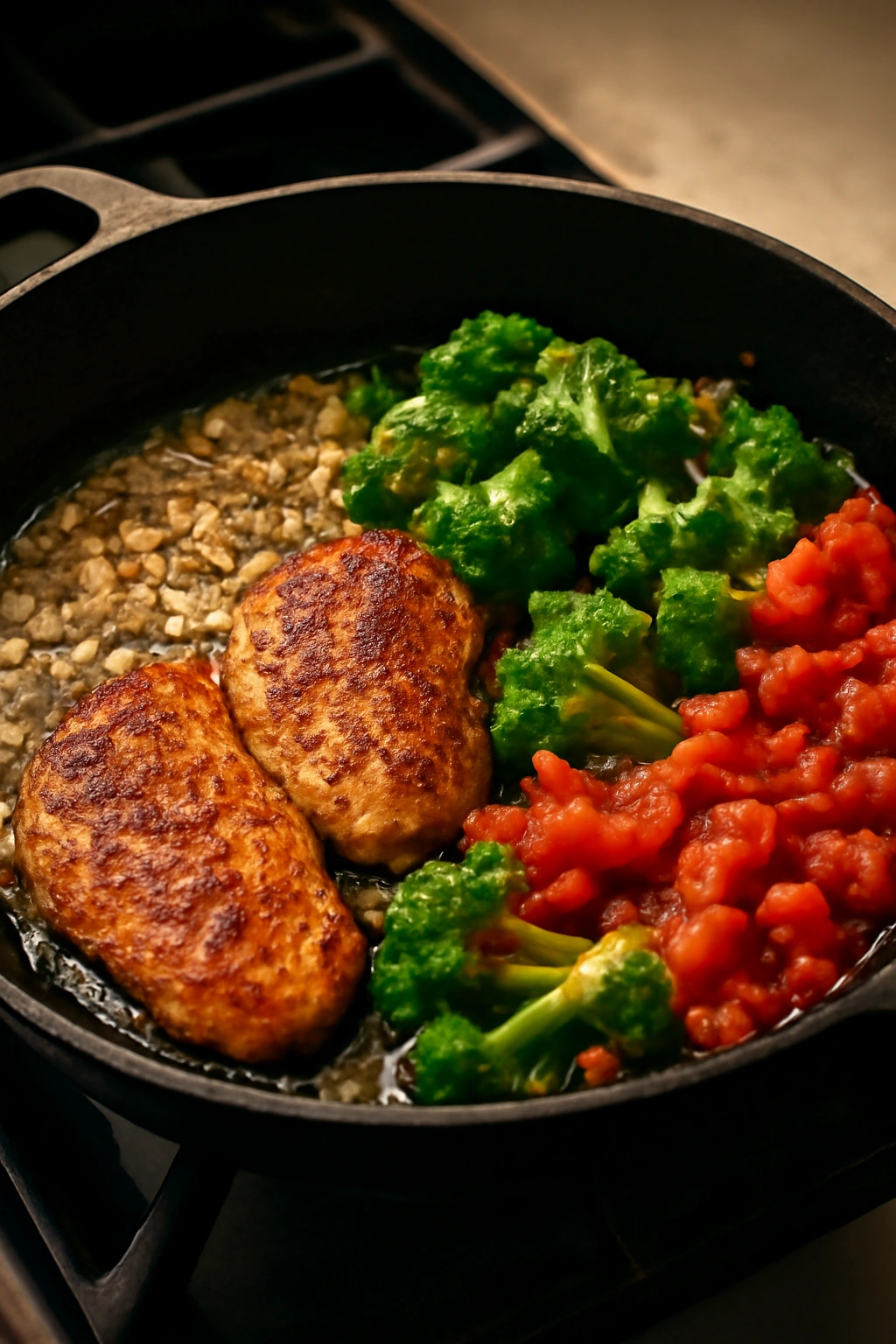
One-pan meals done right have incredible depth because you’re layering flavors throughout the cooking process rather than just combining ingredients at the beginning. This layering happens naturally when you build your one-pan meal in stages.
Start with a fat (oil, butter, rendered meat fat) and aromatics (onion, garlic, ginger). Let those cook for a minute or two until fragrant. That’s the foundation. Add your protein next and let it brown or seal — you’re not cooking it through, just beginning the browning process. Remove it, add your longer-cooking vegetables, let them get some color, then add your sauce or liquid. Return the protein, add quick-cooking vegetables and fresh herbs near the end. Each stage builds on the previous one.
Why This Approach Wins in One-Pan Cooking
Layering forces you to work sequentially instead of throwing everything in at once. This sequential approach means each component reaches its optimal texture and flavor development. The aromatics bloom in fat and become sweet and mellow. The protein browns and develops deep, complex flavors. Vegetables caramelize at the correct time rather than either being undercooked and raw or overcooked and mushy.
From a one-pan perspective, this is key because everything’s cooking in the same vessel. If you understand the timing, you can orchestrate it so everything finishes simultaneously. Protein reaches its target temperature. Vegetables are tender but not collapsed. Sauce is the right consistency. Everything’s in the pan, everything’s ready.
The Five-Minute Technique for Building Foundation
The first five minutes of a stovetop one-pan meal matter disproportionately. That’s your foundation-building window. Heat oil in the pan, add sliced onion and salt, let it cook without stirring for two minutes until the edges start to brown, then stir and cook another minute or so. Add garlic, cook thirty seconds until fragrant. That entire process is five minutes, but you’ve built a flavor base that will taste like you’ve been cooking for hours.
From there, everything else cascades. Add protein and brown it (five minutes). Add longer-cooking vegetables or liquid and simmer (ten to fifteen minutes). Finish with fresh elements. You haven’t done anything complex, but the foundation was built properly.
Prep-Ahead Strategies That Make Cooking Even Easier
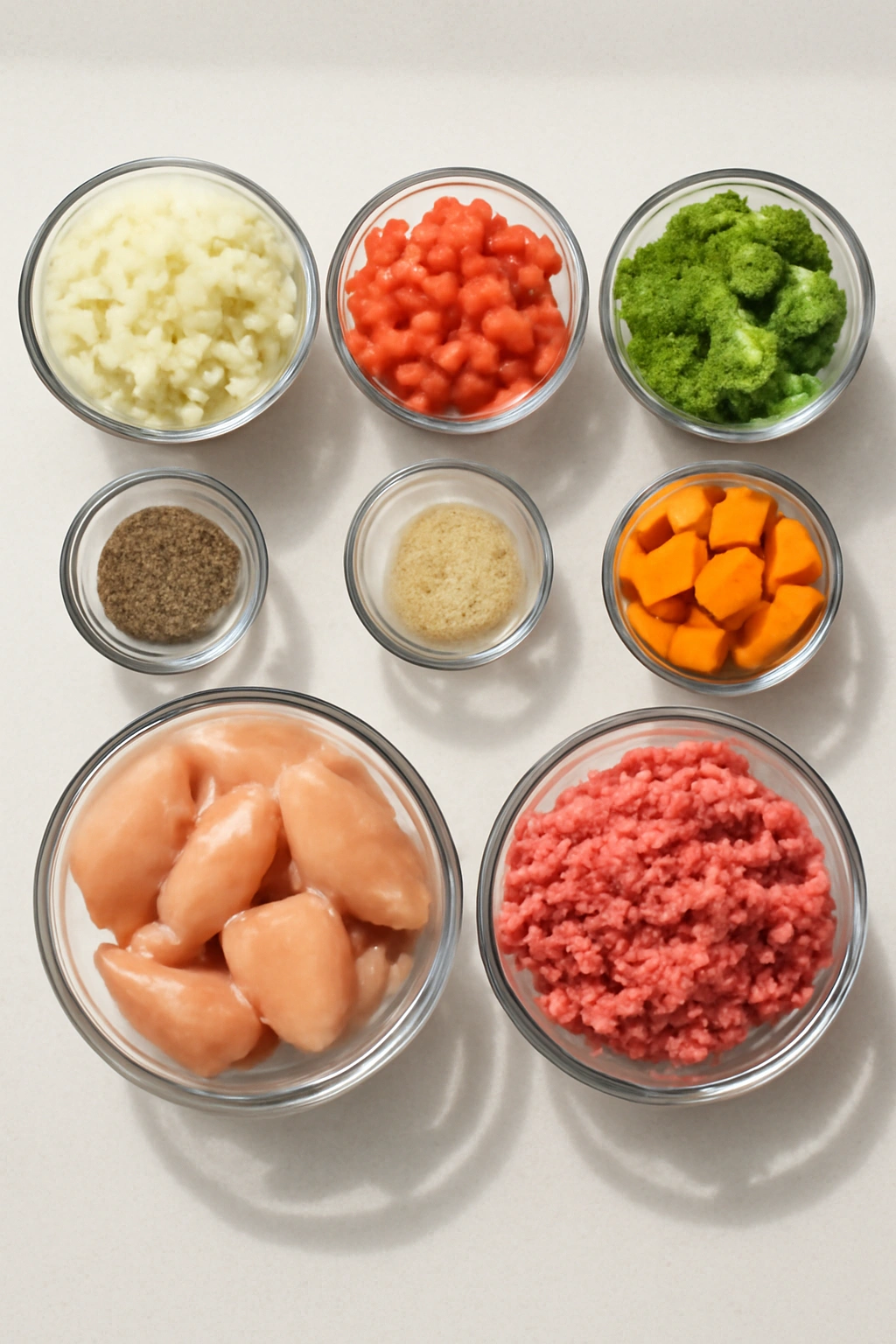
Meal prep and one-pan cooking are natural partners because they share the same philosophy: do smart, simple work once, then reap the rewards repeatedly. The beauty is that you can prep components ahead without actually cooking the final meal, which makes the actual cooking process even faster and easier.
Chop all your vegetables the night before or the morning you’re cooking. Cut your proteins into the size and shape they’ll be for cooking. Measure out seasonings into small bowls. Bring any proteins that need to be room temperature to the table. These prep steps take fifteen or twenty minutes but make the actual cooking process feel effortless because you’re not hunting for a knife or measuring spices while something’s cooking.
Prepping Multiple Meals Simultaneously
When you’re meal prepping, actually do multiple one-pan meals in sequence rather than trying to cook everything at once. Start cooking the first sheet pan while you’re prepping the ingredients for the second. While the first sheet pan is roasting, you’re chopping vegetables for the second. Stagger the timing so that when one meal finishes cooking and cooling, the next is ready to portion.
This is faster than you might think. Three sheet pan meals can be cooked and portioned into containers in about ninety minutes total, including some relaxation time while things cook. Compare that to traditional meal prep where you’re juggling multiple pans, multiple techniques, and constant monitoring.
Marinating for Deeper Flavor With Zero Extra Time
If you’re prepping the night before, marinate your protein overnight. You’re not adding any cooking time — marination happens passively in the refrigerator. The next day, you pull out a fully flavored protein, cook it using your one-pan method, and end up with flavors that taste like you’ve been cooking all day. Even a four-hour marinade, which you can do in the morning before work, makes a noticeable difference.
For one-pan meals, this is invaluable because you’ve built flavor depth without any extra active cooking. The marinade flavors have integrated into the protein, and every bite tastes fully developed.
How to Store and Reheat One-Pan Meals
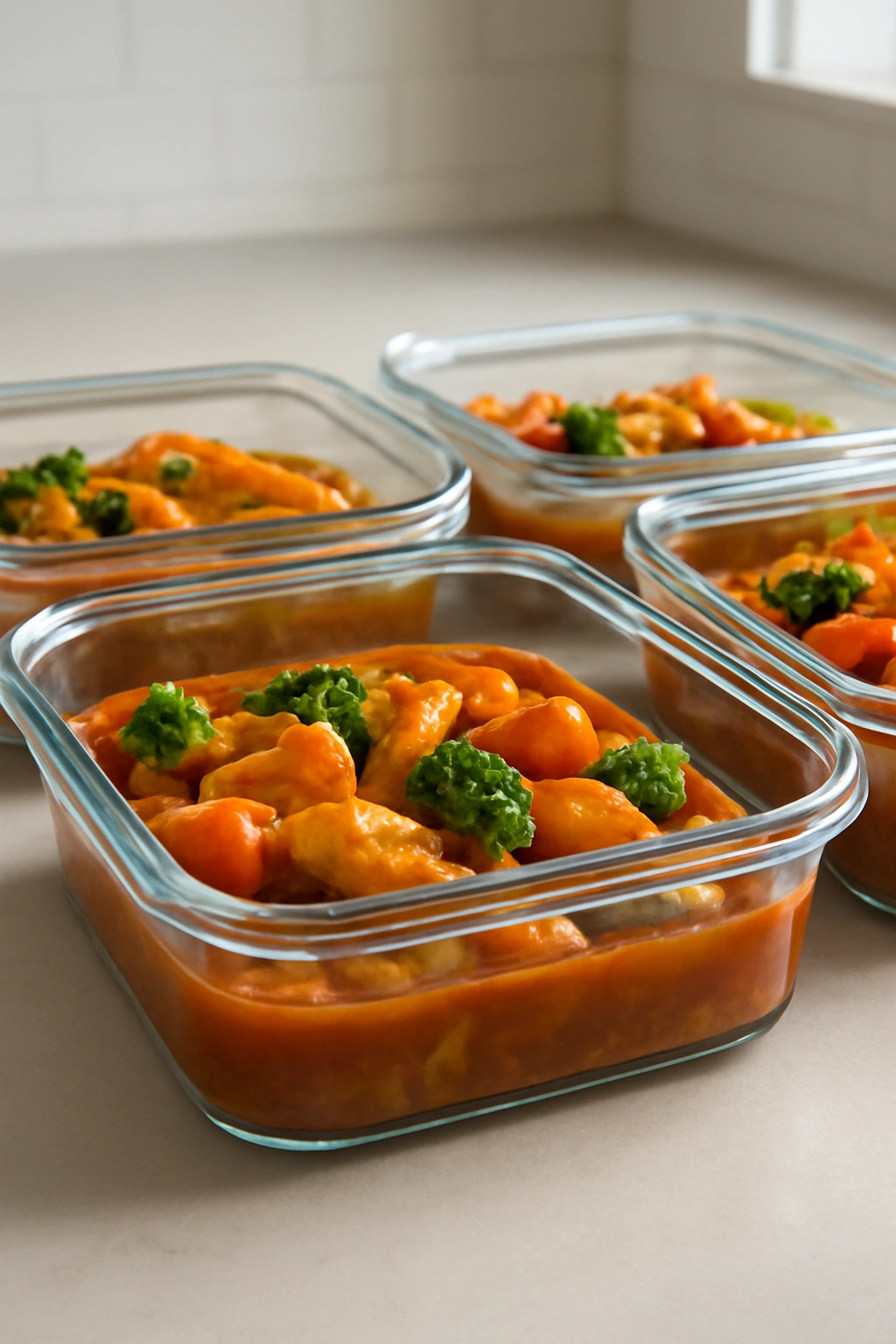
The entire point of one-pan cooking is reducing labor, and proper storage and reheating is part of that equation. If your one-pan meals end up dried out or broken when you reheat them, you’ve lost the whole advantage. But with the right approach, one-pan meals actually reheat better than many other home-cooked dishes.
Cool your one-pan meal to room temperature before portioning into containers — this takes about fifteen minutes and ensures you’re not putting hot food directly into the fridge, which raises the temperature and can affect other foods. Once cooled, portion into glass or plastic containers. These keep best with some of the sauce or liquid they cooked in, so don’t drain them completely. The sauce protects the food during storage and reheats more evenly.
Refrigerator Storage Guidelines
Most one-pan meals keep beautifully in the refrigerator for four to five days. Protein and vegetables in sauce keep better than dry roasted vegetables or plain proteins. A sheet pan dinner of roasted chicken and vegetables might start to dry out by day five, while a stovetop chicken in sauce stays moist and delicious through day five or six.
The key is maintaining enough moisture. If you cooked a sheet pan dinner and it looks dry in storage, drizzle the container with a little broth or water before sealing. This doesn’t water down the flavor; it just prevents drying out during storage.
Freezing One-Pan Meals for Long-Term Meal Prep
One-pan meals freeze exceptionally well because they’re already sauced or have cooking liquid that protects them during freezing. Cool completely, portion into containers, and freeze. Most one-pan meals keep frozen for two to three months without quality loss. Avoid freezing meals with potatoes if you prefer a better texture (they can get slightly grainy when frozen), but most other vegetables freeze just fine.
Reheat frozen one-pan meals either by thawing overnight in the refrigerator and then reheating on the stovetop or in the microwave, or reheating from frozen (which takes longer but works). Stovetop reheating is gentler and preserves texture better than microwaving, but microwave works fine when you’re in a hurry.
Reheating Without Drying Out
The secret to perfect reheating is moisture. If your one-pan meal looks even slightly dry in storage, add a splash of water, broth, or the original cooking liquid before reheating. On the stovetop, reheat over medium heat in the same kind of pan you cooked it in (or any pan), stirring occasionally, until warmed through. This usually takes five to ten minutes depending on portion size.
In the microwave, cover the container loosely (not tightly — steam needs to escape) and use medium power for two to three minutes, stirring halfway through. High power can scorch sauce or dry out the food, so medium is worth the slightly longer time.
Common One-Pan Mistakes and How to Avoid Them
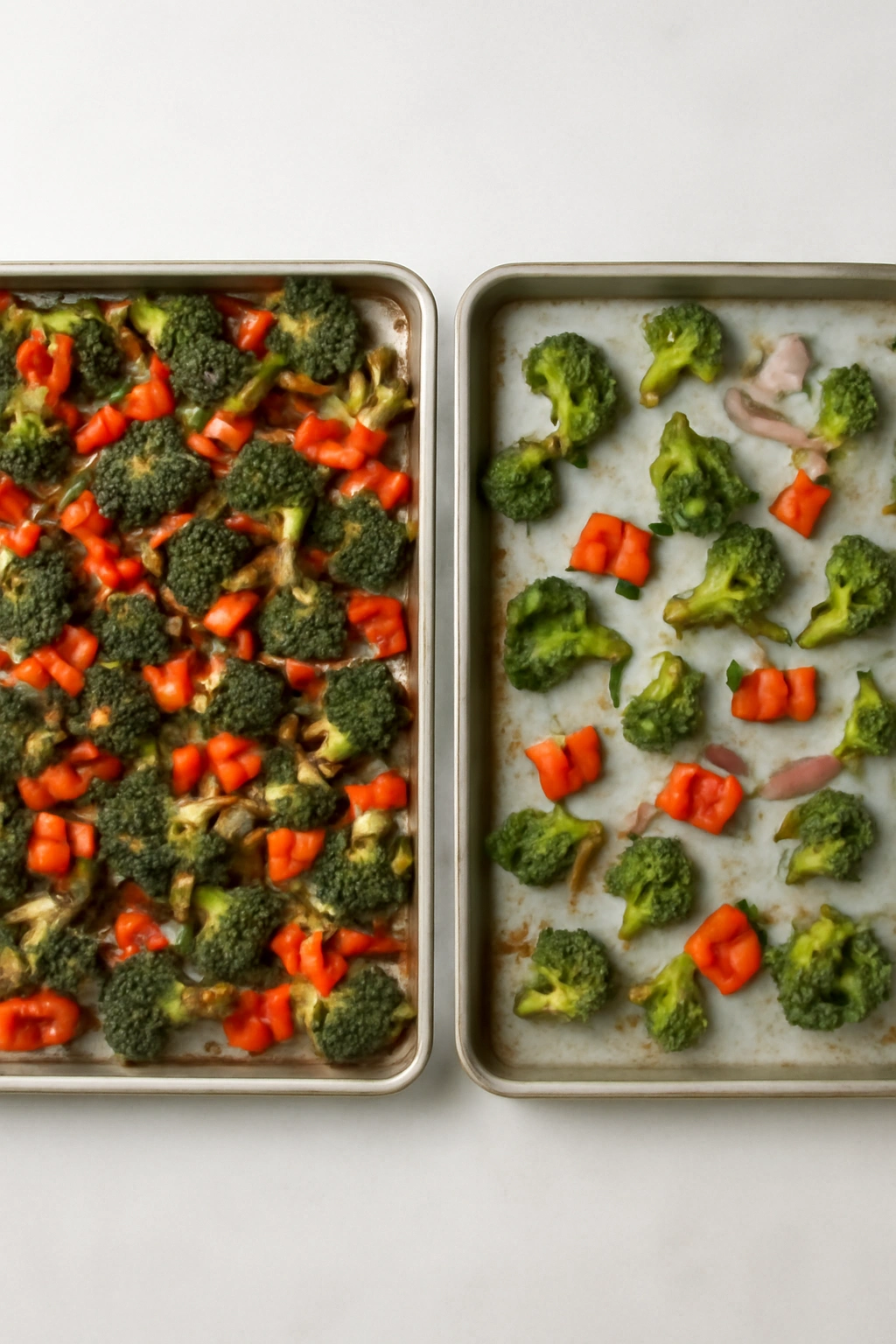
Even with a sound technique, a few common pitfalls can trip up one-pan cooking. Understanding these helps you troubleshoot when something’s not right and improve next time.
Overcrowding and Steaming Instead of Roasting
This is the number one mistake in sheet pan cooking. When vegetables and protein are packed too tightly, they steam instead of roast. Steam is moisture escaping and recondensing on the food’s surface, which prevents browning and creates a pale, soggy result. The solution is simple: use two sheet pans instead of forcing everything onto one. The oven is already on; using two pans doesn’t increase energy or time, it just improves results.
Not Tasting and Adjusting Seasoning
One-pan meals cook quickly, especially stovetop versions, which means you have limited time to taste and adjust. Taste a spoonful about two minutes before you think the dish will be done. If it needs more salt, add it now — salt needs time to distribute and dissolve. If it’s too salty, you can’t fix it, but tasting early prevents that problem. Acid from lemon juice or vinegar is also easy to adjust at the end, so if something tastes flat, a squeeze of lemon often wakes everything up.
Using the Wrong Temperature
High heat is great for developing crust on proteins and caramelizing vegetables, but it’s terrible if you’re trying to gently simmer a braise. If your stovetop one-pan meal is cooking so vigorously that liquid is boiling away and the bottom’s in danger of scorching, reduce the heat. If your sheet pan dinner is browning too fast (especially the vegetables) before the protein is done, lower the oven temperature. Better to cook longer at a slightly lower temperature than fight against flames and heat.
Forgetting That Cast Iron Conducts Heat Aggressively
If you’re used to cooking in regular stainless steel, cast iron can surprise you with its efficiency. It heats faster, browns more easily, and can scorch food that would be fine in stainless steel at the same setting. If you’re new to cast iron, reduce the heat slightly compared to what you’d use in another pan. You’ll get the same results faster because the iron does more of the work.
Twenty-Minute Dinner Ideas You Can Repeat Weekly
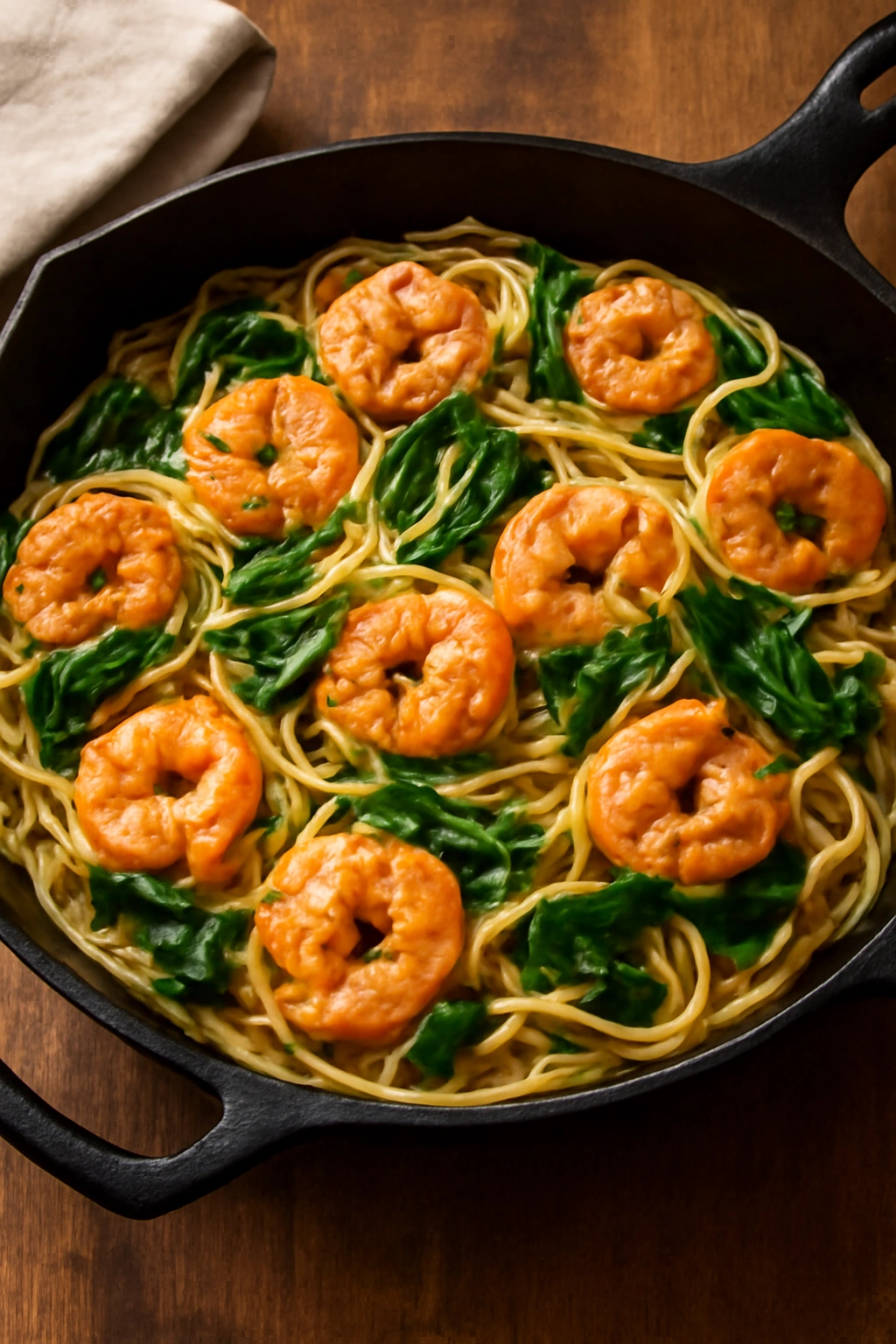
The entire purpose of understanding one-pan cooking is so you can actually execute it. Here are genuine twenty-minute (or close to it) one-pan meals you can rotate through weekly to build confidence with the technique.
Garlic Shrimp With Spinach and Pasta
Boil water in a large skillet, add pasta and chicken broth (not a full pot of water — just enough to cover pasta by about half an inch). Simmer until pasta is almost tender, add shrimp and spinach, cook two minutes until shrimp pink and spinach wilts. Total time: twelve minutes. The starch from the pasta thickens the liquid into a silky sauce.
Chicken and Green Beans in Garlic-Butter Sauce
Brown sliced chicken breast in a skillet, remove it, sauté garlic in the same pan, add sliced green beans and chicken broth, return the chicken, simmer for eight minutes. Finish with a squeeze of lemon and fresh herbs. Total time: eighteen minutes. This tastes like a restaurant dish but requires zero special ingredients.
Ground Beef Tacos With Roasted Vegetables (Sheet Pan)
Chop bell peppers and onions, toss with oil and cumin, spread on a sheet pan, roast at 450°F (230°C) for ten minutes. Meanwhile, brown ground beef in a skillet with taco seasoning. Push vegetables aside, transfer ground beef to the sheet pan, return to the oven for five more minutes. Warm tortillas, fill and serve. Total time: twenty minutes.
Salmon With Asparagus and Lemon (Sheet Pan)
Arrange salmon fillets and asparagus on a sheet pan, drizzle with oil, season with salt, pepper, and dill, roast at 425°F (220°C) for twelve minutes until salmon flakes and asparagus is tender. That’s it. Simple, elegant, completely finished in one pan. Total time: fifteen minutes (including oven preheat).
Pork Chops With Mushroom Sauce
Sear thick pork chops in a skillet, set aside, sauté sliced mushrooms in the same pan until golden, add garlic and broth, return pork chops, simmer three minutes. Add a splash of cream or sour cream at the end if you want richness. Total time: sixteen minutes.
The point with all these is simplicity. You’re not using a dozen ingredients or complicated techniques. You’re using the principles of one-pan cooking — proper heat, layering flavors, timing components so everything finishes together — to create genuinely good food faster than you’d thought possible.
Final Thoughts
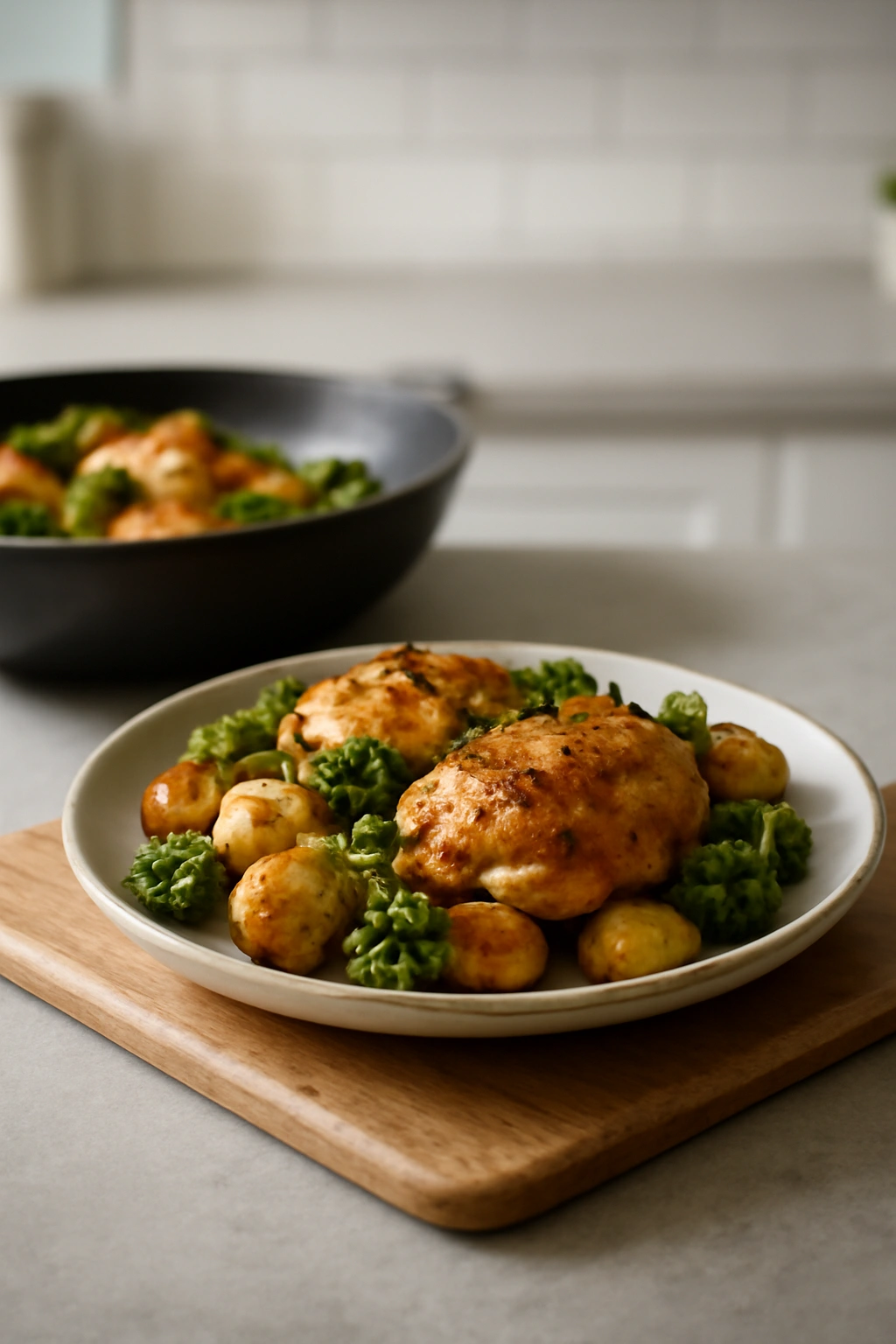
One-pan cooking isn’t a restriction; it’s actually a liberation. When you remove the burden of managing multiple pans, multiple temperatures, and multiple timings, you focus on the fundamentals that matter: proper seasoning, good technique, the right heat level, and understanding how long things actually take to cook.
The cleanup benefit is real and significant, but honestly, it’s secondary to the better food you end up making. One-pan meals have more flavor, better texture, and more coherence than dishes where everything cooks separately and just gets assembled. You’re building something integrated instead of combining components.
Start with one formula that appeals to you — sheet pan roasting, one-pot pasta, or stovetop skillet work equally well. Master that technique with a few different protein and vegetable combinations. Once you’re confident with one approach, branch into the others. Within a month of regular cooking, one-pan techniques become intuitive, and you’ll find yourself naturally rotating through different methods based on how much time you have and what sounds good that evening.
The best part? Your kitchen stays clean, you’ve got a freezer full of excellent meals if you’re meal prepping, and you’re cooking restaurant-quality food at home on a regular weeknight. That’s the actual promise of one-pan cooking.
