



If you’re tired of the same heavy lunch options and looking for something that feels both nourishing and exciting, a fresh seafood salad is the answer you’ve been searching for. There’s something inherently satisfying about combining tender seafood with crisp greens, bright vegetables, and a simple dressing that lets every ingredient shine — it’s the kind of meal that tastes indulgent without weighing you down. The beauty of a seafood salad is that it comes together in minutes if you use quality pre-cooked seafood (which most grocery stores now offer), making it perfect for busy weekdays when you want restaurant-quality food on your plate.
This particular version strikes the ideal balance between simplicity and sophistication. You’re building layers of flavor and texture without any complicated techniques or hard-to-find ingredients. The seafood provides lean protein that keeps you satisfied until dinner, the vegetables add color and crunch, and the citrus-forward dressing ties everything together with brightness and freshness. Whether you’re meal-prepping for the week ahead, hosting a casual lunch, or simply feeding yourself something nourishing on a Tuesday, this seafood salad delivers every single time.
Why This Seafood Salad Is Perfect for Lunch
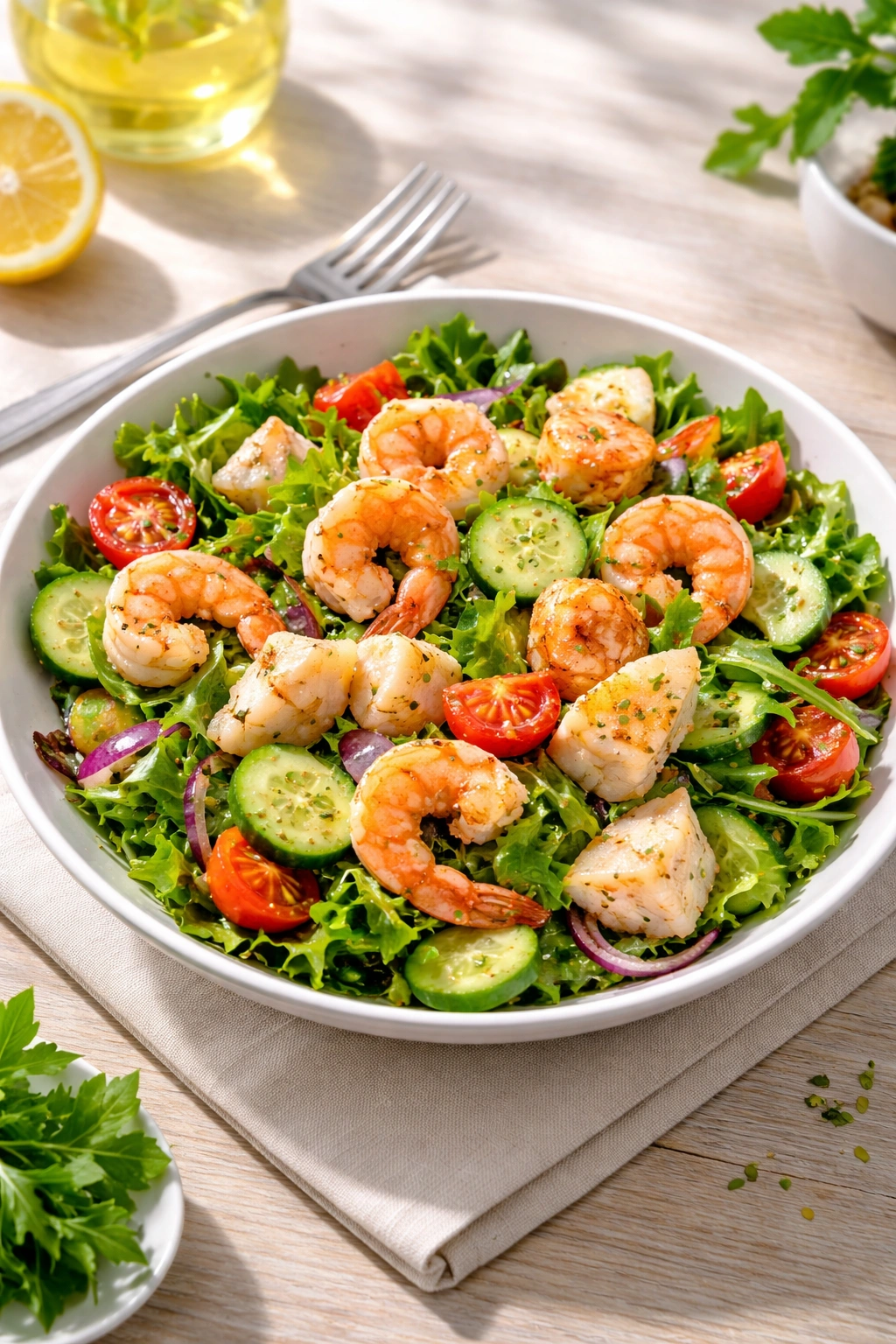
A proper seafood salad checks all the boxes for an ideal midday meal. You’re getting high-quality protein from the seafood that’s gentler on your digestion than red meat, making that post-lunch energy slump less likely to hit. The vegetables provide fiber and micronutrients that stabilize your blood sugar, and the healthy fats from the olive oil-based dressing help with nutrient absorption and satiety.
What really sets this apart is how light it feels while still being genuinely filling. You can eat a generous portion without that stuffed, sluggish feeling that comes from heavier lunch choices. The combination of lean seafood and fresh vegetables means you’re getting maximum flavor and nutrition without excess calories or heaviness.
Practically speaking, this salad is also incredibly flexible. You can make it ahead of time (though certain components keep better separate until serving), customize it based on what seafood you find fresh that day, and adapt it to any dietary preferences in your household. It’s equally at home on a work lunch break, a weekend entertaining situation, or a simple family dinner when you want something that feels special.
Choosing the Freshest Seafood and Where to Buy It
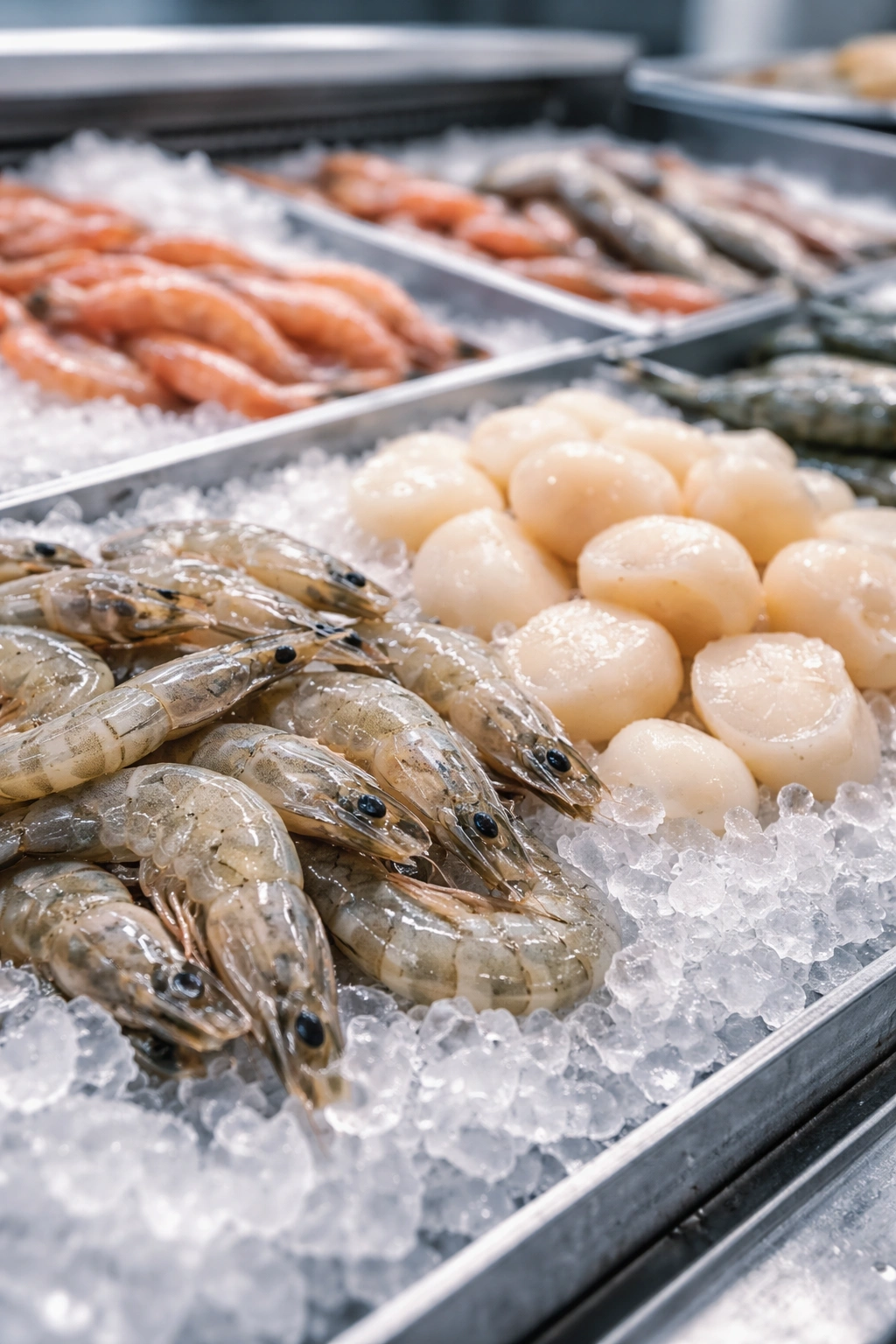
The quality of your seafood makes or breaks this entire dish, so it’s worth spending a few minutes understanding what to look for. The best option is always going to be seafood that you’ve hand-selected from a quality fishmonger or the seafood counter at a good grocery store — the kind where you can see everything on ice and smell that clean, briny ocean smell (not a fishy, ammonia smell, which indicates age).
If you’re buying pre-cooked shrimp or other seafood in sealed packages, check the date carefully and choose the most recent production date available. The flesh should be firm and slightly translucent, never mushy or pale white. For crab or lobster meat, buy from reputable sources — it’s worth paying a bit extra because the difference in flavor between fresh and old crab is significant.
A smart shortcut that works beautifully here is buying frozen seafood and thawing it properly. High-quality frozen shrimp or scallops are often fresher than “fresh” options that have been sitting in the case for days. Thaw them slowly in the refrigerator overnight rather than under running water, which can make the flesh waterlogged and less flavorful. Pat everything completely dry with paper towels before using — any excess moisture will dilute your dressing and make the salad watery.
Building Your Base: Greens and Fresh Vegetables
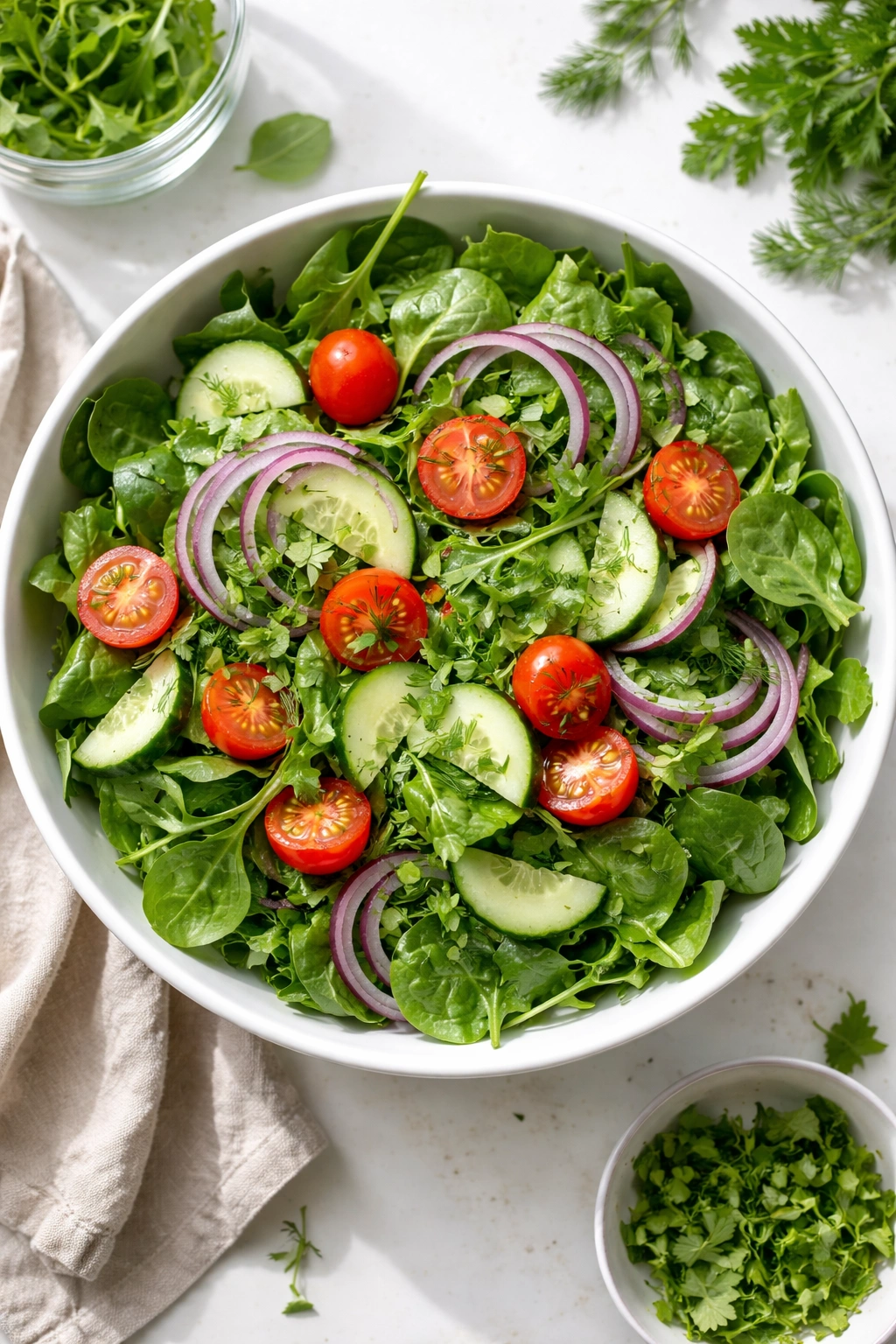
Your choice of greens sets the tone for the entire salad. Baby arugula is a classic choice here because it has a peppery bite that complements seafood beautifully, but a tender spring mix, baby spinach, or even butter lettuce works equally well. Avoid iceberg lettuce or any heavy, watery greens — you want something that holds up to the dressing and has enough flavor to stand beside the seafood rather than disappear into the background.
Beyond greens, you’re building a vegetable base that’s both nutritious and visually appealing. Cherry tomatoes add sweetness and acidity, crisp cucumber brings cool, watery crunch, and finely sliced red onion (or milder white onion if you’re not a fan of sharpness) adds a subtle bite. Fresh herbs are essential — parsley, dill, or chives all work beautifully with seafood. Some people add avocado for creaminess, which pairs wonderfully with the citrus dressing, though it’s optional.
The secret to vegetable prep is cutting everything consistently and with intention. Your tomatoes should be halved or quartered depending on their size, cucumber sliced into thin half-moons (remove the watery center seeds if you like), and herbs finely chopped just before assembling. Everything should feel like it belongs in the same bowl — no pieces so large they overwhelm the plate, nothing so small it disappears.
The Dressing That Makes It All Come Together
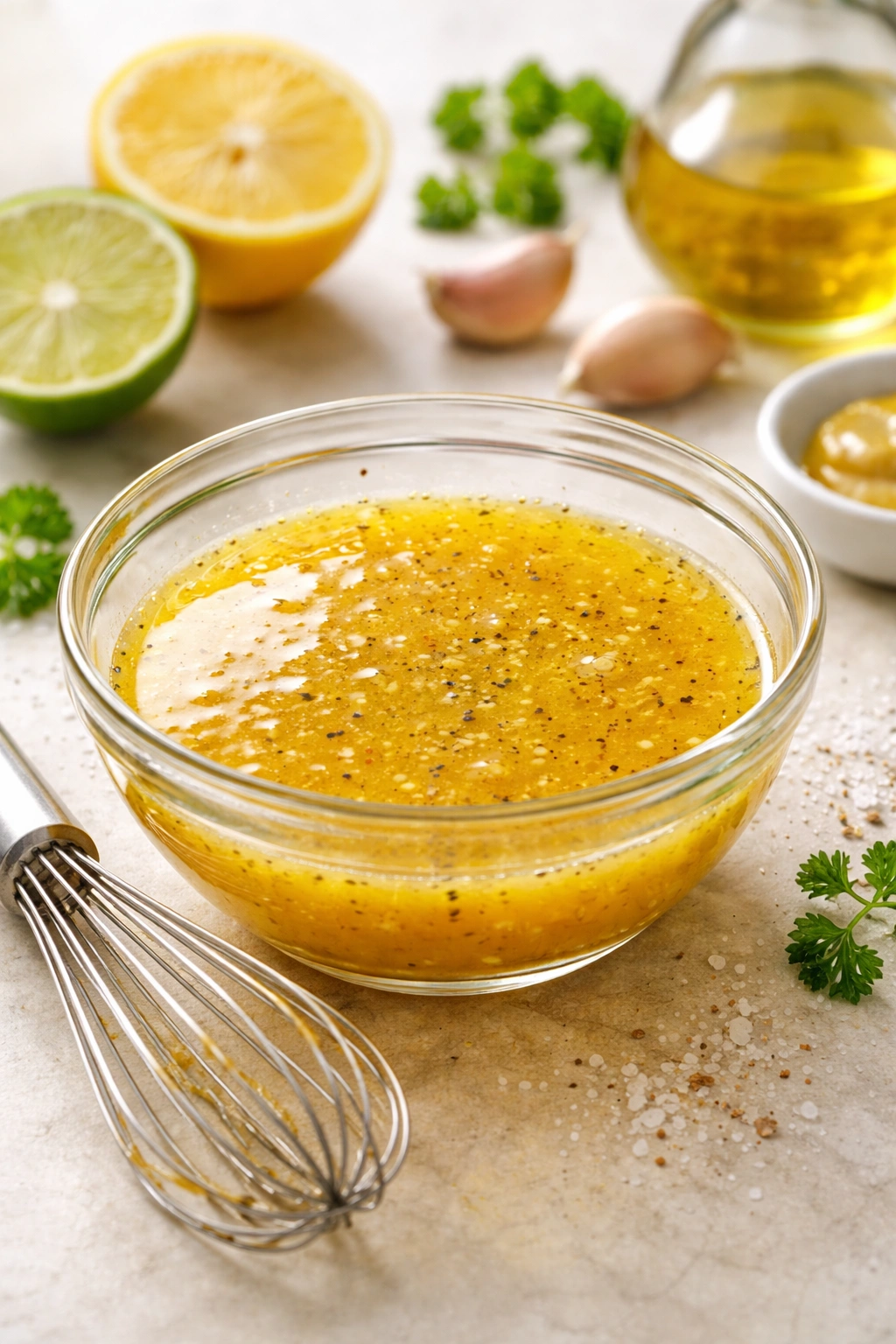
A citrus vinaigrette is the perfect complement to fresh seafood, and it’s easier to make than you might think. The foundation is a ratio of three parts quality olive oil to one part acid — whether that’s fresh lemon juice, lime juice, or white wine vinegar. The acid provides brightness and helps cut through the richness of the seafood, while the olive oil adds silkiness and carries the flavors throughout the salad.
Dijon mustard is your secret weapon here — just a teaspoon brings everything into focus without making the dressing taste like mustard. It also helps emulsify the dressing slightly, so it clings to the leaves rather than pooling at the bottom of the bowl. A minced garlic clove adds depth, and a small pinch of fine sea salt and freshly ground black pepper finishes it off.
The beauty of making your own dressing is that you control the intensity. If you love bright citrus flavors, use more lemon juice. If you want something more subtle, dial it back. You can also add a teaspoon of honey or a touch of shallot if you want extra complexity. Whisk everything together in a small bowl about five minutes before serving — not any earlier, because the acid will start breaking down the dressing ingredients if it sits too long.
Serving and Timing Info
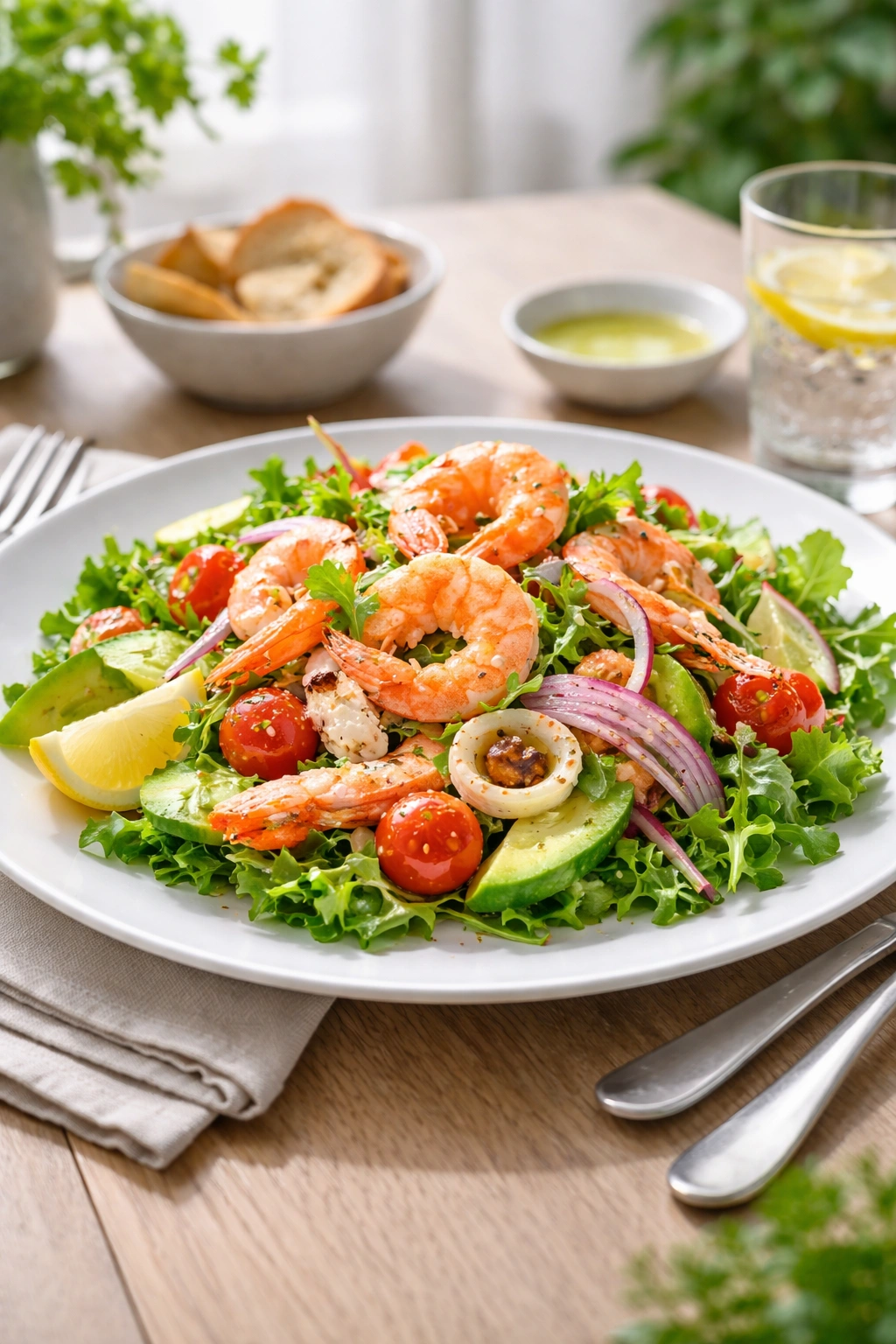
Yield: Serves 2 as a main course or 4 as a side salad
Prep Time: 20 minutes (includes seafood selection and vegetable cutting, but not cooking time since you’re using pre-cooked seafood)
Cook Time: 0 minutes (all components are prepared cold; if using frozen seafood, add 8-12 hours for proper thawing)
Total Time: 20 minutes hands-on prep + overnight thawing if using frozen seafood
Difficulty: Beginner — This is genuinely one of the easiest salads to assemble, requiring only knife skills and the ability to whisk a dressing. No cooking equipment needed, and all techniques are straightforward.
Best Served: Immediately after assembly, while the greens are still crisp and the dressing is evenly distributed
Make-Ahead Note: Prepare components separately and assemble just before eating for maximum freshness. The dressing can be made up to 2 days ahead.
Complete Ingredient List
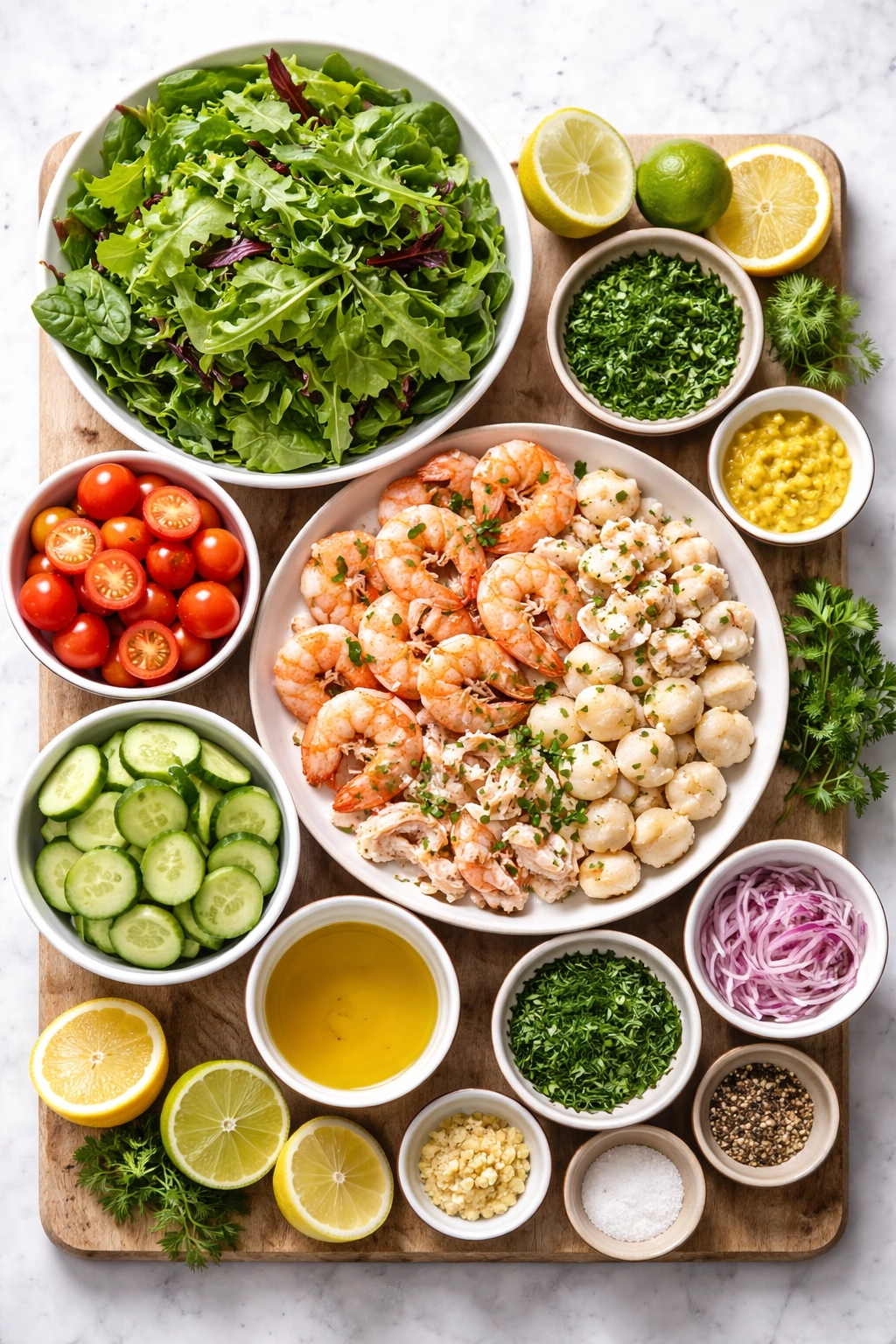
For the Salad:
- 8 ounces mixed salad greens (baby arugula, spring mix, or spinach — or a combination)
- 1 pound cooked, chilled seafood (shrimp, lump crab meat, bay scallops, or a combination), patted very dry
- 2 cups cherry or grape tomatoes, halved
- 1 English cucumber (or 2 regular cucumbers), sliced into thin half-moons
- 1 small red onion, thinly sliced
- 1 ripe avocado, sliced (optional but recommended)
- ½ cup fresh parsley or dill, finely chopped
- Fleur de sel or fine sea salt for finishing
For the Citrus Vinaigrette:
- 3 tablespoons extra-virgin olive oil (use a good quality oil — it makes a difference)
- 1 tablespoon fresh lemon juice, or a combination of lemon and lime juice
- 1 teaspoon Dijon mustard
- 1 small garlic clove, minced very finely
- Fine sea salt to taste
- Freshly ground black pepper to taste
- Optional: ½ teaspoon honey, if you prefer a slightly rounded flavor
Step-by-Step Instructions
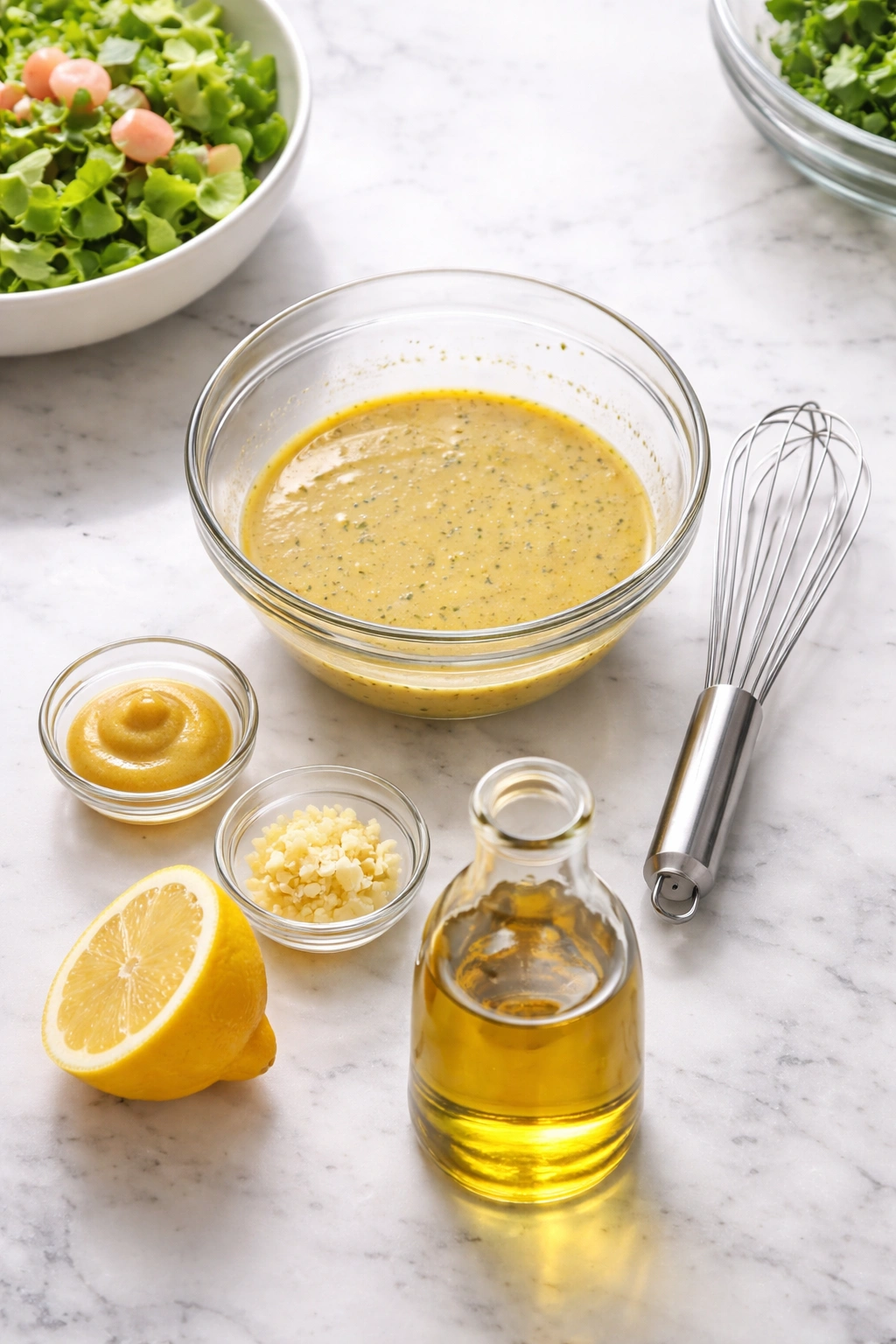
Prepare the Dressing:
-
In a small bowl, whisk together the Dijon mustard, minced garlic, and lemon juice (or lemon-lime combination). Let this sit for about 30 seconds — the mustard will help stabilize the dressing.
-
While whisking constantly, add the olive oil in a slow, steady stream. The mixture should emulsify slightly, becoming paler and thicker. If it breaks or looks too separated, start with fresh mustard in a clean bowl and add the oil-acid mixture to the mustard instead — this usually fixes it.
-
Taste and adjust with a pinch of salt and a few grinds of black pepper. If you find it a bit too sharp, add the optional honey and whisk again. Set aside until you’re ready to dress the salad.
Prepare Your Components:
-
Pat the seafood completely dry with clean paper towels and set aside at room temperature for 5 minutes. This brings out the flavor — cold seafood straight from the fridge tastes muted.
-
Wash and dry your salad greens thoroughly. Wet greens will dilute the dressing and make the finished salad soggy. If you have time, spin them in a salad spinner for best results.
Advertisements -
Halve the cherry tomatoes, slice the cucumber into half-moons, and thinly slice the red onion. If you’re using avocado, slice it just before serving to prevent browning. Finely chop the fresh herbs.
Assemble the Salad:
-
Place the dry salad greens in a large bowl. Drizzle about half the dressing over the greens and toss gently with your hands until every leaf is lightly coated. Do not over-dress the greens — you want them to glisten, not sit in a pool of dressing.
-
Distribute the greens among serving plates or bowls, creating a bed for the toppings. Leave room in the center for the remaining components.
-
Arrange the tomatoes, cucumber, red onion, and avocado (if using) around each plate or bowl, building a composed salad rather than tossing everything together. This makes the finished dish more visually appealing and gives each bite better texture variation.
-
Top each salad with a generous portion of the seafood, dividing it evenly among the plates. Drizzle the remaining dressing over the seafood and vegetables, using just enough to coat without making the salad wet.
-
Finish with a scattered handful of fresh herbs and a final pinch of fleur de sel. The coarse salt adds a pleasant burst of salinity and a nice textural contrast. Serve immediately while the greens are crisp and cold.
Pro Tips for Restaurant-Quality Results
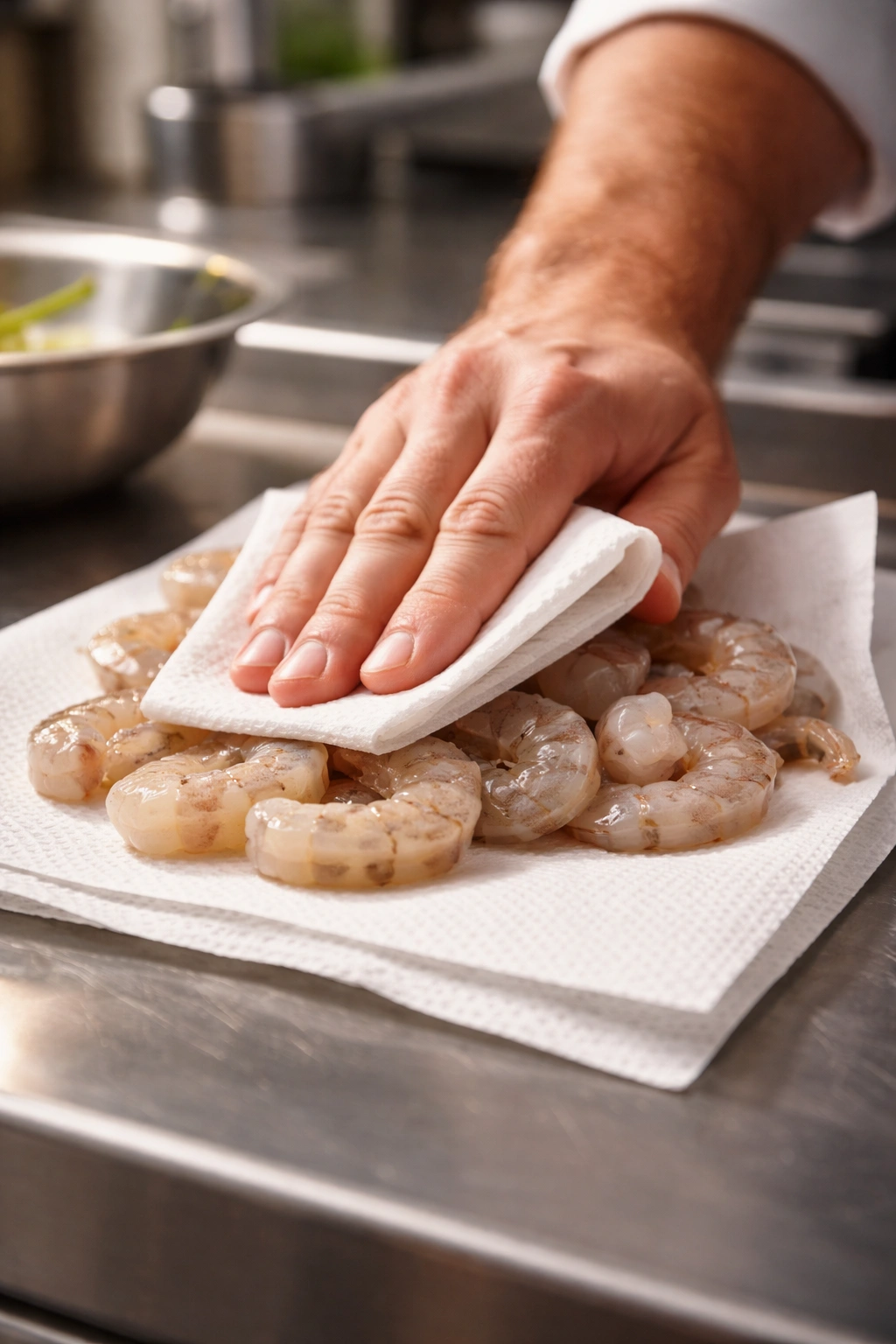
The single biggest mistake people make with seafood salads is not patting the seafood dry before serving. Any excess moisture will weep into the dressing and turn your beautiful salad into a soupy mess. Spend the 30 seconds it takes to pat everything completely dry — this one step makes a noticeable difference.
Temperature matters more than you might think. Serve the greens, vegetables, and dressing chilled, but let the seafood sit at room temperature for a few minutes. This brings out the subtle briny flavors that get muted when seafood is too cold. It sounds counterintuitive, but it genuinely works.
If you’re building this ahead of time (say, for a lunch you’re packing), keep the dressing separate and don’t add it until you’re ready to eat. Pack the greens, vegetables, and seafood in separate containers, and mix them together with the dressing just before eating. This is the only way to maintain crispness.
Quality matters with the olive oil more than anywhere else in this recipe. A bright, fruity extra-virgin olive oil will make your dressing taste noticeably better than a neutral grocery store version. Spend a bit extra here — you’re only using three tablespoons, so a good bottle goes a long way.
Fresh herbs aren’t optional — they’re what elevate this from a basic salad to something special. If your grocery store herbs look sad and limp, frozen parsley or dill actually work better than dried. Just chop them while still frozen and add them right before serving.
Common Mistakes and How to Avoid Them
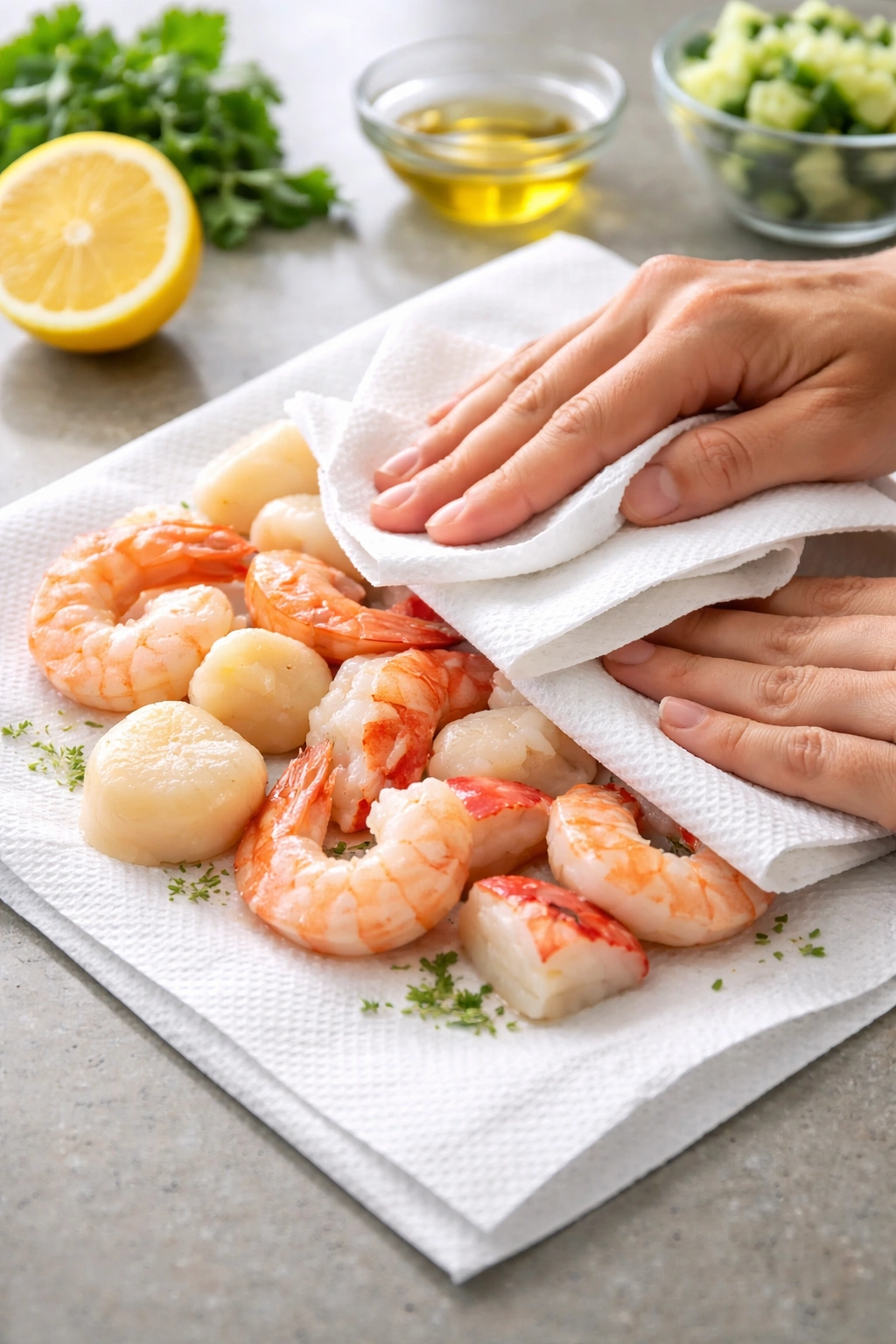
The second most common mistake is buying seafood that’s not quite fresh enough. If you’re unsure about the seafood counter, ask the person working there when it arrived and when it was cooked. Don’t be shy about this — good fishmongers actually enjoy talking about their product and want you to have the best experience.
Over-dressing is another pitfall. People often dump the entire amount of dressing on the salad, which turns it into a wet mess. Start with less than you think you need, toss gently, and taste before adding more. You can always add more dressing, but you can’t take it out.
Some people make their dressing with bottled lemon juice, which has a harsh, metallic edge that doesn’t work well with delicate seafood. Fresh-squeezed lemon juice is genuinely worth the extra minute it takes. If you’re really squeezed for time, at least buy the refrigerated “fresh” version rather than the bottled concentrate.
Cutting your vegetables inconsistently is a small thing that undermines the finished dish. If your tomato pieces are huge but your cucumber is sliced paper-thin, nothing feels coherent. Spend a minute thinking about the size of each component before you start cutting, then be consistent.
Finally, don’t skip the pat-dry step on the greens. Wet lettuce will make your dressing separate and slide off rather than coating the leaves. This is one of those invisible steps that makes the difference between a salad that tastes fresh and vibrant versus one that feels heavy and damp.
Easy Variations and Flavor Swaps
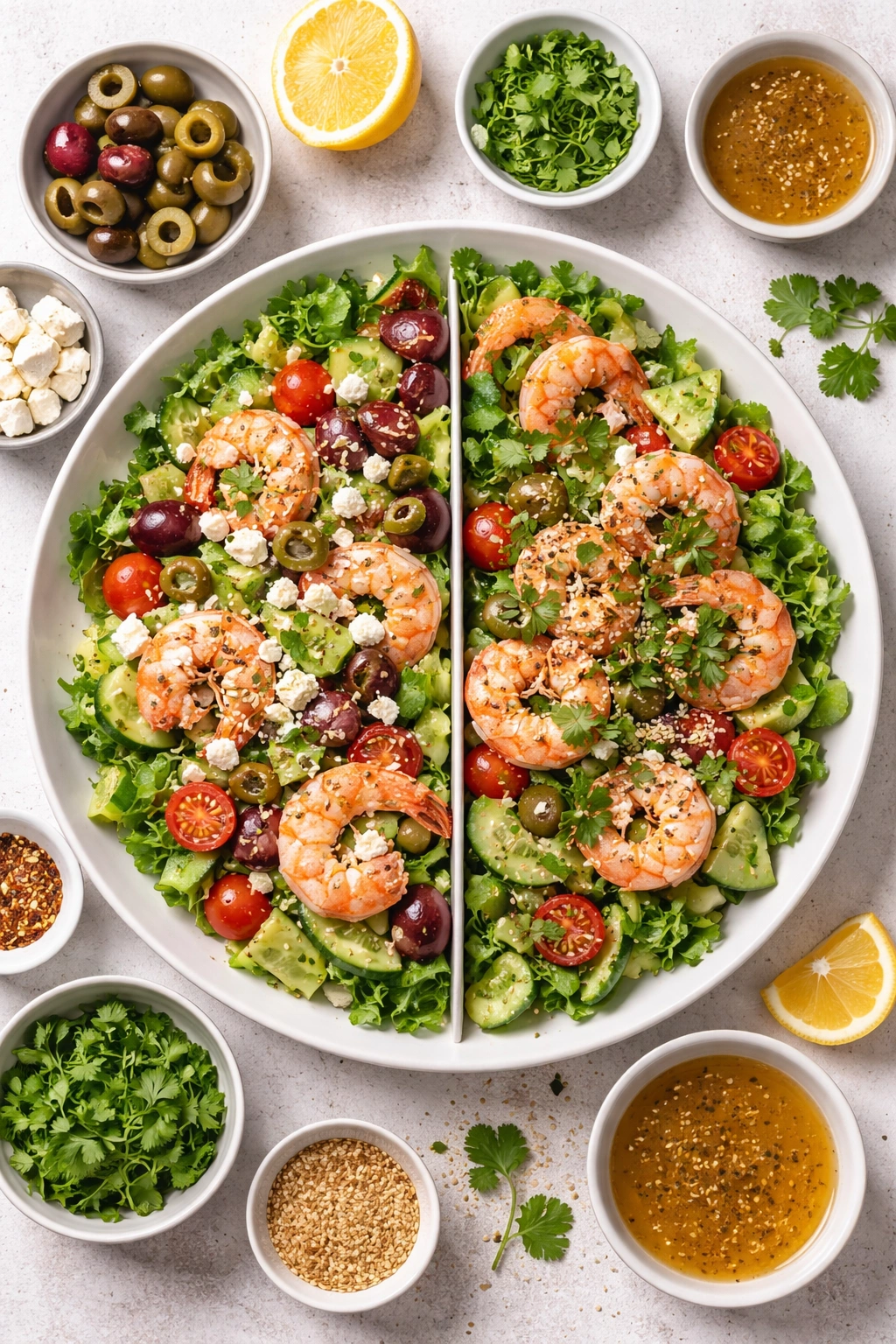
The beauty of this salad is how many directions you can take it while keeping the same basic format. If you love Mediterranean flavors, add pitted Kalamata olives, feta cheese, and a pinch of dried oregano to the dressing. Swap the lemon juice for red wine vinegar and you’ve suddenly got a different vibe entirely.
For an Asian-inspired version, use lime juice instead of lemon in the dressing, add a teaspoon of sesame oil, and a tiny touch of soy sauce. Toss in some diced mango or papaya for sweetness, and top with toasted sesame seeds and cilantro instead of parsley. It’s a completely different flavor profile but requires almost no extra effort.
If you’re working with a dietary restriction, this salad is incredibly adaptable. Dairy-free? This version is naturally dairy-free already. Gluten-free? There’s nothing with gluten in this recipe. Whole30? Skip the avocado if you’re avoiding fat sources, or make it yours depending on your own rules. Vegetarian? Swap the seafood for white beans, chickpeas, or marinated artichoke hearts and you’ve got a delicious vegetarian version that’s just as satisfying.
You can also change up the seafood entirely based on what looks best at the market. Grilled shrimp instead of cold shrimp brings a different flavor. Canned tuna (drained and patted dry) works beautifully and stretches your budget. Smoked salmon adds richness and a completely different character. Scallops are elegant if you want to impress someone. There’s no wrong choice — pick whatever looks freshest and appeals to you.
For a heartier version, add a grain like farro, quinoa, or brown rice as a base. A quarter-cup of cooked grains per serving adds substance without making the salad heavy. This transforms it into a grain bowl situation, which is wonderful if you need something that will keep you full through an afternoon of work.
Storage, Prep Ahead, and Reheating Guidelines
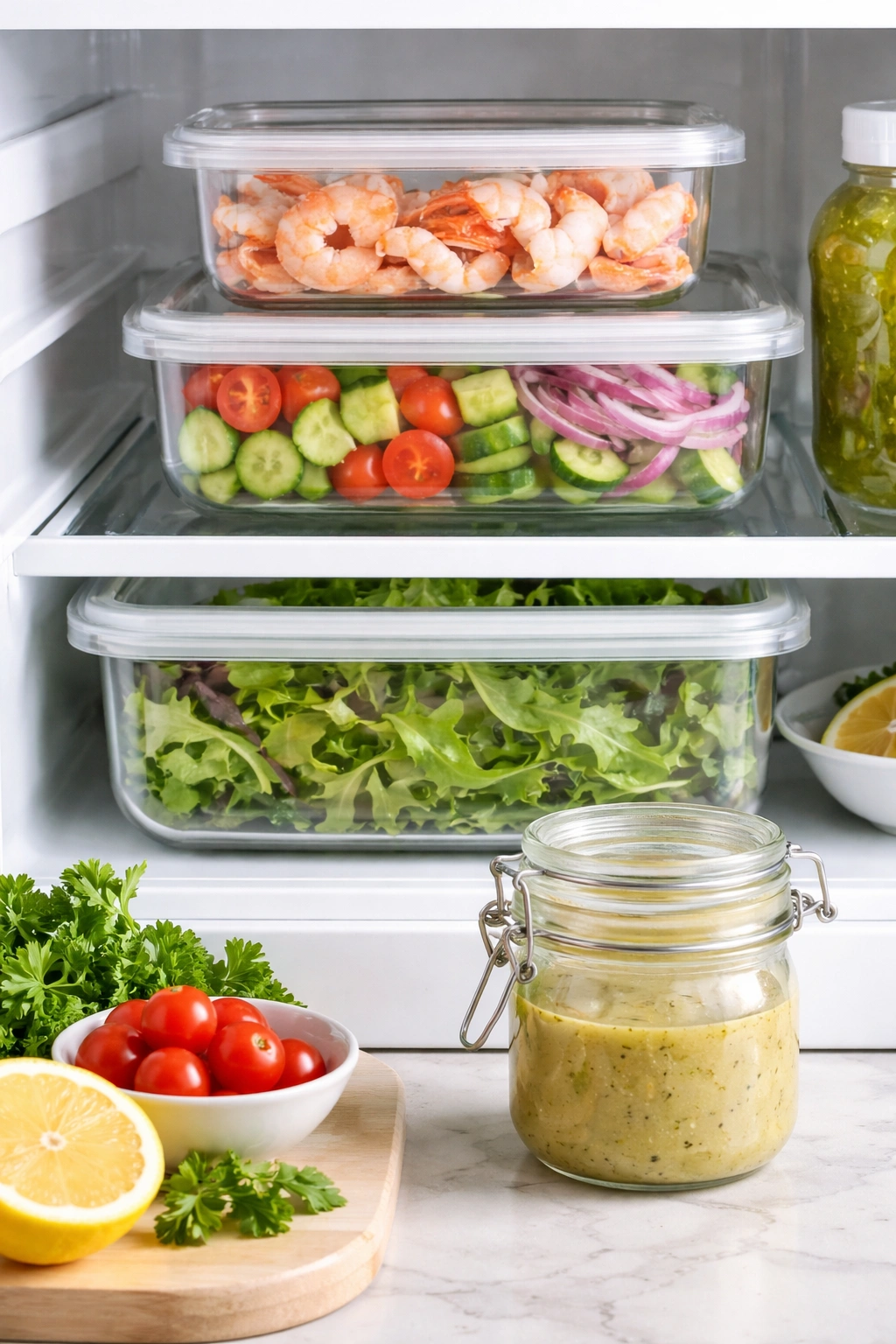
The key to storing this salad is understanding that pre-mixed salads don’t stay fresh. The vegetables and dressing will wilt the greens and make everything sad within a few hours. Instead, prepare all your components separately and store them in airtight containers in the refrigerator. The seafood, vegetables, and greens can all keep for two to three days this way.
Make your dressing up to two days ahead and store it in a jar with a tight-fitting lid. It will separate as it sits — that’s completely normal. Just give it a vigorous shake for 10 seconds and it will emulsify again. Don’t refrigerate the dressing; keep it on the counter where it’s easier to shake before serving.
If you’re meal-prepping for multiple days, prep your vegetable components all at once (chop everything, store separately), but wait to slice your avocado until the day you’re eating. Avocado browns quickly once cut, so this is the one component worth doing fresh each day if you can manage it.
The seafood stays fresh in the refrigerator for three to four days if it was fresh when you bought it, but honestly, use it within two days for the best flavor and texture. If you’ve got seafood that’s about to hit day four, pack it up anyway — it’s fine, just not at its absolute peak.
There’s no reheating here since you’re eating it cold. Just assemble, dress, and enjoy. If your dressing has been sitting out for more than an hour before you eat, give it another quick whisk to refresh the emulsion.
Perfect Pairings and How to Serve It
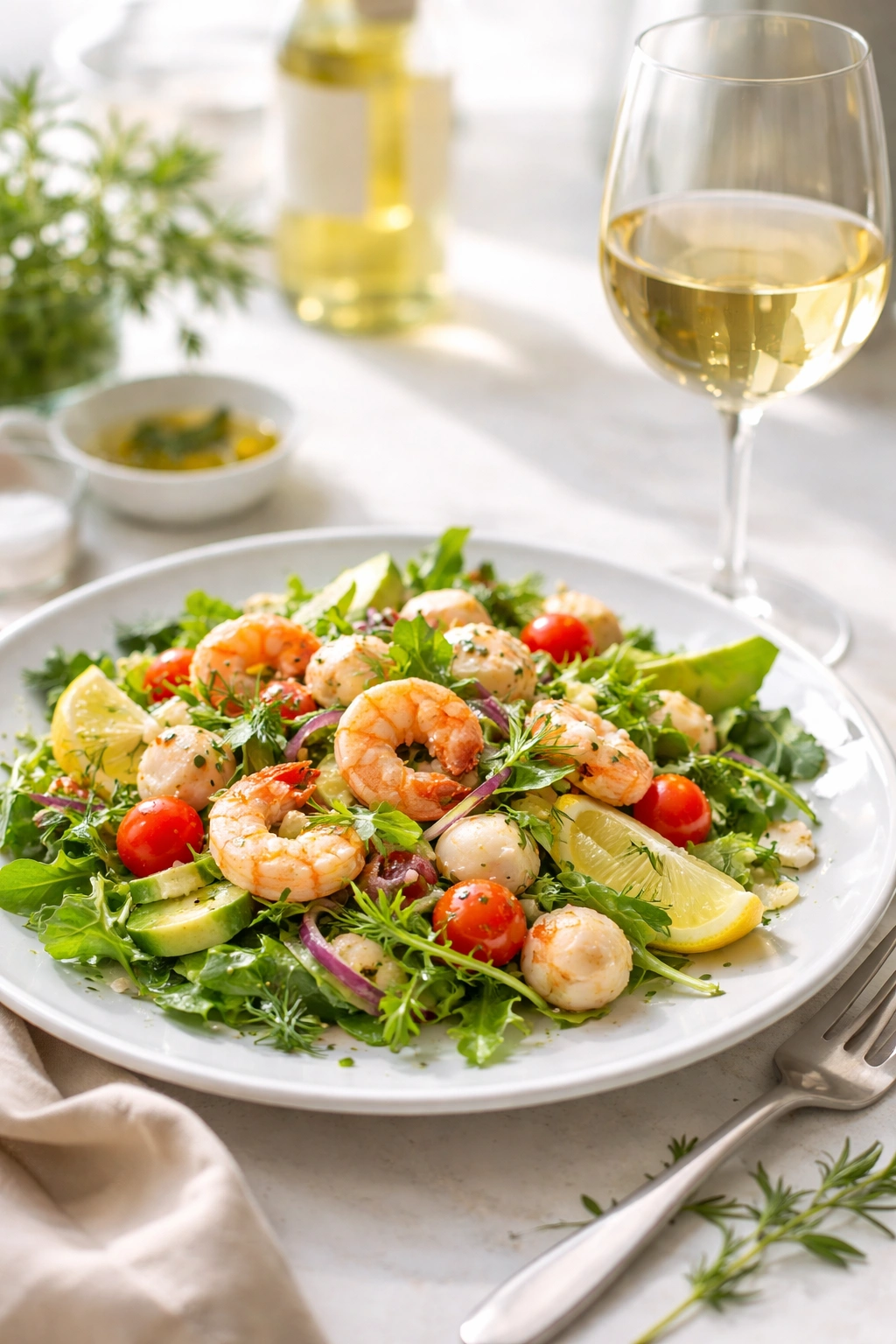
This salad shines on its own, but a crisp white wine takes it to another level. A sauvignon blanc, pinot grigio, or even a dry riesling are all beautiful matches. The acidity in the wine echoes the citrus in the dressing and cleanses your palate between bites. If you’re not a wine person, sparkling water with lemon works beautifully too.
For sides, add crusty bread — a slice of sourdough or a small dinner roll is perfect for soaking up any dressing at the bottom of the bowl. Some people add a simple side of roasted potatoes or a small portion of rice for something more substantial, though honestly, the salad is usually filling enough on its own.
If you’re serving this for entertaining, present each salad on individual plates rather than making it family-style. The composed arrangement looks more elegant and shows off all the beautiful components. Scatter the herbs on top just before serving so they’re fresh and bright.
For a warm-weather lunch, serve it alongside fresh fruit — berries, stone fruit, or melon all complement the briny seafood beautifully. A simple green salad with the same dressing works if you want something lighter alongside it, though at that point you might be overdoing the salad situation.
If you’re packing this for lunch, keep all components in separate containers and assemble in a bowl or on a plate just before eating. Pack the dressing in a small jar with a tight lid. This takes an extra minute but makes a tremendous difference in freshness and texture.
Final Thoughts
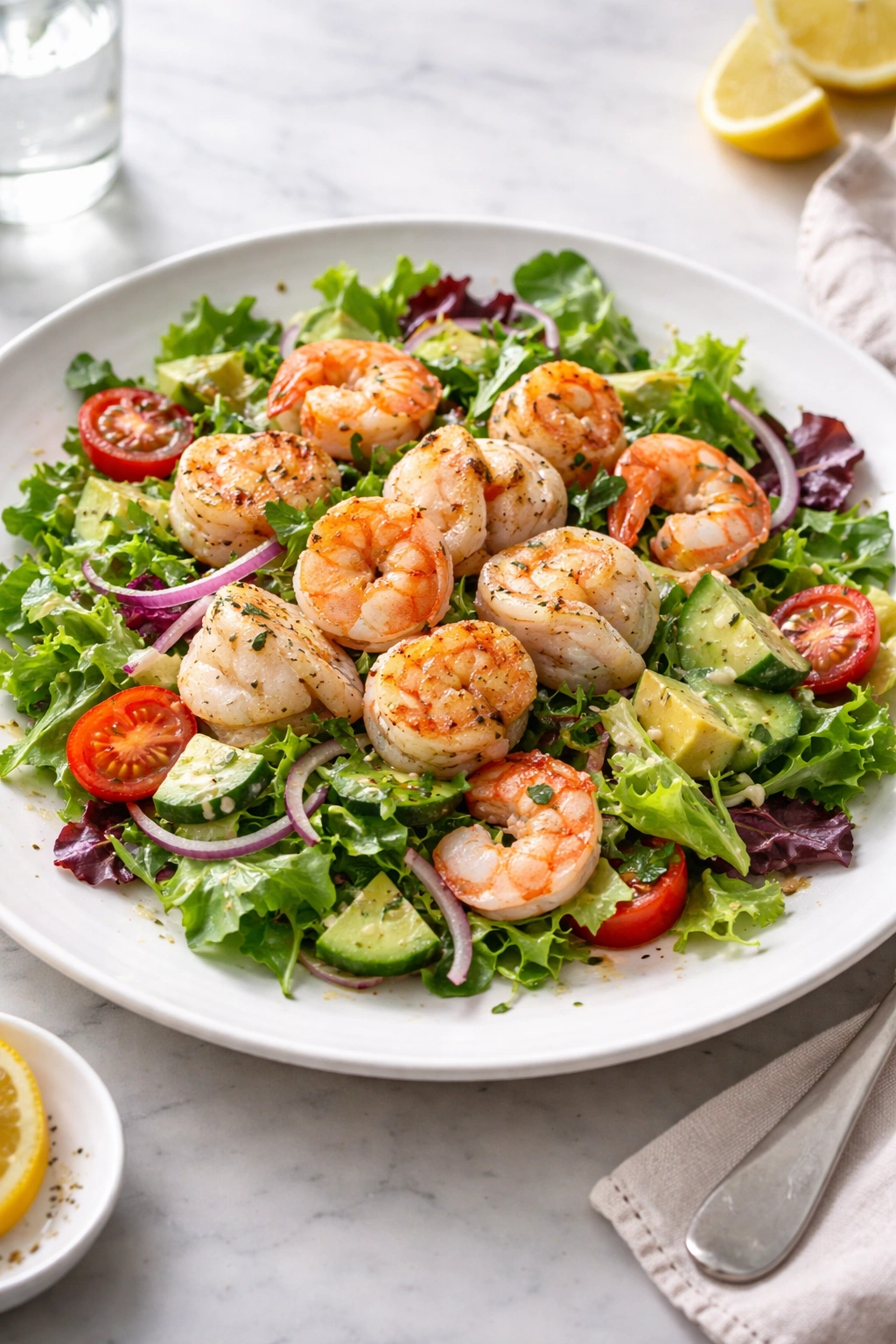
A great seafood salad sits at that perfect intersection of nourishment and indulgence — it feels special enough for a leisurely lunch or a light dinner, but it’s also practical enough to throw together on a busy weekday. The key is buying quality ingredients (especially the seafood), not overthinking the technique, and understanding that simplicity here is actually sophistication.
Once you’ve made this basic version a few times, you’ll start intuiting what variations call to you. Maybe you’ll add roasted beets next week, or switch to a completely different dressing the week after. The foundation is solid enough that it can handle your creative changes without falling apart. That’s the real gift of a well-designed salad — it works as written, but it’s also endlessly adaptable to what you’re craving and what your kitchen has on hand.
The next time you want lunch that tastes restaurant-quality but doesn’t require you to leave your house, come back to this. Pat the seafood dry, whisk together a bright dressing, and let fresh ingredients do the heavy lifting. You’ll be eating within 20 minutes, and you’ll feel genuinely nourished and satisfied for hours afterward.
