



Easy Shrimp Tacos That Come Together in 15 Minutes
There’s something genuinely magical about a meal that tastes restaurant-quality but takes barely more time than ordering delivery. Shrimp tacos are that meal—juicy, seasoned shrimp wrapped in warm tortillas, topped with a crisp cabbage slaw and a silky cilantro sauce that makes every bite irresistible. The best part? You’ll have dinner on the table in 15 minutes, start to finish.
I didn’t always believe this was possible. The first time I tried making shrimp tacos on a weeknight, I approached them with the same mindset I’d use for cooking chicken—thinking I’d need to prep vegetables for 20 minutes, then spend another 30 cooking. I was completely wrong. Once I understood the shortcuts, the timing tricks, and which ingredients actually matter when you’re racing the clock, shrimp tacos became my most-used answer to “what’s for dinner?” on busy nights.
The secret isn’t complicated. Shrimp cooks faster than almost any other protein—plump, juicy shrimp goes from raw to perfectly opaque and tender in literally 4 to 5 minutes. You’re not making a complicated slaw from scratch; you’re just tossing shredded cabbage (store-bought is fine) with a quick sauce. The seasoning is simple and direct: a handful of spices that you probably already have. Warm some tortillas, and you’re done.
This isn’t a shortcut that sacrifices flavor either. The shrimp gets seasoned aggressively so it’s packed with taste. The sauce is creamy and herbaceous, built on yogurt or sour cream with fresh cilantro and lime juice. The cabbage stays crisp because it hasn’t been sitting around; it goes raw into the tacos. Everything about this approach is designed to be fast without being bland.
Why Shrimp Tacos Are the Perfect 15-Minute Dinner
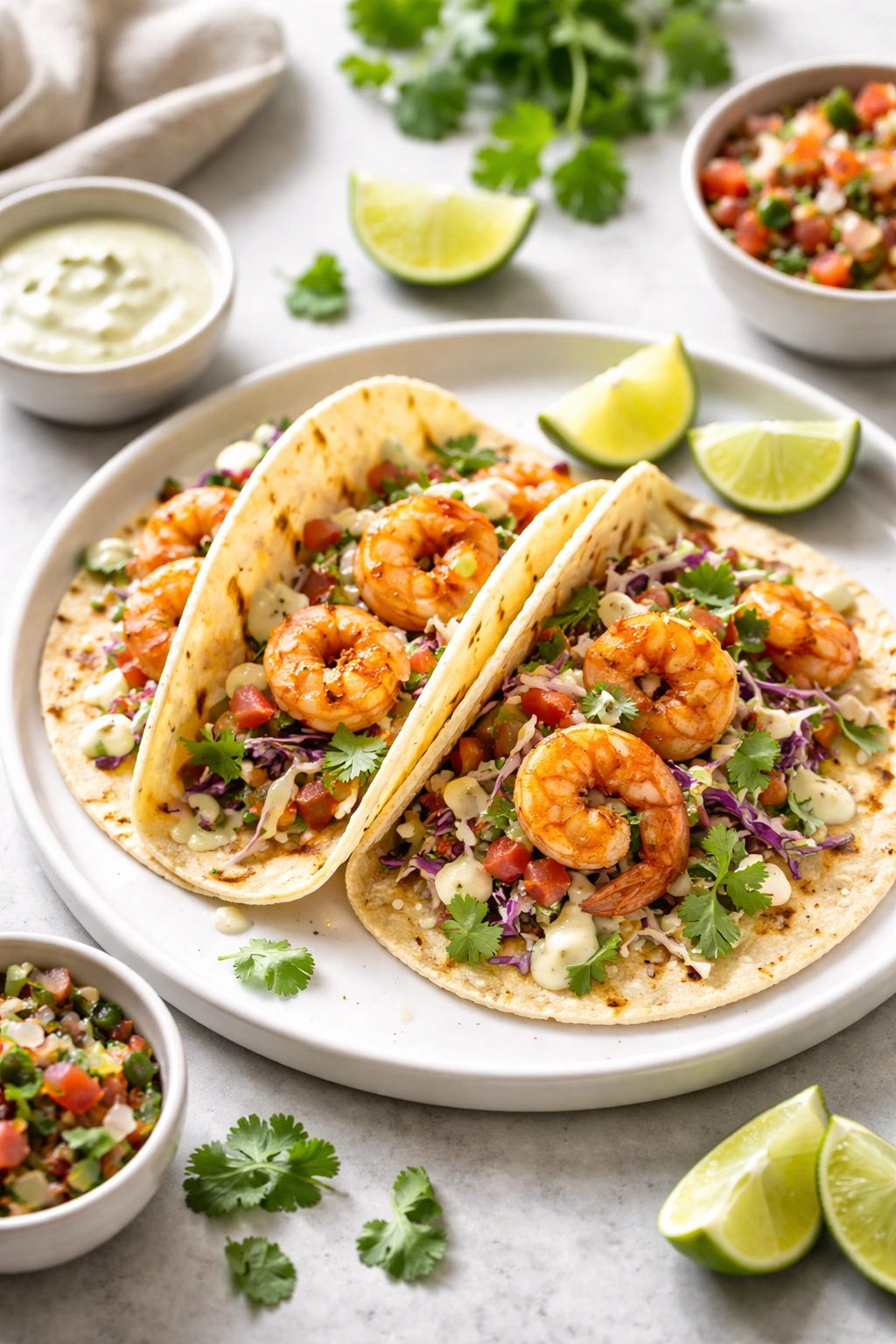
Weeknight dinners need to meet a specific set of criteria: they should come together quickly, taste genuinely delicious, feel like you’ve actually cooked something, and leave you with minimal cleanup. Shrimp tacos hit all four of these marks perfectly.
Start with the shrimp itself. Unlike chicken breasts, which need 20-25 minutes to cook through safely, or ground beef, which requires browning and draining, shrimp reaches perfect doneness in 4 to 5 minutes over medium-high heat. The window is tight, which means you can’t overcook it by accident while you’re multitasking—if anything, that short cooking time keeps the texture tender and juicy instead of rubbery. Shrimp doesn’t need a long marinade or deep seasoning period either; the spices adhere to the surface immediately, so you’re building flavor in the same amount of time it takes to heat the pan.
The structure of the meal plays to speed as well. You’re not assembling one complicated dish; you’re building individual tacos with distinct components that don’t all need to finish at the exact same moment. While the shrimp is cooking, you can be warming tortillas, setting out cabbage and sauce, and squeezing limes. Nothing interferes with anything else. There’s no pot to watch, no oven temperature to manage, no sauce that needs to reduce. Just a skillet and a few bowls.
From a nutritional perspective, these are also the kind of tacos you can feel genuinely good about. Shrimp is high in protein and low in calories, loaded with selenium and B vitamins. The cabbage adds fiber and vitamin C without any heaviness. You’re not eating something that leaves you feeling sluggish at 4 p.m.; you’re eating something that’s light but completely satisfying. This is partly why shrimp tacos have become such a staple in Mexican cuisine and why they’ve crossed over into mainstream American cooking—they deliver everything people actually want from food, without the guilt.
What Makes 15-Minute Shrimp Tacos Possible: The Strategic Shortcuts
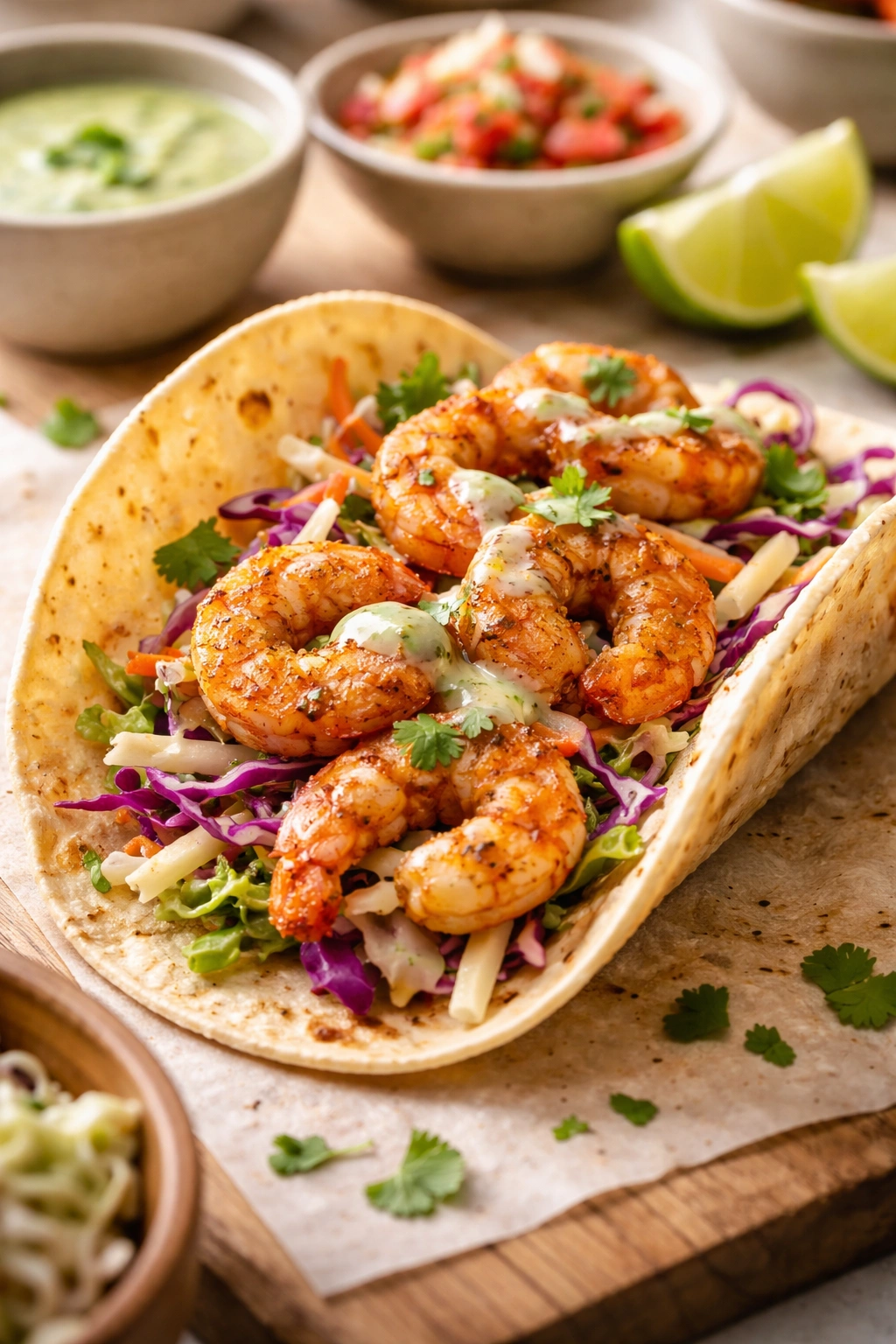
Making shrimp tacos in 15 minutes isn’t about rushing or cutting corners on flavor. It’s about understanding which steps actually matter and which ones slow you down unnecessarily. Once you know the difference, the timing becomes almost automatic.
Pre-cut and pre-shredded ingredients are your friend here. A bag of pre-shredded coleslaw mix or pre-cut cabbage saves you 5 to 10 minutes of chopping and prep. Yes, you can absolutely shred cabbage yourself if you enjoy that work, but when you’re moving fast, pre-shredded is a strategic choice that frees you up for the parts that actually require your attention. The quality difference is negligible for raw cabbage in tacos.
Using a simple seasoning blend instead of making one from scratch changes everything. Store-bought taco seasoning works beautifully here, or you can mix garlic powder, onion powder, paprika, cumin, and a pinch of cayenne in a small bowl while the pan heats. Either way, you’re looking at 30 seconds of work, not 5 minutes of measuring individual spices from your cabinet.
Making a sauce instead of a complex slaw is the biggest time-saver. Traditional coleslaw involves shredding vegetables, making a vinegar-based dressing, and letting everything sit together so flavors meld. That’s a 15-minute process on its own. The shrimp taco approach is different: use a creamy sauce (yogurt-based or sour cream-based) as both a dressing for the cabbage and a finishing drizzle on the tacos. You’re literally just whisking together 4 to 5 ingredients, and you have both your slaw and your sauce ready to go. It takes 3 minutes, tops.
Warm tortillas quickly and efficiently. Most recipes tell you to warm tortillas one at a time in a skillet. While that’s accurate, if you need to be fast, wrap a stack of tortillas in a barely damp kitchen towel and microwave them for 20 to 30 seconds, or lay them flat in a cast iron skillet over medium heat for 10 seconds per side. Either method gets all your tortillas warm and pliable in the time it takes to cook the shrimp.
Buy shrimp that’s already been peeled and deveined. If you can find raw shrimp that’s already cleaned, that’s your best option. If you have to devein them yourself, it adds time. Pre-cooked shrimp also works in a pinch—you’re just heating it through rather than cooking it from raw, which saves another 2 to 3 minutes. The texture won’t be quite as tender as freshly cooked raw shrimp, but it’s still delicious and still fast.
The cumulative effect of these choices is remarkable. Instead of a 45-minute or 60-minute process, you’ve got dinner in 15 minutes because you’ve removed the time-intensive steps without removing any of the flavor.
The Best Shrimp to Use for Quick Cooking
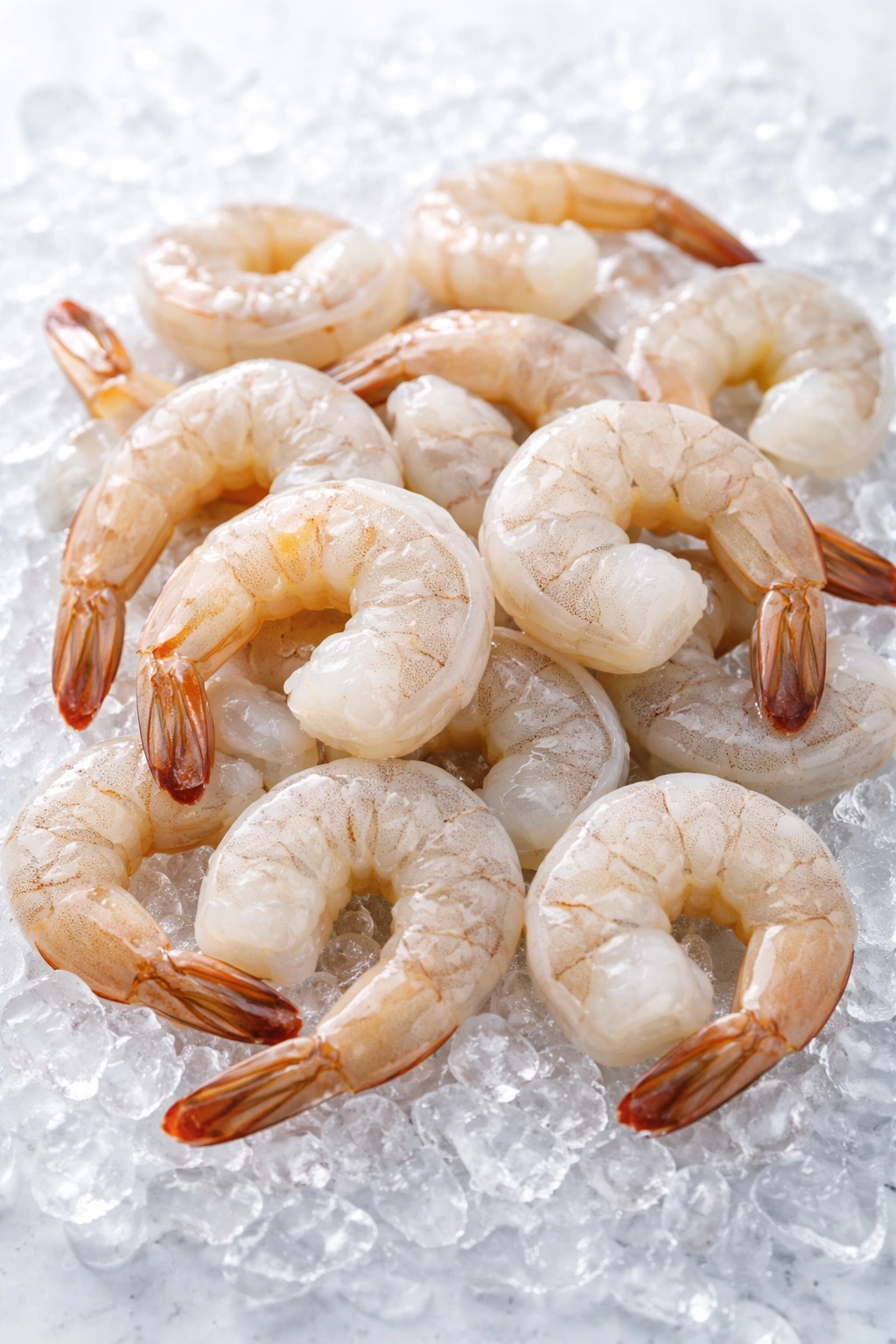
Shrimp quality and size matter far more than most people realize, especially when you’re working with such a short cooking window. Get these two things right, and your tacos will be noticeably better.
Size matters for cooking time and texture. Shrimp is sold by count per pound, and knowing this system makes a huge difference. You might see labels like “31-40 count,” which means it takes 31 to 40 shrimp to make a pound. For 15-minute shrimp tacos, you want medium to large shrimp—typically labeled as 26-40 count per pound, or sometimes listed simply as “medium” or “large.”
Why? Smaller shrimp (say, 41-60 count) will cook in 2 to 3 minutes, which means you have almost no margin for error before they become tough. Larger shrimp (16-25 count) take longer and are better suited for grilling or dishes where the individual shrimp becomes a focal point. Medium to large is the sweet spot: they cook in 4 to 5 minutes, giving you a comfortable window to achieve perfect doneness without worry.
Fresh versus frozen shrimp is more complicated than most people think. Almost all shrimp sold in the United States is frozen at some point in the supply chain. When you see “fresh shrimp” at the fish counter, what you’re actually seeing is thawed shrimp. The shrimp was frozen when it was harvested, then thawed by the fishmonger for display.
Here’s the important part: frozen shrimp that you thaw yourself is often fresher than what’s labeled fresh, because the flash-freezing process locks in quality at the moment of harvest. When you buy frozen shrimp, you control exactly when it’s thawed. When you buy what’s labeled as fresh, you have no idea how long it’s been sitting in the case thawed.
For these tacos, either option works beautifully. If using frozen shrimp, thaw it overnight in the refrigerator, or place it in a colander in a bowl of cold water for 15 to 20 minutes. Pat the shrimp very dry with paper towels before cooking—excess moisture prevents browning and releases liquid that steams the shrimp instead of searing it.
Look for wild-caught or responsibly farmed options if you can. Most shrimp is farmed, and farming practices vary widely. Organizations like the Marine Stewardship Council (MSC) and the Aquaculture Stewardship Council (ASC) certify sustainable seafood. If you’re shopping for shrimp, look for their seals on the packaging.
Also pay attention to whether the shrimp package lists only “shrimp” as the ingredient, or whether it includes preservatives like sodium tripolyphosphate (STPP). Preservatives extend shelf-life but can dull the flavor and affect texture. When possible, buy packages with shrimp as the only ingredient.
Essential Seasonings and Flavor-Building Techniques
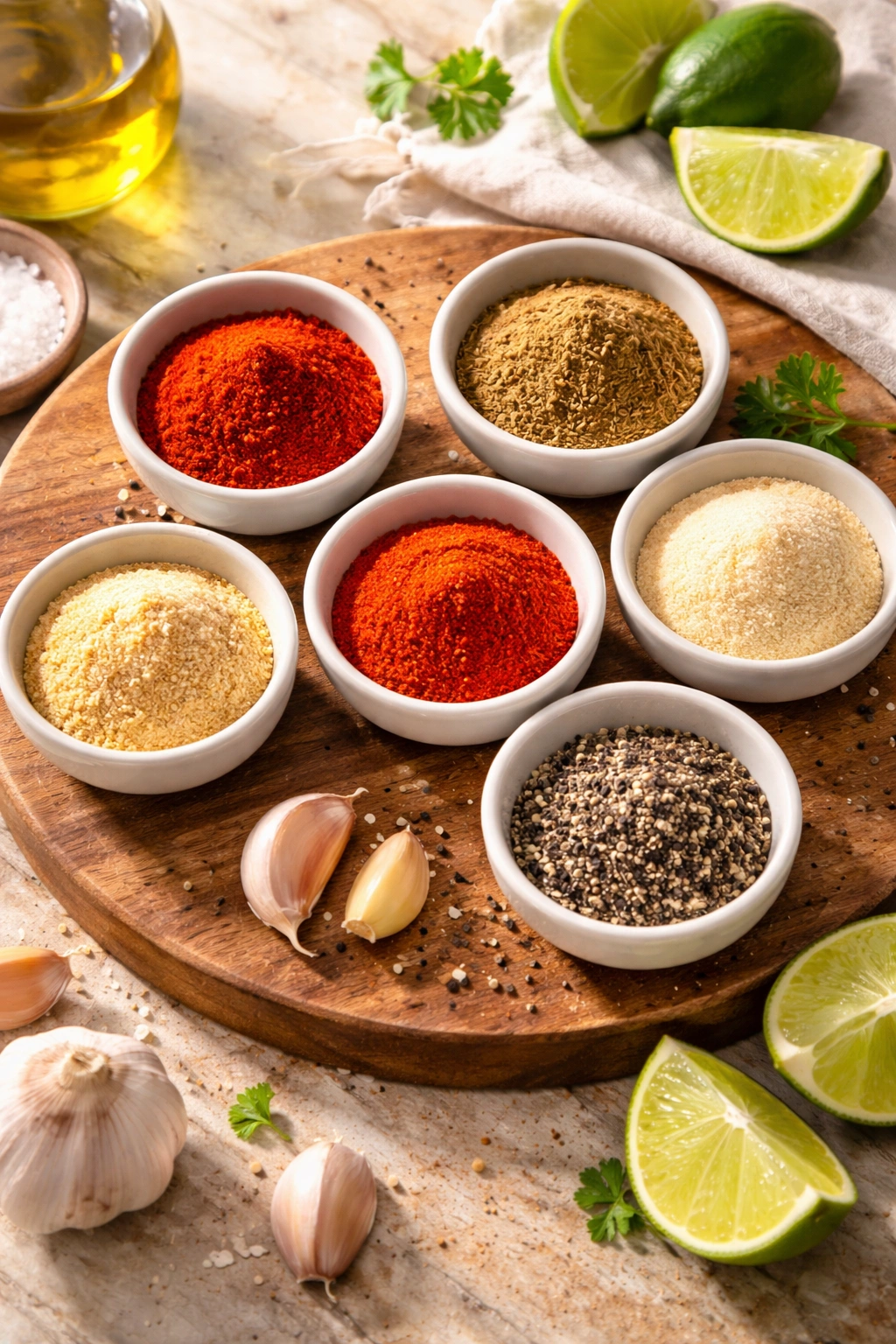
The seasoning blend for these shrimp tacos is simple but incredibly effective. Five or six ingredients create multiple layers of flavor that make the shrimp taste like it’s been marinating for hours, even though you’re literally adding the spices as you’re about to cook.
The foundation is warm, earthy spices. Paprika provides color and a subtle smokiness. Cumin adds warmth and depth. Garlic powder and onion powder round out the base with umami and savory notes. A pinch of cayenne pepper gives just enough heat to wake up the palate without making the tacos spicy. Salt is essential because it brings out and unifies all the other flavors. Ground black pepper adds sharpness.
You can mix these together before cooking—1 teaspoon paprika, 1 teaspoon garlic powder, 1 teaspoon onion powder, 1 teaspoon cumin, ½ teaspoon kosher salt, ¼ teaspoon cayenne, and ¼ teaspoon black pepper is enough to season 1 pound of shrimp. Or you can use 1 to 2 tablespoons of store-bought taco seasoning, which has these spices already blended. Both methods work equally well.
Fresh lime juice is non-negotiable. Don’t use bottled lime juice. The acidity in fresh lime is bright and alive; bottled juice tastes dull and flat by comparison. One large lime, squeezed, gives you about 2 to 3 tablespoons of juice. You’ll use some to season the shrimp before cooking and some to finish the tacos at the end. The timing of when you add lime also matters: squeeze it over the cooked shrimp while it’s still hot, so the juice absorbs into the meat and becomes part of the flavor rather than just sitting on top.
Oil choice affects the final taste. Extra-virgin olive oil has a fruity, complex flavor that some people love with shrimp tacos. Regular olive oil is more neutral. Avocado oil is neutral and has a higher smoke point, making it excellent for cooking at higher heat. Butter adds richness. For these tacos, choose whichever you have on hand, but I’m partial to a combination: a small amount of butter for richness, plus a bit of olive oil to prevent the butter from burning over medium-high heat.
Garlic, fresh and or powdered, makes a difference. Most recipes call for either fresh minced garlic or garlic powder, but using both—a tiny pinch of powdered garlic in the dry spice mixture, plus a small amount of fresh minced garlic that goes directly into the pan with the shrimp—creates more complexity. The powdered garlic distributes evenly during cooking, while the fresh garlic adds a bright, sharp note. This is one of those touches that separates homemade from just-okay.
The Cilantro Lime Sauce That Makes Everything Better
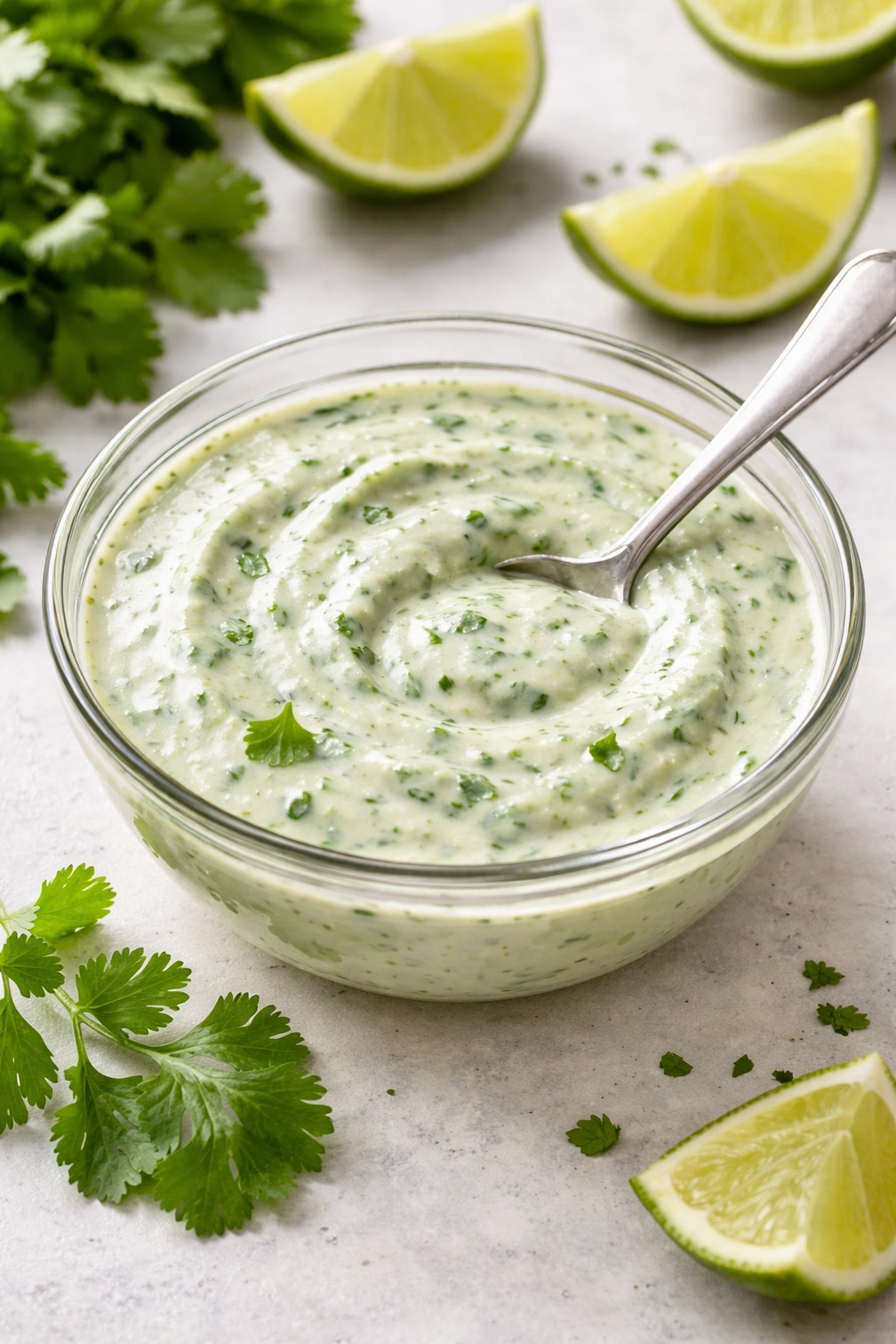
This sauce is the secret weapon of the entire dish. It’s creamy, herbaceous, tart, and bright all at once. Once you make it, you’ll find yourself wanting to put it on everything—grain bowls, roasted vegetables, grilled chicken, even as a dip with chips.
The base is simple: ½ cup of plain yogurt or sour cream, or a combination of both. If you go with all yogurt, choose full-fat Greek yogurt for richness; 2% or nonfat yogurt makes a thinner, less satisfying sauce. If you go with sour cream, use full-fat for the same reason. Some people use a combination of equal parts yogurt and mayonnaise for extra richness and tang—this is especially good if you want a sauce that feels more like restaurant crema.
Fresh cilantro is essential, not optional. ¼ to ½ cup of fresh cilantro leaves, finely chopped, brings the herbaceous element that makes this sauce sing. If you genuinely dislike cilantro, you can omit it, but I’d encourage you to try it anyway. The cilantro is so bright and fresh against the richness of the sauce that it transforms the entire bite.
Lime juice adds tartness and freshness. Squeeze 1 large lime to get about 2 to 3 tablespoons of juice. Add it slowly to the sauce—start with 1 tablespoon, mix well, taste, and add more if you want extra brightness. This prevents the sauce from becoming too thin or too tart.
Garlic brings depth. Mince or press one small clove of garlic directly into the sauce, or use ½ teaspoon of garlic powder. Fresh garlic is more vibrant; powdered is more subtle. Your call based on preference.
Salt, pepper, and a tiny pinch of cayenne unify everything. About ½ teaspoon of kosher salt (adjust to taste), ¼ teaspoon of black pepper, and a pinch of cayenne round out the flavors and bring brightness.
The entire sauce takes 3 minutes to whisk together. You can make it up to a day ahead and store it covered in the refrigerator, which makes this recipe even more flexible for busy weeks. The sauce is used in three ways: a small amount mixed into the cabbage slaw to dress it, a drizzle on the finished tacos, and extra on the side for people who want more.
The Crisp Cabbage Slaw: Quick But Essential
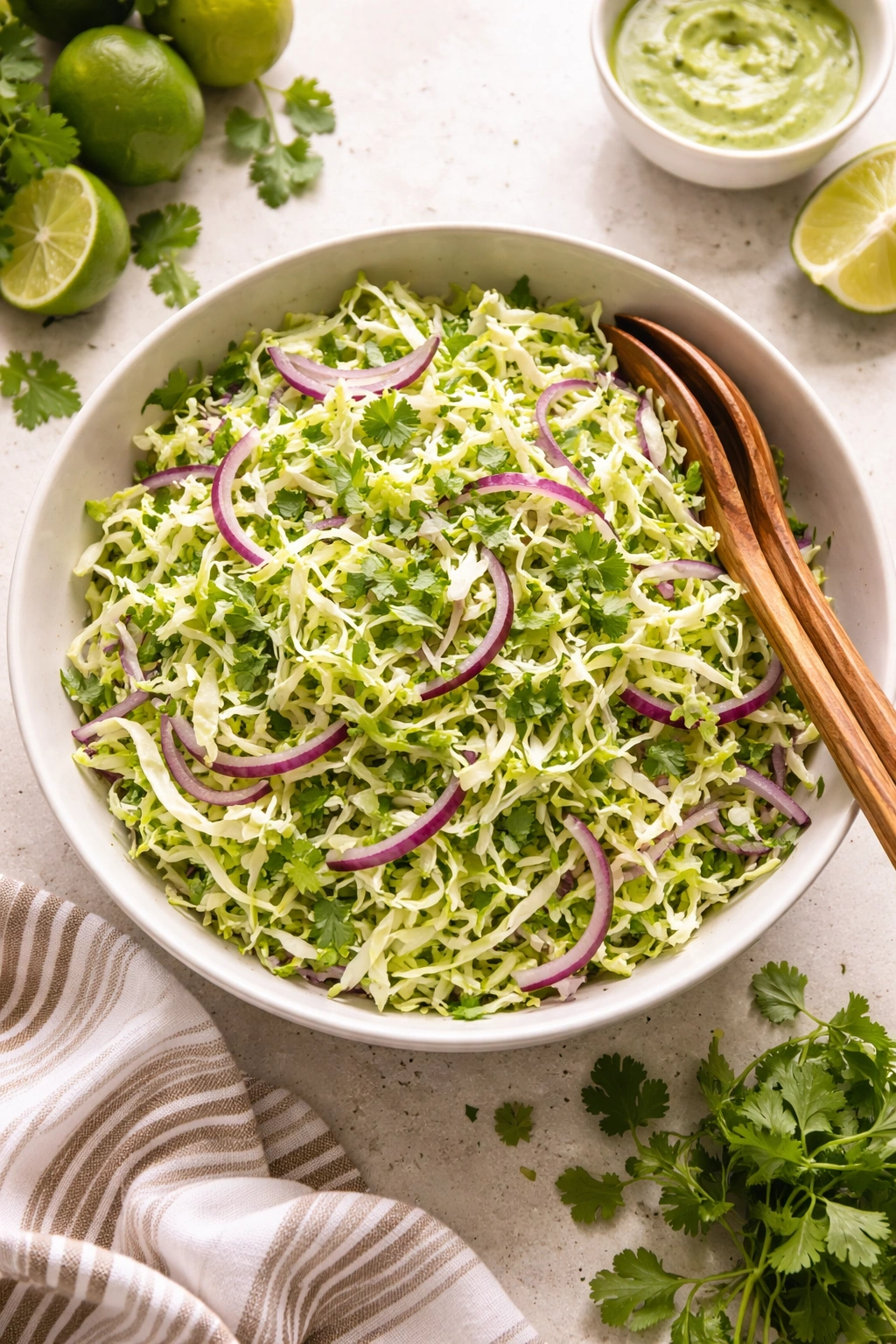
Many 15-minute shrimp taco recipes skip the slaw entirely and just pile raw toppings on the tacos. That’s fine if you’re in an absolute rush, but spending 2 extra minutes on a simple slaw transforms these tacos from good to genuinely crave-worthy.
Green cabbage is your base. You want about 2 to 3 cups, shredded. Pre-shredded cabbage from a bag works perfectly. If you prefer red or purple cabbage, it works too—it just has a slightly earthier flavor and looks prettier on the plate. Some people use a coleslaw mix that’s a combination of green and red cabbage; that’s fine as well.
Red onion adds sharpness and color. Slice it as thinly as you can manage—a mandoline makes this easy, but a sharp knife works too. A thin red onion has a sharp, peppery quality that’s brilliant against creamy sauce. Use about ¼ to ½ of a medium red onion. If raw red onion tastes too sharp to you, soak the slices in cold water for 5 minutes, which mellows the flavor considerably.
Fresh cilantro brings herbaceous brightness. Chop about ¼ cup of fresh cilantro leaves and toss it with the cabbage and onion. This is the same cilantro that goes into the sauce, so you’re buying it once but using it twice.
The sauce becomes the dressing. Instead of making a separate vinaigrette, you use about ½ cup of the cilantro lime sauce tossed with the slaw. This gives you a creamy, tangy slaw that serves double duty: it dresses the vegetables and provides extra sauce for the finished tacos.
The entire slaw comes together in 3 minutes. You can make it 30 minutes ahead or even the morning of if you’re doing meal prep. Just store it in an airtight container; it will release a little liquid as the cabbage and onion soften, but that’s normal. Drain it slightly before serving if you prefer a drier slaw, or keep the liquid if you want it saucier.
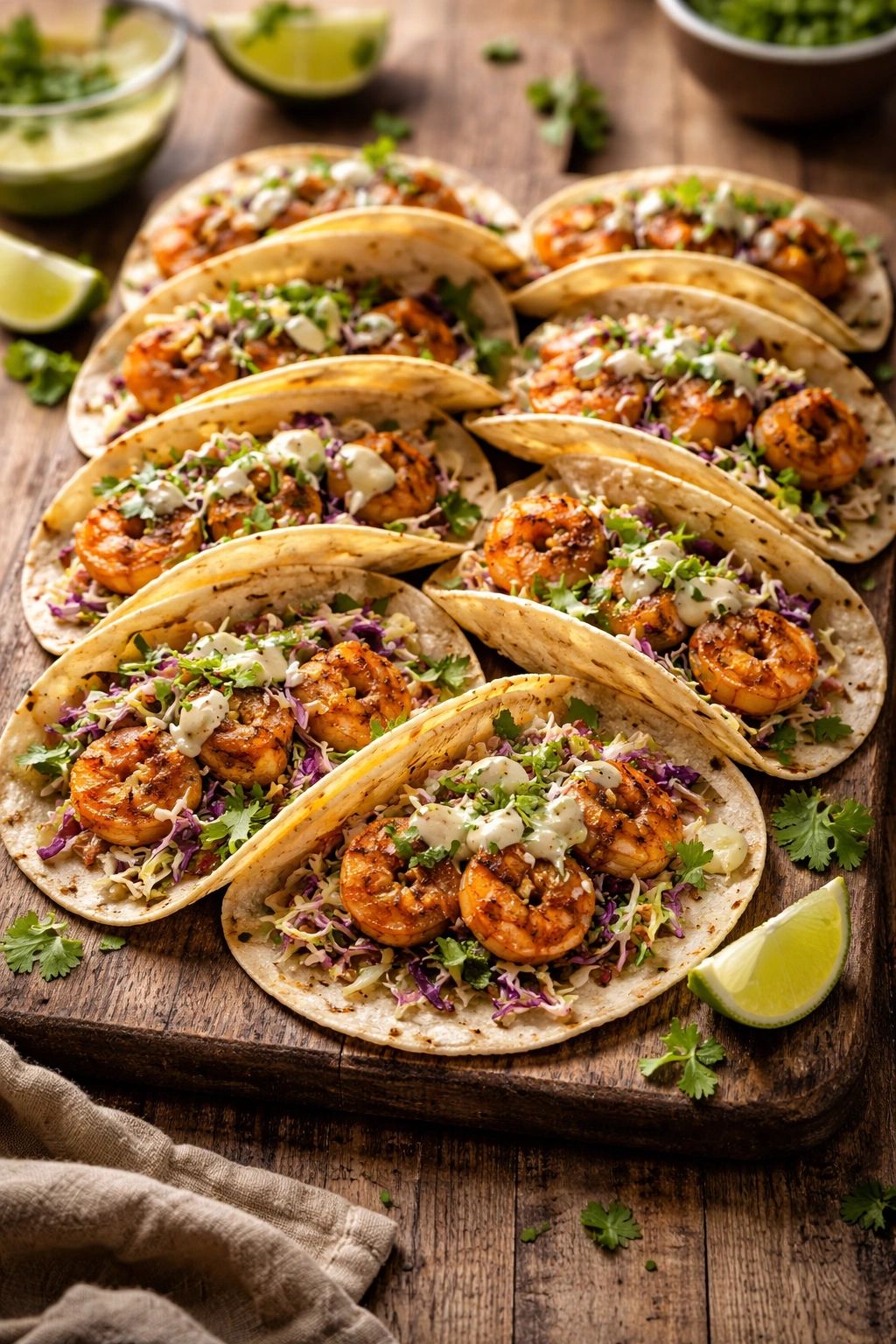
Yield: 4 servings | Serves 4 | Makes 8 tacos
Prep Time: 10 minutes
Cook Time: 5 minutes
Total Time: 15 minutes
Difficulty: Beginner — All ingredients are simple and available, the cooking technique is straightforward, and there’s almost no way to mess this up if you follow the timing cues. Even if you’ve never cooked shrimp before, you’ll succeed.
For the Cilantro Lime Sauce:
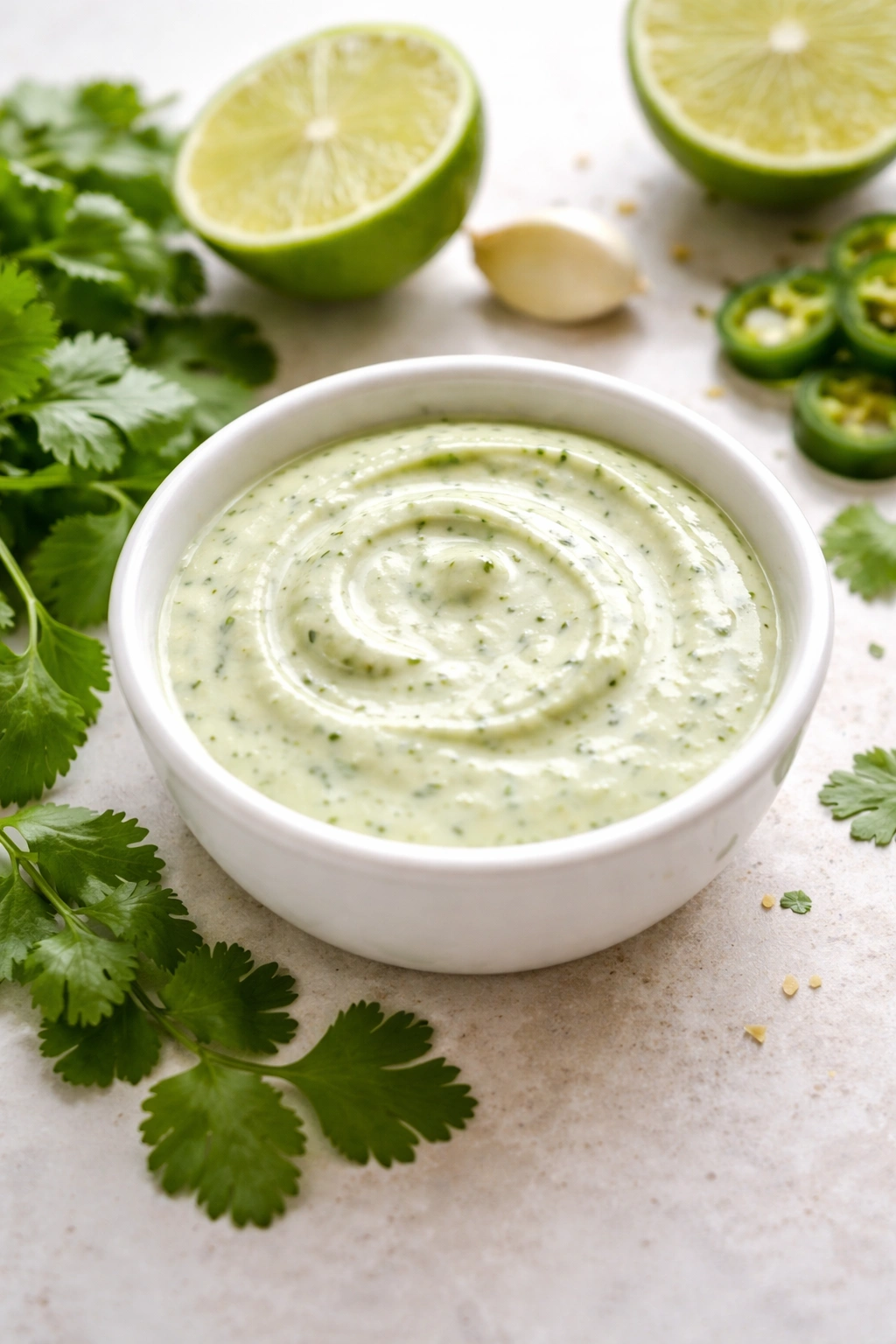
- ½ cup plain Greek yogurt (full-fat) or sour cream, or a combination
- ¼ cup fresh cilantro leaves, finely chopped
- 2 tablespoons fresh lime juice, squeezed from 1 large lime (add gradually, tasting as you go)
- 1 small garlic clove, minced, or ½ teaspoon garlic powder
- ½ teaspoon kosher salt (adjust to taste)
- ¼ teaspoon ground black pepper
- Pinch of cayenne pepper (optional, for subtle heat)
For the Shrimp:
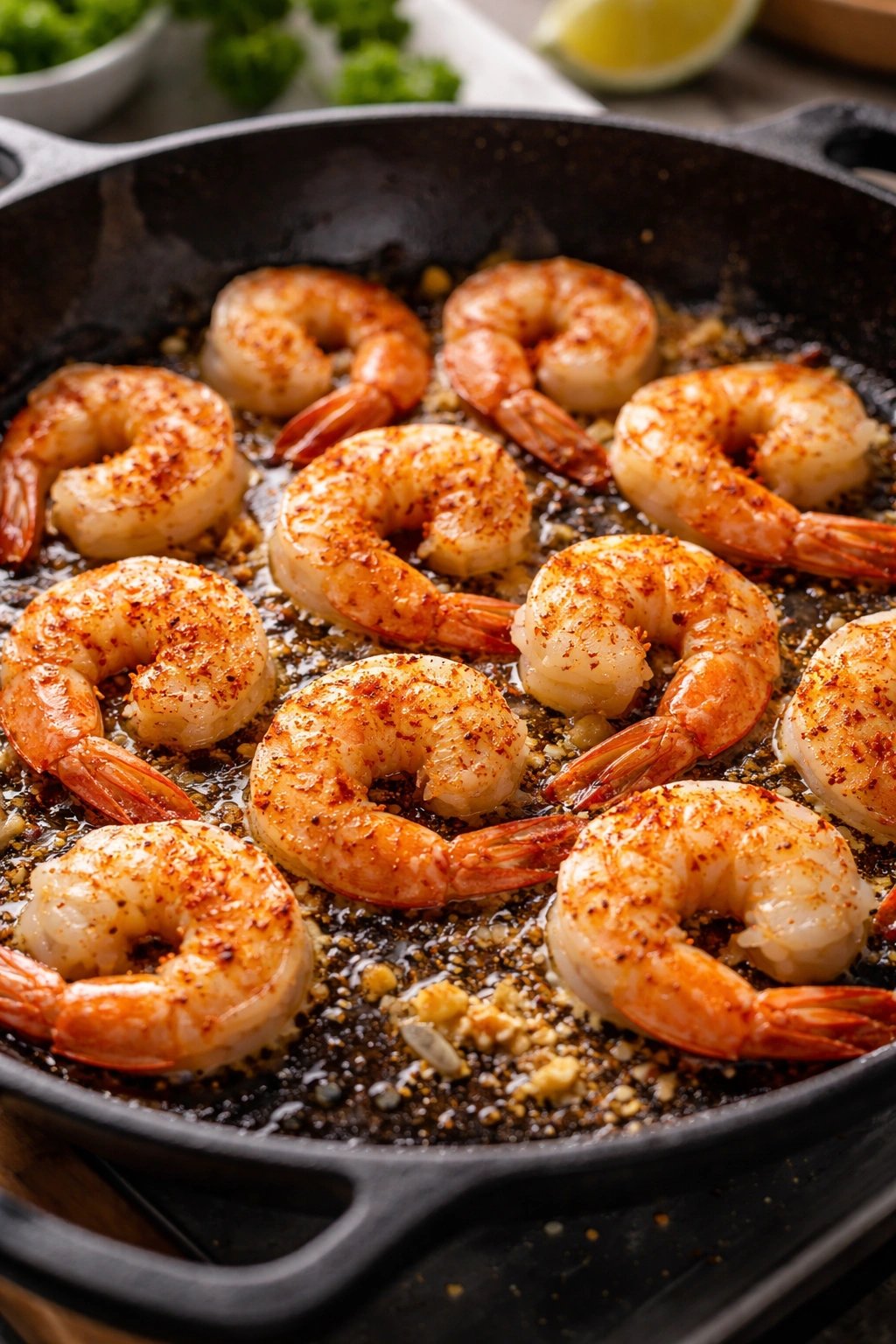
- 1 pound medium to large raw shrimp (26-40 count per pound), peeled, deveined, and tails removed
- 1 tablespoon extra-virgin olive oil or avocado oil
- 1 teaspoon paprika
- 1 teaspoon garlic powder
- 1 teaspoon onion powder
- 1 teaspoon ground cumin
- ½ teaspoon kosher salt
- ¼ teaspoon ground cayenne pepper
- ¼ teaspoon ground black pepper
- Juice of ½ large lime (about 1 tablespoon), to finish
Or substitute all the individual spices with 1 to 2 tablespoons of store-bought taco seasoning (mild or spicy, depending on your preference)
For the Slaw:
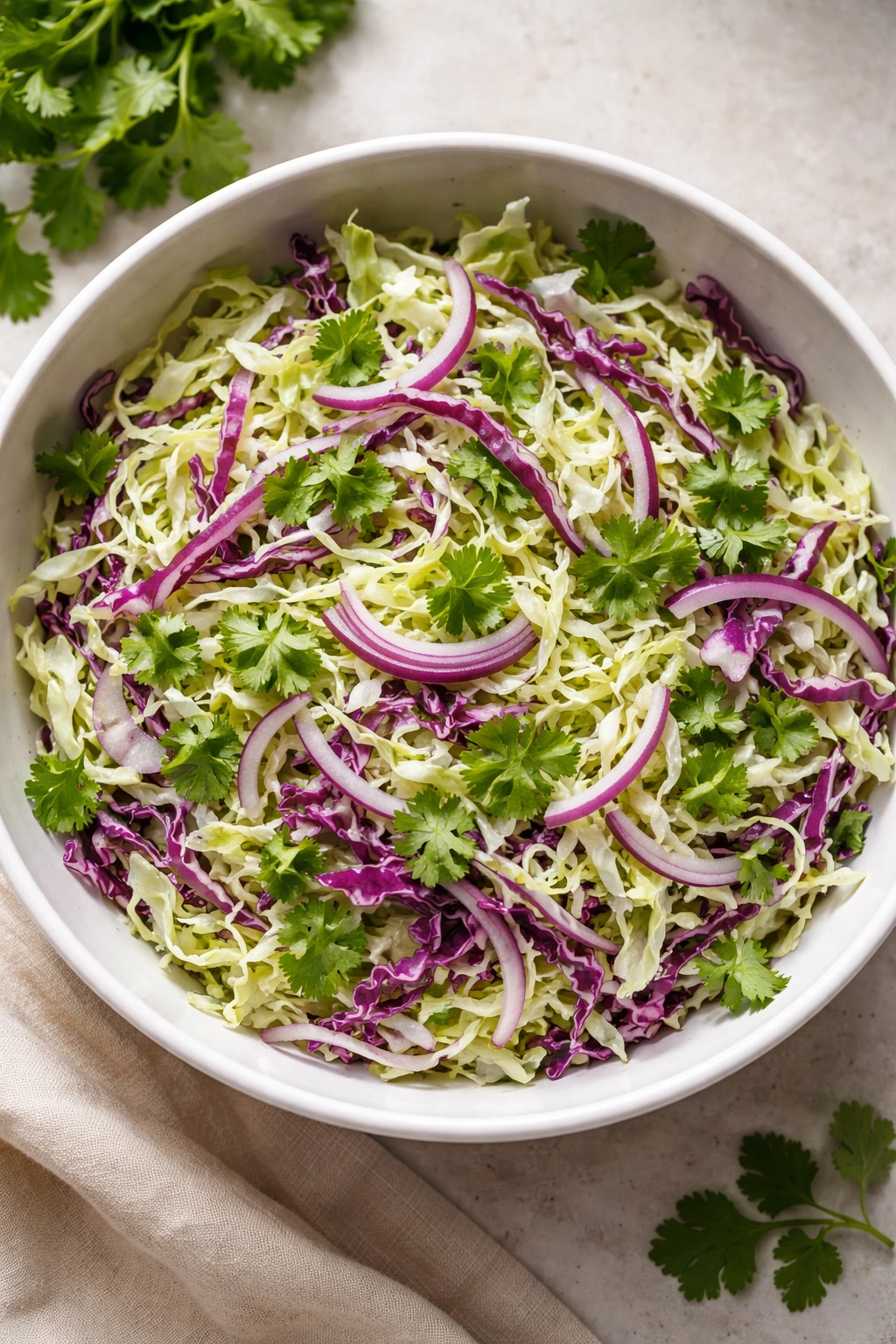
- 2½ to 3 cups shredded green, red, or purple cabbage (pre-shredded is fine)
- ¼ to ½ medium red onion, thinly sliced
- ¼ cup fresh cilantro leaves, coarsely chopped
- ½ cup of the cilantro lime sauce (from above)
- Pinch of kosher salt
For Serving:
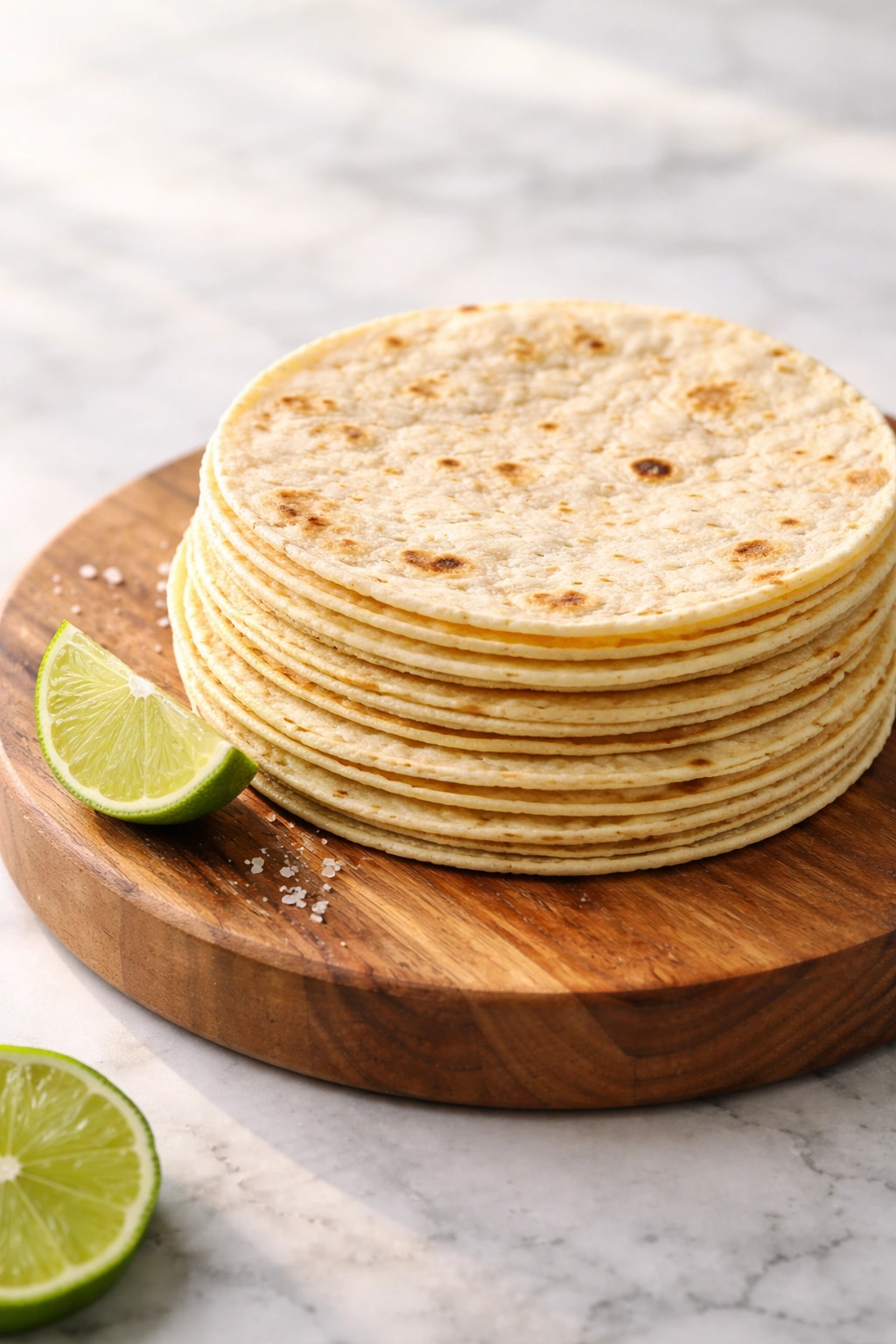
- 8 small corn tortillas (about 6 inches in diameter) or flour tortillas, warmed
- 1 large lime, cut into wedges for squeezing
- Optional toppings: sliced avocado, hot sauce, extra fresh cilantro, crumbled queso fresco or cotija cheese
Prepare the Cilantro Lime Sauce:
-
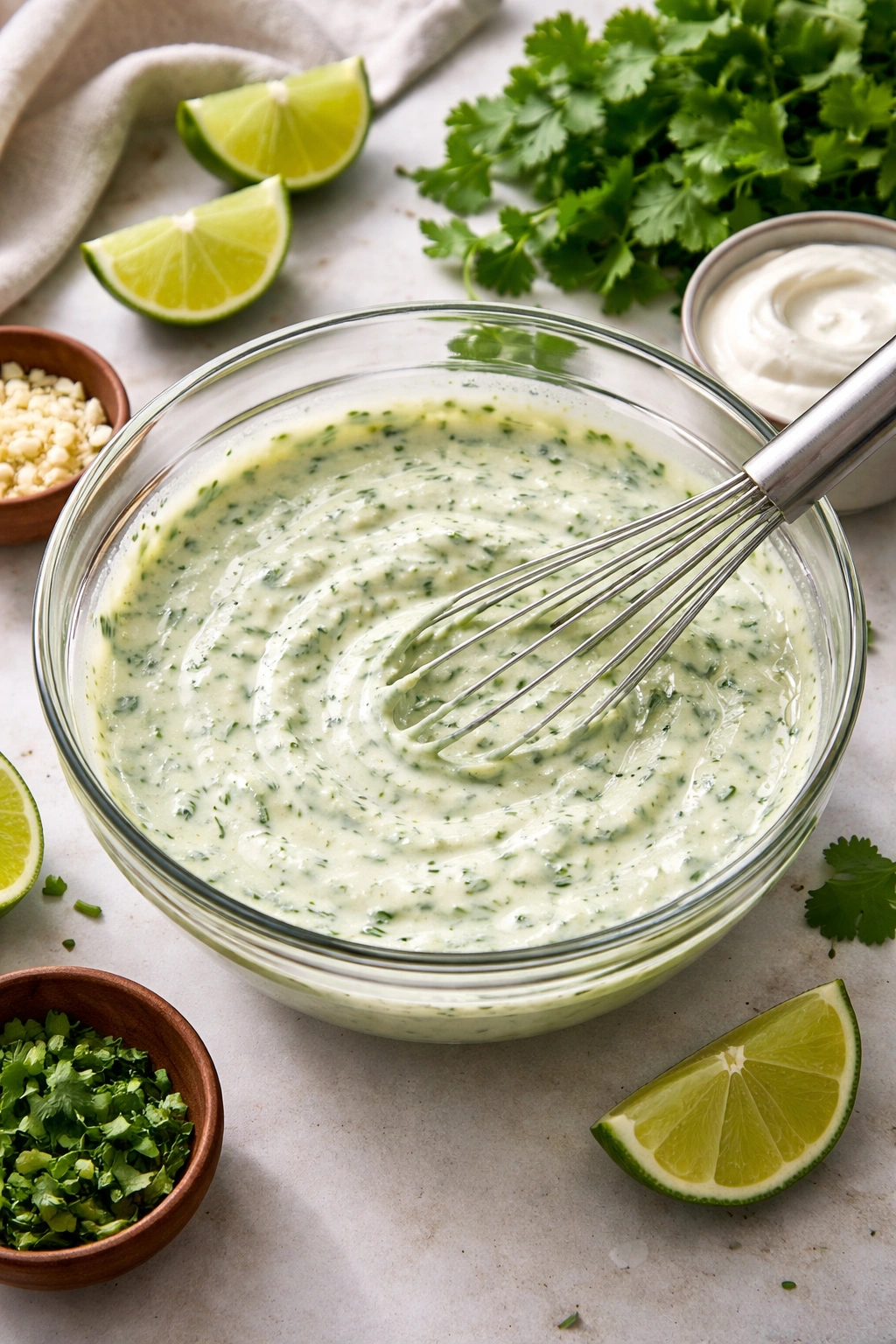
In a medium bowl, combine the yogurt (or sour cream), minced fresh garlic (or garlic powder), salt, black pepper, and cayenne. Whisk until smooth.
-
Add the fresh cilantro leaves and fold them in gently with a spoon or whisk until evenly distributed.
-
Squeeze the lime juice slowly into the sauce, starting with 1 tablespoon. Whisk to combine, then taste. Add the remaining lime juice a little at a time until the flavor is bright and tangy—not so much lime that it’s pucker-inducing, but enough that you notice the tartness immediately. The sauce should taste herbaceous, creamy, and slightly tangy.
Advertisements -
Taste again and adjust salt or pepper as needed. The sauce should taste flavorful on its own because you’ll be using it as both a dressing and a finishing element. Do not undersalt this sauce—salt amplifies the cilantro and lime. Set aside.
Prepare the Slaw:
-
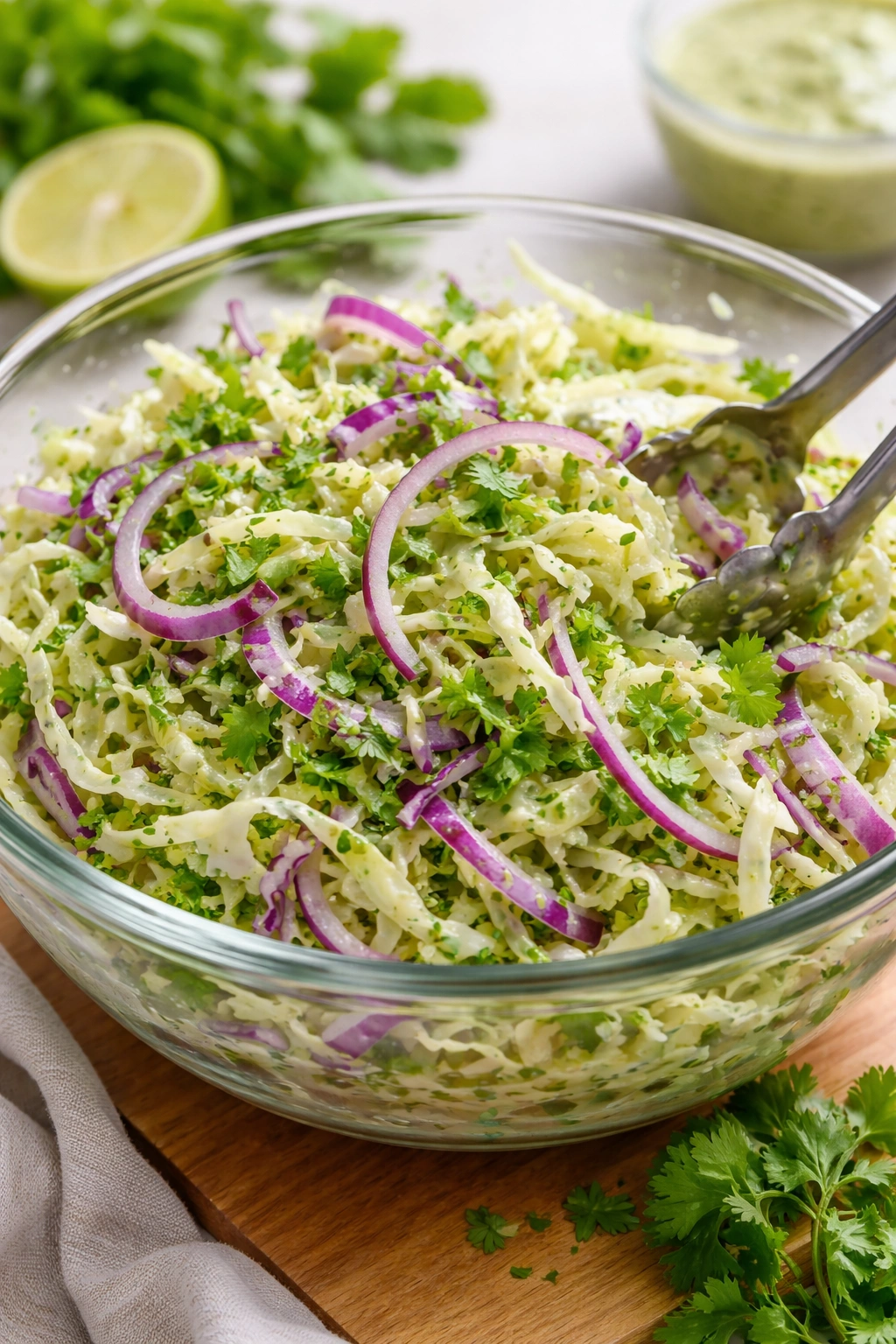
In a large bowl, combine the shredded cabbage, thinly sliced red onion, and fresh cilantro. Toss gently to combine.
-
Pour ½ cup of the cilantro lime sauce over the cabbage mixture and toss until evenly coated. Add a tiny pinch of salt and toss again. Set aside. The slaw will keep warm and won’t wilt because it’s raw cabbage, which stays crisp even when dressed.
Prepare the Shrimp:
-
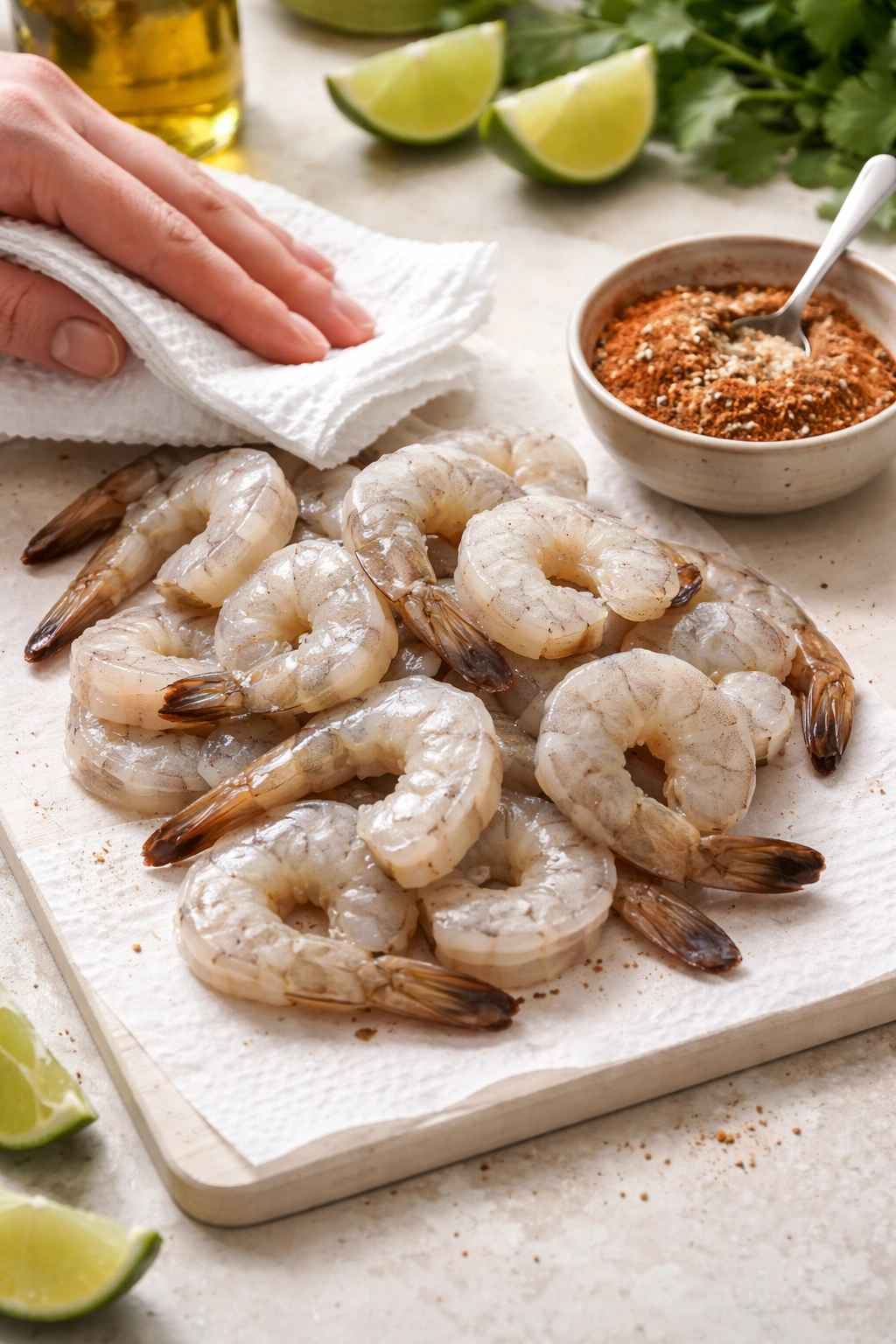
Pat the shrimp completely dry with paper towels. Excess moisture on the surface prevents browning and causes the shrimp to steam rather than sear. This step is crucial and takes 30 seconds—do not skip it.
-
In a small bowl, combine the paprika, garlic powder, onion powder, cumin, salt, cayenne, and black pepper. (Or just measure out 1 to 2 tablespoons of store-bought taco seasoning.) Set the spice mixture beside your stovetop, ready to use.
Cook the Shrimp:
-
Heat a large nonstick skillet or cast iron skillet over medium-high heat for 1 minute. You want the pan quite hot before the shrimp hits it—this is what creates a light sear and prevents the shrimp from sticking.
-
Add the olive oil to the hot pan. It should shimmer immediately and move freely around the pan. This takes about 10 seconds.
-
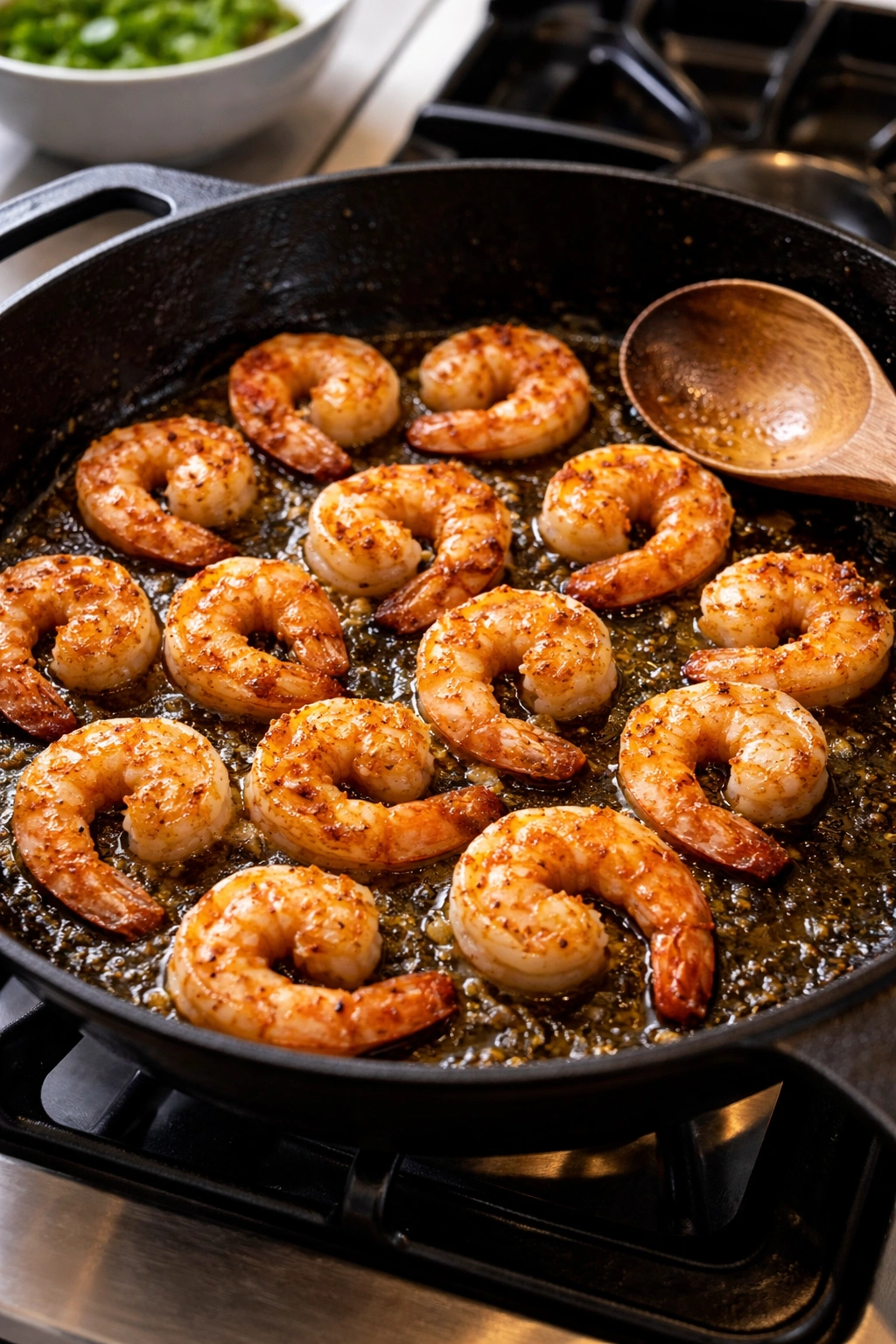
Add all the shrimp to the pan in a single layer. Immediately sprinkle the spice mixture evenly over the shrimp, and stir gently with a wooden spoon or silicone spatula to coat every piece. Do not walk away from the stove now. The shrimp will begin releasing moisture and shrinking almost immediately.
-
Cook without moving the shrimp for 2 to 3 minutes, until the underside (the side touching the pan) turns from translucent gray to opaque white with hints of pink at the edges. You should see the shrimp beginning to curl into a C-shape, and you should smell something sweet and oceanic, not fishy or ammonia-like.
-
Flip or stir the shrimp and cook for another 1 to 2 minutes until the second side is also opaque and the shrimp is fully cooked through (no translucent gray remaining). The shrimp should be pale pink with orange accents. At this point, the meat should be opaque all the way through when you cut into the thickest part of one shrimp.
Advertisements -
Do not overcook. Once the shrimp is fully opaque, remove it immediately from the heat. Overcooking by even 1 minute makes the shrimp tough and rubbery. You’re looking for tender, juicy shrimp, and that happens in a narrow window: the moment it’s opaque all the way through is exactly when you stop.
-
Squeeze the juice of ½ lime over the hot shrimp (about 1 tablespoon of fresh lime juice) and stir gently to distribute. The hot shrimp will absorb the lime juice and it becomes part of the flavor rather than just sitting on top. Transfer the shrimp to a plate or bowl.
Warm the Tortillas:
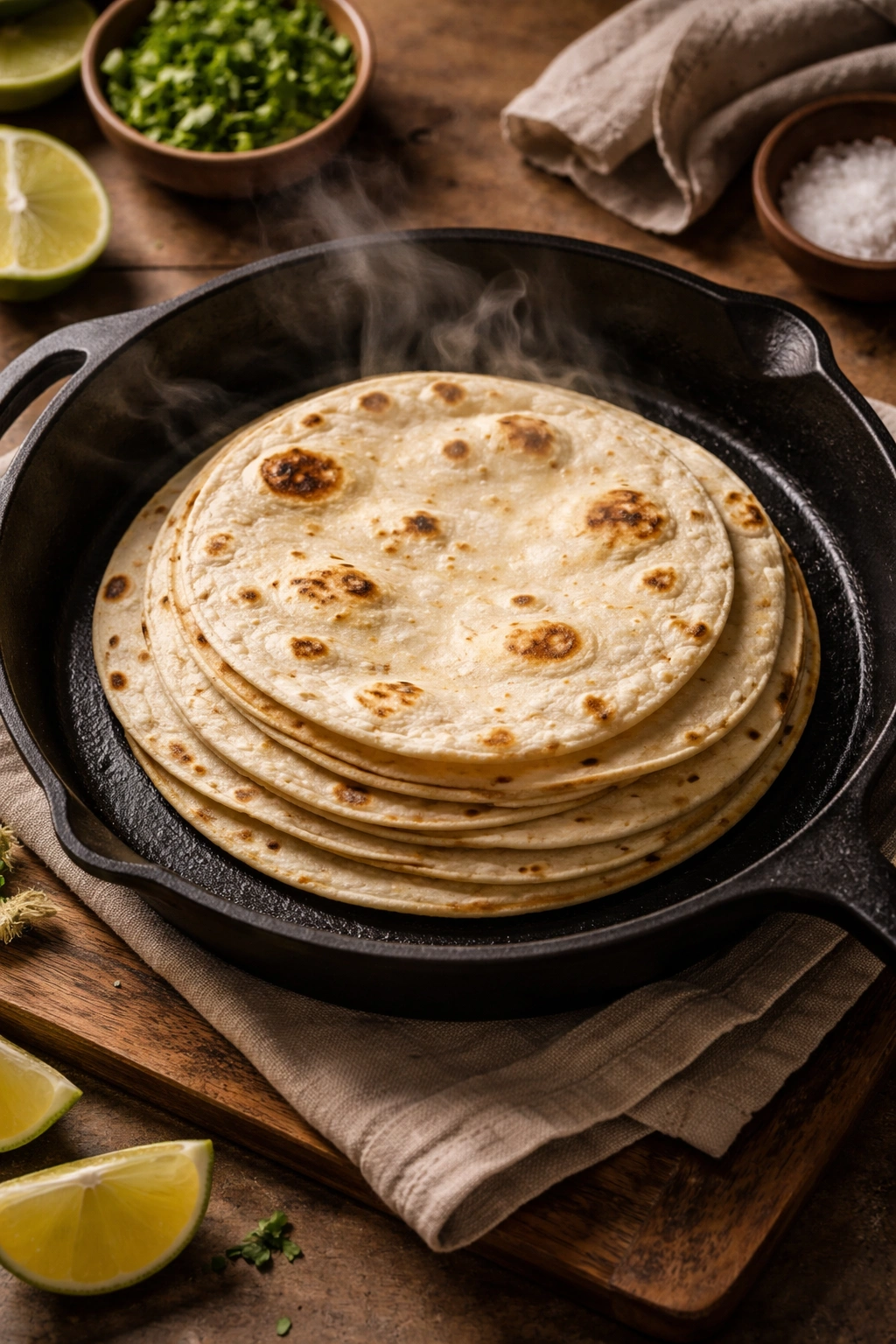
- While the shrimp is cooking, warm your tortillas. There are several methods:
- On a gas stove: Hold a tortilla with kitchen tongs directly over a medium flame for about 5 seconds per side, until you see light char marks on the surface. The tortilla should be warm and pliable. Repeat with all tortillas and keep them warm in a kitchen towel or wrapped loosely in foil.
- In a dry skillet: Heat a large skillet over medium-high heat. Lay tortillas flat in the pan (you can do 2 to 3 at a time) and heat for about 10 to 15 seconds per side until warm and slightly charred. Stack them in a kitchen towel to keep warm.
- In the microwave: Wrap all your tortillas together in a barely damp (not wet) kitchen towel and microwave for 20 to 30 seconds. They’ll emerge steamed, warm, and pliable. This is the fastest method.
Assemble the Tacos:
-
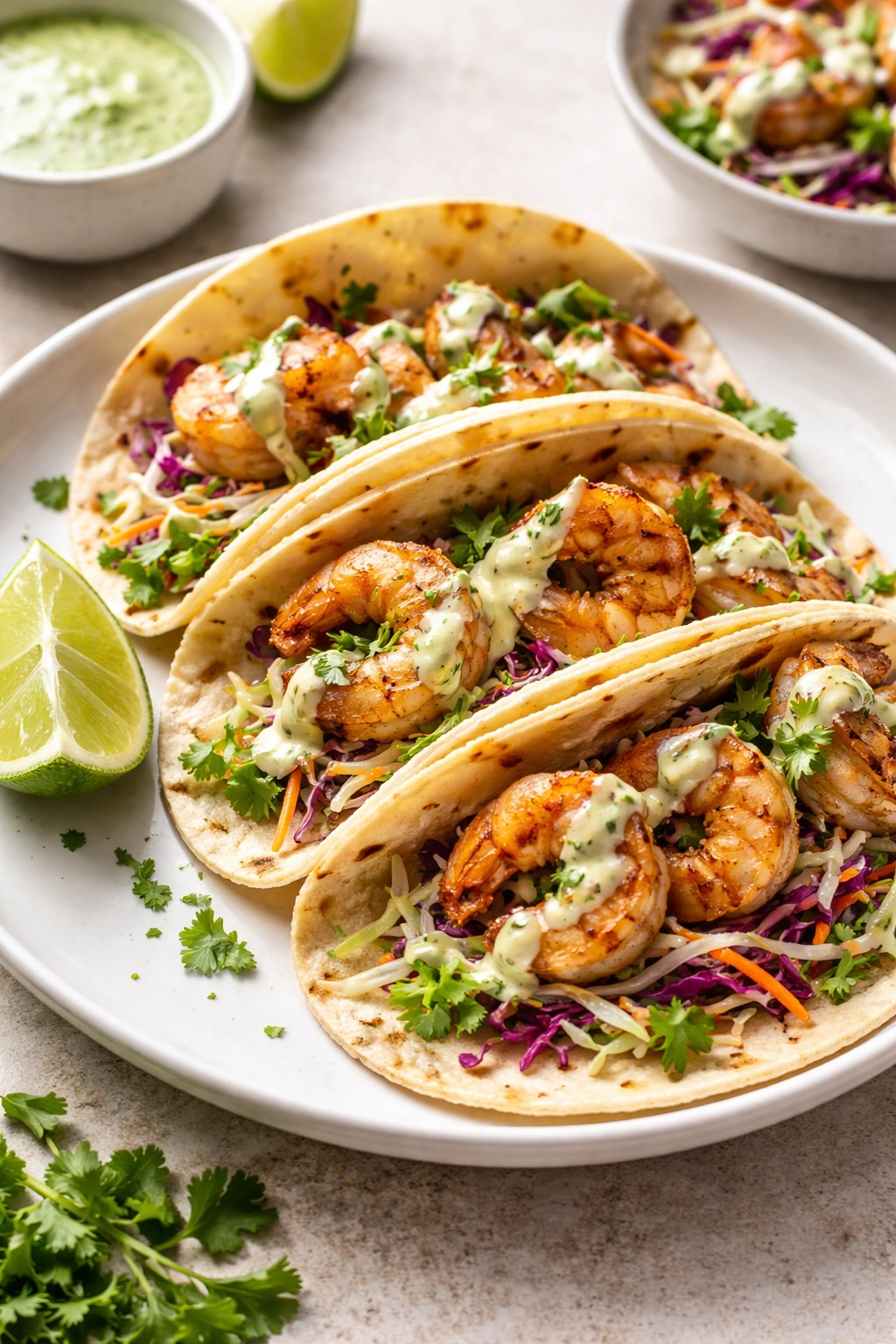
Lay out a warm tortilla on a plate. Spoon about 2 to 3 tablespoons of the cilantro lime slaw down the center of the tortilla.
-
Top the slaw with 4 to 5 of the cooked shrimp (the amount depends on the size of your shrimp and how full you like your tacos).
-
Drizzle a small spoonful of the remaining cilantro lime sauce over the shrimp.
-
Squeeze a wedge of fresh lime over the entire taco. Serve immediately.
Pro Tips for Shrimp Taco Success
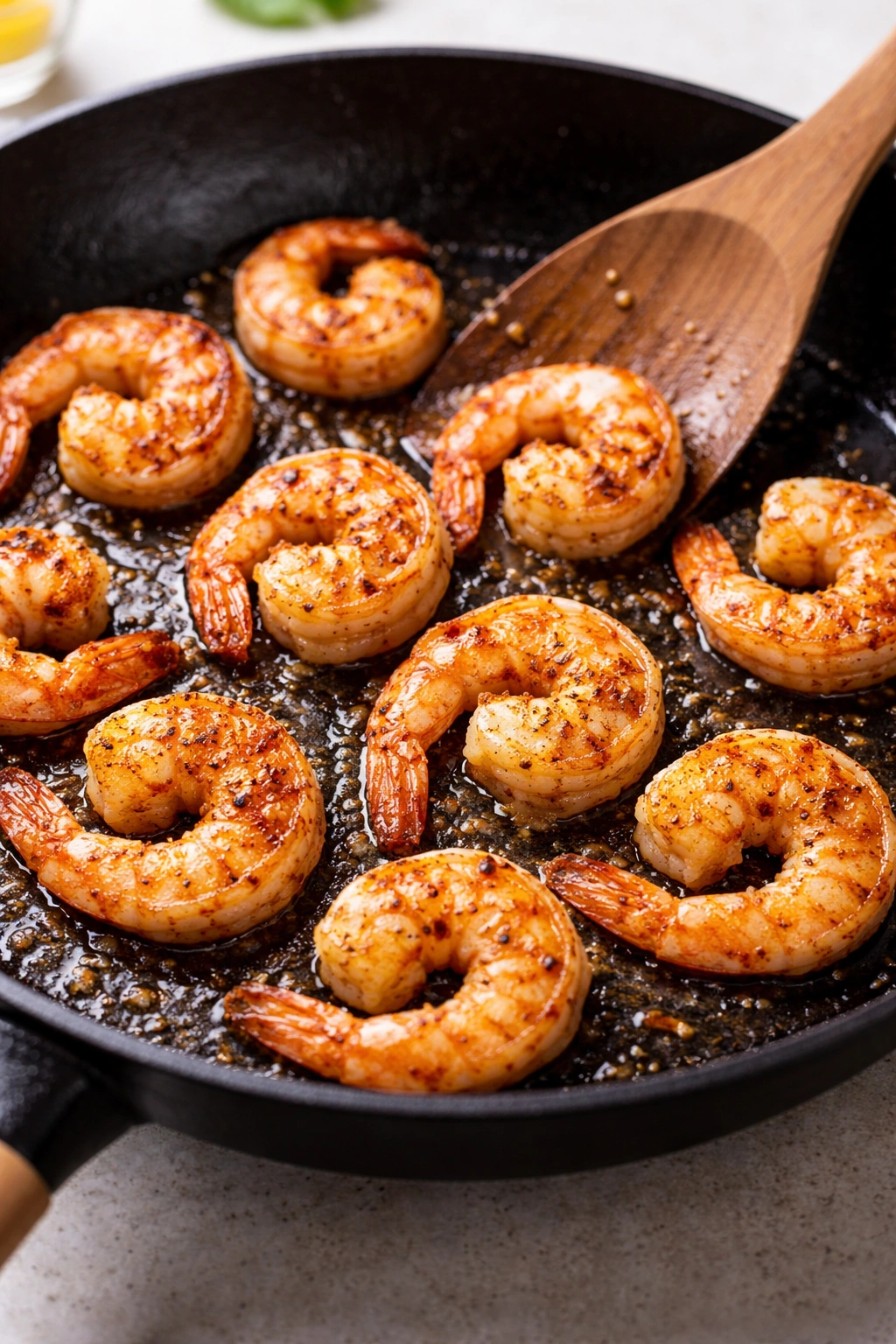
Pat your shrimp completely dry. This is the single most important step for getting a light sear instead of a watery, steamed texture. Moisture is the enemy of browning. Use paper towels and take 30 seconds to dry each batch thoroughly.
Don’t overcrowd the pan. If your skillet isn’t large enough to fit all the shrimp in a single layer, cook them in two batches. Overcrowding lowers the temperature of the pan, causes the shrimp to steam rather than sear, and makes it nearly impossible to cook evenly. A crowded pan is the number one reason for rubbery shrimp.
Use medium-high heat, not high. This seems counterintuitive, but high heat causes the outside to overcook before the inside finishes. Medium-high gives you enough heat to sear without cooking too fast. You want to see a gentle sizzle when the shrimp hits the pan, not an aggressive pop or violent steam.
Don’t stir constantly. Let the shrimp sit for 2 to 3 minutes on the first side so the underside can sear and develop flavor. Then flip and cook the second side. Stirring constantly prevents browning and makes the shrimp release all its moisture at once.
Taste your cilantro lime sauce and adjust before serving. Everyone’s preference for salt, lime, and cilantro is different. Take a tiny spoonful on a piece of tortilla and taste. If it needs more brightness, add more lime juice. If it tastes flat, add salt. If the cilantro flavor is too intense, don’t add more cilantro—add a bit more yogurt or sour cream to dilute it.
Warm your tortillas properly. Cold, unwarmed tortillas will tear and fall apart when you try to load them. Warm tortillas are pliable, flexible, and hold together beautifully. This takes only 30 seconds and makes an enormous difference in the eating experience.
Use fresh lime juice, not bottled. This is one place where the shortcut doesn’t work. Bottled lime juice has a metallic, dull quality that no amount of other good ingredients can fix. One fresh lime takes 10 seconds to squeeze and transforms the entire dish.
Build the taco in the right order. Slaw first, shrimp second, sauce third, lime last. This order keeps the tortilla from getting soggy (the slaw layer acts as a barrier), ensures the shrimp stays on top where it’s visible and the star of the show, and the lime juice at the very end adds a final bright hit of flavor that ties everything together.
Common Mistakes That Slow You Down or Ruin the Dish
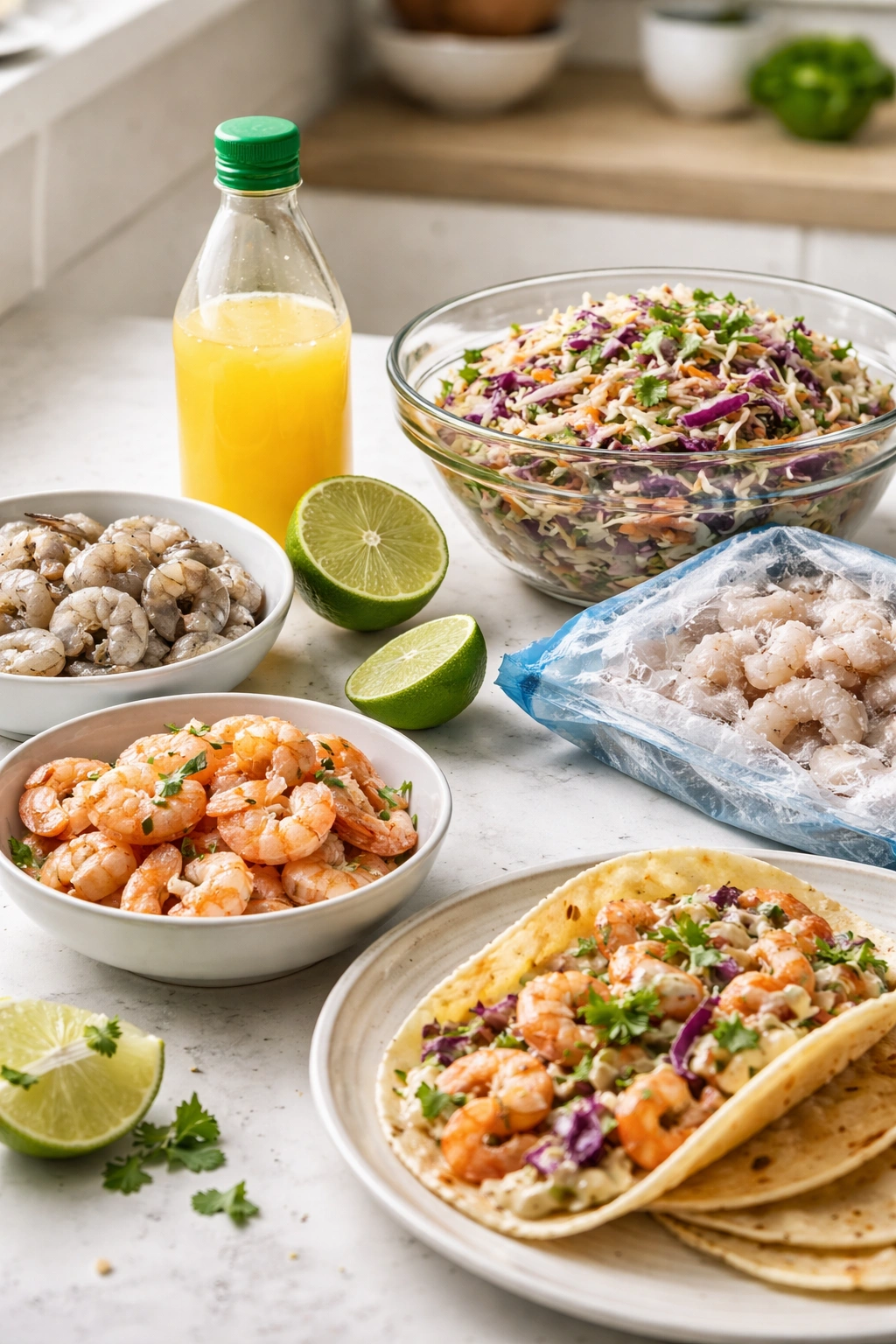
Buying pre-cooked shrimp and not realizing it. Pre-cooked shrimp is already cooked. If you cook it again, it becomes tough. Some people buy this by accident and then wonder why their shrimp is rubbery. Always read the label—raw shrimp should say “raw,” “uncooked,” or sometimes just show a picture of a gray shrimp. Cooked shrimp is pink right in the package.
Skipping the lime juice or using bottled. You’ll end up with tacos that taste good but flat, missing the bright note that makes everything sing. Fresh lime takes 10 seconds and makes a noticeable difference. It’s worth it.
Making the slaw too early. If you make it more than 30 minutes ahead, the raw cabbage softens and the slaw becomes mushy. Make it right before serving, or keep the components separate and assemble the slaw at the last minute.
Using frozen shrimp without thawing completely. Ice crystals in the shrimp release water when it cooks, which steams the shrimp instead of searing it. Thaw thoroughly and pat dry.
Overloading each tortilla. More shrimp doesn’t mean better tacos. If you overstuff, the tortilla tears, the taco falls apart, and eating it becomes a messy situation. Aim for 4 to 5 shrimp per taco, plus a good spoonful of slaw and a drizzle of sauce. This is the right balance of flavors and textures.
Not seasoning aggressively enough. Some people use only ½ teaspoon of taco seasoning total for 1 pound of shrimp because they think it will be too spicy. The result is bland shrimp that tastes like nothing. Use the full amount of seasoning—the heat level is actually quite mild. Taste a piece of cooked shrimp and adjust up or down next time if needed.
Cooking the shrimp all the way through to orange-pink instead of stopping at opaque white with pink accents. That pink-orange color means you’ve cooked it past the point of doneness. Stop as soon as the shrimp is opaque all the way through. It will continue cooking slightly off the heat, and that’s okay—you want it to stop cooking while it’s still tender.
Variations to Keep It Fresh
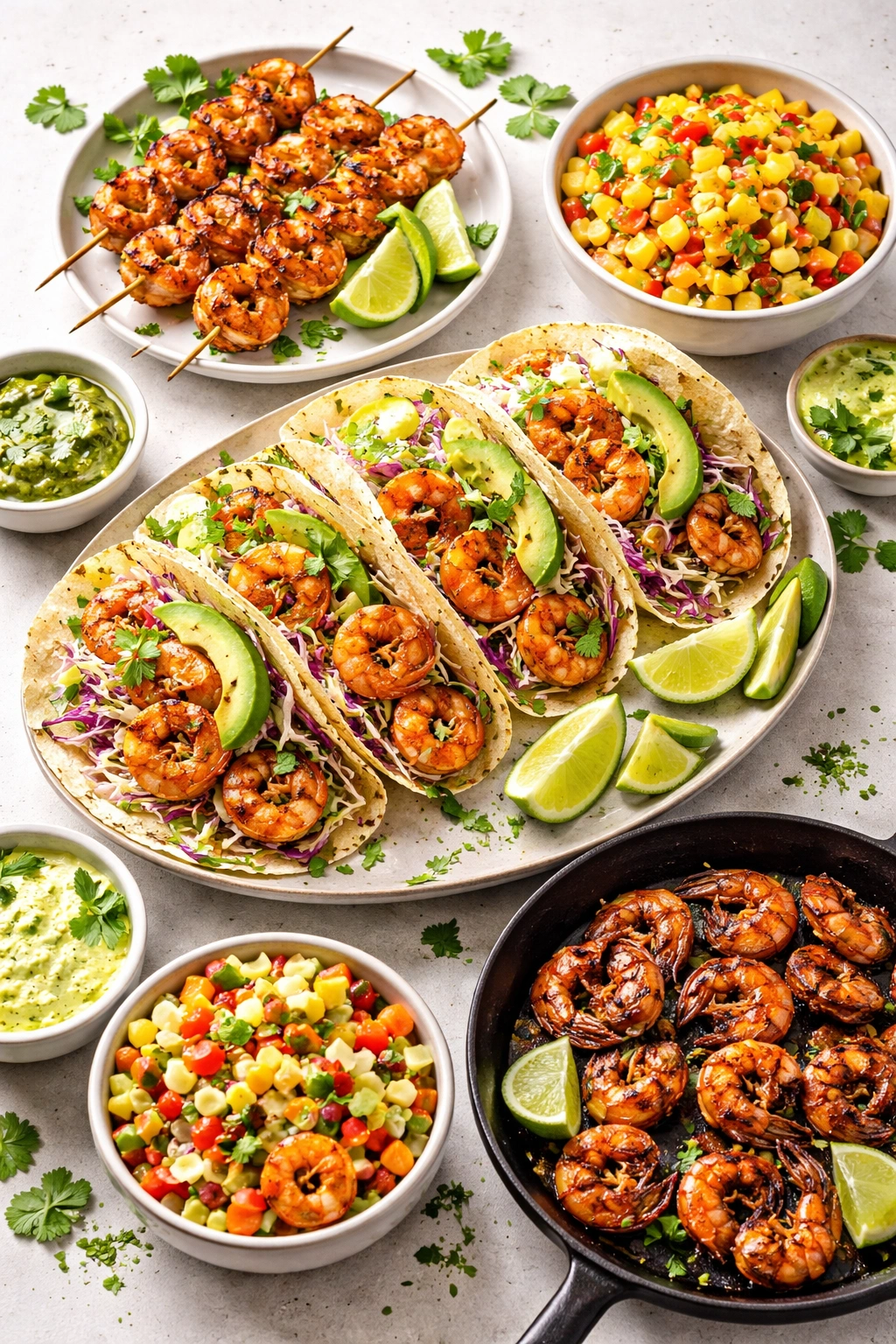
Spicy version: Add ¼ to ½ teaspoon of cayenne to the shrimp seasoning, or mix a bit of chipotle powder into the cilantro lime sauce. Some people dice a jalapeño and add it to the slaw for fresh heat.
Grilled shrimp tacos: Thread the seasoned shrimp onto skewers and grill them over medium-high heat for 2 to 3 minutes per side until cooked through. This adds a smoky depth that’s beautiful. Use a grill mat if you’re worried about smaller shrimp falling through the grates.
With avocado: Slice fresh avocado and layer it under the slaw in each taco, or mash it into the cilantro lime sauce to make a richer, creamier version. This adds richness and makes the tacos more filling.
With mango salsa: Replace the plain slaw with shredded cabbage mixed with diced fresh mango, red onion, cilantro, lime juice, and a tiny pinch of salt. The sweetness of the mango against the seasoned shrimp is revelatory.
Blackened shrimp tacos: Use blackening spice instead of the standard taco seasoning. The seasoning blend typically includes paprika, cayenne, garlic powder, onion powder, oregano, thyme, and black pepper. The result is darker, smokier shrimp with more heat.
Fish tacos: Substitute white fish like mahi-mahi, cod, or halibut cut into bite-sized chunks. The cooking time is almost identical to shrimp. The sauce, slaw, and everything else remain exactly the same. Many people find fish tacos even easier than shrimp because fish is more forgiving if you slightly overcook it.
Dairy-free version: Use coconut yogurt or a cashew-based crema instead of dairy. Skip the sour cream entirely and use only yogurt. The result is lighter and works for anyone avoiding dairy.
Low-carb version: Swap the tortillas for large lettuce leaves (butter lettuce or romaine work well). Build the tacos the same way, and you’ve got a low-carb, gluten-free meal.
With black beans: Add ½ cup of warmed black beans to each taco for extra fiber and plant-based protein. The beans should be seasoned with cumin, garlic, and a squeeze of lime so they complement the shrimp.
Storage and Make-Ahead Strategy
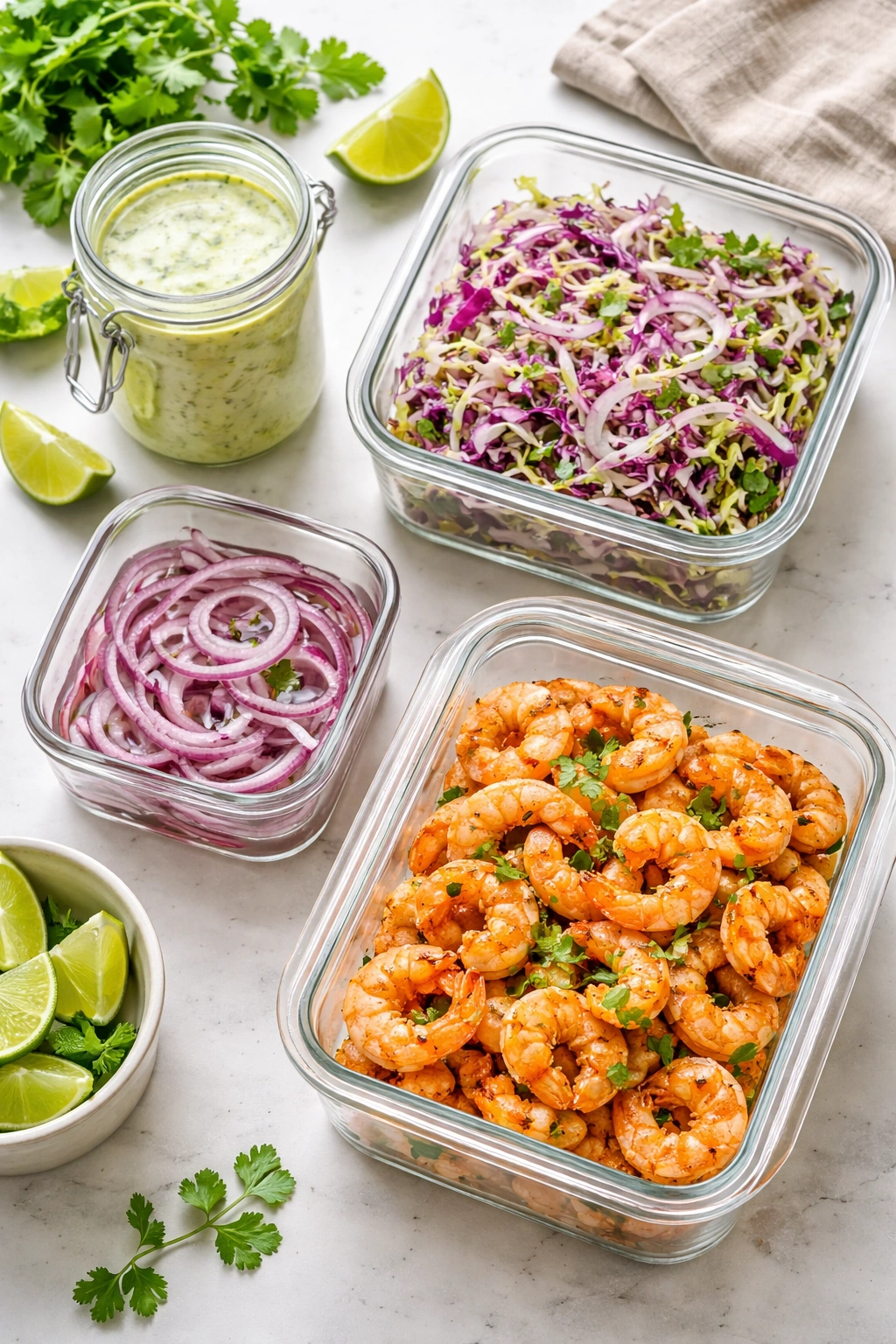
For the cilantro lime sauce: Make this up to 1 day ahead. Store it covered in the refrigerator. The cilantro may darken slightly but the flavor remains fresh. Before serving, give it a quick stir and adjust the salt or lime juice to taste. The sauce separates slightly as it sits—that’s normal. Just whisk it back together.
For the slaw: You can prep the vegetables (shred the cabbage, slice the onion, chop the cilantro) up to 1 day ahead and keep them in separate containers. Don’t dress the slaw until 10 to 15 minutes before serving. If you dress it too early, the cabbage will soften and become mushy. If dressed, it keeps for about 2 hours before the texture suffers.
For the cooked shrimp: You can cook the shrimp up to 4 hours ahead and store it in a covered container in the refrigerator. However, shrimp is best eaten warm or at room temperature shortly after cooking. If you’re reheating, do it gently in a skillet over low heat for about 1 minute, just until warmed through. Don’t use the microwave if you can avoid it—it tends to make shrimp rubbery.
For the whole meal prepped: This is where shrimp tacos shine as a meal prep option. On a prep day, make the sauce, prep the slaw components, and cook the shrimp. Store each element separately in airtight containers. On the night you want to eat, it takes only 5 minutes to warm the tortillas, assemble the slaw, gently reheat the shrimp if needed, and build the tacos.
Leftover tacos: Assembled tacos don’t keep well—the tortilla softens and the slaw releases moisture, making everything soggy. If you have leftovers, store the components separately and reassemble just before eating. Leftover shrimp, slaw, and sauce will keep for 2 to 3 days refrigerated.
Can you freeze shrimp tacos? The cooked shrimp freezes well for up to 3 months. The sauce and slaw don’t freeze well—the sauce separates and the cabbage becomes mushy when thawed. So if you want to freeze ahead for later, cook and freeze only the shrimp. Thaw overnight in the refrigerator and use as described above.
What to Serve Alongside Your Tacos
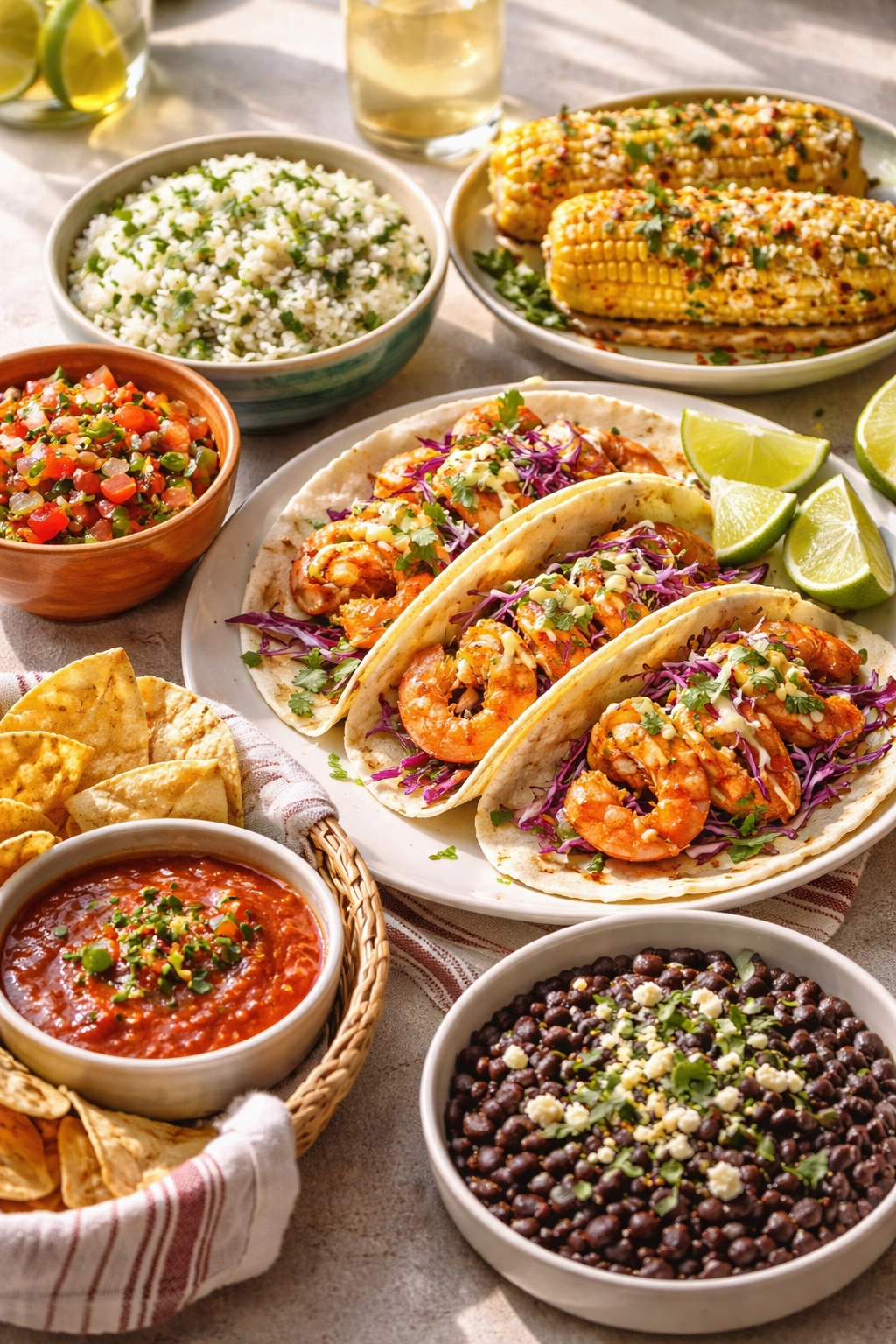
Cilantro lime rice: Cook jasmine or white rice and toss with lime juice, cilantro, and a pinch of salt. This gives you a gentle, complementary starch that soaks up extra sauce.
Black beans or refried beans: Warm a can of black beans seasoned with cumin, garlic, and lime juice. This adds substance to the meal and pairs beautifully with the brightness of the tacos.
Pico de gallo: Fresh tomatoes, red onion, jalapeño, cilantro, lime juice, and salt tossed together. The bright acidity complements the richness of the slaw and sauce.
Chips and salsa or guacamole: Keep it simple with store-bought tortilla chips and your favorite salsa. You could also make quick guacamole by mashing an avocado with lime juice and salt.
Street corn (elote): If you have corn on hand, char it in a pan and toss with mayo, cotija cheese, lime juice, and chile powder. It’s indulgent and complements shrimp tacos beautifully.
Mexican street corn salad (esquites): For a lighter version, grill or pan-sear fresh corn kernels and toss with mayo, queso fresco, lime juice, cilantro, and a pinch of chile powder. This can be made ahead and served at room temperature.
Pickled red onions: Slice red onions thin and soak them in a mixture of equal parts lime juice and apple cider vinegar with a pinch of salt and sugar. These keep for weeks in the refrigerator and add a sharp, bright note to the tacos.
Watermelon or jicama slaw: For a refreshing side, shred watermelon or jicama and toss with lime juice, jalapeño, cilantro, and salt. The sweetness and crunch balance the savory shrimp tacos.
Fresh fruit: A simple side of sliced fresh pineapple, mango, or watermelon adds brightness and sweetness that feels like a natural conclusion to the meal.
Margaritas: Obviously. A classic lime margarita or a spicy chile-lime version is the perfect complement to shrimp tacos.
Final Thoughts
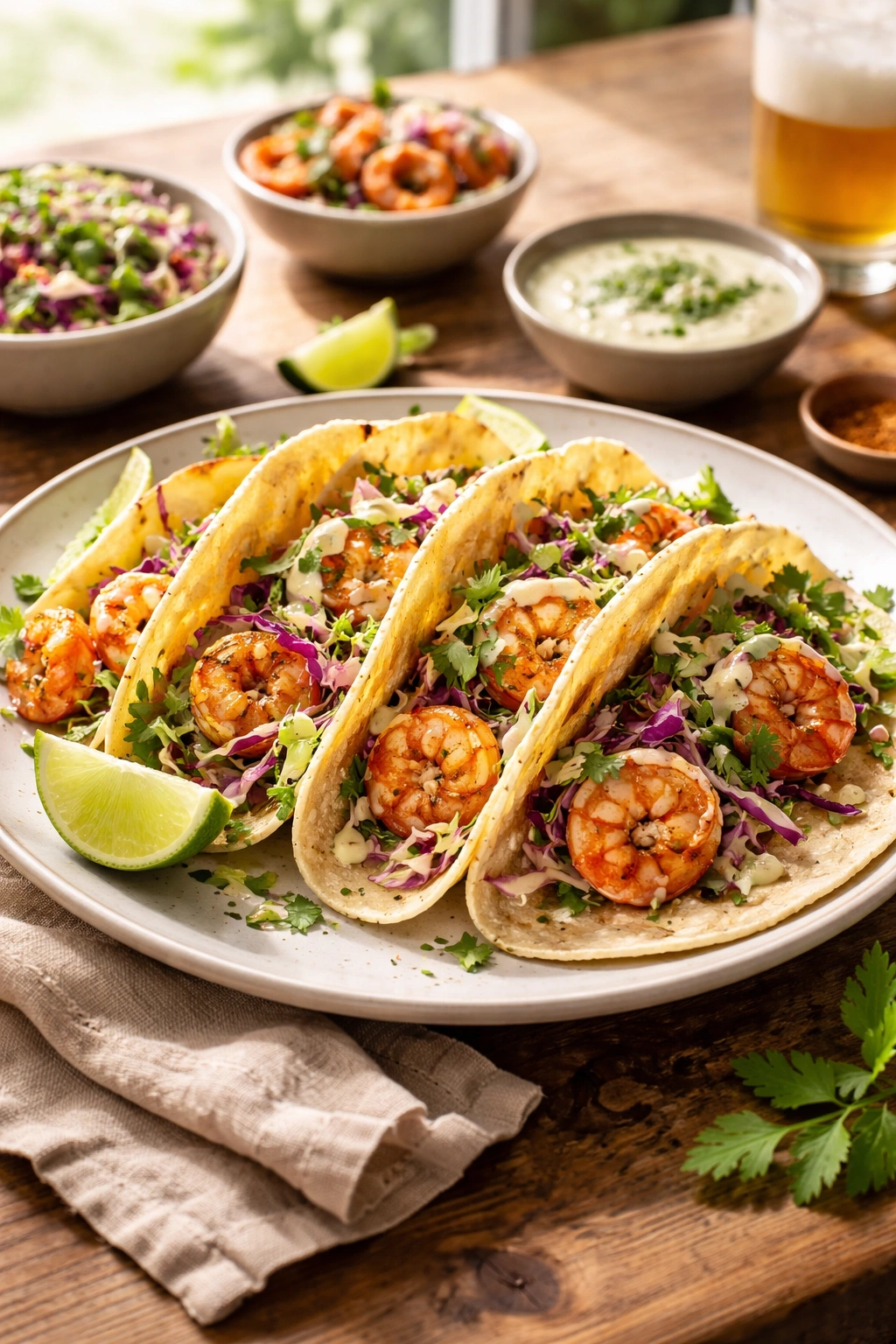
There’s something genuinely liberating about realizing that the dinner you’ve been ordering from restaurants can be made at home in less time than it takes to get delivery. Shrimp tacos are proof that speed doesn’t have to mean sacrifice—these tacos taste absolutely restaurant-quality, they’re packed with flavor, and they come together in 15 minutes because you’ve strategically removed the unnecessary steps, not the important ones.
The next time you’re stuck in that 5 p.m. panic of “what on earth am I cooking tonight,” remember that 1 pound of shrimp, a handful of spices, some cabbage, and a squeeze of lime is all you actually need. Warm some tortillas, assemble, and you’re done. Your family gets fresh, delicious, genuinely impressive food. You get your evening back.
Make these tacos once, and they’ll become part of your regular rotation. People will ask for the recipe. Your kids will request them. You’ll make them on autopilot because the steps are simple and the timing is forgiving. And best of all, you’ll never feel like you’re settling for “quick and easy”—these tacos stand on their own as genuinely delicious food that happens to be fast.
