



If you’re craving authentic Tex-Mex flavor without the restaurant price tag, steak fajitas are your answer. These sizzling, flavor-packed tacos come together in less than an hour once you master the fundamentals—a properly marinated steak, perfectly charred vegetables, and warm tortillas ready to catch every juicy bite. The beauty of this dish lies in its simplicity: a handful of pantry staples transform into restaurant-quality meals that taste far more complicated than they actually are.
The magic happens in the marinade. While countless recipes skip this step or offer weak alternatives, the right combination of citrus, spices, and aromatics does the heavy lifting for you. It tenderizes lean steak cuts that would otherwise be tough, infuses the meat with authentic flavor, and creates those beautiful caramelized edges when the steak hits the hot skillet. Unlike fancier dishes that demand advanced techniques or rare ingredients, steak fajitas deliver impressive results to cooks of any skill level.
Whether you’re planning a casual weeknight dinner or impressing guests at a gathering, this recipe scales effortlessly. The same technique works whether you’re cooking for two or twelve. Once you understand the foundational approach, you’ll find endless ways to adapt it—grilling instead of pan-searing, swapping proteins, adding fresh vegetables, or tweaking the spice level to match your heat preference.
The History Behind Steak Fajitas
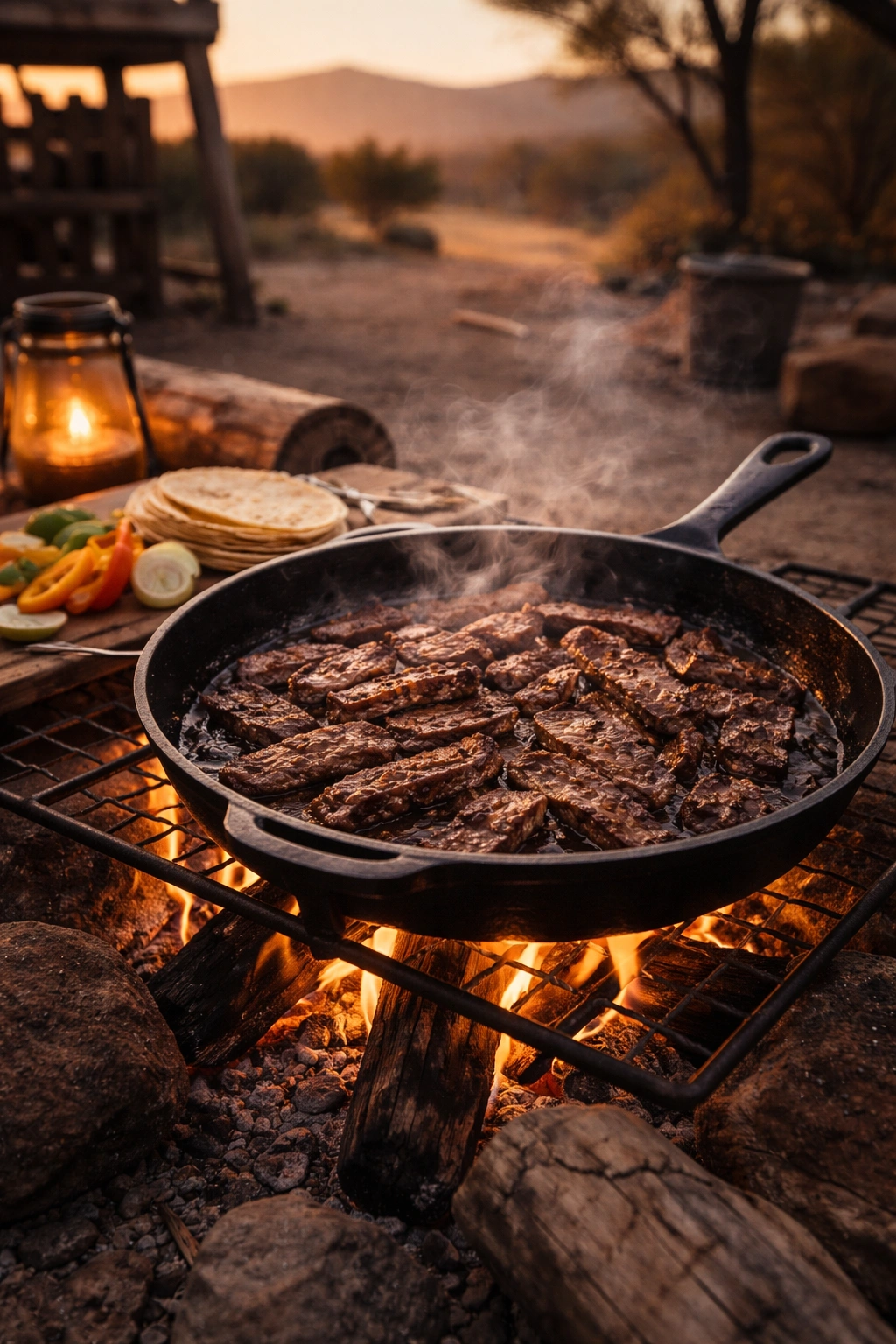
The origin story of fajitas is rooted in Texas ranching culture, specifically along the Rio Grande Valley where Mexican and American culinary traditions collided. The word “fajita” comes from the Spanish word faja, which means “strip” or “belt”—a reference to the thin, ribbon-like shape of the traditional cut used. Ranch hands and vaqueros received less desirable beef cuts as part of their wages, particularly skirt steak, which had a thick membrane and tough muscle fibers that made it undesirable to most butchers and home cooks.
These resourceful workers developed a cooking method that turned those tough cuts into something spectacular. They seasoned the meat aggressively, marinated it to tenderize those stubborn fibers, and cooked it fast and hot over open flames, then sliced it thin against the grain. The result was tender, flavorful meat that could be wrapped in a warm tortilla with simple vegetables and eaten with the hands. This practical ranch meal eventually became restaurant fare in the mid-twentieth century, when savvy chefs realized they could turn inexpensive ingredients into a theatrical, profitable dish by cooking it on a sizzling platter in front of diners.
By the 1970s and 1980s, fajitas transformed from regional Texas specialty into mainstream Mexican restaurant staple. Restaurateurs discovered that the dramatic sizzle and aroma of fajitas arriving at a table created an experience worth premium pricing. Today, fajitas remain one of the most popular items on Mexican menus—and for good reason. They’re genuinely delicious, fun to eat, and highly customizable for different tastes and dietary preferences.
Why Steak Fajitas Deserve a Regular Spot on Your Dinner Rotation
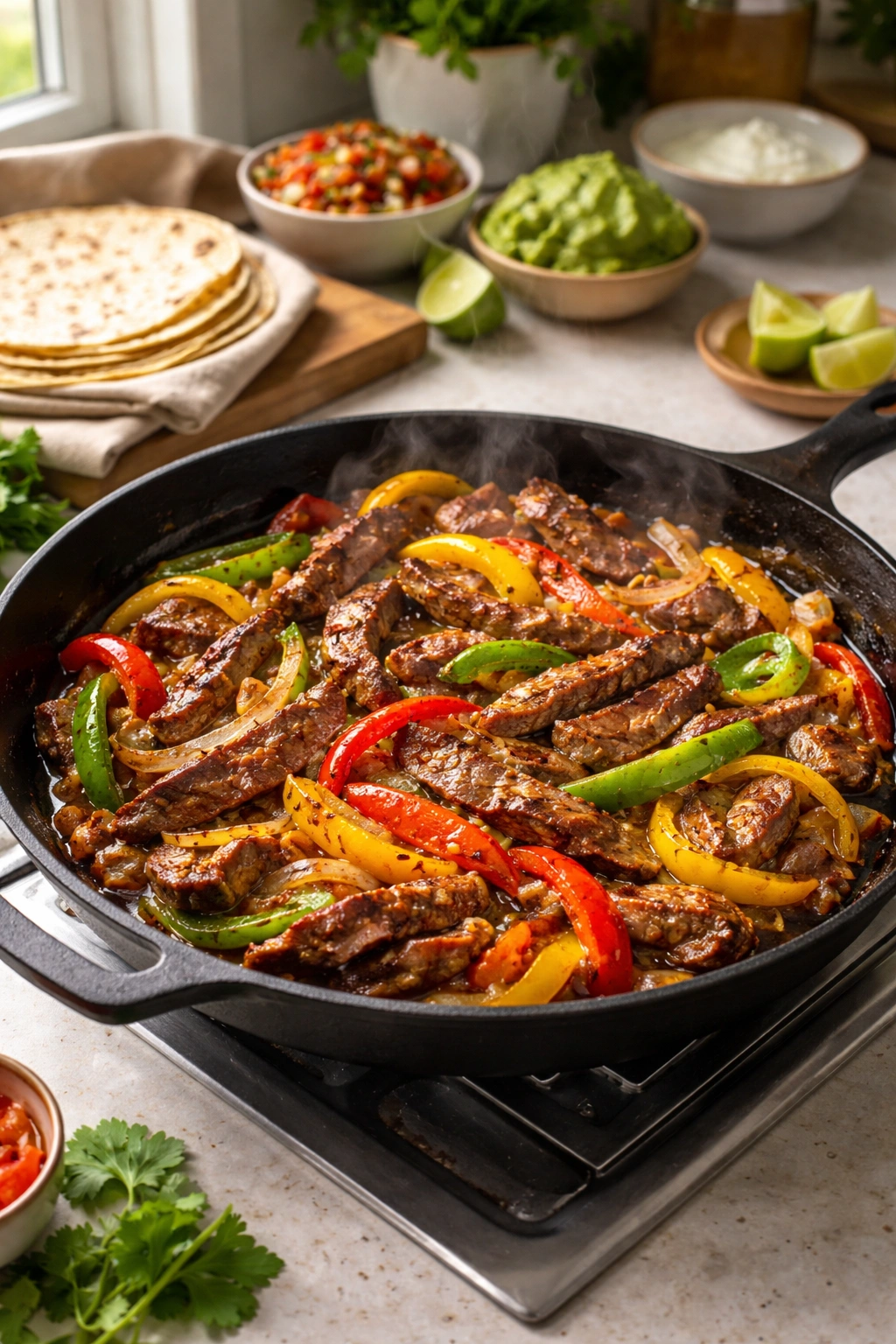
This is fundamentally a practical meal that doesn’t sacrifice flavor for convenience. The prep-to-table time clocks in at roughly 25 to 30 minutes of active cooking once the steak has marinated—and marinating can happen overnight, so you can do the work on your schedule. Most weeknight dinners that taste this good demand either long cooking times or extensive last-minute preparation. Steak fajitas do neither.
The nutritional profile appeals to health-conscious cooks too. You’re getting lean protein from the steak, fiber and vitamins from the peppers and onions, and you control exactly what goes into every bite. Unlike restaurant versions that might be drowning in heavy cream or loaded with excess salt, homemade fajitas let you adjust ingredients to match your dietary goals. Skip the tortillas entirely and serve them over cauliflower rice or salad, or lean into the full experience with warm flour or corn tortillas and all the traditional toppings.
Perhaps most importantly, steak fajitas are impossible to mess up once you understand the core technique. The marinade is forgiving—even if you only have 30 minutes instead of several hours, the steak will still taste good. The cooking process is straightforward: sear the meat, char the vegetables, slice, and serve. There’s no delicate sauce to balance, no precise temperature that requires a thermometer to nail. Even a beginner cook will produce impressive results on the first try.
Choosing the Right Cut of Steak
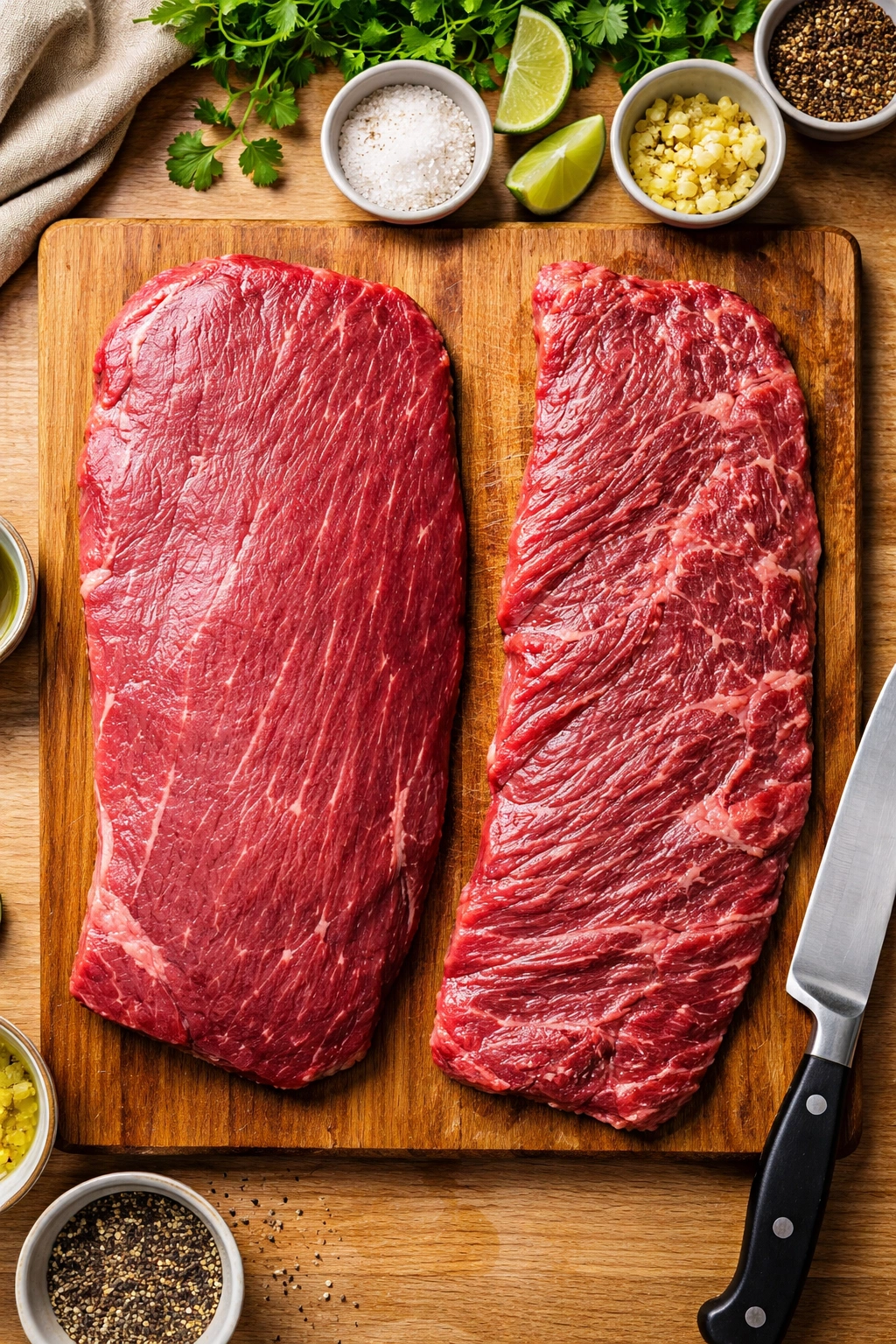
Not every steak works well for fajitas. The best cuts share two key characteristics: they’re flavorful enough to shine even when thinly sliced, and they benefit tremendously from marinades because their muscle structure allows the flavors to penetrate deeply. Flank steak and skirt steak are the traditional choices, and both remain the gold standard for good reason.
Flank steak comes from the abdominal muscles of the cow, which means it has a pronounced grain and long, sturdy muscle fibers. It’s a leaner cut with genuine beef flavor, relatively inexpensive, and responds beautifully to marinating. The long muscle fibers might sound like a drawback, but slicing against the grain breaks those fibers into manageable pieces. Flank steak also stays tender even when cooked to medium or medium-well, making it forgiving if your doneness preference skews toward the well-done side.
Skirt steak is even more traditionally associated with fajitas. It’s slightly fattier than flank, which translates to richer flavor and more forgiving texture. The loose grain structure makes it especially receptive to marinades. Skirt steak tends to be thinner than flank, so it cooks faster—typically three to five minutes per side rather than the five to seven minutes flank requires.
Other acceptable options include sirloin steak, hanger steak, or flat iron steak. Sirloin is more forgiving for beginners since it’s slightly more tender, though it has less complex beef flavor. Hanger steak is increasingly available and offers exceptional tenderness when sliced properly. Flat iron has a distinct grain pattern but works beautifully when you’re careful to slice across it.
Avoid premium cuts like ribeye or filet mignon for fajitas. These tender, expensive steaks don’t need the marinade-and-slice preparation that defines fajitas. Their tender texture gets lost when sliced thin. Save those cuts for steaks you’ll cook whole and serve as complete slices. Similarly, avoid overly tough cuts like chuck or round that would remain chewy even after marinating and slicing.
Quality matters, but you don’t need prime-grade beef. A good selection-grade flank or skirt steak from a well-stocked butcher counter will outperform a premium cut from the grocery store case that’s been sitting under lights. Ask your butcher to recommend the best-looking steak they have in the flank or skirt category that day—they’ll appreciate the question and steer you toward the superior option.
The Marinade That Makes Everything Possible
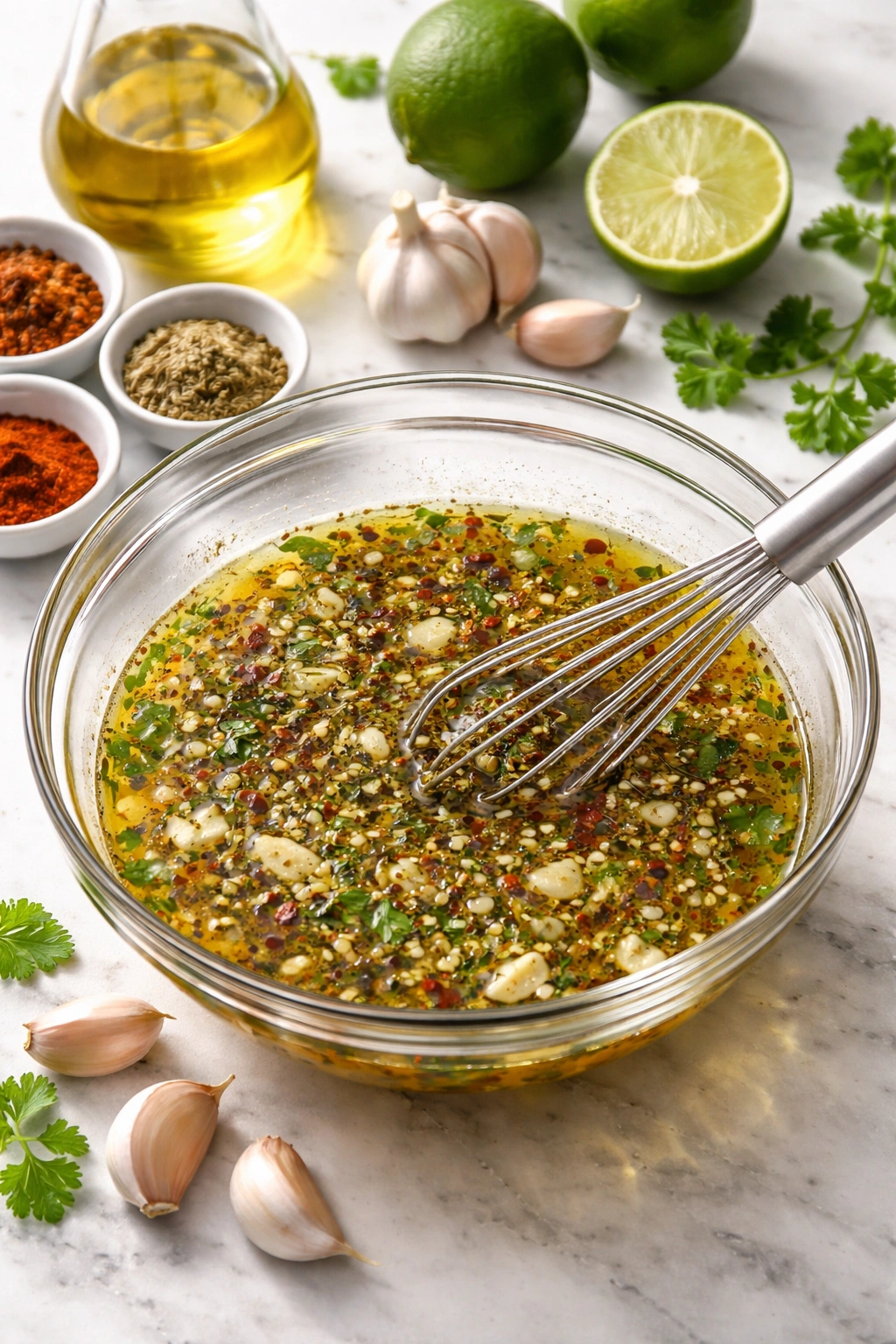
A truly exceptional steak fajita begins with a truly exceptional marinade. This isn’t just about adding flavor—it’s about engineering tenderness and moisture retention through chemistry. The marinade’s acid (citrus juice) begins breaking down the muscle proteins, making the meat less chewy. The fat carries flavors that water cannot and helps the cooked meat retain moisture. The aromatics and spices create a flavor foundation that tastes both authentically Mexican and genuinely complex.
The best marinades combine fresh citrus juice (lime or orange or both), good quality olive oil, minced garlic, cumin, chili powder, and fresh cilantro. Some versions add oregano, paprika, or chipotle powder. The ratio matters. Too much acid and the meat becomes mushy; too little and the tenderizing effect diminishes. Aim for a balance where citrus juice and oil are roughly equal in volume. A half-cup of lime juice, a quarter-cup of olive oil, four to six minced garlic cloves, and two teaspoons each of cumin and chili powder creates a versatile base you can adjust to your taste.
Fresh ingredients matter here in ways they don’t always in cooking. Fresh lime juice has bright, sharp acidity that bottled juice simply cannot match. Fresh garlic has pungent aromatics that jarred garlic lacks. Fresh cilantro adds a leafy herbaceousness that dried cilantro cannot replicate. If you’re going to take time to marinate meat properly, use ingredients worth marinating with.
Marinating time depends on how much time you have and how tender you want the final result. Thirty minutes is the bare minimum—even this short window noticeably improves texture and flavor. Two to four hours is ideal, striking a balance between flavor development and avoiding the mushy texture that comes from over-marinating. Beyond eight hours, the acid begins breaking down the proteins too aggressively, and the meat develops a texture more like ceviche than steak. If you’re planning to marinate overnight for convenience, drain the meat and pat it dry an hour before cooking—this helps the surface brown better on the skillet.
Preparing Vegetables for Maximum Char and Flavor
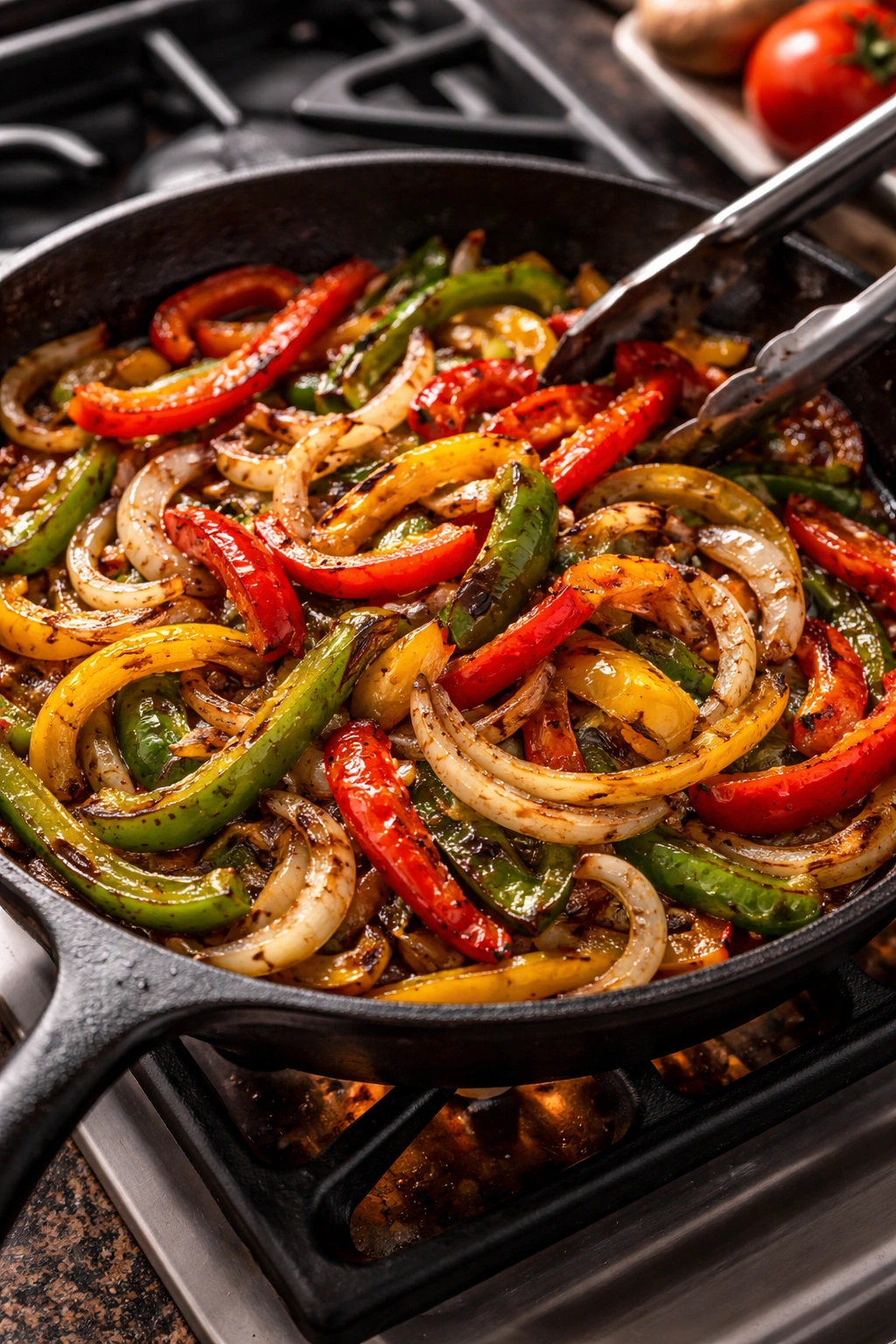
The vegetables in fajitas aren’t supporting players—they’re co-stars with the steak. Properly cooked peppers and onions should have caramelized edges, soft texture, and concentrated sweetness. Raw or lightly cooked vegetables missing this char feel incomplete, like the dish wasn’t finished properly.
Bell peppers work best cut into strips roughly a quarter-inch thick. Any color works, though many cooks prefer a mix of red, yellow, and green for visual appeal. Red and yellow peppers are naturally sweeter; green peppers bring an earthier, more vegetal flavor. If you dislike green pepper’s taste, skip them entirely rather than forcing them in. Cut peppers with the grain (lengthwise) rather than across the width—longer strips stay intact during cooking and are easier to grab with a fork or arrange on a tortilla.
Onions should be sliced into strips similar in thickness to the peppers so they cook at the same rate. Yellow onions offer a sweet-savory balance that works beautifully with the charred flavors developing in the skillet. White or red onions are also acceptable, though white onions are milder and red onions more peppery. Avoid pre-sliced onions from the salad bar if possible—whole onions you slice yourself will brown and caramelize far better than pre-cut onions that have begun oxidizing.
The cooking method matters enormously. Don’t crowd the skillet with vegetables and steam them over medium heat. Instead, heat your skillet until it’s properly hot (you should see shimmers rising from the oil surface), add the vegetables in a single layer without stirring, and let them sit undisturbed for two to three minutes. This allows the direct contact with the hot skillet to create browning rather than releasing steam that cooks them through. After that initial sear, stir and cook for another two to three minutes until the vegetables are tender-crisp with visible char spots.
This technique requires more attention than just throwing vegetables in and walking away, but the difference in final result justifies the effort. Charred vegetables taste exponentially better than steamed vegetables, and charring only takes a few additional minutes. Season the vegetables with salt and pepper as they cook—this helps draw out moisture and encourages browning. Don’t oversalt them before cooking; you can always taste and adjust once they’re done.
The Complete Easy Steak Fajitas Recipe
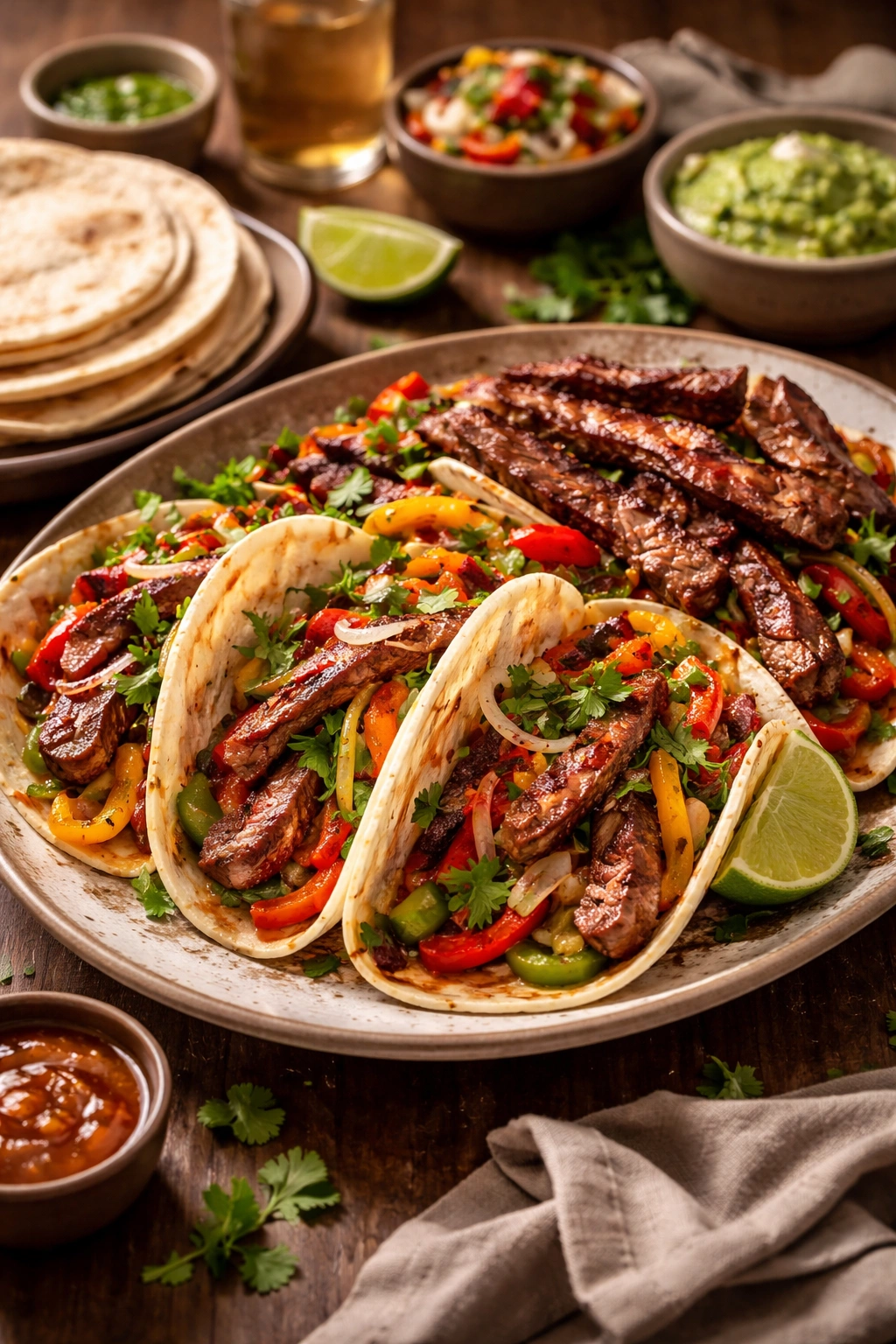
Yield: Serves 4 to 6 | Makes 8 to 12 fajita tacos
Prep Time: 15 minutes (plus marinating time)
Cook Time: 20 minutes
Total Time: 35 minutes (plus 2 to 8 hours marinating time)
Difficulty: Intermediate — The technique is straightforward and forgiving, but success depends on properly marinating the steak and achieving good char on the vegetables, which requires attention to heat and timing.
For the Steak and Marinade:
- ¼ cup extra-virgin olive oil
- ¼ cup fresh lime juice (about 2 limes)
- ¼ cup fresh orange juice (about 1 orange), optional but recommended
- 4 to 6 garlic cloves, minced
- 2 teaspoons ground cumin
- 2 teaspoons chili powder
- 1 teaspoon dried oregano
- ½ teaspoon smoked paprika (optional but adds depth)
- ¼ cup fresh cilantro, finely chopped
- 2 pounds flank steak or skirt steak
- Kosher salt and freshly ground black pepper for seasoning before cooking
For the Vegetables:
- 3 tablespoons high-heat cooking oil (avocado, grapeseed, canola, or refined vegetable oil), divided
- 3 to 4 large bell peppers (a mix of red, yellow, and green), deseeded and sliced into thin strips
- 2 large yellow onions, sliced into thin strips
- Kosher salt and freshly ground black pepper to taste
For Serving:
- 8 to 12 warm flour or corn tortillas (or tortilla chips for nachos)
- Sour cream or Mexican crema
- Fresh guacamole or sliced avocado
- Pico de gallo or your favorite salsa
- Fresh cilantro for garnish
- Lime wedges
- Shredded cheese (Oaxaca, queso fresco, or cheddar)
- Pickled jalapeños or pickled red onions, optional
Make the Marinade and Marinate the Steak:
-
In a small bowl or measuring cup, whisk together the olive oil, lime juice, orange juice (if using), minced garlic, ground cumin, chili powder, dried oregano, smoked paprika (if using), and fresh cilantro until well combined. This is your marinade base.
-
Place the flank or skirt steak in a large resealable plastic bag or a shallow baking dish. Pour the marinade over the steak, making sure all surfaces contact the liquid. Seal the bag or cover the dish with plastic wrap.
-
Refrigerate for a minimum of 2 hours, or up to overnight for maximum tenderness. If marinating longer than 4 hours, turn the bag occasionally to ensure even exposure to the marinade. The steak will begin to darken as the acid penetrates the meat—this is exactly what you want.
-
When ready to cook, remove the steak from the refrigerator and place it on a paper towel-lined plate. Pat the surface completely dry with paper towels—this moisture removal is crucial for achieving good browning on the skillet.
-
Generously season both sides of the steak with kosher salt and freshly ground black pepper. The salt helps break down additional protein fibers and enhances browning through the Maillard reaction.
Prepare the Vegetables:
-
Slice the bell peppers lengthwise into strips about ¼-inch thick. Remove and discard the seeds and white membrane (the bitter part). Slice the yellow onions into strips of similar thickness so they cook evenly with the peppers.
-
Have all vegetables prepped and within arm’s reach of your skillet before you begin cooking. Unlike steak, vegetables cook quickly once the pan is hot, and there’s no time to chop while they’re cooking.
Cook the Steak:
-
Heat a large cast iron skillet or heavy-bottomed skillet over medium-high heat for about 2 minutes until it’s genuinely hot. You should see heat shimmers rising from the surface. Test the heat by carefully holding your hand about 2 inches above the pan—if you need to pull it away in under 2 seconds, the pan is ready.
Advertisements -
Add 1½ tablespoons of the cooking oil to the skillet and swirl to coat evenly. The oil should shimmer and immediately show movement.
-
Carefully lay the dried steak flat on the skillet. Do not move it for the first 3 to 4 minutes. This stationary time allows the surface to make full contact with the hot pan and develop a flavorful brown crust. Resist the urge to flip or shuffle the steak around—this breaks the crust before it fully forms.
-
After 3 to 4 minutes, flip the steak using tongs (a fork will puncture the meat and lose precious juices). Cook the second side for another 3 to 4 minutes. For a 1¼-inch-thick steak, this timing produces medium-rare—an internal temperature of 130°F to 135°F (54°C to 57°C). For thinner steaks, reduce cooking time by about a minute per side. For thicker steaks, add a minute per side.
-
Do not cook past medium. Flank and skirt steak become tough and chewy when cooked beyond this point. If you’re unsure about doneness, use an instant-read thermometer: 120°F to 125°F is medium-rare, 130°F to 135°F is medium. The meat will continue cooking slightly as it rests, so remove it about 5°F before your target temperature.
-
Transfer the cooked steak to a cutting board and loosely tent it with aluminum foil. Let it rest for 5 to 10 minutes. During this resting period, the muscle fibers relax and reabsorb juices, resulting in more tender, juicier meat. This step is non-negotiable for quality results—even five minutes makes a noticeable difference.
Cook the Vegetables:
-
While the steak rests, return the skillet to medium-high heat. Add the remaining 1½ tablespoons of oil and swirl to coat the bottom evenly. The pan should be hot enough that the oil shimmers immediately.
-
Add all the sliced peppers and onions to the skillet in a single layer. Do not stir them immediately. Let them sit undisturbed in direct contact with the hot skillet for 2 to 3 minutes. This allows the sugars in the vegetables to caramelize and develop brown spots.
-
After those initial 2 to 3 minutes, stir and toss the vegetables frequently for another 3 to 4 minutes until they’re tender but still with a slight crunch. You should see charred edges and browning on the onion layers. Sprinkle with salt and pepper as they cook—this seasons them throughout rather than only on the surface.
-
The vegetables are done when the peppers have collapsed slightly and softened but haven’t lost their color, and the onions are translucent with golden-brown edges. If you prefer softer vegetables, cook another minute or two. If you prefer more crunch, remove them sooner. This is entirely to personal preference.
Advertisements
Slice and Combine:
-
Remove the vegetables from the skillet to a serving plate or platter. Keep them warm, or work quickly so they don’t cool.
-
Slice the rested steak thinly against the grain. Look at the direction the muscle fibers are running across the meat and slice perpendicular to those fibers—at roughly a 90-degree angle. This breaks the fibers into short segments that feel tender when chewed, rather than long continuous fibers that feel tough and chewy.
-
For flank steak especially, the grain is quite visible. For skirt steak, the grain pattern is looser but still apparent. Don’t guess about grain direction—take a moment to identify it, because slicing against the grain makes an enormous difference in final tenderness.
-
Add the sliced steak back to the skillet with the vegetables and stir gently to combine. Do not overstir—you want to preserve the shape and texture of the steak slices. Cook for just 30 seconds to a minute to let the flavors meld together. If you make the steak strips too shredded, the dish loses its appealing texture and becomes mushy.
Serve:
-
Transfer the hot steak and vegetable mixture to a warm serving platter or a cast iron fajita skillet. Warm tortillas in a separate skillet or directly over a gas flame for about 20 seconds per side until they’re pliable and warm. Alternatively, wrap tortillas in a kitchen towel to keep them warm.
-
Set the platter in the center of the table with warm tortillas, sour cream, guacamole, pico de gallo, cilantro, lime wedges, and any other desired toppings arranged around it. Let everyone build their own fajitas according to their taste preferences.
Expert Tips for Restaurant-Quality Results
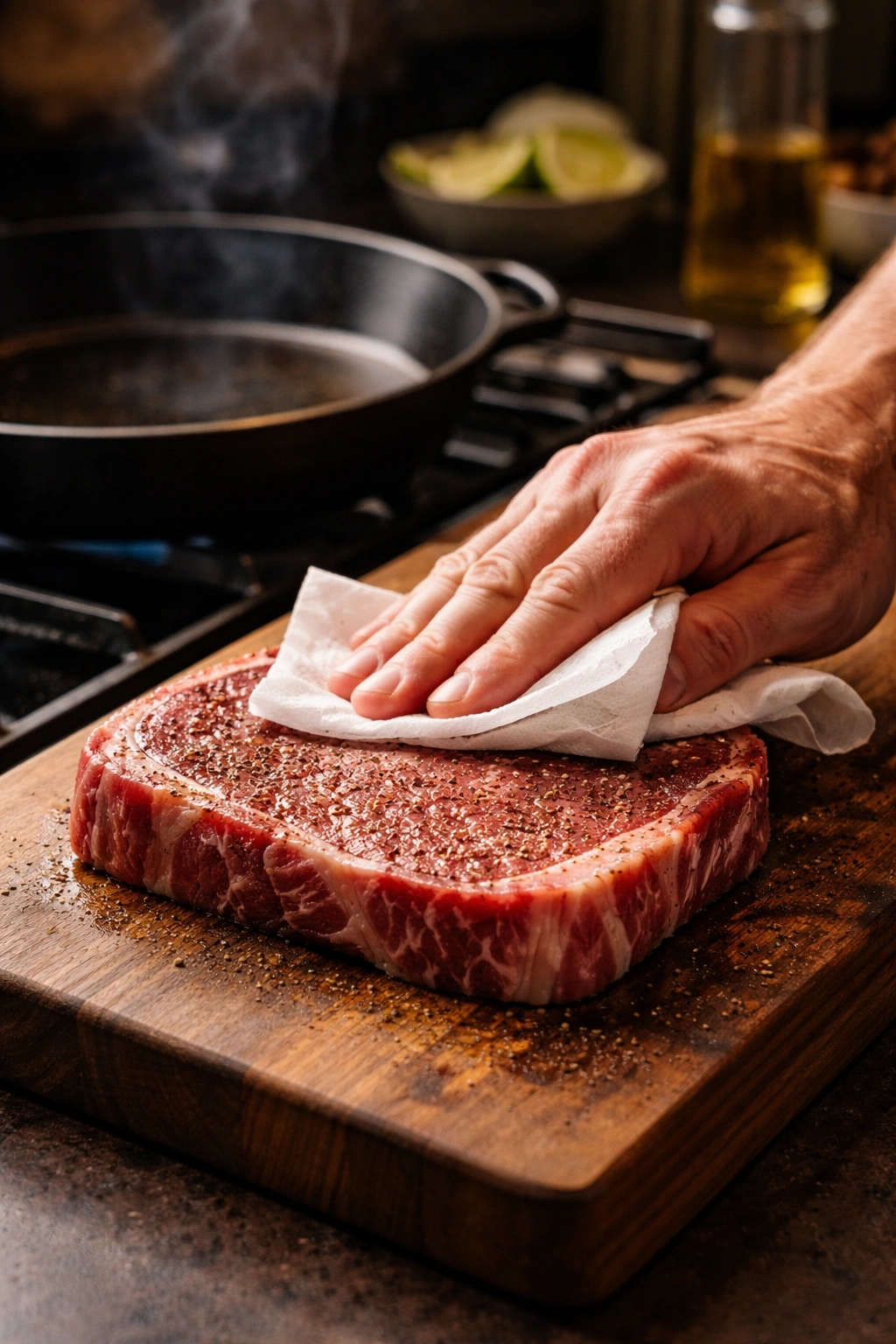
The difference between good fajitas and great fajitas often comes down to small details that don’t require additional time or expense. Pat the steak completely dry before cooking. Moisture on the surface converts to steam, which prevents browning. The extra 30 seconds of patting creates dramatically better crust development.
Use a cast iron skillet if you have one. Cast iron heats evenly and retains heat brilliantly, meaning vegetables won’t cool the pan when you add them after cooking the steak. It also conducts heat more effectively, creating the char you’re after. A stainless steel skillet works fine too—just make sure it’s heavy-bottomed and truly preheated.
Don’t skip the resting period. It’s tempting to slice the steak immediately while it’s sizzling hot, but this releases all the juices onto the cutting board instead of keeping them in the meat. Even five minutes of rest produces noticeably juicier results.
Taste and adjust salt and pepper at the end. You seasoned before cooking, but taste the finished vegetables and meat and adjust as needed. Some moisture cooks off, concentrating flavors, so additional seasoning may be needed.
Slice against the grain, full stop. This single technique determines whether your steak tastes tender or tough. Take the extra seconds to identify the grain direction and slice perpendicular to it. For flank steak, the grain runs diagonally across the meat. For skirt steak, the grain is more visible in loose bundles. When in doubt, slice at an angle—this works nearly as well as a perfectly perpendicular cut.
Use fresh lime juice in the marinade and for garnish. Bottled lime juice tastes noticeably flat compared to fresh. Squeeze limes directly over your plated fajitas for brightness that elevates the entire dish.
Flavor Variations and Adaptations
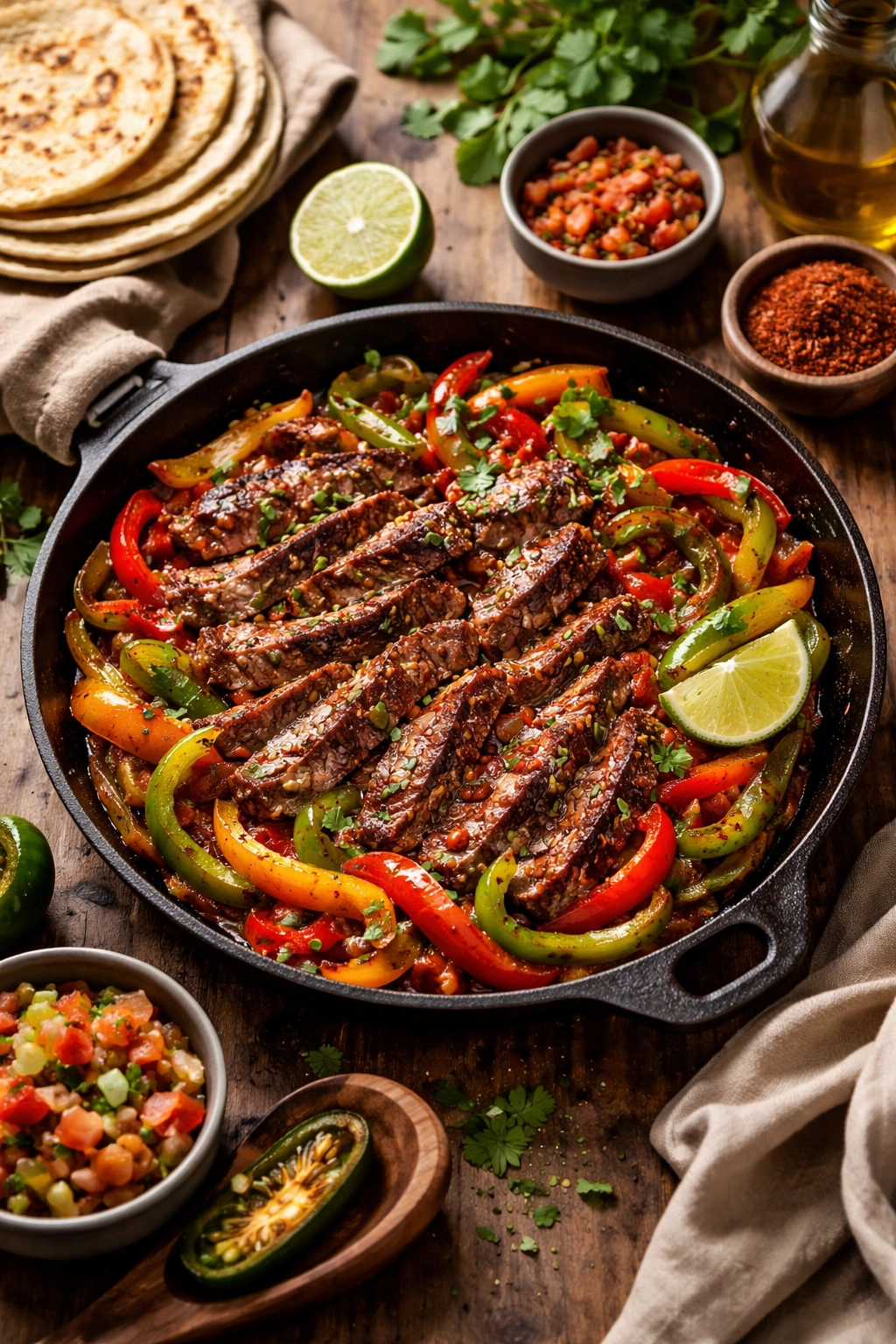
Once you master the basic technique, you can create fajitas with entirely different flavor profiles. Chipotle Lime Fajitas swap regular chili powder for chipotle powder (or add one to two chipotles in adobo sauce blended into the marinade), creating a smoky, slightly spicy character that feels more sophisticated than the standard version. Some cooks add a tablespoon of adobo sauce from the canned chipotles for extra depth.
Cilantro-Lime Fajitas increase the cilantro proportion and add lime zest to the marinade, creating a brighter, more herbaceous flavor profile. This version appeals especially to cilantro lovers and pairs beautifully with fresh toppings like pico de gallo.
Teriyaki-Soy Fajitas replace much of the olive oil and half the lime juice with soy sauce and add ginger and sesame oil, creating an Asian-inflected fusion that feels both unexpected and completely natural. This version works beautifully with the charred vegetables and tastes excellent over rice instead of tortillas.
Grilled Steak Fajitas follow the exact same marinade but cook the steak on an outdoor grill or grill pan over high heat instead of a stovetop skillet. The grill creates superior char and a slightly smoky flavor. If using an outdoor grill, you can cook the vegetables on a secondary heat zone or in a cast iron skillet directly on the grill grates.
Vegetable Swaps: While peppers and onions are traditional, you can add sliced mushrooms, zucchini, asparagus, green beans, or even corn to the vegetable mixture. These additions don’t replace the peppers and onions entirely—that’s not fajitas anymore—but supplementing with additional vegetables adds nutrition and variety. Fresh pineapple chunks charred alongside the peppers create a sweet-savory twist that works surprisingly well with the lime and cilantro in the marinade.
Protein Alternatives: The same marinade and cooking technique work beautifully with chicken breast, shrimp, or even firm fish like mahi-mahi. Chicken requires slightly longer cooking (about eight to ten minutes total for medium doneness), while shrimp cooks quickly (about two minutes per side). Adjust cooking times to your protein of choice.
Storage and Make-Ahead Instructions
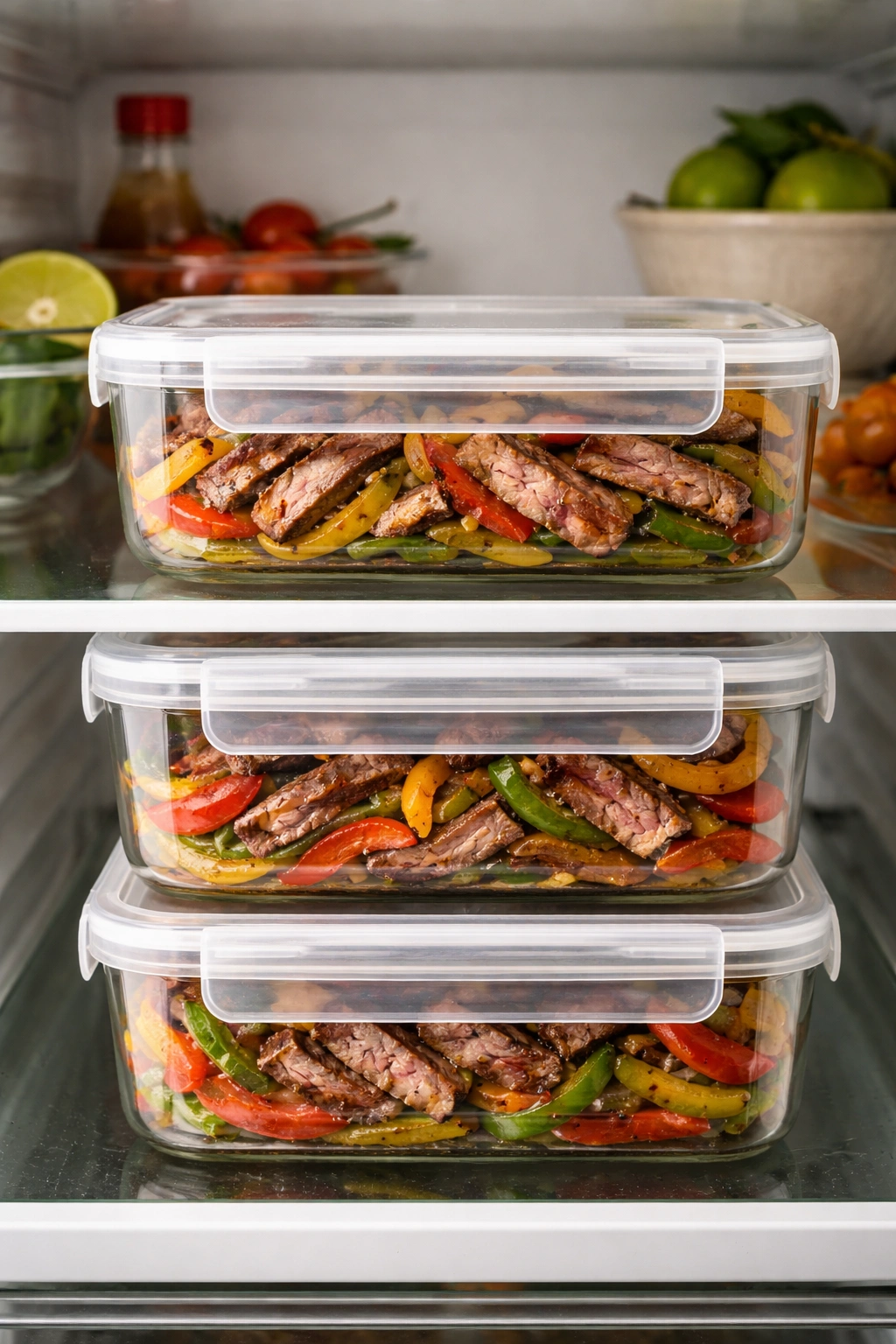
Steak fajitas keep beautifully for several days if you store them properly. Cooked steak and vegetables can be refrigerated in an airtight container for up to four days. Keep the steak slices and vegetables together, and include any pan juices that accumulated. The juices taste delicious when you reheat everything.
Frozen fajitas work reasonably well for up to three months. Some cooks report that freezing slightly changes the texture of the cooked steak—it can become slightly less juicy when thawed—but the flavor remains excellent. Freeze the steak and vegetables in a single layer on a baking sheet first, then transfer to a freezer bag once solid. This prevents the pieces from freezing into one large clump.
To reheat refrigerated fajitas: Heat a skillet over medium heat, add the steak and vegetables (including any accumulated juices), and warm through for three to four minutes, stirring occasionally. This gentle reheating maintains texture better than microwaving, though microwaving for 60 to 90 seconds works in a pinch.
To reheat frozen fajitas: Thaw overnight in the refrigerator, then reheat using the skillet method above. Alternatively, you can reheat frozen fajitas directly in the skillet over medium-low heat for about eight to ten minutes, stirring occasionally, until completely heated through.
Marinated steak (uncooked) keeps in the refrigerator for up to 24 hours. Don’t marinate longer than this—the acid in the lime juice will eventually over-tenderize the meat, making it mushy. If you’re planning to marinate overnight, that’s perfect. If you’re planning to marinate longer, which isn’t recommended, you can also freeze marinated steak for up to three months. Thaw overnight in the refrigerator before cooking.
Make-ahead strategy for busy weeknights: Prepare the marinade and vegetables up to three days in advance, marinating the steak overnight and storing vegetables in separate containers. This way, dinner assembly requires only about 25 minutes of active cooking time.
Serving Suggestions and Pairing Ideas
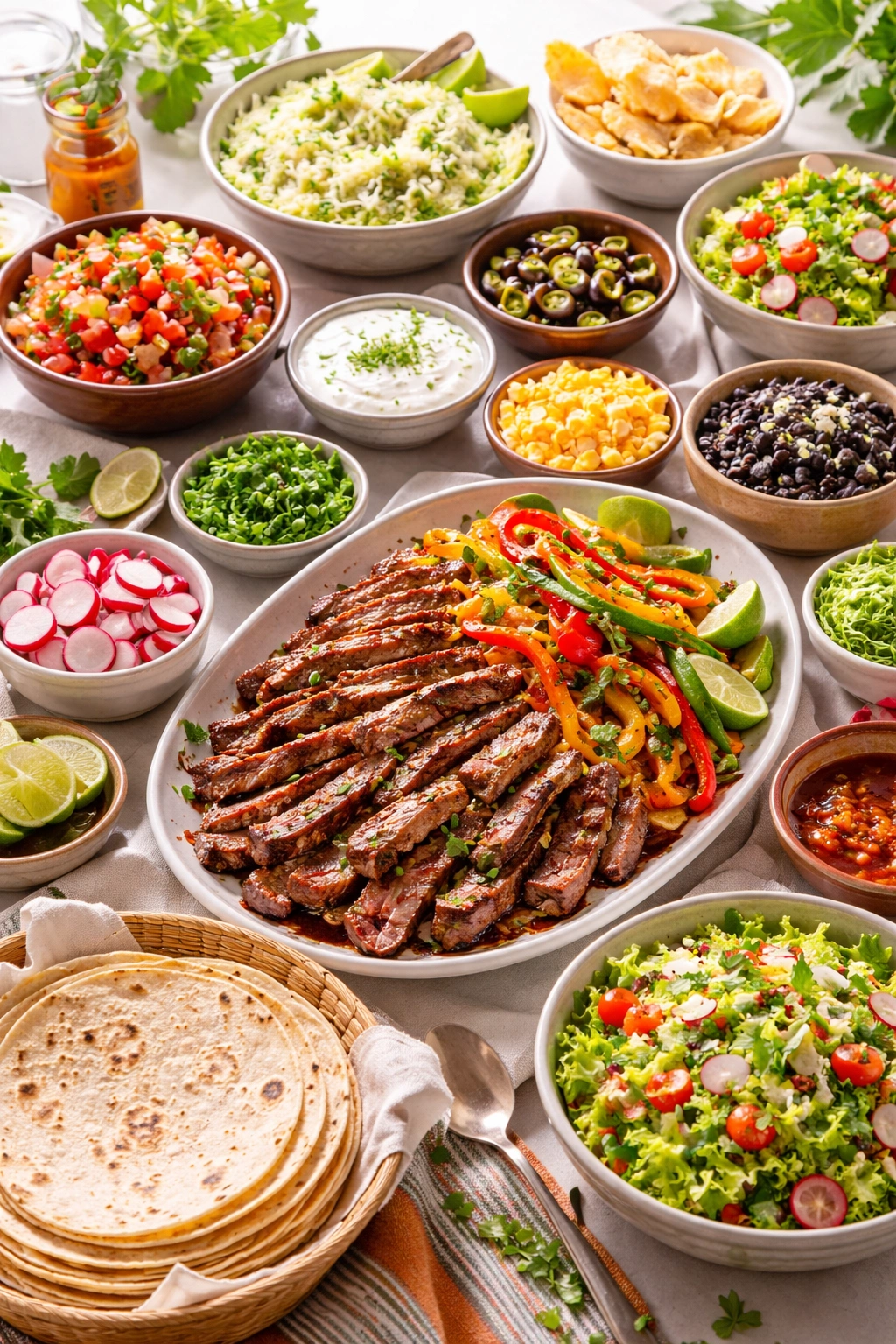
Build-Your-Own Taco Bar Setup: Arrange the warm steak and vegetables on a large platter or cast iron skillet in the center of the table with warm tortillas on the side and all toppings in small bowls. Guests can build fajitas exactly to their preferences, which works beautifully for family dinners and entertaining.
Mexican Rice and Beans: Serve steak fajitas alongside cilantro-lime rice and black or pinto beans for a complete meal. The rice and beans provide filling carbohydrates that balance the protein and make the meal more substantial. Homemade versions beat canned or boxed alternatives, but those options work in a pinch.
Salad Format: Skip the tortillas entirely and serve the steak and charred vegetables over a bed of crisp lettuce or cabbage, drizzled with a cilantro-lime vinaigrette. Add avocado slices, cherry tomatoes, and cotija cheese for a light, healthy alternative that appeals to low-carb and paleo-focused diners.
Burrito Bowl Version: Layer cilantro-lime rice in a bowl, top with the steak and charred vegetables, then add black beans, corn, pico de gallo, shredded cheese, sour cream, and guacamole. This format is satisfying, visually beautiful, and completely customizable for different preferences.
Fajita Nachos: Arrange tortilla chips on a platter, top with the warm steak and charred vegetables, then shower with melted cheese and dollops of sour cream and guacamole. Finish with fresh cilantro and jalapeños for a game-day or appetizer-style take on the traditional format.
Quesadilla Version: Place steak and charred vegetables on a flour tortilla with cheese, fold in half, and cook in a skillet until the tortilla is golden and the cheese melts. Serve with sour cream and guacamole for dipping.
Drink Pairings: Margaritas (frozen or on the rocks with fresh lime and good tequila) are the obvious choice and genuinely work. Mexican beer like lager or light cerveza also pairs beautifully without competing for flavor. For non-alcoholic options, agua fresca (made with fresh fruit and lime) or fresh-squeezed limeade complement the fresh, bright flavors perfectly.
Common Mistakes That Undermine Results
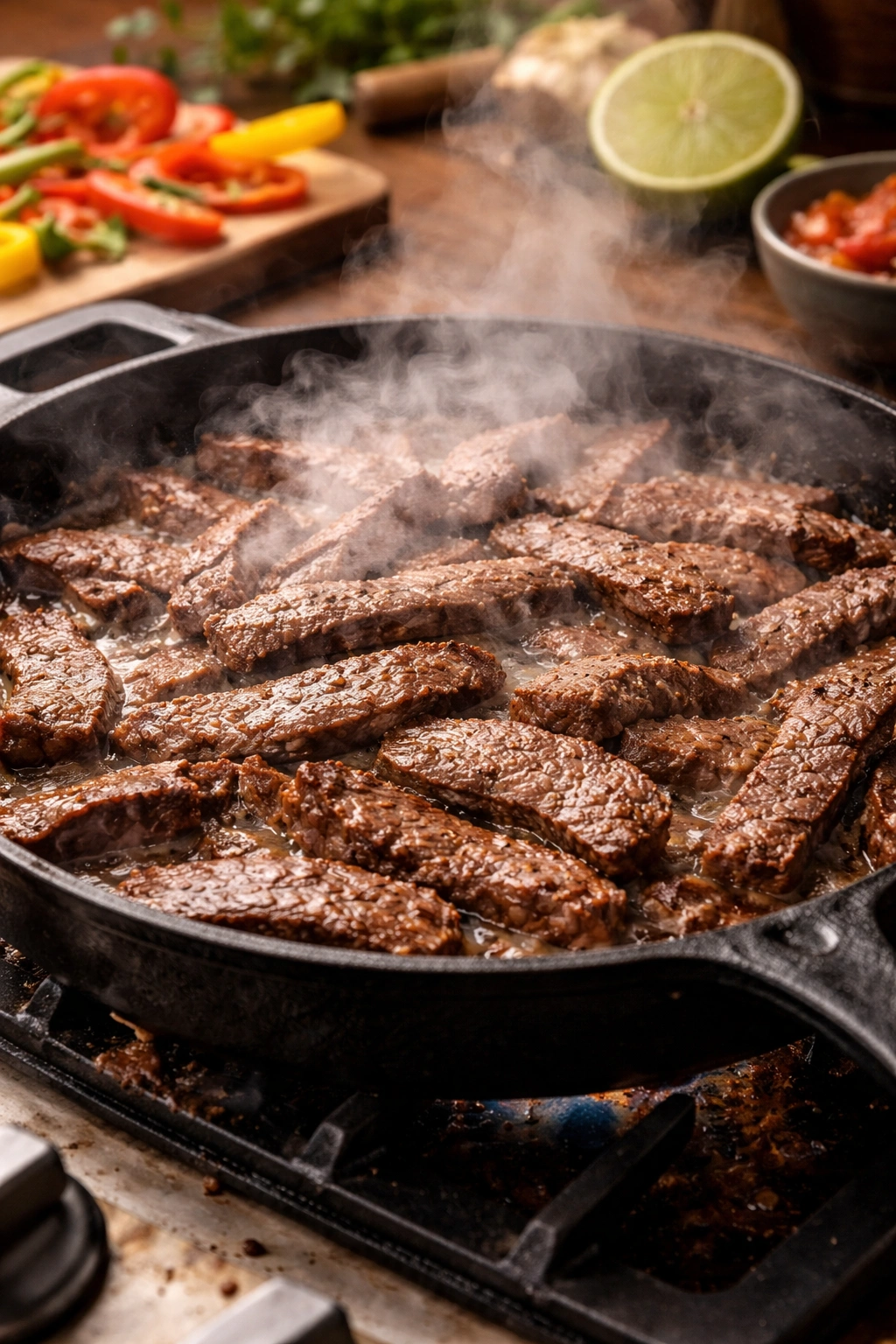
Cooking past medium doneness ruins flank and skirt steak. These lean cuts tighten and toughen significantly at medium-well and beyond. If you’re nervous about doneness, use an instant-read meat thermometer—it removes all guesswork and costs about fifteen dollars.
Overcrowding the pan steams the steak instead of searing it. The steak needs direct contact with the hot skillet surface to develop browning. If your pan is too crowded, the steak releases moisture that prevents browning and creates steam. Cook in batches if necessary rather than crowding.
Slicing with the grain instead of against it creates chewy results even if everything else is perfect. Take a moment to identify the grain direction before you start slicing. On flank steak, the grain runs visibly from one corner toward the opposite corner. On skirt steak, it’s looser but still visible. Slice perpendicular to the fibers.
Skipping the steak resting period wastes flavorful juices. Those juices need to be reabsorbed into the meat during resting, not left pooling on the cutting board. Even five minutes makes a noticeable difference.
Not drying the steak before cooking prevents proper browning. Moisture converts to steam, which doesn’t brown meat. Pat the steak surface completely dry with paper towels before seasoning.
Steaming vegetables instead of charring them creates bland results. Vegetables need direct, hot contact with the skillet surface to caramelize their sugars and develop browning. Low heat and constant stirring (steaming) prevents this.
Using pre-cut vegetables produces inferior texture and flavor. Pre-cut vegetables have been oxidizing for unknown lengths of time. Fresh vegetables you slice yourself brown far better and taste fresher.
Overcooking the vegetables makes them mushy and removes the appealing tender-crisp texture. Cook until they’re just starting to soften with visible char, not until they’re completely collapsed and soft.
Final Thoughts
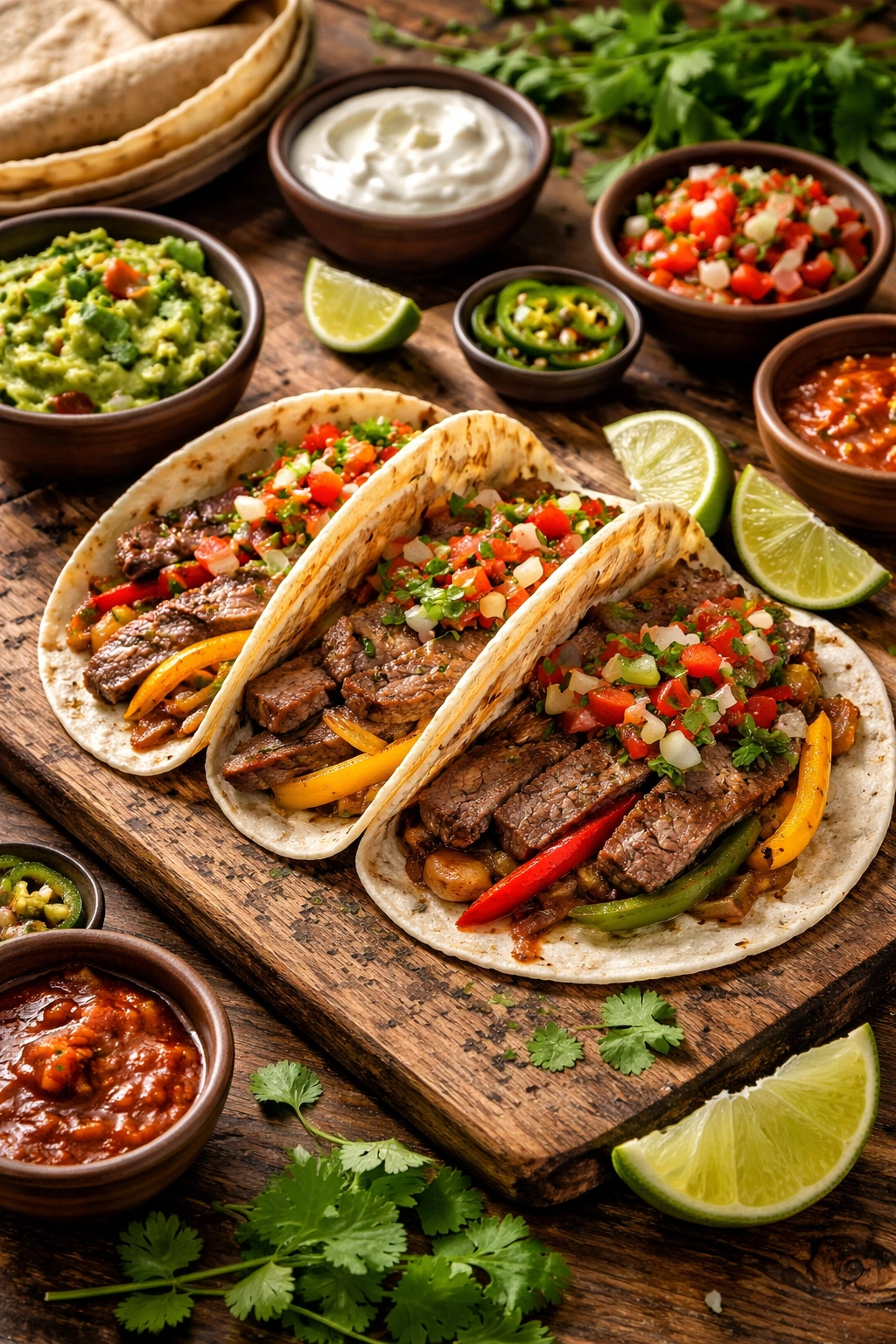
Steak fajitas prove that simple doesn’t mean boring. A properly marinated, expertly seared steak combined with charred peppers and onions, served with warm tortillas and fresh toppings, delivers more flavor and satisfaction than many far more complicated dishes. The technique is straightforward enough for beginners but offers enough nuance that experienced cooks can continuously refine their approach.
The real magic lies in respecting the ingredients and the process. The marinade isn’t optional—it fundamentally changes the texture and flavor of lean steak. The resting period isn’t wasted time—it creates juicier results. The dry steak and hot skillet aren’t just details—they’re the foundation for proper browning. These aren’t fancy techniques requiring special equipment or years of experience. They’re common-sense approaches that consistently produce exceptional results.
Once you’ve made steak fajitas a few times, the process becomes completely intuitive. You’ll find yourself naturally adjusting the marinade to your taste, understanding exactly when the vegetables reach ideal doneness, and developing your own serving presentation preferences. This recipe isn’t meant to be followed rigidly forever. It’s meant to be a springboard for understanding how to make this classic Tex-Mex dish your own way.
