



There’s nothing quite like the moment a cold glass of agua fresca touches your lips on a sweltering day. The drink hits different when it’s made right — not a syrupy sugar bomb, but something genuinely refreshing that tastes like summer itself. This Mexican staple has been cooling people down for centuries, and once you understand what makes it special, you’ll understand why it’s become so much more than just a drink. It’s a cultural practice, a flavor philosophy, and honestly, the single best answer to oppressive heat you can make in your own kitchen.
Agua fresca isn’t complicated, but it does have rules. The best versions balance fresh fruit or grain with just enough sugar to enhance flavor without overwhelming it, a hit of citrus for brightness, and cold water to tie everything together. It’s minimal, it’s pure, and it works because it respects the ingredients instead of fighting them. The beauty of agua fresca is that you can make it with whatever produce you have on hand — watermelon, cantaloupe, cucumber, hibiscus, rice, almonds — and as long as you follow the fundamental technique, you’ll end up with something spectacular. This isn’t about complicated steps or obscure ingredients. It’s about understanding the balance that makes agua fresca genuinely crave-worthy, and learning exactly how to nail it every single time.
What Agua Fresca Is and Why It Matters
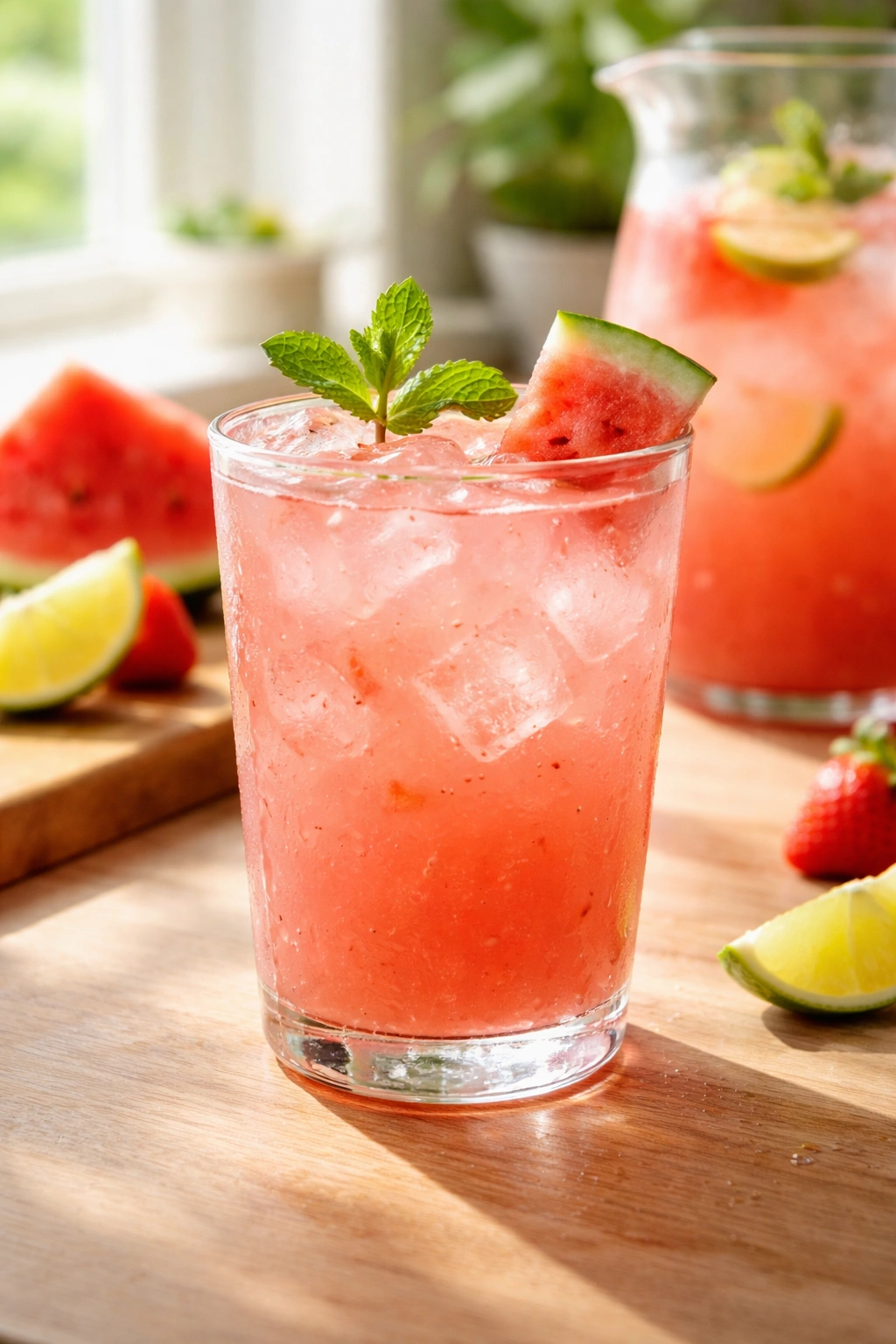
Agua fresca translates directly to “fresh water,” but that name is deceptively humble. What you’re actually making is a lightly sweetened drink that’s somewhere between water and juice — closer to water in terms of sweetness level, but with all the flavor and nutrition of the main ingredient shining through. The drink is naturally low in sugar compared to sodas, juices, and many commercial beverages, which means it actually hydrates you instead of making you thirstier.
The texture of agua fresca matters too. The best versions have a subtle, almost silky mouthfeel that comes from the dissolved fruit, grain, or nut pulp, but they’re never thick or juice-like. You can see through them. They’re light enough that you can drink a full glass without feeling heavy, yet satisfying enough that you feel like you’ve actually had something.
What sets agua fresca apart from fruit juice is the restraint. Juice concentrates flavor into one thing — the fruit sugars, the acid, the intensity. Agua fresca distributes those same flavors across a larger volume of water, creating something that quenches thirst instead of adding more sugar to your system. It’s the difference between drinking a glass of concentrated sweetness and drinking something that tastes bright and fruity but leaves you feeling refreshed rather than stuffed.
The History and Cultural Significance
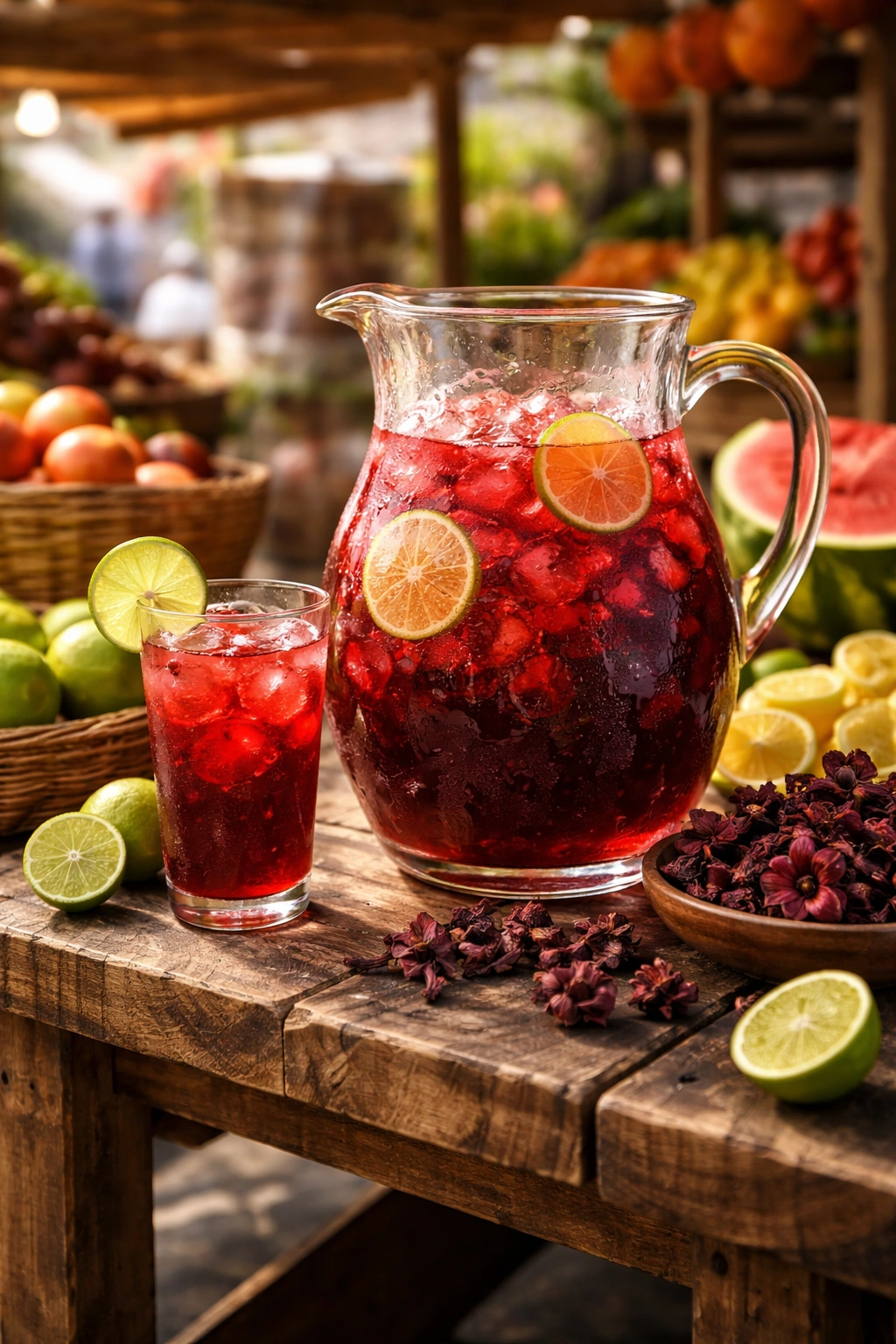
Agua fresca didn’t appear randomly. It emerged in Mexico centuries ago as the practical answer to a real problem: how to cool your body and hydrate yourself when you’re working in heat without access to refrigeration or expensive imported drinks. Street vendors in Mexico have been selling agua fresca from large colorful dispensers for generations, making it affordable, accessible, and seasonal.
The drink was born from the ingredients that were available locally — whatever fruit was in season, whatever grains grew in the region, whatever nuts or seeds farmers had on hand. A vendor in one part of the country might make agua fresca with melon in summer and grains in winter, while someone in another region might specialize in a completely different version. This isn’t a drink that was invented in a laboratory. It evolved organically as a response to climate, availability, and the basic human need to survive hot weather while staying hydrated.
What’s remarkable is that agua fresca never became commercialized in the way that soda or energy drinks did. It remained a homemade and street-vended drink, made fresh daily, never shelf-stable, always connected to the seasons and the people making it. That’s partially why it tastes so good — there’s been zero pressure to modify the recipe for shelf life or mass distribution. It stayed pure because people kept making it the way it worked.
Why Agua Fresca Beats Other Summer Drinks
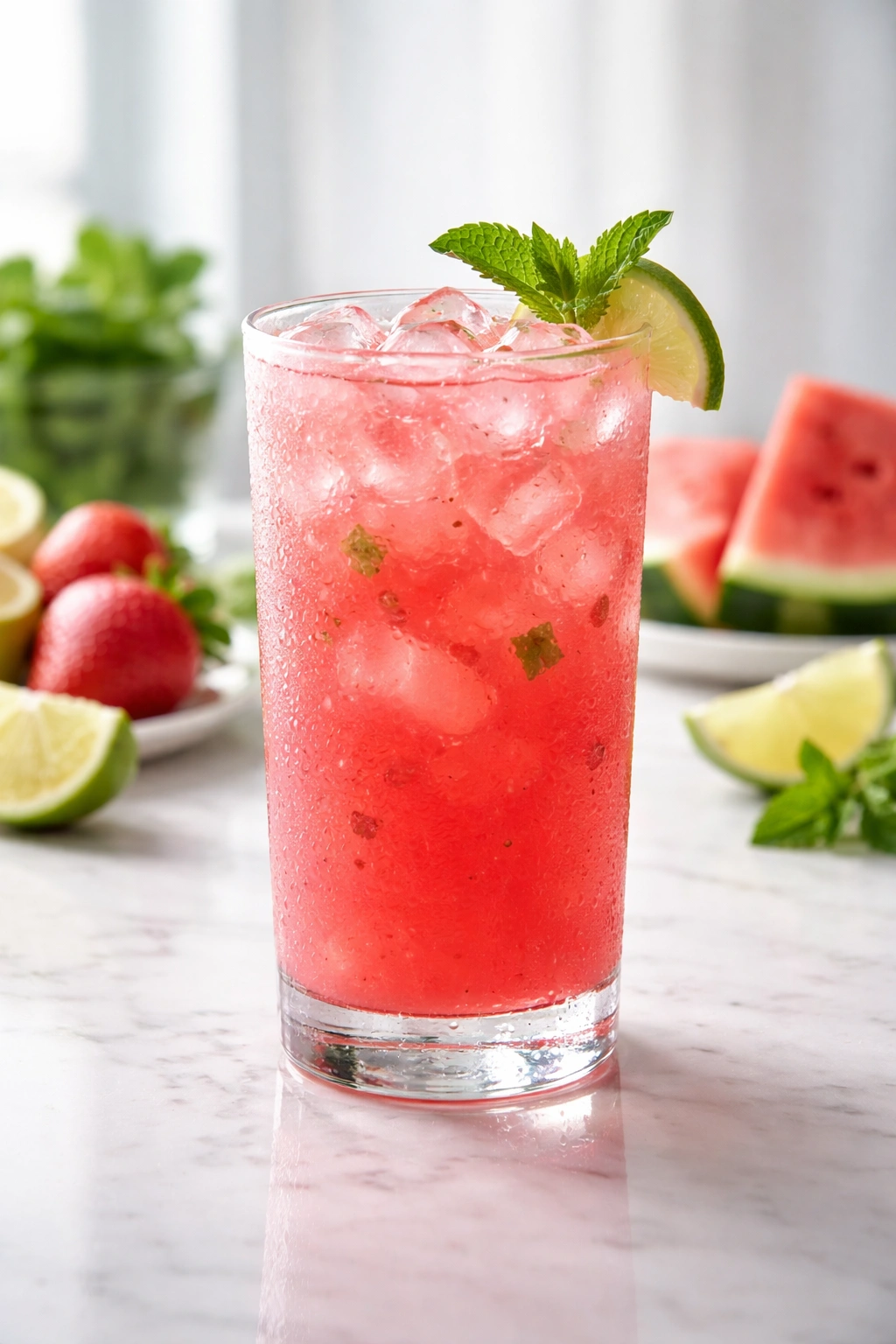
When you compare agua fresca to other beverages you might reach for on a hot day, the advantages become obvious. Soda delivers a sugar bomb that actually increases dehydration — the high sugar content and caffeine work against your body’s efforts to cool down and rehydrate. Even diet sodas don’t solve the problem; they’re carbonated and acidic, neither of which your body actually needs or benefits from when you’re overheated.
Commercial iced tea is often loaded with added sugar, and juice is concentrated sugar and calories in a glass. Sports drinks are designed for athletes doing intense physical activity, not for casual daily hydration on a warm day. Water is fine, obviously — staying hydrated with plain water is genuinely important — but agua fresca makes hydration something you actually want to drink. It tastes like something, it feels like a treat, and there’s real nutrition in every glass.
Homemade iced coffee and smoothies aren’t bad, but they’re heavier. They have milk or fat or protein that makes them sit in your stomach. They’re designed to be a complete beverage, sometimes a meal replacement. Agua fresca, by contrast, is specifically designed to be light and refreshing — you can drink a full pitcher over a few hours and never feel full, but you’ll be deeply hydrated and you’ll have consumed real fruit, real flavor, and minimal added sugar.
The economics matter too. Making agua fresca at home costs almost nothing — a couple of dollars for enough fresh fruit or grains to make a full pitcher that serves 4-6 people. You’re not paying for marketing, packaging, transportation, or shelf space. You’re just paying for the ingredient itself. This is why it was the drink of working people for so long. It was affordable, it worked, and it tasted good.
Essential Ingredients for a Perfect Agua Fresca
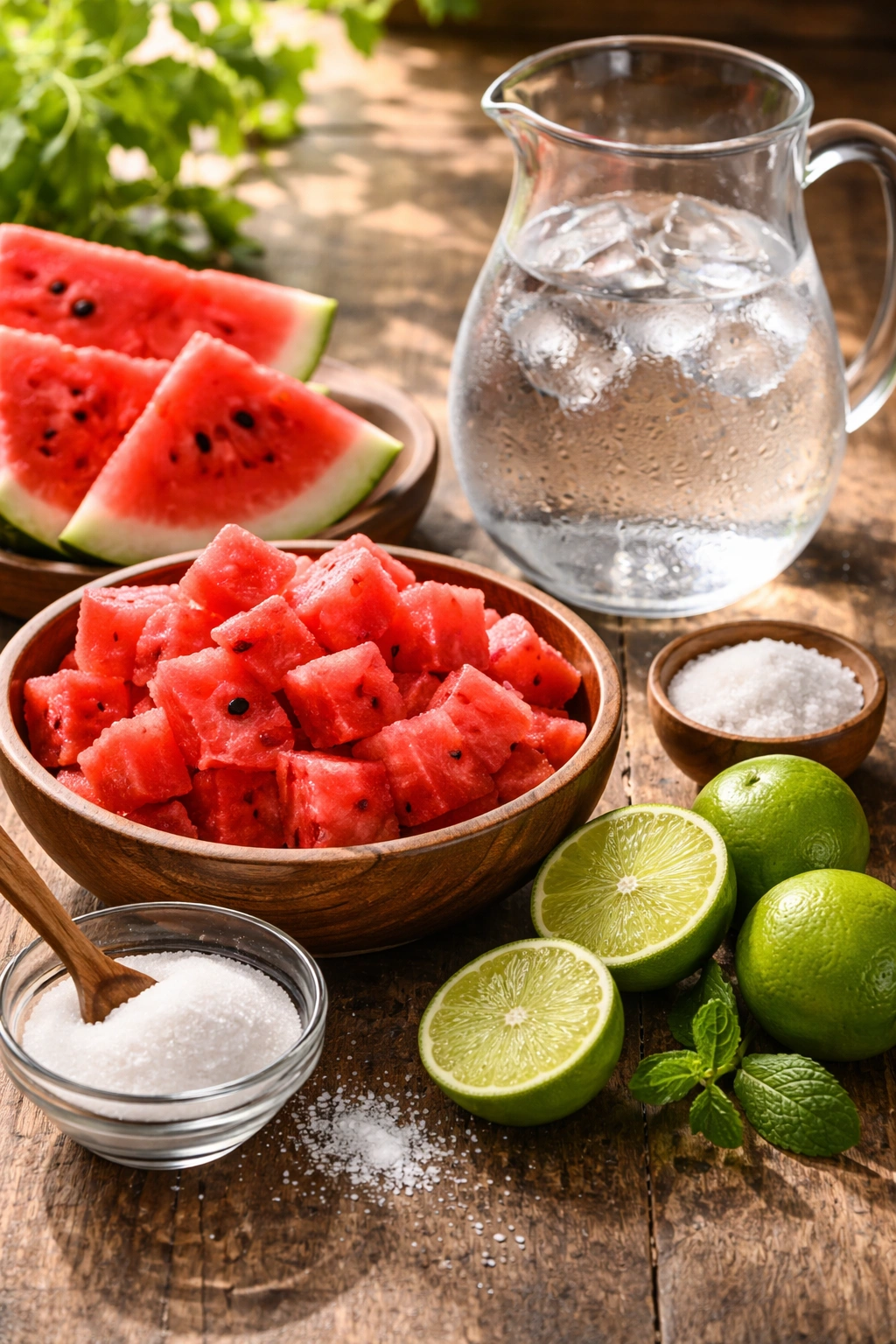
Every agua fresca starts with the same basic formula: a main ingredient that provides flavor and nutrition, sweetener (usually just sugar, sometimes honey or agave), citrus juice for brightness and preservation, water, and sometimes a pinch of salt to make the flavors pop. Understanding what role each ingredient plays helps you build a recipe that works instead of one that needs rescue.
The main ingredient is where personality comes in. Watermelon and cantaloupe are the most classic choices for summer — they’re juicy, they’re naturally sweet, and they’re usually affordable during warm months. Cucumber makes a lighter, more delicate agua fresca that’s incredibly refreshing. Strawberries deliver bright, complex flavor. Hibiscus creates a ruby-red drink that’s tartly floral. Rice or barley creates a creamy, subtle version. Almonds, cantaloupe seeds, or watermelon seeds make versions that are almost milky. The ingredient you choose determines the character of your entire drink.
Sugar is non-negotiable, but the amount matters enormously. Agua fresca isn’t sweet the way juice or soda is sweet. You’re using just enough sugar to complement and brighten the natural flavors of the fruit or grain, not to create a sugary drink. Most recipes use about 1/2 to 3/4 cup of sugar per pitcher (roughly 6-8 servings), which is much less than you’d use for juice or lemonade.
Citrus juice — lime is most traditional in Mexico, but lemon works beautifully — serves multiple purposes at once. It brightens the flavor and adds complexity, it lowers the pH which preserves the drink, and it prevents the drink from tasting flat or one-note. Even if your main ingredient is already fruity, a hit of lime makes everything taste more alive.
Water is the foundation. Using filtered or cooled water makes a noticeable difference — if your tap water is heavily chlorinated or has a flavor, it will affect the final drink. Some recipes call for hot water initially to dissolve the sugar more easily, then cooling, though other approaches work too.
A tiny pinch of salt might sound odd, but it’s actually critical. Salt doesn’t make the drink salty; used correctly (just a quarter teaspoon per pitcher), it acts as a flavor amplifier. It makes all the other flavors more vivid and more satisfying. Professional cooks use this technique constantly — salt makes sweet things taste sweeter, fruity things taste more fruity, and beverages taste more complex.
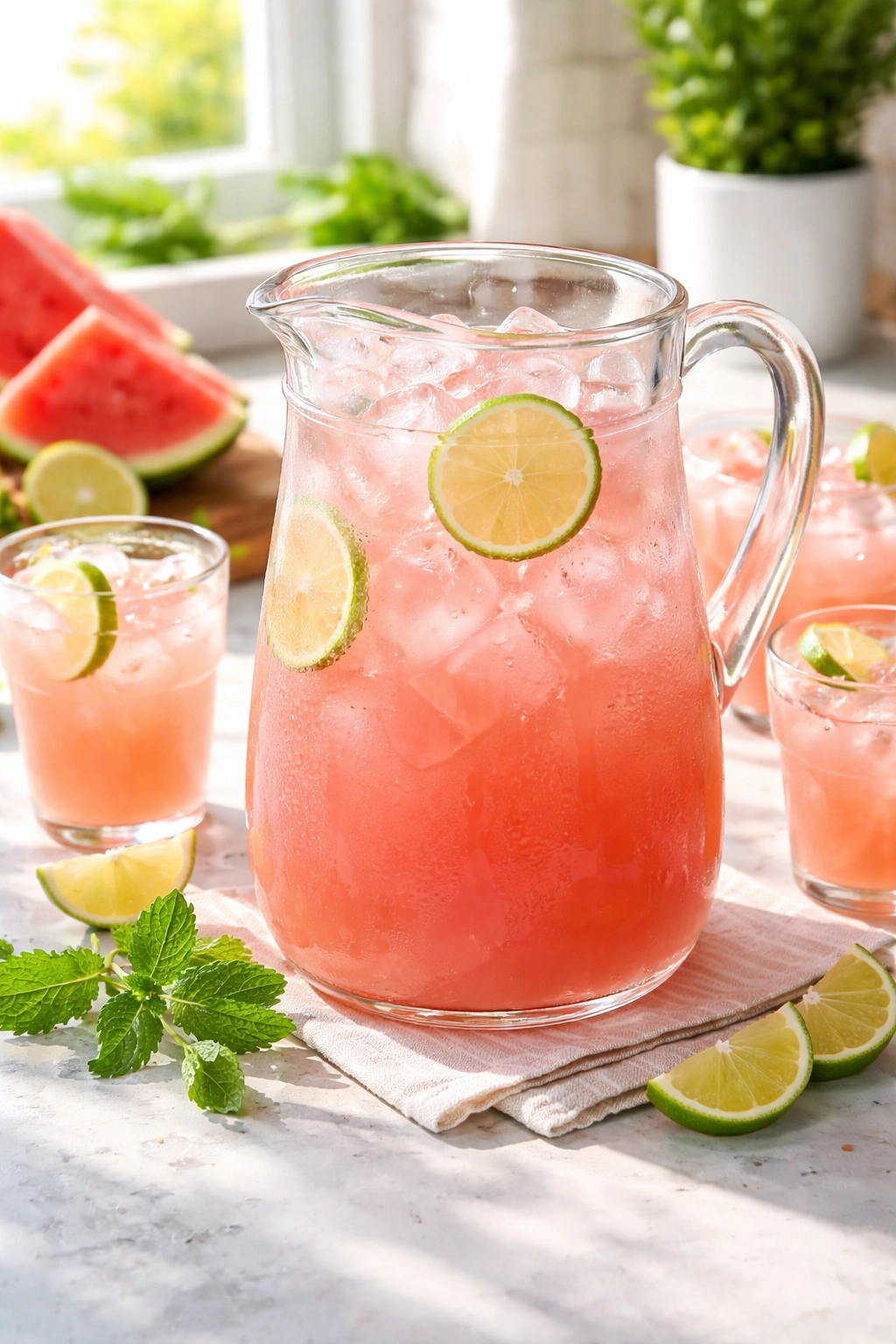
Yield: Serves 4 to 6 | Makes one 8-cup pitcher
Prep Time: 15 minutes
Cook Time: 5 minutes (for dissolving sugar; mostly waiting for it to cool)
Total Time: 20 minutes active + 30 minutes chilling
Difficulty: Beginner — No special equipment needed beyond a blender or large strainer, and the process is straightforward mixing and straining.
Best Served: Ice-cold, immediately after chilling, or throughout the same day it’s made. Agua fresca is best consumed fresh for the cleanest flavor, though it keeps refrigerated for up to 3 days.
Classic Watermelon Agua Fresca Recipe
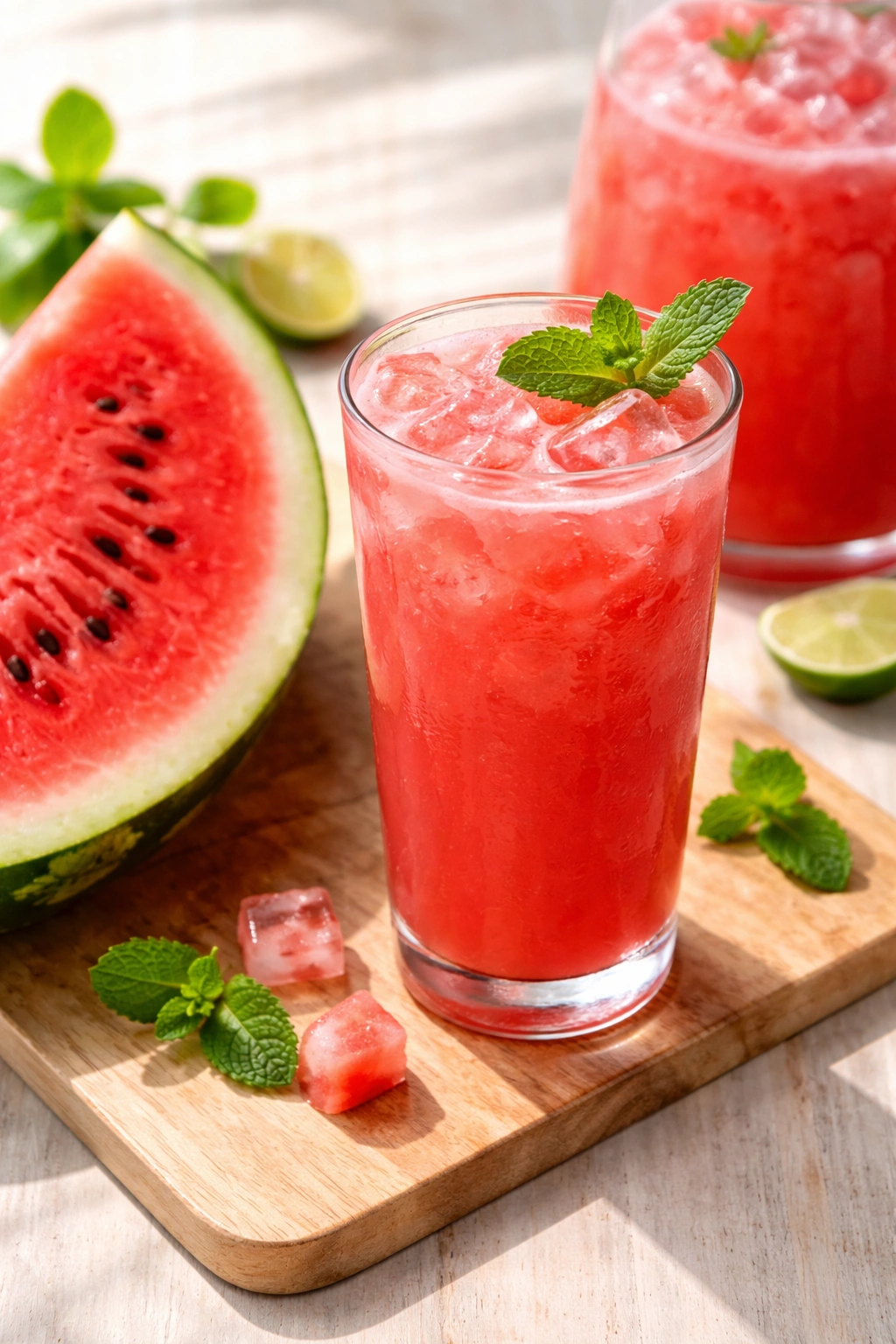
Watermelon agua fresca is the quintessential version — it’s the drink that made this whole category famous. When you bite into ripe watermelon on a hot day, you taste pure hydration and sweetness. Agua fresca captures that experience but spreads it across a full pitcher that stays cold and refreshing with every sip. The magic is choosing a really ripe, sweet watermelon and not oversweetening the final drink. You want the watermelon to be the hero, not the sugar.
The best watermelons for agua fresca are the ones that feel heavy for their size, have a deep color, and have a hollow sound when you tap them. If you cut into one and the flesh is pale pink or mostly white, it’s not ripe enough. You want deep, almost crimson color and those beautiful clear juice pockets that glisten when you cut through the fruit. That’s where the flavor is.
For the Agua Fresca:
- One 4-5 pound piece of ripe watermelon (about 6-7 cups of flesh, seeds and rind removed)
- 1/2 cup granulated sugar
- 1/4 cup fresh lime juice (about 2 limes), or fresh lemon juice
- 6 cups filtered or cooled water, divided
- Pinch of fine sea salt (about 1/8 teaspoon)
- Ice cubes for serving
- Fresh mint leaves for optional garnish
Step-by-Step Instructions
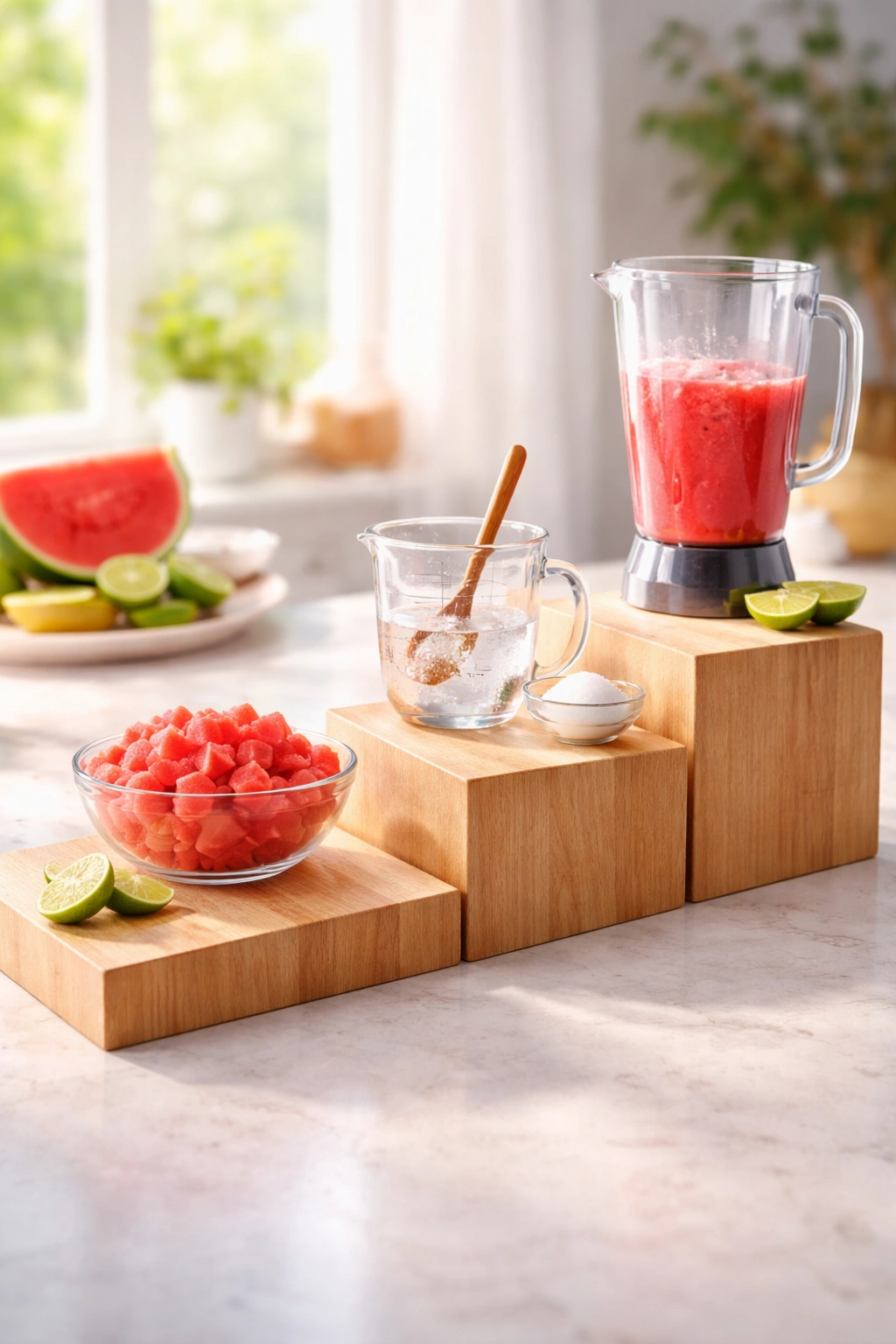
Prepare the Watermelon:
-
Cut the watermelon in half, then cut each half into wedges. Remove the rind completely by running a sharp knife between the pink flesh and the white inner rind, angling the knife so you remove as much of the red as possible. Cut the watermelon into roughly 2-inch chunks and place them in a large bowl.
-
Pick out as many seeds as you can find — this takes just a minute or two and makes a real difference in the final texture. It’s worth the small effort. You don’t need to get every single seed, but get the obvious ones.
Dissolve the Sugar:
- Pour 1 cup of the water into a small saucepan and bring it to a gentle simmer over medium heat. Add the sugar and stir constantly for about 2 minutes, until the sugar is completely dissolved and the water looks clear rather than grainy. Remove from heat and set aside to cool completely — this takes about 5-10 minutes. You can speed this up by pouring it into a shallow bowl.
Blend the Watermelon:
- Working in batches if necessary, add the watermelon chunks to a blender along with the remaining 5 cups of water. Blend on high speed for about 1 minute, until the watermelon is completely broken down and the mixture is uniform and slightly foamy on top. Don’t over-blend; 1-2 minutes is plenty.
Strain and Combine:
-
Pour the blended watermelon through a fine-mesh strainer set over a large pitcher, pressing gently on the solids with the back of a spoon to extract all the liquid. You should get about 6-7 cups of strained watermelon liquid. Discard the pulp (or save it for smoothie bowls or frozen treats if you’d like).
-
Once the sugar syrup has cooled completely, pour it into the pitcher with the strained watermelon liquid. Add the lime juice and the pinch of salt. Stir well to combine — the salt will dissolve instantly.
-
Taste the agua fresca and adjust if needed: if it tastes too strong or sweet, add a bit more water (a quarter cup at a time); if it tastes too diluted or flat, add more lime juice (a tablespoon at a time). The balance should feel refreshing and fruity without being aggressively sweet.
-
Refrigerate the agua fresca for at least 30 minutes, or until it’s very cold. Serve over ice, garnished with fresh mint leaves if you’d like.
Tips for the Best Results
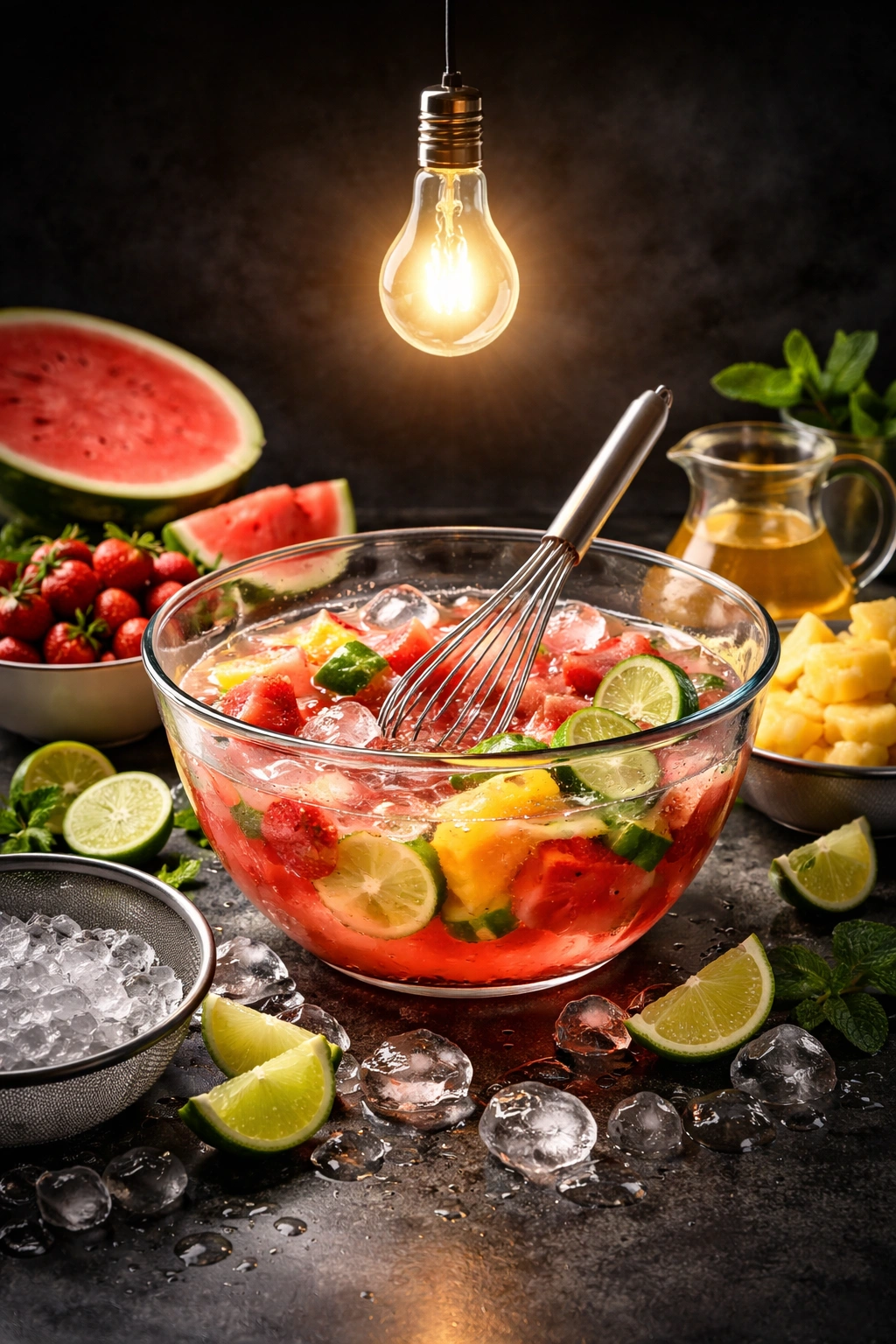
The clarity and brightness of your agua fresca depends entirely on how ripe your main ingredient is. If your watermelon is underripe, no amount of sugar will fix it — the flavor just isn’t there yet. Buy your watermelon a few days before you plan to make agua fresca and let it sit at room temperature. If you’re buying from a farmer’s market or a vendor who knows their product, ask them which ones are the sweetest. Experienced produce people can tell by weight and feel.
Straining makes an enormous difference. Most people don’t strain thoroughly enough, which results in a cloudy, somewhat gritty drink instead of something crystal clear and silky. Use a fine-mesh strainer, take your time, and press gently — you’re extracting liquid, not mashing the pulp. If you want an even smoother result, line your strainer with a piece of cheesecloth, though this isn’t always necessary.
Don’t skip the step of cooling your sugar water before adding it to the fruit juice. Hot liquid mixed with cold fruit liquid creates uneven temperatures and can muddy the flavor. Let everything cool to room temperature, then refrigerate the finished drink. The flavor develops and brightens as it chills.
The salt is easy to underestimate. It’s genuinely not optional, and you really do notice the difference. If you add it and then taste, you’ll realize how much livelier the fruit flavor becomes. It’s the same science that makes salted caramel taste more caramel-y — salt amplifies sweetness and complexity.
Make agua fresca no more than a day before serving if possible. It tastes best on the same day it’s made, when the flavor is brightest and most alive. After 2-3 days in the fridge, it starts to oxidize slightly and lose some of that fresh sparkle. It’s still perfectly good to drink, but it won’t taste quite as vibrant.
Variations You Can Make at Home
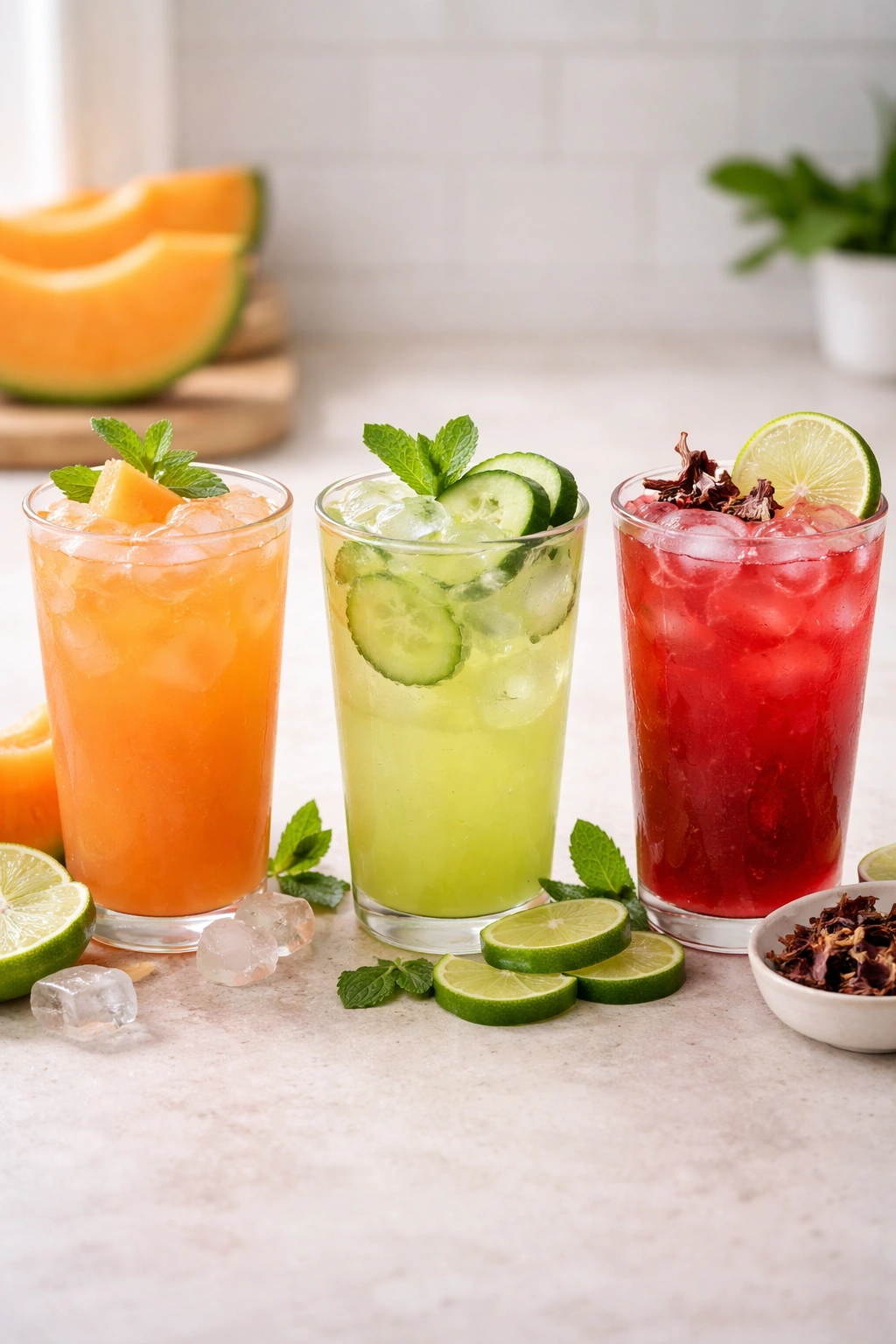
Cantaloupe agua fresca is equally delicious and works with the exact same method — use about 7 cups of fresh cantaloupe flesh (one medium melon), and follow the identical process. Cantaloupe is slightly less juicy than watermelon, so you might need to add a tablespoon or two of extra water, and you might prefer a touch more sugar since cantaloupe is less naturally sweet. The citrus and salt remain the same.
Cucumber agua fresca is a completely different animal — it’s more delicate, more subtle, and incredibly refreshing on the hottest days. Peel and roughly chop about 3 large cucumbers (about 5-6 cups), then blend with 6 cups of water. Strain thoroughly. Combine with 1/3 cup sugar dissolved in hot water, the juice of 1 lime, and a tiny pinch of salt. This version tastes clean and bright rather than fruity. Some people add a handful of fresh mint or cilantro while blending for extra freshness.
Hibiscus agua fresca is made differently because you’re working with dried flowers rather than fresh fruit. Bring 8 cups of water to a boil, add 1 cup of dried hibiscus flowers, then remove from heat and let it steep for 10 minutes (longer if you want deeper color and flavor). Strain out the flowers, then add 1/2 cup sugar, the juice of 2 limes, and a pinch of salt. Chill thoroughly. This version is tart and floral with a gorgeous deep red color.
Strawberry agua fresca uses about 4 cups of fresh strawberries (hulled and halved), blended with 6 cups of water, then strained. The method is identical to watermelon. Strawberry is less watery than melon, so the flavor is more concentrated — you might prefer slightly less sugar, or you might want to increase it slightly depending on how sweet your strawberries are.
Rice agua fresca (agua fresca de arroz) is made by soaking and blending rice instead of using fresh fruit. Soak 1 cup of raw white rice in water for at least 2 hours (or overnight), drain, then blend with 6 cups of fresh water until completely smooth — this takes a full 2-3 minutes to break down the rice completely. Strain through a fine-mesh strainer (this takes patience; let it drip rather than pressing). Add 1/2 cup sugar dissolved in hot water, the juice of 1 lime, a pinch of salt, and optional cinnamon or vanilla. The result is creamy, subtle, and almost milky.
Almond agua fresca (agua fresca de almendras) starts with 1 cup of raw almonds soaked in hot water for 10 minutes to soften them slightly, then drained. Blend the almonds with 6 cups of filtered water until the water turns milky white and the almonds are completely broken down — this takes 3-4 minutes of blending. Strain through cheesecloth, squeezing gently to get all the almond milk out. Add 1/2 cup sugar dissolved in hot water, the juice of 1 lime, and a pinch of salt. This is luxurious and almost dessert-like.
Storage and Make-Ahead Guidance
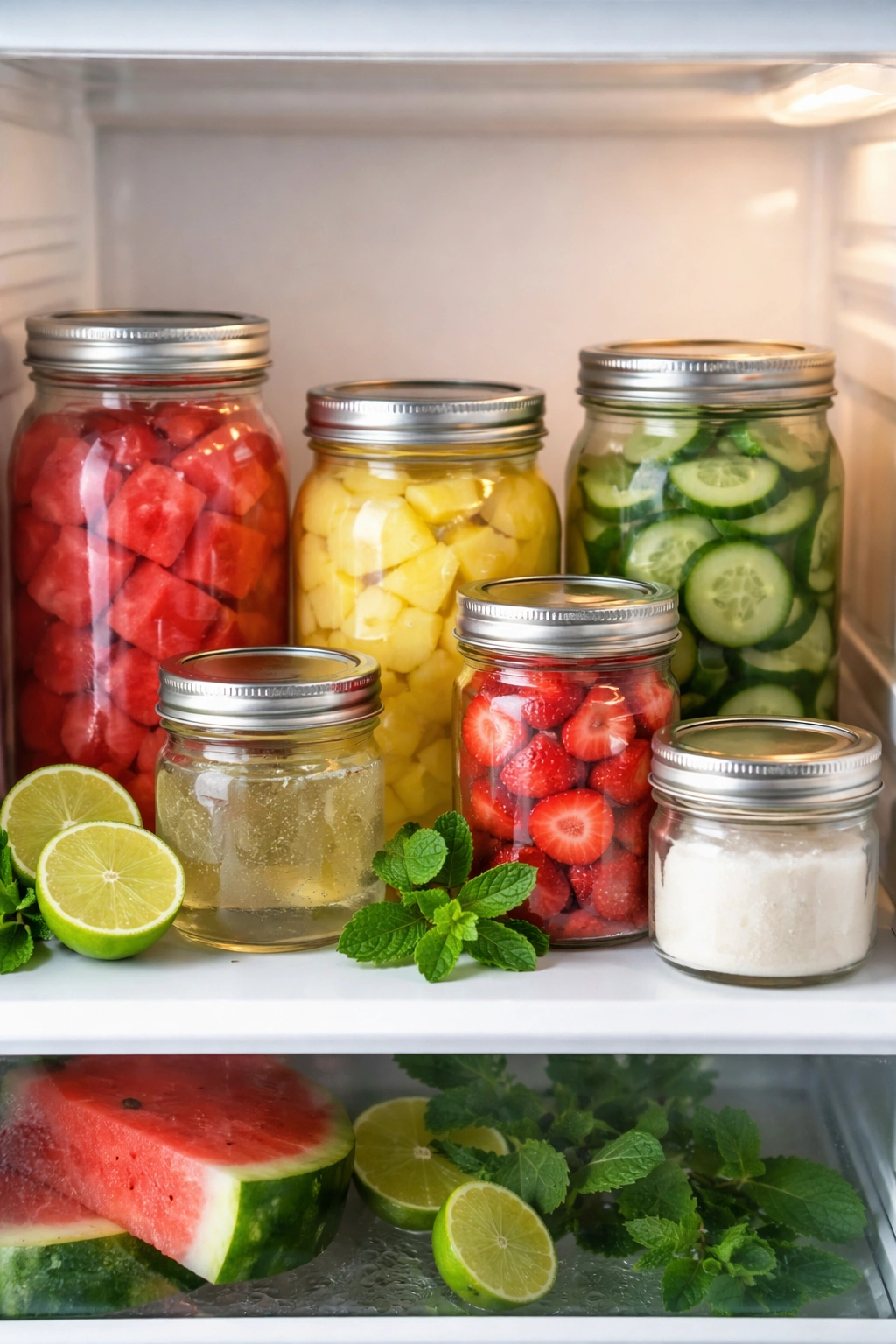
Agua fresca keeps beautifully in the refrigerator for up to 3 days, though you’ll notice the flavor is brightest on day one. Store it in a glass pitcher or glass bottles with lids — glass is important because it doesn’t absorb flavors or colors. Don’t store in plastic if you want to keep it for longer than a day; the acidity and sugar can interact with plastic over time.
You can’t really freeze agua fresca successfully if you want to drink it as a beverage — it freezes into slush and the texture changes unpleasantly. However, you can pour it into ice pop molds and freeze it into popsicles, which is actually delicious. The fruit popsicles have a clean flavor and minimal sugar compared to store-bought versions.
You can make some components ahead: dissolve your sugar in water and store it in the refrigerator for up to a week, juice your limes in advance (store in an airtight container for 2-3 days), and chop your fruit and store it in an airtight container for 1-2 days. When you’re ready to make agua fresca, you’re just blending, straining, and mixing — takes less than 20 minutes total.
If you’re making agua fresca for a large gathering or party, you can absolutely double or triple the recipe. Make it in batches if your blender isn’t large enough, strain everything into a big pitcher, and keep it cold until serving. Agua fresca actually improves slightly when the flavors have had time to fully meld together, so making it an hour or two before serving works well.
Serving Suggestions and Pairing Ideas
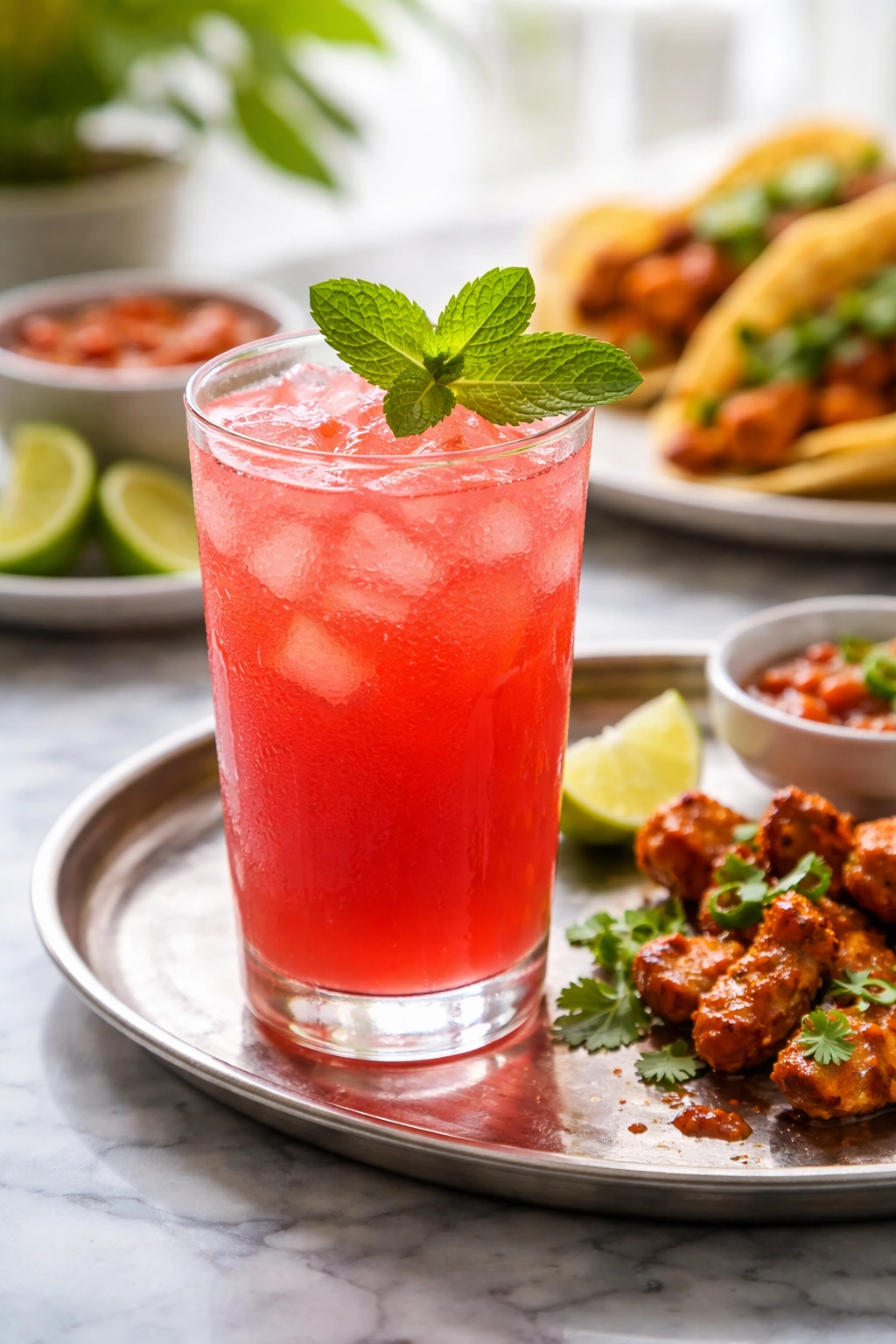
Agua fresca is the perfect drink to serve alongside spicy food — its refreshing quality and slight sweetness balance heat beautifully. If you’re serving tacos, enchiladas, chile-laden appetizers, or any Mexican food, agua fresca is the natural companion. The coolness cools your mouth, the fruit flavor cleanses your palate, and the lack of heaviness means you can enjoy the drink throughout the meal without feeling full.
Serve agua fresca ice-cold in glasses over fresh ice cubes. A sprig of fresh mint or a wedge of the fruit you used looks beautiful and signals that this is a fresh, real drink. For watermelon or cantaloupe agua fresca, garnishing with a small wedge of the fruit itself is visually perfect. For hibiscus, a lime wheel looks striking against the deep red color.
Agua fresca is wonderful for outdoor gatherings — picnics, barbecues, pool parties, garden parties. People naturally gravitate toward it on hot days, it feels special compared to just offering plain water, and you can serve it in large pitchers so people can help themselves throughout the event. If you’re hosting, making agua fresca shows thoughtfulness and effort without requiring complicated preparation.
For kids, agua fresca is a better choice than juice or soda. It tastes exciting and special, but it’s not loaded with added sugar or artificial ingredients. If you have children who resist plain water, agua fresca bridges the gap. You could make a batch specifically for the family, and adults can enjoy it just as much.
At breakfast or brunch, agua fresca pairs wonderfully with sweet and savory pastries. It’s light enough that it doesn’t compete with the food, but flavorful enough to be interesting alongside breakfast. Watermelon agua fresca with fresh croissants and cheese, or hibiscus agua fresca with churros, feels distinctly sophisticated and intentional.
Troubleshooting Common Issues
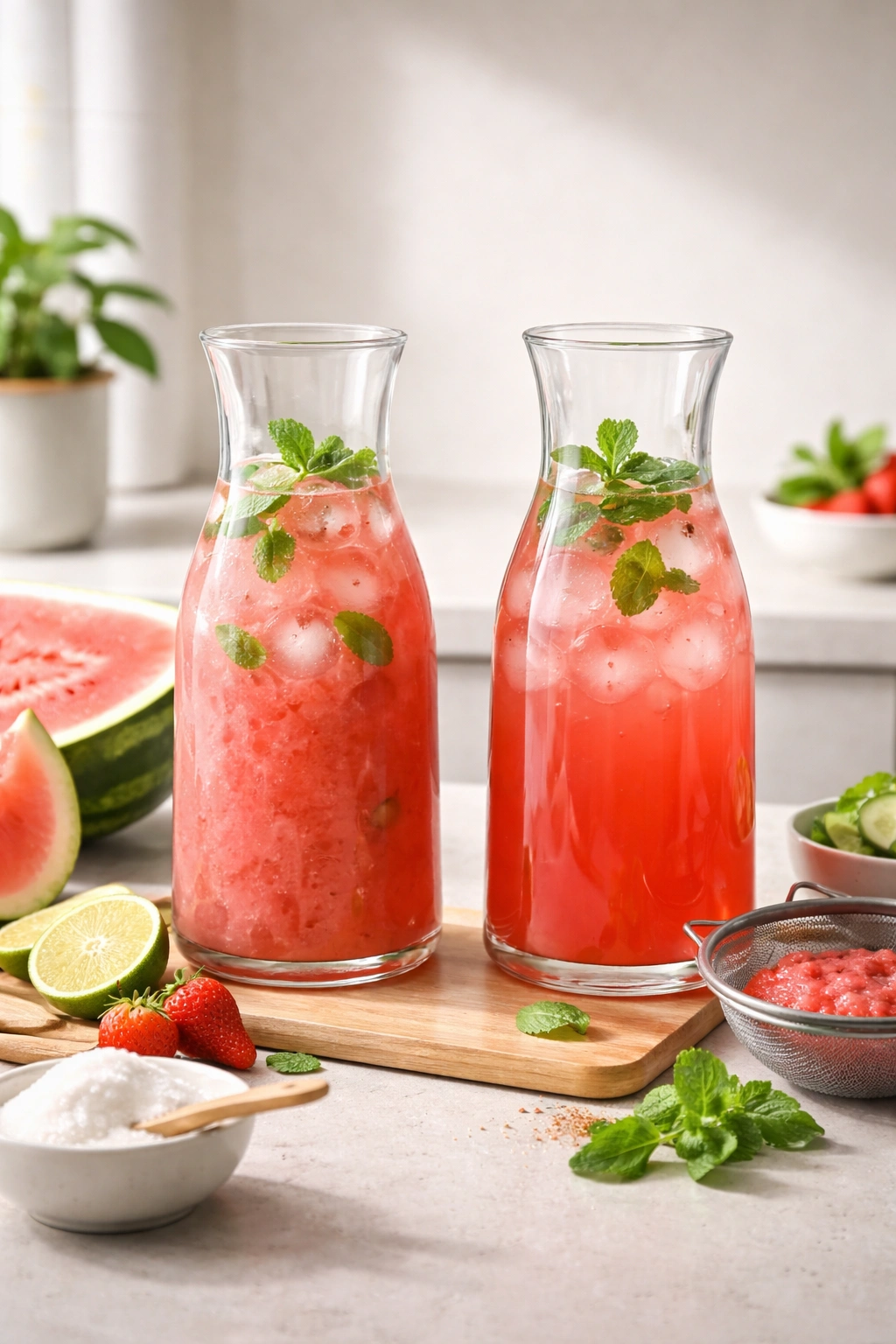
If your agua fresca tastes too watery or diluted, the most likely culprit is either under-ripe fruit or too much water. You can fix this by adding more lime juice (which concentrates flavor), or by making a simple syrup with equal parts sugar and water, dissolving it completely, cooling it, and adding it to your pitcher a bit at a time until the balance feels right. Taste as you go — it’s easy to add more but impossible to take it back.
If it tastes too sweet or too strong, you simply added too much sugar or used overly ripe fruit that was already very sugary. The fix is straightforward: dilute it with more water, adding a quarter cup at a time and tasting between additions. Restore balance with a bit more lime juice to bring the brightness back.
If your agua fresca is cloudy or has a grainy texture, you didn’t strain it thoroughly enough. You can’t un-blend it, but you can strain it again through a finer-mesh strainer or through cheesecloth. Pour it slowly and patiently — rushing the straining defeats the purpose. The resulting agua fresca will be clearer.
If it separates into visible layers or looks cloudy after sitting, don’t panic. This is oxidation, which is normal. Just give it a good stir before serving. The flavor is fine, and it’s still completely safe to drink. To prevent this, keep it in a glass container with an airtight lid, fill the container as full as possible to minimize air, and use it within 2-3 days.
If the flavor tastes off or slightly fermented after a day, your agua fresca has begun to ferment — this happens in warm environments or if it wasn’t refrigerated properly. Throw it out and make a fresh batch. Going forward, refrigerate immediately after making, use clean containers, and don’t let it sit out at room temperature.
Final Thoughts
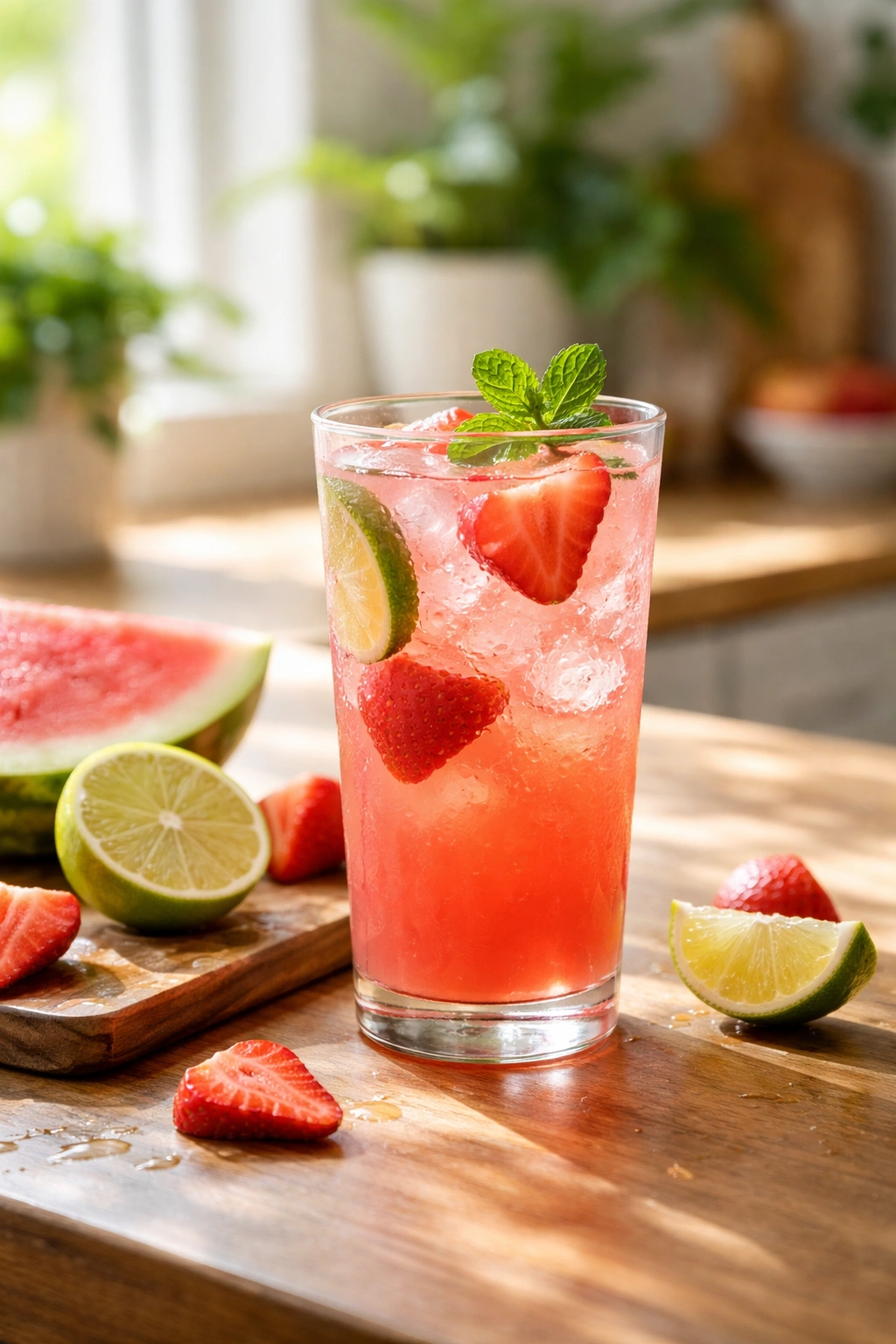
Agua fresca is the drink you’ll find yourself making all summer long once you understand how simple and perfect it is. There’s something almost meditative about blending fresh fruit, straining it carefully, mixing in a tiny amount of sugar and lime, and watching it transform into something so much better than any bottled drink could be. Your guests will ask what it is. You’ll find yourself making it twice a week. Kids who normally resist anything healthy will drink it happily.
The beauty of agua fresca is that it proves you don’t need complicated techniques or obscure ingredients to create something genuinely special. You need ripe fruit, restraint with the sweetener, and understanding of balance. Those three things combine to make a drink that’s refreshing, that tastes like real food, and that actually quenches your thirst instead of making you want to reach for water twenty minutes later.
Keep making variations. Try different fruits, different citrus, different garnishes. Make it for friends and family. Serve it alongside your favorite foods. On the hottest days of the year, when you’re tired of regular water and you want something that feels like a treat, agua fresca is waiting in your refrigerator — cold, bright, and ready to bring you back to life.
