



Vegetarian meals get a bad reputation among meat lovers—mostly because too many restaurants serve sad, underseasoned dishes that feel like punishment rather than pleasure. But here’s the thing: the best plant-based meals aren’t about the absence of meat. They’re about bold flavors, satisfying textures, hearty portions, and the kind of dishes that leave you genuinely full and happy. When a meat lover sits down to a really well-made vegetarian meal, they don’t notice what’s missing—they’re too busy enjoying what’s actually on the plate.
The difference between vegetarian food that impresses meat lovers and vegetarian food that disappoints comes down to a few specific principles. You need umami-rich ingredients that deliver that savory, deeply satisfying depth people crave. You need substantial proteins and carbs that feel genuinely filling, not like you’ll be hungry again in an hour. You need cooking techniques that add texture and complexity—charring, caramelizing, roasting at high heat—not steaming everything into submission. And you need bold seasoning that doesn’t apologize for itself.
What follows isn’t a collection of salads and smoothie bowls. These are the kinds of meals that work for anyone hungry for real food, whether they eat meat or not. Many of them can sit on a family dinner table alongside other dishes without feeling like a compromise. Some come from cultures with ancient vegetarian traditions. Others are modern dishes that happen to work brilliantly without meat. All of them have earned their place because they deliver genuine, crave-worthy flavor and the kind of satisfaction that turns skeptics into believers.
1. Crispy Black Bean Burgers with Charred Onions and Aged Cheddar
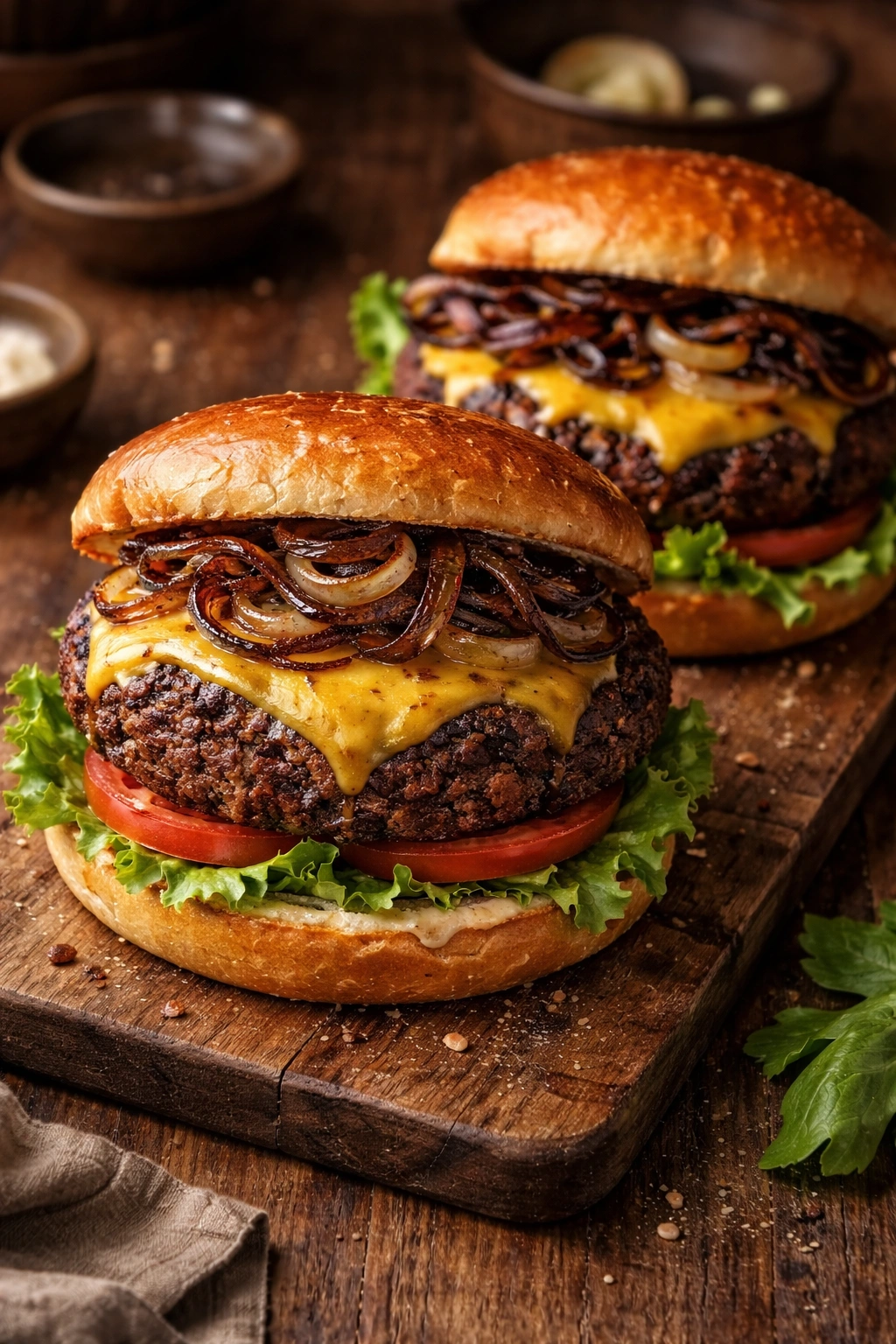
Black bean burgers get dismissed too quickly—mostly because frozen supermarket versions are genuinely terrible. But when you make them from scratch with properly seasoned beans, crispy edges from pan-frying, and generous toppings, they become something that even devoted carnivores will absolutely demolish. The key is building layers of texture and flavor: soft, creamy bean interior, a caramelized crust from the pan, sharp cheese that melts into the warm beans, and charred onions that add sweet depth.
Why This Works for Meat Lovers
Black beans deliver substantial protein (15 grams per cooked cup) and a naturally savory, almost meaty flavor when seasoned properly. The burger gets its satisfaction from the contrast between the soft interior and the crispy-fried exterior—the same textural satisfaction you get from a well-seared meat patty. The toppings matter enormously here: aged cheddar adds sharp, complex flavor, and charred onions bring caramelized sweetness and umami depth that make each bite feel indulgent rather than virtuous.
How to Build the Perfect Black Bean Burger
- Mash cooked black beans with finely diced sautéed onions, minced garlic, cumin, smoked paprika, and a generous pinch of cayenne until the mixture is mostly uniform but still has some texture (don’t blend it smooth)
- Stir in panko breadcrumbs and a beaten egg to bind everything—the mixture should hold together but not feel gluey
- Form into thick patties and refrigerate for at least 30 minutes (this helps them hold together during cooking)
- Pan-fry in a cast-iron skillet over medium-high heat with a little olive oil until deeply browned on both sides—this is non-negotiable for flavor and texture
- Toast your burger buns, pile on the charred onions, melted cheese, and whatever toppings you love
- Serve with a sharp condiment like sriracha mayo or a tangy aioli
Pro tip: The best black bean burger isn’t the one trying to mimic a beef burger—it’s the one that leans into what black beans do best. Skip the meat substitutes and focus on seasoning, texture, and bold toppings instead.
2. Shakshuka: Eggs in Spiced Tomato Sauce
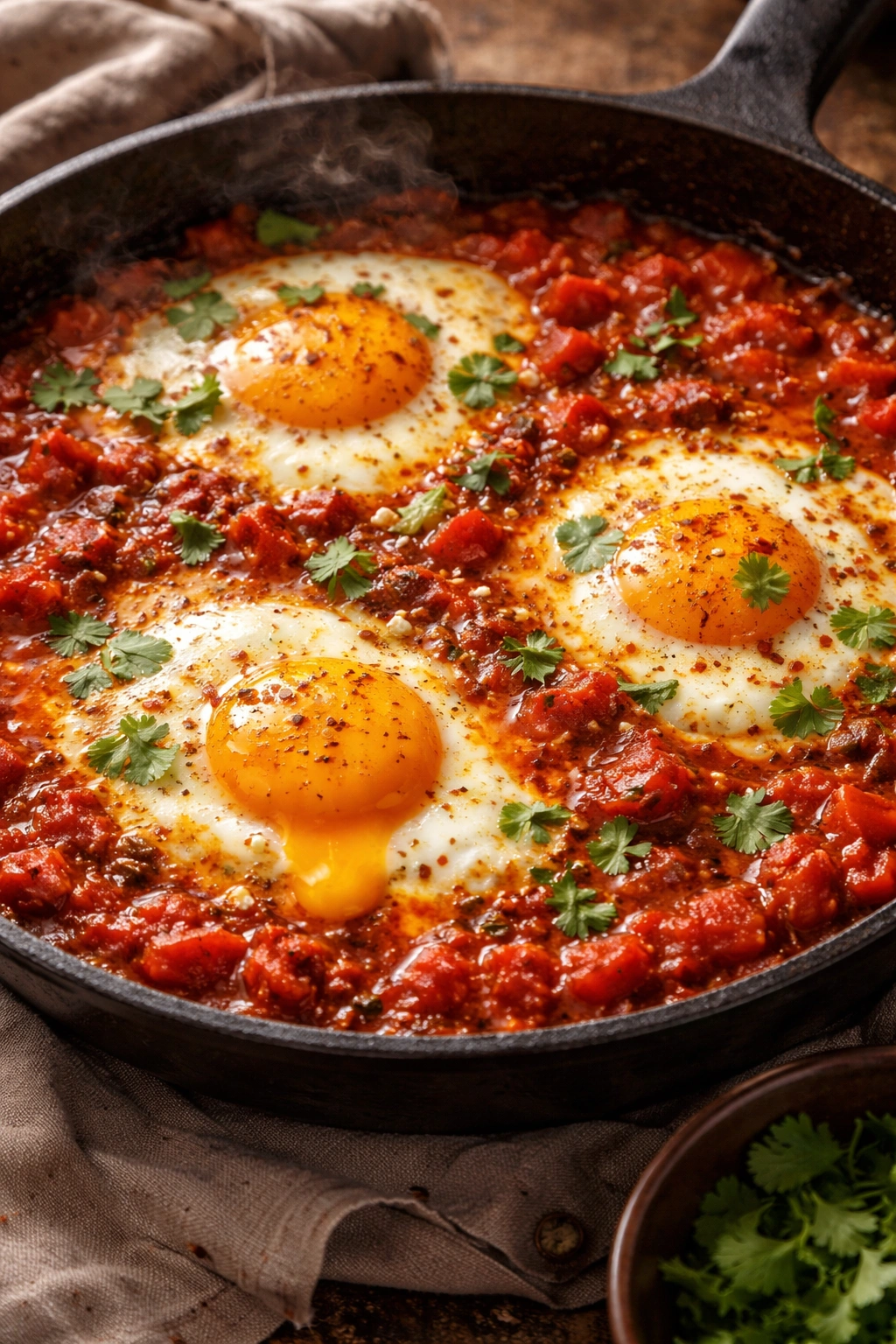
Shakshuka is a Middle Eastern dish of eggs poached in deeply spiced tomato sauce, and it’s one of those rare meals that feels both humble and luxurious at the same time. Rich egg yolks break into the warm, complex sauce, creating a runny, silky richness that coats every piece of bread. It’s the kind of dish that works for breakfast, lunch, or dinner, and it’s genuinely more satisfying than almost any egg dish meat lovers typically eat.
Why This Works for Meat Lovers
Shakshuka hits every flavor and texture note that makes food deeply satisfying. The tomato sauce is long-simmered with cumin, paprika, garlic, and sometimes harissa, building layers of savory complexity and heat. The runny egg yolk creates a luxurious sauce that mimics the richness of meat. This is comfort food at its most elegant—the kind of meal that tastes like it took hours to prepare, even though it comes together in 30 minutes. There’s no lettuce, no apologies, just pure, savory indulgence.
Building a Restaurant-Quality Shakshuka
- Start with good tomatoes: crush a 28-ounce can of whole San Marzano tomatoes by hand, or use about 2 pounds of fresh tomatoes roasted and chopped
- Sauté diced onions and plenty of minced garlic in olive oil until deeply golden and fragrant, at least 5 minutes—don’t rush this step
- Add 1 teaspoon of cumin, 1 teaspoon of smoked paprika, and a pinch of cayenne, stirring constantly for about 30 seconds until the spices bloom and become fragrant
- Pour in the tomatoes and simmer for 15-20 minutes, stirring occasionally, until the sauce has thickened slightly and the flavors have concentrated
- Make four small wells in the sauce and crack an egg into each one, then cover and simmer until the eggs are just set but the yolks are still runny—about 5 minutes
- Finish with fresh cilantro, a drizzle of good olive oil, and a pinch of fleur de sel
Worth knowing: The quality of your tomatoes matters enormously here. Canned San Marzano tomatoes are consistently excellent and often better than fresh out-of-season tomatoes.
3. Loaded Sweet Potato Nachos with Black Beans and Queso
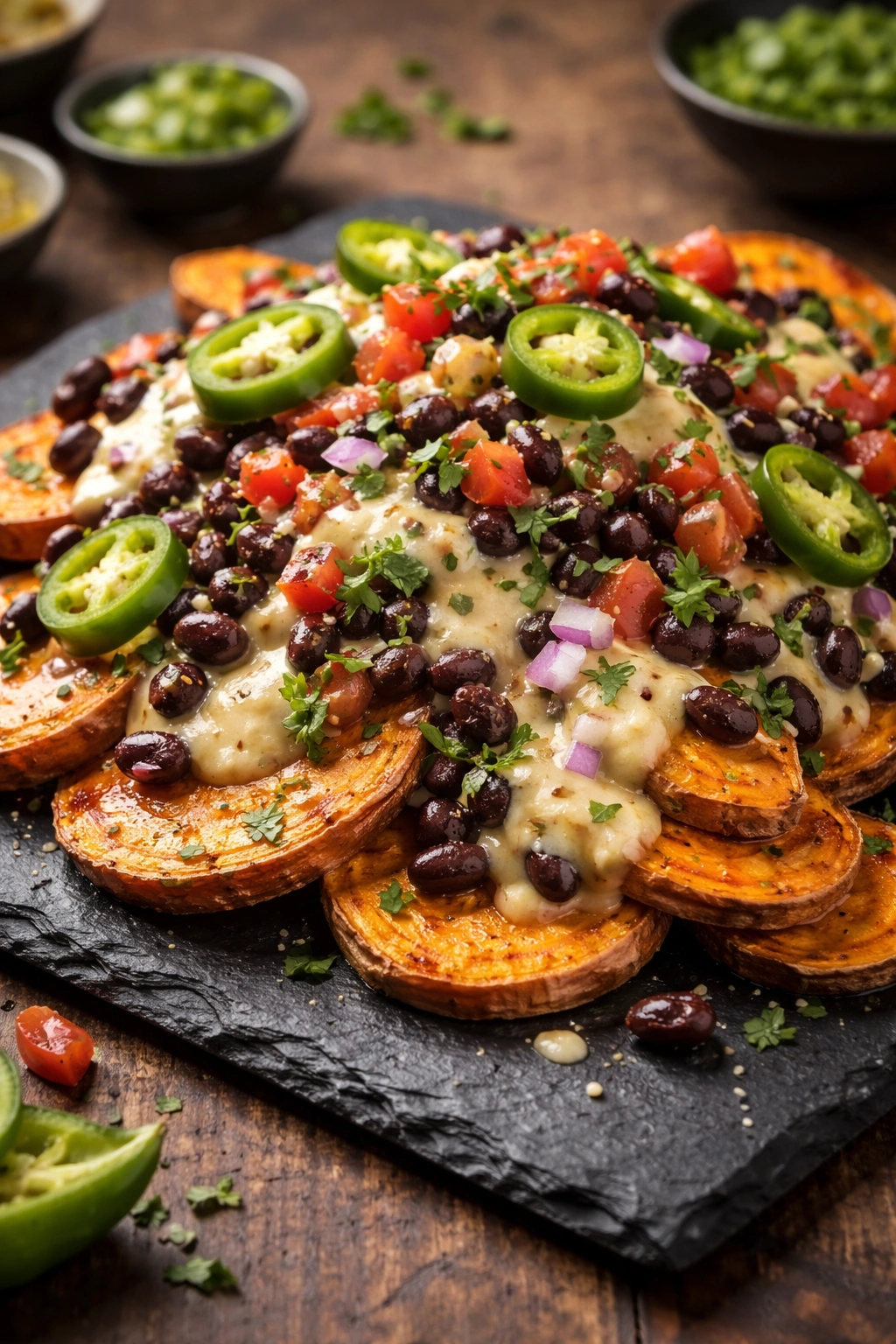
Nachos are by definition meat-optional—which means a vegetarian version has no business feeling like a compromise. Roasted sweet potato slices replace tortilla chips, creating a naturally sweet, sturdy base that works beautifully with spiced black beans, melted cheese, jalapeños, and all the traditional nacho toppings. The result is somewhere between a sophisticated appetizer and an absurdly satisfying meal.
Why This Works for Meat Lovers
Sweet potato nachos deliver the same craveable combination of textures and flavors as traditional nachos, just with more nutritional substance. The sweet potato slices get crispy-edged from high-heat roasting, creating contrast with a creamy interior. The black beans provide protein and that satisfying savory depth. Melted queso or sharp cheddar adds indulgent richness. Every bite has multiple textures, temperatures, and flavors happening at once—the opposite of boring vegetarian food.
How to Build Perfect Sweet Potato Nachos
- Slice 2 large sweet potatoes lengthwise into quarter-inch slabs, arrange them on a baking sheet, brush lightly with olive oil, season with sea salt and smoked paprika, and roast at 400°F until the edges are crispy and caramelized—about 25 minutes
- While the sweet potatoes roast, warm a can of black beans in a saucepan with cumin, garlic powder, and a pinch of cayenne
- Arrange the roasted sweet potato slices on a serving platter, scatter the warm black beans over them, then top with shredded sharp cheddar or drizzle with warm queso (either homemade or store-bought—no judgment)
- Return to the oven for just 2-3 minutes until the cheese is melted, then remove and top with diced jalapeños, sliced red onion, fresh cilantro, avocado, crema or sour cream, and salsa
- Serve immediately while the sweet potatoes are still warm and the cheese is still melty
Pro tip: Make the sweet potato chips ahead of time and store them in an airtight container for up to 3 days. Assemble the nachos fresh for serving.
4. Deeply Caramelized Mushroom Risotto
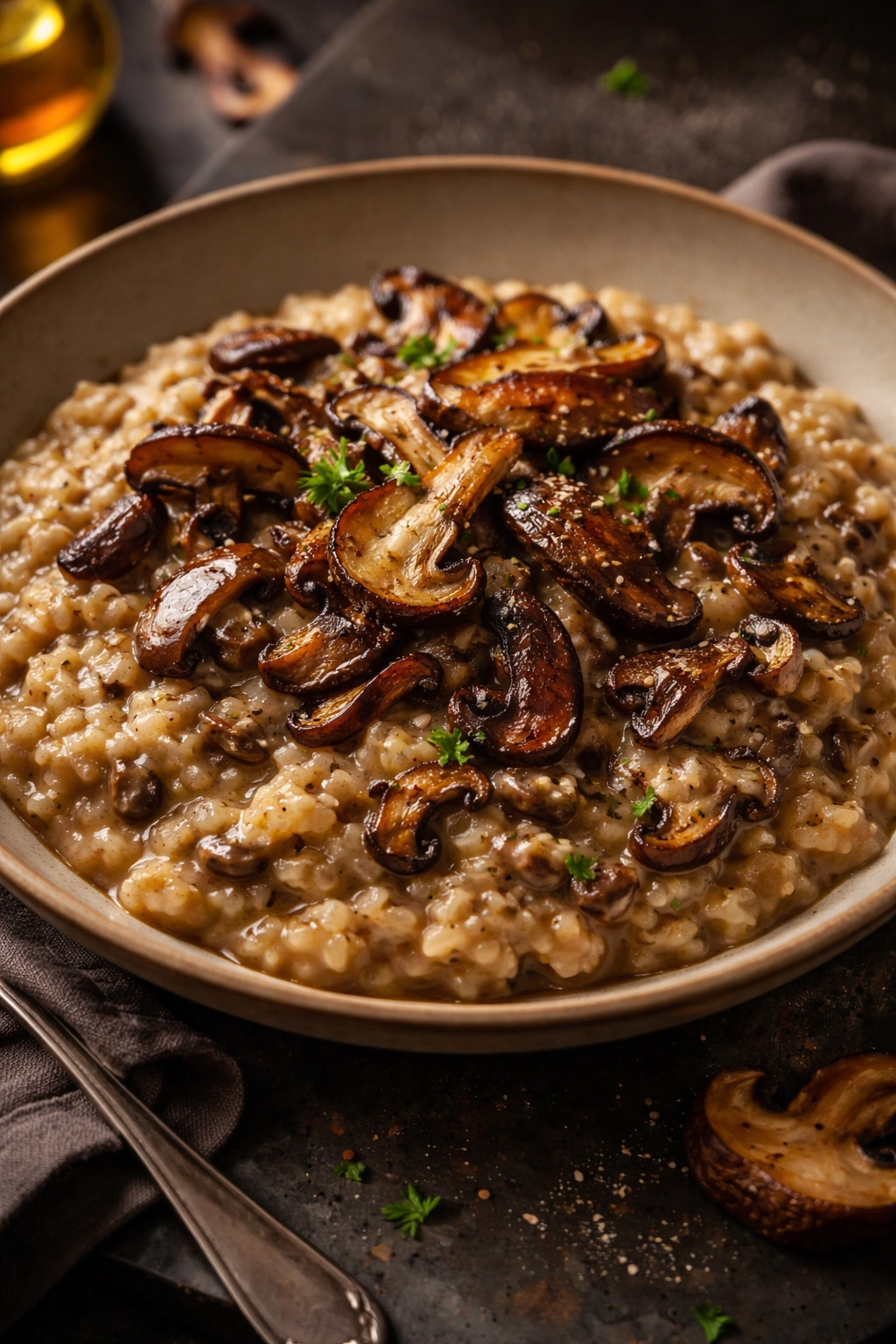
Risotto is already a dish that feels indulgent and restaurant-worthy, but when you start with mushrooms that have been cooked down until they’re nearly black and intensely concentrated in flavor, something magical happens. The earthiness of the mushrooms merges with the creamy, luxurious rice, creating a bowl that tastes more impressive than anything you’re likely to find at a casual restaurant.
Why This Works for Meat Lovers
Mushrooms are one of the few ingredients that delivers the savory, umami-rich depth that meat lovers seek. When you deeply caramelize them—which takes patience and a hot pan—they become concentrated, almost meaty in their intensity. Risotto’s creamy texture and rich butter-and-cheese finish mimic the satisfaction of cream-based meat sauces. The combination of concentrated mushroom flavor, creamy rice, and crispy mushroom chips on top creates textural complexity that feels genuinely luxurious.
Mastering Mushroom Risotto
- Slice about 1.5 pounds of mushrooms (cremini, portobello, or a mix) into quarter-inch pieces and divide into two batches
- Heat 2 tablespoons of olive oil in a large, heavy pan over medium-high heat and add the first batch of mushrooms—don’t stir them for several minutes, letting them develop a golden-brown crust
- Once the first side is browned, stir the mushrooms and cook until they release their liquid, which then evaporates, leaving concentrated flavor—this takes 12-15 minutes total; season with salt and pepper, then transfer to a plate
- Repeat with the second batch of mushrooms
- In the same pan, melt butter and sauté diced shallots and minced garlic until very soft, then add 1.5 cups of arborio rice, stirring constantly for about 2 minutes
- Add 1 cup of dry white wine and stir until almost completely absorbed, then begin adding warm vegetable broth one ladle at a time—about 4-5 cups total—stirring frequently and only adding the next ladle once the previous liquid is mostly absorbed
- This process takes about 18-20 minutes; the rice should be creamy but with a slight firmness at the center of each grain
- Fold the mushrooms back in along with 4 tablespoons of cold butter and a generous handful of freshly grated Parmesan, stirring gently until everything is combined and the risotto is creamy
- Taste and adjust seasoning, then serve immediately
Worth knowing: The constant stirring isn’t just technique—it releases starches from the rice that create the signature creaminess. Don’t skip this step.
5. Crispy Tofu with Charred Broccolini and Fermented Black Bean Sauce
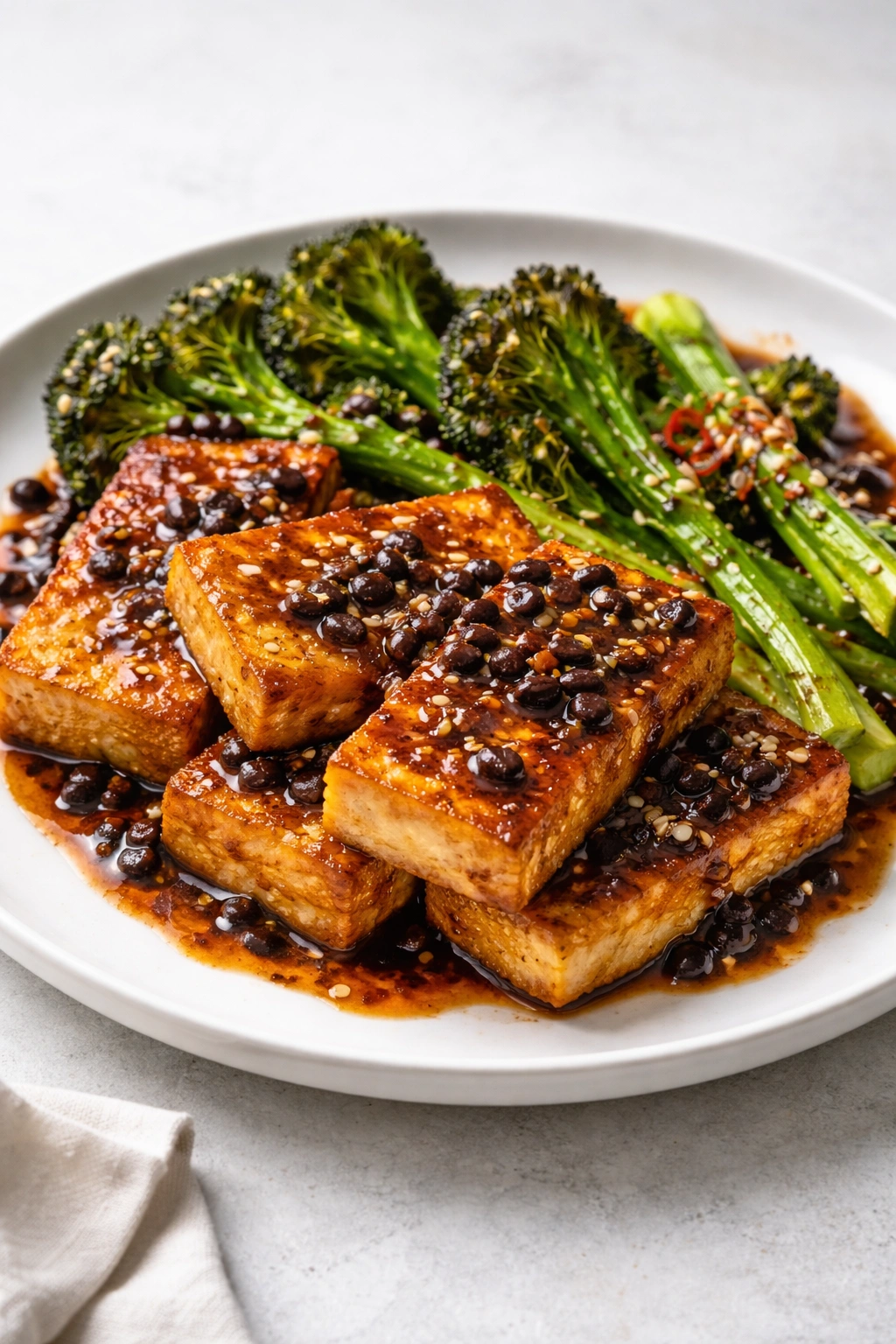
Tofu has a terrible reputation because most people have never eaten a properly prepared piece of it. When you press it to remove excess moisture, cut it into thick slabs, and pan-fry it until the exterior is golden and crispy while the inside stays creamy, it becomes something genuinely delicious. Pair it with charred broccolini and a punchy fermented black bean sauce, and you have a meal that gets devoured without anyone thinking about meat.
Why This Works for Meat Lovers
The key to tofu winning over skeptics is treating it like you’d treat any protein: get a serious, golden crust on it through high-heat pan-frying. That crust creates textural contrast and develops flavor through Maillard browning. Pressed tofu soaks up the umami-rich black bean sauce without becoming mushy. Charred broccolini adds bitter, burnt-edged complexity that elevates the whole dish beyond “healthy vegetable side.” This is food that tastes indulgent, not righteous.
Building Crispy Tofu That Wins Skeptics
- Buy extra-firm tofu and press it for at least 30 minutes using a tofu press or by wrapping it in paper towels and placing a cast-iron skillet on top with some weight
- Cut the pressed tofu into thick rectangular slabs (about three-quarter inch thick) and season generously with salt and white pepper
- Heat a neutral oil with a high smoke point (vegetable, peanut, or avocado) in a cast-iron skillet over medium-high heat until very hot
- Place the tofu slabs in the pan without moving them and let them cook for 4-5 minutes until the bottom develops a golden-brown crust
- Flip and cook the other side the same way until golden
- While the tofu cooks, toss broccolini with olive oil, salt, and pepper, and arrange on a separate baking sheet
- Roast the broccolini at 425°F for 10-12 minutes until the florets are deeply charred and the stems are tender
- For the sauce, whisk together 3 tablespoons fermented black beans (or black bean paste), 2 tablespoons soy sauce, 1 tablespoon rice vinegar, 1 teaspoon sesame oil, 2 minced garlic cloves, and a teaspoon of grated ginger
- Plate the crispy tofu and charred broccolini, then drizzle the black bean sauce over everything
- Finish with sesame seeds and sliced scallions
Pro tip: Don’t move the tofu once it hits the pan. Constant flipping prevents browning and creates a soggy, pale result instead of a crispy crust.
6. Lentil and Walnut Bolognese
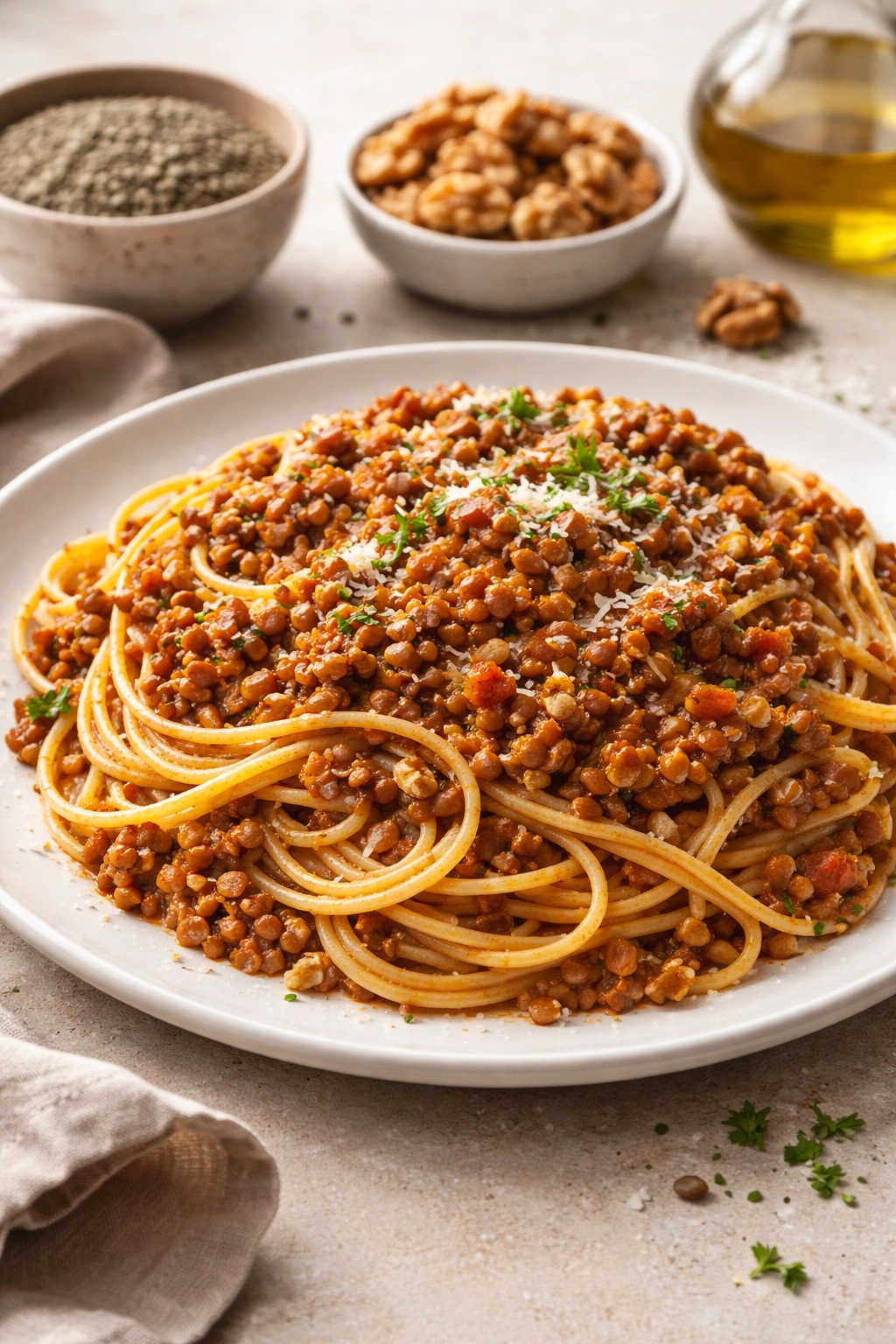
Pasta gets boring when it’s tossed with a simple tomato sauce, but Bolognese—that thick, meat-rich sauce simmered until the flavors are deeply concentrated—is restaurant-quality comfort food. The vegetarian version leans into walnuts (which mimic meat’s textural bite when finely chopped) and lentils (which add earthiness and protein), creating a sauce so flavorful that meat eaters won’t notice what’s missing.
Why This Works for Meat Lovers
The secret to vegetarian Bolognese is long, slow simmering that allows the flavors to concentrate and meld. Walnuts, when finely chopped, create a texture remarkably similar to ground meat. Lentils add protein and an earthy depth. The sauce is built on a soffritto (sautéed aromatics), paste concentrate, and wine reduction—the same techniques that make traditional Bolognese work so well. This is a sauce that tastes like it’s been simmering all day, even though you can have it ready in about an hour.
Making a Sauce That Rivals Traditional Bolognese
- Finely chop 1 cup of walnuts in a food processor—you want pieces about the size of ground meat, not flour—then set aside
- Dice 2 carrots, 2 celery stalks, and 1 large onion into small, even pieces, and mince 4 garlic cloves
- Heat 3 tablespoons of olive oil in a large, heavy saucepan over medium heat and add the diced vegetables (the soffritto), cooking for 8-10 minutes until softened and beginning to caramelize
- Add the minced garlic and cook for 1 minute more until fragrant
- Add the finely chopped walnuts and 1 cup of cooked green or brown lentils, stirring to coat everything in oil
- Add 3 tablespoons of tomato paste and stir constantly for about 2 minutes, letting the paste caramelize slightly—this deepens the flavor significantly
- Pour in 1 cup of dry red wine and let it simmer for 5-7 minutes until nearly evaporated
- Add 28 ounces of crushed San Marzano tomatoes, 1 teaspoon of dried oregano, and 1 bay leaf
- Reduce the heat to low and simmer gently for 30-40 minutes, stirring occasionally, until the sauce has thickened considerably and the flavors have melded
- Season with salt, pepper, and a pinch of sugar if the tomatoes taste too acidic
- Cook your pasta (pappardelle or any thick ribbon shape works beautifully), then toss with the sauce and finish with freshly grated Parmesan and fresh basil
Worth knowing: The sauce actually tastes better the next day as flavors continue to meld, so don’t hesitate to make it in advance.
7. Charred Cauliflower Steaks with Tahini-Lemon Dressing
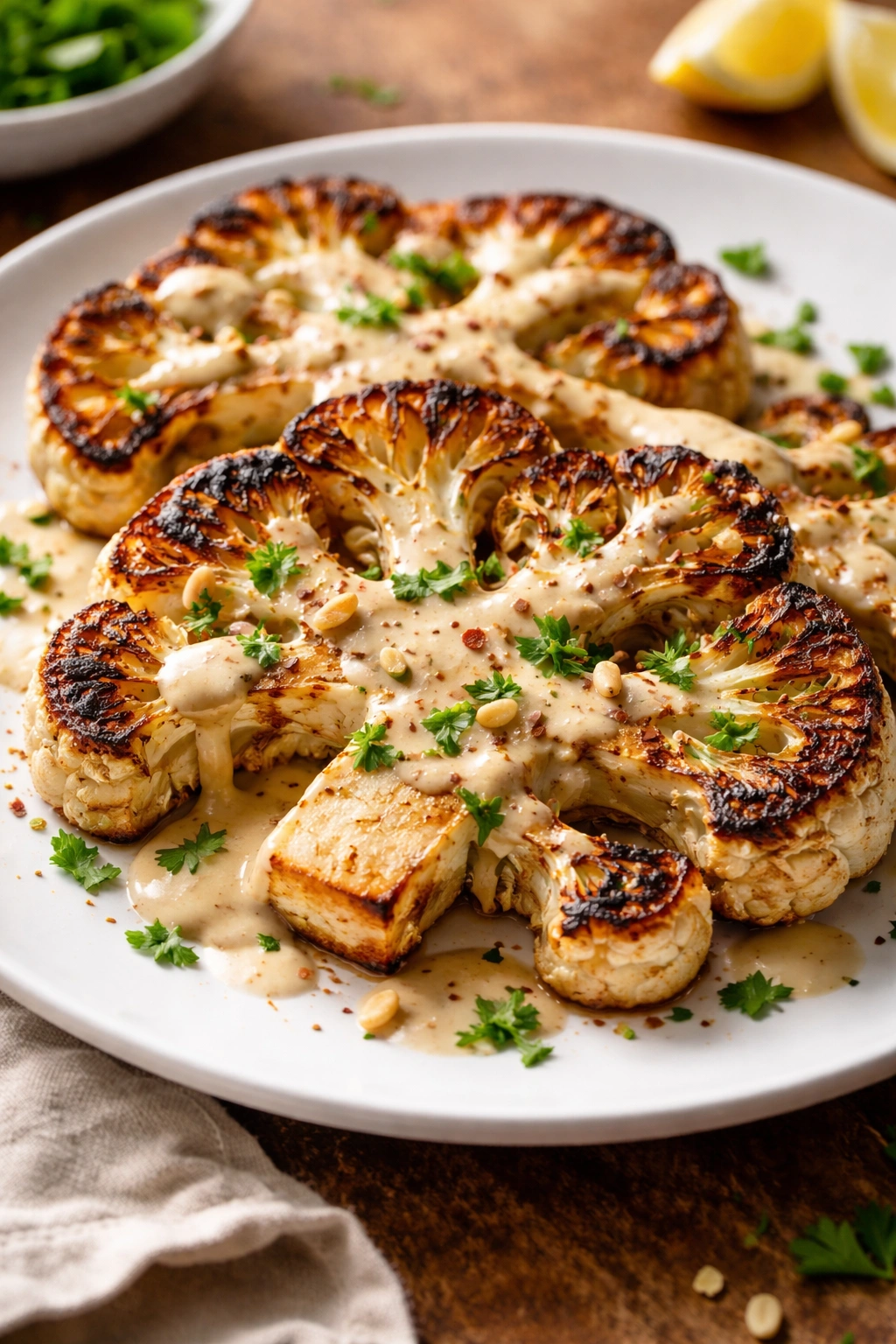
Cauliflower steaks sound virtuous and boring, but when you slice a whole head of cauliflower vertically into thick, meaty slabs and roast them until the cut sides are deep golden-brown and crispy, something remarkable happens. The caramelization creates sweetness and complexity, the exterior gets crispy-edged, and the interior becomes tender and almost buttery. Drizzle with tahini-lemon dressing and you have a showstopping dish that works as a main course, not a guilt-free side.
Why This Works for Meat Lovers
Roasted cauliflower steaks have weight and substance on the plate. The deep caramelization from high-heat roasting creates umami and complex flavor that casual steaming never achieves. Tahini dressing—made from sesame paste, lemon juice, garlic, and water—is creamy, rich, and deeply savory. This isn’t diet food pretending to be satisfying. It’s a genuinely crave-worthy dish that happens to be plant-based.
Roasting Steaks That Actually Impress
- Choose 1-2 large heads of cauliflower and slice them vertically into 1-1.5 inch thick slabs—each slab should have enough cauliflower to hold together, though you’ll likely have some smaller florets left over (save these for another use)
- Arrange the steaks on baking sheets in a single layer and brush both sides generously with olive oil
- Season with sea salt and cracked black pepper
- Roast at 425°F for 20-25 minutes, then flip and roast for another 15-20 minutes until both sides are deep golden-brown and crispy at the edges
- While the cauliflower roasts, make the tahini dressing: whisk together 1/4 cup of tahini, juice of 1 large lemon, 2 minced garlic cloves, 1/4 cup warm water (add more if you need it for consistency), salt, and pepper until smooth and creamy
- Plate the roasted steaks and drizzle generously with the tahini dressing
- Finish with pomegranate seeds, toasted pine nuts, fresh parsley, and a pinch of sumac if you have it
Pro tip: The tahini dressing can be made up to 3 days ahead and kept in the refrigerator. Thin it with a little more water before serving if it has thickened.
8. Spiced Black Lentil and Beet Burgers
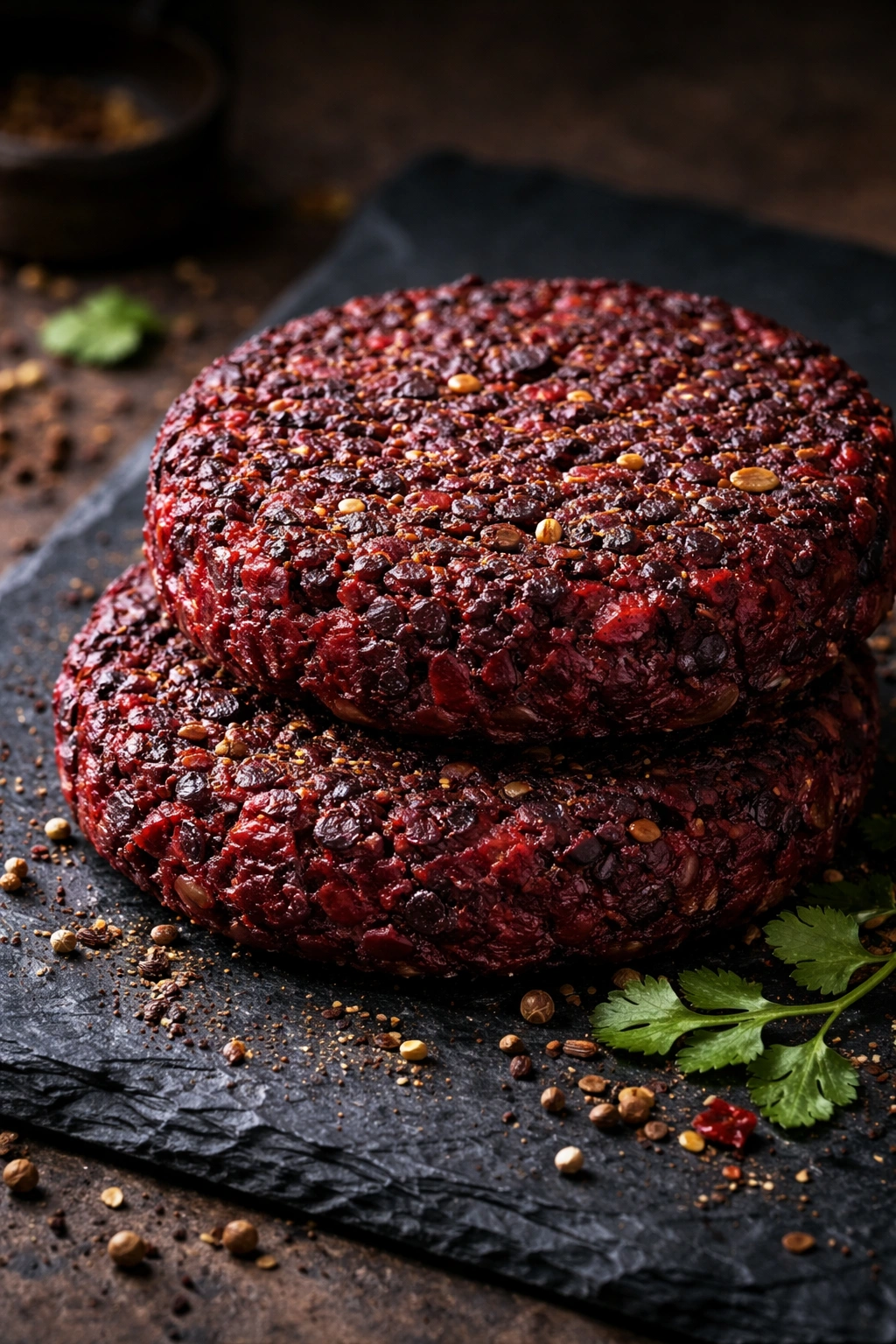
Burgers built from black lentils and roasted beets create something with surprising depth and a naturally beautiful color. The beets add sweetness and earthiness without making the burger taste like vegetables, while black lentils provide protein and a firm texture that holds together beautifully. These burgers are hearty, deeply seasoned, and genuinely delicious enough to convert skeptics.
Why This Works for Meat Lovers
Black lentils (also called beluga lentils) hold their shape and have a firmer texture than other lentil varieties, making them ideal for burgers. Roasted beets add sweetness, earthiness, and a stunning deep purple-red color. The flavor profile uses warming spices—cumin, coriander, smoked paprika—creating depth similar to what you’d find in traditional burger seasonings. These burgers don’t try to be meat; they’re delicious in their own right.
Building a Burger That Stands Alone
- Cook 1 cup of black lentils until just tender but not mushy—about 25-30 minutes (don’t overcook or they’ll fall apart)
- Roast 2 small beets in a 400°F oven until tender—about 30-40 minutes—then peel and finely dice until you have about 1 cup
- In a large bowl, combine the cooked lentils, diced beets, 1/2 cup finely chopped mushrooms (cremini or portobello work well), 1/4 cup panko breadcrumbs, 1 tablespoon soy sauce, 1 teaspoon ground cumin, 1 teaspoon ground coriander, 1/2 teaspoon smoked paprika, 1/2 teaspoon garlic powder, salt, and pepper
- Mix gently until combined but not mashed—you want to maintain some texture
- Form into 4 thick patties and refrigerate for at least 30 minutes
- Pan-fry in olive oil over medium-high heat for 4-5 minutes per side until a crust forms on the outside
- Toast your buns and build your burger with whatever toppings you love—crispy greens, sliced tomato, a sharp mustard or aioli
Worth knowing: These burgers have a naturally softer texture than bean burgers, so handle them gently when cooking and serving. A wide spatula makes flipping much easier.
9. Crispy-Skin Chickpea Patties with Tahini and Herbs

Chickpea fritters (or patties) are the vegetarian equivalent of a crispy-skinned fish cake—golden, crispy on the outside, creamy and flavorful inside, and absolutely addictive. These aren’t healthy-sounding virtuous food; they’re genuinely craveable street food that happens to be made from chickpeas and herbs instead of meat or fish.
Why This Works for Meat Lovers
Chickpea patties deliver everything people seek in fried food: a crispy, shatteringly crisp exterior and a creamy, flavorful interior. The texture comes from mashing chickpeas just enough to hold together while leaving chunks intact. Fresh herbs, garlic, and onion provide aromatic depth. Pan-frying in oil creates the same satisfying crust you get from fried fish or chicken. Served with tahini dipping sauce and accompanied by crisp vegetables, these patties become a genuinely crave-worthy meal rather than a side dish.
Mastering the Perfect Chickpea Patty
- Drain and rinse a 15-ounce can of chickpeas and place them in a large bowl
- Using a potato masher, mash the chickpeas until about half are completely broken down and half are still in pieces—the texture should be chunky, not smooth
- Add 1/2 cup finely diced red onion, 3 tablespoons minced fresh parsley, 2 tablespoons minced fresh cilantro, 2 minced garlic cloves, 1 teaspoon ground cumin, 1/2 teaspoon smoked paprika, juice of 1/2 lemon, salt, and pepper
- Mix gently until combined, then add 1/4 cup panko breadcrumbs to help bind everything
- Form the mixture into 8 patties, each about 3 inches across and 3/4 inch thick
- Heat olive oil in a large skillet over medium-high heat until shimmering
- Carefully place the patties in the hot oil—don’t move them for 3-4 minutes, letting them develop a deep golden-brown crust
- Flip and cook the other side the same way until golden
- Drain on paper towels and serve immediately while still crispy
- Accompany with tahini dipping sauce (tahini, lemon juice, garlic, water, salt, pepper), hot sauce, sliced tomatoes, and fresh herbs
Pro tip: Cold leftover patties can be reheated in a 375°F oven for about 10 minutes, and they’ll re-crisp beautifully.
10. Loaded Baked Sweet Potatoes with Black Beans and All the Fixings
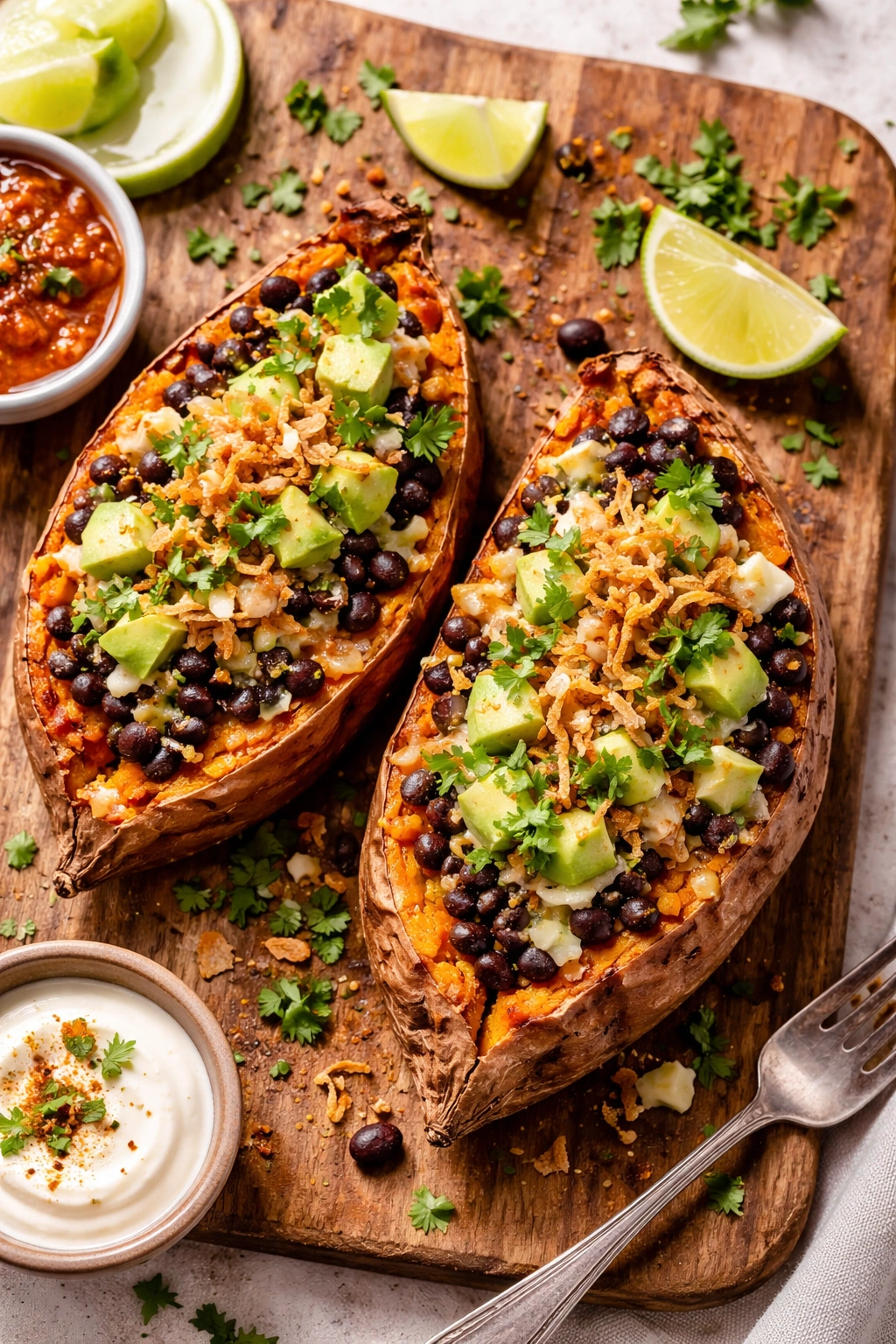
A baked sweet potato is humble until you treat it seriously—wrapping it in foil, roasting it until the flesh is creamy and sweet, then topping it with seasoned black beans, melted cheese, crispy onions, avocado, and fresh herbs. Suddenly it transforms into something that feels like a full meal and tastes genuinely crave-worthy.
Why This Works for Meat Lovers
A loaded sweet potato delivers the same satisfaction as a loaded baked potato or potato skin appetizer, just with more nutritional substance and natural sweetness. Black beans provide protein and savory depth, sharp cheddar adds indulgence, crispy onions add texture and complexity, and a dollop of crema or sour cream adds richness. The sweet potato itself becomes slightly caramelized on the edges where it meets the filling ingredients.
Creating the Perfect Loaded Sweet Potato
- Choose 2-4 medium-to-large sweet potatoes, poke them several times with a fork, wrap each in foil, and roast at 400°F for 35-45 minutes until a knife slides through the flesh easily (don’t rush this—fully cooked sweet potatoes are infinitely better than undercooked ones)
- While the potatoes roast, warm a 15-ounce can of black beans in a saucepan with 1/2 teaspoon cumin, 1/4 teaspoon smoked paprika, a minced garlic clove, salt, and pepper
- Dice a red onion, chop fresh cilantro, and slice an avocado
- Once the sweet potatoes are done roasting, carefully unwrap them (the steam is very hot), slice each one open lengthwise, and fluff the flesh slightly with a fork
- Top each potato with the warm black beans, shredded sharp cheddar (about 1/4 cup per potato), then return to the oven for 2-3 minutes just until the cheese begins to melt
- Remove from the oven and top with diced red onion, fresh cilantro, sliced avocado, a spoonful of crema or sour cream, and a pinch of fleur de sel
- Serve immediately while the potatoes are still warm
Worth knowing: You can prepare the black bean mixture several hours ahead and reheat it gently before serving.
11. Eggplant Parmesan with Fresh Mozzarella
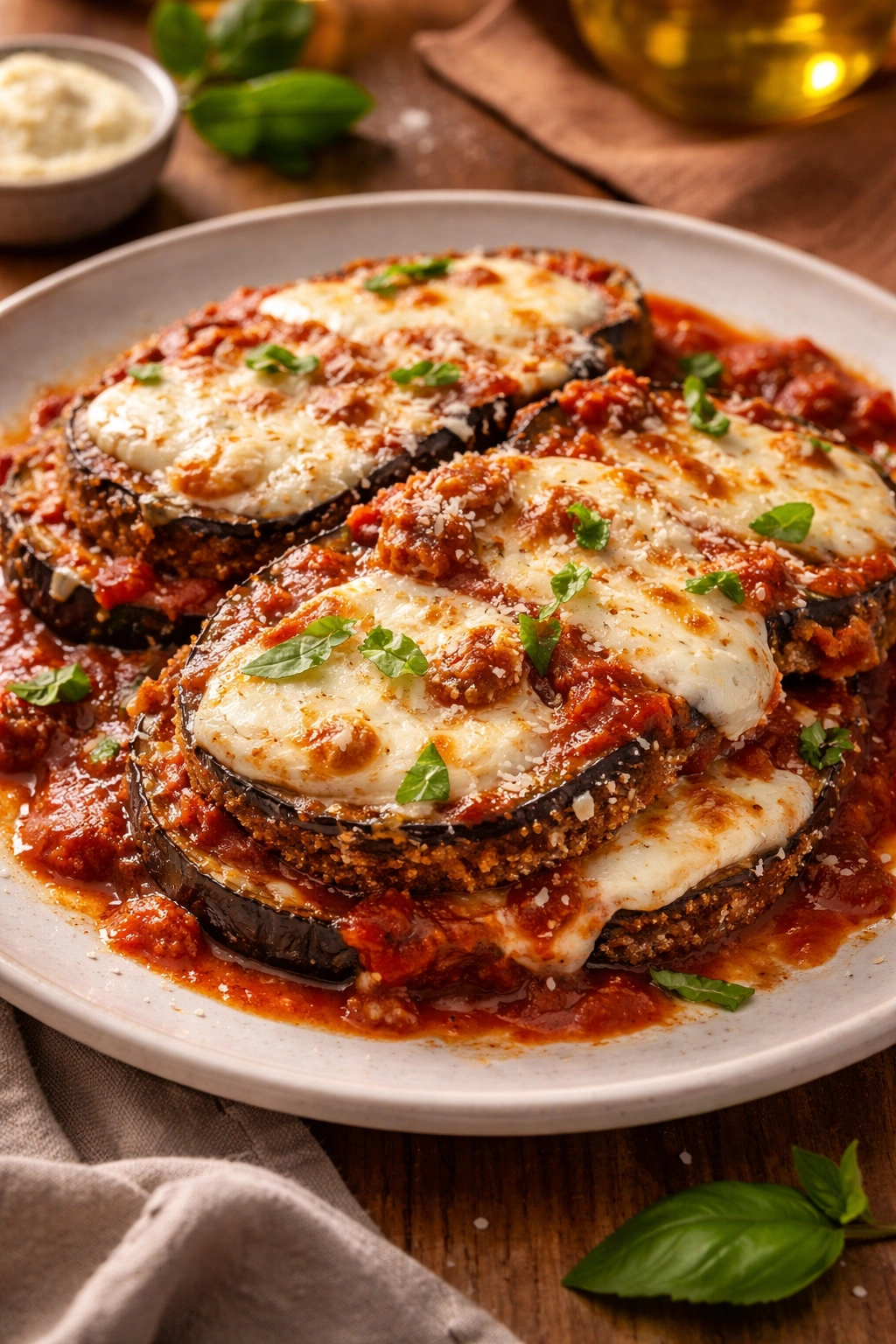
Eggplant Parmesan is comfort food at its most indulgent—breaded eggplant slices layered with tomato sauce, fresh mozzarella, and Parmesan, then baked until the cheese is bubbling and the eggplant is creamy inside and crispy on the edges. It’s rich, satisfying, and genuinely more impressive than almost any meat dish at a casual restaurant.
Why This Works for Meat Lovers
Eggplant Parmesan has all the textural and flavor components of meat-based comfort food: something crispy-fried on the outside, a rich tomato sauce, melted cheese, and substantial portion size. The key is salting the eggplant slices before breading to remove excess moisture—this allows them to brown properly and develop a crispy crust while staying creamy inside. Fresh mozzarella (not shredded mozzarella) adds delicate, creamy richness that elevates the dish beyond standard versions.
Mastering Eggplant Parmesan
- Slice 2 medium eggplants lengthwise into quarter-inch slabs (aim for about 12 slices total)
- Arrange the slices on paper towels, salt generously on both sides, and let sit for 20-30 minutes—this removes excess moisture so the eggplant can brown properly
- Pat the slices dry with paper towels and set up a breading station: one shallow bowl with a beaten egg, another with a 1:1 mixture of panko and finely grated Parmesan
- Dip each eggplant slice in the beaten egg, then the panko mixture, coating both sides evenly, and place on a baking sheet
- Brush the breaded slices lightly with olive oil and bake at 400°F for 15 minutes until the coating is golden and crispy (breading is better than frying for Parmesan)
- While the eggplant bakes, warm 2 cups of marinara sauce (homemade or store-bought—quality matters)
- Assemble in a 9×13 baking dish: a thin layer of sauce on the bottom, then a layer of eggplant slices, then more sauce, then fresh mozzarella torn into thin pieces, then freshly grated Parmesan
- Continue layering until you’ve used all the eggplant, ending with sauce, mozzarella, and Parmesan
- Bake at 375°F for 25-30 minutes until the cheese is bubbly and lightly browned at the edges
- Let rest for 5 minutes before serving (this helps it hold together)
- Finish with fresh basil and a drizzle of good olive oil
Pro tip: Don’t skip the step of salting and draining the eggplant—this is what makes the difference between soggy Parmesan and beautifully textured Parmesan.
12. Miso-Glazed Shiitake Mushrooms with Sesame Noodles
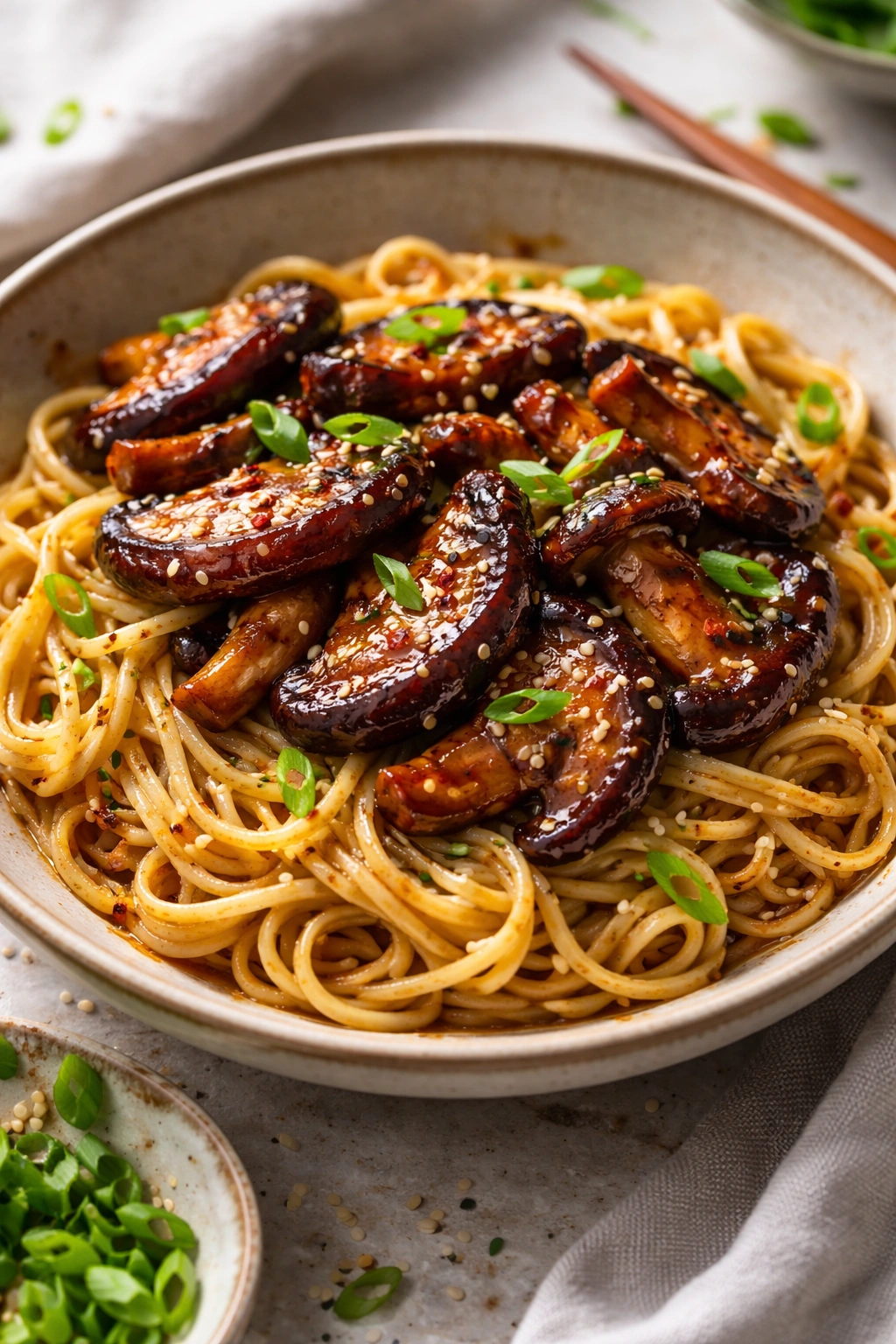
Shiitake mushrooms have a meaty texture and rich, umami-forward flavor that becomes even more impressive when they’re glazed with miso, ginger, and soy and roasted until the caps are caramelized and the edges are crispy. Tossed with sesame noodles and fresh vegetables, they create a dish that feels both light and deeply satisfying.
Why This Works for Meat Lovers
Shiitake mushrooms are one of the few vegetables that actually tastes richer and more intense when cooked down—they develop a meat-like savoriness that umami-loving food enthusiasts crave. The miso glaze adds fermented depth and savory richness. Roasting rather than steaming ensures the caps develop a caramelized exterior and concentrate their flavor. This is the kind of dish where the vegetable itself becomes the star, not a supporting player in a meat-centric dish.
Building a Noodle Bowl That Feels Complete
- Wipe 1 pound of large shiitake mushrooms with a damp paper towel (don’t wash them) and remove the stems
- In a small bowl, whisk together 3 tablespoons miso paste (white or red), 2 tablespoons soy sauce, 1 tablespoon rice vinegar, 1 tablespoon maple syrup, 2 teaspoons sesame oil, 1 tablespoon grated ginger, and 2 minced garlic cloves
- Arrange the shiitake caps on a baking sheet, gill side up, and brush the miso mixture over them, getting some into the gills
- Roast at 425°F for 15-18 minutes until the caps are tender and the tops are beginning to caramelize
- While the mushrooms roast, cook 8 ounces of soba or ramen noodles according to package directions, then drain and rinse
- Toss the cooked noodles with 2 tablespoons sesame oil, 1 tablespoon soy sauce, 1 tablespoon rice vinegar, 1 teaspoon grated ginger, and 1 teaspoon sesame seeds
- Divide the noodles between bowls and top with the roasted mushrooms, thinly sliced cucumber, shredded carrots, sliced scallions, and crispy fried onions if you want extra texture
- Serve with additional sesame seeds and a lime wedge
Worth knowing: Miso paste keeps indefinitely in the refrigerator, making it a pantry staple worth having on hand.
13. Crispy Chickpea and Roasted Vegetable Buddha Bowl with Tahini Drizzle
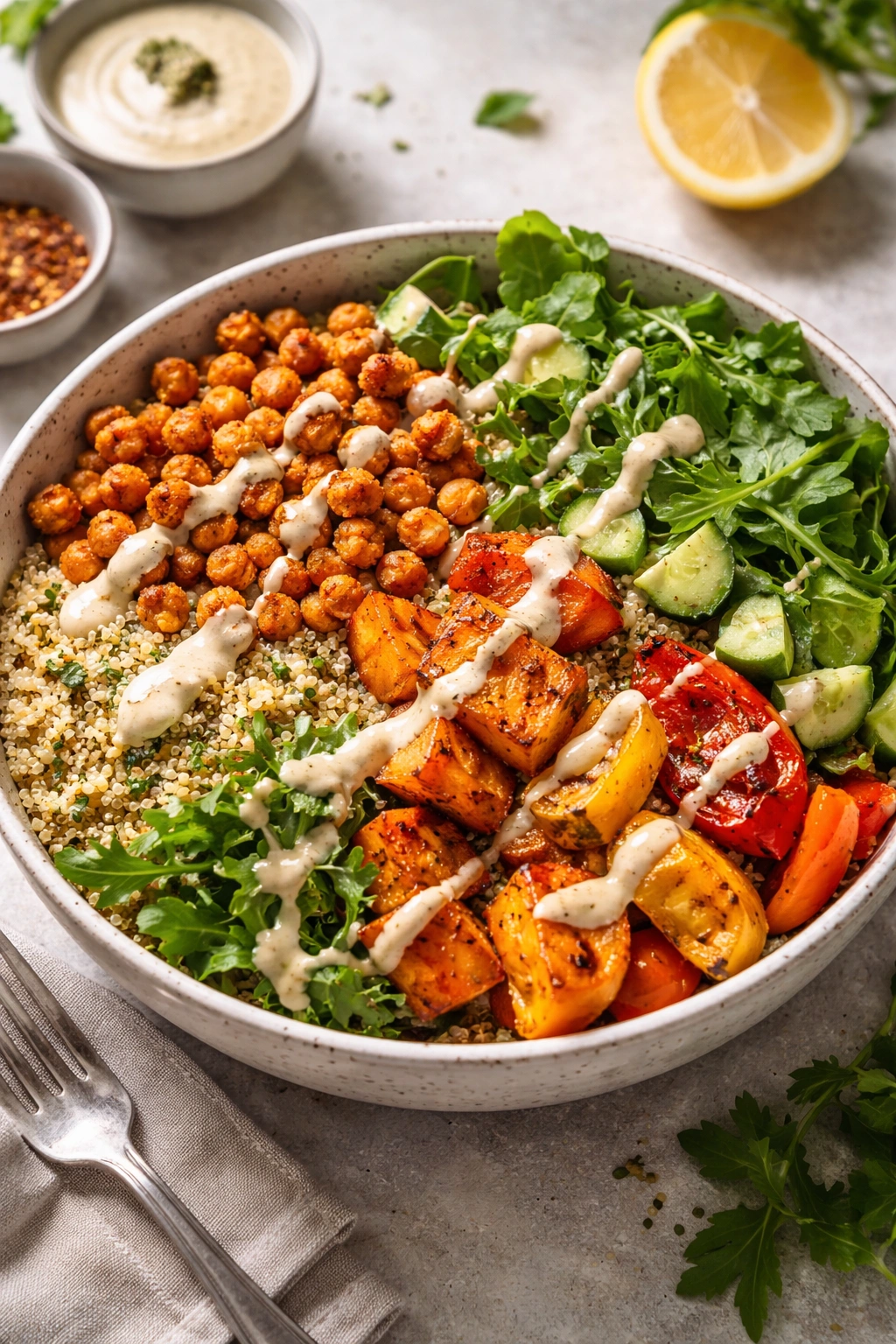
Buddha bowls are a modern invention, but when you build them with genuinely crave-worthy components—roasted chickpeas with crispy edges, charred vegetables, whole grains, and a rich tahini dressing—they become meals that people actually want to eat, not dishes that scream “I’m eating healthy.”
Why This Works for Meat Lovers
Buddha bowls aren’t automatically virtuous or unsatisfying. When you start with roasted chickpeas that have a crispy exterior (which requires high heat and patience), charred vegetables with caramelized edges, quality whole grains, and a creamy, savory dressing, you end up with a bowl that’s genuinely satisfying and complex. The variety of textures and temperatures—warm roasted vegetables, creamy tahini dressing, crispy chickpeas, cool greens—creates engagement in every bite.
Building a Bowl Worth Eating
- Toss a drained and dried can of chickpeas with olive oil, salt, pepper, smoked paprika, and ground cumin
- Spread on a baking sheet and roast at 425°F for 25-30 minutes, shaking the pan halfway through, until the chickpeas are crispy on the outside and creamy inside
- On a separate baking sheet, toss cubed sweet potatoes, diced red bell peppers, and roughly chopped broccoli with olive oil, salt, and pepper
- Roast at 400°F for 25-30 minutes, stirring halfway through, until everything is golden and caramelized at the edges
- Cook 1 cup of farro, quinoa, or brown rice according to package directions
- For the tahini dressing, whisk together 1/4 cup tahini, juice of 1 lemon, 2 minced garlic cloves, 1/4 cup warm water, salt, and pepper
- To assemble, divide the cooked grain between two bowls, then top with the roasted vegetables, crispy chickpeas, a handful of fresh greens (spinach, arugula, or mixed), sliced avocado, diced red onion, and fresh herbs
- Drizzle generously with the tahini dressing
- Finish with pomegranate seeds, pumpkin seeds, and a pinch of everything bagel seasoning if you have it
Pro tip: Roast the chickpeas and vegetables while the grain cooks—you can have everything ready to assemble in about 35 minutes total.
14. Quesadillas Filled with Crispy Cauliflower and Jalapeño Cheese
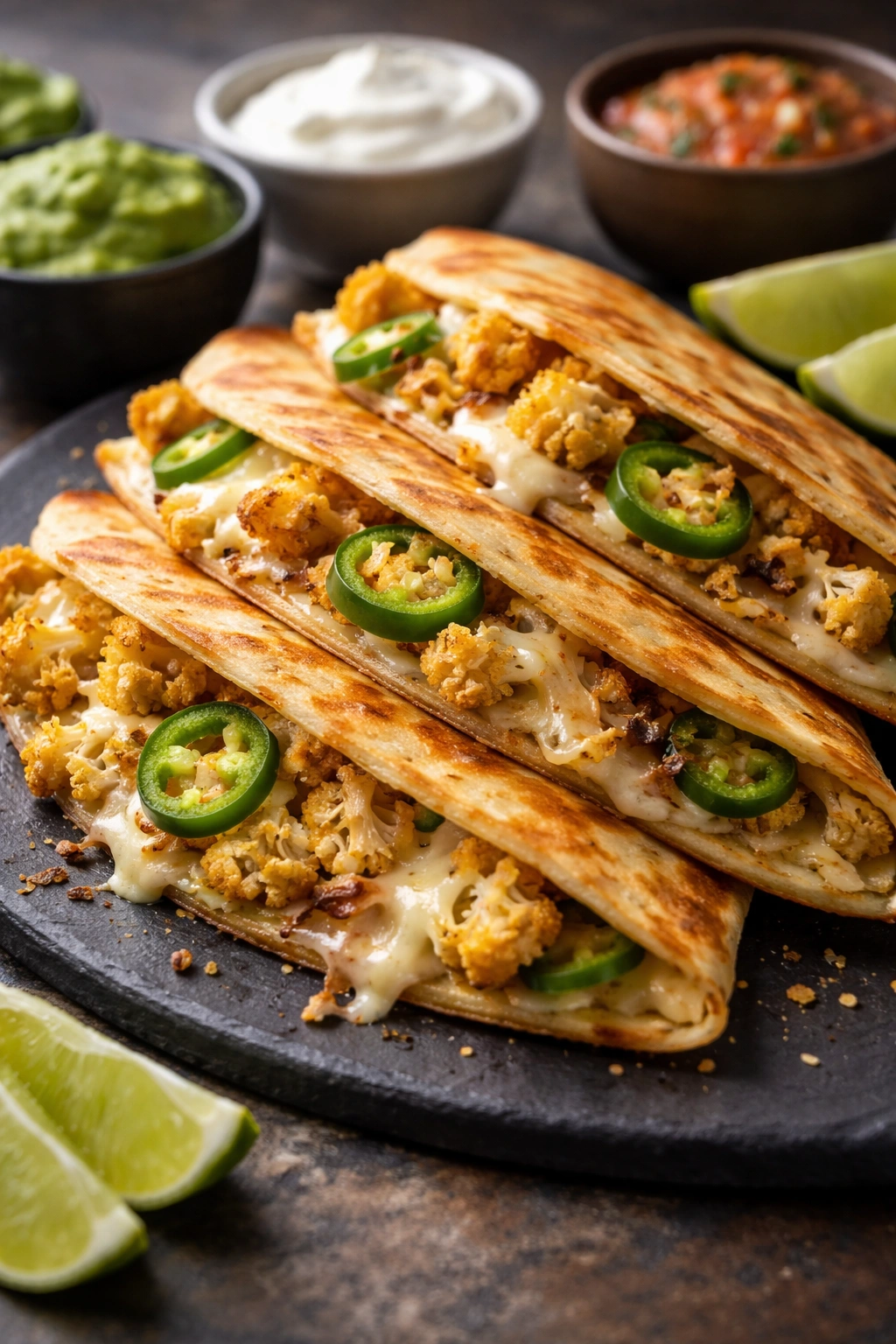
Quesadillas are naturally vegetarian-friendly, but when you fill them with crispy roasted cauliflower (not soft steamed cauliflower), melted Oaxaca or Chihuahua cheese, sautéed jalapeños, and a generous amount of herbs, they become something so craveable that you’ll find yourself making them regularly. The cauliflower gets crispy-edged from roasting, the cheese melts into creamy richness, and the jalapeños add heat and brightness.
Why This Works for Meat Lovers
Quesadillas built with crispy cauliflower deliver texture and complexity beyond what soft vegetables provide. The charred edges of the roasted cauliflower add slight bitterness and deep flavor. Quality melted cheese (not the rubbery stuff) adds indulgent richness and creates the crispy, golden exterior that makes a quesadilla irresistible. This is casual, satisfying food that doesn’t feel like diet food or a compromise.
Making Quesadillas Worth Eating
- Cut a small head of cauliflower into small florets, toss with olive oil, salt, and a generous pinch of smoked paprika and cumin
- Roast at 425°F for 18-22 minutes until the florets are golden and crispy at the edges
- While the cauliflower roasts, slice 2-3 jalapeños into thin rings and sauté them in a skillet with a little butter until they’re soft and beginning to brown—about 5 minutes
- For each quesadilla, place a 10-inch flour tortilla in a skillet over medium heat and top half of it with shredded cheese (use quality Oaxaca, Chihuahua, or aged cheddar—about 1/2 cup per quesadilla), then top with roasted cauliflower, sautéed jalapeños, and a small handful of fresh cilantro
- Fold the tortilla in half and continue cooking until the bottom is golden and crispy—about 2-3 minutes
- Flip and cook the other side until golden and the cheese is completely melted
- Serve immediately with lime crema (crema mixed with lime juice and a pinch of salt) for dipping
Worth knowing: These are best served immediately while they’re still crispy, but you can reheat them briefly in a 350°F oven if needed.
15. Charred Broccoli and Cashew Stirfry with Ginger and Garlic
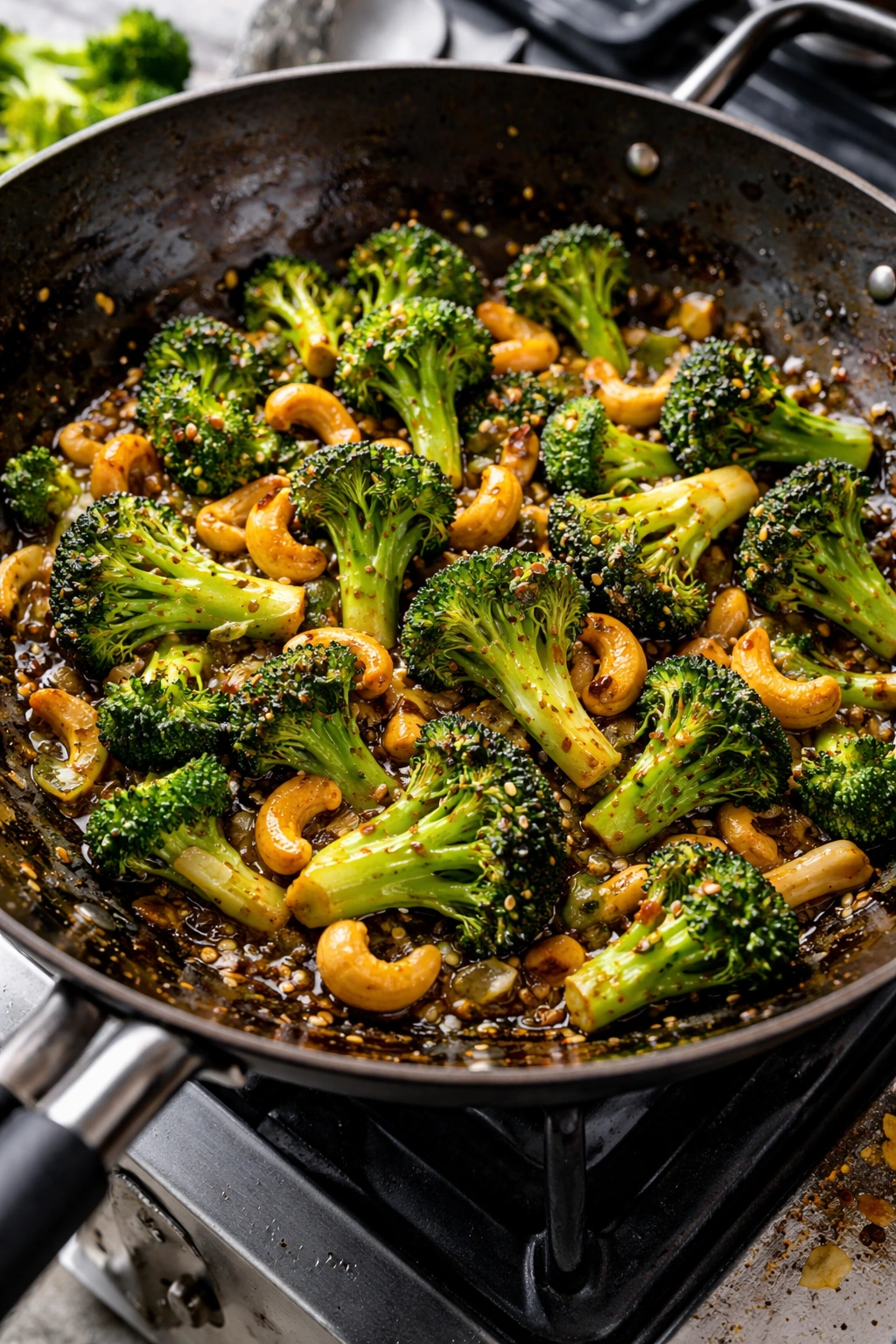
A stirfry is an ideal vegetarian meal because the technique itself—quick, high-heat cooking with plenty of aromatic seasonings—creates bold, complex flavor without needing any meat. When you start with broccoli that gets crispy-edged from a very hot pan, add cashews for richness and texture, and finish with a well-balanced sauce, you end up with something genuinely satisfying that people actually crave.
Why This Works for Meat Lovers
Stirfry works beautifully for vegetarians because the cooking technique creates depth through caramelization and the concentrated layering of flavors from aromatics like garlic and ginger. Cashews add richness and a slightly creamy texture similar to what fat provides in meat-based dishes. The sauce—balanced between sweet, salty, sour, and spicy—is complex and satisfying. This is food that tastes bold and deliberately seasoned, not like vegetables hastily thrown into a pan.
Mastering a Vegetable Stirfry
- Cut one large head of broccoli into florets, halving any large ones so they’re roughly the same size
- Heat 2 tablespoons of a neutral oil with a high smoke point (vegetable, peanut, or avocado) in a large wok or skillet over high heat until it’s smoking slightly
- Add the broccoli florets and don’t stir them for 2-3 minutes, allowing the cut sides to char—this is non-negotiable for flavor and texture
- Stir and cook for another 3-4 minutes until the broccoli is mostly cooked but still has some crunch, then transfer to a plate
- In the same wok, add another teaspoon of oil along with 3 tablespoons minced ginger and 4 minced garlic cloves, stirring constantly for about 20 seconds until fragrant
- Add 1 cup of roasted cashews and stir to coat with the oil and aromatics
- Make your sauce by whisking together 3 tablespoons soy sauce, 1 tablespoon rice vinegar, 1 tablespoon maple syrup, 1 teaspoon sesame oil, and a pinch of red pepper flakes
- Return the broccoli to the wok, pour in the sauce, and toss everything together for about 1 minute until the broccoli is coated and everything is heated through
- Finish with sliced scallions, sesame seeds, and a squeeze of fresh lime juice
- Serve over rice or noodles
Pro tip: Have everything prepped and within reach before you start cooking—stirfrying happens fast and you won’t have time to chop once you begin.
Final Thoughts
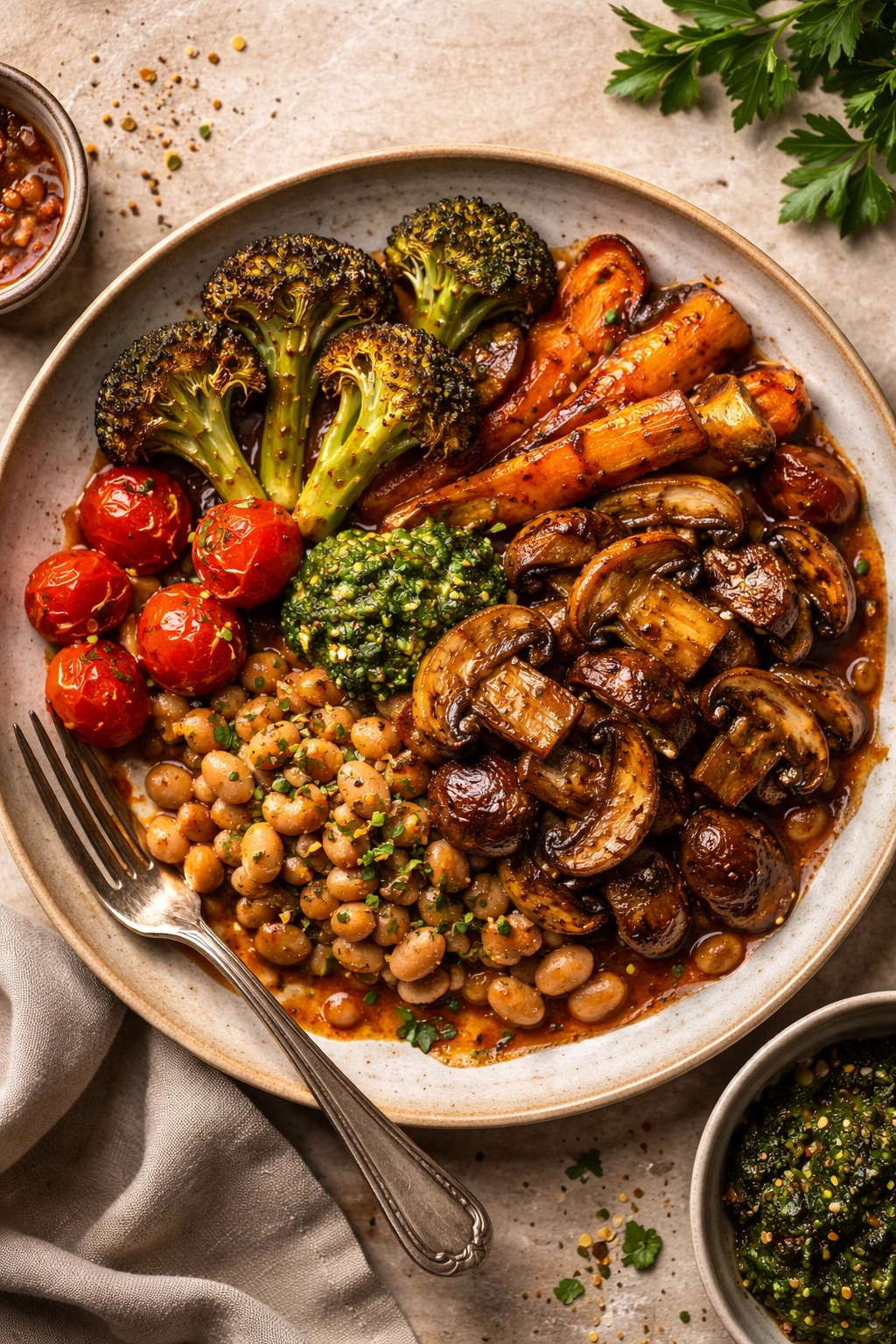
The truth about vegetarian meals that impress meat lovers is simple: it has nothing to do with substituting or apologizing. It’s about choosing ingredients with genuine depth—mushrooms with umami, beans with body, vegetables cooked until they caramelize and develop complex flavors. It’s about applying the same cooking techniques you’d use for meat: high heat for browning, proper seasoning that doesn’t hold back, and patience to let flavors develop.
Every single one of these meals works because it delivers what food lovers actually want: bold, layered flavors, satisfying textures, and generous portions that feel indulgent rather than virtuous. You don’t need anyone to announce that these dishes are vegetarian. If they taste good, they taste good—and the best compliment is someone coming back for seconds without asking what’s in them.
The meals listed here represent different cooking traditions, techniques, and flavor profiles. Some are global dishes that come from cultures with long vegetarian cooking traditions. Others are modern interpretations of classics. But they all share one thing: they’re built on the principle that great food is about technique, seasoning, and ingredient quality, not about whether an animal protein is present on the plate. That’s when vegetarian food stops being a category and starts being simply—food worth eating.
