



Frozen yogurt bark is the snack that looks like you’ve spent hours in the kitchen when, in reality, you’ve invested maybe ten minutes of active time. It’s naturally satisfying, packed with protein, and customizable down to every single topping. Unlike many health-focused snacks that taste like obligations, this one genuinely tastes like dessert—because it basically is dessert, just structured in a way that makes portion control almost automatic.
The beauty of yogurt bark lies in its deceptive simplicity. You’re layering creamy yogurt with toppings you actually want to eat, freezing it solid, and then breaking it into irregular shards that feel indulgent to snack on. It works for afternoon hunger, post-workout recovery, a sweet tooth that won’t quit, or that moment when you need something cold and satisfying but don’t want refined sugar or artificial ingredients. Once you understand the technique, you can make endless variations without touching a recipe again.
This is also one of those snacks that actually works for the whole household. Your kids will demolish it. Adults eating for performance or recovery appreciate the protein. Anyone managing their sugar intake can adjust the sweetness to their preference. Vegetarian, vegan, dairy-free, gluten-free—frozen yogurt bark adapts to every dietary approach without sacrificing any of its appeal. It’s rare to find a snack that’s genuinely easy to make, genuinely good for you, and genuinely delicious all at once.
What Is Frozen Yogurt Bark and Why It’s the Perfect Easy Snack
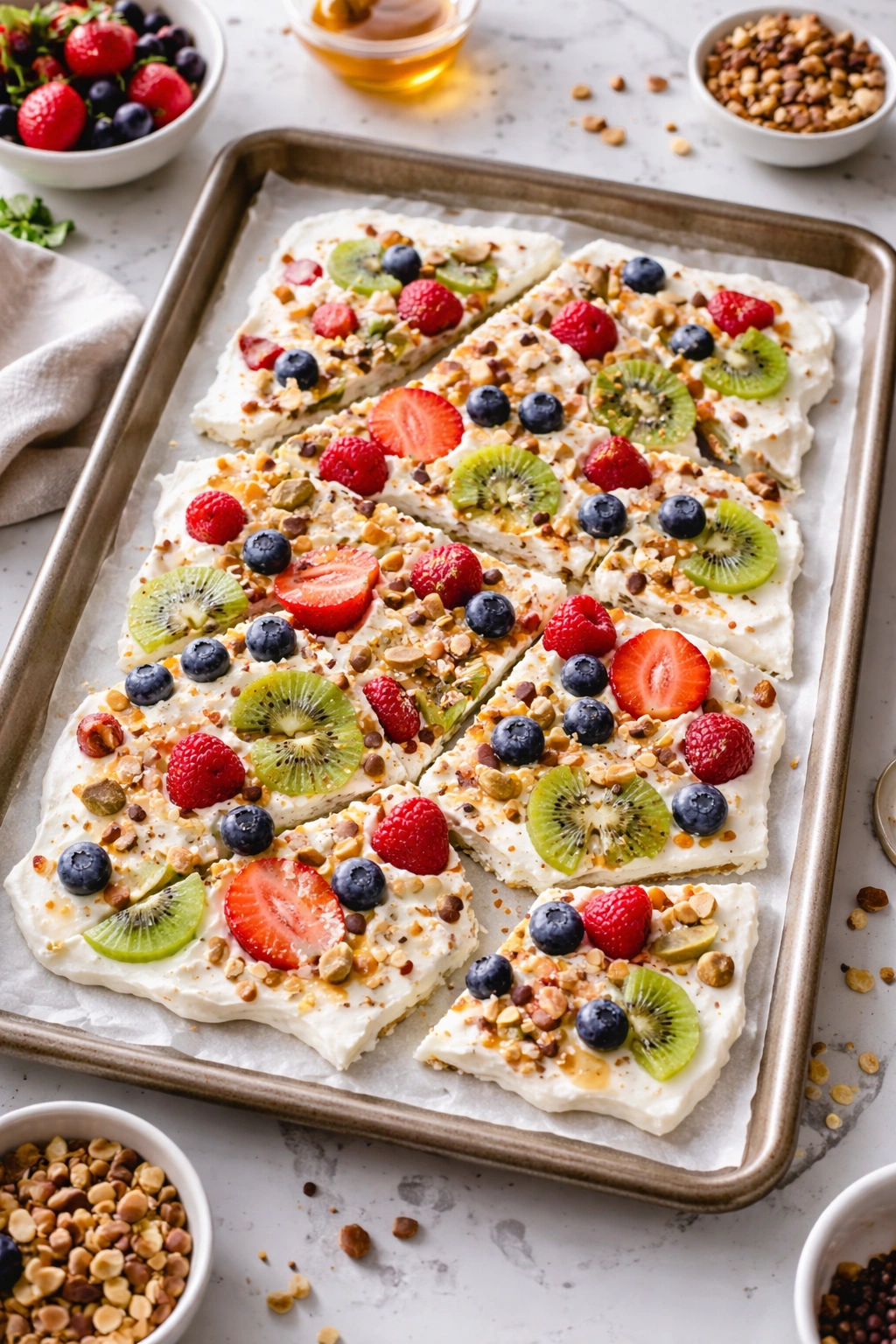
Frozen yogurt bark is yogurt spread into a thin, even layer on a baking sheet, topped with whatever mix-ins appeal to you, and then frozen until completely solid. Once frozen, you break it into irregular shards—like bark peeling off a tree, hence the name—and store the pieces in an airtight container. It’s a no-bake snack that requires almost no cooking skill, minimal ingredients, and zero special equipment beyond what’s already in your kitchen.
The texture is what makes it addictive. You get the creamy, slightly tangy richness of frozen yogurt combined with the crunch of nuts, the chewiness of dried fruit, the pop of chocolate chips, or whatever else you layer on top. Each bite is different because the toppings distribute unevenly—some pieces are chocolate-heavy, others are loaded with granola, a few might have mostly nuts. That variety in texture and flavor keeps eating interesting and prevents that “I’ve had enough of this” moment that comes with many uniform snacks.
From a nutritional standpoint, yogurt bark delivers protein from the yogurt base, healthy fats and minerals from nuts and seeds, and actual fruit—not fruit-flavored sugar paste—if you add dried fruit or fresh berries. You control the sweetness entirely, which matters if you’re sensitive to added sugars or prefer less sweet desserts. The portion control happens naturally too; a single piece of bark satisfies more than you’d expect, partly because of the density and partly because chewing through a frozen shard takes longer than eating something soft.
It’s also flexible enough to work with whatever you have on hand. Vanilla yogurt with dark chocolate and almonds is classic. Greek yogurt with honey, granola, and berries is hearty. Coconut yogurt with toasted coconut flakes and macadamia nuts is tropical. You’re not locked into a single formula—you’re building a framework that adapts to your preferences, what’s in your pantry, and what you’re craving that particular week.
Yield: Makes one 9×13-inch sheet, approximately 12-16 pieces Prep Time: 10 minutes Chill Time: 4-6 hours (or overnight) Total Time: 10 minutes active + 4-6 hours freezing Difficulty: Beginner — No cooking or baking involved; simply spread, top, and freeze.
Ingredients for Basic Frozen Yogurt Bark
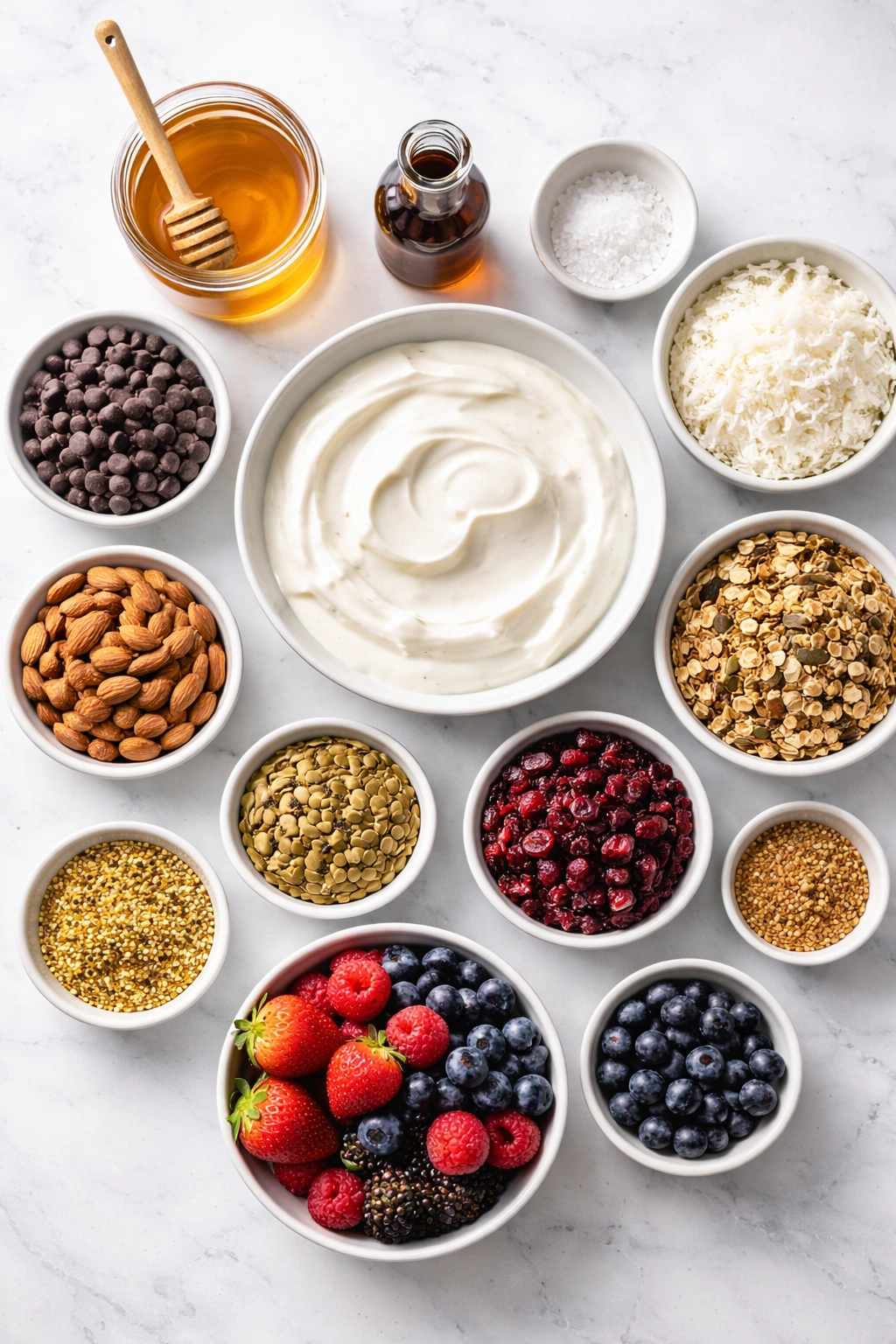
For the Base:
- 2 cups plain or vanilla Greek yogurt (full-fat or 2% works best; nonfat tends to be icy)
- 2-3 tablespoons honey or maple syrup (adjust to taste preference)
- 1 teaspoon pure vanilla extract (optional but recommended for depth)
- Pinch of fine sea salt (this brightens the yogurt and balances sweetness)
For Toppings (choose your combination):
- ½ cup dark chocolate chips (70% cacao or higher for less sweetness)
- ½ cup roasted almonds, roughly chopped
- ⅓ cup unsweetened coconut flakes
- ⅓ cup granola (store-bought or homemade)
- ¼ cup dried cranberries or dried blueberries
- 2 tablespoons raw sunflower seeds or pumpkin seeds
- 1 tablespoon bee pollen (optional, adds nuttiness and nutrition)
- Fresh raspberries or blackberries (optional, scatter on top before freezing)
Note: These are suggestions. See the variations section below for dozens of other topping combinations.
How to Make Frozen Yogurt Bark: Step-by-Step Instructions
Prepare and Sweeten the Yogurt:
-
Line a 9×13-inch baking sheet with parchment paper, making sure the paper covers the bottom completely and comes slightly up the sides—this makes removing the frozen bark dramatically easier and prevents sticking.
-
In a medium bowl, combine the Greek yogurt, honey, vanilla extract, and salt. Stir gently until the honey is fully distributed and the mixture is smooth and uniform—don’t overmix or whip it, as you want the yogurt to stay creamy, not aerated or foamy.
-
Taste a small spoonful and adjust sweetness if needed. Remember that the frozen version tastes slightly less sweet than the room-temperature yogurt, so if it seems just barely sweet enough now, it’ll be right after freezing. Add honey a tablespoon at a time if you prefer it sweeter.
Spread and Top:
-
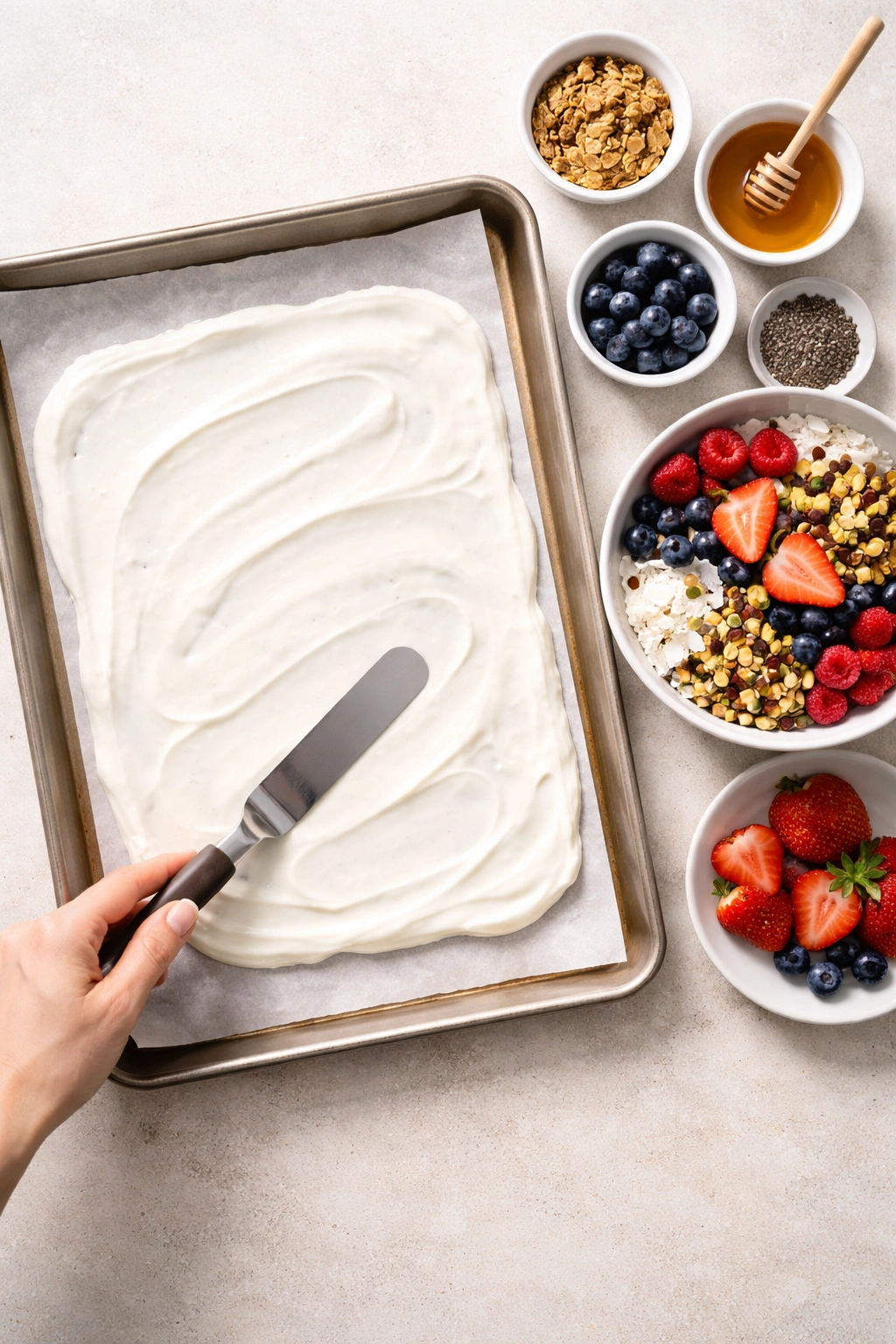
Pour the yogurt mixture onto the prepared baking sheet and spread it into an even layer approximately ¼-inch thick. Use an offset spatula or the back of a spoon to create an even surface—the thickness doesn’t need to be perfectly uniform, but aim for consistency so it freezes evenly. A slightly thicker layer (closer to ½-inch) will give you thicker, more satisfying pieces; a thinner layer (¼-inch) will freeze faster and give you crispier shards.
-
Scatter your chosen toppings over the yogurt in whatever pattern appeals to you. You can be random and artistic, or you can arrange them in rough sections so different pieces have different flavor profiles. Press the toppings down gently so they stick into the yogurt and don’t simply sit on top—this ensures they stay attached to the bark pieces when you break it apart later.
-
If you’re using chocolate chips, you can scatter them on now, or you can drizzle melted dark chocolate in thin lines across the top for a more elegant finish (see the chocolate variation section below). If you’re using fresh berries, press them slightly into the yogurt so they adhere.
Freeze and Break:
-
Transfer the baking sheet to the freezer and freeze for at least 4 to 6 hours, or until the yogurt is completely solid throughout. Overnight is perfect if you’re making this ahead. The bark is fully frozen when you can press a fingernail against the surface and it doesn’t indent at all.
-
Remove the baking sheet from the freezer and let it sit at room temperature for 1 to 2 minutes. This brief warming makes the bark slightly easier to break into pieces without shattering into tiny, unmanageable fragments. The parchment paper should start to release from the edges.
-
Using the parchment paper as a handle, lift the entire frozen sheet onto a cutting board. Break the bark into irregular shards with your hands—aim for pieces roughly 2-3 inches across, though the size doesn’t matter for taste, only for how the pieces feel to eat. Larger pieces are elegant and satisfying; smaller pieces let you grab a quick handful.
-
Transfer the bark pieces to an airtight freezer container or a resealable freezer bag, with a small piece of parchment between layers if you’re stacking them. Store in the freezer until ready to eat.
Why Frozen Yogurt Bark Works as a Healthy Snack
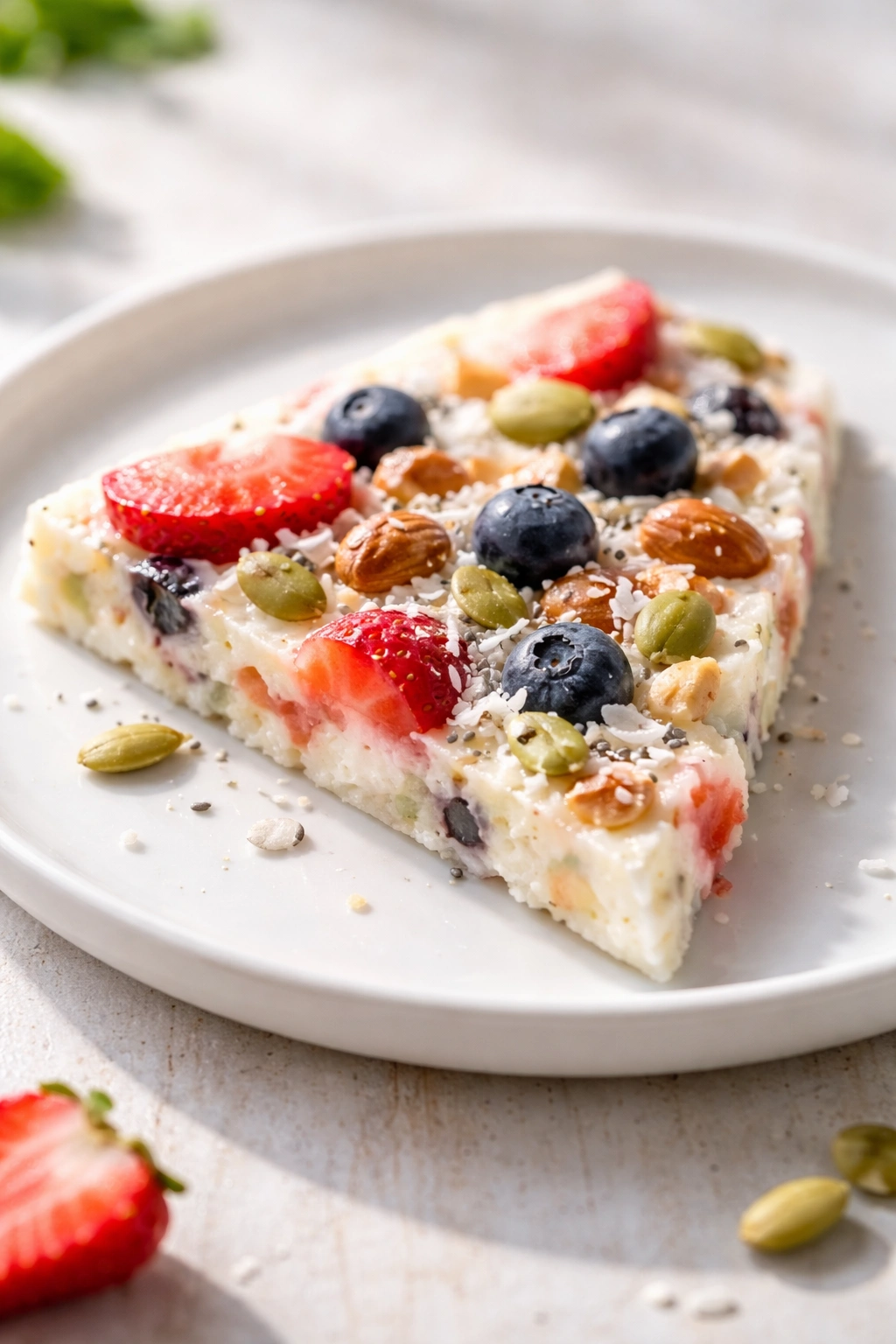
Greek yogurt is the nutritional backbone here, delivering 15-20 grams of protein per cup depending on the brand and fat content. That protein matters for satiety—a piece of yogurt bark keeps you satisfied longer than you’d expect for its size, partly because of the protein density and partly because you’re eating something frozen and textured that takes time to consume. Your body registers fullness more effectively when you’re eating slowly, which happens naturally with a frozen shard.
The tang of yogurt, especially Greek yogurt, also matters more than most people realize. That sourness signals to your brain that something substantial is happening, which makes smaller portions feel more satisfying than they would with a overly sweet, smooth dessert. A small piece of tangy yogurt bark feels more indulgent and complete than the same amount of sweetened pudding or mousse.
Toppings add nutritional dimension beyond simple flavor. Nuts provide healthy monounsaturated fats, fiber, and minerals like magnesium and zinc. Seeds add more healthy fats, fiber, and specific nutrients—pumpkin seeds are rich in iron, sunflower seeds in vitamin E. Granola, if you choose unsweetened or minimally sweetened varieties, adds whole grains and fiber. Dried fruit contributes antioxidants and natural sweetness without the texture-softening effect of fresh fruit. Dark chocolate brings polyphenols and a hit of magnesium, plus just enough richness to make the snack feel indulgent without being heavy.
The point is that unlike many snacks that are essentially sugar with some texture, yogurt bark’s nutritional profile supports actual health goals. You’re not eating something that spikes blood sugar and leaves you hungry thirty minutes later. You’re eating protein, healthy fats, and fiber in combination—exactly the trio that keeps energy stable and appetite under control.
The Best Yogurt to Use for Bark
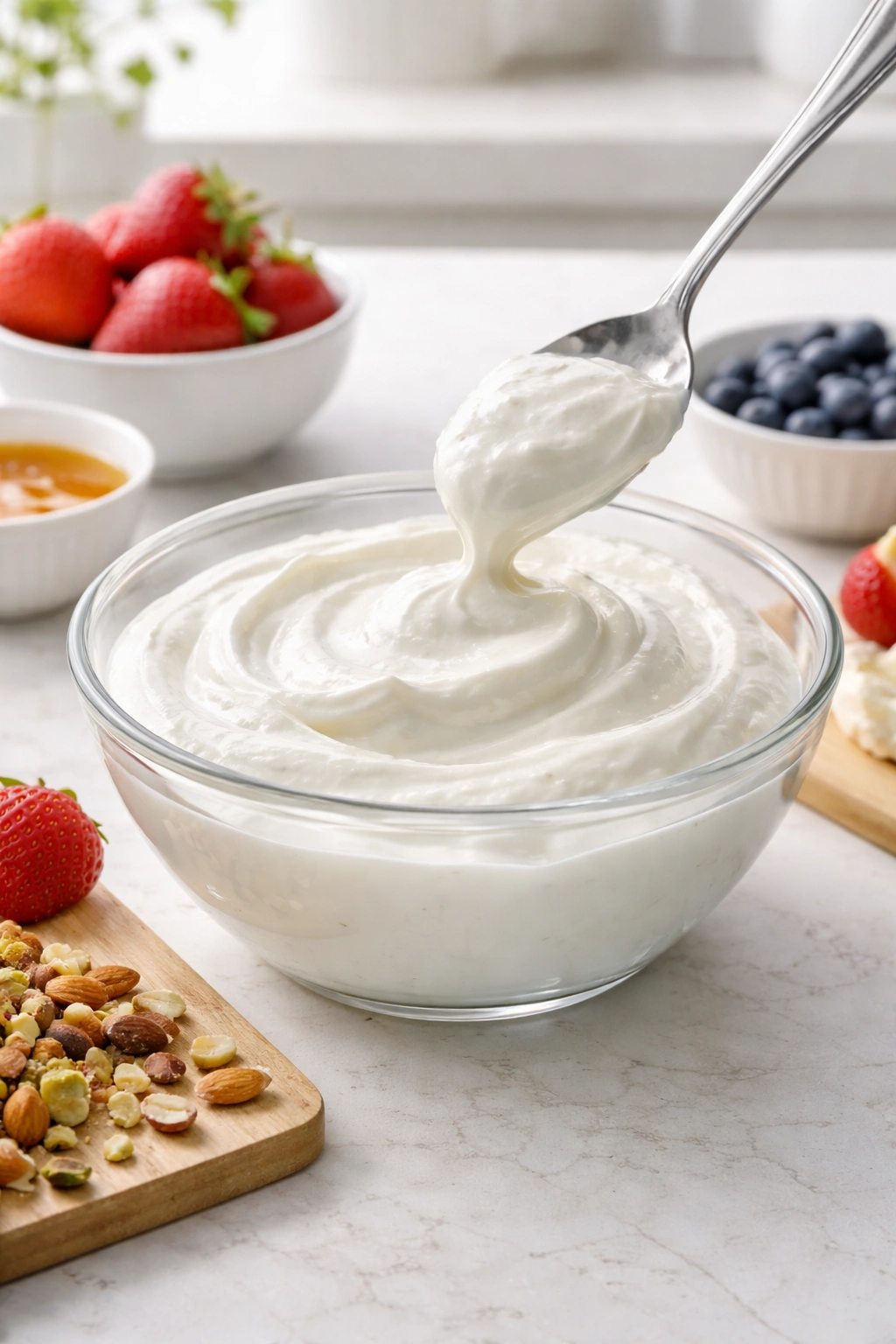
Not all yogurts work equally well for bark, and the difference matters. Greek yogurt is the top choice because of its thickness and higher protein content. It spreads smoothly without being watery, and it freezes into a creamy rather than icy texture. Full-fat and 2% Greek yogurt both work well; nonfat Greek yogurt tends to freeze harder and icier, creating a less pleasant mouthfeel.
If you can’t find Greek yogurt or prefer something else, Icelandic-style yogurt (skyr) works beautifully—it’s even thicker than Greek yogurt and has a slightly different flavor that’s rich and slightly caramel-noted. Regular full-fat yogurt also works, though it’s thinner, so you’ll spread it slightly thicker and it may take an hour or two longer to freeze completely. The final texture will be a touch lighter and airier, which some people prefer.
Flavored yogurts introduce sweetness and flavor directly, which simplifies the recipe. Vanilla yogurt means you can skip the vanilla extract and reduce added honey. Honey yogurt, maple yogurt, or other naturally flavored options work too, though they may already be sweetened to a point where you add no additional sweetener. Taste before deciding how much honey to add if you’re using a flavored base.
Plant-based yogurts—coconut, oat, almond, cashew, or soy—all work for making dairy-free bark. Coconut yogurt tends to be the creamiest and has a flavor that works well with many toppings. Oat and soy yogurts are thinner, so you’d spread them slightly thicker or add a touch of coconut oil to increase richness. Cashew yogurt freezes beautifully and has a natural creaminess that rivals dairy yogurt. (See the dairy-free section below for more detail on plant-based options.)
The quality of the yogurt matters more than the brand. Yogurt made with live active cultures tastes noticeably better and has a richer tang than heavily processed, overly sweet commercial yogurt. If you have the option between a grocery store yogurt and one from a local yogurt maker or a natural foods store, the local version almost always delivers better flavor and texture. You’re using it as the main component of your snack, so it’s worth choosing one you genuinely enjoy eating on its own.
Topping Ideas and Flavor Combinations
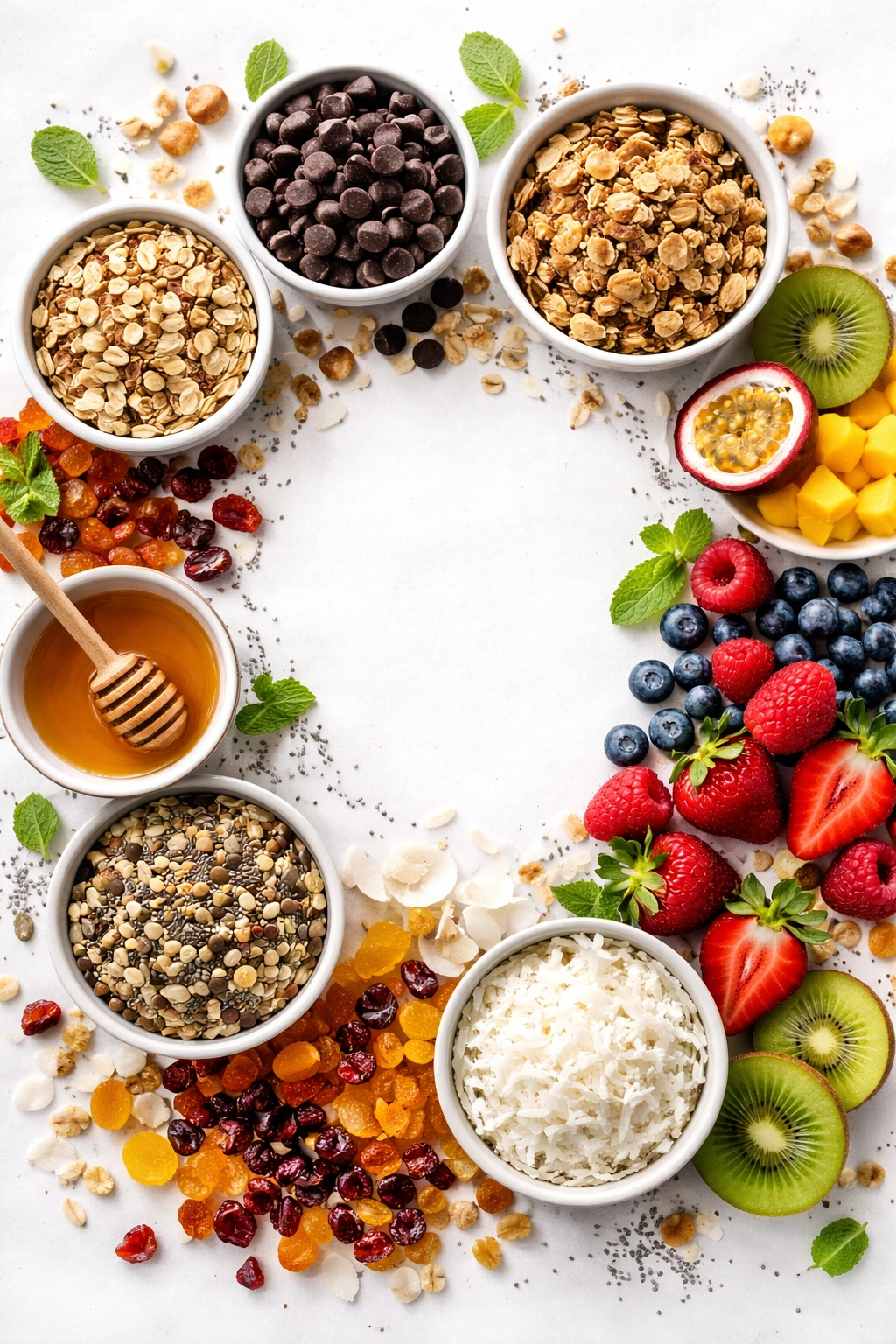
The magic of yogurt bark is that once you understand the basic formula, you can create countless variations. The successful formula is contrast and texture—soft against crunchy, sweet against tart, rich against light. You’re not just piling toppings randomly; you’re building a balance that makes each piece interesting.
The Classic Combination pairs vanilla yogurt with dark chocolate chips, roasted almonds, and a sprinkle of sea salt. The chocolate adds richness, the almonds add crunch and earthiness, and the salt makes everything taste more of itself. This is your starting point if you’re nervous about experimentation.
The Granola Girl Version layers honey-sweetened yogurt with mixed granola (at least half should be chocolate or cocoa-based granola), sliced almonds, and a drizzle of melted dark chocolate. The granola clusters break into the yogurt, creating multiple crunch zones. This feels like you’re eating a deconstructed yogurt parfait.
The Tropical Escape combines coconut yogurt with unsweetened coconut flakes, macadamia nuts, dried mango (or fresh mango if you’re eating it within a day), and dark chocolate. If you want to lean fully into the tropical angle, add a splash of lime zest to the yogurt base. Some people add a tiny pinch of cardamom for complexity.
The Berry and Almond Version uses plain Greek yogurt sweetened with a bit of honey, topped with sliced almonds, freeze-dried strawberries (or dried cranberries), dark chocolate chips, and a few fresh raspberries if they’re in season. The tartness of the yogurt and the slight chew of dried berries balance the chocolate richness.
The Sophisticated Dark Chocolate uses tangy plain yogurt with minimal added sweetness, topped entirely with dark chocolate shavings (use a vegetable peeler on a dark chocolate bar), roasted hazelnuts, and a very fine grating of sea salt. No other sweetness—this is for people who love that yogurt-and-chocolate combination and don’t need the support act of candy or sugar.
The Breakfast Version layers Greek yogurt with granola, raw almonds, walnuts, pumpkin seeds, and dried blueberries. This works as a post-workout snack because the protein and carbohydrate balance supports muscle recovery, or as a genuinely satisfying breakfast when you pair it with a cup of coffee.
The Peanut Butter Cup Knockoff combines yogurt with a thin drizzle of melted dark chocolate, chopped roasted peanuts (or peanut butter pieces if you can find them), and possibly a few cocoa nibs. Keep it simple—this combination is self-contained in its appeal.
The Seed Heavy Version aims for texture complexity: pumpkin seeds, sunflower seeds, sesame seeds, hemp seeds, and a small amount of granola to hold it together. This is higher in minerals and healthy fats, lower in sugar, and perfect if you’re focused on nutrition over pure indulgence.
The Maple Pecan Pie Vibes uses maple-sweetened yogurt, topped with chopped pecans, a small amount of shredded coconut, and just a hint of cinnamon mixed into the yogurt base itself. Add dark chocolate drizzle if you want richness, or skip it if you want the maple and pecan flavors front and center.
The key is that you’re combining different textures (soft yogurt, crunchy nuts, chewy dried fruit, solid chocolate) so each piece stays interesting through multiple bites. You’re also balancing flavors so nothing overwhelms—rich chocolate appears alongside acidic yogurt, sweet honey pairs with salty nuts, warm spices (if you use them) balance cool creaminess.
Creating a Chocolate-Drizzled Version for Extra Elegance
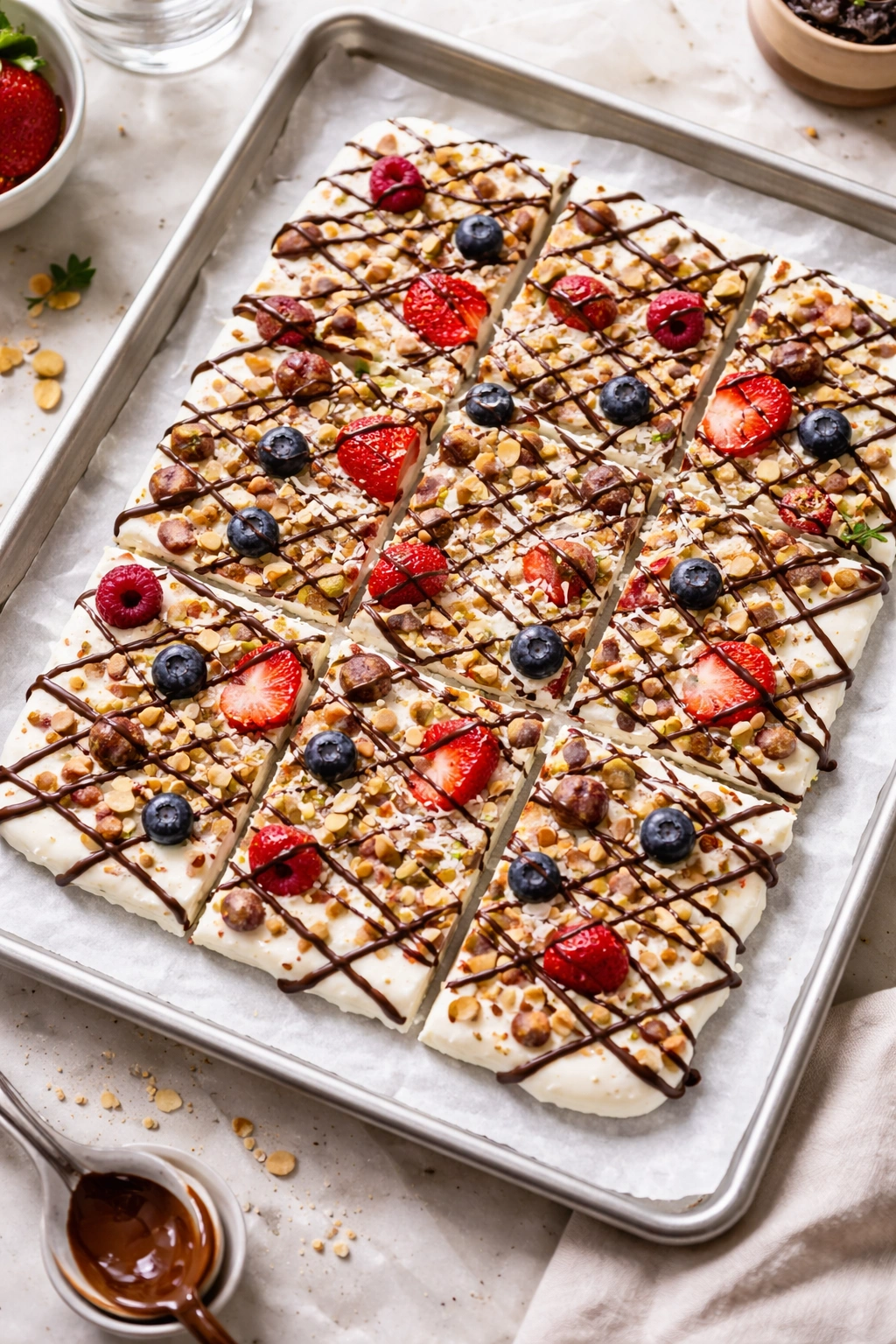
The simplest upgrade to basic yogurt bark is a dark chocolate drizzle. It looks intentional and a bit fancy while requiring almost no extra effort. Melt 3-4 ounces of dark chocolate (roughly ½ cup chocolate chips) using a double boiler or microwave in 30-second increments, stirring between each heat pulse until the chocolate is completely smooth and melted—this takes 1-2 minutes total.
Once the chocolate is melted, add ½ teaspoon of coconut oil or butter to thin it slightly so it drizzles rather than sits in a thick puddle. Dip a fork into the chocolate and wave it back and forth over the yogurt layer so thin lines of chocolate cross the entire surface. Let these lines harden for a moment—a minute or two at room temperature—before adding your other toppings. The chocolate lines act as a binding agent, helping everything stick together better.
Alternatively, drizzle the chocolate after you’ve added the other toppings. Spread your toppings across the yogurt first, allow them to sink in slightly, then drizzle chocolate in diagonal or crosshatch lines across the top. This approach works if you’re trying to hold everything in place or if you want the chocolate to be an accent rather than a major component.
For a double-chocolate version, use chocolate yogurt as your base instead of plain, then drizzle dark chocolate on top and scatter with cocoa nibs and chopped dark chocolate. This is absolutely indulgent and works perfectly if you’re making this as an actual dessert rather than a health snack.
How to Make It Vegan and Dairy-Free
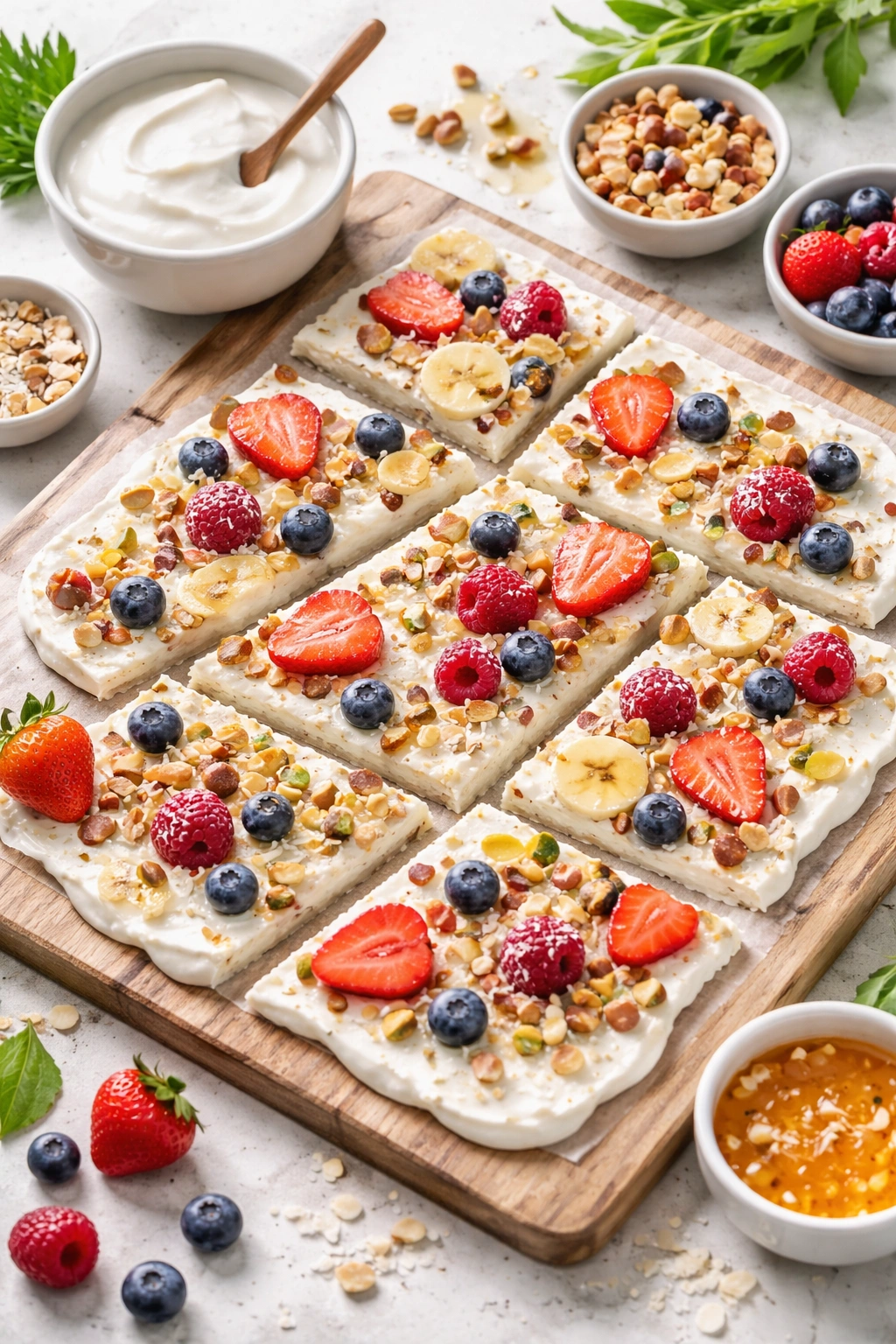
Removing dairy doesn’t remove the appeal of yogurt bark; you simply substitute your yogurt base and ensure your toppings are vegan-compatible. The most reliable dairy-free yogurts for bark are coconut yogurt (creamiest, freezes beautifully, has a naturally sweet, subtle flavor) and cashew yogurt (rich, closer in mouthfeel to dairy yogurt). Both freeze into a creamy rather than icy texture.
Oat yogurt works well too, though it’s slightly thinner and may need a bit of coconut oil mixed in (about 1 tablespoon per 2 cups yogurt) to increase richness. Almond yogurt is lighter and thinner—again, a touch of coconut oil helps. Soy yogurt is protein-rich and works fine, though some people find its flavor slightly beany; if you’re using soy, pair it with stronger toppings like chocolate and nuts to balance the base.
Add sweetness with maple syrup, agave, or coconut sugar in the same proportions as you would honey. The flavor changes slightly—maple brings earthiness, agave brings neutral sweetness, coconut sugar brings subtle caramel notes—so choose based on what you want the final bark to taste like. Vanilla extract is vegan-friendly as long as you use alcohol-based vanilla (most do).
For toppings, ensure your chocolate is dairy-free if that matters to you (70%+ dark chocolate usually is, but always check the label). Nuts and seeds are naturally vegan. Granola may contain honey or butter, so check the ingredient list—many brands make vegan granola, or make your own in bulk using dates, maple syrup, and coconut oil as binders. Dried fruit is automatically vegan. Coconut flakes, cocoa nibs, bee pollen, and most other common toppings are plant-based or can be easily found in vegan-friendly versions.
The texture and eating experience are essentially identical to dairy versions. Some people actually prefer the slight coolness of coconut yogurt, and cashew yogurt rivals Greek yogurt for creaminess. You’re not sacrificing anything except the dairy itself.
Making Frozen Yogurt Bark Without Added Sugar
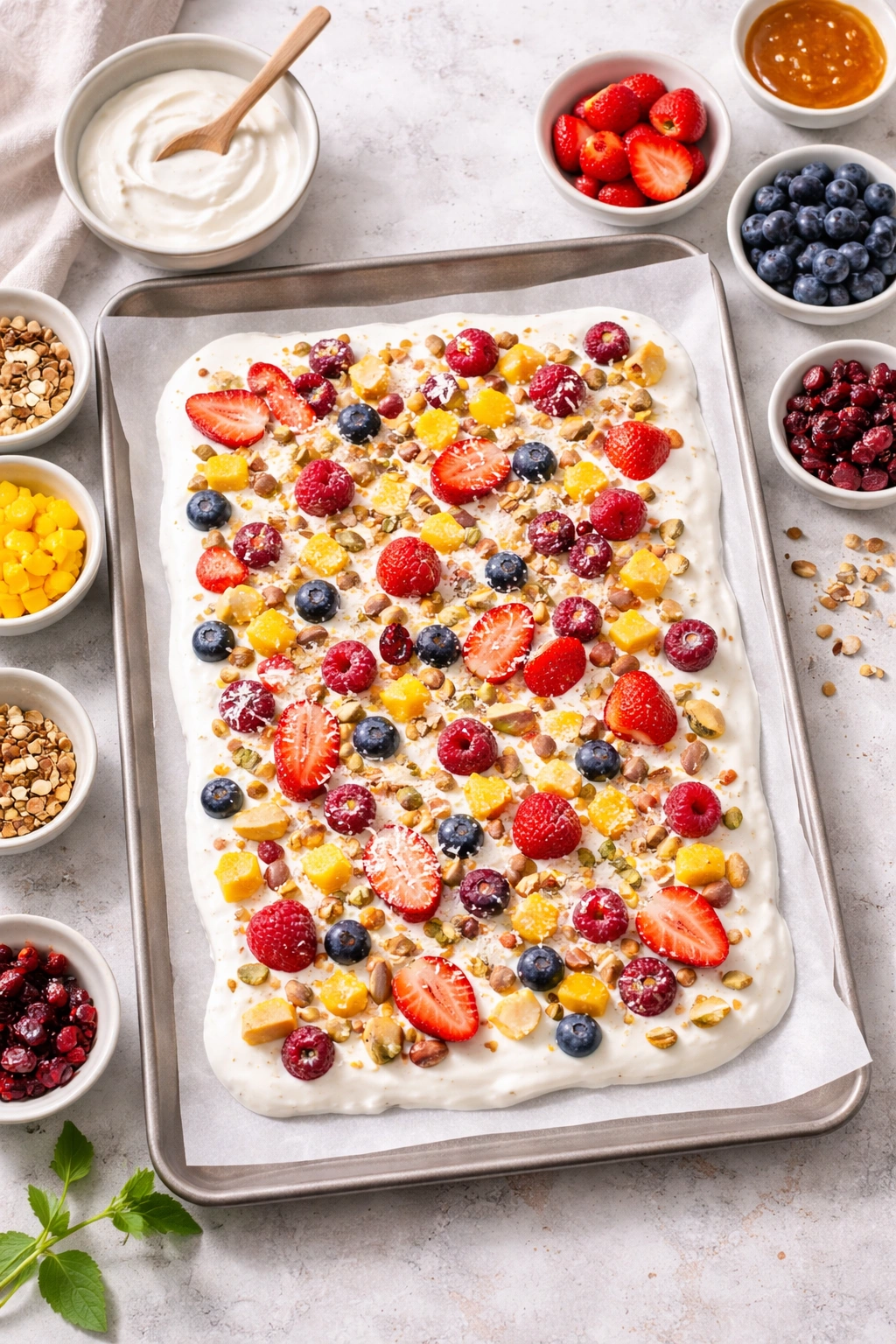
If you’re avoiding added sugars entirely, you have a few approaches. The most straightforward is to use an unsweetened yogurt base (plain, no honey, no sweetener added) and rely entirely on toppings for sweetness. Pair that with naturally sweet toppings like dried fruit, granola sweetened only with dates or maple, and dark chocolate.
This works because dried fruit has concentrated natural sugars, and many people find the combination of tart yogurt with naturally sweet toppings perfectly balanced. A piece tastes sweet without tasting like a candy bar. If you want the toppings themselves completely unsweetened, you can use unsweetened granola (made with just oats, nuts, and oil), cocoa nibs (which are bitter and unsweetened), and berries.
Alternatively, sweeten the yogurt base itself using stevia, monk fruit sweetener, or sugar alcohols like erythritol if those work with your body and preferences. The challenge with these is that some people find their aftertaste noticeable, while others can’t taste the difference at all. It’s worth testing a small batch to see if the sweetener you choose tastes pleasant when frozen (sweeteners sometimes taste different at cold temperatures). Use about half as much stevia or monk fruit as you would honey—start with ½ teaspoon and adjust upward.
The honest truth is that true zero-sugar frozen yogurt bark won’t taste quite as indulgent as the honey-sweetened version, but it can taste genuinely good. It’ll taste more like you’re eating frozen yogurt—tart, creamy, refreshing—rather than like a dessert. Some people prefer that profile; it depends on whether you’re approaching this as a sweet treat or as a protein-focused snack.
Layering Techniques for Professional-Looking Bark
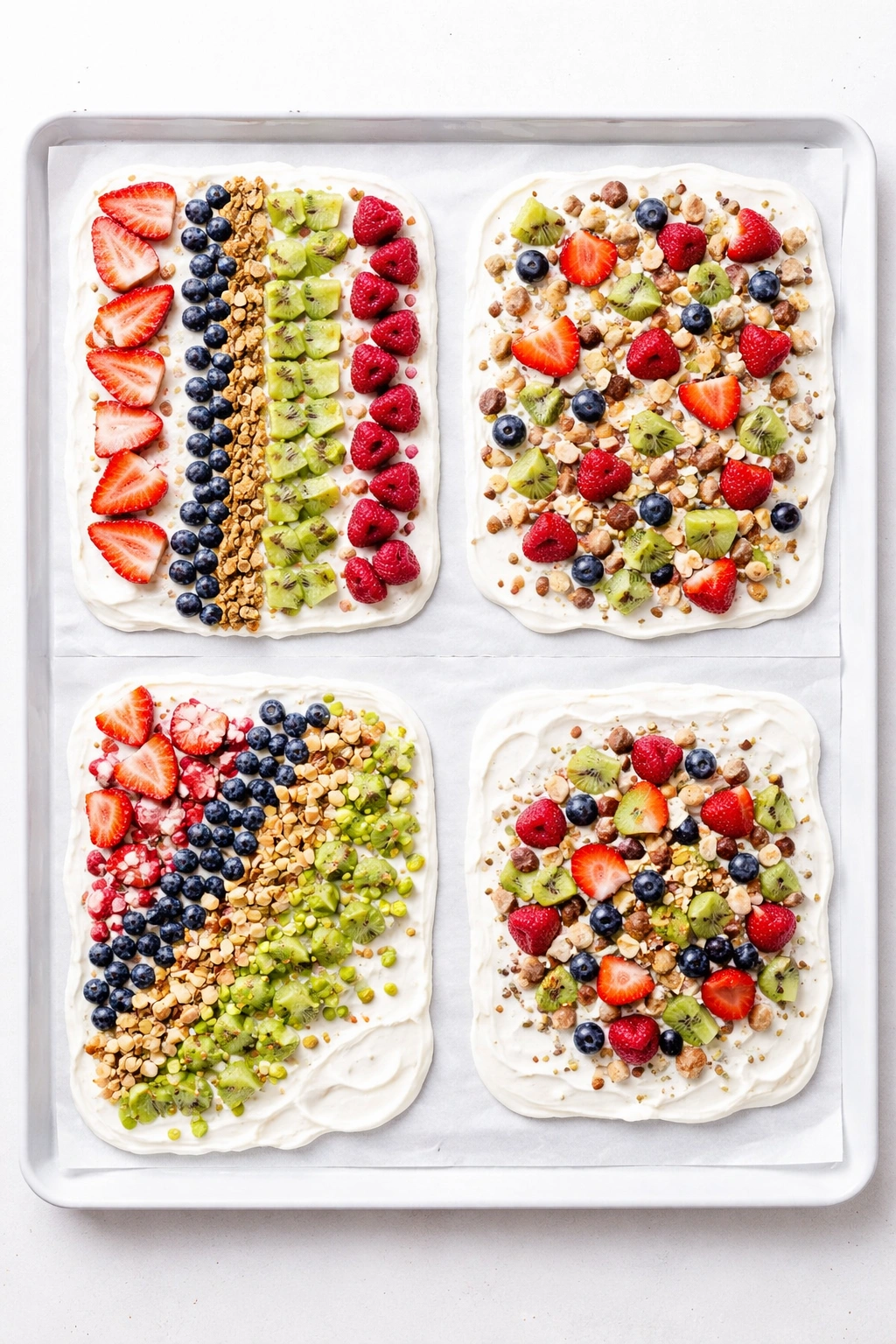
If you care how the finished bark looks (and presentation does make eating it more enjoyable), intentional layering creates a more elegant result than random scattering. Start by spreading the yogurt smoothly and evenly—spend an extra 30 seconds making sure the surface is as level as possible. This is the foundation.
The Vertical Stripe Method involves dividing your toppings into distinct categories (nuts in one area, chocolate in another, dried fruit in a third) and creating clear vertical sections across the width of the sheet. This looks intentional and creates variety in every piece.
The Random Scatter Method works for when you want an organic, artisanal look. Scatter toppings generously and unevenly, then drizzle chocolate across the top. The irregularity is part of the charm.
The Gradient Method layers toppings so one topping dominates one half of the sheet and fades toward the other half where different toppings dominate. A quarter might be heavy on chocolate, another quarter heavy on nuts, another quarter on granola. This creates visual interest and ensures different pieces have different personalities.
The Centered Cluster Method places larger, more visually interesting toppings (like whole nuts, larger berries, or cocoa nibs) in small clusters rather than spreading them evenly. This draws the eye and makes each piece feel intentional.
The technique that works best is the one that makes you happiest to look at. Taste doesn’t change based on how pretty the bark looks, but your enjoyment does. If you’re making this as a gift or for entertaining, spending two extra minutes on intentional placement is worth it.
Storage and Shelf Life Tips
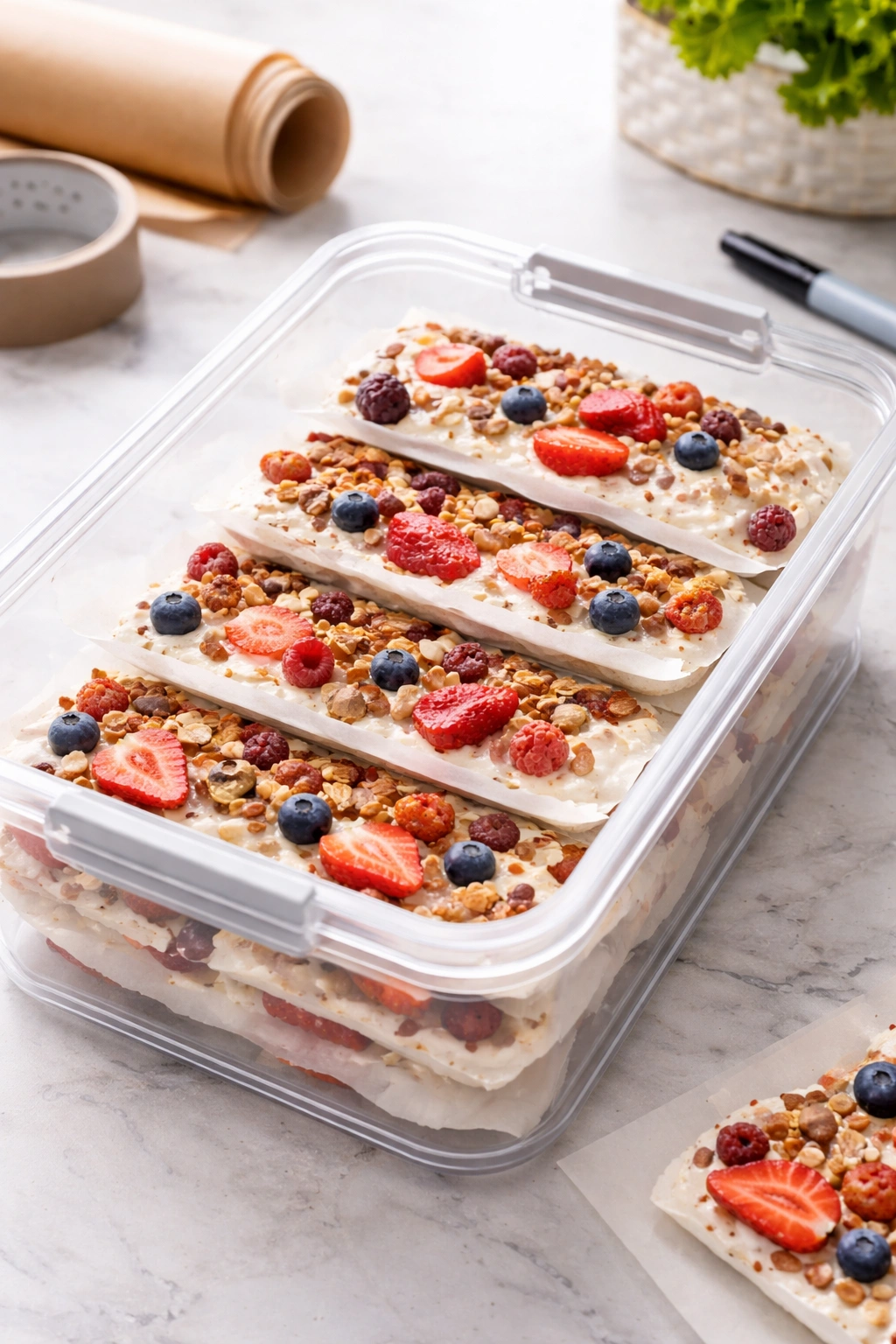
Frozen yogurt bark keeps beautifully in the freezer for up to three weeks, though most batches disappear in one week because they’re too convenient and too tasty to leave alone. Store the pieces in an airtight container or a resealable freezer bag with a piece of parchment paper between layers to prevent sticking. Remove as much air as possible from the freezer bag before sealing; this prevents freezer burn and keeps the bark tasting fresh.
Label the container with the date you made it and note any major ingredients—this is helpful both for memory and for anyone else in your household who might wonder what’s inside. A photo on your phone also serves as a reminder of what you have available for snacking.
Once removed from the freezer, a piece of yogurt bark lasts about 5-10 minutes before it starts melting noticeably, depending on room temperature and the yogurt’s thickness. This is actually perfect for snacking—the melting creates a creamy texture partway through eating that some people love. If you prefer it to stay frozen, eat it directly from the container before it has time to warm. On particularly hot days, keep a piece in a small ramekin or bowl so it’s not sitting on a warm countertop.
The yogurt itself doesn’t spoil quickly because it’s frozen, but the toppings can become stale in the freezer (nuts and granola especially). For the best texture, eat the bark within two weeks. After three weeks, the crunch of nuts and granola starts to fade slightly as they absorb moisture from the yogurt. The taste is still fine, but the texture experience degrades.
Make-Ahead and Batch Preparation
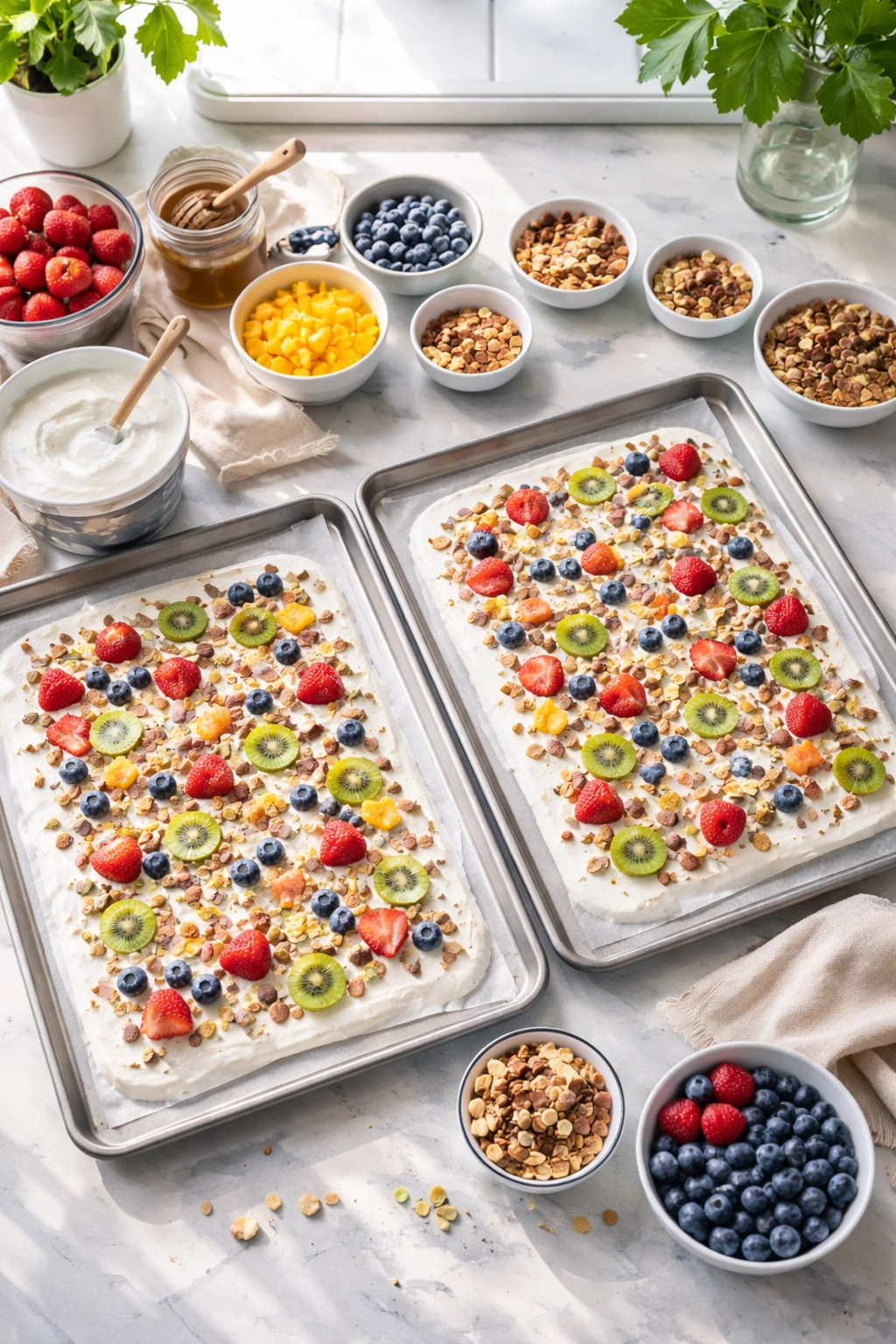
Frozen yogurt bark is genuinely make-ahead-friendly. You can prepare multiple batches on the weekend and have snacks ready for the entire week. If you have an extra baking sheet, prep one batch, get it into the freezer, and immediately prep a second batch on another sheet. This takes maybe 15 minutes of hands-on time and gives you two weeks of snacks.
Once frozen, the bark pieces transfer easily to storage containers, so your baking sheets are free again almost immediately. This means you can rotate through several batches without waiting for previous ones to freeze between sessions.
You can also prep components ahead of time without freezing the whole thing. Chop nuts in bulk, measure out your favorite topping combinations into small jars, and keep them in the pantry. When you want yogurt bark, simply spread the yogurt on a sheet, grab your pre-portioned toppings, and you’re five minutes away from freezing.
If you’re meal prepping or feeding a group, one batch of bark (two baking sheets’ worth) provides roughly 24-32 pieces depending on size. That’s enough for four people to have daily snacks for a week, or enough for a party platter where people grab a piece or two.
Serving Suggestions and Pairings
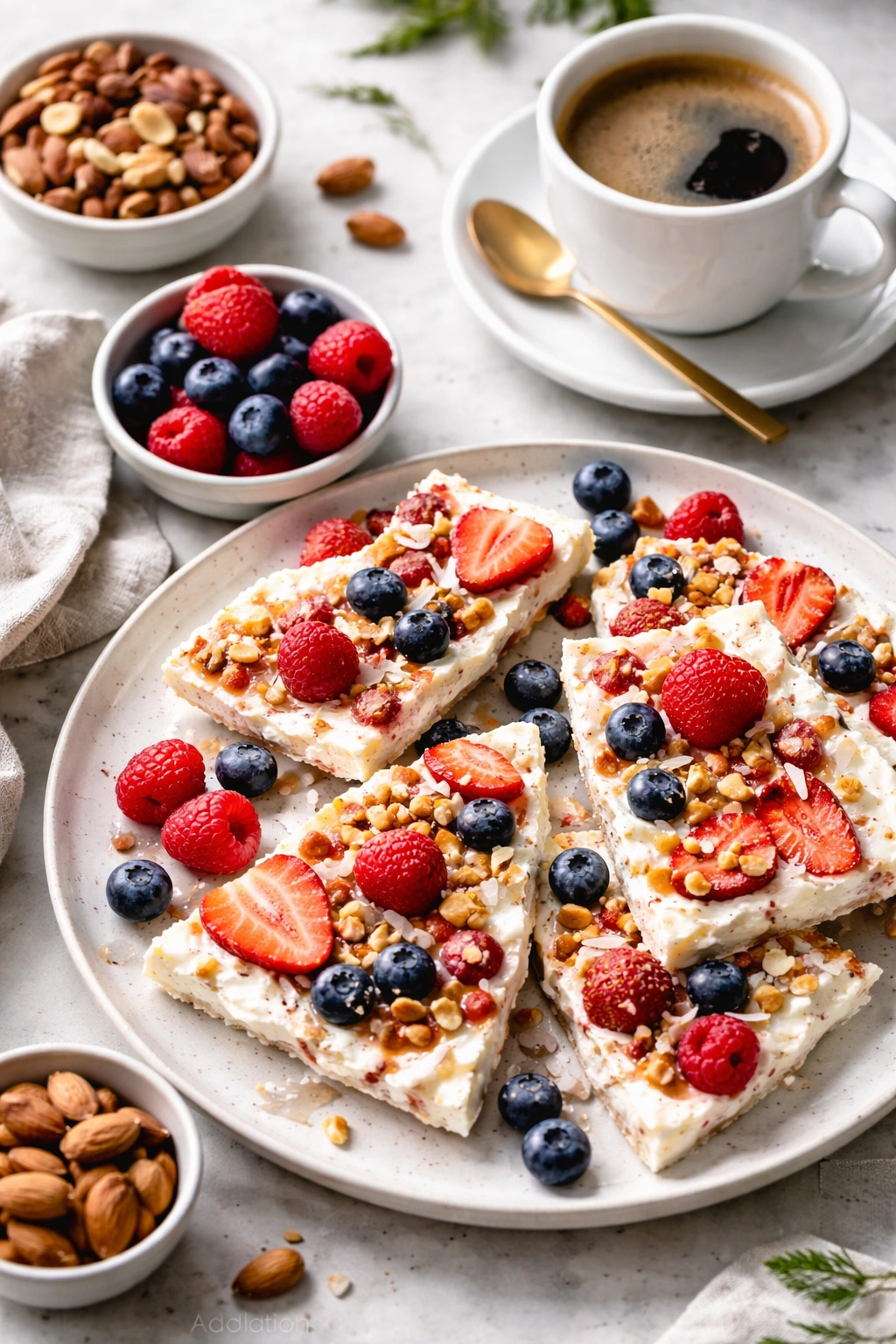
Yogurt bark works as a standalone snack, but it also pairs beautifully with other components. A small piece of bark with a cup of coffee or tea is a satisfying afternoon break. A few pieces after dinner scratches a sweet craving without being heavy.
For a more substantial snack, pair a piece of yogurt bark with a handful of nuts or a piece of fruit. The combination of protein from the yogurt, healthy fats from nuts, and the natural sugars from fruit creates balanced energy. A piece of bark with half an apple works; a piece of bark with a handful of almonds and a small handful of berries is genuinely sustaining.
In a lunchbox, a piece of yogurt bark paired with the rest of a balanced meal (protein, vegetables, whole grains) makes for a satisfying lunch that includes a dessert-like element without relying on added sugars. Kids are remarkably enthusiastic about eating frozen yogurt bark; it feels like a treat but contains the nutrition profile of a snack.
For entertaining, arrange pieces of yogurt bark on a platter with other snacks. Dark chocolate bark (made without the yogurt), nuts, dried fruit, and fresh berries all complement yogurt bark aesthetically and flavor-wise. The variety makes it feel abundant and intentional rather than just “some snacks.”
You can also serve bark at temperature, allowing it to soften slightly so the texture becomes more mousse-like. Some people actually prefer this—the yogurt becomes spoonable, and the toppings soften slightly into a more integrated texture. This is a personal preference; either way works.
Common Mistakes to Avoid
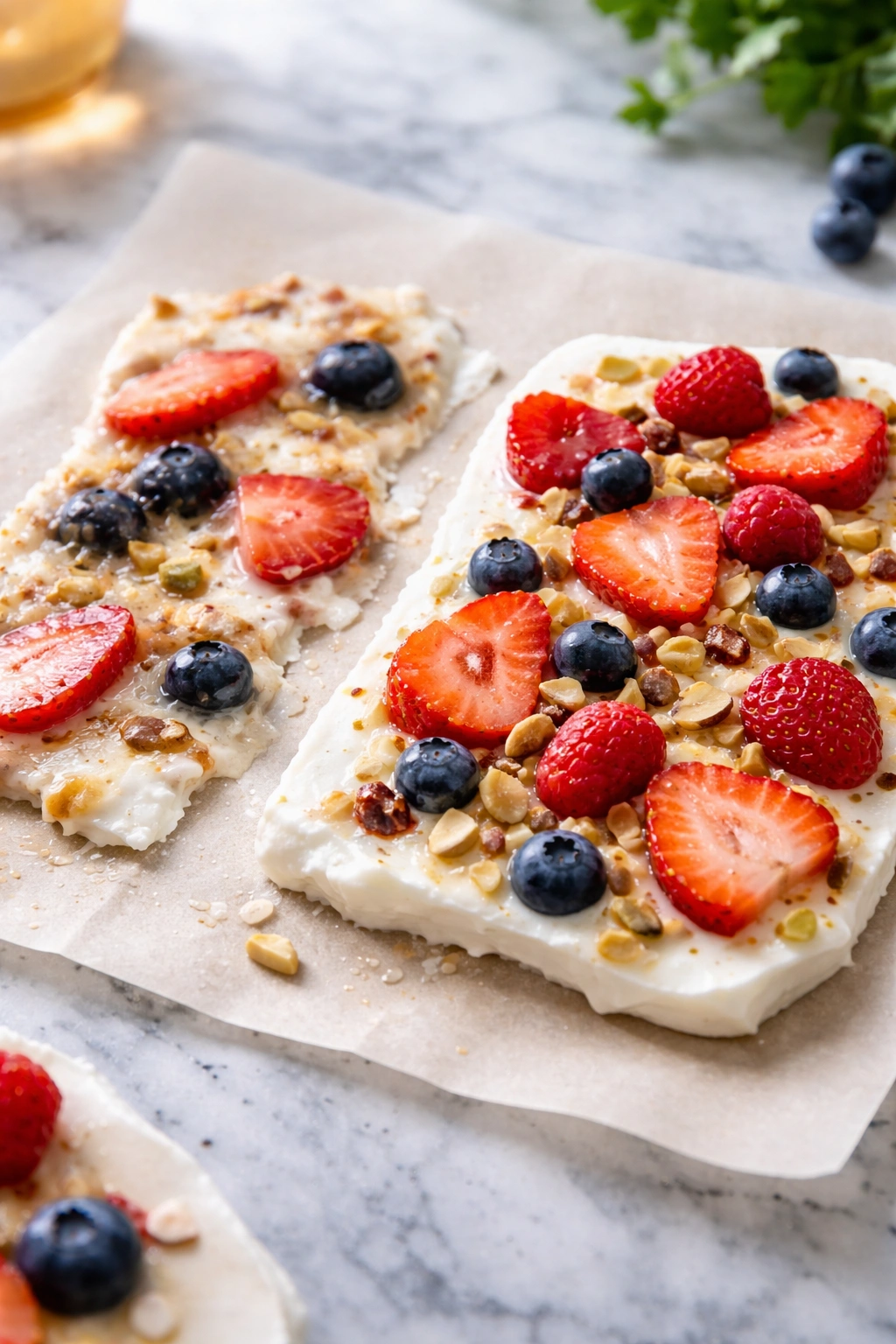
Spreading the yogurt too thin is surprisingly common and results in pieces that shatter when you try to eat them or break them apart. Aim for ¼-inch at minimum, ½-inch at maximum. Thicker pieces are more forgiving and stay together better.
Adding wet toppings (fresh berries, wet nuts, or toppings that haven’t been thoroughly dried) introduces moisture that makes the bark icy instead of creamy. If using fresh fruit, only add it immediately before serving, not before freezing. If using nuts, ensure they’re completely dry.
Overloading with toppings means some don’t freeze into the yogurt and fall off when you break the bark apart. You want enough toppings that most pieces have some, but not so much that the topping layer is thicker than the yogurt layer. The yogurt should be the dominant component by weight and volume.
Using yogurt that’s too thin results in a final product that’s icy rather than creamy. Greek yogurt or other thick yogurts freeze beautifully. Regular thin yogurt, or yogurt with a very high water content, won’t give you the same creamy result.
Not lining the baking sheet with parchment paper. This seems like a small detail, but removing frozen bark from an unlined sheet is genuinely frustrating. Parchment is the difference between a two-minute removal and a ten-minute wrestling match.
Freezing in a freezer that’s too warm. If your freezer isn’t cold enough (ideally 0°F / -18°C or below), the bark will take much longer to freeze and may develop ice crystals, resulting in a grainier texture. If your freezer seems slow, increase freezing time by a few hours or check that it’s running at the proper temperature.
Adding sweetener directly to the yogurt without tasting first. Yogurt brands vary in tartness, and personal sweetness preferences vary widely. Start with less sweetener than you think you need and add more after tasting. Once frozen, you can’t remove sweetness, but you can always add more next time.
Creative Flavor Variations
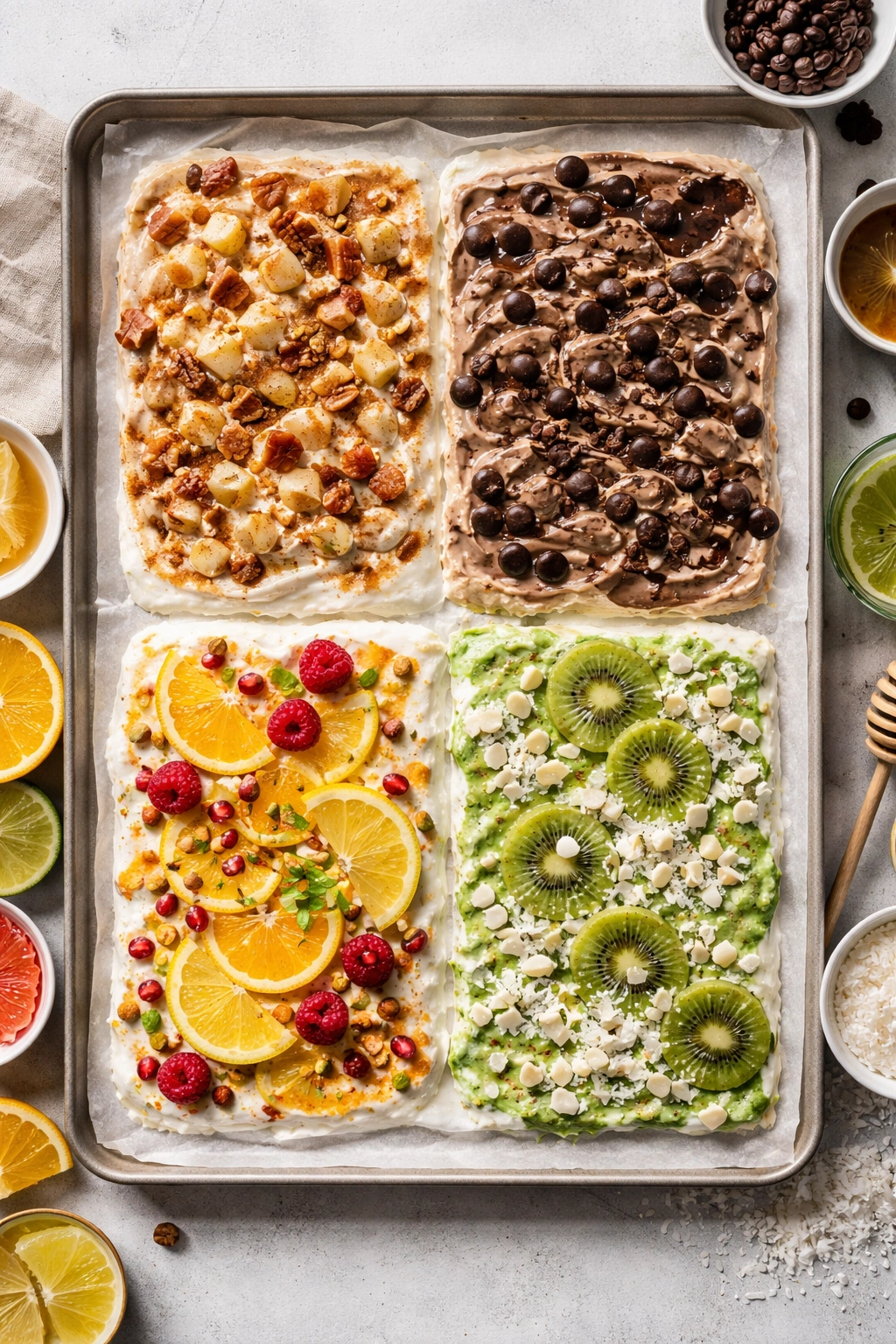
Beyond the basic formulas, there’s endless room for creativity. The Spiced Version adds a pinch of cinnamon, cardamom, or ginger directly to the yogurt base. You’ll barely taste the spice, but you’ll notice a subtle warmth and complexity. Pair with dried fruit and nuts.
The Coffee Lover’s Bark uses Greek yogurt whisked with a tablespoon of instant espresso powder, a touch of honey, and dark chocolate chips with cocoa nibs on top. The espresso flavor is noticeable but not overwhelming, and the combination of coffee and dark chocolate is genuinely sophisticated.
The Citrus Version includes the zest of a lemon or lime mixed into the yogurt, then topped with white chocolate chips (if you eat dairy chocolate), toasted coconut, and maybe some freeze-dried strawberries. The citrus brightness lifts the whole thing.
The Salted Caramel Simulation uses a drizzle of date syrup or blackstrap molasses in the yogurt, topped with dark chocolate and fleur de sel. You’re not getting actual caramel, but you’re getting the flavor notes of caramel with a slightly less sweet profile.
The Matcha Green Tea Version whisks matcha powder (about ½ teaspoon per 2 cups yogurt) with hot water first, cools it slightly, then mixes it into plain yogurt with a touch of honey. Top with white chocolate, pistachios, and maybe some matcha-dusted cocoa nibs. This leans sophisticated and less indulgent.
The Protein-Heavy Version uses vanilla protein powder (plant-based or whey) mixed into the yogurt base (about ¼ cup powder per 2 cups yogurt; this is about 10-15 additional grams of protein per serving). Pair with nuts and granola so it feels like a complete snack rather than a supplement drink.
The Turmeric Golden Milk Version combines yogurt with turmeric, a touch of ginger, cinnamon, and honey, topped with roasted walnuts and dried blueberries. This is less dessert-like and more wellness-oriented, and surprisingly delicious.
Every variation works with the same freezing method and storage approach. Experiment freely—the worst that can happen is a batch that doesn’t become your new favorite, which still tastes fine.
Final Thoughts
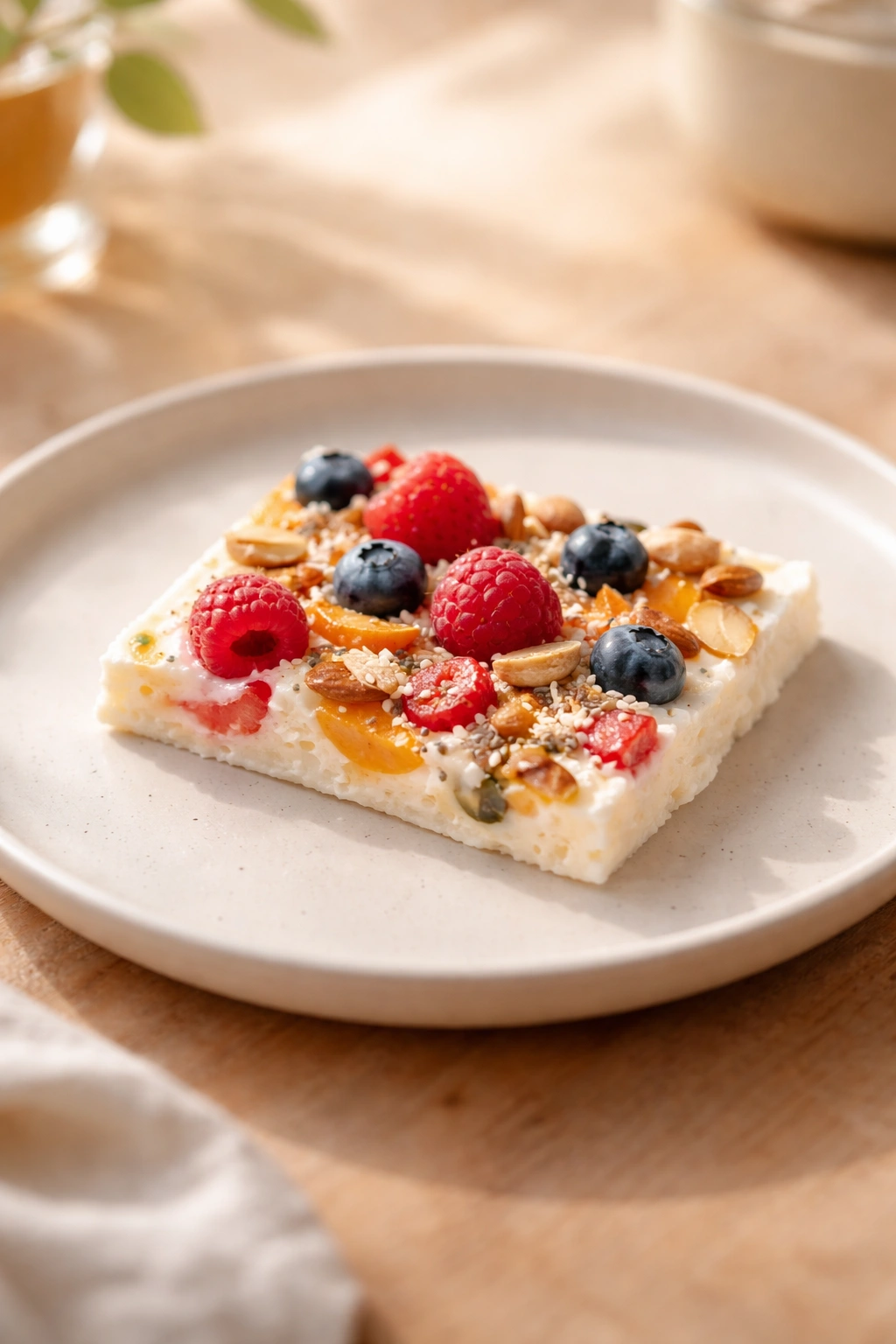
Frozen yogurt bark solves a genuine problem: you want a snack that’s satisfying, reasonably healthy, and actually tastes good, and you want to spend minimal time making it. This delivers on every front. There’s no hidden technique that makes it hard to execute well, and there’s unlimited room to make it exactly how you want it.
The protein in the yogurt base makes it genuinely sustaining in a way that many snacks aren’t. The toppings add nutritional dimension and interest. The freezing process transforms simple ingredients into something that feels indulgent and requires effort to eat slowly. It’s genuinely smart snacking, and it doesn’t taste like deprivation.
Build your base recipe and then treat it as a canvas. Make vanilla and chocolate one week, tropical and coconut the next, spiced and nutty the week after that. Keep the basic frozen-yogurt-plus-toppings approach and let everything else vary. Over time, you’ll develop favorite combinations and probably invent some that are uniquely yours. That’s the whole point—snacking that’s convenient, healthy, and genuinely enjoyable is worth returning to.
