



There’s something undeniably magical about the way a good diner handles hamburger steak. It’s not fancy. It doesn’t require high-end ingredients or complicated techniques. But when it’s made right—with patties that are impossibly juicy, smothered in a gravy that tastes like it’s been simmered for hours, and piled over creamy mashed potatoes—it becomes the kind of comfort food that people remember and crave. The beautiful part? You don’t need to visit a diner to have this experience. With the right approach and a few kitchen secrets, you can create restaurant-quality hamburger steak and gravy at home, and it’ll be ready in less than an hour.
This recipe draws from the collective wisdom of diner kitchens across America, where hamburger steak has been a mainstay for generations. It’s the kind of dish that shows up on laminated menus under the banner of “classics,” and it’s there for good reason. Unlike some restaurant dishes that lose their magic when recreated at home, hamburger steak is actually one of the easiest comfort foods to master in your own kitchen. The ingredients are simple, the technique is straightforward, and the reward—a deeply satisfying, warm, hug-in-a-plate kind of meal—is absolutely worth the minimal effort.
Why This Comfort Food Has Endured for Generations
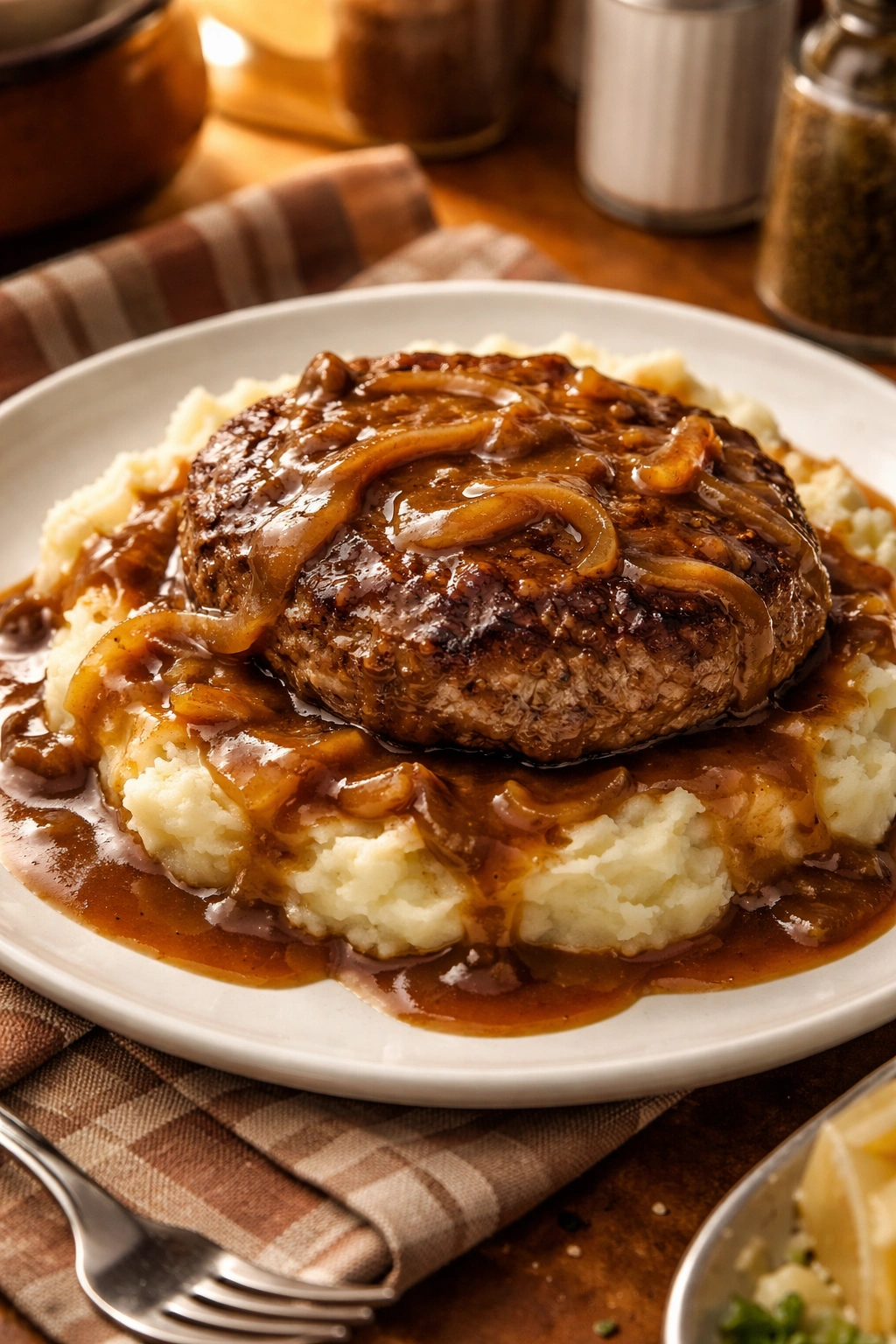
Hamburger steak isn’t fancy, and that’s precisely why it works. Back when diners became cultural institutions, this dish emerged as the answer to a very practical problem: How do you make ground beef feel special and substantial without the cost of actual steaks? The solution was elegant in its simplicity. Take affordable ground beef, season it well, form it into patties that resemble steaks more than burger patties, and smother it in a rich, savory gravy made from the drippings left behind after cooking. Suddenly, you’ve got something that feels indulgent and restaurant-worthy, but costs just a few dollars to make.
The brilliance of this dish lies in its honest approach to comfort food. It doesn’t pretend to be something it’s not. It celebrates ground beef for what it is—a versatile, accessible protein that becomes something magnificent when treated with care. The gravy does the heavy lifting here. It keeps the patties moist, adds richness and depth, and provides the savory element that makes every bite satisfying. When served over mashed potatoes (as it should be), the gravy transforms simple starch into something extraordinary.
Diners perfected this dish through repetition and refinement. They made it hundreds of times, learned what works and what doesn’t, and distilled it down to its essential elements. This recipe captures that diner wisdom and brings it to your kitchen.
What Makes Diner Hamburger Steak Different from Salisbury Steak
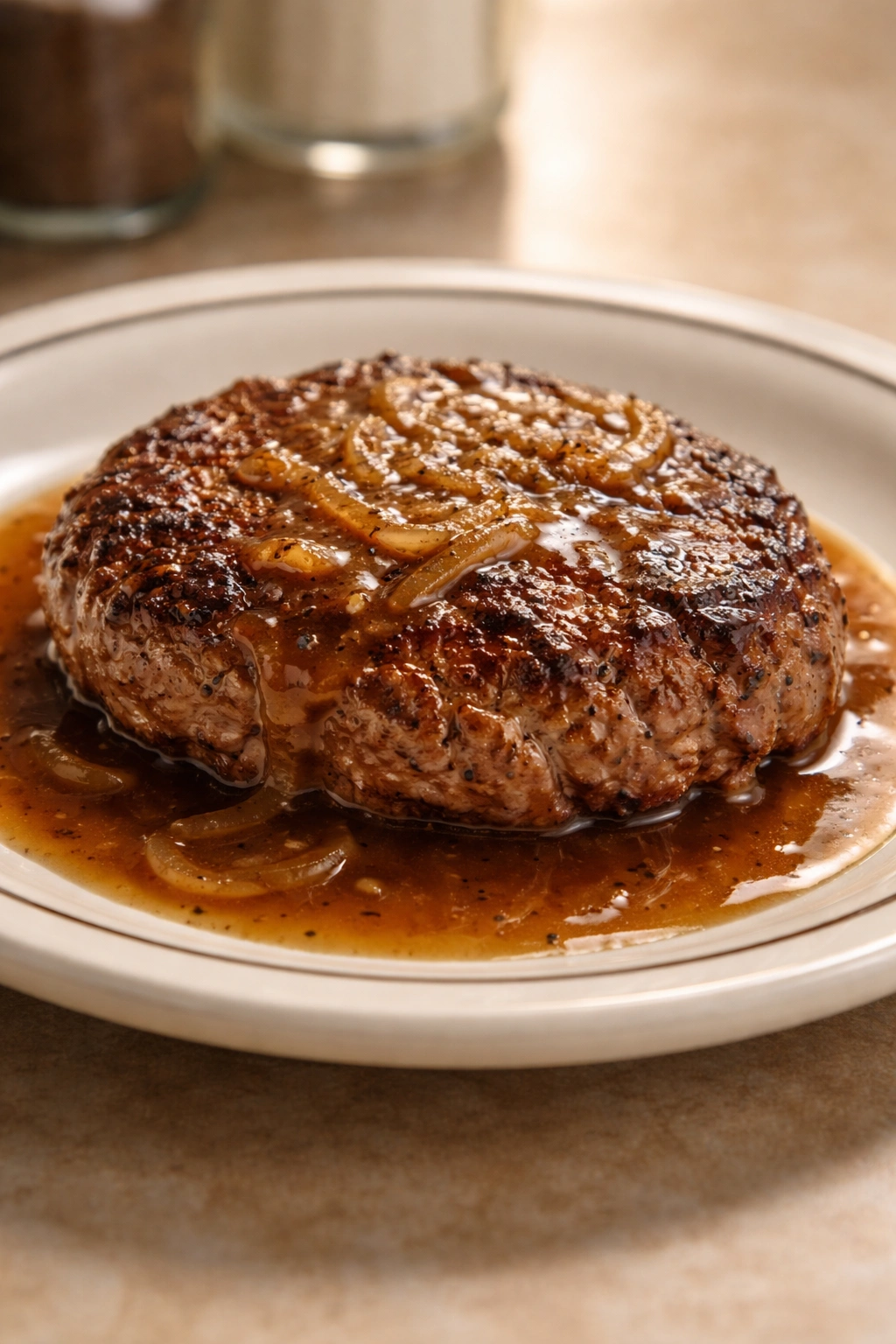
You’ll notice that hamburger steak and Salisbury steak are often confused, and with good reason—they’re similar in appearance and both are served with gravy. But there are meaningful differences that matter when you’re deciding which one to make. Understanding these distinctions helps you make the right choice for what you want on your plate.
Hamburger steak is made with straightforward ingredients that resemble how you’d prepare a burger: ground beef, minimal binders, and simple seasonings. The philosophy here is to let the beef shine through. You’re dressing it up with gravy and serving it as a steak instead of a sandwich, but the foundation is pure, simple beef. Many traditional diner versions don’t even include breadcrumbs—just seasoned ground beef formed into patties and cooked until golden.
Salisbury steak, by contrast, is more of an individually-sized meatloaf. It typically includes breadcrumbs, egg, milk, and sometimes ketchup or Worcestershire sauce mixed directly into the meat mixture. The goal with Salisbury steak is to create a more cohesive patty that holds together firmly, with a texture somewhere between ground beef and a traditional loaf. The additional binders make it denser and more uniform in texture.
For this diner-style hamburger steak, we’re going with the simpler hamburger approach. You’ll notice the recipe uses minimal binders—just enough egg to hold the patty together, and we’ll skip the breadcrumbs entirely for that authentic diner experience. The result is a patty with a more rustic, beef-forward texture and appearance. The patties will be a bit more delicate to handle, which is exactly what you want. This is where the diner secrets come in, particularly the use of cold, shredded butter mixed into the meat before cooking—a chef’s trick that maintains moisture and ensures every bite stays juicy.
The Secret to Ultra-Juicy Patties
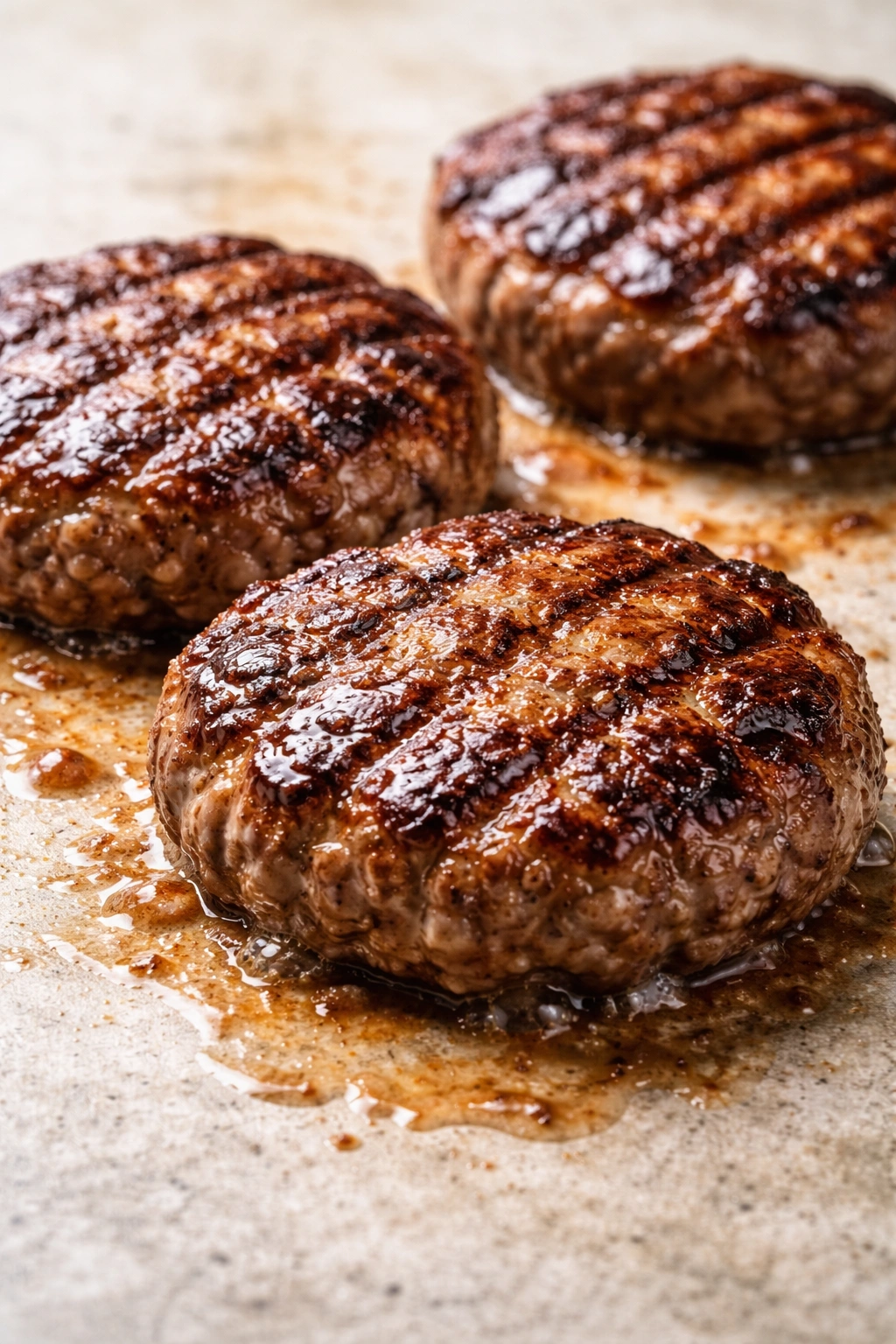
Here’s the thing about ground beef: when it cooks, the proteins contract and tighten. As they do, moisture gets squeezed out. Cook ground beef the standard way, and you can end up with patties that are dry and dense, no matter how much they weighed before cooking. This is the problem that keeps home cooks frustrated. But professional kitchens have learned a workaround, and it’s deceptively simple.
The secret involves frozen, shredded butter mixed directly into the ground beef before the patties are formed. As the meat cooks, the butter melts and actually steams from the inside, keeping the patty moist even if you cook it to well-done. The butter is already at the right temperature and size when it enters the meat (because it’s frozen), which means it distributes evenly and works as effectively as possible. This isn’t about adding fat for flavor—it’s about using fat as a moisture retention tool.
When you shred frozen butter into ground beef, you’re creating tiny pockets of fat throughout the meat. During cooking, these pockets heat up and release steam, which keeps the interior of the patty from drying out. It’s the same reason that butcher shops and professional burger makers often add additional fat to their beef. The difference here is that we’re being strategic about it, using cold butter instead of warming the entire beef mixture.
The result is a patty that’s genuinely juicy and tender even if cooked all the way through. You can’t overcook it into submission. Even a well-done hamburger steak made this way will have a tender, moist interior. This is the technique that separates diner-quality hamburger steak from the sad, brick-like version that many home cooks accidentally create.
Essential Ingredients Explained
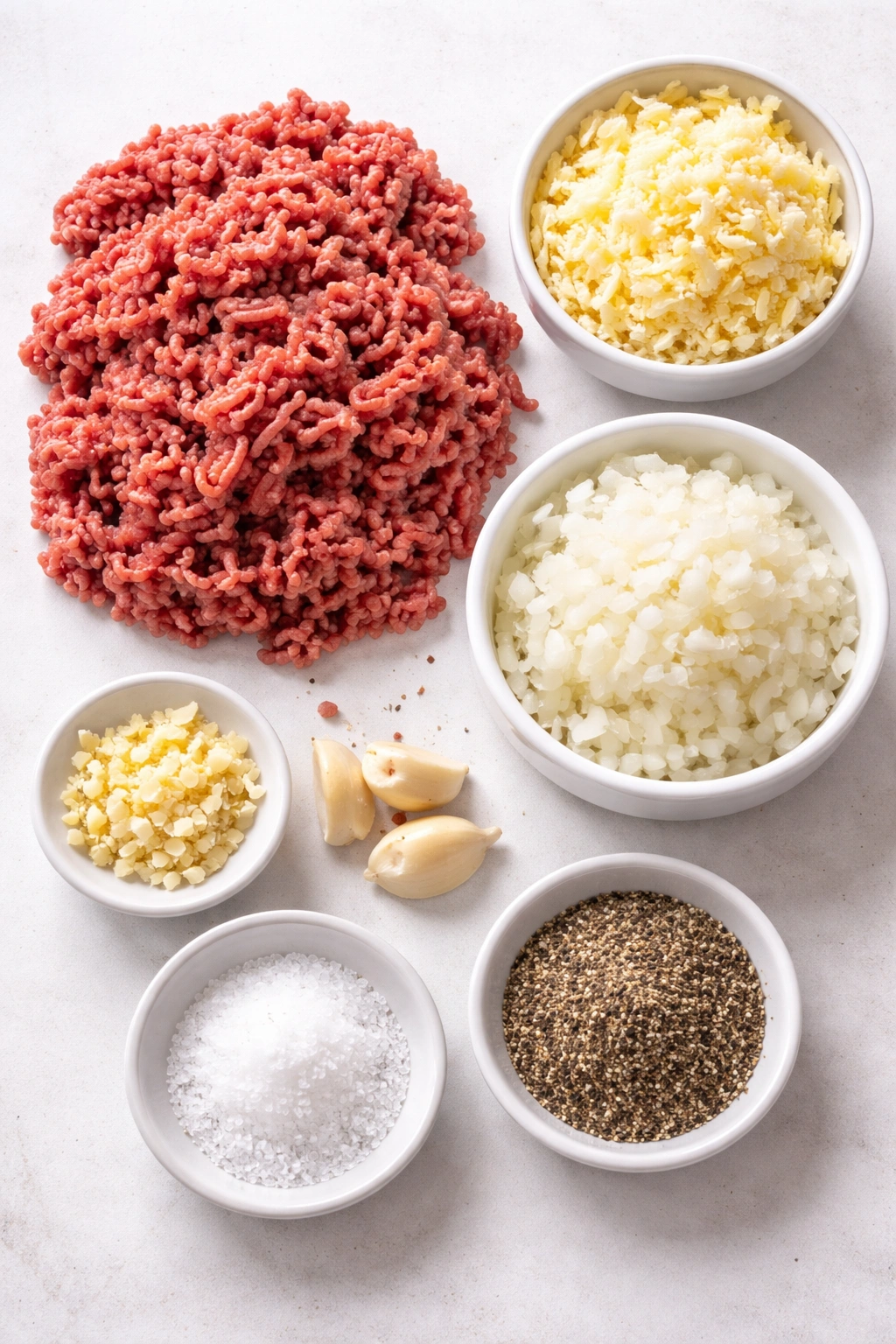
Every ingredient in this recipe serves a specific purpose, and understanding what each one does helps you understand why the recipe works. Let’s break down the key components before you start cooking.
Ground beef (85% lean) is the right choice here. If you use meat that’s too lean (90% or higher), there isn’t enough fat to keep the patties moist as they cook, even with the butter trick. If you use meat that’s too fatty (80% or lower), you’ll end up with excess grease in your pan that makes the gravy greasy rather than silky. The 85% lean sweet spot gives you enough fat from the meat itself, plus the addition of shredded butter, to create patties with real flavor and moisture.
Frozen, shredded butter is essential for the moisture retention trick we discussed. Use real butter (not margarine), and make sure it’s fully frozen. You can shred it using the large holes on a box grater, or simply cut frozen butter into very small cubes. The goal is small pieces that won’t clump together or heat up too quickly.
Minced onion (either fresh, finely minced, or dried minced onion) adds aromatic flavor directly to the meat mixture. Fresh minced onion adds moisture and a sharp, fresh flavor. Dried minced onion is more concentrated in flavor and adds less moisture to the mixture. Either works, but if you’re using fresh, mince it very finely so it distributes evenly and cooks thoroughly.
Worcestershire sauce adds umami depth and a tangy, complex flavor that makes the beef taste more savory. It’s a classic diner ingredient, and you shouldn’t skip it. The small amount in the meat mixture is about adding depth of flavor.
Yellow mustard (sounds odd, but trust this) acts as a flavor amplifier. You’re not adding mustard flavor to the patty—you’re using a tablespoon to enhance the meaty, savory qualities. This is a trick borrowed from professional kitchens.
Garlic (fresh, minced) adds another layer of aromatic flavor that makes these patties taste deeply savory. Garlic powder works in a pinch, but fresh garlic is noticeably better here.
Salt and pepper are your final seasonings. Add them to the raw mixture very lightly (you’ll season again after forming the patties), and then season the formed patties generously right before cooking. This two-stage seasoning approach creates better flavor distribution and a more seasoned exterior.
For the gravy, onions become the aromatic foundation. Sliced thin and cooked slowly, they caramelize and transform into something deeply sweet and savory. Beef broth provides the liquid base with beefy flavor already built in. Butter creates richness, and flour thickens it into true gravy. Worcestershire sauce in the gravy adds tangy depth, and fresh mushrooms (optional but highly recommended) add an earthy, meaty note that deepens the overall flavor profile.
Understanding Diner Cooking Techniques
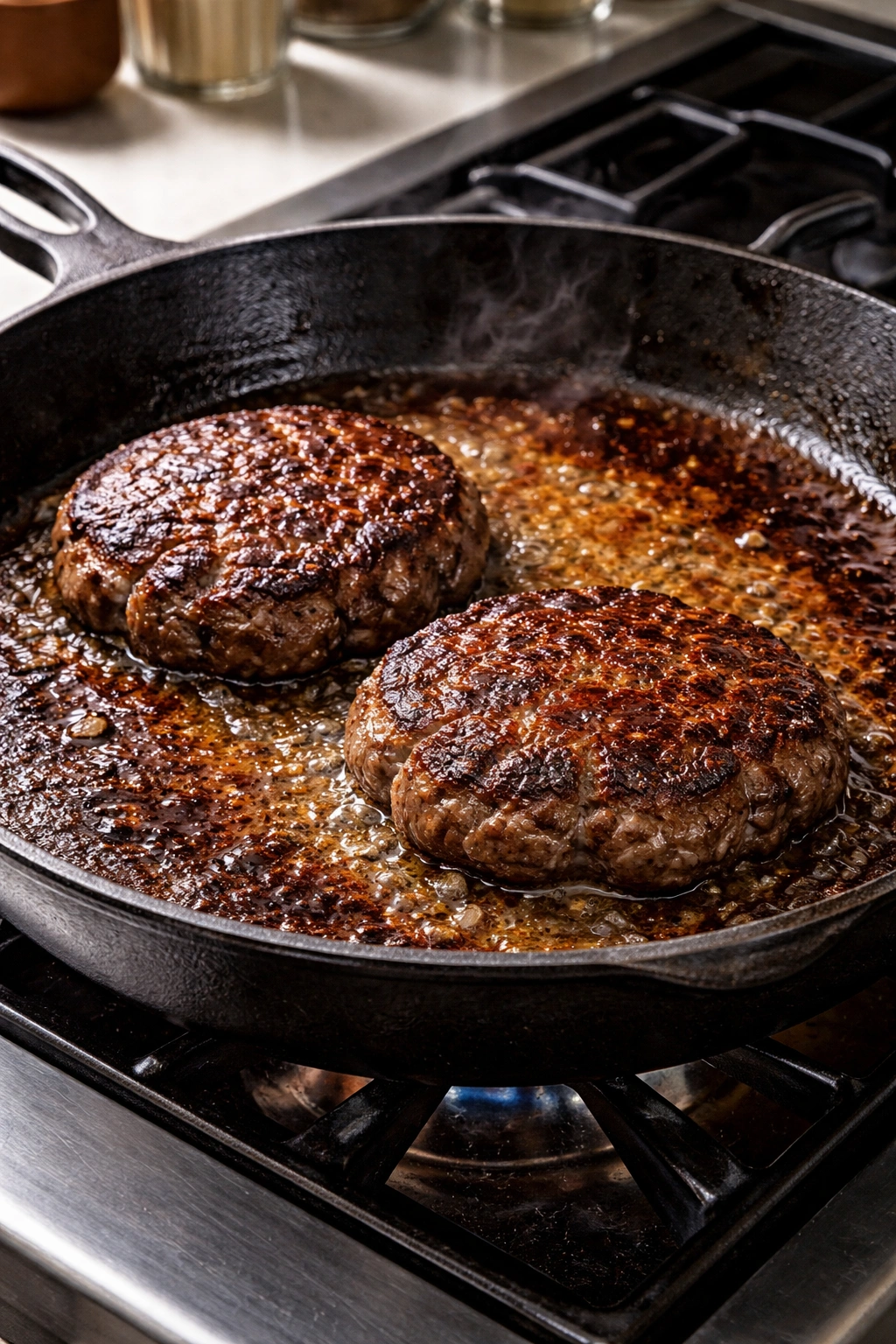
Diners don’t make hamburger steak in complicated ways. What makes diner food special isn’t complexity—it’s attention to detail and understanding exactly what each step does. The cooking technique here is deliberately straightforward, but there are specific reasons for each decision.
The patties are seared first in a hot pan without crowding. This creates the golden-brown exterior that tastes amazing and looks appealing. The searing happens quickly because you’re not trying to cook the patty all the way through at this stage. This is a crucial distinction. Many home cooks try to fully cook the patties in the pan, which is when things go wrong. Instead, you sear them just long enough to develop color and flavor, then remove them.
The gravy gets made in the same pan, which means you’re capturing all those flavorful drippings and browning bits stuck to the bottom. This process is called deglazing, and it’s how you extract maximum flavor from the pan. The onions start cooking in butter, they soften and begin to caramelize, adding their own sweetness and depth. Only then do you add the broth and flour, building a gravy that tastes like it took hours to develop.
Finally, the patties return to the gravy to finish cooking gently in that rich, savory liquid. This is where the magic happens. The gentle simmer allows the gravy to penetrate slightly into the meat, adding moisture and flavor, while the heat finishes cooking the interior to the proper temperature. The patties emerge tender, juicy, and infused with gravy flavor.
Yield: Serves 4 people | Makes 4 large patties
Prep Time: 20 minutes
Cook Time: 35 minutes
Total Time: 55 minutes
Difficulty: Beginner — The steps are straightforward, no special equipment is required, and the technique is forgiving. Even someone making hamburger steak for the first time will have excellent results.
Complete Ingredient List
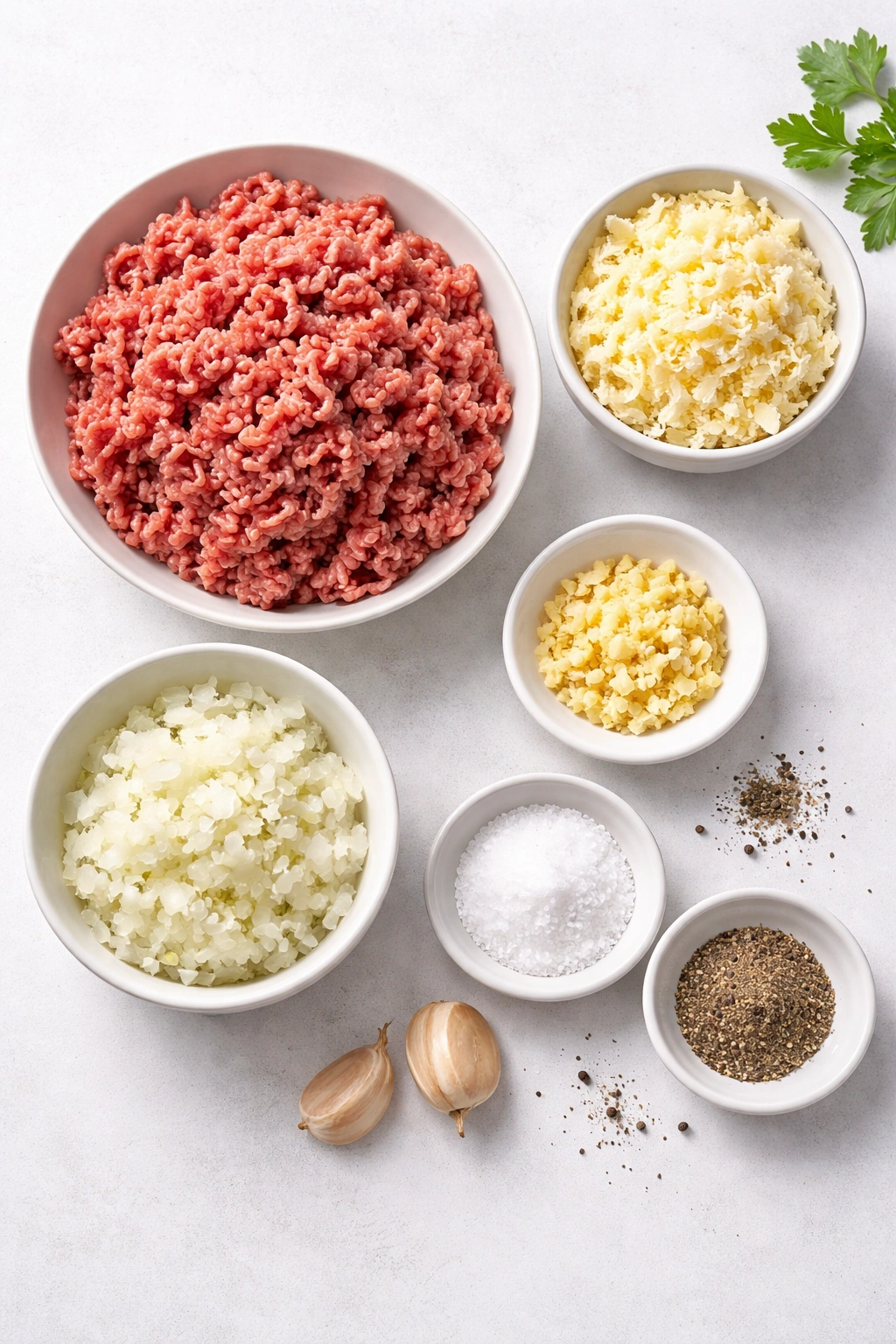
For the Hamburger Steaks:
- 1½ pounds ground beef (85% lean)
- 4 tablespoons butter, frozen and shredded (or cut into small cubes)
- ½ cup yellow onion, very finely minced
- 3 cloves garlic, minced
- 1 tablespoon yellow mustard
- 1½ teaspoons Worcestershire sauce
- ½ teaspoon salt
- ¼ teaspoon freshly ground black pepper
- 2 tablespoons olive oil (for searing)
For the Diner-Style Gravy:
- 3 tablespoons unsalted butter
- 2 large yellow onions, sliced thin (about ⅛ inch thick)
- 8 ounces fresh mushrooms, sliced (cremini or white button)
- 3 cloves garlic, minced
- 3 tablespoons all-purpose flour
- 2 cups beef broth
- 1 cup water (or additional beef broth for extra richness)
- 1 tablespoon Worcestershire sauce
- ½ teaspoon salt
- ¼ teaspoon freshly ground black pepper
- 1 tablespoon cold unsalted butter (for finishing the gravy)
- Fresh parsley, chopped (optional garnish)
Step-by-Step Instructions
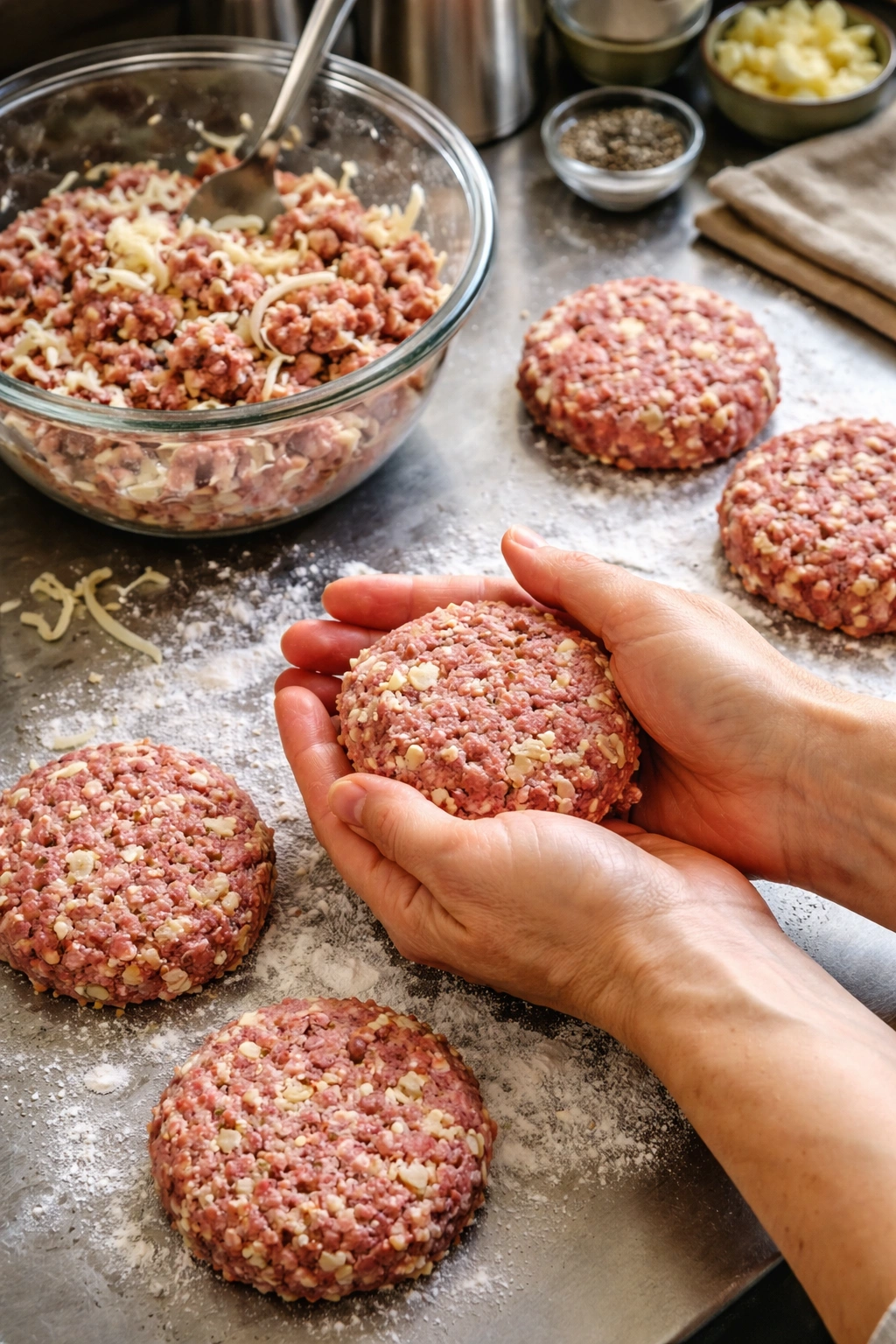
Prepare the Hamburger Patties:
-
Remove the ground beef from the refrigerator about 5 minutes before you begin. You want it just slightly warmer than cold, but still very cold overall. While the beef comes up slightly in temperature, shred the frozen butter on the large holes of a box grater, or cut frozen butter into very small cubes using a cold knife. Place the shredded butter on a cold plate in the freezer while you assemble the other ingredients.
-
In a large bowl, combine the finely minced onion, minced garlic, yellow mustard, and Worcestershire sauce. Stir these together to combine, creating a flavor paste.
-
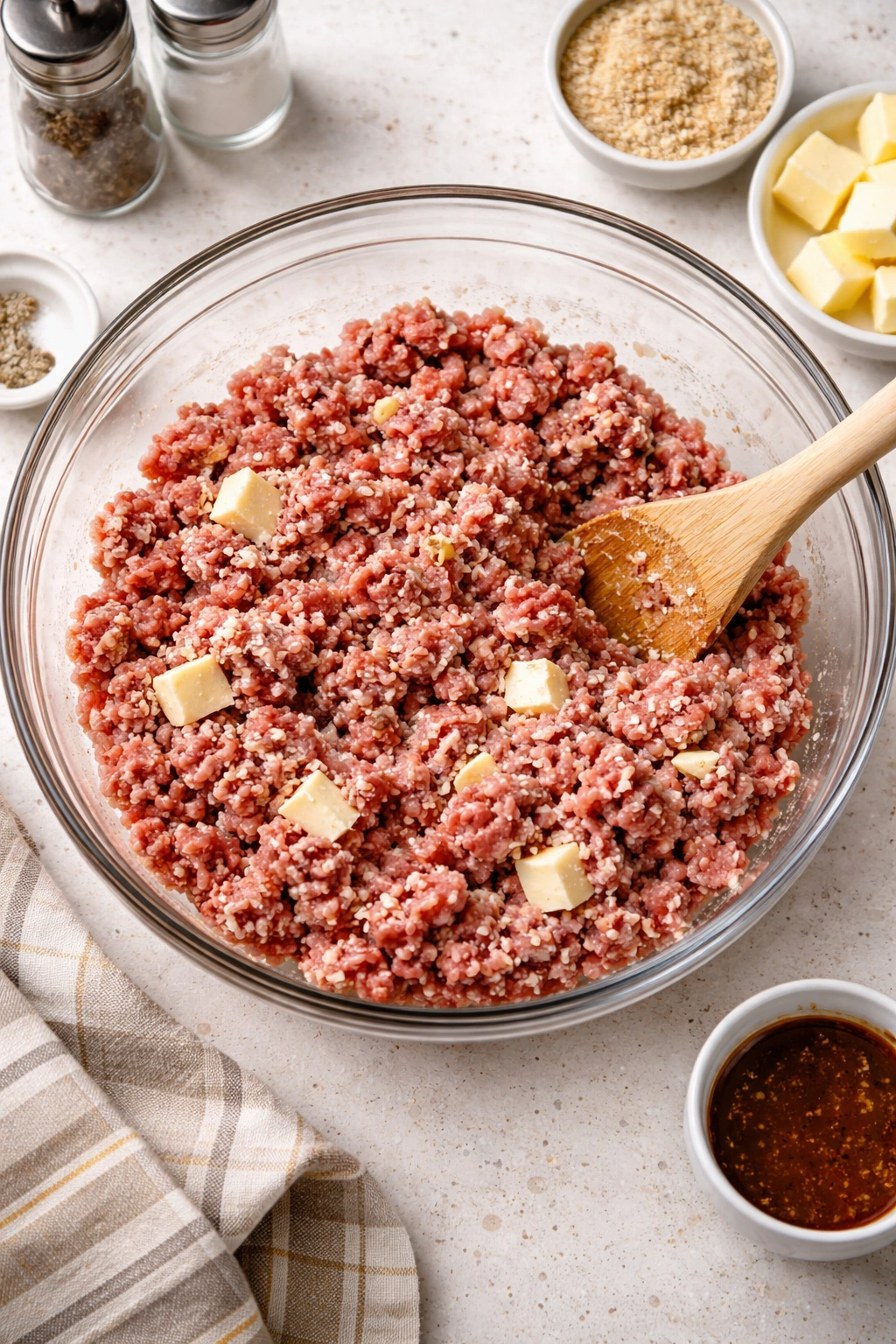
Add the cold ground beef to the bowl, along with the shredded frozen butter, ½ teaspoon salt, and ¼ teaspoon freshly ground black pepper.
-
Using your hands (or a spoon if you prefer to minimize handling), gently combine the ingredients until everything is just barely mixed together. Do not overwork the meat. You should still see small streaks of butter and slight color variation in the mixture. The beef should feel loose and crumbly, not dense or uniform. Overworking will make the patties tough and squeeze out the moisture you’re trying to retain.
-
Divide the mixture into 4 equal portions. Gently form each portion into an oval patty about ¾ inch thick. Handle the patties as little as possible. They should look slightly rustic and loosely held together, not perfectly smooth. This is correct—the loose structure actually helps them stay moist.
-
Place the formed patties on a plate and let them rest at room temperature for 5 minutes. Season the top and bottom of each patty generously with salt and freshly ground black pepper.
Advertisements
Sear the Patties:
-
Heat the olive oil in a large, heavy skillet (cast iron is ideal) over medium-high heat. You want the oil to be shimmering and very hot, but not smoking. This takes about 2 minutes. If the oil smokes, your heat is too high. Reduce the heat slightly and wait for the smoking to stop before proceeding.
-
Carefully place the seasoned patties into the hot oil, working in batches if necessary to avoid crowding the pan. The patties should sizzle immediately when they hit the oil. Do not move them. Let them sit undisturbed for 4 to 5 minutes so they can develop a deep golden-brown crust on the bottom.
-
Using a wide spatula (and supporting the patty with your hand if needed to keep it from breaking), flip each patty and cook on the second side for 4 to 5 minutes until that side is also golden brown. The internal temperature doesn’t need to be 160°F yet—you’re just developing color and flavor at this stage.
-
Transfer the seared patties to a clean plate and set aside. Do not discard the oil and drippings in the pan. Those brown bits and oil are essential for building the gravy.
Make the Diner Gravy:
-
Reduce the heat to medium and add the 3 tablespoons of unsalted butter to the same skillet. Once melted, add the thinly sliced onions.
-
Cook the onions, stirring occasionally, for 12 to 15 minutes, until they’re very soft, golden, and beginning to caramelize at the edges. This slow cooking transforms the raw sharpness of the onions into something sweet and savory. Don’t rush this step. The time spent caramelizing the onions is where much of the gravy’s depth of flavor comes from.
-
Add the sliced mushrooms and cook for another 3 to 4 minutes, stirring occasionally, until the mushrooms have released their liquid and begun to soften. The mixture should look damp and the vegetables should be tender.
-
Add the minced garlic and cook for 30 seconds, stirring constantly, until fragrant. Be careful not to let the garlic brown or burn.
Advertisements -
Sprinkle the flour over the vegetables and cook for 1 minute, stirring constantly, so the flour coats everything and cooks out its raw taste.
-
Pour in the beef broth and water very slowly, whisking constantly as you pour. This prevents lumps from forming and ensures a smooth gravy. Whisk until the mixture is completely smooth with no lumps visible.
-
Increase the heat to medium-high and bring the gravy to a boil, stirring frequently. Once it reaches a full boil, reduce the heat to medium-low and simmer for 3 to 4 minutes, stirring occasionally, until the gravy noticeably thickens and coats the back of a spoon.
-
Stir in the Worcestershire sauce, ½ teaspoon salt, and ¼ teaspoon freshly ground black pepper. Taste the gravy and adjust seasonings as needed. If it tastes too salty, add a splash of water. If it needs more savory depth, add another ½ teaspoon of Worcestershire.
Finish Cooking the Patties:
-
Gently nestle the seared patties back into the gravy, positioning them so they’re partially submerged. Using a spoon, pour some gravy over the top of each patty.
-
Reduce the heat to medium-low, cover the skillet with a lid, and simmer for 12 to 15 minutes, until the internal temperature of each patty reaches 160°F when measured with a meat thermometer inserted into the thickest part.
-
Remove from the heat. Swirl in the 1 tablespoon of cold unsalted butter, stirring gently until it melts and incorporates. This is a finishing technique borrowed from French cooking that adds a silky, velvety texture to the gravy. The cold butter emulsifies slightly as it melts, making the gravy feel richer and more luxurious.
-
Spoon the hamburger steaks and gravy onto serving plates, making sure each steak gets a generous amount of gravy and vegetables. Garnish with fresh chopped parsley if desired.
Pro Tips and Common Mistakes to Avoid
The difference between good hamburger steak and great hamburger steak often comes down to understanding the nuances. Here are the lessons learned from making this dish hundreds of times.
Don’t overwork the meat mixture. This is the most common mistake, and it’s easier to make than you’d think. You’re combining multiple ingredients, so there’s a natural temptation to mix thoroughly. Resist it. The moment you feel like the mixture is coming together, stop. A little texture variation and visible streaks of butter are signs you’re doing it right. Overworking develops gluten in the small amount of connective tissue in ground beef, making the patties dense and tough. It also squeezes out moisture and warms up the butter before cooking even begins.
Freeze the butter, don’t just chill it. Room temperature or soft butter won’t work for the moisture retention trick. The butter needs to be completely frozen so it stays distinct from the beef mixture and releases steam gradually as it cooks. If your butter starts to soften while you’re shredding it, pop it back in the freezer for a minute.
Don’t skip the searing step. Searing at high heat creates a golden-brown crust that adds incredible flavor through the Maillard reaction (the chemical process that happens when proteins and sugars brown). This crust tastes amazing and is worth the few minutes it takes to develop. Some recipes suggest skipping this step and just poaching the patties in gravy, but that results in pale, boiled-tasting meat. The searing is non-negotiable.
Give the onions time to caramelize. Rushing the onions and adding the broth too early results in a gravy that tastes “oniony” in a raw, sharp way rather than sweet and savory. The 12 to 15 minutes of gentle cooking transforms the onions into something else entirely. This is where the gravy gets its depth. It might feel like the onions are taking a long time, but that’s exactly how long they need.
Whisk the broth in slowly. Lumpy gravy is almost always the result of adding liquid too quickly to flour. Whisk steadily as you pour, and those lumps won’t form. If you do end up with lumps, pour the gravy through a fine-mesh strainer into a bowl, then return it to the pan.
Don’t overcook the patties in the final simmer. Once they reach 160°F, they’re done. Continuing to simmer them longer than necessary can start to dry them out, which defeats the purpose of the butter trick. Use a meat thermometer to know exactly when they’re ready.
Finish with cold butter. This might seem fussy, but it genuinely makes a difference. The cold butter melts into the hot gravy and creates a subtle emulsion that makes the sauce feel silky rather than greasy. It’s a professional touch that takes 10 seconds and makes your gravy taste noticeably better.
Variations and Customizations
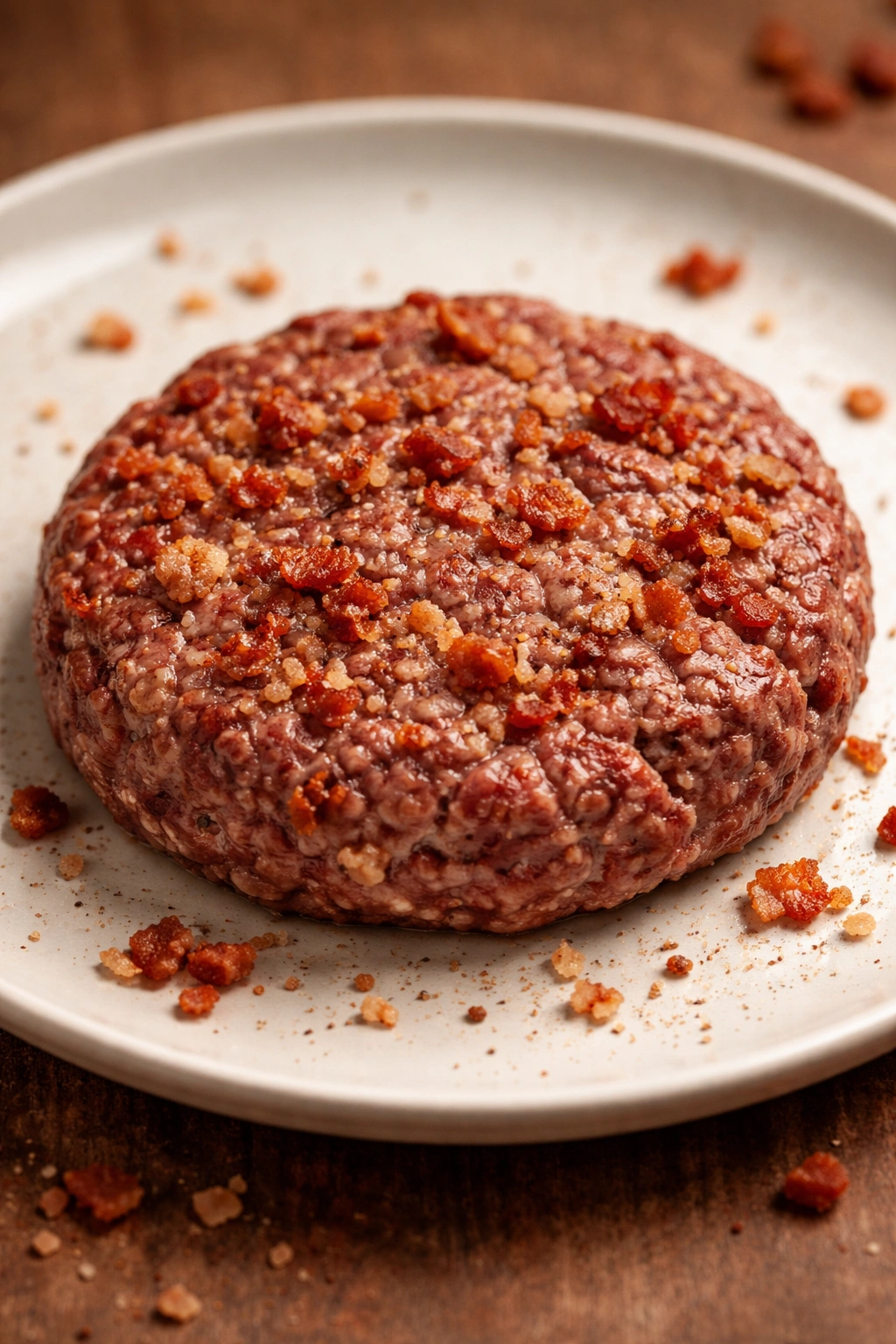
The beauty of hamburger steak is that it takes well to personalization. Once you’ve mastered the basic recipe, you can adapt it in several directions depending on what sounds good to you.
Add crispy bacon to the meat mixture. Crumble 4 slices of cooked bacon into small pieces and fold it into the ground beef mixture before forming patties. The bacon adds a smoky, salty depth that pairs beautifully with the gravy. This variation is absolutely delicious and is one of the most common upgrades you’ll see.
Top with melted cheese. Once the patties are done simmering and plated, top each one with a slice of Swiss cheese, Gruyère, or Monterey Jack. The residual heat from the gravy will melt it slightly. You can also add the cheese slice right when you plate if you prefer it melted more completely.
Make it creamy. If you love creamy gravies, stir in ½ cup of sour cream or a can of cream of mushroom soup during the final minute of cooking. Add it slowly, stirring constantly, so it incorporates smoothly without breaking. This makes the gravy richer and adds a subtle tangy note.
Skip the mushrooms and add sliced onion to the meat. Some diner versions use only caramelized onions in the gravy, without mushrooms. If you prefer this approach, skip the mushrooms entirely and use 3 large onions instead of 2, cooked down until they’re very soft and golden.
Use ground chuck or ground sirloin instead of 85% lean. Ground chuck (80/20) will have a beefier flavor but more fat, so you might want to drain some of the excess fat before making the gravy. Ground sirloin (90% lean) is leaner and will require you to be more careful not to overcook, since there’s less fat to keep it moist.
Make it with ground turkey. You can absolutely substitute ground turkey (93% lean) for the ground beef. The cooking time stays the same, but the internal temperature should reach 165°F instead of 160°F. The gravy will taste lighter and less beefy, but still delicious. Add an extra tablespoon of Worcestershire sauce to compensate for the lost beef flavor.
Add a splash of red wine. For a more sophisticated version, use 1 cup beef broth and ½ cup dry red wine instead of the 2 cups broth. Add the wine at the same time you’d add the broth. It adds a slight tannic depth and a subtle note of complexity.
Storage and Make-Ahead Guide
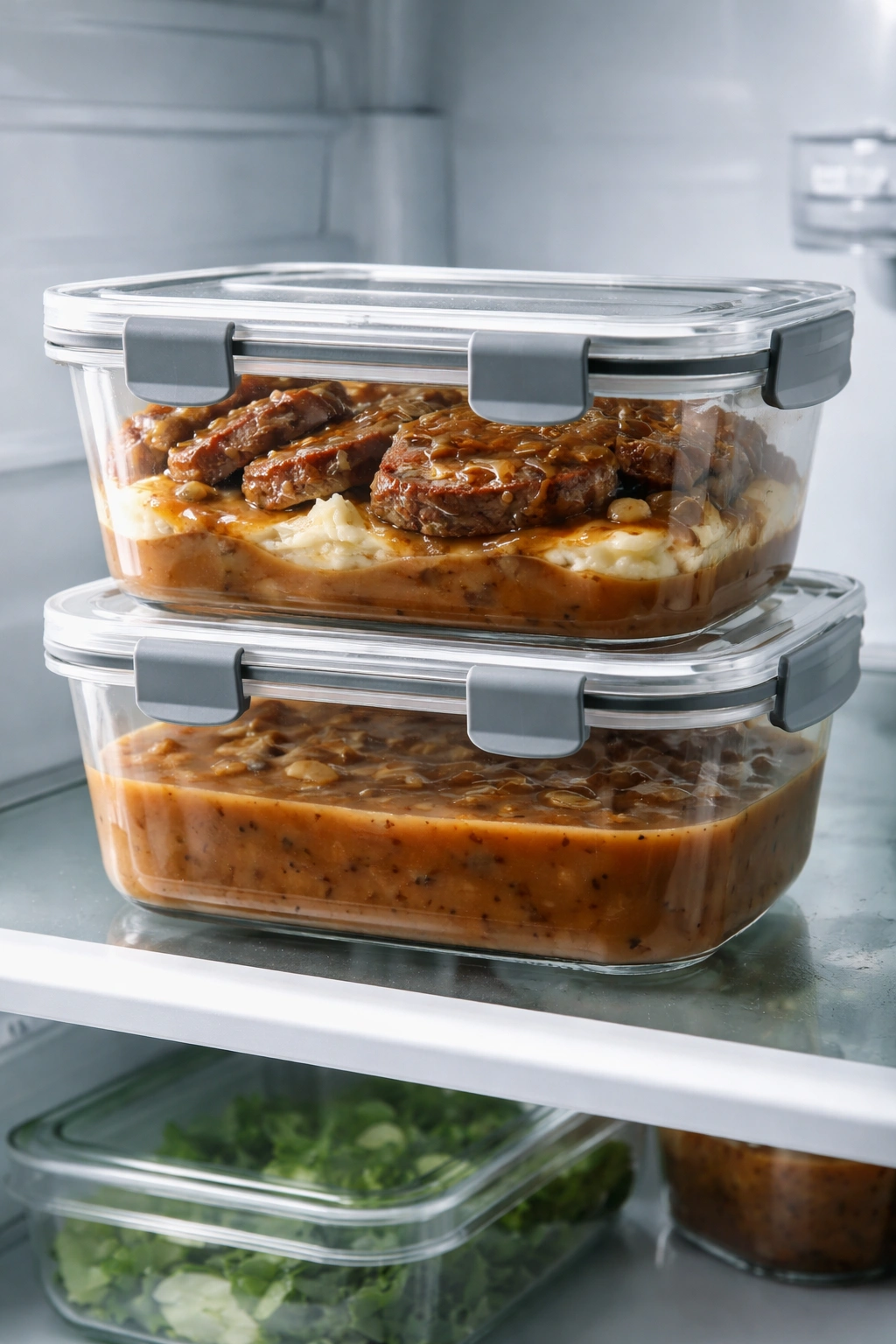
Hamburger steak and gravy is actually one of the best comfort foods for making ahead or storing, which makes it perfect for busy weeks.
Storing leftovers: Once completely cooled, transfer the patties and gravy to an airtight container and refrigerate for up to 3 days. The gravy keeps the meat moist even as it sits. You can also freeze the entire dish for up to 3 months. Frozen portions thaw best in the refrigerator overnight.
Reheating: Reheat gently in a covered skillet over medium-low heat, stirring occasionally, until warmed through. You can also microwave individual portions on 50% power (to prevent the patties from getting tough) for 3 to 4 minutes, stirring halfway through. Never blast reheated hamburger steak with high heat, as this can dry it out.
Make-ahead prep: You can form the patties up to 8 hours in advance and store them covered in the refrigerator. Bring them to room temperature for about 10 minutes before searing. You can also make the complete dish in the morning and reheat it at dinner time—many people find the flavors have actually melded together even better by the next day.
Freezing individual components: If you want to separate the parts, you can freeze the cooked patties and gravy in separate containers. Thaw both in the refrigerator before reheating together on the stove.
The Best Sides to Serve with Hamburger Steak
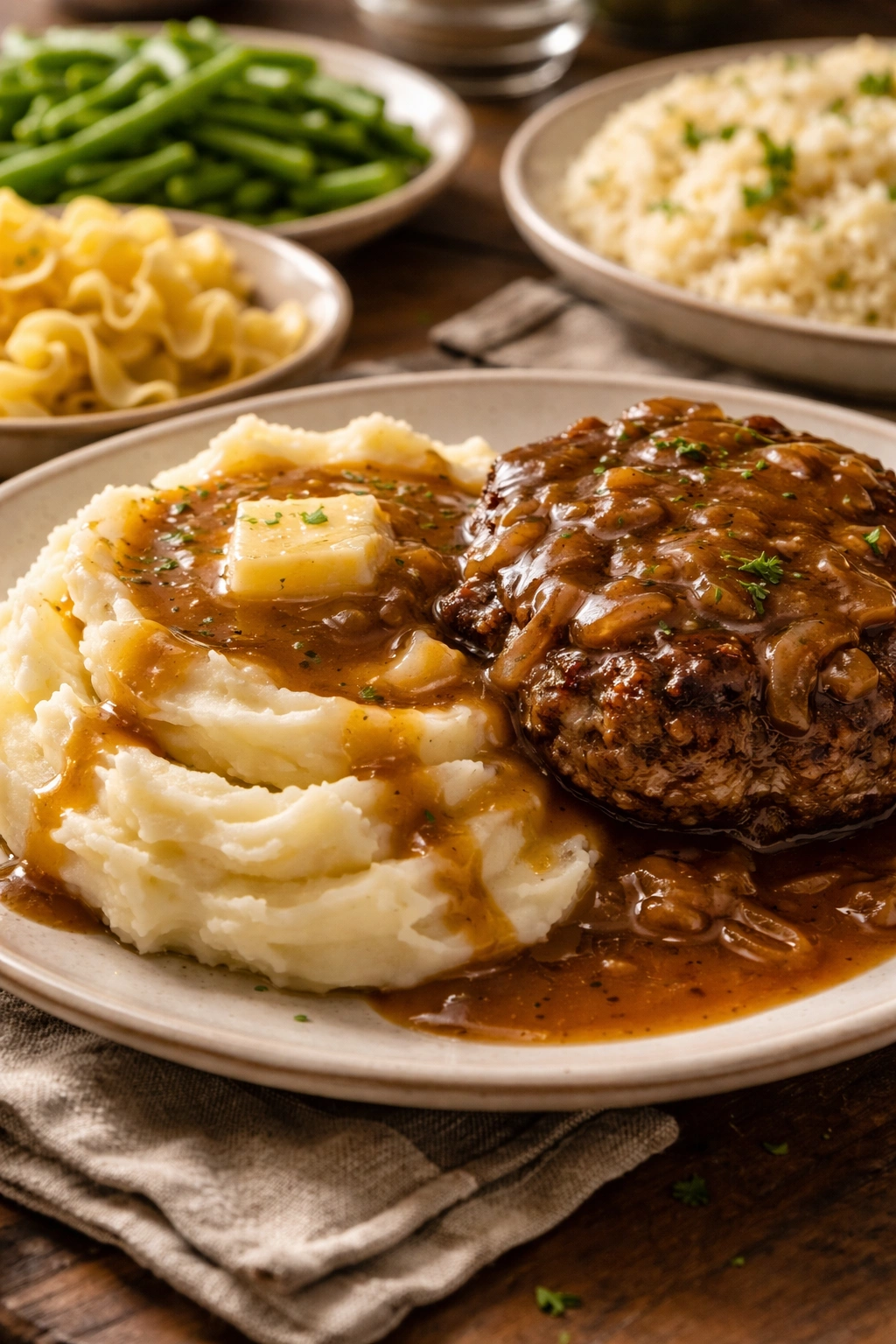
Hamburger steak and gravy is designed to be served with sides that complement its rich, savory nature. The gravy is meant to be ladled generously over everything on the plate, so you want sides that absorb and shine with that gravy coating.
Creamy mashed potatoes are the classic choice for an excellent reason. The starch and creaminess of mashed potatoes provide a neutral base that lets the gravy shine. Serve them piped high on the plate so they can catch the gravy. Seasoned with salt, pepper, and plenty of butter, they’re the perfect vehicle for soaking up every bit of sauce.
Egg noodles offer a lighter but equally delicious alternative. Wide egg noodles especially catch pockets of gravy and create a comforting, almost stroganoff-like combination. Toss the noodles with a small pat of butter and a sprinkle of salt before serving.
Buttered rice, whether white or brown, provides a simple side that absorbs gravy beautifully. The mild flavor of rice gets out of the way and lets the hamburger steak and gravy take center stage.
Steamed or sautéed green beans add a bright, fresh vegetable element that balances the richness of the main dish. Toss them with butter and garlic, or keep them simple with just salt and pepper.
Soft dinner rolls are less of a side and more of an essential tool. Use them to soak up extra gravy from the plate.
Creamed corn or corn pudding provides a slightly sweet, creamy vegetable option that pairs wonderfully with the savory gravy.
A simple tossed green salad with a vinaigrette provides a crisp, acidic counterpoint to the richness of the hamburger steak and gravy.
The key is choosing sides that won’t compete with your main dish. Hamburger steak and gravy is already rich and flavorful, so you want accompaniments that support rather than challenge it.
Common Questions About Making Hamburger Steak at Home
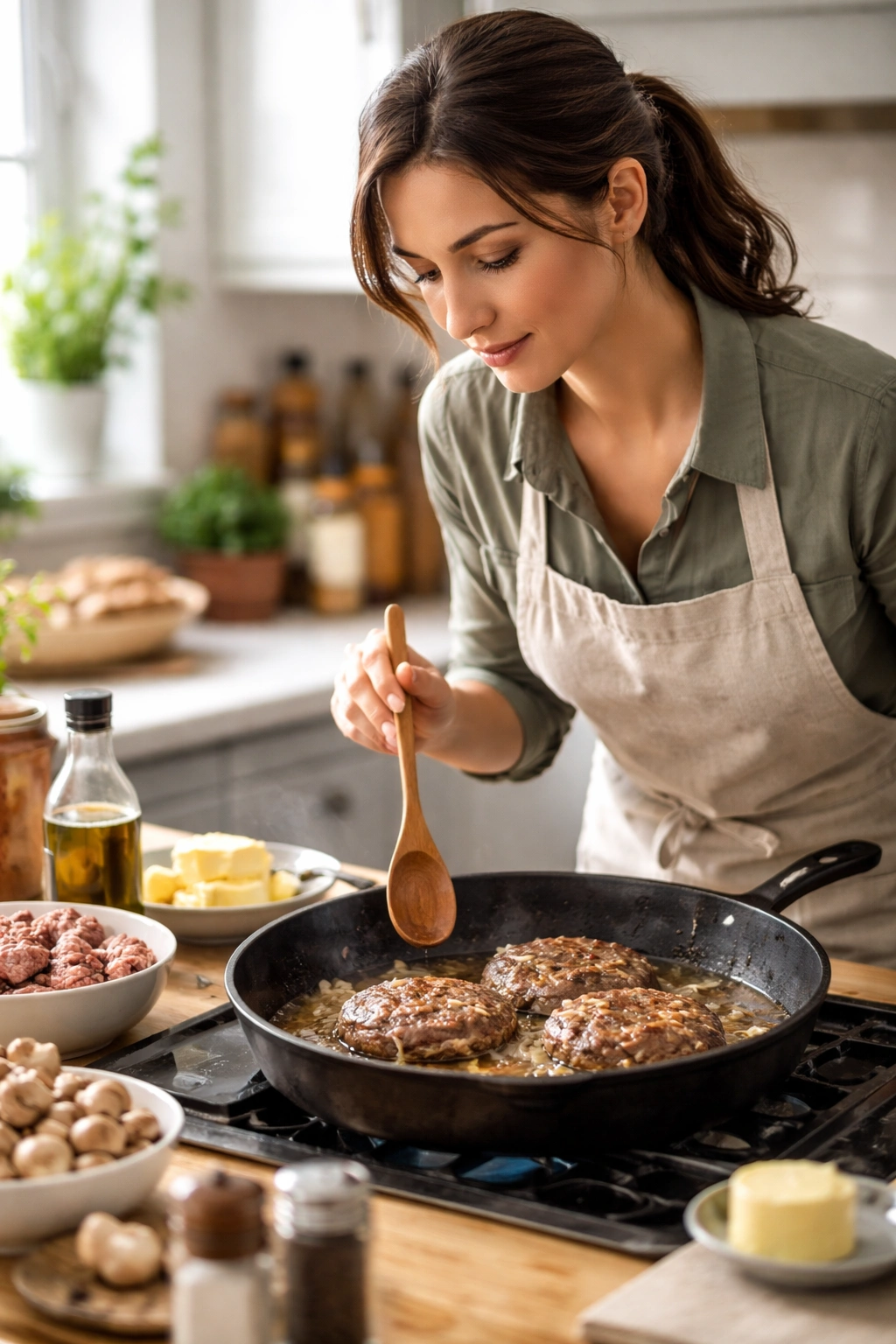
Can I make the patties without the shredded butter trick? You can, but the results won’t be as juicy. If you don’t have frozen butter on hand or simply prefer not to use this technique, just be very careful not to overcook the patties. Make sure your ground beef is 85% lean or fattier, and watch the internal temperature carefully. You’ll want to pull them out at exactly 160°F rather than cooking them longer.
What if I don’t have fresh mushrooms? You can omit the mushrooms entirely and the gravy will still be delicious. You can also use canned mushrooms (drained well) if that’s what you have on hand. Fresh mushrooms are preferred because they release flavorful liquid as they cook, but the gravy will work without them.
Can I use low-sodium broth? Absolutely. In fact, low-sodium broth is a good choice because you control the salt level more precisely. Regular broth can make the gravy quite salty if you’re not careful. Start with low-sodium broth and season to taste at the end.
What’s the difference between this and Salisbury steak? Hamburger steak uses minimal binders and focuses on the beef flavor. Salisbury steak includes breadcrumbs, egg, and milk mixed into the meat, creating a denser, more meatloaf-like texture. This recipe is pure hamburger steak—beef-forward and simple.
How do I keep the patties from falling apart when flipping? Make sure your pan is hot enough before you add the patties, and don’t flip them too early. Wait at least 4 minutes before flipping so the exterior develops enough structure to hold together. Use a wide, sturdy spatula and flip with confidence rather than hesitantly.
Can I make this in the oven instead of on the stovetop? You can brown the patties on the stovetop in a cast iron skillet, then transfer the whole skillet (minus the patties temporarily) to finish the gravy on the stovetop. You can’t really make the gravy effectively in the oven because you need direct heat to sauté the onions and mushrooms, to whisk in the broth, and to bring it to a boil. The stovetop is the best method.
Is there a way to make this less salty? Use low-sodium broth and go easy on the initial seasoning of the patties. You can always add more salt at the table, but you can’t take it out. Taste as you go and season conservatively.
Final Thoughts

There’s a reason hamburger steak and gravy has been a diner menu staple for so long. It’s affordable, it comes together quickly, and it delivers genuine comfort and satisfaction. More importantly, it proves that you don’t need expensive ingredients or complicated techniques to create restaurant-quality food at home. What you need is an understanding of why each step matters—the searing that builds flavor, the slow-cooked onions that add depth, the shredded butter that keeps everything moist, and the final cold butter swirl that makes the gravy silky.
This recipe gives you the keys to the diner kitchen. Once you’ve made it a few times and understand how the components work together, you’ll find yourself making it regularly. It’s the kind of dish that people request, that satisfies on cold nights, and that tastes somehow more impressive than its simple ingredient list would suggest. Serve it with creamy mashed potatoes, let the gravy do its work, and you’ll understand exactly why this humble dish earned its place on American diner menus.
