



There’s something almost magical about a steaming bowl of minestrone soup—it hits all the comfort zones at once. You get tender vegetables, hearty beans, silky pasta, and a rich tomato broth that somehow tastes like it’s been simmering all day, even though it comes together in less than an hour. This is the kind of soup that makes you understand why Italians have been perfecting it for generations, adapting it to whatever vegetables were in season and whatever families had on hand. The beauty of minestrone is that there’s no single “right” way to make it—it’s meant to be flexible, forgiving, and deeply personal.
The version here is loaded with fresh vegetables in every color imaginable: bright orange carrots, deep green spinach, pale zucchini, vibrant tomatoes. Each one contributes its own texture and flavor, building layers of taste that work together in harmony. Unlike the heavily salted canned versions many people remember from their younger years, this homemade minestrone tastes fresh and alive. You control exactly how much sodium goes in, which vegetables make the cut, and how thick or brothy you want it to be. More importantly, you’ll actually taste the vegetables instead of them being buried under salt and artificial flavoring.
The real magic happens when you understand the technique—how to build a proper flavor base, when to add delicate vegetables so they don’t turn to mush, and the smart trick of cooking pasta separately so every leftover serves you well. Once you nail this approach, minestrone becomes part of your regular rotation. It’s economical, nutritious, fills your kitchen with an incredible aroma, and honestly tastes even better the next day.
Why Minestrone Soup Is the Ultimate Comfort Meal
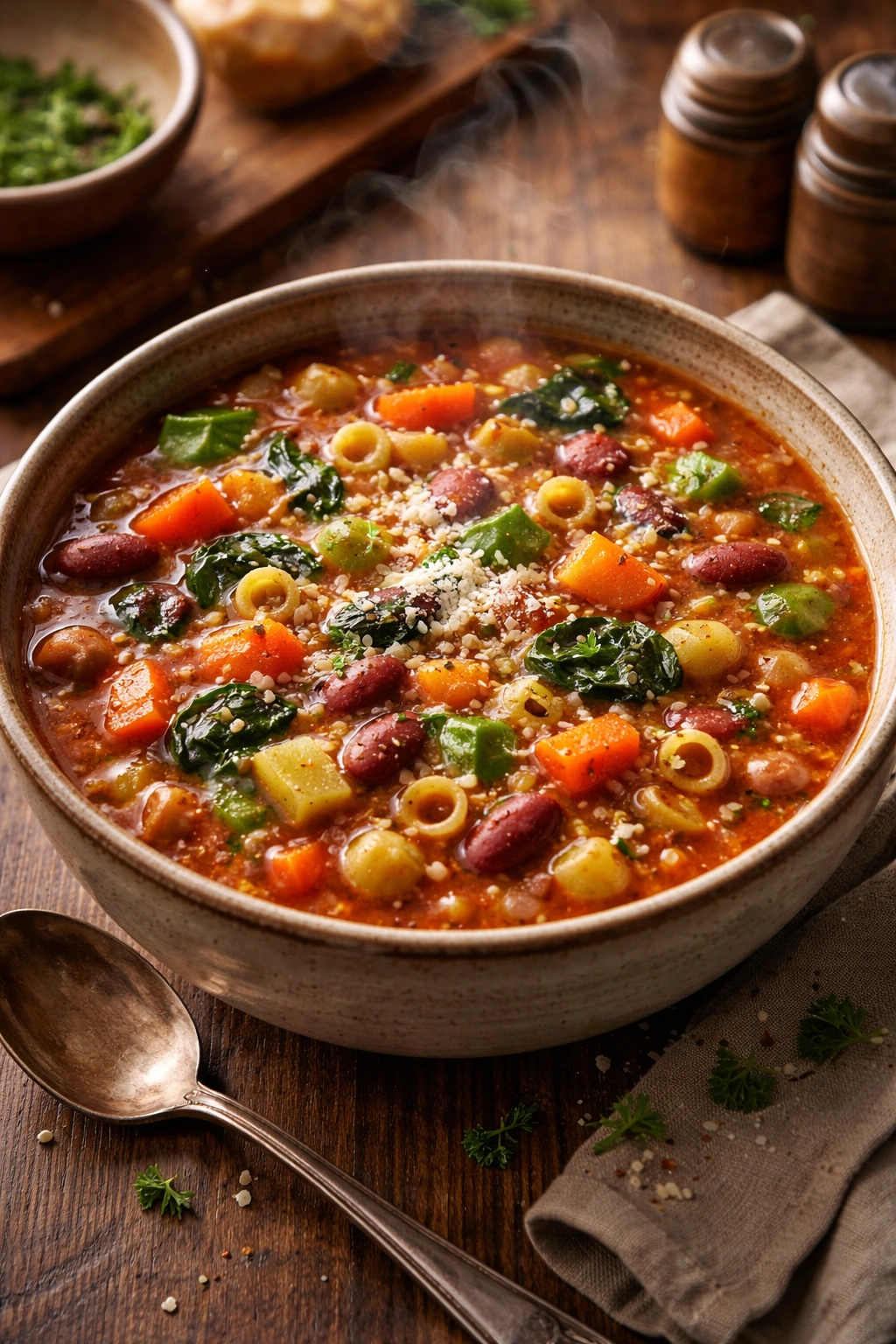
Minestrone represents everything that makes Italian cooking brilliant—it transforms humble, affordable ingredients into something that tastes far more impressive than the sum of its parts. The word itself comes from minestra, meaning soup, with the suffix -one suggesting something big or substantial. This isn’t a delicate broth; it’s a full meal that sustains you.
What makes minestrone work so well is its combination of textures and nutritional completeness. You get soft vegetables that break down slightly and release their sweetness into the broth, pasta that provides structure and satiety, beans that add protein and fiber, and tomato-based liquid that ties everything together with acidity and depth. No single element overwhelms; instead, they create a balanced whole that satisfies both hunger and craving.
Minestrone also fits seamlessly into different lifestyles and dietary approaches. It’s naturally vegetarian and easily vegan, high in fiber, relatively low in calories per serving, and adaptable to whatever dietary restrictions or preferences someone might have. Serve it to a crowd and everyone finds something they love in it.
What You’ll Love About This Minestrone Recipe
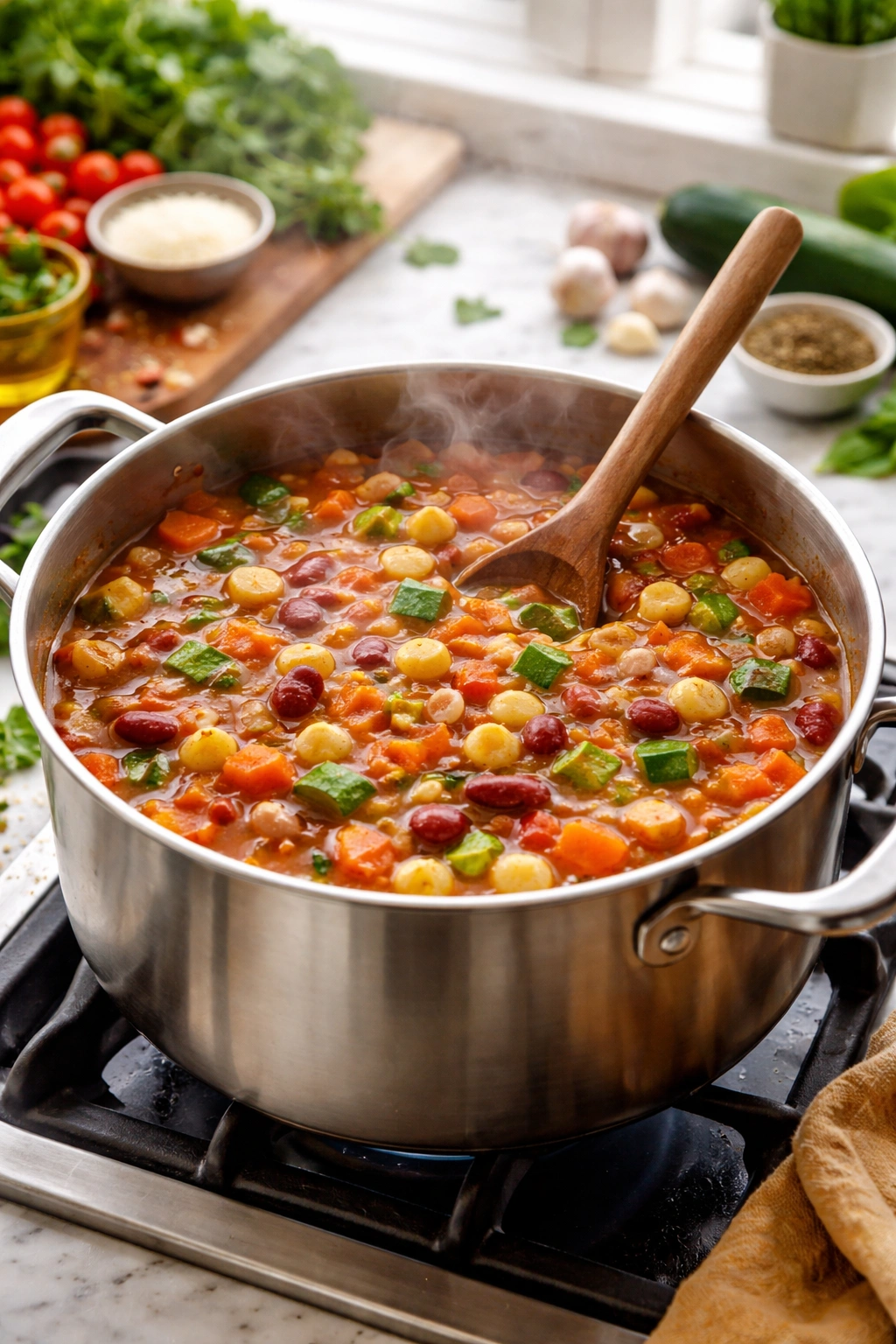
This particular approach to minestrone prioritizes both simplicity and results. The technique builds flavor methodically—first by sautéing aromatics until fragrant, then by adding tomato paste and letting it deepen and concentrate slightly before adding liquid. This simple step, often overlooked in rushed recipes, transforms the final soup from decent to genuinely delicious.
The recipe also respects your vegetables. Rather than throwing everything in at once and letting the most delicate pieces turn to mush while tougher ones stay firm, you’ll add vegetables in stages based on how long they actually need to cook. Root vegetables like carrots go in earlier; tender zucchini and spinach go in toward the end. The result is every vegetable cooked perfectly to its own ideal texture, which means every spoonful feels intentional.
You’ll also appreciate the flexibility here. The core technique and flavor base stay the same, but you can easily swap vegetables based on what’s available, what’s in season, or what your family prefers. One season you might emphasize root vegetables; another time you might load it with summer squash. The soup adapts to you without requiring you to hunt down a new recipe.
Essential Ingredients for Perfect Minestrone Soup
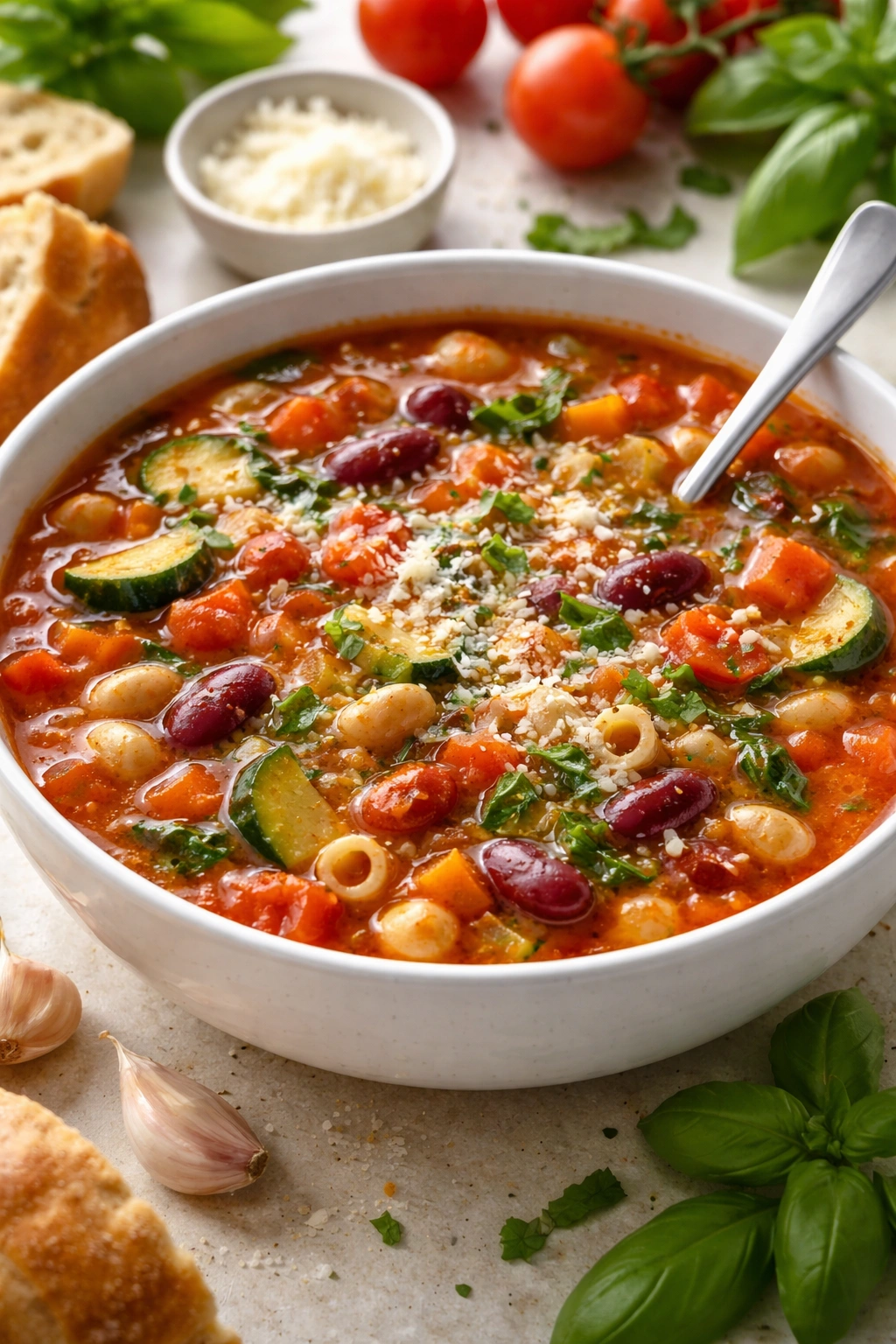
Before you start cooking, let’s talk about what actually goes into this soup and why each ingredient matters. Minestrone succeeds because it balances several flavor profiles—it needs savory depth, bright acidity, herbal notes, and richness. The ingredients below work together to create that balance without being fussy or requiring specialty items.
Olive oil serves as the cooking fat and also brings its own subtle fruitiness to the finished soup. You don’t need to use your most expensive extra-virgin oil for cooking (heat diminishes its complexity), but the kind you buy for everyday use works perfectly. The oil helps soften vegetables and carries fat-soluble flavors throughout the broth.
Aromatics—onion, carrots, and celery—form what Italians call the soffritto, the flavor base that everything else builds upon. These three vegetables, sautéed together until softened, release sugars and develop caramelized notes that add depth far beyond what raw vegetables could contribute. This foundational step takes only about 5-7 minutes but transforms the entire soup.
Garlic gets added after the soffritto has softened because garlic burns easily and turns bitter if exposed to high heat too long. Just a minute of cooking after the soft vegetables are ready is enough to make it fragrant and integrated without being harsh.
Tomato paste is the secret weapon here. Rather than jumping straight to canned tomatoes, you sauté the tomato paste in the oil for a minute or two, which concentrates and deepens its flavor. This step is often skipped in quick recipes, but it’s absolutely worth the extra moment—the difference in the final soup’s flavor is noticeable.
Canned diced tomatoes provide both liquid and tomato flavor without the work of fresh tomatoes (which often lack flavor outside peak season anyway). The juice in the can becomes part of your broth, so don’t drain it away. One large 28-ounce can or two smaller 15-ounce cans both work fine.
Vegetable or chicken broth forms the base liquid. Low-sodium broth is essential here because you’ll be reducing and concentrating flavors as the soup simmers; using regular-sodium broth could make the final result too salty. Homemade broth is wonderful if you have it, but quality store-bought broth works beautifully too.
Beans add protein, fiber, and heartiness. Canned beans are convenient and work perfectly—just drain and rinse them first to remove excess sodium and the starchy liquid that can make the broth cloudy. Kidney beans or white beans are traditional, though you could use chickpeas, cannellini beans, or a combination of whatever you prefer.
Pasta should be small-shaped—ditalini, small shells, elbow macaroni, or orecchiette all work well. Small shapes stay in proportion with the vegetable pieces and are easier to eat. Critically, cook the pasta separately and only add it to individual bowls when serving. This prevents mushy pasta in leftovers and means you can easily adjust the pasta-to-broth ratio for each serving.
Fresh vegetables are where you get to customize. Carrots, celery, onion, zucchini, and green beans form the classic combination, but spinach, kale, potatoes, or bell peppers all have their place. The vegetables you choose should be relatively fresh, though they don’t need to be perfectly unblemished—this is a soup that uses what you have.
Dried herbs—basil, oregano, thyme, and bay leaves—add herbal complexity without the delicate flavor that fresh herbs would lose in long cooking. You’ll finish the soup with fresh parsley or basil for brightness, but the dried herbs do the heavy lifting during simmering.
Salt and black pepper are essential for seasoning. Start conservatively with salt since broth is already salted, and you can always add more at the end. Freshly ground black pepper, added generously, brings a subtle warmth and spice.
Stovetop Minestrone: Building Flavor Step by Step
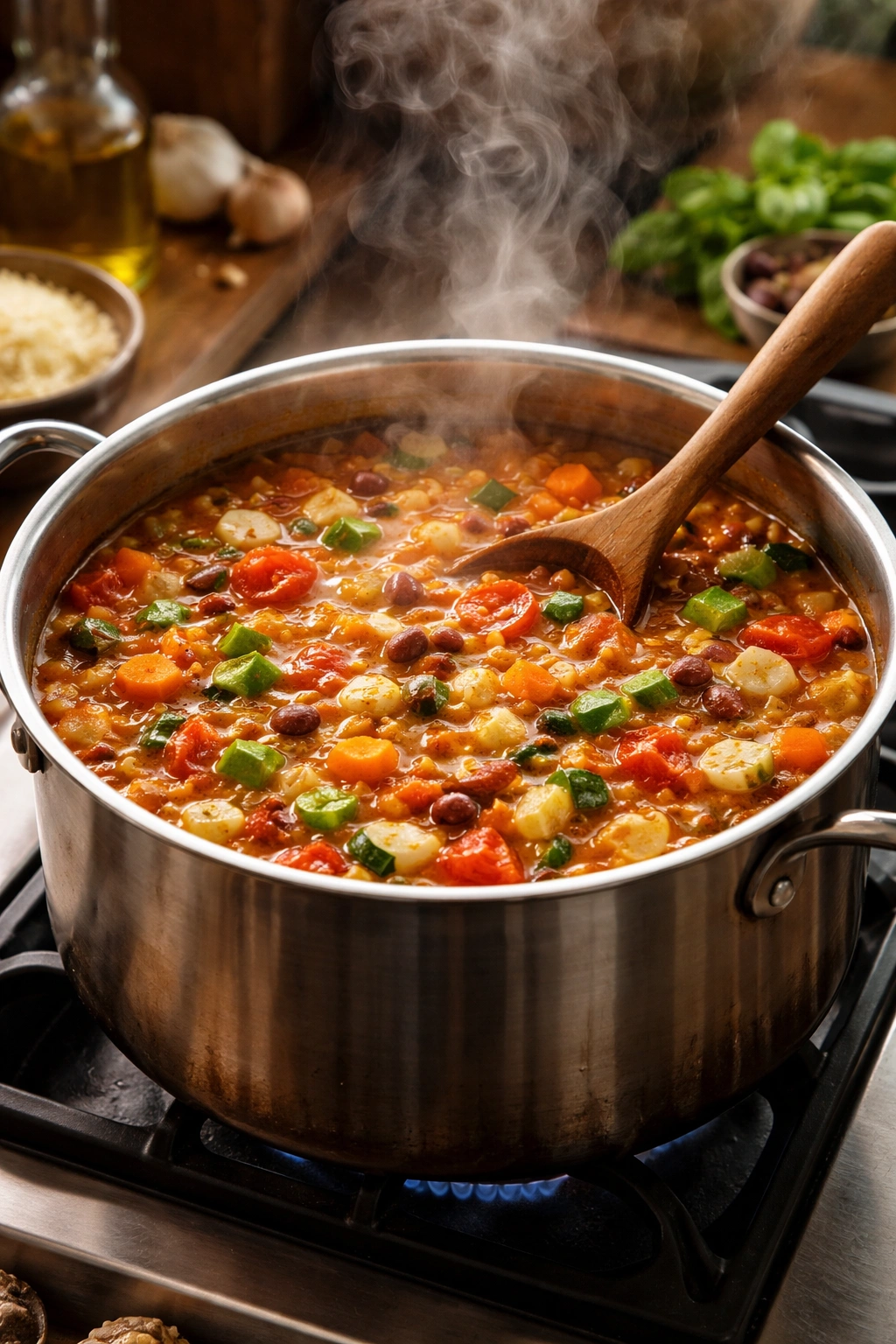
The technique for this minestrone is straightforward but deliberate. Understanding the why behind each step helps you succeed and also helps you troubleshoot if something doesn’t feel quite right.
The process begins with heat and oil. You’ll warm olive oil in a large pot over medium-high heat until it shimmers, which means it’s hot enough to cook vegetables efficiently but not so hot that it smokes or burns. This is the moment to add your chopped onions, carrots, and celery—the soffritto. The heat will immediately cause them to sizzle softly. You’re not trying to brown them aggressively; instead, you’re softening them and encouraging them to release their natural sugars and flavors into the oil.
Stir them occasionally for about 5-7 minutes, scraping up any browned bits from the bottom of the pot. You’ll notice the onions becoming translucent at the edges, and the mixture will smell sweet and savory. Once the vegetables show these signs, add your minced garlic and cook for just 1 minute more, stirring constantly. Garlic is where timing becomes critical—too long and it turns sharp and bitter; just long enough and it becomes sweet and integrated.
Now comes the tomato paste step that separates good minestrone from ordinary. Add your tomato paste (usually 2-3 tablespoons) and stir it into the vegetables, coating everything evenly. Let it sit in the hot pot for 1-2 minutes, stirring occasionally. You’ll see it darken slightly and become more concentrated. This might sound minor, but this step develops the tomato flavor dramatically—you’re essentially caramelizing the paste slightly, which brings out umami and depth.
Pour in your diced tomatoes with their liquid, then your broth and water. Stir well to combine, making sure there are no lumps of tomato paste hiding at the bottom. This is the moment to add your dried herbs and your bay leaf. If you’re using a Parmesan rind (a wonderful trick borrowed from Italian cooking for adding umami depth), add it now too—just remember to fish it out before serving.
Bring the whole pot to a gentle boil, then reduce the heat to maintain a simmer. A simmer means small bubbles breaking the surface occasionally, not a rolling boil. A rolling boil can make vegetables break down too much and toughen pasta. Cover the pot partially—leave the lid slightly ajar so steam can escape—and let it simmer gently for about 10-15 minutes.
While that’s happening, prepare your vegetables in stages. Some vegetables (carrots, celery, green beans) need longer cooking, while others (zucchini, spinach) need just a minute or two. About 10 minutes into the simmering time, add your carrots and any other hardy vegetables that need real cooking time. These will cook alongside the broth, gradually softening and flavoring it.
About 5 minutes before you plan to serve (or slightly longer if you’re making it ahead), add the more delicate vegetables like zucchini and any leafy greens. These cook very quickly—zucchini becomes tender in 3-4 minutes, and spinach wilts in seconds. Adding them at the end means they maintain their color, texture, and fresh flavor rather than becoming mushy and dull.
At this point, taste your broth and adjust seasoning. It should taste balanced—savory but not salty, with bright acidity from the tomatoes, herbal from the basil and oregano, and rich from the soffritto and olive oil. If it tastes flat or one-dimensional, you likely need salt. Add it in small pinches and taste between each. If it tastes too acidic, a pinch of sugar helps balance it. If it feels thin or lacks depth, you might add another tablespoon of tomato paste.
How to Build Deeper Flavor in Your Minestrone
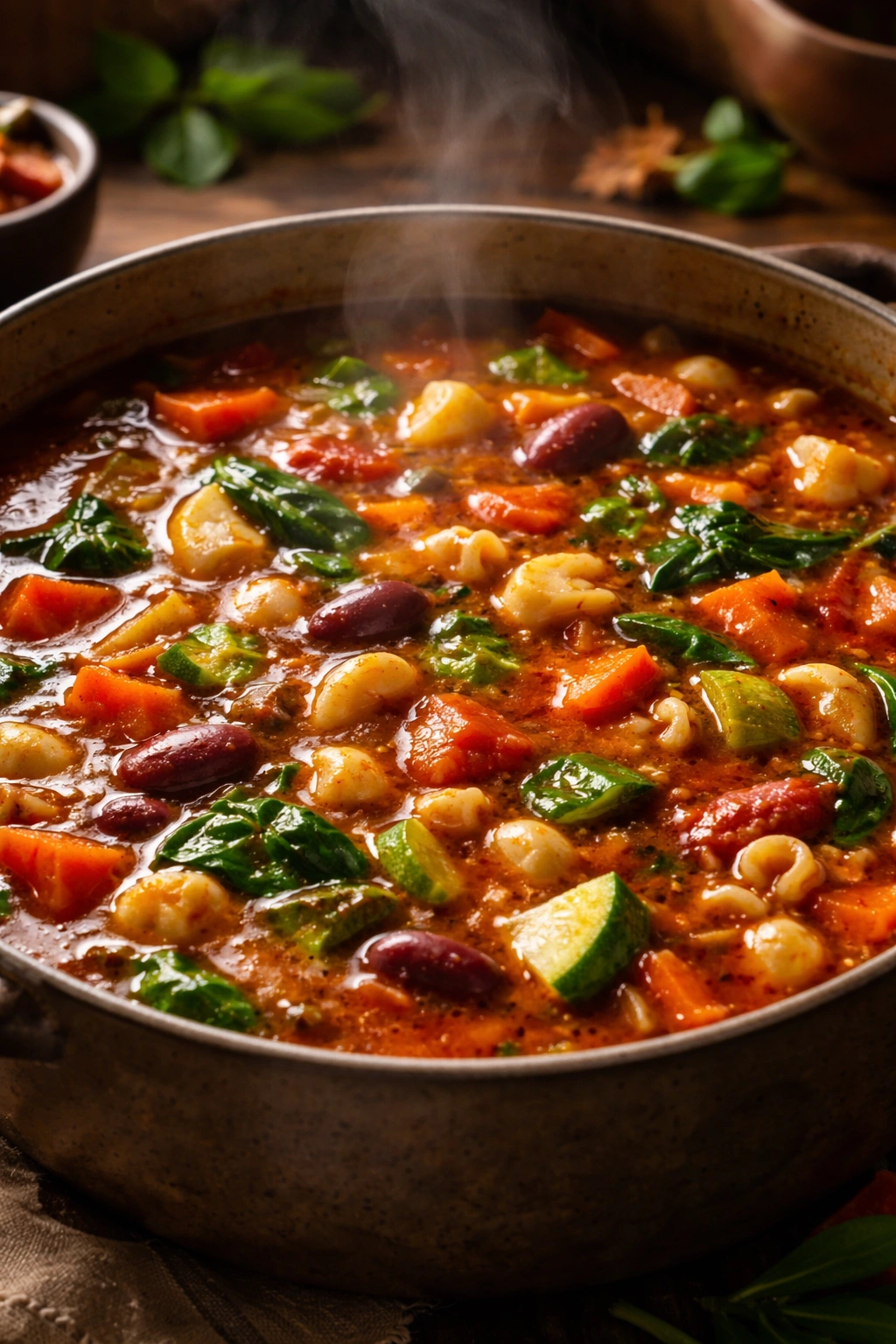
Many home cooks assume minestrone tastes the way it does because of what’s in it. The real secret is understanding how to combine those ingredients to maximize flavor. A few subtle techniques make an enormous difference.
The soffritto matters more than anything else. Don’t rush this step. Taking a full 5-7 minutes to properly soften your onions, carrots, and celery develops their natural sugars and creates a deeply flavorful base. If you skip this or do it too quickly over high heat, the vegetables barely soften, and they contribute raw, sharp flavors instead of the sweet, mellow depth that makes minestrone distinctive.
Tomato paste deserves its own moment in the pan. Once you add it to your cooked aromatics, let it sit and concentrate for a minute before adding liquid. This small step is what professional cooks do automatically and home cooks often skip—but it’s what transforms tomato flavor from “I can taste tomato” to “this broth tastes rich and deep and almost savory, and tomato is somehow part of that without being obvious.”
Use both broth and water in your liquid base, rather than only broth. This might seem counterintuitive, but here’s why it works: broth is already flavored, and using only broth can make the final soup taste one-dimensional or overly salty. Water gives the vegetables and herbs space to contribute their own flavor without fighting against the broth. The combination creates a more complex, balanced broth than either alone.
Layer your herbs. Dried basil, oregano, and bay added at the start provide foundational herbal flavor throughout the cooking time. Fresh parsley and basil added near the end bring brightness and fragrance that the dried herbs can’t match. Using both means you get depth and freshness in the same bowl.
The quality of your vegetables actually matters here. Because minestrone is essentially a vegetable soup, using vegetables that taste good makes an obvious difference. Carrots should taste sweet, not like water. Celery should be crisp with some flavor. Onions should be fresh-looking, not dry or sprouting. You don’t need restaurant-quality produce, but vegetables from the good section of your produce department will serve you better than sad, old vegetables from the discount bin.
Cook pasta separately. This seems like an extra step, but it’s actually the most important technique for making minestrone that tastes great fresh and remains delicious for days. When pasta cooks in the soup, it gradually absorbs broth and becomes mushy after a few hours of sitting. By cooking pasta separately and only adding it to individual bowls, you ensure perfect texture whether someone eats it immediately or you’re reheating leftovers days later.
The Best Vegetables to Use in Minestrone
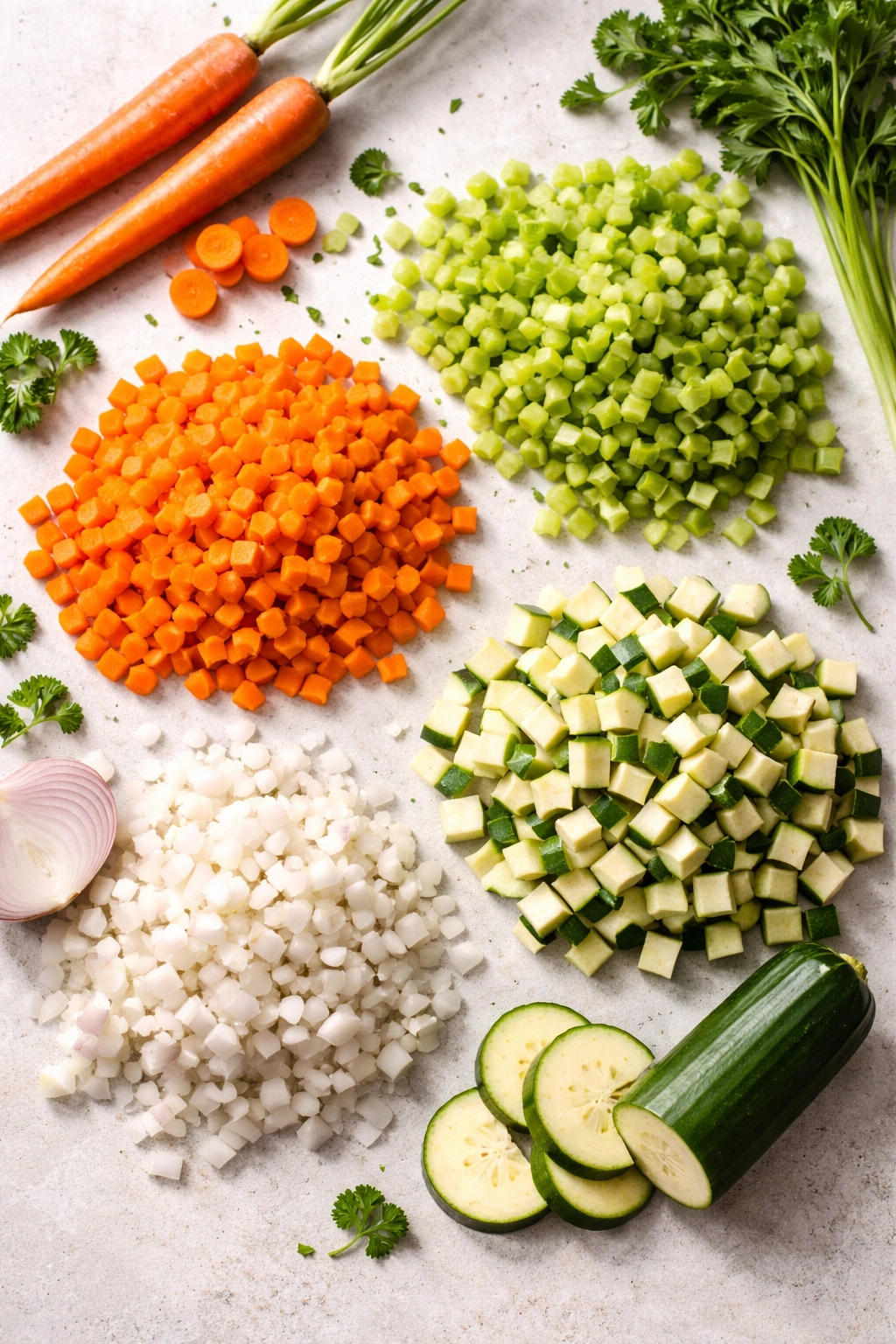
The vegetable selection in minestrone is wonderfully flexible, but certain combinations work particularly well because they provide complementary flavors and textures.
Carrots are essentially mandatory. They’re sweet, they hold their shape during cooking, and they provide that warm orange color that makes minestrone visually appealing. Slice them thinly (about ¼ inch) so they cook quickly and evenly. One to two medium carrots, chopped or sliced, is standard.
Celery provides subtle flavor that seems to deepen everything around it. It’s not a vegetable that announces itself, but when it’s absent, people notice. Use one to two stalks, chopped, and slice them thin enough that they become quite tender during cooking.
Onion forms the third part of the aromatic base. Yellow or white onions both work beautifully. One medium onion is standard, chopped into small, uniform pieces so it softens evenly.
Zucchini brings a delicate, slightly sweet flavor and tender texture. It cooks quickly, so add it toward the end of cooking. One medium zucchini, diced into small cubes, is typical. In cooler months when zucchini isn’t available, yellow summer squash, butternut squash, or even diced potatoes work equally well.
Green beans add color, texture, and a subtle vegetal freshness that contrasts nicely with the richness of the tomato broth. Cut them into 1-inch pieces and add them partway through cooking so they maintain some firmness rather than becoming mushy. About one cup of fresh or frozen green beans is standard.
Spinach provides nutrients and a pop of green color. Add fresh or frozen spinach in the last few minutes of cooking. Frozen spinach works beautifully—just add it straight from the freezer, and it will wilt into the hot soup in moments. Use about one to two handfuls of fresh spinach or about half a cup of frozen.
Tomatoes are built into the recipe as canned diced tomatoes, but some versions add fresh tomatoes for even more depth. If you’re using fresh tomatoes, they should be quite ripe, and you’d add them earlier in cooking so they break down and flavor the broth. Most of the year, quality canned tomatoes actually taste better than pale, flavorless fresh ones, so don’t feel obligated to use fresh.
Herbs: Fresh basil and parsley added at the end bring brightness. Add them literally in the last minute of cooking or when you serve, so they maintain their fresh flavor rather than becoming cooked and dull. A large handful of chopped fresh parsley and a handful of fresh basil is typical.
Beyond these classics, you can add pretty much any vegetable that you like. Bell peppers, broccoli, kale, collard greens, potatoes, sweet potatoes, corn, mushrooms, and peas all work beautifully. The key is considering how long each vegetable needs to cook—tougher vegetables like potatoes go in earlier, tender vegetables like mushrooms and peas go in near the end.
Pasta Selection and Cooking Tips for Minestrone
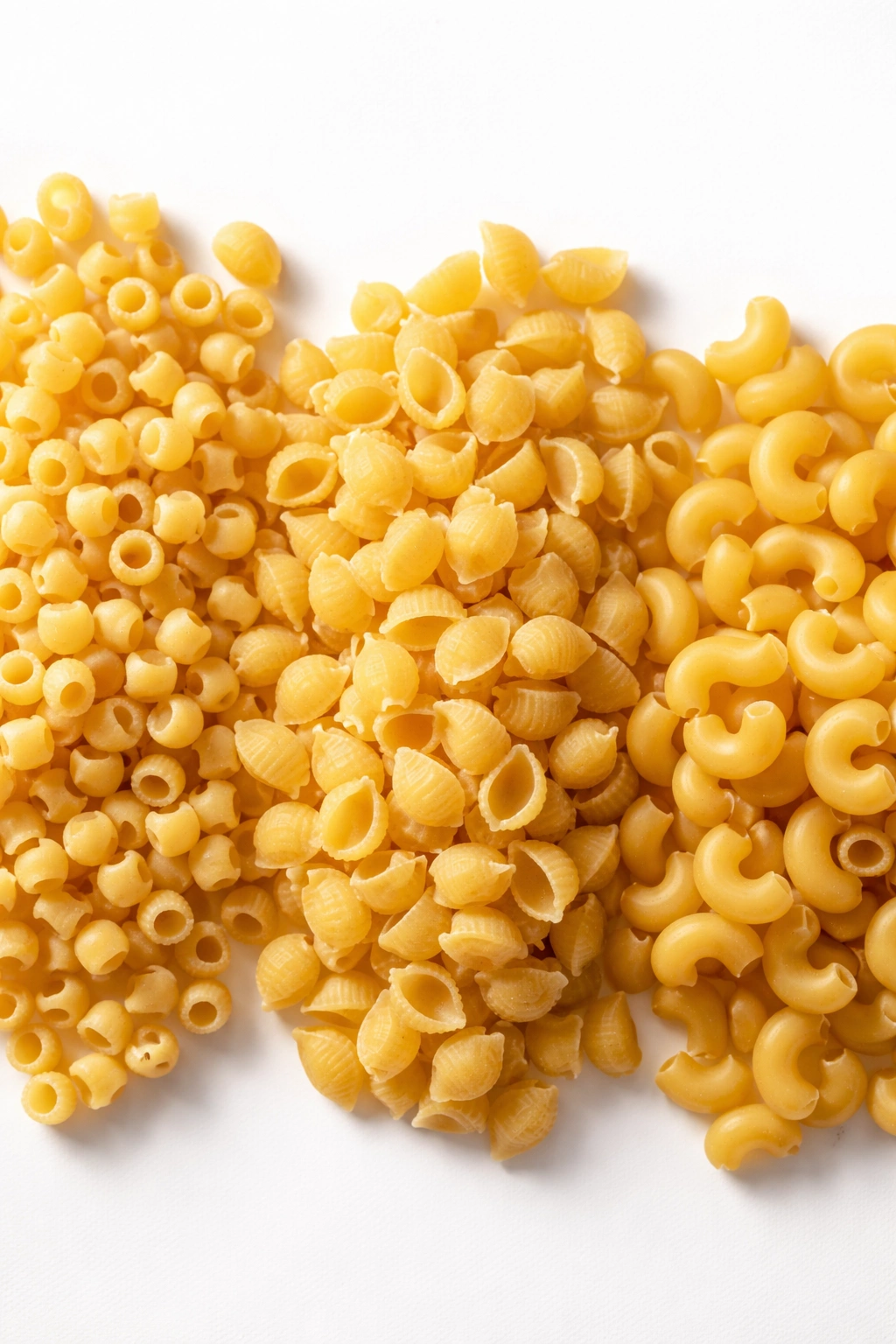
The pasta choice in minestrone matters more than many people realize. You want small pasta shapes so each spoonful contains a balanced ratio of pasta, vegetables, and broth. Large pasta shapes like penne or rigatoni overwhelm the soup, making bites pasta-heavy rather than harmonious.
Ditalini (tiny tubes) is the classic choice and arguably the best option. Small shells, elbow macaroni, and orecchiette all work wonderfully too. Even broken spaghetti is acceptable if that’s what you have on hand. The shape matters less than the size—you want pieces small enough that they fit easily on a spoon with vegetables.
Cook the pasta separately in salted boiling water, cooking it just to al dente according to package directions. Al dente means the pasta is tender but still has a slight firmness in the center when you bite it. This is critical because the pasta will sit in the hot soup for a few minutes before serving, and even that brief time softens it further. If you cook it too long initially, by the time you eat it, it’ll be mushy.
Drain the cooked pasta but don’t rinse it. The starch on the surface helps it hold together and adds a tiny bit of texture. Add a small splash of the pasta cooking water or the soup broth to the drained pasta so it doesn’t dry out while you finish the soup.
Add the pasta to individual bowls, then ladle the hot soup over top. This is the key technique that makes minestrone work so beautifully for leftovers. When you reheat the soup days later, the pasta doesn’t have time to absorb gallons of broth and turn to mush. Each serving gets only as much pasta as someone will eat in that moment, so it remains properly textured.
If you’re serving minestrone immediately, some people prefer to add the pasta directly to the pot and let it mingle with the broth for a moment before serving. This is fine for same-day eating, but if you plan to have leftovers, definitely use the separate-pasta method.
Common Mistakes and How to Avoid Them
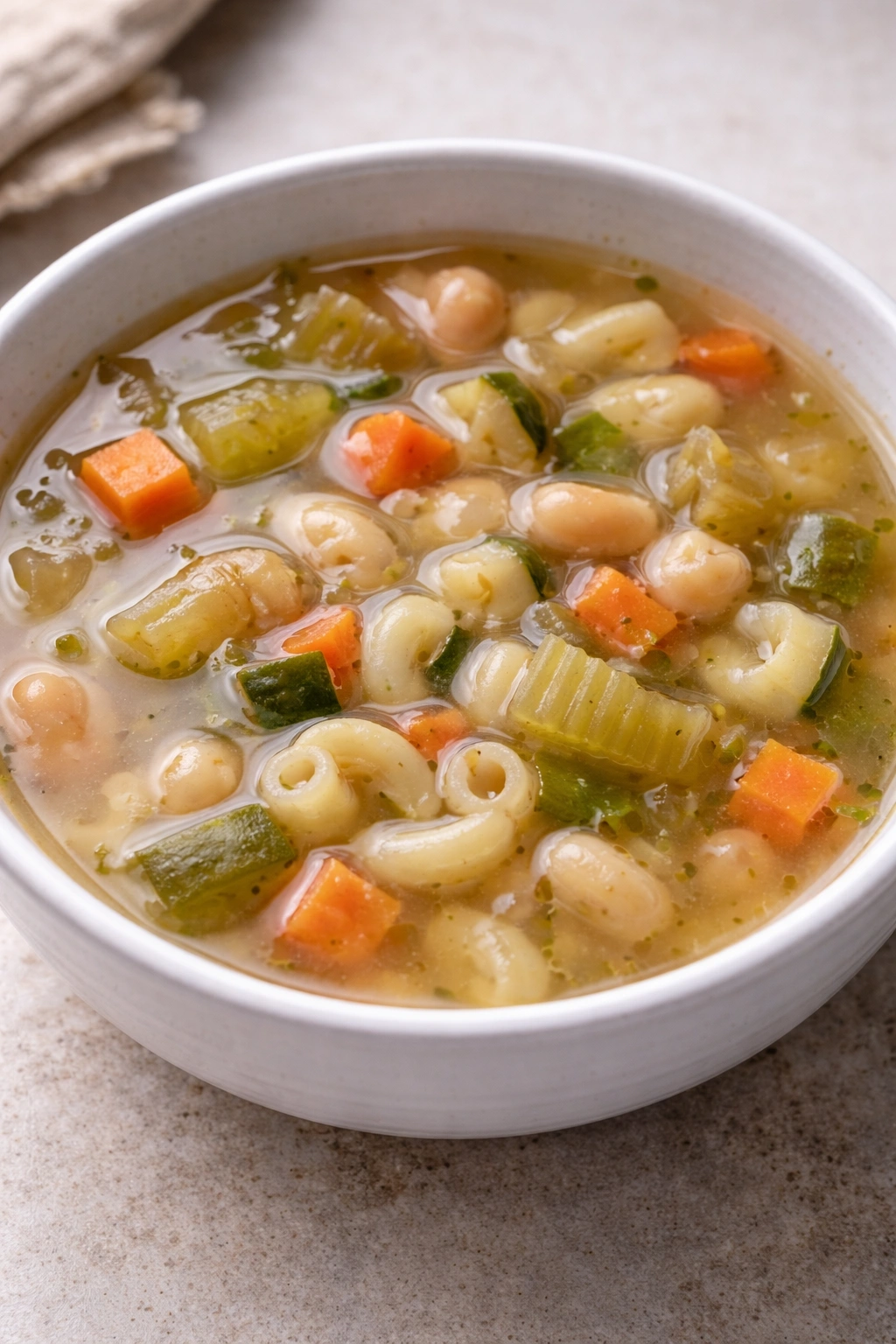
Even with a straightforward recipe, a few mistakes can turn really good minestrone into disappointing minestrone. Understanding what goes wrong helps you prevent it.
The most common mistake is not building proper flavor at the start. If you skip or rush the soffritto, or if you don’t give the tomato paste that crucial moment to deepen, the soup will taste thin and watery rather than rich and complex. The good news: this takes only about 10 extra minutes, and it makes an enormous difference.
Overcooking vegetables is the second biggest mistake. Minestrone vegetables should be tender but still hold their shape. If you let them cook too long, they fall apart into the broth, and you end up with soup that looks like baby food rather than an attractive, vegetable-studded soup. The solution: add tender vegetables near the end, and don’t let the whole pot simmer for longer than necessary.
Using only broth for liquid leads to one-dimensional flavor. Using both broth and water, or even broth with a splash of white wine or lemon juice, creates more complexity. This is especially important if you’re using concentrated, heavily flavored broth—cutting it with water prevents the soup from tasting like broth with vegetables in it rather than a balanced soup.
Mushy pasta in leftovers is completely avoidable if you cook pasta separately. This is truly the secret to minestrone that’s good fresh and better the next day. Even if cooking an extra pot of water feels like a bother, it’s worth it.
Seasoning too early is tempting but a mistake. If you add all your salt at the beginning and then the soup simmers for 30+ minutes, flavors concentrate and the salt becomes overpowering. Add salt conservatively at first, then taste and adjust at the very end when you know exactly what you’re working with.
Using tired, bland vegetables means tired, bland soup. Quality vegetables genuinely matter in a recipe that’s basically just vegetables, broth, and beans. This doesn’t mean buying premium produce, just picking vegetables that actually look fresh and vibrant rather than wilted or old.
Easy Variations to Make It Your Own
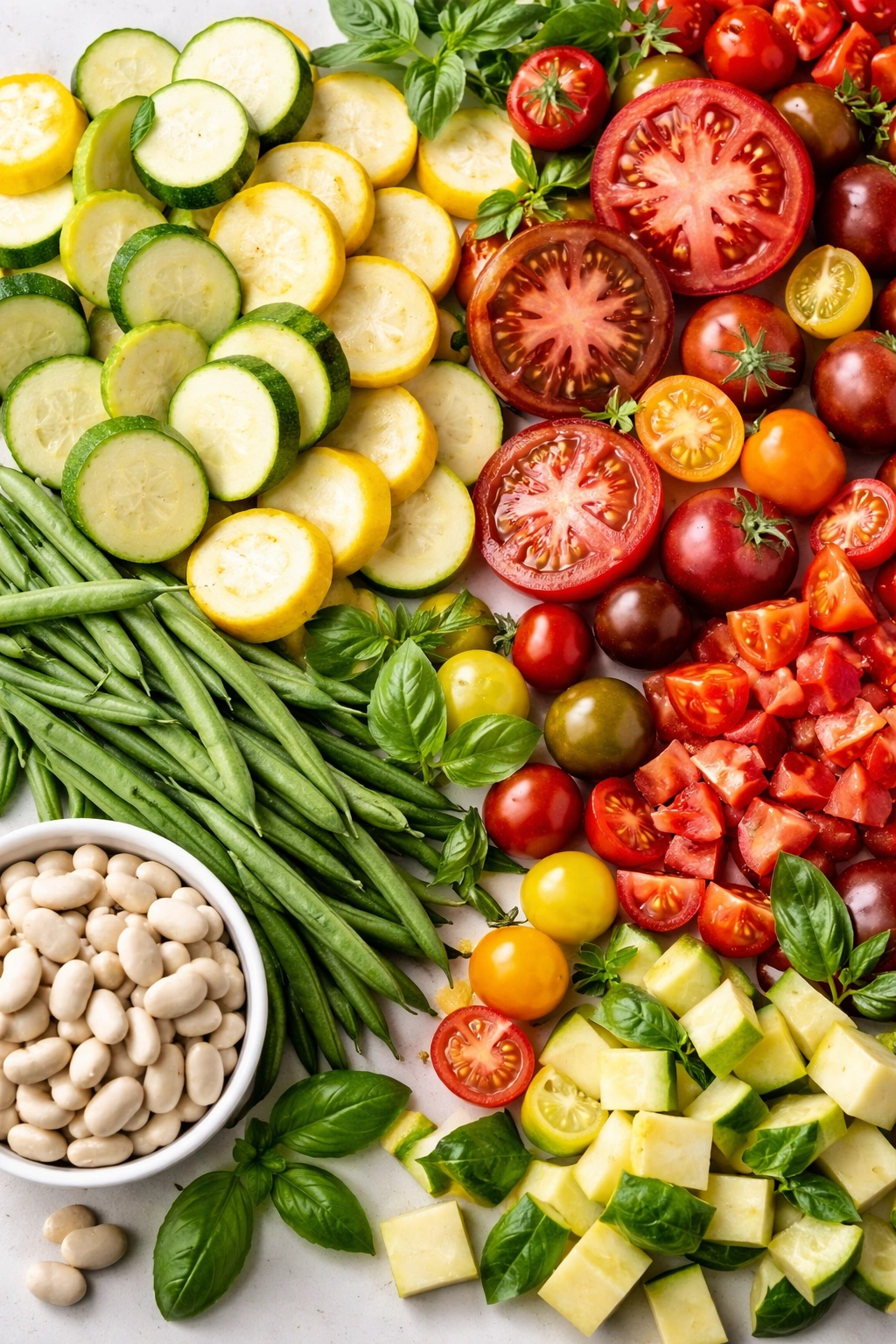
This is where minestrone really shines—you can make endless variations without changing the core technique. The method stays the same; only the vegetables and sometimes the seasonings shift.
For summer minestrone, emphasize zucchini, yellow squash, fresh green beans, and heirloom tomatoes when they’re in season. Add fresh basil aggressively because it’s at its absolute peak. Lighter versions with more greens and less pasta work beautifully when the weather is warm.
For winter minestrone, swap zucchini for potatoes or sweet potatoes, emphasize carrots and other roots, and add sturdy greens like kale or collards. Add an extra tablespoon of tomato paste for depth, and use warming spices like rosemary and a tiny pinch of red pepper flakes.
For a creamier minestrone, blend a portion of the cooked soup and return it to the pot, or stir in a splash of heavy cream or coconut milk at the end. This turns it from broth-based to more substantial.
For a meatier version, brown ground turkey or Italian sausage first, then proceed with the recipe as written. Or add chunks of cooked chicken or diced pancetta. The veggie-forward nature of the soup means meat is an enhancement rather than essential.
For a grain-based version instead of pasta, try barley, farro, or even quinoa. These add different textures and nutritional profiles. Cook them according to package directions and add them either during cooking or in the last few minutes.
For a white bean version, use cannellini or Great Northern beans instead of kidney beans. Add a Parmesan rind if you have one—the combination of white beans and Parmesan is absolutely delicious.
For extra protein without meat, add chickpeas, lentils, or extra beans. More beans means a thicker, more substantial soup that’s incredibly nutritious.
For dietary adaptations: Minestrone is naturally vegetarian and easily vegan by skipping any cheese garnish. It’s also naturally gluten-free if you use gluten-free pasta and make sure your broth is certified gluten-free.
Storage, Freezing, and Make-Ahead Tips
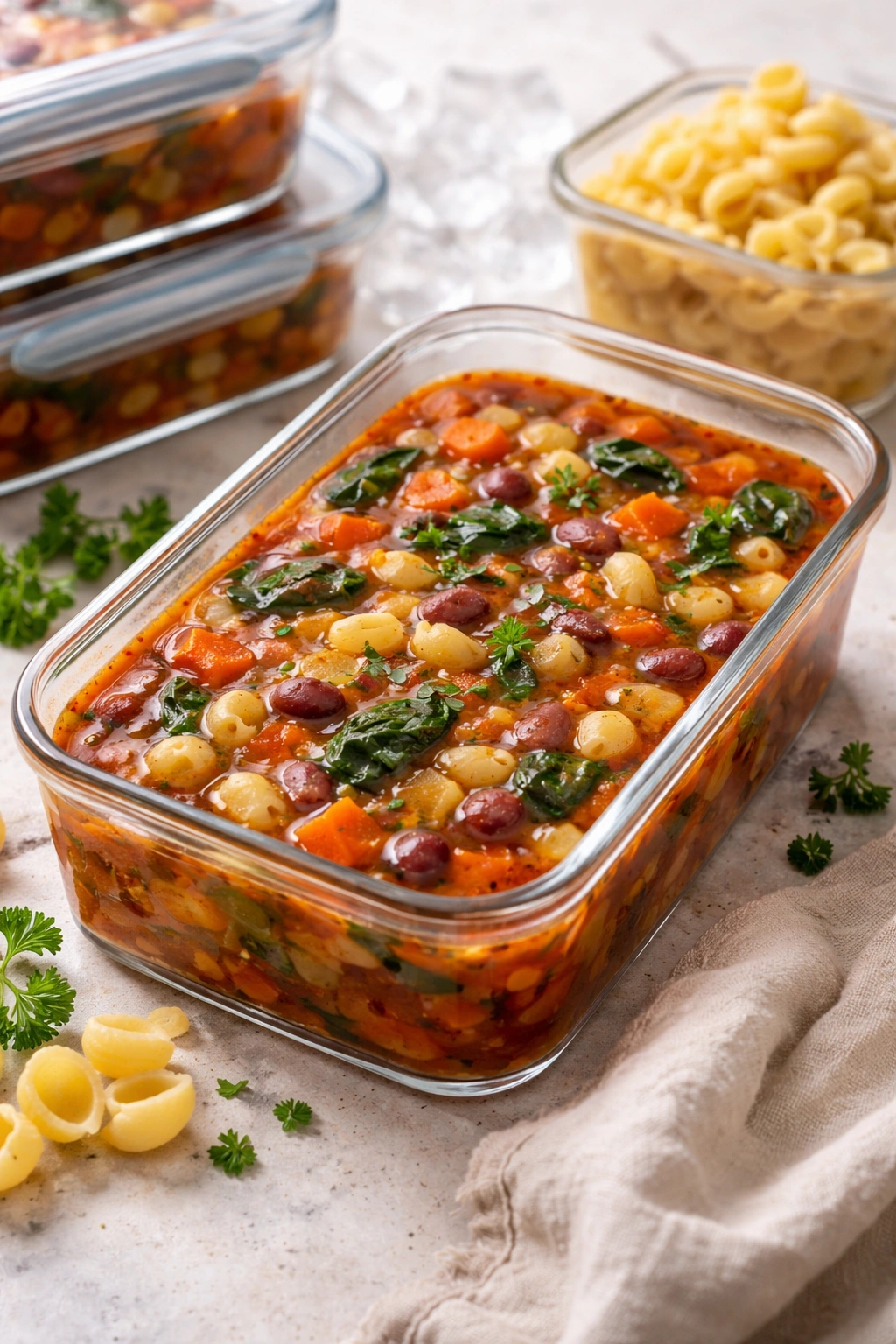
One of minestrone’s best qualities is how well it stores and how great it tastes days later (assuming you’ve cooked the pasta separately).
In the refrigerator, minestrone keeps beautifully for up to 5-6 days in an airtight container. The flavors actually deepen and meld over a day or two, making day-three minestrone arguably better than day-one. When you reheat, warm it gently on the stovetop over medium heat, stirring occasionally. If it’s gotten too thick from absorption, add a splash of broth or water to restore the consistency you prefer.
For freezing, let the soup cool to room temperature completely, then transfer it to freezer-safe containers, leaving about ½ inch of headspace at the top to allow for expansion as liquid freezes. Minestrone freezes beautifully for up to 3 months. Thaw overnight in the refrigerator, then reheat gently on the stovetop. Again, you might need to add a little liquid to restore the original consistency.
The make-ahead strategy: You can prepare minestrone completely the day before you plan to serve it—just don’t add the pasta. Store the soup and the pasta separately. When you’re ready to eat, reheat the soup gently, cook fresh pasta (or reheat the previously cooked pasta with a splash of broth), and add pasta to individual bowls before ladling soup over top. This approach guarantees perfect texture.
Another make-ahead option: Prep all your vegetables the day before and store them in separate containers in the refrigerator. When you’re ready to cook, everything comes together in about 45 minutes since the prep work is done.
Batch cooking tip: This recipe makes enough for about 6-8 servings, but it doubles beautifully if you want to make a massive pot and freeze portions. This makes it perfect for those days when you want to cook once and have dinner sorted for a week.
Serving Suggestions and Perfect Pairings
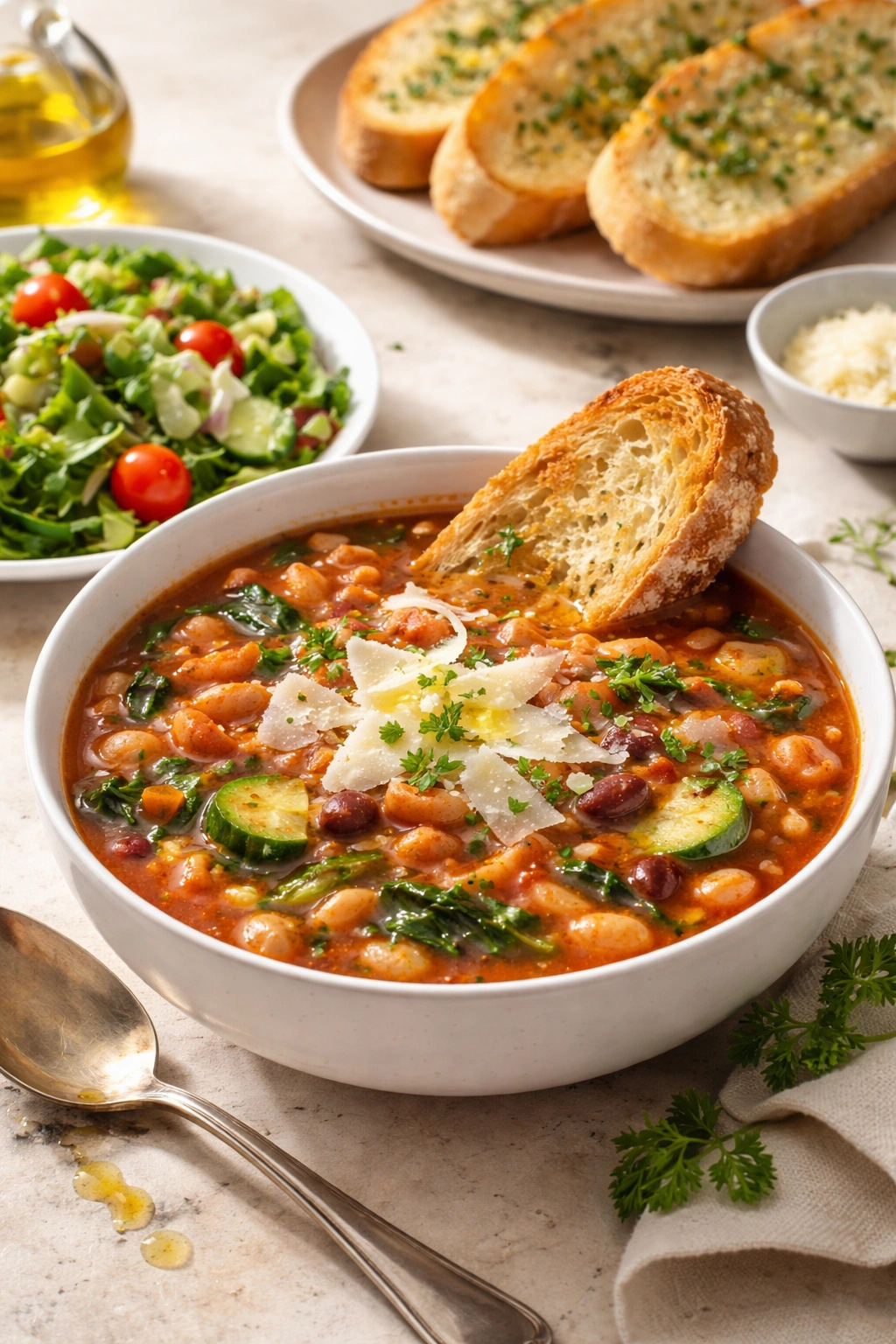
Minestrone is substantial enough to be a complete meal on its own, but a few accompaniments make it feel more special.
Crusty bread is the classic pairing—use it for dipping into the broth and soaking up every bit of flavor. Garlic bread, toasted with olive oil and fresh garlic, is absolutely luxurious. Even simple grilled bread rubbed with a cut garlic clove adds the perfect contrast to the soup’s soft textures.
A fresh salad with bright vinaigrette balances the rich soup beautifully. Try a simple green salad with lemon vinaigrette, a crisp arugula salad, or a colorful chopped salad with lots of herbs and acid. The contrast between the cool, crisp salad and the warm, soft soup is wonderful.
Grated Parmesan cheese is the traditional garnish—use a microplane to create delicate curls that look beautiful and melt into the warm soup. A sprinkle of chopped fresh parsley or basil right before eating adds freshness and color.
A drizzle of good olive oil over each bowl is simple but effective. It adds richness and a whisper of fruitiness that elevates the whole experience.
For wine pairing, light, crisp white wines work beautifully—think Pinot Grigio, Sauvignon Blanc, or Vermentino. Even light red wines like Barbera or Dolcetto work if you prefer red.
For a more substantial meal, minestrone pairs well with Italian grilled cheese sandwiches, mozzarella and tomato sandwiches, or antipasto platters. You could also serve it alongside a simple pasta dish for a more Italian-restaurant-style meal.
Final Thoughts
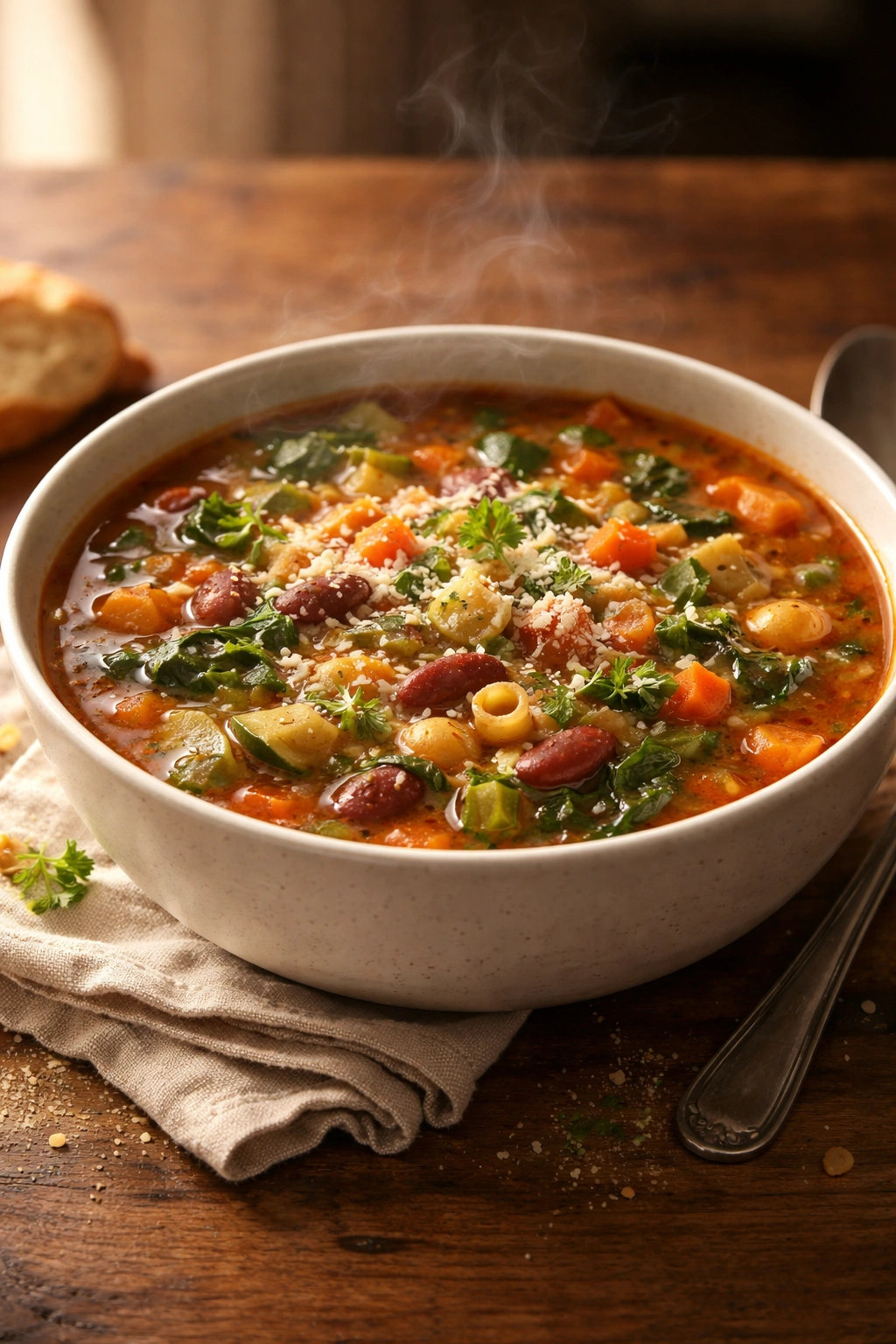
Minestrone represents everything that makes home cooking rewarding. It’s economical—you can make a big pot for a modest cost. It’s healthy—packed with vegetables, beans, and whole grains with minimal processed ingredients. It’s forgiving—the flexible vegetable list means you can adapt it to exactly what you have and what you like. And it’s delicious, with deep, complex flavors that come from proper technique rather than fancy or expensive ingredients.
Once you make this minestrone a few times, you’ll understand the underlying structure well enough to improvise confidently. You’ll know how to adjust it for seasons and preferences, how to make it extra quick or let it simmer longer for more depth, how to serve it fresh or save it for the week ahead. That’s the real gift of learning to make a classic soup well—you’re not just learning a recipe, you’re learning an approach that serves you endlessly.
Serving and Timing Information
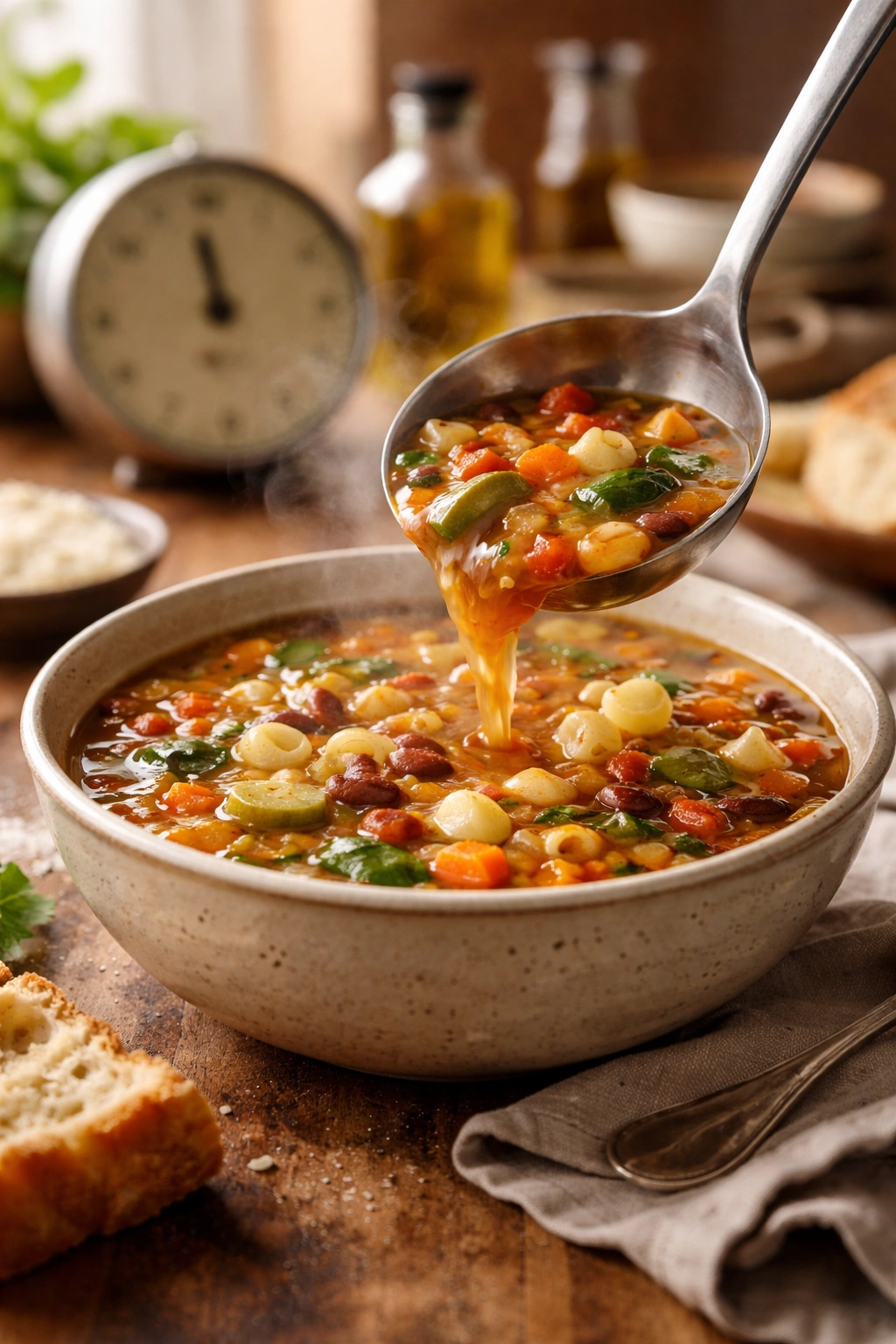
Yield: Serves 6 to 8 (about 2¾ quarts)
Prep Time: 20 minutes
Cook Time: 40 minutes
Total Time: 1 hour
Difficulty: Beginner — This soup involves straightforward chopping and standard stovetop cooking with no special equipment or techniques required. If you can chop vegetables and watch a pot simmer, you can make minestrone successfully.
Complete Ingredient List
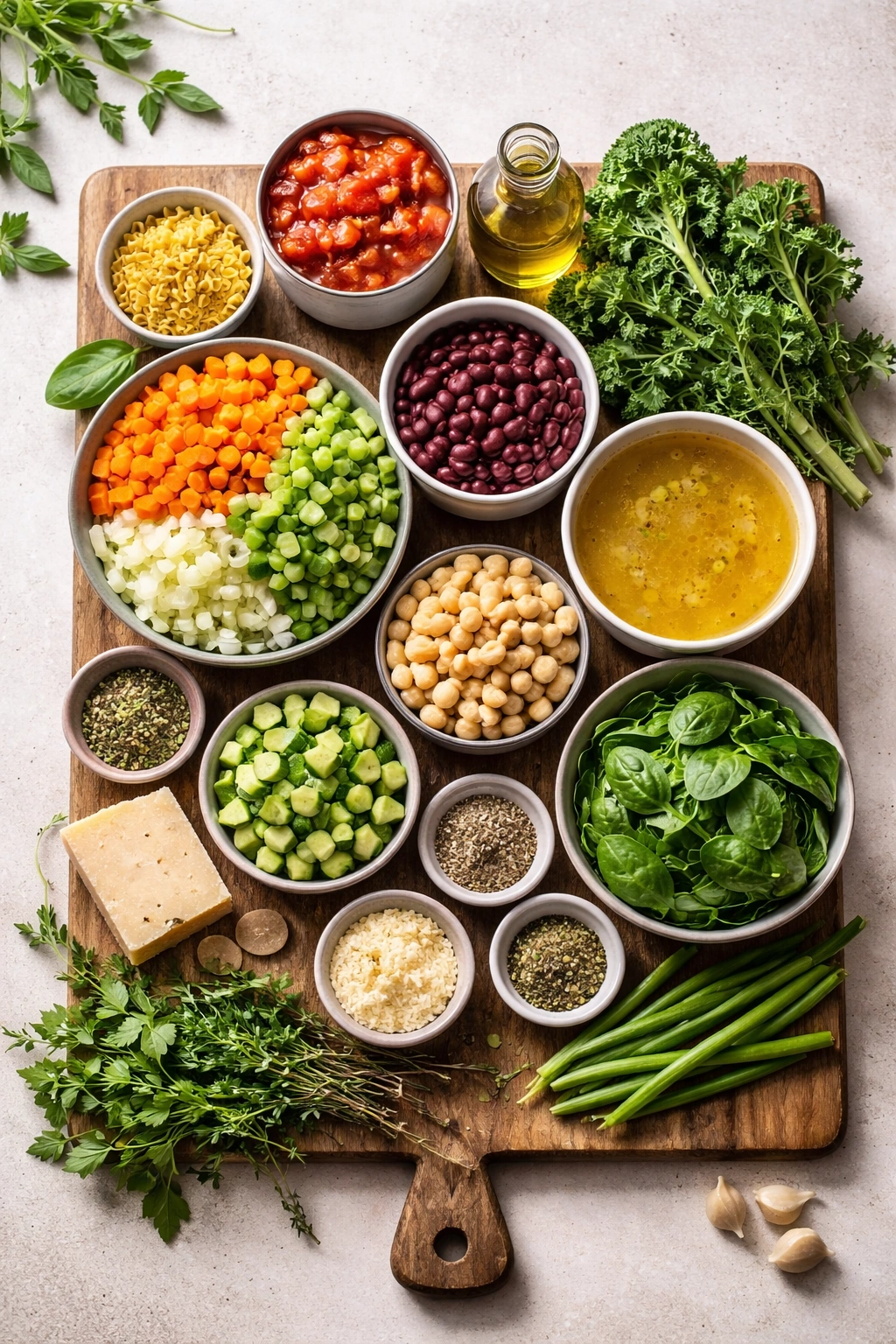
For the Soup Base:
- 3 tablespoons extra-virgin olive oil
- 1 medium yellow onion, chopped into small pieces (about ¾ cup)
- 2 medium carrots, peeled and sliced into thin coins or small chunks (about 1½ cups)
- 2 celery stalks, thinly sliced (about 1 cup)
- 4 garlic cloves, minced or pressed
- 3 tablespoons tomato paste
- 1 (28-ounce) can diced tomatoes with their juice (or two 15-ounce cans)
- 4 cups low-sodium vegetable or chicken broth
- 2 cups water
- 2 bay leaves
- 1 teaspoon dried oregano
- 1 teaspoon dried basil
- ½ teaspoon dried thyme
- 1 Parmesan rind, about 2 inches long (optional but recommended for extra depth)
For the Vegetables:
- 1 medium zucchini, cut into small dice (about 1½ cups)
- 1 cup fresh or frozen green beans, trimmed and cut into 1-inch pieces
- 2 cups fresh baby spinach, roughly chopped (or ½ cup frozen chopped spinach)
- 1 (15-ounce) can kidney beans, white beans, or cannellini beans, drained and rinsed
- Salt and freshly ground black pepper to taste
For the Pasta:
- ¾ cup small pasta (ditalini, small shells, elbow macaroni, or orecchiette)
For Finishing and Serving:
- 2 tablespoons fresh chopped parsley
- 1 tablespoon fresh chopped basil (or additional parsley if basil isn’t available)
- Grated Parmesan cheese for serving
- Extra-virgin olive oil for drizzling over bowls
Step-by-Step Instructions
Prepare Your Ingredients:
-
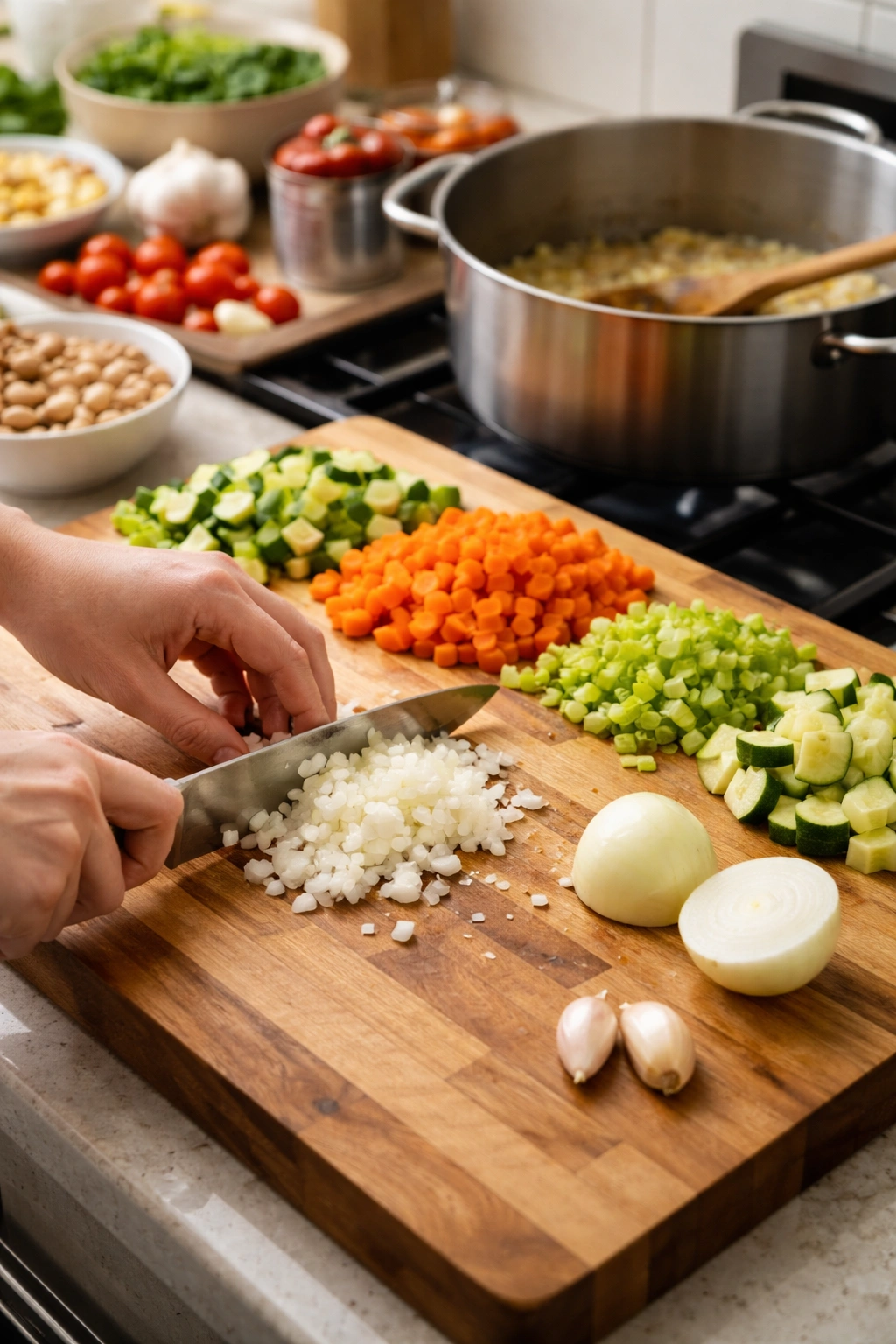
Wash all vegetables and set them on a cutting board. Peel the onion and carrots. Chop the onion into small, uniform pieces (aim for pieces about the size of a pea). Slice the carrots thinly—coins about ¼ inch thick work beautifully, or cut them into small chunks, whichever you prefer. Slice the celery thinly. Peel and mince the garlic. Dice the zucchini into small cubes. Trim the green beans and cut them into 1-inch pieces. Roughly chop the spinach. Drain and rinse the canned beans. Have your herbs, tomato paste, and canned tomatoes ready to go.
-
Fill a medium saucepan with salted water and bring it to a boil—you’ll cook the pasta while the soup simmers, and having boiling water ready saves time.
Build the Flavor Base:
-
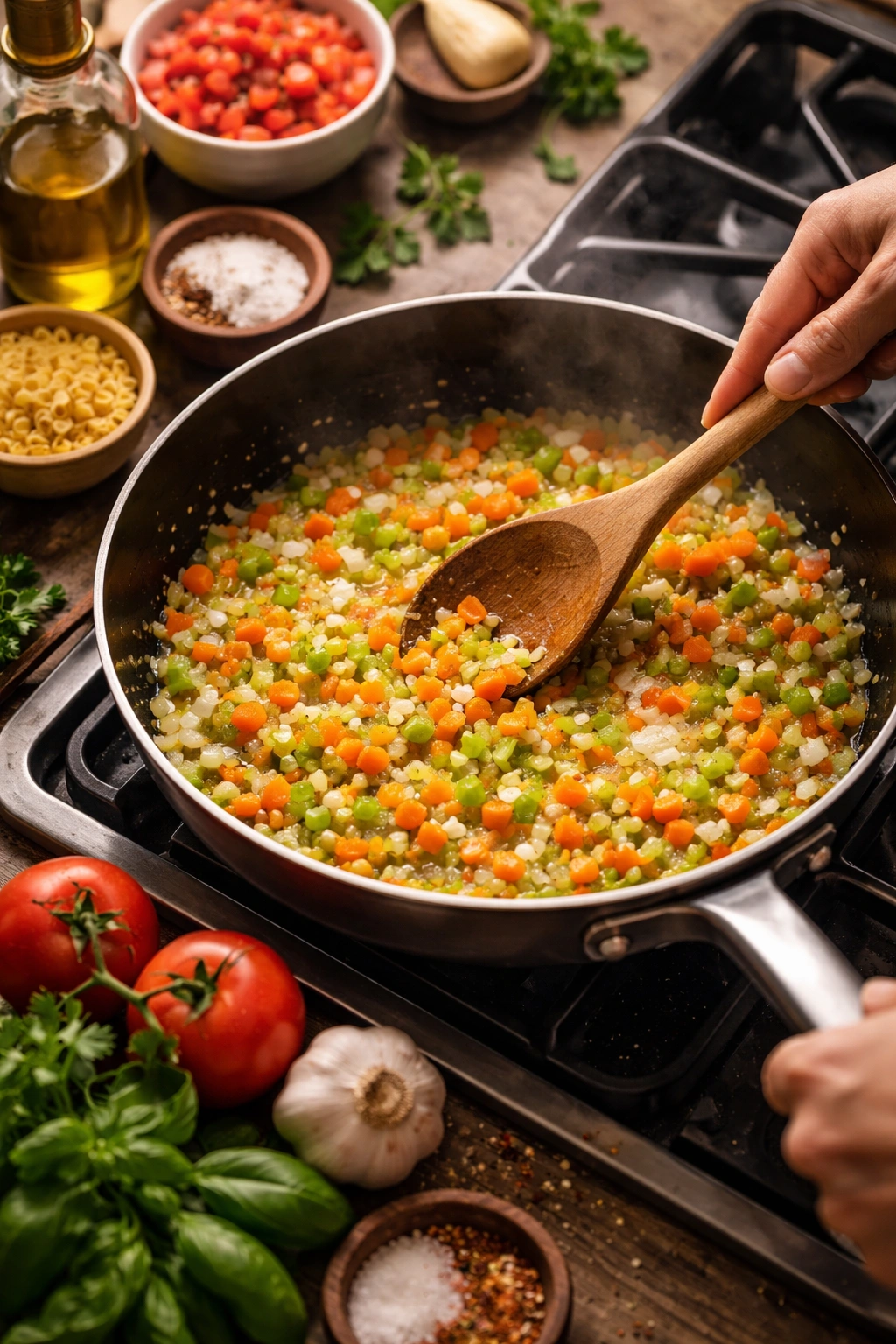
Heat the 3 tablespoons of olive oil in a large Dutch oven or heavy-bottomed stockpot over medium-high heat. Once the oil shimmers (you’ll see ripples across the surface), add the chopped onion, sliced carrots, and sliced celery. Do not skip this sautéing step—it’s what creates the rich flavor base. Cook, stirring occasionally with a wooden spoon, for 5 to 7 minutes, until the vegetables soften noticeably and the onions become translucent at the edges and slightly golden. You should smell something sweet and savory—that’s the natural sugars in the vegetables caramelizing.
-
Add the minced garlic and stir constantly for about 1 minute. Garlic burns easily and will turn bitter if cooked too long, so watch it carefully. You want it fragrant and integrated, not browned. Once it becomes fragrant, immediately move to the next step.
-
Add the tomato paste and stir it into the vegetables, coating everything evenly. The mixture should look like thick paste coating the vegetables. Let it cook in the hot pan for 1 to 2 minutes, stirring occasionally, until it darkens slightly and becomes more concentrated. This small step is crucial—you’re caramelizing the tomato paste slightly, which develops deep umami flavor that transforms the final soup.
Advertisements
Build the Broth:
-
Pour in the canned diced tomatoes with their juice, then add the vegetable or chicken broth and the water. Stir well, making sure there are no lumps of tomato paste hiding at the bottom of the pot. Scrape up any browned bits stuck to the bottom—these bits contain concentrated flavor and should go into the soup, not stay on the pan.
-
Add both bay leaves, the dried oregano, dried basil, dried thyme, and the Parmesan rind (if using). Stir to combine everything. Bring the pot to a gentle boil over medium-high heat, stirring occasionally, which should take about 5 minutes.
Start the Simmer:
-
Once the soup reaches a boil (you’ll see steam rising and bubbles breaking the surface), reduce the heat to medium or medium-low to maintain a gentle simmer. A gentle simmer means small bubbles occasionally break the surface—not a rolling boil, which can make vegetables break down too much and toughen the pasta. Partially cover the pot by placing the lid slightly ajar, leaving about a 1-inch gap for steam to escape.
-
Let the soup simmer undisturbed for about 10 minutes. The flavors will continue to develop, and the vegetables already in the pot (carrots and celery) will begin to soften.
Add Remaining Vegetables in Stages:
-
While the soup simmers, add the pasta to your pot of boiling salted water and cook it according to package directions until al dente (tender but still with a slight firmness in the center). Drain in a colander, then drizzle it with a splash of pasta cooking water or broth so it doesn’t dry out while you finish the soup. Set aside.
-
After the soup has simmered for about 10 minutes, add the diced zucchini and the green beans. Stir well to combine. These vegetables need about 5 to 8 minutes of cooking to become tender but still maintain some firmness. Do not add them at the very beginning because they would overcook and fall apart.
-
Continue simmering, uncovered, for another 5 minutes, stirring occasionally to ensure nothing sticks to the bottom of the pot.
Advertisements
Finish the Soup:
-
Add the drained canned beans and the chopped spinach. Stir well. The spinach will seem like a lot, but it wilts dramatically as the heat hits it. Cook for another 2 to 3 minutes, just until the spinach is completely wilted and the beans are heated through.
-
Remove the pot from the heat. Fish out and discard the bay leaves and the Parmesan rind (if you used one). Taste the soup carefully. It should taste savory and balanced, with bright acidity from the tomatoes, herbal notes from the basil and oregano, and deep richness from the sautéed aromatics. If it tastes flat, add salt in small pinches and taste between each addition. If it tastes too acidic, a tiny pinch of sugar can help balance it. If it feels thin or lacks depth, stir in another tablespoon of tomato paste.
Serve:
- Place about ½ cup of the cooked pasta into the bottom of each soup bowl. Ladle the hot minestrone over the pasta. Garnish each bowl generously with chopped fresh parsley and basil, a sprinkle of grated Parmesan cheese, and a small drizzle of excellent olive oil. Serve immediately with crusty bread for dipping.
Practical Tips and Common Mistakes to Avoid
Why cook pasta separately? If you add pasta directly to the simmering soup, it gradually absorbs broth and becomes mushy. By the time you reheat leftovers the next day, it’ll have the texture of baby food. Cooking pasta separately means every serving—whether fresh from the pot or reheated days later—has perfectly textured pasta. This single technique is what makes minestrone excellent for meal prep.
Don’t skip the soffritto. Taking 5-7 minutes to properly sauté onions, carrots, and celery until they’re soft and fragrant is what creates minestrone’s signature flavor. If you rush this step or cook over too-high heat, the vegetables barely soften, and they contribute raw, sharp flavors instead of sweet depth.
The tomato paste moment matters. After adding tomato paste to your softened vegetables, let it sit in the hot pan for a moment while stirring occasionally. This concentrates and darkens the paste, developing complex umami flavor. Skipping this makes the tomato taste thin rather than rich.
Use broth and water, not just broth. Cooking with only broth can make the final soup taste one-dimensional or overly salty, especially if you’re reducing flavors by simmering. The combination of broth with water creates a more balanced, complex base.
Add vegetables by cooking time, not all at once. Carrots and green beans need 5-8 minutes of cooking to become tender. Zucchini and spinach need only 2-3 minutes. Add them in stages so each vegetable reaches perfect tenderness rather than having everything overcooked to accommodate the slowest-cooking ingredient.
Season at the end, not the beginning. If you add salt at the start and let the soup simmer for 30+ minutes, flavors concentrate and salt becomes overwhelming. Add salt conservatively early on, then taste and adjust at the very end when you know exactly what you’re working with.
Use fresh vegetables when possible. Because minestrone is essentially a vegetable soup, the quality of your vegetables matters. They don’t need to be perfect, but they should look fresh and vibrant, not wilted or discolored. Good carrots taste sweet; limp carrots taste like water.
Don’t overload it. While minestrone is flexible, there’s a limit to how many vegetables you can fit before it becomes mushy stew instead of soup. Aim for about 4-5 different vegetables plus beans and pasta. More than that can be delicious but requires adjusting liquid quantities.
Let it cool before freezing. Hot soup takes hours to cool in the freezer and can affect texture. Let it cool to room temperature on the counter for about 30 minutes, then transfer it to containers for freezing. This protects your freezer’s efficiency and the soup’s quality.
Variations and Easy Adaptations
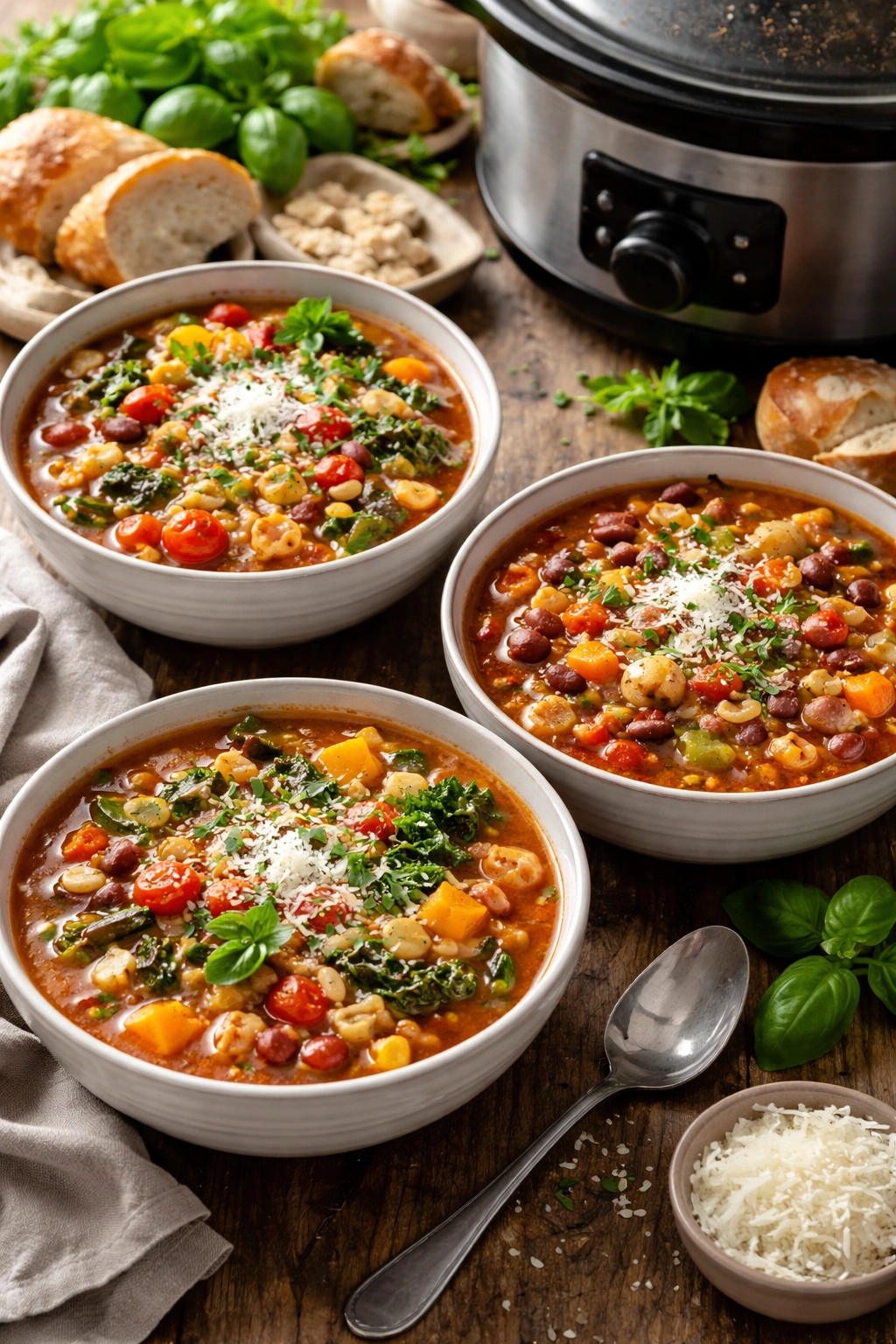
Summer Minestrone: When zucchini, yellow squash, and fresh green beans are in season, emphasize those vegetables. Use fresh tomatoes if they taste good (ripe summer tomatoes are truly special). Add fresh basil aggressively—it’s at its peak in warm months. Consider reducing the pasta slightly and increasing the greens for a lighter, fresher version. This feels bright and summery rather than heavy.
Winter Minestrone: Swap zucchini for diced potatoes or sweet potatoes (cut small so they cook quickly). Emphasize carrots, onions, and celery. Add sturdy greens like kale or collards instead of spinach—they hold up better during longer cooking. Add an extra tablespoon of tomato paste and a small pinch of red pepper flakes for depth and warmth. This version feels more substantial and warming.
Slow-Cooker Minestrone: Roughly chop all vegetables, combine everything except the pasta, spinach, and fresh herbs in a slow cooker. Cook on LOW for 6 to 8 hours or HIGH for 3 to 4 hours. About 30 minutes before serving, add spinach and adjust seasonings. Cook pasta separately just before serving and add to individual bowls. This version lets your crockpot do the work while you’re busy with other things.
Protein-Boosted Minestrone: Brown 1 pound of ground turkey or Italian sausage in the pot before adding oil, then set it aside. Proceed with the recipe as written, adding the cooked meat back in with the beans. Alternatively, add chunks of rotisserie chicken or diced pancetta. The soup remains vegetable-forward but becomes more filling.
White Bean and Tuscan Herb Version: Use white beans (cannellini or Great Northern) instead of kidney beans. Emphasize rosemary and thyme in the dried herbs. Add a Parmesan rind if you have one (the combination is absolutely divine). This version tastes more refined and slightly earthier than the classic version.
Grain-Based Version: Instead of pasta, add barley, farro, or even pearl couscous. Cook these according to package directions and add them either during cooking (for barley and farro, which take longer) or in the last few minutes (for couscous). This changes the texture and adds different nutritional benefits while keeping the same essential minestrone character.
Creamy Minestrone: For a richer version, blend about 2 cups of the finished soup until smooth, then stir it back into the pot. Or stir in a splash of heavy cream, coconut milk, or even Greek yogurt at the end. This transforms it from broth-based to more substantial while keeping the vegetable-forward character.
Low-Carb Version: Simply omit the pasta or replace it with a lower-carb option like zucchini noodles (add them at the very end so they just warm through). Add extra beans or vegetables instead to keep it filling. This version is perfect for anyone tracking carbohydrates.
Vegan Version: This soup is naturally vegetarian, and it’s easily vegan by using vegetable broth and skipping the Parmesan garnish. If you want extra richness, use a Parmesan rind from a vegan Parmesan, or finish with a dollop of cashew cream.
Gluten-Free Version: Use gluten-free pasta and confirm your broth is certified gluten-free. Everything else in the recipe is naturally gluten-free. The soup tastes exactly the same, just with a different pasta texture.
Storage, Reheating, and Make-Ahead Guidance
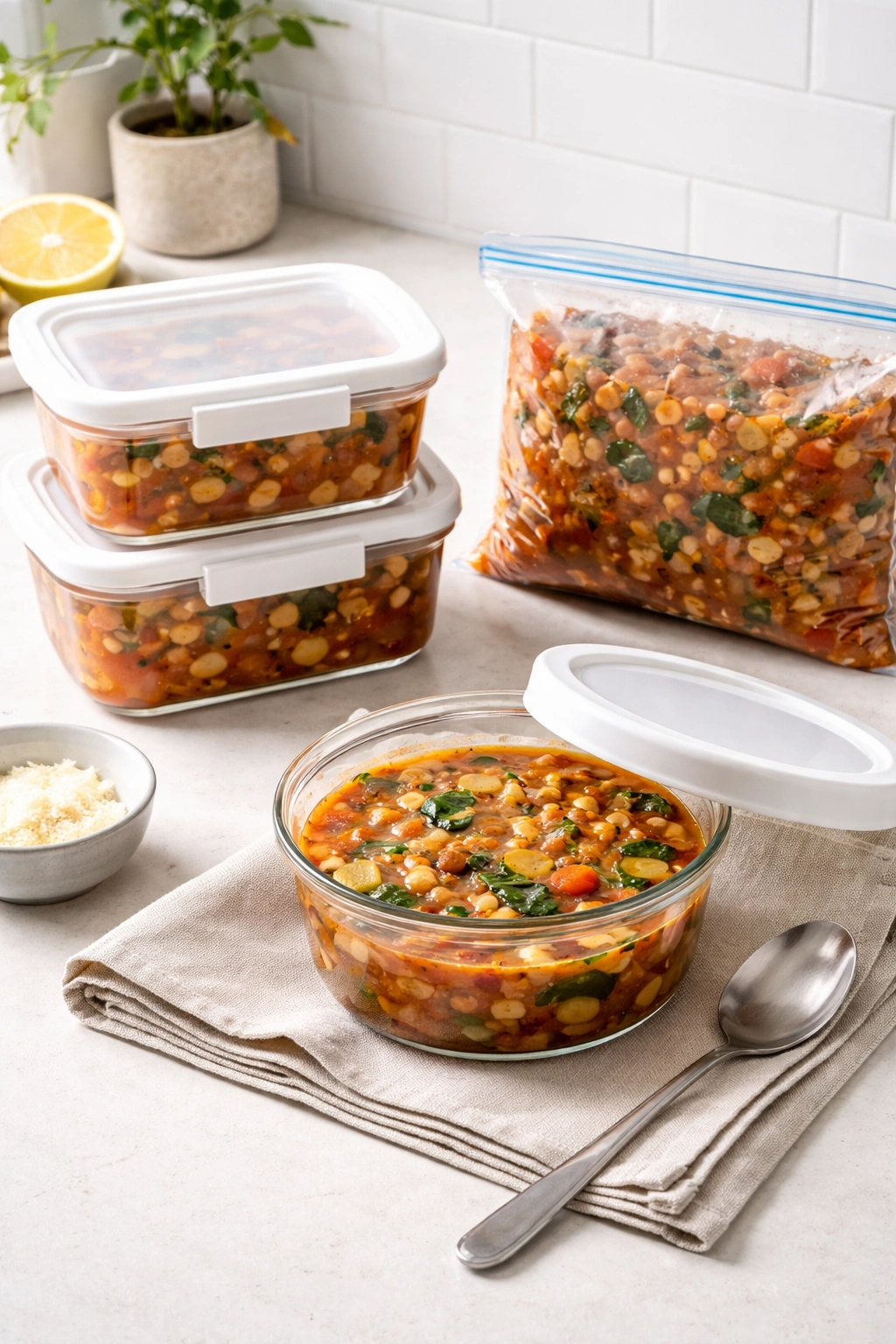
Storing in the Refrigerator: Let the soup cool to room temperature (about 30 minutes), then transfer it to airtight containers. It keeps beautifully for 5 to 6 days. The flavor actually deepens over 1 to 2 days as the ingredients continue to meld, making day-three minestrone arguably better than day-one. Keep the cooked pasta stored separately in another container so you can add it fresh when reheating.
Freezing: Cool the soup completely first. Pour it into freezer-safe containers or large ziplock bags, leaving about ½ inch of headspace at the top to allow for expansion as the liquid freezes. You can freeze it for up to 3 months. Do not freeze pasta with the soup—freeze them separately and add fresh pasta when reheating. Label containers with the date so you know what you’ve got.
Thawing: Remove from the freezer and thaw overnight in the refrigerator. This gradual thawing preserves texture better than thawing at room temperature or in the microwave.
Reheating: Pour the thawed soup into a saucepan and warm it over medium heat, stirring occasionally. It will likely have absorbed some liquid and become thicker than when you first made it. Add a splash of broth or water if needed to restore it to the consistency you prefer. Heat until steaming, which takes about 10-15 minutes depending on the amount. Cook or reheat pasta separately and add to individual bowls before ladling soup over top.
Make-Ahead Strategy: You can prepare minestrone completely—up through the point of adding the pasta—the day before you plan to serve it. Store the finished soup and cooked pasta separately in the refrigerator. When you’re ready to eat, gently reheat the soup, add pasta to bowls, and ladle soup over top. This approach guarantees perfect texture while minimizing day-of prep.
Meal Prep Approach: Cook a full batch on a weekend, divide it into individual portions, and freeze for the week ahead. Reheat individual servings on the stovetop (taking about 5 minutes) or in the microwave in 2-minute intervals, stirring between each. This makes quick, healthy weeknight dinners that taste homemade and delicious.
The Pasta Question: If you’ve already added cooked pasta to the soup, it will continue to soften as the soup sits and especially as it’s reheated. This is still delicious, just softer than fresh. If you prefer firmer pasta, always cook it separately and add it fresh just before serving.
Serving Suggestions and Perfect Pairings
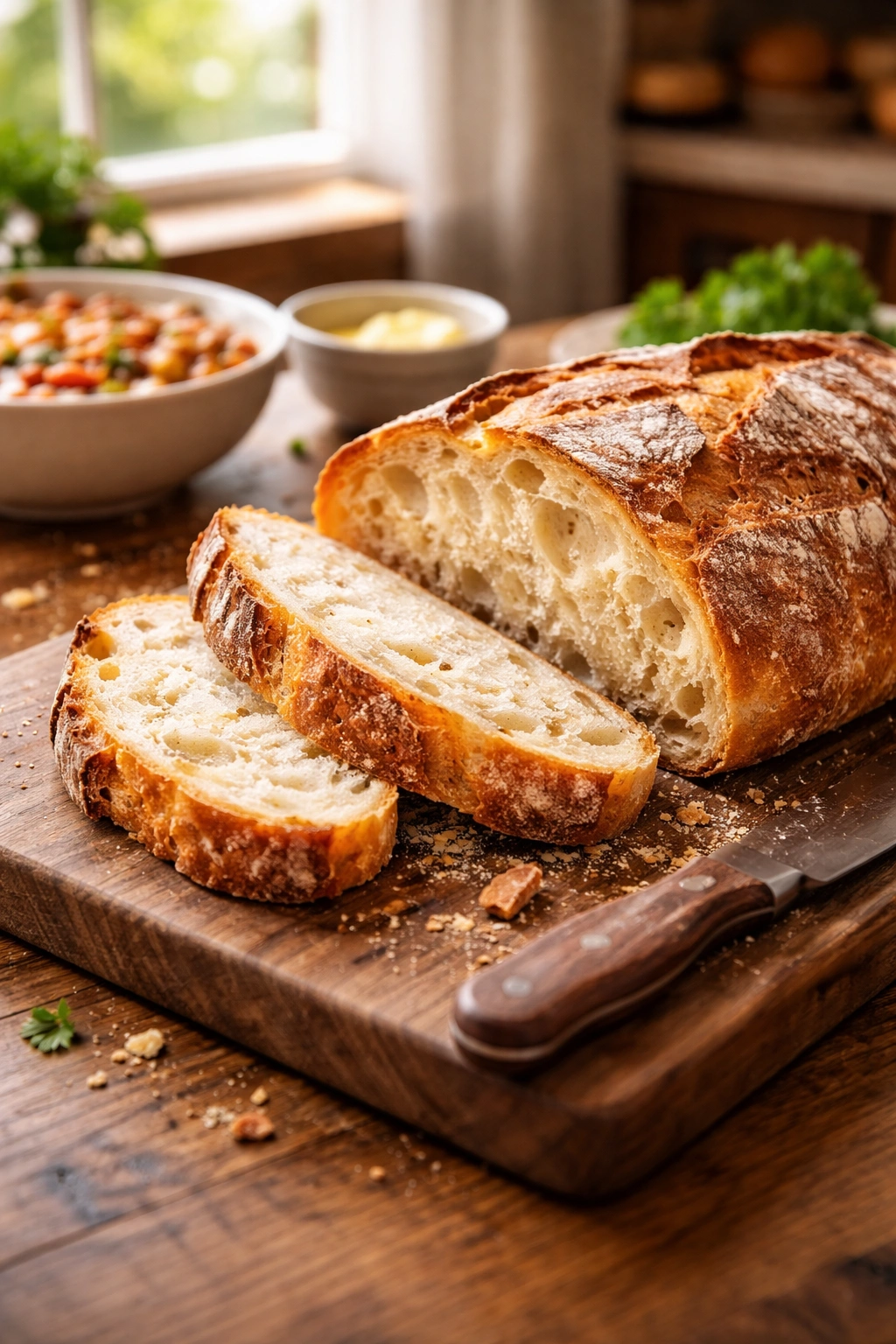
Bread is essential. Crusty bread—focaccia, ciabatta, sourdough, or a simple baguette—is the traditional minestrone companion. Use it for dipping into the broth and soaking up every precious bit of flavor. Garlic bread, brushed with garlic-infused olive oil and toasted until golden, is luxurious. Even simple grilled bread rubbed with a cut garlic clove adds perfect contrast to the soup’s soft textures.
Fresh salad adds brightness. A simple green salad with lemon vinaigrette provides crisp contrast to the warm, soft soup. Crisp arugula with shaved Parmesan is equally lovely. A chopped salad with lots of herbs, vegetables, and tangy vinaigrette cuts through the richness beautifully.
Cheese matters. Use a microplane to create delicate curls of Parmesan cheese over each bowl—they melt into the warm soup and add umami richness. A sprinkle of chopped fresh parsley or basil right before eating adds freshness, color, and fragrance that finish the dish beautifully.
A drizzle of excellent olive oil is simple but transformative. Even a small amount of high-quality, peppery olive oil adds richness and a whisper of fruitiness that elevates the whole experience.
Wine pairing: Light, crisp white wines work beautifully—try Pinot Grigio, Sauvignon Blanc, or Vermentino. Light red wines like Barbera or Dolcetto pair nicely if you prefer red, as do sparkling wines.
Complete meal pairings: Serve minestrone alongside an Italian grilled cheese sandwich, mozzarella and tomato sandwich, or antipasto platter for a more substantial dinner. You could also serve it alongside a simple pasta dish for an Italian-restaurant-style meal, though the pasta in the soup itself usually makes this unnecessary.
Occasion ideas: Minestrone is perfect for casual weeknight dinners, make-ahead meals, lunch, or even as a starter course before a light entrée. It’s impressive enough for entertaining but approachable enough for everyday cooking. It’s the kind of dish that makes people feel cared for without requiring fussy technique.
Conclusion
Making great minestrone is less about having fancy ingredients or special equipment and far more about understanding a few key techniques and respecting your ingredients. Build your flavor base properly by sautéing aromatics until they’re truly soft and golden. Give tomato paste its moment to concentrate and deepen. Add vegetables in stages so each one reaches perfect tenderness. Cook pasta separately so leftovers remain perfect days later. Season thoughtfully at the end rather than at the beginning.
Once you’ve made this minestrone a few times and understand these fundamentals, you’ll find yourself improvising confidently—adding extra vegetables from your fridge, adjusting herbs to your taste, making it heartier or lighter depending on the season and your mood. That’s the real reward of learning a classic soup well. You’re not just learning a single recipe; you’re learning an approach that serves you across seasons, ingredients, and circumstances.
The beauty of minestrone is that it rewards intentionality without demanding perfection. It’s genuinely better when made with care, but it’s also forgiving enough that rushed weeknight versions turn out perfectly delicious too. Whether you’re cooking for yourself, feeding a family, or making enough to freeze for weeks ahead, this minestrone delivers—warm, nourishing, complex-tasting, and full of vegetables that somehow taste better together than they would separately. That’s the magic of minestrone.
