



Most people think tartar sauce is some mysterious condiment that only restaurants can make properly. The truth? You’re two minutes away from a homemade version that tastes leagues better than anything in a jar, and it requires zero special skills or hard-to-find ingredients. The store-bought bottles sit in warehouses for months, losing brightness and developing that weird chemical aftertaste. The version you make at home this evening will have a snappy tang, fresh herb notes, and a texture that actually complements your fish instead of drowning it in gluey sweetness.
The best part: this isn’t some elaborate technique that requires fancy equipment or advanced cooking knowledge. You literally just combine a handful of everyday ingredients in a bowl, stir, and you’re done. Five minutes from start to finish, and I mean actual active time—not some marketing claim where they count your grocery shopping and prep as part of the time. You could make this sauce while your fish is still in the oven, and it’ll be ready the moment everything hits the plate.
People are surprised when they taste the difference. The acidity is brighter. The pickles have actual crunch instead of that mushy softness that develops in commercial versions. The mayonnaise base hasn’t been sitting around developing off-flavors. It’s the kind of small detail that elevates an entire meal—suddenly your fish fry tastes homemade instead of like takeout. Once you make it once, you’ll never go back to buying bottles. And honestly, once you realize how absurdly simple it is, you might feel a little sheepish that you spent money on this for so long.
Why Homemade Tartar Sauce Beats Store-Bought Every Time
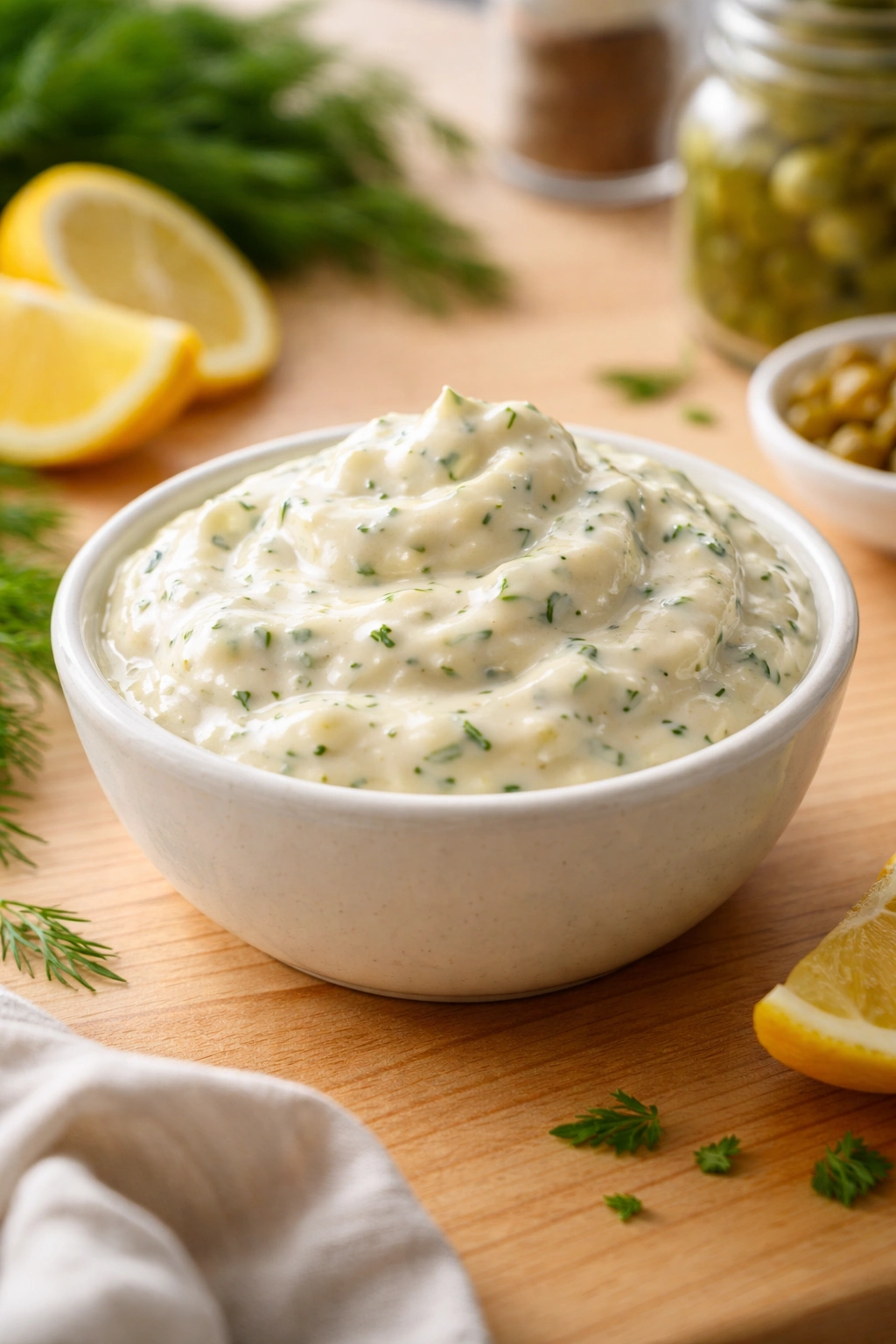
The gap between homemade and commercial tartar sauce comes down to freshness and actual flavor priorities. Store-bought versions are engineered for shelf stability, which means heavy preservatives, stabilizers, and sometimes added sugar that makes the whole thing cloying. They’re designed to survive months in a warehouse and on a retail shelf—not to taste amazing at dinner tonight.
When you make tartar sauce at home, you control every single ingredient. You pick the quality of the mayonnaise (and honestly, this matters—good mayo tastes entirely different from the cheap stuff). You choose exactly how much acid goes in, whether you want a gentle tang or something that really wakes up your palate. You decide on the pickle ratio and texture. You add fresh herbs if the mood strikes. None of this is possible with a jar.
The flavor difference is immediate and obvious. Homemade tartar sauce has a brightness that store-bought bottles simply can’t achieve. This comes from using fresh ingredients and from the acid being sharp rather than muted by time and preservation chemicals. When you pair this with properly cooked fish, it becomes clear why tartar sauce evolved as a pairing in the first place—it’s designed to cut through richness and add a pickle-bright counterpoint.
The cost difference is laughable too. You’re looking at maybe 50 cents worth of ingredients for a batch that outlasts any jar you’d buy. This isn’t a money-saving hack where you sacrifice quality—you’re actually getting significantly better results for a fraction of the price.
The Quick History of Tartar Sauce and Where It Comes From
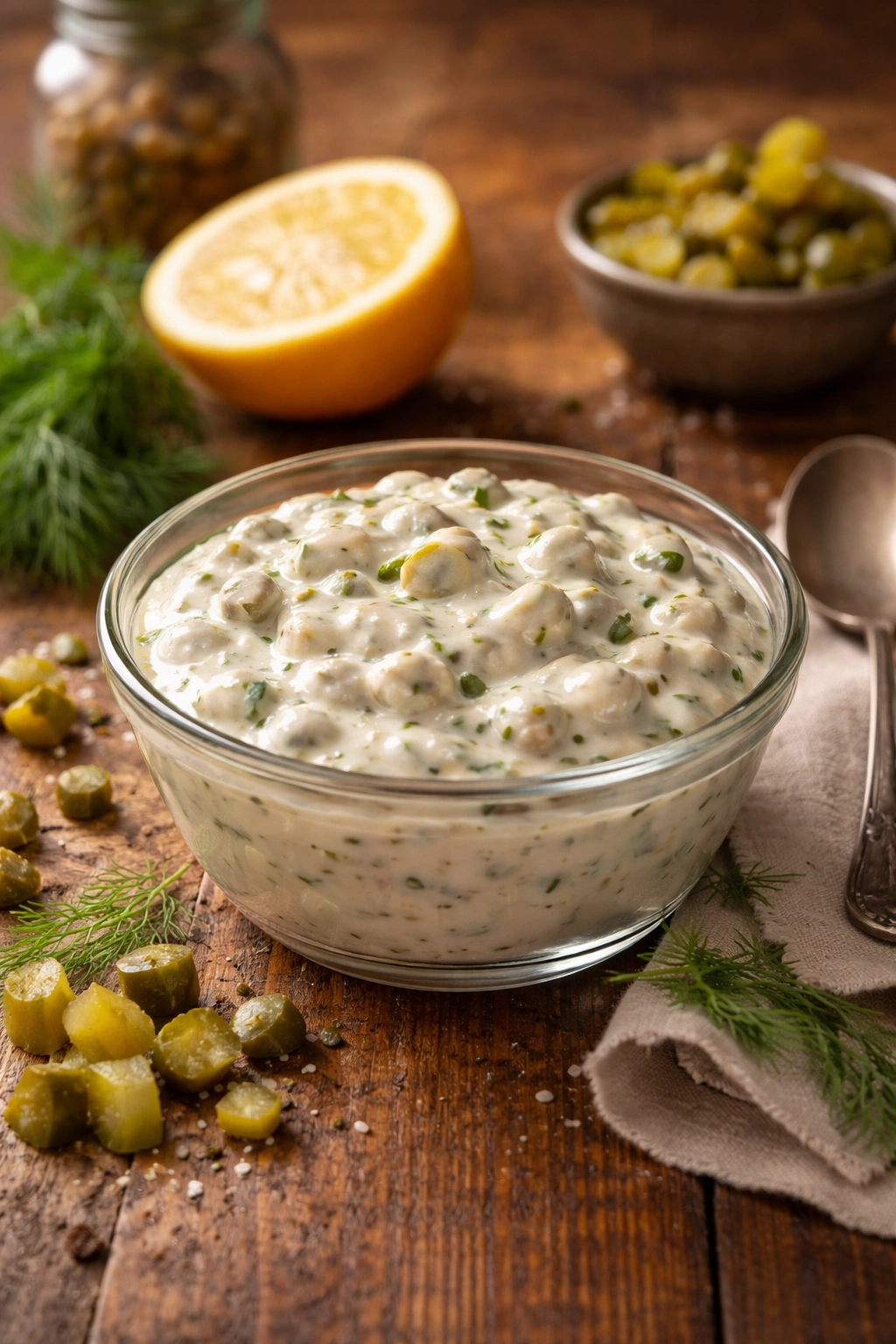
Tartar sauce emerged from French culinary traditions, specifically from the concept of sauces built around mayonnaise and pickled elements. The name comes from sauce tartare, which referenced tartness rather than any Tartar ethnic origin—though that confusion has stuck around for centuries. French cooks understood that rich, delicate fish needed a acidic, briny counterweight, and tartar sauce became the answer.
The traditional formula hasn’t changed much since it developed in the 18th and 19th centuries: creamy mayo base, chopped pickles, sometimes capers, possibly hard-boiled egg, and herbs for brightness. Different regions developed slight variations—some leaning into the pickles more heavily, others incorporating parsley or dill, a few adding mustard for extra sharpness. The fundamental concept remained consistent because it actually works perfectly for its intended purpose.
When tartar sauce made its way to Britain and America, it became especially popular as a fish fry condiment. The simplicity appealed to cooks who needed something quick, the ingredients were affordable and shelf-stable, and home cooks could make it without special equipment. It became so standard that people started assuming it was a necessary component of any fish dish, when really it’s just one really effective option among many.
The genius of tartar sauce is that it solves a real culinary problem—balancing flavors. Fish is delicate and rich. Tartar sauce is tangy and bright. They complete each other. Understanding this history also explains why making it fresh makes such a difference: you’re recreating a sauce that was designed to be made fresh, adjusted to taste, and served immediately. The modern industrial version tried to preserve something that fundamentally thrives on freshness.
The Essential Ingredients for Five-Minute Tartar Sauce
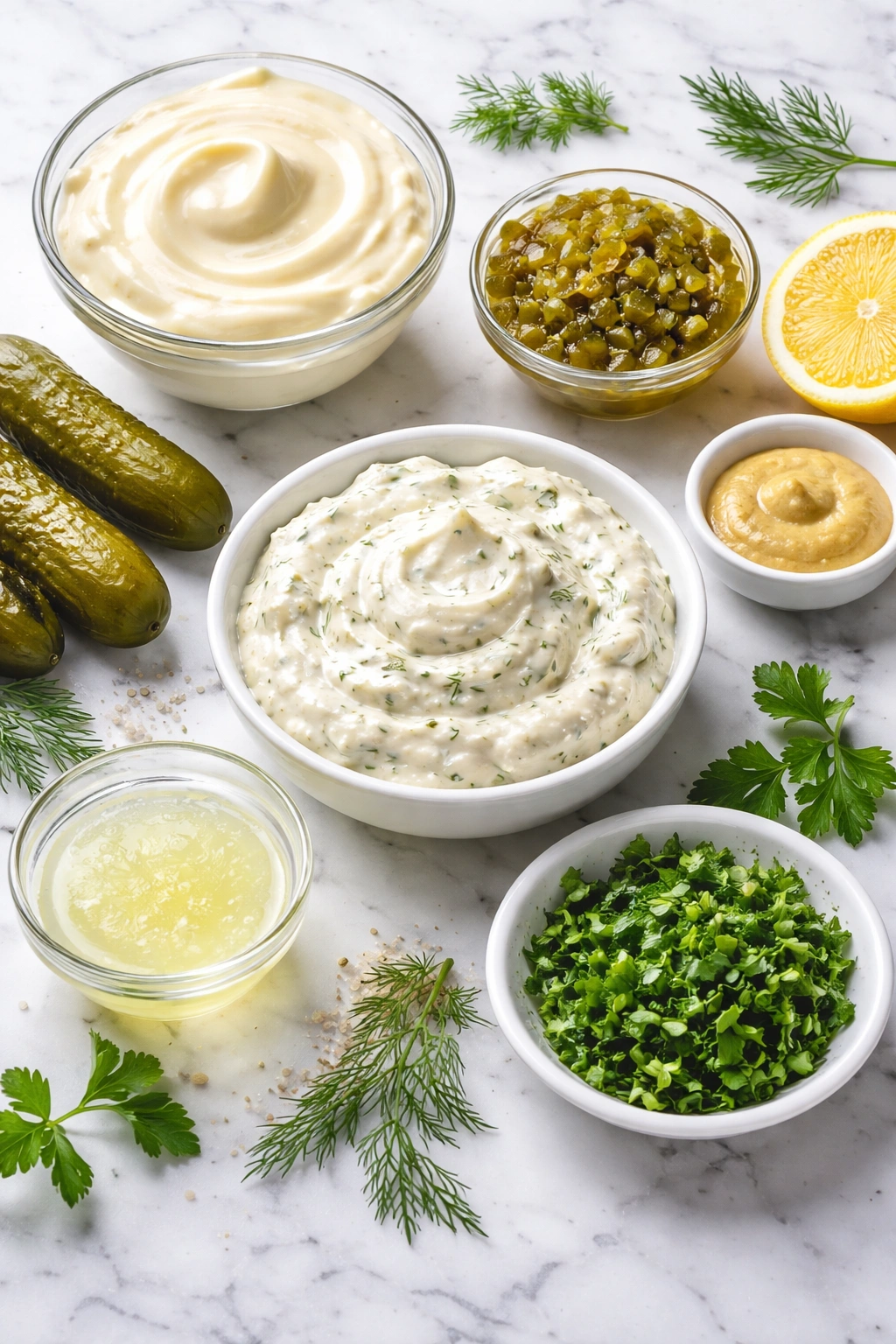
Yield: Makes about 1 cup | Serves 4 to 6 Prep Time: 5 minutes Cook Time: 0 minutes Total Time: 5 minutes Difficulty: Beginner — No cooking required, no special equipment needed, and the steps are as straightforward as they come.
For the Tartar Sauce:
- 1 cup mayonnaise (about 8 ounces), at room temperature
- ½ cup sweet pickle relish, drained thoroughly
- 3 tablespoons dill pickle chips (the ones you’d eat straight from the jar), finely chopped
- 2 tablespoons fresh lemon juice (roughly half a large lemon)
- 1 tablespoon fresh parsley, finely minced
- 1 tablespoon fresh dill, finely chopped (or 1 teaspoon dried dill if fresh isn’t available)
- 1 teaspoon Dijon mustard
- ½ teaspoon onion powder
- ¼ teaspoon fine sea salt
- ⅛ teaspoon ground black pepper
- Pinch of cayenne pepper (optional, but it adds a subtle heat that brightens the whole sauce)
Let me be specific about ingredient choices, because a few decisions here actually matter. The mayonnaise is your sauce base, so use something you genuinely like eating. Homemade mayo is wonderful if you want to make it, but honestly, a good-quality store-bought version—the kind with real egg yolks and minimal additives—will serve you perfectly. The cheap stuff with stabilizers will make your sauce taste thin and plastic-y.
The pickle relish situation is important. You want the sweet kind (often labeled “sweet relish”), not the dill kind or spicy kind. This isn’t about being rigid—you can absolutely experiment with different pickle styles—but the original formula is built around sweet relish for a reason. It provides texture, sweetness to balance the acid, and that classic tartar sauce flavor profile. Drain it thoroughly before adding it, or your sauce will become watery and break.
The dill pickle chips are the second pickle component, and this is where you get that snappy crunch and extra complexity. Actual dill pickle chips (the slices you’d eat as a snack) are better than relish alone because they add texture and keep that sharp dill flavor in the mix. Chop them finely so they distribute evenly throughout the sauce instead of creating big chunks.
Fresh lemon juice matters here—not the bottled kind, which tastes metallic and flat. One fresh lemon takes 30 seconds to juice and changes the entire brightness of the sauce. If you absolutely can’t use fresh lemon, white wine vinegar works as a substitute at a 1:1 ratio, though the flavor profile shifts slightly.
The herbs should be fresh if you can manage it. Fresh parsley adds freshness, fresh dill adds a specific pickle-adjacent flavor that’s hard to replicate. If you only have dried versions, use about one-third the amount and understand that the sauce will taste slightly different but still be delicious. Don’t skip the herbs entirely, though—they’re what separate this from basic mayo with pickles.
Dijon mustard is the secret that most homemade versions skip, and it’s a mistake. It doesn’t make the sauce taste like mustard—just a small amount adds depth, sharpness, and helps emulsify everything together. Trust me on this one.
Step-by-Step Instructions: Making Tartar Sauce in Minutes
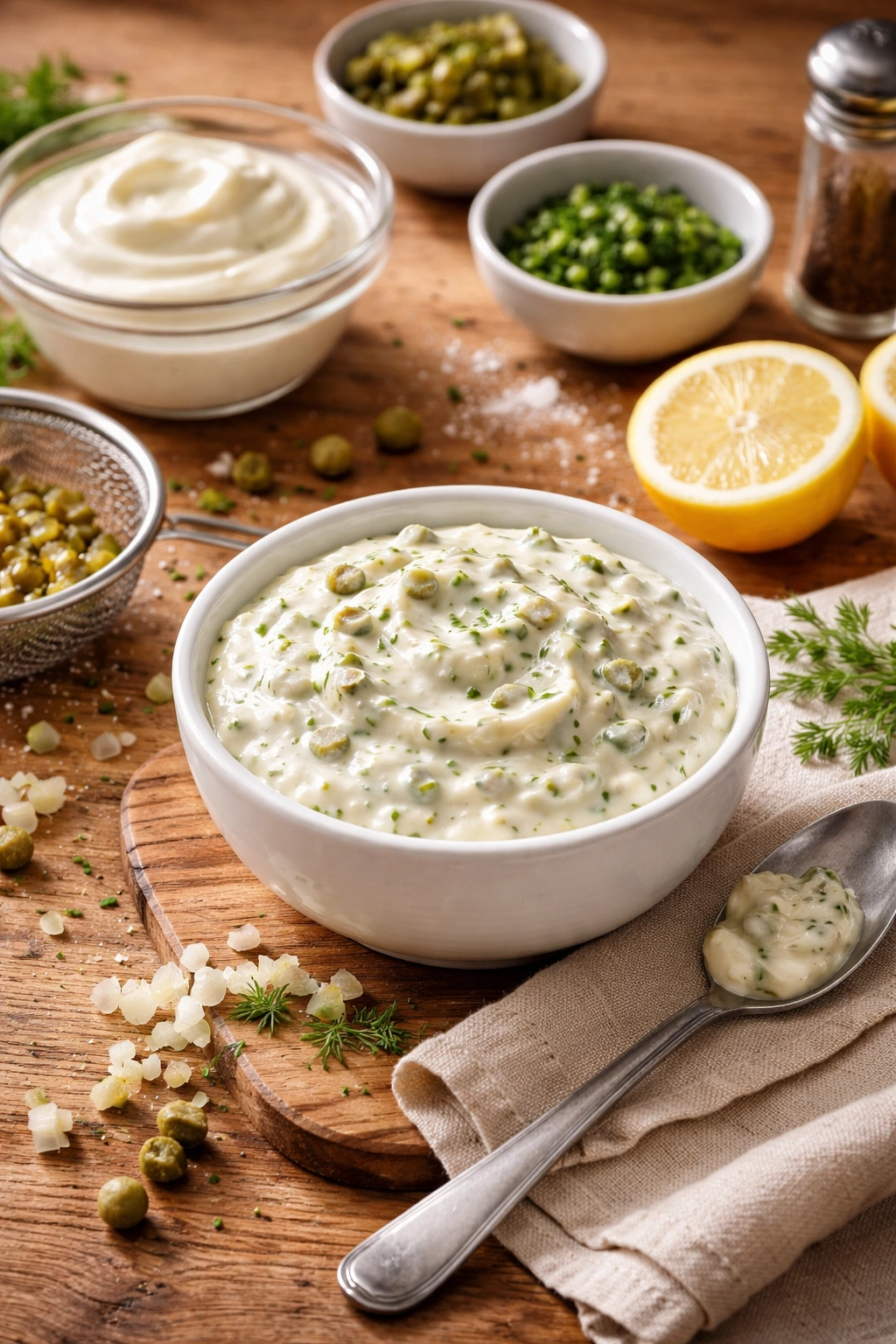
Combine Your Base:
-
Spoon the room-temperature mayonnaise into a medium mixing bowl. Room temperature matters because cold mayo is stiffer and harder to blend smoothly with the other ingredients. If your mayo was in the fridge, set it out for 10 minutes while you prep the other components.
-
Drain the sweet pickle relish in a fine-mesh sieve, pressing gently with the back of a spoon to release excess liquid—this step prevents your finished sauce from becoming watery and breaking.
Add the Pickles and Seasonings:
-
Fold the drained relish into the mayonnaise with a rubber spatula or wooden spoon, using gentle folding motions rather than vigorous stirring. You want everything just combined, not beaten into a paste.
-
Finely chop the dill pickle chips (this usually takes 2-3 minutes) and fold them into the mixture along with the fresh lemon juice, fresh parsley, and fresh dill.
-
Add the Dijon mustard, onion powder, salt, and black pepper. Fold everything together until fully combined and uniform in color. The sauce should be thick enough to hold its shape on a spoon, not runny.
-
Add the pinch of cayenne pepper if you want subtle heat (completely optional—the sauce is perfect without it, but it does add an interesting dimension).
Taste and Adjust:
-
Taste a small spoonful on your finger or with a clean spoon. Does it need more lemon brightness? A touch more salt? A bit more mustard for depth? This is your moment to adjust. There’s nothing wrong with adding extra seasonings—the beauty of homemade sauce is you can fine-tune it to your exact preference.
-
Once you’re happy with the flavor, transfer to a serving bowl or a clean jar if making ahead. The sauce is ready to use immediately, though it actually improves slightly if it sits for 15-30 minutes while the flavors marry together.
Advertisements
Tricks to Make Your Tartar Sauce Taste Restaurant-Quality
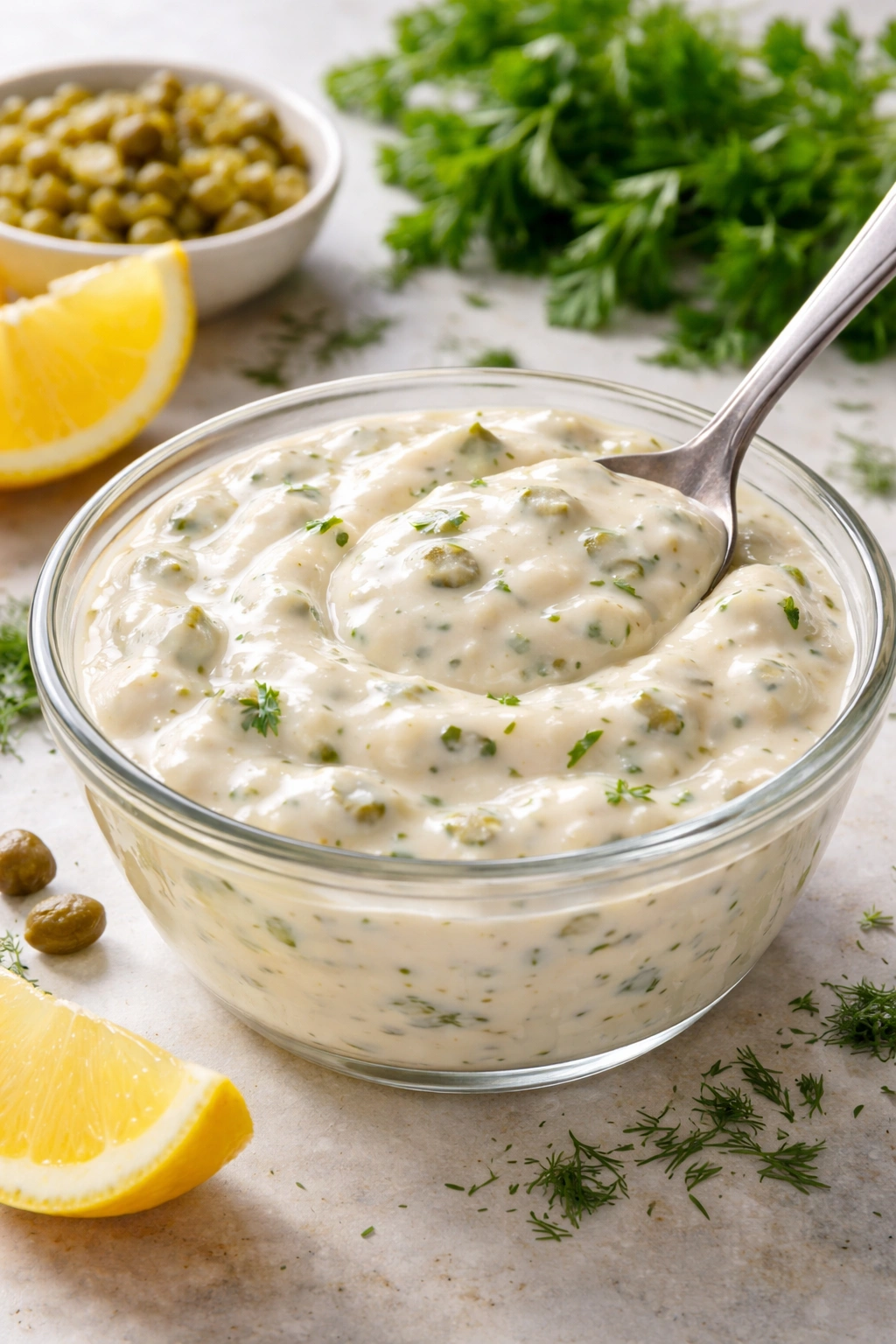
The difference between okay homemade tartar sauce and the kind people actually get excited about comes down to a few specific techniques that take zero extra time. The first is actually tasting as you go and being willing to adjust. Most home cooks make the sauce once, stir it, and call it done. Restaurant versions get tasted, adjusted, tasted again. That extra 30 seconds of intentionality transforms the result.
Using truly fresh lemon juice instead of bottled is one of those tiny adjustments that changes everything. Bottled lemon juice tastes stale and chemical—fresh lemon is bright and alive. The difference is immediate when you taste them side by side. If you have a lemon, squeeze it. It takes 20 seconds and it matters.
The drained relish situation is more important than people realize. Pickle relish is packed in liquid—usually a sweet vinegar brine. If you just dump it straight into mayo, you’re watering down your sauce and it breaks into a weepy, separated mess. Drainin it properly means your sauce stays creamy and stable. Press the relish gently against the strainer with the back of a spoon to release the liquid without crushing the pickles into mush.
Chopping your pickles finely rather than using relish exclusively adds texture and flavor complexity. Relish alone gives you a uniform soft texture. Adding chopped dill pickle chips gives you pockets of intense flavor and actual crunch when you eat it. People notice this difference immediately.
Let the flavors sit together for 15 to 30 minutes if you have the time. Mayo-based sauces actually improve as the ingredients meld. The pickles flavor the cream, the herbs brighten, the mustard deepens. Making your sauce 30 minutes before you need it gives it time to develop into something richer than what you’d get using it immediately. This isn’t required—it’s ready right away—but it’s one of those professional touches.
Taste everything on its own before mixing. Quality matters for every ingredient here. If your pickles taste bland or your mayo tastes off, your sauce will reflect that. Use ingredients you’d actually eat straight from the jar. This isn’t about being precious; it’s about understanding that the final product is literally just these ingredients mixed together, so their quality is the quality of your sauce.
One more thing: resist the urge to add stuff you think belongs there. Relish makers sometimes add sugar, and you might feel like you need extra sweetness. You don’t. The relish is already sweet. The vinegar and lemon are already tangy. The herbs are already fresh. It’s balanced. Trust the formula.
Common Mistakes to Avoid (Even When Working Fast)
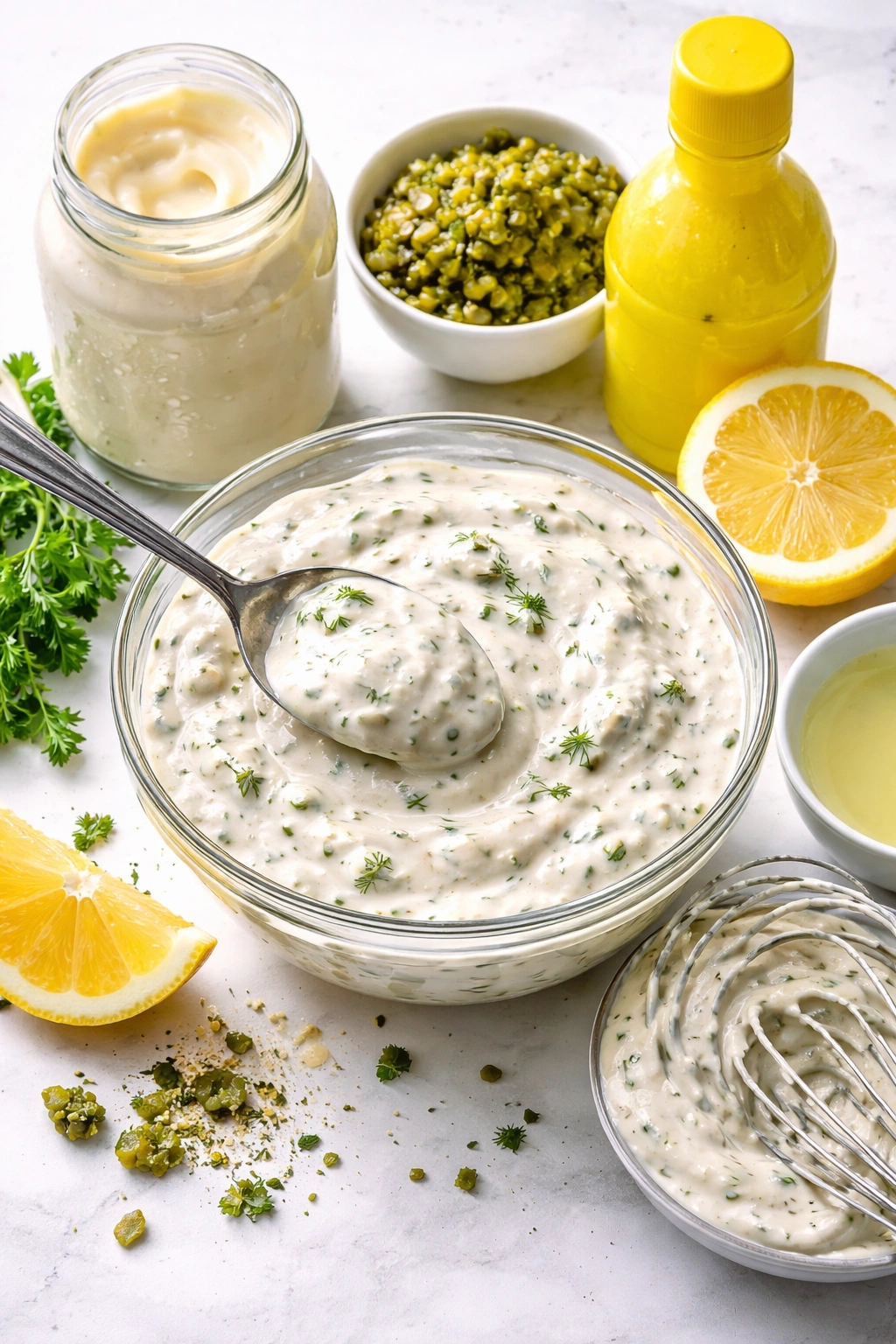
The biggest mistake is using cold mayonnaise straight from the fridge. Cold mayo is thick and stiff, and it doesn’t blend smoothly with the other ingredients. You end up with chunks and streaks instead of a unified sauce. Set your mayo out for 10 minutes, or run the bowl under warm water briefly. This one change fixes itself.
Not draining the relish is mistake number two. This seems minor until your beautiful sauce separates into a broken, weepy mess within an hour. The relish is packed in liquid—sweet vinegar brine—and that liquid doesn’t mix with mayo properly. It just sits there, trying to separate. Drain it thoroughly. This takes 45 seconds and it genuinely matters.
Using bottled lemon juice instead of fresh is a common shortcut that backfires. Bottled lemon tastes sour and chemical, not bright and fresh. Fresh lemon takes 30 seconds to squeeze and transforms the sauce. This is one of those moments where taking 30 seconds extra makes a legitimately noticeable difference.
Over-stirring the sauce is another way to mess it up. Vigorous stirring can break the emulsion, making your mayo weep and your sauce separate. Fold things together gently with a spatula. You’re combining, not whipping.
Under-seasoning is more common than you’d think. People make the sauce, taste it, and think “oh, it needs a little more” then stop themselves because they’re afraid they’ll over-salt. Season it properly. Taste a spoonful. Add a tiny pinch more salt if needed. You can always add more; you can’t take it out. This isn’t a large amount of salt we’re talking about—just enough to bring out all the other flavors.
Skipping the Dijon mustard or the parsley is tempting because they seem optional. They’re not. The mustard adds depth that turns this from mayo-with-pickles into a proper sauce. The fresh parsley adds brightness. These small components work together—leave one out and something feels missing.
Making the sauce with warm or hot ingredients is actually a problem. If your mayonnaise or any of your mix-ins are warm, you risk breaking the emulsion. Everything should be room temperature. This is especially important if you’re using fresh herbs or lemon juice that might have been in the sun.
Fresh Variations on Classic Tartar Sauce
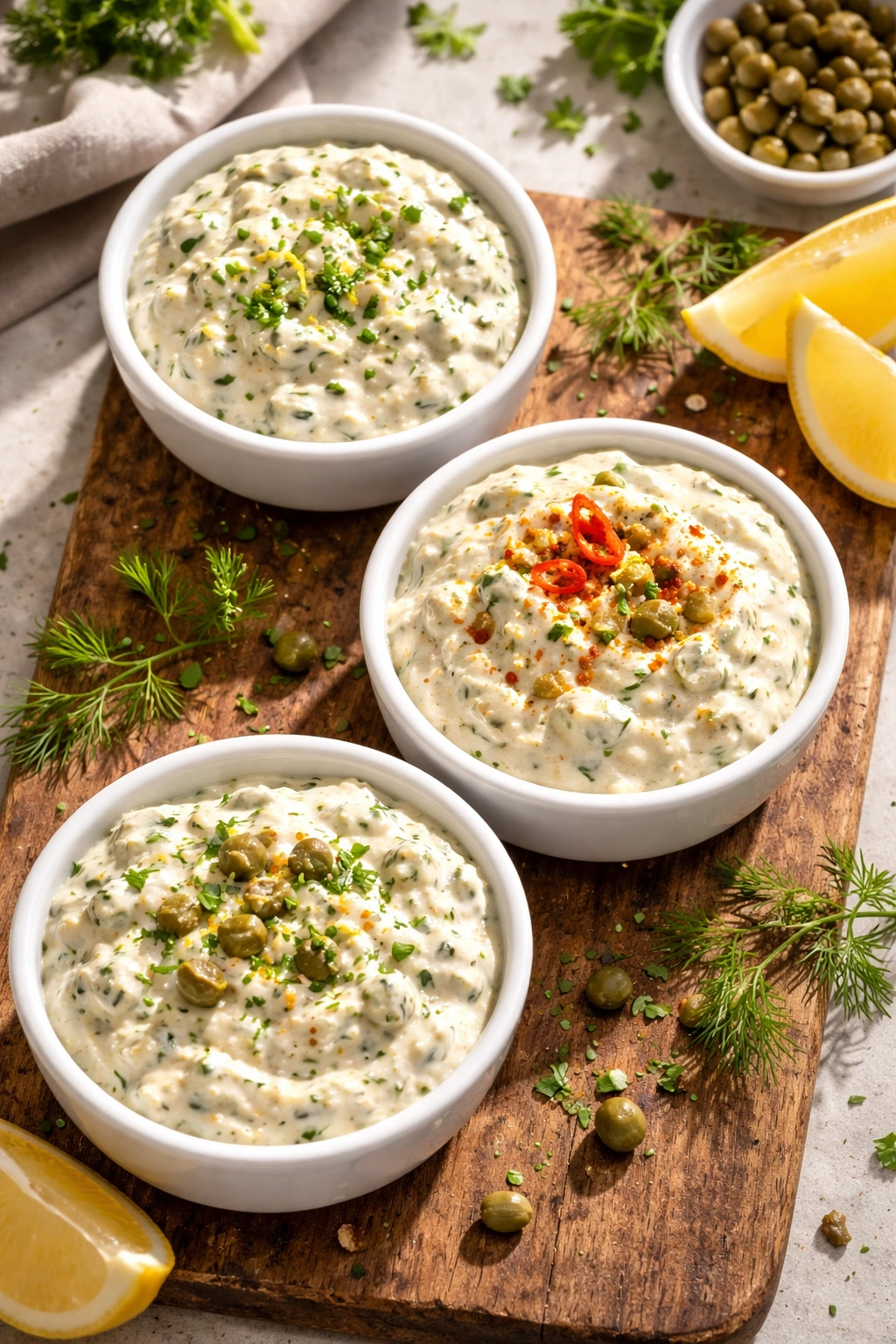
Once you understand the basic formula, you can take it in different directions without losing what makes tartar sauce work. The key is keeping the core structure—creamy mayo base, pickled elements, acid, seasoning—while swapping specific ingredients.
Spicy Tartar Sauce adds real heat without changing the basic technique. Keep everything the same but increase the cayenne to ¼ teaspoon, add a few dashes of hot sauce (like Frank’s RedHot or something similar—just a teaspoon), and swap the sweet relish for half-dill relish and half-sweet relish. This version is perfect with fried fish or fish tacos. The heat doesn’t overwhelm; it sits underneath the other flavors.
Herbed Tartar Sauce emphasizes fresh herbs over the pickled elements. Use the same base but reduce the sweet relish to ¼ cup and replace the dill pickle chips with 2 tablespoons of fresh dill (instead of just 1 tablespoon) plus a tablespoon of fresh chives, finely chopped. Add a teaspoon of fresh tarragon if you have it. This version is lighter and more herb-forward, beautiful with delicate white fish like cod or halibut.
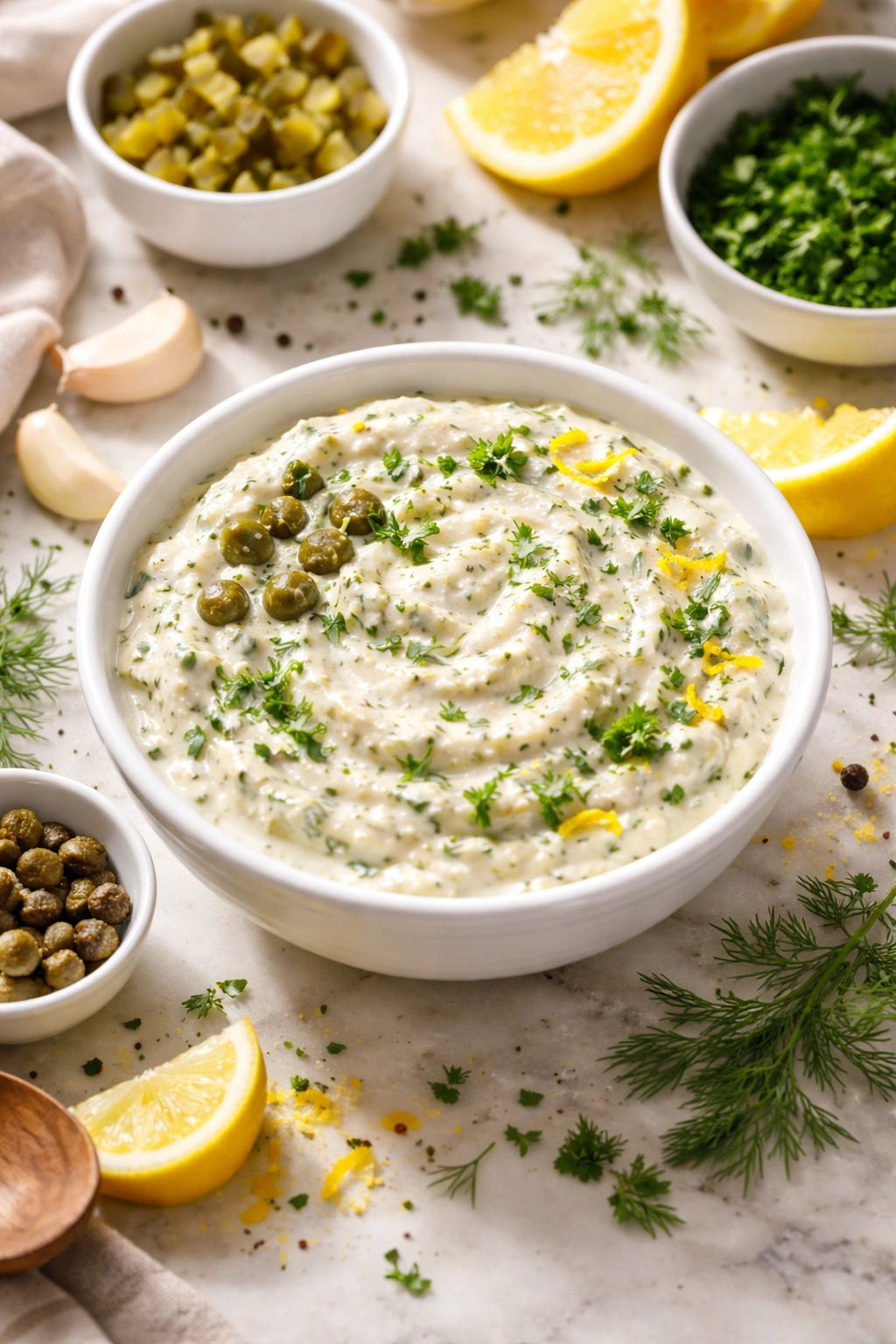
Caper and Dill Version replaces some of the relish with brined capers for a more sophisticated edge. Use ⅓ cup relish, ⅓ cup chopped capers, and a tablespoon of caper brine (the liquid from the jar) instead of the dill pickle chips. Add extra fresh dill. The capers add a briny, complex note that’s less sweet than the standard version. This leans more formal and restaurant-style.
Roasted Red Pepper Tartar Sauce adds sweetness and a slight smokiness. Keep the basic recipe but add ¼ cup of finely chopped roasted red pepper (jarred works perfectly) and reduce the sweet relish to ⅓ cup. Use white wine vinegar instead of lemon juice—a tablespoon and a half. This is lovely with grilled fish or as a complement to shrimp.
Citrus-Forward Version swaps the lemon for a mix of lemon and lime juice, and adds a teaspoon of grated lemon zest plus a teaspoon of grated lime zest stirred in at the end. This brightens the whole sauce and works beautifully with seafood dishes that have tropical elements.
Green Goddess Tartar Sauce pushes further into herbs. Use ¾ cup mayo mixed with ¼ cup sour cream or Greek yogurt for tanginess, then add extra fresh herbs (a tablespoon each of parsley, dill, chives, and basil if you have it), a teaspoon of fresh tarragon, and just 2 tablespoons of relish plus a tablespoon of capers. A squeeze of lemon, a tiny pinch of salt. This is almost more of a herb mayo than a traditional tartar sauce, but it’s fantastic on literally any seafood.
The mistake most people make with variations is losing the acid and pickle element entirely. That’s what actually makes tartar sauce work—the brightness and the briny crunch. You can play with the exact pickles you use, the herbs you emphasize, the secondary ingredients you add, but keep some form of pickled element and make sure there’s enough acid to cut through the richness of the mayo.
Storage, Shelf Life, and Make-Ahead Tips
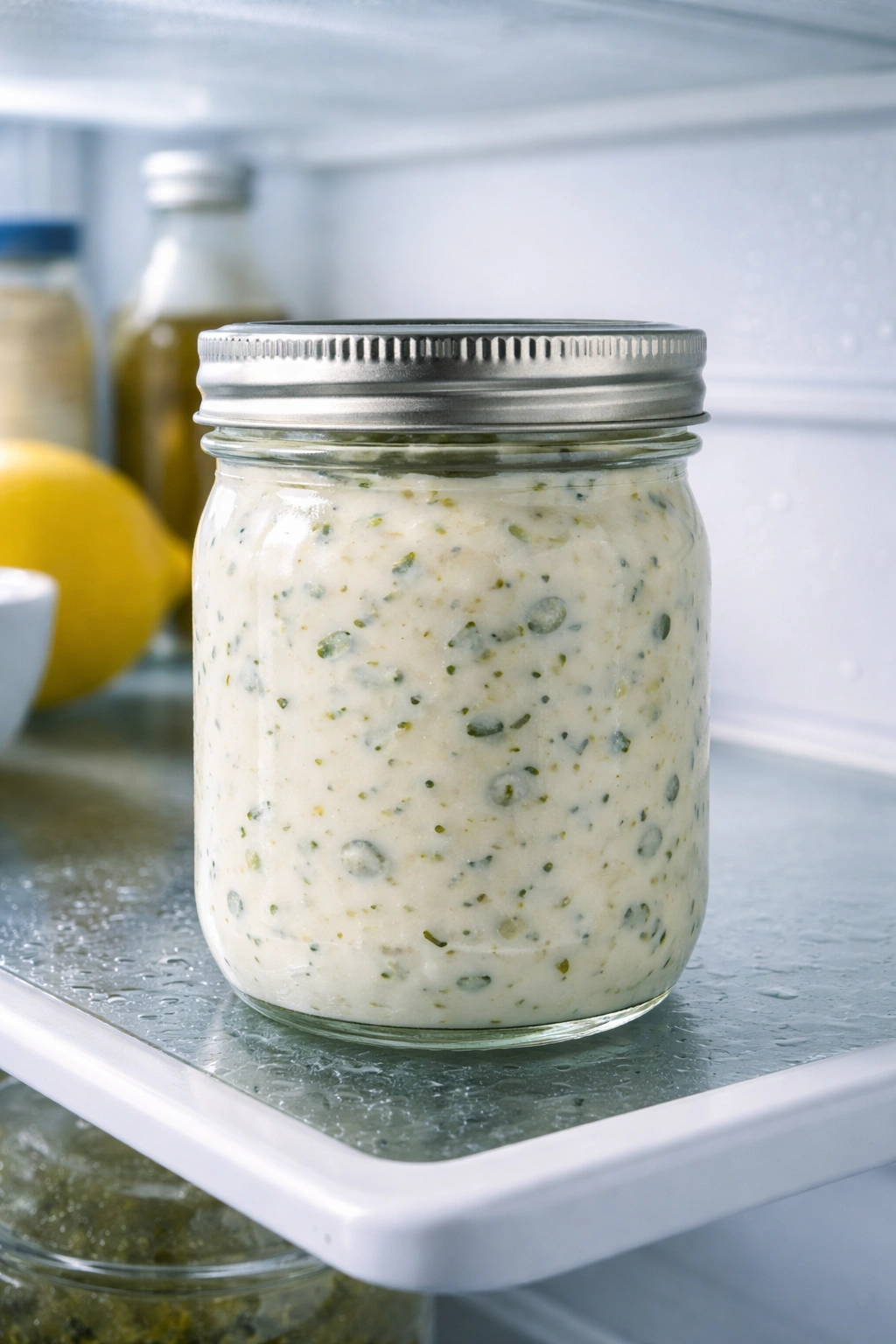
Homemade tartar sauce keeps in the refrigerator for about a week, stored in an airtight container. The ingredients are all shelf-stable or refrigerated already, and the combination is stable. By day 5 or 6, the sauce begins to separate slightly at the edges, the herbs start to darken, and the fresh brightness fades just a bit. It’s still tasty, but it’s not at its peak. For best flavor, make it 2-3 days before you need it—this gives the flavors time to marry while everything is still at its brightest.
You can absolutely make this sauce the day before you serve it. In fact, many people prefer to—the flavors settle and deepen overnight. Just store it in a jar with a tight lid, keep it on the fridge, and give it a quick stir before serving. The sauce might separate slightly after sitting, which is completely normal. A quick stir brings it back together.
Do not freeze tartar sauce. The emulsion breaks during freezing, and while you might be able to whisk it back together when it thaws, the texture becomes grainy and the sauce never tastes quite the same. Tartar sauce is best fresh or refrigerated, not frozen.
If you’re making this sauce for a party and want to have it ready, prepare it up to 3 days ahead. This is honestly ideal—you have one less thing to worry about on the day of your event, and the sauce is actually better for having sat together.
If your sauce does separate (which can happen if the mayo was too cold, or if you didn’t drain the relish properly), don’t panic. Start with a fresh tablespoon of mayo in a clean bowl, then whisk the separated sauce into it slowly, as if you were making mayonnaise from scratch. It usually comes back together. This is a useful trick to know but hopefully never have to use.
The pickle relish might start to break down after a few days—the pickles soften and the mixture becomes more liquidy. This doesn’t mean the sauce is bad, just that it’s past its peak. Use it up or make fresh sauce.
Best Dishes to Serve With Homemade Tartar Sauce
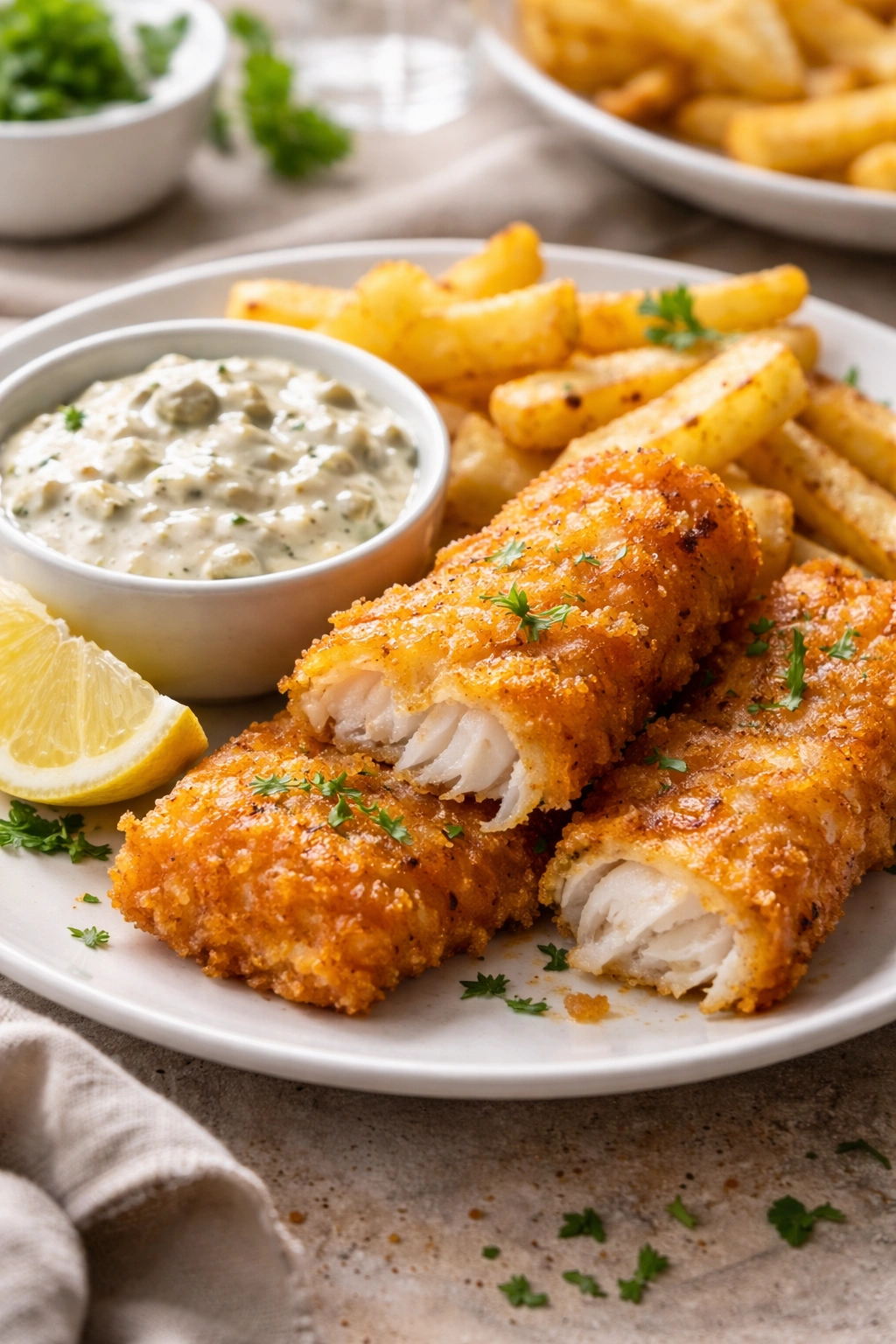
Fried fish is the obvious pairing, and it’s obvious for good reason. The brightness of the sauce cuts through the richness of the oil. Fried cod, fried halibut, fried catfish—all benefit from that pickle-bright counterpoint. The acidity also helps your palate reset between bites so you don’t experience flavor fatigue.
Grilled fish is equally good with tartar sauce, though the pairing is slightly less traditional. A piece of grilled salmon, a grilled swordfish steak, or grilled halibut all improve with a spoonful of tartar sauce on the side. The sauce stays fresh and bright while the fish is warm and slightly smoky from the grill.
Fish tacos are perfect with tartar sauce. Some people use other sauces—sriracha mayo, chipotle cream, citrus crema—but tartar sauce is absolutely a legitimate taco component. It adds sharpness and pickle flavor that works beautifully with crispy fish, lime, cilantro, and cabbage slaw.
Shrimp dishes work well too. Fried shrimp, especially, benefits from tartar sauce. Grilled shrimp with a spoonful of tartar sauce on the side is delicious. Even shrimp pasta can work with a small dollop stirred in at the end, though this is more of a creative application than a traditional one.
Crab cakes are wonderful with a generous spoonful of tartar sauce on top or on the side. The pickle brightness doesn’t compete with the sweet crab; it enhances it.
Fish and chips, obviously. This is the classic British application, and it’s perfect. The sauce sits alongside hot, crispy chips and flaky white fish.
Oysters and clams can be served with tartar sauce as an alternative to cocktail sauce or mignonette. It’s less traditional, but it works beautifully—the pickles and mayo complement the briny sweetness of raw shellfish.
Canned tuna salad tastes genuinely better with a spoonful of tartar sauce mixed in instead of using plain mayo. Same with canned salmon.
Fish chowders or creamy seafood soups can be topped with a small dollop of tartar sauce for brightness and crunch. It seems odd until you taste it.
Cold seafood salads—crab salad, shrimp salad, tuna salad—are all better with tartar sauce added to the dressing or served on the side.
The pattern you’ll notice is that every application involves relatively delicate, briny seafood. Tartar sauce is specifically designed to complement those flavors. It’s less successful with heartier fish like tuna steaks or with meat dishes. Use it with seafood, and you’ll be happy.
How to Customize Your Sauce for Different Tastes
If you’re serving this sauce to multiple people, you might want to make a batch and then let individuals customize their own portions. This is actually a smarter approach for dinner parties than trying to make one sauce that everyone likes.
For someone who wants less pickle flavor, hold back on the dill chips and use less relish. You can also add an extra spoonful of mayo to dilute the pickle intensity. The sauce stays creamy; the pickles become background flavor rather than the star.
For someone who wants more brightness and acid, add an extra squeeze of lemon juice and maybe an extra ½ teaspoon of Dijon mustard. This sharpens the entire sauce and makes it more assertive.
For someone who wants herbal notes to dominate, add extra fresh parsley, dill, and maybe some fresh tarragon or chives. The pickles are still there, but the herbs are what you taste first.
For someone who prefers sweet, add a teaspoon of honey or a teaspoon of sweet relish instead of using dill pickle chips. The sweetness balances everything out.
For someone who wants spicy, add hot sauce, cayenne, or diced fresh jalapeños. A little goes a long way—taste as you go.
The wonderful thing about homemade tartar sauce is that you’re not locked into one version. The base formula is forgiving and flexible. You can make the core recipe, then offer additions on the side and let people mix their own variation. It makes you look incredibly thoughtful, and it ensures everyone gets exactly what they want.
You can also make multiple small batches rather than one large one. If you’re serving four people with different preferences, make four quarter-batches (using ¼ cup mayo as the base for each) and customize each one. This takes the same amount of time as making one large batch and ensures everyone is happy.
For children or people who don’t like pickles, you can make a “mild” version using just the mayo, lemon juice, mustard, and herbs—essentially a green sauce—and calling it something else. Most people who think they don’t like tartar sauce have never had a really good homemade version; sometimes they just need a gentler introduction.
Final Thoughts
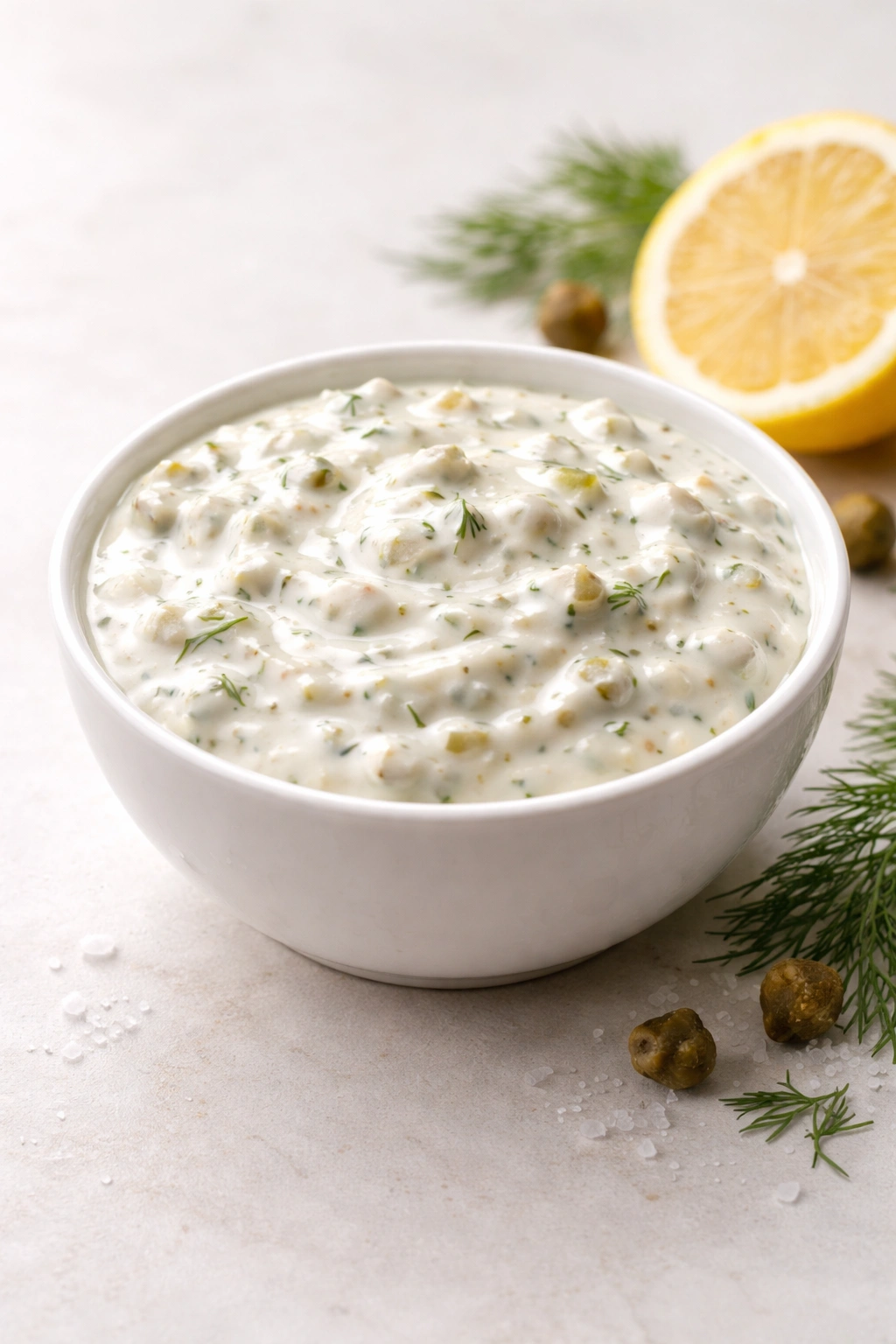
Homemade tartar sauce is one of those kitchen skills that seems more impressive than it actually is. You combine five or six ingredients, taste, adjust, and you’re done. There’s no cooking involved. There’s no special equipment. There’s no reason to buy it in a jar ever again.
The gap between what you make at home and what you buy at the store is genuinely enormous, and the extra effort required is measured in minutes. Fresh ingredients taste better. Homemade sauce tastes better. Once you’ve made it once and tasted how much better it is, you’ll be amazed that you ever bought the bottled version.
Keep this recipe somewhere you can find it easily. Make it the day before your seafood dinner, or pull it together while dinner is cooking. Taste it, adjust it to your preference, and feel genuinely proud that you made something so much better than the commercial alternative. That’s the entire point of cooking at home—taking something good and making it taste like you actually care about it.
