



Honey Mustard Glazed Salmon Baked to Perfection
There’s something deeply satisfying about sliding a beautiful salmon fillet into a hot oven and knowing that in less than twenty minutes, you’ll have a restaurant-quality dinner on the table. The honey mustard glaze does all the heavy lifting for you — it caramelizes in the heat, creating a sticky, tangy-sweet coating that penetrates the tender, flaky flesh beneath. You don’t need culinary school training or exotic ingredients. You just need good salmon, a few pantry staples whisked together, and the confidence to trust the process. This is the kind of recipe that tastes like you spent hours in the kitchen when really, you’ve barely touched a pan. It’s the perfect weeknight dinner that impresses without the fuss, the kind of meal that makes your family ask “when are you making this again?” before they’ve even finished eating.
The Story Behind This Simple Yet Elegant Dish
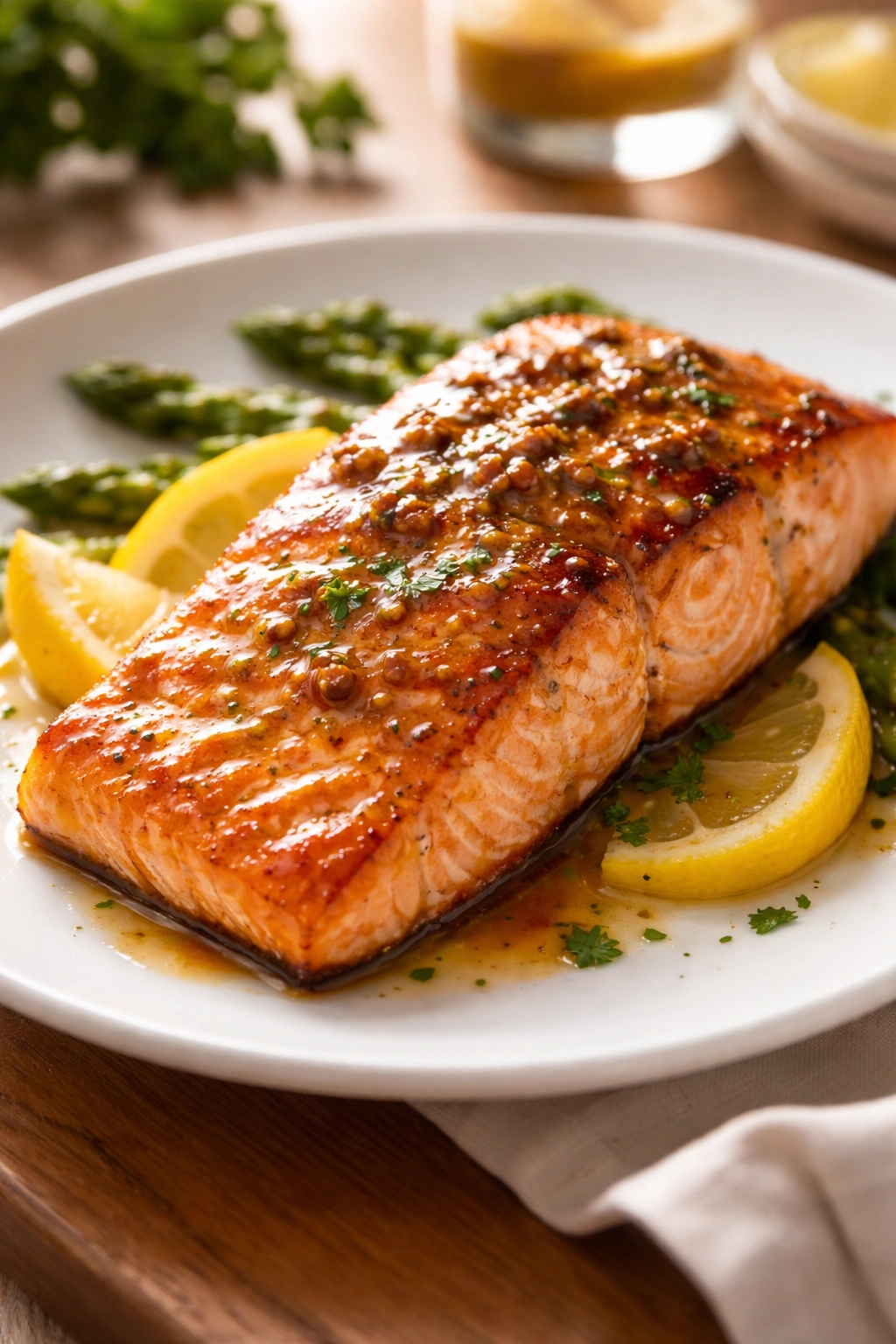
Honey mustard is a flavor combination that’s been beloved for centuries, appearing across countless cuisines and cooking traditions. The pairing of mustard’s sharp, tangy bite with honey’s natural sweetness creates a kind of perfect equilibrium — they balance each other so completely that neither one dominates. When you apply this classic combination to salmon, something magical happens. The high heat of the oven causes the glaze to caramelize slightly, while the natural oils in the salmon prevent it from drying out. The result is a fillet that’s crispy on the outside, moist and buttery on the inside, with a glaze that tastes like you spent time tinkering with the recipe when really, it came together in a single small bowl.
This dish has roots in simple French cooking philosophy, where a few quality ingredients are treated with respect rather than buried under heavy sauces. Modern home cooks have embraced it because it genuinely works. It’s the kind of recipe that appears in family dinner rotations across the country, from busy weeknights to holiday tables, because it delivers on both flavor and reliability. Once you nail the technique, you’ll find yourself making it regularly — it becomes less of a special-occasion meal and more of a go-to solution when you need something that’s both nutritious and genuinely delicious.
Why Honey Mustard Is the Perfect Salmon Companion
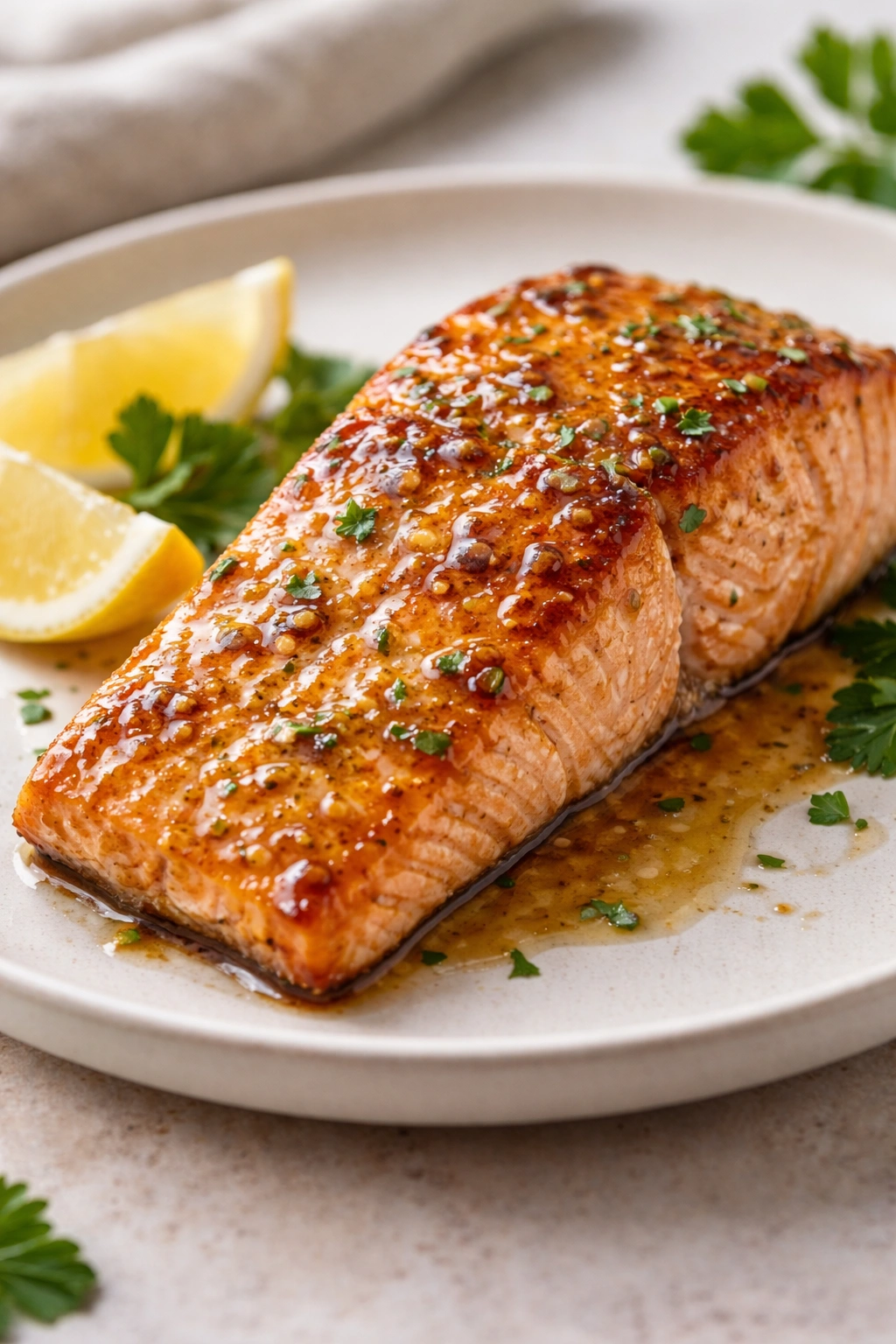
Salmon is a fatty fish with a bold, distinctive flavor that doesn’t need much to shine, but it does benefit from something that can cut through that richness while adding complexity. The acidity in mustard acts as a perfect foil to salmon’s oiliness, sharpening the fish’s flavor and preventing the dish from feeling heavy or one-dimensional. At the same time, honey adds sweetness that seems counterintuitive but actually works beautifully with fish — it’s not the sugary sweetness of dessert, but rather a natural, subtle sweetness that enhances the salmon’s inherent flavors.
What makes this glaze so effective is its versatility. The combination works whether you’re using wild-caught salmon with its deeper, more robust flavor or farm-raised salmon with its milder, more buttery profile. The glaze adapts to whatever salmon you bring home. It’s also forgiving — it doesn’t require precise measurements or unusual ingredients, which means you can make it confidently every single time without worrying that you’ve done something wrong.
The heat of the oven creates a transformation that you simply can’t replicate with a stovetop method. As the moisture in the glaze evaporates, the honey concentrates and caramelizes slightly against the salmon’s surface, creating a thin, golden-brown coating. This isn’t burnt — it’s the sweet spot where the honey’s sugars have transformed into something deeper and more complex than they were at the start. That caramelization is what elevates this from “nice” to “I’m actually impressed”, and it’s completely unavoidable when you bake the salmon in the oven.
Selecting Salmon That Actually Tastes Good
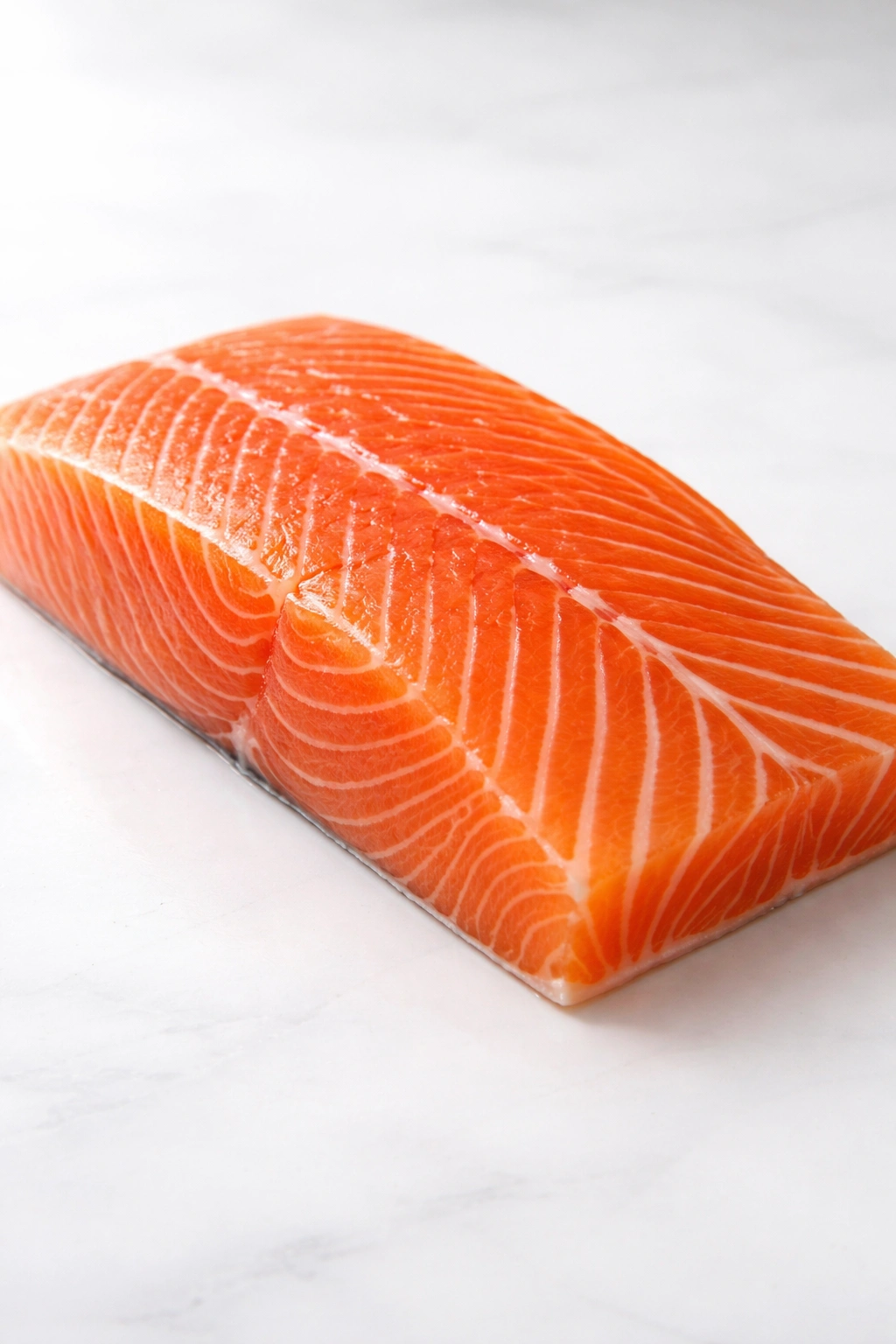
The single biggest factor in how good your finished dish will be is the quality of the salmon you start with. This is non-negotiable. You can follow the recipe perfectly, but if your salmon has been sitting in a case for days, was frozen and thawed improperly, or was of questionable freshness to begin with, the results will disappoint you. The good news is that recognizing quality salmon takes just a few moments and one key sense: your nose.
Fresh salmon should smell clean and slightly oceanic, like a sea breeze rather than a full-on fish counter. If the smell is strong, pungent, or unpleasant in any way, that’s your sign to walk away. Don’t feel bad about it. Markets are used to customers being selective about fish, and they’d rather you choose a different protein than buy something you’re uncomfortable with. When you take the salmon home, trust your instincts. If something seems off when you open the package, return it or use it another time when you have more flexibility.
Look for salmon with firm, unblemished flesh. The color should be vibrant — either a deep orange-red for wild salmon or a lighter peachy-orange for farm-raised, depending on the type. The flesh should spring back slightly when you press it gently with your finger. If it feels mushy or leaves an indentation, it’s past its prime. Try to buy your salmon the same day you plan to cook it, or at most one day before. If you can’t cook it immediately, store it in the coldest part of your refrigerator, usually toward the back of a shelf, and use it within twenty-four hours.
Wild-caught Alaskan salmon is generally considered superior to farm-raised, and if your budget allows, it’s worth choosing. Wild salmon has a richer, more complex flavor and a higher omega-3 content. It also tends to have firmer flesh and a better texture. That said, quality farm-raised salmon from reputable sources works beautifully in this recipe and is often more affordable and more consistently available. Sockeye salmon (wild) is leaner and cooks slightly faster, while king or coho salmon has more fat content and stays moister during cooking. Either will work; the main consideration is that very thin fillets cook faster than thick ones, so adjust your timing accordingly.
Building the Perfect Honey Mustard Glaze
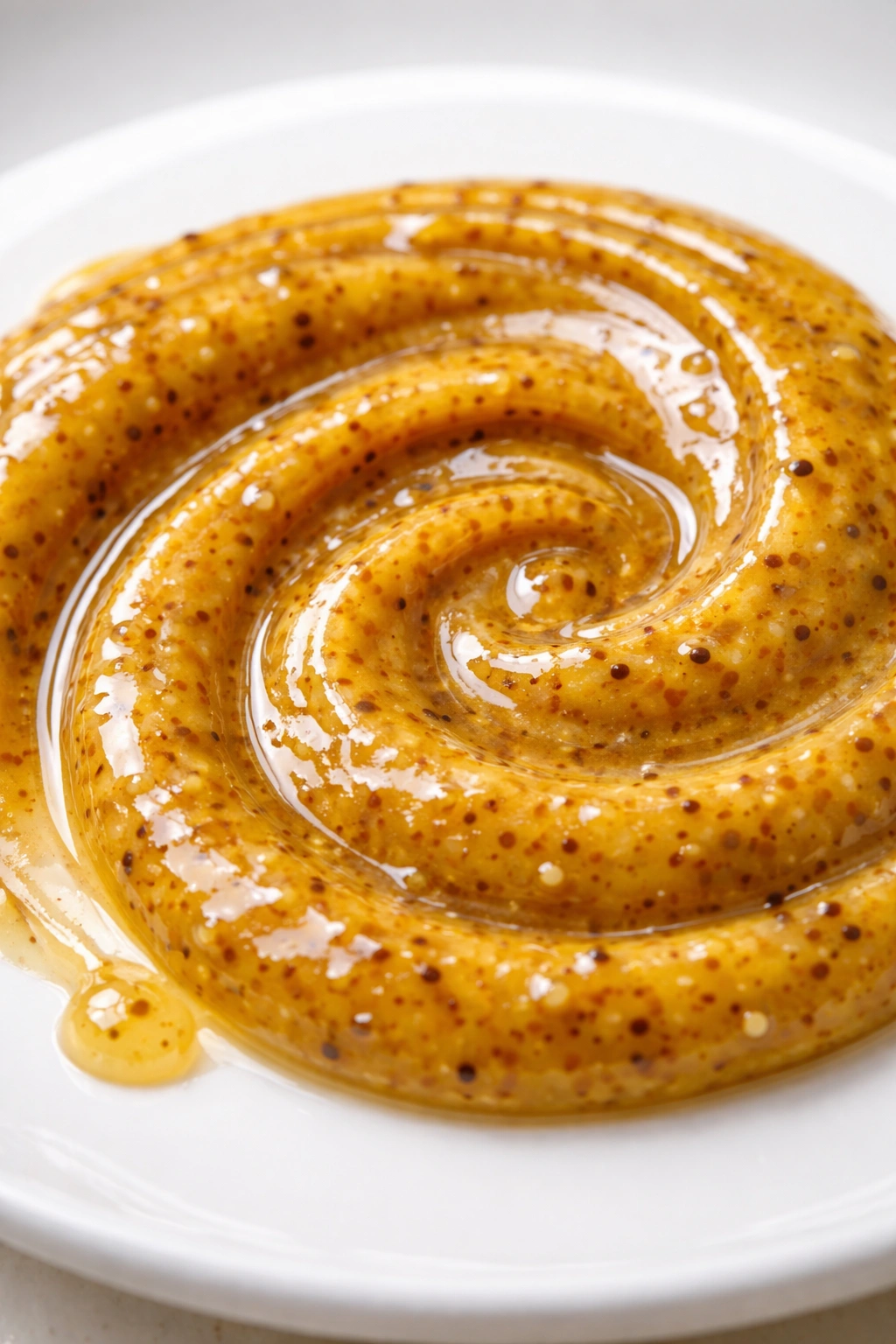
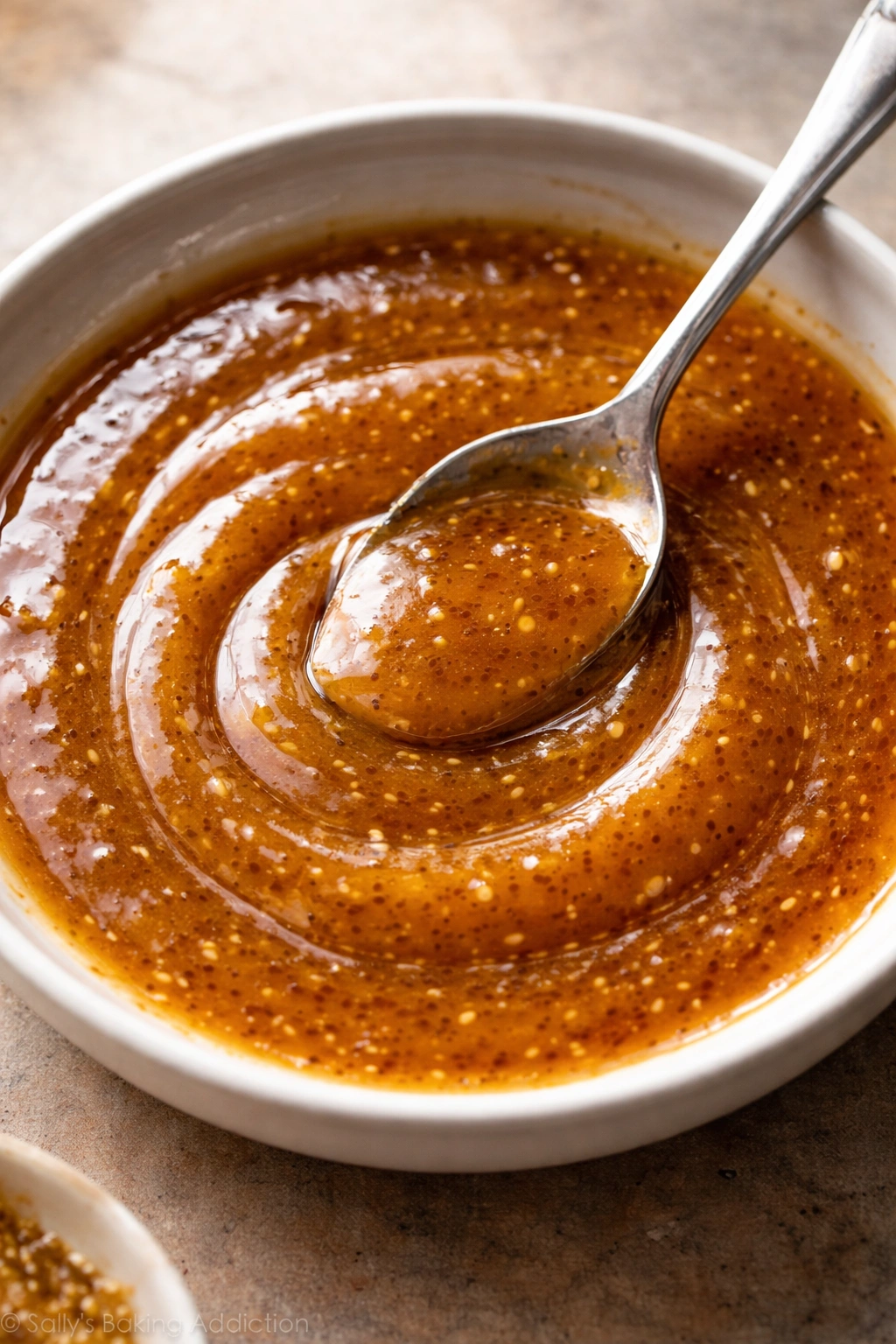
The glaze is the star of this show, so understanding how it works will help you troubleshoot any issues and feel confident adapting it to your preferences. The foundation is mustard — and here’s where most recipes get it right but many home cooks miss an opportunity. Using two types of mustard instead of one creates a depth of flavor that a single mustard simply can’t achieve.
Dijon mustard brings sophistication and a sharp, slightly spicy tang. It’s smooth and refined, and it’s the type of mustard that tastes like someone put thought into it. Whole grain mustard adds texture and a more rustic, earthy mustard flavor. Those tiny mustard seeds you see in the glaze aren’t just pretty — they add little bursts of mustard flavor and visual interest. If you only have one type on hand, use four tablespoons of whichever you prefer and the dish will still be delicious. But if you can grab both, the combination is genuinely worth it.
Honey is the balancing act. It softens the mustard’s edge and adds a subtle sweetness that makes the glaze feel rounded and complete. Use good honey if you can — raw, local honey tastes noticeably better than the processed squeeze bottles, though either will work. The honey also helps the glaze caramelize in the oven, creating that golden exterior you’re after. Don’t skip the honey thinking you’ll use maple syrup or agave instead; they behave differently in heat and won’t deliver the same results.
Fresh garlic, minced fine, adds a savory depth that prevents the glaze from becoming one-dimensional. Use a microplane or the fine side of a box grater for garlic that’s nearly paste-like and will fully integrate into the glaze. Lemon juice brightens everything — it’s the final touch that makes you go “wow, what is that flavor?” without being able to pinpoint it. It’s lemon, but it’s subtle and sophisticated. A tiny pinch of smoked paprika adds warmth and a whisper of smokiness that hints at complexity without announcing itself.
The Salmon: Whole Fillet vs. Individual Portions
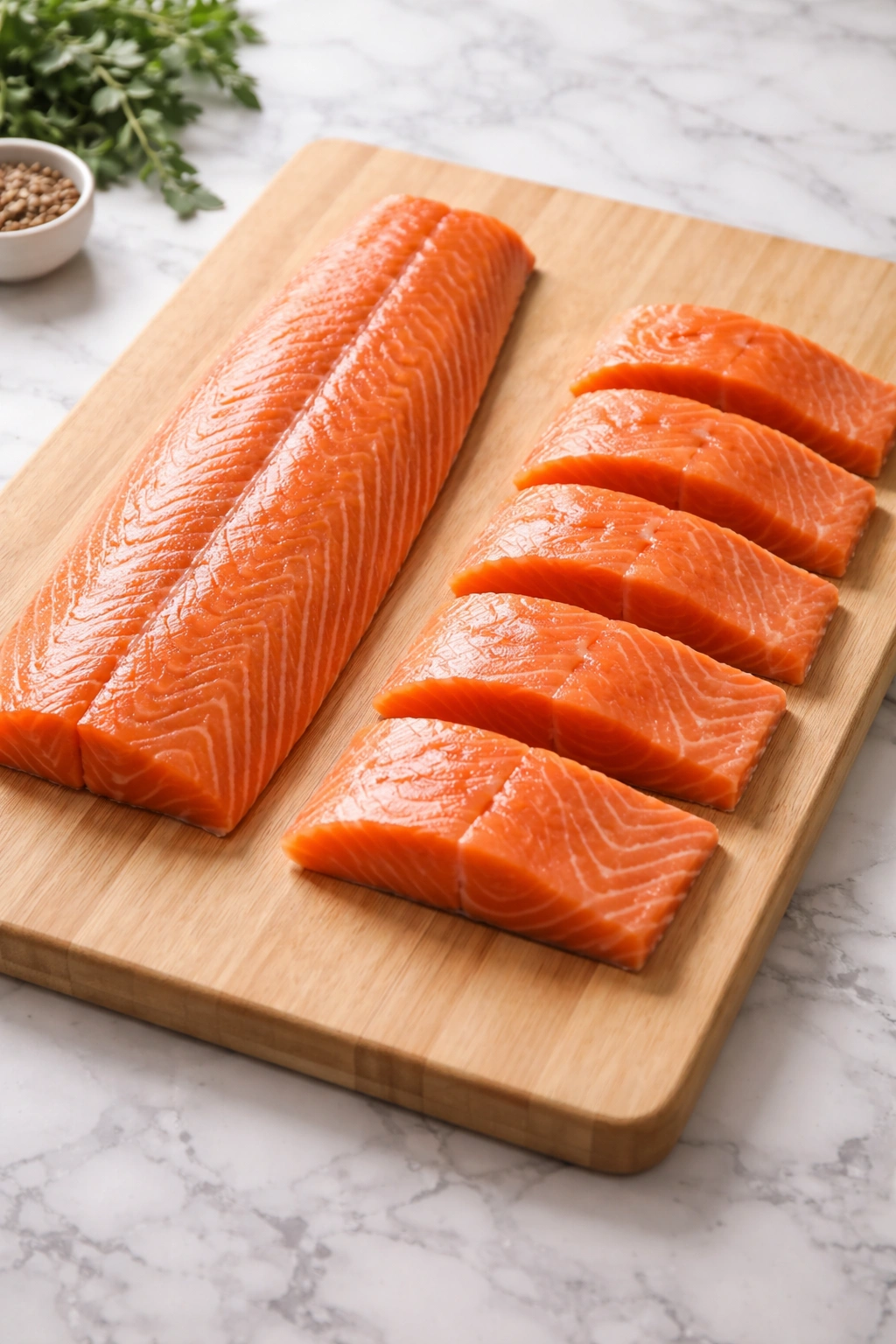
You’ll need to decide whether you want to work with a large whole salmon fillet or individual fillets. Both approaches work perfectly; it’s purely a matter of preference and how you plan to serve. A whole fillet (typically two to three pounds) is beautiful when you bring it to the table and carve it in front of guests. It feels more special and presentation-focused. Individual fillets (four to six ounces each) are more practical for everyday cooking and portion control.
If you’re buying a whole fillet, look for one with even thickness from end to end. Salmon fillets taper at one end, which means that tapered section will cook much faster than the thicker end. You can account for this by tucking the thin end under itself to create more even thickness, or by starting the thicker end in the oven first and adding the thin end a few minutes later. Some cooks solve this by folding the fillet in half, but that changes the presentation.
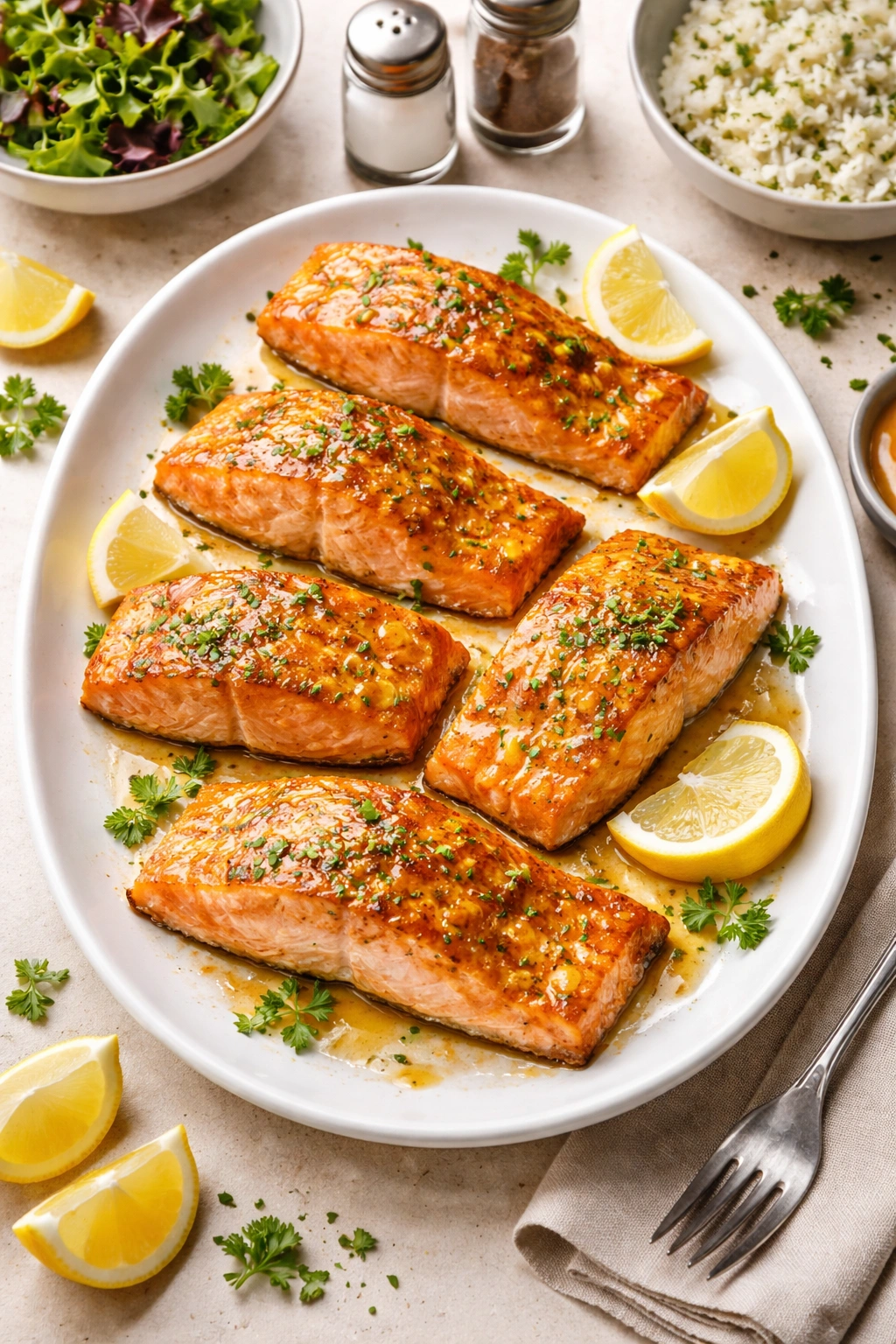
Individual portions are more forgiving because they cook evenly without these thickness variations to manage. They’re also easier to portion if you’re feeding people with different appetites. A four-ounce fillet is perfect for a lighter appetite, while a six-ounce fillet is substantial and satisfying. When you plate individual fillets, the glaze on top and the garnishes create an elegant presentation without any extra effort.
Yield: 4 to 6 servings | Makes one 2-3 pound fillet or 4-6 individual fillets
Prep Time: 10 minutes
Cook Time: 18-20 minutes (timing varies with thickness)
Total Time: 30-35 minutes
Difficulty: Beginner — The steps are straightforward, special equipment isn’t required, and salmon is forgiving if you watch the timing closely.
For the Honey Mustard Glaze:
- 3 tablespoons whole grain mustard
- 2 tablespoons Dijon mustard
- ¼ cup raw honey (or any good-quality honey)
- 2 cloves fresh garlic, minced very fine
- 2 tablespoons fresh lemon juice
- 1 tablespoon lemon zest (zest the lemon before juicing it)
- 1 teaspoon smoked paprika
- ¼ teaspoon fine sea salt
- ⅛ teaspoon freshly ground black pepper
- (Optional: ½ teaspoon dried thyme or Italian seasoning for extra herbal notes)
For the Salmon:
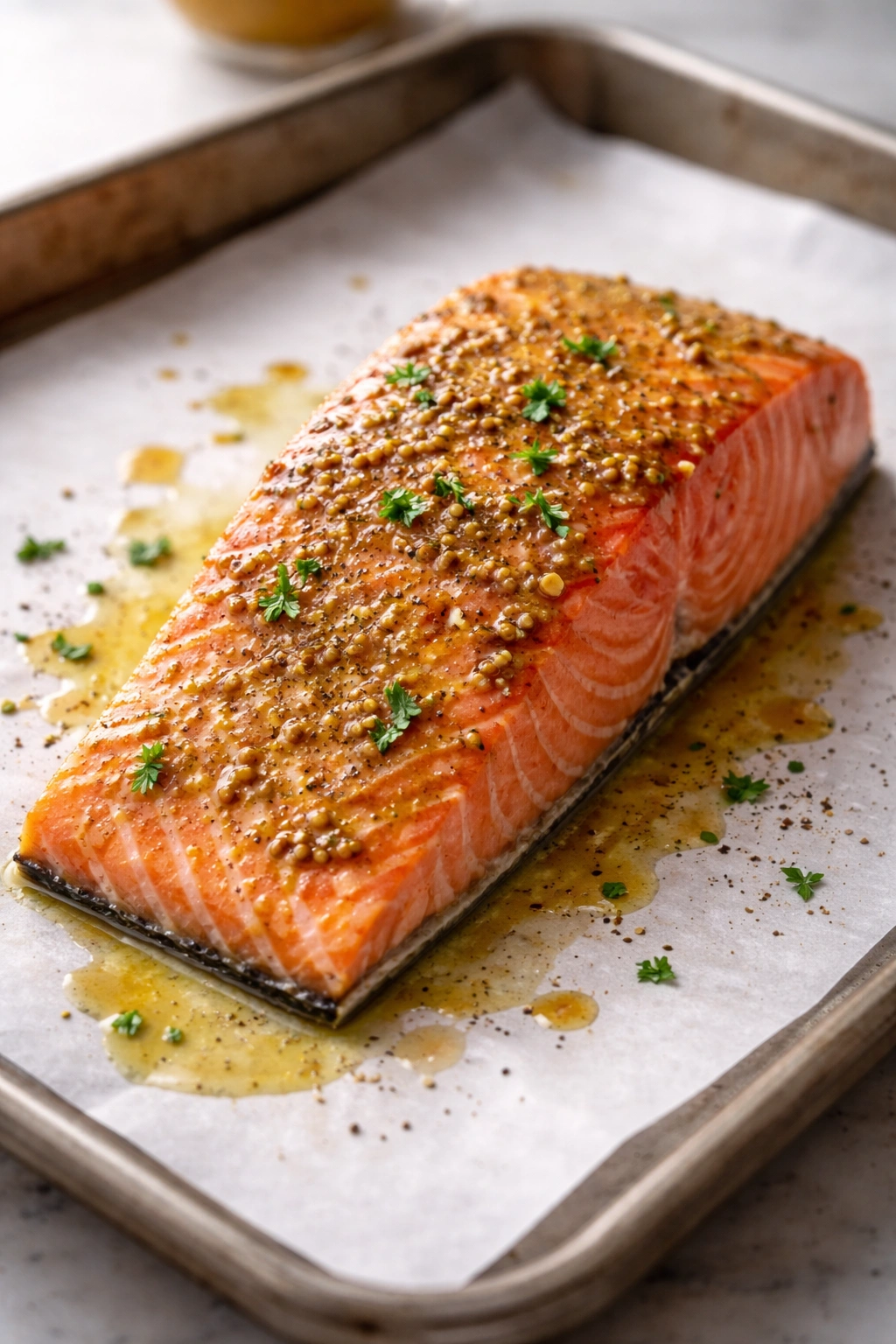
- 2 to 3 pounds salmon fillet, skin on, pin bones removed (or 4-6 individual fillets, 5-6 ounces each)
- Fine sea salt and freshly ground black pepper for seasoning
- 1 tablespoon neutral cooking oil (for greasing the foil or pan)
- Fresh parsley, finely chopped (for garnish)
- Lemon wedges (for serving)
Prepare Your Workspace and Oven:
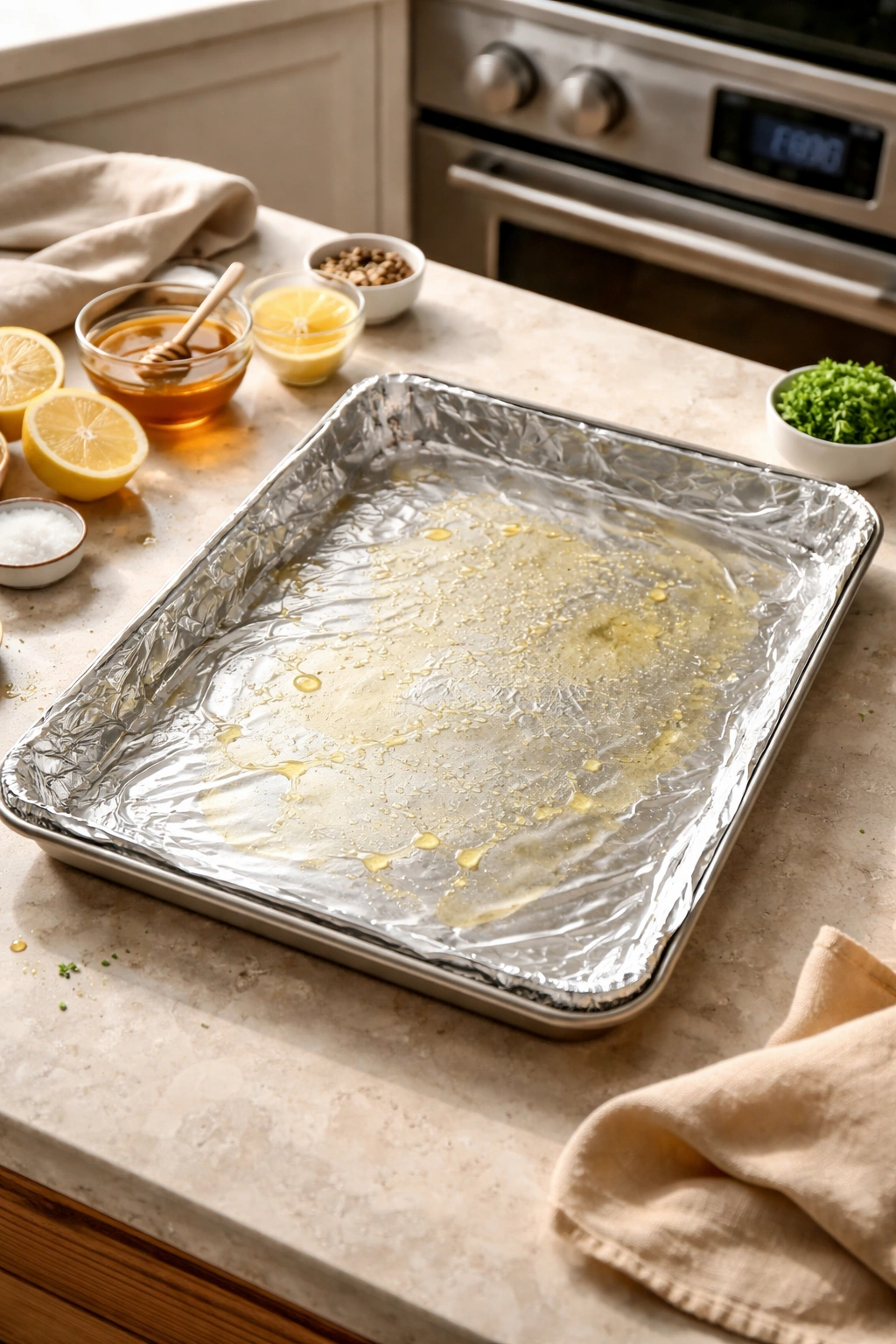
-
Preheat your oven to 400°F (200°C) and position the rack in the center of the oven. If you have a convection setting, a standard oven works fine for this recipe, but avoid convection as it can dry out the salmon.
-
Line a large rimmed baking sheet with heavy-duty aluminum foil, shiny side down. The foil should have enough overhang on the sides to fold up and create a kind of “boat” around the salmon. Lightly brush or spray the foil with neutral oil to prevent sticking.
Make the Honey Mustard Glaze:
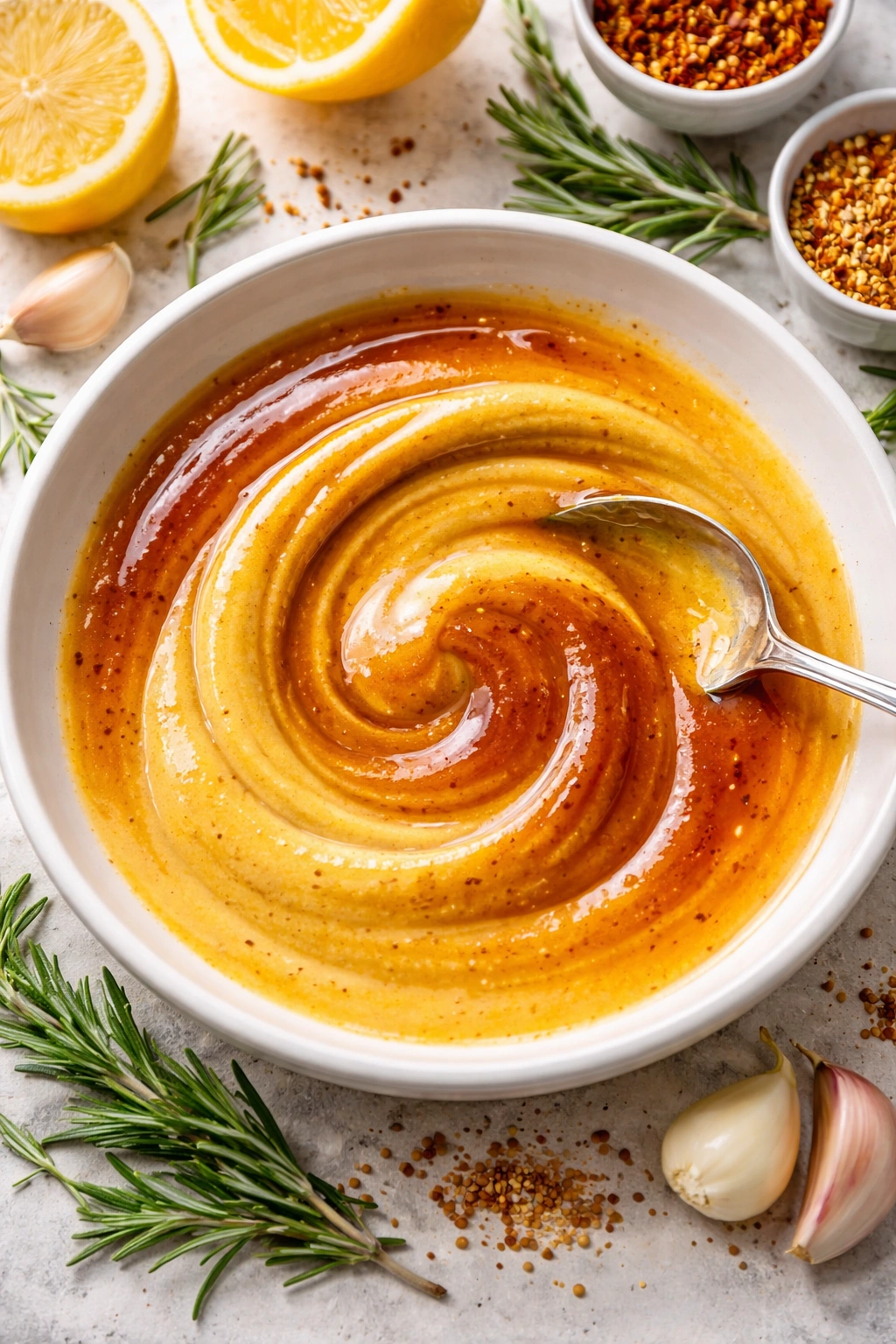
- In a small bowl, combine the whole grain mustard, Dijon mustard, honey, minced garlic, lemon juice, lemon zest, smoked paprika, salt, and pepper. Whisk vigorously until the mixture is smooth and completely combined. The texture should be thick and spreadable, like a paste. Take a moment to taste it now — you should taste tangy mustard balanced with sweet honey, with garlic and lemon providing brightness. Adjust if needed: more honey if it’s too sharp, more mustard if it’s too sweet. Set aside.
Prepare the Salmon:
-
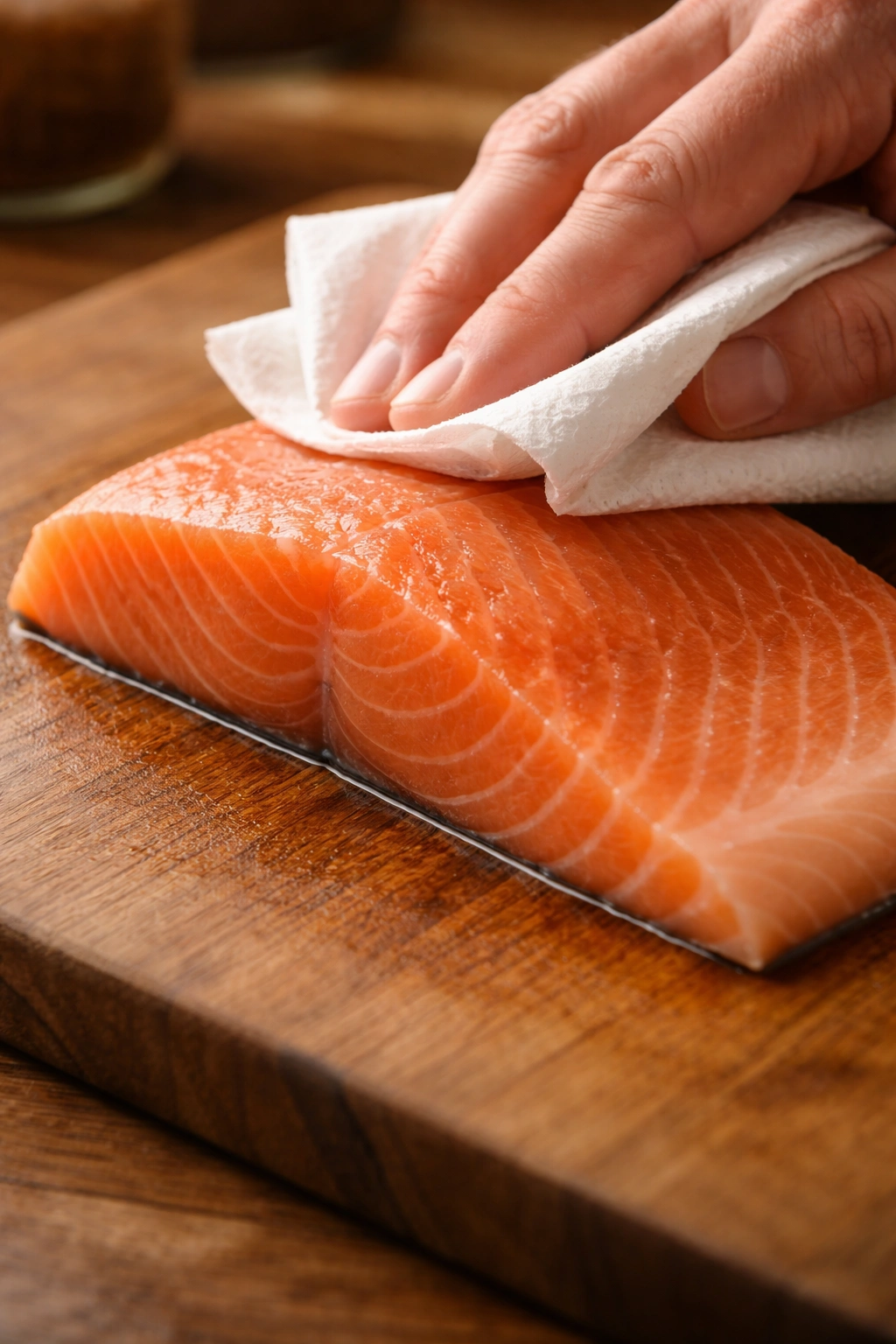
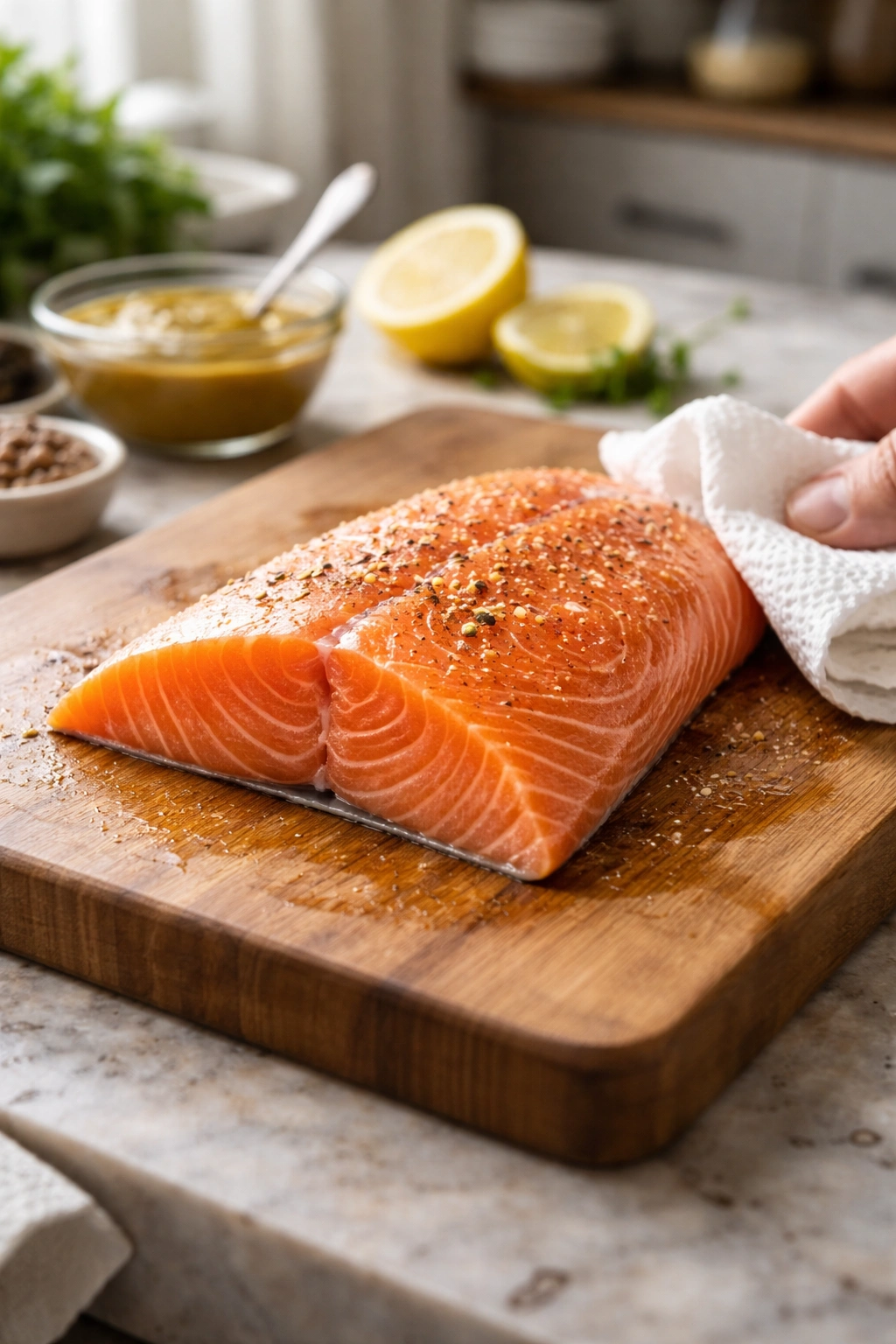
Pat the salmon fillet completely dry using paper towels. Moisture on the surface will prevent proper browning and caramelization. Work gently so you don’t damage the delicate flesh. If you’re using a whole fillet, check for pin bones by running your fingers along the flesh from the thicker end toward the tail. You’ll feel small bones sticking up — use tweezers or fish tongs to pull them out, working gently and pulling in the direction the bones are pointing. This step is worth the extra minute because biting down on a pin bone is genuinely unpleasant.
-
Place the salmon skin-side down on the prepared foil. If you’re using a whole fillet, it should lie flat. If the fillet is uneven in thickness, you can gently tuck the thin tail end under itself to create slightly more even thickness, which helps with even cooking.
-
Season the top of the salmon lightly with fine sea salt and freshly ground black pepper. Don’t over-salt here — remember the glaze also contains salt, and it’s easy to end up with an over-salted dish if you’re not careful. A light hand is better; you can always add more seasoning at the table.
-
Spoon the honey mustard glaze directly onto the top of the salmon, spreading it gently and evenly with a silicone spatula or the back of a spoon. Don’t be shy — you want to coat the entire top surface with a visible layer of glaze. It’s okay if some runs down the sides; that’s part of the process.
-
Fold the sides of the foil up and over, creating a loose packet around the salmon. Don’t seal it completely and tightly yet — you want a little airflow for the glaze to caramelize. Think of it as more of an open boat than a sealed envelope. The foil should come up about an inch or two on all sides but should not touch the top of the salmon.
Advertisements
Bake Until Perfectly Cooked:
-
Slide the baking sheet into the preheated 400°F oven. Set a timer for 12 minutes, then check the salmon. This is your first checkpoint, especially if you’re working with thinner fillets (about one inch thick). The salmon should be starting to turn opaque around the edges, and you should see the glaze beginning to bubble slightly.
-
For a whole large fillet or fillets thicker than one inch, continue baking for another 6-8 minutes, checking every couple of minutes. The salmon is done when the thickest part reaches an internal temperature of 135-140°F when measured with an instant-read thermometer. This is the sweet spot — the fish will be moist and tender, with a beautiful pink color throughout. It will continue cooking slightly as it rests.
-
Do not bake past 145°F internal temperature — anything above that crosses into dry, overcooked territory. Salmon transitions from perfect to overcooked very quickly, so vigilance in these final minutes is important. Remove the baking sheet from the oven and let it rest for 2-3 minutes before serving. This resting period is crucial — it allows the residual heat to distribute evenly and the juices to redistribute throughout the flesh, ensuring every bite stays moist.
Optional Broiling Step for Extra Caramelization:
- If you want the glaze to have extra caramelization and a slightly charred edge, you can switch the oven to broil for the final 1-2 minutes (but only after the salmon has reached 135°F). Keep a very close eye on this step — the honey can go from caramelized to burnt in a matter of seconds. Open the broiler after 60 seconds to check. You’re looking for a deeper golden brown with maybe a few darker spots, not blackened areas. Remove immediately when it looks right.
The Critical Details That Make All the Difference
Getting perfect salmon isn’t complicated, but it does require paying attention to a few non-negotiable details. The most important is not overcooking. This is the number-one way home cooks ruin salmon. It’s easy to do because you can’t see inside the fish without opening it up. Use a meat thermometer — it’s not cheating, it’s insurance. The $12 you spend on an instant-read thermometer will save you from ruining countless meals.
Temperature matters because of how protein behaves. Salmon reaches food-safe temperature at 145°F, but that’s also the point where the flesh becomes very firm and the moisture starts cooking out. Professional chefs and experienced home cooks pull salmon at 135-140°F specifically because they know it will carry over to 145°F while resting and in people’s mouths as they eat it. The fish will be flaky and tender rather than firm and dry. Pull it out early — it feels wrong, but it’s right.
Another critical detail is ensuring your salmon is actually dry before the glaze goes on. If there’s moisture on the surface, the glaze won’t stick as well, and you won’t get the caramelization you’re after. A minute spent with paper towels is well worth it. Similarly, keeping the foil boat loose rather than sealed allows the top of the salmon to be exposed to the dry heat of the oven, which promotes browning and glaze caramelization. A completely sealed packet will create steam and result in a pale, unbrowned glaze.
The glaze-to-salmon ratio matters, too. You’re not drowning the salmon or making a sauce to serve separately. You’re creating a thin, concentrated coating. A quarter-inch to a half-inch thick layer of glaze is exactly right. If you spread it too thin, it’ll be less flavorful. If you pile it on too thick, the bottom will burn before the salmon cooks through. The recipe amounts are carefully calibrated for a two to three-pound fillet or four to six individual fillets. Adjust proportionally if you’re cooking significantly more or less.
Variations That Let You Make This Recipe Your Own
The beauty of this recipe is how adaptable it is. The honey mustard base is classic, but you can easily pivot the flavors depending on what you have on hand or what sounds good that day. These aren’t wild departures — they’re subtle tweaks that shift the flavor profile while keeping the technique exactly the same.
For a spicier glaze, add a pinch of cayenne pepper or red pepper flakes — start with a small pinch and taste as you go. You could also use spicy brown mustard in place of some or all of the Dijon. A teaspoon of sriracha or chili-garlic sauce adds a different kind of heat with more depth. For a sweeter glaze, increase the honey by a tablespoon or decrease the mustard slightly. Some people prefer that balance; others like the tanginess to dominate. There’s no wrong answer.
If you want to add herbs, fresh tarragon, fresh thyme, or fresh dill can all be folded into the glaze. Add them at the end so the heat doesn’t destroy their delicate flavor. Alternatively, dried herbs work fine — a half-teaspoon of dried tarragon or thyme stirred into the glaze before it goes on the salmon adds a sophisticated herbal note. Smoked paprika can be increased for someone who loves that smoky flavor, or omitted entirely if you don’t have it.
For an Asian-inspired variation, replace the lemon juice with lime juice, add a teaspoon of soy sauce, reduce the honey slightly, and add minced fresh ginger. It’s not traditional honey mustard at that point, but it’s delicious. A balsamic vinegar glaze variation swaps the lemon juice for balsamic and increases the honey to balance the vinegar’s acidity. Maple syrup can replace honey for a more autumn-forward flavor, though watch it carefully as it can caramelize differently than honey.
Individual portions give you the opportunity to get creative with toppings. Some people like a sprinkle of sesame seeds on top of the cooked salmon, or crushed pistachios for texture, or crispy bacon bits if they’re feeling indulgent. These toppings go on after the salmon comes out of the oven so they don’t burn. Fresh herbs like cilantro, dill, or chives add brightness. A squeeze of fresh lime juice right before serving adds acidity.
Sheet Pan Serving — Everything on One Pan
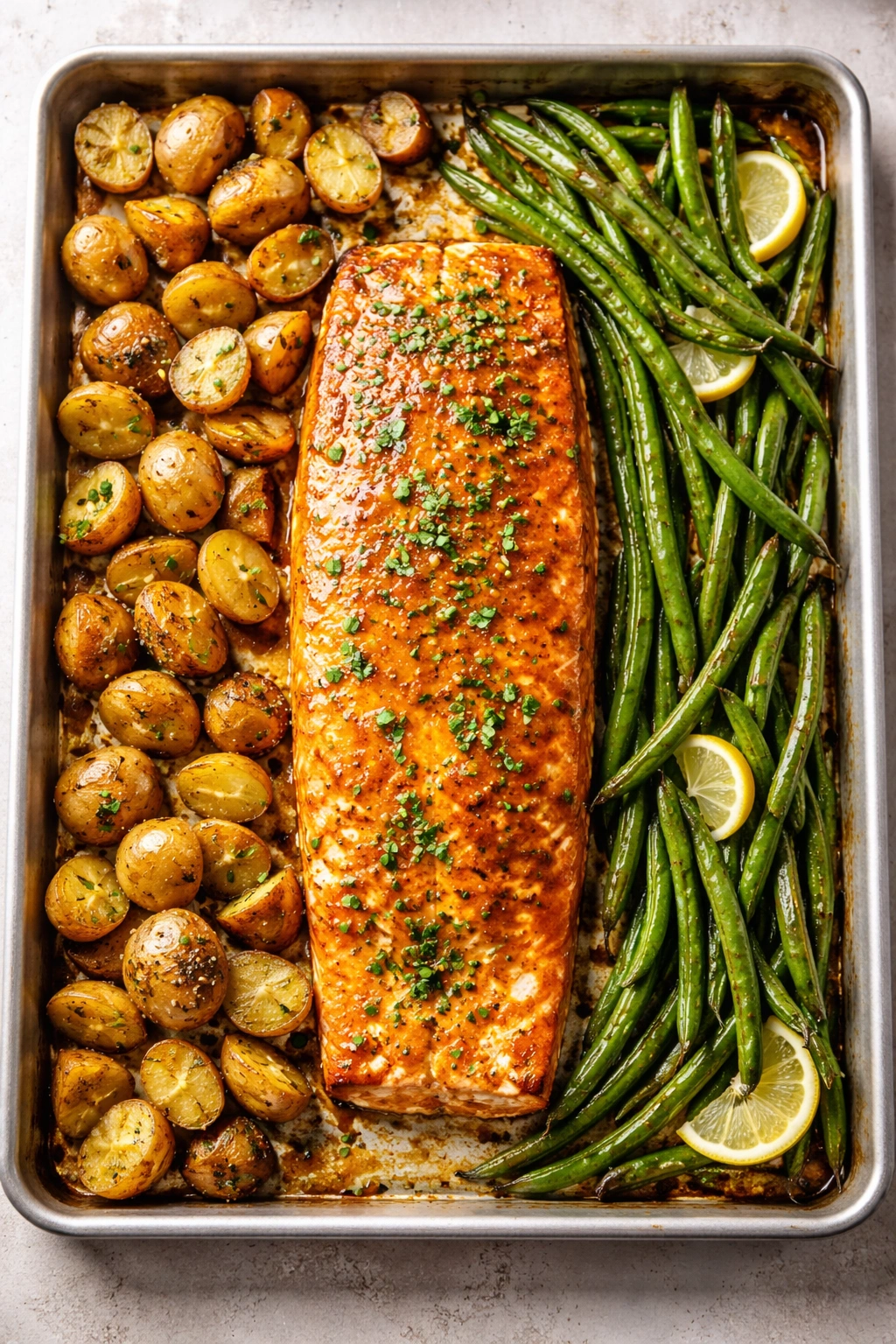
One of the best ways to cook this salmon is to turn it into a complete sheet pan meal, with vegetables roasting alongside the fish. This approach cuts down on cleanup and creates a meal that’s satisfying and complete without additional sides. The key is timing the vegetables so they’re done at the same moment as the salmon.
Potatoes take the longest, so they need a head start. Cut red potatoes, baby Yukon golds, or fingerling potatoes in half (quarter them if they’re large), toss them with olive oil, salt, and pepper, and spread them on one side of the prepared baking sheet. Let them roast for 15 minutes before adding the salmon and any quicker-cooking vegetables. Green beans, asparagus, broccoli florets, and Brussels sprouts all work well. Toss them with a bit of olive oil and salt, then add them to the pan when the salmon goes in.
Arrange the salmon in the center of the pan with the potatoes on one side and the green vegetables on the other. This arrangement allows everything to have some space for air circulation. The vegetables on the same pan as the salmon will pick up the flavors from the honey mustard glaze, especially if they’re positioned nearby. Everything cooks together for 18-20 minutes, and you pull the whole pan out as one complete meal.
Some vegetables cook faster than others, so you have options depending on what you’re using. Root vegetables like potatoes, carrots, and parsnips need that 15-minute head start. Green vegetables like green beans, broccoli, and asparagus can go in when the salmon does. If you’re using faster-cooking vegetables like zucchini or yellow squash, you might hold them for a few minutes, or cut them into larger pieces so they don’t overcook.
Storage, Reheating, and Making This Ahead
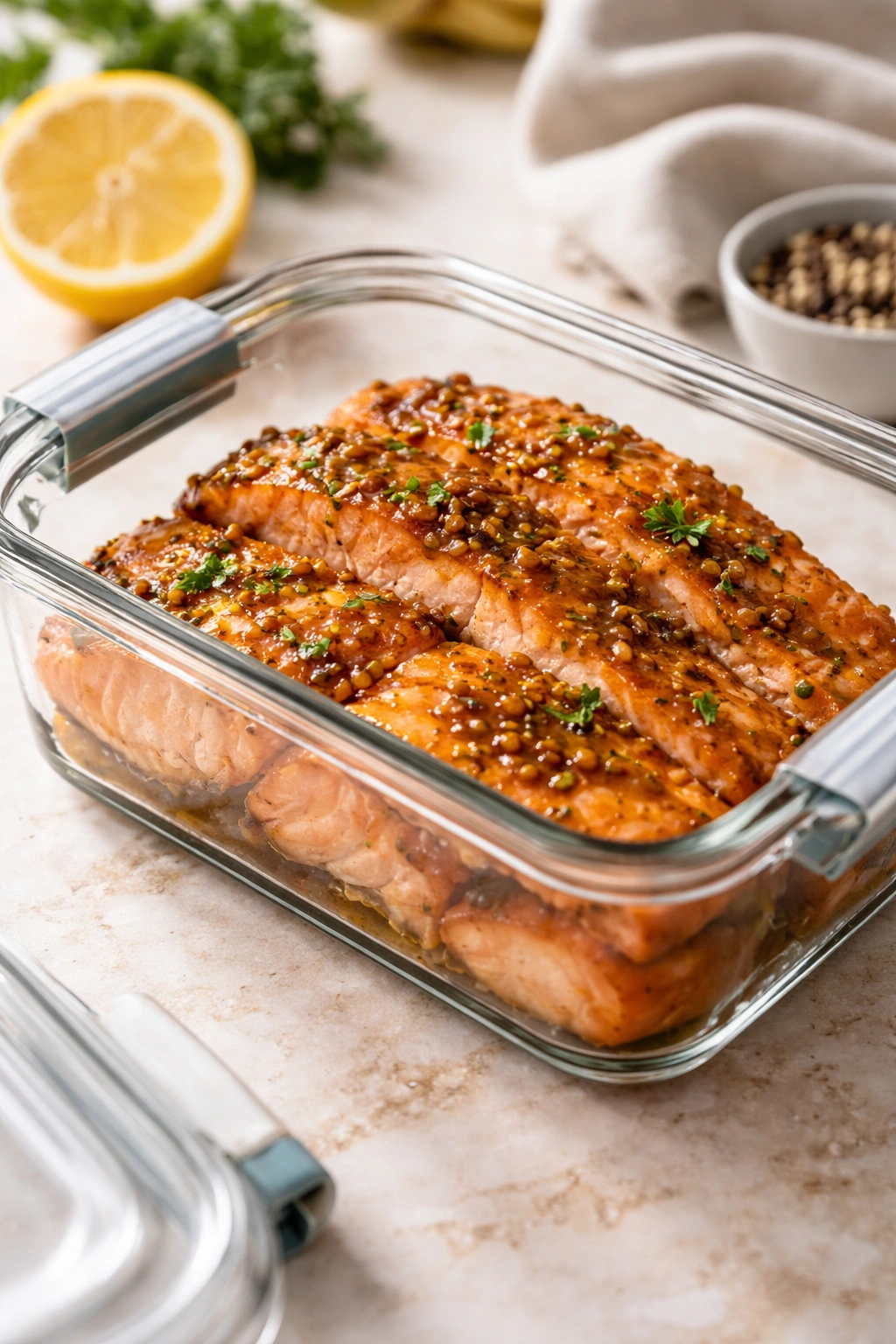
One of the best parts of making baked salmon is that it’s delicious as leftovers. The glaze actually becomes more concentrated in flavor as it cools and sits, so day-old salmon is arguably better than fresh. Let the salmon cool to room temperature before storing — putting hot food directly into the refrigerator raises the temperature of everything around it and isn’t ideal food safety practice.
Store leftover salmon in an airtight container in the coldest part of your refrigerator for up to three days. Salmon is a delicate fish and its quality declines after that point, so eat it within this window. You can also freeze cooked salmon, wrapped tightly in plastic wrap and then in a freezer bag, for up to three months. The texture will be slightly softer when thawed than when fresh, but it’s still very usable — it’s wonderful flaked over salads, into rice bowls, or mixed with cream cheese for salmon salad.
Reheating requires a gentle hand. The microwave is the quickest option but also the most likely to dry things out. Heat in thirty-second intervals, checking between each one, rather than blasting it for two full minutes. A low oven (around 325°F) is gentler — cover the salmon loosely with foil and warm it for about ten minutes until it’s heated through. The stovetop skillet method works too: place the salmon skin-side down in a cool skillet, then set the heat to medium-low. Cover and let it warm through without any additional cooking.
Honestly, though, cold salmon is wonderful and doesn’t need reheating. The glaze is still flavorful at room temperature, and some people actually prefer it that way. Cold salmon over a salad is a completely different dish from hot salmon with sides — it’s lighter, more refreshing, and perfect for lunch the next day.
For making this ahead, the glaze can be made up to three days in advance. Store it in an airtight container in the refrigerator and give it a stir before using. You can’t prepare the salmon with the glaze on it ahead of time — the glaze will become watery and won’t caramelize properly when you bake it. But having the glaze ready means dinner prep is literally just patting the salmon dry, spreading the glaze on, and sliding it in the oven.
Serving Suggestions and Perfect Pairings
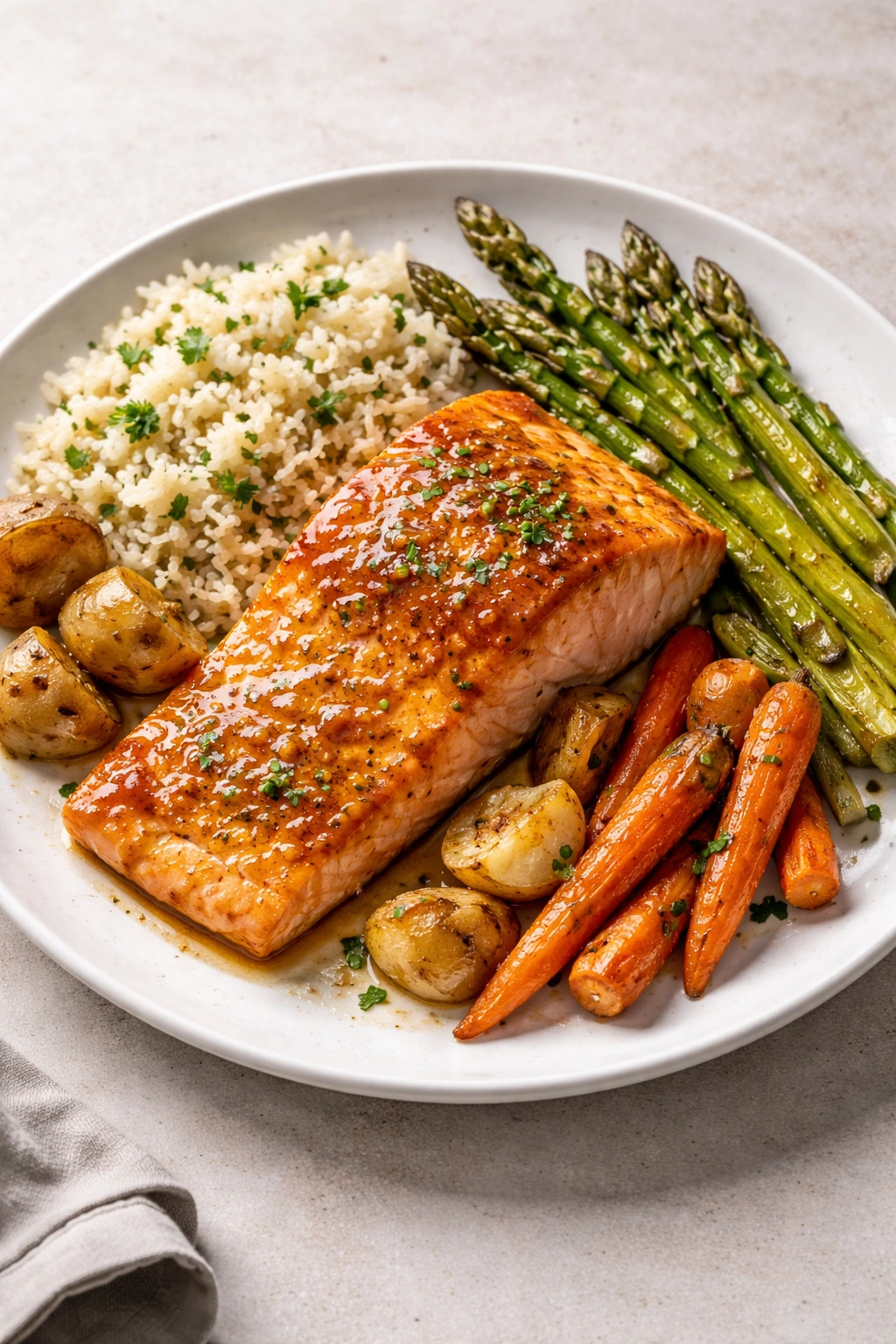
Salmon with this honey mustard glaze is rich, flavorful, and slightly sweet, so it pairs beautifully with sides that either complement or provide contrast. Simple roasted vegetables are always right — they don’t compete with the salmon and they absorb some of those delicious pan juices.
Asparagus is a classic pairing that works because its slight bitterness balances the sweetness of the glaze. Roast it with olive oil and salt for fifteen minutes at 400°F alongside the salmon. Green beans, similarly simple, add a fresh note. Roasted broccoli or Brussels sprouts provide texture contrast and a bit of earthiness. Softer sides like creamed spinach or sautéed snap peas work if you want something more luxurious.
For starch, a simple rice pilaf is elegant and absorbs the glaze’s flavors beautifully. Roasted potatoes (especially those on the sheet pan with the salmon) are hearty and satisfying. Orzo pasta with lemon and herbs creates a light, fresh meal. A baked sweet potato pairs with the honey-mustard flavors in a way that feels almost Thanksgiving-inspired. Some people serve the salmon alongside a grain-based salad — couscous, farro, or barley — which creates a lighter, more summery meal.
For wine pairing, the sweetness and tanginess of the glaze works well with slightly sweet white wines like Riesling or Gewürztraminer, or with crisp, mineral whites like Sauvignon Blanc. A dry Pinot Grigio is always a safe choice. If you’re serving this as part of a casual, non-alcoholic meal, a sparkling lemonade or an iced tea with fresh lemon is wonderful. The brightness of lemon throughout the meal creates nice cohesion.
Garnishing matters more than you might think. Fresh parsley, finely chopped, adds color and a fresh herbal note. A wedge of lemon on the plate is traditional and invites people to add extra brightness to their salmon. A sprinkle of fleur de sel just before serving adds visual interest and a little salt crunch. If you’re plating for guests, a simple arrangement with the salmon as the centerpiece, vegetables artfully arranged around it, and a sprinkle of herbs creates an elegant presentation without any complicated techniques.
Common Mistakes and How to Prevent Them
The most common mistake is overcooking, which we’ve discussed, but it bears repeating because it’s such a common regret. People worry about undercooking seafood and end up erring on the side of too much heat. Trust your meat thermometer. Pull at 135-140°F. It will be perfect.
Using salmon that’s already past its prime is the second most common issue. You can’t salvage old salmon with a great glaze. The quality of the raw ingredient matters more than the technique. If the salmon smells fishy, looks dull, or feels soft when you touch it, don’t cook it. There will always be another salmon-buying opportunity.
Not patting the salmon dry before glazing results in a soggy surface that won’t brown properly. It seems like a minor detail, but it makes a visible difference in the final result. A minute with a paper towel prevents this entirely.
Sealing the foil packet too tightly creates a steam-filled environment that results in pale, unbrowned glaze. The foil should create a loose boat shape that lets some air and heat reach the top of the salmon. You’re going for caramelization, not steaming.
Using mustard that’s been sitting in your cabinet since you moved in will taste stale and flat. If you’re not sure when you bought it, buy fresh. Mustard is cheap, and fresh mustard makes a noticeable difference. Similarly, honey that’s crystallized should be warmed gently until it’s liquid again — crystallization doesn’t affect flavor, but it affects how the honey incorporates into the glaze.
Forgetting to remove pin bones means at least one bite is going to include a little bone, which is unpleasant enough that it sticks in people’s memory. Take thirty seconds and run your fingers along the salmon before cooking. You’ll feel any bones that are sticking up and can easily pull them out.
Final Thoughts
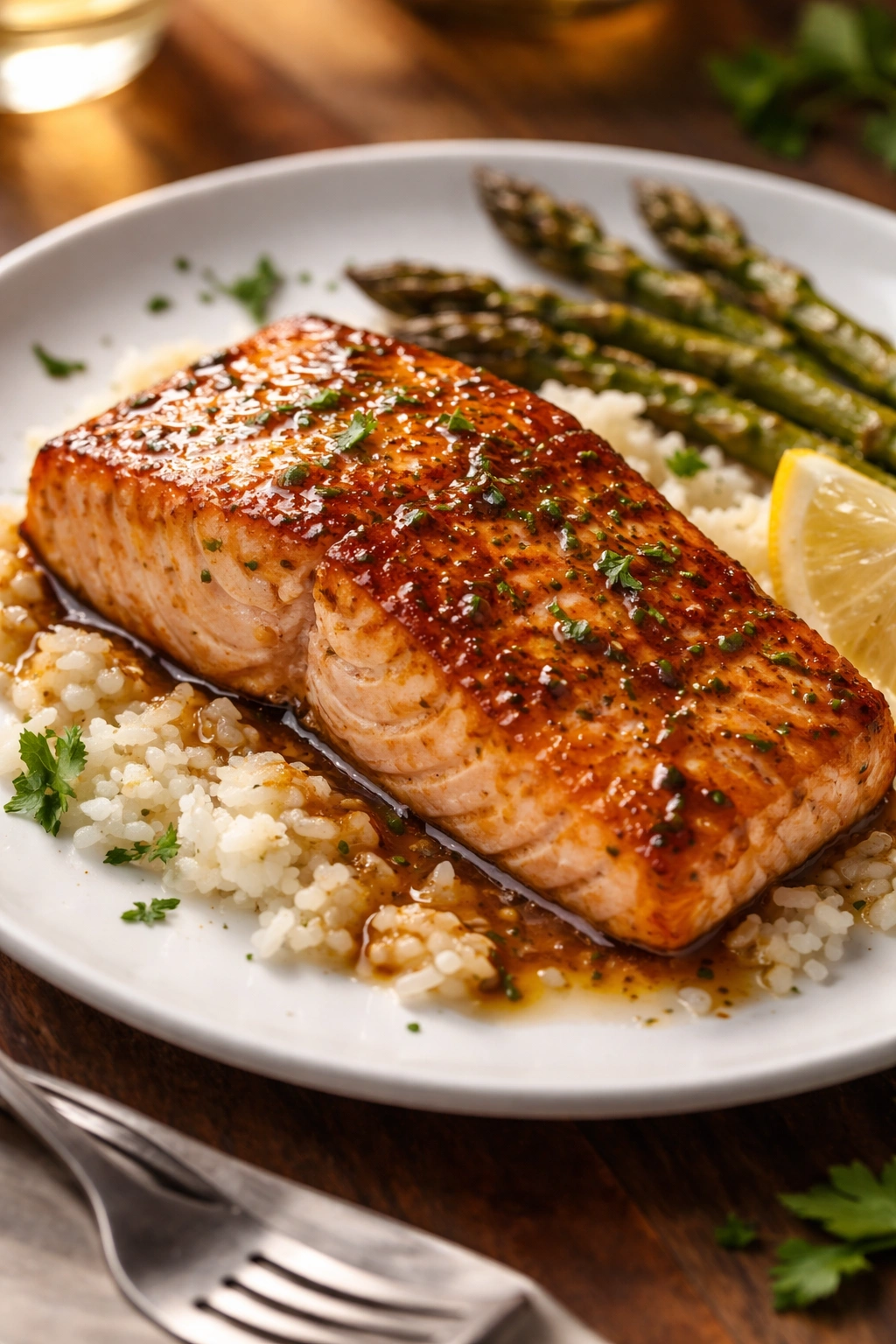
This honey mustard glazed salmon recipe is one of those rare dishes that genuinely deserves its place in regular dinner rotation. It’s simple enough for any home cook to execute successfully, flavorful enough that it feels impressive and special, and flexible enough that you can adapt it based on what you have on hand or what sounds good that day. The formula — good salmon, a tangy-sweet glaze, and a hot oven — never fails.
What makes this recipe special isn’t any single component but rather how thoughtfully they work together. The honey mustard glaze caramelizes in the oven’s heat, the salmon stays moist because of its natural fat content, and the acidity of the lemon and mustard prevents the whole dish from feeling heavy or one-dimensional. Every element has a job, and every element does it well.
The next time you’re looking for a dinner that feels like you spent hours on it but actually took fifteen minutes of active work, reach for a good piece of salmon and this glaze. Your family will love it, you’ll feel confident in the kitchen, and you’ll find yourself making this again and again. That’s the mark of a truly great recipe — it becomes not something you make occasionally, but something you return to again and again because it never disappoints.
