



When dinner needs to hit the table after a long day but you’re not willing to compromise on quality or nutrition, sheet pan salmon and veggies in 20 minutes becomes your secret weapon. This isn’t just fast food—it’s the kind of meal that tastes like you spent hours fussing in the kitchen, with perfectly cooked salmon, caramelized vegetables, and bold flavors that make you forget you threw it together in minutes. The best part? Everything happens on a single pan, which means you spend more time eating and less time scrubbing.
Sheet pan meals have become a lifesaver for anyone juggling work, family, fitness, and the basic human need to actually enjoy their dinner. The beauty of a 20-minute salmon sheet pan isn’t just about speed—it’s about having a reliable formula that works every single time, whether you’re cooking for yourself or feeding a family. Salmon cooks incredibly fast at high heat, roasting vegetables finish in the same timeframe, and when you nail the seasoning and prep strategy, you end up with restaurant-quality results in less time than it takes to order delivery.
This approach to weeknight dinner has transformed how thousands of home cooks think about nutrition and convenience. You’re not making sacrifices; you’re gaining back time while your oven does the actual work. Let me walk you through exactly how to make this happen, including the timing tricks that make the difference between soggy vegetables and perfectly roasted ones, the seasoning combinations that work with minimal ingredients, and the specific cuts of salmon that roast fastest.
Why Sheet Pan Salmon Works for Busy Nights
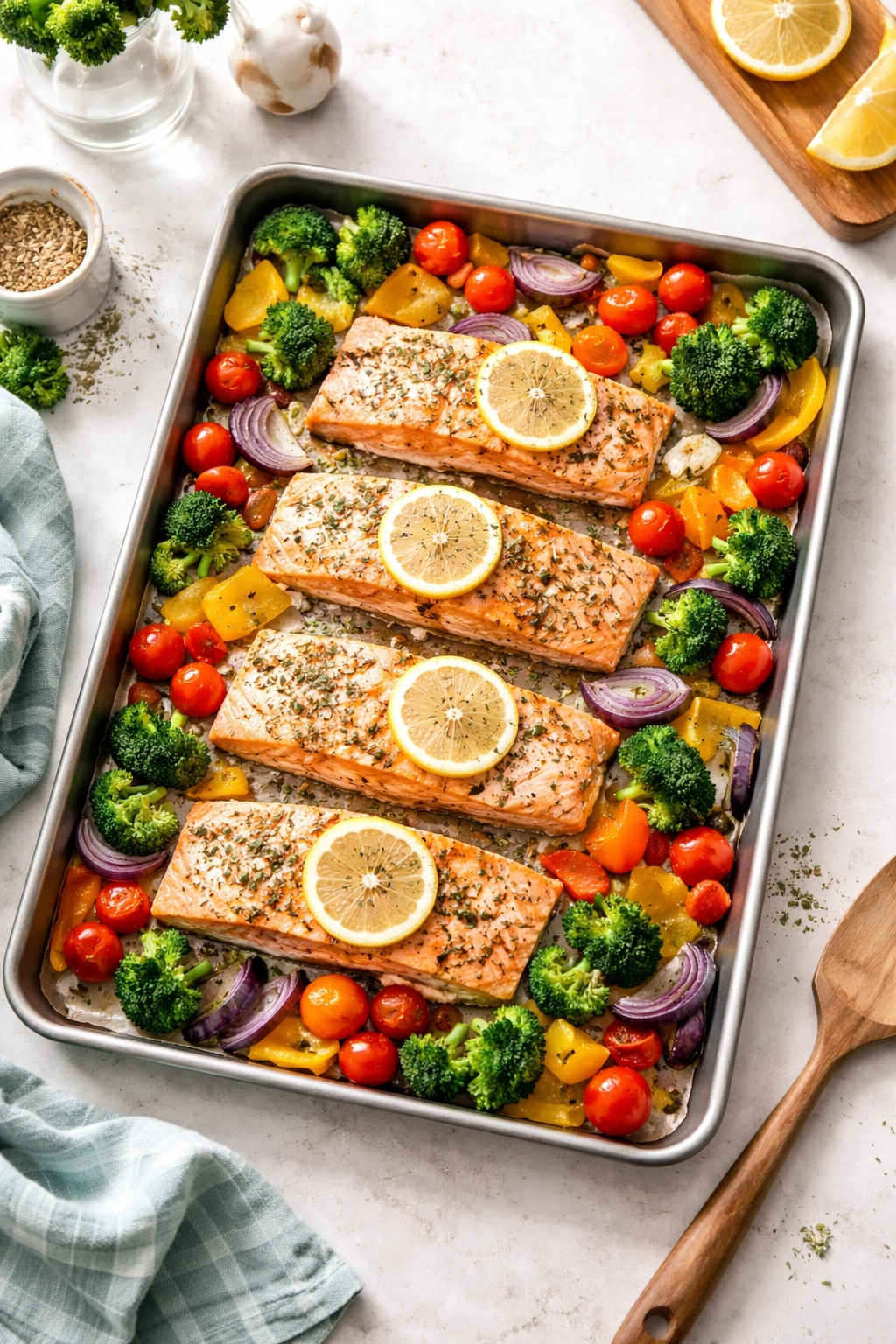
Salmon is unique among proteins because it’s equally delicious whether it’s perfectly cooked or slightly overdone—a forgiving quality that makes it ideal for high-heat, hands-off cooking. Unlike chicken breast, which can turn dry in seconds, or delicate white fish that falls apart if you look at it wrong, salmon stays moist and flavorful even if your timing isn’t perfect.
The omega-3 fatty acids in salmon keep the fish naturally juicy during roasting, which means you don’t need to worry about it drying out while you’re getting vegetables organized. A typical 4- to 6-ounce salmon fillet needs just 10-15 minutes in a 425°F oven, making it perfectly timed to finish alongside quick-cooking vegetables like broccoli, peppers, and asparagus.
Beyond the fish itself, the sheet pan method eliminates nearly all the friction that makes cooking feel like a chore. You’re not managing multiple burners, juggling saucepans, or timing different components. Everything roasts together, the same pan becomes your serving vessel and your cleanup project, and the vegetables actually benefit from sharing the pan with the salmon—they pick up subtle flavor from the fish and any juices that release during cooking.
What Makes This 20-Minute Version Different
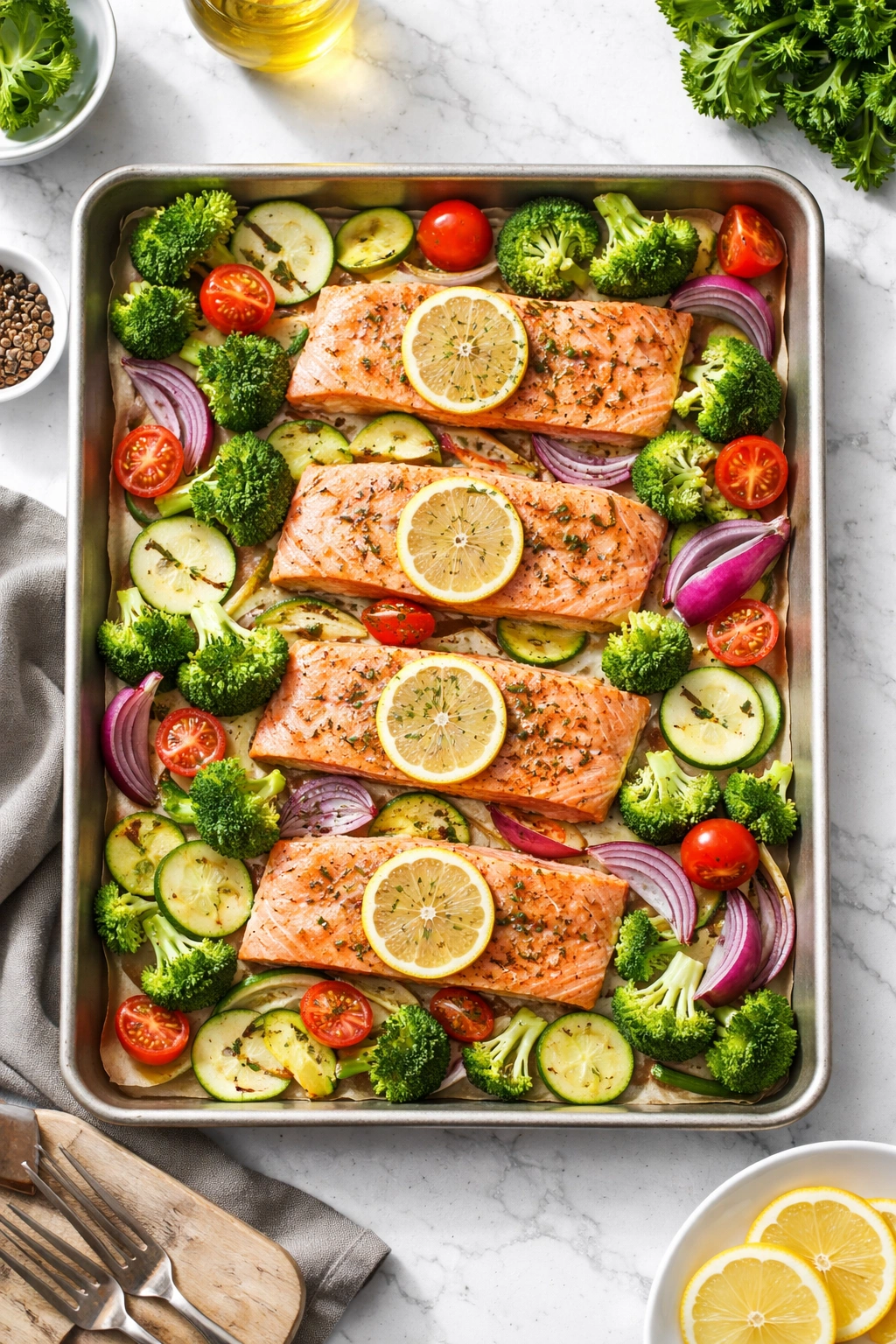
The key to pulling off sheet pan salmon in 20 minutes instead of 35 or 40 isn’t magic—it’s strategy. Most sheet pan salmon recipes roast the vegetables first (usually for 15-20 minutes), then add the salmon partway through. That works fine for a leisurely dinner, but when you’re racing the clock, you need a different approach.
Start with vegetables that cook fast. Thin broccoli florets, sliced peppers, snap peas, and asparagus are your allies here. Root vegetables like carrots, potatoes, and beets need 25-30 minutes minimum, which breaks your timeline. Thicker-cut zucchini can get away with the timeframe, but thin rounds or spears finish perfectly in 15-20 minutes.
The real time-saver is using thin to medium-thick salmon fillets (around ½ inch thick) rather than thick steaks. A thick 2-inch salmon steak might need 18-20 minutes to cook through, but a standard ½-inch fillet from a reputable fishmonger cooks in 10-12 minutes flat. Ask your fishmonger specifically for thin fillets if you’re targeting a quick dinner—they might cut them fresh if you ask, and the difference in cooking time is substantial.
Season aggressively and early. You want the salmon and vegetables seasoned at least 5-10 minutes before they hit the pan so the salt can begin breaking down the muscle fibers and allowing the seasonings to penetrate. This seems counterintuitive when you’re rushing, but a few minutes of planning cuts cooking time and dramatically improves flavor.
Choosing the Right Salmon for Quick Cooking
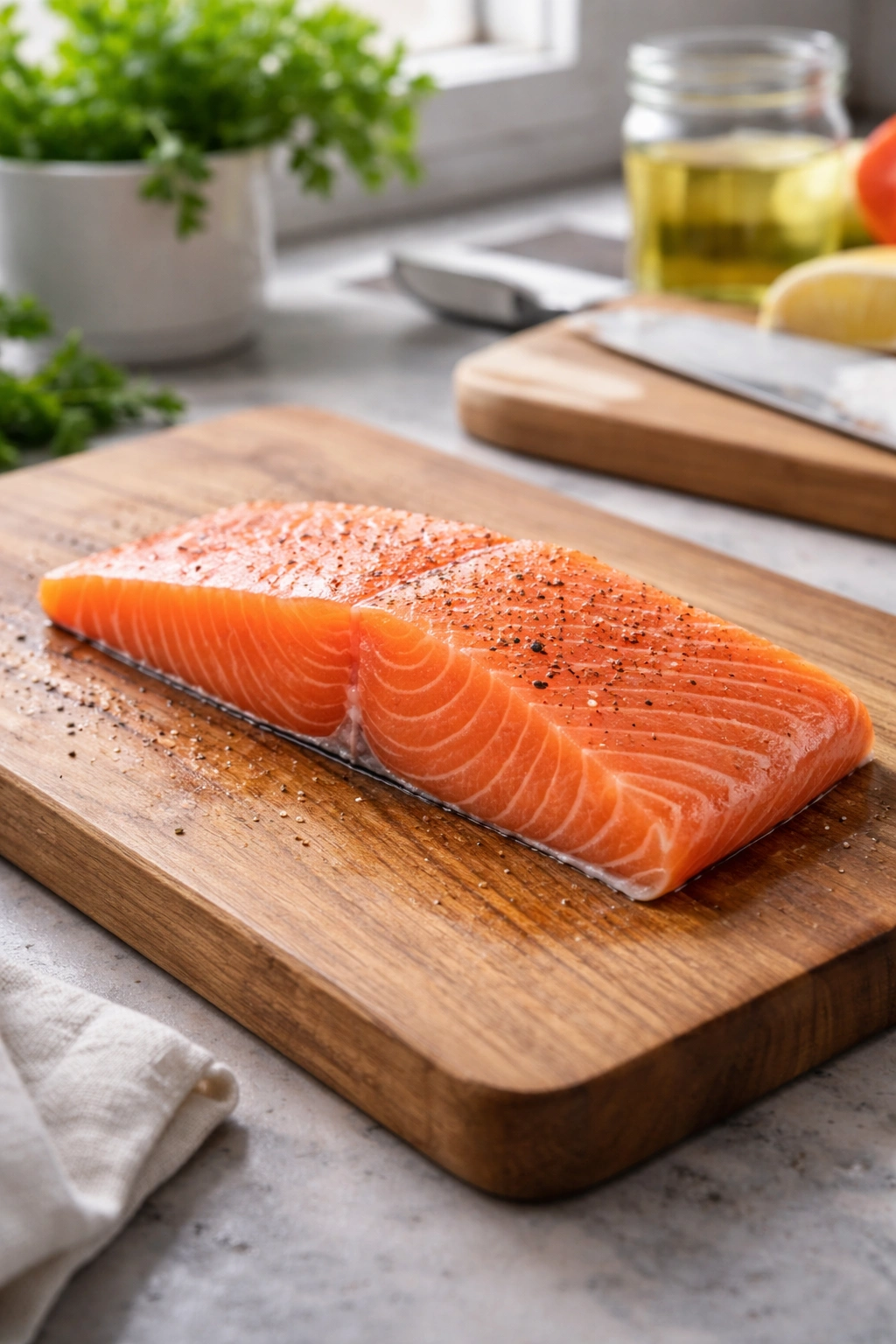
Not all salmon fillets are created equal when speed matters. Wild-caught salmon generally cooks slightly faster than farmed salmon because the meat is leaner and firmer—it doesn’t hold as much moisture, which means less time for heat to penetrate the flesh. If you have access to wild Alaskan or Sockeye salmon, grab it when time is tight.
That said, farmed salmon works beautifully and is often more readily available and consistent in size, which is helpful when you’re cooking for multiple people and need everything to finish at the same time. The difference in cooking time between wild and farmed is maybe 1-2 minutes in a 425°F oven, which isn’t a dealbreaker.
Look for fillets of similar thickness so they all cook in the same amount of time. A 4-ounce fillet should be roughly ½ inch thick—ask the fishmonger to show you the thickness before you buy. If they’re selling 6-ounce fillets that are only ¼ inch thick, that’s great for extra-fast cooking (potentially just 8-10 minutes). If they’re selling thick steaks, your 20-minute window becomes tight.
Pat the salmon dry with paper towels before cooking. Any surface moisture creates steam, which adds minutes to cooking time and prevents that beautiful light browning on top. Dry fish means faster, crispier results. Skin-on or skinless is your choice—skin-on salmon holds together better and you can peel it off after cooking if you prefer, while skinless fillets are slightly faster to cook and feel less intimidating to beginner cooks.
Essential Vegetables That Roast Fast
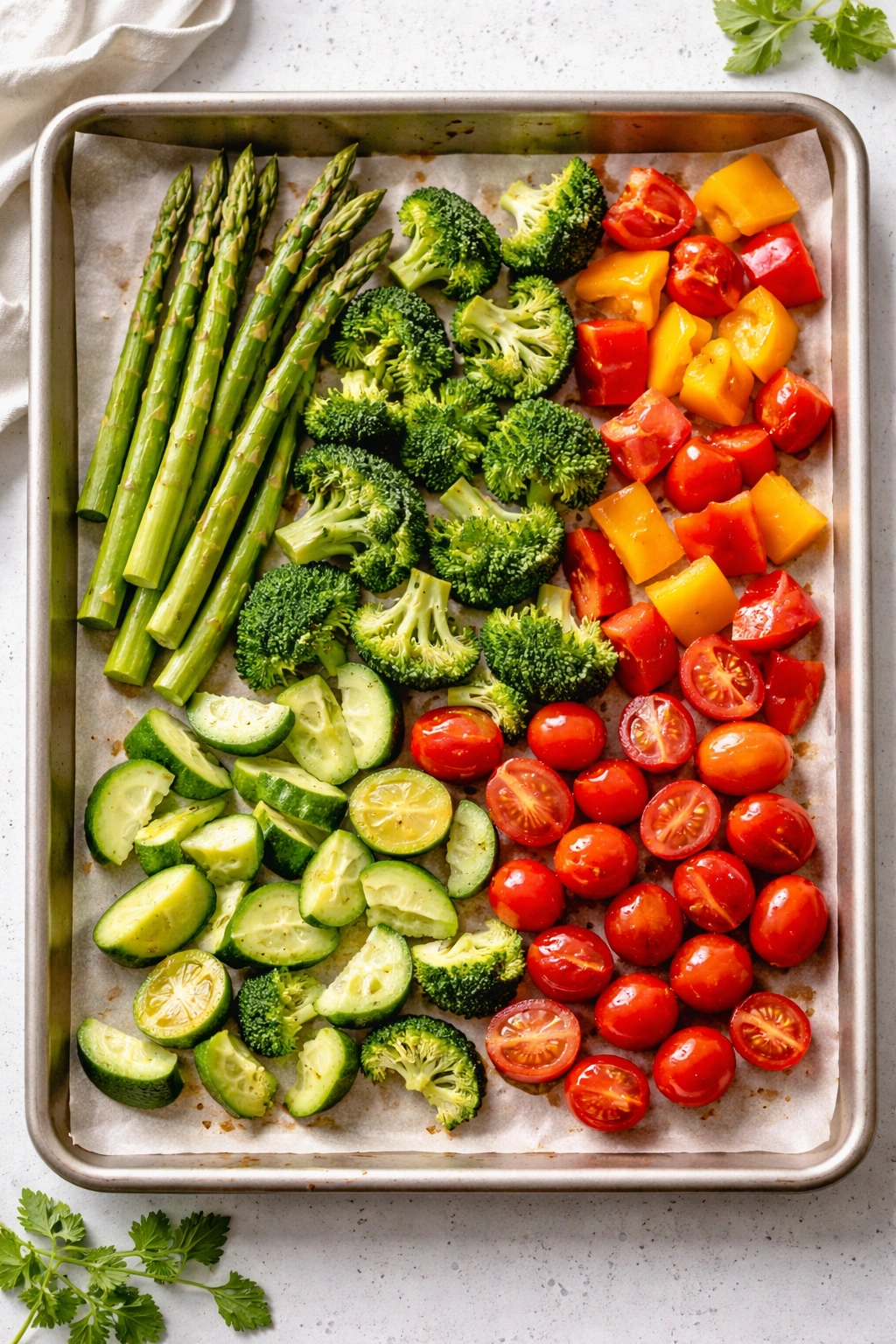
Asparagus is your MVP for quick sheet pan cooking—thin to medium spears are done in 12-15 minutes at 425°F, and they develop a subtle char that tastes incredible. Snap off the woody bottom third (bend each spear and it’ll snap at the natural breaking point) and toss with olive oil, salt, and pepper.
Broccoli florets that are cut down to bite-size pieces roast in 15-18 minutes. Keep them roughly the same size so they finish together. Small florets about the size of a walnut are ideal—they caramelize on the edges but don’t overcook in the center.
Bell peppers (red, yellow, or orange) cut into roughly 1-inch chunks roast in about 15 minutes and develop a sweet, slightly caramelized flavor. They’re particularly good because they pair beautifully with salmon and their sweetness balances savory seasonings perfectly.
Cherry or grape tomatoes need only 12-15 minutes and actually benefit from roasting at high heat—the natural sugars concentrate and the skins burst slightly, releasing intense tomato flavor. Leave them whole or halve large ones so they cook evenly.
Zucchini, sliced into ¼-inch thick half-moons, roasts in 15-18 minutes and becomes tender with slightly crispy edges. Pre-slice them the night before if you’re really racing the clock. Avoid paper-thin slices as they’ll overcook and become mushy; aim for consistency about the thickness of a quarter.
Mini sweet peppers, small green beans, snow peas, and even thinly sliced red onions all work in this timeframe. The rule is simple: anything you can hold in your hand should cook through in under 20 minutes at 425°F.
Building Flavor Without Extra Time
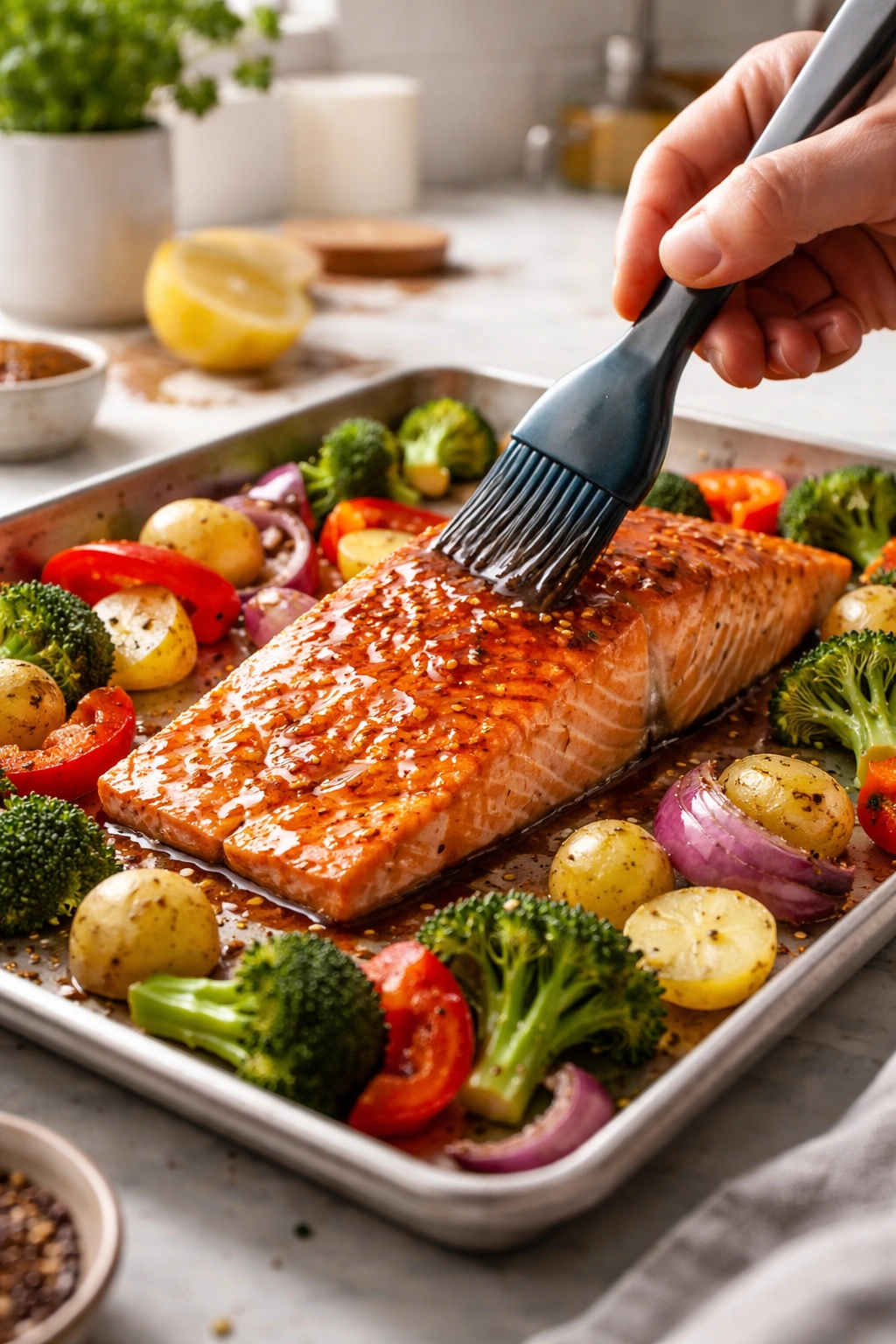
You don’t need a complicated marinade or complex spice blend to make salmon taste restaurant-quality. The most reliable approach is seasoning the salmon heavily with salt and pepper, then topping it with something that adds interest without requiring extra cooking. A quick brush of Dijon mustard mixed with honey and sriracha takes 30 seconds and adds layers of sweet, tangy, and slightly spicy flavor. A mix of melted butter, minced garlic, and fresh herbs (dill, parsley, or basil) gives you bright, sophisticated flavor without extra steps.
Lemon is non-negotiable. A squeeze of fresh lemon juice right before serving brightens everything and makes the salmon taste more complex than it actually is. If you have time, lay thin lemon slices on top of the salmon before roasting—they’ll slightly char and add a beautiful visual element plus subtle citrus flavor that infuses as they cook together.
Garlic powder is one of those ingredients that works harder than fresh garlic in quick cooking situations because it distributes evenly and dissolves into the oil coating the vegetables. Dried oregano, Italian seasoning, or paprika all work beautifully for the vegetables—toss them with olive oil and seasonings before they hit the pan so they roast covered in flavor rather than getting seasoned as an afterthought.
For a Mediterranean vibe that requires zero extra steps, top the salmon with a small handful of pitted olives (Kalamata or Castelvetrano are both great) just before the final few minutes of cooking. They warm through slightly and add briny, complex flavor that makes everything taste more intentional.
Don’t skip salt. It’s tempting to be conservative with seasoning when you’re cooking fast, but salmon and roasted vegetables actually need generous seasoning to taste their best. Season the vegetables before they roast, not after—salt draws out moisture, which allows better caramelization. Taste everything before serving and adjust seasoning at the end if needed.
Prep Strategy That Actually Saves Time
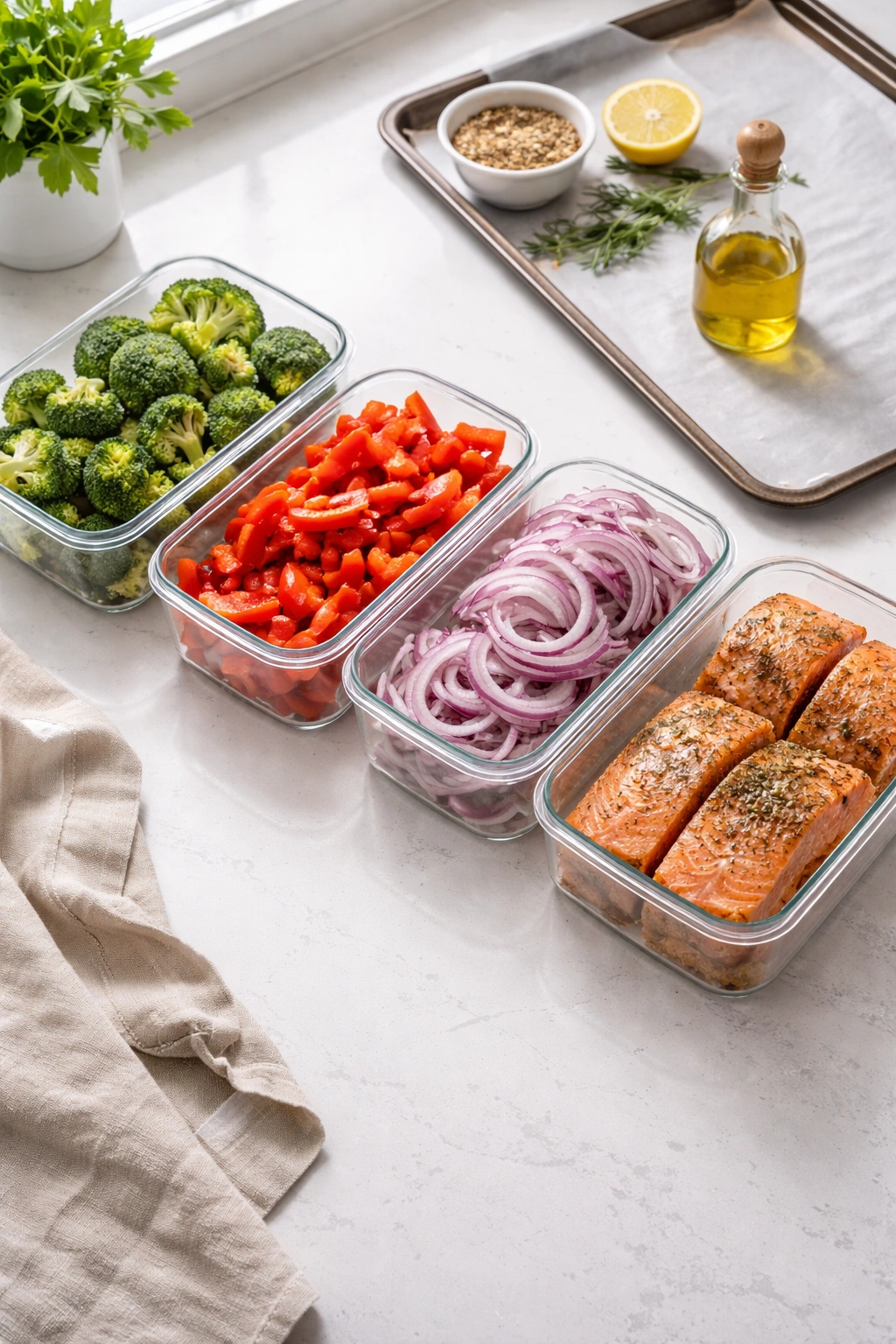
The difference between a stressful 20 minutes and a genuinely easy 20 minutes is knowing what to prep ahead. Slice your vegetables the night before and store them in airtight containers. When you’re hungry, you literally just dump them on a pan. This single step transforms a rushed dinner into something you can execute on autopilot.
Pat your salmon dry and let it sit in the refrigerator uncovered for 30 minutes to an hour if possible (even just 15 minutes helps). The air in the fridge dries the surface slightly, which means faster browning and crisper exterior when it hits the hot pan.
Mix your seasonings in a small bowl before you start. If you’re doing a garlic butter, melt the butter and mix in minced garlic and herbs while you’re preheating the oven. A quick Dijon-honey-sriracha glaze takes 20 seconds to whisk in a bowl. These are not extra steps—they’re time-savers because you’re multitasking while the oven preheats.
Invest in parchment paper or a silicone baking mat. This is the single biggest quality-of-life upgrade for sheet pan cooking. Everything slides off effortlessly, cleanup takes 60 seconds instead of 10 minutes, and you’re not dealing with stuck-on bits. For 20-minute cooking, parchment paper moves from optional to essential.
Yield: Serves 4
Prep Time: 10 minutes
Cook Time: 18–20 minutes
Total Time: 28–30 minutes
Difficulty: Beginner — The steps are straightforward, everything cooks on one pan, and there’s no special technique required.
Ingredients
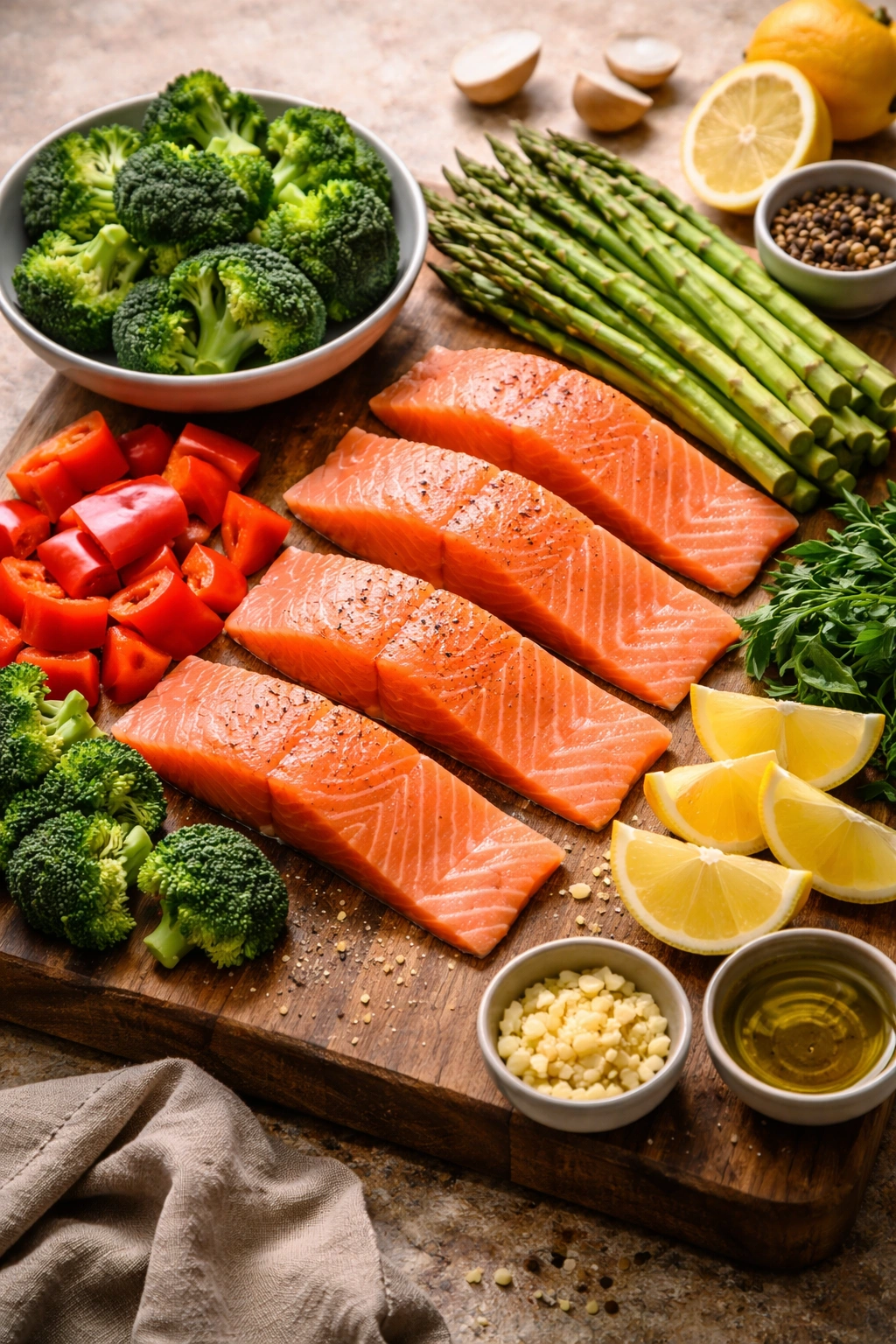
For the salmon:
- 4 salmon fillets, about 5 ounces each (or 1.25 pounds total), skin on or off
- 1½ tablespoons olive oil
- ½ teaspoon kosher salt
- ¼ teaspoon freshly ground black pepper
- ¼ teaspoon garlic powder
- 1 teaspoon Dijon mustard mixed with ½ teaspoon honey and ¼ teaspoon sriracha (or use any seasoning blend you prefer)
For the vegetables:
- 1 pound broccoli florets, cut into bite-size pieces (about 3 cups)
- 2 medium red bell peppers, cut into rough 1-inch chunks
- 8 ounces asparagus, woody ends trimmed, cut into 2-inch pieces
- 1½ tablespoons olive oil
- ½ teaspoon kosher salt
- ¼ teaspoon freshly ground black pepper
- ½ teaspoon garlic powder
- ½ teaspoon dried oregano or Italian seasoning
For serving:
- 1 fresh lemon, cut into wedges and thin slices
- Fresh parsley or dill for garnish (optional)
- Red pepper flakes for extra heat (optional)
Instructions
Prepare Your Pan and Preheat:
-
Preheat your oven to 425°F and position the rack in the upper-middle section of the oven for faster heating and better browning.
-
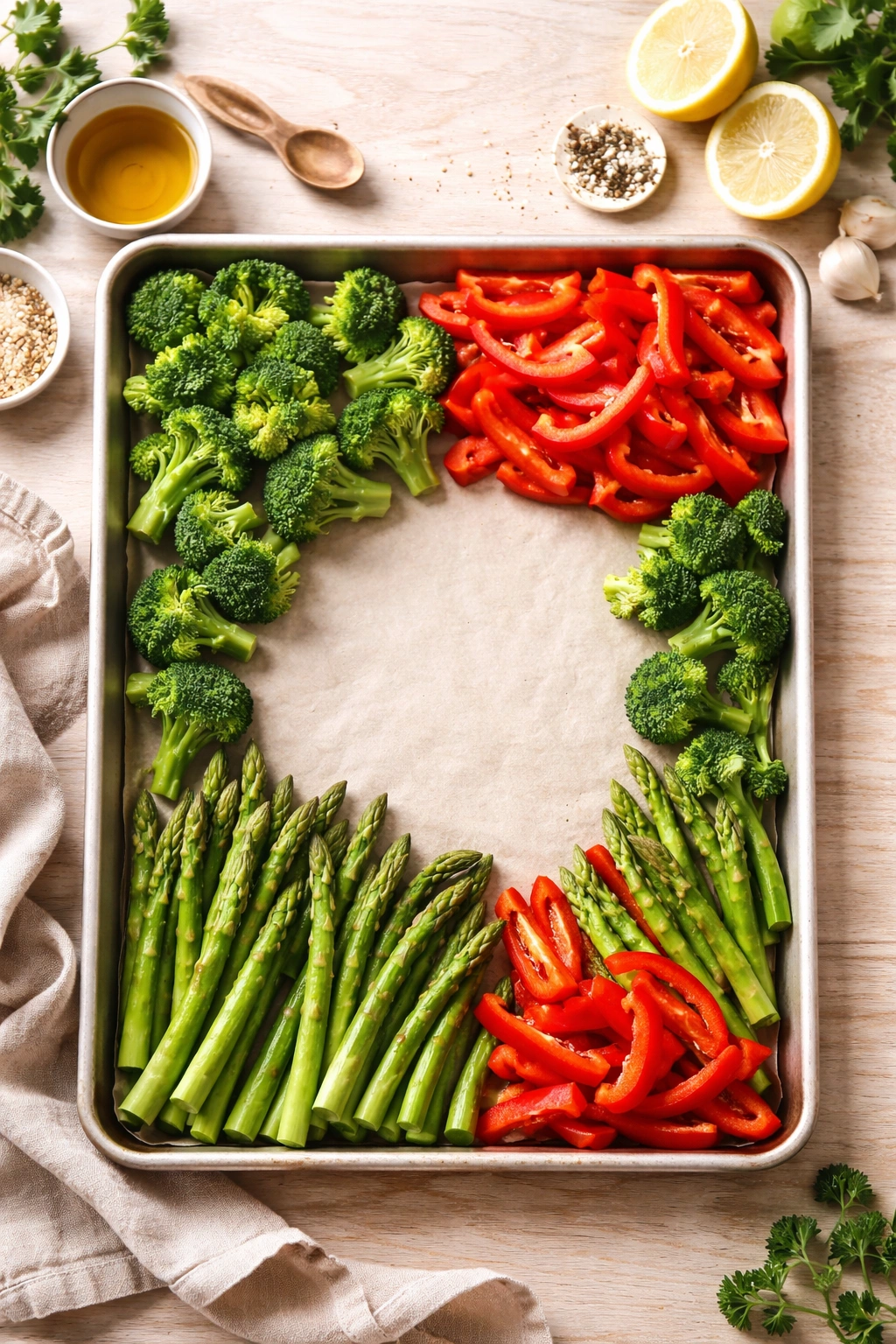
Line a large 18×13-inch sheet pan (also called a half sheet pan) with parchment paper or a silicone baking mat. Make sure it’s truly large—a crowded pan causes vegetables to steam instead of roast, which adds cooking time and produces soggy results.
Advertisements
Season the Vegetables:
-
In a large bowl, combine the broccoli florets, bell peppers, and asparagus. Drizzle with 1½ tablespoons olive oil and sprinkle with the salt, black pepper, garlic powder, and dried oregano. Toss everything together with a large spatula or your hands until the vegetables are evenly coated in oil and seasonings—every piece should glisten slightly, not be pooling in wet oil.
-
Spread the vegetables in a single layer on the prepared sheet pan, making sure there’s space between pieces rather than having them packed tightly. Leave one section of the pan empty for the salmon (you’ll add it later in the cooking process).
Start Roasting the Vegetables:
- Place the sheet pan in the preheated 425°F oven and roast for 6–7 minutes. You’re not looking for the vegetables to be fully cooked yet—just barely starting to soften around the edges. At this point, remove the pan from the oven and carefully toss the vegetables so any on top move to the bottom where they’ll get more direct heat.
Prepare the Salmon:
-
While the vegetables have their head start, pat each salmon fillet dry with paper towels. Any moisture on the surface creates steam during roasting and prevents browning—drying it thoroughly is worth the 30 seconds it takes.
-
Brush each salmon fillet lightly on both sides with a total of 1½ tablespoons olive oil. Season the top of each fillet with the salt, black pepper, and garlic powder, dividing the seasonings evenly among the four pieces.
-
If using the Dijon-honey-sriracha mixture, whisk it together in a small bowl—the Dijon mustard is a binder that helps keep the honey and sriracha in place as it roasts. Brush this mixture generously on top of each salmon fillet.
Combine Salmon and Vegetables:
-
Remove the par-roasted vegetables from the oven. Push them to the edges and corners of the sheet pan, creating a clear space in the center for the salmon fillets.
Advertisements -
Carefully arrange the four salmon fillets in the cleared center space of the pan, skin side down (if using skin-on salmon). Leave a little space between the fillets so heat can circulate around them.
-
If you have time, lay 2–3 thin lemon slices on top of each salmon fillet. Do not skip this step if timing allows—the lemon chars slightly and infuses the salmon with bright citrus flavor while adding visual appeal.
Final Roast:
-
Return the sheet pan to the oven and roast for 11–13 minutes, depending on the thickness of your salmon fillets. Check for doneness by inserting a fork into the thickest part of a fillet and gently pulling outward—the flesh should flake apart easily and be opaque throughout, not translucent. If you’re using an instant-read thermometer, pull the salmon when it reaches 125°F in the thickest part (it will continue to cook slightly as it rests).
-
Watch carefully during the final 3 minutes. Salmon goes from perfectly cooked to overdone very quickly in high heat. Remove the pan from the oven as soon as the salmon reaches the proper doneness—don’t wait for the vegetables to be completely tender, as they’ll continue softening in the residual heat.
Serve Immediately:
-
Remove the sheet pan from the oven and let it rest for 1–2 minutes. Squeeze fresh lemon juice over the entire pan and sprinkle with fresh chopped parsley or dill if desired. Add red pepper flakes for a touch of heat if you like.
-
Serve directly from the pan or divide the salmon and vegetables among plates. A squeeze of additional fresh lemon and an extra sprinkle of salt at the table lets everyone customize their portion.
Timing Secrets That Make or Break This Recipe
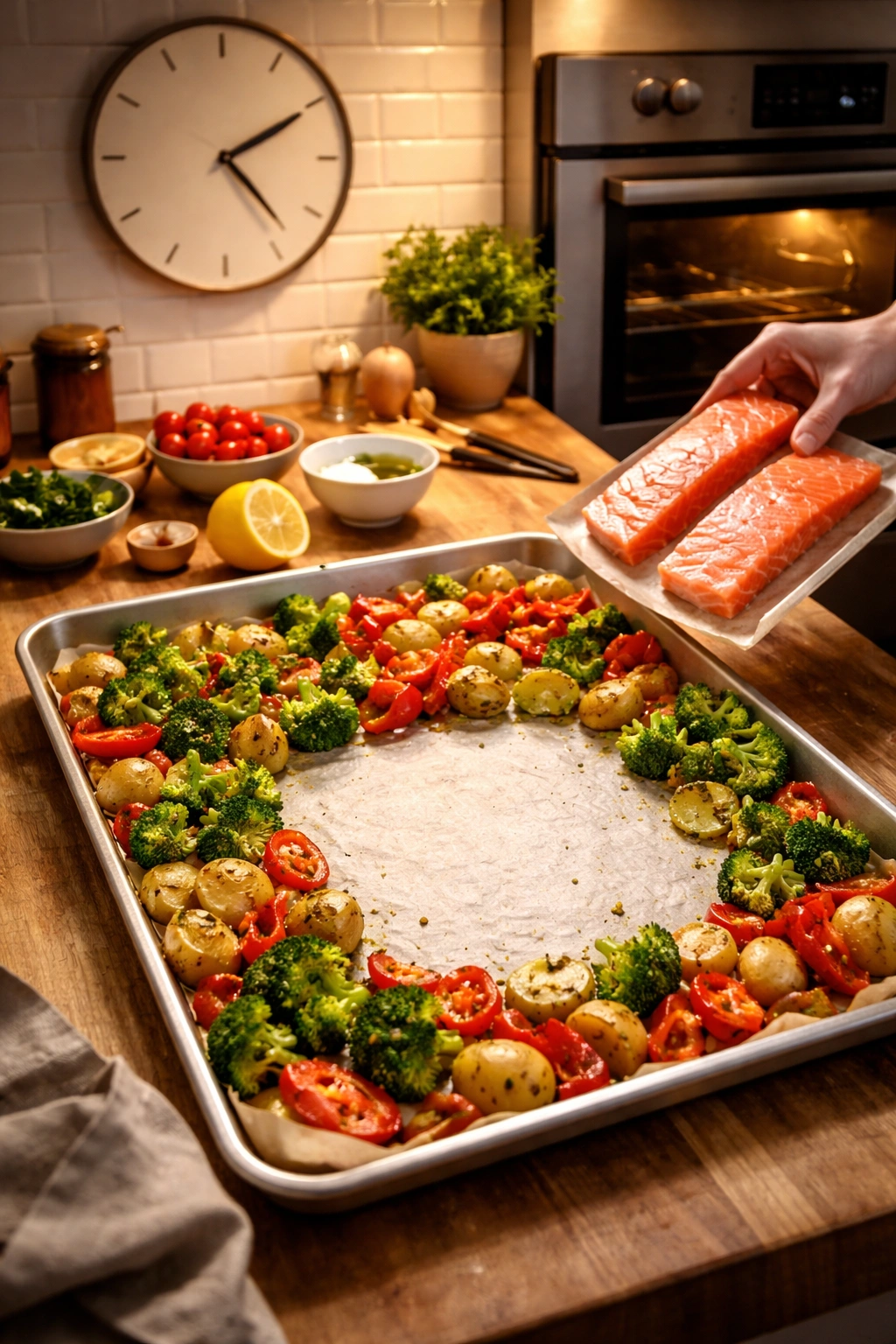
The 20-minute target is achievable but requires understanding why each step matters for total time. Your vegetables need a 6–7 minute head start because broccoli and bell peppers take slightly longer to caramelize than salmon takes to cook through. If you add the salmon at the very beginning alongside the vegetables, you’ll either have overcooked salmon or undercooked vegetables—neither is acceptable.
An instant-read thermometer is optional but genuinely helpful if you’re new to cooking salmon. The “flake test” (pulling a fork through the thickest part) is reliable once you’ve seen what properly cooked salmon looks like a few times, but a thermometer takes all the guesswork out of the equation.
The oven temperature matters significantly. If your oven runs cool, salmon takes noticeably longer to cook. If it runs hot, everything finishes faster. Get an oven thermometer (they’re cheap and invaluable) and verify your oven’s actual temperature—many ovens are off by 25-50 degrees, which adds 2-3 minutes to cooking time.
Trim your asparagus spears before roasting by holding each spear and bending until it snaps naturally—they’ll snap at the point where the tender tip meets the woody base. This takes 60 seconds for a whole pound and eliminates the need to trim them individually as you eat.
Flavor Variations Worth Trying
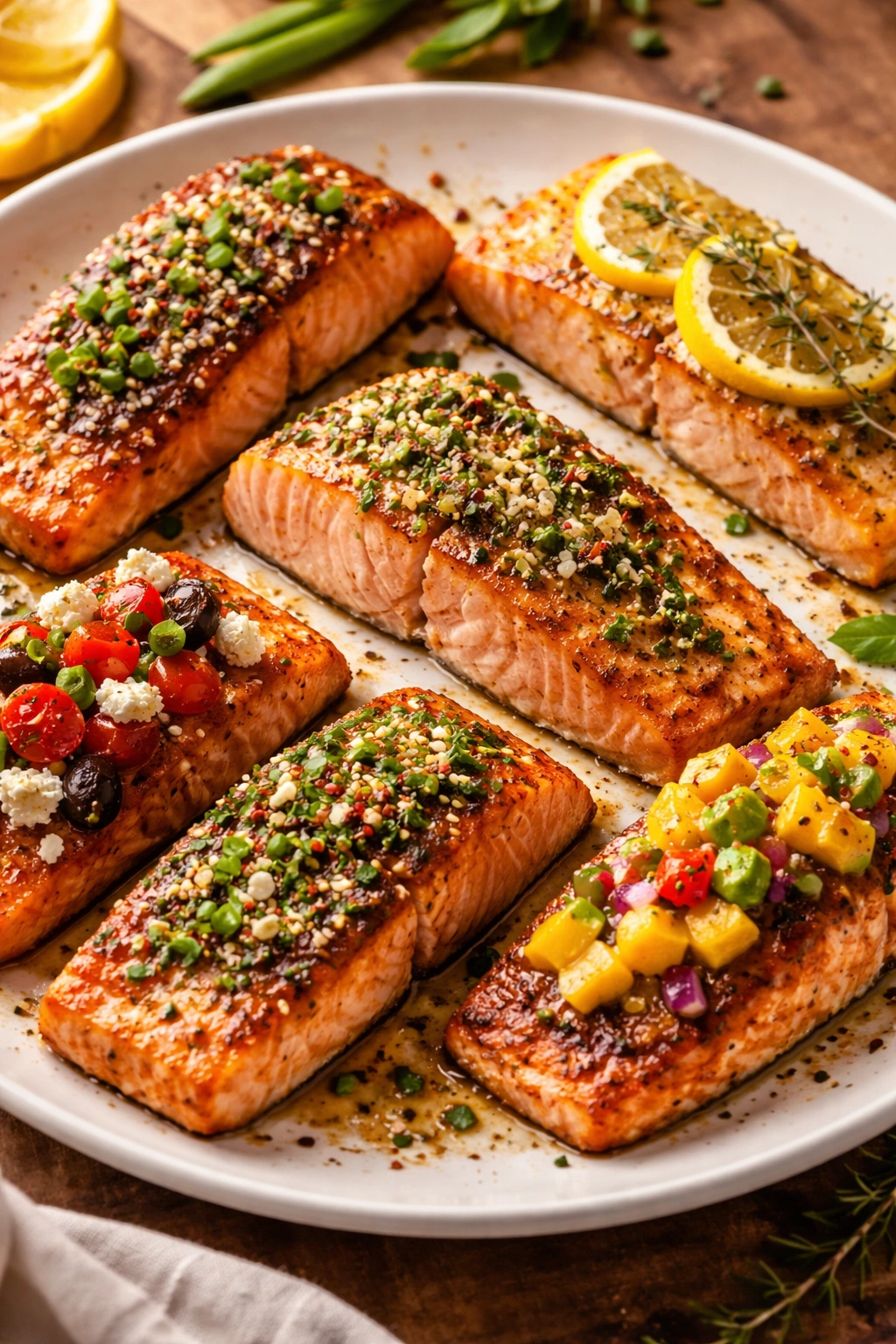
Once you master the basic version, these swaps keep dinner interesting without adding time. Mediterranean style: Skip the Dijon-honey-sriracha mixture and instead top the salmon with a small handful of pitted Kalamata or Castelvetrano olives and fresh oregano. Finish with a squeeze of lemon.
Lemon-dill: Mix softened butter with fresh dill, minced garlic, and lemon zest, then spread on top of the salmon just before roasting. It melts into the fish and creates an herb-buttery coating.
Garlic-paprika: Brush the salmon with olive oil mixed with smoked paprika, garlic powder, and a touch of cayenne. The paprika adds smoky complexity without heat unless you want it.
Soy-ginger: Mix low-sodium soy sauce with a touch of rice vinegar, minced fresh ginger, and honey. Brush onto the salmon and roast as directed. The soy-ginger glaze becomes slightly caramelized and adds Asian-inspired flavor.
Simple and classic: Just salt, pepper, and a squeeze of lemon before serving. Sometimes the best approach is the simplest one—high-quality salmon needs very little to shine.
Vegetable Swaps for Variety
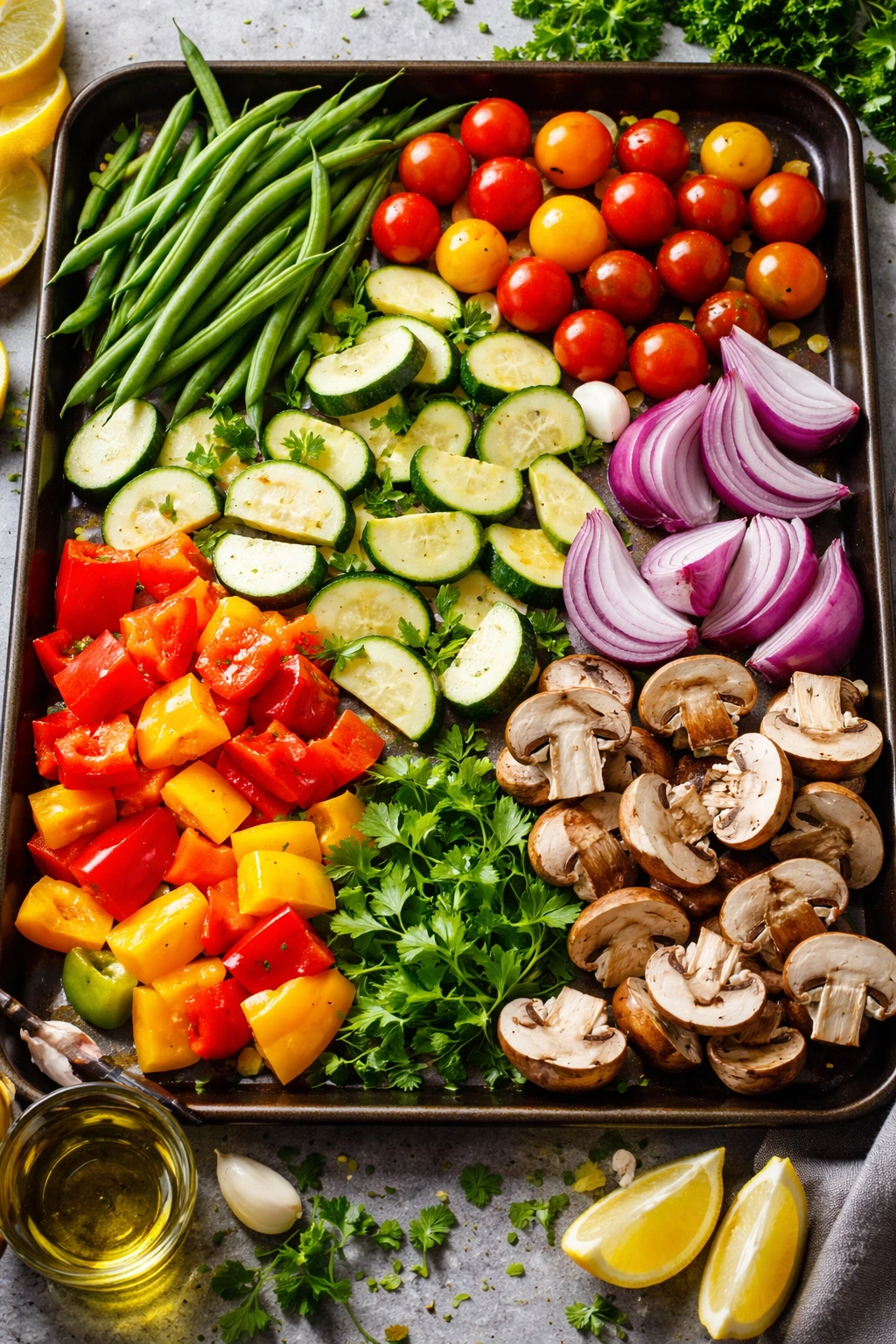
Keep this recipe in rotation by rotating vegetables based on what’s in season and what you already have at home. Green beans (whole or cut in half) roast in 12–15 minutes—toss them with olive oil, salt, and garlic powder just like the broccoli. Snap peas are done in 10–12 minutes and add a delicate sweetness that pairs beautifully with salmon’s richness.
Cherry or grape tomatoes roast in about 15 minutes and can be added alongside the broccoli and peppers. The heat bursts the skins slightly and concentrates their natural sweetness.
Zucchini (sliced into ¼-inch half-moons) roasts in 15–18 minutes. Pre-slice it the night before to save time. Thin sliced onions (white, yellow, or red) take about 18 minutes and become soft and slightly caramelized.
Small mushrooms or halved larger ones roast in 15–17 minutes. Toss them with olive oil and let them get a little golden-brown on the cut side—the Maillard reaction creates deep, savory flavor.
The rule for success is cutting vegetables to roughly the same size so they finish cooking simultaneously. A big chunk of pepper takes longer than a small piece of broccoli, so adjust your cutting accordingly. Aim for pieces about the size of a walnut or golf ball—uniform but substantial enough to handle the high heat without shrinking too much.
Storage and Reheating Without Drying Out
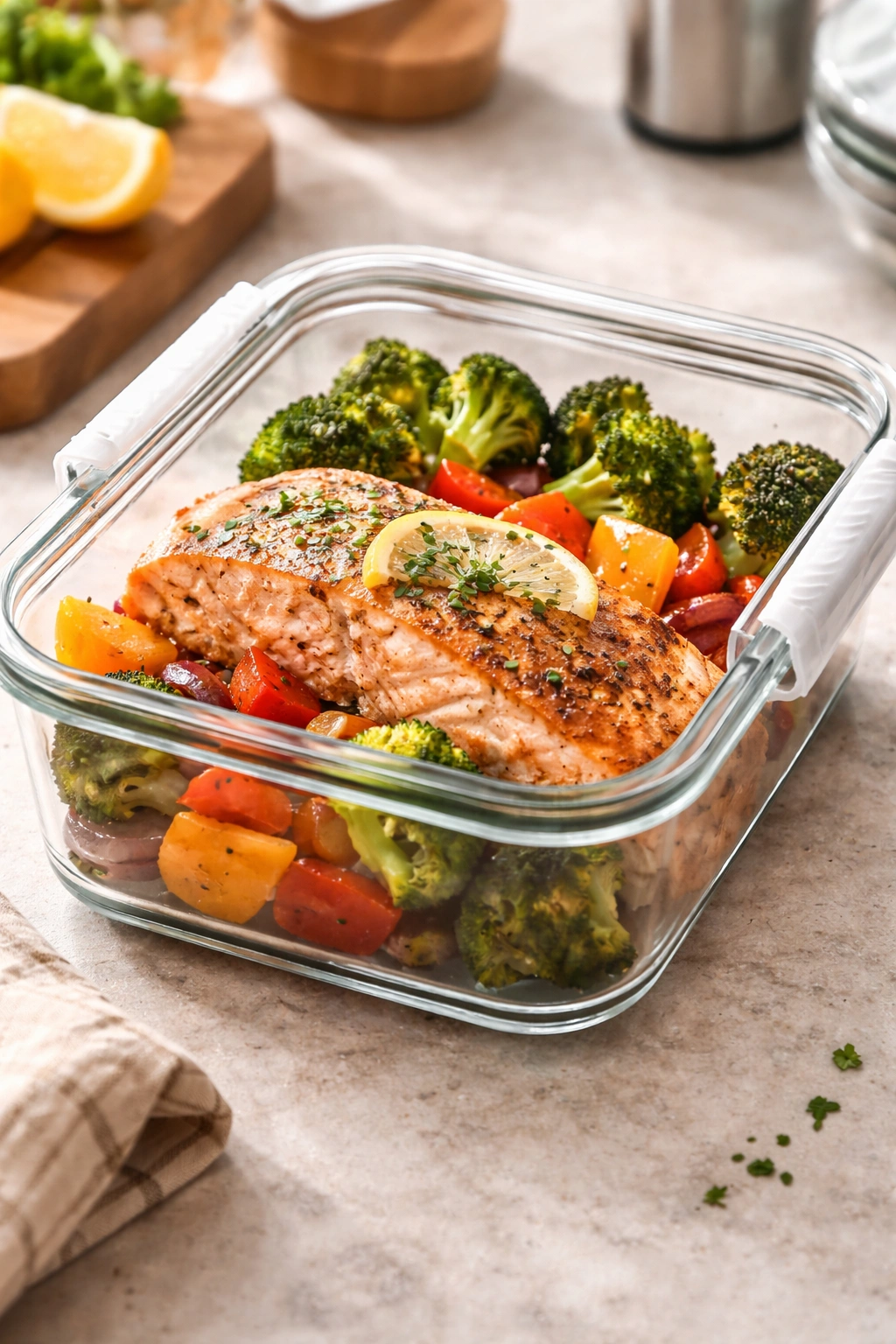
Sheet pan salmon is best eaten fresh from the oven when everything is hot and the vegetables still have a slight firmness. However, leftovers keep beautifully for up to 3 days in an airtight container in the refrigerator. The salmon stays moist due to the fats and doesn’t dry out like chicken breast might.
Reheat in a 350°F oven for about 8–10 minutes until warmed through, rather than microwaving. The oven approach prevents the salmon from overcooking and keeps the vegetable texture intact. If you do microwave, cover the container loosely and use 50% power, checking every 60 seconds to avoid overheating.
The salmon is actually quite delicious cold or at room temperature the next day, which makes it perfect for meal prep lunch containers. Crumble the cold salmon over a salad or eat it straight from the container as a protein-rich snack.
Do not freeze. Salmon doesn’t freeze well after roasting—the texture becomes mushy when thawed, and the delicate fish flavor becomes muted. Use leftovers within 3 days.
Making This Meal Even Quicker
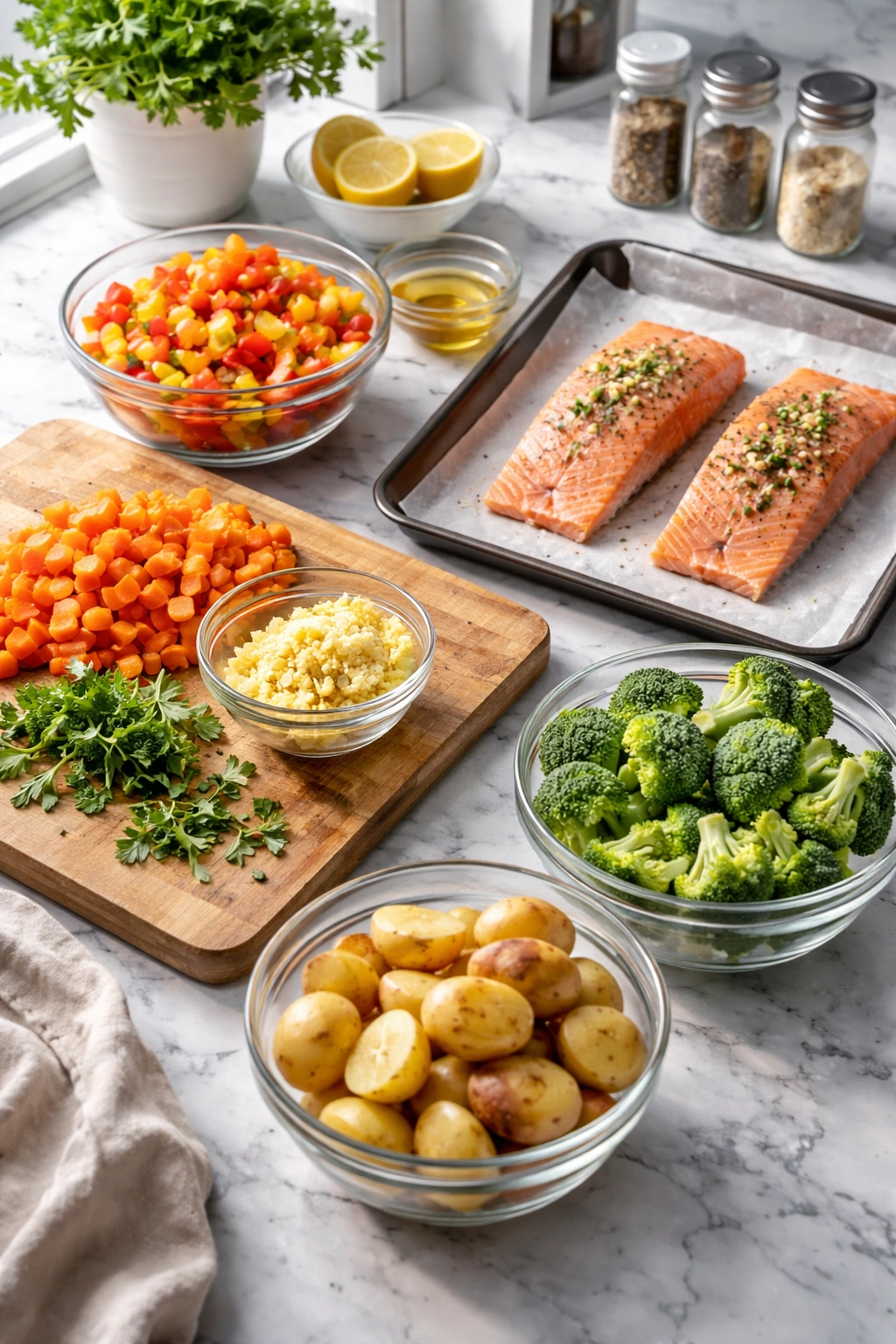
If you’re truly in a time crunch, get pre-cut vegetables from the salad bar at your grocery store. Yes, you’ll pay slightly more, but the trade-off in time might be worth it on nights when even 10 minutes of chopping feels impossible.
Buy your salmon already portioned and ask the fishmonger to pat it dry for you before wrapping it. This sounds silly, but they have professional-grade paper towels and actually appreciate the request.
Use a mix of fresh and jarred herbs if fresh parsley or dill isn’t available. Dried herbs work too—just use one-third the amount since they’re more concentrated.
Keep a staple pantry of quick seasonings on hand: garlic powder, kosher salt, dried oregano, smoked paprika, black pepper, and lemon. With these basics and access to salmon and vegetables, you can execute this meal without any special shopping.
Why This Works as Meal Prep
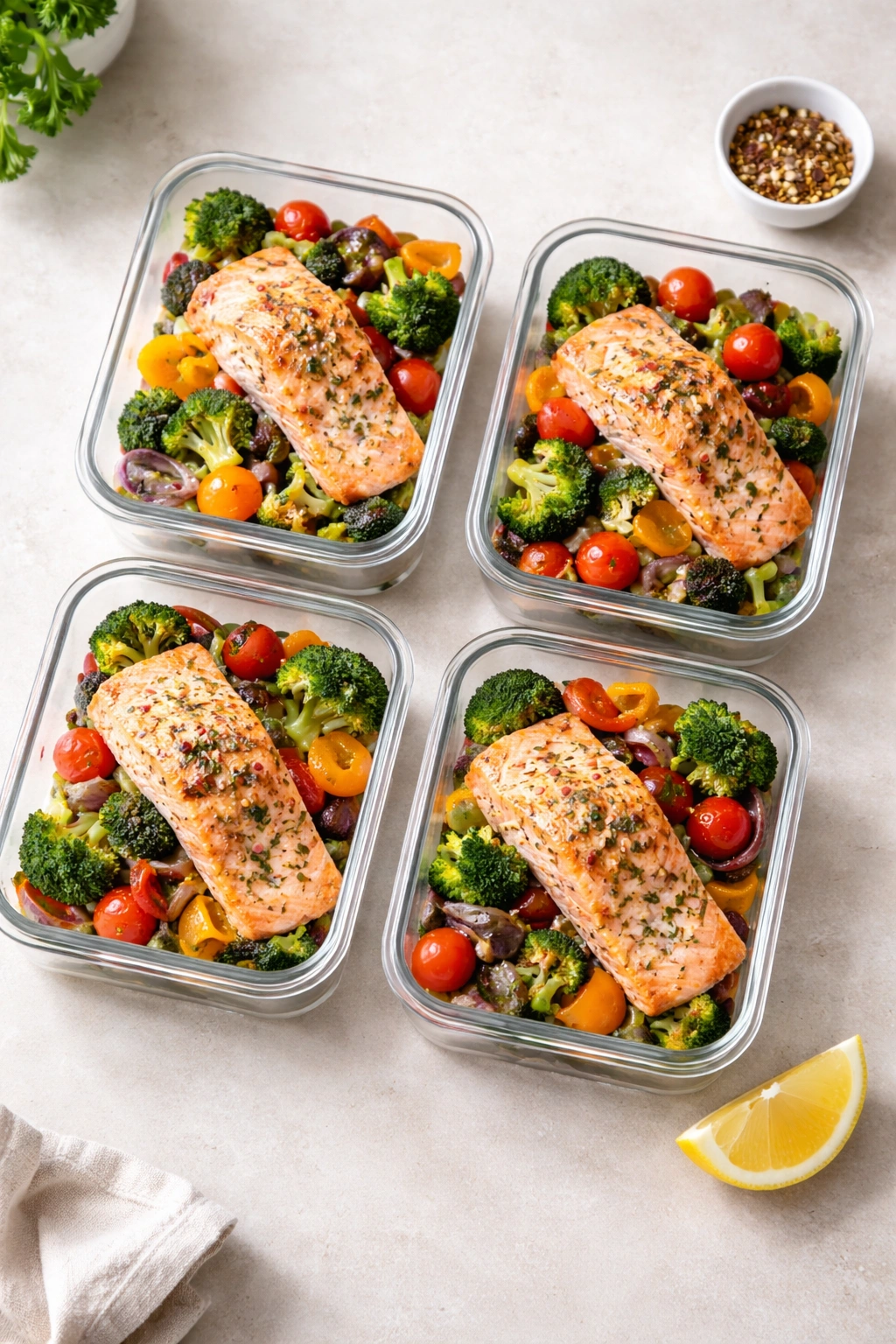
Sheet pan salmon and vegetables meal-preps beautifully because all the components are equally delicious whether served immediately or eaten cold over the next couple of days. Portion the cooled salmon and vegetables into individual containers with a lemon wedge stored separately so the acid doesn’t make everything soggy.
Make 4 portions and actually eat 3 of them throughout the week. On nights when you don’t feel like cooking, heat one container in the oven while you deal with other evening tasks, and dinner is ready in 10 minutes.
The recipe scales beautifully up—if you’re cooking for a larger group, just use two sheet pans and roast simultaneously. Everything still fits in your 20-minute window because the cooking time doesn’t change; you’re just using twice as much oven space.
Equipment That Actually Matters
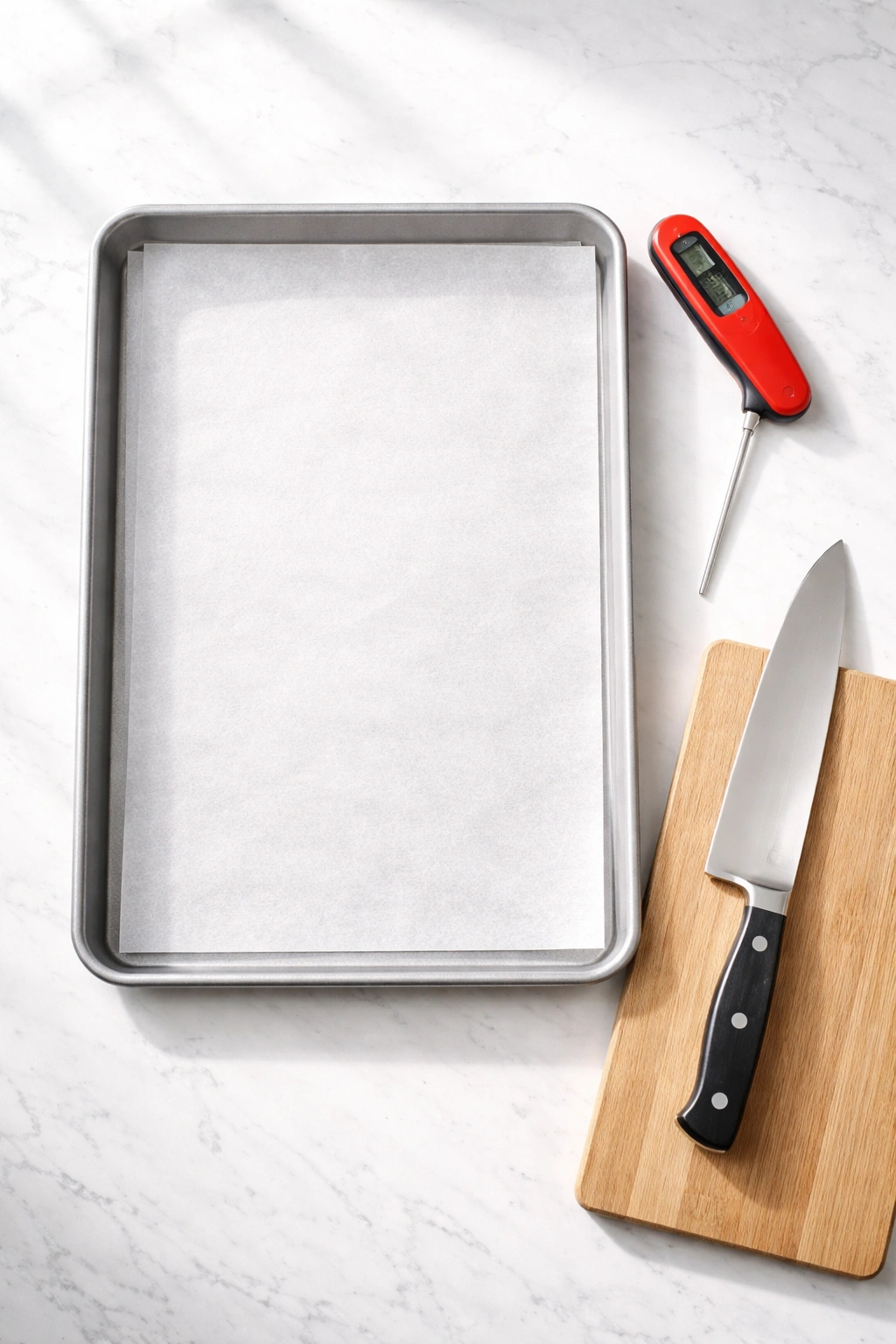
An 18×13-inch sheet pan is non-negotiable for this recipe. Smaller “quarter sheet pans” crowd the food and cause steaming instead of roasting. If you only have a smaller pan, use two of them and divide the vegetables and salmon between them.
Parchment paper or a silicone baking mat saves cleanup time and prevents sticking. This shifts from optional to essential when you’re racing the clock and want dinner on the table, not cleanup stress afterward.
An instant-read thermometer is genuinely helpful if you’re uncertain about salmon doneness. For a few dollars, it eliminates all guesswork and builds confidence in your cooking.
A good kitchen knife makes vegetable prep (which is really the only hands-on work in this recipe) quick and safe. Dull knives are slower and more accident-prone.
Perfect Sides That Don’t Require Extra Cooking
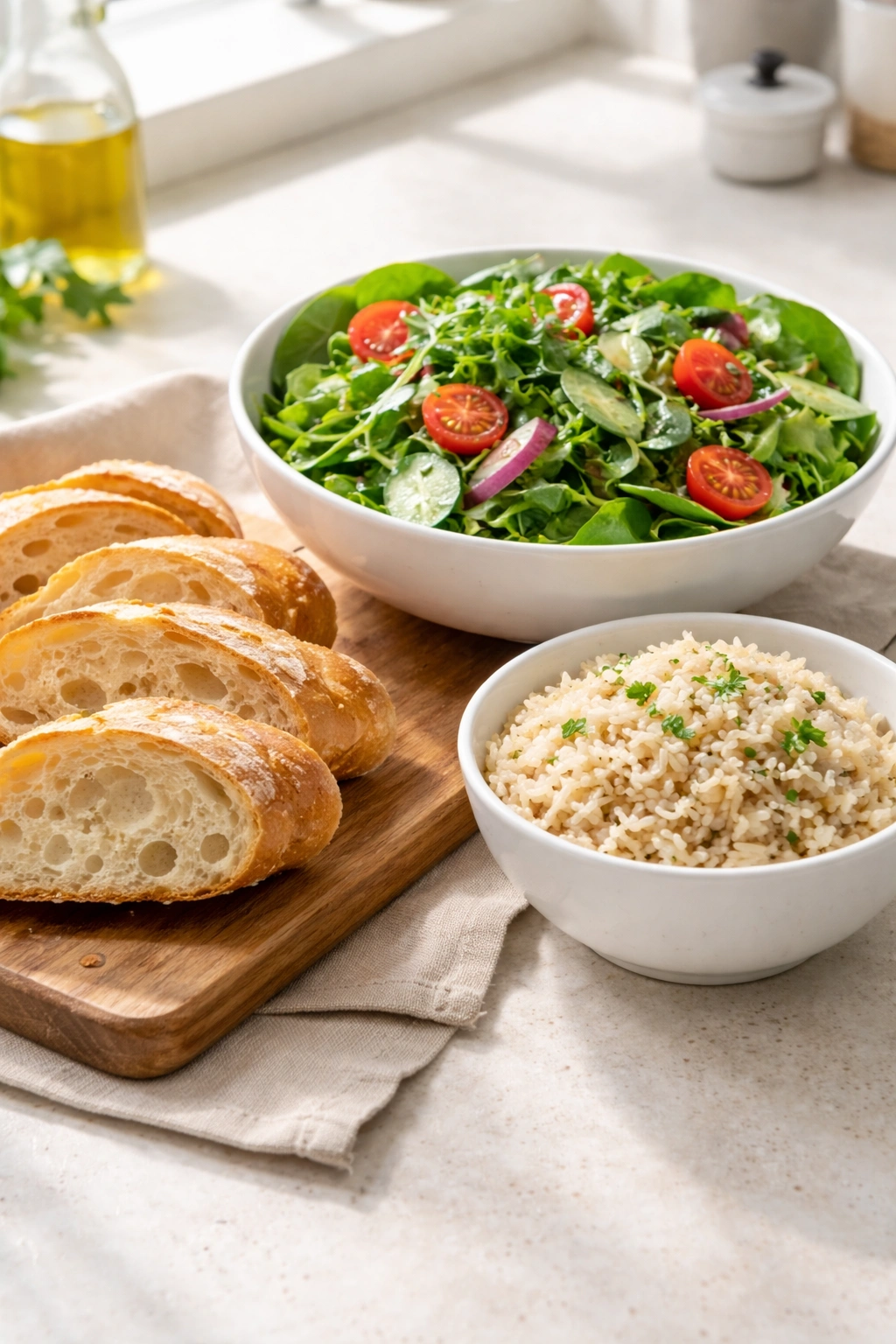
This sheet pan is genuinely a complete meal on its own—protein, vegetables, and enough substance to feel satisfying. But if you want to add something alongside, choose components that require zero cooking time or finish in the oven while the salmon cooks.
Couscous or rice (prepared ahead) reheated while you’re prepping the salmon means a grain component is ready to serve alongside. Or buy pre-cooked rice packets and microwave them while the salmon roasts.
A simple green salad assembled while the salmon cooks provides freshness and brightness that complements the roasted elements beautifully. Dress it right before serving so the greens don’t wilt.
Crusty bread for soaking up lemon juice and olive oil is simple pleasure that requires no cooking whatsoever.
Fresh fruit (berries, sliced melon, or orange segments) adds sweetness and a pop of color. Serve it cold while the salmon is hot for textural contrast.
Final Thoughts
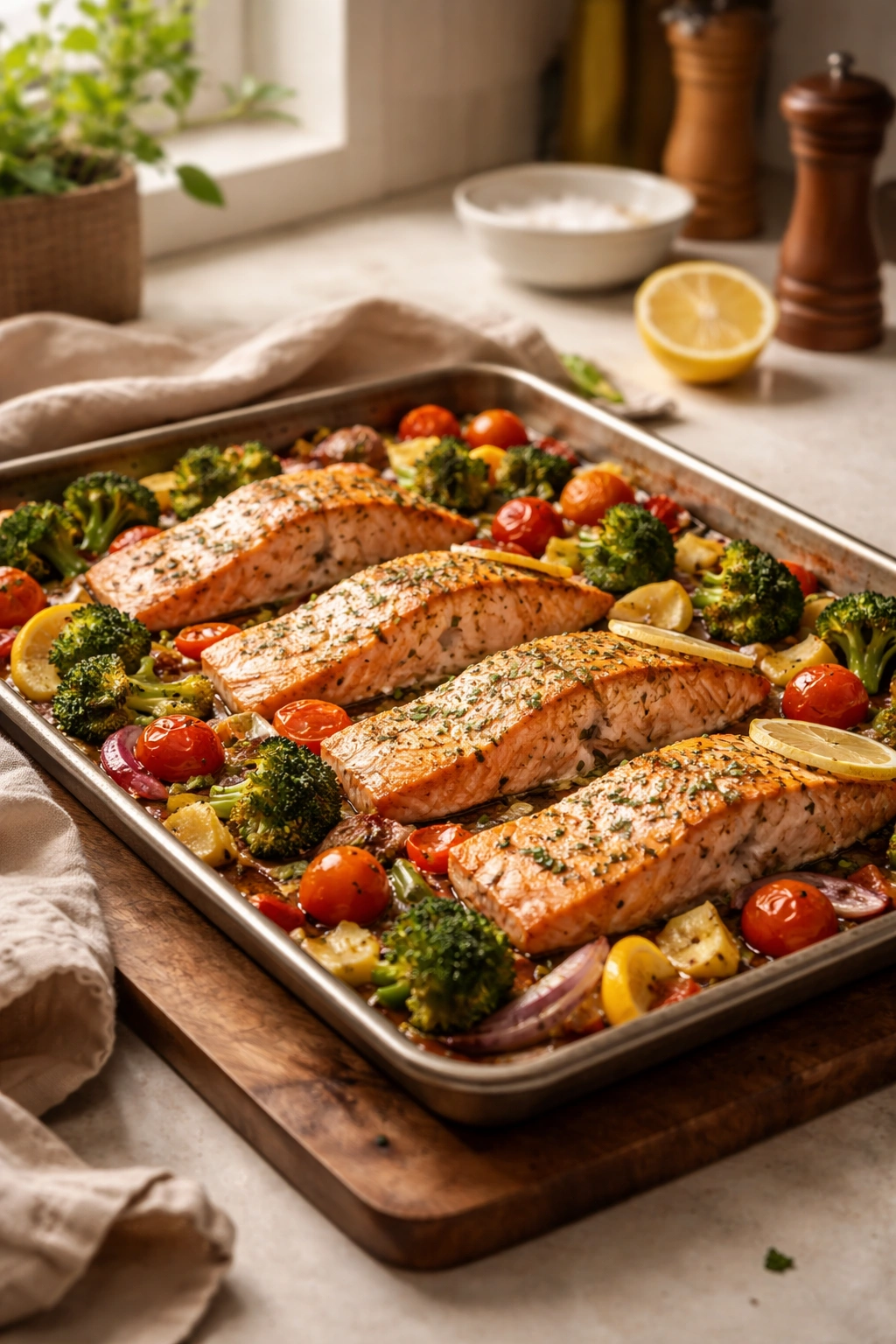
Sheet pan salmon and vegetables in 20 minutes isn’t actually fast cooking—it’s smart cooking. You’re using high heat and proper pan setup to collapse the time typically needed without compromising quality. The salmon is tender and buttery, the vegetables are roasted until slightly caramelized, and the whole meal tastes like you spent way longer than you actually did.
Keep this recipe in regular rotation and you’ll find that good weeknight dinners stop feeling like an impossible dream when you’re exhausted. One sheet pan, minimal ingredients, maximum flavor, and zero judgment about eating directly over the sink because you’re too hungry to plate everything properly.
