



Broccoli salad has a bit of a reputation—it’s often the dish that shows up to picnics loaded with bacon, dried cranberries, sunflower seeds, and a mayo-based dressing so heavy it practically glues everything together. The thing is, that classic version works, but if you’re watching carbs, it’s basically a sugar bomb in disguise. The dried fruit, the sweet dressing, sometimes even the bacon has added sugar—it adds up fast. What if you could take that beloved broccoli salad formula and strip away everything that doesn’t serve you, while keeping everything that makes it genuinely craveable?
That’s exactly what this low-carb loaded broccoli salad does. It keeps the raw, fresh crunch of the broccoli, the crispy bacon that makes your taste buds sit up and pay attention, the nutty seeds, and a creamy, tangy dressing that actually tastes better than the sugary version it replaces. The difference is that every component has been thoughtfully chosen to deliver maximum flavor and satisfaction with virtually no carb impact. You get the texture contrast—that’s the real magic of broccoli salad—without any of the regret that comes with traditional versions.
This salad works as a side dish at a summer cookout, packs easily into lunch containers for the week ahead, and honestly tastes better the next day when all the flavors have had time to get to know each other. It’s the kind of dish that makes low-carb eating feel natural and sustainable rather than restrictive, because it’s genuinely delicious. Let’s talk about how to build it right.
What Makes This Broccoli Salad Different
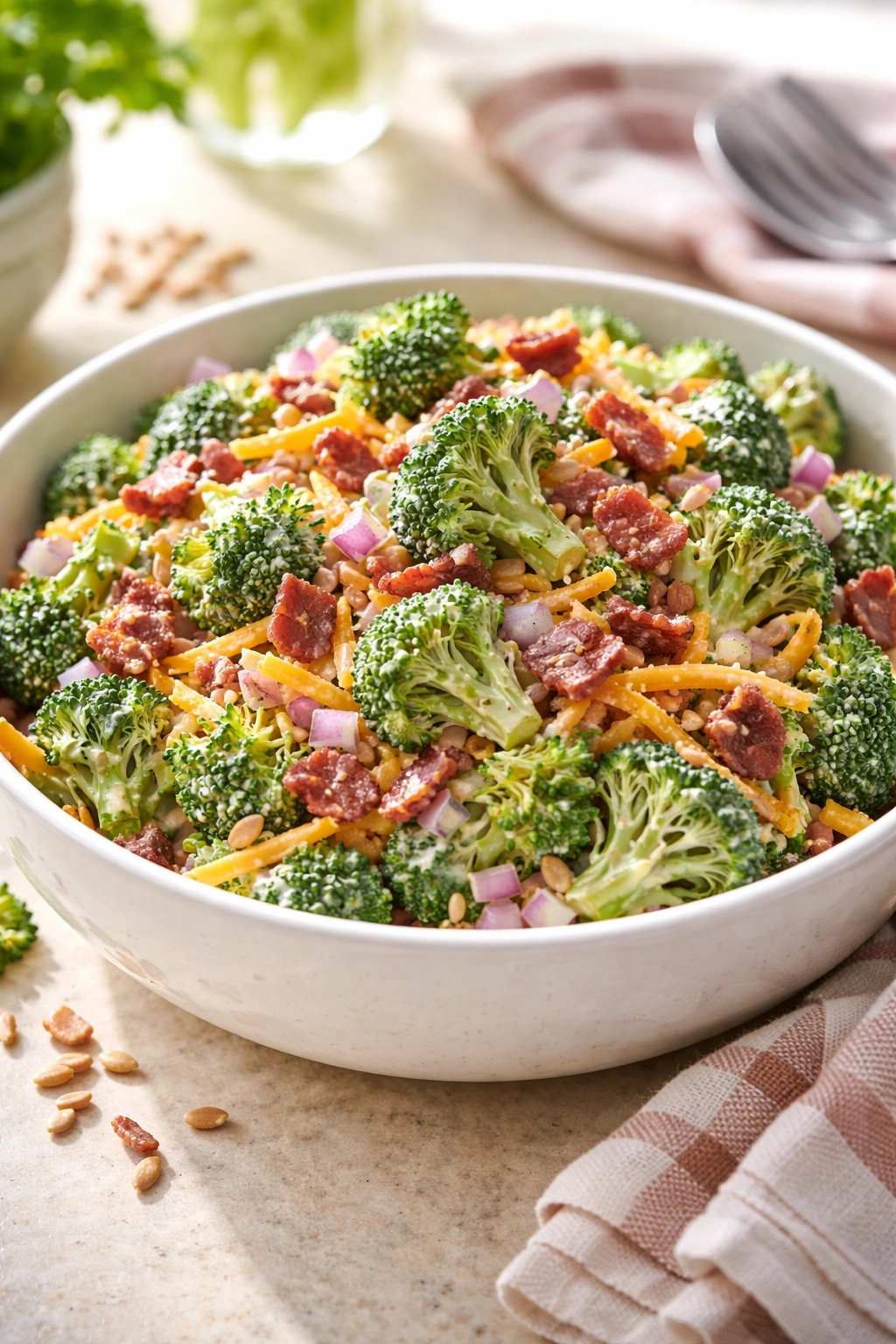
Most broccoli salad recipes rely on sweetness—raisins, dried cranberries, candied walnuts, or a dressing that’s basically sweetened mayo—to make raw broccoli feel appealing. The problem with that approach is it masks the actual flavor of the broccoli and turns what should be a savory side into more of a dessert. This version flips that entirely.
The base is raw broccoli florets that you’ve cut into bite-sized pieces, and here’s the trick that most recipes miss: you’re using the raw broccoli’s natural sweetness and texture as the star. There’s no need to cover it up. The dressing is creamy and tangy—a combination of sour cream, mayonnaise, apple cider vinegar, and a touch of dijon mustard—which creates real flavor complexity. That acid and umami background makes the broccoli taste more like broccoli, not less.
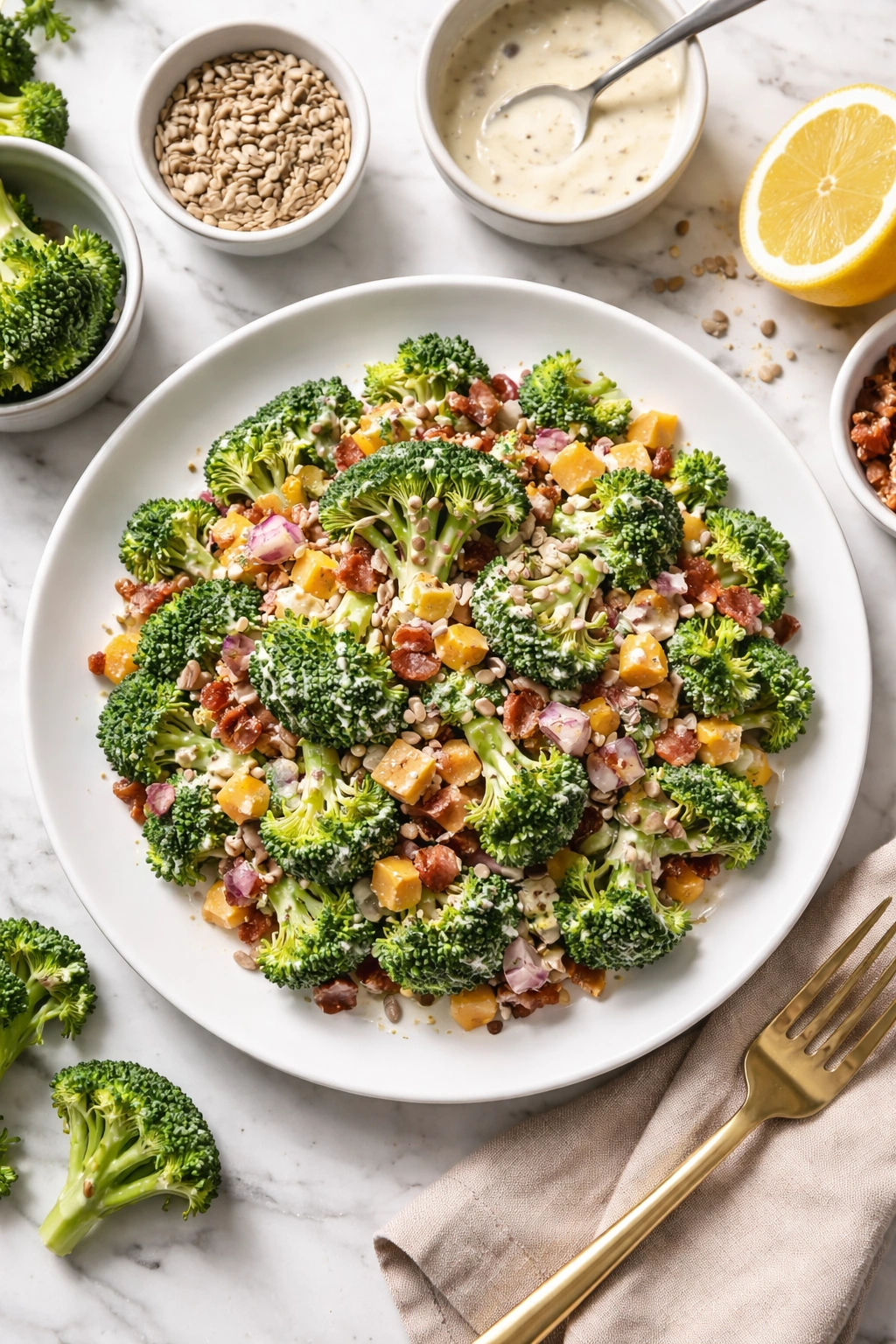
The mix-ins are where you build the experience. Crispy bacon gives you textural contrast and a savory depth that actually complements the broccoli. Sunflower seeds or pumpkin seeds add crunch and a subtle nuttiness. Sharp cheddar cheese brings richness and a piquant bite. Red onion adds a sharp, fresh note that cuts through the creaminess. Nothing is there just to add sweetness or bulk—everything serves a textural or flavor purpose.
Because there’s no dried fruit weighing this down, the salad stays lighter on the palate while still feeling substantial and satisfying. That’s the hallmark of a really well-designed low-carb dish—it doesn’t feel like you’re missing anything. You’re not trading satisfaction for carbs; you’re actually getting a better version of something you already love.
Why Low-Carb Eating Matters
If you’re already committed to a low-carb lifestyle, you know that the challenge isn’t avoiding carbs entirely—it’s finding dishes that feel indulgent, satisfying, and genuinely delicious without the carb penalty. Most “diet” versions of classic dishes feel like compromises, and your taste buds rebel. Broccoli salad, when done right, doesn’t feel like a compromise at all.
The research on carbohydrate management has become increasingly nuanced over the years. What’s clear is that not all carbs are equal, and for many people, reducing refined carbohydrates while maintaining nutrient density improves energy, reduces blood sugar fluctuations, and supports weight management goals. The challenge is finding practical, everyday dishes that fit into that framework without requiring constant willpower or substitution.
This salad becomes a tool in your low-carb toolkit because it delivers on flavor, nutrition, and satiety all at once. Raw broccoli is nutrient-dense—high in vitamin C, vitamin K, folate, and fiber—while being very low in net carbs (about 3.5 grams of net carbs per cup of raw florets). The fat from the mayo and cheese helps your body absorb the fat-soluble vitamins in the broccoli. The protein from the cheese and bacon keeps you feeling full between meals. You’re not eating something “low-carb” despite its flavor; you’re eating something that’s genuinely good because it’s low-carb.
Choosing the Best Broccoli for Raw Salads
The quality of your broccoli matters more here than it does in most cooked dishes, because you’re eating it raw. When broccoli is cooked, heat can soften any textural issues and the cooking process mutes subtle flavors. Raw, everything is exposed—texture flaws become obvious, and off-flavors stand out.
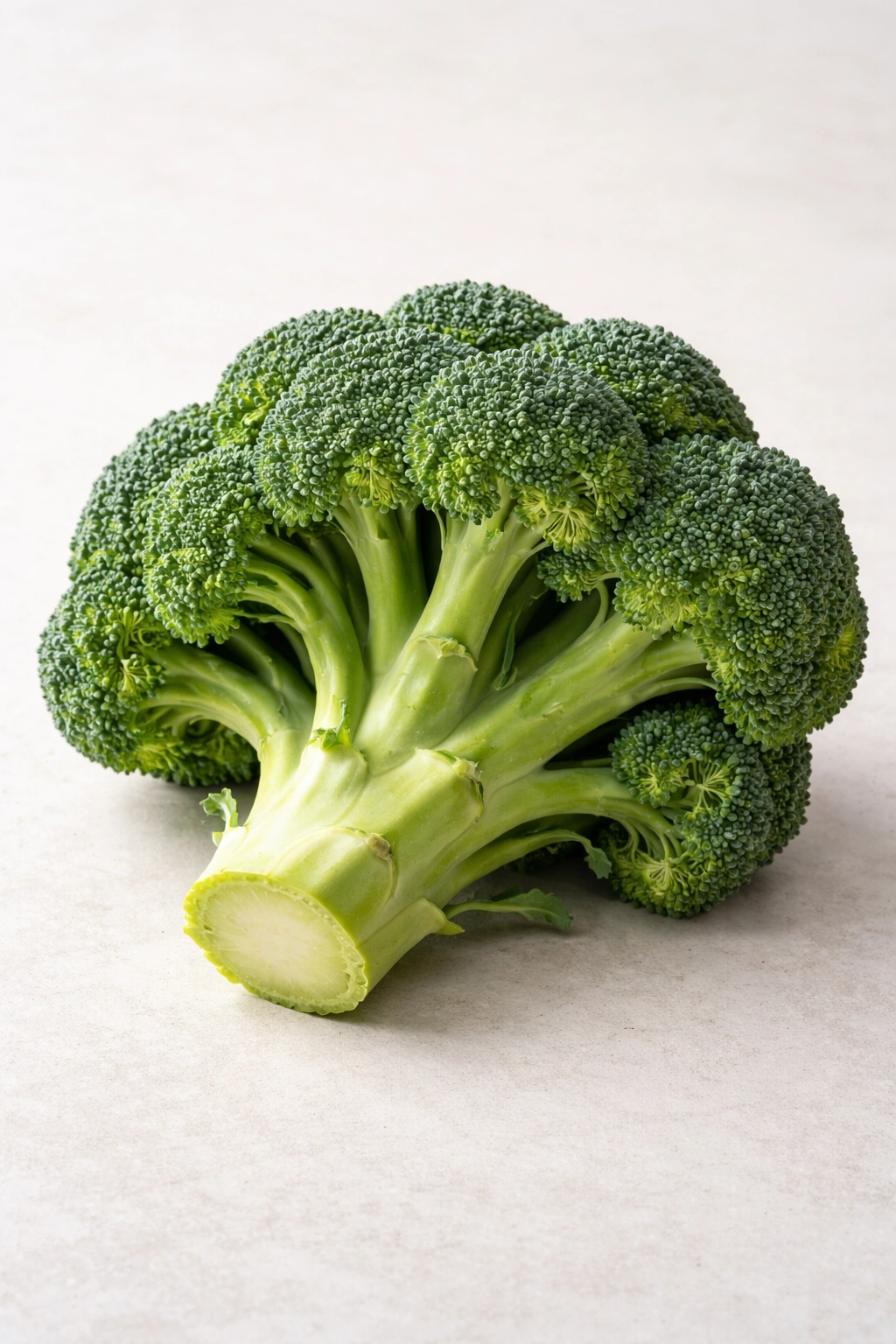
When you’re shopping, look for broccoli with florets that are tightly clustered and deep green in color. The crown should feel firm and heavy for its size—avoid any broccoli that feels light or spongy, which indicates it’s been sitting around. The cut end of the stalk should look fresh and moist, not dried out or brown. If the broccoli has any yellowing in the florets or the crown looks loose and open, it’s past its prime and won’t have that crisp, fresh bite you want.
The size of the florets matters for your salad preparation. You want florets that are 1 to 1½ inches in size—small enough to eat comfortably in one or two bites, but large enough that they don’t get lost in the dressing. If your broccoli crown has very large florets, you’ll want to cut them down. If it has tiny florets, that’s fine, but just know you’ll have more surface area exposed to the dressing, so the salad will absorb it more quickly.
When you bring your broccoli home, store it in a plastic bag in the coldest part of your refrigerator (usually the back of a shelf), and use it within 4 or 5 days. Broccoli ages quickly, and you’ll notice the difference in crunch and flavor if you let it sit much longer. If you’re making this salad ahead, it’s actually better to prep the broccoli and dressing separately, then combine them a few hours before serving—that way the broccoli stays crisp rather than getting weighed down by dressing sitting time.
Understanding the Perfect Creamy Dressing
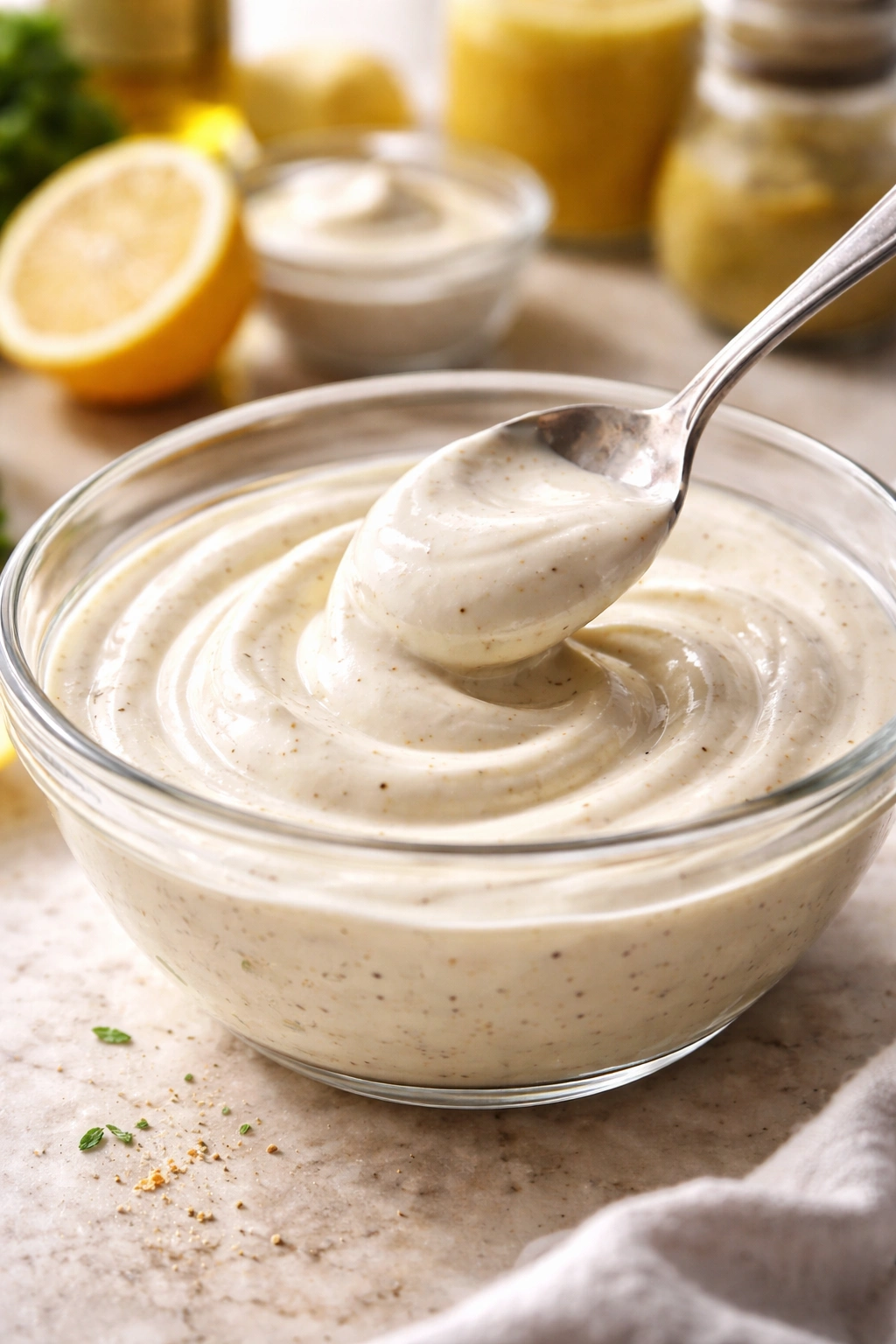
The dressing is what separates an average broccoli salad from one that people actually get excited about. Most recipes use mayonnaise as the base, but mayo alone creates a dressing that’s monotone—rich but one-dimensional. This dressing layers in multiple flavor sources: the richness of mayo, the tang and body of sour cream, the sharpness of apple cider vinegar, the subtle complexity of dijon mustard, and seasoning that ties it all together.
Sour cream is the secret ingredient that most recipes skip. It cuts the heaviness of straight mayo while adding genuine tang and a subtle sour note that makes everything taste fresher. It’s also lower in fat than mayonnaise, so the dressing feels more balanced. The ratio matters: use roughly equal parts mayo and sour cream, and the dressing becomes creamy without being cloying.
Apple cider vinegar is the acid component that brightens everything. Unlike distilled vinegar, which can taste sharp and one-dimensional, apple cider vinegar has a subtle fruity quality that works with the sour cream and mustard. Start with a tablespoon per cup of dressing and taste as you go—you want enough acid to notice it, but not so much that it overwhelms the other flavors.
Dijon mustard adds complexity and a subtle sharpness that grounds the dressing and prevents it from tasting flat. It also acts as an emulsifier, helping the different components stay cohesive rather than separating. Don’t use yellow mustard here—it lacks the sophisticated bite that dijon brings.
The seasoning is where you can personalize this slightly: salt, pepper, garlic powder (never use raw minced garlic, which will become intense and bitter after a day), and optional paprika for warmth. Some people add a tiny pinch of sweetener if they like, but honestly, the natural sweetness of the broccoli plus the complexity of the dressing should be enough.
Yield
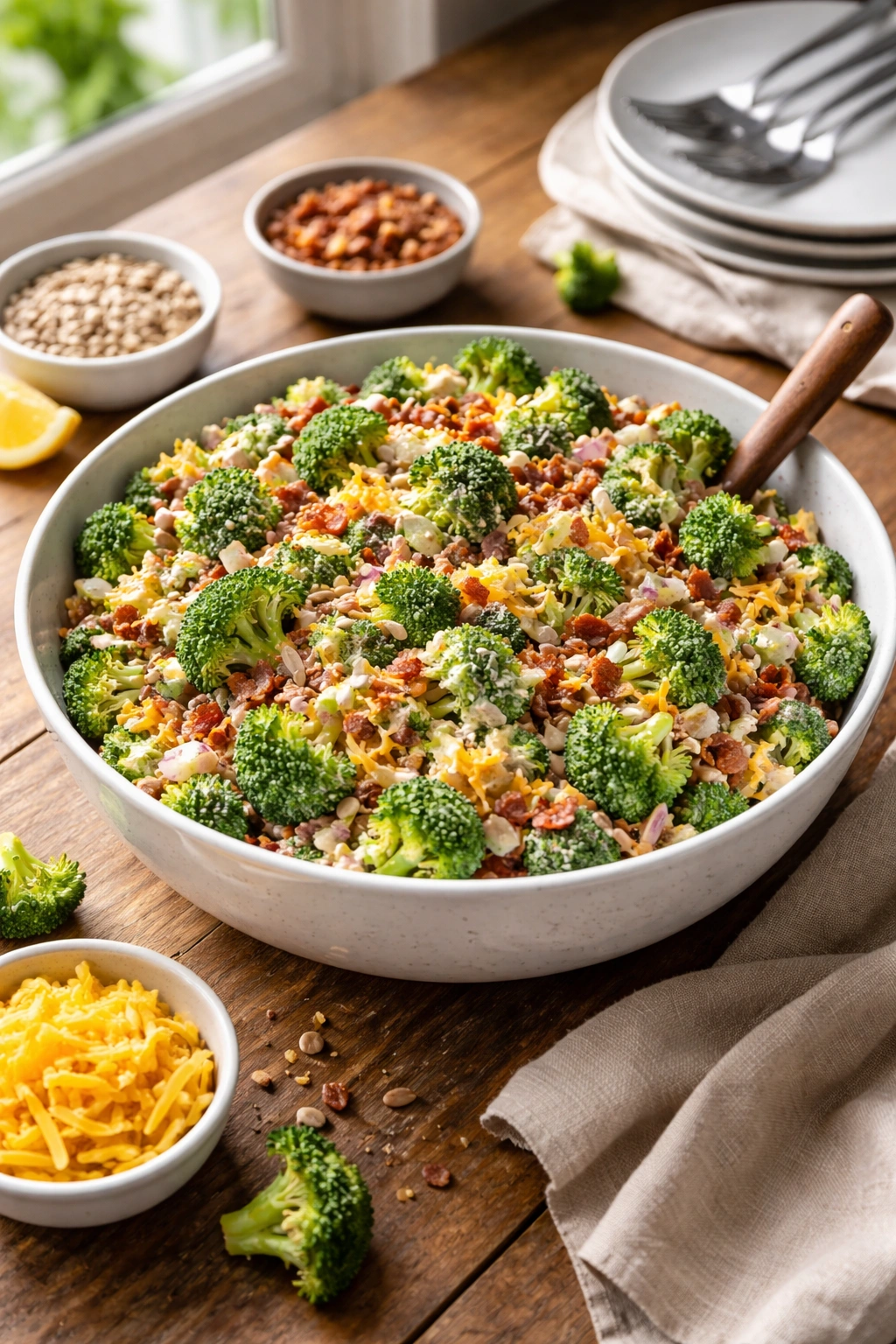
Serves 8 to 10 as a side dish | Makes about 10 cups
Prep Time: 20 minutes
Cook Time: 15 minutes (bacon)
Total Time: 35 minutes
Difficulty: Beginner — No special techniques required, and the instructions are straightforward even if you’ve never made this before.
Low-Carb Loaded Broccoli Salad Ingredients
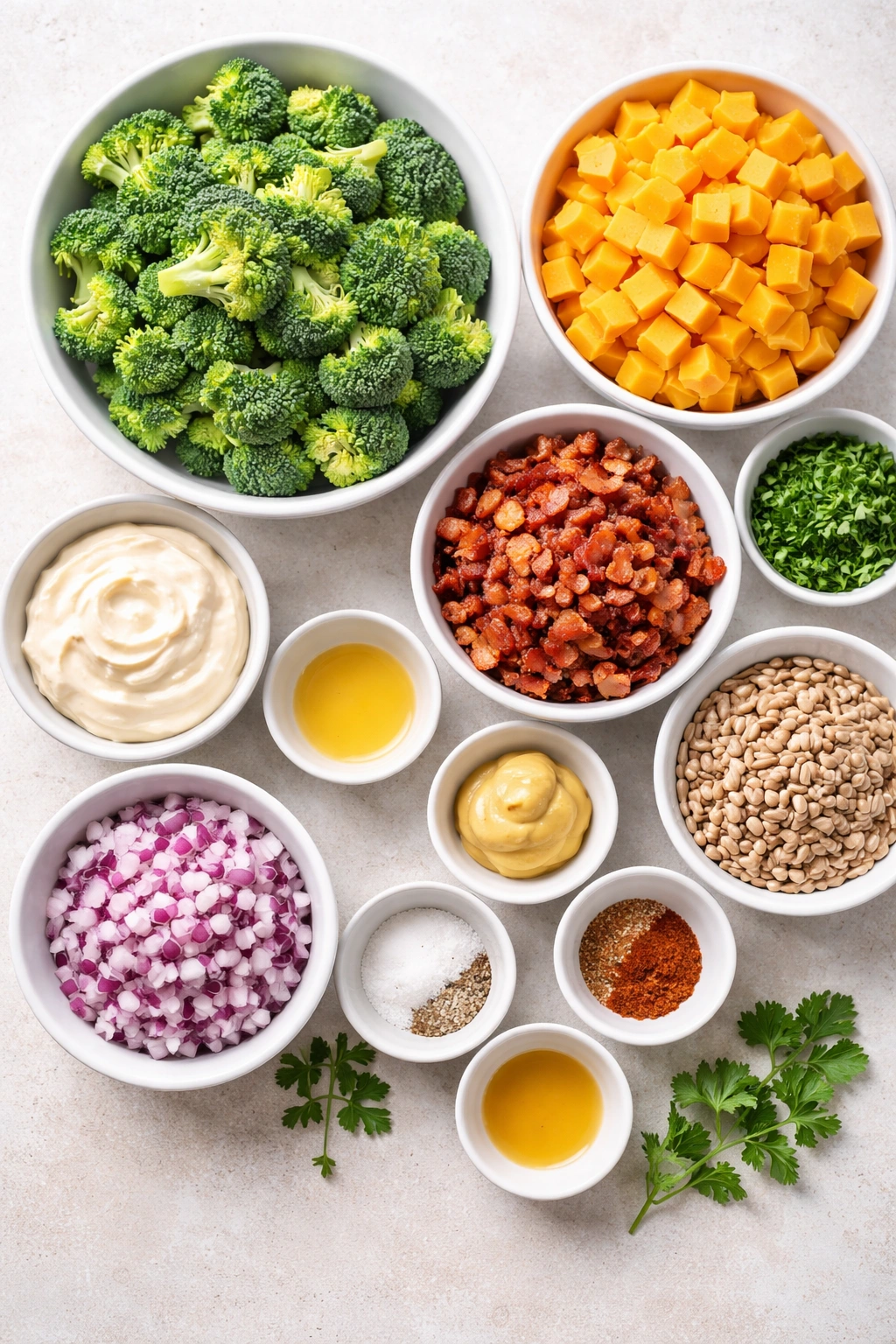
For the Salad:
- 2 large heads broccoli (about 8-9 cups florets after trimming)
- 1 cup sharp cheddar cheese, cut into small cubes or shredded
- 8 slices bacon, cooked until crispy, drained, and chopped
- ½ cup raw sunflower seeds (or pumpkin seeds, or a combination)
- ⅓ cup red onion, finely diced
- ¼ cup chopped fresh parsley (optional but adds brightness)
For the Dressing:
- 1 cup mayonnaise (use full-fat; light mayo has different texture properties and won’t perform the same way)
- ¾ cup sour cream (full-fat or Greek yogurt as a substitute for lower fat content)
- 3 tablespoons apple cider vinegar
- 1½ teaspoons dijon mustard
- 1 teaspoon fine sea salt
- ½ teaspoon black pepper
- ½ teaspoon garlic powder
- ¼ teaspoon smoked paprika (optional but recommended)
Prepare the Broccoli:
-
Trim the broccoli crowns, removing any leaves and the thick central stalk. Cut the florets into bite-sized pieces, approximately 1 to 1½ inches in size. Discard any yellowed or damaged florets. Place the cut broccoli in a large mixing bowl. You should have roughly 8 to 9 cups of florets.
-
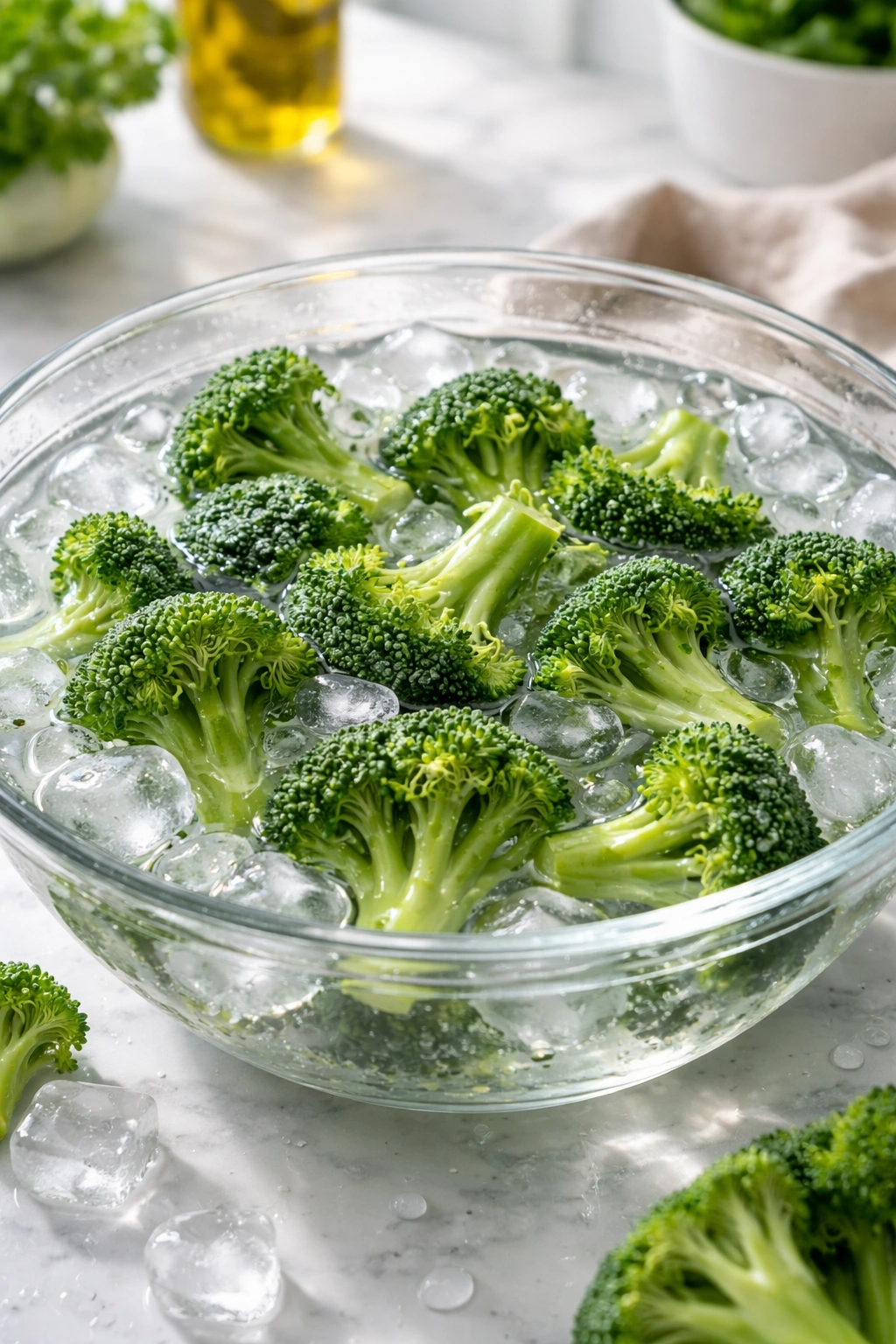
Fill a large bowl with ice water and add a pinch of salt. Submerge the broccoli florets in the ice bath for 5 minutes to ensure maximum crispness. This extra step wakes up the broccoli and firms the florets. Drain thoroughly in a colander, then pat dry with paper towels. Excess water will dilute the dressing, so dry thoroughly — don’t rush this step.
Make the Dressing:
-
In a medium bowl, whisk together the mayonnaise and sour cream until smooth. The mixture should be creamy and uniform with no streaks.
-
Add the apple cider vinegar, dijon mustard, salt, pepper, garlic powder, and smoked paprika. Whisk until fully combined and smooth. Taste the dressing at this point — it should taste tangy, slightly salty, and balanced. If it’s too thick, add another tablespoon of apple cider vinegar or sour cream to loosen it slightly.
Cook the Bacon:
-
While the broccoli chills, cook the bacon: lay the slices in a large skillet in a single layer (work in batches if they don’t all fit without overlapping). Cook over medium heat for 8 to 10 minutes, turning occasionally, until the edges are deep golden and most of the fat has rendered, but the bacon is not burnt and brittle. Transfer the cooked bacon to a paper towel-lined plate to drain and cool slightly.
-
Once the bacon is cool enough to handle, chop it into bite-sized pieces, roughly ½-inch chunks. Discard any bacon fat remaining in the skillet, or save it for another use — don’t add it to the salad as it will solidify when chilled.
Assemble the Salad:
-
Transfer the drained broccoli florets to a very large mixing bowl. Add the cheddar cheese cubes, chopped bacon, sunflower seeds, diced red onion, and fresh parsley if using.
-
Pour the dressing over the broccoli mixture. Using a large spoon or spatula, gently but thoroughly fold everything together, making sure every floret gets coated with dressing. Don’t use an aggressive hand — you’re not trying to break anything down, just ensure even distribution.
-
Taste the salad and adjust seasoning if needed. If it tastes too dense or heavy, add a tablespoon of apple cider vinegar or a few tablespoons of sour cream and fold in gently. If it needs more salt, add it ¼ teaspoon at a time.
-
Serve immediately while the broccoli is at peak crispness, or refrigerate for up to 1 hour before serving. The salad actually tastes better after it sits for 2 to 3 hours in the refrigerator, as the flavors meld — but the broccoli will soften slightly. See the storage section below for tips on keeping it fresh.
Advertisements
Pro Tips for the Best Texture and Flavor
The difference between an okay broccoli salad and an exceptional one often comes down to details that seem small but add up to a dramatically different eating experience. The crispness of the broccoli is the foundation of this dish, and protecting it should be your priority.
Don’t skip the ice bath. It sounds fussy, but that 5-minute submersion in ice water after cutting the broccoli isn’t just for texture—it’s actually rehydrating the florets after being cut and exposed to air. Raw broccoli can wilt surprisingly fast. The ice bath brings them back to full crispness and ensures your salad has that satisfying bite. If you’re making this salad several hours ahead, you can skip the ice bath and go straight to storing the broccoli in the fridge uncovered on paper towels, where the cold air will keep it firm.
Toast your seeds lightly if you have time. Sunflower or pumpkin seeds right out of the bag are fine, but if you have 5 minutes, spread them in a dry skillet over medium heat and toast them, stirring occasionally, until they’re fragrant and starting to show color. This takes maybe 3 to 5 minutes and deepens their nutty flavor significantly. Let them cool before adding to the salad, so they don’t melt into the dressing.
Make the bacon ahead if you want—bacon keeps beautifully in the refrigerator for up to 5 days and actually tastes better the next day as the flavors deepen. You can cook it the morning of your gathering or even the day before, then chop and add it to the salad whenever you’re ready to assemble.
Cook your bacon in the oven if you’re making a large batch. Lay the slices on a rimmed baking sheet lined with foil or parchment paper, and bake at 400°F (205°C) for 15 to 20 minutes, depending on how crispy you like it. This is far less fussy than stovetop cooking, and you get consistently crispy bacon without watching it. The fat drains away as it cooks, so it’s less greasy overall.
Use sharp cheddar, not mild. The whole point of including cheese is to add flavor dimension, and mild cheddar disappears into the background. Sharp cheddar brings a piquant, mineral quality that actually works with the broccoli and the tangy dressing. If you can’t find sharp cheddar, try aged gouda, gruyere, or even a smoked cheddar for extra flavor.
Don’t overdo the red onion. Raw red onion is pungent and can overpower the other flavors if you use too much. A third of a cup finely diced is plenty—it adds sharpness and freshness without turning the salad into an onion showcase. If you’re making this for a crowd with varied tastes and want to play it safe, use ¼ cup instead.
Common Mistakes and How to Avoid Them
The most frequent mistake people make with broccoli salad is adding too much dressing too early and then wondering why the broccoli gets soggy by the time they serve it. The dressing clings to every floret, and if the salad sits for hours with all that liquid surrounding the broccoli, the florets start to wilt and lose their crisp texture.
If you’re making this more than a few hours ahead of time, mix the salad components separately and combine them just before serving or eating. Keep the dressing in one container, the broccoli and toppings in another, and fold them together 15 to 30 minutes before you want to eat. This solves the sogginess problem while still allowing some flavor melding.
Another mistake is cutting the broccoli florets too small. When florets are tiny, they get lost in the dressing and actually break down faster. Keep them around 1 to 1½ inches—that’s the sweet spot where they’re easy to eat with a fork but large enough to maintain their texture.
Don’t use light mayo or diet sour cream. The chemistry of the dressing depends on full-fat ingredients. Light versions have different water content, different binding properties, and they won’t create the same creamy, cohesive result. Use full-fat mayo and full-fat sour cream, and if you’re concerned about calories, just eat a smaller portion—the flavor will be worth it.
Forgetting to salt the ice bath is a small detail that actually matters. That tiny bit of salt helps the broccoli absorb water more effectively during the ice bath, leading to crispness. It’s not a huge difference, but it’s noticeable.
Not patting the broccoli dry after the ice bath is a major culprit for watery dressing. If you leave water clinging to the florets, it gets incorporated into the salad and dilutes the dressing. Use paper towels and be thorough about it.
Flavor Variations You Can Try
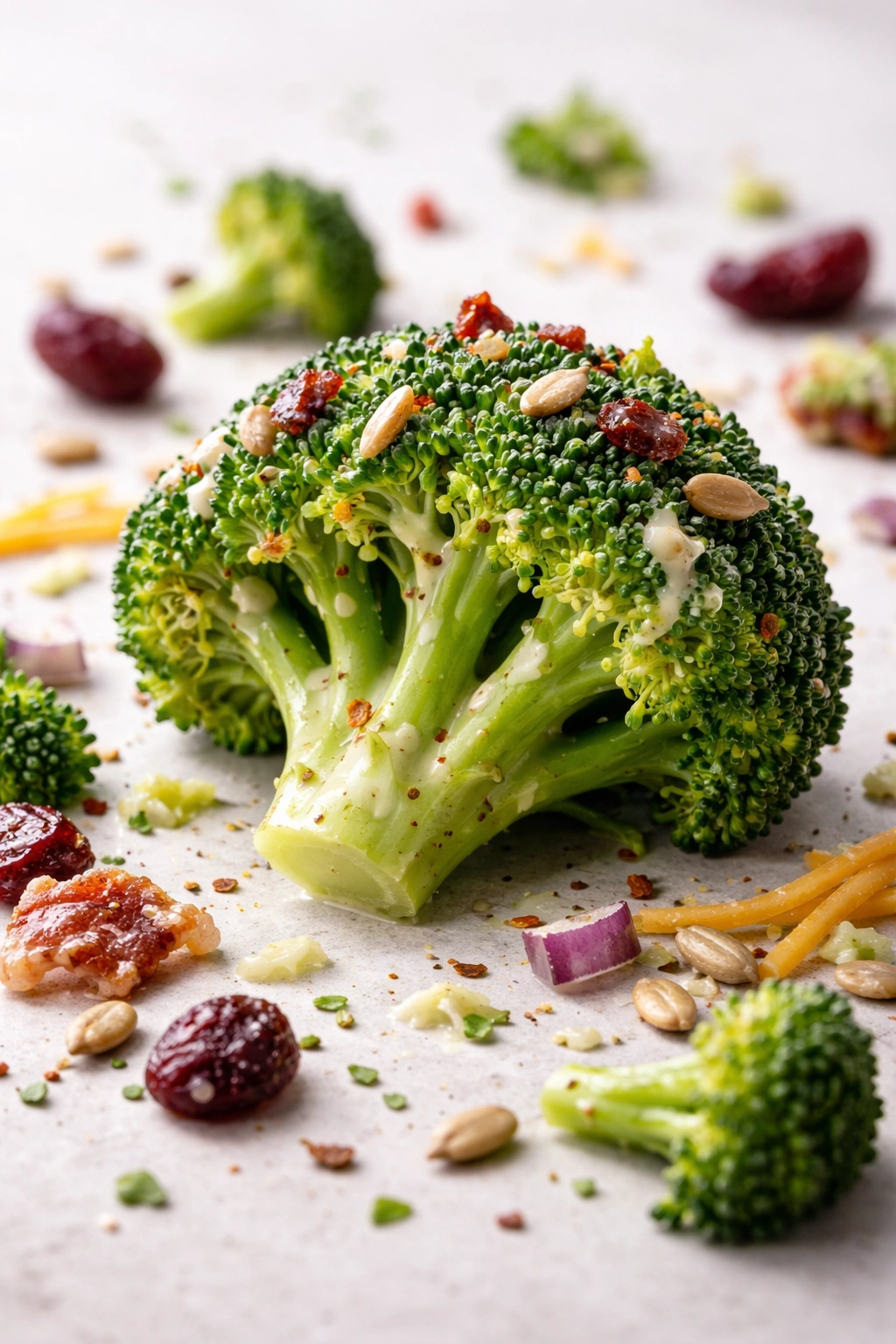
The basic broccoli salad formula is flexible and forgiving, so this is a great base for experimentation. You’re maintaining the structure—raw broccoli, creamy dressing, crispy protein, seeds or nuts, sharp cheese—but you can swap components based on what you have on hand or what sounds good.
For a ranch-inspired version, add 1 teaspoon of dried dill and 1 teaspoon of fresh chives (or ½ teaspoon dried chives) to the dressing, plus a tiny pinch of cayenne. This gives it that ranch profile while staying low-carb. You can also use buttermilk powder mixed with the sour cream if you want more tang, though the apple cider vinegar does the job nicely on its own.
A barbecue-flavored variation: add 2 tablespoons of sugar-free barbecue sauce (check the label—many brands are surprisingly low-carb) to the dressing, and use smoked bacon instead of regular. This gives it a subtle smokiness and BBQ undertone that works beautifully at summer cookouts.
Try a different protein if you want. Instead of bacon, use crispy pepperoni chips (they crisp up beautifully in a skillet), crumbled cooked sausage, or even crispy chicken skin if you’re roasting chicken. The key is crispy, flavorful, and salty—that’s the protein role in this salad.
Swap seeds based on what you like or have available. Sunflower seeds, pumpkin seeds, sesame seeds, or even sliced almonds all work beautifully. Toast them lightly for maximum flavor. If you use sliced almonds, you might want to reduce the amount slightly since they’re denser than seeds—maybe use ¾ cup instead of a full cup.
For a sharper cheese experience, use a combination of sharp cheddar and crumbled blue cheese, or try aged gruyere. The flavor becomes more complex and sophisticated, though still perfectly approachable.
Add some fresh herbs if you want brightness. Chopped fresh dill, chives, or even a small amount of chopped fresh tarragon all work beautifully. Add them just before serving so they stay vibrant and fresh-tasting.
Storage, Make-Ahead, and Keeping It Fresh
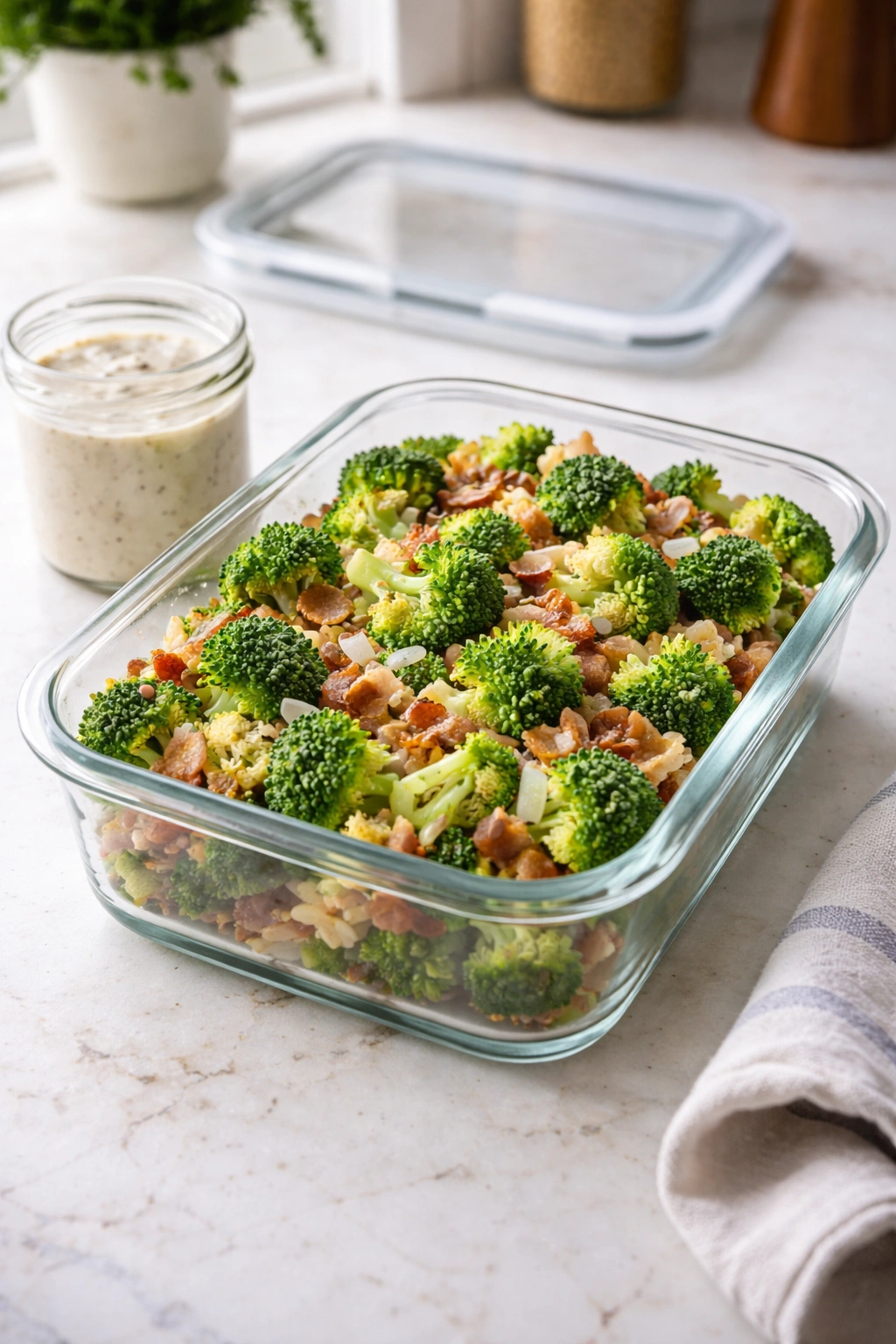
Here’s where low-carb broccoli salad actually becomes practical for busy people: it keeps beautifully, and in many ways tastes better on the second or third day than it does the first. The flavors have time to integrate, everything gets to know each other, and the overall effect becomes richer.
Stored in an airtight container in the refrigerator, this salad keeps for up to 5 days. By day two, the broccoli will be softer than it was when you first made it—it won’t have that raw-fresh crispness anymore—but it’ll still taste delicious and tender. Many people actually prefer it at this point because the texture becomes more like a traditional cooked vegetable salad while retaining the fresh, raw flavor base.
If you want to maintain maximum crispness, store the components separately. Keep the dressing in one container and the broccoli mixture (broccoli, cheese, bacon, seeds, onion) in another. Combine them just before you want to eat. This way, on day two you can still have crunchy broccoli if you prefer, or you can let it sit in the dressing for a while and get the softer, more integrated version.
Make-ahead strategy: Prep your broccoli the day before or morning of your event. Keep it in an airtight container with no dressing. Make your dressing whenever you have time—it actually improves slightly if it sits for a few hours as the flavors meld. Cook your bacon ahead. Then assemble everything 1 to 2 hours before serving. This approach gives you the convenience of advance prep without sacrificing texture.
Can you freeze it? Not successfully. The broccoli develops a mushy texture when frozen and thawed, and the dressing breaks down. This is definitely a make-fresh-or-make-ahead-but-store-cold type of dish, not a freezer candidate.
If your salad has been sitting in the dressing for more than a few hours and the broccoli is starting to feel soft and over-saturated, you can refresh it slightly by folding in some fresh broccoli florets that you’ve crisped in an ice bath. This adds textural contrast without changing the flavor. It sounds a bit odd, but it actually works.
Serving Suggestions and Pairing Ideas
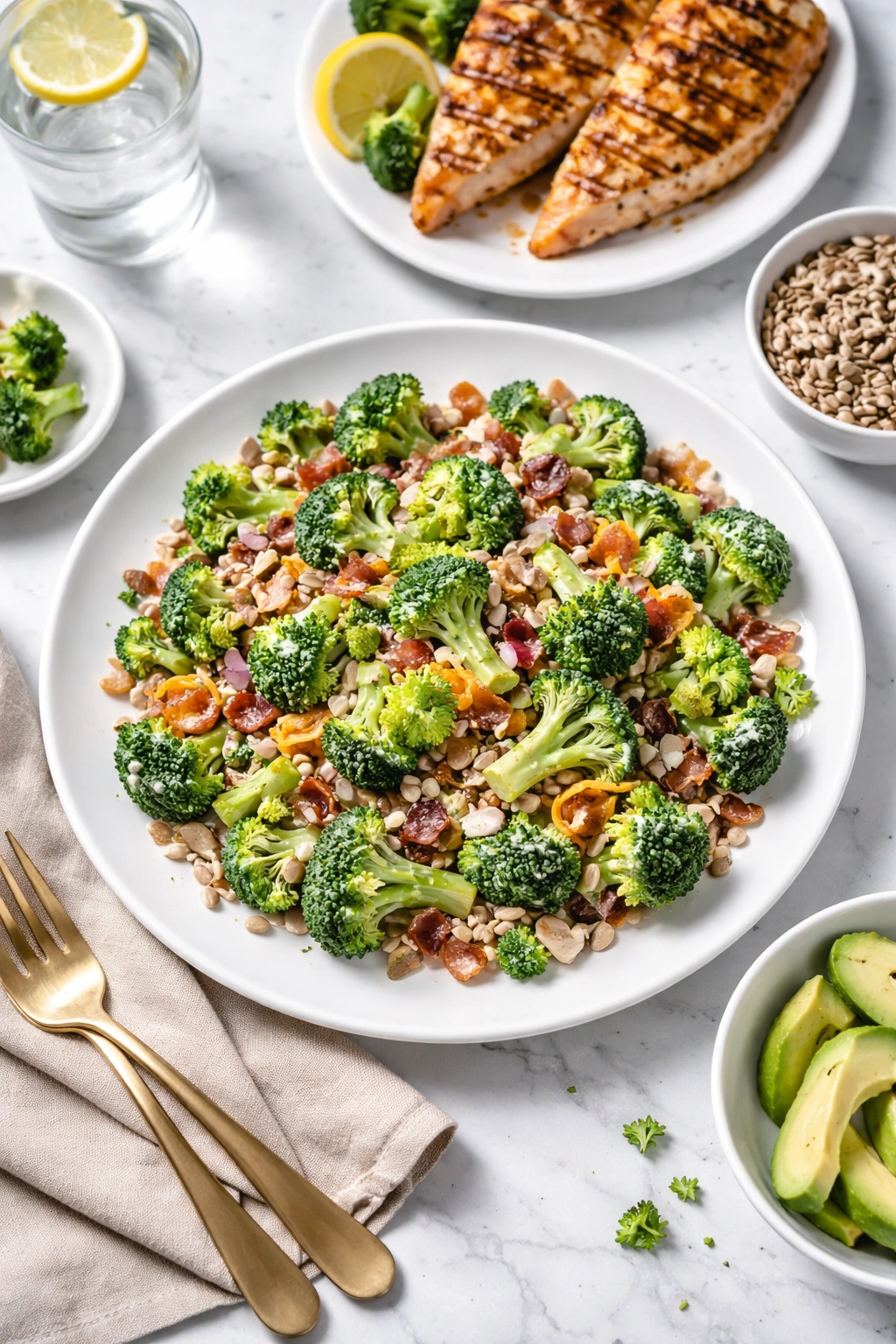
This broccoli salad is infinitely practical because it works as both a side dish and a light main course, and it pairs beautifully with almost anything from a traditional cookout lineup.
Serve it alongside grilled chicken, steak, or fish—the creamy, tangy salad complements any of these beautifully. The broccoli brings a fresh, green note that cuts through the richness of the protein, and the acid in the dressing aids digestion. At a summer barbecue, this is the side dish people go back for multiple times.
As part of a composed salad plate, use the broccoli salad as one component. Pair it with a warm protein (maybe sliced steak or roasted chicken), some fresh greens, and perhaps a harder cheese like aged parmesan. The warm and cold combination is striking, and the broccoli salad holds its own among more delicate elements.
Pack it into lunch containers with a piece of protein for an easy low-carb lunch throughout the week. It travels beautifully and doesn’t require any reheating. A cup of broccoli salad paired with some sliced cheese and cured meat (prosciutto, salami) makes a complete, satisfying lunch.
Use it as a base for building a bigger salad. A scoop of this broccoli salad on top of mixed greens, spinach, or even on its own with some grilled protein becomes a hearty main-course salad that feels like a genuine meal, not just a side.
Serve it at room temperature for the best flavor, or chill it until shortly before serving if you prefer it cold. Room-temperature broccoli salad has better flavor development—the cheese stays creamy, the dressing coats everything more evenly—whereas a salad straight from the fridge tastes slightly muted by the cold.
For plating, don’t be shy—pile it generously onto a plate. The broccoli salad is the star of its own plate, not something to scrape modestly to one side. A big, composed mound of it with the bacon pieces visible and some of the seeds catching the light actually looks appetizing and abundant.
Final Thoughts
This broccoli salad is low-carb eating that doesn’t feel like you’re missing anything. It’s satisfying, delicious, and straightforward enough that you’ll find yourself making it regularly because it actually works for your life and your taste buds, not because you’re forcing yourself through another “diet” recipe. The beauty of it is that it tastes better than the traditional high-carb version—not just comparable, but actually better because every component has a purpose and nothing is hidden under sugar or unnecessary heaviness.
The flexibility of the recipe means it can be adapted to whatever you have in your kitchen or whatever you’re in the mood for, so it never gets boring. Serve it at your next cookout, pack it for lunches throughout the week, or make it whenever you want a satisfying side dish that won’t derail your goals. That’s the kind of recipe worth keeping in your regular rotation.
