



There’s something deeply satisfying about a dish that delivers restaurant-quality flavor without demanding hours of your time or a mountain of dirty dishes. That’s exactly what one-pot sausage rigatoni offers—a bowl of creamy, rich pasta loaded with savory sausage, tender vegetables, and a silky tomato-based sauce that comes together in under 30 minutes. This isn’t the kind of weeknight dinner you settle for; it’s the kind you actually crave.
The beauty of this recipe lies in its elegant simplicity. Unlike traditional pasta dishes where you’re juggling boiling water, straining pasta, and making sauce in separate pans, everything happens in one large skillet or Dutch oven. The pasta cooks directly in the sauce, absorbing all that savory liquid while releasing its own starch into the mix, creating a naturally creamy texture that tastes like you’ve been simmering it for hours. One pot. One cleanup. Endless satisfaction.
What makes this meal feel special is how it tastes far more complicated and indulgent than it actually is. The sausage brings deep, peppery flavor. The tomato base provides brightness and acidity. The heavy cream rounds everything out into something luxurious. And then there’s the fresh spinach, which wilts right at the end, adding color, nutrition, and a delicate contrast to all that richness. This is comfort food that doesn’t feel guilty, a quick dinner that feels like you’ve treated your family to something restaurant-worthy.
Why One-Pot Sausage Rigatoni Has Become a Weeknight Essential
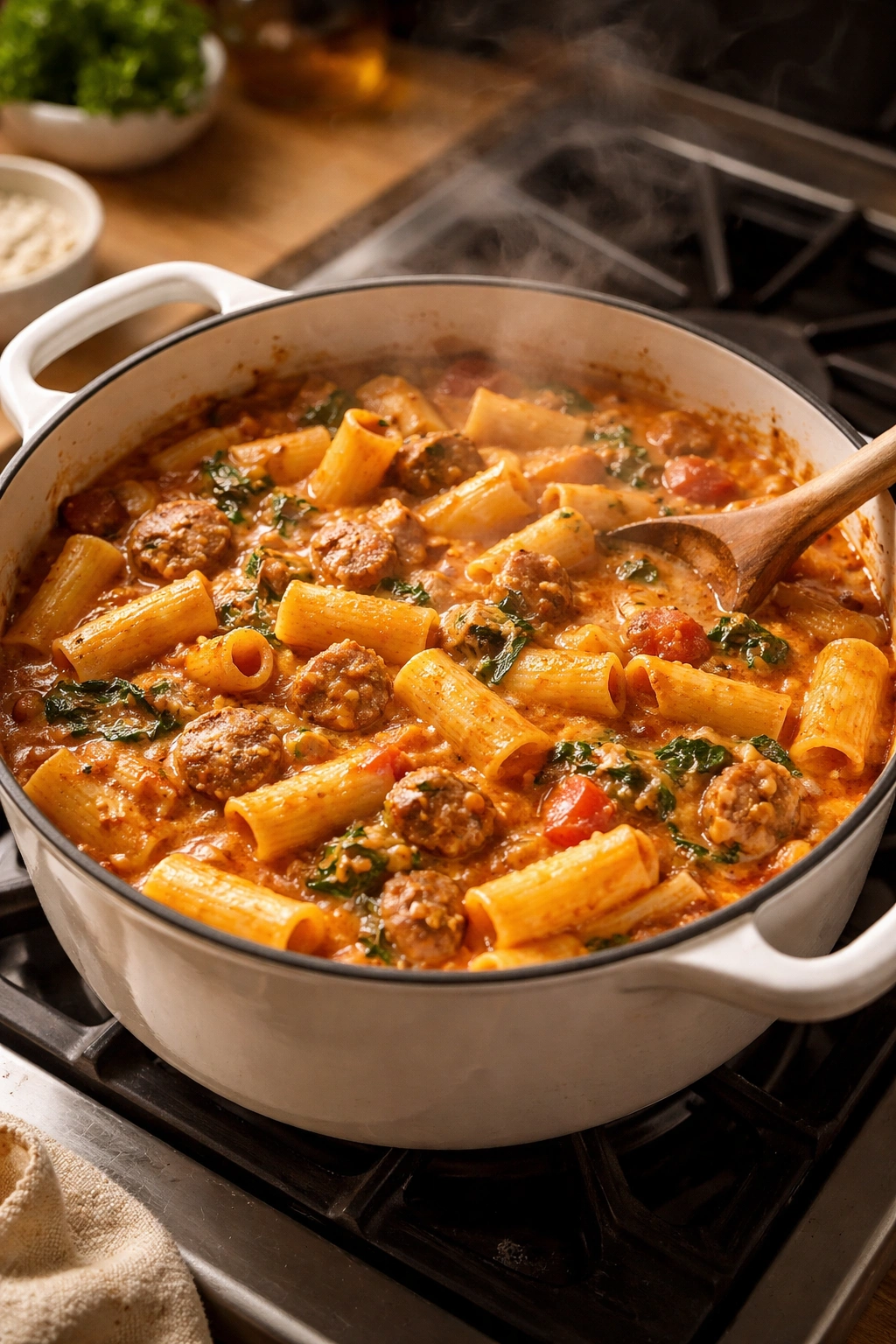
One-pot meals hit differently when you’re juggling a full schedule. You come home tired, hungry, and genuinely not interested in standing at the stove for an hour while juggling multiple pans. This pasta delivers something few other quick dinners can promise: genuine flavor without the complexity.
The magic happens because everything cooks together. When you add uncooked pasta directly to the sauce and broth, the noodles don’t just cook—they become part of the sauce. They release starch into the liquid, which naturally thickens and enriches everything. This is the same technique professional chefs use to create that coveted creamy pasta texture, except you’re doing it with minimal effort and maximum flavor.
Beyond the practical advantages, there’s the psychological win of a one-pot meal. You finish dinner, walk to the sink, and see just one pan waiting for you instead of a cutting board, a skillet, a separate pot for pasta water, and possibly a saucepan too. That single moment of relief—knowing cleanup will take five minutes instead of twenty—might sound small, but it changes how you feel about cooking. You’re more likely to make this again because you know exactly how much effort it actually requires.
Understanding Rigatoni and Why It’s Perfect for This Dish
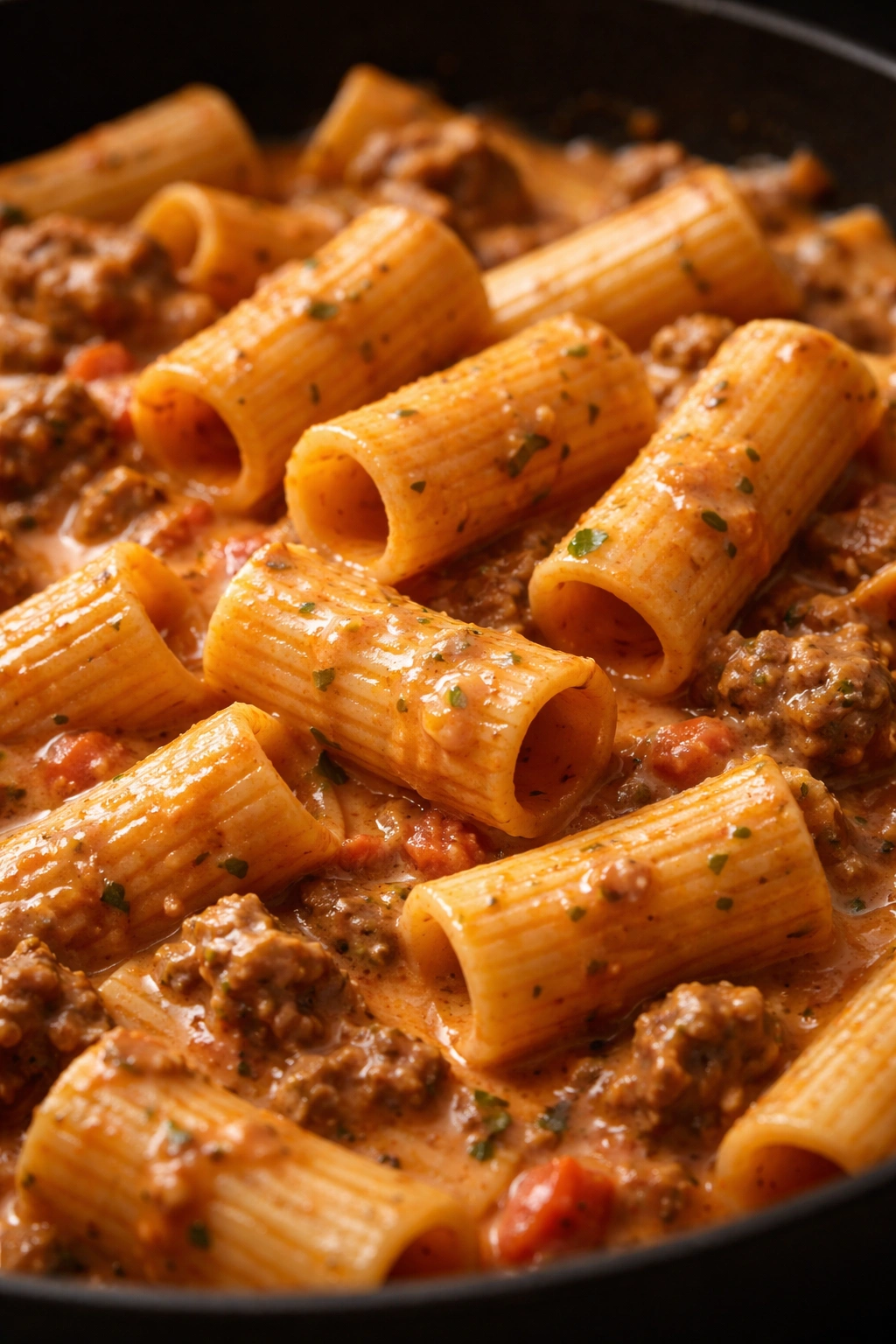
Rigatoni isn’t just any pasta. This tube-shaped short pasta with ridges running lengthwise down its surface originated in Italy, and the name itself comes from the Italian word “rigate,” meaning ridged or lined. Those ridges aren’t decorative—they’re functional, serving as tiny grooves that catch and hold sauce better than smooth pasta would.
This matters enormously for creamy sausage rigatoni. When you use a thick, creamy tomato-based sauce, you need pasta that can grip it. Smooth spaghetti or linguine would let the sauce slide right off. But rigatoni’s ridged surface creates friction. Each piece of pasta becomes a sauce-holding vessel. This is why traditional Italian cooking pairs rigatoni specifically with hearty, robust sauces rather than delicate, thin ones.
Rigatoni also cooks relatively quickly compared to longer pasta shapes, which is ideal for a one-pot method where everything happens simultaneously. The tubes are large enough that they cook evenly without the outside edges getting mushy while the center remains slightly firm. In Sicily, rigatoni plays a starring role in Pasta Alla Norma, the classic dish featuring sautéed eggplant, tomato sauce, and ricotta salata cheese—a combination that proves rigatoni’s versatility with Mediterranean flavors.
If you can’t find rigatoni, penne is your best substitute, particularly penne rigate (the ridged version) rather than smooth penne. Farfalle (bow-tie pasta) also works beautifully, though the texture will be slightly different. What you want to avoid is anything too thin or too small—shells are fine, but angel hair would be a mistake. The pasta should be substantial enough to hold the sauce without disappearing into it.
Choosing Your Italian Sausage—Flavor Matters Here
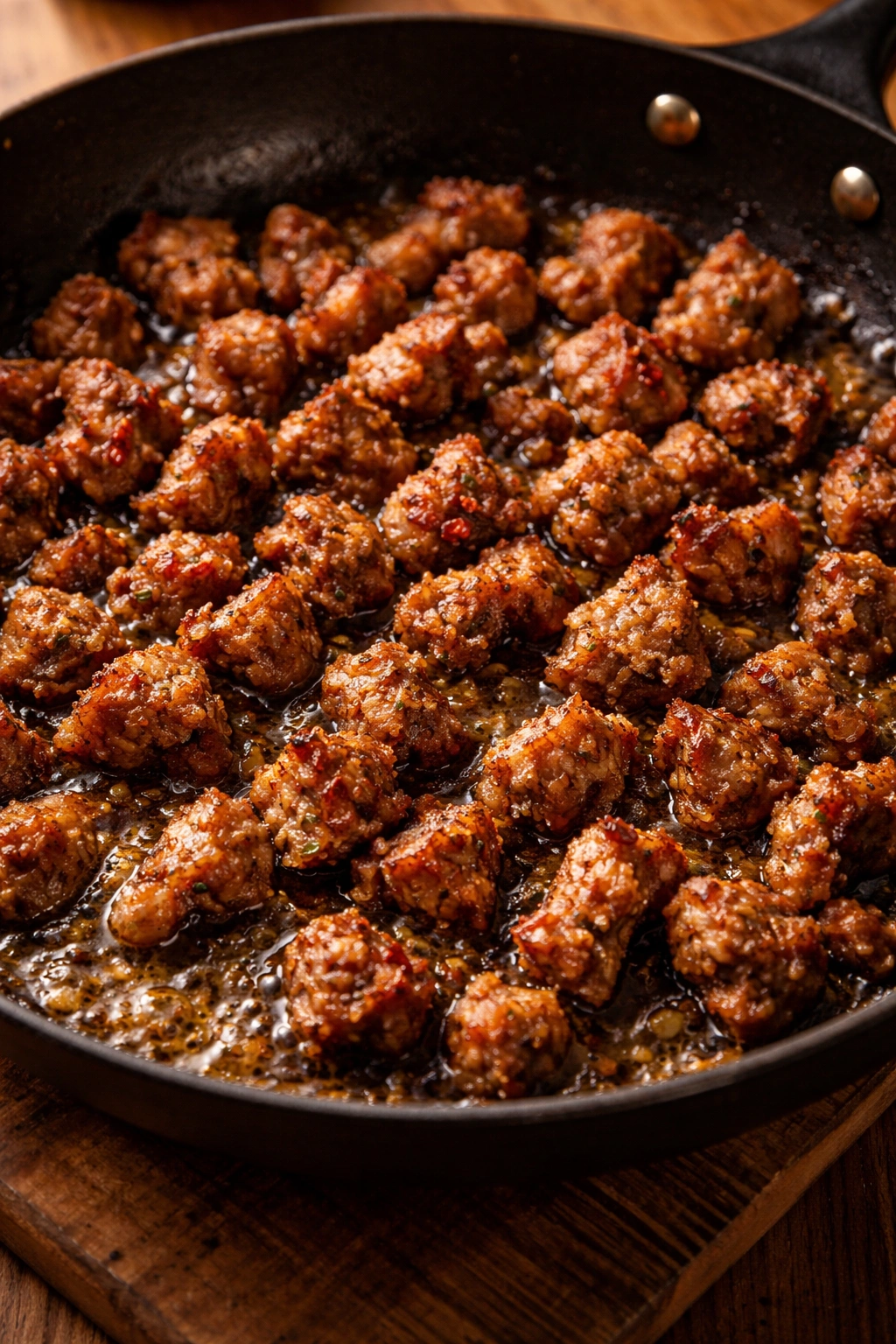
The type of sausage you choose dramatically influences the final dish’s personality. Italian sausage comes in two main heat levels: mild and spicy, and that’s really where most people’s choices end. But that initial decision sets the tone for everything else.
Mild Italian sausage brings a gentle, herbaceous flavor. You’ll taste fennel, a touch of garlic, and subtle black pepper, but nothing that makes you reach for water. This works beautifully if you’re feeding people who prefer more subtle seasoning or if you want the tomato and cream flavors to be the stars. Spicy Italian sausage, by contrast, has actual heat—red pepper flakes and sometimes additional garlic. It transforms the dish into something with more assertiveness and personality, perfect if you enjoy layering flavors and don’t mind a bit of warmth building as you eat.
The choice between ground sausage and sausage links is really about convenience. Ground sausage is already crumbled, saving you a step. If you buy links, you’ll simply remove the casing and break the meat apart as it cooks. Ground sausage tends to distribute more evenly throughout the sauce, while broken-up links create chunkier, more substantial pieces. Either works; it’s purely preference.
Some people experiment with smoked sausage, andouille sausage, or even chicken and turkey sausage. Smoked sausage adds a deeper, campfire-like character that’s wonderful if you enjoy those notes. Andouille brings Cajun spice and smokiness—delicious if you want to push the dish in a slightly more adventurous direction. Chicken sausage works well for lighter preferences, though it’s less forgiving about browning (it has less fat, so it doesn’t develop quite the same crust). Turkey sausage is similar.
For this recipe, I’d recommend starting with regular Italian sausage in whatever heat level you prefer. You can always experiment once you’ve mastered the basic technique. What matters most is that you’re buying real sausage with visible seasonings, not something that looks suspiciously uniform and gray. Good sausage should have spice specks you can see.
The Equipment That Makes This Easier
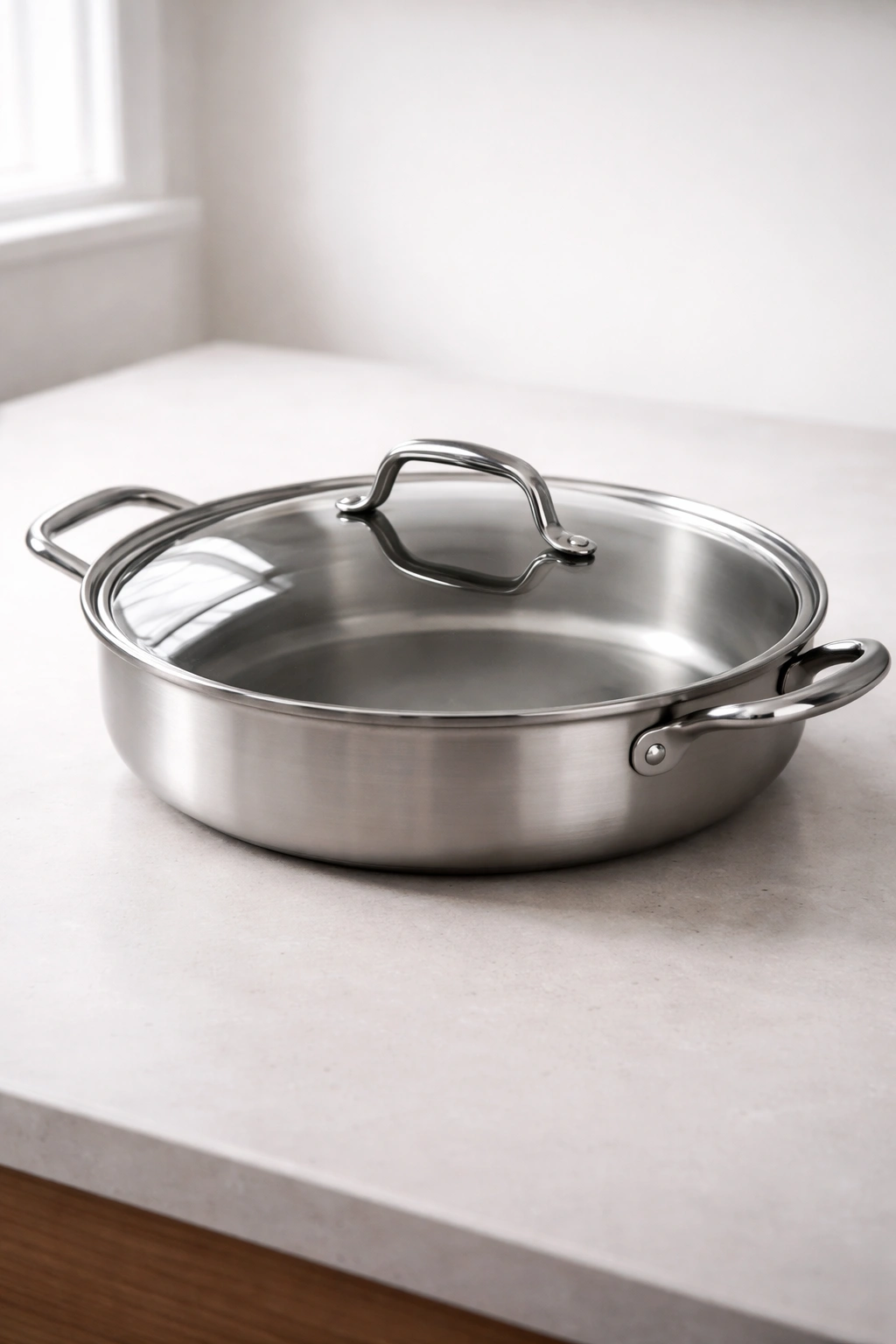
Most home cooks already own everything needed for this recipe, but using the right pan makes a genuine difference. The ideal vessel is a large, high-sided skillet with a lid or a Dutch oven. Both work equally well, though they have slightly different characteristics.
A large skillet (12 to 14 inches wide) heats evenly and allows ingredients to cook in a relatively thin layer, meaning they brown faster. High sides prevent sauce from splattering onto your stove. The lid is essential because it traps steam, which helps the pasta cook evenly and allows you to walk away for a few minutes without stirring constantly.
A Dutch oven (or enameled cast-iron pot) is slightly heavier and retains heat beautifully. It’s slightly deeper, which means you can fit everything without worrying as much about overflow. Dutch ovens are particularly great if you’re cooking a larger batch or if you want to slide the entire pot into an oven for finishing (though this recipe doesn’t require it).
Avoid thin, flimsy pans—they’re the enemy of one-pot cooking. Thin bottoms cause uneven heating and make pasta stick and burn. The heavier the pan, the more forgiving the cooking process becomes. If your skillet is on the thin side, simply watch more closely and stir a bit more frequently.
You’ll also want a wooden spoon for stirring (wooden doesn’t scratch non-stick) and possibly a ladle or large spoon for serving. That’s genuinely all you need. This isn’t an equipment-intensive recipe—it’s intentionally designed to be accessible regardless of what’s in your kitchen.
Building the Flavor Foundation: The Critical First Steps
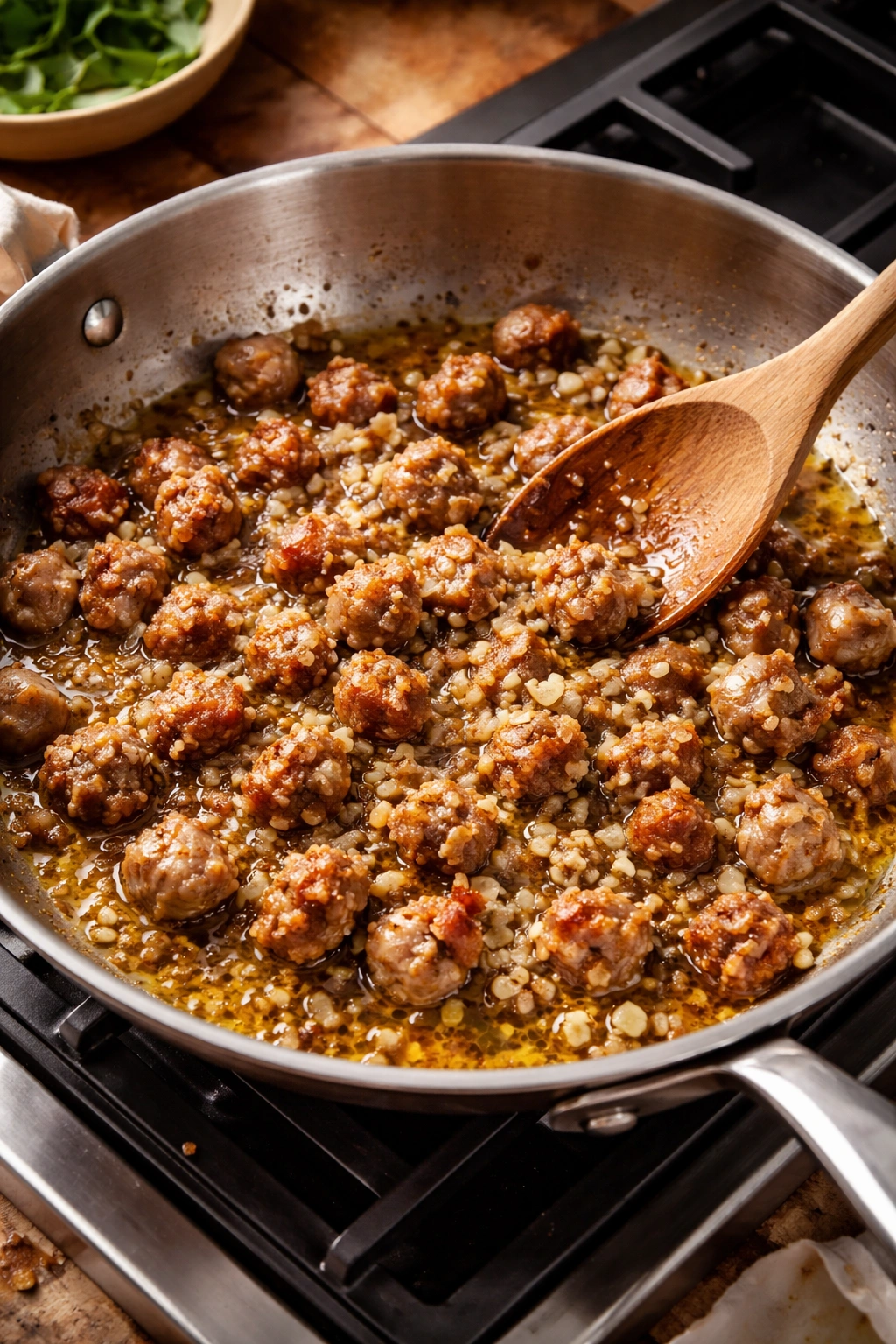
The opening minutes of cooking this dish are where everything good begins. You’re about to create the foundation that everything else builds on, so paying attention here pays dividends in the final bowl.
Start by heating a tablespoon of olive oil in your chosen pan over medium heat—not high, even though you might be tempted to rush. Medium heat gives the sausage time to develop color and flavor rather than just cooking through. Add your sausage (whether ground or broken from links) and let it cook for about 5 to 7 minutes, breaking it up with a wooden spoon as it goes. You’re looking for it to lose its pink color completely and develop some golden-brown edges where it contacts the hot pan.
Once the sausage is cooked, some recipes call for draining fat. This is optional—it depends entirely on how fatty your sausage is and how rich you want the final dish to be. If there’s a visible pool of grease, definitely drain some. If it just looks moist, you can leave it. That fat carries enormous flavor.
Next comes the aromatics. Add your minced garlic (about 4 cloves) and stir it into the meat for just about 30 seconds to 1 minute. You want it fragrant but not brown—burned garlic tastes bitter and ruins everything. This is the moment when your kitchen will start smelling genuinely amazing. That smell is your indicator that you’re doing this right.
Some recipes add onions and sauté them separately first. I prefer the simpler method: add everything to the pot at once in the next step. If you want to pre-sauté onions for about 3 to 4 minutes first, they’ll be slightly more refined in texture, but honestly, they cook fully in the sauce anyway. Either method works.
The One-Pot Technique: Bringing It All Together
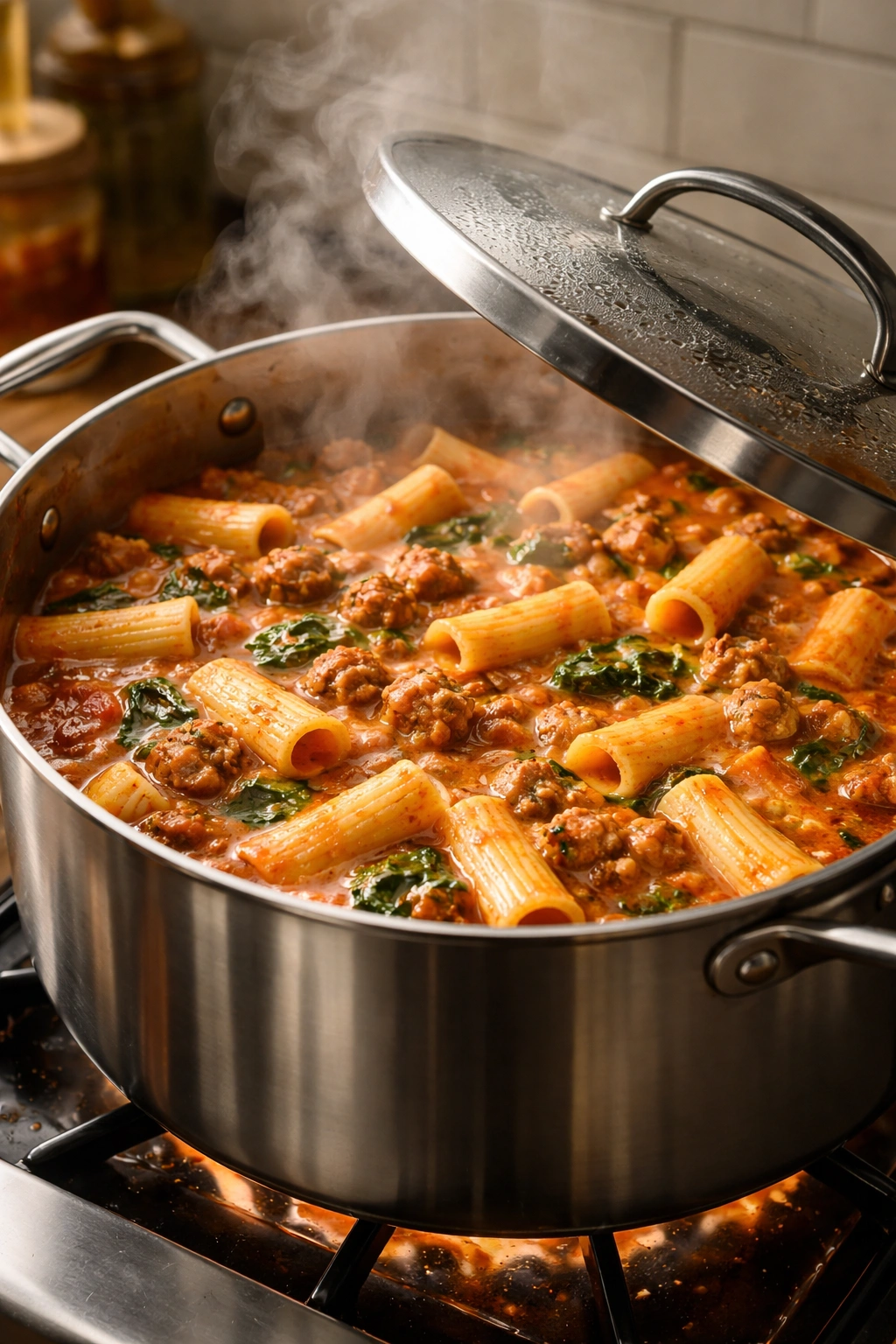
This is where the magic actually happens. You’re about to go from a pot with sausage to a complete, creamy pasta dish, and it all happens in the next 20-25 minutes.
Add your tomato sauce (or marinara, or crushed tomatoes—any tomato-based sauce you love), chicken broth, and uncooked rigatoni directly to the pot with the cooked sausage. Stir everything well to combine, making sure the pasta is mostly submerged or at least coated with liquid. At this point, it will look like there’s not quite enough liquid. Don’t panic—that’s exactly how it should look. The pasta will release starch as it cooks, and that starch will thicken everything beautifully.
Bring the mixture to a boil over medium to medium-high heat. This usually takes about 3 to 5 minutes. Once you see an active boil, reduce the heat to medium and cover the pan with a lid. This is important because the lid traps steam, which helps cook the pasta more evenly.
Now set a timer for 13 to 15 minutes and stir every 3 to 4 minutes. This stirring is not optional or casual—it’s genuinely important. Because the pasta is cooking in the sauce rather than in plain water, it has a natural tendency to stick to the bottom of the pan. Frequent stirring prevents this and ensures even cooking. When you stir, scrape the bottom gently, bringing up any bits that might be catching.
Around the 12-minute mark, start tasting a piece of pasta. You’re looking for that sweet spot called al dente—pasta that’s tender but still has a slight firmness when you bite into it. This is subjective based on your preference, but it’s crucial to taste rather than guess. If it still seems crunchy, give it another minute and taste again.
Once the pasta reaches your ideal texture, remove from heat and stir in the heavy cream. This is the moment that transforms everything. The cream mellows the acidity of the tomatoes and creates that luxurious, silky sauce that coats every piece of pasta. Stir until it’s fully combined.
Add your fresh spinach and stir gently until it wilts—this takes just a couple of minutes. It will seem like an absurd amount of spinach at first, like you’ve made some kind of salad by accident. Trust the process. Spinach reduces dramatically when exposed to heat. Keep stirring until every leaf is green and tender.
Yield, Timing, and Difficulty Assessment

Yield: Serves 4 to 6 people | Makes approximately 6 cups of finished pasta
Prep Time: 10 minutes (mostly dicing and mincing)
Cook Time: 25 minutes (mostly hands-off once you’ve stirred in ingredients)
Total Time: 35 minutes active cooking
Difficulty: Beginner to Intermediate — This recipe has no tricky techniques, no special equipment demands, and no last-minute timing challenges. The most complex part is remembering to stir every few minutes, which you can absolutely master on your first try. If you can boil water and break apart sausage, you can make this successfully.
Complete Ingredient List for One-Pot Sausage Rigatoni
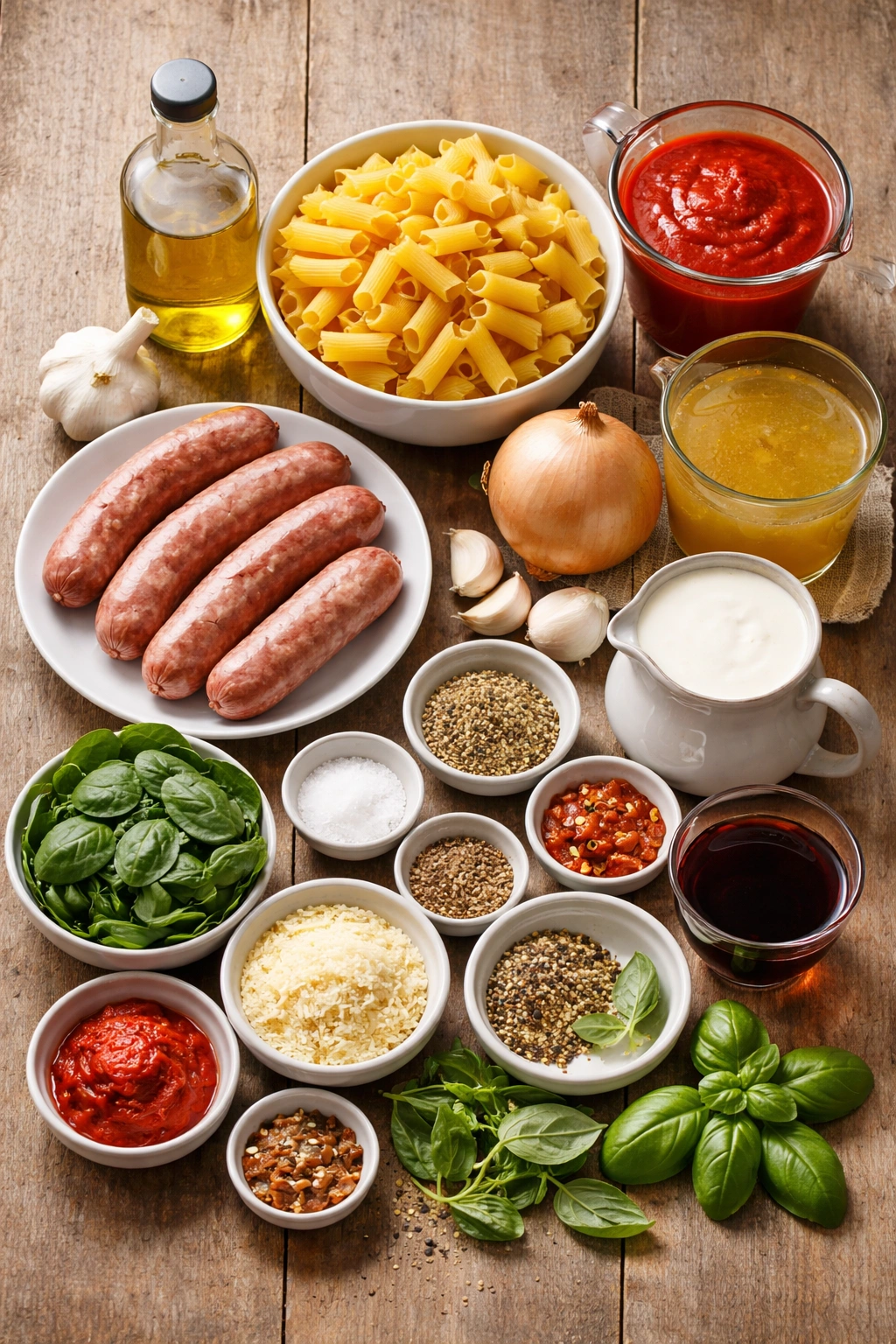
For the Pasta and Base:
- 1 tablespoon extra-virgin olive oil
- 1 pound Italian sausage (mild or spicy, ground or links with casings removed)
- 4 cloves garlic, minced (about 2 teaspoons)
- 1 medium yellow onion, diced (optional but recommended for extra sweetness and depth)
- 8 ounces uncooked rigatoni pasta
- 1 (15-ounce) can tomato sauce, or 1 (24-ounce) jar marinara sauce
- 3 cups chicken broth (or beef broth if you prefer deeper flavor)
- 1 cup heavy whipping cream
- 1 teaspoon Italian seasoning (or dried basil, oregano, or a combination)
- 5 ounces fresh baby spinach (or frozen spinach, thawed and drained)
For Seasoning and Finishing:
- 1/2 teaspoon kosher salt (or to taste—sausage is already salty)
- 1/4 teaspoon freshly ground black pepper
- 1/4 teaspoon red pepper flakes (optional, adjust to your spice preference)
- 2 tablespoons fresh basil, chopped (optional but beautiful for garnish)
- 1/4 cup freshly grated Parmesan cheese (optional, for serving)
Optional Additions for Extra Flavor:
- 1 tablespoon tomato paste (stirred in after browning sausage for deeper tomato flavor)
- 1/4 cup sun-dried tomatoes, chopped (adds concentrated sweetness and umami)
- 1/4 cup dry red wine (added after sausage, simmer 1 minute to reduce)
- 1/2 teaspoon red pepper flakes or Calabrian chili paste (for serious heat)
Step-by-Step Cooking Instructions
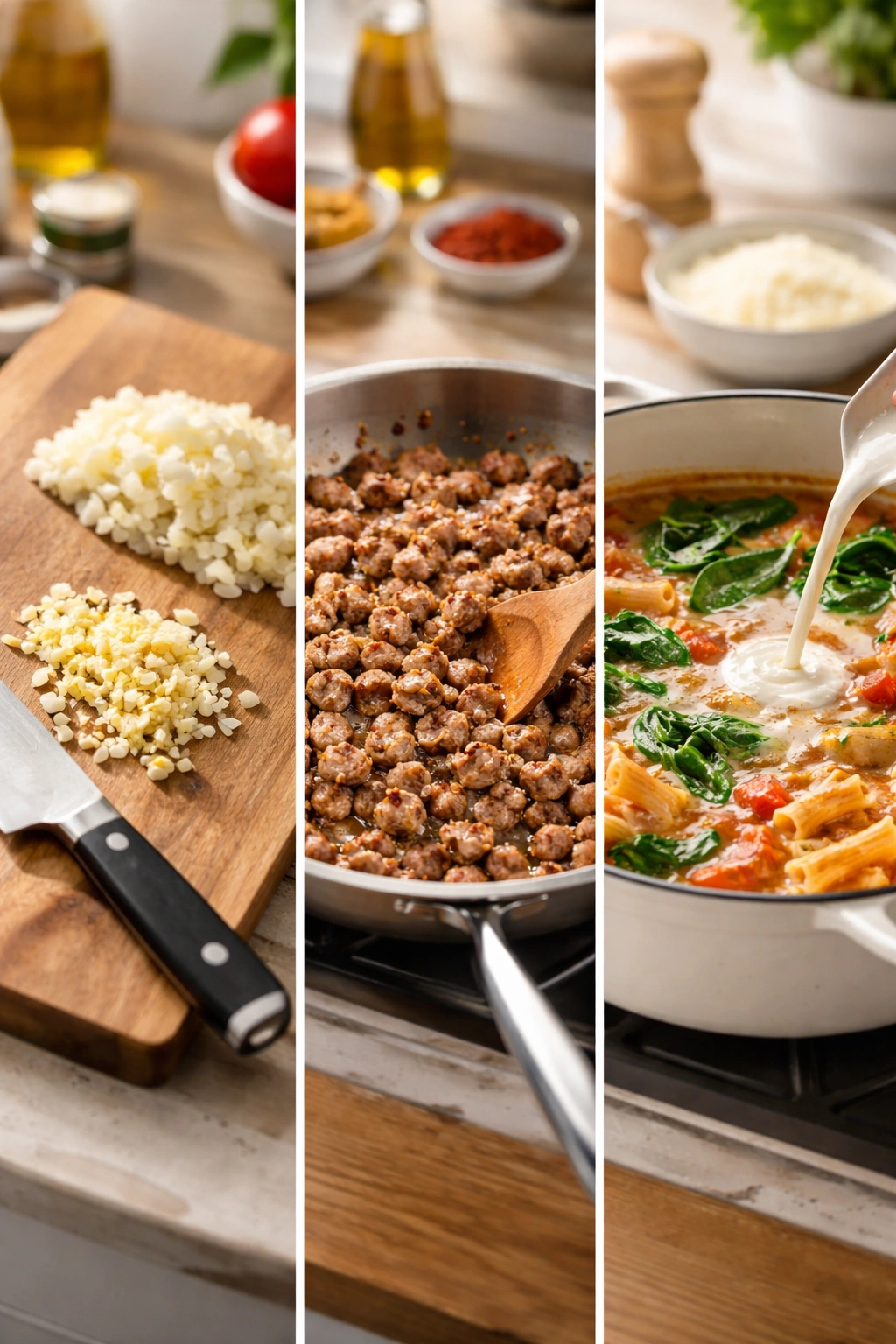
Prepare Your Ingredients:
- If using sausage links, remove the casing by slitting it lengthwise with a sharp knife and peeling it away. Discard the casing and set the meat aside.
- Mince your garlic cloves and dice your onion into small, roughly equal pieces so everything cooks at the same rate.
- Have your heavy cream, spinach, and broth measured and ready before you start cooking—once you begin, things move quickly.
Brown the Sausage and Build Flavor:
- Place your large skillet or Dutch oven over medium heat and add the olive oil. Let it warm for about 1 minute until it’s shimmering but not smoking.
- Add the sausage to the hot oil. If it’s ground sausage, break it apart with a wooden spoon as it cooks. If it’s whole meat from removed casings, break it into small, bite-sized pieces. Cook for 5 to 7 minutes, stirring occasionally, until the meat is no longer pink and has developed golden-brown color on its edges. The sausage should be completely cooked through with no pink remaining.
- If your sausage released a significant amount of grease (more than a tablespoon or two), carefully spoon off the excess and discard it, leaving the flavorful drippings behind. Don’t remove all the fat—those drippings are flavor.
- Add the minced garlic (and diced onion if using) and stir constantly for about 30 seconds to 1 minute. You want the garlic to become fragrant without browning. If garlic turns brown, it becomes bitter and will affect the entire dish, so watch closely.
Combine Wet Ingredients and Cook the Pasta:
- Add the tomato sauce (or marinara), chicken broth, and uncooked rigatoni to the pot all at once. Stir everything together thoroughly to distribute the pasta and ensure it’s coated with sauce and broth. The mixture will look like it doesn’t have quite enough liquid—this is correct. The pasta will absorb liquid and also release starch, which thickens the sauce naturally.
- Increase the heat to medium-high and bring the mixture to a rolling boil. This usually takes 3 to 5 minutes. Watch for an active boil—you want to see bubbles breaking across the entire surface.
- Once boiling, reduce the heat to medium, cover the pot with a lid, and set a timer for 13 to 15 minutes. The lid traps steam and creates the ideal environment for the pasta to cook evenly. Do not walk away completely—you’ll need to stir.
- Stir the pasta mixture every 3 to 4 minutes. This stirring is essential because the pasta has a tendency to stick to the bottom of the pan. When you stir, scrape gently along the bottom and sides, bringing any stuck bits back into the sauce. Each stir takes maybe 30 seconds—it’s easy and worth it.
- Starting at the 12-minute mark, begin tasting a piece of pasta. Bite into it to check the texture. You’re looking for pasta that’s tender but still has a slight firmness when you bite—this is called al dente. If it’s still quite crunchy, give it another minute and taste again. Remember that pasta continues to cook slightly even after you remove the pan from heat, so it’s better to stop slightly underdone than overdone.
Add Cream, Spinach, and Finish:
- Once the pasta reaches your ideal level of doneness (typically around 14 to 15 minutes total), remove the pan from the heat. Immediately stir in the heavy cream using about 20 to 30 circular stirs until it’s fully incorporated. The cream will mellow the acidity of the tomatoes and create a silky, luxurious sauce. The pasta will take on a slightly orange or peachy hue depending on how much cream you use and how red your tomato sauce was.
- Add the fresh spinach all at once and stir gently but consistently until the spinach completely wilts. This takes about 2 to 3 minutes. The spinach will seem like too much at first—the pot will look dangerously full—but keep stirring and it will reduce dramatically. Every leaf should turn bright green and become tender.
- Taste for seasoning. The sausage and broth already contributed salt, so you might not need additional salt—but taste before deciding. Add black pepper and red pepper flakes if you want additional heat. Remember: salt is easy to add but impossible to remove, so add conservatively.
- If using them, stir in fresh basil right before serving. This adds brightness and visual appeal without cooking off any of the fresh flavor.
Serve Immediately:
- Divide the pasta among bowls, making sure each serving gets a good amount of sauce and sausage. Serve immediately while hot. Drizzle with additional olive oil if desired, top with freshly grated Parmesan cheese, and add a pinch of red pepper flakes if you like heat.
Essential Tips That Make This Foolproof
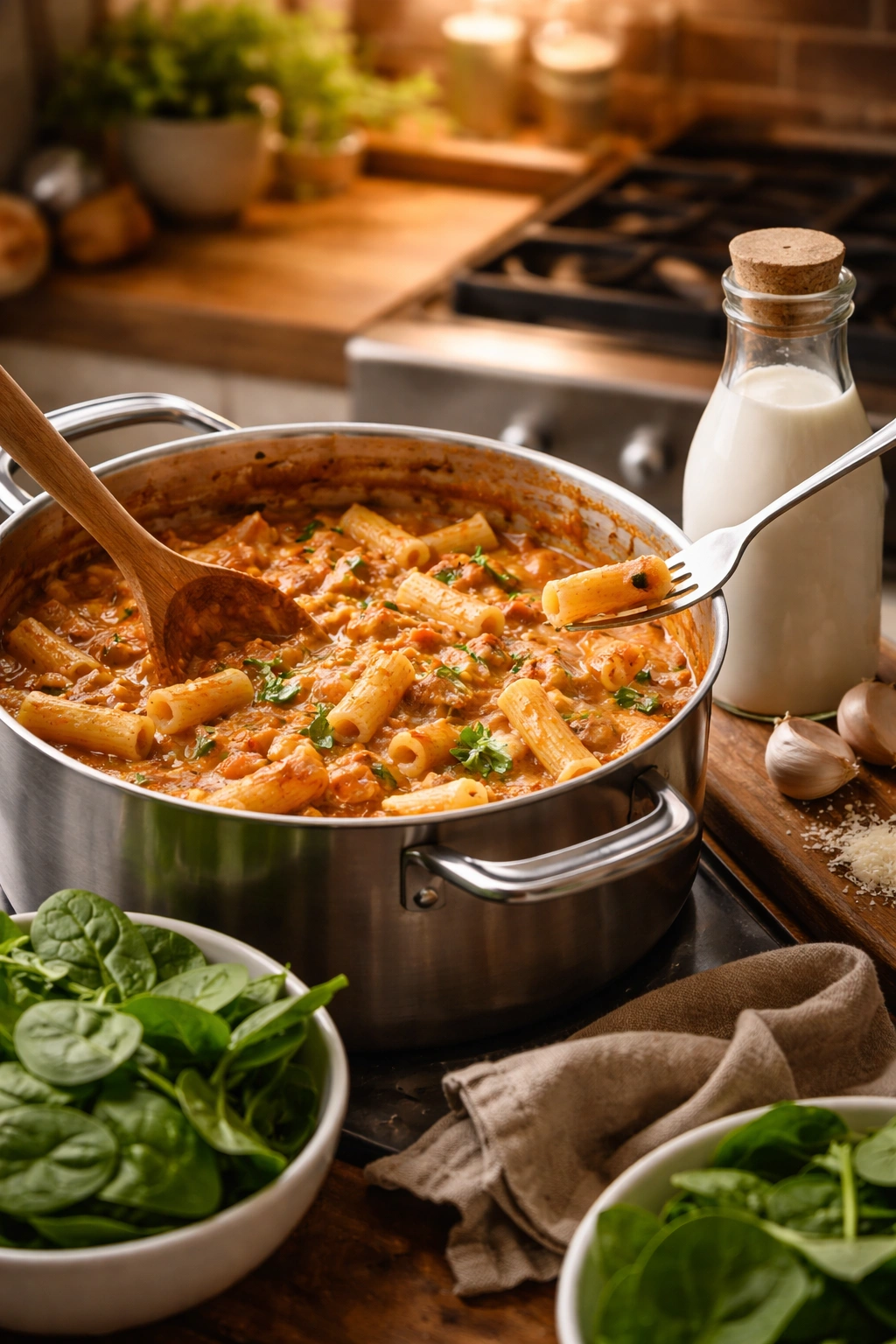
Stir frequently to prevent sticking. This is genuinely the most important single tip. Because you’re not cooking pasta in gallons of boiling water, it has nowhere to float and prevent contact with the hot pan. Your frequent stirring (every 3-4 minutes) is what keeps the bottom from scorching. Set a phone timer if you tend to get distracted.
Taste the pasta to check doneness, don’t guess. Package instructions are made for boiling pasta in plain water, not cooking it in sauce. Your sauce environment is different, so timing might vary. Tasting is your only reliable method. Grab a single piece of pasta (be careful—it’s hot!), bite it, and chew. If it’s still crunchy in the center, it needs more time.
Don’t skim on stirring in the spinach. Spinach reduces more dramatically than most people expect. If you add it and walk away, the bottom pieces will wilt while the top pieces stay raw. Gentle, consistent stirring for 2 to 3 minutes ensures everything cooks evenly. It feels like you’re stirring a solid mass of leaves at first, which is why people get nervous. Trust it.
Use real heavy cream, not half-and-half or milk. The acidity of the tomatoes can cause lower-fat dairy to break or curdle. Heavy cream’s higher fat content prevents this. If you absolutely must use half-and-half or milk due to dietary restrictions, add it more gradually and cook for a shorter time, stirring constantly. But truly, this is one place where full-fat is essential.
Taste for salt carefully. Sausage is naturally quite salty, and broths vary in saltiness. You might find you don’t need to add any additional salt at all. Taste before adding—oversalting is far easier than fixing it.
Brown the sausage properly. Don’t just cook it until it’s done; let it develop some color. That golden-brown crust creates flavor through the Maillard reaction. An extra minute or two in the beginning creates dramatically more flavorful results.
Common Mistakes and How to Avoid Them
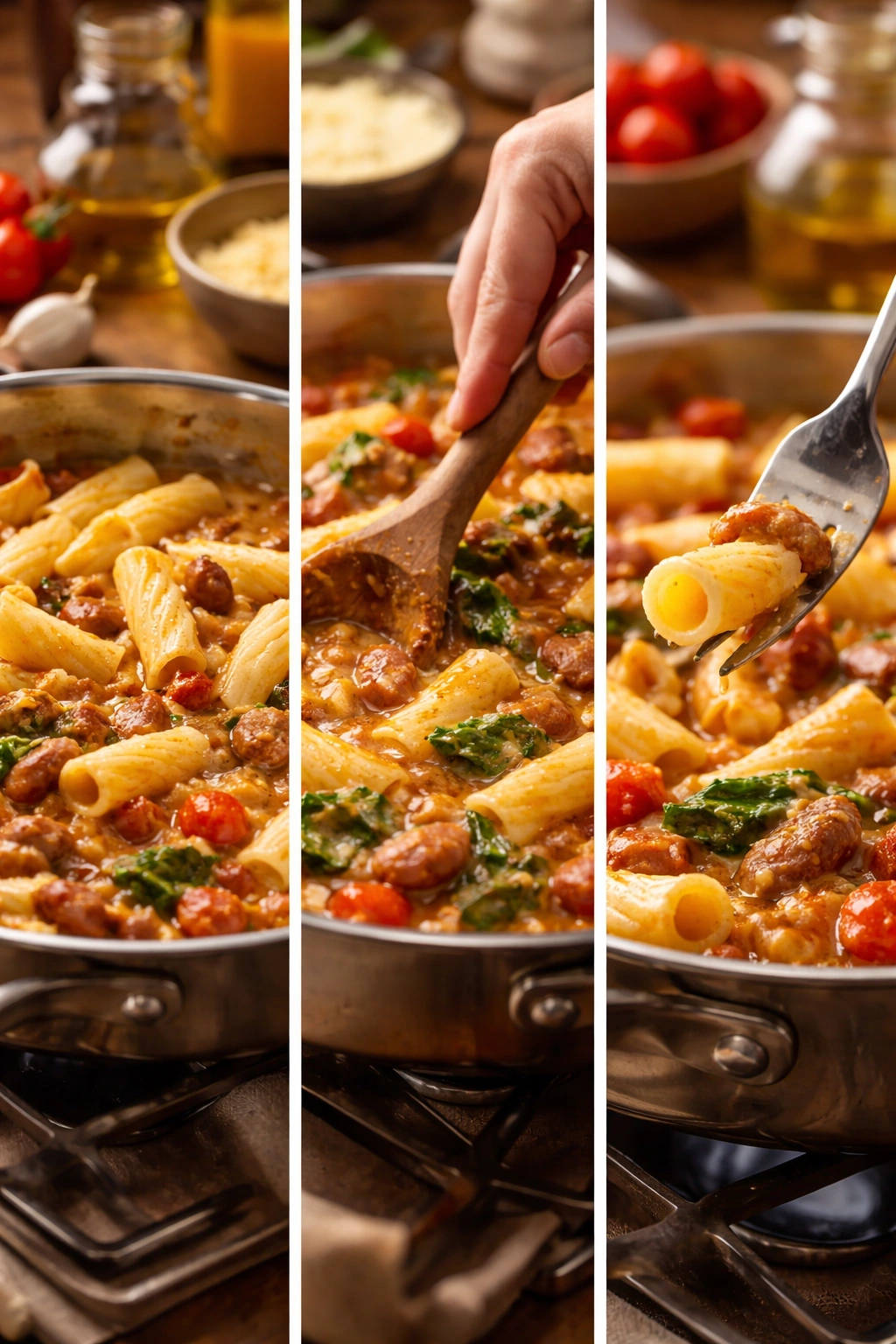
Adding the pasta too early. There’s no reason to pre-cook this pasta—the whole point is cooking it in the sauce. But if you’re nervous about it sticking, resist the urge to add it immediately. Wait until the liquid is actually boiling so the pasta cooks evenly from the start. Cold liquid causes clumping.
Not stirring enough. The bottom really does scorch quickly without frequent stirring. Set that timer and commit to it. This single habit will transform your results.
Using the wrong pasta shape. I know this seems obvious, but smooth pasta or very thin pasta really does result in a different, less satisfying dish. Grab ridged pasta when you can. Rigatoni, penne rigate, or shells all work. But angel hair or smooth penne? You’ll be disappointed.
Overcooking the pasta. One-pot pasta looks deceptively done before it actually is. The sauce might look thick and glossy, but taste the noodle. Overcooked pasta can never be fixed—it’s mushy and sad. Underdone can be forgiven with another minute. Err toward underdone.
Skipping the spinach or using wilted grocery store spinach. Fresh baby spinach is worthwhile here. It’s tender, reliable, and adds real nutrition and color. If you use pre-wilted or chopped spinach from the beginning, it will cook down even further and disappear.
Using poor-quality sausage. This is the main protein in the dish, so it matters. Skip the pre-made sausage with a vague ingredient list and grab something with visible seasonings and real ingredients. Your dish will taste noticeably better.
Delicious Variations to Make This Your Own
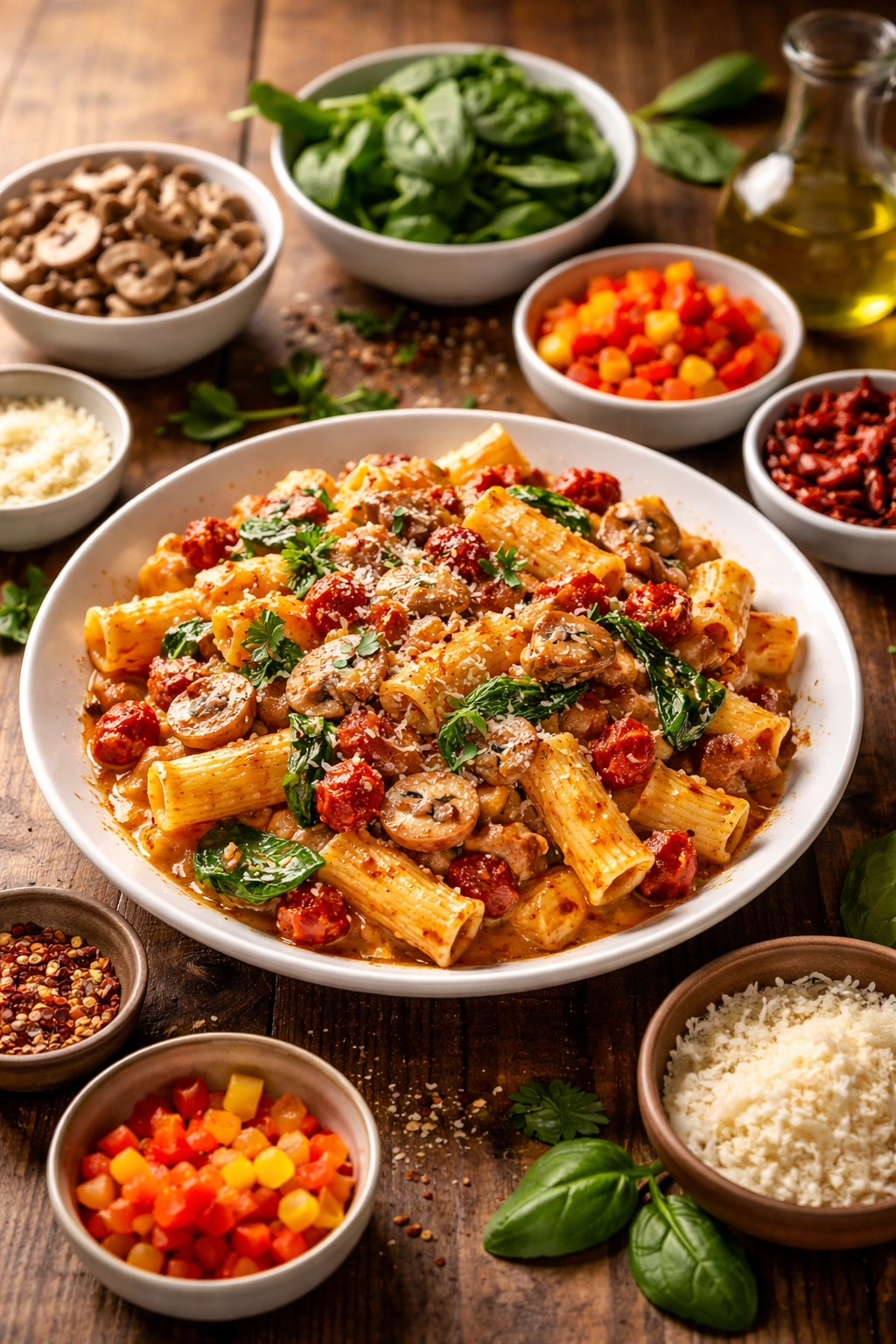
Vegetarian or Meat-Free Option: Simply omit the sausage and add more vegetables. Increase the spinach to 8 ounces and add 1 cup of sliced mushrooms (cremini, shiitake, or a mix), sautéed in the initial oil before adding other ingredients. Add diced bell peppers (any color) or zucchini. The richness of the cream and the depth of the tomato sauce carry the dish beautifully without meat.
Extra Vegetable Version: Once you understand the basic technique, you can add vegetables liberally. Mushrooms (cremini, shiitake, oyster) are fantastic—add them sautéed. Diced zucchini or yellow squash, bell peppers in multiple colors, sun-dried tomatoes, or fresh cherry tomatoes all work. Add them after browning the sausage and before adding the broth and pasta. They’ll cook perfectly in the remaining time.
Wine-Enhanced Version: After browning the sausage and before adding the tomato sauce, add 1/4 cup of dry red wine. Let it simmer for about 1 minute to allow some of the alcohol to evaporate, scraping up any browned bits from the bottom (this is called deglazing). This adds sophisticated depth. Dry white wine works too, though it’s more subtle.
Cajun or Spicy Kick: Use spicy Italian sausage, add 1/4 teaspoon of cayenne pepper, and stir in some Calabrian chili paste to taste (start with 1/2 teaspoon). Add diced bell peppers (especially red and yellow) and 1/4 teaspoon of smoked paprika. Some people add a pinch of Old Bay seasoning too.
Creamy Pesto Version: Reduce the tomato sauce to 1 (8-ounce) can and add 1/2 cup of store-bought pesto (or homemade if you have it) along with the heavy cream. The pesto creates an entirely different flavor profile—still creamy, but fresher and more herbaceous.
Goat Cheese or Cream Cheese Version: Instead of heavy cream, use 4 ounces of goat cheese or cream cheese. Break it into small pieces and stir it in after the pasta cooks. Both create a luxuriously creamy sauce with a slightly tang (goat cheese) or richness (cream cheese). This is particularly good with spinach and sun-dried tomatoes.
One-Pot with Pre-Cooked Pasta: If you prefer your pasta cooked separately (which eliminates some timing variables), boil rigatoni al dente in salted water, drain it, and set aside. Make the sausage and tomato-cream sauce in your pot, then fold in the cooked pasta at the end. This requires a bit more hands-on work but removes the guesswork about pasta doneness.
Storage, Reheating, and Make-Ahead Strategies
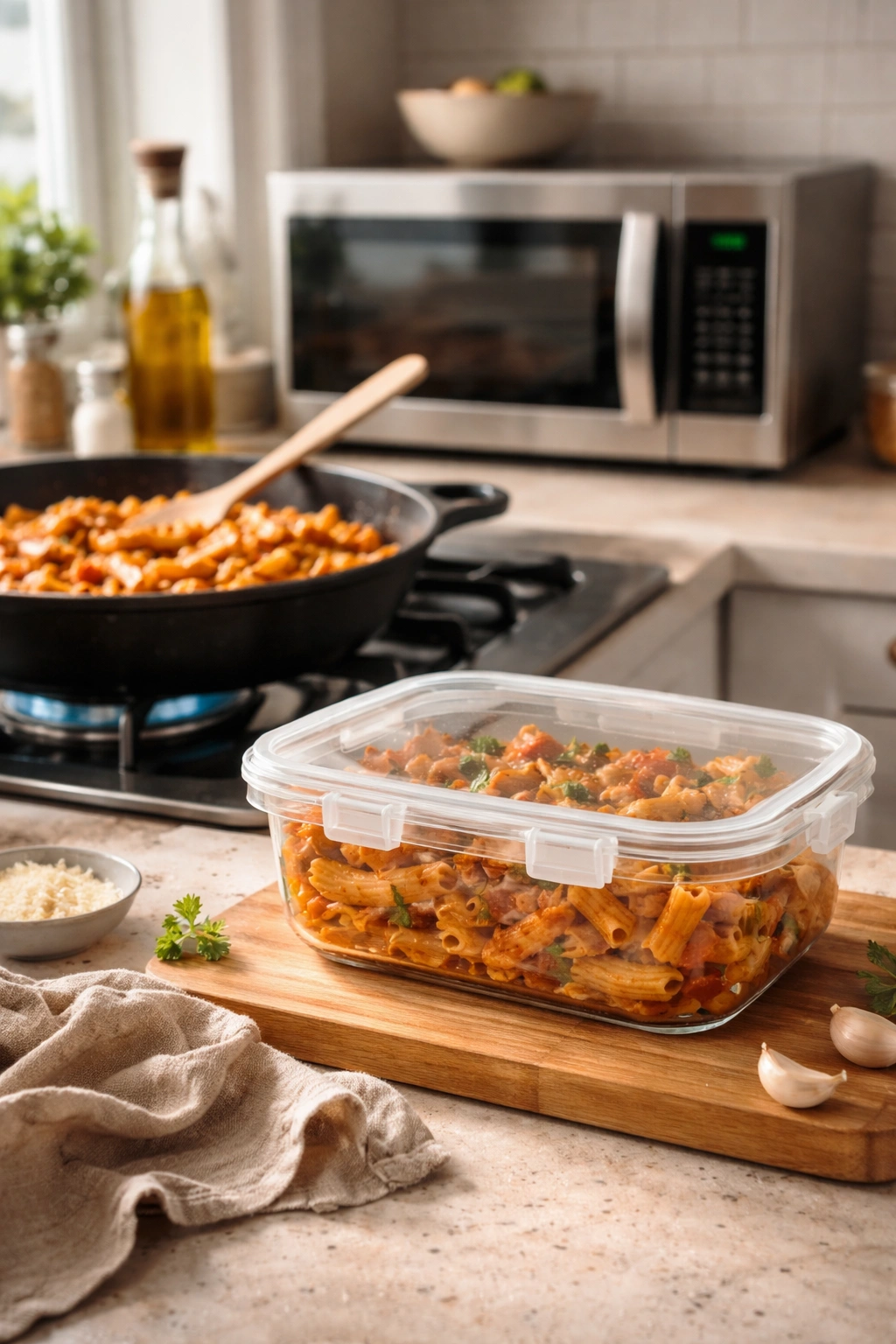
Refrigerator Storage: Store any leftovers in an airtight container for up to 3 to 4 days. Creamy sauces do solidify when cold, which is the reality of having cream and dairy in the dish. This is normal and not a sign that anything is wrong.
Reheating on the Stovetop: This is the best method for maintaining texture. Place the pasta in a large skillet over low to medium-low heat, add a splash of heavy cream, milk, or extra broth to loosen the sauce (about 2 to 3 tablespoons), and stir frequently until heated through—about 5 to 8 minutes. The sauce will return to its original silky consistency. Don’t rush this or turn the heat too high; low and slow is your friend.
Microwave Reheating: For individual servings, place in a microwave-safe bowl, add a tablespoon of cream or milk, cover loosely (microwave-safe plate or towel), and heat for 1 to 2 minutes, stirring halfway through. Microwave heating is faster but slightly more likely to make the sauce seem thinner or separated. Stirring helps it come back together.
Do Not Freeze After Cooking: Creamy sauces with dairy tend to break or separate when frozen and thawed. The texture becomes grainy and disappointing. However, if you want to do this as a freezer meal, freeze the components separately.
Freezer Hack—Freeze the Base: Brown the sausage, make the tomato-cream sauce (with cream), and cool it completely. Place it in a freezer-safe container and freeze for up to 2 to 3 months. When ready to cook, thaw overnight in the refrigerator, bring to a boil in your skillet, add the uncooked pasta, and proceed as normal. This method works beautifully because the sauce component is stable in the freezer.
Make-Ahead Prep: Mince your garlic, dice your onion, and measure your broth into containers the morning of serving. When you come home, you can begin cooking in literally 2 minutes. The actual hands-on cooking is just 25 minutes, but having prep done reduces even that perceived effort.
What to Serve Alongside Creamy Sausage Rigatoni
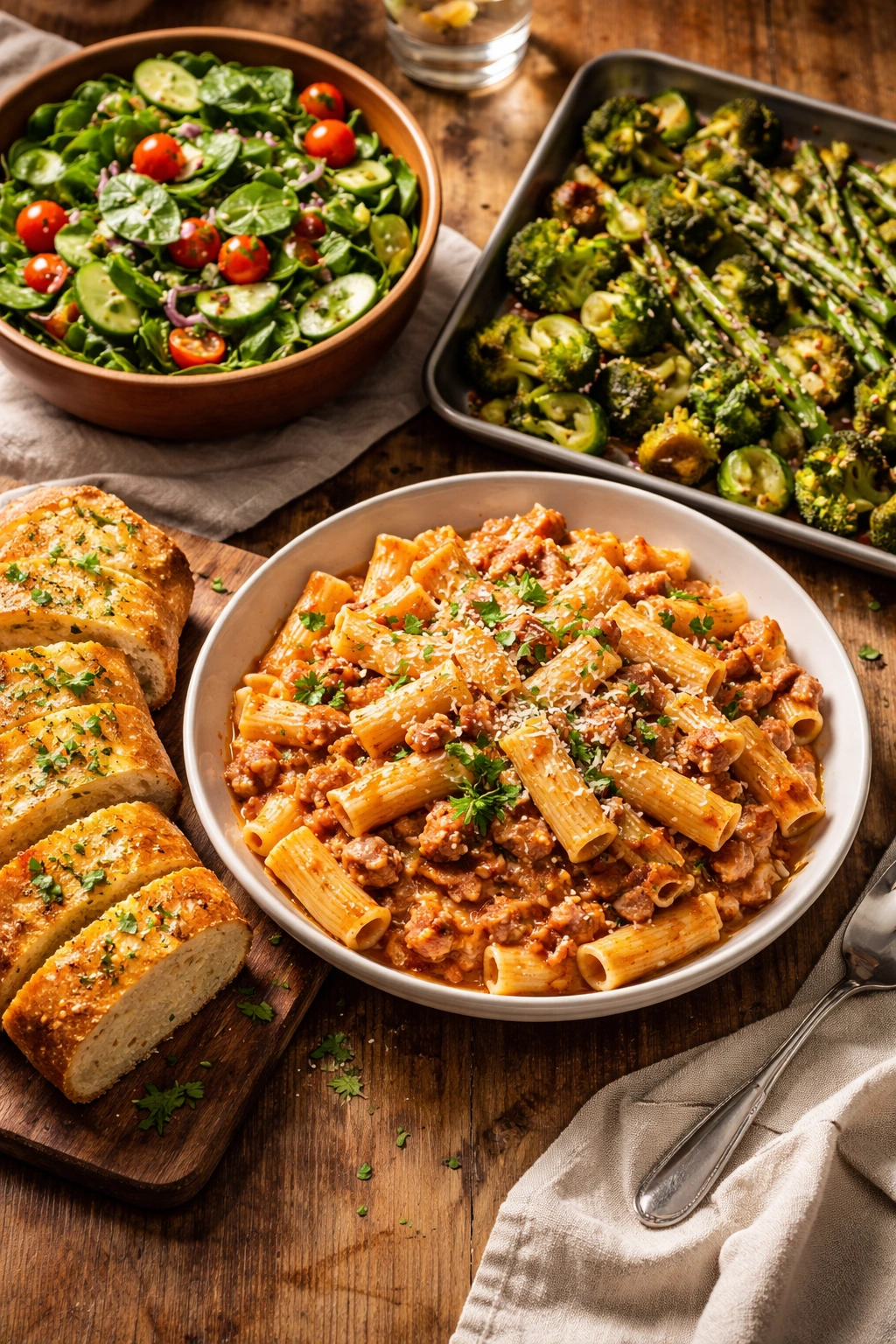
Fresh salad is nearly essential. The richness of creamy sausage rigatoni absolutely demands a contrasting side. A simple spinach or arugula salad with a sharp vinaigrette (try lemon juice, olive oil, and a pinch of salt) cuts through the richness beautifully. A basic Caesar salad works too. The acidity and crispness refresh your palate between bites of pasta.
Bread is your best friend here. Warm Italian bread, garlic bread, or even a simple baguette is perfect for sopping up the extra sauce in your bowl. There’s no shame in this—it’s how people actually eat creamy pasta. Some people even make a little open-faced sandwich with the pasta, which is entirely legitimate comfort food behavior.
Roasted vegetables offer a lighter option. Roasted broccoli, green beans, Brussels sprouts, or asparagus provide earthiness and nutrition without overwhelming the plate. Roast them separately with olive oil and salt while the pasta cooks.
Wine pairing isn’t overthinking it. A slightly acidic white wine (pinot grigio, sauvignon blanc) or a light red (pinot noir) complements the creamy tomato sauce beautifully. But honestly, this is a weeknight dinner, not a formal meal—whatever you enjoy drinking works perfectly fine.
Skip heavy sides. You don’t need rice, potatoes, or another starch. The pasta is plenty. Keep it simple and let the main dish shine.
Conclusion
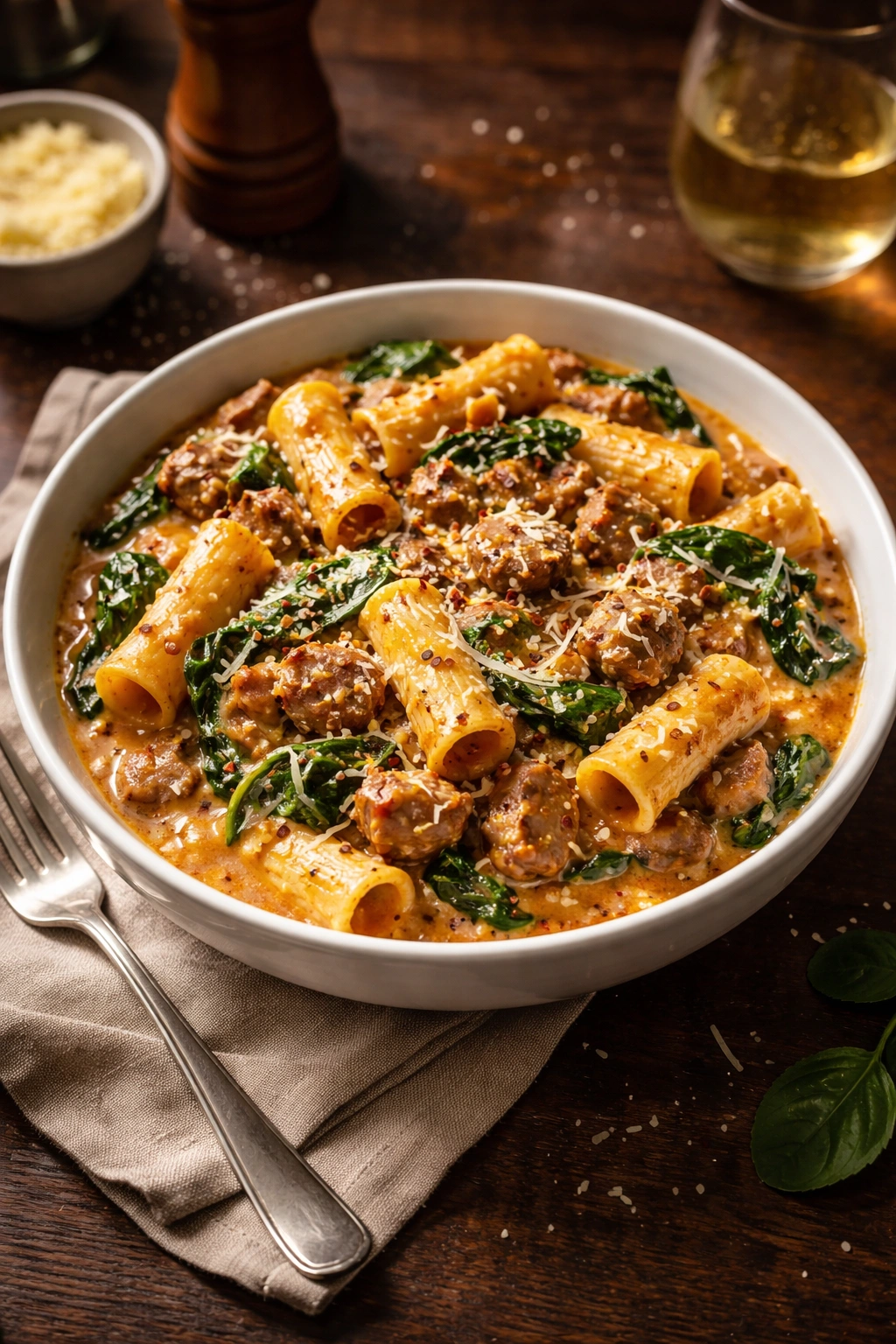
One-pot sausage rigatoni occupies a special place in the weeknight dinner rotation—it’s reliable enough to become a regular, impressive enough to feel special, and easy enough that you’ll actually make it instead of ordering takeout. You get restaurant-quality flavor and texture from ingredients you probably already have in your pantry, and you’re done before most delivery options would even arrive.
The real genius of this dish is that nothing particularly complicated happens. You brown meat, stir in some ingredients, cover a pot, and let it go. You stir occasionally. You taste to check doneness. You finish with cream and spinach. Each step is intuitive and forgiving. Even if you’re new to cooking or generally lack confidence in the kitchen, this recipe rewards you with success.
Make this tonight, and I promise you’ll find yourself making it again within weeks. Maybe months. There’s something deeply satisfying about a bowl of creamy, saucy rigatoni loaded with seasoned sausage that took less than an hour total and required virtually no cleanup. That’s not settling for convenience food—that’s genuinely good cooking made accessible for real life. That’s dinner worth celebrating.
