



You already know this dish is going to disappear from the table the moment you serve it. There’s something about the combination of crispy bacon, tender chicken, creamy ranch-infused sauce, and melted cheese over soft pasta that hits every comfort food craving at once. This isn’t one of those recipes that requires exotic ingredients or advanced techniques—it’s the kind of straightforward, deeply satisfying dinner that works because the fundamentals are absolutely nailed. The bacon renders its fat into the pan, infusing everything that follows with richness. The ranch seasoning dissolves into a creamy sauce that coats every strand of pasta. The chicken stays tender throughout the cooking process. The cheese melts into pockets of gooey indulgence. It’s predictable in the best way possible—you make it, and you know exactly what you’re getting: pure comfort food that your family will ask for by name.
Why This Pasta Dish Becomes an Instant Favorite
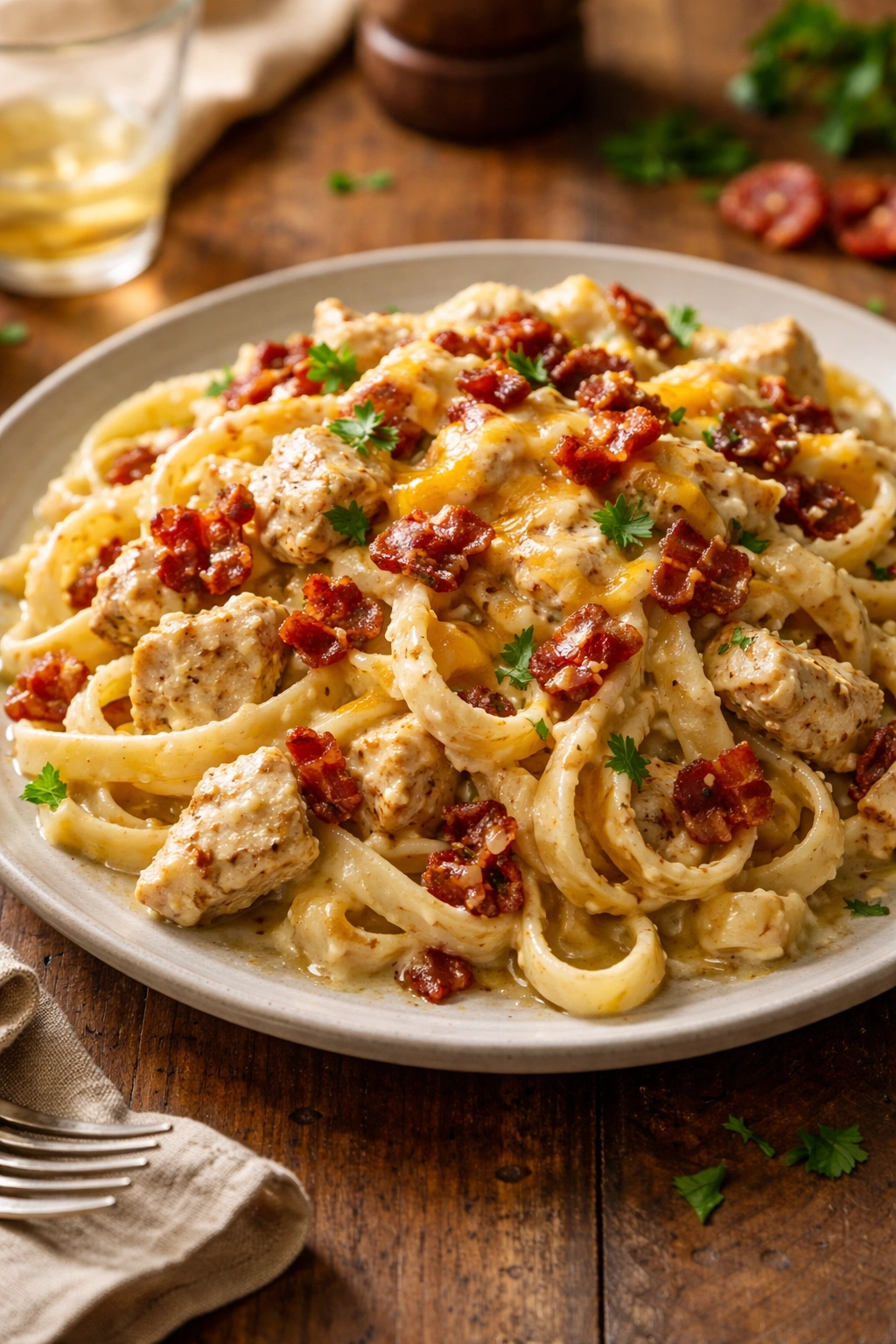
There’s a reason chicken bacon ranch pasta appears so often on family dinner tables and at potluck gatherings. It hits a fundamental truth about what people want to eat: it combines flavors that have already proven themselves as a powerhouse trio. Chicken, bacon, and ranch aren’t a culinary mystery—they work together because each element brings something essential. The chicken provides lean protein and a neutral canvas. The bacon contributes salt, smoke, and a textural contrast that keeps every bite interesting. The ranch delivers savory, herbaceous depth and the promise of creaminess. When you layer all three together with pasta and cheese, you’re not experimenting—you’re applying a formula that has worked for decades.
The beauty of this dish is that it doesn’t demand your full attention. Unlike recipes that require precise timing, temperature control, or technique refinement, this pasta is forgiving. You’re not making a delicate sauce that breaks if you look at it wrong. You’re building something sturdy and honest that gets better the more you stir it and the longer it sits together. The pasta soaks up the creamy sauce. The bacon pieces stay crunchy on top even as they soften slightly into the mixture. The cheese doesn’t separate or turn grainy. It all comes together as something greater than its individual parts.
What Makes Creamy Pasta Sauce Actually Cling to Pasta
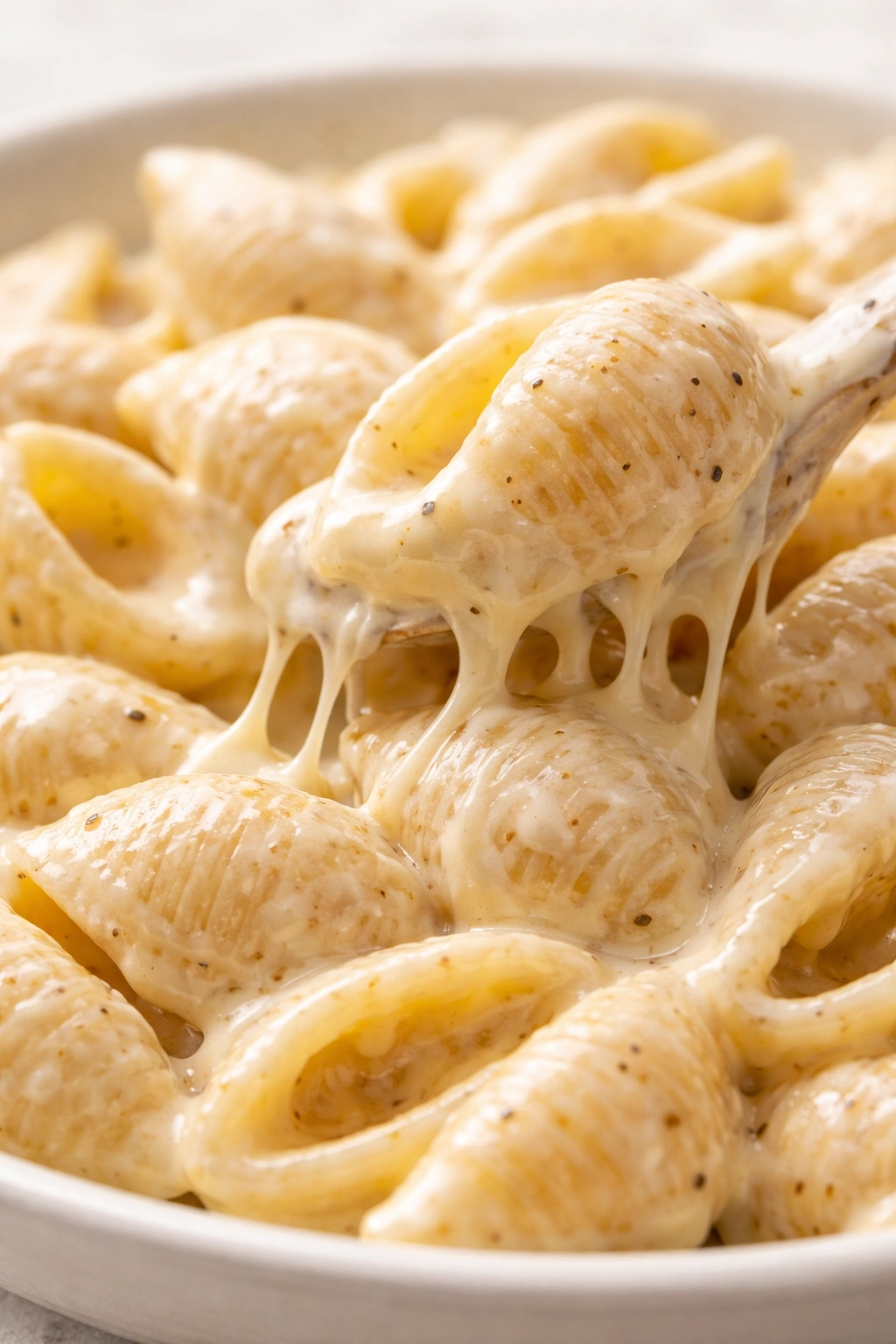
One mistake many home cooks make with creamy pasta dishes is underseasoning or creating a sauce that’s either too thin or too thick. You want that sauce to coat each piece of pasta evenly, creating a cohesive dish rather than a bowl of pasta swimming in puddles of liquid. The secret lies in understanding how your sauce thickens and how much liquid the pasta will absorb as it cooks.
When you’re making a cream-based sauce, you’re emulsifying fat and liquid together. The best versions include both cream (from either heavy cream, half-and-half, or even whole milk) and a cheese that melts smoothly without becoming grainy. The ranch seasoning adds salt and flavor compounds that help bind everything together. Many recipes use butter or the rendered bacon fat as the fat base, which adds tremendous flavor and helps everything coat properly.
The pasta itself matters more than you might think. Shorter pasta shapes like penne, rotini, rigatoni, or bow tie noodles trap sauce in their grooves and curves far better than long noodles would. When you use these shapes and cook them just to al dente (that tender-but-still-slightly-firm texture), they’ll continue absorbing sauce as the dish sits, reaching peak deliciousness in the final five minutes of resting before serving.
The Quality of Your Ingredients Changes Everything
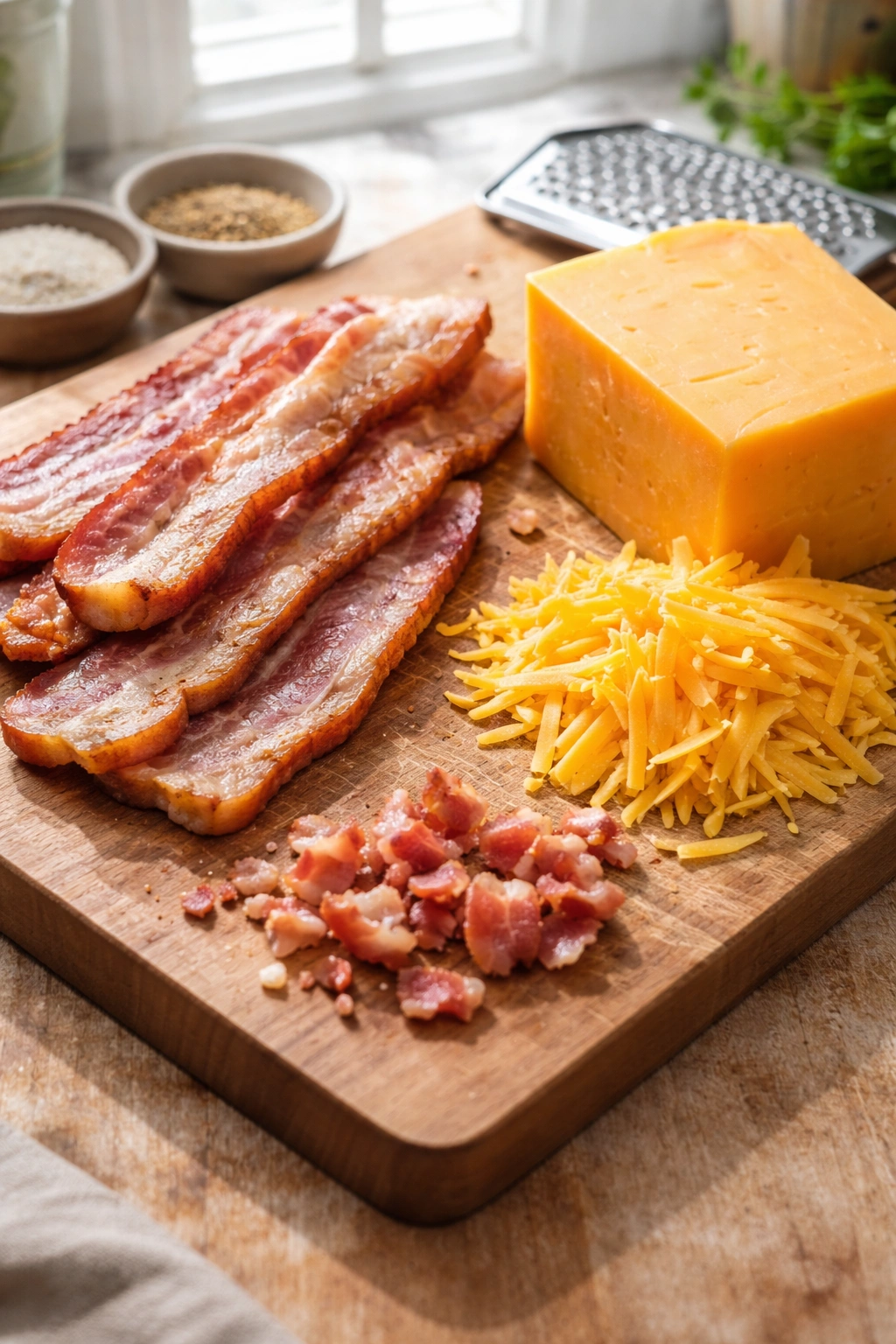
Using thick-cut bacon makes an enormous difference in this dish. Thin-sliced bacon crisps up beautifully in the pan, but it also becomes almost paper-thin and can disappear entirely once you’ve stirred it into the pasta. Thick-cut bacon provides substantial pieces that stay distinct and crunchy, even after mixing. You’ll taste bacon in every forkful rather than just having a general bacon flavor.
For the cheese, buy a block and shred it yourself rather than using pre-shredded cheese from a bag. This isn’t snobbery—it’s pure functionality. Pre-shredded cheese contains anti-caking agents that prevent it from melting as smoothly. You’ll end up with a slightly grainy texture instead of that perfectly creamy, velvety sauce. A sharp cheddar or a blend of cheddar and mozzarella works beautifully. If you want something special, try extra-sharp white cheddar, which has more pronounced flavor depth.
The chicken matters significantly too. If you’re using fresh chicken breasts, pound them slightly thinner and season them well before cooking so they develop a golden crust and absorb flavors. Many people find that buying a rotisserie chicken and shredding the meat saves enormous amounts of time without sacrificing quality. The meat is already fully cooked, properly seasoned, and at its most flavorful because of the roasting process.
Building Layers of Flavor in the Sauce
The most common approach to this pasta starts by cooking the bacon until it’s perfectly crispy. Don’t rush this step—low to medium heat actually works better than high heat because you want the bacon fat to render gradually, creating that deep pork flavor. Once the bacon is out of the pan, you have a choice: work with the rendered fat as your base, or drain most of it and start fresh. If you’re watching fat intake, drain most of it. If you want maximum flavor, save all of it and use it as the cooking fat for your chicken and the base of your sauce.
When you cook the chicken in that bacon fat, it picks up all those savory, meaty flavors automatically. The chicken browns slightly, developing a crust that adds textural interest and complexity. You’re not trying to fully cook the chicken at this stage—that happens gradually during the final cooking time. You just want it to lose its raw appearance and develop a little color.
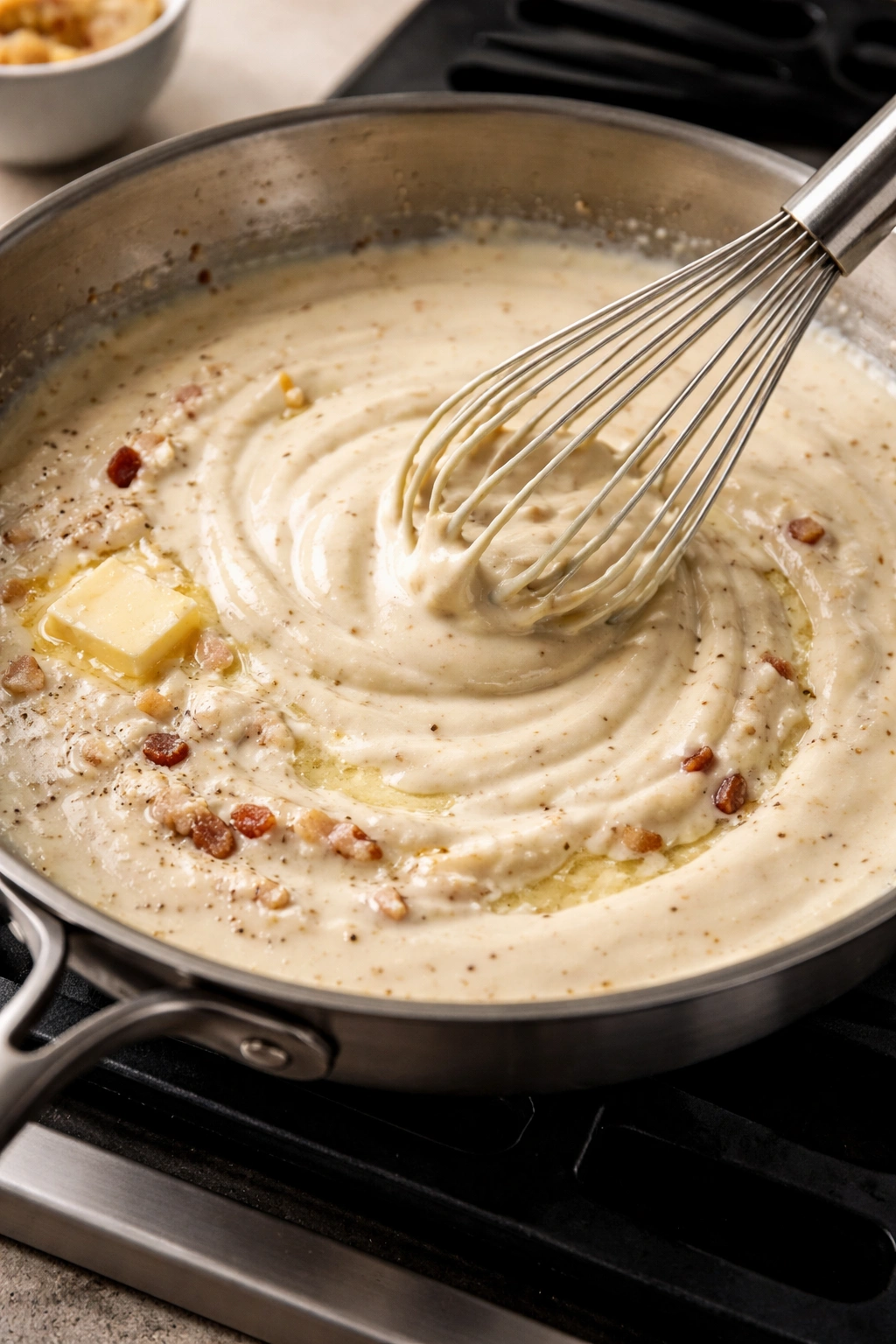
The sauce comes together by melting butter (or using more bacon fat) and creating a roux with flour, which is just a mixture of equal parts fat and flour heated together. This gives your sauce body and prevents it from being watery. You’ll whisk in either whole milk, half-and-half, or heavy cream—depending on how rich you want it—and let it come to a gentle bubble. This heats the liquid enough to cook out the raw flour taste while thickening the mixture slightly. Then you stir in the ranch seasoning, which dissolves and distributes throughout. Finally, you add cheese gradually, stirring until it melts completely into a smooth sauce.
Yield: Serves 6 to 8 | Makes one 9×13-inch casserole
Prep Time: 20 minutes
Cook Time: 35 to 40 minutes
Total Time: 55 to 60 minutes
Difficulty: Intermediate — The steps are straightforward, but timing your various components (pasta, chicken, sauce) so they come together requires attention and basic kitchen skills.
Ingredients for the Complete Dish
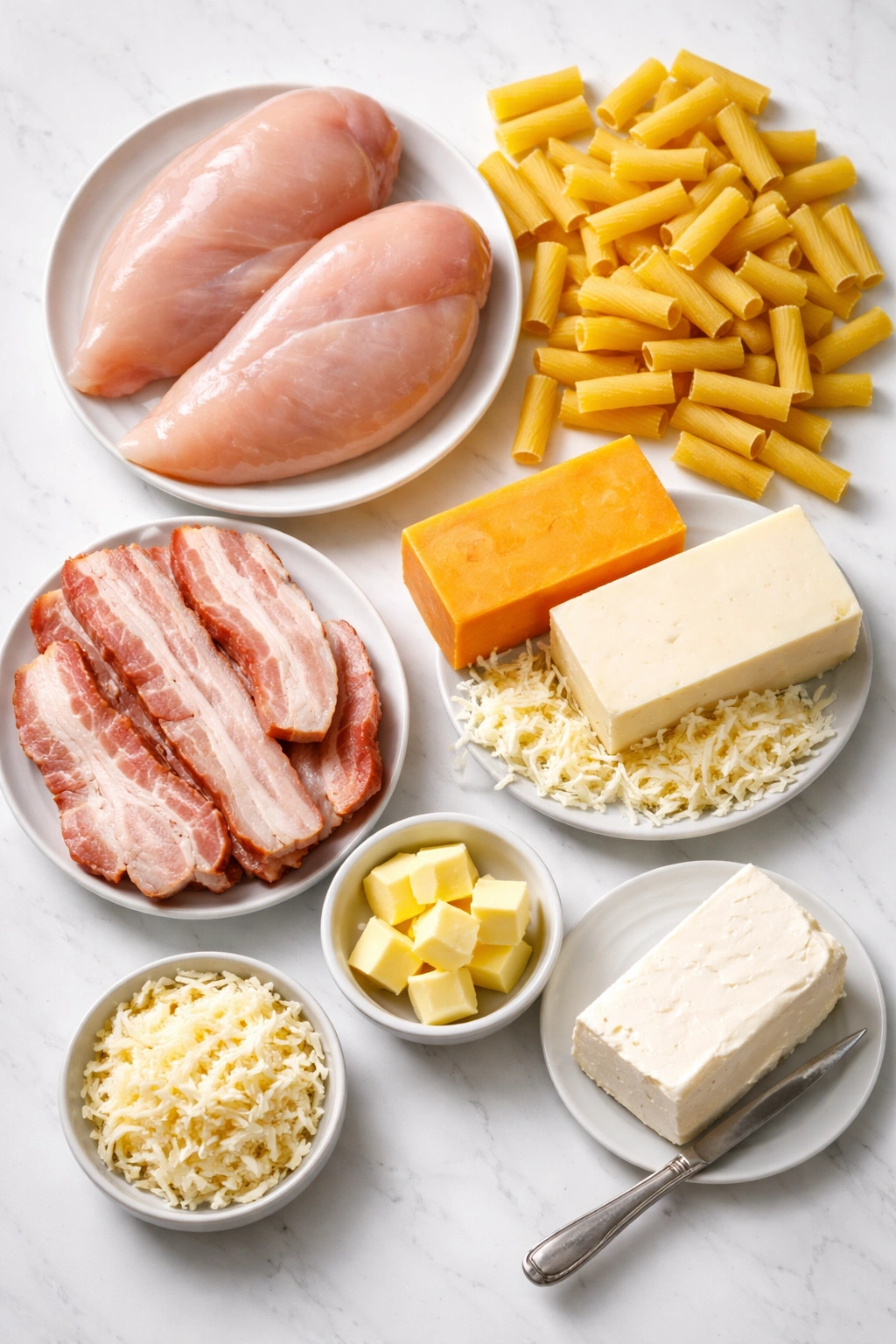
For the Pasta and Protein:
- 1 pound boneless, skinless chicken breasts (about 2 large breasts), or 3 cups shredded rotisserie chicken
- 8 slices thick-cut bacon, chopped into bite-sized pieces
- 1 pound short pasta (penne, rotini, rigatoni, or bow tie), cooked and drained
- 2 tablespoons reserved bacon grease (or olive oil if you’re being conservative)
- 1 teaspoon kosher salt (for seasoning the chicken)
- ½ teaspoon freshly ground black pepper (for seasoning the chicken)
For the Creamy Ranch Sauce:
- 3 tablespoons unsalted butter
- 2 tablespoons all-purpose flour
- 2 cups whole milk or half-and-half (use half-and-half for a richer, creamier result)
- 2 tablespoons dry ranch dressing mix (such as Hidden Valley), or 3 tablespoons homemade ranch seasoning
- 1 cup (about 4 ounces) sharp cheddar cheese, freshly shredded from a block
- ¾ cup (about 3 ounces) mozzarella cheese, freshly shredded from a block
- 2 ounces cream cheese, softened to room temperature (optional, but adds incredible creaminess)
- ¼ teaspoon garlic powder
- ⅛ teaspoon cayenne pepper (optional, for a tiny hint of heat that doesn’t register as spicy)
- Additional salt and black pepper to taste
For Serving:
- ½ cup reserved crispy bacon pieces (for topping)
- ¼ cup shredded cheddar cheese (for topping)
- 2 tablespoons fresh parsley, finely chopped
- Red pepper flakes (optional, for garnish)
Step-by-Step Instructions for Perfect Results
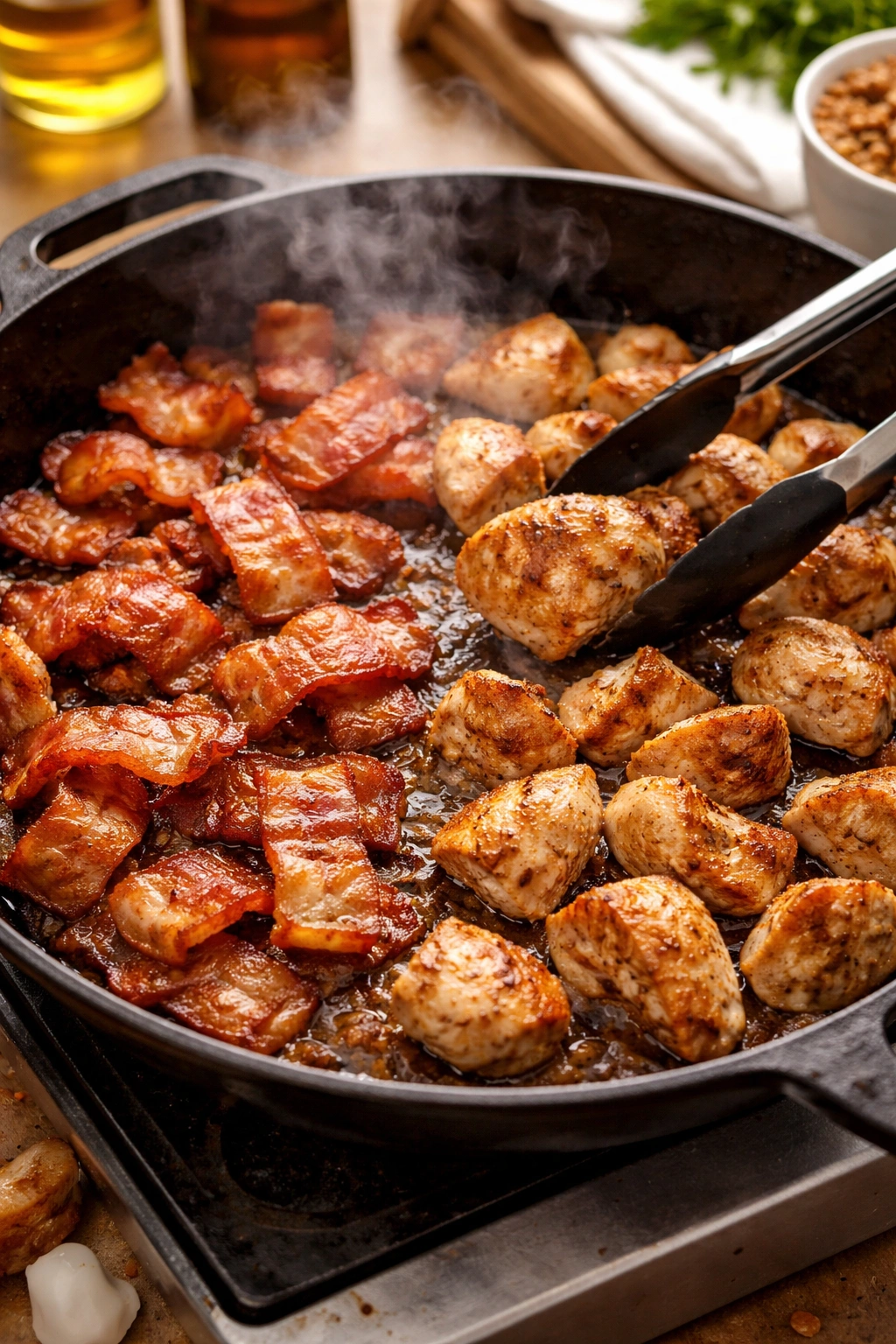
Cook the Bacon and Chicken:
-
Cut the thick-cut bacon into bite-sized pieces (about 1-inch pieces). In a large, heavy skillet over medium-low heat, cook the bacon slowly, stirring occasionally, until it’s completely crispy and golden brown, about 10 to 12 minutes. Low and slow is your friend here—rushing the bacon will result in pieces that are crispy on the outside but chewy in the center. You want each piece to shatter between your teeth.
-
Using a slotted spoon, transfer the cooked bacon to a paper towel-lined plate. Reserve the rendered bacon grease in the skillet—you’ll be using this for flavor in multiple steps.
-
While the bacon cooks, cut each chicken breast in half lengthwise so you have 4 thinner pieces (or simply cut fresh chicken into roughly 1-inch cubes). Pat the chicken dry with paper towels—this is the key to developing a golden crust. Season both sides generously with salt and black pepper.
-
Increase the heat under the skillet to medium-high. Add the 2 tablespoons of reserved bacon grease (or 2 tablespoons of olive oil if you drained most of the fat). Once the fat shimmers, carefully place the chicken pieces into the skillet in a single layer. Do not crowd the pan. If your skillet isn’t large enough, cook the chicken in two batches rather than piling pieces on top of each other.
-
Cook the chicken without moving it for 3 to 4 minutes until the bottom develops a golden-brown crust. Flip each piece and cook the other side for another 3 to 4 minutes. The chicken doesn’t need to be fully cooked through at this stage—it will continue cooking as the pasta mixture heats together. An instant-read thermometer should read 155°F (the temperature will continue rising as it rests). Transfer the cooked chicken to a clean plate.
Prepare the Pasta:
- While the chicken cooks, bring a large pot of generously salted water to a rolling boil. Add the pasta and cook according to the package directions until just al dente (usually 1 to 2 minutes less than the package suggests). The pasta will continue absorbing sauce and softening after it’s combined with the creamy mixture, so don’t cook it fully. Drain the pasta in a colander, and if you’re not using it immediately, toss it lightly with a teaspoon of olive oil to prevent sticking. Set aside.
Make the Creamy Ranch Sauce:
-
In the same skillet where you cooked the bacon and chicken (don’t wash it—those browned bits are flavor), melt the 3 tablespoons of butter over medium heat.
-
Sprinkle the 2 tablespoons of flour over the melted butter and stir continuously with a wooden spoon or silicone spatula for about 1 minute. You’re creating what’s called a roux—a mixture of equal parts fat and flour that will act as a thickener for your sauce. It should look like wet sand and smell nutty, not raw and floury.
Advertisements -
Slowly pour in the milk (or half-and-half) while whisking constantly to prevent lumps from forming. Add the milk in three additions, whisking well after each addition—this prevents the flour from clumping. Once all the milk is incorporated, continue whisking until the mixture is smooth and free of lumps.
-
Bring the mixture to a gentle bubble over medium heat, stirring frequently, for about 2 to 3 minutes. You should see large bubbles breaking slowly on the surface, not a rolling, rapid boil. The sauce will thicken noticeably during this time as the heat cooks the flour and the starch gelatinizes.
-
Remove the skillet from the heat. Whisk in the 2 tablespoons of ranch dressing mix (or homemade ranch seasoning), garlic powder, and cayenne pepper until everything is fully dissolved and distributed.
-
Add the shredded cheddar and mozzarella cheeses a small handful at a time, stirring constantly until each addition is melted before adding more. The warmth of the sauce will melt the cheese smoothly if you go slowly—don’t dump it all in at once. If you’re using the cream cheese, add it now and stir until it’s completely incorporated and the sauce is silky smooth.
-
Taste the sauce and adjust the salt and pepper to your preference. Remember that the bacon is quite salty, so taste it in context with all the other elements rather than the sauce alone.
Bring Everything Together:
-
Return the cooked chicken pieces to the skillet with the sauce. Gently stir to coat the chicken with the creamy mixture.
-
Add the cooked pasta to the skillet and fold it in gently using a large spoon or silicone spatula. Stir only until the pasta is evenly coated with sauce—you’re not trying to break the noodles or over-incorporate everything into a uniform paste. The pasta should be distinct pieces coated with sauce, not a single unified mass.
-
Stir in about half of the cooked bacon pieces, reserving the rest for garnish. Taste again and adjust seasoning if needed.
-
Transfer the entire pasta mixture to a warmed serving bowl or platter. Alternatively, if you prefer to serve it directly from the skillet, that’s perfectly fine—it looks great there too, and it keeps the pasta warm longer.
Advertisements
Finish and Serve:
- Top the finished pasta with the reserved crispy bacon pieces, the ¼ cup of additional shredded cheese, and the fresh parsley. Serve immediately while the sauce is still creamy and everything is at its peak temperature. If you need to hold it for a few minutes, cover the dish loosely with foil to keep it warm without creating steam that will make the pasta soggy.
Common Mistakes That Sabotage Creamy Pasta
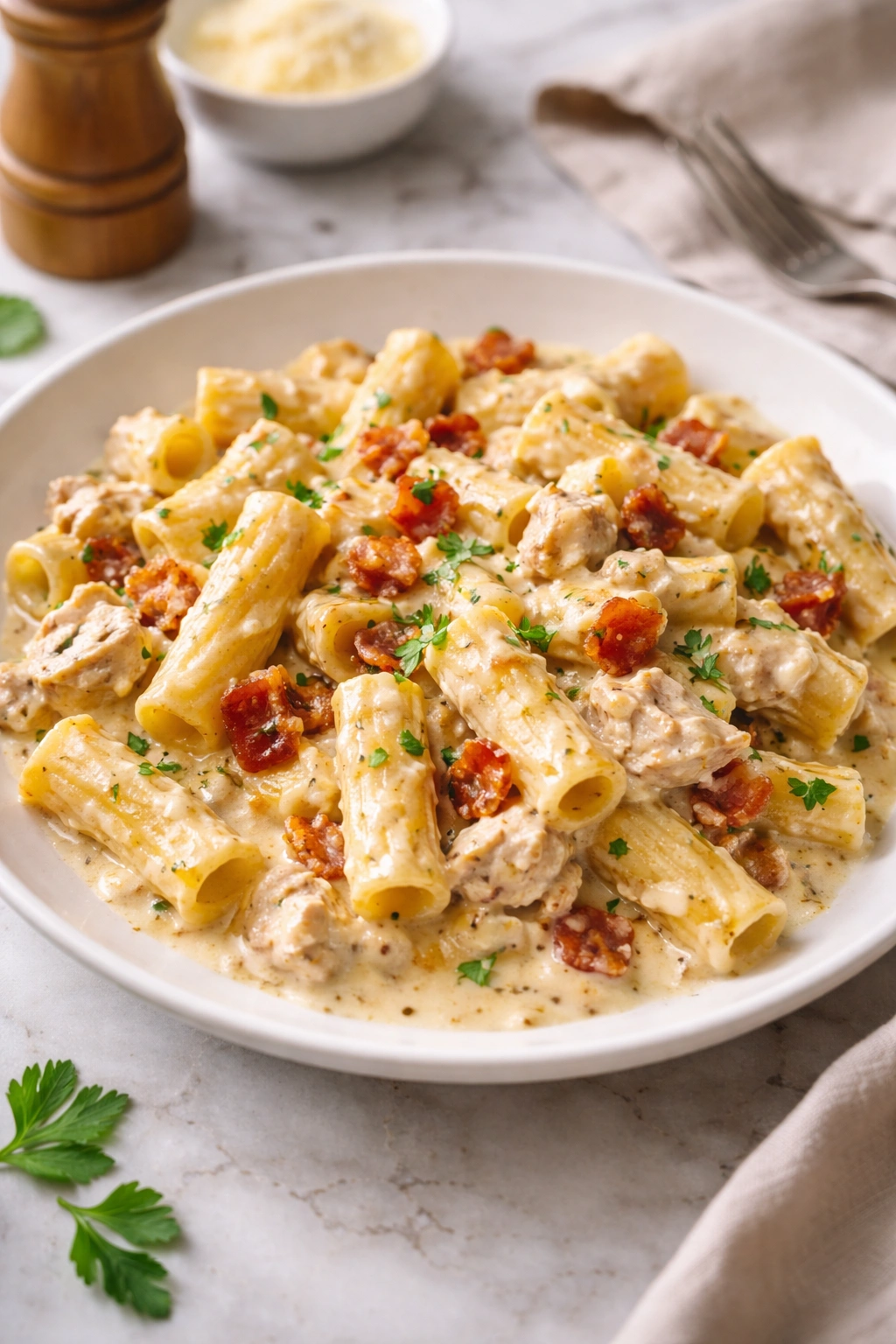
Overcooking the pasta initially is perhaps the biggest culprit in disappointing creamy pasta dishes. If you cook the pasta all the way to soft and tender before mixing it with the sauce, by the time everything comes together, your pasta will be overdone and mushy. The sauce adds moisture and heat that continues cooking the pasta, so timing that initial cook slightly under doneness is crucial. This is one of those situations where “al dente” isn’t pretentious—it’s practical.
Using pre-shredded cheese creates a grainy, separated sauce instead of something creamy and velvety. The anti-caking agents in bagged cheese are designed to keep shreds from clumping during storage, but they also prevent smooth melting. You’ll notice the texture immediately compared to a sauce made with freshly shredded cheese from a block.
Making the sauce too thick or too thin happens when you don’t account for how much liquid the pasta will absorb. If your sauce looks slightly looser than you think is right when you’re making it, that’s actually correct—the pasta will absorb moisture and thicken everything as it sits. Many people end up with dried-out, grainy results because they made the sauce too thick initially.
Skipping the bacon in terms of quality means you’re missing out on one-third of this dish’s identity. Thin-sliced bacon crisps differently and disappears into the pasta. Thick-cut bacon stays distinct and delivers that crucial salty, smoky punch in every bite.
Not seasoning the chicken before cooking results in bland chicken that the ranch sauce tries (and fails) to carry. The chicken should be seasoned well enough that you’d be happy eating it on its own. The sauce should enhance it, not rescue it.
Variations That Let You Make This Recipe Your Own
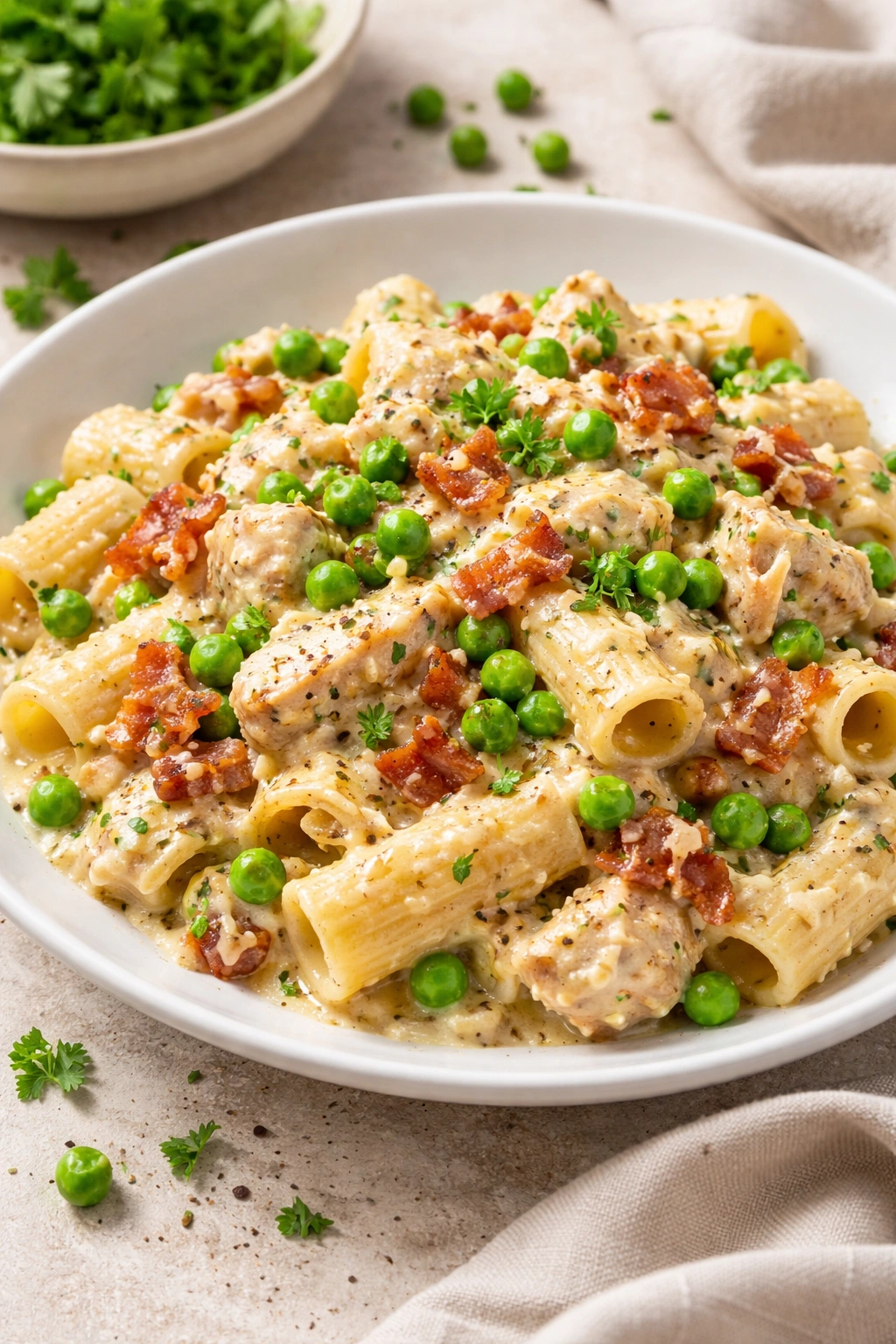
Adding vegetables is straightforward and doesn’t require changing the cooking method. Frozen peas stirred in at the end of cooking add sweetness and color. Sautéed mushrooms, diced tomatoes, or wilted spinach all work beautifully. You could also add diced bell peppers or caramelized onions that you prepare separately and fold in at the end.
Using smoked sausage instead of chicken transforms this into something with more assertive flavor. Cut the sausage into coins or bite-sized pieces and brown it in the bacon fat before building the sauce. You’ll reduce the salt slightly since smoked sausage is already seasoned.
Making it as a baked casserole works perfectly if you want to prep it ahead. Pour the pasta mixture into a 9×13-inch baking dish, top with additional cheese and crumbled bacon, and bake covered at 350°F for 30 to 35 minutes until heated through and bubbly at the edges. Remove the cover for the last 5 minutes to lightly brown the top cheese layer.
Substituting the ranch for other seasonings opens different flavor doors. Buffalo seasoning creates a spicy, tangy version. Everything bagel seasoning (a blend of sesame seeds, poppy seeds, garlic, onion, and salt) adds unexpected textural interest and different savory notes. Italian herbs can replace ranch for a Mediterranean-inspired take. Each variation works because they’re all savory seasoning blends that dissolve into sauce.
Using different pasta shapes changes the eating experience subtly. Shapes with holes and ridges like penne and rigatoni trap sauce beautifully. Bow ties and shells offer little pockets of sauce. Even long pasta like fettuccine or tagliatelle works, though the coating is less even. Shorter shapes are easier to serve and eat, but follow your preference.
Making it vegetarian requires finding a protein to replace the chicken. Crispy tofu cut into cubes and pan-fried in the bacon fat works surprisingly well. So does diced white beans, chickpeas, or even roasted cauliflower florets. The bacon provides enough of the protein and savory satisfaction that you can build around that.
Storage, Reheating, and Make-Ahead Strategies
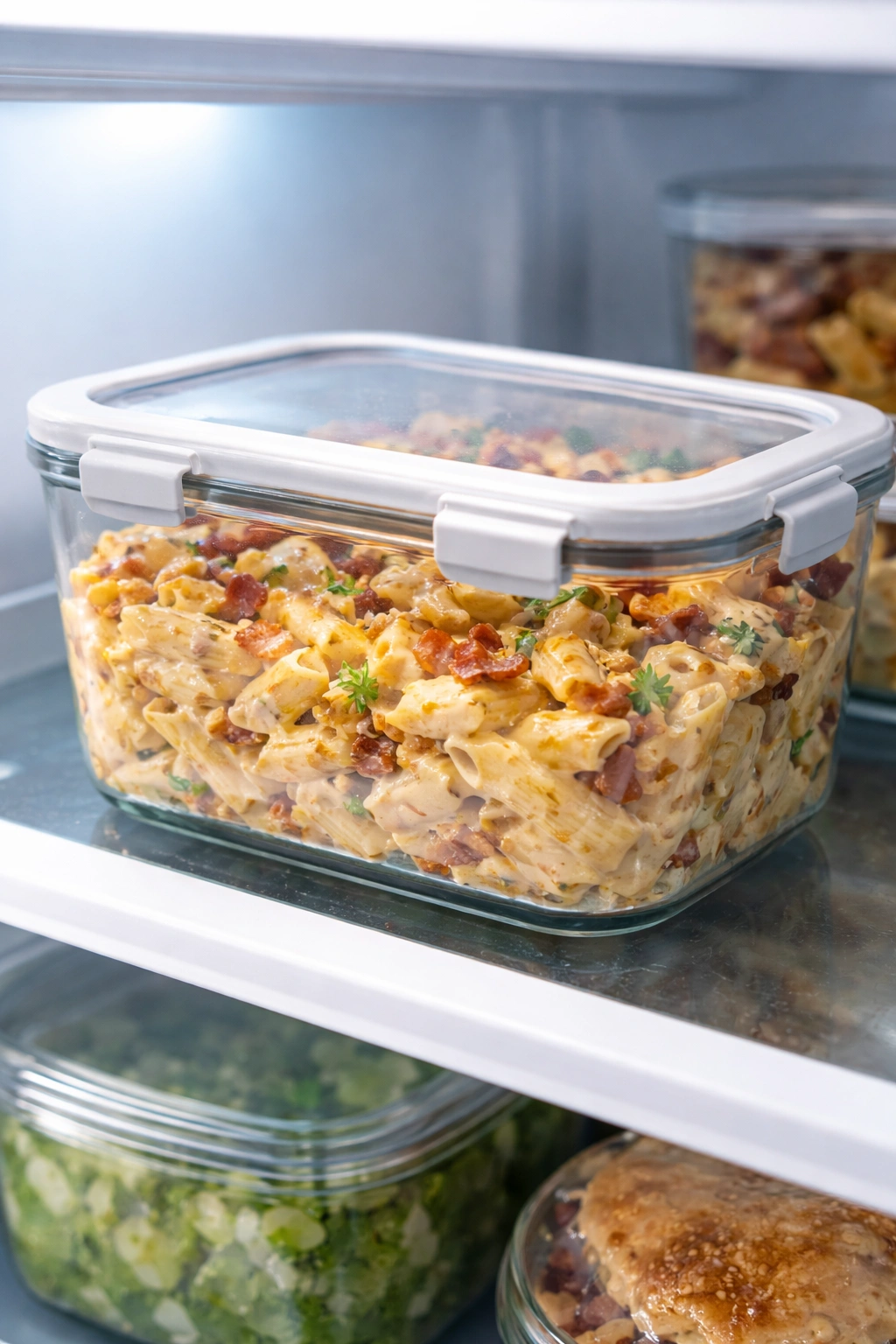
This dish stores beautifully for up to 4 days in an airtight container in the refrigerator. The flavors actually deepen and meld together overnight, making it taste even better the next day. The sauce will thicken quite a bit as it cools, which is normal—that’s the starch from the pasta and the gelatin from the cream cheese doing their work.
To reheat, transfer the pasta to a skillet over medium-low heat and add a splash of milk or chicken broth to loosen the sauce back to its original consistency. Stir gently and frequently until it’s heated through, about 5 to 7 minutes. Alternatively, you can reheat individual portions in the microwave at 50% power for 2 to 3 minutes, stirring halfway through, then add a splash of milk and heat for another minute. The lower power setting prevents the sauce from separating or scorching.
Freezing this dish is possible but not ideal. The cream-based sauce can separate and become grainy when frozen and thawed, especially if reheated at high temperatures. If you must freeze it, do so within 2 days of making it, store it in an airtight, freezer-safe container, and plan to thaw it overnight in the refrigerator before reheating very gently. Expect the texture to be slightly less creamy than fresh.
For make-ahead convenience, you can prepare the dish up to the point of combining everything, store the components separately, and then assemble and heat just before serving. Cook the bacon and chicken earlier in the day, prepare the sauce separately, cook the pasta, and combine everything 20 to 30 minutes before you want to eat. Everything reheats together beautifully this way.
Alternatively, if you’re building a baked casserole version, you can assemble the entire dish, cover it with plastic wrap and foil, refrigerate it for up to 2 days, and then bake it directly from the refrigerator. Add 10 to 15 minutes to the baking time since it will start cold.
Serving Suggestions That Complete the Meal
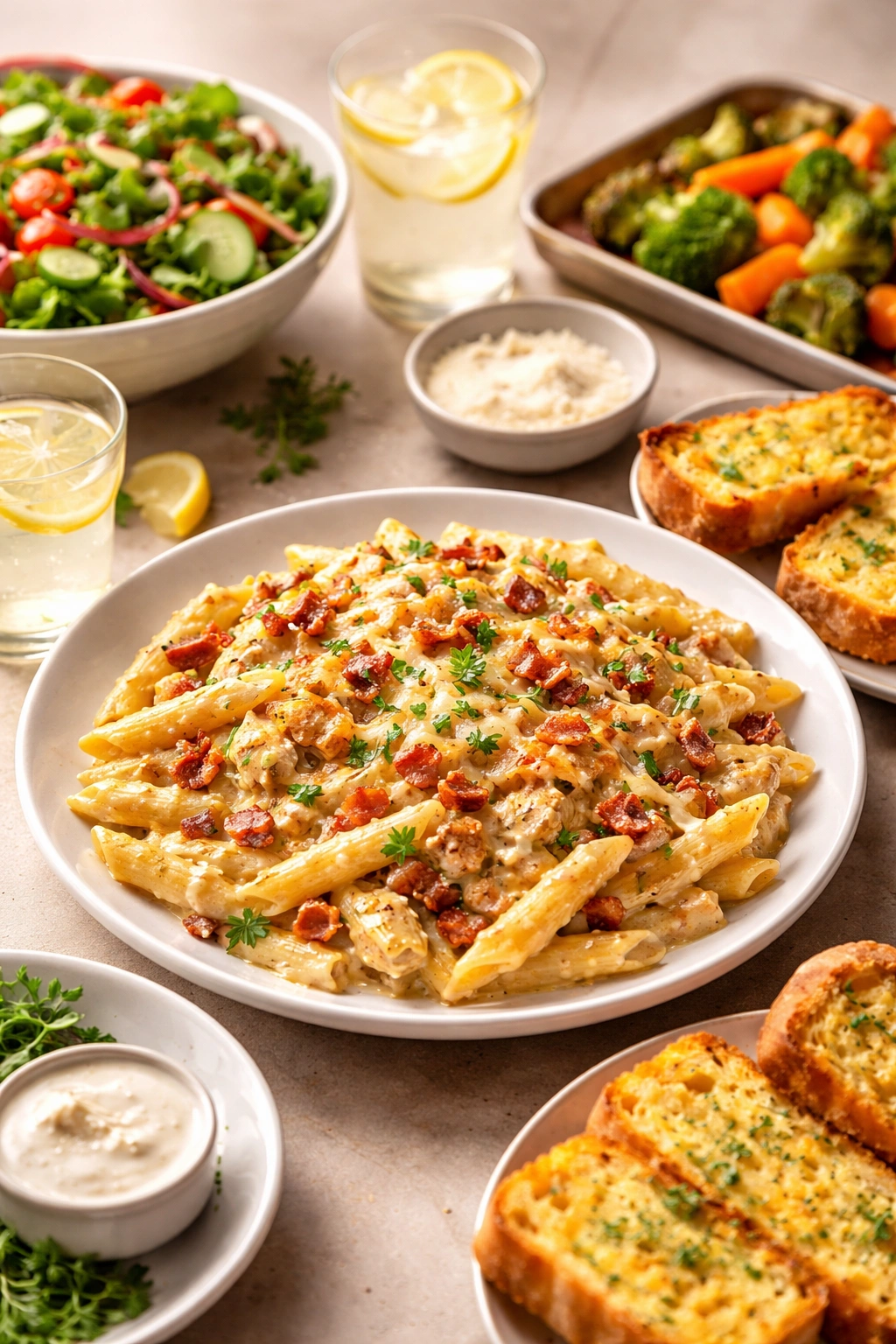
This pasta is rich and deeply satisfying, so it pairs beautifully with bright, fresh sides that provide contrast. A simple green salad dressed with a sharp vinaigrette cuts through the creaminess and cleanses the palate. Consider arugula or mixed greens with lemon vinaigrette, or a classic Caesar salad with crisp romaine.
Roasted vegetables work wonderfully alongside. Roast broccoli, green beans, or Brussels sprouts with olive oil, salt, and pepper at 425°F until the edges are caramelized and crispy. The slight bitterness and charred flavor contrasts beautifully with the rich, creamy pasta.
Garlic bread is a natural companion. Slice a baguette lengthwise, brush it with butter mixed with minced fresh garlic and parsley, wrap it in foil, and toast it at 375°F for about 8 to 10 minutes until the inside is warm and the edges are crispy. Serve it alongside so people can use it to soak up any remaining sauce.
For beverages, this pasta pairs well with anything from simple iced water to white wine. A crisp white like Sauvignon Blanc or Pinot Grigio complements the richness without overwhelming the palate. Unsweetened iced tea with lemon is refreshing. For non-alcoholic options, sparkling water with fresh lemon or lime feels sophisticated and cuts through the richness beautifully.
If you’re serving this at a gathering, offer fresh lemon wedges on the side—a squeeze of bright citrus over individual servings adds an unexpected brightness that makes the whole dish taste even more complex and interesting.
Troubleshooting When Something Seems Off
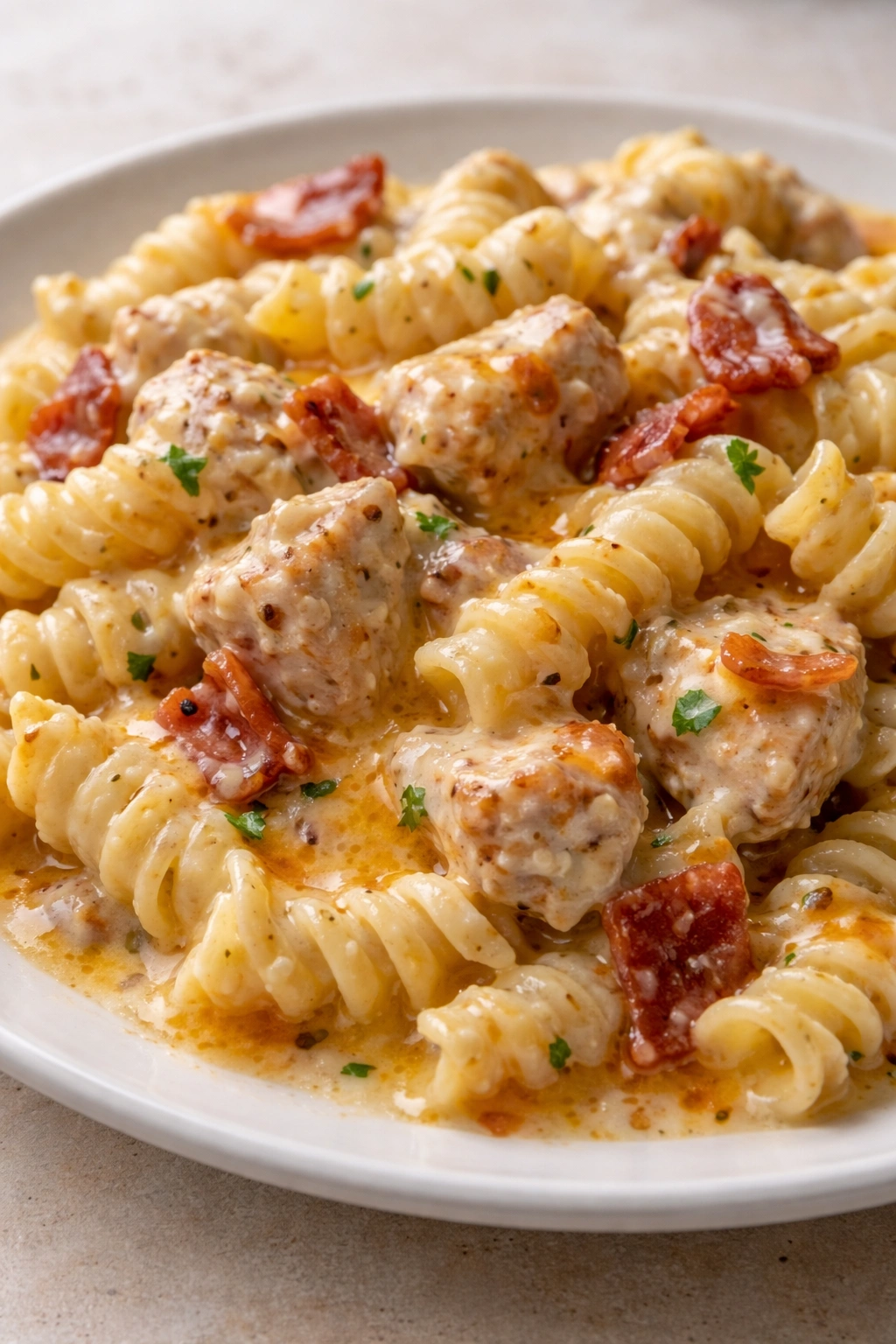
If your sauce is too thin, don’t panic. You likely made it before the flour had time to fully cook and thicken. Return the skillet to medium heat and let the sauce bubble gently for another few minutes, stirring frequently. The longer it heats, the thicker it becomes. If it’s still too thin, you can whisk together 1 tablespoon of cornstarch or flour with 2 tablespoons of cold milk, creating a slurry, and whisk that into the sauce—it will thicken within a minute or two.
If your sauce is too thick, simply whisk in a little milk, one tablespoon at a time, until you reach the consistency you want. Remember that the sauce continues thickening as it cools and as the pasta absorbs liquid, so if it seems slightly too thick right now, it’ll probably be perfect in 5 minutes.
If your cheese sauce breaks or looks grainy, it means the sauce got too hot or the cheese was added too quickly. If this happens, remove the skillet from the heat and whisk in a splash of cold milk while whisking vigorously. Often this brings the sauce back together. In the future, always melt cheese slowly over gentle heat and remove the skillet from the heat before adding cream cheese—the residual heat is enough to melt it smoothly.
If the bacon isn’t crispy, you likely cooked it too fast over heat that was too high, or you used thin-sliced bacon and needed thick-cut. Next time, use thick-cut bacon and medium-low heat, giving it 10 to 12 minutes. You want to hear it sizzling gently, not aggressively crackling.
If the chicken is dry, you probably cooked it fully in the initial searing step rather than just developing a crust. Fresh chicken breasts can go from perfect to overcooked very quickly—aim for an internal temperature of 155°F in that first cook, knowing it will climb slightly as it rests. Using rotisserie chicken eliminates this variable entirely.
If the pasta is mushy, you either cooked it too long initially before combining it with the sauce, or you’ve held the finished dish too long and it’s been absorbing sauce for an extended period. This is why timing that initial pasta cook slightly under doneness is crucial. For next time, subtract 1 to 2 minutes from the package directions.
Final Thoughts
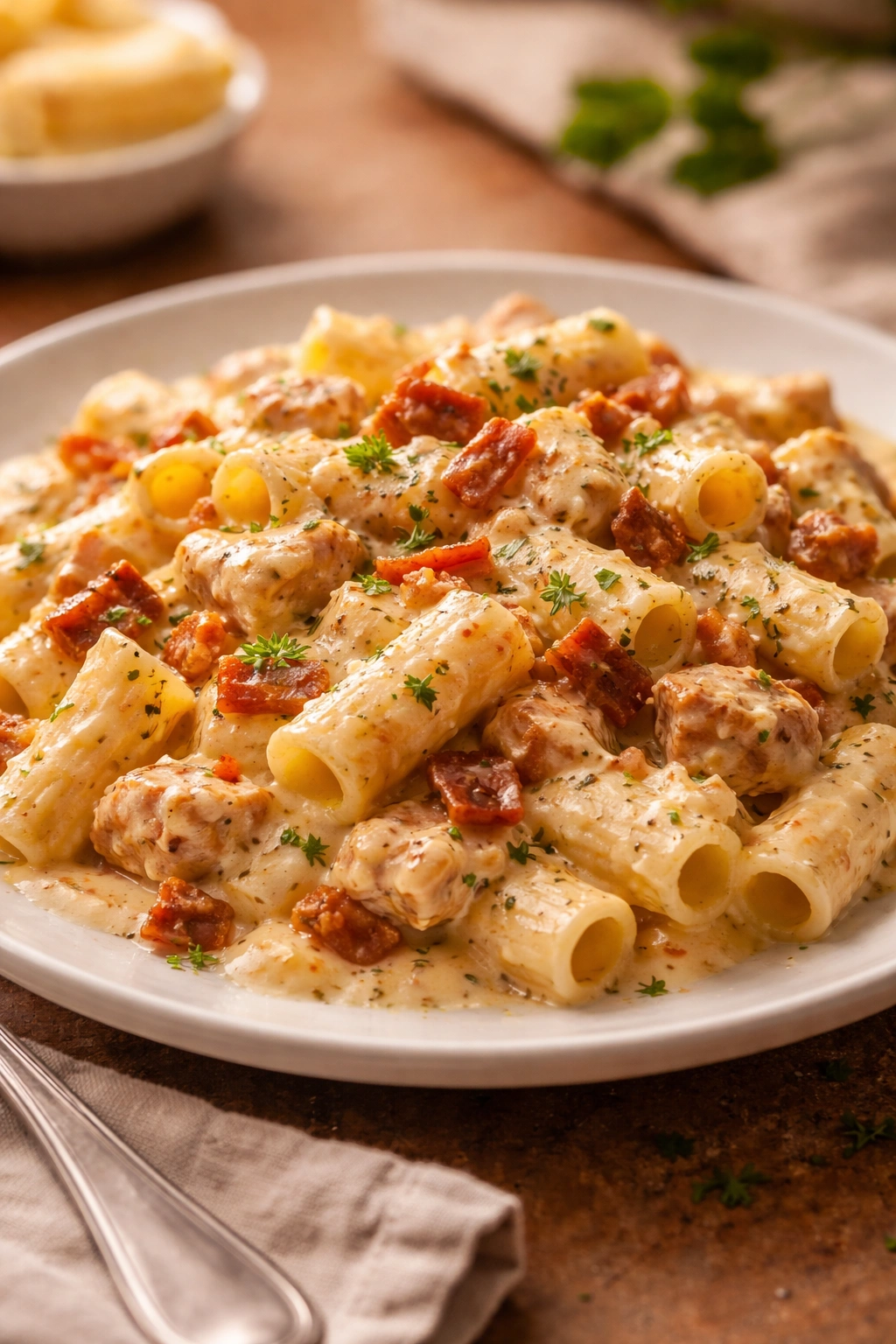
This chicken bacon ranch pasta works because it doesn’t try to be anything it’s not. It’s not a gourmet dish—it’s honest, reliable comfort food that delivers exactly what it promises. You make it knowing the outcome: creamy, cheesy, loaded with chicken and bacon, and absolutely craveable. That predictability is its strength. There are no surprise ingredients or unexpected flavor notes. It tastes like something you’d be happy eating any night of the week, whether you’re cooking for yourself, feeding your family, or bringing it to a potluck where you know it’ll be the dish people remember.
The beauty of mastering this recipe is that once you understand how the components work together—how the bacon fat carries flavor, how the roux thickens sauce, how pasta absorbs liquid, how cheese melts smoothly—you can adapt it endlessly while maintaining its essential character. You can change the protein, adjust the vegetables, experiment with seasonings, or serve it as a baked casserole. The fundamentals stay strong.
Keep your bacon thick and your cheese freshly shredded. Time your pasta to finish just shy of fully cooked. Build your sauce gently without rushing. Season your chicken properly. Taste as you go and adjust. These simple practices guarantee success every time. That’s what turns a simple pasta dish into something everyone truly devours.
