



When dinner needs to hit the table in 20 minutes and you’ve got hungry people waiting, one-pot sausage tortellini becomes your best friend. This is the kind of meal that tastes like you spent an hour hovering over the stove, building rich flavors layer by layer, when in reality you’ve only dirtied one pan and been working for barely longer than it takes to order takeout. The beauty is that nothing gets sacrificed in the speed — the sausage still browns properly, the sauce still comes together with genuine depth, and the tortellini soaks in every bit of that savory, creamy comfort without becoming mushy or overdone.
The one-pot method isn’t just about convenience, though that’s certainly the draw on a hectic weeknight. It’s actually a smarter way to cook this dish. As the tortellini cooks directly in the sauce rather than in separate boiling water, it releases starch that naturally thickens everything, creating a silkier sauce without needing extra cream or cornstarch. The pasta absorbs the seasoning as it cooks, so every piece tastes intentional rather than bland.
Why This Recipe Works for Busy Weeknights
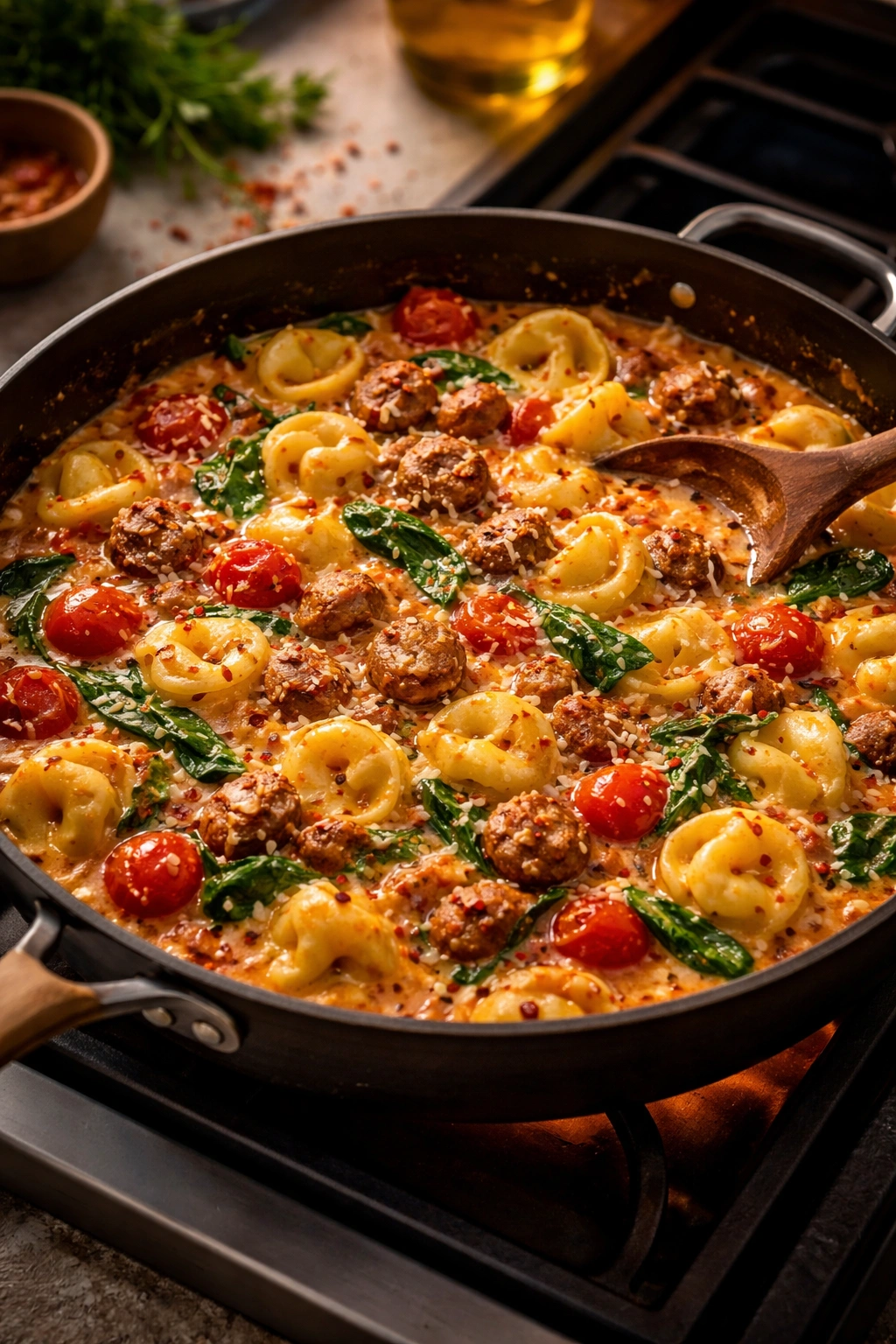
The magic of a 20-minute one-pot sausage tortellini comes down to understanding what actually takes time and what just feels like it does. Browning the sausage properly? That’s essential and takes about 5-8 minutes. Softening the aromatics? Another 2-3 minutes. Building the sauce base and getting everything simmering? Just a few more minutes. What doesn’t happen here is any long, slow simmer that reduces the sauce for hours or any need to boil pasta separately. The entire meal—from raw ingredients to plated dinner—genuinely comes together in under 25 minutes, often closer to 20 if you’ve got your mise en place ready.
This is the kind of recipe that feels indulgent and carefully made because all the core flavors are there: the rich umami of browned sausage, the brightness of tomatoes, the creaminess that balances acid, the fresh herbaceous notes of basil or parsley. None of these elements gets skipped just because you’re in a hurry. You’re not taking shortcuts on flavor — you’re taking shortcuts on unnecessary steps.
Choosing Your Italian Sausage
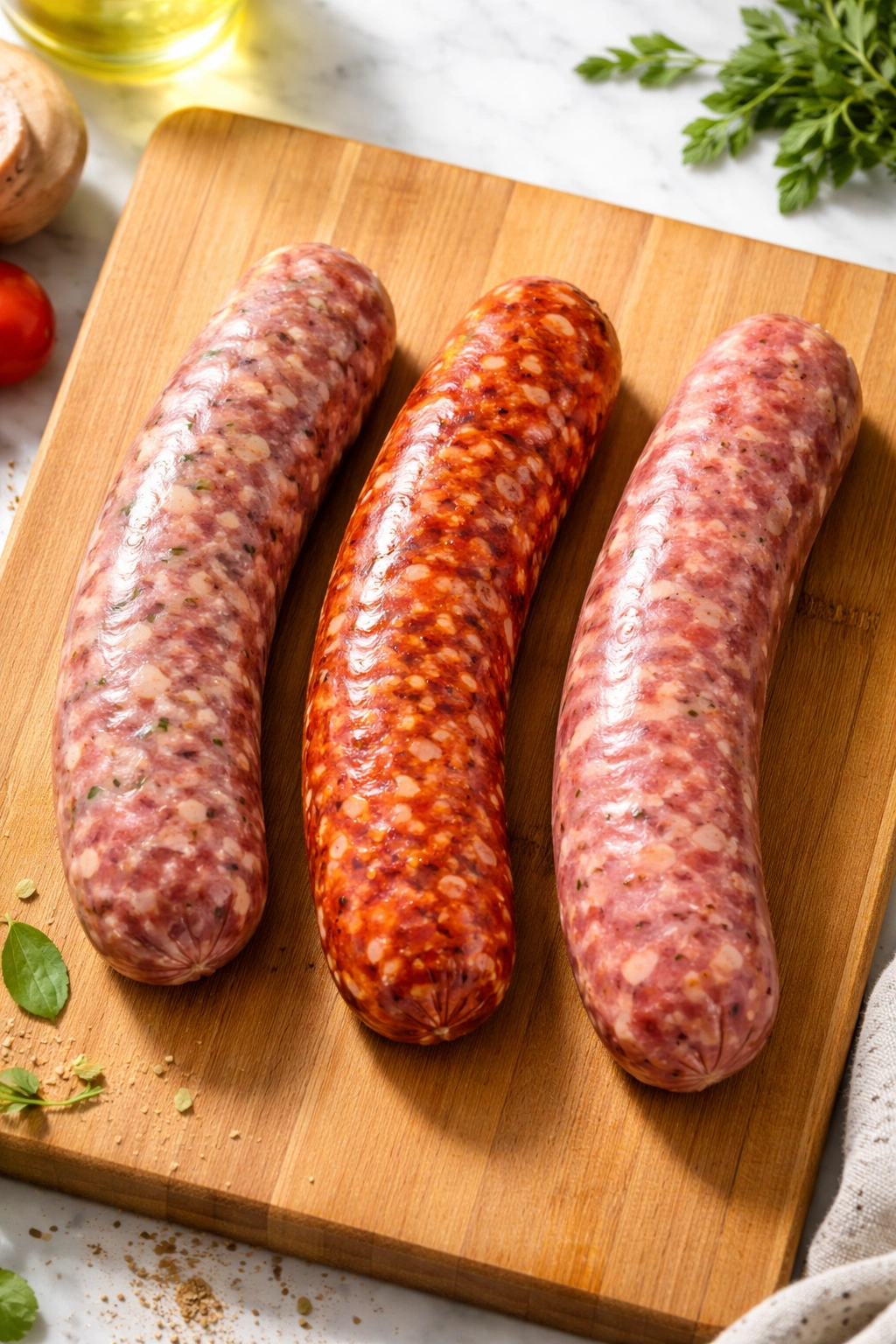
The sausage is the backbone here, so this is where you want to make a deliberate choice rather than just grab whatever’s on sale. Mild Italian sausage is the classic choice, already seasoned with fennel, garlic, and herbs, so it adds complexity without you having to do anything. If your household leans toward heat, hot Italian sausage gives you that same savory base with a chili pepper kick that builds gently as you eat. There’s also sweet Italian sausage, which tends to be even more herb-forward and slightly less peppery — this works beautifully too, especially if you’re serving this to people who prefer milder flavors.
You can absolutely use ground beef, ground turkey, or ground chicken in a pinch, but you’ll need to season it more aggressively. If you go this route, add at least ½ teaspoon of Italian seasoning, a pinch of fennel seed if you have it, extra garlic, and a touch more salt than the recipe calls for. The sausage does so much of the seasoning work that swapping it out means you’re taking on more responsibility in the flavor-building department.
One thing worth noting: don’t drain all the rendered fat after browning the sausage. That fat carries flavor, and a little of it stays in the pan to cook the onions and garlic. If there’s excessive pooling fat (like more than a tablespoon or so), drain most of it, but don’t leave the pan bone-dry. That’s where a lot of cooks go wrong, trying to make everything lean and ending up with a less flavorful base.
The Right Tortellini Makes a Difference
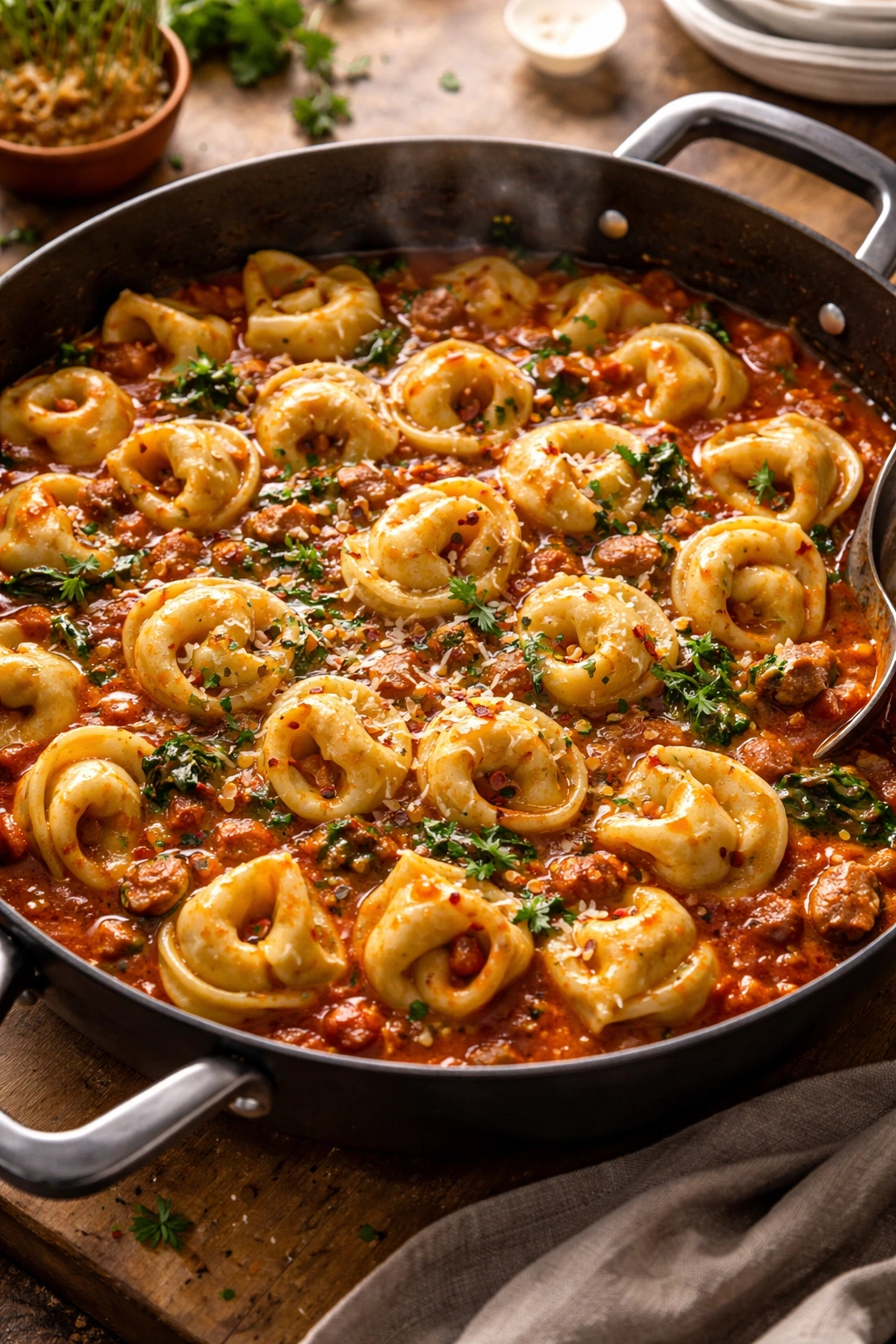
Refrigerated cheese tortellini is where this recipe shines. Find the fresh, refrigerated kind in your grocery store’s pasta section — brands like Rana, Kirkland (Costco), or store-brand versions are all solid choices. The reason these work so well is that they cook quickly, they’re tender without being mushy, and the cheese filling stays creamy. Refrigerated tortellini typically needs only 5-7 minutes in simmering liquid, so the timing works perfectly for a 20-minute meal.
Frozen tortellini can work, but they’ll add about 3-5 minutes to your cooking time since they start from a frozen state. You don’t need to thaw them first — just toss them straight in — but know that your total cook time might edge closer to 25-30 minutes. Dried tortellini isn’t recommended for this particular recipe. They require significantly more liquid and longer cooking time, which throws off the balance of sauce to pasta and means your tight timeline gets blown.
Pick whichever filling sounds good: cheese tortellini is the traditional choice here, but spinach and ricotta works beautifully too if that’s what you find. The cream and tomato sauce pair equally well with both.
Building Flavor in Your One-Pot Base
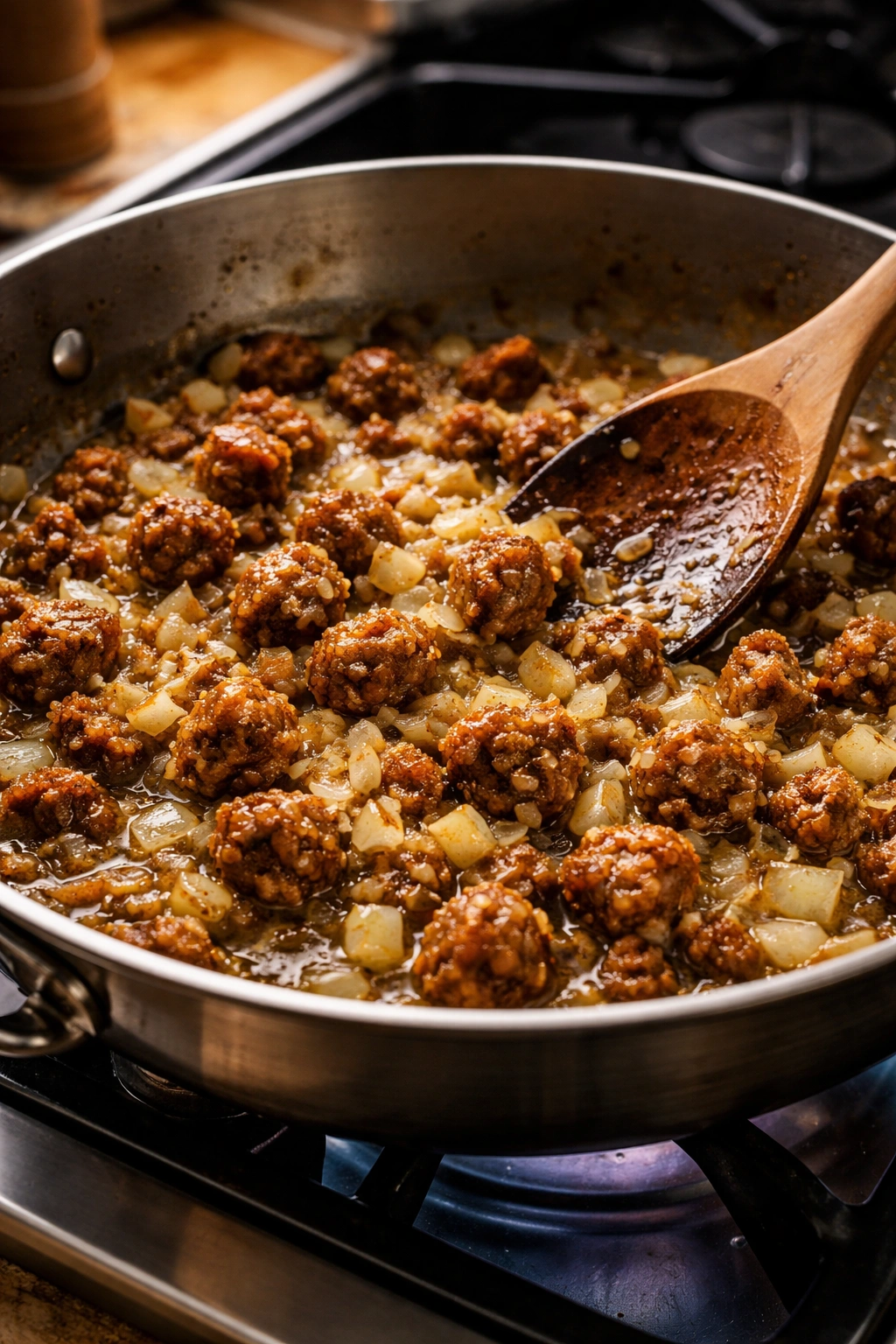
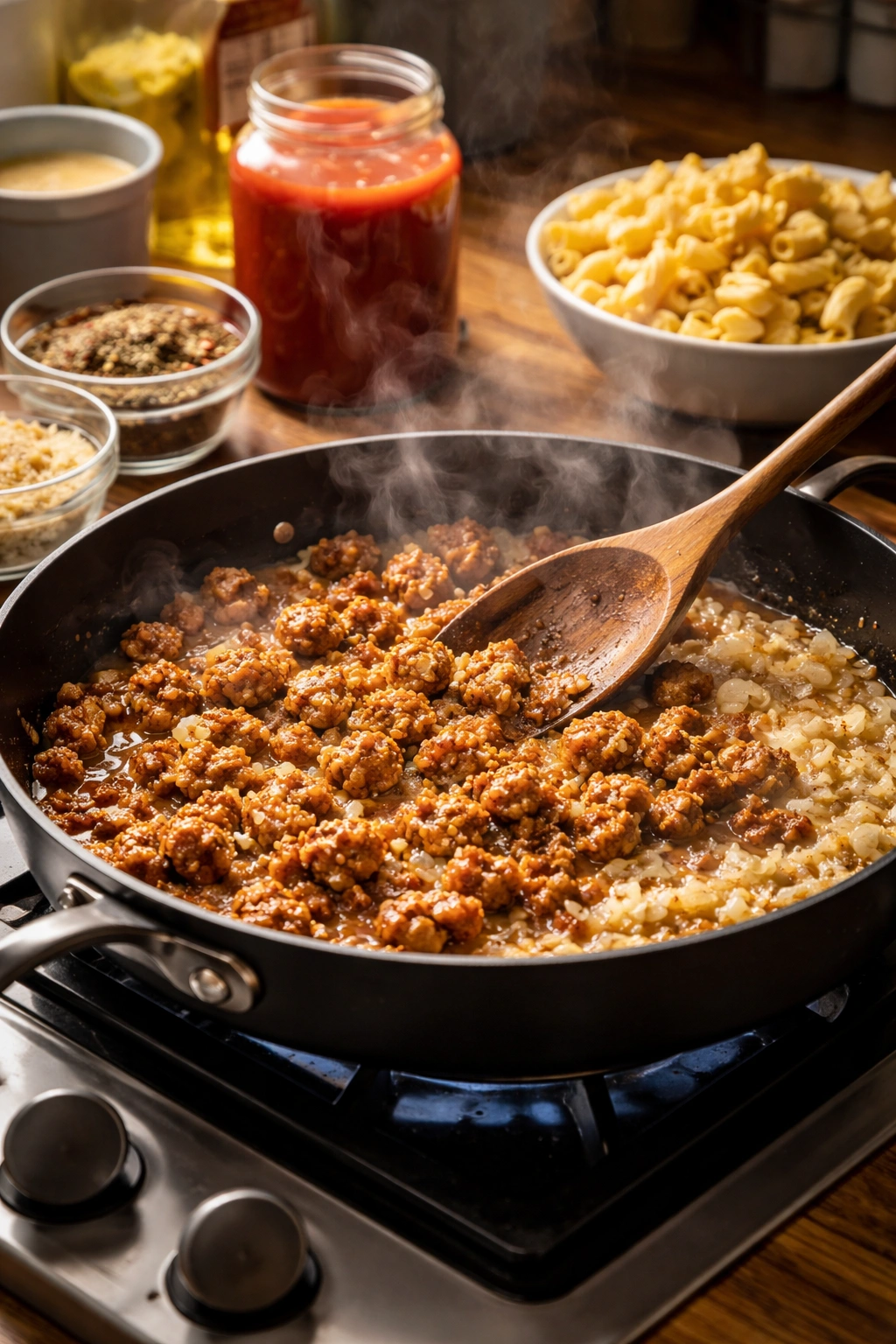
The foundation of this dish comes from taking time — but not very much — to brown the sausage properly and then soften the aromatics. When you heat your oil and add the sausage to a medium-high heat pan, let it sit undisturbed for the first couple of minutes so it gets a golden crust. That caramelization is where serious flavor lives. Only then do you start breaking it up and stirring, continuing to brown until no pink remains and the meat is well-colored, about 5-8 minutes total.
Once the sausage is done, push it to the sides of the pan and add diced onion and minced garlic to the remaining fat. This is a deliberate technique — you’re using the hot fat and the released meat juices to cook the aromatics, which makes them taste richer and more integrated into the final dish. Cook them for 2-3 minutes, stirring occasionally, until the onion softens and becomes translucent at the edges. The garlic should be fragrant but not browning — if it’s turning golden, you’re approaching burned, which tastes bitter.
This whole phase — browning the sausage, then softening onions and garlic — is maybe 10 minutes total, but it’s doing the heavy lifting on flavor. You’re building what’s called the “flavor base,” and it’s worth not rushing it even though you’re making a quick meal.
The Sauce Foundation: Tomatoes, Broth, and Cream
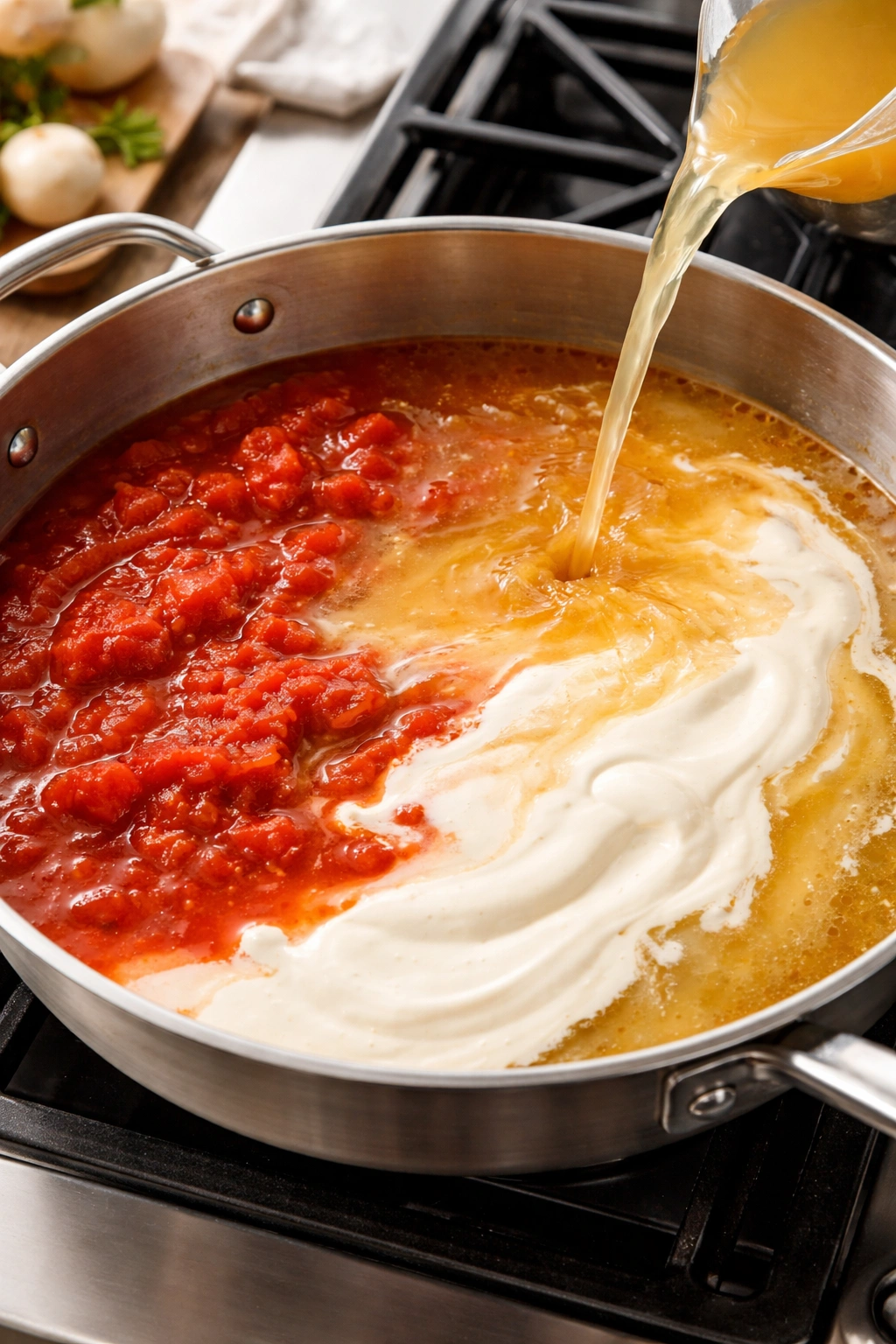
Once your aromatics are ready, the sauce comes together in seconds. You’re combining canned diced tomatoes or crushed tomatoes (both work equally well — crushed gives you a slightly smoother final texture, while diced tomatoes leave little pieces throughout), chicken broth (this adds savory depth and provides the liquid your tortellini needs to cook in), and heavy cream (this rounds out the acidity of the tomatoes and creates that silky mouthfeel). Some recipes add tomato paste or tomato sauce, which intensifies the tomato flavor — this is optional but genuinely elevates things if you have it on hand.
The ratios matter slightly here. A standard serving uses about 1.5 cups of marinara or tomato sauce combined with roughly ½ to 1 cup of chicken broth and anywhere from ½ to 1 cup of heavy cream, depending on how rich you want the final dish. Less cream makes it more tomato-forward; more cream makes it luxurious and almost pasta-sauce-like. Start closer to the lower end of cream and add more at the end if needed — it’s easier to stir in extra cream than to try to reduce it back out.
Don’t skip the salt. Salt the sauce deliberately, tasting as you go. The sausage is already seasoned, the broth has some sodium, but the sauce needs enough seasoning to taste genuinely flavorful rather than washed out. Start with ½ teaspoon and adjust.
Why Cooking Tortellini Directly in the Sauce Matters
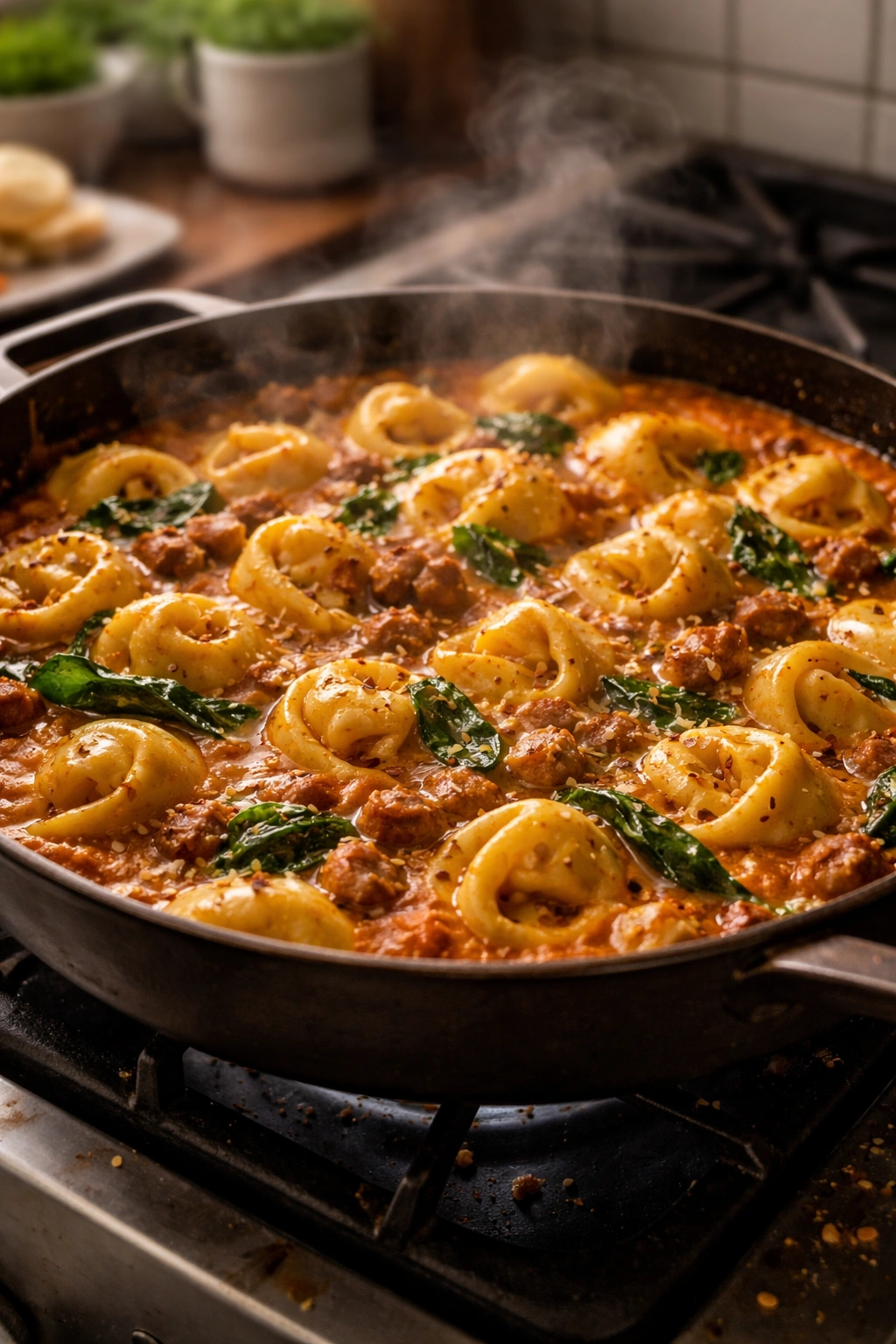
This is the game-changer that makes this whole method work, and understanding why helps you execute it better. When tortellini cook in the simmering sauce rather than in a separate pot of boiling water, they release starch into the liquid, which naturally thickens the sauce. This is why the finished dish has a silky, coating-like consistency rather than a thin, runny sauce that would pool at the bottom of the bowl.
It also means the pasta absorbs the flavor of the sauce as it cooks, so the tortellini taste intentional and part of the dish rather than like neutral pasta that happens to be sitting in sauce. The filling stays creamy and intact, and the exterior gets tender without becoming mushy because you’re cooking at a gentle simmer, not a rolling boil.
Bring the sauce to a simmer, then stir in the uncooked tortellini. Cover the pan, reduce heat to medium-low, and let it cook for 5-7 minutes, stirring occasionally. The covered pan traps steam, which helps cook the pasta more evenly. You’re aiming for the tortellini to be tender and floating freely in the sauce — if they’re still firm in the center, give them another minute or two, but don’t let them cook so long they start falling apart.
Common Mistakes That Slow Down Your Cooking
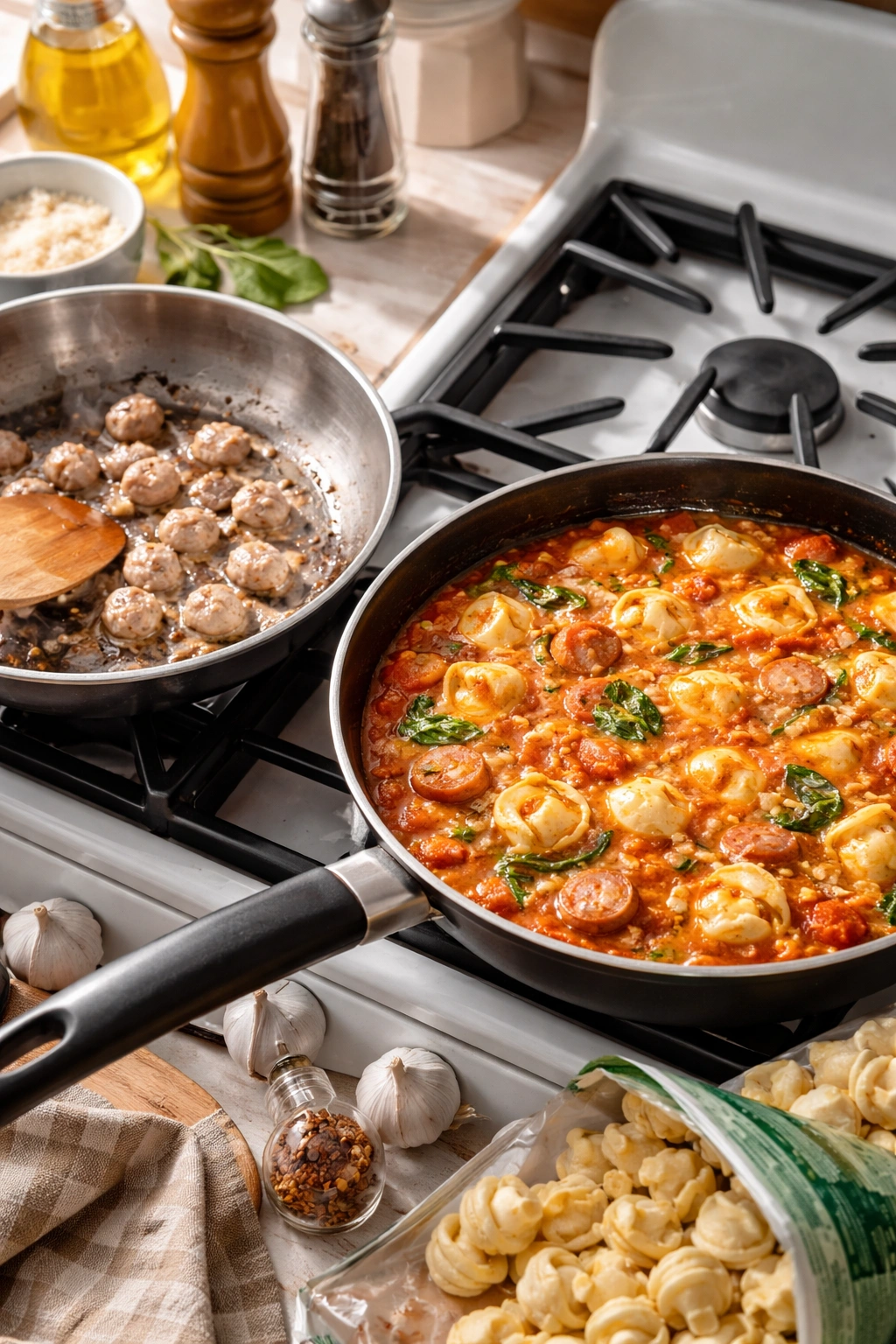
The most common error is not starting with a hot enough pan when browning the sausage. If the heat is too low, the meat steams rather than browns, and you lose that crucial caramelized flavor. Crank it to medium-high; it should sizzle immediately when the sausage hits the pan. If it just lies there silently, turn up the heat.
Another pitfall is adding the tortellini before the sauce is actually simmering. Make sure the sauce is actively simmering — little bubbles breaking the surface at regular intervals — before you add the pasta. If it’s just warm, the tortellini will take much longer to cook, and you’ll blow past your 20-minute timeline. Bring it to a simmer over medium-high heat first, then reduce the heat to maintain that gentle simmer as the tortellini cook.
Using frozen tortellini without accounting for extra time is the third common issue. If you’re going with frozen, either thaw them first or plan for 8-10 minutes cooking time instead of 5-7, and have extra broth on hand in case the sauce gets too thick as the pasta soaks it up.
How to Get the Timing Right Every Time
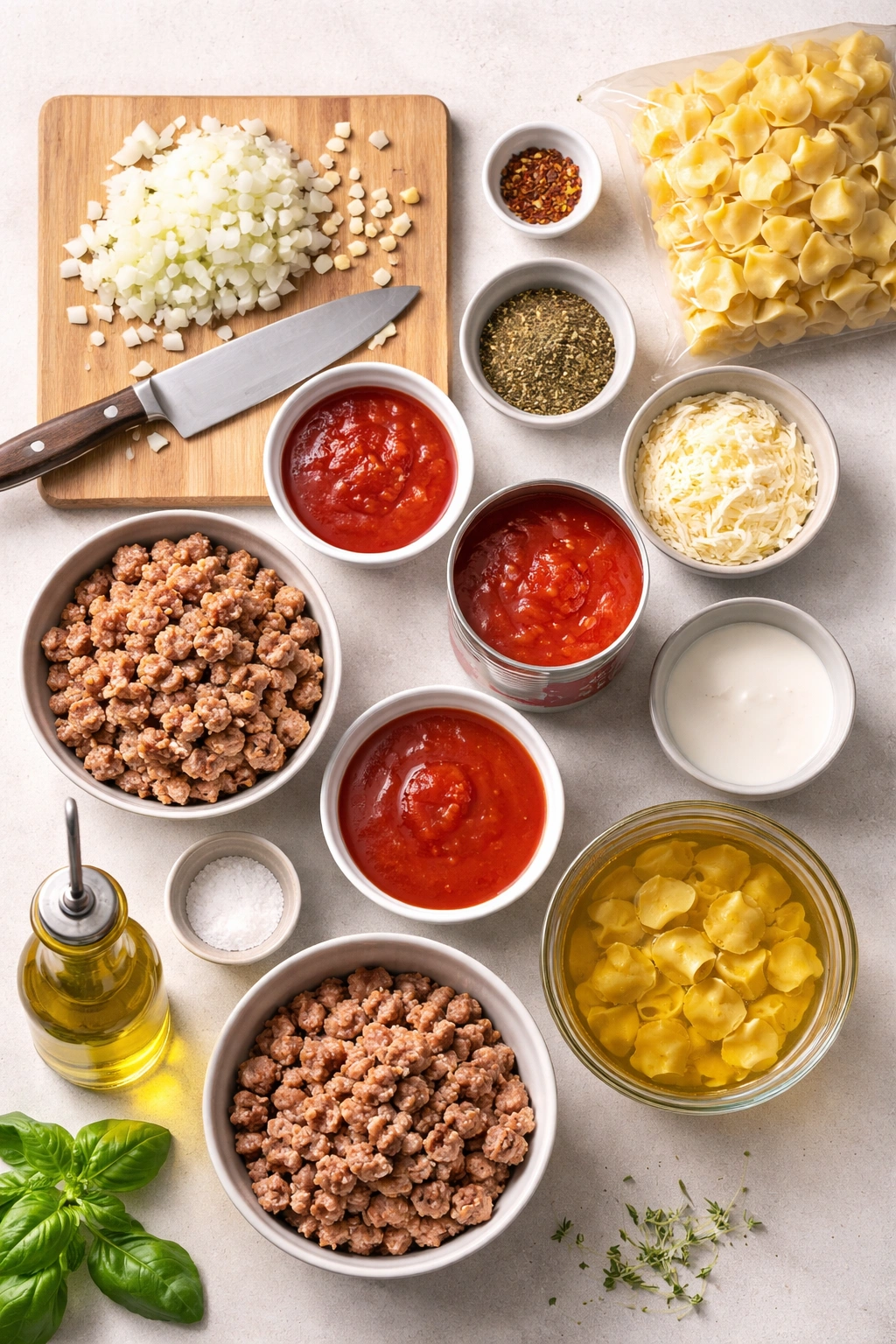
The truth is that 20 minutes is genuinely achievable, but only if you’re organized. Prep your ingredients before you turn on the heat. Dice your onion, mince your garlic, measure out your sauce components, open your can of tomatoes, and have your tortellini package nearby. This takes 5-10 minutes but means that once you start cooking, you’re not hunting for things. You’re just building the dish.
From the moment you turn on the heat, the timeline looks like this: 1-2 minutes for the oil to get hot; 5-8 minutes browning sausage; 2-3 minutes softening onions and garlic; 1 minute to add sauce ingredients and stir; bring to a simmer (1-2 minutes); add tortellini and simmer covered for 5-7 minutes. That’s roughly 17-23 minutes depending on how aggressive your heat is and how quickly things soften. Plate and serve immediately.
How to Serve and Plate for Impact
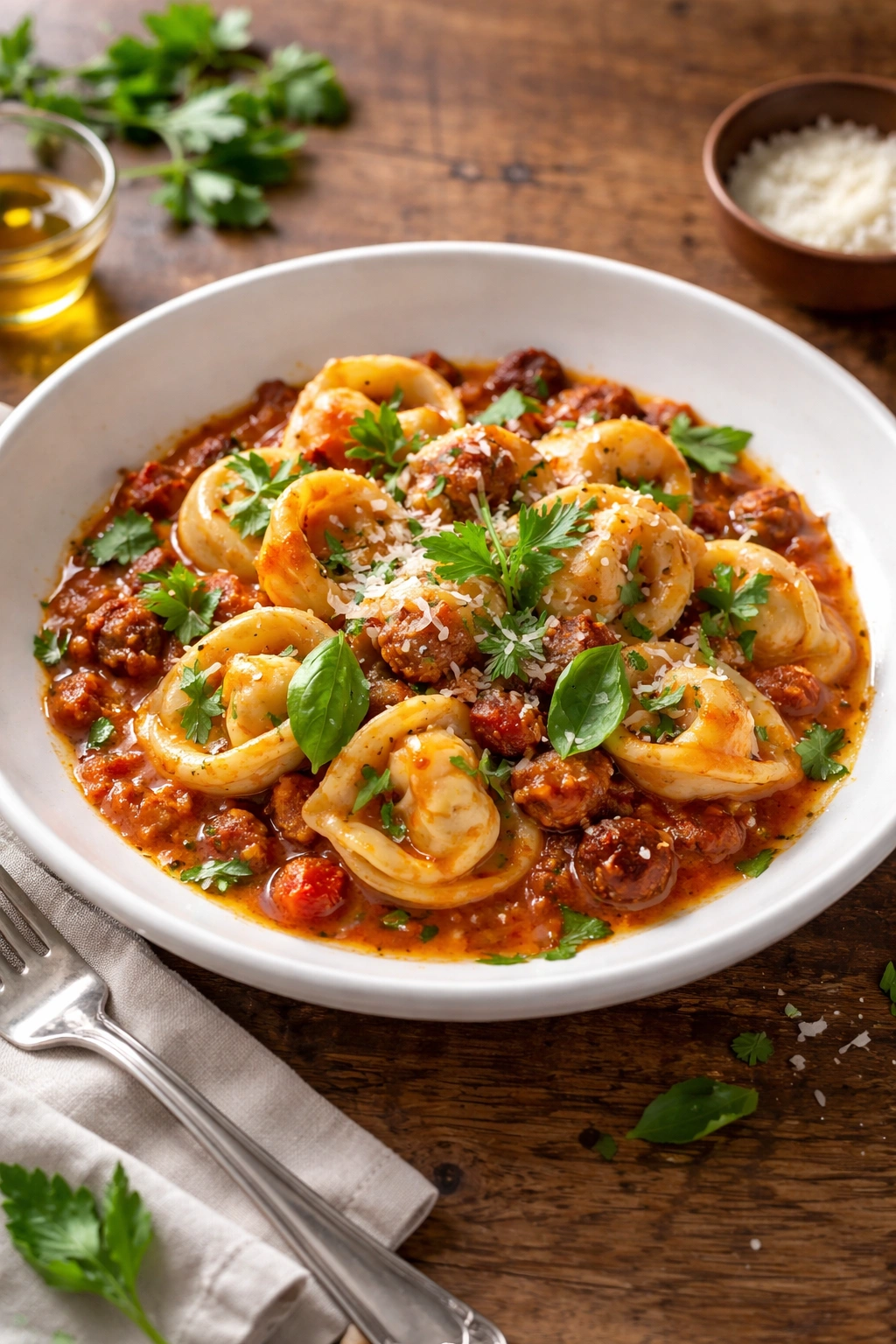
One-pot sausage tortellini isn’t fancy, but it absolutely can look appealing and intentional on the plate. Use a shallow bowl rather than a deep one, which lets the sauce settle and makes the dish look more composed. Spoon the tortellini into the center, then add sauce around it so the pasta is partially submerged but visible.
Finish with fresh garnishes. Fresh basil torn by hand, fresh parsley finely chopped, and a generous grating of Parmigiano-Reggiano (real aged Parmesan, not the pre-grated stuff) completely change how the dish feels. The fresh herbs cut through the richness, the cheese adds saltiness and nuttiness, and suddenly this quick weeknight meal tastes like something made with care. A light drizzle of good olive oil on top and a crack of black pepper, and you’re done.
Serve immediately while everything is hot and the cheese is still slightly melted from the warmth of the pasta. Let it sit even for a few minutes and the sauce thickens further, which is fine but less luxurious.
Storage and Make-Ahead Tips
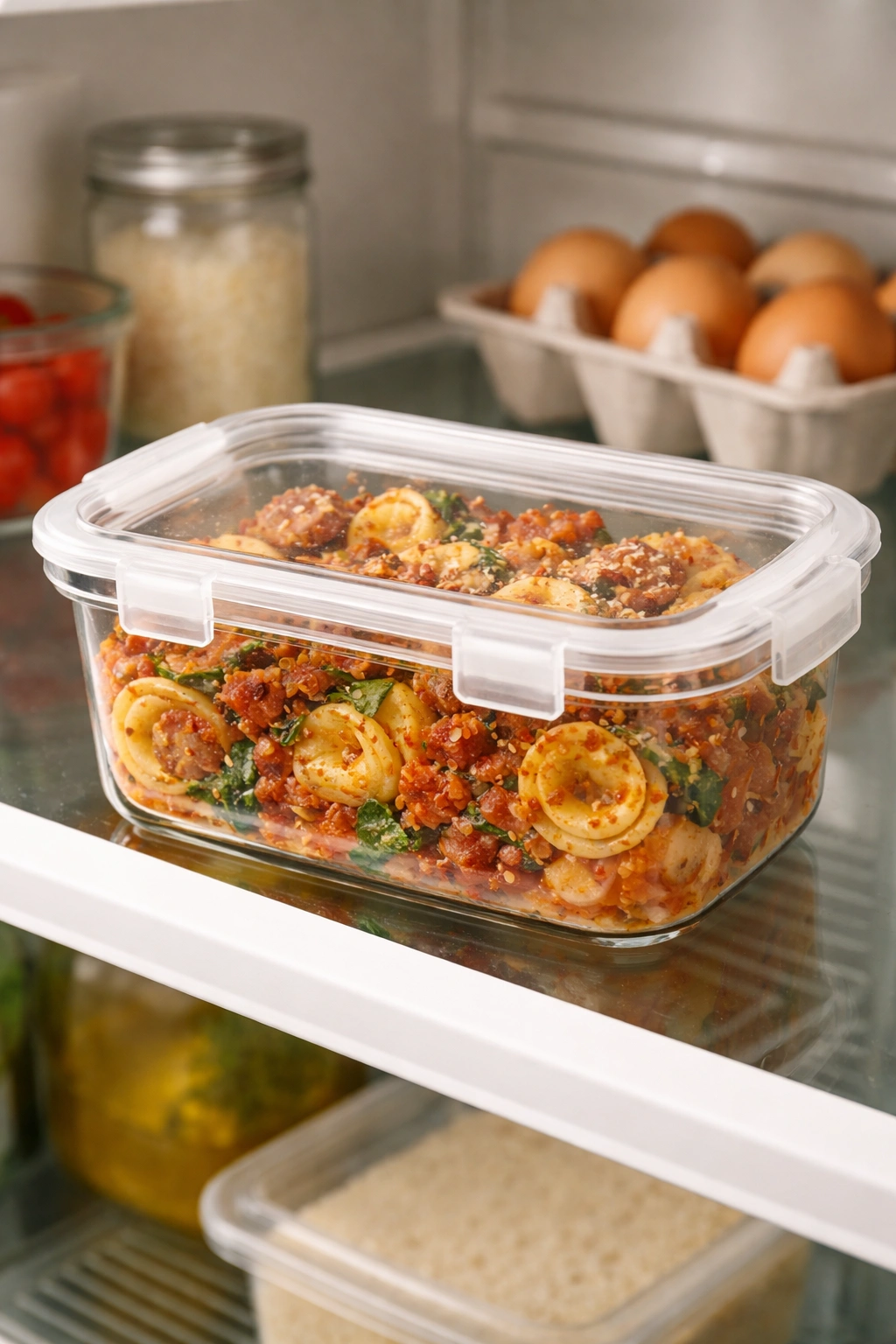
Leftovers keep in an airtight container in the refrigerator for 3-4 days, though the tortellini will continue absorbing sauce and the dish becomes progressively thicker. This is actually fine — some people prefer it this way because it’s more like a thick pasta bake the next day. When you reheat, do it gently on the stovetop over medium-low heat, stirring occasionally and adding a splash of chicken broth or cream if the sauce seems too thick. The microwave works too (heat in 30-second increments, stirring between), but the stovetop reheats more evenly.
Don’t freeze this dish. The cream doesn’t freeze well and tends to separate or become grainy when thawed. If you want to make ahead, stop after browning the sausage and softening the aromatics, cool that mixture, refrigerate it in an airtight container for up to 24 hours, then finish the dish when you’re ready to eat. The finished tortellini and sauce combination just doesn’t reheat back to the same texture after freezing.
Variations and Customizations
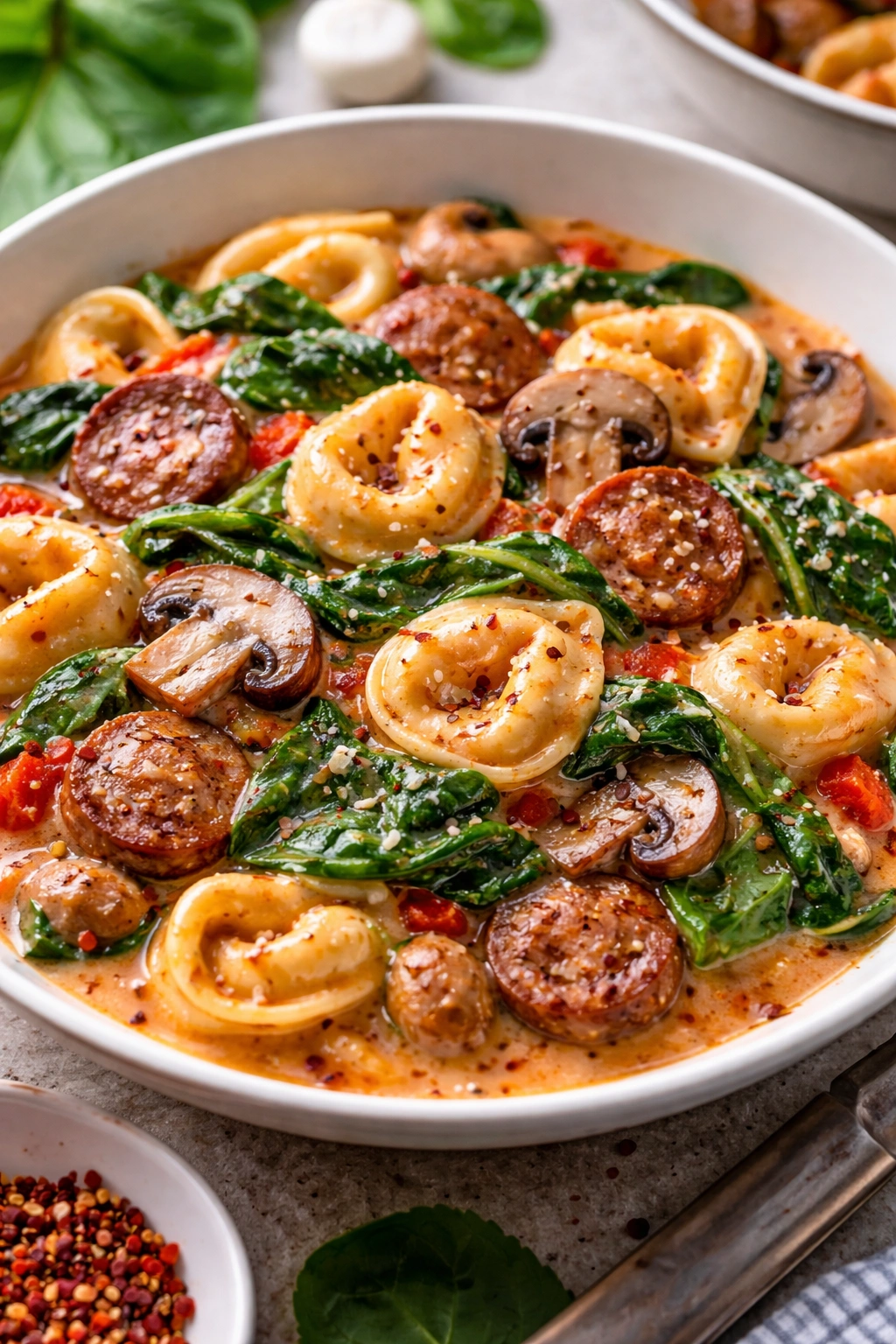
The beauty of this base recipe is how easily it adapts. If you want to add vegetables, stir in fresh spinach (about 2 handfuls) right at the end, letting the residual heat wilt it into the sauce. You can also add diced bell peppers or mushrooms when you soften the onions — this doesn’t add any time since they cook in the same heat. Mushrooms are particularly good here because they add umami depth that echoes the sausage.
For a creamier version, increase the heavy cream to ¾ or 1 cup, or add a few tablespoons of mascarpone or cream cheese at the end, stirring until it melts into the sauce. This makes everything richer and almost Alfredo-like while still keeping the tomato undertones.
Want to tone down the cream? Use half-and-half instead of heavy cream, or use a 50-50 split of cream and chicken broth. This lightens the dish noticeably while keeping the silky texture. Be aware that half-and-half can curdle if the sauce is very acidic, so if you go this route, make sure your tomatoes aren’t the most aggressive brand and don’t let the sauce get too hot after you add the cream.
For heat lovers, stir in ½ teaspoon of red pepper flakes when you add the sauce ingredients, or use hot Italian sausage instead of mild. You can also add a pinch of cayenne or a tablespoon of spicy tomato paste if you’re feeling it.
To bump up the cheesiness, add a handful of shredded mozzarella or a spoonful of ricotta when you plate, letting the warmth of the tortellini melt it slightly. Fresh mozzarella torn into pieces also works beautifully as a finishing touch.
Pairing Suggestions and Sides
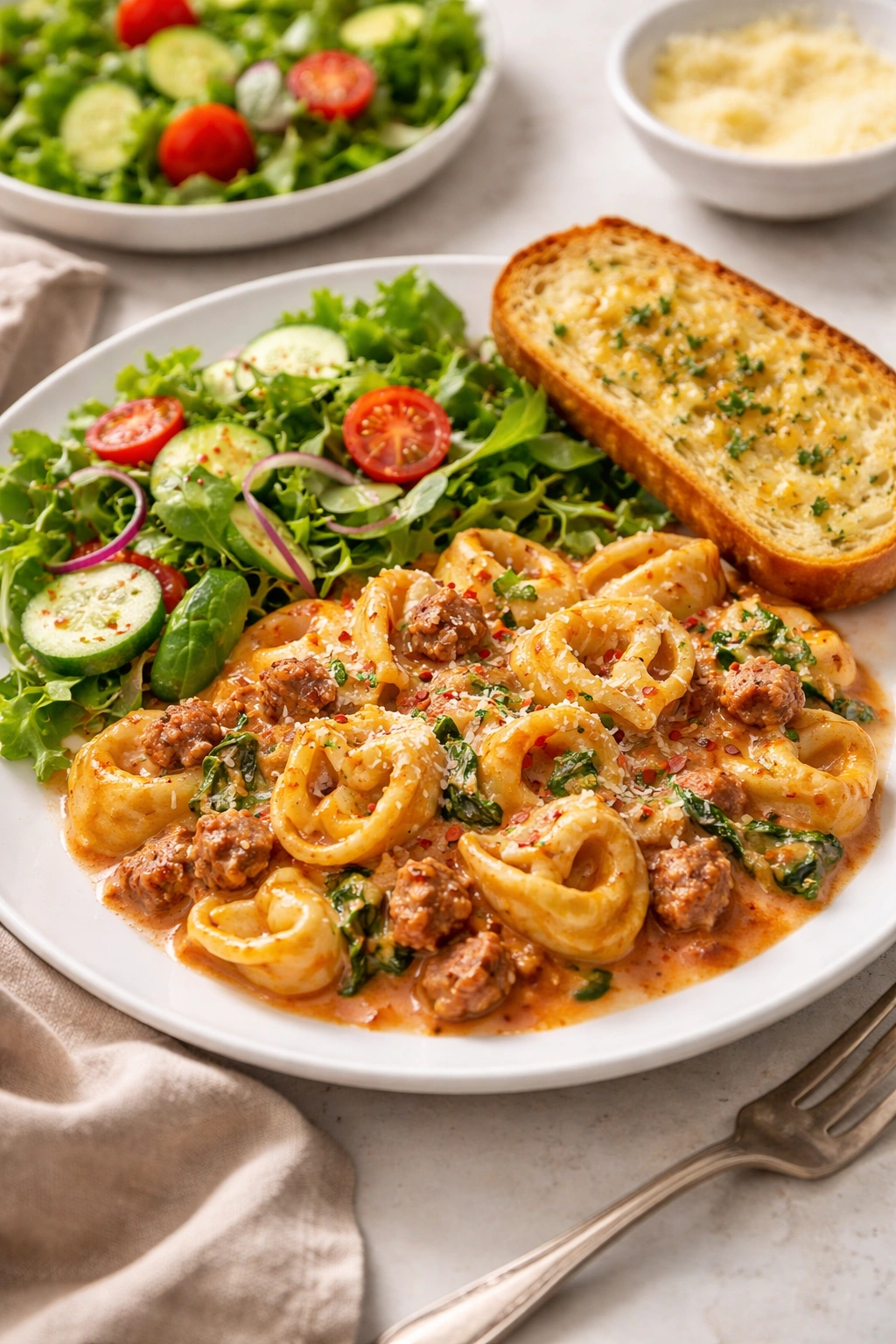
Even though this is a complete meal on its own, a simple side makes it feel more like dinner. A fresh salad with a light vinaigrette cuts through the richness beautifully — try mixed greens with a lemon vinaigrette, arugula with a balsamic drizzle, or a simple Caprese salad if tomatoes are good. The acidity and freshness are exactly what this rich, creamy pasta needs.
Crusty bread or garlic bread is the classic pairing, and there’s a reason: that sauce is too good to leave in the bowl. Use bread to soak up every last bit. Garlic bread is especially good if you make it with real butter and fresh garlic rather than the freezer aisle version.
For something lighter, roasted vegetables work well — zucchini, broccoli, or Brussels sprouts roasted with olive oil and salt. You can even toss them with the finished tortellini if you want them integrated into the dish.
Skip the side entirely if it’s a casual family meal. The tortellini is substantial enough on its own, and sometimes less is more.
Final Thoughts
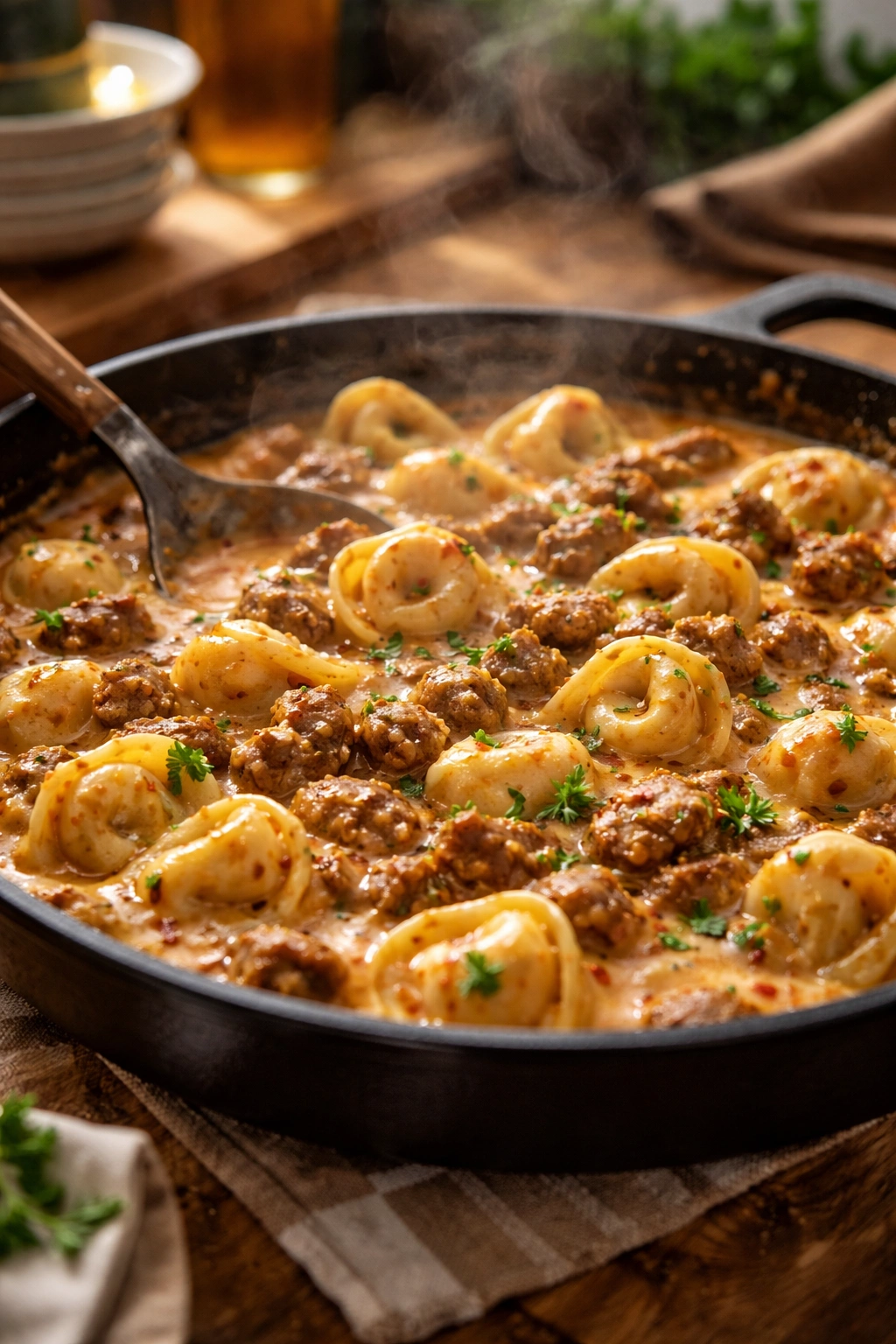
One-pot sausage tortellini in 20 minutes isn’t a shortcut on flavor — it’s a smart understanding of which steps actually matter and which ones are just habit. Brown your sausage properly, soften your aromatics intentionally, build your sauce with good ingredients, and let the pasta cook right in the sauce. That’s it. That’s the formula. From there, it’s just finishing touches and plates hitting the table while everything is still hot.
This is the meal you make on the nights when cooking feels overwhelming but eating something homemade matters. It’s faster than delivery, cheaper, tastes infinitely better, and leaves you with just one pan to clean. That combination — speed, taste, and minimal cleanup — is why this dish keeps showing up on family dinner tables week after week.
Yield: Serves 4 to 6 | Makes one large skillet
Prep Time: 10 minutes
Cook Time: 15 minutes
Total Time: 25 minutes
Difficulty: Beginner — No special equipment needed, straightforward technique, and everything cooks in one pan.
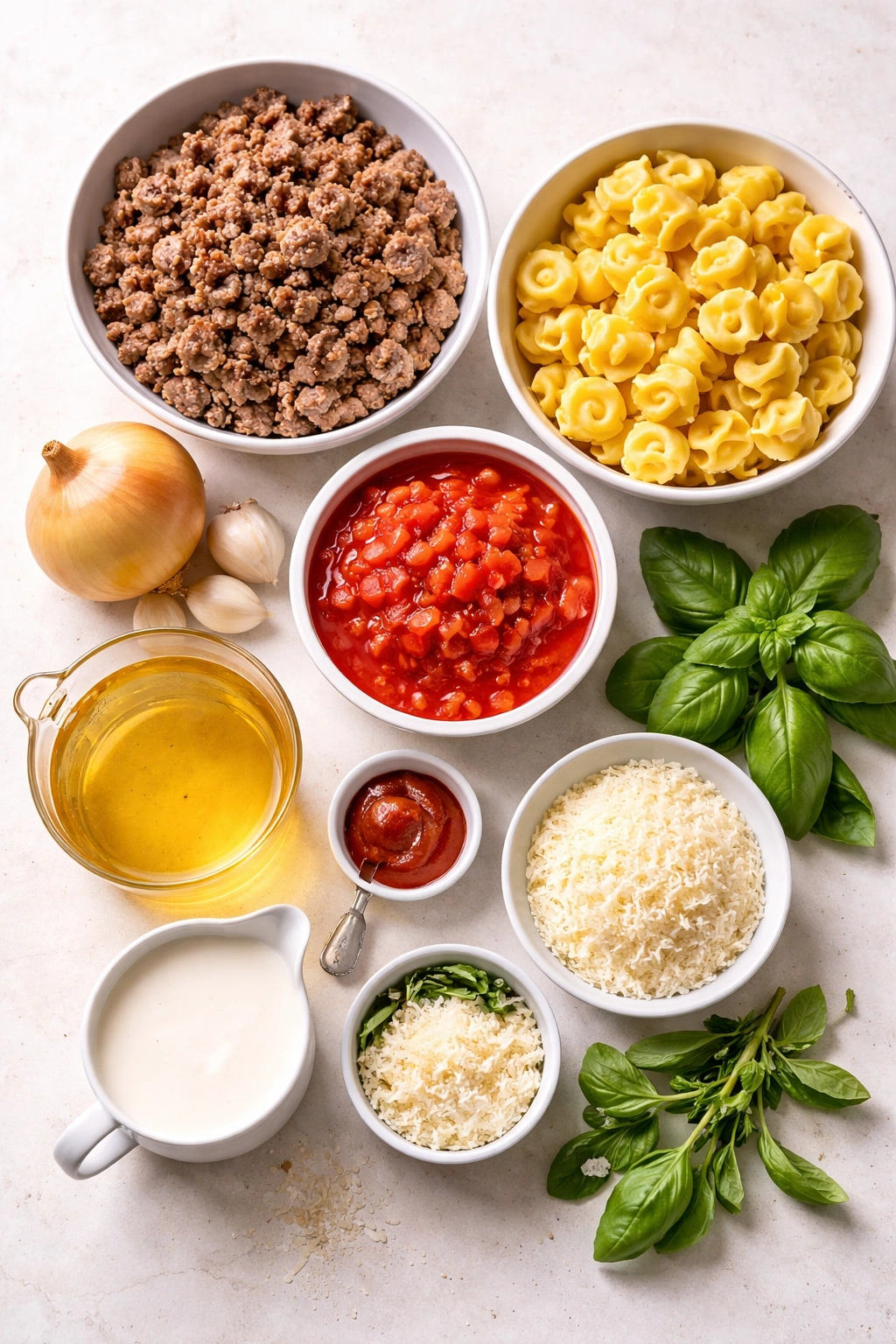
Ingredients for One-Pot Sausage Tortellini
For the Base:
- 1 tablespoon olive oil
- 1 pound mild or hot Italian sausage (ground or removed from casings)
- 1 small to medium yellow onion, finely diced
- 3 to 4 cloves garlic, minced
- ½ teaspoon kosher salt (adjust to taste)
- ¼ teaspoon freshly ground black pepper
For the Sauce:
- 1 (14.5-ounce) can fire-roasted diced tomatoes, with juices (or regular diced tomatoes)
- 1.5 cups marinara sauce or tomato sauce (or substitute with 1 more can diced tomatoes + 1 teaspoon Italian seasoning)
- ½ to ¾ cup chicken broth (low-sodium preferred)
- ½ to ¾ cup heavy whipping cream (adjust based on desired richness)
- 1 tablespoon tomato paste (optional but recommended for deeper flavor)
For the Pasta:
- 1 (9-ounce) package refrigerated cheese tortellini, uncooked (or 10 to 12 ounces)
For Finishing:
- ¼ cup freshly grated Parmigiano-Reggiano cheese, plus more for serving
- ¼ cup fresh basil or fresh parsley, finely chopped (or combination of both)
- Fresh cracked black pepper, to taste
- Optional: pinch of red pepper flakes for heat
Cooking Instructions for One-Pot Sausage Tortellini
Prepare Your Ingredients:
- Before turning on any heat, dice your onion, mince your garlic, measure out all sauce components, and have your tortellini package open and ready. This step—seeming like it takes time—actually saves you 5-10 minutes once cooking begins because you’re not hunting for ingredients mid-recipe.
Brown the Sausage:
-
Heat 1 tablespoon olive oil in a large skillet (12-inch if you have one) over medium-high heat. The pan should be hot enough that a drop of water sizzles immediately.
-
Add 1 pound Italian sausage (either ground or squeezed from casings). Do not stir immediately. Let the meat sit undisturbed for 2-3 minutes so it develops a golden-brown crust on the bottom. Crust = caramelization = flavor.
-
Break the sausage into bite-sized pieces with a wooden spoon or meat chopper, stirring to combine with the browned bits on the bottom. Continue cooking over medium-high heat for another 3-5 minutes, breaking it up as it cooks, until no pink remains and the meat is a rich brown color throughout.
-
If there’s excessive grease pooling in the pan (more than a tablespoon), tilt the pan and spoon most of it off, but leave a thin coating. This fat carries flavor and helps cook the next ingredients.
Build the Aromatic Base:
-
Reduce heat to medium. Add diced onion and minced garlic to the sausage and rendered fat. Stir to combine, making sure the garlic and onion are coated in the flavorful fat.
-
Cook, stirring occasionally, for 2 to 3 minutes, until the onion is soft and translucent at the edges and the garlic is fragrant but not browning. The bottom of the pan may have some flavorful brown bits (called fond)—these are liquid gold for flavor, so don’t scrub them off.
Build the Sauce:
-
If using tomato paste, stir it in now and cook for exactly 1 minute, stirring constantly, to lightly caramelize it. This deepens the tomato flavor significantly.
Advertisements -
Pour in 1 (14.5-ounce) can diced tomatoes with their juices, 1.5 cups marinara or tomato sauce, and ½ to ¾ cup chicken broth. Stir well to combine and scrape up any brown bits clinging to the bottom of the pan.
-
Stir in ½ to ¾ cup heavy cream (start with the lower amount if you’re uncertain; you can always add more). Add ½ teaspoon salt and ¼ teaspoon pepper.
-
Increase heat to medium-high and bring the sauce to a gentle simmer. You should see small bubbles breaking the surface at regular intervals, not a rolling boil. This should take 1 to 2 minutes.
Cook the Tortellini in the Sauce:
-
Once simmering, add the entire package of uncooked refrigerated tortellini (roughly 9 ounces) directly to the sauce. Stir gently to coat the pasta with sauce and to distribute it evenly throughout the pan.
-
Reduce heat to medium-low and cover the skillet with a lid (or aluminum foil if you don’t have a lid). The lid traps steam, which helps cook the pasta more evenly.
-
Simmer, covered, for 5 to 7 minutes, stirring gently once or twice halfway through. The tortellini are done when they’re tender all the way through (bite one if you’re unsure) and are floating freely in the sauce rather than clumped at the bottom.
-
The sauce should look slightly thickened by now, not thin and soupy. This is the starch from the tortellini doing its job. If the sauce seems too thick, stir in a splash of chicken broth or cream. If it’s still quite thin, continue simmering uncovered for another 1-2 minutes.
Finish and Plate:
-
Remove from heat. Stir in ¼ cup freshly grated Parmigiano-Reggiano cheese until fully incorporated and melted.
Advertisements -
Taste and adjust seasonings. Add more salt if it needs it, black pepper to taste, and red pepper flakes if you want heat.
-
Divide among shallow bowls. Finish each serving with:
- Additional grated Parmigiano-Reggiano
- Fresh basil or parsley, torn or chopped
- Fresh cracked black pepper
- Optional: light drizzle of good olive oil
-
Serve immediately while hot. The cheese should still be slightly melted, the cream still silky, and the tortellini tender throughout.
Storage and Reheating
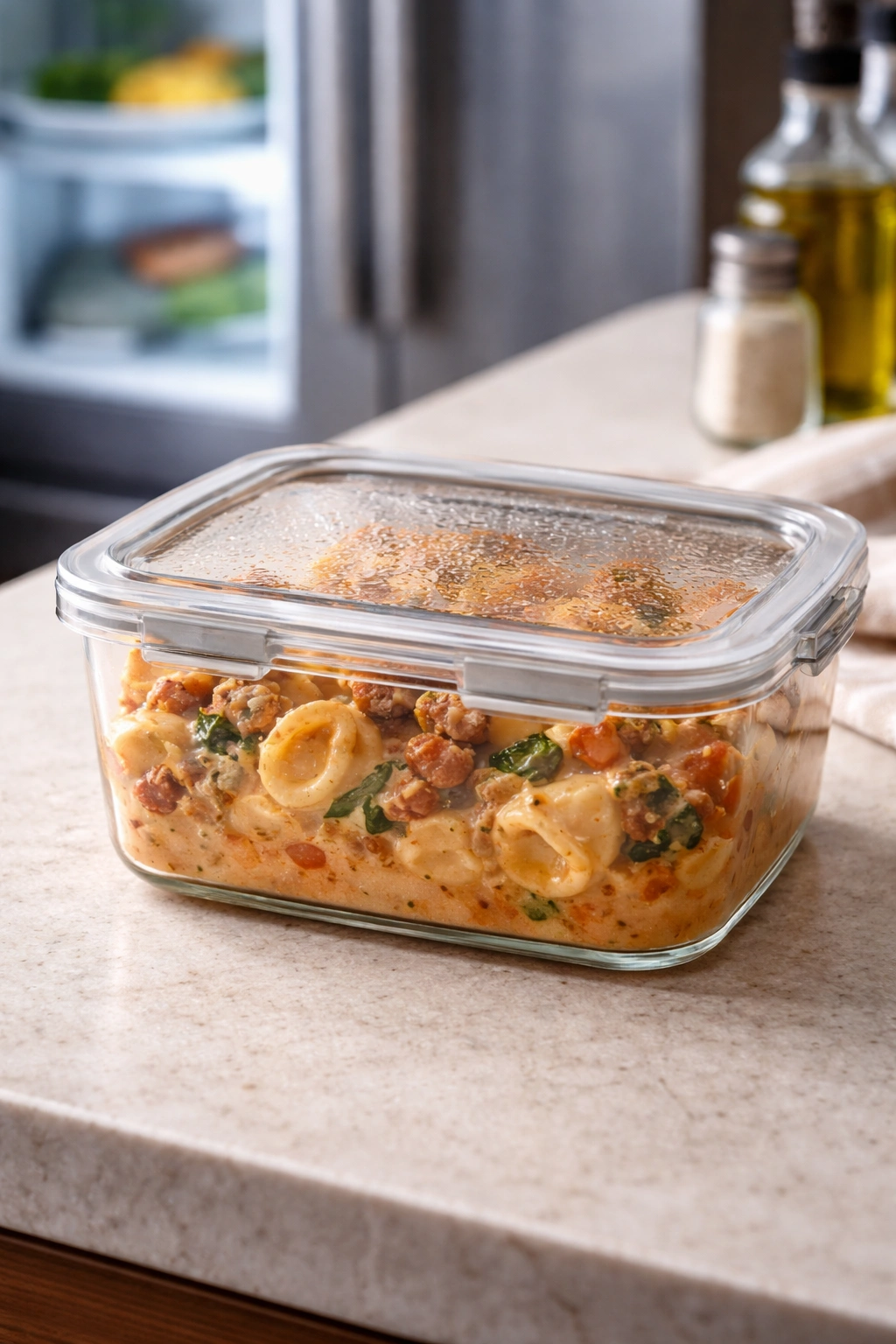
Store any leftovers in an airtight container in the refrigerator for up to 3 to 4 days. The tortellini will continue absorbing sauce as it sits, making the dish progressively thicker—this is normal and actually pleasant on subsequent days because it becomes more like a thick, creamy pasta bake.
To reheat on the stovetop, transfer to a skillet over medium-low heat, stirring occasionally, until heated through (about 5-10 minutes depending on the amount). Add a splash of chicken broth or cream if the sauce has become too thick.
To reheat in the microwave, transfer to a microwave-safe bowl and heat in 30-second increments, stirring between intervals, until warmed through.
Do not freeze the finished dish. The cream tends to separate or become grainy after thawing. If you want to make ahead, brown the sausage and soften the aromatics, then cool and refrigerate that mixture in an airtight container for up to 24 hours. Finish the dish with the sauce and tortellini when you’re ready to serve.
