



When you’re staring at the clock wondering how dinner will get on the table with everyone fed and happy, Cajun rice with sausage is your answer. This one-skillet meal comes together in under 30 minutes with minimal effort, yet tastes like you’ve been cooking all day. The magic happens when smoky, seasoned sausage meets fluffy rice infused with bold Cajun spices, all simmered together with bell peppers, onions, and tomatoes that taste far more complicated than they actually are.
What makes this dish so beloved isn’t just speed—it’s the complete flavor payoff. You’re not sacrificing taste for convenience here. Each bite delivers that perfect balance of savory sausage, tender vegetables, and rice that’s absorbed every ounce of seasoning into every grain. No bland, boring weeknight dinner. No complicated techniques or rare ingredients. Just honest, satisfying food that your whole family will actually want to eat.
This recipe has become the go-to weeknight solution for home cooks everywhere, and once you understand why it works so well, you’ll understand why it deserves a permanent spot in your rotation. Whether you’re feeding two people or a table full of hungry eaters, this skillet scales easily and tastes just as good as leftovers the next day.
What Makes This One-Pot Meal So Perfect for Busy Nights
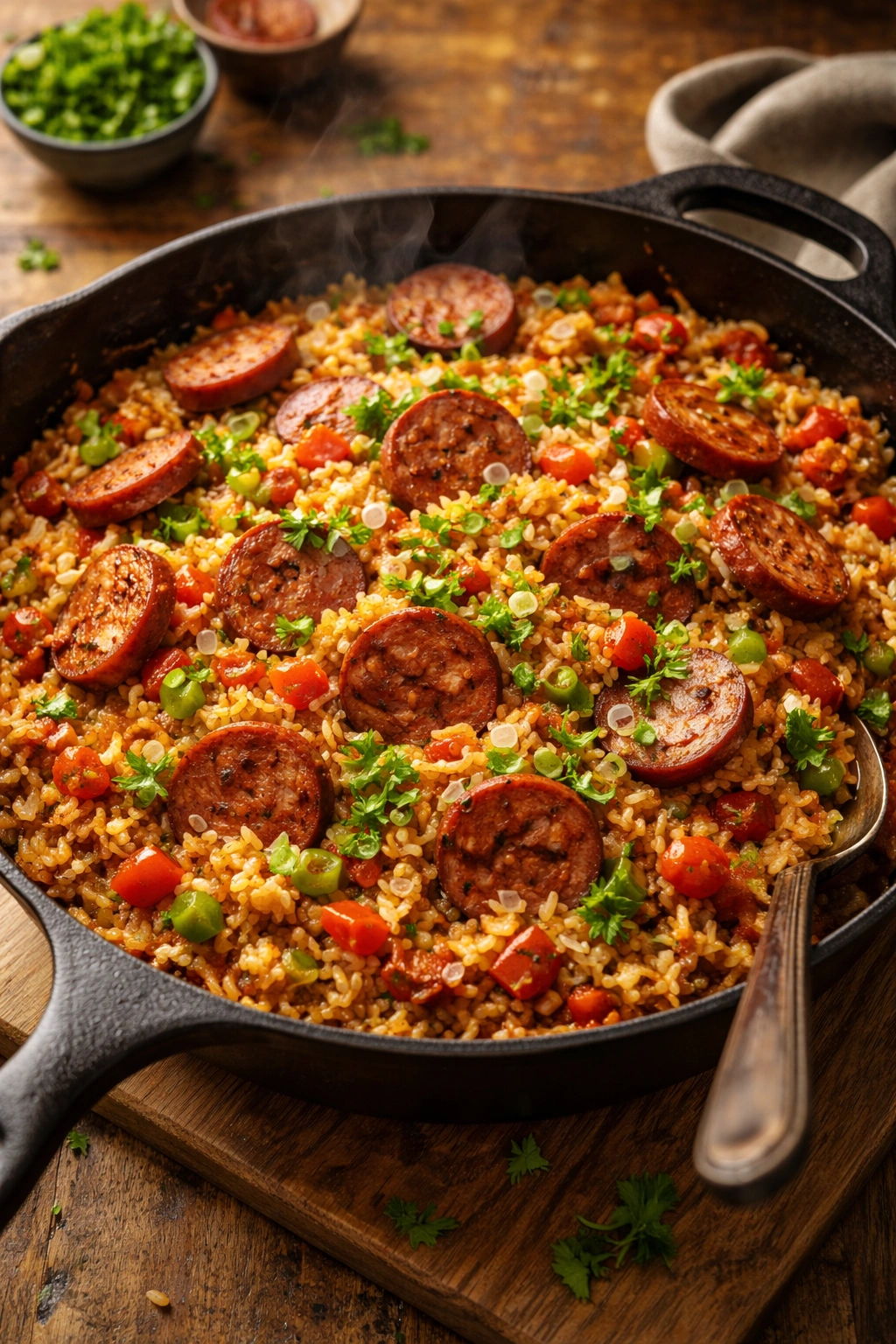
The appeal of this dish starts with the simple fact that everything cooks in a single skillet. No multiple pots, no juggling multiple cooking times, no staring at the stove worrying about whether the rice will finish cooking before the sausage dries out. You brown the sausage, sauté your vegetables, add the remaining ingredients, cover it, and let the oven or stovetop do the work while you handle other tasks.
Clean-up becomes almost laughable. You’re washing one pan instead of the usual collection of dishes that pile up during cooking. For busy parents, working professionals, or anyone who dreads kitchen duty after a long day, this alone is reason enough to make this recipe regularly.
The flavor profile sits in that sweet spot between simple and impressive. It’s Cajun-inspired, which means you get that distinctive combination of spices—smoky paprika, garlic, onion, cayenne—but the recipe doesn’t demand any special technique or chef-level skills. The ingredients are straightforward and available at any grocery store. You’re not hunting for obscure pantry items or specialty products.
Choosing Your Sausage: The Heart of the Dish

The sausage you choose directly determines the personality of this entire meal, so it’s worth thinking through. Andouille sausage is the traditional choice for authentic Cajun flavors—this is a smoked pork sausage that’s been seasoned with garlic, pepper, and spices that make it genuinely distinctive. It brings a smoky depth and a moderate amount of heat that’s perfect for most families. The spice level in andouille tends to be manageable; you’re getting real flavor without it being overwhelming.
If andouille isn’t available in your area or if you prefer a milder option, kielbasa or any smoked pork sausage works beautifully. These tend to be less spicy but still smoky, which is the critical flavor element you’re looking for. The smoke from the sausage seasons the entire dish as it simmers, making it feel far more complex than the simple ingredient list suggests.
For those watching fat intake or dietary preferences, chicken or turkey sausage is an entirely legitimate substitute. You won’t get quite the same depth of flavor, but a quality smoked chicken sausage will still deliver satisfying results. Just make sure whatever sausage you choose is already cooked (most link sausages and kielbasa are)—if you’re using raw sausage, you’ll need to fully cook it before slicing.
The size of sausage pieces matters slightly. Slice your sausage into pieces that are roughly ¼ to ½ inch thick. This creates enough surface area for browning without the pieces becoming too small and disappearing into the rice. When the sausage browns properly, it develops a flavorful crust that carries through the entire dish.
The Cajun Seasoning Blend Explained
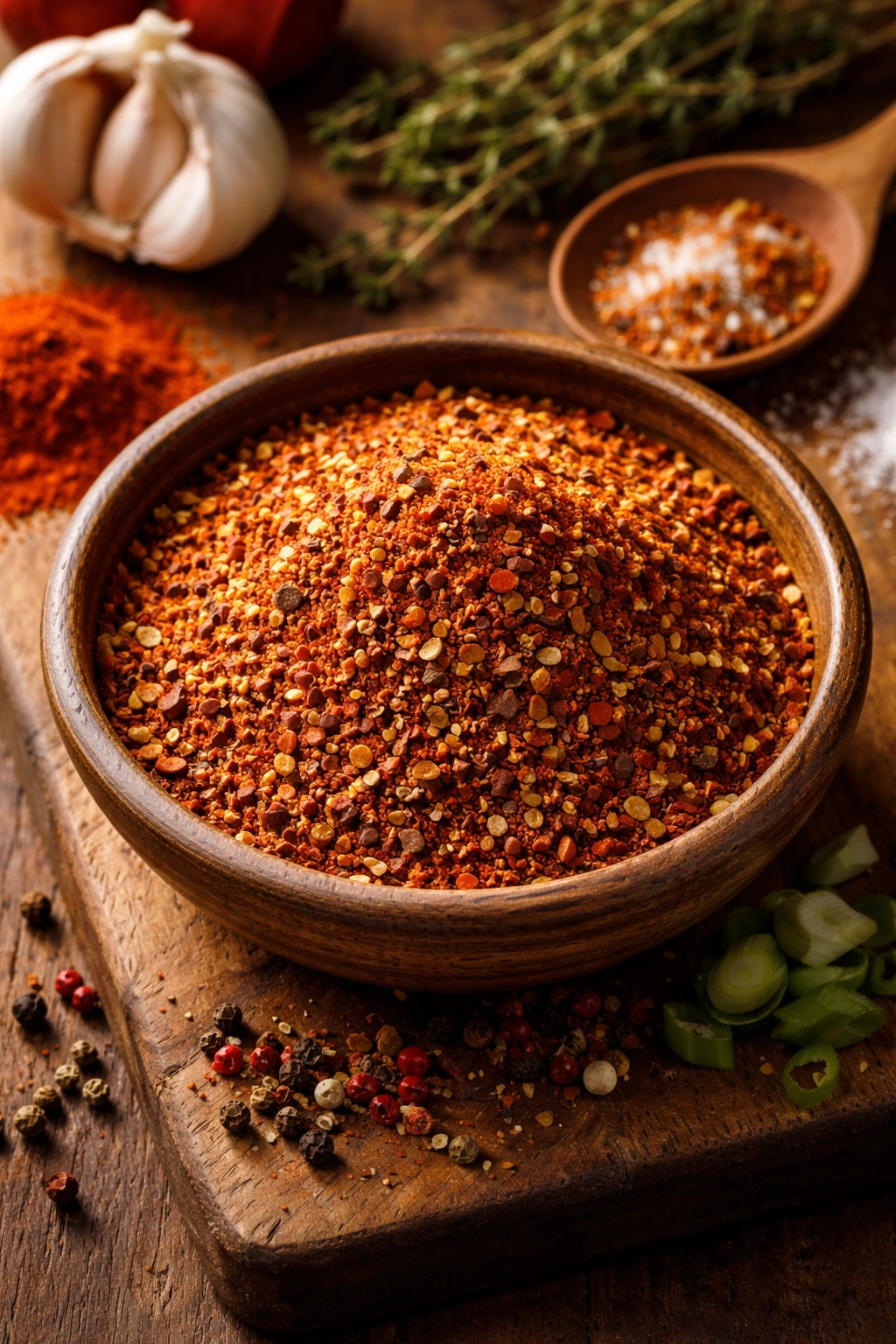
Let’s talk about what makes the seasoning work, because this is genuinely the backbone of the dish. Cajun seasoning is a combination of paprika, garlic powder, onion powder, dried oregano, dried thyme, cayenne pepper, and black pepper in varying proportions depending on who’s blending it. You can buy this as a pre-mixed blend (McCormick and other brands make reliable versions) or make your own from these individual spices.
Store-bought blends are genuinely convenient, but they vary widely in salt content and heat level. Some brands are quite salty, which works here since sausage and broth already add sodium, while others lean spicier. Read your label carefully—if your blend is heavily salted, you’ll use less of it. If it’s spice-forward, adjust downward if you’re cooking for people who prefer milder flavors.
The smoked paprika is worth singling out because it contributes something the other spices don’t: a woodsy, smoky quality that complements the sausage beautifully. If your Cajun blend doesn’t contain smoked paprika, consider adding a pinch of it separately. This one ingredient elevates the entire dish and gives the rice that gorgeous color that makes people think you spent hours cooking.
The cayenne pepper is where most of the heat lives. This is your control point—if you’re making this for mixed spice tolerances, start with less cayenne and taste as you go. You can always add more heat, but you can’t take it out. The recipe works at various heat levels, so don’t feel like you need to match someone else’s spice preference; build it to what your table actually enjoys eating.
Essential Ingredients for Maximum Flavor
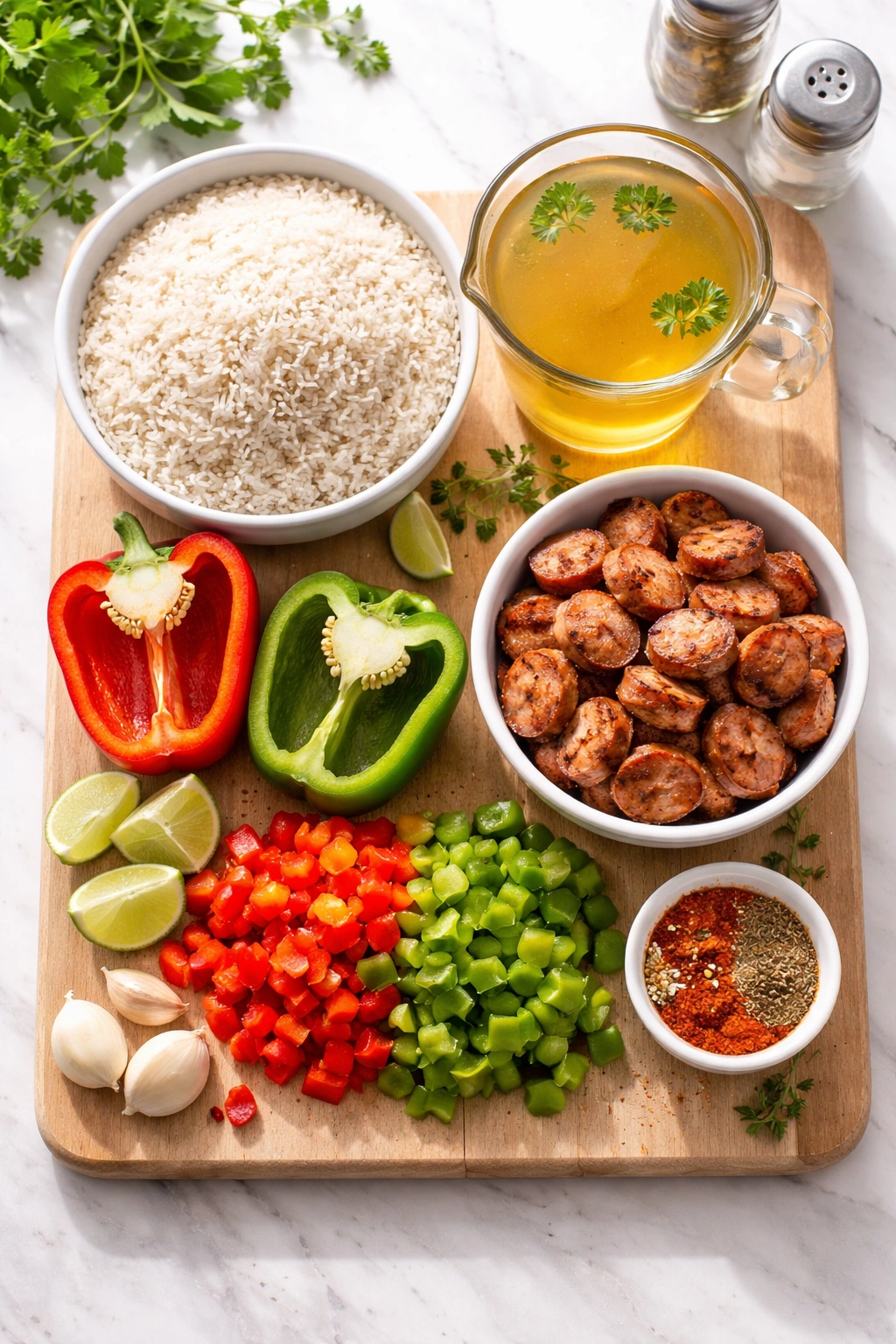
Beyond the sausage and seasonings, you need long-grain white rice—not minute rice, not brown rice, but standard long-grain white rice. Long-grain rice cooks to fluffy, separate grains rather than the clumpy texture you get with shorter grains. The cook time specified in this recipe assumes long-grain white rice; if you substitute another type, you’ll need to adjust both the liquid amount and cooking time.
The liquid you use matters as much as you might think. Chicken broth adds enormous flavor to the rice as it cooks, seasoning each grain from the inside out. You can technically use water, but the result will taste less developed. If you’re using store-bought broth, the low-sodium versions usually work better here because the sausage, Cajun seasoning, and other ingredients already contribute significant salt; you want to be able to taste and control the final salt level rather than having it predetermined.
Bell peppers—whether you use red, green, yellow, or orange—provide both flavor and visual appeal. Each color brings slightly different sweetness levels; red peppers are the sweetest, which creates a nice contrast against the savory sausage and spiced rice. The peppers don’t need to be perfectly diced; as long as they’re roughly bite-sized, they’ll cook appropriately in the time this dish takes.
The onion base is equally important. Yellow or white onions provide a mellow, slightly sweet flavor that doesn’t overpower the other elements. Red onions would work but taste sharper and more assertive—fine if you love them, but less traditional for Cajun cooking.
Fire-roasted or regular canned diced tomatoes add acidity and brightness that balance the richness of the sausage and seasonings. The “with juices” part is important—don’t drain the tomatoes. That liquid contributes to the overall moisture the rice needs to cook properly.
Yield: Serves 4 to 6 | Makes approximately 6 cups
Prep Time: 15 minutes
Cook Time: 30 minutes
Total Time: 45 minutes
Difficulty: Beginner — No special equipment required beyond a large skillet or Dutch oven, and the steps are straightforward enough for anyone to execute successfully, even first-time cooks.
Ingredients
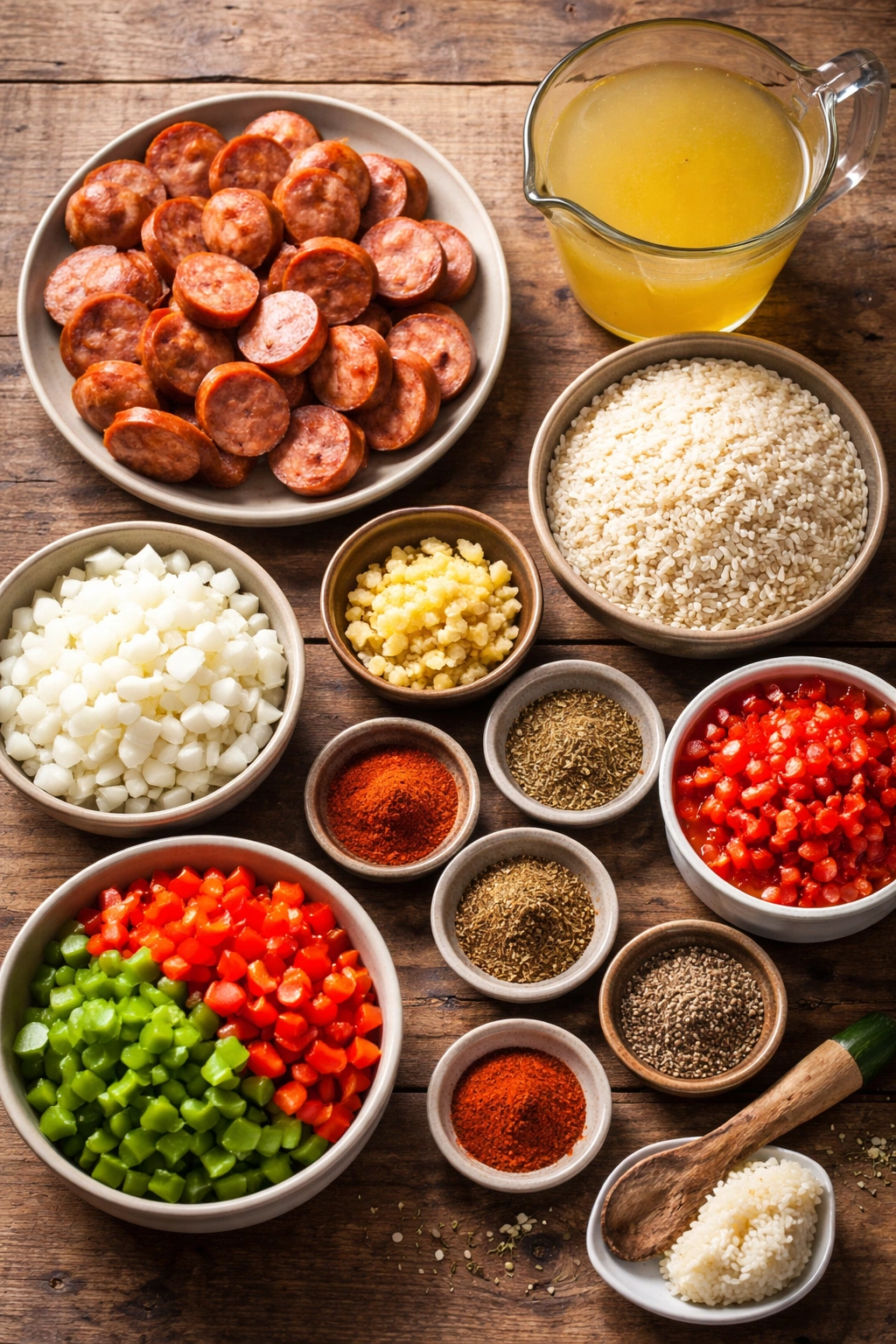
For the Skillet:
- 14 ounces andouille sausage or kielbasa (or any smoked pork sausage), sliced into ¼ to ½-inch thick rounds
- 1 tablespoon cooking oil or butter
- 1 medium yellow onion, diced into roughly ¾-inch pieces
- 1 red bell pepper, seeds and membrane removed, diced into bite-sized pieces
- 1 green bell pepper, seeds and membrane removed, diced into bite-sized pieces (or use any color combination you prefer)
- 3 cloves fresh garlic, minced
- 1 teaspoon smoked paprika
- ½ teaspoon dried oregano
- ½ teaspoon dried thyme
- ¼ teaspoon garlic powder
- ¼ teaspoon onion powder
- ⅛ teaspoon cayenne pepper (reduce this if you prefer less heat, or increase for more spice)
- ⅛ teaspoon freshly cracked black pepper
- 1 can (15 ounces) fire-roasted diced tomatoes with juices, or use regular diced tomatoes
- 1 cup long-grain white rice (uncooked)
- 1½ cups low-sodium chicken broth
- 2 green onions, sliced into thin rounds, for garnish
- Fresh parsley or cilantro, chopped, for garnish (optional but recommended)
- Salt and additional Cajun seasoning to taste
Step-by-Step Instructions
Prepare Your Ingredients:
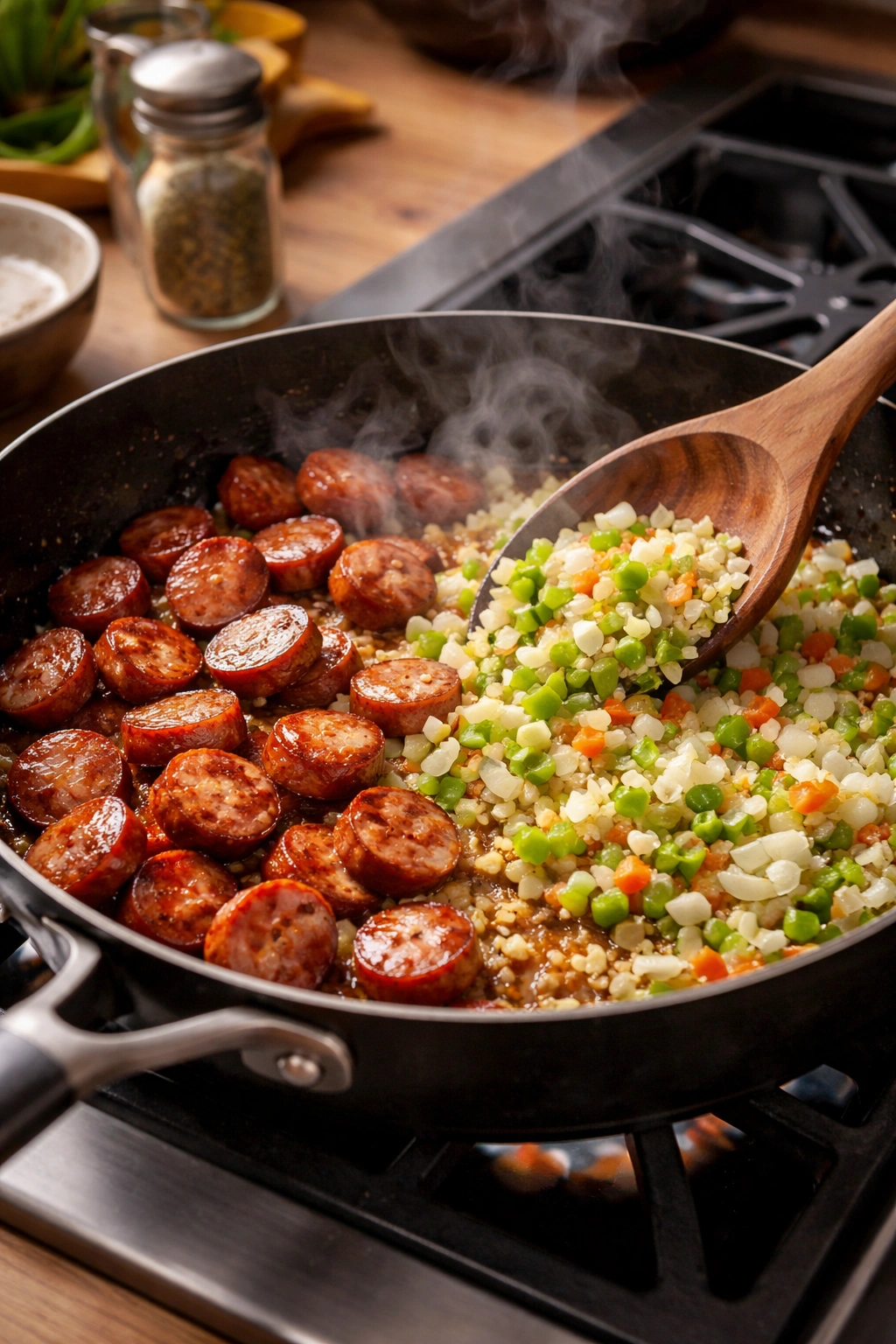
- Slice the sausage into ¼ to ½-inch thick medallions. Dice the onion and bell peppers into pieces roughly ¾ inch across. Mince the fresh garlic. Have all of these ready before you start cooking—this is a quick-moving recipe once heat is applied, and you’ll want everything within arm’s reach.
Brown the Sausage:
-
Heat 1 tablespoon oil or butter in a large, deep skillet (12-inch cast iron or stainless steel works perfectly) over medium-high heat. Once the oil shimmers and is hot, add the sliced sausage in a single layer without crowding the pan—work in batches if necessary.
-
Cook the sausage for 3 to 5 minutes, stirring occasionally, until the edges are well-browned and the sausage is caramelized on both sides. Don’t worry if brown bits stick to the bottom of the skillet—this is flavorful browned material (called fond) that will dissolve into the rice and season everything beautifully. Once browned, remove the sausage to a clean plate and set aside.
Build the Aromatic Base:
-
To the same skillet (don’t wash it—those browned bits are flavor gold), add the diced onion and bell peppers. Cook over medium heat, stirring occasionally, for 4 to 5 minutes, until the vegetables are beginning to soften and the peppers have lost some of their raw crispness. You’re looking for the vegetables to be tender but still slightly firm—not fully cooked yet.
-
Add the minced garlic and cook for 30 to 60 seconds more, stirring constantly, until the garlic becomes fragrant. You’ll smell it unmistakably when it’s ready—that’s your signal to move to the next step before it burns.
Toast the Spices:
- Add the smoked paprika, dried oregano, dried thyme, garlic powder, onion powder, cayenne, and black pepper to the skillet with the vegetables. Stir constantly for about 1 minute. This toasting step awakens the spices and distributes their oils throughout the pan, preventing them from tasting raw or dusty in the finished dish.
Build the Cooking Liquid:
- Pour in the canned tomatoes with their juices, the uncooked rice, and the chicken broth. Add the browned sausage back to the skillet. Stir everything together thoroughly, making sure to scrape up all of the browned bits from the bottom of the skillet—this is crucial both for flavor and to prevent sticking.
Simmer the Rice:
-
Increase the heat to medium-high and bring the liquid to a rolling boil. You’ll see large bubbles breaking the surface steadily. Once it’s boiling, place a tight-fitting lid on the skillet.
-
Reduce the heat to low and allow the rice to simmer gently for 20 minutes. Resist the urge to lift the lid and stir—each time you open the lid, you release steam and extend the cooking time. Trust the process. The rice absorbs the liquid as it cooks, and the low heat ensures nothing sticks to the bottom.
Rest and Finish:
-
After 20 minutes of simmering, remove the skillet from the heat. Keep the lid on and let the rice rest for an additional 5 minutes. This resting period allows any remaining liquid to be fully absorbed and lets the flavors settle.
-
Remove the lid carefully (watch out for the steam). Using a fork, gently fluff the rice by stirring from the bottom of the skillet upward, redistributing the sausage and vegetables throughout.
Advertisements -
Taste the rice and add salt or additional Cajun seasoning if needed. Top with sliced green onions and fresh chopped parsley or cilantro. Serve immediately while hot, as the rice will gradually firm up and lose some of its appeal as it cools.
Pro Tips for Perfect Results Every Time
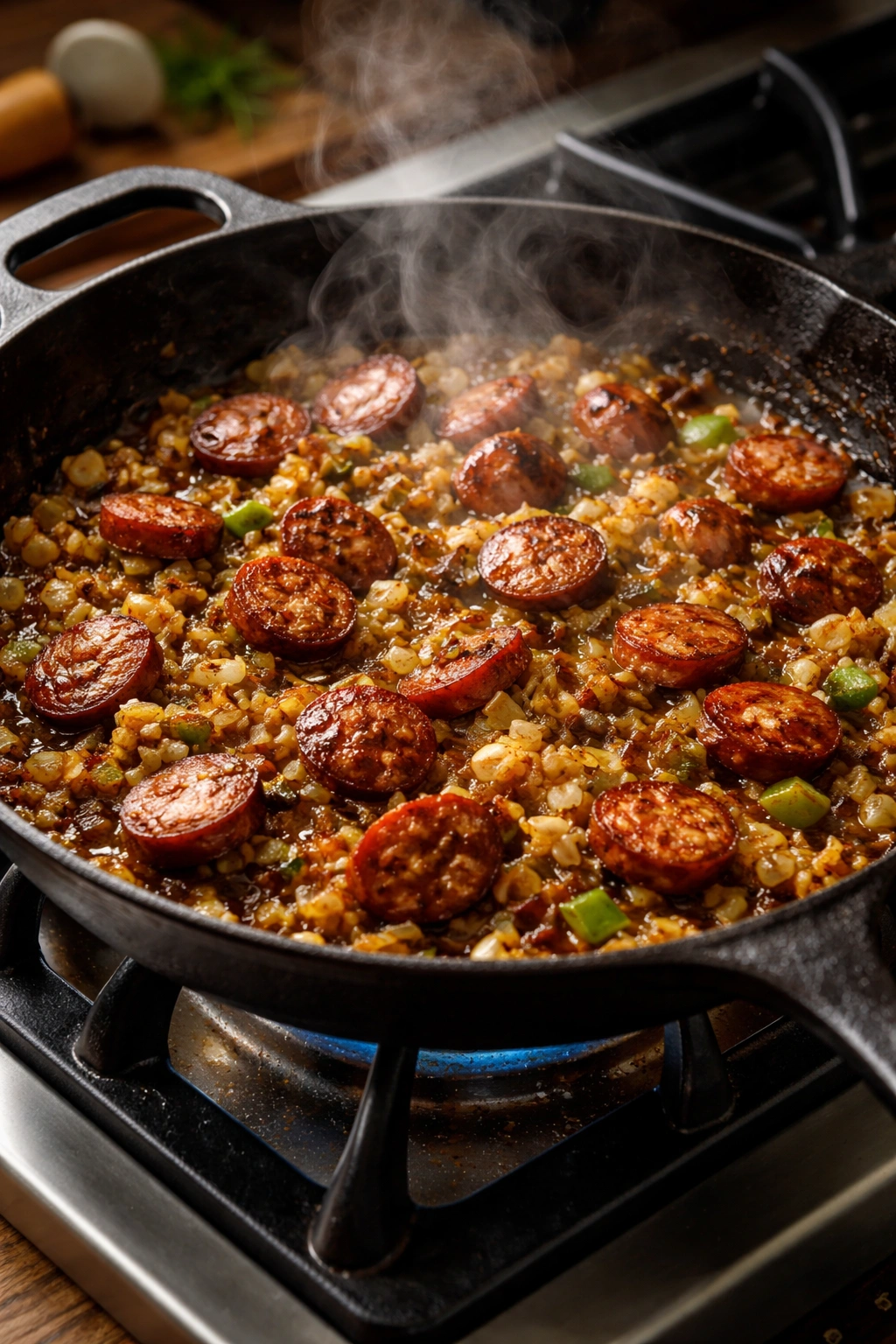
Don’t skip the browning step. The time you spend browning the sausage and getting color on the vegetables isn’t optional—it’s where the depth of flavor comes from. When proteins and vegetables brown, they develop complex flavors through the Maillard reaction that boiling alone cannot create. Rush this step and the finished dish will taste thin and one-dimensional.
Scrape the fond from the bottom of the skillet. After you add the tomatoes and broth, take a moment to really scrape the brown bits sticking to the bottom of the skillet. Use a wooden spoon or spatula and work at it until you see the fond dissolve into the liquid. This isn’t burnt material—it’s concentrated flavor, and it makes an enormous difference in the final taste.
Use the right amount of salt. Sausage, Cajun seasoning, and chicken broth all contribute sodium. Taste before you add more salt. Many home cooks over-salt this dish because they’re used to adding salt by habit, not by tasting. The recipe doesn’t call for added salt in the initial cooking because of these other sources, but individual tastes vary. Taste and adjust at the very end when you can tell if you actually need more.
Keep the heat low during simmering. High heat can cause the rice on the bottom to burn and stick. The goal is a gentle simmer—steam rising steadily from under the lid, not an aggressive boil. If you’re hearing constant bubbling or seeing steam pouring out from under the lid, your heat is too high.
Let the rice rest after cooking. Five minutes doesn’t sound like much, but this resting period is when the rice finishes absorbing residual moisture and the grains relax into their fluffiest texture. Skip this and you’ll serve rice that’s slightly wetter or grainier than it should be.
Make sure your skillet has a tight-fitting lid. If your lid doesn’t seal well against the pan, steam escapes, and you’ll end up with undercooked rice and excess liquid. If your skillet doesn’t have a matching lid, cover it tightly with heavy-duty aluminum foil before reducing the heat.
Variations to Keep Things Interesting
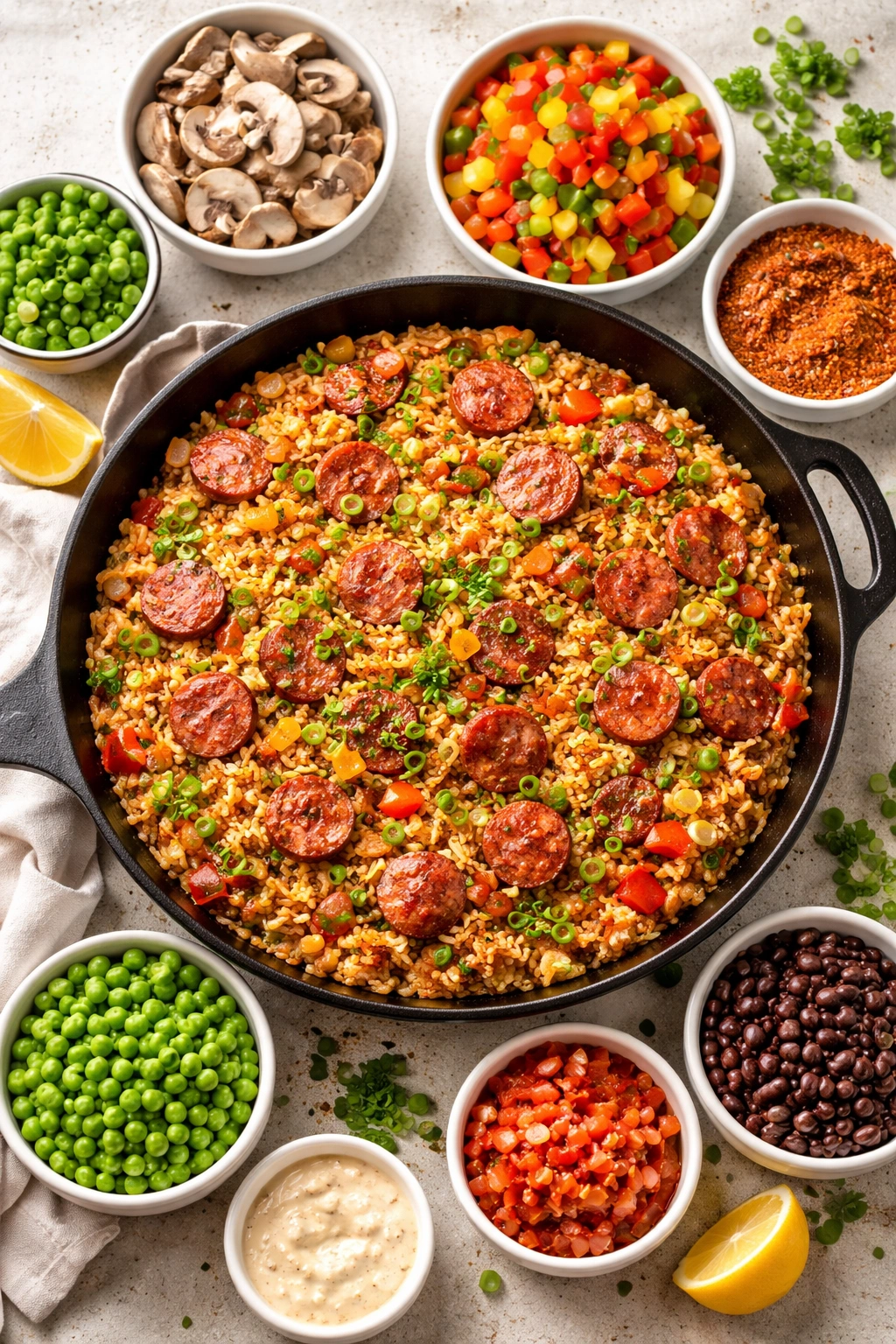
Add vegetables and legumes for extra substance. This dish is endlessly adaptable. Consider adding diced mushrooms alongside the peppers, a handful of frozen peas stirred in during the last few minutes of cooking, or even a can of drained black beans or kidney beans mixed in with the rice. The beauty of this skillet is that it absorbs add-ins naturally.
Make it creamy. For a richer version, stir in ½ cup of cream or half-and-half during the last minute of cooking, along with ¼ cup grated Parmesan cheese. This transforms the dish into something more indulgent and works particularly well if you’re using kielbasa instead of spicy andouille.
Swap the sausage for different flavors. Instead of andouille, try Italian sausage seasoned with basil and oregano for a completely different flavor profile, or use a milder smoked sausage if you’re feeding kids or people who prefer less spice. You could even use cooked shrimp stirred in at the very end if you want a seafood version.
Adjust the heat level. For a milder version, use kielbasa instead of andouille and reduce the cayenne to a pinch or omit it entirely. For more heat, use spicy andouille and add an extra pinch of cayenne, or serve with hot sauce at the table so people can add as much as they want.
Use different broth or add tomato paste. Vegetable broth works perfectly if you want a vegetarian version (just increase the vegetables and consider adding beans). For deeper tomato flavor, reduce the broth slightly and add 2 tablespoons of tomato paste along with the other seasonings.
Storage and Reheating Your Leftovers
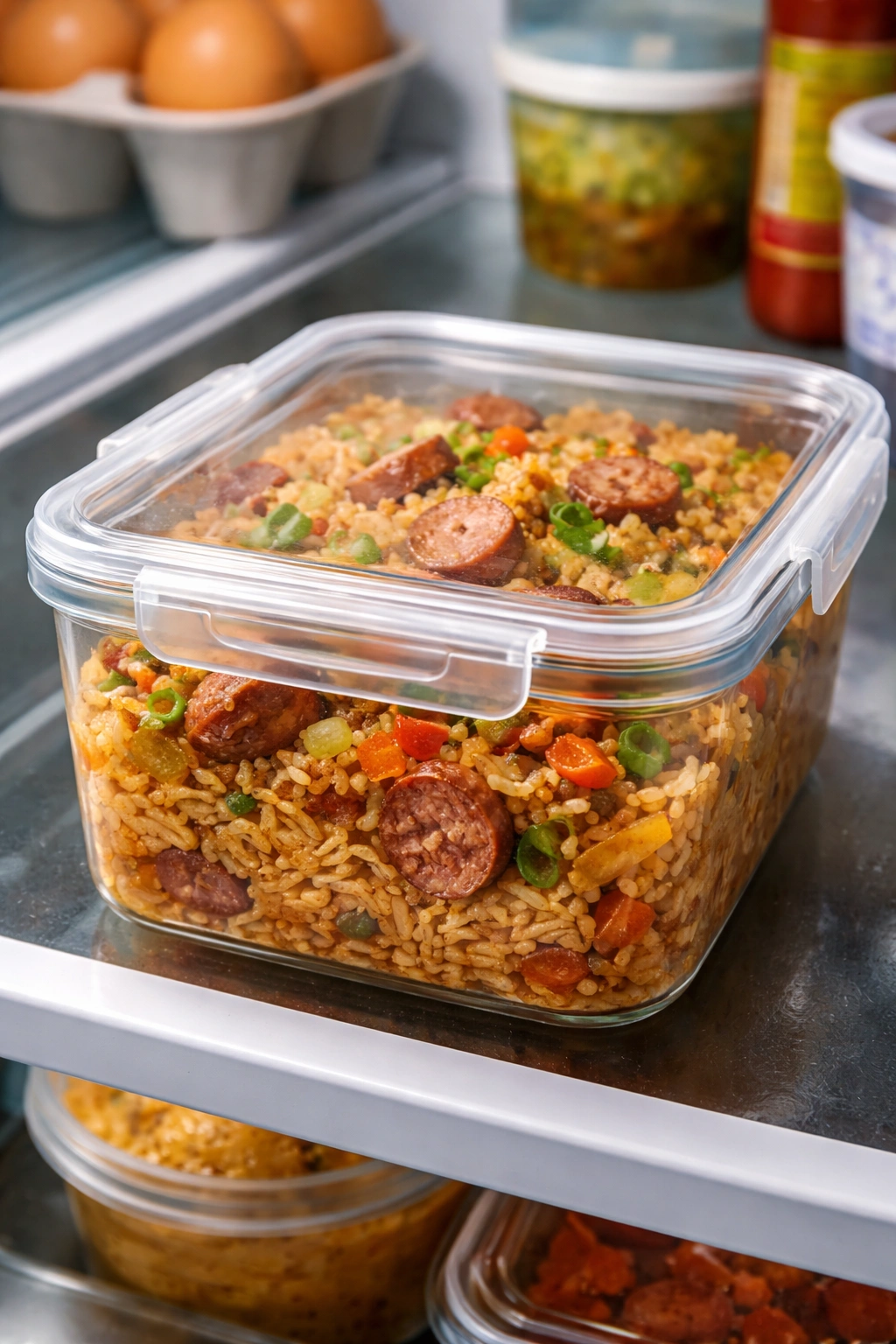
This dish is genuinely one of those recipes that tastes even better the next day as the flavors continue to develop and meld. Store any leftovers in an airtight container in the refrigerator for up to 4 days. The rice keeps its texture surprisingly well compared to other rice dishes.
For reheating on the stovetop: Heat the skillet over medium heat and add a splash of chicken broth or water—just a few tablespoons—to add back moisture that the rice naturally loses during storage. Stir occasionally until everything is warmed through, which typically takes 5 to 8 minutes. This method preserves the texture better than other reheating options.
For reheating in the microwave: Transfer a portion to a microwave-safe container, add a tablespoon of broth or water, cover loosely (so steam can escape gradually), and heat for 60 to 90 seconds, stirring halfway through. This works quickly when you’re in a hurry, though the stovetop method produces slightly better results.
Freezing for future meals: This recipe freezes beautifully for up to 3 months. Cool the dish completely, then divide into individual portions in freezer-safe containers or bags. When you’re ready to eat it, thaw overnight in the refrigerator and reheat using either of the methods above. This is brilliant meal prep for people who like having emergency dinners on hand.
Best Sides and Serving Suggestions
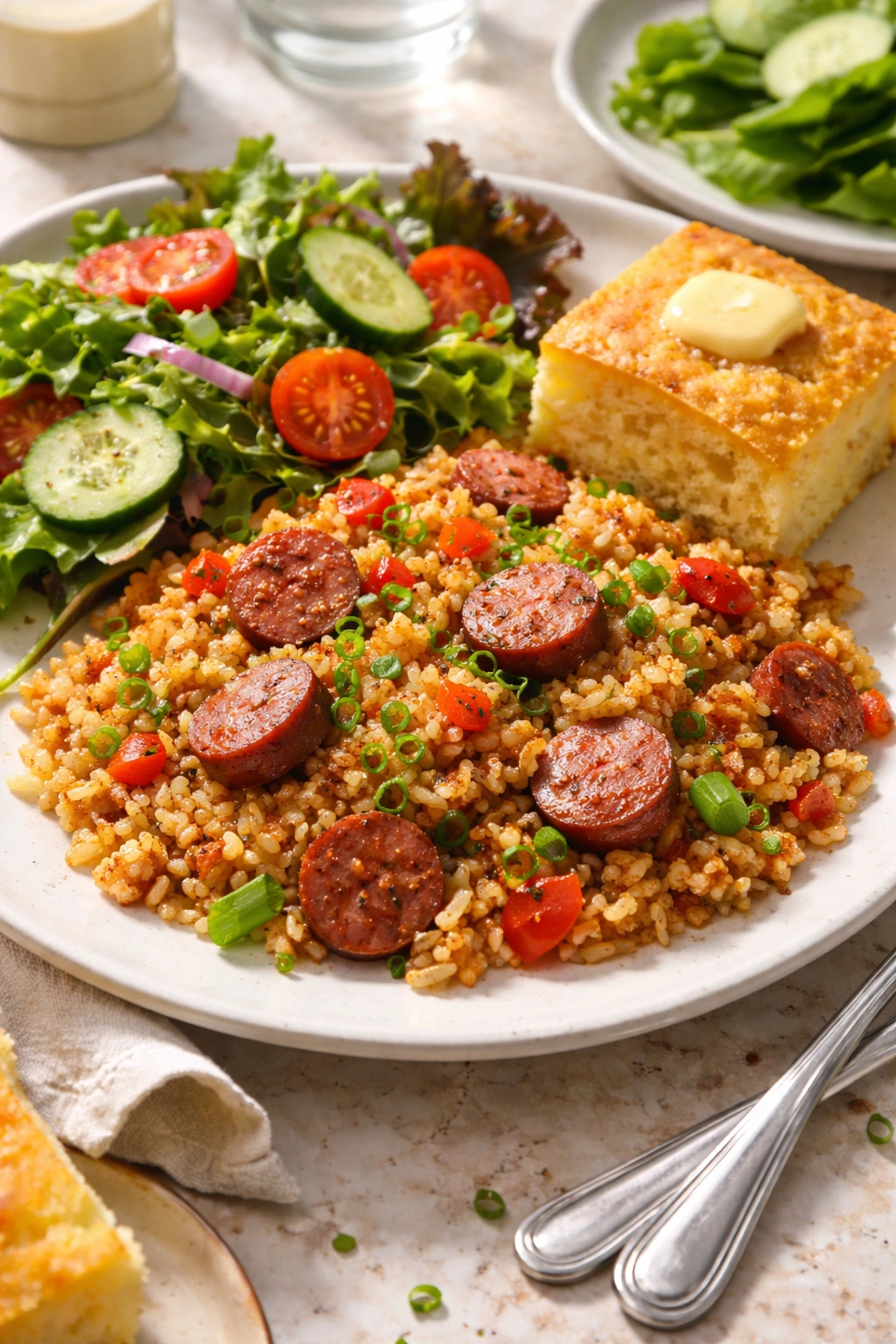
This dish is genuinely complete as a meal on its own—you’ve got protein from the sausage, carbohydrates from the rice, and vegetables already incorporated. But a few simple sides round out dinner beautifully without much extra effort.
A simple green salad dressed with vinaigrette cuts through the richness of the sausage and rice, adding brightness and contrast. Toss together mixed greens, a bright vinaigrette (lemon juice or vinegar with olive oil), and maybe some sliced red onion. Takes five minutes, transforms the meal.
Fresh corn bread or cornbread muffins pair wonderfully with the Cajun flavors. The slight sweetness and crumbly texture complement the savory rice and spiced sausage. If you don’t have time to bake, bakery cornbread from your grocery store’s bread section works perfectly.
Steamed or roasted vegetables on the side add color and nutritional balance. Roasted zucchini, steamed broccoli, or a simple slaw all work well. The vegetables let the rice and sausage be the stars while still creating a balanced plate.
Sliced fresh fruit—grapes, apple slices, or orange segments—provides a light finishing touch that people often appreciate, especially if the meal felt quite savory and rich.
Hot sauce on the table allows people to adjust spice to their own preference. Some family members might want it milder, while others enjoy adding additional heat at the table. This approach keeps everyone happy.
Why This Dish Becomes a Weeknight Staple
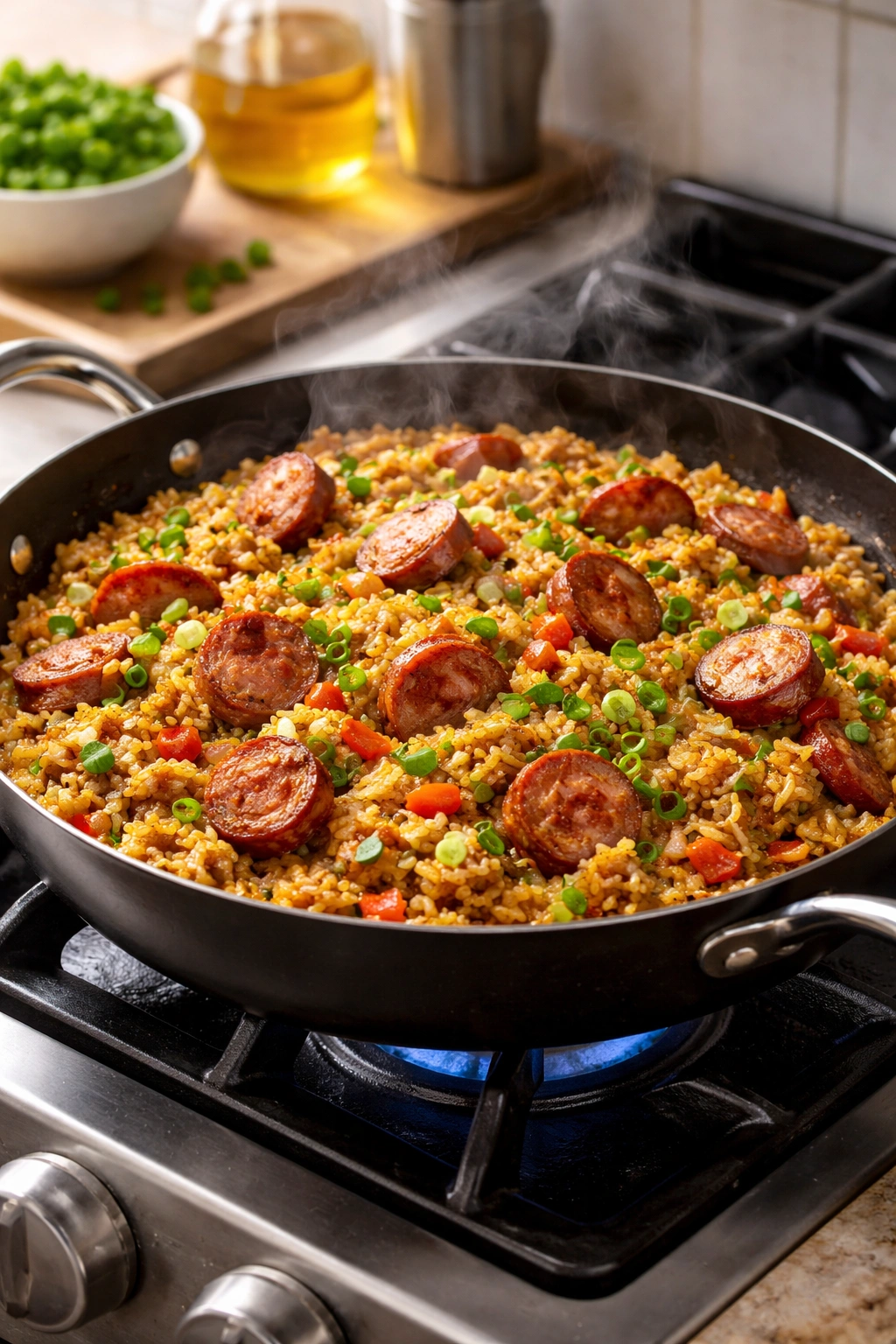
One-skillet cooking is genuinely revolutionary for busy people. What sounds like a small thing—using only one pan—actually changes everything about how dinner flows. You’re not managing multiple pots at different stages, you’re not constantly checking on something simmering while something else bakes. Everything cooks together, and you can step away from the stove for most of the cooking time.
The flavor payoff for minimal effort is what really makes this recipe sticky in people’s regular rotation. This doesn’t taste quick. Someone eating this would assume you spent considerably more time cooking than you actually did. The Cajun seasoning profile, the browned sausage, the vegetables that have softened and absorbed flavors—it all tastes deliberate and carefully made.
The cost per serving is remarkably low. Sausage, rice, and basic vegetables don’t represent an expensive grocery list, yet the dish impresses. This matters immensely for families cooking on a budget or anyone wanting to prepare nourishing food without premium ingredients.
The adaptability keeps it from becoming boring even if you make it regularly. You can change the sausage, adjust the vegetables, modify the spice level, add beans, make it creamy—every version tastes distinct enough that it doesn’t feel repetitive even if you’re cooking it multiple times a month.
Final Thoughts
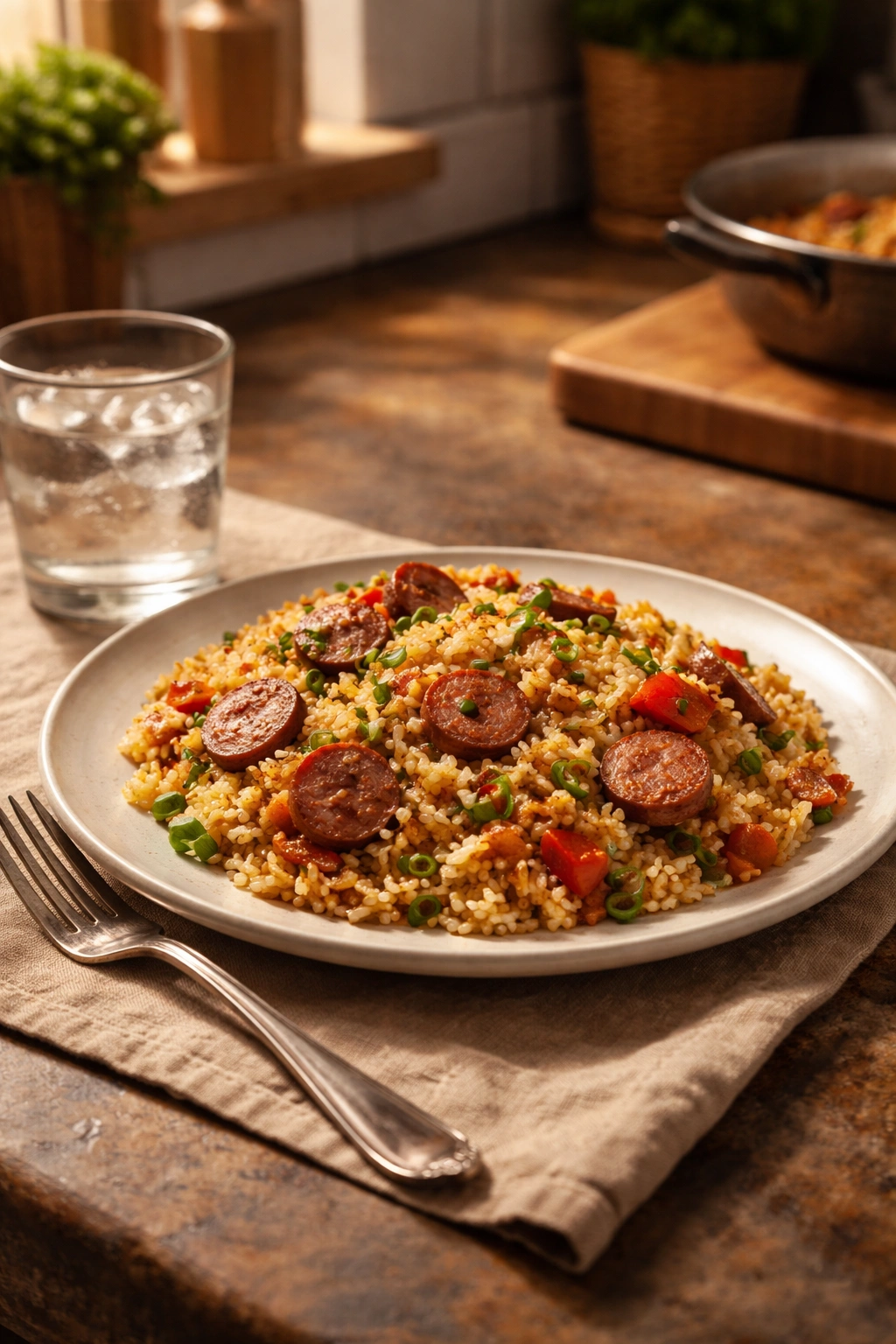
Cajun rice with sausage has earned its place at the top of the weeknight dinner rotation for genuinely good reasons. It’s quick, flavorful, adaptable, and genuinely impressive despite being straightforward enough for anyone to execute. The beauty of this recipe is that it respects your time while refusing to compromise on taste, delivering a complete meal that satisfies without requiring a complicated technique or obscure ingredients.
This is the kind of recipe you’ll return to countless times—once in a while as a regular rotation dinner, but increasingly often as you discover how easily it accommodates your family’s preferences and what you have on hand. Keep sausage in your freezer and rice in your pantry, and you’ve always got the foundation for a dinner that’s ready in less time than it would take to order takeout. That’s powerful simplicity, and it’s the whole reason this dish endures.
