



The weekday lunch struggle is real. You want something fresh, satisfying, and genuinely exciting—not another sad desk salad or tired sandwich. Enter the poke bowl: a Hawaiian-inspired meal that feels restaurant-quality but comes together in minutes at home. What makes poke bowls exceptional for lunch isn’t just their vibrant flavors or beautiful presentation. It’s that they tick every box a busy person needs during the workweek. They’re naturally healthy, infinitely customizable, require no cooking skills, pack beautifully for transport, and honestly taste better than most takeout options. Most importantly, they transform lunch from something you tolerate into something you actually crave.
The magic of building your poke bowl at home is complete control—over freshness, flavors, portions, and cost. A restaurant bowl costs fifteen to twenty dollars and often arrives at your table with yesterday’s rice or overly generous amounts of mayo. Your homemade version costs half that, tastes fresher, and reflects exactly what you want to eat. Whether you’re meal prepping for the entire week or assembling a bowl the morning you plan to eat it, poke bowls work beautifully with realistic schedules. This guide walks you through everything you need to build a poke lunch that’s genuinely fresh, incredibly easy, and worlds better than what you’d order.
Why Poke Bowls Are Perfect for Weekday Lunch
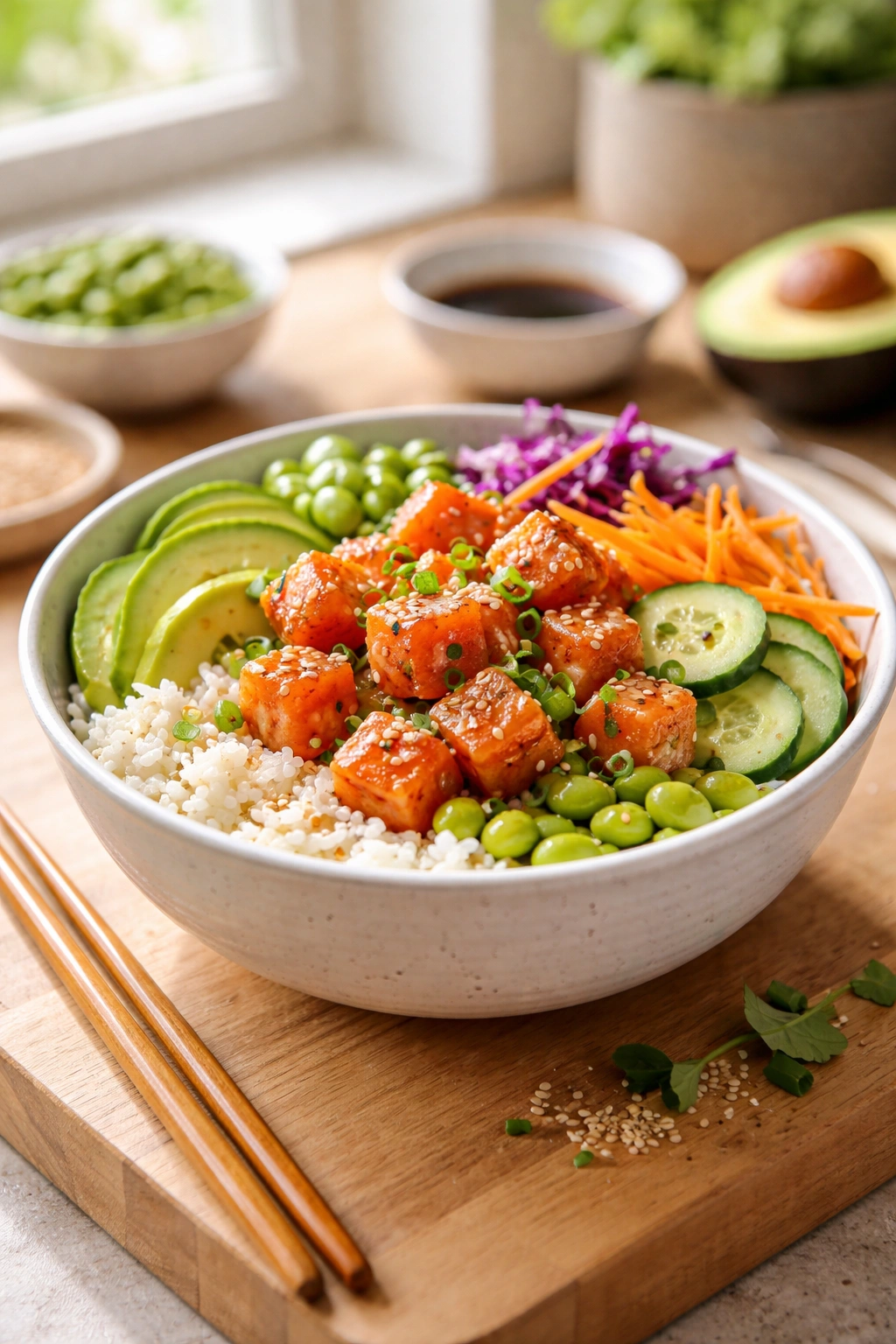
Poke bowls hit the sweet spot between effort and reward in a way few meals can match. You’re not standing over a stove or juggling multiple cooking steps while getting ready for work. The entire assembly happens in your kitchen (or even at your desk if components are prepped) with zero cooking required. Mix marinated fish with rice, arrange vegetables, drizzle sauce, and you’re done.
The freshness factor is another game-changer. Unlike cooked leftovers that deteriorate over three days in the fridge, poke bowls actually stay vibrant and delicious when components are stored separately and assembled just before eating. The contrast of cold fish, warm or room-temperature rice, crisp vegetables, and creamy avocado creates textural interest that keeps every bite engaging—not the monotonous mush of reheated chicken and rice.
Nutritionally, poke bowls are legitimately impressive. You’re getting omega-3 fatty acids from quality fish, whole grains or vegetables as your base, plenty of fiber from toppings, and healthy fats from avocado and sesame oil. This isn’t a meal that leaves you crashed and hungry at 3 PM. It sustains you through the afternoon with real nutrition and satisfying protein. The built-in flexibility means you can easily adjust for any dietary preferences—vegetarian, gluten-free, low-carb, or high-protein.
What Makes a Great Poke Bowl at Home
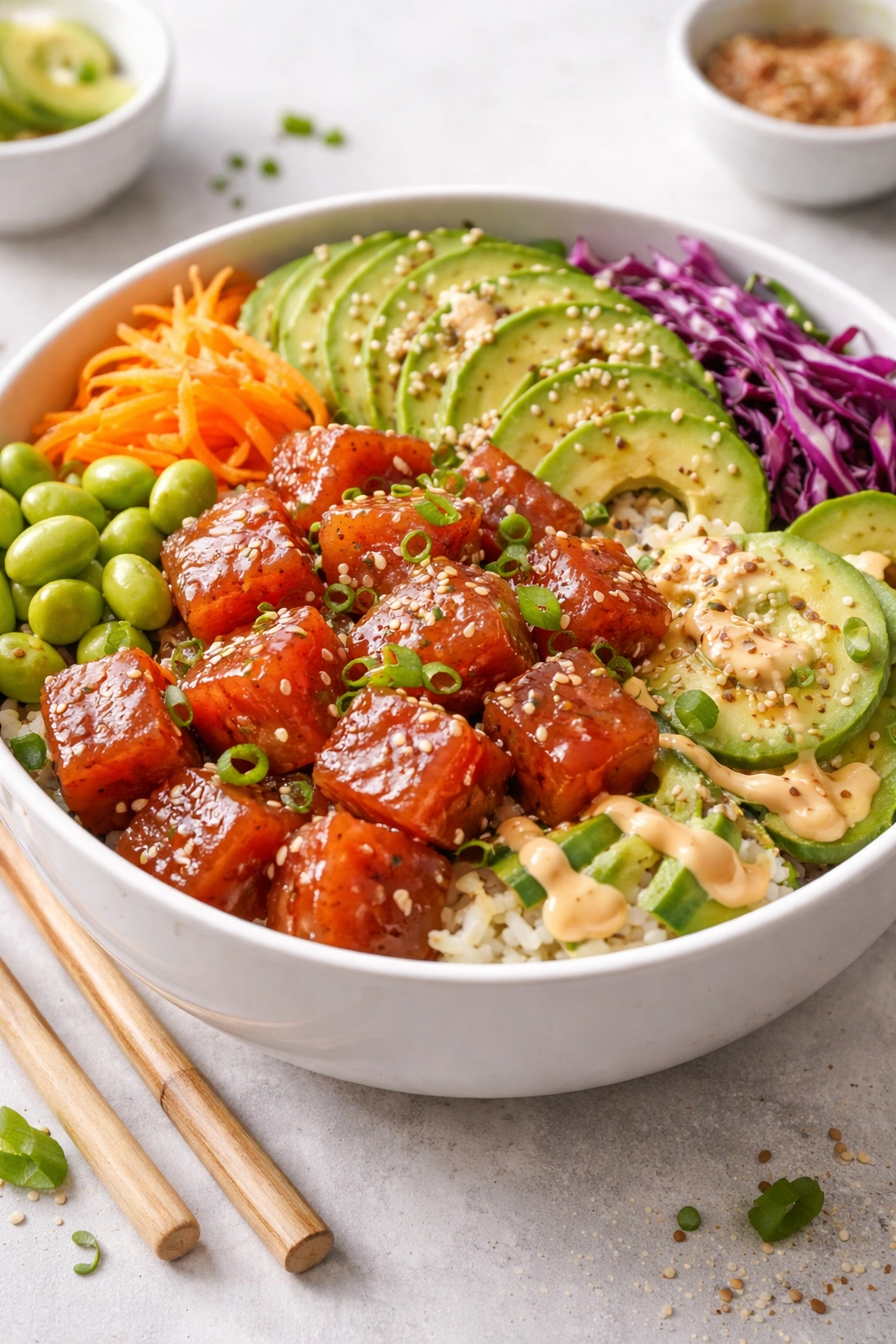
The difference between a mediocre poke bowl and an exceptional one comes down to a few non-negotiable fundamentals. First is the quality of your fish. You genuinely cannot skip on this—sushi-grade fish isn’t just a fancy label, it’s a food-safety requirement when eating raw. Second is balance. The best poke bowls hit multiple flavor notes (salty, sweet, savory, bright) and multiple textures (soft, crunchy, creamy) in the same bowl. Third is respecting the components. Don’t drown your perfectly good fish in sauce or cook your rice so it’s mushy. Each element should enhance the others without overpowering.
The foundation of a great bowl isn’t complicated, but it does require intentionality. You need a flavorful base (rice or greens), quality protein that’s been marinated just enough to be interesting but not so long that it falls apart, fresh vegetables that add crunch and brightness, healthy fats that make the bowl feel satisfying, and sauce that ties everything together without drowning the other flavors. When these elements are in proportion and made with care, you end up with something that genuinely tastes like you spent considerable effort—even though you didn’t.
The Role of Temperature Contrast
One detail most home cooks miss is the temperature contrast that makes poke bowls so craveable. Warm or room-temperature sushi rice topped with cold marinated fish and fresh chilled vegetables creates a sensory experience that engages your palate. If everything is cold (a common mistake), the bowl feels less dynamic. If everything is warm, it loses the refreshing quality that makes poke special. This is why serving your rice warm and keeping your fish and vegetables properly chilled matters more than you’d think.
How Marination Time Affects Your Bowl
The fish shouldn’t sit in its marinade for hours. Fifteen to twenty minutes is ideal—enough time for flavors to meld without the acid in the dressing “cooking” the fish and changing its texture. Longer marinades can make the outside of your fish mushy while the inside stays firm, creating an inconsistent bite. If you’re prepping on Sunday for Wednesday’s lunch, marinate the fish separately from other components and combine them only on the morning you plan to eat. This keeps everything fresh and prevents texture degradation.
Selecting Sushi-Grade Fish (The Key Ingredient)
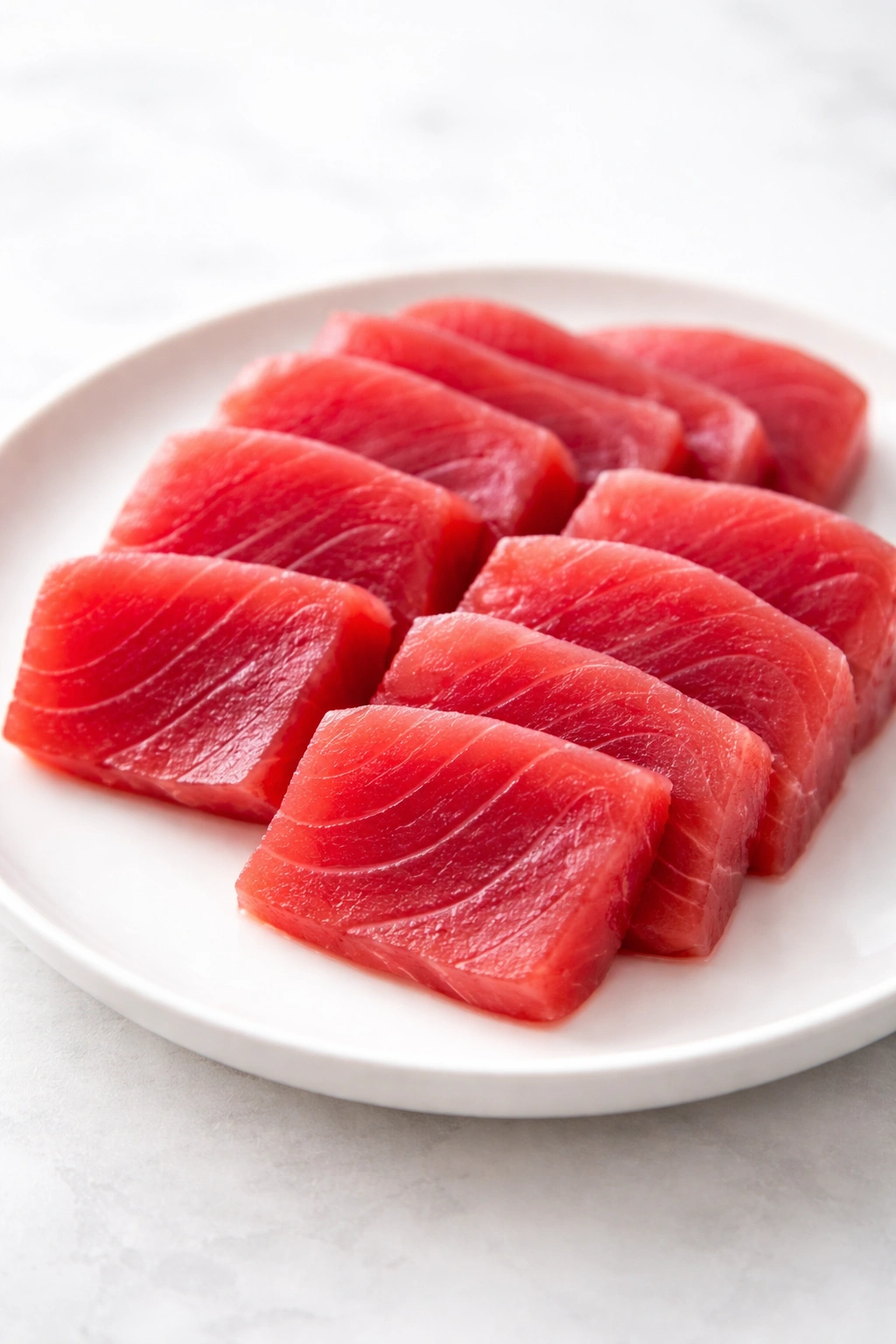
The single most important ingredient in your poke bowl is the fish itself. This isn’t where you save money or compromise. Sushi-grade fish is specifically handled, frozen, and tested to be safe for raw consumption. It’s not just “fresh-looking” fish from the regular counter—it’s been through specific protocols that make it safe to eat raw.
Where you buy matters significantly. Quality seafood markets, specialty grocery stores, and Japanese markets are your best bets. Ask your fishmonger directly for sushi-grade ahi tuna or salmon. They’ll know what you need and can tell you exactly when it arrived. If they seem confused about what sushi-grade means or can’t guarantee freshness, go somewhere else. Don’t try to buy fish from a regular supermarket counter and hope it’s sushi-grade—that gamble isn’t worth it.
Ahi tuna is the traditional choice and for good reason. It has a buttery, delicate flavor that pairs beautifully with the marinade without being overwhelmed. The texture is tender and clean. Look for deep red or pink color without brown spots or discoloration. The flesh should smell like the ocean—clean and briny, never fishy or off. If something smells weird, don’t buy it.
Salmon as Your Alternative
Sushi-grade salmon works beautifully if you prefer it or if ahi isn’t available. Salmon has a richer, fattier flavor than tuna, which some people prefer. The color should be a vibrant orange-pink without any grayish tones. Salmon has a slightly different mouthfeel than tuna—silkier and more buttery—which creates a different but equally delicious bowl.
Storage and Safety
Keep your fish on ice until the absolute moment you’re ready to use it. If you’re buying it the same day, keep it in the coldest part of your fridge and use it within hours. Because raw fish is involved, food safety isn’t something to be casual about. When in doubt, ask your fishmonger about the exact date the fish arrived and when it should be used by. They’re invested in your safety and satisfaction.
Rice Bases: From Sushi Rice to Creative Alternatives
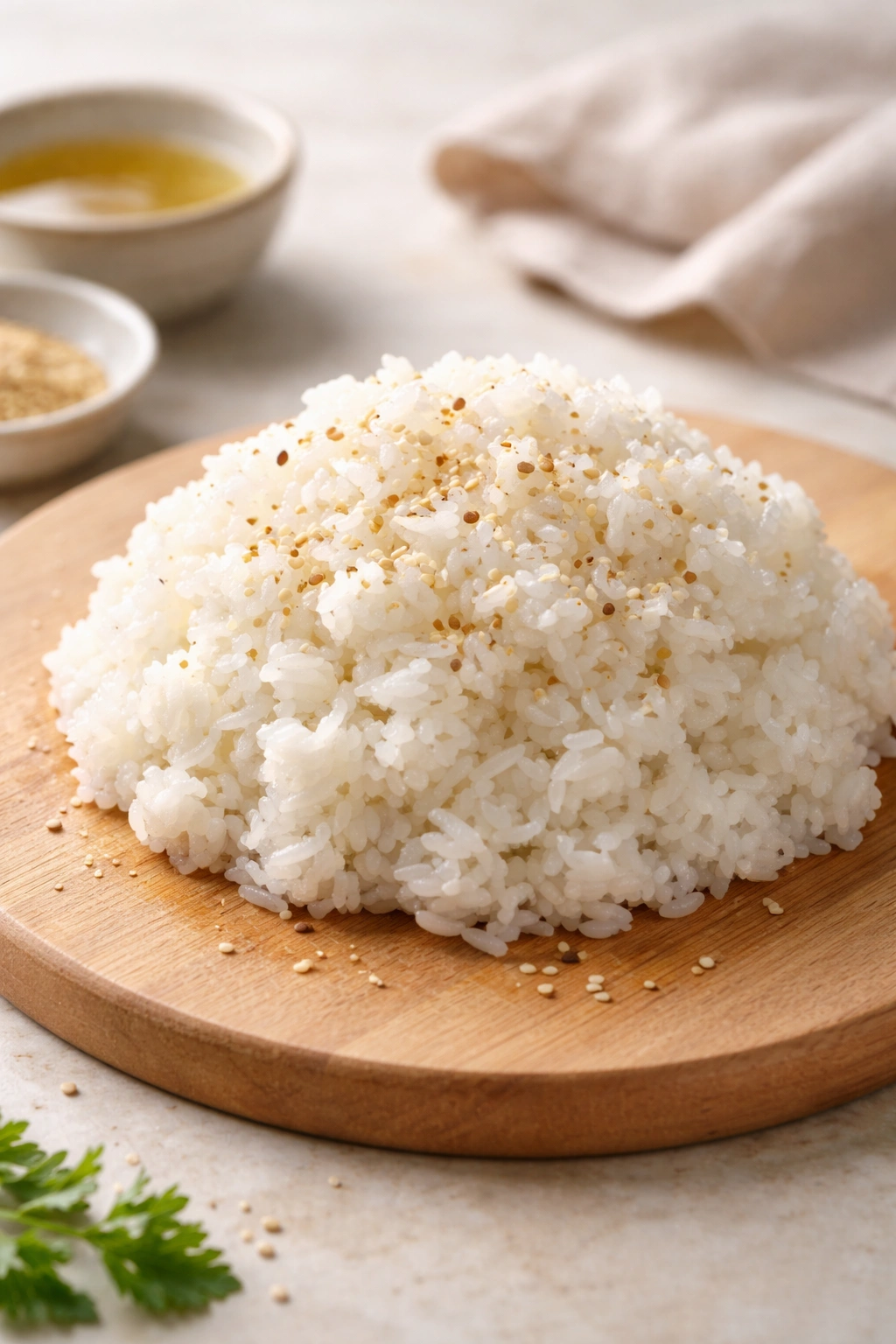
Traditional sushi rice is sticky, flavorful, and provides the perfect foundation for poke. It’s made with white short-grain rice that’s seasoned with rice vinegar, sugar, and salt. The stickiness helps the rice hold together and gives the bowl a cohesive structure. If you don’t have a rice cooker, you can easily cook sushi rice on the stovetop—rinse it under cold water until the water runs mostly clear, then cook with a 1:1.1 water-to-rice ratio until tender.
Season your cooked rice with a mixture of rice vinegar (about 1 tablespoon per cup of cooked rice), a pinch of salt, and a tiny bit of sugar. This is what transforms plain white rice into something that actually tastes like it belongs in a poke bowl. The seasoning makes all the difference and takes thirty seconds.
Brown Rice for Heartier Bowls
If you want to make your bowl higher in fiber and more sustaining, brown rice works perfectly. Use a 1:1.25 water-to-rice ratio and cook for about 45 minutes (much longer than white rice). Brown rice has a nuttier flavor and slightly chewy texture that pairs well with poke. You’ll still want to season it lightly with rice vinegar and salt. Brown rice creates a more rustic, less refined-looking bowl, but the flavor is genuinely great.
Cauliflower Rice and Greens
For a lower-carb option that still works beautifully, cauliflower rice is your friend. You can buy it pre-riced and either steam it lightly or use it completely raw (raw actually works better for poke bowls to maintain that crisp, fresh quality). Mix it with a tiny bit of rice vinegar and salt to mimic the seasoning of sushi rice. Alternatively, use a bed of mixed greens—spinach, arugula, or a simple green salad mix. The greens provide a fresh, light base that lets the other components shine.
Soba Noodles and Other Bases
Cold soba noodles (made from buckwheat) tossed lightly in sesame oil and rice vinegar create a completely different but delicious base. The nutty buckwheat flavor complements the salty-sweet marinade beautifully. This version feels more like a noodle salad than traditional poke, but it’s absolutely worth exploring.
Building Your Vegetable Toppings Strategy
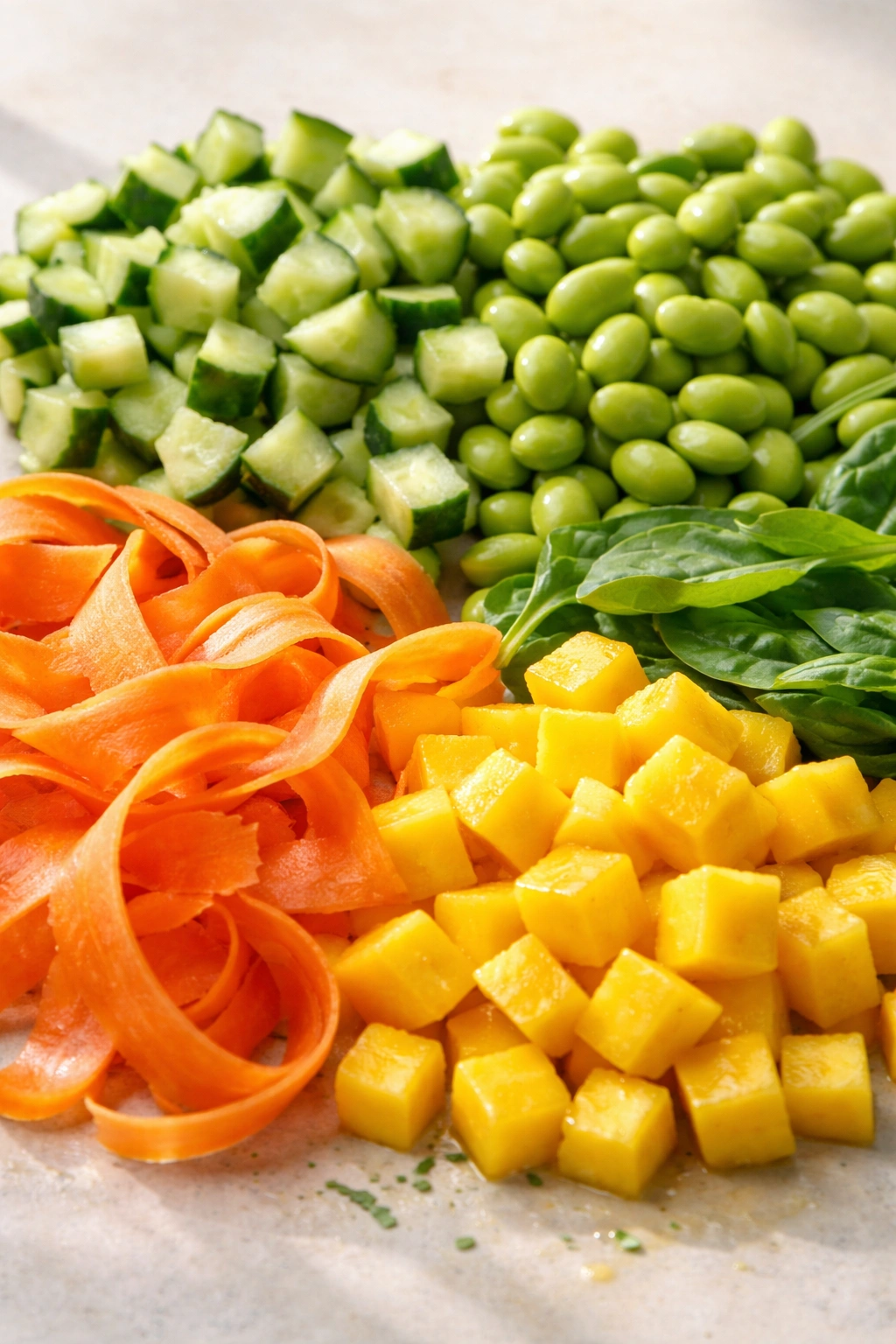
Vegetables are where your poke bowl gets personality and nutritional density. The best vegetable selection includes multiple textures: something crunchy and fresh (cucumber, radish, jicama), something slightly sweet (mango, carrot), something leafy (lettuce, spinach), and something umami-forward (edamame, seaweed). Together, they create complexity that makes every bite interesting.
Cucumber is your foundational vegetable. It’s crunchy, fresh, neutral in flavor, and provides hydration. Dice it into small cubes rather than thin slices—the cubes are easier to eat with chopsticks and distribute better throughout the bowl. Scoop out the seeds so you’re not eating watery centers.
Carrots add sweetness and crunch. Use a vegetable peeler or mandoline to create thin ribbons or matchsticks. Raw carrots maintain their crisp texture beautifully even when the bowl sits in the fridge for a few hours.
Edamame (shelled, cooked soybeans) bring protein and umami. You can buy them frozen, boil them quickly, and chill them. Or buy them pre-cooked in vacuum-sealed packages for zero effort.
Mango adds tropical sweetness and beautiful color. Use only ripe mango or it will be mealy and underseasoned. Peel it, remove the stone, and dice into small cubes.
Secondary Vegetables Worth Adding
Avocado brings creamy richness and healthy fats. Add it just before eating to prevent browning, or add a squeeze of lime juice to slow oxidation. Semi-ripe avocado is ideal—not rock-hard, not mushy.
Radish (daikon or watermelon radish) provides a peppery crunch that contrasts beautifully with the sweetness of mango. It’s more interesting than cucumber if you want vegetable variety.
Napa cabbage, shredded thinly, adds volume and crunch. It stays crisp longer than lettuce and has a subtly sweet flavor.
Seaweed salad brings ocean flavors and umami depth. You can buy pre-made seaweed salad in jars at most grocery stores now.
Texture Principles to Remember
Aim for at least three different vegetables per bowl to create varied textures and flavors. Avoid making your vegetables too small or chopping them into mush—they should be visible, distinct pieces. Include at least one soft or creamy element (avocado, soft mango), one crispy element (cucumber, radish), and one tender element (edamame, seaweed). This combination keeps your mouth engaged.
The Sauce Game: Creating Umami-Rich Dressings
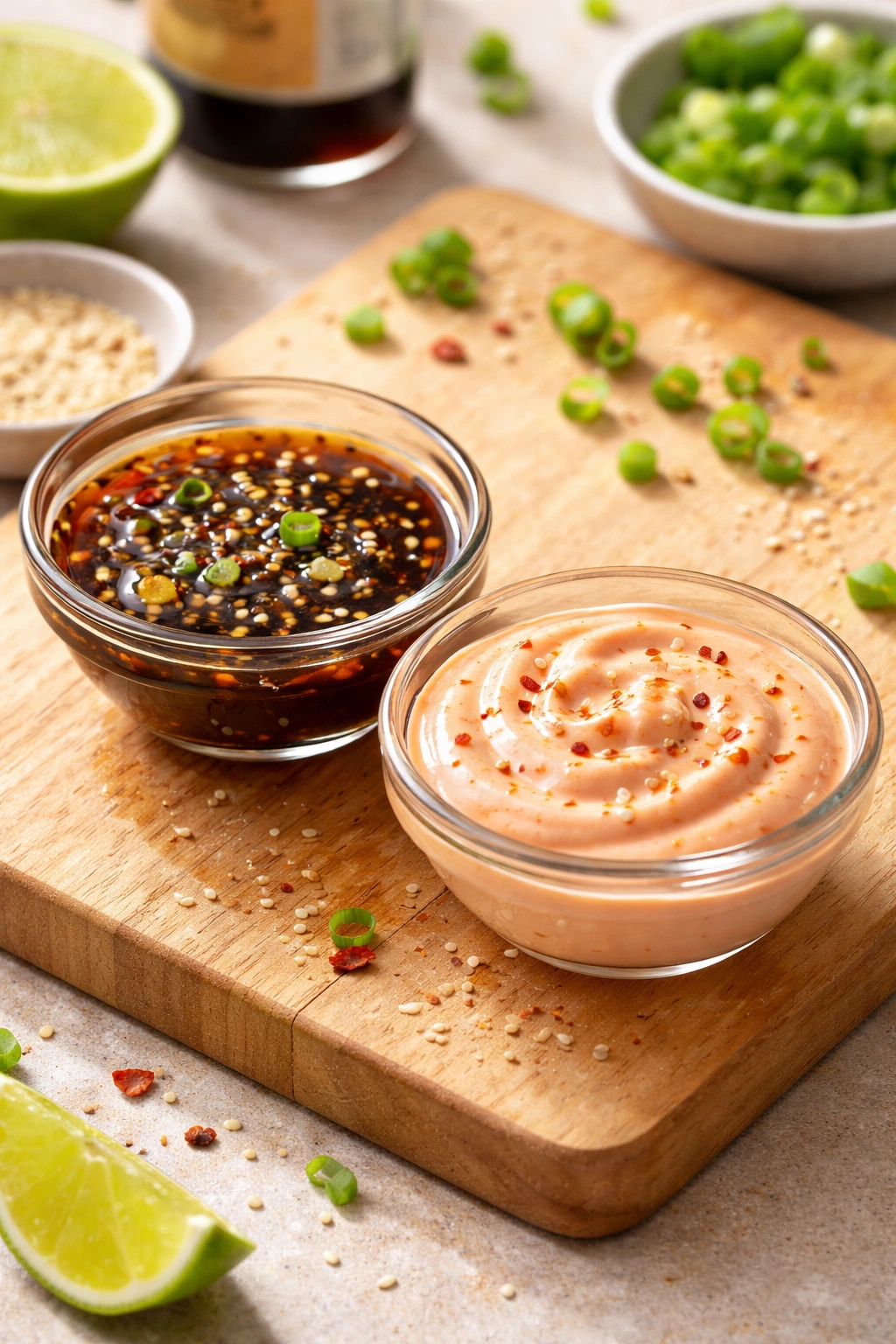
The sauce is what transforms separate components into a cohesive meal. Unlike heavy mayo-based dressings that leave you feeling sluggish, the best poke sauces are balanced combinations of salty, sweet, and savory elements that enhance without overwhelming.
Sesame-soy marinade is the traditional base. Combine soy sauce (or tamari if you prefer gluten-free), rice vinegar, sesame oil, a tiny bit of honey, fresh ginger, and minced garlic. The proportions are roughly equal parts soy sauce, rice vinegar, and sesame oil, with smaller amounts of the other ingredients. This marinade is what you toss with your cubed fish before assembling bowls.
The beauty of this sauce is its balance. Soy sauce provides saltiness and umami depth. Rice vinegar adds brightness and acidity that prevents the sauce from feeling heavy. Sesame oil brings nuttiness and aroma. Honey adds a subtle sweetness that rounds everything out. Ginger and garlic provide complexity without overpowering.
Spicy Mayo for Heat Lovers
If you want something creamier and spicier, make a simple spicy mayo by combining regular mayo (not light mayo—use full-fat for better flavor) with sriracha. Start with a ratio of 3:1 mayo to sriracha and adjust to your heat preference. A squeeze of lime juice brightens it considerably. This sauce is richer than the sesame-soy version and adds a creamy, tangy element that some people prefer.
Ponzu and Other Options
Ponzu (a citrus-based dressing) creates a brighter, more acidic bowl. It’s excellent if you’re using salmon or want a lighter flavor profile. Gochujang-based sauces (Korean red chili paste mixed with sesame oil and rice vinegar) add deeper heat and umami. Even a simple combination of lime juice, fish sauce, and a touch of honey works beautifully and creates a Vietnamese-inspired bowl.
The key principle is don’t over-sauce. A light drizzle is all you need. Your fish is already marinating in flavor, and your vegetables have their own tastes. Sauce should be an accent, not a dominating force.
Proteins Beyond Fish: Expanding Your Options
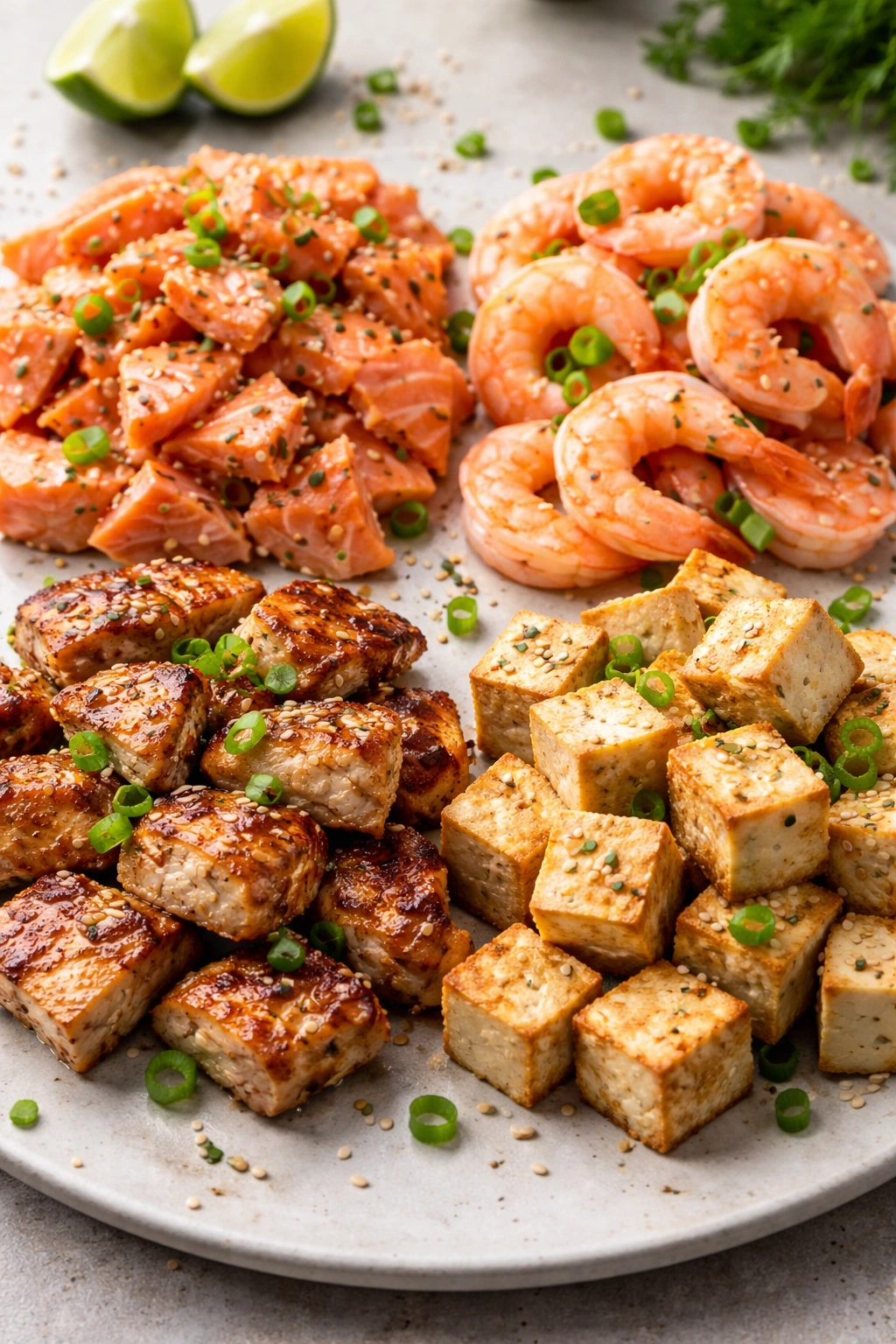
While sushi-grade raw fish is traditional, poke bowls work beautifully with many proteins, making them genuinely flexible for different preferences and dietary choices.
Cooked salmon is your best choice if you’re uncomfortable with raw fish or meal prepping. Pan-sear fresh salmon until it’s just cooked through, then flake it into chunks and toss with your marinade while it’s still warm. The warm fish absorbs the flavors beautifully. Chill it before assembling your bowl.
Shrimp (cooked) creates a completely different but delicious bowl. Quick-sear raw shrimp in a hot pan until pink, then cube and marinate. The firm texture holds up beautifully, and shrimp has a slightly sweet flavor that complements the marinade.
Cooked chicken, especially thighs, works wonderfully. The richer fat content of thighs prevents them from drying out. Marinate and either pan-sear or grill, then cube. This version feels more like a Asian chicken bowl than traditional poke, but it’s absolutely delicious.
Tofu (extra-firm, pressed and cubed) absorbs flavors incredibly well and creates a plant-based version. Press it between paper towels to remove excess moisture, then marinate for at least thirty minutes. Pan-fry it lightly to add texture and prevent it from being soggy.
Canned tuna works in a pinch if fresh sushi-grade fish isn’t available. High-quality canned tuna packed in water (drained well) is surprisingly good when marinated. It’s a legitimate option for weekday lunches when fresh fish shopping isn’t possible.
Smart Prep Strategies for Busy Weekdays
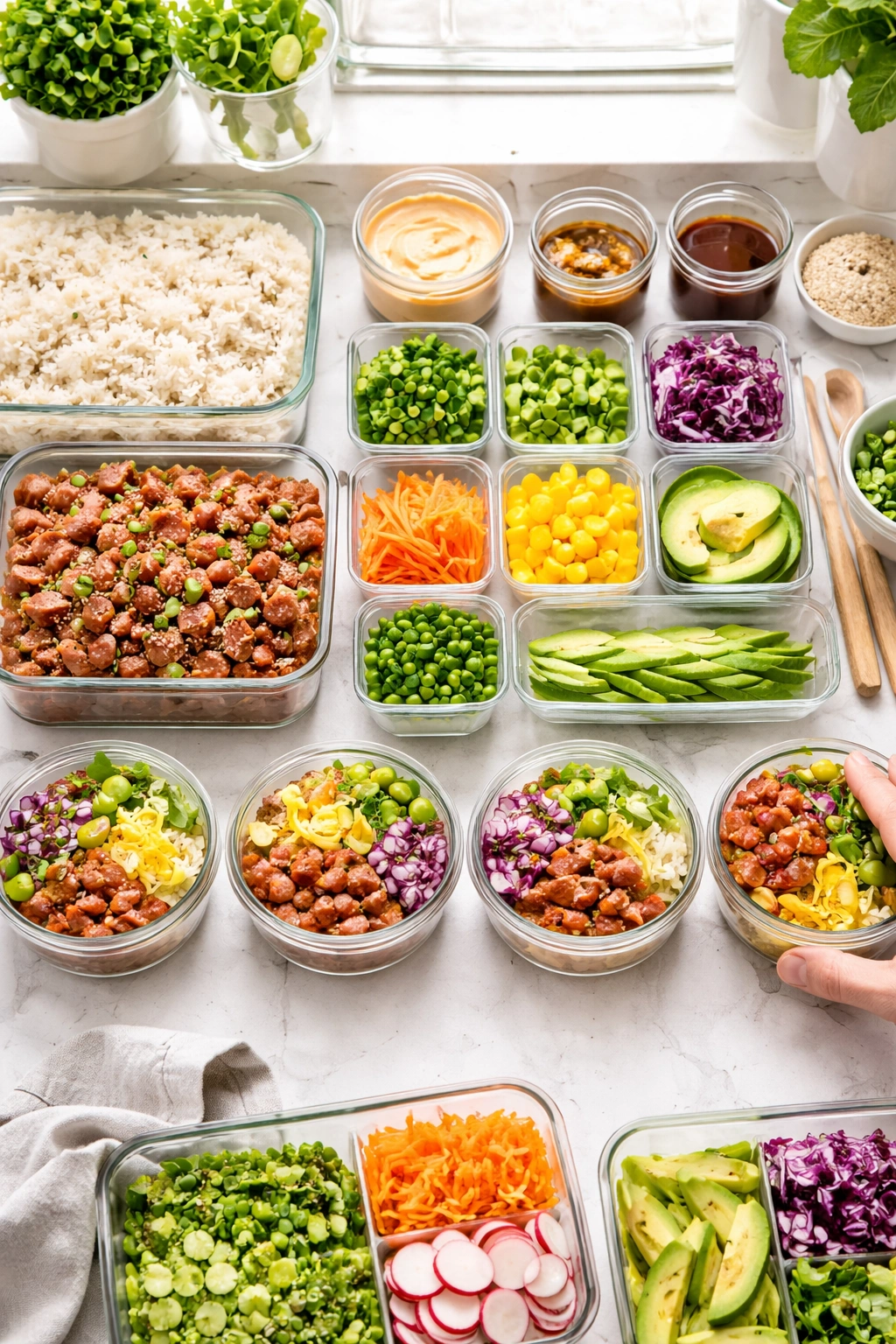
The secret to eating poke bowls multiple times a week without them feeling like a chore is smart preparation. You’re not necessarily cooking every morning—you’re strategically prepping components so assembly takes five minutes.
Sunday preparation is your friend. Spend one hour on Sunday prepping everything that doesn’t deteriorate quickly. Cook your rice, season it, and portion it into containers. Chop all your vegetables—cucumber, carrot, radish, everything except avocado (which browns). Portion them into small containers. Make your sauces and store them in jars. Cook your protein if using something other than raw fish. By the time Sunday evening arrives, you have the bones of four to five poke bowls ready to go.
Monday through Friday assembly becomes simple. In the morning or the night before, add room-temperature rice to your lunch container. If buying sushi-grade fish, pick it up on the morning you plan to eat it and marinate it for fifteen to twenty minutes. Arrange your pre-prepped vegetables on top of the rice. Add your fish. Seal the container. Thirty seconds before eating, drizzle with sauce, add fresh garnishes (cilantro, sesame seeds, green onions), and eat.
The Separate Container Method
Keep sauce in a separate small container and add it just before eating. This prevents your rice from absorbing excess liquid and getting mushy. It also keeps your vegetables from getting soggy. This single habit transforms whether your poke bowl tastes great on day four of meal prep or deteriorates into mush.
Make-Ahead Assembly and Storage Tips
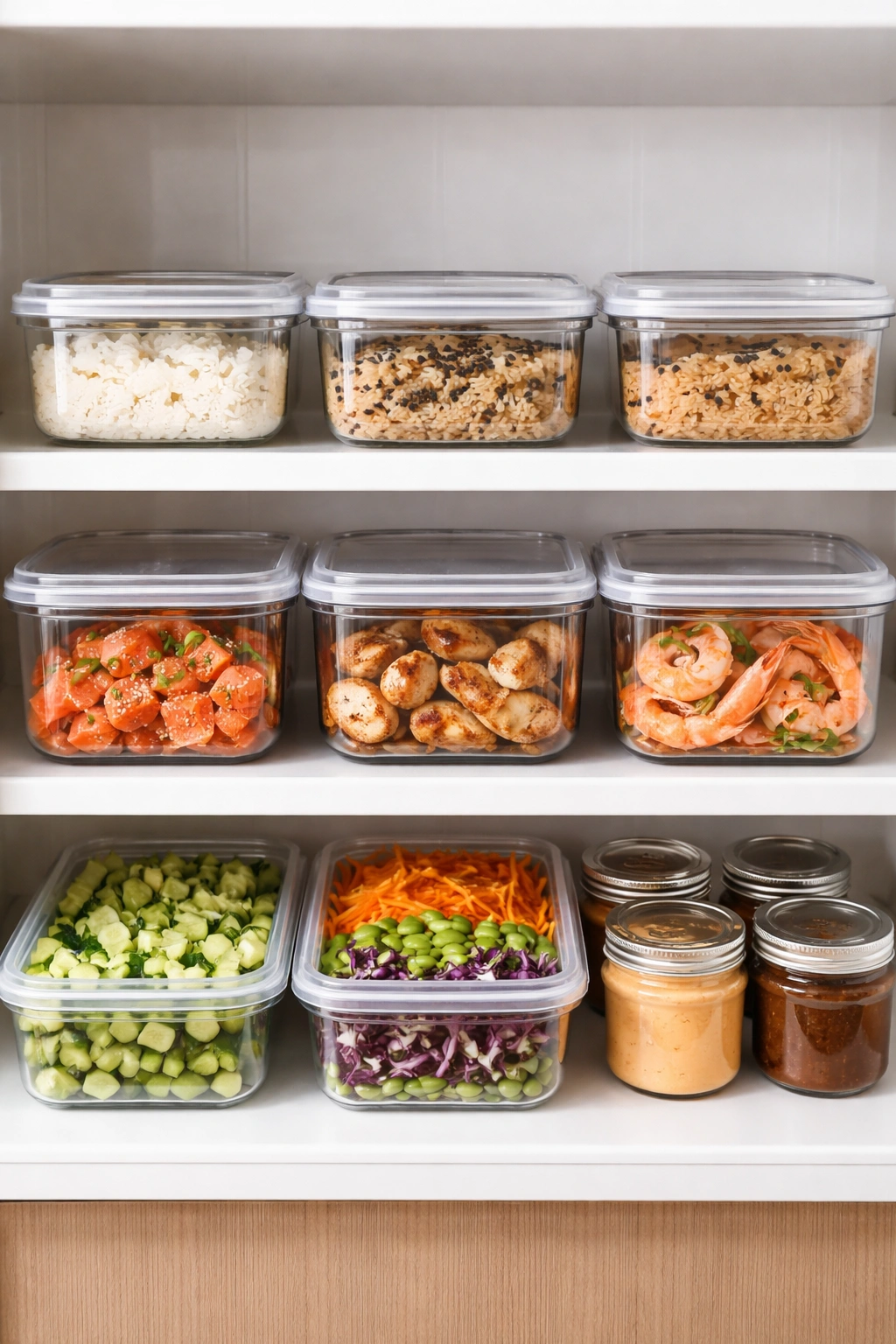
The components of a poke bowl have different shelf lives, and understanding these differences is what separates successful meal prep from sad, watery bowls at midweek.
Rice keeps beautifully for five days in the fridge. Season it while warm so it absorbs the flavors. It actually improves slightly as it sits and the vinegar flavoring integrates. Store it in airtight containers without anything on top of it—other ingredients’ moisture will make it soggy.
Raw fish should ideally be eaten the day you buy it or the next morning at latest. If meal prepping the entire week with raw fish, consider freezing fish on days you won’t eat it immediately, then thawing in the fridge the night before. This keeps it safe and preserves quality.
Cooked proteins (salmon, chicken, shrimp) last three to four days in airtight containers.
Vegetables (except avocado) last three to five days when stored dry in containers. Don’t add dressing until you’re ready to eat. Avocado should be added within hours of eating or it will brown—slice it fresh the morning you plan to eat your bowl if possible.
Sauces keep for one to two weeks in jars. The sesame-soy base is shelf-stable because of its salt and acid content. Mayo-based sauces should be refrigerated and used within one week.
The assembled bowl (everything together in one container) is best consumed the day it’s assembled. If you must assemble ahead, keep the sauce separate and add it just before eating.
Travel and Transport Tips
Pack your bowl in a wide, shallow container rather than a tall narrow one. This makes it easy to eat with chopsticks at your desk without everything spilling out. Use bento-style divided containers if you like keeping components separate until you’re ready to eat. A leak-proof container with a secure lid is non-negotiable if you’re carrying it on public transportation or in a bag.
Time-Saving Techniques That Actually Work
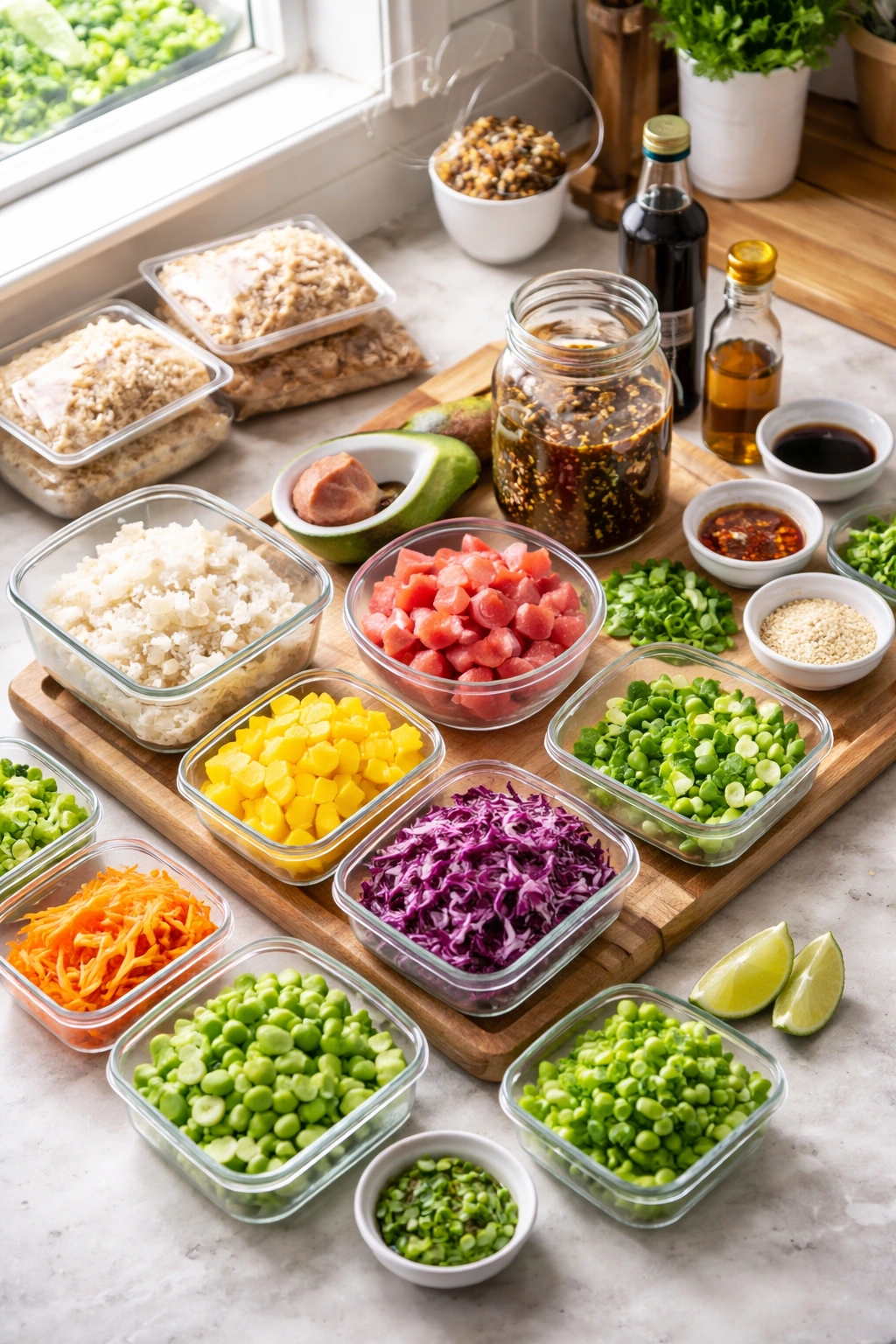
The difference between “poke bowl prep takes forever” and “poke bowls are my weekday lunch” comes down to shaving minutes off the process.
Buy pre-riced cauliflower or pre-cooked rice packets. Instant rice cups exist and aren’t shameful. Your goal is eating a healthy, fresh lunch, not proving something by cooking rice from scratch every single time.
Purchase pre-cut vegetables when they’re available. Cucumber and carrot sets are increasingly common at grocery stores. Yes, they cost more per pound than whole vegetables, but if that difference is what makes you actually eat poke bowls instead of ordering expensive takeout, it’s worth it.
Buy edamame already shelled and pre-cooked. You’re spending five extra dollars per week. Compare that to restaurant poke bowls costing fifteen dollars each.
Make marinade in larger batches. Mix enough sesame-soy sauce for two or three weeks. It’s completely shelf-stable and you’ll use it on salads, noodles, and roasted vegetables too.
Prep your fish the morning of eating, not the night before. Yes, this means one extra step on busy mornings, but it ensures optimal freshness and texture. It takes three minutes to cube fish and add it to your container.
Use a rice cooker with a timer. Start rice the night before and have it ready when you wake up. Many rice cookers have a “keep warm” function that maintains perfect temperature until you’re ready to portion.
Customizing Your Bowl to Your Taste
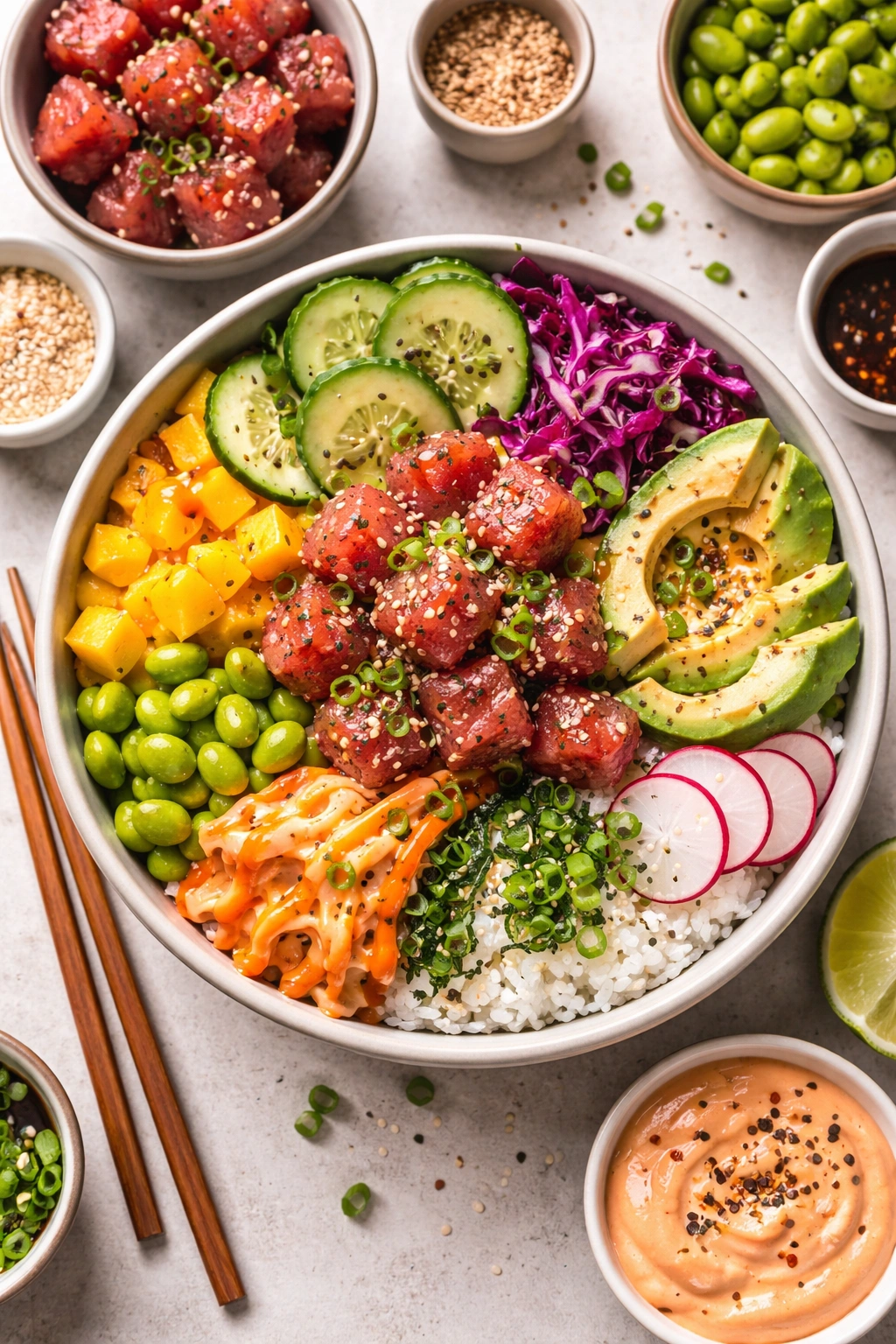
The entire point of homemade poke bowls is that they’re yours to customize. Don’t like avocado? Leave it out. Allergic to sesame? Use a different sauce. Want the bowl spicier? Add sriracha to your marinade, not just as a side component.
Understanding flavor profiles helps you customize confidently. You want salty (soy sauce), sweet (honey, mango), sour (rice vinegar, lime juice), spicy (sriracha, wasabi, fresh ginger), and savory/umami (fish, sesame oil, miso). If your bowl feels flat, you’re usually missing one of these elements. Add a squeeze of lime juice for brightness, a dash of sriracha for heat, or extra sesame oil for umami depth.
Texture customization is equally important. Make sure you have at least one crunchy element (sesame seeds, fried shallots, crushed peanuts), at least one soft element (avocado, mango), at least one firm element (the fish itself), and ideally something with a different temperature like warm rice against cold vegetables.
Flavor pairing experiments that work beautifully: mango plus avocado plus cilantro (tropical), cucumber plus radish plus wasabi (sharp and clean), edamame plus seaweed plus ginger (deeply savory). Mix and match based on what sounds good and what you have available.
Building a DIY Poke Bowl Station at Work
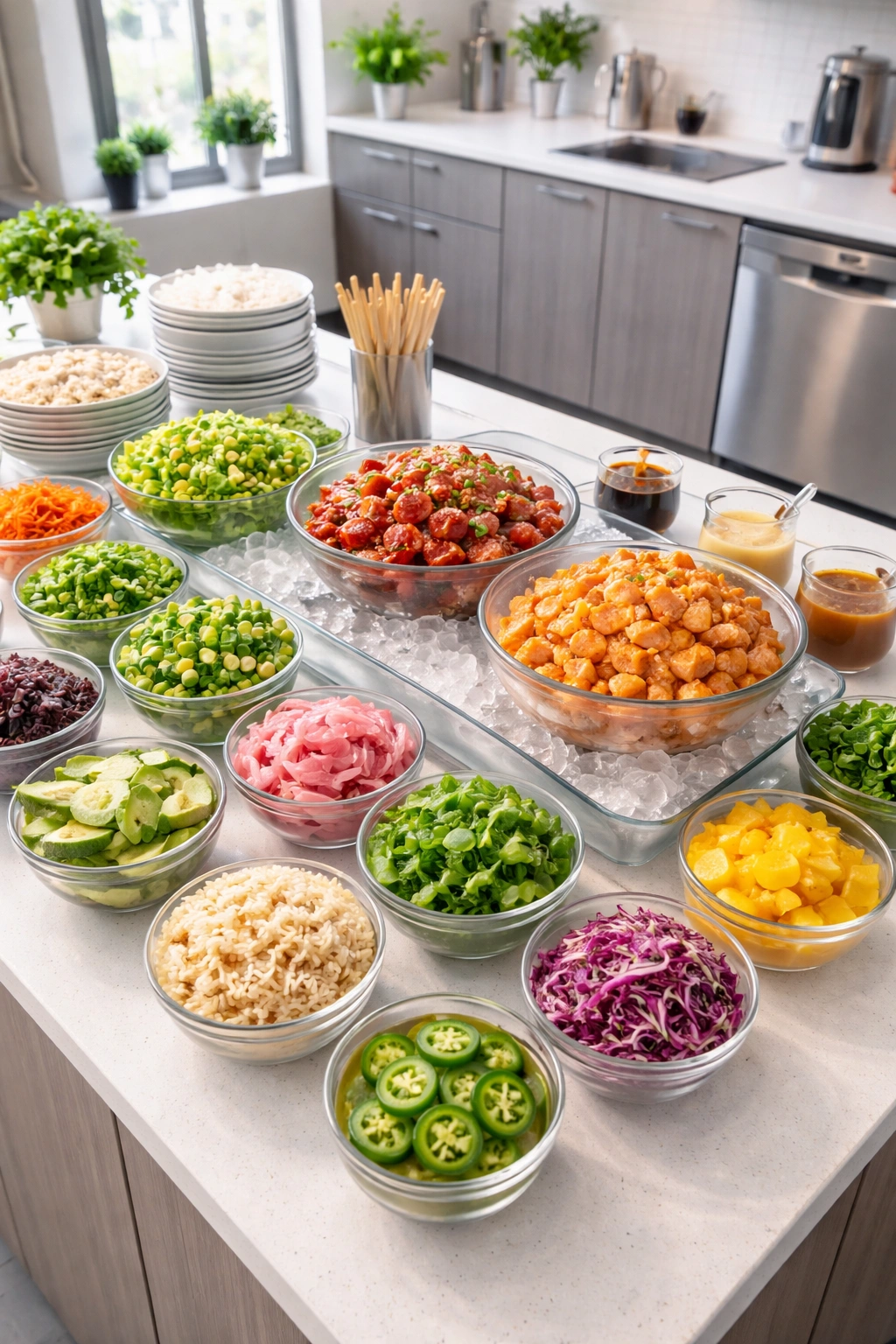
If you’re meal-prepping for a group or want to involve coworkers, a DIY poke bowl setup transforms lunch into an event rather than a chore. This works beautifully for office potlucks, casual team lunches, or feeding a crowd without cooking.
Set up a table with your components in separate bowls: cooked rice, marinated fish (kept on ice in a bowl nested with another bowl of ice underneath), pre-prepped vegetables in small bowls, sauce in a small pitcher or squeeze bottle, and garnishes in tiny bowls. Provide napkins and small plates for initial assembly.
The beauty of this approach is that everyone customizes exactly what they want. Vegetarian coworkers load up on vegetables. Spice-lovers drench their bowls in sriracha mayo. People with allergies or preferences can control exactly what goes in their bowl. It’s interactive, fun, and produces genuinely happy lunch experiences.
Transportation and Eating at Your Desk
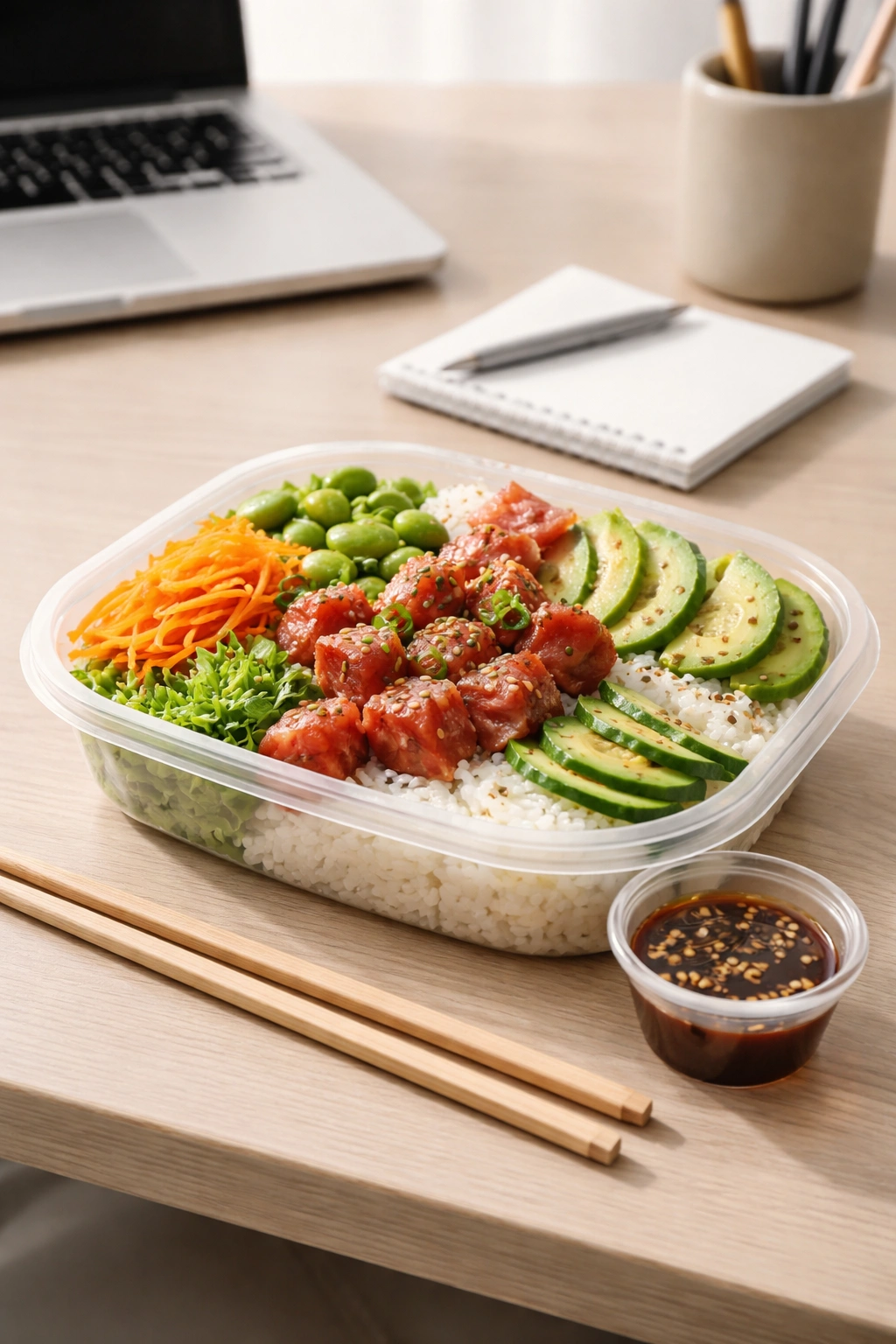
The difference between “this poke bowl is perfect” and “this poke bowl fell apart during my commute” is preparation and the right containers.
Wide, shallow containers (like bento boxes) work better than deep containers for desk eating. They’re easier to navigate with chopsticks and less likely to tip over. Hard-sided plastic containers are more reliable than soft-sided if you’re in a crowded bag. Lids with silicone seals are worth the investment for their reliability.
Pack your sauce separately. This single decision determines whether your bowl tastes fresh and texturally interesting or like mushy rice with soggy vegetables at lunchtime. Keep it in a small separate container or even a sealed packet. Add it right before eating.
Bring chopsticks or a fork specifically for eating at your desk. Poke bowls are lovely to eat slowly and mindfully, which is harder when you’re stressed about making a mess. Taking five minutes to actually enjoy your lunch rather than scarfing it down prevents overeating and improves your afternoon.
If your office has a refrigerator, keep extra garnishes there (sesame seeds, nori flakes, green onions in water). Adding fresh garnishes right before eating makes a significant sensory difference.
Serving Poke Bowls for Casual Entertaining
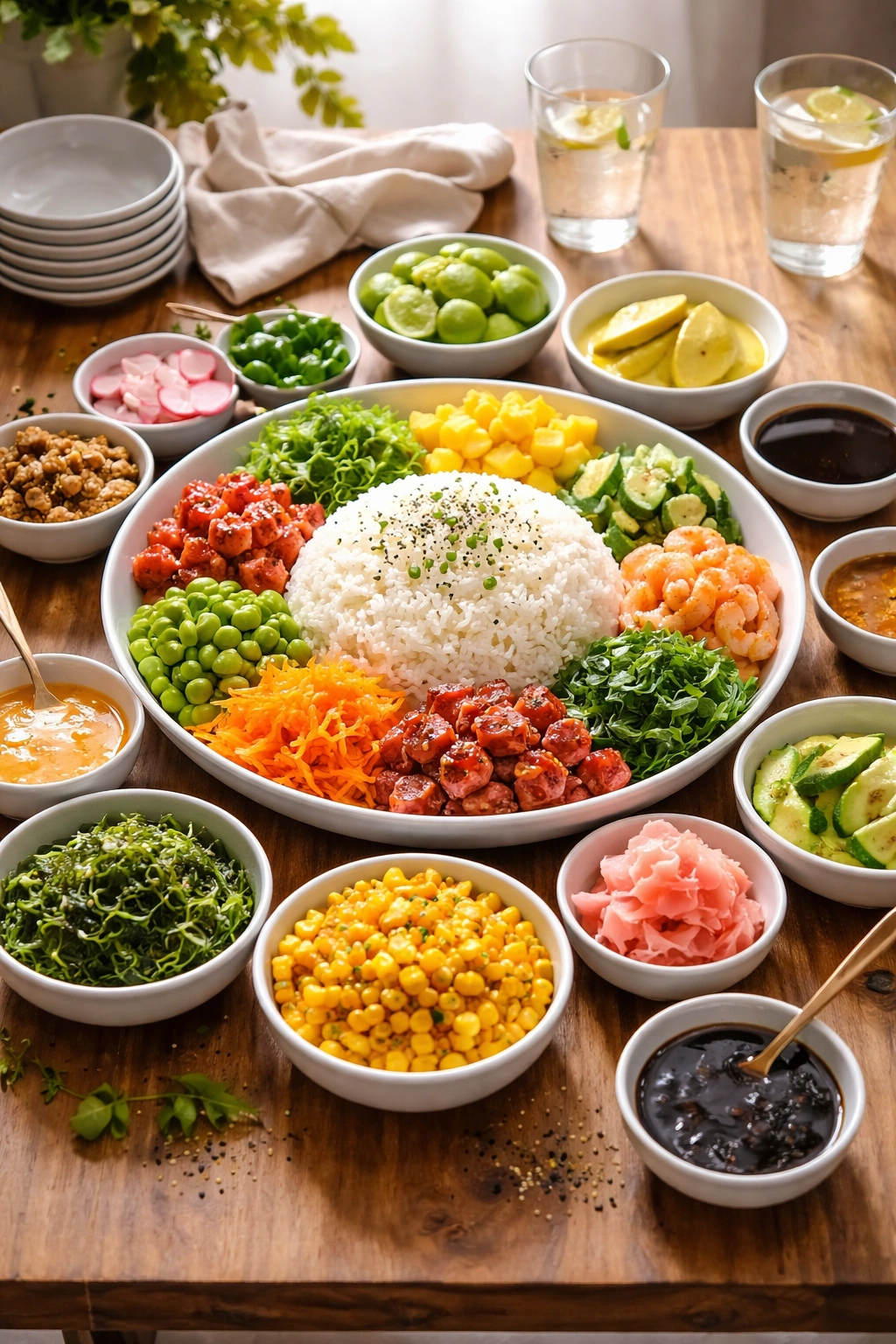
Beyond weekday lunches, poke bowls work beautifully for casual entertaining. They’re impressive enough for guests, flexible enough to accommodate different tastes, and require no cooking skills to assemble beautifully.
Set up a “build your own” station and let guests create their perfect bowl. Provide options for every component. Someone will always appreciate having a vegetarian version of rice and vegetables instead of fish. Someone else will load up on avocado. This flexibility means everyone feels accommodated without you having to cook multiple separate meals.
For plating your own (rather than buffet-style), think about height and visual balance. A mound of rice in the center, then arrange other components around it rather than all mixed together. A few carefully placed sesame seeds, a cilantro leaf, a thin slice of avocado fanned out—these small plating details make the bowl look intentional and restaurant-quality.
Final Thoughts
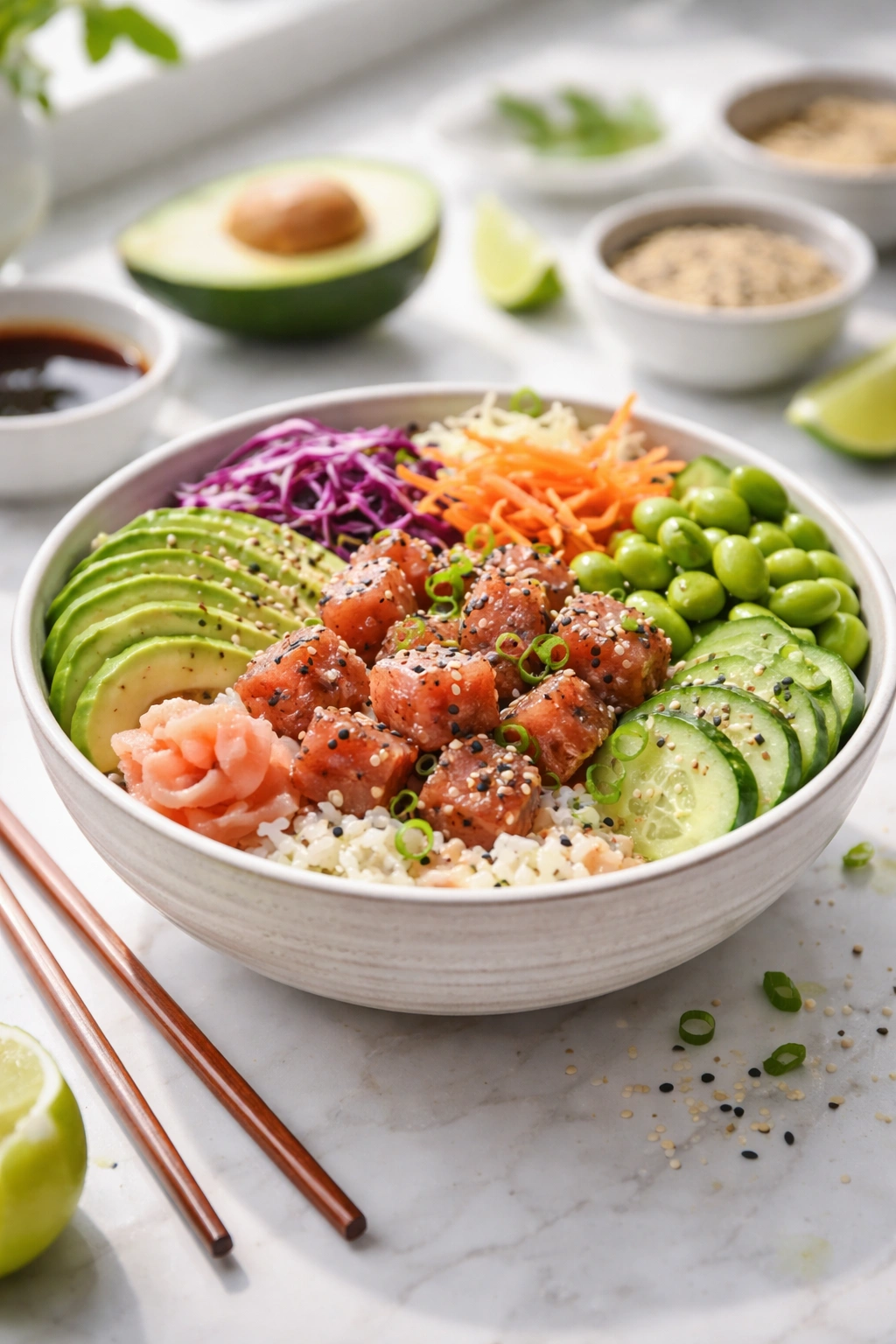
Poke bowls represent something important about modern weekday eating: the intersection of health, convenience, and genuine enjoyment. They’re not a sacrifice meal you tolerate between weekend indulgences. They’re legitimately delicious, nutritious, and exciting enough that you’ll actually look forward to lunchtime rather than viewing it as an interruption to your workday.
The beauty of making poke bowls at home is that you control every single element. You choose premium fish rather than restaurant-grade. You season your rice to your preferred level. You include vegetables you actually enjoy rather than whatever’s on the restaurant’s template. You skip ingredients you don’t like. Within an hour of Sunday prep work, you’ve set yourself up to eat beautifully for the entire week.
Start with the basic formula: quality rice, fresh fish (or protein of choice), colorful vegetables, a balanced sauce, and fresh garnishes. Master that foundation, then play with variations. Try brown rice one week, cauliflower rice another. Experiment with different fish or cooked proteins. Add mango one week, pineapple another. The formula is flexible enough to never become boring while remaining simple enough that you’ll actually execute it on busy weekdays. That’s the real magic—not just having a delicious lunch, but having a lunch strategy that sticks.
