



Forget the myth that homemade fried rice requires hours of prep or culinary wizardry. The truth is far simpler: with the right technique, the right rice, and a few pantry staples you likely already own, you can have a restaurant-quality chicken fried rice on the table in exactly twenty minutes. No wok expertise required, no obscure ingredients needed, and certainly no compromise on flavor. This is the kind of dinner that saves you on nights when takeout calls your name but your budget—or your health goals—tells you to stay home. What makes this version different is that every step has been engineered for speed without sacrificing the crispy texture, deep savory flavors, and satisfying chew that make fried rice so irresistible.
The magic of twenty-minute chicken fried rice lies in understanding what actually takes time in this dish and what doesn’t. Most home cooks waste precious minutes fumbling through unclear instructions, prepping ingredients while the pan sits cold, or using the wrong type of rice that turns to mush instead of frying. When you eliminate those inefficiencies and follow a clear system, you unlock a meal that rivals anything delivered in a cardboard container—except yours will be hotter, fresher, and tailored exactly to your taste.
Why Chicken Fried Rice Is Your Secret Weeknight Weapon
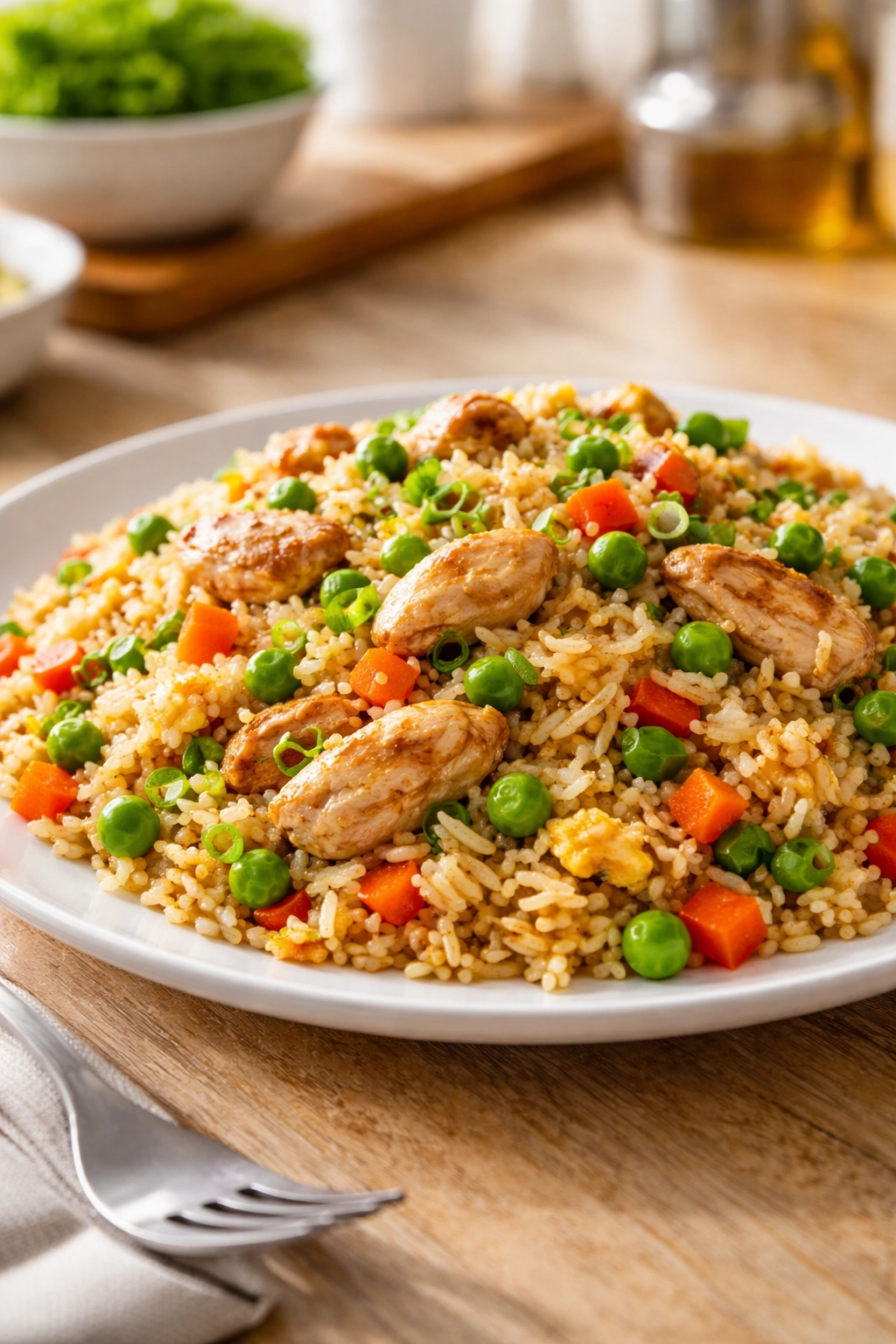
Chicken fried rice occupies a special place in the weeknight dinner rotation. It’s affordable, accommodating to various dietary needs, satisfying enough to feel like a complete meal, and genuinely delicious when made with intention. Unlike many quick dinners that feel like shortcuts or compromises, a well-made fried rice tastes intentional and cared-for—even though you spent less time on it than most people spend waiting for a pizza delivery.
The dish also offers something psychologically rewarding. You’re taking pantry staples and transforming them into something that tastes restaurant-quality. That transformation happens in front of you, in real time, over the course of about fifteen minutes of actual cooking. There’s no long braise, no complicated technique to master, no special equipment beyond a large skillet or wok. You get immediate gratification and proof of your effort right there in the pan.
Beyond the practical appeal, chicken fried rice is forgiving in ways that other quick dinners aren’t. You can customize it completely based on what’s in your fridge. Running low on peas? Throw in some corn. No carrots? Bell peppers work beautifully. Need it vegetarian? Double down on eggs and vegetables. This flexibility means you’re never stuck with an “I can’t make this because I’m missing one ingredient” situation—you just adapt and move forward.
The Science Behind Fast Fried Rice: Why Twenty Minutes Actually Works
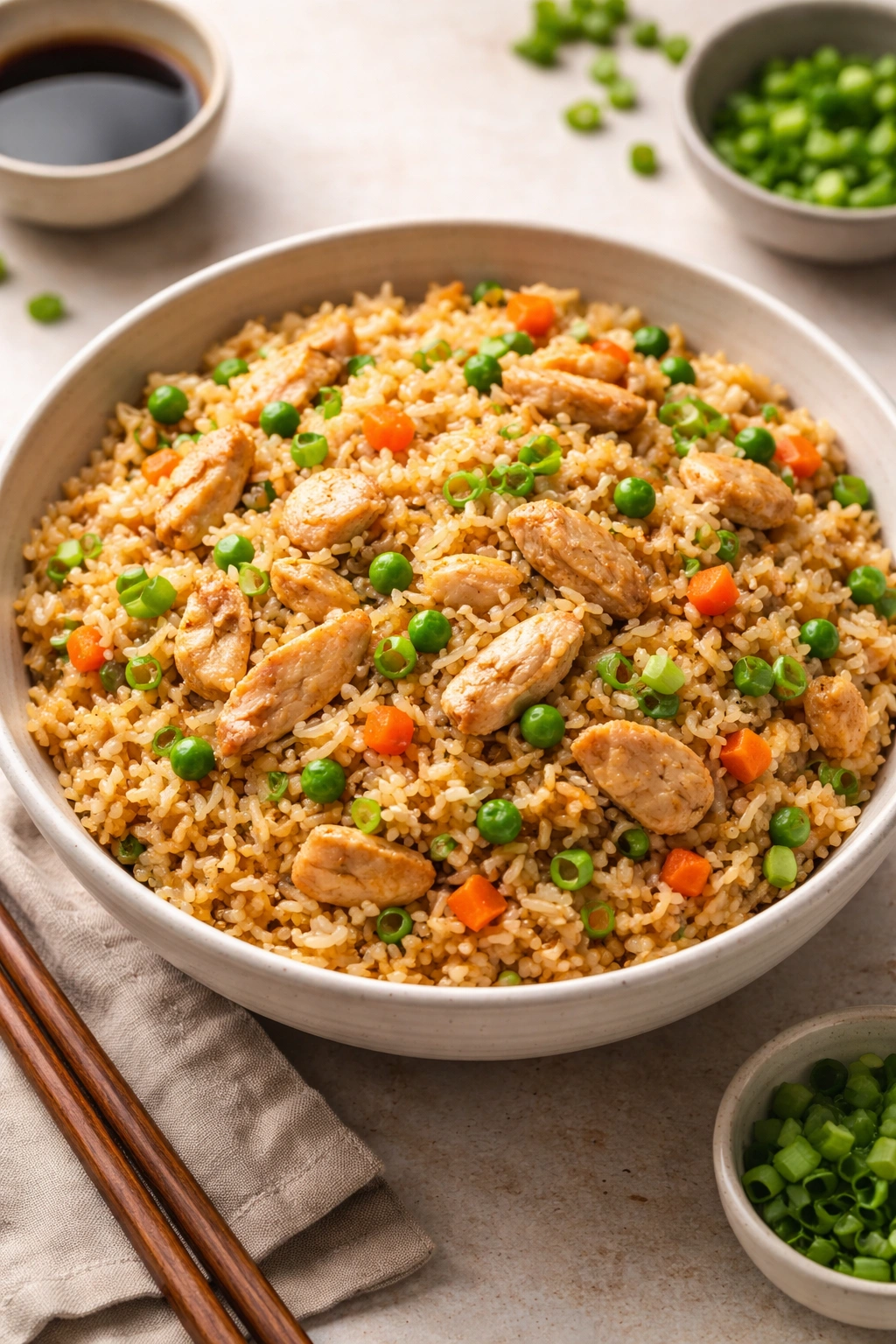
Speed in fried rice cooking isn’t magic; it’s understanding the physics of what’s happening in your pan. The most important factor is cold rice. This single element saves you more time than anything else combined. When cold, cooked rice hits a hot pan with fat, the exterior of each grain begins to crisp immediately while the interior stays tender. The grains separate easily and absorb flavors without becoming mushy or clumpy.
Warm or freshly cooked rice behaves completely differently. The residual heat and moisture in warm rice cause the grains to stick together and steam rather than fry. Instead of achieving that signature crispy texture with distinct grains, you get a gluey mass that requires aggressive stirring and much longer cooking time to dry out. Using cold rice cuts your actual cooking time by half or more, which is how twenty minutes becomes genuinely achievable.
High heat is your second critical factor. Fried rice requires medium-high to high heat to properly fry the rice, develop color, and create those slightly crispy, golden edges that make the dish so appealing. Low heat just steams everything. When your pan is hot, your ingredients cook quickly. The chicken browns in minutes. The vegetables soften rapidly. The rice takes on color and flavor instead of slowly releasing steam.
The third factor is mise en place—having everything prepped and ready before you start cooking. In a twenty-minute timeline, you don’t have the luxury of chopping garlic while the chicken cooks or dicing vegetables while you’re stirring rice. The few minutes you spend getting organized before heat goes under the pan directly translate into seconds saved during cooking. It’s the difference between a frantic scramble and a smooth, controlled process.
Essential Equipment for Lightning-Fast Fried Rice
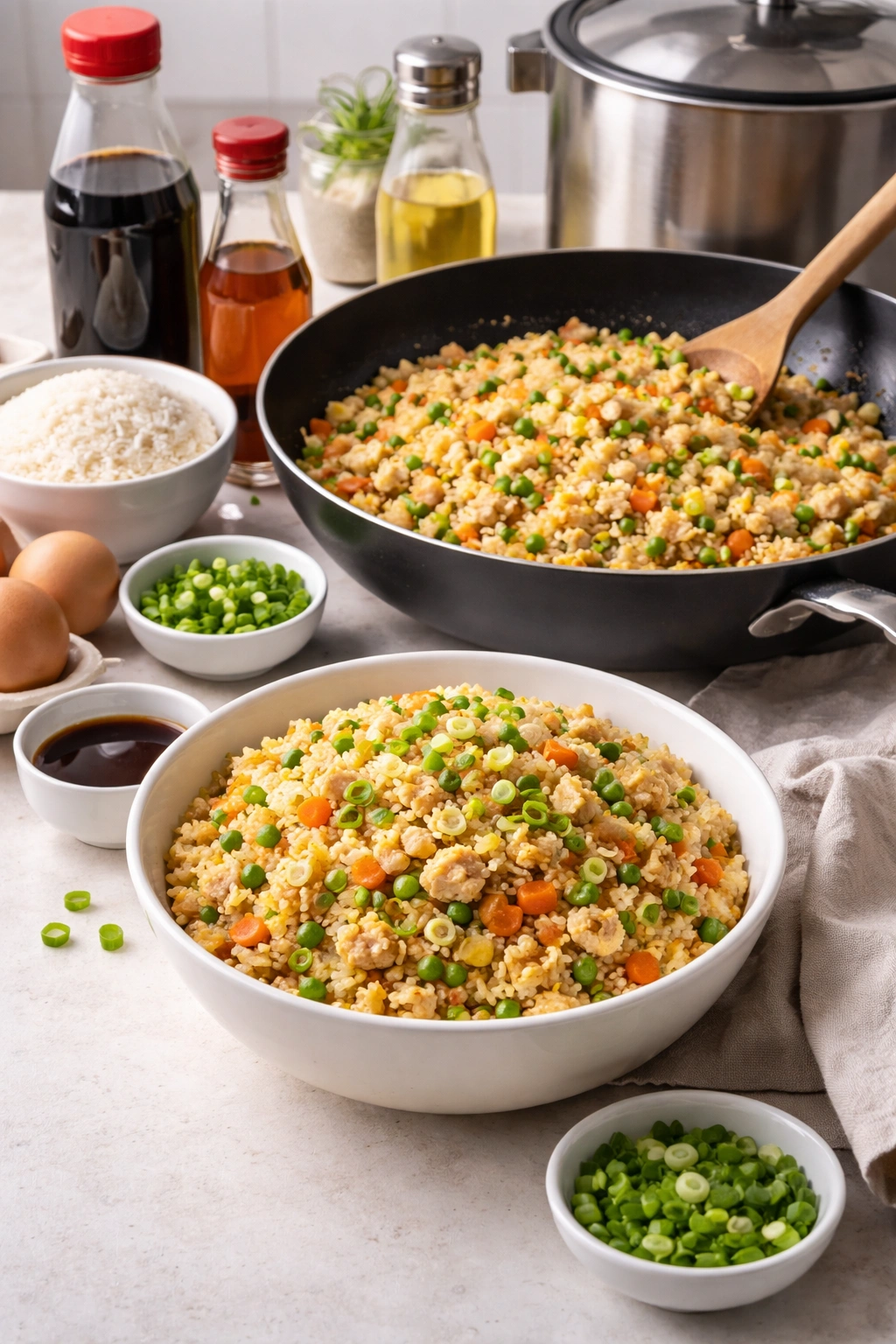
You don’t need anything fancy, but having the right tool matters. A large nonstick skillet or wok is ideal. Nonstick surfaces mean less oil is needed, things won’t stick and burn, and you can flip and stir ingredients confidently without them catching on the pan. If you have a traditional flat-bottomed wok, it’s perfect—the shape allows you to move ingredients around efficiently and keep a clear space for the next ingredient.
Cast iron and stainless steel work too, but they require a bit more oil and more attentive stirring to prevent sticking. Since you’re on a tight timeline, a nonstick surface genuinely does save you time and stress. Look for something at least twelve inches wide and with sides that are at least three inches tall, which gives you plenty of room to toss ingredients without flinging rice across your kitchen.
A long-handled wooden spoon or silicone spatula is helpful for stirring, flipping, and moving ingredients around the pan. Wooden utensils are gentle on nonstick surfaces and allow you to feel the texture of what’s cooking as you stir. A small bowl for whisking eggs is essential—you’ll want to beat your eggs for a few seconds before adding them to ensure they incorporate evenly into the rice.
Finally, have a plate or small cutting board ready where you can temporarily set your cooked chicken before returning it to the pan in the final stages. This keeps your workflow moving and ensures nothing is sitting around getting cold or tough.
Gathering Your Ingredients: What Makes a Twenty-Minute Version Work
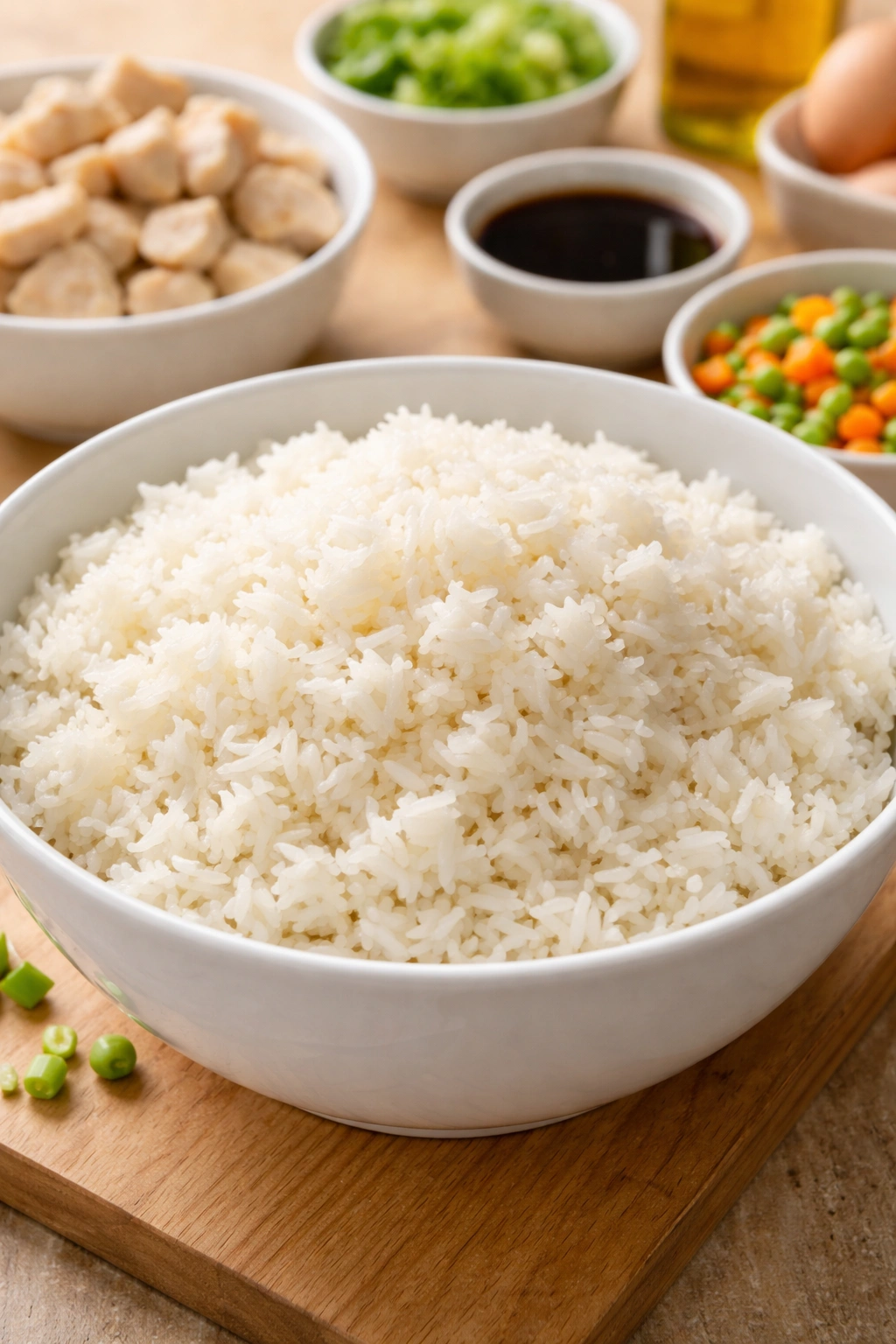
The ingredients for twenty-minute chicken fried rice are refreshingly simple, and chances are you already have most of them on hand. The secret to speed isn’t exotic ingredients—it’s using the right form of everyday items.
Cold cooked rice is non-negotiable. You need three to four cups of rice that’s been cooked and refrigerated for at least several hours, ideally overnight. If you don’t have leftover rice, cook a batch earlier in the day and spread it on a plate to cool faster—chill it while you go about the rest of your day. Some people even make rice specifically for fried rice, storing it in the refrigerator in an airtight container. Once it’s cold, it keeps for three to four days, making it always available for a quick dinner.
Boneless, skinless chicken breasts or thighs are perfect. Breasts cook quickly and provide lean protein; thighs have more flavor and stay tender even if slightly overcooked. Cutting the chicken into small, uniform half-inch to three-quarter-inch pieces is the key to speed—small pieces cook through in just a few minutes, while large chunks would extend your timeline significantly.
Frozen mixed vegetables are your time-saving ally. Frozen peas and carrots blend, or a vegetable mix containing peas, carrots, corn, and green beans, is already cleaned, cut, and portioned. You don’t thaw it; you add it straight from the freezer. It defrosts in the residual heat of the pan in about two minutes. Fresh vegetables would require washing, peeling, and dicing, eating into your timeline.
Eggs add richness, protein, and those beloved golden scrambled egg bits that make fried rice feel restaurant-quality. Two to three large eggs are sufficient for a four-serving batch.
Garlic, green onions, and fresh ginger (optional) provide aromatic depth. Minced garlic takes seconds to prep if you have a garlic press or use pre-minced garlic from a jar—both are totally acceptable shortcuts in a twenty-minute timeline. Green onions need only a rough chop.
Soy sauce is your primary seasoning. Low-sodium versions let you control the saltiness. Sesame oil adds an authentic, aromatic finish—toasted sesame oil is traditional. A small drizzle at the end brightens everything.
Cooking oil with a high smoke point (vegetable, canola, or avocado oil) gets you started. Some butter added during cooking adds richness and helps everything brown beautifully.
Preparing Ahead: The Real Time-Saver Strategy
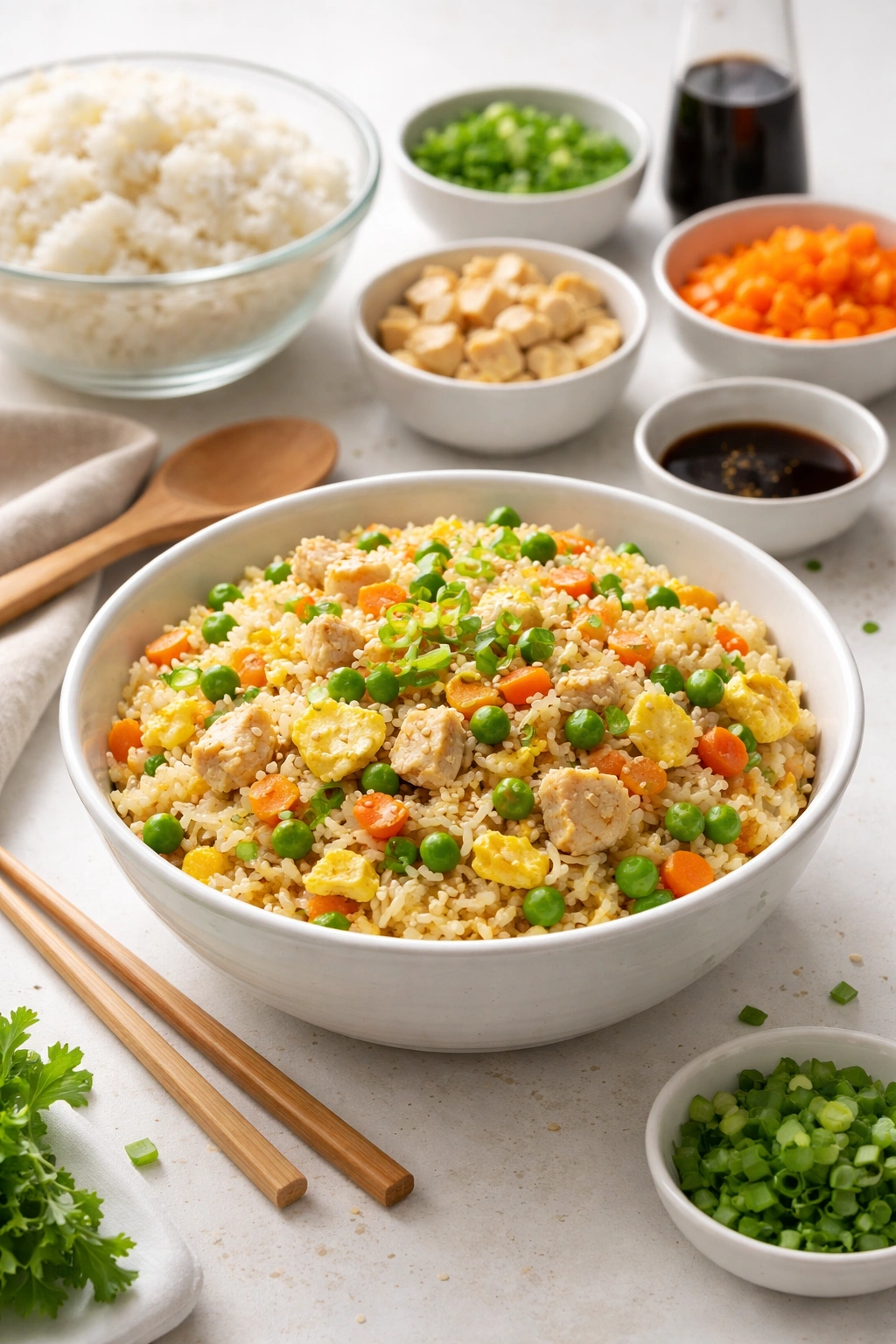
The twenty-minute timeline assumes you’re starting with cold rice already in your refrigerator. If you need to cook rice fresh, plan for an extra twenty to thirty minutes of hands-off time. However, there’s a clever shortcut: use prepared rice packets. Many grocery stores sell microwave-ready jasmine or white rice in individual or larger packages. These cook in ninety seconds and work perfectly for fried rice once chilled. It’s not quite the same as cooking rice from scratch, but it’s a legitimate option if you’re in a genuine time crunch and still want to make this at home.
Beyond rice, spending five minutes on prep before you start cooking is the real game-changer. Dice your chicken and set it on a plate. Measure out your frozen vegetables into a small bowl. Whisk your eggs in another bowl. Mince your garlic and chop your green onions. Have your soy sauce, sesame oil, and salt and pepper ready and within arm’s reach.
This prep step feels like it’s eating into your time, but it actually saves you because once heat is under the pan, you move without interruption. You’re never standing there searching for an ingredient or hunting for a knife. The work is done, and you’re fully present and focused on the cooking itself.
Serving and Timing Information
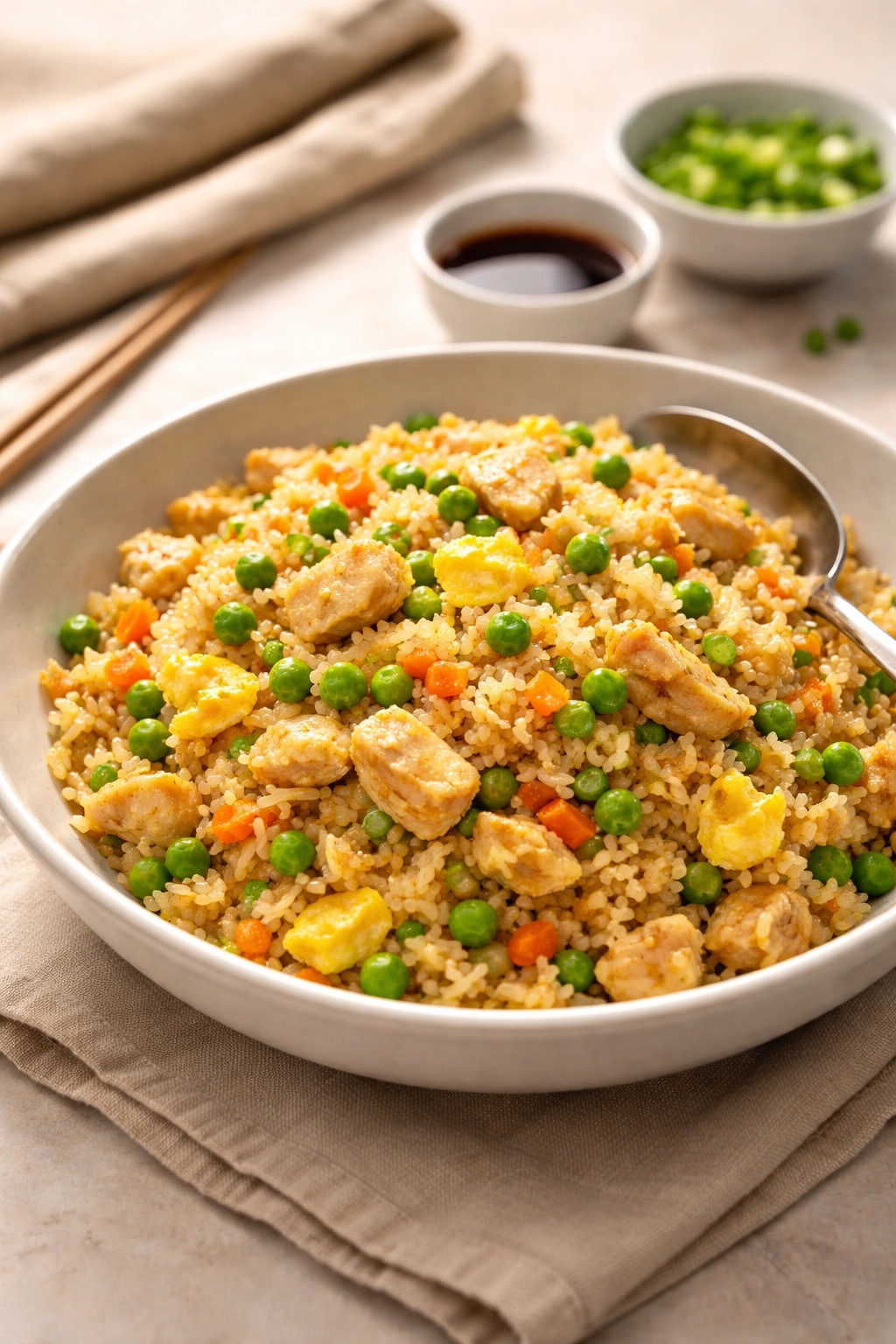
Yield: Serves 4 | Makes one large skilletful
Prep Time: 5 minutes (assuming rice is already cooked and chilled)
Cook Time: 15 minutes
Total Time: 20 minutes active cooking (additional time if cooking rice from scratch)
Difficulty: Beginner — No special skills required, straightforward ingredient prep, and clear sequential steps mean even someone making fried rice for the first time will succeed.
Ingredients for Quick Chicken Fried Rice
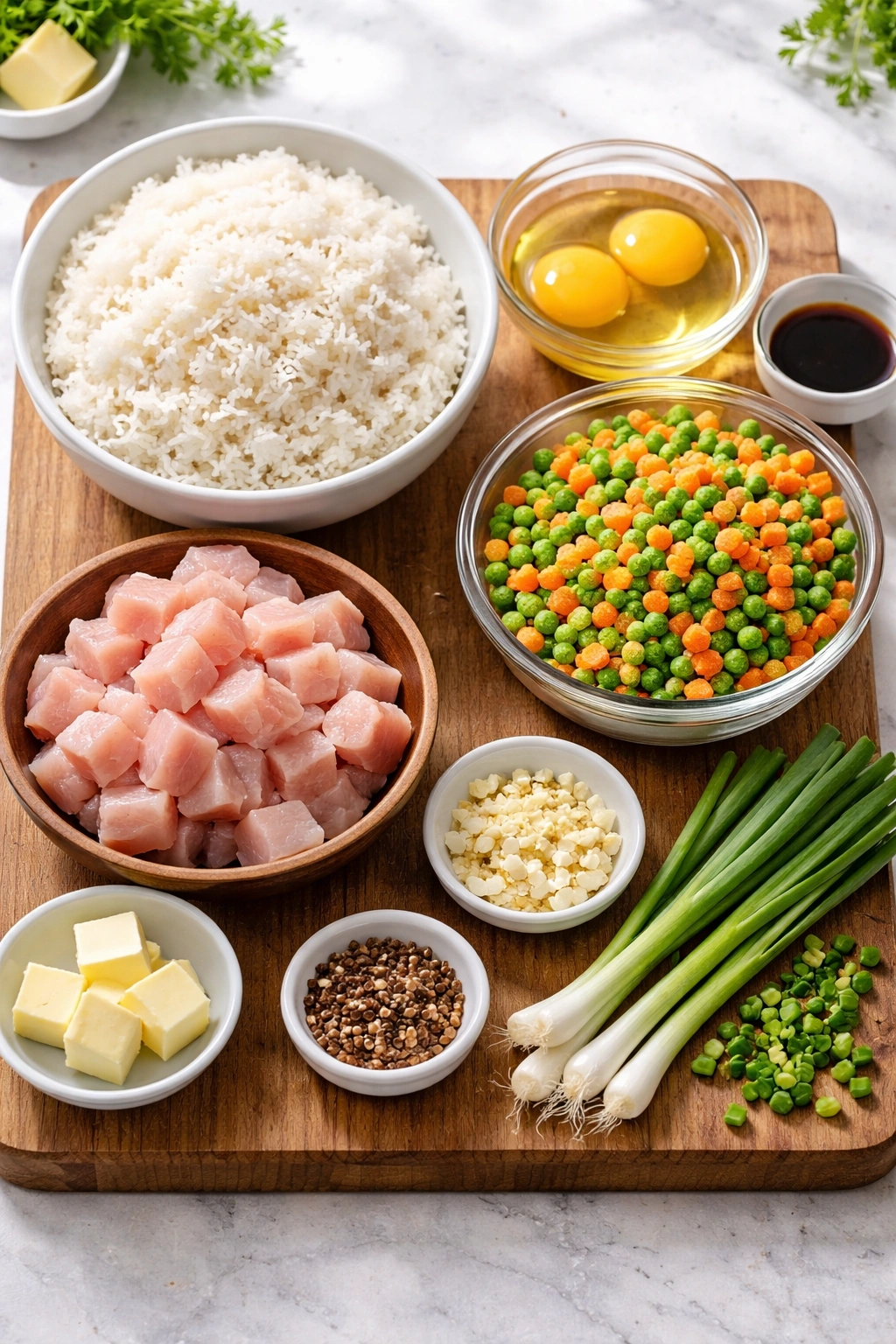
For the Main Dish:
- 4 cups cooked jasmine or white rice, cold (refrigerated for at least several hours or overnight)
- 1 pound boneless, skinless chicken breasts or thighs, cut into 1/2 to 3/4-inch cubes
- 2 tablespoons vegetable oil or canola oil, divided
- 1 tablespoon butter
- 2 large eggs, whisked together in a small bowl
- 1 1/2 cups frozen peas and carrots blend (or frozen mixed vegetables)
- 3 cloves garlic, minced (or 1 tablespoon pre-minced from a jar)
- 3 green onions, trimmed and sliced into thin rounds (white and light green parts separated from dark green parts)
- 1/2 teaspoon ground ginger, optional but recommended
- Salt and white pepper to taste
- 3 to 4 tablespoons low-sodium soy sauce, or more to taste
- 1 teaspoon toasted sesame oil
- Optional garnish: sesame seeds, thinly sliced fresh ginger, or red pepper flakes
Step-by-Step Instructions for Twenty-Minute Chicken Fried Rice
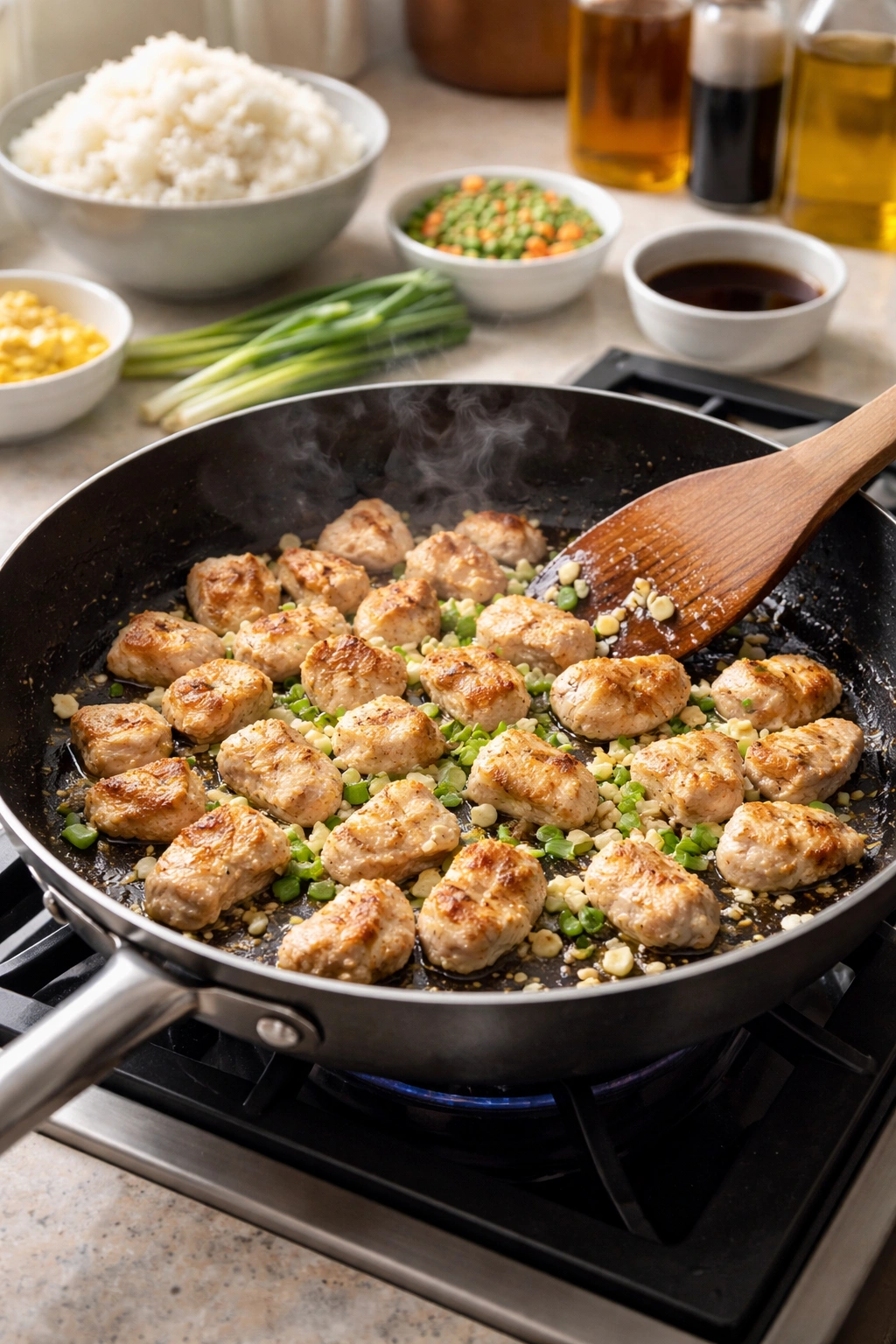
Prepare and Cook the Chicken:
-
Pat the diced chicken dry with paper towels—this helps it brown more efficiently rather than steaming. Season the chicken generously with salt and white pepper on all sides.
-
Heat one tablespoon of the oil in a large nonstick skillet or wok over medium-high heat. Once the oil is shimmering and just beginning to smoke slightly, add the chicken pieces in an even layer.
-
Let the chicken cook undisturbed for about 2 minutes so it develops a golden crust on one side. Then stir frequently for another 3 to 4 minutes until the chicken is cooked through and no longer pink in the center. The internal temperature should reach 165°F (74°C) on an instant-read thermometer, though given the small size of the pieces, you’ll be able to see that they’re cooked through.
-
Transfer the cooked chicken to a clean plate and set aside. Do not wash the pan—the browned bits on the bottom (called the fond) contain tremendous flavor that will season your entire dish.
Cook the Vegetables:
-
Add the remaining one tablespoon of oil to the same skillet over medium-high heat. Once hot, add the minced garlic and the white and light green parts of the green onions.
-
Stir constantly for about 20 to 30 seconds until the garlic becomes fragrant—you want it aromatic but not burned. Add the ginger now if you’re using it.
-
Add the frozen peas and carrots blend directly to the pan (no need to thaw them). Stir frequently for about 2 minutes, allowing them to thaw and soften slightly. The vegetables should be tender but still have a slight bite to them, not mushy.
-
Push the vegetables to one side of the pan, creating an empty space in the center.
Advertisements
Scramble the Eggs:
-
Add the whisked eggs to the empty space in the center of the pan. Let them sit undisturbed for about 15 to 20 seconds so they begin to set.
-
Using your spatula or wooden spoon, gently scramble the eggs, breaking them into smaller pieces as they cook. Continue stirring for another 30 to 45 seconds until the eggs are just set but still slightly soft. They’ll continue to cook slightly as everything mixes together, so you want them just underdone at this stage.
-
Fold the cooked eggs together with the vegetables.
Add the Rice:
-
Increase the heat to high. Add the butter to the pan and allow it to melt completely, about 10 seconds.
-
Immediately add the cold rice to the pan, breaking up any clumps with the back of your spatula as you stir. You’re aiming to separate each grain and coat it with the hot oil and butter. Stir continuously for about 2 minutes, allowing the rice to warm through and begin to take on some light color and crispy edges.
-
Drizzle the soy sauce around the edges of the pan—this allows it to hit the hot surface and slightly caramelize, deepening the flavor. Toss everything together to evenly distribute the soy sauce throughout the rice. Continue stirring for another minute, paying attention to the bottom of the pan. You want the rice to have golden, slightly crispy bits on the bottom and throughout, not pure white and steamed.
-
Return the cooked chicken to the pan and toss everything together for about one minute, ensuring the chicken is heated through and evenly distributed.
Finish:
-
Remove the pan from heat. Drizzle the toasted sesame oil over the entire dish and toss to combine. The residual heat will release the aromatic oils in the sesame oil, filling your kitchen with that authentic Asian restaurant aroma.
-
Taste the fried rice and season with additional soy sauce if needed. Add the dark green parts of the green onions and any optional garnishes.
-
Serve immediately while everything is hot, in bowls or on plates.
Pro Tips for Flawless Twenty-Minute Fried Rice
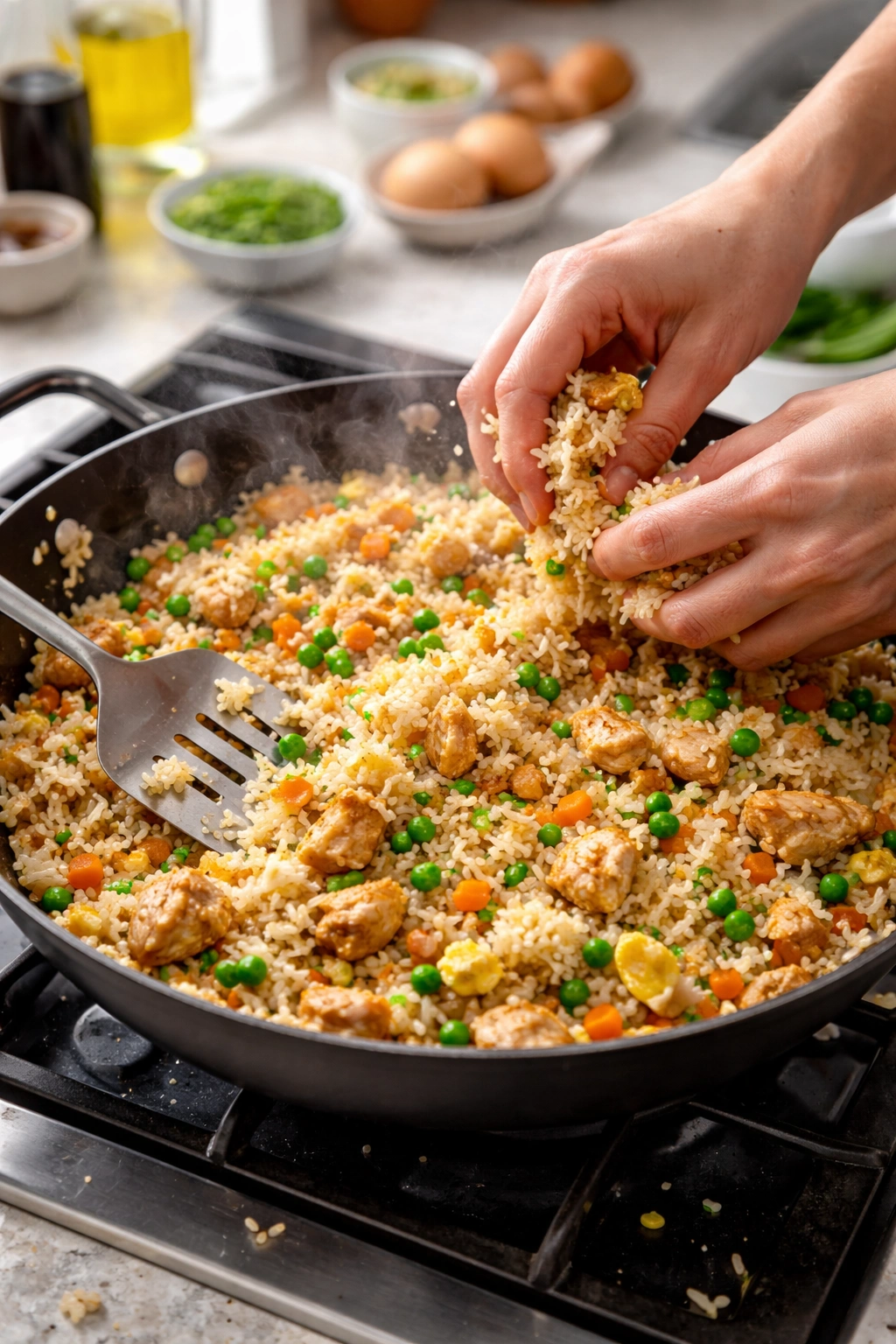
Breaking up cold rice is easier than you think. Cold rice straight from the refrigerator comes in a solid block. Instead of trying to separate it while it’s cold, which is frustrating and time-consuming, let it hit the hot pan for just 30 seconds. The heat loosens the grains instantly, and then you can break them apart easily with your spatula. This is much faster than trying to separate cold rice with your fingers or breaking it up in a bowl before cooking.
Don’t wander away from your pan. Fried rice cooks quickly, and every minute matters in a twenty-minute timeline. Once your rice hits the hot pan, you need to be actively involved—stirring, checking for that golden color, adjusting heat if needed. It’s not a set-it-and-forget-it dish. Your attention is part of what makes it ready in twenty minutes.
Taste throughout, especially for salt. Soy sauce varies in sodium content by brand, and individual preferences differ. Rather than adding all the soy sauce at once and hoping it’s right, add most of it and then taste before adding more. It’s easier to add more seasoning than to fix overly salty fried rice. Season the chicken early, taste the vegetables, and then adjust the final seasoning when you add the rice.
The pan should be hot enough to hear a sizzle. When you add oil, you should hear and see a sizzle almost immediately. When you add the rice, there should definitely be an active sizzle. This sound is your indicator that the pan is hot enough to properly fry rather than steam. If you’re not hearing that sound, increase your heat slightly.
Fresh ginger makes a surprising difference. If you have a small piece of fresh ginger, grating about half a teaspoon and adding it with the garlic adds a subtle warmth and brightness that elevates the entire dish. It takes literally fifteen seconds to grate and is worth it if you happen to have ginger on hand.
Green onions in two stages. Adding the white and light green parts early allows them to soften and meld into the dish. The dark green parts added at the very end stay fresher, brighter, and more visually prominent. This two-stage approach gives you more complex onion flavor throughout while keeping some textural interest.
Common Mistakes That Slow You Down or Sabotage Results
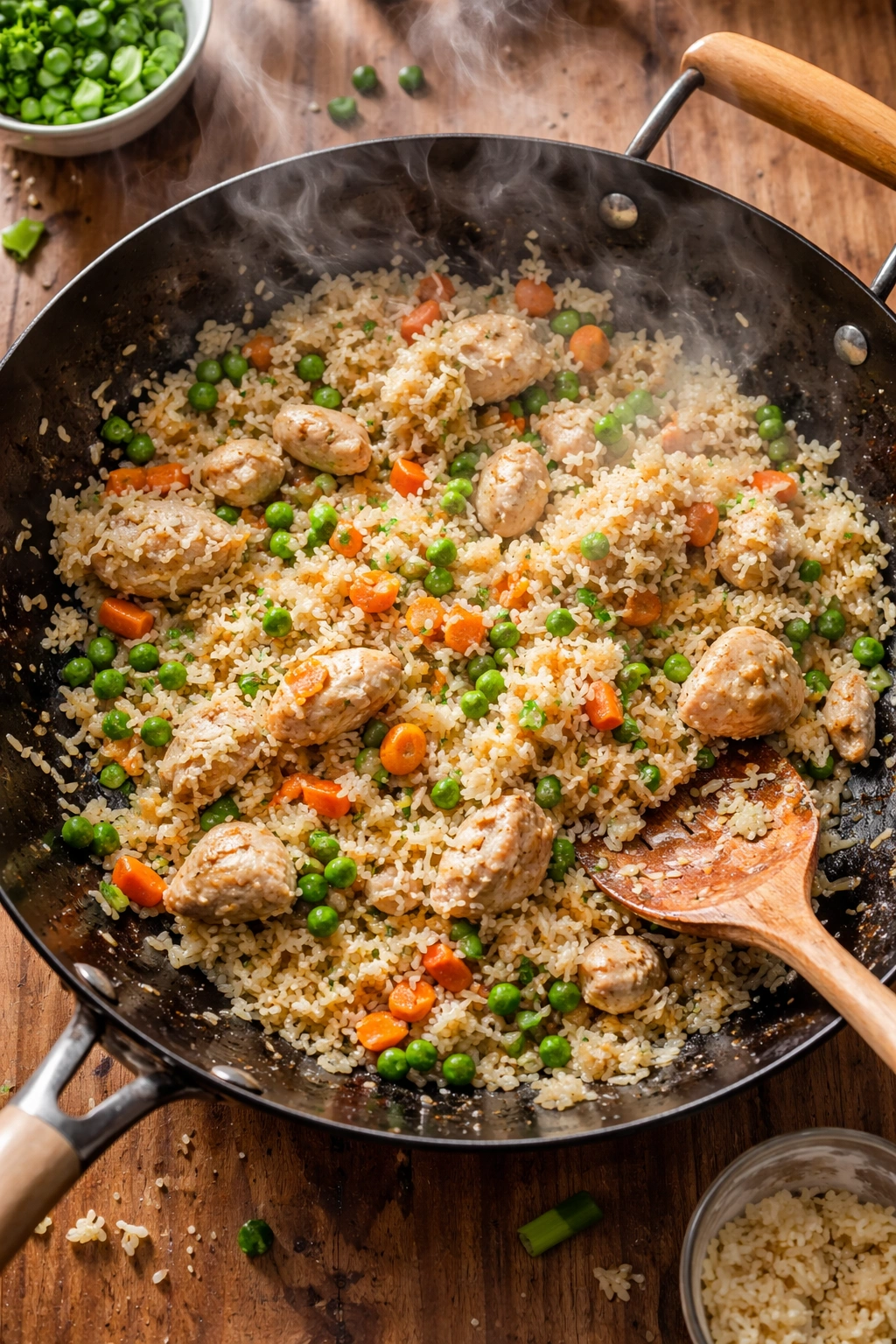
Using warm rice instead of cold. This is by far the most common mistake, and it transforms your timeline from twenty minutes to forty. Warm rice releases moisture that turns your fried rice gluey and requires extensive cooking to dry out. Always use cold rice. If you don’t have any, make it ahead or commit to the longer timeline.
Cutting chicken into pieces that are too large. When chicken pieces are more than an inch across, they take ten minutes to cook through, eating into your entire timeline. Smaller pieces (half-inch to three-quarter inch) cook through in just minutes, which keeps everything on schedule.
Adding wet ingredients to the pan. Don’t rinse your frozen vegetables—the ice crystals contain water that will steam your rice instead of frying it. Damp eggs won’t scramble properly. Pat your chicken dry. Everything you add should be dry or nearly dry so that your pan stays hot and things fry rather than steam.
Crowding the pan with too much at once. If you dump all your chicken, all your vegetables, and all your rice into the pan simultaneously, it brings the temperature down dramatically and everything ends up steaming. Add ingredients in stages: chicken first, vegetables second, rice third. This keeps the heat where it needs to be.
Failing to cook the rice on high heat. Medium-high heat is fine for cooking the chicken and vegetables, but once the rice goes in, increase to high. This is what creates those golden, crispy bits and gives the fried rice that authentic texture and flavor. Low or medium heat just steams it.
Overthinking the dish. Fried rice is inherently forgiving and simple. You don’t need fancy equipment, exotic ingredients, or special skills. The beauty of it is that it’s accessible and quick. If you find yourself stressed or second-guessing, simplify. You’re frying rice with chicken and vegetables. That’s it. It’s almost impossible to ruin it.
Flavor Variations You Can Make in the Same Twenty Minutes
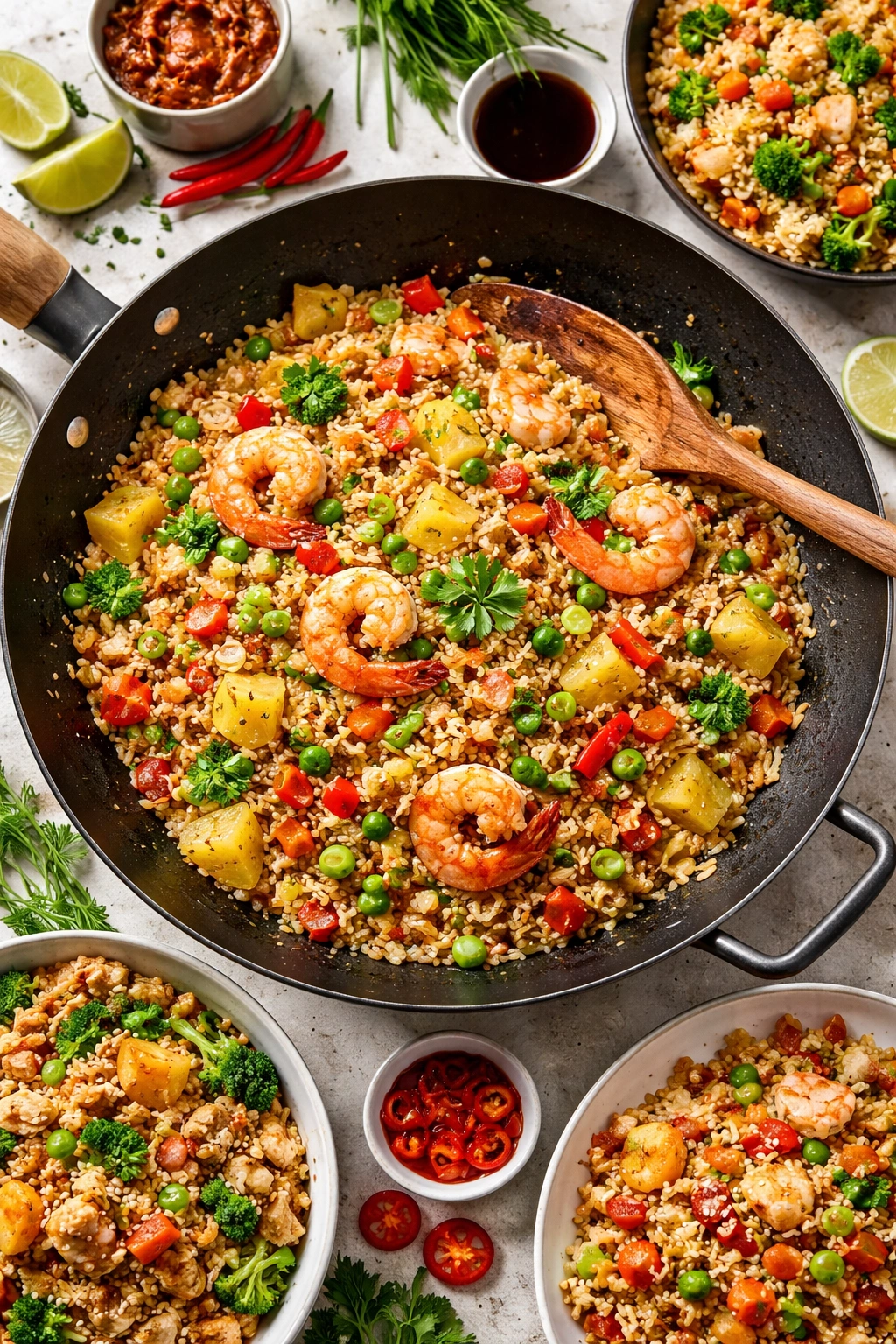
The base recipe is delicious as-is, but fried rice is wonderfully customizable. The beauty is that most variations don’t actually add cooking time—you’re simply swapping one ingredient for another.
Spicy version: Add a teaspoon of red pepper flakes with the garlic, or a teaspoon of sriracha stirred into the soy sauce. If you like heat, a drizzle of chili oil at the end is spectacular. The timing doesn’t change; you’re just adding to what’s already happening.
With shrimp or pork instead of chicken: Small shrimp cooks even faster than chicken—literally one minute per side over high heat. Diced pork or ham can be added at the same timing as chicken. Use whatever protein you have on hand.
Asian pear or pineapple version: A small diced pear or fresh pineapple added with the rice brings sweetness and brightness. The fruit doesn’t need cooking; you’re just folding it in at the end. This is especially nice if you’re serving the fried rice as a side dish rather than a main.
Vegetarian and protein-boosted: Omit the chicken and add an extra egg or two (beaten and scrambled separately), plus a cup of diced firm tofu. You could also add edamame or cashews for crunch and protein.
With oyster sauce: If you have oyster sauce on hand, substitute half the soy sauce amount with oyster sauce for deeper umami flavor. This is entirely optional but adds restaurant-quality depth in seconds.
Kimchi fried rice: Dice a half-cup of kimchi and add it with the vegetables. The spicy, funky complexity from kimchi is incredible. This version pairs beautifully with a fried egg on top.
Storage, Reheating, and Batch Cooking Strategy
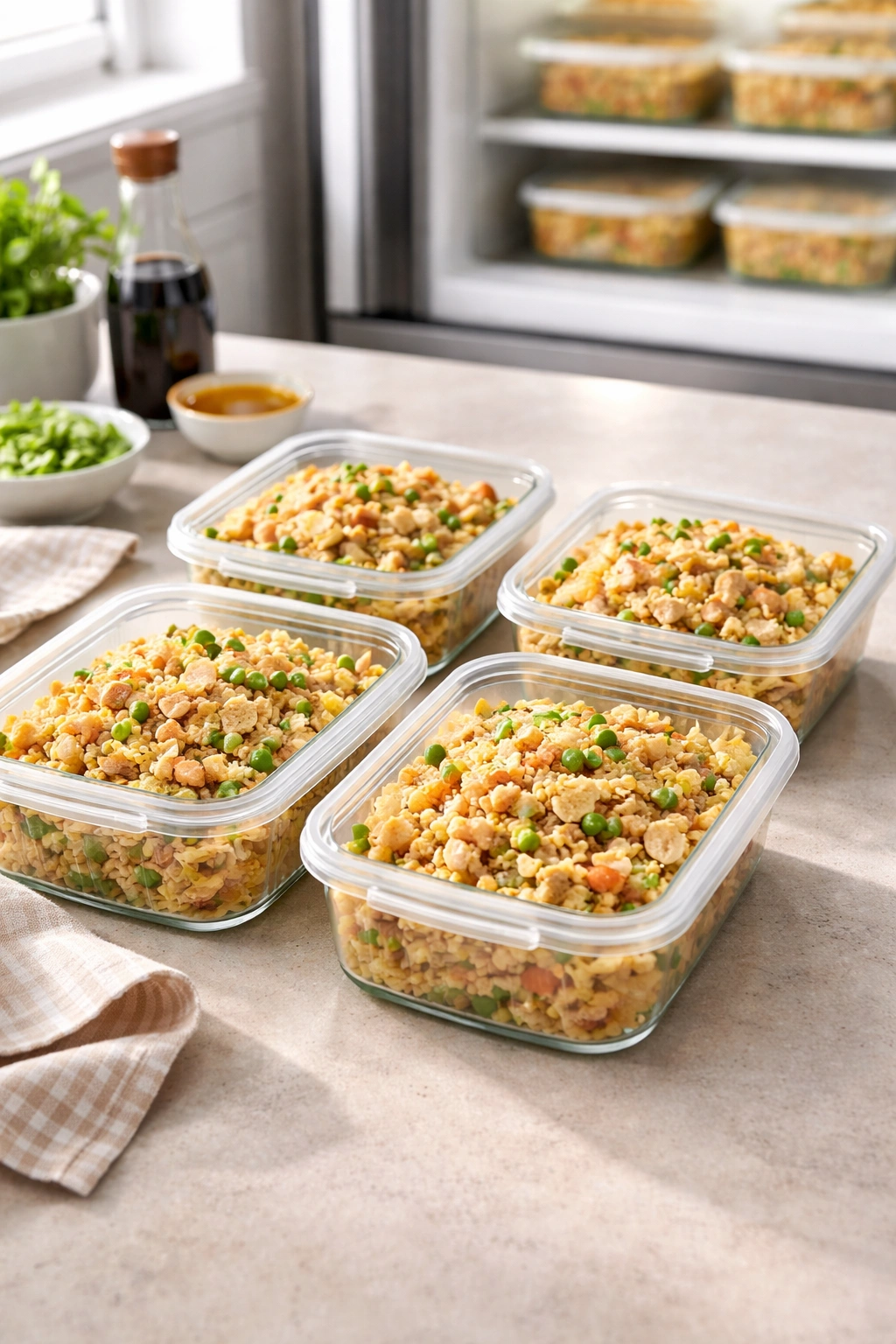
Fried rice actually makes excellent leftovers—better than many fried rice dishes made with leftover rice. Store it in an airtight container in the refrigerator for up to four days. It holds its texture and flavor remarkably well.
To reheat, warm it in a skillet over medium heat with a small splash of water or a teaspoon of oil. Stir frequently for 2 to 3 minutes until heated through. The water helps refresh the rice without drying it out. You can also microwave it—cover the container and heat for 60 to 90 seconds, then stir. Fried rice reheats better than most rice dishes because that initial frying gives it texture that holds up through the process.
Fried rice also freezes beautifully for up to three months. Let it cool completely, then transfer to a freezer-safe container or bag. To reheat from frozen, thaw it in the refrigerator overnight and then reheat as above. The texture holds up well through freezing and thawing.
For batch cooking, the recipe doubles easily if you have a large enough pan and don’t mind working in two batches for the cooking process. Making a double batch on a Sunday means you have fried rice for weeknight dinners throughout the week. You can also make this with different proteins across multiple batches—chicken one night, shrimp the next, vegetarian the day after—without changing your method.
Serving Suggestions and Perfect Pairings
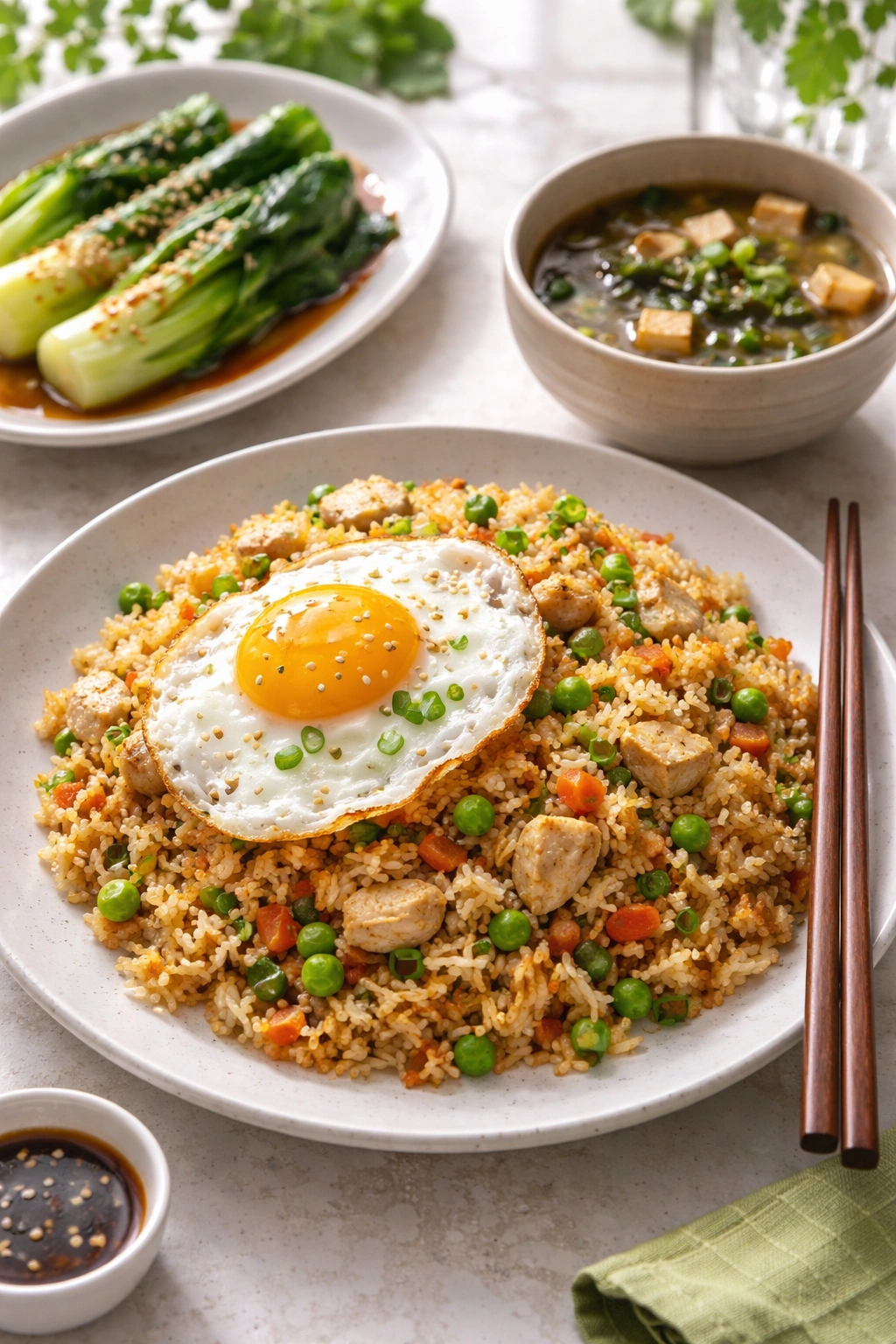
Chicken fried rice is satisfying as a complete meal on its own, but it also pairs beautifully with other dishes.
Soup pairings work wonderfully. Serve the fried rice alongside a simple egg drop soup, hot and sour soup, or a light miso broth. The warm, comforting rice paired with light, flavorful soup creates a restaurant-quality meal.
Top with a fried egg. An additional fried egg placed on top of a bowl of fried rice adds richness and visual appeal. The runny yolk mixes into the rice as you eat, adding creamy decadence.
Serve alongside steamed or stir-fried vegetables. A quick stir-fry of bok choy, broccoli, or snap peas complements the fried rice nicely, adding fresh vegetables and a lighter element to the meal.
Add a simple sauce. A drizzle of sriracha, chili crisp, or a homemade ginger-scallion sauce takes the fried rice to another level. Many people make a small side sauce of equal parts soy sauce, rice vinegar, and sesame oil whisked together, plus minced garlic and ginger. A spoonful of this over the fried rice is incredible.
Serve in lettuce wraps. Some people scoop fried rice into butter lettuce or romaine leaves for a lighter, interactive meal. It’s fun and breaks up the dish in an interesting way.
Fresh garnishes matter. Sliced green onions, sesame seeds, cilantro, thinly sliced fresh chilies, or crispy fried shallots scattered on top add freshness, texture, and visual interest. These are particularly nice if you’re serving guests and want the dish to feel elevated.
Customizing Your Rice Cooking Method
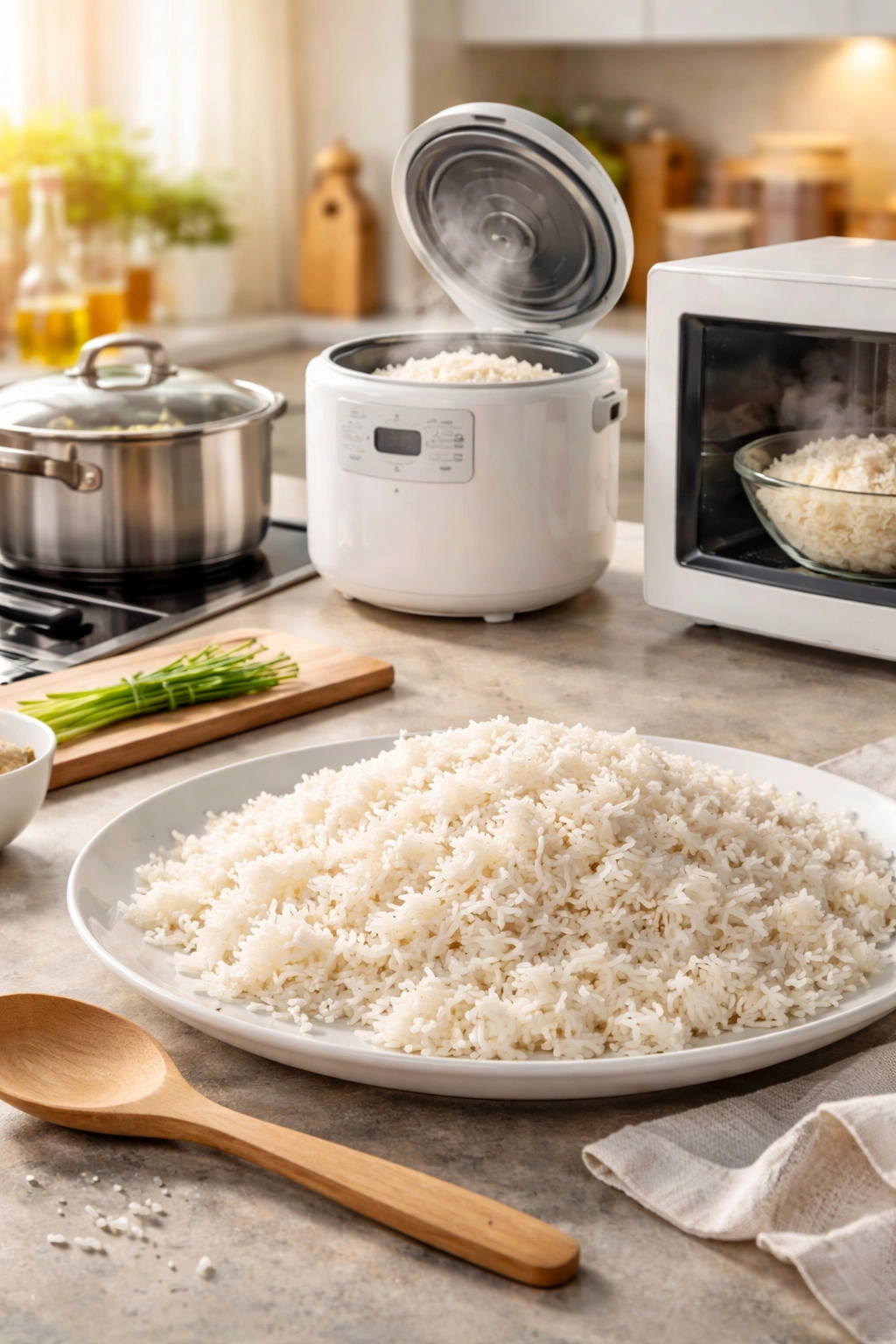
If you don’t have leftover rice ready, you can cook jasmine rice quickly using any of these methods. For the straightforward stovetop method: combine one and a half cups of uncooked jasmine rice with two cups of water and a pinch of salt in a saucepan. Bring to a boil over high heat, then reduce heat to low, cover with a lid, and simmer for exactly twelve minutes. Remove from heat and let sit, covered, for five minutes. Fluff with a fork, then spread on a plate to cool quickly—about fifteen to twenty minutes.
Alternatively, use a rice cooker if you have one. Combine rice and water per the cooker’s instructions and start it. Most rice cookers have a “quick cook” function that’s faster than traditional cooking. Once done, spread the rice on a plate to cool.
The microwave method is genuinely convenient if you’re in a rush. Combine one cup of jasmine rice with one and three-quarter cups of water in a microwave-safe bowl. Cover loosely with a paper towel and microwave on high for twelve minutes. Let sit covered for five minutes, then fluff and cool.
For the absolute fastest option, buy packaged microwaveable rice. It takes ninety seconds to prepare and works perfectly for fried rice once chilled. It’s more expensive per serving than cooking from scratch, but it genuinely saves time if you’re in a time crunch.
Scaling This Recipe Up or Down
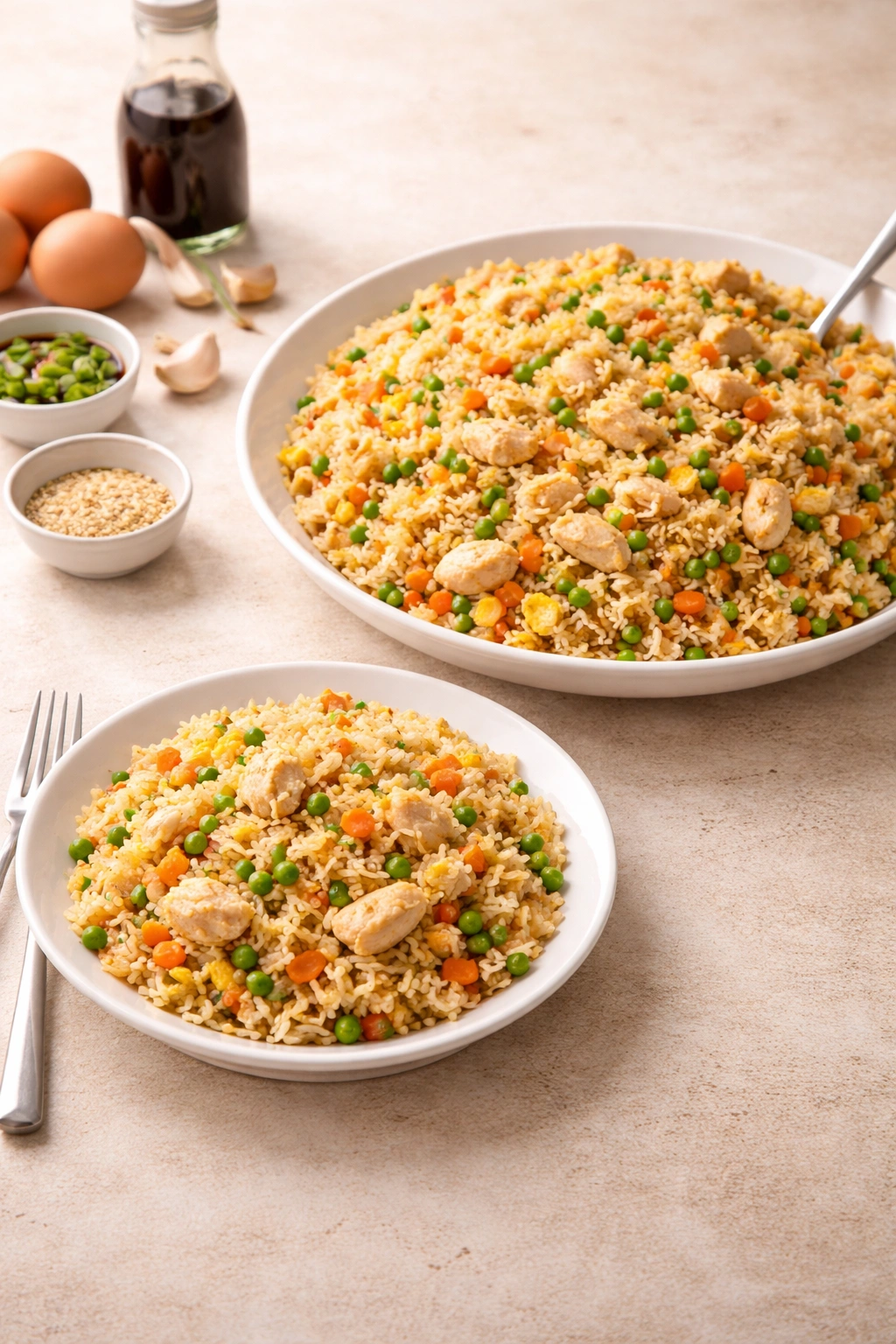
The proportions here serve four people as a main course or six as part of a larger meal with other dishes. The beauty of fried rice is that it scales easily.
For two people: Use half the rice (two cups), half the chicken (half a pound), one egg, three-quarters cup of vegetables, and adjust seasonings proportionally. Cooking time stays roughly the same—you’re just cooking less food.
For six to eight people: Double all ingredients. You may need to work in two batches or use a larger wok to avoid crowding. If working in batches, cook them separately then combine at the end, adjusting final seasoning.
For meal prep: Make a triple or quadruple batch on a day when you have a bit more time. Portion into individual containers and refrigerate. Throughout the week, you have ready-to-reheat fried rice for quick weeknight meals or lunches.
Final Thoughts
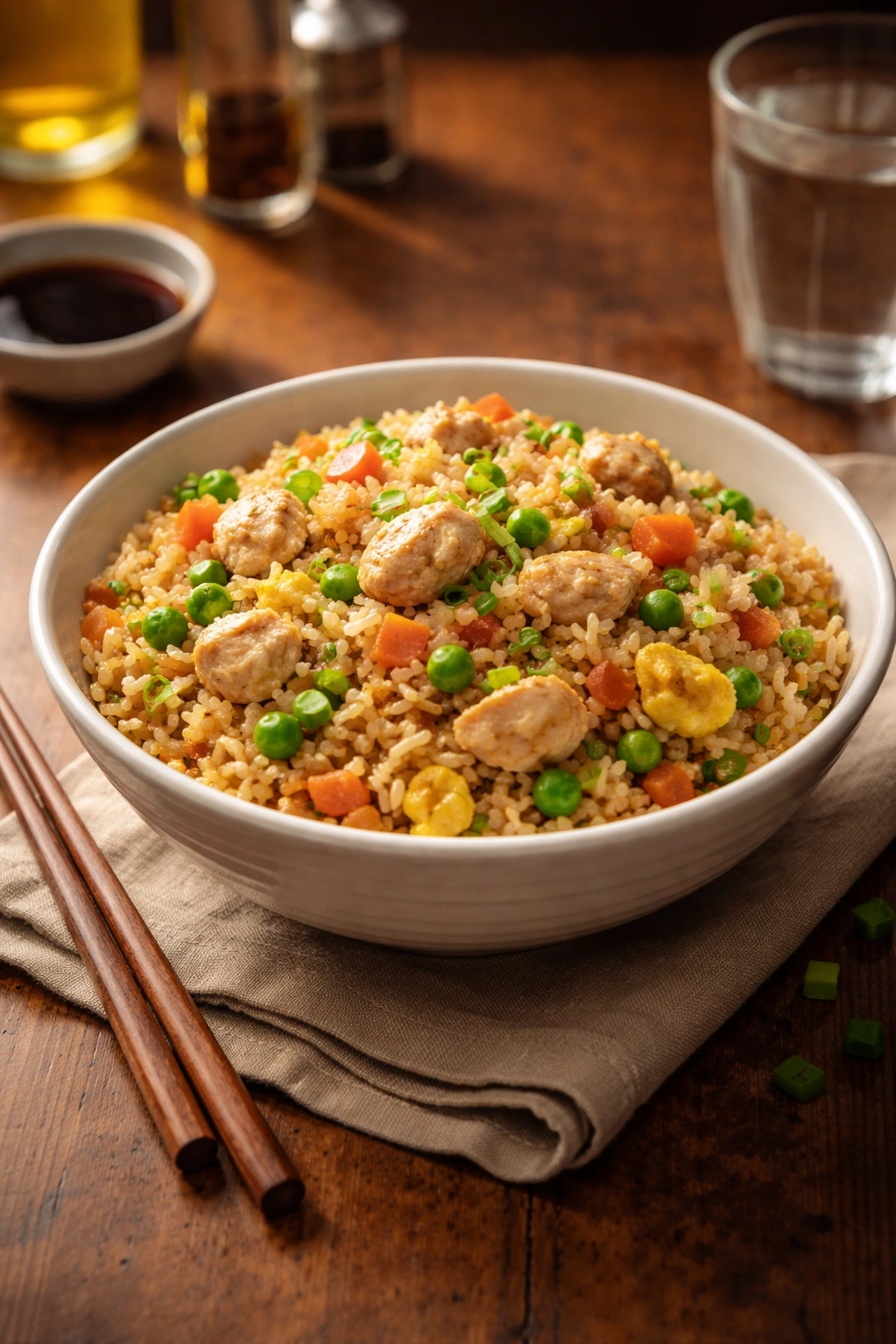
Twenty-minute chicken fried rice isn’t a compromise—it’s genuinely better than most takeout versions. It’s hotter when you eat it, fresher because you made it minutes ago, and exactly seasoned to your preference. You know every ingredient in it. It costs a fraction of what you’d spend ordering, and you can make it while keeping your kitchen relatively clean and calm.
The secret isn’t complicated techniques or hard-to-find ingredients. It’s cold rice, high heat, proper timing, and a clear system. Master these elements, and you unlock a meal that you’ll find yourself making regularly, not just when takeout tempts you. Once you understand that fried rice isn’t difficult or time-consuming, it becomes one of those go-to dinners that saves the week—delicious, satisfying, and done before you know it.
