



This cozy, hearty dinner combines roasted acorn squash with seasoned Italian sausage, aromatic vegetables, and warm spices for a meal that feels like comfort in a bowl. There’s something deeply satisfying about serving dinner in an edible vessel—the natural sweetness of caramelized squash contrasts beautifully with the savory, umami-rich sausage filling, while fresh herbs and melted cheese bring everything together. Whether you’re planning a quiet weeknight meal or impressing dinner guests, this stuffed squash delivers restaurant-quality results with minimal fuss and straightforward ingredients you likely already have on hand.
The beauty of this dish lies in its flexibility. You can follow the recipe exactly as written or adapt it endlessly to match what’s in your pantry and your family’s preferences. The basic formula—roasted squash plus seasoned sausage mixture—creates a satisfying main course that’s naturally low in carbs, packed with protein, and loaded with vegetables hidden inside that savory filling. Home cooks consistently rave about how impressive this dish looks on the plate compared to how easy it actually is to prepare. It’s the kind of recipe that makes you feel like you spent hours in the kitchen when you actually invested less than an hour of active time.
What Makes Acorn Squash Perfect for Stuffing
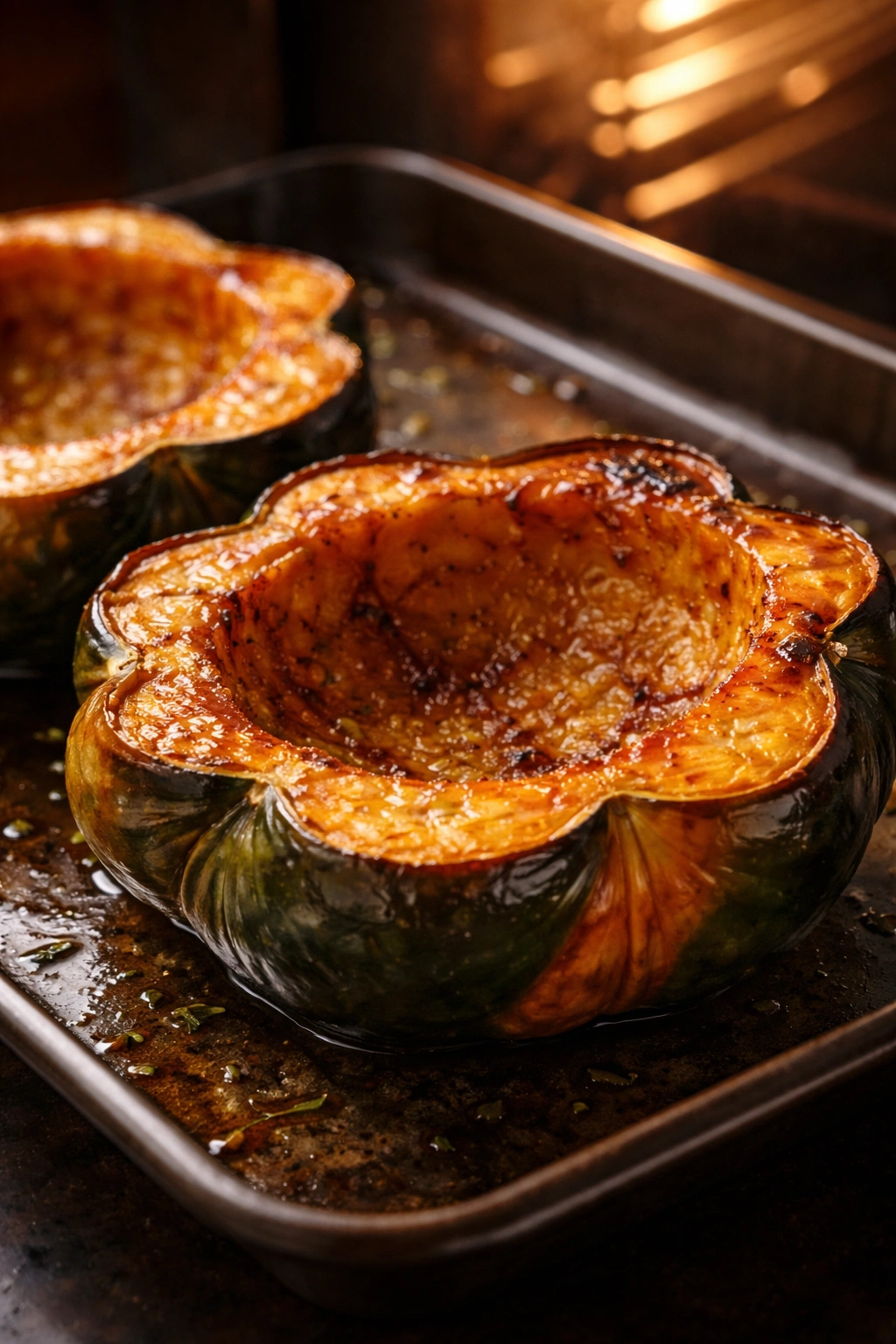
Acorn squash isn’t just delicious—it’s structurally ideal for this cooking technique. The natural bowl shape created when you halve the squash lengthwise makes a built-in serving vessel, eliminating the need for separate plates. Unlike butternut squash’s tapered shape or spaghetti squash’s delicate texture, acorn squash halves are sturdy enough to hold a generous mound of filling without collapsing or tipping over.
The flavor profile of acorn squash sets it apart from other winter varieties. It strikes a perfect balance between sweet and savory, with a nutty undertone that deepens during roasting as the flesh caramelizes at the edges. This subtle sweetness becomes a secret weapon in the dish—it tempers the salty, savory richness of the sausage filling and creates complexity without needing to add extra sugar or sweet components. The skin also becomes tender and edible once roasted, and the flesh has a pleasant creamy texture that contrasts beautifully with the crumbled sausage and crispy cheese topping.
From a nutritional standpoint, acorn squash delivers impressive benefits alongside its culinary appeal. One cup of cooked acorn squash provides substantial amounts of vitamin A (crucial for vision and immune function), vitamin C (an antioxidant that supports collagen production), fiber (important for digestive health), and potassium (essential for heart health and muscle function). The carbohydrates in squash are mostly complex carbs and fiber, so they digest slowly and won’t cause blood sugar spikes the way refined carbs do. This makes the entire dish balanced and nourishing, not just tasty.
Why This Sausage Filling Works So Well
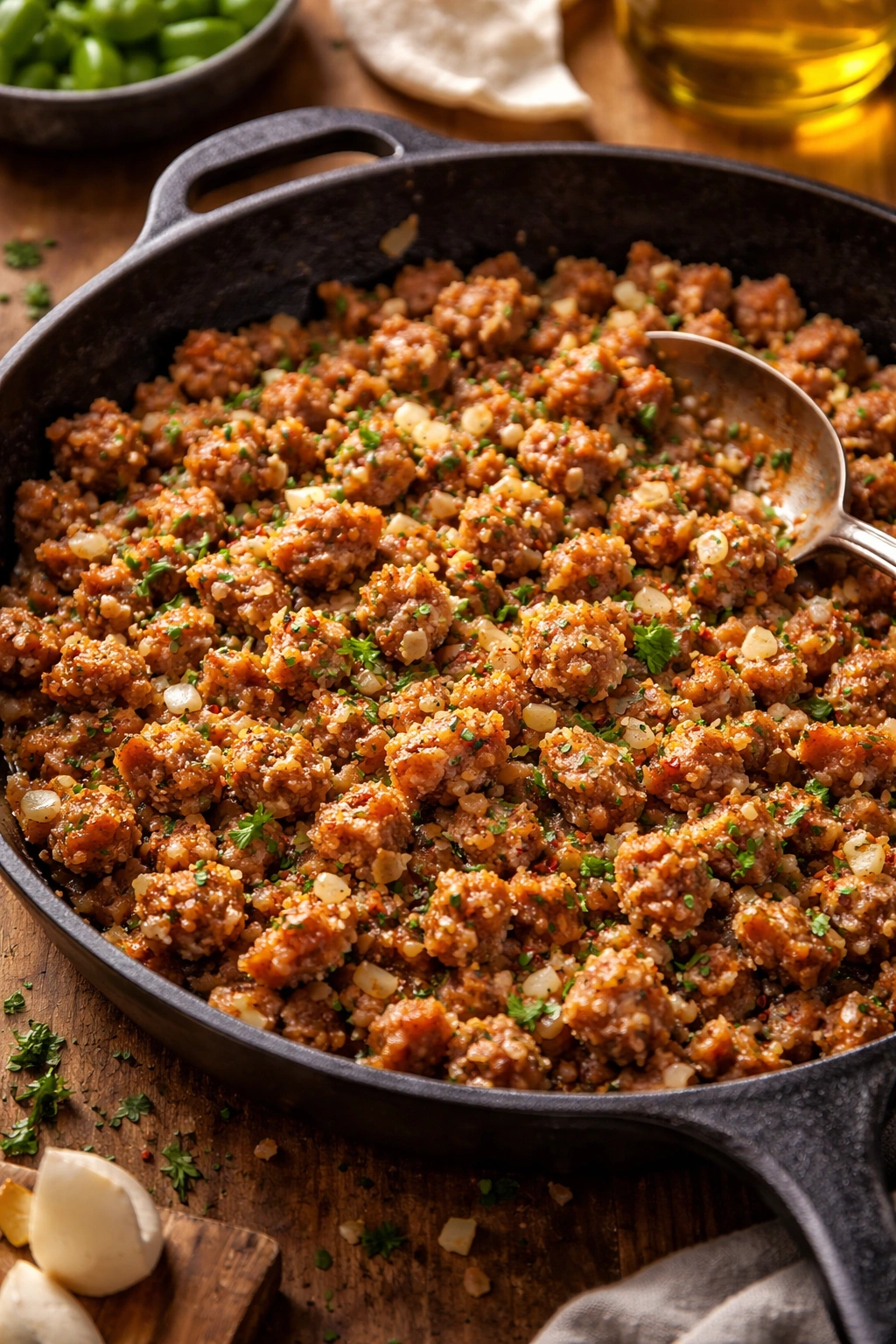
Italian sausage—whether mild, hot, or a chicken/turkey variant—is the backbone of this filling, and its flavor profile is perfectly matched to every other ingredient in the dish. Sausage brings multiple layers of seasoning simultaneously: fennel seeds create an anise-like warmth, garlic and herbs are already blended in, and the meat itself contributes deep umami flavors that make the dish feel rich and substantial.
The beauty of using quality sausage is that it does much of the seasoning work for you. You don’t need to build flavor from scratch with individual spices because the sausage already contains the aromatic blend that tastes like home cooking. This is why this recipe comes together so quickly—brown the sausage, add supporting vegetables, and you’re already most of the way to a complete dish.
The filling gains additional depth from the vegetables cooked alongside the sausage. Onions and garlic create a savory, aromatic base that becomes sweet and mellow as they cook. Mushrooms—if you choose to include them—dissolve almost completely into the mixture, leaving behind only their umami-rich essence, which makes the filling taste more complex without any identifiable mushroom pieces. Fresh herbs like sage and thyme are classic pairings with winter squash and sausage, bringing earthy, woodsy notes that feel seasonal and intentional.
Many versions of this recipe also incorporate apples, dried cranberries, or both. These additions introduce subtle sweetness and tartness that balance the salty sausage and complement the squash’s natural flavor without making the dish taste like dessert. The dried fruit also adds chewiness and textural interest, so every bite isn’t uniform. Parmesan cheese adds a final layer of umami and creates that golden, crispy top when the squash finishes baking.
Choosing the Best Ingredients
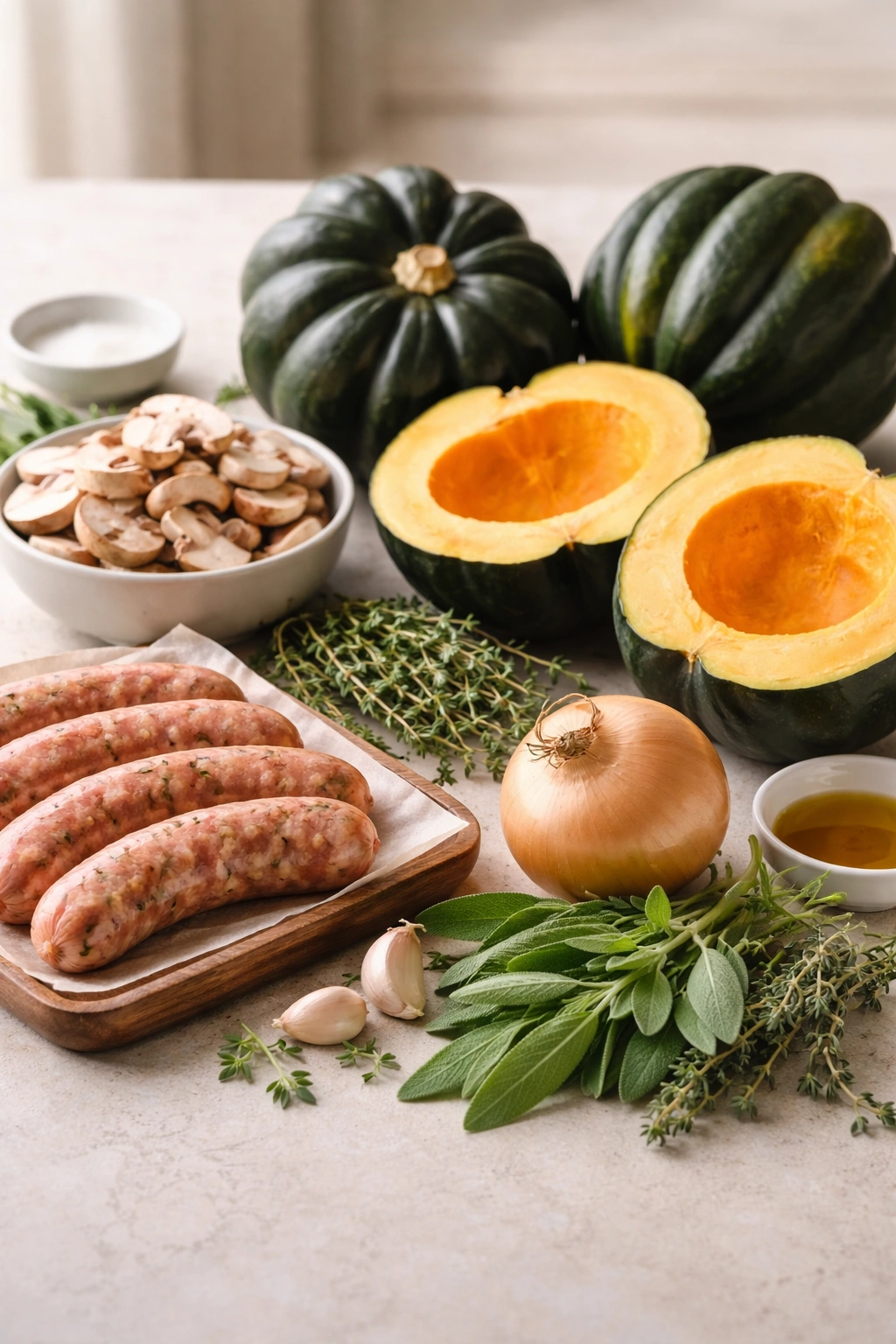
Success with this recipe depends on ingredient quality, though you don’t need specialty items from an upscale market. Select medium to large acorn squash that feel heavy for their size and have smooth, deep green skin (sometimes with orange streaks). Avoid squash with soft spots, bruises, or very pale coloring, which indicates they’re either underripe or beginning to deteriorate. One medium acorn squash serves one person as a main course or can be halved to serve two, so plan accordingly for your group.
For sausage, buy the best quality you can find and afford. This is the star ingredient, so it’s worth choosing thoughtfully. Look for sausage with short ingredient lists—ideally just pork (or poultry), seasonings, and salt. Avoid brands loaded with fillers, binders, or nitrates if that’s a priority for your family. You’ll need ground or crumbled sausage, so either buy it pre-ground or purchase links and squeeze the meat out of the casings yourself. Spicy Italian sausage creates more complexity and heat; mild offers comfort without fire; sweet sausage emphasizes the sugar and fennel. Choose based on your heat tolerance and what you’re in the mood for.
Mushrooms, if using them, should be fresh and finely chopped. Cremini or baby bella mushrooms have more flavor than white button mushrooms and a slightly meatier texture. Chop them quite small—almost minced—so they distribute throughout the filling and soften completely during cooking, almost disappearing into the mixture and leaving only their savory essence behind.
Fresh herbs are non-negotiable in this recipe. Dried herbs won’t deliver the same brightness and freshness; the recipe specifically calls for fresh sage, thyme, or a combination. If fresh herbs aren’t available, you can substitute a small amount of dried (roughly one-third the amount), but know that the flavor profile will shift toward more muted, earthy notes. Buy fresh herbs at the grocery store or grow them in a windowsill garden—they’re inexpensive and make a huge difference in the final dish.
Cheese should be freshly grated from a block, not pre-shredded from a bag. Pre-shredded cheese contains anti-caking agents that prevent it from melting smoothly and create a slightly grainy texture. Freshly grated cheese melts into a creamy, bubbly layer that’s irresistible. Parmesan is traditional and delicious; smoked gouda adds a different flavor dimension; sharp cheddar works too. Choose based on what appeals to your palate.
How to Prepare and Cut Acorn Squash
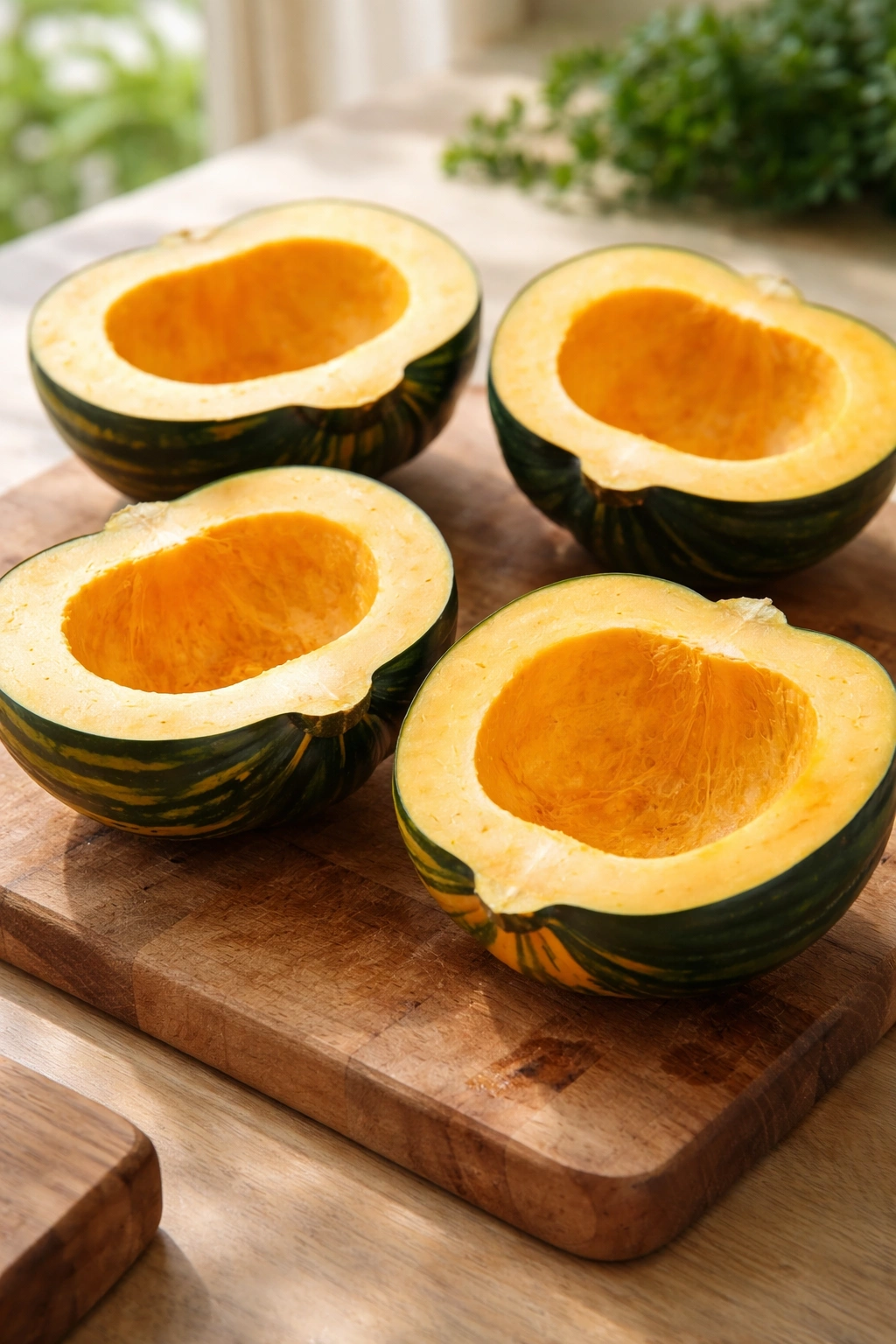
Cutting an acorn squash safely and effectively requires a sharp knife and a steady approach. The easiest method is to cut horizontally across the middle of the squash (perpendicular to the stem and base), rather than attempting to cut from stem to base. This creates two symmetrical bowl-shaped halves with the attractive ridged pattern visible on the surface.
Before you cut, stabilize the squash by trimming a thin slice off both the top and bottom to create flat, non-rolling surfaces. The cuts should be minimal—just enough to remove the stem area and create a stable base—no more than half an inch. Lay the squash on its side and, using a sharp chef’s knife, carefully cut through the middle. If the squash is particularly hard (which means it’s properly mature and will have better flavor), you can score the skin first with light cuts to guide your knife, then follow the scored line with deeper cuts.
Once halved, use a sturdy spoon to scoop out the seeds and stringy fibers. A grapefruit spoon or melon baller works beautifully for this task, though a regular spoon works fine too. Be thorough but gentle—you want to remove all the seeds and the fibrous strands that surround them, but you don’t want to gouge into the flesh itself. The flesh left inside the squash contributes to the final dish, both as structure for the bowl and as additional vegetable content in the filling.
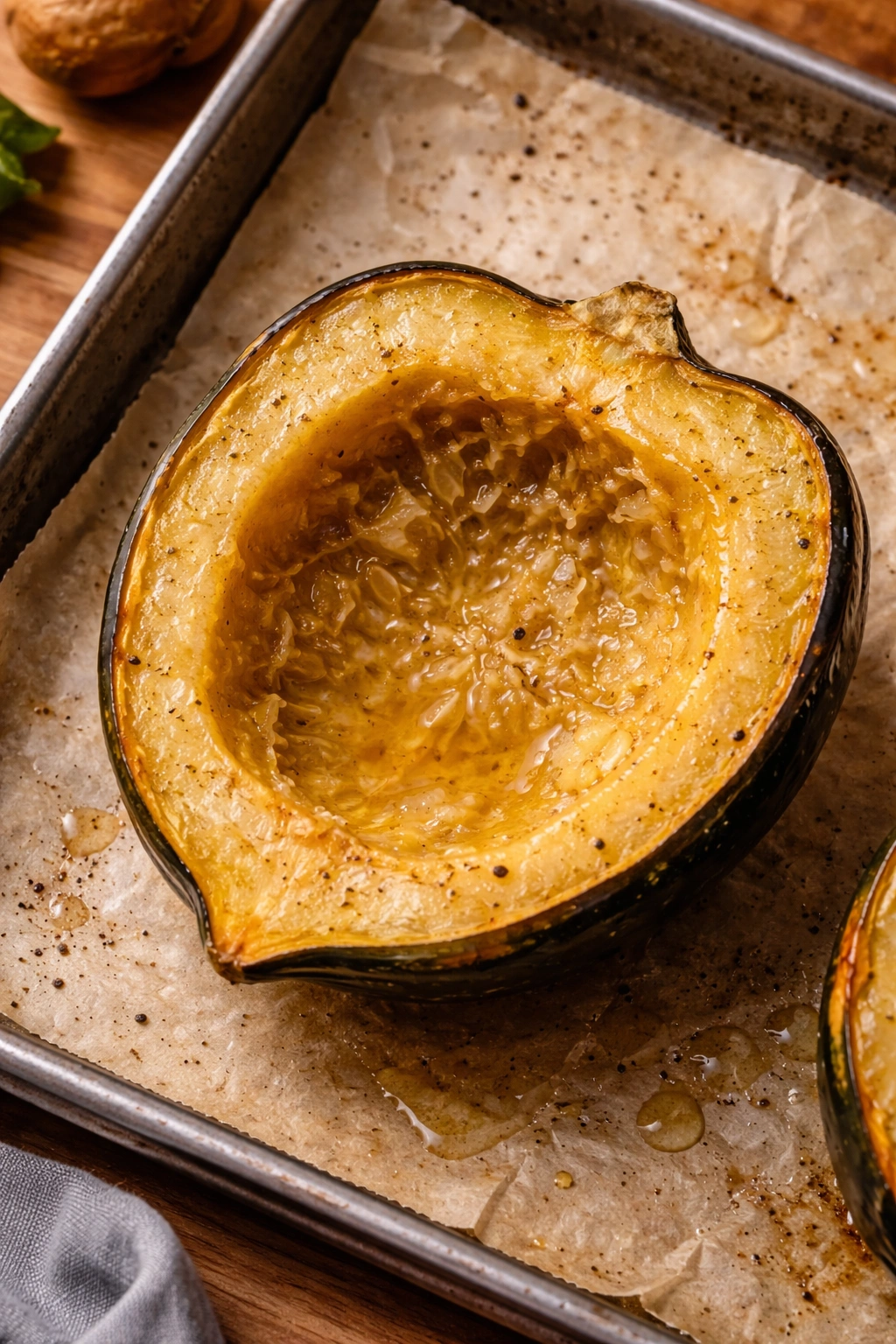
Brush the cut surfaces of the squash halves generously with extra-virgin olive oil and season with kosher salt and freshly ground black pepper. The oil ensures the squash develops caramelized, tender flesh with slightly crispy edges. Don’t skimp on the seasoning—the cut side of raw squash can handle a generous seasoning that will season the flesh as it roasts.
Yield, Prep Time, Cook Time, and Difficulty
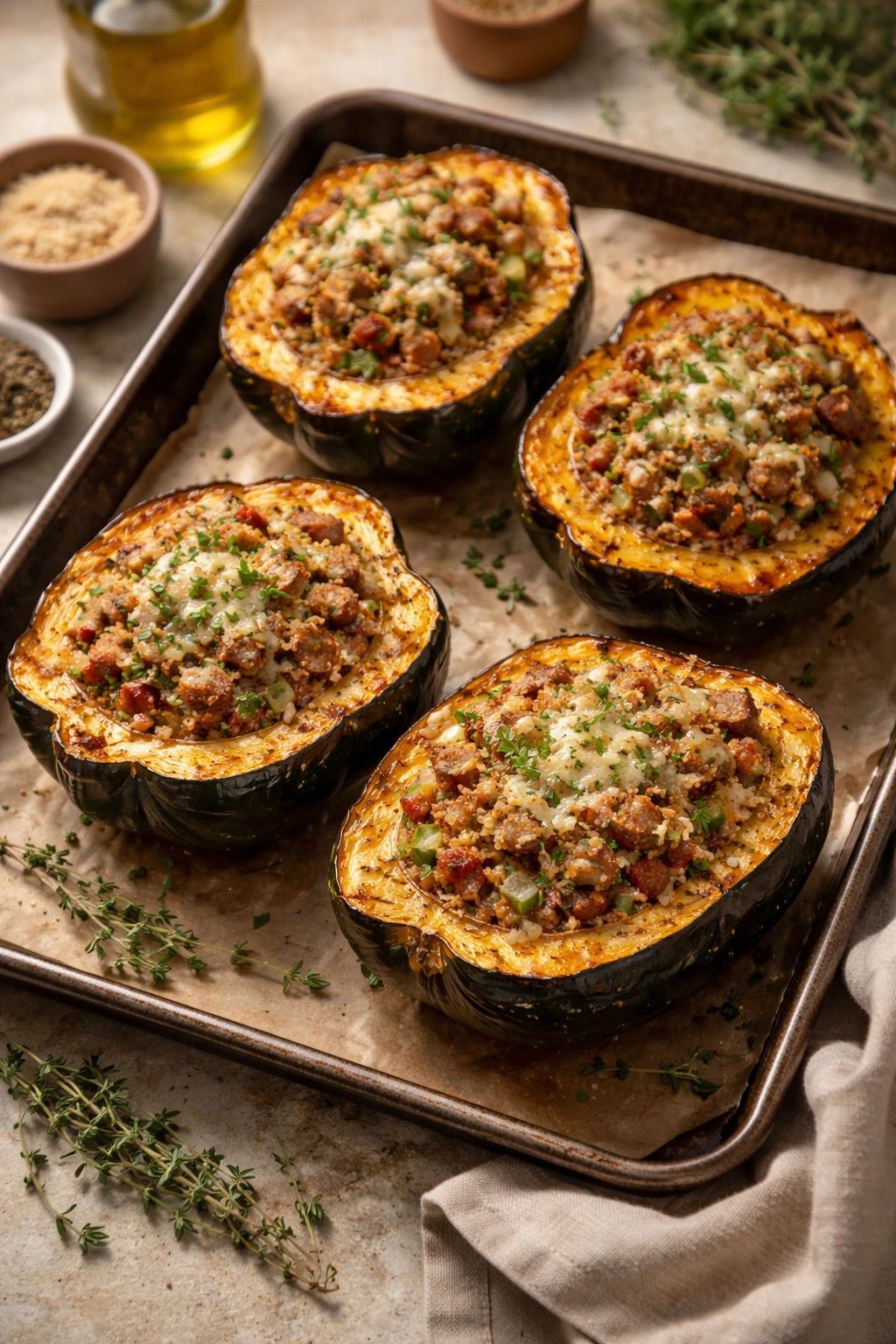
Yield: Serves 4 as a main course | Makes 4 stuffed squash halves
Prep Time: 20 minutes (hands-on prep including cutting, chopping, and assembling)
Cook Time: 55 minutes (initial roasting of squash plus final baking with filling)
Total Time: 1 hour 15 minutes active time
Difficulty: Beginner — No special equipment needed beyond a sharp knife and a baking sheet. The steps are straightforward, and even if you’ve never made stuffed squash before, you’ll find this recipe forgiving and easy to follow.
Complete Ingredient List
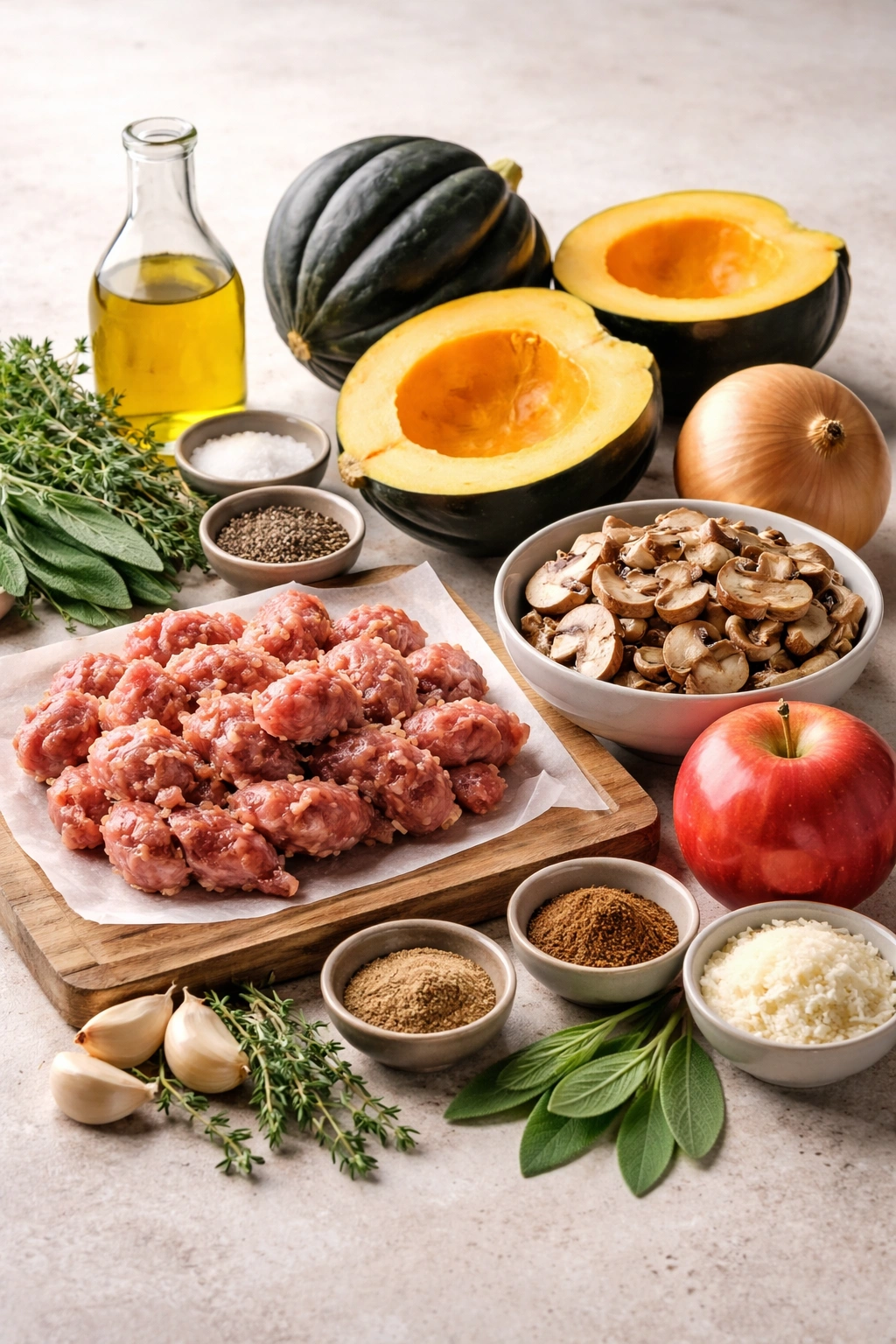
For the Acorn Squash:
- 2 medium acorn squash (approximately 1.5 to 2 pounds each)
- 2 tablespoons extra-virgin olive oil (1 tablespoon per squash half, divided)
- 1 teaspoon kosher salt (¼ teaspoon per halve, or more to taste)
- ½ teaspoon freshly ground black pepper
For the Sausage Filling:
- 1 pound Italian sausage (mild, hot, or sweet—use your preference; can be ground or links with casings removed)
- 1 tablespoon extra-virgin olive oil (for sautéing vegetables)
- 8 ounces cremini or baby bella mushrooms, finely chopped
- 1 small yellow onion, diced small (about ¾ cup)
- 1 medium sweet-crisp apple, cored and finely diced (about ¾ cup; leave the peel on for nutrients and texture)
- 3 cloves garlic, minced
- 1 tablespoon fresh sage, chopped (or 1 teaspoon dried sage)
- 1 tablespoon fresh thyme leaves, chopped (or 1 teaspoon dried thyme)
- ¼ teaspoon ground nutmeg
- ⅛ teaspoon ground allspice
- ½ teaspoon kosher salt
- ¼ teaspoon freshly ground black pepper
- ½ cup freshly grated Parmesan cheese, plus additional for topping (or use smoked gouda, sharp cheddar, or mozzarella—¾ cup total for generous coverage)
Optional Add-Ins to the Filling:
- ⅓ cup dried cranberries or raisins
- ⅓ cup chopped pecans or walnuts
- 2 cups fresh spinach or kale, roughly chopped (added at the end to wilt)
How to Cook Sausage-Stuffed Acorn Squash
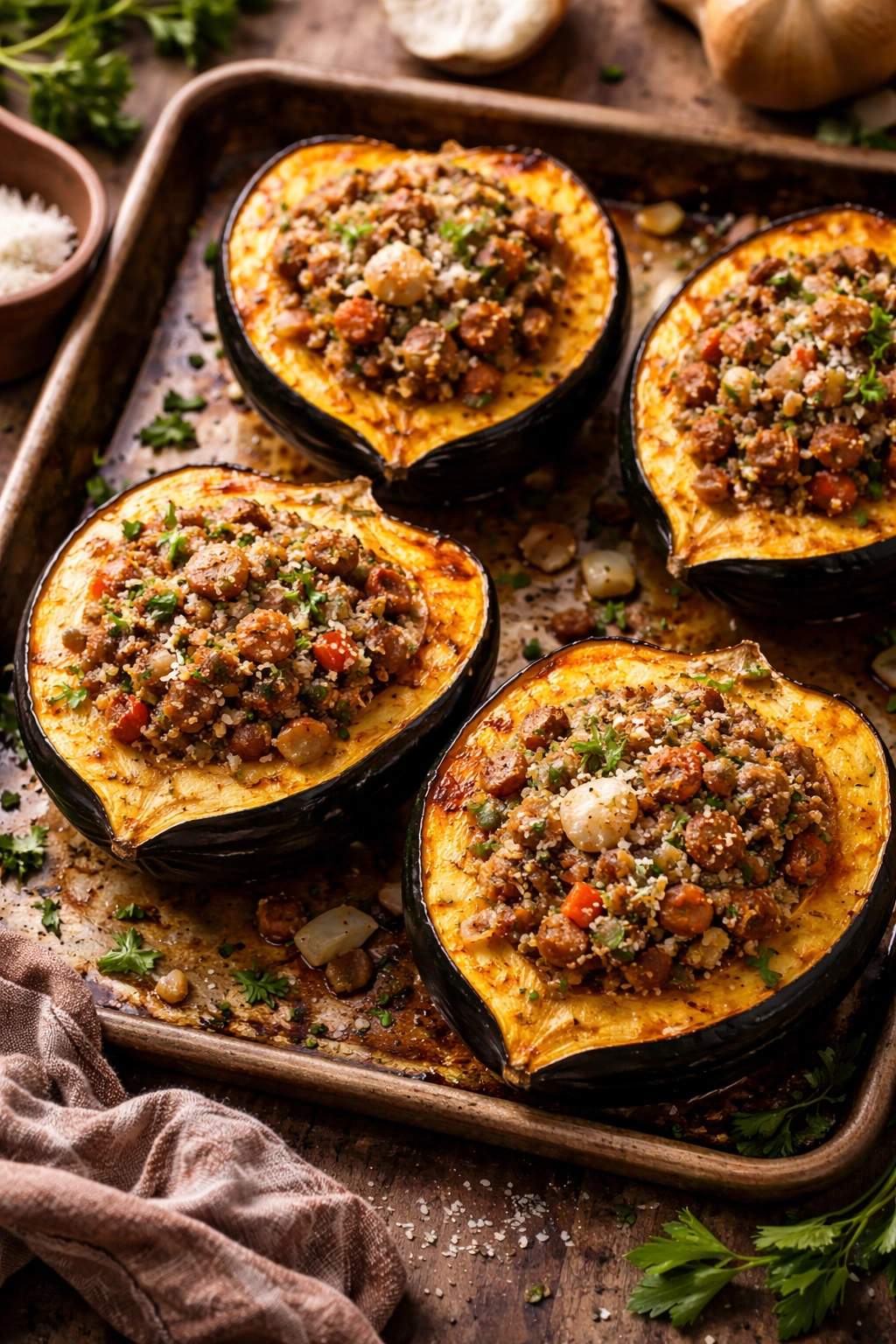
Prepare the Squash:
-
Preheat your oven to 400°F (205°C) and position the rack in the center of the oven. Line a large rimmed baking sheet with parchment paper or foil for easy cleanup.
-
Wash the acorn squash under cool running water and pat dry with a clean kitchen towel. Using a sharp chef’s knife, carefully cut a very thin slice off the top of each squash where the stem is located, then trim a thin slice off the bottom. These small cuts create stable, flat surfaces so the squash won’t roll around on the baking sheet.
-
Position the squash on its side and cut horizontally across the middle (perpendicular to the stem and base) to create two equal halves. Take your time and use steady pressure—if the knife gets stuck, wiggle it gently rather than forcing it through, as this prevents the blade from slipping.
Advertisements -
Using a sturdy spoon, melon baller, or grapefruit spoon, scoop out all the seeds and the stringy fibers surrounding them. Be thorough but gentle—you’re removing only the inedible parts, not gouging into the flesh. Set the scooped squash halves on the prepared baking sheet, cut-sides up.
-
Brush the cut surface of each squash half with ½ tablespoon of olive oil, working the oil evenly across the entire cut face. Sprinkle each half with a generous pinch of kosher salt and freshly ground black pepper. Flip the halves over so the cut sides face down on the baking sheet.
-
Transfer the baking sheet to the preheated oven and roast the squash for 35 to 40 minutes, until the flesh is fork-tender and the skin begins to wrinkle slightly at the edges. The edges should show some browning and caramelization. Remove from the oven and set aside to cool slightly—you’ll handle these halves again in a few minutes.
-
While the squash roasts, reduce the oven temperature to 375°F (190°C).
Make the Sausage Filling:
-
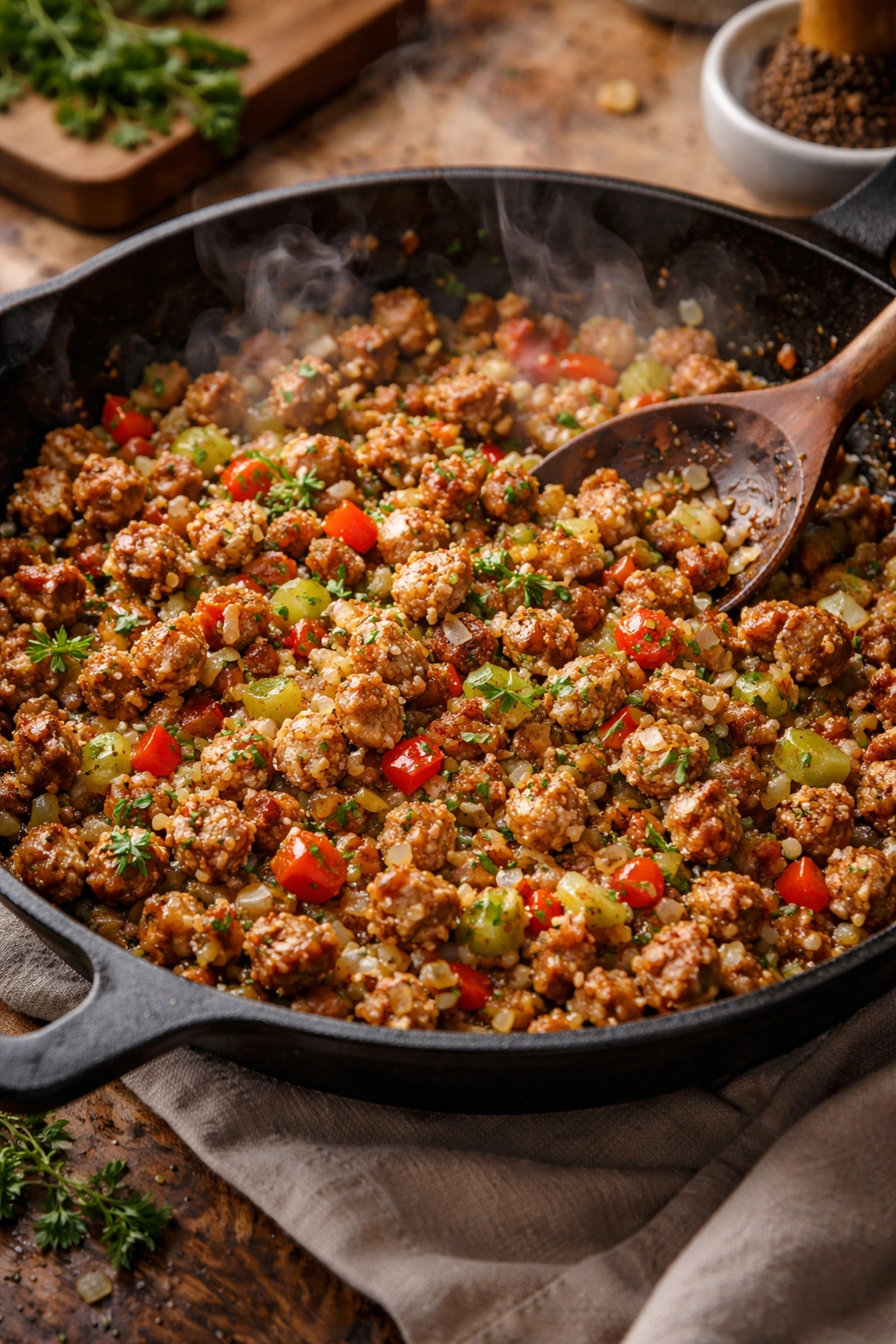
While the squash is roasting (start this around the 15-minute mark), heat 1 tablespoon of olive oil in a large skillet over medium-high heat. Once the oil is shimmering and hot, add the Italian sausage to the pan, breaking it apart with a wooden spoon or spatula into small crumbles as it cooks.
-
Brown the sausage for 5 to 7 minutes, stirring frequently, until it’s no longer pink and the pieces are nicely browned on the edges. The sausage should smell deeply savory and fragrant. If there’s significant grease pooling in the pan (more than 1-2 tablespoons), carefully drain and discard the excess.
-
Add the finely chopped mushrooms, diced onion, diced apple, minced garlic, salt, and black pepper to the pan. Stir well to combine all the vegetables with the sausage.
-
Cook, stirring frequently, for 8 to 10 minutes, until the onions are softened and translucent, the mushrooms have released their liquid and reabsorbed it, and the apple pieces are tender. The vegetables should look soft and the mixture should smell fragrant and complex. If the pan is dry, the vegetables have cooked and concentrated their flavors.
-
Add the chopped fresh sage and thyme (or dried herbs, if using), along with the ground nutmeg and allspice. Stir thoroughly and cook for an additional 30 seconds to 1 minute until the spices become fragrant—you’ll smell the warm spice notes bloom.
Advertisements -
Remove the skillet from the heat and stir in the ½ cup Parmesan cheese and any optional add-ins like dried cranberries, pecans, or spinach. If using fresh spinach or kale, add it now in batches, stirring each batch into the warm sausage mixture until it wilts and incorporates completely. Taste the filling and adjust the seasoning with additional salt and pepper if needed. Remember that the squash flesh will contribute subtle sweetness, so season to taste and don’t go overboard.
Stuff and Finish Baking:
-
By now, your roasted squash halves should be cool enough to handle. Turn them over so the cut side is facing up, creating a natural bowl shape. Using a sturdy spoon or small ice cream scoop, divide the sausage filling evenly among the four squash halves, pressing it down gently so it’s firmly packed into the cavity. The filling will mound up slightly above the rim of the squash—that’s perfect.
-
Sprinkle the top of each filled squash half with additional grated Parmesan cheese (about 2 tablespoons per half), creating a generous, even layer that will melt and become golden and crispy as the squash finishes baking.
-
Transfer the stuffed squash halves back to the oven and bake at 375°F for 15 to 20 minutes, until the filling is hot throughout and the cheese on top is melted and light golden brown. You can test doneness by inserting a small knife or thermometer into the filling—it should be steaming hot (at least 165°F if you’re using a thermometer) and easy to cut through.
-
Remove from the oven and let rest for 3 to 5 minutes before serving. This brief rest allows the cheese to set slightly and makes the dish easier to handle. Serve hot, and add a sprinkle of fresh herbs on top if desired for visual appeal and a fresh flavor burst.
Essential Tips for Perfect Results
Timing is everything. The squash needs enough time to become completely tender so the flesh is soft enough to scoop out and eat comfortably. If your squash is particularly large or you’re using especially thick-skinned squash, you may need up to 45 minutes for the initial roast. Pierce the flesh with a fork or knife to test doneness—it should slide through easily without resistance.
Don’t skip the initial roasting step. Some recipes bake the squash and filling together from raw, which can result in undercooked, tough squash by the time the filling is hot. Pre-roasting the squash for 35-40 minutes ensures it’s fully tender before stuffing, then the final 15-20 minutes just heats the filling through and melts the cheese.
Use quality sausage and don’t crowd the pan. Sausage that’s mostly meat with minimal filler will brown more evenly and taste better. When browning the sausage, resist the urge to stir it constantly—let it sit undisturbed for 20-30 seconds at a time so it develops a flavorful crust. This concentration of flavor makes a noticeable difference in the final dish.
Chop the apple and mushrooms finely. Large chunks of either vegetable become obvious in the filling and can pull away from the rest of the mixture during cooking. Fine chopping ensures these ingredients integrate completely and distribute evenly throughout each bite. For mushrooms especially, they should be small enough that they nearly disappear into the filling, leaving only their umami-rich essence.
Fresh herbs matter immensely. If you can’t find fresh sage and thyme, use a combination of dried Italian herbs or herbes de Provence (which contain thyme, oregano, marjoram, and sometimes lavender). The dried herb mixture won’t deliver the same fresh brightness, but it’s a reasonable substitute that still tastes delicious.
Don’t oversalt. Italian sausage is already seasoned and fairly salty. The Parmesan cheese adds additional salt. Add the ½ teaspoon listed in the recipe, taste the mixture, and then adjust up if needed rather than starting with more. You can always add more salt before eating, but you can’t take it out once mixed in.
Let the filling cool slightly before stuffing. Hot filling will make the squash easier to tear and may cause the cheese on top to separate from the filling during baking. A 3-5 minute rest allows the filling to set slightly without cooling completely, making the stuffing process neater and the final bake quicker.
Common Mistakes to Avoid
Undercooked squash is the most frequent error. If the squash isn’t fully tender during the initial roast, it won’t have the correct texture and eating it becomes a chore rather than a pleasure. Test with a fork—the flesh should pierce and scoop easily. If there’s any resistance, it needs more time. It’s impossible to overcook squash in the oven, so don’t worry about leaving it in a few minutes longer than the recipe states if you’re uncertain.
Oily filling happens when you don’t drain excess sausage fat. Some fat is flavorful and necessary, but if there’s more than a couple of tablespoons of grease pooling in the skillet, skim it off. Too much fat makes the filling greasy and heavy, which masks the other flavors and makes the finished dish feel overindulgent rather than nourishing.
Poorly seasoned sausage mixture. Always taste the filling before stuffing the squash. Because the sausage is already seasoned, it’s easy to underflavor the vegetables and fruit that surround it. Add salt and pepper to make the vegetables taste like themselves, not just like “sausage vehicle.”
Uneven filling distribution. Take the time to divide the filling equally among the four halves so each person gets the same proportion of filling to squash. If you pile all the filling into two halves, the other two will look skimpy on the plate and disappoint whoever receives them.
Skipping the apple or mushrooms. These additions might seem optional, but they contribute important textural variety and subtle flavor notes that make the dish more interesting. The apple’s slight sweetness and tender texture after cooking, and the mushroom’s umami depth, elevate the entire dish from “good” to “restaurant-quality.”
Delicious Variations to Try
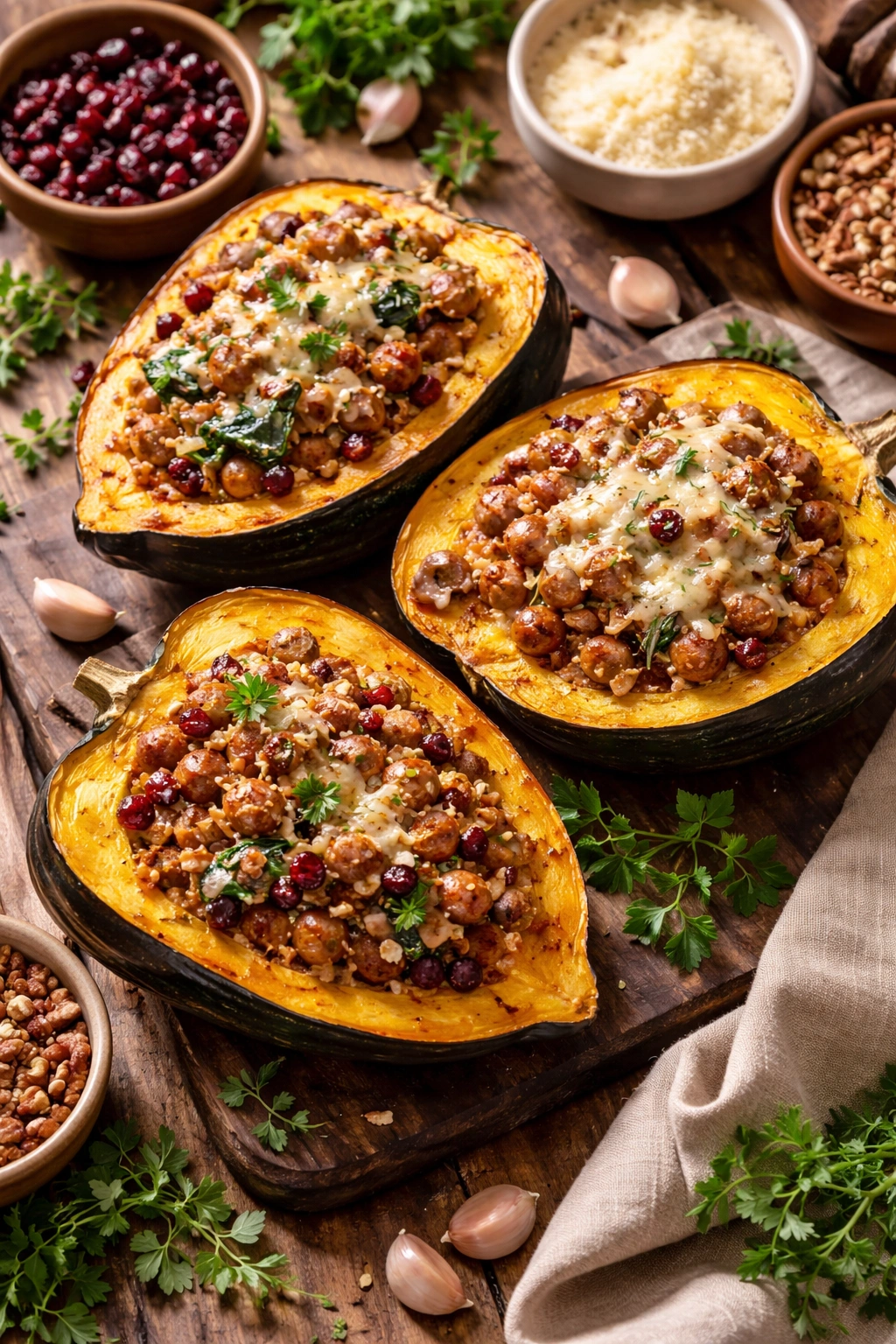
Cranberry and Pecan Version. Stir ⅓ cup dried cranberries and ⅓ cup chopped pecans into the filling after removing it from the heat. These additions add pops of tart-sweet flavor and textural crunch that make the dish feel more festive and autumnal. This variation is particularly nice for holiday meals.
Spinach and Garlic Variation. After browning the sausage and cooking the vegetables, add 2 cups of fresh spinach or kale (roughly chopped) and cook until completely wilted. The greens add nutrition, visual interest, and a slight earthiness that complements the sausage beautifully. You can combine this variation with the cranberries and pecans for a maximally loaded filling.
Cheese Swap Options. Experiment with different cheeses to change the flavor profile entirely. Smoked gouda adds a subtle smokiness; sharp cheddar contributes a more pungent, complex flavor; mozzarella creates a stretchier, creamier texture; fontina adds rich nuttiness. Mix and match to suit your preferences, or use what you have on hand.
Turkey or Chicken Sausage. For a lighter version, substitute 12 ounces of turkey or chicken sausage for the pork sausage. The filling will be slightly leaner, and the flavor will be more delicate. You may need to add an extra tablespoon of oil when browning chicken sausage, as it produces less fat than pork varieties.
Couscous or Wild Rice Version. Stir 1 cup of cooked couscous, quinoa, or wild rice into the sausage filling before stuffing the squash. The grain adds heft and makes the dish more filling, stretching the recipe to serve 6 instead of 4. It also adds a pleasant textural contrast and makes the filling less dense.
Brown Sugar Finish. For a slightly sweeter, more caramelized top, combine 2 tablespoons softened butter, 2 tablespoons brown sugar, and 2 tablespoons grated Parmesan, then spread this mixture over the top of the stuffed squash halves before the final bake. This creates a crispy, slightly sweet topping that’s absolutely delicious.
White Wine and Garlic Version. While sautéing the vegetables, add ½ cup dry white wine (like Sauvignon Blanc or Pinot Grigio) and let it simmer for 2-3 minutes until the alcohol cooks off. The wine adds acidity and depth without adding carbs, and it pairs beautifully with all the other flavors.
Vegetarian Version. Substitute the sausage with 1 pound of cooked lentils or crumbled firm tofu seasoned with Italian herbs, garlic, salt, and pepper. The lentils provide earthiness and protein similar to sausage, while tofu takes on whatever flavors you season it with. Cook the lentils or tofu with the vegetables in exactly the same way you would the sausage.
Storage and Make-Ahead Planning
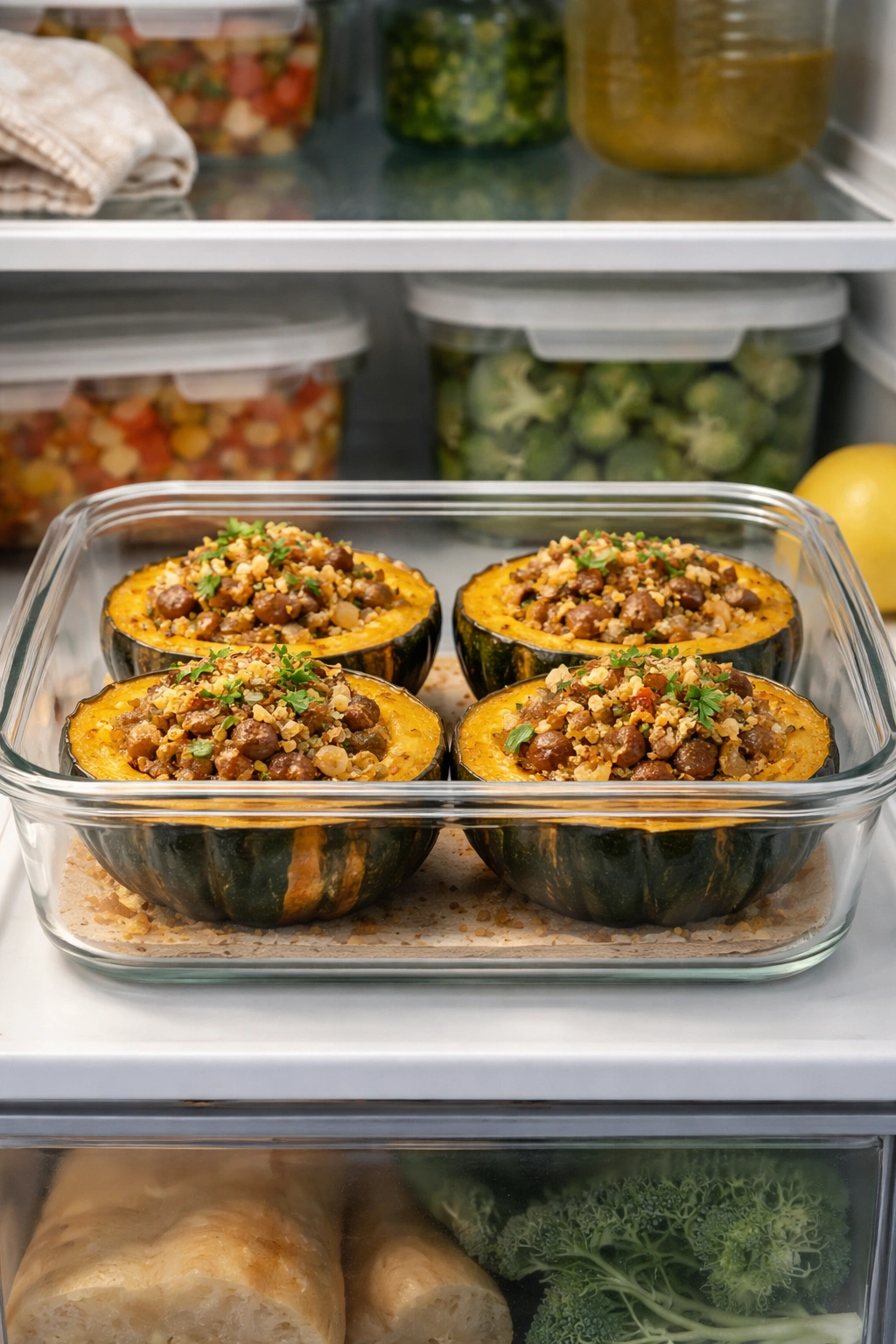
Refrigerator Storage. Place cooled stuffed acorn squash halves in an airtight container and refrigerate for up to 4 days. Store each half separately if you have container space, as this prevents the filling from drying out. The flavors actually meld and deepen over a day or two of refrigeration, so this is excellent meal-prep food.
Freezer Storage. Stuffed acorn squash freezes beautifully for up to 3 months. Cool the baked squash completely to room temperature, wrap each half individually in plastic wrap, then place the wrapped halves in a freezer-safe bag or container, removing as much air as possible. Label the container with the date. Alternatively, freeze the baked squash in a single layer on a baking sheet, then transfer the frozen halves to a freezer bag for storage.
Make-Ahead Strategy. You can prepare the components ahead of time to dramatically reduce cooking time on the day you want to serve this. Roast the squash halves up to 2 days ahead, cool completely, wrap, and refrigerate. Make the sausage filling up to 2 days ahead as well, storing it in a separate container. When you’re ready to serve, simply reheat the filling gently in a skillet, stuff the squash halves (cold from the fridge is fine), top with cheese, and bake at 375°F for 20-25 minutes until everything is hot and the cheese is melted.
Assembly Ahead of Time. For maximum convenience, assemble the entire stuffed squash up to 2 days in advance, cover with plastic wrap, and refrigerate. When you’re ready to cook, simply place the cold, assembled squash directly in a 375°F oven and bake for 25-30 minutes (adding 5-10 minutes to account for the cold start) until the filling is hot throughout and the cheese is melted and golden.
How to Reheat and Enjoy Leftovers
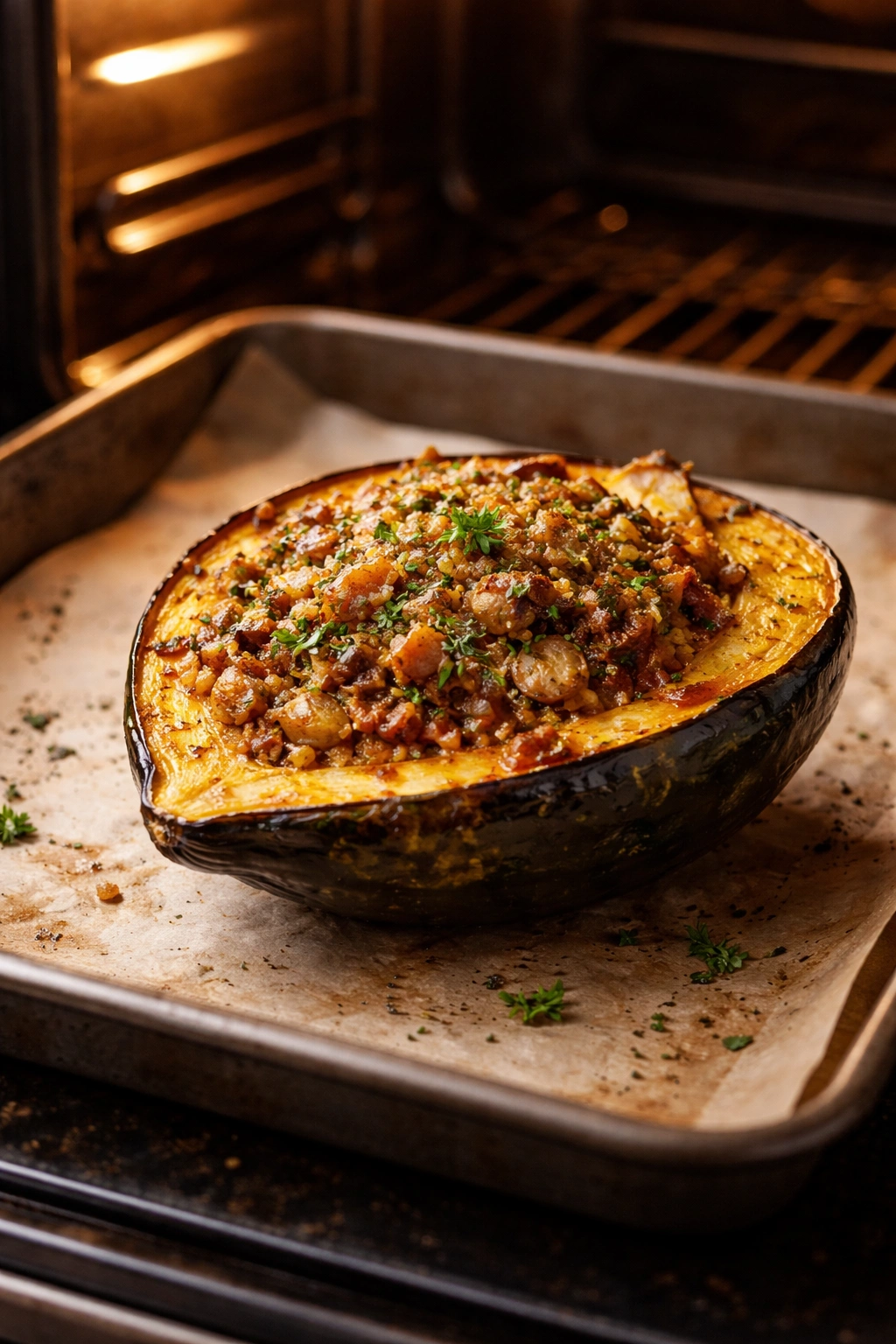
Oven Reheating (Best Method). Place leftover stuffed squash halves on a baking sheet lined with parchment paper. Cover loosely with foil to prevent the cheese from over-browning, and bake at 350°F for 15 to 20 minutes, until the filling is steaming hot and the squash is warmed through. Remove the foil for the last 2-3 minutes if you want to recrisp the cheese top. This method produces the best results, with tender squash and creamy, melted cheese.
Microwave Reheating (Quick Method). Transfer a stuffed squash half to a microwave-safe plate, cover loosely with a damp paper towel, and microwave on high for 2 to 4 minutes, depending on the wattage of your microwave, until the filling is hot and the squash is warmed through. Microwave reheating is faster but can result in slightly softer squash texture, so reserve this method for when you’re in a real hurry.
Toaster Oven Method. If you’re reheating just one or two halves, a toaster oven is more efficient than a full-size oven. Cover with foil and toast at 350°F for 12 to 15 minutes until heated through. The toaster oven produces similar results to a conventional oven but uses less energy for small batches.
Creative Leftover Uses. Leftover sausage-stuffed acorn squash doesn’t have to be eaten plain. Scoop the filling out of the squash, mix it with cooked rice and sautéed greens, and serve over more squash for an “acorn squash bowl” effect. Alternatively, crumble the leftover squash and filling together and use it as a base for grain bowls, tossed through pasta, or stuffed into quesadillas. The filling is versatile and delicious in many applications.
What to Serve Alongside Stuffed Acorn Squash
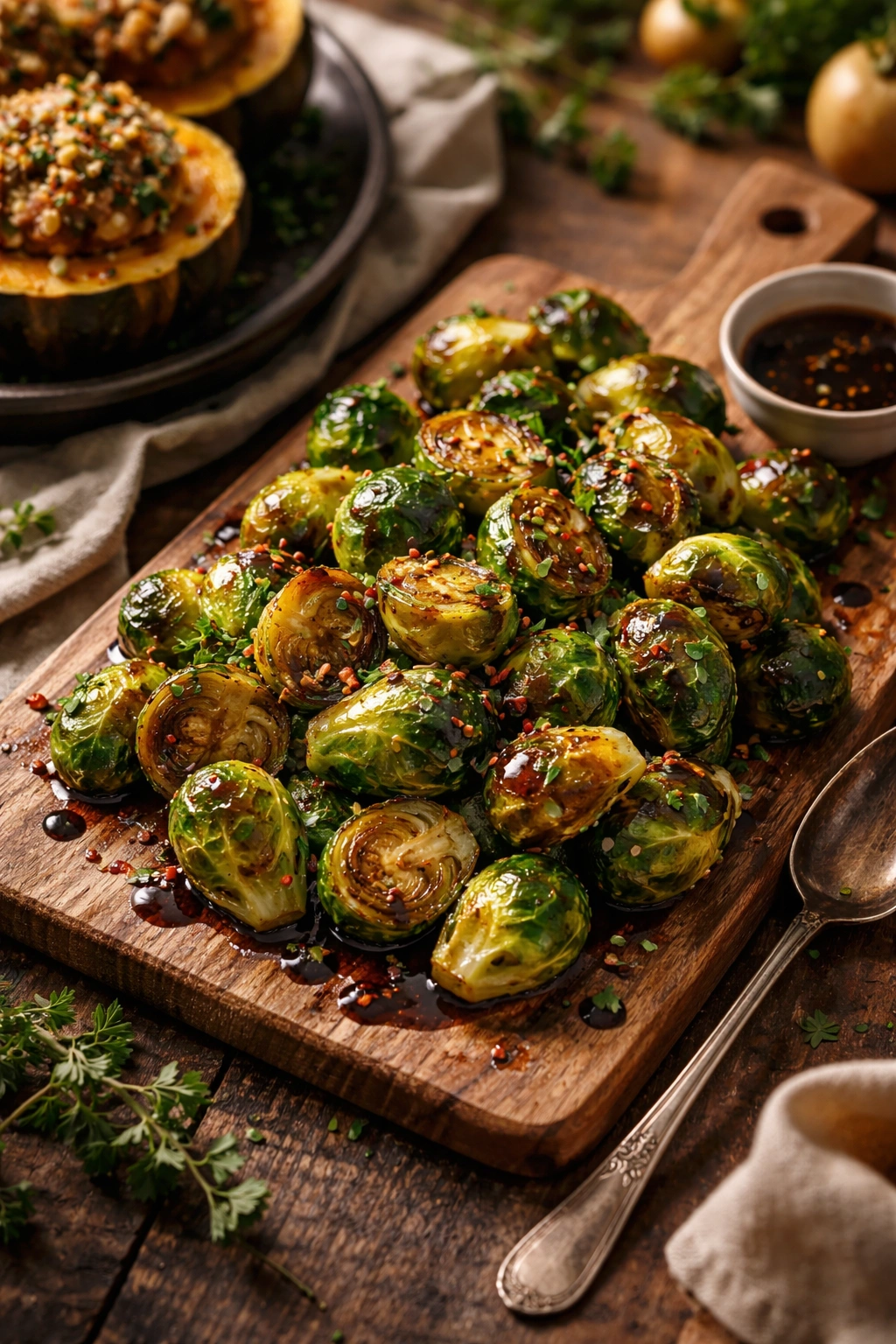
Green Vegetables. Since the squash itself is starchy, a bright green vegetable on the plate adds color contrast and nutritional balance. Sautéed Brussels sprouts (especially with balsamic glaze), roasted green beans (tossed with garlic and almonds), or simple sautéed spinach all pair beautifully without competing for attention.
Fresh Salad. A crisp salad with acidic vinaigrette cuts through the richness of the cheese and sausage. A simple arugula salad with lemon vinaigrette and shaved Parmesan, or a mixed green salad with Dijon vinaigrette, provides brightness that cleanses the palate between bites.
Seasonal Salad with Harvest Ingredients. Since this is inherently an autumn recipe, consider serving it alongside a more elaborate salad featuring roasted beets, walnuts, dried cranberries, goat cheese, and a cider vinaigrette or a spinach salad with apple slices, pecans, and a maple-Dijon dressing. These salads echo the flavors in the stuffed squash while adding sophisticated texture contrast.
Bread. For a rustic, heartier meal, serve the stuffed squash alongside crusty sourdough bread, Crock Pot bread, or skillet cornbread. The bread is perfect for soaking up any flavorful juices that escape from the squash.
Grain Pilaf or Rice. If you prefer starch alongside starch, a simple wild rice pilaf, farro with herbs, or quinoa with toasted nuts provides additional substance and texture variation without competing with the main dish’s flavors.
Wine Pairing. If serving with wine, dry white wines like Sauvignon Blanc, Pinot Grigio, or Albariño work well because their acidity complements the richness of the cheese and sausage. Light to medium-bodied red wines like Pinot Noir also work nicely, though they’re not quite as refreshing. For a nonalcoholic option, apple cider echoes the apple in the filling and feels seasonally appropriate.
Final Thoughts

Sausage-stuffed acorn squash delivers the kind of satisfying, nourishing meal that makes you feel cared for and comforted. It’s special enough to serve to dinner guests—impressive in presentation, unexpected in its deliciousness—yet simple enough for a busy weeknight when you want something more interesting than usual. The natural vessel created by the squash halves makes plating effortless, and the combination of flavors is complex enough to feel restaurant-quality while relying on straightforward, accessible ingredients.
The real magic of this dish lies in its flexibility. Follow the recipe exactly as written if you’re new to cooking stuffed vegetables and want a foolproof result. But once you understand the basic framework, adapt it freely. Swap the sausage type based on what you find or prefer. Toss in dried fruit you love, nuts you have on hand, or greens from your garden or local market. The structure remains solid, and the results will be delicious regardless of which direction you take it.
Make this dish when you want dinner to feel like a hug—warm, nourishing, and made with genuine care. Prepare it in advance and reheat it when life gets chaotic. Share it with people you love. Save the leftovers and enjoy them again midweek without guilt, knowing you’ve created something genuinely good from humble, wholesome ingredients.
