



There’s something deeply satisfying about a beef stew casserole—it’s the kind of dinner that fills your kitchen with warmth and makes everyone gather around the table with genuine anticipation. Unlike traditional beef stew that simmers for hours on the stovetop, this casserole version brings together all those beloved flavors of tender meat, soft vegetables, and rich sauce while incorporating egg noodles right into the dish. It’s comfort food that doesn’t demand your constant attention, yet somehow tastes like you’ve spent the entire day cooking.
The magic of a beef stew casserole lies in its efficiency. You get everything you love about classic beef stew—meltingly tender beef chunks, sweet carrots, creamy potatoes, and a deeply flavored sauce—but it comes together faster and in fewer steps. The noodles absorb all those savory juices as everything bakes together, creating a cohesive, satisfying main dish that truly needs nothing more than maybe some crusty bread and a simple salad alongside it.
What I’ve always appreciated about this dish is how it transforms the effort-to-reward ratio. You spend maybe twenty minutes on active prep work, then let the oven do virtually all the heavy lifting while you handle other things. Yet when you pull it from the oven, your family experiences a meal that tastes like traditional Sunday-best cooking. That’s the real appeal of casserole dinners—maximum comfort with minimum stress.
Why a Casserole Version Works So Much Better Than Traditional Stew
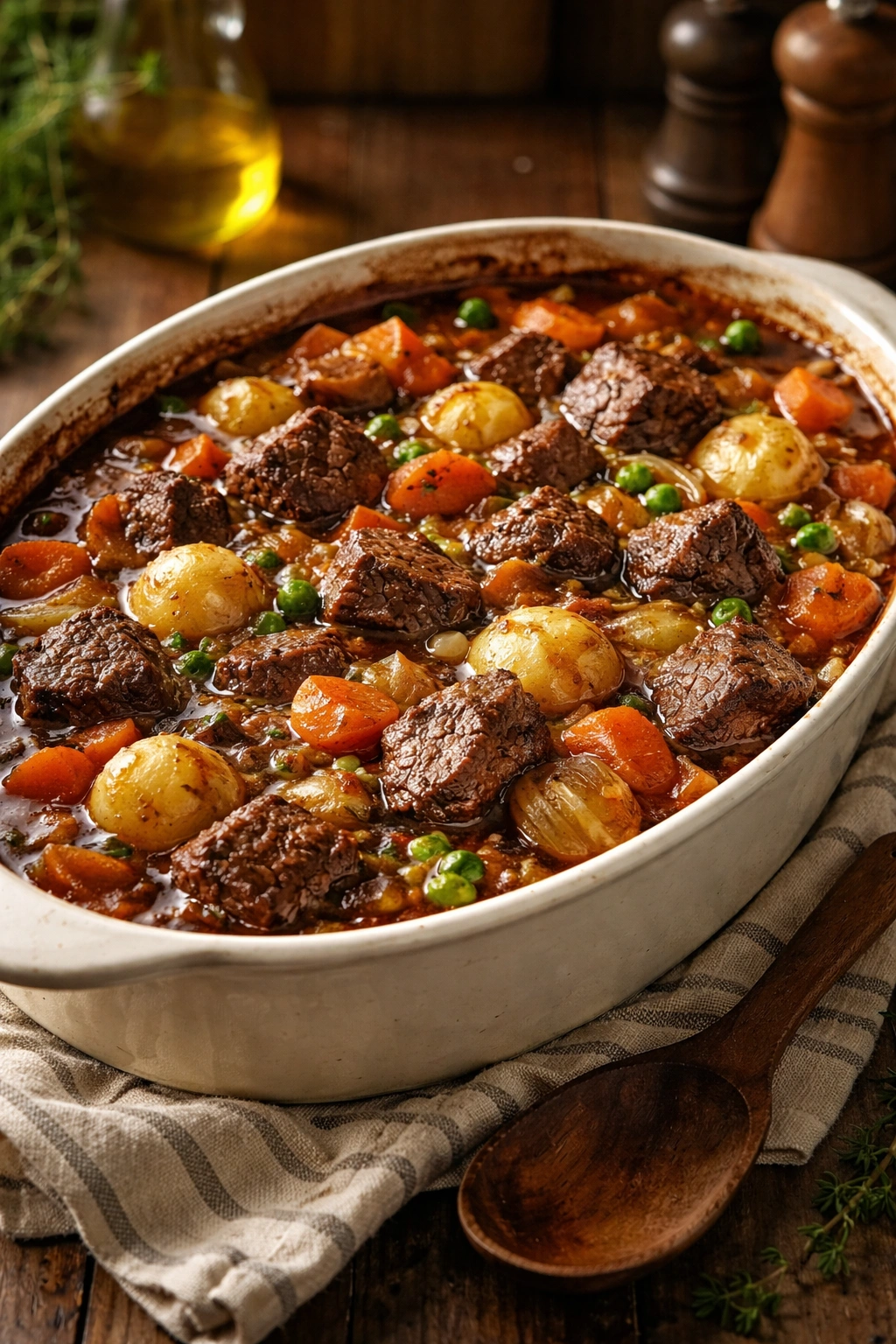
The difference between traditional beef stew and this casserole adaptation goes beyond just the cooking vessel. When you make beef stew the old-fashioned way, you’re managing multiple cooking stages over several hours—browning meat, sautéing aromatics, bringing everything to a boil, then nursing it along on the stovetop or in the oven. You need to stir it occasionally to prevent sticking, check for doneness, and be present in the kitchen more than you might like.
A casserole approach consolidates all these steps without sacrificing flavor development. The vegetables and meat still brown properly, the sauce still builds depth, but you’re not hovering over the pot. Once everything goes into that baking dish, the oven’s gentle, consistent heat does the work while you’re doing something else. The enclosed space means nothing dries out, and the even heat from all sides—not just below—actually helps the meat become tender more evenly.
The noodles introduce another practical advantage. In traditional stew, you either serve it over noodles separately, or your noodles get soggy if you cook them together. Here, the pasta is part of the equation from the start. It cooks through during the baking time, absorbing all those savory liquids, so every bite includes both the stew elements and the noodle texture. It’s not watered-down—it’s intentional.
Temperature control matters here too. By using the oven instead of stovetop simmering, you maintain a steady, moderate heat that’s harder to achieve with a burner. This means less risk of boiling the meat too aggressively, which can toughen it. The slow, gentle oven heat keeps everything moist and tender without requiring you to monitor the heat level constantly.
Choosing the Right Cut of Beef for Tender Results
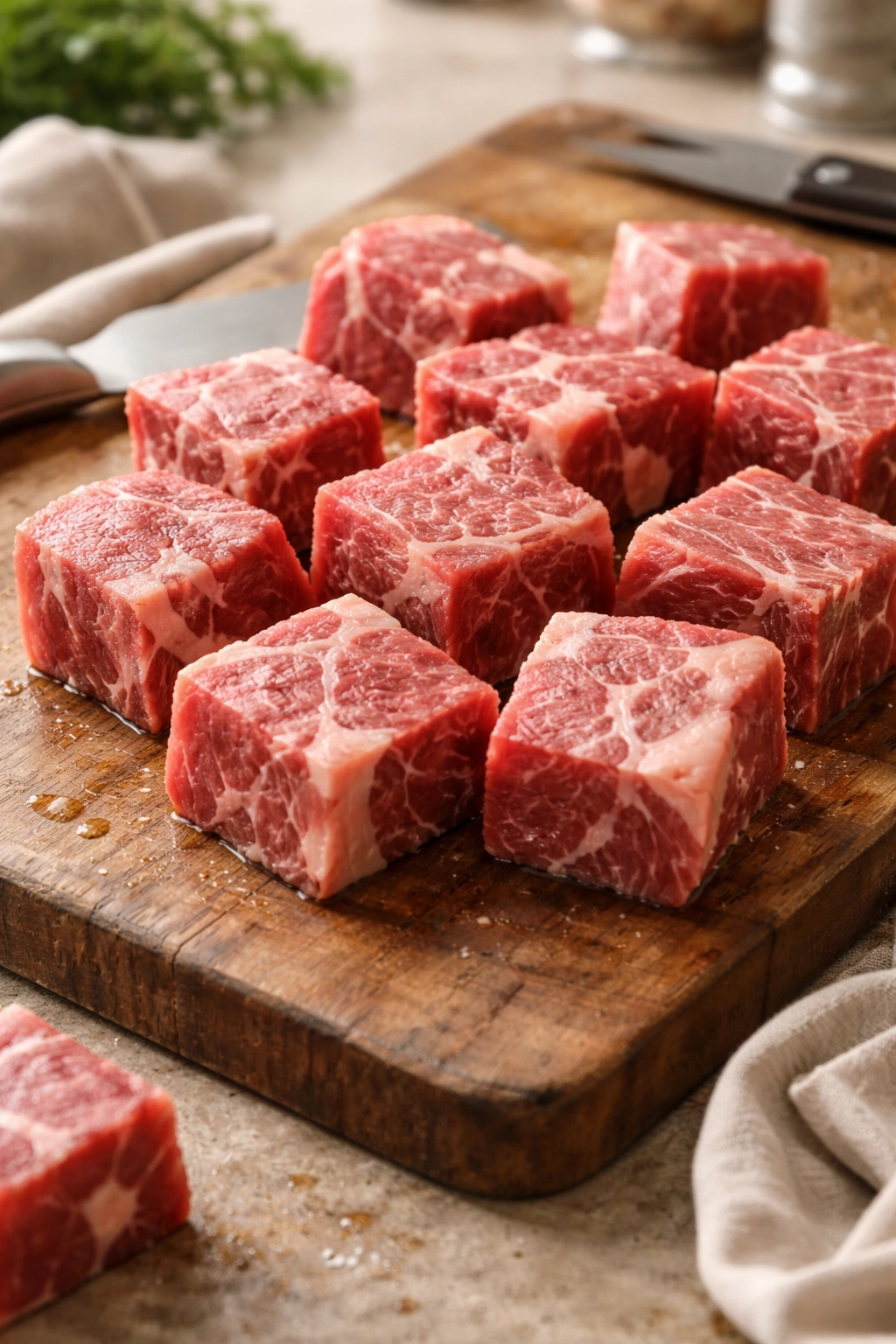
The meat you select determines everything about the final texture of your casserole. This is where I’d gently push back against buying generic “stew meat” packages without examining what you’re actually getting. Stew meat is often the leftover ends and trims from other cuts—sometimes decent quality, sometimes questionable. Instead, ask your butcher for beef chuck, specifically a chuck roast that you can either ask them to cut into chunks or buy whole and cut yourself.
Why chuck? This cut comes from the shoulder area of the cow, a part that works hard and therefore contains good marbling—those white veins of fat running through the meat. That fat is your friend in a long-braise situation like this casserole. During the two-to-two-and-a-half hours of cooking, the fat breaks down into collagen, which becomes gelatin, which makes the meat incredibly tender and gives the sauce body and richness. Lean meat will dry out; marbled meat will become fork-tender.
Look for chunks with visible fat interspersed throughout, not just a thick cap on one side. One-and-a-half-inch pieces are ideal—large enough that they don’t fall apart during cooking, small enough that they’ll become genuinely tender in the cooking time. If you buy a roast and cut it yourself, you have the advantage of controlling the size precisely and removing any truly excessive chunks of fat while preserving the beneficial marbling.
Beef chuck roast typically costs less than premium cuts, which is part of why this dish is so economical. You’re getting restaurant-quality tenderness and flavor from an inexpensive ingredient, simply by applying the right cooking method. The low price point makes this perfect for feeding a family or making ahead for the week.
Building Layers of Flavor in the Sauce
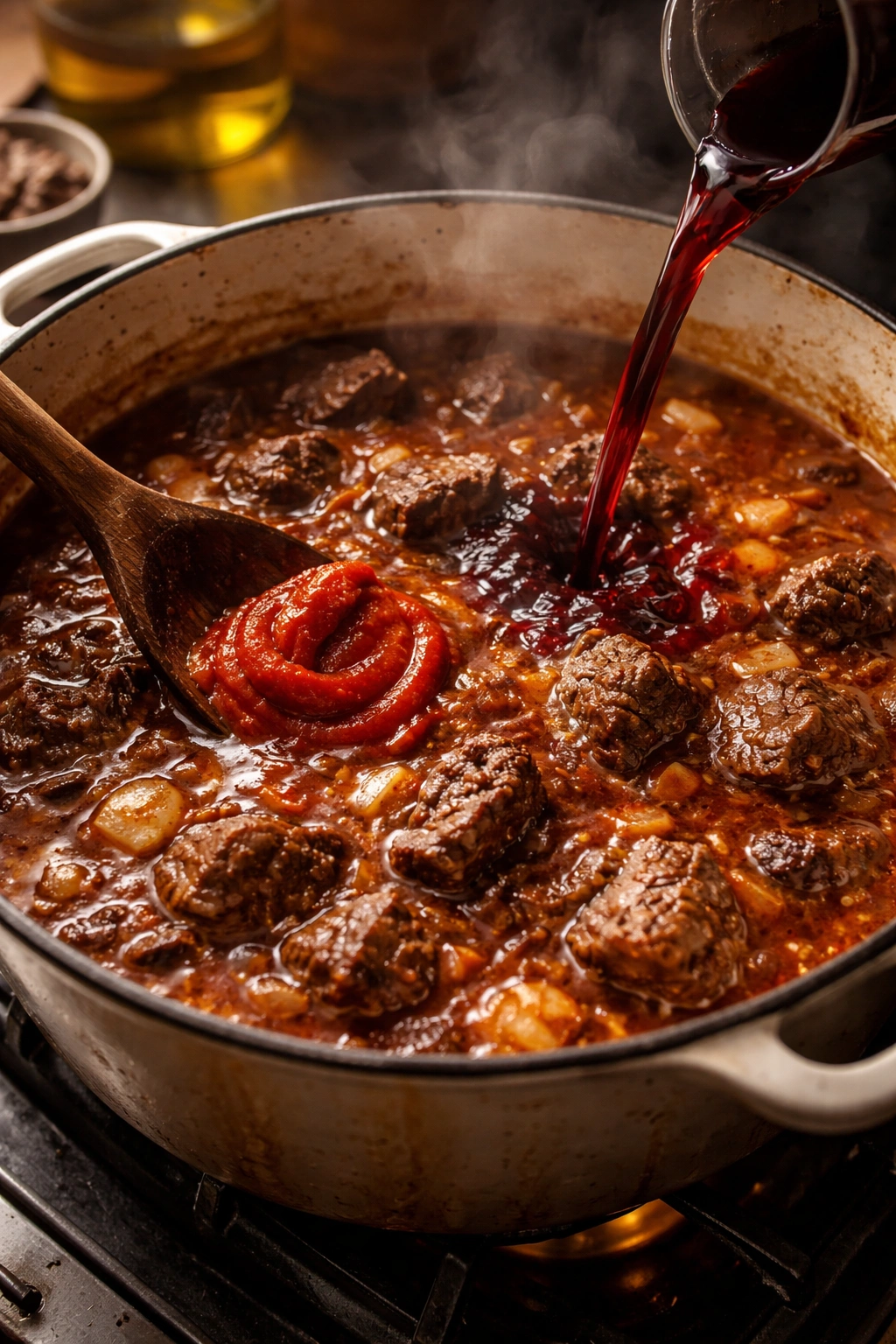
The sauce is where this casserole transcends the ordinary. It’s not just liquid—it’s the foundation of every single flavor in the dish. Most recipes start with beef broth, which is fine, but I’d encourage you to go a step further. If you have access to beef stock (which is more concentrated than broth), use it—you’ll get noticeably deeper flavor. If you’re using standard grocery-store broth, look at the sodium content and choose one that isn’t oversalted, because you’ll be reducing it down and concentrating everything.
The broth is your base, but the depth comes from other layers. Tomato paste adds two things: umami depth and a slight acidity that balances the richness of the meat. Don’t skip this or substitute with tomato sauce—paste is concentrated and works better here. Worcestershire sauce adds savory complexity that’s hard to replicate; it’s one of those small additions that makes people say “I don’t know what it is, but something in here tastes incredible.”
Some recipes add wine, which is wonderful if you have it on hand, but it’s not essential. The alcohol cooks off, leaving behind the wine’s complexity and slight acidity. If you skip wine entirely, you can add a splash of balsamic vinegar or apple cider vinegar instead—just a tablespoon—to give the sauce that same slight tang that makes everything else taste richer.
The vegetables themselves contribute flavor as they cook down. The onions caramelize slightly in the oil and broth, becoming sweet. The carrots release natural sugars. The potatoes add starch that thickens the sauce naturally as they break down slightly. All of this builds complexity in ways that simple liquid never could.
Selecting Vegetables That Hold Their Shape
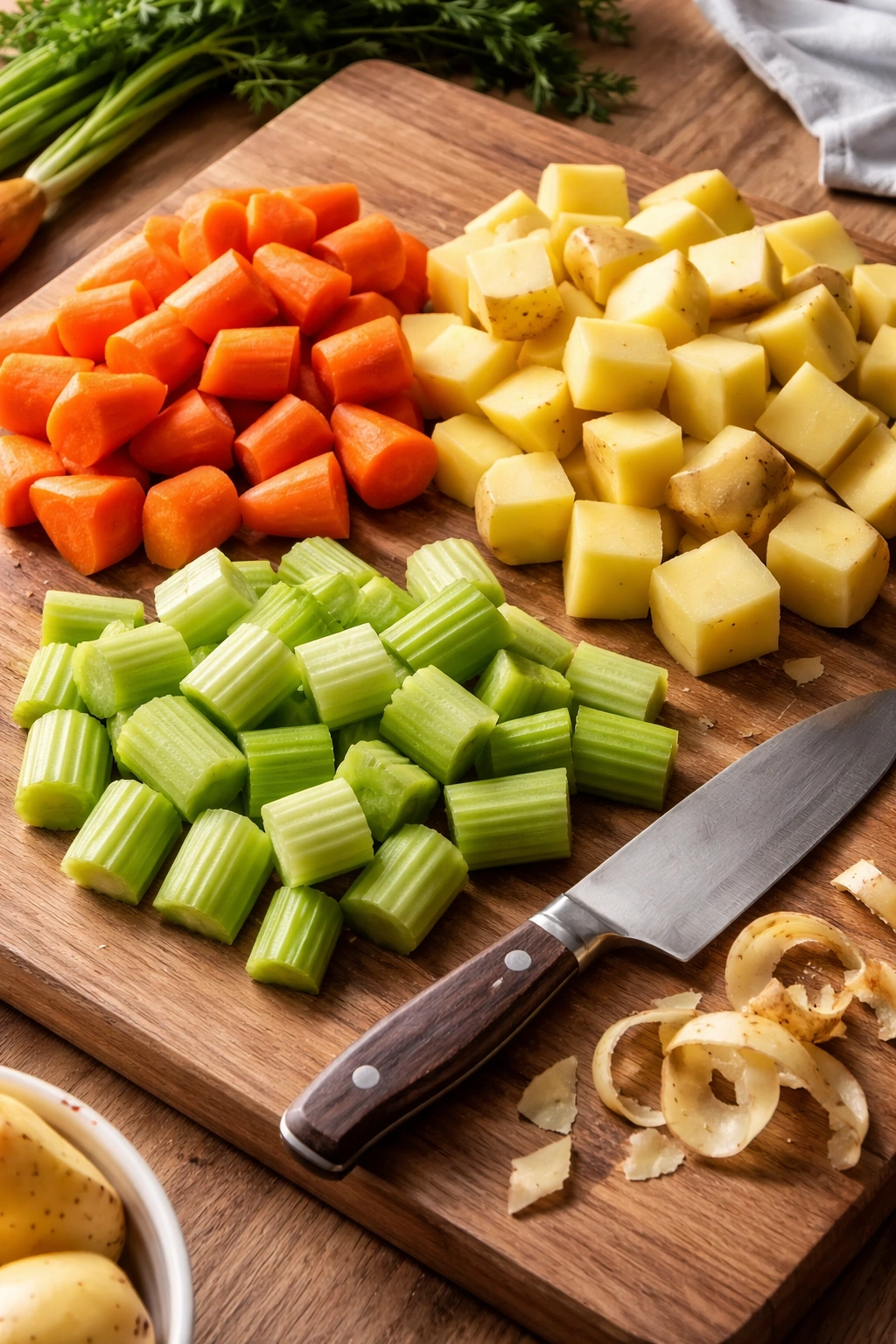
Not all vegetables are created equal when it comes to casserole cooking. You want vegetables that’ll stay recognizable and structurally intact after baking, not ones that dissolve into mush. That rules out very tender vegetables like zucchini or fresh spinach, which would completely break down.
Carrots are perfect—cut them into one-inch pieces on a slight diagonal (this increases surface area, which helps them cook more evenly and absorb sauce). They should be a bit firm at the start, and they’ll be tender but not mushy after baking. Potatoes are essential; I prefer Yukon Golds because they hold their shape better than russets while still developing a creamy, cooked texture. Cut them into one-inch cubes roughly the same size as your beef chunks so everything cooks at the same rate.
Celery often gets overlooked, but it adds a subtle background flavor that layers beautifully with everything else. Cut it into one-inch pieces too. Onions should be diced and cook down during the browning stage, so they’re not recognizable as distinct pieces by serving time—they’ve essentially dissolved into the sauce, which is exactly what you want.
Some people add peas or mushrooms, and both work beautifully. If you’re adding fresh mushrooms (cremini or button work great), slice them and add them along with the other vegetables. Frozen peas should be stirred in during the last five minutes of baking—they’ll cook through but stay bright and distinct. Avoid adding raw broccoli, asparagus, or green beans—they’ll become unpleasantly soft and won’t integrate well with the stew flavor profile.
Essential Equipment and Cookware
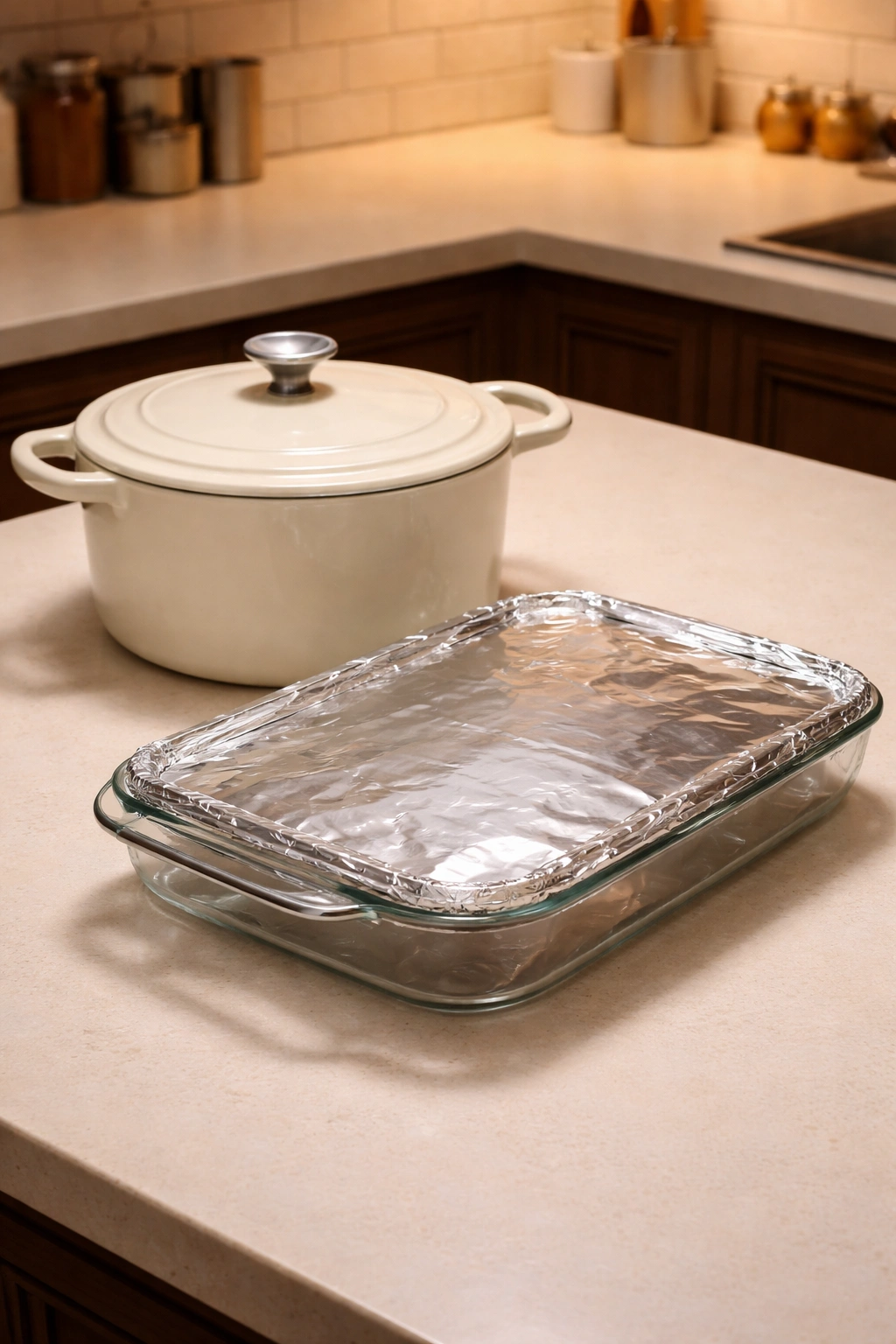
You’ll need a few specific pieces to make this properly. A large, heavy-bottomed pot or Dutch oven is where the initial browning and vegetable cooking happens. The size matters—you want something with at least a four-to-five quart capacity so the meat isn’t crowded during browning. Crowded meat steams instead of searing, and that’s the only part where you might get subpar results.
A nine-by-thirteen-inch baking dish is standard for the casserole portion. Glass is my preference because you can see what’s happening without lifting the foil, and it distributes heat evenly. Metal works fine too—avoid ceramic, which can develop hot spots. You’ll need a lid or aluminum foil to cover it during the initial baking. Foil works perfectly and gives you the option to uncover partway through if the top is browning too quickly.
For the noodles, any large pot works. You’ll need a colander to drain them. A wooden spoon or sturdy spatula is important for scraping up all the browned bits from the pot bottom—this fond is literally concentrated flavor, and you don’t want to leave it behind.
Yield: 6 to 8 servings
Prep Time: 25 minutes
Cook Time: 40 minutes
Total Time: 1 hour 5 minutes active time (plus 50 minutes if you brown the meat on the stovetop first, for a total of 1 hour 55 minutes)
Difficulty: Beginner — No special techniques required, and the steps are straightforward. The most important part—browning the meat well—is just patient stirring.
The Ingredient List
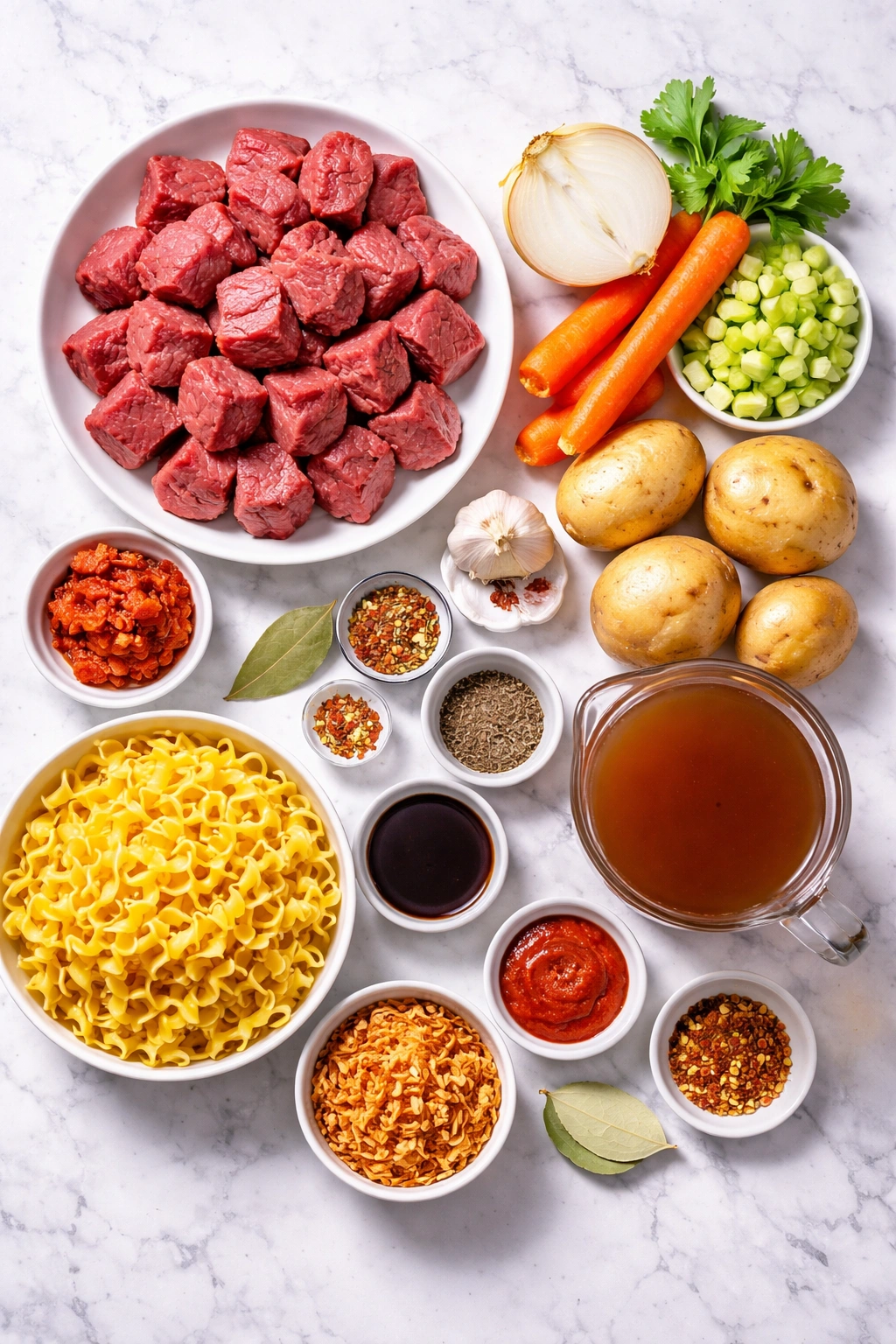
For the Beef and Initial Browning:
- 2 pounds beef chuck, cut into 1½-inch pieces
- 3 tablespoons all-purpose flour
- 1 teaspoon kosher salt
- ½ teaspoon freshly ground black pepper
- 2 tablespoons olive oil
For the Vegetables:
- 1 medium yellow onion, chopped
- 3 carrots, peeled and cut into 1-inch pieces
- 3 celery ribs, cut into 1-inch pieces
- 1 medium Yukon Gold potato, cut into 1-inch cubes (about 1½ cups)
- 4 cloves garlic, minced
For the Casserole:
- 3 cups low-sodium beef broth
- 2 tablespoons tomato paste
- 1 tablespoon Worcestershire sauce
- 1 bay leaf
- 1 teaspoon dried thyme (or 1 tablespoon fresh thyme leaves)
- ½ teaspoon paprika
- Pinch of red pepper flakes (optional)
- 4 cups uncooked egg noodles
- ⅔ cup crispy fried onions (like French’s brand)
- Additional salt and pepper to taste
How to Prep Everything Before You Start Cooking
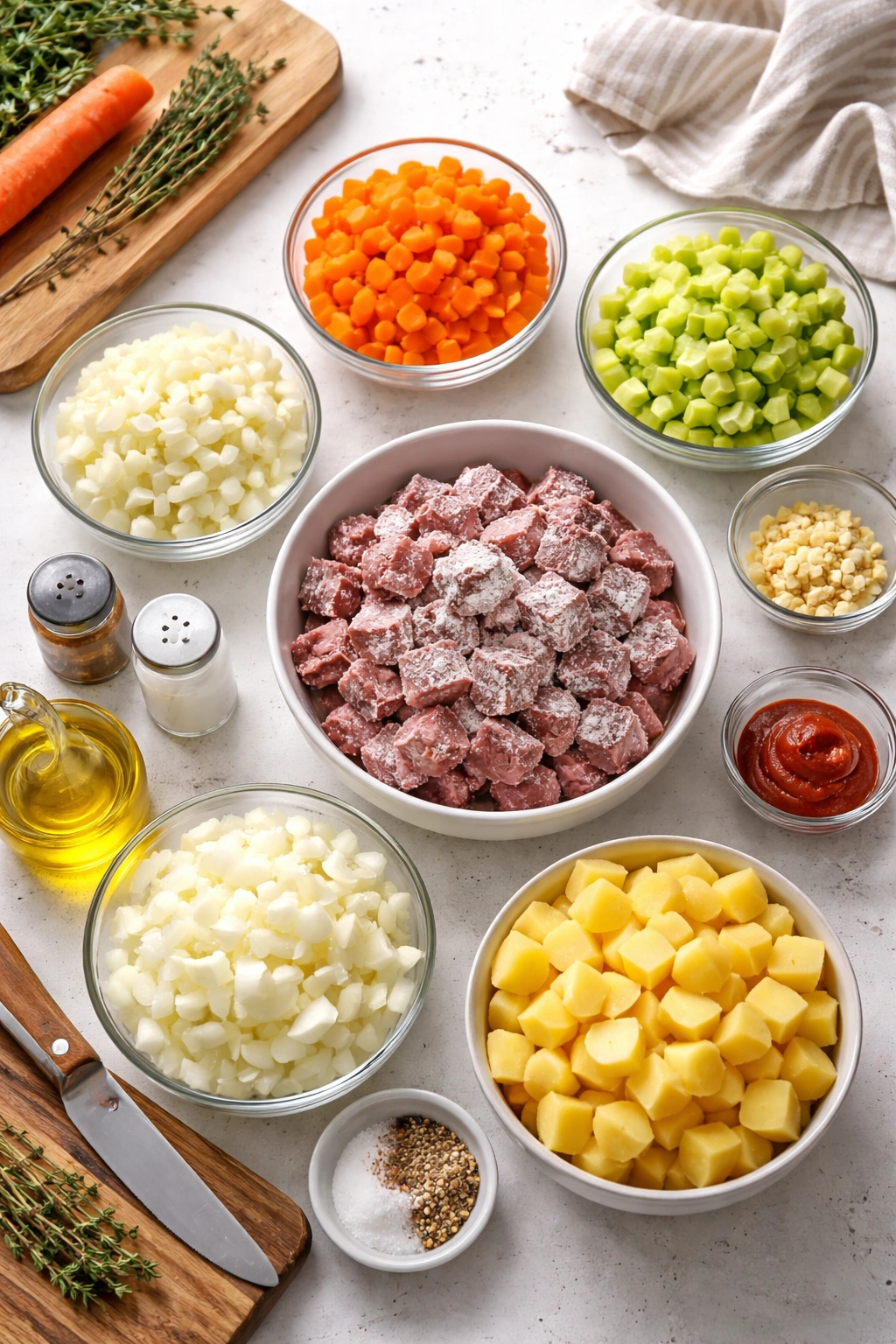
Mise en place—having everything prepped and ready—makes this whole process flow smoothly. This is where you’ll spend most of your active time, but it’s all simple knife work with no real cooking skills required.
Start with the beef. Pat the pieces dry with paper towels—moisture on the surface interferes with browning. Spread them on a cutting board and season generously with salt and pepper. Don’t be shy here; you’re building flavor at this stage. Sprinkle the flour over the seasoned beef and toss everything together using your hands or two forks until every piece is lightly coated. The flour will help brown the meat and later thicken the sauce.
Next, tackle the vegetables. Peel the carrots and cut them into one-inch pieces, angling your knife slightly as you cut to create diagonal slices—this looks nicer and helps them cook more evenly. Cut the celery into one-inch pieces, discarding the tough end. Peel and cut the potato into roughly one-inch cubes; don’t make them too small or they’ll fall apart during cooking. Chop the onion into pieces roughly the size of a nickel.
Mince the garlic finely. This is important because you want it to disappear into the sauce rather than remain as distinct pieces. If you have a garlic mincer, great; otherwise, a small sharp knife does the job—just rock it back and forth over the cloves until they’re in tiny fragments.
Put the tomato paste, Worcestershire sauce, bay leaf, thyme, and paprika into small bowls or measure them directly into a cup. Measure out the beef broth so it’s ready to add. Measure the uncooked noodles into a container—you’ll cook these separately while the casserole is baking, not before, so don’t accidentally add them yet.
Browning the Beef Properly for Deep Flavor
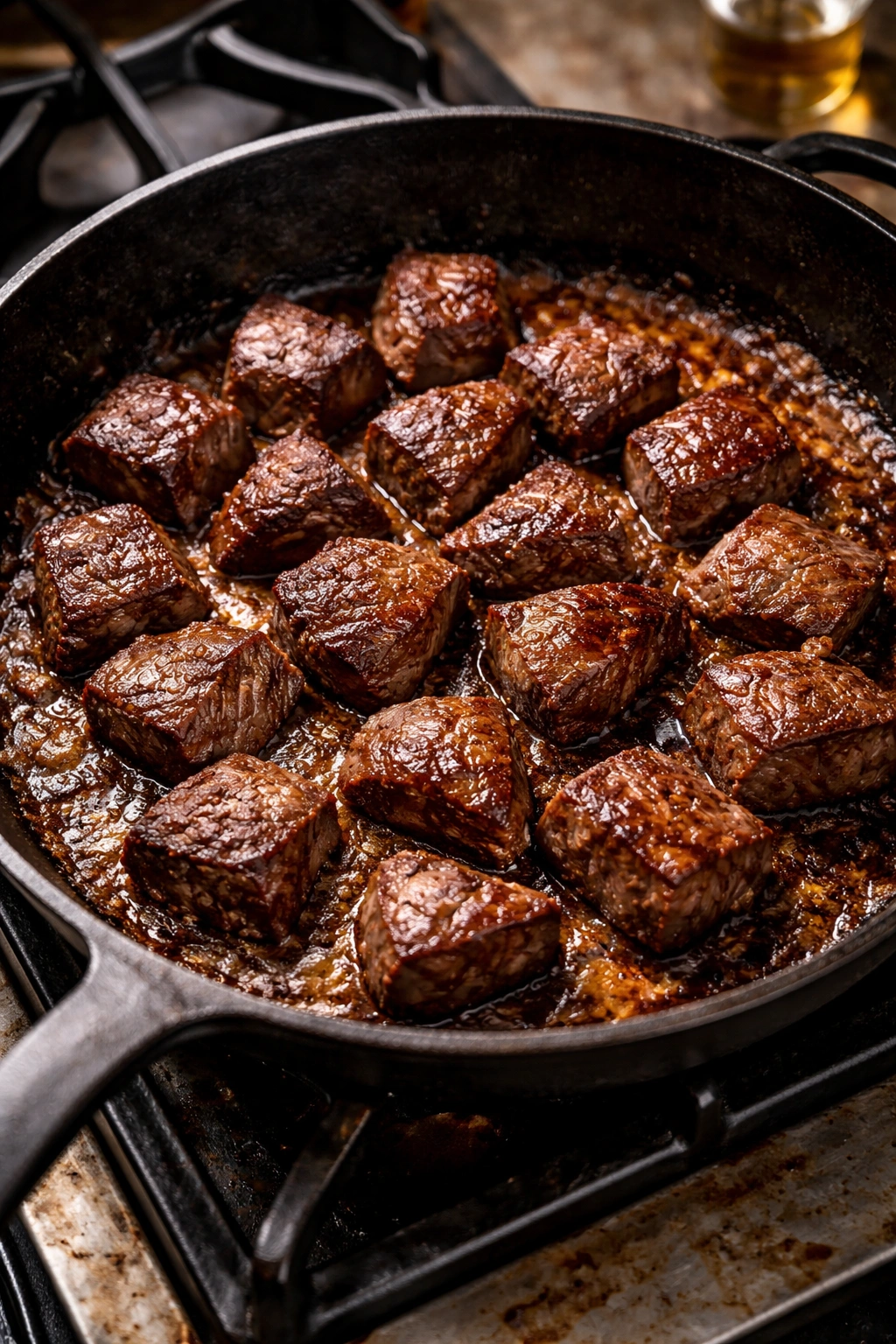
This is the only stage that requires your attention and a little patience. Don’t skip it or rush it; proper browning creates the foundation for the entire dish’s flavor.
Heat the olive oil in your large pot or Dutch oven over medium-high heat. You’ll know it’s ready when it shimmers and just barely starts to smoke. Working in batches, add the floured beef pieces—don’t crowd the pan. You want a single layer with space between pieces. This usually means three batches for two pounds of meat.
Don’t move the meat around constantly. Let each piece sit undisturbed for about two minutes, then stir and turn. You’re looking for a deep golden-brown color on multiple sides, not just one. This takes about five to seven minutes per batch. Transfer each finished batch to a clean plate and move on to the next.
The goal isn’t to cook the meat through—you’re just creating a brown crust that locks in flavor through the Maillard reaction. By the time you’re done browning all three batches, your pot will have a dark brown coating on the bottom. This is the fond, and it’s flavor gold.
Building the Sauce Base and Layering in Flavors
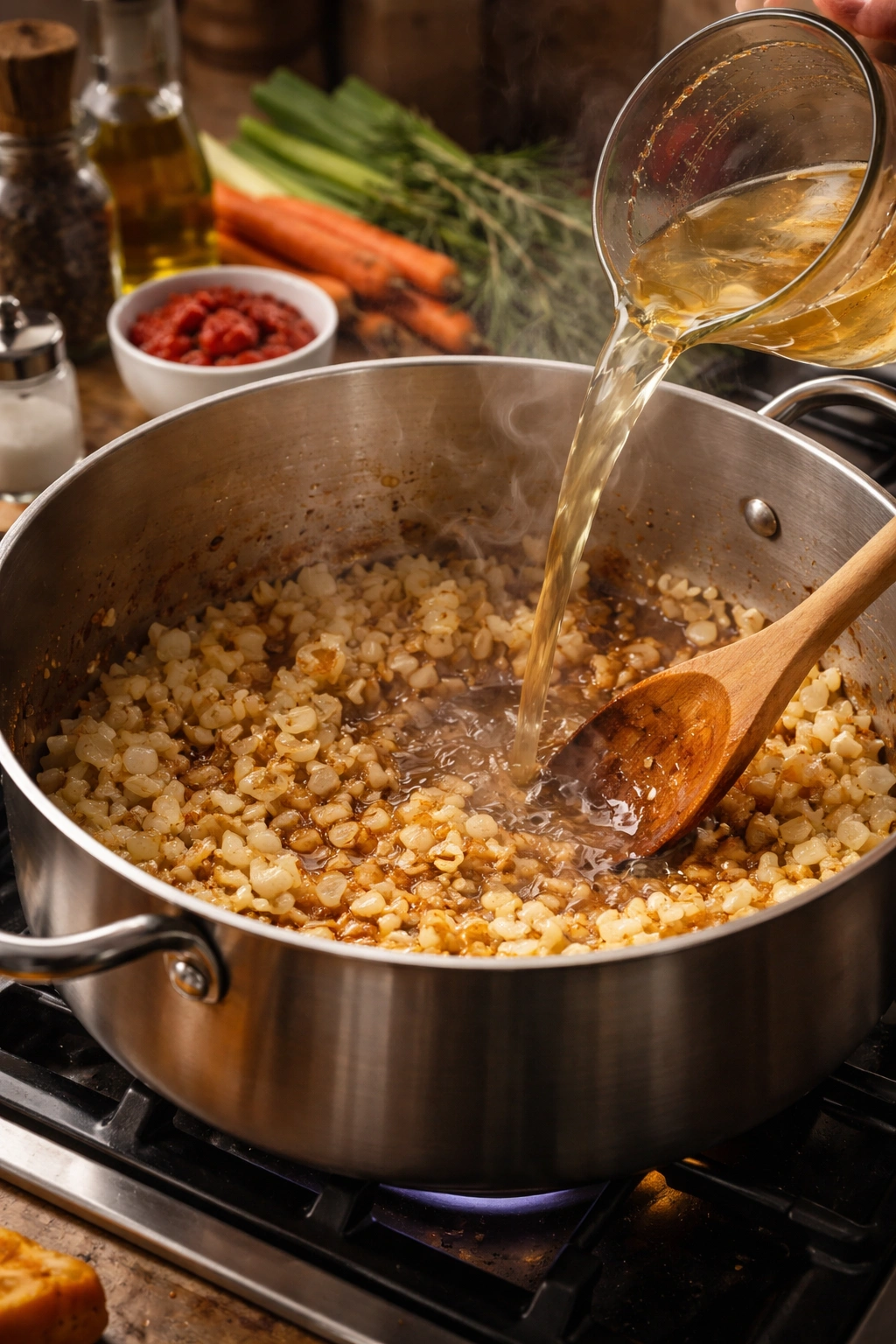
Once the last batch of meat is resting on the plate, reduce the heat to medium and add the chopped onion to the pot. Stir with a wooden spoon, scraping up all those brown bits from the bottom—this is called deglazing, and you want every fragment of that fond incorporated into your sauce. Cook the onions for about three to four minutes until they’re softened and slightly golden at the edges.
Add the minced garlic and cook for about a minute until fragrant. You’ll smell the garlic intensely—this means it’s releasing its flavors and beginning to toast slightly. Don’t let it burn; garlic can turn bitter if it gets too dark.
Now add the carrots and celery. Stir everything together and let it cook for another two minutes. The vegetables are starting to soften slightly and release their own flavors into the mixture.
Stir in the tomato paste and cook it for about a minute, stirring constantly. This slight cooking deepens the tomato flavor and helps it incorporate smoothly into the liquid rather than lumping up later. Add the Worcestershire sauce, paprika, and red pepper flakes if you’re using them.
Pour in the beef broth and add the bay leaf and thyme. Use a wooden spoon to stir and make sure everything is combined and the bottom of the pot is clean. Return all the browned beef and any accumulated juices to the pot. Stir well.
Assembling the Casserole and Preparing for the Oven
Preheat your oven to 350°F (175°C). Position your rack in the middle of the oven for even heating.
In a separate large pot of salted water (the water should taste like the sea), bring the water to a rolling boil. Add the four cups of uncooked egg noodles and cook them to just shy of al dente—they should be tender but still have a very slight firmness to them when you bite one. This usually takes about a minute less than the package directions. Drain them in a colander but don’t rinse them; the starch on their surface helps them absorb sauce later.
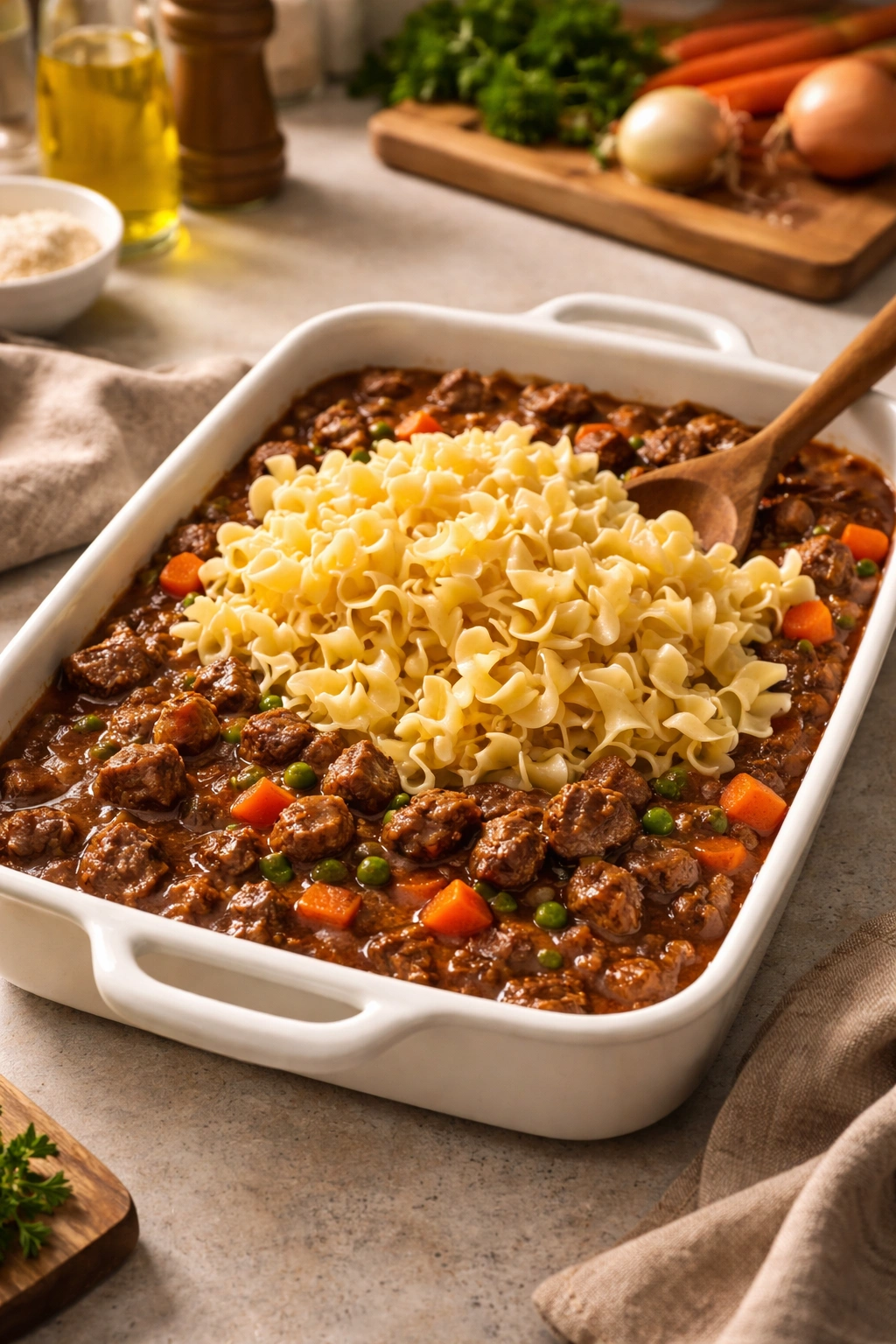
While the noodles cook, transfer the beef and sauce mixture to your nine-by-thirteen-inch baking dish. Spread it into an even layer. Once the noodles are drained, add them to the baking dish and gently fold everything together using a large spoon or spatula, being careful not to break the noodles. The mixture should look loose—not dry, not soupy, but nicely saucy. If it looks too thick, stir in a splash more broth.
Cover the baking dish tightly with aluminum foil, pressing it slightly at the edges so steam won’t escape around the sides.
Baking Until Everything Is Tender and Melded Together
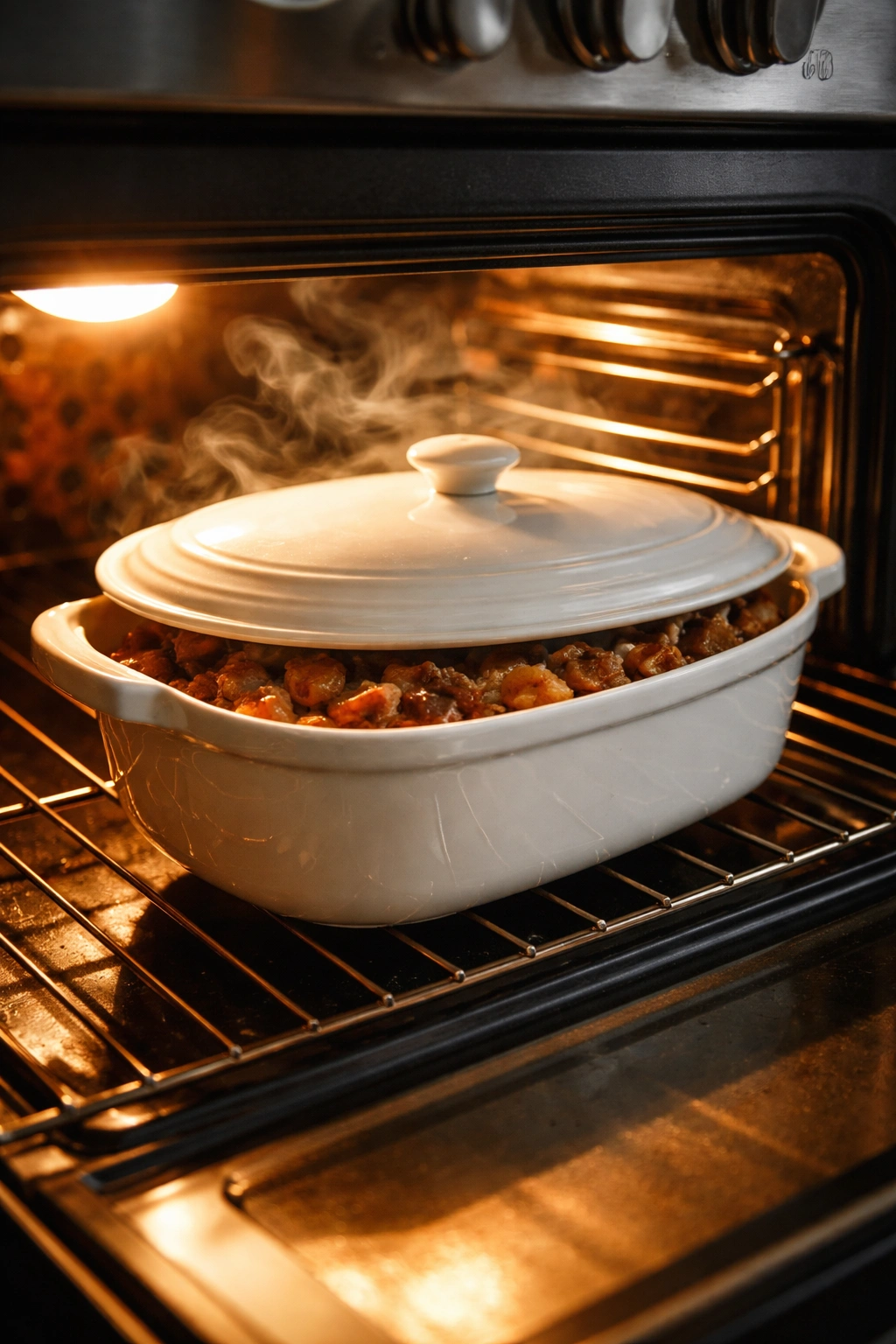
Place the covered baking dish in your preheated oven. Bake for 35 to 40 minutes. You don’t need to stir it or check on it. The covered dish creates a steam environment that keeps everything moist and helps the meat become genuinely tender while the noodles finish cooking through and absorb all those delicious flavors.
The casserole is ready when you can easily pierce a piece of beef with a fork and it breaks apart with almost no resistance. The sauce should look rich and slightly thickened. If you lift the foil and the dish looks too watery, remove the foil and bake for another five to ten minutes uncovered to allow some liquid to evaporate.
The Crispy Top That Makes Everyone Smile
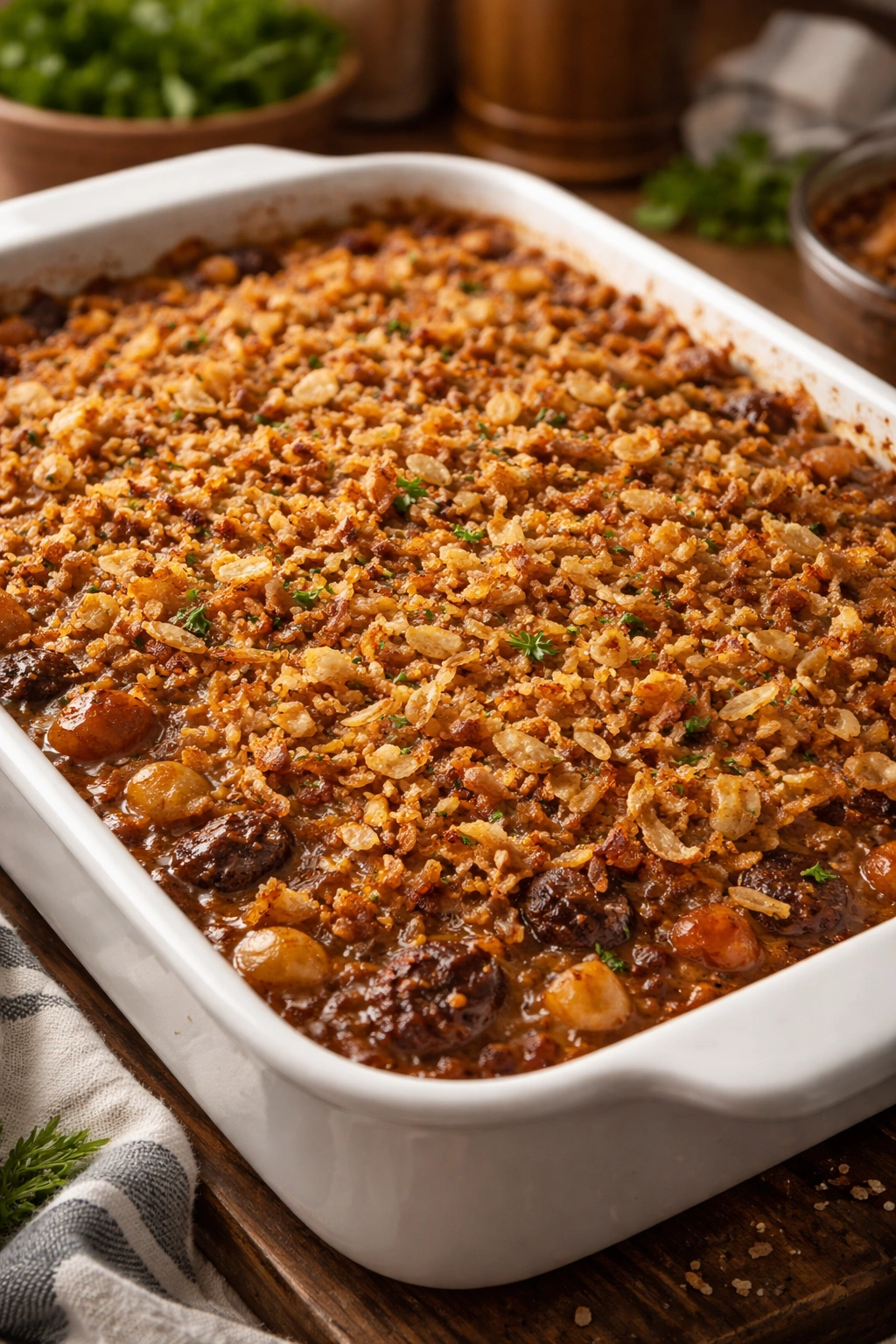
Remove the foil from the baking dish. Sprinkle the crispy fried onions evenly across the top—don’t pile them in one spot; distribute them so every serving gets some. These onions add crucial textural contrast. They soften slightly from the residual heat but stay mostly crispy, and they add a savory, slightly sweet crunch that makes the dish restaurant-quality.
Return the uncovered casserole to the oven for just five more minutes to warm the onions through. Don’t leave it longer or the onions will lose their crispiness.
Why This Thickens Perfectly Without Extra Work
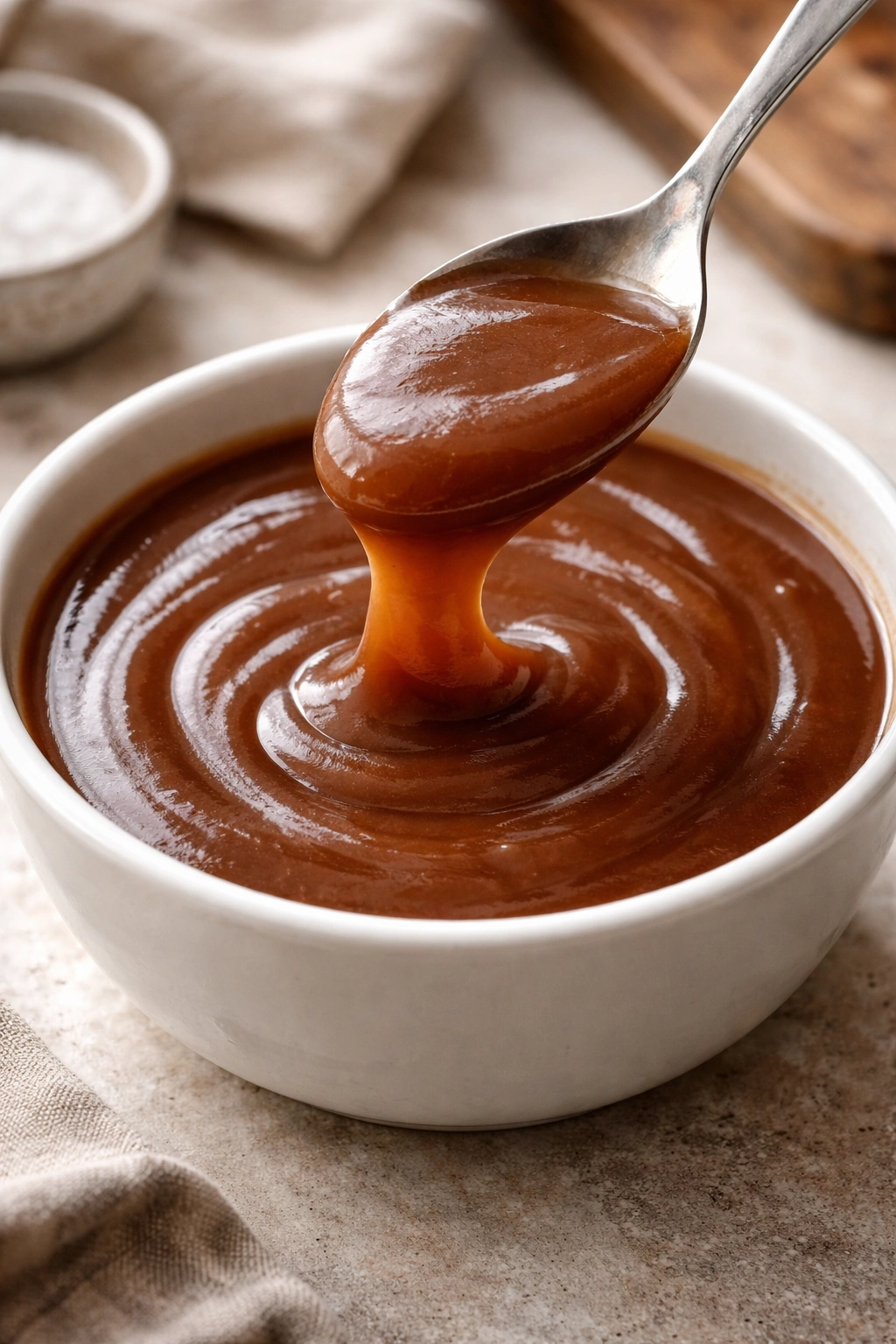
One thing you’ll notice as this casserole bakes is that the sauce naturally thickens. This happens through multiple mechanisms working together. The flour you coated the beef with hydrates and thickens the liquid. The starch from the potatoes as they break down slightly adds body to the sauce. The noodles themselves release starch as they cook. None of these require you to do anything special—it’s all automatic.
If by chance your casserole turns out thinner than you’d like (this sometimes happens if you used more broth or if you’re at high altitude where liquids reduce differently), you can thicken it easily. Mix a tablespoon of cornstarch with two tablespoons of cold water, stirring until smooth. After removing the casserole from the oven, stir this slurry into the hot mixture a little at a time. Return it to the oven (without foil) for about five minutes and the sauce will visibly thicken. But honestly, you probably won’t need to do this.
Pro Tips That Come From Making This Dozens of Times
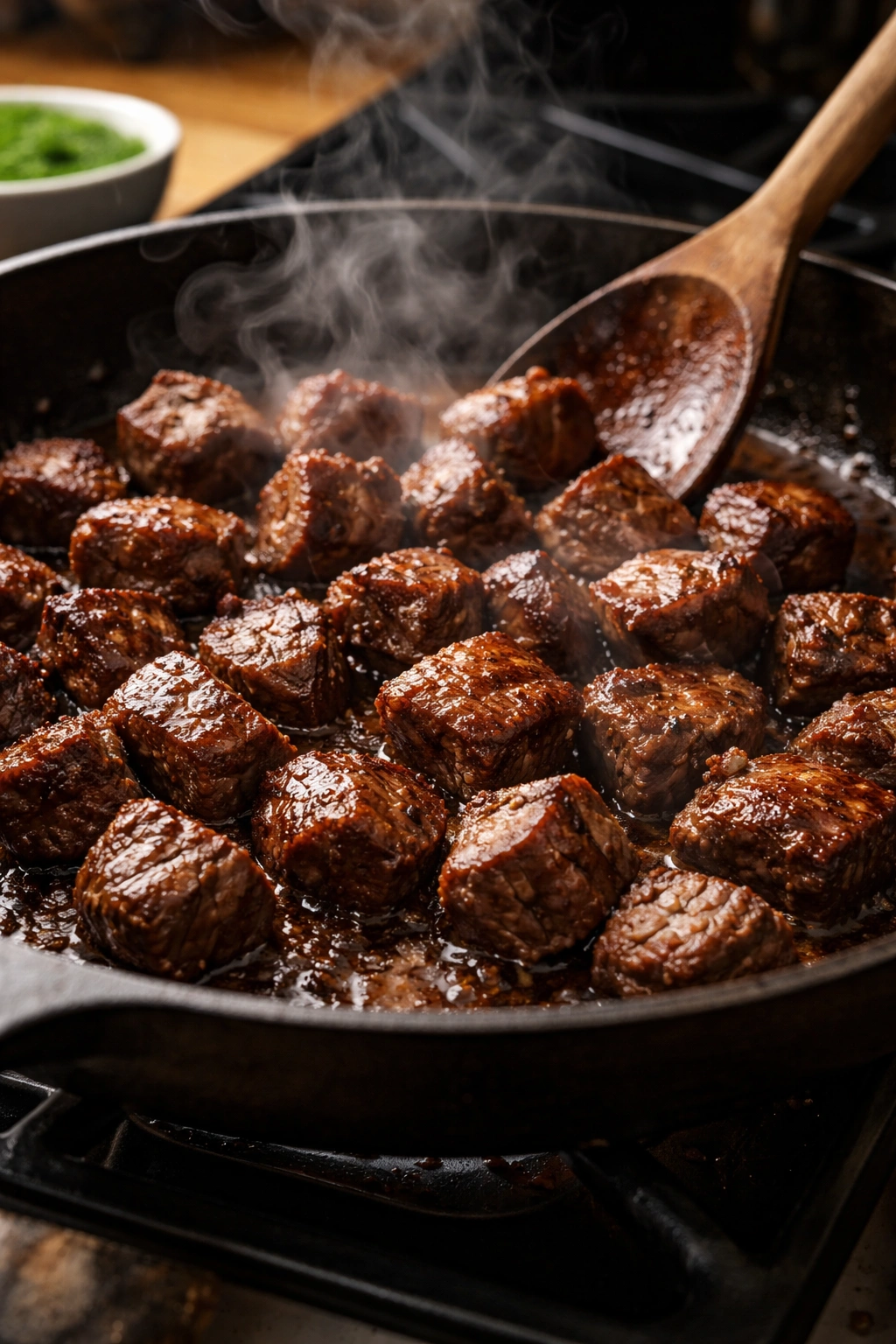
Cut your meat into smaller pieces than you might initially think necessary. Yes, you want them roughly one-and-a-half inches, but actually going slightly smaller—toward one inch—helps tremendously. Smaller pieces develop more surface area for browning and become tender more quickly, which matters for a casserole where the total cook time is less than traditional stew.
Don’t skip the browning stage thinking it’s optional. I know people who try to be efficient and skip directly to adding everything to the casserole dish. The result is noticeably less flavorful. That browning creates hundreds of new flavor compounds through the Maillard reaction. It takes maybe ten minutes and it’s the single most important step for tasting like you spent way more time on this.
Use fresh thyme if you possibly can. Dried thyme works, but fresh makes a measurable difference. You can usually find it in a small package near the basil, and it keeps for weeks wrapped in a damp paper towel in a plastic bag in your crisper drawer. Fresh thyme adds brightness and herbaceousness that dried simply can’t replicate.
Watch your oven temperature. If your oven runs hot (many do), your casserole might cook faster than forty minutes. Start checking at thirty-five minutes rather than waiting the full time. Conversely, if your oven runs cool, you might need the full forty minutes or even a few minutes more. The meat should be genuinely tender, not chewy.
Common Mistakes That Lead to Tough, Watery, or Flavorless Results
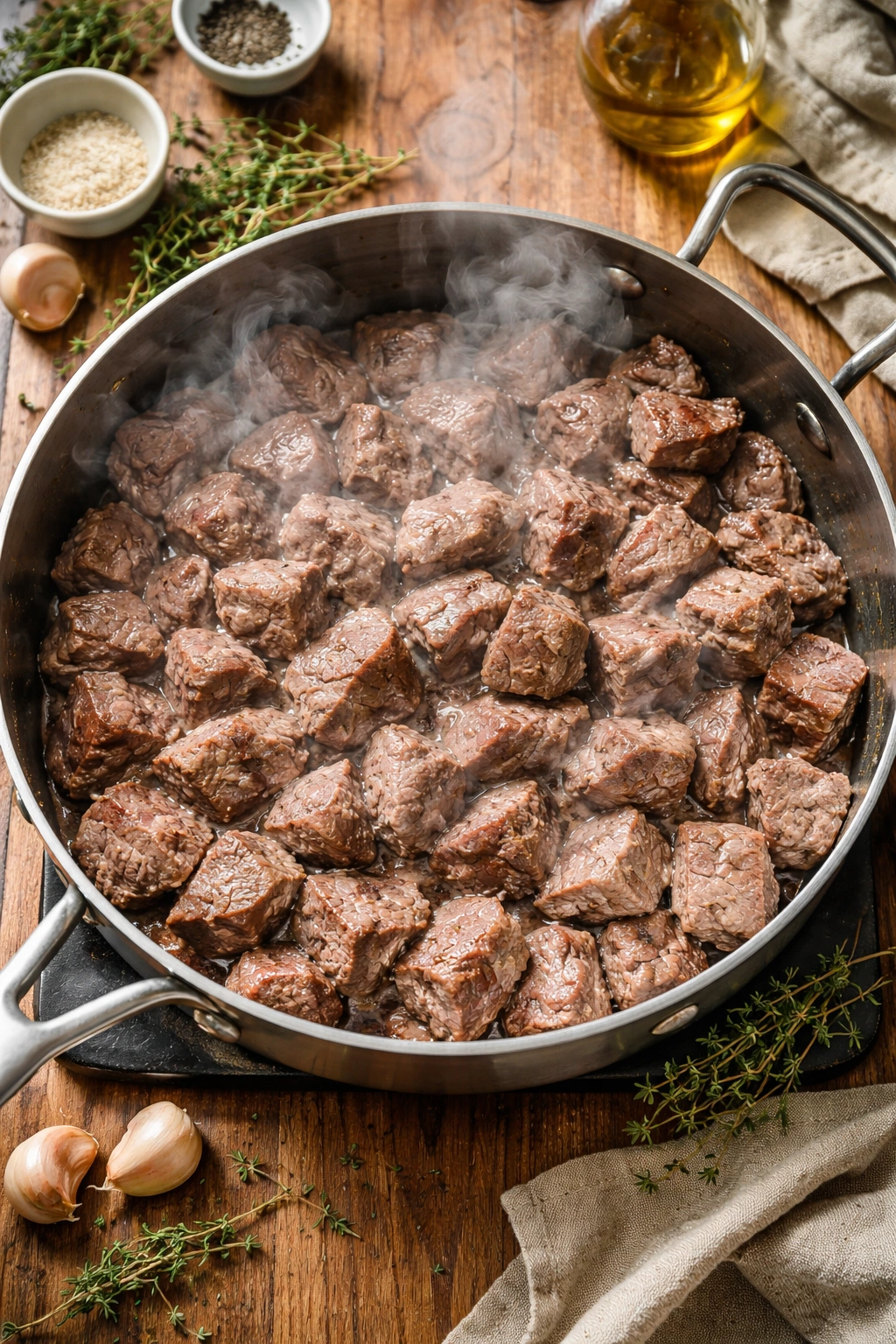
The most common mistake is trying to brown too much meat at once. You end up crowding the pan, the temperature drops, and the meat steams instead of browning. This gives you pale meat and weak flavor. Always brown in batches, even though it takes a bit longer. It’s genuinely the difference between good and mediocre.
Another frequent error is underseasoning. People add salt and pepper once and then never taste or adjust. Seasoning happens in layers—when you coat the beef, when you build the sauce, and finally when you serve. Taste the hot sauce just before serving and adjust with more salt and pepper as needed. It’s not cheating; it’s how professional cooks do it.
Some people overcook the casserole by leaving it in the oven longer than needed, thinking longer equals more tender. Actually, once the meat is tender, you’re just drying everything out. Forty minutes is usually perfect; fifty is pushing it. Tender isn’t the same as falling apart.
Not using enough liquid is another issue. Some people look at the amount of broth—three cups for two pounds of meat—and think it’s not enough. The liquid reduces somewhat during cooking, so start with enough. If you’re worried about it being too watery, you can always reduce it uncovered, but you can’t add moisture back if you started with too little.
Storage, Reheating, and Making This Ahead
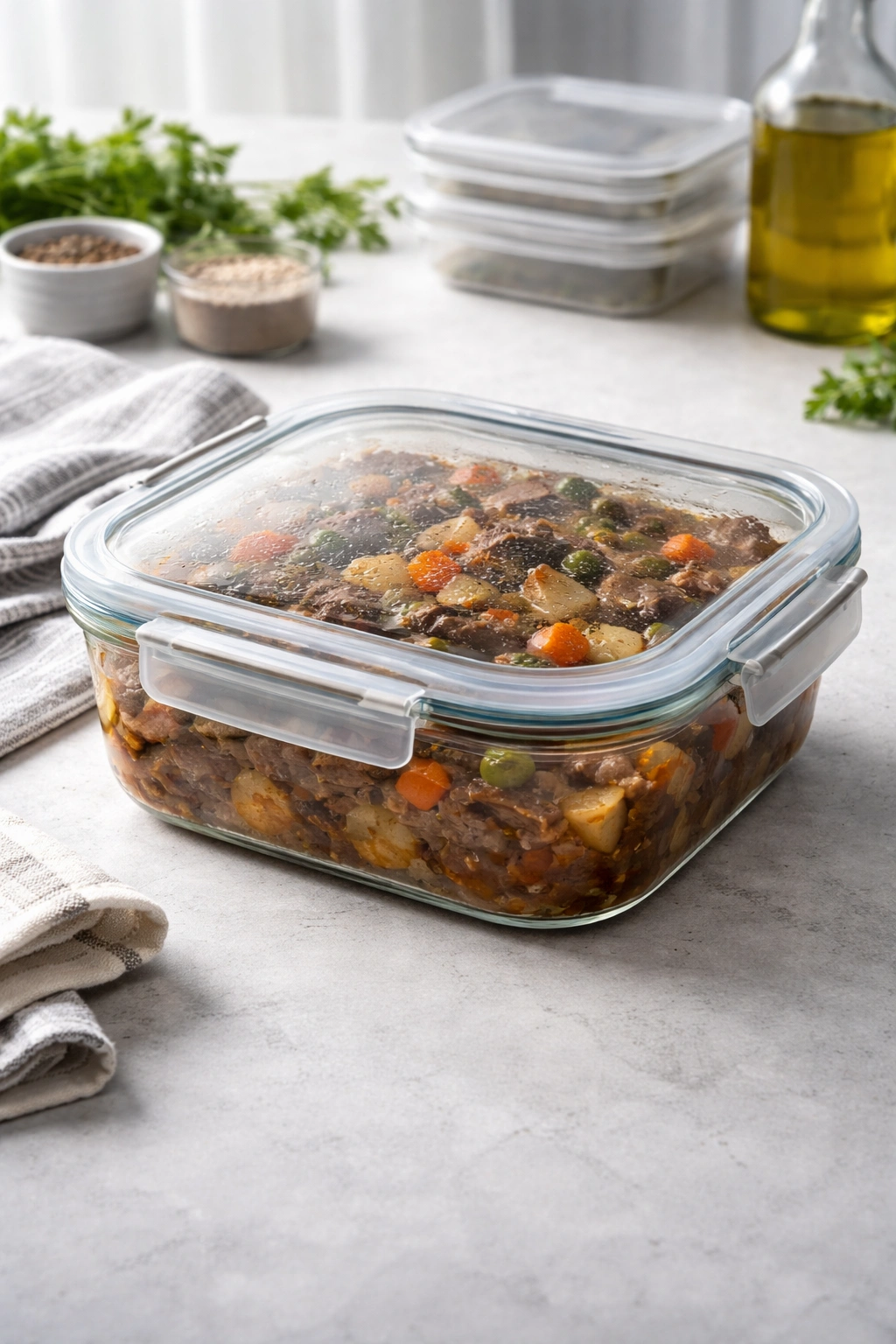
This casserole actually improves overnight, just like traditional stew does. The flavors continue to meld and deepen. You can make it completely through the fried onions step, let it cool to room temperature, then cover and refrigerate it for up to three days. Don’t add the crispy onions until you reheat it—they’ll get soggy otherwise.
To reheat, transfer the casserole to a preheated 325°F oven, cover it with foil, and warm it for about twenty-five to thirty minutes until it’s hot throughout. You can also reheat individual portions in the microwave, though the texture of the noodles won’t be quite as nice. Reheat covered with a damp paper towel to add a little moisture.
This freezes well too. Cool it completely, then transfer to a freezer-safe container or wrap the baking dish tightly in plastic wrap and foil. It’ll keep frozen for up to three months. Thaw it overnight in the refrigerator, then reheat as described above, adding about ten extra minutes to the reheating time since you’re starting from cold.
You can also do the prep work ahead. Brown the meat, build the sauce, and store it separately from the noodles. Keep them covered in the refrigerator, then assemble and bake when you’re ready to serve. This means you can have a casserole on the table in just over an hour even on a busy night.
Variations That Make This Recipe Completely Your Own
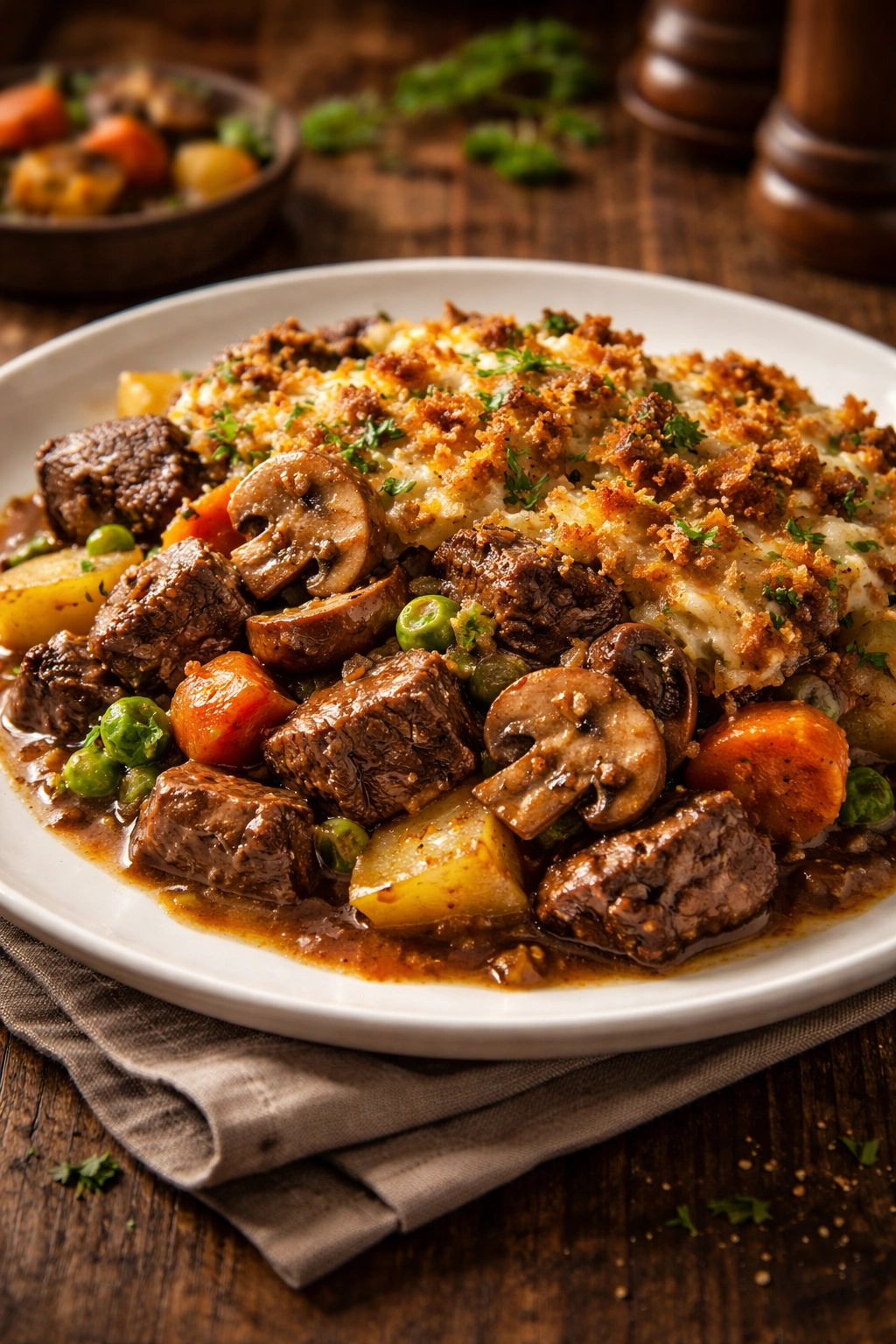
This is a versatile base that welcomes modifications. If you love mushrooms, add a cup of sliced cremini or button mushrooms along with the other vegetables. They’ll cook down and add an earthy depth that complements beef beautifully.
For a slightly different flavor profile, replace some of the beef broth with red wine—use two cups broth and one cup wine. The wine adds complexity, though the alcohol completely cooks off. If you don’t have wine or prefer not to use it, use three cups broth and add a teaspoon of balsamic vinegar instead for similar acidity and depth.
You can make it spicier by increasing the red pepper flakes or adding a teaspoon of smoked paprika instead of regular paprika. You could even add a pinch of cayenne pepper if you want heat. Some people stir in a teaspoon of Dijon mustard, which adds sharp, savory notes.
For vegetable variations, try adding diced parsnips (they cook similarly to carrots and add sweetness), cubed butternut squash (adds sweetness and heartiness), or diced bell peppers (add them partway through so they don’t fall apart completely). You could include a cup of frozen peas, stirring them in during the last five minutes of baking so they warm through but stay bright and intact.
If you don’t have egg noodles, regular pasta shapes work—penne, rigatoni, or small shells all absorb sauce beautifully. Avoid very tiny pasta like ditalini; it gets lost in the dish. You could even use cooked rice, though the texture will be different and slightly creamier.
The Best Ways to Serve This Casserole
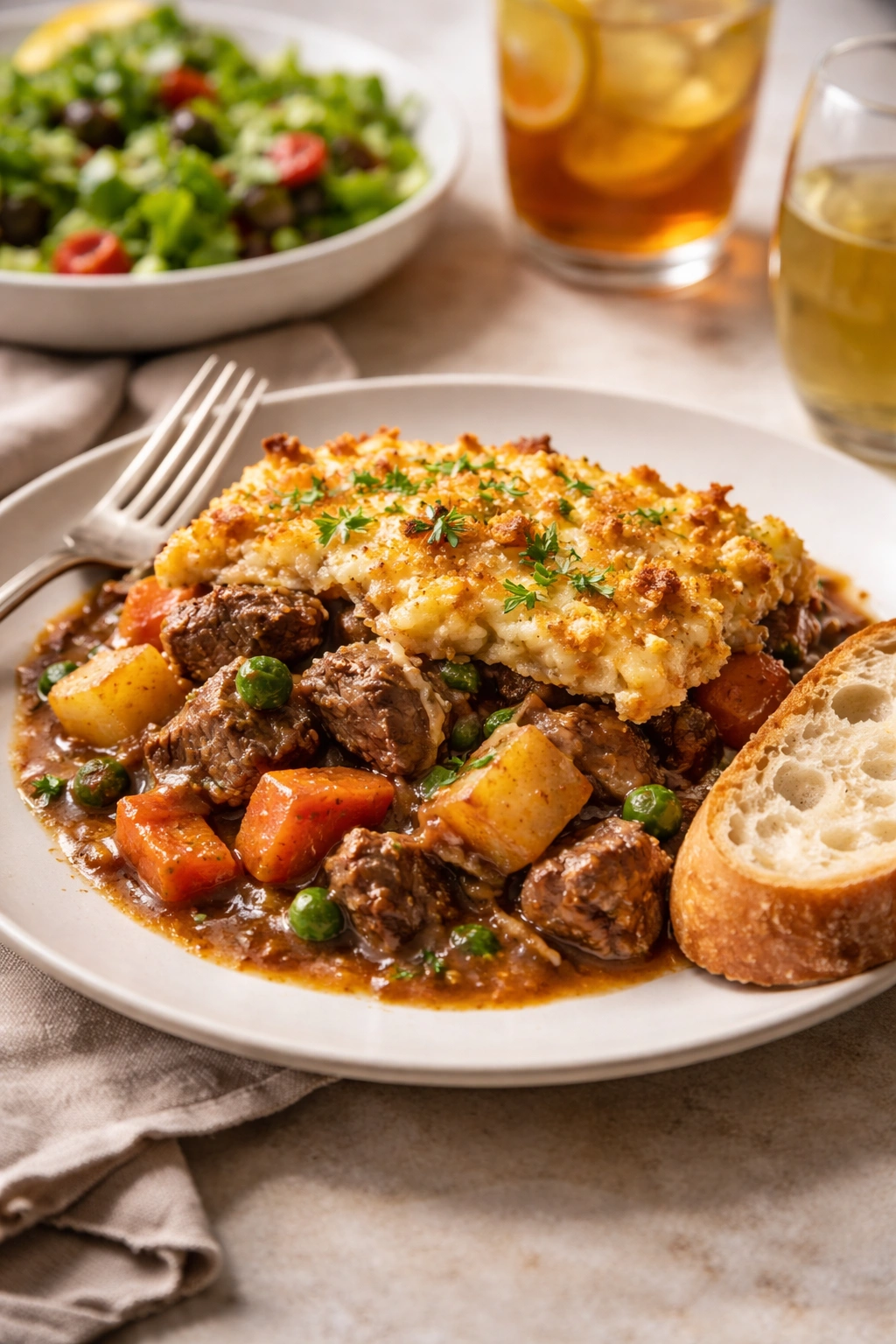
This is a complete meal on its own—you’re getting protein from the beef, vegetables, starch from the noodles. Honestly, it needs nothing else. But if you want sides, keep them simple. A green salad with a bright vinaigrette provides nice contrast and cuts through the richness. A simple arugula salad or mixed greens with lemon dressing works perfectly.
Crusty bread for dunking and soaking up the sauce is wonderful. You don’t need anything fancy—a good quality grocery store baguette or a loaf of sourdough is perfect. Garlic bread works too if you want something richer.
If someone in your family is a vegetable purist, you could serve steamed broccoli or roasted green beans on the side, though I’d argue the vegetables already in the casserole are plenty. Some people serve it with a dollop of sour cream or Greek yogurt on top—the cool creaminess against the warm, savory casserole is lovely.
For beverages, this pairs well with medium-bodied red wine if you drink wine—a Pinot Noir, Merlot, or Côtes du Rhône all complement the flavors beautifully. Iced tea works great for a non-alcoholic option. Even a simple glass of water cuts through the richness nicely.
Why This Works Better for Families Than Traditional Stew
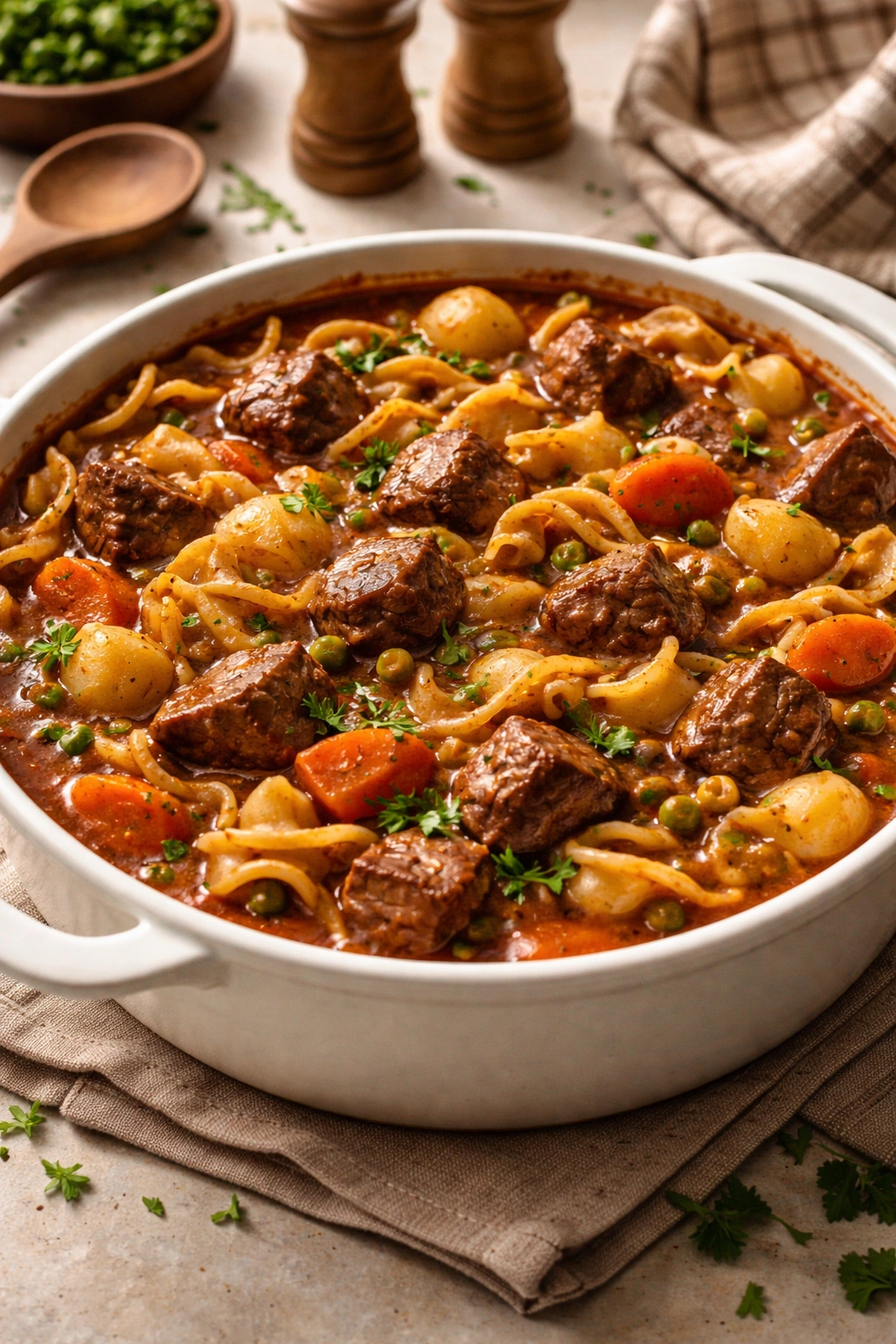
Casseroles have a psychological advantage in family dining. Everyone gets served from the same dish, there’s no need for complicated plating, and it feels both impressive and approachable. There’s something about a casserole that says “this came from a real home kitchen,” not a restaurant.
The noodles in particular make this more approachable for kids and picky eaters. The familiar pasta provides comfort, while the stew elements introduce them to more complex flavors. You’re essentially sneaking vegetable variety into something that feels like pasta comfort food.
The long, slow bake also means this works beautifully for busy nights when you can’t hover over a stove. Prep and assemble in fifteen minutes, slide it in the oven, and forty minutes later dinner is ready. You’re not managing multiple pots or checking on things constantly. That’s the real magic of casserole cooking.
Final Thoughts
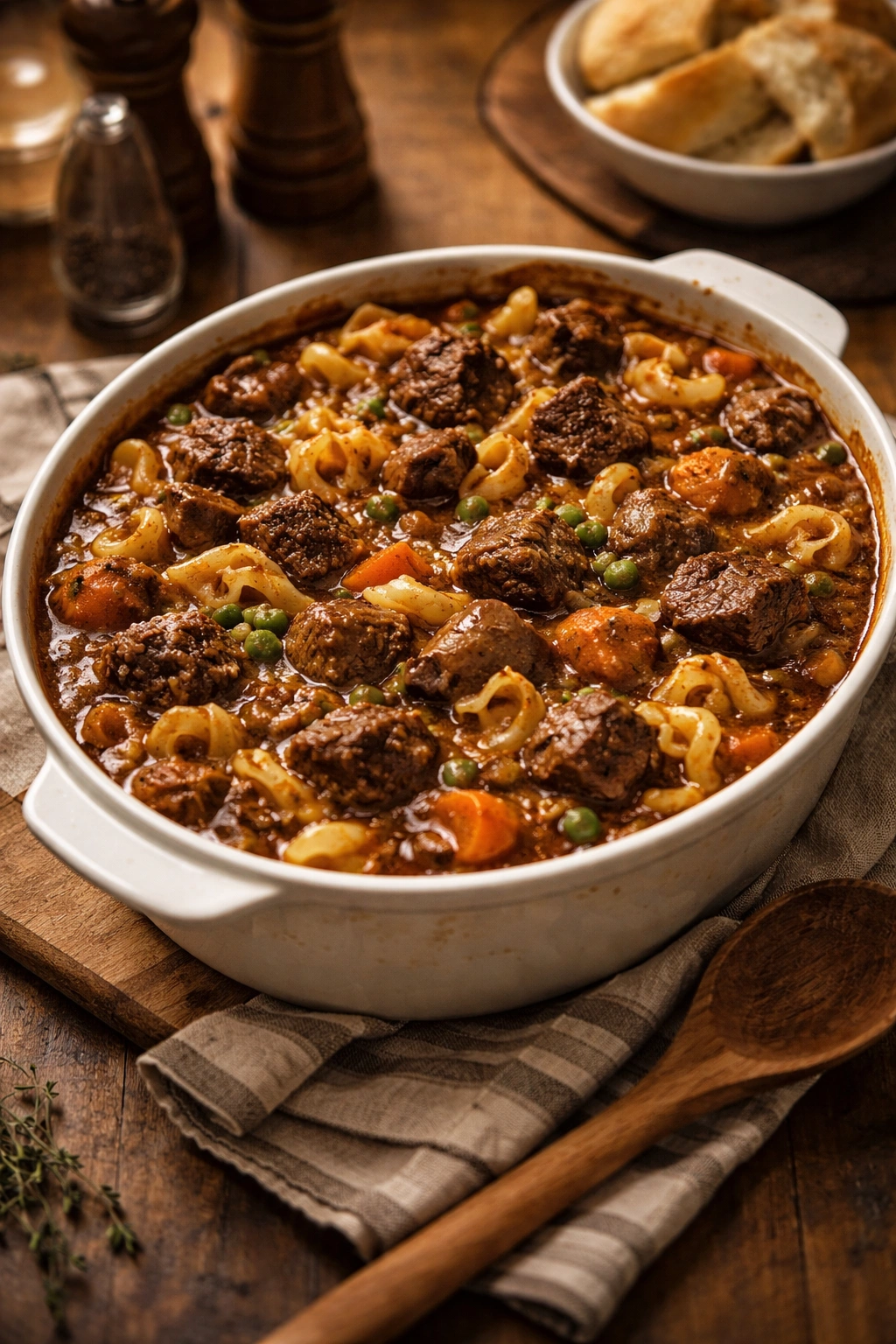
A beef stew casserole bridges the gap between weeknight convenience and Sunday dinner sophistication. It tastes like traditional, slow-cooked beef stew but comes together in roughly half the time and with less active monitoring. The noodles absorb all the rich, savory sauce, the beef becomes meltingly tender, and everything tastes even better the next day.
The beauty of this dish is that it doesn’t demand precision or special skills. Decent beef, proper browning, and enough time in a moderate oven are really all you need. The flavors will take care of themselves through the magic of low-temperature braising. Make this once and you’ll find yourself returning to it regularly—it’s the kind of meal that satisfies at a fundamental level, warming both body and soul on the kinds of nights when that’s exactly what you need.
